24 Maximalist Kitchen Ideas You’ll Love to Copy Today
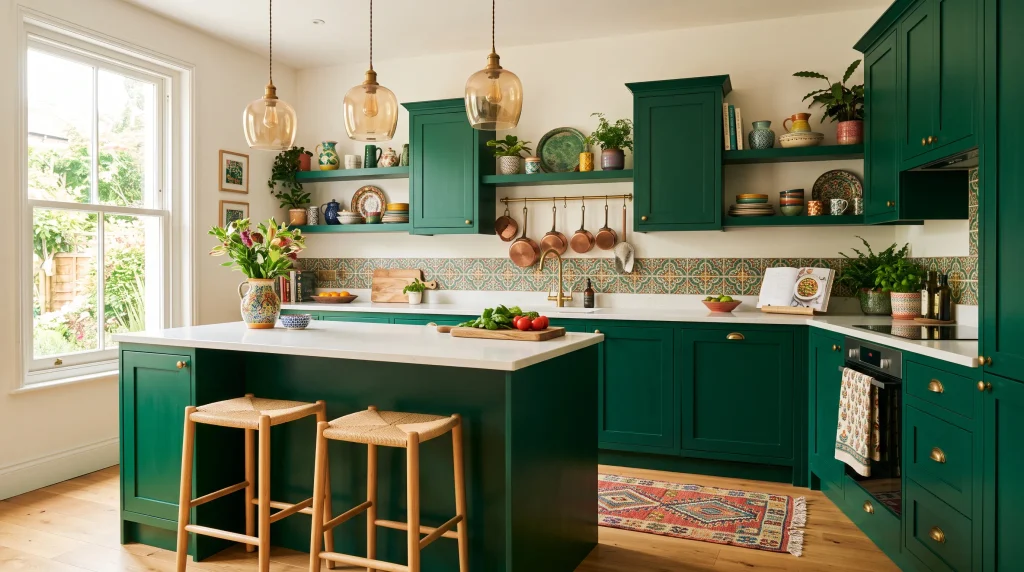
Ready to make your kitchen feel bold, colorful, and full of personality? Maximalist kitchen ideas bring together rich colors, playful patterns, layered textures, and meaningful decor to create a space that feels anything but ordinary. If your kitchen currently feels plain, unfinished, or too predictable, these ideas can help you add character without making the room feel chaotic. From colorful cabinets and patterned backsplashes to statement lighting, collected dishware, and lush greenery, there are plenty of ways to build visual interest. The best maximalist spaces feel personal because every detail has a purpose. Explore these ideas for inspiration you’ll want to save and try.
1. Bold Color Cabinets
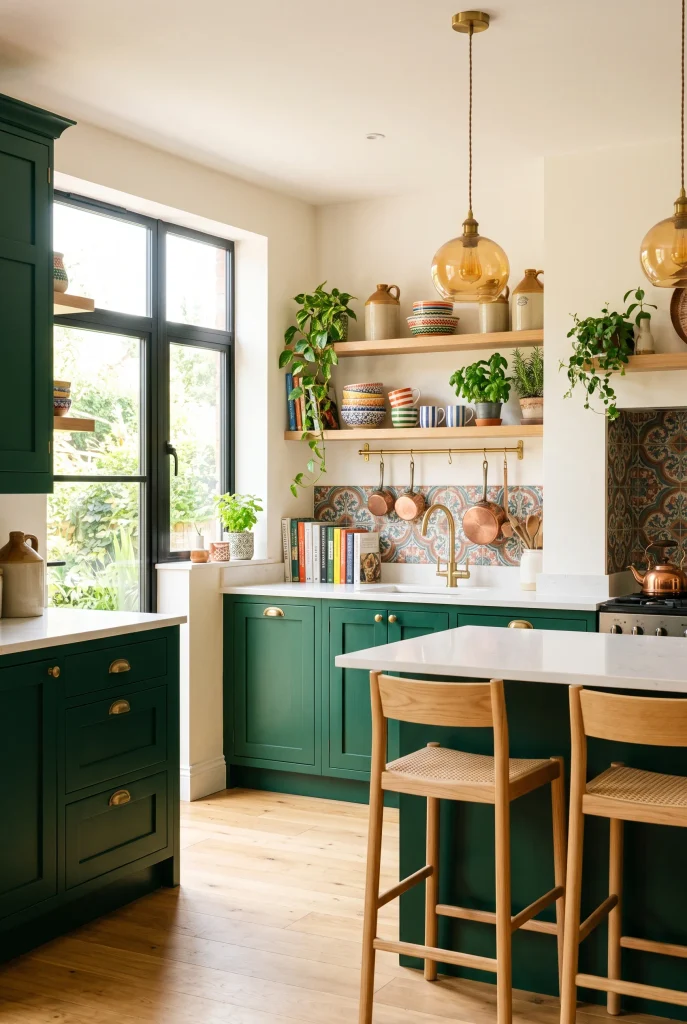
- A rich cabinet color instantly gives the kitchen a strong personality.
- Repeat small touches of the same shade through ceramics or artwork.
- Warm wood can soften intense colors and keep the room inviting.
- Consistent hardware helps the bold palette feel intentional.
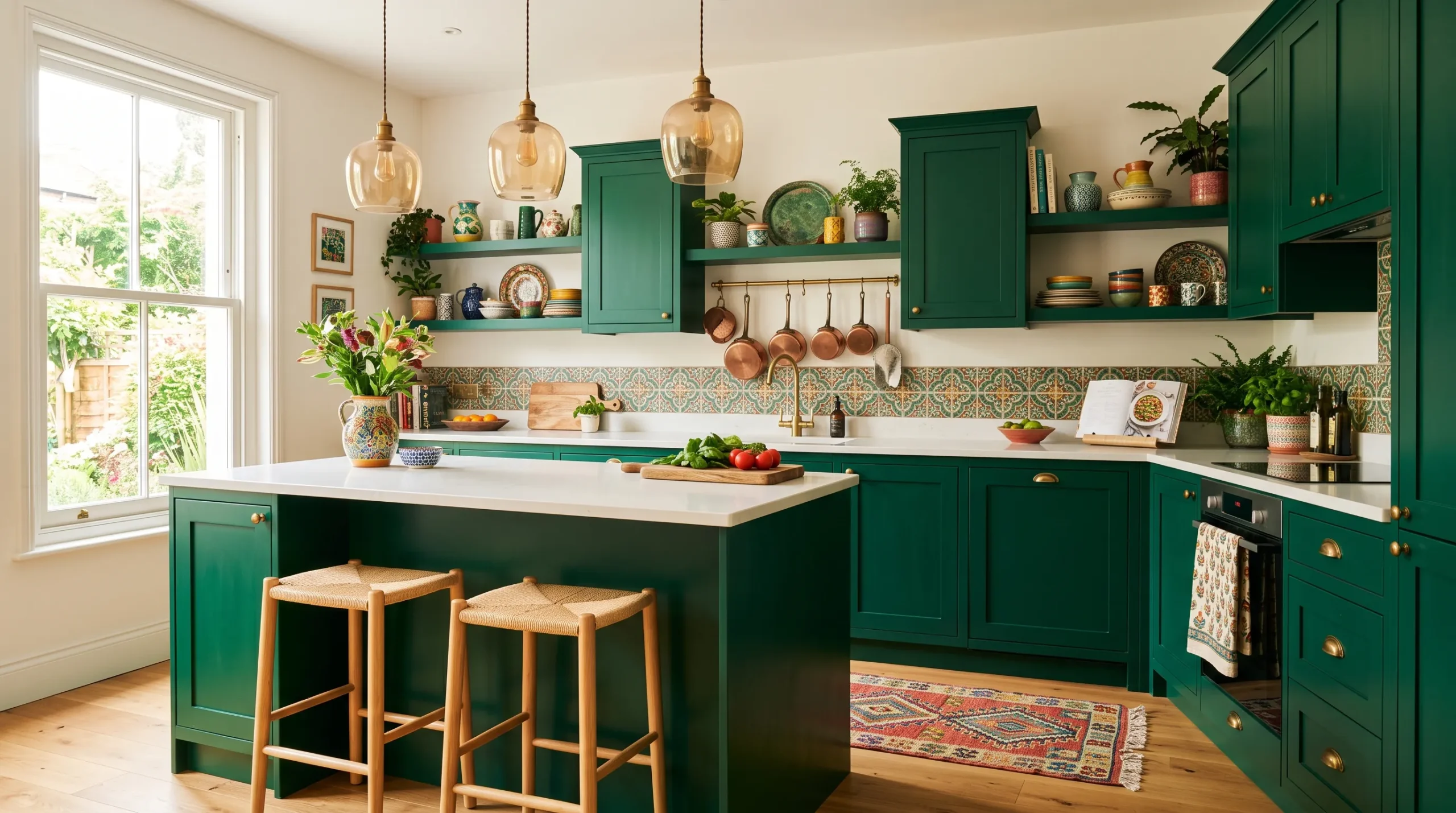
Bold color instantly gives a kitchen the personality of a collected, joyful space. Start with one strong cabinet color, such as cobalt blue, emerald green, or deep terracotta, then repeat small touches of that shade through stools, artwork, ceramics, or textiles. This creates visual connection without making every surface compete. In real homes, a colorful base can also make plain countertops and simple flooring feel intentional. Keep the cabinet hardware consistent, and let natural wood or warm white surfaces provide breathing room. The result feels energetic, layered, and welcoming rather than chaotic or difficult to live with.
A bold cabinet color works especially well when the rest of the room stays visually organized. Choose a dominant shade for the main cabinetry, then add two supporting colors through open shelving, backsplash details, or decorative pieces. This approach works beautifully in kitchens where homeowners want personality without replacing every finish. Matte paint can soften intense colors, while satin finishes make them feel brighter and more polished. For smaller kitchens, consider using the strongest color on the lower cabinets and keeping upper areas lighter. That balance adds drama while helping the room maintain an open, comfortable feeling.
2. Patterned Backsplash
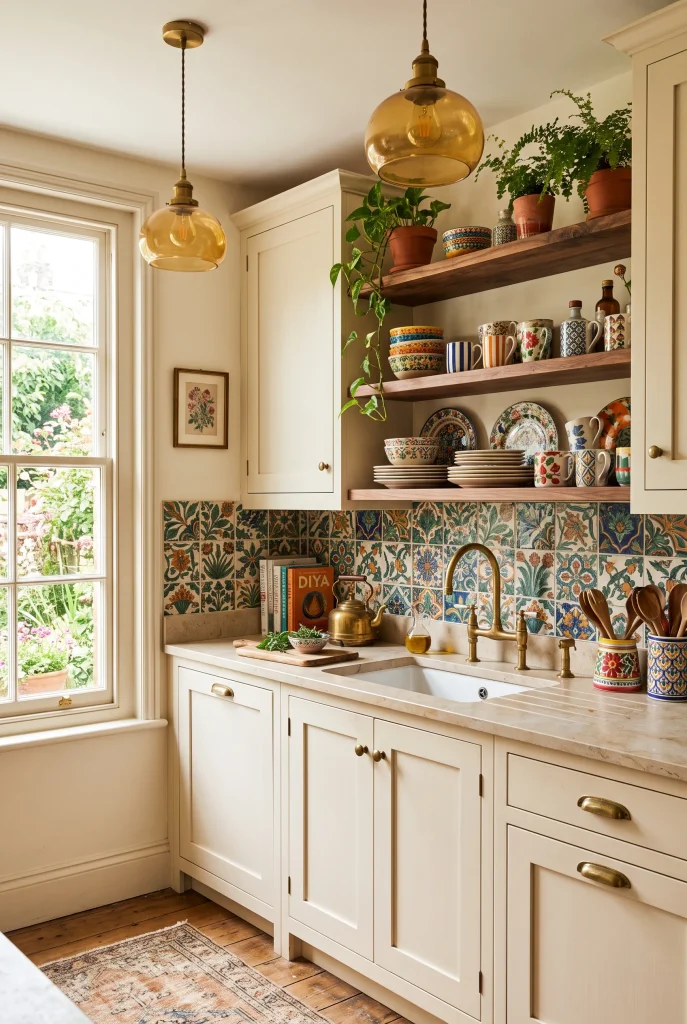
- A patterned backsplash becomes an instant focal point behind the cooking area.
- Smaller tiles allow you to introduce several colors without overwhelming the room.
- Repeat one backsplash color in nearby accessories for visual harmony.
- A simpler countertop helps the pattern remain the star.
A patterned backsplash can turn an ordinary cooking wall into the visual centerpiece of the kitchen. Floral tiles, geometric mosaics, hand-painted designs, or colorful checkerboard patterns all bring character while protecting the wall from everyday splashes. For maximalist kitchen ideas, this is one of the easiest places to experiment because the surface can feel expressive without changing the entire layout. Choose a pattern that includes colors already appearing elsewhere in the room. That simple connection keeps the kitchen looking collected instead of random. Even a small backsplash area can create a surprisingly strong transformation.
The key is giving the pattern enough breathing room to remain attractive. If the backsplash contains several colors, keep surrounding surfaces slightly calmer and repeat only one or two shades in accessories. Open shelves can display matching bowls, glasses, and small artwork without competing with the tile. Choosing the backsplash before buying decorative accents makes styling much easier because it gives the room a clear visual direction. Consider grout color carefully too; a contrasting grout emphasizes individual shapes, while a similar tone creates a softer, more continuous appearance.
3. Colorful Open Shelving
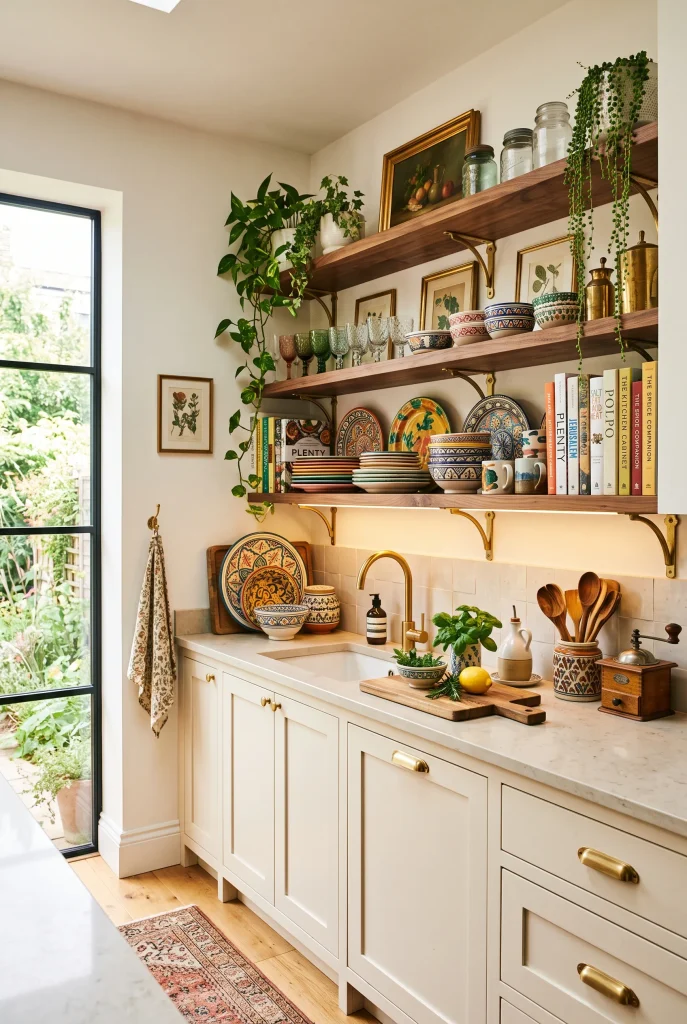
- Open shelves make everyday dishes part of the kitchen’s decoration.
- Group colorful pieces by tone to prevent the display from feeling messy.
- Mix ceramics, cookbooks, artwork, and greenery for varied texture.
- Leave small gaps between objects so the shelves still feel usable.
Open shelving gives you a simple way to bring personality into a kitchen without adding more bulky furniture. Instead of hiding colorful dishes behind cabinet doors, use sturdy wood shelves to display plates, bowls, glassware, cookbooks, and small decorative pieces. This works particularly well when you enjoy collecting objects over time because the display can evolve naturally. A few plants or framed prints add height and softness, while handmade ceramics introduce texture. The goal is not to fill every inch. Leaving small areas of open space makes the colorful arrangement easier to appreciate and much easier to maintain.
A successful shelf display usually looks better when objects are grouped rather than scattered randomly. Try arranging similar colors together, then break up the repetition with a wooden bowl, woven basket, or small plant. Keep frequently used dishes within easy reach and reserve higher shelves for pieces you enjoy looking at more than using. This approach makes maximalist kitchen ideas feel practical rather than purely decorative. If your kitchen already has a busy backsplash or flooring, choose shelves with a simple finish so the room has one quiet element. That contrast helps the collected details stand out beautifully.
4. Statement Pendant Lights
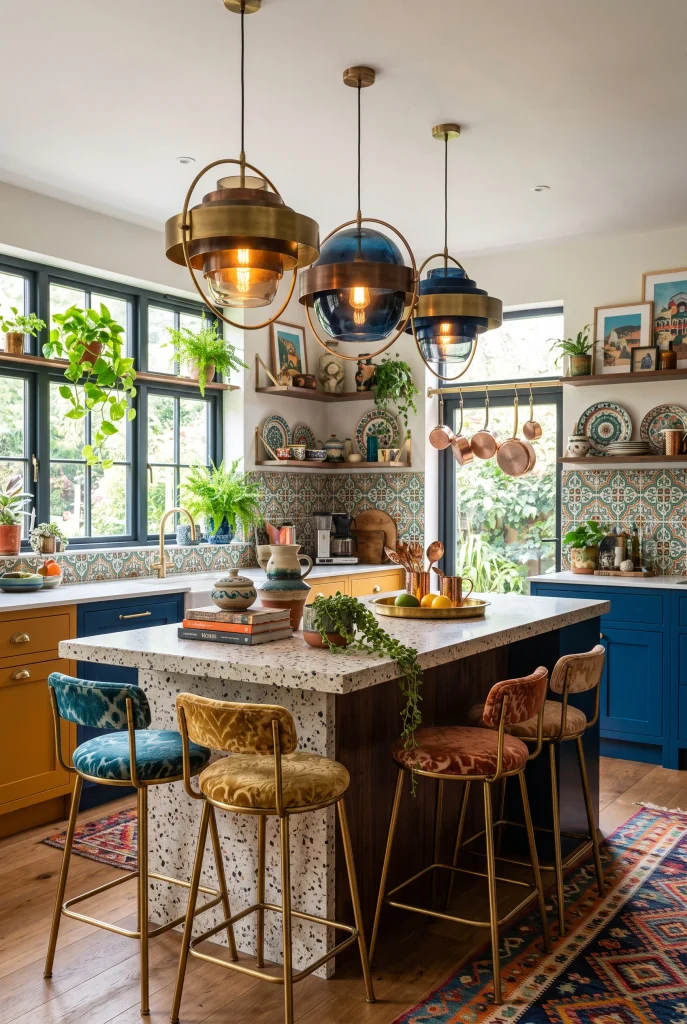
- Oversized pendants can make the kitchen island feel like a designed centerpiece.
- Choose unusual shapes, colors, or materials for stronger visual impact.
- Keep the island surface relatively clear so the fixtures remain noticeable.
- Warm bulbs make colorful finishes feel softer and more inviting.
A statement light can completely change the personality of a kitchen, especially when it hangs above an island or breakfast bar. Look for oversized glass shades, sculptural forms, colorful ceramic pendants, or unusual metal designs that feel more like artwork than basic fixtures. The lighting becomes another layer in the room instead of simply serving a practical purpose. For maximalist kitchen ideas, this approach works because it adds height and visual drama without taking up valuable floor space. Warm bulbs are especially useful because they soften bold colors and create an inviting glow when the kitchen transitions into evening.
Scale matters more than having several different fixtures competing for attention. If your island is long, two or three matching pendants can create rhythm while keeping the composition organized. For a smaller island, one oversized fixture may make a stronger statement without crowding the space. Warm metal finishes such as brass or aged bronze pair especially well with colorful cabinetry and patterned surfaces. Hang fixtures high enough to maintain comfortable sightlines, but low enough to visually connect them with the island. The result feels dramatic, practical, and intentionally layered.
5. Eclectic Tile Flooring
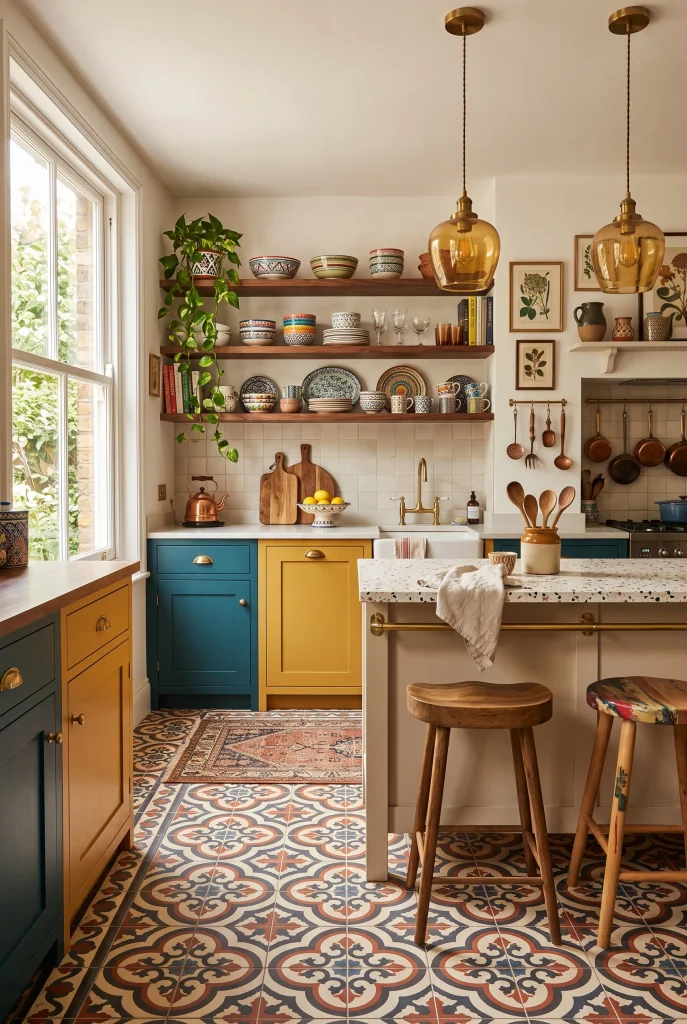
- Patterned flooring adds personality from the ground up.
- Use a limited color palette so the floor connects with the rest of the room.
- Durable porcelain or ceramic tiles are practical for busy kitchens.
- Keep some furniture pieces simple to prevent pattern overload.
Look down before deciding where to add more personality. A patterned kitchen floor can become a surprisingly powerful design feature, especially when cabinets and walls already have strong color. Checkerboard tiles, encaustic-inspired patterns, geometric shapes, and vintage-style motifs can make the entire room feel more collected. For everyday kitchens, porcelain or ceramic options offer a practical combination of durability and easy maintenance. Choose floor colors that appear elsewhere in the space so the pattern feels connected. When done thoughtfully, a decorative floor gives the kitchen character while grounding the brighter details above it.
The trick is balancing visual movement with practical comfort. If your flooring has several colors, choose simpler stools, furniture silhouettes, or countertop finishes nearby. You can still layer personality through colorful dishes, artwork, and plants, but let the floor establish the main rhythm. A large patterned floor can also help define an open-plan kitchen without adding walls or partitions. Repeating one floor color in a backsplash detail or textile creates an especially polished effect. It makes different patterns feel related, even when they come from completely different parts of the room.
View: 21 Masculine Living Room Ideas for a Modern Bold Look
6. Gallery Wall Kitchen
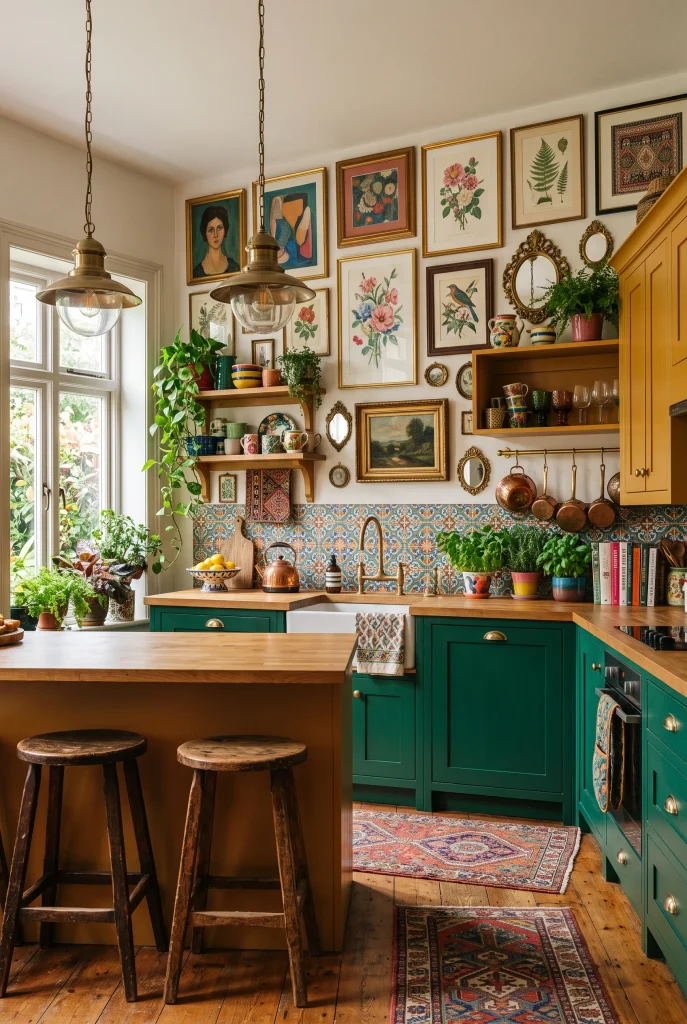
- A gallery wall brings personality to an otherwise overlooked kitchen surface.
- Mix artwork sizes for a relaxed, collected appearance.
- Repeat kitchen colors inside frames or artwork to create cohesion.
- Keep delicate pieces away from areas exposed to excessive heat or moisture.
A gallery wall can make a kitchen feel personal rather than simply functional. Gather botanical prints, vintage artwork, small paintings, food illustrations, decorative plates, or framed textiles and arrange them on an open wall. The mixture creates the layered feeling that makes maximalist spaces so appealing. You do not need every piece to match. Instead, choose artwork that shares a few colors with the cabinets, backsplash, or furnishings. This helps an eclectic collection feel intentional. A gallery wall is also a smart way to use vertical space when countertops and cabinets already provide plenty of practical storage.
Before hanging anything, lay the pieces on the floor and experiment with different arrangements. Start with the largest artwork, then build around it using smaller frames and objects. Leave enough breathing room between pieces so the wall does not become difficult to read visually. For kitchens, consider placing the collection away from direct cooking steam and splashes to protect the artwork. Small kitchens can benefit particularly well from this technique because the wall decoration draws the eye upward. That can make the room feel richer without requiring additional furniture or storage.
7. Vintage Appliance Accents
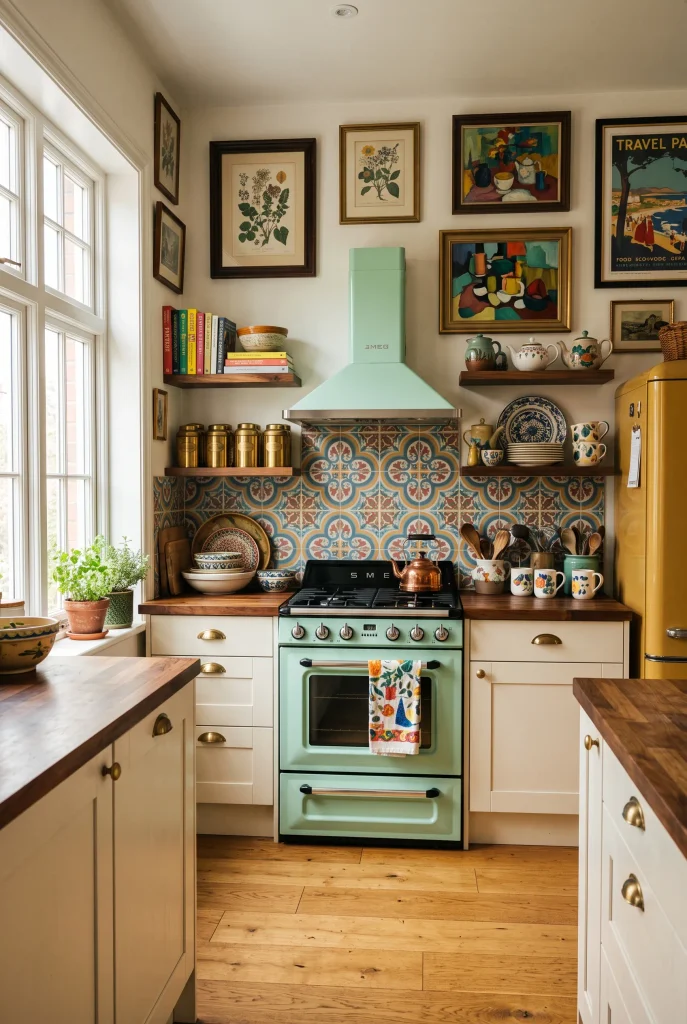
- A retro appliance can become a strong focal point without changing the entire kitchen.
- Choose one standout appliance color and repeat it through small accessories.
- Rounded appliance shapes add softness to modern cabinetry.
- Keep surrounding finishes simple enough to let the appliance shine.
A vintage-inspired appliance can give a kitchen instant character while still providing modern functionality. Think of a rounded refrigerator, colorful range, or retro-style countertop appliance in shades like mint, butter yellow, cream, or soft blue. One standout piece can act almost like furniture, adding personality without requiring a complete renovation. This is especially useful if your existing cabinets and counters are fairly neutral. The appliance becomes the colorful anchor, while smaller accessories can echo its tone. The result feels playful and collected rather than like a kitchen filled with unrelated decorative elements.
You can make the look feel more sophisticated by combining retro shapes with contemporary materials. A colorful range looks beautiful beside natural stone counters, brass hardware, or warm wood shelving. Avoid matching every appliance unless you specifically want a highly coordinated look. Instead, repeat the main color in two or three small details, such as a ceramic bowl, tea towel, or framed print. This approach works particularly well when homeowners want a dramatic change without replacing their cabinets. It creates a noticeable transformation while keeping the overall layout and everyday functionality intact.
8. Mixed Cabinet Colors
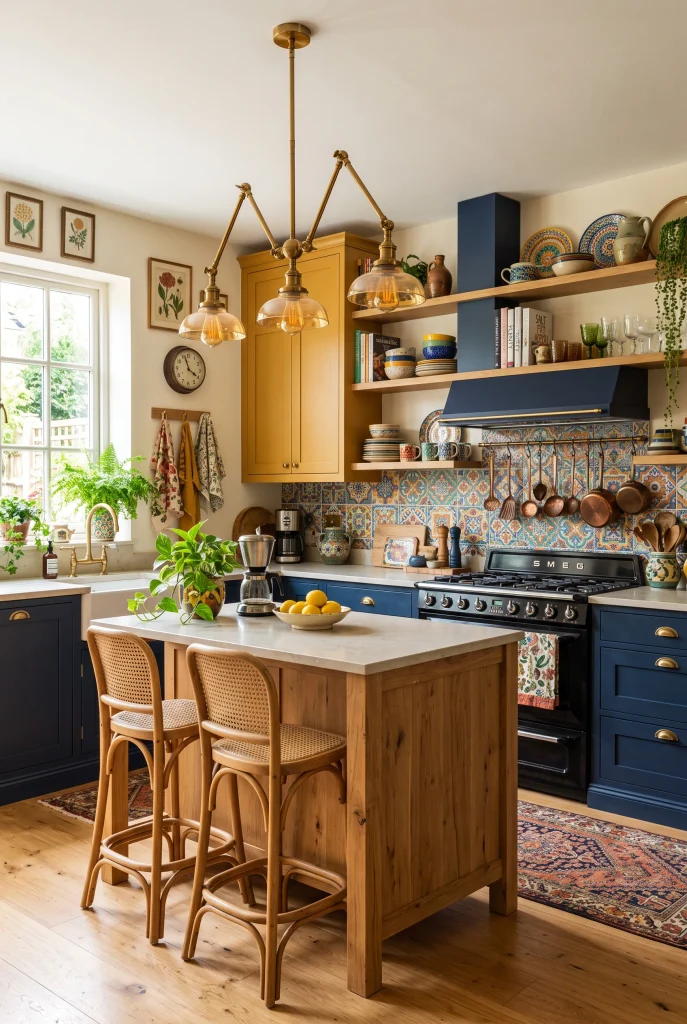
- Two cabinet colors can create visual zones without adding walls.
- Keep one shade dominant and use the second as an accent.
- A natural wood island can bridge contrasting cabinet colors beautifully.
- Repeat each cabinet color subtly through decor for cohesion.
Using two or more cabinet colors creates the layered look that makes a maximalist kitchen feel lively and distinctive. Instead of choosing one shade for every cabinet, consider pairing deep blue with warm yellow, forest green with blush, or terracotta with cream. The trick is to establish a clear hierarchy. One color should dominate while the other supports it. You might use the stronger shade on lower cabinets and a lighter or contrasting color above. This simple division adds depth and makes the cabinetry feel intentionally designed rather than visually overwhelming.
A natural wood island can provide an excellent transition between contrasting cabinet colors. It adds warmth while preventing the palette from feeling too artificial or busy. Hardware should also help connect the different sections, so using the same finish throughout keeps everything visually unified. For smaller kitchens, consider using the second color on just an island or a short run of cabinets. This gives you the playful effect without making the room feel enclosed. The finished space can look bold and expressive while still maintaining a clear, functional structure for everyday cooking.
9. Layered Countertop Decor
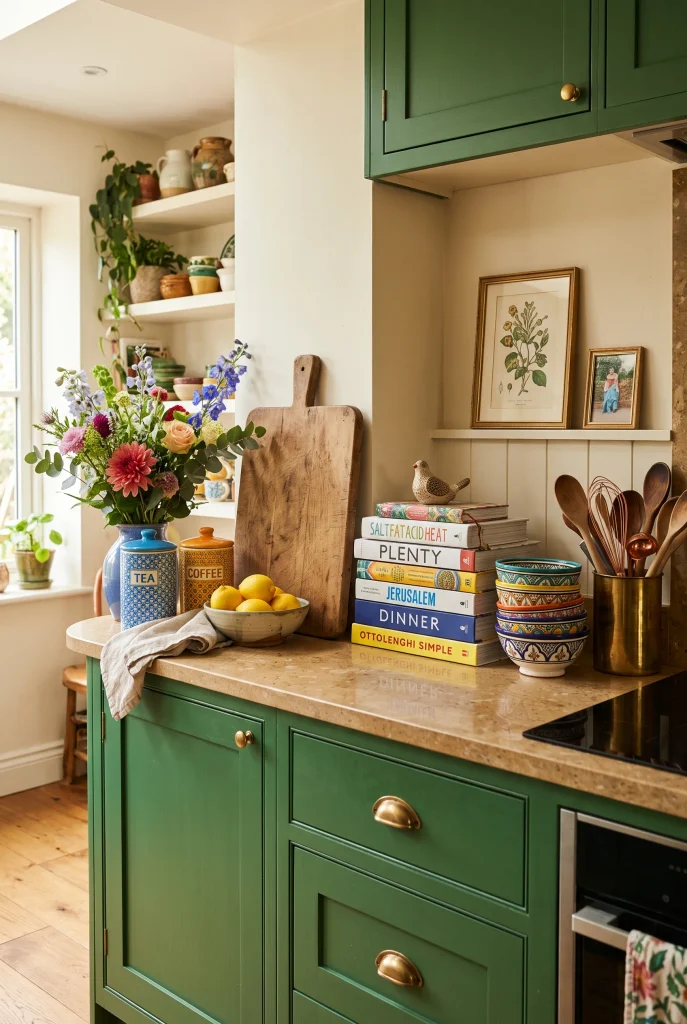
- Everyday kitchen tools can double as attractive decorative layers.
- Vary heights with cutting boards, books, jars, and vessels.
- Keep frequently used items accessible instead of creating purely decorative clutter.
- Leave clear work zones so the styling remains practical.
Countertops are one of the easiest places to introduce the layered personality associated with maximalist design. Instead of hiding everything away, thoughtfully display a few beautiful everyday objects such as ceramic canisters, wooden cutting boards, colorful bowls, cookbooks, flowers, and vintage-style utensil holders. Different heights and textures create visual interest while making the kitchen feel lived in. The goal is curated abundance rather than clutter. Keep the most useful items close to their working areas, and group decorative pieces together so food preparation still feels comfortable and efficient.
Start by choosing one countertop corner as your styling zone rather than decorating every available surface. Place a large cutting board or tray at the back, then layer smaller objects in front of it. A vase of greenery can add height, while ceramic containers introduce color and texture. If your cabinets or backsplash are already bold, use countertop accessories to repeat existing colors instead of introducing several new ones. This creates the rich, collected effect many maximalist kitchen ideas aim for. Most importantly, leave enough empty counter space for chopping, serving, and everyday cooking.
10. Colorful Kitchen Island
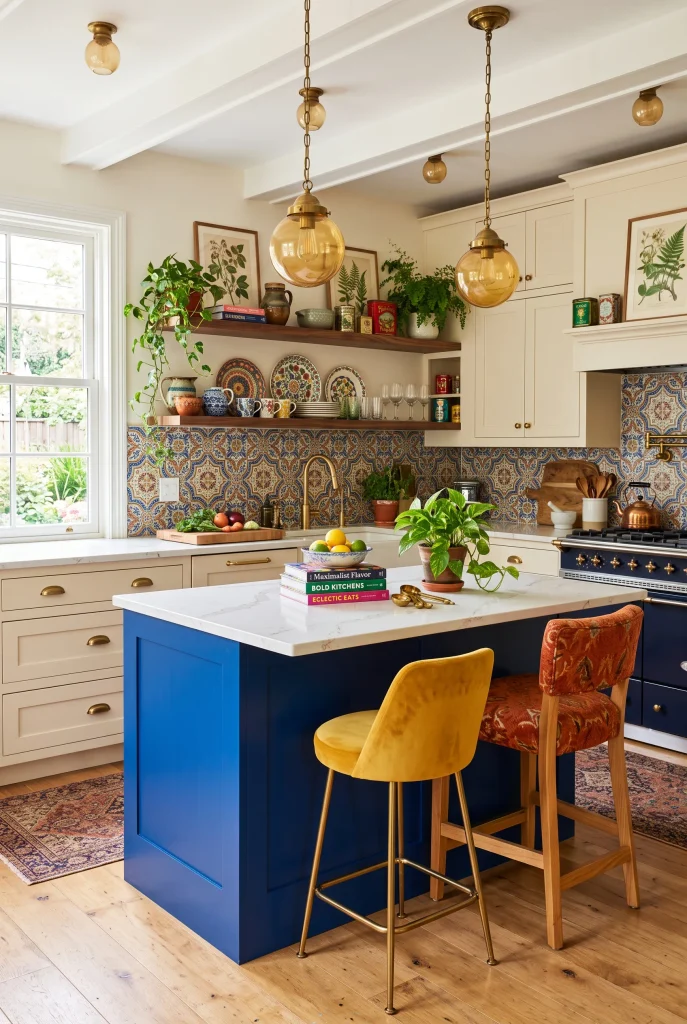
- A colorful island creates a natural focal point in an open kitchen.
- Use the island shade to connect with artwork, tiles, or nearby accessories.
- Wooden stools can soften a strong painted finish.
- Keep the countertop practical with enough clear workspace for daily use.
A colorful kitchen island can become the visual anchor that brings an entire room together. Choose a confident shade such as cobalt blue, emerald green, mustard, or rich terracotta, then let the surrounding cabinetry provide balance. Because the island naturally attracts attention, it is an ideal place to experiment with color without committing every cabinet to a dramatic finish. Add stools in natural wood, woven materials, or a complementary tone to create another layer of texture. This approach gives the kitchen a lively centerpiece while preserving a comfortable, functional workspace for cooking and gathering.
Think about the island as both furniture and preparation space. A contrasting paint color can visually separate it from surrounding cabinets, which is especially helpful in large open-plan kitchens. Repeat a small amount of the island color in nearby artwork, ceramics, or backsplash details to make the room feel cohesive. A slightly darker island can also hide everyday marks better than very pale finishes, which can be useful in busy households. Choose a durable countertop and comfortable seating, then keep enough open surface for serving, chopping, and casual meals.
11. Playful Wall Art
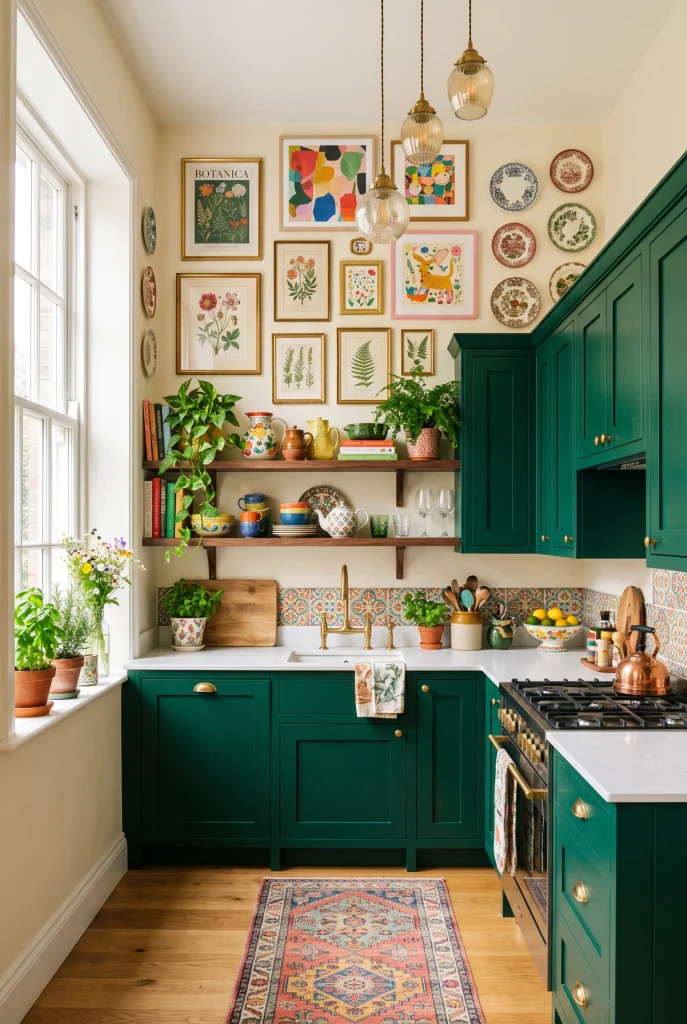
- Artwork can introduce personality without changing permanent finishes.
- Mix prints, illustrations, and small decorative objects for a collected effect.
- Choose pieces that repeat colors already present in the kitchen.
- Position art away from direct steam and cooking splashes whenever possible.
Kitchen walls do not have to be purely practical. A few playful artworks can bring color, humor, and personality into the room while making the space feel more connected to the rest of your home. Try abstract prints, botanical illustrations, vintage food artwork, colorful sketches, or decorative plates arranged in an informal collection. The strongest displays usually share a few colors rather than identical frames or styles. This creates variety while maintaining visual cohesion. For a maximalist kitchen, artwork is particularly useful because it adds another decorative layer without taking away valuable counter or storage space.
When arranging wall art, start with the largest piece and build outward with smaller frames or objects. You can mix rectangular frames with round plates or small mirrors to create more movement. If your kitchen already features patterned tiles and colorful cabinets, select artwork that echoes those colors rather than introducing an entirely new palette. Keep fragile pieces away from areas exposed to heat, grease, or moisture. A thoughtfully placed collection can make even a simple kitchen feel personal, expressive, and finished without requiring an expensive renovation or major structural change.
12. Decorative Range Hood
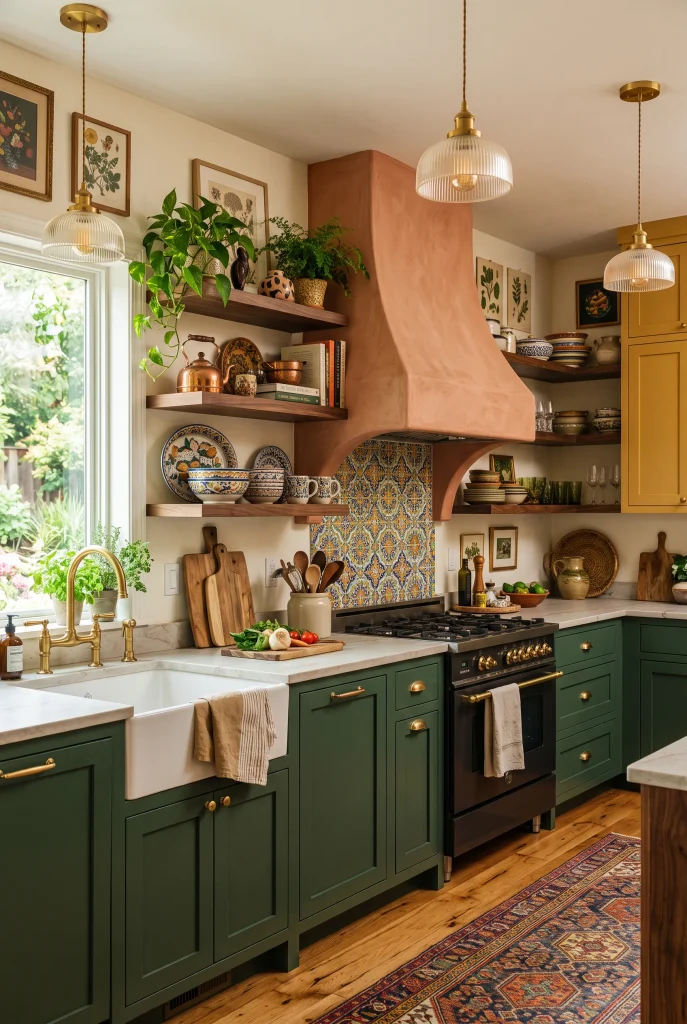
- A decorative hood can turn a necessary fixture into a major focal point.
- Paint, plaster, tile, or trim can give the hood architectural character.
- Repeat its color in nearby accessories for a cohesive palette.
- Keep the hood design proportional to the kitchen and cooking area.
A range hood does more than remove cooking odors; it can become one of the strongest architectural features in the kitchen. A sculptural hood covered in plaster, painted a rich color, framed with trim, or finished with decorative tile can create an impressive focal point above the range. This is especially effective when the rest of the room includes colorful cabinets, patterned surfaces, and collected accessories. Instead of trying to hide the hood, make it part of the design. The result feels intentional and gives the cooking wall a stronger sense of structure and personality.
A decorative hood works best when its finish connects with something already present in the room. For example, a terracotta hood can echo floor tiles, while a soft green finish can relate to cabinetry or ceramic pieces. Keep the surrounding area visually organized so the hood remains easy to appreciate. Proportions matter too; an oversized hood can dominate a compact kitchen, while a small hood may disappear in a large room. This feature can make a dramatic difference in kitchens where the layout stays unchanged. Sometimes emphasizing one architectural element is enough to transform the entire atmosphere.
13. Jewel Tone Walls
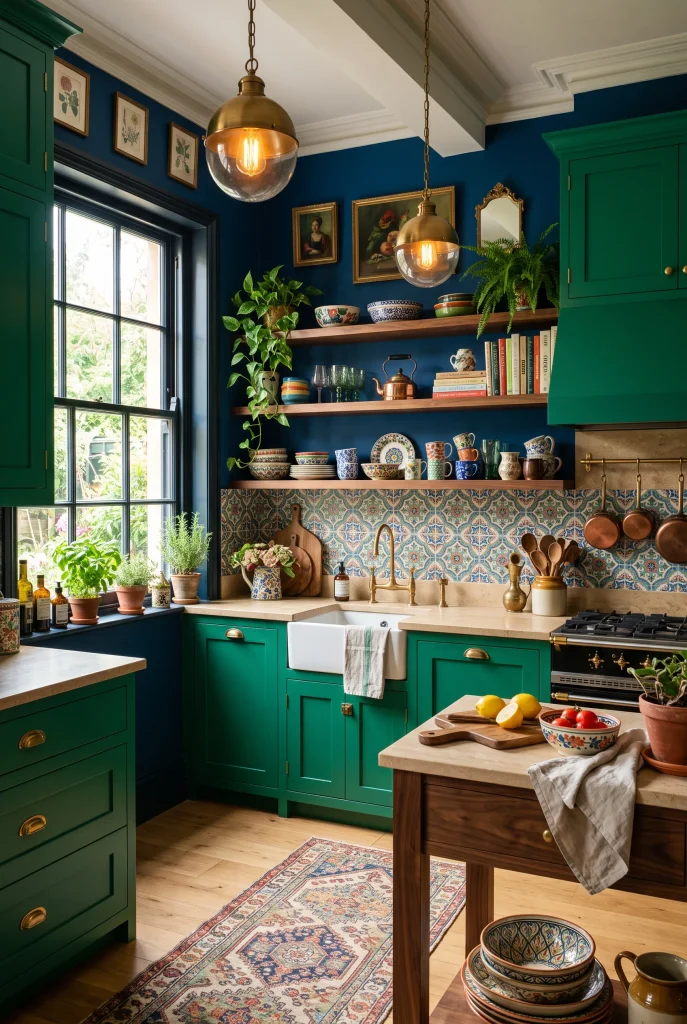
- Rich wall colors create depth and make ordinary kitchen details feel more dramatic.
- Jewel tones pair beautifully with brass, warm wood, and creamy surfaces.
- Use one dominant wall shade instead of competing with several bold colors.
- Lighter countertops can provide useful visual breathing room.
Deep, saturated wall colors can make a kitchen feel dramatically richer without requiring a major renovation. Shades such as sapphire blue, emerald green, ruby red, or deep teal create a strong backdrop for colorful cabinetry and decorative objects. The darker surface helps brass hardware, artwork, ceramics, and natural wood stand out with greater definition. If you are drawn to maximalist kitchen ideas but want to avoid covering every surface in pattern, a rich wall color offers another way to build depth. It creates atmosphere while allowing individual design elements to remain visually connected.
The secret to using jewel tones successfully is balancing their intensity with warmer, lighter materials. Cream countertops, natural oak shelves, woven stools, and soft textiles can keep the room from feeling too heavy. Consider painting only one major wall if the kitchen receives limited daylight, then use accessories to repeat the same color elsewhere. Matte finishes can create a sophisticated appearance, while satin paint reflects slightly more light. Strong wall colors can look completely different throughout the day, so testing a sample near your windows is worth doing before committing.
14. Layered Window Treatments
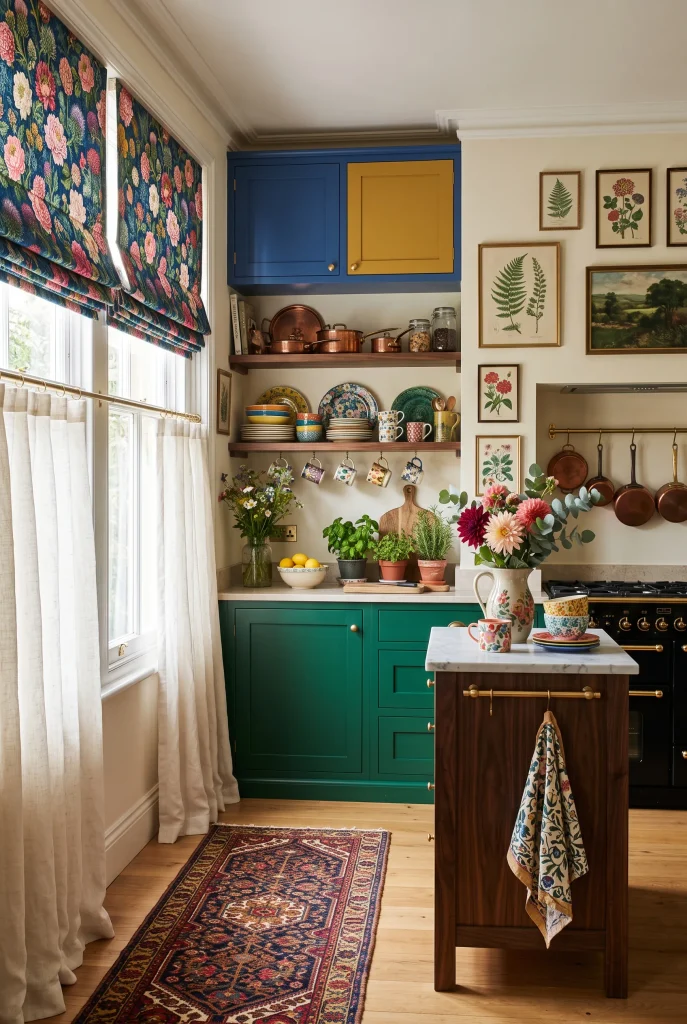
- Patterned window coverings add softness and color without using valuable floor space.
- Roman shades are practical when you want a cleaner kitchen profile.
- Choose washable or easy-care fabrics for areas near cooking zones.
- Repeat one textile color through towels, cushions, or nearby artwork.
Window treatments are often overlooked when decorating a kitchen, yet they can add a surprising amount of warmth and personality. A patterned Roman shade, floral fabric panel, or simple linen curtain can soften hard surfaces while introducing another layer of color. Botanical prints, stripes, checks, and vintage-inspired motifs work particularly well with an eclectic kitchen because they make the room feel more collected. Choose a pattern that includes one or two colors already found in your cabinets or backsplash. That connection keeps the textile from looking like an unrelated addition.
Practicality should guide the fabric choice as much as appearance. Kitchens can become humid and messy, so washable materials or removable shades are often easier to live with than delicate fabrics that require special care. Keep curtains safely away from stovetops and other heat sources, especially around smaller windows. For a polished look, repeat the window treatment’s strongest color in a tea towel, small cushion, or piece of artwork. This creates a subtle thread throughout the room. Even a modest kitchen window can become an important design feature when the surrounding textiles are chosen thoughtfully.
15. Collected Dishware Display
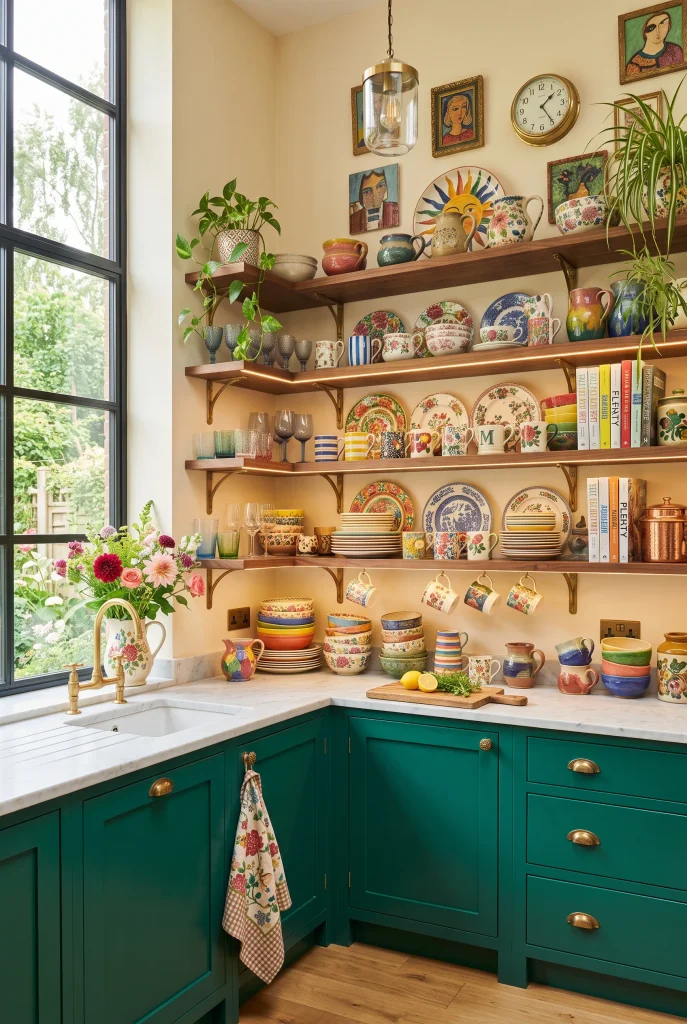
- Displaying dishware turns useful objects into colorful kitchen decoration.
- Mix vintage and modern pieces for a more authentic collected appearance.
- Group similar colors while varying shapes and patterns for visual interest.
- Keep everyday favorites on lower shelves for easy access.
Beautiful dishware deserves to be seen, especially when its colors and patterns contribute to the character of the kitchen. Instead of storing every plate and bowl behind closed doors, dedicate open shelving or a glass-front cabinet to a carefully arranged collection. Mix floral plates, patterned bowls, colorful mugs, handmade pottery, and vintage serving pieces to create visual variety. The display can make the kitchen feel more personal because every object has a practical purpose as well as decorative value. This is one of the easiest ways to create abundant styling without buying unnecessary accessories.
Arrange the collection with a little structure so the shelves remain visually pleasing and usable. Place larger plates or serving pieces toward the back, then layer smaller bowls and mugs in front. Grouping similar colors creates cohesion, while different shapes prevent the display from looking too uniform. Keep heavier pieces on lower shelves and frequently used dishes within comfortable reach. You can also rotate seasonal colors or favorite finds throughout the year. This flexible approach keeps the display fresh and allows the kitchen to evolve naturally as your collection grows.
16. Dramatic Ceiling Detail
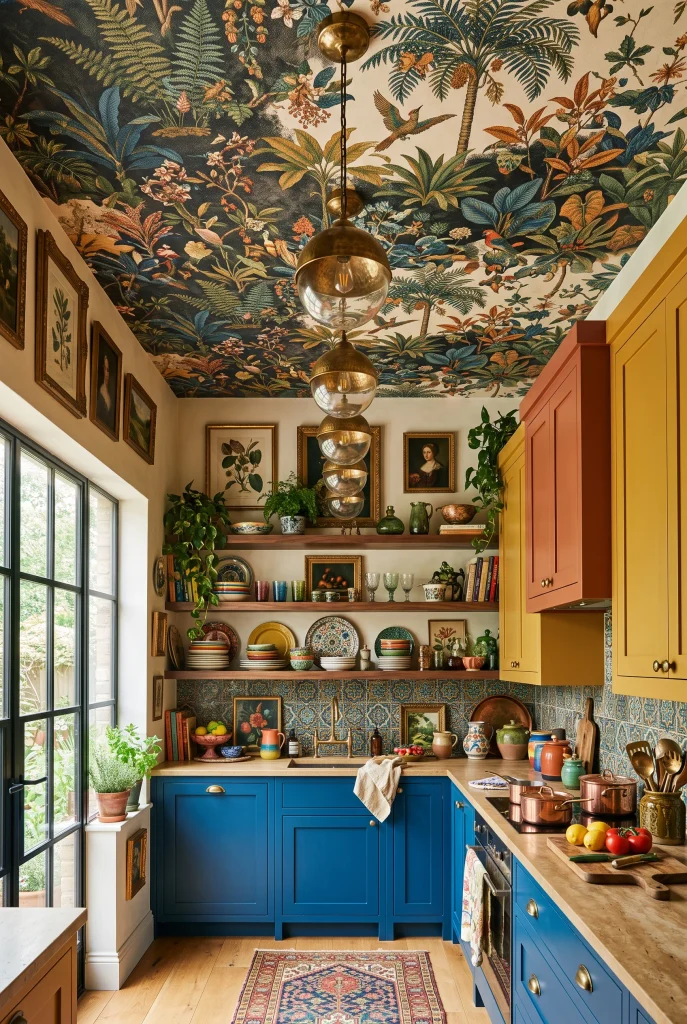
- A decorated ceiling adds personality to an often-overlooked surface.
- Wallpaper or painted patterns can create drama without taking floor space.
- Keep the pattern connected to the kitchen’s existing color palette.
- Simple lighting fixtures can prevent the ceiling from feeling visually crowded.
Look upward and you may find the perfect place for a bold design moment. A painted ceiling, patterned wallpaper, decorative beams, or colorful ceiling panels can add unexpected personality while leaving countertops and cabinets available for practical use. This works particularly well in kitchens with relatively simple architecture because the ceiling becomes another layer of visual interest. Botanical prints, geometric patterns, and warm painted tones can all work beautifully. When paired with colorful cabinetry and layered accessories, the ceiling helps create the immersive, expressive feeling associated with a richly decorated kitchen.
A dramatic ceiling does not need to cover the entire room to make an impact. In an open-plan kitchen, you could define the cooking or dining area with a painted section above it. If using wallpaper, choose a product designed for the conditions of the space and keep it away from areas with excessive moisture or heat. Lighting should complement rather than compete with the pattern. Repeating one ceiling color in a small accessory below creates a subtle connection that makes the entire composition feel much more intentional.
17. Colorful Bar Stools
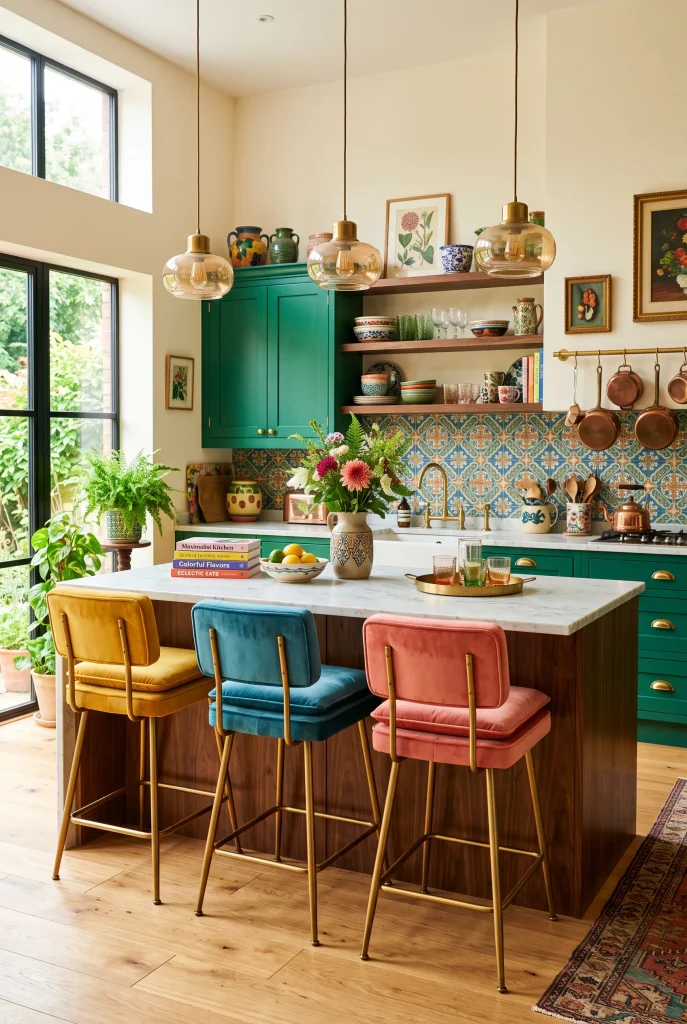
- Colorful stools add personality without requiring permanent changes to the kitchen.
- Upholstered seating introduces softness against hard counters and cabinetry.
- Choose durable, easy-clean materials for everyday family use.
- Repeat stool colors in small accessories for a more cohesive room.
Bar stools can do much more than provide a place to sit. In a colorful kitchen, they become movable design accents that can introduce bright tones, interesting shapes, and softer textures. Try velvet, woven, painted wood, or molded seating in colors that complement the cabinetry and backsplash. Because stools are easy to replace, they offer a lower-commitment way to experiment with stronger design choices. A row of colorful seats can also make a plain island feel more finished, giving the kitchen a cheerful gathering point for breakfasts, homework, coffee, or casual conversations.
Comfort and durability matter just as much as appearance when choosing island seating. Measure the counter height first and select stools that allow enough legroom for comfortable everyday use. For busy kitchens, performance fabric, wipeable finishes, or sturdy wood can make maintenance easier. If you prefer several colors, choose shades that already appear elsewhere in the room rather than introducing completely unrelated tones. This keeps the arrangement lively but coordinated. A simple swap of seating can sometimes create a surprisingly noticeable transformation, especially when the existing kitchen layout and cabinetry are already working well.
18. Eclectic Hardware Mix
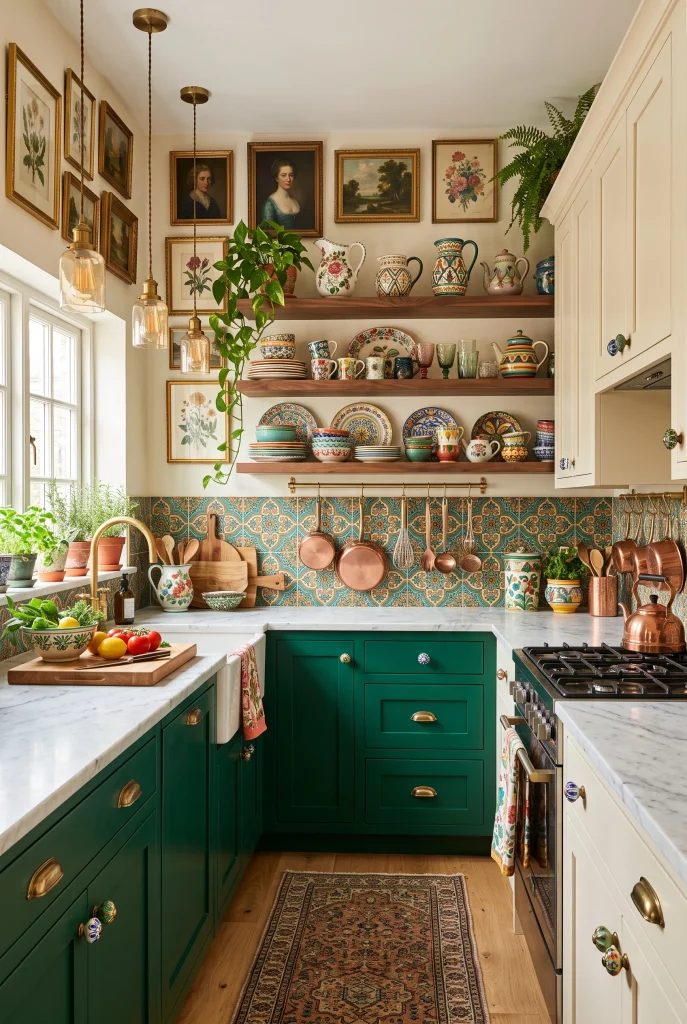
- Mixed hardware can give cabinetry a collected, less predictable appearance.
- Keep different finishes within a controlled palette so the result feels intentional.
- Use larger pulls on drawers and smaller knobs on doors for practical function.
- Repeating one finish in lighting or faucets can visually tie everything together.
Cabinet hardware may be small, but it can have an outsized effect on the overall personality of a kitchen. Instead of using identical knobs and pulls everywhere, consider mixing complementary finishes, shapes, and materials. A combination of aged brass, antique bronze, ceramic knobs, or painted hardware can create the collected character that makes an eclectic kitchen feel unique. The key is choosing a clear relationship between the pieces. Different does not have to mean random. Repeating one finish elsewhere, such as in lighting or faucets, gives the eye a familiar element to connect everything.
Function should still guide the hardware arrangement. Drawers generally benefit from longer pulls, while knobs can work beautifully on smaller cabinet doors. Keep the most frequently touched areas fitted with sturdy, comfortable pieces that are easy to grip. If you are mixing finishes, limit the palette to two or three related options and distribute them throughout the kitchen instead of placing each finish in one isolated area. That creates a relaxed, layered appearance while preserving visual balance. It is a small upgrade, but one that can make standard cabinetry feel much more custom.
19. Botanical Kitchen Corners
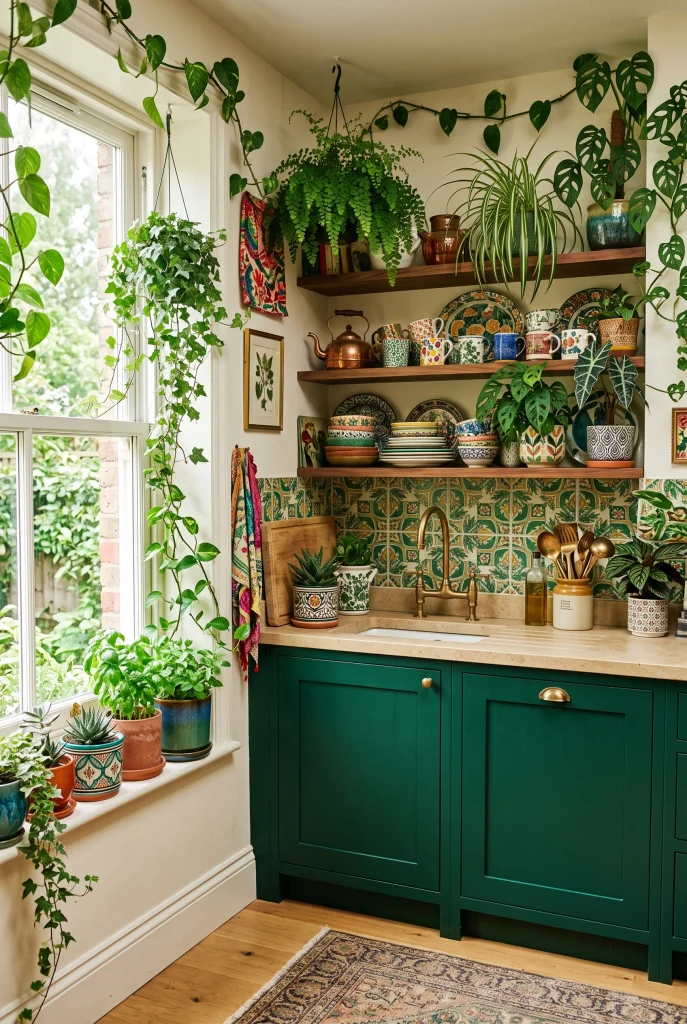
- Plants bring freshness and softness to hard kitchen surfaces.
- Use different plant heights to create a fuller, layered display.
- Decorative ceramic pots can reinforce the kitchen’s color palette.
- Choose low-maintenance varieties for spaces with changing temperatures.
A few well-placed plants can make a maximalist kitchen feel fresher, warmer, and more connected to nature. Create a dedicated corner with a tall leafy plant, trailing vines, small potted herbs, and colorful ceramic planters. Different heights keep the arrangement visually interesting without requiring more furniture. Plants also soften the strong lines of cabinets, counters, and appliances, giving the room a more relaxed appearance. If your kitchen receives good daylight, a plant-filled corner can become a natural focal point that adds color without relying entirely on paint, tile, or decorative accessories.
Choose plants according to the actual conditions of your kitchen rather than appearance alone. Areas near sunny windows may suit herbs or light-loving plants, while darker corners need varieties that tolerate lower light. Keep pots away from direct heat and places where water could damage cabinetry or counters. A decorative tray underneath smaller plants makes watering easier and protects surfaces. Grouping several plants together often looks more intentional than scattering single pots throughout the room. Add one or two colorful planters that echo nearby decor, and the greenery will feel like part of the overall design.
20. Statement Refrigerator
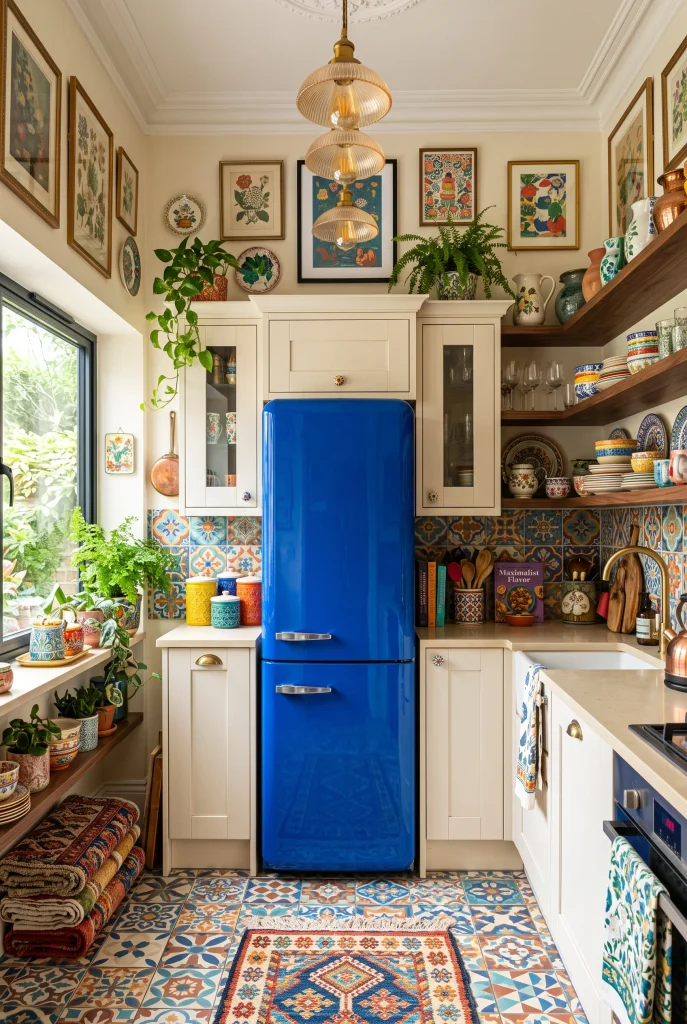
- A colorful refrigerator can function like a large decorative accent.
- Choose a finish that complements rather than duplicates the cabinetry.
- Repeat its strongest color through smaller kitchen accessories.
- Keep nearby surfaces visually simple so the appliance remains the focal point.
A statement refrigerator can become an unexpected centerpiece in a kitchen filled with personality. Instead of choosing a standard stainless-steel finish, consider a bold blue, soft pastel, rich green, or retro-inspired cream appliance. Its large surface provides plenty of visual impact, so you can create a dramatic look without adding more decorative objects. This works especially well when the rest of the kitchen has simpler cabinetry or countertops. The refrigerator becomes almost like a piece of furniture, giving the room a distinctive focal point while remaining completely practical for everyday storage.
The strongest result comes from treating the refrigerator color as part of the broader palette. Repeat a small amount of its shade in artwork, dishware, textiles, or a nearby stool rather than matching everything exactly. If the appliance has a glossy finish, balance it with matte cabinetry or natural wood to add texture. Before choosing a bold model, check its dimensions, door clearance, and surrounding ventilation requirements. Those practical details matter in real kitchens. A beautiful appliance should still open comfortably and function well within the existing layout.
21. Maximalist Breakfast Nook
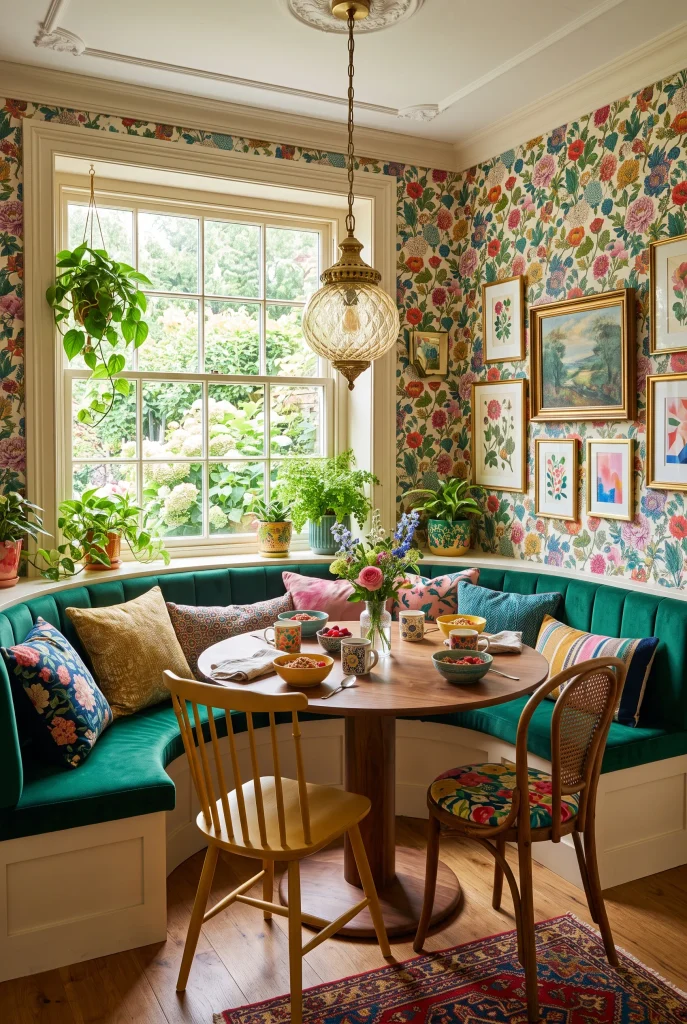
- A breakfast nook creates a dedicated spot for relaxed everyday meals.
- Patterned cushions are an easy way to introduce several colors.
- A round table encourages comfortable conversation in compact corners.
- Built-in seating can make unused wall space more functional.
A breakfast nook gives a colorful kitchen another opportunity to feel personal and inviting. A curved banquette, patterned cushions, colorful chairs, and a small round table can transform an unused corner into a comfortable place for morning coffee, casual meals, or evening conversations. Choose upholstery that connects with the kitchen’s existing palette, then add contrasting artwork or wallpaper for extra personality. Because the nook is visually separate from the main cooking zone, you can experiment with stronger patterns here without making every kitchen surface equally busy.
Comfort should remain central to the design. Make sure the seating has enough depth, and choose a table size that leaves comfortable walking space around it. A round or oval table often works particularly well because it softens the surrounding cabinetry and allows easier movement. Washable cushion covers are useful for households where the nook gets daily use. If you have a narrow corner, a built-in bench can provide efficient seating while adding storage underneath. This combination of function and expressive styling makes the space feel useful rather than simply decorative.
22. Patterned Kitchen Curtains
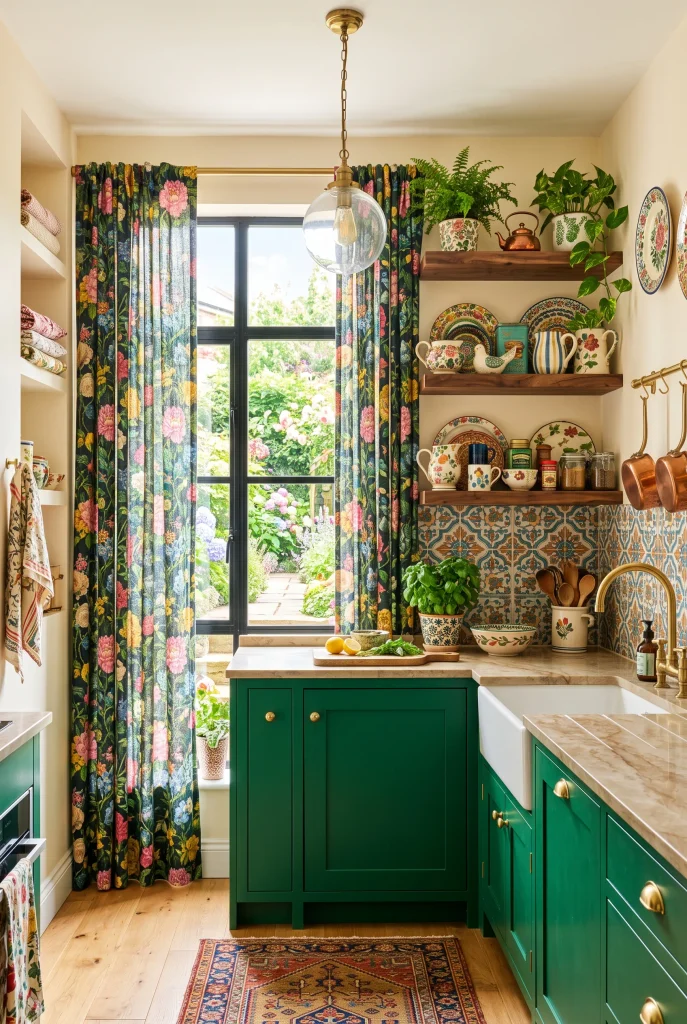
- Patterned curtains add softness to kitchens filled with hard surfaces.
- Floral, striped, or geometric fabrics can introduce another layer of color.
- Choose washable materials for easier everyday maintenance.
- Repeat one curtain color in nearby accessories for a cohesive finish.
Patterned curtains can instantly soften a kitchen while adding another layer of color and texture. Floral prints, bold stripes, playful checks, and geometric fabrics work beautifully when the room already embraces expressive decorating. Choose a pattern that includes colors from your cabinets, backsplash, or artwork so the window treatment feels connected to the rest of the space. Lightweight linen blends can keep the room feeling airy, while richer fabrics create a cozier atmosphere. Even a small kitchen window can become a noticeable decorative feature when the fabric has enough personality.
Practical fabric choices make this idea much easier to live with. Kitchens collect moisture, odors, and occasional splashes, so washable curtains are often preferable to delicate materials that require special care. Keep fabric safely away from stovetops and other heat sources, and consider a Roman shade if there is limited space beside the window. Repeating just one curtain color elsewhere can make a busy pattern feel surprisingly cohesive. Add that shade through a ceramic piece, tea towel, or small artwork rather than matching every accessory, keeping the overall effect collected.
23. Colorful Ceiling Beams
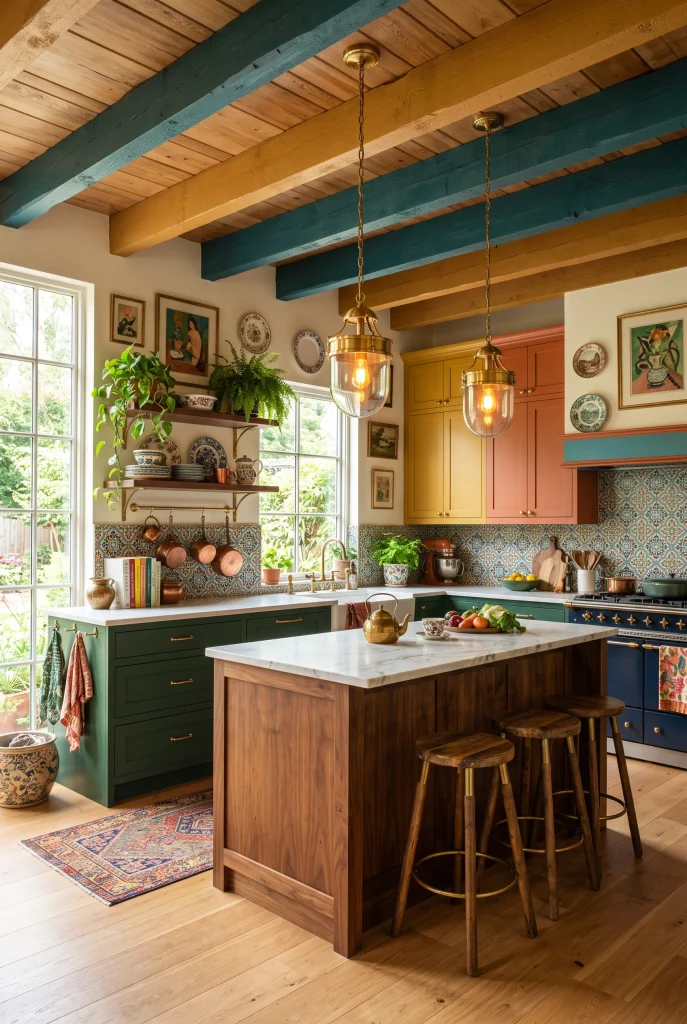
- Painted beams add architectural character while drawing attention upward.
- Use two related colors if you want a playful but organized effect.
- Natural wood beams provide warmth when the rest of the kitchen is colorful.
- Keep the beam treatment proportional to the room’s ceiling height.
Ceiling beams can become a striking architectural layer when they are painted or finished with unexpected color. Instead of leaving structural details visually quiet, consider deep teal, warm mustard, terracotta, or another shade already present in the kitchen. The beams draw the eye upward and help create the immersive quality that makes maximalist spaces feel richly decorated. This idea is particularly effective in kitchens with high ceilings, where the upper portion of the room might otherwise feel empty. The added color gives the architecture a stronger relationship with the cabinetry and decorative elements below.
Balance is important when adding color overhead. If the kitchen already contains several strong patterns, using one beam color may create a cleaner visual rhythm than alternating multiple shades. Natural wood is another option when you want warmth without additional saturation. Before painting existing beams, confirm whether they are structural and choose a suitable finish for the material. Ceiling details look most successful when at least one color repeats below eye level. A matching stool, ceramic vase, or textile can quietly connect the upper and lower parts of the room.
24. Layered Maximalist Styling
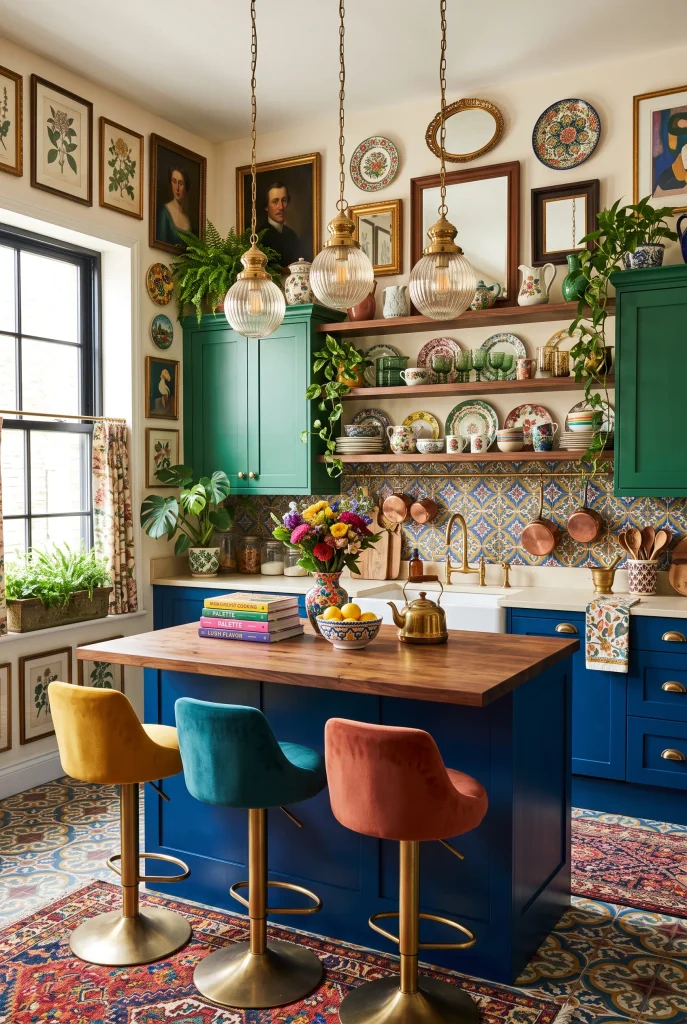
- Layer colors, patterns, textures, and objects gradually instead of adding everything at once.
- Give each major design element enough space to remain visually noticeable.
- Mix practical objects with decorative pieces for a lived-in appearance.
- Repeat colors throughout the room to create cohesion among contrasting details.
The most successful maximalist kitchens feel abundant without becoming difficult to use. Instead of choosing one bold feature and stopping there, layer several elements that work together: colorful cabinets, patterned tile, expressive artwork, textured textiles, plants, decorative dishware, and interesting lighting. The secret is repetition. When colors or materials appear in several places, the eye naturally connects them. This creates a cohesive room even when individual pieces are dramatically different. The result feels collected over time, personal, and full of character rather than decorated from a single matching set.
Build the room in stages so you can see when enough is enough. Start with the largest permanent elements, such as cabinets, flooring, and backsplash, then introduce lighting, furniture, artwork, and accessories. Leave some quieter surfaces between busier areas so the eye has places to rest. Practicality matters too; frequently used counters and storage areas should remain accessible. Small changes like adding colorful stools, displaying favorite ceramics, or introducing one large artwork can make a kitchen feel dramatically richer. Choose pieces you genuinely enjoy, and the finished room will feel much more authentic.
Conclusion
A maximalist kitchen gives you permission to have fun with color, pattern, texture, and personality. The best results come from layering bold details thoughtfully while keeping everyday function in mind. From statement islands and colorful cabinetry to artwork, plants, patterned textiles, and collected dishware, even small changes can make the room feel completely different. Choose the ideas that fit your space and personal style instead of trying to use everything at once. Save this post on Pinterest so you can revisit your favorite maximalist kitchen ideas later, and share it with someone who loves expressive interiors. Your dream kitchen can be practical, colorful, and uniquely yours.