17 Moody Living Room Decor Ideas for a Stylish Home
A dark living room can feel incredibly inviting when the right colors, textures, and lighting work together. Moody living room design is all about creating depth without making the space feel gloomy or closed in. Think rich walls, warm wood, soft textiles, dramatic seating, and gentle pools of light that make the room feel layered and comfortable. Whether your space is large or compact, small changes can create a noticeable difference. From deep green drapes to textured rugs and warm metallic accents, these ideas show how to build a sophisticated atmosphere while keeping the room practical for everyday life.
1. Charcoal Sofa
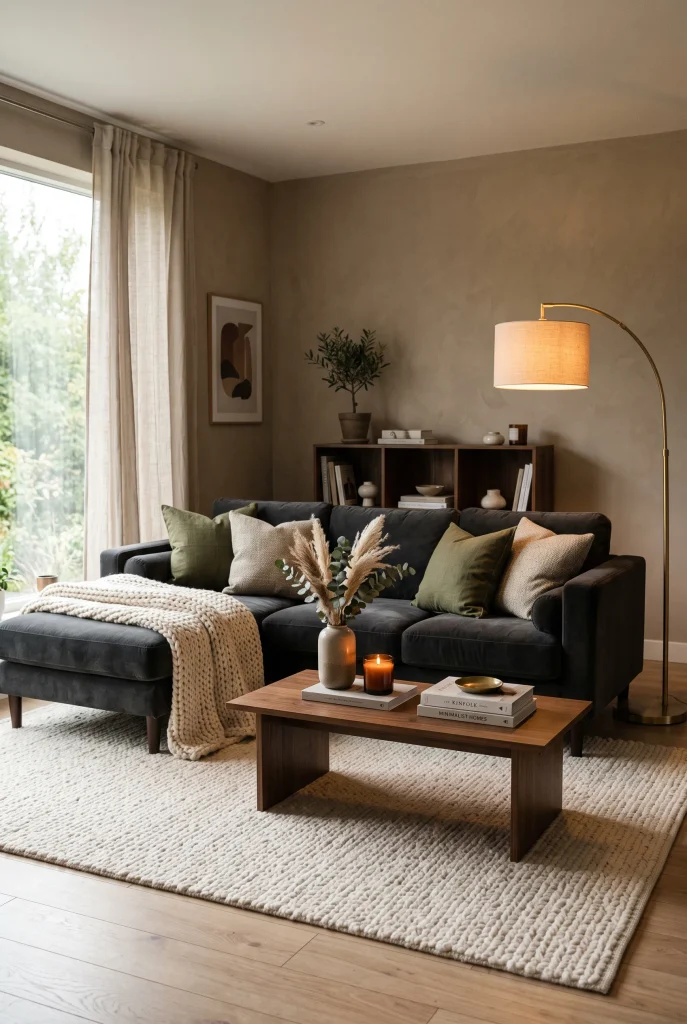
- A charcoal sofa creates an instant focal point without needing bold patterns.
- Pair dark upholstery with lighter textiles to keep the room inviting.
- Walnut or oak accents add warmth against the deeper seating.
- Textured cushions can soften the strong visual weight of the sofa.
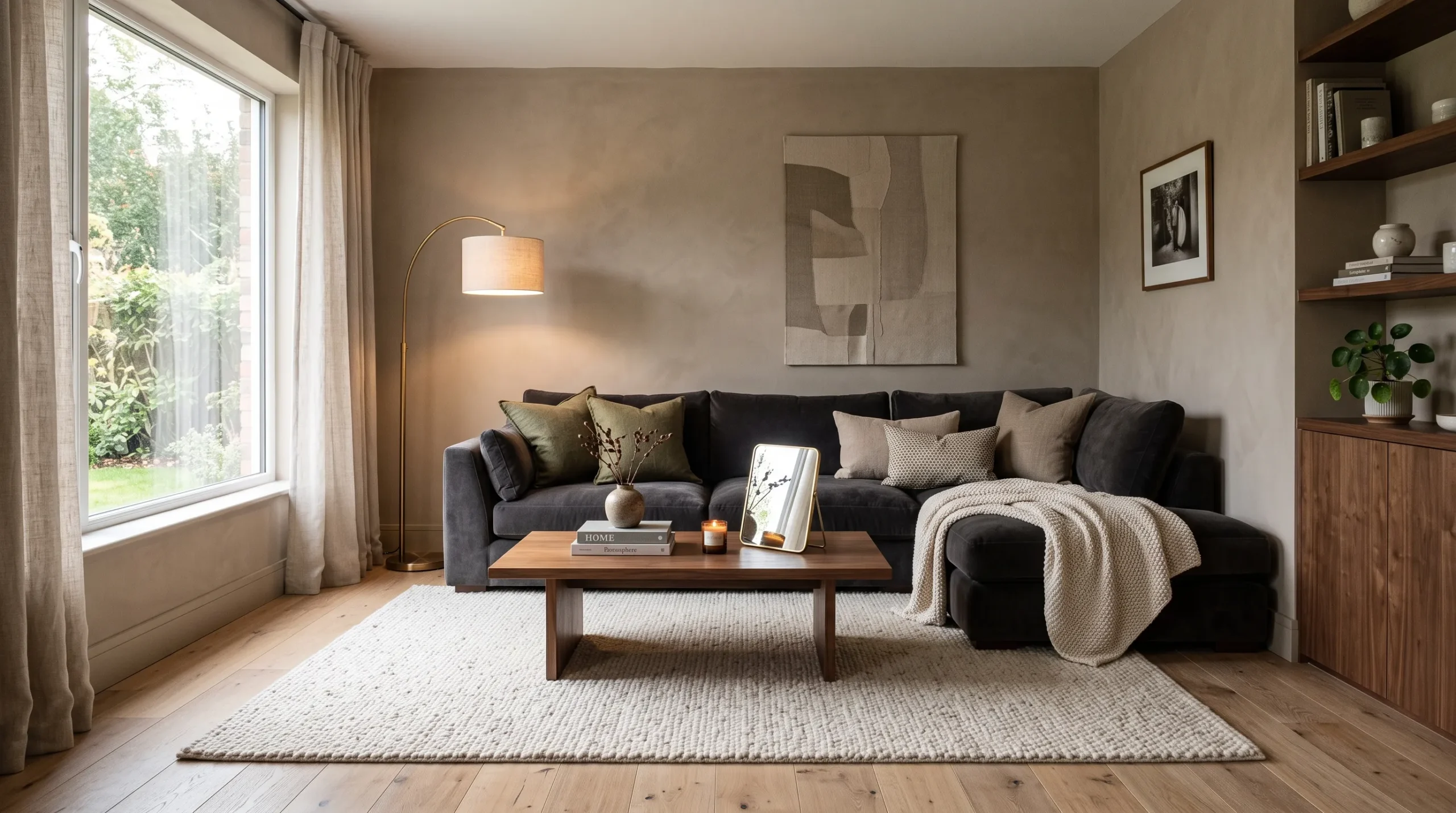
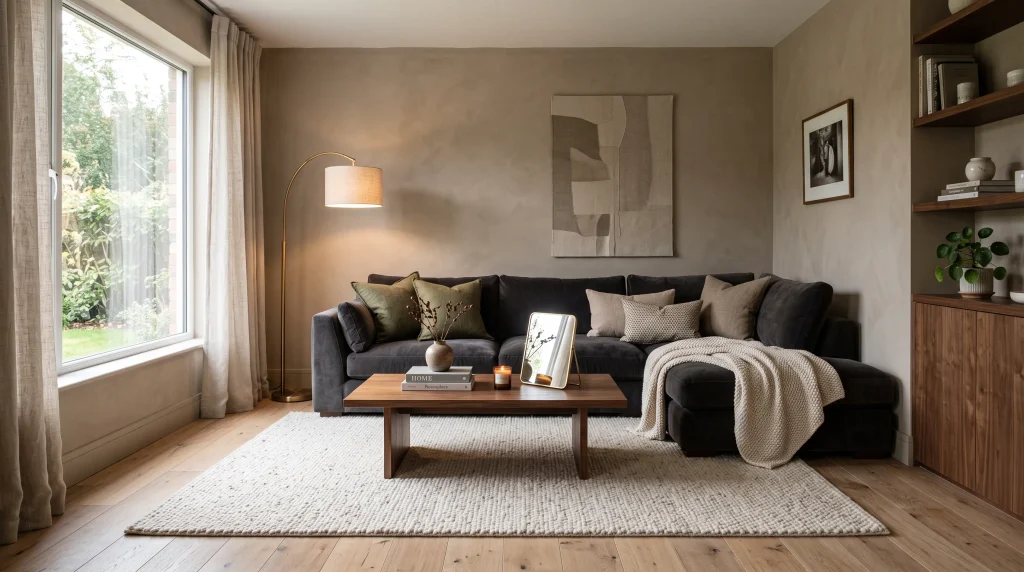
A deep charcoal sofa can instantly give a living room the moody depth that lighter upholstery often misses. Choose a simple, comfortable silhouette in charcoal, graphite, or soft black, then balance it with lighter rugs, curtains, or natural wood so the room still feels welcoming. A low-profile sofa works especially well in contemporary spaces, while a plush shape suits a more relaxed look. Add a few textured cushions in taupe, cream, or muted olive to soften the darker base. The result feels layered and sophisticated without making the room look heavy.
The beauty of a charcoal sofa is how easily it becomes the visual anchor of the room. Instead of competing with surrounding pieces, its dark tone gives artwork, wood furniture, metallic accents, and textured fabrics more definition. Place it against a warm neutral or deep-toned wall and keep the floor slightly lighter for contrast. A large area rug can help connect the seating area while preventing the sofa from appearing isolated. For everyday living, choose durable upholstery and washable cushion covers when possible. These small choices make the dramatic look much easier to maintain.
2. Dark Accent Wall
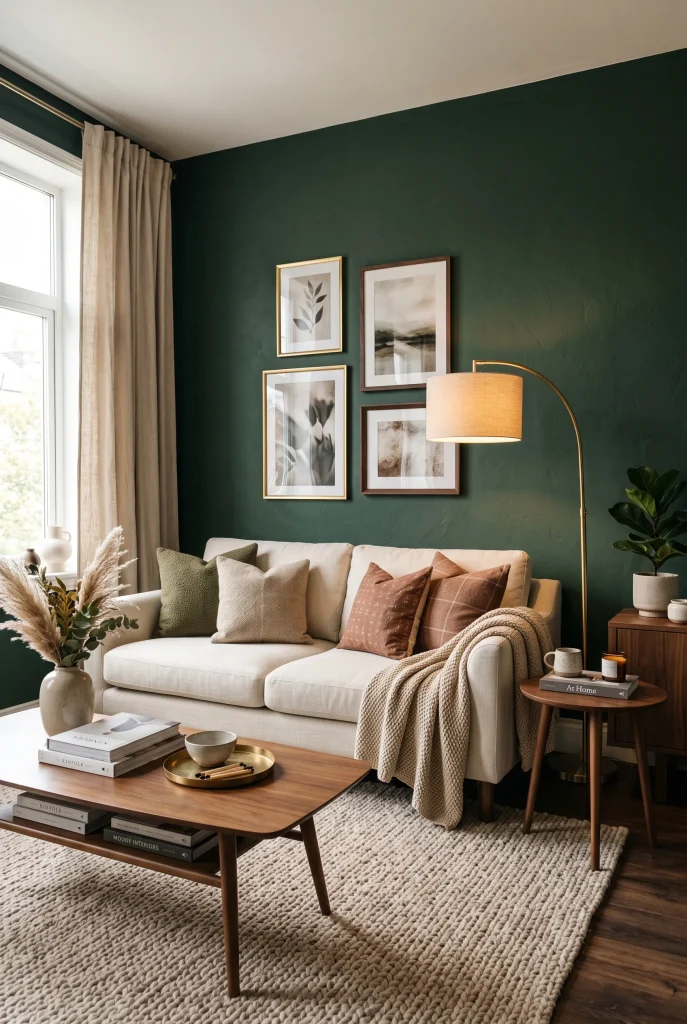
- A dark accent wall gives the seating area instant visual depth.
- Deep green, charcoal, or smoky blue can work beautifully.
- Matte finishes create a softer and more sophisticated appearance.
- Repeat the wall color through small accessories for a cohesive look.
Nothing sets a dramatic foundation quite like a dark accent wall behind the main seating area. Deep green, charcoal, espresso brown, or smoky blue can create a rich backdrop while making lighter furniture and artwork stand out beautifully. The key is to repeat the wall color in small details rather than covering every surface in the same shade. Try dark frames, a cushion, or a ceramic accent for subtle connection. Matte paint usually gives the most refined effect because it absorbs light instead of creating distracting reflections. Keep nearby pieces simple so the wall remains the main visual feature.
A dark wall can make a living room feel intimate without making it feel closed in when the rest of the palette is balanced carefully. Pair it with warm wood, creamy upholstery, woven textures, and a rug that introduces a little brightness. If the room receives limited daylight, use layered lamps instead of relying on one ceiling fixture. This keeps the darker backdrop atmospheric after sunset while preserving useful task lighting. A deep color also gives framed art a gallery-like quality. The finished space feels intentional, cozy, and polished rather than simply painted dark.
3. Warm Wood Accents
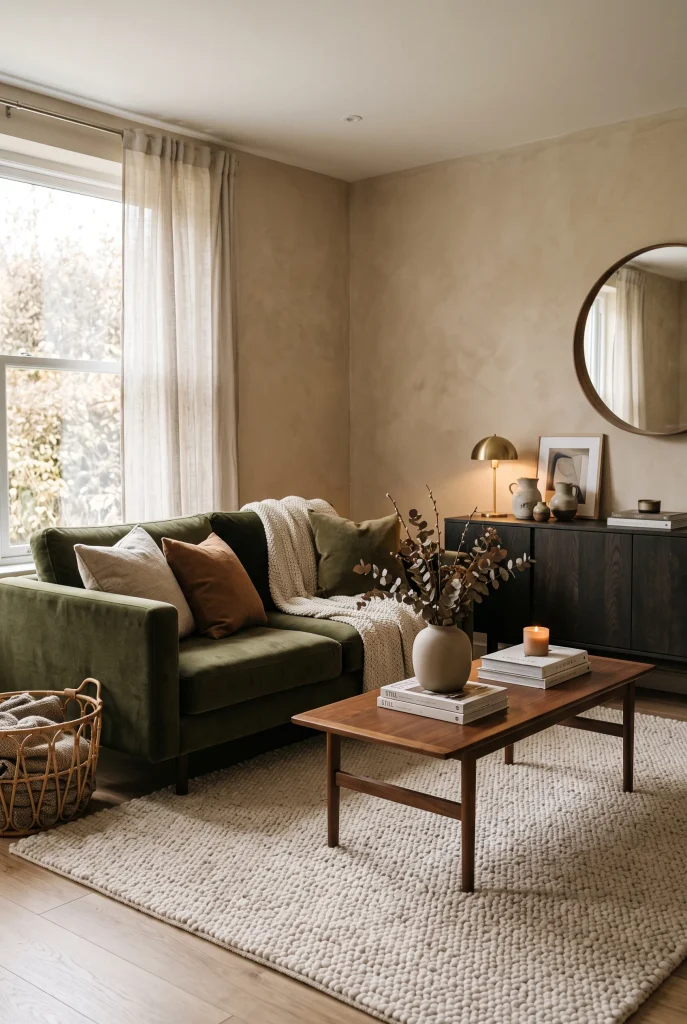
- Warm wood prevents darker rooms from feeling cold or overly formal.
- Walnut and smoked oak work especially well with deep color palettes.
- Mix slightly different wood tones for a collected appearance.
- Natural grain adds texture without introducing visual clutter.
Warm wood is one of the easiest ways to keep a dark living room from feeling cold. Walnut, smoked oak, and medium-toned timber bring natural variation that softens deep wall colors and dark upholstery. Use wood through a coffee table, media console, side tables, shelving, or even a simple decorative stool. Avoid matching every piece exactly; slightly different grains and tones create a more collected look. Pair the wood with linen, boucle, wool, or woven accessories for added texture. This combination works especially well when you want a sophisticated room that still feels comfortable enough for everyday lounging.
A darker palette becomes much more inviting when natural wood is allowed to add warmth and contrast. Start with one substantial wooden piece, such as a walnut coffee table, then repeat smaller touches around the room. The wood can visually break up charcoal, brown, or deep green surfaces while adding an organic quality. Keep the surrounding accessories restrained so the grain remains visible rather than getting lost among too many decorations. This approach is also practical because wood ages gracefully and works with many decorating styles. The overall effect is rich, grounded, and relaxed without losing its polished character.
4. Plum Velvet Seating
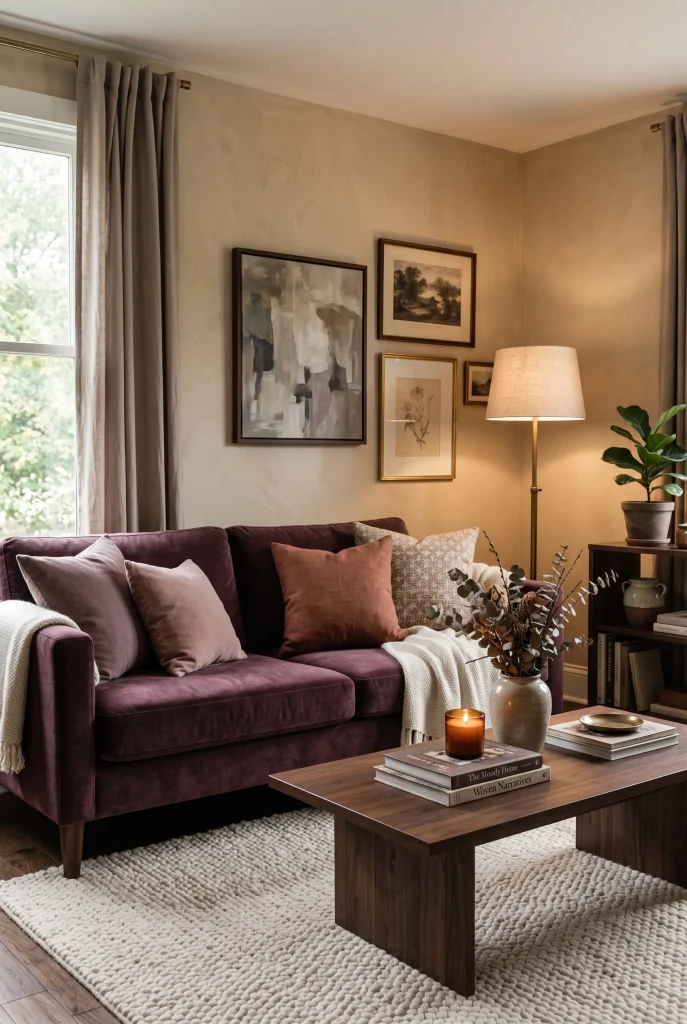
- Plum velvet adds rich color without making the room feel overly dark.
- A lighter rug keeps the seating area visually balanced.
- Brass accents complement the warm undertones beautifully.
- Choose performance velvet if the sofa will get frequent everyday use.
Few materials make a living room feel as rich as velvet, especially in a deep plum shade. A plum sofa or accent chair introduces color while keeping the overall palette sophisticated and slightly mysterious. Balance the saturated upholstery with warm neutrals such as cream, beige, or soft taupe. Walnut furniture and aged brass details can reinforce the cozy atmosphere without competing for attention. Keep patterns simple and let the velvet become the statement. The subtle sheen catches light throughout the day, giving the seating a dimensional quality that flat fabrics cannot easily achieve.
Plum works particularly well when you want a darker room that still has personality. Instead of adding several strong colors, let the velvet provide most of the visual interest and repeat its undertone through smaller accessories. A mauve cushion, muted artwork, or dusty rose ceramic piece can create a gentle connection. If the room is small, use the color on one substantial chair rather than a large sectional. This keeps the palette dramatic without overwhelming the available space. Add warm lamps in the evening, and the velvet will develop an especially inviting depth.
5. Layered Ambient Lighting
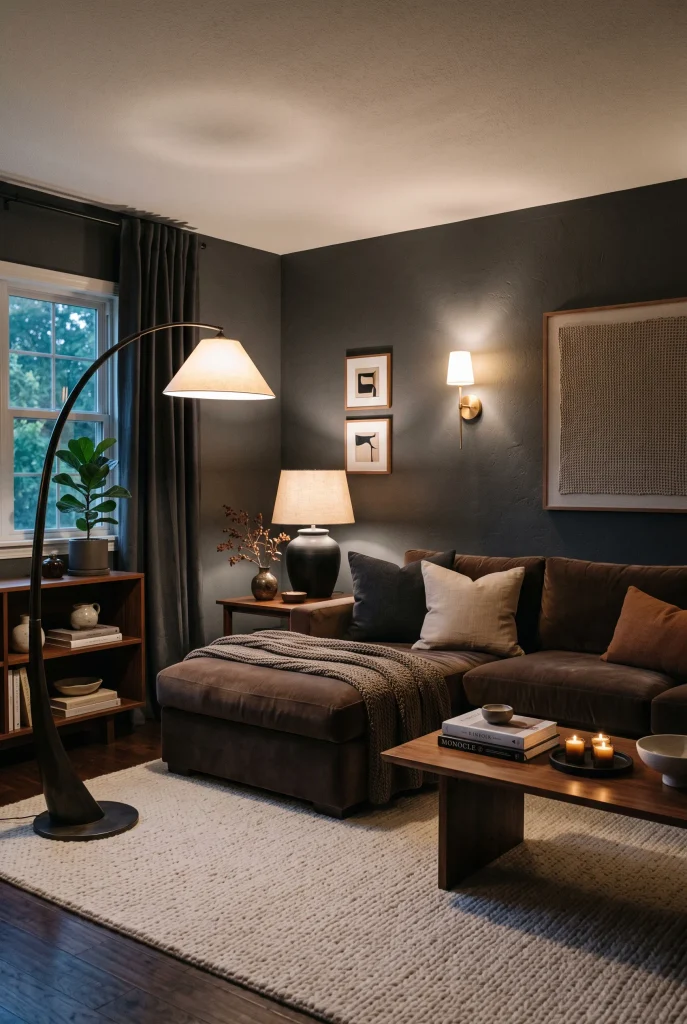
- Multiple light sources make dark interiors feel warm instead of gloomy.
- Floor and table lamps help create comfortable evening zones.
- Warm bulbs complement deep paint colors and wood furniture.
- Dimmable fixtures make it easier to shift the room from daytime to evening.
Lighting can completely change how a darker living room feels after sunset. Instead of relying on one bright ceiling fixture, create several small pools of warm light around the space. Place a floor lamp beside the sofa, a table lamp on a console, and another light near a reading chair or shelf. This layered approach reduces harsh shadows and makes the room feel more intimate. Choose warm white bulbs rather than cool daylight tones, especially when the walls or furniture have deep colors. The goal is not brightness everywhere, but comfortable illumination where people actually spend time.
The right lighting also helps reveal the textures that make a moody space interesting. A boucle chair, velvet cushion, wood grain, or plaster wall can look flat under a single overhead light but gain depth when illuminated from different heights. Use shades that soften the glow, and consider dimmable fixtures for flexibility. In smaller rooms, wall sconces can provide useful light without taking up floor or table space. A few strategically placed lamps often create more atmosphere than adding extra decorative objects. The result feels warm, intentional, and welcoming from afternoon through late evening.
6. Smoky Glass Tables
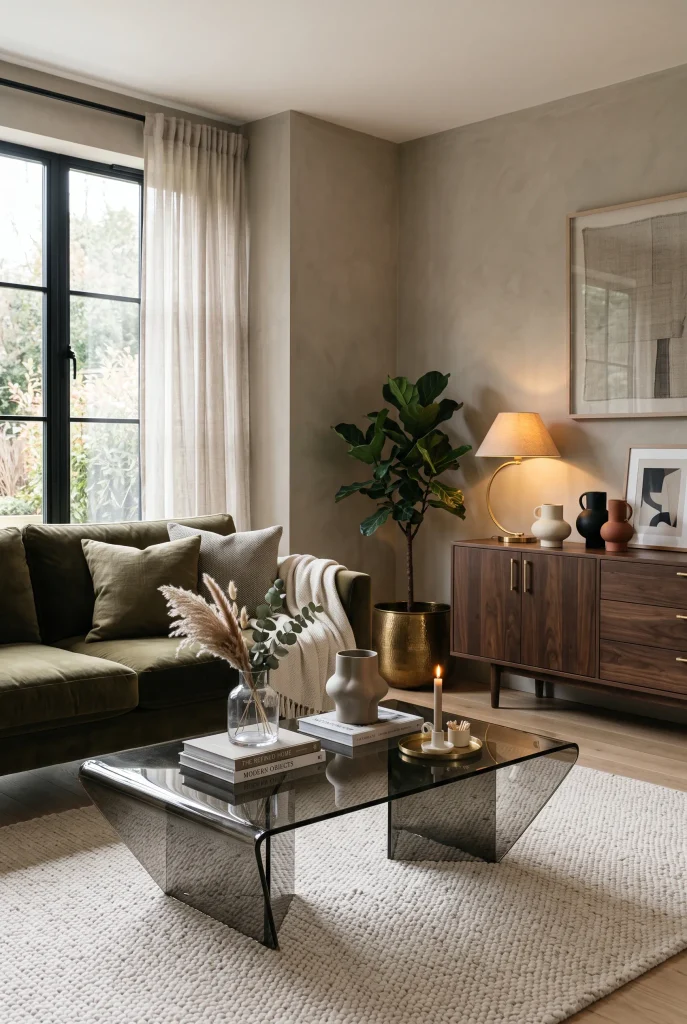
- Smoky glass adds drama while keeping the room visually open.
- Transparent surfaces work well in smaller living rooms.
- Dark glass pairs naturally with walnut and brass finishes.
- Keep tabletop styling minimal so the material remains the focal point.
A smoky glass coffee table brings a subtle dose of drama without adding another heavy block of color. Its translucent surface works beautifully with charcoal sofas, deep green walls, walnut furniture, and warm neutral textiles. Because you can see through the tabletop, the floor and rug remain visually connected, which can make the seating area feel more spacious. Choose a rounded shape if the room has many straight lines, or use a rectangular design when you want a cleaner contemporary arrangement. A few carefully chosen books and ceramic objects are enough to complete the surface.
The darker glass also reflects small amounts of light, adding movement without creating the harsh shine associated with mirrored furniture. This makes it useful when you want a sophisticated finish but prefer a softer look. Keep surrounding materials tactile, such as wool rugs, linen curtains, or woven baskets, so the table does not make the room feel too sleek. For busy households, look for tempered glass and rounded edges where appropriate. Pairing transparent furniture with substantial upholstery creates a balanced mix of weight and openness, giving the entire room a polished yet comfortable character.
View: 21 Small Bedroom Vanity Ideas That Look So Expensive
7. Moody Gallery Wall
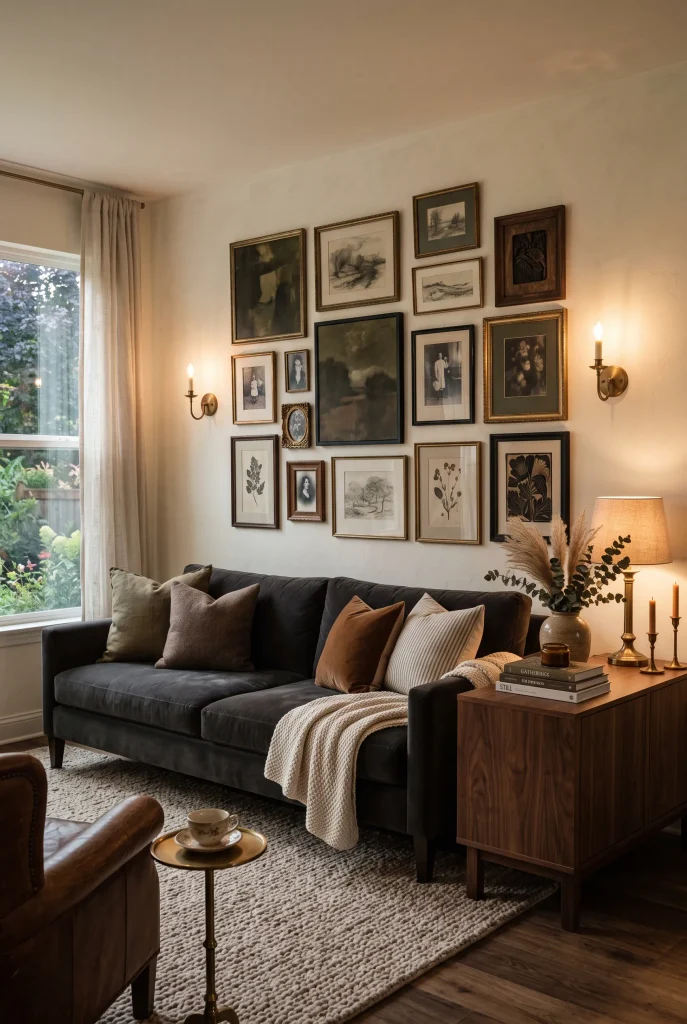
- A gallery wall adds personality to a darker room without introducing too many colors.
- Black, walnut, and antique brass frames create a cohesive look.
- Mix artwork sizes to make the arrangement feel collected rather than rigid.
- Leave enough wall space around the display so it stays visually calm.
A carefully arranged gallery wall can make a darker living room feel personal rather than overly styled. Choose artwork with related undertones, such as muted olive, rust, cream, brown, charcoal, and dusty blue. Different frame sizes add interest, while black, walnut, or aged brass frames help the collection feel connected. Place the display above the sofa or console where it naturally becomes a focal point. Instead of filling every inch, leave comfortable spacing between pieces. This gives the arrangement room to breathe and keeps the overall composition sophisticated rather than cluttered.
Gallery walls are especially useful when the furniture palette is intentionally restrained. Artwork can introduce character without requiring another major furniture purchase or dramatic color change. Try mixing photography, abstract prints, vintage-inspired pieces, and small decorative objects for a more collected appearance. Before hanging everything, arrange the pieces on the floor to test spacing and balance. Keep the center around eye level for comfortable viewing. Using a limited color family makes even a mix of unrelated artwork feel surprisingly cohesive. The result adds depth while making the room feel distinctly lived-in.
8. Deep Green Drapes
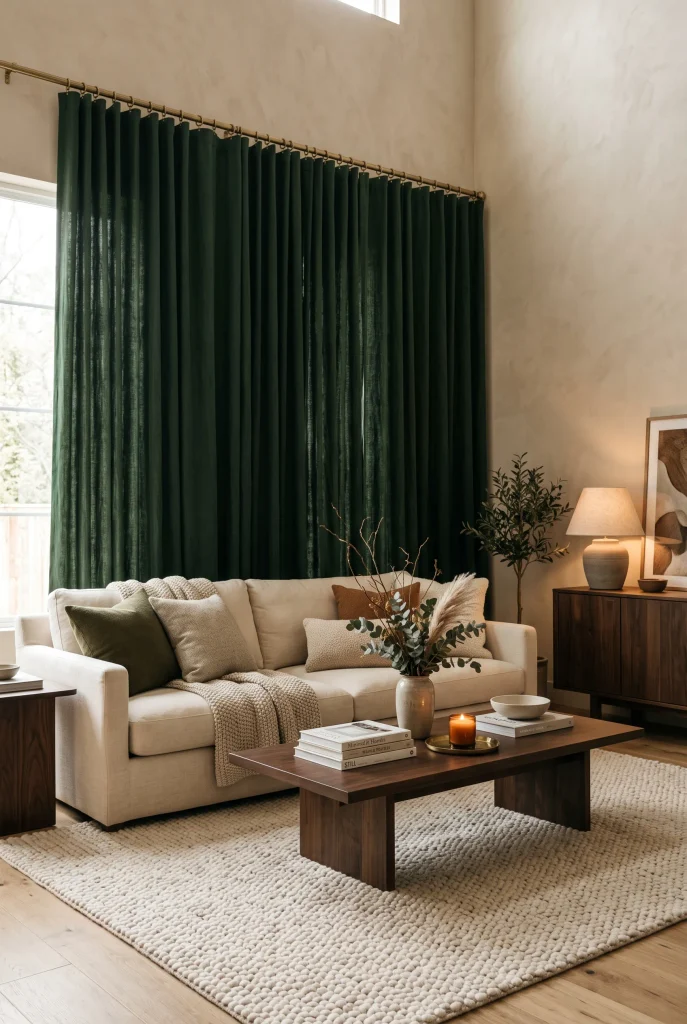
- Deep green curtains frame windows and add instant visual weight.
- Floor-to-ceiling panels can make the ceiling appear taller.
- Linen or textured fabrics soften the richness of the color.
- Keep the curtain hardware simple so the fabric remains the focus.
Deep green drapes can transform an ordinary window into one of the room’s strongest design features. Forest, olive, and moss tones work beautifully with cream upholstery, walnut furniture, and warm neutral walls. Choose panels that reach from close to the ceiling down to the floor to create a taller, more finished appearance. A textured linen blend can keep the color from looking too formal, while velvet gives a richer traditional effect. Let the curtains frame the window generously rather than stopping tightly at the glass. This creates a fuller, more luxurious appearance.
Window treatments also influence how a room feels throughout the day. During daylight hours, deep green panels filter brightness and soften the transition between the window and darker furnishings. In the evening, they provide a cocoon-like backdrop that complements warm lamps and candlelight. Repeat the green in just one or two smaller details, such as a cushion or artwork, instead of matching everything. This keeps the room layered and natural. If privacy is important, combine decorative drapes with simple sheers or blinds. You get flexibility without sacrificing the dramatic, cozy character.
9. Antique Brass Details
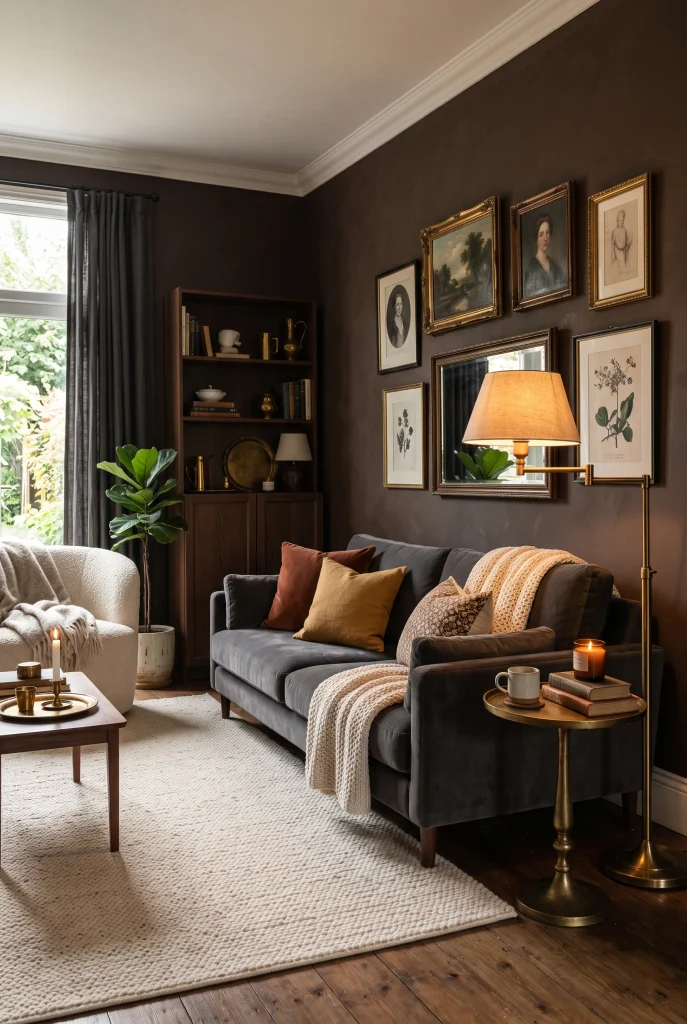
- Antique brass introduces warmth against deep colors and dark furniture.
- Aged finishes usually feel softer than bright polished metal.
- Repeat brass through two or three small pieces for balance.
- Lamps, picture frames, and hardware are easy places to introduce the finish.
Antique brass is a small detail that can make a darker living room feel noticeably warmer and more refined. Its aged golden tone works especially well beside charcoal, chocolate brown, forest green, and muted plum. Rather than covering the room with metallic finishes, introduce brass through a floor lamp, picture frames, side table, curtain hardware, or small decorative objects. Two or three repeated touches are usually enough to create visual connection. The slightly imperfect appearance of aged brass also pairs naturally with wood, stone, linen, and other materials that give a room character.
The finish becomes particularly effective when it catches warm light after sunset. A brass lamp beside a sofa can create a soft glow while adding a decorative shape to an otherwise simple corner. Pair it with dark wood for a traditional feeling or cleaner furniture for a more contemporary interpretation. Avoid combining too many competing metals unless the room already has a layered collected style. Keeping one dominant warm metal makes the space easier to coordinate. The finished look feels elegant without appearing flashy, which is ideal for a comfortable living room with darker tones.
10. Chocolate Brown Walls
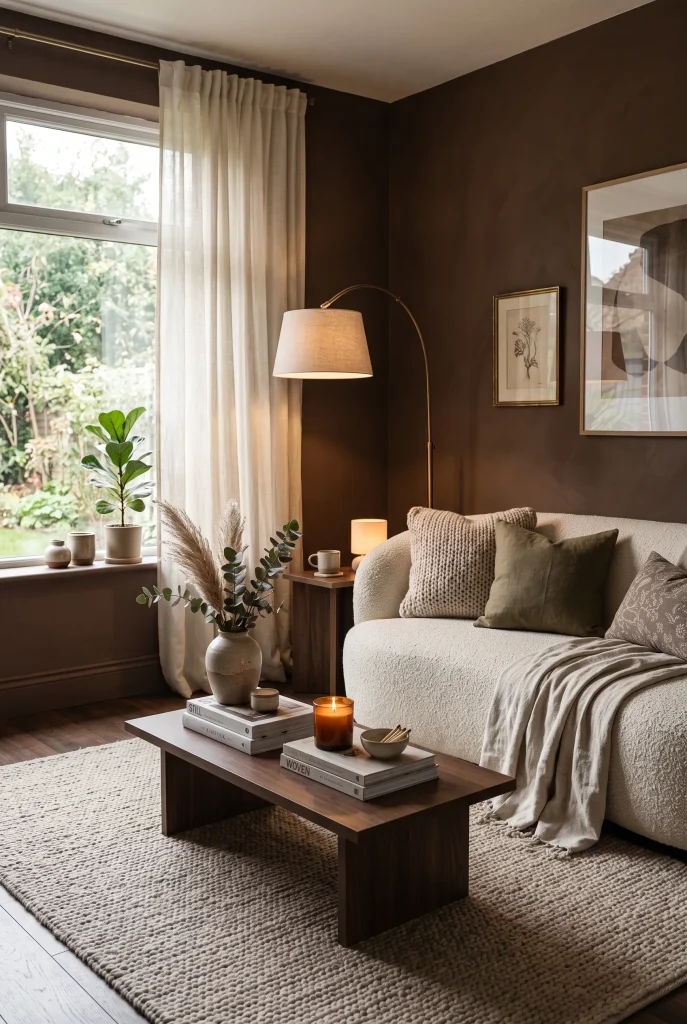
- Chocolate brown walls create warmth while keeping the room visually dramatic.
- Cream furniture provides enough contrast to prevent the palette feeling heavy.
- Walnut and brass accents complement the rich brown tones naturally.
- A matte finish keeps the walls soft and sophisticated.
Chocolate brown walls can give a living room a wonderfully grounded and intimate feeling. The deep earthy shade works particularly well with cream upholstery, natural wood, aged brass, and warm beige textiles. Instead of treating brown as a secondary accent, use it as the backdrop that connects the entire room. A matte finish can make the color feel softer and more sophisticated, especially when paired with textured fabrics. If the room receives plenty of daylight, the walls can shift beautifully throughout the day, appearing lighter in the morning and richer as evening approaches.
To keep deep brown walls from overwhelming the space, introduce several lighter surfaces at different heights. A cream sofa, pale rug, linen curtains, or light artwork can provide visual breathing room. Warm wood furniture will blend naturally into the palette while adding subtle tonal variation. Avoid using only cool whites because they can create a sharp contrast that feels disconnected. Instead, choose creamy and sandy neutrals with warm undertones. This creates a layered room where the dark walls feel intentional, cozy, and sophisticated rather than simply bold.
11. Oversized Floor Lamp
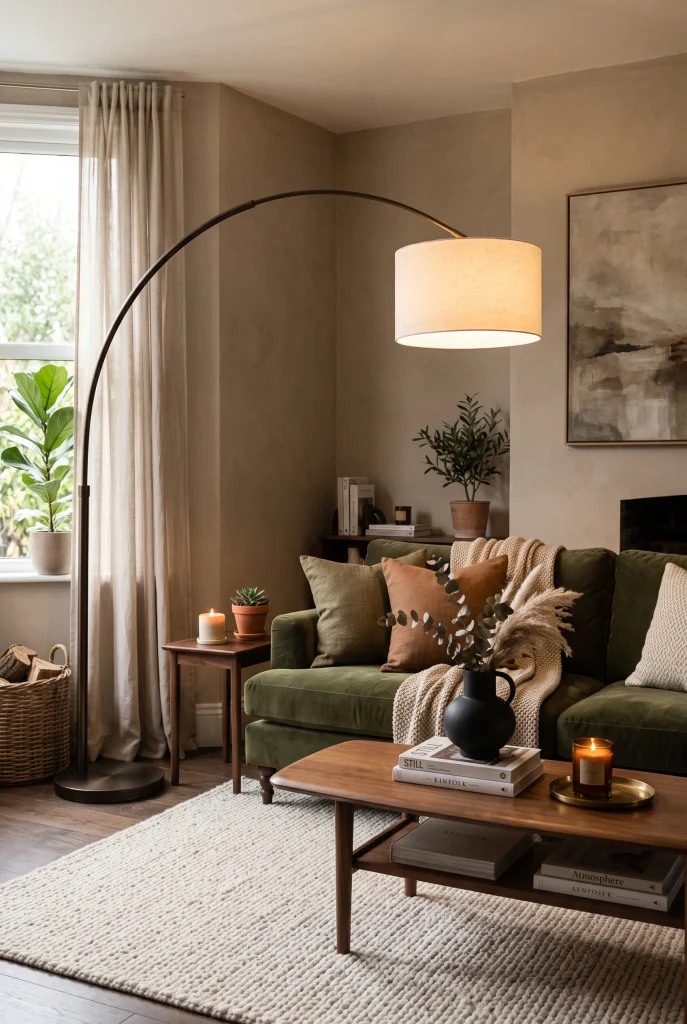
- A large floor lamp adds height and visual drama beside low furniture.
- Arched designs can illuminate seating without requiring a side table.
- Dark bronze or aged brass finishes complement deeper color palettes.
- Use a warm bulb to create a softer evening atmosphere.
An oversized floor lamp can make a moody living room feel both dramatic and functional. Choose an arched or sculptural design that rises above the seating area and directs light toward the sofa or coffee table. Dark bronze, aged brass, or black finishes work naturally with deeper palettes, while a fabric shade can soften the overall effect. Position the lamp beside a sofa or reading chair where it provides useful illumination without interrupting the room’s main walking path. Its height also adds vertical interest, especially when paired with low-profile furniture.
Beyond practical lighting, a large floor lamp can become a sculptural element that helps define the room. In a space with darker walls and furniture, its silhouette gives the eye another shape to notice without adding visual clutter. Keep the surrounding styling relatively simple so the fixture can stand out. A warm bulb will create a comfortable pool of light in the evening, highlighting nearby textures and wood tones. For smaller rooms, choose a slim base or adjustable arm so the lamp provides impact without consuming too much floor space.
12. Textured Neutral Rug
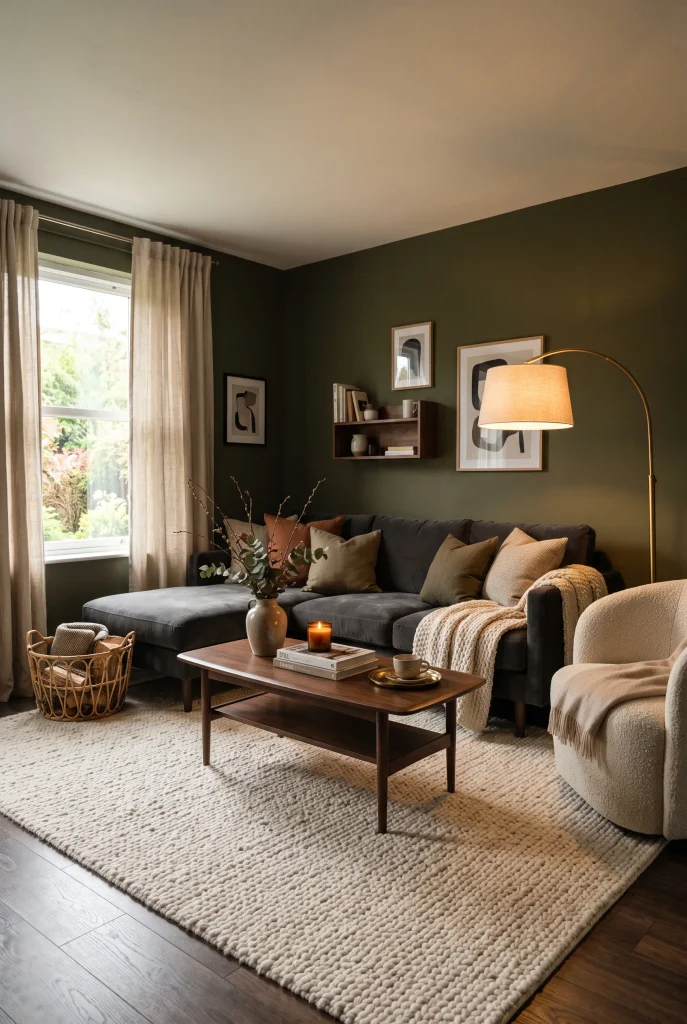
- A light textured rug balances darker furniture and walls.
- Wool, jute, and high-pile textures add warmth underfoot.
- Choose a large enough rug to connect the main seating pieces.
- Warm ivory usually works better than stark white in darker palettes.
A textured neutral rug can completely change the balance of a darker living room. Shades such as warm ivory, oatmeal, beige, or greige provide a lighter foundation beneath deep sofas and dark walls without creating harsh contrast. Look for wool, woven, or subtly patterned designs that add texture without competing with the rest of the room. The rug should ideally extend beneath the front legs of the main seating pieces so the furniture feels connected. This simple placement trick can make the entire arrangement look more intentional and comfortably proportioned.
The texture matters just as much as the color because tactile surfaces prevent a darker palette from feeling flat. A chunky wool rug can soften sleek furniture, while a woven design adds a relaxed organic quality. Keep the pattern understated if the room already includes bold artwork or richly colored upholstery. For everyday spaces, consider a durable low-pile option that is easier to vacuum and maintain. Pair the rug with curtains and cushions in nearby neutral shades rather than matching everything exactly. The finished room feels warm, layered, and inviting without losing its dramatic character.
13. Black Fireplace Surround
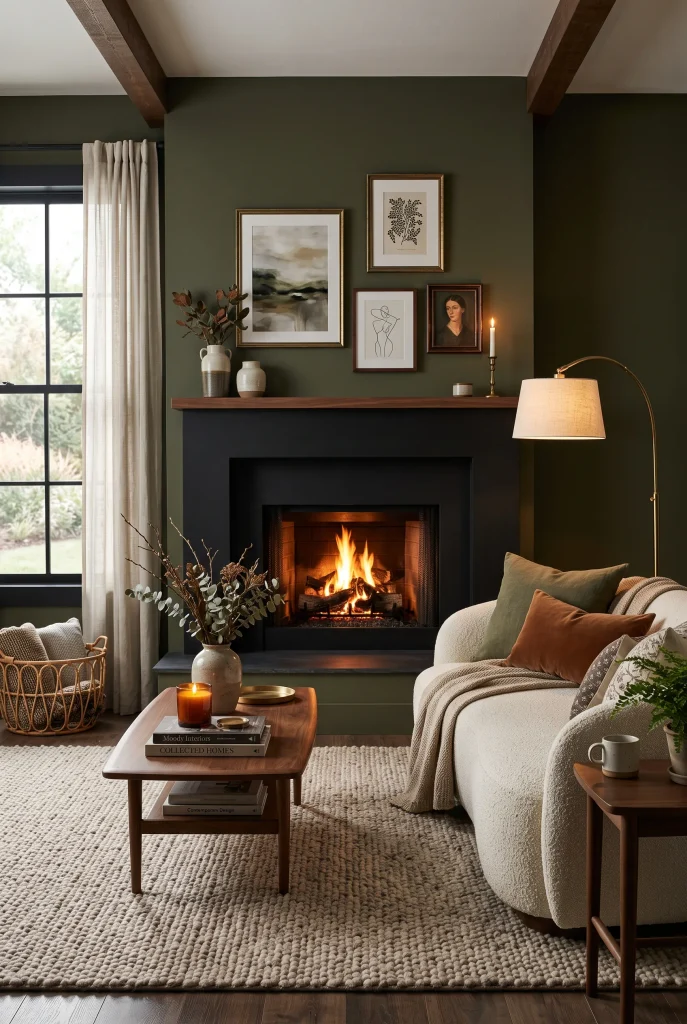
- A black fireplace creates a strong architectural focal point.
- Matte finishes keep the surround sophisticated rather than overly glossy.
- Cream upholstery and warm wood provide essential contrast.
- Keep the mantel styling restrained to highlight the fireplace shape.
A black fireplace surround can give a living room an architectural focal point with very little additional decoration. Matte black works especially well with deep green, warm brown, charcoal, or taupe walls because it adds definition without introducing another competing color. If the room already has a fireplace, painting the surround or updating its finish can create a noticeable transformation. Balance the dark structure with cream seating, warm wood, and a softly textured rug. These lighter elements keep the fireplace dramatic while preventing the room from becoming visually dense.
The fireplace can also anchor the furniture arrangement and give the entire room a natural center. Position the sofa and chairs to face or partially frame it, leaving enough circulation space around the seating. Keep mantel accessories simple, such as a ceramic vase, a small artwork, or a pair of candlesticks. If the fireplace is functional, follow appropriate safety clearances and use heat-resistant materials around the opening. Warm firelight will naturally enhance the darker palette, while nearby lamps can maintain comfortable illumination when the fireplace is not in use.
14. Moody Leather Sofa
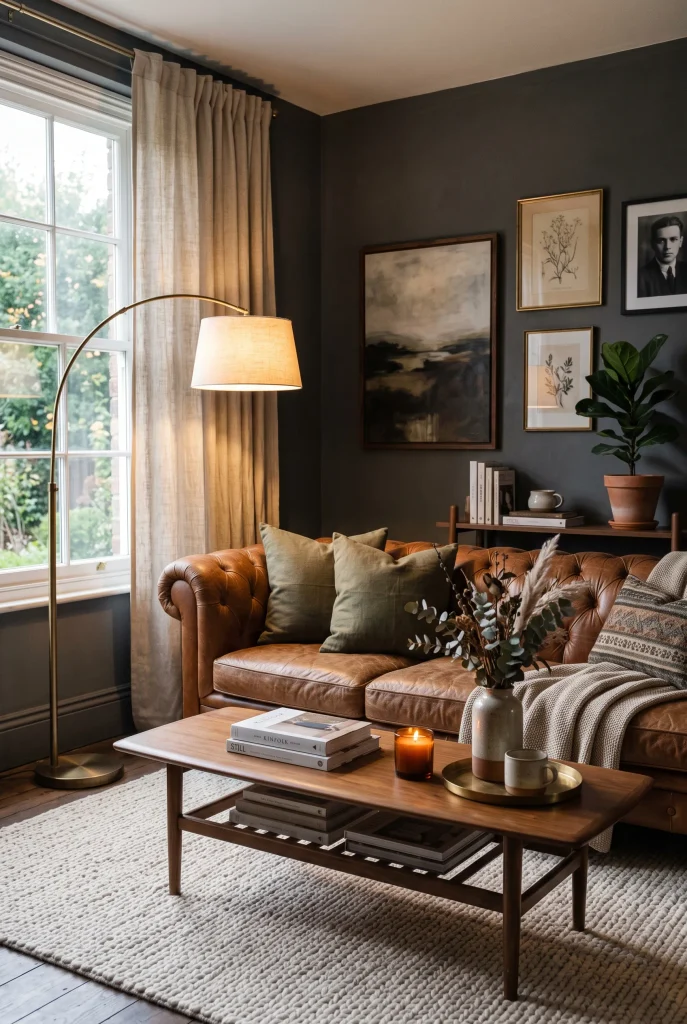
- Cognac leather adds warmth while keeping the palette sophisticated.
- Aged leather becomes more characterful over time.
- Cream textiles soften the stronger visual weight of the sofa.
- Walnut furniture creates a natural connection with warm leather tones.
A leather sofa can bring depth and character to a darker living room while remaining practical for everyday use. Cognac, tobacco, chestnut, and deep brown leather are especially effective because their warm undertones balance charcoal or green surroundings. The natural variation in leather gives the sofa visual texture, so the room does not need many additional patterns. Add soft cushions in linen, cotton, or wool to make the seating more comfortable and relaxed. A large neutral rug underneath can also soften the contrast between the leather and darker walls.
Leather becomes even more appealing when paired with materials that have a different tactile quality. Place a woven basket nearby, add a chunky throw, or use a stone or ceramic coffee table to create contrast. Avoid matching every brown element exactly; small tonal differences usually make the room feel more collected. For households with frequent use, leather can be practical because many surfaces are relatively easy to wipe clean, although care requirements vary by finish. Over time, quality leather can develop patina that adds even more personality.
15. Statement Stone Coffee Table
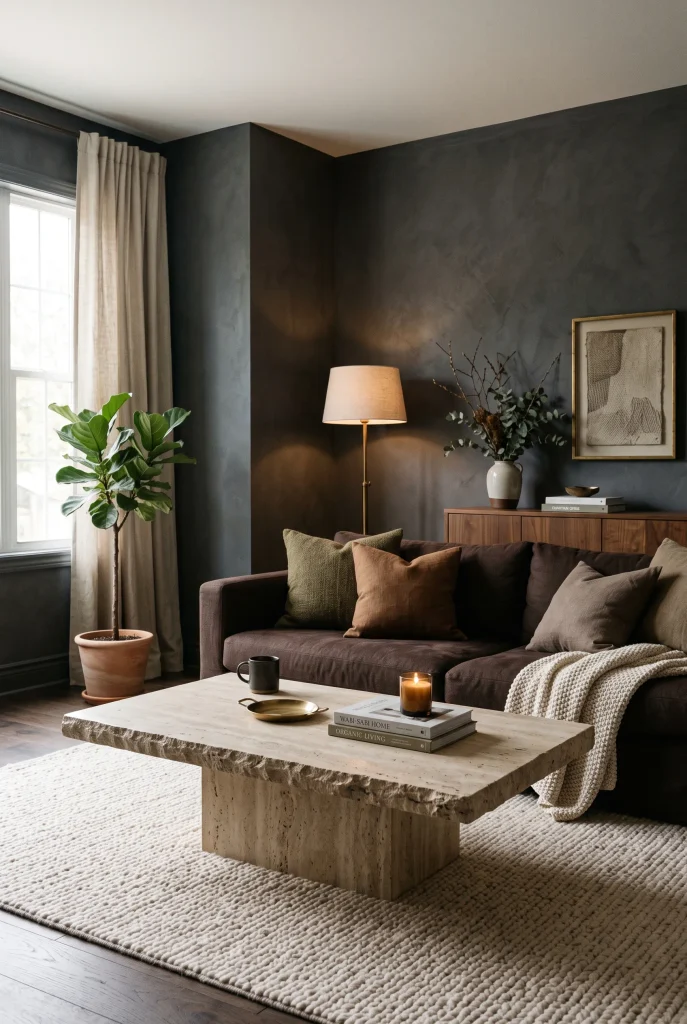
- A substantial stone table adds natural weight and visual interest.
- Travertine, limestone, or dark stone can suit deeper palettes beautifully.
- Rounded edges soften the presence of a larger coffee table.
- Keep accessories minimal so the stone remains the centerpiece.
A statement stone coffee table can give a moody living room a strong natural centerpiece without relying on bold color. Travertine, limestone, soapstone, and darker marble each create a different effect, but all can add substantial visual texture. Choose a rounded or softly sculpted shape if the surrounding furniture has many straight edges. The natural veining or surface variation becomes part of the room’s decoration, so you can keep tabletop accessories simple. Pair the table with deep upholstery, warm wood, and a neutral rug to create contrast between organic stone and softer materials.
Scale is especially important when choosing a substantial coffee table. It should feel generous enough to serve the seating arrangement but still leave comfortable walking space around it. Keep decorative objects limited to a few useful pieces, such as a tray, books, or a small ceramic vessel. This prevents the stone from disappearing beneath clutter. Natural stone works particularly well in darker rooms because its subtle variation catches daylight and warm lamp glow differently throughout the day. The result feels grounded, refined, and quietly luxurious.
16. Layered Dark Textiles
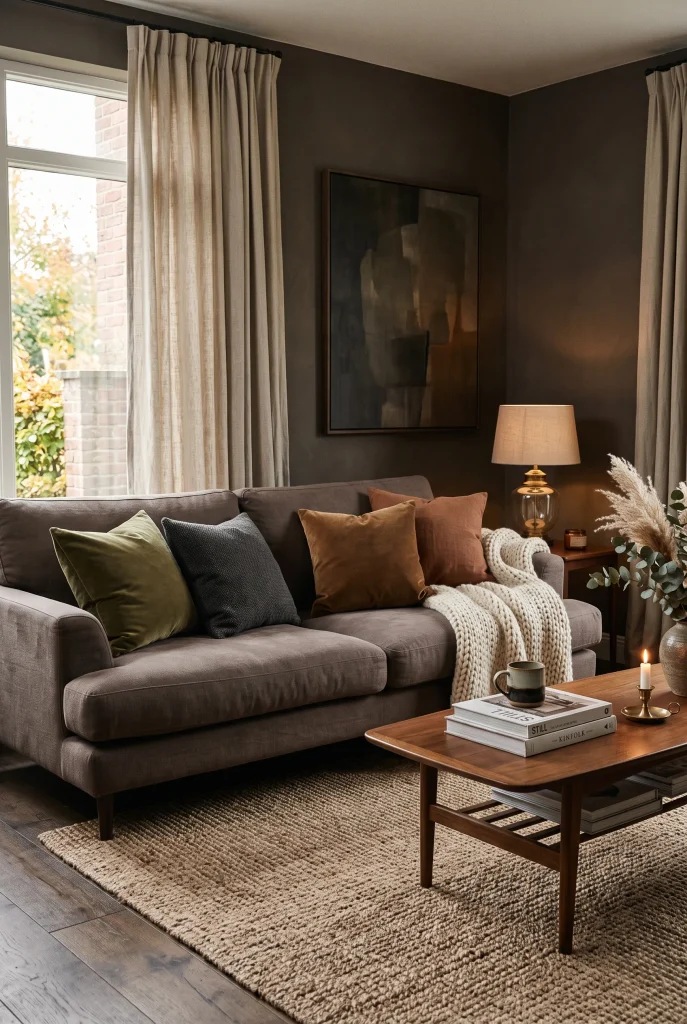
- Layered textiles make darker rooms feel softer and more comfortable.
- Mix velvet, linen, wool, and woven materials for visual depth.
- Keep colors within a related palette instead of adding too many shades.
- Throws and cushions offer an easy way to refresh the room seasonally.
Layering dark textiles is an easy way to make a living room feel rich without adding more furniture. Combine charcoal, olive, chocolate, rust, and muted taupe through cushions, throws, curtains, and rugs. The trick is to vary the texture so similar colors do not blend into one flat surface. Try velvet beside linen, chunky wool beside smooth cotton, or woven fabric beside boucle. These small contrasts catch light differently and give the room a more dimensional appearance. Keep the palette controlled, and the result will feel intentional rather than overly decorated.
Textiles also make a dramatic room more practical for everyday life because they can be changed without redesigning the entire space. Add a heavier wool throw during colder months, then switch to lighter linen cushions when the weather warms. Use a large rug to establish the base layer, followed by upholstery and smaller accessories at different heights. If the furniture is already visually heavy, choose lighter neutral textiles for balance. This approach lets you experiment with darker colors while keeping the room comfortable, flexible, and easy to update as your preferences change.
17. Warm Candlelight
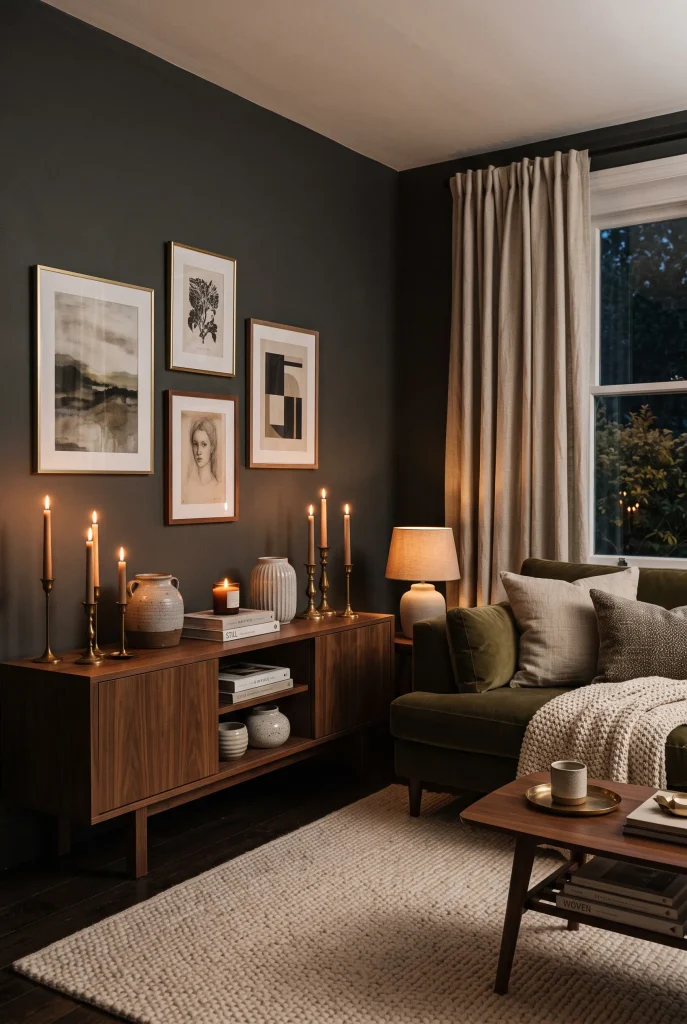
- Candlelight adds a soft glow that complements darker interiors beautifully.
- Group candles at different heights for a more natural arrangement.
- Brass and ceramic holders add subtle decorative interest.
- Place candles on stable, heat-safe surfaces away from fabrics and traffic areas.
Warm candlelight can give a darker living room an especially inviting atmosphere once natural daylight fades. Place a few candles on a console, coffee table, or fireplace mantel using holders in aged brass, ceramic, or dark glass. Varying the heights creates a softer, more layered glow than arranging identical candles in one straight line. Keep the surrounding decor simple so the light remains noticeable. Deep walls and warm wood naturally absorb and reflect the glow in subtle ways, making the room feel intimate without requiring brighter overhead lighting.
Candles work best as an atmospheric layer rather than the room’s only source of illumination. Combine them with warm table lamps, floor lamps, or wall sconces so the space remains comfortable and functional. Always use stable, heat-safe surfaces and keep open flames away from curtains, cushions, and other combustible materials. For homes with children or pets, flameless candles can provide a similar visual effect with less risk. Whether you choose real or battery-operated options, a small amount of warm glow can complete a dark palette and make the room feel calm, polished, and welcoming.
Conclusion
Creating a beautiful dark interior does not mean every surface needs to be dramatic. The best moody living room spaces balance deeper colors with warm wood, soft textiles, natural materials, and carefully layered lighting. Start with one idea that suits your existing furniture, then build gradually with textures and small accents. Even a simple dark wall or statement lamp can completely change the atmosphere. Save these ideas on Pinterest so you can revisit them when planning your space, and share the article with someone looking for cozy inspiration. Your living room can feel stylish, personal, and wonderfully inviting with just a few thoughtful changes.