20 Minimalist Entryway Decor Ideas for Small Spaces
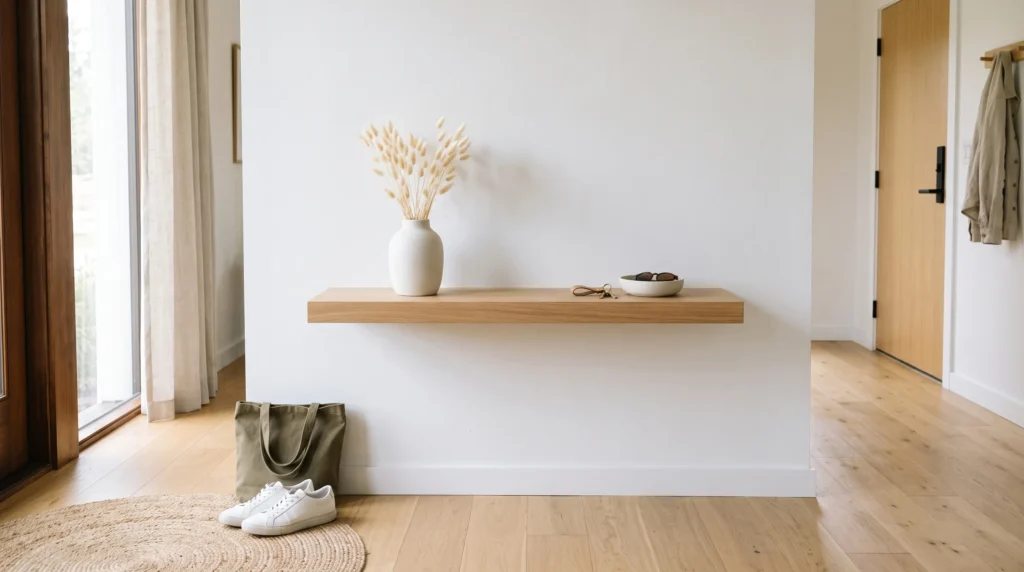
Stepping through your front door should bring an immediate sense of calm, but tight hallways and cluttered corners often make small entrances feel cramped and overwhelming. If you have been searching for practical minimalist entryway decor ideas for small spaces, you are in the right place. In my experience, you do not need a sprawling foyer to make a stunning first impression—just smart, intentional design choices that elevate both style and function. In this guide, we will explore 20 visual, space-saving strategies designed to open up your entryway, optimize wall space, and eliminate daily clutter effortlesly.
Floating Wooden Shelf
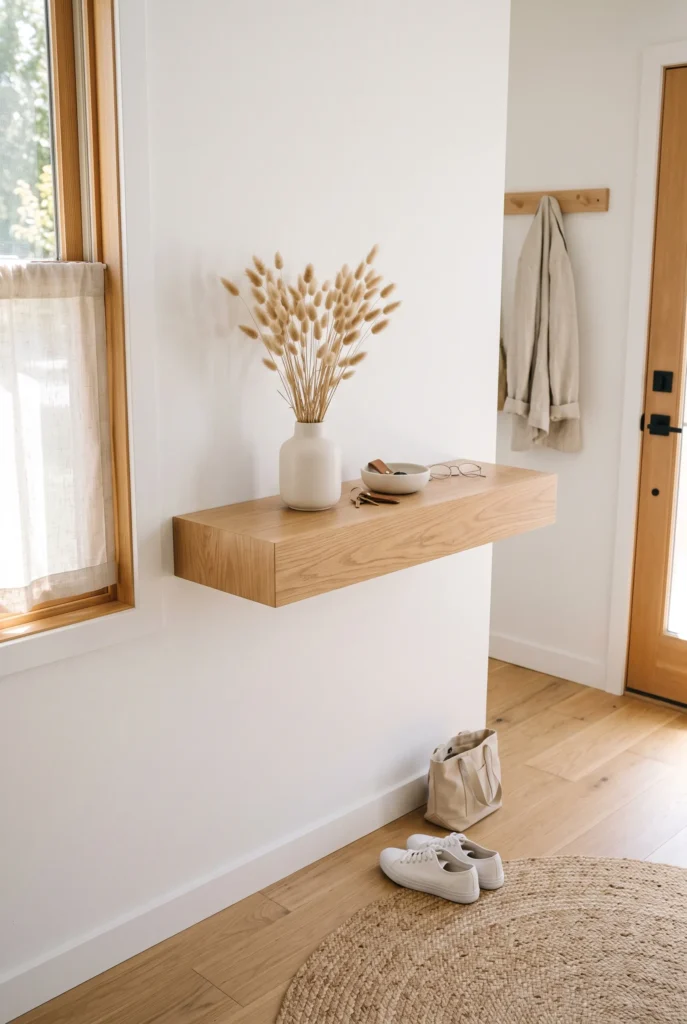
- Restores floor space in tight entryways by keeping storage elevated and off the ground.
- Creates a clear, visual focal point without visually crowding a narrow wall.
- Provides a clean daily drop zone for essential everyday items like keys and mail.
- Introduces organic warmth and realistic natural texture using warm light wood tones.
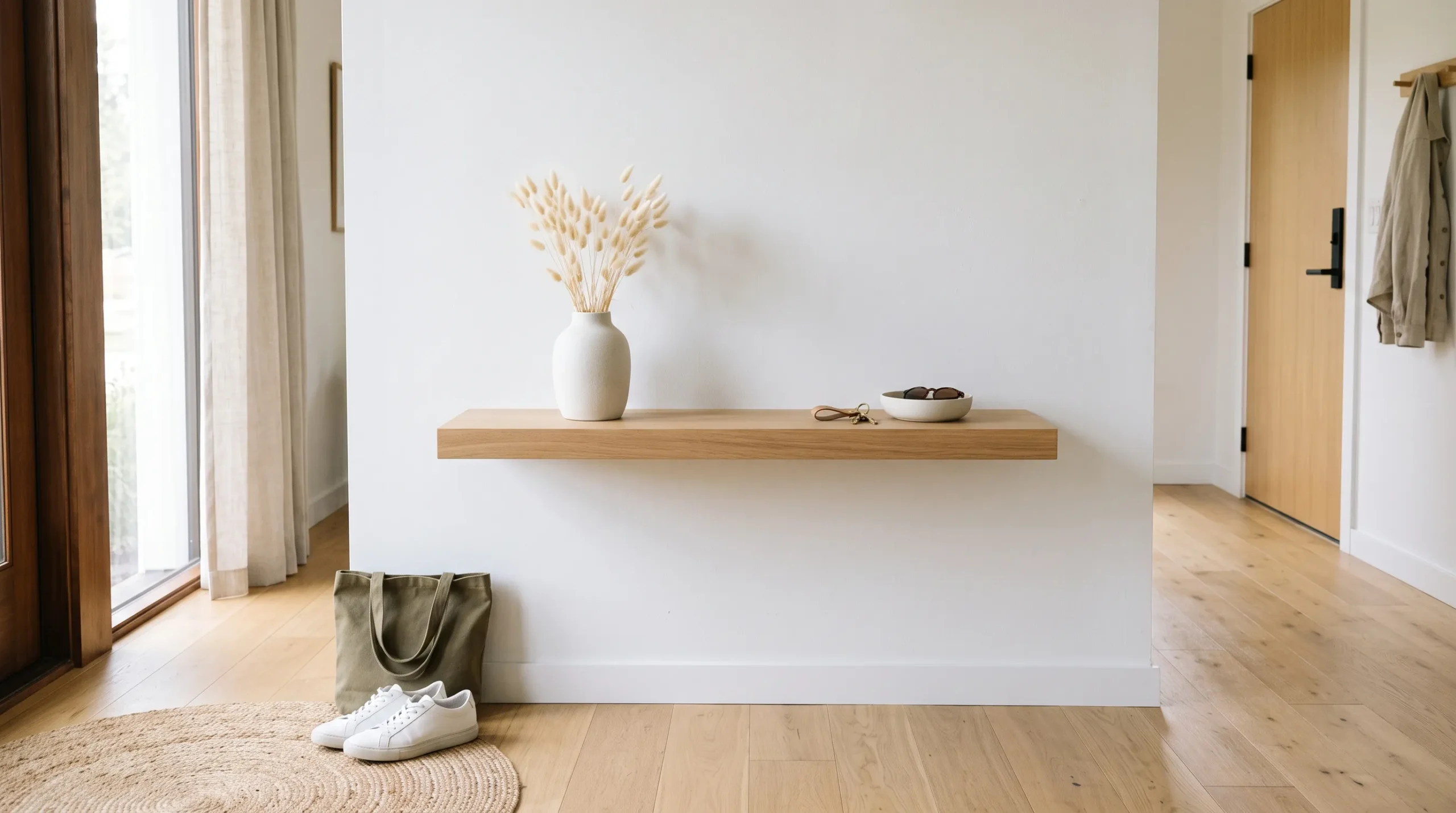
Stepping into a cramped home often feels instantly overwhelming when the front door immediately hits a bulky piece of furniture. A floating wooden shelf completely changes that entry dynamic by leaving your floor entirely clear, allowing light to flow unobstructed across the room. In my experience, elevated surface solutions give smaller spaces a much lighter, airier visual feel while maintaining complete functionality. You gain a dedicated landing spot for daily essentials without sacrificing precious walk space. This single design upgrade effortlessly bridges the gap between clean minimal aesthetics and practical everyday home organization.
Installing a sleek wall-mounted ledge transforms an empty, underutilized wall into a highly intentional design moment instantly. You can easily style it with a tiny textured vase, a ceramic dish for keys, or a framed minimalist print to reflect your personal taste. I’ve noticed that keeping decorative accents limited to just two or three curated pieces prevents visual clutter from rebuilding over time. The natural wood grain brings an inviting, grounded warmth to crisp white walls, making your home feel immediately welcoming the moment you step through the front door.
Slim Metal Console Table
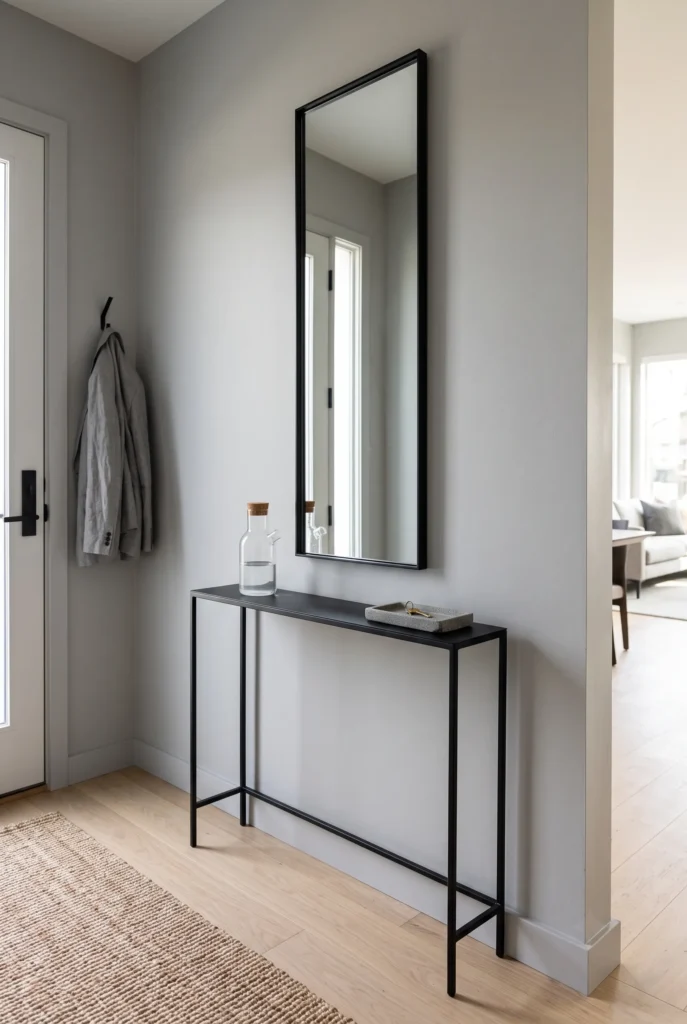
- Maximizes narrow hallway dimensions with an extremely shallow footprint and open framework.
- Adds striking contemporary contrast against light, neutral wall colors and finishes.
- Keeps visual sightlines open so narrow entryways feel significantly larger and longer.
- Delivers a sturdy surface for functional entry accessories without blocking traffic flow.
Hallways and front entries are notoriously tricky to furnish when every single inch of available floor space counts. A ultra-slim metal console table solves this structural challenge by offering a generous top surface while taking up almost no physical depth. I’ve seen this work well in many homes where traditional tables made the entry feel instantly restricted and dark. The open base design allows your eyes to see straight through to the baseboards, which clever psychological trick visually expands the room. It gives your home an architectural, custom-designed look while keeping the main walkway completely clear.
Styling an open metal frame requires minimal effort to create a refined, high-end look right at your front door. Paired with a slender vertical mirror mounted overhead, this setup reflects ambient light back into the rest of the room, doubling the perceived brightness. You can use a small stone tray to hold loose pocket items, maintaining an organized and calm environment daily. That’s why many designers recommend slim metal furniture for urban apartments or tight floor plans. It delivers maximum modern style, incredible functional utility, and sophisticated elegance without cluttering your immediate living area.
Vertical Wall Pegs
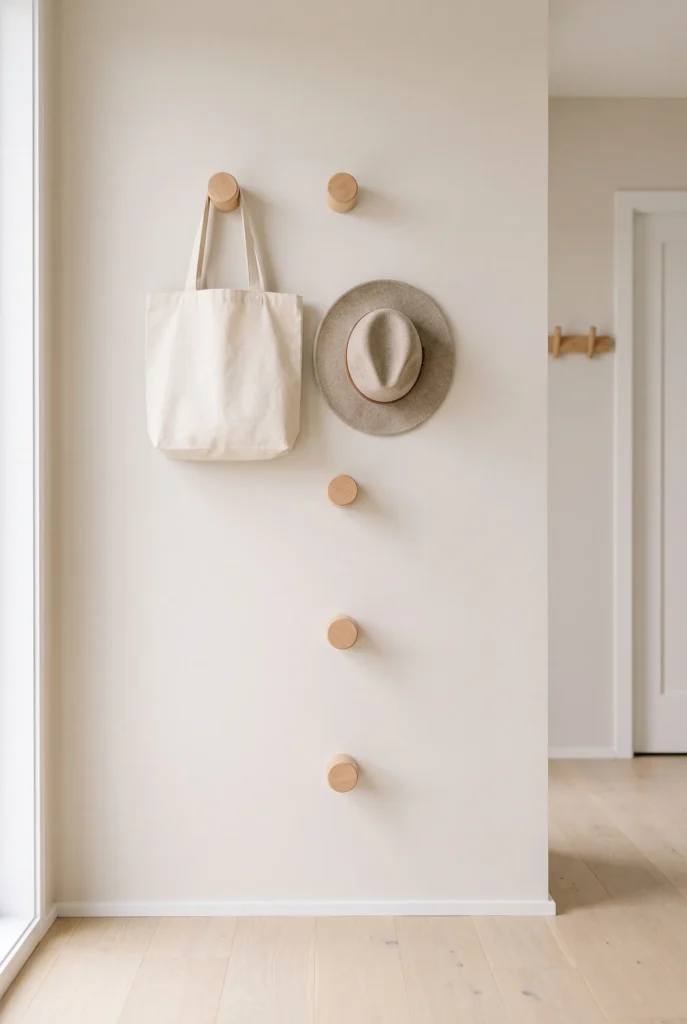
- Uses vertical wall height effectively to keep floor areas completely clear and open.
- Holds everyday outerwear, bags, and scarves in a clean, visually appealing order.
- Serves as functional sculptural wall art even when completely empty and unused.
- Keeps entryways organized effortlessly for busy families and quick daily routines.
When floor space is virtually non-existent, turning your attention toward vertical wall space is the smartest design decision. A modern arrangement of wooden wall pegs turns functional everyday storage into an attractive, minimalist art display. In my experience, traditional standing coat racks quickly become messy catch-alls that dominate small entryways and create visual noise. Pegs allow you to customize the exact placement height, adapting easily to your specific wall layout and storage needs. They offer an amazingly simple way to maintain order without adding physical mass or bulky furniture to your entryway.
Hanging your daily essentials like a favorite tote, a linen scarf, or a classic brimmed hat adds subtle personality and lived-in texture to your walls. When left unused, high-quality wooden pegs maintain a clean, sculptural aesthetic that looks modern and intentional rather than purely utilitarian. I’ve tried this approach in small apartments where every square foot mattered, and the transformation in daily functionality was dramatic. It creates an instant habit of hanging items up immediately upon arriving home, ensuring your entry stays beautifully organized, open, and effortless to maintain over time.
Full-Length Leaner Mirror
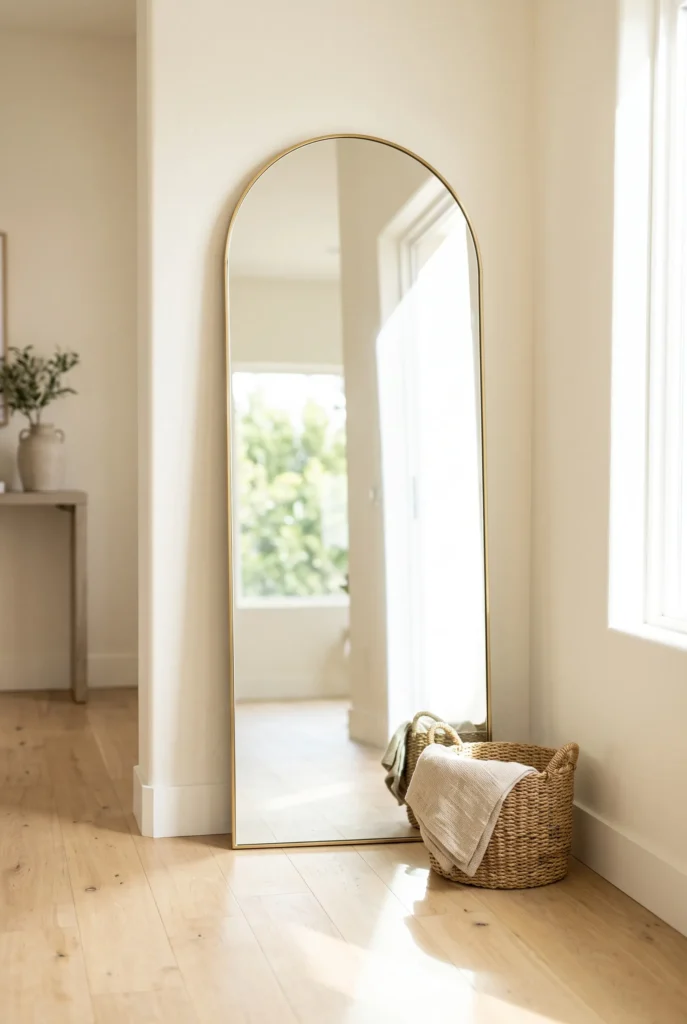
- Amplifies available natural light to instantly brighten up dim or windowless front entries.
- Generates an impression of added depth, making tight hallways appear significantly larger.
- Delivers a convenient head-to-toe outfit checking station right before you leave home.
- Adds an elegant architectural element without needing heavy wall anchors or structural hardware.
Narrow, shadowed front entries often feel restrictive and dark, making your home seem less welcoming from the very first step. Placing a tall, slender mirror resting against the main wall instantly reflects light across the room, creating an illusion of expanded space. In my experience, large reflective glass surfaces work near miracles in compact urban homes where natural architectural windows are missing. By catching reflections of adjacent living areas, the mirror breaks down visual boundaries, making the entry feel like a seamless extension of your home. It blends functional utility with high-end aesthetic appeal effortlessly.
Selecting a frame with an ultra-thin profile ensures the mirror remains subtle and light, blending naturally into your existing wall décor. You can angle it slightly to capture maximum ambient light while creating an elegant focal point near the door. I’ve noticed that leaning mirrors feel much more modern and relaxed compared to traditional heavy wall-mounted frames. Placing a small textured basket near the base adds a touch of grounding warmth without disrupting the sleek profile. This effortless addition delivers immediate visual impact while keeping your entryway airy, bright, and functionally complete every single day.
Storage Bench with Cushion
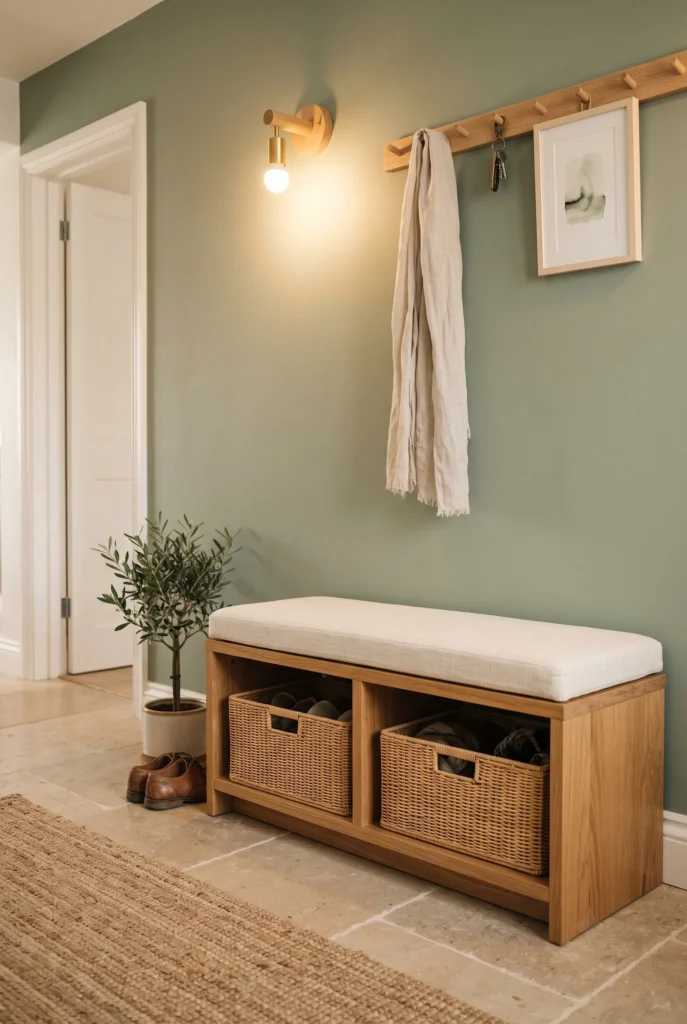
- Provides a comfortable, dedicated seating spot for taking shoes off easily at home.
- Conceals everyday shoe clutter inside stylish, low-profile basket bins underneath.
- Softens hard architectural lines with comfortable fabric upholstery and inviting textures.
- Maintains a clean, grounded look that defines the entry area clearly and beautifully.
Scattered shoes near the front door are one of the fastest ways to make a small entrance feel cluttered and overwhelming. A streamlined bench with integrated bottom storage offers a comfortable place to sit while neatly concealing footwear out of sight. That’s why many designers recommend multifunctional seating for tight entry footprints that demand smart, dual-purpose furniture solutions. The simple addition of a padded cushion brings a welcoming, residential comfort to the space, signaling an immediate transition into a relaxing home environment. It keeps your floor pristine without sacrificing daily comfort or practicality.
Choosing neutral upholstery paired with natural wooden tones keeps the piece looking light rather than heavy or overly bulky. You can slide custom-fit fabric bins into the lower shelves to store seasonal accessories, umbrella items, or dog walking gear effortlessly. In my experience, having hidden storage compartments right by the door completely changes daily household routines for the better. The space stays visually calm, organized, and inviting, ensuring that you and your guests are greeted by clean surfaces and thoughtful design from the moment you step indoors.
Minimalist Wall Sconce Lighting
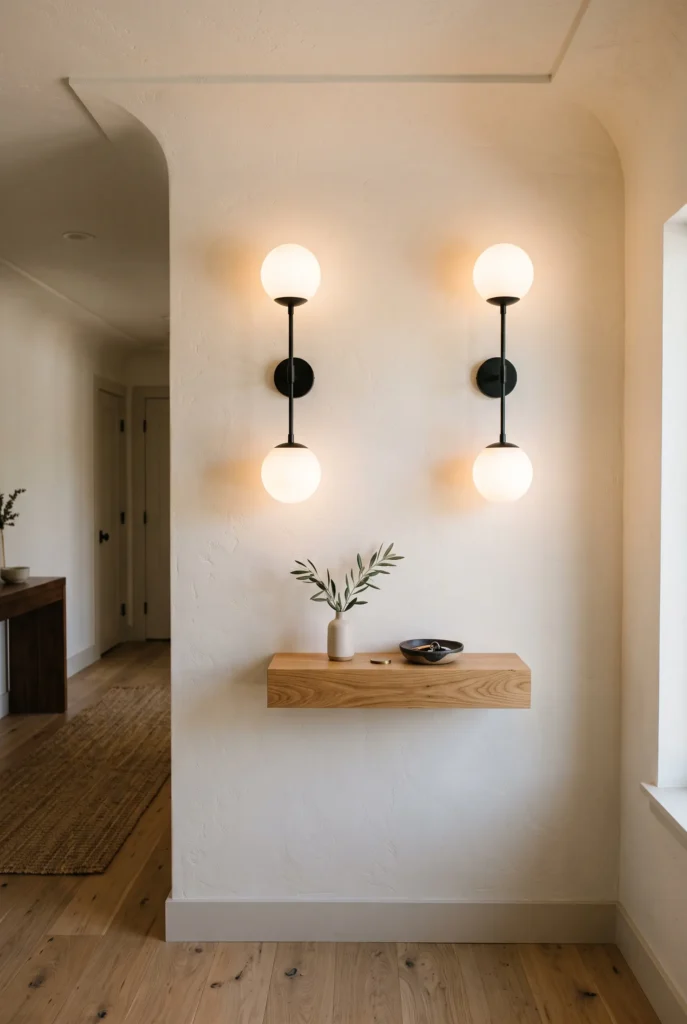
- Replaces bulky floor or table lamps to save valuable surface and floor space.
- Directs soft ambient illumination exactly where needed to create an inviting entry mood.
- Draws eye level upward, emphasizing wall height and overall room architecture.
- Enhances minimalist interior aesthetics with clean, modern hardware and refined fixtures.
Inadequate lighting can easily make even the most beautifully decorated small hallway feel gloomy, cramped, and completely uninspiring. Mounting sleek, hardwired or plug-in wall sconces frees up precious surface area while flooding your entrance with warm, welcoming illumination. I’ve seen this work exceptionally well in tight spaces where table lamps would take up the entire console surface. Sconces provide intentional lighting layers that highlight wall textures and art, transforming an ordinary walkway into a curated gallery-like experience. They add sophisticated architectural character without cluttering your walking path at all.
Opting for minimalist fixtures featuring frosted glass or matte metallic finishes maintains a clean, modern aesthetic that feels timeless and fresh. The soft glow softens sharp corners and creates an immediate feeling of warmth as soon as you unlock the door. I’ve noticed that dual-direction sconces, which cast light both upward and downward, enhance vertical ceiling height visually. This simple lighting upgrade elevates your entire interior design layout, ensuring your small entry feels thoughtfully planned, spacious, and comfortably lit throughout every season of the year.
View: 23 Chic Minimalist Kitchen Decor Ideas for Small Spaces
Floating Drawer Unit
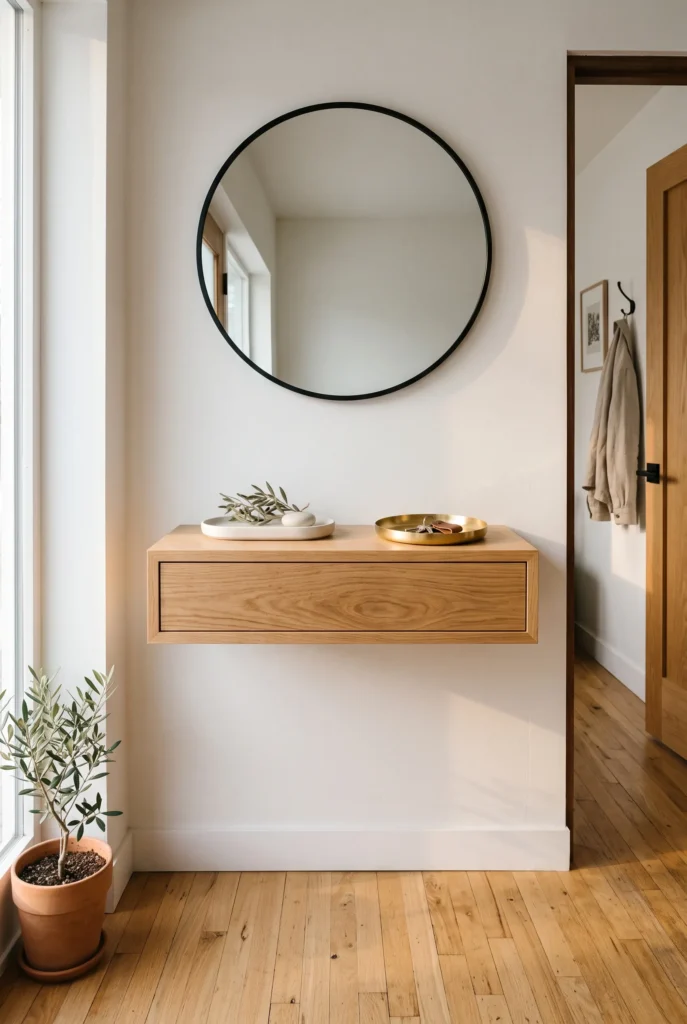
- Keeps personal items like mail, keys, and sunglasses completely hidden out of sight.
- Leaves floor space underneath untouched to maximize open visual floor area.
- Provides a clean, functional tabletop surface without the footprint of heavy legs.
- Adds clean horizontal architectural lines that visually stretch small wall widths.
Clutter accumulates faster near the front door than anywhere else, instantly creating visual stress in a small entryway. A floating drawer unit offers a seamless solution by hiding daily pocket items behind a smooth, clean wooden panel. In my experience, keeping surface items tucked away in a dedicated drawer transforms an entry from chaotic to serene in seconds. The wall-mounted design maintains an open floor view underneath, creating a sense of weightlessness that heavy furniture simply cannot replicate. It provides necessary storage functionality while keeping your home looking pristine and curated.
Styling the top surface requires minimal decor to achieve a refined, high-end look that feels light and intentional. A tiny ceramic dish or a modern table clock is all you need to complete the arrangement without overwhelming the ledge. I’ve noticed that floating drawers work especially well in narrow hallways where every inch of walkway space is critical. The clean horizontal lines draw the eye across the wall, making compact spaces feel surprisingly wide. It delivers an effortless blend of hidden utility, modern minimalism, and long-lasting everyday functionality.
Woven Wall Pocket
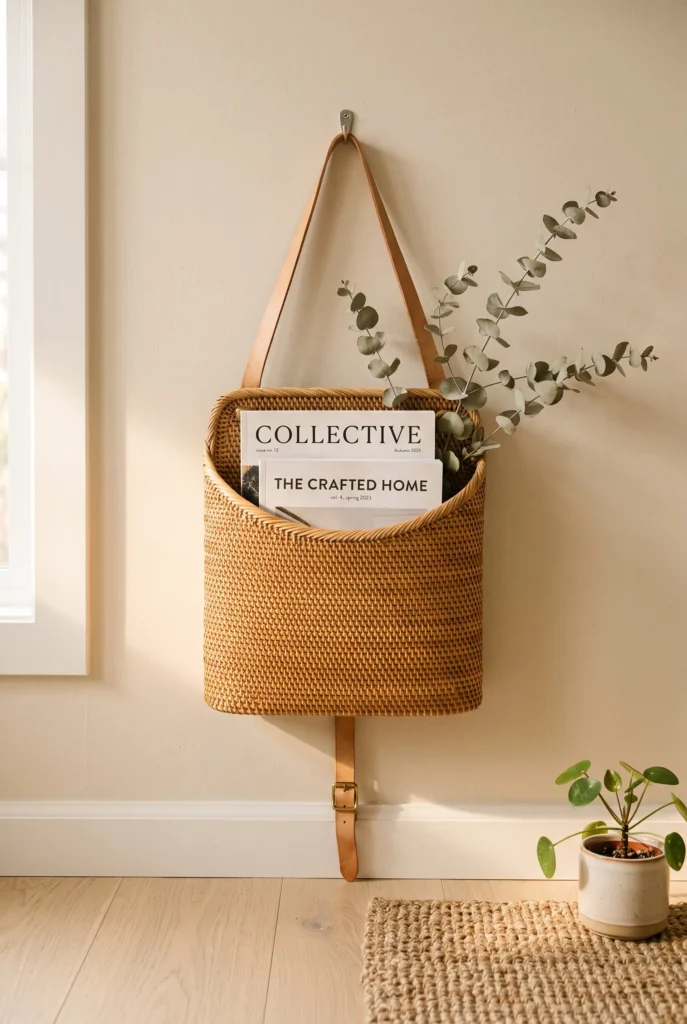
- Utilizes empty wall space to store incoming mail and paperwork off the counters.
- Introduces soft organic texture and tactile warmth to cold or plain entry walls.
- Provides a light, non-bulky storage alternative to traditional wooden or metal shelves.
- Adds a touch of relaxed, modern artisanal style to minimalist entryway spaces.
Paperwork, mail, and slim accessories often end up piled on entry tables, creating instant visual clutter near your front door. A flat-backed woven wall pocket provides a stylish, vertical sorting system that keeps paper organized and off horizontal surfaces. I’ve seen this work well in small spaces where installing bulky shelving units would feel too intrusive or heavy. The natural woven fibers bring an earthy, organic texture that softens modern architectural lines, making your entrance feel instantly cozy and lived-in. It keeps daily essentials accessible while maintaining a clean aesthetic.
Hanging a single wall pocket near your doorway establishes a clear system for handling daily incoming items before they spread into living areas. You can also drop in dried botanicals or slim notebooks to add subtle artistic personality to an otherwise plain wall. In my experience, incorporating natural materials like rattan or seagrass prevents minimalist spaces from feeling overly sterile or cold. It offers a incredibly lightweight, budget-friendly storage upgrade that combines practical everyday organization with charming, relaxed visual appeal effortlessly.
Over-the-Door Coat Rack
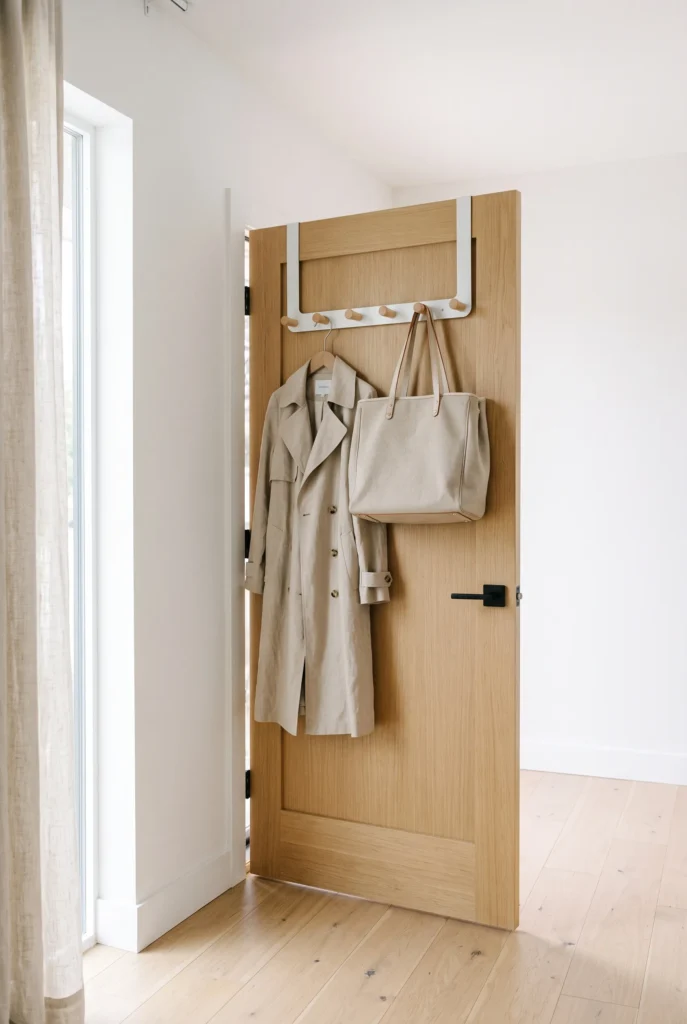
- Requires zero drilling or permanent wall modifications, making it perfect for rentals.
- Converts unused door surface area into high-capacity daily coat and bag storage.
- Preserves main entryway walls completely for clean art or mirrors instead.
- Keeps outerwear neatly tucked away behind or on the door structure itself.
When wall space is limited or drilling holes isn’t an option, the back of your entry door becomes valuable storage real estate. A modern over-the-door rack provides multiple hanging points without requiring a single wall anchor or screw. That’s why many designers recommend door-mounted solutions for apartments or compact home layouts that need flexible storage. Choosing a rack with a flush, streamlined profile ensures the door opens smoothly without hitting adjacent walls, keeping the storage completely non-intrusive. It keeps everyday jackets and bags organized effortlessly.
Opting for a modern design with subtle wooden accents elevates this practical organizer into a deliberate design choice rather than an afterthought. Hanging only your most-used daily items keeps the rack from looking overly crowded or heavy. In my experience, keeping coat storage directly attached to the door structure keeps surrounding entry walls feeling completely open, light, and spacious. It provides an exceptionally smart, space-saving storage habit that helps maintain an uncluttered home from the moment you walk through the door.
Tall Narrow Shoe Cabinet
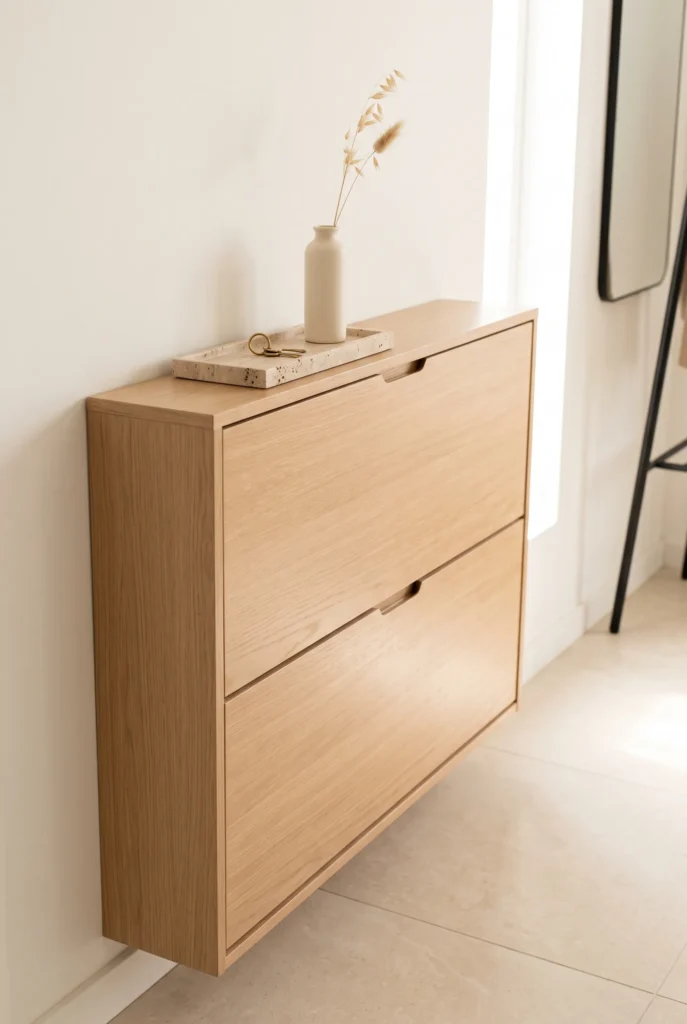
- Conceals multiple pairs of shoes behind space-saving vertical drop-down doors.
- Maintains an extremely shallow depth that leaves hallway walkways completely open.
- Offers a flat upper surface for holding small daily entrance items and decor.
- Eliminates visual shoe clutter to create an instantly calm, organized first impression.
Piles of shoes sitting near the front door can instantly ruin the clean, calm feel of a small living space. An ultra-thin shoe cabinet featuring vertical drop-down compartments solves this problem by hiding footwear entirely within a cabinet that is only inches deep. In my experience, these narrow storage units are absolute game-changers for tight hallways where traditional deep cabinets simply will not fit. The hidden storage keeps messy shoes completely out of sight, transforming a chaotic entrance into a streamlined, serene pathway. It gives your home an immediate feel of order.
The flat top surface of a slim cabinet acts as a built-in console table without taking up any extra floor area in your home. You can style the top with a small decorative tray or a simple table clock to create an inviting, personalized touch near the door. I’ve noticed that choosing a cabinet finish that matches your wall color helps the furniture piece blend seamlessly into the room background. This smart organizational design choice maximizes functional storage capacity while keeping your entry looking incredibly spacious, elegant, and clutter-free every day.
Corner Wall Ledge
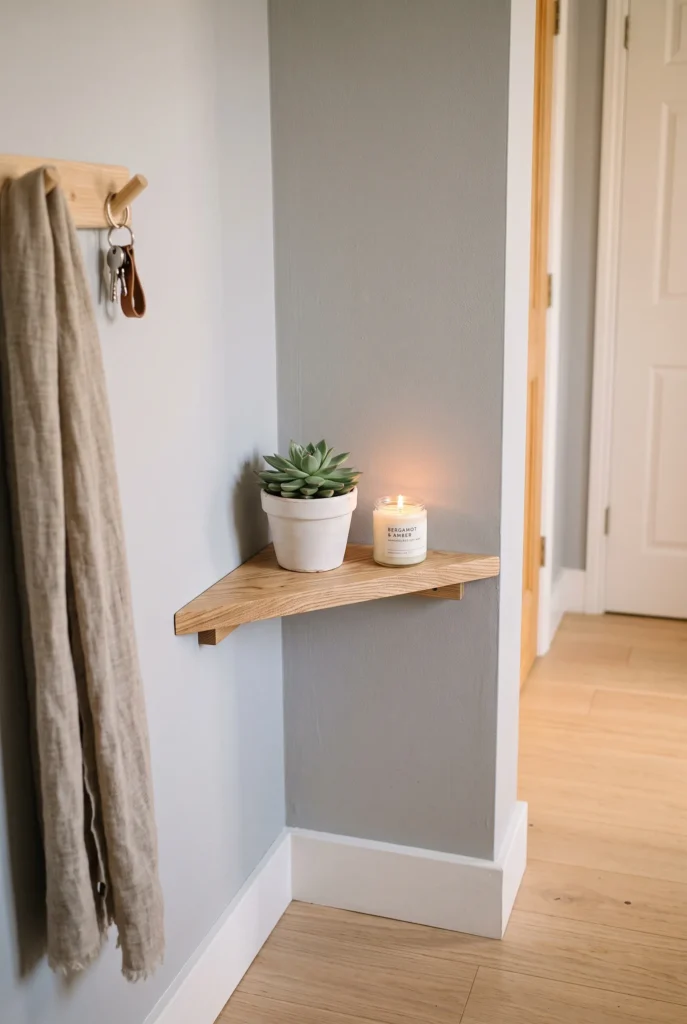
- Transforms awkward, unused corner spaces into functional and charming display zones.
- Leaves primary wall areas and main walkways entirely open and free from obstruction.
- Provides a subtle, compact spot for tiny decorative items or daily essentials.
- Creates a custom, built-in visual look that enhances small architectural footprints.
Corners in small entryways often end up as wasted space simply because standard furniture pieces are too large or awkward to place there. Mounting a small floating corner shelf turns that unused nook into a deliberate, functional design feature without encroaching on your main walkway. I’ve seen this work exceptionally well in tiny foyers where every single square inch of floor and wall space matters. It utilizes the natural geometry of the room to add storage and style, making the entire entry feel thoughtfully planned and complete.
Styling a compact corner ledge requires only one or two small items to make a delightful visual statement right at your door. A small potted plant or a scented candle brings natural texture and an inviting scent into your home as soon as you step inside. In my experience, keeping corner decor simple and scaled appropriately prevents the space from looking crowded or busy. It offers an amazingly clever way to add charm and personality to your entry layout without sacrificing any precious walking area whatsoever.
Oversized Round Mirror
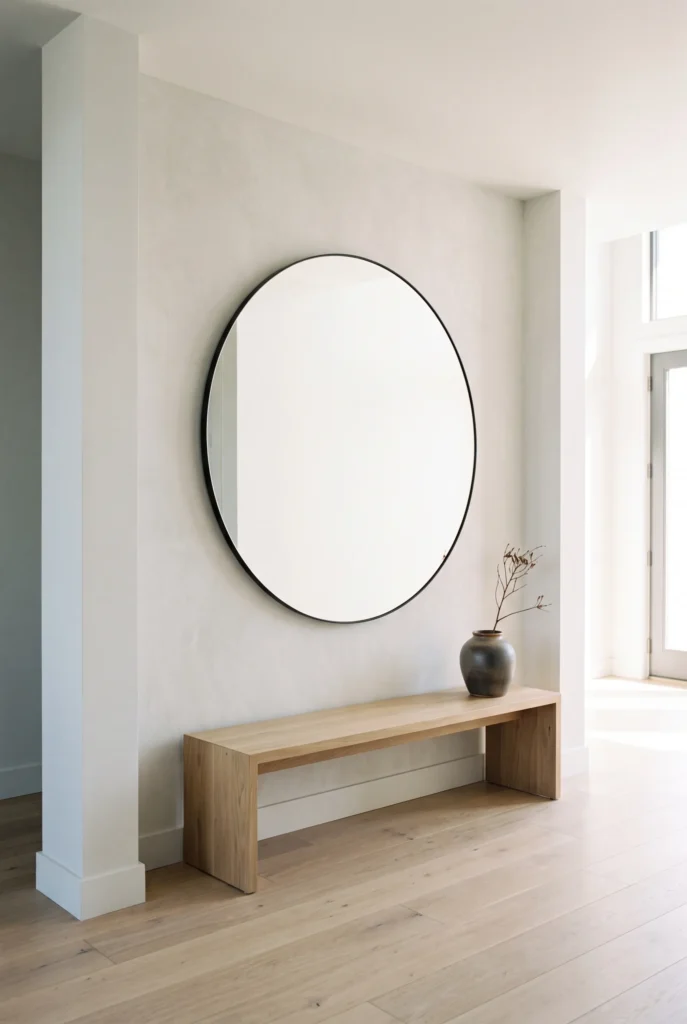
- Softens rigid architectural boxiness with smooth, sweeping circular shapes and lines.
- Maximizes light reflection across the entire entryway to boost overall brightness.
- Serves as a bold, captivating focal point that draws attention instantly upon entering.
- Creates a strong illusion of architectural depth in compact or narrow entry spaces.
Straight walls and sharp door frames can sometimes make a small entryway feel rigid, boxy, and tight. Installing a large circular mirror introduces soft, sweeping curves that break up those harsh structural lines and instantly relax the space. That’s why many designers recommend oversized round mirrors to create an impressive visual anchor in small foyer areas. The massive reflective surface catches light from adjacent rooms, bouncing it around the entryway to make the space feel significantly larger, airier, and more open than it really is.
The thin, minimal frame keeps the mirror looking weightless and modern, preventing it from overpowering a small wall space. Placed above a sleek bench or floating shelf, it creates a perfectly balanced design composition that feels curated and high-end. I’ve noticed that round mirrors naturally draw the eye inward and upward, diverting focus away from narrow floor dimensions. This single decorative choice adds high-impact style, brightens up dark corners, and delivers functional daily convenience all at the same time.
Under-Bench Wire Baskets
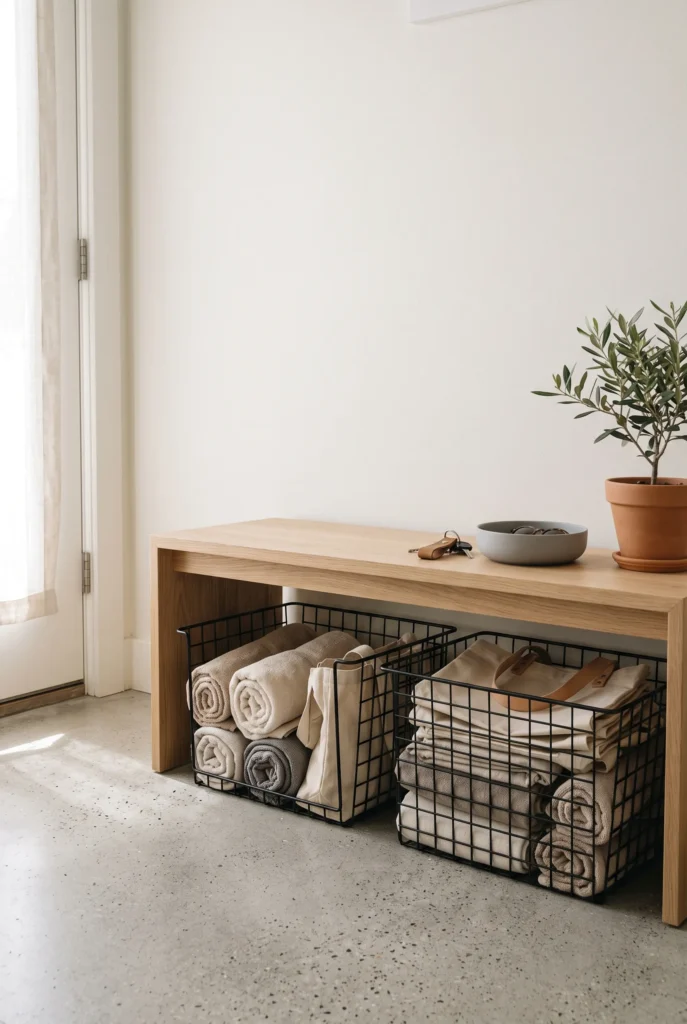
- Capitalizes on unused lower storage space without requiring additional furniture pieces.
- Keeps footwear, bags, or seasonal accessories visible yet neatly contained and organized.
- Adds a subtle industrial or modern farmhouse texture to soft minimalist color schemes.
- Promotes natural airflow around shoes and items stored near the entryway floor.
The empty gap beneath a standard entryway bench often becomes a chaotic drop zone for tossed shoes and loose items. Placing structured metal wire baskets underneath transforms that open space into an organized, intentional storage system without adding any extra bulk to your hallway. In my experience, open wire containers offer the perfect balance of visual structure and easy accessibility for busy households. You can see exactly where everything is stored at a glance while keeping floor clutter completely contained within a sleek, modern outline.
Choosing matte black or brass wire finishes introduces a sophisticated contrast against natural wood tones and light floors. The geometric lines of the wire grid add subtle architectural interest without visually blocking light or making the floor area feel heavy. I’ve noticed that using baskets with open tops encourages everyone in the home to actually put items away immediately upon entering. It creates a simple, low-maintenance organizational habit that keeps your front entry looking tidy, open, and stylishly organized day after day.
Vertical Wall-Mounted Coat Rack
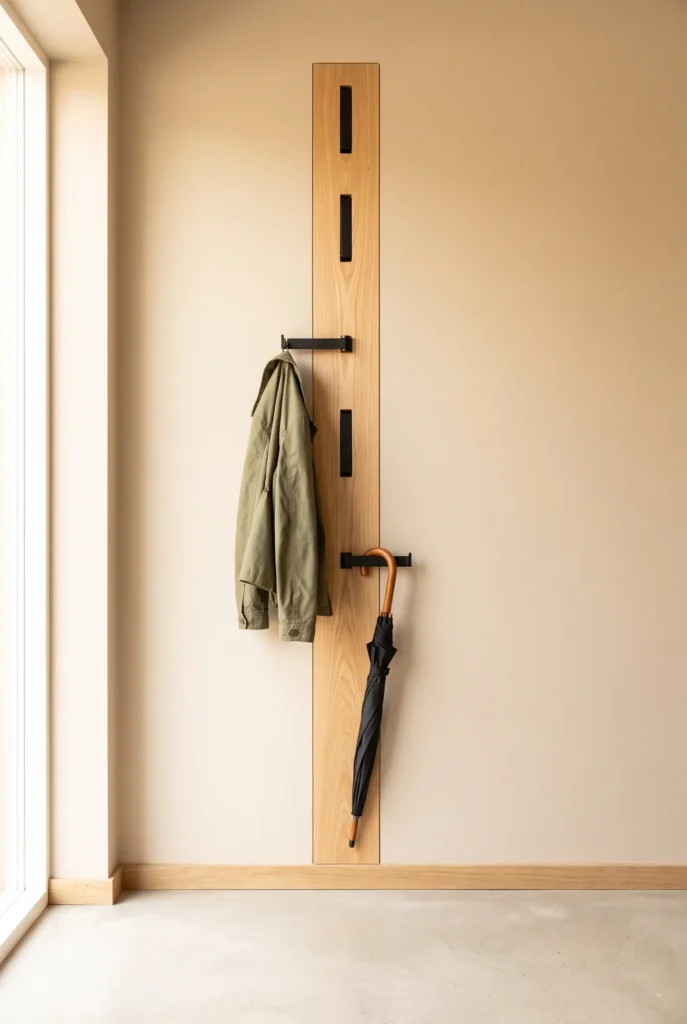
- Utilizes narrow vertical wall gaps that are typically too small for standard furniture.
- Features space-saving fold-away hooks that stay flush against the wall when not in use.
- Delivers a clean, sculptural aesthetic that looks like modern wall art when empty.
- Provides versatile hanging storage for coats, bags, keys, and long umbrellas easily.
Standard horizontal coat racks require a wide stretch of empty wall that many small entryways simply cannot spare. A vertical wall-mounted rack solves this layout issue by stacking hanging points upwards, taking advantage of slim wall sections next to door frames. That’s why many designers recommend vertical hook bars for tight urban floor plans and compact foyers. The genius of flip-down hook designs lies in their seamless adaptability—hooks stay completely flush against the wood panel until you actually need to use them.
When empty, the sleek wooden bar acts as a minimalist sculptural accent rather than a utilitarian storage fixture. Hanging your coats vertically keeps the visual weight concentrated in a tight column, leaving the surrounding wall space feeling open and light. In my experience, installing a vertical rack near the front door creates an incredibly efficient entryway routine without taking up an inch of floor space. It offers a smart, space-conscious storage solution that merges sleek modern styling with daily functional convenience.
Architectural Wall Arch
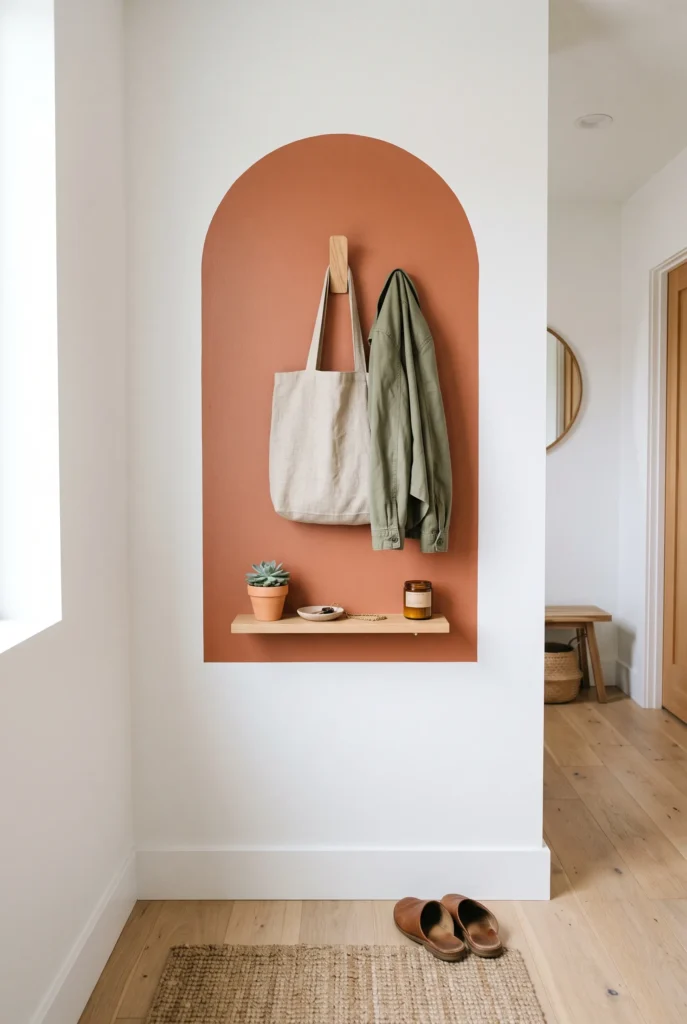
- Defines a clear, designated foyer area in homes that lack a traditional front entryway.
- Introduces vibrant color and graphic interest without taking up physical floor space.
- Directs the eye to functional entry elements like hooks or floating shelves elegantly.
- Creates a high-end, custom architectural look using simple paint and design framing.
In open-concept homes or small apartments, the front door often opens directly into the main living room without a defined entry space. Painting a simple geometric arch directly on the wall creates a visually distinct “foyer zone” without building walls or adding bulky dividers. I’ve seen this work brilliantly in small spaces where adding physical furniture would obstruct main traffic paths. The painted arch grounds your entry setup, making a single hook or small shelf look intentional, complete, and professionally designed.
Choosing a warm, earth-toned paint color adds cozy depth and character against neutral walls while keeping the overall aesthetic clean and modern. The arched shape introduces gentle visual softness, balancing the hard angles of doors and hallways. In my experience, framing small wall accents with painted shapes elevates budget-friendly decor into a standout feature. It allows you to create a welcoming, stylish, and highly functional entry experience even in the smallest or most challenging home layouts.
Recessed Wall Niche
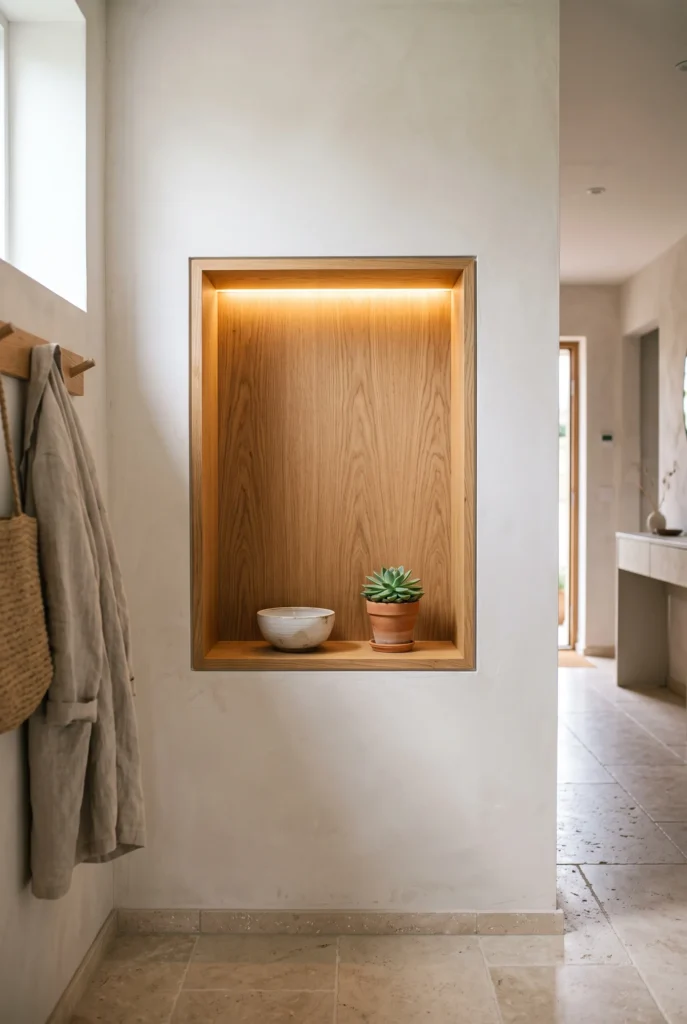
- Reclaims interior wall cavity depth to create built-in storage with zero floor footprint.
- Incorporates subtle built-in lighting to create an inviting, high-end architectural focal point.
- Keeps keys and small accessories stored completely flush with the surrounding entry wall surface.
- Enhances minimalist interior aesthetics through seamless, custom-built structural design elements.
When every inch of walkway space matters, building into the wall itself is the ultimate space-saving strategy. A recessed wall niche utilizes the empty space between wall studs to provide a dedicated landing zone without extending into your hallway. In my experience, built-in niches offer the cleanest visual presentation possible in tight entryways because they keep all surfaces entirely flush. Integrated LED accent lighting tucked inside turns a functional key drop into a warm, ambient nightlight that greets you as soon as you step inside.
Framing the interior of the niche with a warm wood veneer adds rich contrast against neutral drywall or plaster finishes. You can use the small recessed shelf to hold your essential pocket items or display a single curated art piece. I’ve noticed that flush structural features make small spaces feel significantly more high-end and custom-designed. It offers an exceptionally sleek, space-conscious storage solution that delivers maximum visual elegance while keeping your walking paths completely clear and open.
Pivoting Wall Hooks
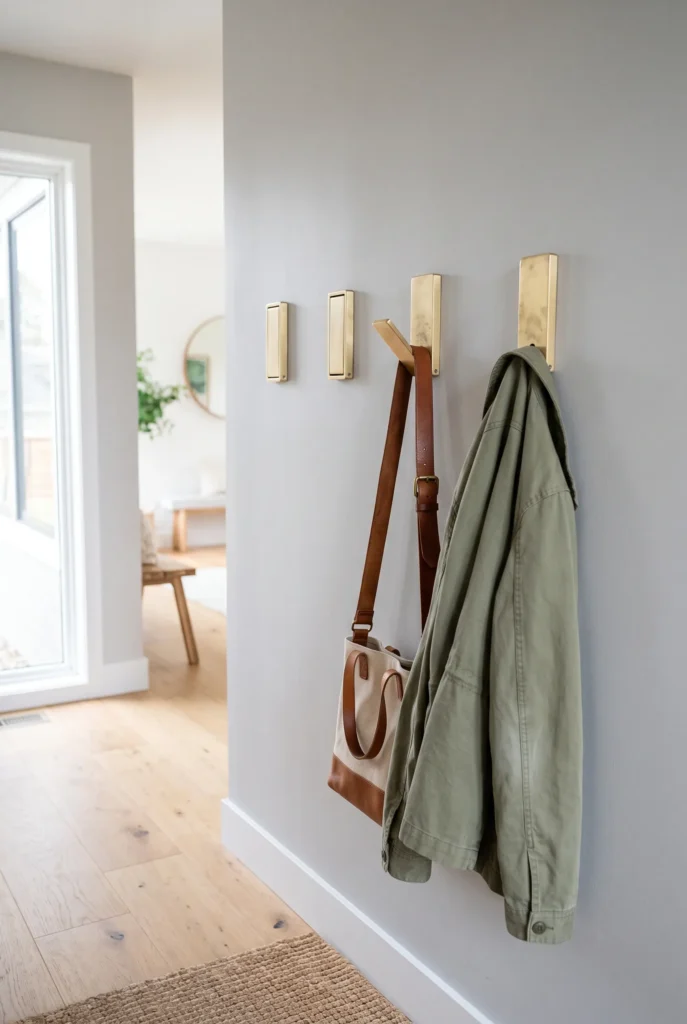
- Folds completely flat against the wall when not in use to maintain smooth vertical surfaces.
- Adjusts smoothly on horizontal pivots to accommodate bulky coats or slim accessories easily.
- Introduces a modern metallic accent that elevates neutral entryway wall color palettes.
- Eliminates accidental bumps and snags in narrow or high-traffic hallway corridors effectively.
In very tight entryways or narrow hallways, standard protruding wall hooks can easily catch on clothing or feel intrusive as you walk by. Pivoting or folding wall hooks solve this problem by allowing you to swing the hook out only when you need it. That’s why many designers recommend collapsible wall hardware for high-traffic entry corridors. When empty, the hooks fold flush against their mounting plate, returning the wall to a smooth, completely flat surface that maximizes your walking clearance.
Selecting hardware in a warm brass or matte black finish transforms these functional hooks into stylish wall accents. The moving mechanism allows you to adjust the spacing between hung items, preventing bulky winter coats from crowding together. In my experience, using adaptable wall hardware creates a dynamic, user-friendly entry experience that responds to your daily needs. It provides an amazingly practical, modern storage solution that keeps narrow entrance hallways feeling safe, open, and effortlessly organized.
Mirrored Shoe Cabinet
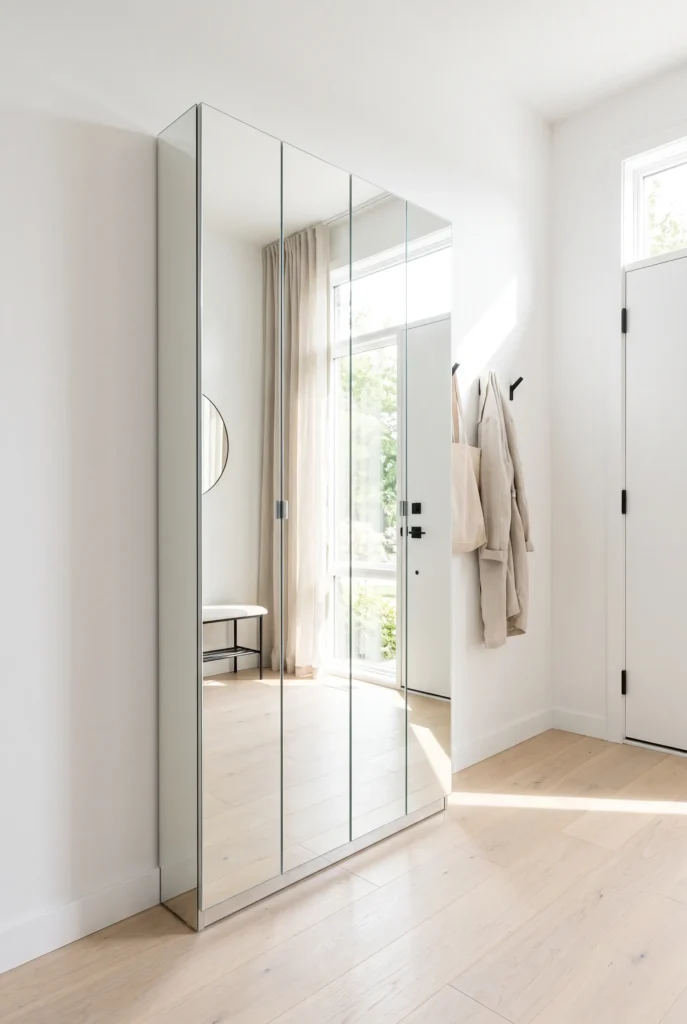
- Combines hidden footwear storage with a full-length reflective surface in one single footprint.
- Bounces light continuously throughout narrow entry spaces to dramatically boost overall room brightness.
- Hides multiple pairs of shoes behind modern glass panels to maintain absolute visual order.
- Creates a powerful illusion of expanded space while occupying minimal physical floor depth.
Combining two essential entryway functions into a single piece of furniture is the smartest way to maximize small square footage. A slender shoe cabinet fitted with mirrored door panels conceals footwear storage behind a bright, full-length reflective surface. In my experience, dual-purpose furniture pieces are absolute lifesavers for compact apartments where wall space is severely limited. You get the spatial benefits of a large floor mirror alongside the organizational power of a high-capacity shoe rack without buying two separate items.
The mirrored front reflects the floor and opposite walls, making narrow hallways feel instantly twice as wide and remarkably bright. Opening the smooth drop-down or side doors reveals organized shoe slots that keep footwear completely out of sight. I’ve seen this work exceptionally well in dim front entries where maximizing incoming light is a top priority. It delivers an amazingly clever combination of hidden practical storage and space-expanding visual magic that elevates your entrance layout effortlessly.
Woven Wall Tapestry
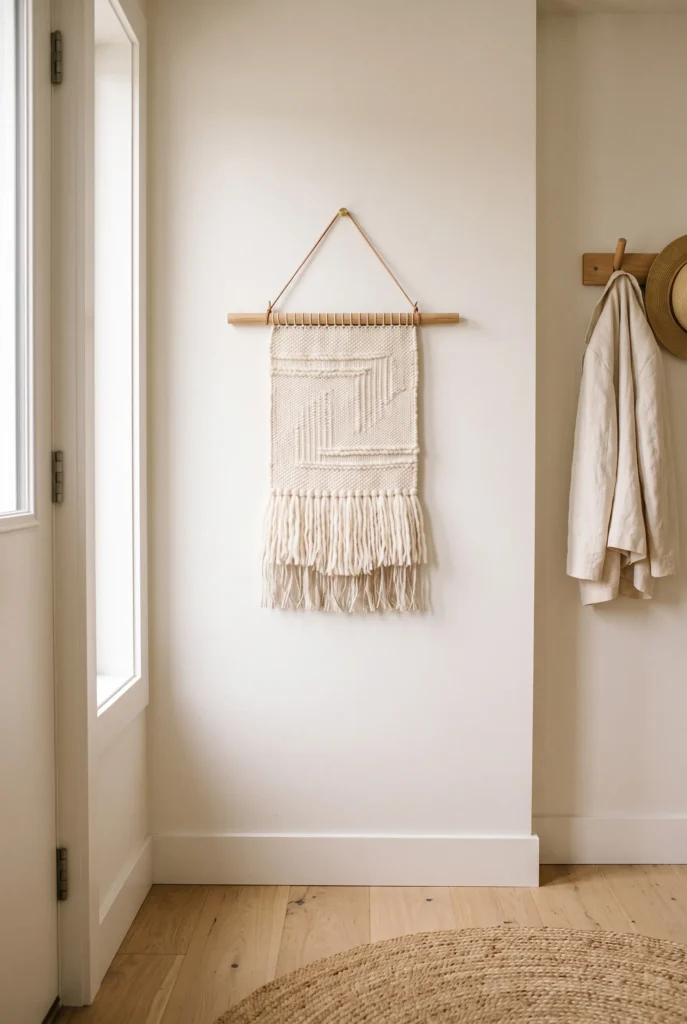
- Introduces soft, acoustic-dampening texture to hard-surfaced entryways and hallways.
- Fills empty vertical wall space without adding physical weight or bulky depth.
- Softens minimalist interiors with natural fiber warmth and gentle artisanal movement.
- Complements neutral color palettes by providing subtle, tactile visual interest.
Hard flooring, tight walls, and solid front doors can often make small entryways feel cold, echoey, and uninviting. Hanging a compact, natural fiber woven tapestry introduces immediate tactile warmth and acoustic softness right at your front door. In my experience, textile wall art is a fantastic, non-intrusive way to bring personality into tight spaces where bulky framed glass or deep art ledges would feel too heavy. The natural wool and linen fibers absorb sound while adding a calm, organic element that makes stepping inside feel deeply relaxing.
Choosing a tapestry with simple geometric patterns or a neutral, muted color scheme ensures the wall stays light and uncluttered. The soft fringe hangs close to the wall surface, taking up zero floor or walkway clearance while adding artful movement. I’ve noticed that blending soft textiles with hard materials like wood or metal console tables creates a perfectly balanced, layered design composition. It offers an easy, budget-friendly decorative touch that transforms a basic walkway into a warm, inviting, and thoughtfully curated home entrance.
Slats Accent Wall
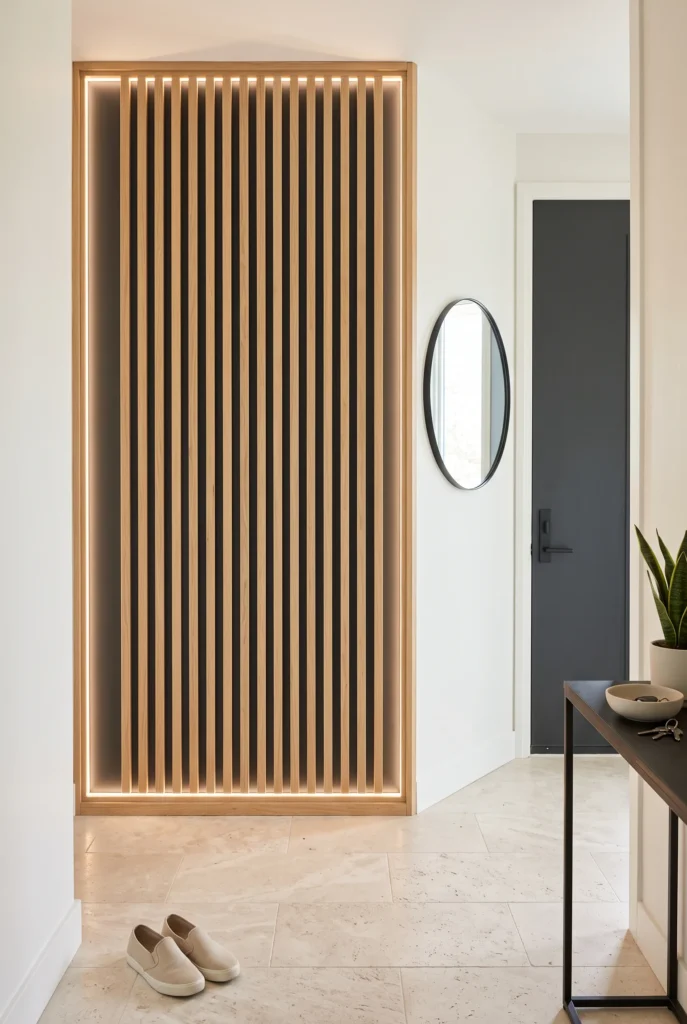
- Draws the eye upward to visually elevate low ceilings and maximize vertical height.
- Adds rich architectural depth and dynamic texture without taking up floor space.
- Creates a clear, defined foyer area within open-concept living room layouts.
- Conceals subtle wall-mounted hooks or floating ledges within the vertical slat spacing seamlessly.
When you cannot expand the physical floor plan of a small foyer, creating vertical visual interest is the best way to make the room feel grander. A feature section of slender vertical wood slats draws the eye upward, accentuating ceiling height and giving the entry a custom architectural look. That’s why many designers recommend slat accent panels to define entry zones in open-concept floor plans without erecting physical walls. The linear rhythm of the wood strips adds sophisticated shadow play and depth, turning a plain flat wall into a stunning focal point.
Integrating warm backlighting behind the outer edges of the slat panel casts a soft, inviting glow across your entrance. You can even tuck slim, color-matched coat hooks directly between the slats, keeping functional hardware hidden within the architectural lines. In my experience, using warm oak or walnut tones against a contrasting background brings a high-end boutique hotel atmosphere to everyday residential entries. It provides a striking, space-efficient design feature that makes your front entry feel custom-built, spacious, and modern.
Conclusion
Transforming a tight or awkward front entry does not require a major renovation; simple, space-conscious adjustments can completely redefine how your home feels the moment you step inside. By incorporating a few of these minimalist entryway decor ideas for small spaces, you can easily turn a chaotic drop zone into a serene, welcoming pathway. I’ve seen how small changes like these can completely transform a space, bringing long-lasting order and effortless style to your daily routine. Be sure to save your favorite ideas on Pinterest to inspire your next home refresh, try one out in your space today, and share this guide with anyone looking to maximize their entry!