24 Wabi Sabi Bathroom Design Ideas For Small Spaces
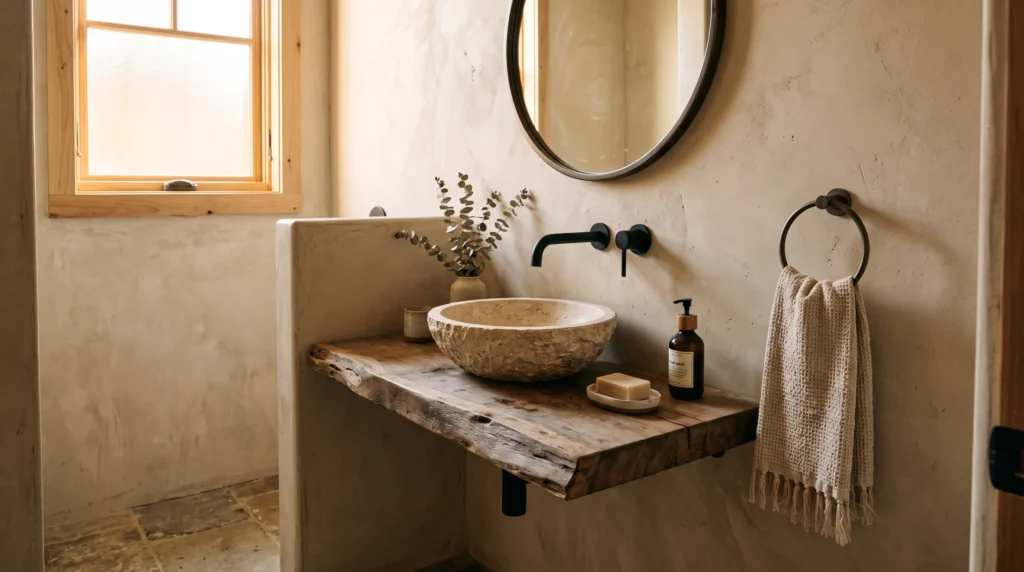
Stepping into a small washroom should feel like entering a tranquil sanctuary, yet compact footprints often leave us feeling restricted by clutter, cold tiles, and awkward corners. Finding the right balance between functional utility and peaceful aesthetics can be challenging when square footage is limited. That is why exploring thoughtful wabi sabi bathroom design ideas can completely transform how you experience your daily rituals. This timeless approach celebrates organic textures, natural imperfections, raw wood finishes, and uncluttered simplicity, proving that even the tiny powder rooms can feel expansive and deeply restorative. In my experience, swapping rigid, mass-produced fixtures for hand-crafted stone basins, soft plaster walls, and warm timber accents instantly opens up tight sightlines while bringing genuine soul into your home. Whether you are planning a complete renovation or simply seeking small, inspiring upgrades, these space-saving concepts will help you craft a soothing, spa-like retreat filled with quiet grace and effortless harmony.
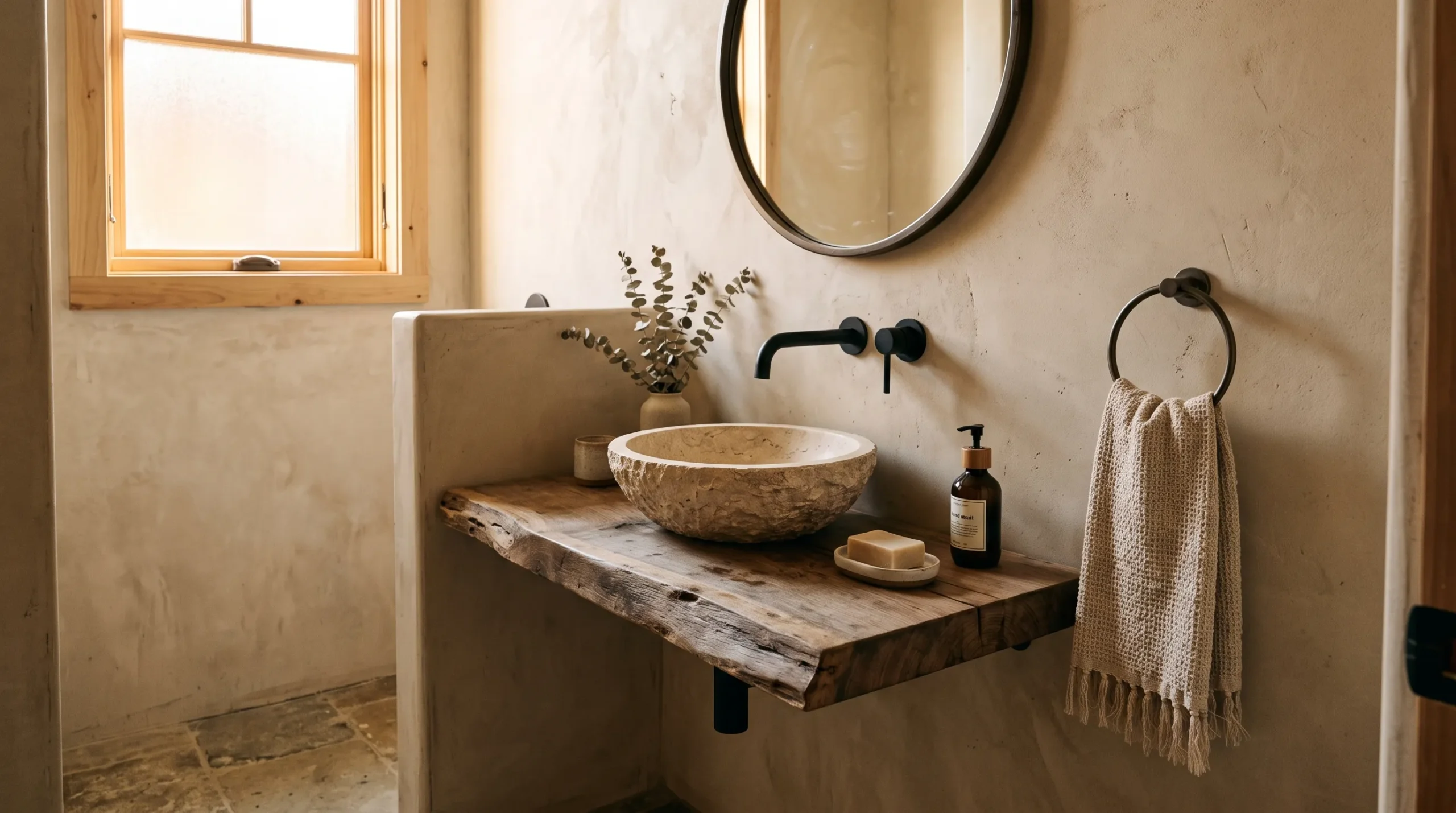
Raw Edge Wooden Vanity
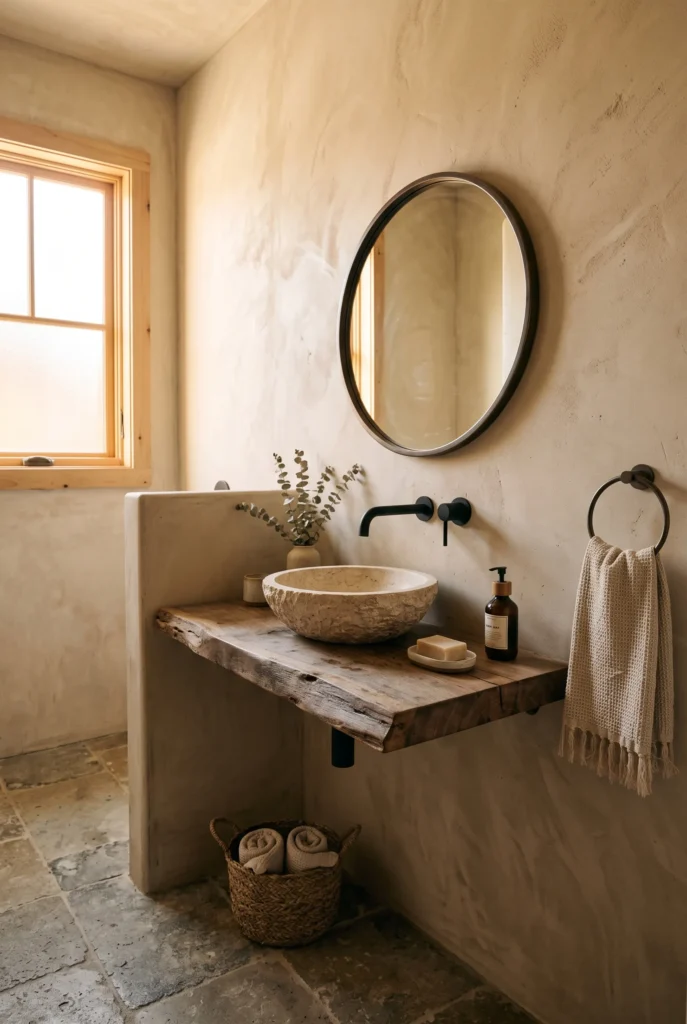
- Adds organic warmth and natural imperfections to a compact bathroom layout.
- Replaces bulky modern cabinetry with a slim, floating live-edge wooden counter.
- Pairs effortlessly with raw stone accents and minimalist wall-mounted hardware.
- Helps small spaces feel intentionally relaxed rather than cluttered or sterile.
Imagine stepping into a serene retreat where every wood grain tells a subtle, tranquil story. A raw edge vanity brings timeless organic charm into compact quarters without overwhelming the floor area. In my experience, replacing heavy box vanities with a floating slice of natural timber instantly opens up sightlines, making tight quarters feel surprisingly spacious. The natural cracks and unrefined silhouette visually ground the room, reminding us to celebrate imperfect beauty. By leaving the underside clear, you invite extra airflow while creating an effortless visual balance that feels completely serene, calm, and deeply refreshing every single morning.
Transforming your morning ritual begins with surrounding yourself with textures that feel authentic and grounded. When working with small wabi sabi bathroom design ideas, incorporating natural timber creates a focal point that requires zero excessive decor. The tactile warmth of unfinished wood softens harsh tile surfaces and harsh metal fixtures, bringing balance into compact washrooms. I’ve noticed that pairing this setup with neutral stone sinks enhances the earthy aesthetic while keeping maintenance wonderfully simple. You will immediately notice how your powder room shifts from a utilitarian corner into a soothing, spa-like sanctuary filled with quiet character and effortless charm.
Textured Microcement Walls
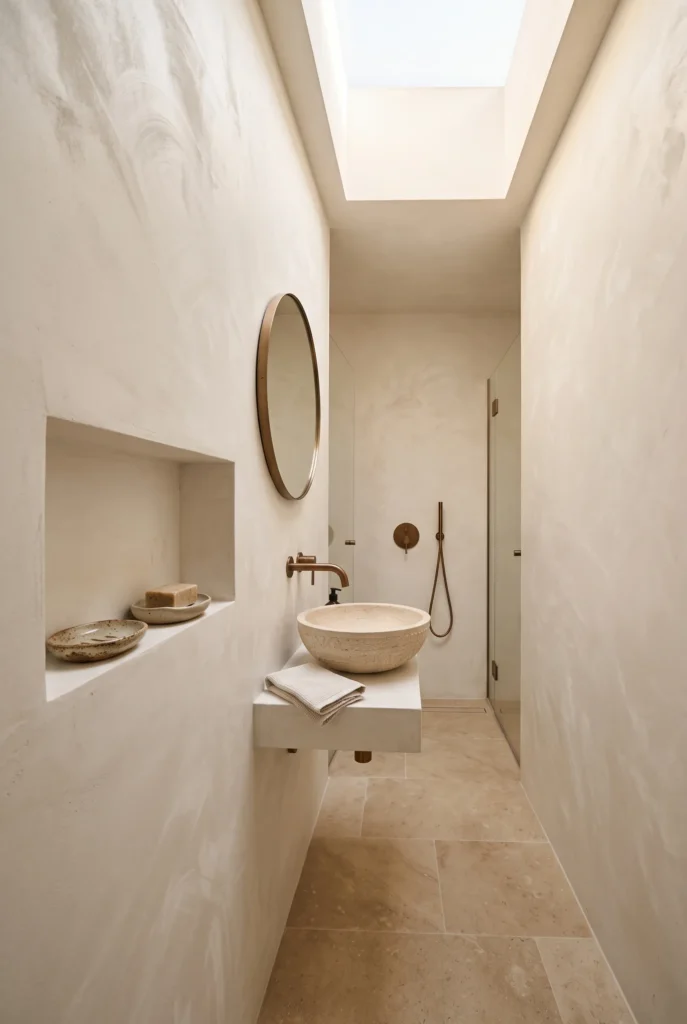
- Eliminates visual grout lines, making small bathrooms feel instantly larger and cohesive.
- Introduces subtle, tactile wall movement through handcrafted plaster finishes.
- Reflects soft ambient lighting without creating harsh, reflective glare.
- Provides a moisture-resistant, durable backdrop that gains character over time.
Imagine stepping into a quiet space where smooth seamless walls wrap around you like a calming embrace. Seamless plaster surfaces eliminate busy grout lines, which often chop up visual flow and make tiny bathrooms feel overly cramped. That’s why many designers recommend microcement for tight layouts, as the fluid finish creates an unbroken horizon across surfaces. The gentle variations in texture catch soft daylight, adding depth and warmth without needing elaborate wall decor. This subtle movement brings an artisanal quality to your walls, transforming a standard boxy layout into an expansive, peaceful oasis of quiet tranquility.
Achieving a harmonious atmosphere starts with choosing materials that celebrate organic imperfection and simple warmth. Applying textured plaster creates a gentle, velvety dimension that feels incredibly grounded under any lighting condition. In small spaces, light-reflecting plaster finishes bounce natural illumination into dark corners, making the room feel noticeably brighter and airier. I’ve seen this work well in many homes where traditional tile felt overly clinical or restrictive. By embracing subtle tonal variations across your walls, you achieve a minimalist look that feels inviting, authentic, and naturally connected to organic design elements.
Handmade Chipped Clay Vessel
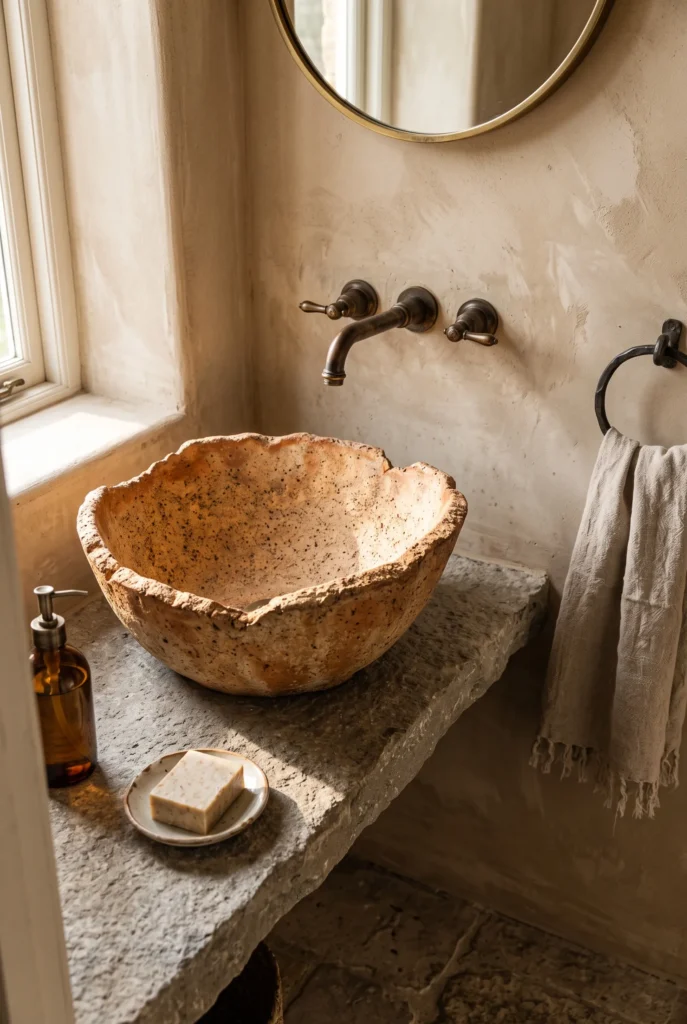
- Brings unique handcrafted personality into small vanity areas with limited space.
- Swaps standard ceramic basins for earthy, asymmetrical terracotta or stoneware.
- Frees up counter space when combined with sleek wall-mounted plumbing fixtures.
- Adds raw tactile warmth that turns daily routine into a grounding experience.
Elevate your vanity area with an artisan piece that celebrates the beauty of hand-molded clay. Choosing an asymmetrical ceramic basin instantly introduces soul and character to a compact vanity counter. In my experience, hand-crafted sinks serve as stunning functional art pieces, drawing attention upward and distracting from a room’s limited square footage. The earthy warmth of fired clay contrasts beautifully against modern fixtures, creating a delightful dialogue between raw craft and clean functionality. This simple upgrade proves that even the smallest functional items can deliver immense visual impact while keeping the room feeling intentional and deeply peaceful.
Infusing organic warmth into compact spaces often comes down to choosing artisanal elements with tactile history. An unpolished pottery vessel softens rigid straight lines, giving your washroom an artisanal touch that feels calm and timeless. Pair this vessel with wall-mounted faucets to save precious counter space while creating a sleek, floating presentation. I’ve noticed that organic, uneven textures ground the eyes, making modest bathrooms feel like curated, cozy sanctuaries. Every wash becomes a soothing tactile reminder of natural simplicity, transforming a small everyday nook into a tranquil space that inspires mindful moments throughout your busy daily routine.
Asymmetrical Stone Mirror
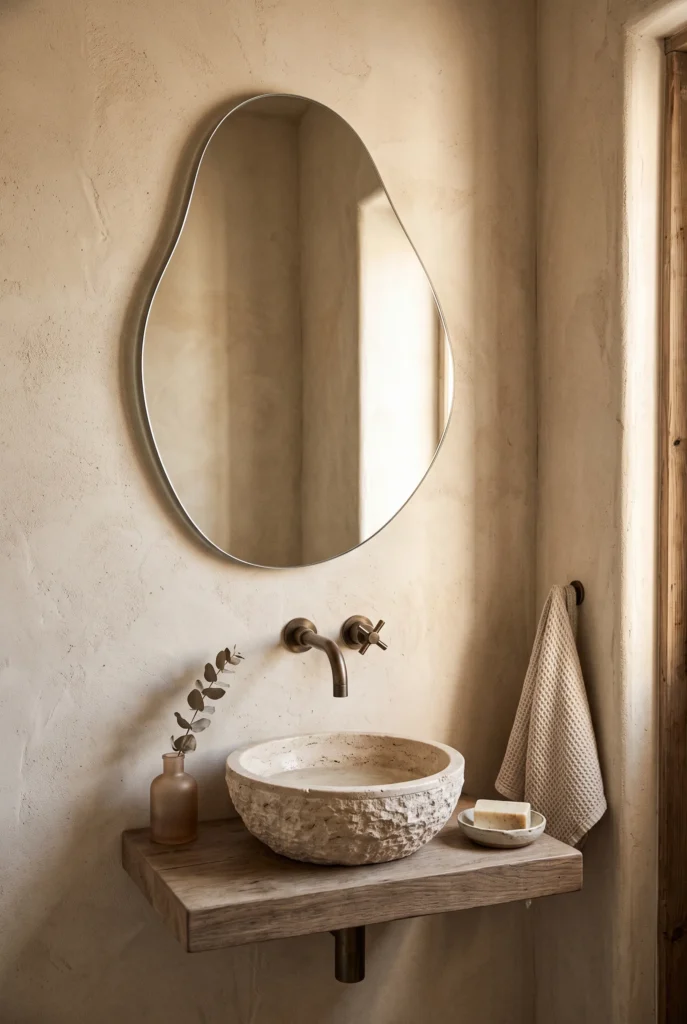
- Breaks up rigid straight lines in compact washrooms.
- Reflects natural light to make tight spaces feel airy.
- Acts as a piece of functional wall art.
- Adds an organic, flowing shape that feels effortlessly natural.
Hanging an organically shaped mirror instantly transforms a rigid, boxy room into a flowing, visually dynamic retreat. In my experience, choosing frameless, asymmetrical glass creates a captivating focal point that tricks the eye, making cramped walls feel surprisingly expansive. Traditional rectangular mirrors often emphasize the sharp, confining corners of tiny spaces, whereas irregular silhouettes introduce a gentle, soothing rhythm. This simple upgrade naturally catches and disperses morning sunlight throughout the room, illuminating dark shadows. You will love how this fluid shape adds quiet sophistication while maintaining a wonderfully uncluttered, deeply relaxing atmosphere in your daily routine.
Introducing unexpected curves is a masterful way to soften the harsh utility of standard plumbing fixtures and cabinetry. An uneven mirror profile naturally mimics elements found in nature, perfectly capturing the essence of organic interior aesthetics without requiring a massive renovation. I’ve noticed that placing these unique pieces against textured plaster walls creates a beautiful contrast between smooth glass and rough matte surfaces. This elegant reflection not only doubles your visual depth but also grounds the room with artistic intention. The result is a calming sanctuary that feels incredibly spacious, intimately cozy, and beautifully unrefined.
Matte Bronze Fixtures
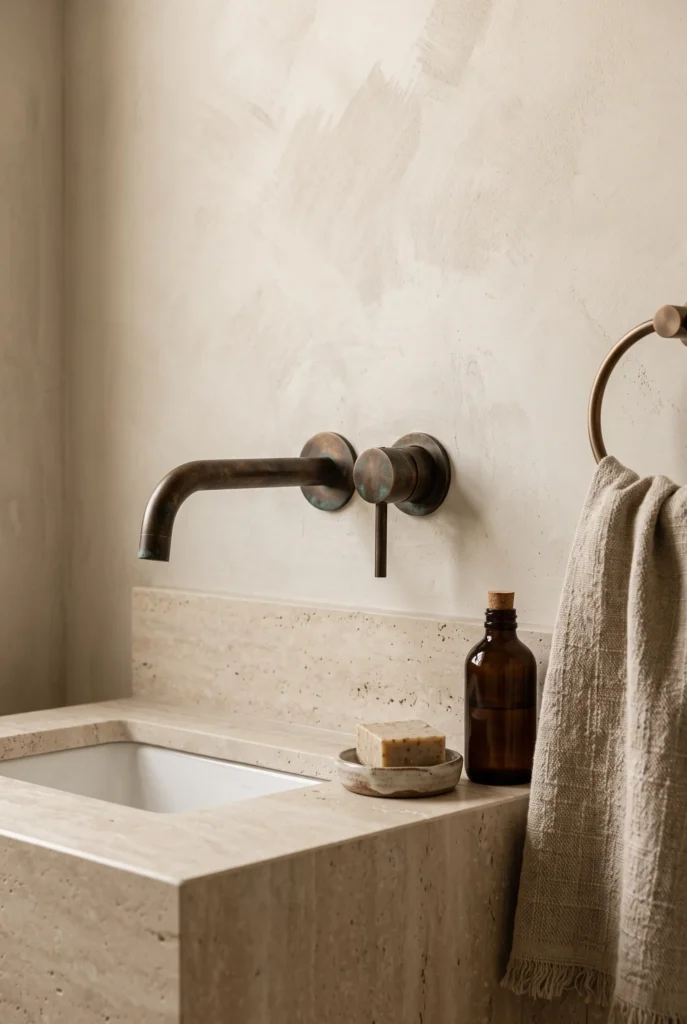
- Provides a muted, non-reflective alternative to shiny chrome.
- Develops a beautiful, natural patina as time goes on.
- Warms up cool-toned stone or concrete surfaces.
- Saves counter space with sleek wall-mounted installations.
Swapping out highly polished plumbing hardware for muted, aged metal instantly elevates the warmth and character of any washroom. Shiny chrome can sometimes feel harsh or overly sterile, especially in compact layouts meant for relaxation. By integrating weathered bronze or aged brass, you introduce a subtle rustic charm that beautifully complements natural stone and raw timber. That’s why many designers recommend these non-reflective finishes; they absorb ambient light rather than creating distracting glares. The soft, burnished tones create an inviting, lived-in feel, proving that even the smallest utilitarian details can profoundly impact the room’s overall tranquility.
Choosing fixtures that age gracefully is the secret to a timeless aesthetic that feels authentic and comfortably grounded. Wall-mounted bronze faucets are particularly effective in tight spaces because they completely free up precious countertop real estate, reducing visual clutter. I’ve seen this work incredibly well in modest homes where every inch matters, allowing the basin to stand out elegantly. The metal’s evolving patina celebrates the beauty of natural aging and imperfection, adding subtle historical depth to your daily washing rituals. Your space will effortlessly radiate a calm, collected energy that feels both functional and intentionally curated.
Also View: 20 Genius Small Balcony Garden Ideas for Apartments
Woven Linen Curtains
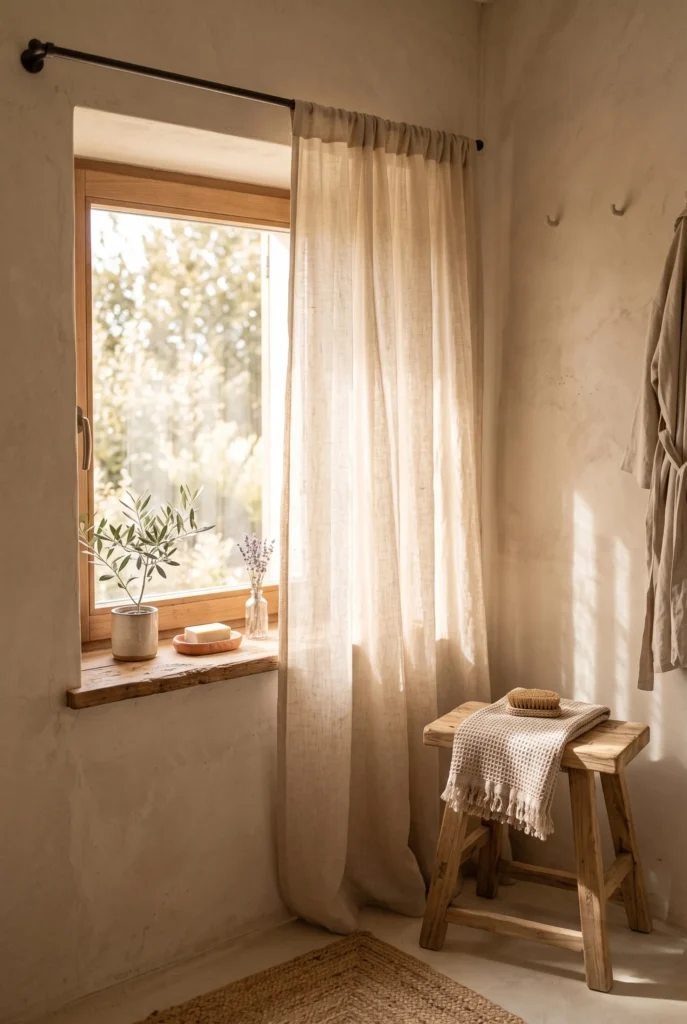
- Filters harsh daylight into a soft, ambient, glowing warmth.
- Introduces organic textile texture to balance hard stone surfaces.
- Provides essential privacy without completely blocking out sunshine.
- Hangs lightly, preventing small window areas from feeling heavy.
Draping your windows in natural, unbleached textiles is a beautifully simple way to soften the harsh acoustics and rigid lines of a small washroom. Heavy blinds or rigid shutters can easily overwhelm a modest window frame, blocking out precious sunshine. In my experience, hanging sheer linen panels allows gentle daylight to filter through, casting a warm, diffused glow across your vanity. The breathable fabric billows softly with passing breezes, introducing a calming sense of motion and lightness. This delicate touch instantly makes tight quarters feel expansive, inviting, and deeply connected to the soothing rhythms of nature.
Embracing organic fabrics brings a much-needed layer of cozy warmth to spaces typically dominated by cold tiles and glass. The natural slubs and minor imperfections in woven textiles celebrate an unrefined beauty that perfectly anchors your peaceful design vision. I’ve tried this approach in darker rooms, and the translucent material brilliantly maintains essential privacy while maximizing whatever ambient light is available. As the sun moves, the fabric creates subtle, shifting shadows that turn plain walls into dynamic, living canvases. This effortless textile upgrade transforms a basic utility room into a truly serene, spa-like sanctuary filled with grace.
Exposed Weathered Beams
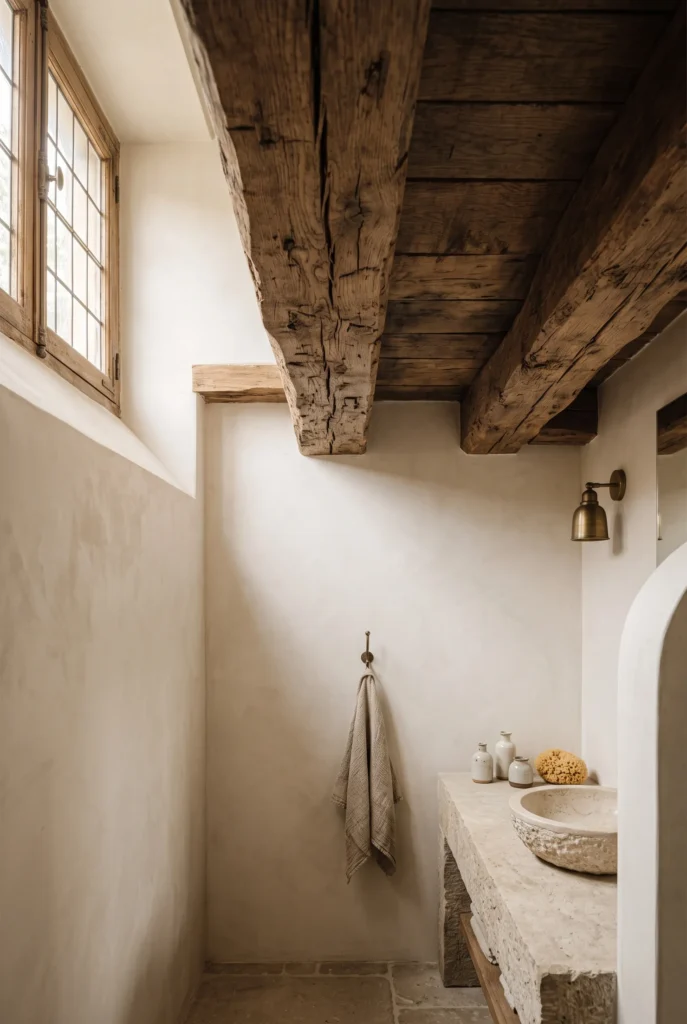
- Introduces architectural interest to low or plain ceilings.
- Adds rich, historical timber textures without losing floor space.
- Creates a cozy, grounded overhead structure that feels reassuring.
- Draws the eye upward to make compact rooms feel taller.
Bringing reclaimed wooden rafters overhead is a brilliant method for adding rustic character to a small room without sacrificing an inch of functional floor space. Standard flat ceilings often feel uninspired, but introducing exposed timber instantly draws the gaze upward, enhancing the perceived height of tight quarters. In my experience, pairing dark weathered wood against light, textured walls creates a dramatic vertical contrast that feels deeply grounding rather than claustrophobic. The natural knots, cracks, and aged grain bring a sense of history into the room, making even newly constructed powder rooms feel timeless, comfortable, and soulfully connected.
Incorporating architectural woodwork into small spaces requires a delicate balance between cozy intimacy and airy openness. Utilizing slender, rustic beams ensures the ceiling remains light while still providing that coveted rustic, cabin-inspired warmth. I’ve noticed that aged timber beautifully absorbs overhead lighting, eliminating harsh glare and replacing it with a soft, inviting ambiance. This structural element pairs effortlessly with natural stone sinks and muted plaster, tying the entire interior composition together seamlessly. You will notice how your washroom instantly shifts into a tranquil retreat that feels anchored, shelter-like, and wonderfully rich in natural, unpretentious character.
Slatted Bamboo Partition
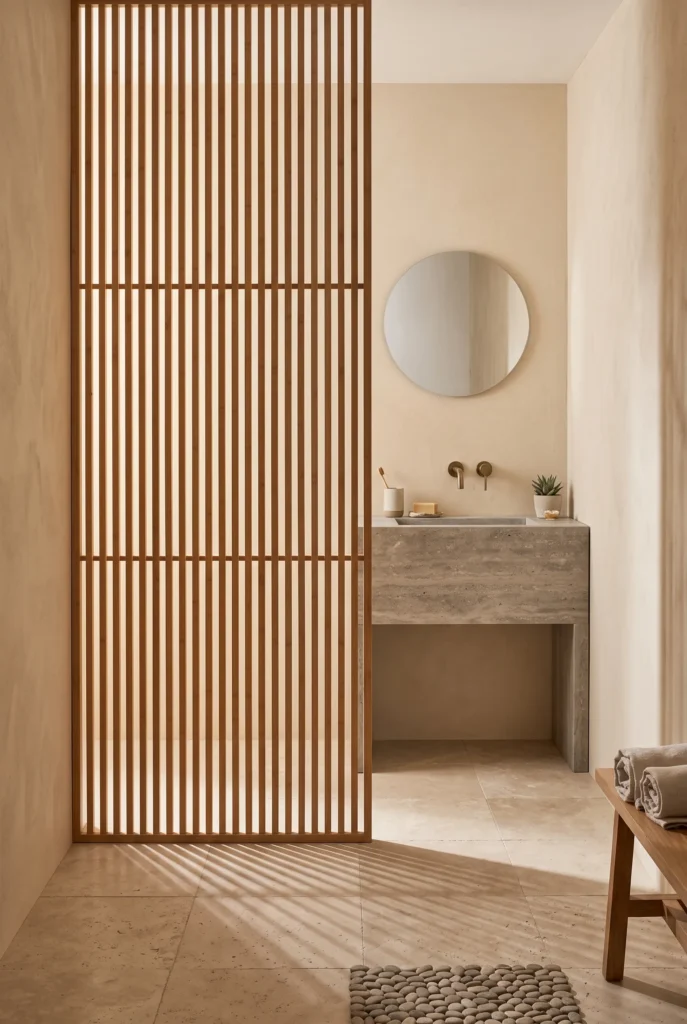
- Divides small layouts gently without blocking natural daylight.
- Adds vertical lines that visually elevate ceiling height.
- Introduces a light, breezy Japanese-inspired architectural element.
- Offers semi-privacy for toilet or shower zones effortlessly.
Dividing a compact layout without creating dark, cramped pockets can be a challenge, but slatted wooden screens offer the ultimate design solution. Solid walls often stifle airflow and steal valuable daylight, making small washrooms feel tight and overly confined. By installing a open-slat partition, you allow natural illumination to filter through delicate gaps while maintaining distinct functional zones. That’s why many designers recommend bamboo screens for compact footprints, as the slender vertical slats guide the eye upward, giving the illusion of soaring ceilings. This lightweight structure adds subtle rhythm, gentle texture, and an effortless sense of spatial harmony.
Creating distinct zones in a modest space enhances both functionality and visual tranquility. The natural golden tones of bamboo bring organic warmth to cool tile finishes, infusing the environment with a calm, spa-like atmosphere. In my experience, these slatted dividers work remarkably well around shower enclosures or water closets, offering privacy while keeping sightlines open. The subtle shadows cast by filtering light throughout the day add continuous movement across your floors and walls. This thoughtful addition elevates your daily routine, turning a small, multi-functional room into a well-organized, serene sanctuary of quiet focus.
Floating Stone Ledge
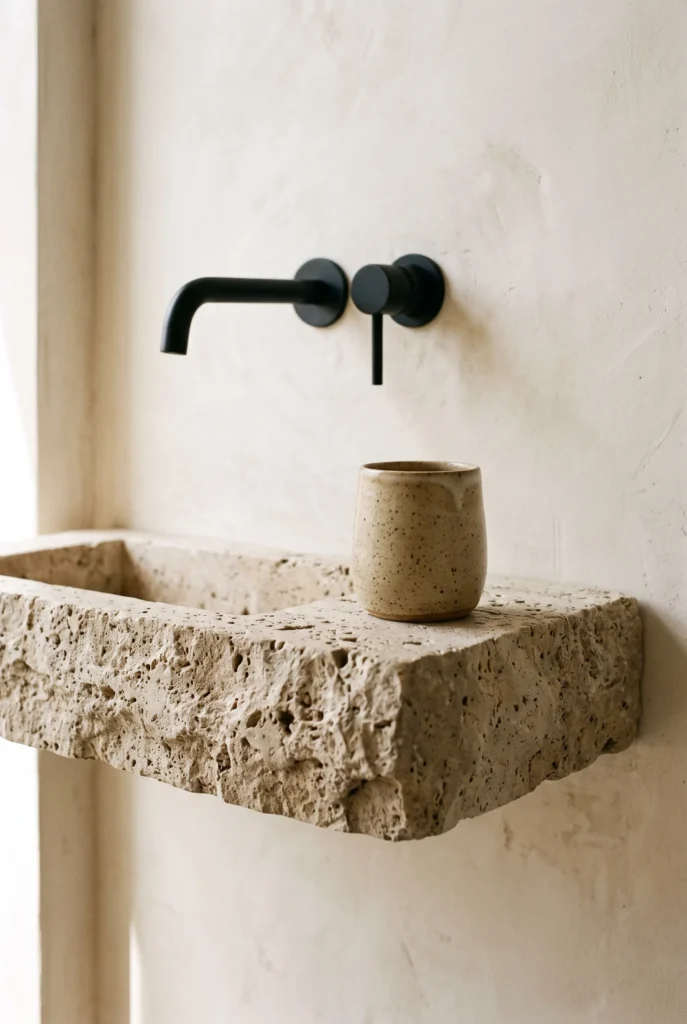
- Replaces bulky floor storage to maximize open floor area.
- Provides a minimal, monolithic surface for essential items.
- Showcases the raw, unpolished beauty of natural rock.
- Keeps tiny washrooms looking clean, airy, and uncluttered.
Mounting a single, heavy stone shelf directly onto the wall is a masterclass in minimalist functionality and spatial efficiency. Massive vanity cabinets often crowd tiny floor plans, creating awkward narrow walkways and visually heavy corners. Swapping traditional cabinetry for a sleek, floating rock ledge opens up the floor space below, instantly making the room feel larger. In my experience, a thick slab of travertine or slate acts as a stunning functional sculpture while providing just enough surface area for daily essentials. The raw, unpolished edges bring an earthy texture that feels remarkably calm and intentionally uncluttered.
Streamlining your storage surfaces encourages a clutter-free lifestyle while elevating the overall aesthetic of your sanctuary. A floating ledge creates clean horizontal lines that stretch the visual width of small walls, giving tight rooms a roomier, more expansive feel. I’ve seen this work exceptionally well in powder rooms where extra storage furniture would feel restrictive or unnecessary. By curating only a few handmade items on this natural shelf, you create a minimalist display that feels serene rather than chaotic. The result is a beautifully open, breathable space that balances everyday utility with quiet, timeless design.
Pebble Tile Flooring
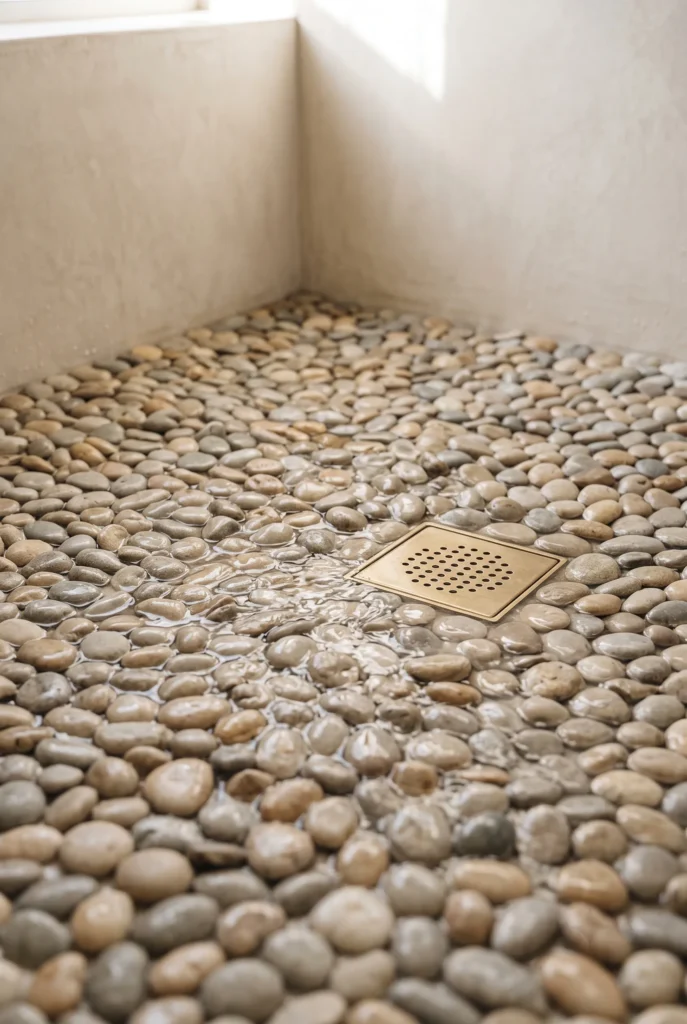
- Provides a natural, non-slip tactile massage for feet during daily showers.
- Breaks up flat porcelain surfaces with rich, organic floor texture.
- Blends seamless tone-on-tone grout lines to make shower footprints feel larger.
- Delivers an authentic spa-like sensory experience in small shower stalls.
Stepping onto smooth river stones turns a routine morning shower into a grounding, spa-like ritual. Compact shower enclosures often feel cold and institutional when paved with standard smooth porcelain tiles. By laying flat river rocks across the floor, you introduce an inviting texture that feels wonderfully soothing and relaxing underfoot. In my experience, choosing muted grey or tan pebbles creates an unbroken tonal connection with surrounding plaster walls, visually expanding the shower footprint. The subtle variations in natural stone shape celebrate organic design, ensuring your tiny shower stalls feel intentionally designed, cozy, and deeply restorative.
Bringing natural elements beneath your feet transforms the entire sensory atmosphere of a compact washroom. The gentle uneven surface of river pebbles absorbs light softly rather than reflecting harsh glare, adding visual warmth to small spaces. I’ve noticed that this natural flooring choice works brilliantly in curb-free walk-in showers, seamlessly unifying the floor transition without awkward borders. The earthy grout lines create a cohesive tapestry of organic stone that hides water spots effortlessly. You will immediately feel a closer connection to nature every morning, turning a tiny shower into a soothing, mindful sanctuary.
Sunken Niche Storage
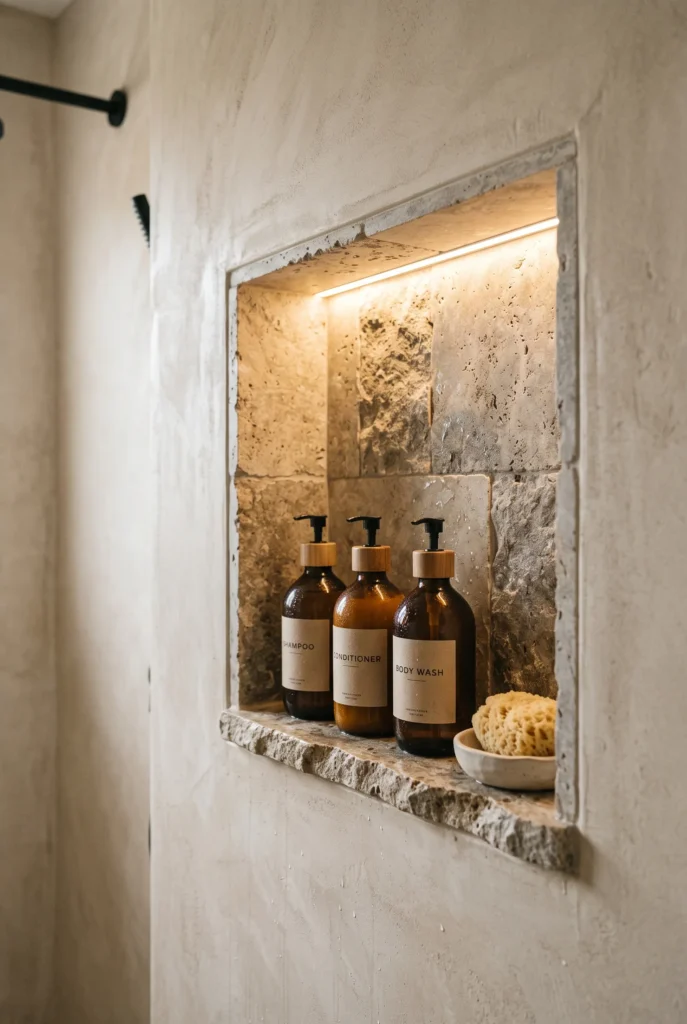
- Reclaims unused wall cavity space to keep small showers completely clutter-free.
- Replaces protruding corner racks that cramp narrow shower enclosures.
- Highlights handmade ceramic bottles with soft, integrated warm ambient lighting.
- Maintains sleek, flush vertical wall planes for an open, airy feeling.
Carving storage directly into the shower wall is the ultimate space-saving technique for tight footprints. External caddies, plastic hanging shelves, and corner racks constantly steal valuable elbow room in narrow shower stalls, making showering feel cramped and chaotic. Building a recessed alcove keeps your essential soaps flush with the wall, preserving every inch of open space. That’s why many designers recommend integrating hidden wall niches during renovations; it preserves clean sightlines while offering built-in elegance. When finished in the same texture as your walls, this functional cutout blends seamlessly, making small showers feel uncluttered and airy.
Elevating everyday utility with thoughtful built-in details creates a harmonious environment where mind and body can truly unwind. Adding a tiny LED strip inside the upper ledge of your niche casts a warm, soothing ambient backlight across your artisan bath products. In my experience, replacing messy commercial bottles with uniform amber glass jars inside a recessed shelf instantly elevates the overall visual tranquility. The recessed geometry introduces subtle depth to plain shower walls without creating awkward visual clutter. You will love how this clean organization keeps your compact room feeling expansive, serene, and effortlessly tidy.
Unpolished Brass Hardware
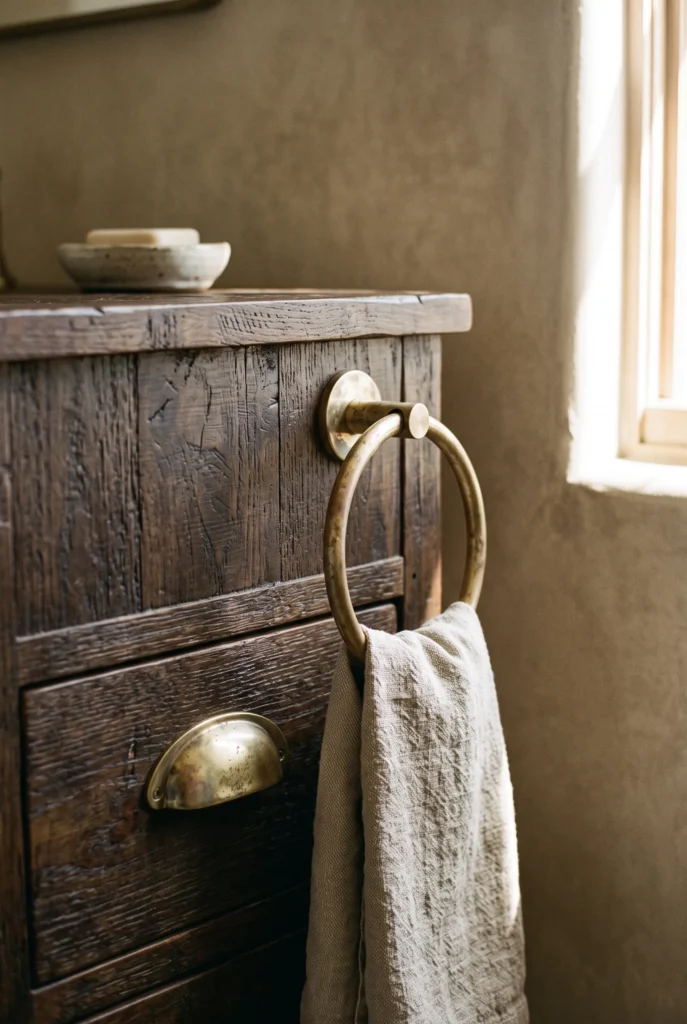
- Develops a unique, organic patina that ages naturally over time.
- Adds warm, golden vintage tones to counteract cold, sterile ceramic surfaces.
- Resists unsightly fingerprint smudges better than shiny chrome finishes.
- Infuses subtle hand-forged character into small, modern vanity areas.
Choosing raw metal hardware allows your fixtures to evolve alongside your home, gaining rich character over time. Shiny, mass-produced chrome hardware often highlights water spots and finger smudges, requiring constant polishing in small, heavily used powder rooms. Unpolished brass features an untreated surface that gradually tarnishes, developing an authentic, vintage patina that feels wonderfully lived-in. In my experience, these warm golden tones bring a touch of old-world charm to minimalist stone or concrete surfaces. This subtle evolution celebrates the beauty of natural aging, making small vanities feel thoughtfully curated rather than sterile or cold.
Infusing subtle warmth into compact layouts often comes down to selecting materials with tactile depth and personality. Unpolished drawer handles and towel hooks provide a subtle visual contrast against smooth microcement or plaster backdrops. I’ve seen this work exceptionally well in modest bathrooms, where small hardware choices carry significant weight in setting the overall atmosphere. The soft, non-reflective finish absorbs ambient daylight, creating a soft, cozy glow that invites touch. Your vanity area will instantly feel warmer, more inviting, and beautifully grounded through this simple, timeless metal accent upgrade.
Low-Profile Ceramic Vessel
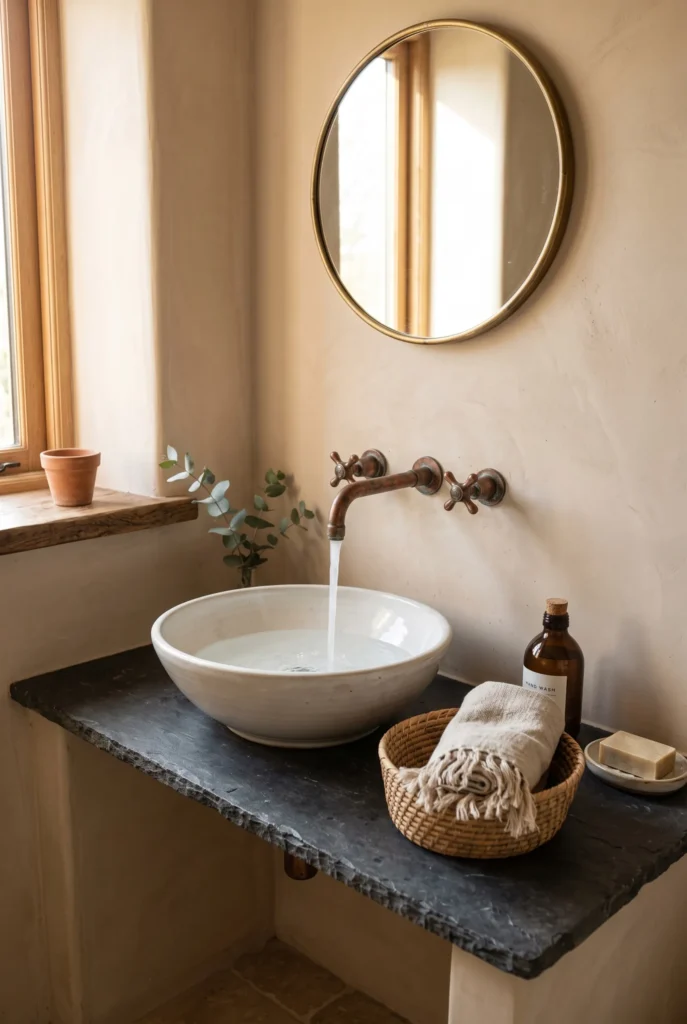
- Keeps visual sightlines low to make tight vanity counters feel open and light.
- Replaces tall bulky bowls that crowd wall mirrors and wall-mounted faucets.
- Showcases handcrafted matte ceramic textures that feel soft and inviting.
- Minimizes water splashing while maintaining a sleek, modern footprint.
Opting for a shallow, wide basin is a subtle trick that dramatically expands the visual field above your countertop. Tall, deep vessel sinks can feel overwhelming on narrow vanities, blocking sightlines and crowding the space between the bowl and the mirror. A low-profile ceramic basin keeps the profile sleek and understated, allowing your walls and fixtures to breathe. In my experience, these gentle, sweeping forms offer plenty of practical washing room without adding unnecessary bulk. The low center of gravity grounds the vanity area, creating a calm, effortless balance that feels light, airy, and wonderfully balanced.
Designing a functional yet tranquil powder room relies on choosing fixtures that prioritize subtlety over dramatic size. The soft, matte finish of an unglazed ceramic sink absorbs harsh light, preventing intense reflections from accentuating small room dimensions. I’ve noticed that pairing shallow pottery basins with tall wall-mounted faucets creates an elegant, floating look that frees up valuable counter space for small tray displays. The smooth, tactile curve of clay invites touch while keeping daily routines feeling serene and grounded. This simple shift in proportions instantly converts a cramped corner into a sophisticated, peaceful sanctuary you will love.
Reclaimed Wood Mirror Frame
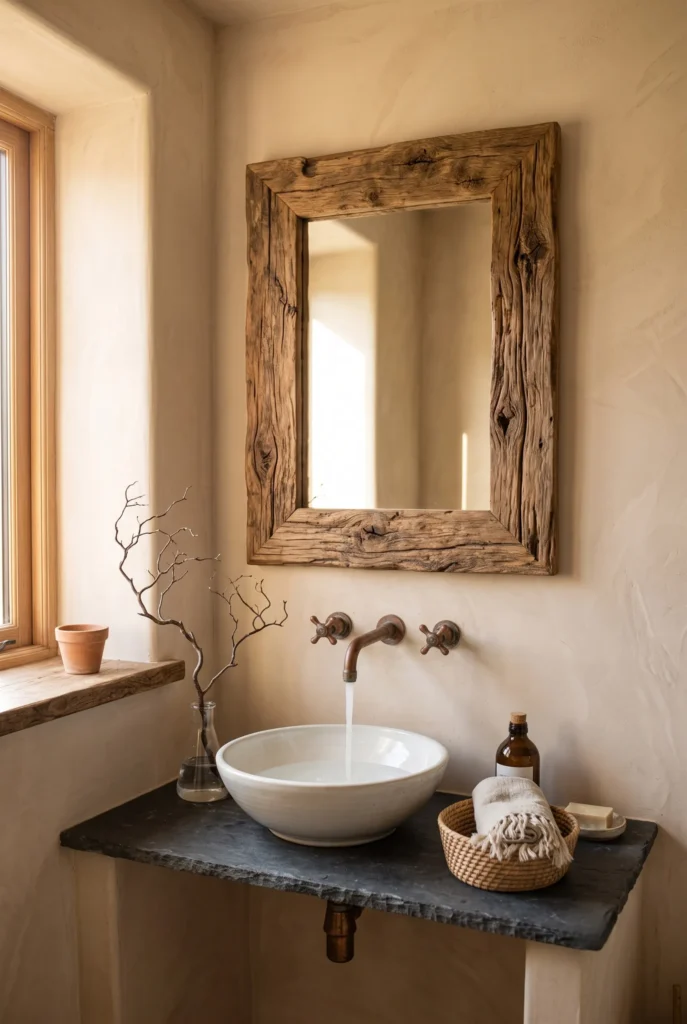
- Infuses instant warmth and historical character into plain white walls.
- Recycles weathered timber for a uniquely textured, eco-friendly design statement.
- Frames mirror reflections with rich, dark organic wood grain patterns.
- Pairs effortlessly with minimalist stone basins and matte hardware choices.
Surrounding your reflection with the rich, weathered character of salvaged timber brings immediate soul to a plain, boxy space. Modern glass mirrors often feel thin or clinical when mounted directly against painted drywall without any surrounding texture. Utilizing a frame made from reclaimed barn wood or old structural timber introduces deep grooves, natural knots, and decades of history into your space. In my experience, this rustic border acts as functional artwork, drawing the eye directly to its warm, earthy grain. It creates a cozy focal point that anchors the entire room while keeping the design clean and unpretentious.
Creating a welcoming atmosphere in small quarters requires blending hard utility surfaces with soft, natural textures that tell a story. The rich, varied tones of weathered wood soften the coldness of glass, tile, and porcelain fixtures, balancing the room’s energy naturally. I’ve seen this work well in many homes where space constraints prevented adding standalone decorative furniture or large floor plants. The wooden frame absorbs light gently, creating a subtle contrast against pale plaster backdrops that makes small walls feel intentionally styled. Your morning reflection routine immediately feels warmer, grounded, and deeply connected to authentic natural beauty.
Neutral Limewash Walls
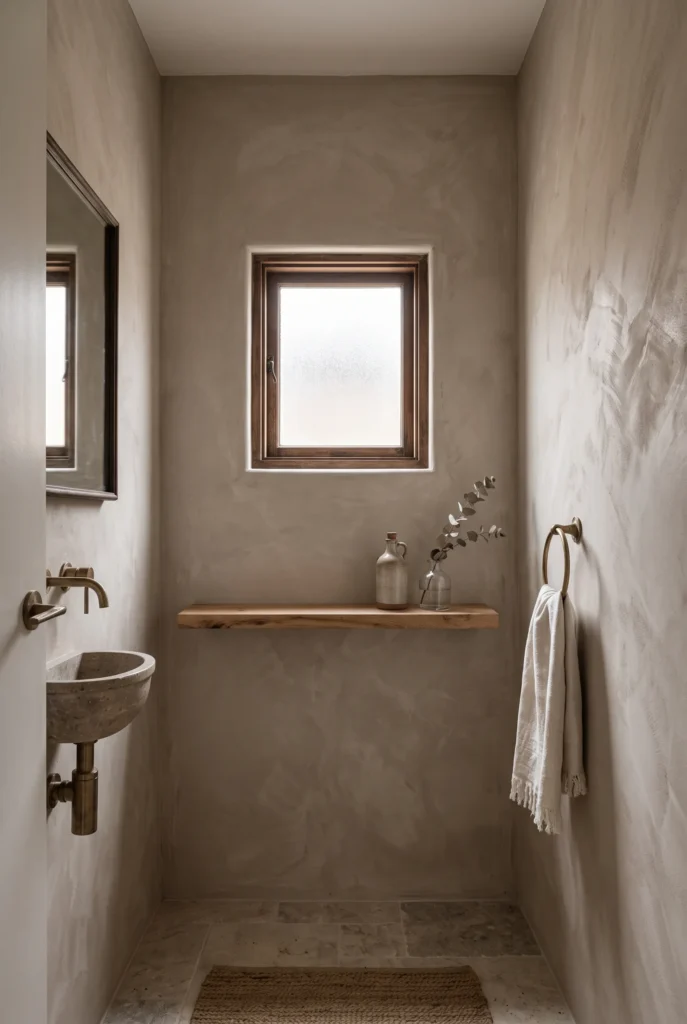
- Creates a soft, suede-like texture that hides wall imperfections naturally.
- Bounces ambient light smoothly around compact rooms without harsh glare.
- Uses natural, breathable mineral paint that improves indoor air quality.
- Provides a timeless, velvety backdrop for natural wood and stone accents.
Brushing natural mineral paint across your walls introduces a gentle, cloud-like depth that completely redefines small room boundaries. Standard flat latex paint can make small walls feel rigid and boxy, highlighting tight corners and sharp architectural seams. Limewash creates soft, sweeping variations in tone as it dries, giving your surfaces a velvety texture that feels centuries old. In my experience, these subtle shifts in color catch light effortlessly, softening harsh shadows and making tiny powder rooms feel surprisingly expansive. The matte, chalky finish creates an inviting canvas that makes every fixture stand out beautifully.
Transforming flat surfaces into dynamic visual textures allows compact rooms to feel cozy without needing crowded wall decor or art. The subtle movement inherent in natural plaster paint draws you in, offering a soothing visual texture that calms the senses during daily routines. I’ve tried this approach in windowless powder rooms, and the luminous quality of the mineral pigments brilliantly maximizes low lighting conditions. This organic backdrop pairs seamlessly with raw wood, stone, and woven accents, bringing an authentic artisanal feel to your home. You will instantly notice a peaceful, cocoon-like atmosphere that turns quick visits into calming breaks.
Raw Stone Wall Slab
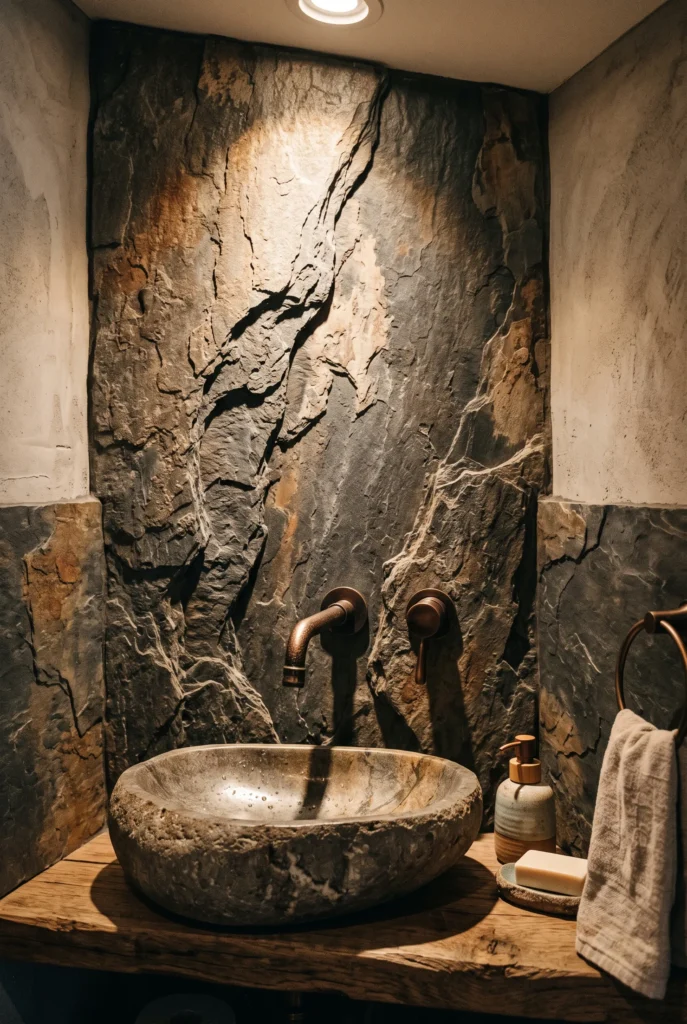
- Creates a striking, high-impact focal point using natural rock textures.
- Replaces uniform tiling with a single, dramatic organic accent surface.
- Adds deep tactile contrast behind sleek vanity basins and modern mirrors.
- Anchors compact layouts with an authentic, grounded mountain-lodge atmosphere.
Introducing an unrefined rock surface directly behind your vanity brings dramatic depth and raw elegance to tiny layouts. Smooth, flat walls can sometimes feel monotonous, but a textured stone slab instantly creates a captivating visual anchor that draws you in. In my experience, highlighting natural stone with soft grazing lights accentuates deep fissures, creating shifting shadows that make small rooms feel dynamic. The earthy charcoal and tan tones ground the space, proving you do not need wide square footage to create a breathtaking design statement. This bold addition turns a simple basin area into an unforgettable, spa-like retreat.
Balancing heavy stone textures with sleek, modern elements keeps small bathrooms feeling airy, intentional, and thoroughly balanced. Mounting a slim, wall-mounted faucet directly against raw rock creates a delightful contrast between refined engineering and unpolished natural beauty. I’ve noticed that pairing stone accent walls with minimalist floating counters prevents the room from feeling dark or overcrowded. The cool, solid presence of natural rock brings a soothing sense of permanence that grounds your daily routines. You will love how this single architectural feature transforms a humble powder room into a serene, organic sanctuary filled with quiet power.
Frosted Glass Panel Door
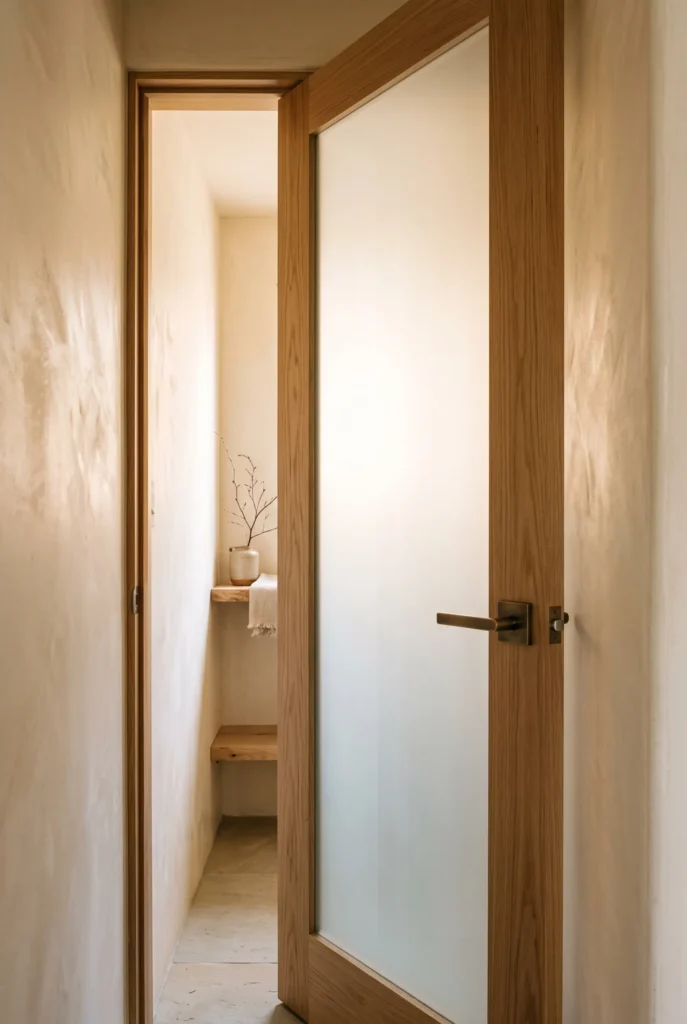
- Channels natural light into windowless or dark interior bathrooms effortlessly.
- Maintains total privacy while eliminating dark, heavy solid wooden doors.
- Introduces a sleek translucent texture that feels light and airy.
- Blends clean timber framing with modern, minimalist architectural finishes.
Swapping solid interior doors for translucent panels is a game-changing solution for brightening small, landlocked washroom layouts. Traditional wooden doors create dark barriers that block natural daylight from adjacent hallways, making tiny bathrooms feel isolated and claustrophobic. Installing a frosted glass panel allows soft sunlight to filter through continuously while ensuring complete personal privacy. In my experience, this gentle translucency softens sharp room boundaries, creating a seamless visual flow that makes tight spaces feel far more open. The bright, diffused glow instantly transforms a dim utility room into a welcoming, sun-filled sanctuary.
Maximizing natural light distribution is the key to creating an inviting atmosphere within compact home footprints. The delicate texture of frosted glass scatters incoming light evenly, eliminating harsh shadows while casting a warm ambient glow across your floor tiles. I’ve seen this work exceptionally well in narrow apartments where every ray of natural light counts toward making rooms feel bigger. Pairing glass doors with lightweight timber frames adds a touch of warm Japanese minimalism that feels effortlessly stylish. You will immediately notice how much brighter, friendlier, and airier your home feels when light moves freely between rooms.
Woven Jute Floor Mat
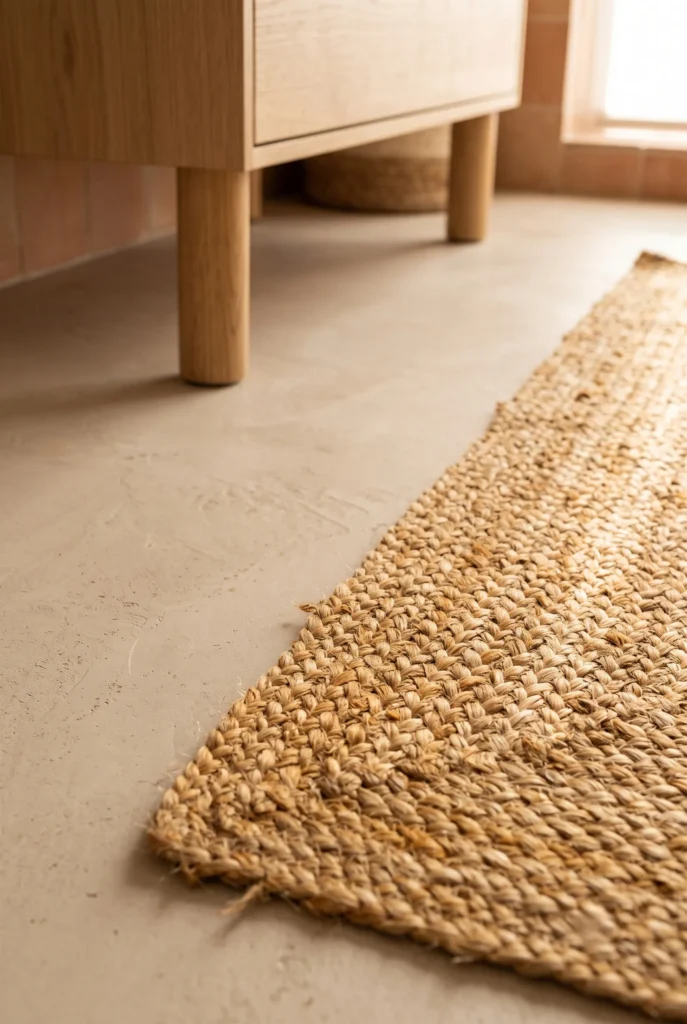
- Brings tactile natural fiber warmth to cool tile or microcement floors.
- Replaces plush, synthetic bathmats with a durable, eco-friendly textile.
- Adds rich golden-brown tones that soften stark white or grey surfaces.
- Absorbs ambient moisture quickly while providing a grounded foot feel.
Replacing plush synthetic bath rugs with hand-braided natural fiber mats introduces an earthy, organic texture underfoot that feels deeply comforting. Brightly colored or fluffy bathmats often clutter small floors, drawing attention downward to restricted floor space. A woven jute rug offers muted golden tones that blend seamlessly with stone, wood, and concrete finishes without overwhelming the room. In my experience, the rugged, thick weave provides a subtle massage for tired feet, turning daily routines into grounding sensory moments. This simple textile swap elevates your floor layout effortlessly while maintaining a calm, uncluttered aesthetic.
Infusing authentic natural materials into modest rooms helps bridge the gap between functional utility and cozy living spaces. The natural variation in plant fibers brings subtle color shifts that warm up cool stone tiles, creating a harmonious balance across the room. I’ve tried this approach in tiny powder rooms, where adding small woven accents immediately softened cold ceramic surfaces. Jute’s breathable, durable nature makes it an ideal choice for dry vanity zones, offering long-lasting warmth without requiring fussy maintenance. You will love how this simple organic rug grounds your space with relaxed, timeless charm.
Hanging Kokedama Moss Ball
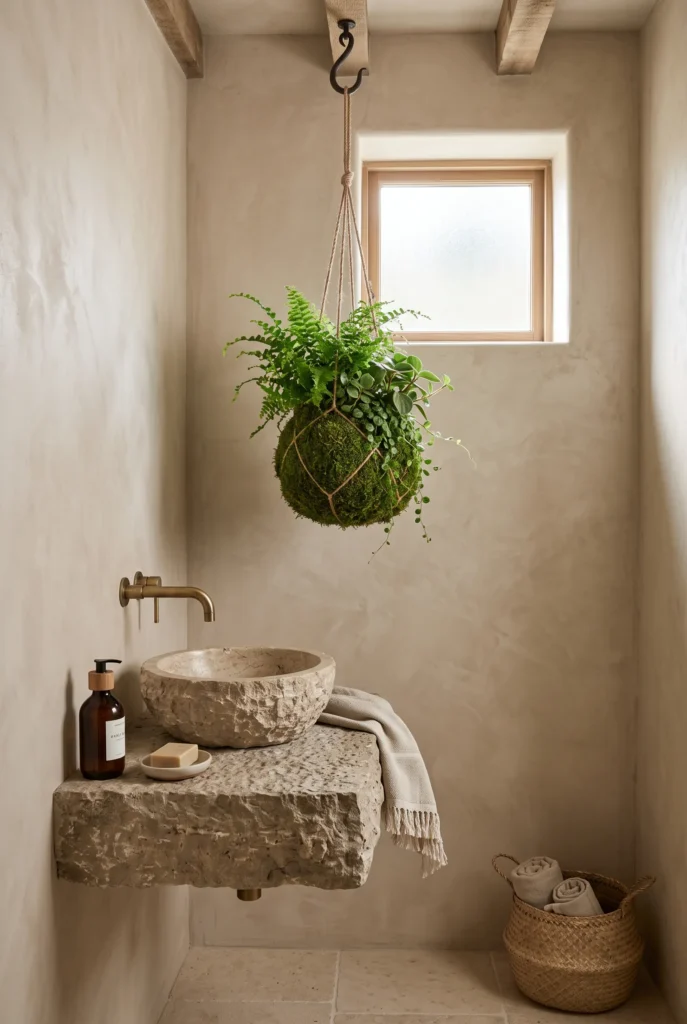
- Brings living organic greenery into small washrooms without consuming counter space.
- Replaces bulky plastic plant pots with a natural, soil-bound moss sphere.
- Draws the eye upward to emphasize vertical space in compact layouts.
- Thrives naturally in humid bathroom environments with minimal routine care.
Suspending living botanical art overhead is a brilliant way to introduce fresh greenery into tight quarters without cluttering valuable vanity space. Heavy potted plants often crowd small countertops, making daily routines feel restricted and disorganized. A string-suspended Kokedama moss ball floats effortlessly near a window, capturing ambient light while adding a touch of natural vitality to plain walls. In my experience, elevating plants off the floor or counter draws the eye upward, instantly emphasizing room height. The soft, mossy texture introduces a refreshing organic splash that softens rigid tile and stone surfaces effortlessly.
Creating a soothing, spa-like environment relies on integrating living elements that thrive in damp, warm atmospheres. Moss spheres absorb excess ambient humidity naturally, making them low-maintenance additions to daily shower routines. I’ve noticed that pairing floating greenery with neutral plaster walls creates a striking visual contrast between soft foliage and matte plaster finishes. The subtle sway of suspended plants introduces gentle, calming motion into quiet corners, turning a plain washroom into a serene indoor garden. You will love how this simple floating botanical accents your morning routine with fresh, peaceful energy every single day.
Rough Cedar Towel Ladder
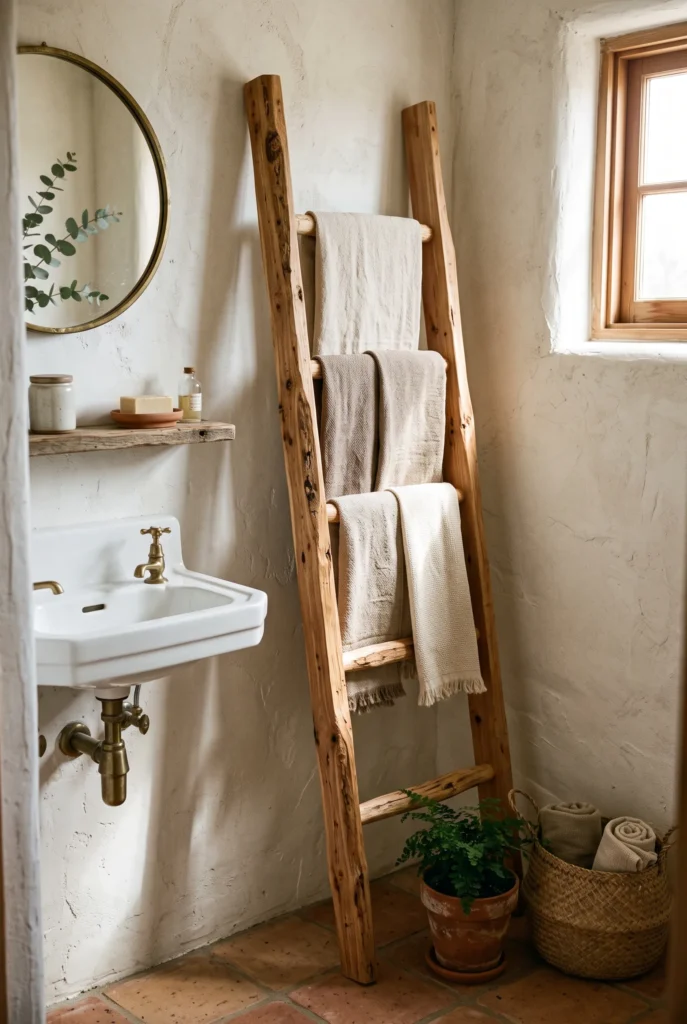
- Maximizes vertical towel storage on tight wall surfaces without drilling holes.
- Replaces bulky wall cabinets or heavy metal towel racks effortlessly.
- Infuses a pleasant, natural cedar wood aroma into humid bath spaces.
- Offers a mobile, flexible organization solution that moves easily when needed.
Leaning a slim wooden ladder against a blank wall provides functional vertical storage while adding rustic, casual charm to compact washrooms. Traditional towel bars and heavy wall cabinets can feel permanent and visually heavy, crowding narrow walkways in tiny bathrooms. A raw cedar ladder utilizes vertical height efficiently, holding multiple folded linens while occupying virtually zero floor footprint. In my experience, the natural oils in unsealed cedar release a subtle, forest-like fragrance when exposed to warm shower steam. This charming addition combines everyday practicality with a relaxed, lived-in aesthetic that feels wonderfully welcoming.
Organizing small spaces with lightweight, movable furniture allows you to adapt your storage layout as your needs change over time. The unpolished, knotty texture of cedar brings organic warmth to cool tile or microcement walls, softening sharp architectural lines. I’ve seen this work exceptionally well in rental homes, where permanent wall drilling is restricted or undesirable for small spaces. Hanging soft linen towels across slender wooden rungs creates an inviting, layered textile display that feels effortlessly curated. You will appreciate how this simple ladder keeps your daily essentials organized, accessible, and beautifully displayed within easy reach.
Integrated Stone Trough Basin
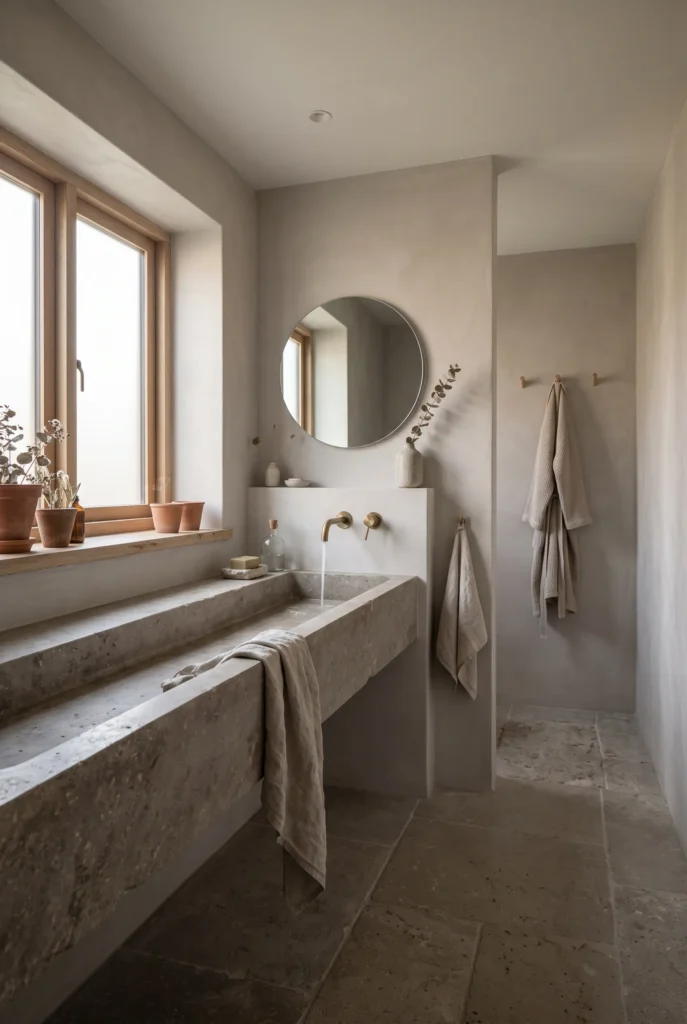
- Eliminates awkward seams between basin and countertop for effortless cleaning.
- Features a sleek, monolithic design that stretches horizontal visual lines.
- Saves floor space when wall-mounted, allowing open area beneath the basin.
- Showcases the continuous, unrefined beauty of natural carved limestone surfaces.
Carving a basin directly from a single block of natural stone creates a breathtaking, seamless focal point that maximizes spatial flow. Separate sinks and countertops introduce busy joins and awkward crevices that disrupt visual harmony in tight vanity areas. An integrated trough basin offers an unbroken horizontal plane that stretches across narrow walls, giving the impression of a wider room. In my experience, wall-mounting a solid stone trough leaves the floor below completely open, enhancing airiness across the floor plan. The raw, monolithic presence of stone brings timeless elegance into everyday washing routines.
Streamlining your vanity surfaces with seamless stone architecture reduces visual noise while elevating everyday functionality. The gentle slope of a carved stone interior guides water smoothly, combining rugged natural beauty with precise engineering. I’ve noticed that pairing continuous stone sinks with wall-mounted bronze or brass faucets creates an uncluttered look that is remarkably easy to wipe down. The soft, matte finish of limestone absorbs light gently, avoiding harsh reflections that highlight tight space dimensions. Your morning routine will feel instantly elevated, anchored by the quiet, permanent luxury of natural carved stone.
Charcoal Soapstone Countertop
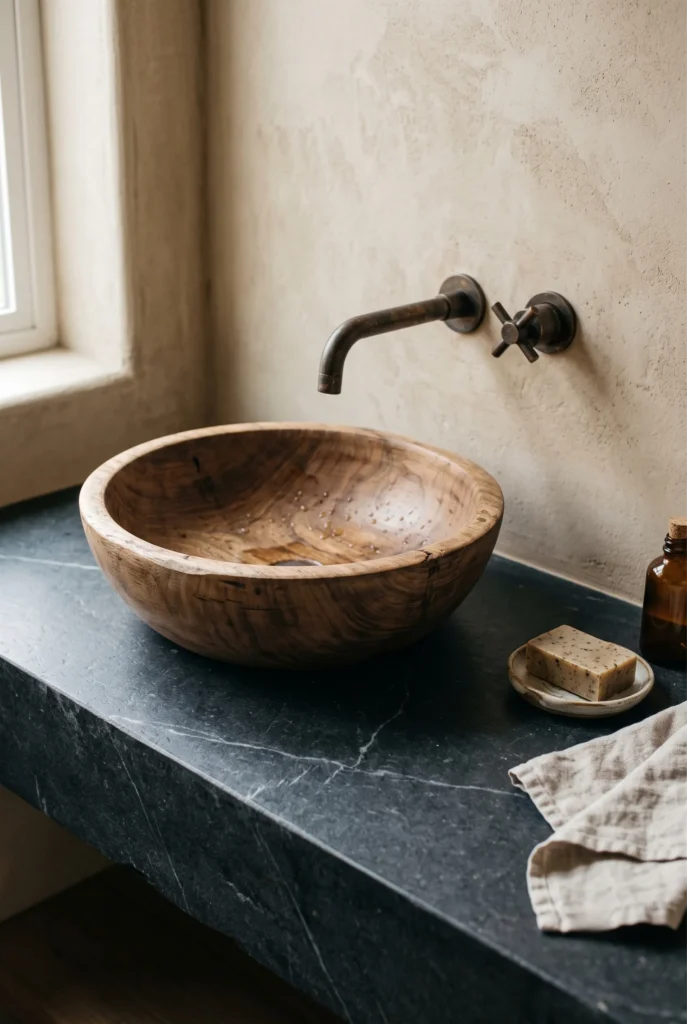
- Introduces a grounding, deep focal point that balances light walls.
- Features natural, subtle veining that adds organic visual depth.
- Softens over time with natural oils for an evolving matte texture.
- Provides a highly durable, heat-resistant surface for compact vanities.
Anchoring a small vanity area with a dark, velvety stone counter brings unexpected richness and balance into compact rooms. Many people assume small spaces must be entirely white, but introducing dark charcoal tones creates dramatic contrast that makes light walls pop. In my experience, soapstone offers a unique, silky feel underhand that feels far more inviting than cold, polished granite. The subtle white veining breaks up the dark surface naturally, adding organic movement without cluttering your sightlines. This dark accent grounds the vanity zone, turning a simple sink counter into a stunning, cozy sanctuary feature.
Selecting surfaces that develop character over time brings an authentic, lived-in feel to modern powder room setups. Charcoal soapstone darkens naturally with use, gaining a rich patina that celebrates the quiet beauty of everyday home life. I’ve noticed that pairing dark counters with raw timber basins or warm brass fixtures creates an elegant balance between light and dark elements. The smooth matte finish absorbs strong reflections, preventing harsh glares from highlighting small room dimensions. You will love how this deep, moody accent elevates your daily wash space into a cozy, refined nook full of quiet luxury.
Slanted Roof Skylight
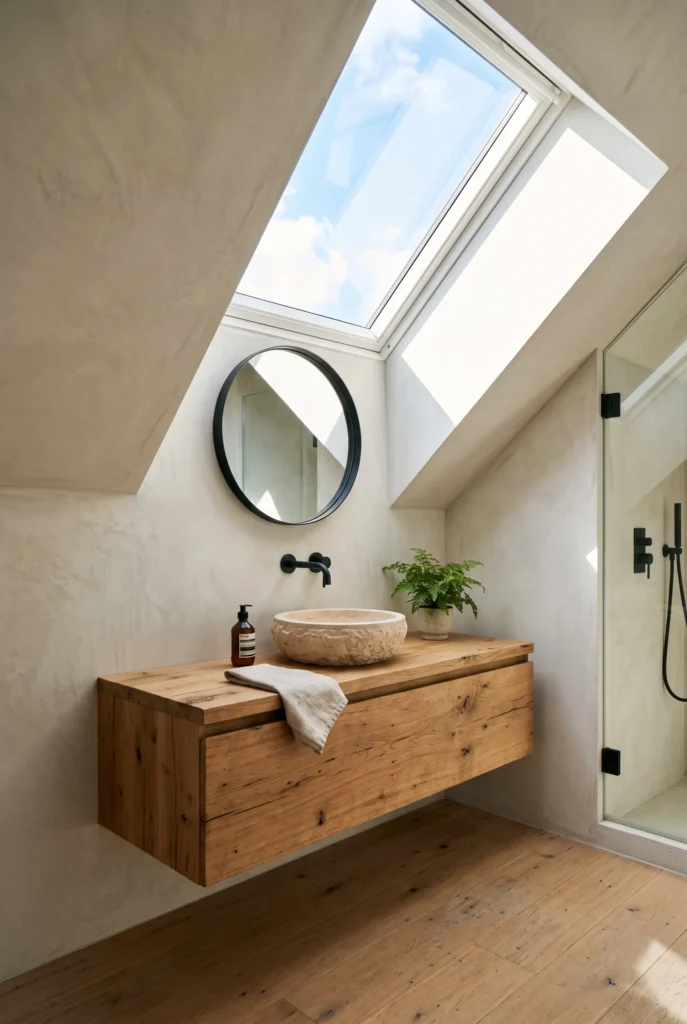
- Floods cramped attic washrooms with abundant natural top lighting.
- Opens up sloped ceiling angles to eliminate claustrophobic overhead feelings.
- Connects small interior spaces directly to blue skies and passing clouds.
- Eliminates the need for space-consuming wall window frames in small rooms.
Opening up a sloped ceiling to the sky overhead is the ultimate way to make a cramped attic washroom feel limitless. Low, angled ceilings often make small top-floor bathrooms feel restrictive and dark, cutting off ambient light. Installing a clean skylight channels pure daylight straight down, illuminating tight corners and highlighting natural wall textures. In my experience, watching clouds drift by while washing your hands completely transforms the room’s energy, creating an open connection to nature. This overhead light source illuminates the layout naturally while preserving complete privacy from neighboring homes.
Maximizing natural daylight from above allows you to keep wall spaces clear for mirrors, shelving, or continuous plaster finishes. The angled beam of morning sunlight shifting across textured microcement creates a dynamic, living artwork that changes throughout the day. I’ve seen this work exceptionally well in tiny powder rooms where adding traditional wall windows was structurally impossible. Natural top lighting makes wall colors feel truer, fresher, and far more inviting every morning. Your attic retreat will instantly feel brighter, airier, and delightfully spacious, turning a awkward nook into a favorite sunlit haven.
Recessed Wooden Shelving
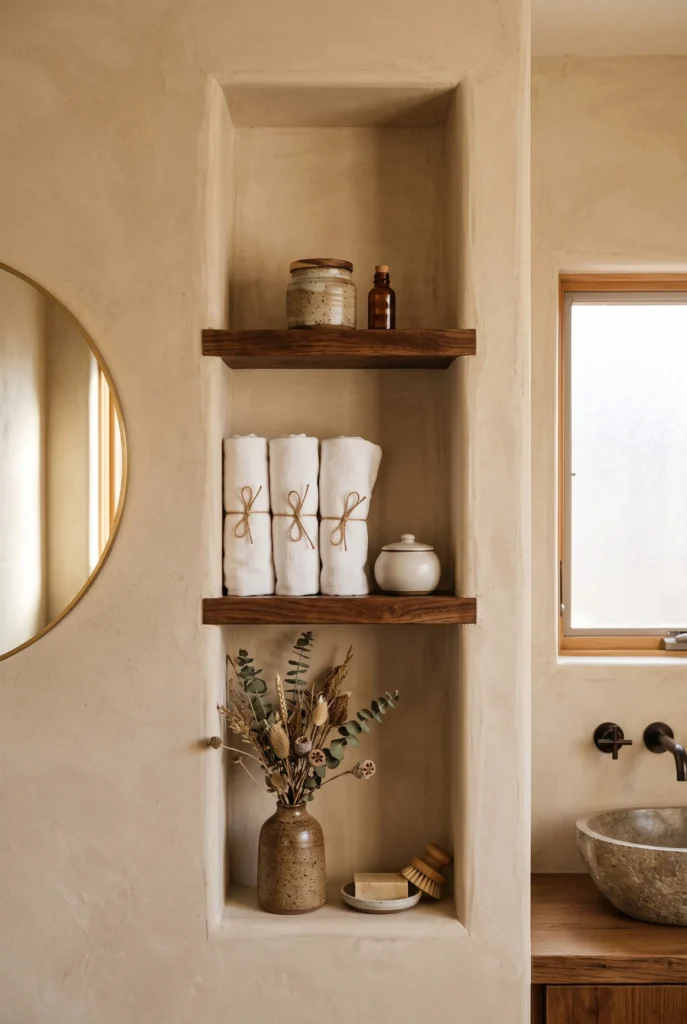
- Uses open wall cavities to add storage without taking up floor space.
- Replaces bulky hanging cabinets that jut out into narrow walkways.
- Showcases warm timber grain against soft, light-toned plaster walls.
- Keeps daily essentials organized, accessible, and beautifully displayed.
Carving vertical storage directly into your wall framing is a brilliant strategy for keeping tight walkways clear and clutter-free. Protruding wall cabinets can make narrow bathrooms feel cramped, catching shoulders and blocking light paths. Built-in timber shelves sit flush inside the wall plane, offering ample storage for towels and jars while keeping sightlines totally clear. In my experience, using raw or lightly oiled wood for the shelf inserts introduces warm organic tones that contrast beautifully against plaster. This seamless organization keeps your essentials organized while maintaining an open, airy visual rhythm.
Streamlining your storage solutions allows small spaces to feel intentionally designed, relaxed, and remarkably tidy. The natural wood grain inside the recessed wall niche creates a warm frame for curated display items, adding subtle depth to flat walls. I’ve noticed that keeping items visible yet flush encourages a clutter-free lifestyle, displaying only what is beautiful and useful. Soft ambient light catching the wooden edges creates gentle shadows that make the wall look custom-built and cozy. You will appreciate how this neat, space-saving idea turns daily storage into an elegant, warm architectural feature.
Conclusion
Creating a peaceful, soul-soothing washroom does not require vast square footage or lavish budgets; it simply calls for embracing natural simplicity, raw textures, and intentional space planning. By integrating these authentic wabi sabi bathroom design ideas, you can easily turn a cramped, utility-driven corner into a tranquil oasis that grounds your daily routines. I’ve seen how small changes like adding floating wooden vanities, textured plaster finishes, or soft ambient lighting can completely transform a space from cold and restricted to warm, open, and deeply inviting. Try selecting two or three of your favorite concepts to experiment with in your own home, and save this post on Pinterest so you can reference these ideas whenever inspiration strikes! Share these timeless design tips with anyone looking to bring relaxed, organic beauty into their small spaces.