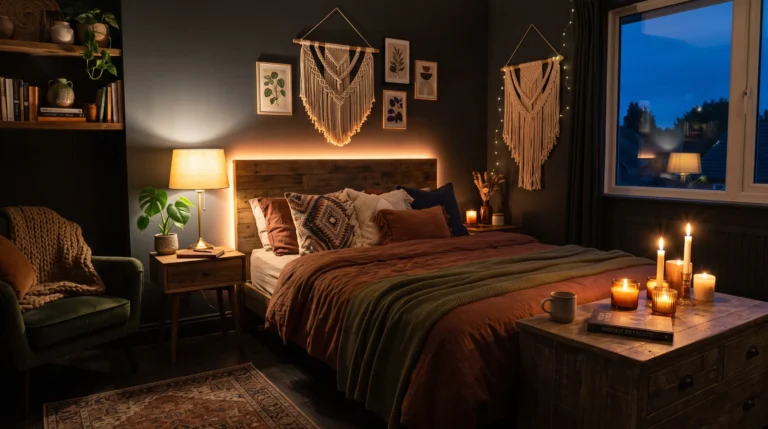
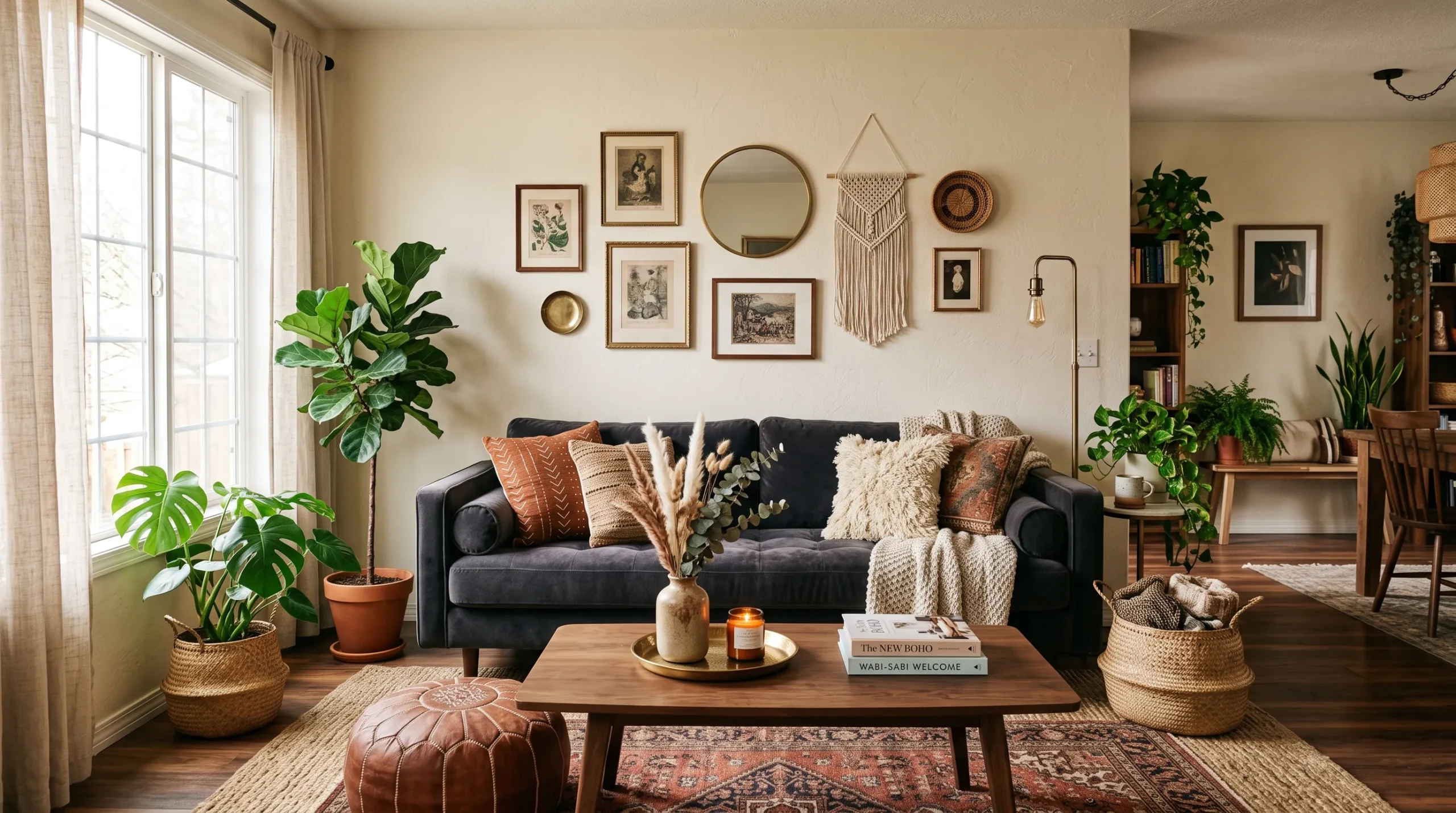
21 Dark Boho Living Room Ideas You Need to See Now
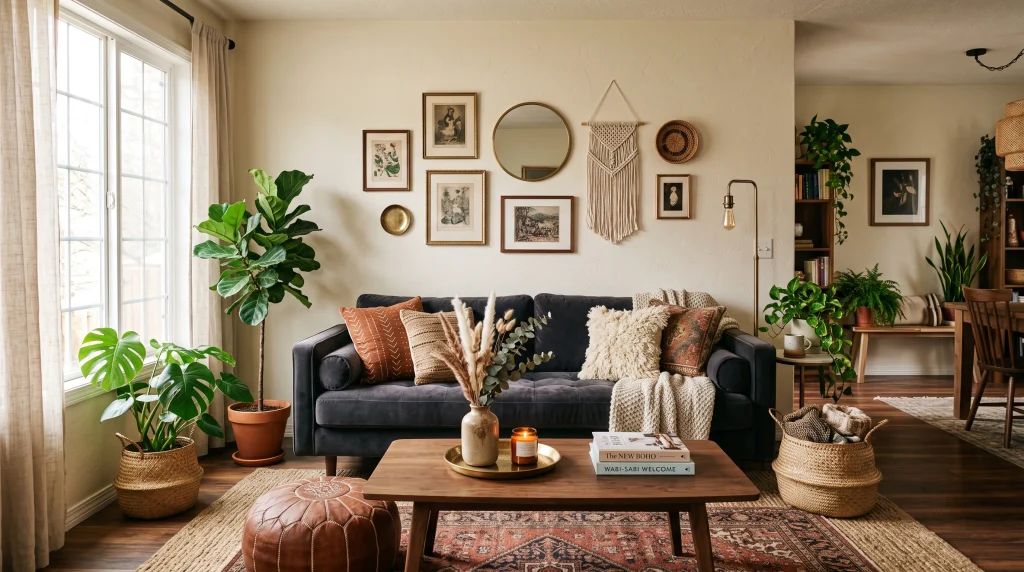
A dark living room can feel cozy, dramatic, and full of personality without looking gloomy or overwhelming. Dark boho living room style brings together rich colors, natural textures, vintage details, and warm lighting to create a space that feels layered and inviting.
If your living room feels plain, cold, or just a little lacking in character, small changes can make a surprisingly big difference. Think charcoal upholstery, deep olive walls, warm wood, woven accents, terracotta decor, vintage rugs, and plenty of soft textiles. These elements work together to create depth while keeping the room comfortable for everyday living.
You do not need to redesign everything at once. Start with one strong feature, then build around it with complementary textures and earthy tones. The ideas ahead will help you create a moody, relaxed space that feels collected, personal, and easy to enjoy.
1. Charcoal Velvet Sofa
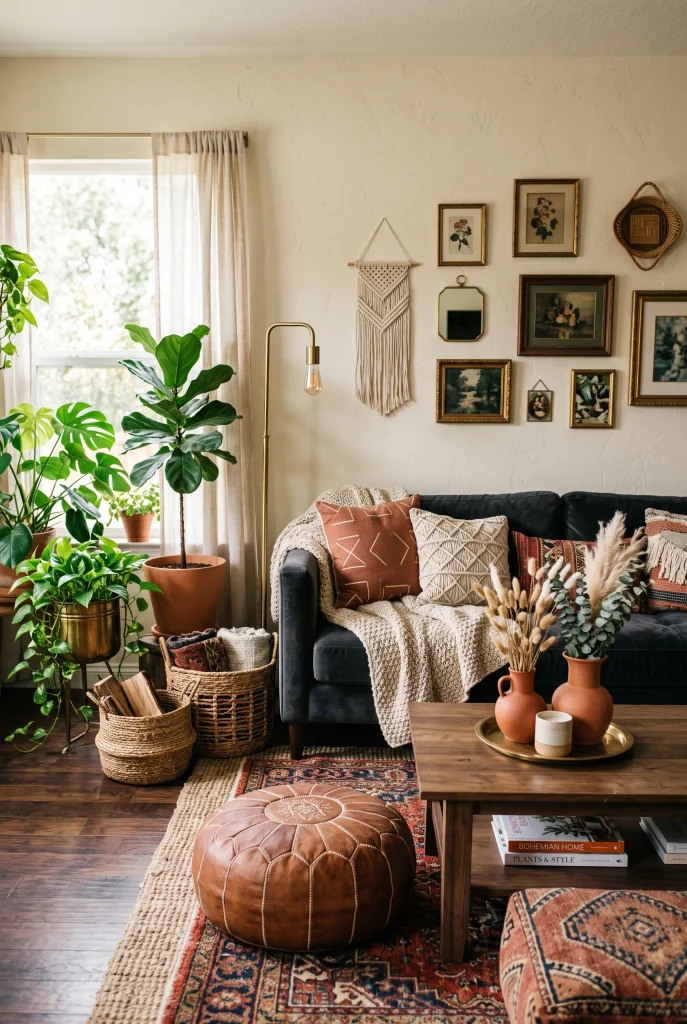
- A charcoal sofa creates an instantly rich foundation without making the room feel overly dramatic.
- Velvet adds softness and catches light beautifully throughout the day.
- Warm wood and woven accents keep the darker palette balanced.
- Layered textiles make the seating area feel inviting and comfortable.
A deep charcoal sofa can completely change the character of a living room, especially when you want a moody look that still feels comfortable. The soft velvet surface adds subtle luxury while its dark tone gives lighter accessories more visual impact. Pair it with warm wood, cream cushions, woven throws, and a vintage-style rug to prevent the space from feeling flat. Mixing several textures is what makes a dark sofa feel welcoming rather than heavy. Keep the surrounding furniture visually simple so the sofa remains the strong anchor of the room.
The beauty of this setup is how easily it works with everyday living. A charcoal sectional or sofa hides small marks better than very pale upholstery, making it practical for busy homes. Add cushions in rust, camel, olive, or muted beige to introduce warmth without losing the moody character. A wooden coffee table can soften the darker seating while woven baskets bring useful storage nearby. Finish the arrangement with a few plants or branches for contrast. The result feels layered, relaxed, and collected, with enough personality to make the room interesting without becoming visually crowded.
2. Moody Gallery Wall
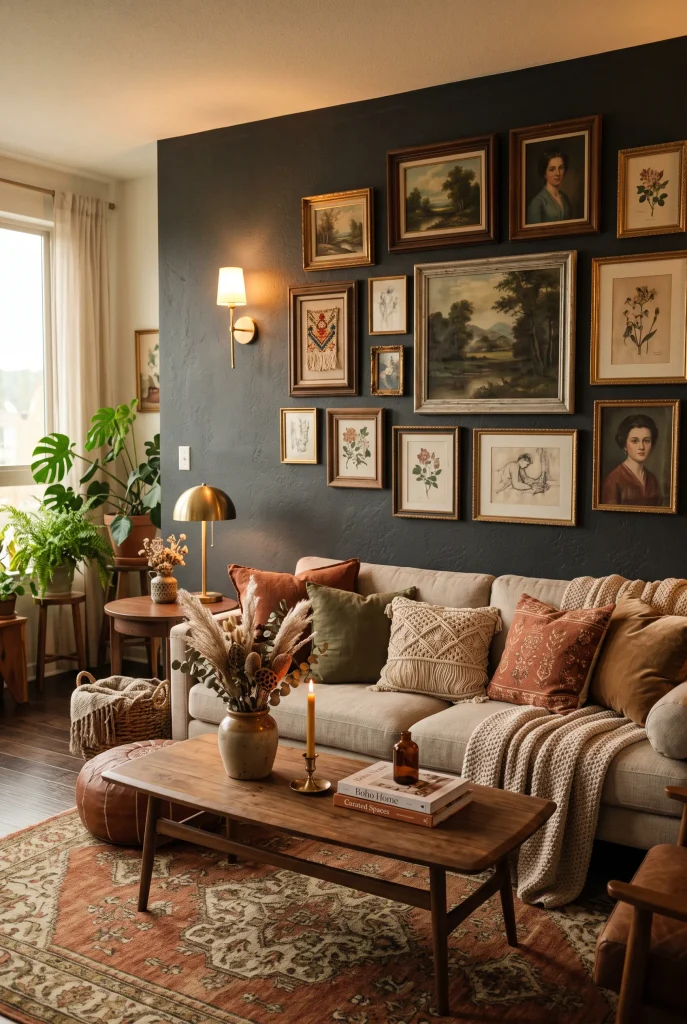
- A gallery wall adds personality without requiring major furniture changes.
- Mixed frames create the collected look that suits boho interiors naturally.
- Dark wall colors make artwork and lighter furnishings stand out.
- Keeping a consistent color palette helps eclectic pieces feel intentional.
A gallery wall is an easy way to give a living room that collected, artistic feeling associated with bohemian interiors. Start with a charcoal, deep brown, or muted olive wall and arrange artwork in different sizes for a relaxed composition. Vintage prints, abstract pieces, botanical drawings, and small mirrors can work beautifully together. The key is repetition through color rather than matching every frame. Warm browns, faded beige, rust, and cream help the collection feel cohesive. Leave enough breathing room between pieces so the wall looks thoughtfully layered instead of crowded.
For a balanced arrangement, place the largest artwork near the center and build outward with smaller pieces. This creates a natural focal point while allowing the rest of the room to remain relaxed. A beige or camel sofa underneath can provide contrast against the darker wall, while a woven rug and wooden table connect the colors across the room. Add warm sconces or a nearby floor lamp to highlight the artwork after sunset. This approach works particularly well when you want strong visual character without filling every surface with accessories or decorative objects.
3. Earthy Layered Textiles
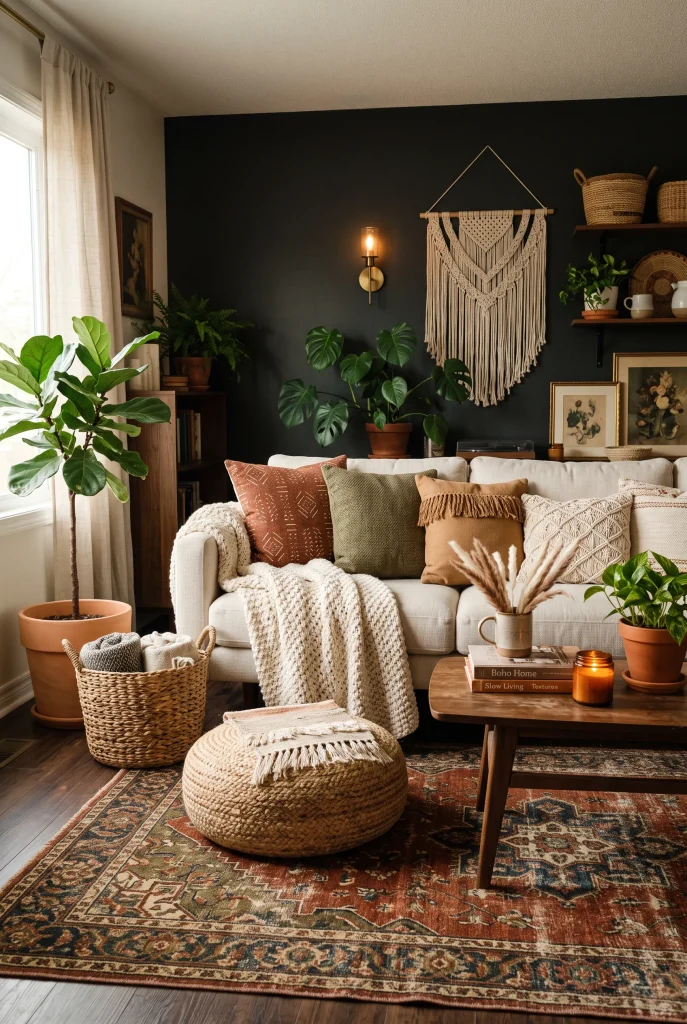
- Layered textiles make darker rooms feel softer and more approachable.
- Earthy colors add warmth without overpowering the moody palette.
- Mixing patterns and solids creates visual depth without looking chaotic.
- Throws and cushions are simple pieces to change seasonally.
Nothing warms up a moody living room quite like layers of earthy textiles. Combine linen, cotton, wool, boucle, and woven materials across the sofa, chairs, floor, and accent pieces. Rust, camel, olive, cream, and muted brown work especially well because they bring warmth while keeping the overall look grounded. Instead of choosing identical patterns, mix one bold print with smaller motifs and solid colors. This creates the relaxed character that makes boho spaces feel personal. A textured throw casually draped over the sofa can also soften the sharper lines of darker furniture.
Textiles are also one of the easiest ways to refresh the room without replacing expensive pieces. Try a patterned vintage rug underneath the seating area, then echo one or two of its colors through cushions and throws. A jute pouf or woven ottoman can add another layer while providing flexible seating. Rooms with several tactile surfaces often feel more inviting because the eye has plenty of subtle details to explore. Keep the base furniture simple, then let the textiles provide most of the pattern, color, and personality.
4. Warm Wood Accents

- Warm wood instantly softens a darker color palette.
- Walnut and teak furniture add natural depth and visual warmth.
- Wooden surfaces connect boho decor with a grounded, organic feel.
- Mixing wood tones carefully keeps the room relaxed rather than overly matched.
Warm wood is one of the simplest ways to balance a deeper living room palette. Walnut, teak, and medium-toned oak bring natural warmth that keeps charcoal, brown, and olive shades from feeling too serious. Try a wooden coffee table, sideboard, shelving unit, or accent chair to introduce this contrast. The grain also adds visual texture without relying on extra patterns. In a dark boho setting, natural wood helps the room feel connected to the outdoors while giving the furniture a timeless quality that works across changing decor trends.
You do not need matching wooden furniture throughout the room to make this look work. In fact, slightly varied finishes often create a more collected bohemian appearance. Keep the undertones reasonably warm, then repeat the wood color in smaller details such as picture frames, trays, or decorative stools. Pair those surfaces with linen upholstery, woven baskets, and earthy ceramics for a balanced composition. If the room already has dark furniture, adding one lighter wood piece can create useful contrast. The finished space feels warm, layered, and naturally lived-in without becoming visually overwhelming.
5. Vintage Patterned Rug
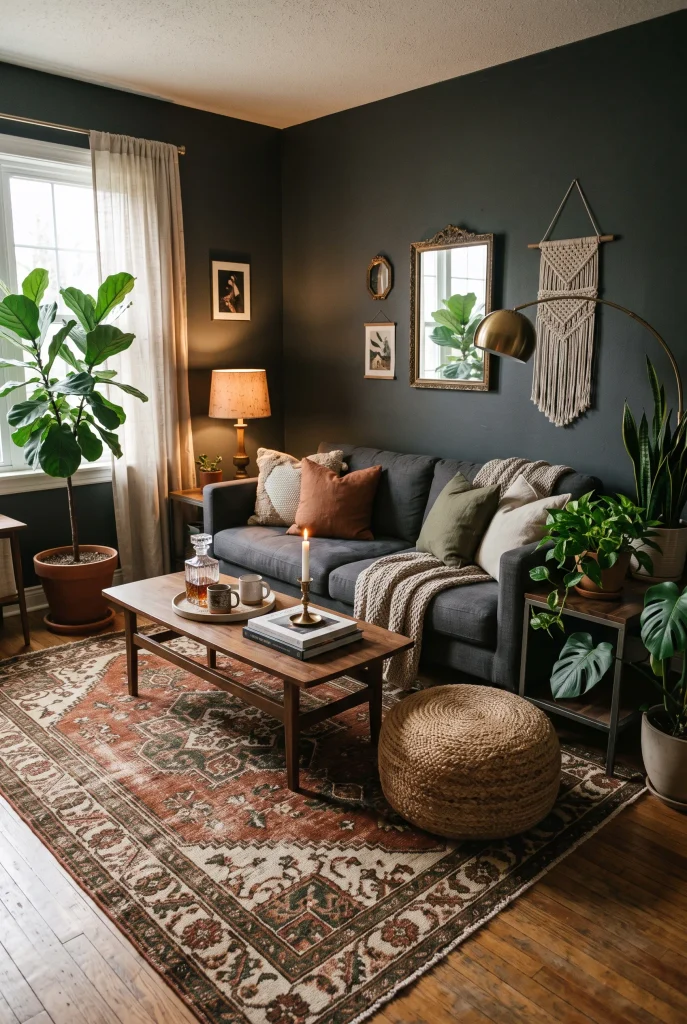
- A vintage rug can introduce several accent colors at once.
- Faded patterns add character without competing with darker furniture.
- Large rugs help visually connect separate seating pieces.
- Low-contrast patterns create interest while keeping the room calm.
A faded vintage rug can become the visual bridge between every major element in a moody bohemian living room. Look for patterns that combine rust, muted olive, cream, tan, and brown rather than extremely bright colors. The worn appearance adds character and makes the room feel collected over time. Position the rug under the front legs of the sofa and chairs so the seating arrangement feels connected. This simple placement trick can make a room appear more intentional while also adding softness underfoot and defining the main conversation area.
When choosing the right pattern, consider the amount of visual activity already present in the room. If your cushions and artwork are bold, select a rug with a faded or smaller-scale design. If the furniture is mostly solid, you can choose a more detailed pattern to create a stronger focal point. A vintage rug also pairs naturally with wood, leather, rattan, and linen. Add a simple coffee table on top and let some of the pattern remain visible around it. The combination creates depth without making the space feel cluttered.
View: 21 Small Living Room Ideas for Couples That Feel Luxe
6. Rattan Statement Chair
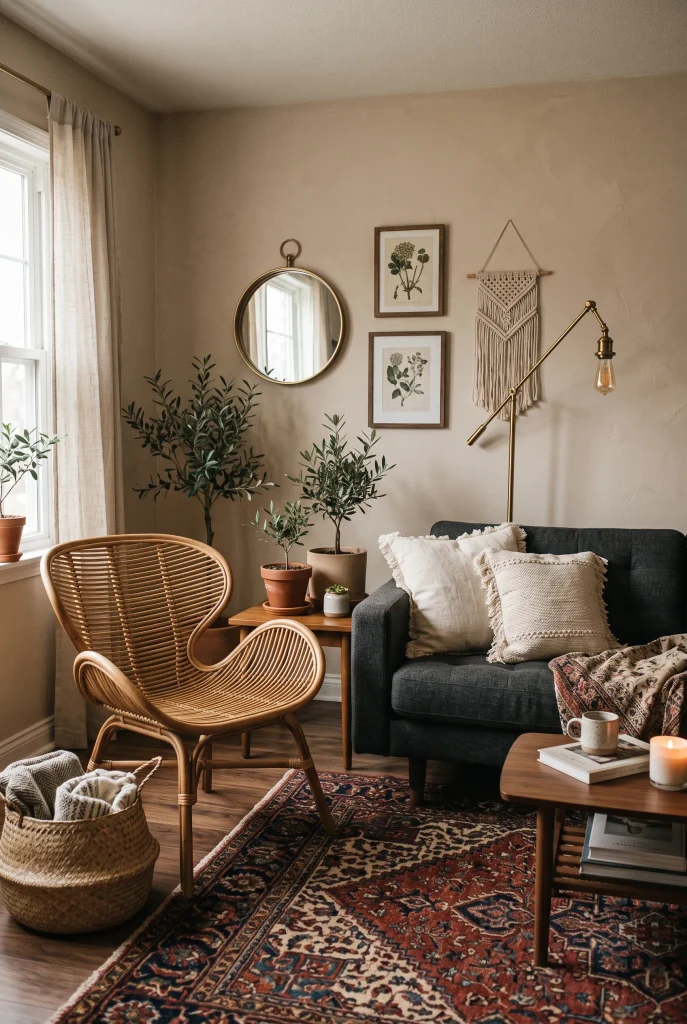
- Rattan brings natural texture into a darker room.
- A statement chair creates an inviting secondary focal point.
- Open woven construction keeps the seating area visually light.
- A cream cushion makes the chair feel softer and more comfortable.
A sculptural rattan chair can add exactly the kind of natural texture a darker living room needs. Its open woven structure creates visual breathing room, while the warm tan color contrasts beautifully with charcoal, brown, and deep green furnishings. Place one beside the sofa rather than matching it with another chair for a more collected look. Add a soft cream or rust cushion to make the seat comfortable and connect it with the room’s existing palette. The result feels relaxed and artistic while keeping the seating arrangement functional for everyday use.
Rattan works especially well when several natural materials appear throughout the space. Repeat its warmth with a jute rug, wooden coffee table, woven baskets, or seagrass accessories. You can also place the chair near a tall plant to create a small reading corner with plenty of texture. Keep the surrounding accessories restrained so the chair remains noticeable. For smaller living rooms, an open-frame rattan chair can be particularly useful because it does not visually block the floor area as heavily as bulky upholstered seating. It adds character without making the room feel crowded.
7. Olive Green Walls

- Deep olive walls create a moody backdrop without feeling too harsh.
- Warm neutrals keep the darker wall color balanced.
- Plants naturally complement the green palette.
- Brass and wood accents add warmth and subtle contrast.
Deep olive walls can give a living room an instantly richer atmosphere while still feeling connected to nature. Unlike cooler charcoal shades, olive carries a warm, earthy quality that works beautifully with wood, rattan, linen, and vintage textiles. Keep the larger furniture pieces in cream, beige, or warm brown so the walls remain the main color statement. A few rust or camel accents can add another layer of warmth. Earthy wall colors work best when the room includes plenty of natural materials rather than relying only on painted surfaces.
The finish of the wall can also influence how dramatic the room feels. A matte or low-sheen finish creates a softer, more sophisticated backdrop and helps artwork stand out. Pair the walls with walnut furniture and a faded patterned rug for a collected appearance. Plants can echo the olive tones while adding organic shapes around the seating area. If the room receives limited daylight, introduce warm lamps rather than cool white bulbs. This keeps the green from appearing flat and creates a comfortable glow that works particularly well during evenings.
8. Black Accent Lighting
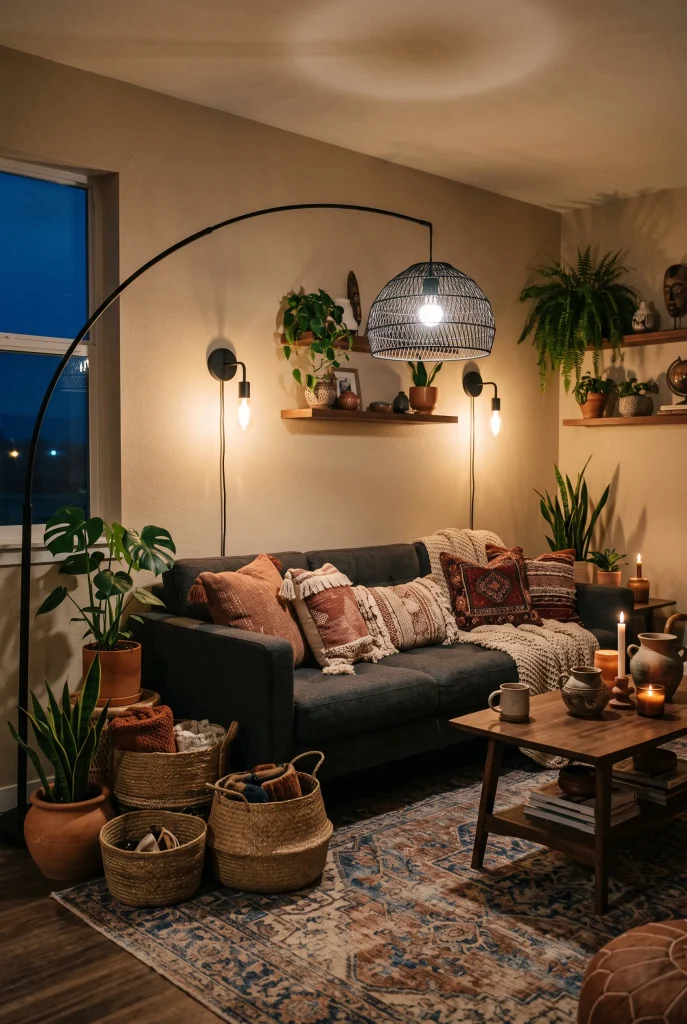
- Black lighting adds structure against warm walls and textured furnishings.
- Sculptural fixtures can double as functional artwork.
- Warm bulbs prevent black fixtures from making the room feel cold.
- Floor lamps help create smaller pools of comfortable evening light.
Black lighting fixtures can bring a clean architectural edge to an otherwise soft and layered bohemian room. Choose an oversized arc lamp, sculptural floor lamp, or simple black sconces to create a strong vertical element near the seating area. Matte black works especially well because it feels understated rather than glossy. Pair the fixture with warm bulbs and natural materials such as walnut, rattan, linen, and jute. This contrast gives the room definition while allowing the softer textures to remain the dominant visual experience.
Think beyond the main ceiling fixture when planning lighting. A floor lamp beside the sofa can create a cozy reading spot, while a small table lamp can illuminate a sideboard or console. Spreading light across different heights makes the room feel more dimensional after sunset. Keep the light temperature warm and avoid overly bright bulbs that flatten the atmosphere. If the room already has several dark elements, choose a fixture with an open frame or slim silhouette. That keeps the lighting visually interesting without adding unnecessary heaviness.
9. Layered Floor Seating
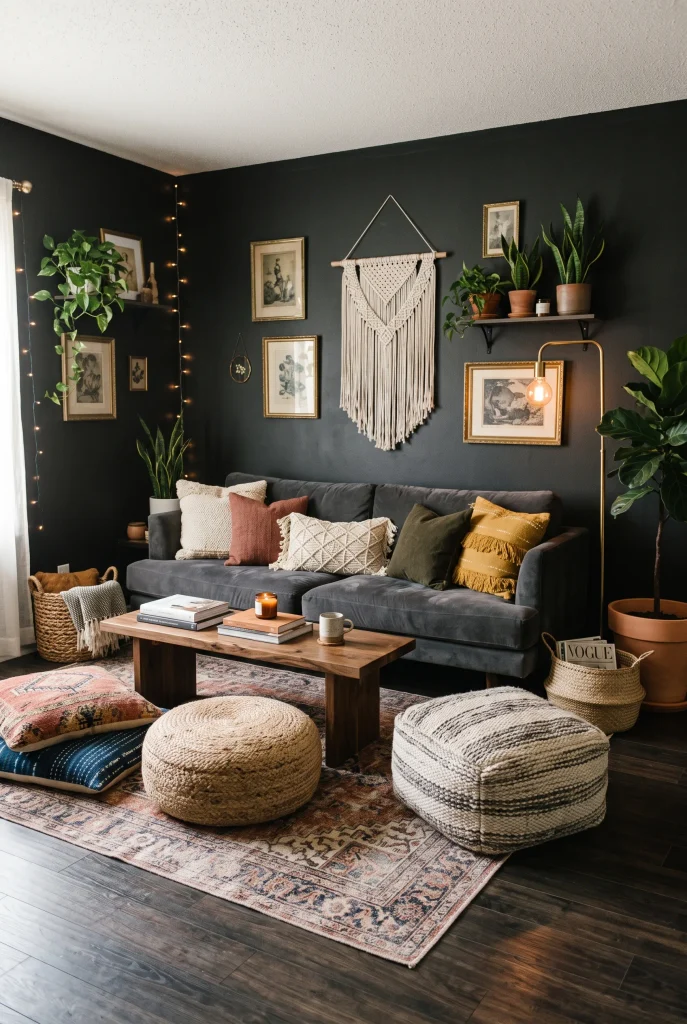
- Floor cushions add casual seating without taking up much visual space.
- Poufs provide flexible seating and can double as footrests.
- Layered textiles make the arrangement feel relaxed and inviting.
- Low pieces work naturally with bohemian decorating styles.
Low floor seating can make a living room feel more relaxed, informal, and welcoming. Arrange a few oversized cushions or textured poufs around a vintage rug while keeping the main sofa slightly behind them. Choose earthy shades such as rust, cream, camel, olive, and brown to connect the seating with the rest of the room. Different fabrics, including linen, cotton, wool, and woven materials, create depth without requiring elaborate decoration. This setup is especially useful when you want extra seating that can be moved around easily when guests arrive.
The trick is to keep the floor arrangement intentional rather than scattering cushions randomly. Choose two or three larger pieces and position them around a central coffee table or ottoman. Leave clear walking space between the seating area and nearby furniture so the room remains practical. A woven pouf can also serve as a footrest, small table, or extra seat when needed. This flexibility makes the arrangement useful beyond its decorative appeal. Combined with darker walls, natural wood, and warm lighting, floor seating gives the space an easygoing character without sacrificing visual cohesion.
10. Terracotta Decor
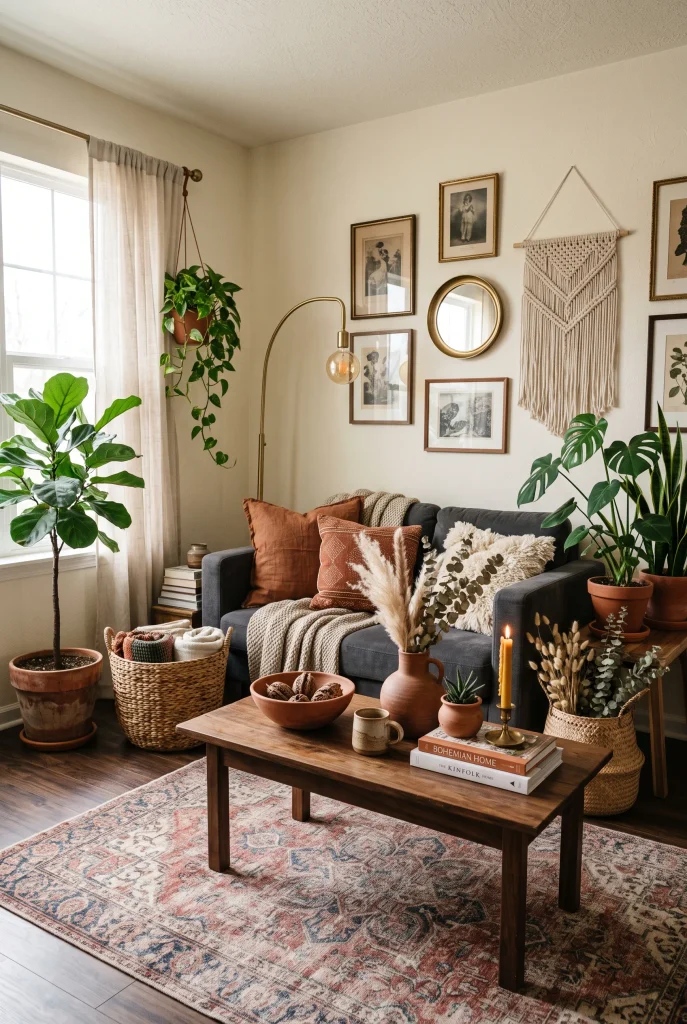
- Terracotta adds warmth to darker rooms without overwhelming the palette.
- Ceramic pieces bring handmade character to shelves and tables.
- Rust tones connect naturally with vintage rugs and wood finishes.
- A few carefully placed pieces can create enough color without clutter.
Terracotta is a simple way to warm up a darker living room while keeping the overall palette earthy and relaxed. Use terracotta planters, ceramic vases, bowls, or candle holders on shelves, coffee tables, and consoles. The burnt orange and clay tones create beautiful contrast against charcoal, deep olive, brown, and cream. Because terracotta has a naturally muted quality, it does not feel overly bright or trendy. This makes it especially useful when you want color that feels grounded and complements the layered textures already found in a bohemian-inspired space.
You can create a stronger connection by repeating terracotta in small amounts around the room. Try a rust-colored cushion on the sofa, a clay vase beside a stack of books, or a terracotta planter near a window. Handmade or slightly imperfect pieces can add more personality than perfectly matching accessories. Keep larger surfaces relatively calm so the warm accents remain noticeable. Natural daylight will bring out the earthy variations in ceramic finishes, while warm evening lighting makes the color feel richer. The finished room feels cozy, collected, and naturally expressive.
11. Woven Wall Baskets
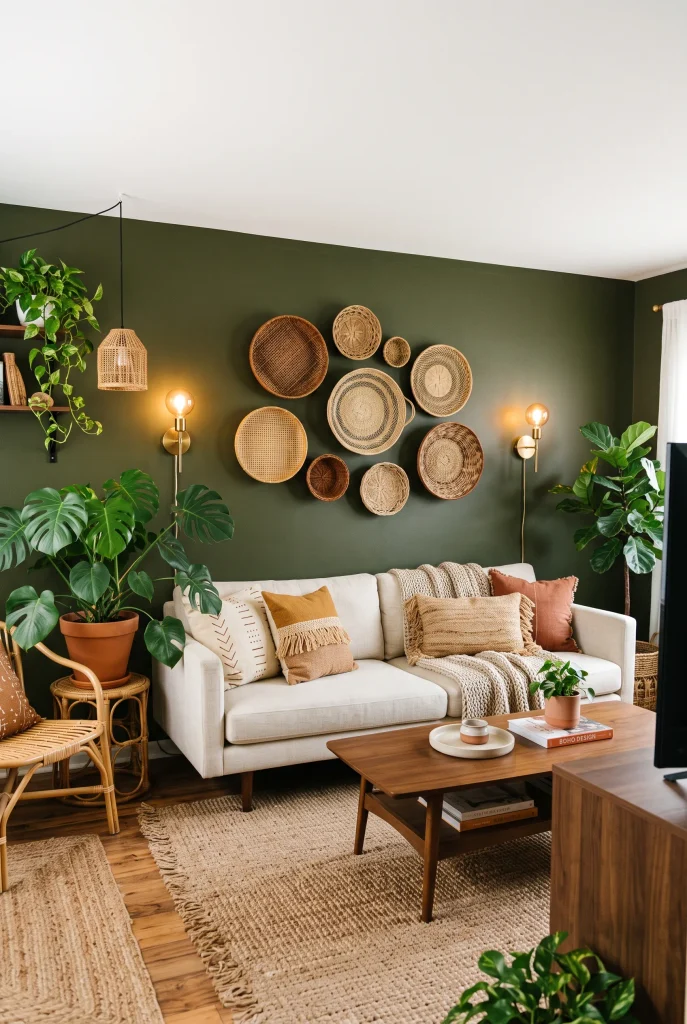
- Woven baskets add texture without relying on framed artwork.
- Different sizes create a relaxed, collected wall arrangement.
- Natural fibers soften deeper wall colors.
- The lightweight visual texture keeps the room feeling organic.
A collection of woven wall baskets can turn an empty wall into a warm focal point without making the space feel formal. Choose baskets in different sizes, shapes, and natural shades, then arrange them in a loose cluster above the sofa or console. The combination of jute, seagrass, rattan, and other woven fibers creates dimension against darker walls. Keep the colors within a warm neutral range so the arrangement feels cohesive. This approach works particularly well when you want decorative interest but prefer natural materials over traditional framed artwork.
Before hanging everything, lay the baskets on the floor and experiment with their spacing. Start with the largest piece near the center, then build outward with smaller designs. Slight variations in texture make the arrangement feel collected rather than perfectly symmetrical. Pair the wall display with linen upholstery, a vintage rug, and warm wood furniture to repeat the natural tones throughout the room. If the wall is already dark, soft lighting from a nearby sconce or floor lamp can highlight the woven surfaces beautifully and make their texture more noticeable after sunset.
12. Dramatic Black Fireplace
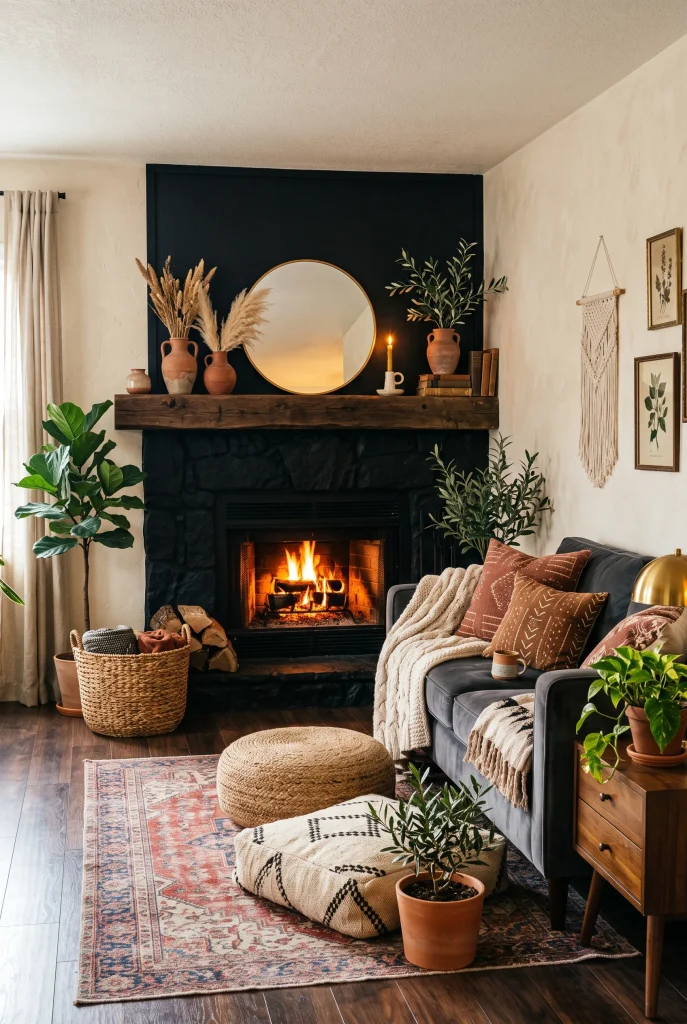
- A black fireplace creates a strong architectural focal point.
- Warm materials prevent the dark feature from feeling stark.
- A simple mantel leaves room for natural decorative pieces.
- Firelight adds movement and warmth during evening hours.
A dramatic black fireplace can give a living room a strong focal point while naturally supporting a moody bohemian palette. A matte black surround or painted fireplace creates depth and draws attention toward the center of the room. Balance its intensity with warm plaster walls, walnut furniture, woven accessories, and soft textiles. Instead of covering the mantel with numerous objects, choose a few meaningful pieces such as a ceramic vase, vintage artwork, or sculptural branch. This keeps the fireplace visually powerful while allowing the surrounding materials to soften the overall composition.
If your fireplace is already a strong feature, let it guide the furniture arrangement. Position the sofa and chairs toward it to create a natural conversation area, then anchor everything with a large patterned rug. Warm lighting is particularly important here because it keeps black surfaces from appearing flat at night. A nearby table lamp, sconces, or the glow from the fire can add gentle contrast. For homes without a traditional fireplace, a simplified electric or decorative version can still create a similar architectural anchor when styled with natural, earthy materials.
13. Moody Ceiling Details

- A darker ceiling adds depth and visual drama without changing the entire room.
- Warm walls keep the overhead color from feeling too enclosed.
- A woven pendant light softens the darker surface.
- Repeating the ceiling tone in small accents creates balance.
A darker ceiling can add unexpected depth to a living room while keeping the walls and furniture relatively simple. Charcoal, deep brown, or muted olive can work particularly well when paired with warm cream walls and natural wood. The contrast draws the eye upward and gives the room a more finished architectural feeling. Keep the ceiling finish matte so it absorbs light softly rather than creating distracting reflections. This technique can be especially effective in rooms with higher ceilings, where the deeper color helps the space feel more grounded and intimate.
Balance is important when using a dark ceiling. Repeat a small amount of the same tone through cushions, artwork, a rug pattern, or black metal lighting so it feels connected to the room. A woven pendant can introduce natural texture and break up the solid overhead color. Keep the main seating lighter in cream, beige, or camel to maintain visual contrast. If the room receives plenty of daylight, the darker ceiling can feel sophisticated rather than heavy. At night, warm lamps help maintain a cozy atmosphere and make the entire palette feel intentional.
14. Layered Vintage Mirrors

- Vintage mirrors reflect light while adding decorative personality.
- Mixed frames create an eclectic bohemian character.
- Placing mirrors near windows can brighten darker corners.
- Antique finishes add warmth without introducing bright colors.
Vintage mirrors can bring light, dimension, and personality into a darker living room without adding another bold color. Look for aged brass, distressed wood, antique gold, or dark frames with interesting shapes. Instead of using one oversized mirror, consider grouping two or three smaller pieces on a wall or above a console. Their different silhouettes create the collected quality that works naturally with bohemian interiors. Positioning a mirror opposite or near a window can also reflect daylight into the room, making deeper wall colors feel more balanced.
When arranging several mirrors, vary their sizes while keeping enough space between them so each piece remains visible. Avoid placing every reflective surface directly opposite another mirror, which can create distracting visual repetition. A wooden console beneath the arrangement provides a useful base for a ceramic vase, books, or a small lamp. Warm lighting will also highlight aged frames beautifully after sunset. The combination of reflective glass, natural wood, woven textures, and darker upholstery creates a layered room that feels thoughtfully decorated without depending on excessive accessories.
15. Deep Brown Leather
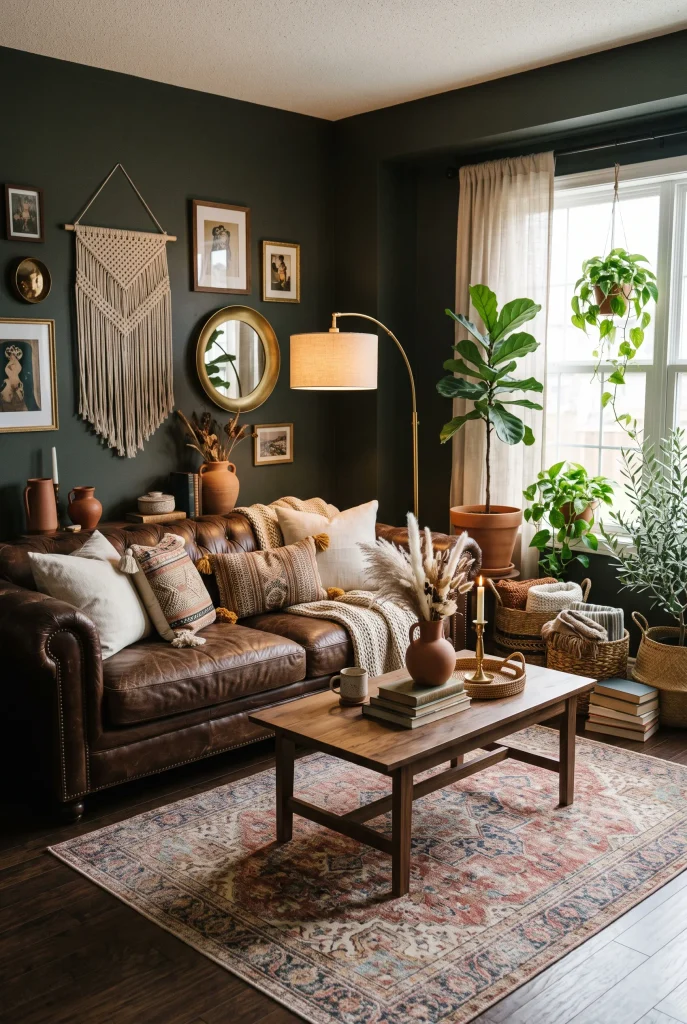
- Deep brown leather adds warmth and visual weight to the seating area.
- Aged finishes suit relaxed bohemian interiors beautifully.
- Cream textiles soften the richness of the leather.
- Natural wood and woven materials prevent the seating from feeling too formal.
Deep brown leather brings warmth and character to a moody living room while giving the seating area a timeless foundation. Choose a sofa or accent chair with a slightly aged, matte finish rather than a highly polished surface. The natural variation in leather adds subtle texture and becomes more interesting as the room develops its own lived-in character. Pair it with cream linen cushions, rust throws, woven baskets, and a faded vintage rug. These softer materials keep the leather from making the space feel overly formal or heavy.
Leather also works well when you want a practical material that can handle everyday use. Small variations and signs of wear can become part of its charm rather than something that needs to be hidden. Add a warm wood coffee table and a few terracotta pieces to reinforce the earthy palette. Keep the surrounding colors muted so the leather remains a noticeable anchor. A nearby floor lamp with warm light can soften its darker tone in the evening. Together, these details create a comfortable, grounded space with plenty of texture and personality.
16. Oversized Boho Pendant
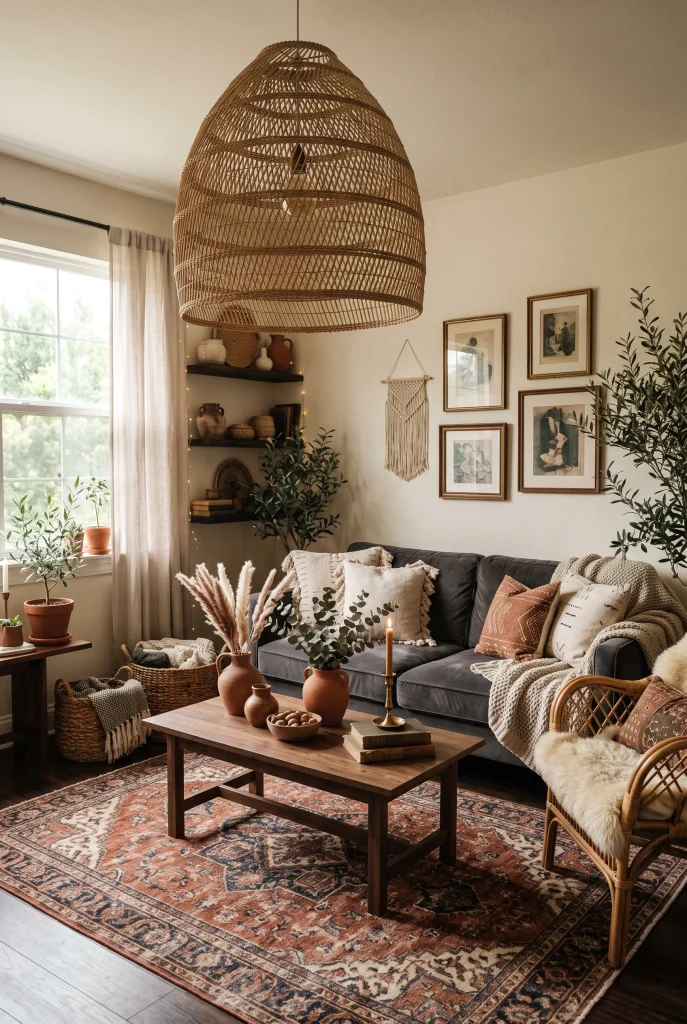
- An oversized pendant creates an immediate focal point above the seating area.
- Woven materials soften darker furniture and walls.
- A large fixture helps define an open-plan living zone.
- Warm bulbs create a cozy glow after sunset.
An oversized woven pendant can instantly give a living room more personality while reinforcing its natural, relaxed character. Choose a rattan, seagrass, bamboo, or woven fiber shade with an organic shape and place it above the main seating or coffee table. The open texture allows light to filter through gently, creating subtle shadows across nearby walls. This effect works especially well with charcoal sofas, walnut furniture, vintage rugs, and earthy accessories. The fixture becomes a decorative feature without requiring additional artwork or excessive styling around the room.
Scale matters when choosing a statement pendant. A fixture that is too small can disappear above a large seating arrangement, while an oversized design can feel intentional and visually balanced when the ceiling height allows it. Keep the bulb warm and slightly diffused for a softer evening atmosphere. If the room has several woven accessories already, choose a pendant with a different weave or silhouette so the textures do not look repetitive. A simple ceiling fixture with a dramatic natural shade can become the finishing detail that pulls the entire room together.
17. Blackout Linen Curtains
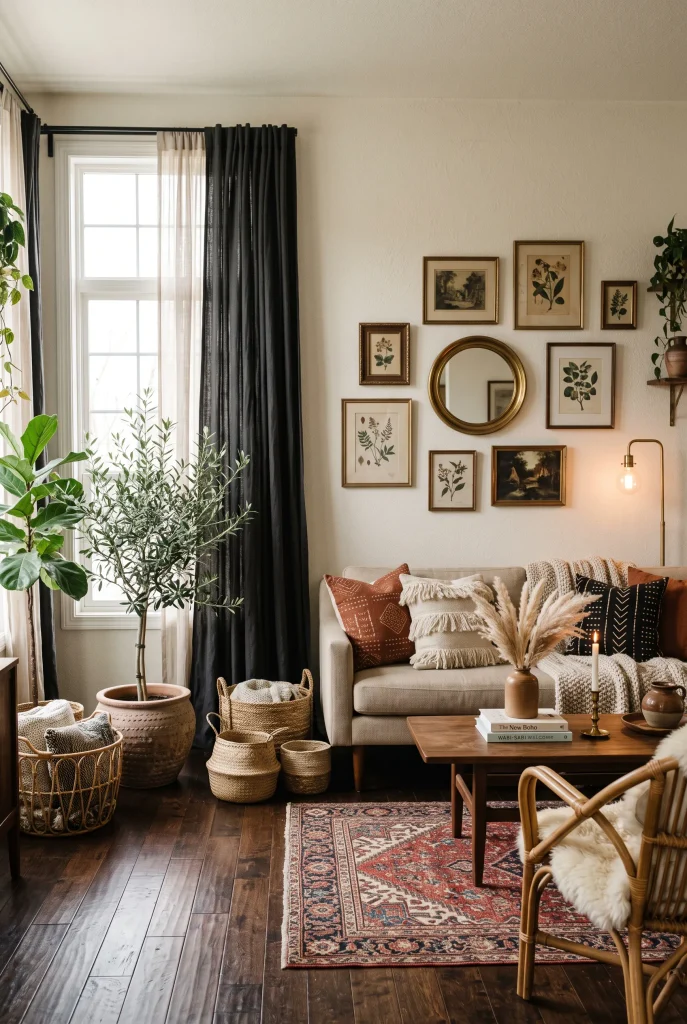
- Floor-length curtains make windows feel taller and more elegant.
- Dark linen adds privacy while reinforcing the moody palette.
- Natural fabric prevents blackout panels from looking overly heavy.
- Keeping the furniture lighter creates useful contrast around the windows.
Floor-length dark curtains can make a living room feel instantly more intimate while adding softness around large windows. Charcoal, espresso, deep olive, and muted brown linen are especially effective because they introduce depth without the stiff appearance of heavier formal drapes. Hang the curtain rod slightly above the window frame and extend it beyond both sides when possible. This makes the window appear wider and taller while allowing more natural light into the room when the curtains are open. The long fabric panels also add movement and texture to otherwise plain walls.
For a balanced look, keep the sofa and larger upholstery pieces in lighter shades such as cream, beige, or warm taupe. This prevents the curtains from visually closing in the entire room. Layering sheer curtains underneath can provide flexibility when you want filtered daylight without completely opening the windows. Curtains are often overlooked when styling a room, yet they can change the perceived scale dramatically. Combine them with natural wood, woven textures, and warm lighting for a comfortable space that feels private, layered, and thoughtfully finished.
18. Rustic Floating Shelves
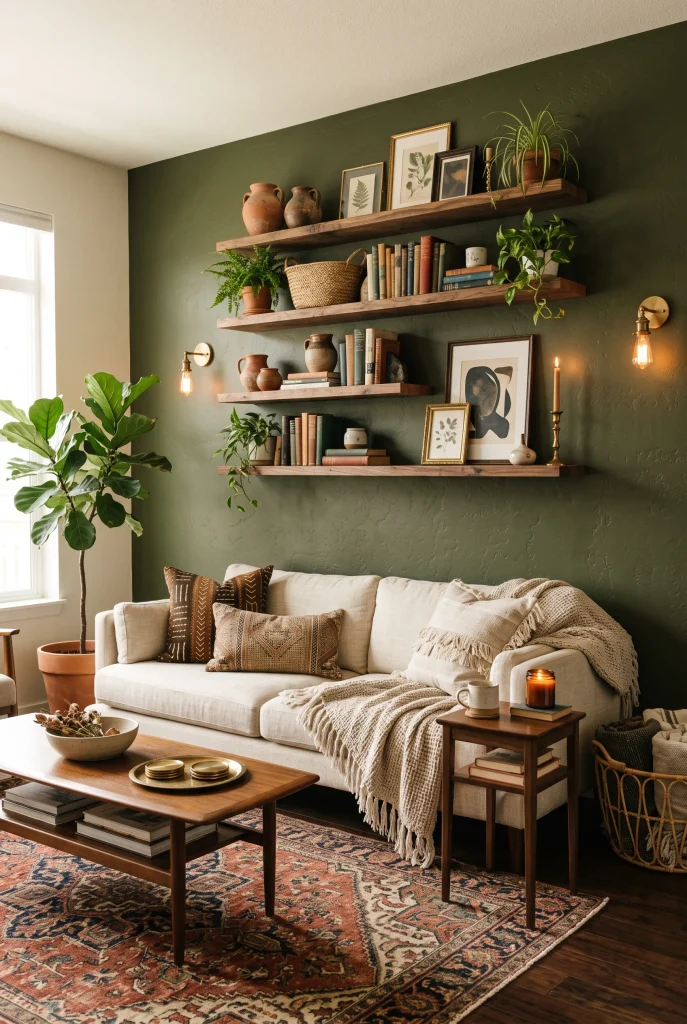
- Floating shelves add storage without taking up floor space.
- Rustic wood brings warmth against darker walls.
- Open shelving makes everyday objects part of the decor.
- Leaving empty space between pieces keeps the arrangement visually calm.
Rustic floating shelves can turn an unused wall into a practical display while adding warmth to a darker living room. Choose chunky walnut, reclaimed wood, or another naturally textured finish and mount two or three shelves in a simple vertical arrangement. Style them with ceramic vessels, stacked books, small plants, woven objects, and a few vintage finds. The goal is not to fill every inch. Leaving intentional gaps allows each piece to stand out and keeps the shelves from becoming another source of clutter.
For a polished but relaxed arrangement, vary the height and size of the objects instead of lining everything up evenly. Place heavier pieces such as baskets or larger pottery toward the lower shelves, then use smaller artwork or plants higher up. Repeat colors already present in the room so the display feels connected to the sofa, rug, and curtains. Shelves are also useful for seasonal changes because individual accessories can be swapped without redesigning the entire space. With warm wood and carefully edited decor, they add both function and personality to the room.
19. Macramé Wall Hanging
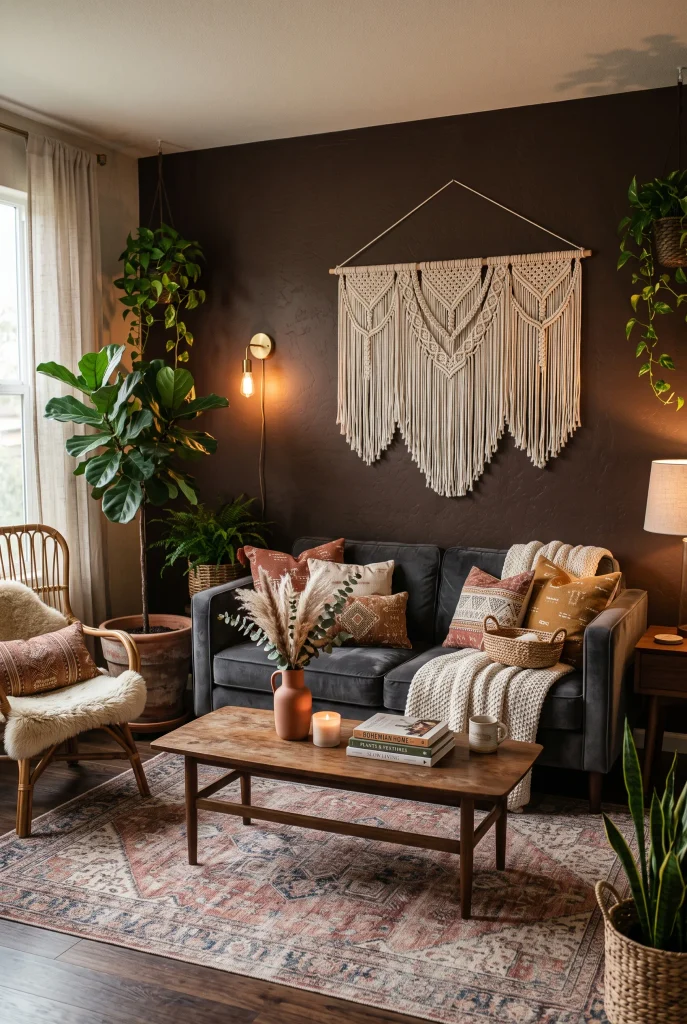
- Macramé introduces soft handmade texture against darker surfaces.
- Cream fibers create gentle contrast without adding harsh brightness.
- A large wall hanging can fill empty space economically.
- Natural fibers complement wood, rattan, linen, and jute beautifully.
A large macramé wall hanging can soften the stronger elements of a moody living room while adding unmistakable bohemian texture. Choose an oversized cream, ivory, or natural fiber design and place it above the sofa or on a prominent accent wall. Its flowing knots and fringed details create movement against a solid dark background. Keep the surrounding artwork minimal so the textile remains the main feature. Pair it with walnut furniture, a faded rug, and woven accessories to create a natural connection between the different textures throughout the room.
The best macramé displays usually have enough surrounding space to breathe. Avoid placing too many small decorations directly beside the hanging, as this can make the wall feel crowded. A simple sofa underneath provides the perfect foundation, while a few cushions in rust, olive, or camel can introduce subtle color. Natural daylight will highlight the fibers during the day, and warm lamps can create gentle shadows across the piece at night. This combination makes the wall feel layered and handcrafted without requiring a large collection of decorative objects.
20. Moody Plant Corner

- Tall plants bring organic shapes into a darker room.
- Terracotta and woven planters add natural texture.
- A dedicated plant corner fills an awkward empty area beautifully.
- Different leaf sizes create depth without adding more furniture.
A dedicated plant corner can bring life and softness into a darker living room while creating a natural focal point. Combine plants with different heights, leaf shapes, and textures instead of using several identical varieties. Place a tall plant beside the sofa, then layer smaller plants on a wooden stool or low stand nearby. Terracotta pots, woven baskets, and natural ceramic planters reinforce the earthy palette. This arrangement works especially well in unused corners where a chair or cabinet might feel too bulky. The greenery also provides a refreshing contrast against deeper wall colors.
Think about light requirements before choosing plants for the space. Place sun-loving varieties closer to windows and use lower-light options for darker corners. Rotate containers occasionally so growth remains balanced and the display stays attractive from different angles. A warm floor lamp beside the plants can highlight their leaves after sunset and create interesting shadows on the wall. Keep the plant collection slightly varied but coordinated through similar pot materials. The result feels lush and relaxed while giving an otherwise overlooked corner a clear purpose within the room.
21. Layered Ambient Lighting
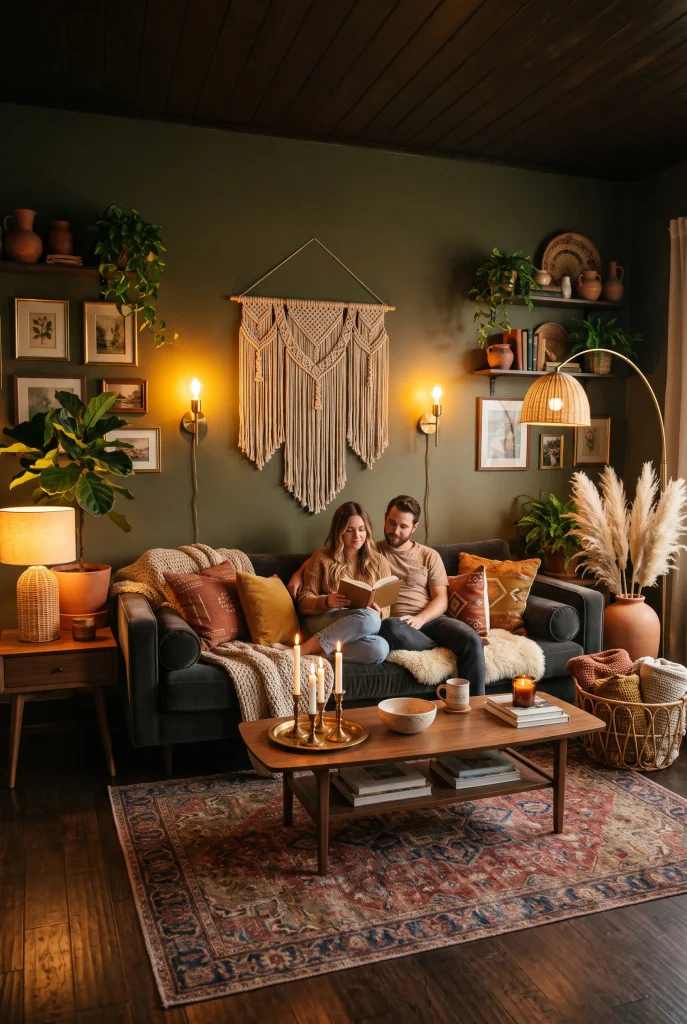
- Multiple light sources make a darker room feel warmer and more dimensional.
- Table and floor lamps create comfortable pools of light.
- Wall sconces can highlight artwork or architectural details.
- Warm bulbs help natural textures look richer after sunset.
Layered lighting can completely change how a dark living room feels once the sun goes down. Instead of depending on one bright ceiling fixture, combine a floor lamp, table lamp, wall sconces, and small decorative lights at different heights. Each source creates its own pool of illumination, making the room feel softer and more dimensional. Choose warm-toned bulbs and place lamps near seating, shelves, and artwork where extra light is genuinely useful. This approach allows darker furniture and walls to feel cozy rather than visually flat during evening hours.
The most comfortable setup usually combines both practical and decorative lighting. A floor lamp beside the sofa can provide focused reading light, while a table lamp on a console adds a softer background glow. Sconces can emphasize artwork or textured walls without taking up floor space. If you use candles or small accent lights, keep them as finishing touches rather than the main illumination. Changing the lighting alone can make existing furniture feel completely different. A thoughtfully layered arrangement gives the room warmth, depth, and a relaxed nighttime atmosphere.
Conclusion
Creating a dark boho living room is all about finding the right balance between depth, warmth, texture, and personality. Rich wall colors, natural wood, vintage rugs, woven accents, earthy textiles, and layered lighting can completely transform an ordinary space into a cozy retreat.
You do not have to use every idea at once. Start with one or two changes that fit your existing furniture and build from there. Save this post on Pinterest for your next decorating project, and share it with someone looking for fresh living room inspiration. A few thoughtful details can make your space feel warmer, more inviting, and uniquely yours.