24 Stylish Home Office Setup Ideas for Small Spaces
A small room does not mean you have to sacrifice style, comfort, or productivity. Home office setup ideas for small spaces can help you turn an unused corner, narrow wall, or awkward nook into a workspace that feels intentional and inviting.
Whether you work from home, study, or simply need a quiet place to organize your daily tasks, the right layout can make a surprisingly big difference. From floating desks and vertical storage to cozy bedroom corners and hidden workstations, these ideas focus on making every inch count. I’ve noticed that the best compact offices are not necessarily the biggest ones—they are the ones that balance smart organization with a look you genuinely enjoy.
1. Floating Wall Desk
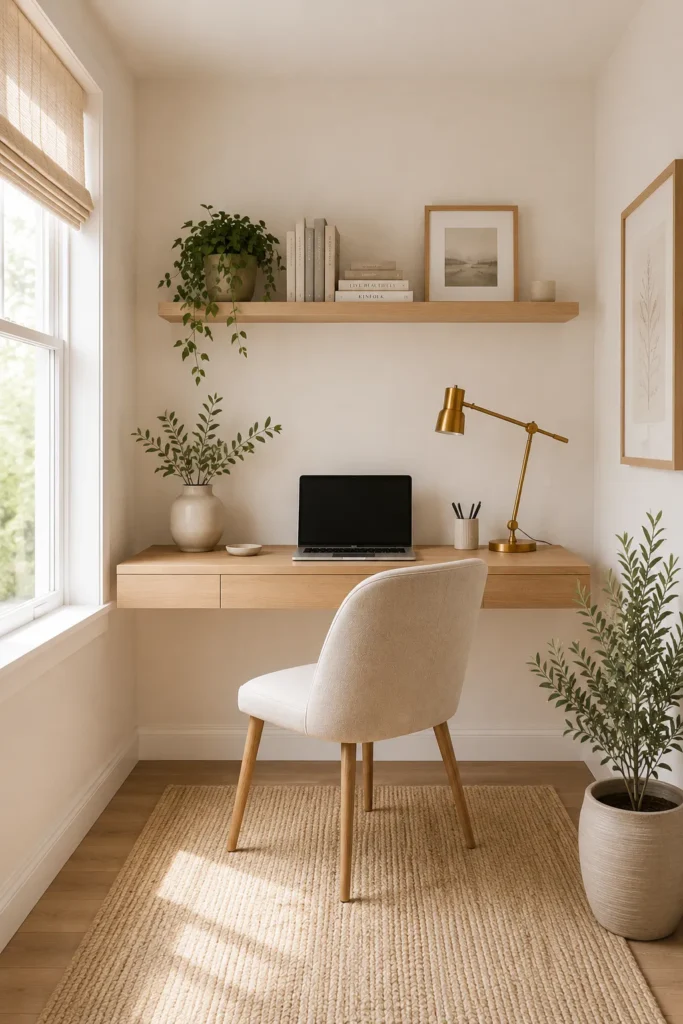
- Keeps valuable floor space completely open.
- Creates a clean, built-in look without bulky furniture.
- A narrow shelf adds storage without crowding the desk.
- Light finishes make the workspace feel more spacious.
- It works especially well in bedrooms and compact apartments.
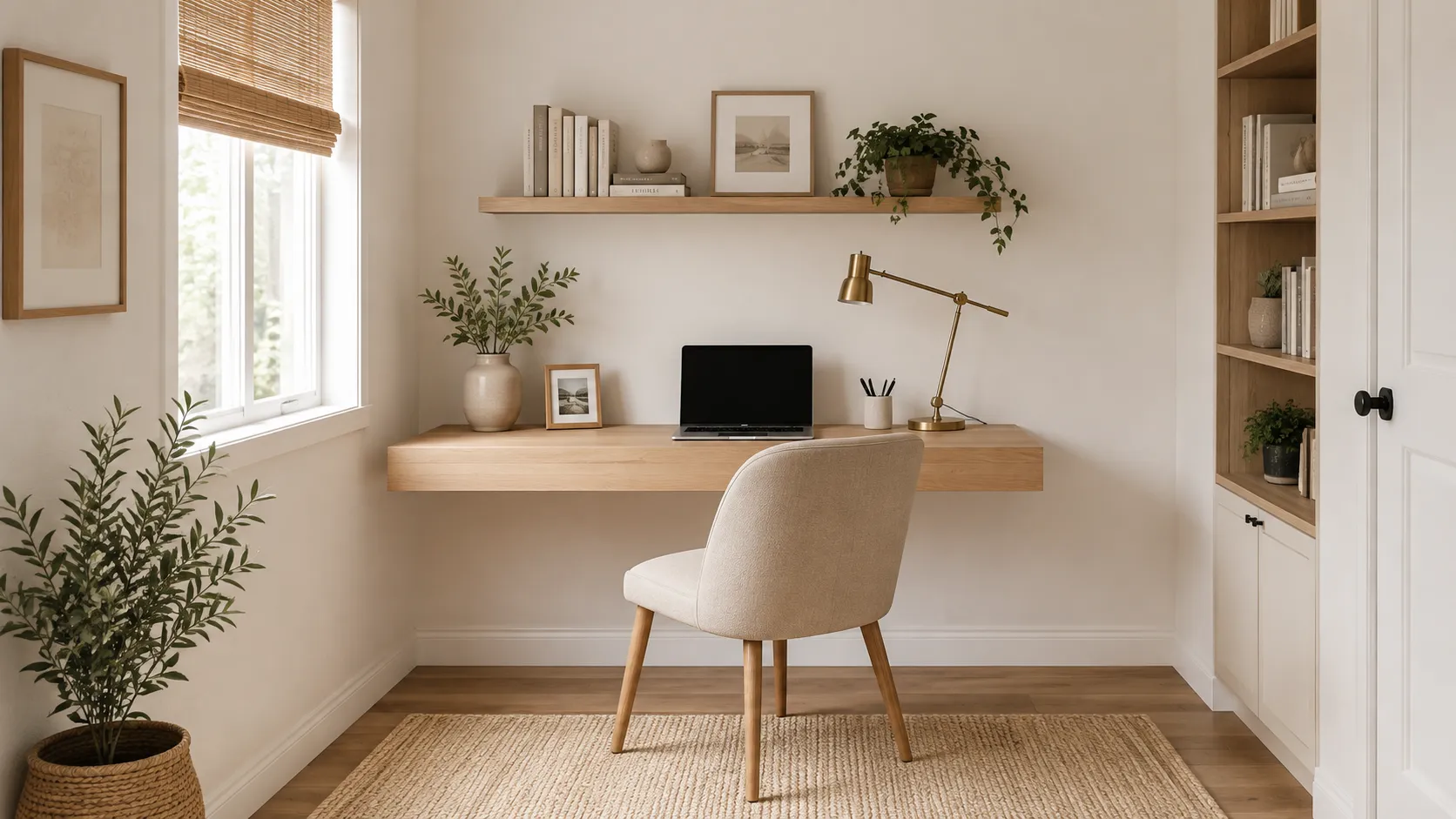
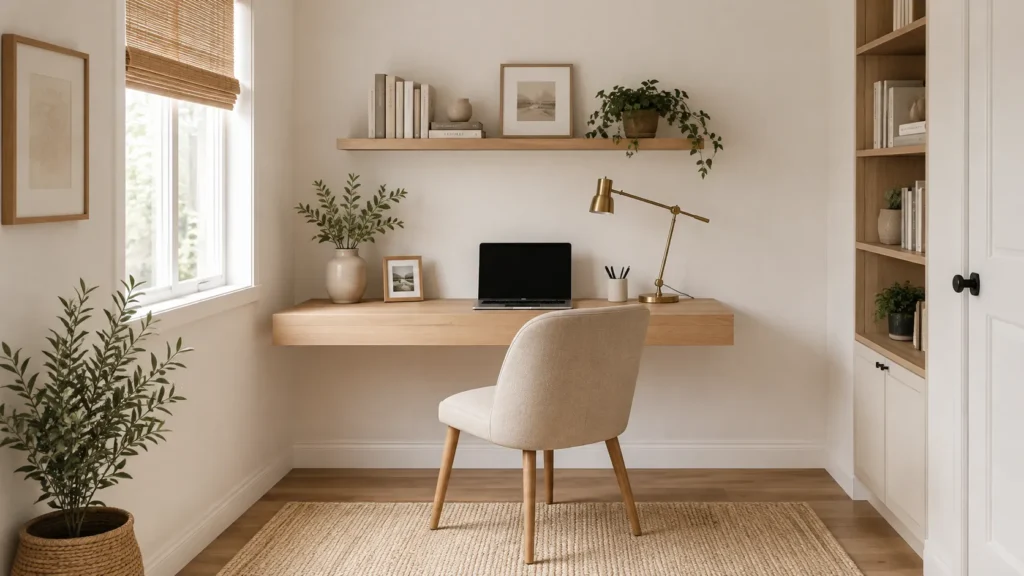
A small desk can feel surprisingly spacious when every inch has a purpose. A wall-mounted desk keeps the floor open while creating a polished work zone that feels intentional rather than temporary. Pair it with a slim chair, one shelf, and a compact task lamp for a balanced setup. In my experience, this arrangement works especially well in bedrooms, studio apartments, and narrow corners where bulky furniture quickly becomes overwhelming. Keeping the palette light also helps the area blend naturally with the rest of the room instead of visually closing it in.
If floor space is limited, look upward and let the walls do more of the organizing. A floating desk creates a clean workspace without heavy legs taking up valuable room. Add a narrow shelf above it for notebooks, a small plant, and a few decorative pieces, keeping everyday supplies within easy reach. Choose light oak, white, or soft beige finishes to maintain an airy look. Cable clips underneath the desktop can hide cords and preserve the streamlined appearance. The result is a practical workstation that feels calm, modern, and much larger than its footprint suggests.
2. Window Nook Office
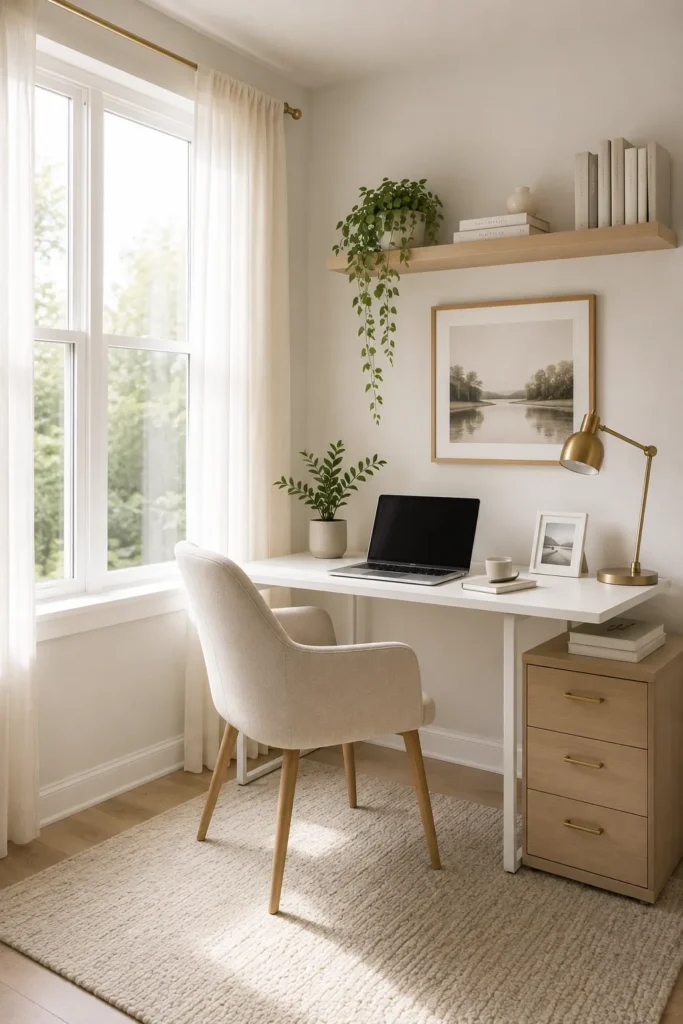
- Makes natural light the main decorative feature.
- Helps a compact workspace feel brighter and more inviting.
- Sheer curtains soften harsh sunlight without blocking daylight.
- Neutral furniture keeps the area visually lightweight.
- A small plant adds warmth without taking much space.
A bright corner can become a beautiful workspace when the desk stays visually simple. Place a compact white desk near a window, then add a slim upholstered chair and one small drawer unit for essentials. Natural light makes the area feel open while giving the room a fresh, welcoming character. I’ve noticed that keeping accessories limited to a few useful pieces prevents small work zones from looking cluttered. Add a soft rug beneath the chair and a small plant nearby for warmth. This setup suits renters, bedrooms, apartments, and multipurpose rooms where flexibility matters.
Window-side placement can make a tiny office feel brighter, fresher, and easier to enjoy throughout the day. Position the desk so daylight falls across the work surface without creating harsh screen glare. Sheer curtains can soften strong sunlight while keeping the room luminous. A pale wood desktop, neutral chair, and simple storage basket maintain the relaxed look. Keep the window area visually open instead of crowding it with tall furniture. The combination of daylight, soft textures, and uncluttered surfaces creates a workspace that feels productive without sacrificing the cozy atmosphere of a small home.
3. Vertical Storage Wall
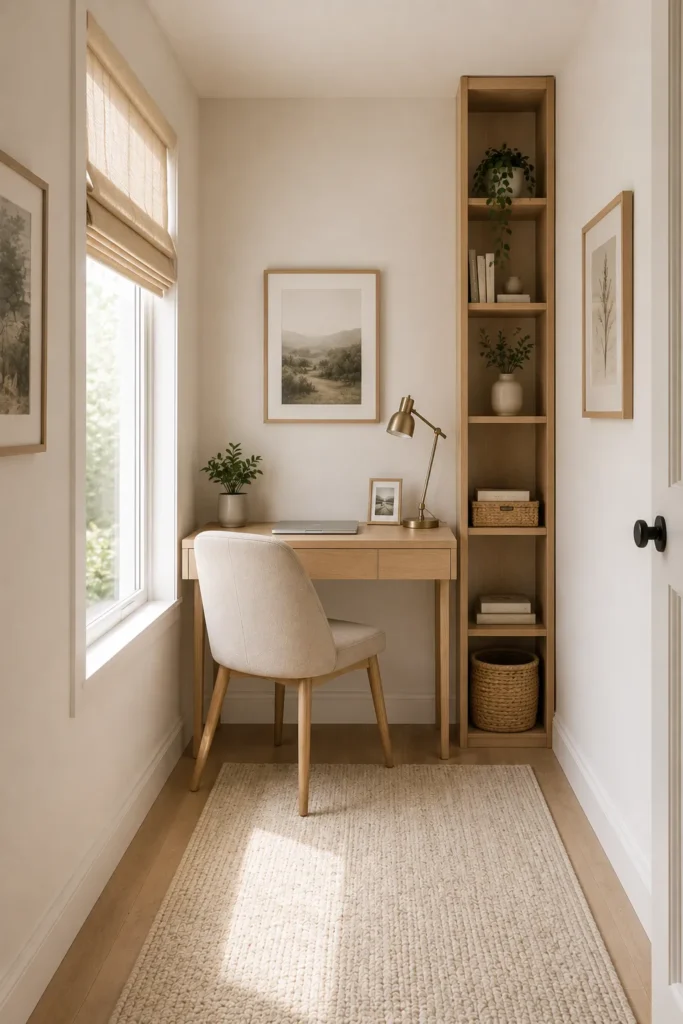
- Uses vertical space instead of valuable floor area.
- Keeps books and office supplies easy to reach.
- Matching finishes make compact furniture feel cohesive.
- A tucked-in chair keeps the walkway clear.
- Open shelving can combine practical storage with simple decor.
A narrow wall is often all you need for a focused workspace that feels intentional. Choose a slim desk with enough depth for your laptop, then use vertical shelving to store books, stationery, and small decor. This arrangement keeps the walkway clear while giving the office a tailored, built-in appearance. In my experience, matching the shelves to the desktop makes compact furniture look more cohesive and less pieced together. Add a comfortable chair that slides completely underneath when you finish working. The result is neat, functional, and easy to maintain in a busy home.
A vertical storage wall also makes one of the smartest home office setup ideas for small spaces because it turns unused wall height into useful organization. Instead of spreading supplies across cabinets or another room, keep frequently used items close to your desk. Use baskets for loose accessories and reserve open shelves for attractive pieces. Leave some empty space between objects so the wall does not feel crowded. This simple balance makes a compact office look thoughtfully styled while giving you enough storage for everyday work without sacrificing precious floor space.
4. Corner Desk Setup
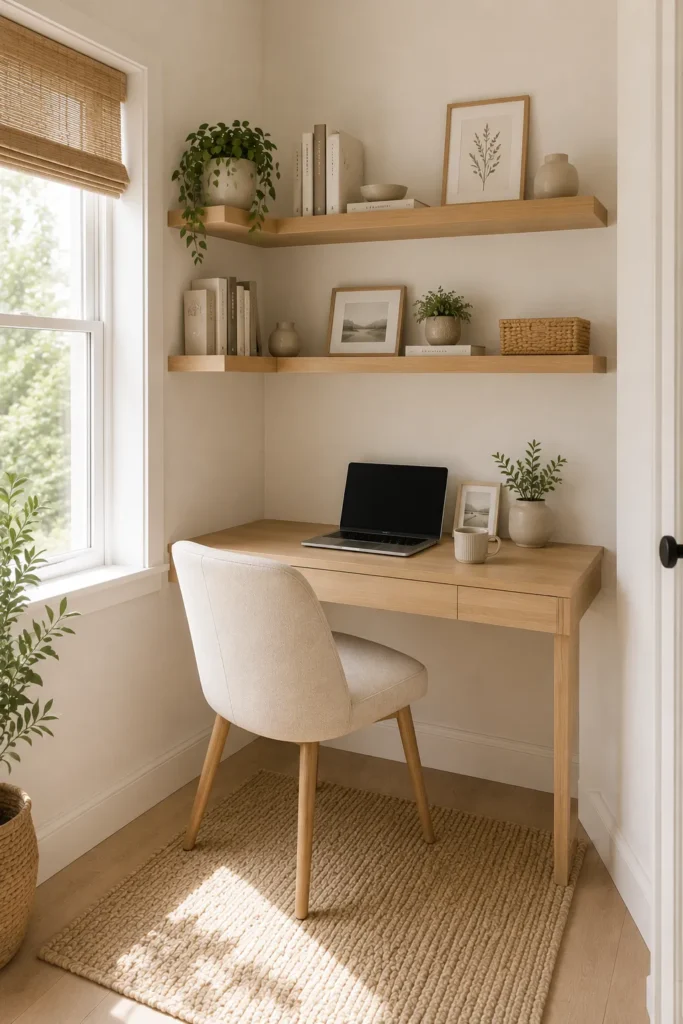
- Turns an unused corner into a dedicated work zone.
- Makes two walls useful for storage and decoration.
- Keeps the center of the room open and uncluttered.
- A compact chair preserves comfortable movement around the desk.
- Light wood and neutral tones prevent the corner from feeling heavy.
A forgotten corner can become one of the most useful areas in a small home. A compact corner desk fits naturally between two walls, creating a defined workstation without taking over the room. Choose a simple L-shaped or triangular design with a shallow profile so the space remains easy to move around. Add a comfortable chair, a small lamp, and one or two shelves above the desk. I’ve seen this arrangement work especially well in bedrooms and living rooms where a traditional desk would feel too bulky or visually distracting.
The biggest advantage of a corner workstation is how efficiently it uses awkward space. Instead of leaving an empty corner unused, you can turn it into a practical area for working, studying, or managing household tasks. Keep the desktop mostly clear and use wall-mounted organizers for papers and accessories. A neutral palette helps the setup blend with surrounding furniture, while a small plant or framed print adds personality. If the corner receives daylight, position the desk to take advantage of it while keeping your monitor away from direct glare for a more comfortable working experience.
5. Slim Console Desk
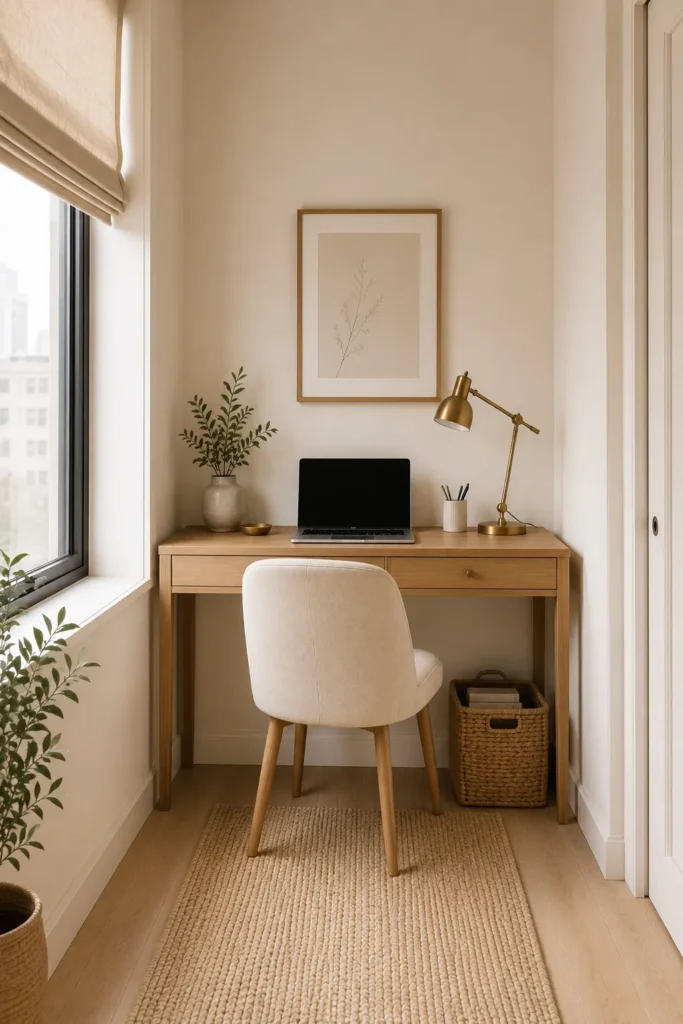
- Fits naturally against narrow walls and unused passage areas.
- Provides enough surface for a laptop and basic supplies.
- Keeps the room visually open and lightweight.
- Works well behind sofas or along bedroom walls.
- Drawers or baskets can handle small everyday essentials.
When a full-size desk simply will not fit, a slim console-style workspace can be the perfect compromise. Its narrow depth gives you a functional surface while leaving more walking space around the room. Choose a simple wood or white console with one or two drawers, then pair it with a lightweight chair that can slide underneath. This approach is especially useful in apartments, hallways, guest rooms, and living spaces where the office needs to share its footprint with another purpose. In my experience, keeping the desktop visually simple makes the entire setup feel surprisingly spacious.
A console desk can also blend into your existing decor instead of announcing itself as an office. Place it against a wall, behind a sofa, or beneath a window, depending on your layout. Add a small lamp, laptop stand, and one decorative object rather than filling the surface with supplies. Use a woven basket underneath for cables, notebooks, or paperwork that needs to stay nearby. Because the furniture is visually light, the room maintains an open feeling. This makes a narrow workstation practical for daily use while still looking polished when work is finished.
6. Built-In Alcove Office
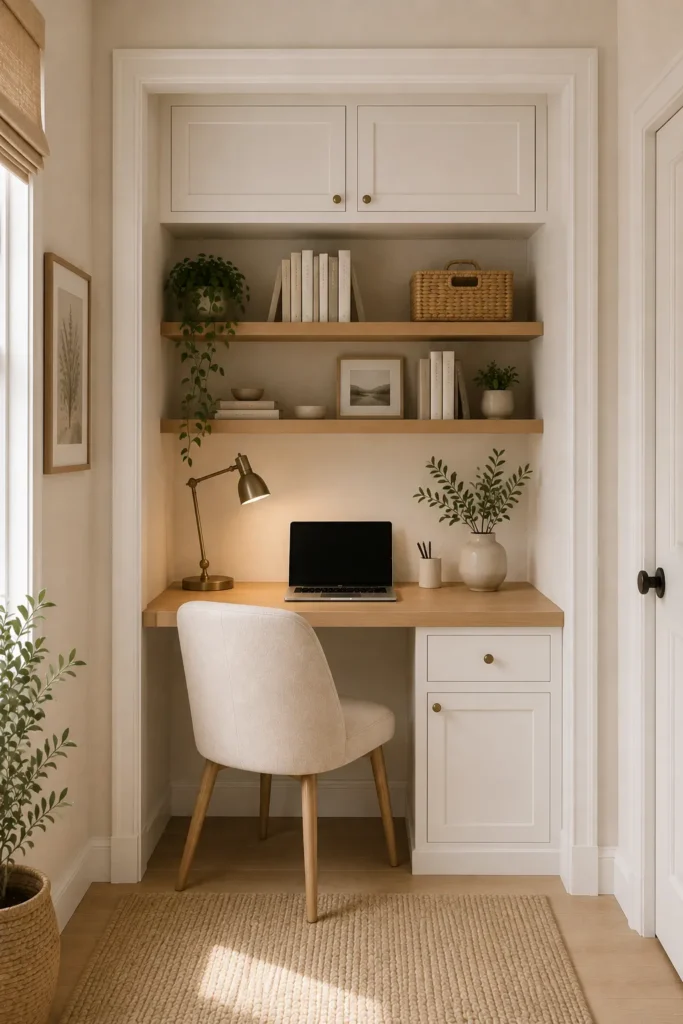
- Turns an unused architectural recess into a purposeful workspace.
- Creates a custom appearance without extending into the room.
- Shelves above the desk provide convenient vertical storage.
- Matching finishes make the area feel thoughtfully designed.
- Closed cabinets can hide clutter when the workday ends.
An unused alcove can become a naturally tucked-away office with surprisingly little wasted space. A fitted desktop across the recess creates a dedicated work surface while keeping the surrounding floor open. Add shallow shelving above the desk for books, baskets, and carefully chosen decor. Warm white walls paired with light oak cabinetry can make the area feel bright and welcoming. I’ve noticed that built-in-style arrangements look especially refined when the desk, shelves, and storage share similar finishes. This creates visual continuity and makes the workspace feel like part of the architecture rather than an afterthought.
For a truly practical setup, combine open shelving with concealed storage so everyday clutter has somewhere to disappear. Keep frequently used items within arm’s reach, while paperwork and less attractive supplies can stay behind cabinet doors or inside matching boxes. A compact task light can brighten the desktop without taking up much room. If the alcove is narrow, choose a chair with a small footprint and enough back support for comfortable work. This type of workspace is particularly useful when you want privacy and organization without giving up an entire room to create an office.
View: 21 Corner Wall Gallery Ideas to Transform Your Space
7. Fold-Down Wall Desk
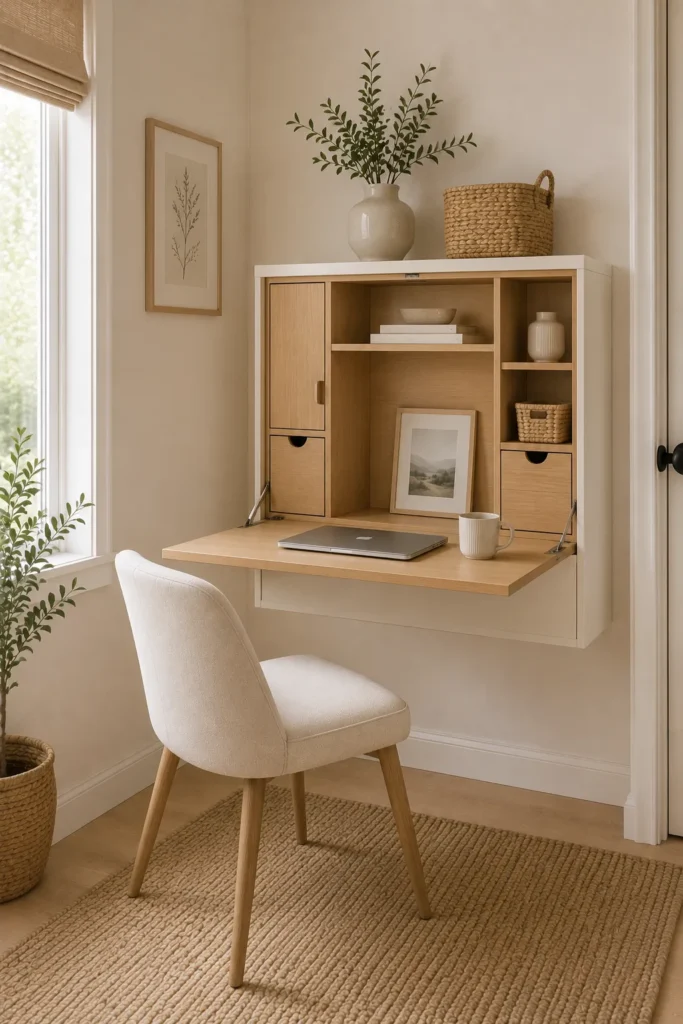
- Folds away when the workspace is no longer needed.
- Frees valuable floor space in multipurpose rooms.
- Built-in compartments can hide everyday office supplies.
- Light wood finishes keep the setup warm and inviting.
- Works especially well in bedrooms, kitchens, and apartments.
A desk that disappears after work can make a small room feel completely different. A fold-down wall desk provides a proper work surface when you need it, then closes neatly against the wall when the day is finished. This makes it especially useful in bedrooms, living rooms, and multipurpose spaces where every square foot matters. Choose a model with shallow storage compartments for notebooks, chargers, and stationery. In my experience, keeping only essential items inside makes the folding mechanism easier to use and encourages the workspace to stay tidy throughout the week.
The real benefit comes from being able to change the room quickly. During working hours, the lowered desktop creates a comfortable place for your laptop and accessories. Once work is finished, fold it upward and the wall becomes visually calm again. Add a nearby basket for the chair cushion or office supplies, and use a small wall light instead of a bulky desk lamp. Neutral colors help the desk blend into the room when closed. This approach gives you a functional workstation without permanently dedicating valuable floor space to office furniture.
8. Under-Stair Workspace
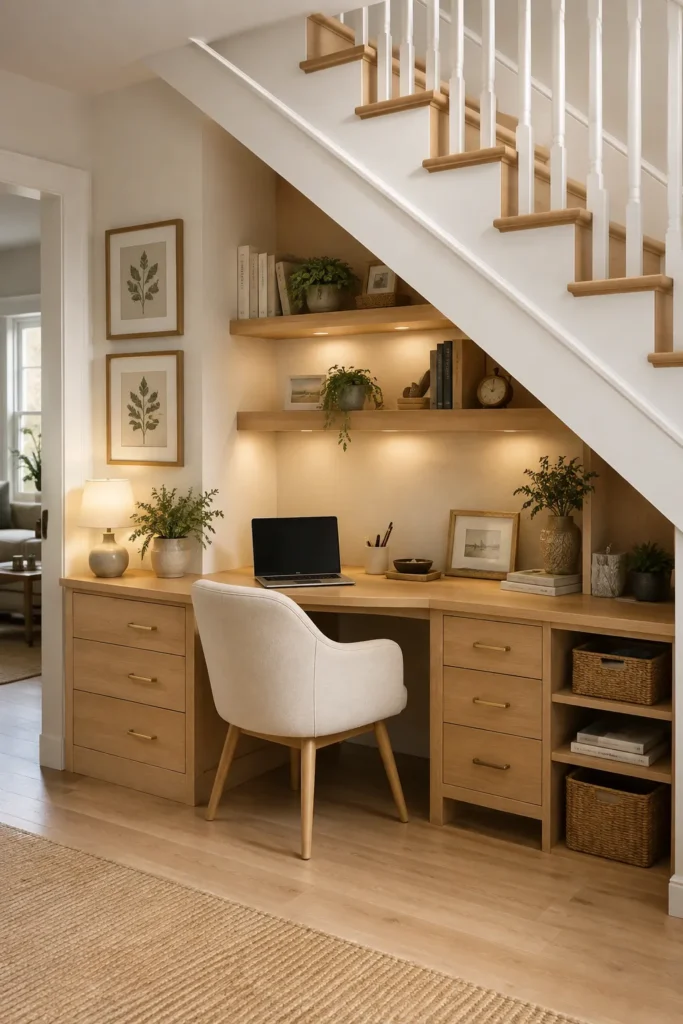
- Converts overlooked space beneath stairs into a useful workstation.
- Makes an awkward architectural area functional.
- Built-in drawers provide discreet storage.
- Wall shelves add organization without using floor space.
- Warm finishes make the compact area feel intentional.
The space beneath a staircase is often overlooked, yet it can become a surprisingly comfortable home office. A narrow custom desk can follow the shape of the available area, giving you a dedicated surface without occupying another room. Keep the furniture simple and choose storage that fits neatly beneath or beside the desktop. I’ve seen this type of setup work particularly well when the staircase is near a living room or entryway. A compact chair, warm lighting, and a few personal details can turn an awkward architectural space into a purposeful and attractive workstation.
Because the ceiling height changes beneath stairs, planning the layout carefully is important. Place the desk where there is enough headroom for comfortable sitting, then use the lower sections for drawers, baskets, or closed cabinets. Wall-mounted shelves can handle books and decorative items without making the floor feel crowded. If the area lacks natural light, add a warm task lamp and soft overhead lighting. Light wood, cream, and white finishes can visually brighten the nook. The finished space feels integrated into the home while giving an otherwise unused area a practical everyday purpose.
9. Bedroom Corner Office
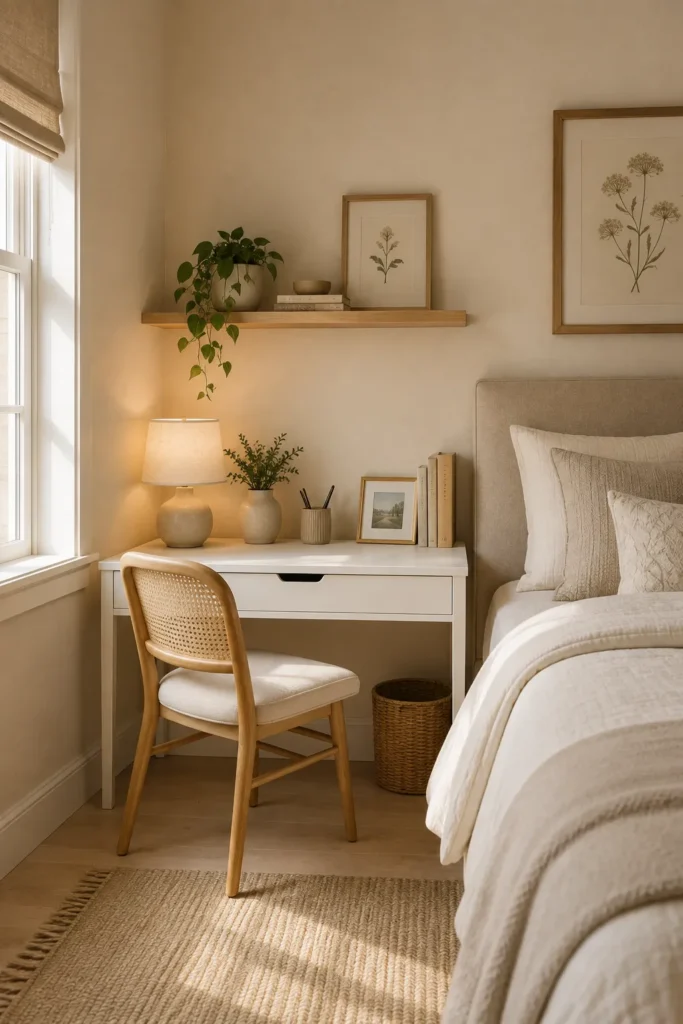
- Gives a bedroom a dedicated place for focused work.
- Uses an otherwise empty corner efficiently.
- Keeps the desk visually coordinated with bedroom furniture.
- Floating shelves provide storage without crowding the floor.
- Soft neutral colors maintain a restful atmosphere.
A quiet bedroom corner can become a productive workspace without making the room feel like an office. Choose a narrow desk that fits comfortably beside the bed or near an unused wall, then coordinate its finish with existing furniture. A light wood chair, small lamp, and floating shelf can provide everything you need without overwhelming the space. In my experience, keeping the office palette close to the bedroom colors helps both zones feel connected. This is especially useful when the bedroom doubles as a work area and you want the room to remain peaceful after work ends.
The key is creating visual separation without adding bulky furniture. A small rug beneath the desk or a piece of framed artwork above it can subtly define the workspace. Keep cables hidden and avoid filling the desktop with unnecessary accessories. If possible, position the desk near natural light while keeping the bed area visually uncluttered. Use baskets or a slim drawer unit for supplies that need to stay nearby. With thoughtful placement, a bedroom office can feel comfortable and organized while preserving the cozy atmosphere that makes the room relaxing.
10. Closet Office Nook
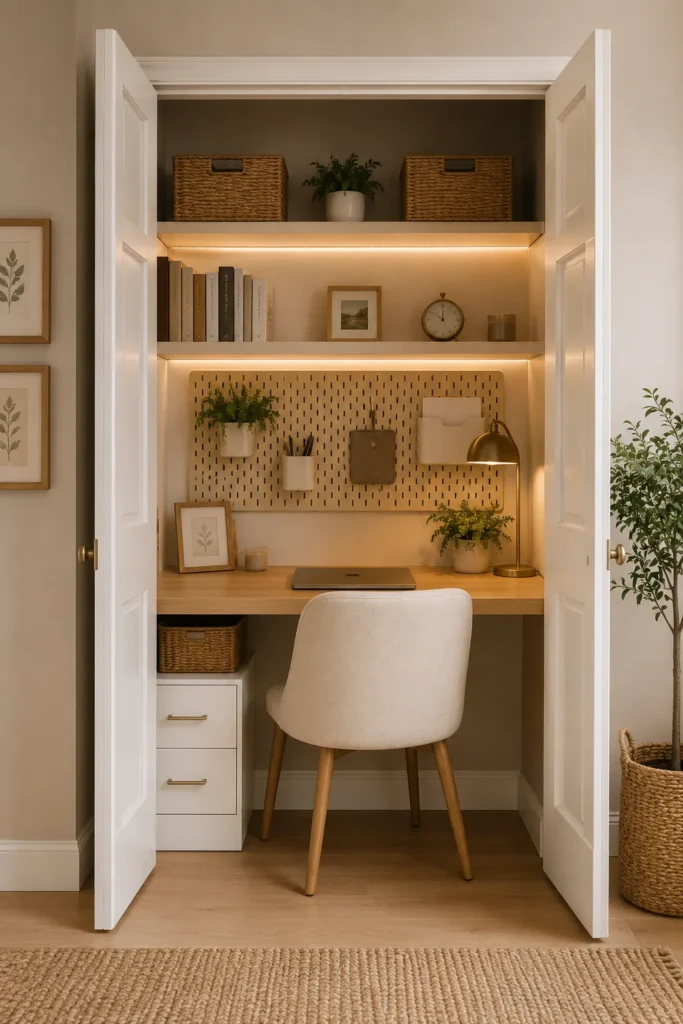
- Transforms an unused closet into a dedicated workspace.
- Keeps office supplies contained behind doors when needed.
- Vertical shelves maximize limited wall space.
- Warm lighting makes the enclosed area feel inviting.
- A simple chair keeps the footprint compact and practical.
An unused closet can become a clever little office when floor space elsewhere is limited. Remove unnecessary storage, add a fitted desktop, and use the existing walls for shelves or organizers. The result is a dedicated work zone that can disappear behind closed doors when you finish. This approach works particularly well in bedrooms, apartments, and homes without a spare office. I’ve noticed that using light finishes makes a converted closet feel less enclosed. A small chair, warm task light, and a few useful accessories are usually enough to make the space comfortable.
The best part of a closet workspace is its ability to separate work from the rest of the room. When the workday ends, simply close the doors and hide the visual clutter. Use vertical organizers for notebooks, cables, and stationery, while small baskets can keep loose items contained. If the closet has no natural light, install soft, warm lighting beneath the shelves or above the desk. Keep the desktop shallow but deep enough for your laptop and daily essentials. With thoughtful organization, even a tiny storage area can become a functional and attractive office.
11. Pegboard Organization
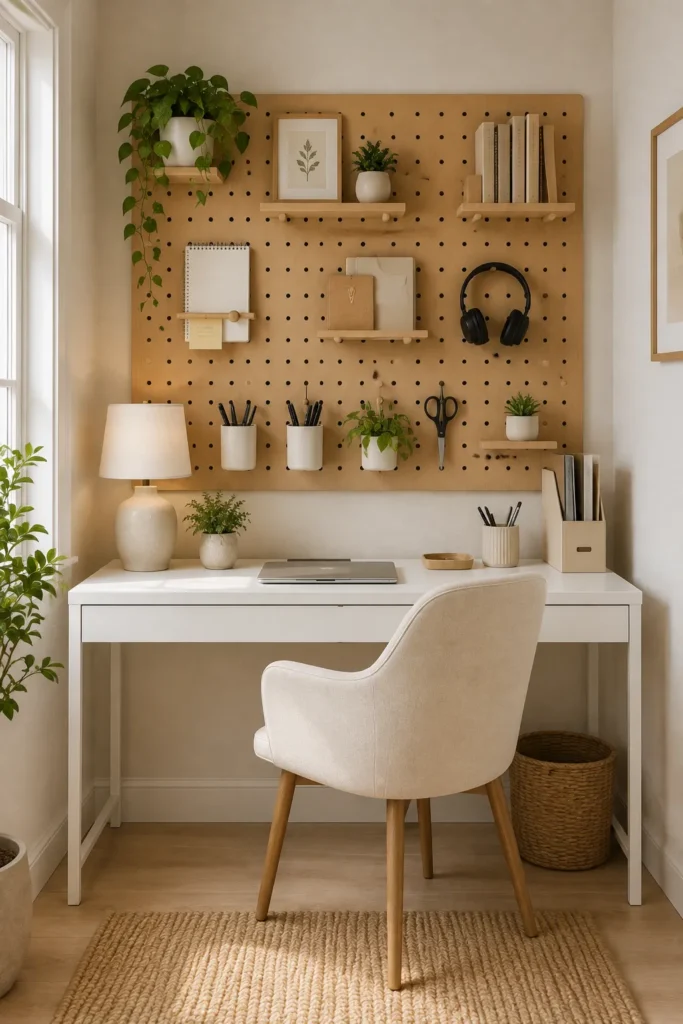
- Keeps frequently used supplies visible and within reach.
- Uses vertical wall space without adding bulky furniture.
- Makes a small desk easier to keep organized.
- Accessories can be rearranged as needs change.
- Natural wood adds warmth to a simple workspace.
A well-organized wall can make a tiny desk feel much more capable. A pegboard above the workspace gives you flexible storage for headphones, stationery, notebooks, scissors, and other everyday essentials without taking up valuable desktop space. Choose a neutral or natural wood finish that complements the rest of the room. In my experience, the biggest benefit is flexibility because you can move hooks and shelves whenever your routine changes. Keep the most frequently used items at eye level and reserve higher sections for occasional supplies or simple decorative touches.
A pegboard also helps create the feeling of a dedicated workstation, even when the desk occupies only a small corner. Arrange storage in balanced groups rather than filling every available section. Leave some open space so the wall remains visually calm and easy to navigate. Small shelves can hold plants or framed prints, while hooks handle practical accessories. Pair the organizer with a slim desk and chair to preserve floor space. This combination makes everyday tasks easier because essentials stay close, while the room still maintains a clean and Pinterest-friendly appearance.
12. Minimalist Desk Corner
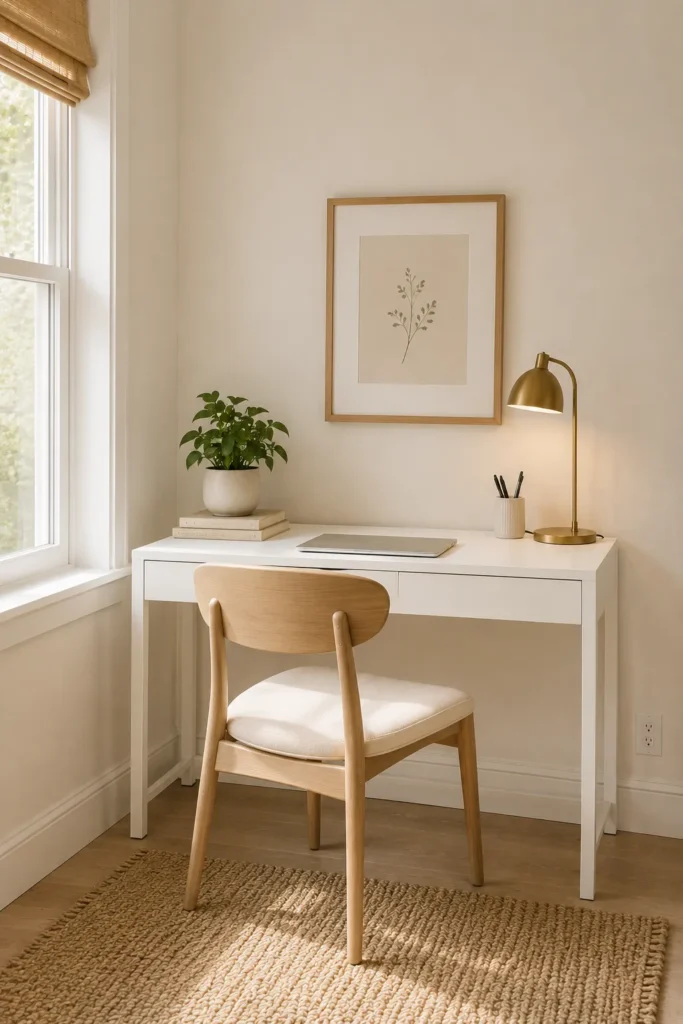
- Creates a calm workspace with fewer visual distractions.
- Makes a small room appear cleaner and more spacious.
- Requires only essential furniture and accessories.
- Neutral colors help the desk blend into the room.
- A single decorative accent adds personality without clutter.
Sometimes the most effective small workspace is the one that contains less. A simple desk, comfortable chair, compact lamp, and one or two carefully chosen accents can create a polished office without overwhelming the room. Keep the desktop mostly clear and choose furniture with clean lines and a light visual footprint. I’ve noticed that minimalist arrangements are especially helpful in compact spaces because there are fewer objects competing for attention. The result feels calmer, easier to maintain, and more adaptable when the room needs to serve other purposes.
A minimalist workspace does not have to feel cold or empty. Add warmth through natural wood, soft textiles, greenery, or a small piece of artwork. Choose one consistent color palette so the office blends naturally with nearby furniture. Storage should be practical but discreet, such as a drawer beneath the desk or a woven basket tucked beside the chair. This approach is ideal when you want one of the most visually clean home office setup ideas for small spaces without sacrificing comfort. A thoughtfully edited workspace can make even a very limited area feel intentional and inviting.
13. Floating Corner Shelves
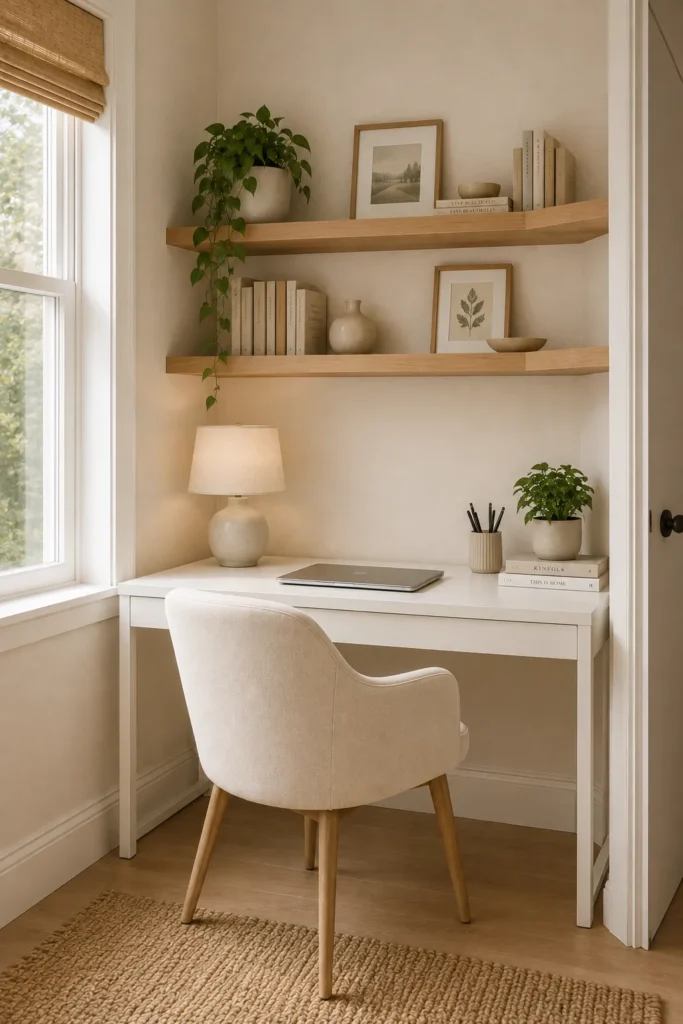
- Uses empty wall corners for practical vertical storage.
- Keeps the desktop clear and easier to use.
- Adds height and visual interest without bulky furniture.
- Open shelves make everyday items easy to reach.
- Small plants and artwork soften the functional workspace.
Empty corners above a desk can become valuable storage without making the room feel crowded. Floating corner shelves fit naturally into unused wall space and give you somewhere to keep books, notebooks, plants, and small decorative pieces. Choose shelves in a finish that complements the desk so the arrangement feels intentional. I’ve noticed that leaving some shelf space empty is important in small rooms because completely filled shelves can quickly look overwhelming. A simple mix of useful objects and decorative accents keeps the workspace practical while maintaining a light, balanced appearance.
The beauty of floating shelves is that they provide storage without adding another piece of furniture to the floor. Mount them at comfortable heights above or beside the desk, leaving enough clearance for your monitor and everyday work. Use the lower shelf for frequently accessed items and the upper shelf for books or decor. A small trailing plant can soften the straight lines, while framed artwork adds personality. This setup works especially well when you need more organization but want to preserve an open floor plan. It is simple, flexible, and easy to adapt over time.
14. Dual-Purpose Vanity Desk
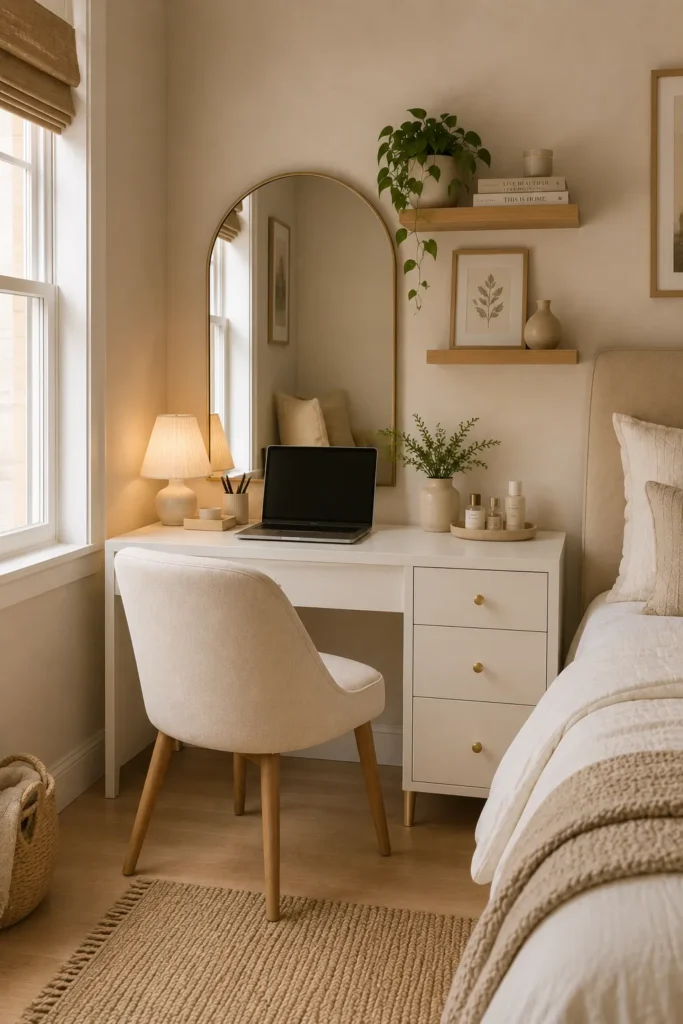
- Combines work and personal routines in one compact area.
- Saves space by eliminating the need for separate furniture.
- A mirror can visually brighten the corner.
- Drawers keep office and personal items organized.
- Soft finishes help the setup feel less corporate.
One compact desk can serve several purposes when space is limited. A vanity-style workstation can function as both a home office and a personal getting-ready area, making it especially useful in bedrooms or apartments. Choose a desk with drawers so work supplies and personal items can stay separated. Add a small mirror, comfortable chair, and compact lamp to complete the arrangement. In my experience, keeping the desk visually simple helps the two functions blend naturally. This creates a flexible corner without requiring another table, cabinet, or dedicated room.
To make the combination work smoothly, organize the desktop into small zones rather than mixing everything together. Keep your laptop and office accessories toward one side, while a tray or mirror area handles personal items. Choose neutral finishes such as white, beige, or light oak so the furniture feels connected to the bedroom. A small drawer organizer can prevent cables and stationery from spreading across the surface. When work is finished, clear the laptop and paperwork away so the area can quickly return to its second purpose. This flexibility makes the room feel more spacious and efficient.
15. Wall-Mounted Monitor Desk
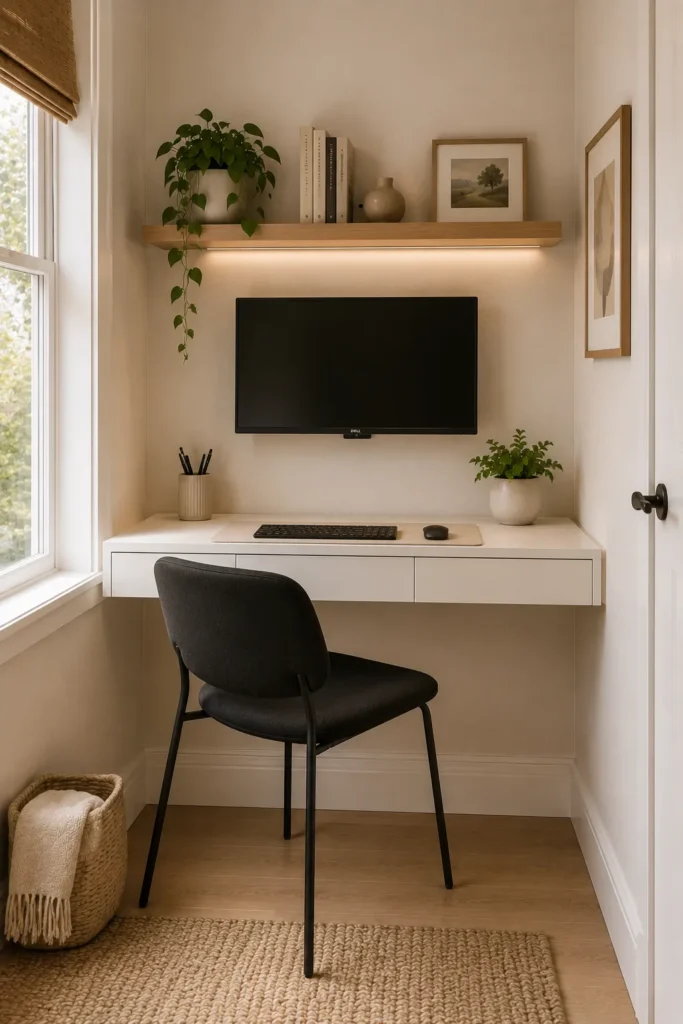
- Frees desktop space by mounting the monitor to the wall.
- Makes a narrow desk more comfortable for daily computer work.
- Keeps cables easier to organize and conceal.
- Floating storage adds function without taking floor space.
- A restrained palette keeps the setup visually streamlined.
A narrow desk can become much more functional when the monitor moves off the desktop. Mounting the screen directly to the wall frees valuable surface area for your keyboard, notebook, lamp, and other essentials. This is especially useful when your workspace is limited to a shallow console or floating desk. Keep the surrounding wall simple and add one floating shelf for accessories. I’ve noticed that removing bulky equipment from the desk instantly makes compact work areas look cleaner. It also gives you more freedom to position everyday items exactly where they are easiest to reach.
Cable management becomes especially important when creating a streamlined monitor setup. Route wires neatly behind the desk or through a discreet cable channel so they do not become a visual distraction. Choose a slim chair that fits comfortably beneath the desktop and leave enough wall space around the monitor for a balanced appearance. A small plant or framed print can soften the technology-focused look. This arrangement is ideal for people who work regularly from home but cannot dedicate much space to a traditional workstation. The result is efficient, modern, and visually lighter than a conventional desk setup.
16. Narrow Wall Workspace
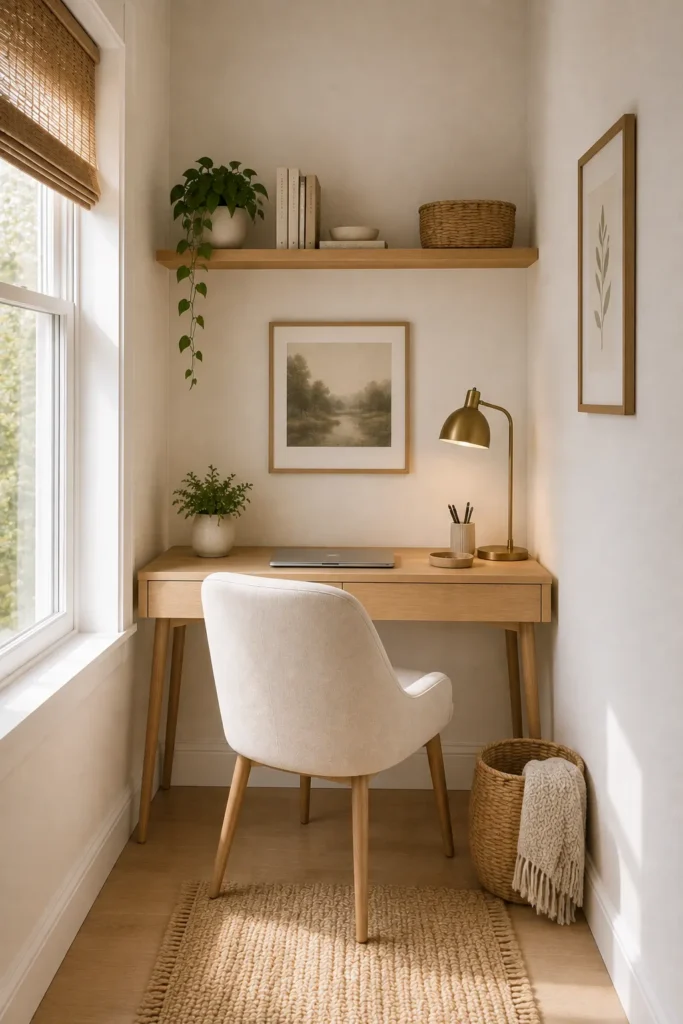
- Fits comfortably along narrow unused walls.
- Keeps the center of the room open for movement.
- A shallow desk provides enough space for essential work.
- Wall storage prevents the desktop from becoming crowded.
- Neutral finishes help the workspace blend into the room.
A narrow wall can provide just enough room for a practical workstation when the furniture is chosen carefully. Look for a shallow desk that gives you sufficient space for a laptop without extending too far into the room. Pair it with a lightweight chair that can slide completely underneath when you are finished. A small shelf above the desk can hold notebooks, a plant, or decorative pieces. In my experience, this arrangement works particularly well in apartments and bedrooms because it creates a useful work zone without making the entire room feel dedicated to office furniture.
The key to making a narrow workspace comfortable is choosing the right proportions. Keep the desk visually light, avoid oversized accessories, and use vertical storage whenever possible. A compact lamp can provide focused illumination while leaving the main surface clear. If the wall is beside a window, use natural light to brighten the area while positioning the screen to minimize glare. Light oak, cream, and soft white finishes can make the setup feel larger. With careful styling, even a small strip of wall can become an organized workstation that looks intentional rather than squeezed into the room.
17. Glass Desk Setup
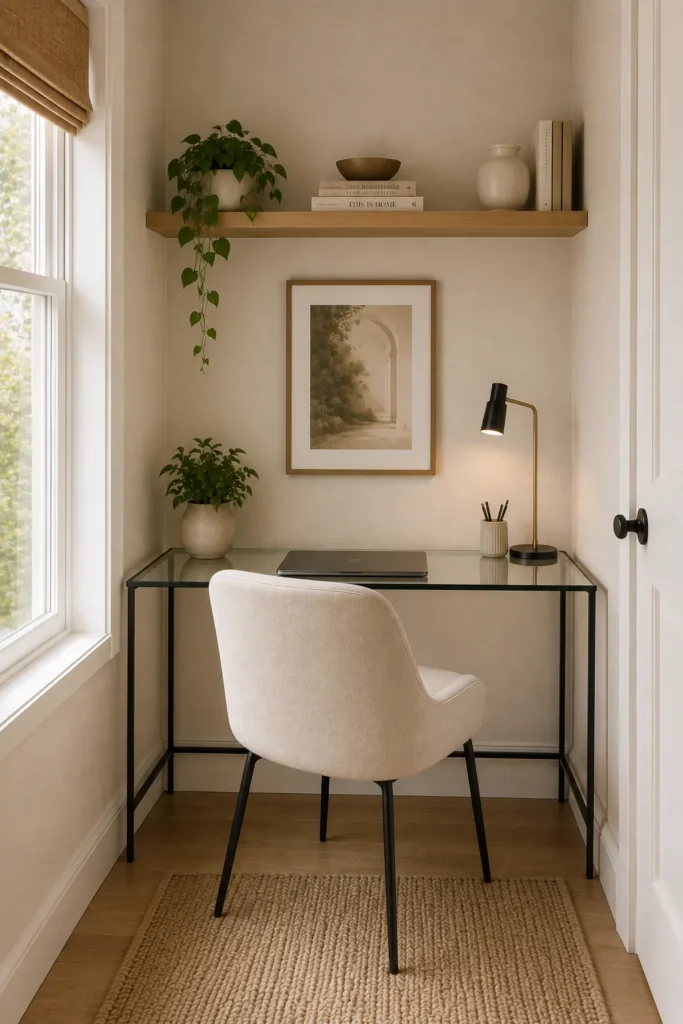
- Transparent surfaces visually reduce the desk’s presence.
- Helps compact rooms maintain an open appearance.
- Slim metal legs take up minimal visual space.
- Works well with modern and minimalist interiors.
- A neutral chair adds softness to the sleek furniture.
When a room feels crowded easily, transparent furniture can help create a lighter visual footprint. A glass-top desk allows the eye to travel through the workspace instead of stopping at a solid, bulky surface. Choose a design with slim metal legs and pair it with a soft upholstered chair to balance the modern material. This approach can work especially well near windows because natural light reflects across the surface and keeps the corner bright. I’ve noticed that keeping the accessories minimal is important here, since a clear desktop looks best when it is not overloaded.
A glass desk also gives you flexibility when matching an office with existing furniture. Because the surface is visually subtle, it can sit comfortably beside wood, metal, upholstered, or painted pieces. Add a small lamp and one decorative object rather than several large accessories. Use a slim drawer unit or nearby basket for supplies that would otherwise remain visible. If fingerprints or dust are a concern, choose tempered glass that is easy to wipe clean. The result is a workspace that feels contemporary, airy, and less visually demanding than heavier traditional desks.
18. Bookcase Desk Combo
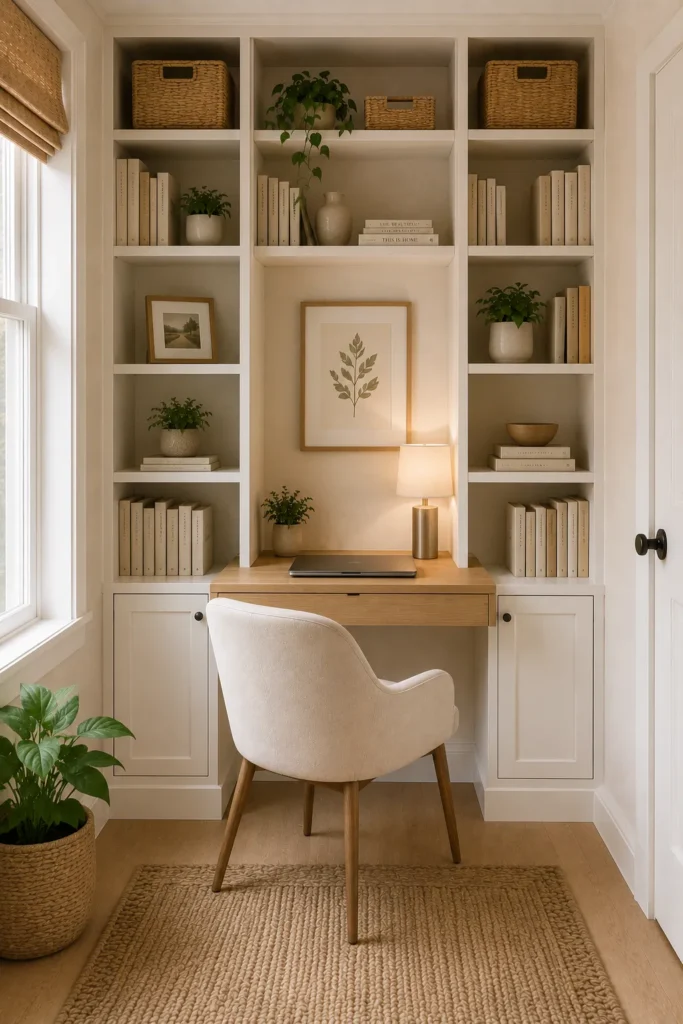
- Combines workspace and storage within one footprint.
- Uses vertical height instead of spreading furniture across the floor.
- Keeps books and supplies close to the desk.
- Open shelves can display both practical and decorative items.
- Matching finishes create a cohesive built-in appearance.
A bookcase surrounding a compact desk can give you the storage of a larger office without requiring more floor space. Place a narrow desktop between or beneath tall shelving, then use the vertical sections for books, baskets, folders, and decorative pieces. This arrangement creates a defined workstation while keeping everything within easy reach. In my experience, it works particularly well for readers, students, and anyone who needs more storage than a simple desk can provide. Keeping the shelves in one consistent finish also makes the entire setup feel more intentional.
The secret is balancing useful storage with breathing room. Avoid filling every shelf from edge to edge, and leave a few open sections to prevent the wall from feeling visually heavy. Store less attractive supplies inside woven baskets or matching boxes, while books and artwork can occupy the more visible areas. Choose a chair that slides neatly under the desk to preserve floor space when you are not working. With thoughtful organization, a bookcase desk combination can provide a complete workstation while making a small room feel structured, efficient, and beautifully styled.
19. Window Ledge Workspace
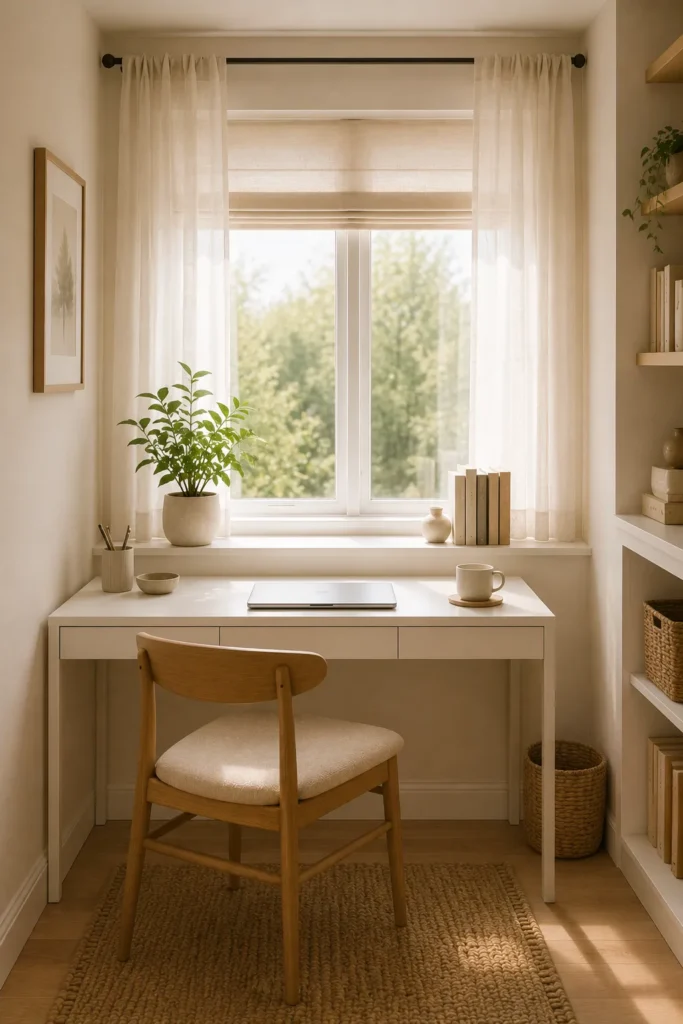
- Makes excellent use of a naturally bright wall.
- A shallow desk keeps the footprint compact.
- The window ledge can hold small decorative items.
- Sheer curtains soften strong daylight.
- Light furniture keeps the workspace visually open.
A bright window can make even the smallest desk feel more inviting. Position a shallow workspace beneath or beside the ledge so you can benefit from natural light without filling the room with bulky furniture. A slim wooden chair, small plant, and simple lamp are enough to complete the arrangement. In my experience, daylight makes compact work areas feel noticeably more spacious and comfortable during long working sessions. Keep the window area relatively clear so the light remains the main feature and the workstation does not feel visually boxed in.
This arrangement is particularly useful when you have a narrow wall but a generous window opening. Use the ledge for a few carefully chosen accents, such as a small plant or ceramic piece, rather than turning it into another storage shelf. Position your monitor to avoid direct glare, and use sheer curtains when afternoon sunlight becomes too strong. A pale desk paired with warm wood flooring creates a relaxed, cohesive look. The finished workspace feels bright and practical while making use of an area that might otherwise remain empty.
20. Hidden Cabinet Office
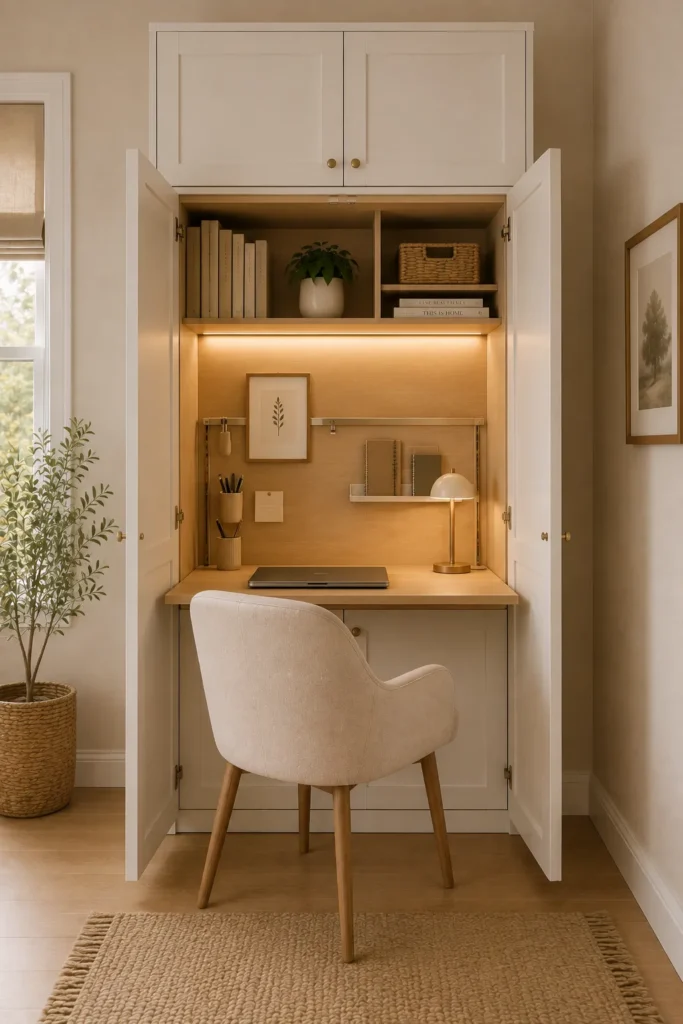
- Hides the entire workstation when it is not needed.
- Keeps office clutter contained behind cabinet doors.
- Provides vertical storage without using much floor space.
- Works well in living rooms and multipurpose spaces.
- A fold-out surface creates flexibility in tight layouts.
A hidden cabinet office is a clever way to keep work equipment out of sight when the day is over. A tall storage cabinet can contain a compact desktop, shelves, chargers, notebooks, and other essentials while occupying surprisingly little floor space. When you need to work, open the doors and use the dedicated surface; afterward, everything can be tucked away again. I’ve noticed that this approach is especially helpful in living rooms where a permanent office setup might interfere with the relaxing atmosphere. Choose a cabinet finish that matches your existing furniture for a seamless look.
Inside the cabinet, organization matters just as much as the furniture itself. Use small containers for cables and stationery, and reserve shelves for items you reach for regularly. Soft interior lighting can make the workspace easier to use without requiring a bulky lamp on the desk. Make sure the chair can move comfortably in front of the cabinet when the doors are open. Once everything is stored away, the closed cabinet simply looks like ordinary furniture. This makes it an excellent solution when you need a functional office but want the room to remain visually calm.
21. Soft Neutral Workspace
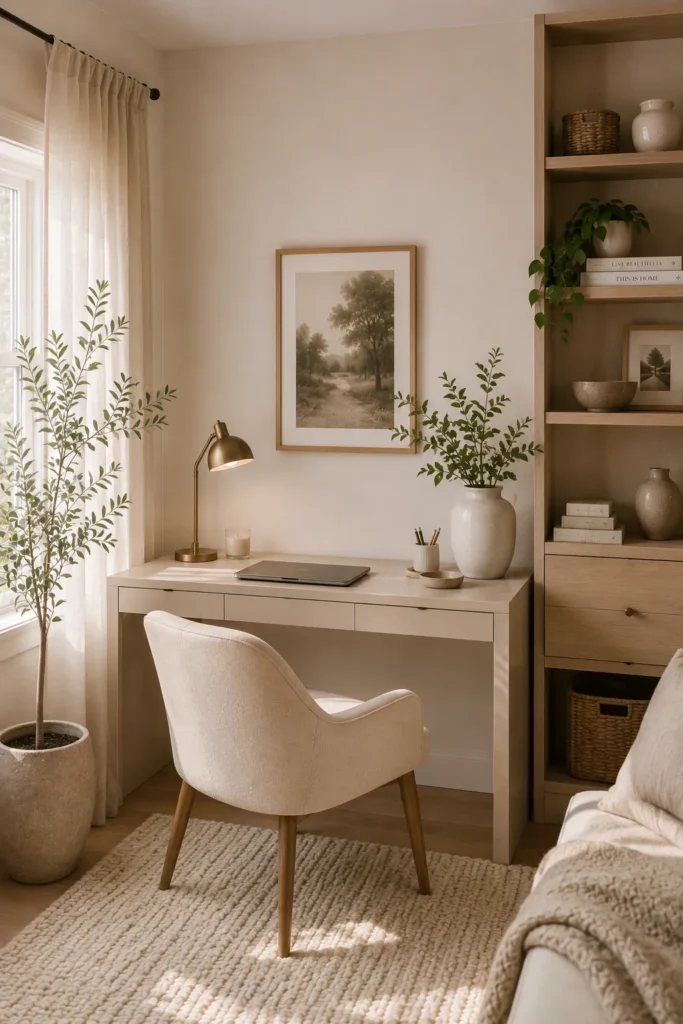
- Creates a calm and visually spacious atmosphere.
- Soft colors help furniture blend rather than dominate.
- Textured fabrics add warmth without adding clutter.
- Natural wood prevents the palette from feeling flat.
- Works beautifully with both modern and cozy interiors.
A soft neutral palette can make a compact office feel calmer, brighter, and more connected to the rest of your home. Combine warm white walls with beige furniture, light oak accents, and cream textiles for a layered look that does not rely on strong contrast. A textured rug and linen curtain can add softness while a small plant brings natural color. In my experience, neutral workspaces are particularly easy to maintain visually because new accessories tend to blend naturally with the existing palette. The result feels polished without requiring a large amount of decoration.
Neutral does not have to mean boring or empty. The key is mixing several textures and slightly different shades so the workspace has depth. Try a woven basket beside the desk, a ceramic lamp on the surface, and a small framed print above it. Keep larger furniture pieces simple and introduce personality through small accents that can be changed easily. Soft natural light will enhance the warm palette during the day, while a warm desk lamp can maintain the cozy feeling in the evening. Together, these choices create a welcoming workspace that feels comfortable even within a limited footprint.
22. Compact L-Shaped Desk
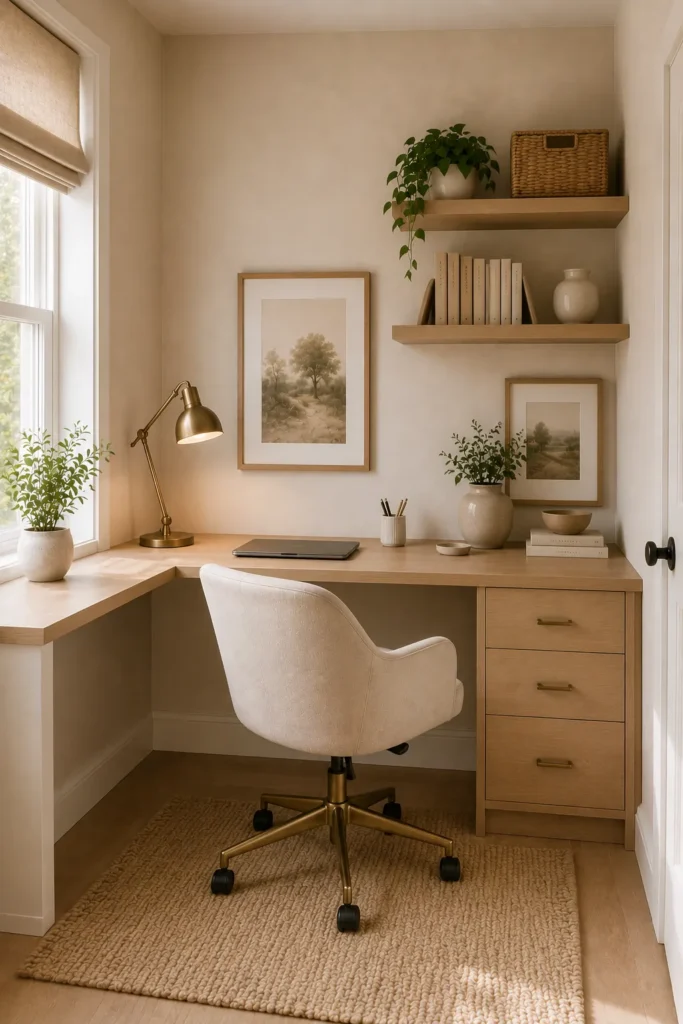
- Uses a corner efficiently while providing two work surfaces.
- Separates computer work from writing or organizing tasks.
- Creates extra room without requiring a large rectangular desk.
- Drawers underneath keep supplies neatly contained.
- Light finishes prevent the L-shape from feeling bulky.
An L-shaped desk can give you much more working surface without taking over an entire room. Tucked into a corner, the two connected sides create separate zones for your computer, paperwork, or creative projects while keeping everything within easy reach. Choose a compact design with shallow sides rather than an oversized executive shape. In my experience, this layout is especially helpful when one surface needs to stay clear for writing or planning. A comfortable chair, compact lamp, and simple wall storage can complete the setup without making the corner feel crowded.
The most important consideration is proportion. Measure both walls carefully before choosing the desk, and leave enough clearance for the chair to move comfortably. Use one side primarily for your monitor and keyboard, then reserve the second surface for notebooks, supplies, or occasional tasks. Keep vertical storage above the desk to avoid filling the floor with cabinets. A light oak or white finish can make the furniture feel less imposing, while a small rug can visually define the area. The result is an efficient workstation that feels much larger than its actual footprint.
23. Entryway Workstation
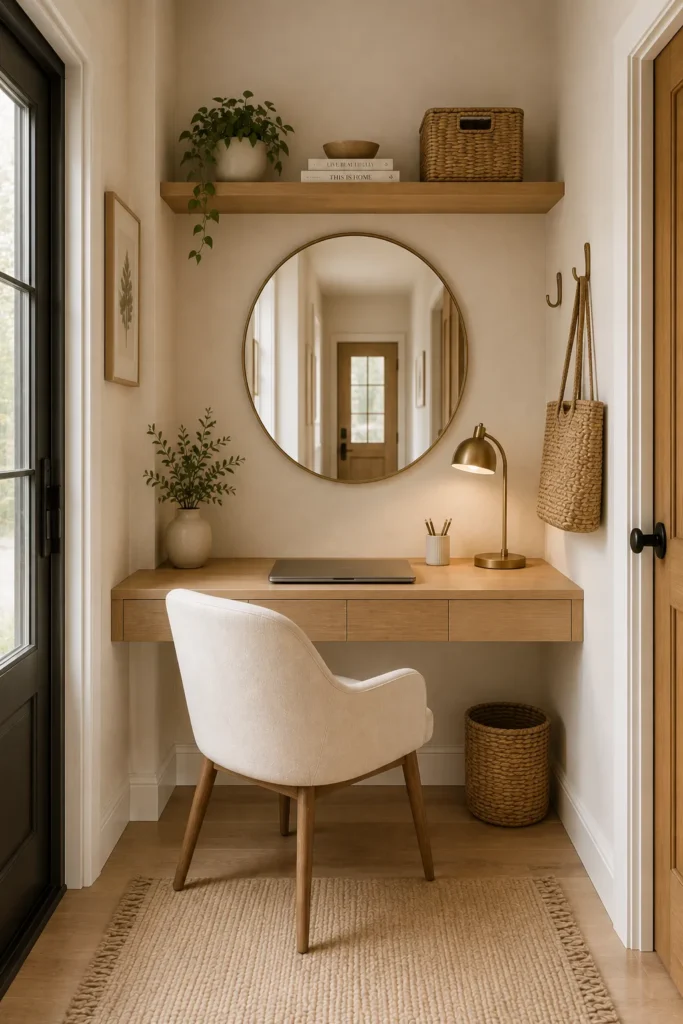
- Turns an underused entryway wall into a practical workstation.
- A narrow desk preserves the main walking path.
- Wall storage keeps everyday office supplies contained.
- A mirror can make the area feel brighter and larger.
- Multifunctional furniture works well in small apartments.
An entryway can offer an unexpected location for a compact home office. A shallow wall-mounted desk can fit neatly along an unused wall while leaving the main passage clear. Pair it with a chair that slides underneath, then add a small shelf for notebooks and a basket for cables or paperwork. This arrangement is especially useful when there is no spare bedroom or dedicated office area. I’ve noticed that matching the desk finish with nearby entryway furniture helps the workstation feel like part of the home rather than a separate zone that was added later.
Because entryways are high-traffic areas, keeping the setup simple is essential. Avoid deep furniture that interrupts movement, and choose storage that keeps supplies off the floor. A round mirror above the desk can reflect light and add visual depth, while a small plant brings a natural touch. Use a compact lamp if the area lacks sufficient daylight. When work is finished, clear the desktop so the entryway can return to its main purpose. With careful proportions, this arrangement provides useful workspace without sacrificing the welcoming, open feeling of the entrance.
24. Scandinavian Study Nook
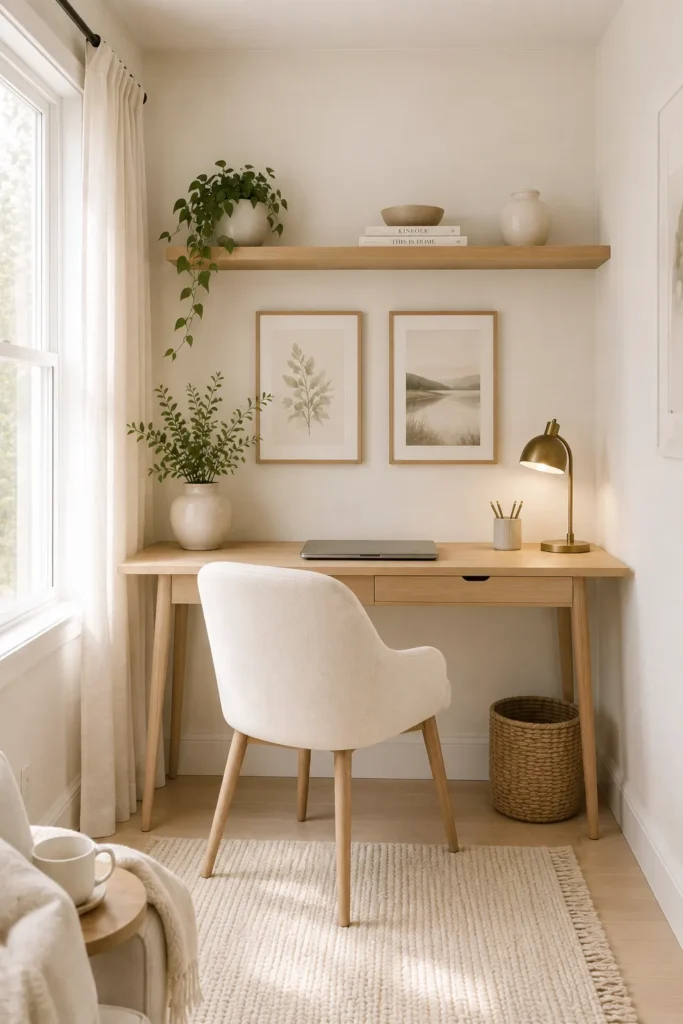
- Keeps the workspace light, simple, and visually uncluttered.
- Pale wood and white finishes help reflect natural light.
- Minimal furniture makes the nook easier to move around.
- Small decor adds personality without overwhelming the area.
- Soft textiles bring warmth to the clean design.
A Scandinavian-inspired nook can make a small workspace feel both practical and peaceful. Start with a simple pale-oak desk, a comfortable light-colored chair, and one floating shelf for essentials. Keep the walls warm white and add a few natural textures through a woven rug, ceramic accessories, or linen details. I’ve noticed that this style works particularly well in compact rooms because its simple shapes and restrained palette create visual breathing room. The goal is not to remove personality but to choose fewer pieces that each contribute something useful or beautiful.
Natural light plays an important role in this type of workspace. Position the desk near a window when possible, then use sheer curtains to soften direct sunlight. Keep decorative items grouped rather than scattered across the surface, and hide cables with simple clips or channels. A small green plant can introduce a fresh contrast against the pale palette without making the nook feel busy. The finished setup feels bright, organized, and comfortable enough for everyday work. It also blends easily with bedrooms, living rooms, or other spaces that already use light Scandinavian-inspired furnishings.
Conclusion
Creating a beautiful workspace is possible even when you have very little room to work with. These home office setup ideas for small spaces show how thoughtful furniture choices, vertical storage, smart layouts, and calming colors can completely change an awkward corner. Start with one idea that fits your space and build from there rather than trying to change everything at once. I’ve seen how small adjustments can make a workspace feel more comfortable and functional. Save this article on Pinterest for later, try your favorite setup, and share it with someone who needs a little workspace inspiration.