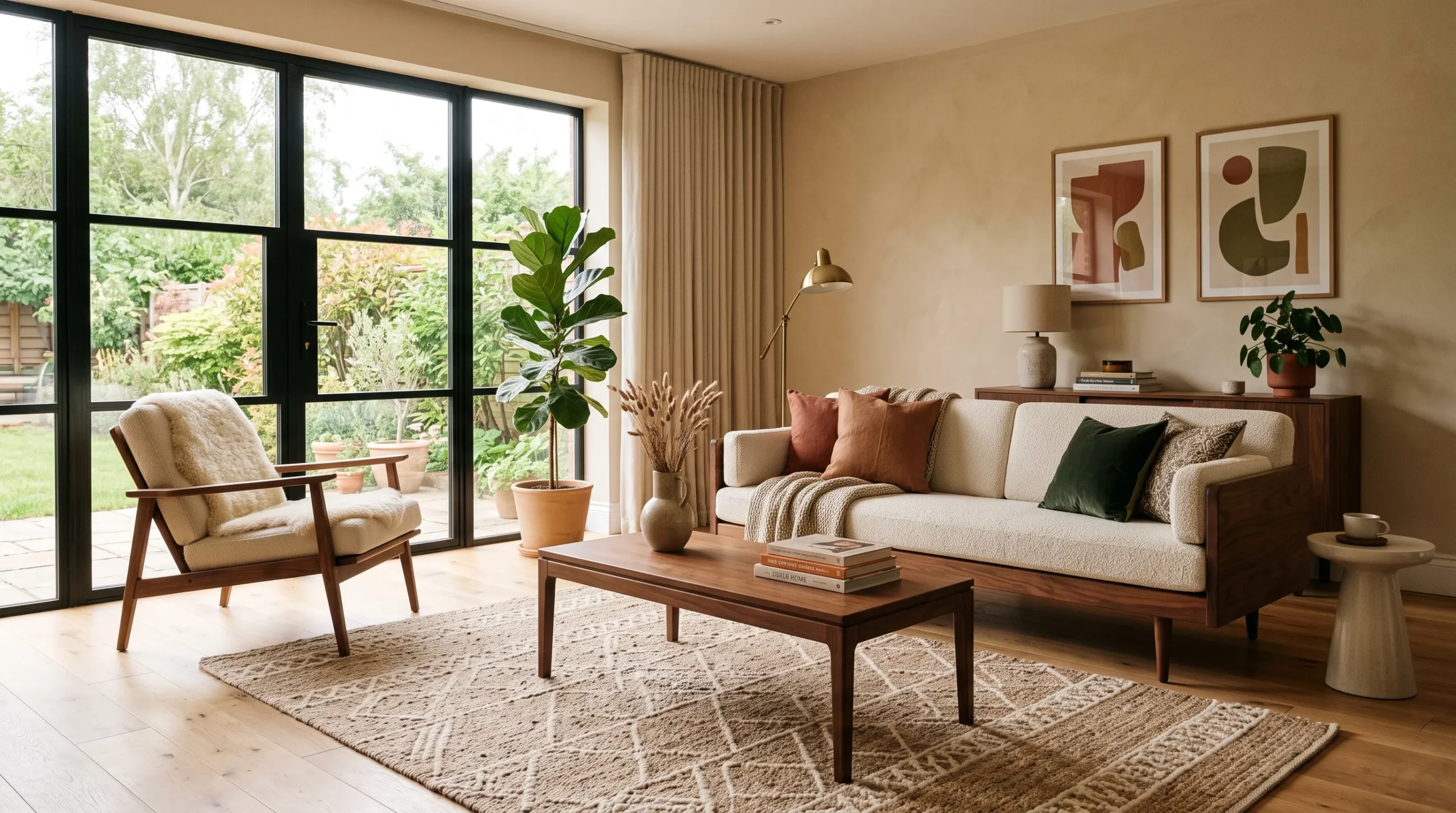
21 Mid Century Modern Living Room Ideas to Copy Today
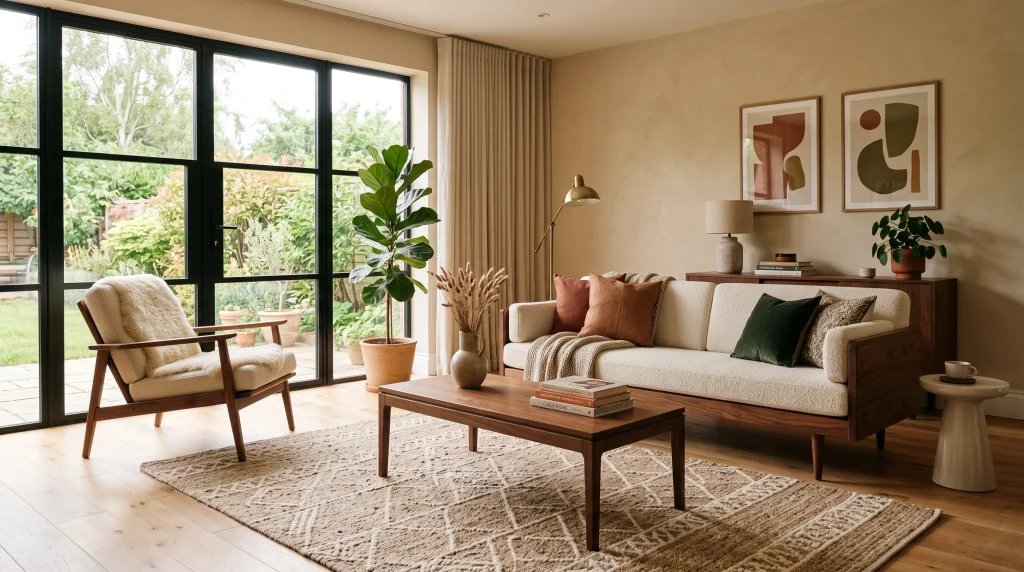
Want a living room that feels stylish without looking overly decorated? These mid century modern living room ideas make that balance easier to achieve.
Think warm walnut wood, low-profile sofas, curved furniture, earthy colors, and lighting that makes the whole space feel inviting. Mid-century modern design works beautifully because it combines clean lines with natural materials and comfortable details. Whether you are refreshing a small apartment or completely redesigning your living room, these ideas can help you create a space that feels timeless and personal. You’ll find simple ways to introduce the style through furniture, lighting, artwork, textures, and decorative accents. Even a few carefully chosen changes can make an ordinary room feel much more intentional.
1. Warm Walnut Furniture
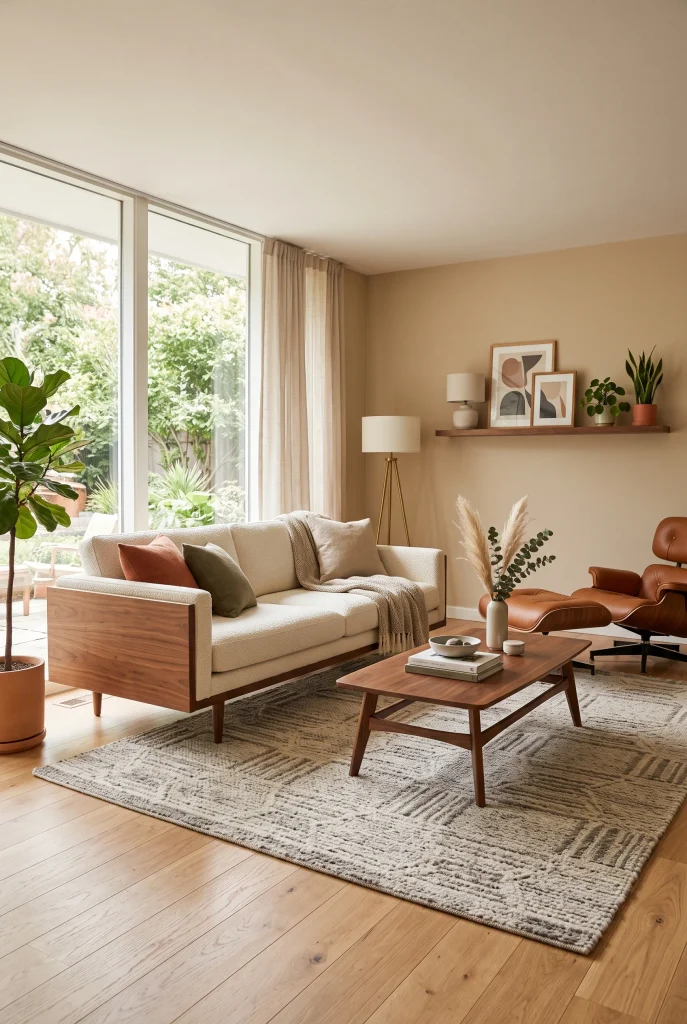
- Warm walnut adds richness and authentic mid-century character.
- Clean furniture lines keep the room looking spacious and uncluttered.
- Cream upholstery balances the darker wood for a welcoming atmosphere.
- A matching coffee table creates a cohesive furniture arrangement.
A beautiful living room can feel instantly more inviting when warm walnut furniture becomes the star. Its rich wood tones bring natural depth, while the simple silhouettes keep the space looking clean and timeless. A walnut-framed sofa, low coffee table, or sleek media console can introduce that classic mid-century character without making the room feel old-fashioned. Pairing darker wood with light upholstery creates a comfortable contrast that works especially well in everyday homes. Add a soft rug and a few carefully chosen accessories to complete the look without overwhelming the room.
The secret to making walnut furniture feel modern is balance. Choose one or two substantial wooden pieces, then surround them with softer textures and lighter colors. A cream sofa, neutral curtains, and a simple rug can prevent the wood from appearing too heavy. Keep the furniture arrangement open enough for easy movement, especially in smaller living rooms. Low-profile pieces also emphasize the horizontal lines associated with mid-century design. If your budget is limited, start with a walnut coffee table or sideboard. Even one thoughtfully chosen piece can give the entire room a more polished, coordinated appearance.
2. Iconic Lounge Chair
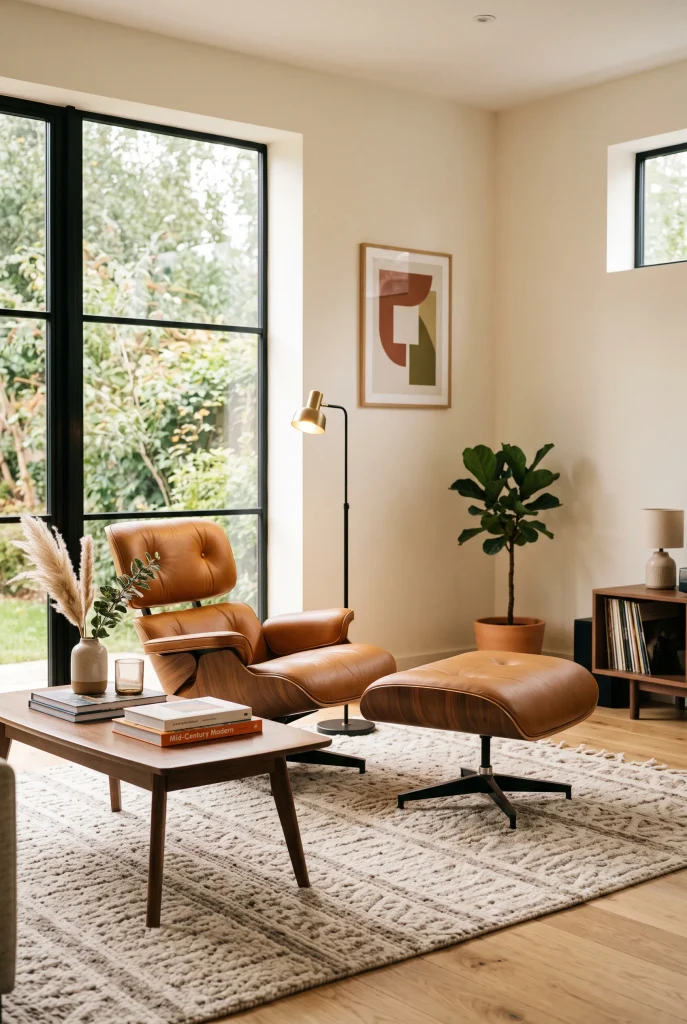
- A sculptural lounge chair creates an instantly recognizable focal point.
- Caramel leather adds warmth and a refined vintage touch.
- Positioning the chair near a window creates a relaxing reading corner.
- A matching ottoman improves comfort without cluttering the layout.
One statement chair can completely change the personality of a living room. A classic mid-century lounge chair introduces sculptural shape, comfortable seating, and a touch of timeless sophistication. Look for designs with curved wooden arms, tapered legs, or smooth leather upholstery. These details create visual interest while staying true to the style. Place the chair beside a sofa or near a sunny window to establish a cozy secondary seating area. This approach works particularly well when you want your living room to feel thoughtfully designed rather than filled with matching furniture.
For a balanced arrangement, choose a chair that complements your existing sofa instead of competing with it. A caramel leather chair pairs beautifully with cream, olive, or warm gray upholstery. Add a small side table for books, coffee, or a decorative lamp. If the room is compact, select a visually lightweight design with exposed legs. Keeping the surrounding area relatively simple helps a statement chair stand out more effectively. The result is a functional corner that feels stylish, inviting, and easy to use every day.
3. Low Profile Sofa
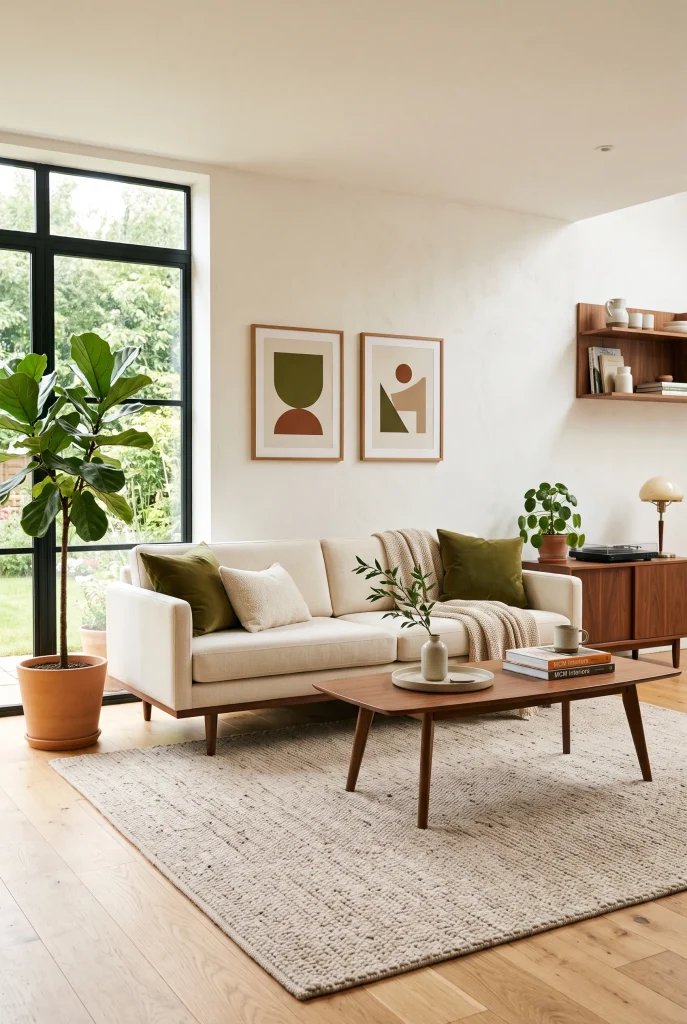
- Low seating emphasizes the signature horizontal lines of mid-century design.
- Slim legs make the room feel more open and spacious.
- Neutral upholstery provides a flexible foundation for colorful accents.
- A simple silhouette keeps the living room visually calm.
A low-profile sofa gives a living room an effortless mid-century modern appearance. Its streamlined shape and raised legs create a sense of openness, making the floor area feel less crowded. This is especially useful in smaller homes where bulky seating can dominate the room. Choose cream, beige, warm gray, or muted olive upholstery for a relaxed foundation. Pair it with a low coffee table and a simple area rug to reinforce the style. The overall effect is comfortable, airy, and visually balanced, without sacrificing the practical seating needed for everyday living.
When selecting a low sofa, pay attention to both comfort and proportion. A very low seat may look beautiful but feel inconvenient for some households, so test the height whenever possible. Keep the sofa slightly away from the wall if the room allows, creating a more intentional arrangement. Add a few textured cushions and a compact throw for softness. A clean-lined sofa becomes much more inviting when paired with warm lighting and natural materials. These small additions help the room feel lived-in while preserving its elegant mid-century character.
4. Tapered Wood Legs
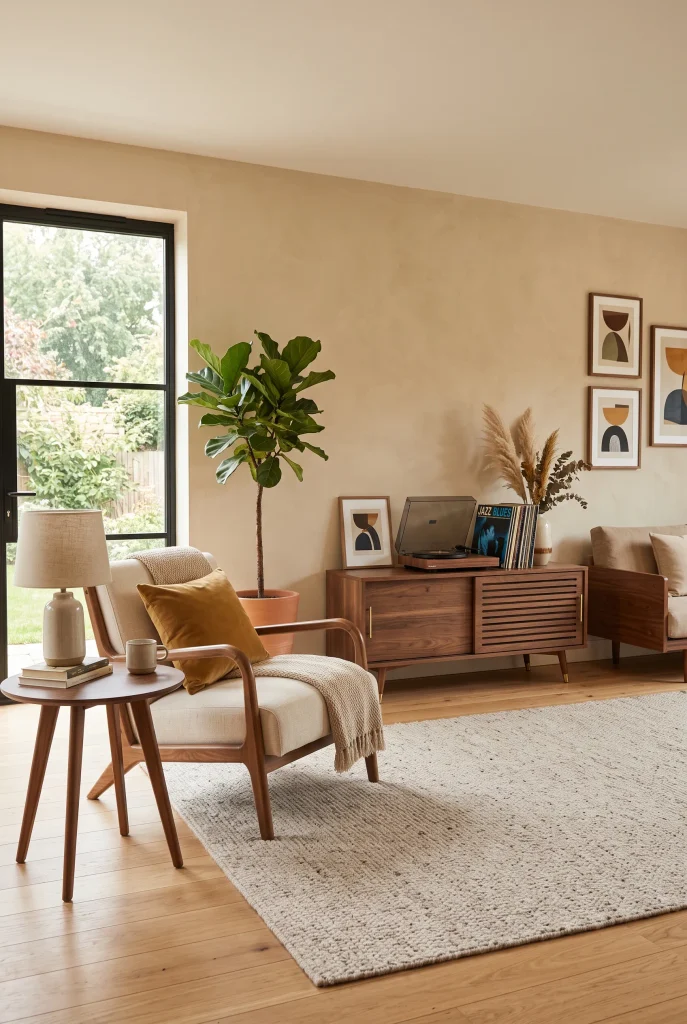
- Tapered legs add authentic mid-century character to everyday furniture.
- Slim wooden supports create a lighter, more spacious appearance.
- Walnut and oak tones bring warmth and natural texture.
- Raised furniture makes cleaning beneath pieces easier.
Tapered wood legs are a small detail that can make a living room feel distinctly mid-century modern. Their angled, slender shape adds visual movement while keeping furniture looking light and elegant. You’ll often see them on sofas, armchairs, coffee tables, and media consoles. This design choice works beautifully in homes where you want warmth without bulky furniture. Pair a cream sofa with walnut legs or choose a wooden console with matching supports. The result is a cohesive space that feels thoughtfully styled, even when the rest of the decor remains simple.
When incorporating tapered legs, consistency matters more than matching every piece perfectly. Choose two or three wood-toned elements that complement one another, then balance them with soft upholstery and neutral walls. Avoid filling the room with too many competing leg styles, as this can make the arrangement feel visually busy. Raised furniture also helps smaller living rooms feel more open because more flooring remains visible. Add a low rug and a streamlined coffee table to emphasize the clean, airy proportions that define this timeless design style.
5. Geometric Area Rug
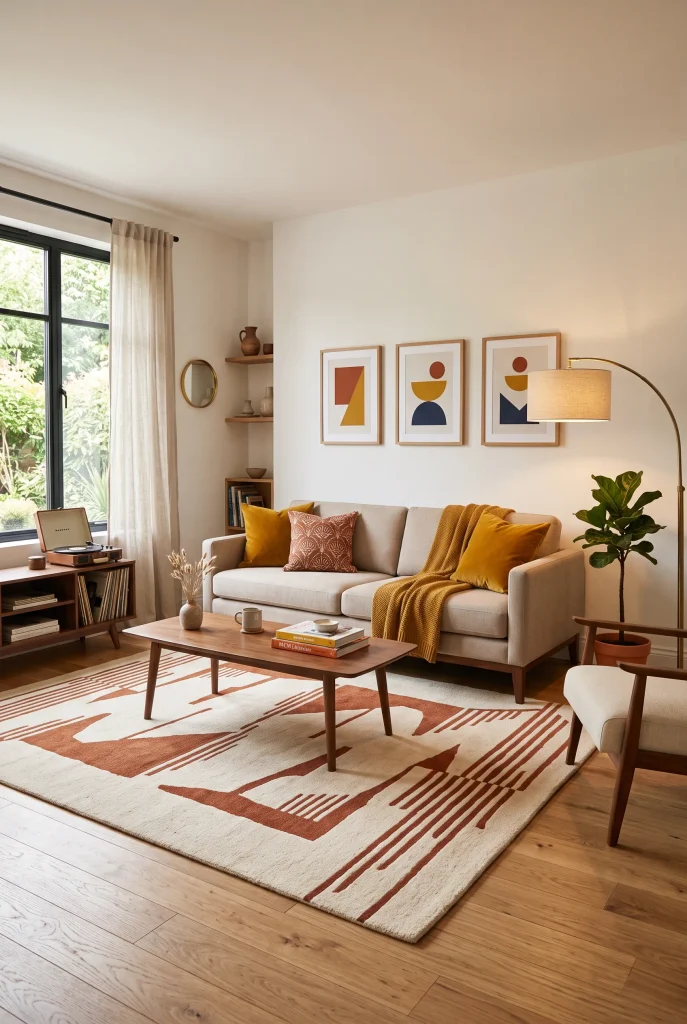
- Geometric patterns introduce subtle retro character.
- A large rug visually connects the seating arrangement.
- Rust, mustard, and cream create a warm mid-century palette.
- Soft textures balance the sharper lines of geometric designs.
A geometric area rug can bring an entire living room together while adding the playful visual character associated with mid-century modern interiors. Look for simple shapes, curved patterns, or understated lines in colors such as cream, rust, mustard, olive, and brown. These tones complement wooden furniture and neutral upholstery beautifully. A well-sized rug also defines the seating area, making the room feel more organized and inviting. Instead of choosing a tiny rug that floats beneath the coffee table, select one large enough to connect the sofa, chairs, and central table.
The key is choosing a pattern that adds interest without overpowering your furniture. If your sofa and artwork already feature bold colors, consider a rug with a quieter geometric design. For a neutral room, a rust or mustard pattern can provide a welcome focal point. Place the rug beneath at least the front legs of your seating whenever possible. This simple arrangement creates visual unity and helps the furniture feel connected. A thoughtfully chosen rug can make a room appear more finished without requiring expensive changes to the rest of the decor.
View: 21 Living Room Lighting Ideas You’ll Want to Copy Now
6. Sculptural Pendant Light
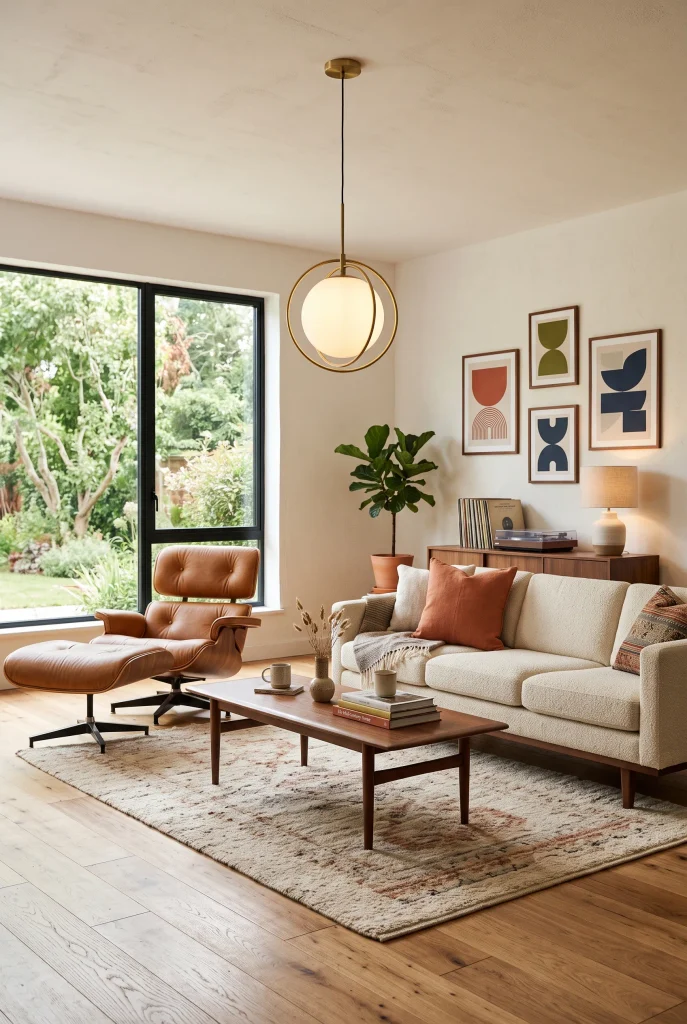
- A sculptural pendant becomes a stylish focal point.
- Rounded forms soften the room’s straight furniture lines.
- Warm illumination creates a cozy evening atmosphere.
- A well-positioned light adds personality without taking floor space.
The right ceiling light can transform a living room from ordinary to beautifully considered. A sculptural pendant with rounded globes, opal glass, or a simple starburst form introduces the distinctive shapes often associated with mid-century modern design. Hang it above the central seating area or coffee table to create a natural focal point. Choose warm white bulbs for a comfortable glow, especially if your room also includes wooden furniture and neutral fabrics. This combination creates a welcoming atmosphere during the evening while maintaining a clean, sophisticated appearance during the day.
Scale and placement are essential when choosing a statement pendant. A fixture that is too small may disappear in a large room, while an oversized design can overwhelm a compact space. Measure the seating area and consider the ceiling height before installing it. If you already have strong geometric patterns elsewhere, select a simpler light with smooth curves. Layer the pendant with a floor lamp or table lamp for flexible illumination. Thoughtful lighting choices can make even modest living rooms feel warmer, more polished, and more inviting.
7. Warm Leather Accents
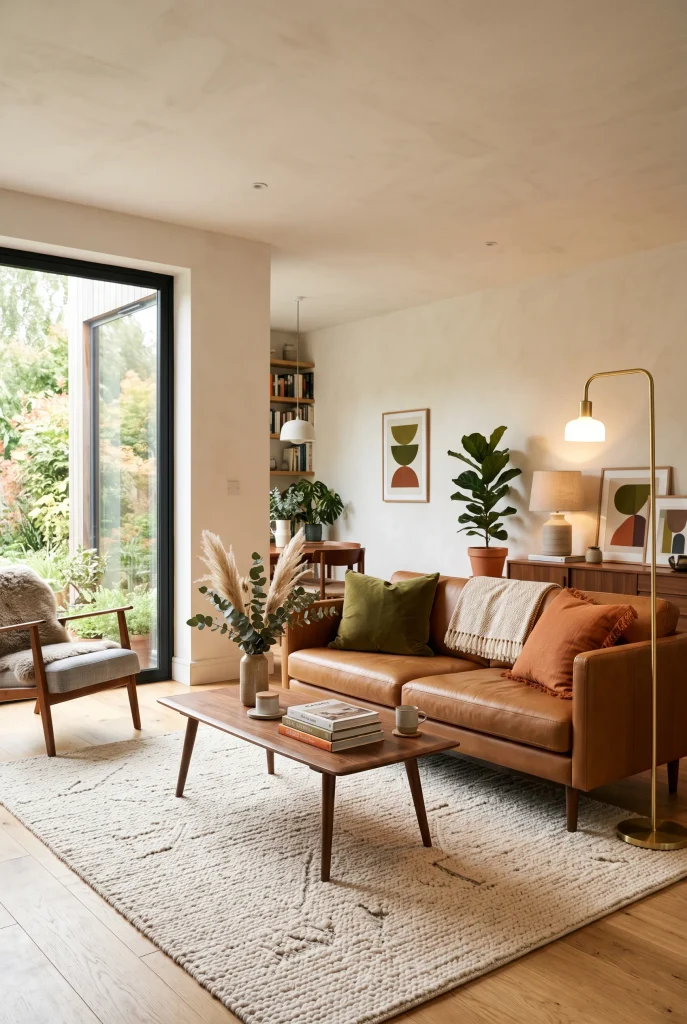
- Caramel leather adds warmth without making the room feel heavy.
- Leather pairs naturally with walnut and other warm wood tones.
- A few leather pieces create character without overwhelming the space.
- Textured cushions and rugs soften the smooth upholstery.
Few materials capture mid-century character quite like warm leather. A caramel or cognac leather sofa instantly gives the living room richness while keeping the overall design clean and sophisticated. The smooth upholstery contrasts beautifully with woven rugs, soft cushions, and natural wood furniture. If a full leather sofa feels too bold, introduce the material through an accent chair, ottoman, or small bench instead. This makes it easier to experiment with the look while keeping the room comfortable and balanced. The result feels timeless rather than overly themed or vintage.
Leather works especially well when surrounded by natural, understated materials. Pair caramel upholstery with walnut furniture, cream walls, and muted green or rust accessories for a cohesive palette. Avoid using too many glossy surfaces because they can make the space feel colder. Instead, layer tactile elements such as linen curtains, wool rugs, and woven baskets. Leather becomes much more inviting when its sleek surface is balanced with soft textures. Even one carefully chosen leather accent can give a neutral living room more depth, warmth, and personality.
8. Starburst Wall Clock
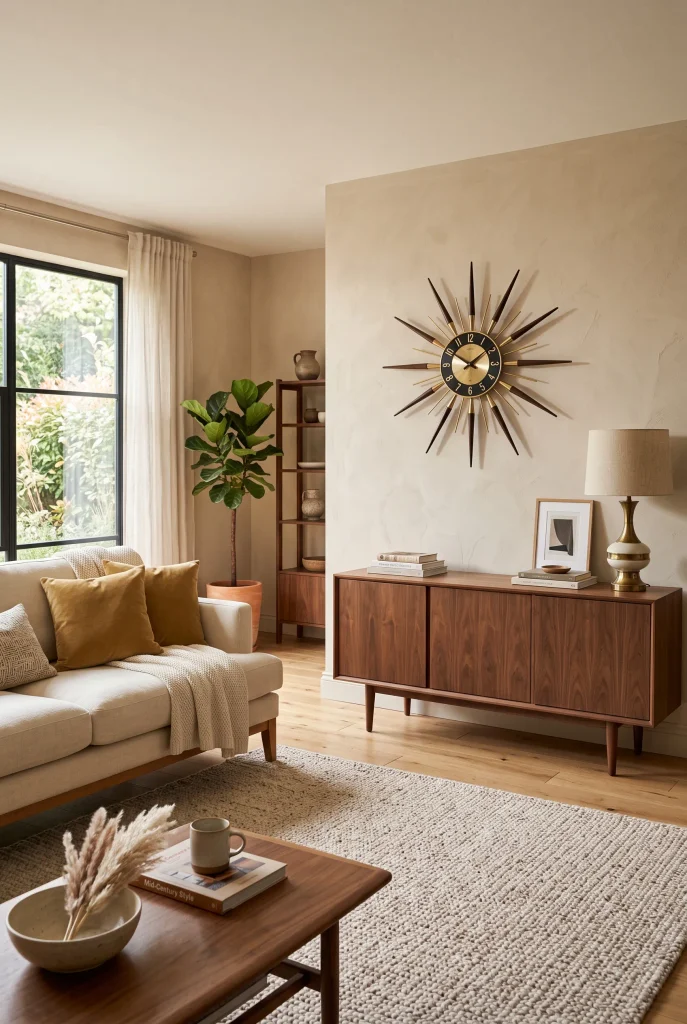
- A starburst clock adds recognizable mid-century personality.
- Metallic or wooden rays create an eye-catching wall detail.
- Hanging it above a sideboard creates a balanced focal point.
- The clock adds style while remaining genuinely functional.
A starburst wall clock can turn an otherwise empty wall into a distinctive mid-century focal point. Its radiating lines add movement and personality without requiring a large collection of artwork. Hang one above a walnut sideboard, console, or sofa where its sculptural shape can be appreciated easily. Choose brass, black, natural wood, or mixed finishes depending on your existing palette. Because the design is naturally decorative, you can keep the surrounding wall simple. This makes it particularly useful when you want your living room to feel styled without adding unnecessary clutter.
Placement can make a big difference in how polished the clock looks. Center it with the furniture beneath it and leave enough breathing room around the rays so the shape remains clearly visible. If your room already contains several bold patterns, select a simpler clock with clean lines. For a neutral space, a brass or dark-toned version can provide contrast. Pair it with one or two complementary accessories on the sideboard rather than filling the entire surface. This restrained approach keeps the room visually interesting while preserving the simplicity of the style.
9. Muted Accent Colors
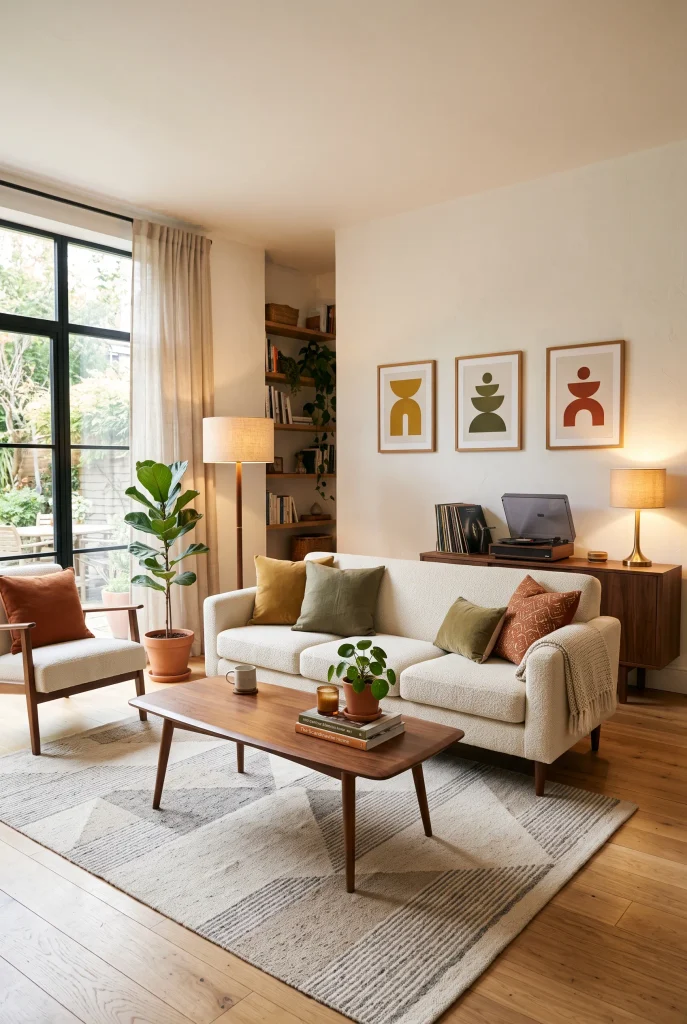
- Muted colors add personality without overwhelming neutral furniture.
- Mustard, olive, rust, and terracotta work beautifully with warm wood.
- Cushions provide an easy way to experiment with color.
- Repeating one accent shade creates visual connection.
A neutral living room can become much more interesting with a few carefully chosen muted colors. Mustard yellow, olive green, burnt orange, rust, and terracotta all work naturally with the warm woods commonly found in mid-century interiors. Rather than introducing several bright shades, choose two or three subdued tones and repeat them through cushions, artwork, ceramics, or a small accent chair. This creates personality while keeping the room sophisticated. These earthy colors also add warmth to cream or beige furniture, making the entire space feel more inviting and visually layered.
The easiest way to test an accent palette is through accessories you can change later. Start with two cushions, a small piece of artwork, or a ceramic vase before committing to larger furniture. Keep the dominant background neutral so your selected colors have room to stand out. Repeating the same muted shade in different areas makes a room feel much more intentional. For example, mustard cushions can echo a small artwork detail while rust appears in a rug pattern. The result feels coordinated without looking overly matched.
10. Floating Media Console
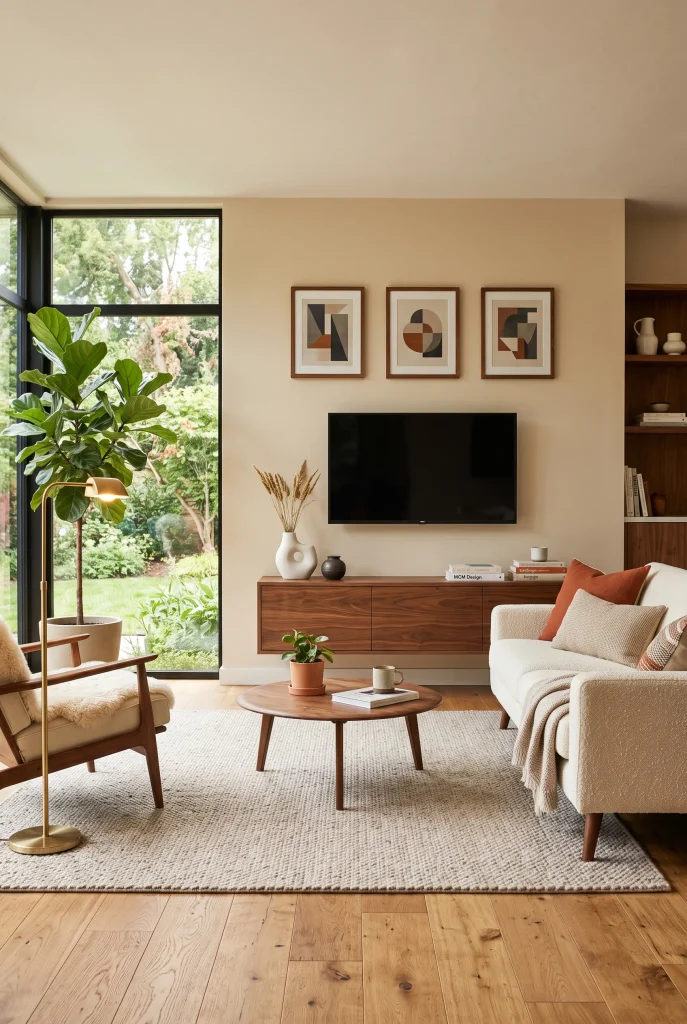
- A floating console keeps the floor visually open and uncluttered.
- Warm walnut adds natural texture beneath the television.
- Minimal storage helps hide cables and everyday electronics.
- Open flooring makes smaller rooms feel more spacious.
A floating media console can give a living room a cleaner, more streamlined appearance while providing useful storage. Mounting the console slightly above the floor creates an airy effect that works especially well with mid-century furniture. Choose a walnut or warm wood finish to bring natural character beneath a wall-mounted television. Keep the surface relatively simple with a few ceramics, books, or one sculptural object. This combination allows the console to function as practical storage while still becoming part of the room’s overall visual design.
Before installing a floating console, consider the wall structure and the weight of the unit carefully. Proper mounting is essential, particularly when storing electronics or heavier objects. Keep cables organized so they do not distract from the clean lines. If you have a smaller room, choose a longer, low-profile console rather than a tall cabinet because the horizontal shape can make the wall feel wider. Combining hidden storage with open floor space is one of the easiest ways to make a living room feel calmer and more intentionally designed.
11. Rounded Coffee Table
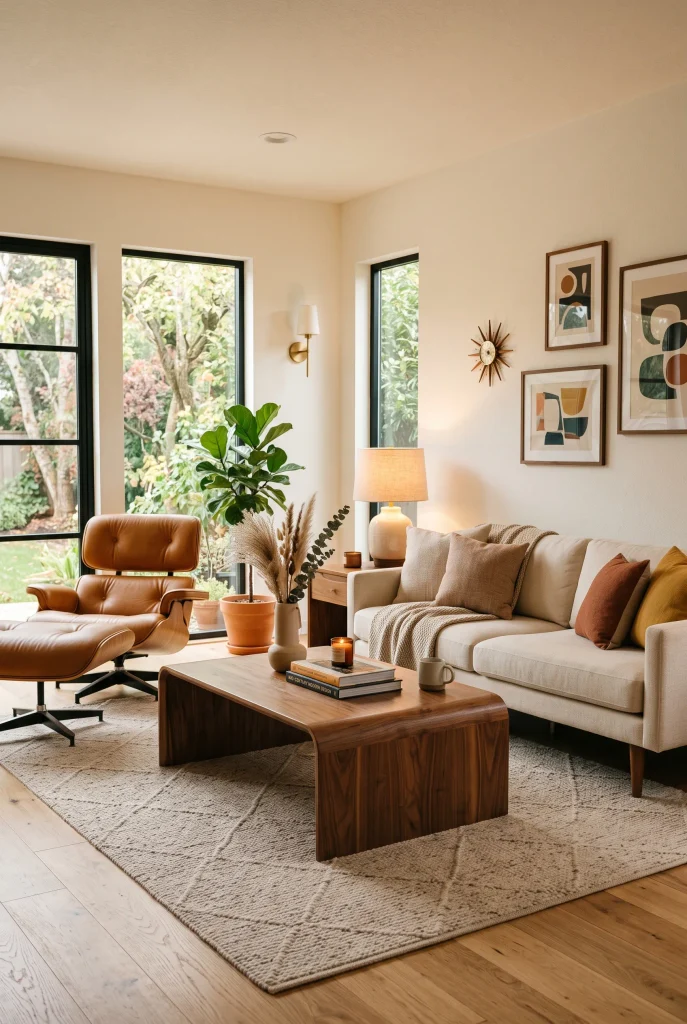
- Rounded edges soften the straight lines of larger furniture.
- A circular or oval table improves movement around the seating area.
- Walnut adds warmth and visual weight without feeling bulky.
- Curved shapes create a more relaxed, welcoming atmosphere.
A rounded coffee table can soften a living room filled with straight lines and angular furniture. Circular and oval designs introduce gentle curves while maintaining the simple proportions that make mid-century interiors feel so balanced. A walnut table works particularly well with cream sofas, leather chairs, and neutral rugs. Beyond appearance, rounded edges can make movement around the seating area easier, especially in busy households. There are no sharp corners interrupting the walking path, making this shape a practical choice as well as a stylish one.
Choose the table size according to your seating arrangement rather than simply selecting the largest option available. Ideally, there should be enough space around it for comfortable movement while keeping it close enough for everyone to reach. A lower table pairs naturally with a low-profile sofa and emphasizes the room’s horizontal proportions. Add a small tray, coffee table book, or ceramic bowl to keep the surface useful without creating clutter. A restrained arrangement lets the table’s curved silhouette remain visible and gives the room a polished, effortless appearance.
12. Natural Wood Paneling
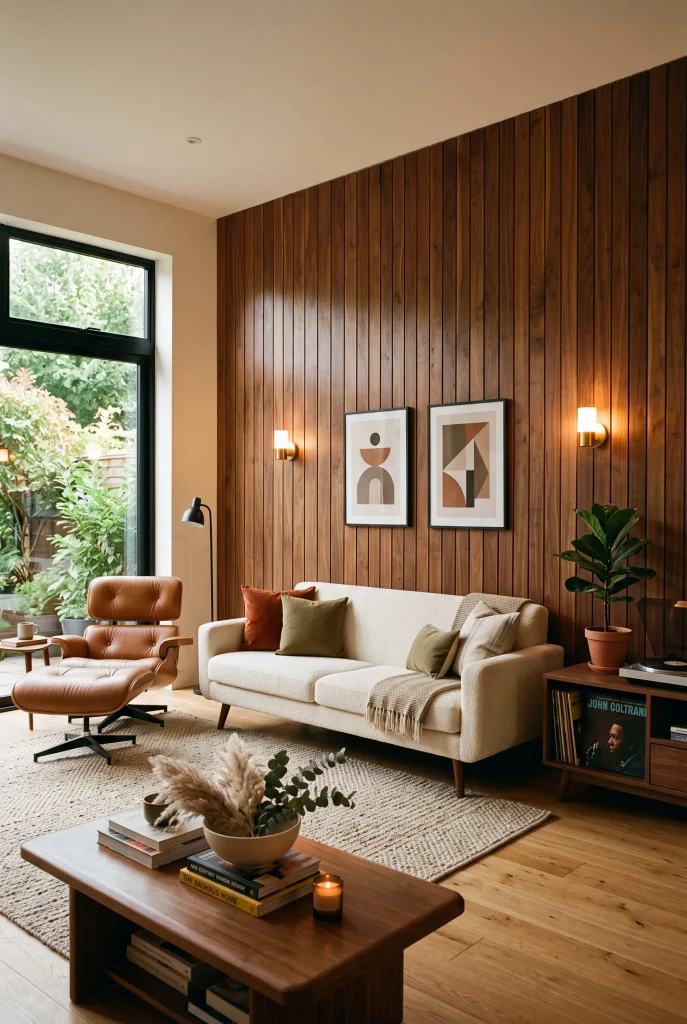
- Wood paneling adds instant warmth and architectural character.
- A feature wall creates depth without requiring excessive decoration.
- Vertical or horizontal panels can change the room’s visual proportions.
- Warm wood works beautifully with cream, beige, and leather furnishings.
Natural wood paneling brings warmth, texture, and architectural interest to a living room without relying on lots of decorative accessories. A walnut-toned feature wall behind the sofa or television can become the room’s main visual anchor. Keep the surrounding furniture relatively simple so the wood grain remains noticeable. Horizontal paneling can emphasize width, while vertical boards can draw the eye upward. This makes panel direction useful when you want to subtly influence how the room feels. The natural material also creates a welcoming backdrop for neutral upholstery and earthy accent colors.
You do not necessarily need to panel every wall to achieve the look. A single feature wall can provide enough impact while keeping the room from feeling visually heavy. If authentic wood paneling is outside your budget, consider wood-look panels or carefully selected slatted treatments designed for interior use. Always account for the existing flooring and furniture tones before choosing a finish. Warm wood looks most sophisticated when repeated sparingly throughout the room. A matching side table or console can connect the feature wall to the rest of the space.
13. Minimalist Artwork
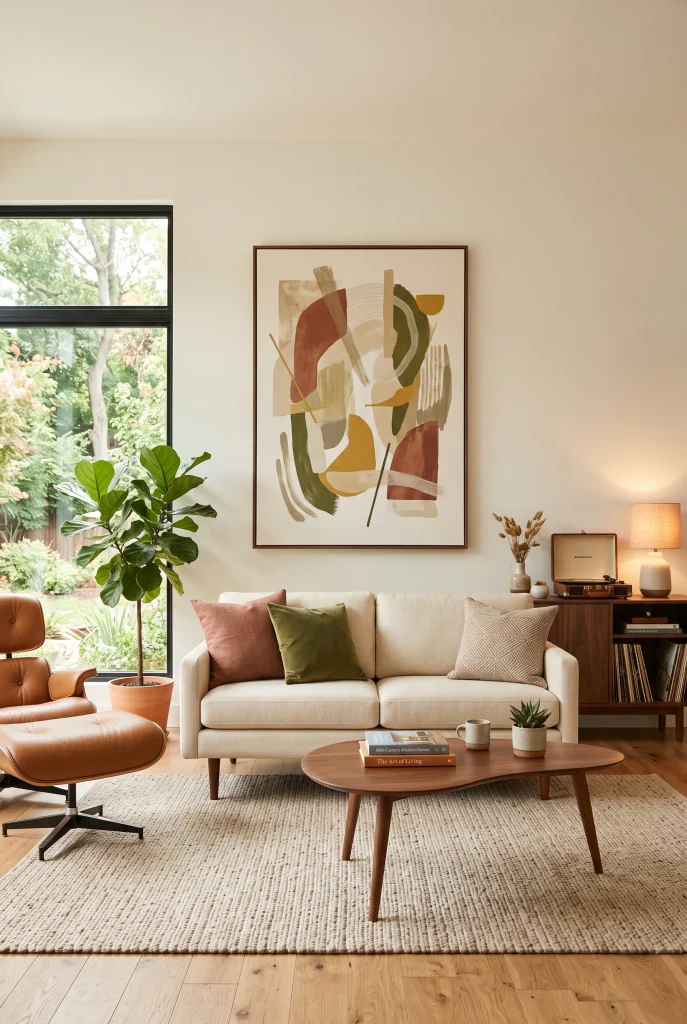
- Minimal artwork keeps the walls visually clean and sophisticated.
- Abstract shapes can echo the room’s geometric furniture.
- Muted artwork colors connect easily with earthy accessories.
- One oversized piece often creates more impact than many small frames.
A large minimalist artwork can give a mid-century living room a finished, curated appearance without making the walls feel crowded. Look for abstract compositions featuring simple shapes, organic lines, or muted earthy colors that complement your furniture. Cream, rust, olive, brown, and black can all work beautifully with warm wood. Position the artwork above the sofa or on the main feature wall, leaving enough surrounding space for it to breathe. This creates a strong focal point while preserving the uncluttered quality that makes this design style so appealing.
When choosing artwork, consider the colors already present in your room rather than selecting a piece in isolation. A painting with a small rust detail can connect to your cushions, while black lines can subtly echo a floor lamp or furniture legs. If your sofa is large, choose artwork with enough width to feel proportionate. For smaller spaces, one medium-sized piece may be sufficient. Simple artwork becomes more effective when the surrounding decor is restrained. Let the artwork provide personality instead of competing with multiple decorative pieces.
14. Brass Floor Lamp
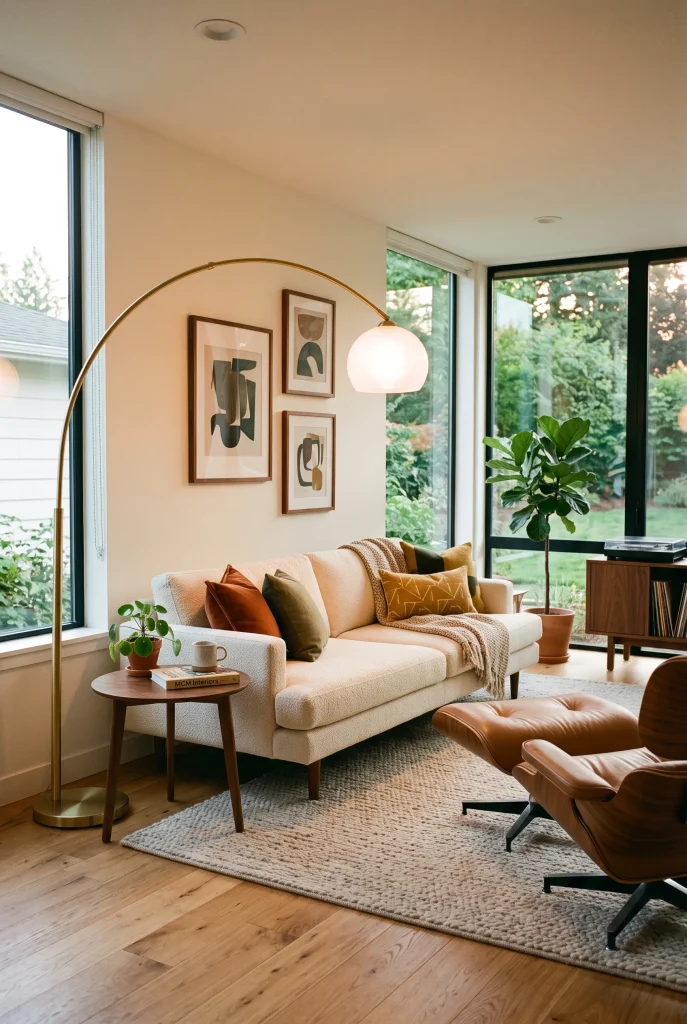
- Brass introduces a subtle touch of warmth and elegance.
- A tall floor lamp fills unused vertical space beautifully.
- Adjustable lighting makes reading and relaxing more comfortable.
- Slim silhouettes preserve the room’s open, uncluttered feeling.
A brass floor lamp can add both practical lighting and a refined decorative detail to your living room. Look for slim designs with curved arms, dome shades, or simple geometric silhouettes that complement mid-century furniture. Place the lamp beside a sofa or lounge chair to create a comfortable reading area without taking up much floor space. The warm metallic finish works especially well with walnut, caramel leather, cream upholstery, and earthy colors. When switched on at night, the lamp can create a softer atmosphere than relying entirely on overhead lighting.
Think about how you actually use the room before deciding where the lamp should stand. A reading chair benefits from a focused light source, while a taller arc lamp can illuminate the seating area more broadly. Choose a bulb with a comfortable warm color temperature for relaxing evenings. Keep the base positioned where it will not interfere with walking paths. A simple lamp can also help balance a room visually by adding height beside a low sofa. The combination of warm metal, soft light, and natural materials creates a welcoming finish.
15. Open Shelving
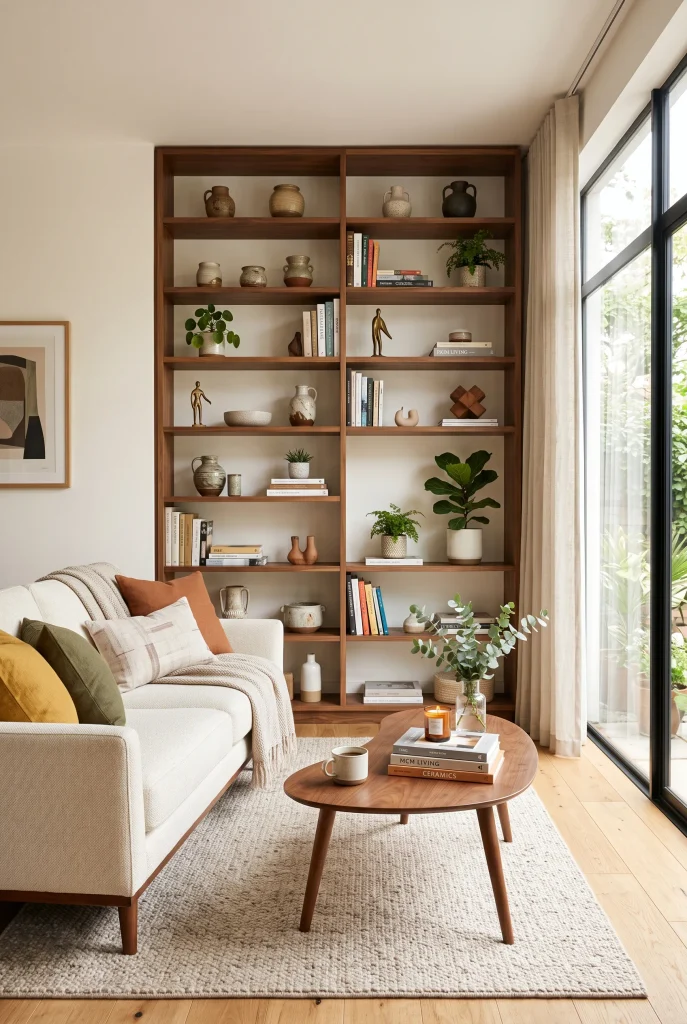
- Open shelves provide storage while keeping the room visually light.
- Walnut shelving adds warmth and mid-century character.
- Carefully spaced objects prevent the shelves from looking cluttered.
- Books, ceramics, and plants add personality without overwhelming the space.
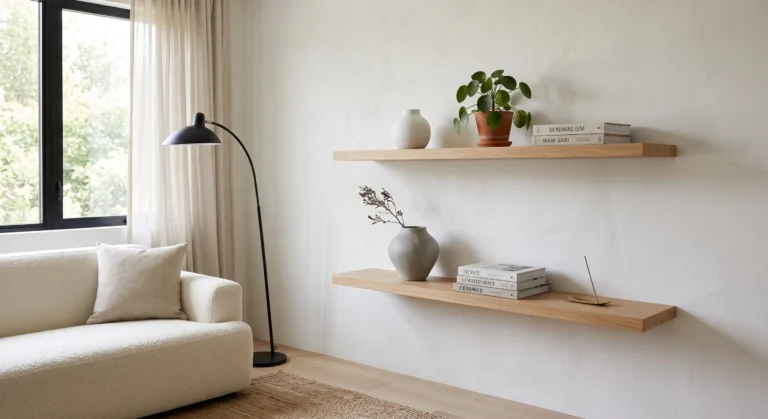
Open shelving can combine practical storage with the curated appearance of a mid-century living room. A walnut shelf unit provides a warm backdrop for books, ceramics, framed artwork, and a few small plants. Instead of filling every shelf, leave intentional empty space between objects so the arrangement feels relaxed. You can also vary the height and shape of decorative pieces to create visual rhythm. This approach gives you somewhere to display meaningful items while keeping the overall room simple and organized.
The biggest mistake with open shelving is treating every shelf like a storage bin. Start with larger pieces, then add smaller objects around them, leaving some areas completely empty. Group similar materials together so the arrangement feels cohesive rather than random. If the room already has plenty of wood, introduce ceramic or glass pieces for contrast. Rotating seasonal accessories can keep open shelving interesting without requiring major decorating changes. The result is useful storage that feels intentional and contributes to the room’s personality instead of creating visual clutter.
16. Indoor Statement Plant
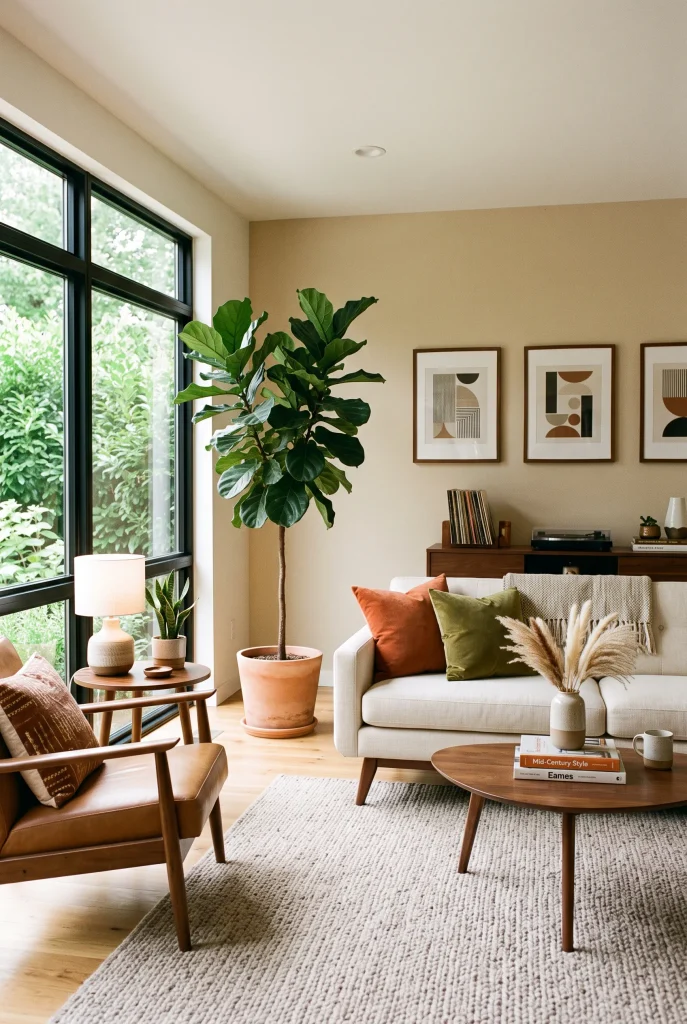
- A tall plant adds natural color and organic texture.
- Large leaves soften the room’s clean geometric furniture.
- A simple planter keeps the look authentic and uncluttered.
- Plants can fill an empty corner without adding bulky furniture.
A statement plant can bring a mid-century living room to life with very little effort. Tall varieties such as fiddle leaf figs, rubber plants, or bird of paradise can fill an empty corner while adding organic shapes against clean furniture lines. Choose a simple ceramic, terracotta, or textured planter that complements the room’s warm palette. Position the plant near a bright window where its light requirements can be met. The combination of natural greenery, wooden furniture, and neutral fabrics creates a relaxed atmosphere that feels fresh without losing the room’s refined character.
Before buying a large plant, check how much natural light the chosen variety actually needs. A beautiful plant will only remain an effective design feature if it can thrive in its location. Consider the mature size too, especially in smaller living rooms where oversized foliage can quickly dominate the space. Placing one substantial plant near a low sofa or wooden console often looks more intentional than scattering many tiny plants throughout the room. Keep the planter simple, and allow the leaves to provide the visual movement.
17. Glass Accent Table
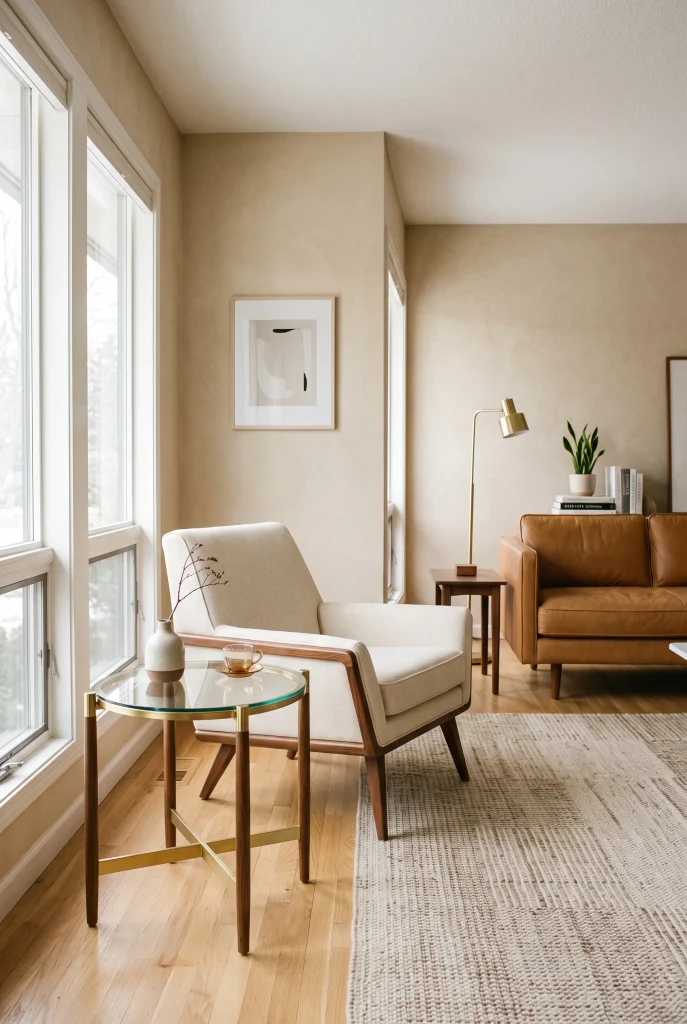
- Glass keeps small spaces feeling visually open.
- A slim frame maintains the lightweight mid-century aesthetic.
- Transparent surfaces contrast nicely with warm wood furniture.
- A compact table provides useful space for books or drinks.
A glass accent table is an easy way to add function without making a living room feel crowded. Its transparent surface allows the flooring and surrounding furniture to remain visible, which can be especially helpful in compact spaces. Choose a round or oval design with a slim wooden, brass, or black frame to complement your existing pieces. Place it beside a lounge chair or sofa where it can hold a drink, book, or small lamp. The result is practical while maintaining the light, uncluttered appearance that works so well with mid-century interiors.
Keep the tabletop simple so the transparent material remains part of the visual effect. One small lamp, ceramic vase, or stack of books is usually enough. If you already have several wooden surfaces, glass can provide a useful contrast without introducing another strong color. Rounded edges also work well beside angular sofas and rectangular consoles. For households with young children, consider safety when selecting glass furniture and choose an appropriate design for your space. With thoughtful placement, a small accent table can make the seating arrangement feel more complete.
18. Black Accent Details
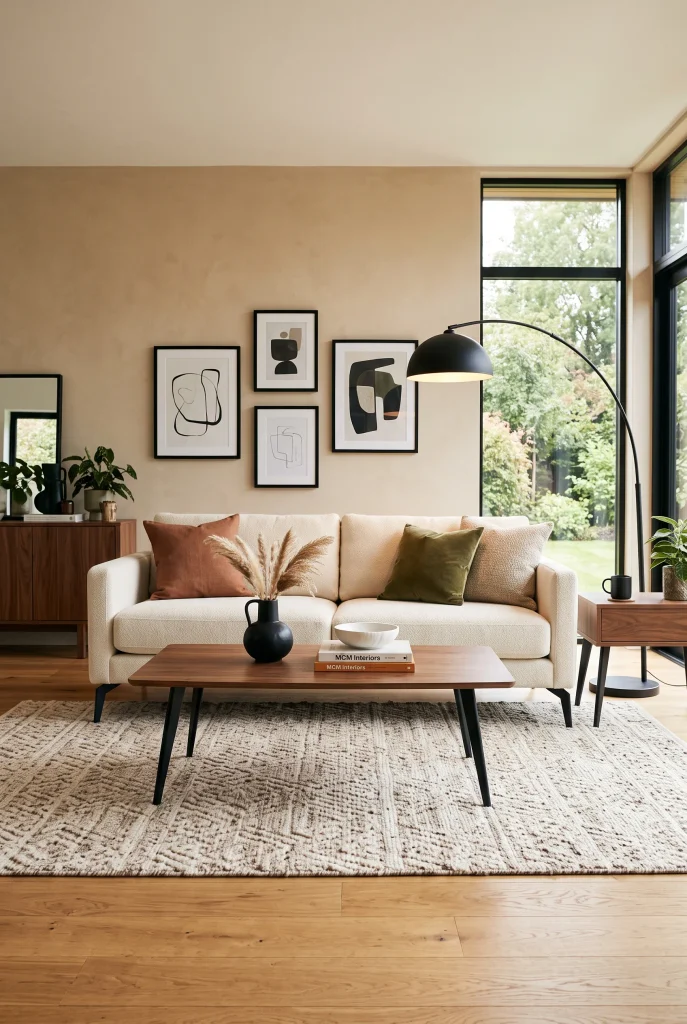
- Black accents create definition against lighter neutral interiors.
- Repeating small dark details makes the room feel cohesive.
- Black frames and lighting fixtures add crisp visual contrast.
- A restrained amount prevents the palette from feeling too harsh.
A few black accents can give a warm mid-century living room sharper definition. Instead of using black as the dominant color, introduce it through furniture legs, picture frames, lighting, ceramics, or small decorative objects. These darker details create contrast against cream upholstery, beige walls, and warm wood finishes. Repeating the shade in several areas helps the room feel connected without making the palette look heavy. This is particularly effective when the rest of the space relies on soft neutrals and natural materials.
The key is to distribute black thoughtfully rather than concentrating it in one corner. A black floor lamp can echo a picture frame, while dark furniture legs can subtly connect with a small ceramic object. This creates a visual thread that guides the eye around the room. If your space is small, keep black accents relatively slim and lightweight. Using dark details in small doses makes neutral interiors feel more structured and polished. The contrast adds personality while allowing the warmth of the wood and textiles to remain the main focus.
19. Textured Throw Pillows
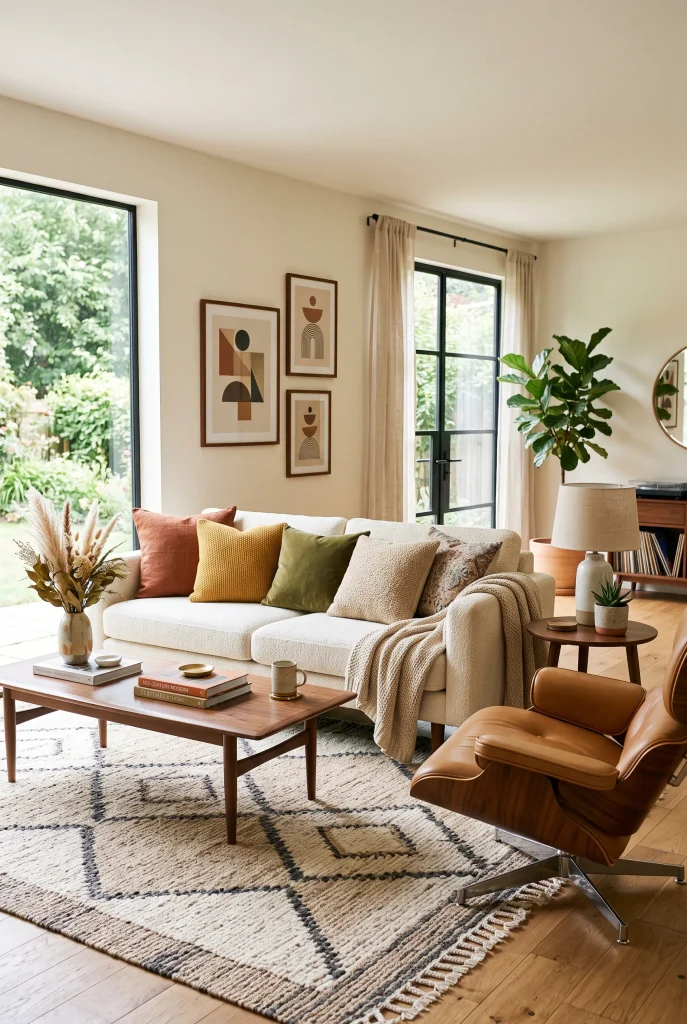
- Textured pillows make streamlined furniture feel softer and more inviting.
- Earthy colors complement walnut and caramel leather beautifully.
- Mixing fabrics adds depth without requiring major furniture changes.
- A few larger pillows can create a fuller, more comfortable sofa.
Textured throw pillows are one of the easiest ways to make a streamlined living room feel warmer and more comfortable. Linen, boucle, woven cotton, velvet, and nubby fabrics can add depth to a simple cream or beige sofa. Choose a restrained palette of rust, mustard, olive, caramel, and neutral tones to complement classic wood finishes. Rather than using identical pillows, combine different sizes and textures while keeping the colors connected. This creates a relaxed layered appearance that feels thoughtfully decorated without losing the clean lines of mid-century furniture.
Start with two larger pillows at the back and add smaller cushions toward the center for a natural arrangement. If your sofa already has patterned upholstery, choose mostly solid textured fabrics to avoid visual competition. For a plain sofa, one subtle geometric or abstract pattern can introduce extra interest. Remember that pillows are easy to replace, making them a practical way to experiment with color throughout the year. Simply changing pillow textures can make familiar furniture feel refreshed without requiring an expensive room makeover.
20. Organic Ceramic Decor
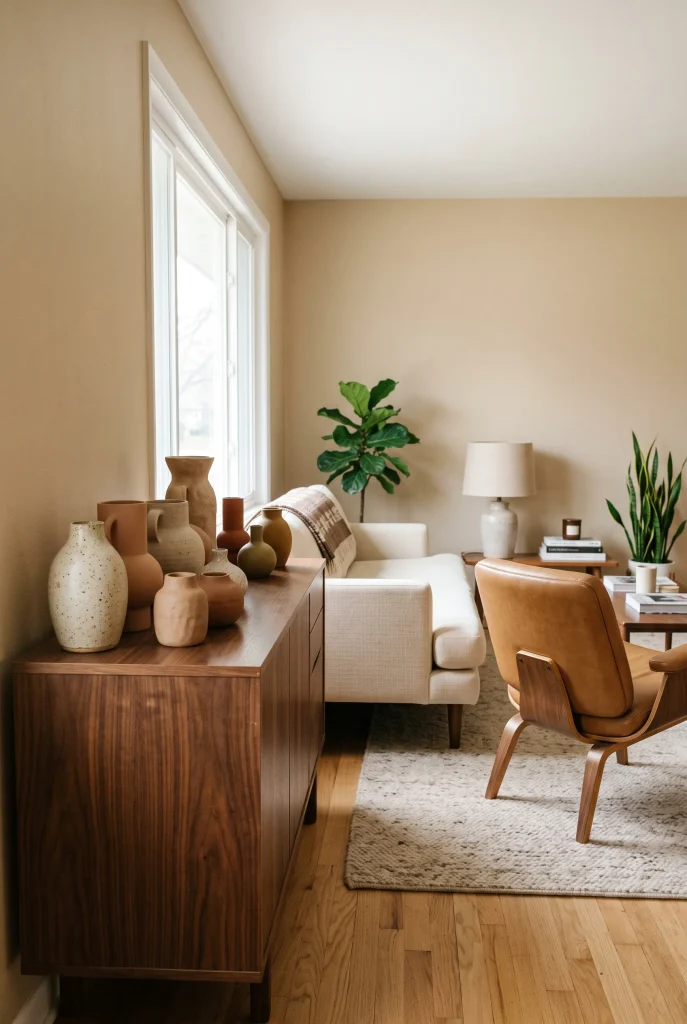
- Handmade ceramics add organic texture to clean-lined interiors.
- Neutral pottery keeps the decoration sophisticated and versatile.
- Sculptural shapes create interest without bright colors.
- Grouping pieces at different heights creates a balanced display.
Organic ceramic decor can add an artistic layer to a mid-century living room without making the space feel overly decorated. Look for handmade-looking vases, rounded bowls, sculptural vessels, and matte pottery in cream, sand, terracotta, brown, or muted gray. Their imperfect shapes contrast beautifully with the precise lines of wooden furniture. Arrange a few pieces on a sideboard, coffee table, or open shelf, leaving enough empty space around them. This keeps the display intentional and lets each object contribute texture without becoming visual clutter.
When styling ceramics, vary the height and shape of your pieces instead of creating a row of similar objects. A tall vase can anchor the arrangement, while a low bowl or rounded vessel creates balance beside it. Natural imperfections can actually make the display feel more personal and collected. Avoid placing too many decorative items together, especially if your room already has patterned rugs or artwork. Three carefully selected ceramic pieces can have more impact than a crowded collection. Keep the palette cohesive so the textures become the main attraction.
21. Layered Warm Lighting
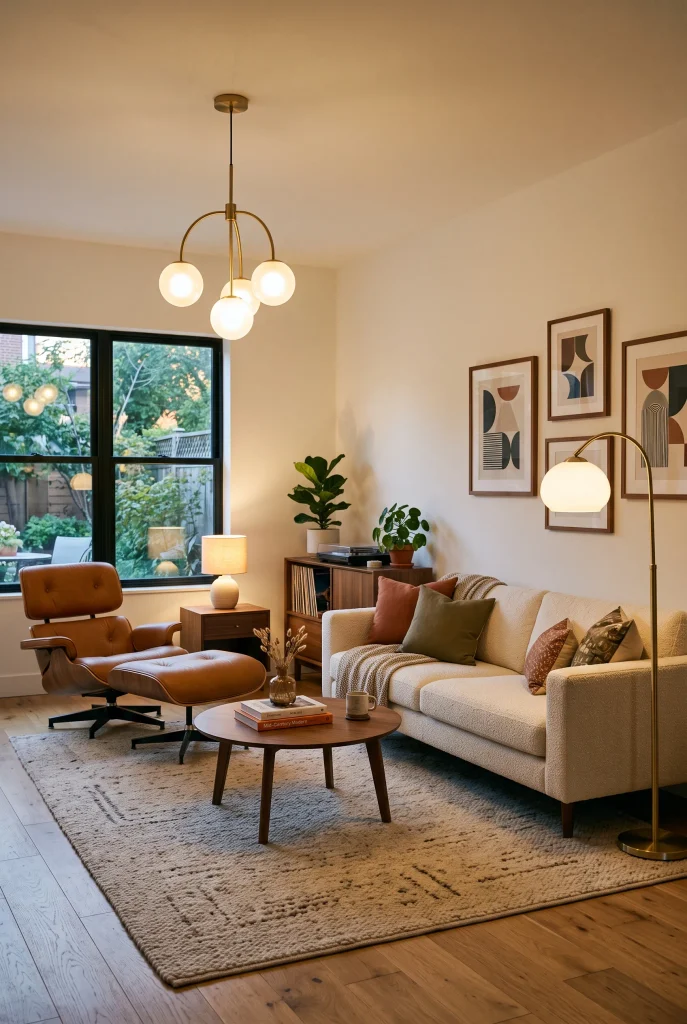
- Multiple light sources create a warmer and more flexible atmosphere.
- Floor and table lamps add practical illumination at different levels.
- Warm bulbs enhance wood, leather, and neutral textiles.
- Layered lighting makes the room feel inviting after sunset.
The right lighting can completely change how a living room feels once the sun goes down. Instead of depending on one ceiling fixture, combine a pendant, floor lamp, table lamp, and smaller ambient source where needed. Different heights create layers of illumination, helping the room feel warmer and more dimensional. Warm-toned bulbs work especially well with walnut, caramel leather, cream upholstery, and earthy accessories. This approach also lets you control the atmosphere depending on the activity, whether you are reading, entertaining guests, or relaxing at the end of the day.
Start by identifying the areas that need practical light, such as a reading chair or sofa, then add softer sources around the room. A floor lamp can illuminate one seating zone while a table lamp creates a gentle glow on a sideboard. Keep the fixtures visually connected through similar finishes or simple silhouettes. Layered lighting makes a noticeable difference in the evening because it reduces harsh shadows and creates a more comfortable atmosphere. The room feels finished, warm, and welcoming without needing additional decoration.
Conclusion
Creating a stylish living room does not require replacing everything at once. The right mid century modern living room ideas can help you introduce warmth, character, and function through simple changes such as walnut furniture, textured fabrics, sculptural lighting, earthy colors, and natural accents. Start with one idea that fits your current space, then build from there. Small updates can create a surprisingly noticeable transformation when the pieces work together. Save this article on Pinterest so you can revisit your favorite ideas when you’re ready to decorate. Share it with someone planning a living room refresh, and start creating a space you’ll enjoy every day.