17 Minimalist Luxury Living Room Ideas
Ever walk into a room and instantly feel calmer, just because of how it’s designed? That’s the quiet power of minimalist luxury living room ideas. This style isn’t about spending more, it’s about choosing less, better. In my experience, the most elevated living rooms aren’t packed with furniture or decor, they’re built around a few intentional pieces, soft neutral tones, and natural textures that work together effortlessly. If you’ve been craving a space that feels calm, expensive, and effortlessly put-together, you’re in the right place. This list breaks down fifteen practical, achievable ways to bring that same refined, relaxed energy into your own living room, no matter your budget or square footage.
Curved Statement Sofa
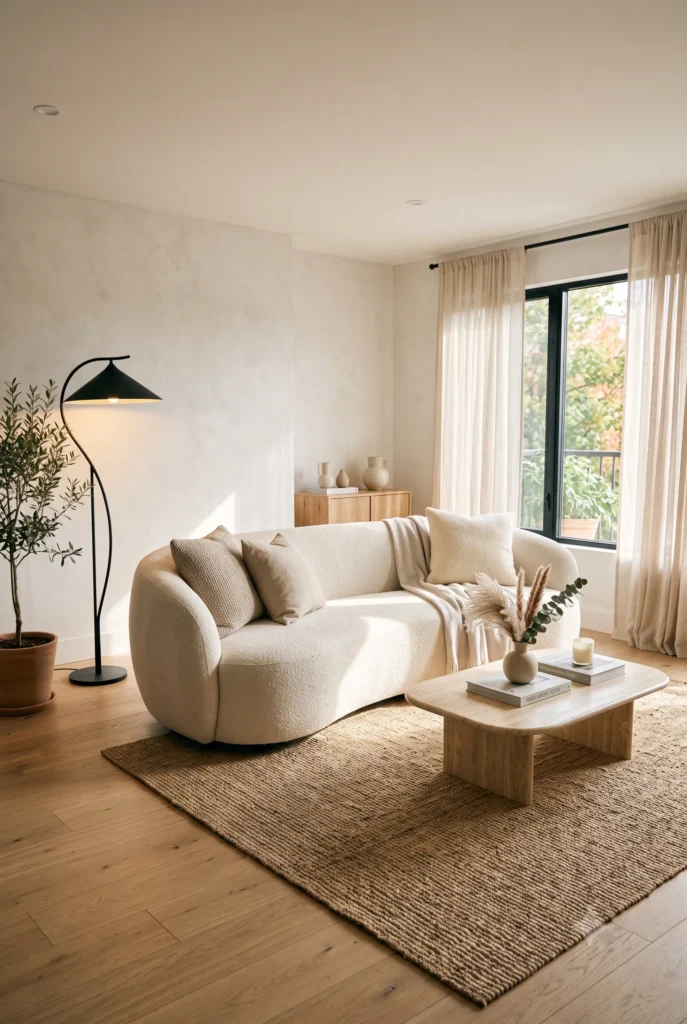
- Softens sharp corners and adds a sculptural focal point
- Creates natural flow for conversation without crowding the room
- Works beautifully in both small and open-plan layouts
- Pairs well with neutral or earthy accent colors
- Instantly elevates a plain seating area into a designer moment
A curved sofa instantly turns an ordinary living room into a gallery-worthy space. Its soft silhouette breaks up the boxiness that most standard furniture layouts create, giving the room a more organic, high-end feel. In my experience, curved seating also makes small rooms feel larger, since it eliminates hard edges that visually cut up space. Whether placed against a window or floating in the center of the room, it becomes an automatic conversation piece. This is one of those minimalist luxury living room ideas that looks expensive without requiring a full renovation or major structural changes.
Curved sofas also solve a practical problem many homeowners face: awkward room shapes. Rectangular sofas often fight against irregular layouts, leaving dead corners and wasted space. A curve adapts naturally, hugging walls or nooks that straight furniture can’t fill gracefully. I’ve noticed that designers increasingly favor this shape because it photographs beautifully and feels inviting rather than formal. Pair it with a low-profile coffee table and a single oversized floor lamp to keep the look airy. The result is a space that feels intentional, calm, and quietly luxurious rather than overdesigned or cluttered.
Warm Neutral Palette
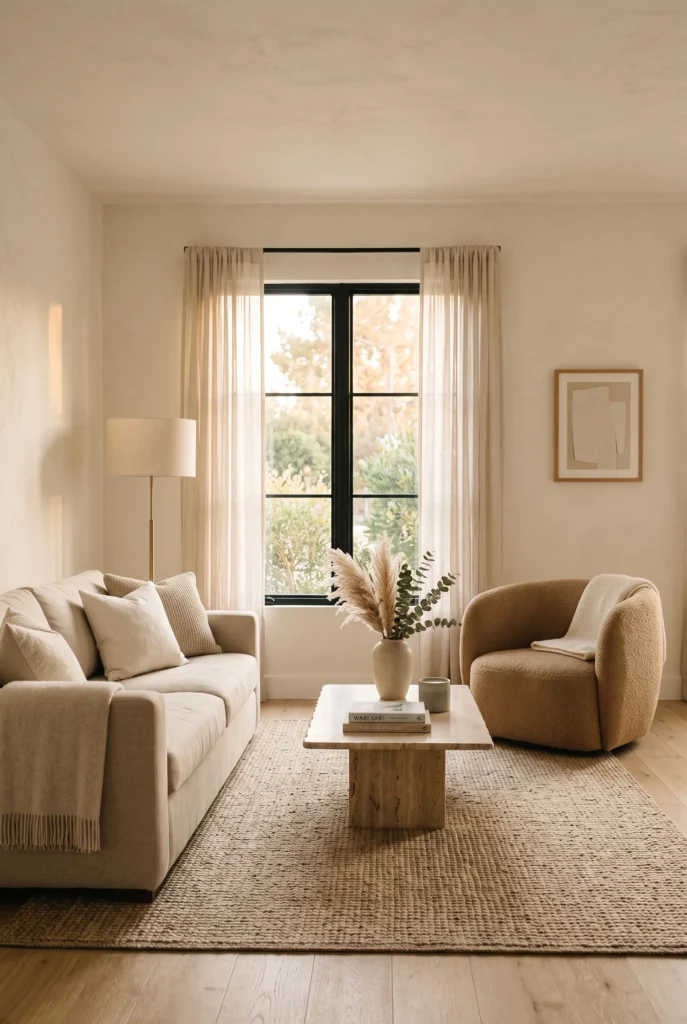
- Creates a calm, cohesive backdrop that never feels dated
- Makes rooms feel bigger, brighter, and more open
- Allows textures to stand out instead of competing colors
- Easy to update seasonally with small accent changes
- Feels expensive without needing bold or expensive furniture pieces
Visit: How to decorate a small bedroom on a budget
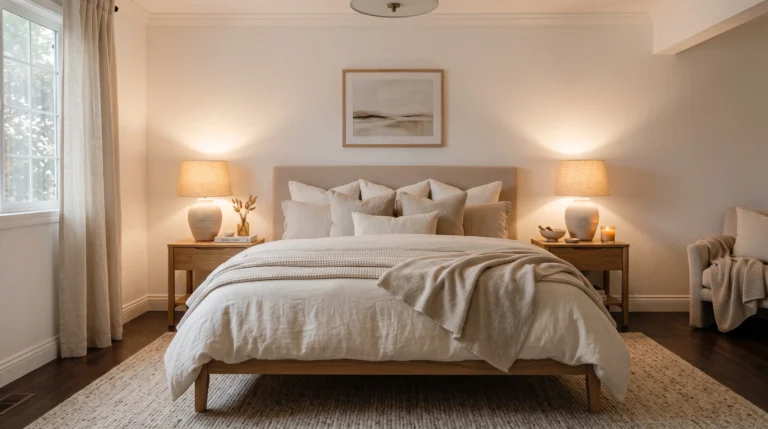
A warm neutral palette is one of the easiest ways to bring an upscale, calming feel into any living room. Instead of relying on bold colors, this approach layers ivory, sand, taupe, and soft browns to create depth without visual noise. I’ve tried this in smaller apartments and noticed it makes the space feel significantly larger and more peaceful. Natural light bounces beautifully off these tones throughout the day, changing the room’s mood from soft and cozy in the morning to warm and golden by evening. It’s a timeless foundation that never goes out of style.
What makes neutral palettes so effective is how they highlight texture instead of hiding it. Boucle, linen, wood grain, and stone all become more noticeable when color isn’t competing for attention. This is why many designers recommend starting here before adding furniture or decor. A neutral base also gives flexibility, since accent pillows, throws, or artwork can be swapped seasonally without redoing the entire room. The overall effect is quiet sophistication, a space that feels curated and comfortable rather than cold or overly styled.
Floating Media Wall
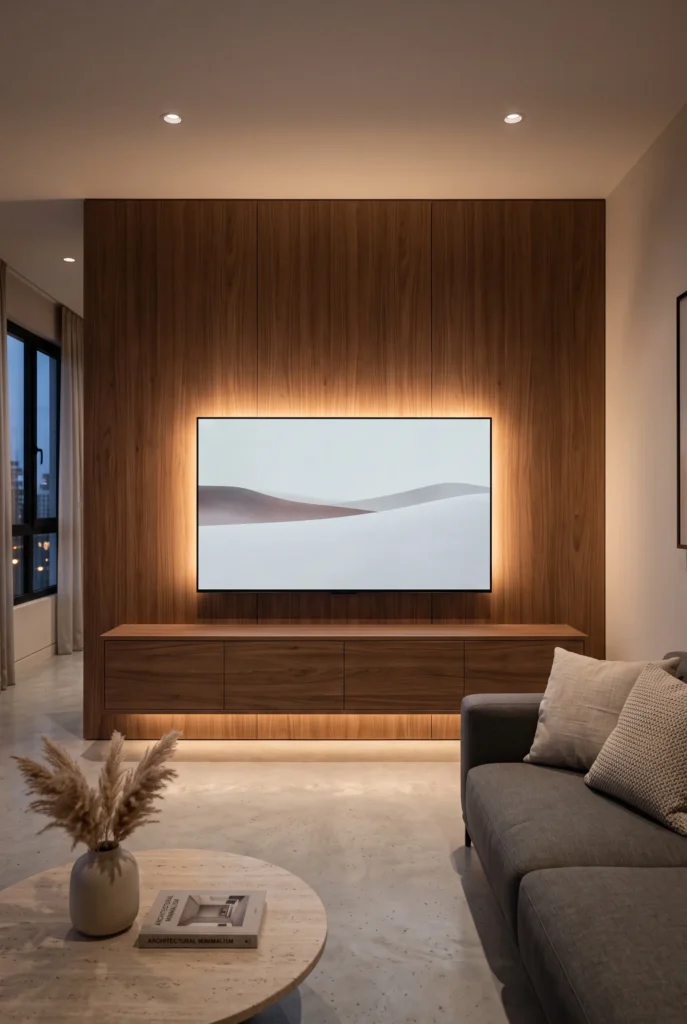
- Removes visual clutter by hiding cords, remotes, and media boxes
- Adds a sleek focal point without overwhelming the room
- Frees up floor space for a more open, airy feel
- Backlighting adds ambiance for evening relaxation
- Works well in both large living rooms and compact apartments
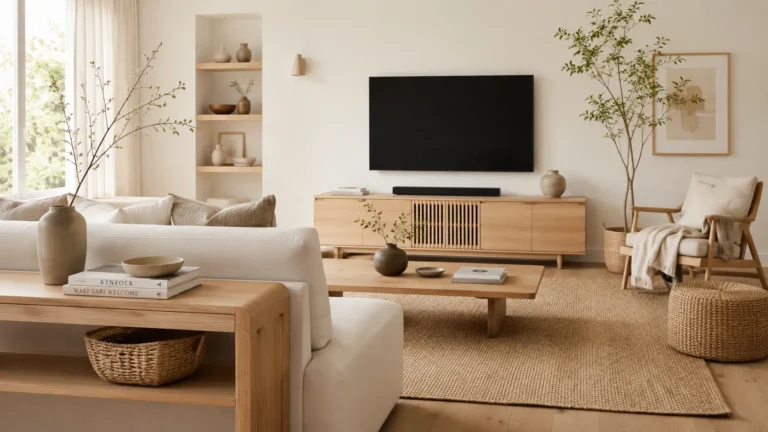
A floating media wall instantly modernizes a living room while keeping the layout clean and functional. By mounting storage and the TV directly onto the wall, the floor stays open, which makes the entire room feel more spacious and intentional. I’ve seen this work well in many homes where clutter used to dominate the main seating area. Hidden compartments keep remotes, cables, and electronics out of sight, so the focus stays on the design rather than the technology. It’s a practical upgrade that blends everyday function with a polished, high-end appearance.
Beyond aesthetics, a floating wall creates a sense of lightness that grounded furniture can’t achieve. Soft LED strips behind the paneling add a warm glow in the evening, turning a simple TV wall into a designed feature rather than an afterthought. This subtle lighting detail is often what separates a builder-grade living room from one that feels custom-designed. Combined with warm wood tones or matte black finishes, this idea supports the broader minimalist luxury living room ideas theme by proving that function and elegance can coexist without extra clutter or visible hardware.
Sculptural Coffee Table
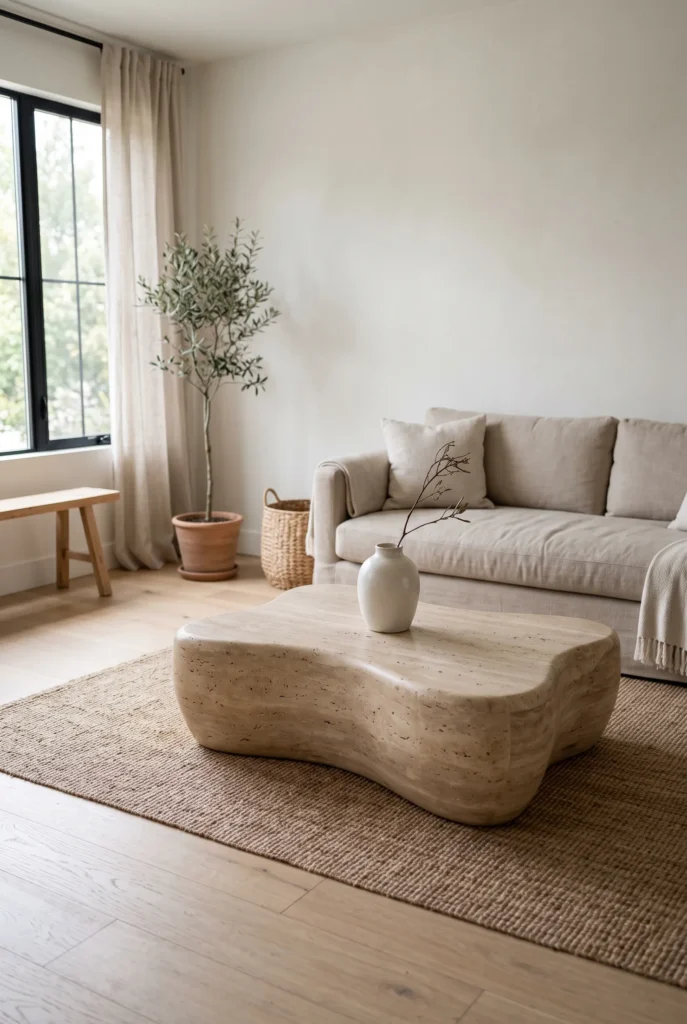
- Acts as a functional art piece rather than just a surface
- Draws the eye without needing extra decor around it
- Adds texture and dimension through natural stone or curved wood
- Keeps styling minimal since the table itself is the statement
- Works in both formal and relaxed living room settings
A sculptural coffee table does more than hold your coffee cup, it becomes the visual anchor of the entire room. Organic shapes in materials like travertine, marble, or curved wood add a gallery-like quality that flat, mass-produced tables simply can’t match. In my experience, choosing one bold sculptural piece allows you to keep the rest of the styling minimal, since the table itself carries the design weight. This approach fits perfectly into minimalist luxury living room ideas because it proves that less furniture, chosen carefully, creates more impact than a room full of matching pieces.
The beauty of a sculptural table lies in its versatility. It works equally well surrounded by soft neutral seating or bold statement chairs, adapting to whatever style direction the room takes. Because the shape itself is the focal point, there’s no need to overload it with trays, books, or decorative clutter. Just one or two curated objects, like a ceramic vase or ceramic bowl, are enough. This restraint keeps the space feeling calm, intentional, and refined, which is exactly the balance most homeowners are chasing when trying to elevate a simple living room into something more elevated.
Layered Textured Rugs
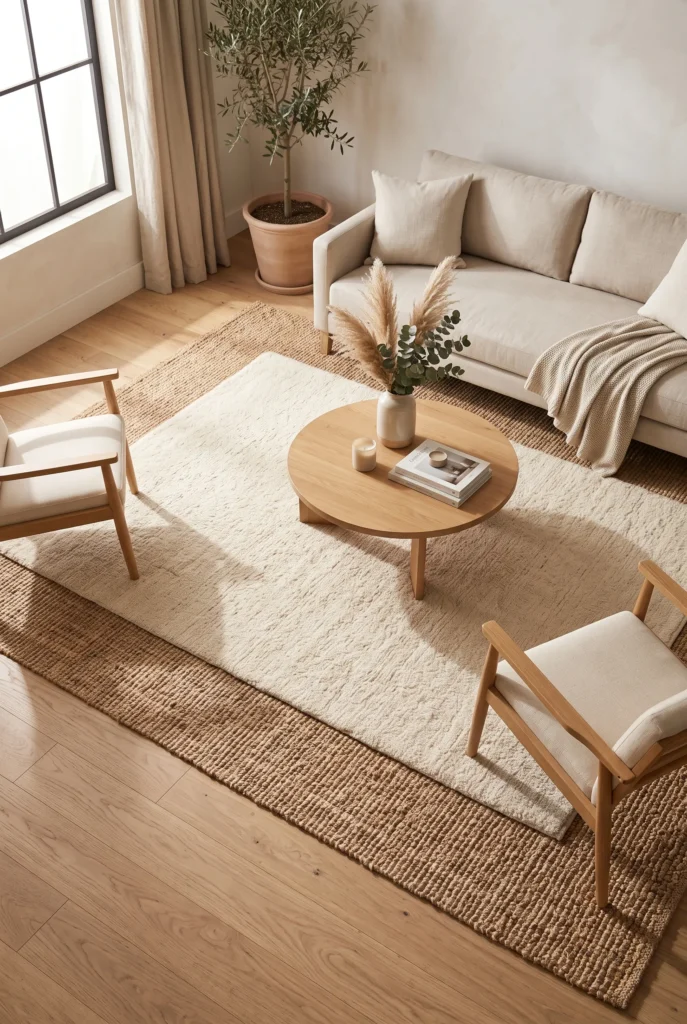
- Adds warmth and depth to an otherwise simple floor space
- Defines the seating area without needing walls or furniture
- Creates visual interest through texture instead of pattern or color
- Feels cozier underfoot while keeping the look refined
- Easy way to update a room’s mood with minimal effort
Layering rugs is a simple trick that instantly makes a minimalist living room feel more grounded and intentional. A textured jute or woven base paired with a softer top rug creates depth without introducing extra color or pattern, which keeps the space calm and cohesive. I’ve noticed that this technique works especially well in open-concept homes, where rugs help visually separate the living area from the dining or kitchen space. It’s a subtle detail, but it changes how the entire room feels, adding warmth underfoot while maintaining that clean, uncluttered aesthetic so many people are drawn to.
What makes this idea so effective is how much texture it introduces without visual noise. Natural fibers like jute or sisal bring an earthy, organic feel, while a plush wool or cotton layer on top adds softness and comfort. That’s why many designers recommend this combination when clients want richness without pattern or bold color. It’s an affordable, low-commitment way to test a design direction before investing in bigger furniture changes, and it photographs beautifully for anyone documenting their home’s evolving style.
Hidden Storage Furniture
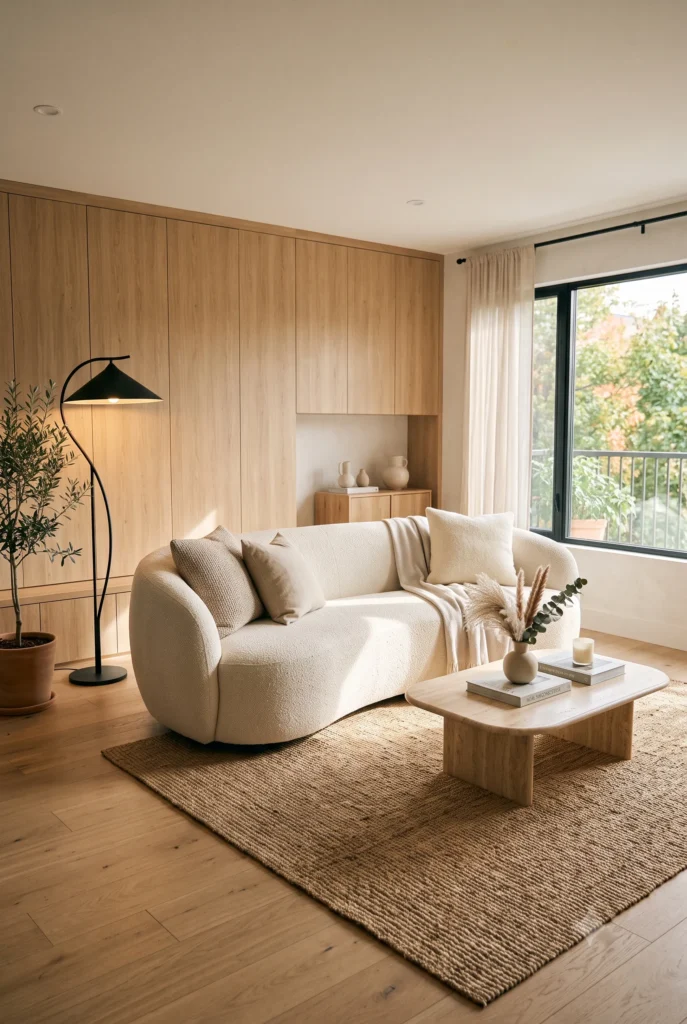
- Keeps everyday items out of sight without sacrificing function
- Maintains clean lines and open visual space
- Reduces the need for extra shelving or visible organizers
- Blends storage seamlessly into the room’s overall design
- Ideal for smaller spaces where clutter is harder to hide
Hidden storage furniture solves one of the biggest challenges in achieving a minimalist look: keeping everyday items out of sight while still being practical. Pieces like storage benches, closed cabinets, and ottomans with hidden compartments let you tuck away blankets, remotes, or magazines without cluttering visible surfaces. I’ve tried incorporating this into smaller living rooms and found it makes a noticeable difference in how spacious the room feels, even without changing the square footage. This idea supports the broader theme of minimalist luxury living room ideas by proving that organization and elegance can work together seamlessly.
The key to making hidden storage feel luxurious rather than purely functional is choosing pieces with clean lines and quality materials. Smooth wood finishes, integrated handles, or push-to-open mechanisms keep the look seamless, avoiding the bulky appearance of typical storage furniture. This is especially useful for renters or smaller apartments where extra shelving isn’t always an option. By concealing daily clutter, the room’s surfaces stay open and calm, allowing the architecture and design choices to remain the visual focus instead of scattered belongings.
Statement Pendant Lighting
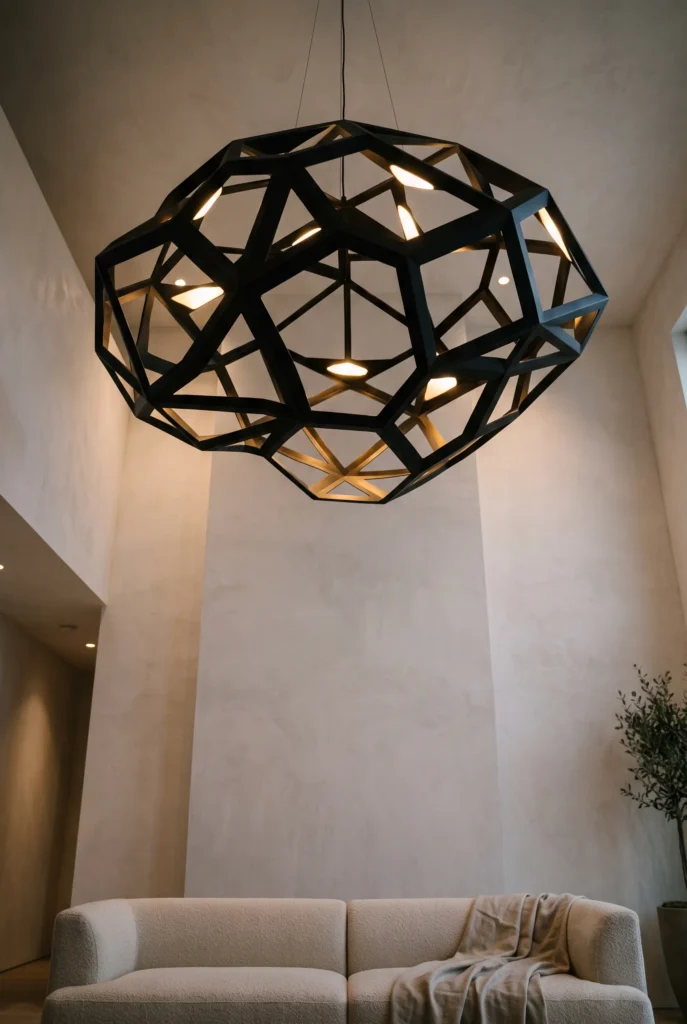
- Adds dramatic focal interest without cluttering the floor space
- Creates ambient warmth that shifts the room’s mood at night
- Draws the eye upward, making ceilings feel taller
- Works as functional lighting and sculptural decor at once
- Elevates a plain ceiling into a designed architectural moment
A statement pendant light can transform a living room the same way a piece of jewelry completes an outfit. Instead of relying on recessed lighting alone, one oversized fixture in brass, matte black, or woven material becomes an instant focal point overhead. In my experience, this small addition makes the biggest visual difference relative to its cost, since it draws attention upward and makes standard ceiling heights feel more generous. It’s a favorite among minimalist luxury living room ideas because it adds personality and warmth without requiring extra furniture or wall decor to achieve a finished, intentional look.
Lighting also shapes how a room feels throughout the day, and a well-chosen pendant does more than illuminate, it sets the mood. Soft, warm bulbs create a golden glow in the evening, turning an ordinary seating area into a cozy, inviting retreat. Because the fixture hangs above eye level, it never competes with furniture or artwork for attention, allowing the rest of the room to stay simple. This balance of function and sculptural design is exactly what separates a thoughtfully lit space from one that feels flat, generic, or unfinished.
Symmetrical Furniture Layout
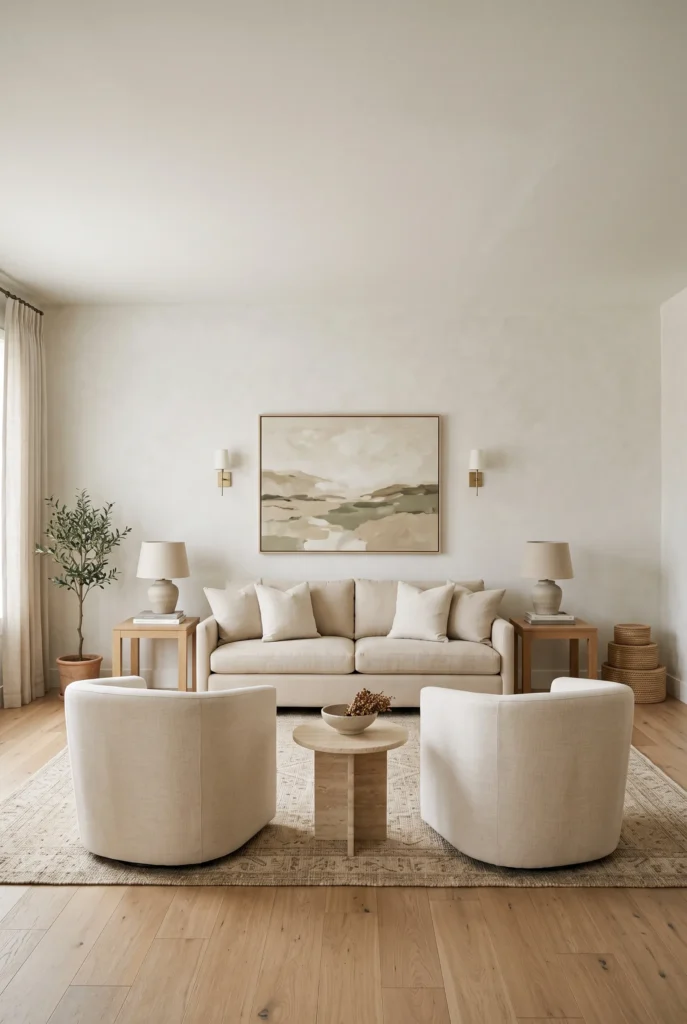
- Creates instant visual balance and a sense of calm order
- Makes furniture arrangement feel intentional rather than random
- Works especially well in formal or open-concept living rooms
- Simplifies decision-making by mirroring pieces on each side
- Gives the room a polished, professionally designed appearance
Symmetry is one of the simplest design principles, yet it has an outsized effect on how organized and elevated a room feels. Arranging matching chairs, lamps, or side tables on either side of a central sofa creates immediate visual balance, removing the guesswork many people struggle with when styling a living room. I’ve noticed that symmetrical layouts photograph particularly well, which is likely why this approach is so popular for Pinterest-style inspiration boards. It brings a sense of calm order that asymmetrical arrangements can sometimes lack, especially in larger or more open living spaces.
Beyond aesthetics, symmetry also makes a room easier to navigate and live in. Mirrored furniture placement naturally creates clear pathways and defined zones, which is especially helpful in open-concept homes where the living area blends into a dining or kitchen space. This layout doesn’t require expensive furniture, just a willingness to duplicate key pieces like lamps or accent chairs. The result feels curated and deliberate, reinforcing that thoughtful design, more than budget, is often what separates a beautifully arranged room from a haphazard one.
Textured Accent Wall
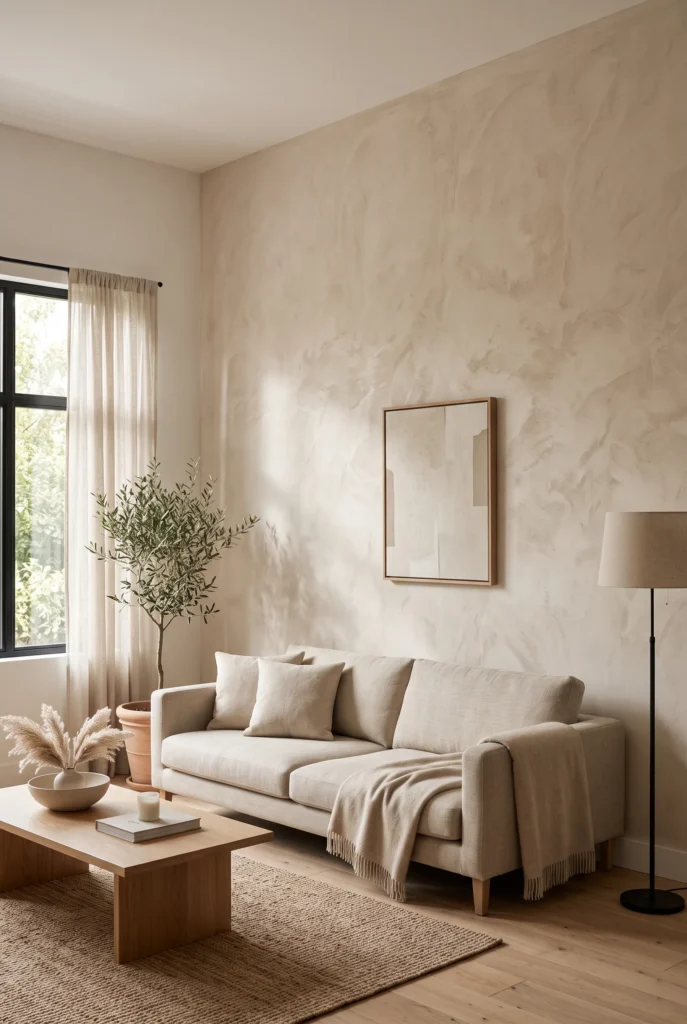
- Adds depth and interest without introducing bold color or pattern
- Creates a tactile, artisanal feel that flat paint can’t achieve
- Works as a natural focal point behind seating or media areas
- Enhances how light and shadow move through the room
- Feels custom and high-end without a full wall renovation
A textured accent wall is one of the most effective ways to add depth to a room without disrupting its minimalist foundation. Techniques like limewash, microcement, or textured plaster catch natural light differently throughout the day, creating subtle shadow play that flat paint simply cannot replicate. I’ve seen this work well in many homes as a way to add personality behind a sofa or media console without needing bold artwork or color. It’s a favorite technique among designers pursuing minimalist luxury living room ideas because it introduces richness through texture rather than pattern, keeping the overall palette calm and cohesive.
What makes textured walls so appealing is their tactile, handcrafted quality, which instantly reads as more expensive than standard flat paint. Even in soft neutral tones, the subtle variation in texture adds visual interest and warmth to an otherwise simple space. This technique works particularly well as a backdrop for minimal furniture, since the wall itself becomes the statement rather than competing with decor. It’s a detail that feels intentional and elevated, proving that luxury often comes from craftsmanship and texture rather than added color or ornamentation.
Low-Profile Seating
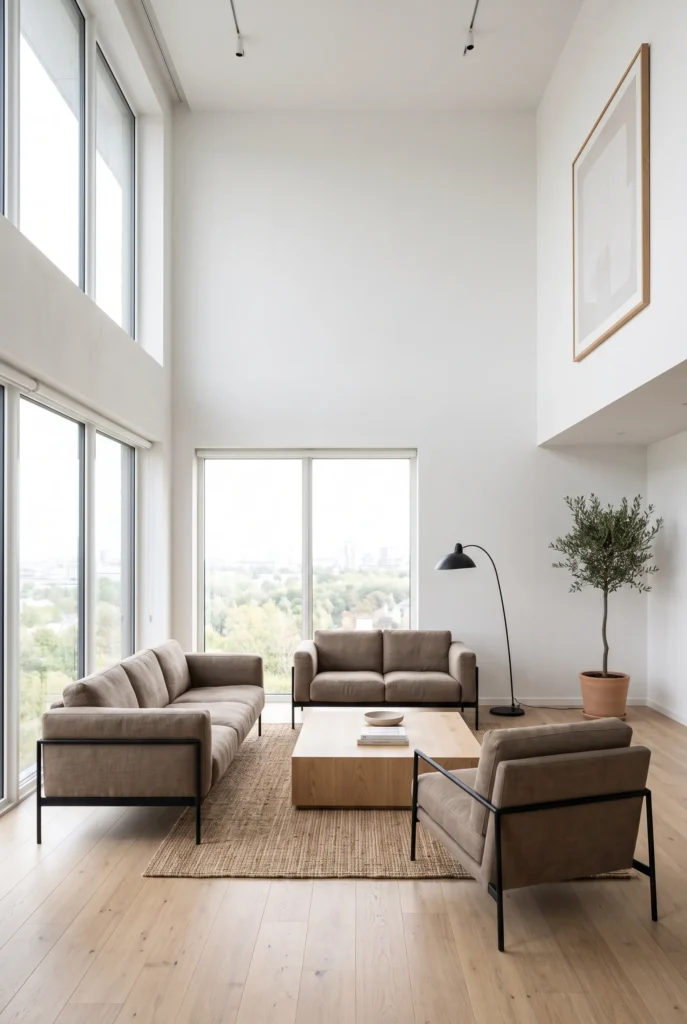
- Makes ceilings feel taller by lowering the furniture sightline
- Creates a relaxed, open feel without sacrificing comfort
- Suits both compact apartments and spacious open-plan rooms
- Pairs beautifully with minimalist, low coffee tables
- Enhances natural light flow across the room
Low-profile seating is a design trick that instantly changes how spacious a room feels. By choosing sofas and chairs with slimmer frames and lower backs, more negative space opens up above the furniture line, drawing the eye upward toward the ceiling. In my experience, this works particularly well in rooms with standard eight or nine-foot ceilings, where taller furniture can make the space feel boxed in. It’s a subtle shift, but one that plays a big role in achieving that airy, gallery-like quality found in so many minimalist luxury living room ideas featured across design inspiration boards.
Beyond the visual benefits, low seating also allows natural light to travel further into the room, since fewer tall silhouettes block window light from reaching the walls and floor. This creates a brighter, more open atmosphere throughout the day. Pairing low sofas with equally low coffee tables and slim side tables keeps the entire seating arrangement visually consistent, avoiding the mismatched feel that happens when furniture heights vary too much. The result is a relaxed yet polished living room that feels intentionally designed rather than simply furnished.
Monochrome Color Scheme
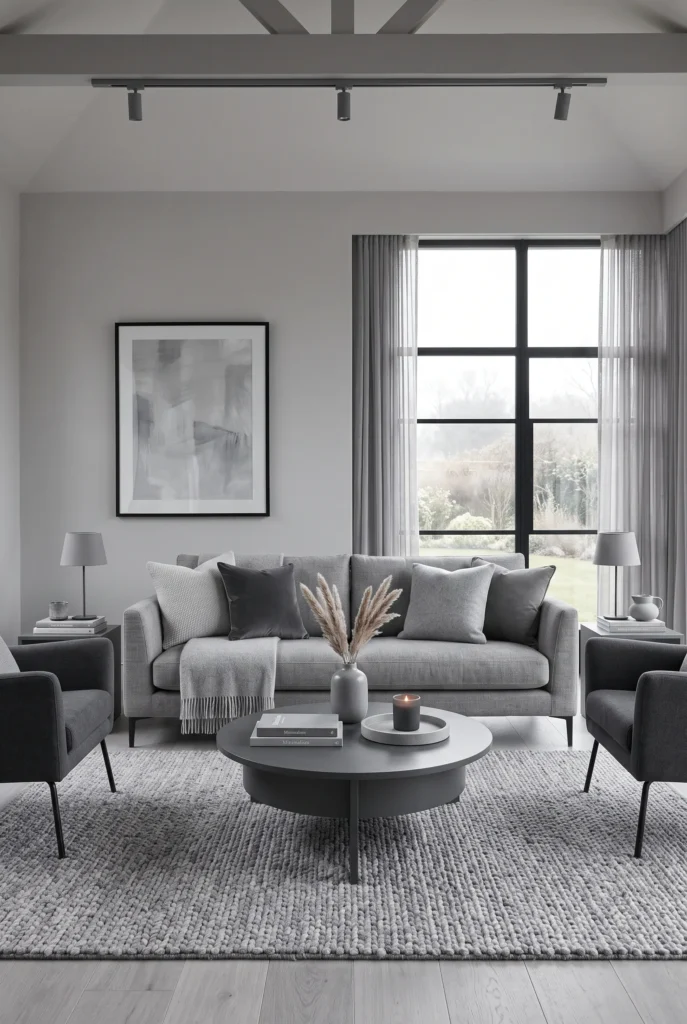
- Creates a cohesive, editorial look without needing multiple colors
- Uses shade variation instead of pattern to add visual interest
- Feels sophisticated and intentional rather than plain or flat
- Works well with any single base color, not just neutrals
- Simplifies decorating decisions since everything stays within one palette
A monochrome color scheme takes the neutral palette concept a step further by committing to a single color family, layered in different shades and textures. Instead of mixing multiple tones, everything from the sofa to the rug to the wall paint stays within variations of one hue, like soft grays or muted greens. I’ve tried this approach in living rooms that felt visually busy, and narrowing the palette immediately calmed the space down. This method is popular among minimalist luxury living room ideas because it photographs beautifully, feels editorial, and removes the guesswork of coordinating multiple competing colors.
The key to making monochrome work is varying texture and shade depth so the room doesn’t feel flat or one-dimensional. Combining matte and glossy finishes, or pairing a deep charcoal accent chair with a pale dove-gray sofa, adds dimension while staying within the same color story. That’s why many designers recommend this approach for smaller spaces, since it creates a seamless, expansive feel. It’s also one of the easiest schemes to maintain long-term, since new decor pieces only need to match one general tone rather than an entire color palette.
Open Shelving Display
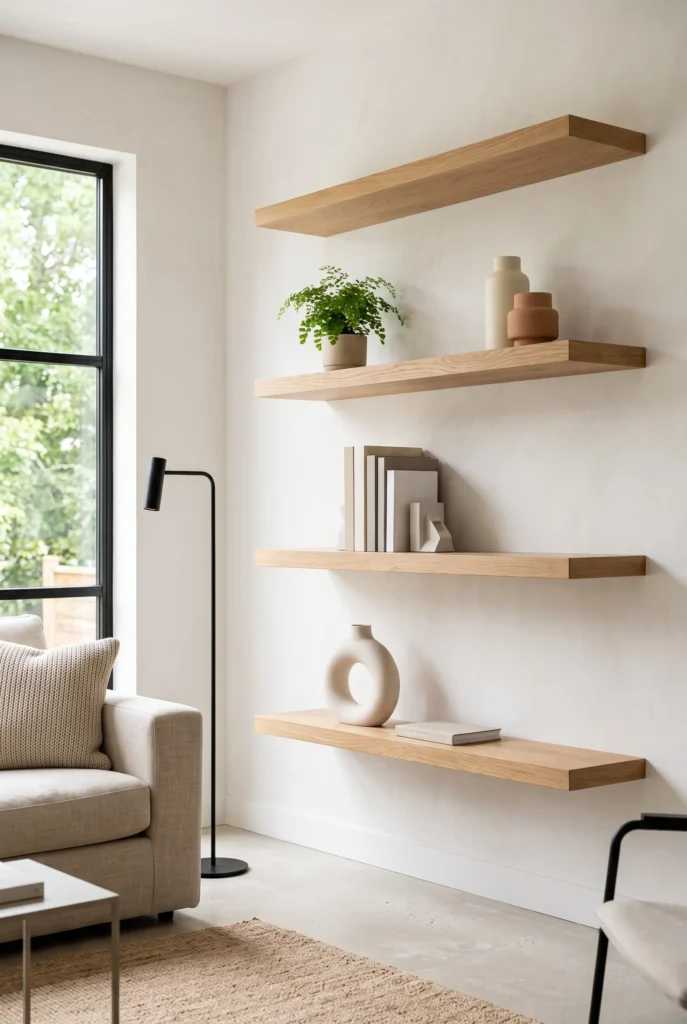
- Displays personal items without overwhelming the room visually
- Adds warmth and personality through carefully chosen objects
- Keeps styling flexible since shelves are easy to update
- Uses negative space to keep the display feeling intentional
- Works well as a subtle alternative to closed cabinetry
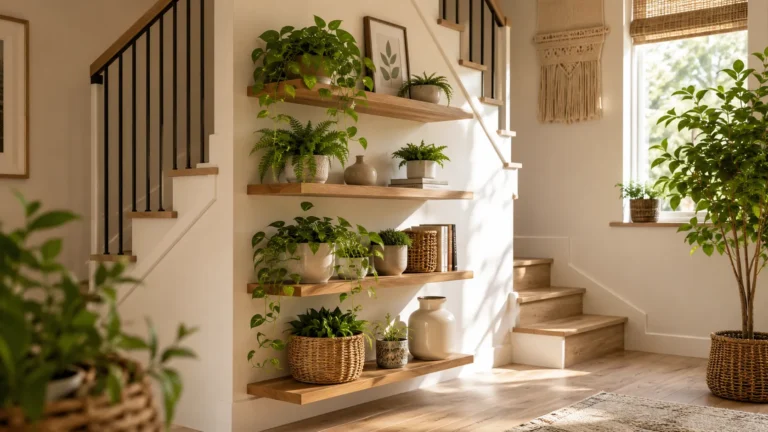
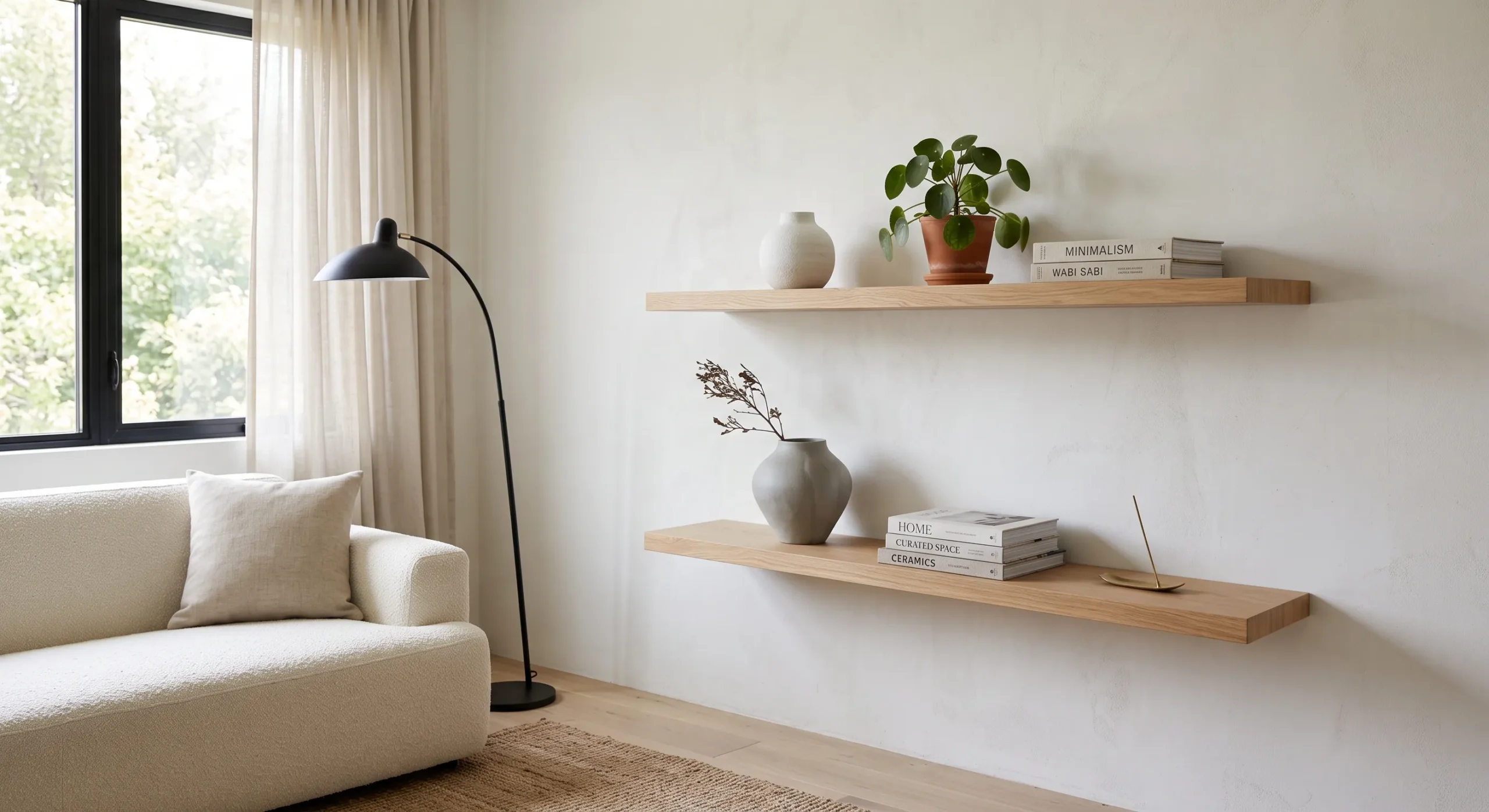
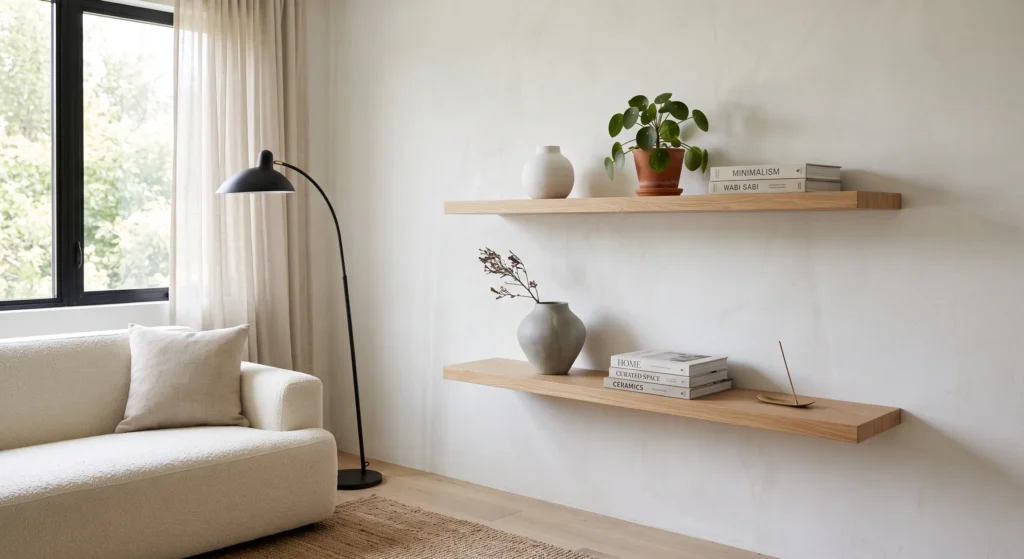
Open shelving offers a way to display meaningful objects, books, or plants without cluttering a minimalist living room. The trick lies in restraint, choosing only a handful of curated pieces and leaving plenty of negative space between them so each item stands out. I’ve noticed that homeowners who overfill open shelves often lose the calm, airy effect they were originally going for. When styled thoughtfully, a few ceramic vases or a small stack of books can add warmth and personality while still supporting the clean, uncluttered foundation that defines this design style throughout the rest of the room.
What makes open shelving especially practical is how easily it can be refreshed. Swapping out a vase or adding a seasonal plant takes minutes, allowing the room to evolve without a full redesign. Floating shelves in warm wood tones also add texture against plain walls, creating subtle visual interest without introducing bold color or pattern. This idea works particularly well paired with a neutral or monochrome palette, since the shelf styling becomes the small, curated detail that adds character to an otherwise simple and streamlined living space.
Natural Stone Accents
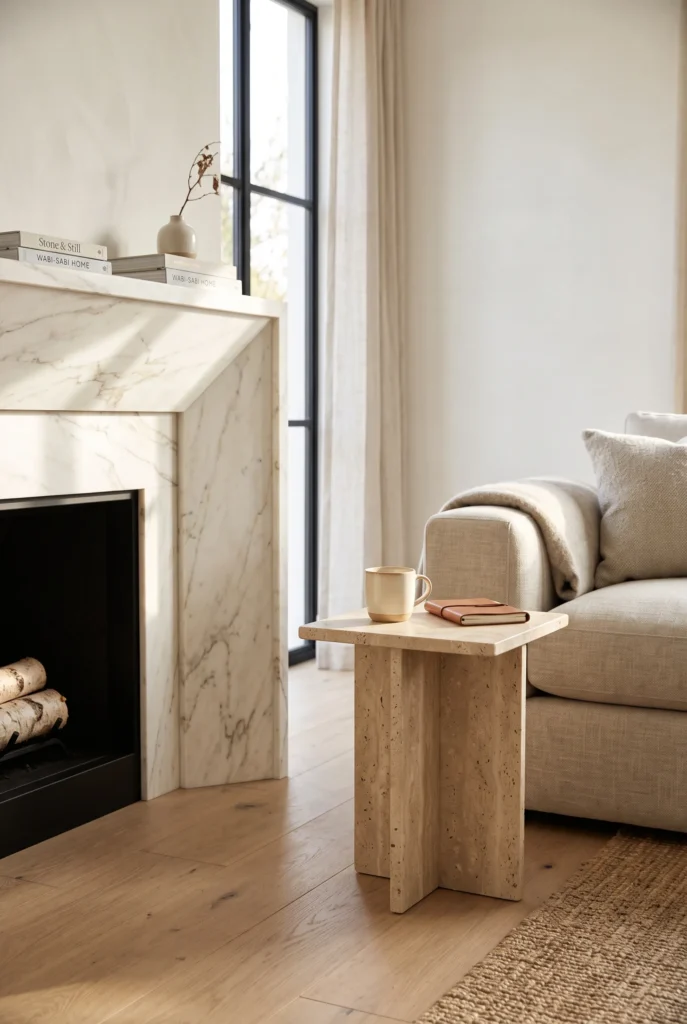
- Adds an earthy, organic element that feels grounded and timeless
- Introduces subtle texture and veining without pattern overload
- Elevates a room instantly, even in small doses like a side table
- Pairs beautifully with warm woods and soft neutral fabrics
- Feels luxurious while staying true to a natural, minimal aesthetic
Natural stone accents bring an organic richness to a living room that manufactured materials often struggle to replicate. Whether it’s a travertine side table, a marble fireplace surround, or a stone plinth used as a plant stand, these pieces introduce subtle veining and texture that catch light differently throughout the day. In my experience, even one small stone accent can shift the entire feel of a room, adding a sense of permanence and quality that plastic or laminate materials simply can’t match. This is one of the most reliable minimalist luxury living room ideas because it grounds a space in something timeless and natural.
Stone also has a unique way of complementing nearly every other material in the room, from warm wood tones to soft linen upholstery. Its neutral, earthy coloring means it rarely clashes, making it easy to introduce without overthinking the rest of the design. That’s why many designers recommend starting small, a stone coaster set, side table, or vase, before committing to larger installations like a stone fireplace surround. This gradual approach lets homeowners test how the material feels in their space before making a bigger investment.
Minimal Wall Art
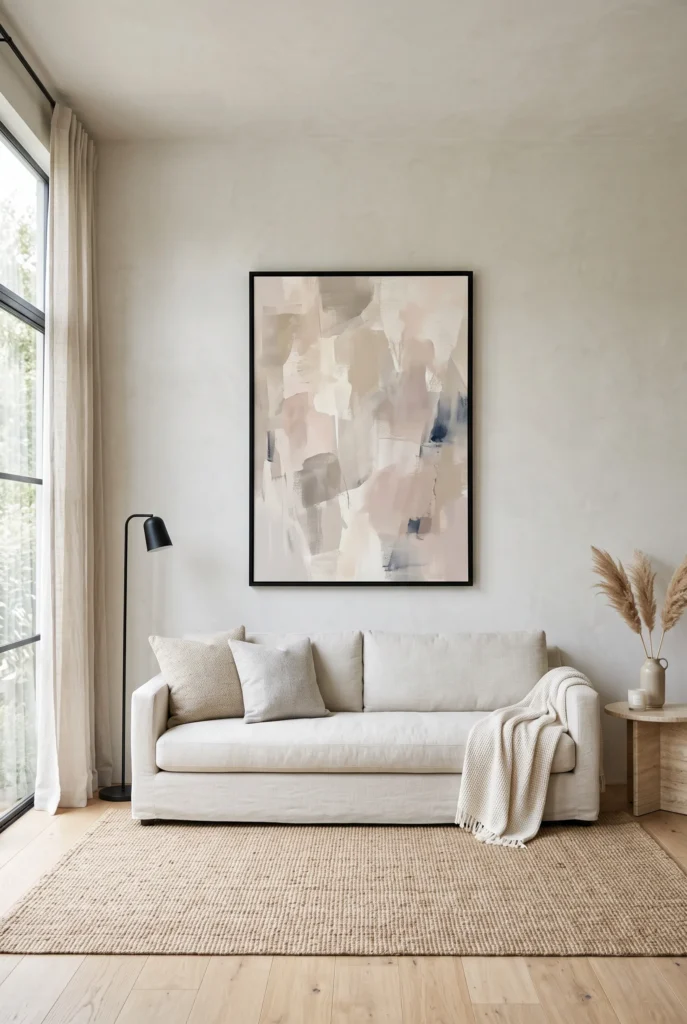
- Creates a focal point without visually crowding the walls
- Adds personality and color in a controlled, intentional way
- Keeps the room feeling curated rather than overly decorated
- Works well as the single statement piece in a neutral space
- Easy to swap out to refresh the room’s overall mood
Minimal wall art follows the same philosophy as the rest of a pared-back living room: less, but more intentional. Instead of filling walls with multiple frames or gallery walls, choosing one large piece of art creates a stronger visual impact while keeping the space feeling calm and uncluttered. I’ve seen this work well in many homes where a single abstract piece, hung above the sofa or media area, becomes the room’s quiet centerpiece. This approach fits naturally into minimalist luxury living room ideas because it proves that impactful design often comes from restraint rather than abundance.
Choosing artwork that echoes the room’s existing color palette helps it feel integrated rather than like an afterthought. Soft, muted tones tend to work best, since bold or clashing colors can disrupt the calm atmosphere the rest of the room is working to create. A simple black or natural wood frame keeps the focus on the art itself rather than an ornate border. Because it’s just one piece, updating the room’s mood later on becomes as easy as swapping the artwork, without needing to rearrange furniture or repaint walls.
Warm Wood Flooring
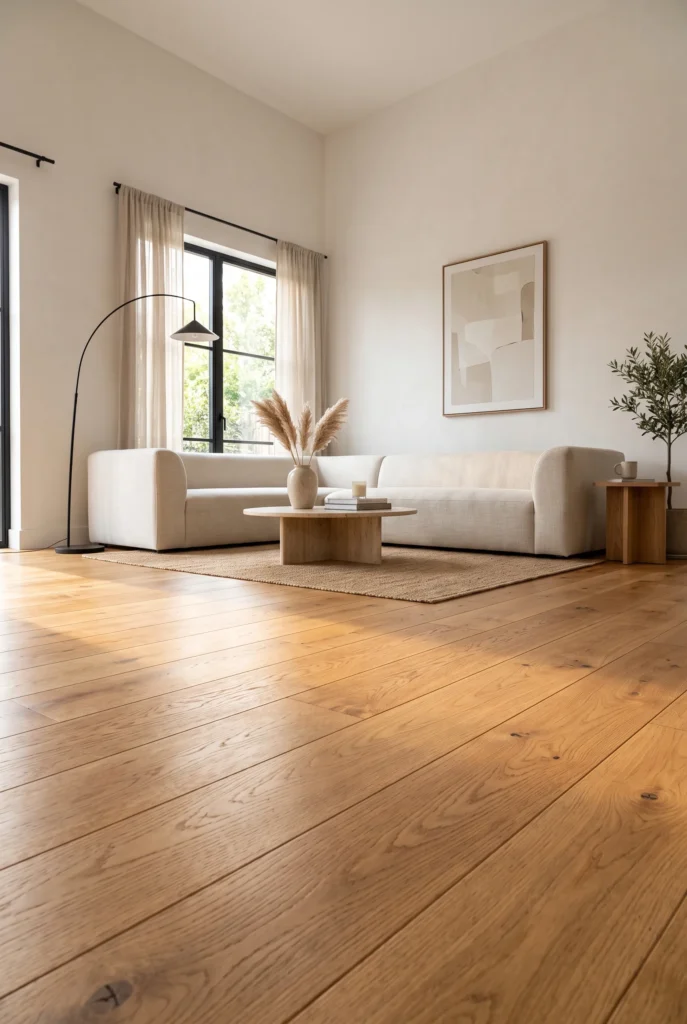
- Adds warmth underfoot that balances cooler, minimal color palettes
- Creates a timeless foundation that works with any furniture style
- Enhances natural light with subtle warm reflections across the room
- Feels more luxurious and grounded than cold tile or gray flooring
- Works beautifully with both light and dark furniture pairings
Warm wood flooring plays a bigger role in a room’s overall feel than many homeowners realize. Wide-plank oak or honey-toned boards add natural warmth that balances the cooler, neutral palettes often used in minimalist spaces, preventing the room from feeling sterile or cold. In my experience, wood flooring also photographs beautifully, catching soft natural light in a way that tile or dark flooring simply doesn’t. This is why warm wood remains one of the most consistent choices among minimalist luxury living room ideas, offering a timeless base that suits nearly any furniture style layered on top of it.
Beyond aesthetics, wood flooring also brings a sense of longevity and quality that’s immediately noticeable underfoot. It pairs effortlessly with layered rugs, low-profile furniture, and natural stone accents, tying together many of the other design elements already covered in this list. Because the tone is warm rather than stark, it softens a room that might otherwise feel too clinical or overly styled. This grounding effect is often what separates a living room that feels comfortable and inviting from one that feels beautiful but cold.
Sheer Window Treatments
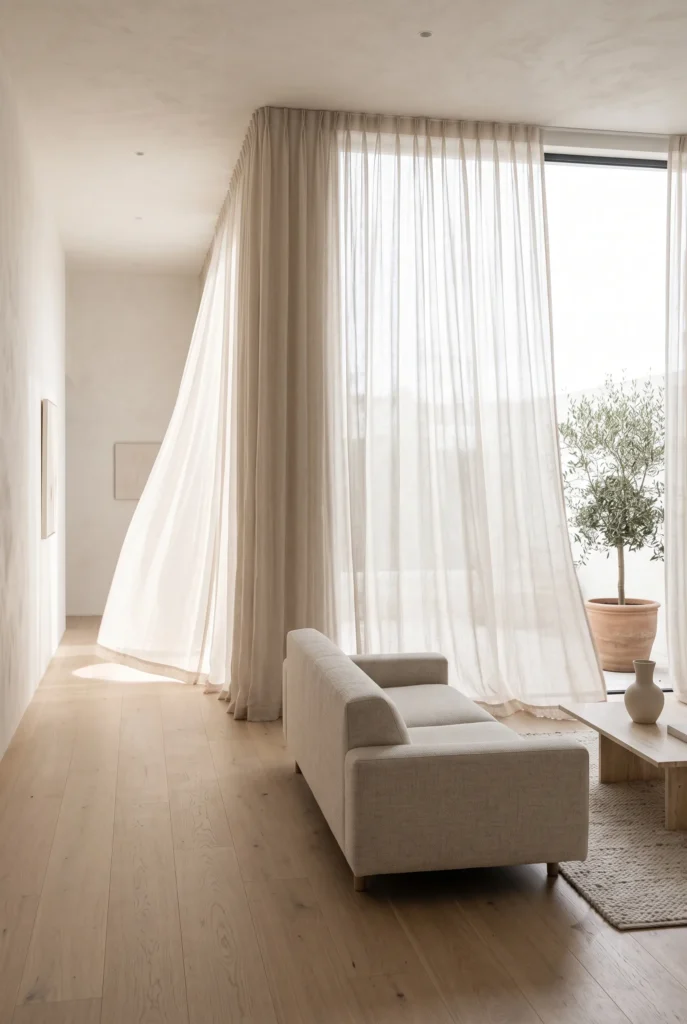
- Softens natural light without blocking it completely
- Adds gentle movement and texture to an otherwise still room
- Creates privacy while still keeping the space feeling open
- Elevates plain windows into a soft, designed feature
- Pairs beautifully with neutral, warm, or monochrome palettes
Sheer window treatments are one of the simplest upgrades that instantly makes a living room feel softer and more refined. Unlike heavy drapes that block light and visually shrink a room, sheer linen or cotton panels diffuse natural light into a gentle, even glow throughout the day. I’ve tried this in rooms that previously felt harsh or overly bright, and the difference in mood was immediate. This detail fits naturally into minimalist luxury living room ideas because it adds softness and privacy without introducing bulk, pattern, or heavy fabric that could clutter an otherwise clean, airy space.
Beyond the visual softness, sheer curtains also add a subtle sense of movement to a room that’s otherwise still and structured. A light breeze or passing air from a vent causes gentle motion, giving the space a quiet, lived-in feel without sacrificing the minimal aesthetic. They work well layered under a simple wood or brass curtain rod, keeping the hardware understated so the fabric remains the focus. This small styling choice often makes the biggest difference in how warm and finished a room feels once natural light passes through it.
Cohesive Metal Finishes
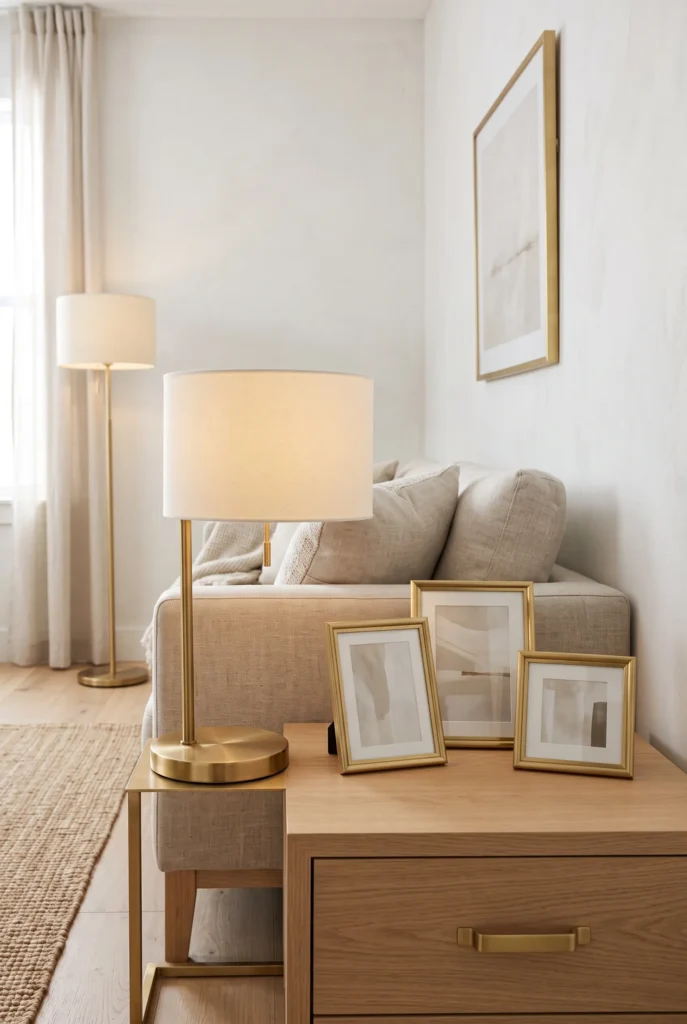
- Ties the room together through consistent, intentional detailing
- Adds subtle shine and warmth without overwhelming the space
- Prevents a mismatched or cluttered feeling across small decor pieces
- Elevates even simple furniture through coordinated finishing touches
- Works well with warm neutral or monochrome color schemes
Cohesive metal finishes might be the smallest detail on this list, but they often have an outsized effect on how polished a room feels. Choosing one metal tone, like warm brass, matte black, or brushed nickel, and repeating it across lamp bases, picture frames, and hardware creates a sense of intentional design rather than a collection of mismatched pieces. I’ve noticed that rooms with mixed, uncoordinated metals often feel slightly off, even when the furniture itself is beautiful. This final detail ties together many of the other minimalist luxury living room ideas already covered, reinforcing that consistency is often what separates styled rooms from truly finished ones.
Warm metals like brass or gold tend to pair especially well with neutral and monochrome palettes, adding a soft glow without introducing bold color. Cooler metals like matte black or brushed nickel work better in more modern, monochrome-leaning spaces. Whichever tone is chosen, consistency across every visible metal element, from curtain rods to lamp fixtures, creates a subtle thread that runs through the entire room. It’s a finishing touch that costs very little to implement but makes the overall design feel deliberate, cohesive, and genuinely elevated.
Creating a space that feels calm, elevated, and truly yours doesn’t require a full renovation, it starts with small, intentional choices. From curved sofas to warm wood flooring, these minimalist luxury living room ideas prove that less really can feel like more. I’ve seen how small changes like these can completely transform a space, often faster than people expect. Try one idea this weekend, whether it’s layering a new rug or swapping mismatched hardware for a cohesive finish, and notice the difference it makes. Save this post to Pinterest for later, and share it with anyone dreaming of a calmer, more beautiful living room.