21 Backyard Ideas to Create Your Dream Outdoor Space
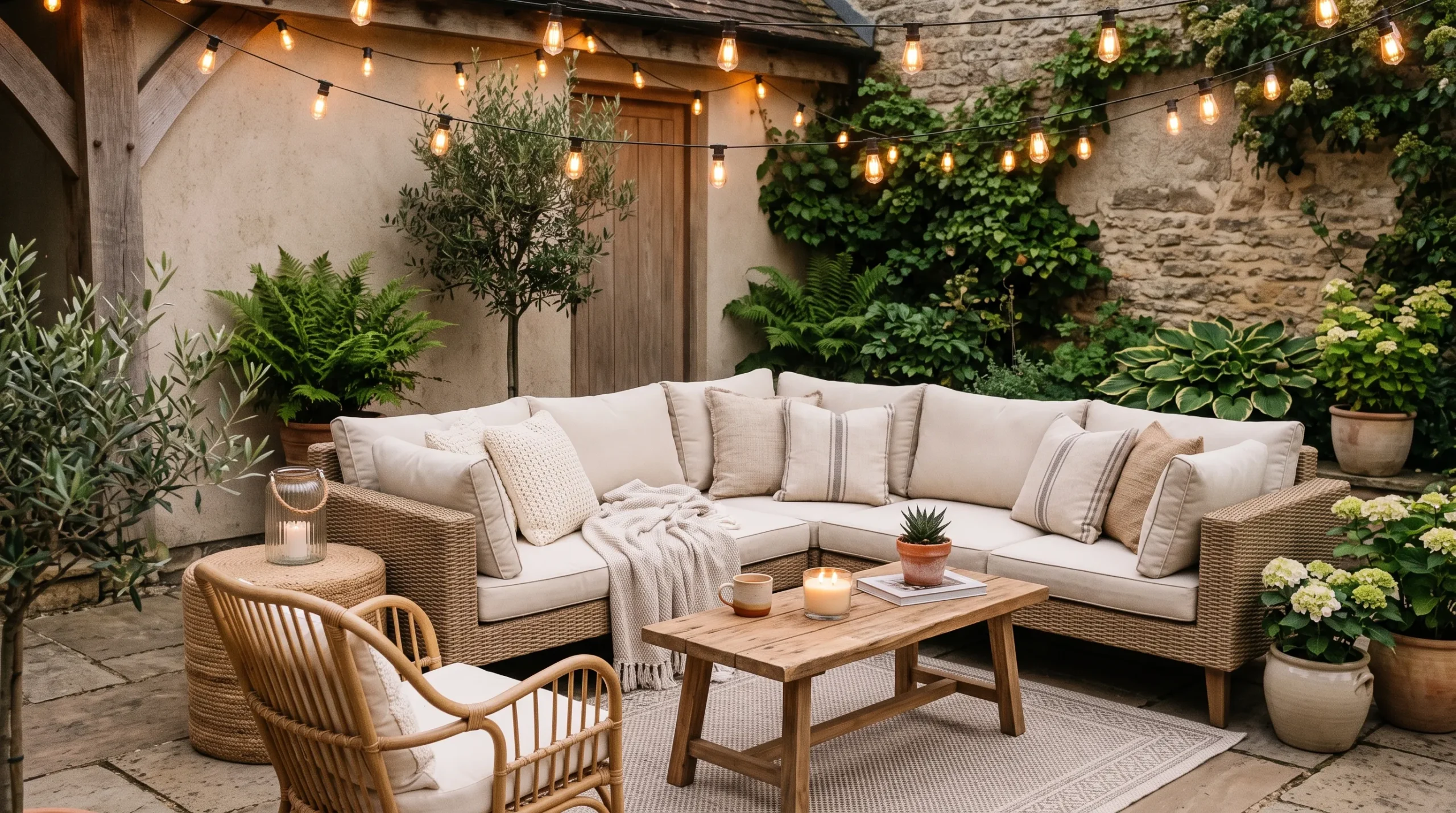
Your backyard could be more than just an empty patch of grass. Backyard ideas can turn even a basic outdoor area into a cozy retreat you actually want to use every day. Whether you dream of a relaxing lounge, a beautiful garden, an outdoor dining area, or a cozy spot for evening gatherings, small design choices can make a huge difference. The key is creating a space that looks beautiful while fitting the way you really live. The most inviting outdoor spaces combine comfortable seating, greenery, practical layouts, and warm lighting. These ideas will help you create an outdoor space that feels personal, useful, and Pinterest-worthy.
1. Cozy Outdoor Lounge
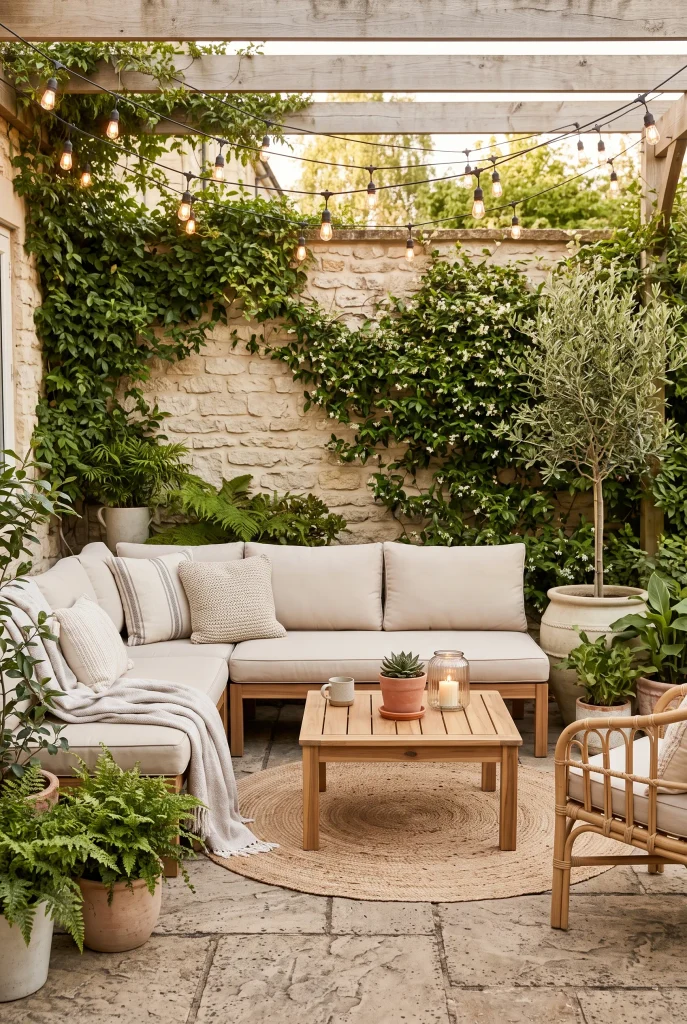
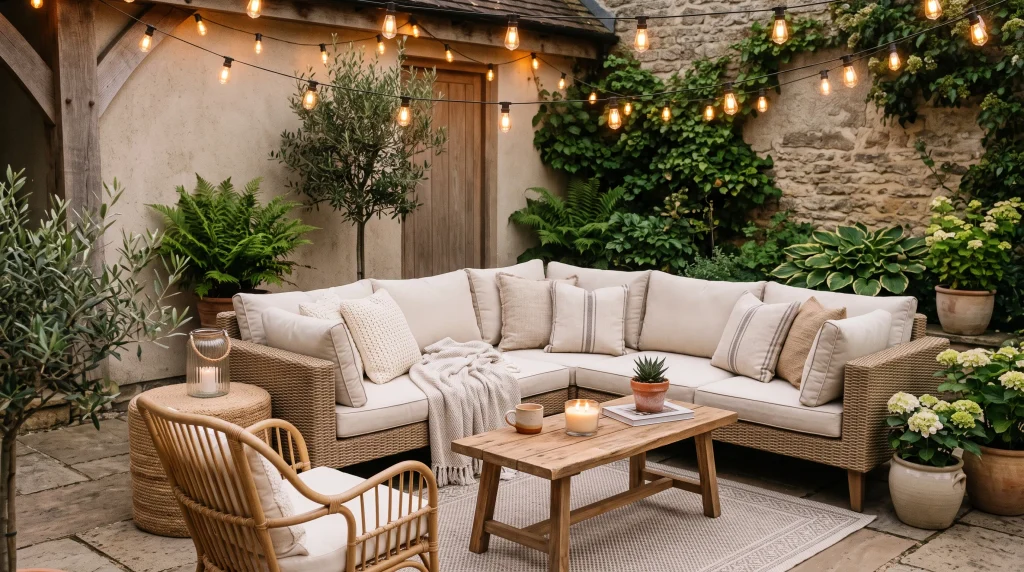
- Creates a comfortable spot for relaxing, reading, or enjoying morning coffee.
- Soft neutral cushions make the outdoor seating feel like an extension of the living room.
- Layered textures add warmth and visual depth without overwhelming the space.
- A small coffee table keeps drinks and books within easy reach.
- Comfortable seating makes a backyard feel much more inviting.
A comfortable seating area can turn an ordinary backyard into your favorite place to unwind. A spacious outdoor sofa with plush cushions gives everyone room to relax, while a low coffee table creates a practical center for drinks, books, and casual conversations. Choose weather-resistant fabrics in beige, cream, or soft gray for a calm, timeless look. Add a few textured pillows and a lightweight throw for extra warmth during cooler evenings. Whether you have a large lawn or a compact patio, thoughtful furniture placement helps create a welcoming outdoor retreat that feels both stylish and useful.
The secret to a beautiful outdoor lounge is balancing comfort with durability. Look for furniture made from weather-resistant materials, especially if your backyard receives frequent rain or strong sunlight. Arrange seating to encourage conversation rather than pointing everything toward one direction. A natural wood table, woven basket, or potted plant can soften hard surfaces and introduce organic character. For smaller spaces, choose a compact loveseat instead of a full sectional. Even a simple seating arrangement feels more finished when cushions, greenery, and lighting work together in a consistent color palette.
2. Charming Pergola Retreat
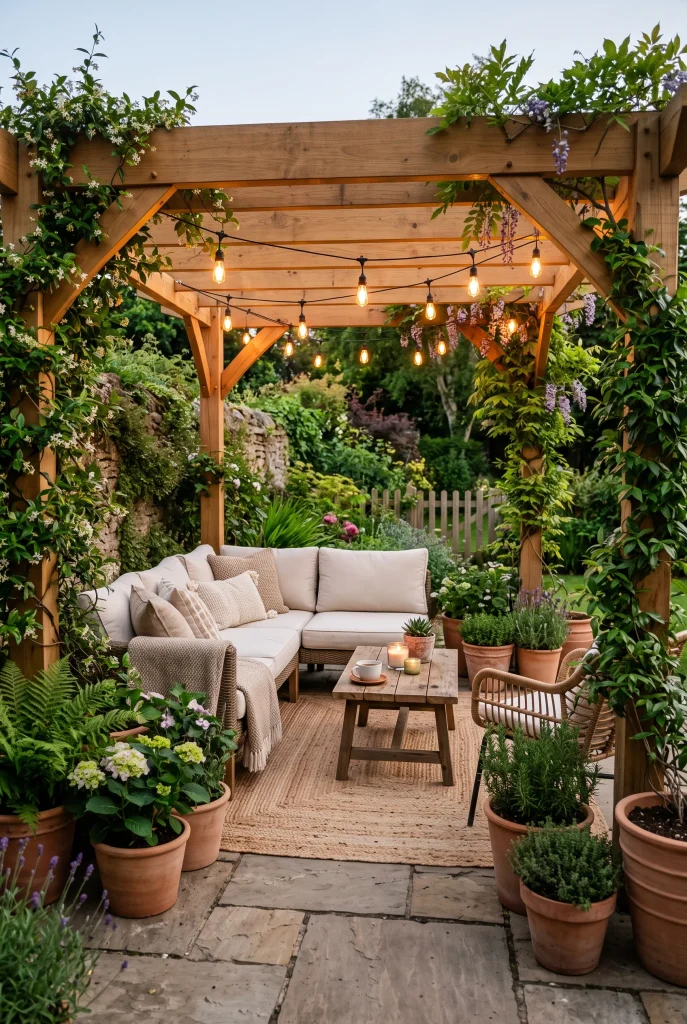
- Adds architectural character and definition to an open backyard.
- Creates partial shade for comfortable outdoor seating during sunny afternoons.
- Climbing plants bring natural beauty and a garden-inspired atmosphere.
- Hanging lights make the space usable and inviting after sunset.
- A pergola can visually separate a lounge area from the rest of the yard.
A pergola can give your backyard the feeling of a thoughtfully designed outdoor room. Its overhead structure creates a defined destination for dining, lounging, or entertaining without completely enclosing the space. Natural wood brings warmth, while climbing vines soften the lines and blend the structure into the garden. Add comfortable seating beneath it, then introduce outdoor curtains or a retractable shade cover if you need more protection from the sun. This combination creates a peaceful retreat that feels intentional, making even a simple patio more attractive and functional throughout the day.
When planning a pergola retreat, consider how sunlight moves across your backyard before choosing its position. Place the structure where it can provide useful shade while leaving enough room for comfortable movement around the furniture. Weather-resistant wood, metal, or composite materials can suit different budgets and maintenance preferences. String lights, lanterns, and potted plants add personality without requiring major construction. The most successful pergola spaces feel connected to their surroundings. Using similar colors and materials throughout the patio and garden helps the entire backyard look cohesive rather than pieced together.
3. Lush Garden Borders
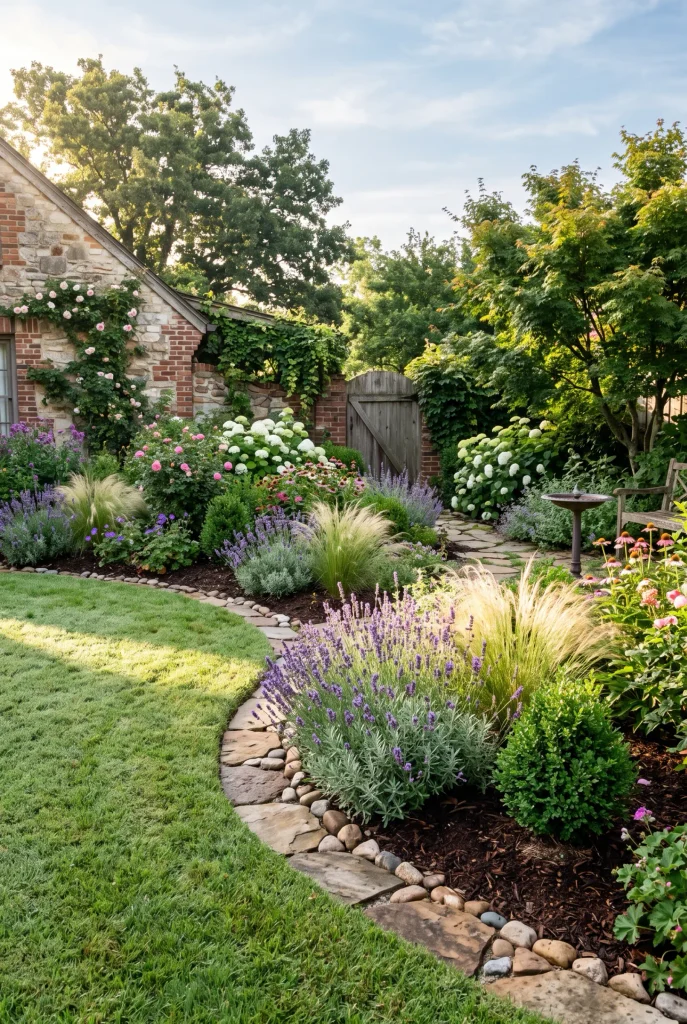
- Defines the edges of a lawn, patio, or walkway with natural beauty.
- Layered plants create depth and make the backyard feel more established.
- Mixing heights, textures, and foliage colors adds visual interest in every season.
- Stone edging helps keep planting areas neat and easier to maintain.
- Native or climate-suitable plants can reduce watering and long-term maintenance needs.
Beautiful garden borders can make a backyard feel fuller, greener, and more connected to nature. Instead of leaving large areas of lawn or paving visually empty, use planting beds to introduce layers of texture and color. Combine taller shrubs at the back with medium-sized flowering plants and low groundcovers near the edge. This arrangement creates a natural transition between different parts of the yard while adding softness to hard surfaces. Choose plants that suit your local sunlight, soil, and climate conditions. A thoughtful border can transform a plain outdoor area into a welcoming garden with year-round character.
The most attractive planting borders usually combine beauty with practical maintenance. Before planting, observe which areas receive full sun, partial shade, or very little direct light. Group plants with similar water and care needs so the garden remains easier to manage. Natural stone, brick, or simple metal edging can keep soil and mulch neatly contained. Add evergreen foliage for structure, then use seasonal flowers for changing color. Repeating a few plant varieties throughout a backyard creates a more polished appearance than filling every corner with unrelated species, especially in smaller outdoor spaces.
4. Inviting Outdoor Dining
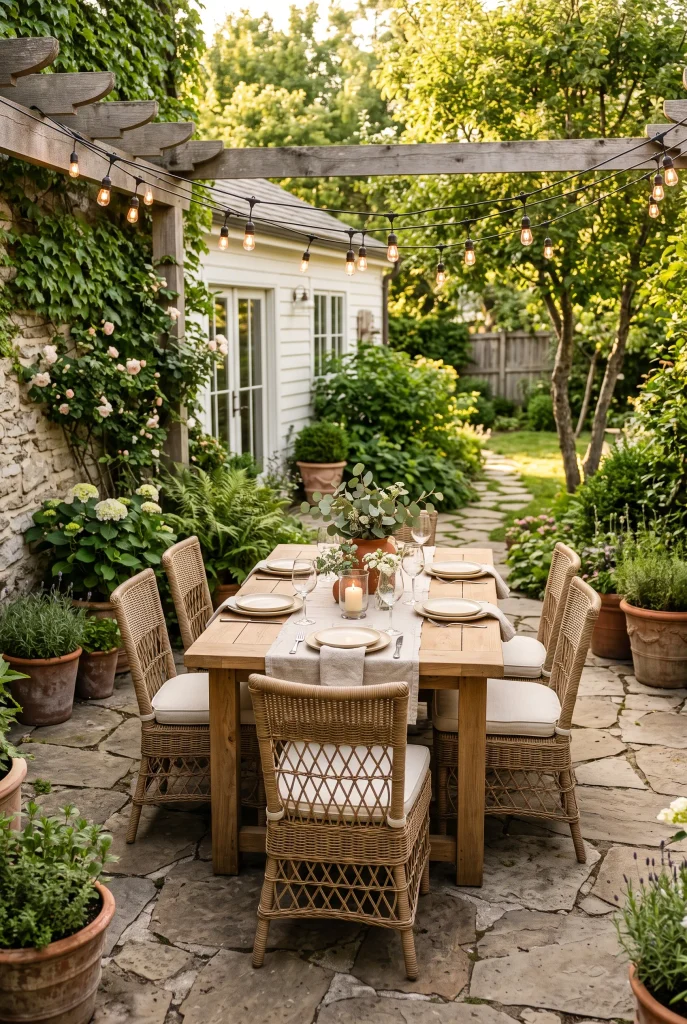
- Creates a dedicated space for family meals and outdoor entertaining.
- A wooden dining table adds warmth and natural character.
- Comfortable chairs make longer meals and conversations more enjoyable.
- Overhead lighting extends the use of the dining area into the evening.
- A simple centerpiece brings personality without making the table feel crowded.
Outdoor dining brings a special kind of charm to everyday meals and weekend gatherings. A well-placed dining table gives your backyard a clear purpose while creating space for family dinners, morning breakfasts, or relaxed celebrations with friends. Choose a durable table that fits your available area, then surround it with comfortable chairs that allow easy movement. Natural wood, woven materials, and neutral cushions create a welcoming atmosphere without looking overly formal. Even a modest patio can become a beautiful dining destination when the furniture arrangement feels balanced, practical, and connected to the surrounding garden.
The right details can make an outdoor dining area feel both polished and effortless. Consider placing the table near the kitchen or outdoor cooking space to make serving meals easier. A weather-resistant rug can visually define the dining zone, while lanterns or overhead lights provide a warm glow after sunset. Keep decorations simple enough that the table remains useful for everyday meals. Choosing durable materials early saves time and money later, especially when outdoor furniture faces changing weather. Add seasonal flowers, textured napkins, or natural serving pieces for an inviting finishing touch.
5. Serene Water Feature
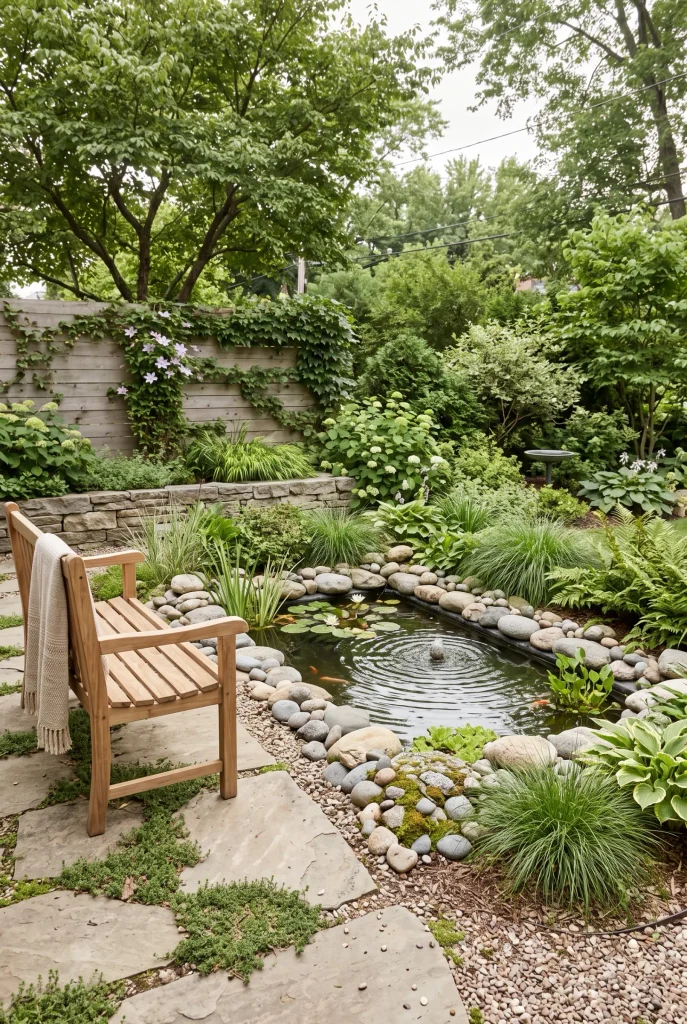
- Introduces a soothing focal point that draws attention through movement and sound.
- A small pond or fountain can add character without requiring a large backyard.
- Natural stones and greenery help the feature blend into the landscape.
- A nearby bench creates a quiet place for reflection.
- Choose a design that suits your maintenance preferences and available space.
A water feature can bring a sense of calm to your outdoor space while creating an eye-catching focal point. The gentle sound of moving water helps soften the atmosphere, making the backyard feel more peaceful and inviting. You might choose a compact fountain, a small pond, or a simple bubbling urn depending on your space and budget. Surround the feature with natural stones, ornamental grasses, and leafy plants to create a cohesive garden setting. Even a small water element can make a noticeable difference, especially when positioned where it can be enjoyed from nearby seating.
When adding a water feature, think about visibility, safety, and maintenance before choosing its final location. A fountain near a seating area can provide relaxing background sound, while a pond surrounded by plants creates a more natural garden appearance. Select materials that complement your existing patio, pathways, or planting beds. Keep access available for cleaning and routine care, and consider child- or pet-safety needs where relevant. Simple designs often feel more timeless than overly elaborate installations. A thoughtfully placed water feature should enhance the backyard rather than become difficult to manage.
View: 21 Coastal Living Room Ideas to Bring Beach Vibes Home
6. Stylish Fire Pit
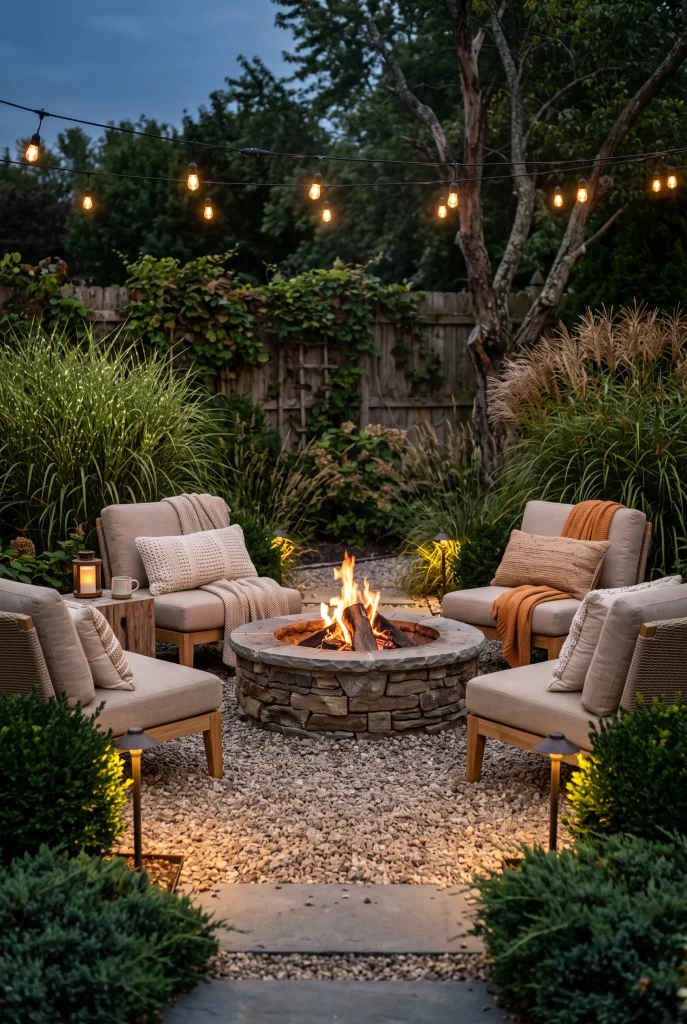
- Creates a natural gathering point for relaxing evenings outdoors.
- Comfortable chairs encourage conversation around the fire.
- Gravel or stone flooring adds texture and helps define the seating area.
- Warm lighting makes the space feel inviting after sunset.
- Choose a fire feature appropriate for your local regulations and safety requirements.
A fire pit can turn an ordinary backyard into a welcoming gathering space after the sun goes down. The warm glow creates an inviting atmosphere for conversations, quiet evenings, and outdoor entertaining. Surround the fire feature with comfortable, heat-appropriate seating so everyone can enjoy the area safely. Stone, gravel, or brick flooring provides a practical foundation while adding natural texture. Whether you prefer a modern fire bowl or a traditional stone circle, the design should complement your existing landscape. With thoughtful placement and suitable materials, this setup can make your backyard feel useful well beyond daylight hours.
Planning a fire pit area requires more than choosing an attractive centerpiece. Check local fire regulations, required clearances, and any restrictions related to fuel type before installation. Position the feature away from structures, overhanging branches, and flammable materials, following the manufacturer’s safety instructions. Choose seating that can withstand outdoor conditions and arrange it with enough space for comfortable movement. Keeping the surrounding decor simple helps the fire become the main visual attraction. A few lanterns, textured cushions, and carefully selected plants can complete the setting without making it feel crowded.
7. Relaxing Hammock Corner
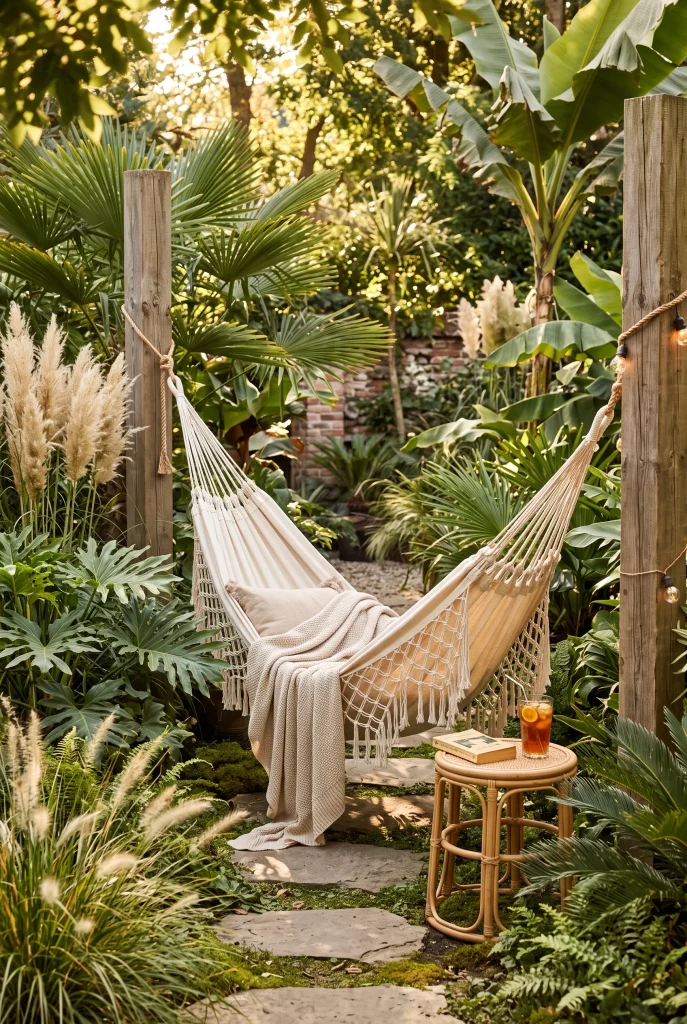
- Creates a dedicated spot for reading, resting, or enjoying quiet afternoons.
- A hammock adds a relaxed, vacation-inspired feeling to the backyard.
- Soft neutral fabric blends beautifully with natural greenery.
- A small side table keeps essentials within easy reach.
- Choose a secure installation point and weather-resistant materials for long-term use.
A hammock corner can make your backyard feel like a private escape without requiring a major renovation. Its relaxed shape instantly invites you to slow down, stretch out, and enjoy the fresh air. Place a comfortable hammock beneath mature trees or install it between sturdy posts in a sunny garden area. Surround the setup with leafy plants, soft grasses, and a small side table for books or drinks. Natural textures and gentle colors create a peaceful atmosphere that feels effortlessly beautiful. Even a narrow backyard can accommodate this idea when the layout is planned carefully.
The most enjoyable hammock spaces combine comfort with thoughtful placement. Before installing one, make sure the trees, posts, or mounting hardware can safely support the intended load. Choose a location with suitable shade and enough clearance for movement. Weather-resistant fabric helps the hammock handle outdoor conditions, while a removable cushion can add extra comfort. A simple corner often feels more inviting when it includes just a few useful details rather than excessive decoration. A small plant, woven basket, or lightweight throw can finish the space while keeping its peaceful, uncluttered character.
8. Natural Stone Pathway
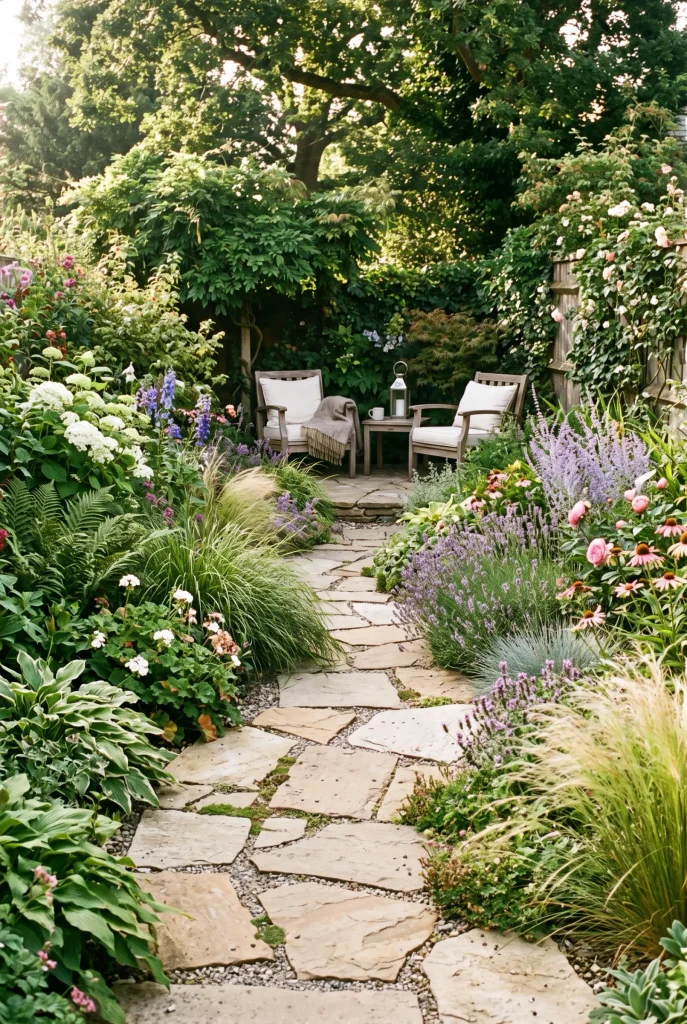
- Guides movement through the backyard while adding visual structure.
- Natural stone creates an organic transition between lawns, patios, and planting beds.
- Curved pathways can make a garden feel more spacious and interesting.
- Gravel joints and planted edges soften the appearance of hard materials.
- Choose slip-resistant, weather-suitable surfaces for safer everyday use.
A beautiful pathway can completely change how your backyard feels and functions. Instead of walking across grass or stepping around planting beds, a defined route guides you naturally toward seating areas, gardens, or outdoor dining spaces. Stone pavers create a timeless appearance, while gravel and surrounding greenery soften the edges. A gently curved path can add a sense of discovery, making the landscape feel more layered and inviting. Choose materials that complement your home’s exterior and existing patio. With careful placement, even a small pathway can create a stronger connection between different outdoor areas.
When designing a garden pathway, consider how people naturally move through the space before selecting its shape. A direct route works well for frequently used areas, while a gentle curve can create a more relaxed garden experience. Use consistent spacing between stepping stones and ensure the surface remains stable underfoot. Natural stone, brick, and gravel each offer different maintenance requirements and visual effects. Repeating pathway materials elsewhere in the backyard creates a more cohesive design. Matching the edging, patio tones, or nearby planters can make the entire landscape feel thoughtfully connected.
9. Vertical Green Wall
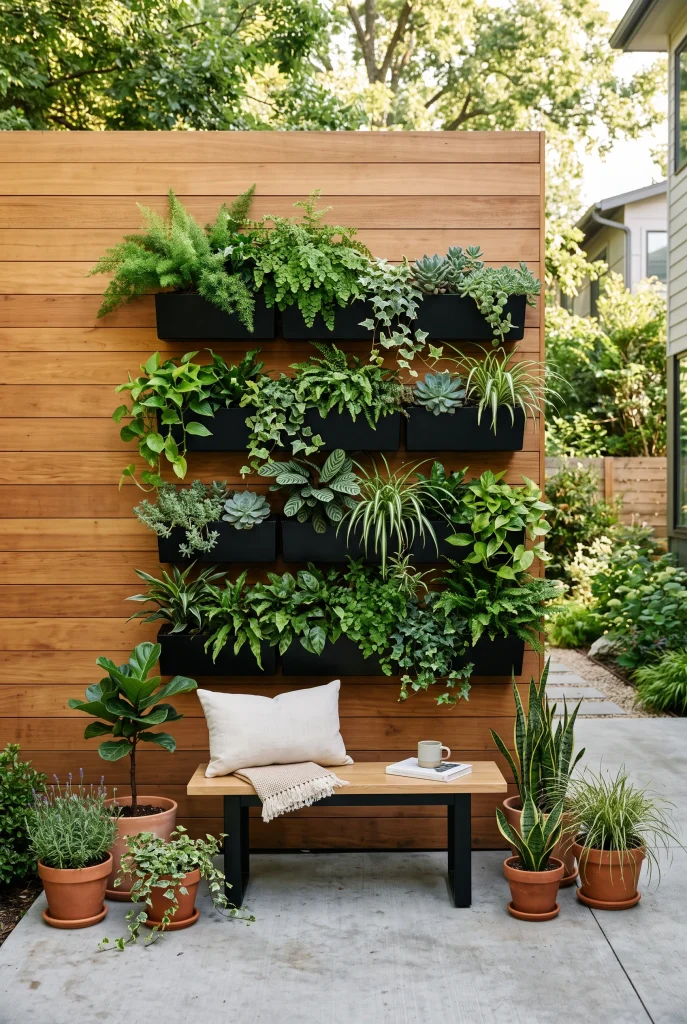
- Makes use of vertical space when the backyard has limited floor area.
- Adds greenery to plain walls, fences, or privacy screens.
- Creates a strong visual focal point without taking up much ground space.
- A mix of foliage shapes adds depth and texture.
- Select plants according to the wall’s sunlight, watering access, and local climate.
A vertical garden can bring fresh greenery into a backyard without sacrificing valuable floor space. This idea works especially well for narrow patios, small courtyards, and areas with plain privacy fences. Mount planters on a wooden panel, install a modular living wall, or arrange hanging pots at different heights. The result adds color, texture, and visual interest while making a compact outdoor area feel more alive. Choose plants that suit your available sunlight and watering routine. With the right arrangement, a simple wall can become an attractive garden feature that gives your space a more finished appearance.
The key to a successful vertical garden is choosing a setup that matches your maintenance habits. Some living walls require regular watering, while modular planters or artificial greenery may offer simpler upkeep. Check the wall’s strength and protect surfaces from moisture before installation. Use a consistent planter color to create a polished look, or mix natural materials for a relaxed garden feel. Arranging plants at varied heights makes a vertical display look fuller and more intentional. Leave enough room between containers for growth, airflow, and easy access during routine care.
10. Outdoor Kitchen
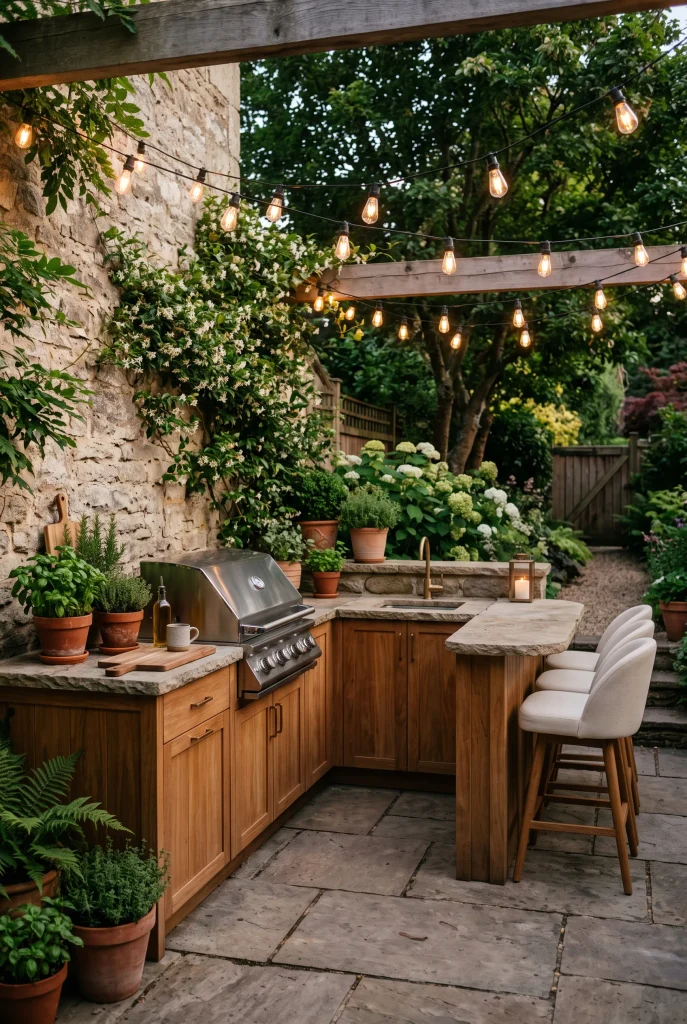
- Makes outdoor entertaining more convenient by keeping cooking and serving together.
- A compact counter provides useful preparation space.
- Built-in storage helps keep cooking tools organized.
- Natural materials create a cohesive connection with the garden.
- Start with essential features that match your cooking habits and available budget.
An outdoor kitchen can make backyard gatherings feel easier, more social, and enjoyable. Instead of preparing everything indoors and carrying meals outside, you can cook, serve, and spend time with guests in one convenient area. A grill, countertop, and storage cabinets create a practical foundation for outdoor cooking. If space allows, add a small bar counter with comfortable stools for casual dining. Choose weather-resistant materials that complement your home’s exterior. Even a compact cooking station can become a valuable feature when its layout supports everyday use and keeps essential supplies within easy reach.
Planning an outdoor kitchen starts with understanding how you intend to use it. Consider the distance from your indoor kitchen, available shade, ventilation, and access to necessary utilities. A simple grill station may be enough for occasional gatherings, while frequent entertainers might benefit from additional preparation and storage space. Durable countertops, weather-resistant cabinetry, and easy-to-clean surfaces help simplify maintenance. Practical layout decisions matter more than adding every possible feature. A well-organized cooking area feels more useful and attractive when it supports your routine without creating unnecessary clutter.
11. Covered Patio
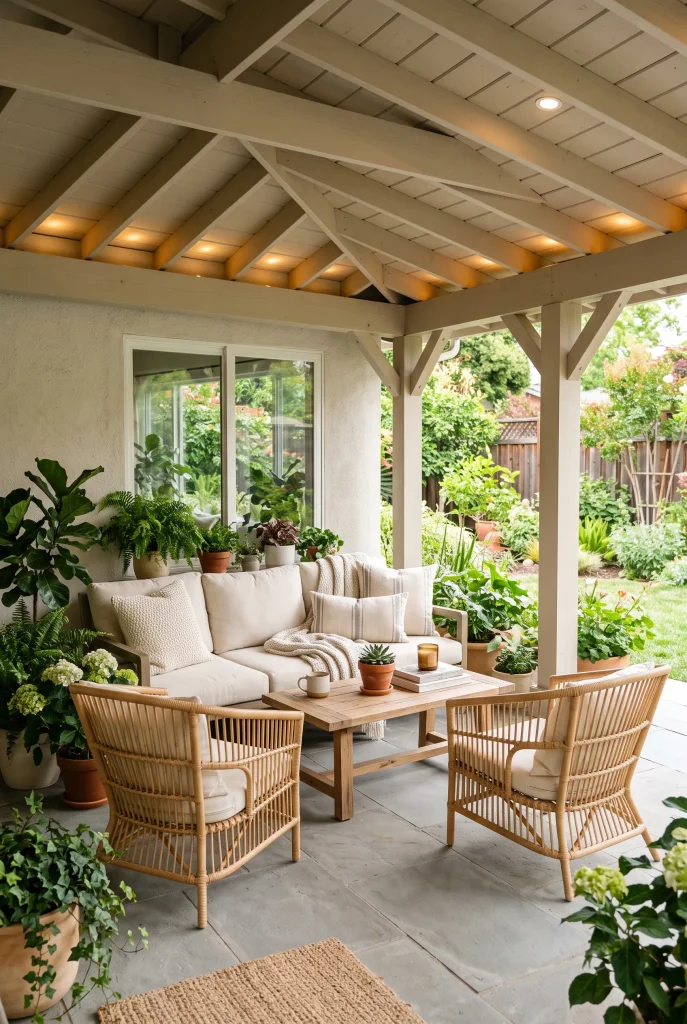
- Provides shelter from strong sunlight and light weather conditions.
- Creates a more usable outdoor room for relaxing and entertaining.
- A covered ceiling adds architectural definition to an open patio.
- Neutral furniture and natural materials create a comfortable atmosphere.
- Consider ventilation, drainage, and local building requirements before construction.
A covered patio can make your backyard feel like a natural extension of your indoor living space. With protection from direct sunlight and suitable weather conditions, the area becomes more comfortable for morning coffee, family conversations, and outdoor meals. A roof or shade structure defines the patio while allowing you to arrange furniture in a more intentional way. Add a sofa, lounge chairs, or a dining table depending on your needs. Neutral fabrics, natural wood, and greenery create a relaxed atmosphere that feels welcoming throughout the day, especially during warmer seasons.
The design of a covered patio should balance shelter, airflow, and practical maintenance. Before adding a permanent structure, check local regulations and consider how the roof will affect natural light inside your home. Choose materials that can handle your local climate and include suitable drainage to prevent water problems. Ceiling fans, outdoor curtains, or adjustable screens may improve comfort depending on the design. Covered patios feel more inviting when the furniture arrangement leaves clear walking paths. A few well-chosen decorative details can make the sheltered space feel finished without overcrowding it.
12. Built-In Bench Seating
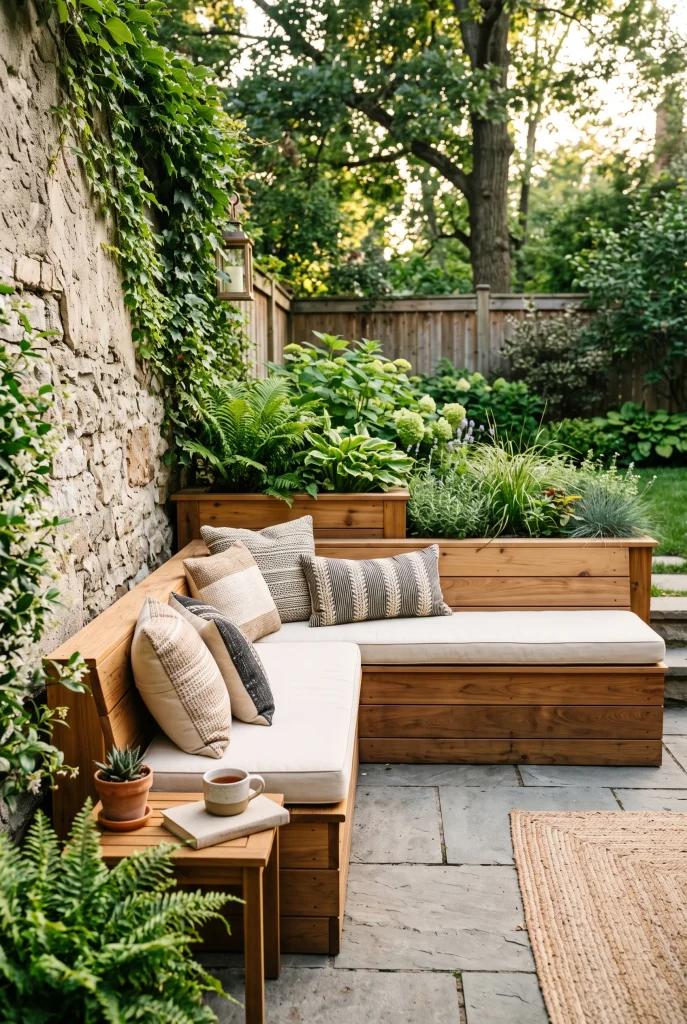
- Maximizes seating without taking up the space required by separate chairs.
- Creates a neat, permanent feature along walls, fences, or garden edges.
- Built-in storage can provide a practical place for outdoor cushions and accessories.
- Soft cushions make the seating more comfortable and inviting.
- Use durable materials and provide suitable drainage where the bench meets outdoor surfaces.
Built-in bench seating can transform an unused backyard edge into a comfortable and purposeful retreat. A bench along a wall, fence, or garden border creates seating without requiring several separate chairs. Its clean lines help the space feel organized, while cushions and pillows add softness and personality. You can design the bench to fit a narrow patio, a spacious garden, or a cozy corner beneath a pergola. Add a small table nearby for drinks or books. This approach combines practical seating with a custom appearance that makes the backyard feel more thoughtfully planned.
When planning built-in seating, think carefully about dimensions, materials, and everyday comfort. The seat should provide enough depth and support for relaxed use, while the surrounding layout should allow people to sit and move easily. Weather-resistant wood, masonry, or composite materials can suit different styles and maintenance needs. Add removable cushions in outdoor-rated fabric so they can be cleaned or stored when necessary. Incorporating storage beneath the bench can make a small backyard more functional. It keeps blankets, gardening tools, or cushions organized without adding bulky furniture elsewhere.
13. String Light Canopy
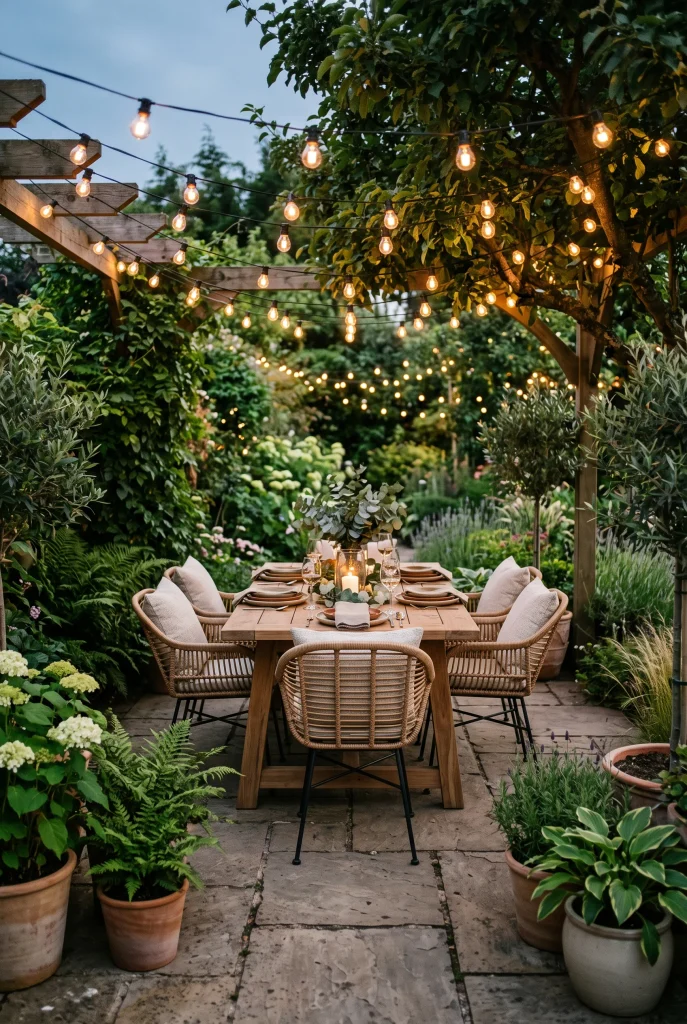
- Adds instant warmth and atmosphere after sunset.
- Creates a visual ceiling over dining or lounge areas.
- Warm bulbs pair beautifully with wood, rattan, and greenery.
- Flexible lighting works well for both everyday evenings and entertaining.
- Use outdoor-rated lights and secure them properly for safe, long-lasting use.
Few details can change the mood of a backyard as quickly as warm string lights. Draped above a patio, dining table, or lounge area, they create a soft canopy that makes ordinary evenings feel more inviting. Choose warm-white bulbs for a relaxed glow and arrange them in straight lines, gentle curves, or a simple crisscross pattern. Pair the lights with natural wood furniture, greenery, and comfortable cushions for a cozy atmosphere. This lighting idea works especially well when you want your outdoor space to feel intimate without adding large structures or complicated decorations.
Good placement makes outdoor lighting look intentional rather than messy. Start by identifying the main area you want to highlight, then determine where the lights can be safely anchored. Outdoor-rated products are important, especially in areas exposed to rain or humidity. Keep cords organized and follow the manufacturer’s installation instructions. You can also combine string lights with lanterns or subtle pathway lighting for layered illumination. Warm lighting looks particularly attractive against greenery and natural materials. Keeping the rest of the lighting simple allows the soft glow to remain the main evening feature.
14. Cozy Garden Nook
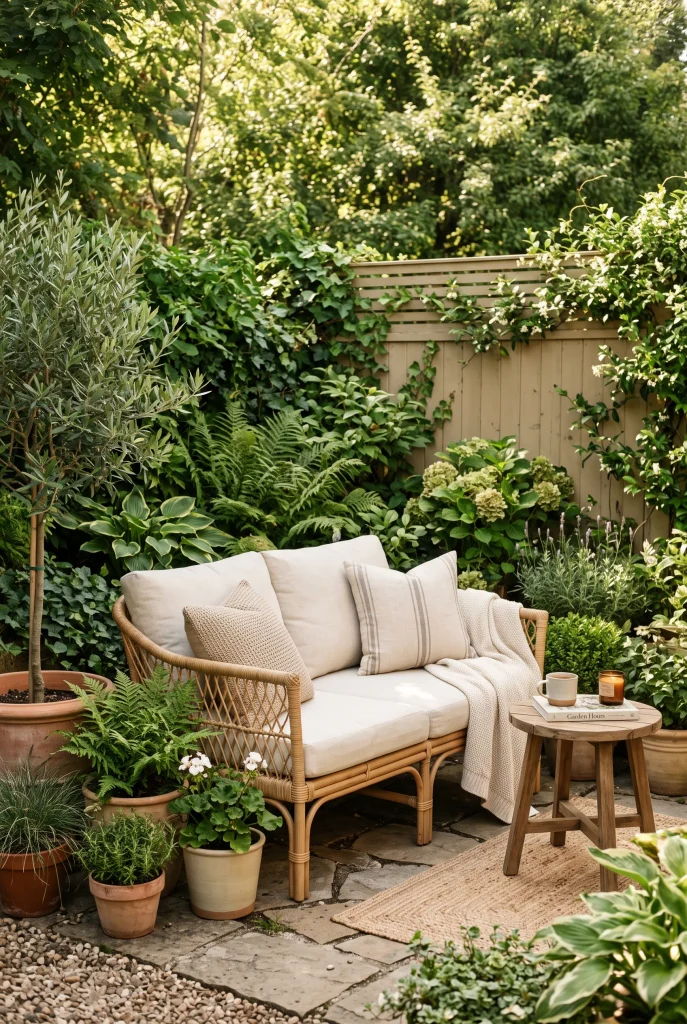
- Turns an overlooked backyard corner into a useful retreat.
- Compact furniture makes the idea practical for smaller outdoor spaces.
- Layered plants create privacy and a stronger connection with nature.
- A small table provides convenient space for drinks, books, or decor.
- Keep the furniture proportional to the area so the nook remains easy to move through.
An unused backyard corner can become one of the most charming areas with just a few thoughtful additions. Start with a compact loveseat or two comfortable chairs, then surround the seating with greenery to create a sense of privacy. A small side table gives you a convenient place for coffee, books, or a planter without taking up much room. Choose natural materials such as rattan, wood, and woven textiles to keep the setting relaxed. Even a narrow corner can feel like a private retreat when the furniture fits comfortably and the surrounding plants frame it naturally.
The best garden nooks feel secluded without becoming difficult to access or maintain. Before arranging furniture, consider how much sunlight the area receives and choose plants accordingly. Tall planters, trellises, or compact shrubs can create privacy without requiring a large fence. Keep a clear path around the seating so the space remains practical. Smaller outdoor corners look better when decorated selectively. One comfortable seat, a useful table, and a few well-positioned plants often create more impact than filling every available surface with accessories.
15. Raised Garden Beds
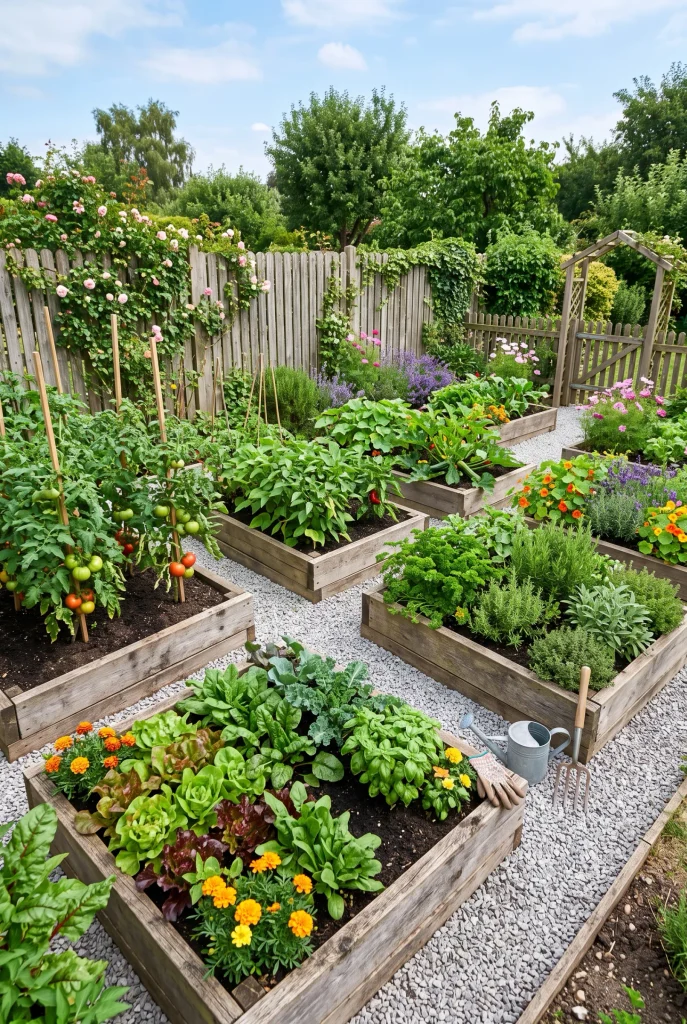
- Adds structure while making gardening easier to organize.
- Raised beds can separate herbs, vegetables, flowers, and seasonal crops.
- Defined pathways keep the garden area neat and accessible.
- Wooden frames introduce warm natural texture to the landscape.
- Choose suitable soil, drainage, and plants according to your growing conditions.
Raised garden beds can turn a simple backyard into a productive and beautiful growing space. Their defined shape keeps vegetables, herbs, and flowers organized while making the planting area easier to maintain. Arrange several beds with narrow paths between them to create a structured garden layout. Cedar, untreated wood suitable for gardening, stone, or composite materials can provide different visual styles and durability. Fill the beds with appropriate growing soil and choose plants that match your climate and available sunlight. The result can add useful greenery while giving the backyard a charming, purposeful feature.
A successful raised-bed garden begins with practical planning rather than decoration alone. Position the beds where plants receive the sunlight they need, and leave enough room around each one for watering, harvesting, and maintenance. Good drainage is also essential, particularly after heavy rain. You can combine edible plants with flowers to attract pollinators and add color. Repeating the same materials in nearby planters or pathways helps a garden feel more cohesive. Keep the layout simple enough to maintain regularly, because an organized garden is much more enjoyable when it stays manageable.
16. Privacy Planting
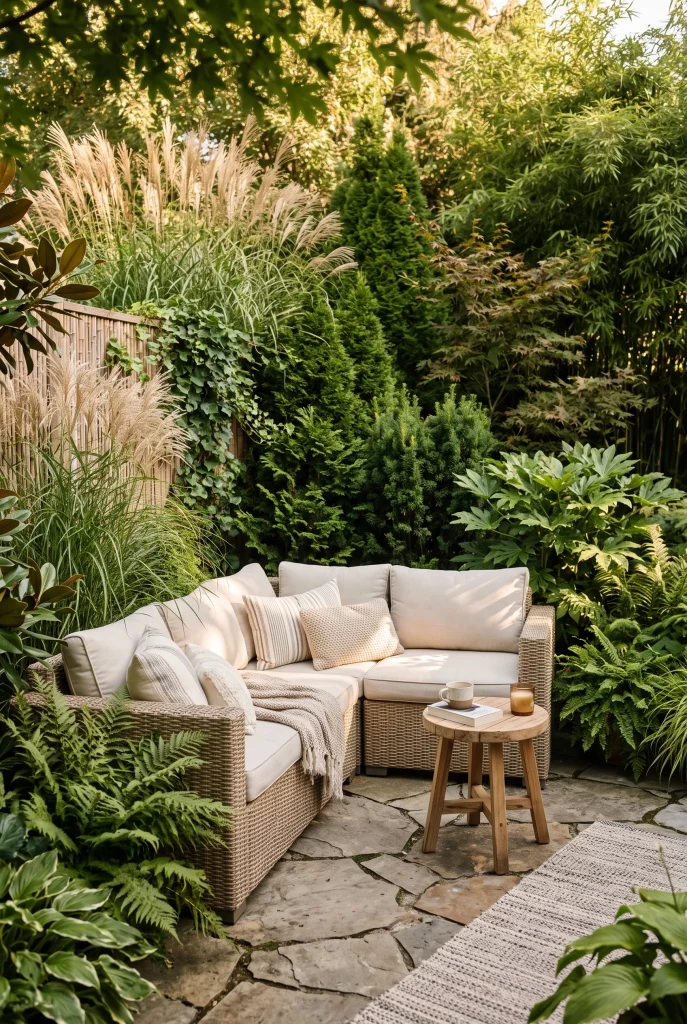
- Creates a more secluded feeling without relying entirely on solid fencing.
- Layered greenery adds softness and natural beauty around seating areas.
- Evergreen plants can provide structure and privacy across multiple seasons.
- Different plant heights create depth while making the space feel enclosed.
- Choose species suited to your climate, available space, and maintenance routine.
A little privacy can make a backyard feel dramatically more comfortable and relaxing. Instead of surrounding the entire space with tall solid fencing, use layers of plants to create a softer natural screen. Combine taller shrubs or narrow trees with medium-height plants and ornamental grasses near seating areas. This approach adds privacy while preserving light and keeping the landscape visually interesting. Evergreen varieties can provide year-round structure, while flowering plants introduce seasonal color. With thoughtful placement, greenery can separate your outdoor retreat from nearby views without making the backyard feel closed in or disconnected from nature.
The right privacy planting depends heavily on your backyard’s size and growing conditions. Avoid choosing plants simply because they grow quickly, since aggressive growth can create extra pruning and maintenance later. Check mature height, width, sunlight needs, and water requirements before planting. Layering different heights usually looks more natural than creating one uniform row. Mixing evergreen foliage with softer grasses and seasonal flowers creates a more relaxed screen. Leave enough space between plants for healthy growth, airflow, and access, so your privacy feature remains attractive instead of becoming overcrowded.
17. Outdoor Movie Area
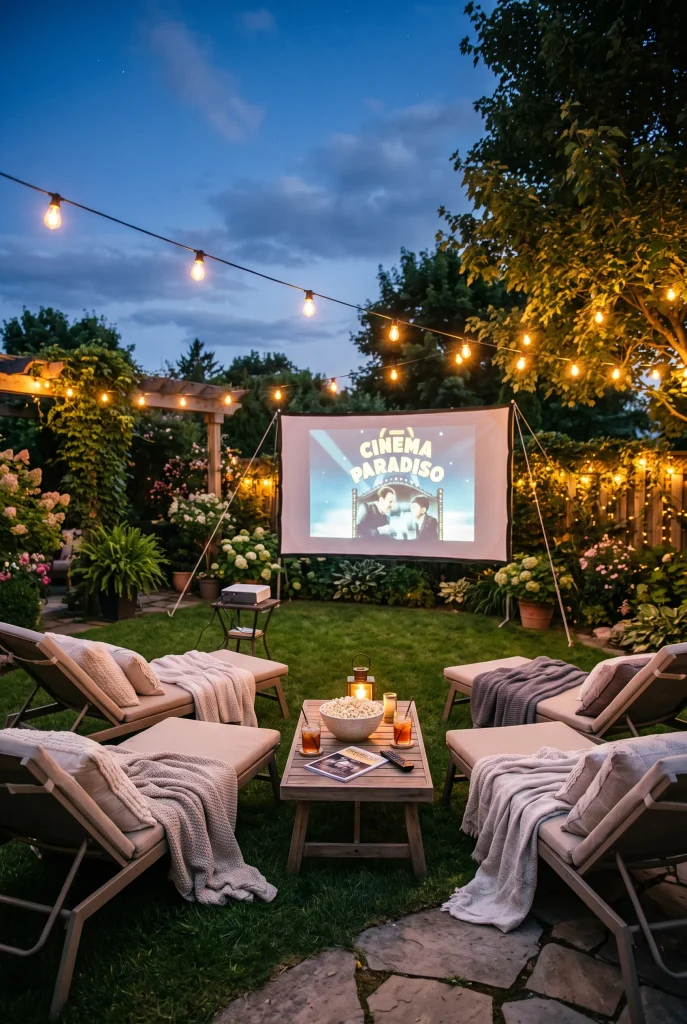
- Turns the backyard into an entertaining destination for family movie nights.
- Comfortable seating makes longer outdoor viewing sessions more enjoyable.
- A simple projector and screen can work without building a permanent structure.
- Soft lighting keeps the area inviting before and after the movie.
- Keep electronics protected from moisture and follow manufacturer setup guidelines.
An outdoor movie area can turn an ordinary evening into a memorable backyard experience. You do not need a complicated theater installation to create the feeling. A portable projector, large screen or suitable outdoor display, and comfortable seating can establish the main setup. Arrange chairs or lounge cushions so everyone has a clear view without blocking another person. Add blankets, small tables, and warm lighting around the edges for extra comfort. This idea works especially well for family gatherings, casual parties, or quiet weekends when you want to enjoy entertainment under the open sky.
A successful outdoor movie setup should prioritize visibility, comfort, and weather protection. Choose a location where surrounding lights can be controlled and the screen remains easy to see after sunset. Test the projector position before guests arrive, especially if you are using a portable screen. Keep electrical equipment protected from moisture and use outdoor-rated extension equipment where appropriate. Comfortable seating matters just as much as the screen itself, so provide cushions or supportive chairs. Keeping the surrounding decor simple helps the viewing area feel organized while allowing the screen to remain the main focus.
18. Rustic Garden Shed
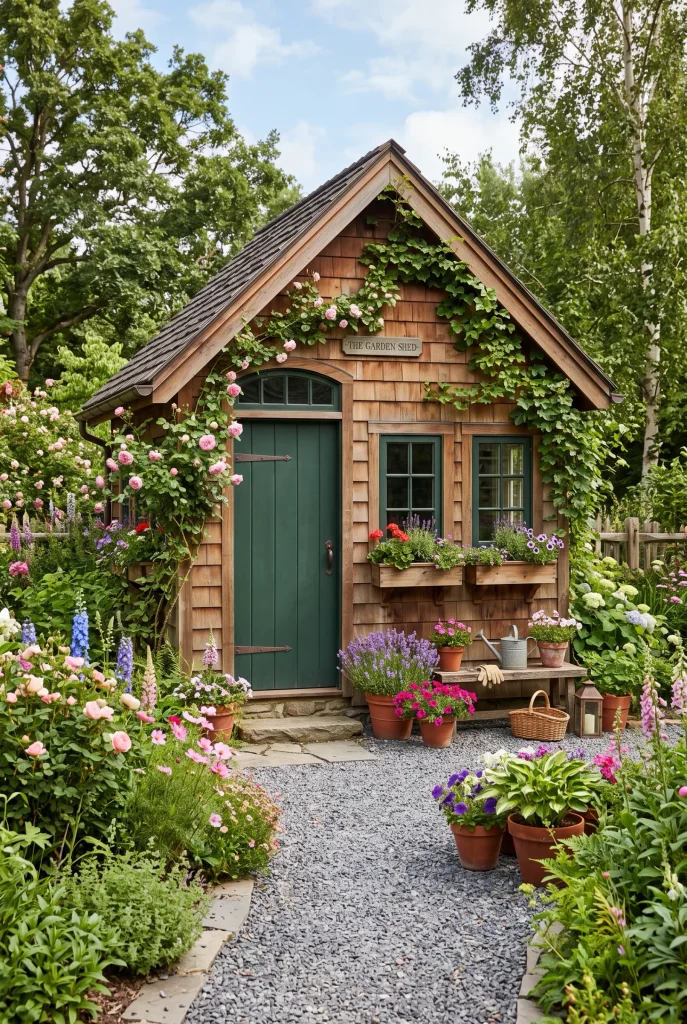
- Provides dedicated storage for gardening tools and outdoor supplies.
- A well-designed shed can become an attractive landscape feature.
- Natural wood and cottage details blend easily with garden surroundings.
- Shelving and wall storage make small interiors more useful.
- Match the shed’s size and style to your backyard and local regulations.
A garden shed can solve storage problems while adding personality to your backyard. Instead of leaving tools, pots, soil, and outdoor equipment scattered around the patio, a dedicated structure keeps everything organized and easier to access. Choose a shed style that complements your home, whether you prefer rustic wood, modern siding, or a simple cottage look. Add windows for natural light and shelves for smaller supplies. Surround the structure with plants, gravel, or a narrow pathway so it feels integrated into the landscape. A practical storage solution can become a charming focal point with thoughtful design.
Before installing a shed, consider what you actually need to store and how much floor space those items require. Shelving, hooks, pegboards, and overhead storage can make a compact shed surprisingly functional. Keep frequently used tools near the entrance and reserve less accessible areas for seasonal items. Choose weather-resistant construction and provide adequate ventilation to protect stored belongings. Check local rules regarding placement, size, and permits before building. Matching the shed’s colors or materials to nearby fencing and garden features makes it feel like part of the overall landscape rather than an added structure.
19. Layered Patio Textures
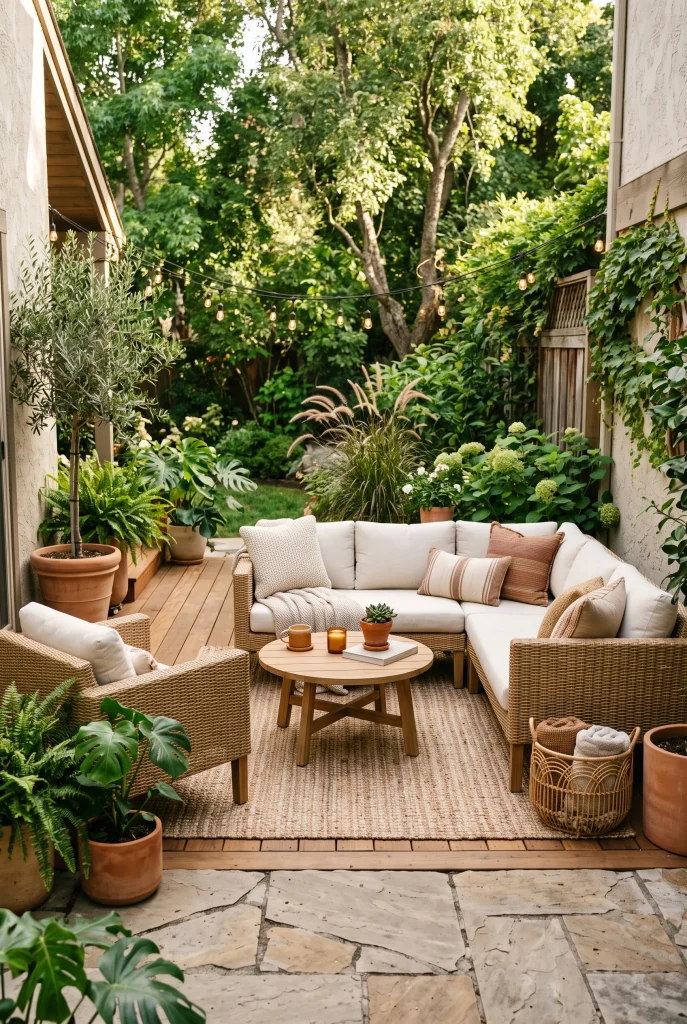
- Mixing materials gives a simple patio more depth and visual interest.
- Wood brings warmth while stone adds durability and natural texture.
- Outdoor rugs help visually define seating or dining zones.
- Woven furniture introduces softness against harder surfaces.
- Repeat two or three materials throughout the space for a cohesive look.
Layering different textures can make a backyard feel much more finished without requiring major changes. Combine smooth stone with warm wood, woven furniture, soft outdoor fabrics, and textured planters to create visual depth. The contrast between hard and soft materials keeps the space interesting while maintaining a relaxed atmosphere. An outdoor rug can define a seating area, while wooden accents warm up cooler stone surfaces. Keep the color palette connected so the different materials work together naturally. This approach is especially useful when you want a polished outdoor setting without adding excessive furniture or decoration.
The key to layered textures is creating contrast without making the backyard feel visually busy. Start with one dominant material, such as stone or wood, then introduce complementary textures through furniture and accessories. Repeat similar tones across different surfaces to make the design feel cohesive. For example, warm wood can connect with tan cushions and terracotta planters. Choose outdoor-rated textiles that can handle changing weather and are easy to clean. Mixing textures in a limited color palette creates a more sophisticated appearance than using many unrelated colors and patterns throughout the same area.
20. Welcoming Entry Patio
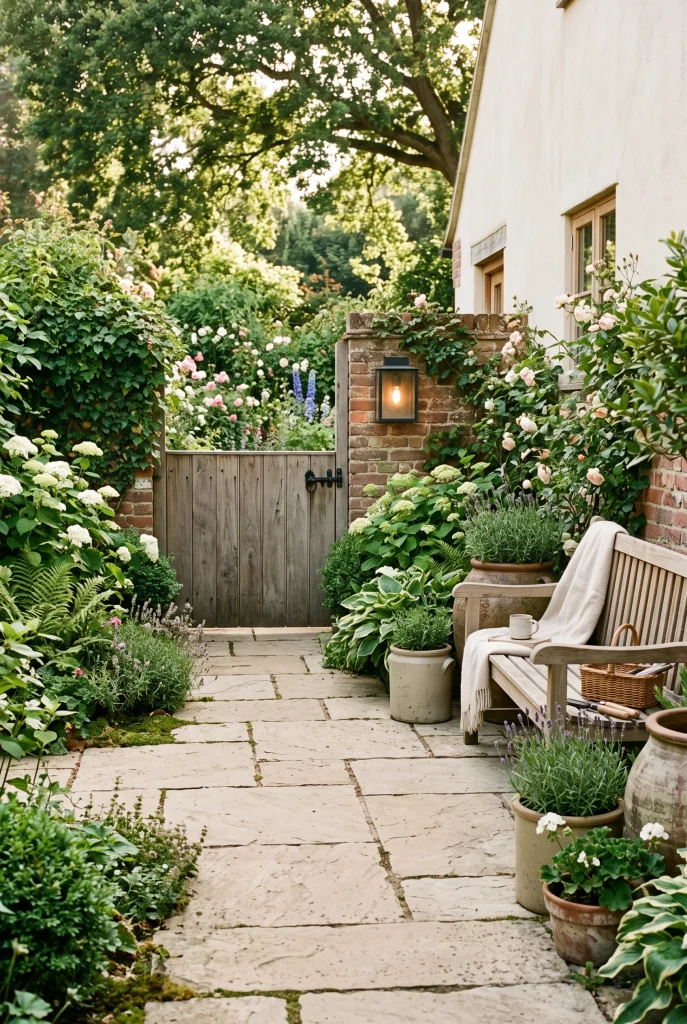
- Creates a clear and inviting transition into the backyard.
- Large pavers make the entrance feel organized and intentional.
- Oversized planters add height and frame the walkway beautifully.
- A small bench provides practical seating near the entrance.
- Repeating materials from the home exterior can create a stronger visual connection.
A thoughtfully designed entrance can set the tone for the entire backyard. Instead of treating the entry as simply a passageway, use paving, plants, lighting, and furniture to create a welcoming transition into the outdoor space. Large stone pavers can establish a clean path, while planters frame the entrance and add natural color. A small bench or narrow console-style table can provide useful function without taking up too much room. Keep the arrangement balanced and uncluttered so movement remains easy. Even a simple entrance can make the backyard feel more intentional from the moment you step outside.
When planning a backyard entrance, think about both appearance and everyday traffic. Choose surfaces that remain practical in your local weather and provide enough width for comfortable movement. Plants should frame the walkway without spreading into the walking area too quickly. Add subtle lighting near steps, gates, or changes in elevation to improve visibility after dark. Repeating colors from your home’s exterior can also create continuity between indoor and outdoor areas. A few larger design elements often look more polished than many small decorations scattered around the entrance.
21. Multi-Zone Backyard
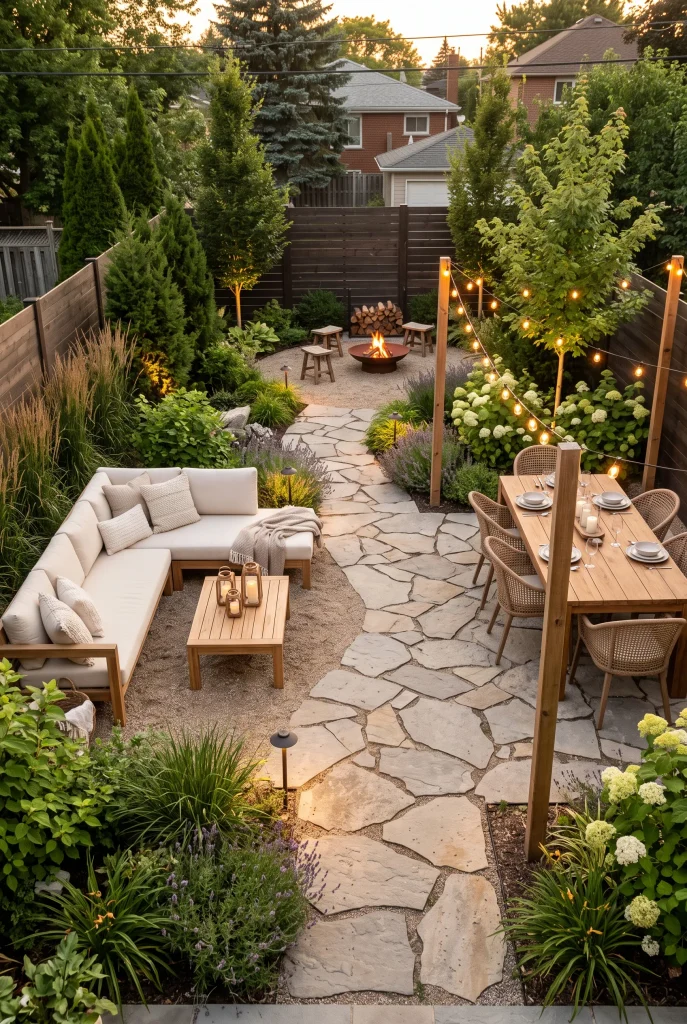
- Gives a large backyard several clear purposes without making it feel disconnected.
- Separate zones can accommodate dining, relaxing, entertaining, and gardening.
- Pathways and planting beds help visually connect different areas.
- Consistent materials and colors keep the overall landscape cohesive.
- Plan each zone around how your household actually uses the outdoor space.
Dividing a large backyard into purposeful zones can make the entire space feel more organized and useful. Instead of placing furniture randomly across the lawn, create dedicated areas for dining, lounging, gardening, or gathering around a fire feature. Use pathways, rugs, planting beds, or changes in flooring to visually separate each function. Keep the overall color palette and materials consistent so the zones still feel connected. This approach allows different activities to happen comfortably at the same time. A well-planned layout can turn an oversized yard into a collection of inviting outdoor rooms.
The best multi-zone layouts begin with your real routines rather than a fixed list of features. Think about where you naturally want to eat, relax, entertain guests, garden, or enjoy quiet time. Place frequently used areas closer to the house and position quieter spaces farther away when possible. Maintain clear pathways between each zone so the backyard remains easy to navigate. You do not need to build permanent structures for every area; furniture, planters, rugs, and lighting can create flexible boundaries. Repeating materials across each zone makes even a large backyard feel unified and intentional.
Conclusion
A beautiful backyard doesn’t have to happen through one huge renovation. Start with one idea that fits your space, lifestyle, and budget, then build from there. From cozy seating and garden borders to outdoor dining, lighting, and multi-zone layouts, these backyard ideas can help transform an ordinary outdoor area into a place you genuinely enjoy. Small changes, especially better furniture placement, greenery, and warm lighting, can completely change the atmosphere. Save this article on Pinterest for your next outdoor project, try your favorite idea, and share it with someone who is planning their own backyard makeover.