21 Masculine Living Room Ideas for a Modern Bold Look
A living room can feel masculine without looking cold, dark, or overly serious. The right mix of deep tones, clean lines, rich textures, and warm materials creates a space that feels confident and inviting. These masculine living room ideas are designed for anyone who wants a modern room with character, comfort, and a polished edge. You’ll find practical ways to work with leather, wood, stone, black accents, layered lighting, and balanced furniture without making the room feel heavy. Even one strong change—such as a darker sofa, textured rug, or statement lighting—can make an ordinary room feel far more intentional.
1. Charcoal Sofa
- Creates a strong focal point without making the room feel too dark.
- Charcoal upholstery feels sophisticated and practical for everyday living.
- Warm wood and cream textiles soften the deeper sofa color.
- A textured rug adds comfort and visual balance underfoot.
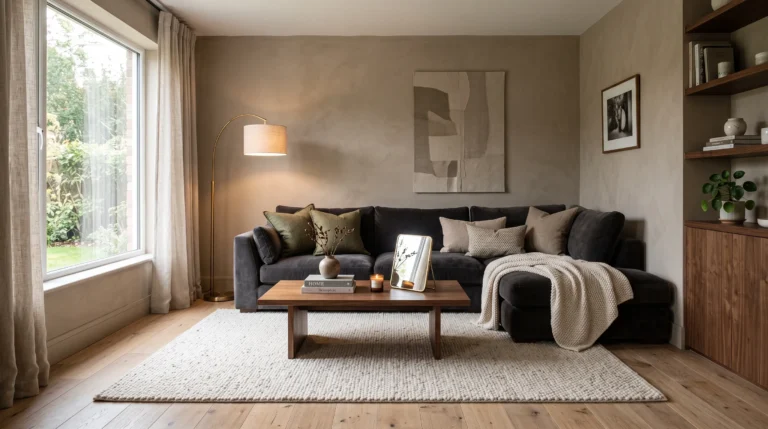
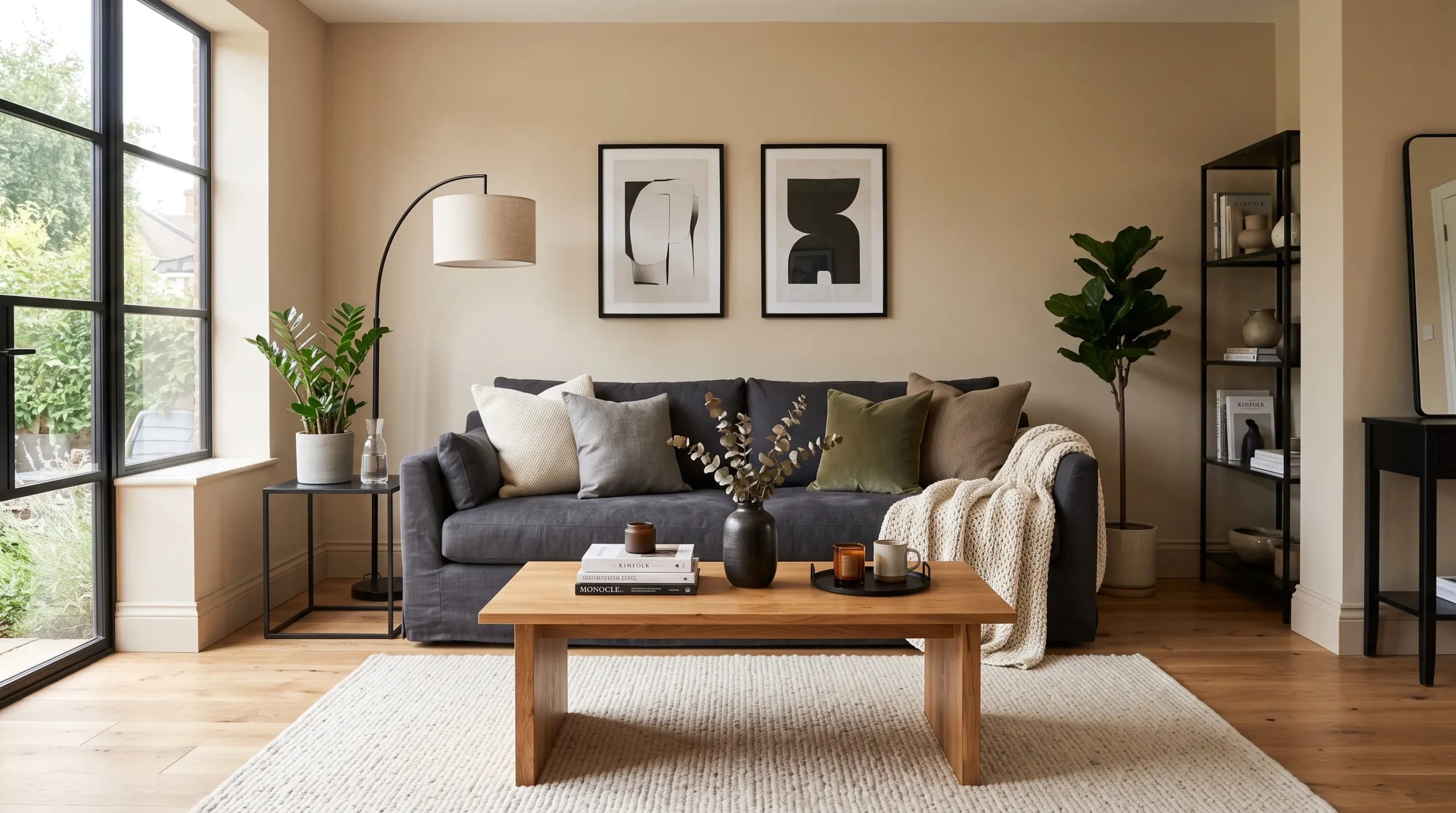
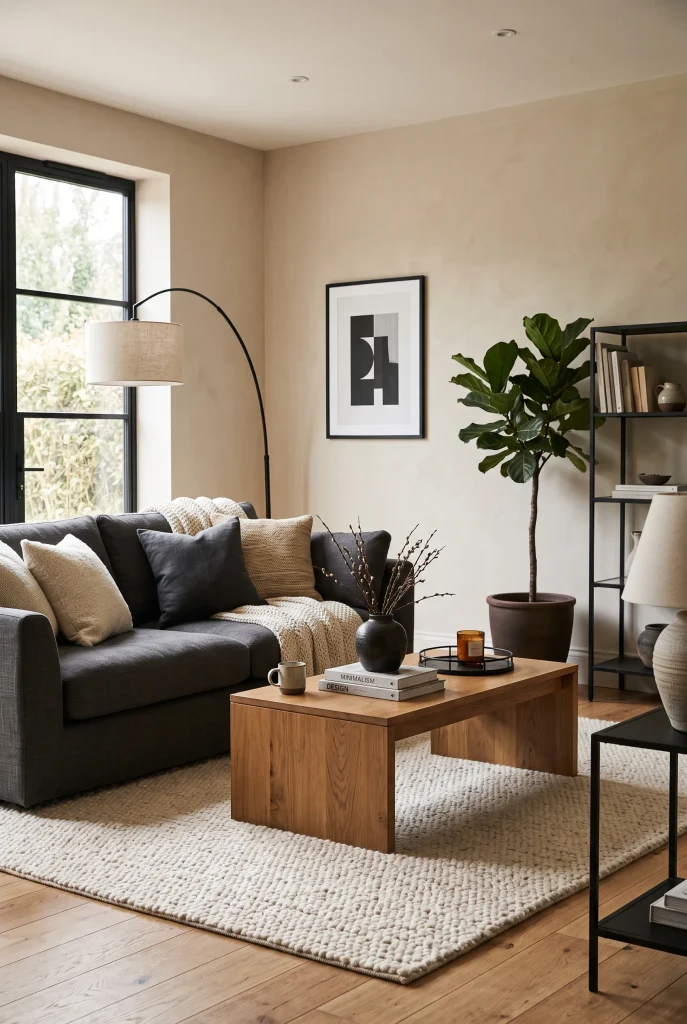
Want a living room that feels instantly confident? Start with a charcoal sofa as the visual anchor, then build lighter elements around it. Charcoal works especially well because it feels sophisticated without the harshness of pure black. Pair it with warm oak furniture, a textured beige rug, and cream cushions to keep the room comfortable. A deep sofa also hides everyday marks better than very light upholstery, which is useful in busy homes. Add a few black metal accents, but let softer fabrics and natural wood prevent the overall scheme from feeling too severe.
A charcoal sofa gives you a strong foundation, but the surrounding layers decide whether the room feels welcoming or flat. Choose a sofa with simple, tailored lines and enough depth for relaxed seating. Balance its darker color with pale walls, warm timber, and a rug that adds subtle pattern or texture underfoot. Floor and table lamps can soften the edges at night while creating useful pools of light. Keep decorative pieces intentional rather than crowded. A few books, ceramics, and framed prints will add personality while preserving the clean, masculine character that makes the space feel polished and livable.
2. Warm Wood Accents
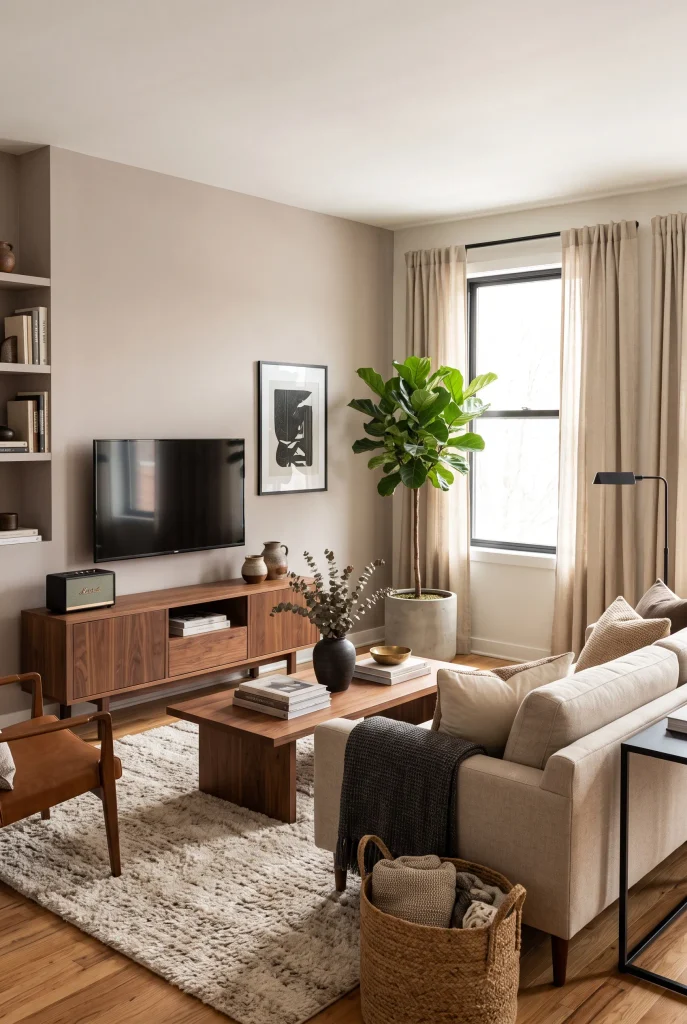
- Warm wood instantly adds depth to a neutral or dark room.
- Walnut and oak tones make modern furniture feel less sterile.
- Natural grain introduces texture without adding visual clutter.
- Mixing wood with leather, linen, or wool creates a richer layered look.
Nothing warms up a bold living room faster than beautiful natural wood. Walnut, oak, and smoked timber can introduce depth while keeping the overall design clean and masculine. Try a wooden coffee table, media console, side table, or shelving unit rather than covering every surface in the same finish. The variation makes the room feel collected instead of overly matched. Warm wood is especially effective when paired with charcoal, cream, or taupe because those colors highlight the natural grain. The result feels sophisticated, grounded, and comfortable without needing lots of decoration.
For a balanced look, choose one dominant wood tone and repeat it in two or three places around the room. A walnut coffee table can connect visually with a media console, while a smaller oak accessory introduces gentle contrast. Keep the shapes simple so the grain remains the main feature. Add a wool rug, linen cushions, or a leather chair to create tactile variety. This approach works particularly well in contemporary homes where clean furniture can otherwise feel a little plain. Natural materials give the room personality while preserving the structured, uncluttered appearance many homeowners want.
3. Leather Seating
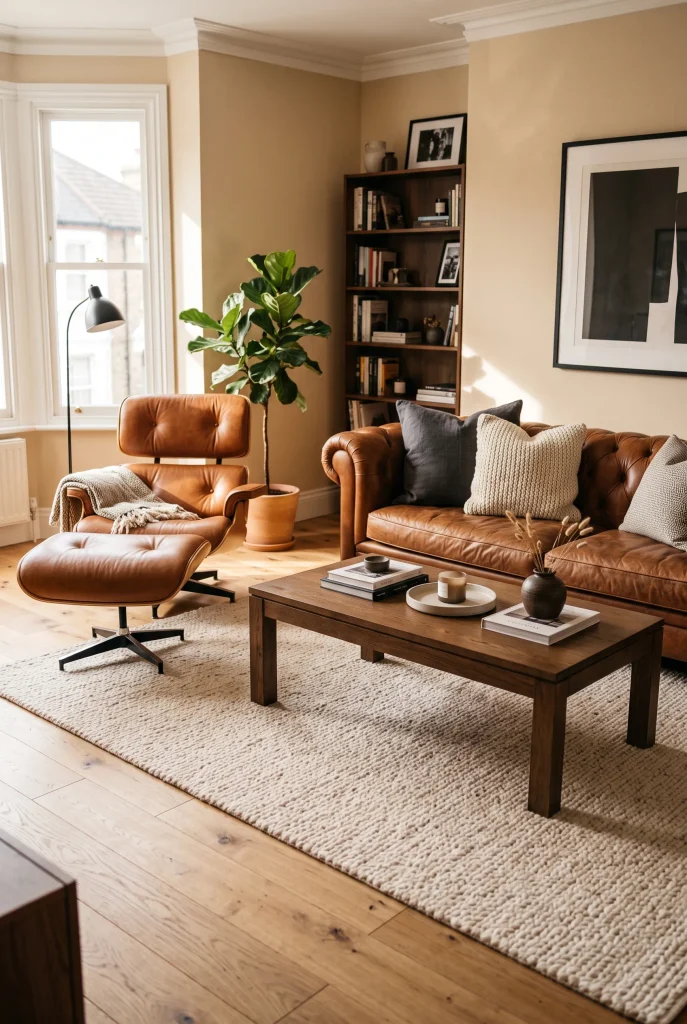
- Cognac leather brings warmth to darker masculine color schemes.
- A single leather chair can create impact without overwhelming the room.
- Natural patina makes leather feel richer and more characterful over time.
- Pairing leather with soft textiles keeps the seating comfortable and balanced.
Leather seating can give a living room an unmistakably polished edge while still feeling relaxed. A cognac leather sofa or lounge chair works beautifully with dark wood, cream textiles, and muted walls because its warm undertone keeps deeper colors from becoming flat. You don’t need a full matching leather suite, either. One statement chair can provide enough contrast to transform the seating arrangement. Leather looks especially inviting when softened with a wool throw, textured cushions, or a plush rug. These small additions help balance its structured appearance and make the room feel ready for everyday use.
Think about leather as a texture as much as a color. Smooth cognac upholstery creates warmth, while darker brown or black leather delivers a more dramatic effect. Place the seating where it supports conversation rather than simply facing the television. A low coffee table, practical side table, and reading lamp can complete the arrangement without crowding it. Over time, quality leather can develop a natural patina that adds character rather than looking worn out. That makes it a useful choice for a room designed to feel timeless, practical, and confidently styled rather than decorated around short-lived trends.
4. Black Accent Walls
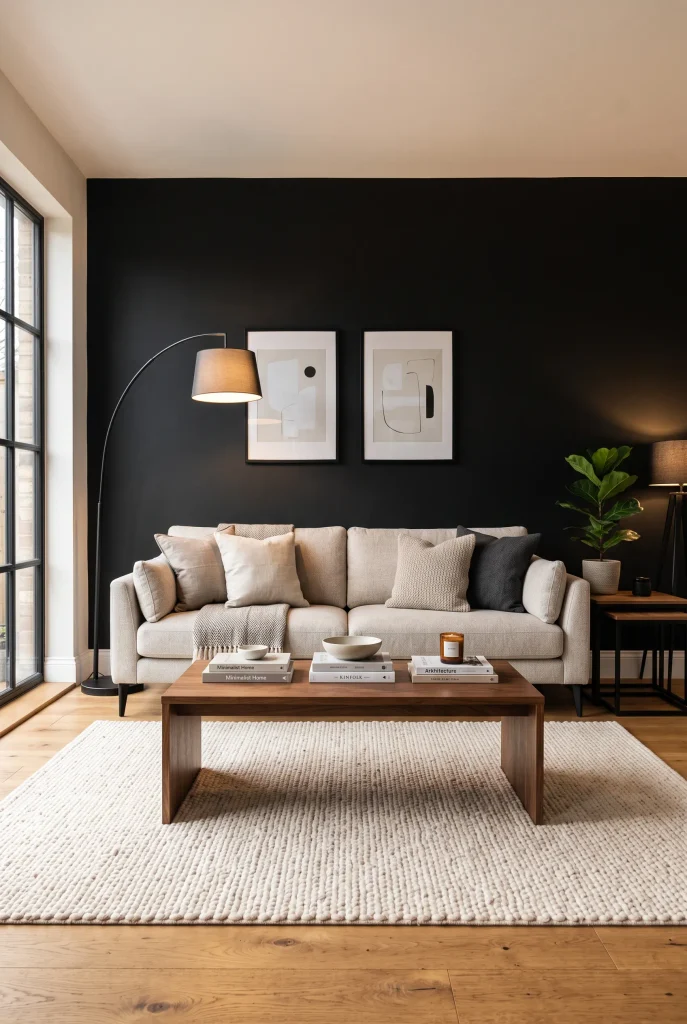
- A black accent wall creates instant depth and visual focus.
- Matte finishes look sophisticated without excessive shine.
- Light furniture keeps the darker wall from overwhelming the room.
- Warm wood and soft textiles add balance and comfort.
Ready to give your living room a stronger personality? A matte black accent wall can create dramatic depth without requiring a complicated redesign. Use it behind the sofa, television, or main seating area so the dark color has a clear visual purpose. Black works particularly well with warm oak, walnut, cream, and beige because those lighter elements prevent the room from feeling closed in. Matte paint usually looks more refined than glossy finishes in this setting, especially when paired with simple furniture. The contrast creates a confident backdrop while keeping the overall design contemporary.
Before painting, consider how much natural light the room receives throughout the day. A darker wall can look beautiful in a bright space, but smaller rooms may benefit from keeping the remaining walls lighter. Add warm lamps in the evening to prevent the black surface from appearing flat. Artwork, a large mirror, or subtle shelving can also break up the wall without distracting from its impact. If you want a less permanent change, consider dark wood paneling or removable wallpaper instead. The goal is not to make everything dark, but to create one intentional area that anchors the entire room.
5. Minimalist Shelving
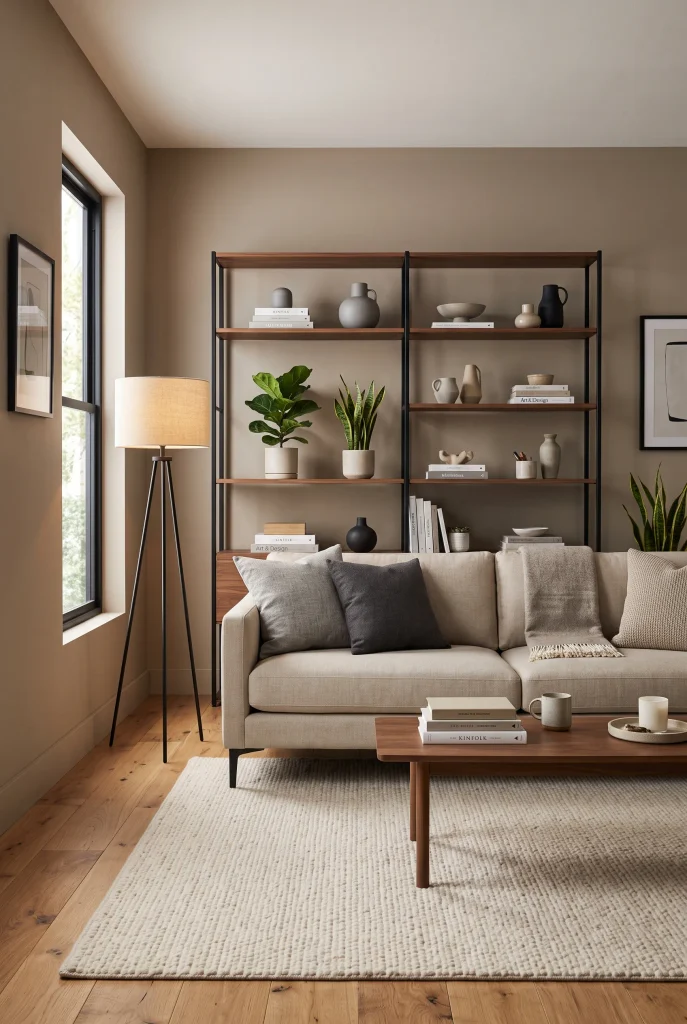
- Open shelving adds storage while keeping the room visually light.
- Walnut shelves bring warmth to a minimalist arrangement.
- A few carefully chosen objects look more polished than crowded displays.
- Shelving can create a useful focal point without dominating the room.
Good shelving should make a room feel more organized, not more crowded. For a masculine living room, choose streamlined shelves in walnut, dark wood, or black metal and keep the styling intentionally simple. Use a combination of books, ceramics, framed artwork, and one or two plants rather than filling every available space. This creates visual breathing room and lets each object contribute something. Leaving some shelves partially empty makes the entire display look more expensive and considered. It also gives you flexibility to change small details seasonally without redesigning the whole room.
Placement matters just as much as the shelf design itself. A tall unit can frame a seating area, while low shelving works well beneath artwork or beside a media console. Keep heavier objects lower and lighter pieces higher to create a balanced appearance. Repeating colors from the rest of the room will make the display feel connected rather than random. For example, black frames can echo a floor lamp, while walnut shelves can connect with a coffee table. This simple coordination turns functional storage into a design feature while maintaining the clean, uncluttered character of the space.
6. Dark Neutral Palette
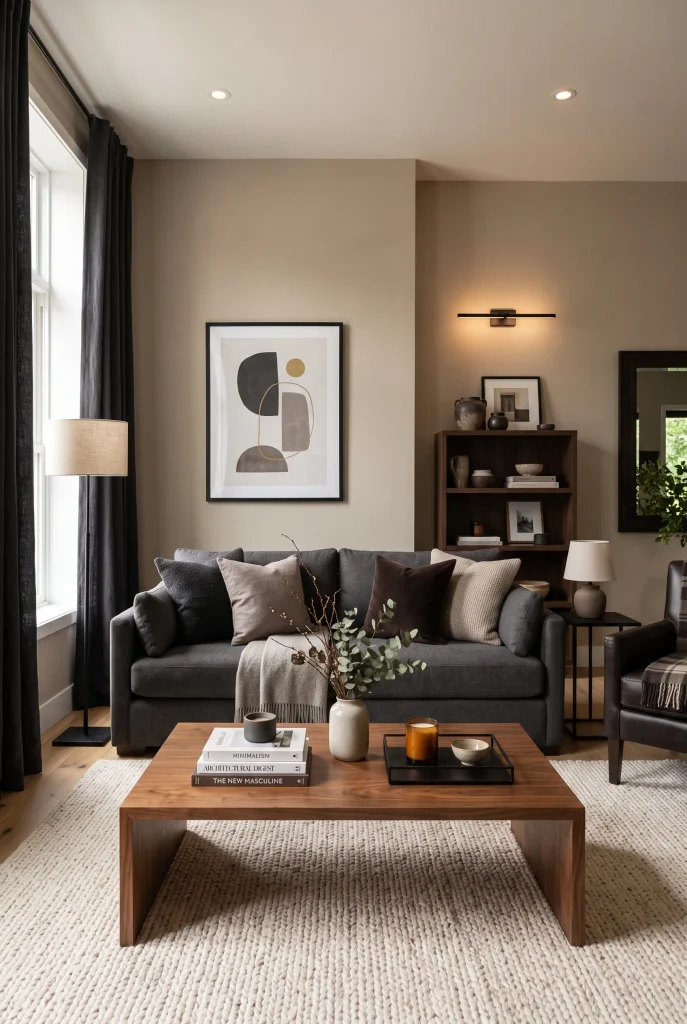
- Dark neutrals create a sophisticated atmosphere without relying on bright colors.
- Layering several shades prevents the room from looking flat.
- Cream and beige accents provide contrast and visual breathing space.
- Natural materials keep the darker palette warm and inviting.
A dark neutral palette can make a living room feel sophisticated without turning it into a gloomy space. Instead of using one dark color everywhere, layer charcoal, espresso brown, taupe, warm gray, and deep olive in different proportions. This creates subtle contrast while keeping the room visually cohesive. Start with one dominant shade, then introduce lighter neutrals through the rug, cushions, curtains, and artwork. The effect is especially strong when natural wood is included. These masculine living room ideas work because the palette feels mature and versatile while still leaving plenty of room for comfort and personality.
The secret is controlling the ratio between dark and light surfaces. If the sofa and walls are both deep in tone, introduce a lighter rug and warm-colored cushions to keep the room open. Natural daylight should also remain unobstructed where possible, especially in smaller spaces. At night, combine ceiling lights with floor and table lamps so different areas receive gentle illumination. This approach works particularly well because the room changes character throughout the day. It feels crisp and structured in daylight, then warmer and more intimate once the layered lighting comes on.
View: 21 Halloween Front Porch Ideas for a Cozy Spooky Look
7. Industrial Metal Details
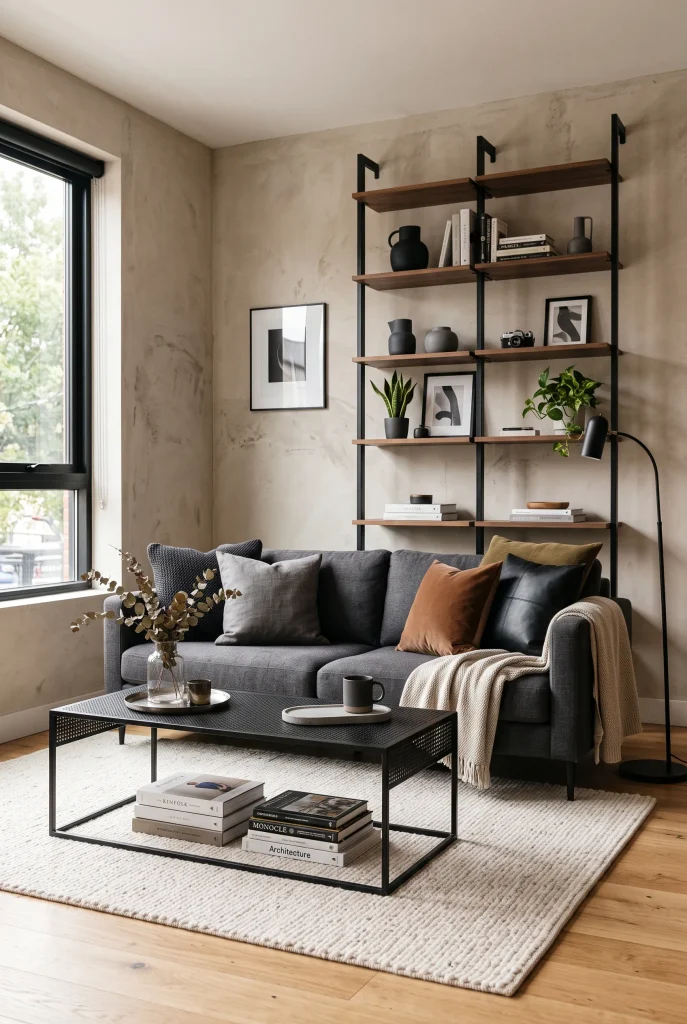
- Black metal details add structure and a subtle industrial edge.
- Mixing metal with wood prevents the room from feeling too cold.
- A few repeated metal accents create visual consistency.
- Matte finishes usually feel more refined than overly shiny surfaces.
Want to add a little more attitude without changing the entire room? Industrial metal details can bring structure and definition to an otherwise simple living space. Try a black metal coffee table, open shelving, floor lamp, or slim-framed side table. The key is to combine these harder materials with warmer elements such as walnut, oak, leather, and textured fabrics. That contrast keeps the room comfortable rather than overly industrial. Repeating the same black metal finish in several small areas creates a stronger visual connection than using one oversized statement piece.
You can introduce metal gradually, especially if your room already has a finished furniture arrangement. Start with a lamp or side table, then repeat the finish through picture frames, shelving brackets, or small decorative objects. Avoid mixing too many metallic colors because that can make a simple design feel disconnected. Matte black is particularly versatile and works with both warm and cool neutrals. Add a soft rug beneath the seating area to counter the harder surfaces. The result is a modern, masculine space that feels structured and practical while still being comfortable enough for everyday relaxing and entertaining.
8. Statement Lighting
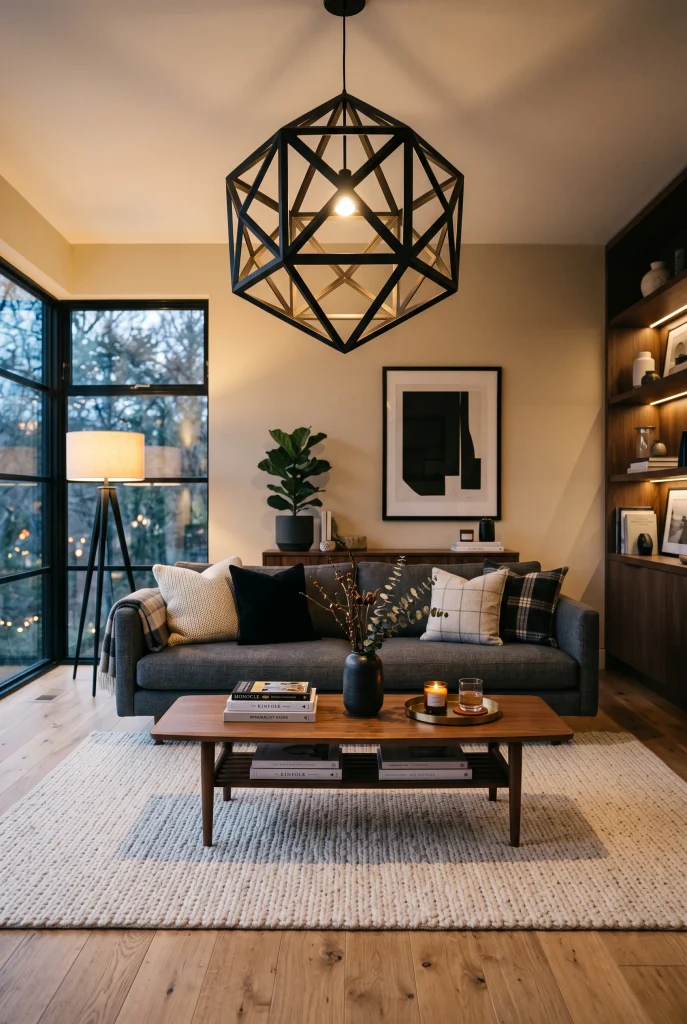
- Oversized lighting can become an instant focal point.
- Warm bulbs make darker furniture and walls feel more inviting.
- Layered lighting gives the room flexibility throughout the day.
- Sculptural fixtures add personality without requiring extra decoration.
The right light fixture can completely change how a living room feels after sunset. Instead of treating lighting as a purely functional detail, choose a sculptural pendant, oversized floor lamp, or architectural ceiling fixture that complements the furniture. Black, bronze, and aged brass finishes work especially well with darker neutral palettes. Use warm bulbs to soften charcoal upholstery and deep wood tones. A statement fixture is one of the easiest ways to make a room feel more intentional because it draws the eye upward and adds personality without taking up valuable floor space.
Good living room lighting should come in layers rather than relying on one bright ceiling fixture. Combine your main light with a floor lamp beside the sofa and a table lamp near a reading chair or console. This allows you to adjust the atmosphere depending on what you are doing. Keep the fixture size proportional to the room so it feels substantial rather than overwhelming. A simple sculptural design can provide enough visual interest on its own. When the light spreads warmly across textured fabrics and wood, the entire space feels calmer, richer, and more sophisticated.
9. Textured Area Rugs
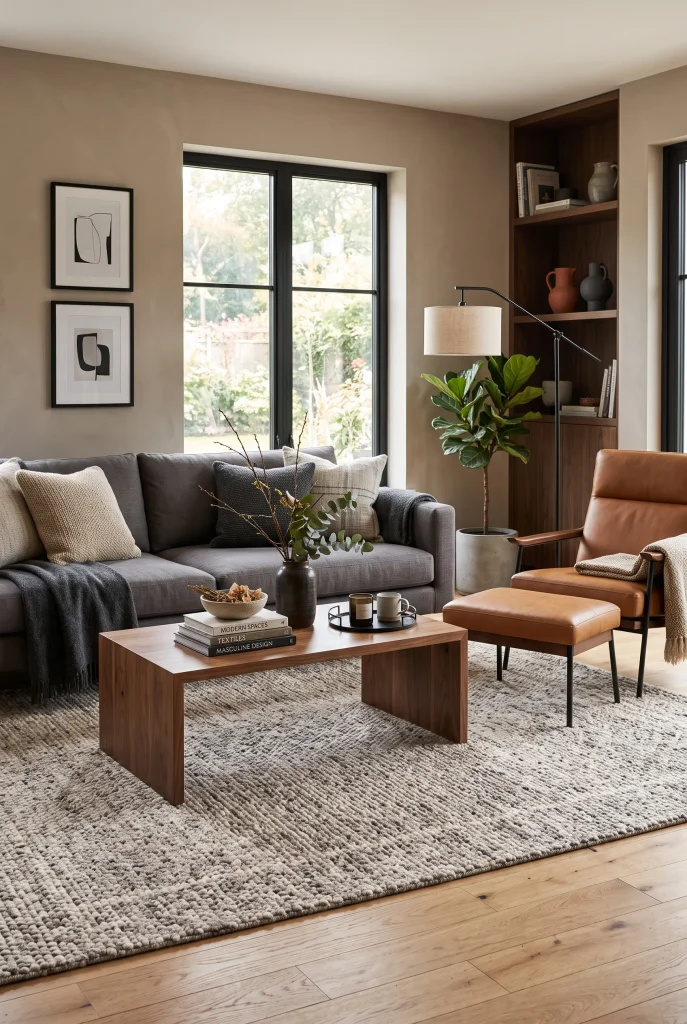
- A textured rug softens hard flooring and dark furniture.
- Neutral patterns add interest without overwhelming the room.
- Large rugs help visually connect separate seating pieces.
- Wool and woven textures make the space feel warmer and more comfortable.
A room with sleek furniture can sometimes feel unfinished until you add the right rug. A large textured area rug brings softness, warmth, and visual definition beneath the seating arrangement. Choose wool, woven, or subtly patterned designs in beige, taupe, gray, or muted brown to complement a masculine palette. The rug should be large enough for at least the front legs of your main seating pieces to sit on it. This simple placement trick makes the furniture feel connected rather than scattered and gives the entire room a more deliberate, finished appearance.
Texture is particularly useful when your color palette is restrained. A tonal rug with raised patterns or woven details can add dimension without introducing another strong color. If you have dark furniture, lighter flooring and a warm neutral rug can create helpful contrast. For busy households, choose a practical low-pile material that is easier to vacuum and maintain. Rugs with subtle variation also tend to disguise everyday wear better than completely solid surfaces. Add cushions or a throw with related textures, and the room will feel layered without looking overly decorated.
10. Walnut Media Console
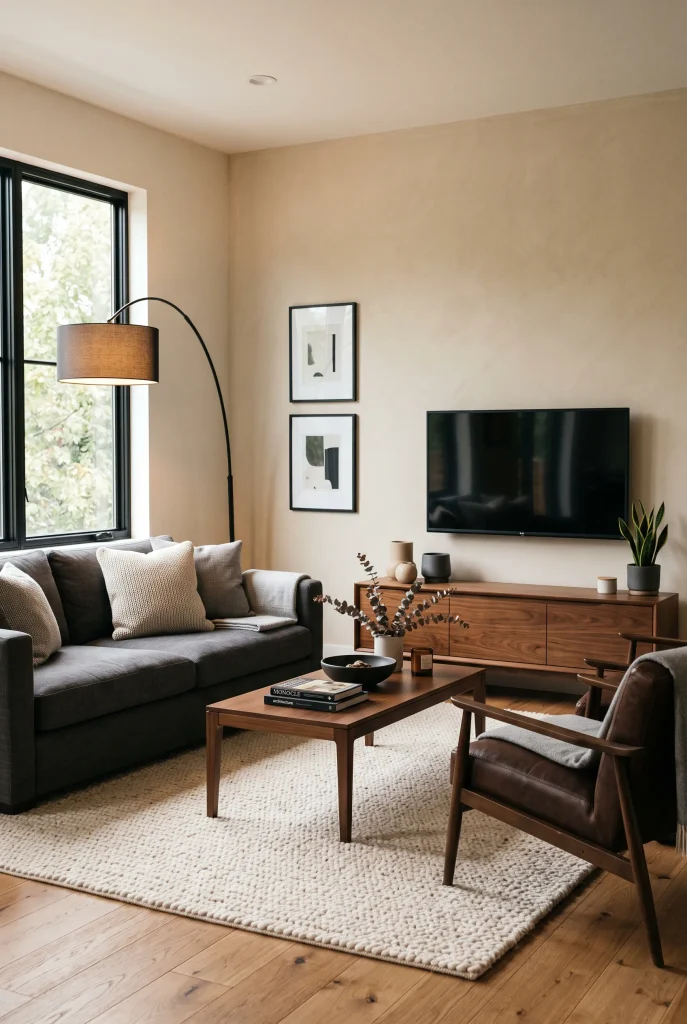
- Walnut adds warmth and richness around a television wall.
- A low console keeps the room visually streamlined.
- Closed storage hides cables, remotes, and everyday clutter.
- Natural wood softens the harder look of black electronics.
A well-chosen media console can make the television area look far more polished. Walnut is especially effective because its rich grain adds warmth around dark screens and electronics. Choose a low, streamlined console with closed storage for remotes, cables, gaming equipment, and other everyday items you would rather keep out of sight. This keeps the wall visually calm while giving you practical storage. Pair the console with a charcoal sofa, cream rug, and black accents for a cohesive look. The combination feels modern and masculine without turning the entertainment area into the only noticeable feature.
Pay attention to proportions when selecting your console. Ideally, the furniture should feel substantial enough to support the television visually without making the wall look crowded. Leave some breathing room around the screen and use only a few decorative pieces on the console itself. A ceramic vase, stacked books, or small plant can add personality without creating clutter. If your room is narrow, a wall-mounted console can make the floor feel more open. Keeping electronics organized and mostly hidden makes even a simple living room feel noticeably cleaner and more sophisticated.
11. Oversized Artwork
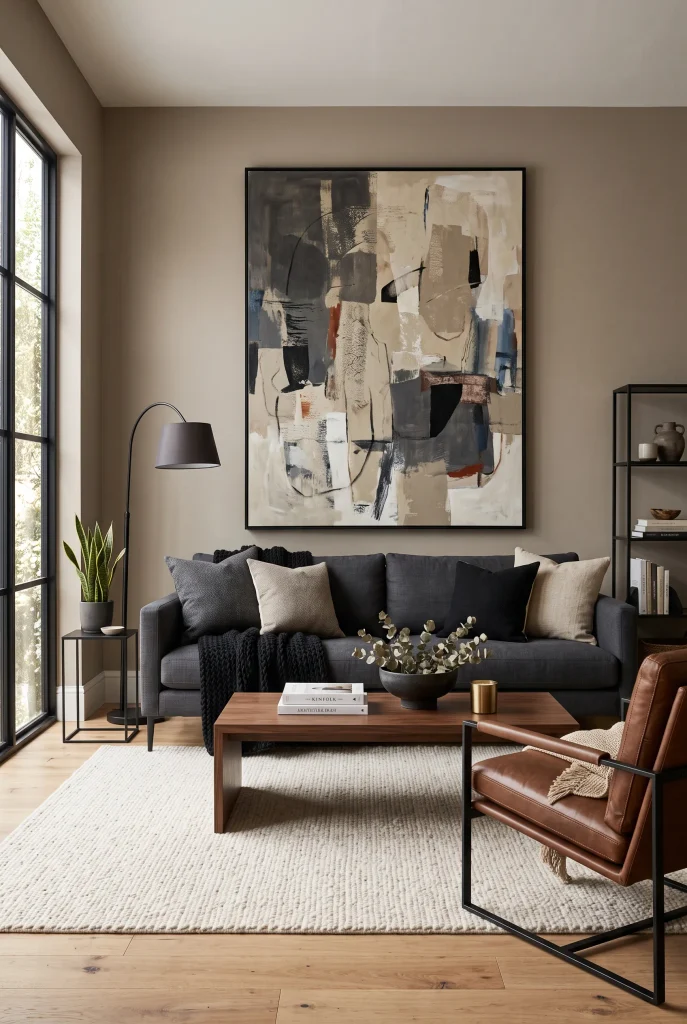
- One large artwork creates stronger impact than many tiny pieces.
- Abstract designs add personality without overwhelming the furniture.
- Muted colors keep bold artwork connected to the room.
- A large frame can visually anchor a wide sofa.
Sometimes one oversized artwork is all a living room needs to feel finished. Instead of filling the wall with numerous small frames, choose one large abstract, architectural, or monochromatic piece that complements your existing palette. Hang it above the sofa or on the main focal wall where it can command attention. Charcoal, beige, brown, cream, and muted green tones work beautifully with masculine interiors. Larger artwork often makes a room feel more intentional because it fills visual space without requiring lots of accessories or decorative objects.
Consider the size of the furniture beneath the artwork before making your choice. A piece that is too small can look disconnected, while one that is appropriately scaled will visually anchor the entire seating area. Keep the surrounding wall relatively uncluttered so the artwork has room to breathe. If you prefer a more personal approach, frame photography, architectural prints, or vintage-inspired maps instead of choosing generic decor. Repeat one or two colors from the artwork in your cushions or rug to connect everything. This small styling detail creates cohesion and makes the room feel thoughtfully designed rather than randomly decorated.
12. Comfortable Lounge Chair
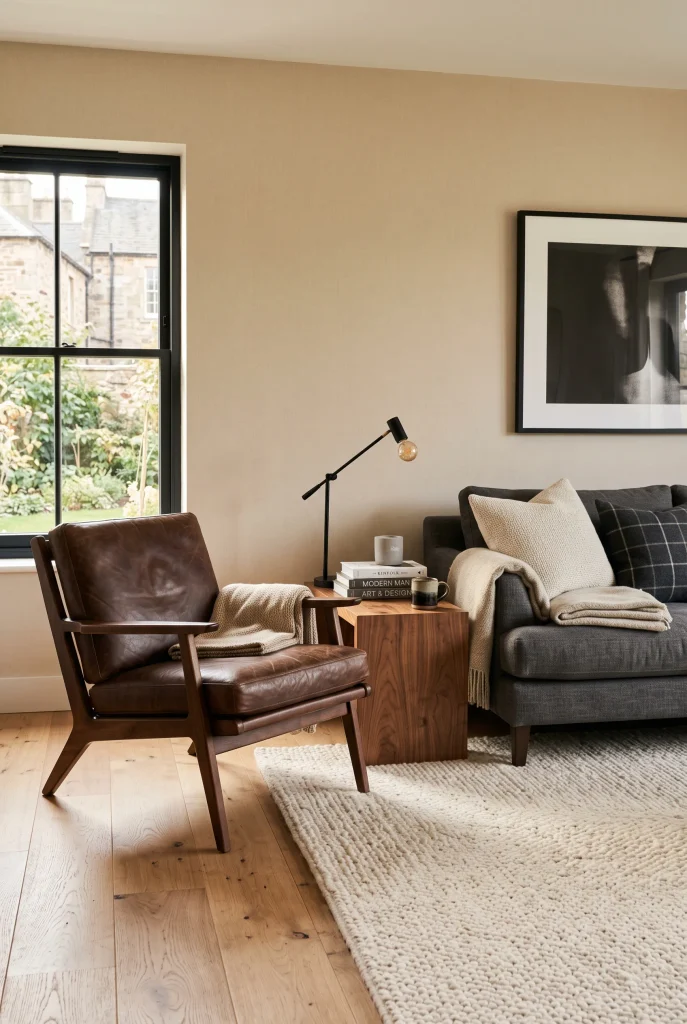
- A lounge chair adds comfortable seating without matching the sofa.
- Leather or textured upholstery introduces useful visual contrast.
- Positioning the chair at an angle encourages conversation.
- A nearby lamp can turn the chair into a practical reading spot.
A comfortable lounge chair can transform an empty corner into one of the most useful areas in the room. Choose a design with strong, simple lines and enough cushioning for reading, relaxing, or chatting with guests. Brown leather works especially well with charcoal sofas and walnut furniture, while cream or taupe upholstery creates a softer contrast. Position the chair slightly toward the sofa rather than pointing it directly at the television. This makes the room feel more social and balanced. A well-placed accent chair can make a living room feel complete without adding unnecessary furniture.
Think beyond appearance when choosing your chair. Check the seat depth, back support, and arm height because a beautiful chair that feels uncomfortable will quickly become decorative clutter. Add a small side table within easy reach for a book, drink, or lamp. A floor lamp behind or beside the chair can create a dedicated reading zone without taking much space. Keep the surrounding area open so the chair does not visually block walking paths. This combination of comfort, function, and contrast helps create a masculine room that feels genuinely lived-in rather than staged solely for photographs.
13. Stone Fireplace
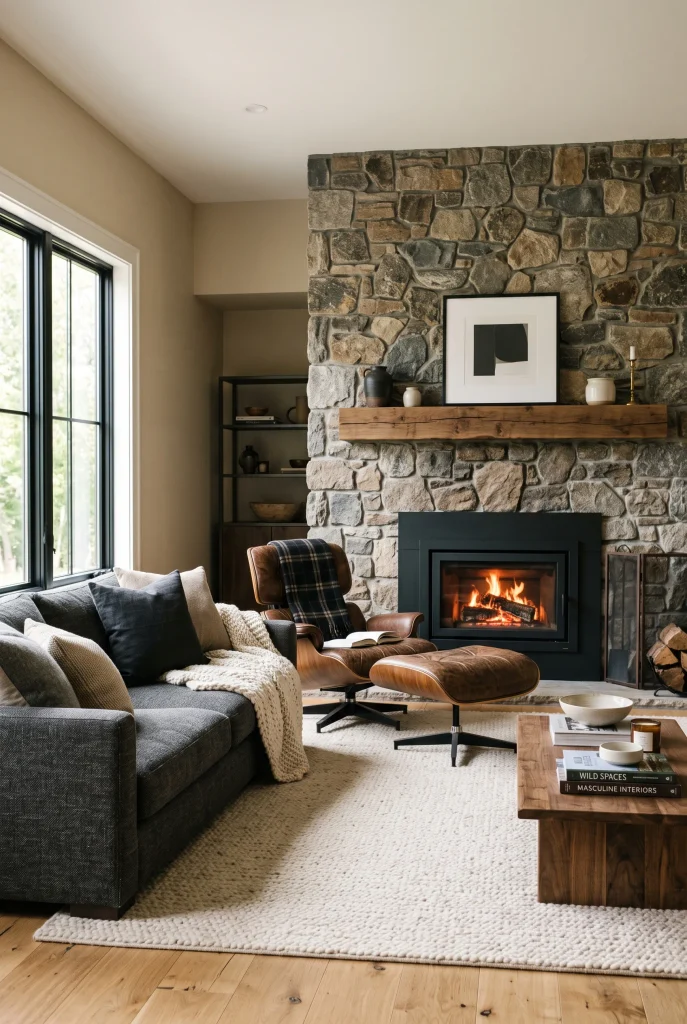
- Natural stone adds texture and architectural character.
- A fireplace creates a strong focal point for the seating arrangement.
- Warm wood keeps the stone from feeling too rugged.
- Neutral furnishings balance the heavier fireplace materials.
Few features create instant character like a beautifully finished stone fireplace. Natural stone brings texture, weight, and an architectural quality that works especially well in a masculine living room. Choose warm gray, taupe, beige, or mixed-tone stone instead of overly polished finishes for a more natural appearance. A walnut or reclaimed wood mantel can soften the stone and introduce warmth. Arrange the sofa and chairs toward the fireplace so it becomes part of the room’s social center. The result feels substantial and refined while still being comfortable enough for quiet evenings and casual gatherings.
The scale of the fireplace matters, particularly in smaller rooms. A floor-to-ceiling stone wall can create drama, but a smaller fireplace surround may be easier to balance with existing furniture. Keep the mantel styling restrained with a few ceramics, books, or a simple piece of artwork. Warm lighting will emphasize the stone’s natural variation after dark, while daylight highlights its texture during the day. If a real fireplace is not practical, an electric insert can provide a similar visual focal point. This approach works well when homeowners want architectural character without committing to major structural changes.
14. Built-In Cabinets
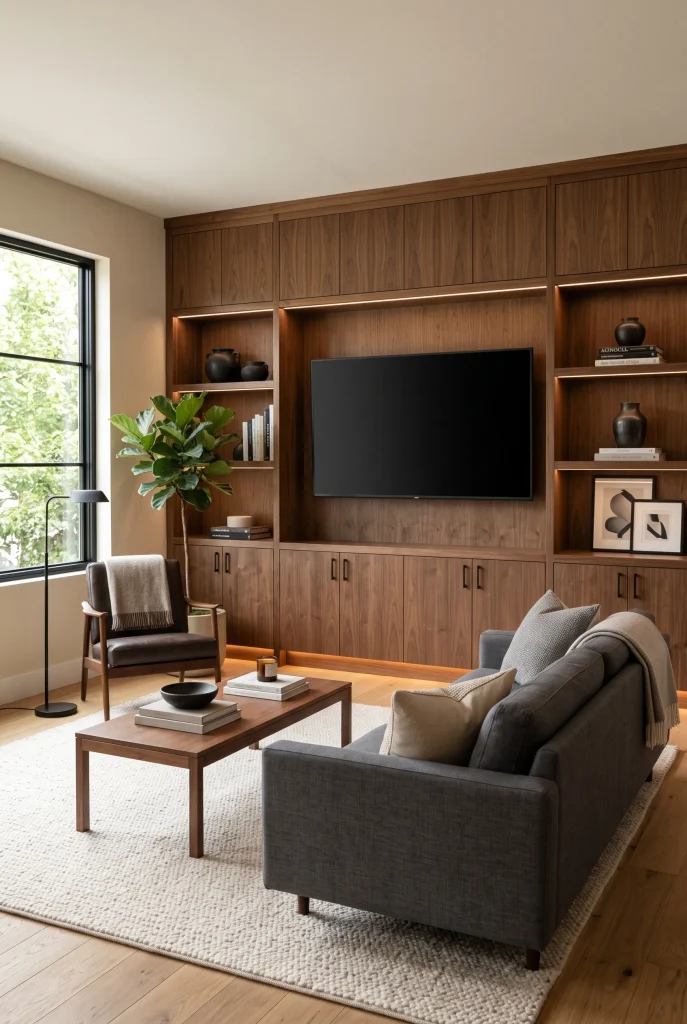
- Built-ins create valuable storage without adding visual clutter.
- Walnut cabinetry brings warmth and depth to the room.
- Closed doors keep everyday items neatly hidden.
- Integrated shelving can display books and carefully selected decor.
Smart storage can make even a bold living room feel calmer and more organized. Built-in cabinets provide a place for electronics, books, games, blankets, and everyday items while keeping visual clutter under control. Walnut, dark oak, or painted cabinetry can create a strong architectural feature around a television or fireplace. Keep frequently used items behind closed doors and reserve open shelves for pieces worth displaying. This combination makes the room practical without sacrificing style. Concealed storage is one of the most effective upgrades for maintaining a polished appearance in a frequently used living space.
When planning built-ins, think carefully about what you actually need to store before deciding on the cabinet layout. Different compartments can accommodate media equipment, books, baskets, and larger household items. Add a few open niches for artwork or ceramics so the wall does not become a solid block of cabinetry. Keep hardware simple and coordinate it with other metal finishes in the room. If custom carpentry is outside your budget, modular storage units can create a similar effect when arranged thoughtfully. The goal is a clean, integrated appearance that makes organization feel like part of the design.
15. Moody Green Accents
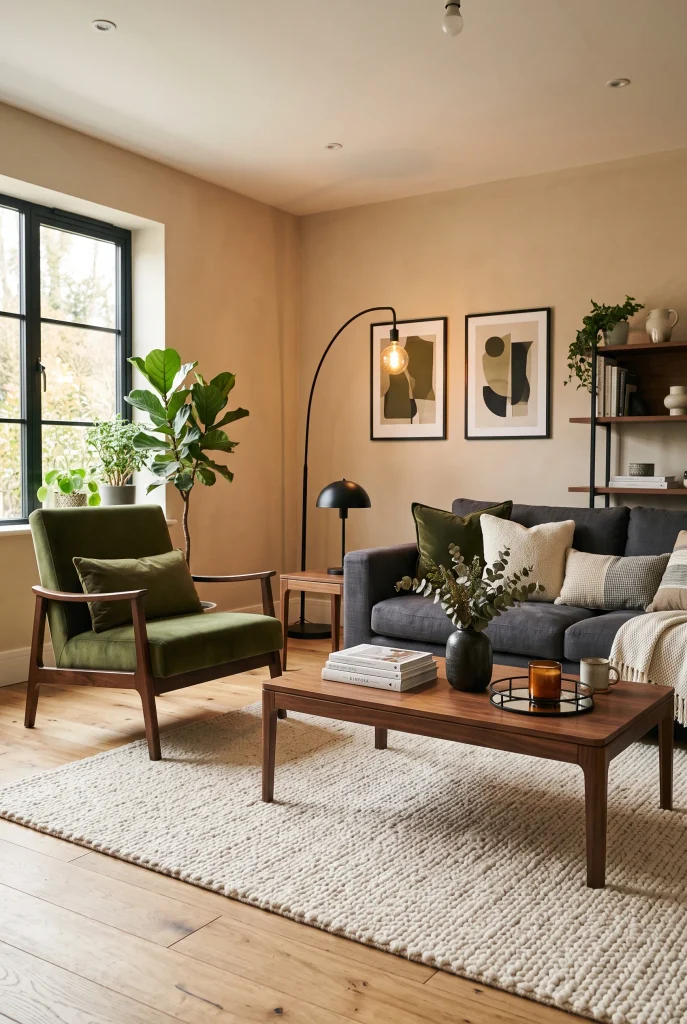
- Olive green adds color while remaining sophisticated and understated.
- Green works naturally with walnut, leather, and warm neutrals.
- Small accents can introduce the color without repainting the room.
- Plants reinforce the natural connection between green and wood.
If you want to introduce color without losing a sophisticated mood, deep olive green is an excellent place to start. Unlike brighter greens, olive feels grounded and works naturally with charcoal, brown, cream, and warm gray. Try it through an accent chair, cushions, curtains, artwork, or a small painted section rather than changing the entire room. This approach gives you control over the intensity while adding personality. Olive also pairs beautifully with leather and walnut, making it a particularly useful accent for masculine interiors that need a little more visual warmth.
Use green in different textures rather than repeating the exact same shade everywhere. An olive velvet cushion can sit beside a muted green artwork, while a leafy plant introduces a fresher variation. Keep the remaining palette relatively quiet so the green has room to stand out. If you have plenty of natural daylight, deeper green accents can look especially rich throughout the day. At night, warm lamps bring out their earthy undertones. This color works best when used selectively; a few thoughtful touches usually feel more sophisticated than covering every surface in green.
16. Matte Black Accents
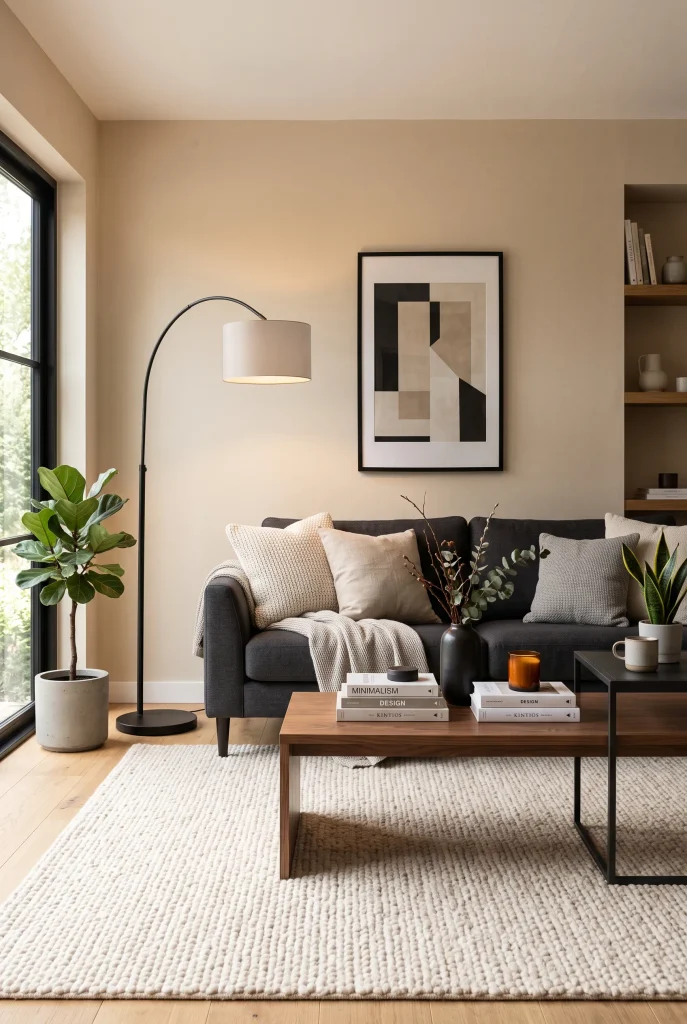
- Matte black details create definition without overwhelming the room.
- Repeating small accents makes the overall design feel cohesive.
- Black frames and lighting work well with warm wood.
- Light textiles keep the darker details visually balanced.
Small details can make a surprisingly big difference in a living room. Matte black accents add definition to furniture, lighting, artwork, and accessories while giving the space a cleaner, more structured appearance. Try a black floor lamp, picture frames, curtain hardware, side table, or decorative object rather than introducing black everywhere. The finish looks particularly sophisticated beside walnut, oak, beige, and cream. These masculine living room ideas work best when black appears in several subtle places, creating repetition that guides the eye around the room without making the overall palette feel overly dark.
The easiest way to use matte black is to repeat it across different heights and areas. For example, combine a black floor lamp near the sofa with black picture frames on the wall and a small black object on the coffee table. This creates visual rhythm while keeping each individual detail understated. Avoid choosing every piece in the same finish if the room already feels dark. Warm wood and soft fabrics provide necessary contrast. This approach can make inexpensive furniture look more coordinated because consistent accents create a stronger sense of design throughout the space.
17. Deep Blue Tones
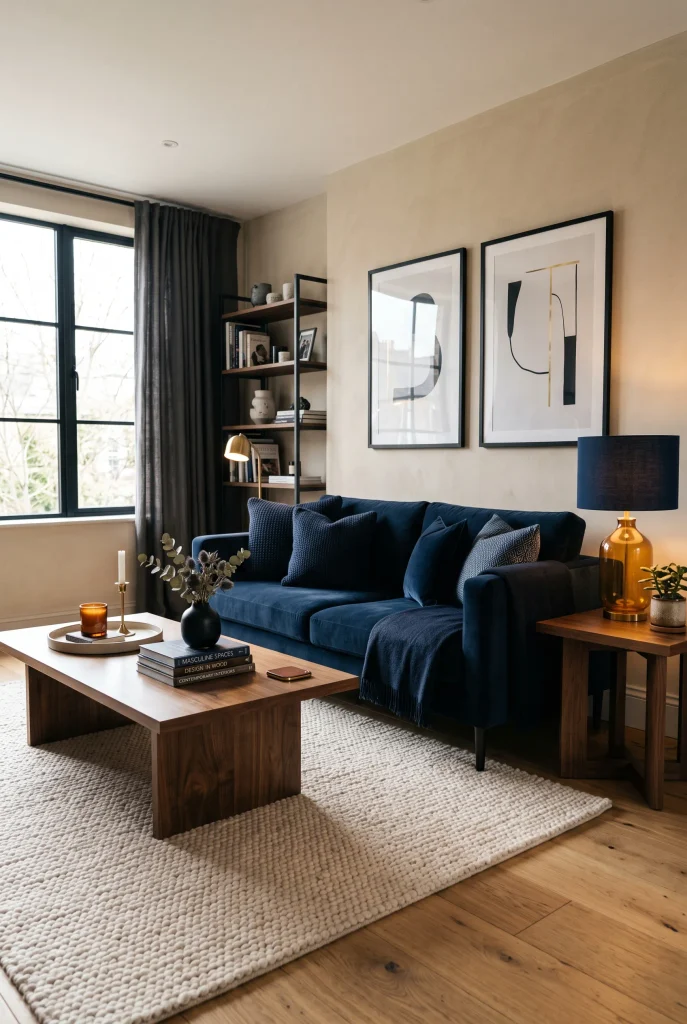
- Navy adds richness without the heaviness of pure black.
- Deep blue pairs beautifully with walnut and warm neutrals.
- Cushions and artwork offer an easy way to test the color.
- Warm lighting brings out the depth of darker blue tones.
Deep blue can bring a sophisticated sense of color to a room while remaining surprisingly versatile. Navy, midnight blue, and muted indigo work beautifully with walnut, cognac leather, cream, and warm gray. If a blue sofa feels like too much commitment, introduce the color through cushions, curtains, artwork, or a single accent chair. The result can feel dramatic during the evening while still looking polished in natural daylight. Navy is especially useful when homeowners want something more distinctive than gray but still want a mature, timeless color scheme.
Balance deeper blue with lighter surfaces so the room does not become visually heavy. A cream rug beneath a navy sofa can create immediate contrast, while warm wood furniture keeps the palette grounded. Small brass or matte black details can add definition without competing with the blue. For walls, consider keeping the surrounding color warm and neutral if your furniture already carries a strong navy tone. Layer several textures through wool, linen, leather, and cotton to create depth. This makes the color feel integrated into the room rather than appearing as an isolated decorative choice.
18. Floating Furniture
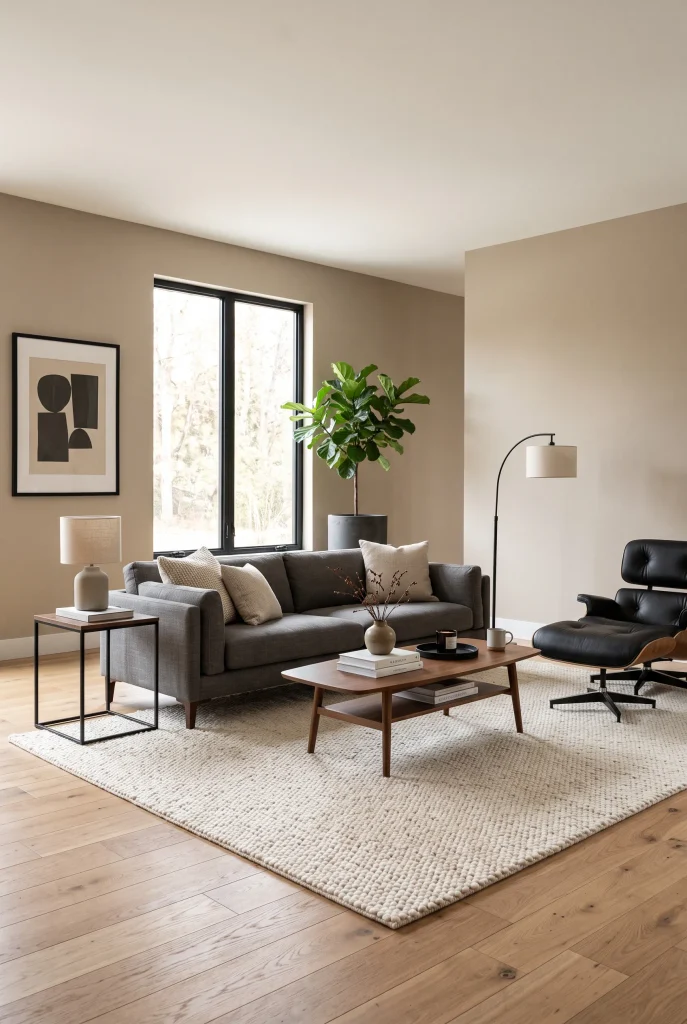
- Pulling furniture away from walls can improve the room’s flow.
- An area rug helps visually connect floating seating.
- Open pathways make the space feel more spacious and intentional.
- A central arrangement encourages conversation and interaction.
Furniture does not always need to sit against the walls to make a living room feel larger. Pulling your sofa and chairs slightly into the room can create a more intentional seating zone and improve conversation. Place the front legs of the main pieces on a large area rug so everything feels connected. This arrangement works particularly well when the room has enough open floor space around the furniture. Floating the sofa can make a room feel more thoughtfully designed because the seating becomes its own defined zone rather than simply filling the perimeter.
Before moving everything, map out your walking paths and leave enough clearance between furniture and doorways. A sofa can sit several inches away from the wall while still creating an open feeling, especially when the room has a generous rug underneath. Position a lounge chair or two opposite the sofa to create a conversational layout. Keep the coffee table centered and close enough for comfortable use. This setup can work even without a huge room if you choose furniture with clean profiles. The result feels relaxed, functional, and visually balanced instead of cramped or overly formal.
19. Cozy Reading Corner
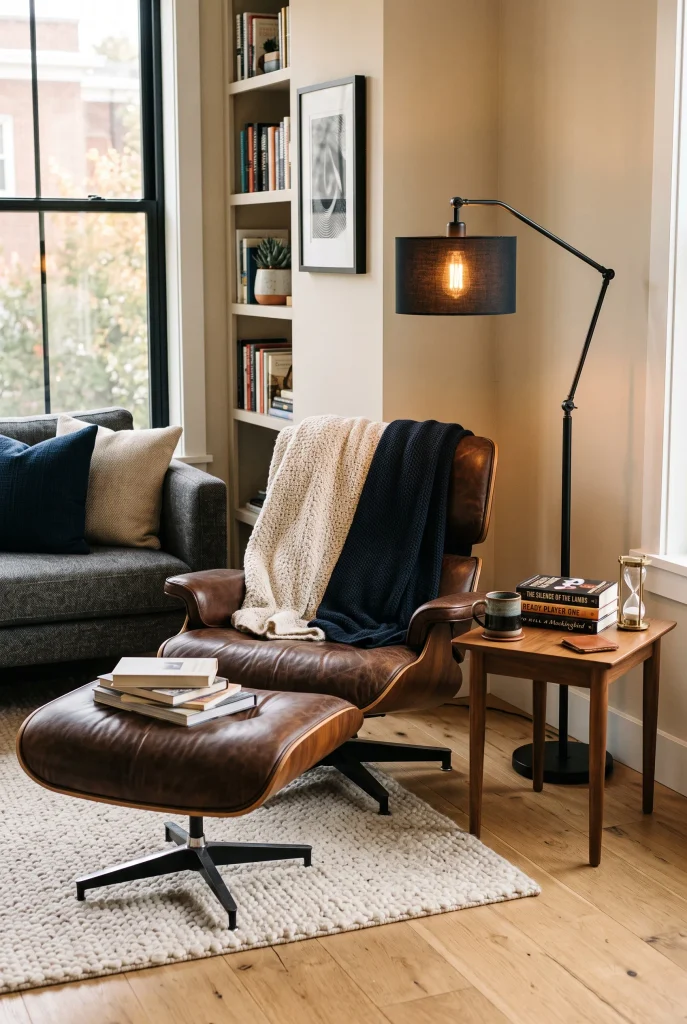
- A dedicated chair turns an unused corner into a practical retreat.
- Warm lighting makes the space comfortable for evening reading.
- A small side table provides convenient space for books and drinks.
- Leather, wool, and wood create a rich, tactile combination.
An empty corner can become one of the most inviting parts of your living room with a few thoughtful pieces. Start with a comfortable leather or upholstered chair, then add a compact side table and a floor lamp for focused lighting. Choose materials that connect with the rest of the room, such as walnut, black metal, leather, and wool. This keeps the corner feeling intentional rather than like an extra chair was simply placed there. A reading nook also adds function to the room, giving you a comfortable alternative to the main sofa when you want quiet time.
Keep the arrangement simple and make comfort the priority. The chair should have enough room to recline or move naturally without blocking a doorway or main walking path. A small basket can hold blankets, while a side table provides space for books or a morning coffee. Use warm lighting rather than a harsh overhead fixture to create a softer atmosphere after sunset. If the corner receives natural daylight, position the chair nearby without placing it directly in front of the window. These small choices can turn an overlooked area into a useful, attractive part of the room.
20. Architectural Wall Paneling
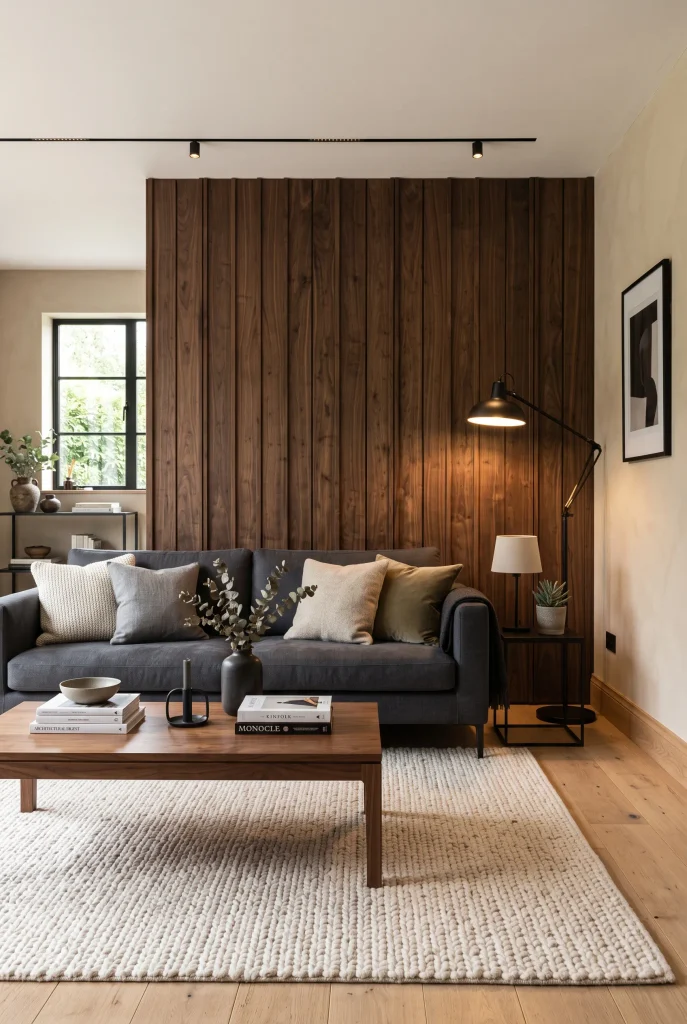
- Wall paneling adds architectural interest without requiring more furniture.
- Vertical lines can visually emphasize ceiling height.
- Walnut tones introduce warmth and natural texture.
- Keeping the furniture simple lets the wall remain the focal feature.
Plain walls can feel completely different when architectural paneling adds depth and rhythm. Vertical wood slats, narrow walnut panels, or simple dark molding can create a strong backdrop behind a sofa or television. Choose a finish that works with your existing flooring and furniture rather than introducing an unrelated wood tone. The texture itself becomes decoration, so you can keep artwork and accessories minimal. Paneling is particularly effective in rooms with simple furniture because it adds visual interest without making the space feel crowded or overly styled.
Think carefully about the wall you want to emphasize before installing anything. A feature wall behind the sofa can define the seating zone, while paneling around a television can make the entertainment area feel more integrated. Vertical designs can draw the eye upward and make ceilings appear taller, while horizontal details can emphasize width. If real wood is too expensive, painted MDF or decorative molding can create a similar architectural effect. Keep the remaining walls relatively quiet and use warm lighting to highlight the texture. The finished space feels tailored, substantial, and distinctly contemporary.
21. Layered Neutral Textures
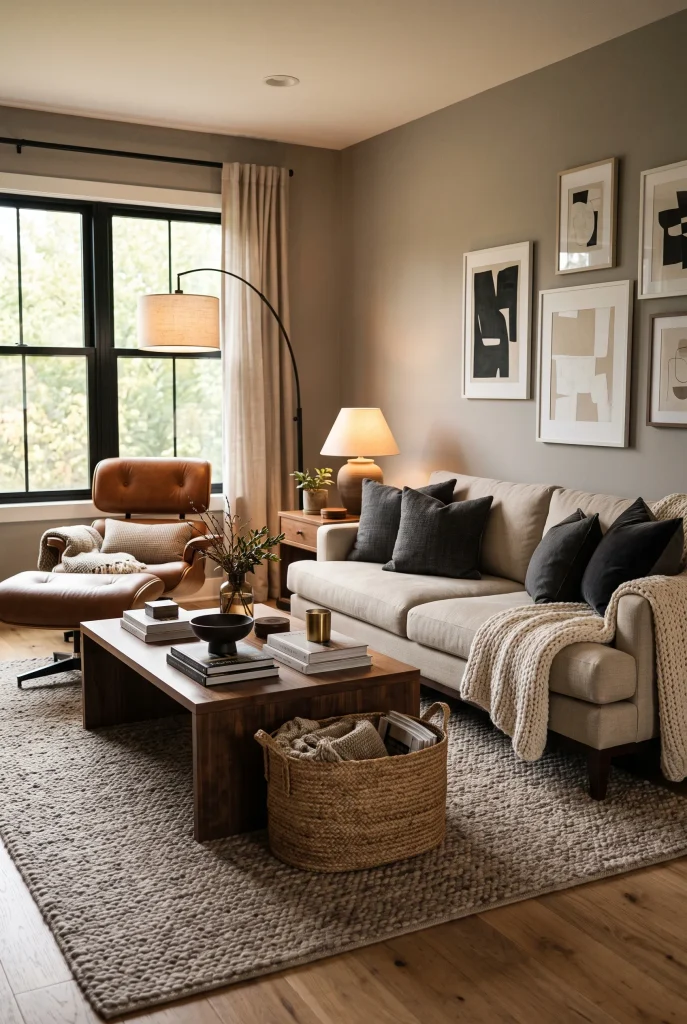
- Layered textures add depth when the color palette stays neutral.
- Linen, wool, leather, and wood create natural visual contrast.
- Tonal colors keep the room calm and sophisticated.
- Soft furnishings make darker furniture feel more approachable.
A neutral room becomes much more interesting when you focus on texture instead of adding lots of color. Combine linen, wool, leather, cotton, woven baskets, and natural wood to create layers that invite you to look closer. Keep the palette around warm beige, cream, taupe, charcoal, and brown so the different materials feel connected. This approach is especially useful when you want masculine living room ideas that feel sophisticated but still comfortable. The colors remain calm while the contrasting surfaces give the room dimension, preventing a simple neutral scheme from appearing flat or unfinished.
Start with the largest textures first, such as the rug, sofa, curtains, and major furniture pieces. Then add smaller layers through cushions, throws, baskets, and decorative objects. Mix smooth surfaces with rougher ones so everything does not look identical. For example, a soft wool rug can balance a structured leather chair, while a woven basket adds natural variation beside a walnut table. Keep patterns subtle when using several textures at once. This technique works especially well in neutral rooms because it creates warmth and personality without sacrificing the clean, organized appearance that makes the space feel modern.
Conclusion
Creating a stylish masculine room doesn’t require a complete makeover. Start with one or two changes that suit your space, such as deeper colors, natural wood, tailored furniture, layered lighting, or richer textures. The best masculine living room ideas balance strength with comfort, so the room still feels welcoming for everyday life. Small styling updates can completely change the mood of a room without replacing everything. Save this post on Pinterest for your next decorating project, try the ideas that fit your style, and share it with someone who loves a bold, modern living space. Your perfect room can start with one simple update.