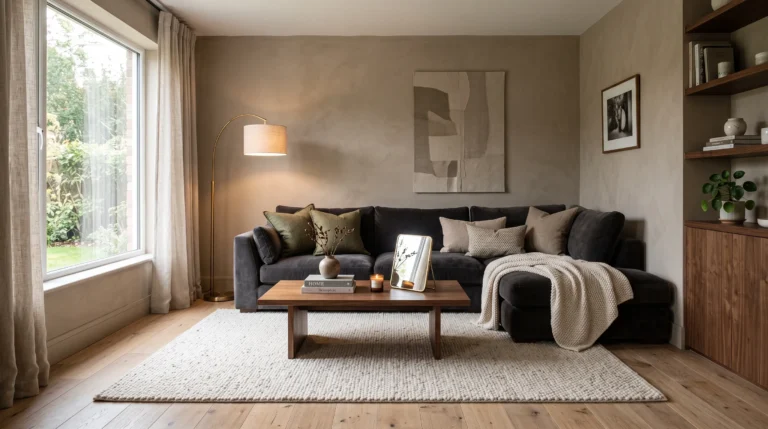
21 Simple Home Decor Ideas You’ll Love to Try Today
Your home can feel fresh and beautiful without a major makeover or expensive shopping spree.
Sometimes, the smallest changes create the biggest visual difference.
These simple home decor ideas are designed for anyone who wants a more inviting, organized, and stylish space without making things complicated. From warm lighting and natural wood accents to clever storage and soft textiles, each idea focuses on practical changes that can work in real homes. You’ll find easy ways to refresh empty corners, reduce visual clutter, add personality, and make everyday spaces feel more comfortable. Thoughtful placement often matters more than buying more decor. Keep reading for ideas you can try today, one small change at a time.
1. Slim Console Styling
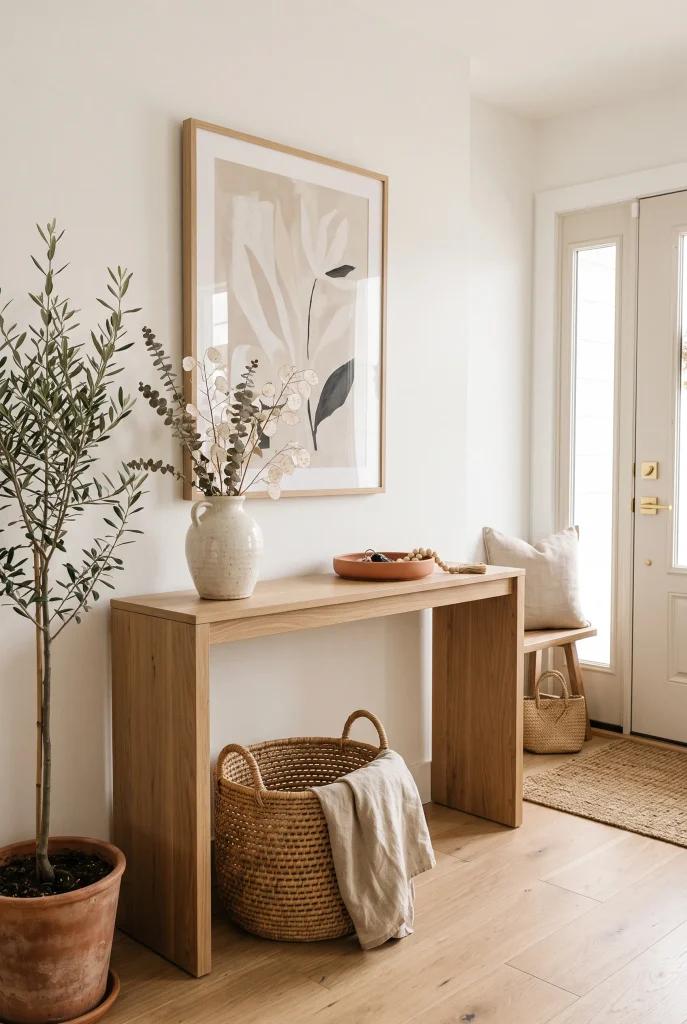
- A slim console fills an empty wall without making the room feel crowded.
- Simple accessories create a polished focal point with minimal effort.
- A basket underneath adds useful storage for everyday items.
- Natural wood brings warmth to otherwise neutral interiors.
- A tidy console instantly gives a room a more finished look without adding visual clutter.
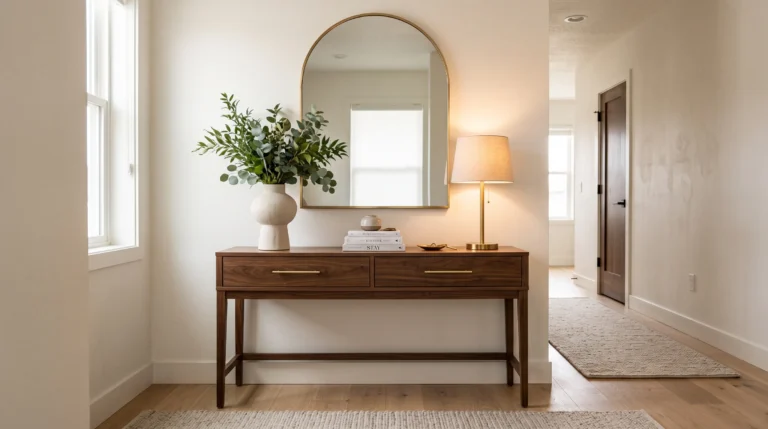
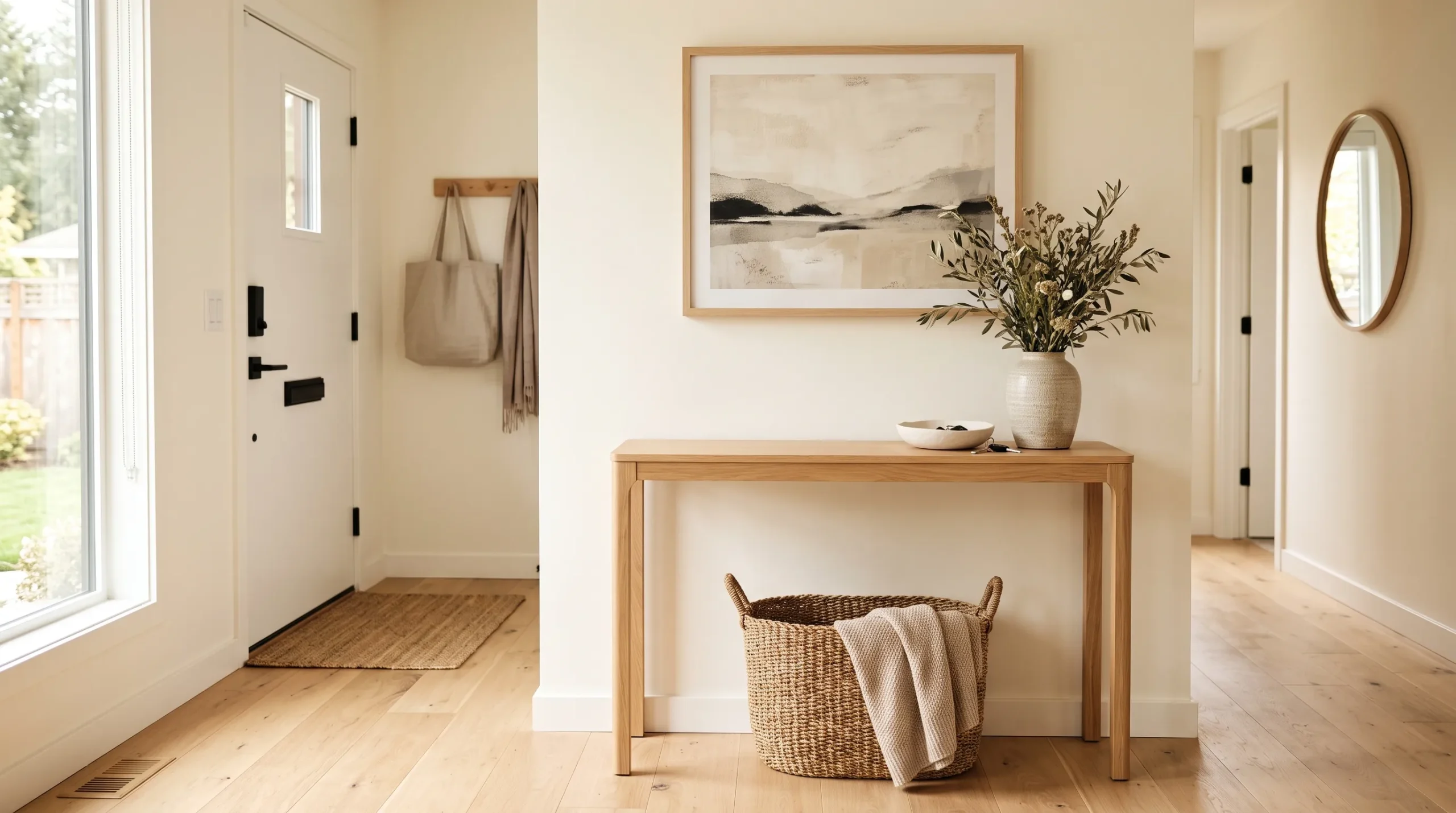
A slim console fills an empty wall without making the room feel crowded. Simple accessories create a polished focal point with minimal effort. A small ceramic vase, one framed print, and a shallow bowl can provide enough personality without making the arrangement feel busy. In smaller homes, a narrow profile leaves more walking space while still creating a useful landing spot for keys or everyday items. The result is a clean focal point that makes an entryway, hallway, or living room feel organized and welcoming.
The secret to a beautiful console is restraint, especially when the surrounding room already has plenty of furniture. Try grouping accessories by height so the arrangement feels balanced rather than scattered. A table lamp can add warmth, while a basket underneath provides practical storage for blankets, shoes, or bags. Natural wood works especially well with cream walls, woven textures, and soft neutral fabrics, but black or painted finishes can create a sharper contrast. This simple setup proves that thoughtful placement often matters more than buying lots of new decor for your home.
2. Simple Gallery Wall
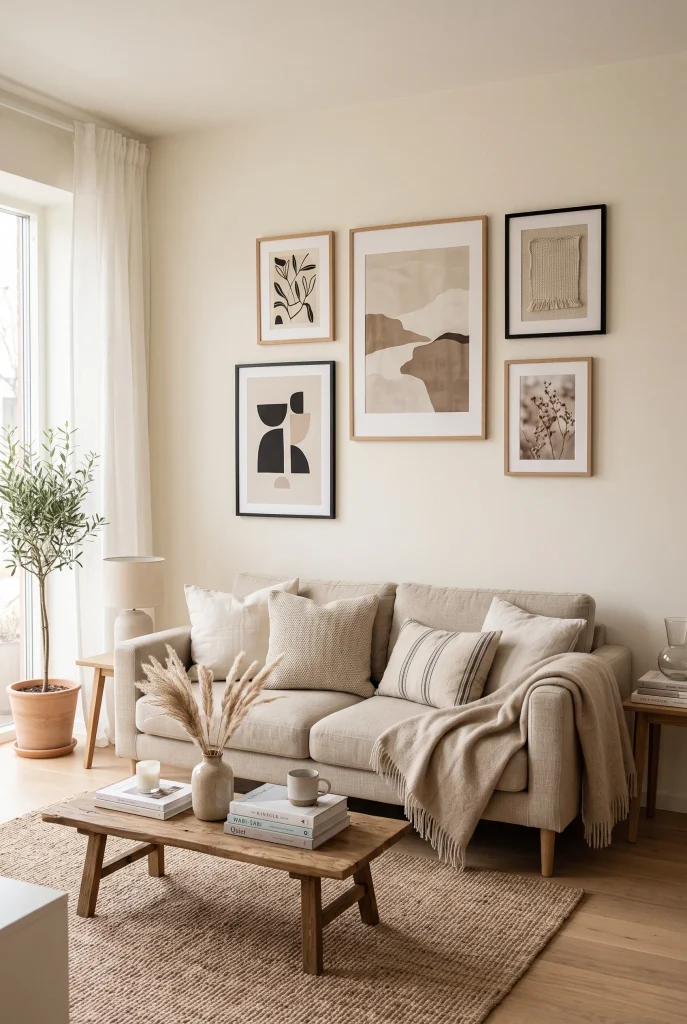
- A small gallery wall adds personality to plain walls.
- Coordinated colors keep several pieces from looking visually chaotic.
- Different artwork styles create interest without needing bold decor.
- Even spacing makes the arrangement look intentional and polished.
Nothing makes a room feel refreshed quite like a carefully chosen gallery wall. Instead of filling every inch, select three to five pieces with similar tones, such as warm beige, black, white, and muted brown. Mix a small art print with a photograph, simple line drawing, or textured piece for subtle variety. Keep the spacing even and align the collection around the center of the wall. This approach adds personality while keeping the overall look calm. It is especially useful when plain walls feel unfinished but you do not want bulky furniture or complicated decorating projects.
For a polished result, test your arrangement on the floor before making any holes in the wall. Start with the largest frame, then position smaller pieces around it until the composition feels balanced. Matching frames can create a neat modern appearance, while slightly varied frames bring a collected, relaxed character. Keep the artwork connected through color, subject, or mood so the display feels intentional. A gallery wall can also make a blank dining area, staircase, or bedroom corner feel more complete. Even a small collection can create a strong visual statement with very little expense.
3. Layered Neutral Bedding
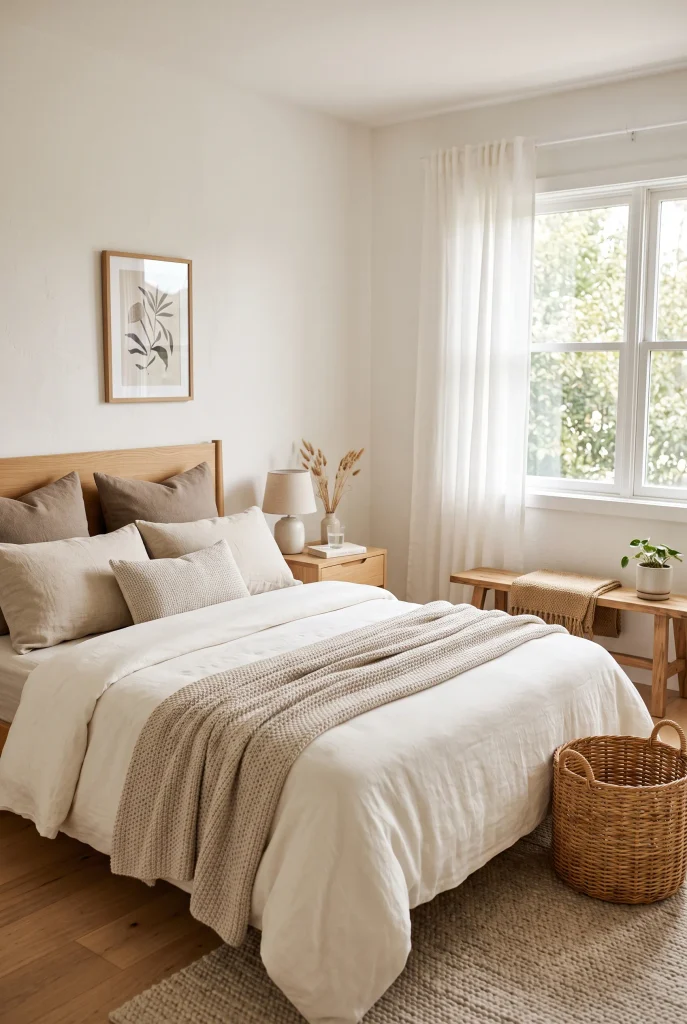
- Layered bedding makes the bedroom feel softer and more inviting.
- Neutral colors create a calm foundation that is easy to update.
- Mixing linen, cotton, and knit textures adds depth without extra clutter.
- A folded throw at the foot keeps the arrangement practical.
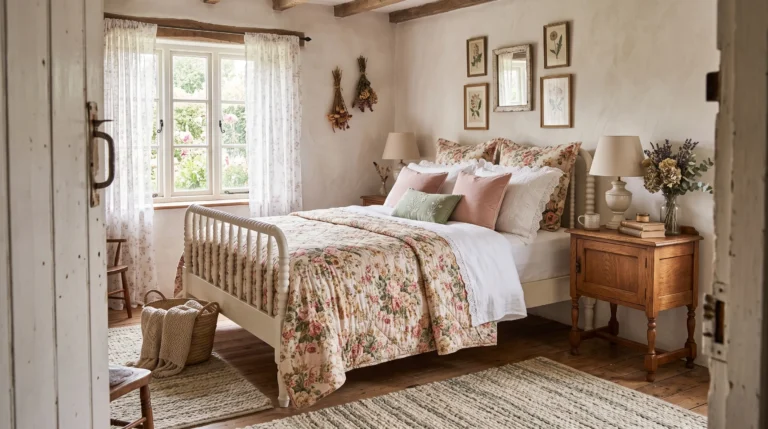
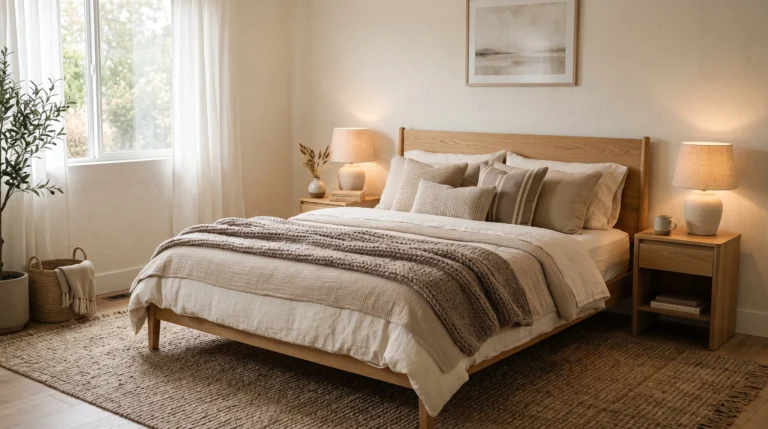
A soft layered bed can make the entire bedroom look more inviting with only a few simple changes. Start with crisp neutral bedding, then add one textured throw and two or three pillows in complementary shades. Cream, oatmeal, warm gray, and muted taupe create an easy palette that feels calm without looking flat. Choose fabrics with different finishes, such as cotton, linen, and chunky knit, to give the bed depth. This arrangement works because it adds softness and structure at the same time, turning an ordinary sleeping area into a comfortable focal point without overwhelming the room.
Keep the layering practical by placing the heaviest blanket near the foot of the bed and using pillows mainly for support and decoration. A wooden bench or woven basket nearby can reinforce the natural look while giving you a convenient place for extra blankets. If your bedroom is small, skip oversized cushions and leave enough visible bedding to keep the space airy. Warm bedside lighting will highlight the textures after sunset, while daylight keeps the palette fresh during the morning. These small choices create a relaxed bedroom that feels considered rather than overly styled or expensive.
4. Floating Wooden Shelves
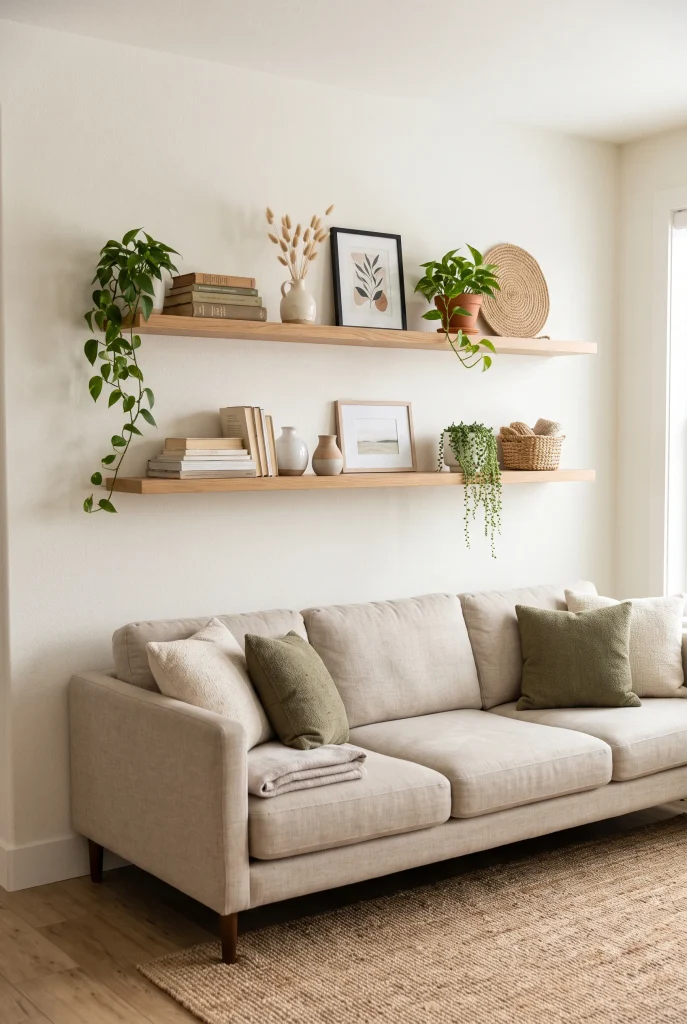
- Floating shelves use vertical wall space without taking up floor area.
- Light wood adds warmth while keeping the arrangement visually airy.
- A few carefully chosen objects create interest without clutter.
- The shelves can be easily restyled as your taste changes.
Empty wall space can become useful and attractive with a pair of simple floating shelves. Choose light or medium-toned wood and install two or three shelves with enough space between them to let each level breathe. Style them with a small plant, a ceramic vase, a few books, and one framed print rather than filling every available spot. This arrangement works particularly well in living rooms, bedrooms, and narrow hallways where floor space is limited. The shelves add height and personality while keeping the overall room open, calm, and easy to maintain.
The most attractive shelf arrangements usually include a mix of heights, shapes, and textures. Place taller pieces toward the back, then balance them with smaller objects nearby instead of creating identical groupings. Leave some empty space because negative space helps each decorative item stand out. If the room already has several colors, keep shelf accessories within the existing palette for a more cohesive appearance. Natural wood shelves are especially forgiving because they work with neutral, modern, Scandinavian, and relaxed transitional interiors. They also make seasonal updates simple without requiring a complete room makeover.
5. Textured Accent Chair
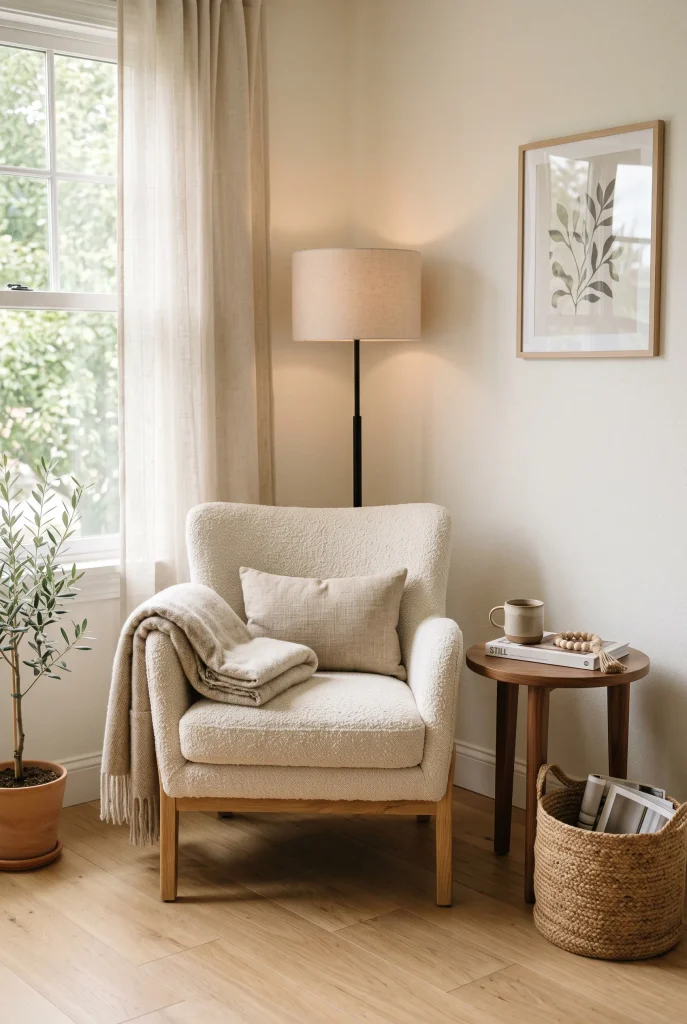
- One textured chair can create a cozy focal point in an empty corner.
- Boucle, linen, or woven upholstery adds softness and visual depth.
- A small side table makes the corner more functional.
- Neutral upholstery keeps the piece versatile as your style evolves.
An empty corner does not always need a large piece of furniture to feel complete. A single textured accent chair can turn unused space into a comfortable reading, relaxing, or conversation spot. Look for boucle, linen, cotton, or woven upholstery in a shade that complements the room. Pair it with a small side table and a simple floor lamp to create a practical little zone. This is one of those simple home decor ideas that can change how a room feels without requiring major furniture changes. The corner becomes intentional, useful, and visually inviting.
Choose the chair size carefully so the corner remains comfortable rather than cramped. A compact side table is usually enough for a book, cup, or small lamp, while a soft throw adds another layer of texture. If the surrounding furniture is neutral, a muted olive, caramel, or dusty blue chair can introduce gentle color without dominating the room. Keep the accessories minimal so the chair remains the star. This setup works beautifully beside a window, near a bookshelf, or in an unused bedroom corner, giving the space a clear purpose while maintaining an uncluttered appearance.
View: 21 Small Home Decor Ideas to Maximize Every Corner
6. Decorative Basket Storage
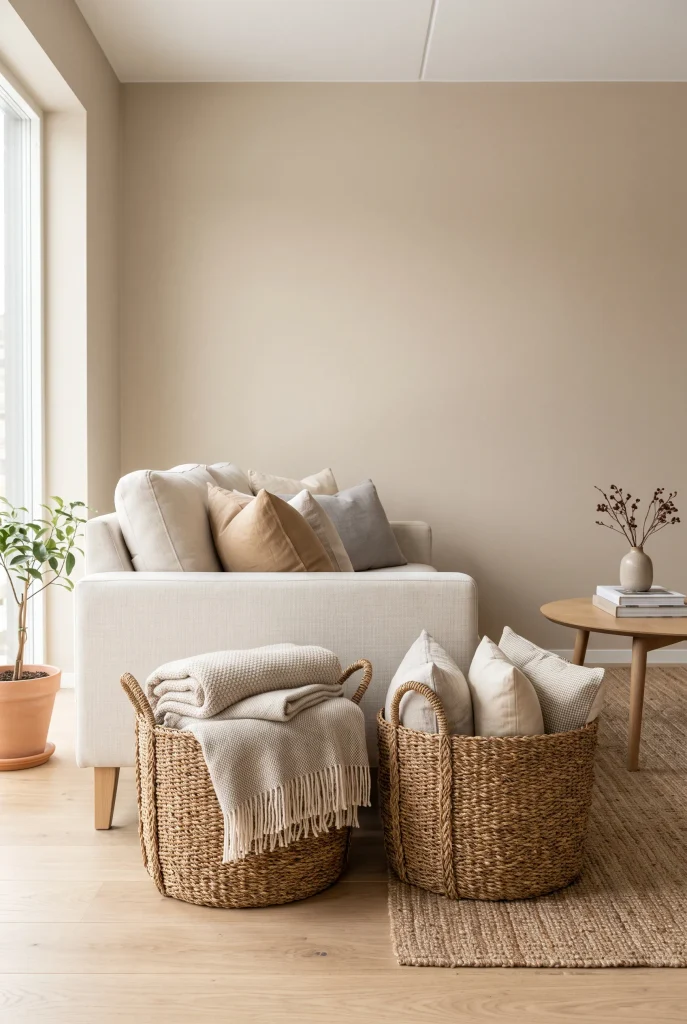
- Woven baskets hide everyday clutter while adding natural texture.
- Large baskets are useful for blankets, pillows, toys, or magazines.
- Matching materials create a more cohesive room appearance.
- Keeping baskets near frequently used items makes storage easier to maintain.
Storage can look decorative when you choose containers that complement the room instead of hiding them away. Woven baskets made from seagrass, rattan, or natural fibers bring warmth while giving blankets, pillows, magazines, or everyday items a dedicated home. Place a large basket beside the sofa, underneath a console, or near a media unit where clutter tends to collect. The natural texture breaks up smooth furniture surfaces and makes a neutral room feel more layered. More importantly, having storage within easy reach makes it easier to tidy the room quickly at the end of the day.
For the best visual effect, avoid filling every corner with baskets. One or two well-placed pieces usually look more intentional than several scattered containers. Choose a size that matches the furniture nearby, and keep the colors close to your existing palette. A basket with a lid can hide less attractive necessities, while an open basket works well for soft blankets that you use regularly. Practical storage becomes much easier to maintain when it is visible and convenient. Good decor should not only look beautiful; it should make everyday living feel simpler too.
7. Rounded Coffee Table
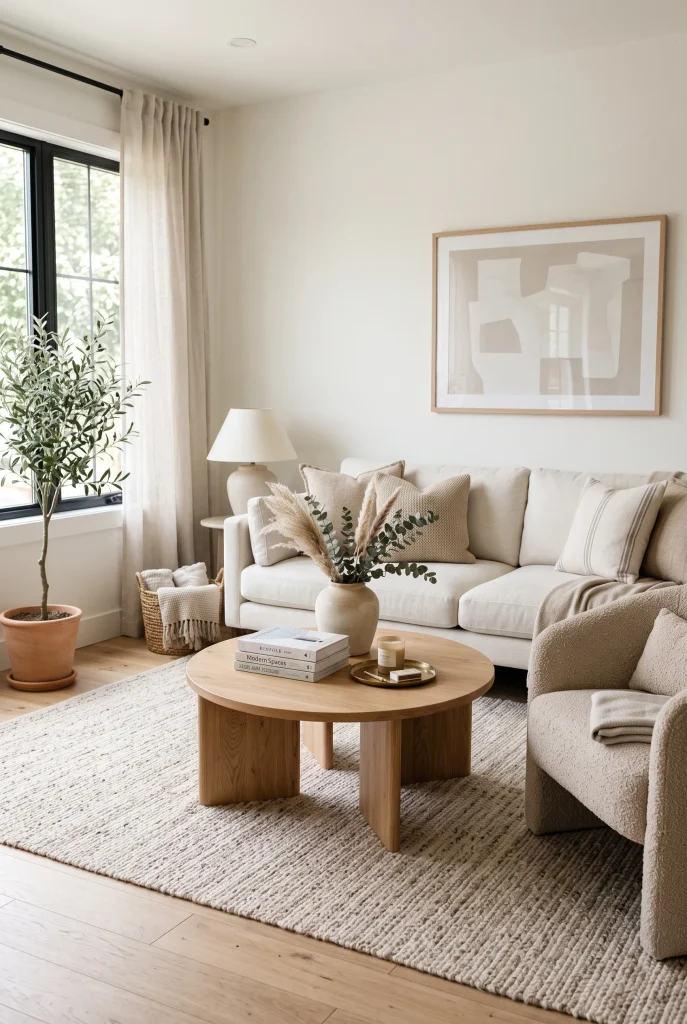
- Rounded edges make the seating area feel softer and more approachable.
- A compact table keeps the room functional without looking heavy.
- Natural wood adds warmth to neutral furniture.
- A small tray keeps everyday accessories organized.
A rounded coffee table can soften the look of a living room while making the seating arrangement feel more connected. Choose a simple wood, stone, or light-colored design with enough surface space for daily essentials without dominating the room. Place it centrally on a textured rug, leaving comfortable walking space around it. The curved shape works especially well with sofas and chairs that have soft upholstery or rounded details. This small furniture swap can make a room feel more balanced and relaxed, particularly when the existing layout has many straight lines and sharp corners.
Keep the tabletop simple with a small tray, ceramic vase, or a couple of neatly stacked books. Avoid covering the entire surface because open space helps the table look lighter. When choosing the size, make sure it relates to the sofa rather than simply selecting the largest option available. A smaller table can actually make a compact living room feel more spacious. Light oak is an easy choice for warm neutral interiors, while darker wood can add contrast. The goal is a useful centerpiece that supports everyday living while keeping the room visually calm and uncluttered.
8. Statement Floor Mirror
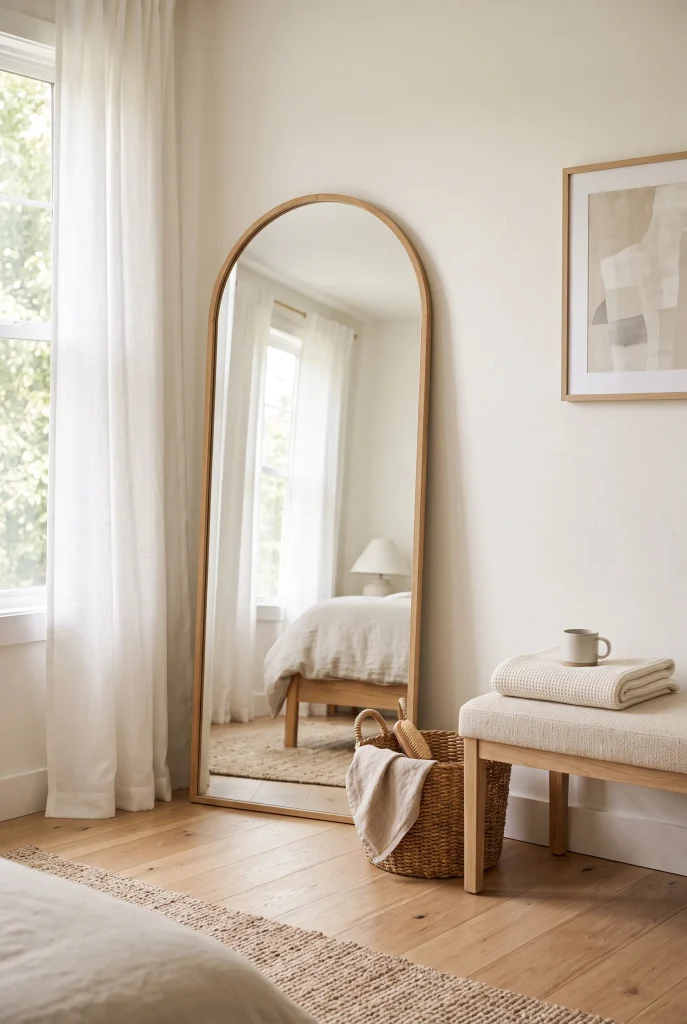
- A tall mirror can make a room feel brighter and more open.
- Leaning the mirror creates a relaxed, effortless look.
- Arched or rounded frames soften rooms filled with straight lines.
- Positioning it near a window helps reflect natural light.
A tall floor mirror can completely change how a room feels without adding much furniture. Choose a simple frame in natural wood, black, brass, or another finish already used throughout your space. Leaning the mirror against a wall creates a relaxed appearance and avoids making the room feel overly formal. Place it near a window or opposite a bright area so it can reflect available light. The reflection adds depth, making smaller rooms appear more open. This works beautifully in bedrooms, entryways, dressing areas, and living rooms where an unused wall needs a useful visual feature.
Think carefully about what the mirror will reflect before choosing its position. A view of a window, attractive artwork, or greenery can make the room feel brighter and more layered, while reflecting clutter can have the opposite effect. A simple arched frame adds softness and works well with neutral furniture and natural materials. If leaning the mirror is not practical, secure it properly according to the manufacturer’s recommendations. One well-positioned mirror often has more impact than several small decorative pieces because it improves both the room’s appearance and its sense of space.
9. Minimal Entryway Bench
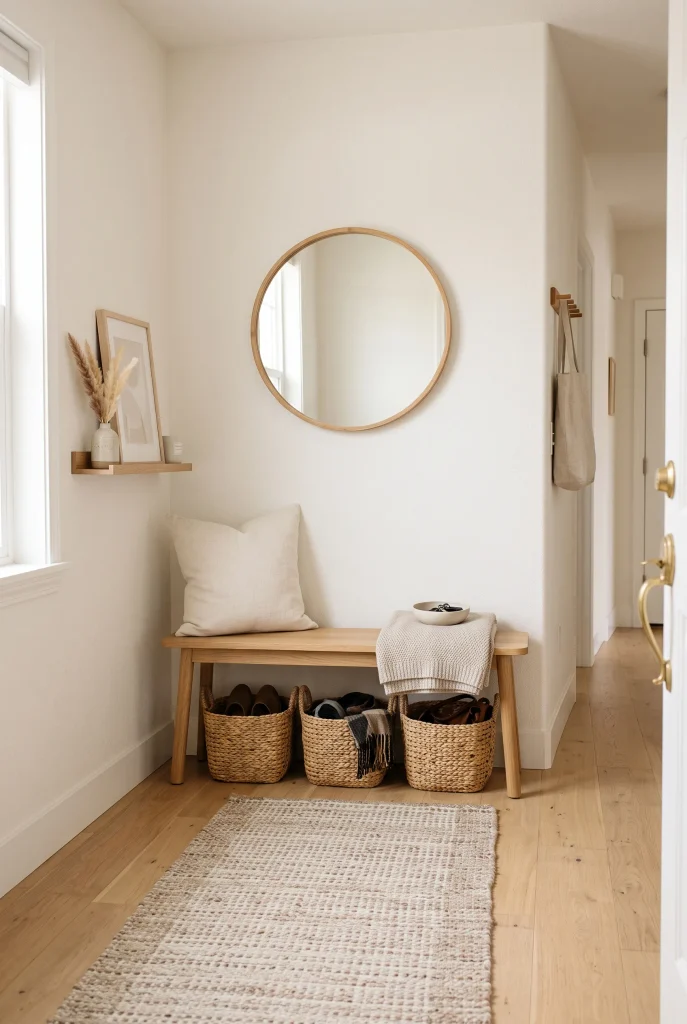
- A narrow bench gives an entryway an immediate sense of purpose.
- Open space underneath provides convenient everyday storage.
- A cushion adds comfort without creating visual bulk.
- Pairing the bench with a mirror makes the area feel more complete.
An entryway becomes much more useful when a simple bench gives you a place to sit and pause. Choose a narrow design that leaves a clear walking path, especially if the hallway is compact. Light oak, painted wood, or a softly upholstered bench can work depending on your existing decor. Add one cushion for comfort and use the space underneath for baskets containing shoes, scarves, or other daily essentials. The result feels organized without looking overly decorated. It also creates a welcoming transition between the front door and the rest of your home.
Keep the wall above the bench relatively simple so the area does not become crowded. A round mirror, small framed print, or single wall hook can provide function while maintaining visual balance. If your entryway receives limited daylight, lighter finishes and neutral textiles can help keep the space feeling open. Measure carefully before buying the bench so doors can open freely and people can move around comfortably. A thoughtfully planned entryway does more than look attractive; it reduces everyday clutter and makes coming home or heading out feel noticeably easier.
10. Soft Linen Curtains
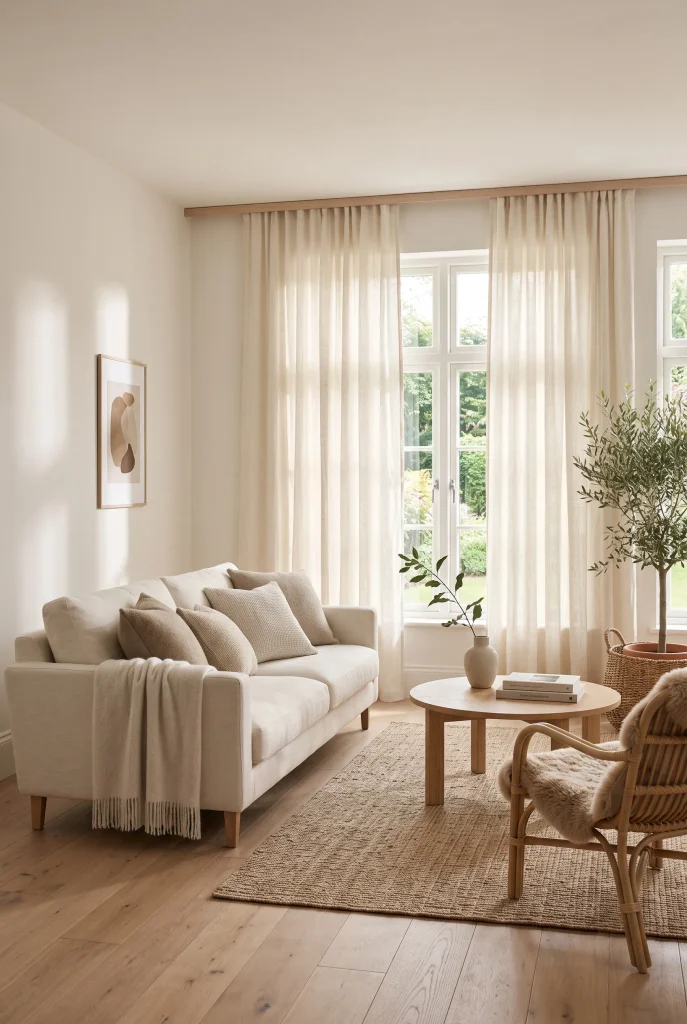
- Full-length curtains make windows appear taller and more elegant.
- Linen fabric adds softness without making the room feel heavy.
- Ivory and cream tones keep the space bright and versatile.
- Light-filtering fabric creates a gentle, comfortable atmosphere.
Soft curtains can make an ordinary room feel warmer and more finished almost instantly. Choose lightweight linen or linen-look panels in ivory, cream, or another gentle neutral that works with your walls. Hang them close to the ceiling and let them fall toward the floor to create a taller-looking window. The loose fabric adds movement and texture while still keeping the overall design simple. This approach works especially well in living rooms and bedrooms where hard furniture surfaces need something softer to balance them. Even basic windows can look more polished with the right curtain placement.
For a relaxed appearance, avoid overly stiff panels or complicated patterns when the rest of the room is already visually interesting. Let the fabric remain slightly gathered so natural light can filter through during the day. If privacy is important, pair linen curtains with simple blinds or shades underneath. Make sure the curtain width is generous enough to cover the window properly when closed. Hanging curtains higher and wider than the actual window often creates a surprisingly noticeable improvement. It makes the room feel taller, brighter, and more thoughtfully designed without changing the furniture.
11. Ceramic Decor Grouping
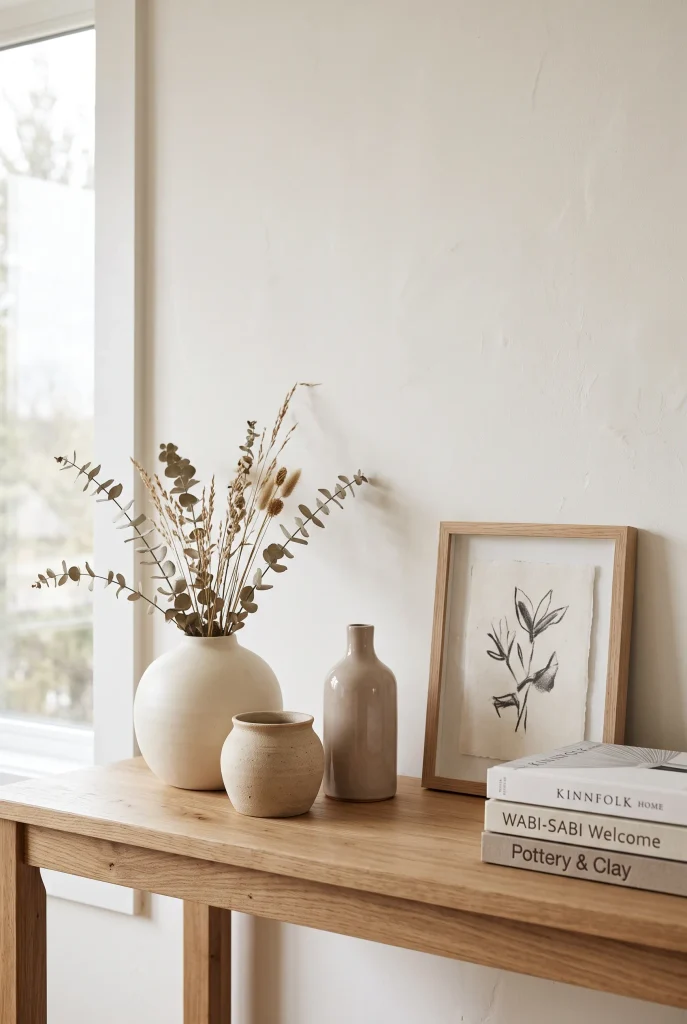
- A small ceramic collection creates texture without adding visual noise.
- Grouping objects makes individual pieces feel more intentional.
- Neutral pottery works easily with many interior styles.
- Different heights create a naturally balanced arrangement.
A few ceramic pieces can add character to a room without making it feel decorated to excess. Choose two or three vessels in related neutral shades, then vary their heights and shapes to create a relaxed grouping. Handmade-looking pottery works particularly well because subtle imperfections bring warmth to otherwise clean surfaces. Place the arrangement on a console, coffee table, open shelf, or bedroom dresser where it can act as a quiet focal point. The key is to group similar materials rather than scattering small accessories everywhere. This keeps the room visually interesting while preserving a simple overall appearance.
Try combining one taller vase with a shorter bowl and a medium-sized vessel for an easy layered composition. You can leave the pieces empty or add a small branch or dried stem to introduce natural height. Keep the colors connected to your existing palette so the display feels integrated rather than randomly placed. If your furniture already has strong patterns or dark finishes, cream and beige ceramics can soften the look. A small grouping is also easy to move when cleaning or rearranging, making it a flexible decorating choice for changing seasons.
12. Warm Table Lamp
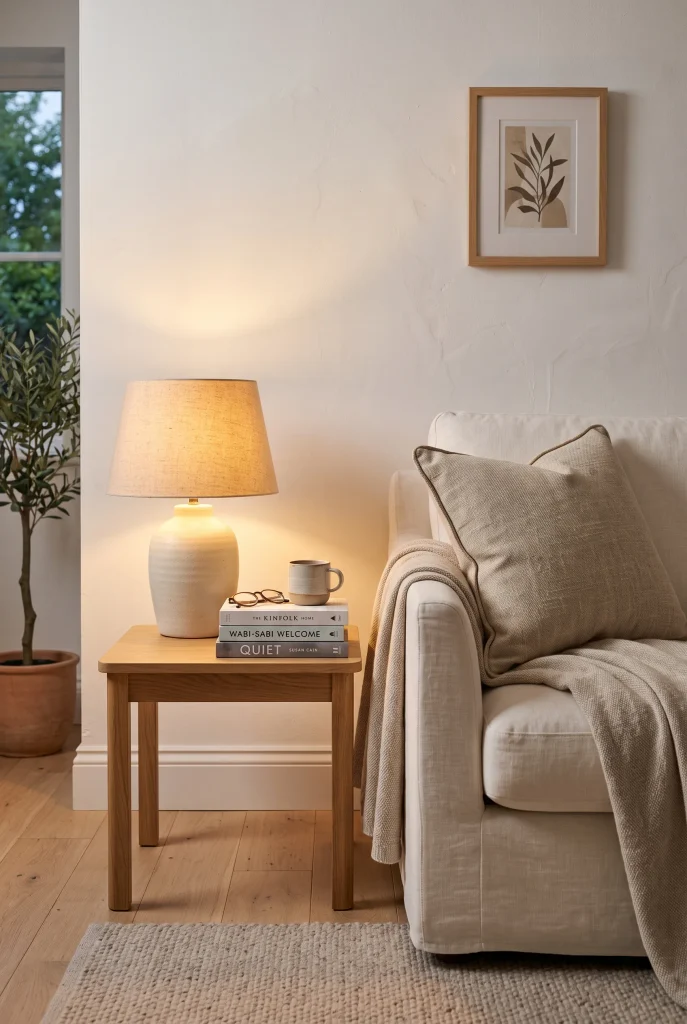
- A warm lamp instantly makes a room feel more inviting after sunset.
- A simple shade adds softness to nearby furniture.
- Ceramic or wood bases introduce natural texture.
- Layered lighting makes the room feel more comfortable than ceiling light alone.
The right table lamp can change the atmosphere of a room as soon as evening arrives. Choose a simple lamp with a ceramic, wood, or matte finish and pair it with a fabric shade that diffuses the light softly. Place it beside a sofa, bed, console, or reading chair where the glow can serve a practical purpose. Warm-toned lighting makes neutral walls and natural materials feel richer while creating a comfortable environment for relaxing. This small addition is especially useful in rooms that currently rely too heavily on one bright overhead fixture.
Think about both the lamp’s proportions and its placement before choosing one. A shade that is too large can overwhelm a small side table, while a tiny lamp may disappear beside substantial furniture. Use the lamp alongside daylight, floor lighting, or wall fixtures so the room has several layers of illumination. A small stack of books or a ceramic accessory can complete the tabletop without making it crowded. Simple lighting is often overlooked, but it has a major effect on how colors, textures, and furniture feel once natural daylight fades.
13. Layered Area Rug
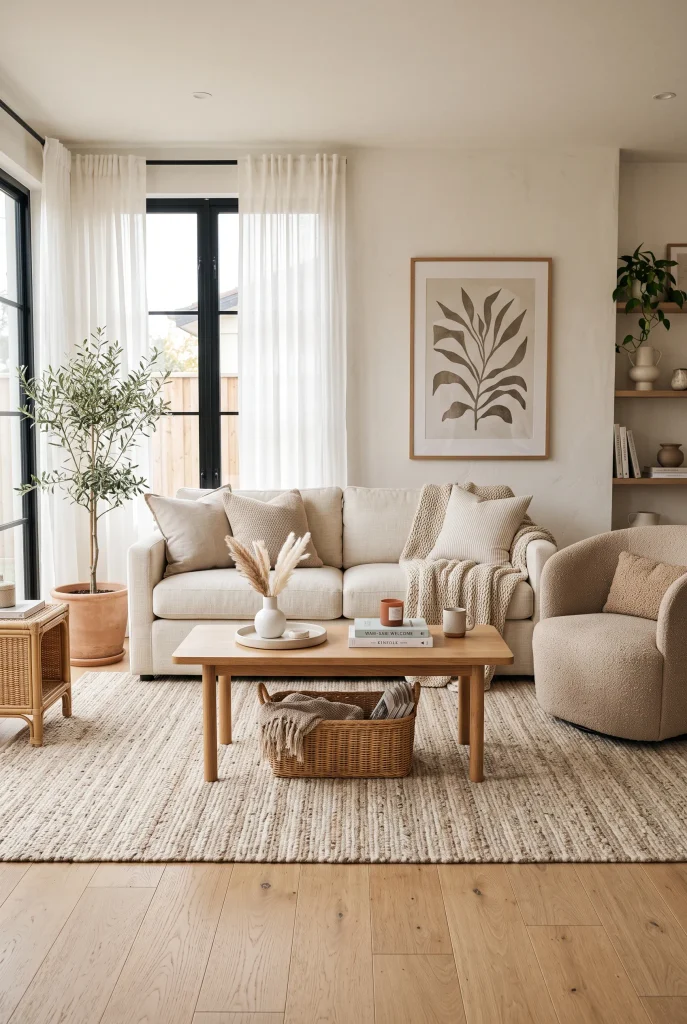
- A textured rug helps define the seating area without adding bulky furniture.
- Neutral tones create warmth while keeping the room visually open.
- Layering textures adds depth to an otherwise simple space.
- A properly sized rug can make furniture feel more connected.
A well-chosen area rug can pull a simple room together and make the furniture arrangement feel more intentional. Look for a neutral rug with subtle texture rather than a busy pattern, especially when your sofa and accessories already have plenty of detail. Position the rug so at least the front legs of the main seating pieces rest on it. This creates a visual connection between the furniture and makes the seating zone feel established. Natural shades such as cream, beige, oatmeal, and taupe are easy to work with and can make hard flooring feel noticeably warmer.
Texture matters just as much as color when you want a comfortable, layered look. A woven, flatweave, or softly patterned rug can introduce dimension without competing with the rest of the decor. Choose a size that suits the room rather than using a small rug that floats in the middle of the furniture. If the space is compact, a lighter rug can help maintain an airy appearance. Upgrading a rug often makes older furniture look more cohesive because the right foundation visually connects separate pieces. It is a simple change with surprisingly strong impact.
14. Wooden Picture Frames
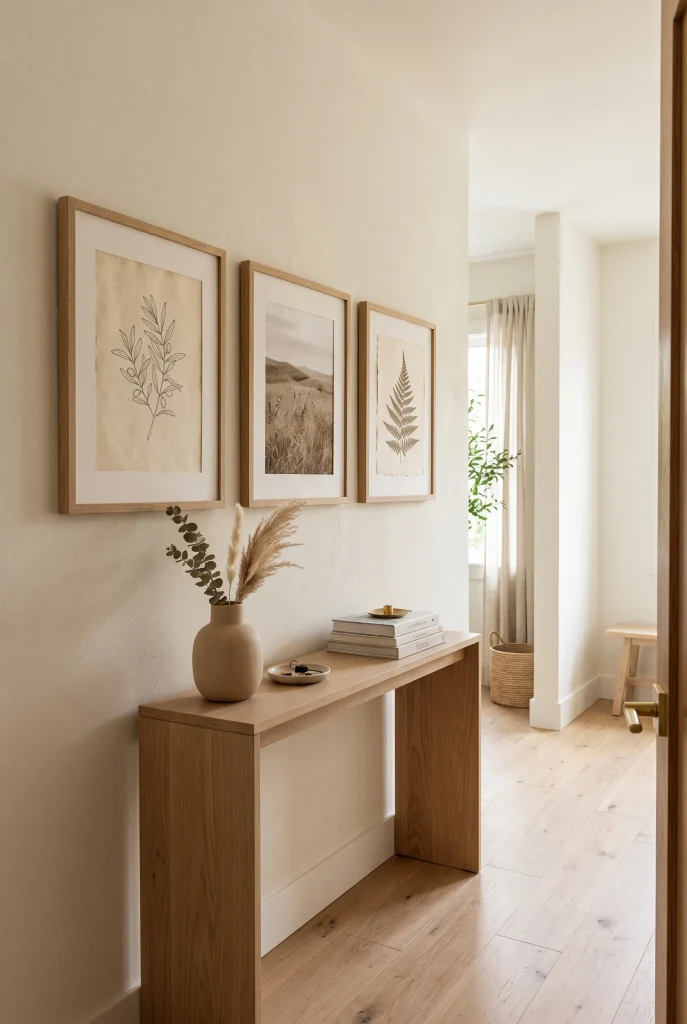
- Natural wood frames add warmth to plain walls.
- Coordinated frames create a cohesive display without matching everything perfectly.
- Botanical prints and neutral artwork keep the look relaxed.
- Consistent spacing makes a small collection appear polished.
Picture frames may be small, but they can make a noticeable difference when a room feels impersonal. Natural wood frames bring warmth to white, cream, beige, and greige walls while giving artwork a more finished appearance. Choose two or three frames in similar tones and fill them with botanical prints, simple photography, line drawings, or meaningful images. Keeping the artwork visually connected prevents the display from feeling random. This approach works on hallway walls, bedroom dressers, shelves, and living room consoles where a little personality is needed without introducing another large decorative object.
You do not need a perfectly matched collection to create a cohesive arrangement. Slight differences in frame thickness or artwork style can make the display feel more collected and natural. What matters most is maintaining some consistency through color, spacing, or subject matter. Before hanging anything, arrange the frames on the floor and step back to check the overall balance. Use removable hanging strips when appropriate for lightweight pieces and always follow the product’s weight guidelines. A few thoughtfully placed frames can make a home feel more personal while still keeping the design clean and uncluttered.
15. Greenery In Corners
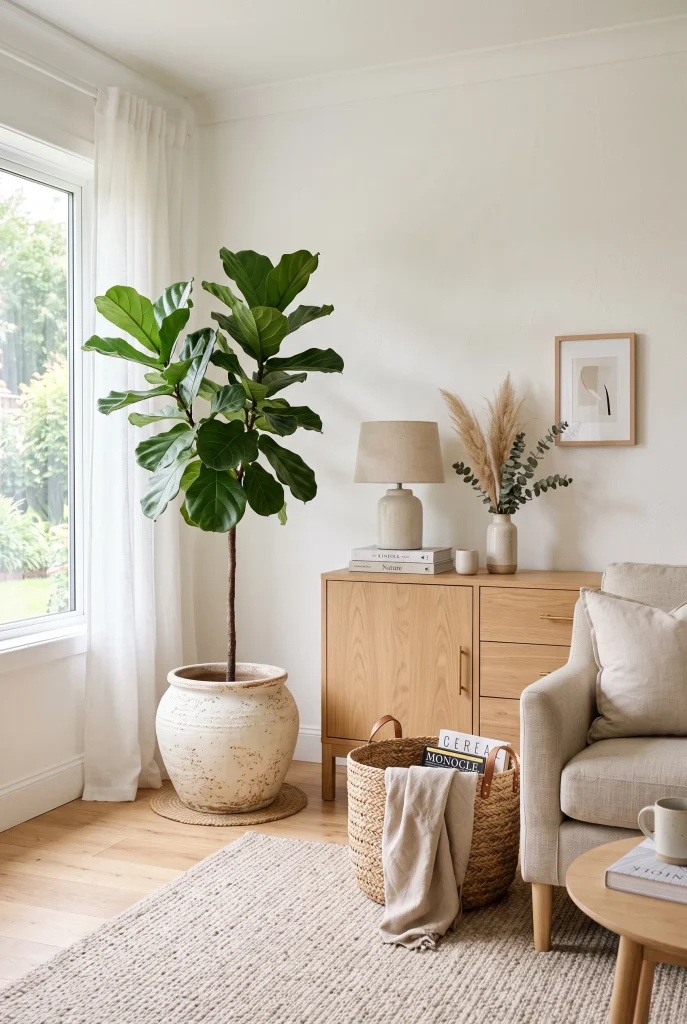
- A tall plant fills an empty corner without requiring much furniture.
- Green leaves add natural color to neutral interiors.
- Textured planters introduce another layer of material and shape.
- Plants can soften hard architectural lines and empty wall areas.
An empty corner can feel unfinished, but a single healthy plant can give it purpose without adding visual clutter. Choose a tall indoor plant with a shape suited to the available space, such as a fiddle leaf fig, rubber plant, olive tree, or areca palm. Place it in a simple ceramic, stone, or woven planter that complements your existing furniture. Greenery adds natural color and movement to neutral rooms while softening sharp corners. It is especially effective beside a sofa, cabinet, window, or empty wall where another piece of furniture would make the area feel crowded.
Before choosing a plant, consider the amount of natural light the corner receives and select a variety that suits those conditions. A beautiful plant will only remain attractive when its basic care needs can be met. Keep the surrounding accessories minimal so the greenery remains the main feature. A woven basket or small wooden stool can provide supporting texture, but it is not necessary to fill the entire area. One well-positioned plant can make a room feel fresher and more finished, especially when the rest of the palette is soft and neutral.
16. Open Storage Cabinet
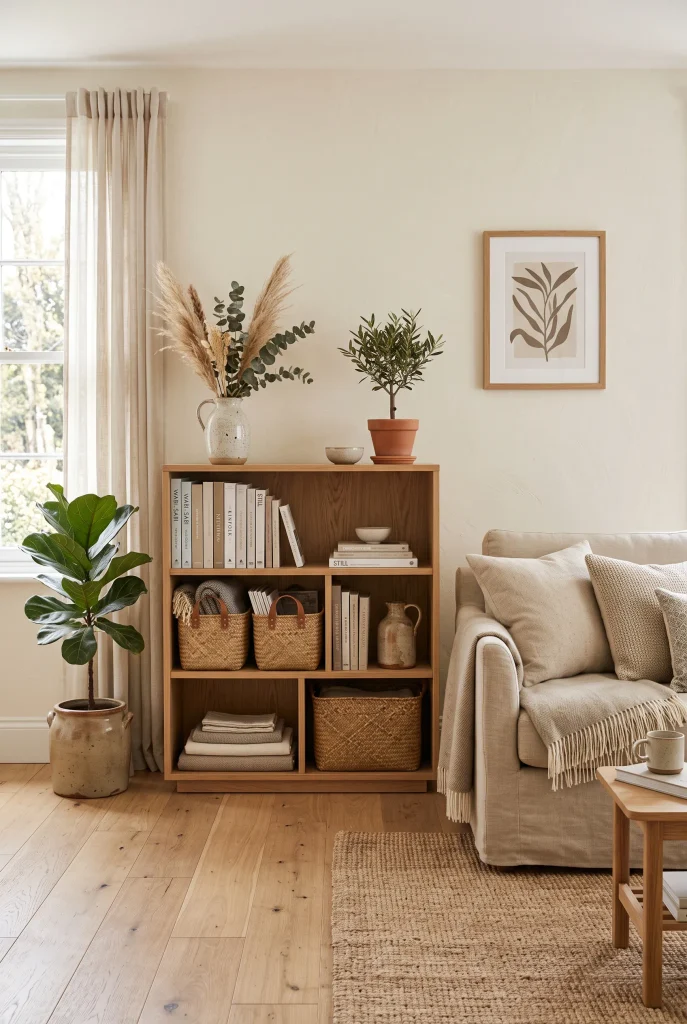
- Open storage combines everyday organization with attractive display space.
- Natural wood adds warmth to plain walls and neutral furniture.
- Baskets can hide smaller items while keeping the cabinet tidy.
- Leaving some shelves partially empty prevents a crowded appearance.
An open storage cabinet can solve everyday clutter while giving you another place to display the things you love. Choose a simple low cabinet in natural wood or a soft neutral finish, then divide the storage between practical baskets and a few decorative objects. Books, ceramics, framed artwork, and small plants can fill the visible sections without making the unit look overloaded. This works especially well in living rooms, dining areas, and bedrooms where storage is needed but a large closed cabinet might feel too heavy. The combination of display and organization makes the room feel more purposeful.
The easiest way to keep open storage looking polished is to avoid treating every shelf like a display case. Leave a little breathing room and vary the arrangement from one section to another. Use baskets for objects that tend to create visual clutter, then reserve open areas for attractive pieces. Keep colors connected to the room so the cabinet feels integrated rather than separate. If you have children or frequently used items, place practical storage at accessible levels and decorative pieces higher up. Good organization can make simple decor feel intentional because everything has a clear place.
17. Natural Wood Accents
- Natural wood brings warmth to rooms with neutral or cool finishes.
- Small wooden accessories can create consistency without replacing furniture.
- Different wood tones can add depth when balanced carefully.
- Simple grain patterns introduce organic texture to clean interiors.
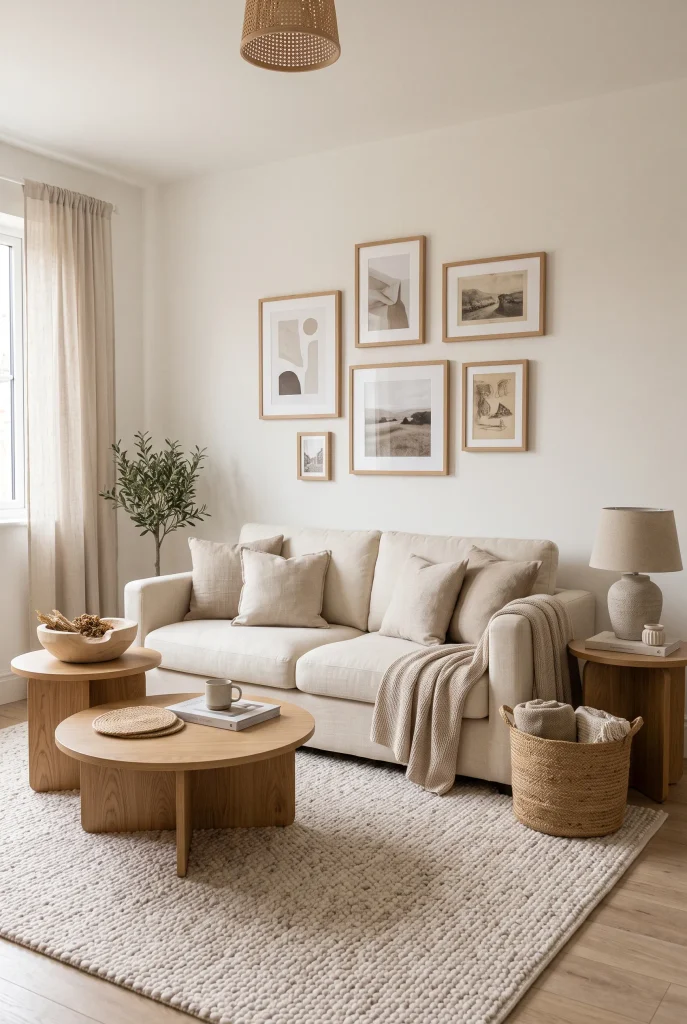
Natural wood is one of the easiest ways to make a simple room feel warmer and more inviting. You do not need an entire wooden furniture set to achieve the effect. Start with small touches such as a side table, picture frame, tray, bowl, stool, or decorative box. The visible grain adds organic texture and gives neutral rooms a little more character. Light oak works beautifully with cream and beige palettes, while walnut can create richer contrast. The key is using wood thoughtfully so the accents support the room instead of making every surface compete for attention.
Try repeating one or two wood finishes across different parts of the room to create visual consistency. For example, a light oak side table can connect with wooden frames and a small tray on the coffee table. If you already have several wood tones, balance them with neutral textiles and simple shapes rather than adding more materials. Natural wood also pairs well with linen, cotton, ceramics, and woven fibers because these materials share an understated organic quality. A few carefully chosen accents can make a room feel more collected and comfortable without adding unnecessary decoration.
18. Clean Floating Nightstand
- A floating nightstand keeps the floor visually clear.
- Wall-mounted storage works especially well in compact bedrooms.
- One lamp and a small accessory are enough for a polished surface.
- Open floor underneath makes cleaning easier and the room feel lighter.
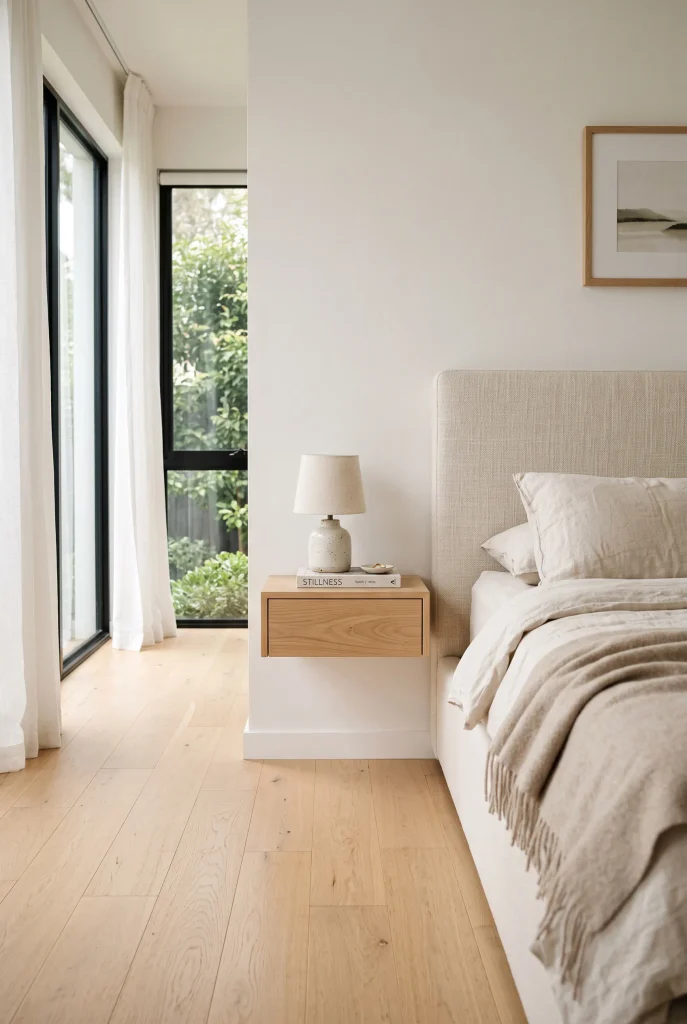
A floating nightstand can make a bedroom feel noticeably cleaner because it removes bulky furniture from the floor. Choose a compact wall-mounted shelf or drawer in natural wood, white, or another finish that complements the bed. Keep the surface useful with a small lamp, one book, and perhaps a tiny ceramic piece. The open space underneath creates a lighter appearance and makes the surrounding floor easier to clean. This setup is particularly helpful beside smaller beds or in narrow bedrooms where a traditional nightstand can make the walkway feel cramped and visually crowded.
Before installing a floating nightstand, check the wall construction and follow the mounting instructions carefully so it can safely support the intended weight. Position it at a comfortable height relative to the mattress rather than choosing a height based only on appearance. Keep cords organized so the clean design is not interrupted by loose cables. A warm lamp can provide soft evening light while keeping the tabletop minimal. This small change combines function and style beautifully, proving that removing furniture from the floor can sometimes make a room feel more spacious and organized.
19. Clutter-Free Coffee Table
- A clear tabletop instantly makes the living room feel more organized.
- One tray keeps small everyday items together and easy to move.
- Neutral accessories add personality without overwhelming the space.
- Leaving open surface area creates a lighter visual impression.
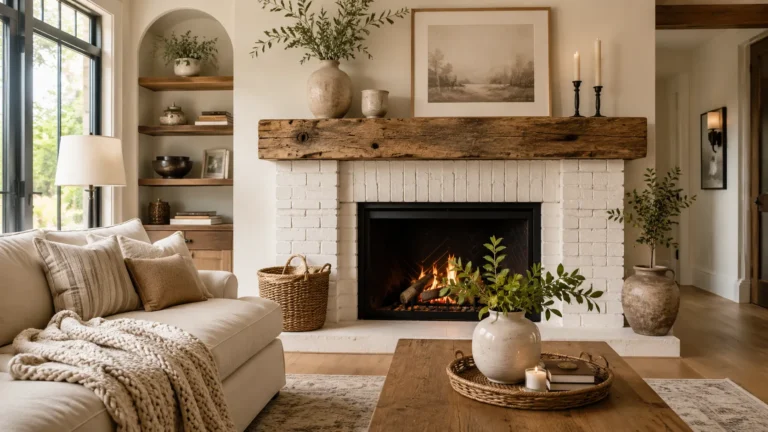
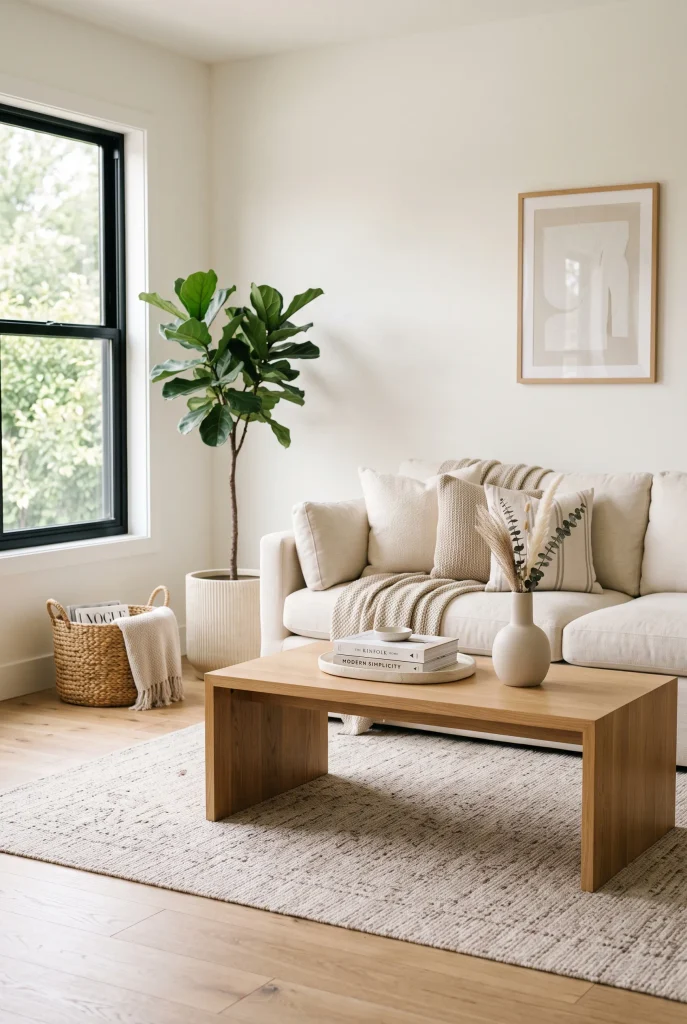
A clutter-free coffee table can make the entire living room feel calmer, even when nothing else has changed. Start by removing everything from the surface, then return only the pieces you genuinely use or enjoy seeing. A shallow tray, two stacked books, and one small ceramic vessel are often enough to create a polished arrangement. Keep some tabletop visible because empty space gives the eye somewhere to rest. This approach is especially helpful in busy households where the coffee table easily becomes a drop zone for remotes, cups, mail, and other everyday items.
Make the arrangement practical enough that you will actually maintain it. A tray can hold smaller objects and be lifted quickly when you need the full table for meals, games, or working. Choose accessories that relate to the room’s existing colors rather than introducing several unrelated shades. If you have children or pets, avoid fragile objects that constantly need moving. Simple decorating works best when it fits naturally into daily routines. A beautiful coffee table should still leave enough usable space for real life, rather than becoming a display that nobody can touch.
20. Single Statement Artwork
- One large artwork can anchor an otherwise plain wall.
- A limited color palette keeps the statement piece sophisticated.
- Oversized art often looks more intentional than several tiny frames.
- Centering the piece creates an immediate focal point.
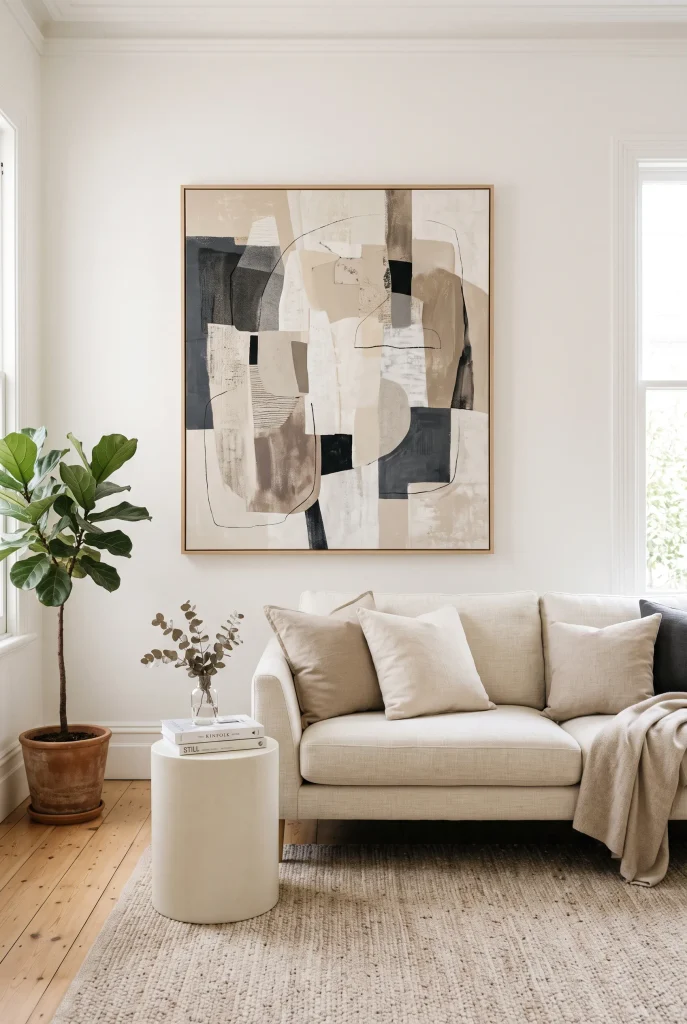
Sometimes one strong piece of artwork is all a room needs. Choose an oversized print, abstract painting, botanical piece, or photograph that connects with the colors already present in your furniture and textiles. Hang it above a sofa, console, bed, or dining cabinet where the artwork can naturally become the focal point. A restrained palette of cream, beige, charcoal, brown, or muted earthy tones keeps the look sophisticated without feeling stark. The larger scale also helps a plain wall feel finished without requiring multiple decorative objects or a complicated gallery arrangement.
Pay attention to proportion before committing to a piece. Artwork that is too small can make a large wall feel disconnected, while an oversized piece can create balance above substantial furniture. Keep the surrounding decor relatively quiet so the artwork has room to stand out. If you prefer a more casual atmosphere, lean a large framed print against a console instead of mounting it. A statement piece can also be an affordable way to refresh a room because changing one visual anchor can alter the mood of the entire space without replacing the furniture underneath it.
21. Functional Decor Tray
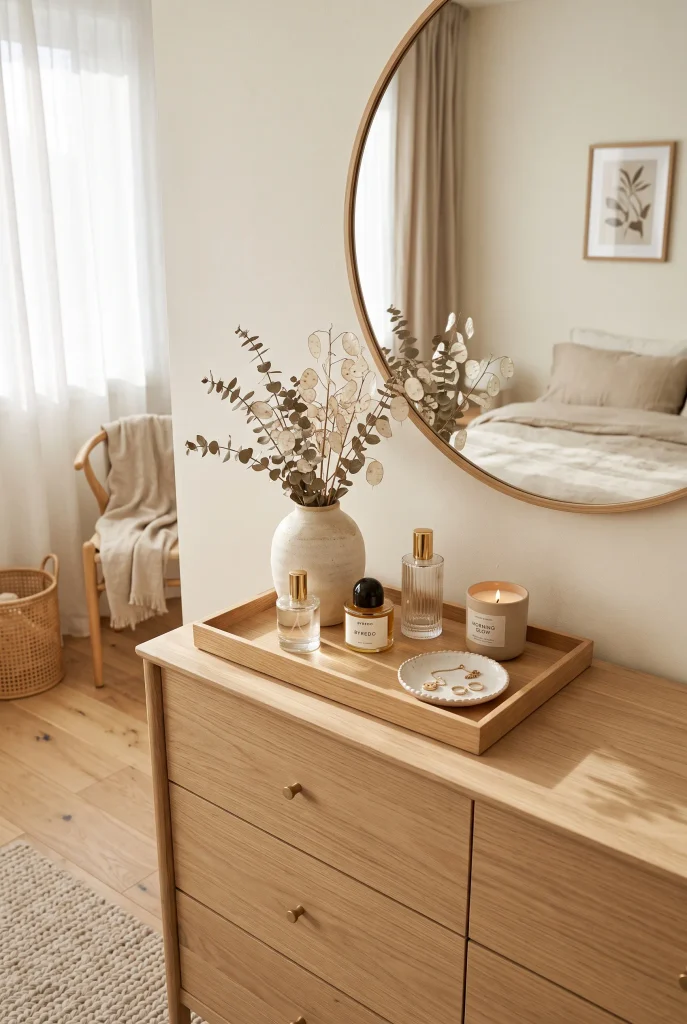
- A decorative tray turns scattered objects into one organized arrangement.
- Wood, ceramic, or stone trays add subtle texture.
- Trays make frequently used items easier to move when cleaning.
- A small grouping can make a plain surface look intentionally styled.
A simple decorative tray can make everyday objects look organized instead of scattered across a surface. Place one on a coffee table, dresser, console, kitchen counter, or bathroom vanity, then use it to group items that naturally belong together. A wooden tray might hold a candle and ceramic vase, while a stone tray could organize perfumes or small bathroom essentials. Keeping related objects inside one visual boundary makes the surface look calmer and more intentional. This is a particularly useful trick for homes where practical items need to stay accessible rather than being stored away.
Choose a tray that is large enough to hold your essentials but small enough to leave plenty of surrounding space. Natural wood adds warmth, while ceramic, stone, or metal can create a cleaner contemporary effect. Avoid filling the tray simply because there is room; a little empty space keeps the arrangement attractive and functional. You can also move the entire grouping when wiping down the surface, which saves time during everyday cleaning. Small organizational details like this can make a home feel more polished without sacrificing the convenience of having frequently used items close by.
Conclusion
A beautiful home does not have to be complicated, expensive, or filled with trendy pieces. The best simple home decor ideas often come down to thoughtful choices, useful storage, warm textures, natural materials, and intentional placement. Start with one area that feels unfinished or cluttered, then make a small change that improves both its appearance and function. You may be surprised by how quickly the whole room feels different. Save this article on Pinterest so you can return to your favorite ideas later, and share it with someone who loves refreshing their home. Choose one idea today and make your space feel a little more like you.