21 Modern Farmhouse Dining Room Ideas to Inspire You
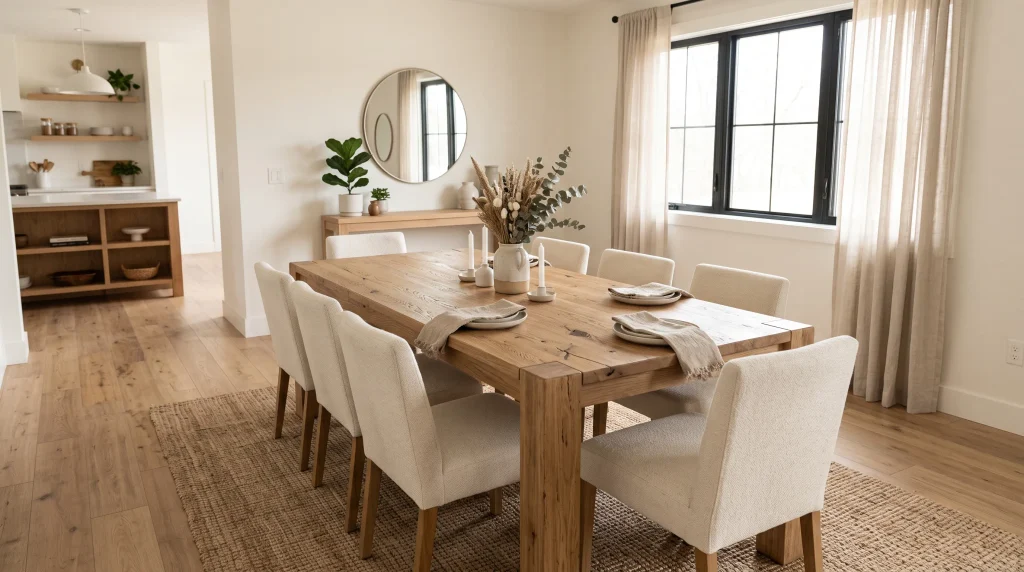
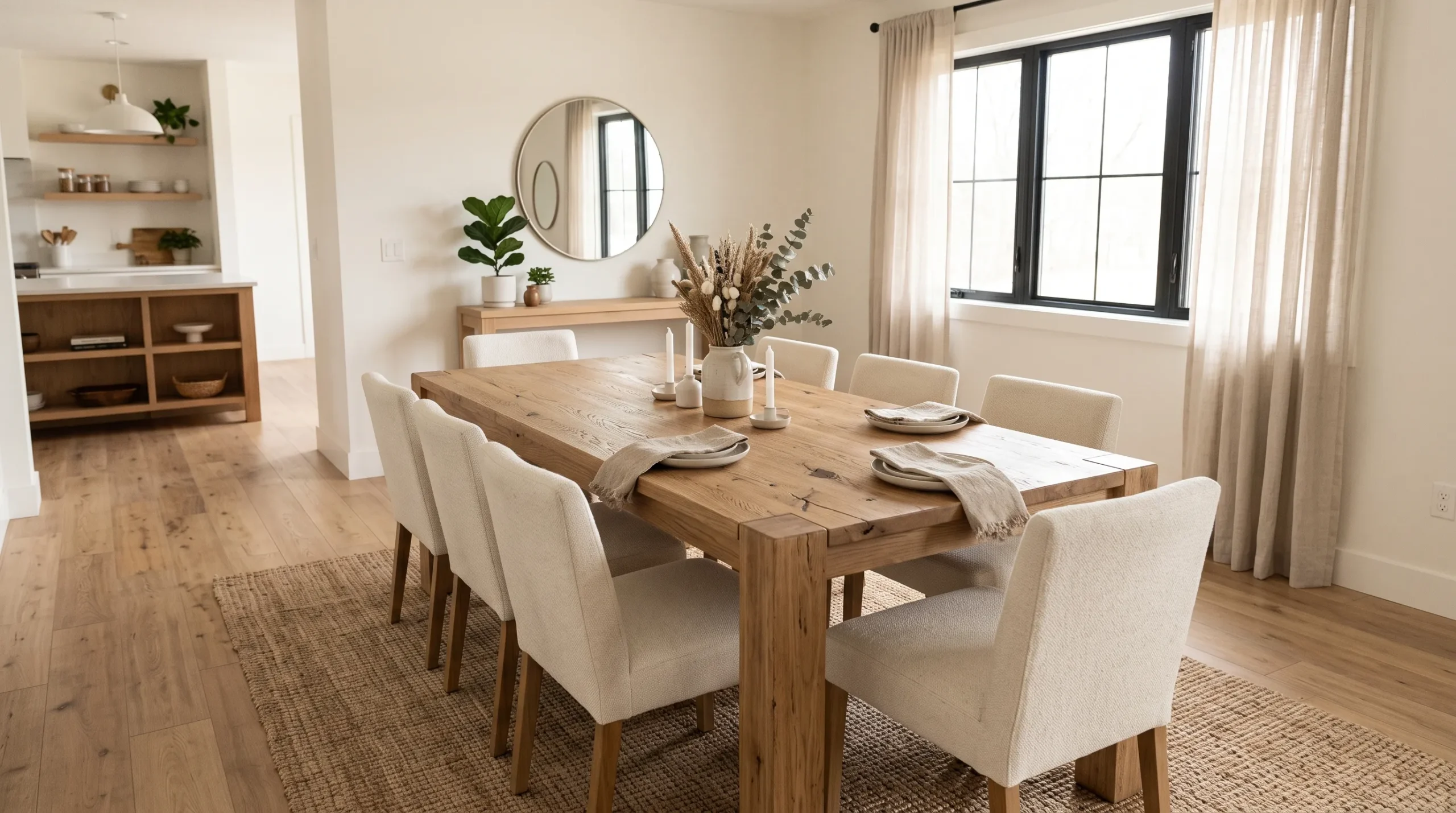
Ready to make your dining space feel warmer, more inviting, and effortlessly stylish? A modern farmhouse dining room blends natural warmth with clean, comfortable design. Think beautiful wood tables, soft neutral fabrics, woven textures, simple architectural details, and carefully chosen rustic accents. Whether your dining area feels too plain, too dark, or simply unfinished, small changes can create a noticeable transformation. These ideas are designed to help you build a space that looks beautiful but still works for everyday meals, family gatherings, and entertaining friends. Combining practical furniture with layered natural textures is one of the easiest ways to create that relaxed farmhouse feeling without making the room look outdated.
1. Natural Wood Table
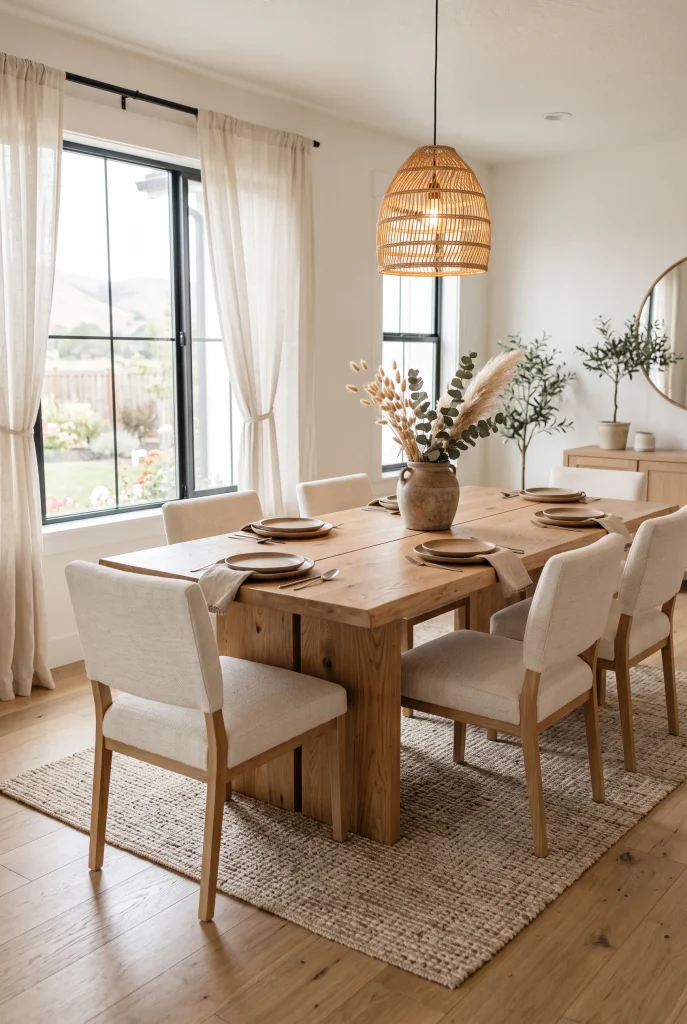
- Natural wood instantly adds warmth and farmhouse character.
- Visible grain gives the room organic texture without extra decoration.
- A sturdy table works well for both everyday meals and entertaining.
- Keep the centerpiece simple so the tabletop remains practical.
A natural wood table can instantly become the warm focal point your dining room needs. Its visible grain brings organic texture and character without making the space feel overly decorated. Oak, pine, or lightly weathered wood works especially well because these finishes complement both modern and traditional farmhouse elements. Pair the table with cream chairs, woven accents, or simple metal details for balanced contrast. Medium wood tones are particularly easy to style because they work beautifully with seasonal colors while keeping the overall room calm, comfortable, and timeless.
For a real home, functionality matters just as much as appearance. Choose a table that leaves comfortable walking space around the chairs instead of filling the entire dining area. A lightly distressed or matte finish can also be practical because small everyday marks are less noticeable. Keep the centerpiece low and uncomplicated so everyone can comfortably see across the table. A ceramic vase, small greenery, or wooden bowl is usually enough. This approach creates a dining space that feels thoughtfully designed while remaining easy to use for family breakfasts, casual dinners, homework, and weekend gatherings.
2. Cream Upholstered Chairs
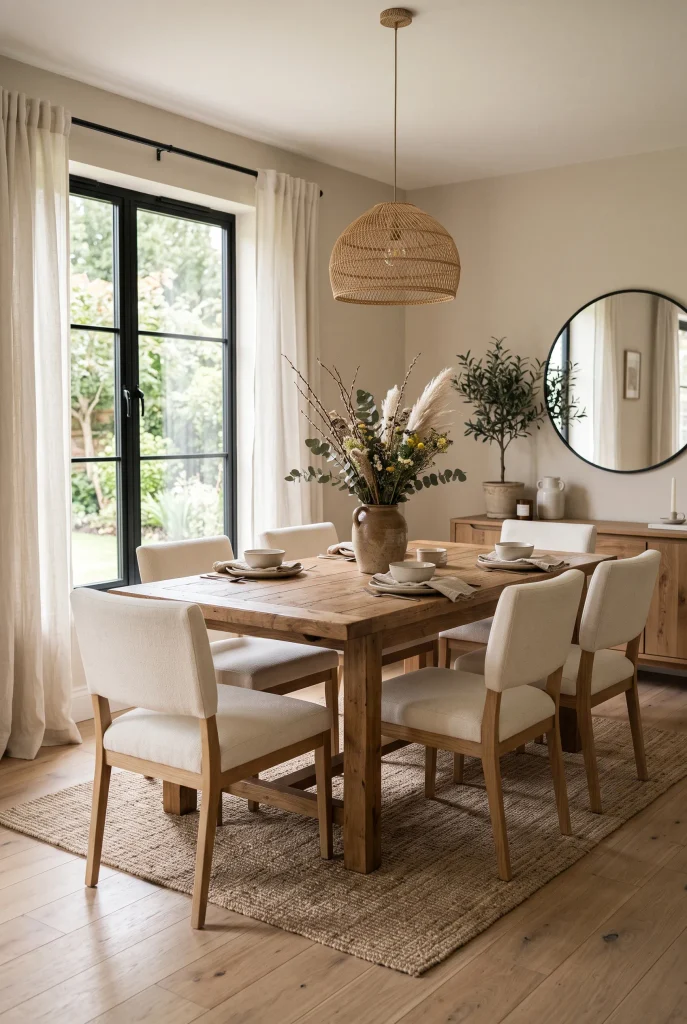
- Cream upholstery softens the stronger look of natural wood.
- Cushioned seating makes everyday meals more comfortable.
- Neutral chairs keep the room bright and visually open.
- Choose durable or washable fabric for easier maintenance.
Cream upholstered chairs bring softness and comfort to a dining space dominated by natural wood. Their light color creates an airy appearance while the fabric adds a subtle layer of texture. This pairing works especially well when you want farmhouse charm without making the room feel overly rustic. Look for simple silhouettes with gently curved backs, clean lines, or understated wooden legs. The contrast between warm timber and creamy upholstery creates a balanced palette that feels welcoming. It also gives you flexibility to add woven baskets, linen curtains, ceramic accessories, or seasonal greenery without creating visual clutter.
Comfort is important because dining chairs often get much more use than expected. Choose supportive backs and durable upholstery that can handle everyday meals and occasional spills. If the room is used by children or pets, washable covers or performance fabrics can make maintenance considerably easier. Cream seating can work particularly well in smaller dining rooms because the lighter color visually reduces the weight of the furniture. Add a neutral rug beneath the table and leave enough space between each chair. The finished arrangement feels comfortable, polished, and inviting without sacrificing practical everyday living.
3. Built-In Bench Seating
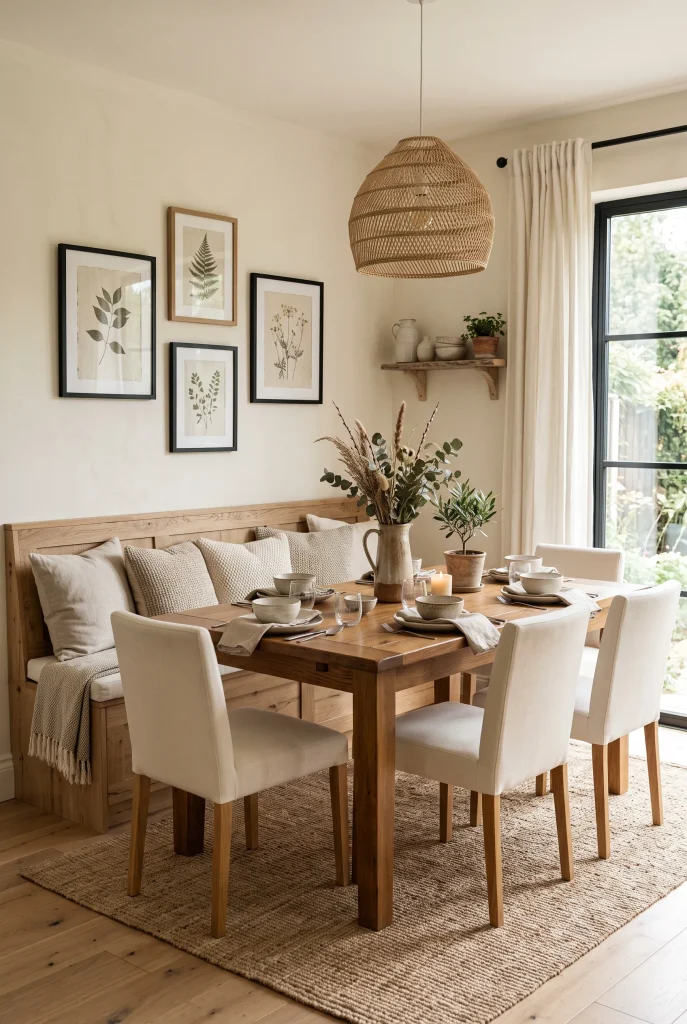
- Built-in benches make excellent use of unused wall space.
- Cushions add comfort while keeping the structure visually simple.
- Bench seating can accommodate more people in compact dining areas.
- Use hidden storage underneath when the layout allows.
Built-in bench seating can make a dining room feel more practical while adding a custom farmhouse touch. A simple wooden bench along one wall creates comfortable seating without requiring several individual chairs. Add a thick linen or cotton cushion in cream, beige, or muted taupe to soften the hard surface and connect it with the rest of the room. This approach works particularly well in smaller dining areas because the bench can sit close to the wall. It also creates a relaxed, casual feeling that suits family meals and informal gatherings.
Think about storage when planning a built-in bench. Lift-up seats or drawers underneath can provide useful space for table linens, seasonal serving pieces, or extra cushions. Keep the bench depth comfortable and make sure the dining table leaves enough legroom for everyone seated there. A simple built-in design usually looks more timeless than one filled with excessive trim or decorative details. Combine warm wood, neutral upholstery, and a few personal accessories to create seating that feels custom, comfortable, and naturally connected to the farmhouse style.
4. Shiplap Accent Wall
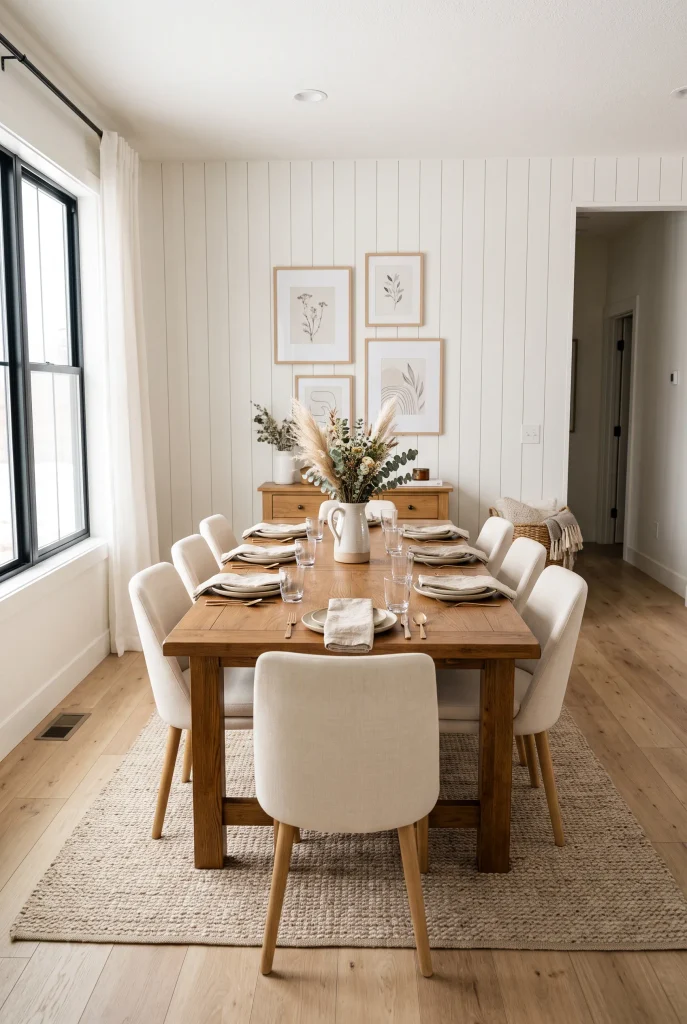
- Shiplap adds farmhouse texture without overwhelming the room.
- White boards keep the dining area feeling bright and spacious.
- Vertical installation can make low ceilings appear taller.
- Pair it with simple furniture for a cleaner modern finish.
A shiplap accent wall brings recognizable farmhouse texture while keeping the dining room light and uncluttered. White or warm ivory boards create a clean backdrop for natural wood furniture, neutral textiles, and simple accessories. For a more contemporary appearance, choose narrow boards with consistent spacing rather than heavily distressed panels. A vertical layout can also draw the eye upward, which is helpful when the room has standard or slightly low ceilings. Keep artwork and accessories minimal so the wall remains a subtle architectural feature rather than competing with the dining table and surrounding decor.
Shiplap works particularly well when the rest of the room uses natural materials and restrained colors. Instead of covering every wall, use it behind the dining table to create a defined focal area without making the space feel overly themed. Add one large framed print, a simple mirror, or a small arrangement of neutral artwork to break up the surface. Warm white paint often looks more inviting than stark white because it connects naturally with oak, beige, and cream finishes. The result feels fresh and textured while still being comfortable enough for everyday living.
5. Woven Area Rug
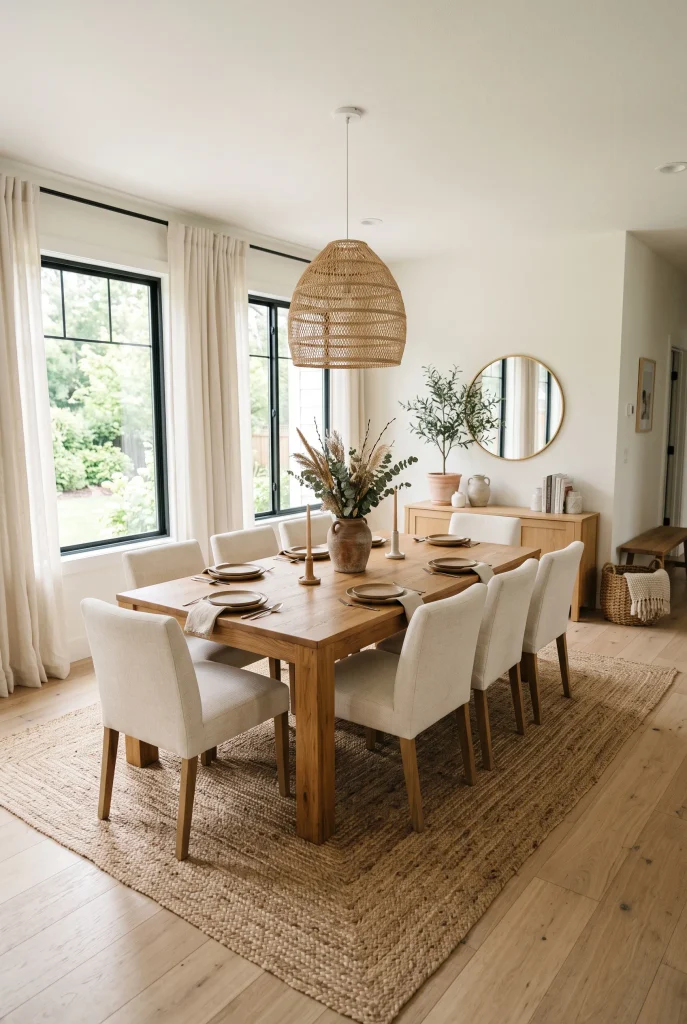
- A woven rug adds warmth and texture beneath the dining set.
- Natural fibers reinforce the relaxed farmhouse aesthetic.
- A large rug helps visually define the dining zone.
- Choose a durable weave that can handle everyday dining use.
A woven area rug can make a dining room feel noticeably warmer and more complete, especially when the furniture has clean modern lines. Natural jute, sisal, or flatwoven neutral rugs introduce texture without competing with the wood table or upholstered chairs. Choose a rug large enough for the table and chairs to remain comfortably on top when pulled out. This creates a defined dining zone and makes the furniture arrangement feel intentional. The subtle variation in natural fibers also adds visual interest, helping a neutral palette feel layered rather than plain or unfinished.
Practicality is especially important underneath a dining table because crumbs and spills are unavoidable in real homes. A low-pile or flatwoven design is usually easier to clean and less likely to catch chair legs. If your dining area is compact, select a rug with a simple pattern or natural variation rather than a busy print. Neutral woven rugs also make seasonal decorating easier because they work with autumn colors, spring greenery, and holiday accents alike. The result is a comfortable foundation that adds softness while maintaining the clean, relaxed character of the room.
6. Farmhouse Gallery Wall
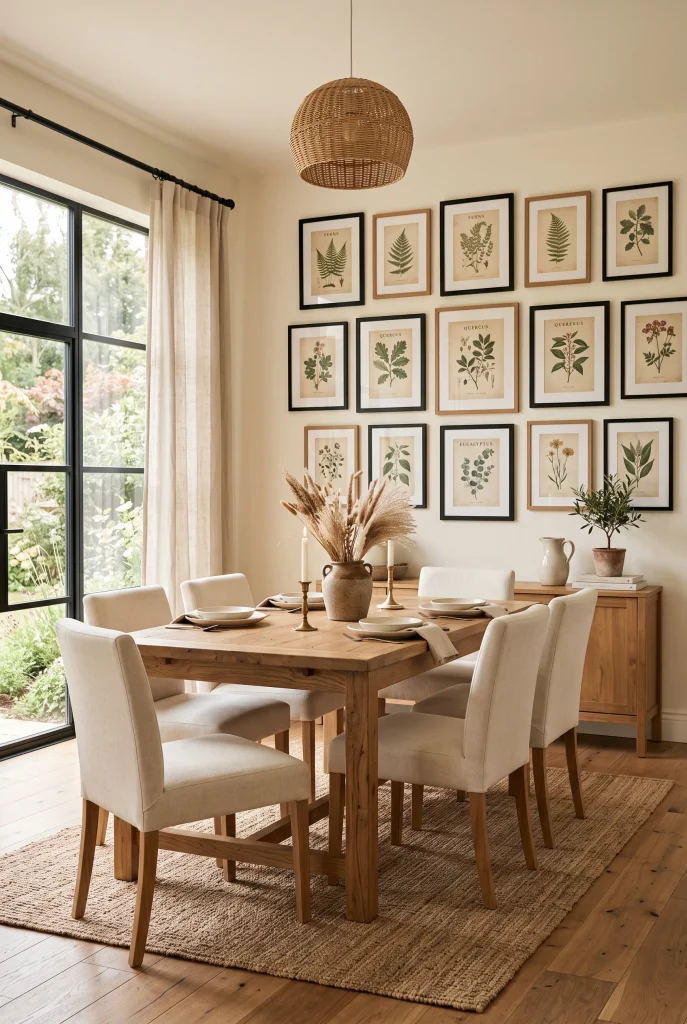
- A gallery wall gives personality to an otherwise simple dining space.
- Botanical and vintage prints reinforce farmhouse character.
- Mixing wood and black frames creates subtle visual contrast.
- Keep consistent spacing so the collection feels organized.
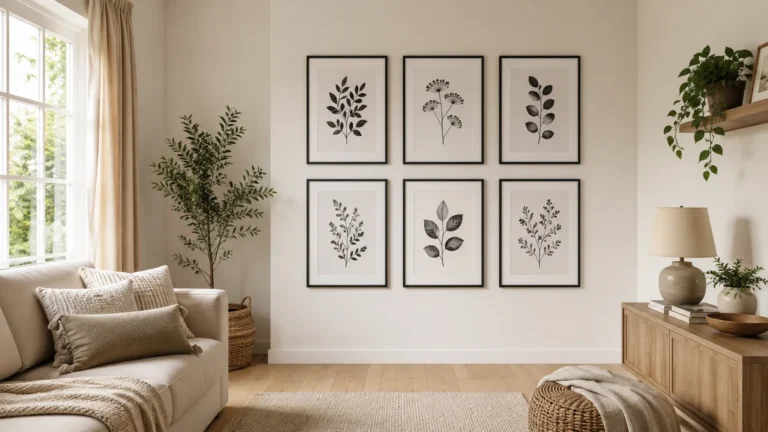
A carefully arranged gallery wall can turn a plain dining-room wall into a memorable focal point without requiring dramatic furniture changes. Botanical prints, vintage-inspired artwork, landscapes, and simple line drawings all complement farmhouse interiors beautifully. Mix black, natural wood, and muted cream frames to create contrast while keeping the palette cohesive. Instead of covering the wall randomly, begin with the largest artwork and build outward around it. This makes the arrangement easier to balance. The finished display adds personality, visual depth, and a collected feeling while keeping the dining area relaxed and welcoming.
The key to making a gallery wall feel polished is controlling repetition and spacing. Choose artwork that shares at least one visual connection, such as similar colors, subject matter, or frame finishes. Leave enough breathing room between pieces so the display does not overwhelm the dining table below. For a smaller room, a compact arrangement of five or six pieces can provide plenty of impact. A dining space can look more finished simply by replacing scattered decorations with one intentional wall display. It gives the room character while keeping the tabletop free for everyday meals and entertaining.
View: 21 Stunning Indoor Plant Decor Ideas for Modern Rooms
7. Vintage Farmhouse Mirror
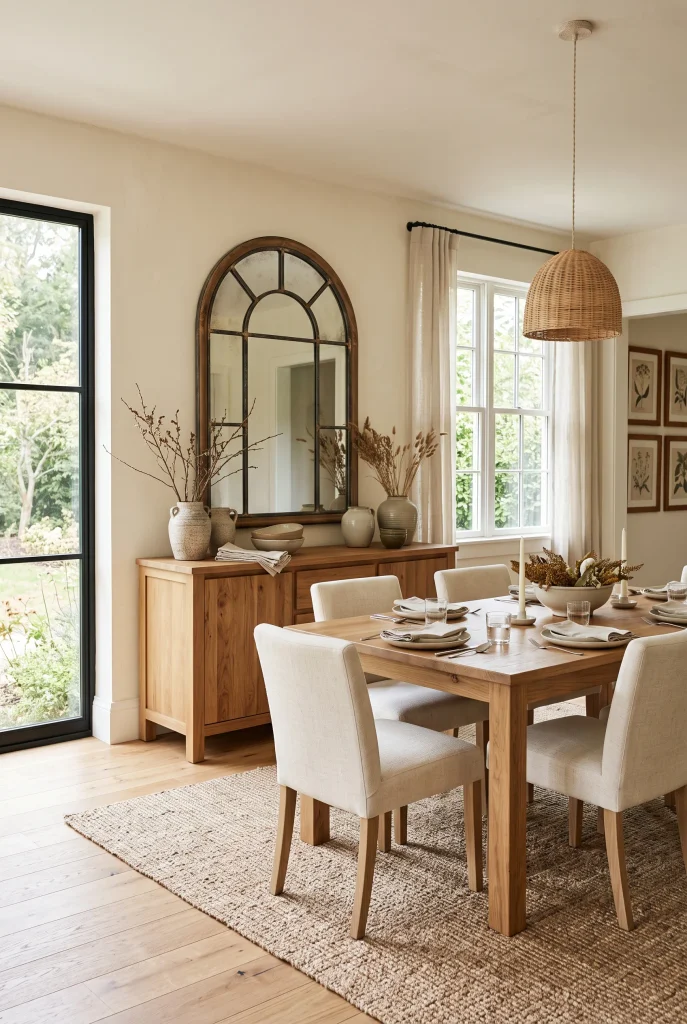
- A large mirror can make the dining area feel brighter and more spacious.
- Vintage framing adds character without requiring bold decoration.
- Position it opposite a window to reflect natural light.
- Choose an aged or simple frame for authentic farmhouse charm.
A vintage farmhouse mirror can add both character and function to a dining room, especially when the space feels narrow or slightly dark. An aged wood, distressed metal, or softly curved frame introduces visual interest while the reflective surface helps bounce light around the room. Positioning the mirror opposite or near a window can make natural daylight feel more noticeable throughout the space. Choose a generously sized design that relates to the dining table or nearby sideboard. This creates proportion and makes the wall feel intentionally decorated rather than filled with a random accessory.
A mirror is also useful when you want the dining room to feel larger without adding more furniture. Reflective surfaces create a sense of depth, but placement matters. Avoid positioning the mirror where it reflects clutter, awkward corners, or distracting objects. Instead, use it to capture a window, greenery, or an attractive architectural feature. Softly aged finishes tend to feel more natural than heavily distressed ones because they provide farmhouse character without making the room look themed. Pair the mirror with warm wood, cream textiles, and understated ceramics for a timeless result.
8. Shaker-Style Sideboard
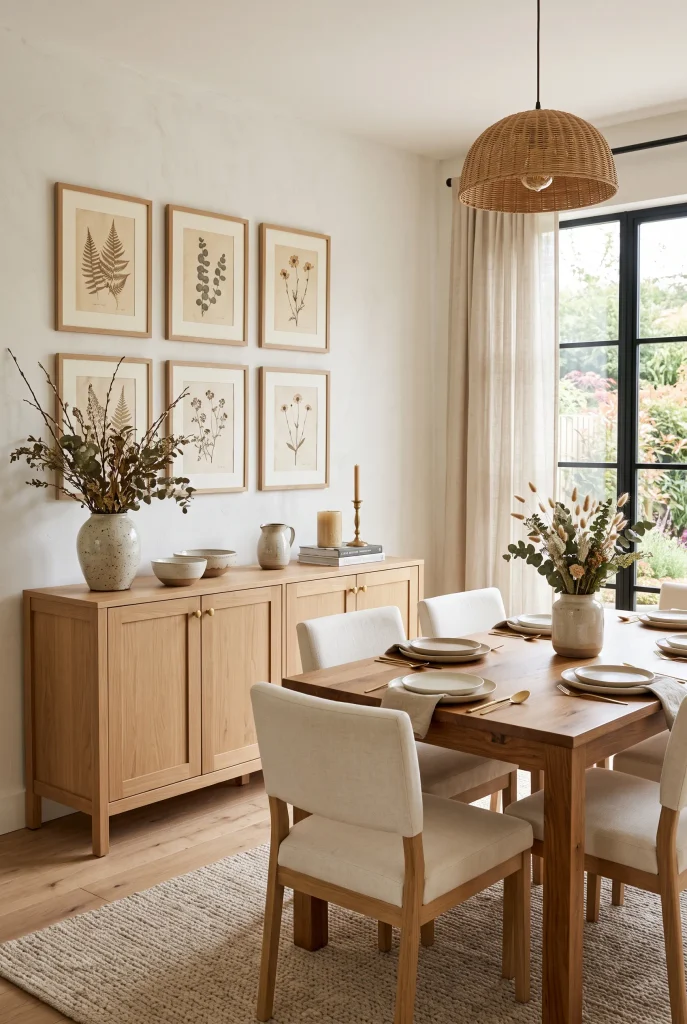
- A Shaker-style sideboard adds useful storage without visual bulk.
- Simple doors and clean lines reinforce the modern farmhouse look.
- Use the surface for pottery, greenery, or decorative accessories.
- Closed storage keeps everyday dining essentials neatly organized.
A Shaker-style sideboard brings practical storage and quiet architectural detail to a dining room. Its clean doors, simple hardware, and balanced proportions fit naturally with farmhouse furniture while avoiding an overly rustic appearance. Choose painted cream, warm white, or natural oak depending on the rest of your room. Place it against the longest available wall so it can support the dining area without interrupting movement around the table. Inside, store serving pieces, table linens, dishes, or entertaining essentials. The result is a room that looks organized while keeping useful items close at hand.
The styling on top should stay intentional rather than crowded. A framed artwork, small vase, ceramic bowl, or woven tray can create a simple arrangement while leaving enough surface available for practical use. If your dining room is small, choose a narrower sideboard with raised legs to preserve visual openness underneath. Matching one or two finishes from the dining table or nearby furniture helps the sideboard feel connected to the rest of the room. This combination adds storage, texture, and farmhouse character while maintaining the clean appearance that defines a modern dining space.
9. Mixed Wood Finishes
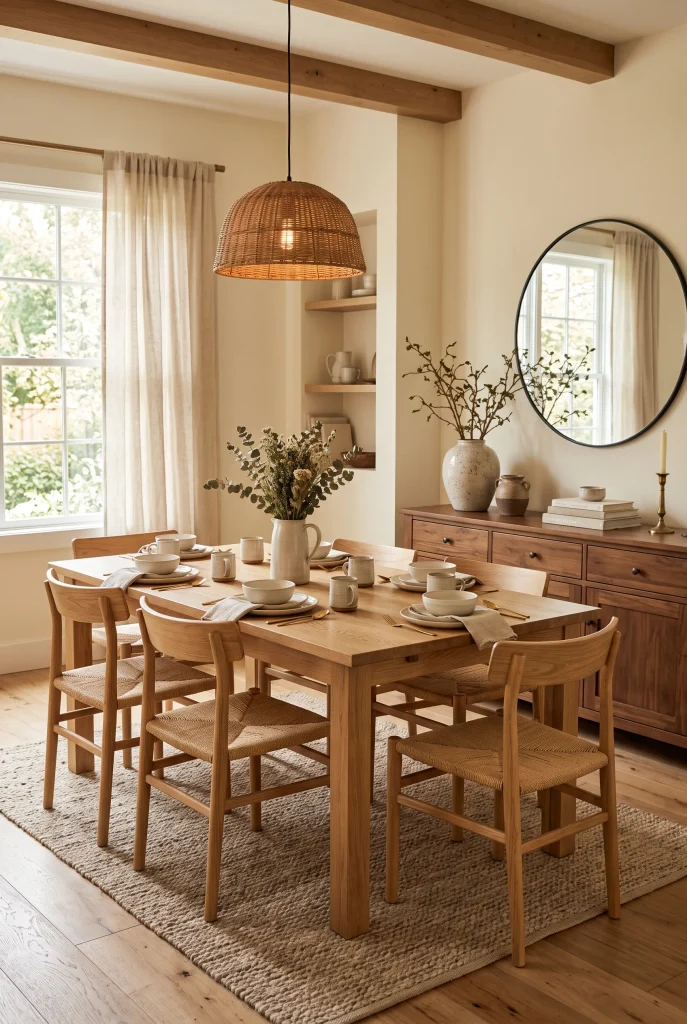
- Mixing wood tones creates depth and prevents the room from looking too matched.
- Keep undertones compatible for a cohesive appearance.
- Use one dominant wood finish and one or two supporting tones.
- Natural textures help different finishes transition smoothly.
Mixing wood finishes can make a dining room feel collected, warm, and naturally layered instead of overly coordinated. Rather than matching every wooden piece, combine a light oak table with a slightly deeper walnut sideboard or medium-toned chairs. The variation creates depth and gives individual pieces room to stand out. The key is choosing woods with compatible undertones, such as warm honey, caramel, or neutral brown shades. Repeat each tone at least once through furniture or accessories so the different finishes feel intentionally connected rather than randomly selected.
Too many competing wood colors can make a dining room feel visually busy, so keep one finish dominant. For example, let the dining table provide the main wood tone while smaller pieces introduce contrast through a sideboard, frame, or decorative bowl. Soft textiles such as linen curtains, cream upholstery, and woven rugs can help bridge the differences between finishes. Natural variation usually looks more inviting than a perfectly matched furniture set. It gives the room the comfortable, lived-in quality people associate with farmhouse interiors while still maintaining a clean modern structure.
10. Neutral Farmhouse Palette
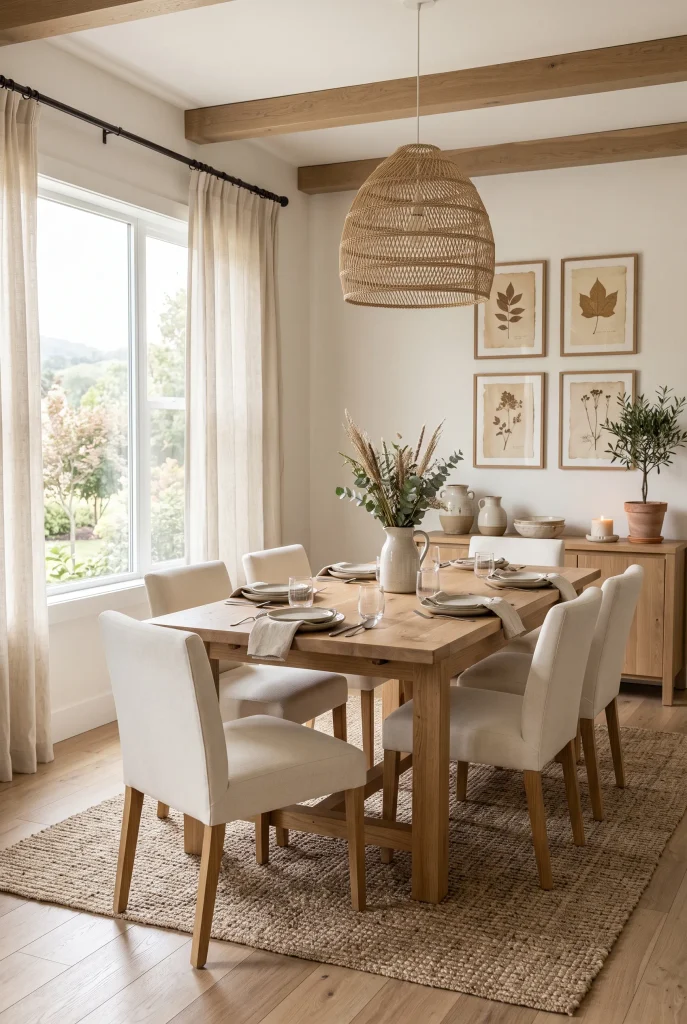
- Warm neutrals create a calm and welcoming dining atmosphere.
- Layering textures keeps pale colors from appearing flat.
- Dark accents add definition without disrupting the soft palette.
- Natural wood provides warmth and visual grounding.
A neutral palette can make a dining room feel calm, bright, and effortlessly welcoming. Warm white walls, cream upholstery, beige textiles, and natural wood create a soft foundation that works beautifully with modern farmhouse furniture. Instead of relying on many colors, build interest through different textures and subtle variations in tone. A woven rug, linen curtains, ceramic pottery, and visible wood grain can each add dimension while keeping the palette cohesive. This approach is especially useful when you want a dining space that feels timeless and easy to refresh as your decorating preferences change.
Neutral does not have to mean boring or completely monochromatic. Add gentle contrast through warm metal hardware, darker wood accents, or muted greenery. These small touches prevent the room from blending into one pale block while preserving its peaceful character. If your dining area receives limited natural light, warmer creams and beige tones can make it feel more inviting than stark white. Textured neutrals also photograph beautifully because their surfaces catch natural light differently. The finished space feels comfortable, layered, and polished without becoming overly styled.
11. Rustic Wood Beams
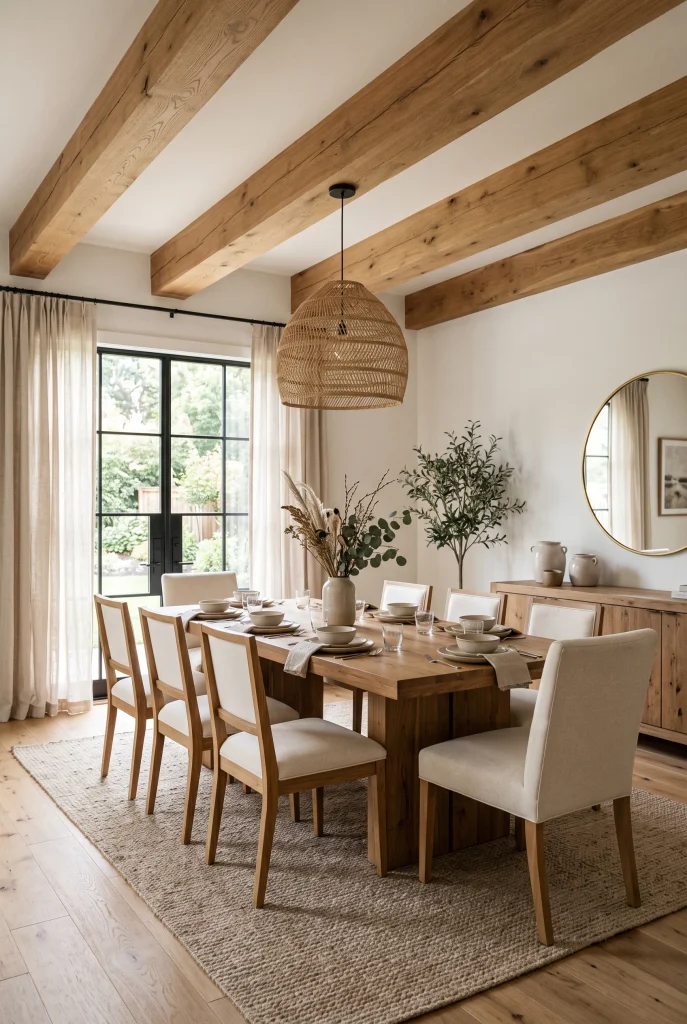
- Exposed beams add architectural character and farmhouse warmth.
- Natural wood creates a strong connection with the dining furniture.
- Keep surrounding finishes light so the ceiling does not feel heavy.
- Faux beams can create a similar look where structural beams are unavailable.
Rustic wood beams can give a dining room instant architectural character while reinforcing the warm, relaxed feeling associated with farmhouse interiors. Natural or lightly stained timber works particularly well against warm white or cream ceilings because the contrast draws attention upward. If your room already has a wooden dining table, choose a beam tone that complements it without needing to match exactly. The combination of overhead structure and natural furniture creates visual continuity. Even in a modern setting, exposed beams can add enough rustic texture to make the space feel established and welcoming.
When using beams, proportion is important because oversized timber can make a smaller dining room feel visually compressed. Keep the surrounding walls, flooring, and furniture relatively light to balance the stronger ceiling detail. If structural beams are not available, decorative faux beams can provide a similar appearance without major construction. Beams look most natural when paired with restrained accessories rather than excessive rustic decor. Let the architecture provide the statement, then support it with simple ceramics, neutral textiles, and natural materials. This keeps the dining room farmhouse-inspired without feeling outdated or overly themed.
12. Black Window Frames
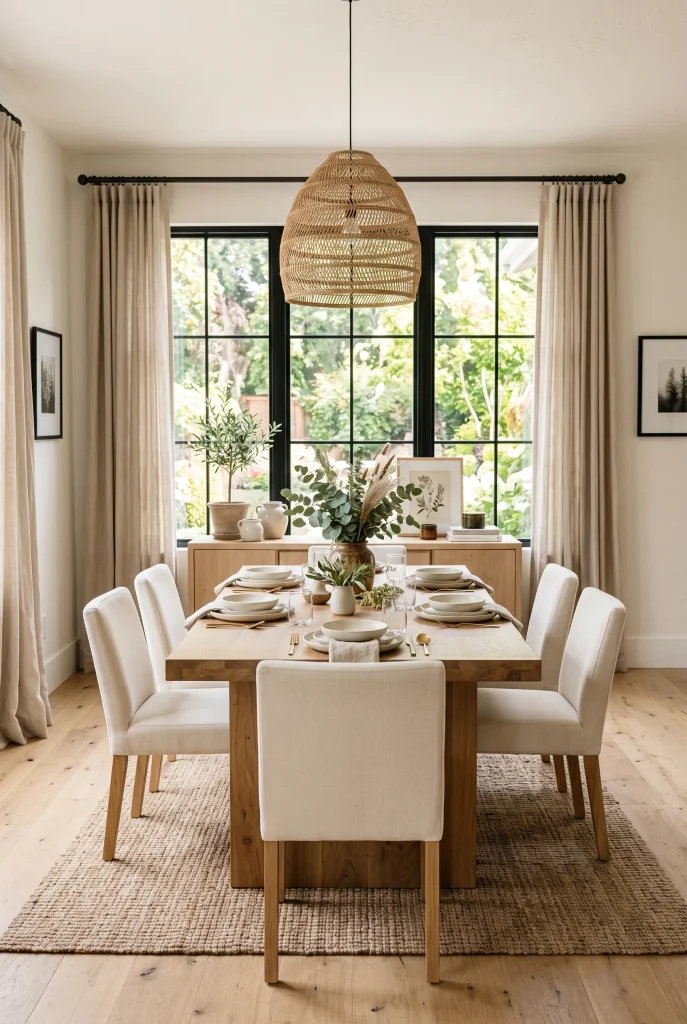
- Black window frames create crisp architectural contrast.
- They connect naturally with dark hardware and picture frames.
- Large windows help the dining area feel brighter and more spacious.
- Keep curtains soft to balance the stronger window framing.
Black-framed windows can give a farmhouse dining room a sharper, more contemporary architectural feel. Their dark outlines create definition against warm white walls while naturally connecting with dark hardware, cabinet details, or picture frames. Large windows also bring valuable natural light into the dining area, making warm wood furniture and cream upholstery appear brighter throughout the day. If you are designing around existing windows, repeat the dark finish in just a few small details rather than adding too many accessories. This keeps the room balanced and prevents the contrast from becoming visually overwhelming.
Soft textiles can make black window frames feel warmer and more inviting. Hang lightweight linen curtains around the windows instead of covering the frames completely, allowing the architectural lines to remain visible. If privacy is important, use light-filtering panels that still let daylight through. A natural wood table placed nearby creates a beautiful contrast between dark framing and warm organic tones. This combination works especially well in rooms that need a little more definition without adding strong color. The result feels modern, grounded, and distinctly farmhouse while remaining bright and comfortable.
13. Layered Window Treatments
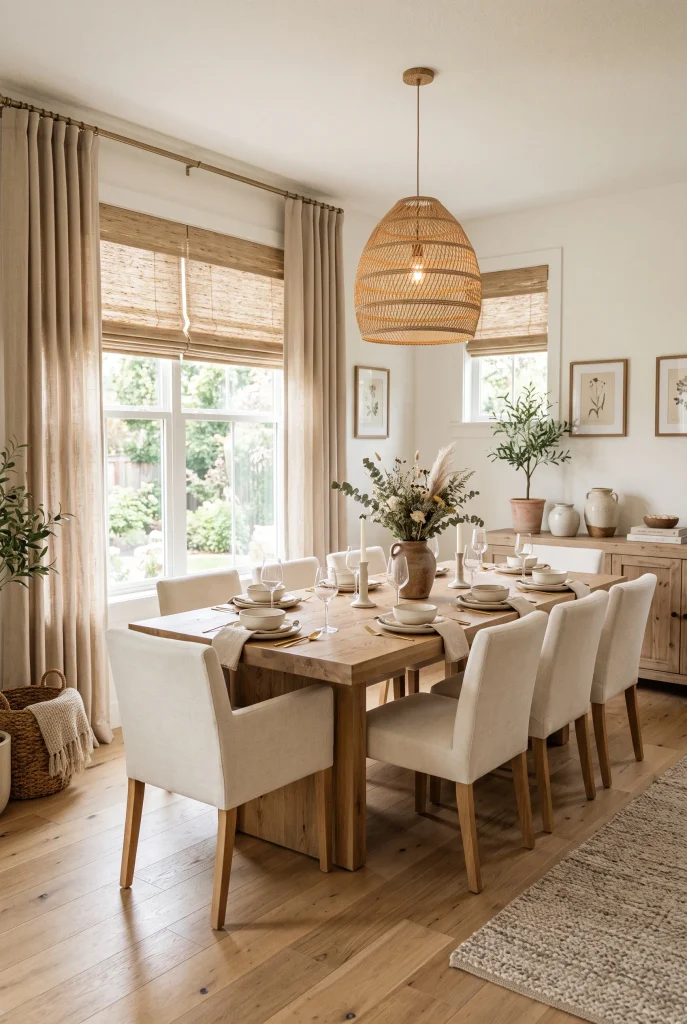
- Layered window treatments add softness and privacy.
- Linen curtains create an airy farmhouse feel.
- Roman shades provide useful light and privacy control.
- Keep fabrics in warm neutrals for a cohesive appearance.
Layered window treatments can make a dining room feel softer, more finished, and more comfortable without changing the furniture. Pair simple linen curtains with woven Roman shades or relaxed fabric blinds to create depth around the windows. Warm white, oatmeal, beige, and soft taupe fabrics work beautifully with natural wood and cream upholstery. The layers also give you greater control over privacy and daylight throughout the day. Keep the curtain design relatively simple so the windows still feel open and connected to the rest of the room.
For a practical dining space, choose fabrics that are easy to clean and install the curtain rod slightly wider than the window when possible. This allows the panels to sit outside the glass when open, making the window appear larger. Woven shades can filter strong sunlight while preserving some natural brightness. Soft window treatments are particularly effective in farmhouse interiors because they balance harder materials such as wood, metal, and painted furniture. The finished look feels relaxed and welcoming while adding useful function to an often-overlooked part of the dining room.
14. Farmhouse Dining Nook
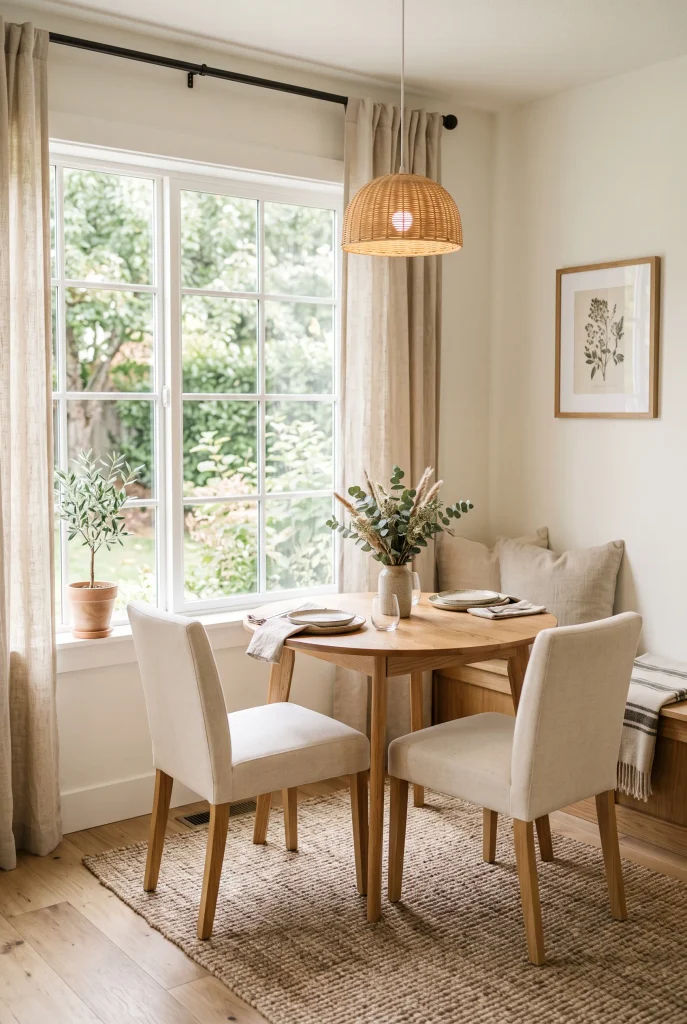
- A dining nook makes efficient use of an unused corner.
- Round tables improve movement in smaller dining areas.
- Window seating brings natural light and an inviting atmosphere.
- Keep furniture compact so the nook remains comfortable and open.
A cozy dining nook can turn an overlooked corner into one of the most useful areas in your home. A compact round or rectangular wood table works especially well when floor space is limited because it creates a defined eating zone without requiring a large furniture arrangement. Place the table near a window when possible so natural light becomes part of the design. Cream chairs, linen curtains, and a woven rug add softness around the wood furniture. This setup feels casual and welcoming, making it ideal for morning coffee, quick meals, or relaxed family conversations.
Good proportions make a small dining nook feel comfortable instead of cramped. Measure the available space before choosing your table and leave enough clearance for chairs to move easily. A round table can be particularly useful around tight corners because it eliminates sharp edges and improves circulation. Keep the surrounding decor simple so the nook does not feel crowded. Keeping the color palette light also helps compact dining spaces feel larger. Warm white walls, natural wood, and cream textiles create an airy backdrop while preserving the cozy character that makes a nook appealing.
15. Antique Farmhouse Hutch
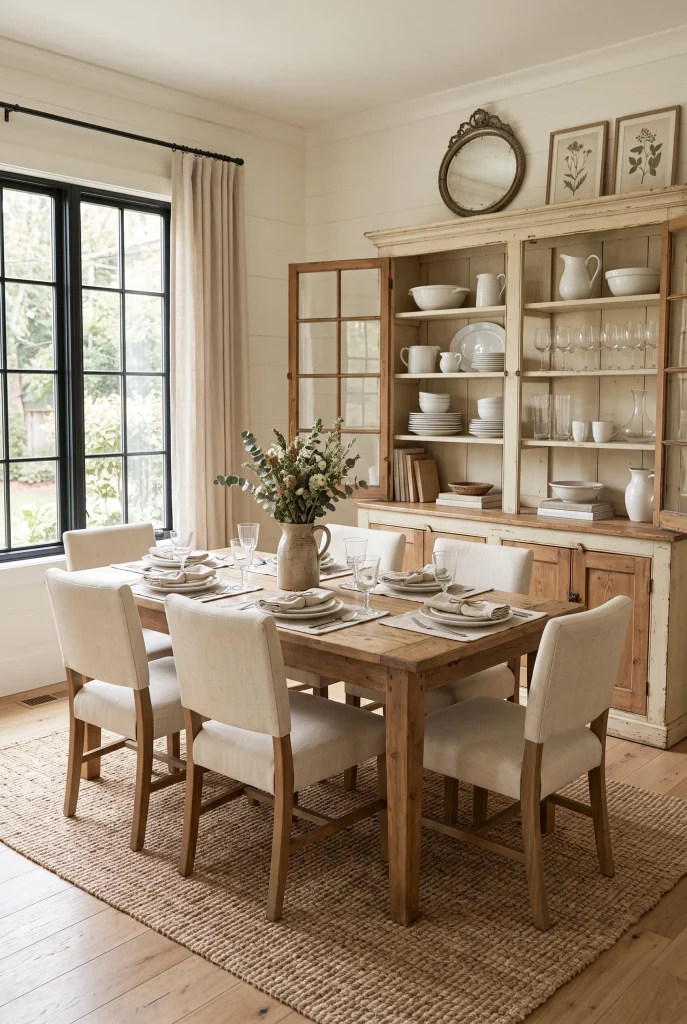
- A hutch adds valuable storage and traditional farmhouse character.
- Display everyday dishes to combine decoration with function.
- Aged wood introduces warmth and visual history.
- Keep shelves selectively styled so the cabinet does not look cluttered.
An antique farmhouse hutch can bring storage, personality, and a sense of history into a dining room. Look for aged wood, simple panel doors, glass fronts, or gently worn finishes that complement the cleaner lines of modern furniture. Use the shelves to display white dishes, ceramic serving bowls, glassware, or a few favorite pieces rather than filling every space. This creates a collected appearance while keeping frequently used items accessible. Positioned against a quiet wall, the hutch can become a beautiful focal point without taking attention away from the dining table or surrounding decor.
The secret to making an older cabinet work in a modern setting is balance. If the hutch has a strong distressed finish, keep nearby furniture and accessories relatively simple so the room does not become visually heavy. You can also mix newer ceramics with vintage pieces to create a more natural, lived-in arrangement. White and cream dishes look particularly effective inside darker wooden hutches because they provide contrast and brighten the display. Add a small plant or understated artwork nearby, and the cabinet becomes both practical storage and a distinctive farmhouse feature.
16. Modern Farmhouse Artwork
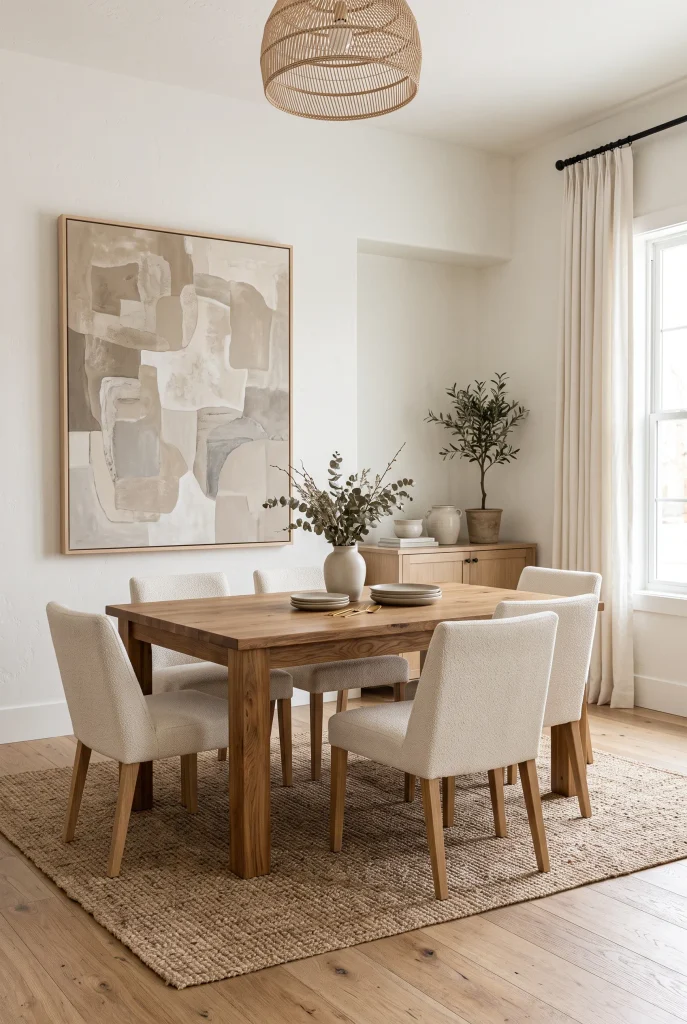
- Oversized artwork creates an instant focal point above the dining table.
- Neutral artwork supports the calm farmhouse color palette.
- Abstract, botanical, and landscape prints can add personality.
- Choose artwork that visually relates to existing furniture finishes.
The right artwork can give a dining room personality while keeping its farmhouse foundation understated and modern. Oversized botanical prints, soft landscapes, abstract neutral paintings, or simple line drawings work beautifully above a dining table or sideboard. Choose artwork with colors already present in the room, such as cream, beige, taupe, muted green, or warm brown. This creates connection without requiring everything to match perfectly. A larger piece often looks more polished than several tiny prints, especially when the dining room already contains furniture and decorative textures.
Think about the wall, furniture, and artwork as one visual composition rather than separate elements. Hang the artwork at a comfortable viewing height and choose a frame that supports the existing finishes. Natural wood adds warmth, while black creates sharper contrast against pale walls. If the dining area is already busy, select a quieter print with plenty of negative space. Restrained artwork often makes the biggest difference because it adds character without competing with the table. The result feels personal, finished, and easy to update as your style evolves.
17. White Painted Furniture
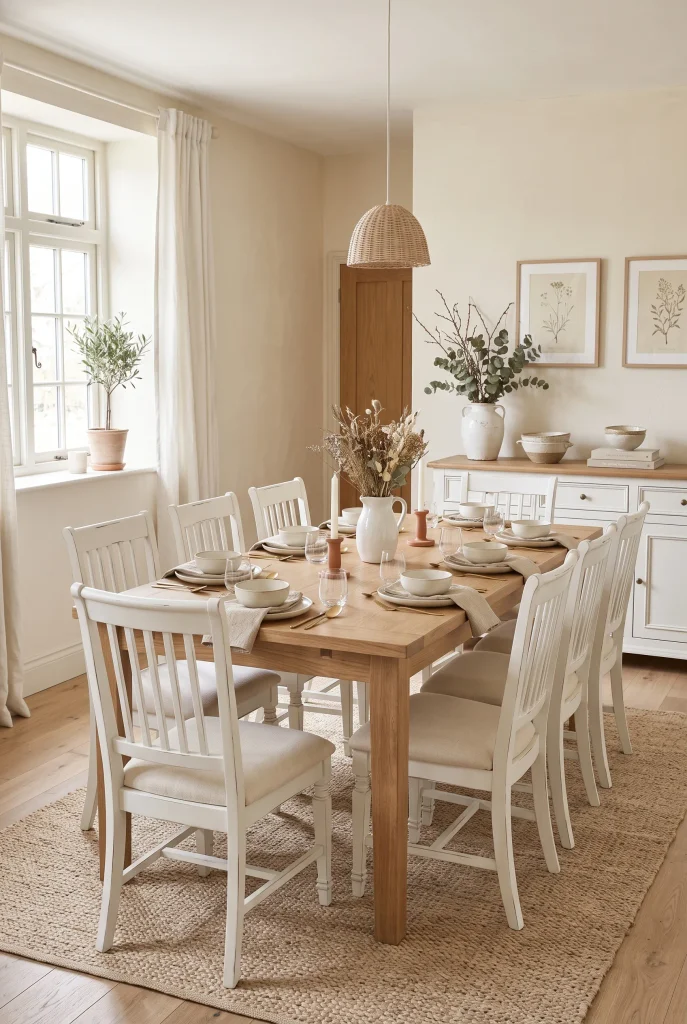
- White painted furniture brightens the dining area.
- It creates contrast against warm natural wood.
- Soft ivory finishes feel warmer than stark glossy white.
- Use painted pieces selectively to avoid an overly coordinated look.
White painted furniture can brighten a farmhouse dining room while creating a beautiful contrast against natural wood. A soft ivory sideboard, painted dining chairs, or lightly distressed cabinet can make the space feel fresh without losing its cozy character. Choose matte or satin finishes rather than high-gloss surfaces for a more relaxed appearance. When paired with an oak table, the contrast between painted furniture and visible wood grain creates useful visual layering. This combination works especially well in rooms where you want farmhouse warmth but prefer a lighter, cleaner overall aesthetic.
The key is using painted furniture selectively instead of covering every surface in white. One sideboard, cabinet, or set of chairs can provide enough contrast to brighten the room while allowing natural wood to remain part of the design. Warm ivory and creamy whites are often easier to live with than extremely bright shades because they connect naturally with beige textiles and warm finishes. Adding one darker element, such as hardware or a frame, helps the pale furniture feel grounded. The finished room stays airy while retaining depth and personality.
18. Layered Table Textiles
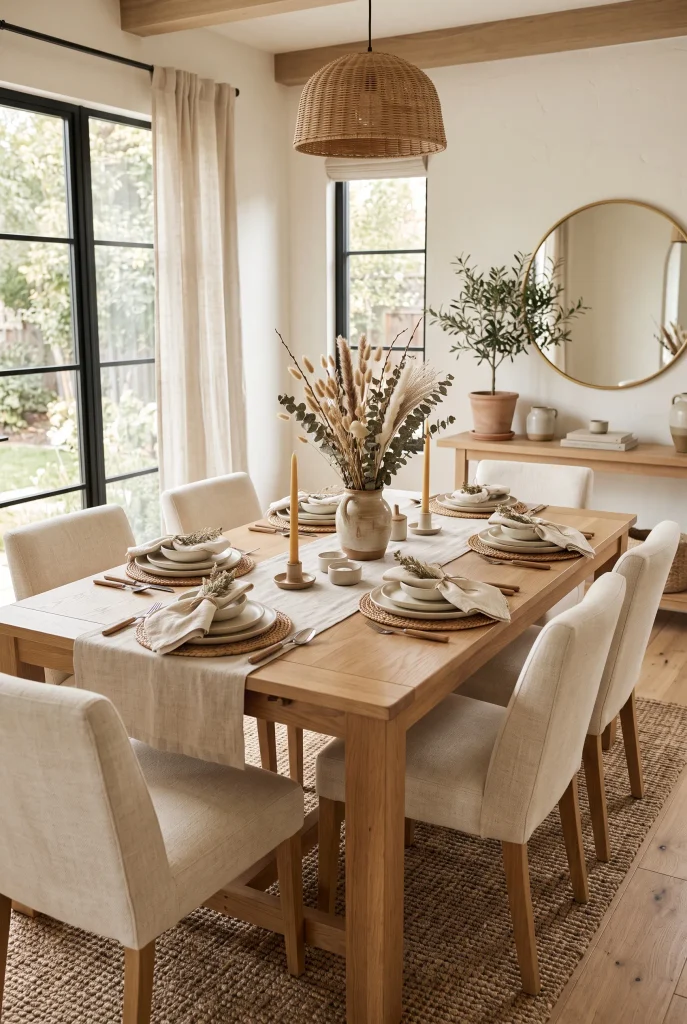
- Linen runners add softness and texture to the tabletop.
- Woven placemats create a relaxed farmhouse layer.
- Neutral textiles keep everyday settings visually calm.
- Use washable fabrics for practical family dining.
Layered table textiles can make a dining room feel warmer and more thoughtfully styled without requiring permanent decoration. Start with a simple linen runner in cream, oatmeal, beige, or muted taupe, then add woven placemats and soft cotton or linen napkins. These layers create subtle texture across a natural wood table while preserving its beautiful grain. Keep patterns understated so the arrangement remains versatile. For everyday meals, you can simplify the setting to just a runner and centerpiece, then add the additional layers when guests arrive. This makes the dining space both attractive and genuinely functional.
Choose textiles based on how your household actually uses the dining table. Washable linen blends and durable cotton are easier to maintain when spills and crumbs are part of daily life. Keep the color palette connected to the room’s upholstery, rug, and curtains so the table setting feels integrated rather than separate. Textured neutrals also photograph particularly well because they create dimension without introducing visual noise. Even a simple combination of one runner, woven placemats, and ceramic dishes can make an ordinary meal feel more intentional while preserving the relaxed character of a modern farmhouse space.
19. Farmhouse Candlelight
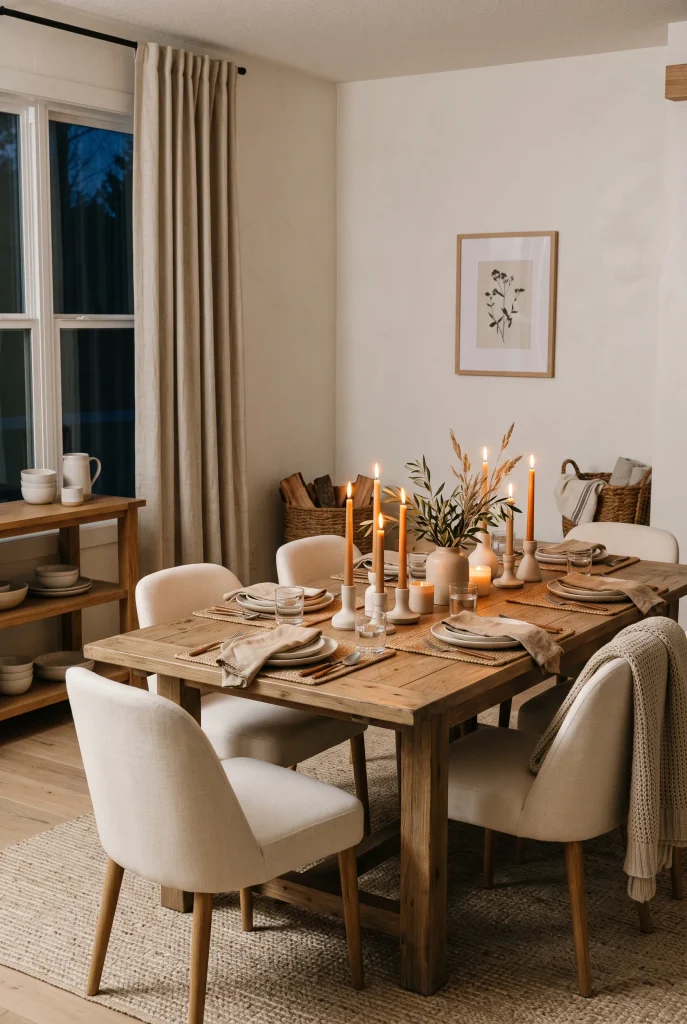
- Candlelight creates a warmer atmosphere for evening meals.
- Ceramic or brass holders add subtle decorative detail.
- Use several small candles instead of one oversized centerpiece.
- Keep flames safely away from curtains and other materials.
Warm candlelight can completely change the atmosphere of a dining room once the sun goes down. Small candles placed along a natural wood table create a soft glow that complements cream upholstery, woven textures, and warm neutral finishes. Choose simple ceramic, glass, or aged-metal holders that support the farmhouse aesthetic without becoming distracting. A few candles arranged around a low centerpiece can create depth while keeping conversations across the table comfortable. This simple addition makes everyday dinners feel more inviting and gives the room a relaxed evening character without requiring permanent decorative changes.
For everyday practicality, use candleholders with stable bases and keep them positioned well away from curtains, greenery, and anything easily moved across the table. Flameless candles are another useful option when you want a similar atmosphere without an open flame. Softer evening light can make neutral dining rooms feel considerably more intimate because it highlights wood grain and fabric texture. The result is cozy, understated, and perfectly suited to relaxed dinners or entertaining guests.
20. Greenery-Filled Corner
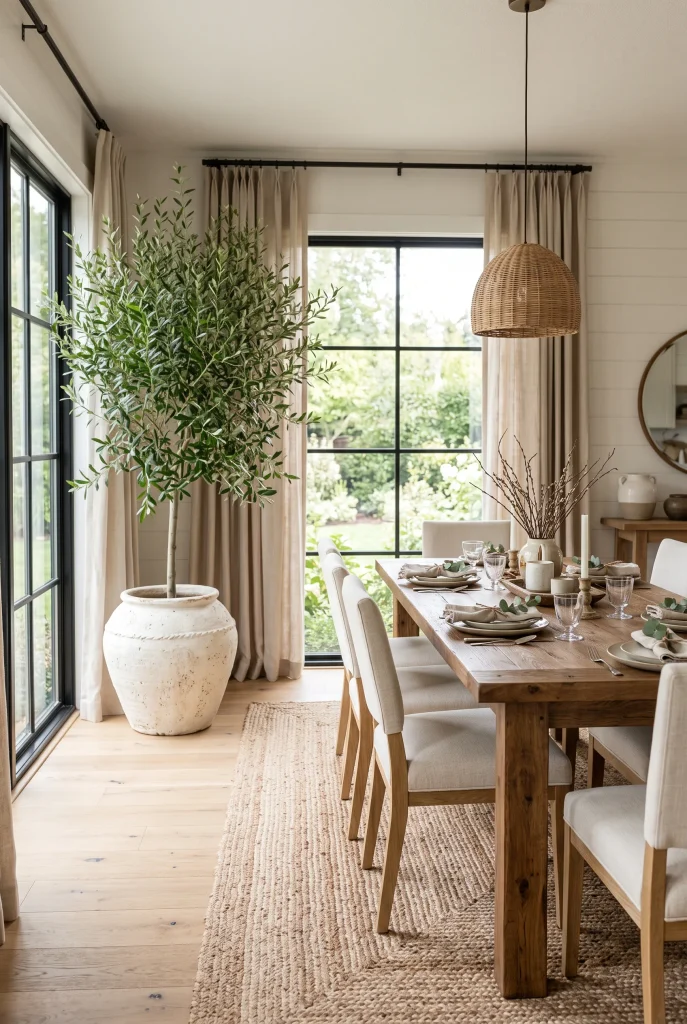
- Greenery brings freshness and natural color into a neutral dining room.
- A tall plant can fill an awkward empty corner.
- Olive trees and similar forms suit farmhouse interiors beautifully.
- Choose a planter that complements the room’s warm neutral finishes.
A greenery-filled corner can soften the clean lines of a modern farmhouse dining room while introducing a fresh, organic element. A tall olive tree, fiddle leaf fig, or leafy branch arrangement can fill an empty corner without adding bulky furniture. Place the plant in a textured ceramic, woven, or aged terracotta planter that connects with the room’s natural materials. The greenery adds gentle color against warm white walls and creates a more lived-in atmosphere. This works especially well when the dining area already relies on wood, linen, and woven textures for visual warmth.
Choose plants according to the amount of natural light your dining room receives rather than selecting one based only on appearance. A low-maintenance variety is often the better choice if the space is not regularly monitored. Keep taller plants slightly away from walkways so leaves and pots do not interfere with movement around the dining table. One generously sized plant usually has more impact than several tiny ones scattered around the room. It creates a clear visual anchor while maintaining the uncluttered feeling that makes modern farmhouse interiors so appealing.
21. Rustic Metal Accents
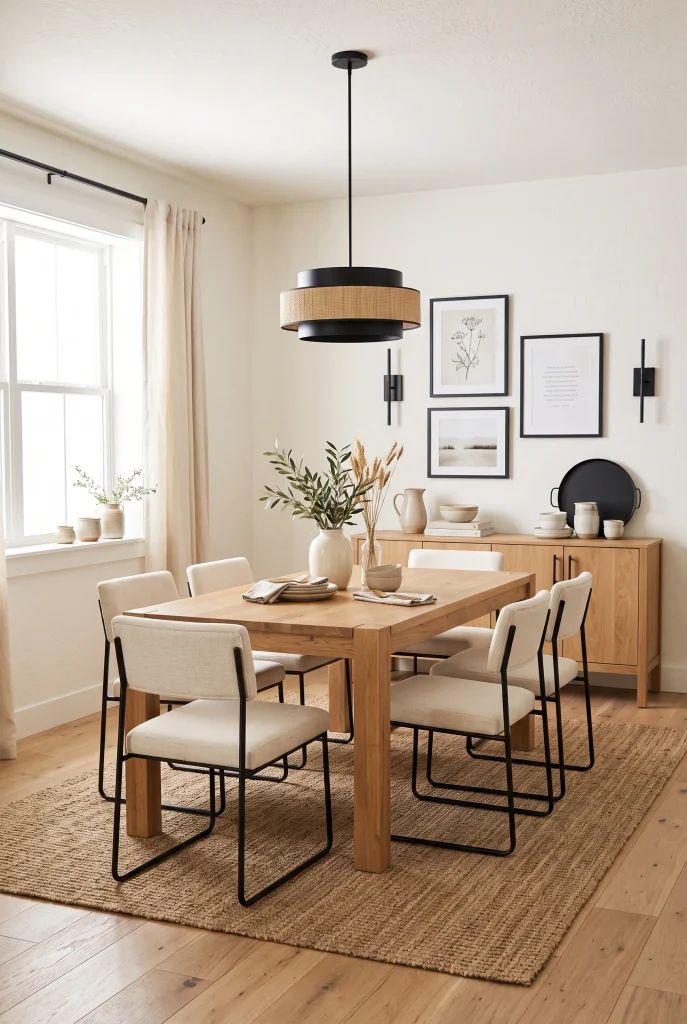
- Metal accents add definition to soft neutral interiors.
- Matte black provides strong contrast without adding bright color.
- Repeat the finish across a few details for visual cohesion.
- Avoid using too many dark elements in a small room.
Rustic metal accents can give a modern farmhouse dining room the contrast it needs to feel structured and visually interesting. Matte black is especially effective because it stands out against warm wood, cream upholstery, and light walls without introducing another strong color. Use the finish through cabinet handles, chair details, picture frames, mirror frames, or a simple wall feature. Repeating the same metal in several small areas helps the room feel cohesive. The goal is not to make every element dark, but to create enough contrast to define the softer materials.
Balance is important when adding metal because too much black can make a bright dining area feel heavy. Start with one or two noticeable details, then repeat the finish through smaller accessories. Natural wood and woven textures can soften the stronger lines while cream textiles keep the room visually light. This restrained approach gives farmhouse interiors a more contemporary appearance without removing their warmth. The finished dining space feels grounded and intentional, with enough contrast to highlight the furniture and architectural details without becoming overly industrial.
Conclusion
Creating a beautiful modern farmhouse dining room does not require a complete renovation or expensive furniture. Natural wood, comfortable seating, soft textiles, practical storage, greenery, and simple decorative accents can completely change how the space feels. Start with one or two ideas that fit your existing room, then build gradually around them. Focus on comfort, proportion, and materials that work for your everyday lifestyle. Small decorating changes can make a dining area feel dramatically more welcoming. Save this article on Pinterest for your next decorating project, try your favorite ideas, and share it with someone looking for fresh dining room inspiration.