17 Modern Kitchen Trends You’ll Wish You Knew Sooner
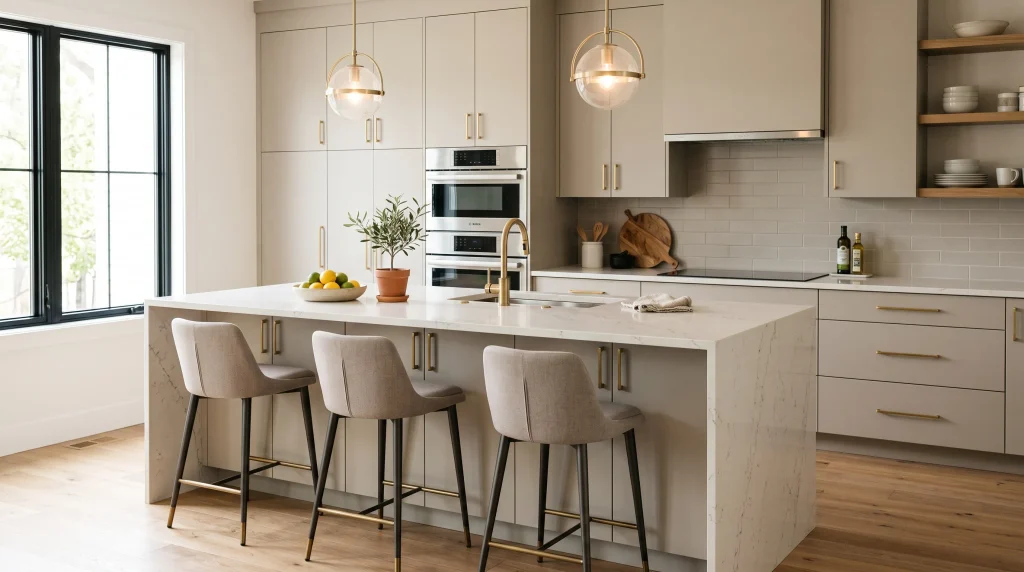
Your kitchen can look modern without feeling cold, plain, or overly designed. The right details make all the difference.
Modern kitchen trends are moving toward spaces that feel sleek, warm, practical, and easy to live in. Think natural wood, clean cabinetry, statement islands, smart storage, and layered textures that make everyday cooking feel more enjoyable. Whether you are planning a full renovation or simply want a few fresh updates, these ideas can help you create a kitchen that feels current without chasing every passing trend. The most successful kitchens balance beautiful finishes with practical choices, so every stylish feature also serves a purpose. These ideas will help you find that balance and create a space you’ll love using every day.
1. Waterfall Edge Island
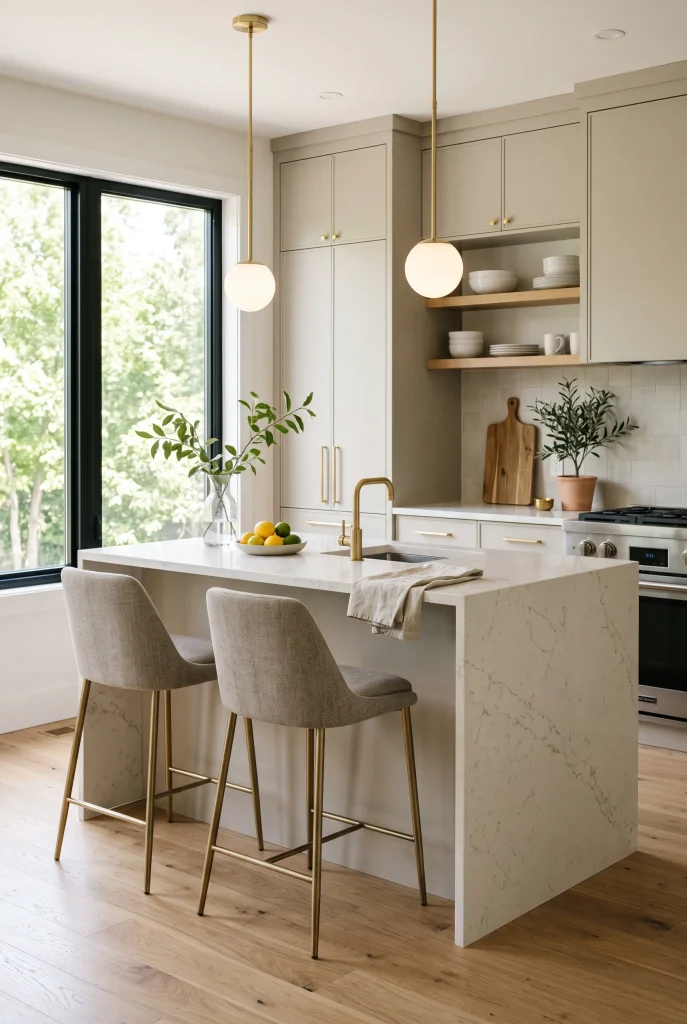
- Creates a polished focal point without adding visual clutter.
- Makes the island feel more like a custom architectural feature.
- Keep the walkway open for comfortable everyday movement.
- Creates a clean, high-end focal point in the kitchen.
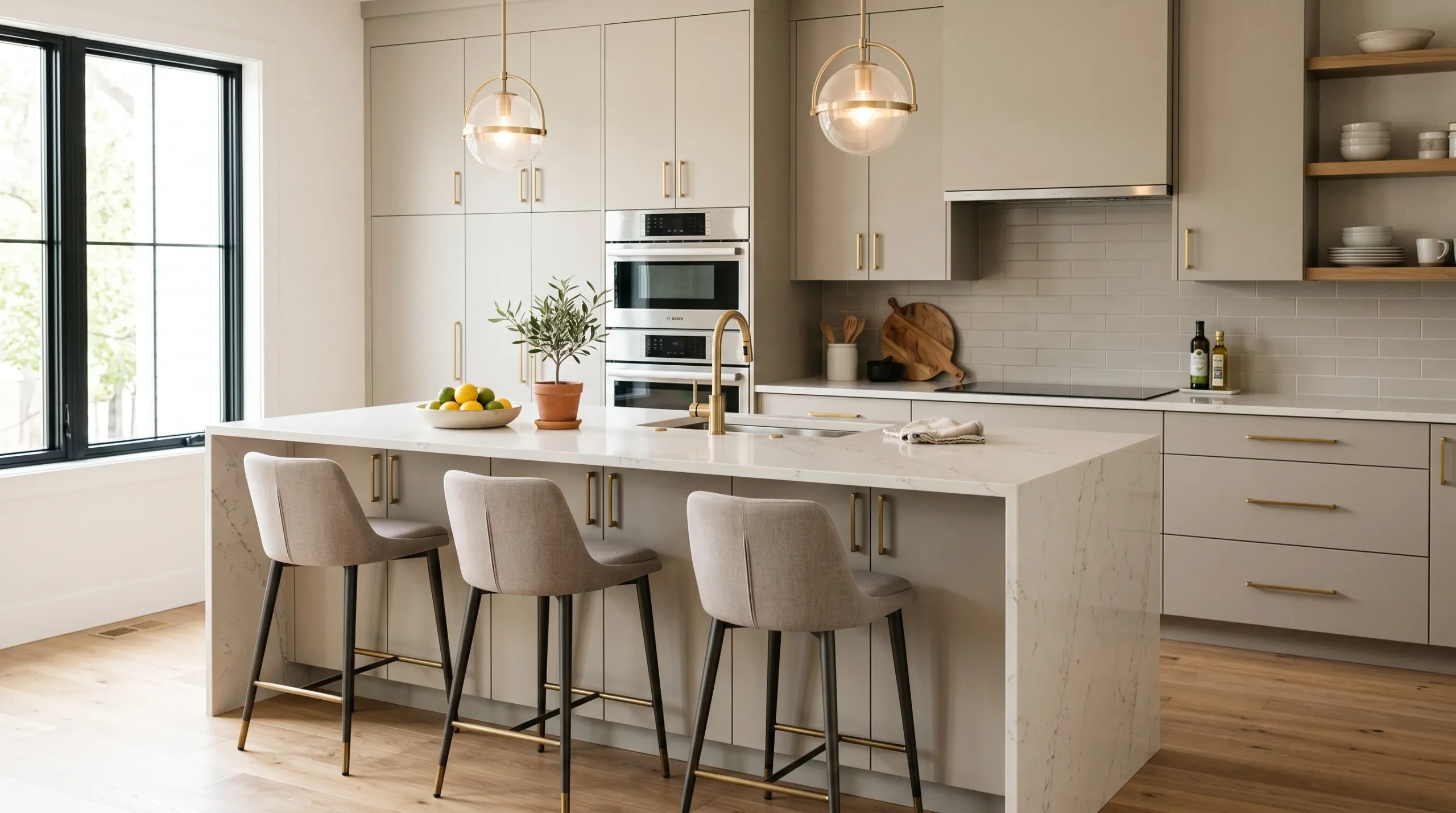
A streamlined island can make a kitchen feel instantly more current without requiring a complete remodel. Choose a simple waterfall-edge island in quartz, porcelain, or another durable surface, then keep the base cabinetry visually quiet. A soft white, warm greige, or muted taupe finish works especially well with natural wood accents. The clean edge creates a polished focal point while hiding visual clutter around the seating area. For everyday use, leave enough clearance around the island for comfortable movement, opening drawers, and passing through during busy meal preparation. Keep the walkway open.
The best modern kitchen trends often balance sharp lines with materials that still feel welcoming. A waterfall island does exactly that by giving the room a strong architectural shape while keeping the overall palette calm. Pair it with slim counter stools, understated pendant lighting, and handleless or minimal hardware for a cohesive look. In smaller kitchens, a compact island can still create the same effect if its proportions match the room. Add one practical detail, such as an overhang for seating or integrated outlets, so the statement piece also earns its space.
2. Warm Wood Cabinetry
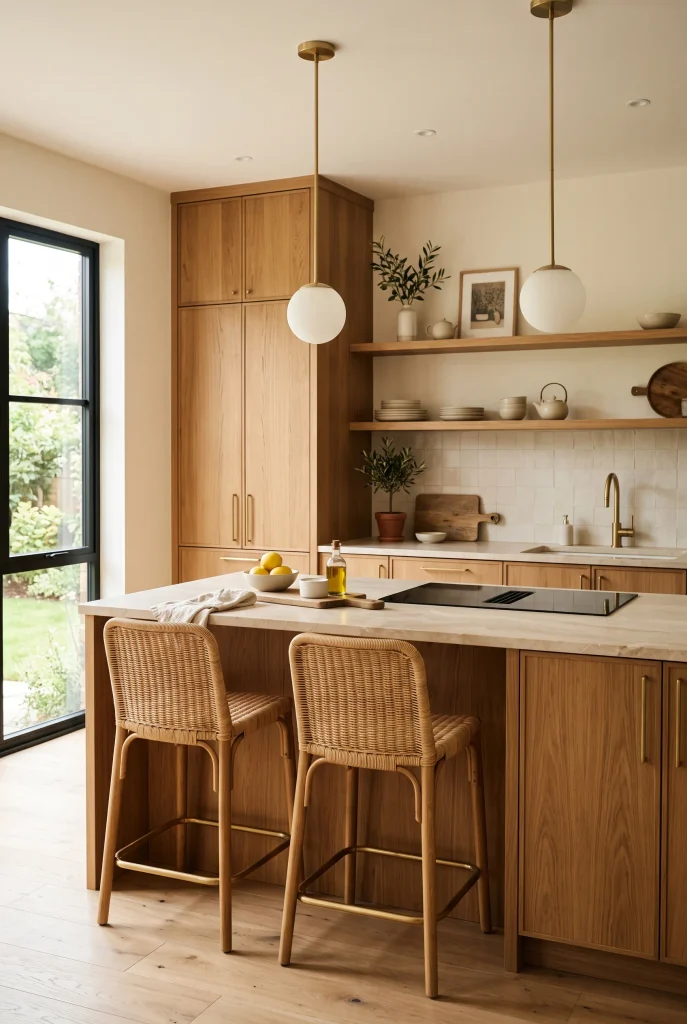
- Adds warmth to a sleek, streamlined kitchen.
- Natural grain brings depth without overwhelming the room.
- Repeat the wood tone through just a few small details.
- Adds natural warmth and keeps the kitchen from feeling too sterile.
Warm wood cabinetry brings softness to a sleek kitchen, especially when the rest of the room uses crisp surfaces and simple shapes. Choose light oak, natural walnut, or a medium wood tone with a matte finish rather than heavy ornamentation. This approach adds depth without making the space feel traditional or dated. It also works beautifully with stone countertops, brushed metal fixtures, and creamy walls. For a balanced result, repeat the wood tone in one or two smaller details, such as open shelving, stools, or a cutting board, instead of matching every element.
The right wood finish can also make a kitchen feel more comfortable and lived-in, which is useful when an ultra-minimal room starts feeling too cold. Pair oak cabinets with warm white walls, softly veined counters, and textured fabrics to create contrast without introducing too many colors. Darker walnut works well when you want a richer, more dramatic appearance, especially beside pale stone. Keep cabinet fronts simple and let the natural grain provide the visual interest. This combination feels current while remaining flexible enough to suit changing decor over time.
3. Statement Slab Backsplash
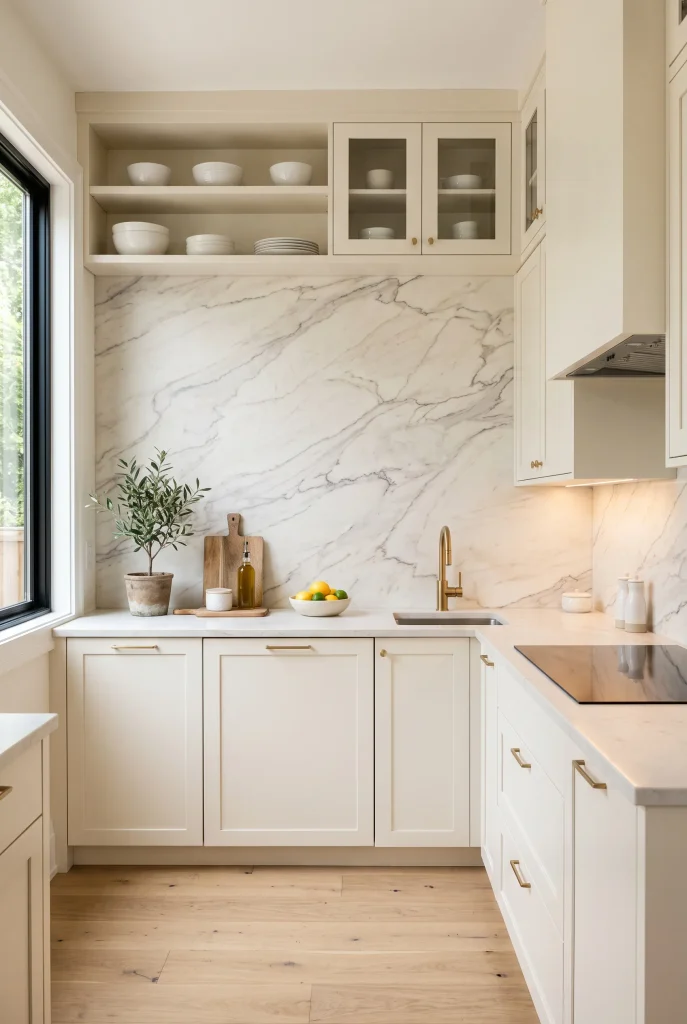
- Creates a strong focal point with very little decoration.
- Large surfaces can make the kitchen feel taller and more continuous.
- Choose durable, easy-clean materials near cooking areas.
- Gives the kitchen a dramatic focal point with minimal visual clutter.
A statement backsplash can give a modern kitchen personality while keeping the rest of the room restrained. Large-format porcelain slabs, softly veined stone, or handmade-look tiles create visual interest without filling the walls with busy patterns. Choose a surface that connects with your cabinet or countertop color so the design feels intentional. Extending the backsplash from the counter to the upper cabinets can also make the room appear taller and more continuous. For easier upkeep, prioritize low-maintenance materials around cooking areas, especially if the kitchen is used heavily every day.
For a sophisticated finish, let the backsplash become the main decorative element and keep nearby accessories simple. A subtle marble pattern can brighten white cabinetry, while warmer stone tones pair beautifully with oak or walnut finishes. Avoid choosing a pattern solely because it looks striking in a showroom; check how its scale works with your actual wall size and natural light. Smaller kitchens often benefit from calmer veining, while spacious layouts can handle bolder movement. This approach gives the room character without creating the crowded feeling that comes from layering too many competing surfaces.
4. Hidden Appliance Storage
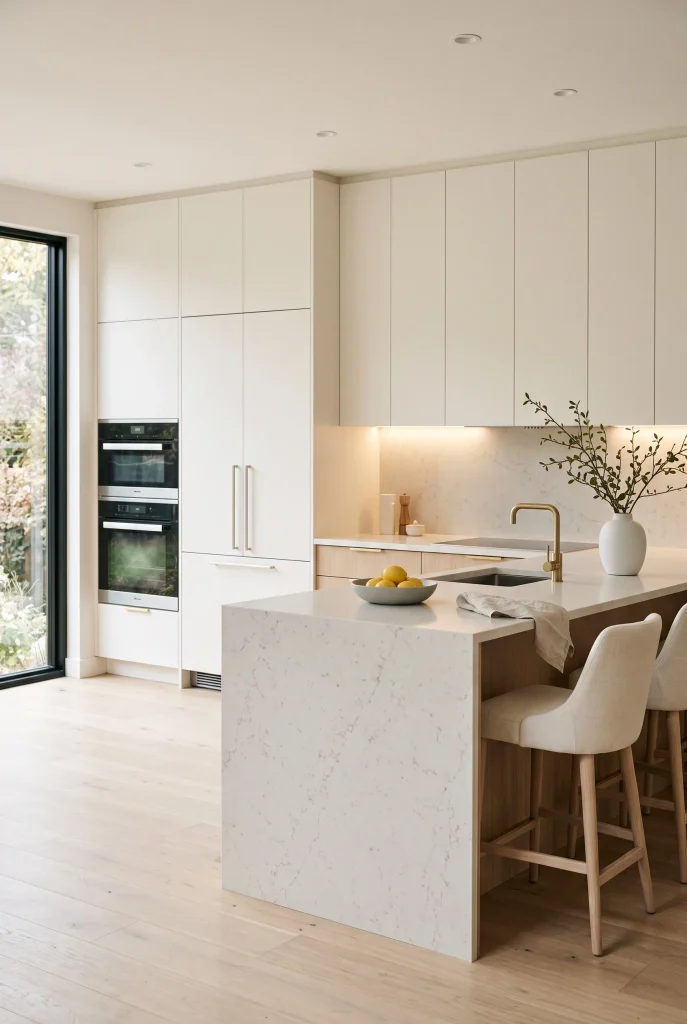
- Keeps bulky appliances from interrupting clean cabinet lines.
- Creates a calmer, more organized visual appearance.
- Integrated storage works especially well in compact kitchens.
- Keeps countertops clear while making everyday appliances easy to access.
Bulky appliances can quickly make a kitchen look busy, even when the counters are perfectly organized. Concealing selected appliances behind matching cabinetry creates a smoother, more intentional appearance. An integrated refrigerator, hidden microwave, or appliance garage can keep everyday equipment accessible without leaving it permanently on display. This approach is especially useful when your kitchen has limited wall space because it allows storage and appliances to share one streamlined visual system. Choose cabinet fronts that match the surrounding doors closely so the entire run feels continuous rather than broken into separate functional zones.
Modern kitchen trends increasingly favor designs that make practical features feel almost invisible. You do not need to hide every appliance to achieve this effect; focus on the items that create the most visual interruption. A built-in coffee station can disappear behind pocket doors, while a toaster or blender can live inside a dedicated appliance garage. Plan outlet placement before installation so hidden appliances remain convenient to use. The result is a kitchen that looks cleaner throughout the day while still supporting the routines, cooking habits, and appliances your household actually depends on.
5. Fluted Cabinet Details
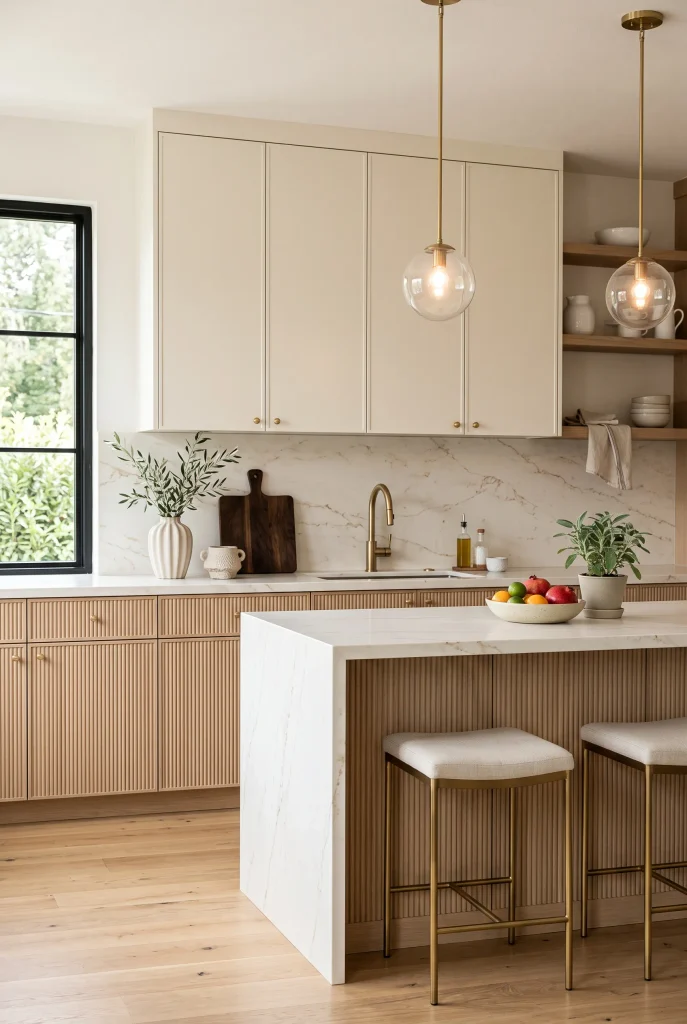
- Adds texture without relying on bold color.
- Vertical grooves create subtle architectural interest.
- Use fluting on one area for a controlled statement.
- Adds subtle texture and dimension without making the cabinetry feel busy.
Fluted cabinetry adds texture to a modern kitchen without sacrificing the clean appearance that makes contemporary spaces feel polished. The narrow vertical grooves catch light and shadow throughout the day, giving otherwise simple cabinet fronts more dimension. You can use this detail on an island, pantry doors, a tall cabinet section, or a small bar area instead of covering the entire kitchen. Natural oak and walnut make the texture feel warm, while painted fluted panels create a more subtle effect. Keeping the surrounding surfaces simple allows the vertical detailing to stand out.
This design detail works particularly well when a kitchen feels visually flat but you do not want to introduce another strong color or pattern. Using fluting on one focal area usually creates a more sophisticated result than repeating it everywhere. Pair textured cabinetry with smooth stone, simple hardware, and understated lighting to create contrast. The combination gives the room a layered appearance without making it feel decorated for decoration’s sake. If cleaning is a concern, consider the depth and spacing of the grooves before choosing the material, especially near cooking zones.
View: 21 Simple Home Decor Ideas You’ll Love to Try Today
6. Oversized Pendant Lights
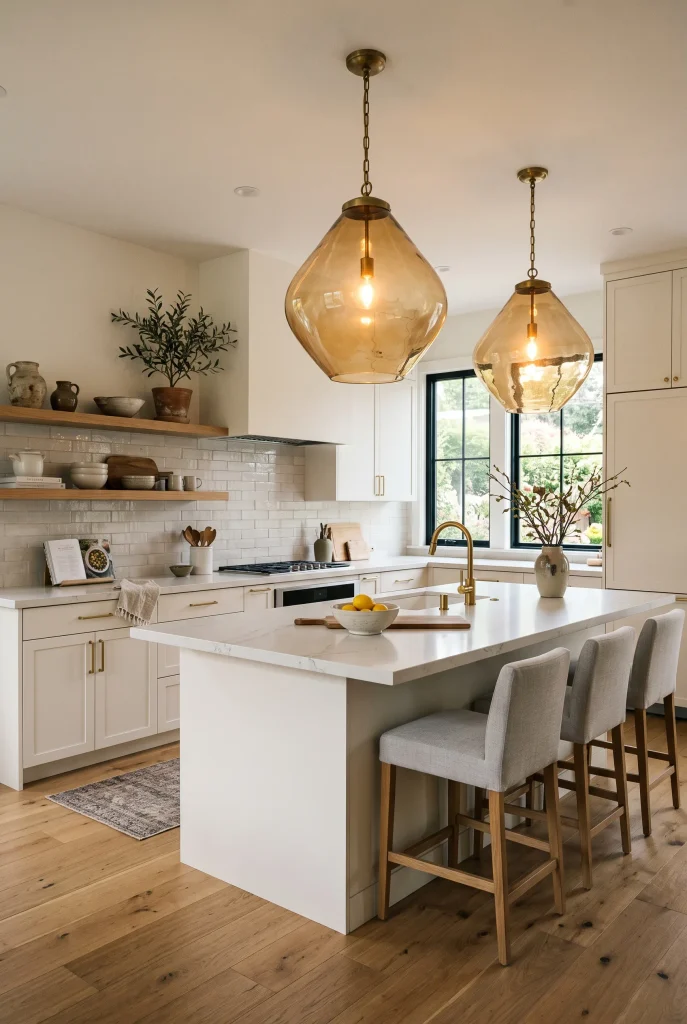
- Gives the island an immediate visual focal point.
- Helps define the kitchen’s seating and preparation zone.
- Choose proportions that suit the island and ceiling height.
- Creates a striking focal point while adding useful light above the island.
Oversized pendant lights can turn an ordinary kitchen island into a strong architectural focal point. Instead of several tiny fixtures competing for attention, choose one or two larger pendants with simple silhouettes and balanced proportions. Opal glass, linen, aged metal, or sculptural ceramic shades can all work beautifully in a contemporary setting. Hang them over the island so they visually anchor the main workspace without blocking conversation across the counter. The goal is not simply to choose the biggest fixture available, but to find a size that feels intentional within the room.
Lighting also changes how cabinet colors, countertops, and textures appear, so the fixture should work during both daytime and evening. Warm bulbs can make pale materials feel inviting, while clear or softly diffused shades keep the space bright. Oversized pendants are most successful when the rest of the kitchen remains relatively quiet. Let the lights provide the personality while using restrained hardware, simple stools, and uncluttered counters around them. This creates a polished focal point without making the kitchen feel visually crowded or overly styled.
7. Integrated Range Hood
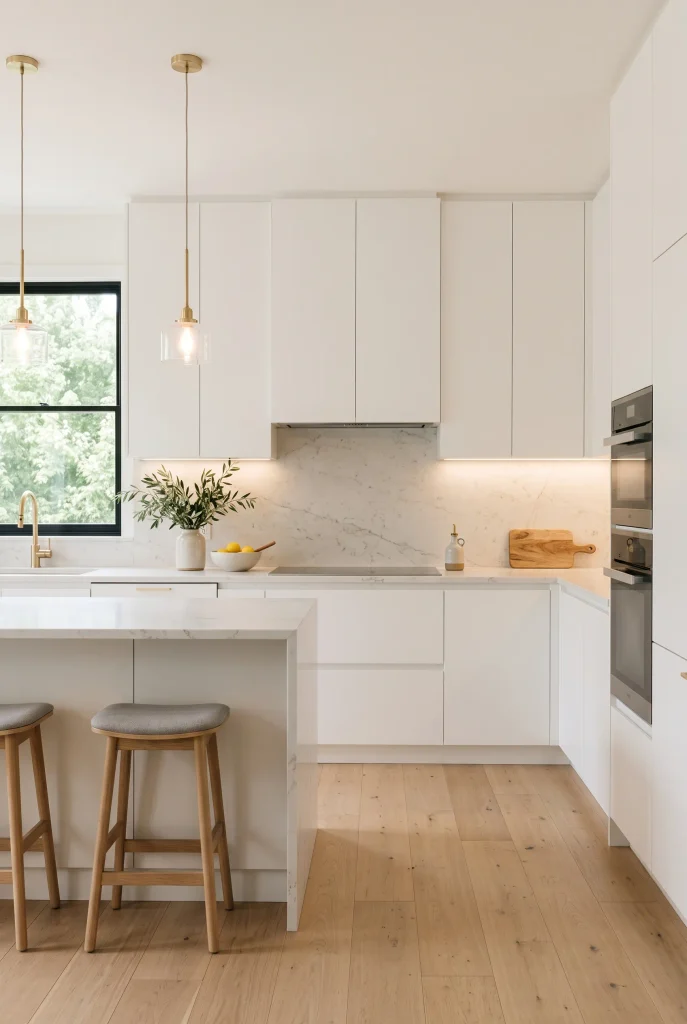
- Keeps the cooking wall visually clean and streamlined.
- Allows cabinetry to become the main architectural feature.
- Works especially well above a simple statement range.
- Plan ventilation carefully before choosing the cabinet design.
A concealed range hood can make the cooking area feel dramatically more refined without changing the entire kitchen. Instead of placing a large metal hood in plain view, integrate the ventilation system into a custom cabinet surround that matches the surrounding cabinetry. This creates a continuous line across the wall and lets the countertop, backsplash, or range become the visual focus. Choose materials that can handle heat and moisture around the cooking zone, and make sure the ventilation system is properly sized for the range. Good planning keeps the feature attractive and functional.
This approach is especially effective in open-plan homes where the kitchen is visible from the living or dining area. A bulky hood can dominate the sightline, while an integrated version quietly blends into the architecture. Keep the cabinet design simple so the hidden hood does not become visually heavy. Pair it with a statement backsplash, streamlined lighting, and minimal countertop accessories for a balanced result. That combination gives the kitchen a custom-built appearance while preserving practical ventilation. Always follow the hood manufacturer’s installation and clearance requirements for safety and performance.
8. Minimal Hardware
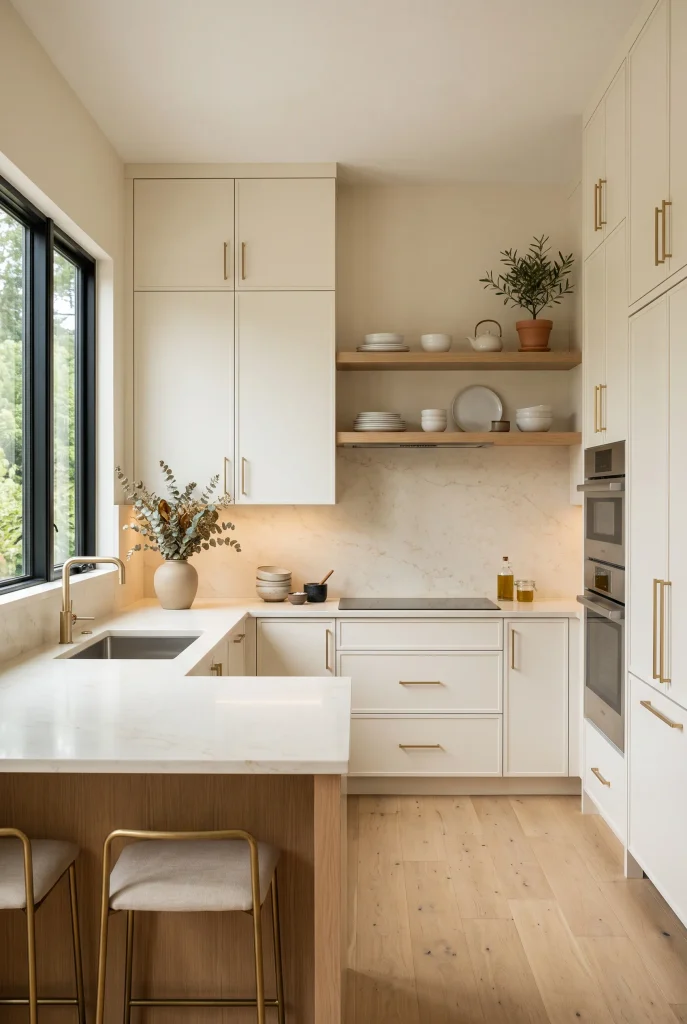
- Makes cabinet surfaces look cleaner and more continuous.
- Small hardware changes can refresh an existing kitchen.
- Brushed metal finishes add warmth without excessive decoration.
- Choose comfortable shapes for frequently used drawers.
Small details can have a surprisingly strong effect on the overall appearance of a kitchen. Minimal cabinet hardware keeps doors and drawers looking clean while adding just enough detail to prevent the room from feeling completely flat. Slim pulls, small knobs, or discreet edge pulls can all work depending on the cabinet style. Brushed brass adds warmth, while stainless steel, matte black, or bronze can create a different mood. For a cohesive finish, choose one main hardware material and repeat it across the kitchen rather than mixing too many metals.
Minimal hardware is also one of the easier ways to update a kitchen without replacing every cabinet. If your existing doors are in good condition, changing outdated handles can immediately make them feel more contemporary. This can work especially well when the new hardware has a simple shape and the spacing is carefully measured. Avoid choosing pieces based only on appearance; drawers used daily should have a comfortable grip. The best result combines visual restraint with everyday usability, making the kitchen feel polished while keeping practical details easy to access.
9. Open Wood Shelving
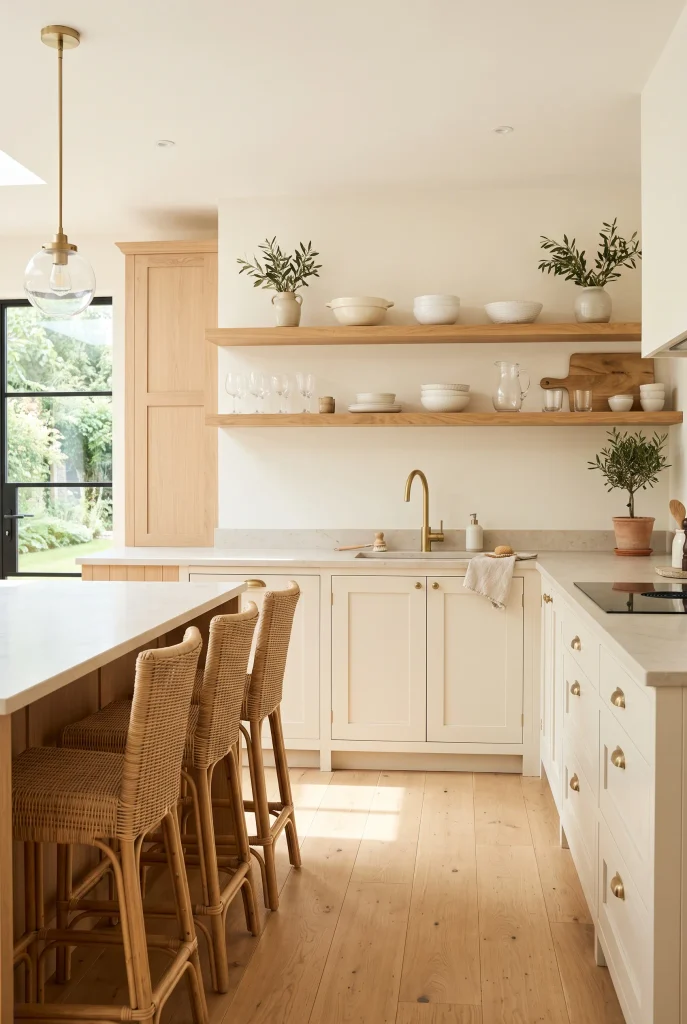
- Breaks up a long run of closed cabinetry.
- Gives frequently used dishes an attractive display area.
- Natural wood adds warmth against smooth modern surfaces.
- Keep displayed pieces limited for an uncluttered look.
Open wood shelving can soften a modern kitchen by introducing natural texture and a small amount of visual openness. Install one or two floating shelves where a full cabinet would feel too heavy, then use them for items you reach for regularly. Simple ceramics, everyday glasses, wooden boards, or a small plant can make the shelves feel useful rather than purely decorative. Natural oak is particularly effective against white or cream walls because its grain adds warmth. Keep the arrangement intentionally sparse so the shelves enhance the room instead of becoming another clutter zone.
The placement matters just as much as the styling. A short pair of shelves beside the range can provide easy access to cooking essentials, while shelves near a coffee station can hold mugs and small jars. Use sturdy brackets or properly installed concealed supports based on the shelf material and expected load. The most attractive arrangements mix different heights while maintaining plenty of empty space. This creates a relaxed, collected appearance that works beautifully with contemporary cabinetry, smooth countertops, and other clean-lined elements throughout the kitchen.
10. Statement Kitchen Islands
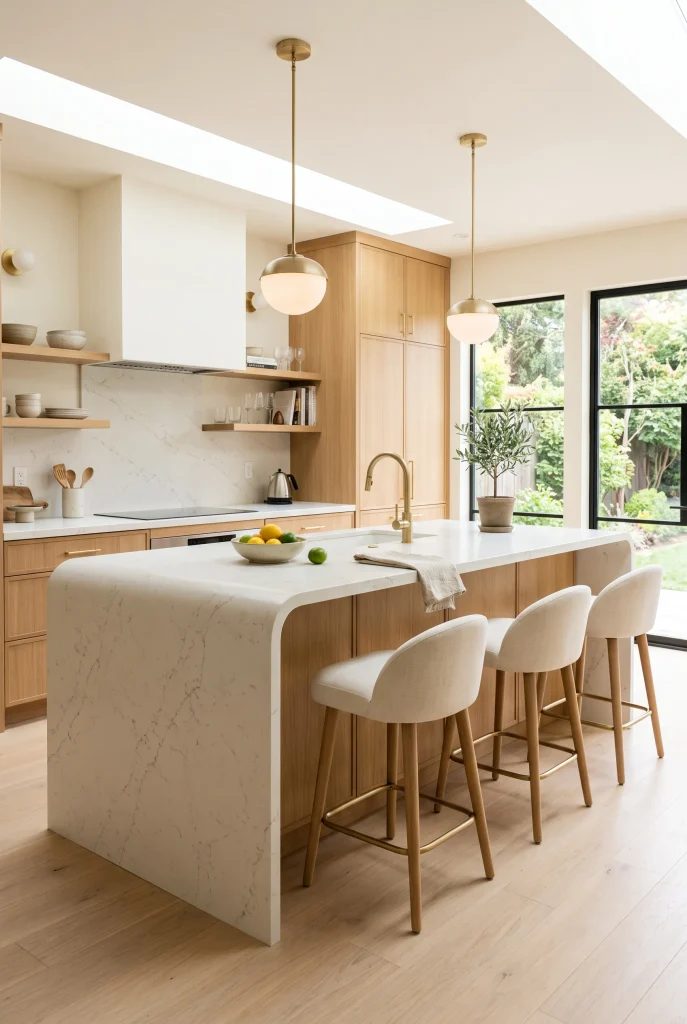
- Makes the island the main architectural feature.
- Provides generous preparation and seating space.
- Rounded edges can soften an otherwise linear kitchen.
- Keep surrounding cabinetry simple to avoid visual competition.
A statement island can completely change how a kitchen feels because it naturally becomes the room’s central gathering point. Choose a generous shape, distinctive stone surface, or softly rounded edge that gives the island architectural presence without relying on excessive decoration. A wide worktop can provide space for food preparation, casual meals, and conversation, making the kitchen more useful throughout the day. Keep the surrounding cabinetry relatively simple so the island remains the star. Before choosing its size, measure the walking paths carefully and leave enough clearance for doors, drawers, and comfortable movement.
Many modern kitchen trends focus on making practical features feel intentional rather than purely functional. A statement island is a perfect example because it combines workspace, storage, seating, and visual impact in one element. Consider adding deep drawers, integrated outlets, or a discreet prep sink if the layout allows. For a softer appearance, pair a stone island with warm wood cabinetry and upholstered stools. If your kitchen is smaller, a compact sculptural island can still create impact. Proportion matters more than size, so choose a design that fits the room rather than overwhelming it.
11. Full-Height Backsplash
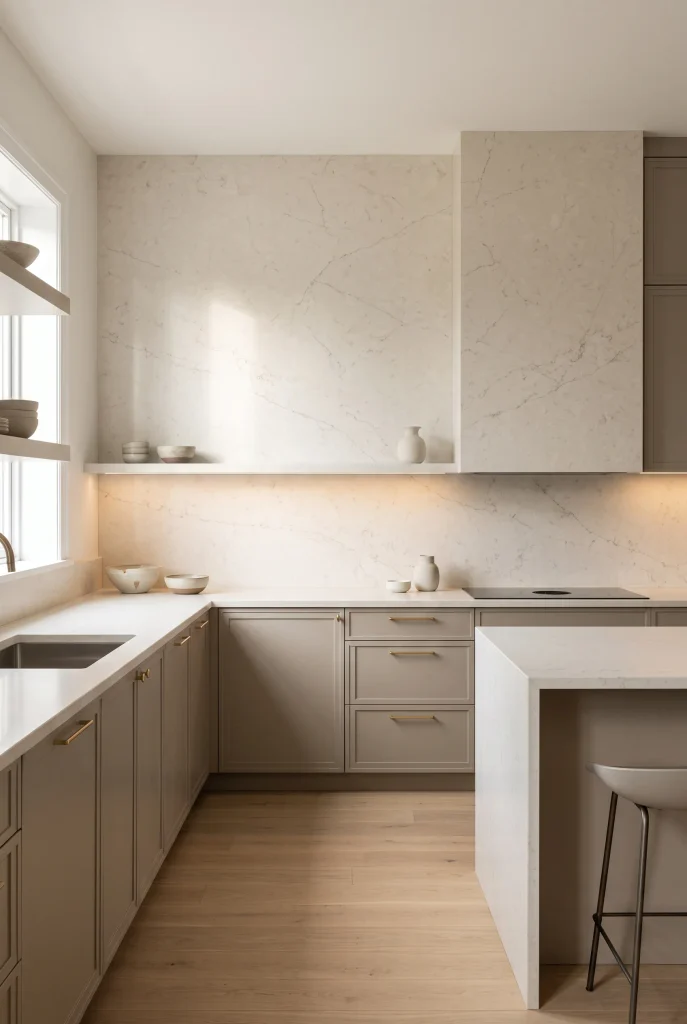
- Creates a taller, more continuous visual line.
- Reduces the chopped-up appearance of multiple wall surfaces.
- Soft stone veining adds interest without busy patterns.
- Choose a low-maintenance surface for easier cleaning.
Taking the backsplash all the way up the wall can give a kitchen an instantly more finished appearance. Instead of stopping at a standard height, extend stone, porcelain, or another suitable surface toward the ceiling or beneath upper cabinetry. The uninterrupted material creates a strong visual line and can make the room feel taller and more spacious. Softly veined surfaces work especially well because they add movement without introducing another competing pattern. Choose a material appropriate for the cooking area, and consider maintenance before committing to a large continuous surface.
A full-height backsplash is particularly effective behind a range or sink because it turns a practical wall into an architectural feature. Pair warm white stone with cream cabinetry for a subtle tonal look, or choose deeper stone against pale cabinets for stronger contrast. Calmer patterns tend to age better when used across a large surface because they remain easy to style as other decor changes. Keep countertop accessories minimal so the backsplash has room to breathe. The result is a polished kitchen that feels cohesive rather than visually fragmented.
12. Layered Natural Textures
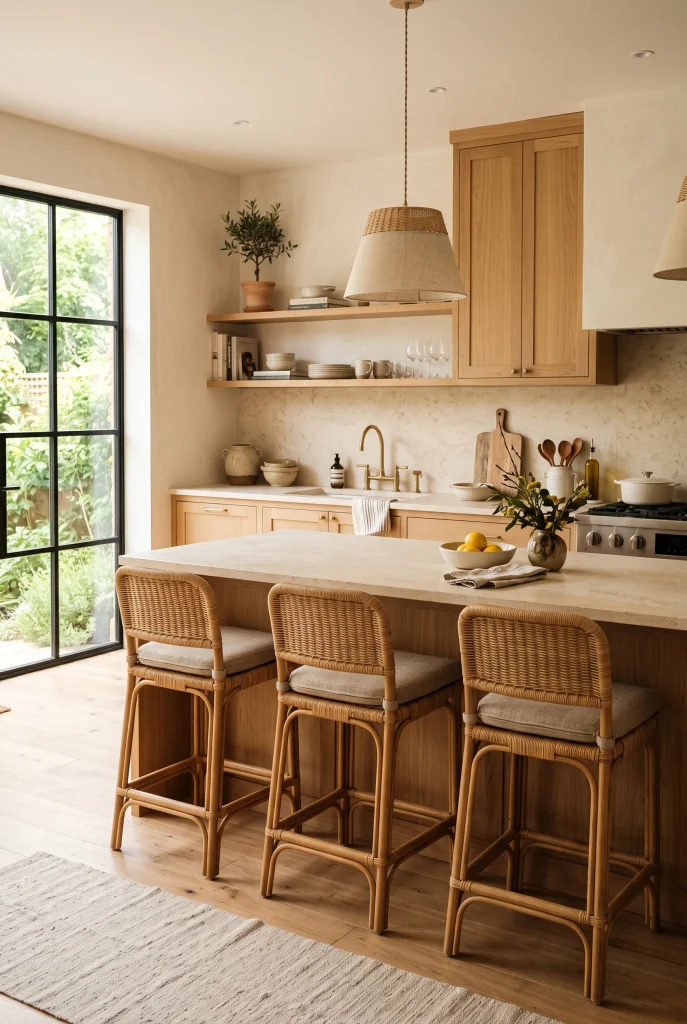
- Prevents a minimalist kitchen from feeling cold or sterile.
- Combines smooth and tactile materials for visual depth.
- Natural fibers make hard surfaces feel more inviting.
- Repeat textures subtly instead of adding excessive decor.
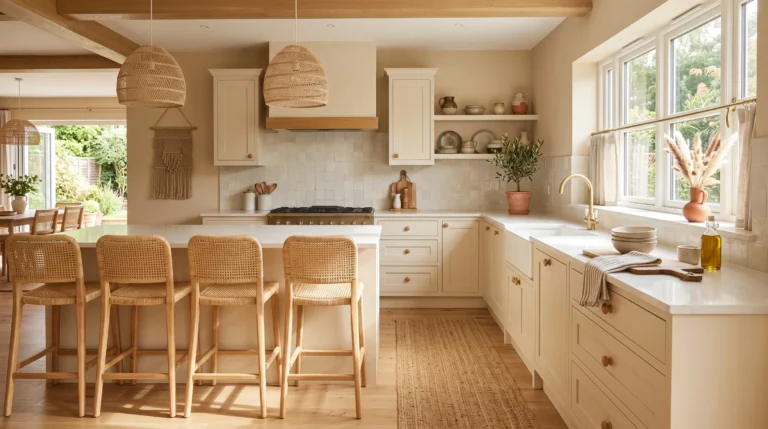
Natural textures can make a streamlined kitchen feel warmer, more comfortable, and more connected to everyday living. Combine smooth stone with visible wood grain, woven seating, linen textiles, ceramic accessories, or lightly textured walls. The contrast between hard and soft surfaces creates depth without requiring bold colors. Warm oak cabinets beside pale stone counters are a simple starting point, while woven stools or a small natural-fiber runner can add another layer. Keep the palette restrained so the textures provide the visual interest rather than making the room feel overly decorated.
The beauty of this approach is that you can introduce it gradually, even after the main kitchen has already been completed. Start with one substantial texture, such as wood cabinetry, then add smaller complementary elements throughout the room. A handmade ceramic vase, woven basket, or linen window treatment can create subtle variation. Avoid using too many different materials because the goal is harmony, not a collection of unrelated finishes. This layered approach gives a contemporary kitchen a relaxed quality that feels welcoming for morning coffee, family meals, and casual gatherings.
13. Mixed Material Cabinets
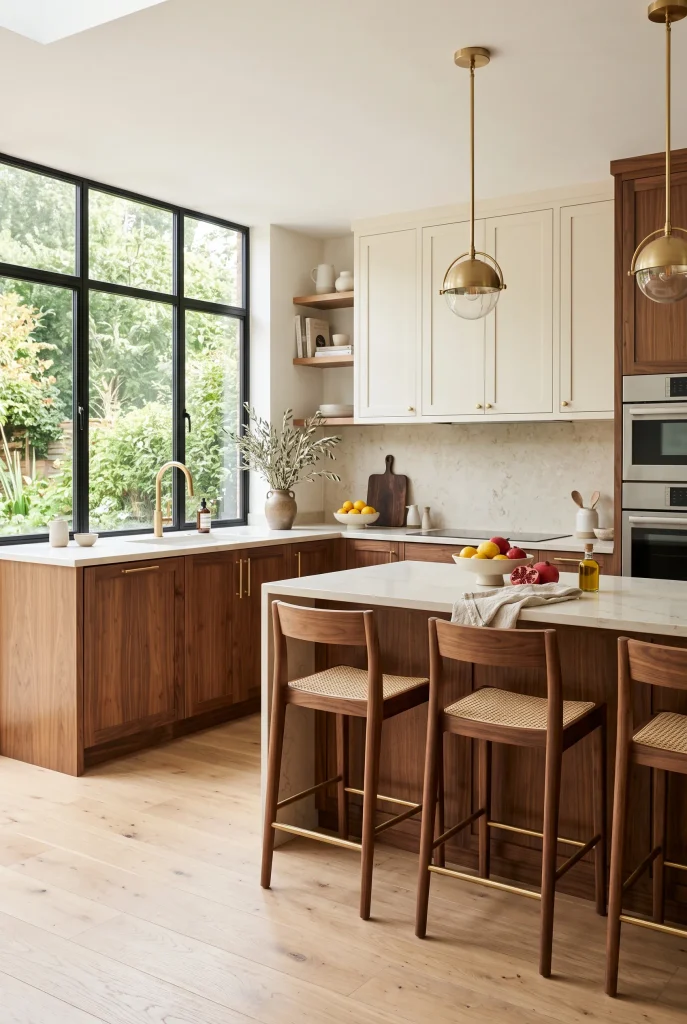
- Creates depth without relying on bold colors.
- Separating materials can visually define different kitchen zones.
- Warm wood helps soften lighter painted cabinetry.
- Keep the palette limited to maintain a cohesive appearance.
Combining two cabinet materials can give a modern kitchen much more depth without making the design feel complicated. Pair warm wood on the lower cabinets with soft white, cream, or greige cabinetry above to create a balanced contrast. Another option is using wood on the island while keeping the perimeter cabinets painted. This approach naturally creates visual zones and prevents a large kitchen from looking like one continuous block of cabinetry. Choose finishes that share a similar warmth so the combination feels intentional rather than like separate design decisions.
The key is restraint when mixing materials. Two complementary cabinet finishes are usually enough to create dimension, especially when the countertops and backsplash already have noticeable texture or veining. Natural walnut can bring richness to a pale kitchen, while light oak keeps the overall appearance brighter and more relaxed. Repeating one of the cabinet materials in a nearby detail, such as shelving or stools, helps connect the different areas. The finished space feels layered and custom while still maintaining the clean lines associated with contemporary kitchen design.
14. Seamless Countertops
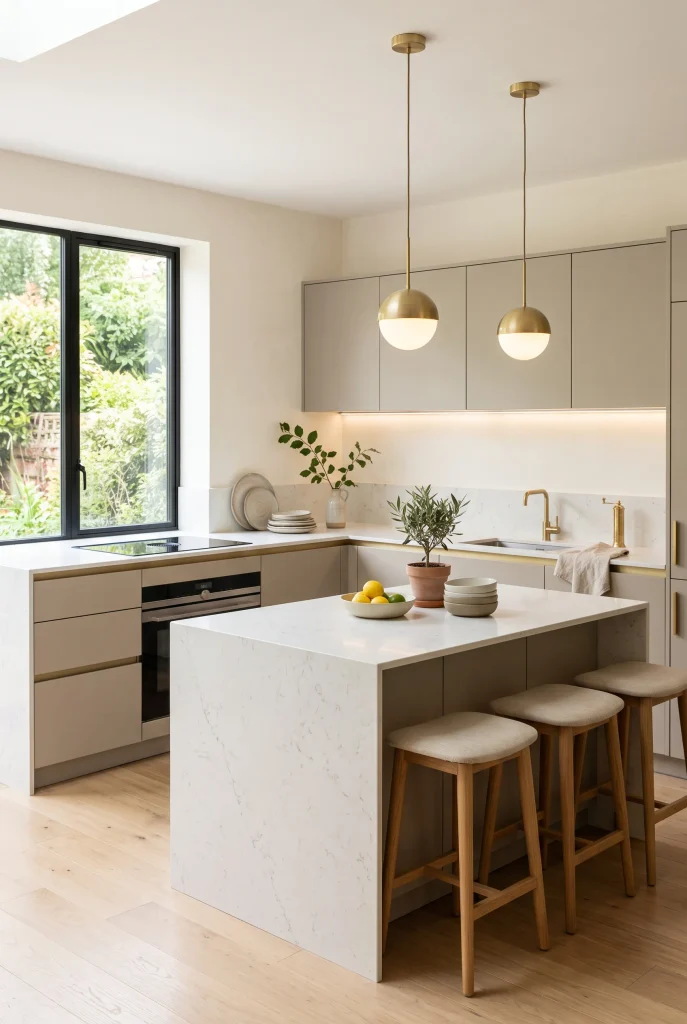
- Creates a visually calm and continuous work surface.
- Makes cabinet runs appear more streamlined.
- Soft neutral surfaces keep the room bright and flexible.
- Prioritize durable materials for heavily used areas.
A continuous countertop can make even a busy kitchen feel remarkably calm. Choose one material and carry it across the main work surfaces, island, and backsplash where appropriate. Pale quartz, porcelain, or natural stone can create a smooth visual flow that connects different sections of the room. Avoid unnecessary changes in color or pattern between the island and perimeter counters unless you deliberately want a contrasting focal point. The uninterrupted surface helps cabinetry feel more cohesive and gives the kitchen a carefully planned appearance without requiring extra decorative elements.
Seamless surfaces are also practical because they create clear working zones without visually dividing the room. A consistent countertop makes it easier to move between preparation, serving, and cleanup areas while keeping the overall design unified. Choose a finish that suits your lifestyle, particularly if the kitchen experiences frequent cooking, spills, or heavy daily use. Subtle veining often provides enough character without becoming distracting. Pair the surface with simple cabinetry, restrained hardware, and natural wood accents for a polished look that can remain attractive as trends evolve.
15. Dedicated Coffee Nook
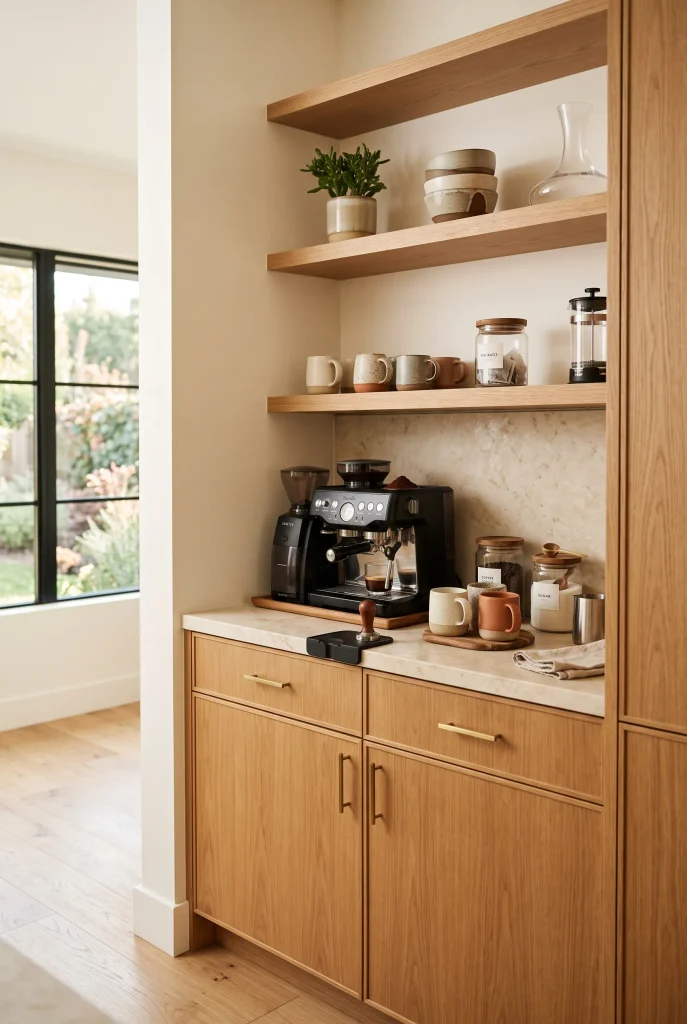
- Gives everyday coffee essentials one organized home.
- Keeps small appliances from spreading across the main counters.
- Adds personality through mugs, jars, and simple accessories.
- Use drawers below for filters, pods, and serving pieces.
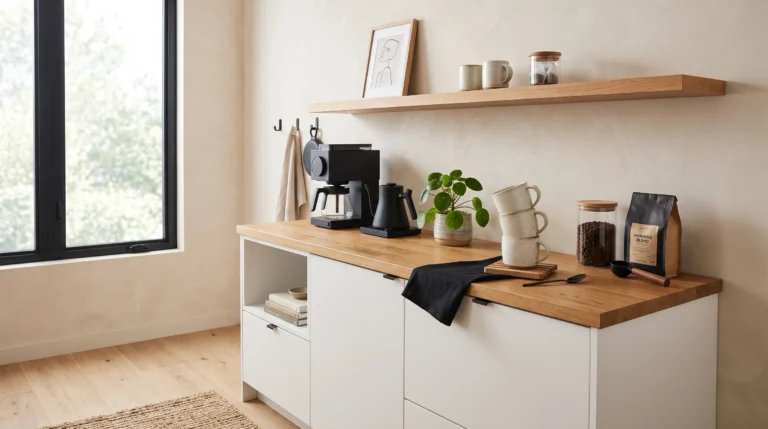
A dedicated coffee nook can turn a small everyday routine into one of the most enjoyable parts of the kitchen. Set aside a compact section of counter space for the coffee machine, mugs, jars, and other essentials, then use nearby drawers or cabinets for supplies. If possible, place the station away from the main cooking zone so morning coffee preparation does not interfere with meal prep. Warm wood shelves or a softly contrasting backsplash can give the nook its own identity while still connecting it visually to the rest of the kitchen.
The best coffee stations are attractive but genuinely practical. Keep frequently used items within easy reach and store less attractive supplies behind cabinet doors. A pocket-door cabinet can conceal the entire setup when you want a cleaner appearance, while open shelving works well if you enjoy displaying favorite mugs or ceramics. Add an outlet exactly where the appliance sits and leave enough counter depth for comfortable use. This small zone can make the kitchen feel more personalized while reducing countertop clutter and giving a frequently used routine a dedicated, organized place.
16. Concealed Pantry Doors
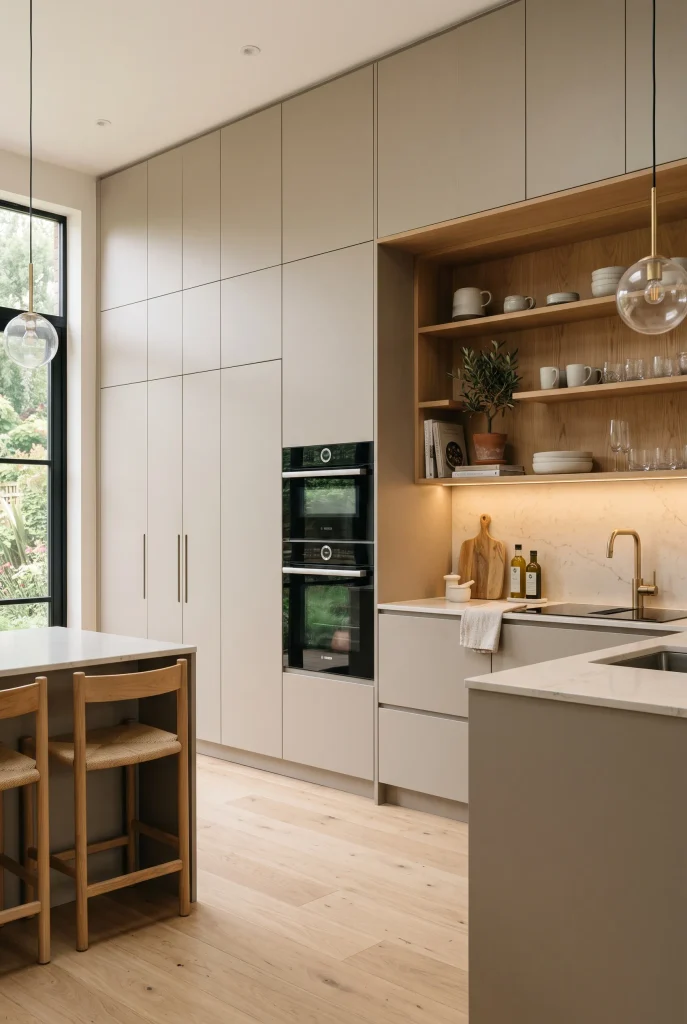
- Keeps pantry storage hidden behind a clean cabinet facade.
- Makes tall storage feel intentional instead of bulky.
- Helps maintain a calm appearance in open-plan kitchens.
- Use adjustable shelves to make the interior more flexible.
A concealed pantry can give a modern kitchen a remarkably streamlined appearance while providing generous storage behind the scenes. Tall cabinet doors can hide shelves, dry goods, small appliances, and everyday supplies without interrupting the visual flow of the room. Choose doors that match the surrounding cabinetry so the pantry reads as part of the architecture rather than a separate storage area. Inside, adjustable shelving, pull-out drawers, and labeled containers can make frequently used items easier to find. This combination keeps the visible kitchen calm while improving how efficiently the space functions.
Modern kitchen trends increasingly emphasize storage that disappears into the overall design, and a hidden pantry is a practical example. It works particularly well in open kitchens where every cabinet is visible from nearby living areas. If space allows, include a dedicated appliance shelf or countertop inside the pantry for items you do not want displayed. Make sure doors open comfortably without blocking nearby walkways. A well-planned pantry does more than hide clutter; it creates a reliable home for kitchen essentials, making daily cooking and cleanup feel noticeably easier.
17. Soft Neutral Palette
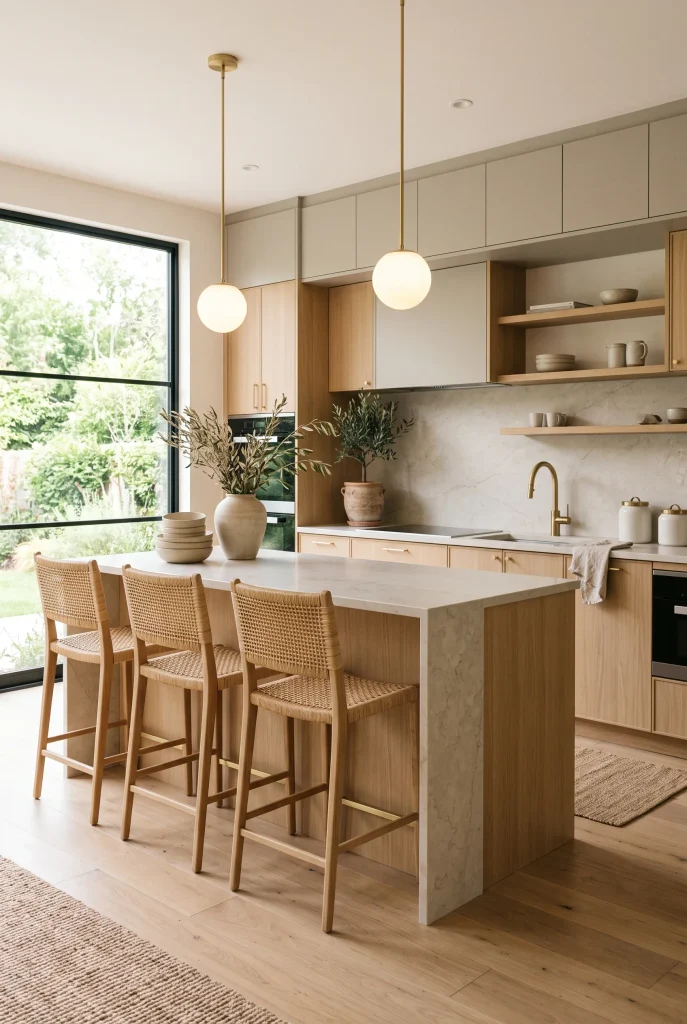
- Creates an airy, timeless foundation for the kitchen.
- Warm neutrals prevent the space from feeling stark.
- Layering similar tones adds depth without visual clutter.
- Natural wood and stone bring subtle contrast.
A soft neutral palette can make a modern kitchen feel bright, calm, and surprisingly timeless. Instead of using one flat shade throughout the room, layer warm white, cream, beige, greige, and natural wood tones across different surfaces. This creates gentle contrast while keeping the overall appearance cohesive. Pale stone countertops can connect beautifully with warm cabinetry, while brass or bronze hardware adds a small amount of definition. The result is a kitchen that feels sophisticated without looking overly formal. It also creates a flexible backdrop for seasonal accessories and changing personal preferences.
The secret to making neutral kitchens interesting is texture and tonal variation. Smooth cabinets can be paired with lightly veined stone, woven stools, natural wood, or handmade ceramics to keep the space from feeling flat. Avoid choosing every finish in exactly the same shade because subtle differences create much more visual depth. Modern kitchen trends may change, but a thoughtfully layered neutral foundation can remain adaptable for years. Add personality through artwork, plants, textiles, or small decorative objects, allowing the main finishes to stay simple, practical, and easy to live with.
Conclusion
A modern kitchen should look beautiful, but it should also make everyday life easier. From warm wood cabinetry and seamless countertops to hidden storage and thoughtful lighting, small design decisions can completely change how the space feels and functions. These modern kitchen trends offer plenty of inspiration without requiring you to copy an entire look. Start with one idea that fits your home, budget, and lifestyle, then build from there. Save this article on Pinterest so you can revisit your favorite ideas when planning your next update, and share it with someone who is dreaming of a fresh kitchen. Your perfect kitchen can start with one simple change.