21 Living Room Decor Ideas You’ll Wish You Knew Sooner
Your living room should feel like your favorite place to relax, unwind, and spend time with the people you love. But sometimes, even a beautiful space can feel plain, cluttered, or like it’s missing that special touch. The right living room decor ideas can change the feel of the entire room, from the warmth of your lighting to the way your furniture is arranged.
In this article, you’ll discover 21 inspiring ways to refresh your living room with thoughtful colors, cozy textures, stylish furniture, and practical decorating details. Whether you’re working with a small apartment or a spacious family room, these ideas can help you create a space that feels inviting, balanced, and truly yours.
1. Balanced Seating
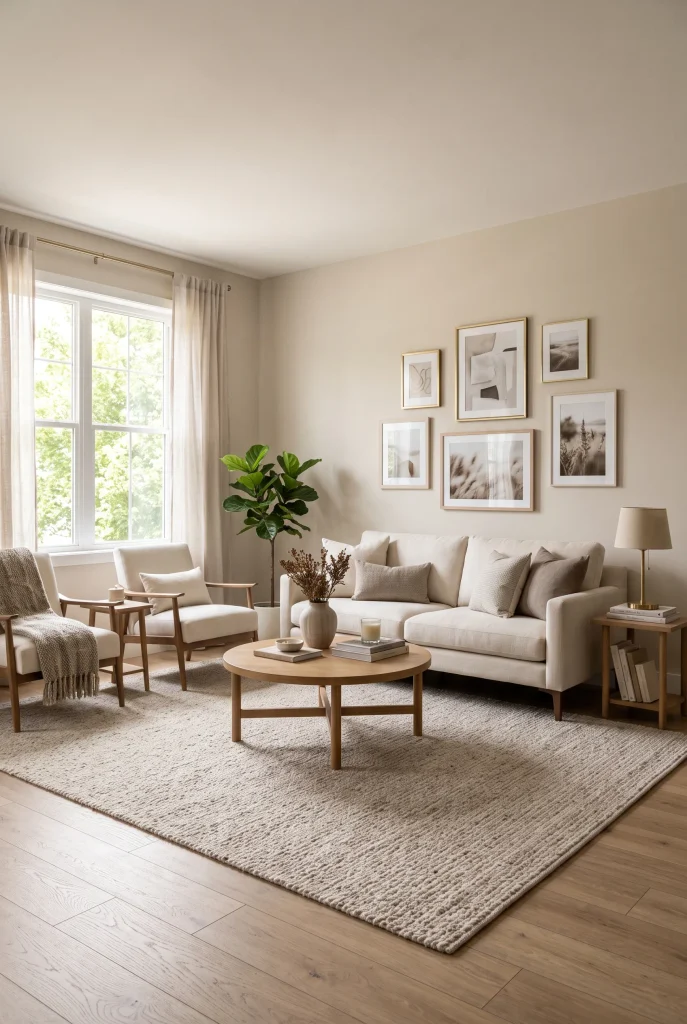
- Creates a clear conversation area without making the room feel crowded.
- Keeps walking paths open and comfortable for everyday movement.
- A centered rug helps connect separate seating pieces visually.
- Works especially well when furniture placement feels scattered or disconnected.
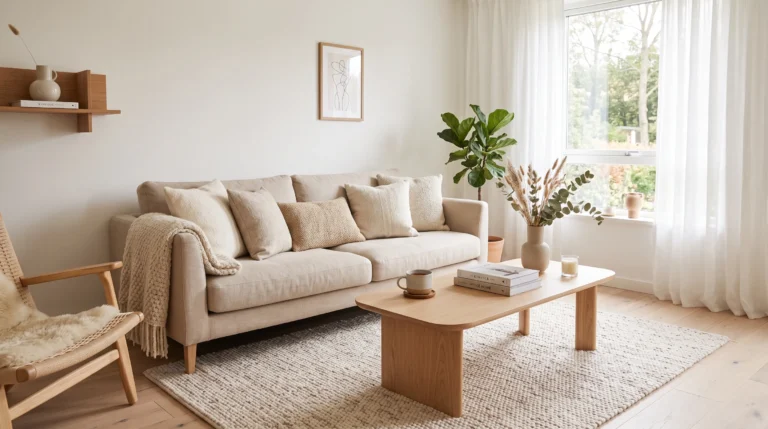
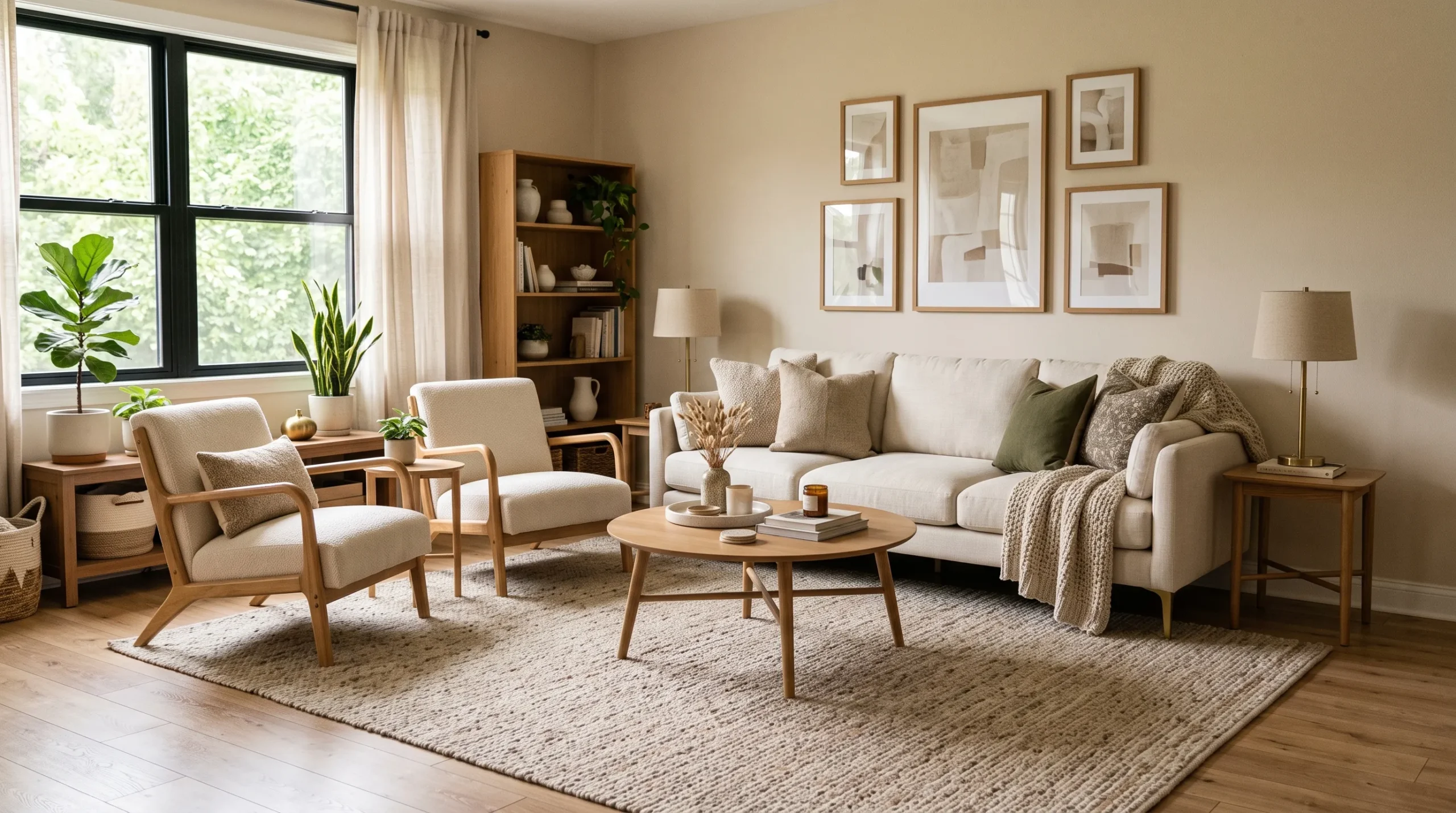
A well-planned seating layout can instantly make a living room feel calmer and more inviting. Start by positioning the sofa where it anchors the room without blocking windows, walkways, or natural light. Add one or two accent chairs opposite or beside it to create a balanced conversation area. Keep enough space between pieces so movement feels easy, especially in busy family homes. A centered rug can visually connect the furniture and make the arrangement feel intentional. This simple setup works particularly well when the room needs better flow without replacing major furniture or changing the entire layout.
Good seating does more than provide places to sit; it gives the whole room a clear sense of purpose. Choose pieces with comfortable proportions, then arrange them so people can talk without twisting their bodies or sitting too far apart. A sofa facing two chairs creates an easy social zone, while a small side table keeps drinks and books within reach. For smaller rooms, choose slimmer chair frames and avoid overcrowding the edges. The result is a living space that feels organized, welcoming, and practical for everyday relaxing, casual conversations, weekend guests, or quiet evenings at home.
2. Layered Textures
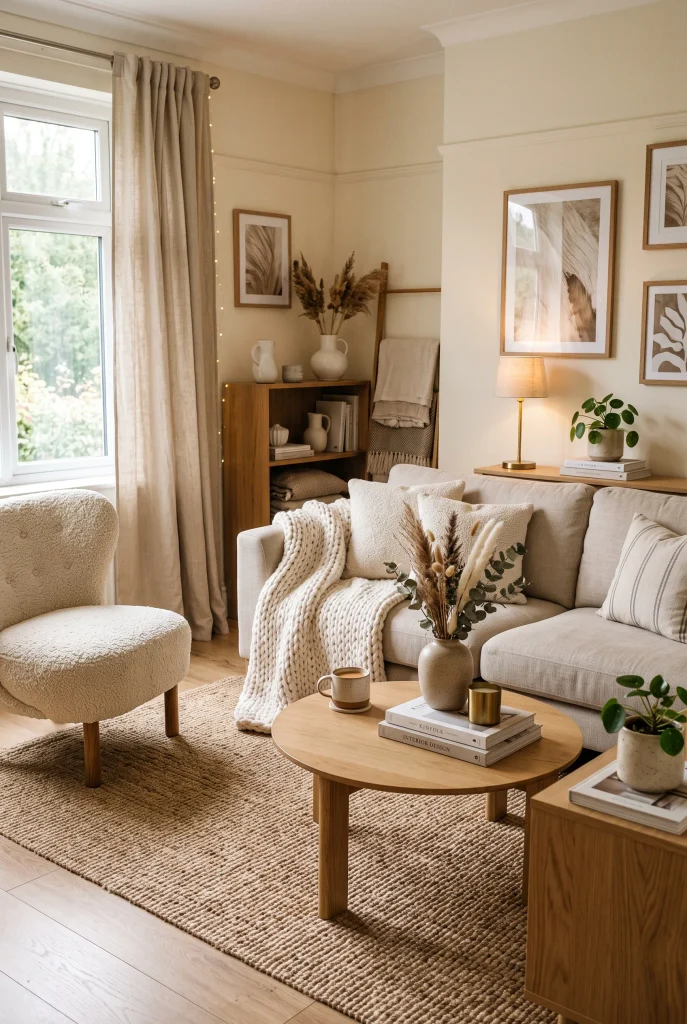
- Adds depth to neutral rooms without relying on bold colors.
- Makes simple furniture feel warmer and more thoughtfully styled.
- Natural fabrics bring softness while woven materials add visual contrast.
- A few carefully chosen textures can prevent a space from feeling flat.
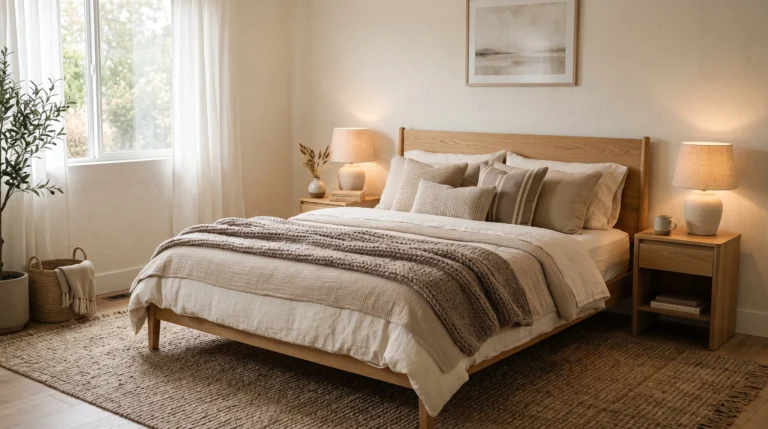
Warm layers can make a plain living room feel finished without making it look overdecorated. Combine a neutral sofa with a textured rug, soft throw pillows, and one casually draped blanket. Choose related shades such as ivory, beige, taupe, or warm gray so the layers feel connected rather than busy. Natural materials like linen, cotton, wool, and woven fibers add depth that flat fabrics often lack. Keep patterns limited to one or two subtle designs for balance. This approach works especially well when you want a comfortable room that looks polished but still feels relaxed enough for daily life.
Texture gives a room that quiet richness often found in thoughtfully designed spaces. Start with one substantial piece, such as a woven rug or boucle chair, then build around it with smaller tactile accents. A knitted throw, linen curtains, ceramic vase, or wood side table can create variety without adding strong colors. Pay attention to how materials feel as well as how they look, especially if the room is used every day. The finished space feels warmer and more layered, while the neutral palette keeps everything visually calm. Small texture changes can make a surprisingly noticeable difference.
3. Styled Coffee Table
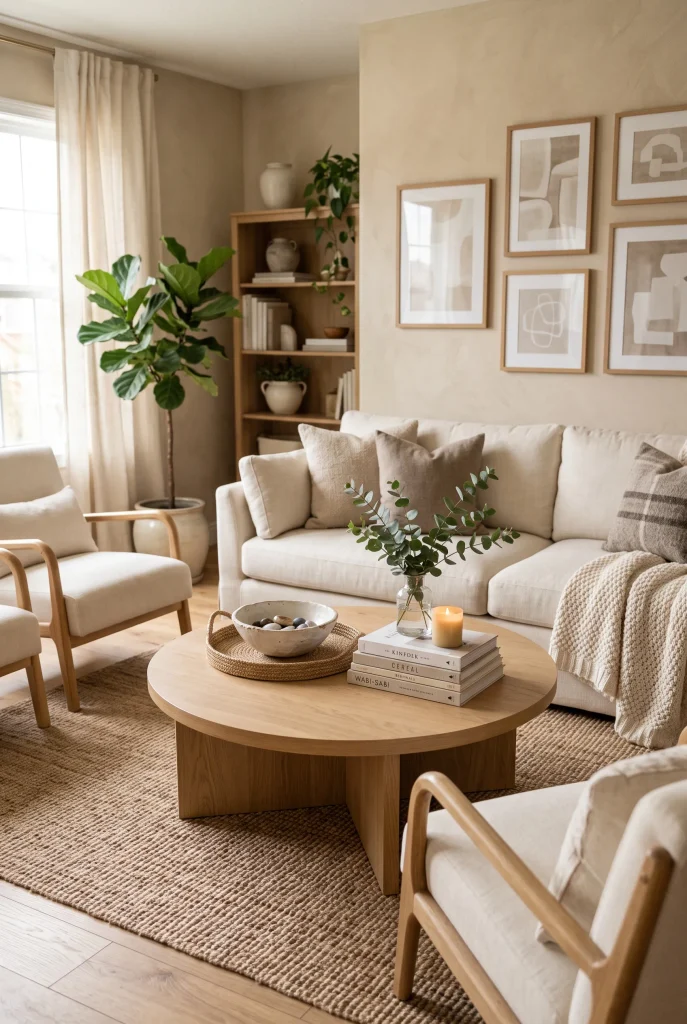
- Gives the center of the room a purposeful visual anchor.
- Keeps everyday essentials organized while adding decorative interest.
- Low accessories preserve open sightlines across the seating area.
- Leaving empty tabletop space makes the arrangement practical rather than overly staged.
A thoughtfully styled coffee table can turn an empty center area into a useful visual anchor. Begin with a tray to group smaller objects, then add a low ceramic bowl, a small stack of books, and one natural element such as a branch or plant. Keep the arrangement low enough to preserve sightlines across the seating area. Leave some tabletop space open for drinks, snacks, or everyday use. This balance prevents the room from feeling staged. In practical homes, a flexible arrangement is often easier to maintain because every decorative piece has a clear place.
The right coffee table styling can also make surrounding furniture feel more connected. Repeat one or two materials already used in the room, such as wood, ceramic, woven fibers, or aged metal, so the centerpiece feels naturally integrated. Avoid filling every corner because visual breathing room helps decorative objects stand out. For family spaces, choose durable accessories and use a tray that can be moved quickly when needed. These small choices make the room easier to live with while keeping it attractive. The finished arrangement feels intentional, comfortable, and ready for both everyday routines and casual entertaining.
4. Statement Rug
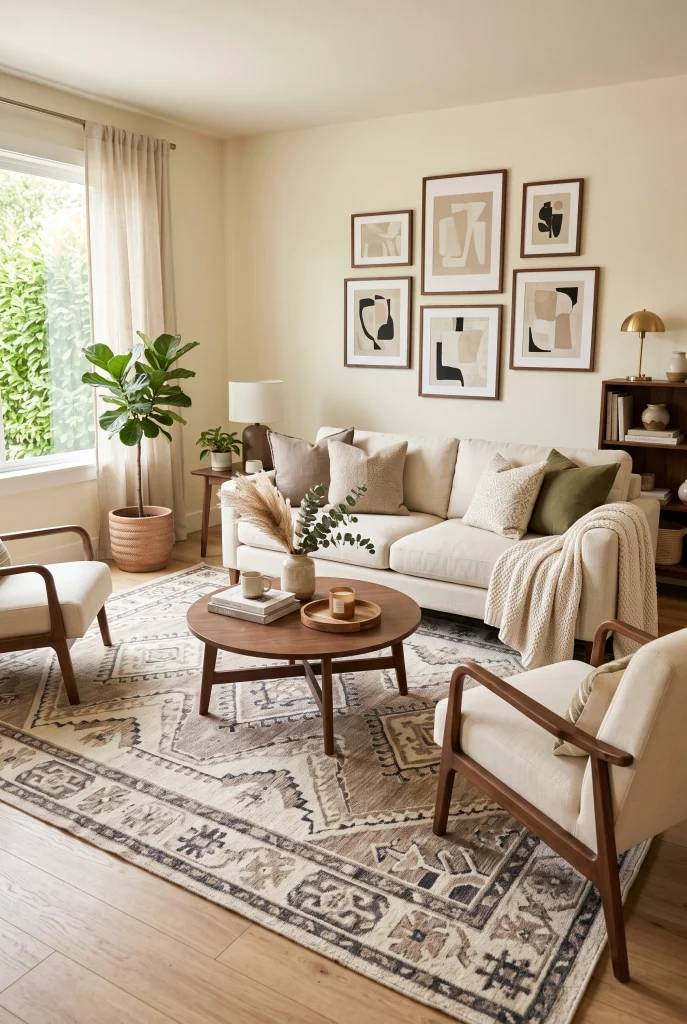
- Grounds the seating arrangement and visually defines the living area.
- Adds pattern and personality without changing the larger furniture pieces.
- A generously sized rug can make separate furniture feel connected.
- Choose a durable weave when the room gets frequent everyday use.
A statement rug can completely change how a living room feels because it visually gathers the furniture into one comfortable zone. Choose a size large enough for at least the front legs of your main seating pieces to rest on it. This creates stronger proportion and prevents the furniture from looking randomly placed around the room. Neutral patterns work beautifully when you want interest without overwhelming the space. If your sofa and walls are already simple, a subtle geometric, vintage-inspired, or organic pattern can introduce character while keeping the overall look relaxed and cohesive.
The best rug choice balances appearance with everyday practicality. Consider how much traffic the room receives before choosing a delicate material or very light color. A low-pile woven design can be easier to clean in busy households, while a thicker texture adds softness in quieter spaces. Match the rug with existing tones rather than trying to coordinate every color perfectly. Repeating one shade from the cushions, curtains, or artwork is usually enough. With the right scale and texture, the rug becomes more than decoration; it helps establish the room’s layout, comfort, and visual identity.
5. Warm Wood Accents
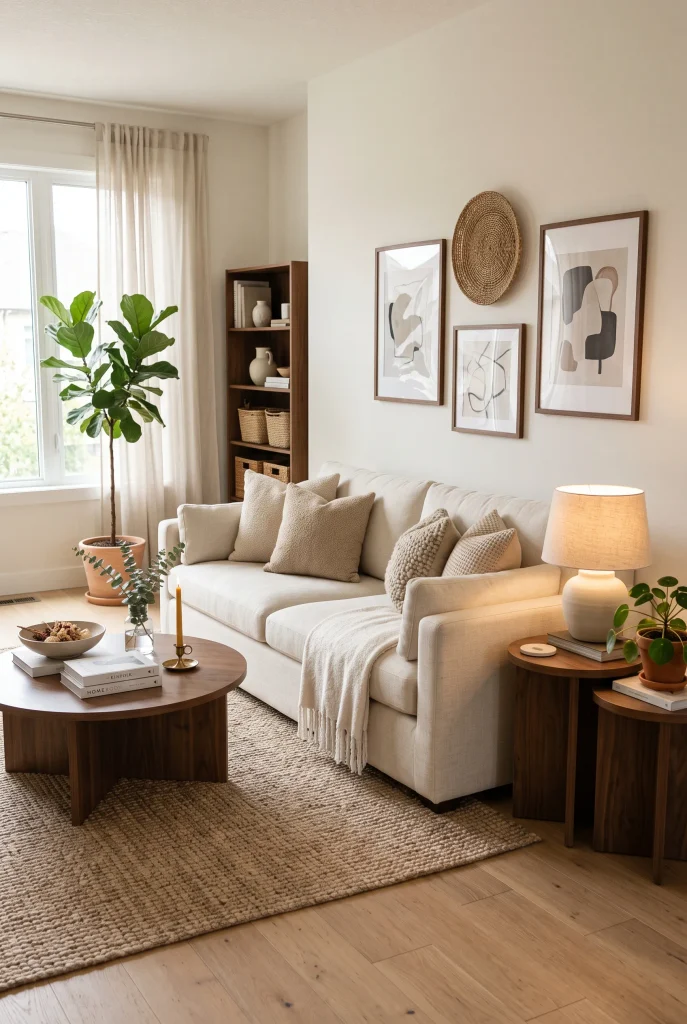
- Introduces natural warmth into rooms dominated by neutral upholstery.
- Creates contrast without depending on strong accent colors.
- Wood tones pair naturally with linen, wool, ceramic, and woven textures.
- Mixing two related wood finishes can add depth without looking mismatched.
Warm wood accents can make a neutral living room feel instantly more welcoming. A walnut coffee table, oak side table, wooden frame, or simple console can introduce natural variation without making the palette complicated. The key is choosing wood tones that complement the existing flooring and furniture instead of competing with them. Pairing wood with soft upholstery and textured fabrics creates a comfortable contrast between hard and soft surfaces. This combination is especially effective in contemporary rooms that need a little more warmth, character, and visual depth without adding bold colors or excessive decoration.
Wood also gives you an easy way to connect different parts of the room. Repeat the same general tone in smaller details, such as picture frames, trays, shelving, or decorative bowls, rather than matching every piece exactly. Slight variations can actually make the space feel more collected and natural. Keep the surrounding accessories simple so the grain and warmth remain visible. When balanced with cream, beige, or muted earthy shades, wooden furniture creates a timeless foundation that works across many living room styles and can adapt easily as your decor changes.
View: 17 Modern Kitchen Trends You’ll Wish You Knew Sooner
6. Gallery Wall
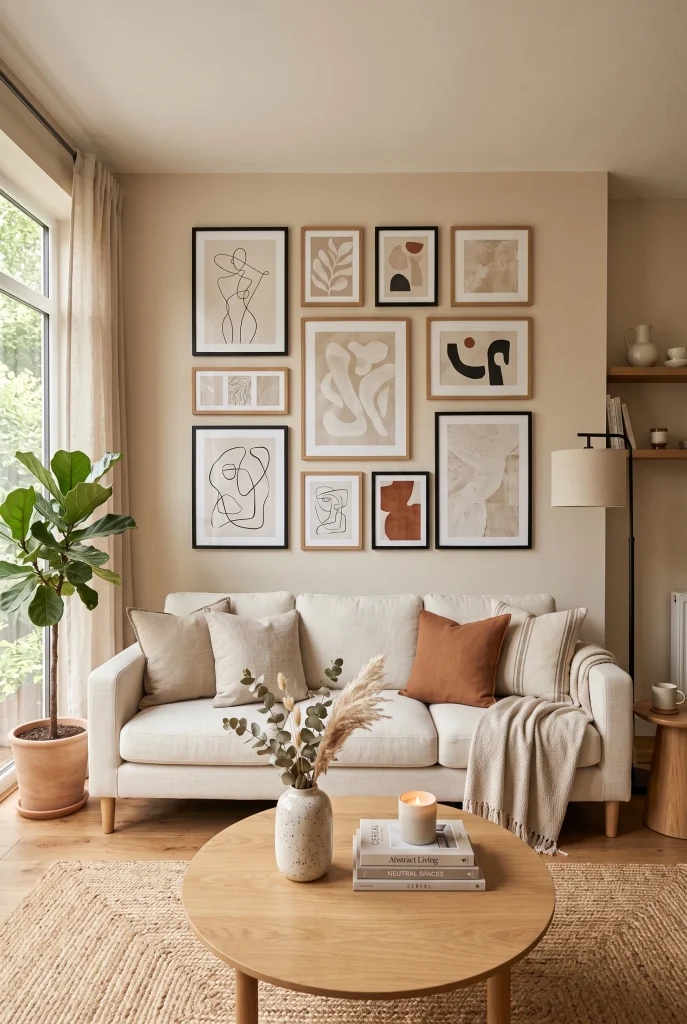
- Gives a large blank wall an intentional focal point.
- Creates personality without requiring major furniture changes.
- Mixing artwork sizes makes the arrangement feel collected rather than rigid.
- Keep a consistent color thread to make different pieces work together.
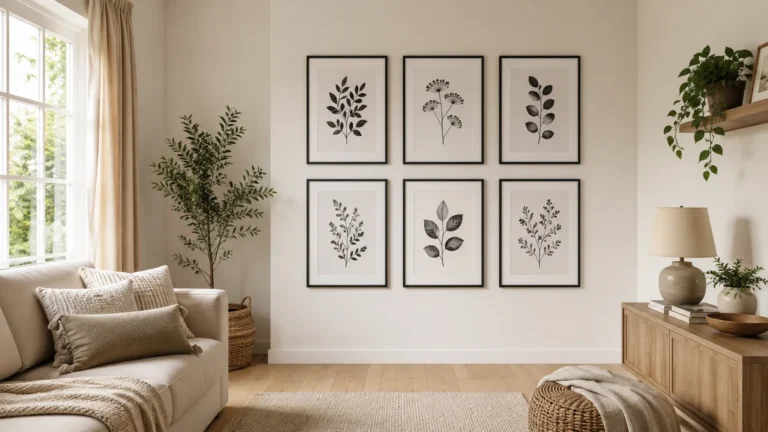
A gallery wall can give a living room personality while making an otherwise empty wall feel purposeful. Start by choosing artwork that shares at least one visual connection, such as a similar color palette, frame finish, or subject matter. Mix larger pieces with smaller prints to create movement, but keep the spacing relatively consistent. Before hanging anything, arrange the frames on the floor to test the composition. This simple step can prevent unnecessary holes and makes it easier to see whether the grouping feels balanced with the sofa and other furniture.
The most successful gallery walls usually feel collected rather than perfectly coordinated. Try combining abstract prints, photography, line drawings, or small decorative pieces while repeating a few neutral tones throughout. Leave enough breathing room around the arrangement so it feels intentional instead of crowded. If the living room is small, a compact vertical grouping can draw the eye upward and make the wall feel taller. For a more relaxed look, natural wood frames can soften the composition, while thin dark frames create sharper contrast. Either approach can make the room feel more personal and visually complete.
7. Soft Window Treatments
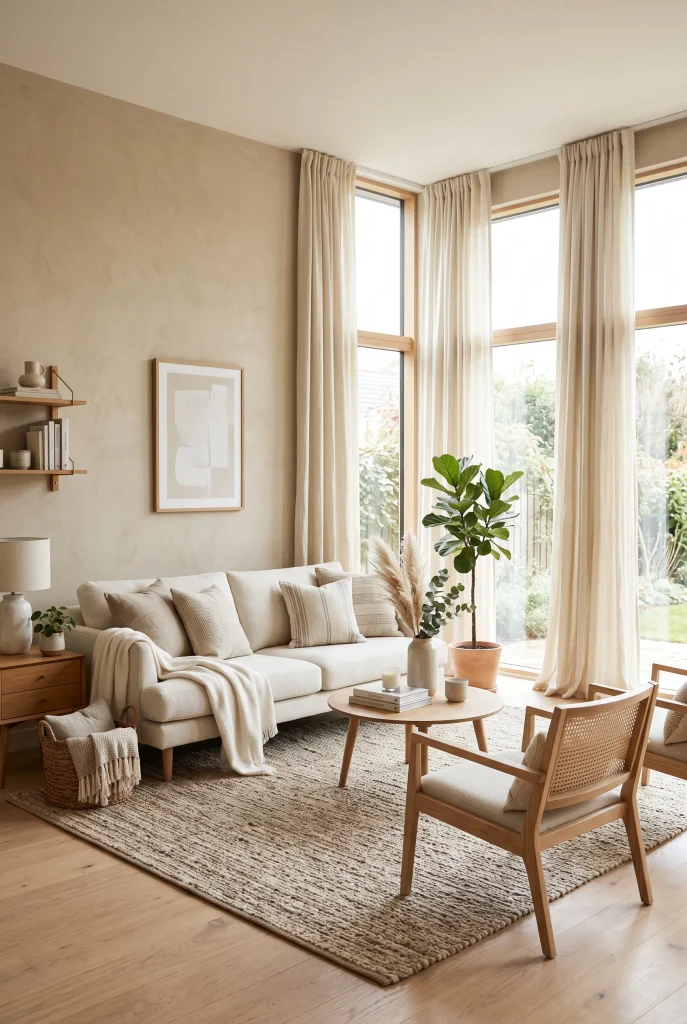
- Softens hard window lines and makes the room feel more finished.
- Full-length curtains can visually make ceilings appear taller.
- Linen and cotton fabrics add gentle texture without visual heaviness.
- Mounting the curtain rod slightly above the window creates a more spacious effect.
Soft window treatments can make a living room feel taller, brighter, and more polished with very little effort. Choose lightweight curtains in ivory, cream, beige, or another shade close to the wall color for an airy appearance. Hang the rod several inches above the window frame and let the fabric fall close to the floor. This creates longer vertical lines and helps the ceiling feel higher. Linen-look fabrics are especially useful because they filter sunlight gently while adding texture. The result is a softer room that feels comfortable during the day and cozy when evening light fades.
Curtains also help balance rooms that contain many hard surfaces, such as wood flooring, glass tables, or metal lighting. Look for fabric with enough weight to hang naturally without appearing stiff. If privacy is important, pair decorative curtains with simple shades or blinds underneath. Keep the color relationship subtle so the window remains connected to the rest of the decor. In smaller living rooms, pale fabrics can reflect more available daylight and prevent the space from feeling enclosed. This practical layer adds softness, privacy, and visual height while keeping the overall design clean and approachable.
8. Oversized Artwork
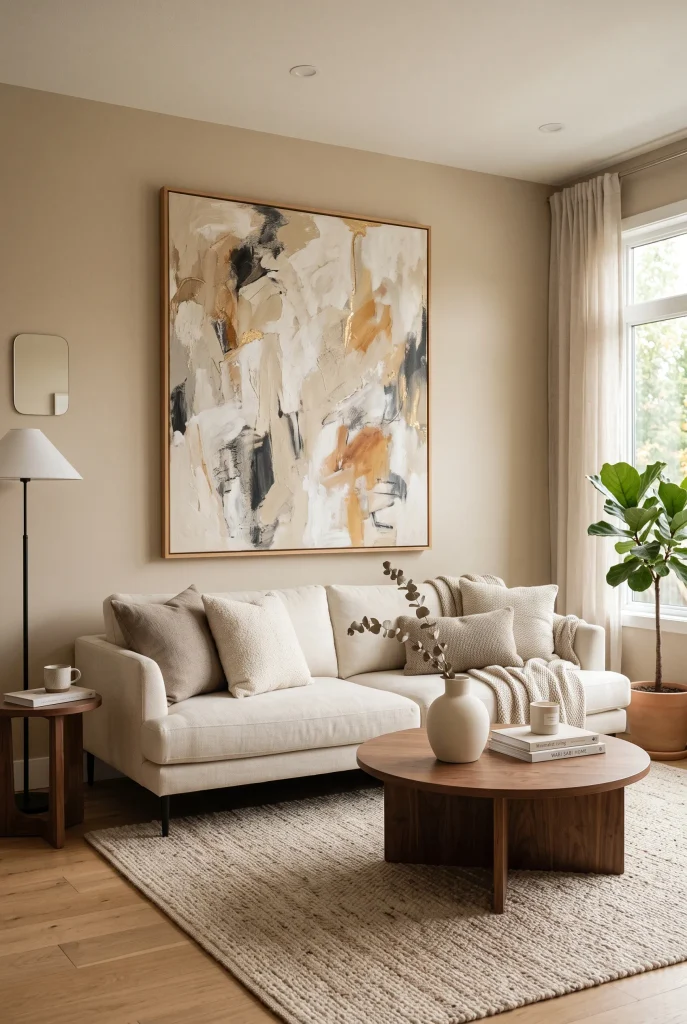
- Creates an immediate focal point without filling the wall with many pieces.
- Large artwork can make modest furniture feel more intentional.
- Abstract designs add movement while keeping the color palette controlled.
- Choose artwork that echoes one or two existing room tones for cohesion.
One oversized artwork piece can give a living room an impressive focal point without requiring lots of decorative accessories. Instead of filling a large wall with several small frames, choose one substantial canvas or framed print that relates to the room’s existing colors. Position it above the sofa or on the most visible wall, keeping the scale proportional to the furniture underneath. Soft abstract artwork works particularly well with neutral interiors because it introduces movement and personality without making the space feel visually crowded.
Scale matters more than many people expect when choosing wall art. A tiny frame above a large sofa can make the entire wall feel unfinished, while an oversized piece can create a confident, balanced appearance. Look for artwork that leaves some breathing room around its edges rather than touching nearby furniture or architectural features. If the room already contains strong patterns, select a quieter composition. If the furniture is simple, a more expressive piece can become the room’s defining feature. This approach makes decorating easier because one thoughtful choice can accomplish the work of several smaller accessories.
9. Curved Furniture
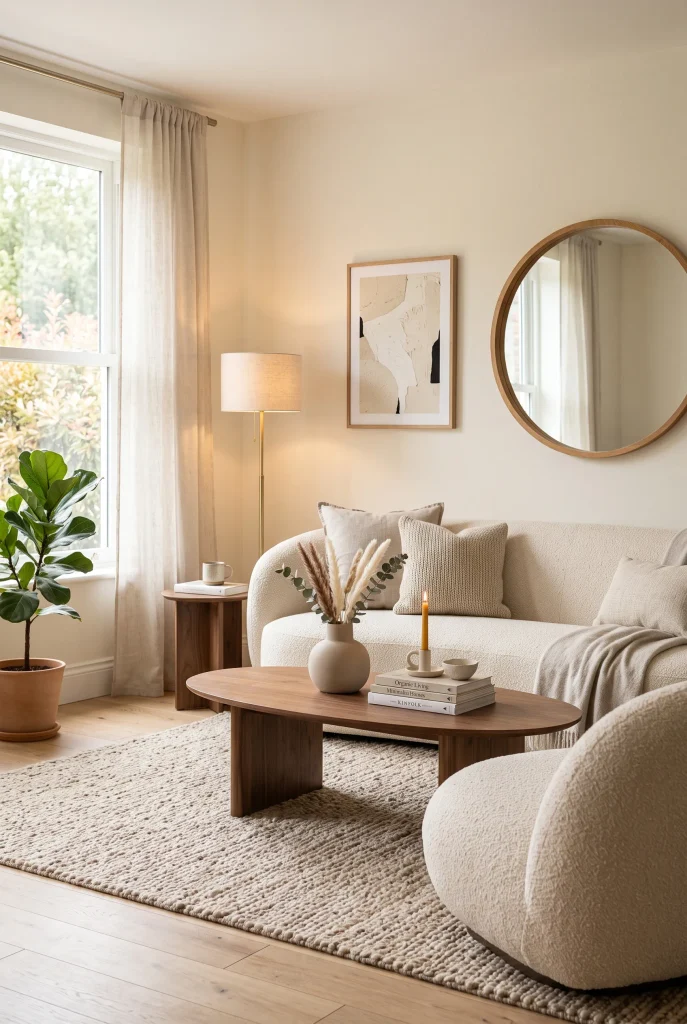
- Softens rooms filled with straight lines and rectangular furniture.
- Rounded silhouettes make seating feel more relaxed and inviting.
- Oval tables can improve circulation around compact seating arrangements.
- Pair curved pieces with simple architectural lines for balanced contrast.
Curved furniture brings a softer rhythm to living rooms filled with straight edges and rectangular shapes. A rounded sofa, boucle chair, oval coffee table, or curved floor lamp can break up the visual repetition while making the seating area feel more inviting. The shapes work especially well when paired with neutral fabrics and natural materials, allowing the silhouette to become the main feature. In smaller rooms, rounded edges can also make movement feel easier because there are fewer sharp corners competing with narrow walking paths and compact furniture arrangements.
You do not need to replace every piece to introduce this softer shape language. One curved accent chair or oval coffee table can be enough to change the room’s overall impression. Balance rounded furniture with straight shelving, rectangular artwork, or clean-lined cabinetry so the design does not become overly uniform. Upholstery in cream, beige, taupe, or muted earthy shades keeps the look sophisticated and easy to coordinate. When used thoughtfully, curved pieces add comfort, movement, and a welcoming quality while still fitting neatly into contemporary and minimalist interiors.
10. Floating Shelves
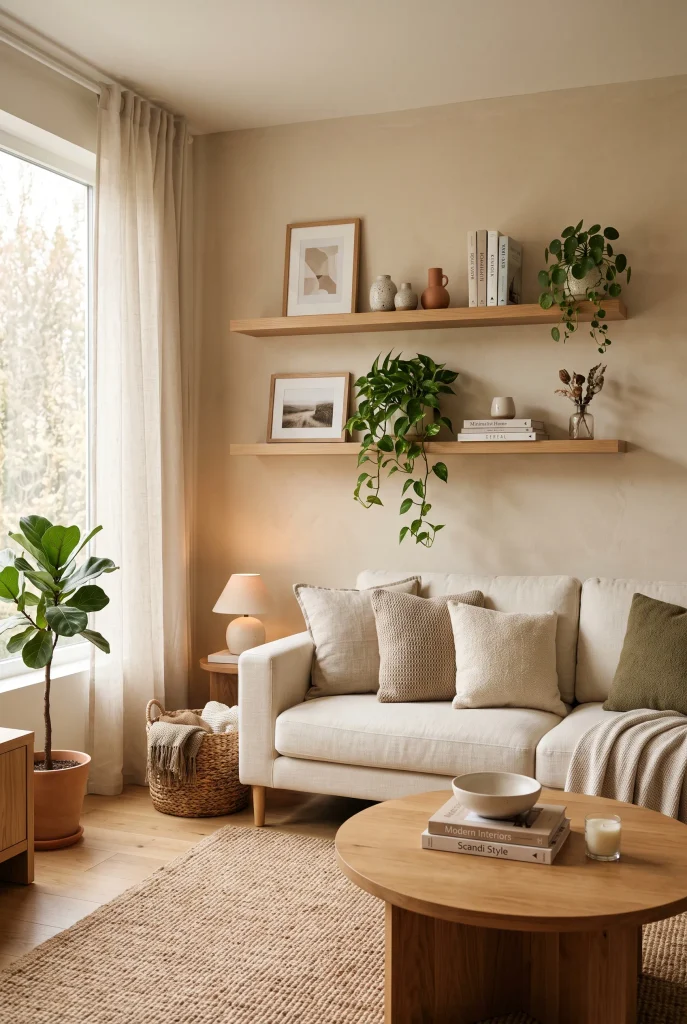
- Uses vertical wall space without making the room feel bulky.
- Provides a simple display area for books, plants, and meaningful objects.
- Wooden shelves add warmth against neutral walls.
- Leaving generous gaps between objects keeps the arrangement visually calm.
Floating shelves are an easy way to turn unused wall space into a useful decorative feature. Install two or three slim shelves above a sofa, console, or empty wall section, then style them with a small mix of books, ceramics, framed prints, and greenery. Keep the number of objects limited so the shelves do not become visually heavy. Natural wood works beautifully against cream, beige, or soft white walls because it adds warmth without demanding attention. This setup is especially helpful when floor space is limited but the room still needs personality and practical display storage.
The secret to attractive shelf styling is creating variation without losing balance. Place taller objects beside shorter pieces, stack a few books horizontally, and leave small areas completely empty. This gives the eye somewhere to rest and makes the arrangement feel less staged. Avoid placing fragile items where children or pets can easily reach them. If you regularly change seasonal decor, floating shelves also provide a convenient place for small updates without rearranging the entire room. A few carefully selected pieces can make the wall feel finished while keeping the rest of the living room uncluttered.
11. Layered Lighting
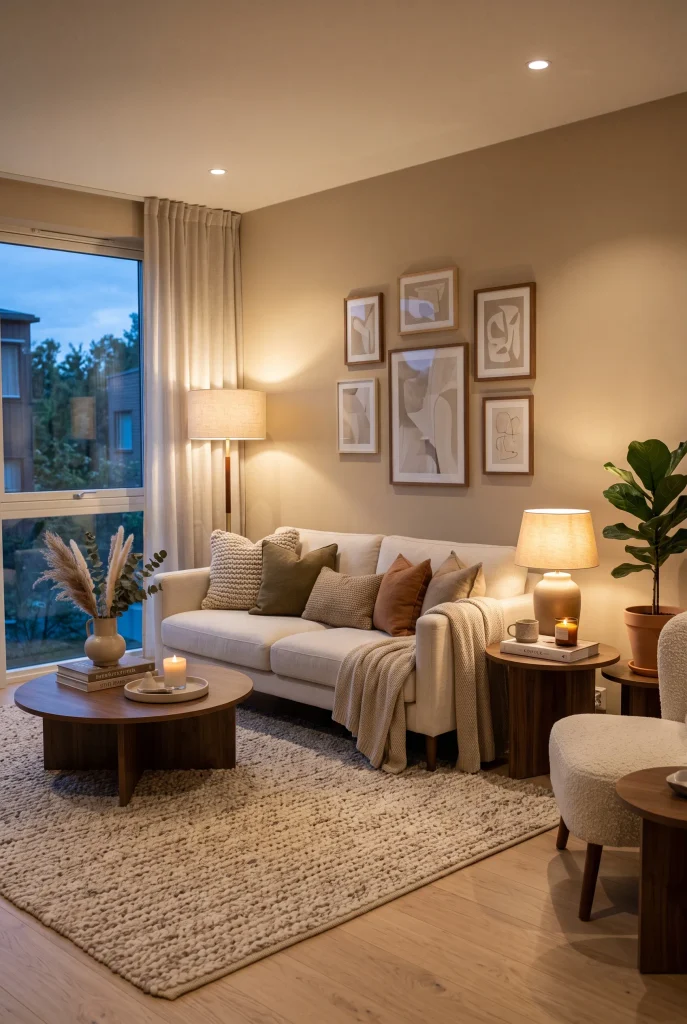
- Creates different levels of illumination for different daily activities.
- Warm lamps make evening relaxation feel softer and more comfortable.
- Floor and table lamps add decorative height around the seating area.
- Multiple gentle sources usually feel more inviting than one bright overhead light.
Layered lighting can completely change the atmosphere of a living room once the sun goes down. Instead of relying only on a central ceiling fixture, combine overhead lighting with a floor lamp, table lamp, or wall light. Place these sources around the seating area so the room has a gentle glow from several directions. Warm-toned bulbs generally create a more relaxed evening atmosphere, while adjustable fixtures give you greater control. This arrangement also makes the room more functional because you can brighten specific areas for reading, conversation, or general use without illuminating every corner equally.
Lighting should also support the room’s visual balance. A tall floor lamp beside the sofa can add height, while a small table lamp can create a cozy glow at a lower level. Keep shades and finishes connected to the existing decor so the fixtures feel intentional rather than added later. Dimmers are particularly useful because living rooms often serve several purposes throughout the day. Bright light can support cleaning or reading, while softer illumination works better for relaxing. Combining these layers creates depth and makes even simple furniture arrangements feel warmer and more thoughtfully designed.
12. Indoor Greenery
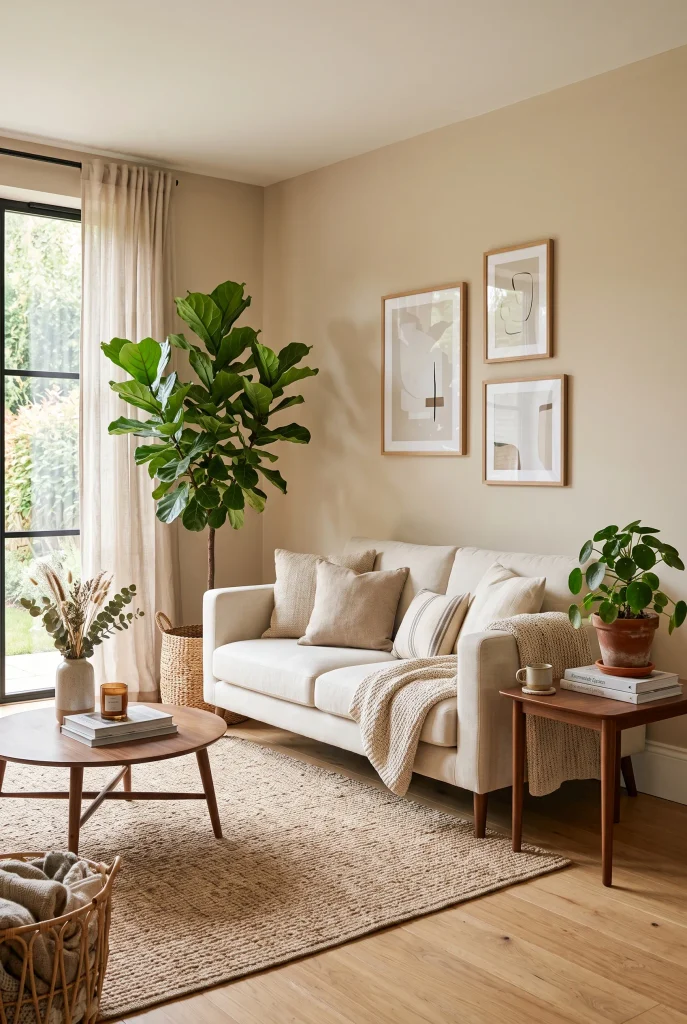
- Brings natural color and organic texture into neutral interiors.
- Tall plants can fill awkward empty corners without adding furniture.
- Woven planters complement wood, linen, and other natural materials.
- Choose plants according to the room’s actual light conditions for easier care.
Indoor greenery can make a living room feel fresher and more connected to nature. A tall plant such as a fiddle leaf fig can fill an empty corner, while a smaller plant can soften a shelf or side table. Choose planters that complement the room’s materials, such as woven baskets, ceramic pots, or simple stone finishes. Green foliage creates a natural contrast against cream and beige furniture without requiring another decorative color. Even one well-positioned plant can add height, movement, and life to an otherwise static corner.
The most practical approach is to choose greenery based on the light your room actually receives. A beautiful plant will struggle if it is placed far from a suitable window, so consider sunlight before deciding where it belongs. Use larger plants to balance visually heavy furniture and smaller varieties to add detail at eye level. Keep leaves healthy and containers appropriately sized so the display remains polished. When combined with wood, woven textures, and soft fabrics, greenery gives the room an organic quality that feels welcoming rather than overly decorated.
13. Neutral Color Palette
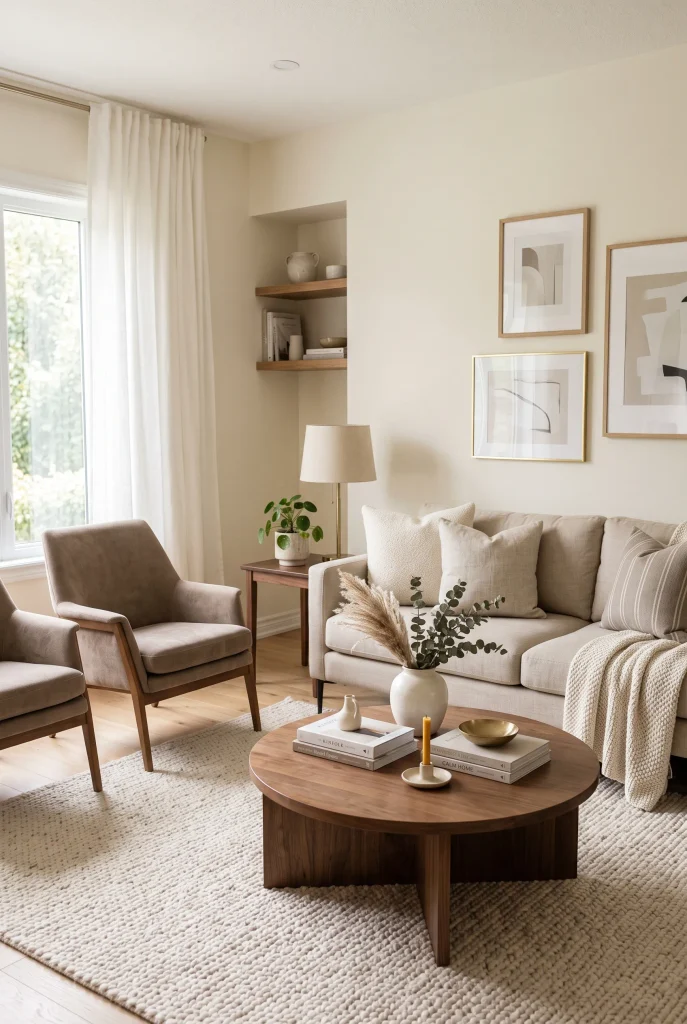
- Creates a calm backdrop that feels timeless and easy to update.
- Combining several neutral shades adds depth without visual clutter.
- Warm undertones prevent beige and cream interiors from feeling flat.
- Use darker wood or metal accents to give the palette definition.
A layered neutral palette can make a living room feel peaceful while still looking thoughtfully designed. Instead of using one shade everywhere, combine ivory, cream, beige, taupe, and warm gray across the walls, furniture, textiles, and accessories. Small changes in tone keep the room visually interesting without introducing strong contrast. Natural materials such as wood, linen, wool, and ceramic add further variation through their textures. This approach works particularly well when you want a flexible foundation that can adapt to seasonal accessories, changing artwork, or different accent colors over time.
Neutral does not have to mean boring or empty. The key is creating contrast through tone, texture, shape, and material rather than relying heavily on bright colors. A darker coffee table can ground pale upholstery, while woven baskets or textured cushions add subtle dimension. Pay attention to undertones when combining beige and gray because noticeably different undertones can make the palette feel disconnected. When the shades relate naturally, the result feels warm and cohesive. This kind of foundation makes living room decor ideas easier to change because new accessories can be introduced without fighting the existing color scheme.
14. Built-In Storage
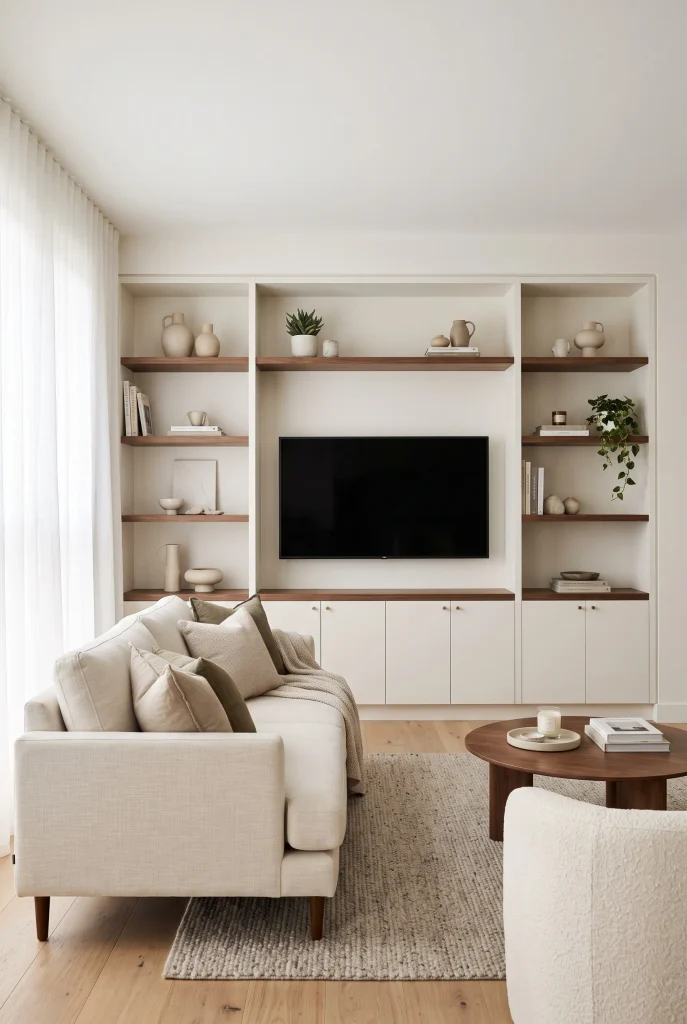
- Combines everyday storage with a strong architectural focal point.
- Closed cabinets hide clutter while open shelves display favorite pieces.
- Built-ins can make an awkward wall feel intentional and useful.
- Use matching baskets and boxes to keep smaller items organized.
Built-in storage can make a living room feel significantly more organized without sacrificing style. A wall of cabinetry around a television, fireplace, or reading area creates a strong architectural feature while providing space for books, electronics, games, and everyday essentials. Use closed cabinets for items you do not want visible and open shelving for books, artwork, ceramics, or plants. Keeping the cabinetry close to the wall color can make the installation feel integrated rather than bulky. This is especially useful in homes where limited storage causes surfaces to become crowded with everyday belongings.
Good built-in design should make daily routines easier, not simply create a beautiful backdrop. Before planning the shelves, think about what you actually need to store and how often you access it. Include cable management for electronics and adjustable shelving where possible. Baskets can contain smaller items while maintaining a consistent appearance. If custom cabinetry is outside your budget, freestanding modular units can create a similar visual effect when arranged carefully. The goal is a room where useful belongings have designated homes, leaving visible surfaces clearer and making the entire space feel calmer.
15. Cozy Reading Nook
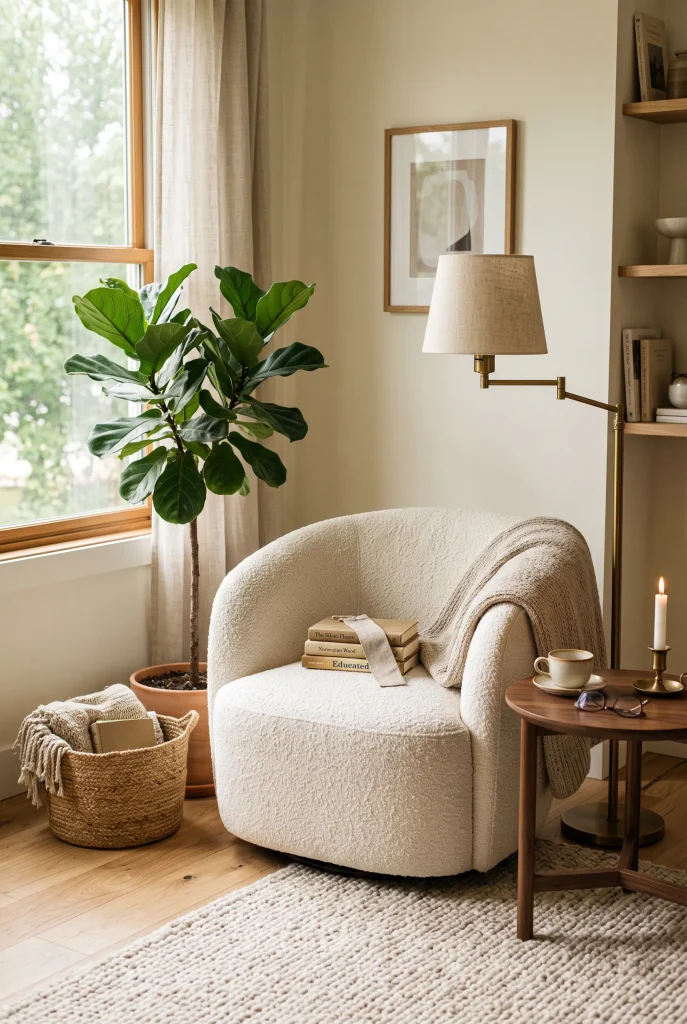
- Turns an unused corner into a purposeful retreat.
- A comfortable chair and nearby table provide everything needed for reading.
- Floor lamps add focused light without taking up much surface space.
- A soft throw or small rug makes the corner feel warmer and more inviting.
A cozy reading nook can give an unused living room corner a clear purpose while adding another comfortable place to relax. Start with a supportive accent chair and position it near a window if natural light is available. Add a small side table for a book, drink, or reading glasses, then place a floor lamp nearby for evening use. A soft throw and compact rug can introduce warmth without requiring much space. This arrangement works especially well in larger rooms where an empty corner might otherwise feel disconnected from the main seating area.
The best reading nook feels useful rather than simply decorative. Choose a chair that you can comfortably sit in for an extended period, and leave enough clearance around it to move easily. If the room already has several neutral pieces, a subtly contrasting chair fabric can help define the corner. Add one plant or a small basket if the area needs extra texture, but avoid filling every surface. A simple combination of comfortable seating, practical lighting, and a nearby place for essentials can turn an overlooked corner into one of the most enjoyable spots in the room.
16. Accent Chairs
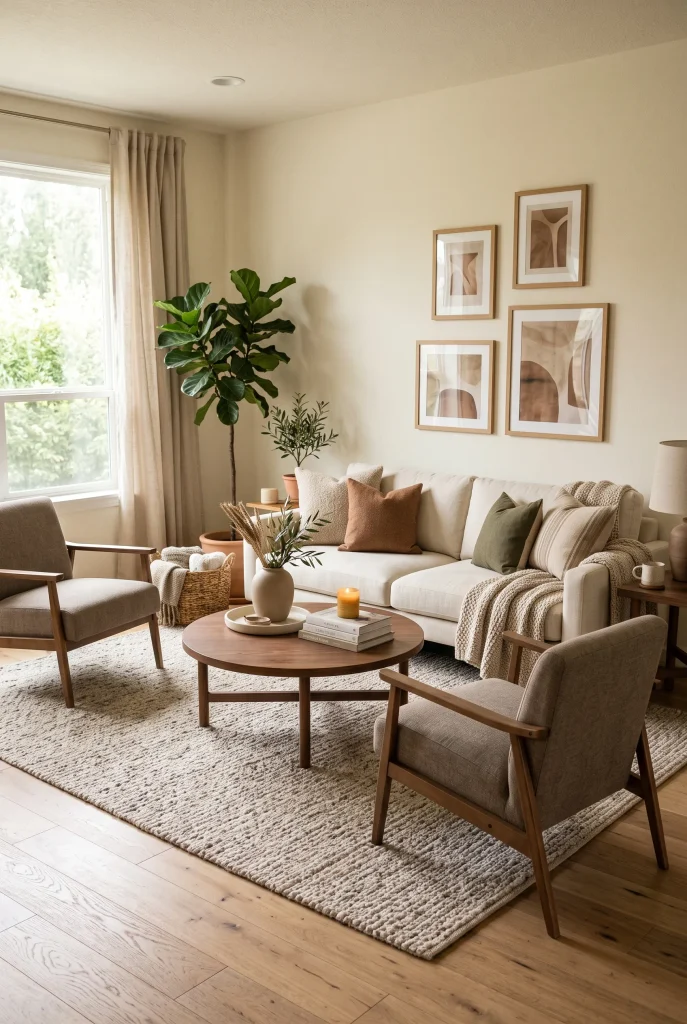
- Adds extra seating without making the main sofa feel oversized.
- Creates visual balance when chairs contrast gently with the sofa.
- Slim frames work well when floor space is limited.
- Position chairs toward the sofa to encourage comfortable conversation.
Accent chairs can instantly make a living room feel more complete by adding seating and visual balance around the main sofa. Choose chairs that complement the sofa without looking like an exact matching set. A subtle difference in shape, fabric, or tone creates more personality while keeping the arrangement cohesive. Place them where they can participate in conversation rather than simply facing the television. In smaller rooms, chairs with open frames or raised legs can maintain a sense of spaciousness and allow more of the flooring to remain visible.
Think about proportion before choosing an accent chair. A very large chair can overwhelm a compact room, while an undersized piece may look disconnected beside a substantial sofa. Measure the available area and leave comfortable clearance around each chair for walking. Upholstery in taupe, oatmeal, muted green, or warm gray can add gentle contrast to a cream sofa. If the room already contains several patterns, keep the chair relatively simple. The right pair can make the seating arrangement feel more balanced, flexible, and welcoming without requiring a complete furniture makeover.
17. Textured Wall Paneling
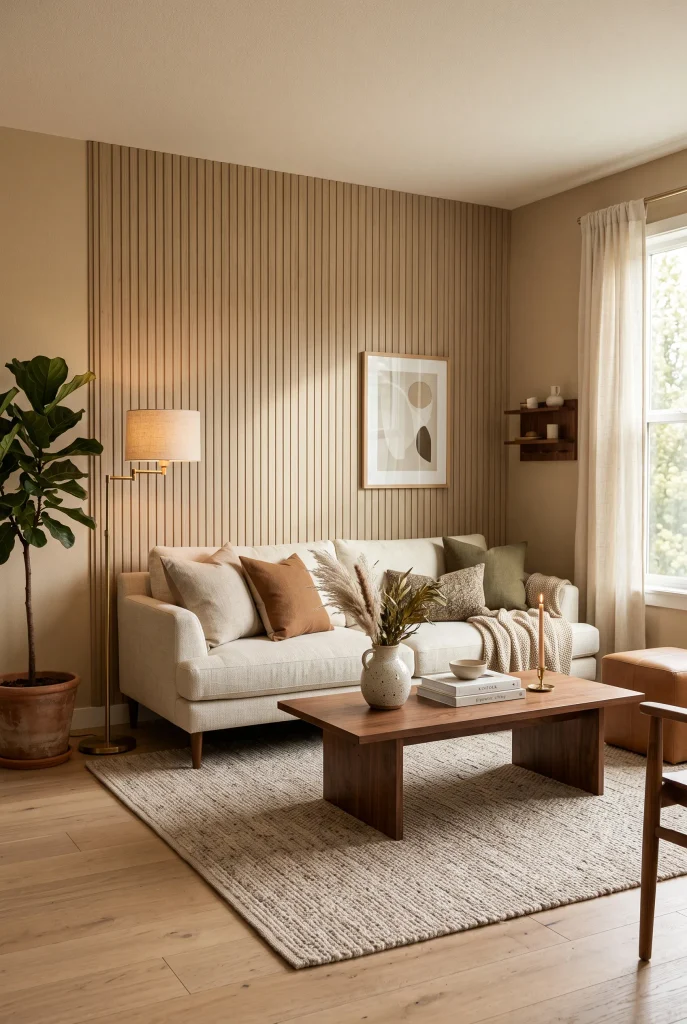
- Adds architectural character to an otherwise plain wall.
- Vertical panels can emphasize ceiling height and create visual rhythm.
- Natural wood tones bring warmth without needing bold decoration.
- Use paneling selectively so the room retains a clean, open appearance.
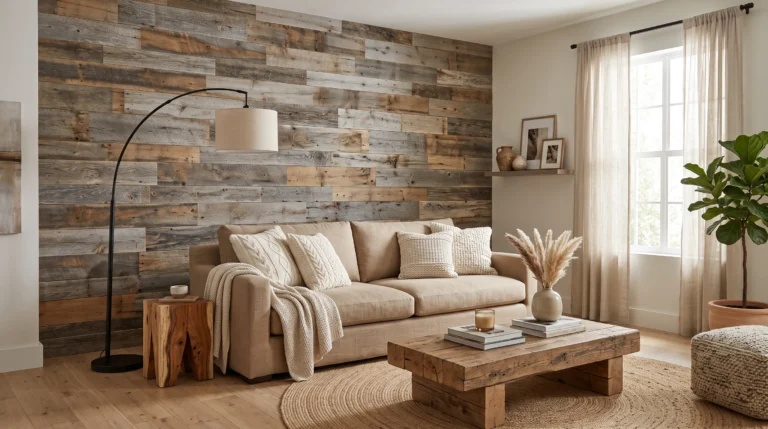
Textured wall paneling can give a plain living room wall architectural interest without filling it with decorations. Vertical slats or subtle wood panels are particularly effective behind a sofa or media unit because they create rhythm and emphasize the height of the room. Choose natural oak, walnut, painted timber, or a similar finish that works with the existing furniture. The texture becomes the feature, so you can keep artwork and accessories relatively simple. This makes the room feel more considered while preserving the calm, uncluttered quality many homeowners want.
Before installing paneling, consider the wall’s purpose and the room’s proportions. Covering one feature wall is often enough to create impact without making the space feel enclosed. Vertical designs can visually stretch a lower ceiling, while horizontal details may emphasize width. If real wood is expensive, decorative molding or quality veneer panels can provide a similar effect at a different price point. Keep the surrounding palette restrained so the texture remains noticeable. A carefully chosen feature wall can add depth and character while giving simple furniture a more sophisticated backdrop.
18. Layered Throw Pillows
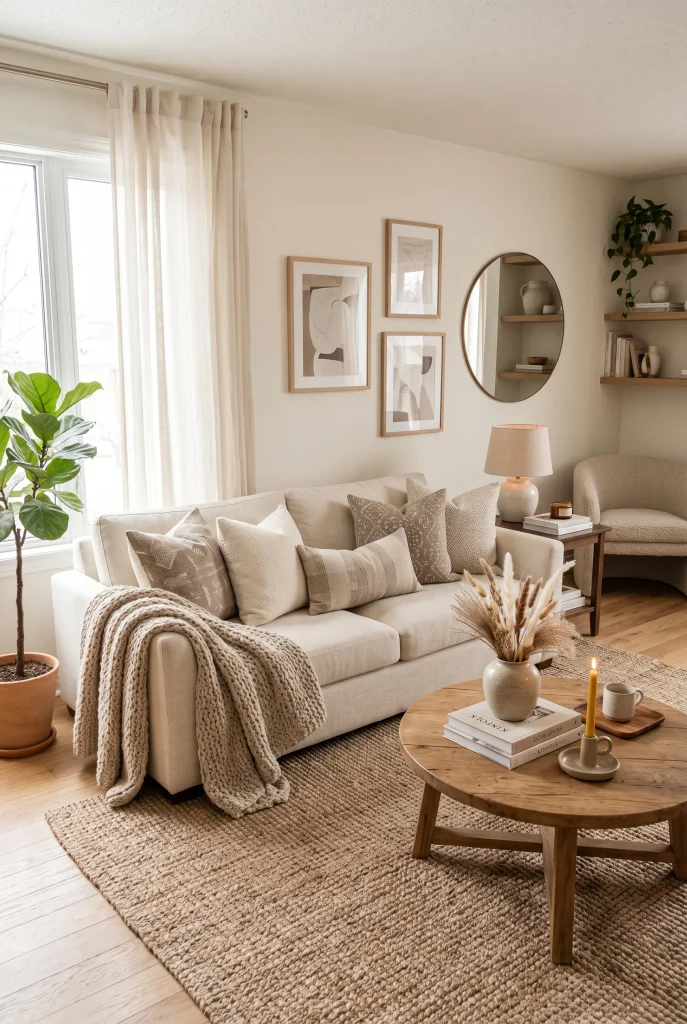
- Makes the sofa feel softer and more inviting.
- Mixing pillow sizes creates a fuller, professionally styled appearance.
- Repeating neutral tones keeps different fabrics visually connected.
- Use washable covers when the sofa is part of a busy everyday room.
Layered throw pillows are one of the easiest ways to refresh a living room without changing the main furniture. Begin with larger square pillows at the back, then add medium cushions and one or two smaller lumbar styles toward the front. Mix linen, cotton, boucle, or woven covers to create tactile variety while keeping the color palette connected. Shades such as cream, oatmeal, taupe, and soft brown work beautifully together. This simple arrangement adds comfort and visual depth, making the sofa feel more inviting without requiring expensive decorative changes.
Avoid making every pillow identical because slight differences create a more relaxed and natural appearance. Choose one subtle pattern if the rest of the room is plain, then balance it with solid-colored cushions. Odd-number groupings can create an easy asymmetrical look, while matching pairs feel more formal. Keep enough seating space available for everyday use, especially if the sofa is frequently shared. Rotate or wash covers regularly to keep the arrangement fresh. With thoughtful layering, a basic sofa can become a softer, more polished focal point that still feels comfortable for daily living.
19. Statement Mirror
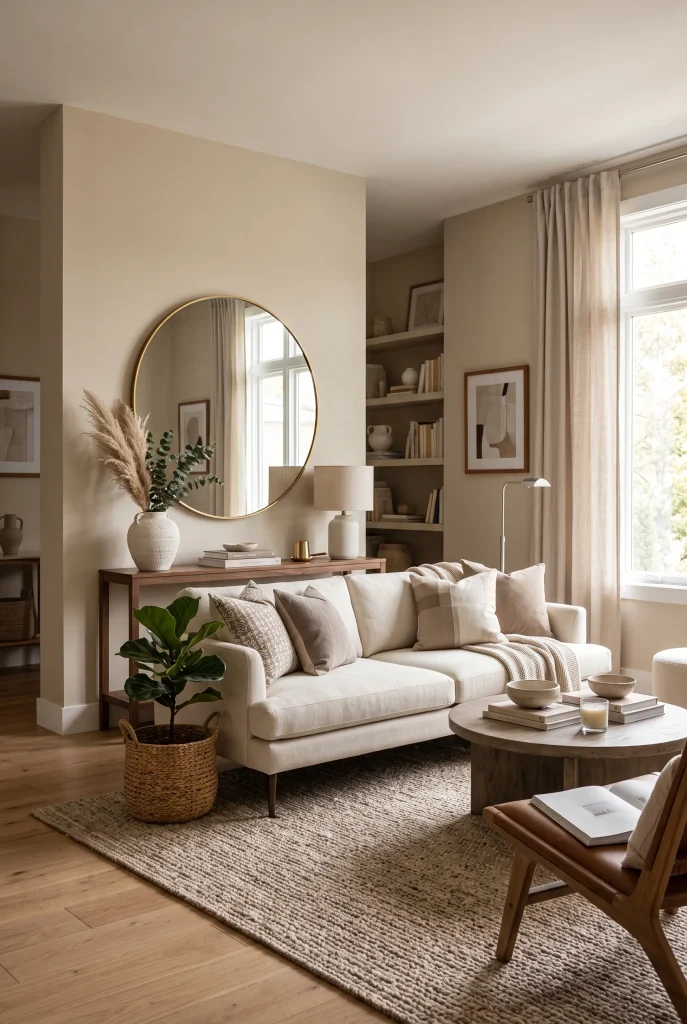
- Reflects natural light and helps the room feel brighter.
- A large mirror can visually expand a smaller living area.
- Round shapes soften rooms dominated by straight furniture lines.
- Position it where it can reflect an attractive view or useful light source.
A statement mirror can make a living room feel brighter, larger, and more finished in just one addition. Choose a generously sized design and place it above a console, fireplace, or prominent wall where it can reflect natural light or an attractive part of the room. Round mirrors work beautifully against rooms filled with straight lines because their softer shape adds contrast. A slim brass, black, wood, or antique-style frame can also introduce a subtle decorative detail without requiring additional artwork. The result is practical, stylish, and especially useful when the room feels visually closed in.
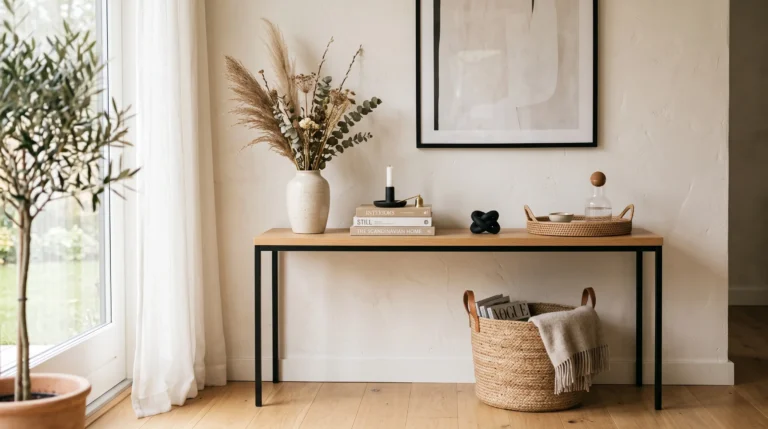
Placement makes a major difference in how effective the mirror becomes. Avoid positioning it where it reflects clutter, an unattractive wall, or a television unless that reflection is intentional. In a smaller living room, placing a mirror opposite a window can help distribute daylight and create a stronger sense of openness. For larger spaces, a substantial mirror can fill an otherwise empty wall without overwhelming the furniture. Keep nearby accessories restrained so the mirror remains the focal point. This simple addition can provide depth and brightness while making the room feel more thoughtfully arranged.
20. Layered Area Rugs
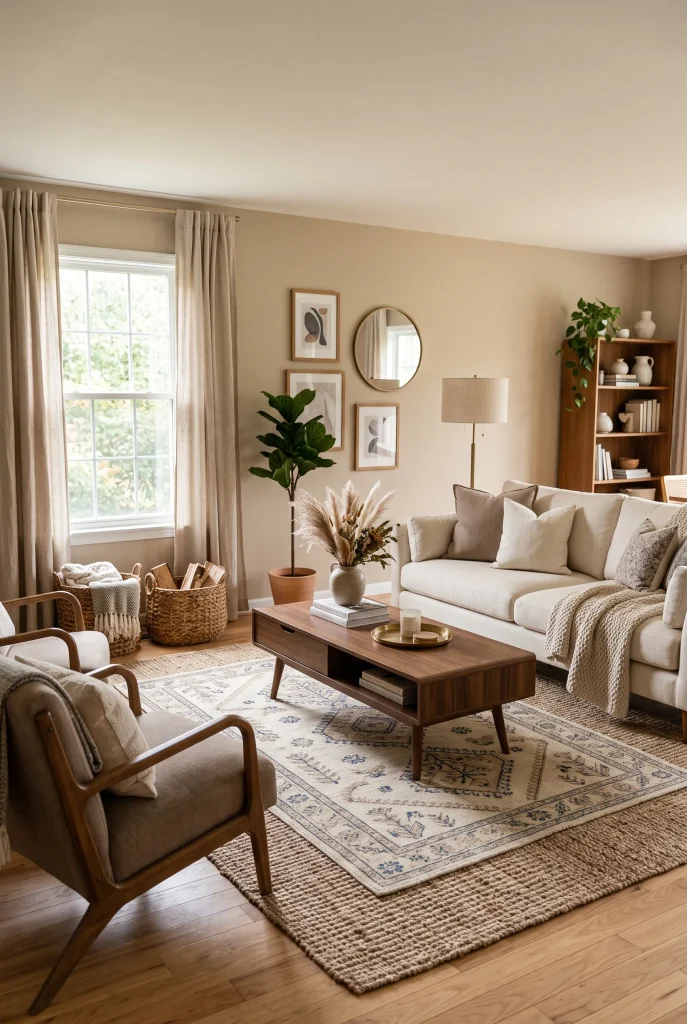
- Adds depth and softness without changing the main furniture.
- Helps define a seating zone inside a large or open-plan room.
- Mixing natural and patterned materials creates subtle visual contrast.
- Keep the smaller rug centered so the layering feels intentional.
Layering rugs can give a living room extra depth while helping define the seating area. Start with a larger neutral base rug, such as jute or another natural fiber, then place a smaller patterned or textured rug over it. The lower layer should extend beyond the furniture enough to establish a clear foundation, while the upper rug adds visual interest around the coffee table. This technique works especially well in open-plan homes where the living area needs a stronger boundary without adding walls or bulky furniture.
The key is keeping the two rugs different enough to be visible but similar enough to feel connected. A natural woven base paired with a subtle vintage or geometric pattern creates an easy combination. Avoid competing colors and overly complicated designs, particularly when the sofa and cushions already have strong patterns. Make sure both rugs sit flat and do not create tripping hazards around doorways or busy walkways. When positioned carefully, layered rugs can make a large room feel cozier and give a simple furniture arrangement a richer, more collected appearance.
21. Natural Stone Decor
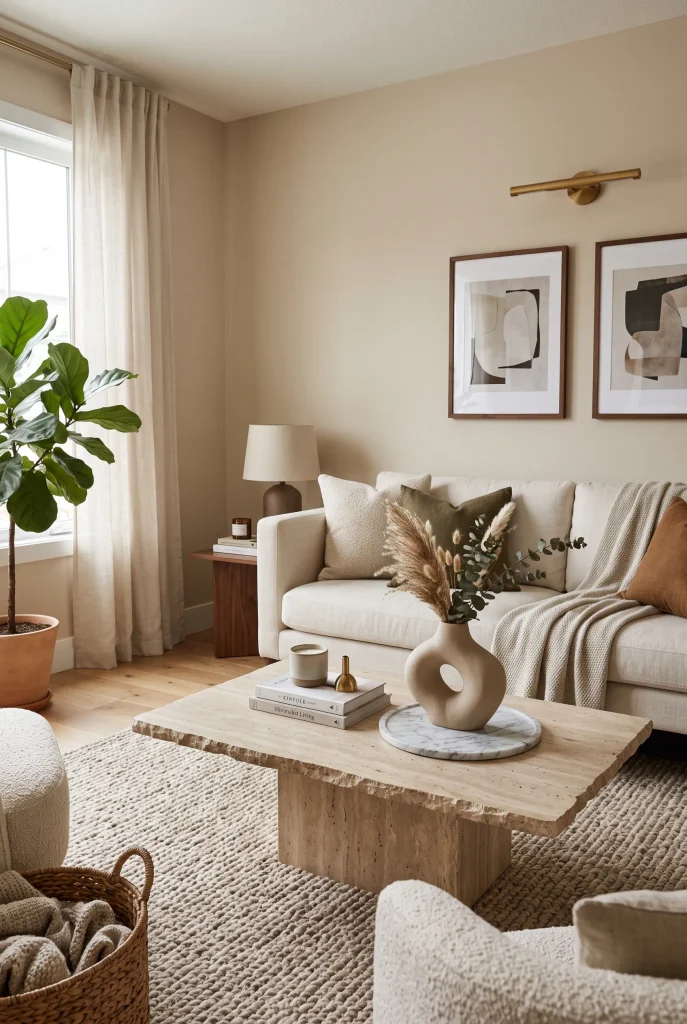
- Introduces natural variation through unique stone textures and patterns.
- Adds a refined finish without relying on metallic or colorful accessories.
- Small stone objects can elevate an otherwise simple coffee table.
- Combine stone with warm wood and soft textiles to prevent the room feeling cold.
Natural stone details can add a quiet sense of luxury to a living room without making the space feel overly formal. A travertine coffee table, marble tray, limestone vase, or small stone sculpture can introduce organic texture and subtle variation. Because each natural stone surface has its own markings, even a simple accessory can feel distinctive. Pair these pieces with warm wood, linen, wool, and woven materials to balance the harder surface. The combination creates a sophisticated room that still feels comfortable and approachable rather than overly polished.
You do not need large stone furniture to achieve this effect. A small bowl on the coffee table, a sculptural vase on a console, or a stone lamp base can introduce the material gradually. Choose finishes with warm or softly varied tones when the room already uses beige, cream, or natural wood. Avoid filling every surface with stone because too much can make the space feel visually heavy. Used selectively, these details provide contrast, texture, and a timeless quality that can work beautifully across contemporary, organic, minimalist, and transitional living rooms.
Conclusion
Creating a beautiful living room doesn’t always require a complete makeover or expensive furniture. Sometimes, a thoughtful color choice, cozy texture, or simple layout change can make the biggest difference. These 21 living room decor ideas offer plenty of inspiration for making your space feel more comfortable, stylish, and personal. Save this article on Pinterest so you can revisit your favorite ideas whenever you’re ready for a refresh. Try one small change today, and share this guide with someone who loves home decorating. Your dream living room may be closer than you think!