21 Living Room Lighting Ideas You’ll Want to Copy Now
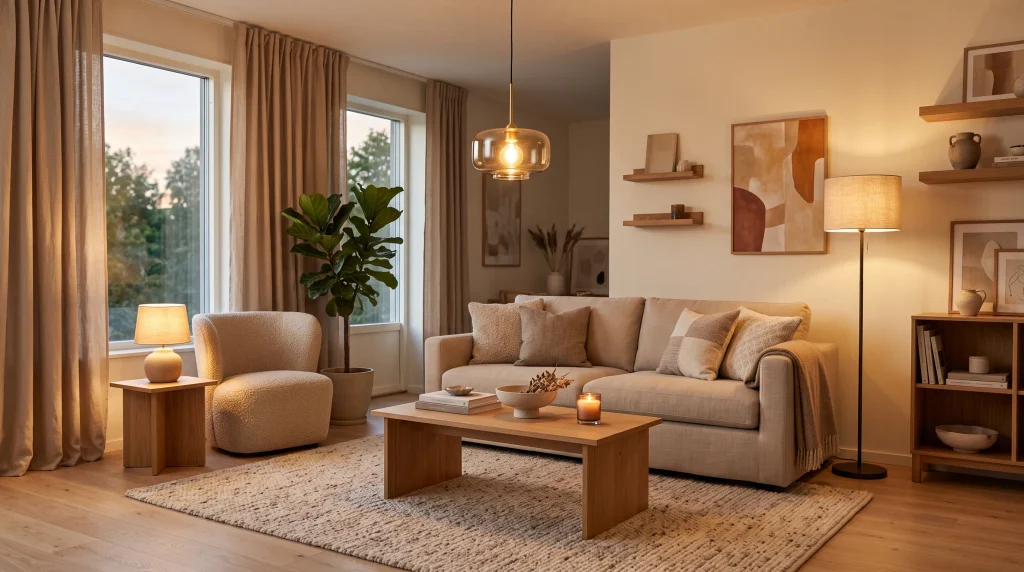
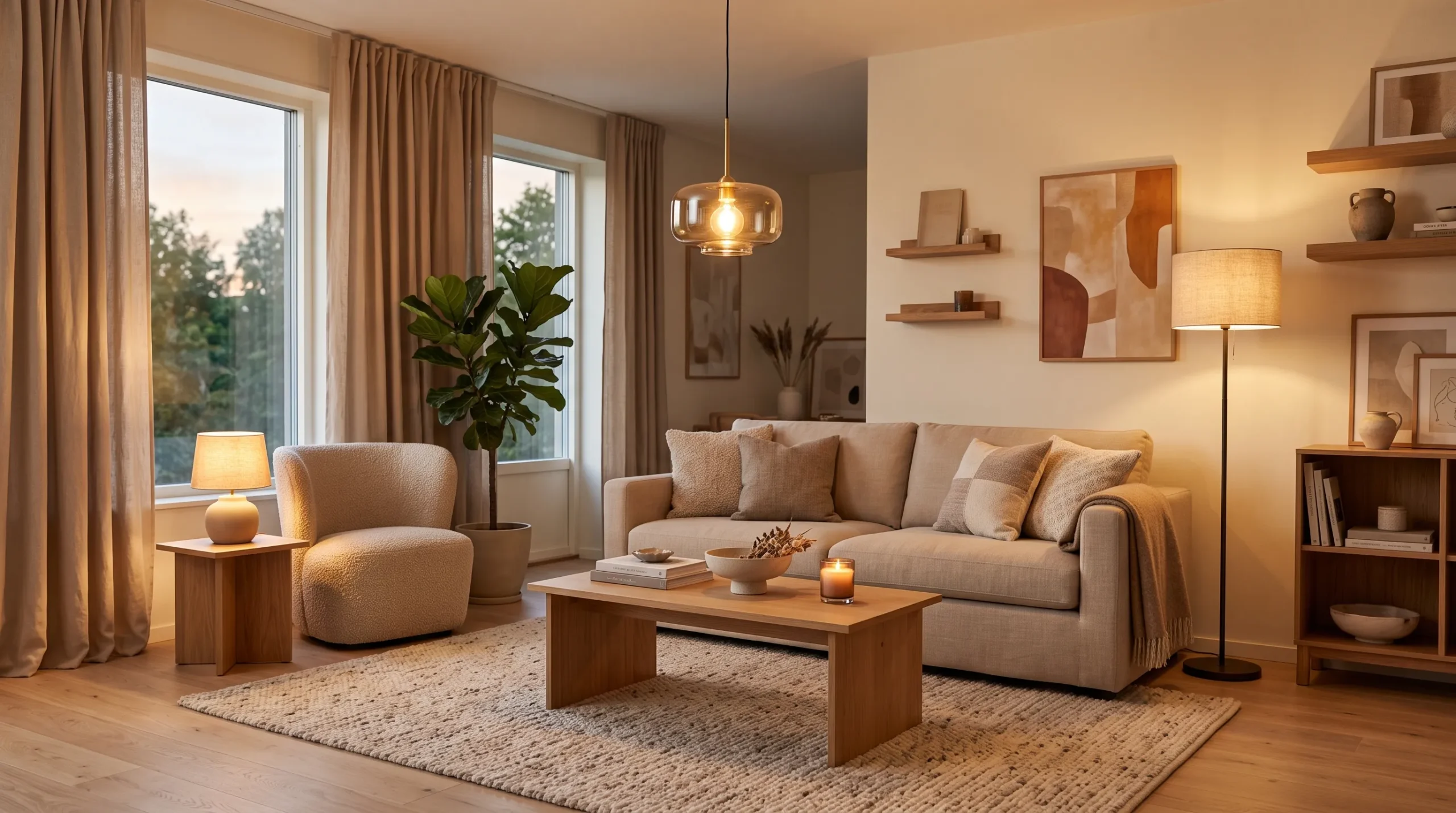
The right lighting can make an ordinary living room feel completely different. A soft glow can make it cozy, while layered fixtures can add depth, style, and function.
These living room lighting ideas will help you create a space that feels brighter, warmer, and more thoughtfully designed without completely changing your furniture or layout. From statement pendants and oversized floor lamps to subtle shelf lighting and cozy corner accents, there are options for every style and room size. If your space feels too dark, flat, or dependent on one ceiling light, these ideas can give you simple ways to improve it. Even small lighting changes can make furniture, textures, and decorative details feel much more inviting.
1. Soft Layered Lighting
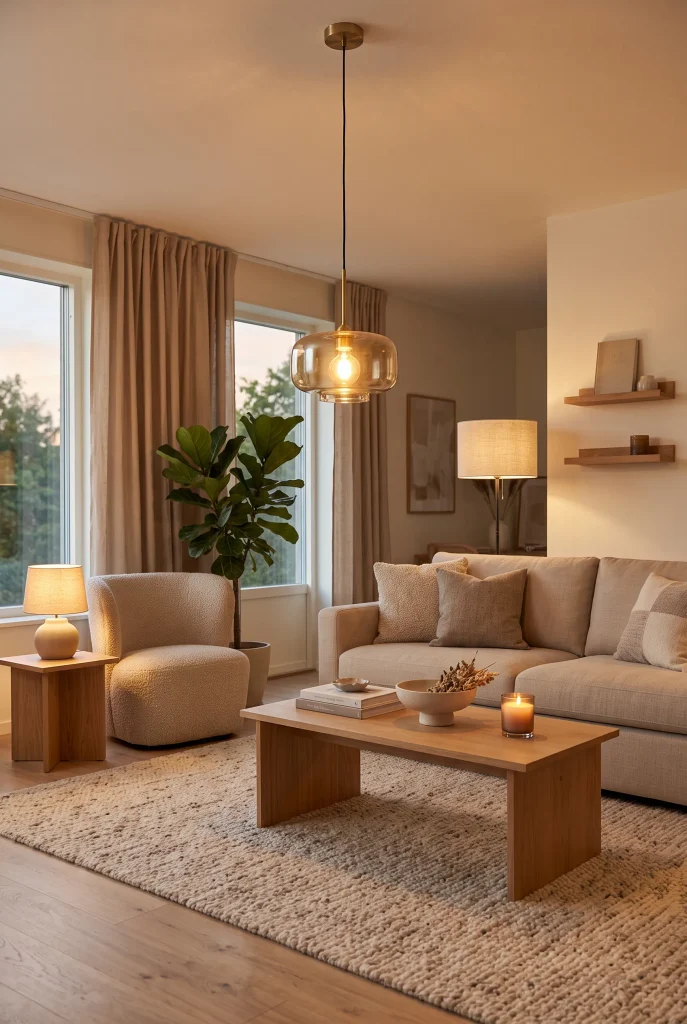
- Creates a warm, balanced glow instead of relying on one harsh light source.
- Helps different corners of the room feel connected and inviting.
- Works especially well in open-plan or larger living spaces.
- Makes a room feel much more finished.
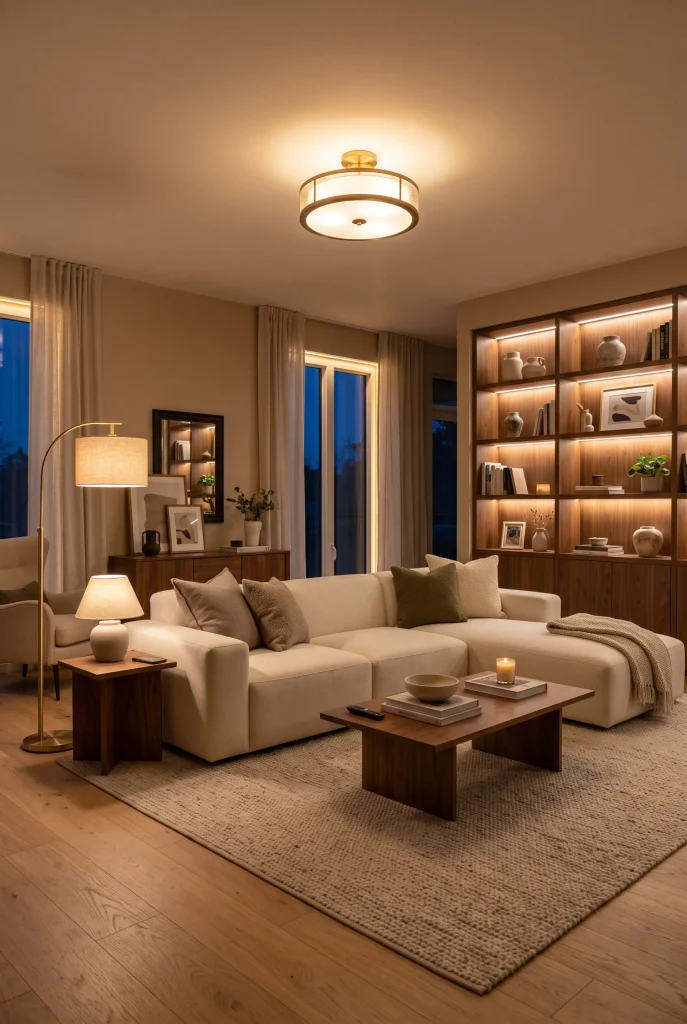
Layered lighting can instantly make a living room feel warmer and more thoughtfully designed. Instead of depending on one ceiling fixture, combine several light sources at different heights to create depth and flexibility. A floor lamp beside the sofa, a table lamp on a console, and soft overhead lighting can work together beautifully. This approach lets you brighten the entire room when needed or create a relaxed glow for evenings. The biggest difference often comes from spreading light around the room rather than placing every source in one area.
The beauty of this setup is how easily it adapts to everyday routines. Use brighter overhead illumination while cleaning or reading, then switch to lamps when you want a softer atmosphere for conversation or relaxing. Choose warm white bulbs and position fixtures so they illuminate useful areas without shining directly into your eyes. Keep finishes coordinated through simple materials such as brass, black metal, ceramic, or natural wood. These small choices can make your living room feel comfortable, polished, and visually balanced without requiring major furniture changes.
2. Oversized Floor Lamp
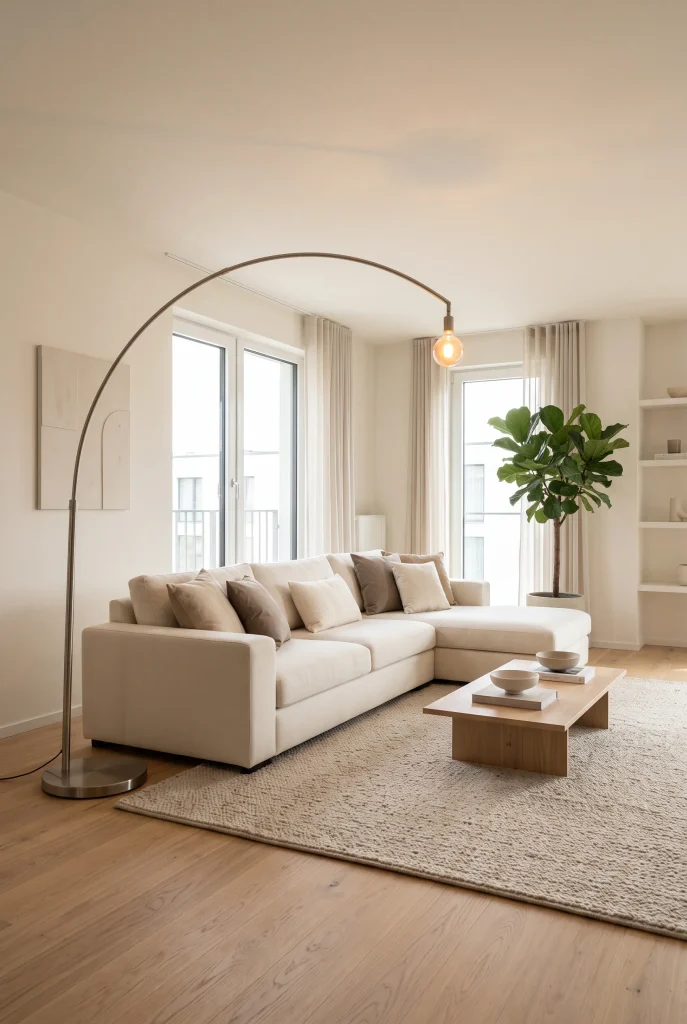
- Adds a strong vertical element beside low-profile furniture.
- Perfect for illuminating a sofa reading or conversation area.
- Makes an empty corner feel intentional and useful.
- Choose an adjustable shade for better control over the light.
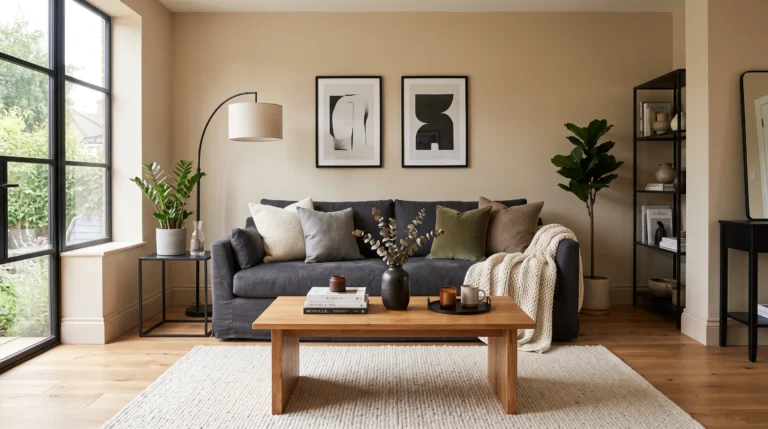
An oversized floor lamp can turn an overlooked corner into one of the room’s most useful features. Look for a tall fixture with a wide shade or graceful arched arm, then place it beside a sofa or lounge chair where extra illumination is needed. The height draws the eye upward while the light creates a comfortable pool around the seating area. This works particularly well in rooms with neutral furniture because the lamp can introduce shape and visual interest without overwhelming the existing decor. A simple black, brass, or natural wood finish can complement many interior styles.
Placement matters more than choosing the largest fixture available. Leave enough clearance around the lamp so walking paths remain comfortable, especially near sectional sofas or coffee tables. If the shade is adjustable, angle it toward the seating area instead of directly across the room. For a softer effect, use a warm bulb and pair the lamp with textured upholstery, a woven rug, and natural wood accents. This approach works especially well in rooms where a bare corner feels empty but there isn’t enough space for another piece of furniture.
3. Warm Table Lamps
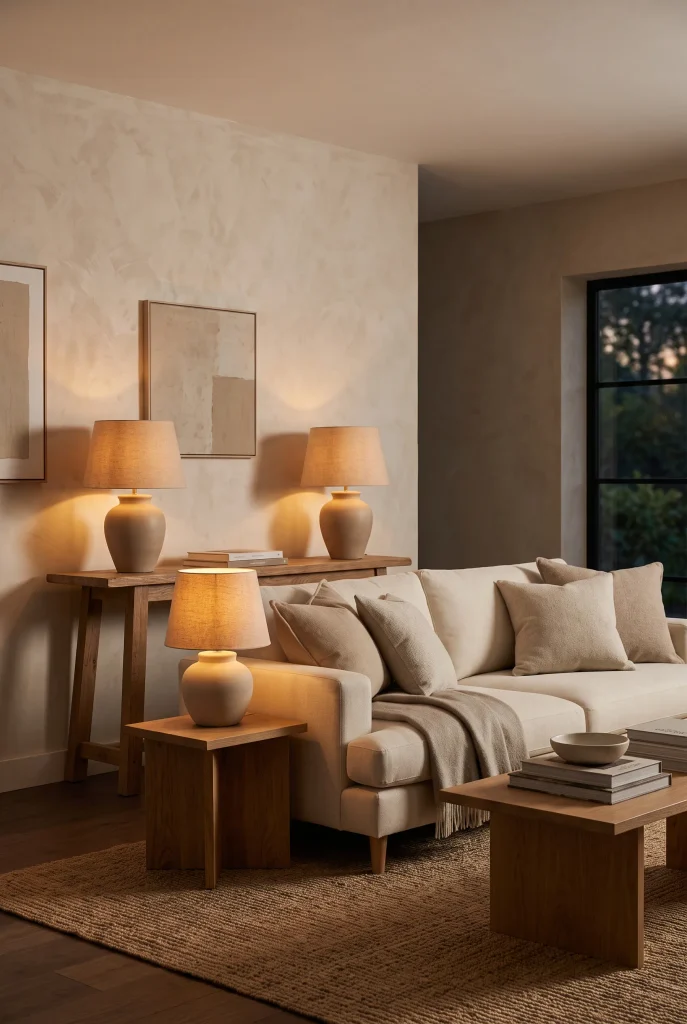
- Adds intimate light at seated eye level.
- Softens hard edges and empty surfaces after sunset.
- Works beautifully with consoles, side tables, and built-in shelving.
- Matching lamps create a subtle sense of visual balance.
Warm table lamps bring a softer, more intimate feeling to living spaces, especially after natural daylight fades. Place one on a side table beside the sofa and another on a nearby console or cabinet to distribute gentle illumination around the room. Fabric or frosted shades help diffuse the bulb, creating a comfortable glow rather than sharp brightness. This simple arrangement can make everyday evenings feel calmer while adding decorative character. When choosing lamps, consider the furniture scale so the base and shade feel proportional instead of looking too small or visually crowded.
For a polished look, repeat a similar finish without making every lamp identical. Brass, ceramic, matte black, and wood bases can all work beautifully with warm neutral interiors. Keep the bulbs in a warm white range and avoid placing lamps where their glare is visible from the main seating position. A lamp positioned slightly behind or beside a sofa often creates a much nicer atmosphere than one placed directly in front of the seating area. Add a small decorative object nearby, but leave enough surface space to keep the arrangement relaxed.
4. Statement Pendant
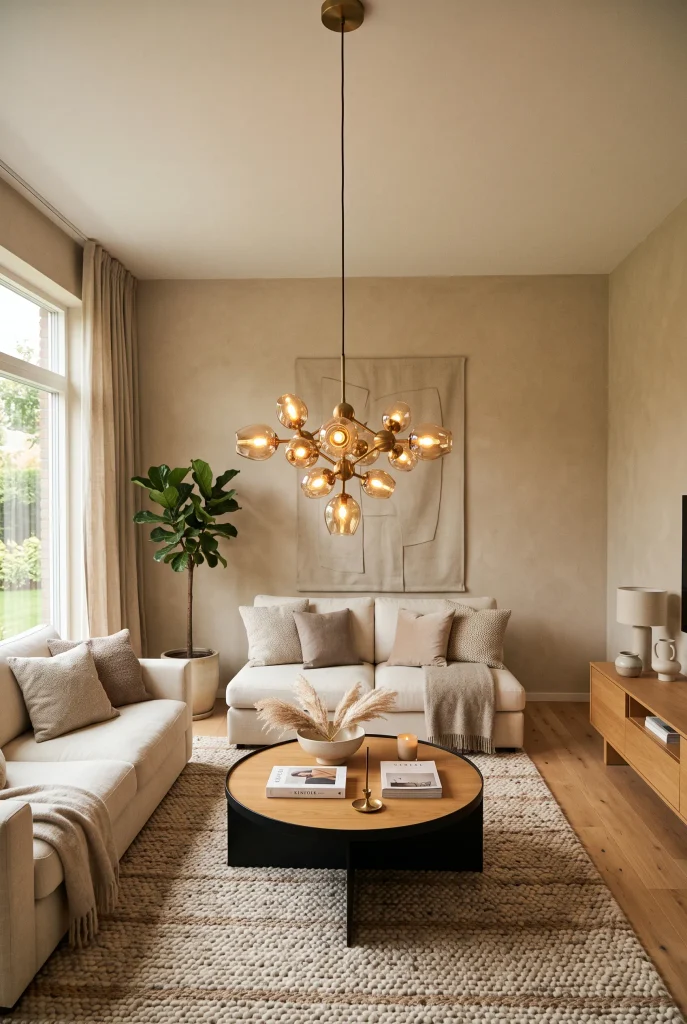
- Creates a strong focal point without adding extra furniture.
- Helps define the center of a large living room.
- A sculptural shade can double as functional artwork.
- Keep surrounding decor simple so the fixture remains the star.
A statement pendant can give your living room an instant focal point while providing useful overhead illumination. Choose a sculptural design with an interesting silhouette, then center it carefully within the main seating arrangement. Oversized woven shades, globe clusters, ribbed glass, and simple metal fixtures can all create different moods without making the room feel cluttered. The key is proportion. A larger room can handle a substantial fixture, while a smaller space usually benefits from a lighter design with an open shape that keeps the visual weight under control.
Think about the pendant as part of the room’s overall composition rather than an isolated decoration. Hang it high enough to maintain comfortable sightlines, particularly when it sits above a central coffee table or open seating area. Warm bulbs will create a softer evening atmosphere, while dimmable options provide greater flexibility throughout the day. Statement fixtures look especially effective when the rest of the room uses quiet textures and neutral colors. This allows the shape of the pendant to stand out naturally while still keeping the space calm and welcoming.
5. Wall Sconce Glow
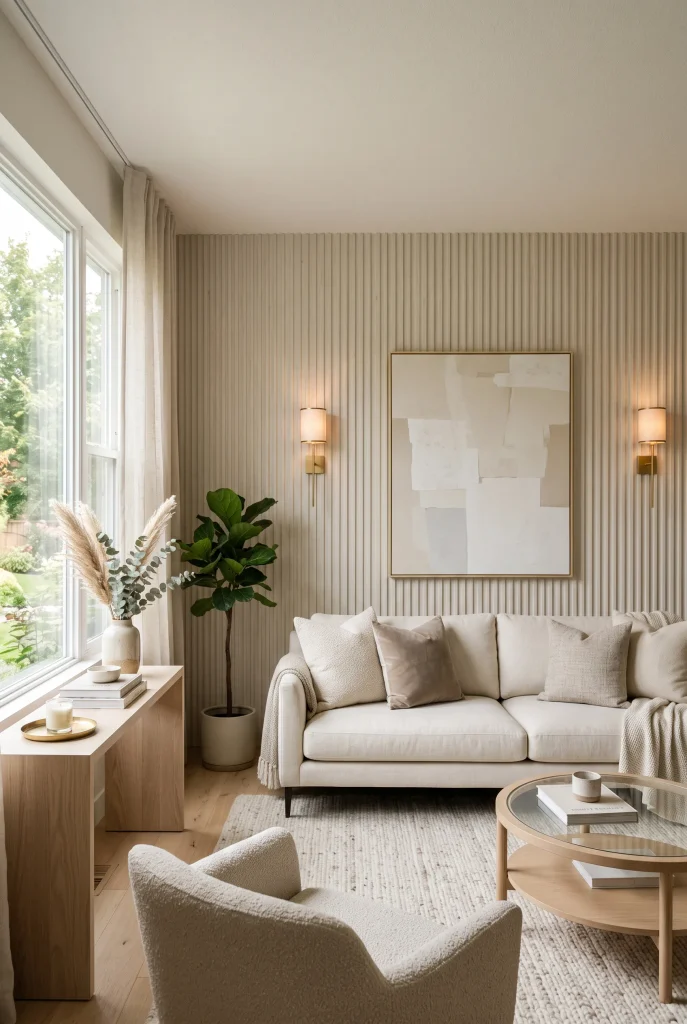
- Adds illumination without taking up floor or table space.
- Works beautifully beside artwork, fireplaces, or built-ins.
- Creates soft vertical light that makes walls feel more dimensional.
- Dimmable sconces offer better control during evening hours.
Wall sconces are a smart way to add warmth when floor and table surfaces are already occupied. Mount them beside artwork, a fireplace, built-in shelving, or a favorite seating area to introduce a gentle layer of illumination. Their position on the wall creates vertical interest and can make the room feel more balanced after dark. Choose fixtures with frosted or shaded covers when you want diffused light, or select upward and downward designs for a more architectural effect. This approach is particularly useful in compact living rooms where every inch of floor space matters.
Before installing sconces, consider the height of nearby furniture and the direction of the light. Fixtures should feel visually connected to the feature they frame without sitting awkwardly high or low. Warm bulbs can emphasize textured plaster, painted walls, wood panels, or stone surfaces beautifully. For rental homes, plug-in sconces can offer a similar decorative effect without permanent wiring. Placing a pair symmetrically around a focal point creates an especially polished appearance, while a single sconce can work nicely when the room calls for a more relaxed arrangement.
View: 17 Small Walk In Closet Ideas That Look So Expensive
6. Recessed Ceiling Lights
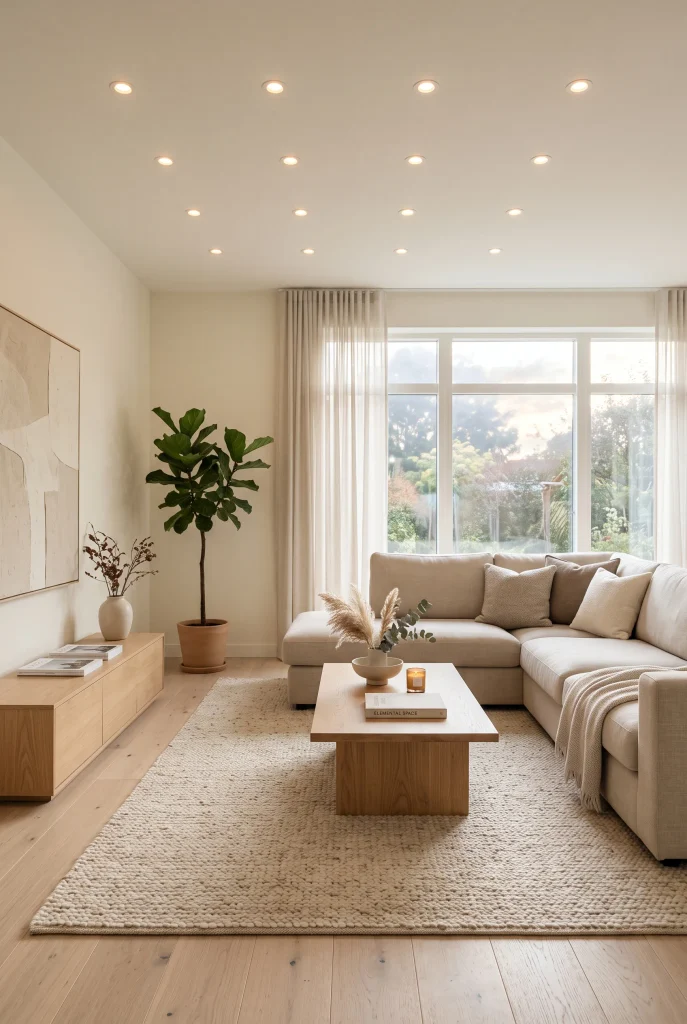
- Keeps the ceiling visually clean and uncluttered.
- Provides broad illumination across larger seating areas.
- Works well with modern, minimalist, and transitional interiors.
- Pair with decorative lamps to prevent the room from feeling too stark.
Recessed ceiling lights provide clean, practical illumination while keeping the ceiling free from bulky fixtures. They are especially useful in living rooms where you want consistent brightness across a wide seating area or open floor plan. Spacing is important because poorly positioned lights can create harsh pools of brightness or unwanted shadows. Place them thoughtfully around the main circulation and seating zones rather than concentrating them directly over the sofa. Warm or warm-neutral bulbs usually create a more comfortable atmosphere than very cool lighting, particularly when the room contains beige, cream, wood, or earthy finishes.
Although recessed fixtures are excellent for general illumination, they should not necessarily carry the entire room on their own. Combine them with floor lamps, table lamps, or wall fixtures to introduce lower and mid-level light after sunset. This layered approach makes the space feel softer and gives you more control over different activities. If you are planning new installations, dimmers are worth considering because they let you shift from bright daytime functionality to relaxed evening ambiance. The result is a cleaner ceiling paired with a living room that still feels warm and inviting.
7. Arched Reading Lamp
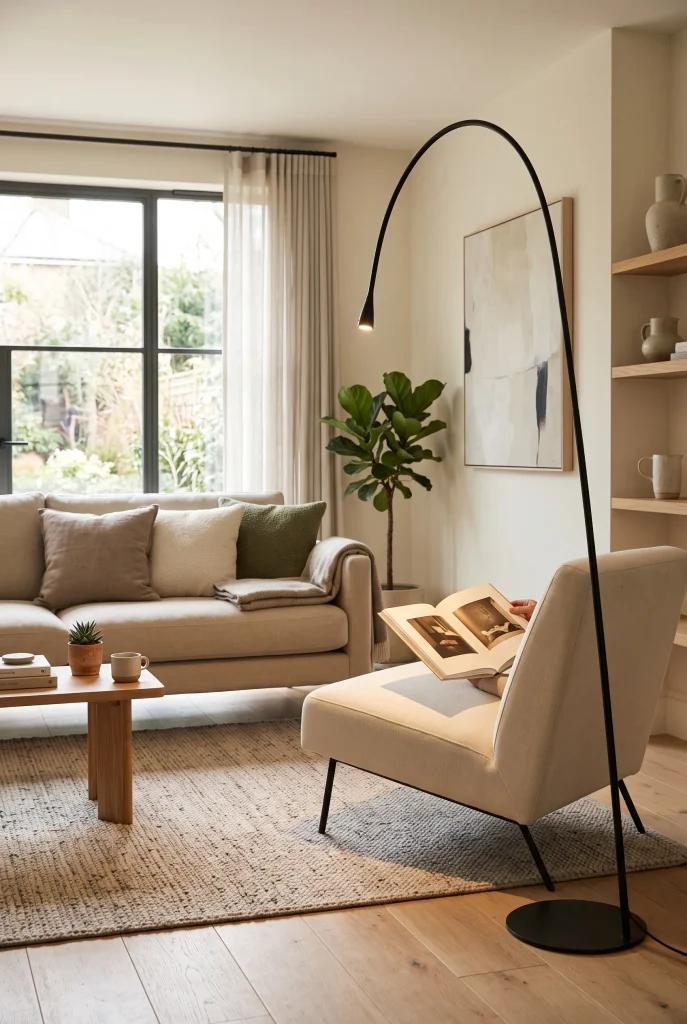
- Brings focused illumination directly to a reading or relaxation spot.
- The curved silhouette adds movement beside straight furniture.
- Helps transform an unused chair into a functional reading nook.
- A dimmable bulb makes the setup more versatile.
An arched reading lamp combines practical task lighting with a graceful decorative shape. Position its curved arm over a lounge chair or the end of a sofa so the light falls directly where you need it. The elevated design saves table space while creating a distinct zone for reading, relaxing, or enjoying a quiet cup of coffee. Black metal gives a modern room crisp contrast, while brass or brushed finishes feel warmer and more traditional. Choose a shade that directs light downward without creating uncomfortable glare when you are seated beneath it.
This setup works particularly well when your living room has an awkward corner that needs a purpose. Add a comfortable chair, small side table, soft throw, and a few books to create a welcoming mini retreat without changing the entire layout. Keep the lamp slightly behind the seating position so its arm reaches comfortably over the chair without blocking movement. This arrangement makes a room feel more intentional because it combines atmosphere with a clearly defined function. A warm bulb can also make the surrounding textures feel richer in the evening.
8. Glowing Floor Uplights
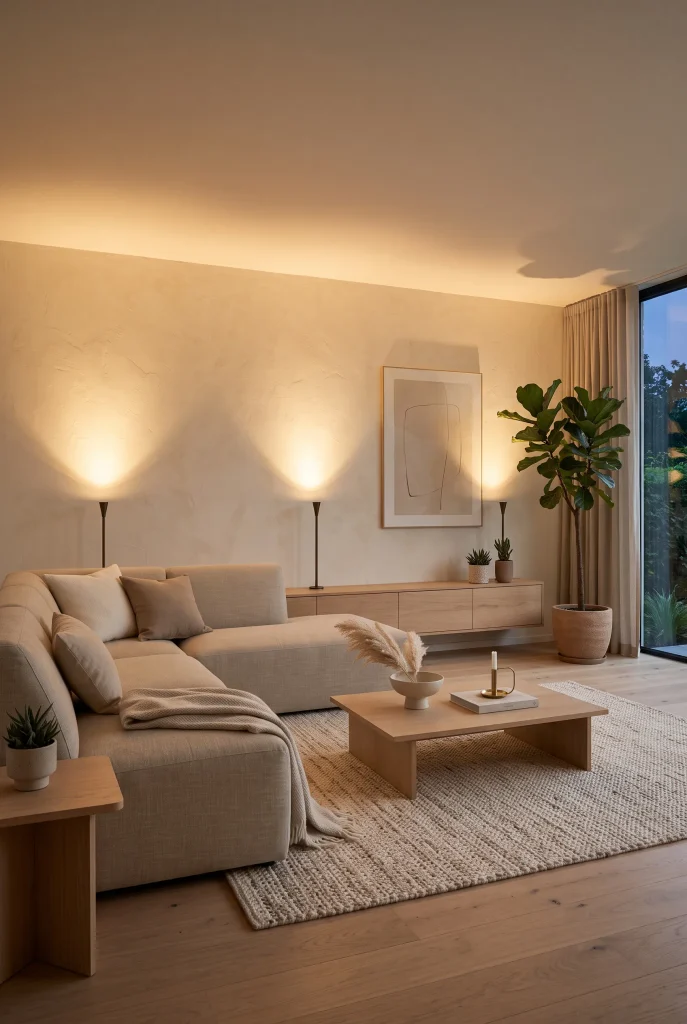
- Draws attention upward and makes ceilings appear more open.
- Creates soft wall illumination without dominating the room.
- Works beautifully behind sofas, plants, or architectural features.
- Useful for adding ambiance when overhead lighting feels too strong.
Floor uplights create a subtle wash of illumination that can completely change how a living room feels after dark. Instead of pointing light directly into the seating area, these fixtures send a soft glow upward across walls or ceilings. The reflected light feels gentle and atmospheric while adding visual depth to otherwise flat surfaces. Place an uplight behind a sofa, beside a tall plant, or near a textured accent wall where the illumination can spread naturally. Slim fixtures are especially useful when you want the effect without adding noticeable visual clutter.
The direction of the light is what makes this idea so effective. A pale wall will reflect more illumination and create a brighter overall atmosphere, while textured surfaces can produce beautiful shadows and highlights. Use warm bulbs to maintain a relaxed evening mood, particularly alongside wood furniture and neutral fabrics. If the fixture has adjustable positioning, experiment with the angle until the light feels soft rather than concentrated. Uplighting works particularly well in rooms with tall ceilings because the glow encourages the eye upward, making the entire space feel more layered.
9. Picture Light Accents
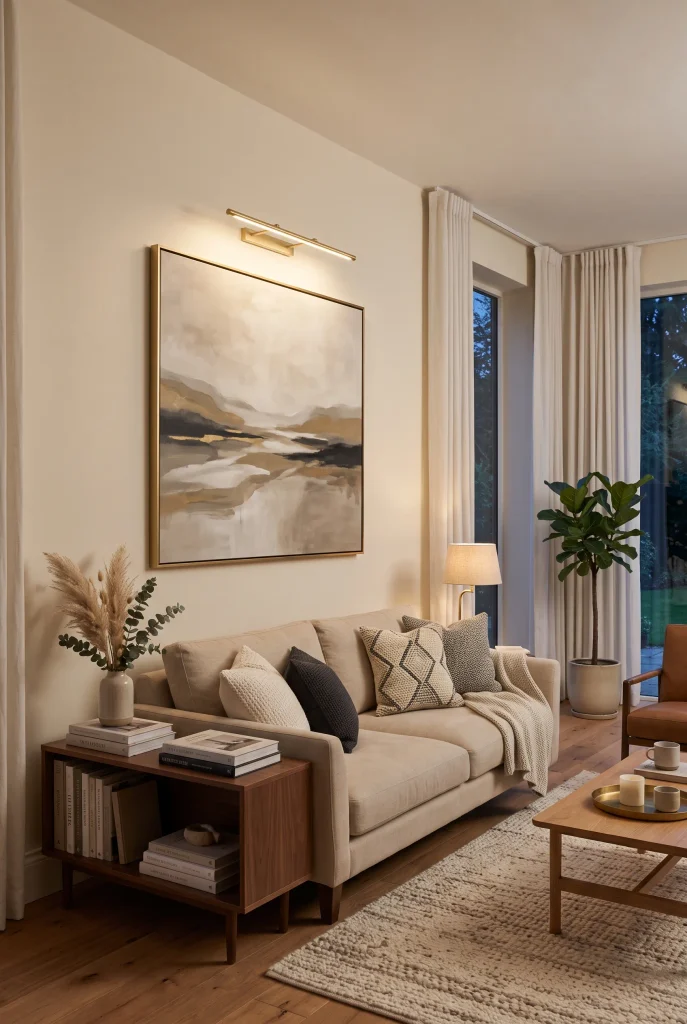
- Highlights artwork while adding another layer of evening illumination.
- Gives plain walls a more curated, finished appearance.
- Works especially well above large paintings or gallery focal pieces.
- Brass and black finishes can easily complement different decor styles.
A picture light can make artwork feel like an intentional focal point while adding a beautiful layer of illumination to the room. Mount a slim fixture directly above a large painting, framed print, or carefully arranged artwork to wash the surface with soft, focused light. This works particularly well when the living room has a neutral palette and needs a small dose of visual interest. Brass creates warmth and elegance, while matte black offers stronger contrast. Choose a fixture that complements the artwork’s proportions rather than overpowering the piece below it.
Picture lights are also useful when your main ceiling fixture becomes too bright for relaxed evenings. Turn on the artwork light alongside a nearby table or floor lamp to create a gentle combination of focused and ambient illumination. Avoid placing the beam directly into the eyes of people sitting across the room, and check the fixture’s angle before final installation. A warm bulb usually brings out richer tones in wood frames, paintings, and earthy artwork. Even a simple print can look significantly more sophisticated once it receives thoughtful, correctly positioned lighting.
10. Track Lighting System
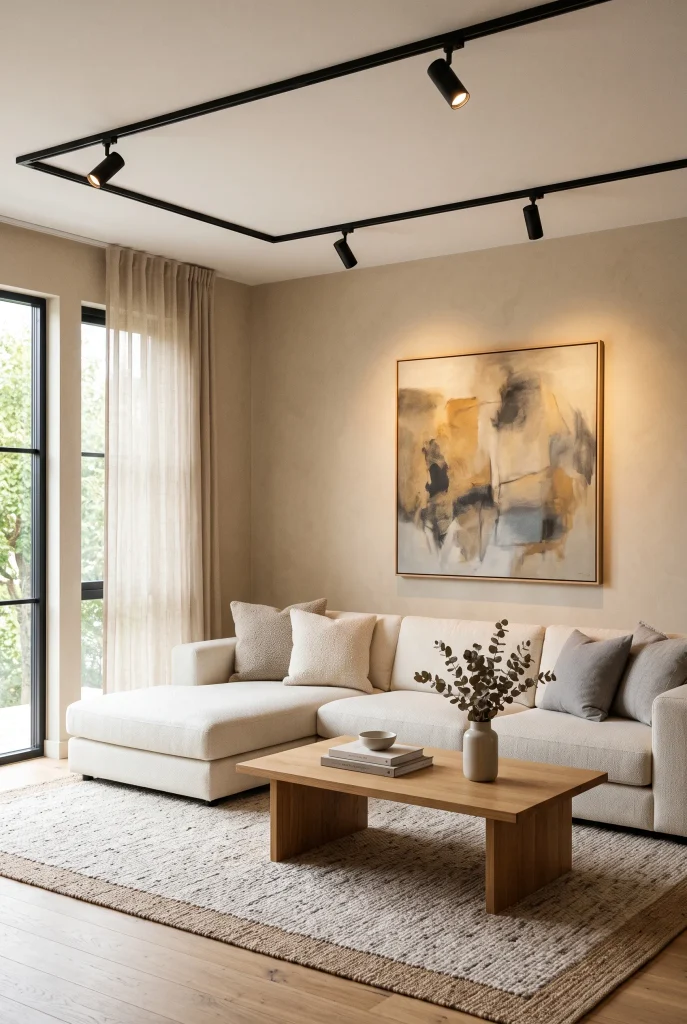
- Directs light exactly where the room needs it most.
- Highlights artwork, seating, plants, or architectural details.
- Useful when furniture arrangements change over time.
- Adjustable heads provide more flexibility than fixed fixtures.
Track lighting offers a flexible way to illuminate several areas without installing multiple separate fixtures. A slim ceiling-mounted track can run along the main seating zone, with adjustable heads aimed toward artwork, a sofa, shelves, or decorative plants. This makes it easier to control where attention goes while maintaining useful general illumination. Black tracks create a crisp modern contrast, while white versions blend more quietly into the ceiling. For open-plan rooms, a longer track can visually connect different areas without making the ceiling feel crowded.
The biggest advantage is adjustability. If you rearrange the sofa or move artwork, the light heads can usually be redirected instead of requiring a new installation. Use warm bulbs for a comfortable atmosphere and avoid aiming bright beams directly toward seating positions. A combination of narrow and wider beam angles can also create more visual variety. Track lighting looks most intentional when the fixture follows the room’s architecture or furniture alignment. Keeping the surrounding ceiling relatively uncluttered allows the track to feel like a purposeful design element rather than an afterthought.
11. Under-Cabinet Illumination
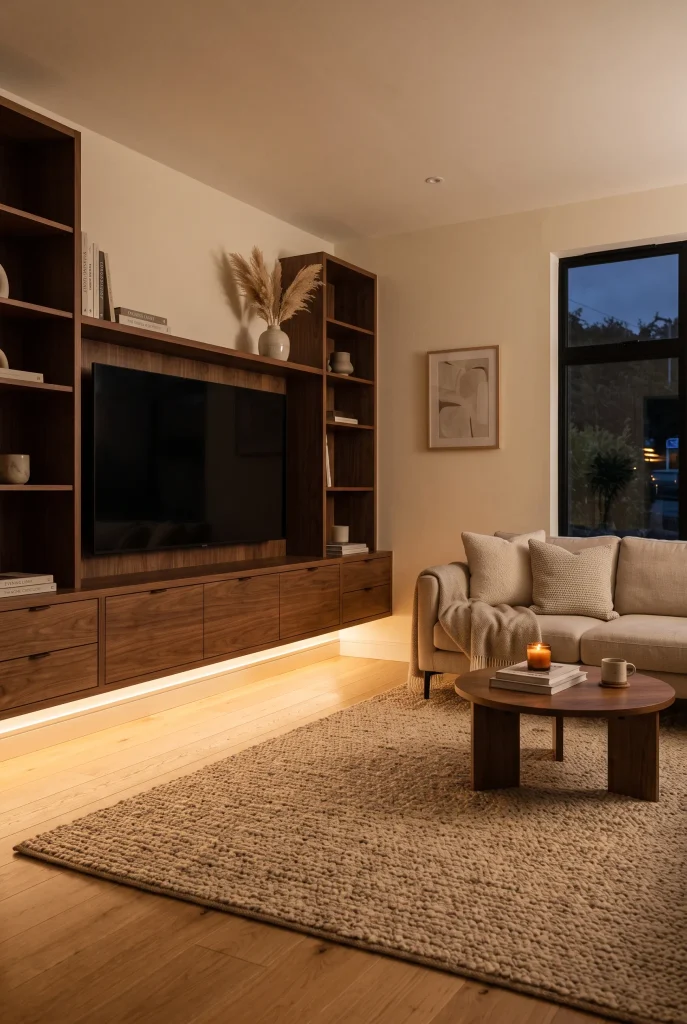
- Adds a subtle glow beneath floating furniture.
- Makes built-in storage feel lighter and more architectural.
- Helps prevent dark visual gaps around cabinetry.
- Works especially well with wood, stone, and textured finishes.
Under-cabinet illumination is a small detail that can make built-in living room furniture look significantly more refined. Install concealed LED strips beneath floating cabinets, media consoles, or wall-mounted storage so the light softly washes the floor below. This creates a floating appearance while adding gentle illumination to an area that often becomes visually dark at night. Warm lighting works especially well beneath walnut, oak, painted cabinetry, or stone surfaces. The effect is subtle during the day but becomes much more noticeable once the main room lights are dimmed.
Keep the lighting concealed and evenly distributed so you see the glow rather than individual LED points. If the cabinet is close to a walkway, make sure the illumination does not create an overly bright strip that competes with the rest of the room. Dimmable lighting gives you better control and allows the cabinet glow to become a quiet nighttime accent. Pair it with a nearby floor or table lamp for a balanced arrangement. This detail is particularly effective in minimalist rooms because it adds atmosphere without introducing another visible decorative object.
12. Soft Corner Lantern
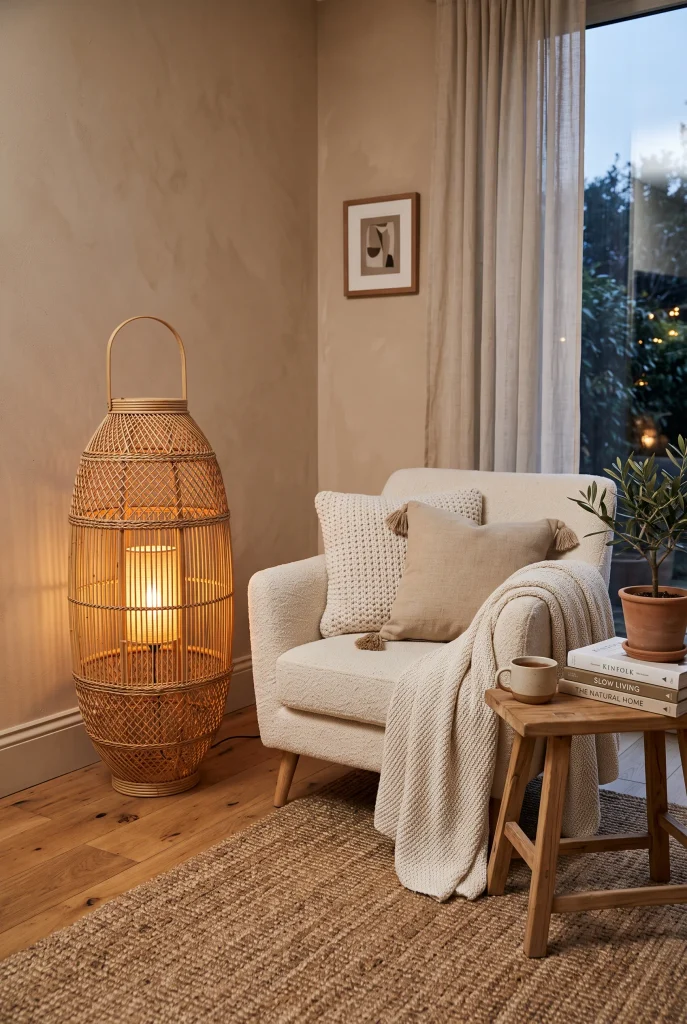
- Adds warmth to corners that feel dark or unfinished.
- Woven materials introduce texture and natural character.
- Creates a softer alternative to bright overhead illumination.
- Works beautifully with cozy, coastal, boho, and modern interiors.
A soft corner lantern can bring warmth and texture to a living room without making the space feel overly formal. Choose a tall woven, rattan, linen, or paper-style lantern and place it beside an accent chair, console, or empty corner. The open texture allows the bulb to create a diffused glow while casting gentle patterns around the nearby surfaces. This type of fixture works particularly well with natural materials and neutral colors because it adds visual warmth without introducing a strong contrast. It can also make an unused corner feel purposeful and inviting.
For the most comfortable atmosphere, select a warm bulb and avoid placing the lantern directly beside eye level. A slightly shaded or diffused design is usually easier on the eyes during long evenings. Keep nearby accessories simple so the texture of the lantern remains noticeable. A small plant, wood table, woven basket, or neutral throw can complete the corner without making it busy. Natural-texture lighting is one of the easiest ways to make a modern living room feel softer and more lived-in without changing its main furniture.
13. Dimmable Ceiling Fixture
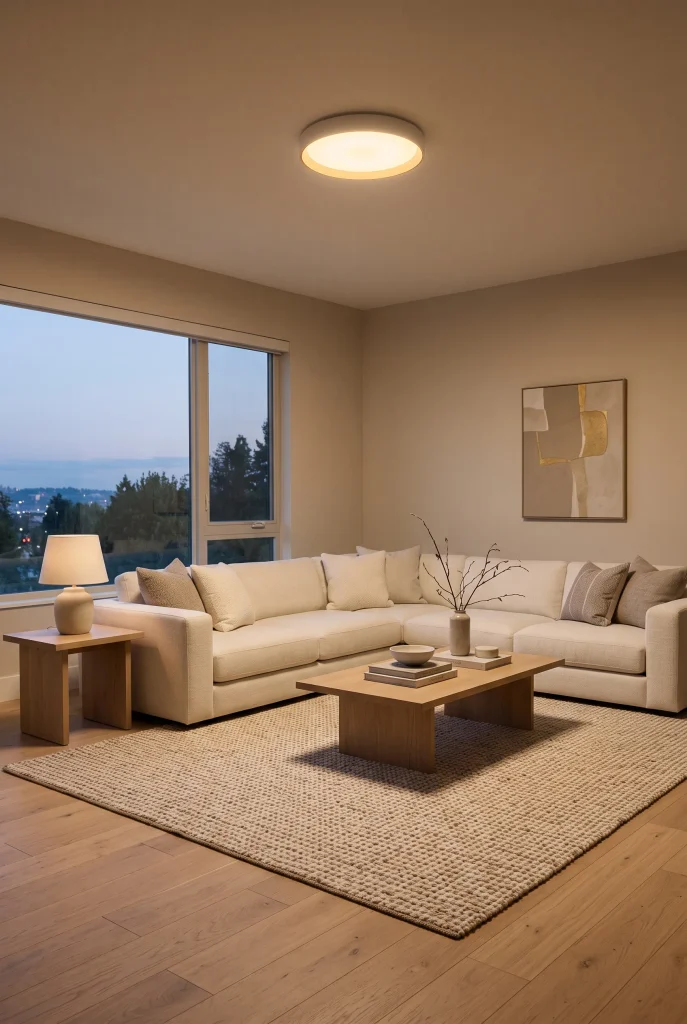
- Gives you control over brightness throughout the day.
- Keeps smaller rooms visually clean and open.
- Helps transition easily from daytime tasks to evening relaxation.
- A simple fixture works with many decorating styles.
A dimmable ceiling fixture gives your living room the flexibility to change with your daily routine. Brighten it when you need to clean, organize, read, or entertain, then lower the intensity when you want a calmer evening atmosphere. This simple adjustment can make a noticeable difference because the same room feels completely different under strong versus gentle illumination. Choose a flush-mount or semi-flush design when ceiling height is limited. A simple silhouette keeps the fixture from competing with artwork, furniture, or other decorative details.
For the most comfortable result, pair the ceiling fixture with lower-level lamps around the room. This prevents the space from depending on one bright source and creates a more layered atmosphere when the ceiling light is dimmed. Warm white bulbs generally complement wood, cream, beige, and earthy finishes beautifully. If you are replacing an existing fixture, check that the bulb and dimmer are compatible before installation. Adding dimming capability is one of those practical upgrades that seems small at first but makes everyday living noticeably more comfortable.
14. Decorative Lamp Pair
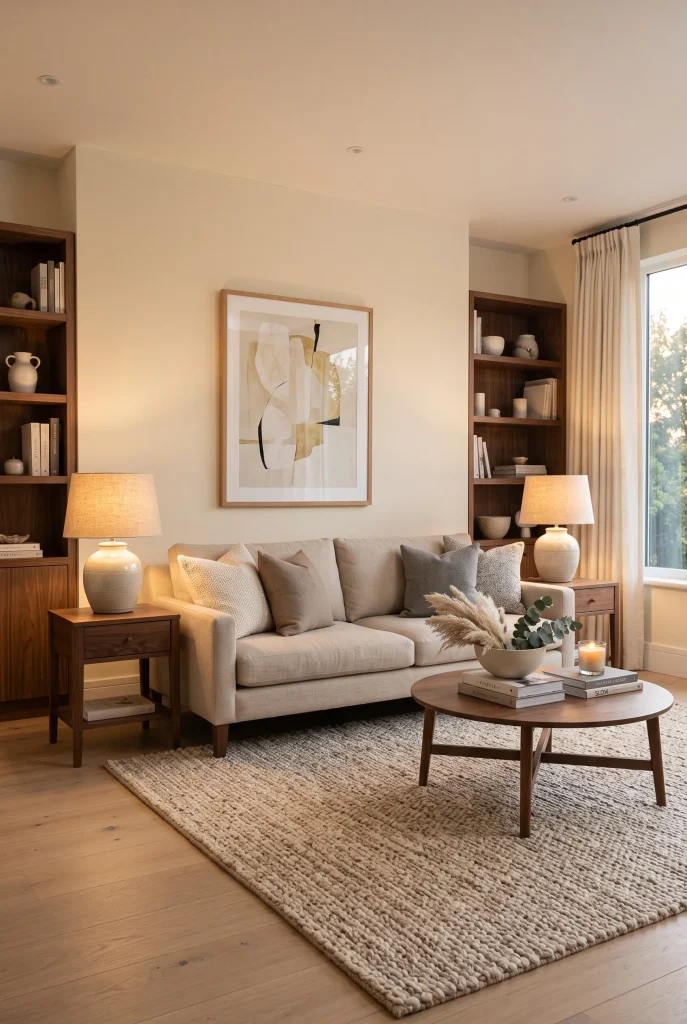
- Creates visual symmetry around the main seating area.
- Adds matching pools of warm light on both sides.
- Makes a sofa wall feel more complete and intentional.
- Coordinated finishes create polish without requiring identical decor everywhere.
A pair of decorative lamps can bring instant balance to a living room, especially when positioned on matching or visually similar side tables. Place one lamp on each side of the sofa to create symmetry and distribute warm illumination evenly across the seating area. Ceramic bases, ribbed glass, natural stone, or brushed metal can add personality while still feeling sophisticated. Matching lamps do not have to make the room look formal; choosing relaxed shades and natural finishes can keep the arrangement comfortable and approachable.
Pay attention to scale before buying two fixtures. The lamps should be tall enough to illuminate the seating area but not so large that they dominate the sofa. Their shades should also sit comfortably below eye level when you are seated. Use warm bulbs and fabric shades for a gentle glow, then combine them with a central ceiling fixture that can be dimmed when needed. Symmetrical lighting is particularly helpful when a sofa wall feels unfinished because two simple lamps can visually frame the furniture and make the entire arrangement feel more deliberate.
15. Candlelight Accents
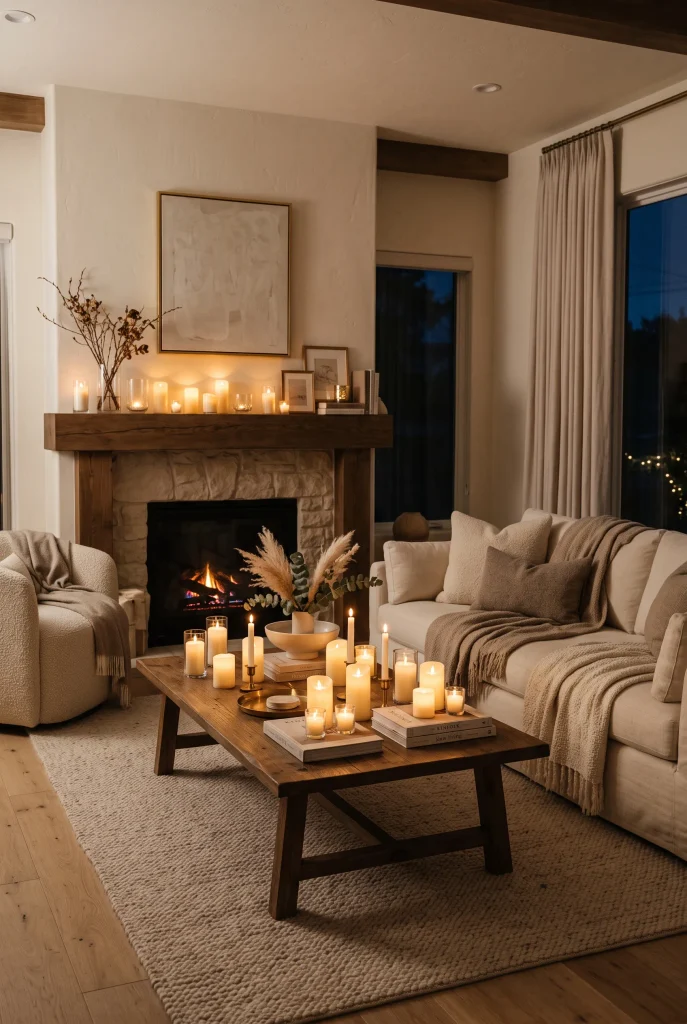
- Adds a gentle flickering effect for relaxed evenings.
- Makes coffee tables and mantels feel warmer and more inviting.
- Works as an accent layer rather than the main light source.
- Flameless candles offer a convenient low-maintenance alternative.
Candlelight can add a wonderfully soft finishing layer when you want the living room to feel relaxed and intimate. Arrange a few flameless candles on a coffee table, mantel, shelf, or console where their gentle glow can complement the room’s existing fixtures. Varying heights create more visual interest, while glass holders, ceramic vessels, or simple neutral designs can blend naturally with the surrounding decor. Because candlelight is low and warm, it creates a different visual effect from ceiling fixtures and lamps, helping the room feel calmer without needing additional furniture.
Use candle accents sparingly so the effect remains elegant rather than cluttered. A small cluster on a tray can look more intentional than scattered individual candles across every surface. Flameless versions are especially practical around children, pets, curtains, or high-traffic areas because they avoid an open flame. Keep them away from anything that could become unstable or obstruct movement. Candlelike illumination works best when the main lighting is already dimmed, allowing the small points of light to become noticeable while the rest of the room retains a soft, comfortable glow.
16. Picture Frame Lighting
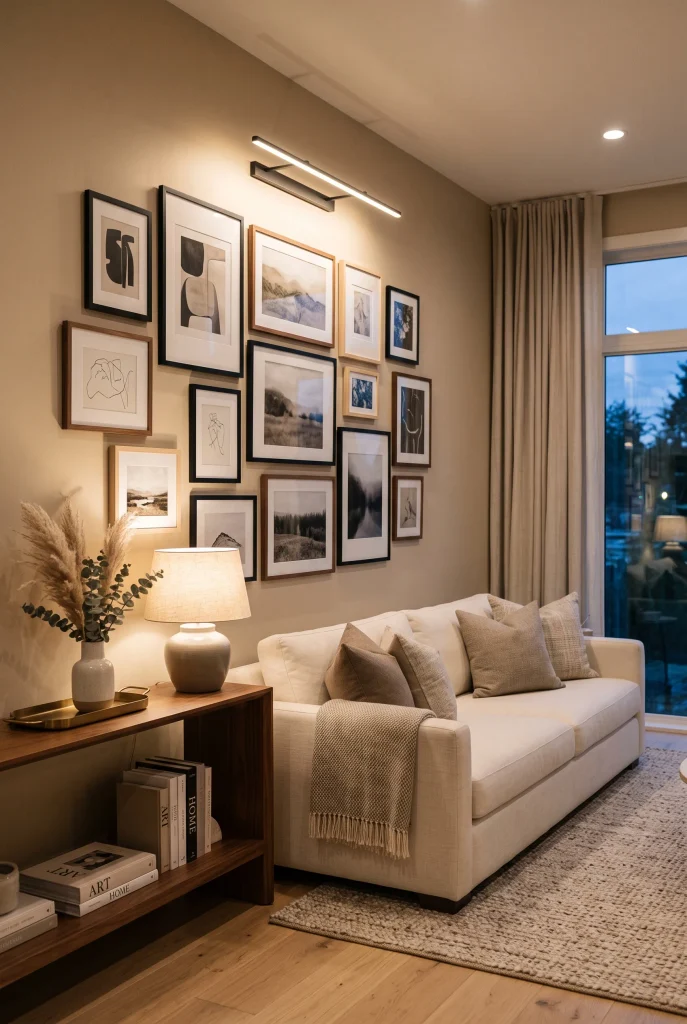
- Gives a gallery wall more depth and visual definition.
- Draws attention to favorite artwork without brightening the whole room.
- Works well above a console, sofa, or fireplace.
- Matching fixtures create a cohesive decorative rhythm.
Picture frame lighting can turn an ordinary gallery wall into a beautiful focal point after sunset. A slim picture light mounted above framed artwork directs a gentle beam across the pieces, helping colors, textures, and details stand out without flooding the entire room with brightness. Black fixtures create crisp contrast, while brass or aged metal options add warmth. This idea works especially well above a sofa, console, fireplace, or reading nook. Choose a fixture that is proportionate to the artwork so the lighting feels integrated rather than visually heavier than the frames themselves.
For the most polished result, keep the light soft and focused rather than overly bright. A warm bulb can make artwork feel richer while creating a comfortable atmosphere throughout the room. If you have several frames arranged together, one longer picture light can illuminate the group more evenly than multiple small fixtures. Check the beam angle before installation so the light does not shine directly into the seating area. This simple addition makes even inexpensive prints feel more curated and intentional while giving a plain wall an elegant, gallery-inspired finish.
17. Layered Shelf Lighting
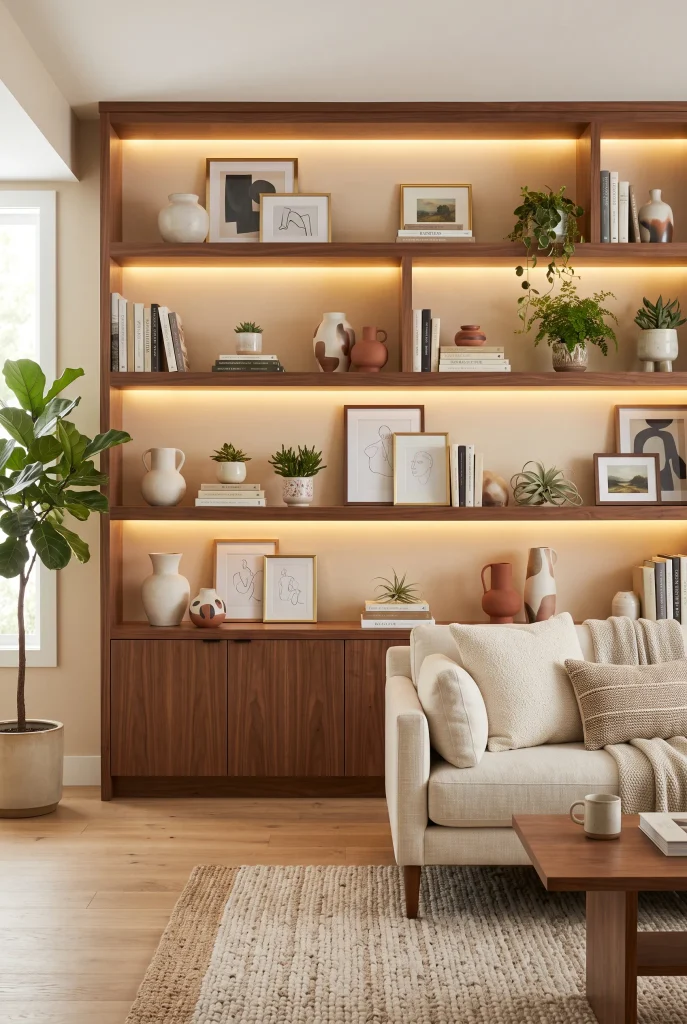
- Adds warmth to built-in storage and display areas.
- Makes decorative objects easier to notice after sunset.
- Creates depth against otherwise flat walls.
- Concealed lighting keeps the overall look sleek and minimal.
Layered shelf lighting is an easy way to make built-in storage feel warmer and more sophisticated. Concealed LED strips placed beneath shelves can gently illuminate books, ceramics, framed artwork, plants, and other decorative pieces. Instead of making the entire room brighter, this approach creates small pools of light that add depth and visual interest. Warm illumination works beautifully with walnut, oak, cream, beige, and other natural finishes. Keep the light source hidden behind the shelf edge whenever possible so the eye notices the glow rather than individual bulbs or harsh points of light.
The key is to avoid lighting every object equally. Leave some shelves darker and use illumination selectively around your favorite decorative pieces for a more natural, layered appearance. Dimmable LED strips give you additional control and allow the shelving to become a subtle evening accent. You can also combine shelf lighting with a nearby floor lamp or table lamp to create different levels of brightness. Illuminated shelving works particularly well in minimalist living rooms because it adds personality and warmth without taking up floor space or introducing another visible fixture.
18. Floor Lamp Trio
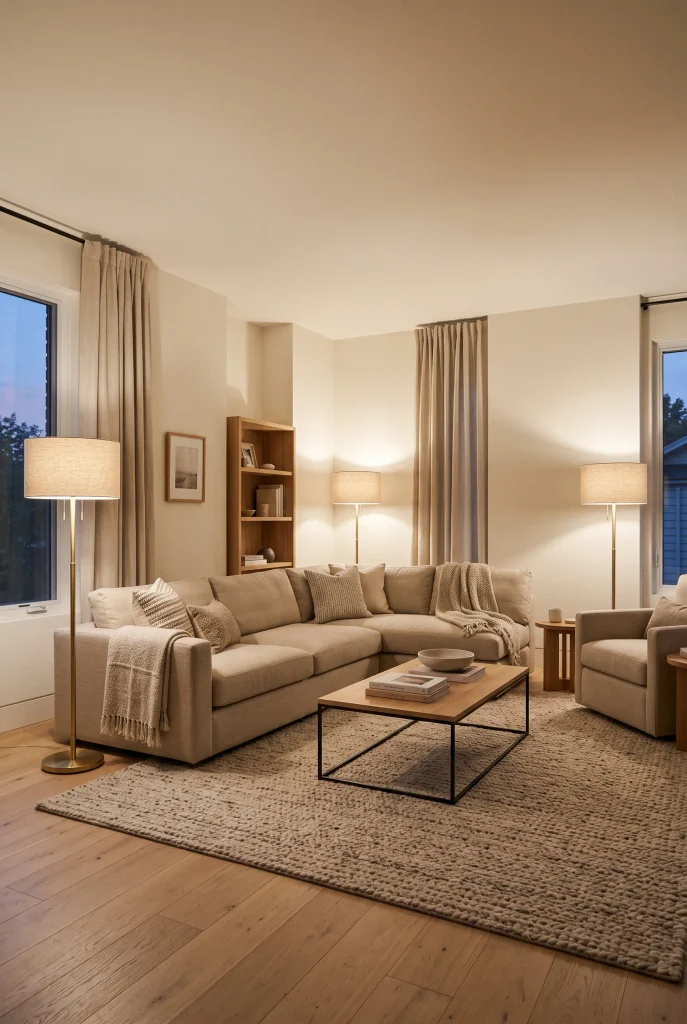
- Creates balanced illumination across a larger seating area.
- Helps eliminate dark corners without relying on one ceiling light.
- Different lamp heights add visual depth to the room.
- Choose coordinating finishes to keep the arrangement cohesive.
A trio of floor lamps can create beautifully balanced illumination when one lamp simply is not enough. Place them around different parts of the living room rather than grouping them together. One can sit beside the main sofa, another near an accent chair, and a third beside a darker corner. This spreads light throughout the space while giving each seating zone its own gentle glow. Choose similar finishes or complementary shapes so the lamps feel connected without looking overly matched. Warm bulbs will keep the entire arrangement comfortable and inviting.
The trick is to vary the placement while keeping the visual language consistent. Avoid putting three tall lamps directly beside one another because that can make the room feel crowded. Instead, use distance and furniture to create breathing room between each fixture. If your living room is compact, choose slimmer designs with narrow bases. Spreading floor lamps around a large room makes the space feel much more balanced at night. It also gives you the freedom to switch individual lights on or off depending on where people are sitting.
19. Pendant Cluster
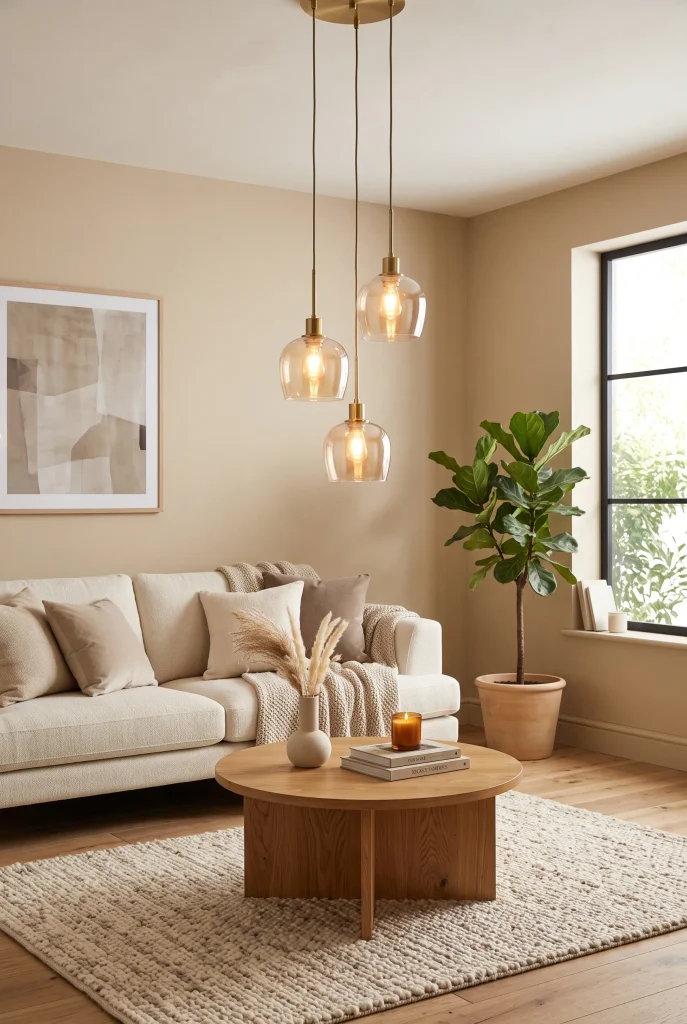
- Adds movement and height above the main seating area.
- Creates a dramatic focal point without heavy furniture.
- Different pendant heights make the arrangement feel dynamic.
- Keep the shapes related for a polished overall look.
A cluster of pendant lights can create a striking focal point while distributing illumination across the center of the living room. Instead of using one large fixture, hang several smaller pendants at slightly different heights. Globe, glass, woven, or minimalist metal shades can work beautifully when their shapes or finishes share a common visual connection. Position the cluster above the main seating arrangement or coffee table, making sure the lowest pendant does not interfere with comfortable sightlines. The result feels decorative while still providing useful overhead illumination for everyday activities.
Keep the composition intentional rather than perfectly identical. Slight variations in height can make the fixture feel more relaxed and dimensional, while coordinating finishes prevent visual chaos. Warm bulbs are especially attractive through clear or frosted glass shades because they create a soft glow throughout the cluster. If the room already contains several decorative elements, keep the surrounding furniture and accessories relatively simple. A pendant cluster can make a plain ceiling feel much more interesting while requiring less visual space than several separate ceiling fixtures.
20. Window Wall Wash
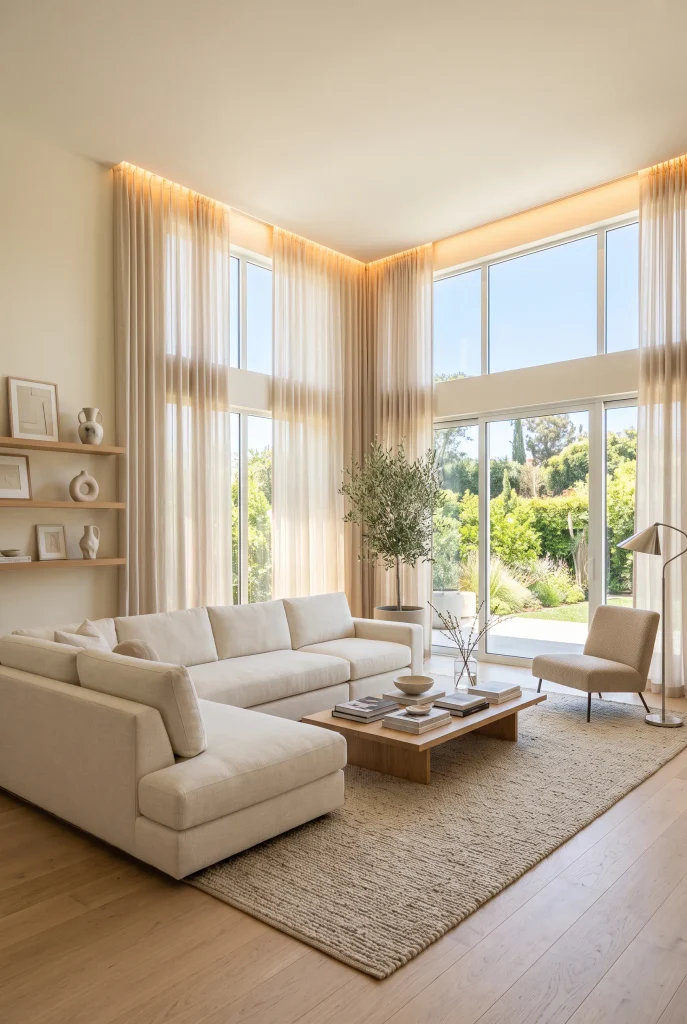
- Adds gentle illumination to a wall that may become dark at night.
- Creates a soft backdrop behind curtains and furniture.
- Makes large windows feel integrated into the evening design.
- Works particularly well in spacious contemporary rooms.
A wall wash can transform a large, plain surface into a soft illuminated backdrop once daylight disappears. Position adjustable fixtures near the ceiling or floor so light spreads evenly across the wall instead of creating a concentrated beam. This technique can work beautifully around large windows, curtains, textured plaster, or broad painted surfaces. The reflected illumination helps maintain a sense of openness while preventing the room from becoming visually dark around its perimeter. Warm light is particularly effective against cream, beige, taupe, and other neutral wall colors.
For a comfortable result, test the direction and intensity before committing to permanent placement. You want the wall to glow rather than appear brightly spotlighted. Combine the wash with lower lamps near the seating area to create several layers at different heights. If curtains cover the windows in the evening, the gentle light behind or beside them can add softness without competing with the furniture. Illuminating a broad wall can make a room feel larger and more finished because it extends the visual reach of the lighting beyond the central seating area.
21. Smart Lighting Zones
- Lets different areas of the room use different brightness levels.
- Makes everyday lighting easier to adjust for different activities.
- Helps create separate moods for relaxing, reading, or entertaining.
- Smart controls can simplify a layered lighting setup.
Smart lighting zones make it easier to control several fixtures according to how you actually use the living room. Instead of turning every light on at once, create separate groups for the ceiling, sofa area, shelves, and accent corners. You might use brighter overhead lighting while working or cleaning, then activate only the floor lamp and shelf lights for a quieter evening. This gives you more flexibility without changing the physical layout. If compatible, timers, dimming controls, or voice commands can make everyday adjustments even simpler.
Start with the areas you use most frequently rather than trying to automate every fixture. A simple setup with two or three zones can already make a noticeable difference. Keep the color temperature consistent so the room does not appear patchy or mismatched when multiple lights are on together. Dimmable warm lighting generally creates a comfortable foundation for living spaces. When lighting controls match real routines, people are more likely to use different layers throughout the day instead of leaving one bright ceiling fixture switched on all evening.
Conclusion
Great lighting is about more than simply making a room brighter. It helps define cozy corners, highlight beautiful details, improve functionality, and create the right atmosphere for everyday life. These living room lighting ideas show how small changes, such as adding a warm lamp, illuminating shelves, or layering different fixtures, can make a noticeable difference. Choose one idea that fits your space and start there. Thoughtful lighting can completely change the feeling of a room without a major makeover. Save this post on Pinterest, try your favorite idea, and share it with someone planning a living room refresh.