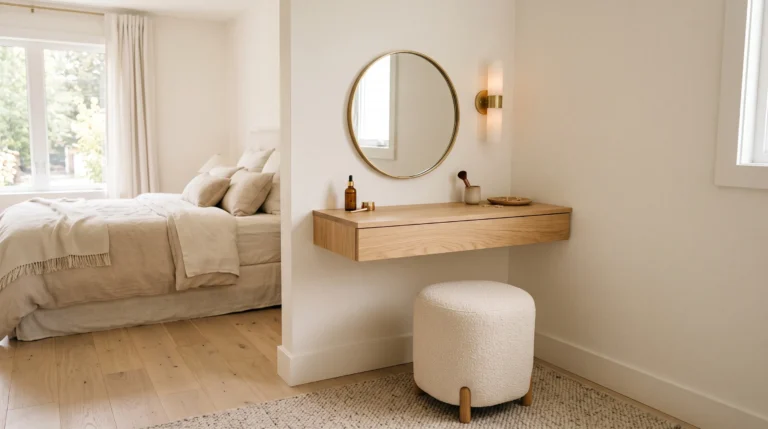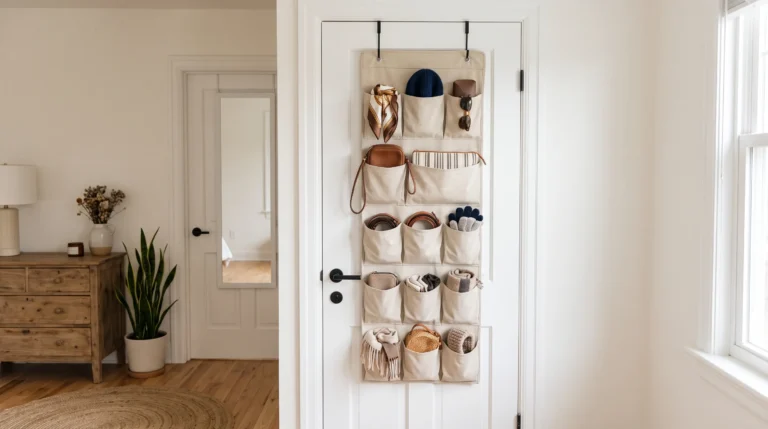
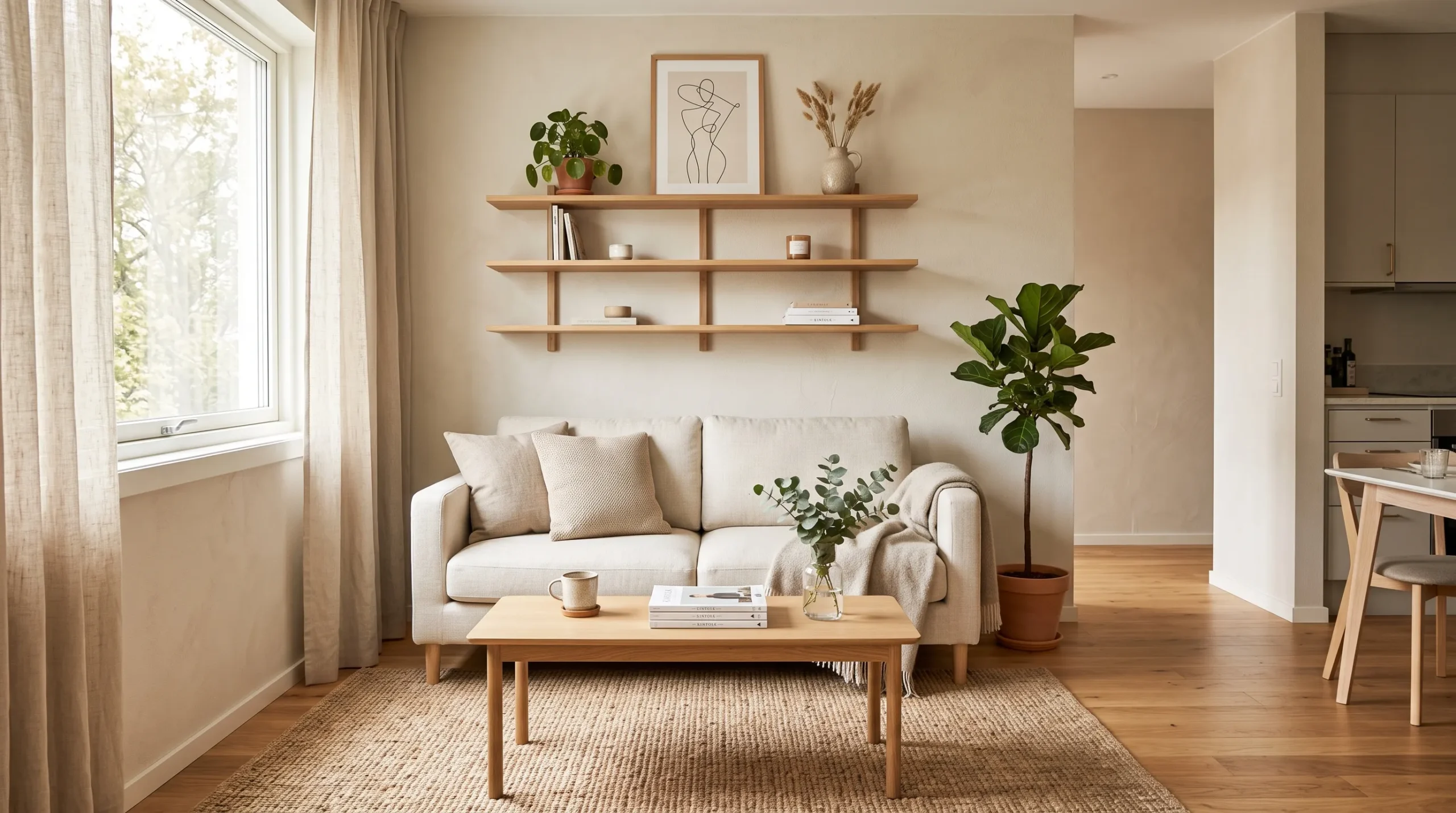
21 Apartment Decor Ideas That Make Small Spaces Shine

Decorating a small apartment can feel tricky when you want it to look beautiful without making it feel crowded. But with the right furniture, colors, storage solutions, and decorative touches, even a compact space can feel comfortable and stylish. From multifunctional furniture and wall-mounted storage to cozy textiles and clever lighting, a few thoughtful changes can help you make the most of every corner without spending a fortune or taking on a major renovation.
Whether you are decorating a studio, a compact bedroom, or a small living room, these apartment decor ideas can help you create a space that feels practical, welcoming, and personal. The goal is not to fill every empty spot, but to choose pieces that work well for your space and fit naturally into the way you live.
1. Small Space Layout
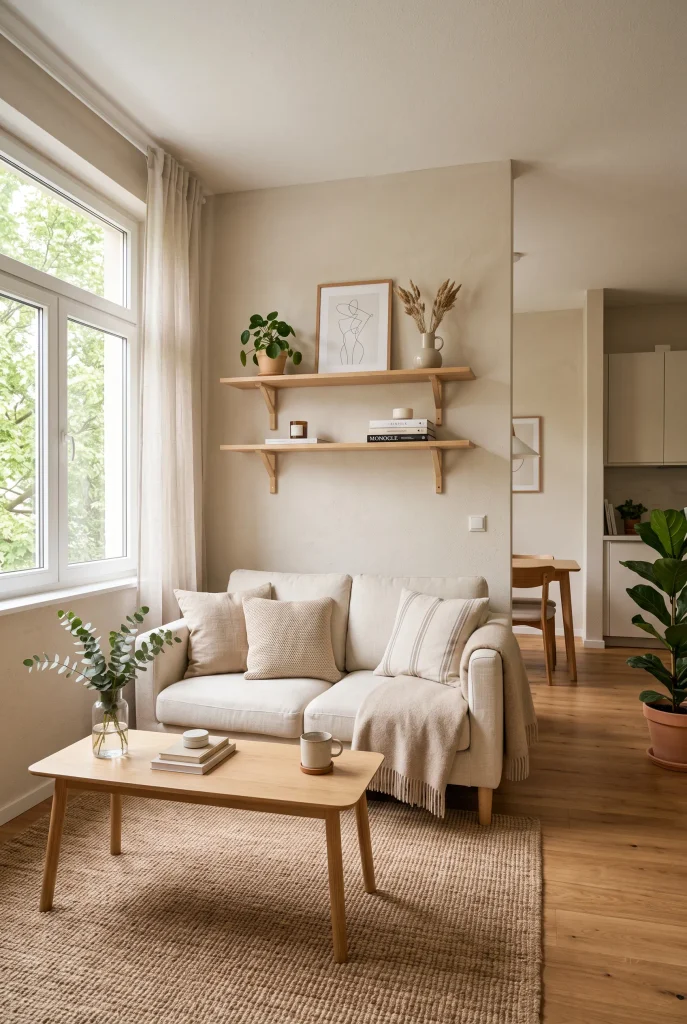
- Keeps the room open instead of visually crowded.
- Creates clear walking paths around larger furniture.
- Makes a compact apartment feel calmer and more functional.
- Light furniture placement helps natural light travel through the room.
A smart layout can make a small apartment feel surprisingly spacious, even when every square foot matters. Start by placing the largest furniture against the walls while keeping the center as open as possible. Leave comfortable walking paths between the sofa, coffee table, dining area, and doorway. If your living room doubles as a workspace, create clear zones with a slim desk or small rug instead of bulky dividers. These simple choices help the room feel organized rather than cramped. The goal is not to get rid of furniture just for the sake of having less, but to make sure every piece has a reason to be there.
It also helps to think about how you actually move through the room during the day. A coffee table that sits too close to the sofa or a chair that gets in the way of a doorway can make even a beautiful space feel frustrating. Try arranging the main furniture around the natural flow of the room before adding decorative pieces. Keep larger items balanced and use smaller furniture where it makes sense. Once there is enough open floor space to move comfortably, the whole apartment can feel brighter, calmer, and easier to live in.
2. Light Neutral Palette
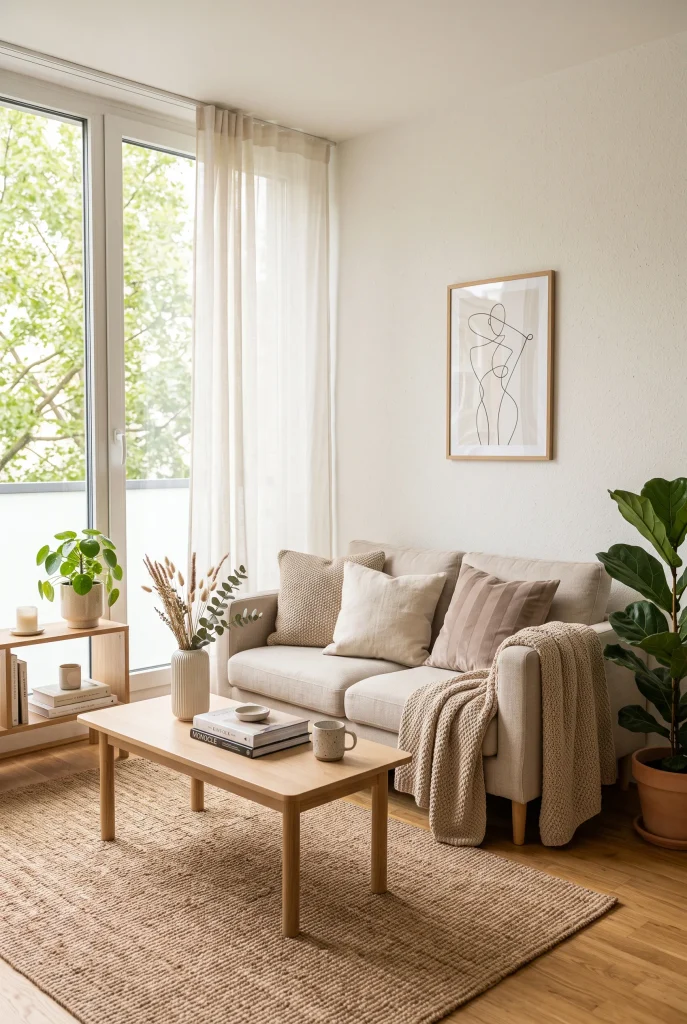
- Makes walls and furniture feel visually lighter.
- Helps natural light spread through smaller rooms.
- Creates a calm base for seasonal accents and colorful decor.
- Layered textures keep neutral spaces from feeling flat.
A light neutral palette can instantly make a compact apartment feel brighter, softer, and more open. Start with warm white, cream, beige, or soft taupe on the larger surfaces, then bring in pale wood and natural textiles for warmth. Sheer curtains can let in more daylight without making the windows feel heavy. Instead of choosing one neutral shade for everything, mix a few close tones through cushions, rugs, curtains, and furniture. This gives the room some depth while keeping the overall look calm and connected.
Neutral colors are especially useful when an apartment has limited natural light or awkward room proportions. You do not have to rely on bright white alone. A boucle cushion, linen curtain, woven basket, and textured rug can add plenty of interest without making the room feel busy. The different textures give the eye something to notice while the similar colors keep everything working together. Once the neutral base feels right, you can bring in seasonal colors through artwork, throws, or plants without changing the whole room.
3. Multifunctional Furniture

- Gives one piece of furniture more than one useful purpose.
- Saves valuable floor space in compact rooms.
- Helps reduce clutter by adding hidden storage.
- Makes small apartments easier to adapt throughout the day.
Multifunctional furniture can make a big difference when you are working with limited space. Look for an ottoman that doubles as storage, a sofa bed for overnight guests, nesting tables that can spread out when needed, or a dining table that folds against the wall. These pieces let the same area serve different purposes without making the apartment feel packed. Stick with simple shapes and finishes that work with the rest of your decor so the room still feels calm. In a small home, being practical does not mean giving up style.
Before buying anything, think about what each room actually needs to do. A compact living area might need to handle relaxing, working, dining, and entertaining, so flexible furniture can be incredibly useful. A storage bench can offer extra seating while hiding blankets, while a slim console can become a temporary workspace when needed. Just check the measurements first and make sure everything can open, fold, or move without blocking doors or walkways. When furniture works a little harder, you can get more out of the same amount of space.
4. Wall-Mounted Storage
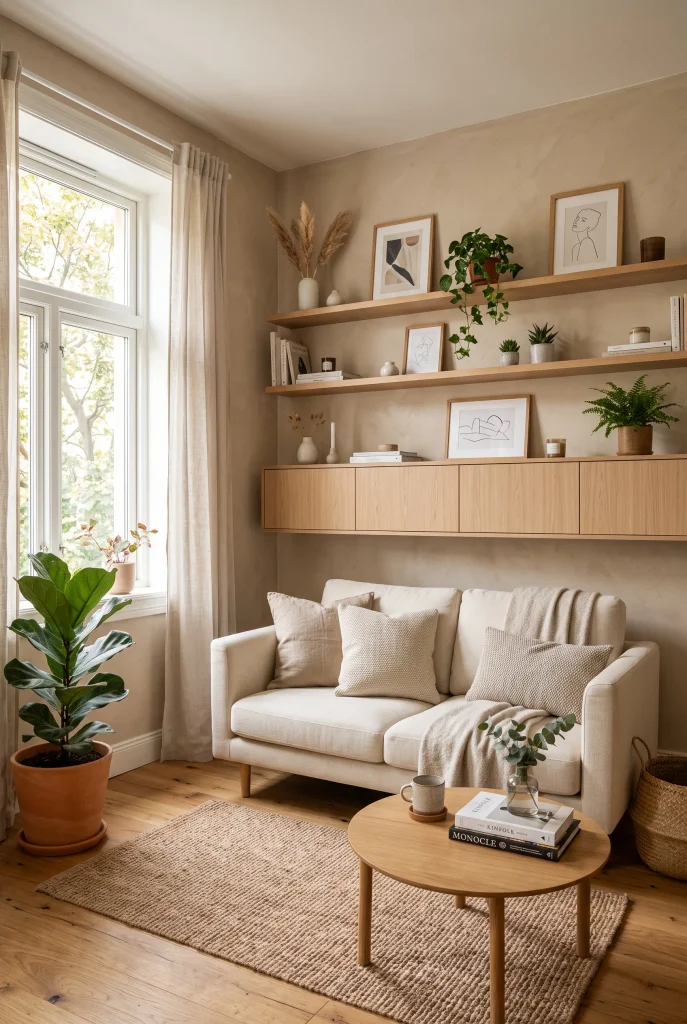
- Frees up valuable floor space in compact rooms.
- Gives everyday items a dedicated place without bulky cabinets.
- Uses vertical wall space that often goes unnoticed.
- Open shelves can display favorite pieces while keeping the room personal.
When floor space is limited, look up before adding another cabinet. Wall-mounted shelves, floating drawers, and slim cabinets can give you useful storage while keeping more of the floor visible. Use shelves for books, small plants, framed art, or baskets that hide everyday items. There is no need to fill every inch. A few carefully placed pieces usually look better and keep the walls from feeling overloaded. This works especially well above desks, beside sofas, or in narrow entry areas where traditional storage can quickly become bulky.
The most useful wall storage combines everyday function with a little personality. A floating shelf near the entry, for example, can hold keys and a small bowl, while a narrow cabinet can keep mail, chargers, and other small clutter out of sight. If you are renting, removable or low-impact options can give you more flexibility. Pay attention to shelf depth too, especially in narrow walkways. With the right placement, vertical storage can keep the apartment organized while allowing the floor to stay open and easy to move through.
5. Cozy Layered Textiles
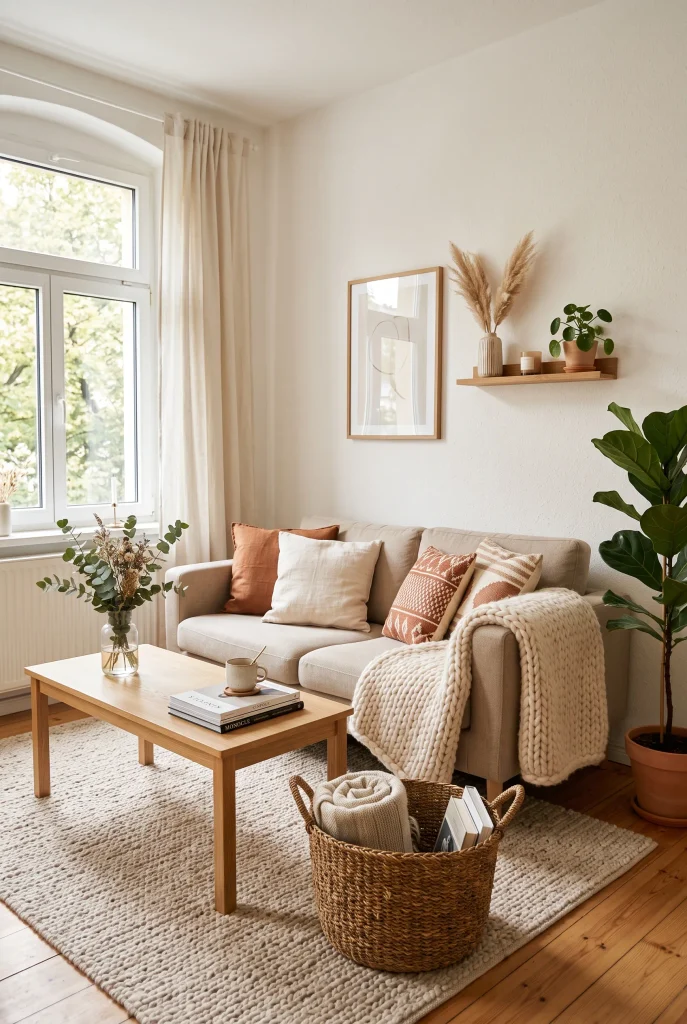
- Adds warmth without taking up extra floor space.
- Makes simple furniture feel softer and more inviting.
- Creates visual depth through different fabrics and textures.
- Seasonal textiles can refresh the room without major changes.
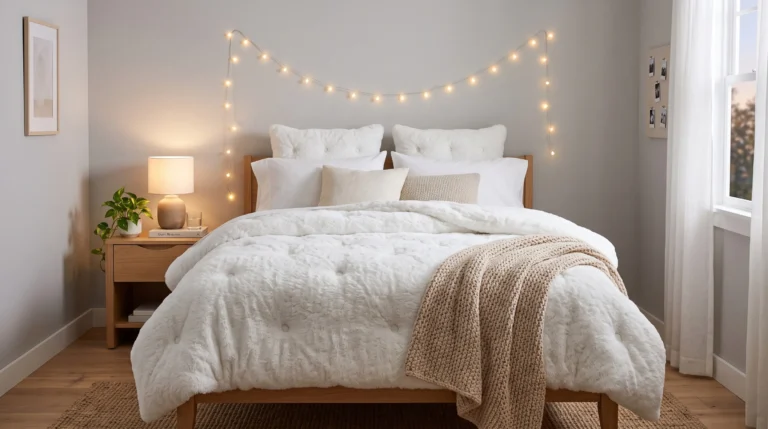
Soft textiles are one of the easiest ways to make an apartment feel warm and finished. Start with a comfortable rug, then add cushions, throws, and curtains in colors that work well together. Mix materials such as linen, cotton, wool, boucle, or knitted fabrics so the room has texture without needing lots of decorative objects. Keep the main palette simple and use one muted accent shade through a throw or cushion. This gives the space a cozy feel without making the furniture look heavy. Textiles are also easy to switch out when you want a small refresh.
A small apartment can start to feel crowded when every surface is covered with decor, so fabrics are an easy way to add personality without adding more objects. A textured rug can define the seating area, while a folded throw makes the sofa feel more inviting. Choose washable or durable fabrics in areas that get a lot of use. You do not need a dozen different textures either. A few well-chosen materials, repeated colors, and a little breathing room can make the room feel layered without looking messy.
6. Slimline Furniture
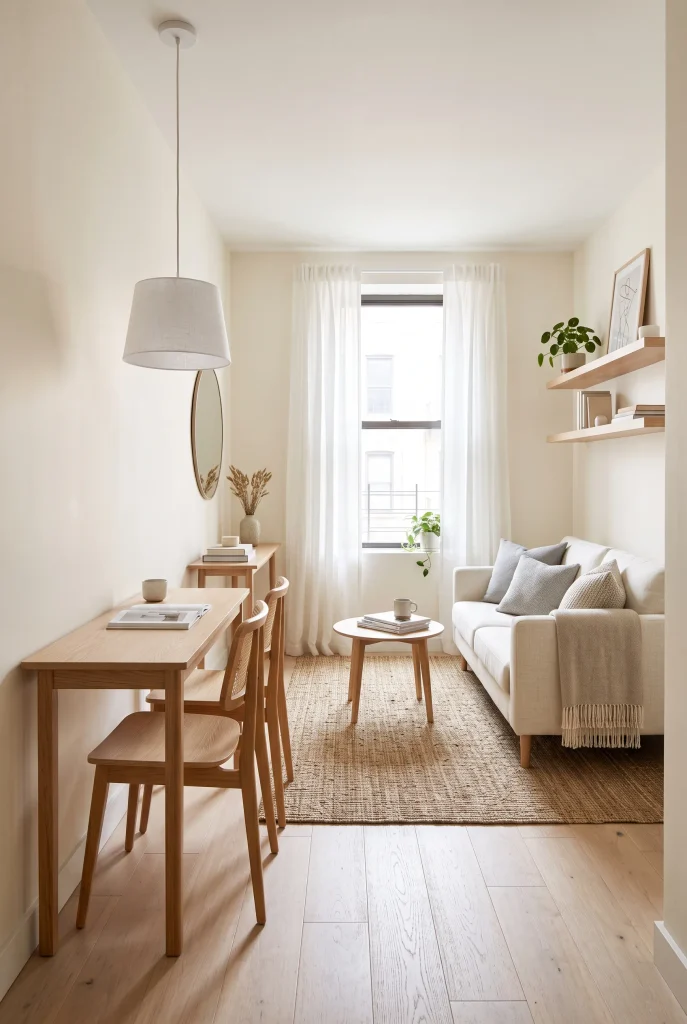
- Creates more breathing room around furniture.
- Makes narrow apartments easier to walk through.
- Provides function without adding unnecessary visual weight.
- Slim silhouettes can make the room appear more spacious.
Bulky furniture can easily overwhelm a small apartment, especially when several pieces compete for the same limited floor area. Slimline furniture gives you the function you need without taking up quite so much visual space. Look for narrow consoles, lightweight dining chairs, compact sofas, and tables with thinner legs. Furniture that sits slightly off the floor can also make the room feel more open. Rather than filling the apartment with oversized pieces, focus on a few items that fit the scale of the room and leave some space around them.
Scale matters even when you have fallen in love with a particular piece of furniture. Before buying something, measure the available area and mark its footprint with painter’s tape. Seeing the actual size on the floor can tell you much more than looking at measurements on a screen. Leave enough room around dining chairs, drawers, doors, and walking paths. A narrow console may work better than a deep cabinet, while a small round table can sometimes fit where a large rectangular one cannot. These little choices can make everyday apartment living feel much easier.
View: 21 Fantasy Medieval Bedroom Ideas That Feel Magical
7. Statement Lighting
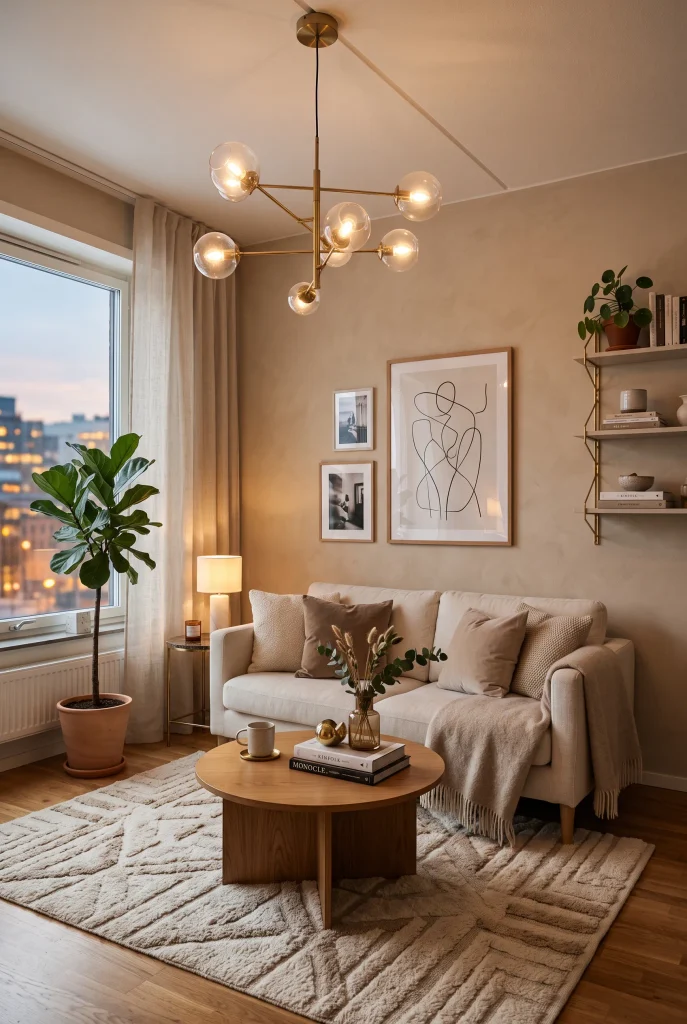
- Creates a strong focal point without using floor space.
- Adds personality to an otherwise simple apartment.
- Layered lighting makes the room more comfortable after sunset.
- Warm bulbs can make neutral finishes feel richer.
A striking light fixture can change the mood of a small apartment without taking up valuable floor space. A sculptural pendant, simple chandelier, or woven shade can become a natural focal point while adding warmth to the room. Choose something that suits the size of the space rather than simply choosing the biggest fixture you can find. Warm bulbs work beautifully with wood, cream fabrics, and neutral walls, especially once the sun goes down. You can also pair the main fixture with a table lamp or floor lamp to create softer layers of light.
The trick is finding a fixture that stands out without making the ceiling feel crowded. In a compact living room, an open or lightweight design can add interest while keeping the room airy. Dimmable bulbs are useful if you want the lighting to shift from bright daytime light to a relaxed evening glow. Place smaller lamps near the areas where you actually read, work, or relax. Good lighting should look beautiful, but it should also make the room more comfortable to use.
8. Mirrored Surfaces
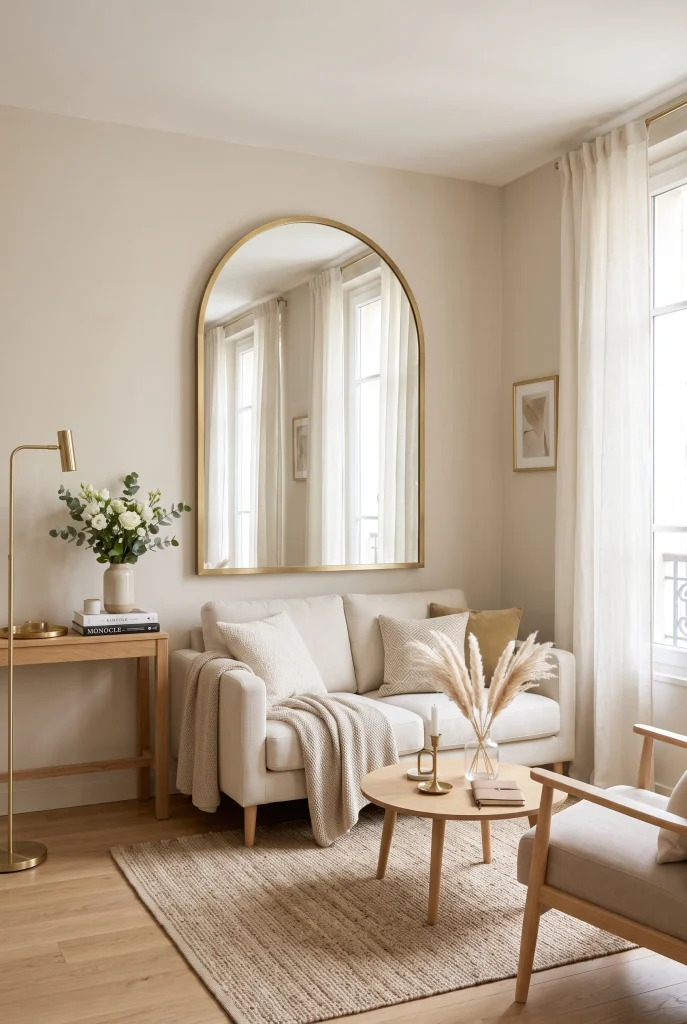
- Reflects natural light and helps darker rooms feel brighter.
- Creates the visual impression of additional space.
- Adds decorative impact without requiring bulky furniture.
- Works especially well opposite windows or light sources.
Mirrors can make a compact apartment feel brighter and more open by reflecting light and the space around them. A large mirror opposite a window can bounce daylight farther into the room, while an oversized floor mirror can add height near a bedroom or entryway. Choose a frame that works with your existing finishes, such as warm wood, aged brass, or simple black metal. In many small rooms, one larger mirror feels more intentional than a collection of tiny ones.
Where you place the mirror matters just as much as the mirror itself. Try positioning it so it reflects something you actually want to see, such as a window, artwork, plant, or nicely styled seating area. Reflecting a pile of clutter will only make the room feel busier. A mirrored cabinet can also give you storage while adding some of the same brightening effect. Keep the surrounding decor fairly simple so the reflection has room to work. Even one thoughtfully placed mirror can make a noticeable difference in a darker apartment.
9. Compact Dining Nook
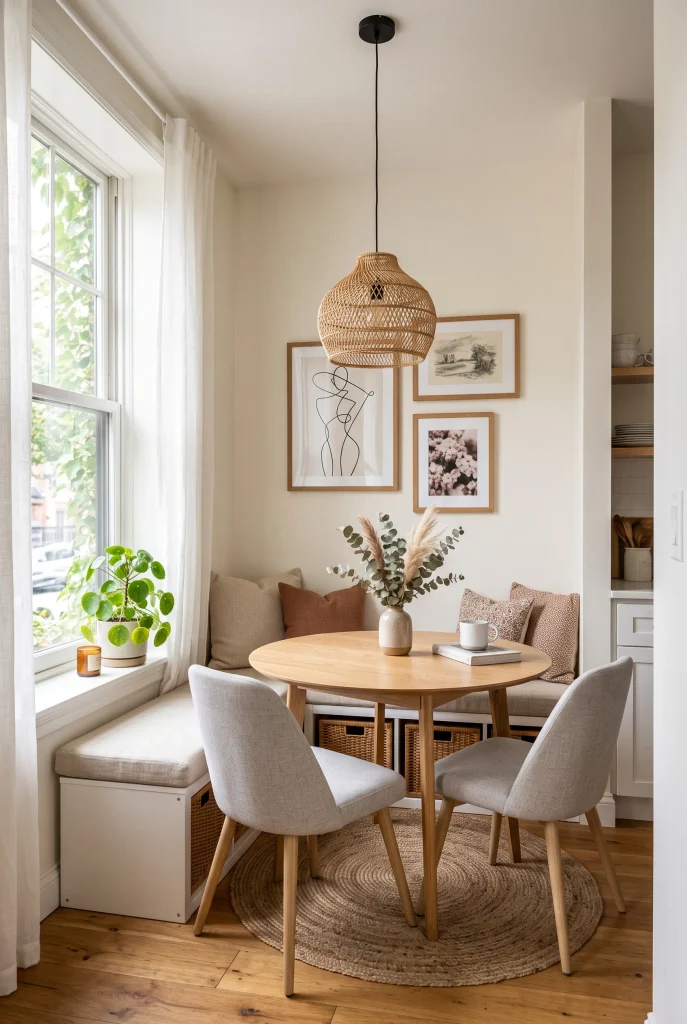
- Turns an unused corner into a useful dining area.
- Round tables improve movement in tight layouts.
- Bench seating can save space and provide hidden storage.
- A small pendant helps define the dining zone.
A compact dining nook can give a small apartment a proper place to eat without needing a full dining room. Start with a small round table, especially if the available area is close to a walkway. Pair it with two lightweight chairs or a bench that can slide underneath when it is not being used. A slim pendant above the table helps define the area while providing useful light. Keep the surrounding decor simple with a small piece of artwork, a plant, or a narrow shelf. That way, the nook feels like a planned part of the apartment rather than furniture squeezed into a leftover corner.
If you need more flexibility, look for a drop-leaf or expandable table. A bench can also double as hidden storage for linens, serving pieces, or things you only use occasionally. Make sure there is enough room to pull chairs out comfortably and that nearby doors and cabinets can still open fully. Round tables are especially handy in tight areas because there are no sharp corners to work around. With a few smart choices, even a small corner can become a comfortable and useful dining spot.
10. Vertical Gallery Wall
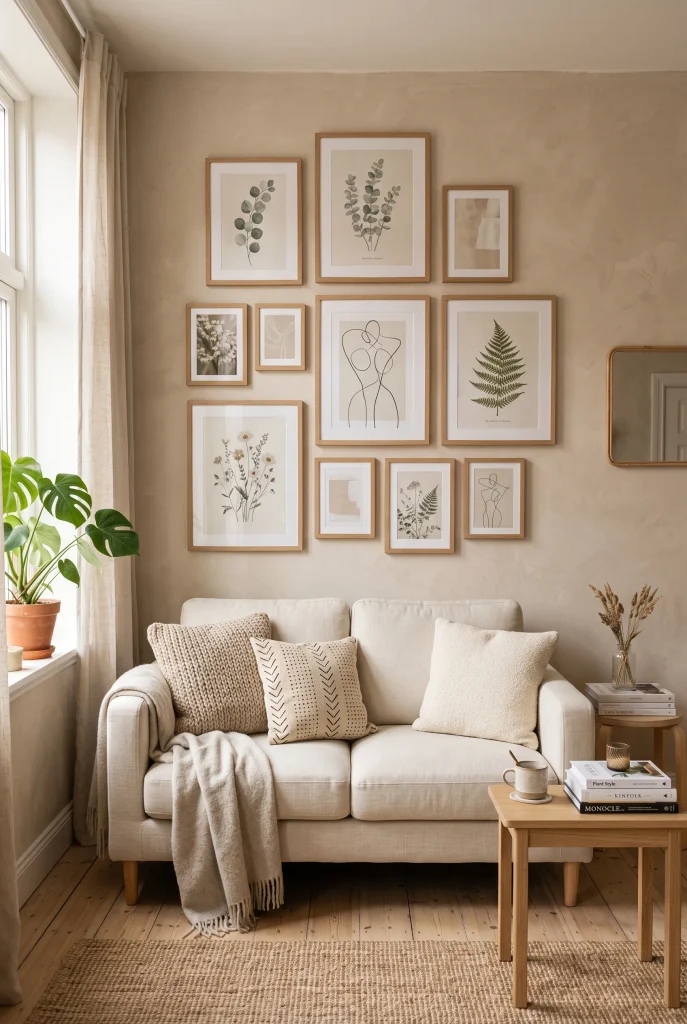
- Draws the eye upward and makes walls feel taller.
- Adds personality without using valuable floor space.
- Mixed artwork creates interest while maintaining a cohesive look.
- A limited color palette keeps the arrangement from feeling busy.
A vertical gallery wall can make a small apartment feel more personal while drawing the eye toward the ceiling. Instead of spreading artwork across several walls, create one focused arrangement above a sofa, console, or bed. Mix photographs, botanical prints, simple illustrations, and perhaps a small mirror while keeping the frame colors coordinated. Neutral artwork in cream, beige, muted green, or warm brown can work beautifully with a soft apartment palette. Start with the largest pieces near the center and build outward so the arrangement feels balanced rather than random.
Before putting holes in the wall, lay the frames on the floor and play around with the spacing. Paper templates can also help you test the layout on the wall first. The gaps do not have to be perfectly identical. A slightly relaxed arrangement often feels more collected and personal. If your apartment has low ceilings, keeping the arrangement taller rather than wider can help emphasize height. It is an easy way to give a blank wall more character without using any additional floor space.
11. Open Shelving
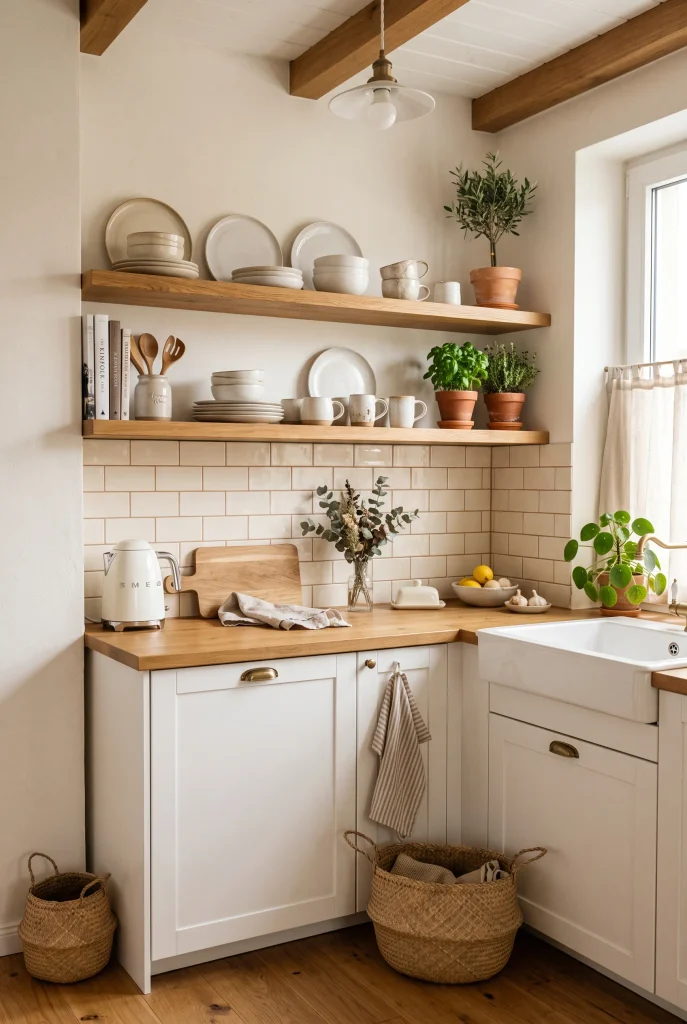
- Keeps frequently used items easy to reach.
- Makes a small kitchen feel visually lighter.
- Adds warmth through natural wood and ceramics.
- Provides space to display useful pieces attractively.
Open shelving can make a compact apartment kitchen feel lighter while giving everyday items an easy place to live. If the layout allows, replace a small section of bulky upper cabinetry with two or three simple wood shelves. Display dishes, mugs, glassware, jars, and a few woven baskets instead of trying to use every inch of shelf space. Keeping the colors coordinated will make the shelves feel intentional. Warm wood looks especially good against cream or white walls because it adds texture without making the kitchen feel heavy.
Since everything is on display, a little organization goes a long way. Keep the things you reach for most often within easy reach and leave less-used pieces inside cabinets. Group similar colors and materials together rather than spreading them randomly across the shelves. It also helps to leave a few empty spots so the arrangement can breathe. If you rent, freestanding shelves can give you a similar look without permanent changes. A few plants or handmade ceramics can add warmth, while baskets are perfect for hiding the less attractive essentials.
12. Soft Window Treatments

- Softens hard window frames and bare walls.
- Allows natural light to enter without sacrificing privacy.
- Floor-length curtains can visually increase ceiling height.
- Neutral fabrics work with many apartment decorating styles.
Soft window treatments can make an apartment feel warmer and more finished without using any extra floor space. Lightweight linen or cotton curtains in cream, ivory, or soft beige allow daylight to filter through while keeping the room soft and inviting. If possible, mount the curtain rod slightly above the window frame and extend it wider than the glass. This can make the window look larger and give the room a little more visual height. Floor-length panels also draw the eye upward, which is helpful in apartments with lower ceilings.
If privacy is a concern, pair sheer curtains with thicker side panels that can be closed when needed. Washable fabrics can be a practical choice in rooms that collect dust or get a lot of daily use. Just make sure the curtains do not cover heaters, vents, or doors when they are open. Window treatments may seem like a small detail, but they can soften the hard lines of an apartment and make the room feel much more welcoming. Paired with natural wood and warm neutral colors, simple curtains can completely change the mood of the space.
13. Indoor Plant Corner
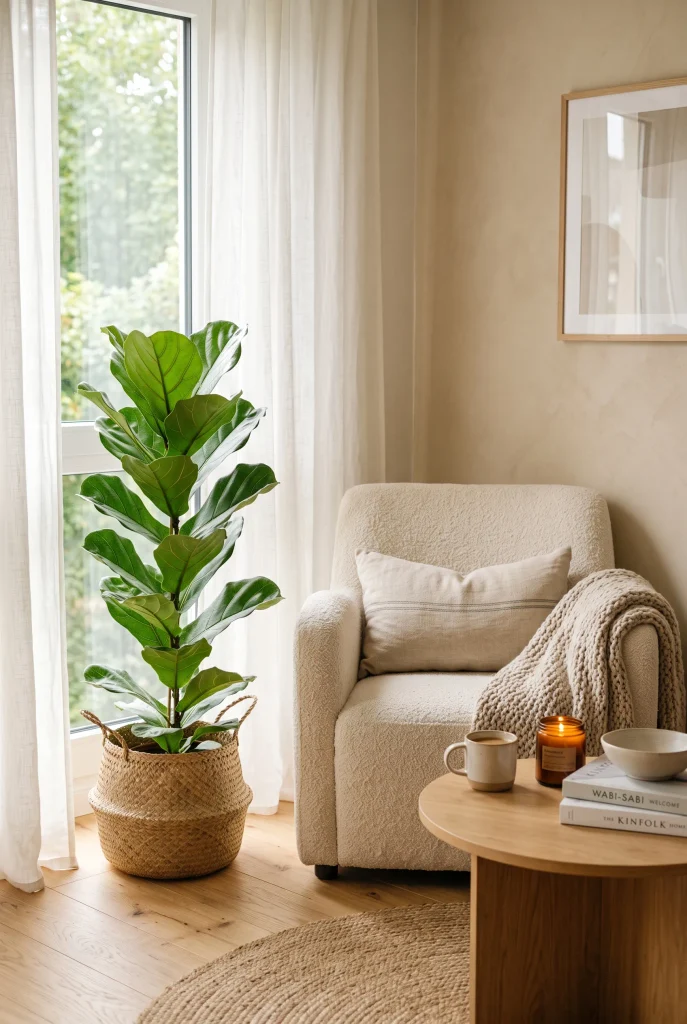
- Adds natural color without making the room feel crowded.
- Softens hard furniture edges and empty corners.
- Helps an apartment feel more connected to nature.
- One larger plant can have more impact than many small ones.
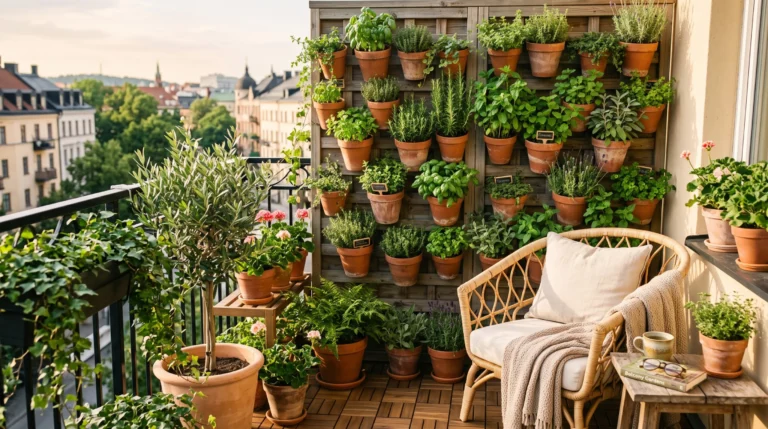
An indoor plant corner can bring life into a small apartment without taking up much room. Choose one larger plant, such as a fiddle leaf fig, rubber plant, or bird of paradise, and place it in a woven or ceramic planter that suits the rest of your decor. A sunny corner near a window can be ideal, but choose a plant based on the light it actually needs rather than simply picking the one you like most. Keep the surrounding area simple so the greenery becomes a natural focal point. It adds a fresh break among neutral furniture, wood finishes, and soft textiles.
You do not need a whole collection of plants to get this look. One healthy plant can soften an empty corner, while a smaller plant on a shelf can add another touch of greenery. A plant stand is useful when you want more height without buying an oversized plant. Make sure the pot has proper drainage and protect wood floors from excess water. If the apartment does not get much natural light, choose a lower-light variety or consider a discreet grow light. The idea is to make the plant part of the room, not another source of clutter.
14. Floating Nightstands
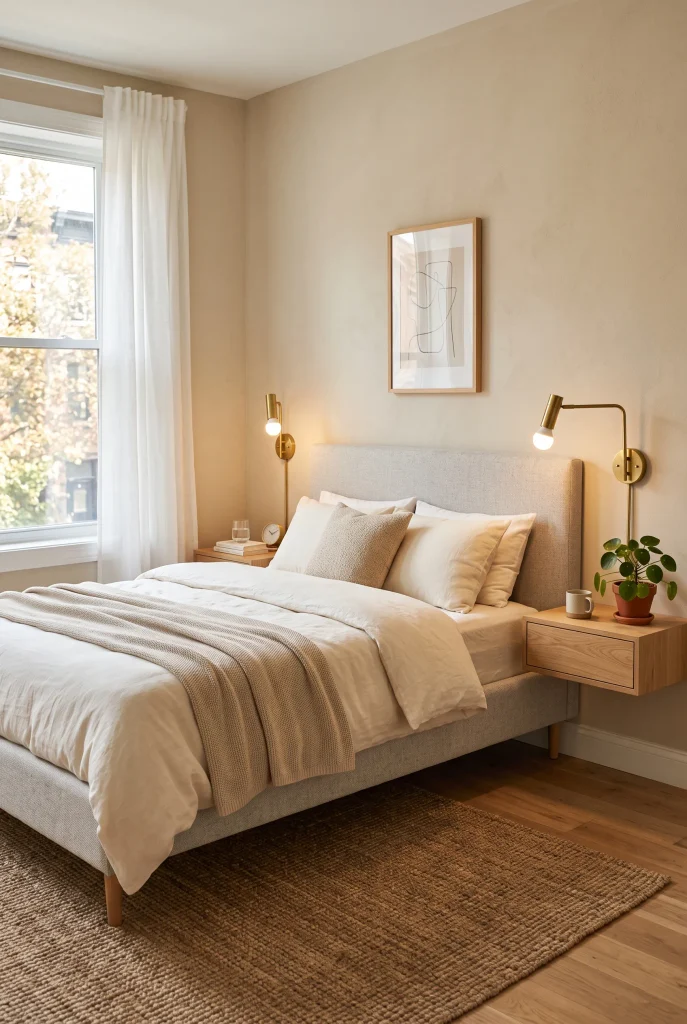
- Frees floor space around the bed.
- Makes a small bedroom look cleaner and less crowded.
- Provides a practical surface for nighttime essentials.
- Wall-mounted storage can be customized to fit narrow spaces.
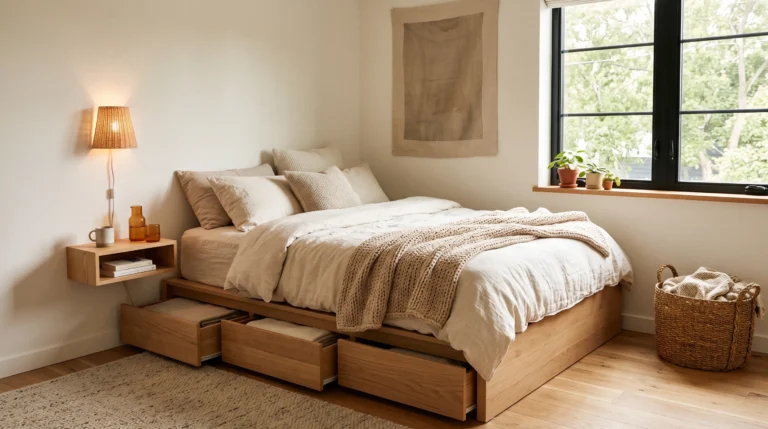
Floating nightstands are a smart option when a small bedroom does not have enough room for traditional bedside tables. Mounted directly to the wall, they give you space for a lamp, phone, book, or small decorative piece while keeping the floor underneath open. Choose a simple wood finish that works with the bed or flooring. Adding a wall-mounted sconce above the nightstand can free up even more surface space. Together, these choices create a clean bedside area without taking away the things you actually need.
Measure carefully before installing anything and make sure the wall and mounting hardware can handle the weight. Keep the nightstand fairly shallow so there is still plenty of room to move around the bed. A small drawer can hide chargers and personal items, while an open shelf is handy for books. Floating furniture also makes cleaning easier because there are fewer awkward corners around the floor. In a compact bedroom, that little bit of extra openness can make the whole space feel easier to manage.
15. Built-In Entry Storage
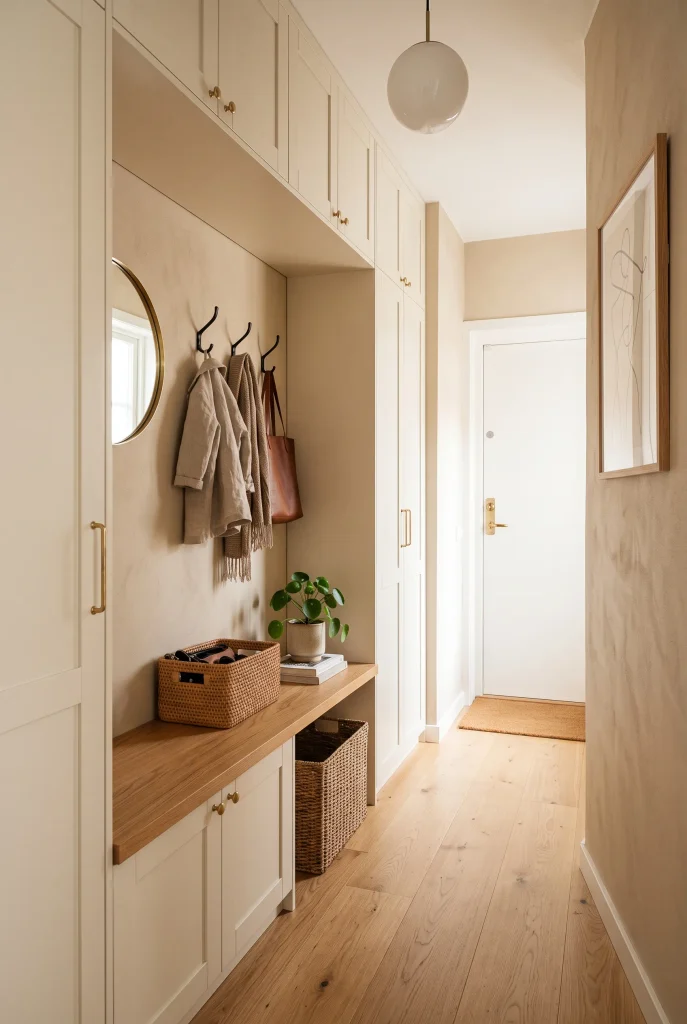
- Keeps shoes, bags, and coats from spreading into living areas.
- Uses narrow vertical space efficiently.
- A built-in bench provides convenient seating.
- Closed storage keeps a small entry looking calm and tidy.
A well-planned entryway can make a small apartment feel organized from the moment you walk through the door. Use a narrow cabinet, wall hooks, or a combination of closed storage and open shelving to keep shoes, bags, coats, and everyday essentials contained. A compact bench gives you somewhere to sit while putting on shoes, while baskets underneath can hide smaller things. Keeping the storage close to the wall color can also help it blend into the space instead of becoming another visual barrier.
If a permanent built-in is not possible, you can create a similar setup with a slim freestanding cabinet and a few wall-mounted hooks. The important thing is giving the things you use every day an obvious home. Keep seasonal belongings elsewhere so the entry does not become a catch-all. A small mirror can brighten the area while also being useful when you are heading out. Since apartment entryways are often narrow, keeping the floor clear can make a surprisingly big difference. Good entry storage can stop clutter from spreading into the rest of the home.
16. Cozy Reading Nook
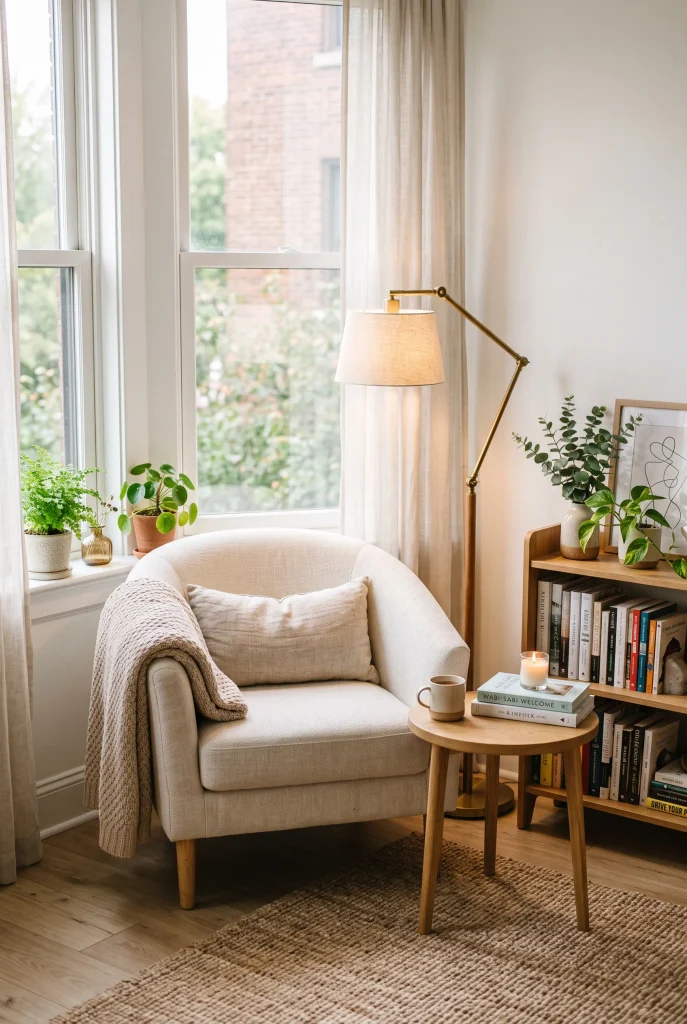
- Turns an unused corner into a purposeful space.
- Adds a relaxing zone without needing much furniture.
- A slim chair works well in narrow apartments.
- Layered lighting makes the nook useful throughout the day.
A small reading nook can turn an overlooked apartment corner into one of the most inviting parts of the home. Start with a comfortable compact chair near a window or another source of natural light. Add a narrow side table for a book and drink, then bring in a warm floor lamp for the evening. A soft throw and small rug can define the area without taking up much room. If the rest of your apartment has a calm palette, neutral upholstery and natural wood will help the nook blend in naturally. It should feel like a cozy little escape rather than another heavily decorated area.
Keep the nook simple enough that you will actually want to use it. Avoid placing the chair where it blocks a doorway, heating vent, or main walking path. A small wall shelf can hold a few favorite books without needing a full bookcase. If space is extremely tight, choose an armless chair or compact lounge chair with a smaller footprint. Add a good light, a soft throw, and somewhere to set your drink, and you have a comfortable spot for reading, relaxing, or enjoying a quiet coffee.
17. Layered Area Rugs
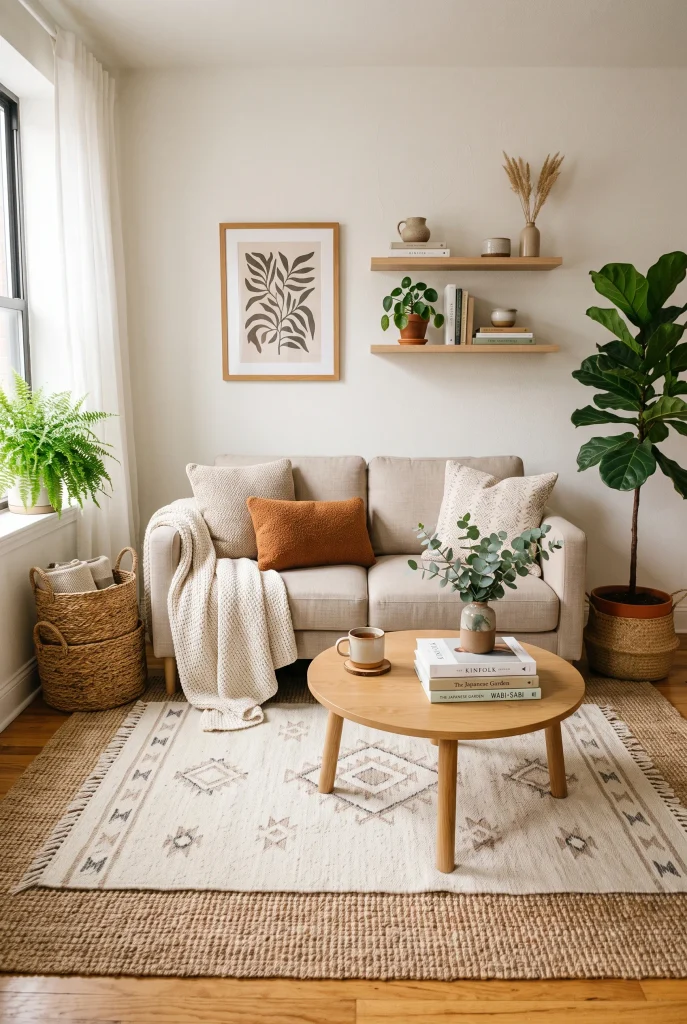
- Defines separate zones without adding physical dividers.
- Adds softness and warmth to hard flooring.
- Layering creates depth in a simple neutral room.
- Rugs can visually connect furniture into one cohesive arrangement.
Layering rugs is an easy way to add depth and define areas in a small apartment. Start with a larger natural jute or woven rug, then place a smaller patterned or plush rug over it beneath the main seating area. The larger rug helps anchor the furniture, while the smaller one brings in softness and visual interest. Keep both rugs within a related color palette so they look intentional together. This trick works especially well in open-plan apartments where the living room, dining area, and entry need some definition without physical walls.
Choose the rug sizes carefully so the furniture sits comfortably on the main layer and the edges do not become tripping hazards. Low-pile rugs are often easier to maintain in busy apartment areas. If the room already has several patterns, keep the rugs fairly simple and let texture do most of the work. A layered arrangement can also help define a small workspace or bedroom corner without installing a permanent divider. It gives the apartment a little more structure while keeping that open feeling intact.
18. Warm Accent Colors
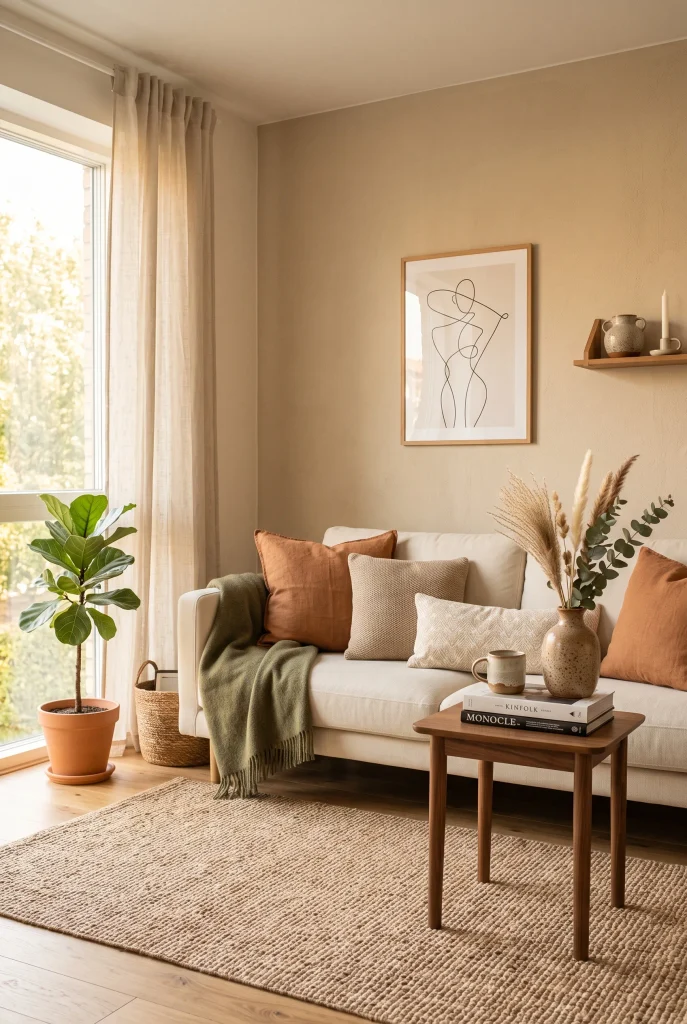
- Adds personality without overwhelming a neutral room.
- Small accents are easy to replace when your style changes.
- Warm shades make simple furniture feel more inviting.
- Repeating one accent color creates visual connection.
Warm accent colors can give a neutral apartment much more personality without requiring a major decorating change. Start with a calm base of cream, beige, or soft taupe, then bring in one or two shades such as terracotta, muted olive, rust, ochre, or warm brown. Use these colors through cushions, artwork, throws, ceramics, or a small accent chair. Repeating the same shade in a few different areas helps the apartment feel connected. Since these stronger colors are mostly used on smaller pieces, you can change them with the seasons without replacing your main furniture.
The easiest way to keep accent colors from becoming overwhelming is to choose one main shade and perhaps one softer supporting color. Then repeat them naturally throughout the apartment. For example, terracotta cushions can connect with a ceramic vase and a small detail in the artwork. These little repetitions make separate areas feel like part of the same home. Earthy shades can be especially inviting in warm afternoon light. Used in small doses, accent colors bring personality while allowing the neutral foundation to stay calm and flexible.
19. Hidden Storage Bench
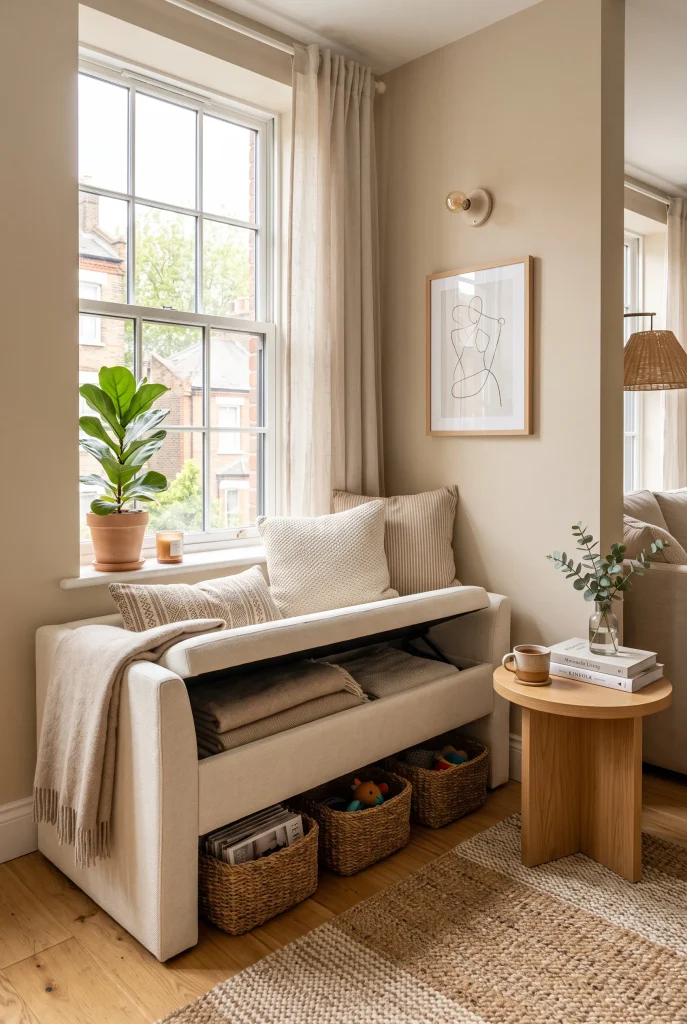
- Adds useful storage without requiring another large cabinet.
- Creates extra seating for guests or everyday use.
- Works especially well beneath windows or along empty walls.
- Keeps blankets and seasonal items neatly out of sight.
A storage bench can solve two small-apartment problems at once by giving you both seating and hidden storage. Place one beneath a window, along an empty wall, or near the dining area where it can provide an extra seat when guests arrive. Choose an upholstered design in cream, beige, or muted gray so the piece feels visually light. Inside, you can keep blankets, pillows, seasonal accessories, or other things that tend to create clutter. A simple bench with clean lines can blend into the room without looking like another large storage unit.
Think about what you actually want to store before choosing the size and style. A lift-top bench works well for bulky soft items, while drawers may be better for smaller belongings you reach for often. Make sure there is enough clearance for the lid or drawers to open comfortably. If the bench sits beneath a window, check that it does not block the view or interfere with the curtains. This kind of furniture is especially useful in apartments because it adds function without demanding a separate storage area, helping the room stay comfortable and tidy.
20. Gallery-Style Shelves
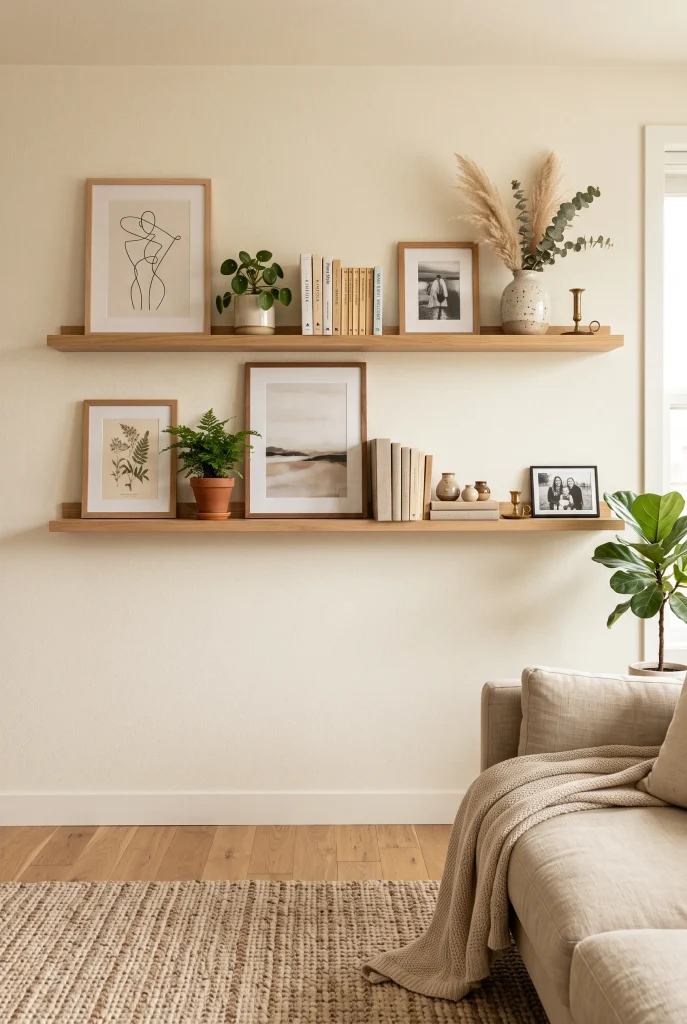
- Adds personality while using very little floor space.
- Makes it easy to change artwork and accessories.
- Creates a collected look without a permanent gallery wall.
- Narrow ledges work well in apartments with limited wall depth.
Picture ledges are a flexible way to decorate apartment walls without committing to a permanent gallery arrangement. Install one or two narrow shelves above a sofa, desk, or console, then layer framed artwork, photographs, small books, and a few decorative objects. Instead of lining everything up perfectly, overlap different frame sizes slightly to create depth. Keep the colors connected to the rest of the room so the display feels collected rather than chaotic. One of the nicest things about picture ledges is that you can move the pieces around whenever you want a fresh look.
A good display usually needs a little restraint. Start with one larger artwork as the anchor, then add smaller pieces around it. Leave some empty shelf space so the arrangement can breathe, especially if the apartment already has plenty of texture. Small plants and ceramics can soften the harder lines of the frames and make the display feel more lived-in. Secure the ledges properly and avoid placing heavy objects where they could fall into busy walking areas. This gives you the visual impact of wall art while keeping seasonal updates simple.
21. Reflective Furniture
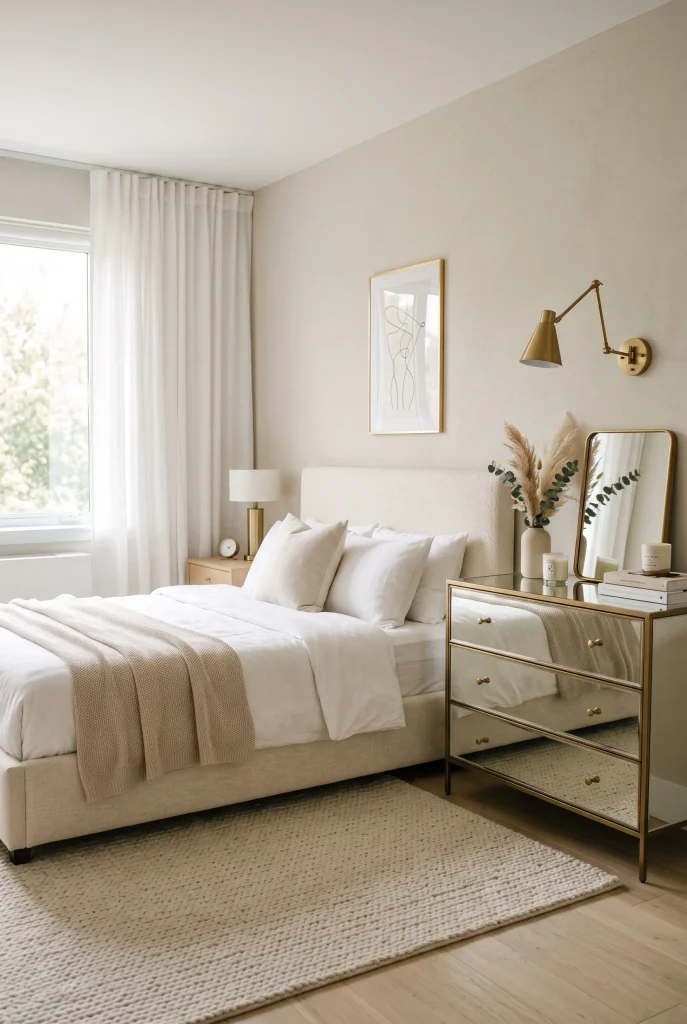
- Helps bounce light around darker apartment rooms.
- Adds a subtle sense of openness and depth.
- Can make practical storage feel lighter visually.
- Reflective finishes work well with warm wood and soft textiles.
Reflective furniture can make a small apartment feel brighter while adding a polished decorative touch. Consider a slim mirrored nightstand, glass coffee table, lacquered console, or dresser with subtle reflective panels. These surfaces catch natural and artificial light and help it move around the room instead of being absorbed by darker furniture. Keep the surrounding pieces simple so the reflective finish feels elegant rather than excessive. Glass or mirrored surfaces work particularly well with warm wood, linen, and woven textures because those softer materials keep the room from feeling too cold or formal.
Use reflective finishes selectively because too many shiny surfaces can make a compact room feel visually busy. In many cases, one mirrored dresser or glass table is enough to create the effect. Keep the surface fairly clear so it can reflect light cleanly, and avoid placing it where it will reflect clutter. Soft curtains, textured rugs, and matte walls provide a nice contrast to the reflective pieces. With thoughtful placement, these details can add brightness and depth to a small apartment while keeping the overall space comfortable and welcoming.
Conclusion
A small apartment does not have to feel cramped or limited. When each piece has a purpose, smart layouts, multifunctional furniture, vertical storage, reflective surfaces, soft textiles, and thoughtful lighting can make compact rooms feel more open and comfortable. Even the smallest corners can become useful and beautiful when they are designed around the way you actually live.
Start with the areas that bother you most, whether it is clutter, limited storage, awkward furniture placement, or a space that simply feels a little plain. Then make a few changes at a time instead of trying to redo everything at once. With the right mix of function, comfort, and personality, a small apartment can feel warm, inviting, and polished without losing the feeling of home.