21 Fantasy Medieval Bedroom Ideas That Feel Magical
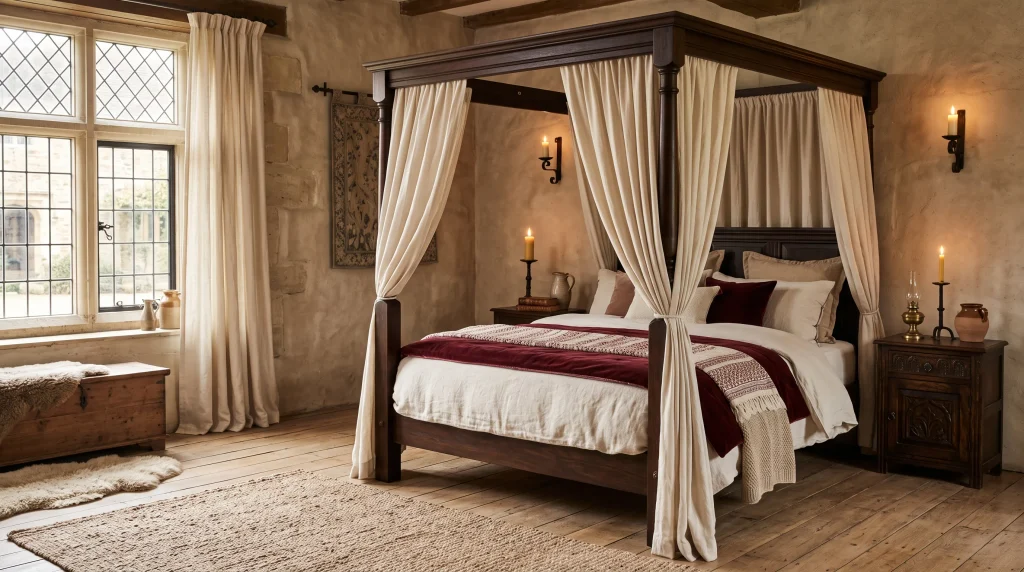
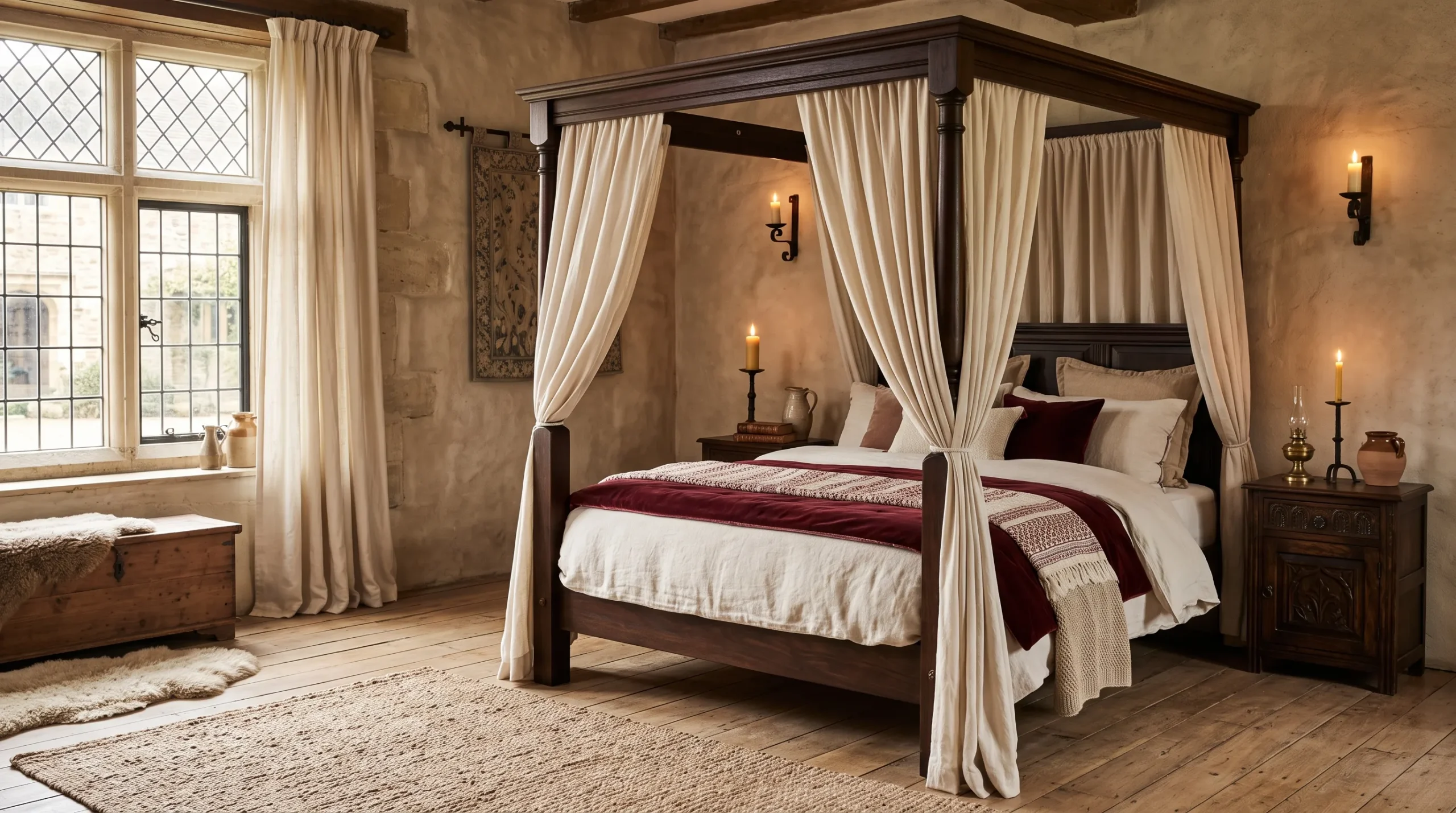
Imagine walking into a bedroom that feels like a hidden castle retreat, filled with rich wood, soft fabrics, warm light, and timeless details. A fantasy medieval bedroom can create exactly that feeling without making your space look like a movie set.
Whether you love Gothic arches, carved wood, stone textures, dramatic bedding, or cozy candle-inspired lighting, the right combination can transform an ordinary room into something unforgettable. These ideas focus on practical ways to bring that magical atmosphere into a real home while keeping the space comfortable and functional. From statement beds to small decorative touches, you’ll find plenty of inspiration to create a bedroom that feels warm, mysterious, and beautifully personal.
1. Four Poster Bed
- Creates a dramatic focal point without needing excessive decoration.
- Dark wood adds warmth and old-world character.
- Linen curtains soften the heavier bed frame.
- Layered bedding makes the space feel comfortable and inviting.
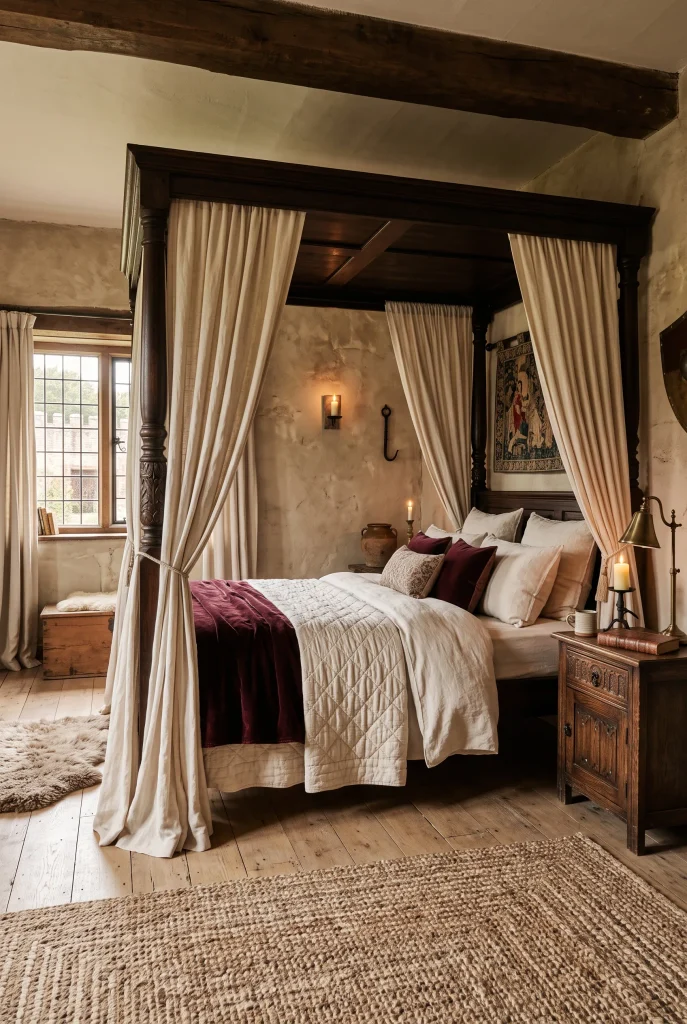
Turn an ordinary bedroom into a storybook retreat with a dramatic four poster bed. Choose a solid wood frame in dark oak or walnut, then soften it with cream linen curtains that can hang loosely from the top rails. This combination gives the room height, warmth, and an old world character without making it feel like a themed set. Add layered bedding in ivory, muted green, and deep burgundy for gentle contrast. A simple woven rug under the bed can balance the heavier furniture and make the entire arrangement feel comfortable enough for everyday living.
A four poster bed creates a strong focal point, which makes the rest of the room easier to style. Keep nearby furniture simple so the bed remains visually dominant, using a small wood nightstand, an antique inspired lamp, and a few carefully chosen accessories. For a convincing fantasy medieval bedroom, avoid filling every surface with ornate objects; a restrained palette usually feels more sophisticated. Soft curtains can also frame the sleeping area and add privacy, while warm bedside lighting highlights the wood grain after sunset. The result feels dramatic, cozy, and practical rather than like a costume room.
2. Stone Accent Wall

- Adds architectural character without changing the entire room.
- Natural stone brings texture and an authentic old-world feel.
- Warm bedding keeps the rough surface from feeling cold.
- A single accent wall creates impact while keeping the room balanced.
A stone wall can instantly give the bedroom the feeling of an old castle retreat, especially when it sits directly behind the bed. Choose irregular stone in warm gray, beige, or soft taupe rather than a highly polished finish. The uneven texture catches daylight beautifully and creates subtle shadows that make the room feel layered. Pair it with a simple wooden bed and soft linen bedding to keep the contrast comfortable. If real masonry is impractical, textured stone veneer or a high quality wall treatment can create a similar visual effect without major construction.
The key is to let the stone remain the star instead of covering it with too many decorations. Warm brass sconces, a narrow wood shelf, or one framed medieval inspired artwork can add detail without competing with the wall. This approach works especially well in rooms where the furniture is fairly simple, because the architectural texture supplies most of the visual interest. Add a soft rug and warm bulbs to balance the cooler stone tones, creating a bedroom that feels rustic, atmospheric, and still comfortable for daily use.
3. Carved Wood Headboard

- Gives the bed an instantly handcrafted appearance.
- Traditional carving adds detail without requiring many accessories.
- Forest green and ivory create a rich but livable palette.
- A tall headboard can make a modest bedroom feel more grand.
Few details create an old-world atmosphere as quickly as a beautifully carved wooden headboard. Look for designs with arches, floral motifs, geometric borders, or understated medieval-inspired patterns rather than overly elaborate carving. A tall headboard also draws the eye upward, making the bed feel more substantial and giving the room a stronger focal point. Keep the bedding simple in ivory, cream, or soft beige so the craftsmanship remains visible. Add one or two deep green cushions for color, creating a rich combination that feels inspired by historic interiors without becoming visually heavy.
A carved headboard works particularly well when the rest of the furniture stays restrained. Choose matching wood tones for the nightstands, then introduce small brass accents through sconces, drawer pulls, or a bedside lamp. Avoid mixing too many competing wood finishes, since that can make the room feel busy. For a more authentic look, slightly aged or distressed timber can add character while still feeling polished. The finished space should feel collected rather than decorated all at once, with enough texture and detail to suggest a magical medieval retreat while remaining practical for everyday comfort.
4. Velvet Draped Curtains
- Adds richness and drama through one strong textile.
- Deep colors make the room feel intimate and atmospheric.
- Cream bedding keeps the darker palette balanced.
- Floor-length fabric makes the space feel taller and more elegant.
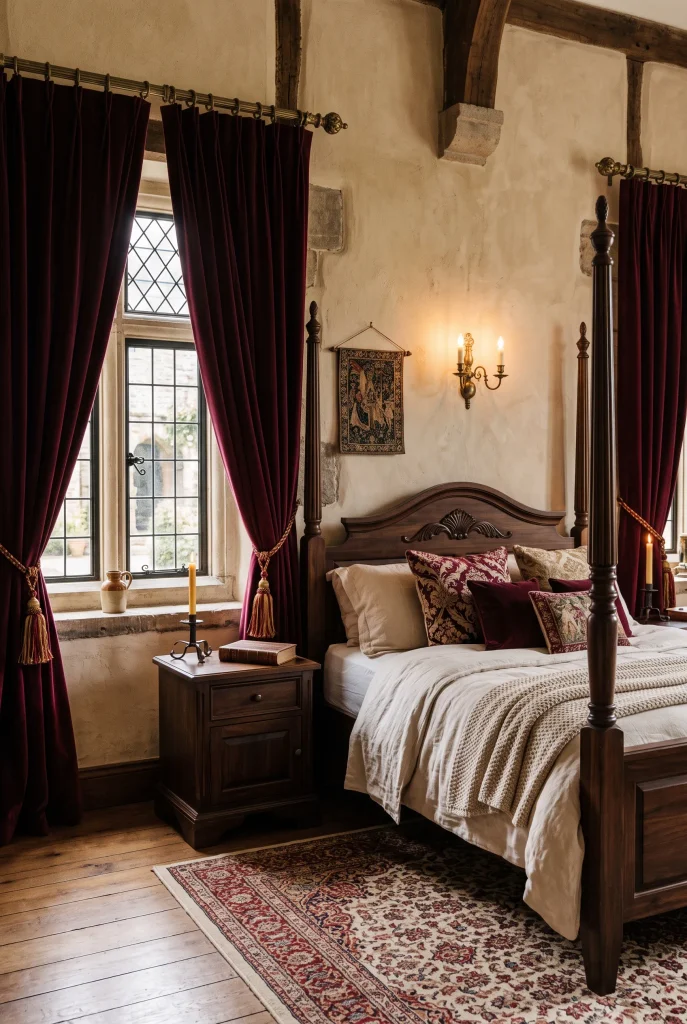
Bring a touch of old-world drama to the bedroom with heavy velvet curtains around a simple window or bed area. Choose deep burgundy, forest green, muted plum, or warm brown, depending on the rest of the palette. The rich fabric absorbs light and gives the room a softer, more intimate atmosphere. Pair velvet with cream linen bedding so the space does not become too dark. One strong textile can make a bigger visual difference than several small decorative pieces. Add simple brass curtain rods and let the fabric fall generously toward the floor for an elegant finish.
Velvet curtains are especially useful when you want the room to feel atmospheric without adding permanent architectural details. During the day, open them to let natural light brighten the space, then close them in the evening for a cozy, enclosed feeling. Choose lined panels if you also want better privacy and insulation. Keep nearby decorations understated, using a wood chest, antique inspired mirror, or small lantern as supporting details. This approach works beautifully in a fantasy medieval bedroom because the fabric introduces softness beside heavier wood, stone, and metal elements while keeping the overall design comfortable and practical.
5. Cozy Reading Nook
- Creates a quiet spot beyond the main sleeping area.
- Natural materials make the corner feel warm and grounded.
- A floor lamp keeps the nook useful after sunset.
- Small furniture pieces work well even in compact bedrooms.
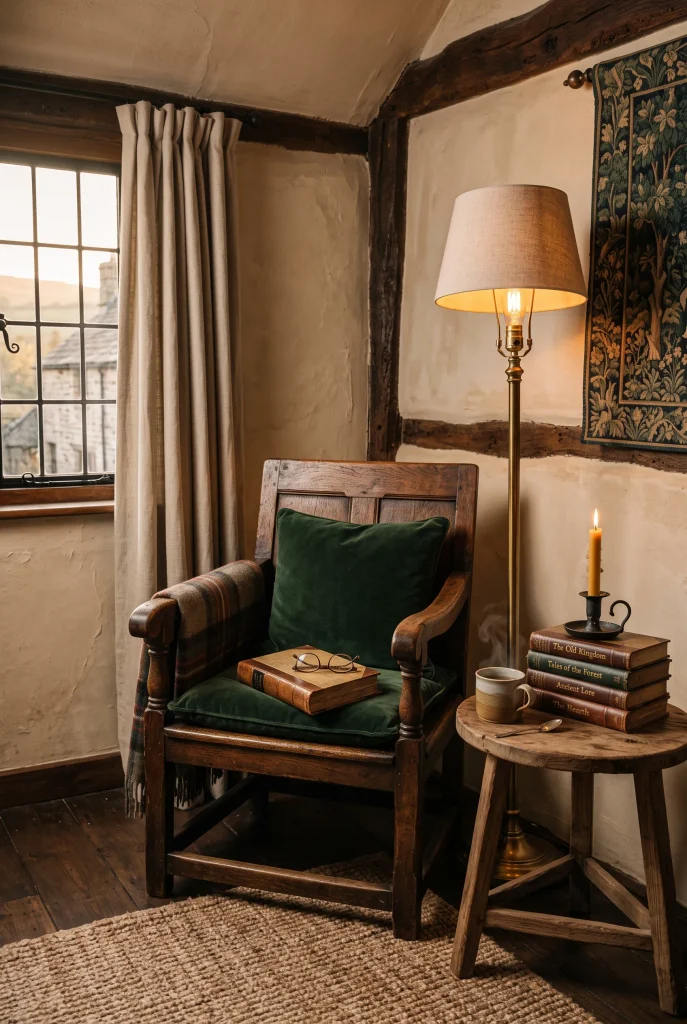
Create a cozy reading corner with a worn wooden chair, a round table, and a warm floor lamp tucked beside a window. Choose natural materials such as oak, leather, linen, and woven fiber to keep the arrangement grounded. A deep green or brown cushion adds color without making the corner feel overly styled. Leave enough space around the chair for easy movement, especially if the bedroom is compact. A small stack of books, a ceramic mug, and one brass candleholder can make the corner feel useful rather than staged. The result adds charm while giving the room a useful zone.
A reading nook can make a bedroom feel more personal because it creates a quiet place beyond the bed. Position the chair where morning or afternoon daylight is strongest, then add a warm lamp for evening reading. Keeping these corners visually simple makes them feel more inviting, especially when the bedroom already has dramatic furniture. A small rug can define the area without blocking circulation, while a wooden stool can double as a footrest or side table. These practical details help the nook feel like part of the room instead of an isolated decorative display.
View: 21 Masculine Home Office Decor Ideas That Feel Luxe
6. Wrought Iron Canopy
- Adds medieval character without making the bed feel visually heavy.
- Black iron creates strong contrast against soft neutral textiles.
- Sheer fabric adds romance while keeping the frame visible.
- Natural textures soften the harder metal elements.
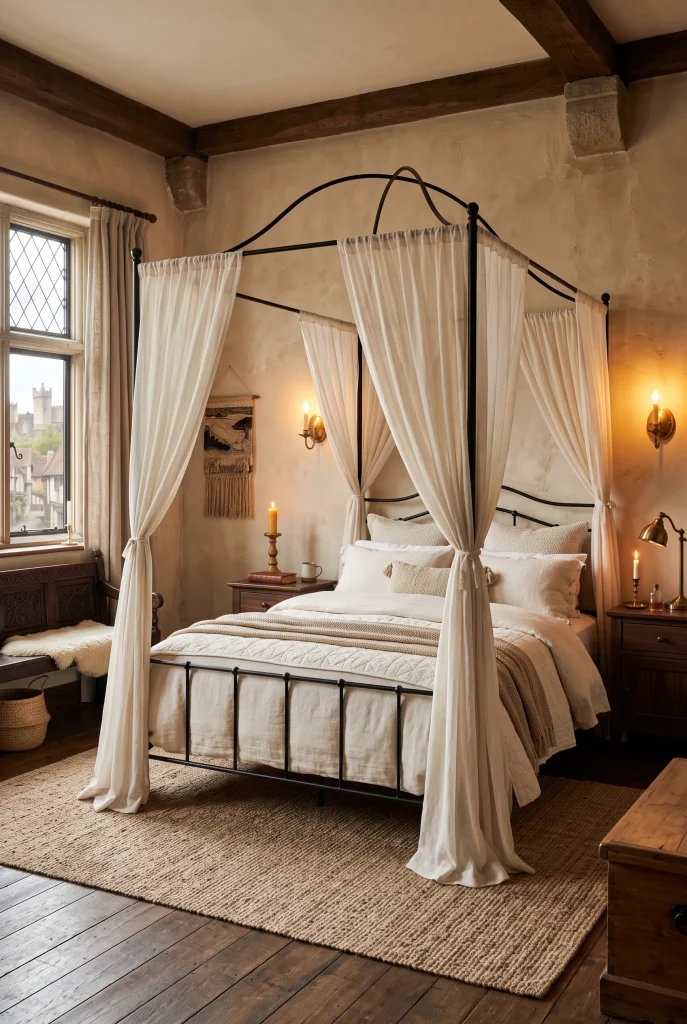
A wrought iron canopy can bring medieval character to the bed while keeping the overall design lighter than a heavy wooden frame. Look for simple black iron lines, arched corners, and subtle decorative details rather than overly ornate scrollwork. Dress the canopy with sheer ivory fabric or leave it open so the metal structure remains visible. Pair it with cream bedding, dark wood furniture, and warm brass lighting for a balanced palette. The combination of black metal and soft textiles creates strong contrast, while a natural fiber rug helps connect the harder materials with the comfortable parts of the room.
The beauty of an iron canopy is that it provides architectural interest without taking up much visual space. This makes it especially useful when you want a medieval-inspired look in a smaller bedroom. Keep the surrounding furniture relatively low and simple so the canopy remains easy to appreciate. Warm bulbs, textured bedding, and a few aged-looking accessories can add atmosphere without making the room feel crowded. For a fantasy medieval bedroom, this setup also gives you flexibility: fabric can be changed seasonally, while the durable iron frame remains a long-term foundation for the design.
7. Arched Wooden Door

- Makes the entrance feel like part of the medieval design.
- Arched shapes add architectural interest and softness.
- Dark wood creates a strong contrast against light walls.
- Iron hardware adds a subtle historic detail.
An arched wooden door can make the entire bedroom feel more architectural and distinctive. Choose natural oak or walnut with visible grain, simple vertical planks, and dark iron hinges or a handle. The rounded top immediately introduces a castle-inspired shape without requiring decorative objects throughout the room. If replacing the actual door is not practical, an arched doorway or painted trim can create a similar impression. Keep surrounding walls in warm cream, beige, or muted stone tones so the darker wood stands out. This small architectural feature can make the entrance feel intentional and connected to the room’s overall design.
The door works best when its materials are repeated subtly elsewhere in the bedroom. Match the wood with a nightstand, bench, or chest, then echo the black iron through small hardware or lighting fixtures. Avoid adding too many medieval symbols or heavily themed accessories, because the architecture already provides character. A soft runner near the entrance can also make the transition into the room feel more inviting. When combined with natural textures and warm lighting, the result feels like a thoughtfully designed retreat rather than a theatrical interpretation of a castle bedroom.
8. Antique Wooden Chest

- Adds practical storage while reinforcing the old-world aesthetic.
- Aged wood introduces texture and visual weight.
- Iron hardware gives the chest authentic character.
- Placing it at the bed’s foot creates a useful finishing point.
An antique wooden chest at the foot of the bed combines storage with strong medieval character. Look for a sturdy chest in aged oak, walnut, or reclaimed wood, preferably with visible grain and simple iron hardware. It can hold extra blankets, seasonal bedding, pillows, or even books, keeping everyday clutter out of sight. Choose a size that leaves a comfortable walkway around the bed. A chest with a slightly weathered finish adds personality without requiring many additional decorations. This is especially useful when you want the bedroom to feel richly furnished while still keeping surfaces and storage organized.
For a more polished arrangement, place a folded wool blanket or textured throw across the chest rather than covering its entire surface. Keep the top mostly clear so the beautiful wood remains visible. Functional vintage-style pieces often make themed rooms feel more believable because they serve a real purpose. Pair the chest with a carved bed, woven rug, and warm lighting to create continuity. The combination gives the room a collected, historic feeling while providing everyday storage that makes the space easier to keep tidy.
9. Castle-Inspired Fireplace
- Creates a powerful architectural focal point.
- Stone and wood provide natural texture and warmth.
- A compact design can work in modern homes.
- Firelight adds a cozy glow during evenings.
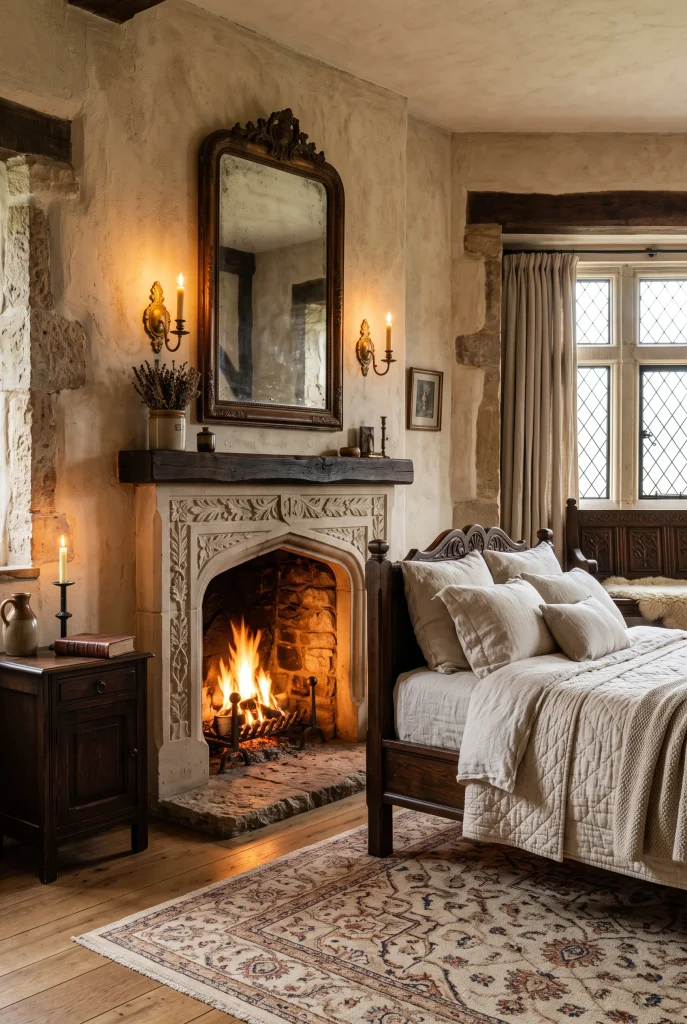
A fireplace can become the defining feature of a medieval-inspired bedroom, especially when surrounded by natural stone or a carved wood mantel. If a working fireplace is not possible, an electric or decorative model can still create the visual effect without major construction. Choose an arched opening, warm limestone, or textured plaster surround to suggest historic architecture. Keep the mantel simple with one antique mirror, ceramic vessel, or small candle grouping. The goal is to create a convincing focal point that feels integrated into the bedroom rather than turning the space into an overly themed display.
Safety and scale matter when adding a fireplace to a bedroom, so follow the installation requirements for the specific fireplace type and keep fabrics and furniture at appropriate distances. Once the practical details are handled, focus on warmth through materials rather than excessive decoration. Dark wood, cream textiles, and muted stone create a timeless combination around the fire. Soft lighting can echo the glow of the flames after sunset, while natural daylight keeps the room balanced during the day. Together, these elements create an inviting retreat with subtle castle-inspired character.
10. Tapestry Wall Art
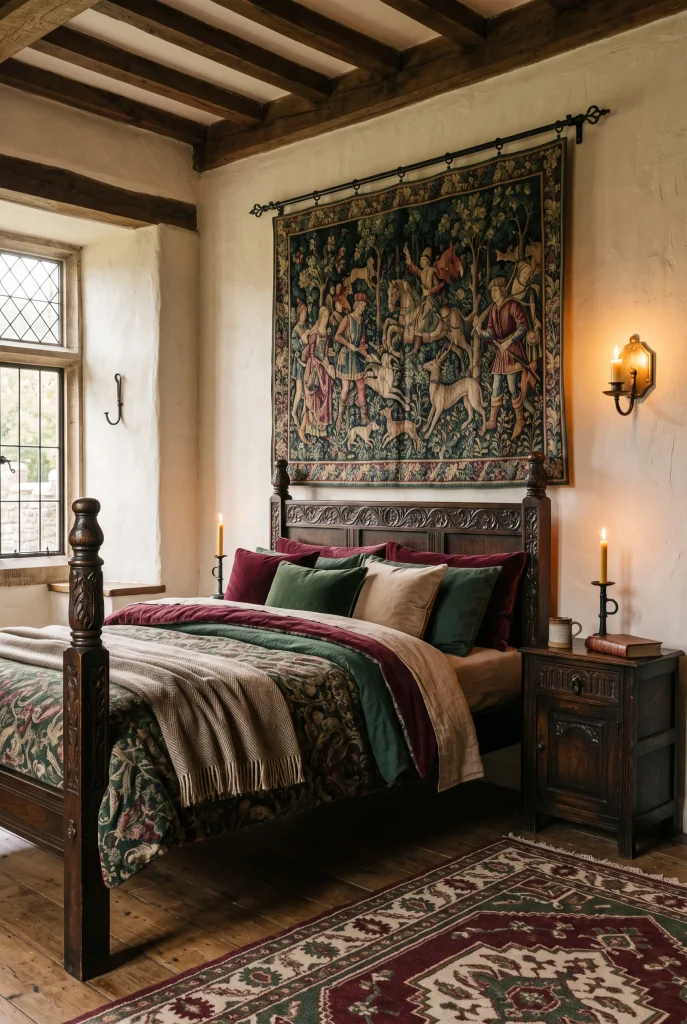
- Adds softness and pattern without covering every wall.
- Large-scale textile art creates an instant focal point.
- Muted colors keep the room sophisticated and livable.
- The fabric helps soften hard wood and stone surfaces.
A large tapestry can bring instant character to a bedroom while adding warmth and texture to otherwise plain walls. Choose a design with muted forest green, burgundy, beige, brown, or faded blue rather than bright colors. Botanical patterns, medieval-inspired landscapes, and traditional woven motifs can all work beautifully. Hang the tapestry above the bed or on the largest uninterrupted wall so it has enough space to make an impact. The textile should complement the bedding and furniture rather than compete with them, creating a layered room where every material feels connected.
Tapestries are also useful when you want to introduce pattern without committing to permanent wallpaper. Choose a substantial piece with enough visual weight to balance a large bed, then keep the surrounding accessories simple. A wooden frame or discreet hanging rod can give the textile a cleaner finish if you prefer a more refined appearance. In a fantasy medieval bedroom, the combination of woven fabric, aged wood, and warm lighting creates depth naturally. A tapestry can also help absorb sound slightly, making the bedroom feel softer and more comfortable while adding a memorable decorative feature.
11. Gothic Arched Mirror
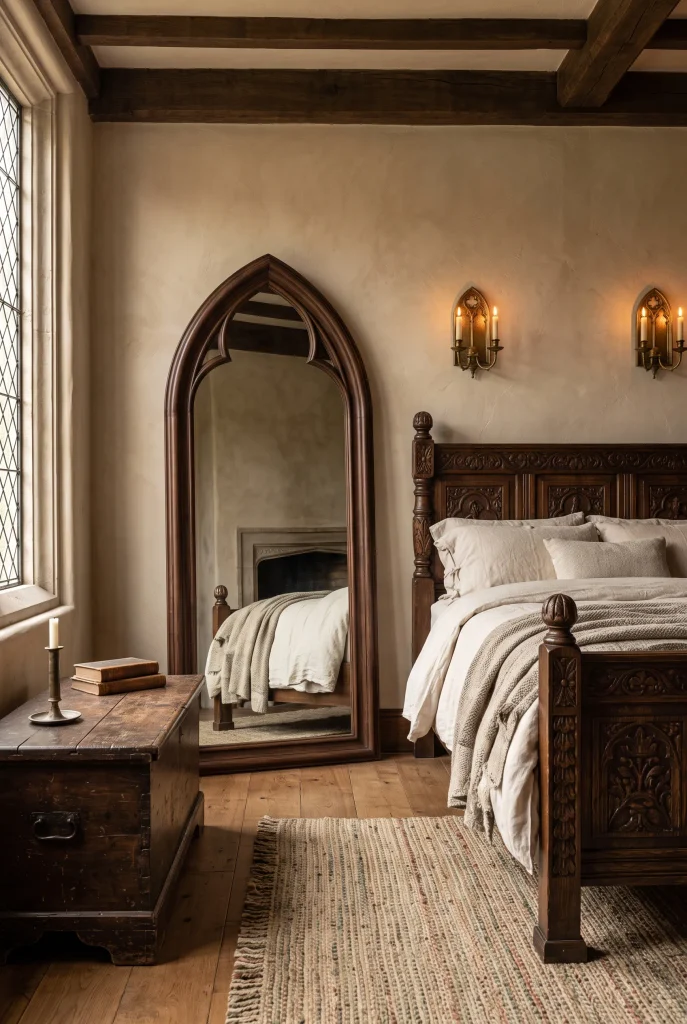
- Adds height and makes the room feel more spacious.
- The pointed arch introduces recognizable Gothic character.
- A dark frame ties together wood and metal accents.
- Mirrors reflect light and brighten darker medieval palettes.
A tall Gothic mirror can add dramatic architecture without taking up much floor space. Look for a pointed or softly curved arch with a dark wood, aged bronze, or black frame. Place it where it can reflect a window, lamp, or attractive part of the room rather than a cluttered corner. The reflection will help distribute natural light, which is especially useful when working with darker medieval-inspired colors. A large mirror beside a wardrobe, near the entrance, or leaning securely against a wall can make the room feel taller while adding a strong decorative shape.
The frame should coordinate with the other finishes in the room so the mirror feels intentional. If your bed is dark walnut, a similar wood tone creates continuity; black metal can work when you already have iron hardware or sconces. Avoid placing several ornate mirrors together, because one strong architectural piece is usually enough. For a fantasy medieval bedroom, the pointed silhouette creates visual interest while the reflective surface keeps the room from feeling too enclosed. Add warm textiles and restrained accessories around it to maintain a comfortable balance.
12. Heraldic Bedding
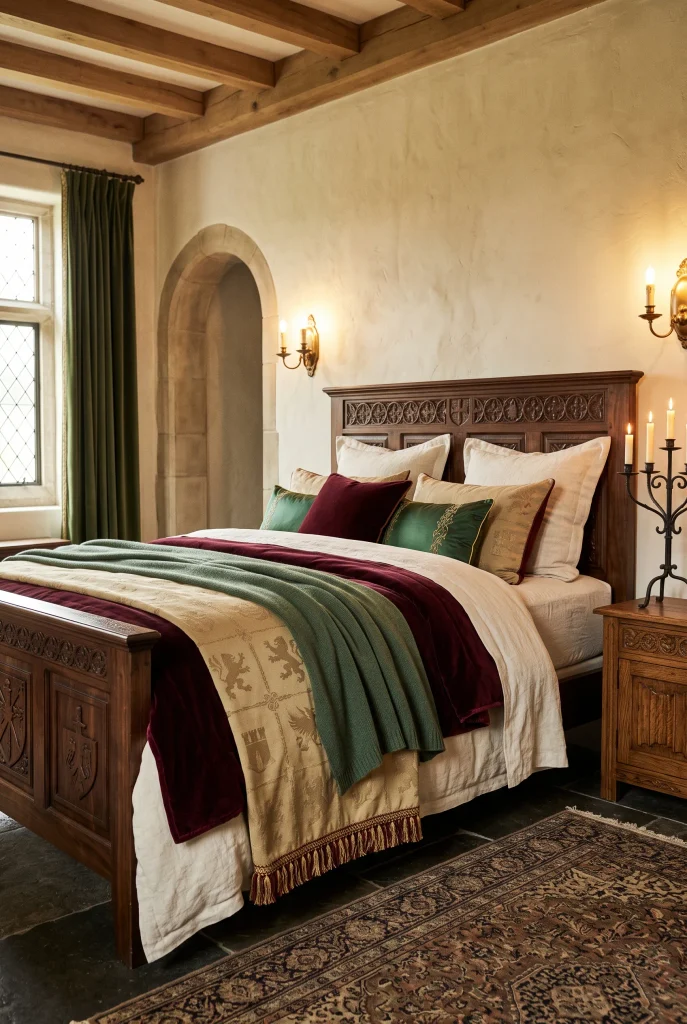
- Introduces medieval-inspired pattern without changing the architecture.
- Rich colors make simple furniture feel more distinctive.
- Layered fabrics add comfort and visual depth.
- Small motifs feel more sophisticated than oversized themed prints.
Give the bed a subtle medieval character with bedding inspired by heraldic colors and traditional motifs. Deep burgundy, forest green, muted gold, navy, and ivory create a rich palette that works especially well with dark wood furniture. Instead of large printed crests, choose small embroidered details, geometric borders, or understated patterns that suggest the theme without overwhelming the room. Layer a linen duvet with a textured coverlet and a few cushions for depth. This approach keeps the bed comfortable for everyday use while giving it the visual richness expected from a fantasy-inspired retreat.
The easiest way to keep heraldic bedding sophisticated is to limit the number of colors. Choose two or three dominant shades and repeat them across cushions, throws, and small accessories. Natural fabrics such as linen, cotton, and wool prevent the palette from feeling too formal or costume-like. Mixing one patterned textile with several solid layers usually creates a more relaxed result. Add warm bedside lighting and aged wood nearby to emphasize the colors. The finished bed should feel inviting first, with medieval influence appearing through thoughtful details rather than overpowering decoration.
13. Gothic Wall Sconces
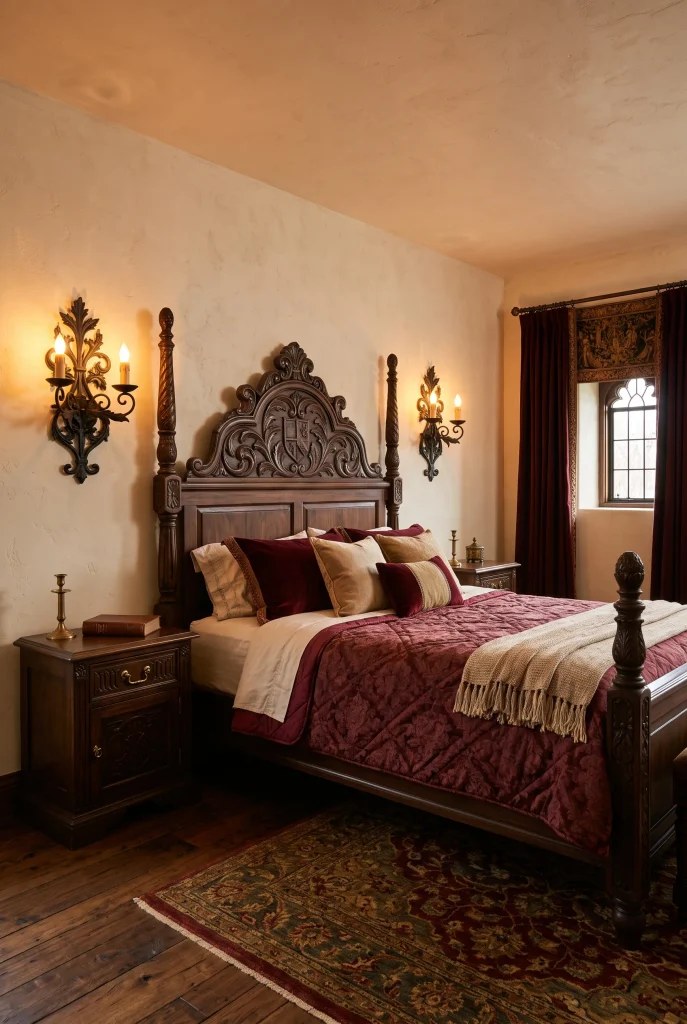
- Adds atmospheric lighting without taking up nightstand space.
- Black metal creates a strong medieval-inspired accent.
- Warm bulbs make dark wood and rich fabrics feel inviting.
- Matching sconces create balance around the bed.
Lighting can completely change the character of a bedroom, and Gothic wall sconces are an easy way to introduce medieval influence. Place matching sconces on both sides of the bed for a balanced arrangement, choosing black iron, aged bronze, or antique brass finishes. Warm bulbs are ideal because they soften dark wood and richer textiles after sunset. If the room already has ornate furniture, choose simple sconces with clean silhouettes. This keeps the lighting atmospheric without making every element compete for attention. The result is a bedroom that feels layered, warm, and subtly inspired by historic interiors.
Practical placement matters just as much as appearance. Install the sconces at a comfortable height for reading and make sure their switches are easy to reach from the bed. Hardwired fixtures can provide a polished finish, while plug-in versions offer flexibility for renters or temporary updates. Warm lighting looks especially effective against textured plaster, wood, and stone because it emphasizes their natural variation. Combine the sconces with one ceiling fixture and a small bedside lamp only if needed, keeping the overall lighting scheme soft rather than excessively bright.
14. Rustic Stone Flooring
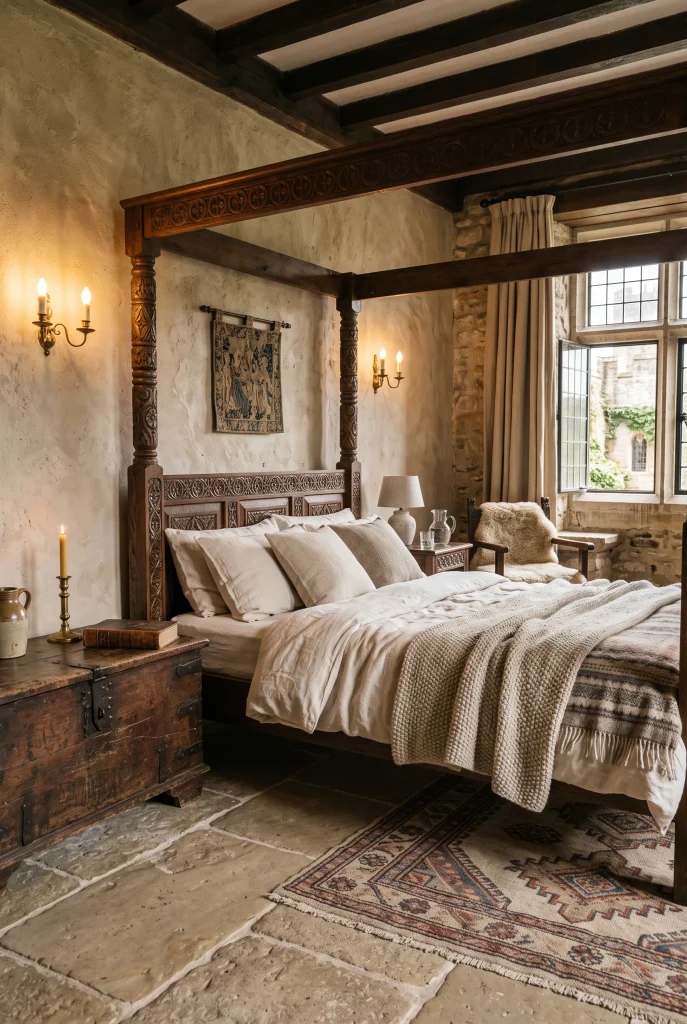
- Gives the room a strong architectural foundation.
- Natural variation makes the floor feel authentic and textured.
- A large rug adds comfort beneath the bed.
- Warm textiles balance the cooler stone surface.
Natural stone flooring can make a bedroom feel connected to an old castle while providing a durable, timeless foundation. Choose warm limestone, slate, travertine, or stone-look flooring in beige, taupe, gray, or muted brown tones. Avoid overly uniform finishes if you want a more authentic rustic appearance. Because stone can feel visually cool, balance it with a large woven or wool rug beneath the bed. Soft linen bedding, wood furniture, and warm lighting will further soften the harder surface and create a comfortable contrast between rugged architecture and cozy bedroom details.
If installing natural stone is outside your budget or unsuitable for the existing structure, stone-look porcelain or other durable flooring alternatives can provide a similar visual direction. The important part is maintaining natural variation rather than choosing a highly glossy finish. Keep the rug large enough to extend beyond the sides and foot of the bed, creating a softer landing area. That practical layer also helps define the sleeping zone. Combined with dark wood and warm neutral walls, rustic flooring can make the entire room feel grounded, substantial, and quietly medieval without looking overly themed.
15. Medieval Window Seat
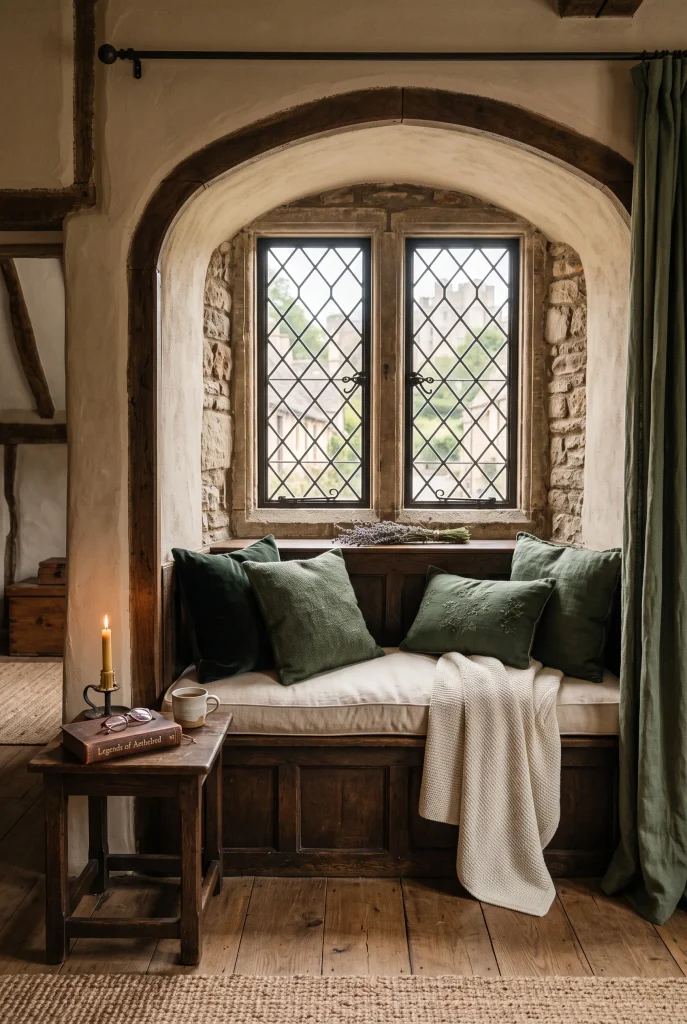
- Turns unused window space into a functional retreat.
- Cushions introduce softness against stone or wood surfaces.
- An arched window adds architectural character.
- The seat can provide storage in smaller bedrooms.
A built-in window seat can turn an ordinary bedroom corner into a charming medieval-inspired retreat. If the architecture allows, use a deep arched window with a broad sill and dark wood trim. Add a thick cream cushion, a few forest green or burgundy pillows, and a soft woven throw to create a comfortable place for reading or relaxing. The combination of natural daylight and textured materials makes the area feel inviting without requiring much decoration. If space is limited, a storage bench beneath the window can provide both seating and a practical place for blankets.
The window seat should remain visually connected to the rest of the bedroom rather than becoming a separate style zone. Repeat the same wood tone used on the bed or nightstands, then carry one bedding color into the cushions. Keep the nearby table small so the walkway remains clear. A warm reading lamp can make the nook useful after dark, while curtains or linen panels provide privacy when needed. For a fantasy medieval bedroom, this feature adds architecture, comfort, and function at once, making an unused corner feel purposeful and beautifully integrated.
16. Ornate Four Poster

- Makes the bed feel like the main architectural feature.
- Carved details add traditional character and craftsmanship.
- Neutral bedding keeps the ornate frame from feeling overwhelming.
- Rich accent colors create depth without cluttering the room.
An ornate four poster bed can give the bedroom a dramatic centerpiece while still feeling comfortable enough for everyday living. Look for a solid wood frame with carved posts, rounded finials, or subtle botanical details. Keep the bedding relatively simple in cream, ivory, or warm beige so the craftsmanship remains the main attraction. Add one deep burgundy or forest green throw for contrast. The taller structure naturally draws the eye upward, making the room feel more substantial. This approach works particularly well when you want medieval influence to come from one memorable piece rather than many themed decorations.
The surrounding furniture should support the bed without competing with it. Choose simple wood nightstands, a low chest, and understated lighting in brass or aged bronze. If the canopy feels too dramatic, use lightweight linen panels instead of heavy curtains, allowing more daylight into the room. A large woven rug beneath the bed can soften the darker furniture and make the space feel warmer underfoot. The goal is balance: the bed can be richly detailed while the rest of the room stays calm. This creates a magical atmosphere that still feels refined and practical.
17. Vintage Leather Chair
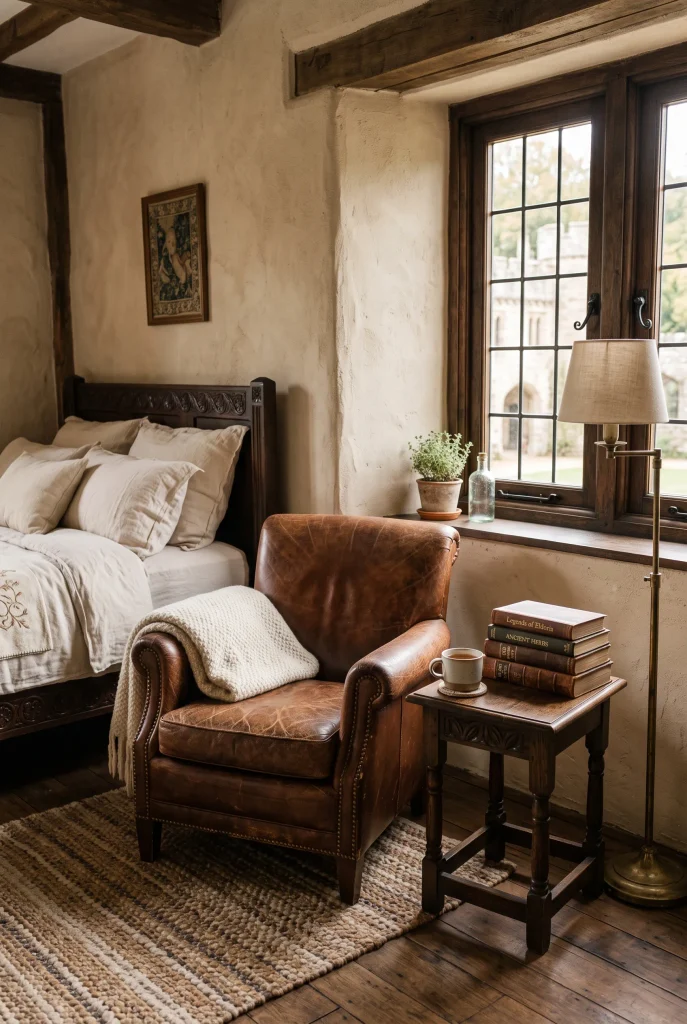
- Adds a practical seating area with timeless character.
- Aged leather pairs naturally with dark wood.
- A small chair can fill an unused bedroom corner.
- Warm brown tones complement cream and stone-inspired palettes.
An aged leather chair can add warmth and character to a medieval-inspired bedroom without requiring elaborate decoration. Choose a comfortable armchair in cognac, chestnut, or deep brown leather, preferably with a slightly worn finish. Place it beside a window, near a fireplace, or in an unused corner where it can become a practical seating spot. Pair it with a small wooden side table for books or a drink. The combination of leather, wood, and woven textiles creates a naturally rich palette that feels established rather than freshly decorated.
Comfort should guide the placement more than appearance. Leave enough clearance around the chair so it does not interrupt the route between the bed, door, and wardrobe. Add a linen or wool cushion if the leather feels too firm, and use a warm floor lamp for evening reading. A single well-chosen vintage-style chair can give a bedroom much more personality than several small accessories. In this setting, it also reinforces the fantasy medieval mood through materials that feel aged, tactile, and substantial while remaining useful every day.
18. Candlelit Nightstand
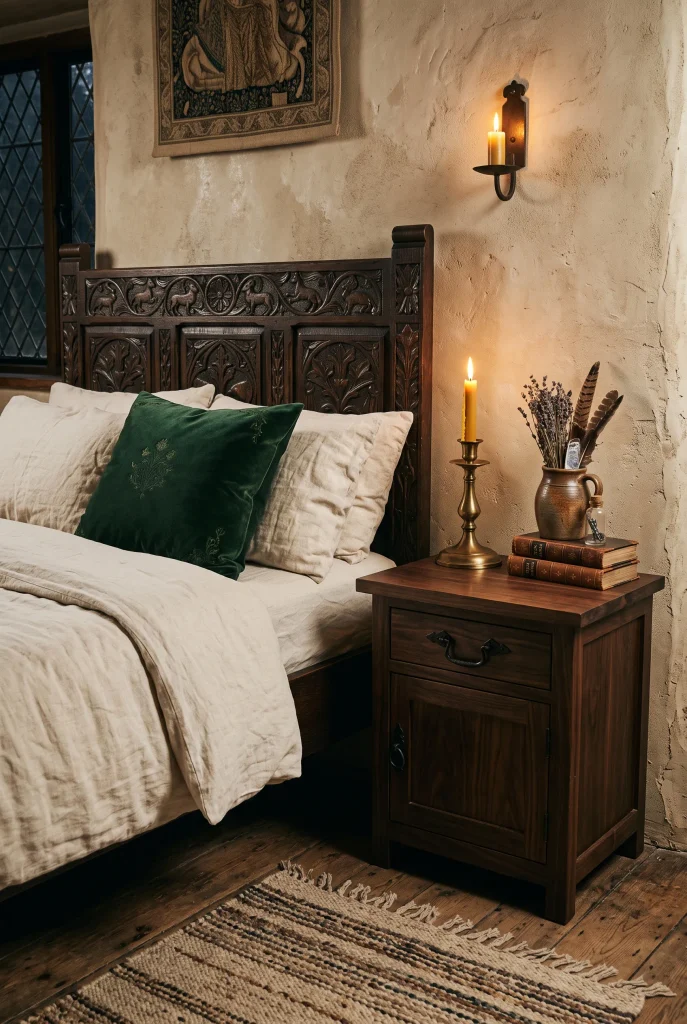
- Creates a warm focal point beside the bed.
- Brass and wood provide a classic old-world combination.
- Layered accessories make the nightstand feel collected.
- Warm illumination enhances rich fabrics and natural textures.
A carefully styled nightstand can make the bedroom feel intimate without requiring expensive furniture or elaborate accessories. Start with a dark wood table and add a warm brass or bronze lamp with a candle-inspired silhouette. Place only a few useful items nearby, such as a small ceramic vessel, one book, or a simple decorative box. Keep the surface mostly open so it remains functional. The warm light against dark wood creates a beautiful contrast, especially when paired with cream linen bedding and deep green or burgundy accents. Small details can make the entire sleeping area feel more atmospheric.
For safety and everyday convenience, use an electric candle-style lamp rather than placing an open flame beside bedding or curtains. Choose a warm bulb with a soft glow instead of a cool white light, which can make rich materials look harsh. Keep charging cables tucked away and leave enough room for anything you regularly use before bed. A fantasy medieval bedroom benefits from this kind of restrained styling because the mood comes from lighting, texture, and materials rather than excessive decorations. The finished nightstand should feel beautiful, useful, and naturally connected to the rest of the room.
19. Dark Wood Wardrobe
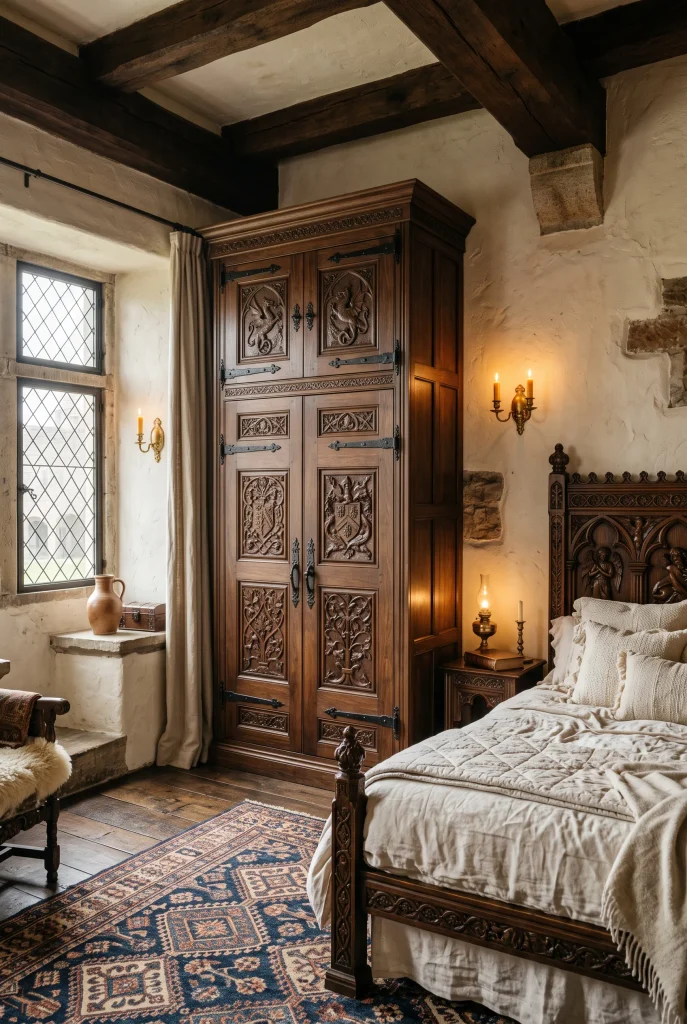
- Adds substantial storage while reinforcing the old-world aesthetic.
- Dark wood gives the room warmth and visual depth.
- Carved doors provide detail without extra wall decoration.
- Tall proportions make use of vertical space efficiently.
A tall dark wood wardrobe can make a bedroom feel more established and architectural while providing essential storage. Choose walnut, oak, or another rich wood with visible grain, simple carved panels, and aged iron handles. A wardrobe with tall proportions can draw the eye upward and complement a four poster or carved bed. Keep the surrounding walls lighter in cream, beige, or soft taupe so the furniture remains visually defined. Inside, use baskets, shelves, and hanging organizers to keep clothing easy to access. This combines practical storage with the substantial furniture style associated with medieval interiors.
The wardrobe should have enough clearance for its doors and should not make the room difficult to navigate. If floor space is limited, consider a tall narrow design instead of a wide cabinet. Repeat its wood tone in one or two other pieces, such as the nightstands or bed frame, for a cohesive arrangement. Large storage pieces look more intentional when their finish is echoed elsewhere rather than standing alone. Warm lighting and textured fabrics can then soften the darker furniture, creating a bedroom that feels rich, organized, and comfortable.
20. Moody Castle Palette
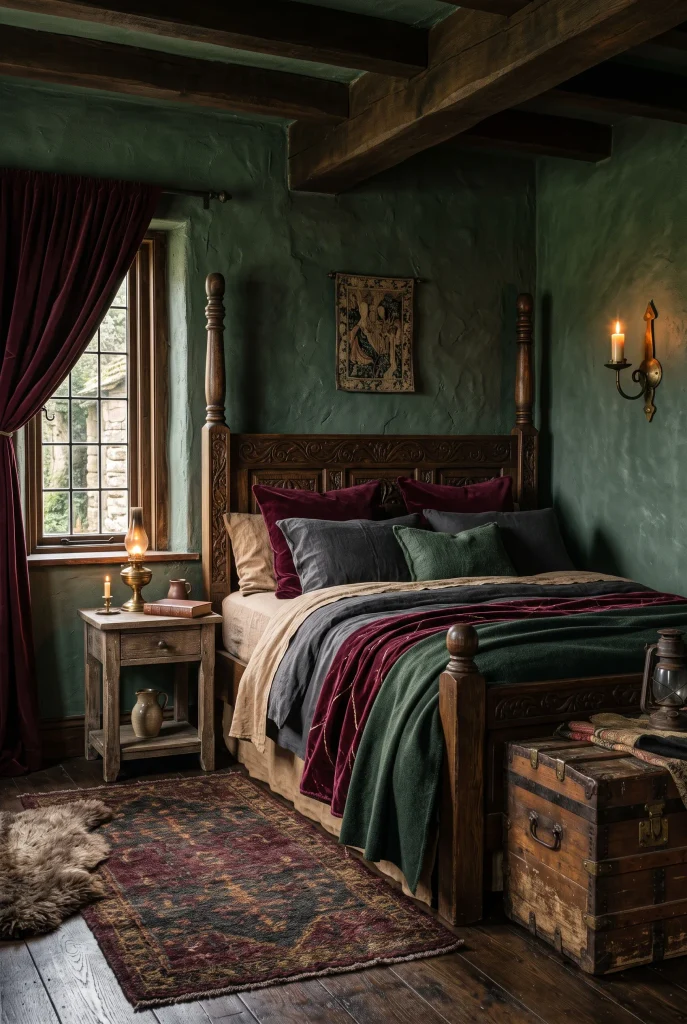
- Creates depth through a carefully limited color palette.
- Dark shades make wood and brass details stand out.
- Warm neutrals prevent the room from feeling too heavy.
- Repeating colors across textiles creates visual cohesion.
A moody color palette can transform a simple bedroom into a dramatic retreat without relying on elaborate furniture. Start with one or two deep shades such as forest green, burgundy, charcoal, or muted navy, then balance them with warm beige and creamy ivory. Use darker colors on bedding, curtains, or one accent wall rather than applying them everywhere. Natural wood and aged brass work beautifully with this combination because their warm undertones prevent the room from feeling flat. The result is atmospheric and sophisticated, with enough contrast to make architectural details and textured fabrics stand out.
The best way to work with darker colors is to build contrast gradually. Keep the ceiling and some larger surfaces lighter, then layer deeper shades through textiles and furniture. Use several warm light sources so the room still feels welcoming after sunset. A large rug can visually anchor the palette, while linen bedding adds softness against heavier wood. This approach suits a fantasy medieval bedroom because it creates a sense of depth and mystery without becoming visually overwhelming. If the room feels too dark, introduce a mirror or lighter curtains to reflect and distribute available daylight.
21. Medieval Decorative Details
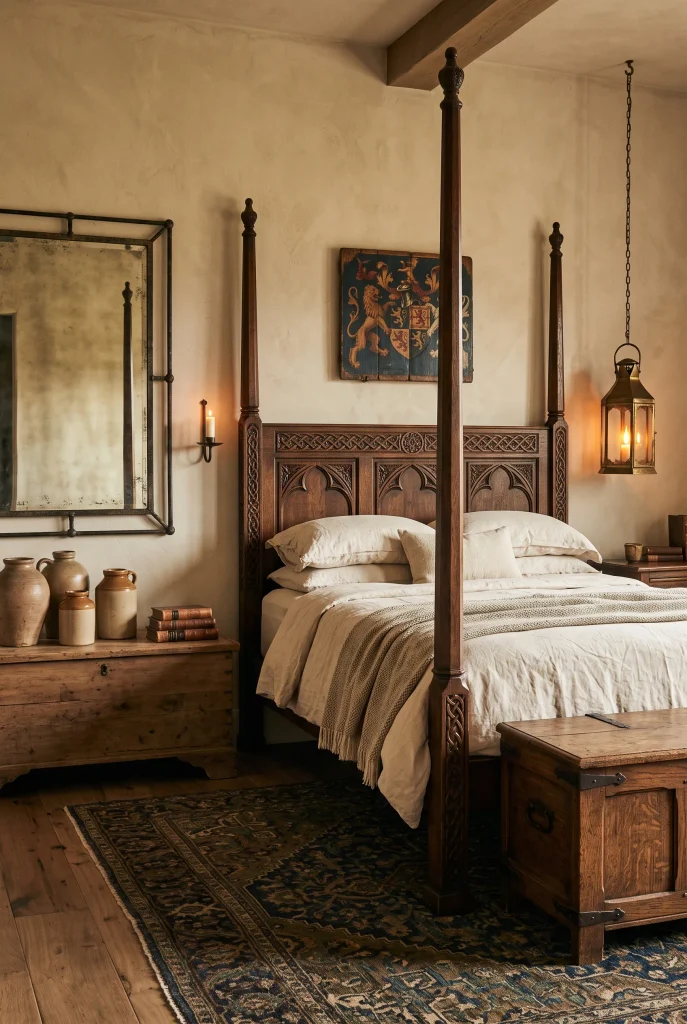
- Small details can establish the theme without overwhelming the room.
- Aged brass and wood add warmth and authenticity.
- Carefully chosen artwork gives blank walls more personality.
- Repeated materials make the entire room feel connected.
Small decorative details can bring the medieval atmosphere together once the main furniture and colors are established. Choose a few meaningful pieces, such as an aged brass lantern, carved wooden box, antique-style mirror, ceramic vessel, or understated heraldic artwork. The goal is not to fill every shelf with medieval objects. Instead, repeat a few materials and shapes throughout the room so the design feels cohesive. A wooden chest with iron hardware, for example, can connect naturally with an iron wall sconce and a dark wood bed. These subtle repetitions create character without making the room feel overly themed.
Keep decorative objects at different heights to create a natural visual rhythm, but leave plenty of empty space between them. A single framed artwork can have more impact than several small pieces placed together. Choose finishes that look slightly aged or handmade rather than perfectly new and glossy. For a fantasy medieval bedroom, these details should support the atmosphere created by the architecture, furniture, lighting, and textiles. When every accessory has a clear purpose, the room feels collected and believable, giving you a magical retreat that remains calm, comfortable, and easy to live in.
Conclusion
Creating a fantasy medieval bedroom does not mean filling the space with heavy furniture or elaborate decorations. The most inviting rooms balance dramatic details with everyday comfort. Rich wood, textured fabrics, warm lighting, stone-inspired finishes, and carefully chosen accessories can create a magical atmosphere while keeping the bedroom practical.
Start with one statement feature, such as a carved bed, Gothic mirror, tapestry, or dark wood wardrobe, then build around it with softer textures and warm colors. Save this post on Pinterest for inspiration, try your favorite ideas in your own space, and share it with someone who loves cozy, castle-inspired interiors. Small changes can create a surprisingly magical retreat.