21 Coffee Station Ideas for a Cozy Kitchen You’ll Love
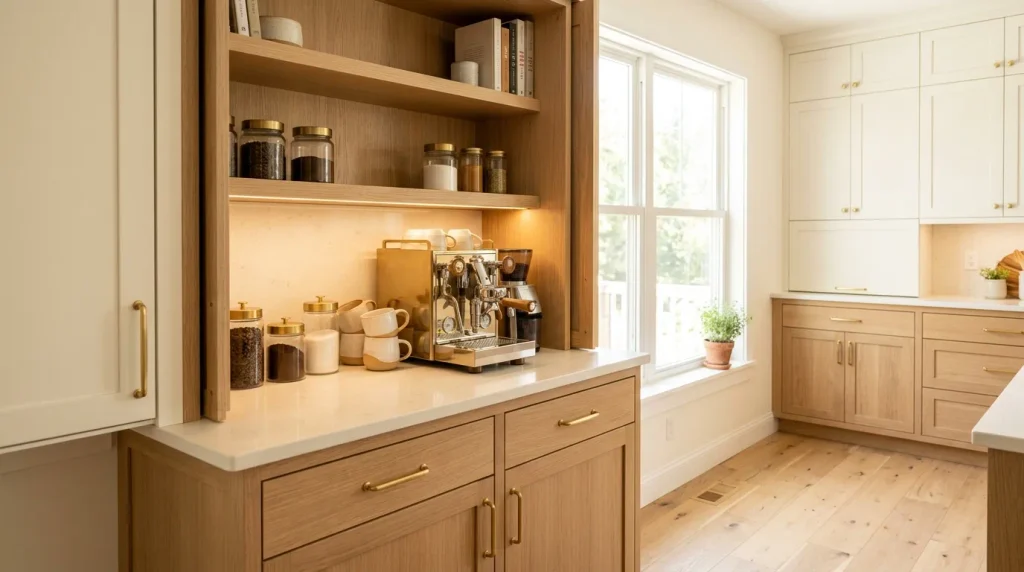
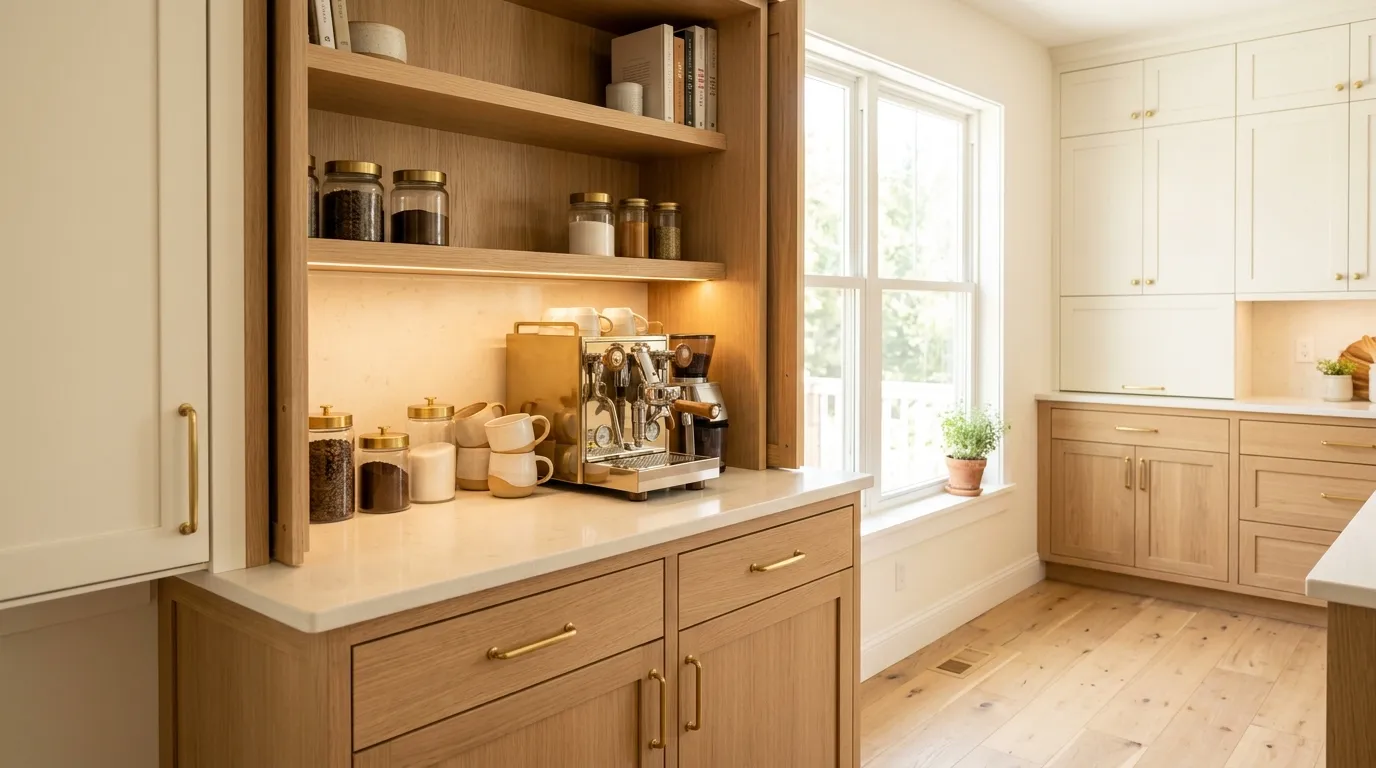
A beautiful coffee corner can make a kitchen feel warmer, more organized, and much more inviting. Coffee station ideas can turn an unused corner, empty counter, or small cabinet into a cozy spot that is easy to enjoy every day. Whether you have a spacious kitchen or a tiny apartment, the right setup can keep coffee essentials organized while adding personality to the room. From built-in nooks and floating shelves to rustic carts and hidden pantry stations, these ideas offer practical ways to create a space that feels intentional. With the right storage, materials, and lighting, even a small coffee area can become a favorite part of the kitchen.
1. Built In Coffee Nook
- A built-in nook gives the coffee area a clear and intentional home.
- Open shelves keep favorite mugs and daily essentials within easy reach.
- A light counter creates a clean backdrop for coffee equipment.
- Warm lighting makes the corner feel inviting in the morning.
A built-in nook can turn an unused kitchen corner into one of the most useful spots in the room. The best coffee station ideas do not need a large footprint; they simply give everyday items a defined place. A compact counter can hold an espresso machine, grinder, mugs, and a few jars without making the kitchen feel crowded. Matching the cabinetry to the rest of the kitchen also helps the setup look built in rather than added later. In smaller homes, vertical shelves above the counter can create extra storage while keeping the work surface open and easy to clean.
For a polished look, keep the most frequently used items at countertop level and place less-used supplies on the upper shelves. A small tray can group sugar, stirrers, and coffee accessories so they do not spread across the counter. This simple zoning makes a coffee corner feel much calmer during busy mornings. Warm white cabinetry, natural wood, and brushed brass details can also soften a modern kitchen without making it overly decorative. Add one small plant or a favorite ceramic piece for personality, but leave enough breathing room around the machine for comfortable daily use.
2. Open Shelf Coffee Bar
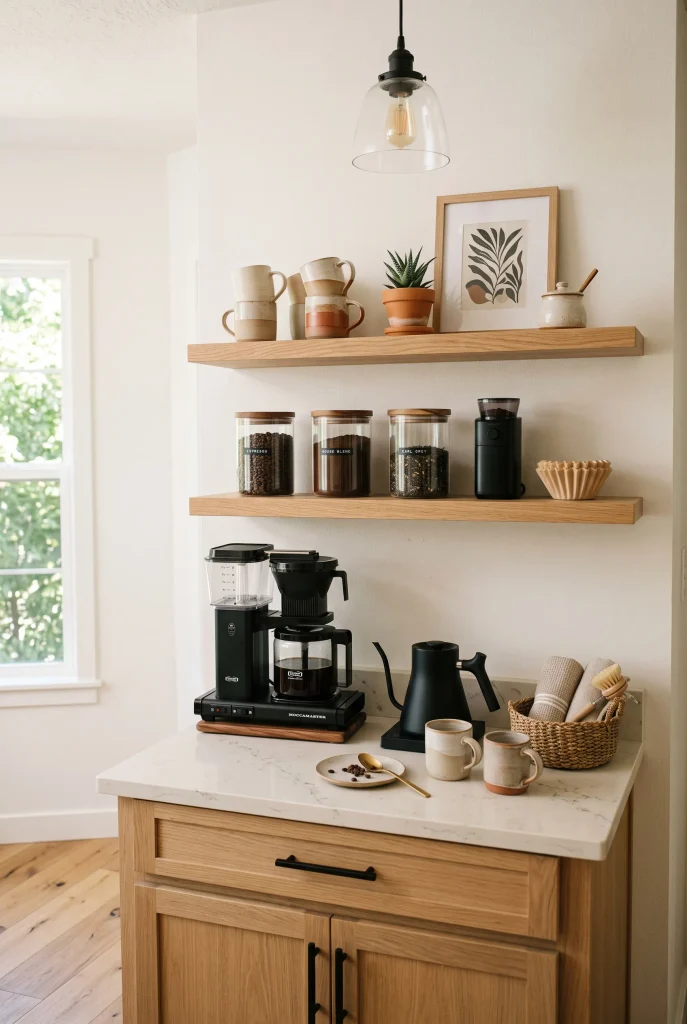
- Floating shelves make a small coffee corner feel open and airy.
- Matching containers create a cleaner look without hiding useful supplies.
- Natural wood adds warmth against a simple kitchen wall.
- Keeping only daily essentials visible prevents visual clutter.
Open shelving can make a simple coffee corner feel like a styled feature without requiring major remodeling. Place two or three wood shelves above a narrow counter, then arrange mugs, coffee jars, and a few attractive accessories at different heights. This setup works especially well when cabinet space is limited because the shelves use vertical wall space instead of taking up more floor area. Choose containers that coordinate in color and material so the display feels intentional. A neutral palette of cream, beige, warm wood, and soft black can blend easily with most kitchen styles while keeping the area visually calm.
The key is to style the shelves without filling every inch. Keep your coffee maker, grinder, and favorite mug collection close to the lower shelf, while placing backup supplies in baskets or closed containers elsewhere. Glass jars can display coffee beans or ground coffee while adding texture and visual interest. Open shelves usually look best when practical pieces are mixed with just a few decorative accents. Leave some empty wall space around the arrangement so the coffee area feels fresh rather than crowded. A small framed print or trailing plant can finish the corner naturally.
3. Cabinet Coffee Station
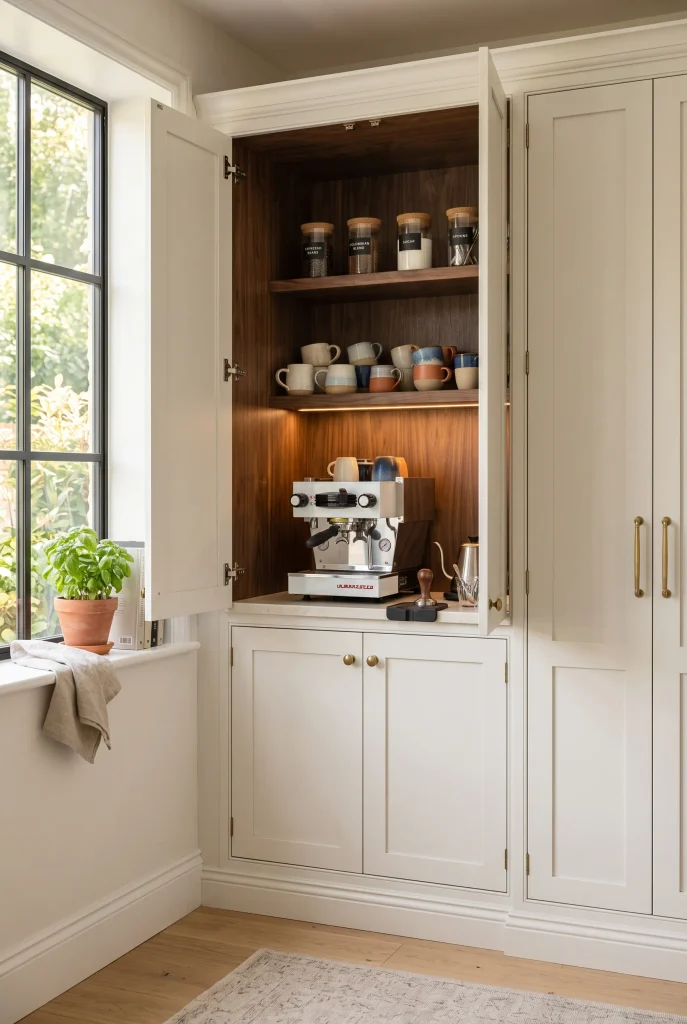
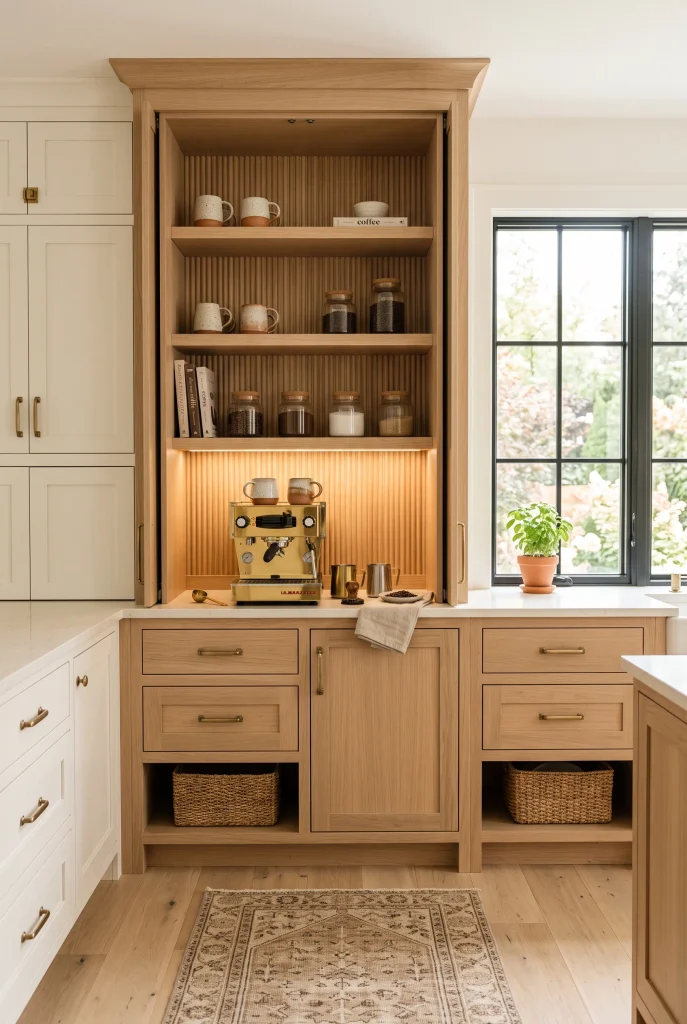
- A cabinet station keeps coffee equipment hidden when the kitchen needs a cleaner appearance.
- Pocket or folding doors can make the setup easy to open and close.
- Built-in shelves give mugs, beans, and accessories dedicated storage.
- Matching cabinet finishes help the station blend seamlessly into the kitchen.
If you prefer a tidy countertop, a cabinet coffee station can hide the equipment while keeping everything ready for daily use. A wide cabinet with enough depth can house a coffee maker, grinder, mugs, and containers for beans or sweeteners. When the doors are closed, the kitchen returns to a clean, uninterrupted look. This is especially helpful in open-concept homes where the kitchen is visible from the living or dining area. Adding an electrical outlet inside the cabinet makes the setup more convenient, but the space should have proper ventilation and enough clearance around appliances.
Think about interior shelving based on how the coffee supplies are actually used. Keep the machine on a sturdy counter-height surface and store mugs or coffee tools on shelves above or beside it. Sliding, folding, or pocket-style doors can make a compact station easier to access without blocking nearby walkways. This approach works particularly well in kitchens where everyday convenience matters but displaying every appliance does not. A warm wood interior can add a subtle contrast to painted cabinetry, while brass or black hardware ties the hidden station into the rest of the kitchen design.
4. Compact Countertop Bar
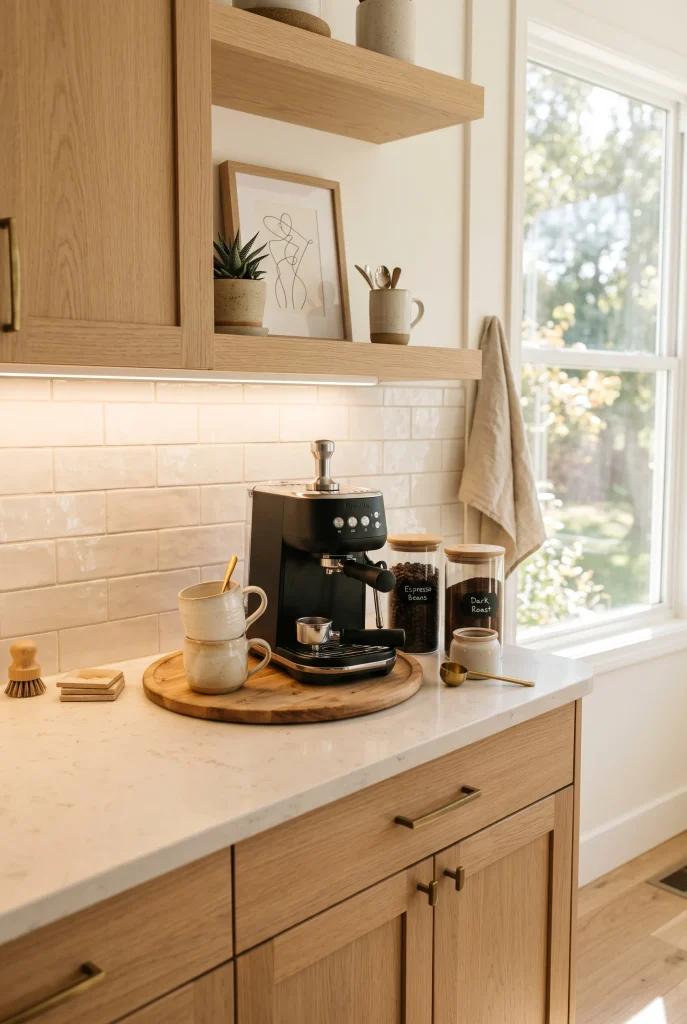
- A narrow countertop setup works well in apartments and smaller kitchens.
- A tray keeps the machine and accessories visually grouped.
- Vertical storage adds function without taking more counter space.
- Neutral finishes help the small area feel open and uncluttered.
A small countertop can become a complete coffee corner when every item has a purpose. Start with the essentials: your coffee maker, favorite mugs, beans, and one or two everyday accessories. Instead of spreading everything across the counter, place the equipment on a slim tray to create a defined zone. This makes even a limited surface feel organized and intentional. Choose compact appliances when possible, especially if the same counter is also used for food preparation. Keeping the surrounding area mostly clear gives the station a cleaner appearance and makes it easier to use throughout busy mornings.
For extra storage, use a narrow shelf, wall rail, or small hanging rack above the counter. Mugs can hang underneath a shelf, while coffee beans and filters can sit in matching containers nearby. A wooden tray adds warmth and can also be lifted away easily when the counter is needed for cooking. Small stations often look better when they use fewer decorative pieces and rely on texture instead. Warm wood, cream ceramics, woven details, and soft lighting can make a compact coffee corner feel cozy without making the kitchen look crowded.
5. Butler Pantry Coffee Bar

- A pantry coffee bar keeps appliances away from the main kitchen work zone.
- Extra cabinetry provides room for coffee supplies and serving pieces.
- A marble or quartz counter creates a polished preparation surface.
- Open shelving adds display space without sacrificing easy access.
A coffee bar inside a butler pantry gives you the convenience of a dedicated drink-making area without taking over the main kitchen. The extra cabinetry can store mugs, beans, syrups, filters, and entertaining supplies, while the counter provides enough room for a coffee machine and grinder. This arrangement is especially useful when hosting because the coffee setup can remain accessible while the main kitchen stays focused on cooking. Use the same cabinet finish and countertop material found elsewhere in the home so the pantry feels like a natural extension of the overall design.
Think about workflow when arranging the space. Keep the coffee machine close to the sink if possible, with cups and frequently used ingredients within arm’s reach. A drawer underneath can hold filters, spoons, and small tools, while upper cabinets can hide backup supplies. Open shelving is useful for displaying attractive mugs or serving pieces without making the entire station feel exposed. Practical items should stay closest to the work surface while decorative pieces can sit higher up. Good organization makes this setup feel luxurious while still being simple enough for everyday morning routines.
View: 21 Jewel Tone Bedroom Ideas to Transform Your Space
6. Rustic Wood Coffee Corner
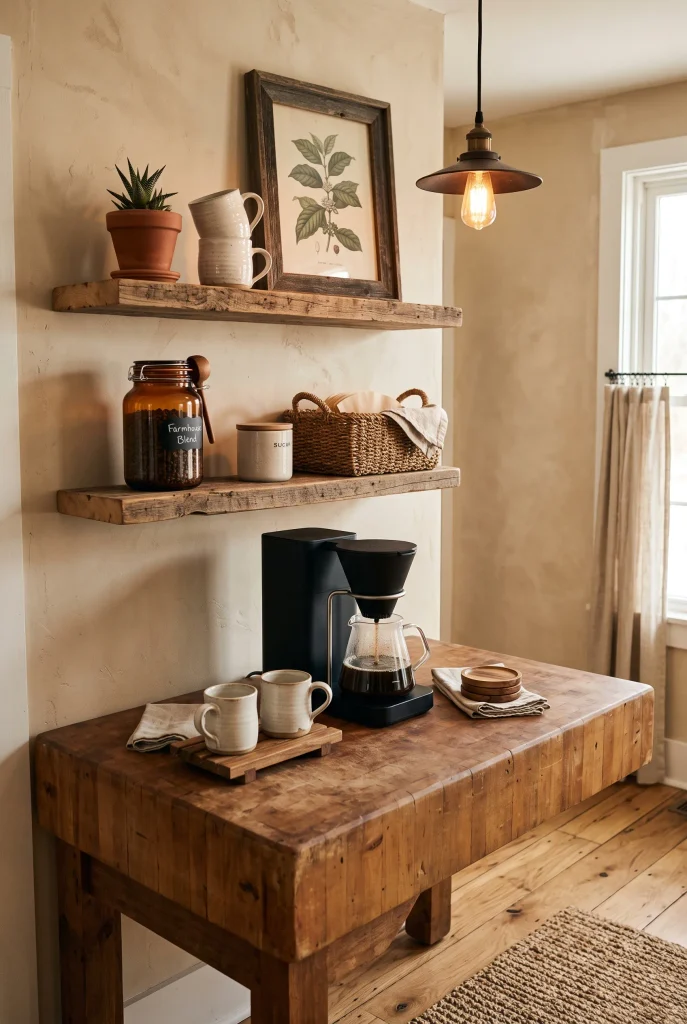
- Reclaimed or natural wood brings warmth and character to the kitchen.
- Vintage accessories can make the coffee corner feel collected rather than staged.
- Woven baskets soften hard kitchen surfaces and hide small supplies.
- Black hardware creates contrast against warm wood and neutral walls.
Warm wood can instantly make a coffee corner feel more welcoming, especially in a kitchen with simple painted cabinets. A rustic setup works beautifully with butcher block counters, reclaimed shelves, woven baskets, and ceramic mugs in soft neutral tones. The goal is not to fill the space with farmhouse decorations, but to combine useful pieces with natural textures. A matte black coffee maker can provide a modern contrast against the wood, while an amber glass jar or vintage-style canister adds subtle character. This balance keeps the corner practical while giving it the relaxed feeling many people want from a cozy kitchen.
Keep the styling simple by choosing a few materials and repeating them throughout the area. If you use wood shelves, echo that tone with a small tray or cutting board below. Place frequently used supplies in attractive containers so they can stay visible without looking messy. A woven basket can hide extra napkins or coffee filters, while a small framed print can fill an empty wall. Rustic spaces usually feel more polished when there is some empty space between objects. Let the wood, ceramics, and natural textures provide most of the visual interest instead of adding too many decorations.
7. Built In Appliance Shelf
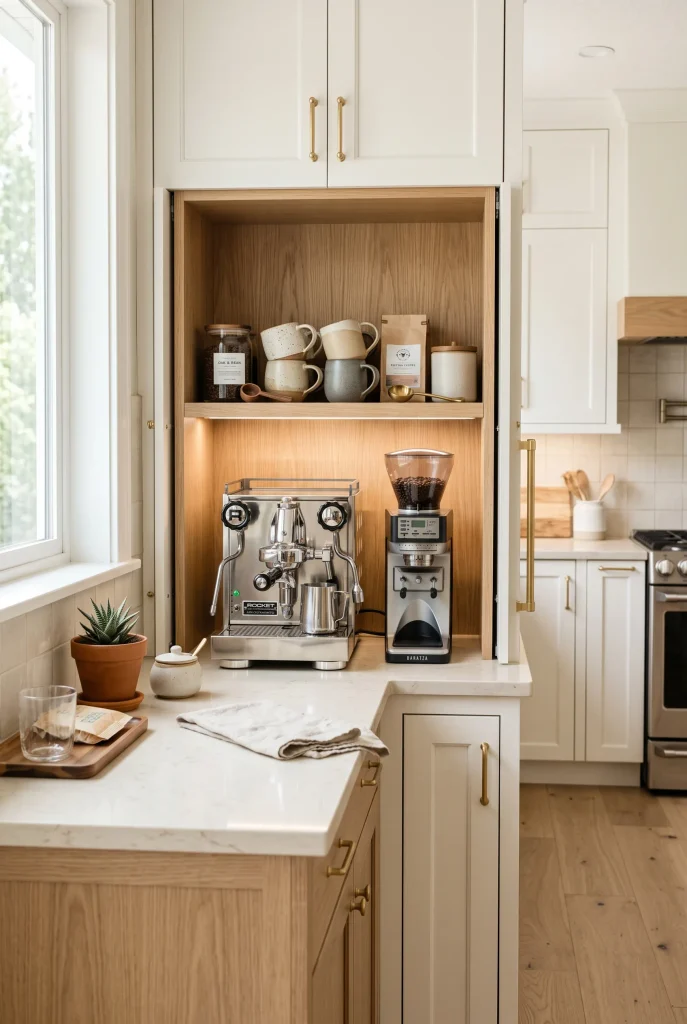
- A dedicated appliance shelf keeps bulky equipment visually contained.
- Open space around the machine makes daily preparation easier.
- Matching cabinetry helps the coffee area look intentional and custom.
- Under-shelf lighting adds warmth while improving visibility.
A built-in appliance shelf can make everyday coffee equipment feel like part of the kitchen design instead of clutter left on the counter. Create a recessed shelf between cabinets or beneath an upper cabinet, then position the coffee maker and grinder where they are easy to reach. The surrounding cabinetry keeps the area visually connected to the rest of the kitchen. This approach is especially useful when you want your coffee equipment available every morning but do not want it scattered across valuable preparation space. Make sure the shelf has enough depth, height, and ventilation for the appliances you use.
The space above the machine can also become useful storage rather than empty wall area. Add a narrow shelf for mugs, coffee jars, or a small piece of artwork, keeping the arrangement balanced and easy to maintain. Under-shelf lighting is another simple upgrade because it brightens the work area without making the kitchen feel overly bright. Built-in arrangements look most polished when the appliances are centered and surrounded by a little breathing room. Keep cords organized and choose containers that coordinate with nearby finishes for a cleaner, more finished appearance.
8. Coffee Cart Corner
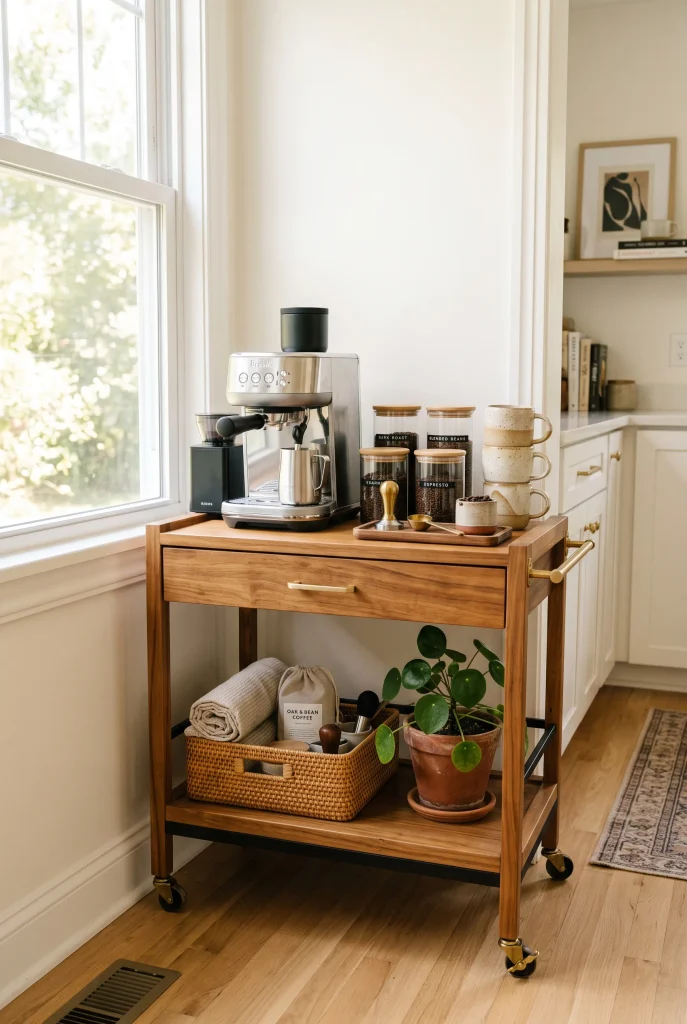
- A rolling cart creates a flexible coffee area without permanent remodeling.
- Lower shelves provide extra room for mugs, beans, and serving pieces.
- Wheels make the station easy to move when the kitchen needs more space.
- Wood finishes add warmth without overwhelming a small room.
A coffee cart is one of the easiest ways to create a dedicated drink station without changing the kitchen layout. Choose a narrow cart with two or three shelves, then place the coffee maker on the top level and everyday supplies underneath. This setup works particularly well in rental homes, apartments, or kitchens where counter space is limited. Because the cart can move, it can be positioned near an outlet during the morning and rolled aside when more room is needed. Look for a sturdy surface that can comfortably support the machine and accessories.
Style the cart with a practical mix of containers, mugs, and one small decorative accent. A woven basket can hold napkins or filters, while a glass jar keeps coffee beans visible and easy to reach. If the cart has wheels with locks, secure them while making drinks so the station stays steady. Natural wood pairs especially well with cream ceramics and brass details for a warm, relaxed look. This setup also works well in awkward empty corners because the cart fills the space without making it feel permanently occupied or visually heavy.
9. Minimalist Coffee Counter
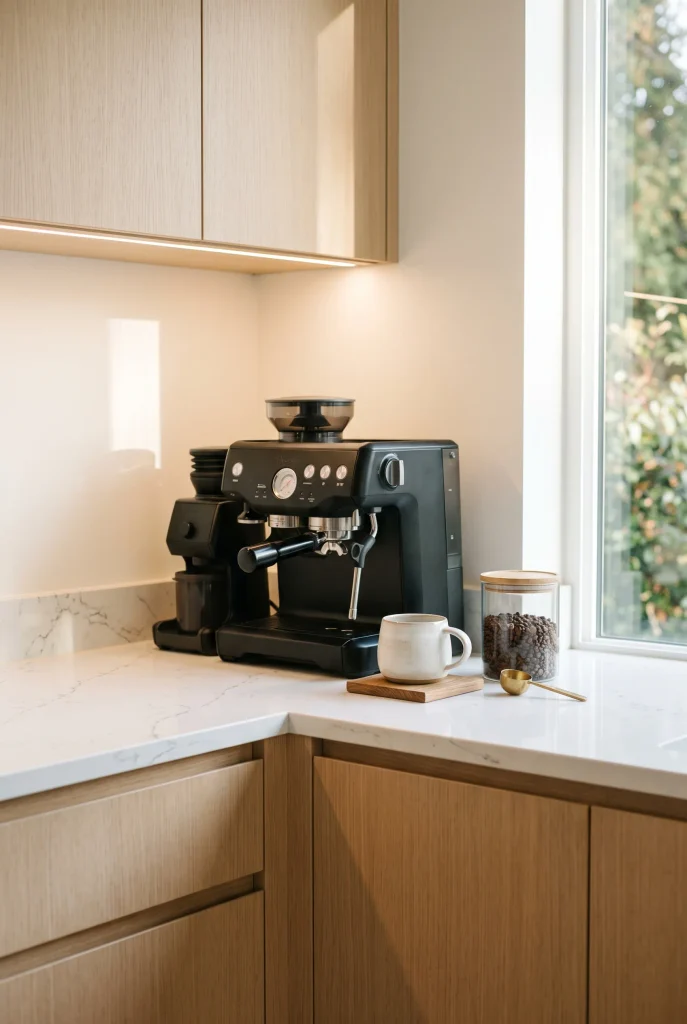
- A limited color palette keeps the coffee area calm and uncluttered.
- Concealed storage hides supplies that do not need to stay visible.
- One or two decorative pieces are enough to add personality.
- Clean surfaces make a small kitchen feel more spacious.
A minimalist coffee counter proves that a cozy setup does not need lots of accessories. Start with a clean surface, one quality coffee machine, your favorite mug, and a simple container for beans or grounds. Store everything else inside nearby cabinets or drawers. This keeps the countertop visually quiet while making the items used every morning easy to access. Neutral colors such as warm white, pale oak, beige, and soft black create a relaxed foundation that can complement both modern and transitional kitchens. The result feels intentional without looking overly styled or difficult to maintain.
Function should guide every detail in a minimalist setup. Keep the machine near an outlet and leave enough space beside it for preparing and serving coffee comfortably. A shallow tray can define the area without adding visual clutter, while a single plant or small ceramic object can soften the clean lines. Avoid filling empty shelves simply because there is room available. The most successful minimalist corners are often the ones that leave some surfaces completely open. That breathing room makes the kitchen feel brighter, calmer, and easier to keep organized throughout the day.
10. Floating Shelf Station
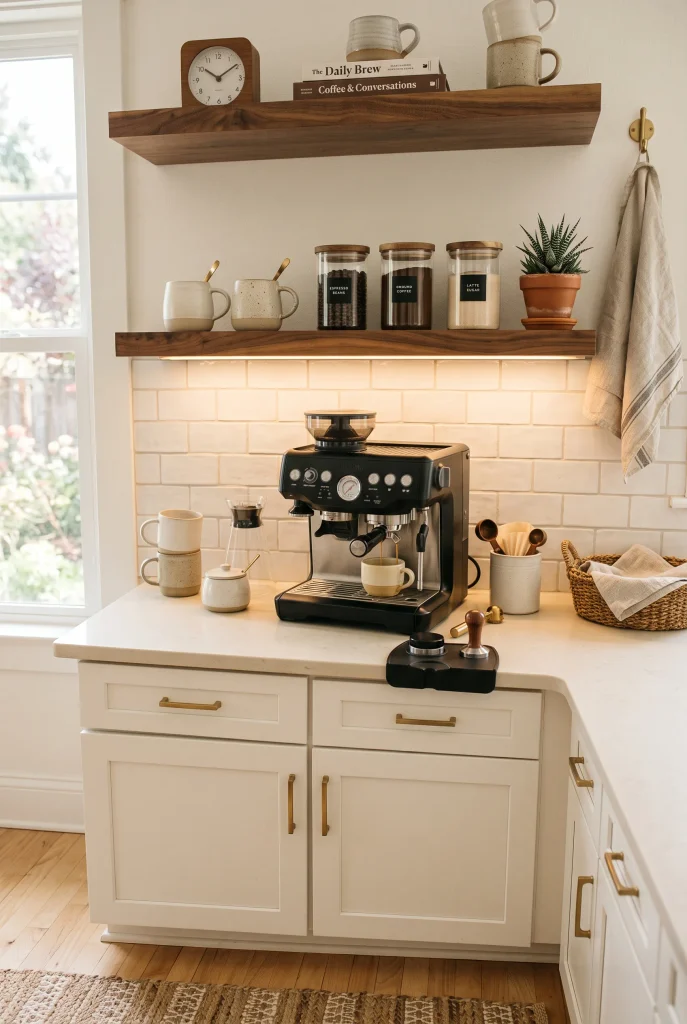
- Floating shelves use vertical space without making the counter feel enclosed.
- Walnut adds warmth and contrast against a light kitchen backdrop.
- Matching jars and mugs create an organized visual display.
- Keeping shelves lightly styled prevents the corner from feeling crowded.
A floating shelf station can turn a plain kitchen wall into a useful coffee corner with very little space. Mount two or three shelves above a narrow counter and arrange your everyday coffee essentials within easy reach. The lower shelf can hold mugs and coffee jars, while the upper shelf can display a few decorative pieces. Because the shelves do not have bulky supports, the arrangement feels light and open. This makes it especially helpful in smaller kitchens where additional storage is needed without making the room look visually heavy.
The best results come from mixing practical storage with a small amount of decoration. Keep frequently used items on the lower shelf and reserve the highest shelf for pieces that are not needed every morning. Warm wood shelves work beautifully with cream ceramics, glass containers, and brass details. Leave small gaps between objects instead of lining everything up tightly. This simple spacing makes open shelving look more intentional and easier to maintain. A small trailing plant, framed print, or textured bowl can add personality while keeping the coffee area focused and functional.
11. Corner Coffee Cabinet

- An unused corner can become a dedicated beverage zone.
- Cabinet doors keep supplies hidden when you want a cleaner look.
- Interior shelves make use of vertical space efficiently.
- Warm finishes help the station blend with the surrounding kitchen.
An awkward kitchen corner does not have to become wasted space. A compact coffee cabinet can turn that overlooked area into a practical station for the morning routine. Use a narrow cabinet with enough counter depth for the coffee maker, then add shelves above or inside for mugs, beans, filters, and serving pieces. Keeping the station in a corner also helps separate coffee preparation from the main cooking area. This can make busy mornings feel more organized, especially when several people are using the kitchen at the same time.
Choose cabinet colors that coordinate with the surrounding kitchen so the station feels built in rather than added afterward. Inside the cabinet, use adjustable shelves to accommodate taller mugs, containers, or small appliances. If you prefer to keep equipment hidden, doors can close over the entire setup when guests arrive. For a more decorative appearance, leave the counter open and style it with one tray and a small ceramic piece. A warm wood interior can add depth to painted cabinetry and make the station feel more inviting whenever the doors are opened.
12. Marble Coffee Nook
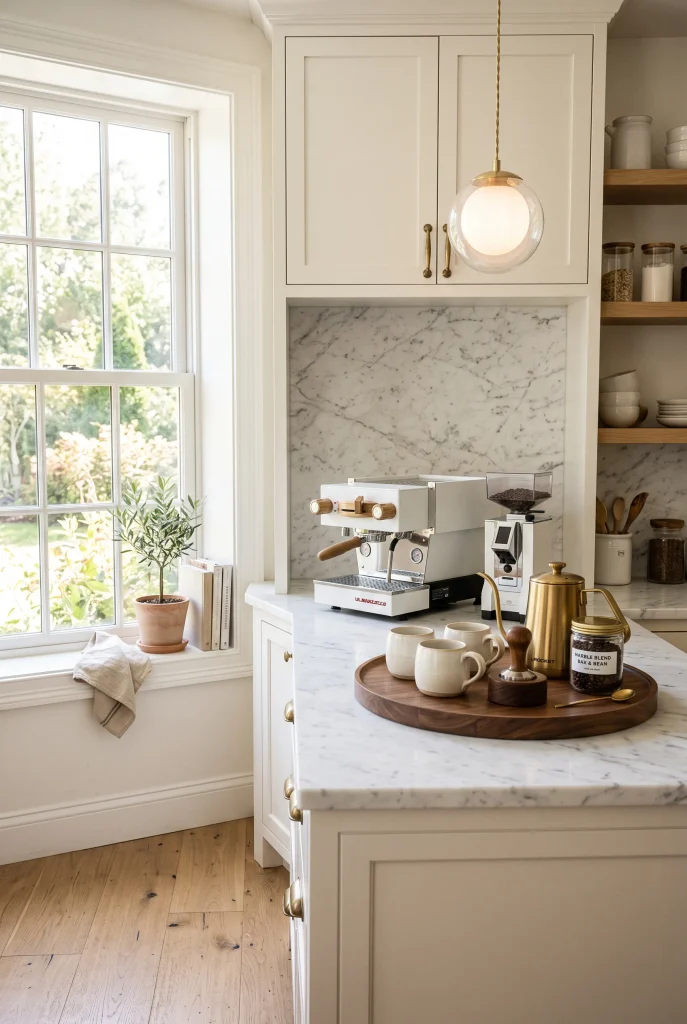
- Marble creates an instantly polished backdrop for a small coffee area.
- Brass accents add warmth without overpowering the light surfaces.
- A wood tray keeps the setup from feeling too cold or formal.
- Simple accessories let the countertop remain the visual focus.
A marble coffee nook can give even a compact kitchen corner a refined, finished appearance. A marble or quartz counter paired with a matching backsplash creates a continuous surface that makes the station feel intentional. Keep the coffee machine, grinder, and favorite mugs arranged in a simple grouping so the beautiful material remains visible. Warm white cabinetry can soften the stone, while brass hardware adds subtle contrast. This combination works particularly well when the coffee area should feel elevated without adding lots of decorative objects or complicated styling.
Balance the cool appearance of stone with warmer materials and softer textures. A walnut tray, wooden shelf, linen towel, or woven basket can make the area feel more relaxed and approachable. Keep coffee beans in a simple glass or ceramic container rather than leaving several packages on display. Good lighting also matters because natural daylight highlights the stone’s texture, while a warm lamp or under-cabinet light creates a cozy evening glow. The easiest way to keep a marble station looking elegant is to let the countertop do most of the decorating.
13. Farmhouse Coffee Hutch
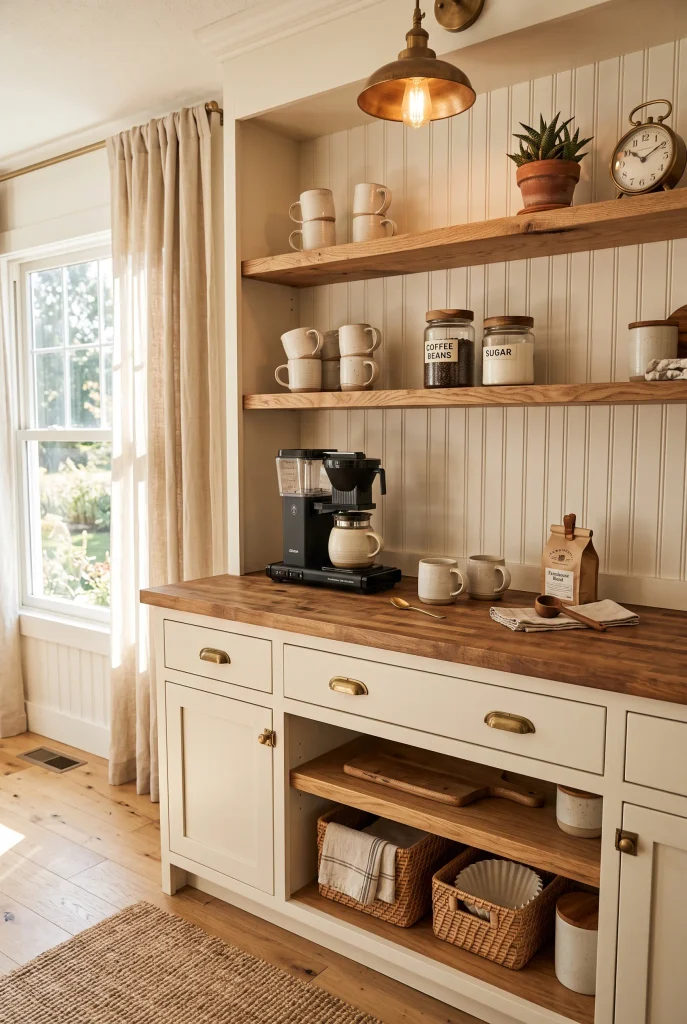
- A hutch creates dedicated storage while adding farmhouse character.
- Beadboard or wood backing adds texture without overwhelming the corner.
- Closed cabinets hide extra supplies and everyday clutter.
- Open shelves make favorite mugs easy to reach and display.
A farmhouse coffee hutch can give the kitchen a cozy focal point while keeping coffee essentials neatly organized. Choose a compact cabinet with a countertop and a mix of open and closed storage. Place the coffee maker on the counter, keep mugs on an open shelf, and tuck extra beans, filters, and serving pieces behind cabinet doors. Warm white paint paired with natural wood creates an inviting contrast that works beautifully in relaxed kitchens. This setup is also useful when you want the coffee area to feel like a permanent part of the room rather than a collection of appliances.
For a more collected appearance, combine practical pieces with a few timeless accents. Ceramic canisters, woven baskets, wooden trays, and simple vintage-style jars can add texture without making the hutch feel overly decorated. Keep the items used every day at comfortable reach and store backups higher or behind closed doors. A beadboard or softly textured wall behind the hutch can add depth while maintaining the farmhouse character. Repeating one wood tone across the shelves, tray, or accessories helps the whole station feel cohesive and makes the different pieces look like they belong together.
14. Hidden Pantry Station
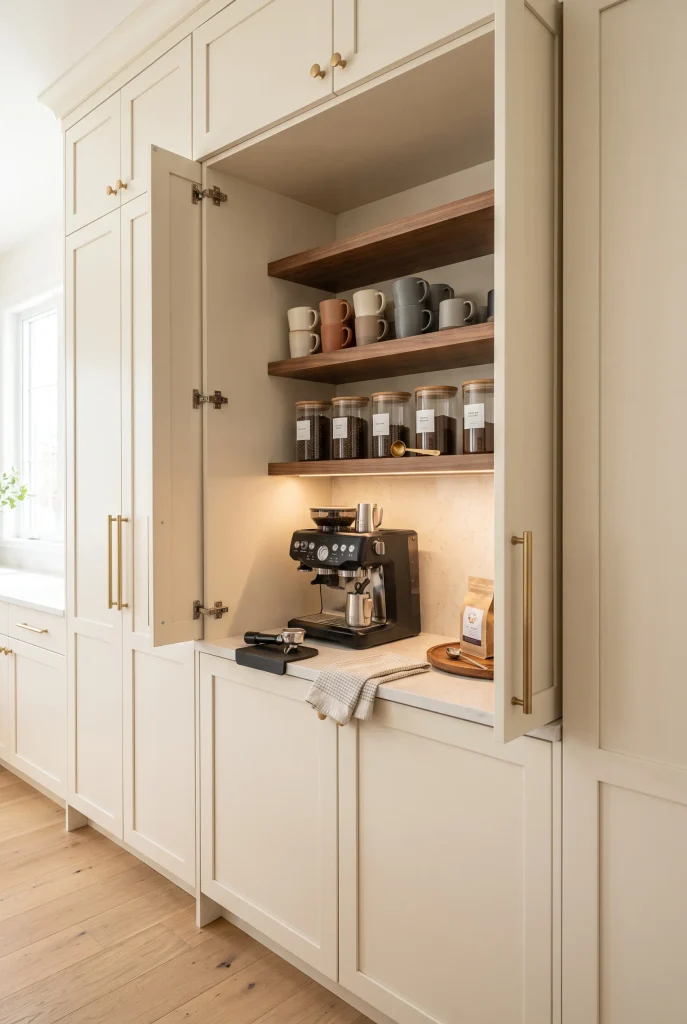
- Hidden storage keeps the main kitchen visually calm.
- A pantry location provides room for extra coffee supplies.
- Open interior shelves make everyday items easy to access.
- Matching finishes help the station feel like part of the cabinetry.
A hidden pantry station is ideal when you want the convenience of a dedicated coffee area without keeping appliances visible all day. A section of a walk-in or tall pantry can hold the machine, grinder, mugs, and coffee supplies behind cabinet doors. When the doors are open, everything is organized and ready to use; when they close, the kitchen returns to a clean, streamlined appearance. This approach is especially helpful in open-plan kitchens where countertop appliances can be noticeable from nearby living spaces. Make sure the pantry has suitable electrical access and enough ventilation around appliances.
Arrange the station around the actual morning routine rather than simply filling the available shelves. Keep the coffee machine at a comfortable working height and place mugs, beans, and filters nearby. Drawers can hold smaller tools, while upper shelves can store backup supplies. A quartz counter creates a durable preparation surface and is easy to wipe after spills. Warm lighting inside the pantry makes the station easier to use early in the morning and adds a welcoming glow when the doors are open. Keeping labels, containers, and finishes consistent can make even a hardworking pantry corner look beautifully organized.
15. Small Apartment Coffee Bar
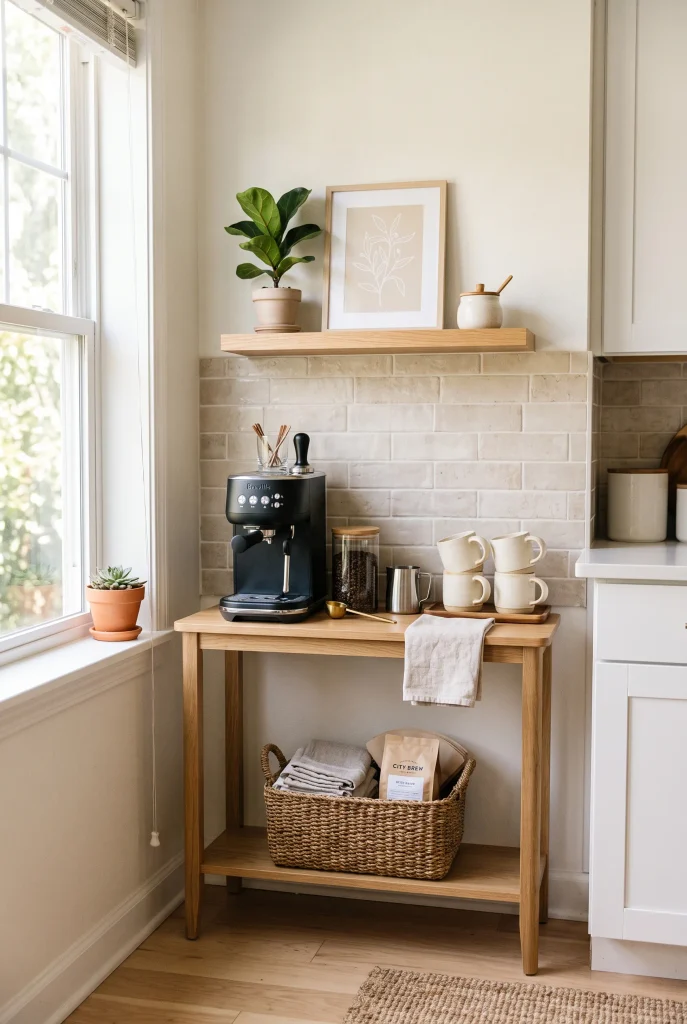
- A slim console can create a coffee zone without taking much floor space.
- Wall storage adds capacity when cabinets are limited.
- Compact equipment keeps the setup practical for apartment living.
- Light colors help a small kitchen feel brighter and more spacious.
Even a tiny apartment kitchen can have a dedicated coffee corner with the right proportions. Instead of using a full cabinet or bulky cart, choose a slim console or narrow section of counter that fits comfortably against an available wall. A compact coffee maker can sit on top, while a shelf above holds mugs and containers. This arrangement gives the space a clear purpose without taking over the kitchen. Light finishes such as pale oak, cream, beige, and warm white can also help the area feel visually open, especially when natural light is limited.
Keep the setup focused on items that are actually used each day. A small tray can group the machine, coffee container, and spoon, while a basket underneath can hold filters or extra supplies. If wall space is available, install one narrow shelf rather than several deep ones. This keeps the arrangement lightweight and avoids making a small room feel crowded. Compact coffee areas work particularly well when they follow the same color palette as the rest of the apartment. Repeating the kitchen’s wood tone or hardware finish helps the coffee corner feel integrated instead of visually disconnected.
16. Black Accent Coffee Bar
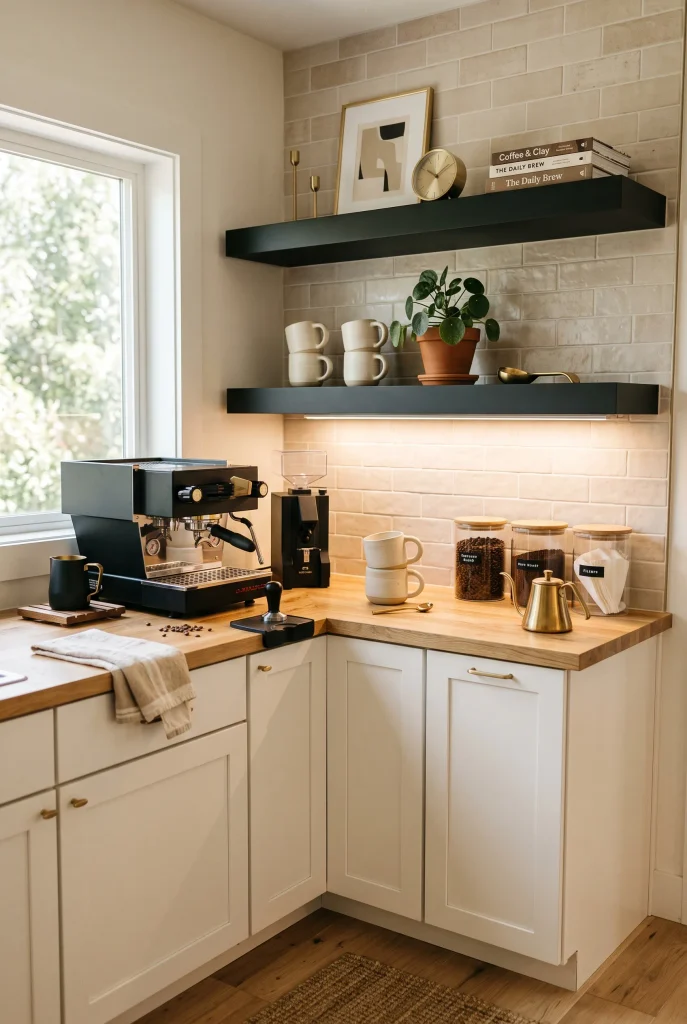
- Matte black accents create a strong focal point in a neutral kitchen.
- Warm wood prevents the darker finishes from feeling too harsh.
- Cream ceramics soften the overall contrast.
- Simple styling keeps the bold color combination balanced.
A black accent coffee bar can give a neutral kitchen a stronger visual focal point without changing the entire room. Start with a matte black coffee maker or grinder, then repeat the darker finish through shelf brackets, hardware, or a small rail. Warm white cabinets and light wood surfaces keep the contrast approachable rather than overly dramatic. The setup works particularly well against a simple backsplash because the darker details naturally draw attention toward the coffee area. Keep the rest of the accessories light and neutral so the black elements feel intentional instead of scattered.
Texture is important when using dark accents in a cozy kitchen. Pair matte black finishes with warm oak, cream ceramics, woven baskets, or a small wooden tray to add softness. Keep the countertop relatively open so the darker pieces remain the main visual feature. A few glass containers can also introduce transparency and prevent the arrangement from looking heavy. Repeating black in two or three small areas usually feels more cohesive than using it everywhere. This approach creates a defined coffee corner while still allowing the surrounding kitchen to feel warm, bright, and comfortable.
17. Scandinavian Coffee Corner
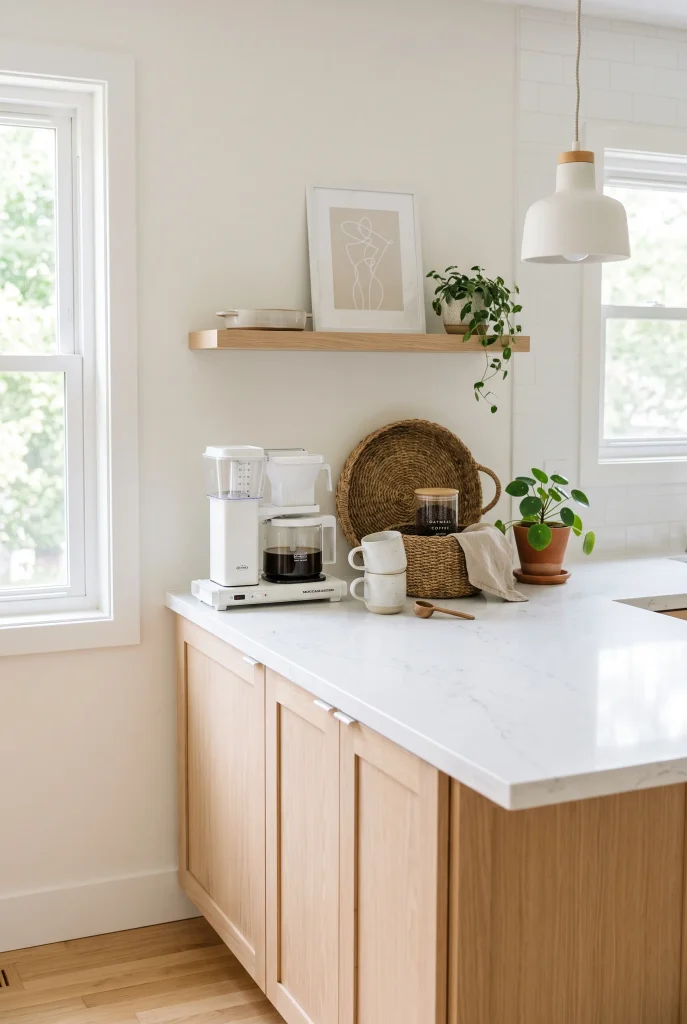
- Pale wood and soft neutrals create a bright, welcoming coffee area.
- Simple ceramics keep the styling clean without feeling empty.
- Natural textures add warmth to the minimalist design.
- Open space around the equipment makes the corner feel airy.
A Scandinavian coffee corner focuses on simplicity, natural materials, and a calm visual balance. Pale oak, warm white surfaces, soft beige accents, and simple ceramic pieces create an inviting backdrop without unnecessary decoration. Choose a compact coffee machine with a clean silhouette and pair it with a few favorite mugs. A small wooden tray can define the area while keeping the countertop organized. This style works especially well in bright kitchens because the light palette reflects natural daylight and makes the entire corner feel fresh. The result is simple enough for everyday living but still attractive enough for Pinterest inspiration.
The secret is to combine minimal styling with useful details. Use a woven basket for extra supplies, place coffee beans in a neutral container, and add one small plant for a natural touch. Avoid filling every shelf or countertop because the open space is part of the Scandinavian look. Light wood flooring and simple cabinetry can reinforce the airy feeling throughout the kitchen. This approach is easiest to maintain when every visible item has a purpose. A calm coffee corner should feel effortless, not like another area that requires constant rearranging or styling.
18. Vintage Mug Display
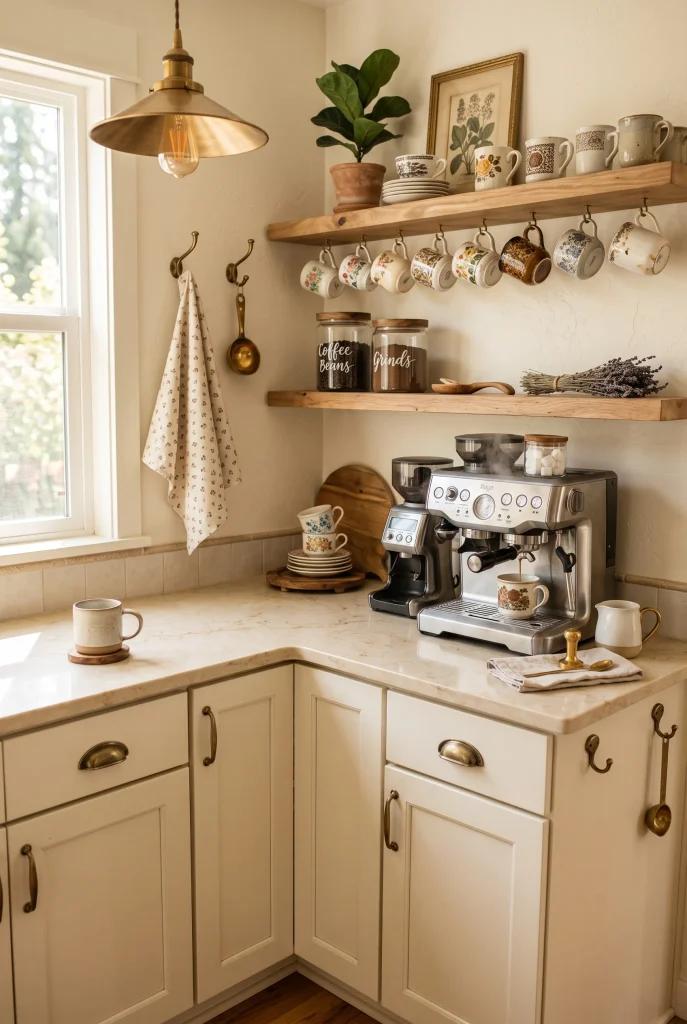
- Displaying mugs adds personality without requiring large decorative pieces.
- Vintage ceramics bring color, texture, and character to the coffee area.
- Wall hooks keep favorite cups accessible while saving shelf space.
- Neutral surrounding finishes let the mug collection become the focal point.
A favorite mug collection can become the most personal part of a kitchen coffee corner. Instead of hiding beautiful cups inside a cabinet, display a small selection on open shelves or hooks above the counter. Mix simple neutral pieces with one or two vintage designs to create visual interest without making the area feel chaotic. The coffee machine can stay centered below the display, creating a clear relationship between the storage and preparation zones. This setup works especially well when the station should feel collected and personal rather than perfectly matched.
Choose mugs that share at least one visual element, such as a similar color family, shape, or material. This keeps the display cohesive even when the pieces are different. Wall-mounted hooks can free up shelf space and make frequently used cups easy to grab. Keep coffee jars and other supplies in simple containers so the mugs remain the main decorative feature. A small framed print or wooden sign can fill an empty section of wall, but avoid adding too many competing objects. The goal is a display that feels naturally gathered and still functions smoothly during everyday coffee preparation.
19. Warm Wood Coffee Nook
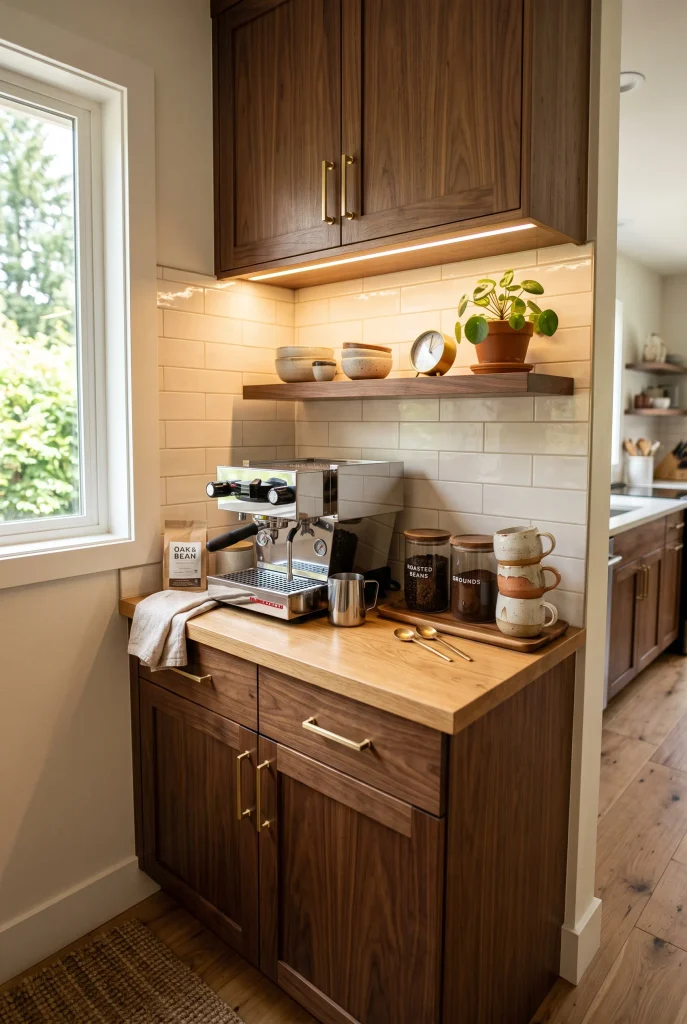
- Warm wood instantly adds depth and coziness to the coffee area.
- Brass details bring a subtle polished finish.
- Cream surfaces keep darker wood from feeling too heavy.
- Natural textures make the station feel inviting and lived-in.
Warm wood can make a simple coffee corner feel instantly more inviting. Rich walnut shelves, an oak counter, or even a small wooden tray can introduce depth while keeping the kitchen comfortable and relaxed. Pair darker wood with cream or warm white surfaces so the area does not feel visually heavy. A compact coffee machine, neutral mugs, and glass containers are enough to complete the setup. This combination works especially well in kitchens that already use natural materials because the coffee area feels connected to the wider room instead of looking like a separate decorative feature.
Layering different textures can make the wood feel even more intentional. Try pairing a smooth countertop with woven baskets, ceramic mugs, and brushed brass hardware for a balanced mix of finishes. Keep the coffee equipment grouped together so the natural materials remain visible around it. Warm under-cabinet lighting can highlight the wood grain and create a softer atmosphere in the evening. Wood looks most welcoming when it is paired with simple, neutral accessories rather than too many decorative items. A little contrast gives the nook character while keeping it easy to use and maintain.
20. Entertainer Coffee Station

- A wider counter gives guests room to prepare drinks comfortably.
- Extra mugs and serving pieces can stay organized within easy reach.
- A large tray makes serving coffee easier during gatherings.
- Closed storage keeps backup supplies out of sight.
A coffee station designed for entertaining should make serving several people feel simple rather than crowded. Give the setup enough counter space for the machine, grinder, mugs, and a serving tray, then keep extra supplies in nearby drawers or cabinets. Open shelving can display attractive cups and glasses while making them easy for guests to find. This arrangement is especially useful during holidays, weekend brunches, or casual gatherings when the kitchen becomes a natural gathering point. A clear preparation area also means coffee can be served without constantly moving other kitchen items out of the way.
Think about how people will move through the space before deciding where everything belongs. Keep the machine and serving area together, but leave enough room for someone to place a cup while another person prepares a drink. A large tray can carry several mugs at once and keep small accessories grouped neatly. Matching containers for coffee, sugar, or stirrers make the station easier for guests to understand. For a polished appearance, combine practical storage with a few decorative details such as brass hardware, fresh greenery, or a simple ceramic bowl. Good organization makes entertaining feel much more relaxed.
21. Cozy Beverage Nook
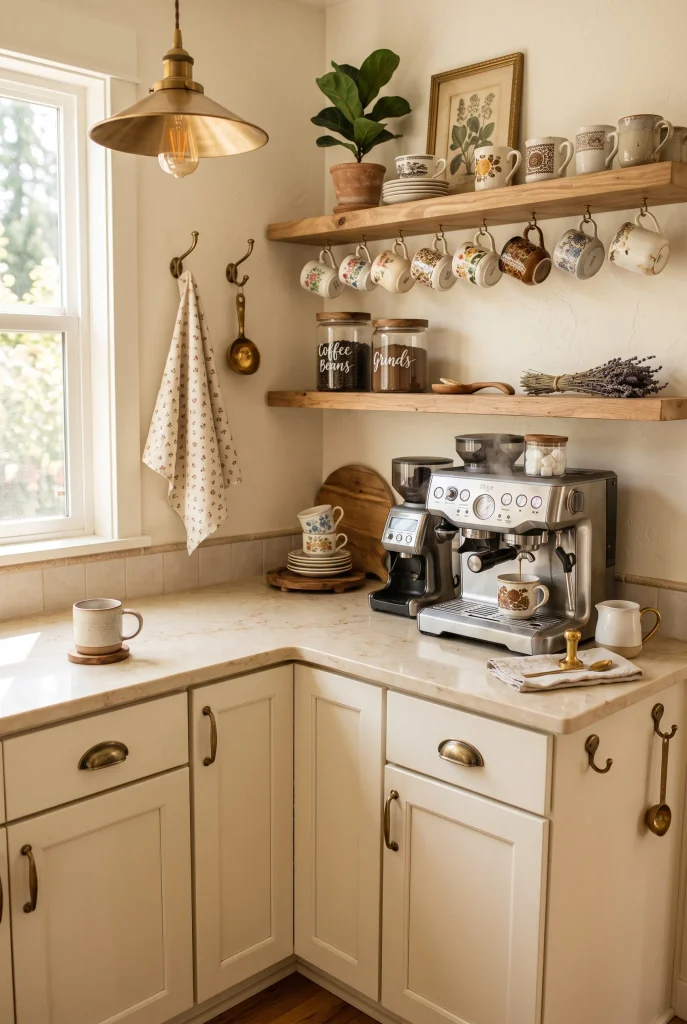
- A layered beverage nook can make the kitchen feel warmer and more welcoming.
- Mixed textures add depth without requiring expensive decoration.
- Dedicated storage keeps everyday drink supplies organized.
- Soft lighting creates a cozy atmosphere for morning or evening use.
A cozy beverage nook brings together the details that make a kitchen feel personal and comfortable. Combine a practical counter, warm wood shelving, neutral ceramics, and a few natural textures to create a dedicated area for everyday drinks. The station can hold your coffee maker, favorite mugs, beans, and serving accessories while still leaving enough open space for preparation. Warm colors such as cream, beige, walnut, and soft brown create an inviting foundation that works with many kitchen styles. The result should feel useful first, with decorative details supporting the function rather than taking over the space.
Small touches can make the final setup feel especially welcoming. Add a woven basket for extra supplies, a small plant for freshness, and a wooden tray to group the essentials. Soft under-shelf or pendant lighting can create a gentle glow when natural daylight fades. Keep the most frequently used items closest to the coffee maker so the station remains convenient every morning. The most enjoyable coffee corners are often the ones that feel easy to use rather than overly styled. Give each item a clear place, leave some breathing room, and let the materials create the cozy atmosphere naturally.
Conclusion
Creating a cozy coffee corner does not require a large kitchen or an expensive renovation. These ideas show how thoughtful storage, warm materials, practical layouts, and simple styling can transform even a small area into something special. The best coffee station ideas are the ones that fit your routine and make everyday mornings easier. Choose one idea that matches your available space, then personalize it with your favorite mugs, containers, lighting, and textures. Save this article on Pinterest for your next kitchen project, try an idea in your own home, and share it with someone who loves a beautiful coffee corner.