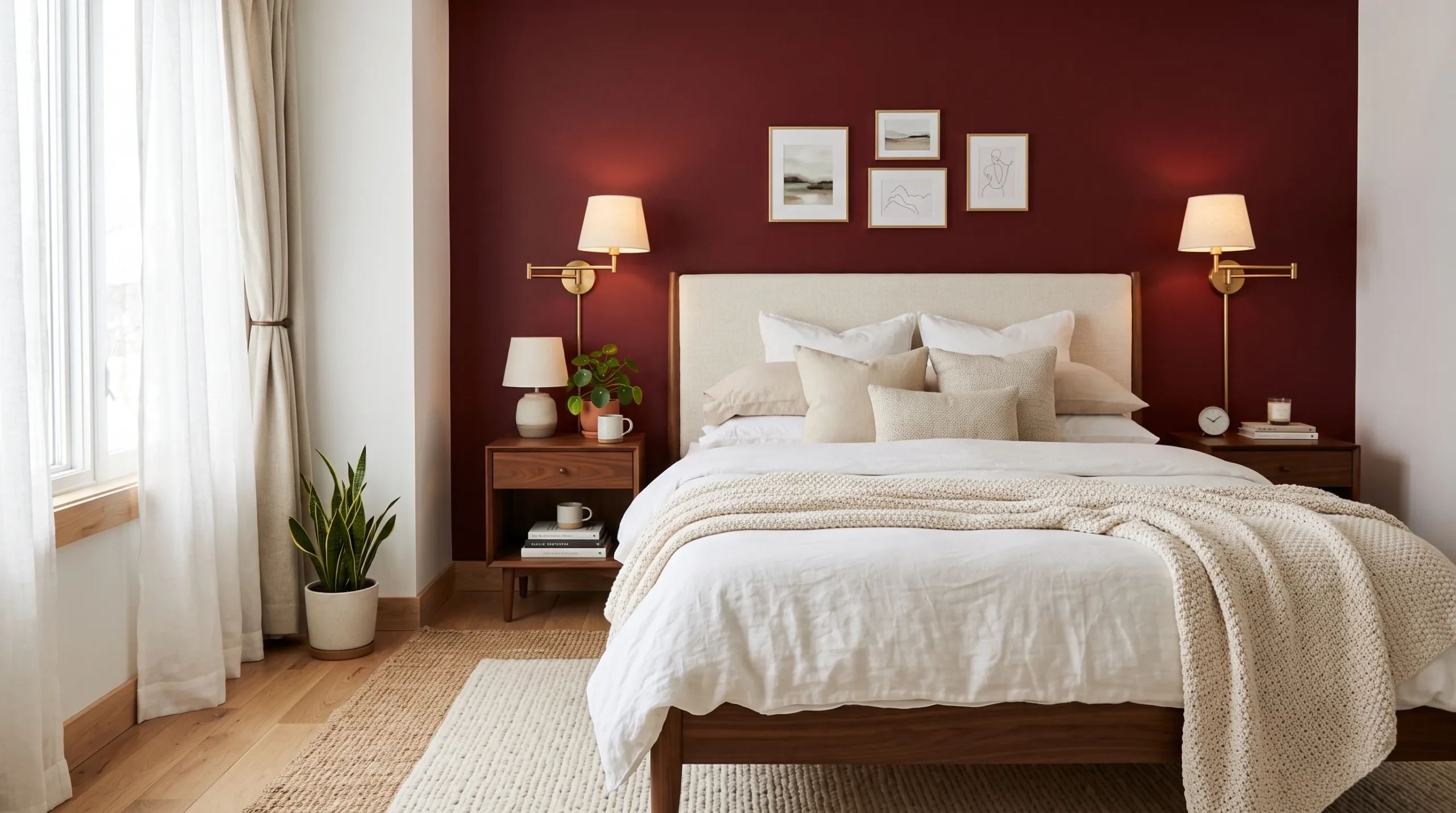
17 Cherry Red Bedroom Ideas That Feel Bold and Cozy
Ready to make your bedroom feel warmer, bolder, and more memorable? A cherry red bedroom can bring rich color and cozy personality without making the space feel overwhelming. The key is knowing where to use this deep, energetic shade and which softer colors, textures, and materials balance it best.
From statement walls and upholstered headboards to simple pillows, rugs, lighting, and vintage-inspired bedding, these ideas show different ways to bring red into your space. Combining bold color with cream, natural wood, linen, and warm lighting can create a bedroom that feels inviting rather than overly dramatic. Whether you want a small update or a more noticeable transformation, these ideas can help create a space that feels personal, comfortable, and beautifully layered.
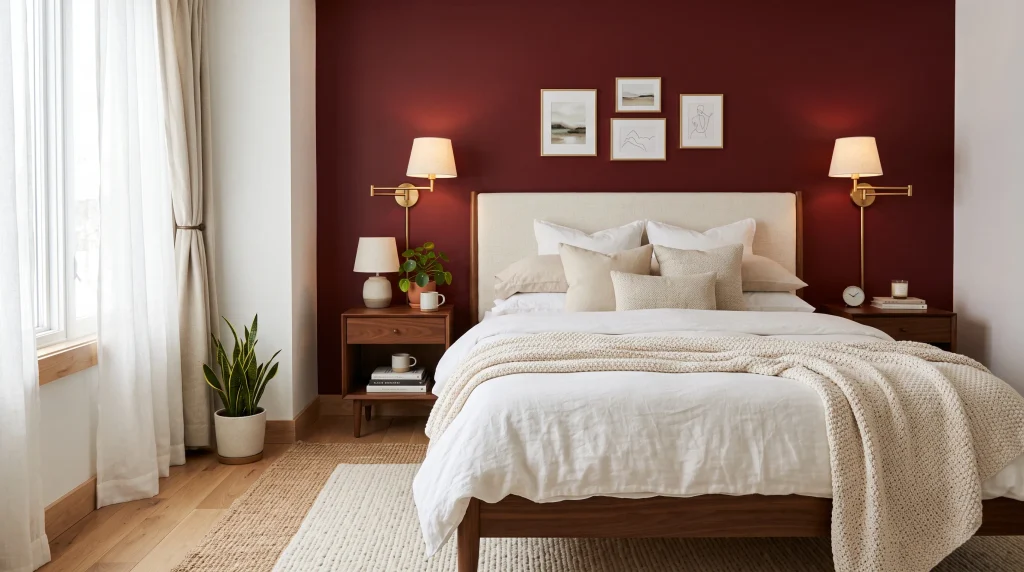
1. Cherry Red Accent Wall

- A single red wall creates a dramatic focal point without overwhelming the room.
- Cream bedding softens the deeper color and keeps the space balanced.
- Walnut furniture adds warmth and connects naturally with the rich wall tone.
- Brass lighting gives the room a polished finishing touch.
A bold wall can completely change the personality of a bedroom, especially when the rest of the palette stays calm and simple. A deep red backdrop behind the bed instantly creates a focal point and gives the sleeping area more visual depth. In a cherry red bedroom, this approach works particularly well because the strong color feels intentional rather than scattered throughout the space. Pair the wall with cream bedding, natural wood furniture, and warm metallic accents. The contrast keeps the room cozy while allowing the saturated shade to remain the main design feature without making the space feel visually crowded.
The key is choosing the right balance around the accent wall. Keep large furniture pieces relatively quiet, then introduce smaller touches that repeat the red through pillows, artwork, or a throw. This creates connection without turning every surface into the same color. Soft lighting is also important because strong overhead light can make saturated walls appear harsher at night. Warm bedside sconces or table lamps create a softer glow and bring out the richness of the paint. For smaller bedrooms, using the bold color on only one wall can provide personality while preserving an open, comfortable feeling.
2. Burgundy Linen Bedding
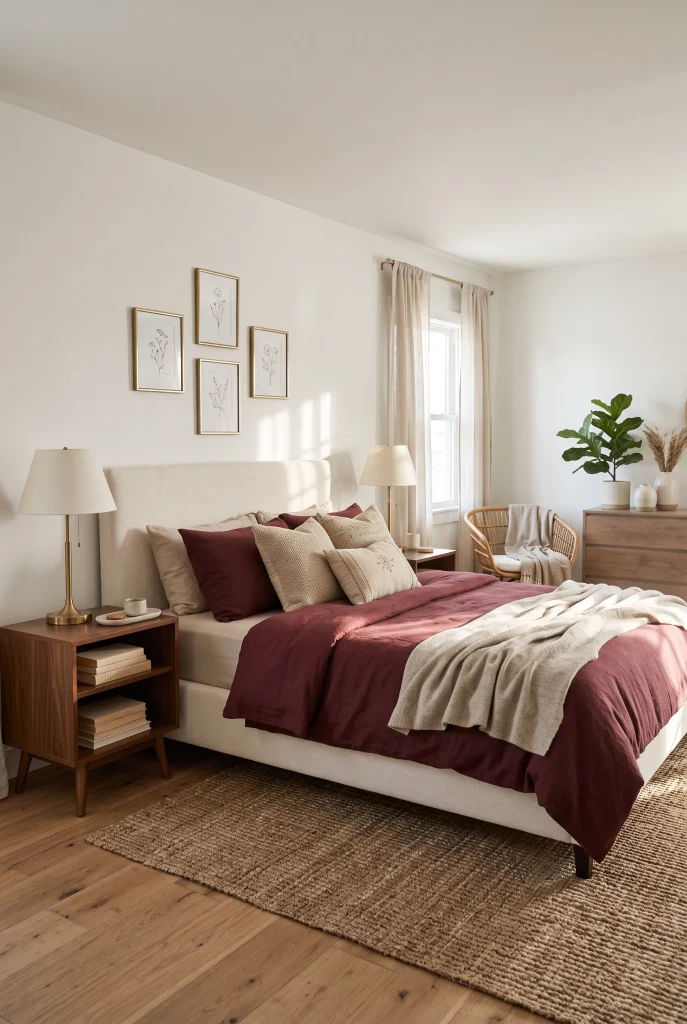
- Linen bedding adds texture while making the deep red feel softer.
- Layering cream and beige pillows prevents the bed from looking too heavy.
- Natural wood keeps the rich bedding grounded and welcoming.
- A lightly rumpled linen finish gives the room an effortless, lived-in look.
Few bedroom updates feel as immediate as changing the bedding, and a rich burgundy set can make the entire space feel warmer within minutes. This look works beautifully when you want the drama of red without committing to painted walls or larger furniture pieces. Choose washed linen or cotton bedding with a slightly relaxed finish, then layer it with cream, beige, or soft taupe pillows. The combination creates depth without looking overly styled. For an especially comfortable effect, let the duvet fall naturally over the sides of the bed rather than arranging every layer too perfectly.
Texture makes this color combination even more inviting. Add a chunky knit throw, a woven bench, or a small jute rug to break up smooth surfaces and give the room a tactile quality. Walnut or oak furniture complements burgundy beautifully because both colors have warm undertones. Keep the walls light so the bedding remains the visual anchor, especially if natural light is limited. A cherry red bedroom can feel sophisticated rather than dramatic when the strongest color is balanced with breathable fabrics, warm neutrals, and uncomplicated furniture.
3. Cherry Red Headboard
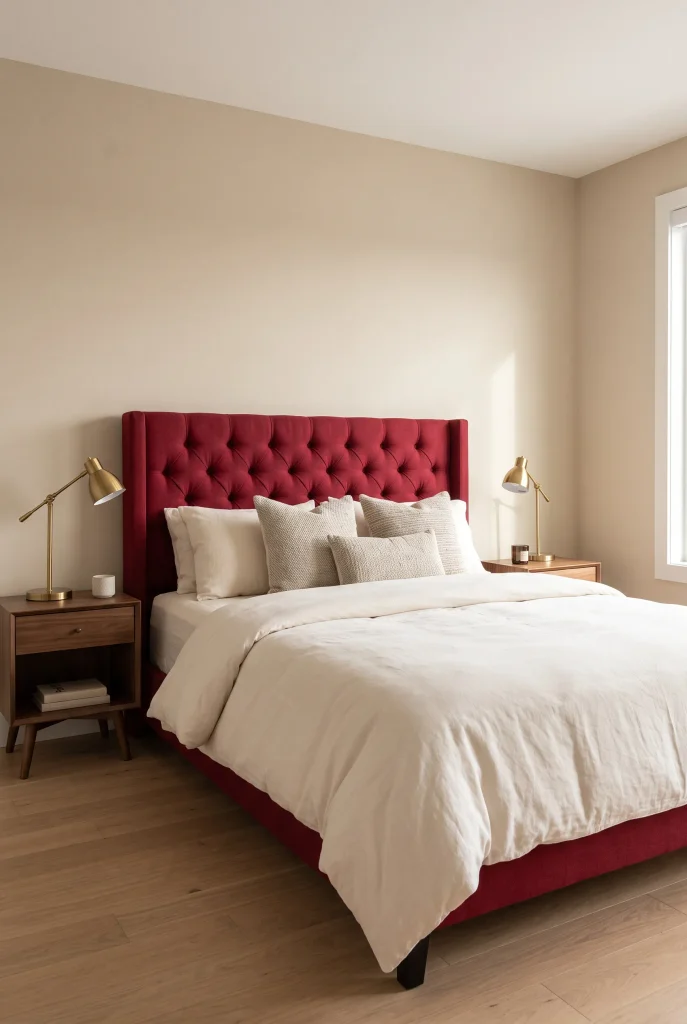
- A red headboard creates a strong focal point without covering an entire wall.
- Upholstery makes the bold color feel softer and more comfortable.
- Neutral bedding keeps the bed visually balanced and easy to style.
- Brass sconces or lamps add warmth and a subtle upscale finish.
A statement headboard can bring bold color into the room while keeping the overall design flexible. A cherry red upholstered headboard feels especially effective because it frames the bed and immediately defines the sleeping area. The color becomes a strong visual feature, but the surrounding walls can remain neutral and adaptable. Pair it with ivory sheets, beige pillows, and a soft textured throw for contrast. This arrangement works in both spacious and compact bedrooms because the headboard adds personality vertically without taking much additional floor space or making the room feel cluttered.
For a polished result, choose upholstery with a matte or softly textured finish rather than something highly glossy. Velvet can create a luxurious mood, while linen or woven fabric gives the same bold shade a more relaxed appearance. Keep bedside tables simple and use warm lighting to highlight the headboard after sunset. Small accents in burgundy, rust, or muted rose can echo the color without competing with it. The result is a bedroom that feels expressive and cozy while still having enough neutral space for the eye to rest.
4. Cherry Red Curtains
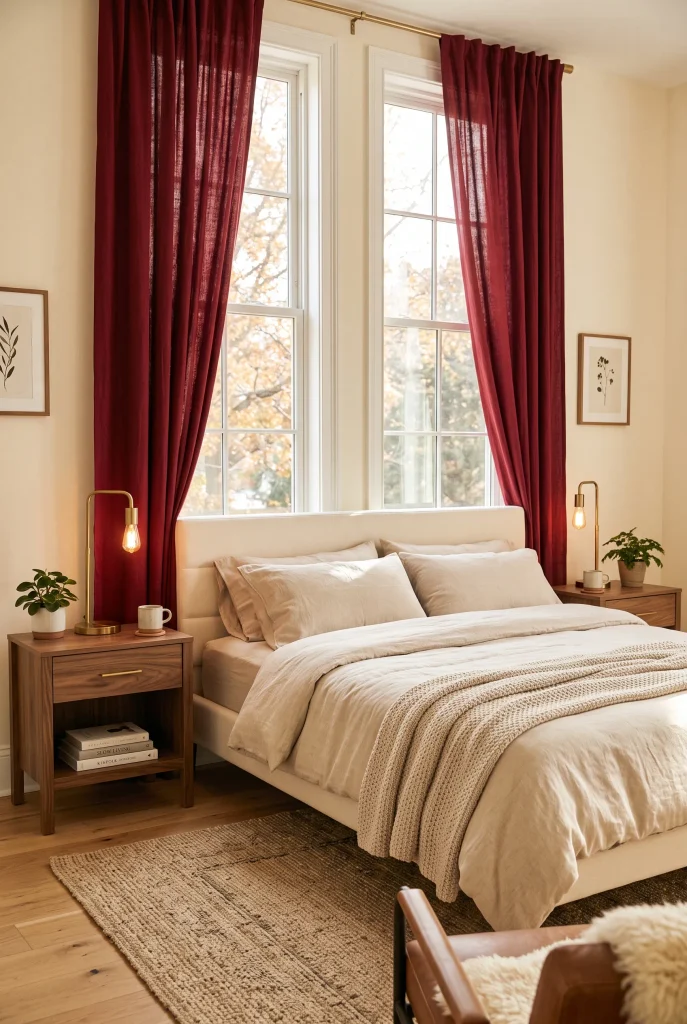
- Floor-length curtains bring the bold color upward and make windows feel taller.
- Cream walls keep the strong red fabric from dominating the entire room.
- Heavy linen or velvet adds softness and visual depth.
- Matching small accents can connect the curtains with the rest of the bedroom.
Window treatments can completely shift the mood of a bedroom, and rich red curtains make the change especially noticeable. Instead of covering the walls with a strong color, this approach concentrates the deeper shade around the windows, creating a dramatic frame for natural light. In a cherry red bedroom, floor-length curtains can also make the ceiling appear taller when hung close to the ceiling. Pair them with cream walls, neutral bedding, and warm wood furniture. The result feels cozy and intentional while leaving plenty of breathing room around the strongest color.
Fabric choice makes a big difference in how the room feels. Velvet creates a more luxurious, dramatic look, while linen or cotton gives the same color a softer and more relaxed appearance. If the curtains feel visually heavy, balance them with lightweight bedding and pale rugs. Warm brass lamps can also help connect the rich red with the rest of the room. For bedrooms that receive strong afternoon sun, lined curtains provide additional privacy and help protect furnishings from direct sunlight. This simple update adds personality without requiring a complete room makeover.
5. Red and Cream Bedding
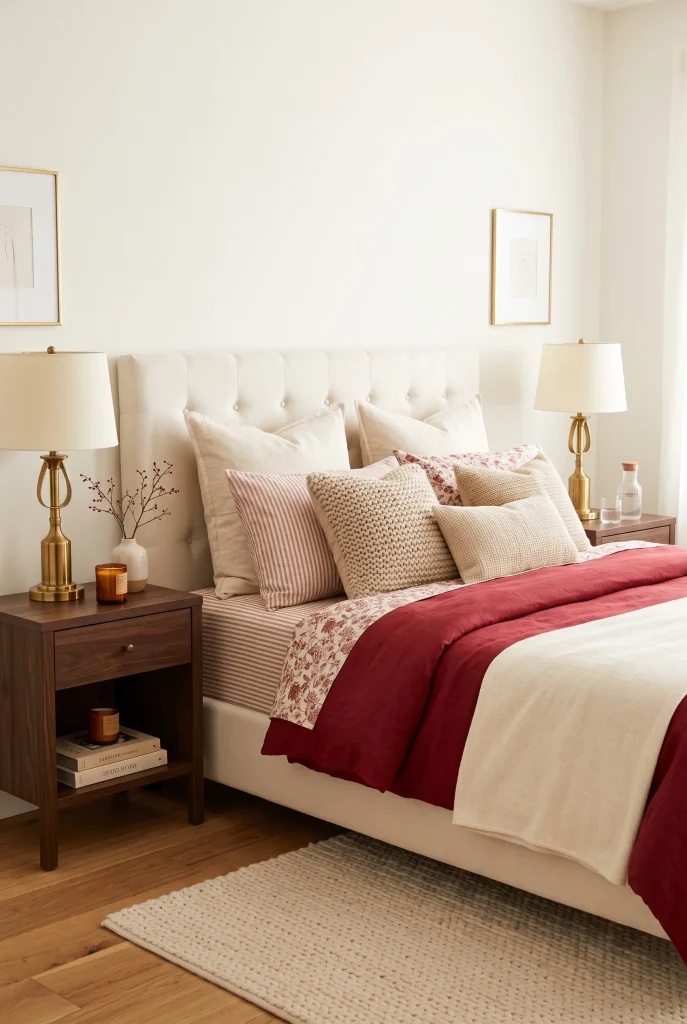
- Cream bedding creates a calm base for stronger red accents.
- Mixing solid and patterned pillows adds interest without making the bed busy.
- Natural wood furniture helps warm the contrasting color palette.
- A textured throw can make the arrangement feel softer and more inviting.
A red and cream bedding combination creates contrast without making the bedroom feel overly intense. The lighter fabric gives the eye a place to rest, while deeper red accents provide enough color to make the bed feel memorable. Start with ivory or warm white sheets, then add a red duvet, quilt, or accent pillows depending on how much color you want. This approach works especially well when you want a cherry red bedroom to feel cozy but still light and comfortable. Natural wood, woven textures, and soft rugs can complete the palette without competing for attention.
Layering is what keeps this combination from looking flat. Try combining crisp cotton sheets with linen pillowcases, a quilted coverlet, and a textured throw folded casually at the foot of the bed. You can also introduce subtle patterns such as narrow stripes or small floral motifs that include muted red and cream. Keep the largest surfaces relatively simple, then use accessories for variation. This makes future decorating easier because individual pillows or throws can be replaced without changing the entire room. The finished space feels warm, coordinated, and easy to live with every day.
6. Cherry Red Nightstands
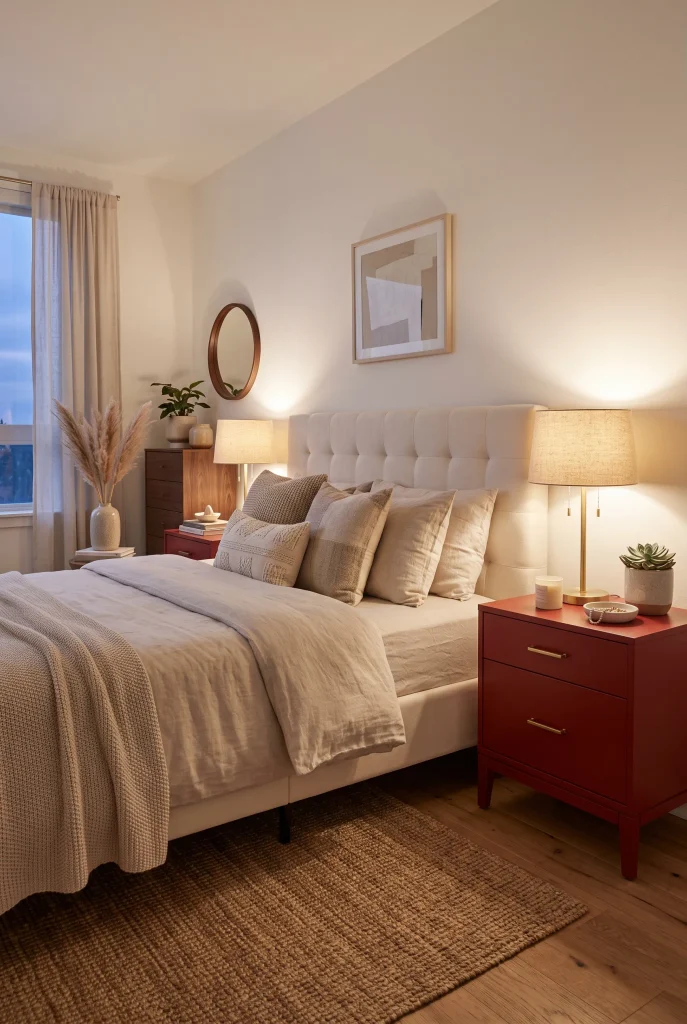
- Red nightstands introduce color through a smaller, controlled furniture piece.
- Brass hardware can make painted furniture look more refined.
- Keeping the bed and walls neutral prevents the room from feeling overloaded.
- A matching pair creates symmetry and makes the design feel intentional.
Sometimes a small furniture change creates more personality than repainting an entire room. Cherry red nightstands can add a strong accent beside the bed while keeping the rest of the bedroom calm and flexible. This works particularly well with an upholstered cream headboard, light walls, and neutral bedding because the saturated furniture becomes a deliberate focal point. Choose simple shapes if you want a modern appearance, or consider vintage-inspired nightstands with curved edges for a more collected look. Either way, the color adds character without taking over the entire room.
The details on the nightstands can make the color feel even more connected to the design. Brass knobs, ceramic lamps, or warm wood accessories pair naturally with rich red finishes. Keep the surfaces useful rather than crowded, leaving space for a lamp, book, and one small decorative object. If matching red furniture feels too strong, use the color on only one nightstand and repeat it through a pillow or artwork elsewhere. This creates visual balance while keeping the room relaxed. It is a practical way to experiment with a bold palette before making larger changes.
View: 21 Modern Mens Bedroom Ideas That Feel Stylish and Luxe
7. Red Floral Wallpaper

- Floral wallpaper adds pattern while making the wall feel more decorative.
- A cream headboard softens the stronger background.
- Walnut furniture works naturally with warm red and botanical tones.
- Keep bedding simple so the wallpaper remains the main feature.
A floral wall can bring warmth, pattern, and personality into the bedroom without requiring lots of extra decoration. Choose a design that combines cherry red with softer cream, beige, muted green, or dusty rose tones for a layered look. Placing the wallpaper behind the bed creates a natural focal point and gives the sleeping area a more finished appearance. The pattern also helps introduce visual movement, which can make a simple room feel more thoughtfully designed. Keep the furniture streamlined so the wallpaper has enough space to stand out without making the room feel busy.
When using patterned wallpaper, repeating one or two of its softer colors elsewhere can make the entire room feel connected. Cream bedding, a muted green cushion, or warm wood furniture can pull those tones forward without matching everything exactly. If you are decorating a smaller bedroom, consider wallpapering only the wall behind the bed rather than every surface. This creates impact while keeping the surrounding walls visually lighter. Soft bedside lighting is especially helpful at night because it gives the wallpaper a gentle glow and makes the room feel warm, intimate, and comfortable.
8. Velvet Red Accent Chair
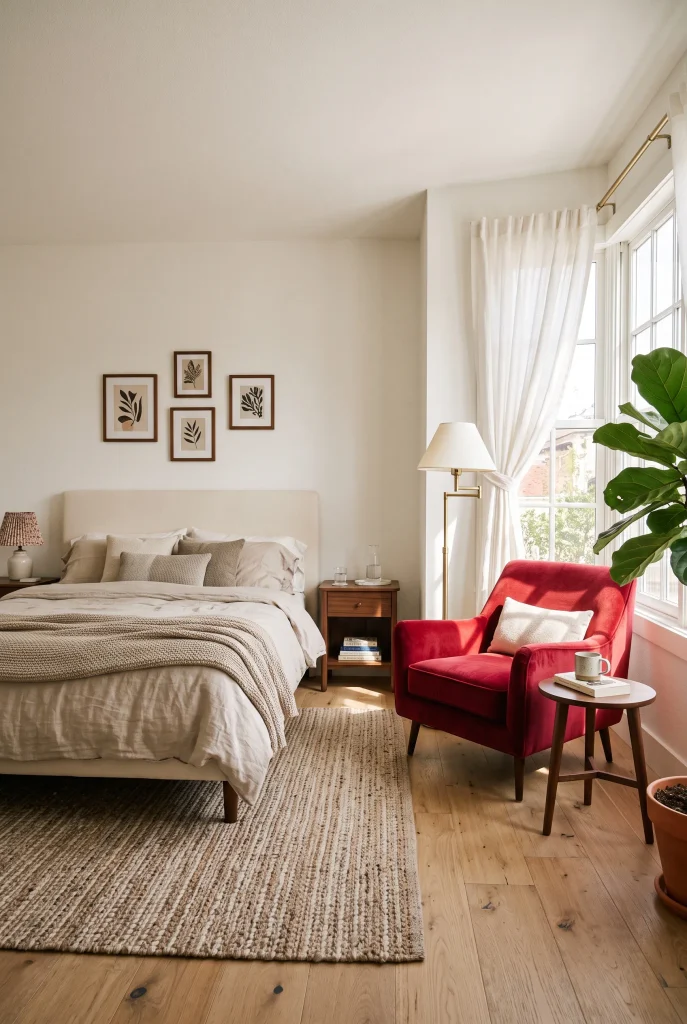
- A red chair creates a bold color moment away from the bed.
- Velvet adds softness and a subtle luxurious texture.
- Positioning it near a window creates a practical reading or dressing spot.
- Neutral surrounding pieces keep the chair visually balanced.
A single accent chair can turn an unused bedroom corner into a feature worth noticing. A rich red velvet chair adds color, texture, and a comfortable place to sit without changing the main furniture arrangement. Place it near a window, beside a bookshelf, or in an empty corner where it can serve as a reading seat or spot for putting on shoes. In a cherry red bedroom, the chair can repeat the main color while remaining visually separate from the bed. Pair it with a small side table and a warm lamp to create a complete little zone.
The chair does not need to match every other red detail in the room. In fact, keeping the surrounding pieces neutral often makes the color feel more intentional. A cream rug, beige curtains, or natural wood table can soften the contrast and make the corner feel integrated. If velvet feels too formal for the space, choose a woven or linen chair in a similar shade. A small cushion can introduce another texture without adding unnecessary decoration. This setup is especially useful when you want the bedroom to feel more functional rather than simply adding decorative objects.
9. Red Gallery Wall
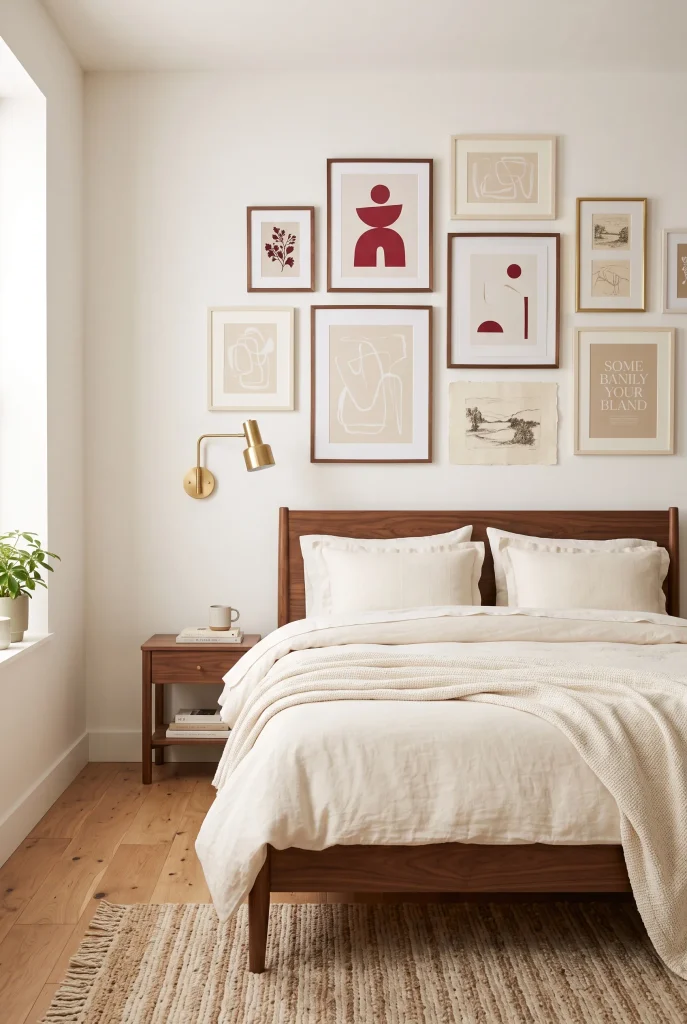
- A gallery wall lets you introduce red through art instead of large furniture.
- Mixing frame finishes creates a collected, personal appearance.
- Neutral artwork prevents the arrangement from becoming visually overwhelming.
- Repeating small red details elsewhere helps connect the wall to the room.
Artwork offers an easy way to experiment with bold color while keeping larger bedroom elements neutral. A gallery wall featuring red botanical prints, abstract artwork, vintage posters, or simple geometric pieces can create a strong focal point above the bed or dresser. Instead of searching for perfectly matching artwork, combine several pieces that share a similar red tone. Add cream, beige, black, or muted green prints between them to create variety. This approach works particularly well when you want the energy of a bold bedroom palette without committing to colorful walls or furniture.
Frame selection can change the overall mood of the arrangement. Thin black frames create a cleaner contemporary look, while walnut or antique brass frames feel warmer and more collected. Before hanging everything, arrange the artwork on the floor and leave consistent spacing between pieces. This small planning step makes the final gallery wall feel intentional rather than crowded. You can also repeat the red through a cushion, lamp base, or small ceramic accessory nearby. The result adds personality and visual interest while keeping the rest of the bedroom comfortable and easy to update.
10. Cherry Red Area Rug
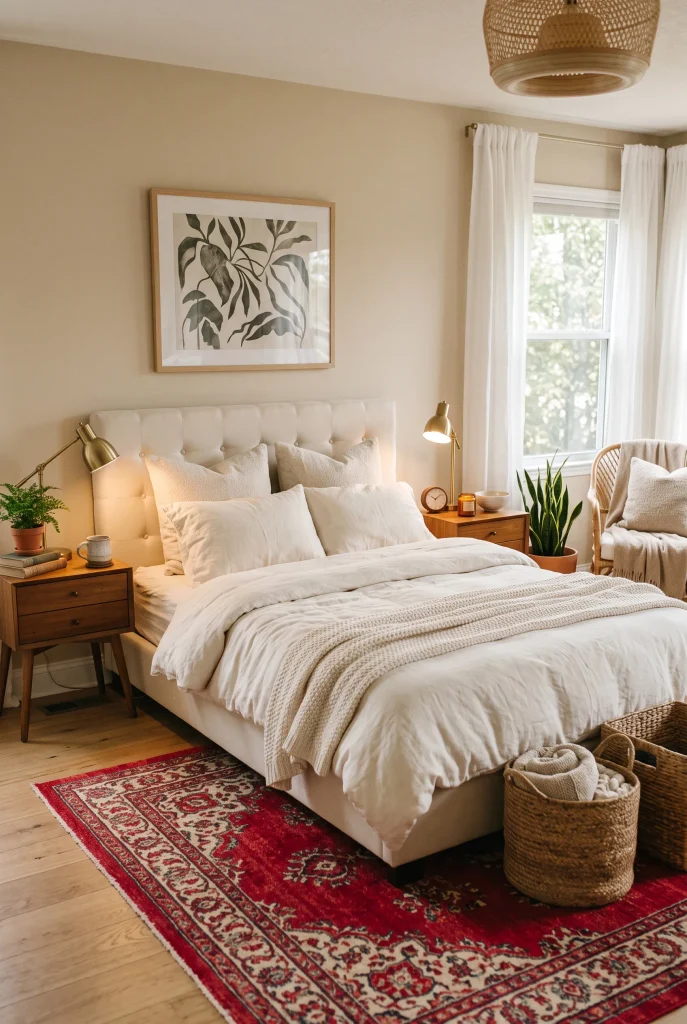
- A red rug adds warmth without requiring permanent color changes.
- Placing it beneath the bed helps visually anchor the entire room.
- A subtle pattern can make the strong color feel more relaxed.
- Cream and beige furniture keep the floor area from looking too heavy.
A bold rug can ground the bedroom while adding color exactly where the room needs it most. A cherry red area rug beneath the bed creates a strong foundation and helps define the sleeping zone, especially in larger rooms where furniture can otherwise feel disconnected. Choose a design with subtle patterning if you want the red to feel softer, or use a solid rug when you want a cleaner statement. Cream bedding and warm wood furniture naturally balance the deeper floor color, making the overall space feel cozy without becoming visually overwhelming.
Size matters when styling a bedroom rug. Ideally, the rug should extend beyond the sides of the bed enough to create a comfortable visual frame and provide a soft landing underfoot. If a large rug is outside your budget, placing smaller runners along both sides of the bed can create a similar effect. Look for wool, cotton, or low-pile options that are comfortable and easy to maintain. A rug with muted red, cream, and brown tones can also hide everyday dust and wear better than a very bright solid surface, making it practical as well as decorative.
11. Red Canopy Bed
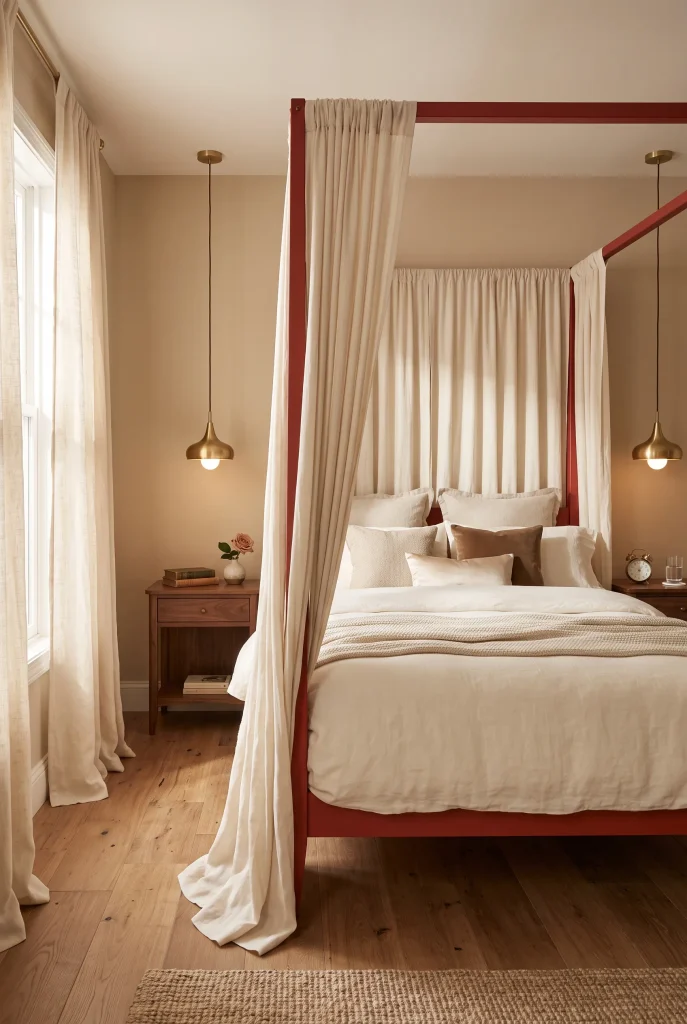
- A canopy frame creates height and gives the bed a dramatic presence.
- Red fabric can make the sleeping area feel intimate and cocoon-like.
- Light curtains soften the strong color and add movement.
- Keeping the surrounding furniture simple prevents the setup from feeling theatrical.
A canopy bed can make a bedroom feel special without relying on lots of decorative accessories. A dark red frame or red fabric panels immediately draw attention upward, creating a sense of height and giving the bed a more defined presence. For a cozy result, combine the bold structure with ivory linen bedding and soft neutral curtains. This allows the canopy to feel dramatic while the rest of the room remains restful. The look can work in both traditional and modern spaces depending on the shape of the frame and the simplicity of the surrounding furniture.
Fabric placement can also control how bold the canopy feels. Draping red panels loosely around the frame creates a richer, more enclosed effect, while using only light cream curtains keeps the structure visually lighter. Warm bedside lamps or pendant lights can highlight the frame after dark and create a soft glow around the bed. Keep the floor and walls relatively simple so the canopy remains the main architectural feature. If you want a less permanent version, lightweight fabric panels can provide a similar atmosphere without replacing the existing bed frame.
12. Cherry Red Accent Pillows

- Accent pillows are an easy way to test a bold color before committing.
- Mixing red with cream, beige, and muted brown keeps the bed balanced.
- Different pillow shapes add depth without requiring extra furniture.
- Small color changes can refresh the bedroom seasonally.
If you love rich red but do not want to repaint or replace furniture, start with the smallest details. A few cherry red accent pillows can give a neutral bed an entirely different personality while keeping the overall room flexible. Layer two or three shades of red with ivory, beige, or warm taupe cushions for a relaxed arrangement. You can also mix square pillows with lumbar shapes to create more dimension. This approach is especially useful for renters or anyone who enjoys changing bedroom decor throughout the year without making expensive updates.
The trick is to use the red intentionally rather than scattering it across every surface. Let the pillows provide the strongest color moment, then repeat a softer version of the shade in artwork, a throw, or a small decorative object. Choose fabrics according to the mood you want: velvet feels richer, linen feels relaxed, and woven textures add a more casual character. When the seasons change, simply replace the accent pillows while keeping the neutral bedding underneath. This creates a practical decorating system that makes bold color easier to live with long-term.
13. Red Painted Dresser
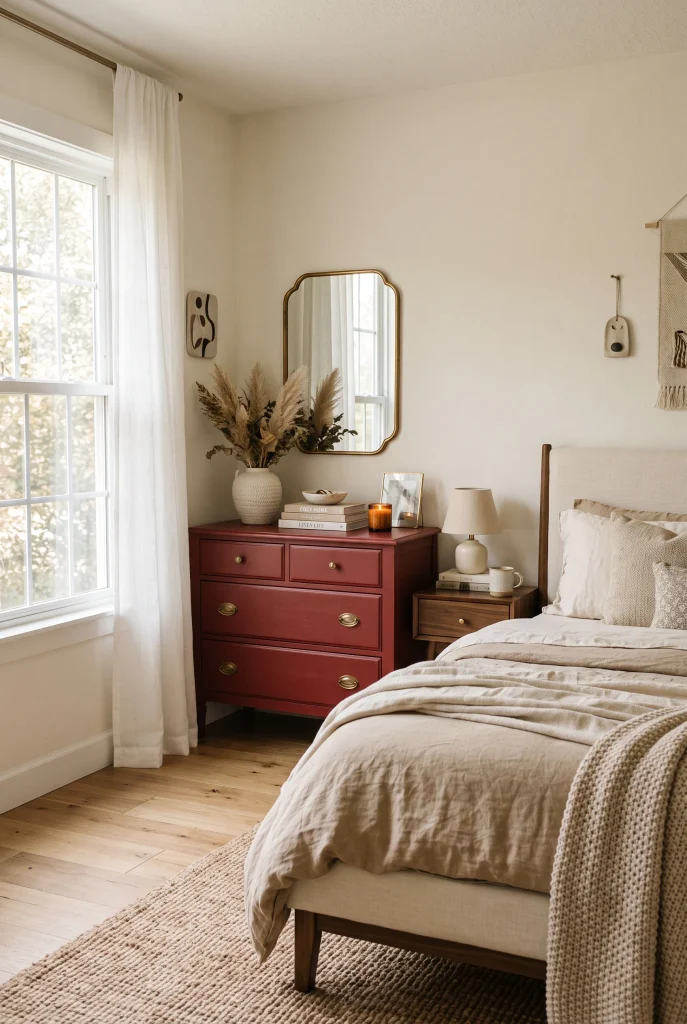
- A painted dresser adds bold color without changing the entire bedroom.
- Brass or antique gold hardware can give the piece a refined finish.
- Neutral walls and bedding keep the furniture visually grounded.
- Style the top with only a few useful decorative pieces for a cleaner look.
A painted dresser can become the statement piece that gives a neutral bedroom its personality. A deep red finish works especially well on a simple dresser because the clean shape lets the color do most of the decorating. Place it against a warm white or beige wall and pair it with light bedding to create an easy contrast. The dresser can also provide useful storage for clothing, accessories, or linens, making this idea more than a decorative update. A bold furniture finish feels intentional when the rest of the room remains relatively calm and uncluttered.
Hardware is another simple way to shape the overall look. Brass pulls create a warmer, traditional feeling, while matte black handles can make the same red dresser feel more contemporary. Keep the styling on top restrained with a small lamp, framed artwork, ceramic vase, or tray for everyday items. If the room already contains several wood tones, choose a painted dresser with a slightly muted red finish rather than an extremely bright shade. The result is a practical statement piece that adds depth and character while still allowing the bedroom to feel comfortable and organized.
14. Red and Walnut Pairing
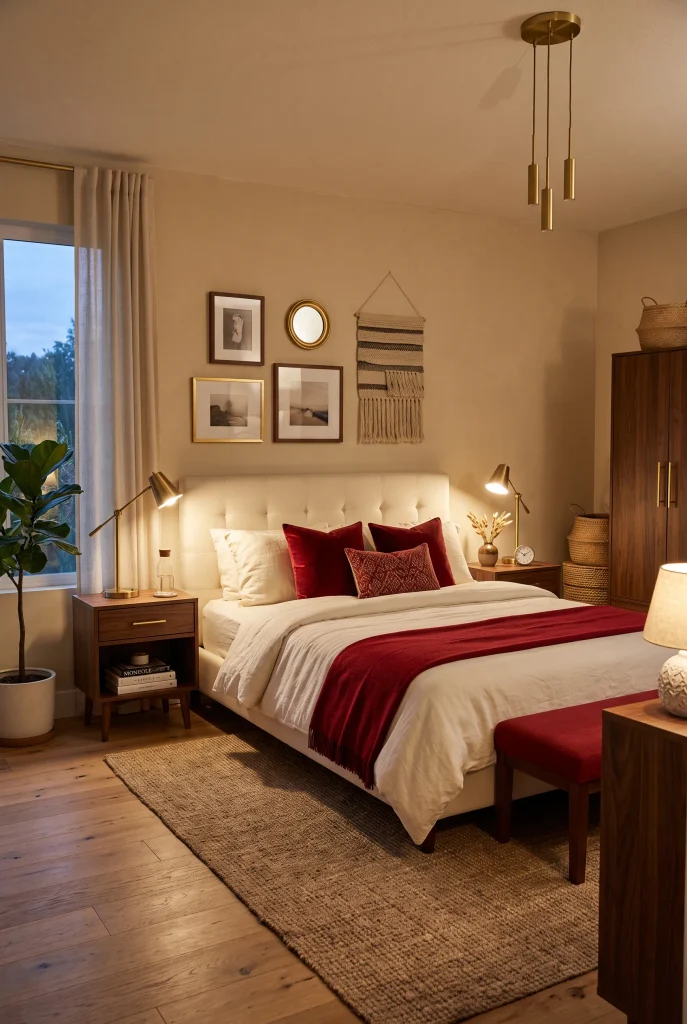
- Walnut naturally complements deep red because both bring warm undertones.
- A neutral upholstered bed keeps the combination from feeling too dark.
- Brass lighting adds a subtle layer of warmth and polish.
- Repeating red through small accessories creates a cohesive finish.
Warm wood and deep red create a naturally inviting combination that can make a bedroom feel richer without adding excessive decoration. Walnut nightstands, a wooden bench, or a simple dresser can bring depth beside red bedding, artwork, or accessories. The darker wood gives the color palette an earthy foundation, while cream and beige fabrics keep the room from becoming too heavy. This pairing works particularly well when you want a sophisticated space that still feels comfortable and approachable. Keep the furniture shapes simple so the warm materials remain the main visual feature.
Balance is important when using two strong warm tones together. Let walnut occupy the larger furniture pieces, then use red in smaller or medium-sized areas such as bedding, curtains, artwork, or an accent chair. Light walls can create enough contrast to keep the room visually open. You can also introduce natural materials such as linen, woven baskets, jute, or ceramic accessories to soften the combination. This mix feels especially welcoming when the lighting is warm and layered, because evening illumination brings out the richness of both the wood grain and deeper red accents.
15. Vintage Red Bedding
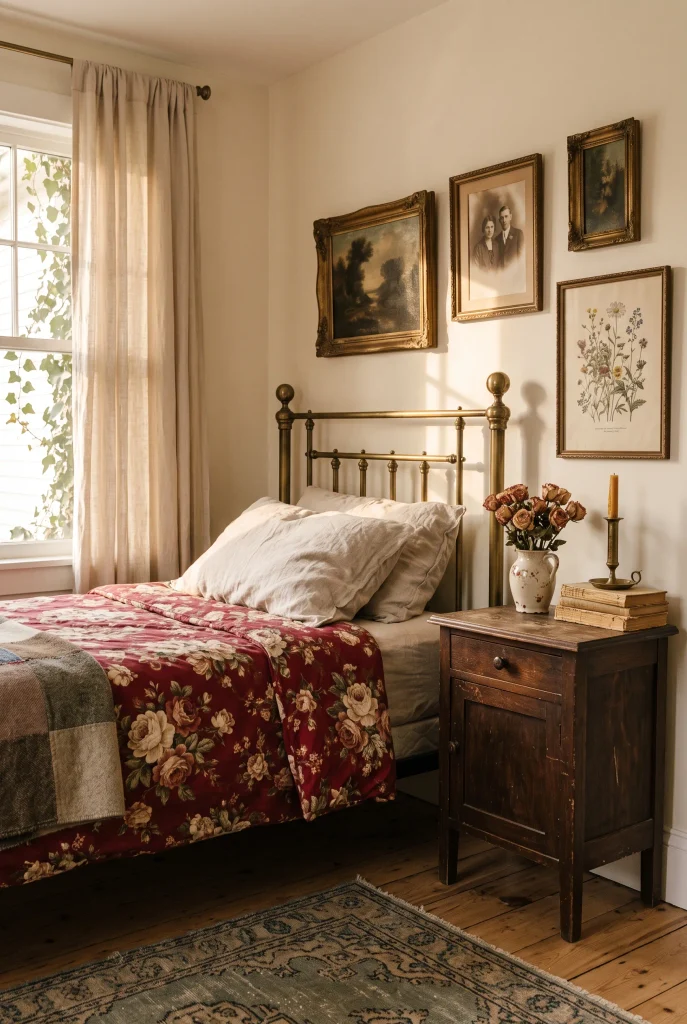
- Vintage-inspired bedding can make bold red feel softer and more nostalgic.
- Small floral or botanical patterns add character without needing extra decor.
- Antique brass and aged wood complement the warm color beautifully.
- Keeping the walls light allows patterned bedding to remain the focal point.
Vintage-inspired bedding brings warmth and character to a bedroom while making a strong red palette feel less modern and sharp. Look for floral, botanical, striped, or small traditional patterns that combine deep red with cream, muted green, tan, or dusty pink. These softer supporting colors help the bedding feel collected rather than overly coordinated. An antique-style brass bed, distressed nightstand, or vintage artwork can reinforce the look without requiring every item to come from the same period. The result feels layered, personal, and comfortable rather than like a perfectly matched showroom.
To keep vintage bedding from making the room feel dated, mix it with a few cleaner contemporary pieces. A simple cream lamp, modern ceramic vase, or streamlined bench can provide contrast while allowing the patterned fabric to remain the star. Choose natural materials wherever possible because linen, cotton, wood, and aged metal work beautifully with this palette. If the bedding has a busy pattern, keep nearby surfaces relatively simple. This makes the room easier to maintain visually and gives each decorative element enough space to be noticed without competing with the bed.
16. Red Ceiling Detail
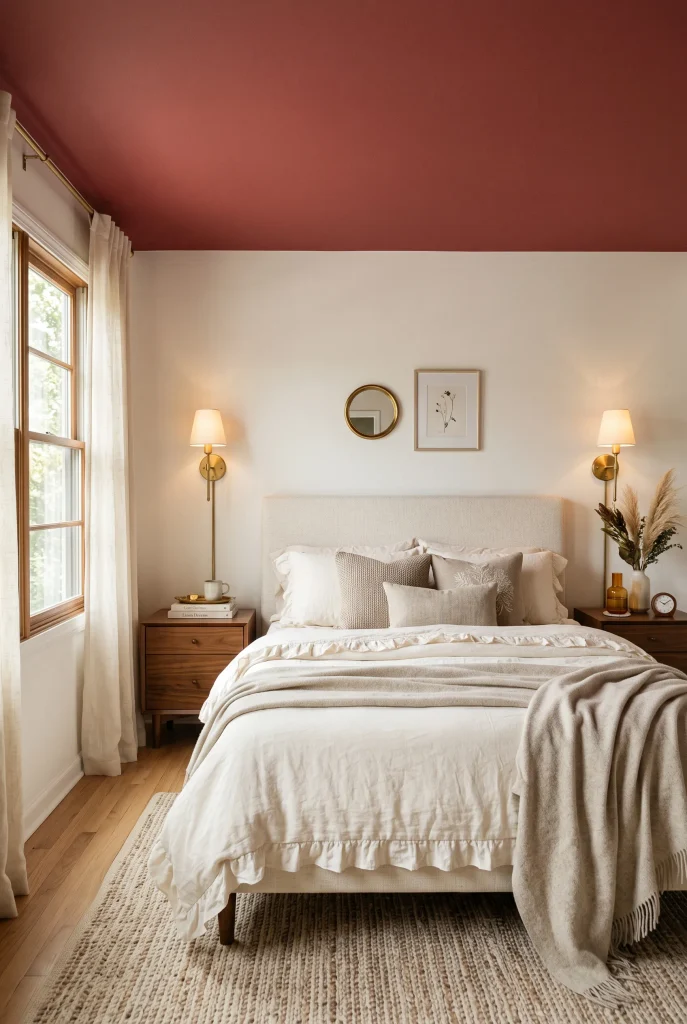
- A red ceiling adds drama while keeping the walls visually light.
- A muted shade works better overhead than an extremely bright red.
- Cream walls and bedding help balance the deeper color.
- Warm lighting can make the ceiling feel cozy rather than heavy.
Looking up can be just as important as looking around when designing a memorable bedroom. A muted cherry red ceiling creates an unexpected focal point while allowing the walls, furniture, and bedding to remain neutral. This idea works especially well in bedrooms with simple architecture because the ceiling introduces color without taking away valuable wall space. Pair it with warm white walls, cream bedding, and natural wood furniture to keep the room balanced. The result feels intimate and layered, almost like a cozy canopy created through paint rather than fabric.
The finish matters when choosing a ceiling color. A soft matte or low-sheen paint usually looks more sophisticated overhead and helps reduce distracting reflections from lights. Keep the remaining surfaces relatively calm so the ceiling has room to stand out. Warm bedside sconces, linen curtains, and textured bedding can soften the contrast after sunset. If painting the entire ceiling feels too dramatic, consider carrying the color only a few inches down from the ceiling line for a framed effect. This creates architectural interest while maintaining a comfortable visual transition between the red and neutral walls.
17. Cherry Red and Soft Pink
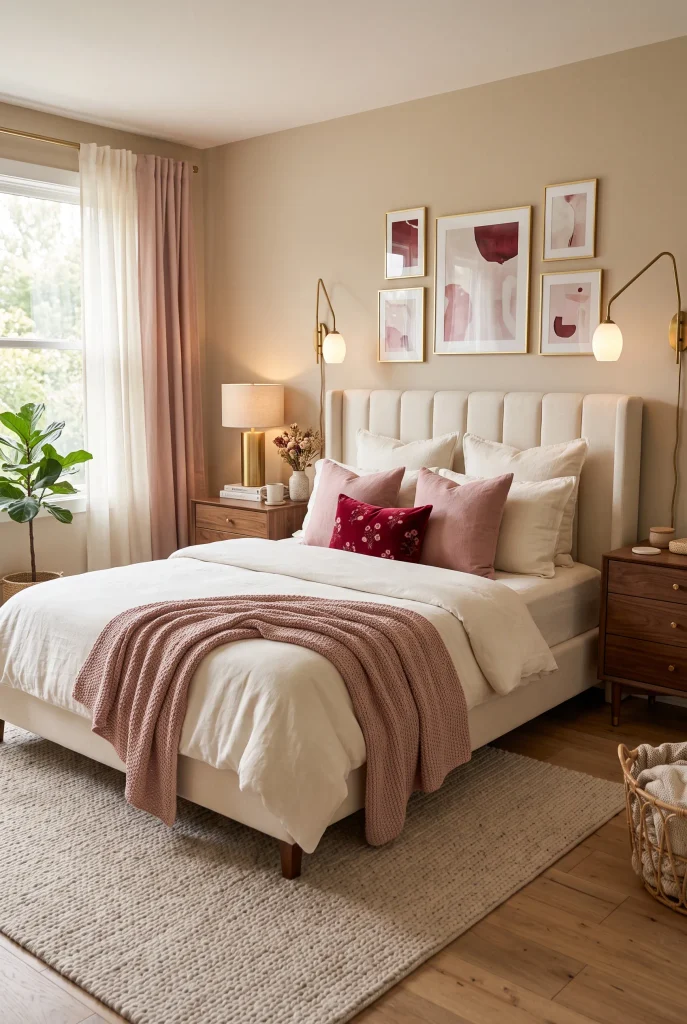
- Dusty pink softens the intensity of deep red without making the room overly sweet.
- Cream and beige provide a neutral foundation for the warmer palette.
- Walnut furniture adds depth and keeps the colors grounded.
- Small brass accents bring a subtle polished finish.
Pairing deep red with soft pink creates a warmer, more layered bedroom palette than using red alone. The trick is choosing a muted pink rather than an extremely bright shade, so the two colors feel sophisticated together. Try dusty rose pillows, a blush throw, or soft pink artwork alongside deeper red bedding or curtains. Cream walls and ivory fabrics give both colors enough breathing room. In a cherry red bedroom, this combination can create a romantic atmosphere while still feeling mature, especially when balanced with natural wood and understated furniture.
Texture helps these related colors feel more dimensional. Combine linen bedding with velvet cushions, a woven throw, or a softly textured rug to keep the palette from appearing flat. Walnut or oak furniture provides an earthy contrast, while brushed brass adds warmth without introducing another strong color. There is no need to use equal amounts of red and pink; letting one shade dominate and the other appear through smaller accents usually creates a more balanced composition. The finished room feels cozy, expressive, and welcoming while remaining easy to update as decorating preferences change.
Conclusion
A cherry red bedroom can feel bold and cozy when the color is balanced with the right textures, neutral tones, warm wood, and thoughtful accents. You do not need to redesign everything at once. Start with a throw, pillows, bedding, artwork, or one statement piece, then build the look gradually. Small changes can create a surprisingly big difference while keeping the room comfortable and practical.
Save these ideas on Pinterest so you can return to them when you are ready to decorate, and share the article with anyone looking for fresh bedroom inspiration. A cozy, character-filled bedroom may be easier to create than it first seems.