21 Wainscoting and Beadboard Styles That Feel Timeless
Want your walls to feel more finished without making your home look overly decorated? Wainscoting and beadboard styles can add character, texture, and timeless charm to almost any room. From classic raised panels and cozy beadboard to modern grid molding and painted half-walls, there are plenty of ways to make these details work with your existing decor.
These wall treatments can do more than make a room look beautiful. They can help define a dining area, make an entryway feel more welcoming, add warmth to a bedroom, or give a bathroom a more polished finish. Whether you prefer traditional details or a cleaner modern look, the following ideas can help you find a style that suits your home and works for everyday living.
1. Classic Raised Panels
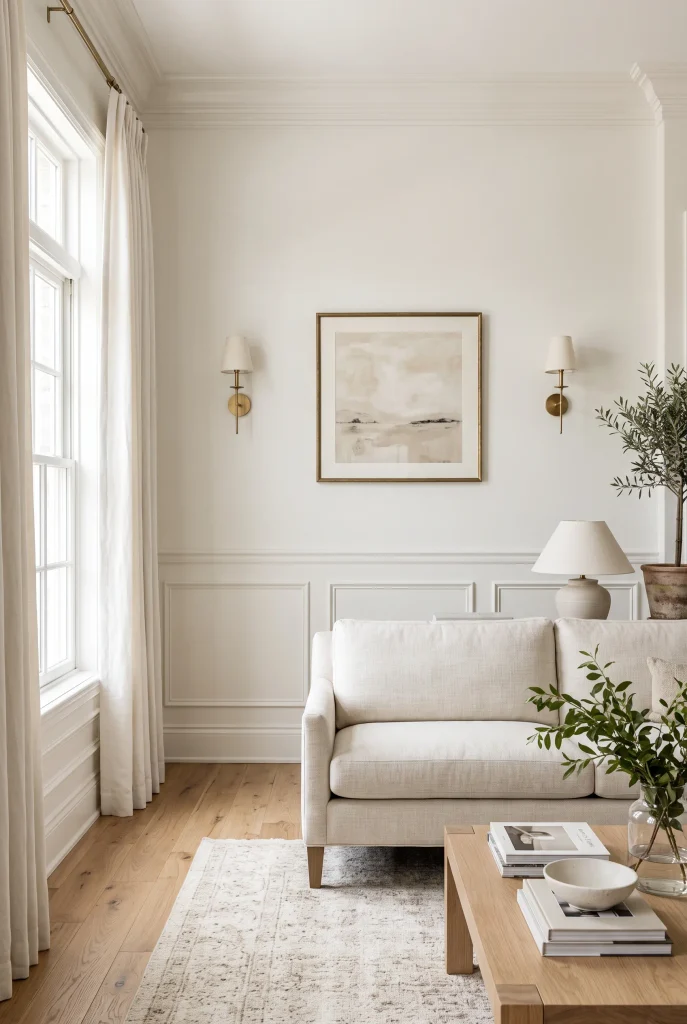
- Creates instant architectural character on plain walls.
- Works beautifully with traditional and transitional furniture.
- Simple panel patterns keep the room looking polished, not busy.
- Matching the trim and panels creates a seamless, upscale finish.
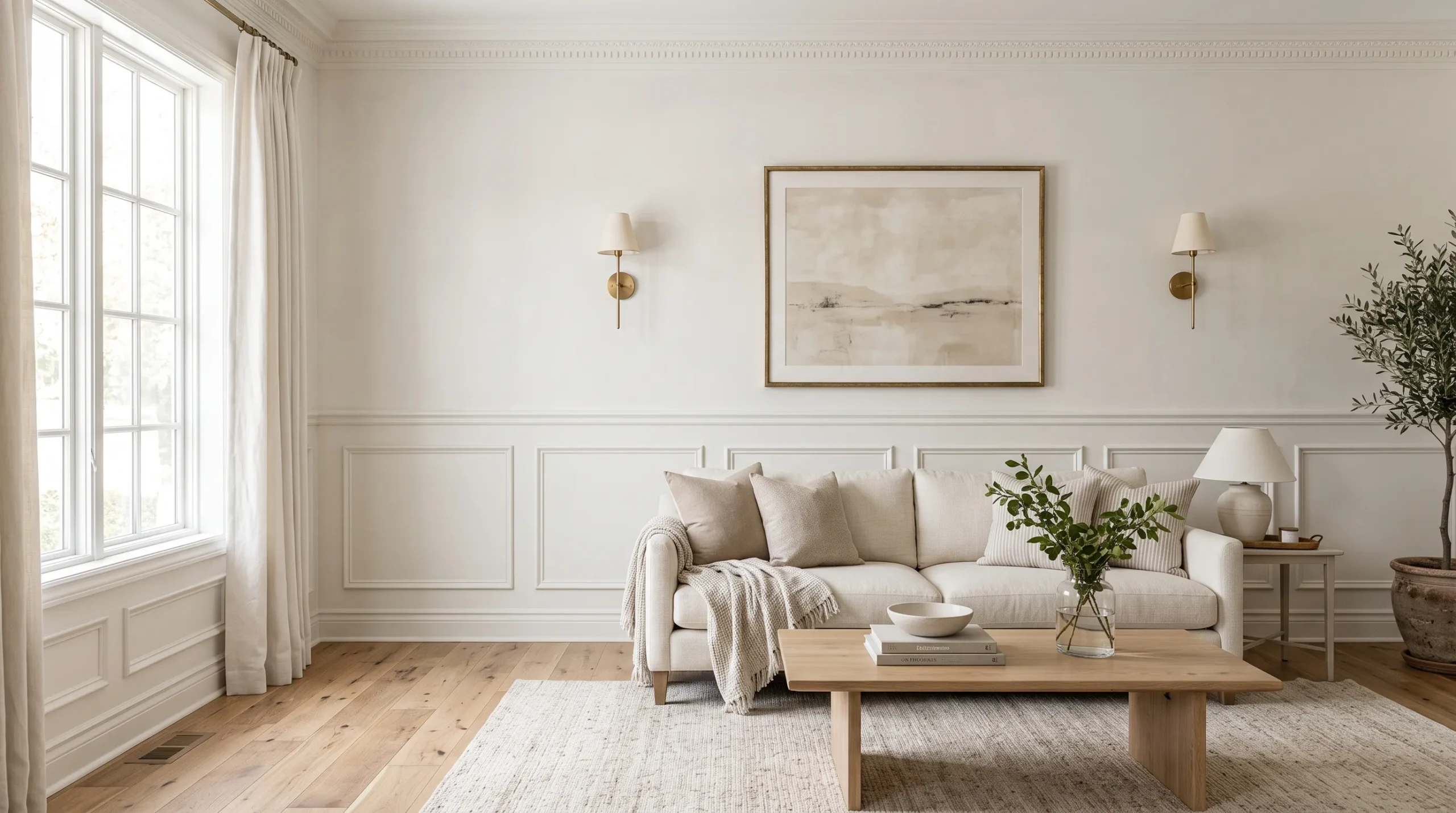
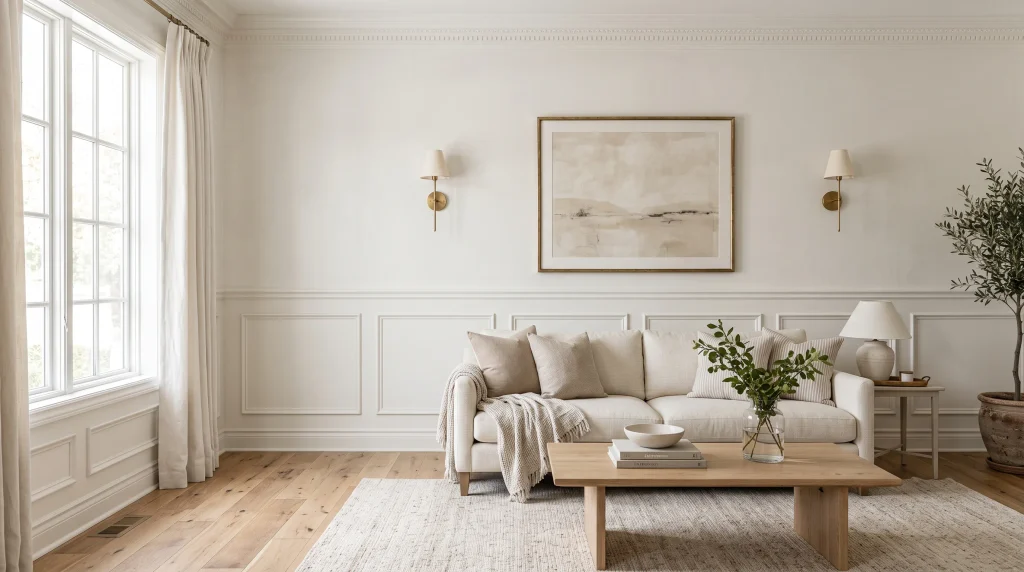
Classic raised-panel wainscoting can make a room feel more finished without adding unnecessary decoration. It pairs beautifully with warm white walls, natural wood floors, and simple furniture because the raised details bring character without making the space feel busy. Use evenly spaced rectangular panels across the lower portion of the wall, then finish them with a slim chair rail. In dining rooms, entryways, and living spaces, the structured lines create an attractive backdrop for artwork and lighting. Keep the surrounding decor simple so the molding can stand out naturally.
Traditional panel molding is especially useful in rooms that feel plain or lack architectural character. Paint the panels and surrounding trim the same soft white for a seamless, timeless look, or choose a gentle greige to bring a little warmth to the space. A narrow console, upholstered dining chairs, or a classic wooden table can complement the design without overwhelming the wall. If the room is small, keep the panel pattern simple to maintain an open feel. The result is a polished space that can adapt easily as furniture and decor styles change.
2. Vertical Beadboard Walls
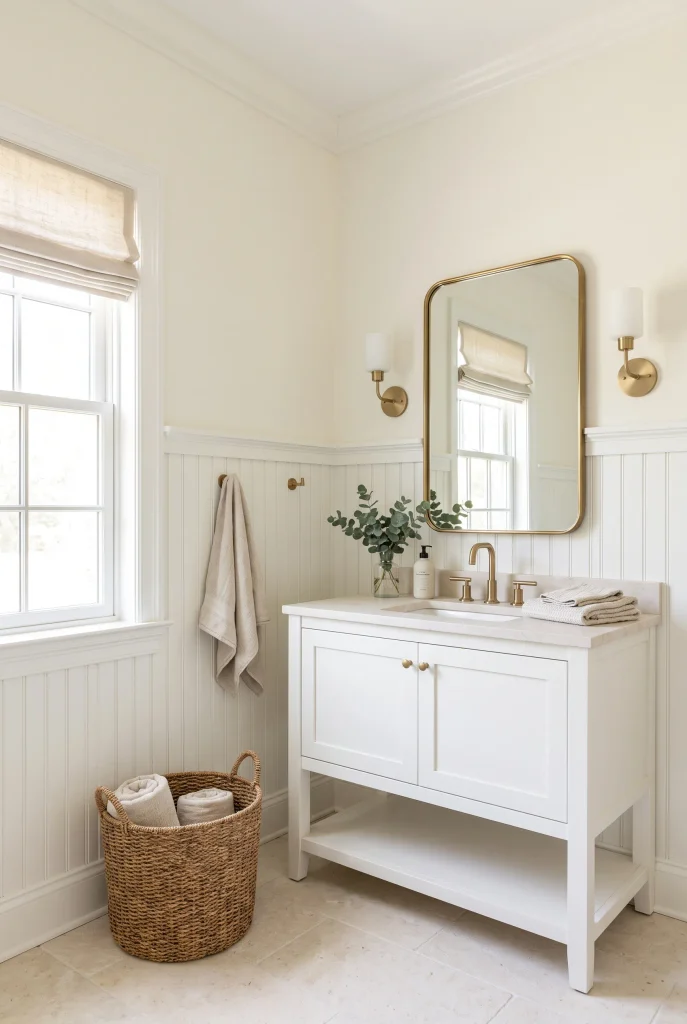
- Adds subtle texture without overwhelming the room.
- Vertical grooves can make walls feel taller.
- Perfect for bathrooms, mudrooms, laundry rooms, and casual kitchens.
- Natural wood and brass accents warm up crisp white beadboard.
Few wall treatments add texture as easily as beadboard. Its narrow vertical grooves draw the eye upward, helping ceilings feel a little taller while giving plain walls a relaxed, tailored finish. Beadboard works particularly well in bathrooms, laundry rooms, mudrooms, and casual kitchens, where a durable, easy-to-clean surface can be useful. Pair white beadboard with soft neutral paint above it, then bring in natural wood, woven baskets, or aged brass accents. The combination feels fresh without looking overly themed, making it easy to update as your furniture and accessories change.
For a softer look, choose beadboard with slim grooves and a smooth, matte painted finish rather than a heavily distressed surface. The subtle texture adds dimension while keeping the room visually calm. In smaller spaces, covering roughly one-third to one-half of the wall can help prevent the paneling from feeling overwhelming. This approach also works well when the room already has patterned flooring or colorful accessories. Let the beadboard provide structure, then keep the remaining surfaces simple so the wall treatment feels intentional rather than competing for attention.
3. Entryway Half-Wall Panels
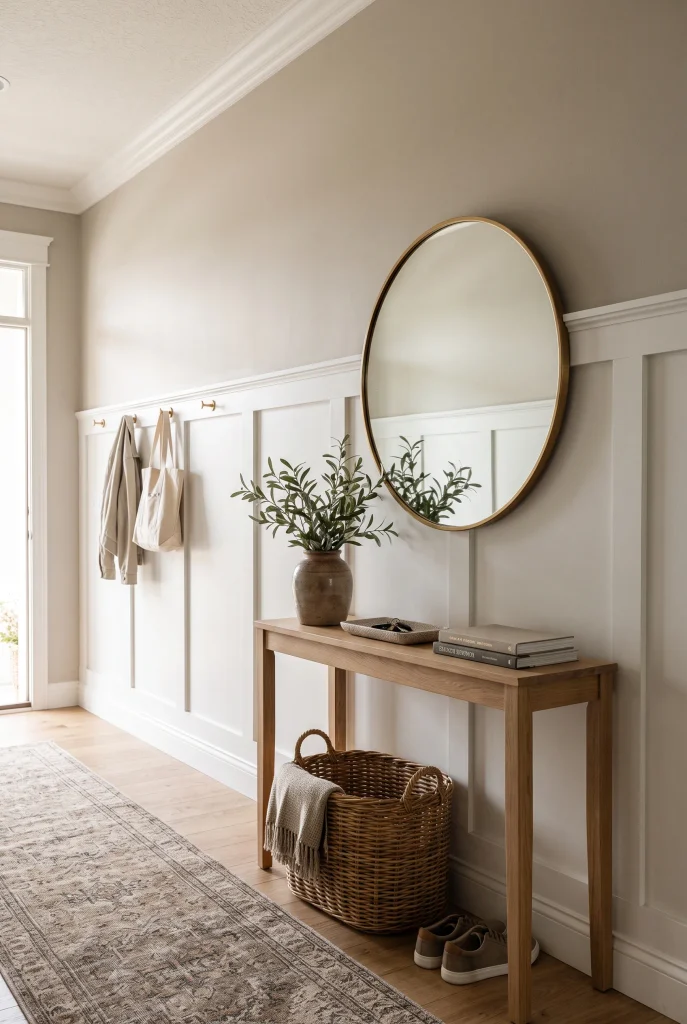
- Gives a narrow entryway a polished architectural feature.
- Creates a defined base without visually closing in the space.
- Helps protect busy walls from everyday scuffs and marks.
- Pairing paneling with a round mirror softens the straight lines.
An entryway with half-wall paneling feels welcoming even before decorative accessories are added. The lower section gives the wall a defined base, while the open upper portion leaves plenty of room for a mirror, artwork, or a small wall light. This balance is especially helpful in narrow foyers, where full-height paneling might feel too heavy. Choose warm white trim with a soft greige or beige upper wall, then add a slim console and a basket underneath. The result feels organized and polished while leaving enough breathing room for everyday arrivals and departures.
Half-wall molding can also help protect busy entryway walls from scuffs, bags, and everyday contact. Choose a durable, washable paint finish, especially if the hallway connects directly to the garage or family entrance. Keep the panel pattern fairly simple so the space does not feel smaller. A round mirror above a narrow console softens the straight lines, while a small plant or woven basket adds warmth. This combination brings practical structure to the entryway without making a hardworking passage feel overly formal.
4. Dining Room Wainscoting
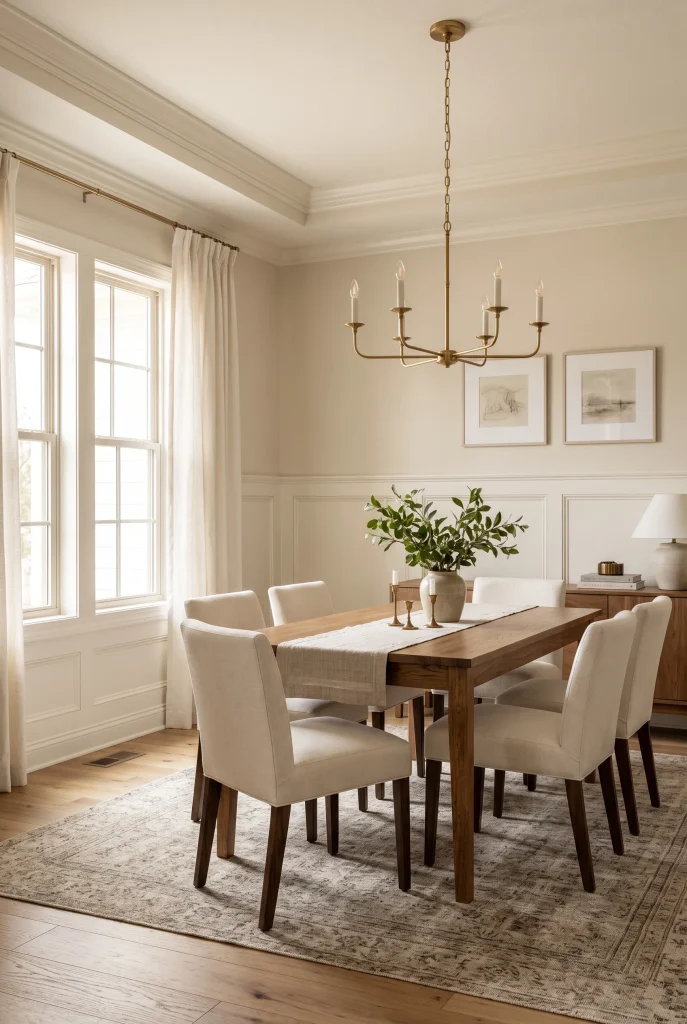
- Adds a finished architectural look to the dining area.
- Creates a beautiful backdrop for artwork and lighting.
- Helps protect walls around busy dining spaces.
- Warm wood furniture keeps the white molding from feeling too formal.
A dining room can feel instantly more polished when the walls have a little architectural detail. Classic wainscoting gives the lower portion of the wall a structured finish while leaving enough open space above for artwork, mirrors, or a statement light fixture. The look works especially well with a simple wooden dining table and upholstered chairs because the molding adds refinement without competing with the furniture. Keep the panel shapes evenly spaced and use a soft neutral paint color above them. This creates a balanced backdrop that feels elegant enough for entertaining but comfortable enough for everyday family meals.
Wainscoting is also practical in dining areas because the lower walls are more likely to experience accidental bumps, food splashes, and everyday wear. A washable paint finish makes maintenance easier while keeping the room looking fresh. If your dining room is compact, avoid oversized panels that can make the walls feel crowded. Instead, choose narrow, evenly proportioned sections that suit the room’s size. Add warm brass lighting, natural wood tones, and simple textiles to soften the crisp lines. The result is a timeless dining space that feels welcoming rather than overly formal.
5. Bathroom Beadboard Trim

- Adds texture to bathrooms without taking up visual space.
- Works beautifully with cottage, coastal, and transitional styles.
- A contrasting wall color makes the beadboard more noticeable.
- Choose moisture-resistant materials for better long-term performance.
A bathroom does not need dramatic tile from floor to ceiling to feel beautifully finished. Beadboard trim introduces soft vertical texture while keeping the room bright and approachable. Cover the lower half of the walls with painted beadboard, then use a gentle sage, cream, or warm gray above it for contrast. The vertical lines add visual rhythm without making a small bathroom feel crowded. Pair the wall treatment with a simple vanity, understated hardware, and woven storage. This combination gives the space character while keeping the overall design calm and easy to live with.
The key is choosing materials that suit the bathroom’s moisture levels and ventilation. Traditional-looking beadboard can work beautifully, but moisture-resistant options are often a smarter choice in frequently humid spaces. A simple chair rail creates a clean transition between the two wall finishes, while matching the trim to the vanity helps tie everything together. Keep accessories restrained once the textured wall treatment is in place. Soft towels, a small framed print, and a natural basket are usually enough to make the room feel complete without taking attention away from the walls.
View: 17 Indoor Pond Ideas That Create a Peaceful Home Oasis
6. Soft Neutral Paneling
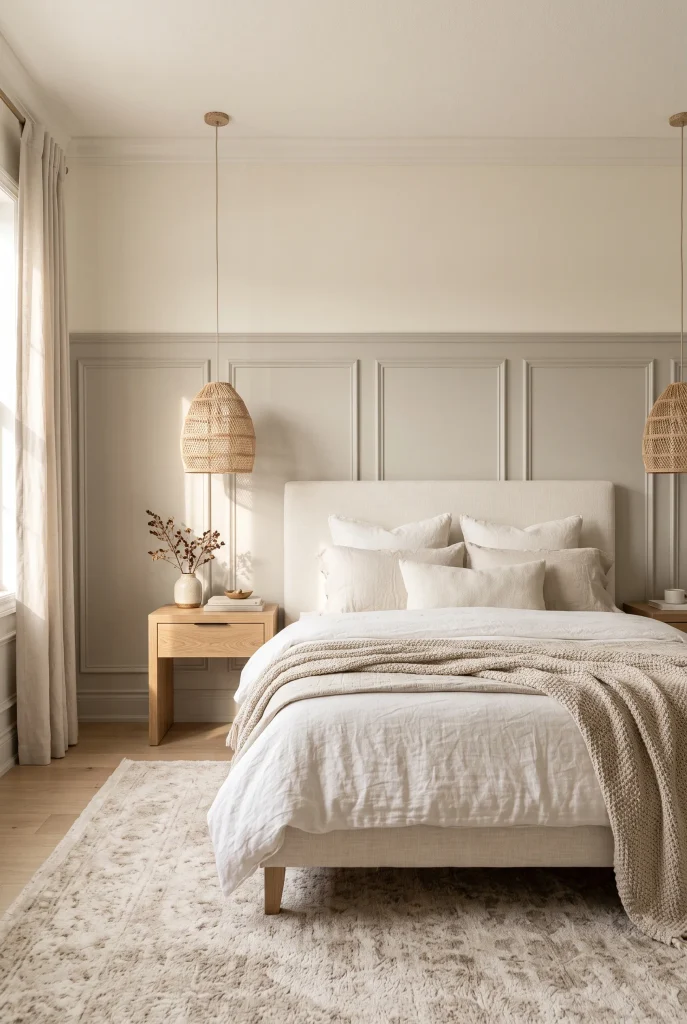
- Soft neutrals make wall molding feel modern and relaxed.
- Greige paneling adds depth without harsh contrast.
- Linen and light wood balance the structured wall details.
- Ideal for bedrooms that need warmth without visual clutter.
Soft neutral paneling is an easy way to make a bedroom feel layered without filling it with extra decoration. Instead of bright white, try warm ivory, greige, taupe, or muted beige across the molding and lower wall. These shades create gentle depth while keeping the room restful. Pair the panels with linen bedding, light oak furniture, and woven lighting for a relaxed finish. The clean geometry gives the room structure, while the softer palette prevents it from feeling too formal. This approach works especially well when you want a bedroom that feels calm but still thoughtfully designed.
For a cohesive result, keep the paneling and trim within the same tonal family rather than creating a sharp color divide. You can use a slightly deeper shade on the lower wall and a lighter color above it for subtle dimension. Simple furniture helps the architectural details remain visible, while textured bedding and curtains introduce softness. This combination is particularly useful in bedrooms where patterned decor might feel distracting. The molding becomes the main decorative feature, allowing the rest of the room to stay uncluttered, comfortable, and easy to update over time.
7. Kitchen Island Paneling
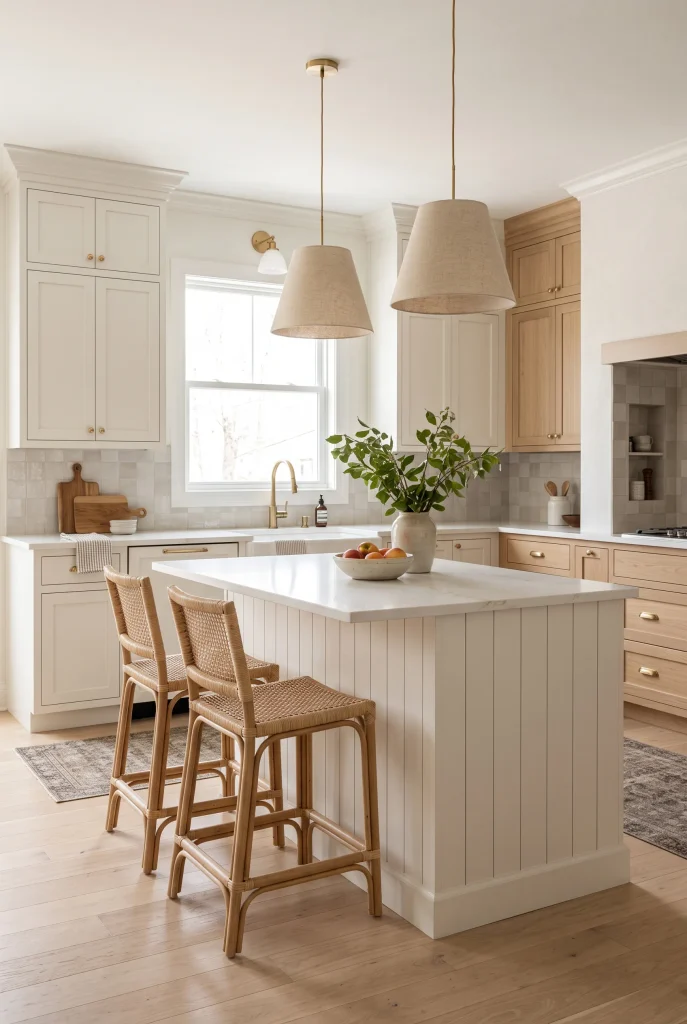
- Adds character to a plain kitchen island.
- Beadboard texture makes a large island feel more detailed.
- Works beautifully with white, cream, or natural wood cabinetry.
- Simple stools keep the island from looking overly decorated.
A kitchen island can become much more interesting with a simple layer of vertical beadboard. Instead of leaving the island sides completely flat, paneling adds texture and gives the centerpiece a more furniture-like appearance. White or warm cream beadboard works especially well with light wood cabinets, quartz countertops, and brushed brass hardware. The narrow vertical lines create a subtle rhythm without making the kitchen feel busy. This approach is particularly useful when the rest of the kitchen has clean, modern surfaces and you want to introduce a little warmth and traditional character without changing the entire design.
Keep the paneling simple if your kitchen already has several strong finishes. A plain beadboard profile can soften sleek cabinetry while still feeling current, especially when paired with natural wood stools or woven pendant shades. Make sure the paneling is properly sealed and easy to wipe clean because kitchen islands often collect crumbs, fingerprints, and occasional spills. If the island is large, vertical grooves can also break up the visual weight of the base. The finished space feels more custom and welcoming, with the island becoming a natural focal point without relying on decorative clutter.
8. Stairway Wall Molding

- Makes an overlooked staircase wall feel intentional.
- Following the stair angle creates a custom architectural effect.
- Neutral colors keep the hallway bright and open.
- A simple handrail adds warmth against crisp molding.
A staircase wall often becomes an overlooked blank surface, but carefully placed molding can turn it into one of the home’s most attractive architectural features. Paneling that follows the angle of the stairs creates a natural visual flow and makes the entire hallway feel more connected. Keep the molding crisp white or a soft neutral, then pair it with warm wood steps and a simple handrail. The repeated geometry adds interest without requiring lots of artwork or accessories. This is especially effective in transitional homes where architectural details are meant to feel like part of the original structure.
Because stairways already have strong angles and shadows, avoid overly complicated panel patterns. Simple rectangular sections or evenly spaced molding will usually look cleaner and more proportional. Measure carefully around handrails, corners, and landings so the design feels intentional from every viewpoint. A warm wall color can soften the crisp trim, while natural wood elements prevent the staircase from feeling too stark. The result is a polished passageway that looks finished from both upstairs and downstairs, giving a functional part of the home more character and visual continuity.
9. Mudroom Wall Panels

- Protects busy walls from everyday marks and scuffs.
- Creates a structured backdrop for hooks and storage.
- Works well with built-in benches and open cubbies.
- Durable finishes make the space easier to maintain.
Mudrooms need to handle daily mess, and wall paneling can make these hardworking spaces both attractive and practical. A simple beadboard or rectangular panel design creates a durable-looking backdrop behind hooks, benches, and storage cubbies. White or warm neutral panels keep the room bright, while natural wood adds warmth and prevents the space from feeling too utilitarian. The vertical texture also helps organize the wall visually, giving coats, bags, and baskets a more intentional setting. Instead of looking like a collection of separate storage pieces, the entire mudroom feels coordinated.
Choose a finish that can handle frequent cleaning, especially if the mudroom is used by children or pets. Washable paint and properly sealed paneling make everyday maintenance much easier. Keep hooks evenly spaced and place a bench beneath them so the wall remains functional as well as decorative. In smaller mudrooms, lighter colors can help preserve an open feeling. Combining paneling with baskets and simple wood accents creates a welcoming balance. The room feels organized and practical while still having the warmth and character of a comfortable family home.
10. Living Room Chair Rail
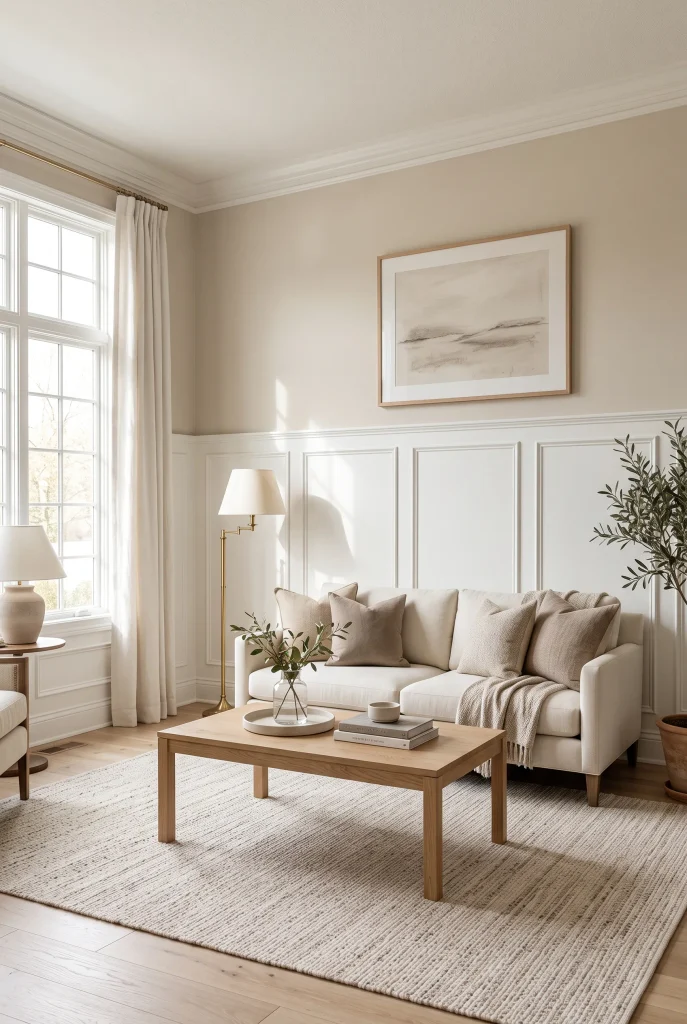
- Defines the lower wall without overwhelming the living room.
- Creates a polished backdrop behind sofas and consoles.
- Works with both traditional and modern furniture.
- A soft wall color keeps the molding feeling fresh and relaxed.
A simple chair rail can give a living room the architectural definition it may be missing. Position it around the lower third of the wall, then add simple rectangular molding beneath it for a classic layered effect. This creates a visual boundary without making the room feel enclosed. Warm white trim looks especially beautiful against beige, greige, or soft taupe walls, while light oak furniture keeps the overall design relaxed. The result is subtle but noticeable, giving plain walls more character while allowing furniture, artwork, and textiles to remain the main decorative elements.
The best chair rail designs feel proportional to the room rather than overly elaborate. In a smaller living room, use slimmer molding and fewer panel divisions so the walls remain visually open. You can also match the trim to existing doors and window casings for a more cohesive finish. Add a neutral sofa, textured rug, and simple artwork to keep the space comfortable. Restrained molding works well in transitional interiors because it adds architectural interest without forcing the room into a strictly traditional style or limiting future decorating changes.
11. Cottage-Style Beadboard
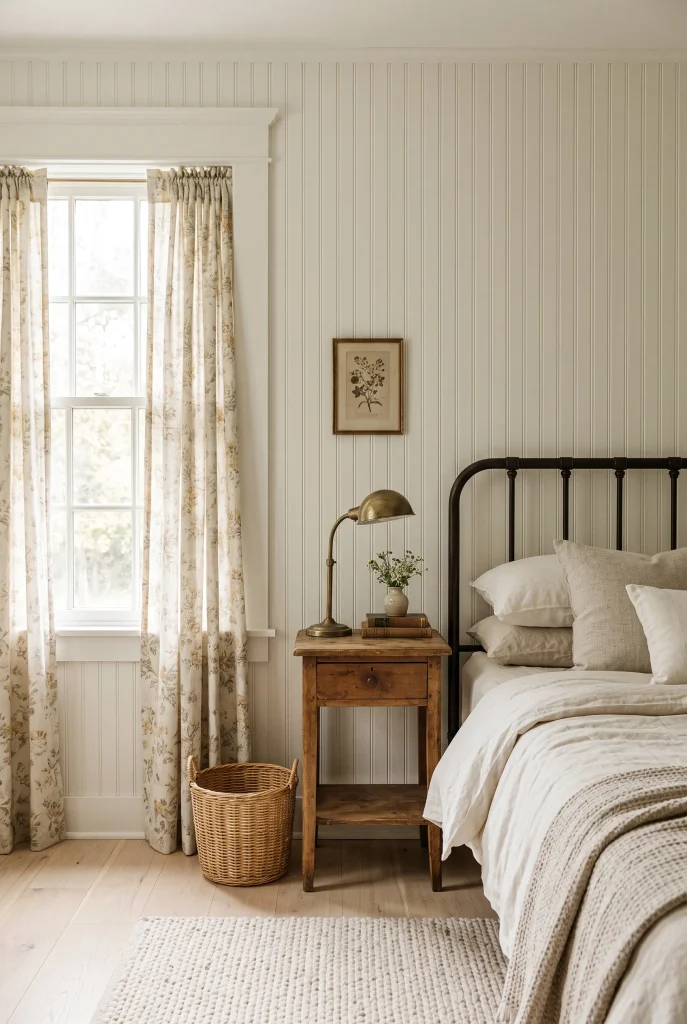
- Brings relaxed cottage character to plain walls.
- Looks beautiful with vintage and natural wood furniture.
- Soft textiles balance the repetitive vertical grooves.
- Works especially well in bedrooms, breakfast nooks, and porches.
Beadboard has a natural connection with relaxed cottage interiors because its narrow vertical grooves create texture without feeling formal. Paint it warm white or creamy ivory, then layer in vintage wood furniture, linen fabrics, woven baskets, and soft floral accents. The combination feels collected rather than overly coordinated. In bedrooms, beadboard can create a cozy backdrop behind the bed, while in breakfast nooks it adds charm around a small dining table. The key is letting the wall treatment provide enough detail on its own, so you can keep the accessories simple and still achieve a warm, finished look.
For a more updated cottage feel, combine traditional beadboard with cleaner furniture shapes and understated colors. A vintage nightstand can sit comfortably beside a simple upholstered bed, while natural textures prevent the white walls from looking flat. If you are covering several walls, keep the rest of the palette restrained to avoid visual overload. This approach is especially useful in rooms that need personality without bold wallpaper. The vertical texture creates a timeless foundation that can easily work with cottage, coastal, farmhouse, and relaxed transitional styles as your decor evolves.
12. Dark Painted Wainscoting
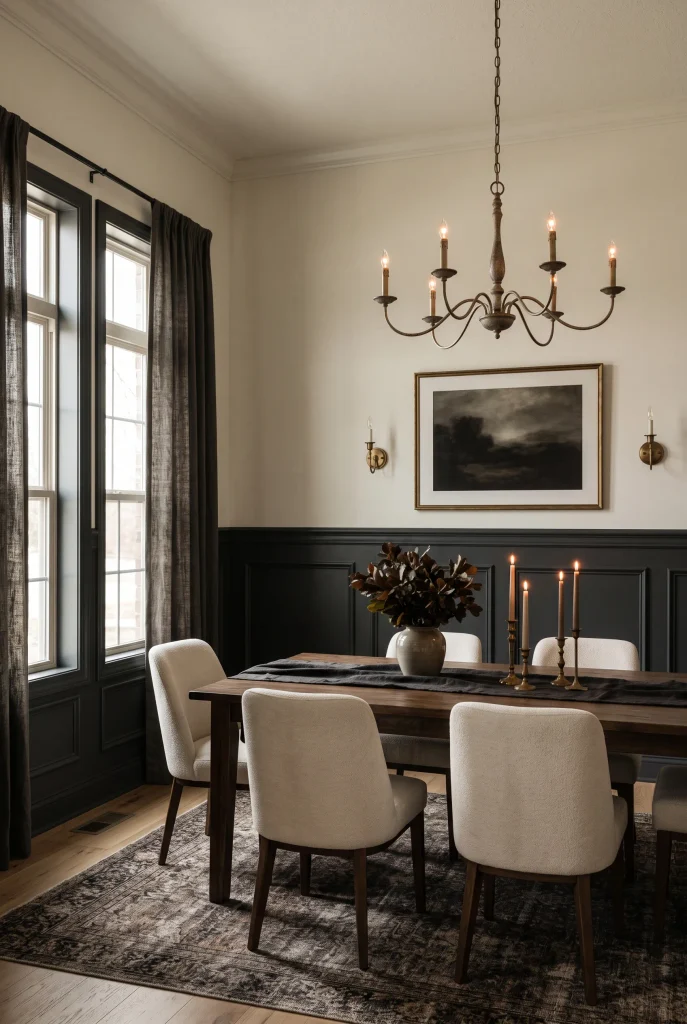
- Adds depth and contrast to rooms with neutral furniture.
- Dark lower walls can create a grounded, sophisticated feel.
- Brass and warm wood prevent the color from feeling too heavy.
- Best balanced with lighter upper walls and soft textiles.
Dark painted wainscoting can completely change the mood of a room without requiring dark paint on every wall. Charcoal, deep olive, muted navy, or rich brown on the lower portion creates contrast and makes the architecture feel more prominent. Keep the upper wall lighter so the room retains visual balance, then add warm wood and brass accents to soften the darker color. This approach works beautifully in dining rooms, studies, bedrooms, and cozy living spaces. The contrast makes ordinary wall molding feel more intentional while giving the room a sophisticated layer of depth.
Natural light should guide your color choice. In a bright room, deeper shades can feel dramatic and elegant without making the space gloomy. In a smaller or darker room, choose a softened charcoal, muted green, or warm taupe instead of an almost-black finish. Use light upholstery, pale artwork, or cream curtains to create contrast. The goal is not to let the paneling dominate the room, but to give the lower walls enough visual weight to anchor the furniture. When balanced carefully, dark wainscoting can feel cozy rather than heavy.
13. Bedroom Half-Wall
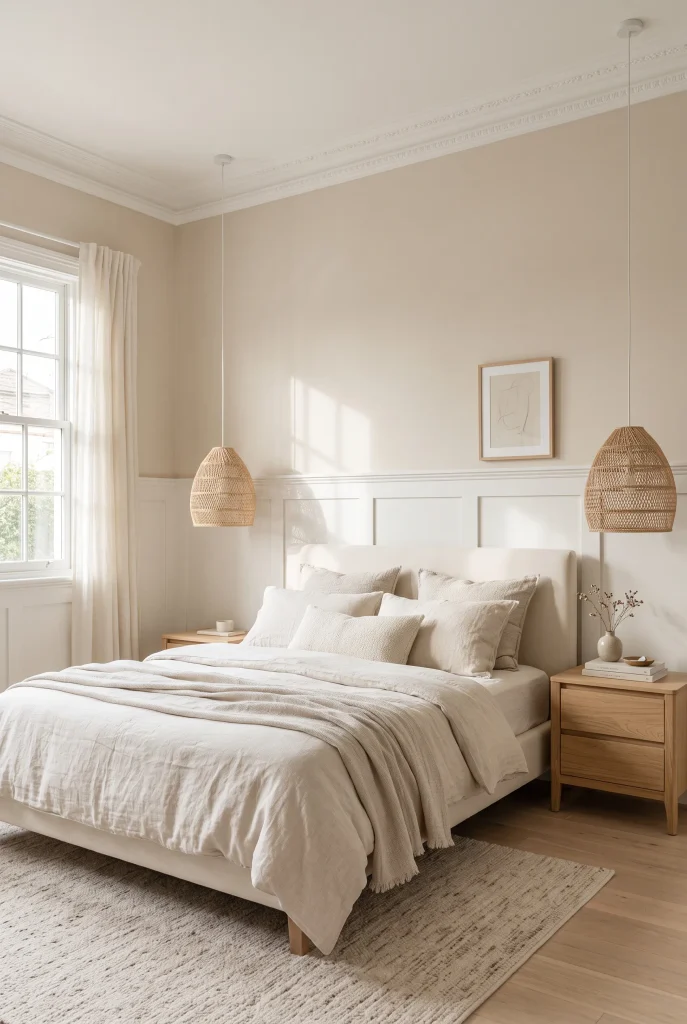
- Creates a polished backdrop without covering the entire wall.
- Gives the bed area more architectural definition.
- Keeps the upper wall open for artwork or lighting.
- Soft neutrals make the room feel restful and spacious.
A bedroom can feel more thoughtfully designed when simple paneling defines the lower half of the walls. This approach gives the bed area a subtle architectural backdrop without covering the entire room in heavy detail. Warm white molding paired with beige, cream, or muted taupe above creates a calm transition that works beautifully with linen bedding and natural wood furniture. It also leaves the upper wall open for artwork, sconces, or a simple decorative mirror. The result feels layered and comfortable while keeping the bedroom quiet enough for restful evenings and relaxed mornings.
Keep the height of the half-wall consistent around the room unless you are intentionally creating a feature wall. A clean horizontal line helps the space feel balanced, while evenly spaced panels provide just enough detail. If your bedroom is small, choose lighter colors and slimmer molding to preserve an airy appearance. Natural textures such as linen, boucle, woven baskets, and light wood can soften the structured lines. This combination is especially helpful in bedrooms that need more personality but do not have enough space for large furniture or lots of decorative accessories.
14. Modern Grid Molding
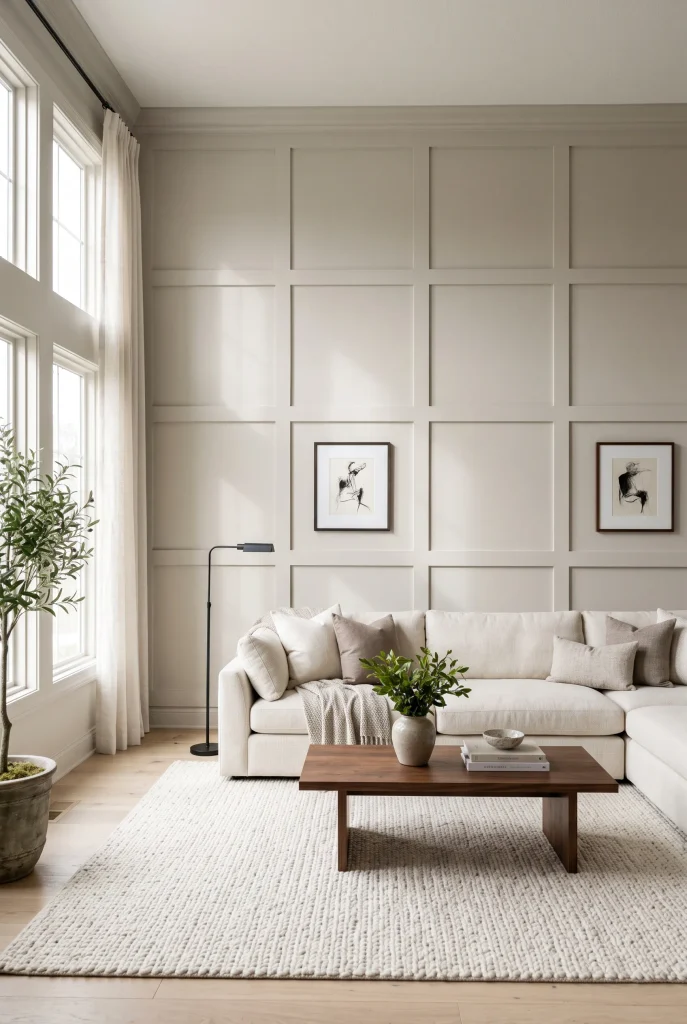
- Creates clean geometry for a modern interior.
- Looks especially polished on wide living room walls.
- Symmetrical panels add structure without traditional heaviness.
- Walnut, black, and cream accents balance the neutral molding.
Grid molding gives traditional wall paneling a cleaner, more contemporary direction. Instead of tall decorative rectangles, use evenly sized square or slightly rectangular sections arranged in a symmetrical pattern. Soft greige, warm white, and muted taupe work especially well because they highlight the geometry without creating harsh contrast. This design can turn a large blank living room wall into a refined architectural feature while keeping the furniture simple. Pair it with a low-profile sofa, walnut accents, and minimal artwork so the molding remains visible without competing with the rest of the room.
Precision matters with grid molding because uneven spacing can quickly make the wall look unfinished. Measure the wall carefully and consider the size of the furniture before deciding how many panels to create. Larger rooms can handle broader grids, while smaller spaces usually benefit from fewer, more generously proportioned sections. Use the same paint color across the wall and molding for a subtle effect, or choose a slightly contrasting trim for more definition. This style is ideal when you want the character of traditional paneling but prefer a streamlined interior with modern proportions.
15. Farmhouse Board-and-Batten

- Adds farmhouse character with simple vertical lines.
- Works well behind benches, hooks, and entryway storage.
- Creamy white paint keeps the look fresh instead of overly rustic.
- Natural wood and woven textures add warmth.
Board-and-batten brings relaxed farmhouse character to walls through simple vertical battens placed over a flat surface. The strong lines create structure while keeping the overall design uncomplicated. It works beautifully in entryways, mudrooms, bedrooms, and living rooms, especially when paired with warm white or creamy paint. Add a natural wood bench, woven baskets, or black metal hooks for a practical farmhouse combination. Unlike highly decorative molding, board-and-batten has a straightforward shape that can make a space feel architectural without appearing overly formal or expensive.
For a modern interpretation, avoid combining too many rustic elements at once. Let the wall treatment provide the farmhouse influence, then balance it with clean furniture and soft neutral textiles. In a narrow hallway, vertical battens can emphasize ceiling height and make the space feel taller. In a bedroom, the same treatment can create a strong backdrop behind the headboard without requiring artwork. Choose battens that suit the room’s proportions and keep their spacing consistent. The finished look feels warm, structured, and practical while remaining flexible enough for modern or transitional decorating styles.
16. Bathroom Wall Paneling
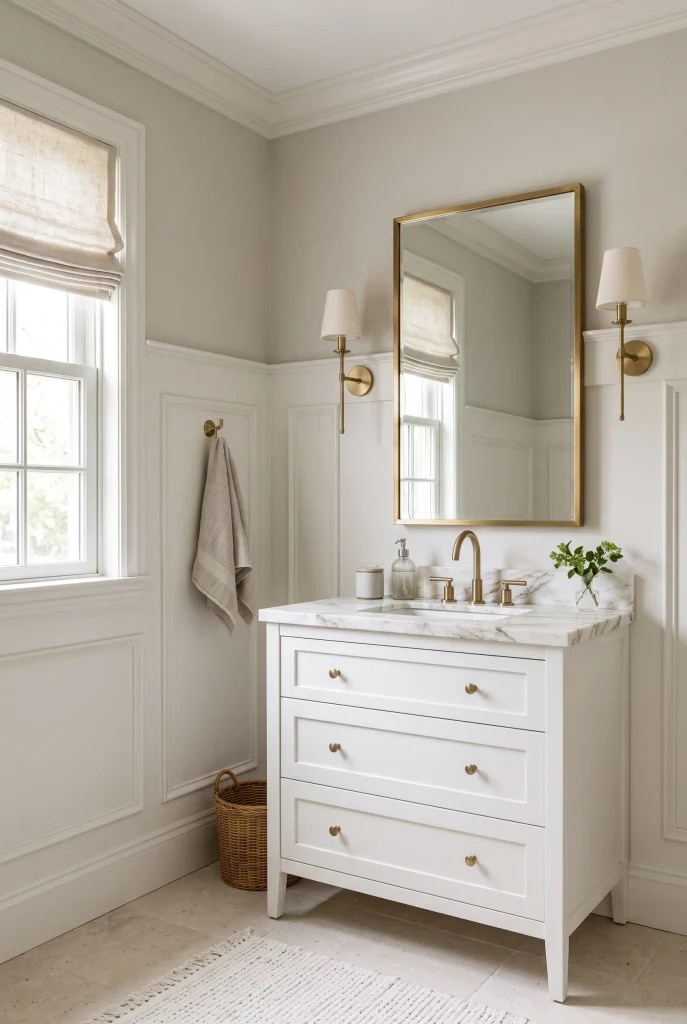
- Gives a bathroom a refined architectural backdrop.
- Works beautifully with marble, stone, and brass finishes.
- Keeps the room elegant without relying on busy patterns.
- Simple panel shapes make the space feel polished and balanced.
Bathroom walls can feel surprisingly plain when there is no tile, artwork, or strong architectural detail to break them up. Simple rectangular paneling adds dimension while keeping the room visually calm. Warm white or soft greige panels pair beautifully with marble countertops, brushed brass fixtures, and pale stone flooring. The clean geometry creates a tailored look that feels more substantial than a completely flat painted wall. This style works particularly well in bathrooms where you want a classic foundation that still feels fresh, bright, and easy to decorate.
When using paneling in a bathroom, material selection matters as much as appearance. Choose moisture-resistant products and make sure seams and edges are properly sealed for the environment. Keep the panel design relatively simple, especially if the room already includes patterned tile or veined stone. A matching trim color can make the walls feel seamless, while a contrasting shade adds more definition. Add soft towels, a woven basket, and one small piece of artwork for warmth. The finished space feels layered and considered without sacrificing the clean, uncluttered quality that makes bathrooms relaxing.
17. Tall Entryway Panels
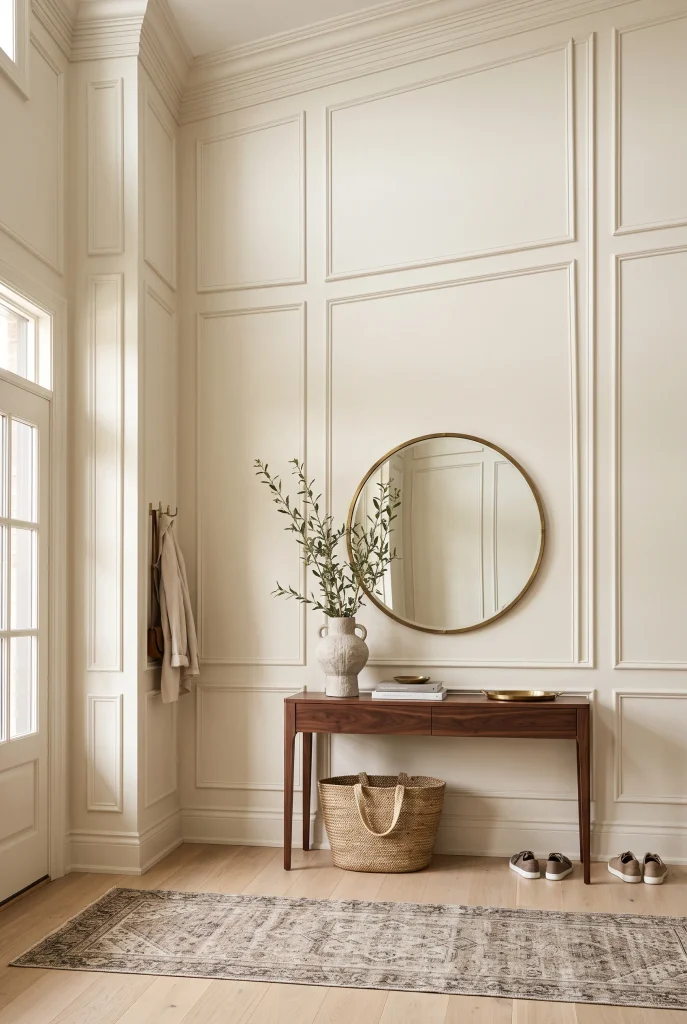
- Draws the eye upward and emphasizes ceiling height.
- Makes a simple foyer feel more custom and architectural.
- Tall panels work especially well with high ceilings.
- A slim console keeps the entryway functional without crowding it.
Tall wall panels can make an entryway feel more impressive by drawing attention upward. Instead of stopping the molding around chair-rail height, extend narrow rectangular panels higher on the wall, leaving a small amount of space near the ceiling. This approach works particularly well in foyers with tall ceilings because the vertical proportions reinforce the room’s height. Warm ivory, creamy white, or soft greige keeps the design elegant, while a slim wood console and round mirror add warmth. The result is an entryway that feels custom and architectural without needing excessive decoration.
Proportion is especially important when choosing tall paneling. Very narrow walls can become visually crowded if too many panels are squeezed into the available space, so fewer, wider sections often look more balanced. Use the same trim color as nearby doors and casings to make the architectural details feel connected. A round mirror can soften the strong vertical and rectangular shapes, while a small vase or woven basket adds texture. This combination gives a foyer a polished first impression while leaving enough clear floor space for shoes, bags, and everyday movement.
18. Classic Dining Panels
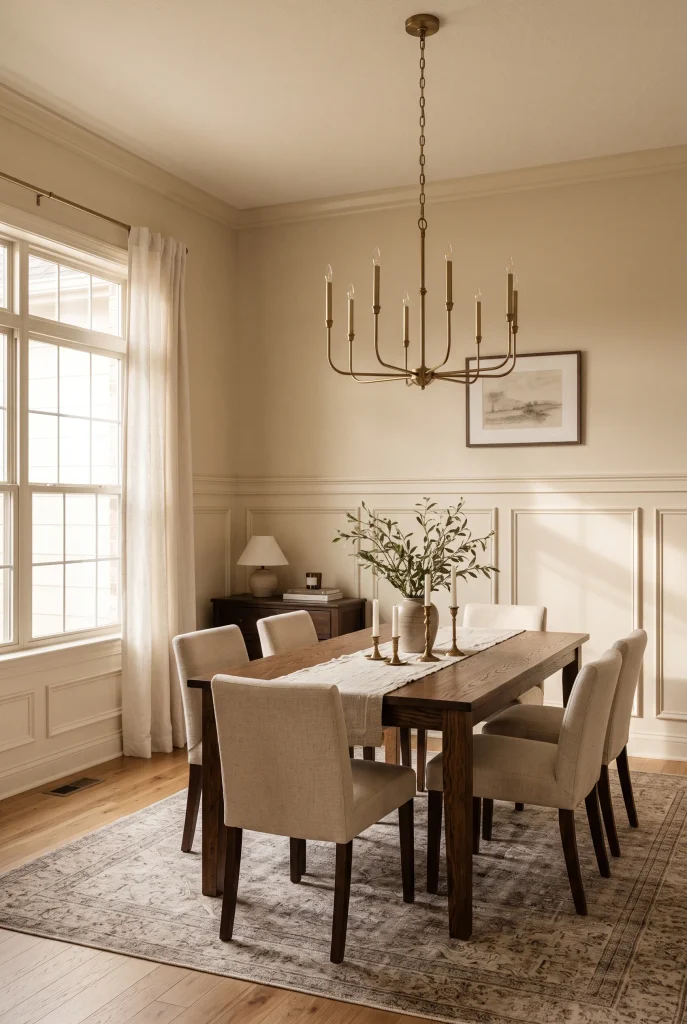
- Adds timeless detail to formal and casual dining rooms.
- Creates a strong backdrop for a dining table.
- Cream molding pairs beautifully with dark and light wood.
- Classic proportions keep the room elegant without feeling dated.
Classic paneling can give a dining room the architectural character that makes the space feel established and timeless. Raised rectangular panels create a structured backdrop around the dining table, while warm neutral paint keeps the overall atmosphere inviting. Pair cream or ivory molding with a dark oak table for contrast, or use pale wood for a lighter, more contemporary interpretation. An antique brass chandelier and upholstered chairs can reinforce the traditional influence without making the room feel overly formal. The goal is to create a polished setting that still feels comfortable enough for everyday meals.
To keep classic paneling from looking dated, focus on proportion and restraint. Avoid combining ornate molding with too many decorative patterns, especially if the dining room already has a statement chandelier or detailed furniture. A simple panel layout, neutral walls, and natural materials provide a more flexible foundation. Dining spaces benefit from this balance because the wall treatment adds enough visual interest that fewer accessories are needed. The molding becomes part of the room’s architecture rather than another decorative layer, making the space feel complete, welcoming, and easy to refresh over time.
19. Cozy Hallway Molding
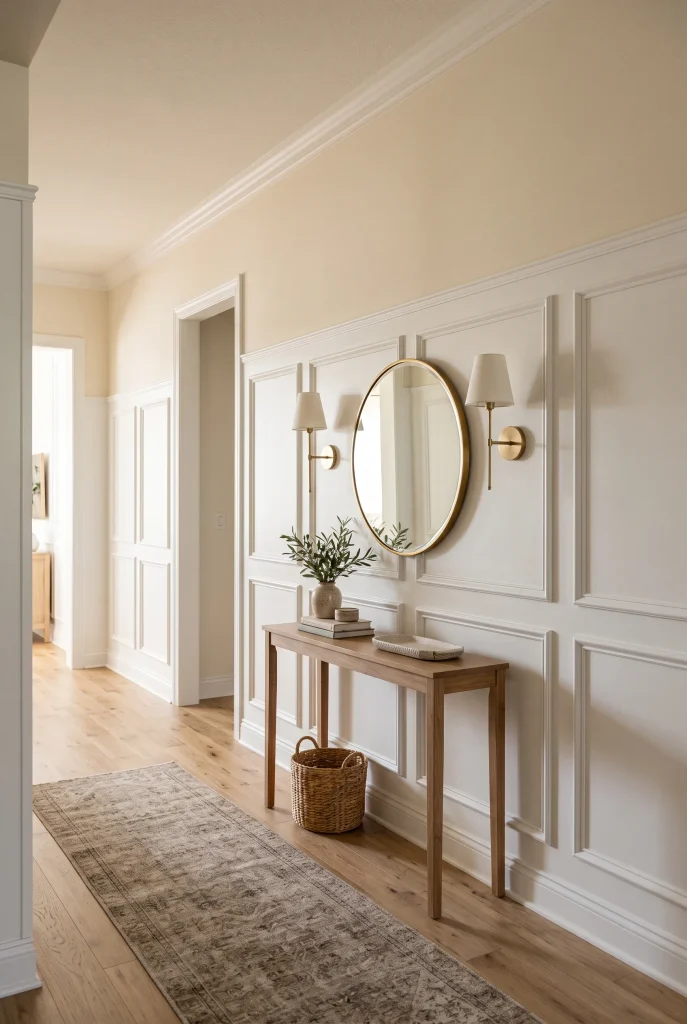
- Gives a long hallway more architectural interest.
- Breaks up large blank walls without adding clutter.
- Light colors help maintain an open, airy feeling.
- A slim console can add function without blocking circulation.
A long hallway can easily feel unfinished when the walls are completely bare, but simple molding can give the space a stronger sense of rhythm. Rectangular panels placed along the lower or middle section create visual breaks without taking away valuable walking space. Keep the palette light with warm white, cream, or soft beige, then add a narrow console or small wall lights where the layout allows. The repeated shapes make the hallway feel more intentional and connected to the rooms around it. This is an easy way to make a transitional space feel like a considered part of the home’s overall design.
Because hallways are usually narrower than living areas, oversized molding can make them feel crowded. Choose slimmer trim and leave enough wall space between each panel so the design can breathe. Matching the molding to nearby door casings creates a cohesive transition from one room to another. A round mirror or simple artwork can break up the straight lines and add a small focal point. If the hallway receives limited natural light, lighter paint is especially helpful. The finished space feels brighter, more polished, and thoughtfully connected without requiring furniture or extensive decoration.
20. Coastal Beadboard Walls

- Creates relaxed coastal texture without relying on nautical decor.
- White beadboard keeps the room bright and breezy.
- Rattan and pale wood add natural warmth.
- Soft blue accents provide gentle color without overwhelming the space.
Coastal interiors do not need seashells or nautical accessories to feel relaxed and breezy. White beadboard creates the texture and brightness associated with coastal design while leaving plenty of room for modern furniture and natural materials. Pair it with pale blue linen, rattan, light oak, woven lighting, and soft cream textiles for a calm, layered look. The vertical grooves add subtle movement to the walls, while the light palette keeps the room feeling open. This combination works beautifully in bedrooms, bathrooms, entryways, and living spaces where a fresh but comfortable atmosphere is the goal.
For a more sophisticated coastal look, keep the colors muted instead of relying on bright blue and stark white. Soft sand, warm ivory, pale blue, and natural wood create a palette that feels connected to the outdoors without becoming overly themed. Let the beadboard remain the main textural element, then use woven baskets and linen fabrics to add softness. This approach also makes coastal-inspired rooms easier to update throughout the year because the foundation stays neutral. Seasonal accessories can change without requiring a complete redesign of the space.
21. Full-Wall Paneling
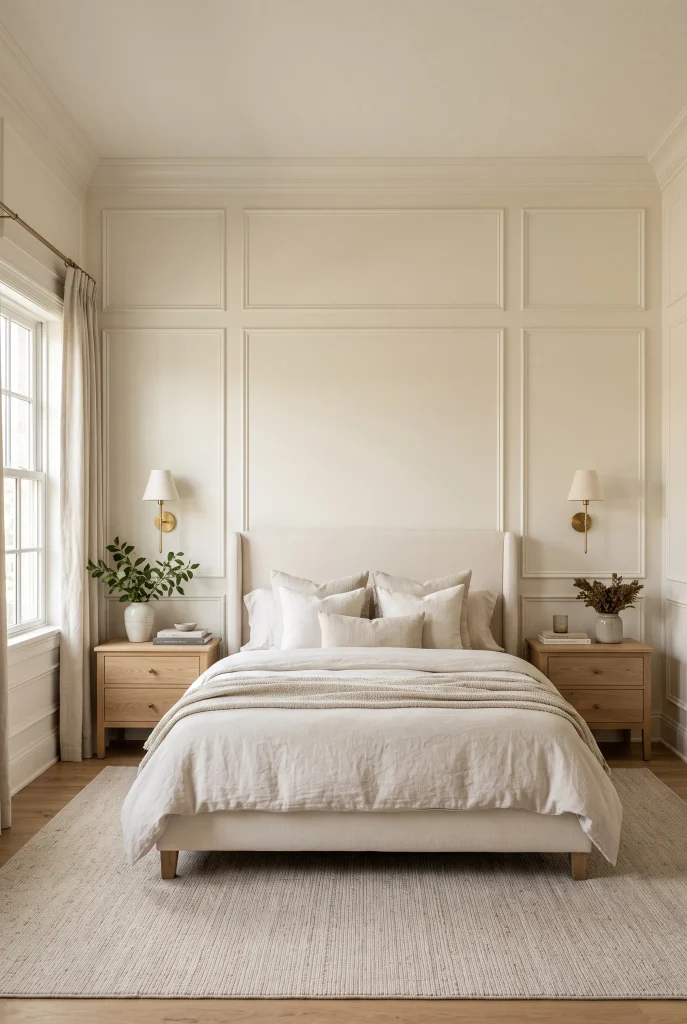
- Creates a dramatic architectural backdrop without wallpaper.
- Works beautifully behind beds, sofas, or dining tables.
- One consistent paint color keeps full-wall panels sophisticated.
- Minimal furniture lets the wall remain the main feature.
Full-wall paneling can turn an ordinary surface into a dramatic architectural backdrop, especially behind a bed, sofa, or dining table. Unlike lower wainscoting, this approach covers most or all of the wall with evenly spaced rectangular panels. Keep the color consistent with the surrounding trim for a sophisticated, built-in appearance. Warm ivory, soft greige, or muted beige can make the detail feel elegant without becoming overpowering. Because the wall already has strong visual interest, simple furniture and restrained accessories usually create the most balanced result.
The scale of the panels should match the size and proportions of the wall. Large rooms can handle broader panels, while smaller spaces often look better with fewer, narrower sections. Avoid adding too many competing patterns nearby, especially when using full-wall molding behind a bed or sofa. A pair of sconces, a simple upholstered headboard, or one large piece of artwork can complement the geometry without hiding it. This style offers a timeless foundation because the neutral architectural detail can remain in place while furniture, textiles, and accent colors change around it.
Conclusion
Beautiful walls do not always need bold colors or expensive artwork to stand out. The right wainscoting and beadboard styles can bring depth, texture, and architectural character while keeping your home feeling warm and timeless. From simple half-walls to full-panel treatments, even a small change can make an ordinary space feel much more intentional.
Save your favorite ideas to Pinterest so you can revisit them when you are ready to plan your next room update. Choose a style that suits your space, test the height and finish before committing, and make sure the details work with the way you live. A thoughtful wall treatment can be a simple home upgrade with a lasting impact.