17 Indoor Pond Ideas That Create a Peaceful Home Oasis

What if one simple water feature could make your home feel calmer, greener, and a little more connected to nature? Indoor pond ideas can turn an empty corner, sunny window area, or spacious living room into a peaceful focal point.
You do not need a huge room or an elaborate setup to create that feeling. A stone basin, a few aquatic plants, smooth pebbles, and soft lighting can completely change the mood of a space. From simple black basins to lush indoor water gardens, there are plenty of ways to bring water into your home while keeping the look stylish and practical. Whether you want a quiet place to relax or a feature that catches everyone’s attention, the right pond can make a room feel warmer and more inviting.
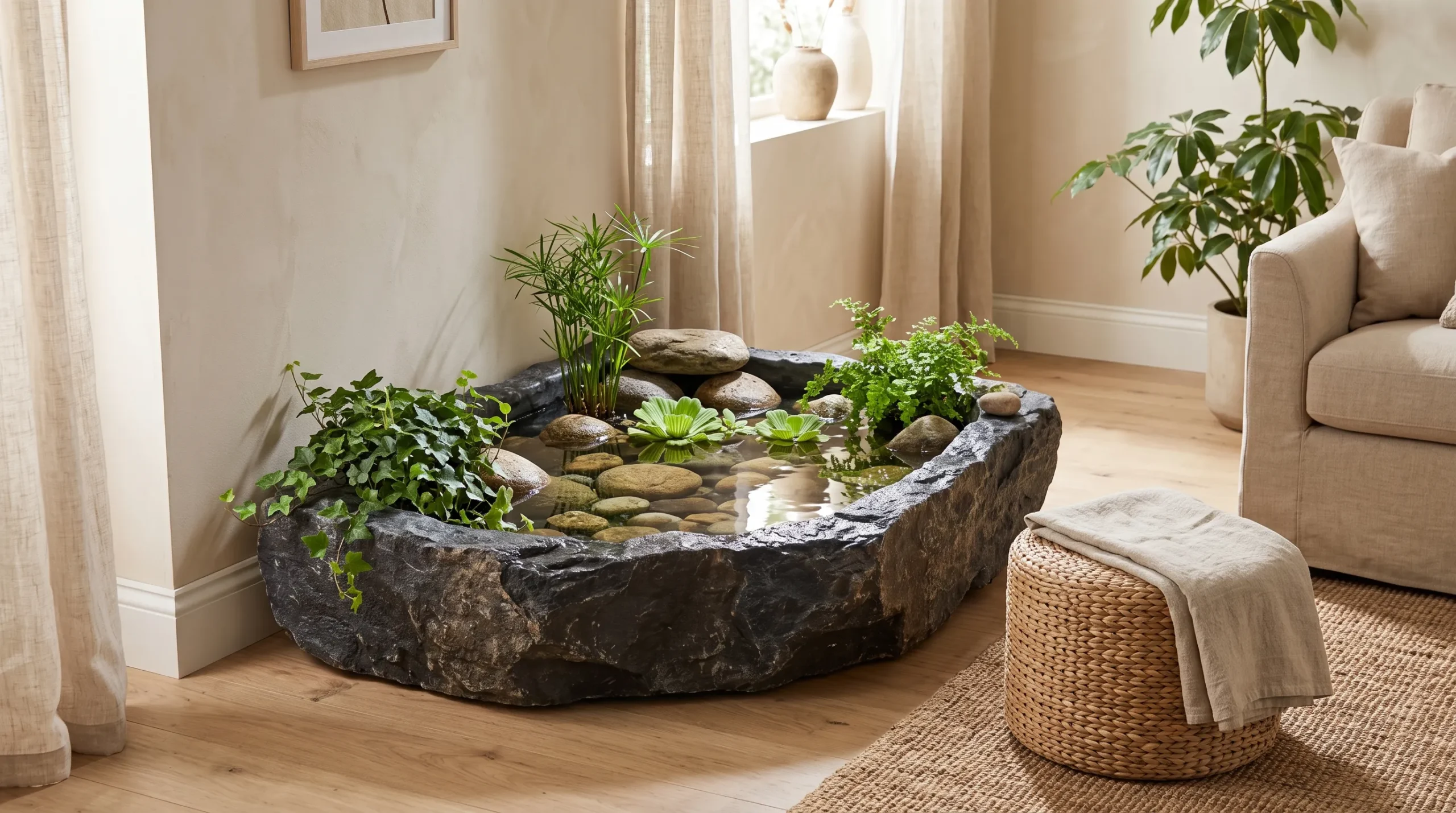
1. Small Corner Pond
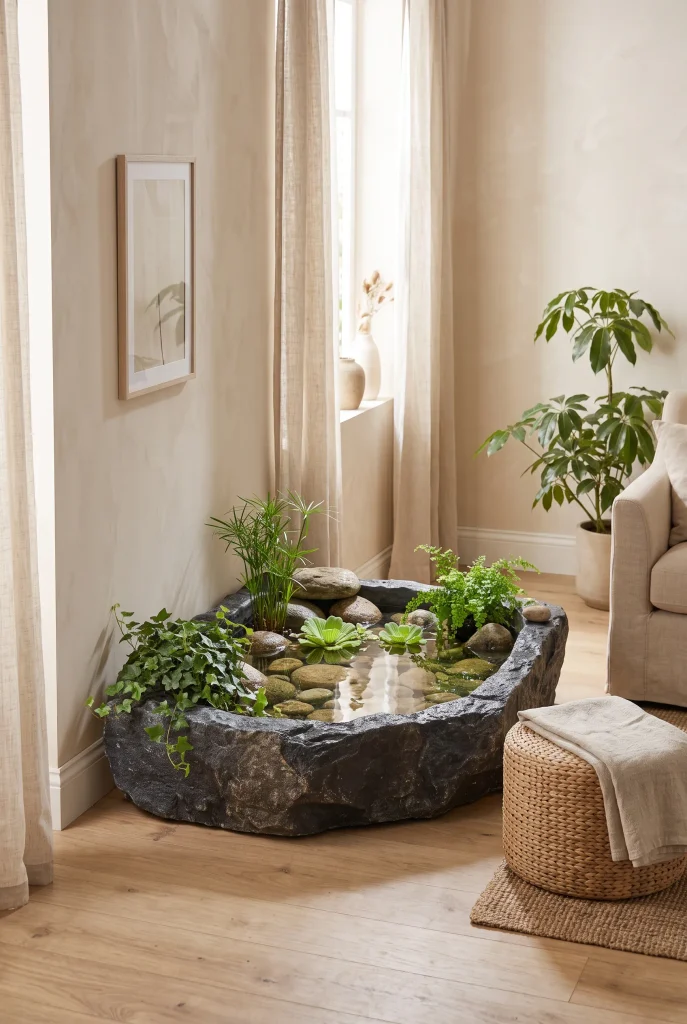
- Turns an unused corner into a calming focal point.
- Works well beside windows where natural light can brighten the water.
- Keep the surrounding furniture simple so the basin does not feel crowded.
- Smooth stones and leafy plants add texture without making the setup look busy.
An empty corner does not have to stay unused. A compact indoor pond can turn it into a peaceful little feature without making the room feel crowded. A small basin can sit beside a window, along a hallway, or inside a plant-filled nook. Stone, dark ceramic, and simple concrete all work well for the base, especially when paired with a few aquatic plants and smooth rocks. Keeping the surrounding decor simple helps the water feature stand out without looking bulky.
A small pond can also work in places such as a sunroom, entry area, or spacious bathroom. Use a shallow container with a clean edge, surround it with a few pebbles, and add just enough greenery to give it some life. A nearby woven basket, small stool, or slim wood bench can help finish the space. The size does not have to be impressive. What matters most is choosing proportions that work well with the furniture and space around it.
2. Zen Stone Basin

- Creates a simple focal point without overwhelming minimalist interiors.
- Natural stone gives the water feature an earthy, grounded appearance.
- Use a limited palette of charcoal, beige, cream, and muted green.
- A few larger stones usually look more intentional than many small decorations.
Water and stone naturally create a peaceful combination, which makes a Zen-style basin a great choice for a calm home. Choose a low, wide basin in charcoal, slate, or natural stone, then add a few rounded rocks around the water. One or two simple plants are usually enough. There is no need to fill every empty space. Light wood, linen, neutral walls, and simple furniture can make the whole setup feel warm and balanced.
The beauty of this style comes from keeping things simple. Rather than trying to recreate a full outdoor pond indoors, focus on a few natural elements that work well together. Place the basin somewhere it can be easily seen, such as beside a reading chair or near an entryway, while leaving some open space around it. Daylight can bring out the texture of the stone, while soft evening lighting can make the feature feel even more relaxing.
3. Indoor Water Garden
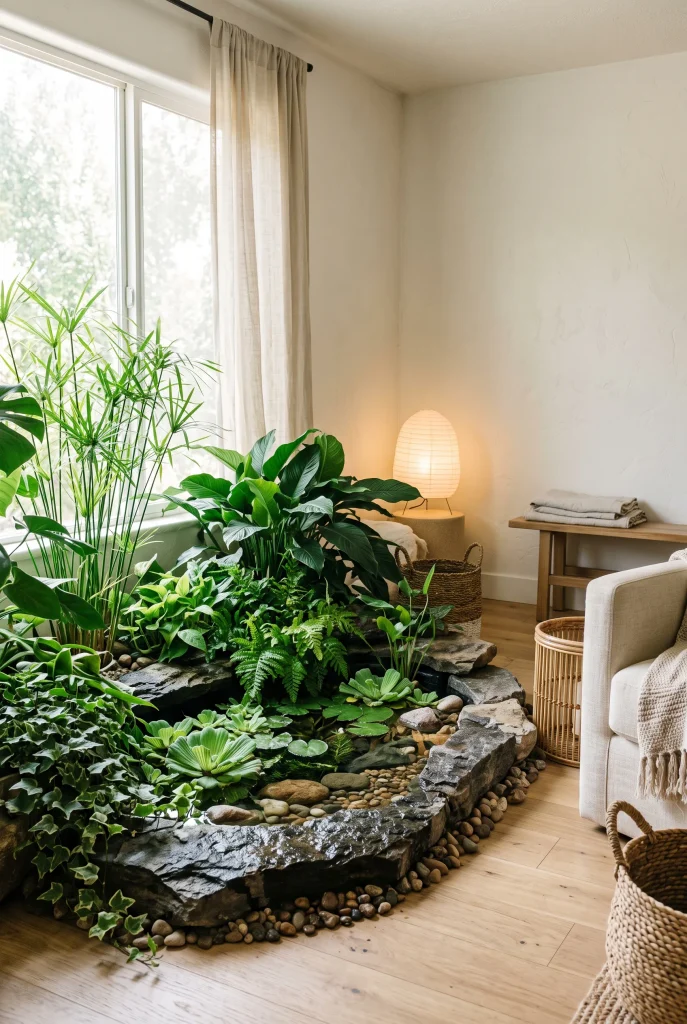
- Brings layered greenery into rooms that need more natural texture.
- Combines water, stone, and plants for a richer visual display.
- Place taller foliage toward the back and lower plants near the water edge.
- Leave clear walking space around the garden so the area stays practical.
Turn a quiet part of your home into a small indoor garden by combining water with layers of greenery. An indoor water garden can look especially beautiful near a sunny window, where natural light catches the water and leaves. Start with a shallow basin, then add aquatic plants, smooth pebbles, mossy textures, and a few taller plants behind the water. Keeping the colors mostly natural helps the garden feel fresh instead of overwhelming.
Layering the plants can make the setup look fuller without making it messy. Place taller foliage toward the back, medium-height plants along the sides, and smaller plants or stones closer to the water. Materials such as light oak, rattan, travertine, and matte ceramic can help connect the garden with the rest of the room. Leave a little open space around the pond as well. That breathing room keeps the feature from feeling too crowded.
4. Waterfall Wall Feature
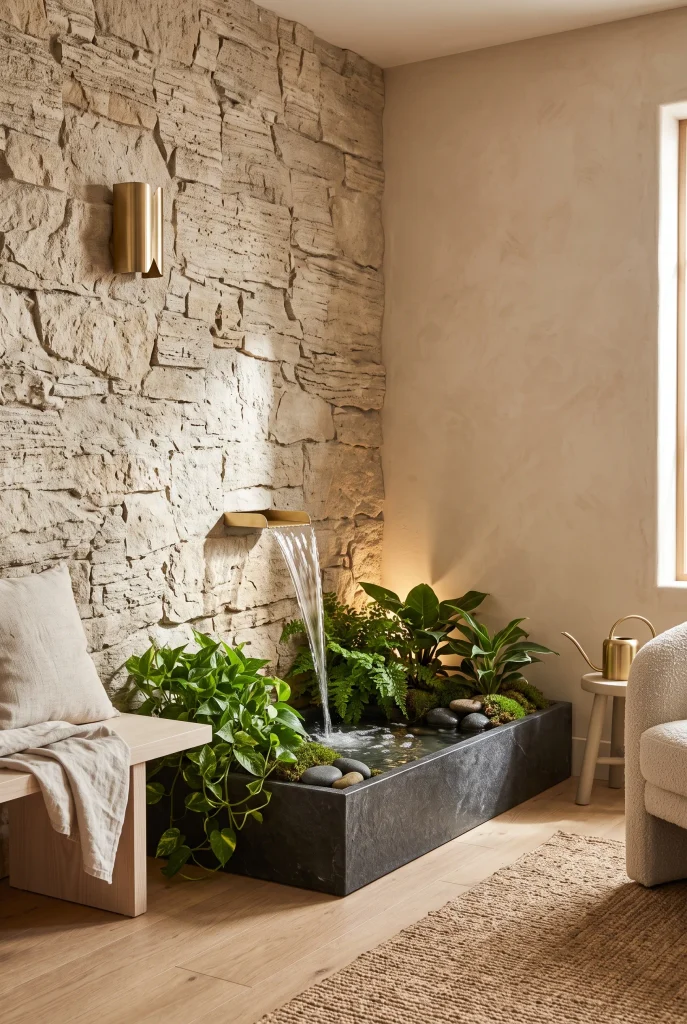
- Adds movement and gentle visual interest to a quiet room.
- A vertical wall feature makes better use of limited floor space.
- Natural stone or textured tile gives the waterfall a built-in appearance.
- Keep nearby furniture minimal so the flowing water remains the focal point.
A small indoor waterfall can turn an ordinary water feature into the main attraction of a room. Instead of keeping everything at floor level, let water flow gently down a stone, tile, or textured wall before collecting in a shallow basin. This works particularly well in modern living rooms, entryways, and larger bathrooms. Slate, river stone, and textured porcelain can all give the feature a natural appearance without making it feel too rustic.
The sound and movement of flowing water can add another relaxing layer to the room, but practicality still matters. Keep splashes under control and avoid placing delicate furniture directly beside the feature. Warm lighting aimed toward the falling water can create beautiful reflections in the evening. A few plants around the base can soften the harder surfaces and help connect the waterfall with the rest of the room. Keeping everything else simple allows the water to remain the star.
5. Glass Pond Divider
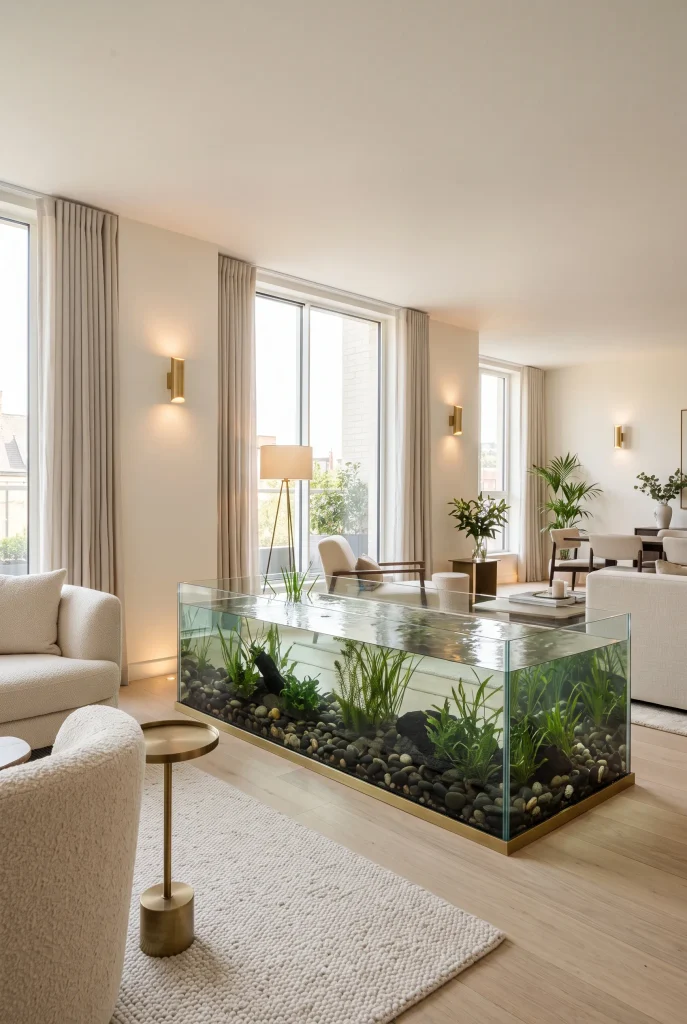
- Creates a visual divider without completely closing off an open room.
- Clear glass keeps both sides feeling bright and connected.
- Dark stones and green plants add contrast against neutral interiors.
- Leave enough surrounding space for safe movement and easy maintenance.
A glass-sided pond can serve as both decor and a room divider. In an open-plan home, a low rectangular pond can separate a living room from a dining area without completely blocking the view. Clear glass allows light to pass through while showing off the stones, plants, and water inside. The result feels modern and unexpected without making the space feel closed in.
Keeping the divider low and streamlined is important. A bulky structure can make an open room feel smaller, while a clean glass design keeps the connection between the two spaces. Choose plants that fit the scale of the pond rather than covering too much of the glass. Sunlight can create beautiful reflections during the day, while subtle lighting can give the pond more depth at night. Easy access for cleaning is also worth considering before choosing this type of feature.
View: 21 Pot Painting Ideas You’ll Want to Try This Year
6. Living Room Pond

- Makes the water feature a natural focal point in the main living area.
- A low design keeps sightlines open across the room.
- Neutral furniture helps water, plants, and stone stand out.
- Position it where reflections can benefit from nearby natural light.
A living room pond can create a relaxed atmosphere when it is planned as part of the room instead of added as an afterthought. A low rectangular basin can sit beneath a large window, beside a seating area, or along a spacious wall. Combine smooth stones, simple greenery, and natural finishes with cream upholstery and light wood furniture. The cool surface of the water adds a nice contrast to soft fabrics and warm materials.
Placement matters just as much as the design. Leave enough space around the pond so people can move comfortably and the feature remains easy to clean. A simple stone edge can help connect it with the surrounding floor, while a few plants can soften the transition between the water and furniture. If the room already has plenty of decor, let the pond be the main focal point instead of adding lots of accessories around it. This keeps the space feeling open and calm.
7. Under-Stair Pond

- Turns an awkward under-stair area into a purposeful design feature.
- Low-profile construction keeps the staircase visually open and uncluttered.
- Stone and greenery soften the harder lines of stairs and walls.
- Keep the surrounding area clear for safe movement and easy access.
The space underneath a staircase often goes unused, but it can become a beautiful spot for a small indoor pond. This idea works especially well beneath open or floating stairs where the water can be seen from different parts of the room. Use a shallow basin that fits the available width, then add smooth stones and a few compact plants. Dark stone can look especially striking against pale walls and light wood stairs.
Maintenance should be considered before choosing this location. The pond needs to be easy enough to reach for cleaning and should never interfere with people using the stairs. A simple border can keep the feature looking neat, while recessed lighting can highlight the water in the evening. Following the existing shape of the staircase can also make the pond feel like part of the architecture rather than something placed underneath it.
8. Window-Side Pond
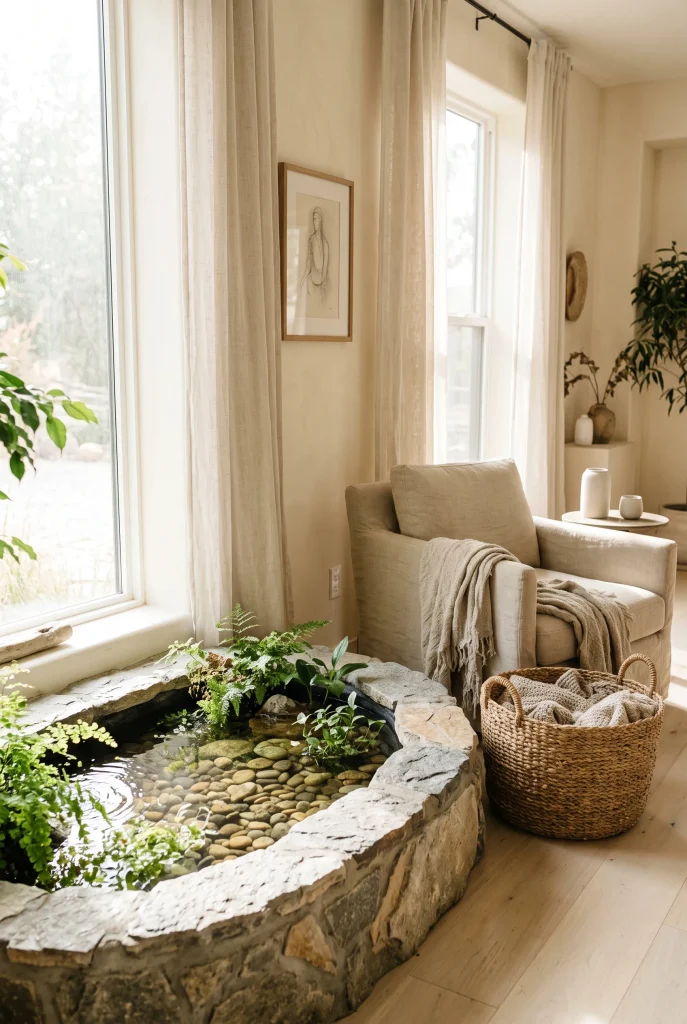
- Uses natural daylight to make the water and plants feel vibrant.
- Works well in sunrooms, reading areas, and bright living spaces.
- A narrow basin can fit beside windows without blocking the view.
- Keep plants appropriately sized so they do not overwhelm the glass or light.
A pond beside a bright window can make the most of natural light. As the sunlight changes throughout the day, reflections move across the water and nearby surfaces, giving the space a gentle sense of movement. A narrow basin can fit neatly beside a large window in a living room, sunroom, or reading area. Add a few rounded stones and compact plants, but keep the arrangement simple enough that the outdoor view remains visible.
Think about the conditions around the window before settling on the location. Strong direct sunlight may not suit every plant, while softer light can create a more relaxed look. Make sure the pond does not block curtains, doors, or walking paths. A small chair or slim bench nearby can turn the area into a cozy place to sit without adding much clutter. Leaving some open floor around the pond also gives the feature more room to breathe.
9. Indoor Koi Pond
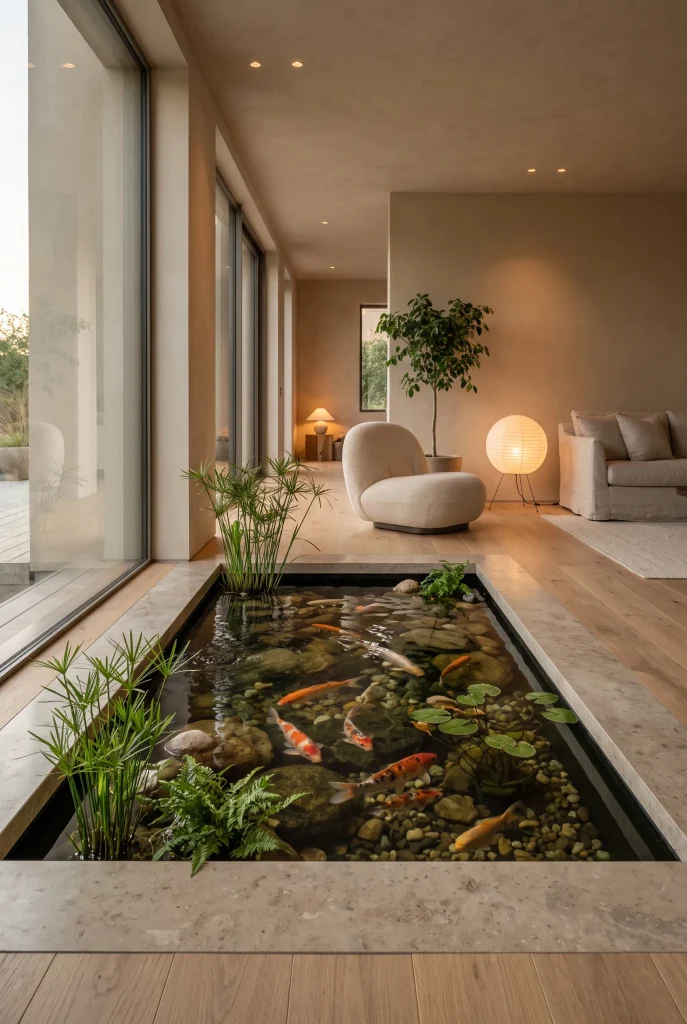
- Adds movement and personality through carefully chosen koi fish.
- A clean rectangular shape suits contemporary architectural interiors.
- Natural stone edges help the pond blend with surrounding decor.
- Plan filtration, water depth, and safe access before focusing on styling.
An indoor koi pond can become a stunning focal point in a spacious home. The movement of the fish adds life to the room, while clear water, natural stone, and greenery create a peaceful backdrop. A clean rectangular pond can work especially well with modern architecture and open layouts. Stone edges can help soften the overall look and make the pond feel more connected to nature.
Unlike a simple decorative water feature, a koi pond requires careful planning. Water quality, filtration, oxygenation, temperature, depth, and structural support all need to be considered before installation. This makes the idea better suited to a permanent setup rather than a quick DIY project. Keep the surrounding decor simple so the fish and water remain the main attraction. Natural stone, wood, and restrained greenery can create a beautiful setting without competing for attention.
10. Raised Stone Basin

- Raises the water feature to a comfortable viewing height.
- Creates a stronger focal point than a very low basin.
- Natural stone adds weight and texture without excessive decoration.
- A clean rectangular shape works especially well in modern interiors.
A raised stone basin gives an indoor pond a stronger presence without needing a full wall installation. Instead of sitting directly on the floor, the basin can rest on a sturdy stone, masonry, or wood-supported base. The extra height makes the water easier to see from nearby seating and can give an otherwise empty wall more character.
The base should feel like part of the room rather than a separate stand. Matching it with nearby flooring, shelving, or architectural details can make the whole feature look more intentional. Keep the top of the basin fairly simple and avoid filling it with too many decorative pieces. A raised design can also save some floor space while giving the pond a more architectural appearance.
11. Tropical Plant Pond
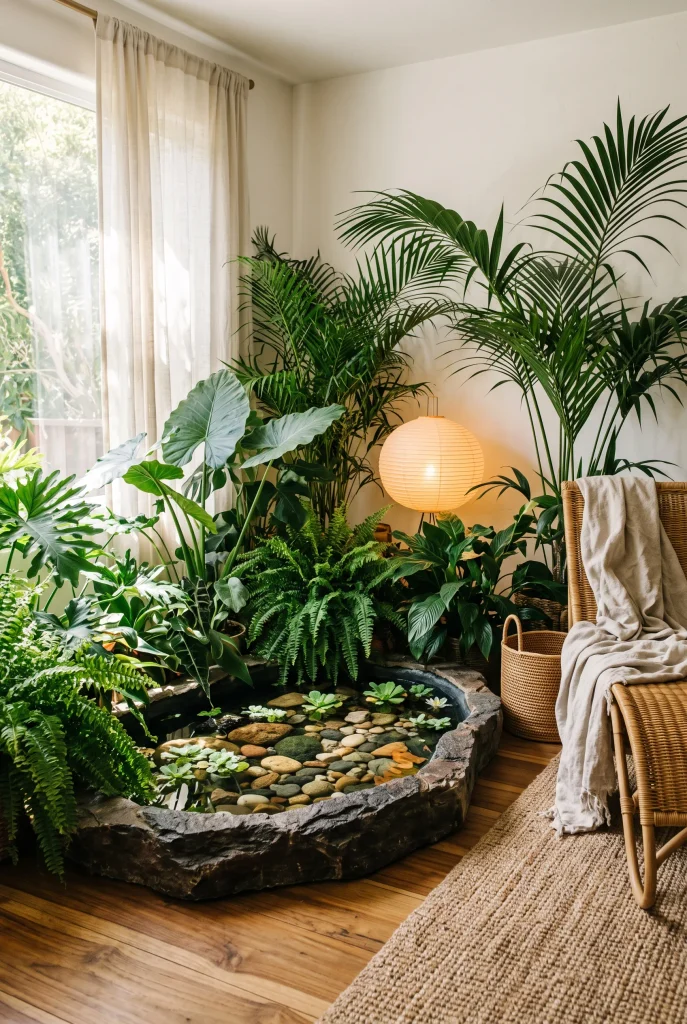
- Adds abundant greenery for a vibrant indoor garden effect.
- Broad leaves create attractive contrast against dark water and stone.
- Works especially well in sunrooms and bright open spaces.
- Use plants suited to the available light and indoor conditions.
Bring a tropical garden feeling indoors by surrounding a simple pond with lush greenery. Broad leaves, ferns, palms, and trailing plants can make the water feel like part of a larger indoor landscape. A dark stone or matte ceramic basin gives the greenery a strong backdrop, while teak, rattan, and other natural materials keep the space warm. This look works especially well in sunrooms, bright living areas, and large open corners.
Tropical greenery can become crowded quickly, so give the plants some structure. Start with one taller plant behind the pond, add medium-sized foliage around the sides, and leave some open space around the water. Choose plants according to the actual light and humidity in the room instead of choosing them only for appearance. A washable surface around the basin can also make occasional splashes easier to deal with. The goal is to create a lush space that still feels comfortable and manageable.
12. Floating Plant Display
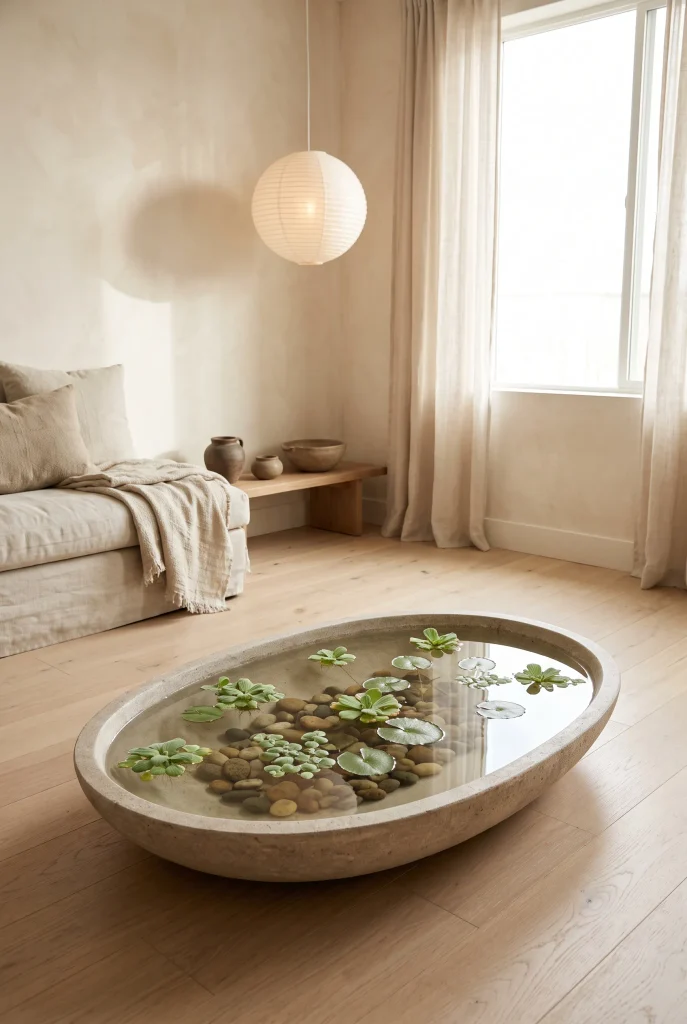
- Creates a soft, organic look without filling the pond with decorations.
- Floating leaves add movement and natural texture to still water.
- Looks beautiful against simple stone, ceramic, or concrete basins.
- Leave open water around the plants to preserve a clean appearance.
Floating plants can give a simple pond a softer and more natural look. Instead of filling the basin with lots of stones and decorations, let a few aquatic plants float across the surface. Their organic shapes create a nice contrast against clean lines and smooth water. This works especially well with shallow stone, ceramic, or concrete basins where the plants can remain clearly visible.
Keep the arrangement open rather than covering the entire surface with greenery. A few plants with plenty of space around them can look much more intentional than a crowded pond. Pay attention to how quickly the plants grow and whether they suit the light in the room. Natural daylight can create lovely reflections, while soft evening lighting can highlight the leaves. This simple approach works particularly well in neutral, minimalist, and Japandi-style interiors.
13. Courtyard Water Feature

- Turns an indoor courtyard into a calming natural centerpiece.
- Open space around the water keeps the feature visually balanced.
- Stone paving creates a seamless connection between water and architecture.
- Plants around the edges soften walls and hard flooring.
An indoor courtyard already has a natural garden-like feel, which makes it a great place for a water feature. A simple rectangular pond can sit in the center or along one side, surrounded by stone, greenery, and open space. Skylights and large windows can bring daylight onto the water and create soft reflections throughout the day. The combination of architecture, plants, and water can make the courtyard feel peaceful without needing a lot of extra decoration.
Keep the layout open so the pond can be seen from nearby rooms. A low basin is often a good choice because it keeps sightlines clear and allows the courtyard to feel spacious. Repeating materials such as stone, wood, or concrete around the feature can make the whole area feel connected. Choose plants that can handle the amount of sunlight the courtyard receives, and leave enough room around the pond for simple maintenance.
14. Minimalist Black Basin
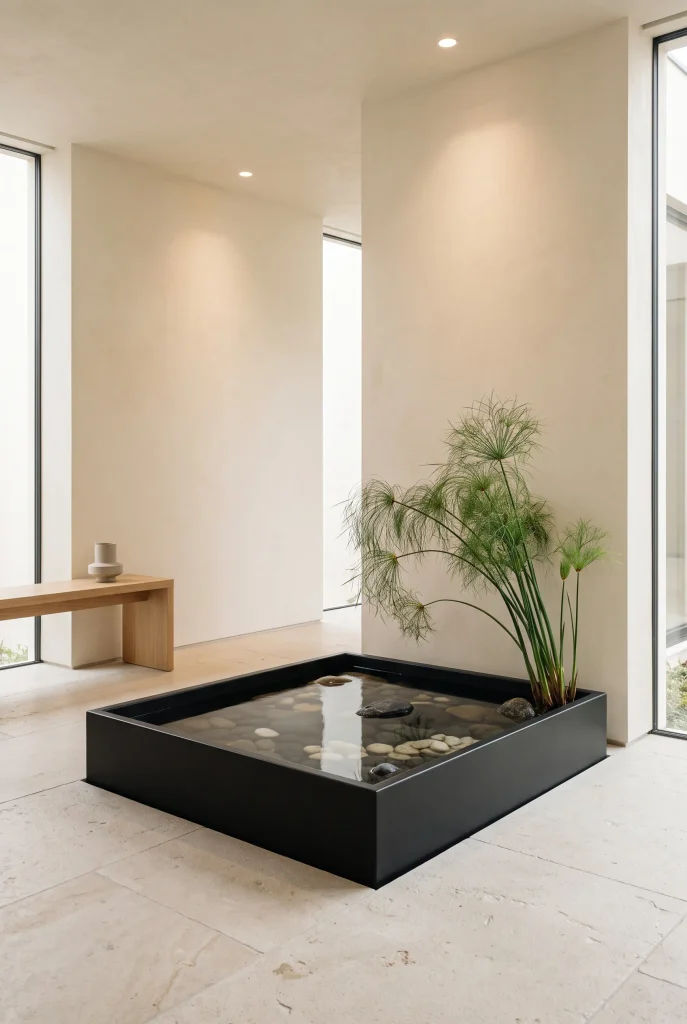
- Creates strong contrast in rooms with light neutral finishes.
- A simple black basin makes the water look deeper and more reflective.
- Works particularly well with minimalist and contemporary interiors.
- Keep accessories limited so the bold shape remains the focal point.
A matte black basin can instantly give an indoor pond a more sophisticated look. The dark surface stands out against cream walls, pale flooring, and light wood furniture while making the water appear deeper and more reflective. Choose a clean rectangular or softly rounded basin without unnecessary detailing. One sculptural plant or a few muted stones can add natural texture without taking away from the simple design.
This look works best when the rest of the room stays fairly restrained. Small touches of black in lighting, hardware, picture frames, or furniture legs can help tie the basin into the room. Warm lighting can soften the darker surface at night and create subtle reflections across the water. During the day, natural light can keep the feature feeling fresh rather than heavy. The result is simple, modern, and still connected to nature.
15. Wooden Bridge Accent
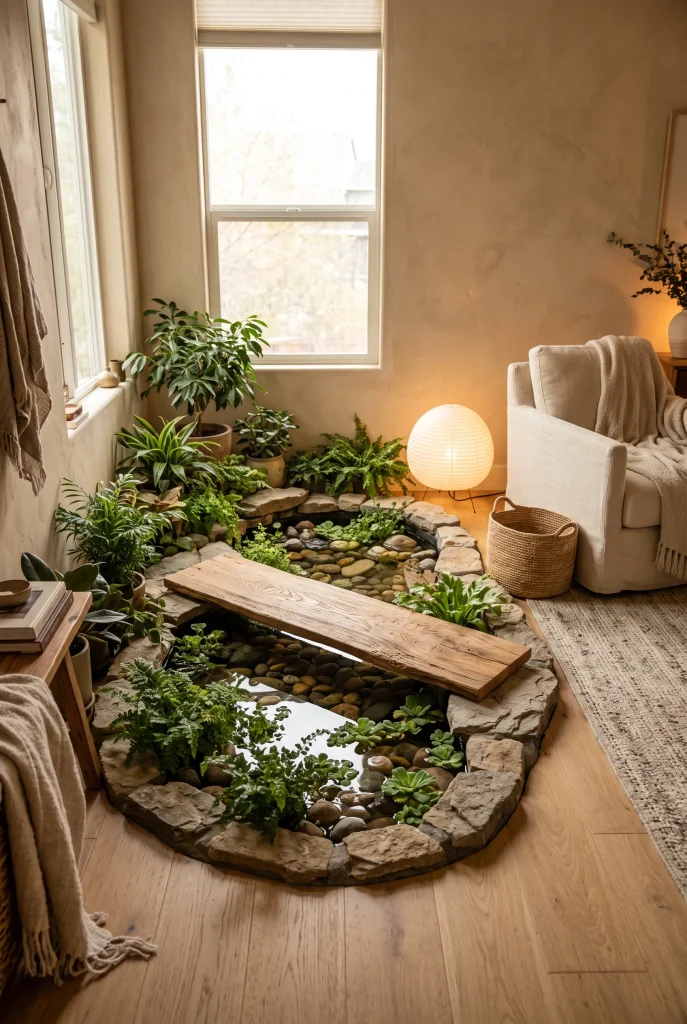
- Adds a memorable architectural detail to a larger water feature.
- Natural wood brings warmth to cool stone and water surfaces.
- Works best when the pond has enough width for the bridge to feel proportional.
- Keep the surrounding decor simple so the bridge remains visually prominent.
A small wooden bridge can turn an indoor pond into a miniature landscape. It does not need to be large or elaborate. A simple narrow bridge can provide enough detail while keeping the overall look clean and natural. Pair warm wood with rounded river stones, aquatic plants, and clear water for an inviting garden-inspired effect. This idea works best in a larger room where the pond has enough space for the bridge to look proportional.
Getting the scale right is important. A bridge that is too large can take over the room, while one that is too small may look more like a decoration than a meaningful feature. Choose a wood tone that works with existing floors or furniture, then keep the pond edges simple. Any bridge spanning water should be properly supported and designed with safety in mind. When planned well, it can give an indoor pond a distinctive character without making the space feel overdone.
16. Warm Lighting Glow

- Makes the water feature feel inviting after sunset.
- Underlighting can highlight water movement and stone textures.
- Warm light works beautifully with beige, cream, wood, and natural materials.
- Use subtle illumination rather than bright lights that overpower the room.
Lighting can completely change the way an indoor pond looks after dark. Soft lighting beneath or around the basin can make the water shimmer and bring out the texture of stones and plants. Warm white light works especially well with cream, beige, natural wood, and other earthy finishes. Rather than making the entire pond bright, focus on gentle lighting that adds depth without taking away from the calm atmosphere.
Think of the lighting as part of the room’s overall evening mood. Concealed lights can create a soft glow along the edge of the basin, while a nearby floor or table lamp can provide additional warmth. Avoid harsh lights that create glare on the water. Fixtures used near water should also be properly rated for the location. With the right balance, the pond can feel bright and refreshing during the day and warm and peaceful at night.
17. Pebble Edge Detail
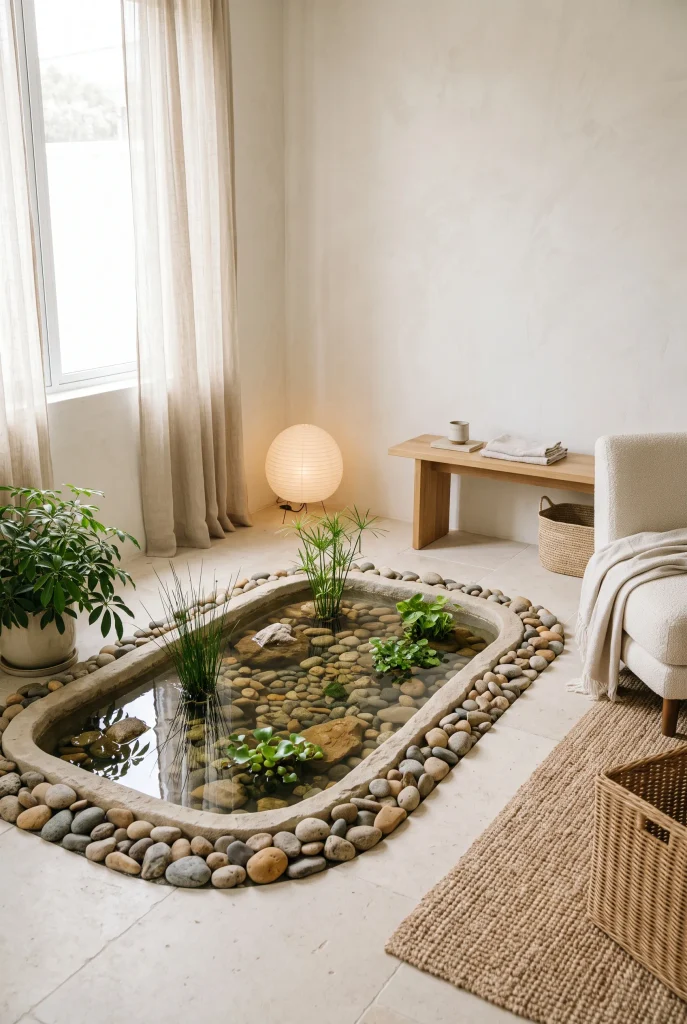
- Gives a simple basin a softer, more natural edge.
- Pebbles add texture without requiring elaborate decoration.
- Mixing a few pebble sizes creates a more realistic shoreline effect.
- Keep the border contained so loose stones do not spread into walking areas.
Sometimes a simple pebble border is enough to make an indoor pond feel more finished. Smooth stones create a soft transition between the basin and surrounding floor while adding natural texture. Choose pebbles in cream, gray, tan, or muted brown to match the colors already used in the room. Mixing a few different sizes can create a relaxed shoreline effect without looking overly arranged.
Keep the pebble border controlled rather than spreading stones across the entire area. A narrow, consistent edge usually looks cleaner and is easier to maintain. A few larger stones can be used as visual anchors, with smaller pebbles filling the spaces between them. Matching the stone colors with nearby flooring or planters can also make the pond feel more connected to the rest of the room. This small detail can make even a basic water feature look thoughtfully designed.
Conclusion
An indoor pond can bring a sense of calm and natural beauty that ordinary decor often cannot. Water adds movement, reflection, and texture, while plants and stone help bring a little bit of the outdoors inside. Whether you prefer a small corner pond, a simple Zen basin, a koi pond, or a lush indoor water garden, there are plenty of ways to make the idea work for your home.
Save this article on Pinterest so you can come back to your favorite designs when you are ready to plan your space. Start with the idea that best fits your room, keep the materials and proportions simple, and let the water become a peaceful part of your everyday surroundings.