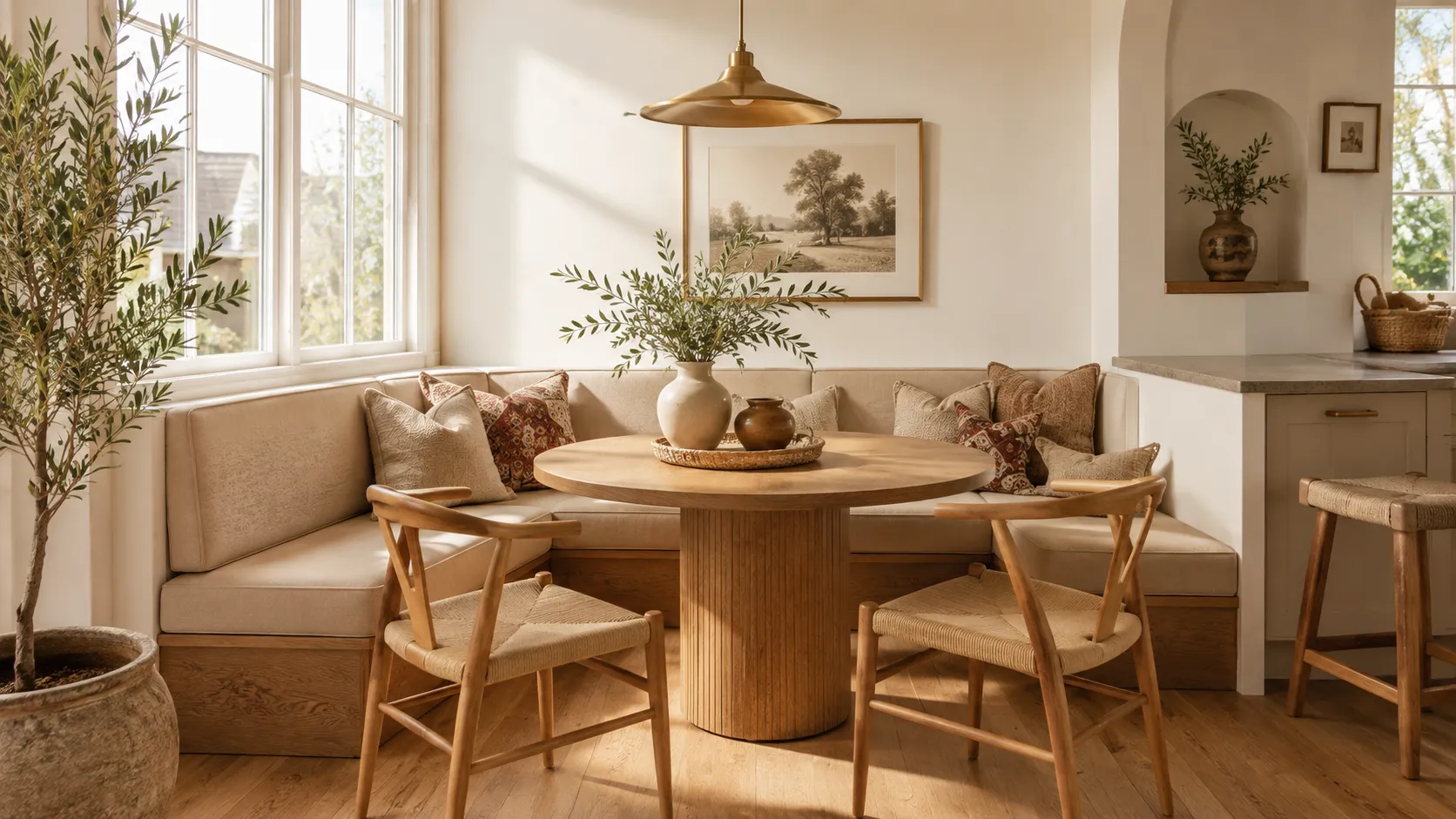
25 Corner Dining Nook Ideas to Transform Your Space
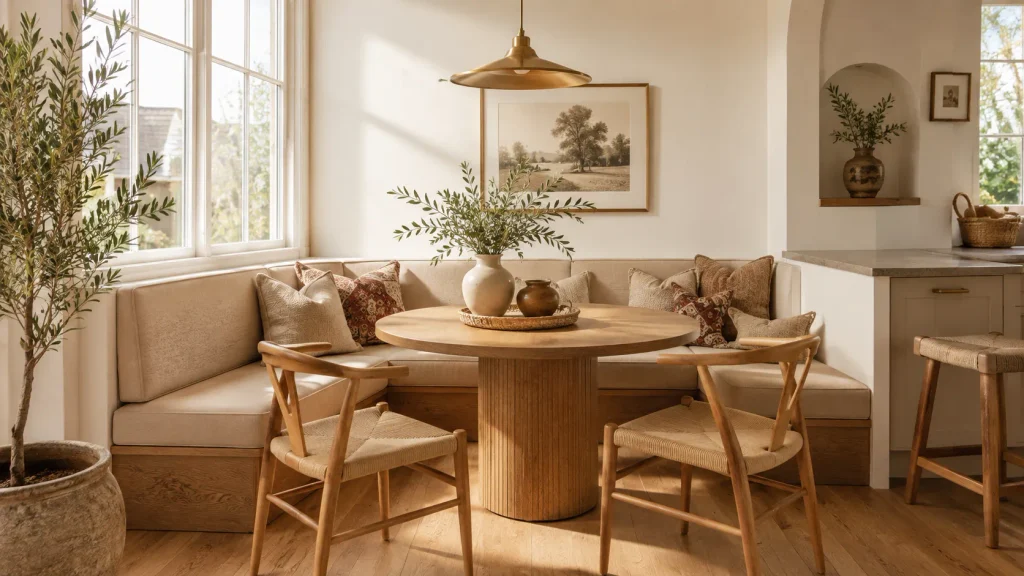
A forgotten corner can become the most charming place in your home. With the right corner dining nook, even a small or awkward space can feel warm, useful, and beautifully designed.
Whether you have a compact kitchen, an open-plan living area, or simply an unused corner, these ideas offer practical ways to create a comfortable place for meals, coffee, conversations, and everyday moments. From built-in banquettes and round tables to layered lighting, wallpaper, storage benches, and natural textures, there are options for many different styles and space limitations.
In my experience, the best small-space transformations come from combining comfort with smart layout choices. I’ve noticed that even one thoughtful change can make an overlooked area feel intentional. These 25 ideas will help you create a dining space that looks inspiring, functions beautifully, and feels like a natural part of your home.
1. Built-In Banquette
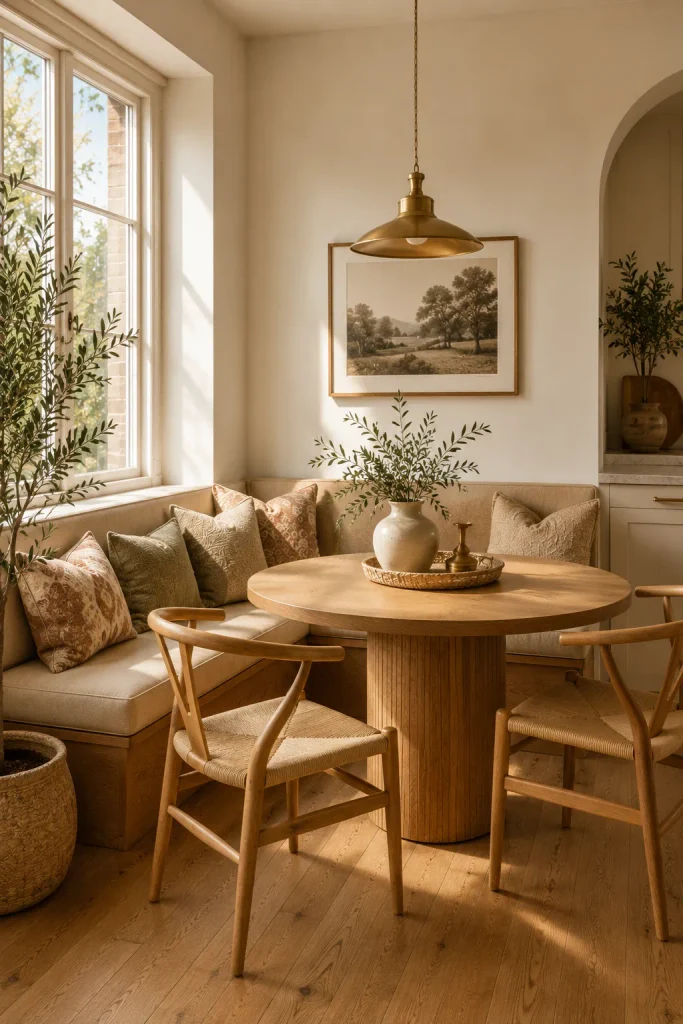
- Maximizes an unused corner without making the room feel crowded.
- Creates comfortable seating with a clean, custom-built appearance.
- Adds hidden storage beneath the bench for everyday essentials.
- Works beautifully with round or small rectangular tables.
- Makes a compact eating area feel intentional and polished.
A built-in banquette can turn an overlooked corner into one of the most inviting spots in the home. By placing the bench tightly against two walls, you gain generous seating while keeping the center of the room open and easy to move through. This setup works especially well in kitchens where traditional dining chairs would take up too much floor space. Add soft cushions, a warm wood table, and one or two movable chairs to balance comfort with flexibility. The finished space feels cozy, organized, and thoughtfully designed without requiring a large room.
What makes this setup especially useful is its ability to combine style with everyday function. Storage drawers or lift-up compartments beneath the seat can hold linens, seasonal décor, or items that usually clutter nearby cabinets. In my experience, built-in seating also makes small dining spaces feel more permanent and visually connected to the room. Choose upholstery that complements the wall color, then layer in patterned pillows for personality. This simple approach can make a corner dining nook feel custom, comfortable, and surprisingly spacious while giving every square foot a clear purpose.
2. Round Table Layout
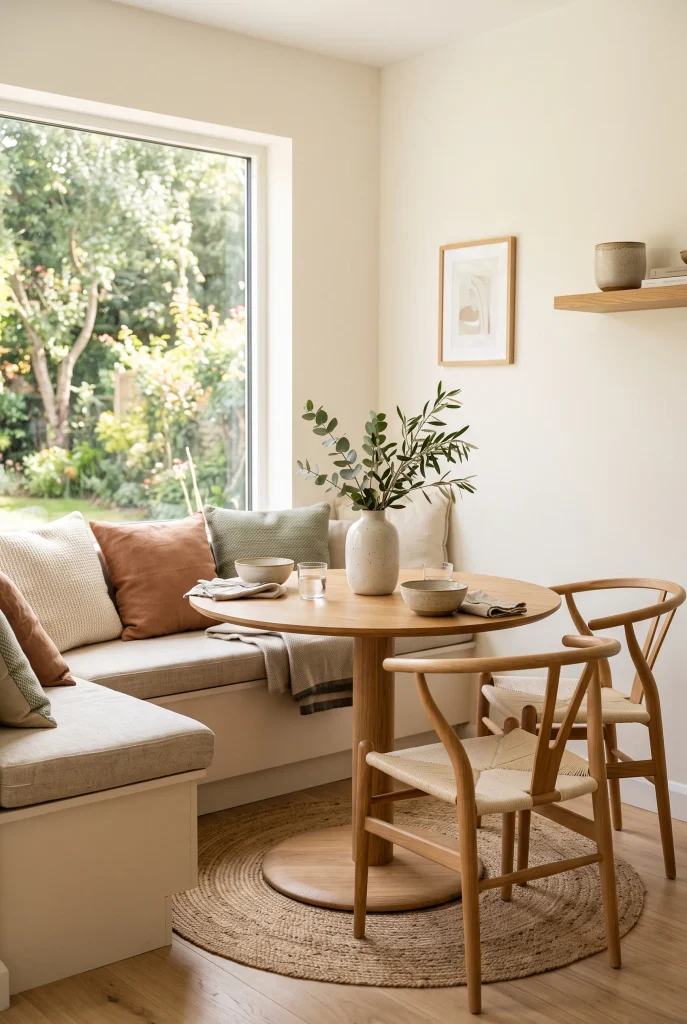
- Softens the hard angles of a square or narrow corner.
- Improves movement around the dining area.
- Creates a balanced and welcoming visual focal point.
- Makes conversation easier for family meals and casual gatherings.
- Fits naturally into compact kitchens and apartments.
A round table instantly changes how a small dining area feels by removing sharp corners and creating a smoother flow around the seating. This is particularly helpful when the available space sits beside a walkway, kitchen island, or doorway. A pedestal base can provide even more legroom because there are no table legs competing with chairs or a bench. I’ve noticed that circular tables also make compact spaces feel less rigid and visually lighter. Pair one with curved seating, natural materials, and a simple pendant above for a relaxed arrangement that feels open rather than squeezed.
The beauty of this layout is that it encourages flexibility without sacrificing style. You can pull chairs closer, add another seat when guests arrive, or tuck everything inward when the room needs extra circulation. For a balanced look, choose a table diameter that leaves comfortable space around the seating rather than filling the entire corner. Light wood, stone, or painted finishes can help match the surrounding kitchen or living area. This approachable arrangement creates a warm gathering point while making a small corner feel useful, connected, and much more inviting.
3. Window Seat Dining
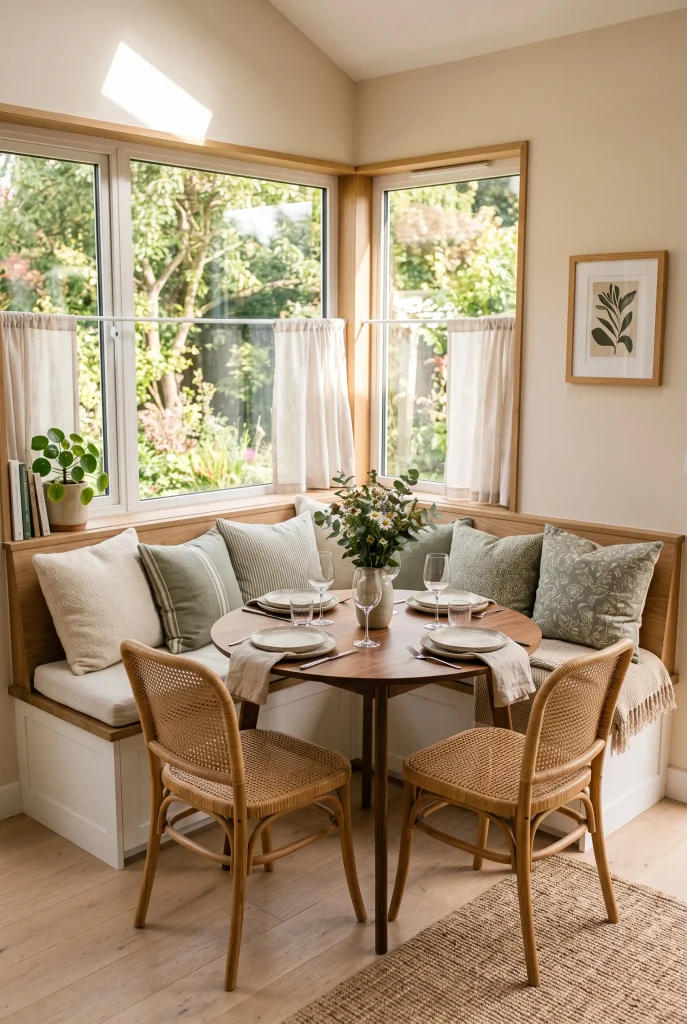
- Uses natural light to make meals feel brighter and more relaxed.
- Turns an existing window area into practical seating.
- Creates a cozy café-like atmosphere at home.
- Adds softness with cushions, curtains, and layered textures.
- Gives a small dining zone a strong visual focal point.
A dining setup beside a window can make even the simplest meal feel more enjoyable because natural light brings warmth and depth into the space. A cushioned bench beneath the window uses an area that might otherwise remain empty while creating comfortable seating with a built-in appearance. Add a compact table and a pair of lightweight chairs to keep the arrangement visually open. Soft linen curtains, textured cushions, and a small centerpiece can complete the look. The result is a bright, peaceful spot that feels perfect for morning coffee, casual lunches, or relaxed family dinners.
This idea also works because the view and daylight naturally become part of the design. If privacy is needed, sheer curtains can soften the light without making the space feel closed off. I’ve seen this work well in homes where a larger dining room simply is not available, especially when the window already sits near the kitchen. Choose durable seat fabric for easy cleaning, and use cushions sparingly to avoid crowding the bench. With thoughtful proportions, a bright window corner can become a comfortable everyday dining retreat that feels both practical and visually memorable.
4. Floating Shelves
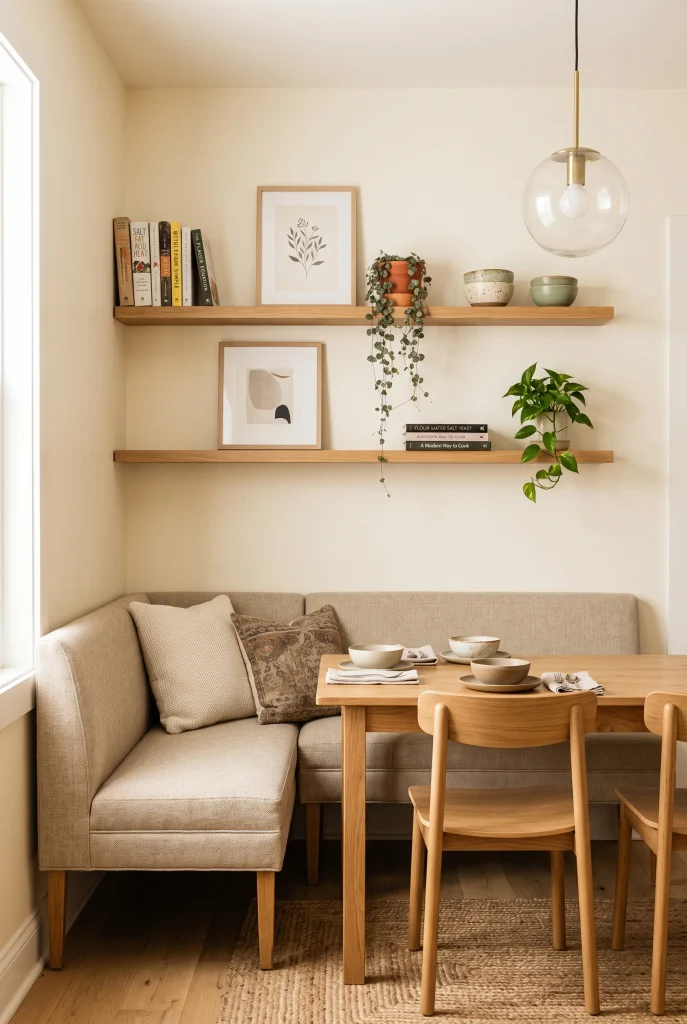
- Uses vertical wall space without taking up valuable floor area.
- Adds personality through artwork, ceramics, plants, or cookbooks.
- Makes a plain dining corner feel styled and intentional.
- Keeps frequently used decorative pieces within easy reach.
- Allows the look to change easily with the seasons.
Floating shelves can make a simple dining corner feel finished without adding bulky furniture or closing in the room. Mounted above a bench or small table, they draw the eye upward and create useful space for carefully chosen décor. A few ceramic pieces, framed prints, small plants, or cookbooks can add color and texture while keeping the overall arrangement light. The key is leaving some empty space so the shelves do not feel crowded. This idea works especially well when the walls around the dining area feel plain but there is little room for additional storage.
The flexibility of floating shelves is what makes them so useful in everyday homes. You can refresh the display with seasonal accents, family pieces, or practical items without changing the furniture below. I’ve noticed that using the shelves in the same wood tone as the table creates a more connected and custom appearance. Keep the lowest shelf high enough that seated guests never feel visually boxed in. A balanced arrangement with varying heights can add interest while maintaining a calm look, helping the small eating space feel personal, organized, and thoughtfully styled.
View: 23 Modern Rustic Living Room Ideas for a Cozy Home
5. Gallery Wall
- Gives the dining area a stronger focal point.
- Adds personality without requiring extra floor space.
- Allows family photos, artwork, and prints to work together.
- Makes a basic bench-and-table setup feel more collected.
- Can be adjusted over time as your style changes.
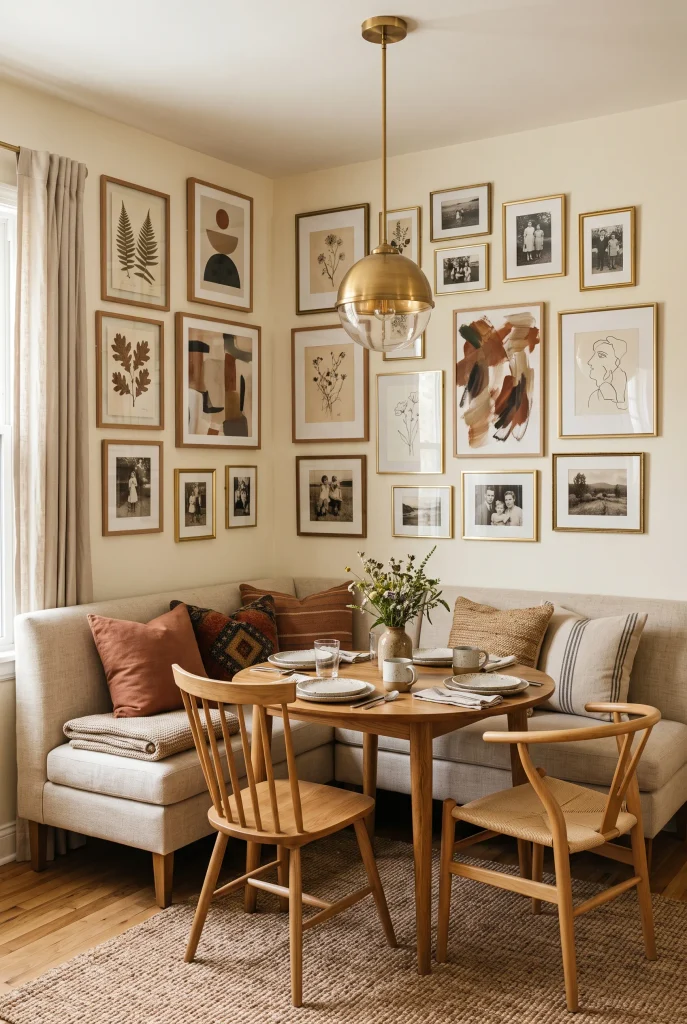
A gallery wall can instantly give a small dining area more character by turning an empty corner into a visual focal point. The arrangement works best when the artwork feels connected through a shared color palette, frame style, or overall mood. Mix different sizes to create movement, but keep the spacing consistent for a polished appearance. Botanical prints, abstract art, vintage photographs, or personal images can all work beautifully together. This approach is especially helpful when the furniture is simple, because the wall becomes the element that gives the space depth, personality, and a memorable finished look.
The most successful gallery walls usually feel collected rather than overly perfect. Start by arranging the pieces on the floor before hanging them, which makes it easier to test balance and spacing. That’s why many designers recommend choosing one larger anchor piece and building around it with smaller frames. A dining corner also offers a great place to display meaningful artwork that might otherwise remain stored away. Keep the colors connected to nearby cushions, curtains, or tableware so everything feels intentional. The finished result adds warmth and creates a more distinctive place to gather each day.
6. Warm Pendant Lighting
- Defines the dining zone without adding physical walls.
- Creates a warm atmosphere for everyday meals.
- Adds height and visual interest above a compact table.
- Helps the corner feel separate from the surrounding room.
- Offers an easy upgrade with a strong decorative impact.
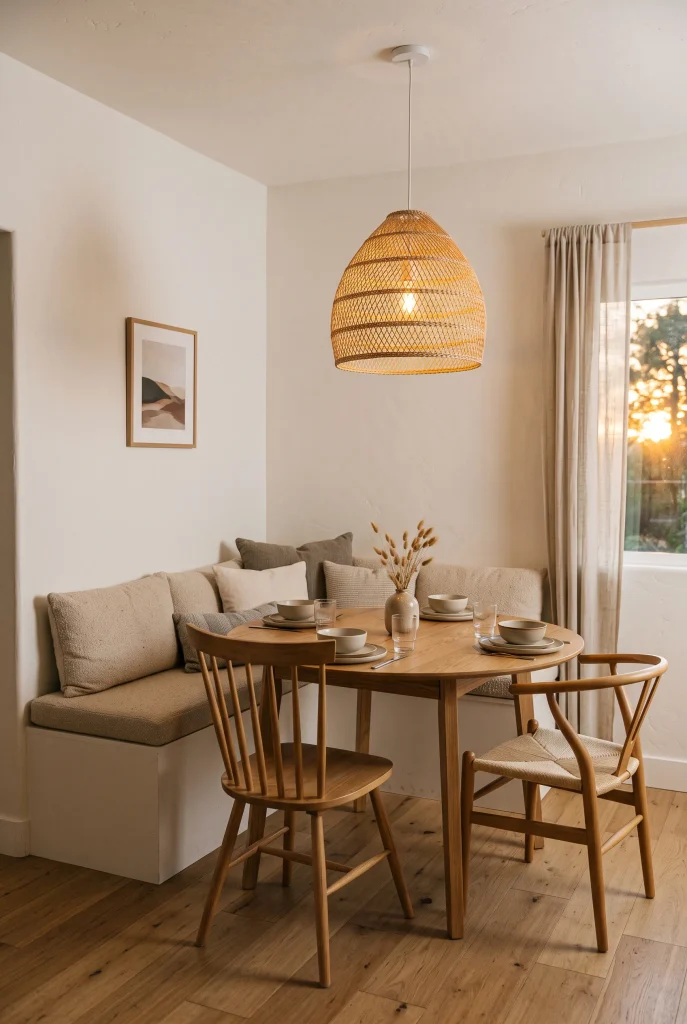
Warm pendant lighting can completely change the mood of a compact dining area by giving it a clear sense of purpose. When a pendant hangs directly above the table, it visually anchors the seating arrangement and makes the corner feel like its own destination. Woven shades, frosted glass, fabric, or sculptural materials can introduce texture while providing a soft, comfortable glow. The fixture should suit the table size and hang low enough to feel connected without blocking sightlines. Even a simple setup can feel more polished once the lighting creates a warm and inviting center.
Lighting is especially important when the dining area shares space with a kitchen or living room. A dedicated pendant helps separate the zone visually, even when there are no walls between functions. In my experience, using a dimmable bulb makes this idea far more practical because the brightness can change from busy breakfast mornings to relaxed evening dinners. Choose a warm light temperature to avoid a harsh appearance against natural materials and soft furnishings. With the right scale and placement, one pendant can make the entire corner feel more intimate, balanced, and intentionally designed.
7. Upholstered Bench
- Adds softness and comfort to a compact eating area.
- Creates a more relaxed and inviting place to sit.
- Introduces texture without needing extra décor.
- Works well with wood, stone, or painted tables.
- Makes the seating feel more polished and intentional.
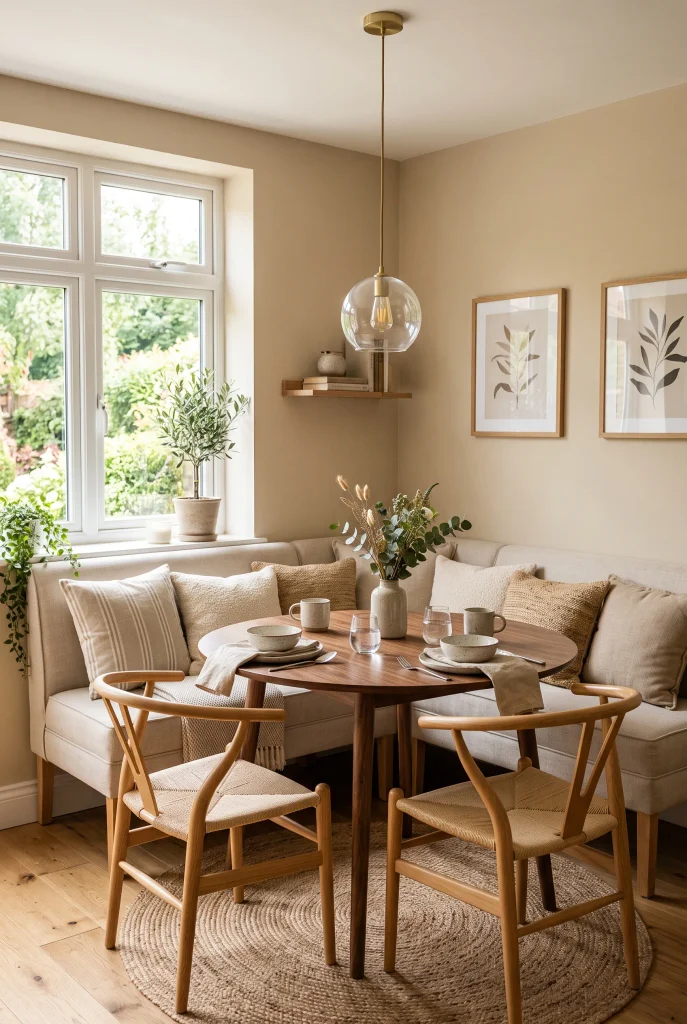
An upholstered bench can make a small dining area feel instantly softer, warmer, and more comfortable. Unlike hard seating, padded upholstery encourages people to linger over breakfast, coffee, or long family meals. Choose a durable fabric in oatmeal, beige, gray, or another versatile neutral to keep the look flexible as your décor changes. A tailored bench also creates a clean visual line along the walls, which helps the room feel organized. Add a few cushions in complementary colors for extra texture, but avoid overfilling the seat and reducing everyday comfort.
This seating style is particularly effective when you want the dining space to feel connected to the rest of the home. Match the bench fabric with nearby curtains, accent chairs, or cushions to create visual continuity. I’ve seen this work well in open-plan rooms where a softer dining setup helps bridge the kitchen and living areas. Performance fabrics are especially practical for families because they handle everyday spills more easily. Combined with a simple table and warm lighting, an upholstered bench creates a comfortable corner that looks refined while remaining easy to use every day.
8. Rustic Wood Table
- Adds natural warmth and texture to the dining area.
- Creates a welcoming contrast against smooth walls.
- Works with farmhouse, modern, and transitional interiors.
- Gives a compact setup a stronger visual anchor.
- Looks better over time as natural materials develop character.
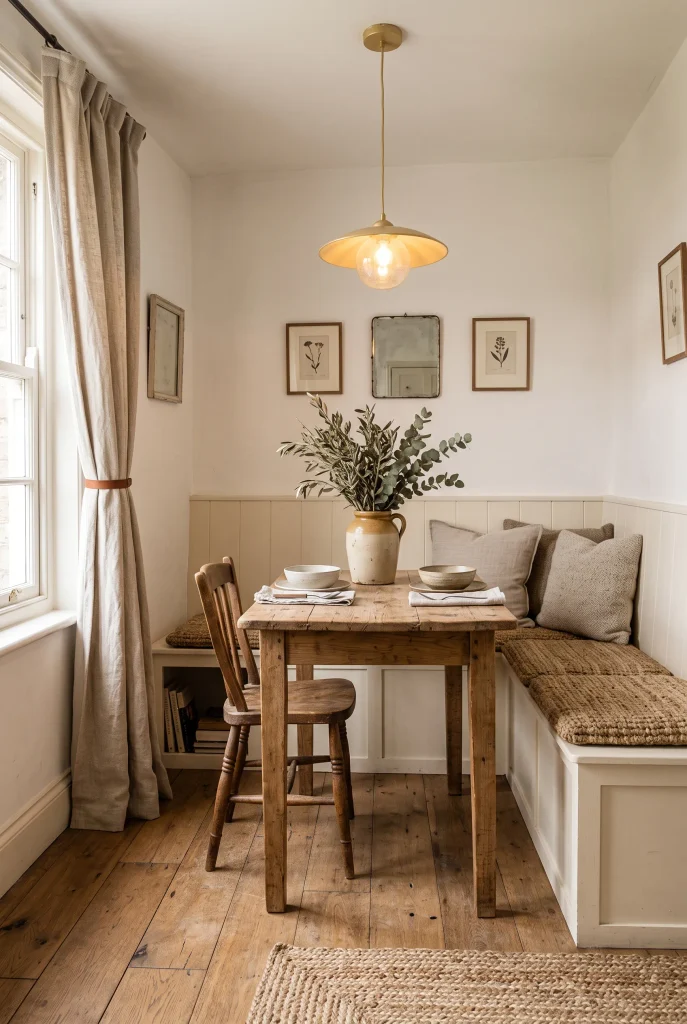
A rustic wood table can bring instant warmth to a dining corner by introducing natural grain, texture, and visual depth. Its organic surface creates a relaxed focal point, especially when surrounded by softer elements such as upholstered seating or woven cushions. Reclaimed wood, oak, or lightly distressed finishes can all work beautifully depending on the style of the home. The imperfect details often add character rather than looking messy. In smaller spaces, a table with simple legs and a slimmer profile helps preserve openness while still giving the dining area a grounded, welcoming presence.
The natural beauty of wood also makes this idea easy to layer with different decorating styles. Pair it with black metal chairs for an industrial edge, woven seating for a casual look, or upholstered benches for a softer finish. In my experience, choosing a finish that echoes nearby flooring or cabinetry creates a more cohesive result without making everything match exactly. Protect the surface with durable sealant if the table will handle frequent family meals. With minimal styling, a beautiful wood table can make the entire corner feel warmer, more authentic, and effortlessly inviting.
9. Patterned Wallpaper
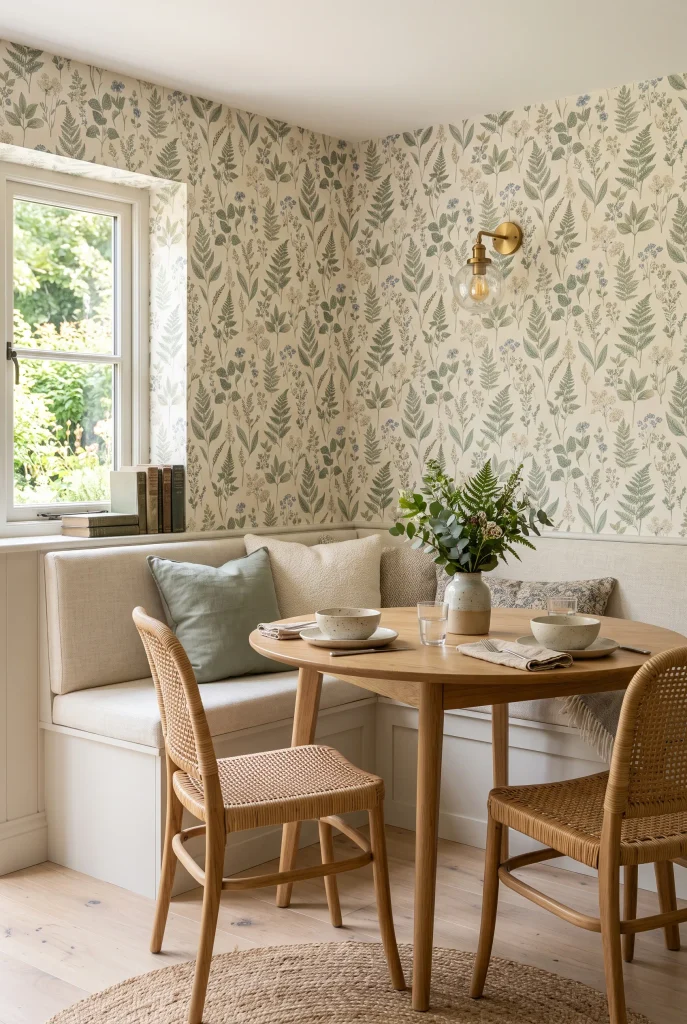
- Turns an overlooked corner into a bold focal point.
- Adds color, pattern, and personality without extra furniture.
- Defines the eating zone within an open room.
- Works beautifully behind benches and compact tables.
- Creates a memorable backdrop for simple furnishings.
Patterned wallpaper can transform an ordinary dining corner into a space that immediately catches the eye. Covering one or both walls gives the seating area a clear identity, which is especially useful in open-plan homes where separate zones can otherwise blend together. Soft botanicals, subtle stripes, geometric designs, or small-scale prints can all create different moods. Keep the furniture relatively simple so the walls remain the visual star. A coordinated palette between the wallpaper, cushions, and table helps the arrangement feel layered, balanced, and intentionally designed rather than overly busy.
The right pattern can also change how the proportions of a small space are perceived. Vertical motifs can create a sense of height, while lighter prints help maintain an airy appearance. I’ve noticed that removable wallpaper is particularly useful for renters or anyone who enjoys updating their home regularly. Before choosing a design, test a sample beside the existing flooring and nearby finishes to check how the colors behave throughout the day. With thoughtful scale and placement, wallpaper gives the dining area personality and turns a forgotten corner into a standout feature.
10. Cushioned Storage Bench
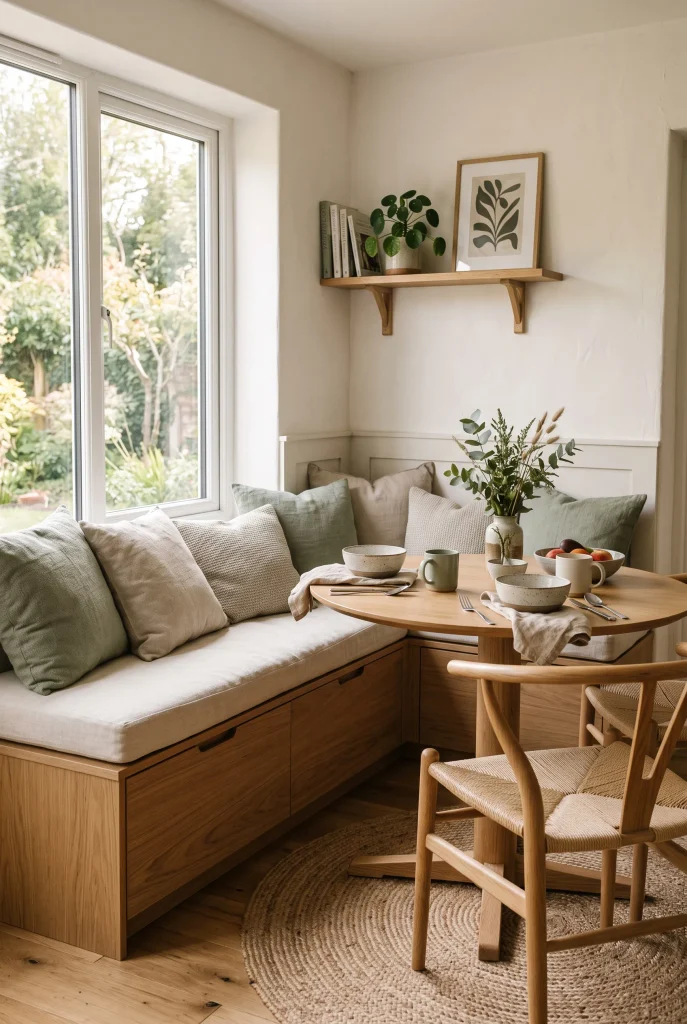
- Combines comfortable seating with practical hidden storage.
- Helps keep small dining spaces neat and clutter-free.
- Provides an easy place for linens, games, or seasonal items.
- Adds softness through cushions and textured fabrics.
- Makes limited square footage work harder without looking crowded.
A cushioned storage bench is one of the smartest ways to make a small dining area feel comfortable and organized at the same time. The bench provides generous seating while the space underneath can hide items that would otherwise fill cabinets or nearby shelves. Drawers, lift-up lids, or open baskets can all work depending on how often the storage is needed. A thick seat cushion softens the built-in structure and makes everyday meals more enjoyable. This setup is especially useful in compact kitchens where every piece of furniture needs to offer more than one function.
The best part of this idea is how easily it blends practicality with a finished designer look. Choose a cushion fabric that coordinates with the surrounding room, then add two or three pillows for color and texture. I’ve seen this work especially well for families who need extra storage but do not want the room to feel filled with bulky cabinets. Keep frequently used items easy to reach, while storing occasional pieces deeper inside. With thoughtful organization, the bench becomes more than seating and helps create a calm, welcoming corner that stays functional every day.
11. Bistro-Style Seating
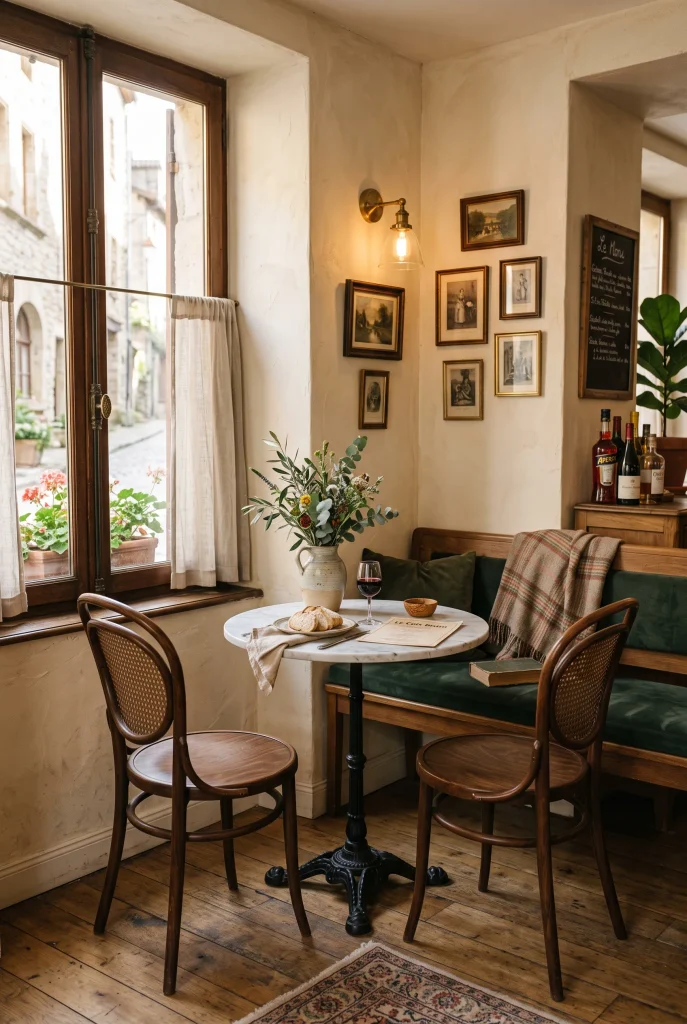
- Brings a relaxed café-inspired feeling into the home.
- Works beautifully in narrow corners and small apartments.
- Keeps the layout light with compact furniture.
- Creates an inviting spot for coffee, breakfast, or casual meals.
- Adds personality without requiring a large dining room.
Bistro-style seating can make a modest corner feel charming, relaxed, and surprisingly special. A petite round table paired with two lightweight chairs creates a simple arrangement that does not overwhelm the surrounding room. Bentwood, metal, or curved chairs can bring character while keeping the overall footprint compact. Add a small pendant or wall sconce to create a cozy atmosphere after sunset. This approach works particularly well near a kitchen window or unused wall, turning an ordinary spot into a comfortable place for morning coffee, quick lunches, and intimate dinners.
The success of this setup comes from keeping the furniture scale appropriate to the available space. A table that is too large can block circulation, while a smaller design leaves the room feeling open and flexible. In my experience, choosing chairs that can slide fully beneath the table makes everyday movement much easier. A simple vase, framed print, or textured rug can add personality without creating clutter. The finished corner feels casual yet intentional, giving the home a little café-like charm while providing a practical place to gather throughout the day.
12. Dark Moody Walls
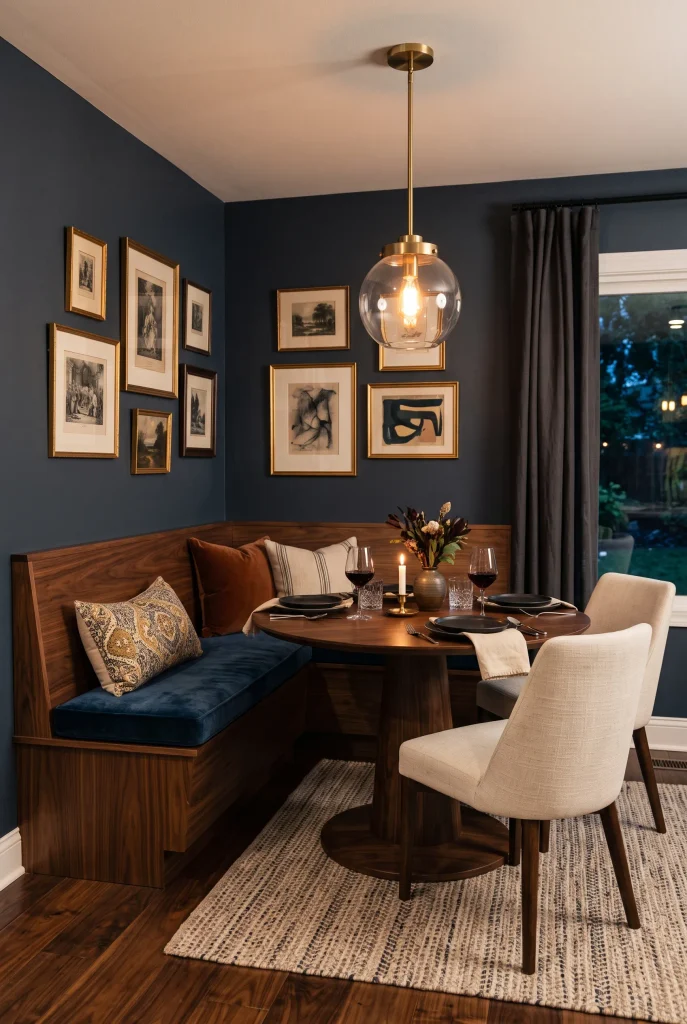
- Creates depth and a dramatic focal point in the room.
- Makes a simple seating arrangement feel more intentional.
- Provides beautiful contrast with light furniture and wood tones.
- Adds warmth when paired with brass or soft ambient lighting.
- Helps visually define the dining area in an open layout.
Dark moody walls can give a small dining corner an unexpectedly cozy and sophisticated atmosphere. Deep charcoal, forest green, navy, or warm brown shades create visual depth and help the seating area feel intentionally separated from the rest of the room. Light upholstery, natural wood, and warm metallic accents stand out beautifully against the darker backdrop. The contrast can make even simple furniture appear more refined. When balanced with adequate lighting, a darker palette does not necessarily make the area feel smaller; instead, it can create an intimate sense of enclosure.
Lighting plays an important role when using deeper wall colors in a dining space. A warm pendant, wall sconce, or soft table lamp can prevent the corner from feeling flat or overly shadowed. I’ve noticed that natural wood and textured fabrics are particularly effective because they add warmth against saturated paint. Consider using the dark shade only within the dining zone if you want a dramatic look without committing the entire room. With layered lighting and lighter accents, this approach creates a memorable corner that feels cozy, elegant, and beautifully defined.
13. Arched Wall Detail
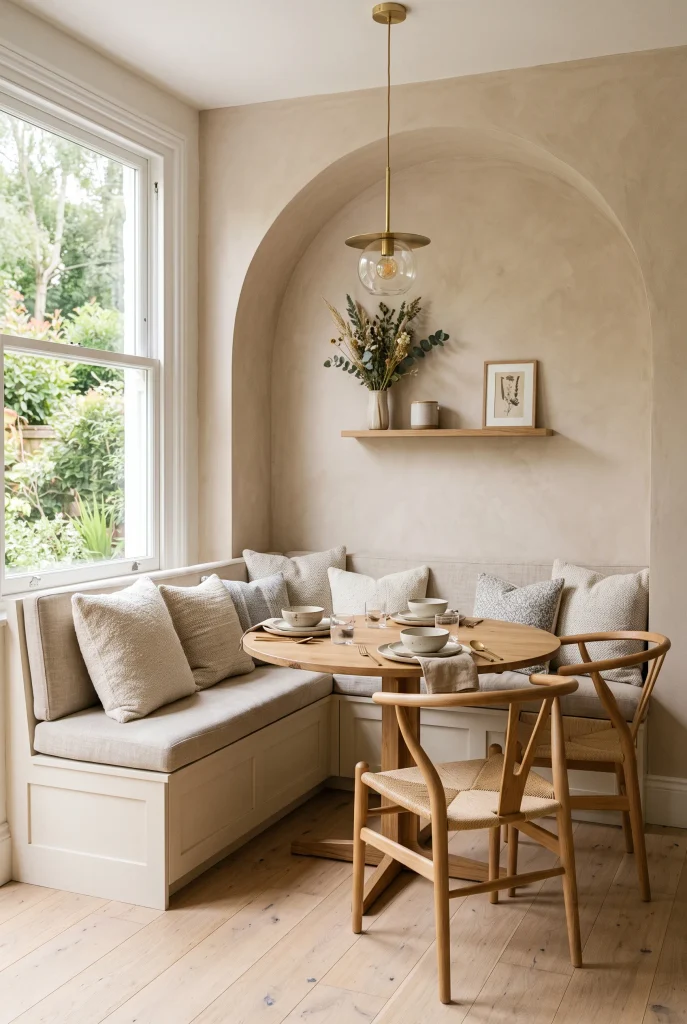
- Creates a clear focal point without adding bulky furniture.
- Gives a simple dining area more architectural character.
- Helps visually separate the eating zone from the surrounding room.
- Works with paint, plaster, wallpaper, or decorative molding.
- Adds softness to corners dominated by straight lines.
An arched wall detail can make a compact dining space feel instantly more intentional and architecturally interesting. The curved shape softens the hard angles of the corner while creating a natural frame around the table and seating. Paint the arch in a slightly deeper shade than the surrounding walls, or use subtle plaster texture for added depth. This approach works especially well behind a bench because it visually anchors the entire arrangement. Even without major renovation, a carefully painted arch can give the space a custom appearance and create a stronger sense of place.
The beauty of this idea is that it adds personality without consuming any valuable floor space. You can adjust the width and height to suit the furniture, making the dining area feel more balanced and proportionate. I’ve noticed that warm neutral tones create a particularly calming result when paired with natural wood and soft upholstery. For a bolder look, choose a muted terracotta, olive, or deep blue shade. Whether subtle or dramatic, the curved backdrop can transform an ordinary corner into a polished feature that feels thoughtfully connected to the rest of the home.
14. L-Shaped Seating
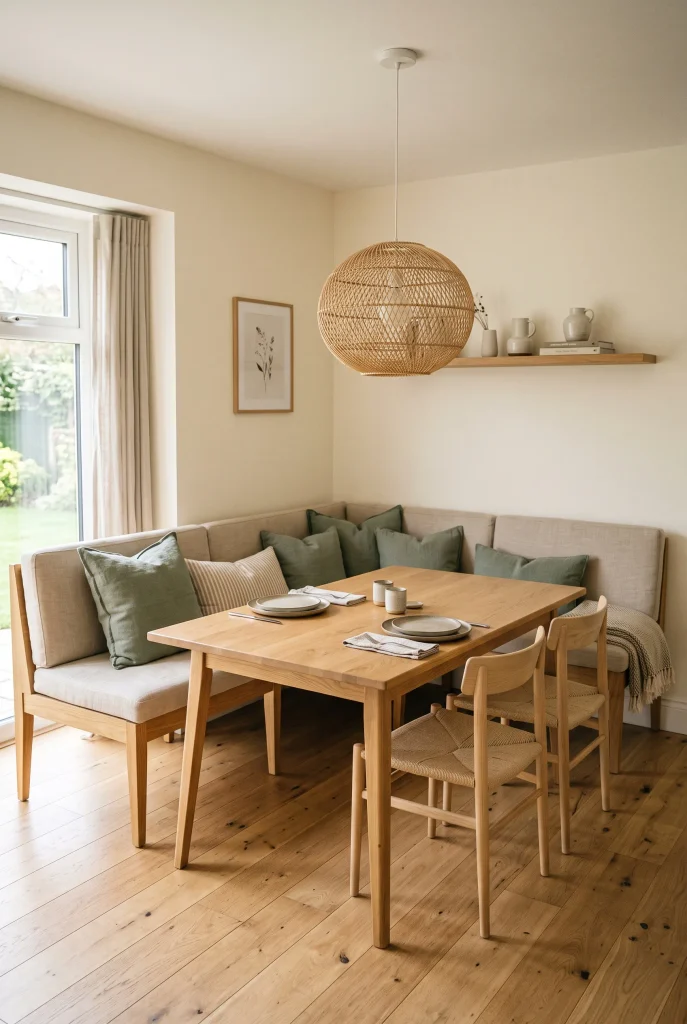
- Makes efficient use of two adjoining walls.
- Provides generous seating without filling the room with chairs.
- Creates a cozy and enclosed feeling for family meals.
- Works well with rectangular, oval, or round tables.
- Helps define the dining zone in an open-plan layout.
L-shaped seating is a practical way to turn an unused corner into a comfortable gathering space with room for more people. By running the bench along two walls, the layout creates generous seating while keeping the open side available for chairs and easy access. This arrangement is especially useful for families because several people can sit together without needing a large number of individual chairs. A rectangular or oval table often fits naturally within the shape, while a round table can soften the overall look. The result feels cozy, efficient, and perfectly suited to everyday meals.
Comfort becomes even more important when the bench is designed for regular use. Add supportive seat cushions and a few removable pillows, but leave enough open space for guests to move comfortably. I’ve seen this work well in kitchens where a traditional dining set would make the room feel crowded and difficult to navigate. Matching the bench finish with nearby cabinetry or flooring can help the setup look built into the architecture. With thoughtful proportions, L-shaped seating creates a welcoming corner that feels spacious enough for daily life while remaining visually neat and organized.
15. Statement Rug
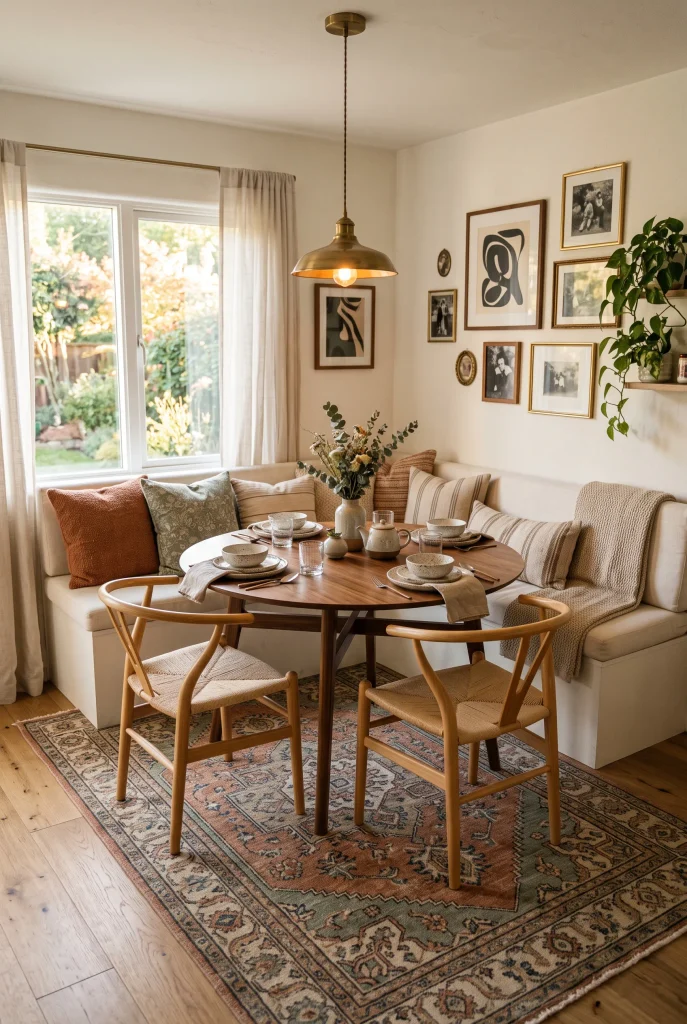
- Visually anchors the table and seating arrangement.
- Adds color and pattern without changing permanent finishes.
- Helps define the dining zone in an open room.
- Introduces softness and texture under hard furniture surfaces.
- Makes a simple setup feel layered and complete.
A statement rug can completely change the way a small dining area feels by giving the furniture a clear visual foundation. The right design draws attention to the corner and helps separate the eating zone from nearby kitchen or living spaces. Pattern, color, and texture can also bring personality to an otherwise neutral arrangement. Choose a rug large enough for chairs to remain on it when pulled back, which improves both comfort and visual balance. A low-pile or easy-clean material is usually the most practical choice for spaces that handle regular meals and everyday spills.
This simple layer can also make the entire setup feel warmer and more complete without requiring major decorating changes. I’ve noticed that a rug with muted tones is easier to coordinate with wood furniture, cushions, and wall colors over time. Vintage-inspired patterns, subtle stripes, or modern geometric designs can each create a different mood depending on the surrounding décor. Avoid choosing something so busy that it competes with wallpaper or artwork nearby. With the right size and texture, a statement rug can turn a basic dining corner into a comfortable, visually connected space.
16. Corner Booth
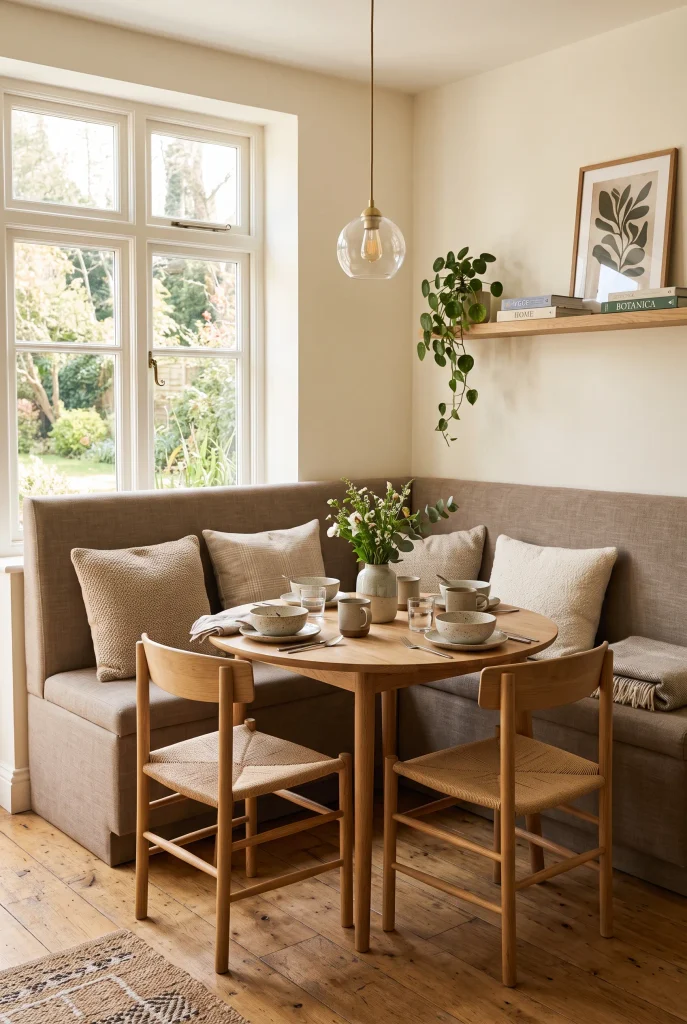
- Creates a cozy restaurant-inspired feeling at home.
- Uses the corner efficiently with comfortable wraparound seating.
- Provides a defined place for family meals and casual gatherings.
- Adds visual structure to an open kitchen or living area.
- Makes everyday dining feel more relaxed and intentional.
A corner booth can bring a warm, comfortable atmosphere to a dining area while making excellent use of limited space. The high-backed seating creates a sense of enclosure that feels cozy without requiring a separate room. This setup works beautifully for families because several people can sit together while the open side remains accessible for additional chairs. Upholstered panels add softness and texture, while a simple table keeps the arrangement balanced. In smaller homes, a booth can create the feeling of a dedicated dining destination even when the kitchen and living spaces share one open layout.
The scale of the booth is important for keeping the area practical and comfortable. Leave enough room between the table and seating for people to sit down easily, and choose durable upholstery if the space will be used frequently. I’ve seen this work especially well when the bench color connects with nearby cabinetry, curtains, or accent furniture. A pendant light above the table can further define the zone and make evening meals feel more intimate. With thoughtful proportions, this arrangement creates a welcoming space that feels stylish, functional, and perfectly designed for daily life.
17. Mixed Chair Styles
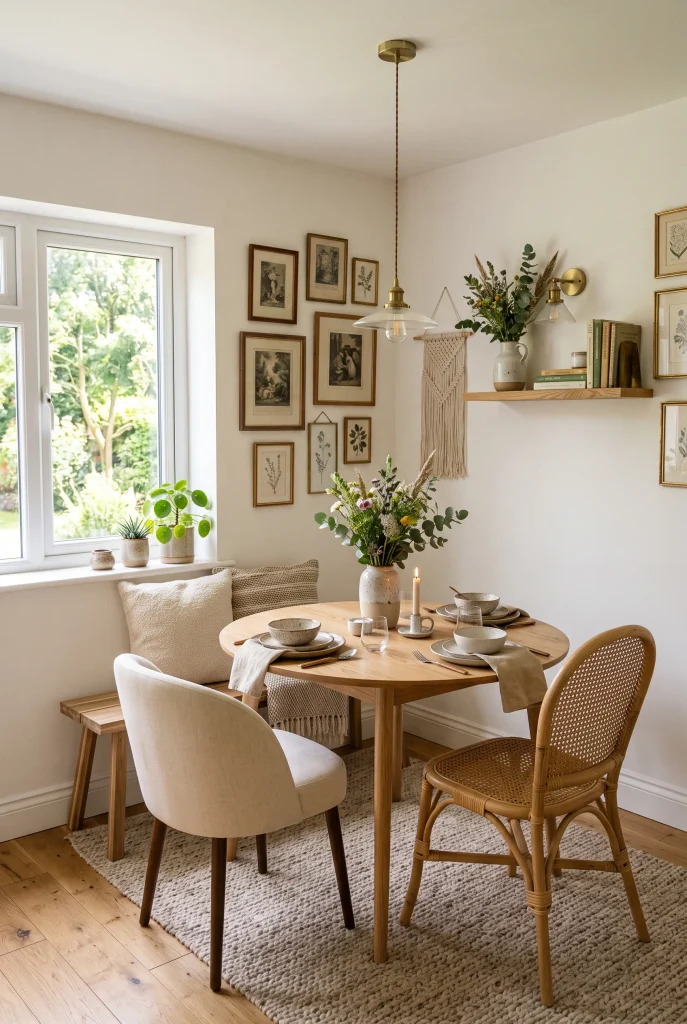
- Adds personality without needing expensive custom furniture.
- Creates a relaxed, collected look that feels less formal.
- Allows old and new pieces to work together.
- Introduces varied textures through different materials.
- Makes a simple dining setup feel more visually interesting.
Mixed chair styles can give a small dining area an easy, collected appearance that feels personal rather than overly coordinated. Combining wood, woven, and upholstered seating introduces texture while allowing each piece to contribute something different to the overall design. The key is creating a connection through color, scale, or material so the arrangement still feels balanced. For example, chairs with different shapes can work together when they share similar wood tones. This approach is ideal for anyone who wants a relaxed space that looks thoughtfully assembled instead of purchased as one matching furniture set.
The flexibility of this idea also makes it practical for real homes where furniture is often collected over time. You can keep a favorite vintage chair, add a new upholstered seat, and use a simple bench without making the space feel disconnected. In my experience, limiting the palette to two or three main finishes helps everything work together. Make sure the seat heights remain reasonably similar for comfortable dining. A few repeated elements, such as matching cushions or coordinated tableware, can further unify the look and create a charming, lived-in dining space.
18. Floor-to-Ceiling Curtains
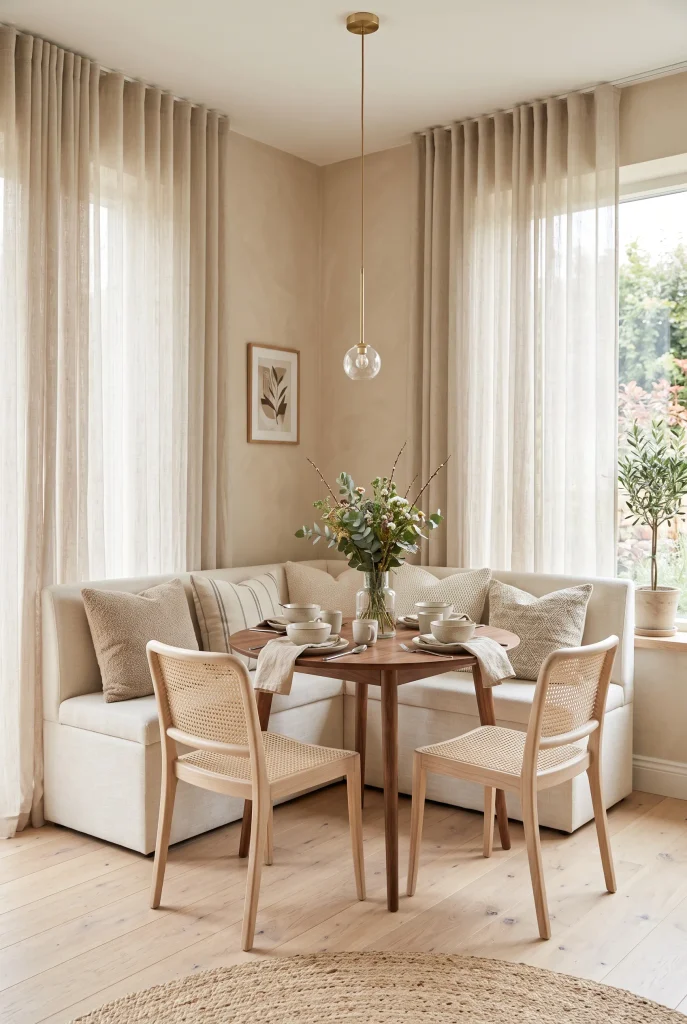
- Adds softness and height to a compact dining area.
- Makes windows and walls feel more visually connected.
- Filters harsh sunlight while maintaining a bright atmosphere.
- Creates a polished backdrop behind simple furniture.
- Helps the corner feel larger and more refined.
Floor-to-ceiling curtains can make a dining corner feel taller, softer, and more finished with a relatively simple update. Hanging the fabric close to the ceiling draws the eye upward, creating the impression of greater height even in a compact room. Sheer linen or lightweight woven materials allow natural light to filter through while softening the edges of windows and walls. This works especially well behind a table or bench because the fabric creates a gentle backdrop. Neutral shades keep the space calm, while subtle color can add warmth and personality without overwhelming the furniture.
Beyond their visual appeal, long curtains can improve the comfort of the dining area throughout the day. They help control direct sunlight and provide privacy when the space sits near a busy street or neighboring home. I’ve noticed that mounting the curtain rod wider than the window can make the entire wall appear broader and more balanced. Choose fabric that is easy to maintain, especially near areas where meals are served regularly. With the right length and texture, curtains can transform an ordinary corner into an elegant, comfortable, and inviting place to gather.
19. Natural Wood Paneling
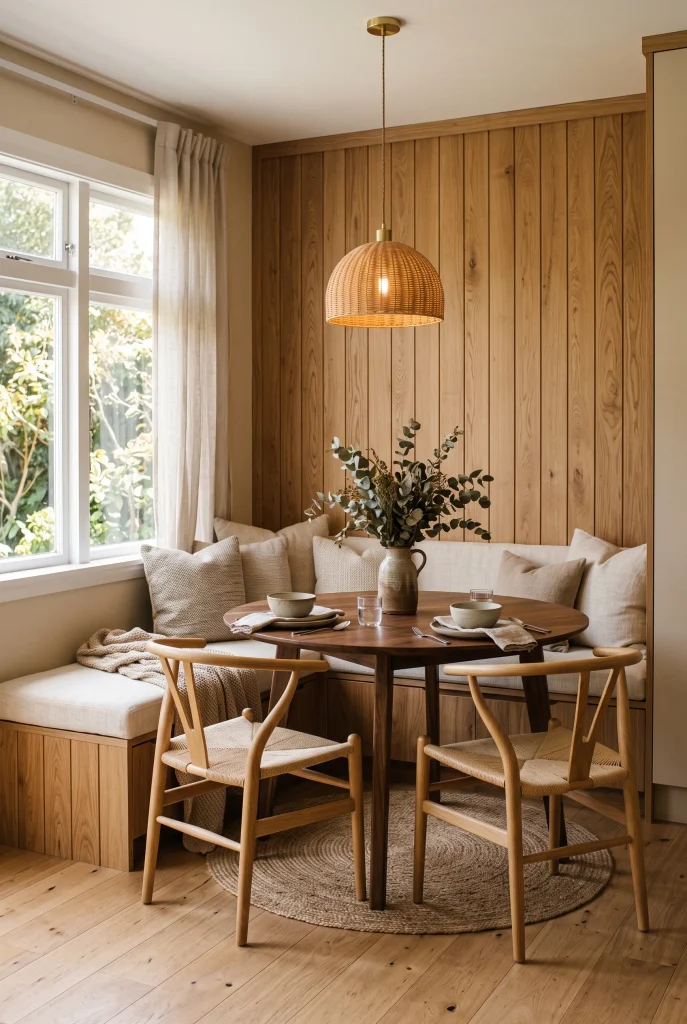
- Adds warmth and texture to a plain dining corner.
- Creates an architectural backdrop without adding clutter.
- Connects beautifully with wood tables and natural flooring.
- Helps define the seating area in an open-plan room.
- Brings a cozy, custom-built appearance to simple furniture.
Natural wood paneling can give an ordinary dining corner instant warmth, texture, and architectural character. Vertical slats or smooth oak panels create a strong backdrop behind the seating while keeping the overall look clean and uncluttered. This detail works especially well with simple furniture because the natural grain adds visual interest without needing excessive decoration. Choose a wood tone that complements nearby flooring or cabinetry for a more connected appearance. Lighter oak keeps the area airy, while walnut or deeper finishes create a richer and more dramatic atmosphere around the dining setup.
The beauty of wood paneling is that it can make a small area feel intentionally designed without requiring many accessories. I’ve noticed that extending the material slightly beyond the seating creates a wider visual frame and helps the arrangement feel balanced. Add soft cushions, a simple pendant, and one piece of artwork if more personality is needed. Keep the remaining walls relatively simple so the texture can stand out naturally. With thoughtful proportions, this treatment transforms an overlooked corner into a warm gathering space that feels polished, comfortable, and closely connected to the home.
20. Slim Console Table
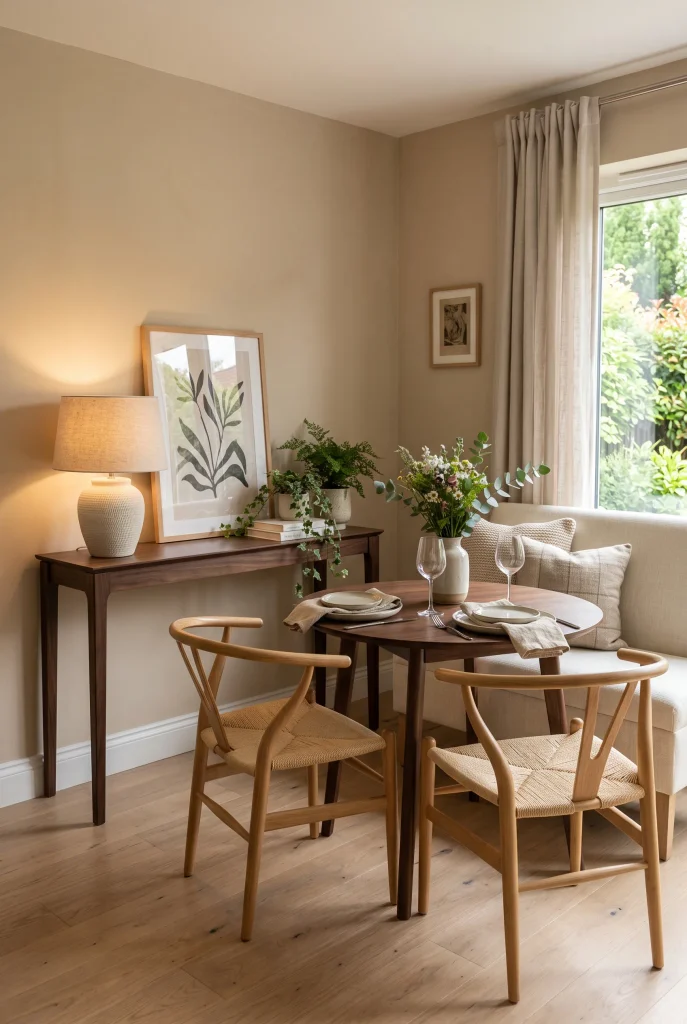
- Adds a useful surface without taking up much room.
- Provides space for lamps, artwork, or serving essentials.
- Makes the dining area feel more layered and complete.
- Helps connect the eating zone with the surrounding room.
- Offers practical storage through slim drawers or baskets.
A slim console table can add surprising function to a dining corner without making the layout feel crowded. Placed against an unused wall, it creates a convenient surface for a lamp, serving dishes, framed art, or a small vase of greenery. The narrow profile keeps most of the floor open while adding another layer to the overall design. This idea works particularly well when the dining furniture feels visually isolated or unfinished. Choose a console that echoes the table or bench material to create a more connected arrangement with a polished, intentional appearance.
This extra surface can also solve small everyday problems that often appear around dining spaces. A drawer or lower shelf provides room for napkins, placemats, candles, or other frequently used items without filling the tabletop. In my experience, keeping the styling simple is important because a narrow corner can quickly feel cluttered. One lamp, a piece of art, and a small decorative object are often enough. With the right proportions, a slim console adds useful storage and visual depth while helping the entire dining area feel more complete.
21. Cozy Reading Corner
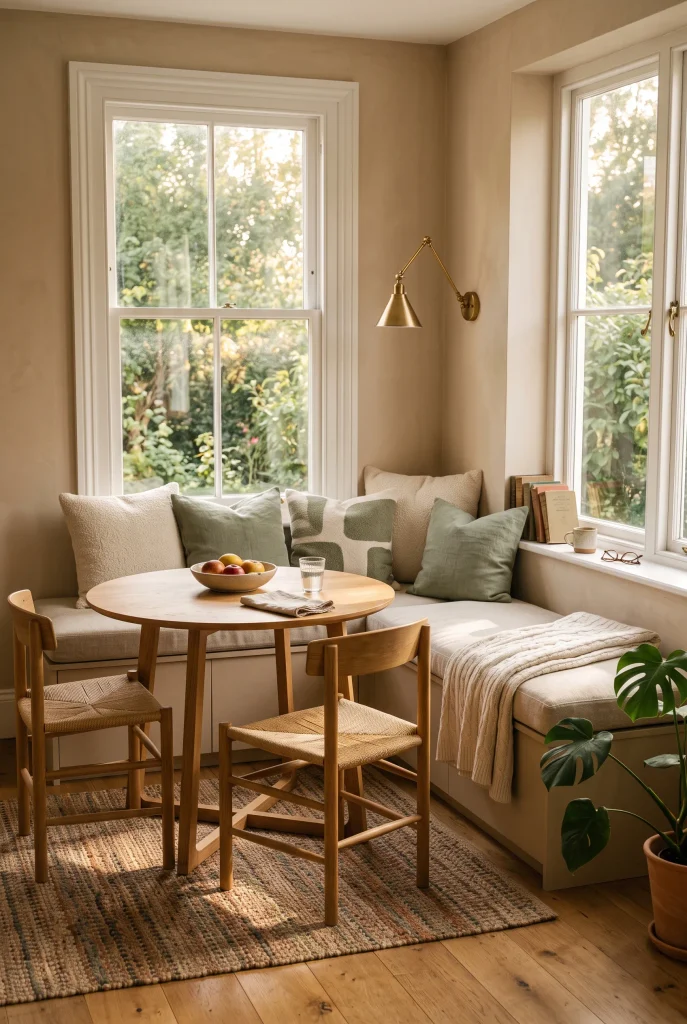
- Makes one small corner useful for more than meals.
- Creates a relaxed place for coffee, reading, or quiet breaks.
- Adds flexibility to compact homes and apartments.
- Uses cushions and lighting to increase comfort.
- Gives the space a warm, lived-in feeling throughout the day.
A cozy reading corner beside the dining setup can make the space feel more flexible and valuable throughout the day. A longer bench can serve as seating during meals, then become a comfortable place to relax with a book or cup of coffee. Add supportive cushions, a soft throw, and a small wall-mounted reading lamp to make the transition easy. This approach is especially useful in compact homes where every corner needs to serve multiple purposes. The combination creates a relaxed atmosphere that encourages the area to be enjoyed beyond regular breakfast, lunch, and dinner.
The key is designing the seating so it remains practical for both activities without feeling overly decorated. Keep the table compact enough that the bench still has room to function as a comfortable lounging spot when needed. I’ve seen this work well near windows, where natural light supports both dining and reading throughout the day. Choose washable fabrics and movable cushions for easier maintenance. By combining two simple functions in one area, this arrangement helps a small home feel more adaptable while creating a welcoming corner people naturally want to use.
22. Built-In Bookshelves
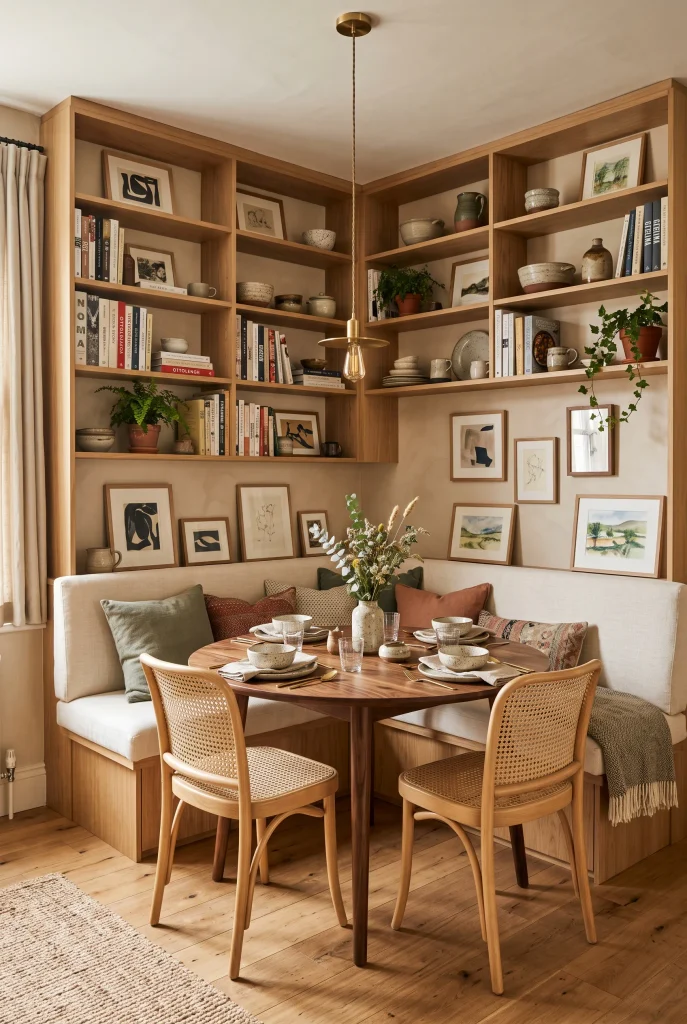
- Uses vertical space for storage and decoration.
- Adds personality through books, ceramics, and meaningful objects.
- Makes the dining area feel more custom and established.
- Creates a natural backdrop without adding extra furniture.
- Helps combine storage and style in smaller homes.
Built-in bookshelves can turn a simple dining corner into a space that feels layered, personal, and thoughtfully designed. Surrounding the seating with shelves creates visual depth while providing practical storage for cookbooks, serving pieces, ceramics, or decorative objects. This works especially well in homes where cabinet space is limited and every wall needs to contribute something useful. Keep the display balanced by mixing practical items with a few open areas. A consistent color palette helps the shelves feel calm rather than crowded, allowing the dining furniture to remain the comfortable focal point.
The shelves can also make the area feel more connected to the rest of the home. I’ve noticed that repeating the same wood finish found in the dining table or flooring creates a seamless, built-in appearance. Lower shelves can hold frequently used items, while higher levels are perfect for artwork and decorative pieces. Avoid filling every surface, since a little negative space keeps the arrangement visually relaxing. With thoughtful styling, built-in shelving adds storage, warmth, and character while transforming an overlooked corner into a functional place that feels genuinely personal.
23. Green Plant Display
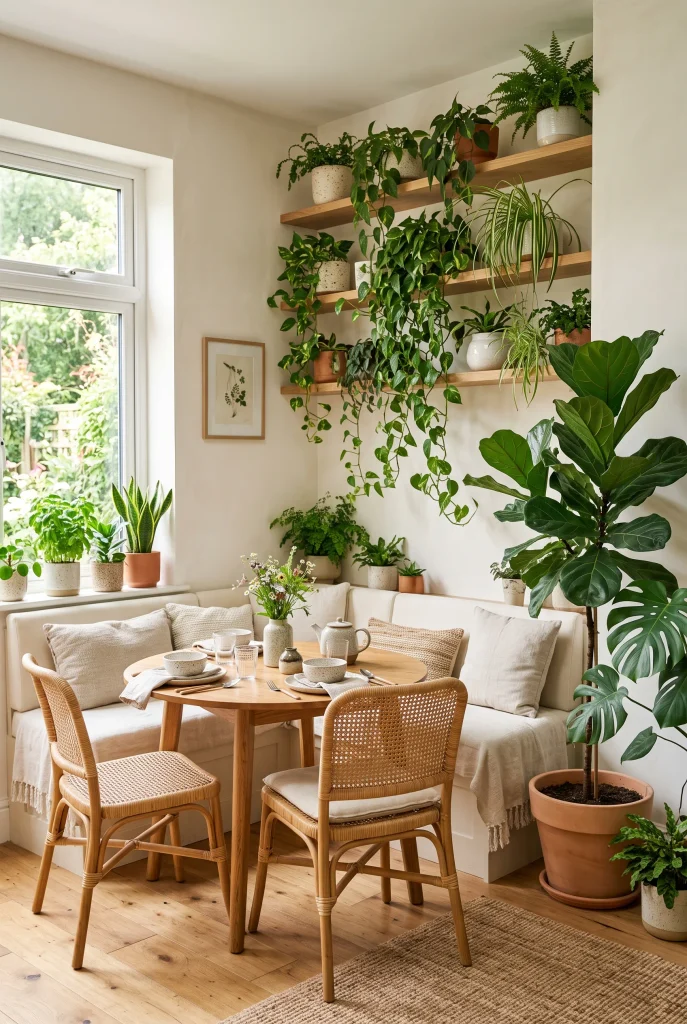
- Brings natural color and freshness into the dining space.
- Softens hard corners with organic shapes and textures.
- Adds visual height through tall or trailing plants.
- Creates a calmer and more welcoming atmosphere.
- Works with modern, rustic, Scandinavian, and eclectic interiors.
A green plant display can make a dining corner feel instantly fresher by introducing natural shapes, texture, and color. Tall plants can soften an empty edge, while trailing varieties work beautifully from shelves or wall planters above the seating. Even a few carefully placed pots can add life without overwhelming a compact layout. Choose containers that coordinate with the room’s palette, such as warm ceramics, woven baskets, or simple stone finishes. The contrast between greenery, wood furniture, and soft textiles creates a relaxed environment that feels brighter and more inviting throughout the day.
Plants also provide an easy way to update the space without changing the furniture or permanent finishes. I’ve seen this work well when different plant heights are layered together, creating depth while keeping the table area clear. Consider the available natural light before choosing varieties, and use low-maintenance options if the dining space receives inconsistent sunlight. A single tall plant beside the bench can make a strong statement, while smaller pieces add subtle detail. With thoughtful placement, greenery turns a plain corner into a lively and comfortable setting that feels connected to nature.
24. Minimalist Monochrome Palette
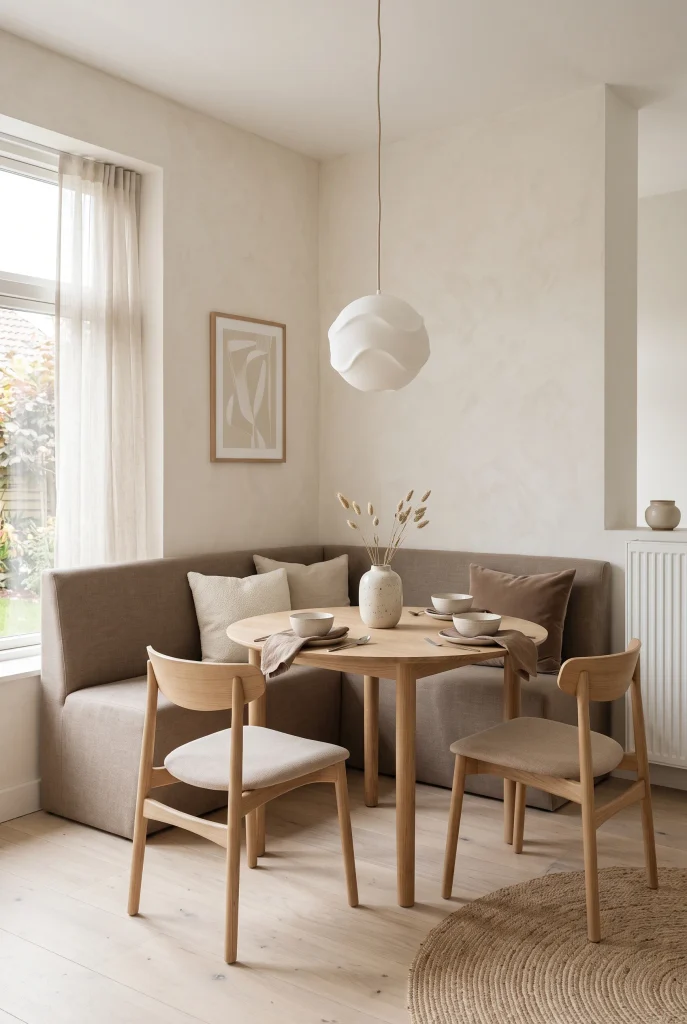
- Creates a calm and visually cohesive dining area.
- Makes a small space feel cleaner and less cluttered.
- Allows texture and shape to become the main decorative elements.
- Works beautifully in modern and Scandinavian-style homes.
- Provides a timeless base that is easy to update later.
A minimalist monochrome palette can make a compact dining area feel calm, spacious, and effortlessly coordinated. Using closely related shades of cream, beige, taupe, or soft gray creates visual continuity between the walls, seating, and furniture. Instead of relying on bold color, the design gains interest through texture, shape, and material. Linen upholstery, natural wood, woven surfaces, and subtle plaster finishes can keep the arrangement from feeling flat. This approach is especially useful when the surrounding room already contains several visual elements and the dining area needs a quieter, more balanced presence.
The simplicity of a restrained palette also makes decorating easier over time. You can introduce seasonal cushions, fresh flowers, or a small piece of artwork without disrupting the overall look. In my experience, varying the textures is essential because identical finishes can make neutral spaces appear unfinished. Combine smooth tabletops with woven seating, soft fabrics, or textured walls to create subtle contrast. Keep decorative accessories limited and purposeful. This thoughtful balance produces a clean, welcoming dining space that feels polished, comfortable, and flexible enough to suit changing styles.
25. Vintage Bench Seating
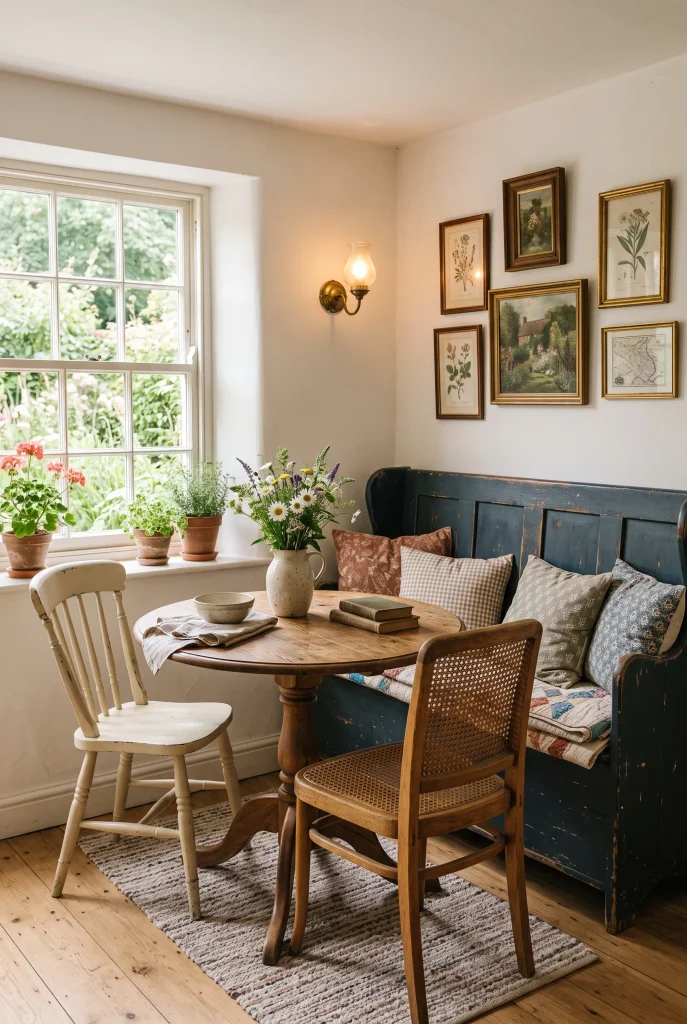
- Adds character and warmth to a simple dining arrangement.
- Creates a collected look without requiring matching furniture.
- Brings natural texture through aged wood and layered fabrics.
- Works beautifully with modern pieces for an updated contrast.
- Gives the corner a relaxed, lived-in personality.
Vintage bench seating can give a dining corner instant character by introducing warmth, texture, and a sense of history. An old wooden bench, whether truly vintage or designed with an aged finish, creates a relaxed contrast against newer furniture and clean walls. Pair it with a simple table to keep the arrangement balanced, then add a thin cushion for extra comfort. This style works especially well when the surrounding room feels overly polished or plain. Small imperfections in the wood can make the area feel more personal, inviting, and naturally connected to everyday life.
The charm of this idea comes from mixing rather than perfectly matching every piece. A vintage bench can sit comfortably beside modern chairs, woven textures, or contemporary lighting when a few colors connect the arrangement. I’ve noticed that repeating one warm wood tone elsewhere in the room helps the older piece feel intentional instead of misplaced. Keep accessories simple so the bench remains a visual feature. A soft cushion, framed artwork, and ceramic centerpiece are often enough. This combination creates a welcoming dining space with personality, comfort, and an easy sense of authenticity.
Conclusion
A beautiful dining space does not require a separate room or a large amount of square footage. With the right seating, lighting, storage, colors, and decorative details, even the smallest corner dining nook can become a comfortable place to gather. Each idea in this collection offers a simple way to improve both style and function while making better use of overlooked space. I’ve seen how small changes like these can completely transform a room. Save your favorite ideas on Pinterest, try one or more in your own home, and share this article with someone ready to refresh their dining space.