23 Modern Rustic Living Room Ideas for a Cozy Home
A beautiful living room does not have to choose between modern simplicity and rustic warmth. A modern rustic living room brings these two styles together, creating a space that feels clean, comfortable, natural, and full of character.
Whether your room feels cold, plain, cluttered, or simply lacks personality, the right combination of wood, stone, soft textiles, warm lighting, and earthy colors can completely change the atmosphere. In my experience, even a few thoughtful updates can make a familiar space feel more inviting without requiring a complete renovation.
From reclaimed wood and cozy textiles to natural stone, leather seating, and soft lighting, these 23 ideas will help you create a home that feels stylish yet genuinely comfortable. Save your favorite ideas and use them as inspiration for your own cozy transformation.
1. Reclaimed Wood Accent Wall
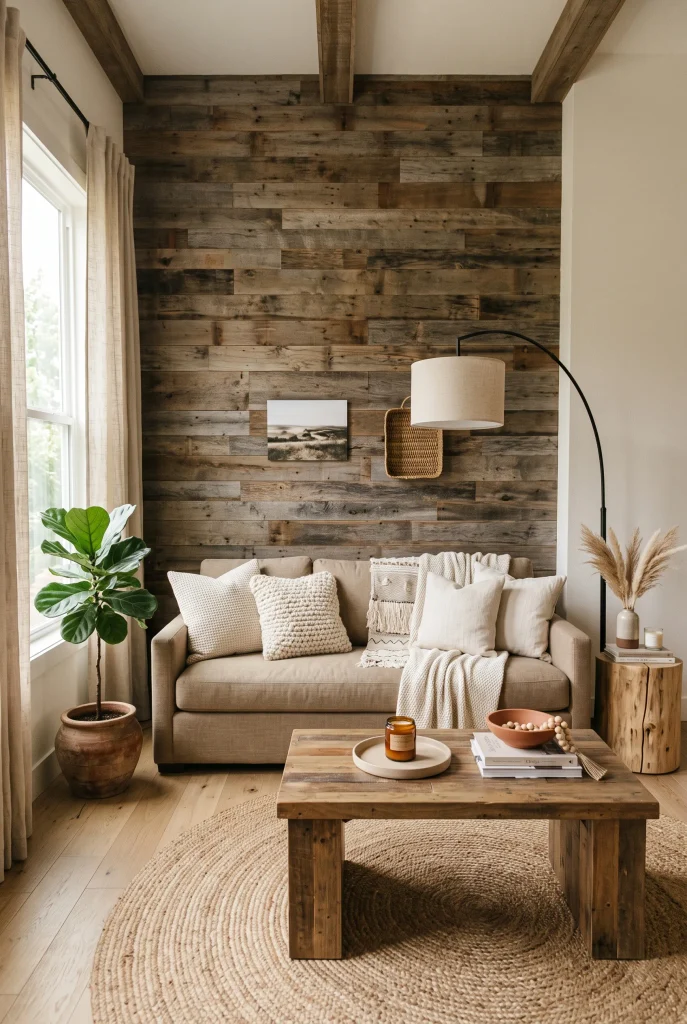
- Adds instant warmth and character to a plain living room.
- Creates a strong focal point without adding excessive decor.
- Blends beautifully with neutral furniture and modern finishes.
- Natural wood texture makes the space feel more layered and inviting.
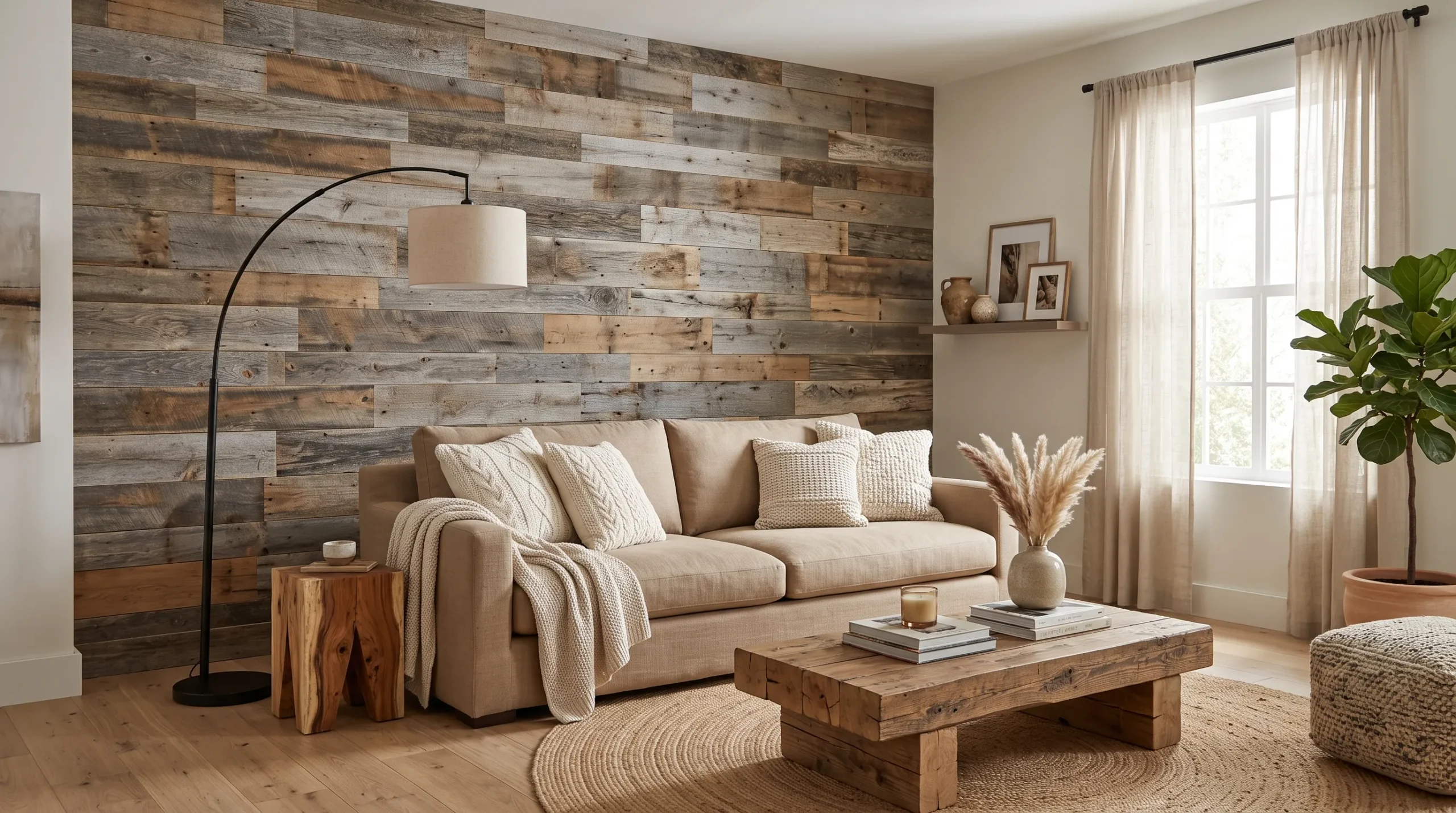
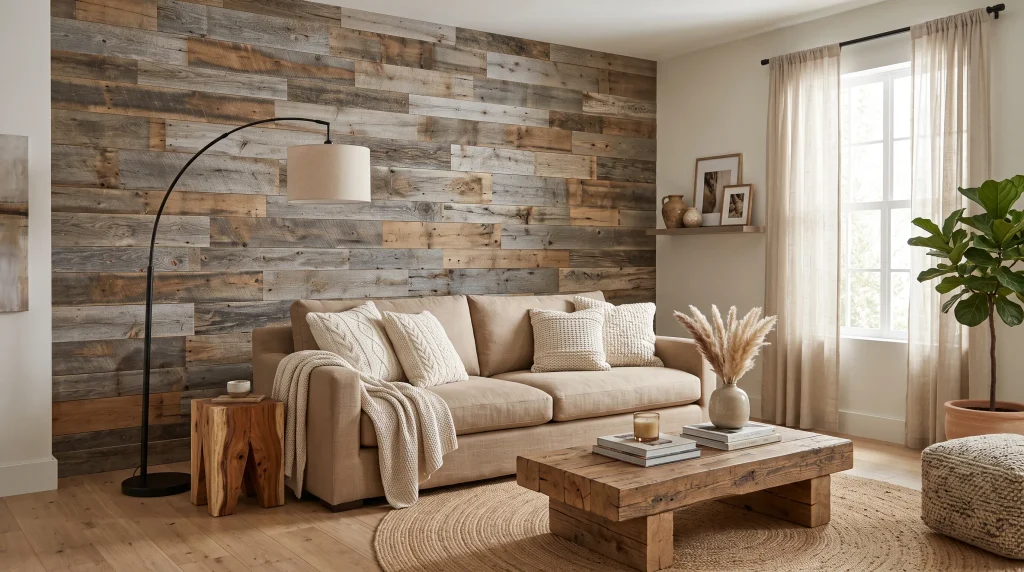
A reclaimed wood wall can instantly give the room a warmer, more collected look. Instead of filling every surface with rustic decorations, one textured wall creates enough visual interest on its own. Choose boards with subtle variations in brown, taupe, and weathered gray for a softer finish. Pair the wall with a simple linen sofa, clean-lined furniture, and minimal accessories to keep everything balanced. This combination works especially well in a modern rustic living room because the natural imperfections of the wood add character while contemporary shapes prevent the space from feeling heavy or overly traditional.
The best part is that this feature can work in both large and small spaces. In my experience, using reclaimed wood behind the main seating area creates depth without requiring extra furniture or clutter. Keep the surrounding walls light so the texture remains the star of the room. A woven rug, ceramic vase, and warm lighting can repeat the natural feeling without competing with it. If authentic reclaimed boards feel too rough or expensive, quality wood panels with realistic grain can create a similar effect while offering a cleaner installation and easier maintenance.
2. Stone Fireplace Focus
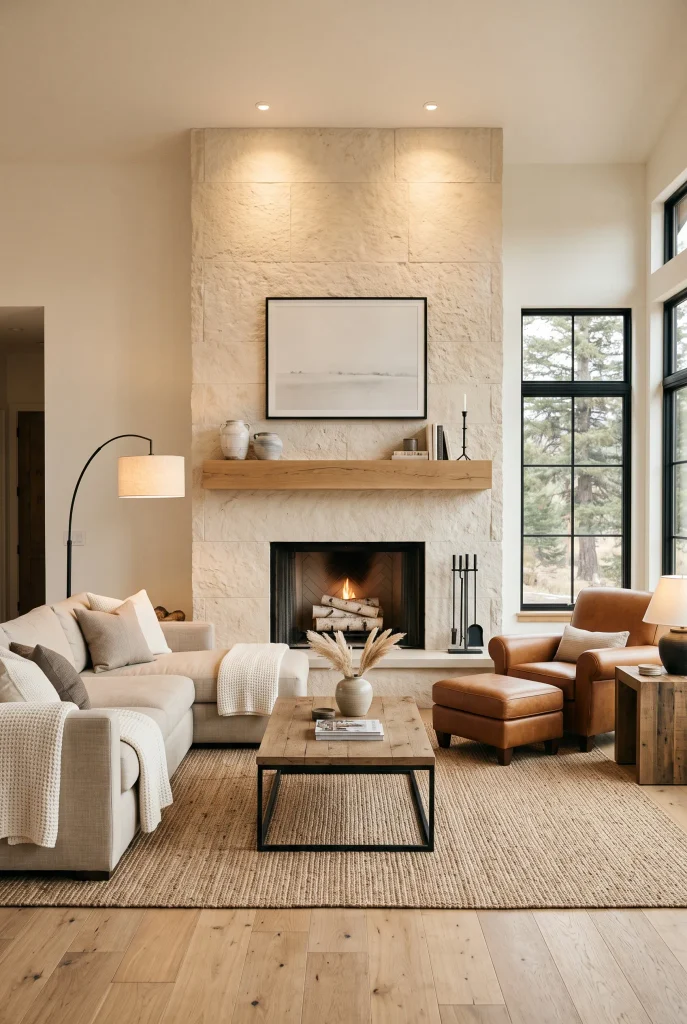
- Makes the fireplace feel like a natural centerpiece.
- Adds texture without relying on busy patterns.
- Balances soft fabrics with durable organic materials.
- Works beautifully with both traditional and contemporary furniture.
A stone fireplace immediately gives a living room a grounded, welcoming presence. Light limestone, stacked fieldstone, or softly textured travertine can bring rustic character while still looking fresh beside modern furniture. Keep the mantel simple, preferably in natural oak or another warm wood, and avoid overcrowding it with small objects. A large piece of art, a sculptural vase, or a pair of understated candleholders is often enough. The contrast between rough stone, soft upholstery, and clean furniture lines creates a room that feels layered, comfortable, and visually calm.
The surrounding layout matters just as much as the fireplace material itself. Arrange seating so the fireplace feels connected to everyday living rather than isolated as a decorative feature. I’ve noticed that a simple sofa-and-chair arrangement often makes the room feel more relaxed and conversational. Add a textured rug under the seating zone to soften the hard surfaces and define the area. Warm lamps and subtle wall lighting can highlight the stone after sunset, creating an inviting glow. This approach gives the space a cozy focal point while preserving the clean simplicity associated with contemporary interiors.
3. Warm Neutral Layers
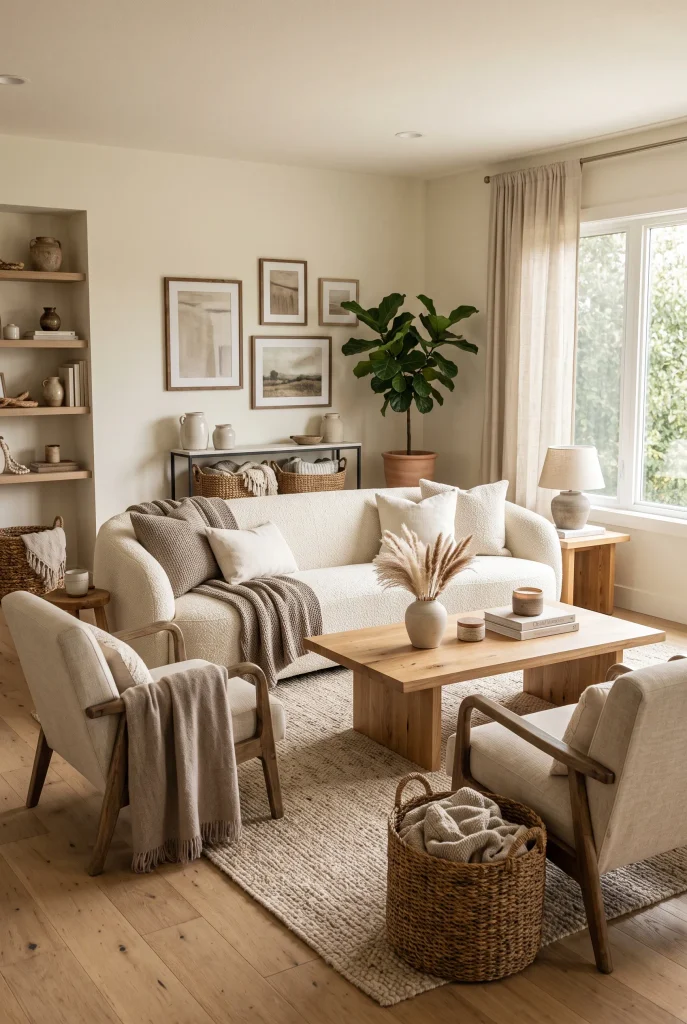
- Makes the room feel cozy without using dark colors.
- Adds depth through fabric, texture, and subtle tonal contrast.
- Creates an easy foundation for wood, stone, and metal accents.
- Helps the space feel calm, bright, and comfortable every day.
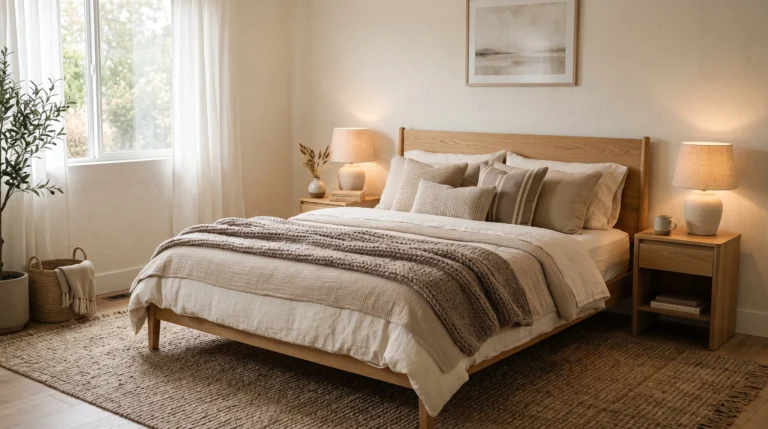
Warm neutrals can make a living room feel instantly softer and more inviting. Start with shades of cream, oatmeal, beige, taupe, and warm gray, then layer different textures instead of relying on bold color contrasts. Linen cushions, boucle upholstery, wool throws, and woven rugs all bring dimension while keeping the palette peaceful. Natural wood furniture fits easily into this foundation and adds the rustic touch the room needs. The result feels relaxed rather than flat because each material catches light differently, creating gentle visual movement throughout the space without overwhelming the eye.
This idea is especially useful for homes that need warmth but still benefit from a bright, open appearance. I’ve seen this work well when homeowners mix three or four neutral tones instead of matching every piece exactly. A cream sofa can sit beside taupe chairs, while a warm brown coffee table adds deeper contrast. Finish the arrangement with handmade ceramics, woven baskets, or a textured throw. These small layers make the room feel thoughtfully designed and comfortable to use. The key is variation: similar colors create harmony, while different materials keep the overall look interesting.
4. Leather Accent Seating
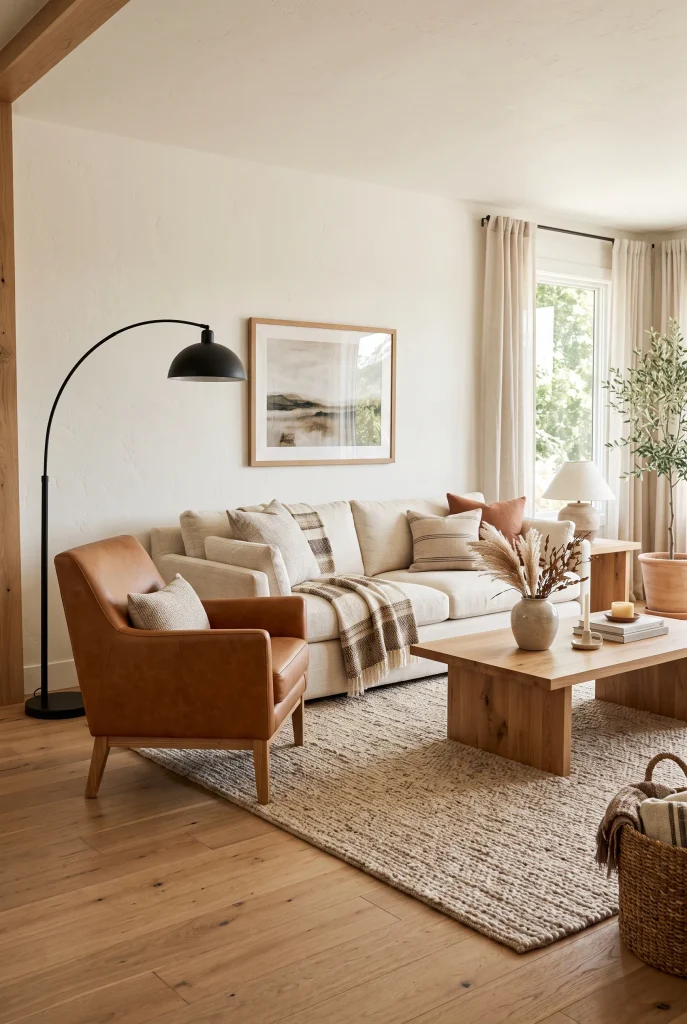
- Adds rich warmth to a neutral seating arrangement.
- Creates contrast against soft linen and woven textures.
- Introduces a durable material that develops more character over time.
- Works as a simple focal point without making the room feel crowded.
A caramel or cognac leather chair can bring instant depth to a softly decorated living room. Its warm tone stands out beautifully against cream sofas, beige rugs, and light wood finishes without disrupting the calm palette. Choose a clean, slightly structured silhouette to keep the look contemporary, then soften it with a textured cushion or casual throw. The natural variation in leather also adds personality that fabric alone cannot always provide. This simple addition creates a stronger visual balance between polished modern elements and the relaxed, lived-in textures associated with rustic interiors.
Placement can make this idea even more effective. Position the chair near a window, fireplace, or side table to create a useful reading or conversation corner. I’ve noticed that one well-chosen leather piece often has more impact than several small decorative accessories. If the room already contains dark wood or black metal details, the warm leather helps bridge those deeper tones with lighter upholstery. Keep nearby decor simple so the chair remains noticeable. Over time, quality leather develops a softer appearance, which can make the room feel increasingly personal and comfortably lived in.
5. Exposed Ceiling Beams
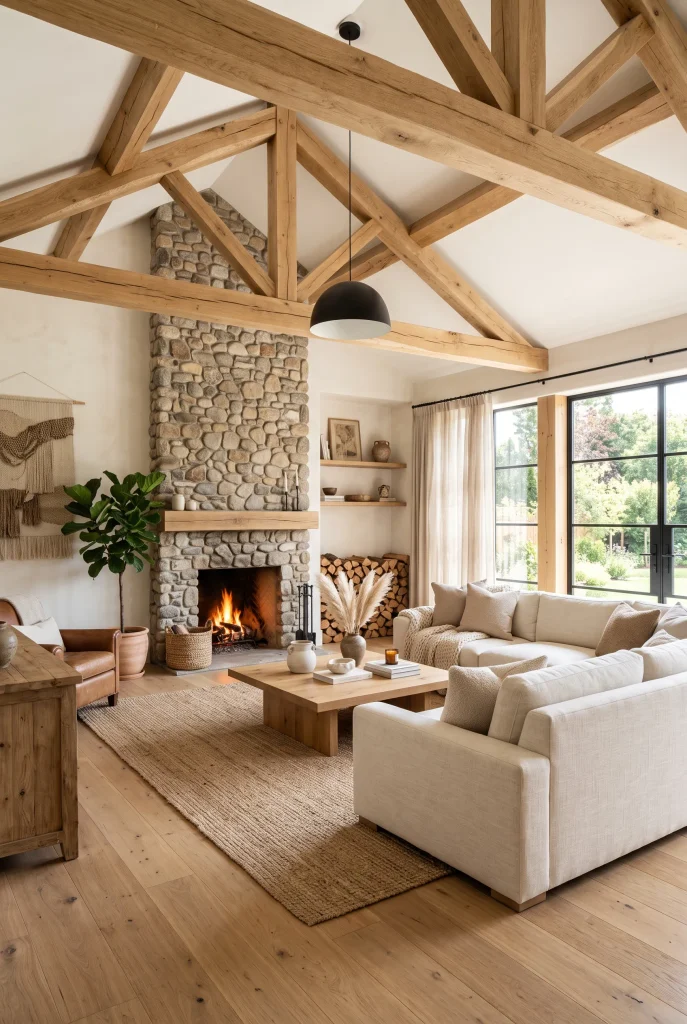
- Adds architectural character to an otherwise simple room.
- Draws the eye upward and makes the space feel more dimensional.
- Brings natural warmth without requiring extra wall decor.
- Pairs beautifully with clean furniture and light neutral finishes.
Exposed beams can transform the entire atmosphere of a living room by adding warmth above eye level. Natural oak beams work especially well with white or soft beige ceilings because the contrast feels noticeable without becoming too dramatic. In homes without original beams, decorative wood beams can create a similar architectural effect. Keep the furniture underneath relatively simple, allowing the ceiling feature to remain part of the design rather than competing with busy patterns. The result feels grounded, spacious, and full of character while maintaining the clean visual flow of a contemporary home.
The scale and finish of the beams should match the room’s proportions. Thick, dark beams can overwhelm a smaller space, while lighter wood or slimmer profiles usually feel more balanced. I’ve seen this work well in open-plan homes where ceiling details help visually connect the living area with nearby dining or kitchen spaces. Repeat the beam tone in a coffee table, shelving, or mantel for a cohesive appearance. Soft textiles below then create contrast against the structured wood overhead, giving the room a layered combination of comfort, architecture, and natural texture.
View: 21 Cozy Modern Farmhouse Fireplace Ideas to Steal Today
6. Black Metal Details
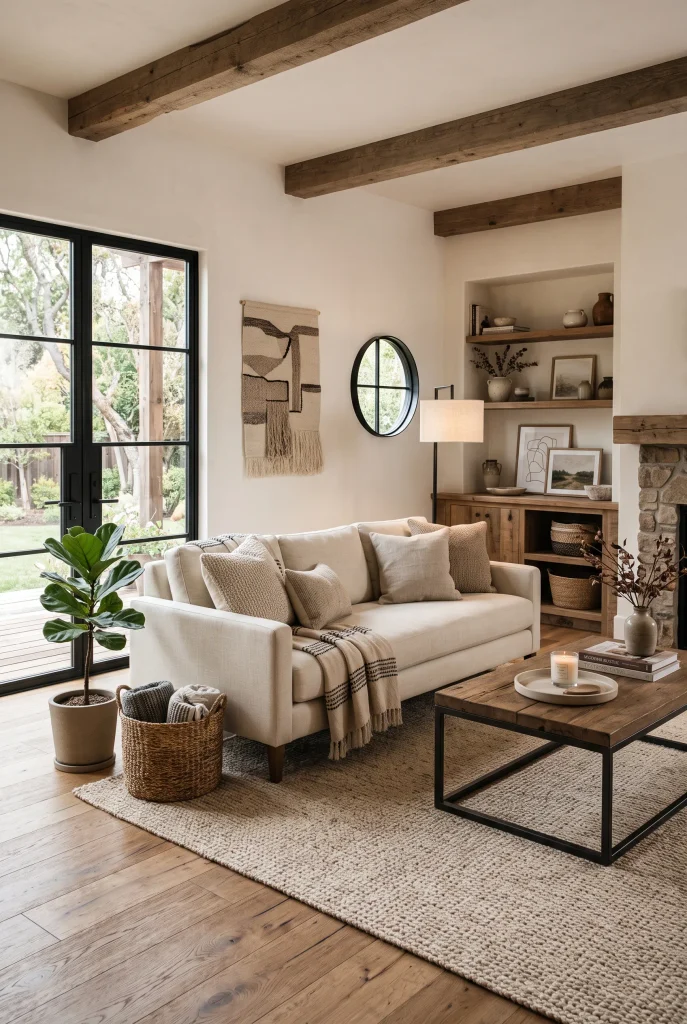
- Adds crisp definition to soft and natural materials.
- Gives rustic textures a cleaner, more modern edge.
- Creates visual contrast without requiring bold colors.
- Works in small doses across lighting, furniture, and hardware.
Black metal accents can give warm, natural interiors the structure they sometimes need. A slim floor lamp, dark table legs, black window frames, or simple shelving brackets can introduce contrast without making the room feel industrial. The key is using these details sparingly and repeating them just enough to create visual consistency. Against pale walls, natural wood, and soft upholstery, matte black feels sharp yet understated. This balance is one reason the look works so well in a modern rustic living room, where organic materials benefit from a few clean contemporary lines.
Small details often create the strongest result because they keep the contrast controlled. Start with two or three black elements and distribute them throughout the room instead of clustering everything in one area. That’s why many designers recommend repeating an accent finish across lighting and furniture for a more intentional appearance. A black lamp can connect visually with a metal coffee table base or fireplace screen. Pair these darker touches with warm wood and textured fabrics to prevent the space from feeling cold. The finished room feels defined, cohesive, and comfortably balanced.
7. Oversized Woven Rug
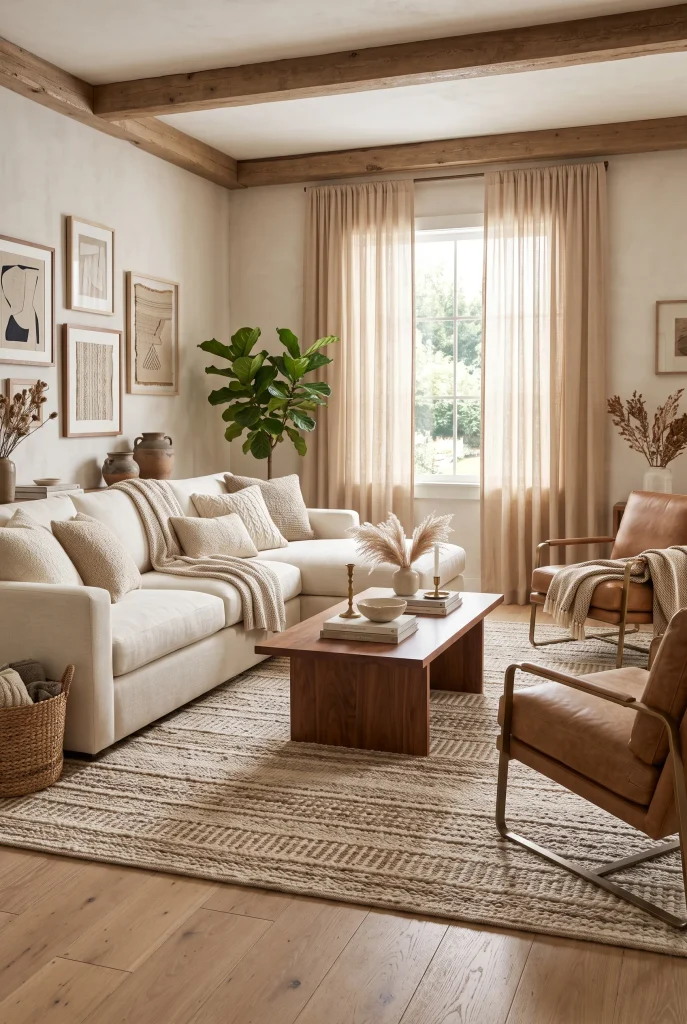
- Defines the seating area and makes the layout feel more intentional.
- Adds softness beneath wood, stone, and leather surfaces.
- Introduces texture without relying on busy patterns.
- Makes open spaces feel warmer and more connected.
An oversized woven rug can quietly transform the entire seating area by bringing every major piece together. Choose a size large enough for at least the front legs of sofas and chairs to rest on it, creating a stronger sense of connection. Natural materials such as wool, jute, or a blended weave add texture that complements wood and stone beautifully. Soft beige, oatmeal, and muted taupe tones keep the floor visually calm. This simple foundation helps the room feel warmer, more organized, and noticeably more comfortable without adding unnecessary furniture or decoration.
The texture of the rug matters just as much as its size. A subtle woven pattern can add interest while allowing stronger architectural features to remain visible. I’ve noticed that larger rugs often make even modest living rooms feel more generous because they visually expand the seating zone. Layering a smaller patterned rug over a larger natural base can also create extra depth when done carefully. Keep the colors related rather than contrasting sharply. The finished arrangement feels relaxed, grounded, and practical, giving everyday furniture a more polished and intentionally designed appearance.
8. Rustic Wood Coffee Table
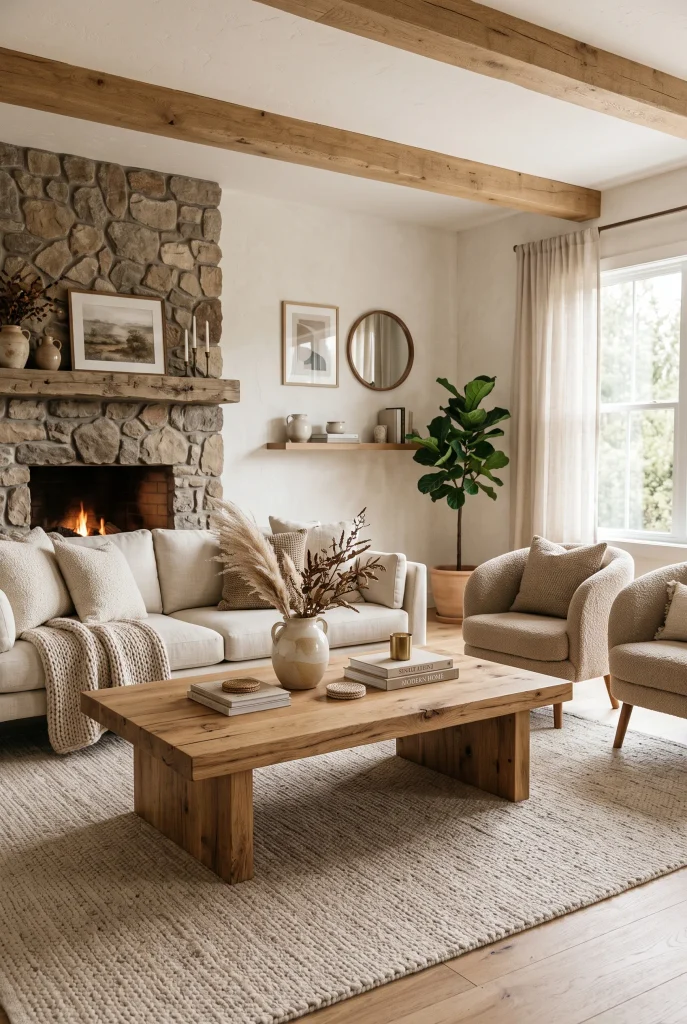
- Creates a warm focal point at the center of the seating area.
- Adds natural grain and texture to softer neutral furnishings.
- Balances sleek furniture with a more relaxed, organic element.
- Provides a practical surface for everyday living and styling.
A substantial wood coffee table can become the visual anchor that makes a seating arrangement feel complete. Look for natural grain, slightly imperfect edges, or a simple handcrafted appearance that adds character without feeling overly rustic. Oak, walnut, and reclaimed timber all work beautifully beside cream upholstery and textured rugs. Keep the surrounding furniture relatively clean-lined so the table provides warmth and contrast. A few useful objects, such as stacked books or a ceramic bowl, are usually enough to style the surface while preserving an easy, uncluttered look.
The best coffee tables combine visual weight with everyday usefulness. Consider the scale of the sofa and leave enough walking space around the table for the room to remain comfortable. I’ve seen this work well when a simple wooden table is paired with softer pieces, creating a natural contrast between solid structure and relaxed fabrics. If a large rectangular table feels too heavy, try a rounded or oval design with a similarly warm finish. This approach maintains the organic character while improving movement, especially in smaller or narrower living rooms.
9. Textured Plaster Walls
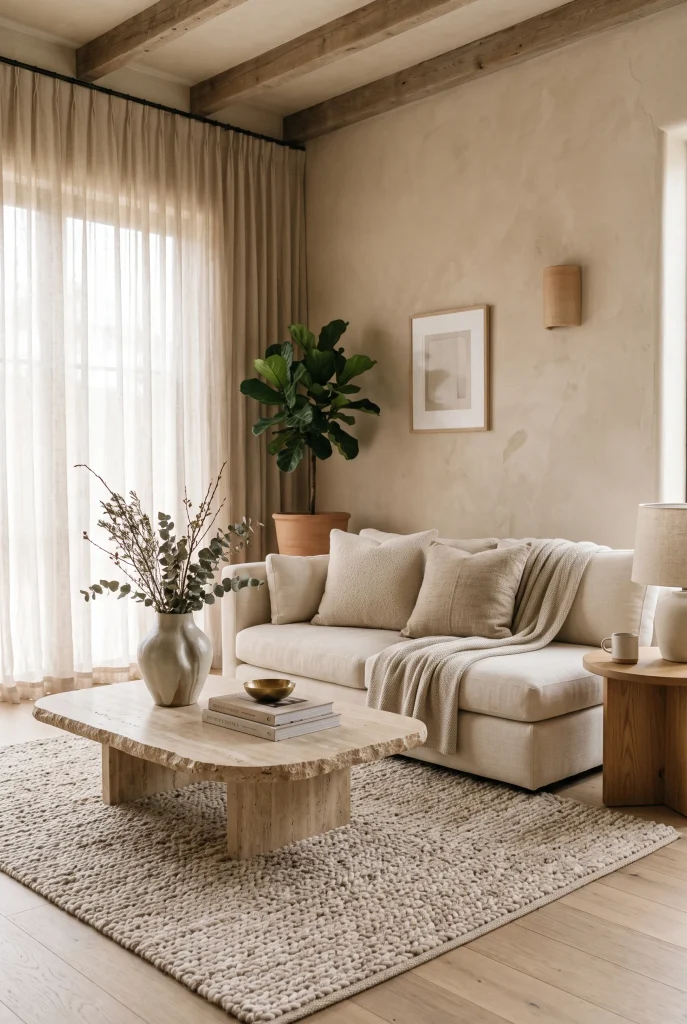
- Adds depth and character without introducing bold patterns.
- Creates a soft backdrop for wood, stone, and natural fabrics.
- Makes a simple neutral palette feel more layered and expensive.
- Brings subtle warmth to rooms with minimal furniture and decor.
Textured plaster walls can make a simple living room feel instantly richer by adding movement that paint alone cannot provide. Soft finishes in warm white, sand, beige, or muted clay create a gentle backdrop that changes beautifully throughout the day as natural light moves across the surface. The effect works especially well with clean furniture because the walls provide character without requiring extra artwork or accessories. Pair the finish with natural wood, woven textiles, and stone accents to create a calm layered interior that feels organic, refined, and comfortably connected to natural materials.
This idea is particularly effective when the room feels flat despite having a good furniture layout. A subtle plaster texture adds dimension while keeping the overall palette quiet and flexible. In my experience, softer finishes look more timeless than heavily patterned feature walls because they complement changing furniture and decor over time. Use warm lighting in the evening to emphasize the surface gently rather than creating harsh shadows. Combined with linen, oak, ceramics, and woven fabrics, textured walls can give the space a polished yet relaxed atmosphere that feels intentionally designed without appearing overly styled.
10. Linen Curtain Layers
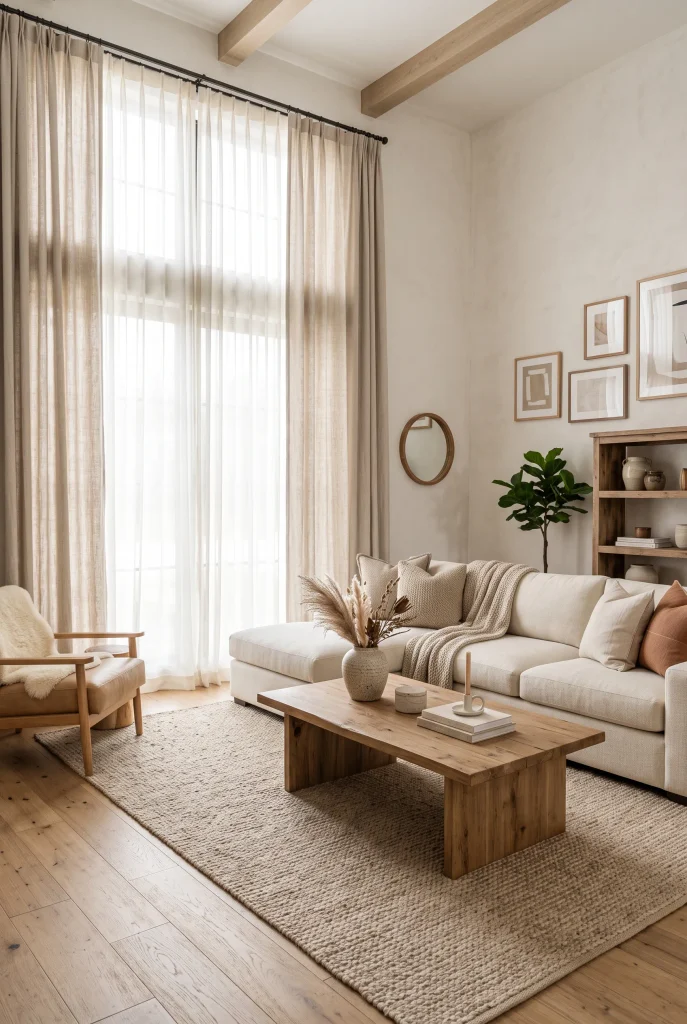
- Softens large windows and hard architectural lines.
- Adds natural texture without making the room feel heavy.
- Creates privacy while still allowing beautiful filtered light.
- Makes the entire space feel taller, calmer, and more finished.
Floor-to-ceiling linen curtains can completely soften a living room and make ordinary windows feel more intentional. Choose warm shades such as ivory, oatmeal, flax, or soft beige to complement natural wood and textured furnishings. Hanging the curtains high and allowing them to fall close to the floor creates the illusion of taller ceilings and a more spacious room. Sheer panels underneath can filter harsh daylight while heavier linen adds privacy when needed. The gentle movement and natural texture bring an effortless, relaxed quality that works beautifully with rustic materials and clean contemporary furniture.
Layered curtains are especially useful when a room feels visually cold or unfinished despite having the right furniture. I’ve noticed that fabric around windows often adds the missing softness needed to balance stone, wood, and metal surfaces. Keep the hardware simple, using a slim black or bronze rod that connects with other accents in the room. Avoid overly formal pleating or shiny fabrics, which can disrupt the casual aesthetic. The result is a brighter, warmer space where daylight feels softer, textures feel richer, and the overall arrangement appears more complete.
11. Mixed Wood Finishes
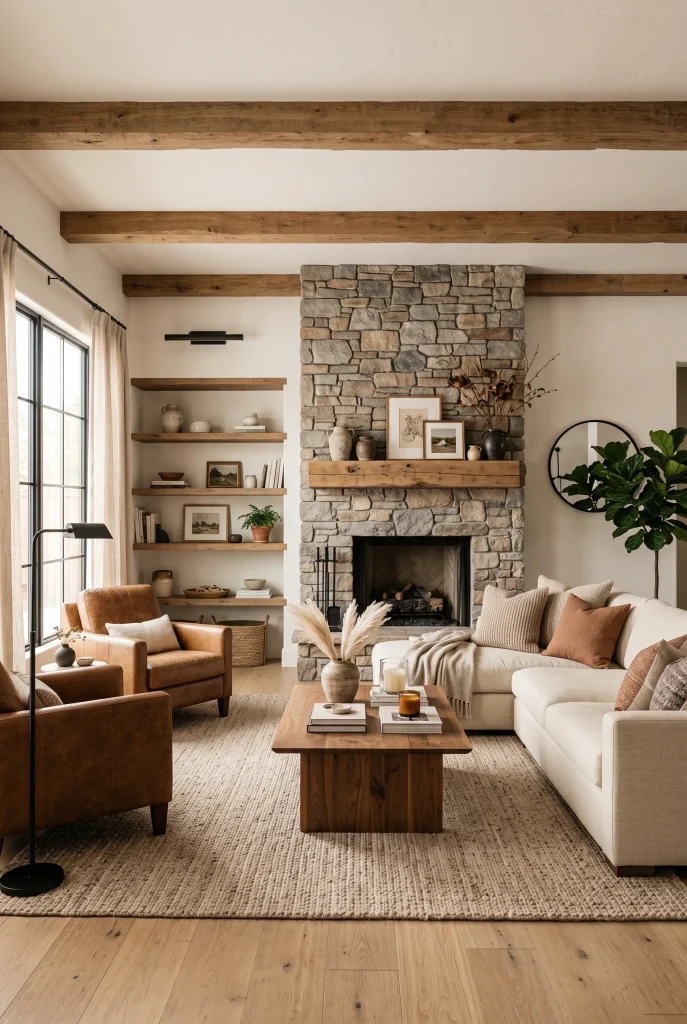
- Prevents the room from looking overly matched or staged.
- Adds depth through natural variations in wood tones.
- Creates a more collected and lived-in appearance.
- Allows existing furniture to blend together more easily.
Mixing wood finishes can make a room feel naturally collected rather than perfectly coordinated. Instead of matching every table, shelf, and chair, combine two or three related tones such as light oak, medium walnut, and weathered reclaimed wood. The key is maintaining a consistent undertone, preferably warm or neutral, so the pieces still feel connected. A light floor can support a darker coffee table, while rustic shelving adds another layer of texture. This variation gives the space visual depth and helps each piece contribute its own character without creating unnecessary contrast or confusion.
The easiest way to make mixed finishes work is to repeat each tone at least once. For example, a walnut coffee table can connect with a smaller side table, while lighter oak appears in the flooring and shelving. I’ve seen this work well in homes where people want to keep existing furniture instead of replacing everything with a matching set. A neutral rug can visually tie the different woods together and provide a calm transition between them. This approach feels practical, personal, and flexible while creating the relaxed character associated with a thoughtfully designed rustic interior.
12. Cozy Reading Corner
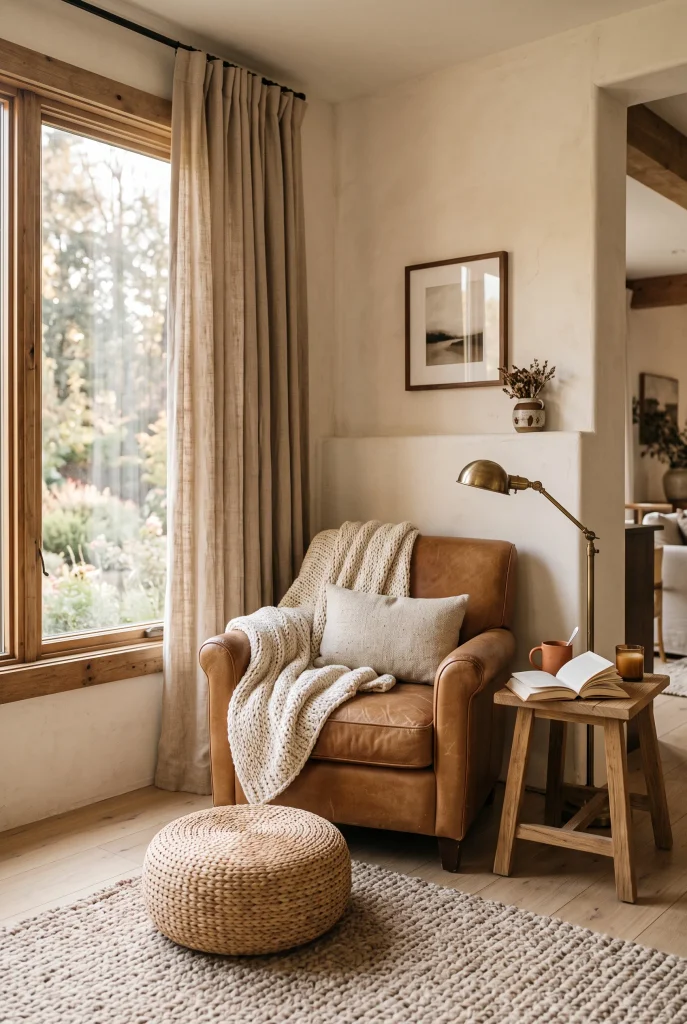
- Turns an unused corner into a comfortable everyday retreat.
- Adds function without requiring a large furniture arrangement.
- Introduces an extra layer of warmth and personality.
- Creates a visually appealing detail that makes the room feel lived in.
A dedicated reading corner can make a living room feel more personal and useful without changing the entire layout. Start with one comfortable chair positioned near natural light, then add a small side table for a book, drink, or lamp. A soft throw and textured cushion make the area feel inviting while connecting it with the room’s larger color palette. Choose natural materials such as leather, linen, oak, or woven fibers to maintain visual consistency. Even a small unused corner can become a meaningful feature that adds comfort, purpose, and a relaxed sense of everyday living.
The most successful reading corners feel simple enough to use regularly. I’ve noticed that adding too many decorative pieces can make a cozy spot feel staged rather than comfortable. Focus instead on good lighting, a supportive chair, and one practical surface nearby. A brass or black metal reading lamp can introduce subtle contrast, while a woven footstool adds softness and texture. Keep books within easy reach, either on the table or in a nearby basket. This small arrangement can make the room feel warmer, more functional, and noticeably more connected to the people who actually live there.
13. Oversized Wall Art
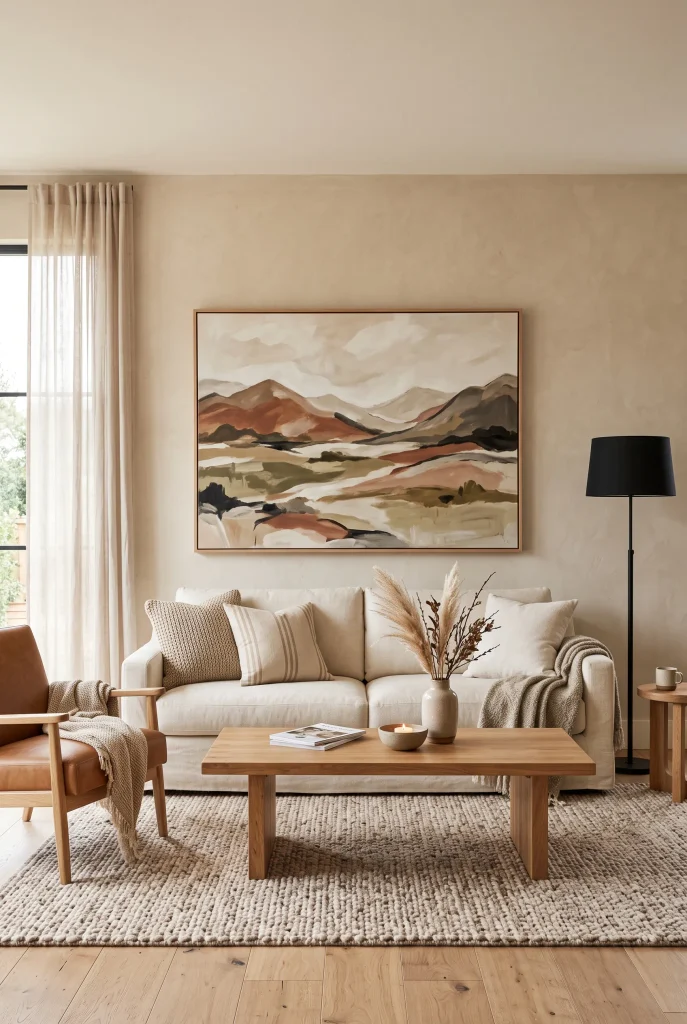
- Creates a strong focal point without cluttering the walls.
- Adds personality while keeping the room visually calm.
- Balances rustic textures with a clean contemporary element.
- Makes a simple seating area feel more finished and intentional.
One oversized piece of wall art can make a living room feel instantly more polished without adding visual clutter. Choose an abstract landscape, muted botanical print, or earthy artwork that reflects the room’s natural palette. Soft shades of beige, brown, sage, charcoal, or warm cream work especially well beside wood and stone. Instead of creating a crowded gallery wall, allow one larger piece to breathe above the sofa or fireplace. This approach gives the eye a clear focal point while preserving the relaxed simplicity that makes rustic-inspired interiors feel warm and comfortable.
Scale is the detail that makes this idea work. A piece that is too small can disappear against a large wall, while oversized art creates confidence and visual balance. I’ve noticed that simple artwork often has the strongest impact when surrounded by textured materials and layered furnishings. Choose a slim wood or black frame that connects with other finishes already present in the room. Keep nearby accessories minimal so the artwork remains noticeable. The result feels curated rather than crowded, adding personality and softness while supporting the natural, welcoming character of the entire space.
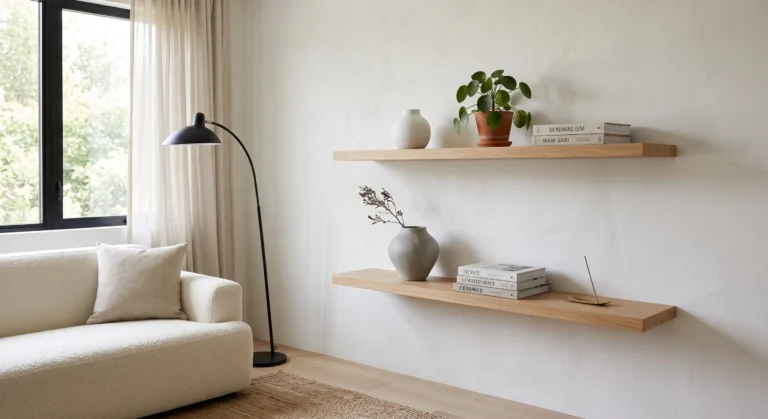
14. Open Wood Shelving
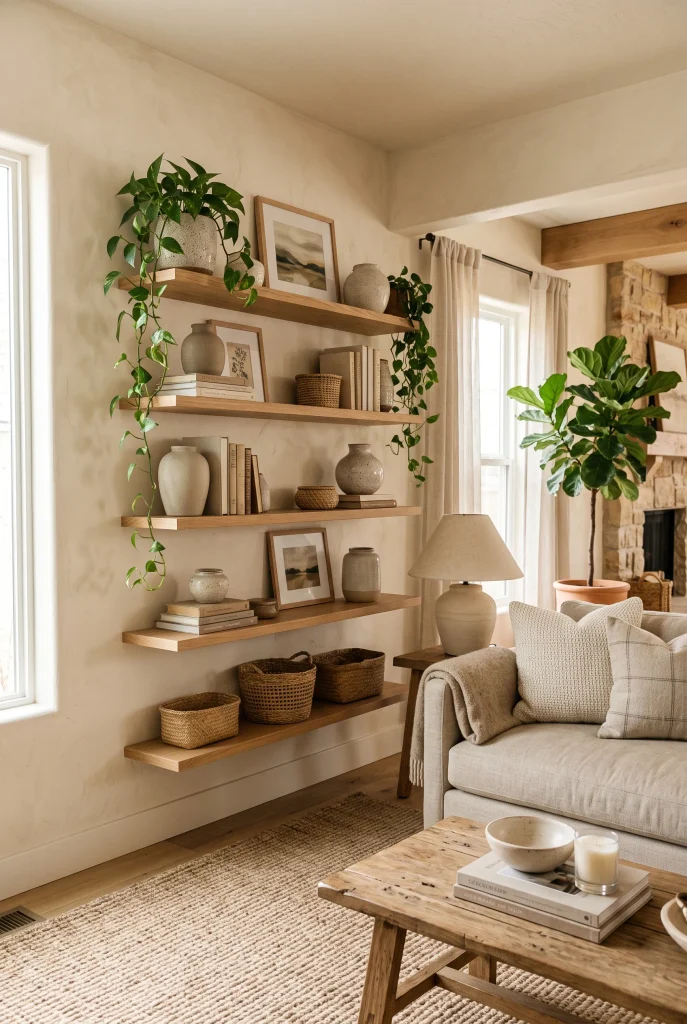
- Adds storage while keeping the room open and airy.
- Creates space for meaningful decor and everyday essentials.
- Introduces another layer of natural wood texture.
- Allows the room to feel personal without becoming cluttered.
Open wood shelving offers a practical way to add character without filling the floor with extra furniture. Natural oak, walnut, or reclaimed wood shelves can display books, ceramics, framed art, and a few meaningful objects while contributing warmth to the wall. The key is leaving enough empty space between items so the arrangement does not feel crowded. Mix vertical and horizontal shapes for variety, then repeat a few colors or materials throughout the display. This creates a relaxed, collected appearance that feels personal while still maintaining a clean and balanced living space.
Styling works best when usefulness and decoration are combined naturally. I’ve seen this work well when homeowners begin with books and everyday objects, then add only a few decorative pieces around them. Small ceramic vessels, woven baskets, and trailing plants can soften the structure of the shelves without overwhelming them. Repeat the shelf wood tone elsewhere through a coffee table, mantel, or side table for visual connection. Avoid filling every available surface. A little negative space helps each object stand out and gives the entire arrangement a calmer, more thoughtfully designed appearance.
15. Soft Ambient Lighting
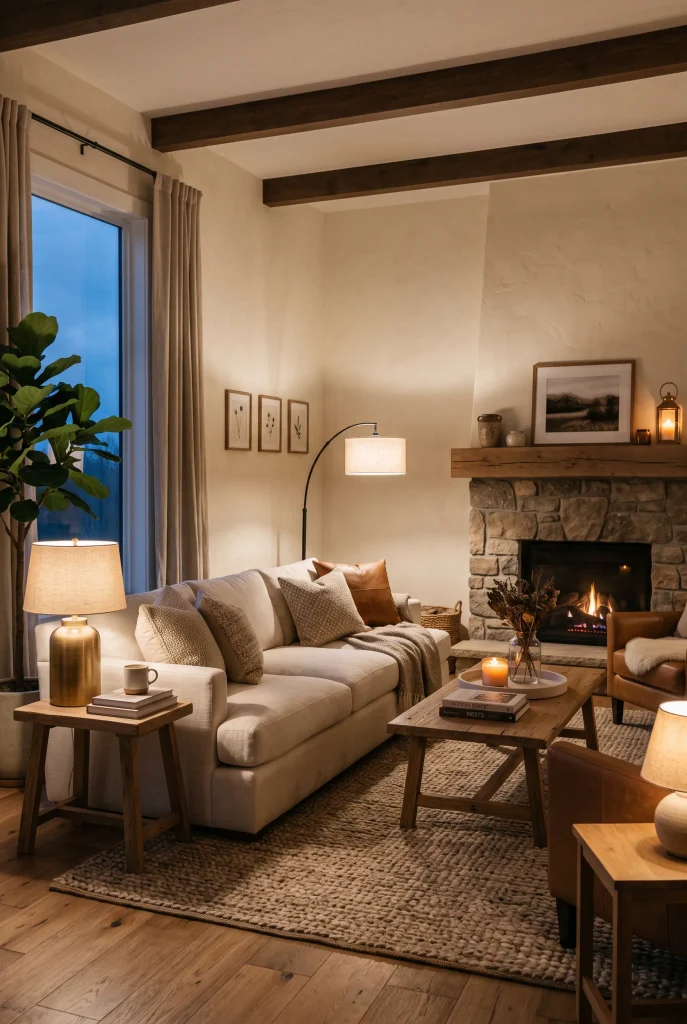
- Makes natural textures feel warmer and more inviting after dark.
- Reduces harsh shadows from a single overhead light source.
- Highlights wood, stone, and fabric in a softer way.
- Creates a comfortable atmosphere for relaxing and entertaining.
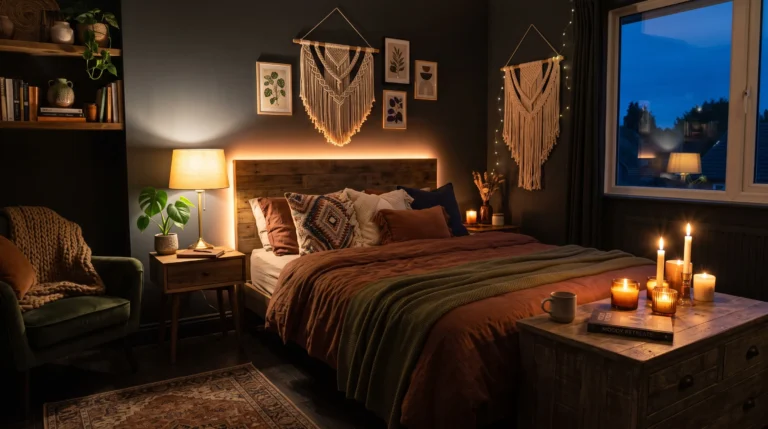
Soft ambient lighting can completely change how a living room feels once natural daylight fades. Instead of depending on one bright ceiling fixture, layer table lamps, floor lamps, wall sconces, or subtle fireplace lighting throughout the room. Warm bulbs create a gentle glow that enhances wood grain, stone texture, and soft fabrics. Position light sources at different heights to create depth and avoid flat illumination. This layered approach makes the seating area feel more intimate and comfortable while allowing each natural material to appear richer and more visually interesting during the evening.
The goal is to create pools of warmth rather than lighting every corner equally. In my experience, a combination of one floor lamp, two smaller lamps, and occasional accent lighting often feels more comfortable than strong overhead illumination. Place lamps near seating areas where people naturally read, talk, or relax. Choose simple bases in ceramic, brass, wood, or black metal to connect with the room’s existing finishes. Dimmable lighting can add even more flexibility. With the right glow, familiar furniture and textures can feel noticeably cozier, calmer, and more inviting every night.
16. Natural Stone Accents
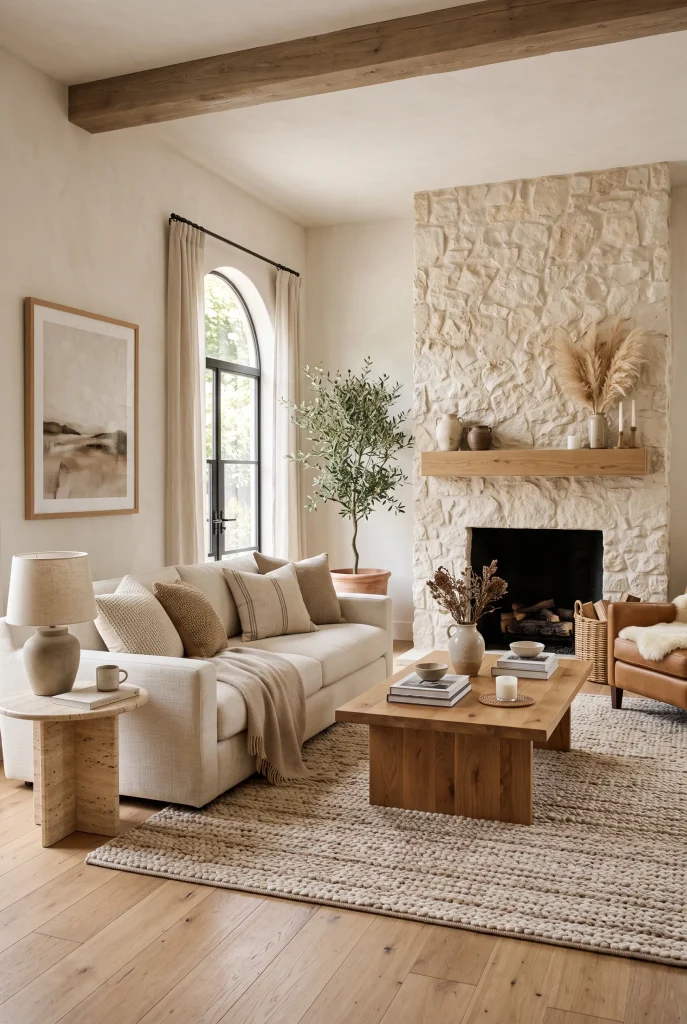
- Adds natural texture without making the room feel overly rustic.
- Creates a grounded contrast against soft fabrics and smooth surfaces.
- Works beautifully in fireplaces, tables, accessories, and decorative details.
- Gives the space a timeless, organic quality.
Natural stone accents can bring quiet character to a living room without requiring a complete renovation. A travertine side table, limestone fireplace surround, or simple stone bowl can introduce texture and visual weight in a subtle way. Choose finishes with warm undertones so they blend naturally with oak, walnut, cream upholstery, and woven textiles. The slight variations in color and surface make every piece feel unique. When balanced with clean-lined furniture, stone adds an organic element that makes the room feel more grounded, layered, and connected to the natural materials often found in rustic interiors.
The secret is using stone as an accent rather than covering every surface. I’ve seen this work beautifully when one or two substantial pieces are paired with softer fabrics and warm wood. A small travertine table beside a linen sofa, for example, can create more impact than several tiny decorative objects. Keep the surrounding palette restrained so the natural markings remain visible. Stone also works well with black metal and aged brass, adding another level of contrast. This combination creates a space that feels timeless, comfortable, and visually interesting without appearing overly themed or heavily decorated.
17. Earthy Green Accents
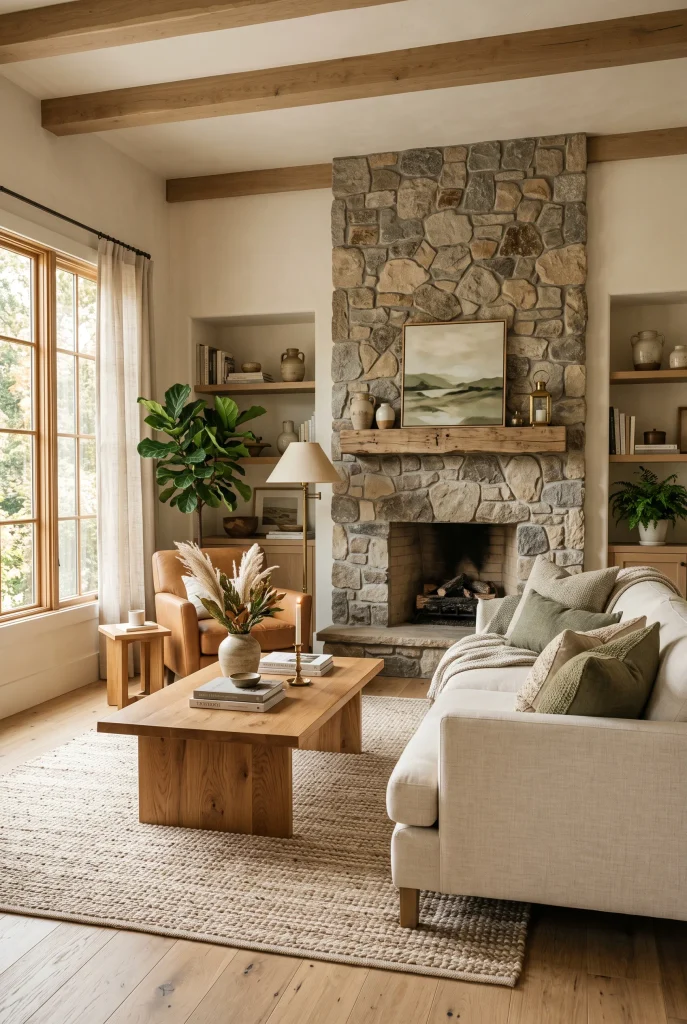
- Introduces color while preserving a calm, natural palette.
- Connects beautifully with wood, stone, and woven materials.
- Adds freshness to neutral furniture without overwhelming the room.
- Creates an easy visual link between indoor decor and nature.
Earthy green accents can bring a fresh, grounded feeling to a neutral living room. Shades such as sage, olive, moss, and muted eucalyptus work especially well because they feel natural rather than overly bold. Add them through cushions, throws, artwork, or a single upholstered chair, then repeat the tone subtly elsewhere. Against cream walls and warm wood, green creates gentle contrast while maintaining a relaxed atmosphere. This approach can make a space feel more connected to nature, especially when combined with leafy plants, stone surfaces, and other organic materials throughout the room.
Start with small touches if you prefer a flexible color scheme. I’ve noticed that muted green textiles are easy to update while still making a noticeable difference in the overall mood. A pair of olive cushions or a sage throw can soften a pale sofa and create visual depth without requiring new furniture. Keep brighter greens to a minimum so the palette remains sophisticated. When repeated through plants, artwork, and fabrics, these natural tones help the room feel cohesive. The finished space appears warmer, fresher, and more relaxed while maintaining its balanced rustic character.
18. Minimalist Rustic Decor
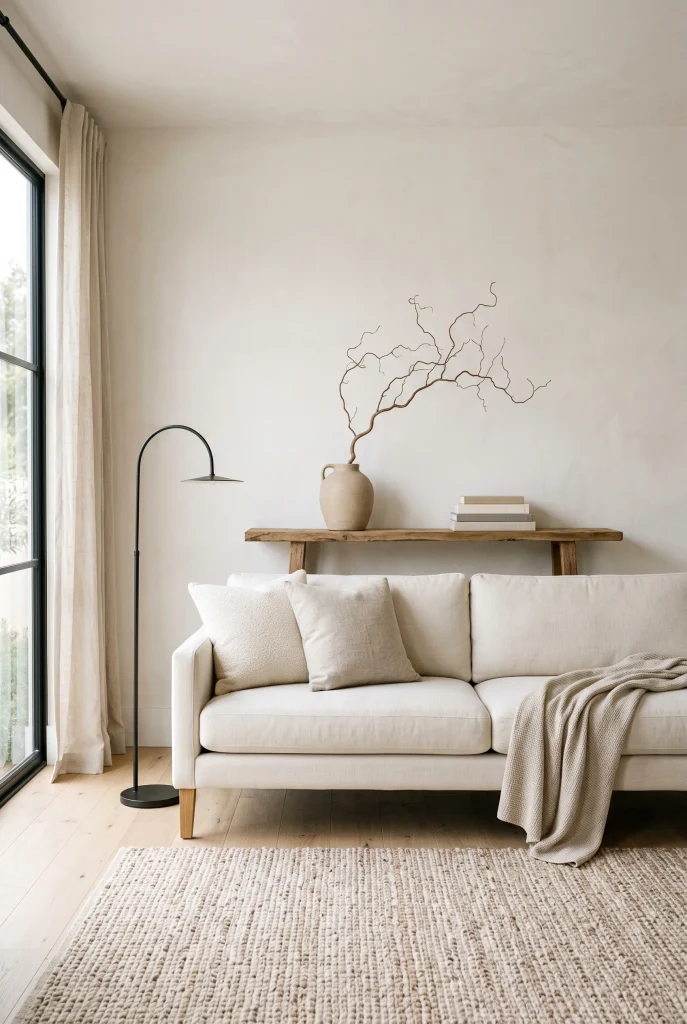
- Keeps natural materials visible instead of hiding them behind clutter.
- Makes the room feel calm, spacious, and easier to maintain.
- Allows handcrafted and meaningful pieces to stand out.
- Balances rustic character with a clean contemporary appearance.
Minimalist rustic decor proves that a cozy room does not need to be filled with accessories. Start with a few meaningful pieces that highlight natural materials, such as a handmade ceramic vase, weathered wood bowl, woven basket, or simple framed artwork. Leave open surfaces and empty wall space so each object has room to stand out. This approach allows the texture of the furniture, flooring, and architecture to become part of the decoration. The result feels warm and personal while maintaining the clean, uncluttered appearance many homeowners want from a contemporary living space.
Choosing fewer items can also make everyday living easier. In my experience, rooms feel more relaxing when decorative pieces are intentional rather than scattered across every available surface. Focus on objects with texture, useful function, or personal meaning, then remove anything that does not contribute to the overall atmosphere. A simple console styled with one ceramic vessel and a small stack of books can feel more sophisticated than an overcrowded arrangement. By combining restraint with natural materials, you create a space that feels comfortably lived in, visually balanced, and easy to enjoy every day.
19. Layered Throw Blankets
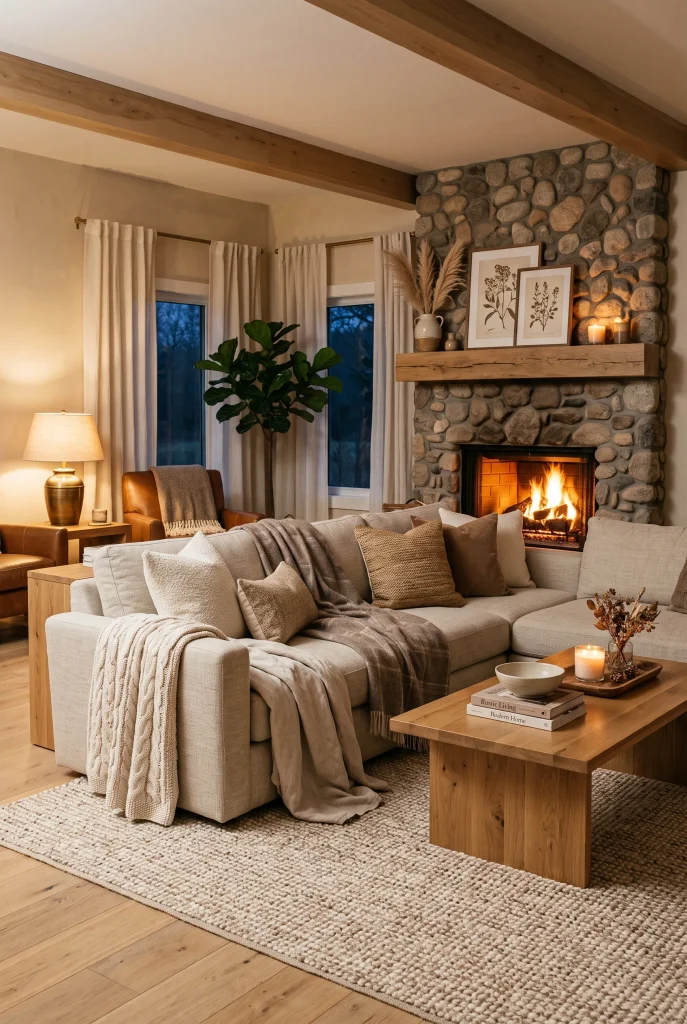
- Adds instant softness to structured seating.
- Creates a more comfortable and lived-in appearance.
- Introduces texture without needing major furniture changes.
- Makes neutral upholstery feel warmer and more inviting.
A few well-chosen throw blankets can make a seating area feel instantly softer and more welcoming. Layer different textures such as chunky knits, washed cotton, linen, or lightweight wool while keeping the colors within a warm neutral palette. Cream, oatmeal, taupe, and muted brown work beautifully with natural wood and stone. Instead of folding every throw perfectly, drape one casually over a sofa arm or chair. This relaxed styling adds movement and makes the room look comfortable enough to actually use while still maintaining a polished and thoughtfully coordinated appearance.
The best results come from varying texture rather than adding too many colors. I’ve noticed that two or three throws with different weaves can create more depth than several brightly colored accessories. Choose one heavier option for colder months and a lighter fabric for warmer seasons to keep the room practical throughout the year. A basket nearby can store extra blankets while adding another natural material to the layout. These simple layers help soften clean furniture lines, making the space feel warmer, more relaxed, and perfectly suited for everyday comfort.
20. Statement Wood Mantel
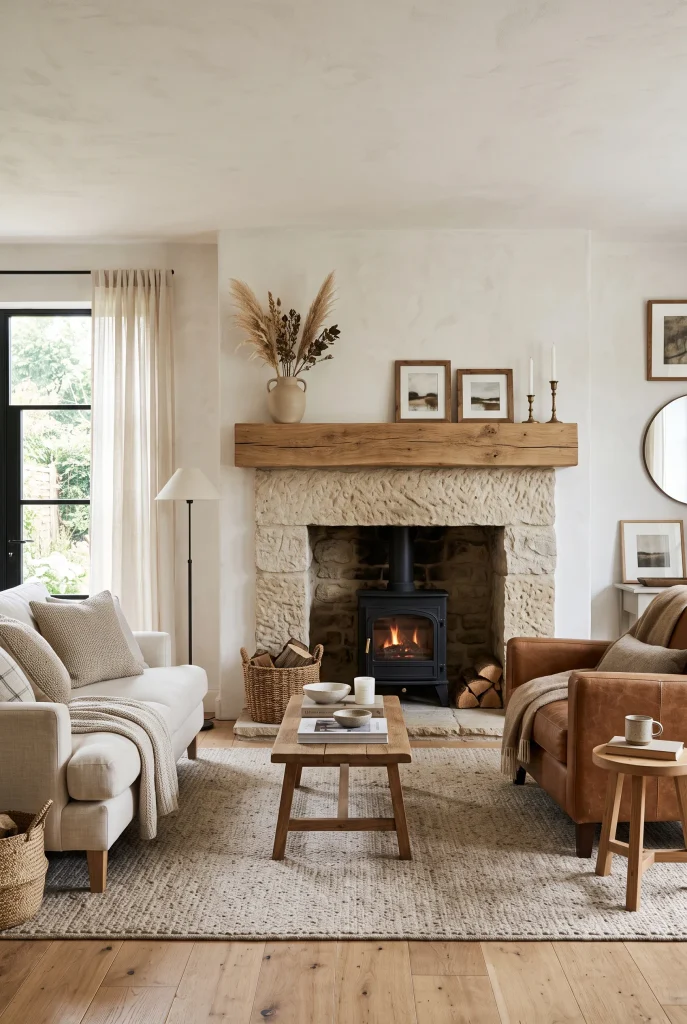
- Gives the fireplace a stronger architectural presence.
- Adds warmth and natural character to stone or plaster.
- Creates an easy focal point for simple seasonal styling.
- Connects the fireplace with other wood elements in the room.
A substantial wood mantel can instantly make a fireplace feel more grounded and visually complete. Choose oak, walnut, or reclaimed timber with visible grain and natural variation for a relaxed, authentic appearance. The wood can contrast beautifully against limestone, plaster, or painted brick while connecting with nearby furniture. Keep the styling simple with a ceramic vase, framed artwork, or a small sculptural object. Allowing the mantel itself to remain visible is important because its texture and shape should contribute as much character as the decorative pieces placed above or around it.
Scale plays an important role in making a mantel feel intentional. A narrow piece may disappear against a large fireplace, while a thicker beam can create stronger visual balance. I’ve seen this work especially well when the mantel wood tone is repeated through a coffee table, shelving, or ceiling detail elsewhere in the room. Avoid filling the entire surface with accessories, since open space helps highlight the material. With simple styling and warm surrounding textures, a statement mantel becomes a timeless feature that gives the living room structure, personality, and a naturally inviting focal point.
21. Vintage-Inspired Details
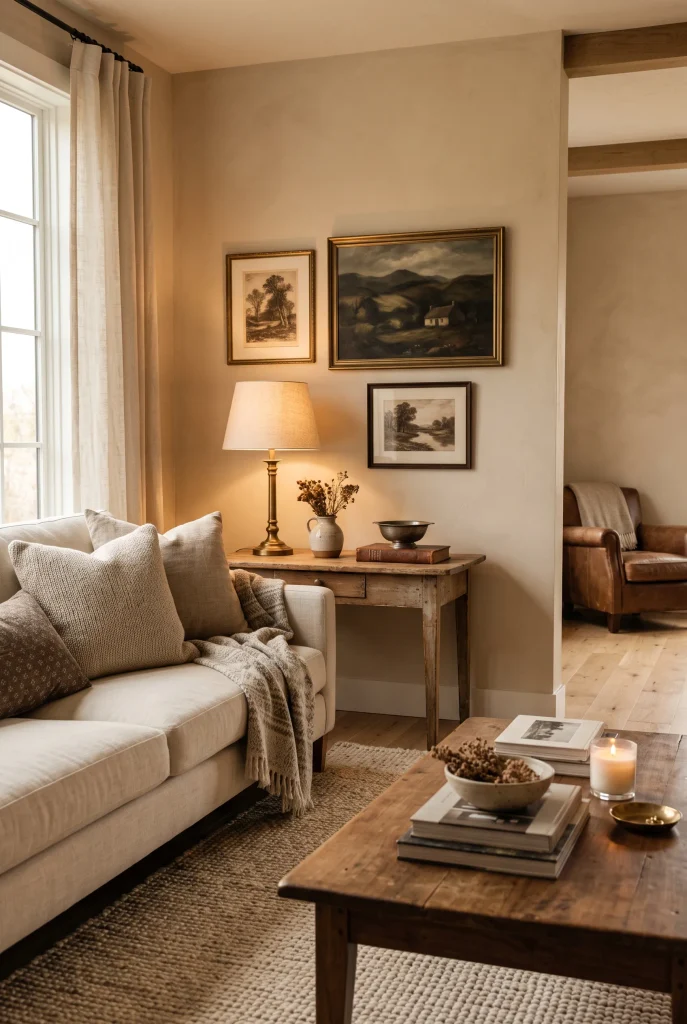
- Adds personality and history to a newer-looking room.
- Prevents modern furniture from feeling too polished or generic.
- Introduces warmth through aged wood, brass, and classic artwork.
- Creates a collected look without requiring a fully traditional style.
Vintage-inspired details can give a modern space the sense of history that makes it feel more personal and memorable. An aged brass lamp, antique wooden side table, old landscape painting, or weathered picture frame can add character without changing the entire design direction. The key is mixing these pieces with simpler contemporary furniture so the room feels collected rather than themed. Natural wear, patina, and imperfect finishes introduce warmth that newer materials sometimes lack. Even one or two older-looking accents can make the overall arrangement feel more layered and comfortably established.
You do not need genuine antiques to create this effect successfully. I’ve seen this work with vintage-style reproductions, thrifted pieces, and family items that have meaningful character. Focus on shapes and finishes that feel timeless, then place them beside clean-lined seating or modern lighting for contrast. An antique brass lamp can soften a minimalist side table, while an aged frame can add depth to a plain wall. Keeping the selection limited prevents the room from becoming overly traditional. These small details create a warm, collected atmosphere that feels personal, balanced, and naturally connected to rustic style.
22. Indoor Greenery
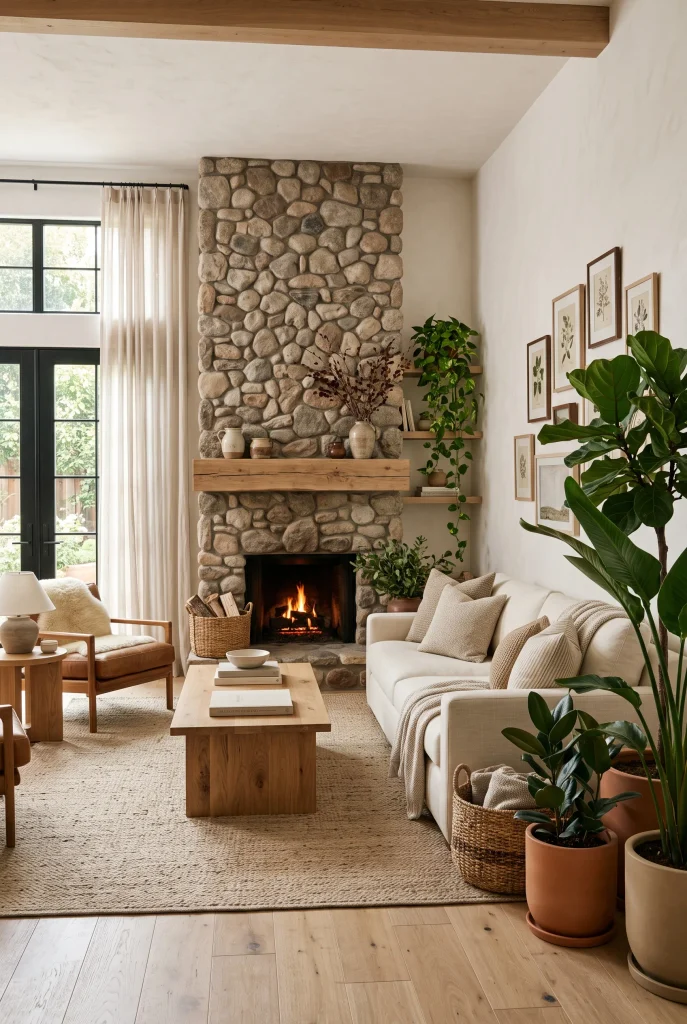
- Adds natural color without disrupting a neutral palette.
- Softens hard edges created by wood, stone, and metal.
- Makes the room feel fresher and more connected to nature.
- Fills empty corners without adding bulky furniture.
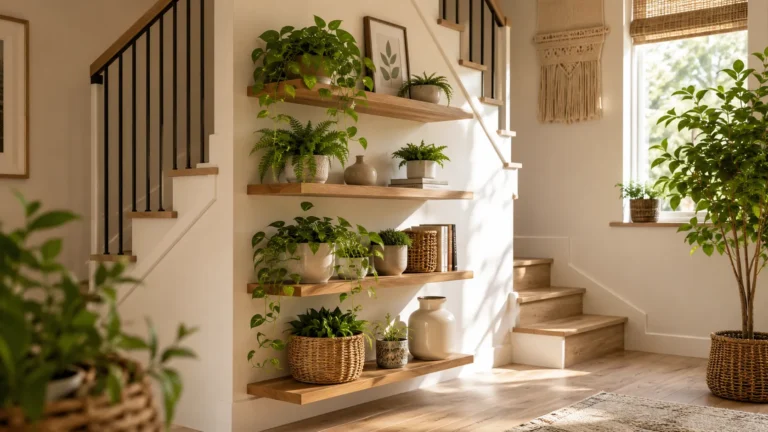
Indoor greenery can bring a fresh, natural layer to a rustic-inspired living space without requiring a major redesign. A tall fiddle-leaf fig, olive tree, rubber plant, or smaller trailing plant can soften empty corners and balance heavier materials such as stone and wood. Choose simple ceramic, terracotta, or woven planters that complement the room’s existing textures. Position larger plants near windows where they receive suitable light, while smaller varieties can sit on shelves or side tables. This simple addition introduces gentle color, organic shape, and a relaxed feeling that makes the entire room appear more alive.
The most attractive arrangements usually feel natural rather than overly symmetrical. I’ve noticed that one substantial floor plant paired with two smaller accents often creates enough visual variety without turning the room into a jungle. Consider the plant’s mature size before choosing a location so furniture circulation remains comfortable. Greenery also works beautifully beside warm neutral fabrics because the contrast feels fresh but not harsh. By repeating natural materials through the planter, furniture, and decor, plants become part of the overall design and help create a calm, welcoming environment that feels comfortable throughout the year.
23. Balanced Open Layout
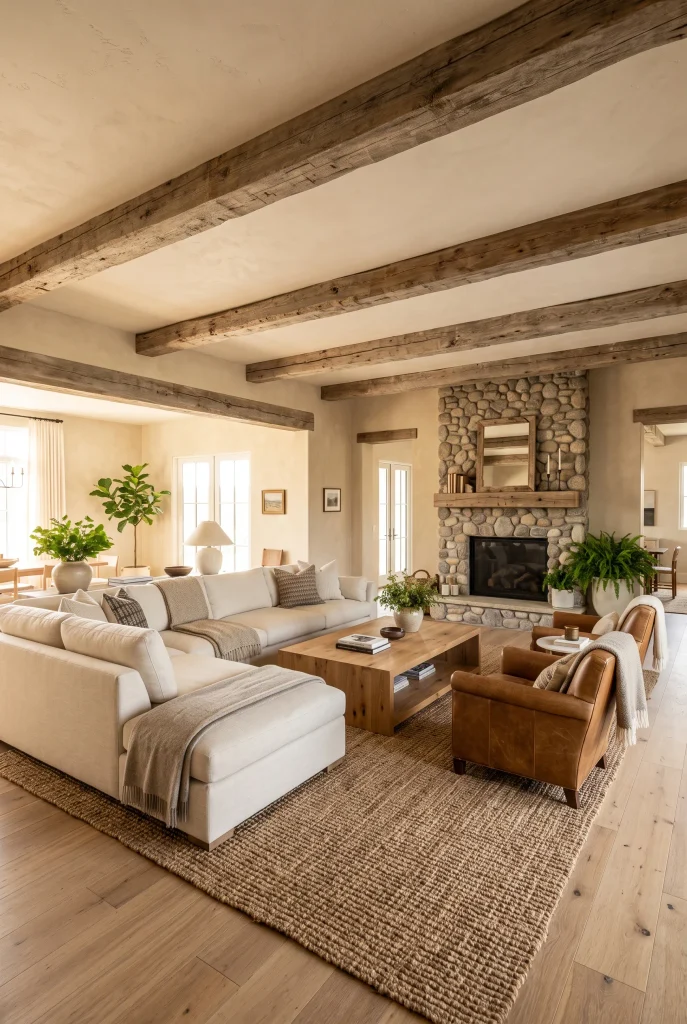
- Keeps the room feeling spacious while preserving a cozy atmosphere.
- Creates clear pathways for comfortable everyday movement.
- Helps furniture feel connected instead of scattered.
- Makes large or open-plan spaces easier to organize and enjoy.
A balanced open layout can make rustic materials and modern furniture feel effortlessly connected. Start by defining the main conversation area with a large rug, then position sofas and chairs so people can comfortably interact without blocking natural walkways. Avoid pushing every piece against the walls, especially in larger rooms, because floating furniture can create a more welcoming and intentional arrangement. A central coffee table provides structure, while side tables and lighting add function around the edges. The result is an open space that still feels warm, connected, and comfortable for everyday living.
Good spacing is often the difference between a beautiful room and one that simply looks crowded. I’ve seen this work well when homeowners leave enough room to walk naturally while keeping seating close enough for conversation. Use rugs, lighting, and furniture placement to create visual zones instead of adding unnecessary partitions. In a modern rustic living room, this approach allows beautiful materials such as wood, stone, linen, and leather to remain visible and appreciated. The finished layout feels relaxed, functional, and inviting, proving that an open space can still have plenty of warmth and personality.
Conclusion
Creating a beautiful modern rustic living room is all about balance. Combine natural materials with clean lines, layer soft textures with wood and stone, and add personal details that make the space feel truly lived in. You do not need to use every idea or redesign the entire room at once. Start with one change, such as a textured rug, warmer lighting, or a statement wood piece, and build from there. I’ve seen how small changes like these can completely transform a space. Save this post on Pinterest, try your favorite ideas, and share it with someone ready to create a cozier home.