23 Boho Living Room Ideas That Make Your Space Cozy
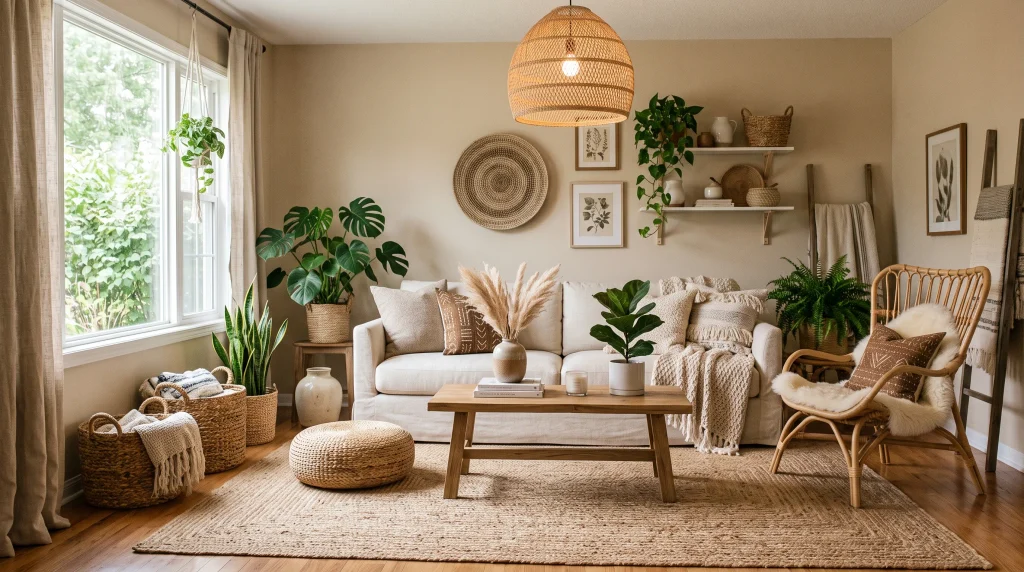
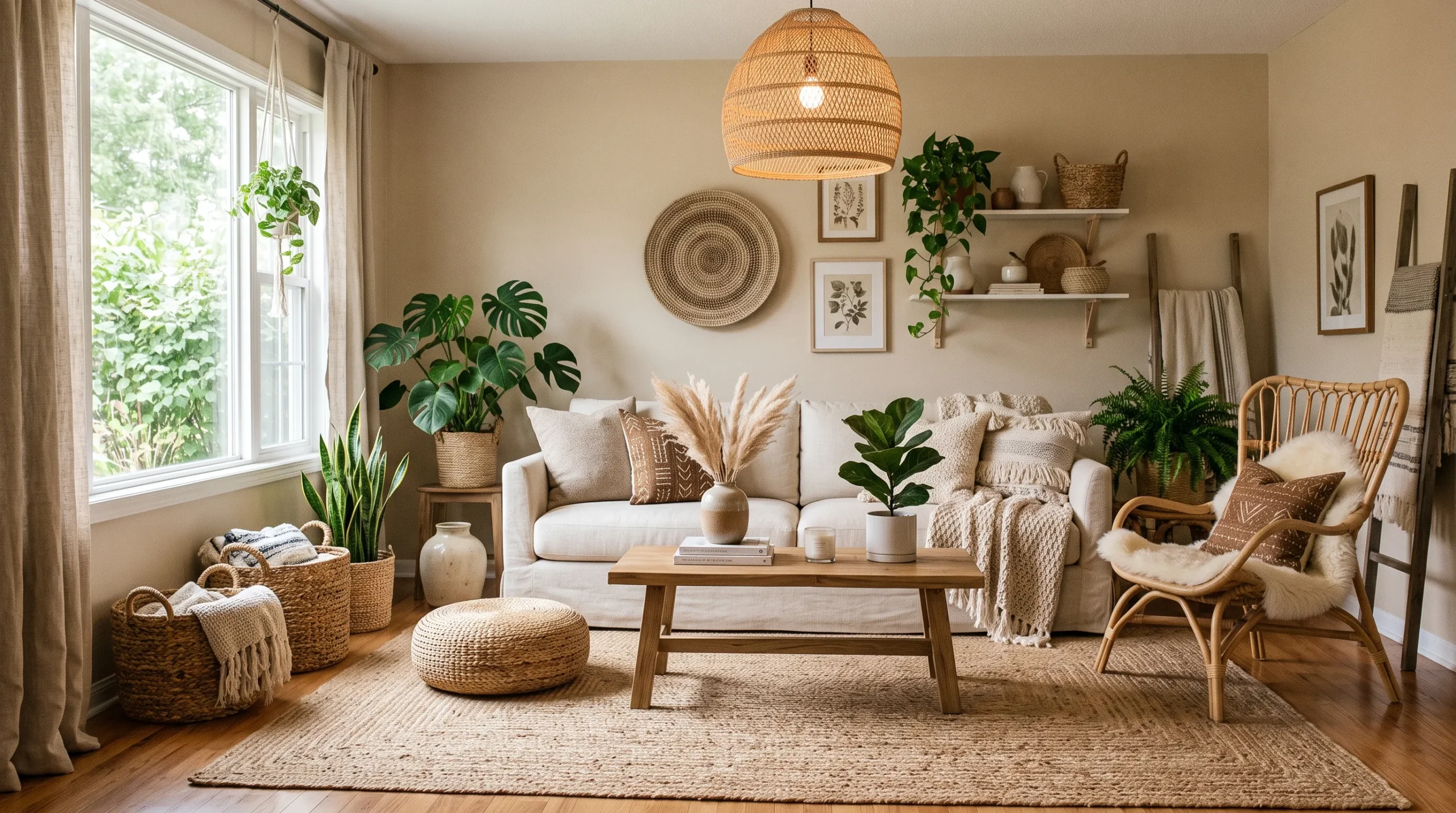
Your living room can feel cozy, stylish, and full of personality without looking cluttered or overdone. Boho living room ideas make that possible by combining natural textures, earthy colors, relaxed furniture, and meaningful decorative details.
Whether your space feels too plain, too polished, or simply lacks warmth, small changes can create a completely different atmosphere. Think woven rugs, rattan furniture, soft linen, indoor plants, terracotta accents, and layered lighting that makes every corner feel inviting. You don’t need to replace everything at once. In my experience, choosing a few strong textures and repeating natural tones throughout the room can make a surprisingly big difference. These ideas will help you create a comfortable space that feels personal, relaxed, and easy to live in.
1. Natural Woven Textures
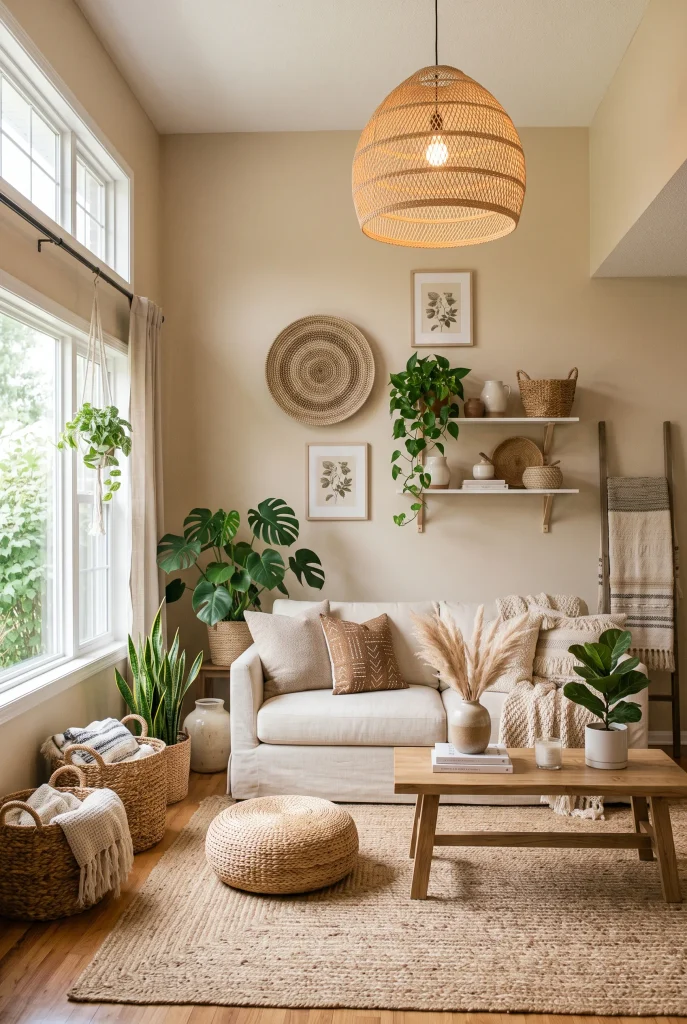
- Layered woven textures instantly make a boho room feel warmer and more relaxed.
- Jute, rattan, and seagrass add natural character without overwhelming the space.
- These materials work especially well with cream, beige, and earthy neutral colors.
- I’ve noticed that mixing different textures creates depth even when the color palette stays simple.
Natural materials can give a living room that effortless bohemian character without requiring a major furniture change. Start with a jute rug, then bring in a woven basket, rattan accent chair, or seagrass storage piece to build visual texture from the floor upward. The contrast between rough and soft surfaces makes the room feel collected rather than overly decorated. In my experience, this approach works particularly well in neutral homes because woven details add warmth without introducing too many competing colors. Keep the shapes relaxed and slightly imperfect for a more authentic, comfortable look.
The best result comes from mixing textures instead of repeating one material everywhere. Pair a chunky woven rug with smooth ceramic pieces, linen curtains, cotton cushions, and a softly upholstered sofa for balanced contrast. Natural wood furniture can connect these elements while keeping the room grounded and inviting. If your space feels flat or too polished, adding just two or three woven accessories can make a noticeable difference. These small upgrades are also easy to move or replace as your style changes. For a Pinterest-inspired look, keep the arrangement airy, let each texture breathe, and avoid filling every empty surface.
2. Earthy Layered Seating
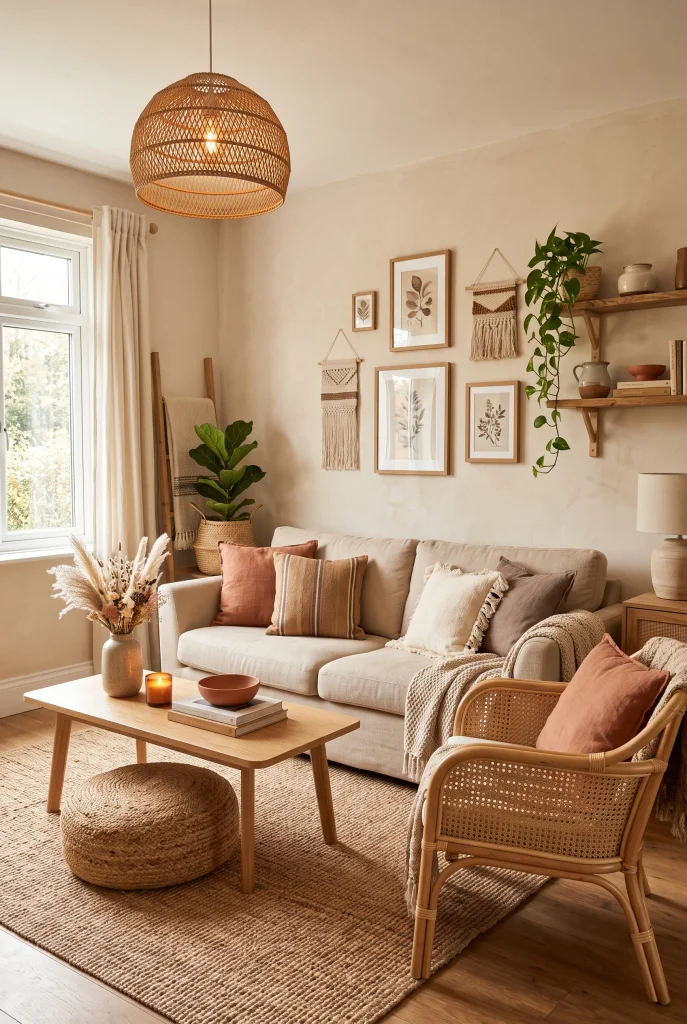
- Combine cream, tan, terracotta, and muted brown seating for a relaxed bohemian palette.
- Mix cushions, throws, and upholstery in different fabrics to create inviting depth.
- Keep furniture slightly casual so the room feels comfortable rather than staged.
- Layered seating makes larger living rooms feel warmer and more connected.
A cozy seating arrangement can completely change the way a boho living room feels and functions. Instead of relying on one sofa to carry the design, combine a comfortable neutral couch with a textured accent chair, floor cushion, or compact pouf. Use earthy shades such as sand, camel, clay, and warm ivory to create a cohesive foundation. Then introduce subtle patterns through pillows and throws. This arrangement gives the eye several places to land while making the room more useful for everyday life. It also creates that relaxed, layered appearance often associated with successful bohemian interiors.
Think about conversation and movement when arranging your seating, not just appearance. Place chairs at a slight angle toward the sofa, keep the coffee table within easy reach, and leave enough walking space around the furniture. A low pouf can provide flexible seating without making a smaller room feel crowded. I’ve seen this work especially well in homes where the living room needs to serve multiple purposes, such as relaxing, entertaining, and reading. Choose fabrics that feel pleasant to touch and are practical for your household. The result should look inviting enough to make people want to sit down.
3. Rattan Accent Chair
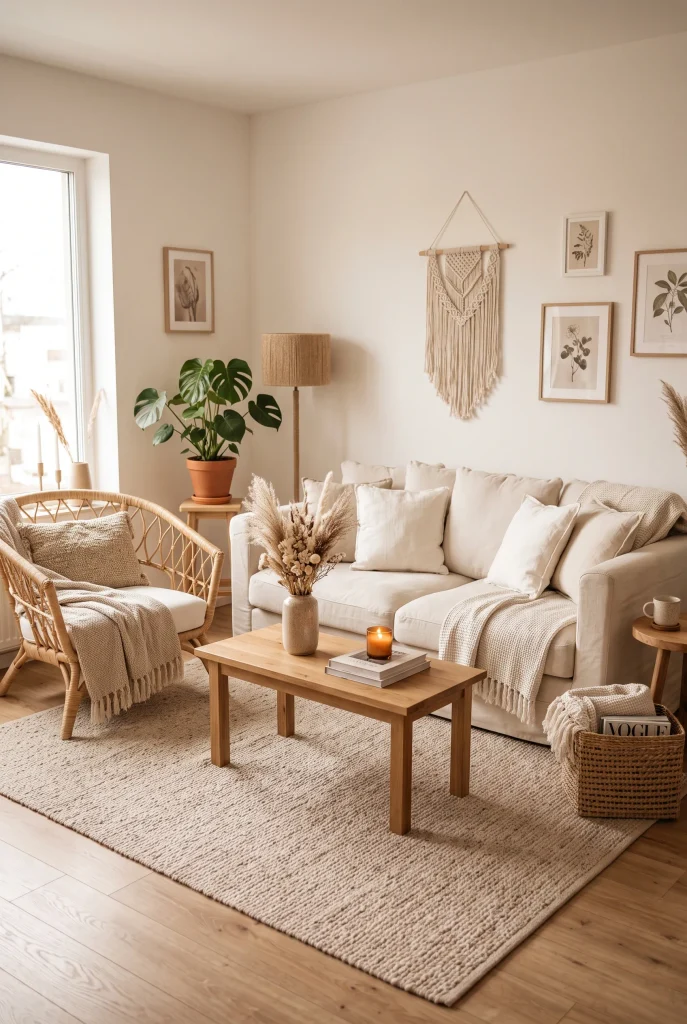
- A rattan chair adds instant natural texture and a recognizable bohemian touch.
- Choose curved or relaxed shapes to soften a room filled with straight furniture.
- Pair it with a plush cushion for better comfort during everyday use.
- Positioning the chair near a window can create a beautiful reading corner.
A rattan accent chair can become the quiet focal point that brings a boho living room together. Its open woven structure adds texture without visually blocking the room, making it especially useful in smaller spaces. Choose a rounded silhouette, natural finish, and generously cushioned seat for a comfortable balance of style and function. Place it beside a sofa, near a window, or next to a small side table to create a purposeful seating zone. When paired with cream upholstery and warm wood tones, rattan introduces organic contrast while keeping the overall palette calm, airy, and naturally inviting.
For an especially cozy arrangement, soften the chair with a linen or cotton cushion and add a lightweight throw over one side. A nearby floor lamp or small table can turn the chair into a practical reading spot rather than simply decorative furniture. Keep the surrounding area relatively uncluttered so the woven details remain visible. If your room already contains several wood pieces, choose a lighter rattan finish to prevent the space from feeling visually heavy. This simple addition is one of the easiest ways to introduce bohemian texture while maintaining a polished, livable atmosphere.
4. Macramé Wall Hanging
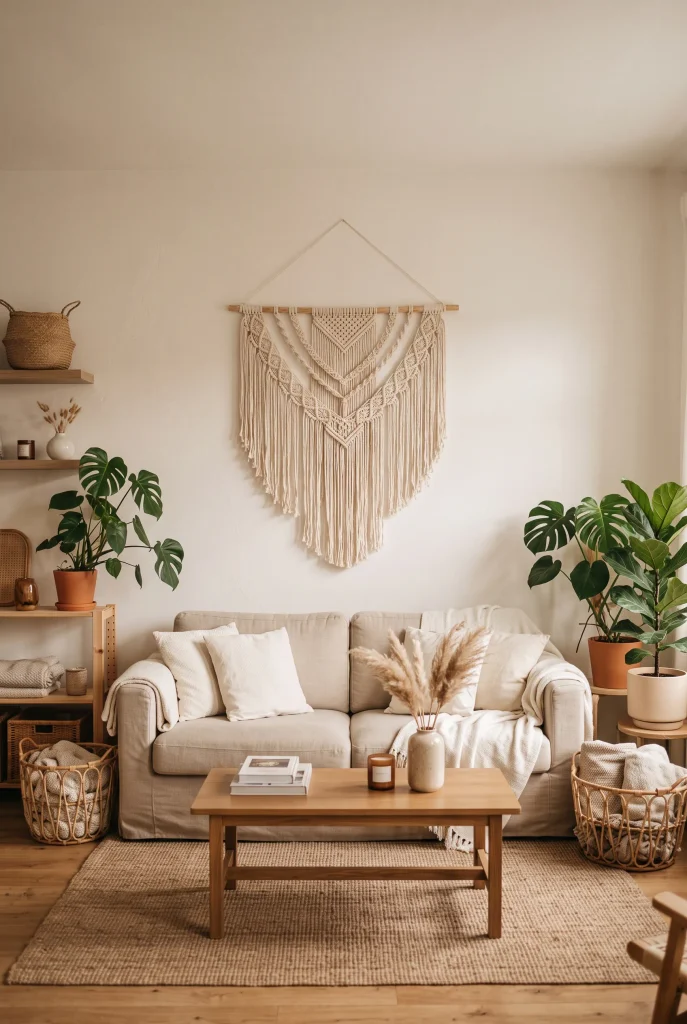
- A large macramé piece adds handmade texture and soft visual interest.
- Cream and ivory tones keep the wall décor easy to coordinate.
- Hanging it above the sofa creates an instant focal point.
- Keep nearby décor simple so the woven pattern remains noticeable.
A macramé wall hanging can instantly give your living room a relaxed, handcrafted character. Choose a substantial cotton design and position it above the sofa so its flowing knots and fringe become a natural focal point. Cream and ivory shades work beautifully with warm white, beige, terracotta, and natural wood. The organic pattern also softens straight furniture lines without introducing bold color. In my experience, one larger textile usually looks more intentional than several small decorations competing across the same wall. Leave some empty space around the piece so its detailed texture remains clearly visible.
For a balanced arrangement, pair the macramé with natural wood furniture, woven baskets, leafy plants, and soft neutral upholstery. A narrow console or simple shelf can sit underneath, but avoid overcrowding the area. If your sofa sits low, choose a longer hanging to draw the eye upward and create more visual height. Look for textured cotton designs with slightly imperfect handmade details for an authentic bohemian feel. This update also works well for renters because one wall hanging can add personality without repainting the room or replacing major furniture pieces.
5. Layered Patterned Rugs
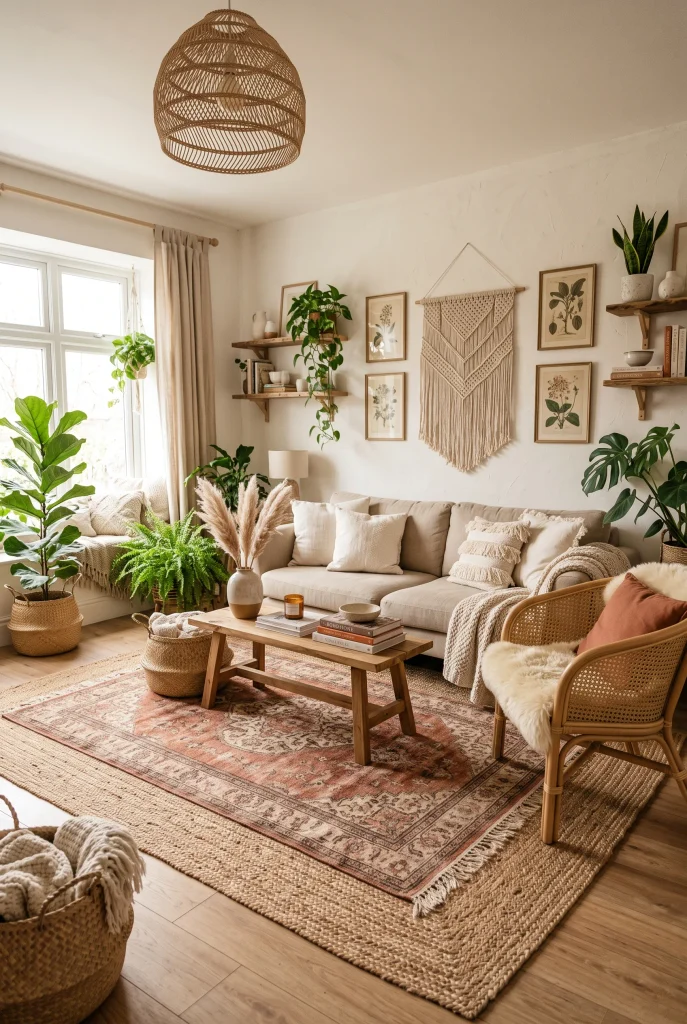
- Layering rugs creates depth and makes the seating area feel grounded.
- A neutral jute base works well beneath a smaller patterned design.
- Muted earthy colors prevent multiple patterns from looking chaotic.
- This technique can visually define an open-plan living area.
Layered rugs are a simple way to make a bohemian living room feel collected, textured, and visually rich. Start with a large neutral jute or woven rug as the foundation, then place a smaller patterned rug beneath the coffee table or central seating area. Choose faded terracotta, cream, beige, rust, and warm brown shades that naturally complement one another. The overlapping edges add dimension while helping define the main seating zone. This approach is especially useful in open-plan homes because the rugs create a clear living area without blocking movement or making the room feel enclosed.
The secret is to vary texture while keeping the colors connected. A chunky natural-fiber rug can support a flatter vintage-inspired pattern, creating contrast that feels deliberate rather than messy. Make sure both rugs sit securely and do not create awkward edges along busy walking paths. I’ve noticed that slightly faded or imperfect patterns often feel more authentic in relaxed bohemian interiors than highly symmetrical designs. If your cushions or artwork already have a noticeable design, choose a quieter combination of rugs. The goal is layered character, with each element supporting the overall design instead of competing for attention.
View: 24 Elegant Neutral Color Palette for Living Room Ideas
6. Oversized Indoor Plants
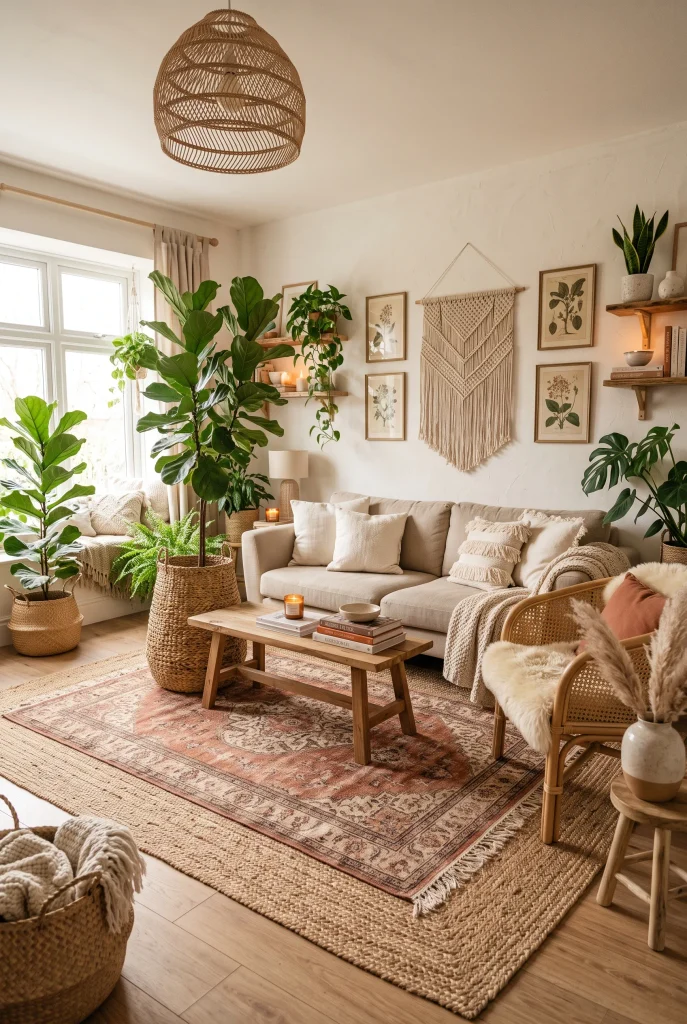
- Large plants bring natural color and fresh energy into neutral rooms.
- Tall greenery can fill an empty corner without adding bulky furniture.
- Woven or terracotta planters strengthen the earthy bohemian palette.
- Always choose plants according to your room’s available natural light.
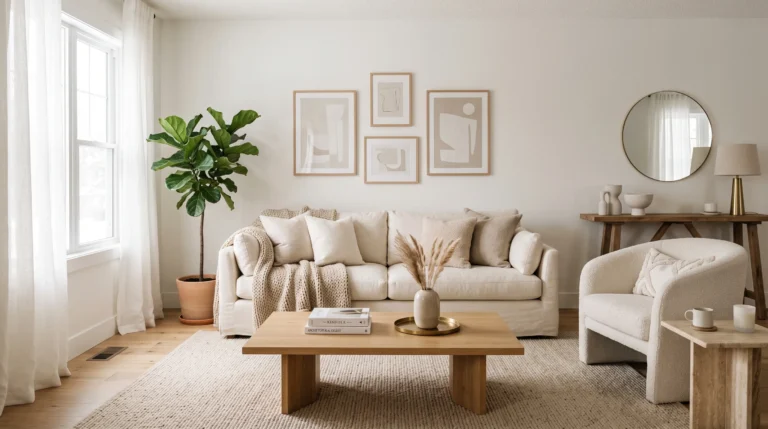
Few additions make a neutral living room feel as fresh and alive as an oversized indoor plant. Place tall greenery beside the sofa, near a bright window, or inside an unused corner to introduce height and organic movement. Choose a woven basket, terracotta planter, or textured ceramic pot that complements the room’s existing materials. Deep green leaves create beautiful contrast against cream walls and beige furniture without overwhelming the palette. For smaller spaces, one substantial plant can make a stronger visual statement than several tiny pots scattered across shelves, tables, and windowsills.
Consider the plant’s mature size, sunlight requirements, and watering needs before choosing its location. A beautiful plant becomes difficult to maintain when placed somewhere unsuitable. Use its shape to balance the room: tall foliage works particularly well beside low furniture, while broader leaves can soften an empty corner. In my experience, greenery looks especially cohesive when paired with rattan, jute, unfinished wood, and other natural materials. Keep the planter relatively simple and let the foliage provide the movement, height, texture, and natural focal point that makes the entire space feel more relaxed and welcoming.
7. Earthy Bohemian Palette
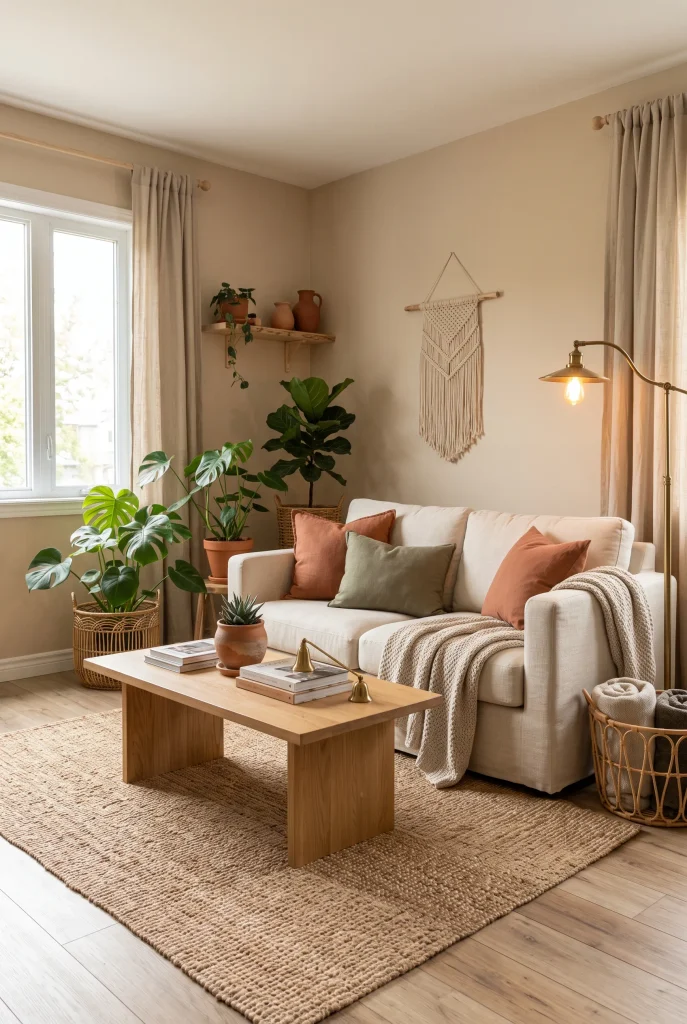
- Earthy colors create a warm and naturally relaxed atmosphere.
- Beige and cream provide a flexible foundation for stronger accents.
- Terracotta and olive tones add personality without making the room feel busy.
- Repeat two or three colors throughout the room for visual balance.
An earthy color palette gives bohemian interiors their warm, grounded personality without making the space feel visually heavy. Start with a calm foundation of cream, beige, or warm ivory, then introduce terracotta, muted olive, caramel, and dusty brown through cushions, rugs, pottery, and artwork. These shades work beautifully together because they reflect natural materials and outdoor landscapes. The result feels collected rather than overly coordinated. If your existing furniture is neutral, you can create this transformation mostly through accessories, making it an approachable option when you want a noticeable refresh without replacing your main pieces.
The easiest way to keep earthy colors sophisticated is to repeat them subtly throughout the room. For example, a terracotta cushion can connect with a clay vase, while muted green artwork can echo nearby foliage. Avoid introducing too many unrelated accent colors because they can weaken the relaxed quality of the palette. I’ve noticed that warm neutrals look especially inviting when combined with varied textures such as linen, wool, rattan, and unfinished wood. Let the strongest colors appear in small doses, while cream and natural beige remain the visual foundation for a calm, comfortable space.
8. Low Wooden Coffee Table
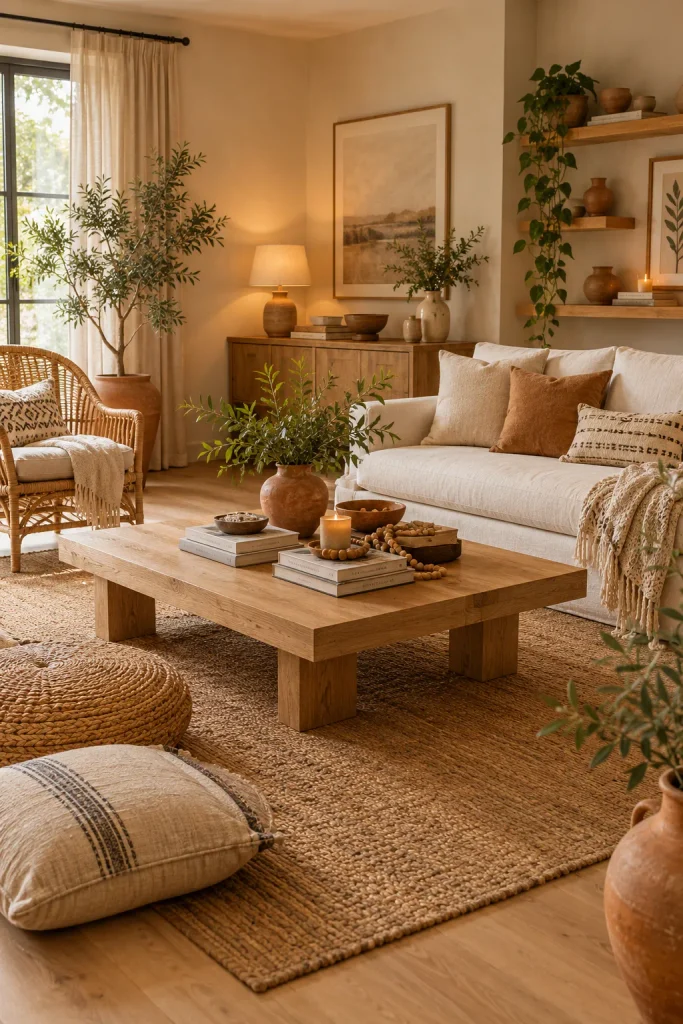
- A low coffee table reinforces the relaxed, grounded feeling of bohemian styling.
- Natural wood adds warmth and connects different earthy materials.
- Rounded edges can soften a room filled with straight furniture.
- Keep the tabletop lightly styled so the space remains practical and uncluttered.
A low wooden coffee table can become the grounding element that ties a relaxed seating arrangement together. Look for natural oak, reclaimed wood, or another warm timber with visible grain and a simple silhouette. Its lower profile works especially well with sofas, floor cushions, woven rugs, and relaxed accent chairs. Instead of filling the tabletop with decorations, use a small ceramic bowl, a few books, or one textured vase. The open space around the table helps preserve the airy quality that makes bohemian rooms feel comfortable rather than crowded, while the natural wood adds warmth and visual continuity.
Think about proportion before choosing your table, especially if your sofa is large or your living room is compact. A table that is too small can look disconnected, while an oversized design can restrict movement around the seating area. Leave comfortable walking space and make sure the height feels convenient for everyday use. In my experience, simple wooden tables are particularly versatile because they can adapt when you change cushions, rugs, or wall décor. If you want more softness, choose rounded corners or an organic shape that contrasts gently with rectangular sofas and other structured furniture.
9. Vintage Gallery Wall
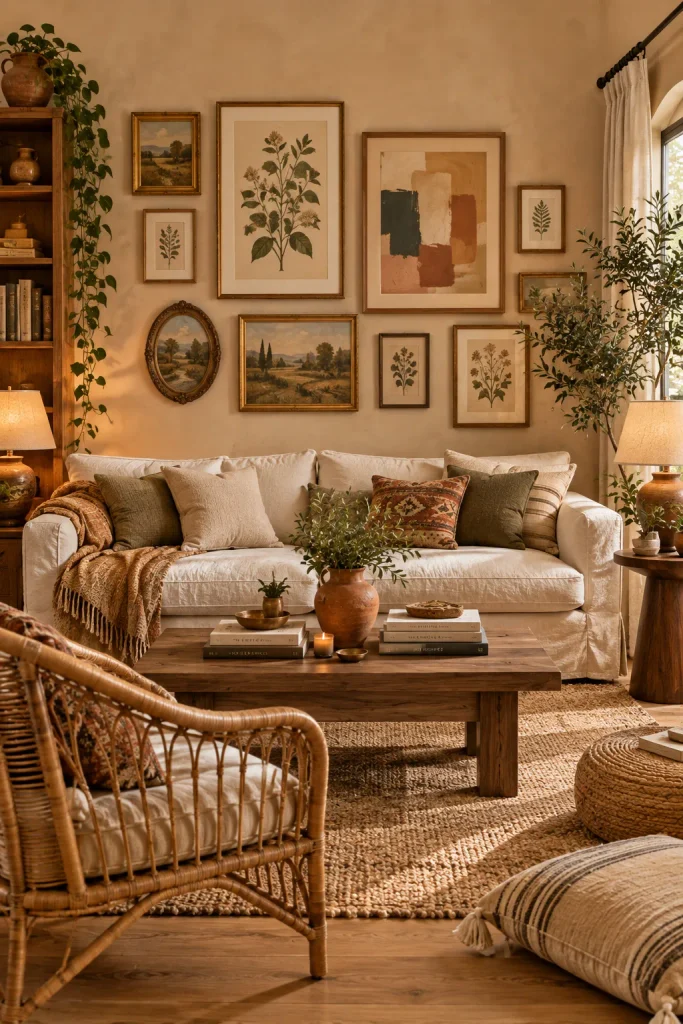
- A gallery wall adds personality and makes plain walls feel collected.
- Mix botanical prints, abstract artwork, and vintage-inspired frames for variety.
- Keep a shared color palette so different pieces still feel connected.
- Arrange artwork loosely rather than making every frame perfectly symmetrical.
A vintage gallery wall can give a bohemian living room a collected personality that feels personal rather than showroom-perfect. Combine botanical prints, abstract artwork, small landscapes, line drawings, and vintage-inspired frames in different sizes. Warm wood, aged brass, black, and neutral frames can work together when the artwork shares a related color palette. Place the collection above a sofa, console, or empty wall where it can become a natural focal point. The mixture of shapes and textures creates visual interest while giving the room a sense of history, even when many pieces are newly purchased.
Before hanging everything, arrange the frames on the floor and experiment with spacing until the composition feels balanced. Keep the center of the overall arrangement around eye level, then build outward with smaller pieces. Leave enough breathing room between frames so the wall does not become visually overwhelming. I’ve seen gallery walls look especially successful when one or two colors from the artwork are repeated elsewhere in the room through cushions, pottery, or rugs. This small connection makes an eclectic collection feel intentional while preserving the relaxed, layered character that suits bohemian interiors.
10. Natural Wood Shelving
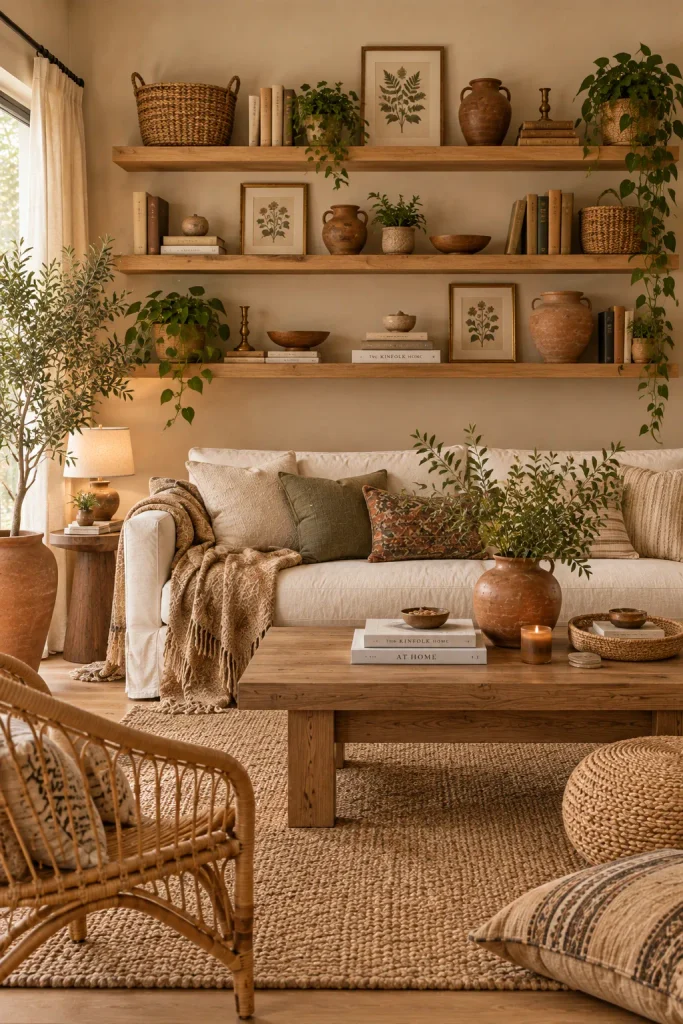
- Open wooden shelves add storage while keeping the room visually light.
- Mix books, ceramics, plants, and woven pieces for natural variety.
- Leave some shelf space empty to prevent a cluttered appearance.
- Use matching wood tones to connect the shelving with existing furniture.
Natural wood shelving can turn an empty wall into a useful display without making a bohemian living room feel crowded. Choose open shelves in oak, walnut, or another warm wood and style them with a relaxed mix of pottery, books, small plants, woven baskets, and framed artwork. The open design keeps the wall airy while giving everyday objects a place to shine. Use different heights and shapes to create visual rhythm, but leave some empty space between groups. This balance allows the shelves to feel collected and personal rather than overly arranged or filled from edge to edge.
Think of each shelf as a small composition instead of trying to decorate every available inch. Place heavier objects toward the bottom and lighter pieces higher up to create a balanced appearance. Repeat colors from your sofa, rug, and artwork so the display connects naturally with the rest of the room. I’ve noticed that adding greenery between books and ceramics makes open shelving feel much more organic. If you need hidden storage, include a few woven baskets for smaller items. This keeps practical belongings accessible while preserving the warm, relaxed character that makes bohemian spaces feel inviting.
11. Soft Layered Throws
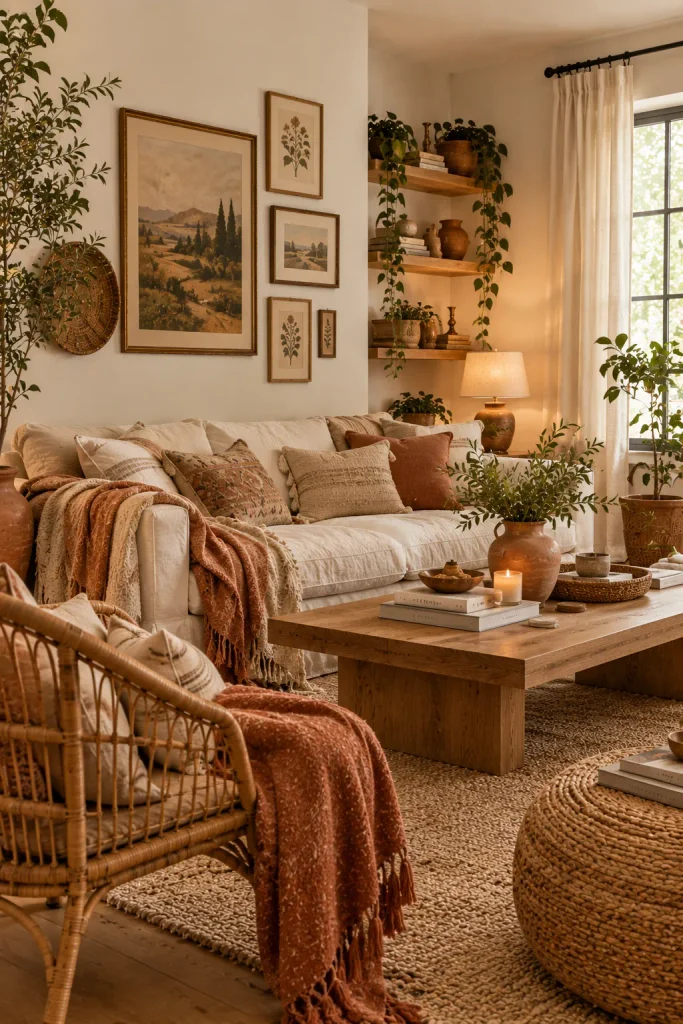
- Layered throws instantly make seating look softer and more inviting.
- Combine linen, cotton, wool, and woven fabrics for tactile contrast.
- Drape throws naturally instead of folding every piece perfectly.
- Keep colors within the room’s existing earthy palette for cohesion.
A few thoughtfully placed throws can make a bohemian living room look instantly warmer and more lived-in. Choose lightweight linen, soft cotton, chunky wool, or woven fabrics in cream, beige, camel, muted terracotta, or olive. Drape one casually over the arm of the sofa and another across an accent chair instead of arranging them too neatly. The relaxed folds introduce movement and texture while making the seating feel ready for everyday use. This small styling change is particularly helpful when a room has simple furniture because the fabrics add softness without requiring additional decorative pieces.
Use different fabric weights to create depth rather than buying several identical throws. A chunky knit can contrast beautifully with smooth linen, while a lightly patterned cotton piece can introduce subtle visual interest. Keep the strongest pattern limited to one textile if the room already contains a patterned rug or artwork. In my experience, throws look most natural when they appear functional rather than perfectly staged. Choose materials that are comfortable enough to actually use, then let them remain slightly imperfect. That casual quality is what gives the space its welcoming bohemian personality.
12. Arched Floor Mirror
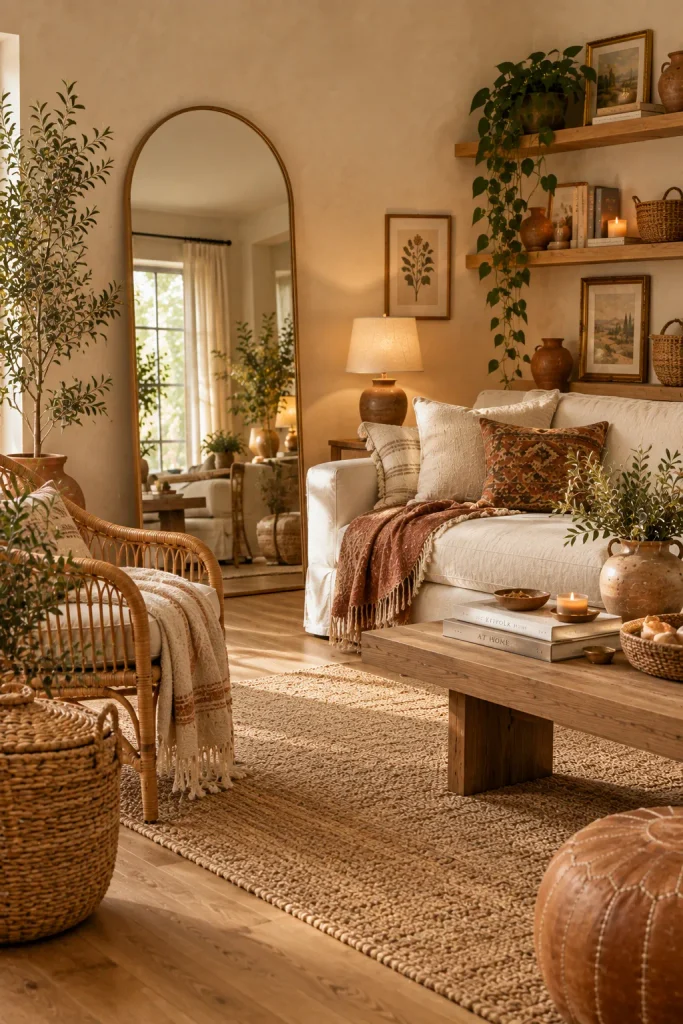
- A tall mirror can make a room feel brighter and more spacious.
- Arched shapes soften the straight lines of sofas and tables.
- Leaning the mirror creates a relaxed, effortless bohemian look.
- Position it where it can reflect natural light or attractive greenery.
An arched floor mirror can add both function and visual softness to a bohemian living room. Choose a tall design with a simple wood, brass, or understated frame and lean it against a warm neutral wall rather than mounting it. The curved top contrasts beautifully with rectangular sofas, shelving, and coffee tables, creating a more relaxed composition. Position the mirror where it can reflect a window, greenery, or another attractive part of the room. This makes the space feel brighter while visually extending the room, especially when the surrounding furniture and walls stay within a light earthy palette.
Before positioning the mirror permanently, test several angles to see what it reflects from the main seating area. Avoid reflecting clutter, television screens, or busy storage because the mirror will visually repeat whatever appears inside it. A nearby plant or textured chair can create a much more appealing reflection. I’ve noticed that oversized mirrors often work better than small decorative ones when the goal is to make a living room feel larger. Keep the surrounding styling simple so the curved silhouette remains visible and the mirror becomes a calm architectural feature rather than another crowded accessory.
13. Handwoven Basket Storage
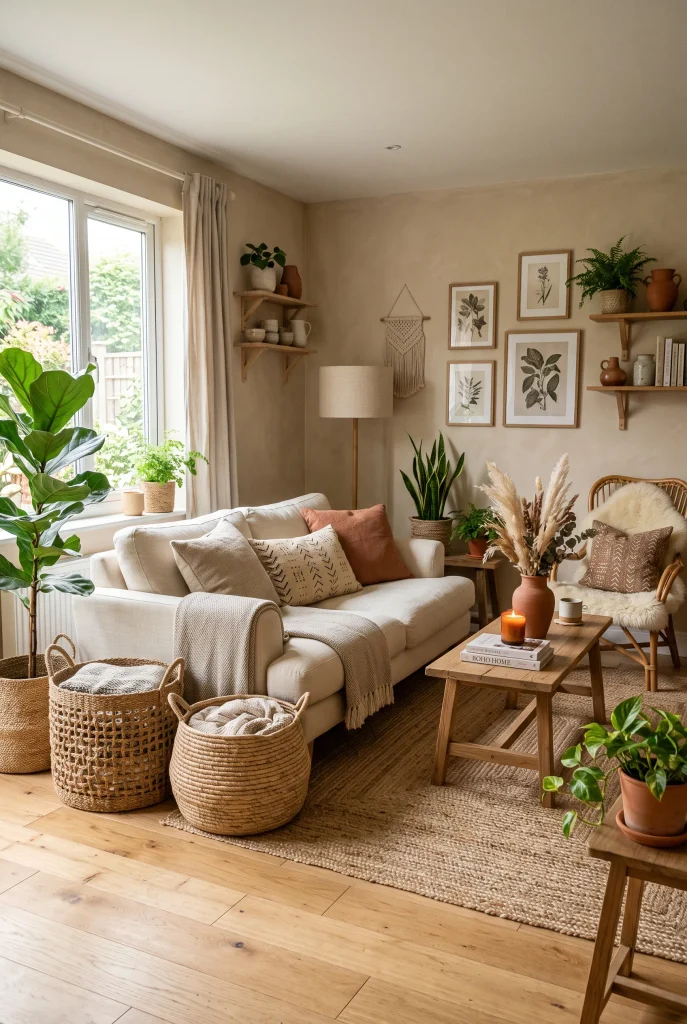
- Woven baskets add practical storage without looking overly utilitarian.
- Use them for blankets, cushions, magazines, or everyday living-room items.
- Natural seagrass and rattan complement wood, linen, and jute beautifully.
- Choose different basket sizes to create a relaxed layered arrangement.
Handwoven baskets are one of the easiest ways to combine practical storage with relaxed bohemian style. Place a large basket beside the sofa for blankets, a smaller one beneath a console, or a lidded basket near the seating area for everyday clutter. Natural seagrass, rattan, and woven grasses introduce texture while keeping the room within an earthy color palette. Instead of hiding useful items in bulky cabinets, baskets allow you to keep frequently used pieces within easy reach. Their organic shapes also soften the harder lines of furniture, shelves, and coffee tables throughout the room.
Choose baskets according to both their purpose and available floor space. A tall basket works well beside a sofa, while shallow styles can fit underneath shelving or a console. Avoid filling every corner with storage containers because the room can quickly lose its airy appearance. I’ve noticed that baskets look most intentional when grouped with natural materials already present, such as wood, linen, jute, and rattan. Keep the colors close to your existing palette and vary the shapes slightly. This creates useful storage while preserving the relaxed, collected feeling that makes bohemian rooms so inviting.
14. Organic Shaped Decor
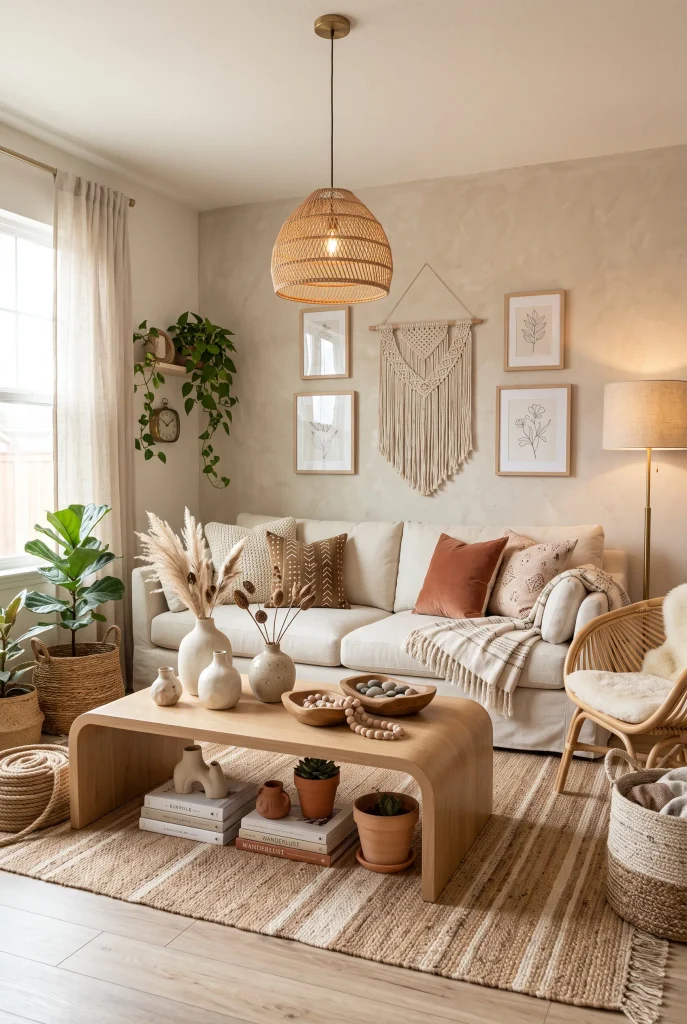
- Organic shapes soften rooms filled with straight furniture and sharp edges.
- Rounded pottery and sculptural objects add interest without excessive color.
- Mix curved accessories with natural wood, linen, and woven materials.
- Use a few distinctive pieces rather than filling every surface.
Organic-shaped décor brings subtle movement into a bohemian living room and prevents the space from feeling too rigid. Look for rounded ceramic vases, curved wooden bowls, sculptural pottery, irregular trays, or softly shaped decorative objects. These forms work especially well alongside rectangular sofas, square coffee tables, and straight shelving because the contrast creates visual balance. Keep the colors restrained with cream, sand, terracotta, muted brown, and warm white. The result feels artistic without becoming overly formal. Even a few carefully selected pieces can make simple furniture arrangements look more considered and naturally layered.
When styling organic décor, vary the height and silhouette of each object rather than creating a perfectly symmetrical display. A rounded vase can sit beside stacked books, while a sculptural bowl can anchor the center of a coffee table. Leave enough negative space around each piece so its shape remains easy to appreciate. In my experience, handmade-looking ceramics are particularly effective because their small imperfections add character. If the room already has several patterns, keep the shapes simple and let form provide the visual interest. This creates a sophisticated bohemian atmosphere without unnecessary clutter.
15. Boho Reading Nook
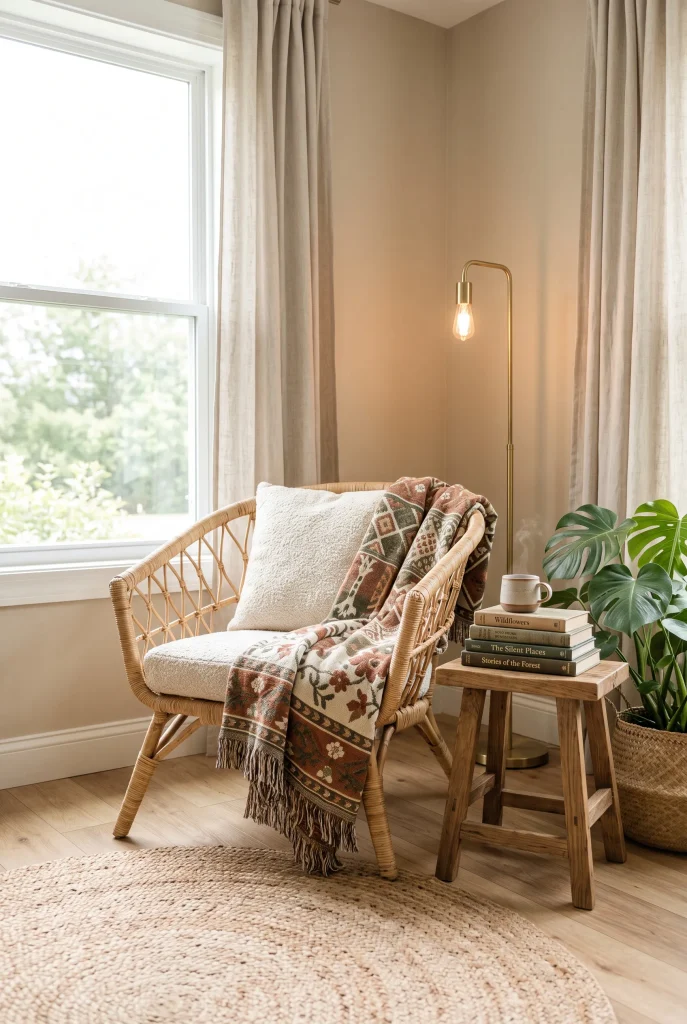
- A dedicated reading corner adds function and personality to an unused area.
- Rattan seating and woven textiles reinforce the natural bohemian aesthetic.
- Place the chair near a window for comfortable daytime reading.
- Add a small lamp so the corner remains useful after sunset.
A cozy reading nook can transform an overlooked corner into one of the most useful parts of a bohemian living room. Start with a comfortable rattan or upholstered chair, then add a soft cushion, lightweight throw, and small wooden side table. Position the setup near a window whenever possible so natural daylight makes the corner feel bright and inviting. A floor lamp provides practical evening lighting, while a small stack of books adds personality without creating clutter. This simple zone gives the room another purpose while reinforcing the relaxed, lived-in atmosphere associated with bohemian interiors.
Keep the reading corner visually connected to the main seating area by repeating one or two materials or colors. For example, match the chair cushion to the sofa textiles or choose a rug that echoes the main room’s earthy tones. Make sure there is enough clearance around the chair so the area feels comfortable rather than squeezed into an unused gap. I’ve seen small reading corners work particularly well because they create a personal retreat without requiring a separate room. Add one plant or woven basket nearby, then leave the rest of the corner intentionally simple for a peaceful finish.
16. Layered Boho Lighting
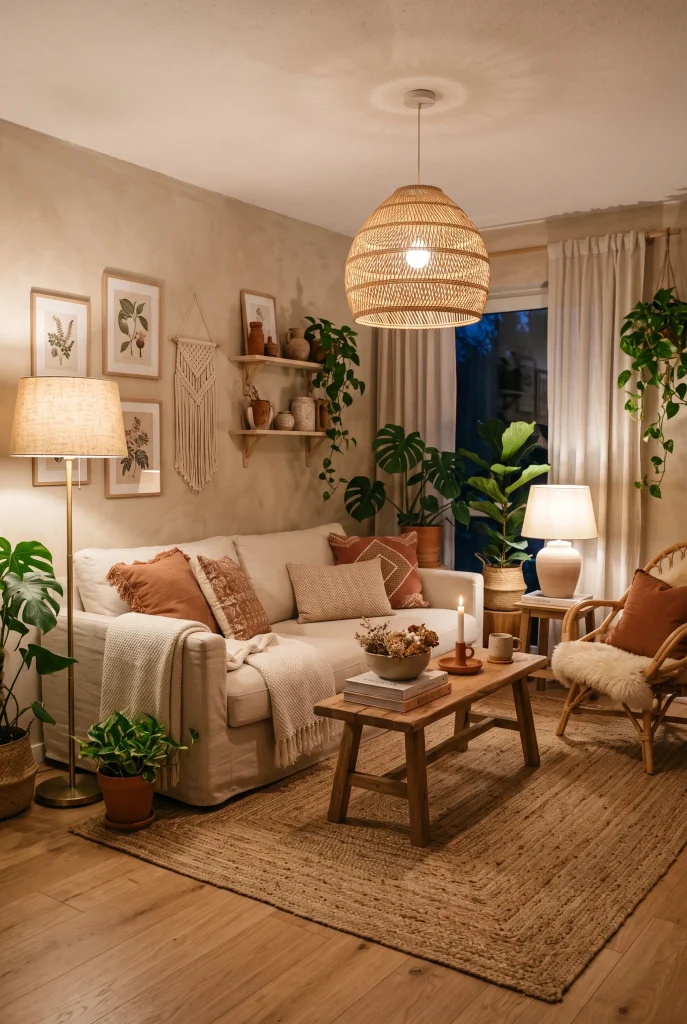
- Layering several light sources makes the room feel warmer and more dimensional.
- Combine overhead lighting with floor and table lamps for flexibility.
- Warm bulbs complement earthy bohemian colors and natural materials.
- Place lamps near seating areas where practical task lighting is needed.
Good lighting can make even simple bohemian furniture feel dramatically more inviting, especially after sunset. Instead of relying on one ceiling fixture, combine a woven pendant with a floor lamp, table lamp, or wall light to create several gentle pools of illumination. Warm bulbs work beautifully with cream, beige, terracotta, wood, and rattan because they enhance the natural warmth of these materials. Position smaller lamps near seating areas, reading corners, and side tables so the room feels evenly lit without becoming overly bright. This layered approach also lets you adjust the atmosphere depending on the activity.
Think about lighting at different heights to create a more balanced evening environment. A floor lamp can illuminate an empty corner, while a table lamp adds a softer glow closer to eye level. Keep cords safely arranged and choose shades that diffuse rather than expose harsh bulbs directly. I’ve noticed that warm, indirect lighting makes textured materials look richer because woven fibers, linen, and ceramics create gentle shadows. You do not need expensive fixtures to achieve the effect. Even two carefully positioned lamps can make a noticeable difference in comfort, depth, and overall ambiance.
17. Muted Botanical Artwork
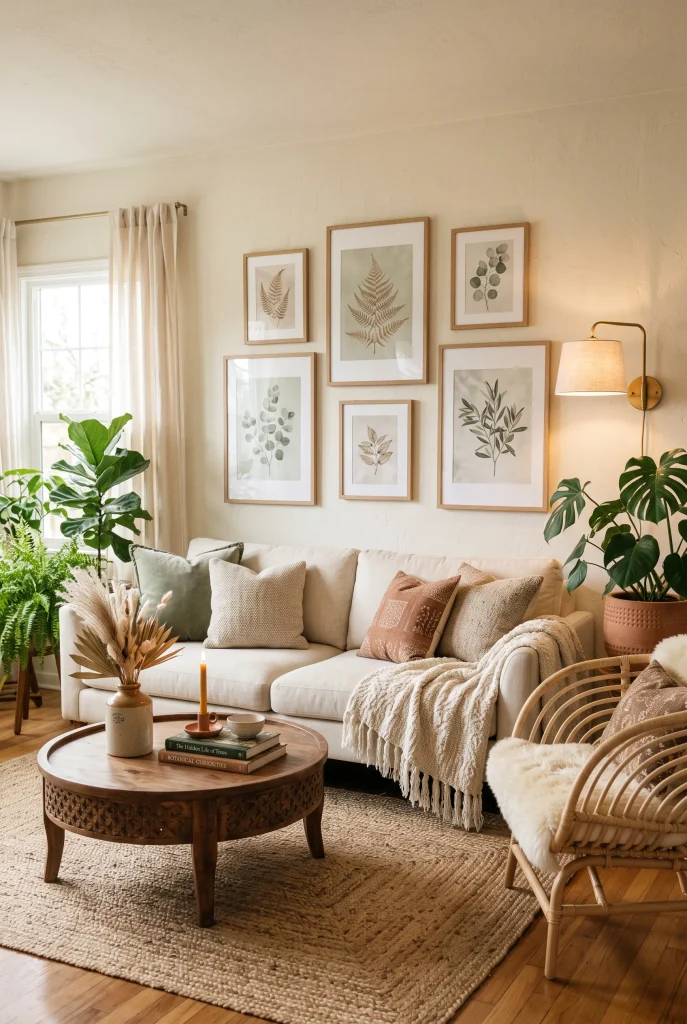
- Botanical artwork introduces nature-inspired detail without overwhelming the room.
- Muted greens and beige tones work beautifully with earthy neutral furniture.
- Natural wood frames add warmth and connect with other organic materials.
- Use one large print or a balanced pair above the main sofa.
Muted botanical artwork can add a quiet connection to nature while keeping a bohemian living room sophisticated and calm. Choose prints featuring leaves, grasses, branches, or delicate botanical illustrations in soft sage, olive, beige, cream, and faded brown. Hang one large piece above the sofa or create a simple arrangement of two or three complementary prints. Natural wood frames work especially well because they echo the warmth of rattan, jute, and wooden furniture. The gentle imagery adds visual interest without competing with patterned rugs, textured cushions, or other layered elements already present in the room.
Keep botanical artwork slightly understated if the room already contains strong natural textures. The goal is to create harmony rather than turn every wall into a statement. Choose artwork with similar tones to nearby cushions, ceramics, or plants so the colors repeat naturally throughout the space. I’ve noticed that botanical prints are particularly useful when a room lacks real greenery because they still introduce an organic visual theme. If you have plenty of plants already, use simpler artwork with more negative space. This keeps the room feeling fresh, airy, and collected rather than excessively decorated.
18. Curved Bouclé Chair
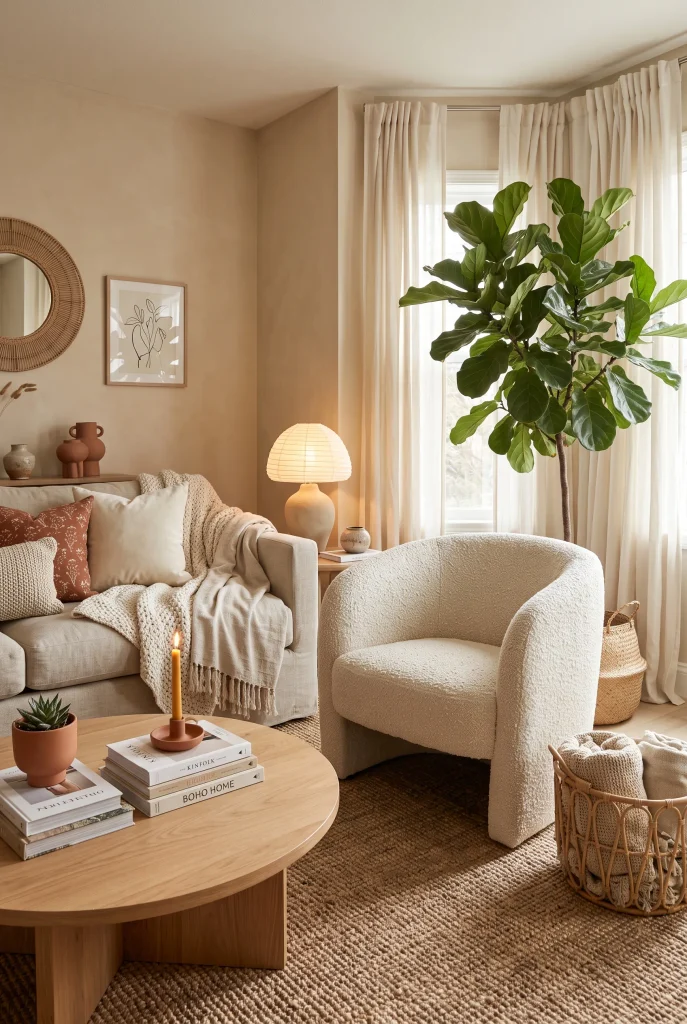
- A curved chair softens the room and creates a comfortable secondary seating spot.
- Bouclé adds tactile softness against rougher woven and wooden materials.
- Cream upholstery keeps the chair versatile within an earthy palette.
- Place it at an angle to create a relaxed conversational arrangement.
A curved bouclé chair can introduce softness and sculptural shape without moving away from a relaxed bohemian aesthetic. Choose a cream, ivory, or oatmeal chair with rounded arms and a generously cushioned seat. Its curved silhouette creates contrast against rectangular sofas, shelves, and coffee tables, while the textured bouclé fabric adds another tactile layer. Place it slightly angled toward the main sofa to encourage conversation rather than pointing it directly at the television. This small change can make the entire seating arrangement feel more intentional while providing a comfortable spot for reading or relaxing.
Balance the chair’s plush texture with natural materials elsewhere in the room. A jute rug, wooden side table, woven basket, or rattan accessory can prevent the bouclé from making the space feel too polished. Consider the chair’s scale carefully, especially in smaller living rooms, because rounded furniture can still occupy substantial floor space. In my experience, one sculptural chair often has more impact than several decorative seating pieces. Keep nearby accessories simple and allow the chair’s shape and texture to stand out. The result is comfortable, contemporary, and naturally compatible with layered bohemian styling.
19. Mixed Textile Cushions
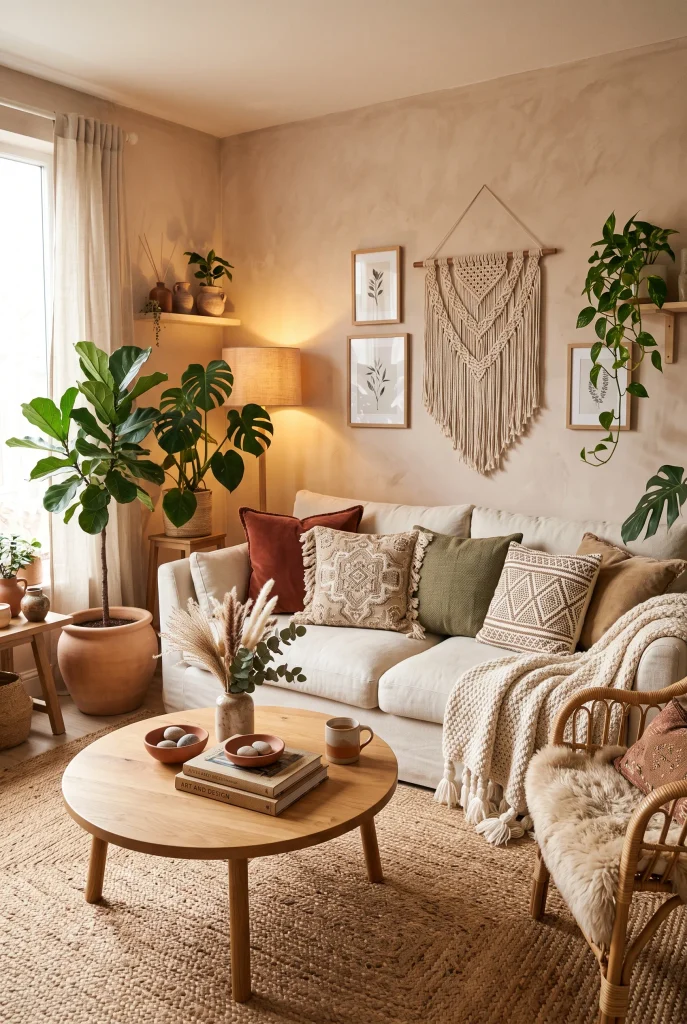
- Mixing cushion textures creates depth without requiring bold furniture.
- Combine linen, cotton, embroidery, and woven fabrics for visual variety.
- Keep colors within the same earthy palette for a cohesive finish.
- Use different sizes and shapes to make the sofa feel more relaxed.
Mixed textile cushions can make a simple sofa look instantly warmer, richer, and more inviting. Combine linen, cotton, woven, embroidered, and subtly patterned covers in cream, beige, terracotta, muted olive, and warm brown. Vary the sizes so the arrangement feels naturally layered rather than perfectly matched. A few tactile cushions can introduce the handcrafted character often associated with bohemian interiors while keeping the main furniture neutral. This is also an easy seasonal update because cushion covers can be switched without replacing the sofa. The result feels comfortable, personal, and intentionally collected without becoming visually overwhelming.
Start with two or three larger cushions at the back, then add smaller textured pieces toward the front. Keep at least one or two colors consistent so the different patterns still feel connected. If your rug or artwork already has a noticeable design, choose quieter cushion patterns to prevent visual competition. I’ve noticed that slightly varied textures often create more interest than adding many different prints. For everyday homes, removable washable covers are especially practical. Choose fabrics that feel comfortable and durable, then allow the cushions to sit naturally instead of constantly arranging them into a perfectly symmetrical display.
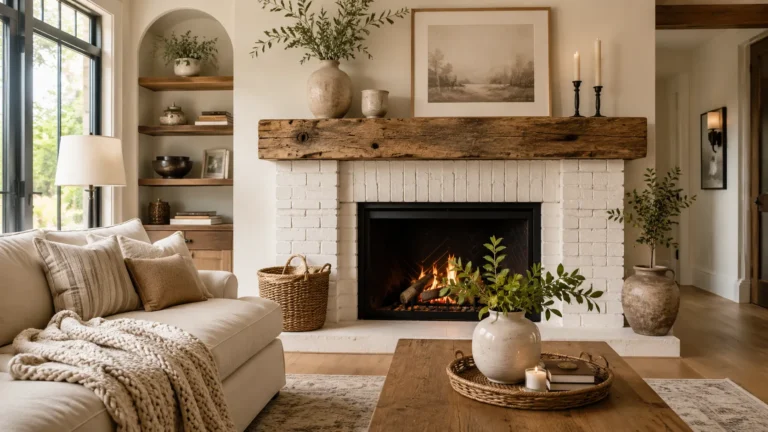
20. Bohemian Fireplace Styling
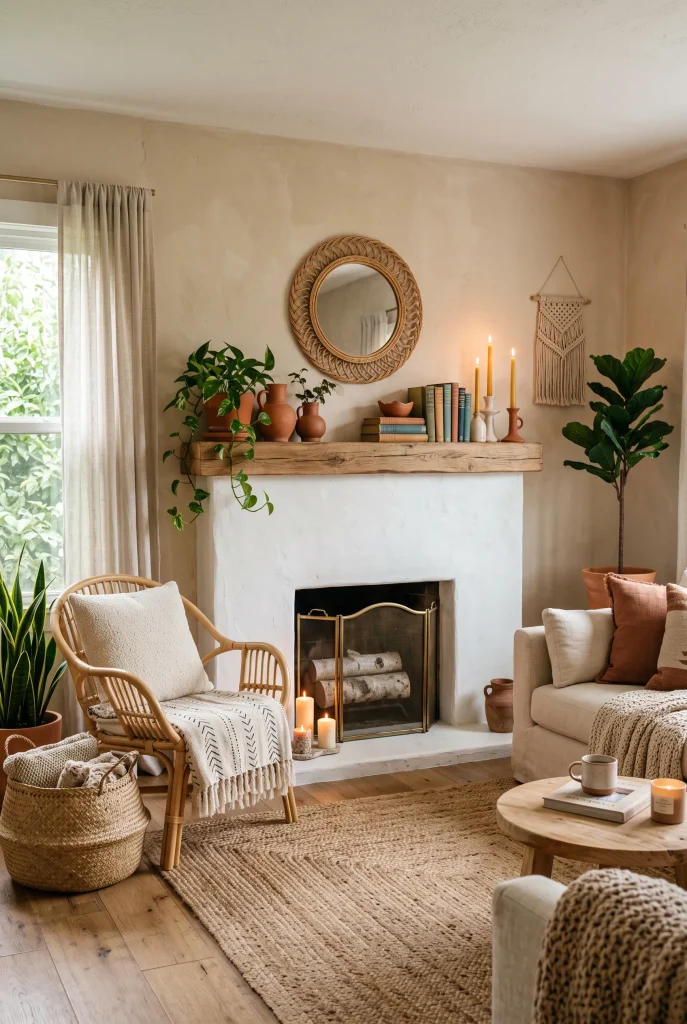
- A fireplace creates a natural focal point for layered bohemian styling.
- Add pottery, baskets, books, and greenery instead of excessive decoration.
- Keep mantel colors earthy to complement the surrounding furniture.
- Leave some empty space so the fireplace remains visually prominent.
A fireplace can become the perfect anchor for relaxed bohemian decorating when its styling remains simple and organic. Use a natural wood mantel or a clean plaster surround as the foundation, then add a few terracotta vessels, handmade ceramics, vintage books, woven baskets, or leafy plants. These elements create texture and personality without requiring a large collection of accessories. Keep the colors connected to the room through cream, beige, brown, muted green, and terracotta. The fireplace should remain the visual centerpiece, while the surrounding details gently reinforce the room’s natural and collected character.
Avoid placing too many small objects across the mantel because excessive styling can make the area look busy. Instead, combine one taller piece with a few lower objects and leave intentional gaps between them. If the fireplace is functional, keep decorative materials safely away from heat and follow the manufacturer’s clearance recommendations. I’ve noticed that greenery and handmade ceramics work particularly well around fireplaces because their organic shapes soften the strong architectural lines. For a smaller room, a simple arrangement can be enough to create a focal point while preserving valuable visual space around the seating area.
21. Relaxed Layered Bedding-Style Textiles
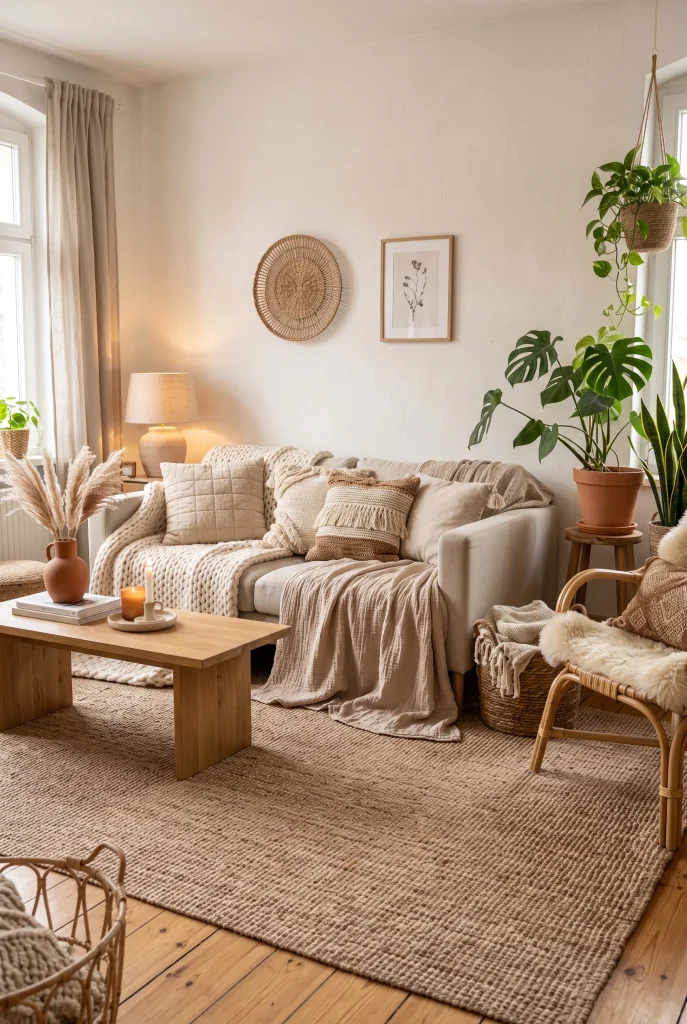
- Layered textiles make the seating area feel soft and welcoming.
- Quilted, woven, and cotton pieces add subtle handmade character.
- Neutral fabrics create richness without relying on strong patterns.
- Keep the layers functional so the room remains comfortable for everyday use.
Soft, layered textiles can give a bohemian living room the relaxed comfort of a favorite retreat. Combine oversized cotton throws, quilted cushions, woven pillows, lightweight blankets, and textured rugs to create depth around the seating area. Keep most fabrics within cream, ivory, beige, camel, and muted earthy tones so the room feels cohesive. The different surfaces create visual richness even when the colors remain restrained. This approach is especially useful when your furniture has a simple contemporary shape because soft layers introduce the casual character that makes the room feel less formal and more comfortable.
The trick is to layer intentionally rather than simply adding more fabric. Start with the rug, build texture through the sofa cushions, then finish with one or two throws placed where they can actually be used. Choose breathable fabrics for warmer climates and washable covers when the living room receives heavy daily use. In my experience, practical textiles tend to create a more authentic space because they naturally become part of everyday life. Leave some furniture surfaces visible between layers so the room retains breathing space. The finished arrangement should look cozy, useful, and effortlessly lived-in.
22. Vintage Wooden Furniture
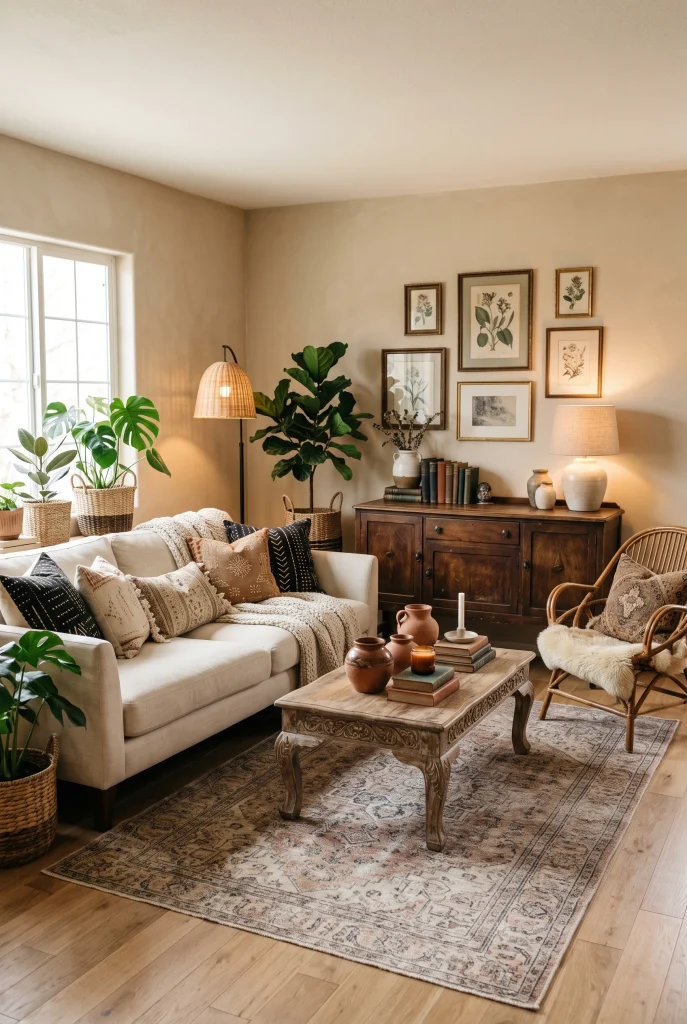
- Vintage wood introduces warmth, character, and visible natural grain.
- Look for pieces with subtle wear rather than heavily distressed finishes.
- Mix older furniture with simple contemporary upholstery for balance.
- One standout wooden piece can anchor an otherwise neutral room.
Vintage wooden furniture gives a bohemian living room a sense of depth that new matching furniture often cannot recreate. A worn sideboard, carved coffee table, wooden cabinet, or small antique-style console can introduce natural grain, subtle imperfections, and visual history. Pair one character-rich piece with a simple cream sofa and contemporary accessories so the room feels collected rather than themed. Warm walnut, honey oak, and medium brown finishes work particularly well with jute, rattan, linen, and terracotta. The combination creates a layered foundation where every material contributes something different without making the room feel excessively decorated.
When shopping for vintage-inspired pieces, focus on shape, condition, and proportion rather than trying to make everything match. A slightly weathered finish can add authenticity, but damaged furniture should still be sturdy and practical for everyday use. Keep the surrounding accessories restrained so the wood remains a noticeable feature. I’ve noticed that older-looking furniture often becomes more versatile when paired with modern neutral upholstery because the contrast keeps the room fresh. If genuine vintage pieces are difficult to find, choose new furniture with natural grain, simple construction, and gently aged details to achieve a similar character.
23. Cozy Floor Cushions
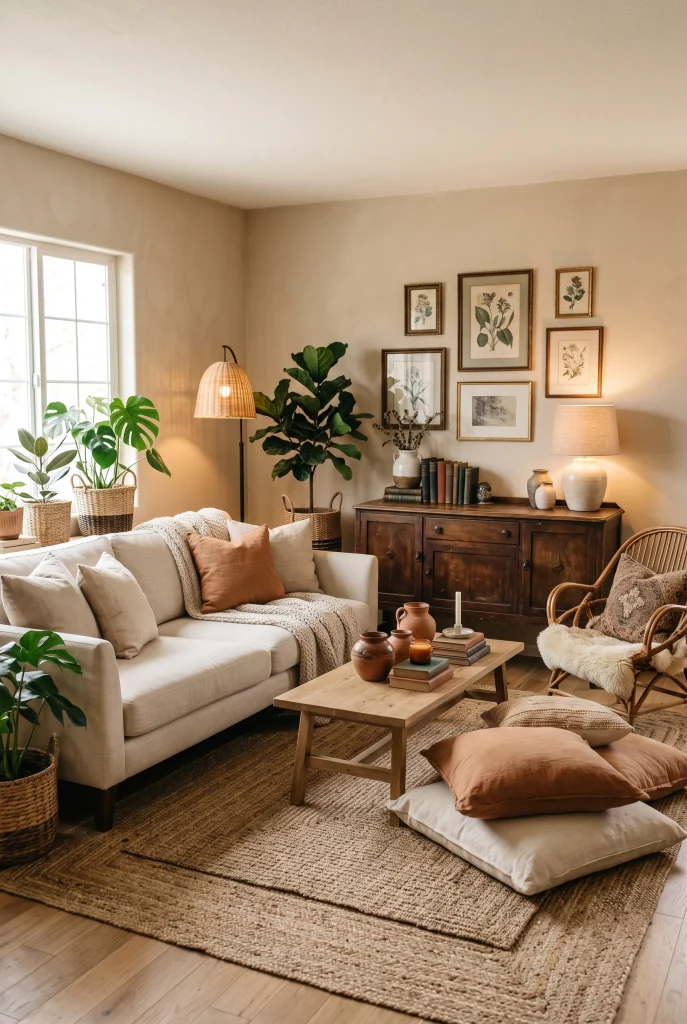
- Floor cushions provide flexible seating without adding bulky furniture.
- Oversized shapes make the arrangement feel casual and inviting.
- Choose washable cotton, linen, or durable woven covers for everyday use.
- Store extra cushions in a woven basket when the floor needs to stay clear.
Floor cushions bring an easygoing quality to a bohemian living room while providing extra seating when guests arrive. Choose oversized cushions in cream, beige, rust, muted olive, or warm brown and arrange them around a low coffee table or beside the main sofa. Their relaxed shape works naturally with woven rugs and low furniture, creating a comfortable area for reading, chatting, or enjoying a casual evening. They are also useful when a room needs flexible seating without committing to another large chair. Keep the palette coordinated with your existing textiles so the cushions feel intentionally layered.
Comfort and practicality should guide your choices, especially if the cushions will be used frequently. Look for sturdy covers that can be removed for cleaning, and choose fillings that hold their shape without becoming too firm. A woven basket nearby can provide convenient storage when you need more open floor space. In my experience, two or three generously sized cushions usually create a stronger visual effect than many small ones scattered around. Add a soft throw or textured rug nearby to make the seating zone feel complete while maintaining the relaxed, uncluttered character of the room.
Conclusion
Creating a cozy bohemian living room is less about following strict rules and more about layering pieces that feel natural, comfortable, and personal. From woven textures and earthy colors to vintage furniture, soft textiles, greenery, and warm lighting, each detail can add character without overwhelming your space. Boho living room ideas give you plenty of flexibility to start small and build your style over time. Save this post on Pinterest so you can return to your favorite ideas when you’re ready to decorate. Try one change today, share this article with someone planning a makeover, and enjoy creating a room that truly feels like home.