21 Book Storage Ideas That Make Clutter Look Beautiful
Books can make a room feel warm, personal, and full of character—but too many books without a proper place can quickly make the space feel messy. The right book storage ideas can change that completely. From floating shelves and cozy window seats to hidden cabinets and creative corner displays, there are plenty of ways to keep your collection organized while making it part of your decor. Whether you live in a small apartment or have an entire reading room, these ideas can help you use your space more effectively. When books have a beautiful, practical home, the whole room instantly feels more intentional.
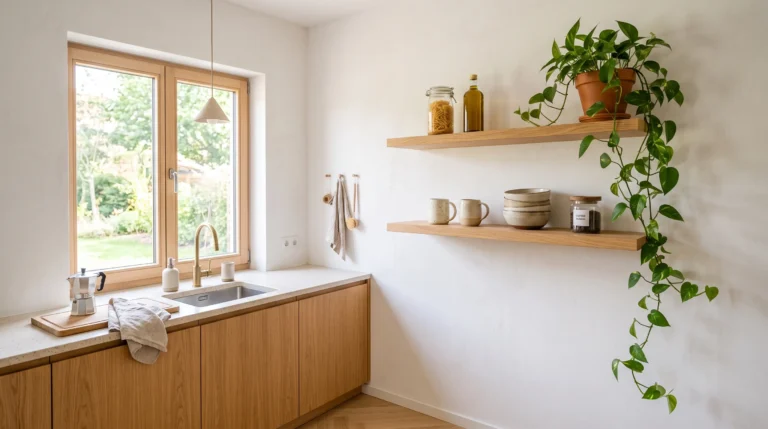
1. Floating Wood Shelves
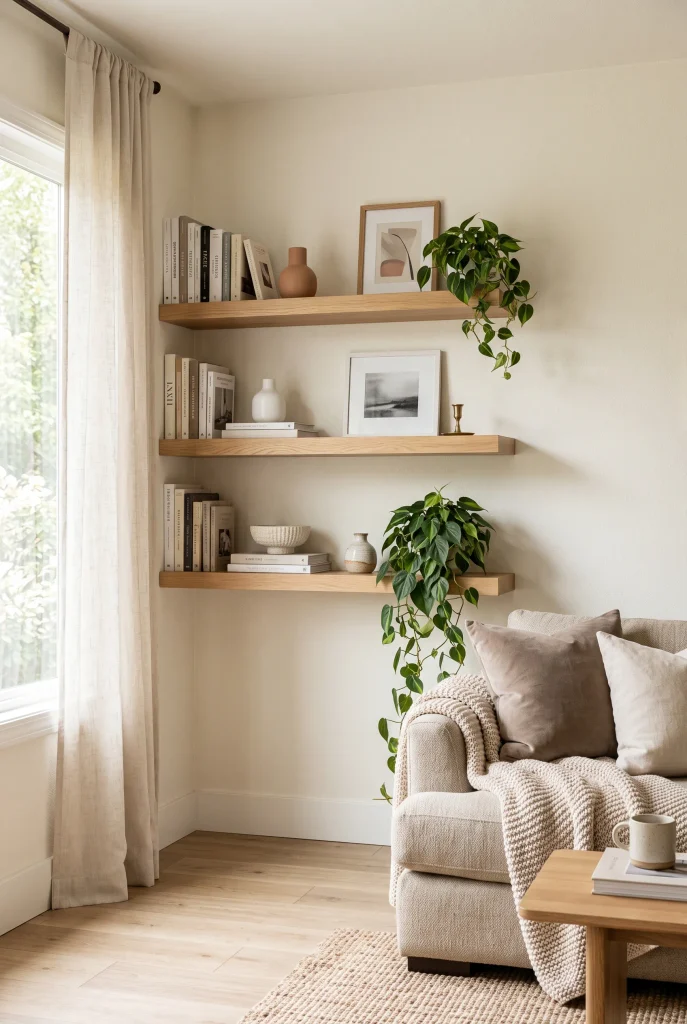
- Floating shelves keep books visible without taking up floor space.
- Natural wood adds warmth while keeping the arrangement simple.
- Mixing books with a few small accents prevents a crowded look.
- Staggered shelf heights can make compact walls feel more intentional.
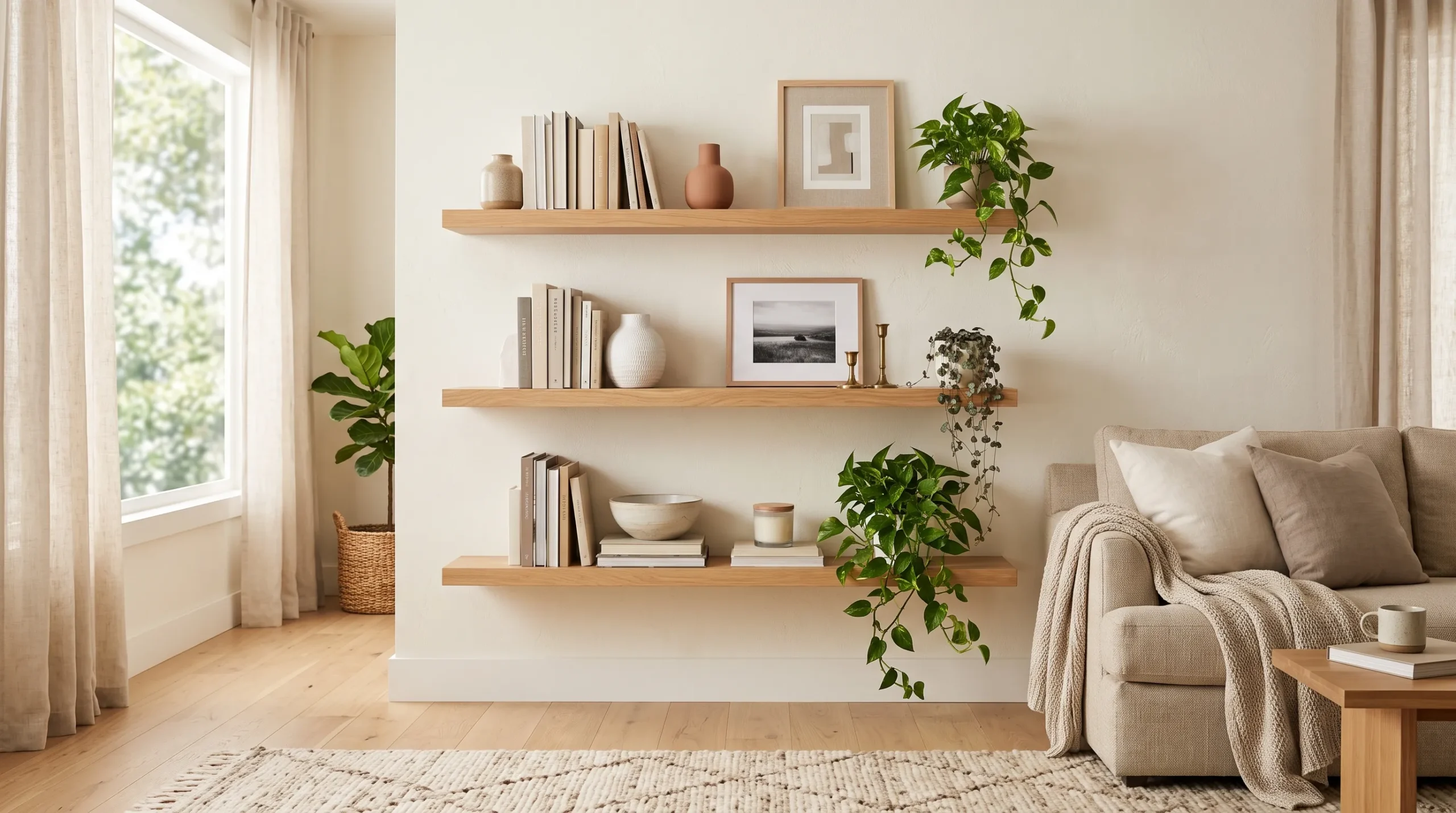
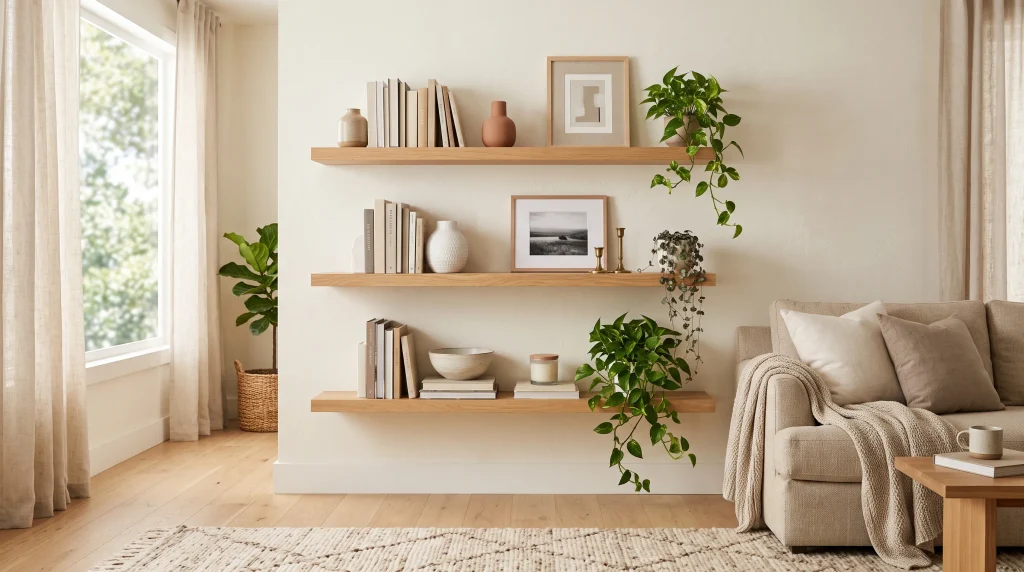
Floating shelves are an easy way to turn an unused wall into a useful display without making the room feel heavy. Arrange books vertically, then leave small gaps for ceramics, plants, or framed pieces to create breathing room. Natural wood works especially well with cream, beige, and warm white interiors because it adds texture without overwhelming the palette. Keeping the shelves slightly wider than the furniture beneath them creates a balanced look. This approach works beautifully in living rooms, bedrooms, home offices, and even narrow hallways where floor space is limited.
The best part of this setup is how easily it can adapt as your collection grows. Keep your most attractive covers or favorite books on the center shelf, then use lower shelves for larger stacks and everyday reading. You can also vary the direction of a few books to create visual rhythm without making the display look overly styled. For renters, removable or lightweight shelving options may provide a similar effect when permanent installation is not possible. The result is practical storage that feels like intentional decor rather than a solution added after clutter becomes a problem.
2. Built-In Book Nook
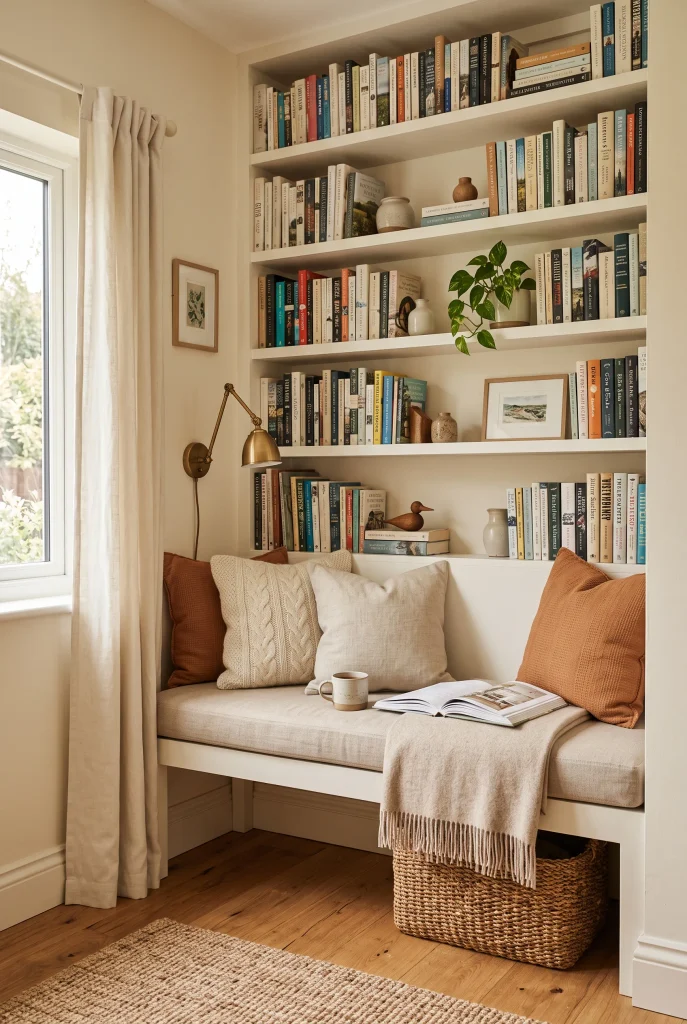
- A built-in nook uses awkward wall space for both storage and reading.
- Closed sections below can hide less attractive everyday items.
- A soft bench makes the storage area feel like part of the room.
- Warm lighting helps the nook feel inviting after sunset.
A built-in book nook can make an ordinary wall feel like a purposeful architectural feature. Open shelves give books a visible home, while a cushioned bench underneath creates a comfortable spot for reading or relaxing. Add a slim lamp, soft throw, and one woven basket to make the area feel finished without filling every inch. This is especially useful in bedrooms, hallways, or living rooms with recessed walls that might otherwise become wasted space. The combination of storage and seating also makes the nook feel more valuable than a standard shelving unit.
When planning a built-in arrangement, think about the size of your books before choosing shelf depth and spacing. Taller compartments can accommodate oversized coffee-table books, while smaller sections work well for novels and paperbacks. The setup works particularly well when the lower portion is kept visually calm and the upper shelves carry most of the decorative interest. Matching the shelving color to the surrounding walls can make the entire feature feel seamless. If you want more contrast, natural wood shelves against warm white walls create a cozy focal point without looking too busy.
3. Ladder Shelf Display
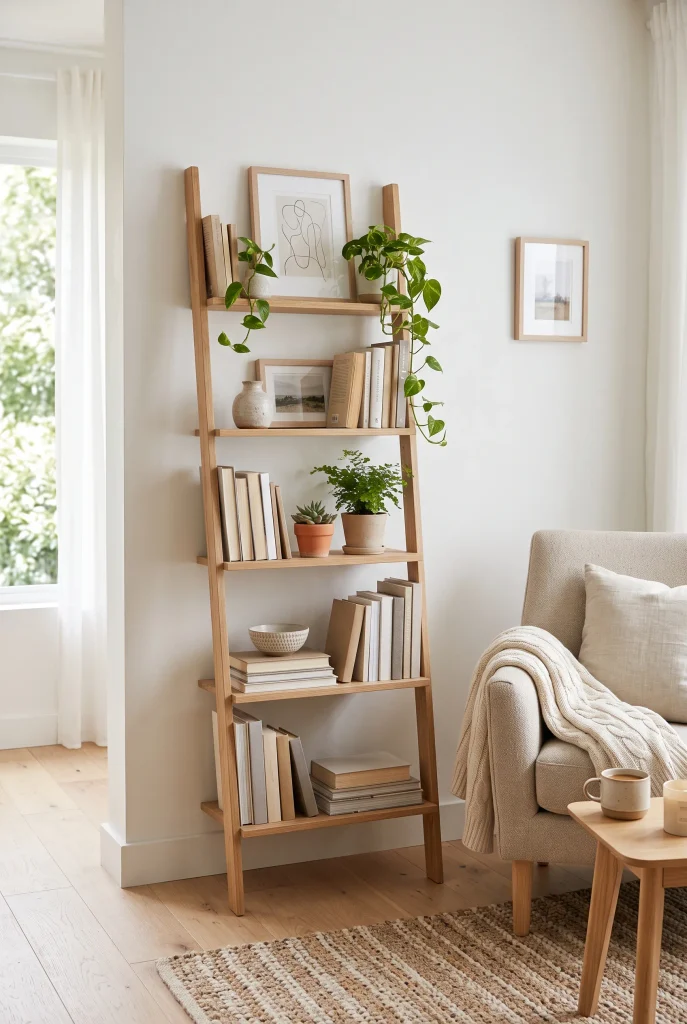
- A leaning ladder shelf adds vertical storage without visually filling the room.
- Different shelf depths naturally create an interesting layered display.
- Keep heavier books on lower levels for a grounded arrangement.
- Small plants and ceramics can soften the straight lines.
A ladder shelf gives you vertical storage while keeping the footprint surprisingly small. Its stepped shape creates natural separation between books, making it easier to build an attractive arrangement without complicated styling. Place larger books toward the bottom, medium-sized stacks in the middle, and lighter decorative pieces near the top. This keeps the unit visually grounded and practical for everyday use. It works particularly well beside an armchair, desk, or empty corner where a bulky bookcase might feel overwhelming. A slim wood finish can also add warmth to minimalist, Scandinavian, or modern interiors.
For a more polished display, resist the temptation to fill every shelf from end to end. Leave some open space and use only a few decorative accents between book groups. A small plant, ceramic bowl, or framed print can break up repeated rows while keeping the books as the main feature. Grouping books by approximate size usually looks more natural than arranging everything strictly by color. If you have a growing collection, the open structure also makes it easy to add new books without completely restyling the shelf.
4. Under-Stair Shelving
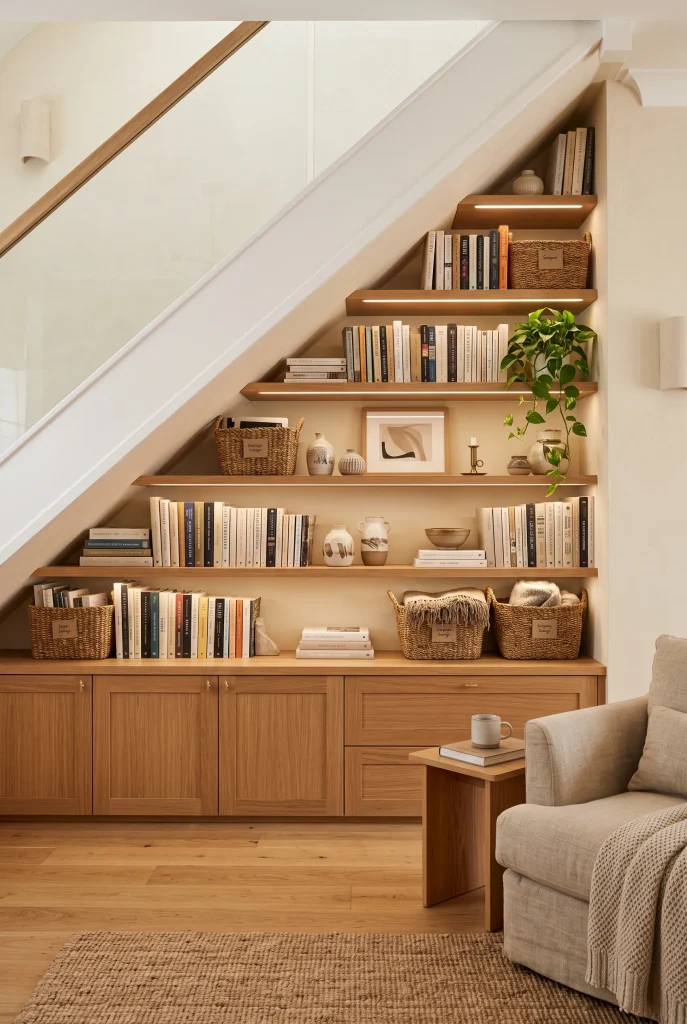
- Under-stair space becomes useful instead of collecting forgotten items.
- Open shelving keeps favorite books easy to reach and display.
- Closed cabinets can hide supplies that do not need to stay visible.
- Warm wood finishes make the built-in area feel intentional and inviting.
That empty space beneath a staircase can become one of the most useful storage areas in the home. Adding open shelves creates a dedicated place for books while making an overlooked architectural feature feel purposeful. Arrange frequently used books at comfortable reaching height and place larger collections lower down. A few baskets or closed cabinets can handle items you would rather keep hidden. This setup works especially well in open-plan homes because it adds storage without taking away valuable floor area. The result feels custom, organized, and naturally connected to the architecture.
The key is to design the shelving around the shape of the staircase instead of forcing a standard bookcase underneath it. Varying shelf heights can accommodate everything from slim paperbacks to oversized art books. Keep the styling restrained so the unusual location remains visually clean. Matching the shelves to nearby wood tones helps the storage blend naturally into the room. If the surrounding space is mostly neutral, books can provide subtle color and personality. With thoughtful planning, an awkward corner can become practical storage that looks like it was designed with the house from the beginning.
5. Window Seat Storage
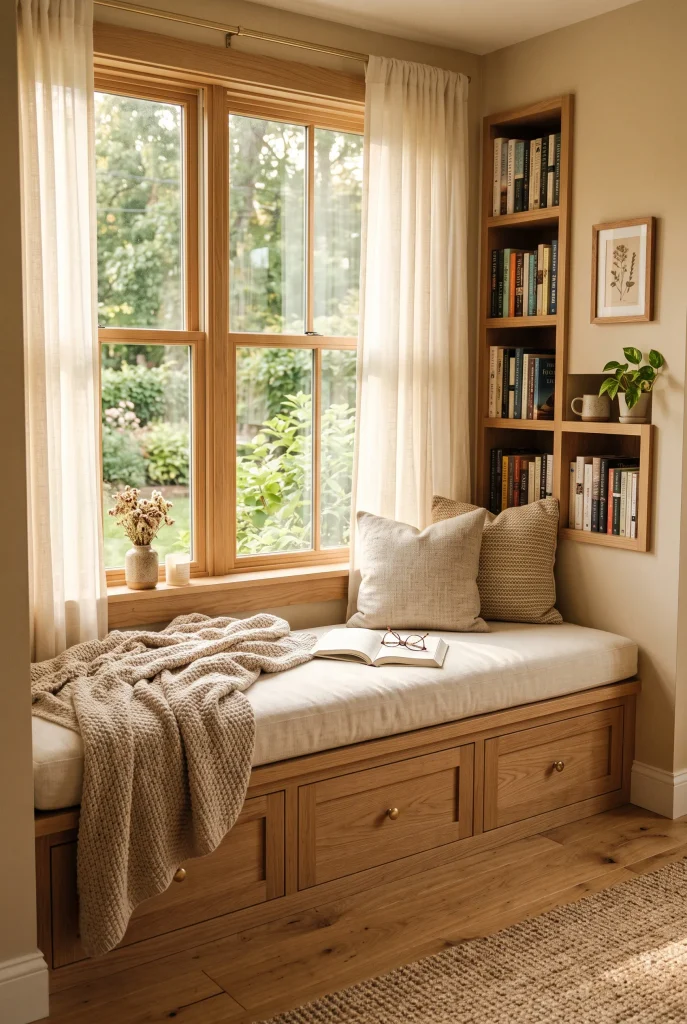
- Drawers beneath the seat hide books and everyday reading materials.
- Open cubbies keep favorite titles visible and easy to grab.
- A cushioned bench creates a dedicated reading corner.
- Soft fabrics make the storage feature feel warmer and more comfortable.
A window seat can do much more than provide a cozy place to sit. With drawers or open compartments underneath, it can become practical storage for books while keeping the room visually calm. Place everyday favorites in the easiest-to-reach sections and use deeper drawers for larger collections. Soft cushions and linen textiles make the area feel comfortable enough for long reading sessions. Natural daylight also highlights colorful book covers beautifully. This combination works especially well in bedrooms, living rooms, and quiet corners where you want storage to feel connected to relaxation.
For the most balanced look, avoid treating every compartment like a full bookshelf. Leave some areas open and use baskets, folded throws, or a small stack of books to create variety. If the seat is near a window, choose finishes that complement the natural light rather than competing with it. A light oak frame with warm white walls creates an especially timeless combination. Storage that doubles as seating feels more useful because it serves two purposes without adding another large piece of furniture to the room.
View: 17 Console Table Decor Ideas That Look So Expensive
6. Wall-to-Wall Bookcase
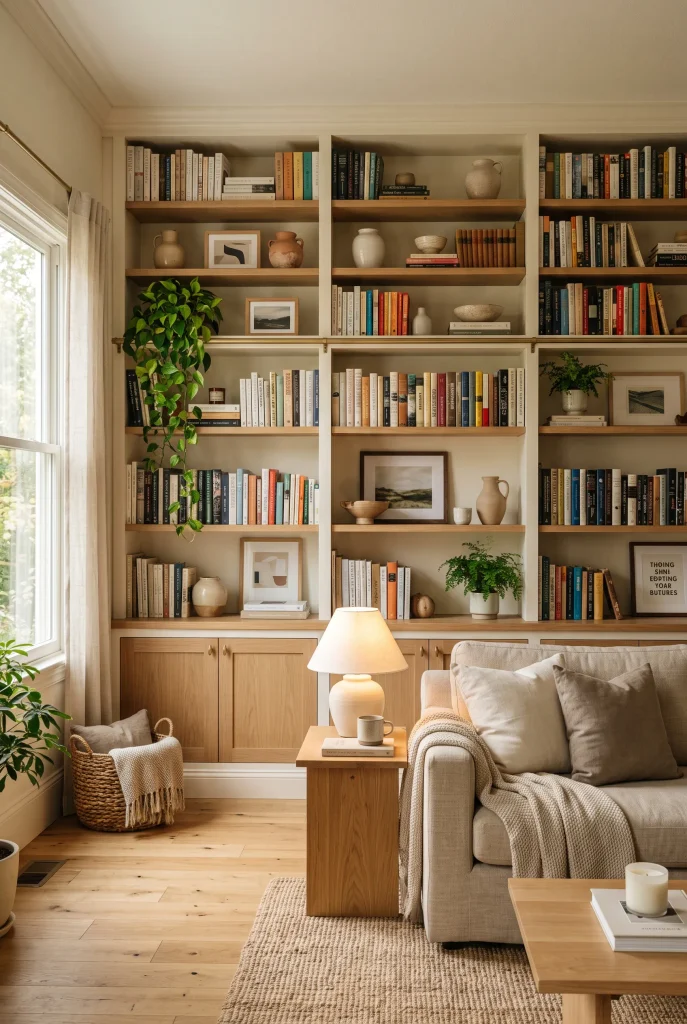
- A full-width bookcase creates maximum storage on one wall.
- Repeating shelves give the room a strong architectural feature.
- Mixing books with carefully chosen decor prevents visual monotony.
- Matching the finish to the room creates a cohesive built-in appearance.
When you have a large collection, a wall-to-wall bookcase can turn storage into the main architectural feature of the room. Floor-to-ceiling shelving uses vertical space efficiently while giving books a clear, organized home. Keep frequently reached titles between waist and eye level, then use higher shelves for books you access less often. Adding a few decorative objects between groups creates breathing room and keeps the wall from looking like one solid block of books. This approach works particularly well in living rooms, home offices, and dedicated reading spaces.
A balanced bookcase does not need every shelf to look identical. Combine upright rows with horizontal stacks, then introduce a few plants, ceramics, or framed photographs for visual variation. Keeping a consistent color or material throughout the shelving helps the arrangement feel intentional even when the books themselves are colorful. Large bookcases look much calmer when each shelf has a little empty space instead of being completely packed. The finished effect is both functional and decorative, giving the room personality while making a large collection feel organized rather than overwhelming.
7. Corner Book Tower
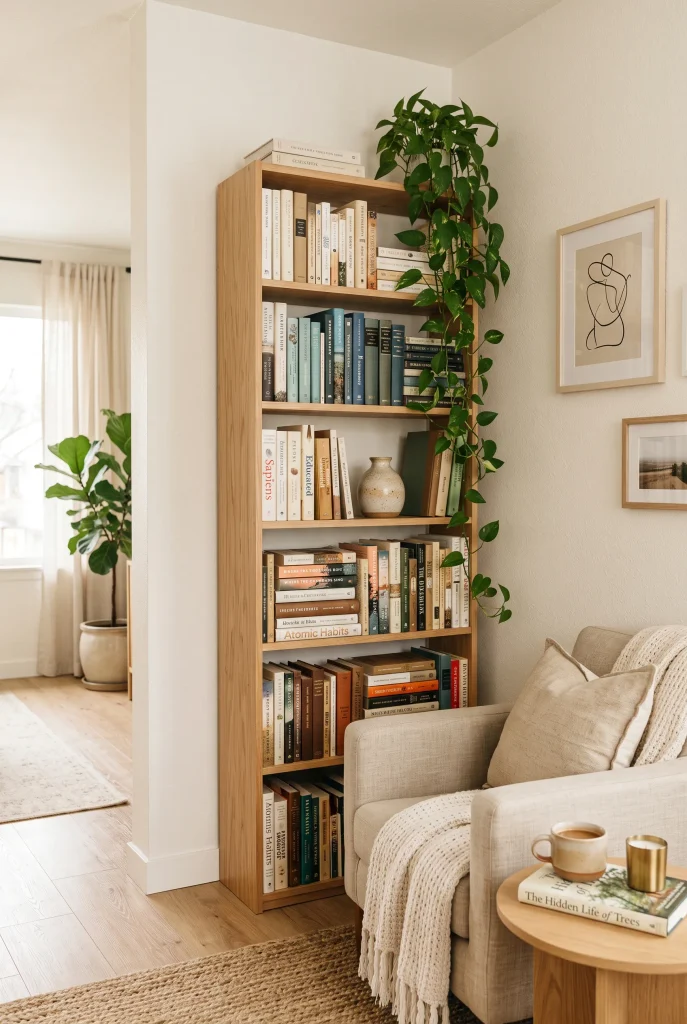
- A narrow tower turns an unused corner into practical storage.
- Vertical shelving works especially well in smaller rooms.
- Keeping the footprint small leaves more open floor space.
- A few decorative accents can make the tower feel less utilitarian.
An empty corner does not need to stay unused when a slim book tower can fit neatly into the space. Its narrow footprint provides vertical storage while leaving most of the floor available for furniture and movement. Choose a tower with several compact shelves and arrange books by size rather than trying to make every row identical. A small plant or ceramic accent can add softness between sections. This setup is especially useful beside a sofa, reading chair, or bedroom dresser where you want books nearby without adding another wide piece of furniture.
The height of the tower naturally draws the eye upward, which can make a small room feel more vertical and thoughtfully designed. For stability, place heavier books on the lower shelves and lighter items toward the top. If the room already has several wood finishes, matching the tower to one existing tone can help it blend in. A simple tower often looks better when it is slightly underfilled rather than packed tightly. That extra breathing room makes the collection easier to browse and gives the surrounding corner a cleaner, calmer appearance.
8. Vintage Crate Storage
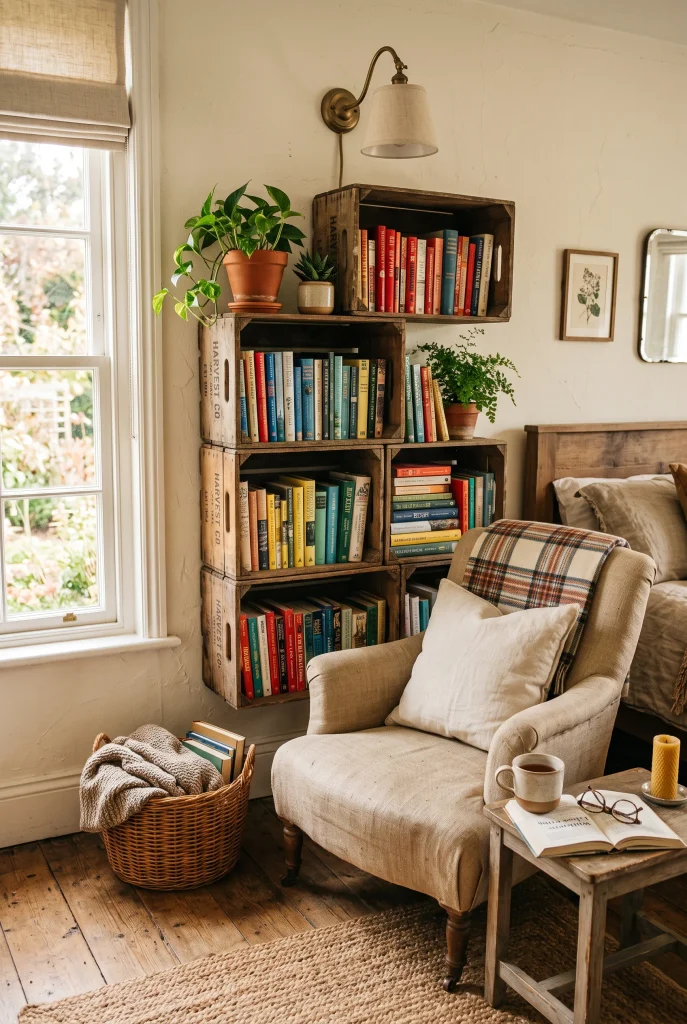
- Wooden crates add affordable storage with plenty of character.
- Stacking them vertically creates flexible compartments for different book sizes.
- Their imperfect texture works beautifully with rustic and farmhouse interiors.
- Add a basket or plant to soften the rough wood.
Vintage crates can turn simple book storage into a charming decorative feature. Their open construction keeps books visible and easy to reach, while the aged wood adds texture and personality to the room. Stack two or three securely to create different-sized compartments, or place them horizontally along a wall for a lower arrangement. This approach works particularly well in farmhouse, rustic, cottage, and relaxed eclectic spaces. Because crates are usually inexpensive and flexible, you can rearrange the setup as your collection changes without committing to a large permanent storage piece.
The trick is to make the arrangement feel intentional rather than improvised. Keep the crates aligned and avoid stacking them too high unless they are properly secured. Place heavier books toward the bottom, then use the upper sections for lighter titles or small decorative pieces. A folded blanket, woven basket, or small plant can balance the harder wooden texture. Pairing weathered wood with soft linen and neutral walls creates a particularly inviting reading corner. The result feels collected and personal while still giving everyday books a practical place to live.
9. Bench With Cubbies
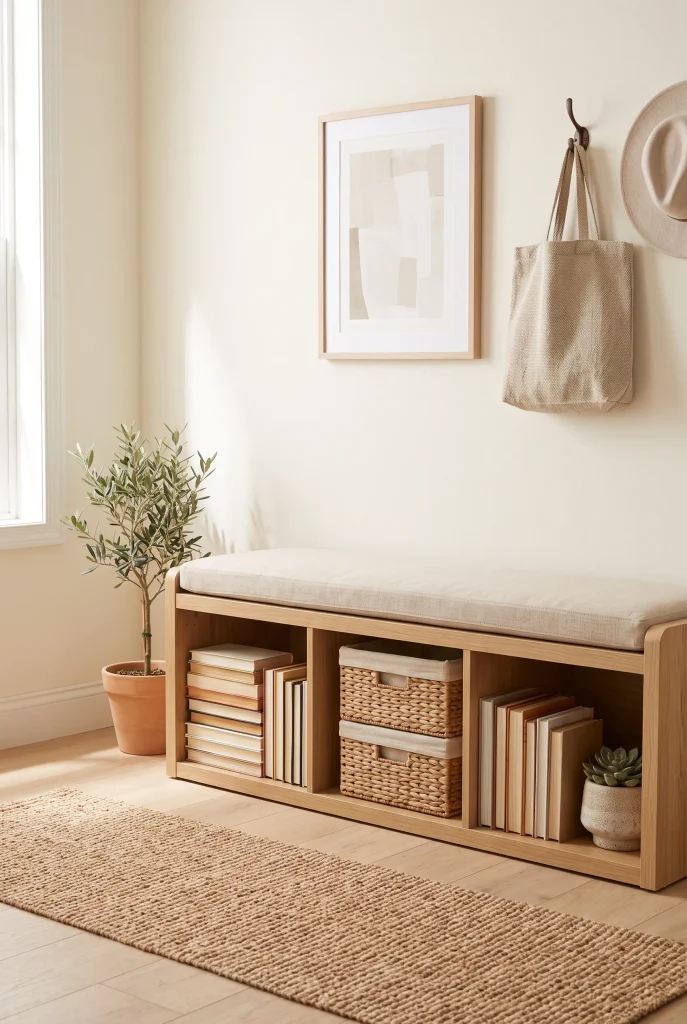
- Open cubbies keep books accessible while doubling as useful bench storage.
- A cushioned top adds seating without requiring extra furniture.
- Baskets can hide smaller items and keep the compartments organized.
- Natural wood and soft textiles create a warm, approachable look.
A bench with built-in cubbies gives you storage and seating in one compact piece. The open compartments underneath are ideal for books because they keep favorite titles visible while making the bench useful for reading, relaxing, or putting on shoes. Arrange books in small groups rather than filling each cubby completely. This creates visual breathing room and makes the storage feel decorative instead of crowded. A neutral cushion on top can also connect the bench to the rest of the room. It is a particularly practical choice for bedrooms, hallways, reading corners, and small living spaces.
For a polished arrangement, dedicate one or two cubbies to books and use the others for baskets or simple storage boxes. This keeps the overall unit from looking repetitive while giving everything a defined place. If children use the space, lower cubbies can hold their favorite picture books within easy reach. For adults, larger books and magazines can sit neatly in horizontal stacks. Furniture that combines two functions makes a room feel more efficient without making it look overly organized. The bench becomes useful storage while still looking like a natural part of the decor.
10. Bedside Bookcase
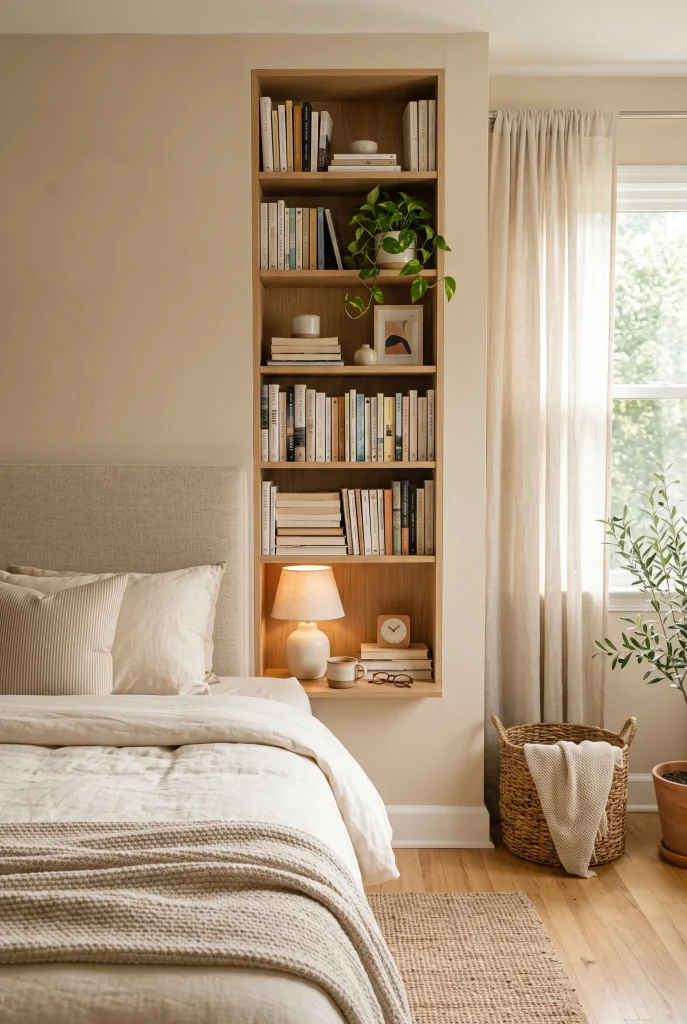
- A bedside bookcase keeps favorite reads within easy reach.
- Slim shelving saves space beside the bed.
- Open shelves can replace a traditional nightstand.
- A small lamp and one decorative piece complete the arrangement.
A bedside bookcase gives your favorite books a convenient home without requiring a separate nightstand and large bookshelf. A narrow vertical unit can fit into tight spaces while providing several shelves for novels, magazines, and smaller reading materials. Keep the books you reach for most often around eye or hand level, and reserve the lower shelves for larger stacks. This arrangement works especially well in compact bedrooms where every inch matters. Pairing the shelving with a warm bedside lamp also creates a comfortable reading zone that feels practical and inviting.
Keep the styling simple so the area beside the bed does not become visually overwhelming. Group similar-sized books together and leave a little empty space between sections for a relaxed appearance. If the shelving is built in, matching it to the wall or nearby furniture can make it feel like part of the room rather than an added storage unit. Placing a small decorative object beside the books can make the entire arrangement feel more finished. The result is a calm bedside setup where storage, lighting, and everyday convenience work together naturally.
11. Rolling Book Cart
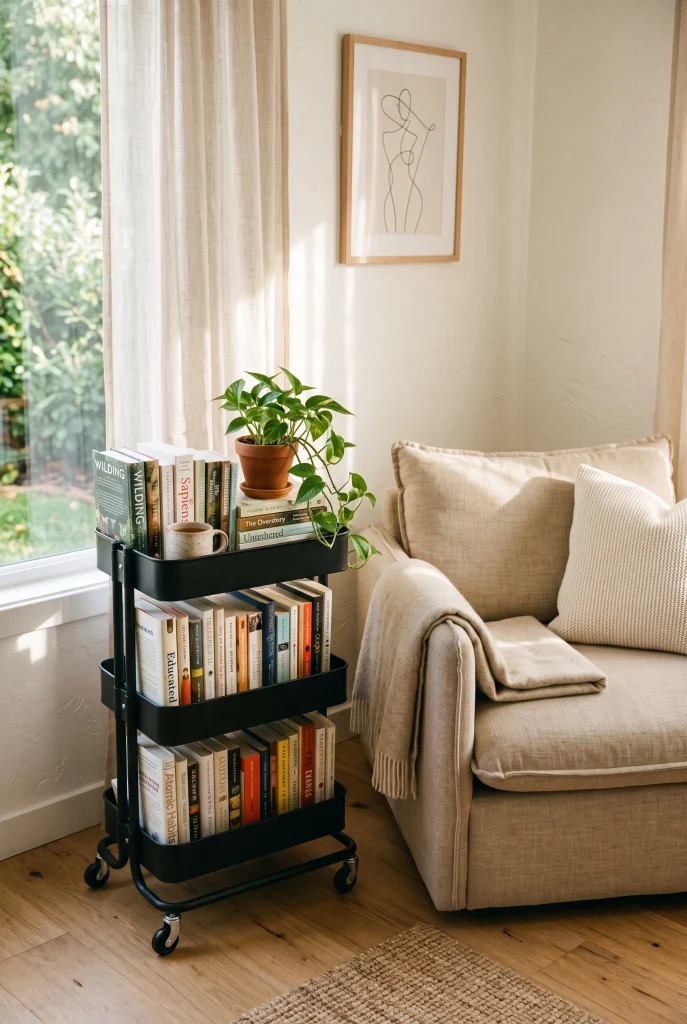
- A rolling cart can move wherever your reading habit takes you.
- Multiple tiers separate books from decorative or reading essentials.
- Its compact size works well in bedrooms and small apartments.
- Locking wheels help keep the cart securely positioned when needed.
A rolling book cart offers flexibility that fixed shelving simply cannot match. You can place it beside a reading chair, move it next to the sofa, or roll it into a bedroom when you want your current books nearby. Choose a cart with two or three levels so different categories can have their own space. The upper tier can hold current reads, while lower levels can store magazines, notebooks, or larger books. Because the footprint is small, this option works especially well when a traditional bookcase would make the room feel crowded.
The easiest way to keep a cart looking attractive is to give each level a clear purpose. Avoid filling every inch, and mix books with one or two useful accessories such as a small plant or reading lamp. If the cart has wheels with brakes, lock them once you find the right position. A metal frame feels modern and lightweight, while wood versions bring a softer, warmer look. Mobile storage is especially helpful for readers who like changing their setup throughout the day or keeping different books in different rooms.
12. Floating Corner Shelves
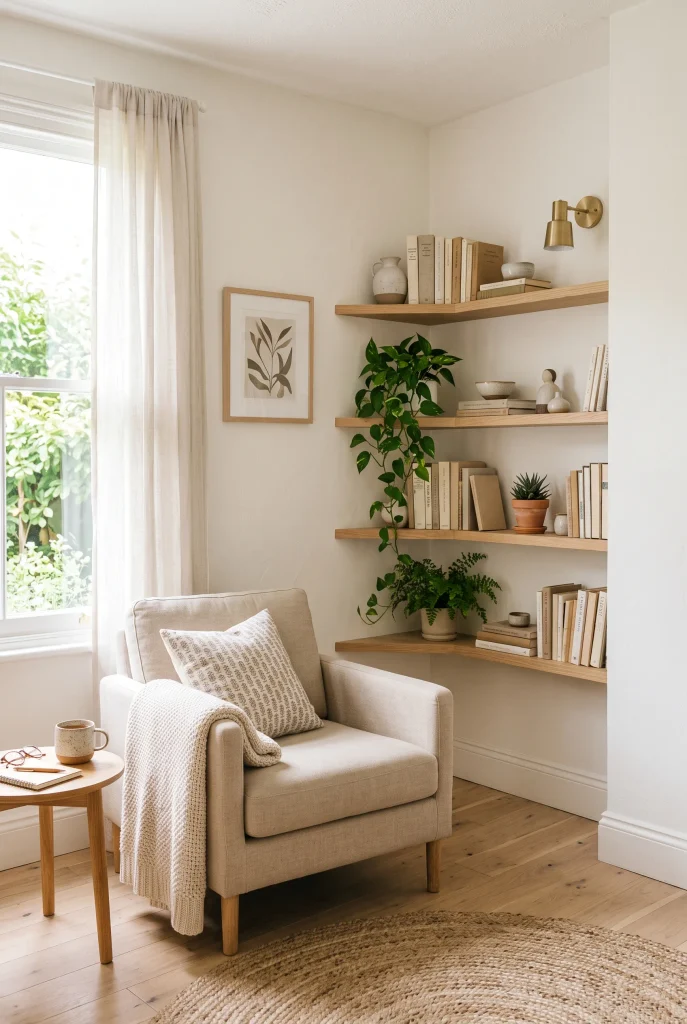
- Corner shelves turn overlooked wall space into useful storage.
- Their compact shape works well in small rooms.
- Staggering the shelves creates a more dynamic visual arrangement.
- Keeping the surrounding furniture simple lets the books stand out.
Corners often become wasted space, but a few floating shelves can turn one into a useful reading display. Corner shelving follows the shape of the walls, creating storage without taking up much floor space. Arrange books vertically on the larger sections and use smaller areas for horizontal stacks or decorative pieces. This works beautifully beside a reading chair, desk, or bedroom corner. Light wood against a warm white wall keeps the setup visually airy, while darker finishes can create a stronger focal point in rooms with richer colors.
When styling corner shelves, pay attention to how the books look from different angles. Because the shelves sit where two walls meet, uneven arrangements can become more noticeable. Keep the heavier books lower and use the upper shelves for lighter titles and small accents. A trailing plant can also soften the sharp corner lines without taking up valuable floor space. This approach works particularly well in small apartments because it adds storage while preserving an open feeling. The finished corner becomes both functional and decorative, giving an overlooked area a clear purpose.
13. Closed Cabinet Storage
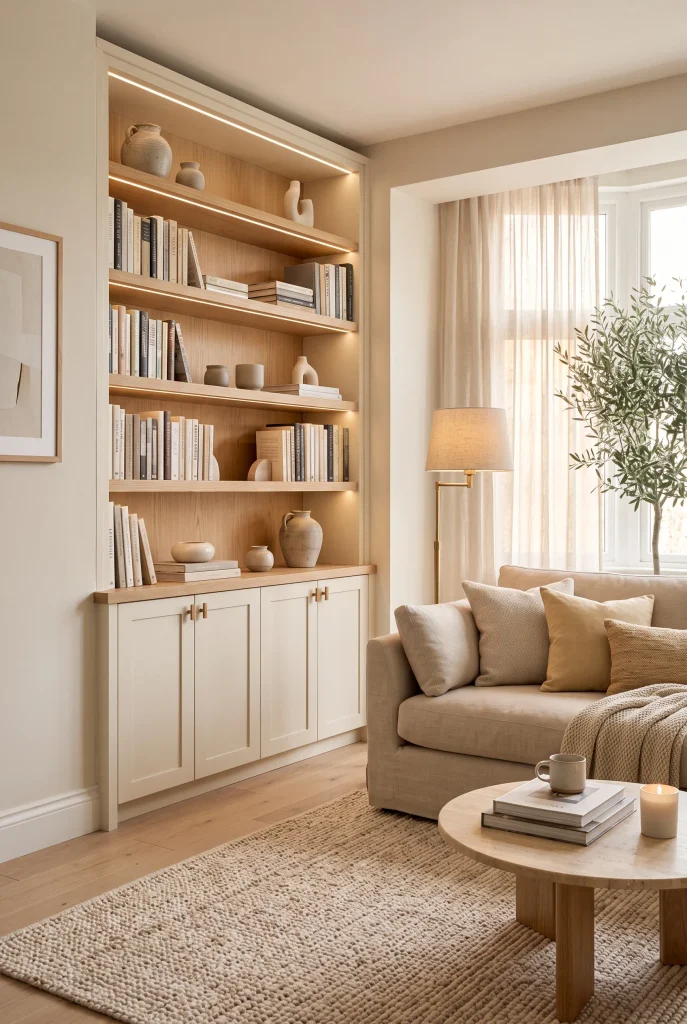
- Closed cabinets hide books or supplies that create visual noise.
- Upper shelves keep favorite titles visible and accessible.
- Mixing concealed and open storage creates a calmer display.
- Simple cabinet fronts make the room feel more streamlined.
Closed cabinets are perfect when you want plenty of storage without seeing every book and item at once. Use the concealed sections for older books, paperwork, magazines, or anything that tends to make a room feel visually busy. Keep your favorite titles and attractive covers on the open shelves above for a more decorative display. This combination creates a useful balance between accessibility and visual calm. It works especially well in living rooms and home offices where storage needs can quickly grow beyond what open shelving can comfortably handle.
For a cohesive look, choose cabinet doors that complement the surrounding furniture and wall color. Warm white, natural oak, or soft beige finishes can blend easily into neutral interiors. Inside the closed sections, simple baskets or adjustable organizers can prevent smaller books from becoming difficult to find. Combining open and hidden storage makes larger collections much easier to manage because everything does not have to be displayed. The visible shelves can stay styled and inviting while the cabinets quietly handle the less attractive parts of everyday storage.
14. Fireplace Book Shelves
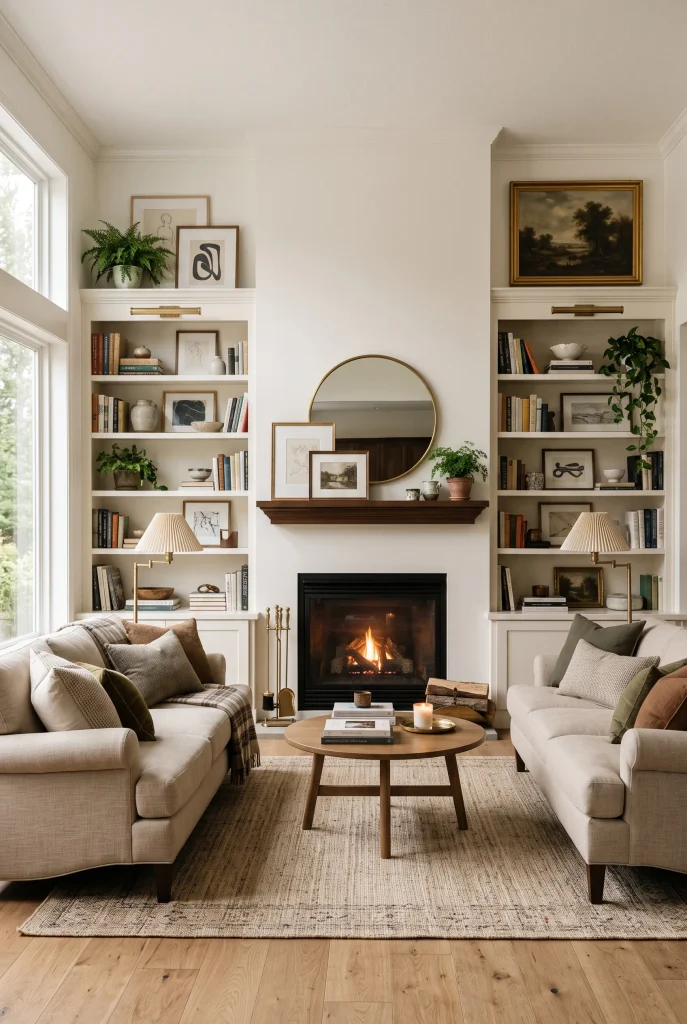
- Built-in shelves around a fireplace turn unused wall space into storage.
- Symmetrical arrangements create a strong architectural focal point.
- Decorative objects can break up rows of books.
- Keep heat-sensitive materials safely away from the fireplace opening.
Shelving around a fireplace can transform an already important focal point into a functional storage feature. Built-in bookcases on both sides create a balanced frame while giving your collection a dedicated place to live. Arrange books in a combination of upright rows and small horizontal stacks, then add a few restrained decorative pieces between them. This approach works especially well in traditional, transitional, cottage, and modern interiors. The fireplace remains the visual center of the room, while the surrounding shelves add personality and practical storage without requiring another freestanding piece of furniture.
Safety should come before styling when bookshelves sit near a working fireplace. Keep books, paper, and other combustible materials at an appropriate distance from heat sources and follow the fireplace manufacturer’s clearance requirements. Once the practical layout is established, you can focus on creating visual balance. Matching shelf finishes to the mantel or nearby furniture helps everything feel connected. Symmetrical shelving looks especially polished when the book arrangements have small variations rather than being perfectly identical. A few plants, ceramics, or framed pieces can soften the structure without competing with the fireplace.
15. Bookcase Room Divider
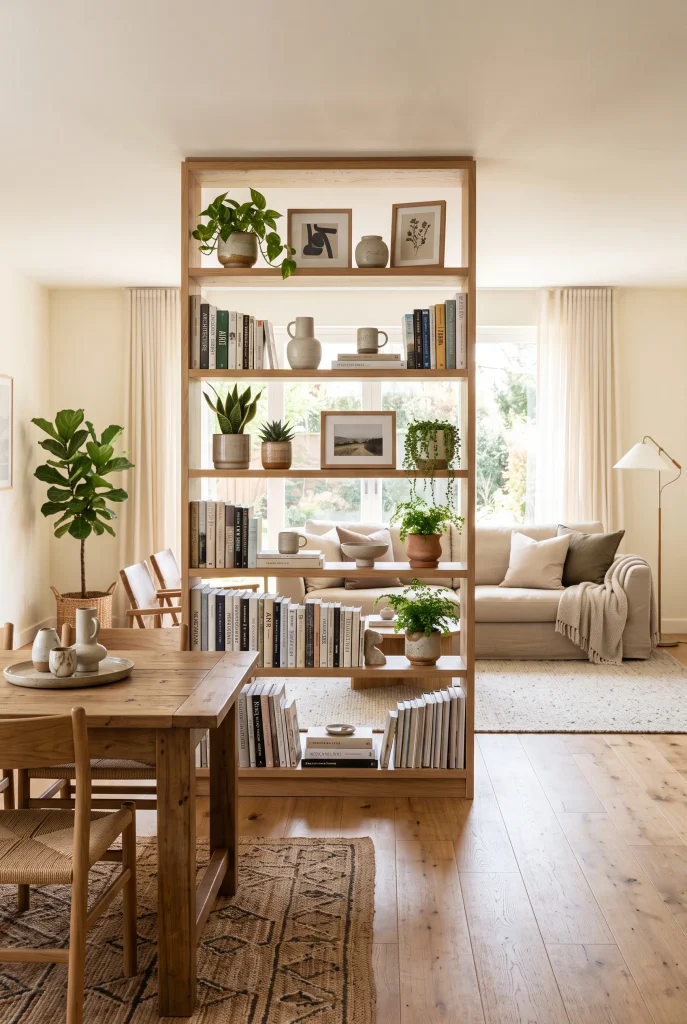
- An open bookcase separates spaces without blocking natural light.
- Both sides can hold books and decorative pieces.
- It creates storage while also defining different room zones.
- Open shelving keeps the overall layout feeling airy.
An open bookcase can work as more than storage when you use it to divide two areas of your home. Positioning a double-sided unit between a living and dining area creates visual separation while preserving light and openness. Books can face either side, allowing the shelf to serve both spaces. Add plants, baskets, and a few decorative objects to break up the rows and give the divider a finished appearance. This solution is especially useful in open-plan homes where you want clearer zones without building a permanent wall.
Before choosing a divider, measure the walking paths around it and make sure the unit will not interfere with doors, windows, or everyday movement. A lower or partially open design can maintain an airy feeling, while a taller bookcase creates stronger separation. Keep heavier books toward the bottom for stability and use the upper sections for lighter pieces. Leaving some openings completely clear helps both sides feel connected. The result is a multifunctional piece that organizes books while quietly defining how the room is used.
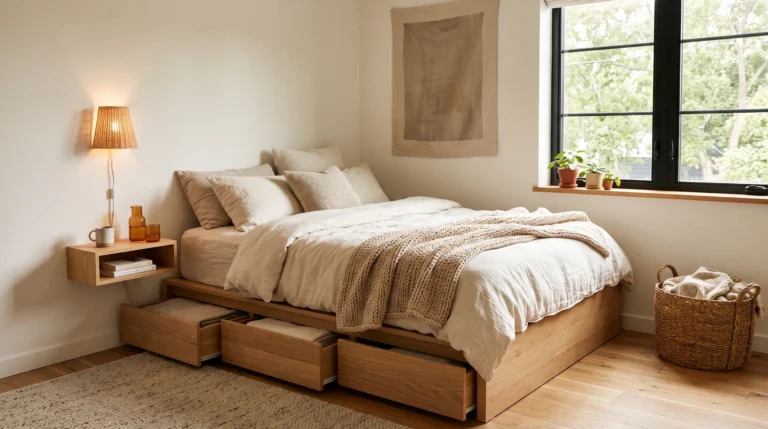
16. Under-Bed Book Drawers
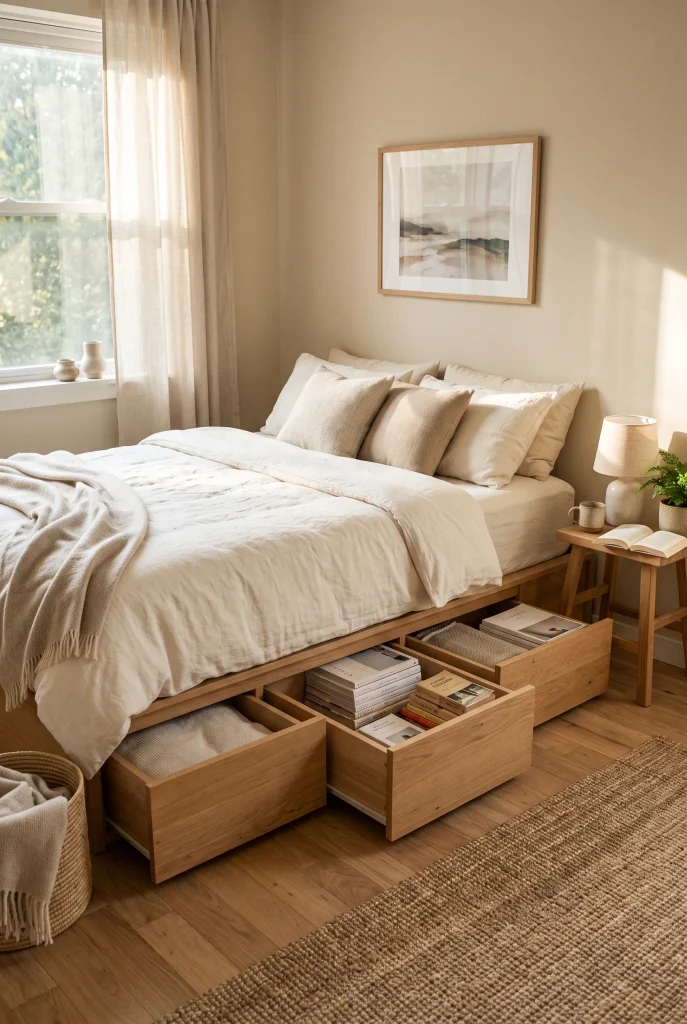
- Under-bed drawers turn hidden space into practical book storage.
- They keep rarely used books out of sight and dust-free.
- Low compartments work especially well in compact bedrooms.
- Labeling sections makes larger collections easier to find.
The space beneath your bed can become valuable storage when a bed frame includes deep drawers or rolling compartments. It is especially useful for books you want to keep but do not read every week. Store seasonal reading, older favorites, magazines, or larger collections underneath while keeping your everyday titles somewhere easier to reach. Because the storage stays hidden, the bedroom can maintain a cleaner appearance without sacrificing your collection. This approach is ideal for smaller bedrooms where adding a full bookcase would take away valuable walking space.
To keep the drawers practical, avoid packing books so tightly that they become difficult to lift or sort through. Group similar types together and consider using smaller organizers inside larger compartments. If your bed has open space rather than built-in drawers, low rolling boxes can provide a similar function. Hidden storage works best when it has a simple system rather than becoming a place where everything gets pushed out of sight. A quick seasonal reset can keep the collection organized and make it easier to rediscover books you had forgotten.
17. Desk Shelf Library
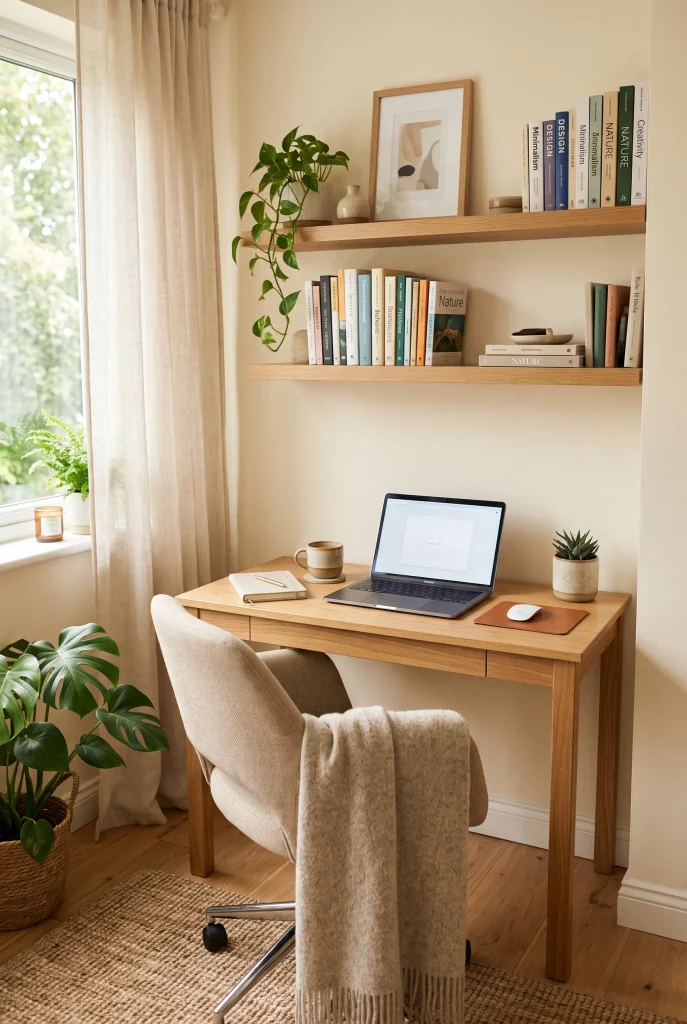
- Wall shelving above a desk uses vertical space efficiently.
- Favorite reference books stay within easy reach while working.
- Small decorative pieces keep the workspace from feeling too utilitarian.
- A consistent palette creates a calmer visual backdrop.
A desk shelf library makes excellent use of vertical wall space while keeping useful books close to where you work. Install one or several shelves above the desk, leaving enough clearance for comfortable movement and everyday tasks. Arrange reference books, notebooks, and favorite titles within easy reach, then add a few simple decorative pieces to soften the workspace. This setup works particularly well in compact home offices because it provides storage without taking up additional floor space. The result is a workspace that feels organized while still showing personality.
Keep the shelves visually balanced by combining upright books with a few horizontal stacks. Avoid placing too many objects directly above your main working area, as a crowded arrangement can make the desk feel smaller. Natural wood shelves pair beautifully with cream walls and neutral furniture, while darker shelves can create contrast in a modern office. Keeping the most frequently used books at shoulder or eye level makes the setup much more convenient. A well-planned shelf can make your workspace feel more intentional without turning it into a distracting display.
18. Basket Book Storage
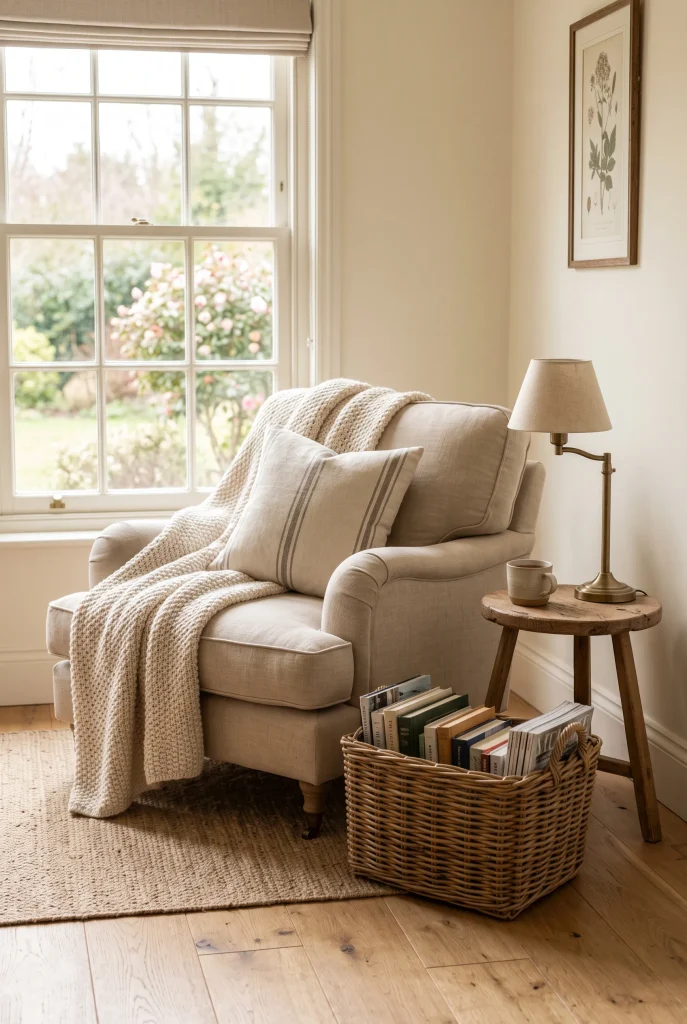
- Woven baskets hide books while adding natural texture.
- Large baskets work well for magazines and oversized books.
- They can be moved easily when cleaning or rearranging furniture.
- Natural fibers soften rooms filled with hard furniture surfaces.
Woven baskets offer a simple way to keep books accessible without putting every title on display. Place one beside a sofa, reading chair, or bed and fill it with current reads, magazines, or larger books that do not fit neatly on a shelf. The natural texture adds warmth and works beautifully with linen, wood, rattan, and neutral fabrics. This option is especially helpful when you want storage that feels decorative rather than obviously functional. Because baskets are lightweight, you can also move them around the room whenever your layout changes.
Choose a basket with enough height and structure to support the books without letting them slump into a messy pile. For frequently used reading materials, leave the basket open and position it where you naturally sit. If you have several baskets, use different sizes for different categories rather than filling them randomly. One generously sized basket often looks more intentional than several tiny containers scattered around the room. The finished arrangement keeps books close by while adding a relaxed, textured layer to the overall decor.
19. Picture Ledge Display
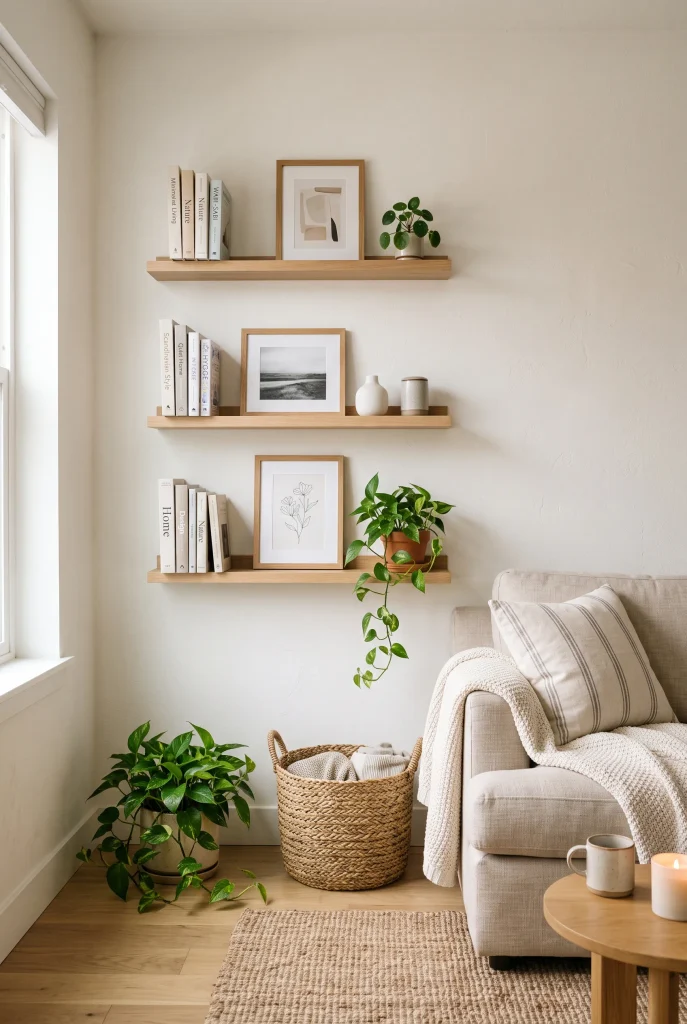
- Picture ledges let you display favorite book covers like artwork.
- Shallow shelves take up very little visual and floor space.
- Front-facing covers make colorful or beautiful books part of the decor.
- Layering a few frames creates a more collected wall display.
Picture ledges can turn books into part of your wall decor while using far less space than a traditional bookcase. Instead of standing books vertically, place a few favorites face forward so their covers become visible artwork. Stack two or three books beneath a framed print, then add a small ceramic object or plant for balance. This approach works beautifully in bedrooms, reading corners, and living rooms where you want storage to feel light. It is particularly useful when you have a small collection of visually appealing books you want to keep on display.
Because picture ledges are shallow, they are best suited to smaller collections rather than deep storage needs. Measure the shelf depth carefully before buying, especially if you plan to display oversized books. Keep heavier titles on lower ledges and avoid overcrowding each row. Leaving some wall visible around the display makes the books feel more like intentional artwork. If your room already has framed prints or gallery-style decor, coordinating the colors of the covers and accessories can make the entire arrangement feel connected without looking overly matched.
20. Console Cabinet Storage
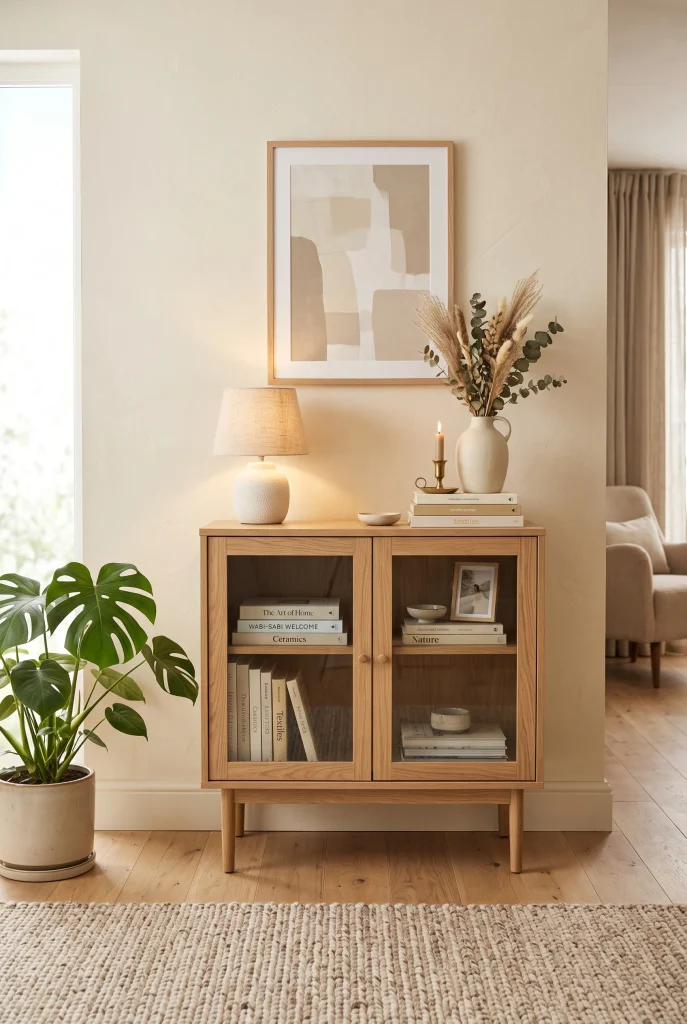
- A console cabinet provides hidden storage without needing a full bookcase.
- Its narrow profile works well behind sofas or along hallways.
- The surface can display artwork and decorative accessories.
- Closed doors keep less attractive book collections visually contained.
A console cabinet is a smart choice when you want storage that blends quietly into the room. Its narrow profile makes it useful behind a sofa, along a hallway, or against an empty living room wall. Store books inside the cabinet to keep them protected from visual clutter, then use the top surface for a lamp, framed artwork, vase, or small decorative arrangement. This creates a clean balance between function and styling. For homes with limited space, the cabinet can provide useful storage without the visual weight of a tall traditional bookcase.
Choose a cabinet with adjustable shelves if your collection includes different book sizes. Group books by category or frequency of use so you can find them easily without pulling everything out. If you prefer some books to remain visible, choose a design with a combination of open shelving and closed doors. Furniture with concealed storage makes busy rooms feel calmer because everyday items disappear behind consistent surfaces. A warm wood console can also introduce texture and character while giving your collection a practical, organized home.
21. Staircase Wall Shelves
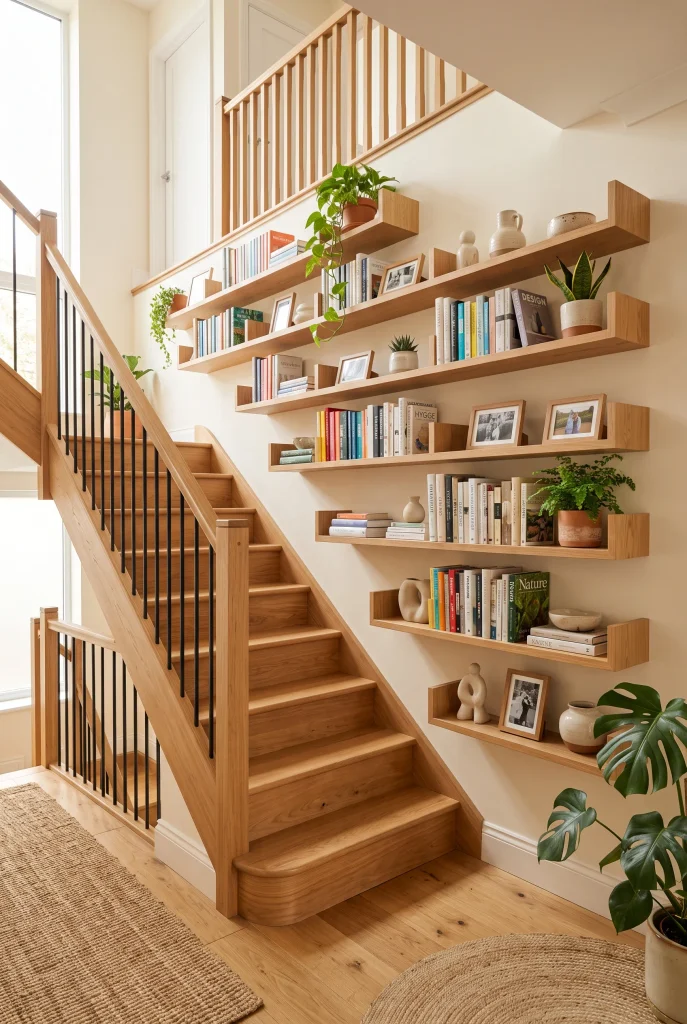
- Staggered shelves follow the staircase and use otherwise empty wall space.
- The stepped arrangement creates natural visual movement.
- Keep heavier books on lower sections for easier access.
- Small decorative accents can soften the geometric layout.
The wall beside a staircase can become an unexpected storage opportunity when shelves follow the natural angle of the stairs. Staggered wooden shelves create a practical place for books while giving the hallway or landing a distinctive architectural detail. Keep frequently used books on the lower and more accessible shelves, while decorative pieces or less-used titles can occupy higher sections. This arrangement works particularly well in homes where conventional bookcases would interrupt the walkway. The vertical layout also draws attention upward, making the staircase feel more connected to the rest of the interior.
When installing shelves near stairs, make sure they do not interfere with movement, handrails, or head clearance. Once safety and accessibility are handled, focus on creating a rhythm between books and open space. You can alternate vertical rows with horizontal stacks and add a few small plants or framed photographs. Staircase shelving looks especially polished when the wood tone matches the stair treads or nearby flooring. That repeated material creates continuity and makes the storage feel like an intentional part of the home’s design rather than an afterthought.
Conclusion
Good book storage does not have to mean hiding your favorite collection away. With the right book storage ideas, shelves, cabinets, baskets, and clever furniture can become beautiful parts of your home’s design. Start with one area that feels cluttered and choose an idea that fits your space, style, and daily habits. Even a small change can make a noticeable difference. Save this article to Pinterest for your next decorating project, try the idea that catches your eye, and share it with someone who loves books and beautiful interiors. Your collection can be both organized and part of what makes your home feel special.