21 Outdoor Patio Design Ideas That Feel So Expensive
What if your patio could feel like a beautiful outdoor retreat without a complete makeover? Outdoor patio design can transform a plain space into a cozy, polished area you’ll actually want to use.
From layered seating and natural textures to soft lighting, greenery, and elegant details, the right choices can make a surprising difference. You don’t need a huge patio or an unlimited budget to create that finished look. Small changes can add comfort, personality, and visual interest while making the space feel more connected to your home. Combining practical furniture with a few thoughtful decorative details is often enough to create an outdoor area that feels both inviting and elevated. These ideas will help you find a style that works for your space.
1. Layered Lounge Seating
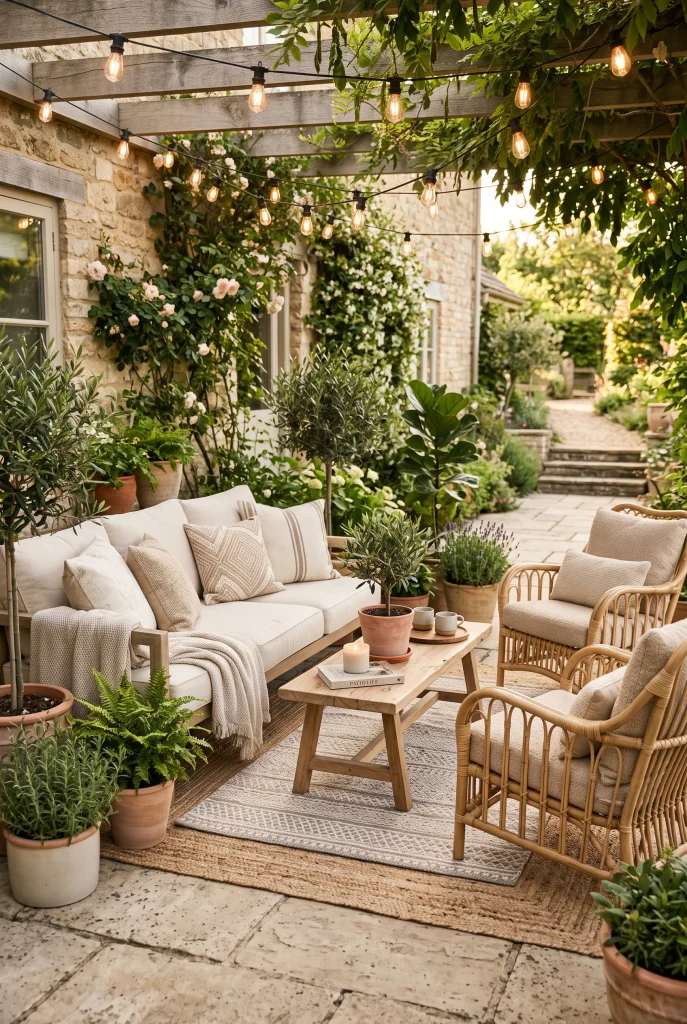
- A mix of seating makes the patio flexible for everyday use.
- Layered cushions add softness without creating visual clutter.
- A low coffee table keeps drinks and decor within easy reach.
- Neutral upholstery creates a timeless foundation that is easy to refresh.
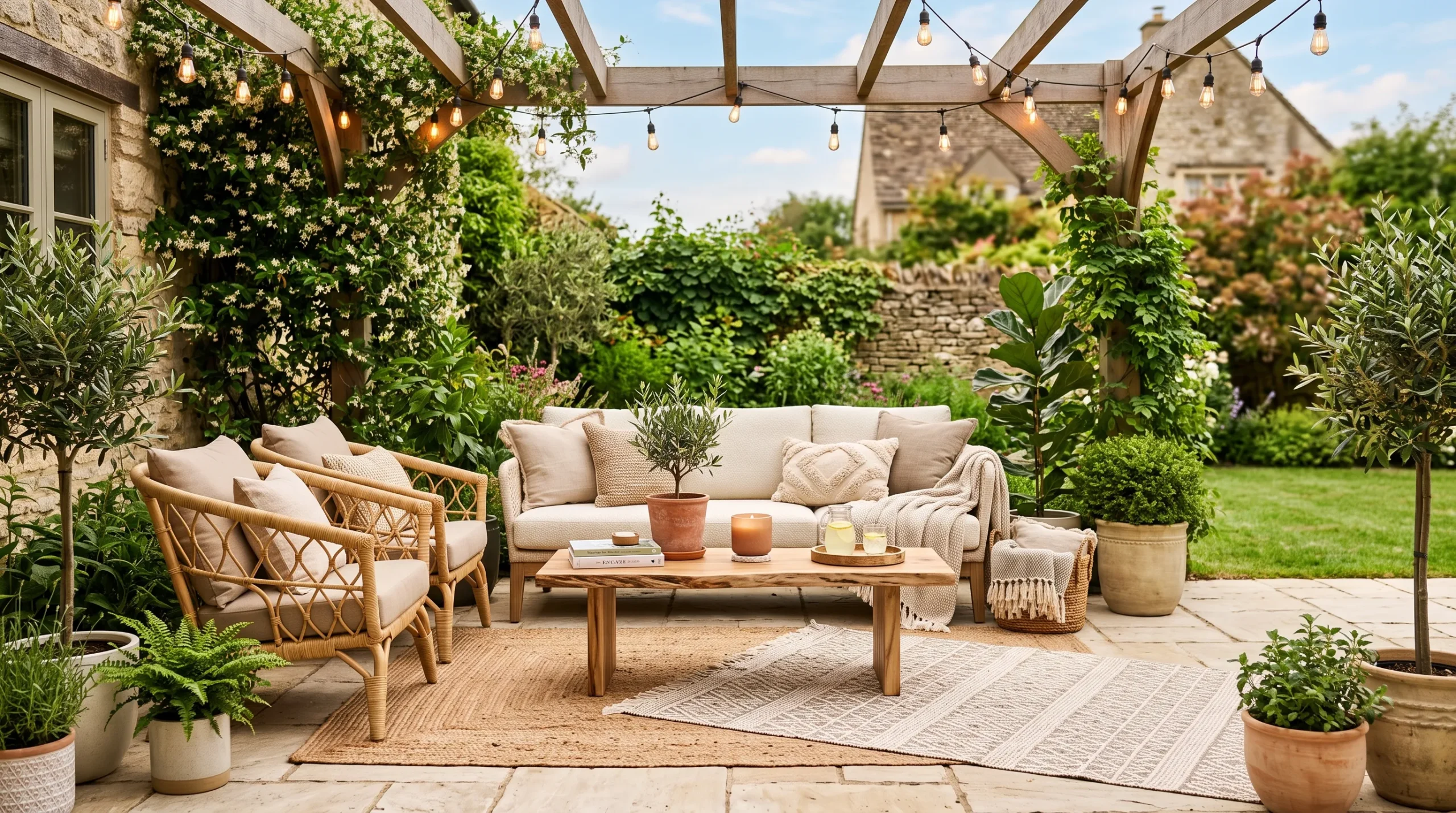
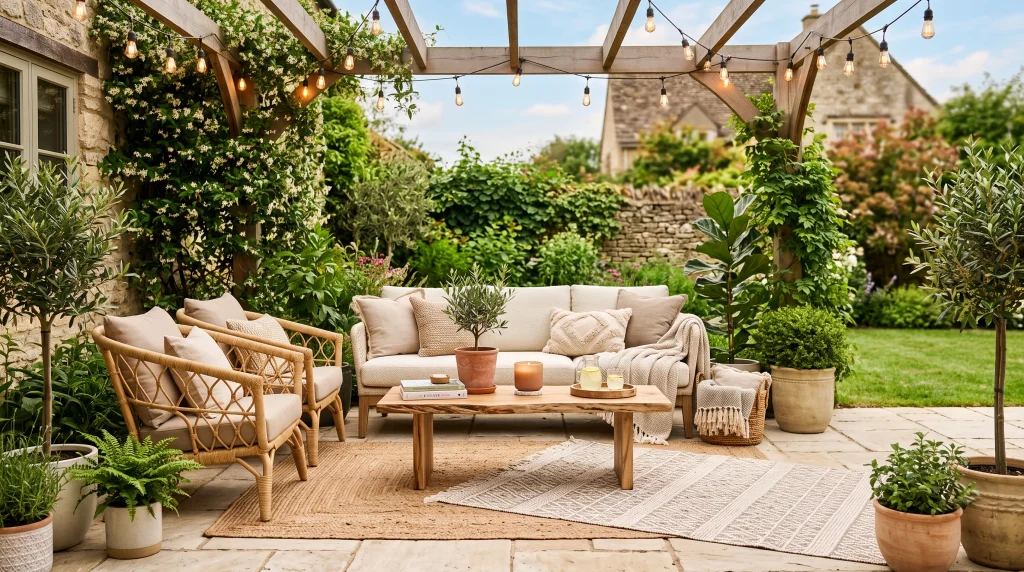
Nothing makes a patio feel instantly welcoming like seating that looks comfortable enough to enjoy for hours. Instead of lining the space with matching chairs, combine a cushioned outdoor sofa with two woven lounge chairs for a more collected arrangement. Add pillows in different textures, such as linen, boucle, or cotton, while keeping the colors within one soft palette. This simple mix gives even an ordinary patio more character. A low wood or stone coffee table can anchor the arrangement while leaving enough open floor space for people to move around comfortably.
The real advantage of layered seating is its flexibility. A sofa provides room for relaxing, while individual chairs can be repositioned when guests arrive or when you want to change the view. Choose weather-resistant fabrics and cushions with removable covers to simplify seasonal care. An outdoor rug beneath the seating can visually connect separate pieces and make the arrangement feel like one defined zone. This approach works especially well for outdoor patio design because it balances comfort, versatility, and style without requiring a complete furniture replacement. The result feels relaxed but still carefully considered.
2. Warm Wood Accents
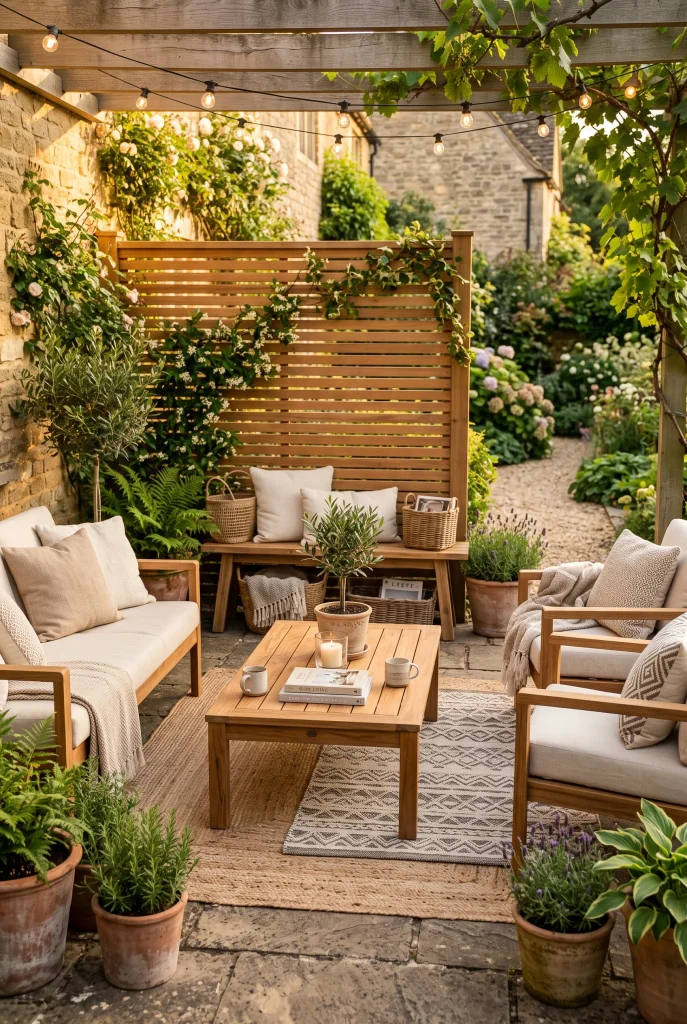
- Natural wood brings warmth to cool outdoor surfaces.
- A wooden table or bench can anchor the seating arrangement.
- Combining wood with woven textures creates visual depth.
- Choose treated outdoor wood for better durability and easier care.
A little natural wood can completely change the mood of an outdoor space. If your patio feels too plain, introduce a teak coffee table, wooden bench, or slatted screen to bring warmth and texture into the design. Honey-toned wood looks especially appealing beside cream cushions, pale stone, or soft gray flooring. Rather than filling the patio with matching pieces, choose one or two substantial accents and let them stand out. Natural materials help soften harder elements such as concrete, tile, and metal, making the setting feel warmer without adding unnecessary decoration.
Wood also gives you plenty of freedom when decorating around it. Pair a simple teak table with woven chairs, linen-look cushions, ceramic planters, or a textured outdoor rug for a relaxed arrangement. If the patio receives strong sunlight or frequent rain, select furniture designed specifically for outdoor use and follow the manufacturer’s care instructions. A wooden privacy screen can provide function while creating an attractive backdrop for plants. These choices create a space that feels warm and balanced rather than simply filled with furniture. The texture of the wood does much of the visual work.
3. Oversized Outdoor Rug
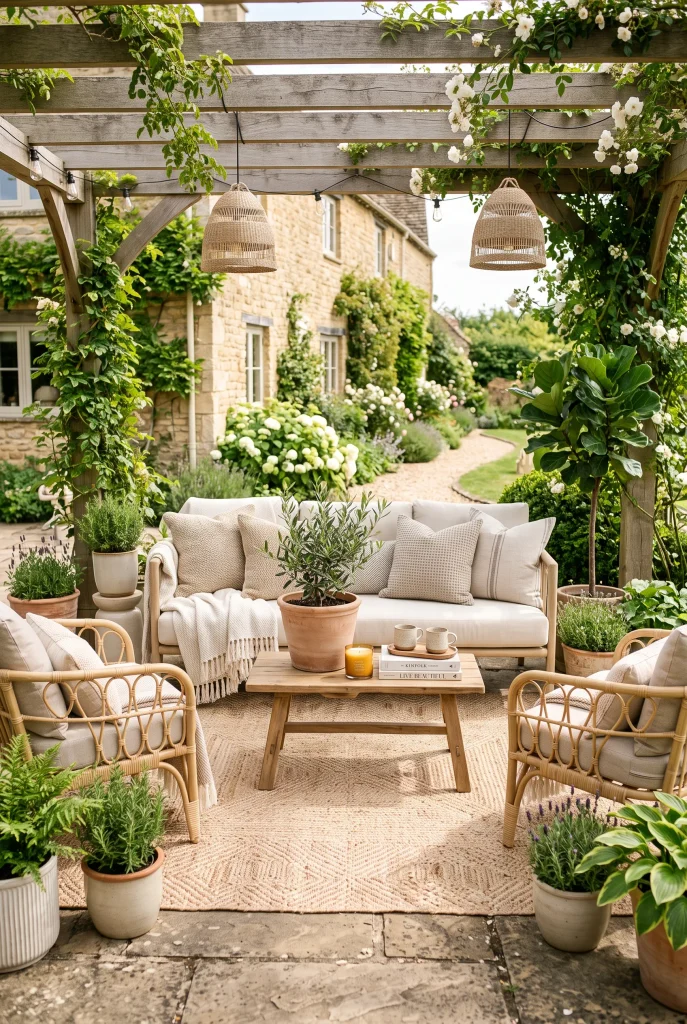
- A large rug defines the seating area and gives it a room-like feel.
- Neutral patterns add texture without overpowering the decor.
- Choose a weather-resistant rug made for outdoor conditions.
- Let the rug extend beneath the main seating pieces for better proportion.
If your patio furniture feels scattered or disconnected, an oversized outdoor rug can pull everything together almost instantly. Place it beneath the sofa, chairs, and coffee table so the arrangement reads as one intentional zone rather than separate pieces on an empty floor. Choose beige, ivory, taupe, or warm gray for a timeless appearance. A subtle pattern can add personality without competing with plants or accessories. This is one of the easiest outdoor patio design updates because it changes the visual structure without requiring new furniture. Even a basic seating arrangement can look considerably more complete.
The right rug also makes an outdoor seating area feel more comfortable. Bare concrete, stone, and tile can sometimes appear hard or unfinished, while a textured rug introduces softness underfoot and another layer of interest. Look for materials that resist moisture, fading, and everyday messes, especially if the patio is uncovered. Make sure the rug is large enough for the main furniture to sit comfortably on it. When the scale is right, the seating arrangement looks balanced and connected while remaining practical for everyday use.
4. Built-In Bench Seating
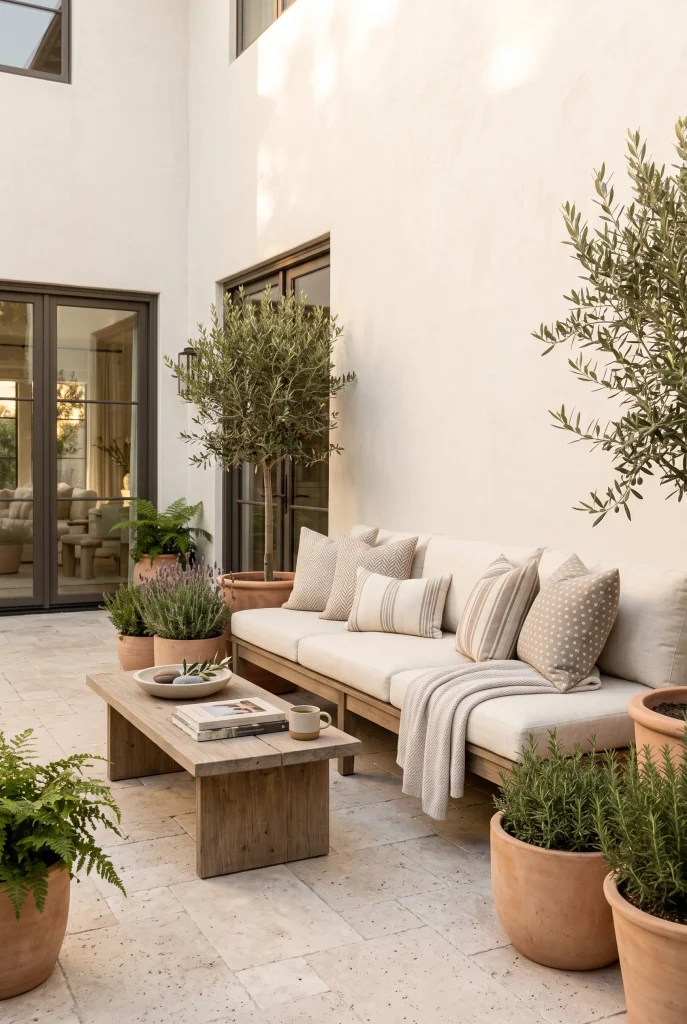
- Built-in seating makes excellent use of empty wall space.
- Thick cushions turn a simple bench into a comfortable lounge.
- Textured pillows add softness and personality.
- The remaining floor area can accommodate a table or extra chairs.
A built-in bench can make an outdoor patio feel polished while using space surprisingly efficiently. Instead of placing several bulky chairs around the perimeter, a bench creates a clean seating line that works especially well along a wall or privacy screen. Cover it with a thick outdoor cushion in cream, beige, or soft gray, then add a few pillows for comfort. This setup is particularly useful when you want plenty of seating without making the patio feel crowded. A simple wood or stone coffee table can complete the arrangement while giving everyone a convenient surface nearby.
The best part about built-in seating is its ability to combine function with a custom look. You can design the bench around an existing wall, corner, or narrow section that might otherwise go unused. Add storage underneath if the construction allows it, giving you a convenient place for cushions or blankets. Keep surrounding accessories restrained so the bench remains the main feature. A simple palette of wood, soft textiles, and greenery makes built-in seating look considerably more refined than an arrangement overloaded with accessories. It also leaves more room for comfortable movement.
5. Statement Planters
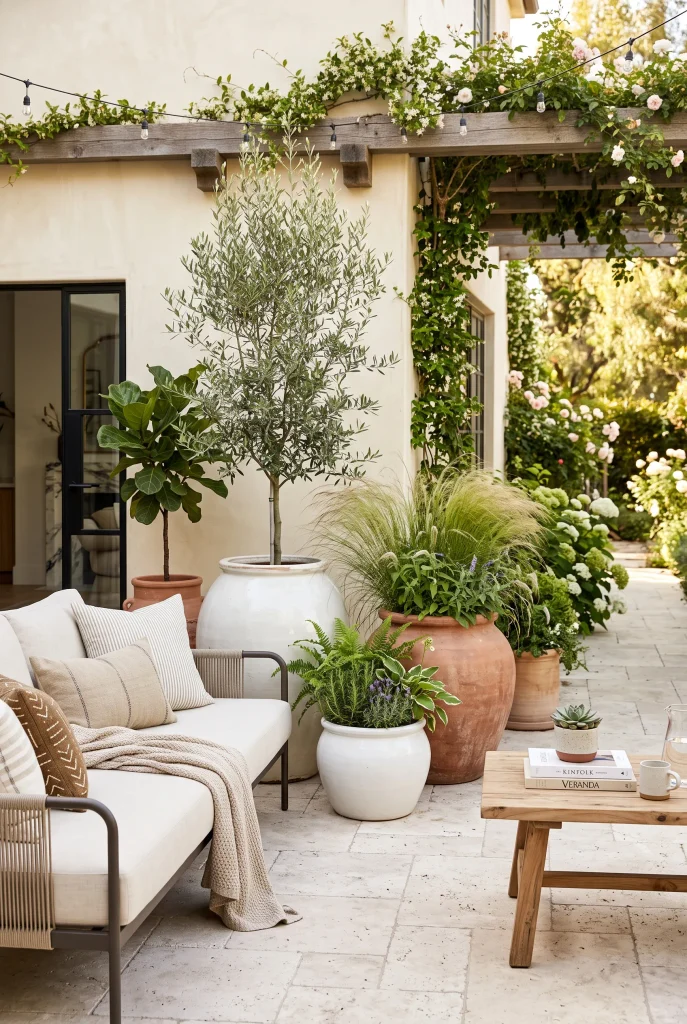
- Oversized planters add height and structure to an open patio.
- Grouping different shapes creates more interest than identical pots.
- Greenery softens hard flooring, walls, and furniture edges.
- Choose plants according to sunlight and local growing conditions.
Large planters can turn an ordinary patio into a space that feels intentionally designed. Instead of scattering small pots everywhere, use one or two oversized containers to create strong focal points around the seating area or entrance. Tall olive trees, ornamental grasses, palms, or leafy plants can add height without requiring permanent landscaping. Keep the containers within a coordinated palette such as warm white, terracotta, stone, or charcoal. This creates a cleaner backdrop while allowing the greenery to provide natural color. A few substantial plants often create more impact than a collection of tiny decorative pots.
Think about placement as carefully as the plants themselves. A tall planter can soften an empty corner, frame a doorway, or create a gentle boundary around a lounge area. Use different heights and textures to make the arrangement feel organic rather than overly symmetrical. If maintenance is a concern, choose varieties that match your available sunlight and watering routine. Weather-resistant containers are also useful for exposed patios. With thoughtful placement, statement planters can introduce privacy, freshness, and personality while helping the entire setting look more established and connected to its surroundings.
6. Soft Ambient Lighting
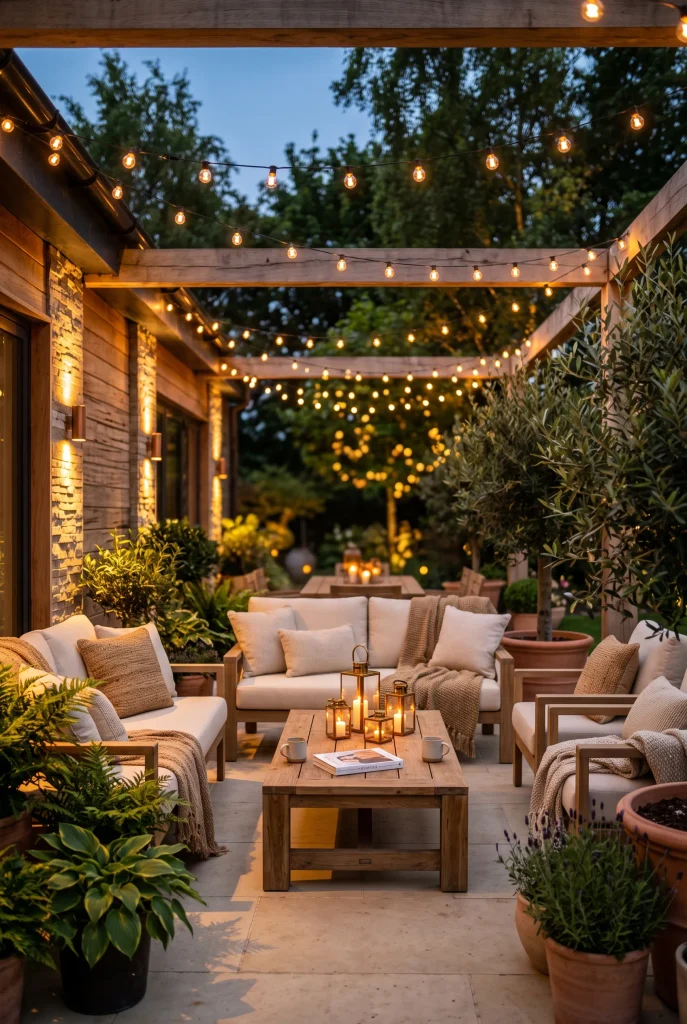
- Warm lighting makes the patio inviting after sunset.
- String lights can add charm without major installation.
- Lanterns provide flexible illumination that can be moved around.
- Several smaller light sources usually feel softer than one bright fixture.
Good lighting can completely change how a patio feels once the sun goes down. Instead of relying on one bright overhead fixture, layer several softer sources around the space. String lights can stretch across a pergola or overhead area, while lanterns can sit on a coffee table or beside the seating. Warm-toned bulbs create a gentle glow that makes neutral furniture, wood, and greenery look richer at night. This upgrade is especially useful if you regularly eat outside or relax after sunset because it extends the hours when the patio feels comfortable and usable.
For the most refined effect, think about lighting at different heights. Small lanterns provide low-level warmth, wall sconces add practical illumination, and overhead lights create a soft canopy effect. Keep brightness comfortable rather than extremely strong, especially around seating and dining areas. Weather-resistant fixtures are essential, while solar options can work well where electrical access is limited. A layered lighting plan adds atmosphere without overwhelming the decor. Once evening arrives, the combination of gentle illumination and surrounding greenery can make the patio feel intimate and inviting.
View: 21 Book Storage Ideas That Make Clutter Look Beautiful
7. Natural Stone Flooring
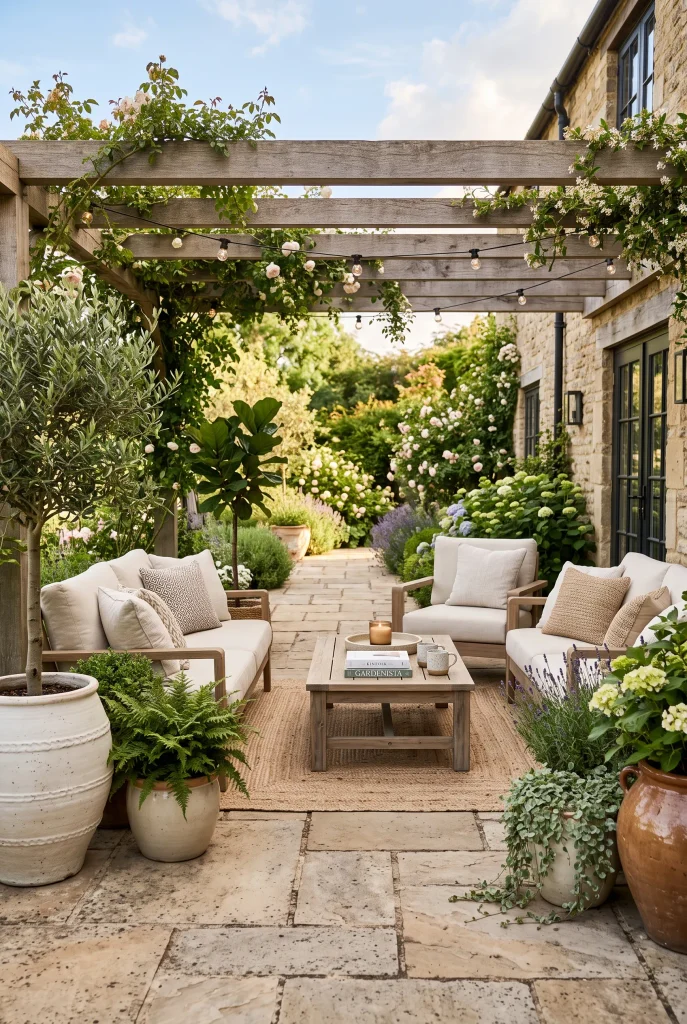
- Natural stone provides a substantial, timeless foundation.
- Warm neutral tones pair easily with wood, rattan, and cream furniture.
- Varied textures add character without requiring extra decoration.
- Proper sealing can help protect the surface from stains and weather.
The floor often sets the tone for the entire patio, and natural stone can give the space a more refined foundation. Materials such as limestone, travertine, slate, or flagstone offer subtle variation through their colors and textures. Warm beige and soft gray shades work especially well with cream upholstery, wood furniture, and greenery. Rather than looking overly polished, stone creates an organic appearance that feels connected to the outdoors. If your existing patio seems visually flat, changing or refreshing the flooring can make a larger impact than adding several decorative accessories.
Natural stone also works across many decorating styles. Large-format pieces create a cleaner contemporary appearance, while irregular flagstones can give the patio a relaxed garden character. Consider the climate and maintenance requirements before choosing a material, since some stones need periodic sealing or specialized cleaning. Keep furniture relatively simple so the flooring has room to stand out. Textured stone paired with soft textiles creates an appealing contrast between hard and comfortable surfaces. The result feels substantial and sophisticated while preserving the relaxed quality that makes outdoor spaces enjoyable.
8. Cozy Fire Pit Area
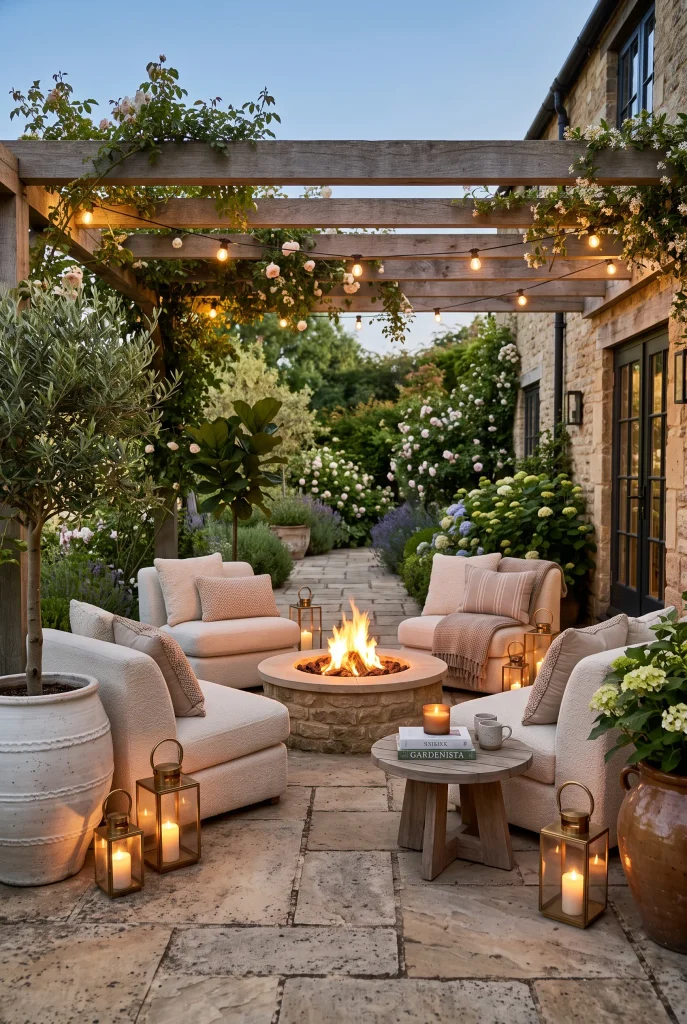
- A fire pit creates a natural gathering point for conversation.
- Comfortable chairs make the area practical for longer evenings.
- Keep furniture positioned with appropriate safety clearance.
- Choose a fire feature suitable for your patio and local requirements.
A fire pit can turn an ordinary patio into a destination that feels inviting long after dinner is finished. Place a round or square fire feature at the center of a comfortable seating arrangement so everyone naturally faces the warmth. Deep lounge chairs, textured cushions, and a low coffee table can keep the setting relaxed without making it overly formal. Use a neutral palette and let the fire provide the visual warmth. This arrangement is especially appealing for patios used during cooler evenings because it adds both atmosphere and a practical source of warmth.
The key to a successful fire pit area is giving the feature enough breathing room. Avoid squeezing too many chairs around it, and check the required clearances for your specific fire pit before arranging furniture. Choose weather-resistant seating and add lanterns or planters around the perimeter for extra depth. A stone, concrete, or metal fire feature can become a strong focal point while still blending with the surrounding materials. With sensible spacing and comfortable seating, the area becomes a natural spot for relaxing, chatting, and entertaining outdoors.
9. Pergola Shade Cover
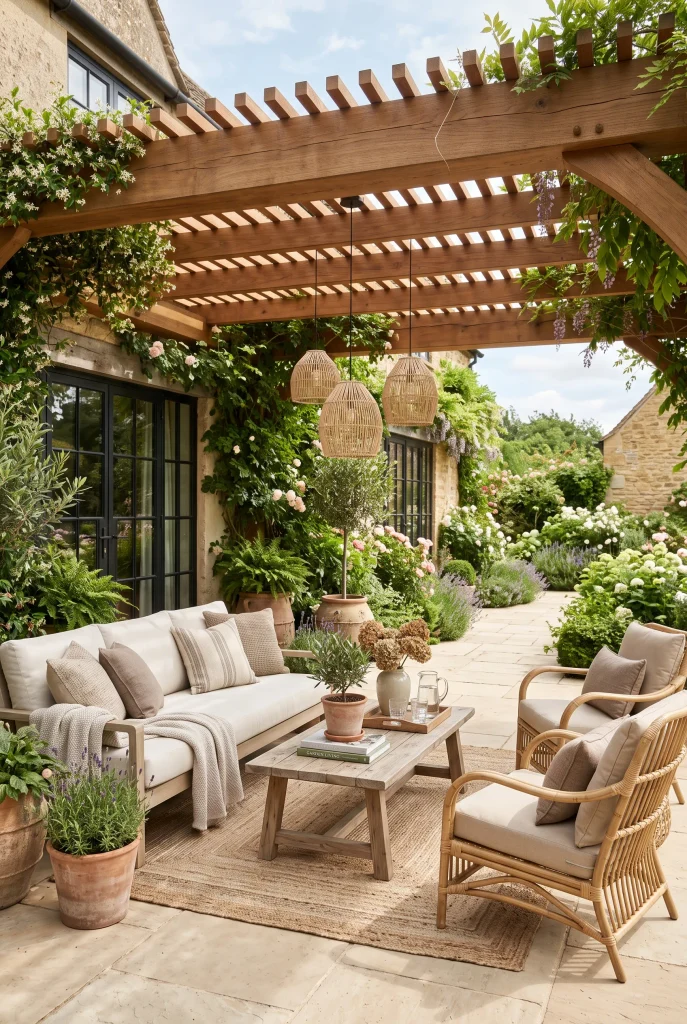
- A pergola adds architectural interest while providing useful shade.
- Open slats let sunlight filter through without making the space dark.
- Climbing plants can soften the structure.
- Outdoor curtains can provide extra privacy when needed.
A pergola can give a patio the feeling of an outdoor room while adding structure overhead. A simple wood frame with open slats provides partial shade and lets sunlight filter through throughout the day. Place the main seating beneath it so the structure naturally defines the lounge area. Cream upholstery, woven furniture, and natural wood work beautifully against the warm lines of the pergola. If the patio currently feels like an empty slab of flooring, overhead architecture can establish a clear purpose and make the space feel substantially more complete.
You can personalize a pergola without making it look overly decorated. Train climbing plants along selected posts for a garden effect, or add outdoor curtains when you want more privacy and flexibility. String lights or simple pendant fixtures can provide practical evening illumination while emphasizing the structure. Choose materials suited to your climate and maintain them according to the manufacturer’s recommendations. A pergola does more than provide shade; it frames the seating area. That definition can make even a modest patio feel larger, more organized, and better integrated with the rest of the home.
10. Outdoor Dining Nook
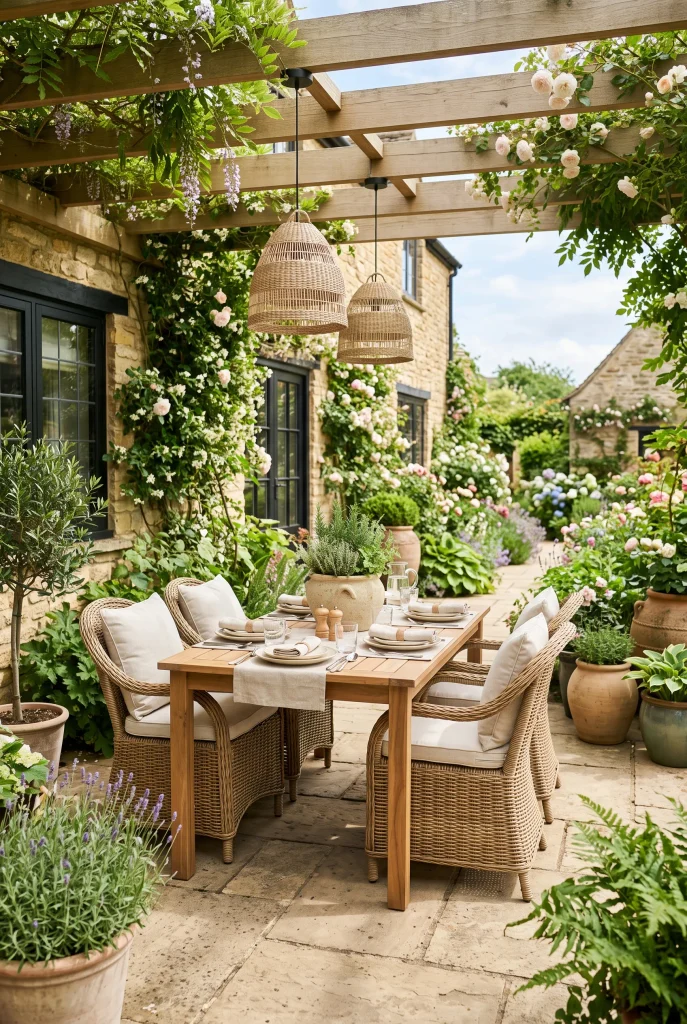
- A dedicated dining area makes outdoor meals feel more intentional.
- A round table can work especially well in smaller patios.
- Cushioned chairs add comfort while keeping the arrangement inviting.
- Keep table decor simple so the setup remains practical.
A dedicated dining nook can make a patio much more useful without requiring a huge footprint. Choose a table that fits comfortably within the available space, then surround it with chairs that allow people to move easily. A round table can be especially helpful in smaller areas because it creates smoother traffic flow and avoids sharp corners. Natural wood, woven chairs, and neutral cushions create an elevated look that still feels relaxed. Add a simple centerpiece, such as a ceramic vase with greenery, to give the table personality without making everyday meals inconvenient.
Think about how the dining area will actually be used before choosing furniture. Leave enough room behind each chair to pull it out comfortably, and select surfaces that are easy to clean after meals. Weather-resistant materials can simplify maintenance, especially on uncovered patios. If space allows, position the dining nook near the kitchen or outdoor cooking area for easier serving. Restrained styling makes an outdoor dining setup feel more sophisticated because the furniture and surrounding landscape remain the focus. A few useful details can support everything from casual breakfasts to evening gatherings.
11. Woven Rattan Furniture
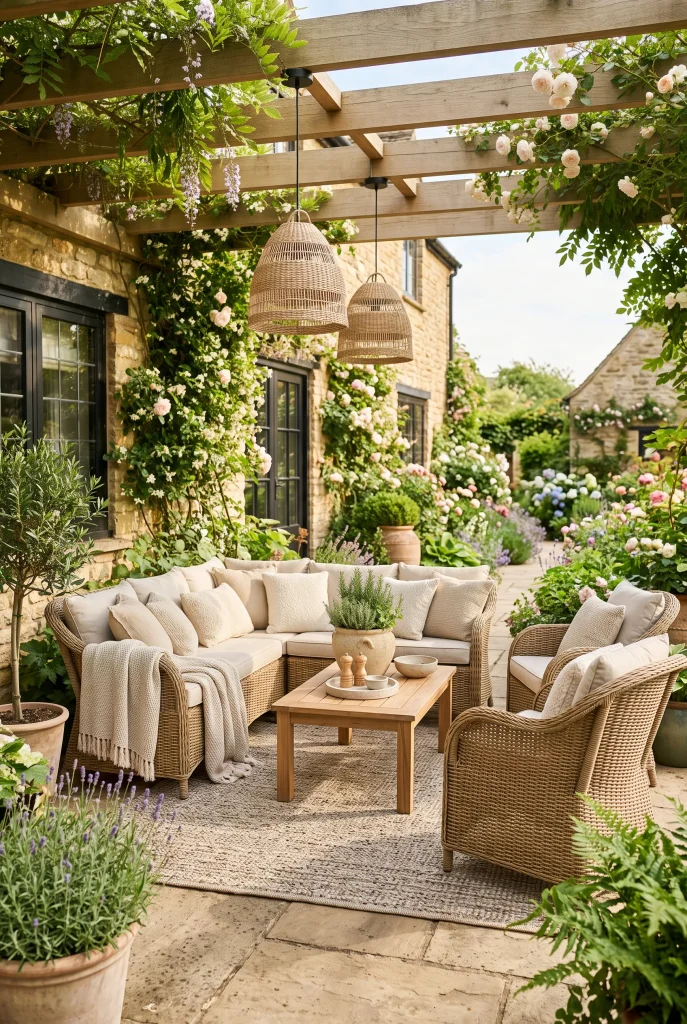
- Rattan brings natural texture and warmth to outdoor seating.
- Mixing woven pieces with smooth surfaces creates useful contrast.
- Cream cushions can make darker rattan feel lighter.
- Choose outdoor-rated materials designed for moisture and sunlight.
Woven rattan furniture brings natural warmth to a patio and works beautifully with surrounding greenery. A rattan sofa, lounge chair, or dining set introduces texture without making the setting feel heavy. Pair the woven material with cream cushions, a light outdoor rug, and a wood table for a soft, sophisticated palette. The combination remains relaxed enough for everyday use while looking carefully coordinated. If your patio contains plenty of concrete, tile, or metal, woven furniture can soften those harder surfaces and give the arrangement a more comfortable visual balance.
The key is to avoid making every piece heavily textured. Let one or two woven items provide the main character, then balance them with smoother materials such as ceramic, stone, or wood. Before purchasing, check that the furniture is specifically rated for outdoor conditions, since rattan-style materials vary in durability. Removable, washable cushion covers are another practical feature. A few well-chosen woven pieces can create a relaxed resort-like atmosphere without making the patio feel overly themed. Add nearby greenery, and the natural textures will blend easily with the surrounding landscape.
12. Elegant Privacy Screen
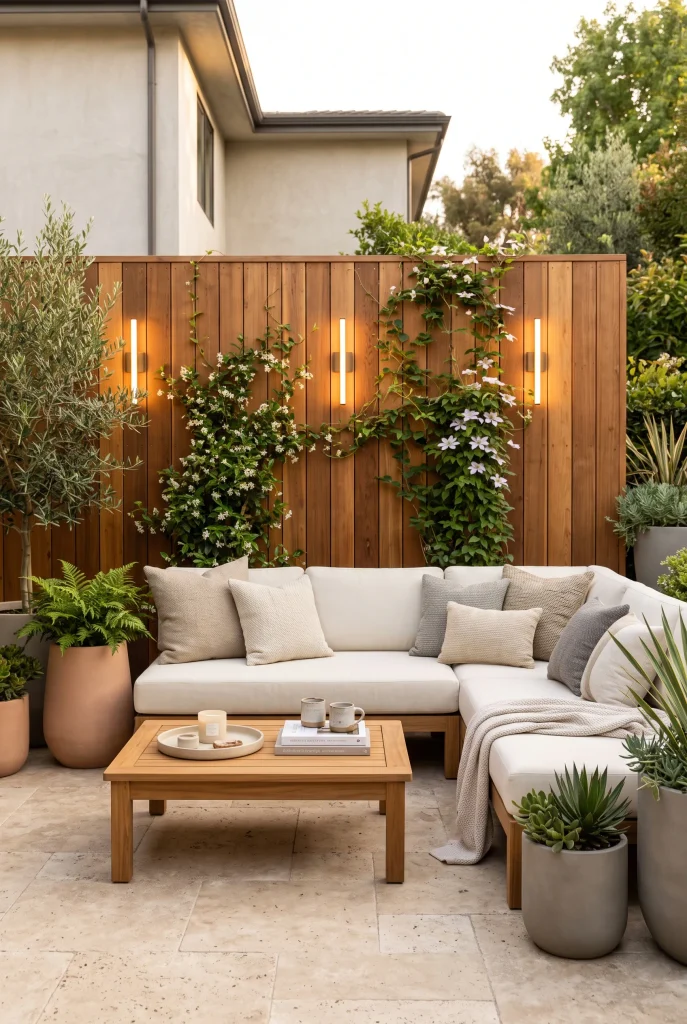
- A privacy screen can make an exposed patio more comfortable.
- Vertical slats add height without completely closing the space.
- Plants can soften the screen and create a natural backdrop.
- Choose a design that allows appropriate airflow.
Privacy can make a major difference in how comfortable an outdoor patio feels. A well-designed screen can block distracting views while providing an attractive backdrop for furniture. Vertical wood slats are useful because they add height and texture without making the area feel completely enclosed. Stain the wood in a warm neutral tone, then soften the structure with climbing greenery or large planters. This can turn an overlooked patio edge into a deliberate feature while giving the seating area a greater sense of separation.
A privacy screen can also help define the patio as its own outdoor room. Use it behind a sofa, dining table, or lounge chair to create a clear boundary without building a solid wall. Consider sunlight, airflow, and the views you want to preserve before deciding on placement. If a permanent structure is impractical, freestanding screens offer more flexibility. Keep nearby furniture relatively simple so the screen remains the backdrop. With appropriate proportions and materials, privacy becomes an integrated part of the design rather than something that looks added later.
13. Cozy Corner Lounge
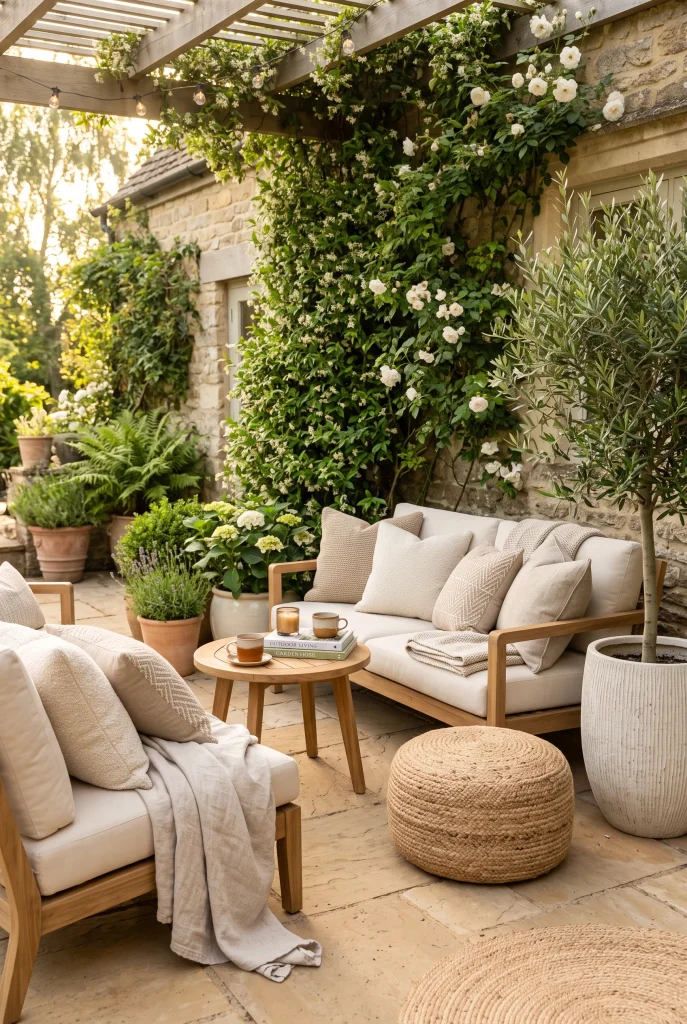
- An unused corner can become a comfortable relaxation zone.
- A compact chair and side table are enough for a simple setup.
- Layered textures make the area feel warmer.
- Keep the walkway clear so the lounge remains practical.
An empty patio corner does not need to stay unused. Turn it into a quiet lounge with one comfortable chair, a small side table, and a few layered cushions. If space allows, add a compact loveseat or woven pouf to create a fuller arrangement. Keep the colors soft with cream, beige, warm brown, or muted green so the corner connects with the surrounding landscape. A tall planter can fill an awkward vertical area while introducing greenery. This simple setup can make even a small patio feel more purposeful and provide a natural place to read, relax, or enjoy morning coffee.
The best corner lounges are comfortable without feeling crowded. Choose furniture that fits the proportions of the area and leave enough clearance for people to move around it. A small table provides a convenient place for coffee, books, or a lantern, while an outdoor rug can visually define the zone. Corners often become some of the most relaxing parts of a patio because they naturally feel more secluded. Add greenery nearby and keep accessories limited. The result is a personal retreat that looks considered without requiring a major renovation.
14. Neutral Color Palette
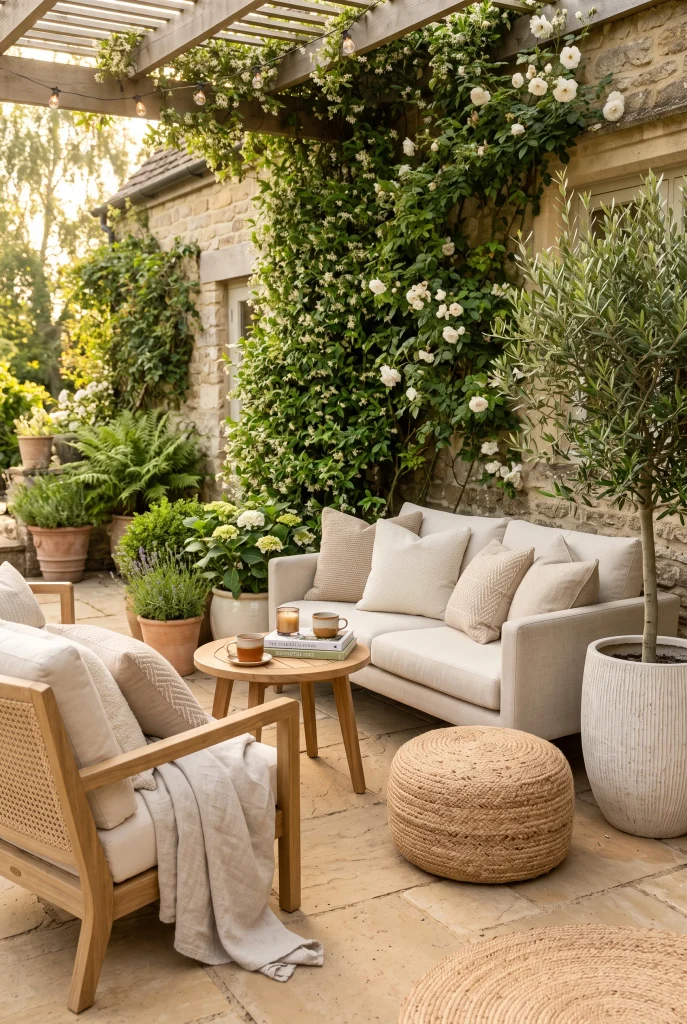
- Neutral colors create a calm, timeless outdoor atmosphere.
- Layering textures keeps the palette from feeling flat.
- Warm beige pairs naturally with wood and greenery.
- Small charcoal accents can add definition when needed.
A neutral palette can make a patio feel calmer, brighter, and more elevated without relying on bold colors. Start with cream, beige, warm white, or soft taupe, then layer different materials to create depth. Linen-look cushions, woven chairs, natural wood, textured rugs, and ceramic accessories can stay within the same color family while still looking varied. This approach is useful if you want the patio to remain timeless rather than tied to one trend. Surrounding greenery then becomes the natural source of color, giving the space freshness without disrupting the serene palette.
The secret to a successful neutral patio is texture. If every surface shares the same shade and finish, the setting can appear flat. Instead, combine smooth ceramics with woven materials, natural wood, textured cushions, and subtly patterned fabrics. You can also introduce charcoal, black, or muted green in small doses for definition. Keep larger furniture pieces in versatile tones so they remain easy to update. A layered neutral scheme gives you plenty of flexibility while creating the relaxed, refined atmosphere many homeowners want from an outdoor living area.
15. Layered Outdoor Textiles
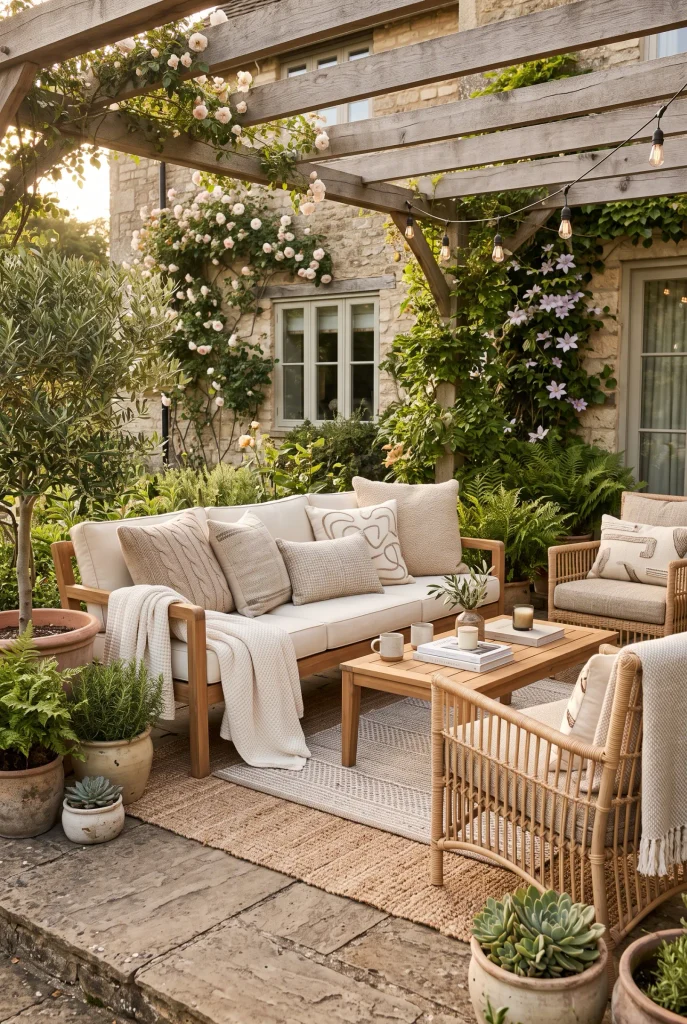
- Layered textiles make outdoor seating softer and more comfortable.
- Combine different textures instead of relying on many matching patterns.
- Keep colors coordinated for a cohesive appearance.
- Store delicate textiles properly when severe weather is expected.
Outdoor furniture can look beautiful but still feel unfinished without the right textiles. Layering cushions, pillows, rugs, and a lightweight outdoor throw can make the seating area much more comfortable. Start with larger neutral cushions, then add smaller pillows in complementary textures such as woven fabric, canvas, or weather-resistant linen-look materials. A rug beneath the furniture can ground the arrangement and separate it visually from the surrounding floor. Keeping the colors coordinated prevents the space from becoming busy while allowing different textures to provide depth. These small additions can give simple furniture a noticeably richer appearance.
Textiles are also one of the easiest ways to refresh a patio from season to season. Keep the main furniture neutral and switch a few pillows or throws when you want a different mood. Choose fabrics specifically designed for outdoor use and follow care instructions to help them resist fading, moisture, and everyday dirt. Avoid placing too many accessories on every seat because the goal is comfort rather than clutter. When the layers are balanced, the patio feels more like an extension of the indoor living area while retaining the practical qualities needed outdoors.
16. Outdoor Bar Cart
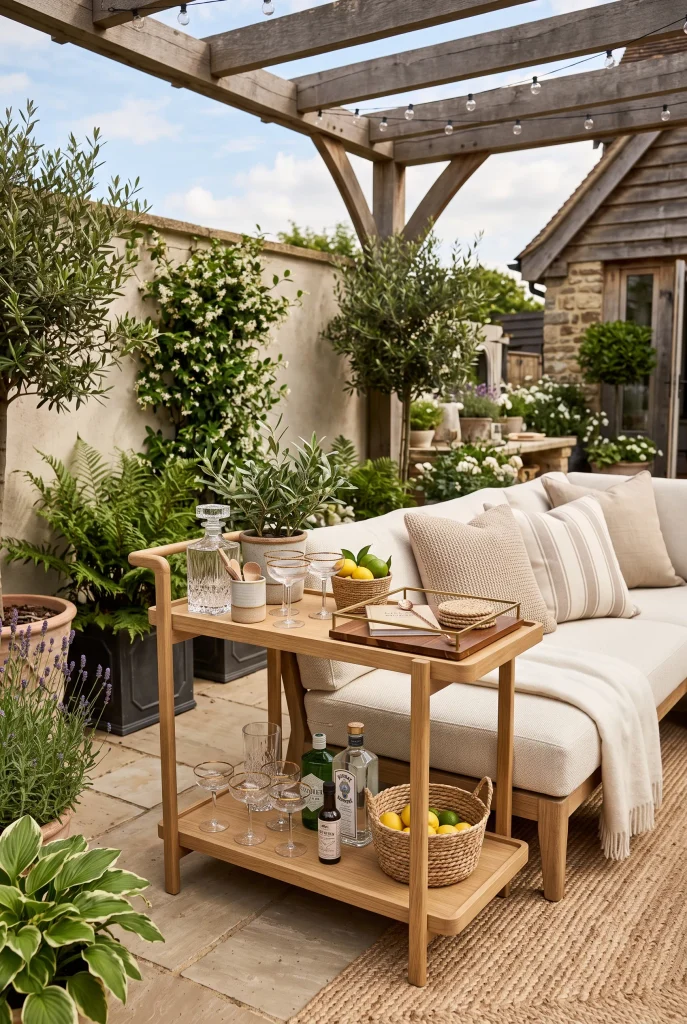
- A compact bar cart adds function without taking much floor space.
- Use weather-resistant materials for better outdoor durability.
- A tray helps keep glasses and accessories organized.
- Style the cart simply so it remains useful rather than cluttered.
An outdoor bar cart can add a polished touch to a patio while providing a practical serving station. Choose a compact cart in natural wood, metal, or a weather-resistant finish, then position it near the main seating or dining area. Keep the styling simple with a tray, attractive glasses, a few serving pieces, and perhaps a small plant. This arrangement works particularly well for entertaining because everything stays together instead of requiring repeated trips to the kitchen. Even when you are not hosting, the cart can serve as a compact display for useful outdoor accessories.
Think of the cart as both a functional station and a decorative feature. Select a design with wheels if you want to move it around easily when rearranging the patio. Avoid leaving delicate items exposed during harsh weather, and choose accessories that are easy to clean. A woven basket on the lower shelf can hold napkins or outdoor supplies while adding texture. Small entertaining features like this can make a patio feel more complete without requiring expensive furniture or a major redesign. The best styling keeps convenience at the center.
17. Sculptural Accent Chairs
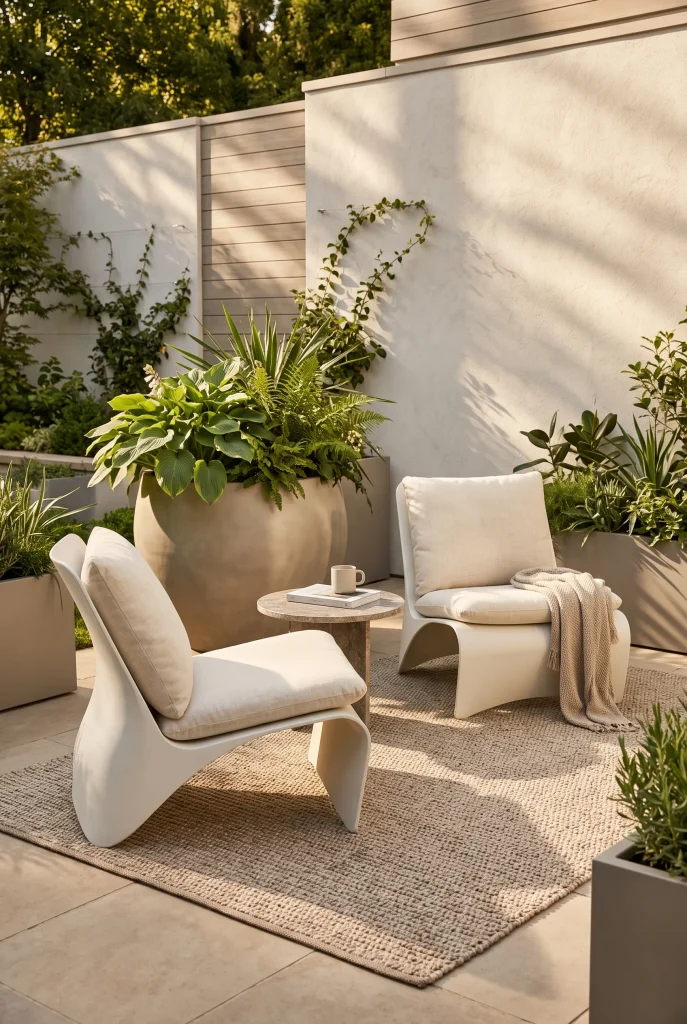
- Curved chairs can add visual interest without bright colors.
- A distinctive silhouette can become a focal point.
- Keep surrounding furniture simple so the chairs remain noticeable.
- Choose outdoor-rated materials that can handle regular exposure.
Sometimes one distinctive furniture shape is enough to make a patio feel more curated. Sculptural accent chairs with curved backs, rounded frames, or unusual woven details can bring personality without requiring bright colors or excessive decoration. Place two matching chairs with a small round table, or use one statement chair beside a sofa. Keep nearby pieces relatively simple so the interesting silhouette remains visible. Soft cream, beige, or natural brown finishes work especially well when you want a sophisticated setting without making the furniture feel overly dramatic.
Comfort should remain just as important as appearance when choosing statement seating. Look for supportive shapes and cushions designed for outdoor use, particularly if the chairs will be used regularly. Position them where their form can be appreciated from the main seating area or when approaching the patio. Add one textured rug or a large planter nearby to complete the composition without competing for attention. A sculptural chair can become a memorable focal point while still serving an everyday purpose. The result feels distinctive yet practical, with enough restraint to keep the overall setting balanced.
18. Layered Greenery
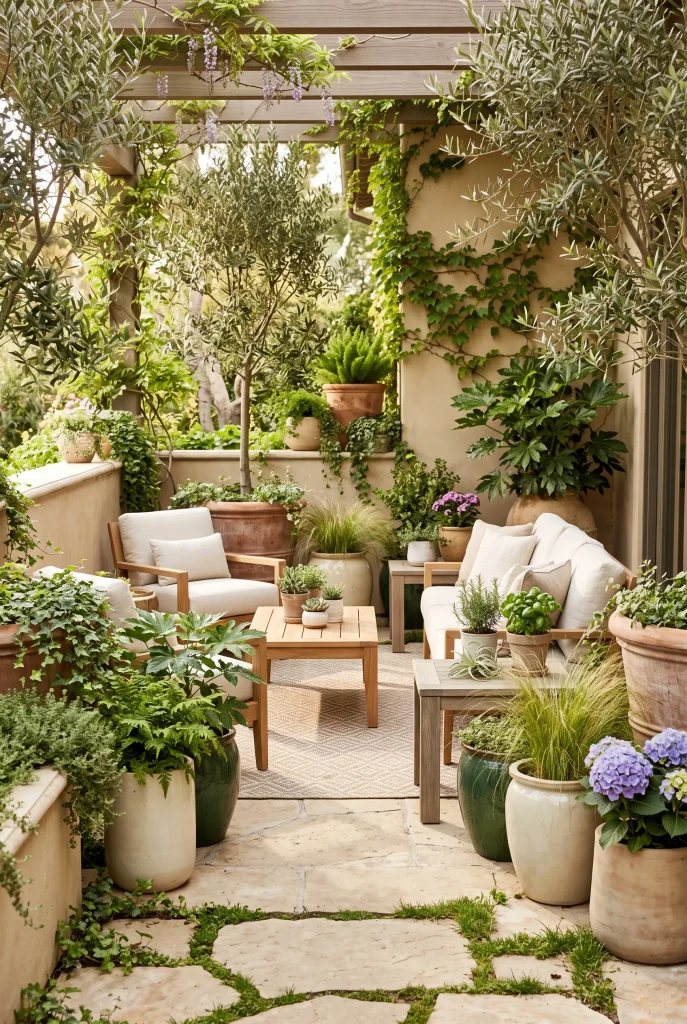
- Different plant heights create depth and make the patio feel fuller.
- Tall greenery can soften walls and create a natural privacy layer.
- Medium and small plants connect furniture to the surrounding landscape.
- Choose varieties according to sunlight, temperature, and maintenance needs.
Layered greenery can make a patio feel more connected to nature while adding depth around furniture and architectural features. Instead of placing plants at one height, combine tall trees, medium planters, trailing varieties, and smaller tabletop plants. A tall olive tree or ornamental grass can anchor a corner, while smaller pots can soften the edges of a coffee table or seating area. This creates a more natural composition than arranging identical plants in a straight line. The greenery also introduces color without disrupting a neutral furniture palette, making the entire setting feel fresher and more connected to its surroundings.
When planning your plant arrangement, consider how much sunlight each area receives throughout the day. Place sun-loving plants in bright positions and reserve shadier spots for varieties that tolerate lower light. Use containers in complementary finishes such as terracotta, stone, or warm ceramic to keep the display cohesive. Avoid filling every available surface because some open space helps the plants look intentional rather than crowded. Combining different heights is one of the simplest ways to make a patio feel established. With suitable plants, even a basic seating area can take on the atmosphere of a private garden retreat.
19. Modern Concrete Seating
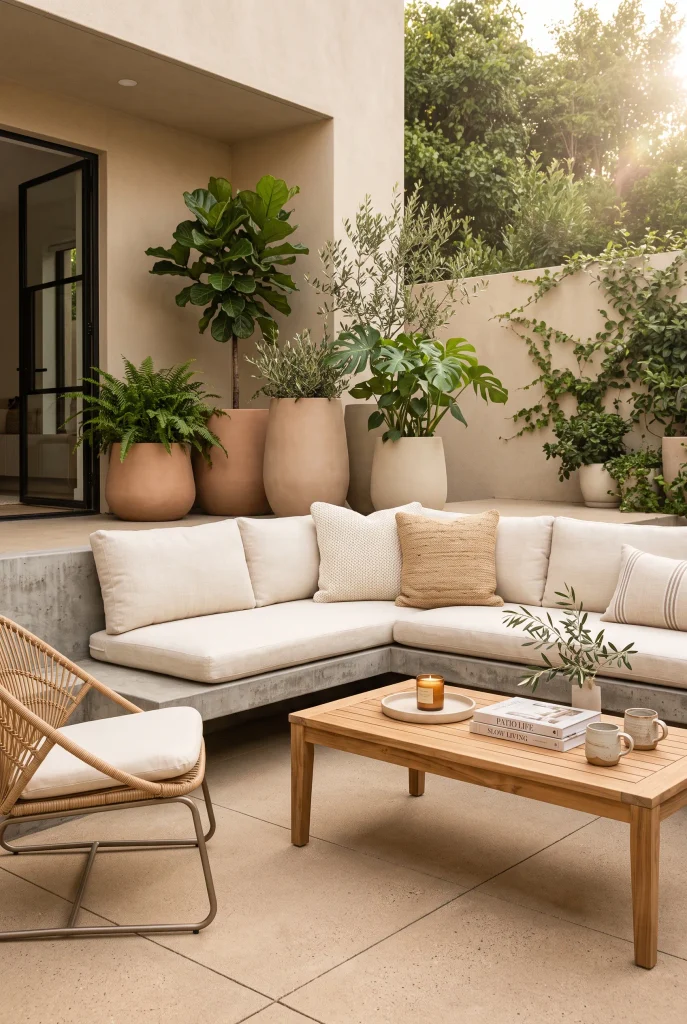
- Concrete seating provides a strong architectural foundation.
- Soft cushions prevent the material from feeling cold or uncomfortable.
- Wood and woven accents introduce warmth and contrast.
- Built-in seating can make efficient use of awkward patio edges.
Concrete seating can give an outdoor patio a strong architectural character while keeping the overall design clean and modern. A built-in concrete bench along one wall can provide generous seating without taking up as much floor space as several individual chairs. Add thick cushions in cream, beige, or warm gray to soften the hard surface and make it comfortable for longer periods. Pair the bench with natural wood, woven furniture, and greenery to create contrast. The combination feels contemporary without becoming cold, especially when warmer textures are used throughout the seating area.
The durability of concrete makes it useful outdoors, but thoughtful styling is important. Keep the surrounding palette warm and introduce wood, rattan, textured fabric, and ceramic to balance the solid structure. Add a small coffee table in front of the bench and leave enough open space for comfortable movement. If you are building new seating, consider incorporating hidden storage underneath where practical. This approach combines architectural interest with everyday function, creating a patio that feels custom-made while remaining comfortable enough for casual lounging, reading, and entertaining.
20. Black Accent Details
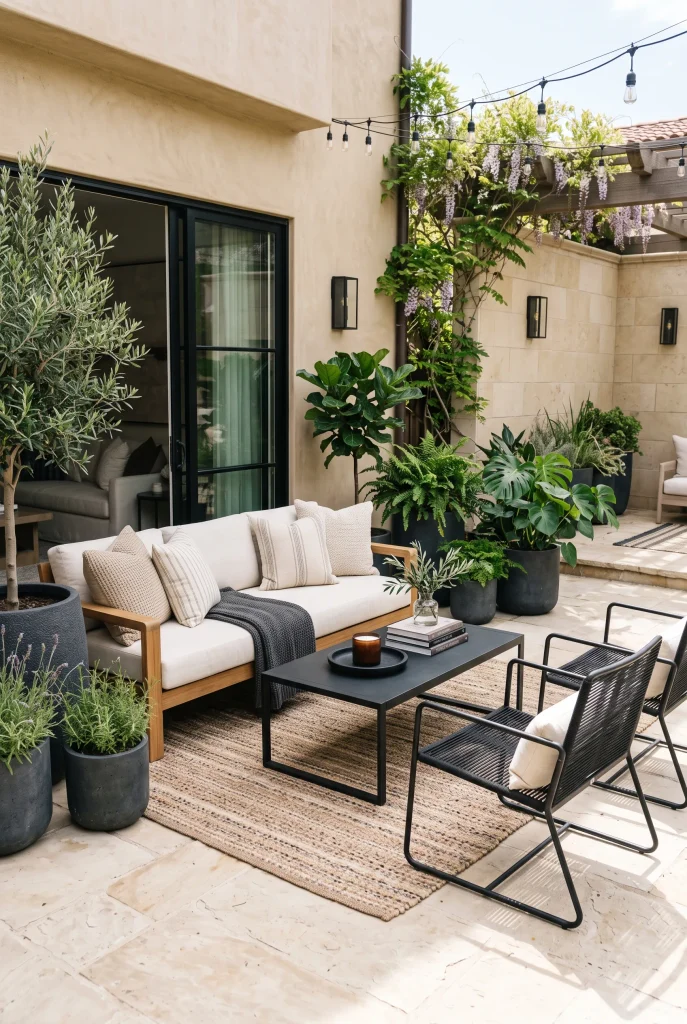
- Black accents create contrast against light furniture and flooring.
- A few dark details can define the space without overwhelming it.
- Matte finishes tend to feel softer and more contemporary.
- Repeat black in two or three areas for visual consistency.
A few black accents can give a neutral patio much more definition without changing the entire color scheme. Try a matte black coffee table, slim-framed chairs, planters, lanterns, or simple lighting fixtures against cream upholstery and warm wood. These darker details help lighter materials stand out and give the arrangement stronger visual structure. You do not need many black pieces to achieve the effect. In fact, using a handful of repeated accents often looks more sophisticated than covering the patio in dark furniture and accessories. The contrast is enough to add character without making the space feel heavy.
The easiest way to use black successfully is to repeat it in small doses. For example, pair black chair frames with a matching lantern and dark planter so the eye naturally moves around the space. Keep larger furniture pieces light if you want an airy appearance, especially on smaller patios. Matte finishes can also blend naturally with wood, stone, and greenery. This contrast technique works across modern, contemporary, and relaxed decorating styles. The result is a defined outdoor setting where the darker elements add structure while the lighter furnishings maintain an open, welcoming feel.
21. Elegant Water Feature
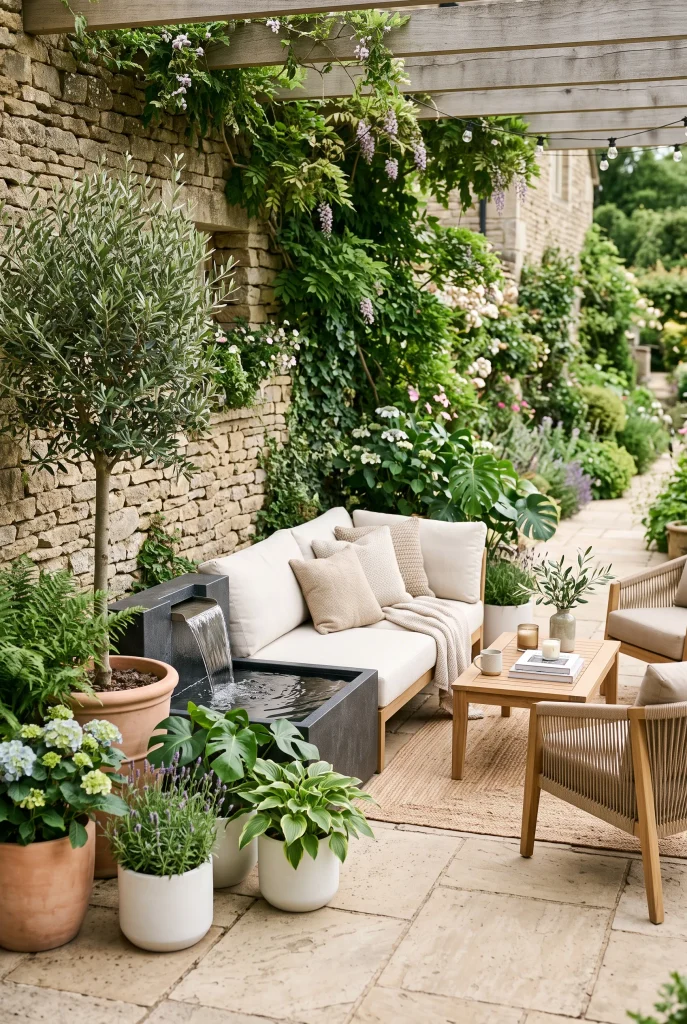
- A water feature adds movement and soothing sound.
- Compact fountains can work even when space is limited.
- Stone and ceramic finishes help the feature blend with surrounding decor.
- Place it where the sound can be enjoyed without blocking pathways.
A small water feature can bring calm and refinement to an outdoor patio without requiring a large installation. A compact fountain, wall feature, or shallow water basin can become a gentle focal point beside a seating area or garden edge. Moving water adds subtle visual interest, while its sound can help soften nearby traffic or neighborhood noise. Choose a design that complements existing materials, such as natural stone, concrete, ceramic, or wood. When the finish connects naturally with the rest of the setting, the feature looks intentional rather than like an isolated decorative addition.
Before choosing a water feature, consider maintenance, electrical access if required, and the amount of available space. A smaller fountain may be easier to clean and maintain than a large installation, particularly if the patio is used frequently. Surround the feature with a few plants or textured stones to integrate it into the landscape. Keep nearby furniture simple so the water remains a subtle focal point. A thoughtfully positioned feature can change the atmosphere of the entire patio, making it feel quieter, more relaxing, and closer to a private outdoor retreat.
Conclusion
A beautiful patio doesn’t have to start with an expensive renovation. The right outdoor patio design can come together through thoughtful seating, natural materials, layered textiles, greenery, lighting, and a few standout details. Whether you’re refreshing a small corner or redesigning a larger backyard area, focus on comfort first and let the decorative details build around it. Choose one or two ideas that fit your space and start there. Small changes can completely transform an outdoor area when they work together. Save this post on Pinterest for inspiration, try your favorite ideas, and share it with someone planning a patio makeover.