25 Minimalist Luxury Living Spaces for a Dreamy Home
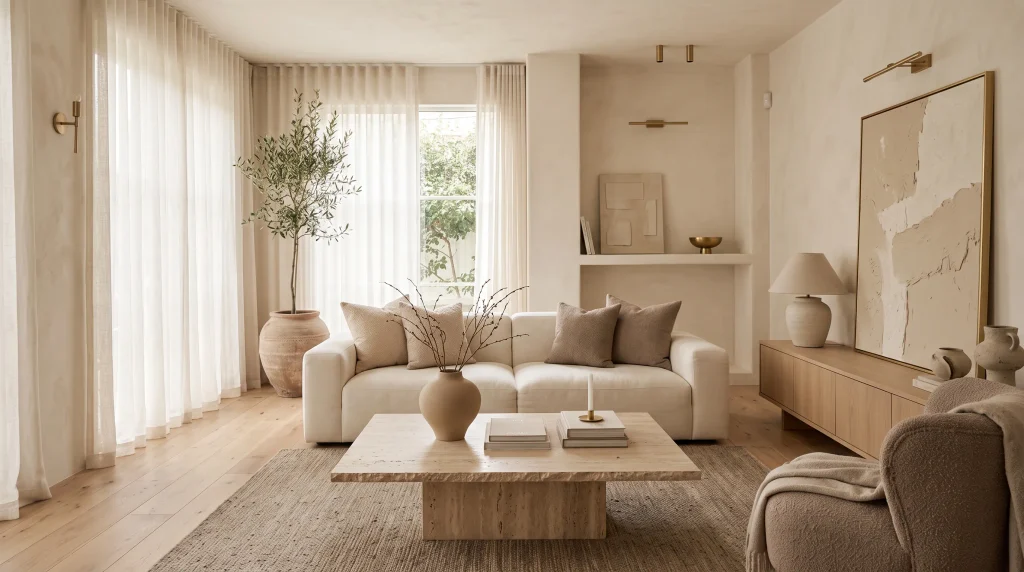
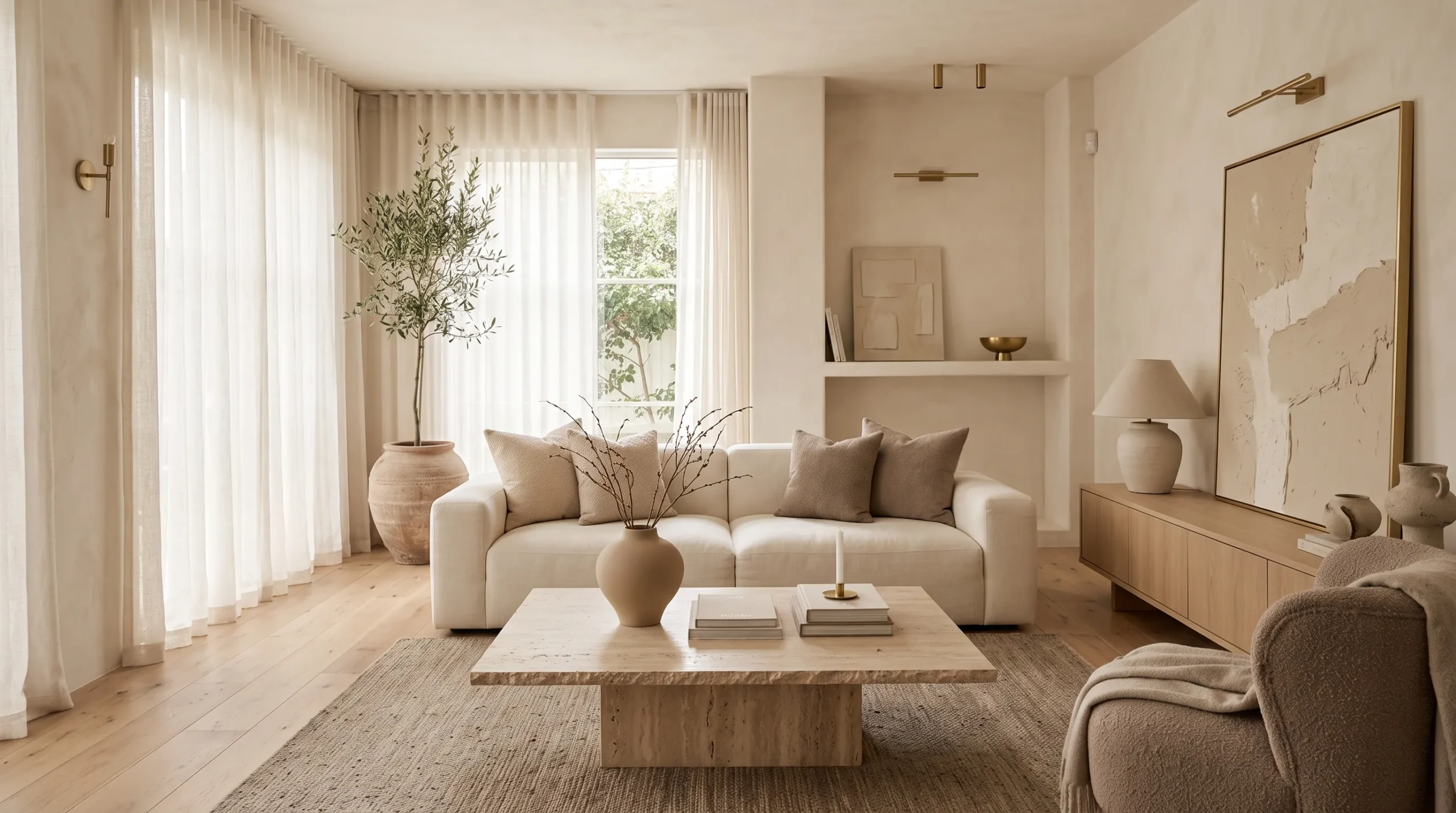
What if your living room could feel luxurious without feeling crowded or overly decorated? Minimalist luxury living spaces prove that simplicity and sophistication can work beautifully together. Think soft neutral colors, elegant furniture, natural stone, warm wood, layered textures, and plenty of breathing room. The goal is not to remove everything, but to choose each element with purpose.
In this article, you’ll discover 25 stylish ideas that can help make your living room feel calmer, more polished, and effortlessly inviting. Whether you are refreshing one corner or planning a complete makeover, these ideas offer practical ways to create a high-end look without sacrificing comfort. Small changes in texture, lighting, and furniture placement can often make a surprisingly big difference.
1. Neutral Luxe Palette
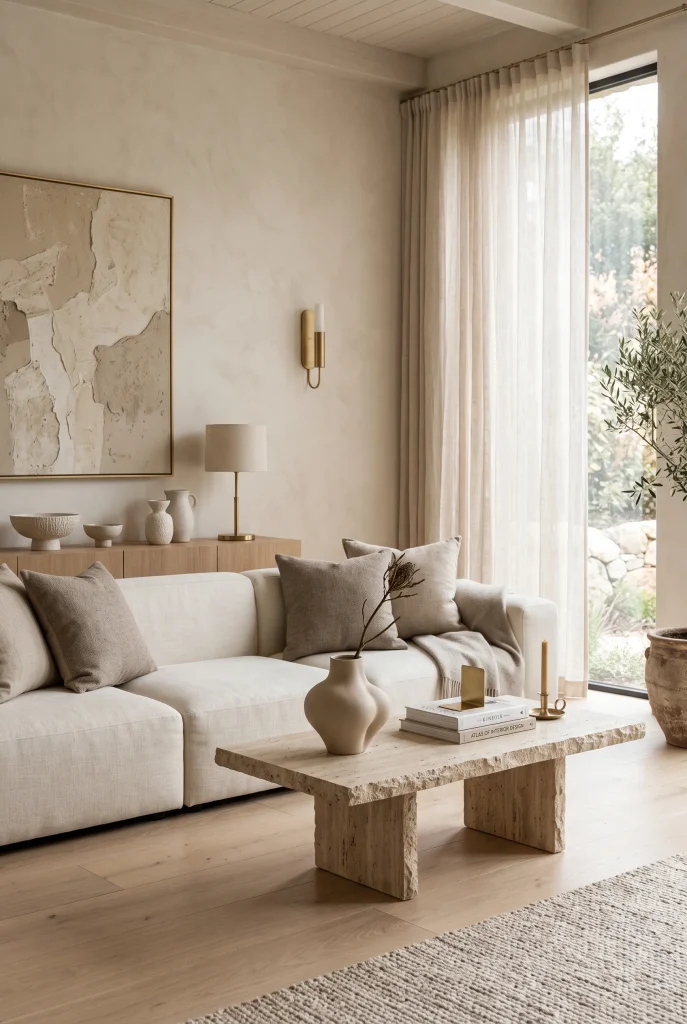
- A warm neutral palette creates an instantly polished, spacious feeling.
- Layering ivory, beige, and taupe keeps the room from looking flat.
- Light oak and stone add natural texture without visual clutter.
- Subtle tonal changes can make minimalist rooms feel much richer.
A carefully layered neutral palette can make a living room feel luxurious without adding lots of decoration. Start with warm ivory walls, then bring in beige upholstery, taupe textiles, and light natural wood for gentle contrast. A cream sofa with clean lines keeps the main seating area visually calm, while a stone or travertine coffee table adds an upscale material moment. Keep metallic details restrained, using brushed brass on a lamp or side table rather than scattering shiny accents throughout the room. The result is one of those minimalist luxury living spaces that feels sophisticated, comfortable, and surprisingly easy to maintain.
The secret is variation within the same color family. Instead of matching every beige exactly, combine slightly different shades and textures so the room has depth. A woven rug, linen cushions, smooth ceramics, and softly textured walls can create visual interest without making the space feel busy. Natural daylight is especially effective because it highlights those subtle differences throughout the day. If the room feels too pale, introduce one grounding element, such as a walnut accent chair or darker stone table. This simple approach works particularly well in smaller homes where too many colors can quickly make the room feel crowded.
2. Sculptural Coffee Table
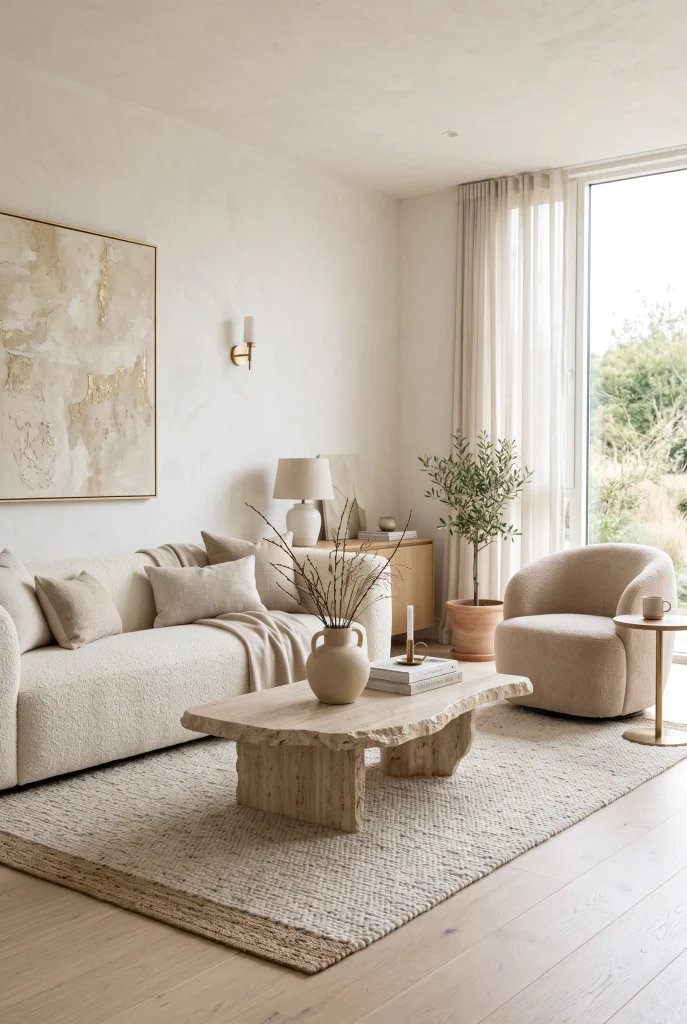
- A sculptural table becomes a focal point without needing extra decoration.
- Rounded or organic shapes soften rooms filled with straight furniture lines.
- Travertine, marble, or natural stone instantly adds material richness.
- Keep the tabletop lightly styled so its silhouette remains visible.
One striking piece can completely change how a minimalist living room feels, and a sculptural coffee table is an easy place to start. Choose a rounded, oval, or organically shaped design in travertine, marble, or another natural stone. Its unusual silhouette creates interest while keeping the overall room visually quiet. Pair it with a streamlined cream sofa and simple rug so the table has enough breathing room around it. The combination feels elevated without looking overly decorated. Furniture with a strong shape often creates more impact than filling the room with numerous small accessories.
Styling the surface is where restraint matters most. Instead of covering the table with books, candles, trays, and ornaments, choose just two or three purposeful pieces. A low ceramic bowl, a small sculptural object, or a single branch in a simple vase can be enough. Leave plenty of exposed tabletop so the material and shape remain part of the design. Position the table centrally with comfortable walking space around it, especially if the room receives regular family traffic. This balance makes the space practical while preserving the polished appearance associated with contemporary luxury interiors.
3. Floor-To-Ceiling Curtains
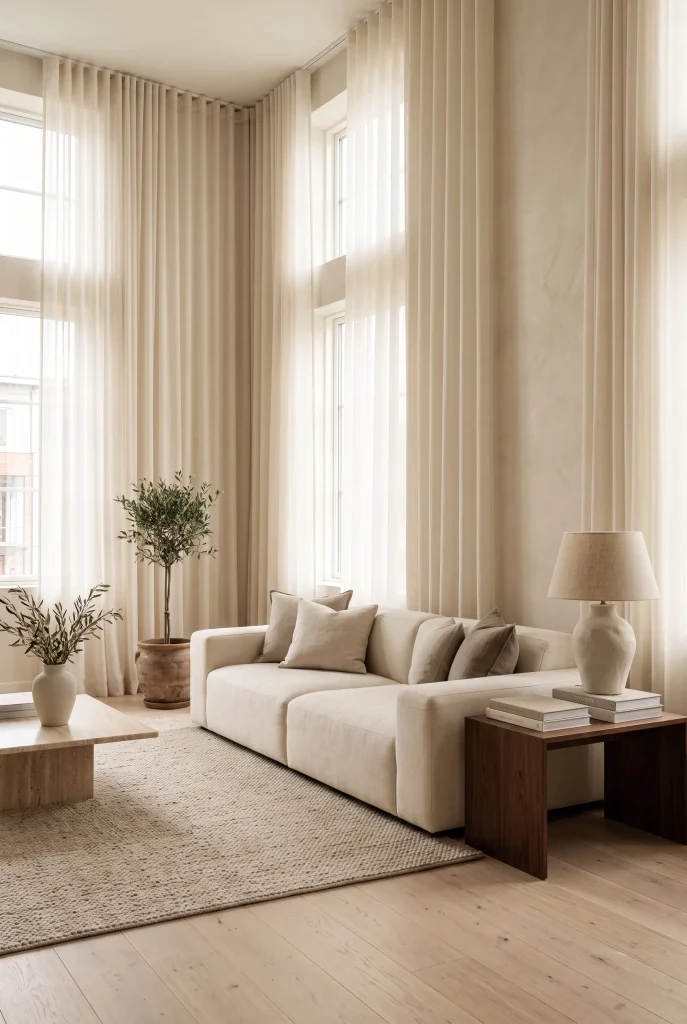
- Long curtains make windows feel larger and ceilings appear taller.
- Soft ivory fabric adds elegance while preserving the minimalist mood.
- Linen or linen-look panels bring natural texture without visual heaviness.
- Mount the curtain rod close to the ceiling for a more finished result.
Few changes create a bigger visual difference than replacing short or poorly positioned curtains with full-length panels. Hang the rod close to the ceiling and let the fabric fall all the way to the floor for a taller, more architectural appearance. Warm ivory, soft beige, or oatmeal curtains work beautifully with neutral furniture and natural flooring. When sunlight passes through sheer fabric, the entire room can take on a softer glow. This simple adjustment helps minimalist luxury living spaces feel more expansive because the eye naturally follows the vertical lines from ceiling to floor.
Choose fabric with enough texture to feel substantial but not so heavy that it dominates the room. Linen, cotton-linen blends, and quality linen-look materials can provide that relaxed sophistication. For a particularly clean appearance, allow the panels to gently kiss the floor rather than pooling dramatically. If privacy is important, layer sheers with heavier side panels or use discreet blinds behind them. Keeping the curtain hardware simple also makes a difference; slim rods and understated rings allow the fabric, windows, and natural light to remain the main visual features.
4. Statement Lighting
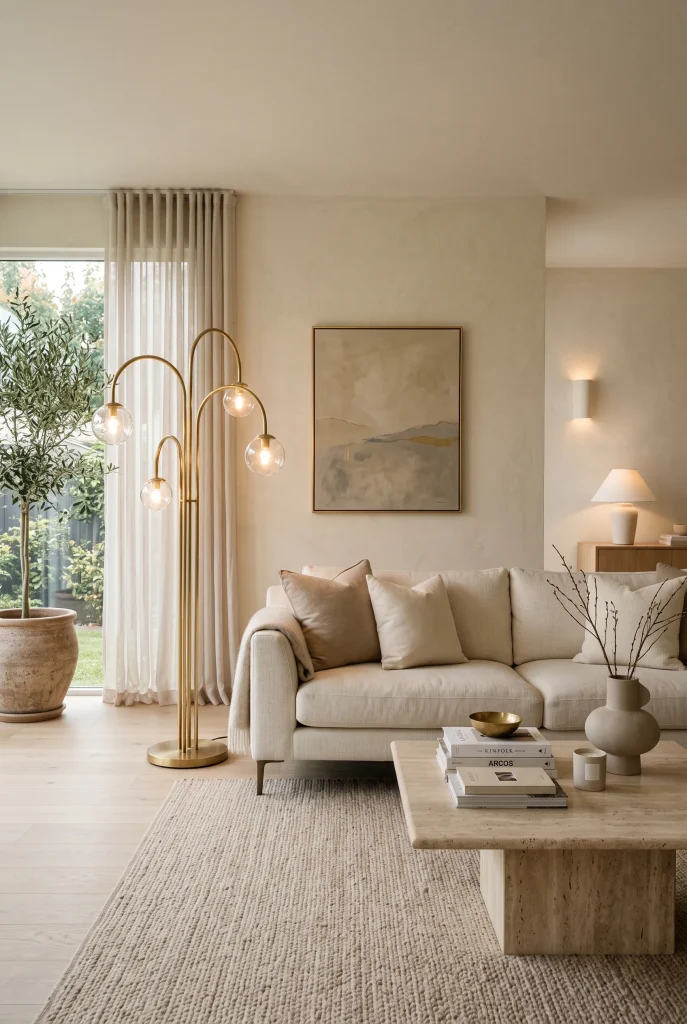
- A sculptural lamp adds personality without filling the room with decor.
- Warm bulbs make neutral furniture feel softer and more inviting.
- Place the fixture beside seating where it provides useful evening light.
- Brushed brass or aged metal adds understated luxury without looking flashy.
The right lighting fixture can make a simple living room feel dramatically more refined. Instead of using several decorative lamps, choose one sculptural floor lamp with an elegant silhouette and place it beside the sofa or reading chair. Curved metal, textured stone, or a softly shaped shade can become a visual feature while keeping the surrounding space uncluttered. Warm white bulbs create a comfortable glow that complements cream, beige, and natural wood finishes. This is one of the easiest ways to give minimalist luxury living spaces more character while still maintaining the clean, edited appearance that defines the style.
Think beyond appearance when choosing the fixture. A beautiful lamp should also provide useful light for reading, relaxing, or entertaining after sunset. Position it where the light falls naturally over a seating area without creating glare. Dimmers are especially helpful because they allow you to shift from brighter task lighting to a softer evening atmosphere. Warm lighting also makes natural materials look considerably richer at night, particularly wood, stone, linen, and textured plaster. Keep other lighting fixtures visually simple so the statement lamp remains the main accent rather than competing with several decorative elements.
5. Textured Plaster Walls
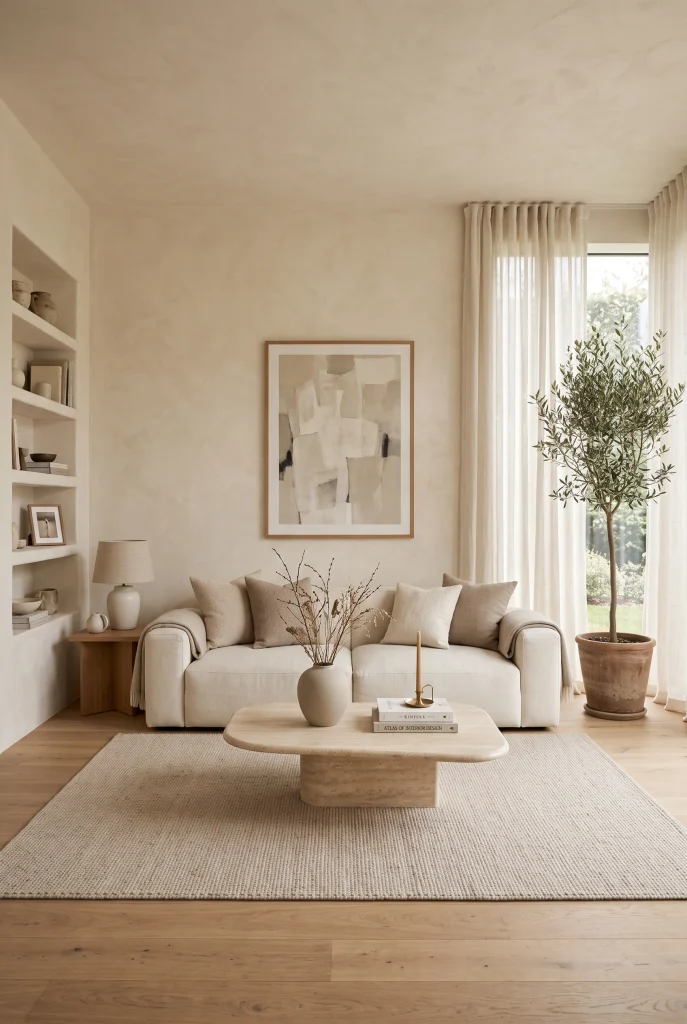
- Subtle wall texture adds depth without requiring additional artwork.
- Warm plaster tones create a softer alternative to stark white paint.
- Natural variations make the room feel more custom and architectural.
- Keep surrounding furniture simple so the wall finish remains noticeable.
Smooth walls can sometimes make a minimalist room feel unfinished, especially when the furniture and accessories are intentionally restrained. Textured plaster solves that problem by introducing subtle movement across a large surface without adding visual clutter. Warm ivory, creamy beige, and soft greige finishes work particularly well because they maintain a quiet palette while creating depth. The effect becomes especially beautiful when daylight moves across the wall during different parts of the day. Rather than relying on many decorative pieces, the wall itself becomes part of the room’s character and gives the entire space a more considered appearance.
You do not necessarily need a dramatic plaster finish to achieve the look. A lightly textured application can provide enough variation while remaining practical and timeless. If authentic plaster is outside your budget, textured paint techniques or quality limewash-style finishes can create a similar visual effect. Pair the walls with clean-lined furniture, natural fabrics, and a few sculptural accessories so the texture has room to breathe. This approach works particularly well in rooms where homeowners want luxury but dislike anything that feels overly polished or formal. The result feels warm, architectural, and quietly sophisticated.
View: 22 Modern Laundry Room Ideas You’ll Love to Try Today
6. Curved Seating
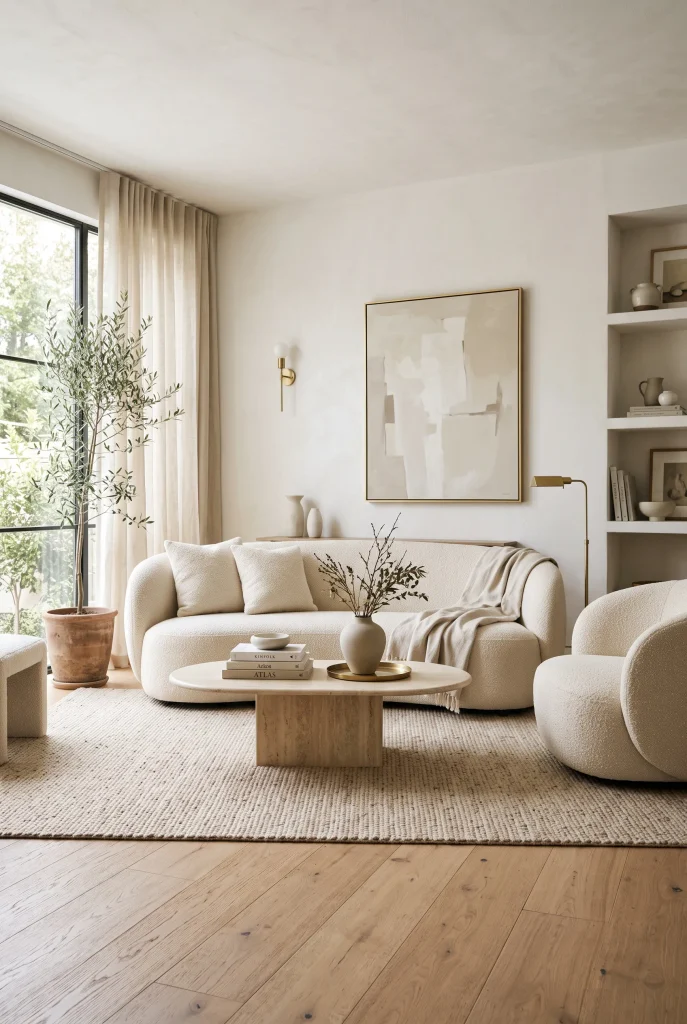
- Curved furniture instantly softens a room dominated by straight architectural lines.
- A rounded sofa can make seating feel more inviting and conversational.
- Boucle, velvet, or linen upholstery adds tactile richness to simple silhouettes.
- Leave open space around curved pieces so their shape stays visually clear.
A softly curved sofa can completely change the atmosphere of a minimalist living room. Its rounded edges feel more relaxed than rigid rectangular furniture, while the generous silhouette still looks sophisticated when paired with a restrained color palette. Cream boucle, warm beige linen, or muted taupe upholstery can provide softness without introducing unnecessary patterns. Place the sofa on a large neutral rug and pair it with an oval or round coffee table to repeat the organic shapes. This creates a cohesive arrangement where every major piece feels connected rather than randomly selected.
Curved seating also works beautifully for real-life conversations because it naturally encourages people to face one another. If your room is large enough, add one rounded accent chair opposite or beside the sofa instead of filling every corner with furniture. Keep pathways open and avoid pushing pieces tightly against the walls simply to use available space. Giving statement furniture a little breathing room makes it look more expensive and intentional. Add one textured throw or a few neutral cushions for comfort, but resist excessive accessories that could hide the elegant shape of the seating.
7. Natural Stone Accents
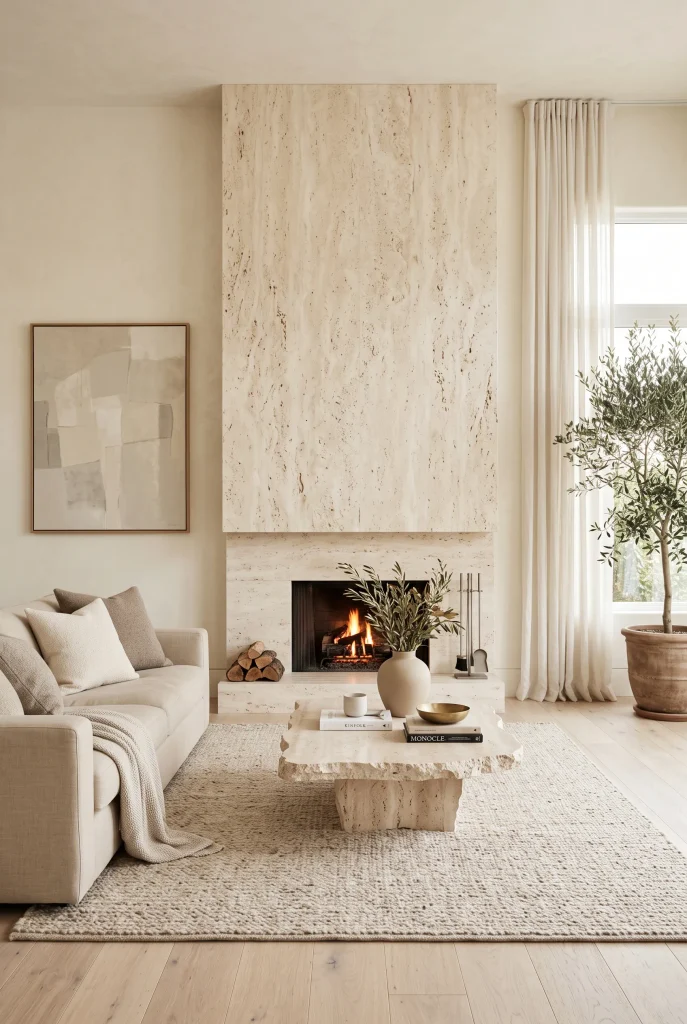
- Natural stone adds instant depth and a timeless architectural feel.
- Travertine and limestone work beautifully with warm neutral furnishings.
- Use one substantial stone element instead of many small accessories.
- Honed finishes create luxury while keeping the room understated.
Natural stone can give a minimalist living room an elevated appearance without relying on elaborate decoration. A travertine coffee table, limestone fireplace, or stone side table introduces natural variation that catches light beautifully throughout the day. Warm cream and sandy tones blend easily with beige upholstery, pale wood, and neutral textiles. Because stone already has visual character, you can keep surrounding accessories extremely simple. The result feels luxurious but grounded rather than showy. Choosing one substantial stone feature often creates more impact than decorating the room with several smaller decorative objects.
The finish matters just as much as the material. Honed or softly textured stone tends to suit minimalist interiors because it has a sophisticated appearance without excessive shine. Look for natural veining, gentle tonal changes, and organic edges rather than highly dramatic patterns. If a full stone fireplace or large installation is unrealistic, a substantial coffee table or console can deliver a similar effect. Balance the harder surface with soft linen curtains, boucle seating, and a textured rug. This contrast keeps the room comfortable and livable while allowing the stone to become a quiet focal point.
8. Low-Profile Furniture
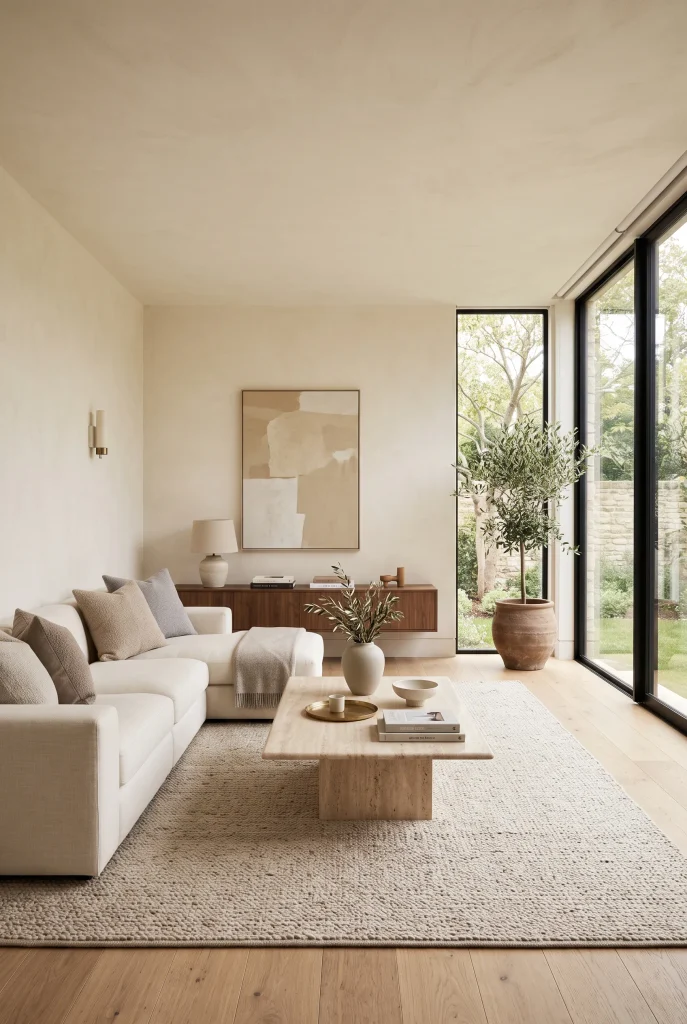
- Low furniture creates a stronger sense of openness and visual calm.
- Slim silhouettes help preserve walking space around larger seating pieces.
- Keep furniture proportions consistent for a polished overall appearance.
- This approach works especially well in rooms with generous windows.
Furniture that sits closer to the floor can make a living room feel remarkably calm and spacious. A low-profile sofa, streamlined media console, and simple coffee table create strong horizontal lines that encourage the eye to move smoothly across the room. This arrangement works particularly well with large windows because the lower furniture allows more of the surrounding architecture and natural light to remain visible. Choose pieces with clean edges and minimal ornamentation, then add softness through a textured rug and a few comfortable cushions. The overall effect feels modern, relaxed, and quietly luxurious.
Proportion is the key to making this look intentional rather than sparse. A very low sofa paired with an oversized tall cabinet can feel visually unbalanced, so try to keep major furniture pieces within a similar visual height range. Make sure the coffee table remains comfortable to reach from the seating without blocking circulation. Leaving more open floor around low furniture also makes cleaning and everyday movement easier. Add warmth with oak flooring, woven textures, or a soft neutral rug, allowing the simple furniture shapes to remain the main architectural feature.
9. Monochrome Layering
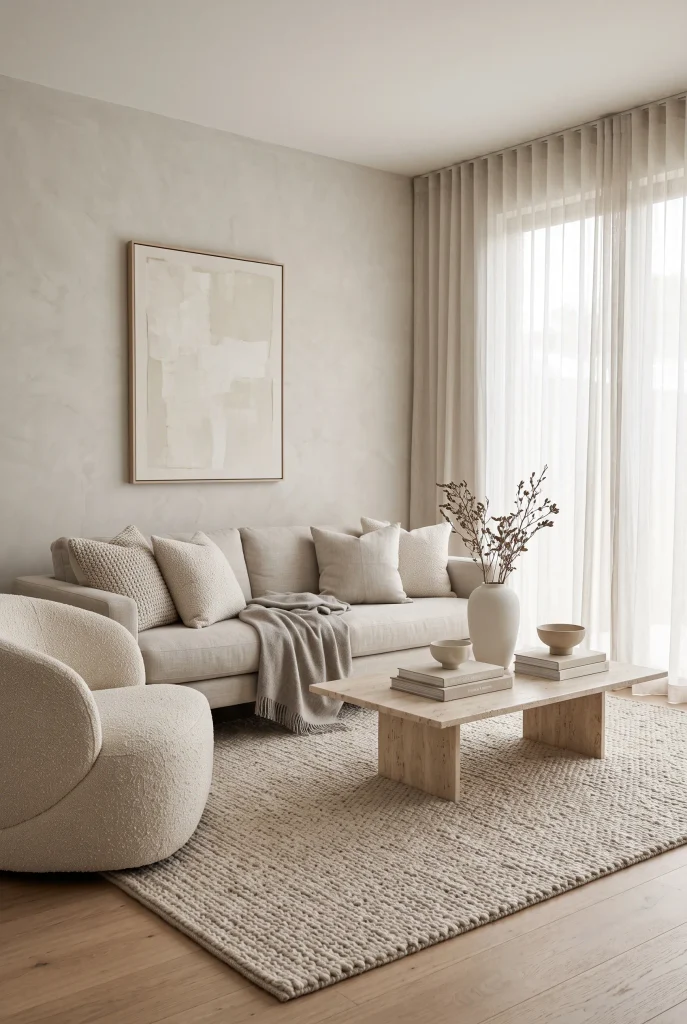
- One color family can make a room feel cohesive and effortlessly refined.
- Mix textures to prevent a monochromatic palette from looking flat.
- Small shifts between shades create depth without visual noise.
- Natural materials add warmth to an otherwise restrained color scheme.
A monochromatic palette can make a living room feel exceptionally polished when different textures do the work that bold colors normally provide. Start with a warm ivory foundation, then layer cream, beige, oatmeal, and soft greige across the furniture and accessories. A linen sofa beside a boucle chair creates tactile contrast, while a wool rug adds another subtle layer underfoot. Keep the shapes simple and allow each material to remain visible. This approach is particularly effective when you want minimalist luxury living spaces to feel sophisticated without introducing strong colors or busy patterns.
The easiest way to avoid a flat appearance is to vary both texture and tone. Pair smooth ceramic surfaces with rougher stone, woven fabrics with soft upholstery, and matte finishes with a small amount of gentle sheen. Natural daylight will reveal these differences and make the room feel more dimensional. Avoid matching every item to exactly the same shade because slight variations create a more natural, collected appearance. If the room still feels too uniform, add a darker wood element or a muted metal accent. These small contrasts can anchor the palette while preserving its serene character.
10. Oversized Minimal Artwork
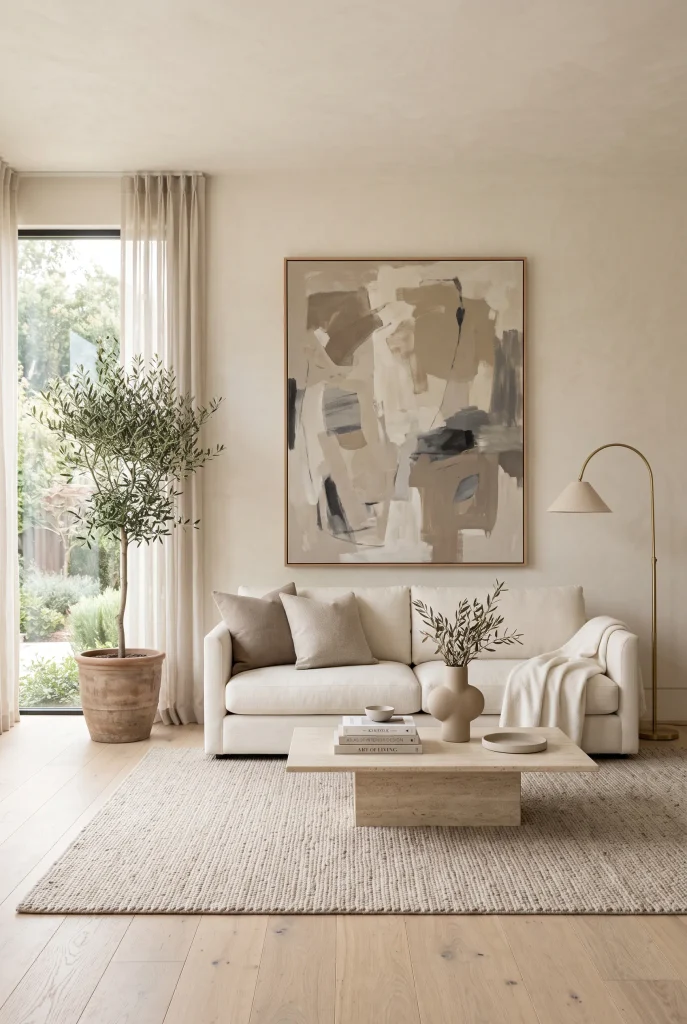
- One large artwork can create more impact than several small frames.
- Choose muted abstract tones that complement the existing room palette.
- Center the artwork carefully above the main seating piece.
- Keep nearby surfaces simple so the artwork remains the focal point.
A single oversized artwork can give a minimalist living room the finished look it needs without creating visual clutter. Instead of arranging several small frames across the wall, choose one large abstract piece with soft shades of ivory, sand, taupe, charcoal, or muted brown. The scale creates an immediate focal point while the restrained palette keeps the room feeling calm. Hang it above a low sofa or console where it can visually anchor the furniture. This simple arrangement is especially effective when the rest of the room uses clean lines and carefully selected natural materials.
Pay close attention to proportion before choosing the artwork. A piece that is too small can disappear above a large sofa, while something excessively wide may overwhelm the wall. As a general guide, artwork should relate comfortably to the width of the furniture beneath it rather than floating alone. Use a simple frame in oak, black, or brushed metal depending on the room’s finishes. Leaving generous empty wall space around one substantial piece often makes the artwork feel more expensive and intentional than filling every available area.
11. Elegant Built-In Storage
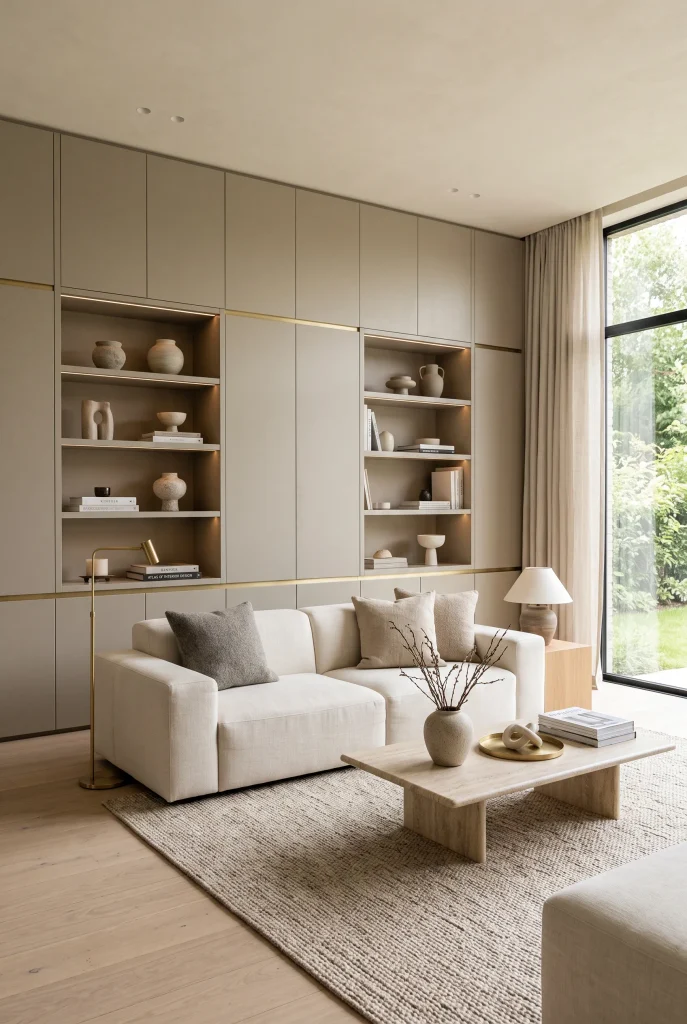
- Built-in storage keeps everyday clutter hidden and surfaces visually clean.
- Matching cabinetry to the walls creates a seamless architectural effect.
- Open shelves should hold only a few carefully chosen objects.
- Concealed storage is especially useful in busy family living rooms.
Luxury often comes from what you do not see, and built-in storage is one of the best ways to achieve that feeling. Floor-to-ceiling cabinetry can hide electronics, books, toys, blankets, and everyday essentials while maintaining a clean visual backdrop. Choose cabinetry in warm white, greige, or a wood tone that connects naturally with the rest of the room. Integrated shelves can display a few favorite ceramics or books, but the majority of storage should remain concealed. The result is a calmer space where beautiful furniture and architectural details receive more attention.
Good storage should make everyday life easier, not simply look attractive. Before planning built-ins, consider what you actually need to store and create dedicated areas for frequently used items. Keep cabinet handles discreet or use push-to-open doors for a particularly streamlined appearance. Add lighting inside open niches if you want subtle evening depth, but avoid illuminating every shelf. The most successful minimalist rooms are not completely free of possessions; they simply have a clear place for those possessions. Thoughtful storage makes it much easier to maintain that polished appearance.
12. Warm Wood Details
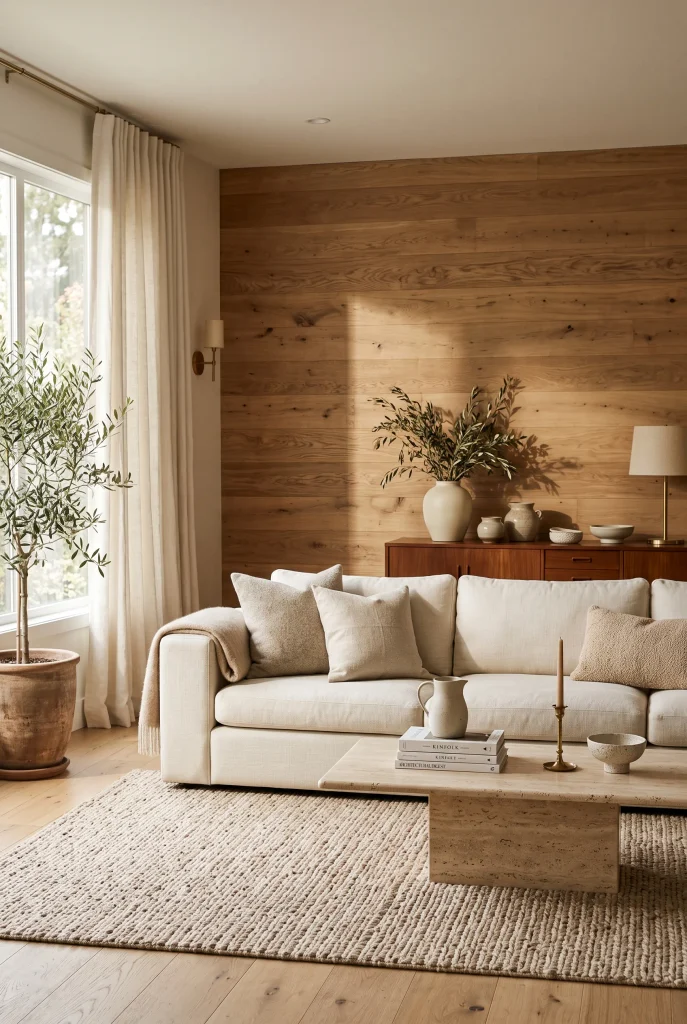
- Natural wood prevents minimalist interiors from feeling cold or overly sterile.
- Oak adds brightness, while walnut introduces deeper visual contrast.
- Repeat one wood tone across several pieces for better cohesion.
- Keep the grain visible rather than covering it with excessive decor.
Natural wood brings warmth and character to a minimalist living room while maintaining the simplicity of the overall design. Pale oak can brighten the space and create a relaxed Scandinavian influence, while walnut offers richer contrast and a more sophisticated mood. Use wood through a sideboard, coffee table, shelving, wall paneling, or flooring rather than introducing too many unrelated finishes. When the grain remains visible, even simple furniture gains visual interest. This balance of clean forms and organic material is a key ingredient in creating minimalist luxury living spaces that still feel comfortable and lived-in.
Try repeating the same wood tone at least two or three times so the room feels connected. For example, an oak floor can work beautifully with an oak side table and subtle wooden artwork frame. If you prefer walnut furniture, repeat that darker finish through a console, chair frame, or small accessory. Avoid mixing too many competing wood colors because the simplicity of the design depends on visual consistency. Pairing warm wood with cream upholstery, natural stone, and woven textiles creates an especially welcoming combination that feels refined without becoming formal.
13. Statement Fireplace
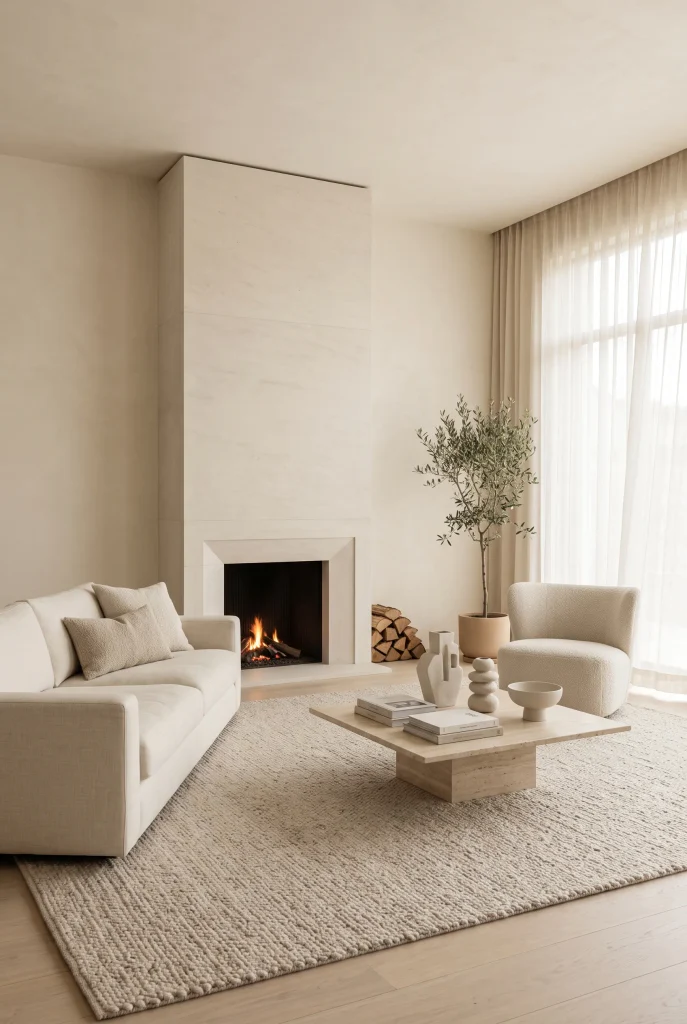
- A streamlined fireplace creates a strong architectural focal point.
- Limestone, travertine, or plaster finishes keep the look understated.
- Keep the mantel nearly empty for a cleaner luxury effect.
- Comfortable seating around the fireplace makes the room feel naturally inviting.
A beautifully finished fireplace can become the architectural centerpiece of a minimalist living room without requiring elaborate decoration. Choose a simple rectangular design covered in limestone, travertine, plaster, or another softly textured material. The uninterrupted surface creates a sense of permanence and gives the room an upscale character. Place a low sofa opposite it and use a restrained coffee table between them to maintain visual balance. Instead of decorating the mantel heavily, leave most of it clear and allow the material itself to provide the visual interest. This creates a sophisticated focal point that feels intentional rather than overdesigned.
Consider how the fireplace will work throughout the entire room, not just from one viewing angle. Its proportions should relate to the ceiling height, sofa size, and available wall space. If the fireplace is functional, make sure surrounding furniture leaves appropriate clearance and follows local safety requirements. For a softer appearance, combine the hard stone or plaster surface with linen upholstery, wool rugs, and natural wood. This contrast makes minimalist interiors feel much more comfortable because the architectural strength of the fireplace is balanced by materials that invite people to relax.
14. Refined Metallic Accents
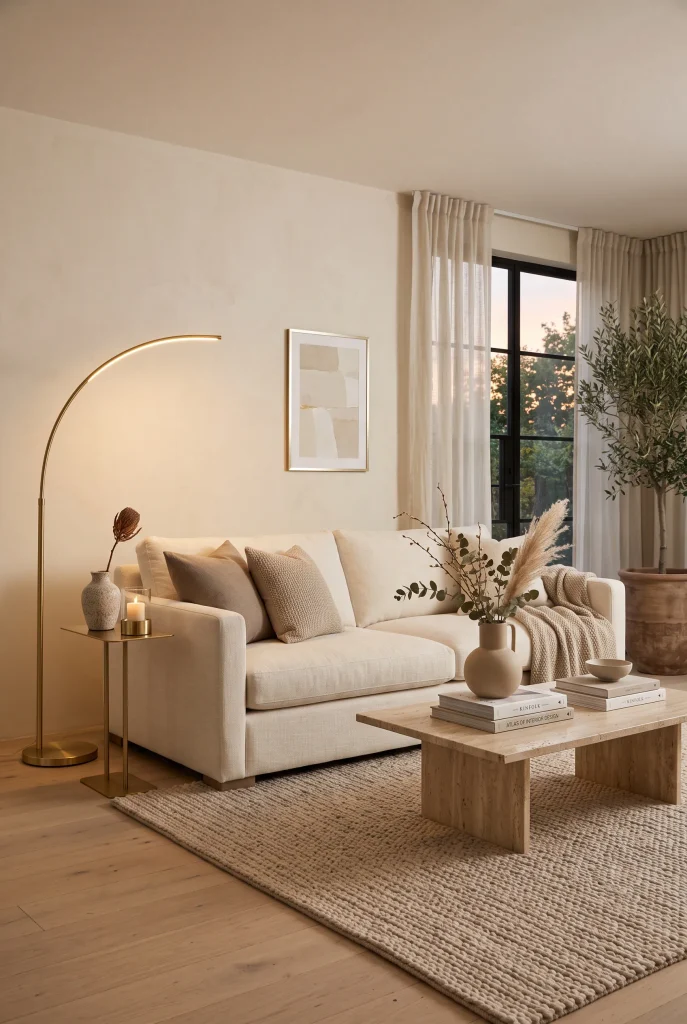
- Brushed brass adds warmth without creating a flashy appearance.
- Repeat small metallic details to make the room feel coordinated.
- Matte or aged finishes usually suit minimalist spaces better than high shine.
- Use metal as an accent rather than making it the dominant material.
A few carefully chosen metallic details can give a minimalist living room a sophisticated finishing touch. Brushed brass, aged bronze, and soft champagne metal work particularly well with warm neutrals because they add gentle warmth without demanding attention. Try using the same finish on a floor lamp, side table, picture frame, or cabinet hardware. The goal is repetition rather than quantity. When small accents appear in several places, the room feels thoughtfully designed and visually connected. This subtle approach creates luxury while preserving the quiet, uncluttered quality that makes minimalist interiors so appealing.
Avoid using too many reflective surfaces because excessive shine can quickly make a simple room feel decorative rather than refined. Matte, brushed, or slightly aged finishes tend to blend more naturally with stone, wood, linen, and plaster. Keep the metallic pieces relatively small compared with the main furniture so they function as finishing details. If your room already has cooler gray tones, warmer metal can also help balance the palette. Even one beautiful brass lamp can make neutral furniture look more intentional when the surrounding decor remains restrained.
15. Layered Soft Textiles
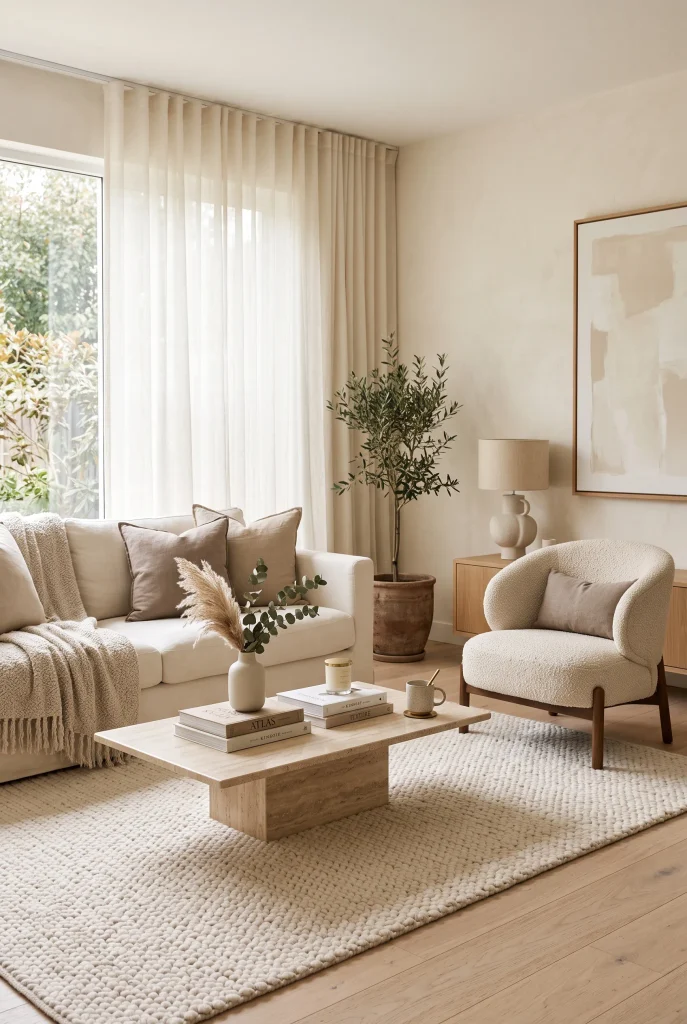
- Soft textiles make clean-lined furniture feel more comfortable and welcoming.
- Combine linen, wool, boucle, and cotton for subtle tactile contrast.
- Choose tonal fabrics instead of introducing busy patterns.
- A single draped throw can soften an otherwise structured seating arrangement.
Minimalist design does not have to mean sacrificing comfort. Layered textiles can make a simple living room feel warm and inviting while keeping the visual palette beautifully controlled. Start with a large wool or wool-look rug, then add linen cushions, a boucle chair, and a soft cotton or wool throw. Keep the colors within a narrow range of cream, beige, oatmeal, and taupe so the textures become the main source of interest. This creates a room that feels luxurious to the eye but still practical enough for everyday lounging, reading, or relaxed conversations.
Texture should be layered thoughtfully rather than added everywhere. If the sofa already has a tactile boucle or woven upholstery, choose smoother cushions for contrast instead of matching every surface. Similarly, a highly textured rug can be balanced with a simple coffee table and streamlined lighting. Washable or durable fabrics are worth considering in homes where the living room gets frequent use. Three or four different textures are often enough to make a neutral space feel rich. Beyond that point, additional layers can start competing with the clean simplicity that makes minimalist interiors work so well.
16. Oversized Area Rug
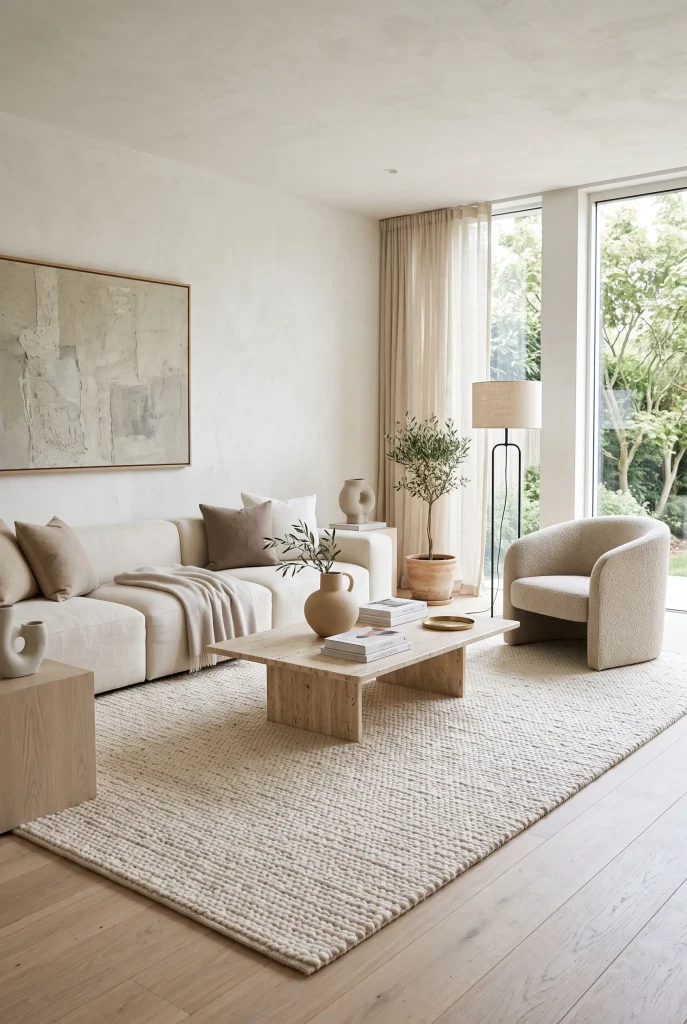
- A large rug visually connects separate furniture pieces into one cohesive zone.
- Light neutral tones keep the room feeling open and sophisticated.
- Choose a size that allows major seating pieces to sit comfortably on it.
- Soft wool or wool-look textures add warmth underfoot.
An oversized area rug can instantly make a minimalist living room feel more complete. Rather than placing a small rug only beneath the coffee table, choose one large enough to extend underneath the front legs of the sofa and nearby chairs. This visually connects the seating arrangement and creates a defined conversation area without adding walls or extra furniture. Ivory, cream, beige, and soft taupe rugs work especially well with neutral upholstery. The larger scale also makes the room feel more intentional, helping individual pieces look like part of one carefully planned composition.
Before buying, measure the seating area rather than guessing from the room’s overall dimensions. Ideally, the rug should extend beyond the main furniture so the arrangement does not appear cramped. If the room receives heavy daily use, choose a durable low-pile or easy-care option that still provides softness. Keep the rug pattern subtle or rely on texture alone if the rest of the room already contains strong materials such as stone or wood. Simply upgrading from an undersized rug to a properly proportioned one can make an ordinary living room look considerably more polished.
17. Floating Media Console
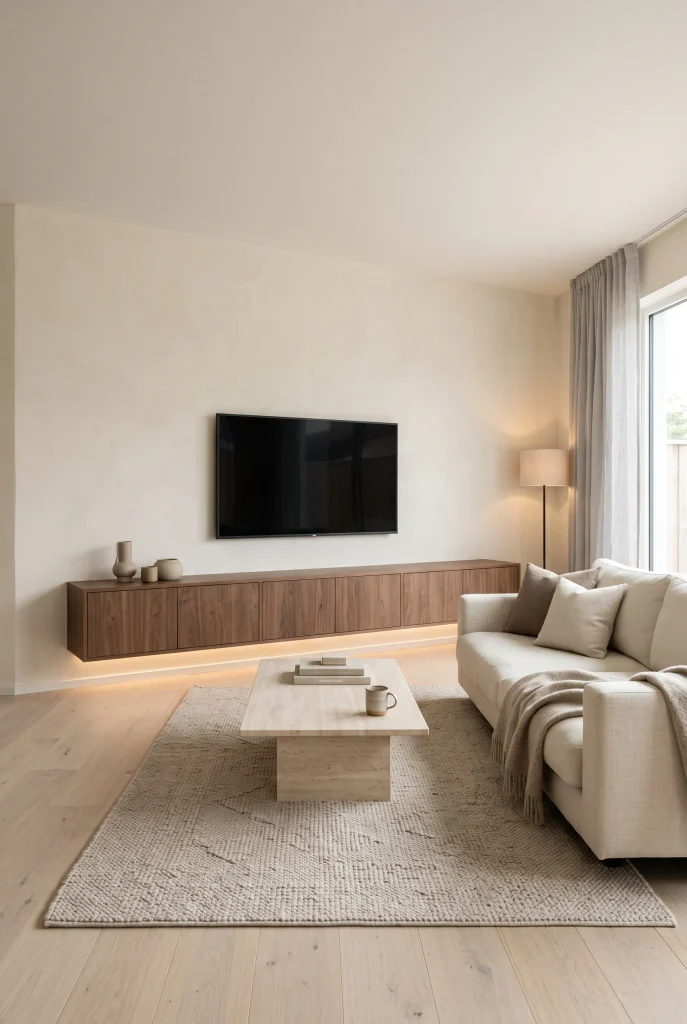
- Wall-mounted cabinetry keeps the floor visually open and uncluttered.
- Concealed compartments hide cables, remotes, and everyday electronics.
- Walnut or oak finishes add warmth to a clean contemporary room.
- Keep the area around the television intentionally simple.
A floating media console is a smart way to make a living room feel cleaner while adding useful storage. Because the cabinet is mounted above the floor, the uninterrupted flooring underneath creates a lighter visual effect. Choose a simple walnut, oak, or warm painted finish that complements the room’s other materials. Concealed compartments can hide gaming equipment, remote controls, cables, and other items that would otherwise create visual noise. Pair the console with a slim television and restrained accessories so the entire media wall feels architectural rather than crowded.
The installation height and proportions are worth considering carefully. A console mounted too high can look disconnected from the seating area, while one that is too low may not provide comfortable viewing. Measure your sofa height, television position, and available wall space before installation. Cable management is equally important because exposed wires can undermine the clean appearance. Add one or two ceramic objects or a small piece of artwork if the surface allows, but avoid filling it completely. Leaving generous empty space around a television makes even a functional media area feel much more refined.
18. Sculptural Accent Chair
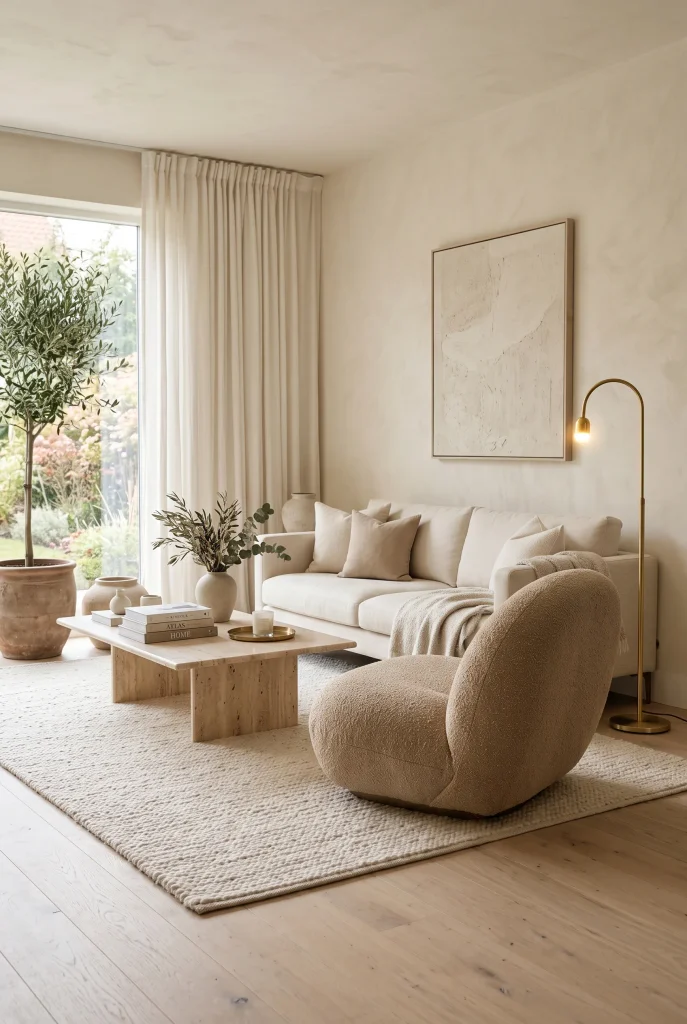
- A distinctive chair adds personality without requiring a collection of accessories.
- Curved silhouettes soften the geometry of minimalist furniture.
- Boucle and textured upholstery create visual interest through material.
- Position the chair where it remains useful for reading or conversation.
A sculptural accent chair can bring personality to a minimalist living room while taking up far less visual space than a collection of decorative objects. Look for a distinctive curved silhouette, gently angled back, or rounded arms that make the chair interesting even when the upholstery remains neutral. Cream, oatmeal, camel, and warm beige are easy to coordinate with a restrained palette. Place the chair beside the sofa, near a window, or slightly angled toward the coffee table. This creates another comfortable seating option while giving the room a graceful secondary focal point.
Think about comfort as carefully as appearance. A dramatic chair may photograph beautifully but become frustrating if the seat is too shallow or the back provides little support. Test the proportions whenever possible and leave enough surrounding space for people to move comfortably. A small side table and floor lamp can turn the chair into a practical reading corner without making it feel crowded. One well-designed accent chair often does more for a room than several decorative accessories because it combines function, shape, texture, and visual character in one piece.
19. Floor-Level Lighting
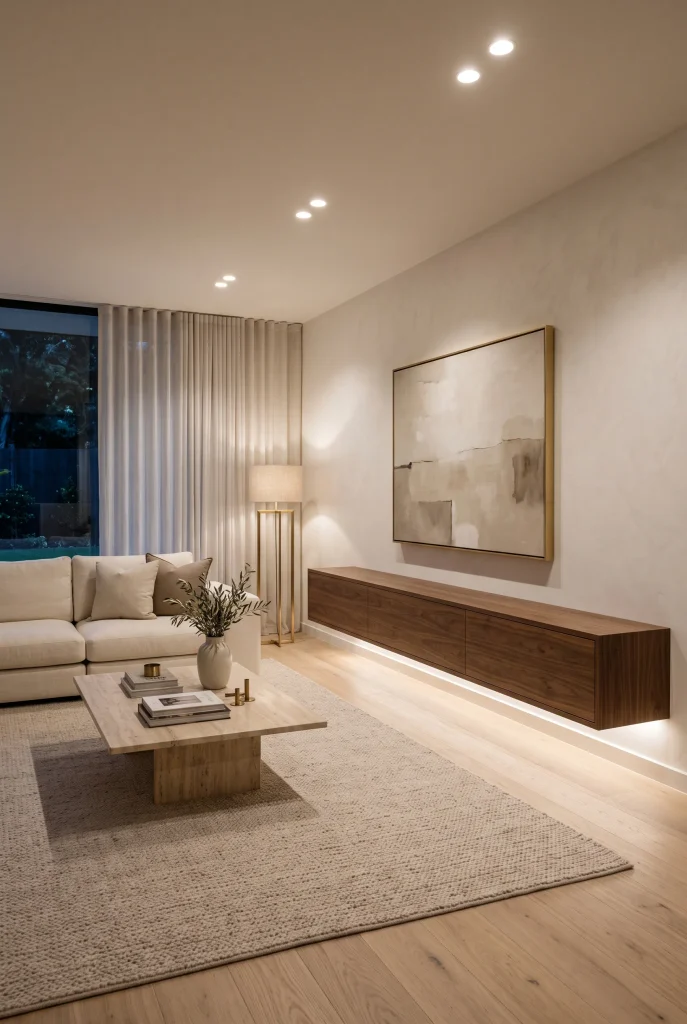
- Concealed lighting creates a soft glow without adding visual clutter.
- Warm illumination makes wood, stone, and neutral fabrics feel richer.
- Combine recessed, accent, and floor-level lighting for better depth.
- Keep visible fixtures simple when architectural lighting does the work.
Lighting from lower levels can give a minimalist living room an unexpectedly sophisticated evening atmosphere. Concealed LED strips beneath a floating console, shelving, or cabinetry create a gentle glow that visually separates furniture from the floor. Pair this with warm recessed ceiling lights and one understated floor lamp to build several layers of illumination. The goal is not to make the room brighter but to make it feel more dimensional after sunset. This kind of subtle lighting works particularly well with warm neutrals, natural wood, textured walls, and stone surfaces.
Think about lighting in zones rather than illuminating everything equally. A soft glow beneath cabinetry can define the furniture, while a lamp beside the sofa provides useful reading light. Dimmers give you more control and allow the room to shift from functional brightness to a relaxed evening setting. Choose warm white light rather than cool blue-toned bulbs, especially when your room contains cream, beige, walnut, or brass finishes. Layered lighting can make a simple room feel significantly more luxurious at night, even when the furniture and decoration remain intentionally minimal.
20. Minimalist Fireplace Nook
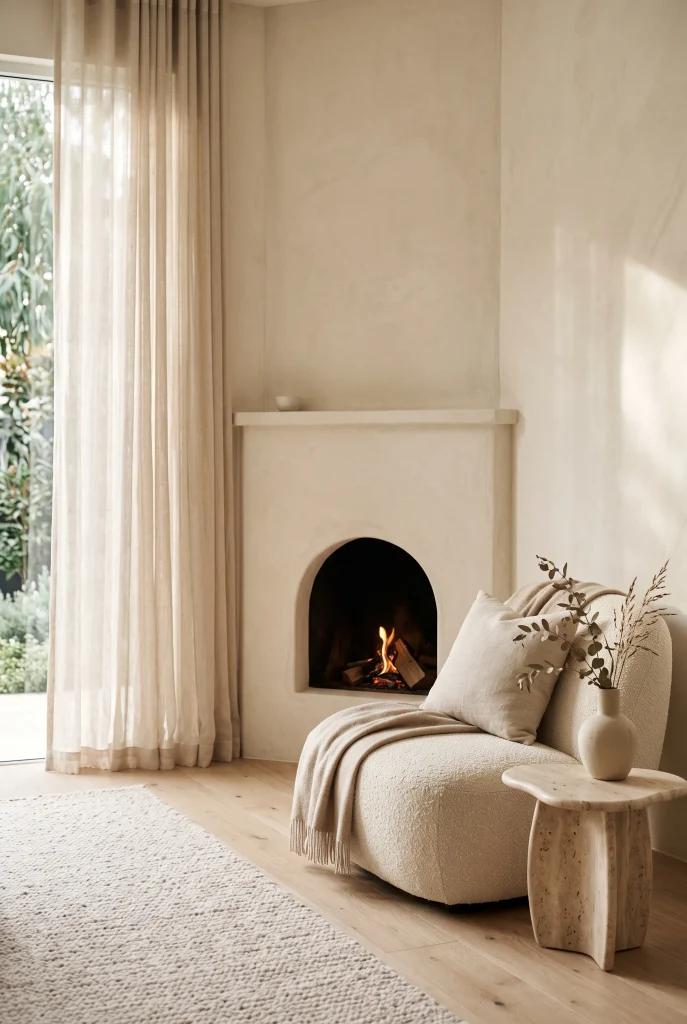
- A small fireplace nook creates a dedicated place for quiet relaxation.
- Keep the surrounding furniture limited to preserve a spacious feeling.
- Natural plaster and stone finishes add understated architectural character.
- A nearby chair and side table make the area genuinely useful.
A dedicated fireplace nook can make even a spacious living room feel more intimate and purposeful. Instead of surrounding the fireplace with numerous decorative pieces, create a simple seating moment with one comfortable curved chair and a small side table. Warm plaster, limestone, or travertine can give the fireplace a refined architectural presence while maintaining the understated character of the room. Add a soft neutral rug beneath the chair to define the area without making it feel separate. The result is a quiet corner that feels luxurious because every element has a clear purpose.
This setup is especially useful when your main seating arrangement already handles entertaining and conversation. The nook can become a natural spot for reading, enjoying morning coffee, or relaxing in the evening. Keep the side table large enough for a cup, book, or small lamp but avoid oversized furniture that overwhelms the corner. If the fireplace is functional, follow proper clearance and installation requirements. Small dedicated seating areas can make large living rooms feel much more comfortable because they create intimate spaces without sacrificing the openness of the overall layout.
21. Architectural Shelving
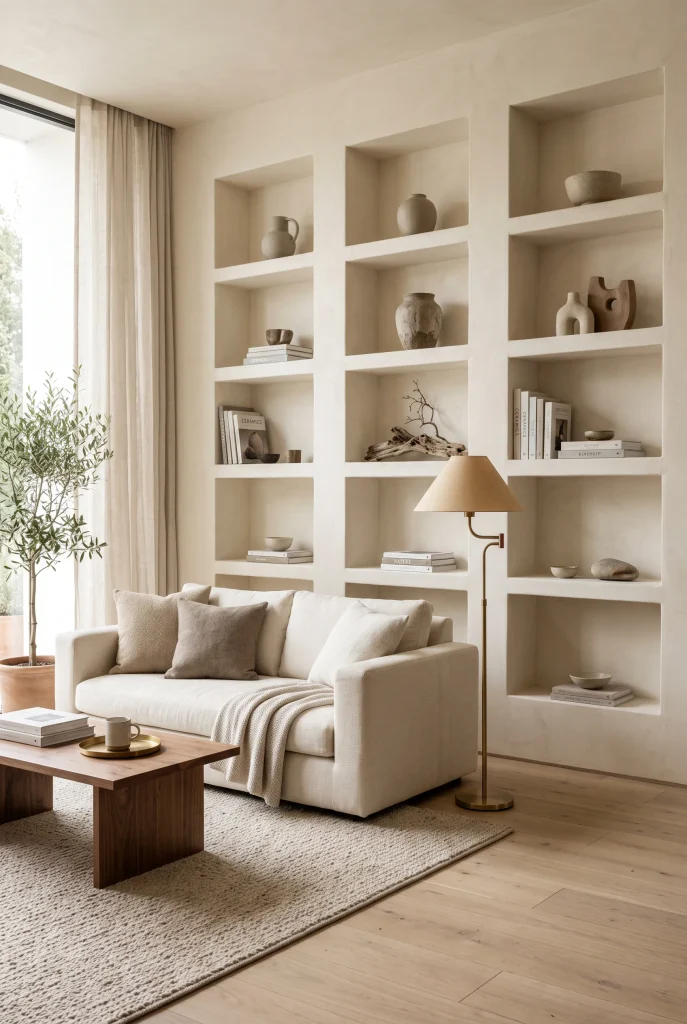
- Recessed shelving adds architectural interest without taking up floor space.
- Keep displays sparse so each object has enough breathing room.
- Mix ceramics, books, and natural pieces for understated visual variety.
- Integrated lighting can make shelving feel especially refined after dark.
Architectural shelving can turn an empty wall into a sophisticated design feature while preserving the uncluttered feel of a minimalist room. Recessed niches or built-in shelves create depth without introducing bulky freestanding furniture. Use the shelves to display a small selection of ceramics, art books, sculptural objects, or natural materials. Keep plenty of empty space between pieces so the arrangement feels curated rather than crowded. A warm ivory or greige finish allows the shelving to blend with the wall, making the objects appear almost like part of the architecture.
The most successful displays usually rely on restraint and variation. Avoid placing identical objects across every shelf because repetition can make the arrangement feel staged. Instead, combine a few horizontal books with rounded ceramics, a small framed artwork, or a natural stone object. Vary the height while keeping the overall color palette cohesive. Integrated warm lighting can highlight the niches in the evening without adding another visible fixture. Built-in shelving looks most luxurious when it contains fewer objects than you initially expect, allowing both the architecture and individual pieces to remain visible.
22. Soft Sculptural Decor
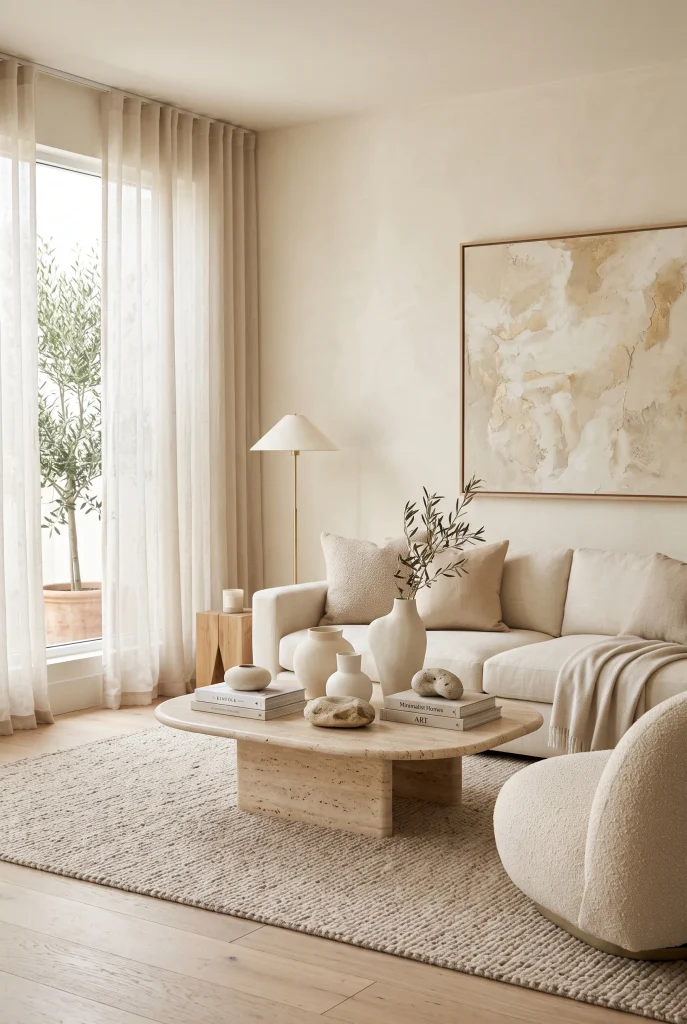
- Sculptural objects add personality without introducing busy patterns.
- Organic shapes soften the clean geometry of minimalist furniture.
- Choose ceramics, stone, or wood for a natural, elevated effect.
- Display fewer pieces and give each object enough surrounding space.
A few sculptural accessories can give a minimalist living room the personality it needs without making the space feel decorated to excess. Look for rounded ceramic vases, carved stone objects, organic wooden forms, or abstract pieces with simple silhouettes. Place one substantial object on a coffee table, console, or open shelf rather than filling every surface. The beauty comes from the shape and material rather than bright colors or complicated patterns. This approach works especially well when your furniture is simple because the accessories provide just enough visual interest to keep the room feeling finished.
Scale is important when choosing sculptural decor. Tiny objects can disappear against large furniture, while too many oversized pieces can compete for attention. Try combining one larger form with one smaller companion while leaving plenty of empty surface around them. Natural materials such as ceramic, stone, and wood also create subtle variations in texture that work beautifully with linen and wool. Rotating decorative objects seasonally can keep a minimalist room feeling fresh without requiring new furniture. Store unused pieces away rather than displaying everything at once, so the room maintains its calm visual rhythm.
23. Seamless Wall Panels
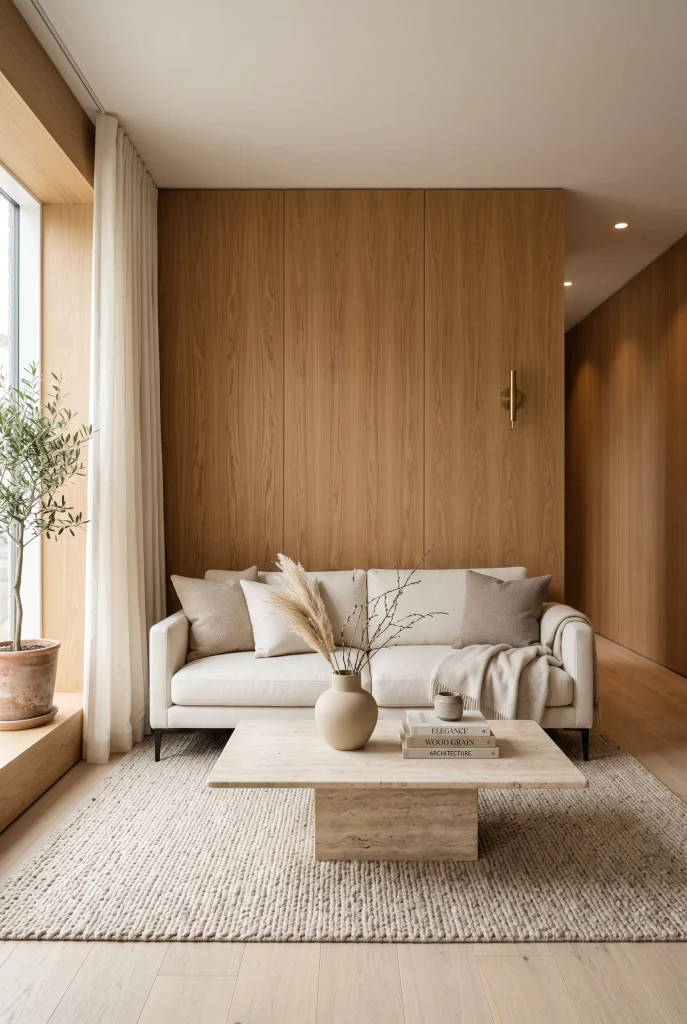
- Continuous wall panels create a polished architectural backdrop.
- Wood paneling adds warmth while keeping the overall palette restrained.
- Vertical or horizontal lines can subtly influence the room’s proportions.
- Use minimal decor so the paneling remains the primary feature.
Seamless wall panels can make a living room feel more architectural and custom without relying on complicated decoration. Warm oak panels create a natural backdrop behind a sofa, television, or fireplace, while their continuous lines add subtle structure across a large wall. Choose a finish that complements existing flooring and furniture rather than introducing a completely different wood tone. The uninterrupted surface gives the room a tailored appearance and works beautifully with cream upholstery, stone tables, and neutral textiles. This is a strong option when you want luxury to come from craftsmanship and materials rather than decoration.
Panel direction can also influence how the room feels. Vertical panels can emphasize ceiling height, while horizontal layouts may visually stretch a narrower wall. Keep the joints precise and consider concealed doors or integrated storage if you want an especially seamless appearance. If full wall paneling feels too strong, use it on one feature wall and leave the remaining surfaces simple. Repeating the panel material in a smaller piece of furniture, such as a console or cabinet, helps the design feel cohesive. The key is consistency without making every surface identical.
24. Open-Plan Elegance
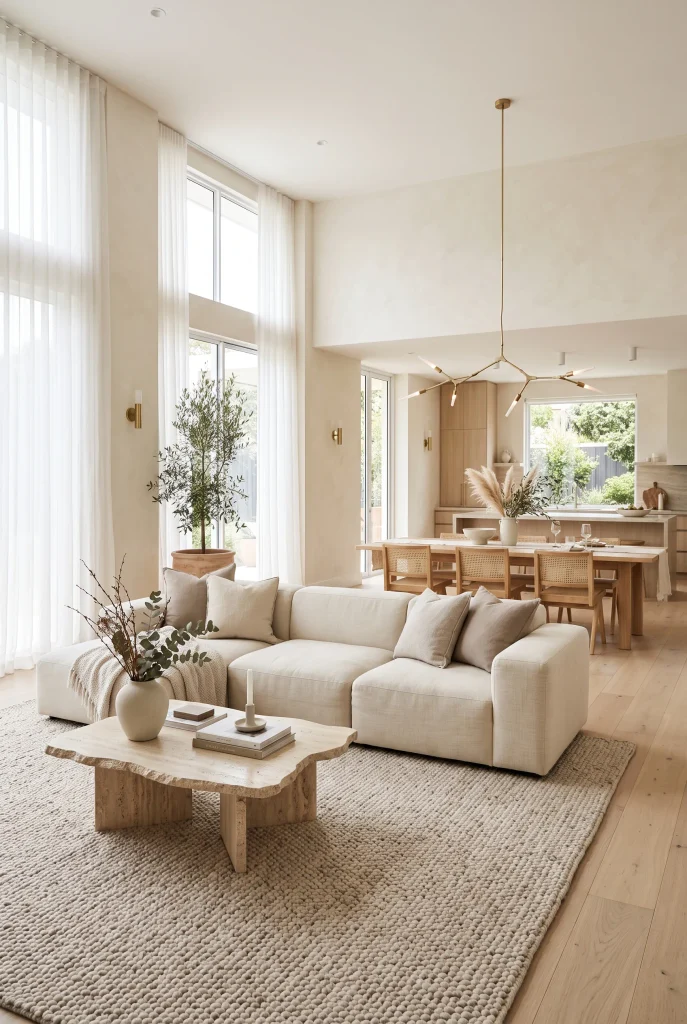
- Clear furniture zones make open-plan rooms feel organized rather than empty.
- A large rug can visually anchor the main living area.
- Consistent materials help connect living and dining spaces.
- Keep pathways open for comfortable everyday movement.
An open-plan living room can feel luxurious when each area has a clear purpose without being visually separated by unnecessary barriers. Start by defining the seating zone with a large rug, then position the sofa and chairs around a central coffee table. Keep the dining or kitchen area visually connected through repeated materials such as pale oak, warm ivory, stone, or brushed metal. This creates continuity across the larger space while allowing each area to function independently. The result feels spacious and elegant because furniture guides movement rather than interrupting it.
Scale becomes particularly important in an open layout. Furniture that is too small can make the room feel unfinished, while oversized pieces can restrict circulation and overwhelm nearby areas. Leave comfortable pathways between the seating, dining, and kitchen zones, especially around frequently used entrances. Repeat one or two design elements across the spaces, such as the same wood finish or neutral fabric family. This simple repetition makes open-plan rooms feel much more intentional. Instead of trying to fill every empty corner, let negative space connect the different zones and preserve the sense of openness.
25. Quiet Luxury Corner
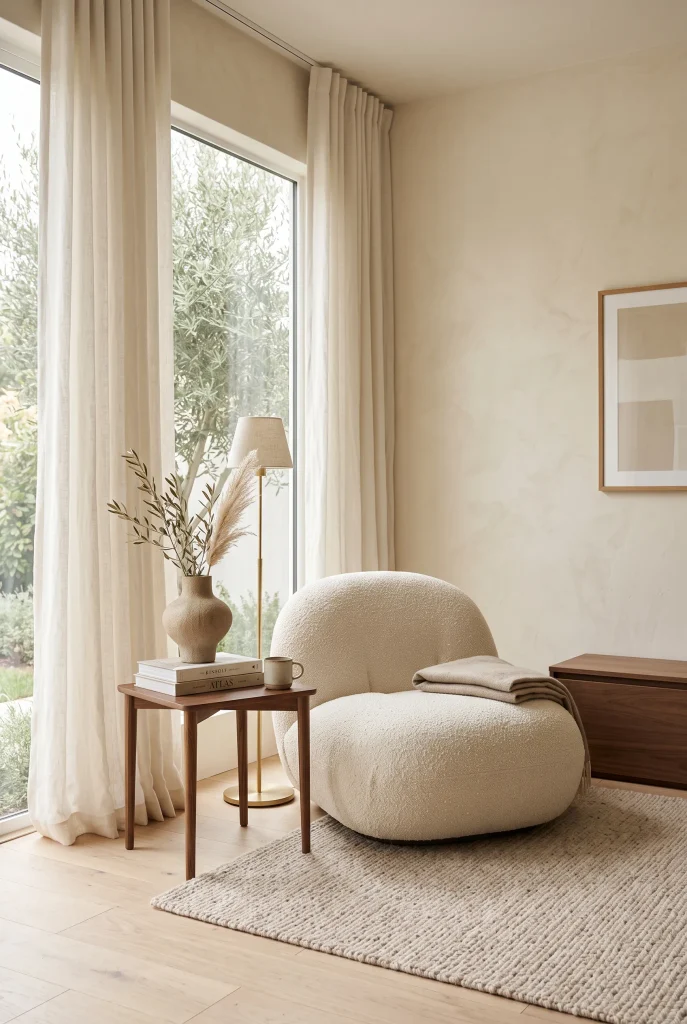
- A quiet corner gives the room a dedicated space for relaxing.
- Keep the furniture minimal so the area feels open and peaceful.
- Warm wood and soft textiles add comfort without visual clutter.
- A floor lamp makes the corner useful after sunset.
A thoughtfully designed corner can become one of the most memorable parts of a minimalist living room. Choose one comfortable lounge chair with a sculptural silhouette and pair it with a small side table and understated floor lamp. Keep the palette warm with cream, beige, ivory, and natural wood so the area feels connected to the rest of the room. A soft rug can visually define the corner without making it feel separate. This kind of arrangement proves that luxury does not require a large footprint; thoughtful proportions and carefully chosen materials can create an inviting retreat.
Make the corner practical enough that you naturally want to use it. Leave sufficient space around the chair for easy movement and position the lamp where it provides comfortable reading light. A small table can hold a book, cup, or decorative object without becoming another cluttered surface. Add one textured cushion or soft throw for warmth, but avoid filling the chair with accessories. Intentionally leaving some corners quiet can make an entire living room feel more spacious and sophisticated. The empty space becomes part of the design, allowing the furniture and materials to stand out beautifully.
Conclusion
Creating a beautiful living room does not mean filling every corner with expensive furniture or decorative pieces. The best minimalist luxury living spaces balance comfort, thoughtful design, natural materials, and intentional simplicity. From warm wood and soft textiles to sculptural furniture and layered lighting, even small updates can completely change how your home feels.
Save this article on Pinterest so you can revisit your favorite ideas when planning your next refresh. Try one or two changes first, then build from there as your style develops. And if you know someone dreaming of a calmer, more elegant home, share these ideas with them. Your dream space may be closer than you think.