21 Modern Fireplace Makeover Ideas That Feel Fresh

A fireplace can completely change the feeling of a living room—but only when the design feels right. A modern fireplace makeover can turn a dated, heavy-looking surround into a fresh focal point that feels warm, stylish, and connected to the rest of your home.
Whether your fireplace needs a simple refresh or a more noticeable transformation, small design choices can make a surprisingly big difference. Think natural wood, smooth plaster, layered neutrals, textured stone, built-in storage, or subtle lighting. The right update can also improve how the room functions, not just how it looks. The best fireplace updates balance visual impact with everyday comfort. These ideas will help you find a direction that feels beautiful, practical, and realistic for your own space.
1. Whitewashed Brick
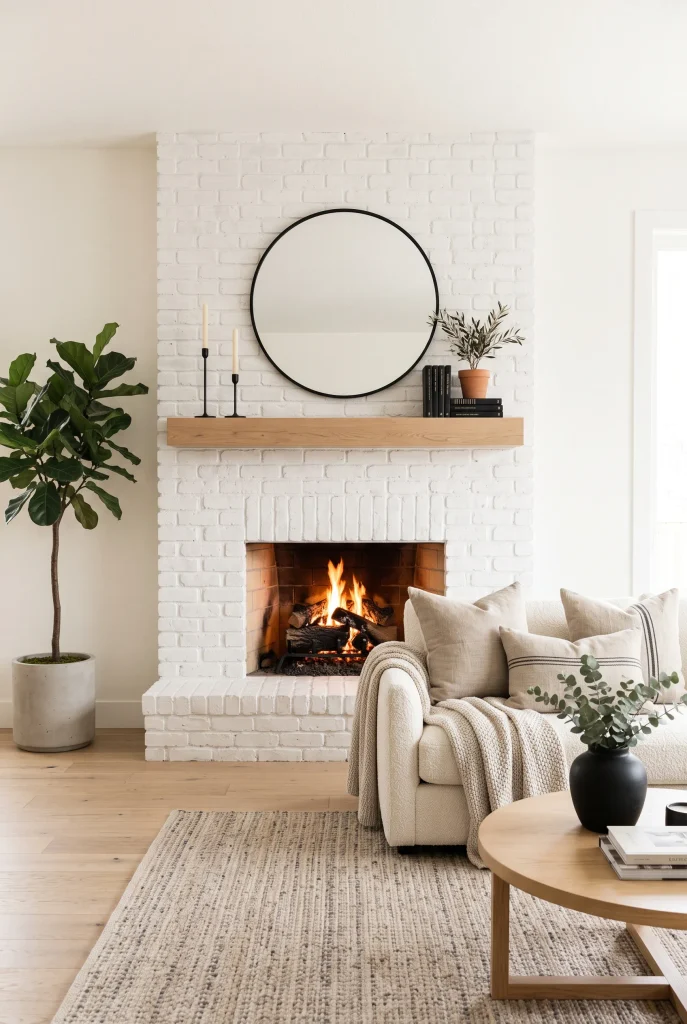
- Softens the heavy look of traditional brick without hiding its texture.
- Creates a bright backdrop for neutral furniture and natural materials.
- Works especially well in rooms that feel dark or visually busy.
- A lightly uneven finish keeps the fireplace from looking overly polished.
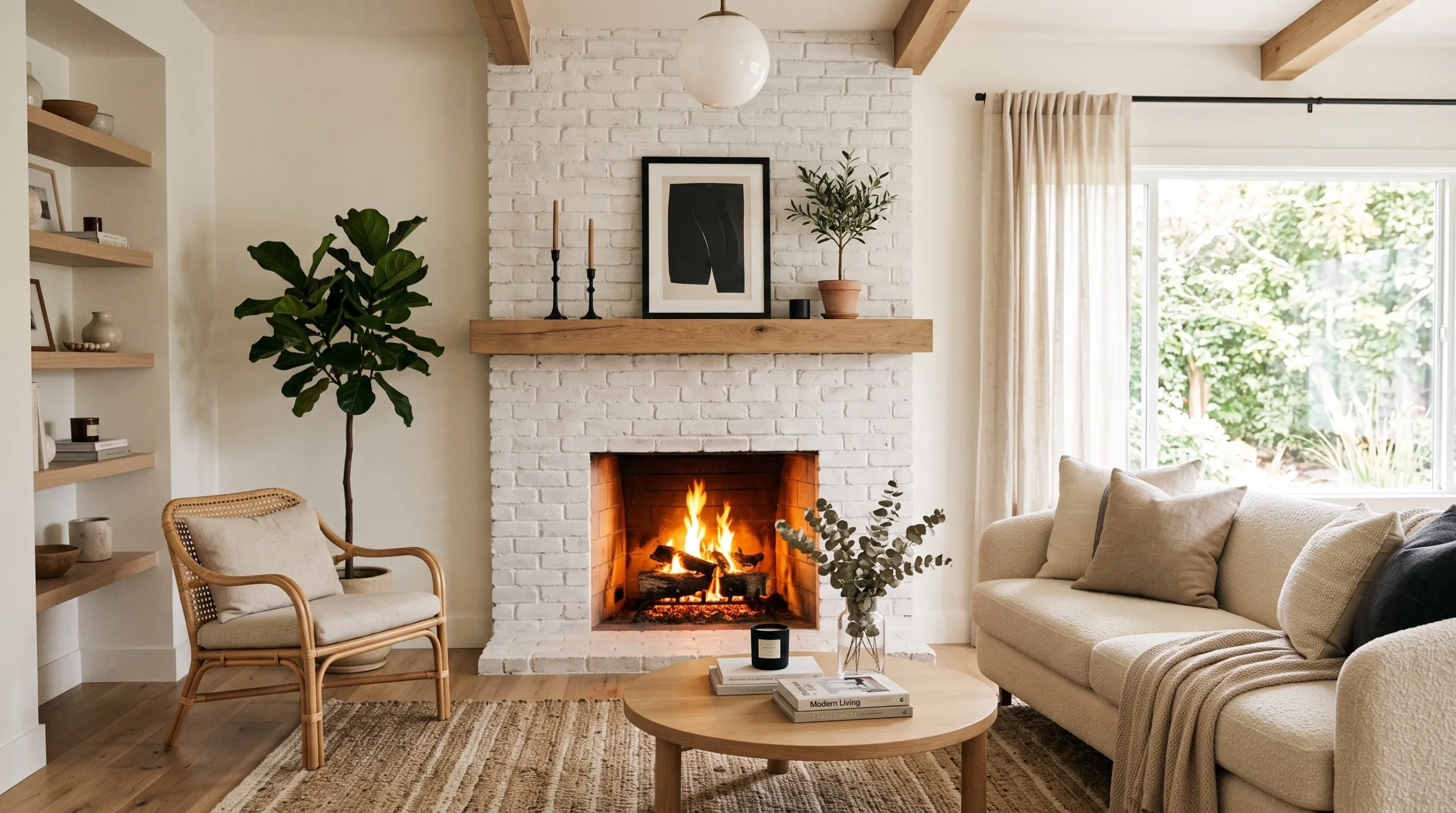
A whitewashed brick fireplace can make an older surround feel instantly lighter and more current. The trick is keeping enough of the original brick texture visible so the finish still feels natural. Choose a warm white rather than a stark, cool shade if your room has beige, cream, or wood tones. A simple wood mantel can add warmth without making the fireplace feel rustic. This approach works especially well when the rest of the room already has neutral furnishings, because the textured surface becomes a quiet focal point without competing with artwork or furniture.
For a balanced modern look, pair the fireplace with simple shapes and restrained decoration. A low-profile sofa, woven basket, ceramic vase, and one large piece of artwork can be enough to complete the wall. Keep the hearth area visually open so the lighter brick remains noticeable. If the existing brick is very dark, test the whitewash on a small area first because the original color can affect the final tone. This kind of update is also useful when you want a modern fireplace makeover without replacing the entire surround. The result feels brighter, cleaner, and much more intentional.
2. Slim Wood Mantel

- Adds warmth while keeping the fireplace visually streamlined.
- Natural wood introduces contrast against a pale or neutral surround.
- A shallow mantel prevents the wall from feeling bulky.
- Use only a few decorative pieces to preserve the modern appearance.
A slim wood mantel can completely change the character of a fireplace without requiring a dramatic renovation. The warm grain introduces just enough contrast to make a pale surround feel more layered and intentional. Choose a simple rectangular profile instead of an ornate design, especially if your room already contains several decorative elements. Light oak works beautifully with cream, beige, and soft gray interiors, while walnut creates a deeper, richer contrast. The best part is how naturally the mantel connects the fireplace to nearby wood furniture, helping the entire living room feel coordinated rather than decorated piece by piece.
Keep the styling on top deliberately simple because the mantel itself should remain part of the design. A small ceramic vase, a framed print, or two stacked books can add personality without creating clutter. If the fireplace is narrow, avoid oversized objects that make the wall feel top-heavy. Slim mantels are particularly effective in smaller living rooms because they provide a useful styling surface while preserving visual breathing room. This approach can also support a modern fireplace makeover when you want warmth and character without covering the surround with too many materials or decorative layers.
3. Black Fireplace Surround

- Creates a crisp focal point against light walls and neutral furniture.
- Matte black gives the fireplace a refined architectural presence.
- Works well with brass, walnut, oak, and natural woven textures.
- Keep surrounding accessories lighter so the dark surround feels intentional.
A black fireplace surround brings instant definition to a room that feels too pale or visually flat. Against warm white or light beige walls, the dark frame creates a strong architectural focal point while still looking clean and contemporary. Matte finishes usually feel softer and more sophisticated than highly glossy surfaces, especially in relaxed living spaces. Pair the surround with cream upholstery, natural wood, and woven textures to keep the contrast from becoming harsh. For a modern fireplace makeover, this is one of the simplest ways to make an existing fireplace feel more structured without changing the entire layout or adding unnecessary decoration.
The key is to let the black surround provide most of the visual drama. Instead of filling the mantel with dark accessories, introduce smaller accents through lighting, picture frames, hardware, or a simple ceramic object. Walnut furniture can add depth, while pale oak keeps the room feeling lighter. This combination works particularly well when the fireplace wall is otherwise simple because the dark surround naturally anchors the seating area. If your room receives strong daylight, the contrast can look especially striking throughout the day while still feeling warm and comfortable once evening lighting is turned on.
4. Plaster Fireplace
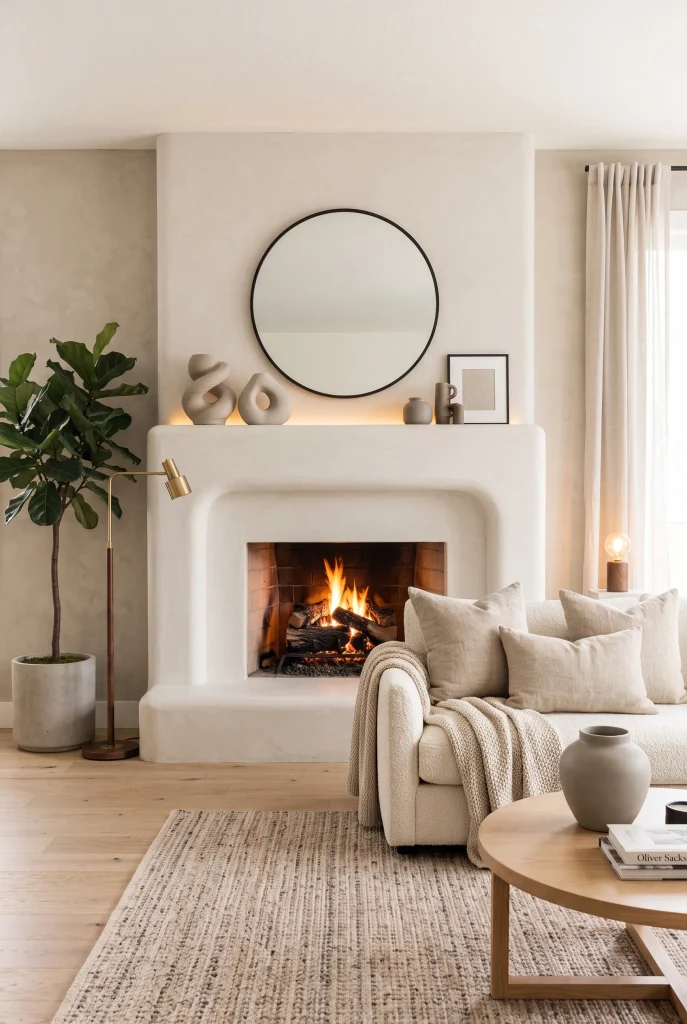
- Smooth plaster creates a calm, seamless look with very little visual noise.
- Warm white tones keep the fireplace feeling soft rather than stark.
- Rounded edges can make a large fireplace feel more approachable.
- Pair it with natural textures to prevent the finish from looking too plain.
A smooth plaster fireplace can make a living room feel calmer, cleaner, and more architectural without looking cold. Its uninterrupted surface creates a quiet backdrop that lets furniture, artwork, and natural textures stand out. Warm white or creamy plaster usually works better than bright white when the room includes beige upholstery, wood flooring, or woven accents. If you want a softer contemporary look, consider subtly rounded corners instead of sharp edges. This treatment can make a large fireplace feel less imposing while giving the entire room a polished focal point that looks thoughtfully designed rather than overly decorated.
The beauty of plaster is that it does not need much decoration to look finished. A simple wood stool, oversized ceramic vessel, or textured artwork can add enough interest without interrupting the clean surface. This style works especially well in open-plan homes because the neutral material connects easily with surrounding spaces. For a modern fireplace makeover, plaster can also help disguise dated brick, tile, or uneven finishes while creating a more cohesive wall. Keep the surrounding palette restrained, and let variations in texture from linen, wool, wood, and stone provide the warmth the smooth fireplace itself lacks.
5. Vertical Slat Detail
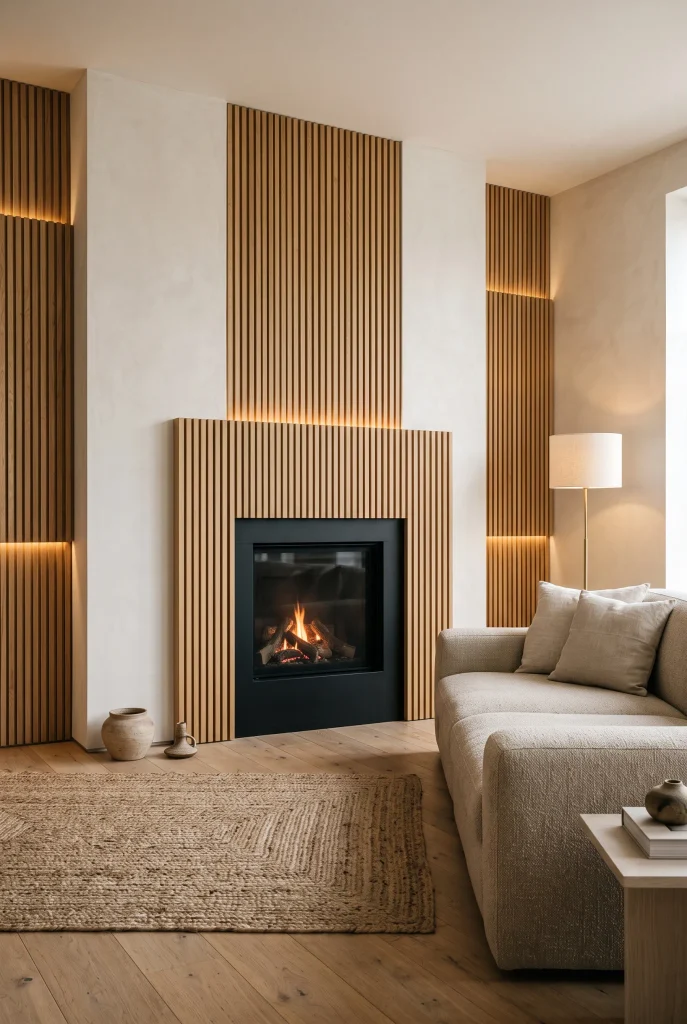
- Vertical slats add height and architectural interest to the fireplace wall.
- Natural wood brings warmth to an otherwise simple contemporary design.
- The repeated lines can visually stretch a low ceiling upward.
- Use narrow, evenly spaced slats for a clean modern finish.
Vertical wood slats can turn an ordinary fireplace wall into a strong architectural feature while keeping the overall room warm and inviting. Their repeated lines naturally draw the eye upward, which can make a low ceiling feel more spacious. Light oak is especially effective in neutral interiors because it adds warmth without creating a heavy contrast. Keep the fireplace itself simple so the slatted surface remains the main feature. This approach works best when the wood tone is repeated elsewhere through a coffee table, shelving, flooring, or small accessories for a more connected and intentional look.
You do not need to cover the entire wall with slats to get the effect. A framed section around the fireplace can provide enough texture while keeping the rest of the room visually quiet. If your living room is narrow, choose slimmer slats and avoid overly dark wood, which can make the wall feel heavier. This treatment works particularly well behind wall-mounted televisions because the vertical detail gives the large flat screen a more integrated setting. Combined with soft upholstery and simple lighting, it creates a modern fireplace makeover that feels warm, structured, and visually interesting without becoming busy.
View: 21 Ways to Make a Small Bedroom Look Bigger & Brighter
6. Stone Statement Wall
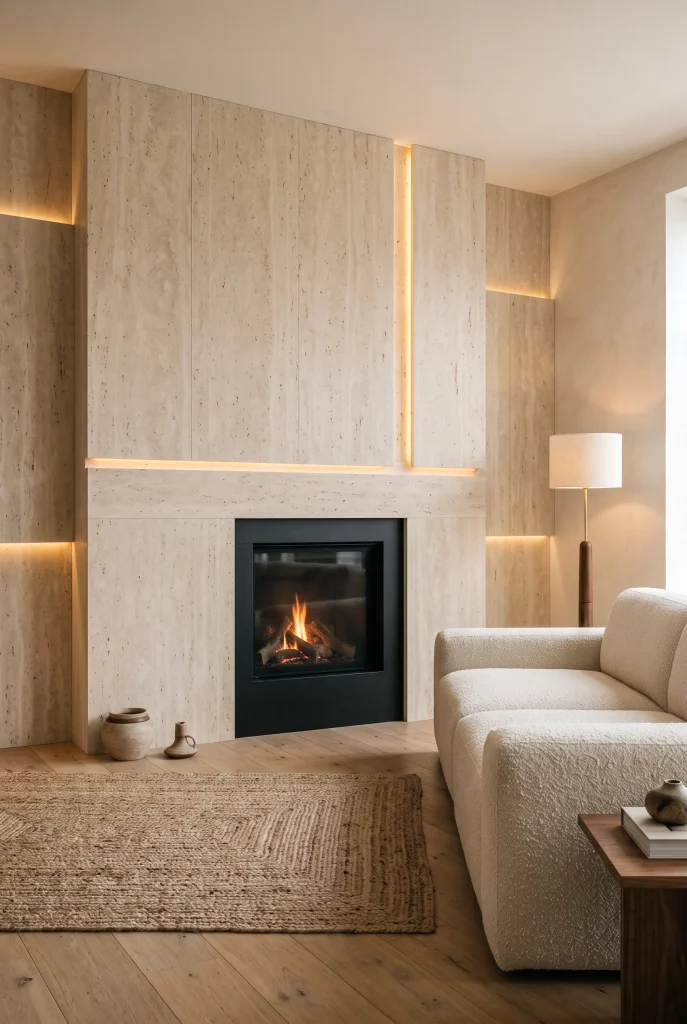
- Floor-to-ceiling stone gives the fireplace strong architectural presence.
- Light stone keeps a dramatic surface from overwhelming the room.
- Natural variation adds depth without needing extra wall decor.
- Choose a softly textured finish for a relaxed contemporary feel.
A floor-to-ceiling stone fireplace can make the entire room feel more substantial without relying on excessive decoration. Choose a light limestone, travertine, or softly textured stone if you want the wall to feel modern but welcoming. Natural variation in the material creates visual depth, so the fireplace can become the main focal point without artwork or elaborate accessories. Keep the surrounding furniture simple and comfortable, using cream, beige, warm gray, or natural wood to complement the stone. The result is especially effective in open living rooms where a strong vertical feature can visually define the seating area.
The stone does not have to be dramatic to make an impact. Subtle veining and irregular texture can provide enough character while maintaining a peaceful palette. Consider extending the material from the hearth upward to create one continuous visual plane rather than breaking it into separate sections. This makes the fireplace feel more integrated into the architecture and less like an added feature. If the stone has several natural tones, repeat one or two of them in nearby furniture or textiles. That simple connection helps the whole space feel coordinated and makes the fireplace transformation look intentional.
7. Arched Fireplace Opening
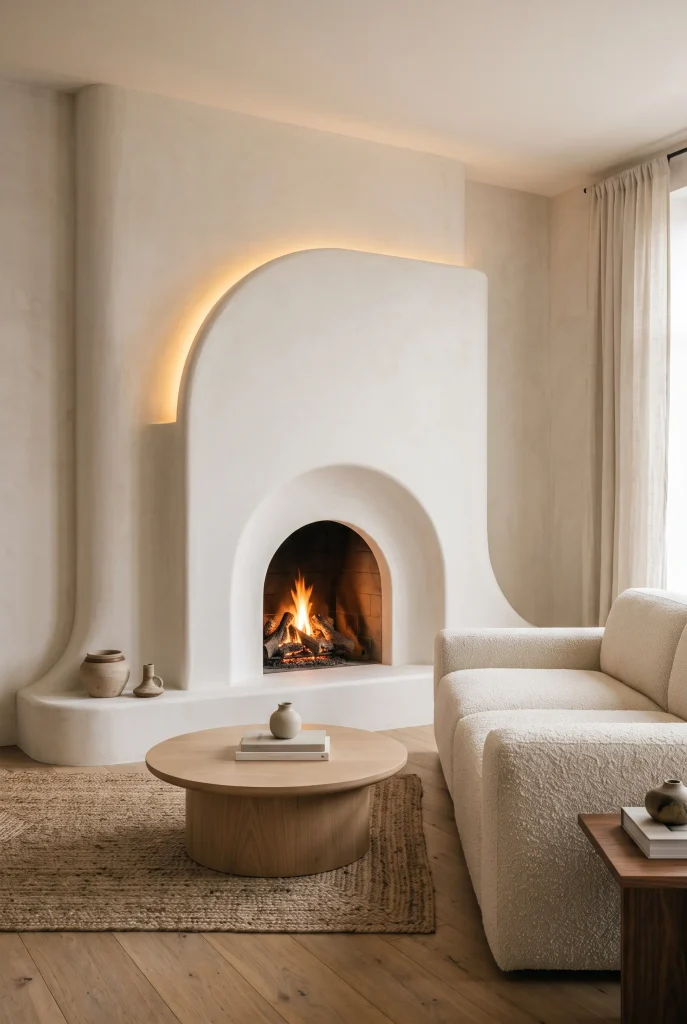
- A gentle arch softens the strong lines of a traditional fireplace.
- Rounded shapes make the room feel more relaxed and welcoming.
- Warm plaster keeps the feature modern without looking overly formal.
- Repeat curved shapes through furniture for a cohesive appearance.
An arched fireplace opening adds softness to a room filled with straight architectural lines. The curved shape immediately draws attention while giving the fireplace a more relaxed and custom-built appearance. A smooth plaster finish works particularly well because it keeps the silhouette clean and allows the arch to remain the main visual detail. Pair it with rounded furniture, such as an oval coffee table or curved accent chair, to repeat the shape naturally throughout the space. This creates a modern fireplace makeover that feels intentional without relying on complicated materials, bold colors, or excessive decorative accessories.
The proportions matter more than adding lots of styling. A wide, low arch can feel relaxed and contemporary, while a taller opening creates a more dramatic architectural statement. Keep the surrounding palette warm and simple so the curved form remains easy to notice. Repeating one or two rounded shapes elsewhere in the room helps an arched fireplace feel connected rather than unusual. Soft textiles, natural wood, and understated ceramics can add warmth around the feature. When the design is kept restrained, the fireplace becomes a memorable focal point while the rest of the living room remains comfortable and practical.
8. Floating Hearth
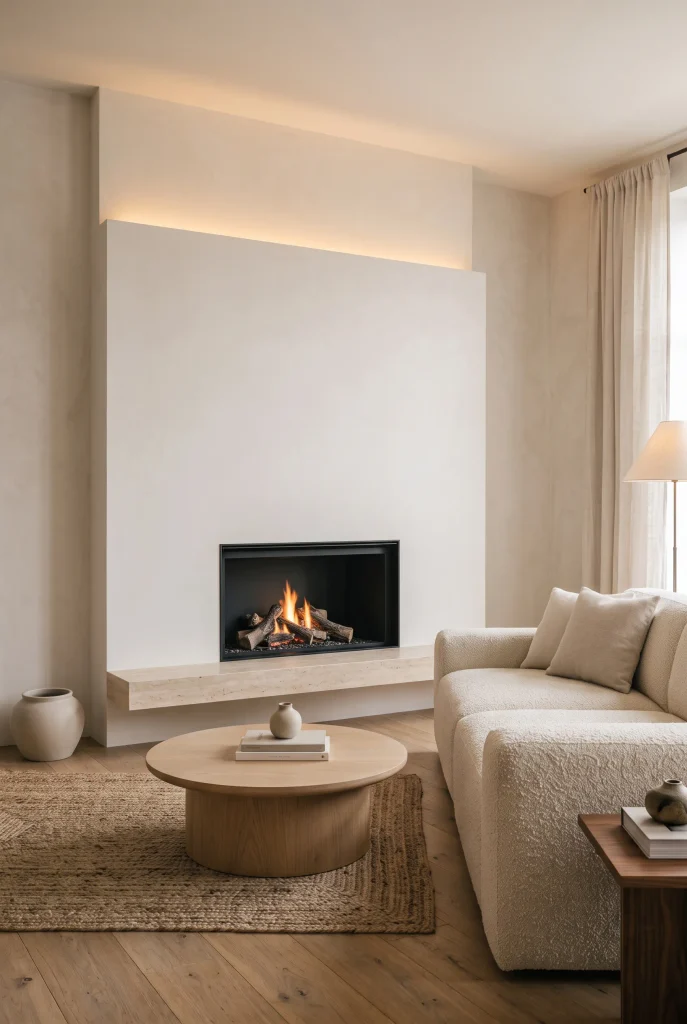
- A floating hearth creates a lighter, more streamlined fireplace profile.
- The open space underneath makes the wall feel less bulky.
- Stone or wood can provide subtle contrast against a pale surround.
- Keep the hearth depth practical without making it visually oversized.
A floating hearth can make a traditional fireplace feel much lighter and more contemporary. Instead of extending heavily from the wall, the hearth appears to hover above the floor, creating an open area underneath that gives the room more visual breathing space. A slim stone, concrete, or wood surface can provide enough contrast without overwhelming the fireplace. This approach works especially well in modern living rooms where clean lines and uncluttered surfaces are important. The open base also makes the fireplace feel less bulky, which can be helpful when the seating area is compact or the room has limited floor space.
Keep the hearth proportional to the fireplace so the design feels balanced rather than exaggerated. A slightly deeper surface can still be useful for styling, but avoid filling it with objects that remove the sense of openness. If the fireplace is raised from the floor, consider how the surrounding seating and rug align with its height. For a modern fireplace makeover, these small proportion decisions can make the final result look much more refined. Pairing a floating hearth with warm wood, soft upholstery, and restrained accessories keeps the room contemporary while preserving the comfortable feeling people want from a living space.
9. Built-In Firebox
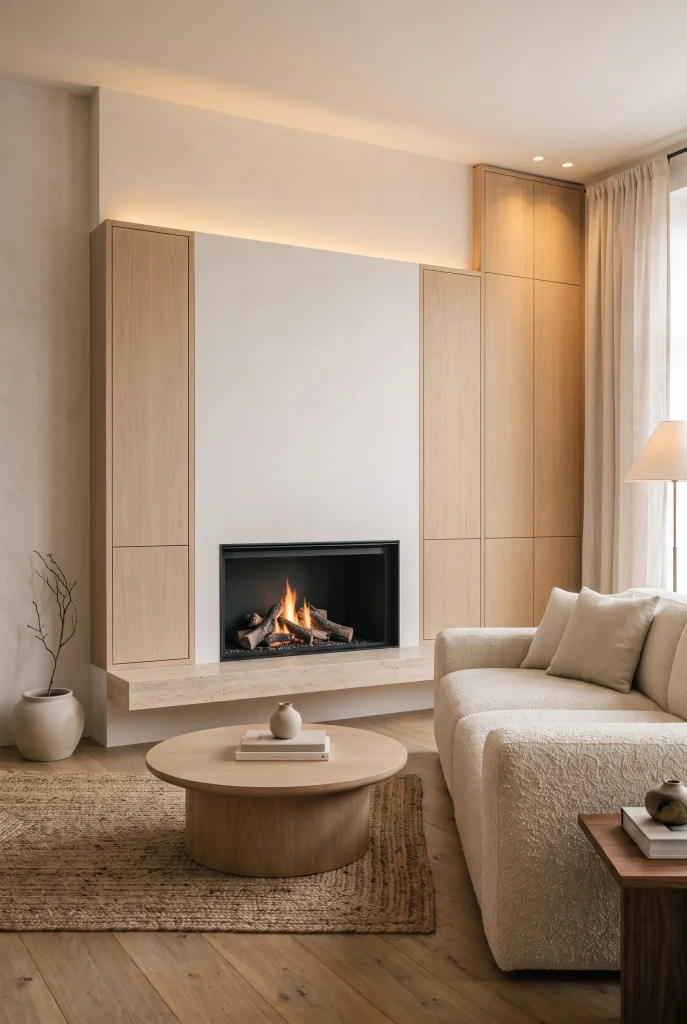
- Integrating the firebox into cabinetry creates a clean architectural appearance.
- Closed storage keeps everyday clutter away from the focal wall.
- Warm wood cabinetry prevents the built-in design from feeling too stark.
- Keep the firebox proportions simple for a timeless contemporary look.
A built-in firebox can make the fireplace feel like part of the architecture rather than an appliance added to the room. Integrating it into a wall with cabinetry or shelving creates a cleaner visual line and can solve practical storage problems at the same time. Warm oak cabinets paired with a dark firebox offer a balanced mix of softness and contrast, while closed storage keeps remotes, books, and everyday items out of sight. This approach is especially useful in family living rooms where the fireplace wall needs to look polished but still handle real-life storage demands without becoming cluttered.
Plan the proportions carefully before choosing cabinetry or finishing materials. The firebox should have enough breathing room around it, while the storage sections should feel balanced rather than squeezed into leftover wall space. Using the same wood tone in nearby furniture can create a continuous visual connection across the room. For a modern fireplace makeover, integrated storage can also reduce the need for extra furniture around the fireplace. The result is a streamlined focal wall that combines warmth, organization, and architectural character while keeping the rest of the living area visually calm.
10. Fluted Surround
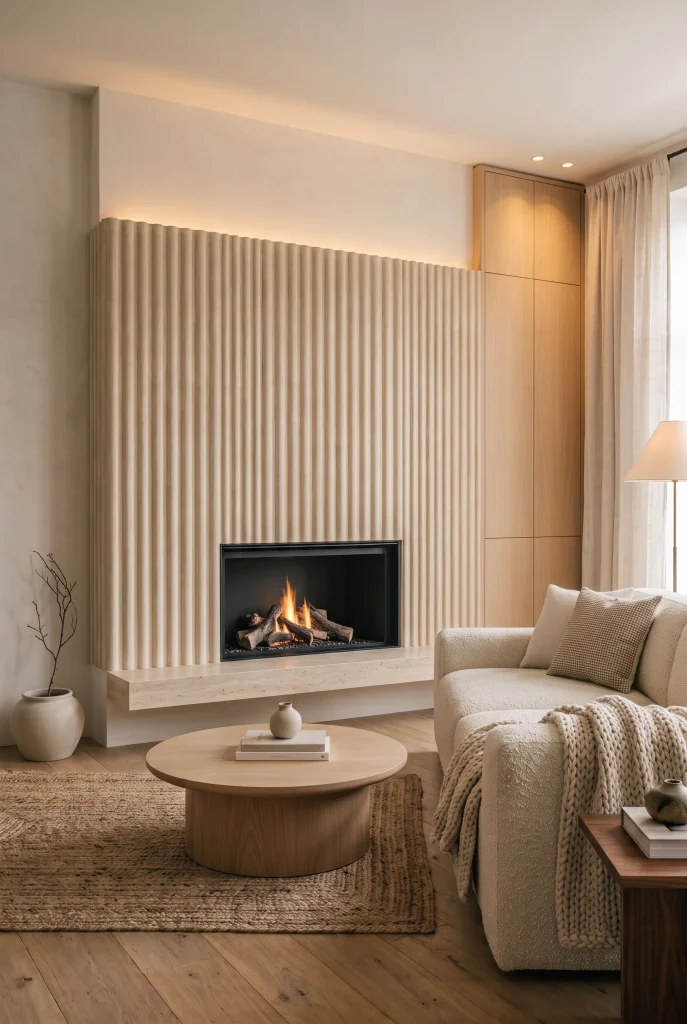
- Fluted texture adds dimension without requiring bold color.
- Vertical grooves create subtle movement around the firebox.
- Warm beige keeps the detailed surface feeling soft and modern.
- Pair it with simple furniture so the texture remains the focal point.
A fluted fireplace surround adds texture while keeping the overall design refined and contemporary. The narrow vertical grooves catch light differently throughout the day, giving a simple wall more depth without introducing a busy pattern. Warm beige, ivory, or soft greige finishes work especially well because they allow the texture to stand out subtly. Pair the surround with smooth upholstery and natural wood to create a pleasing contrast between harder and softer surfaces. This approach is useful when you want the fireplace to feel special but do not want a dramatic stone pattern or strong accent color dominating the room.
The amount of texture matters, especially in smaller spaces. If the fireplace wall is already wide or visually prominent, choose fine fluting rather than deep grooves to keep the feature balanced. Avoid placing too many decorative objects nearby because the surface already provides plenty of visual interest. One sculptural vase or a simple piece of artwork is usually enough. When combined with warm lighting, the grooves create gentle shadows that make the fireplace feel richer in the evening. It is a simple way to give a plain surround more architectural personality without making the room feel overdesigned.
11. Walnut Mantel
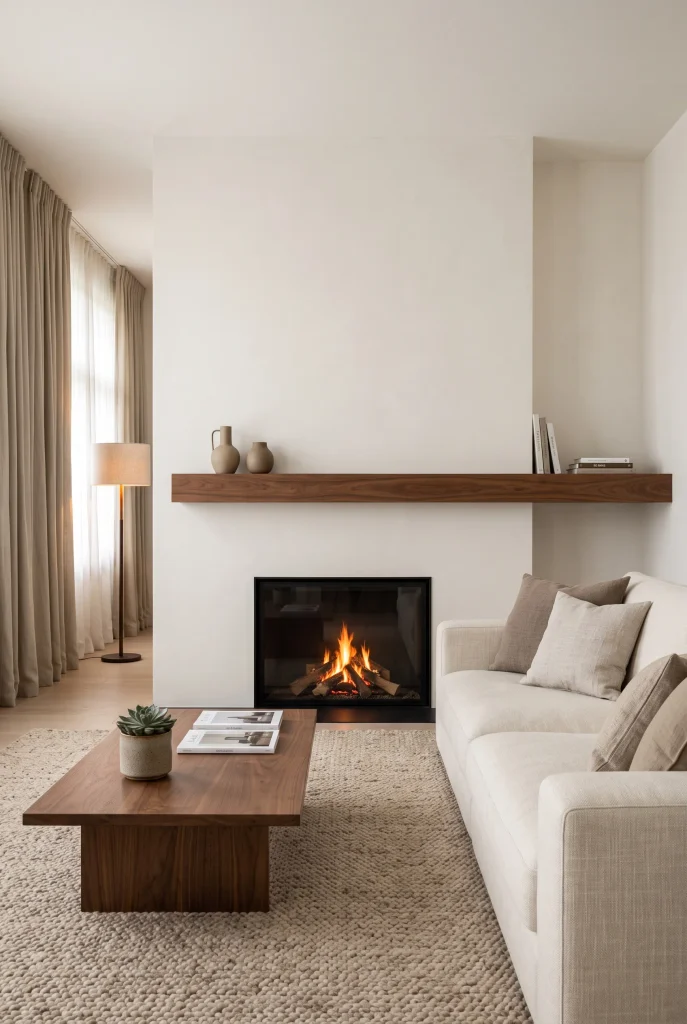
- Rich walnut adds depth against pale fireplace finishes.
- A simple wood profile keeps the darker tone feeling contemporary.
- Repeating walnut elsewhere helps connect the fireplace to the room.
- Warm lighting brings out the natural grain beautifully.
A walnut mantel can give a simple fireplace a richer and more sophisticated appearance without making the room feel formal. The deep brown grain creates natural contrast against warm white, cream, or light beige walls, while the organic variation keeps the surface from looking flat. Choose a clean rectangular profile rather than ornate trim to maintain a modern direction. Repeating walnut through a coffee table, side table, shelving, or picture frames can help the fireplace feel integrated with the rest of the room. The combination works especially well when the surrounding furniture is light, allowing the mantel to provide visual depth.
Keep the styling on the mantel restrained so the wood remains visible. A small stone vase, neutral artwork, or one sculptural object can add personality without competing with the grain. If the room already has several dark elements, use walnut selectively rather than adding another heavy finish. This creates balance while keeping the fireplace visually important. A modern fireplace makeover does not always require changing the entire surround; sometimes a carefully chosen material can shift the mood dramatically. Walnut brings warmth, contrast, and a timeless quality that works across many contemporary living room styles.
12. Microcement Finish
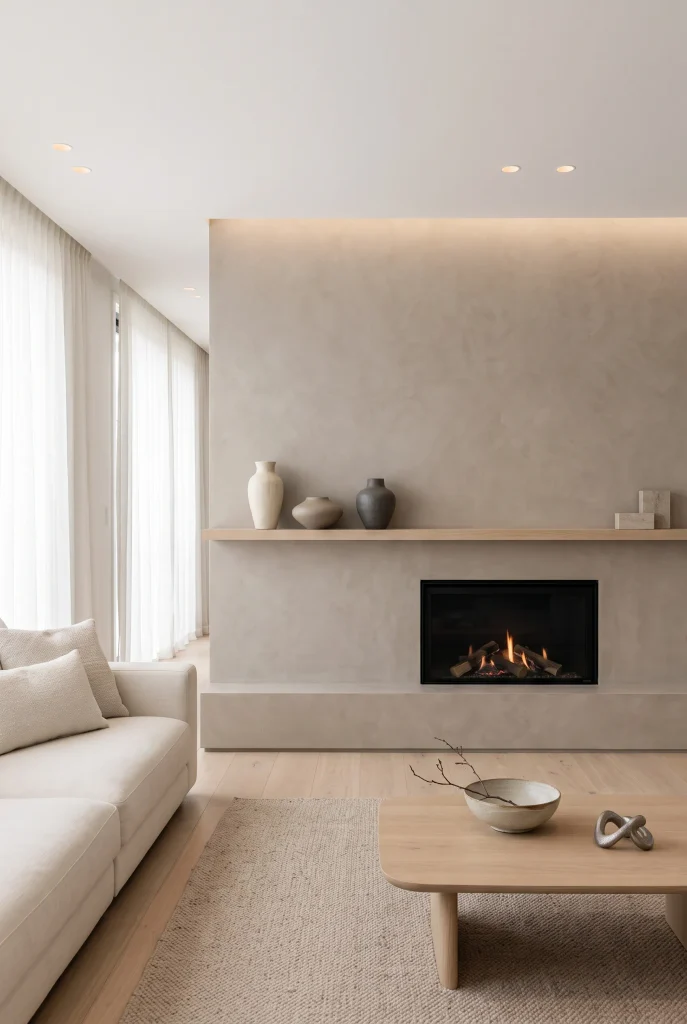
- Microcement creates a seamless surface with very little visual interruption.
- Warm greige tones make the finish feel softer than plain gray.
- Its smooth appearance suits minimalist and contemporary interiors.
- Add wood and textiles to balance the hard architectural surface.
A microcement fireplace can give a dated surround a seamless, modern appearance with very little visual clutter. Its softly mottled surface adds subtle variation without the strong veining of marble or the texture of brick. Warm greige, taupe, and creamy gray tones are especially useful because they work naturally with neutral sofas, light oak, and woven textiles. The finish can wrap around the firebox and continue across the surrounding wall for a more integrated architectural effect. For homeowners who prefer understated interiors, this approach creates a focal point through material rather than decoration.
Because microcement has a relatively quiet appearance, surrounding textures become important for keeping the room comfortable. Add a soft rug, linen upholstery, natural wood, or woven baskets to introduce warmth and contrast. Avoid filling the fireplace wall with small accessories, since the seamless finish looks best when allowed to remain visually open. This type of surface is particularly effective in contemporary spaces where several materials already compete for attention. As part of a modern fireplace makeover, it can simplify the wall while giving the room a polished, cohesive finish that feels current without being overly trendy.
13. Recessed Fireplace

- A recessed firebox creates a sleek, built-in architectural appearance.
- The darker interior gives the fireplace visual depth.
- Flush surrounding surfaces keep the wall looking clean and uncluttered.
- Simple furniture helps highlight the fireplace without competing with it.
A recessed fireplace can make a living room feel more streamlined by setting the firebox neatly into the wall. Instead of projecting outward, the fireplace becomes part of the architecture, creating a clean focal point with minimal visual bulk. A dark interior contrasts beautifully with a warm white, beige, or greige surround, giving the firebox extra depth. This style works particularly well in contemporary homes where clean lines are important. It can also help a smaller room feel less crowded because the fireplace does not occupy as much visual or physical space as a traditional projecting surround.
The surrounding wall should remain relatively simple so the recessed design has room to stand out. Pair it with low-profile seating, a textured rug, and one or two warm wood elements to soften the architectural lines. If you are planning structural changes, make sure the installation follows the fireplace manufacturer’s clearance and ventilation requirements rather than treating the recess as purely decorative. A modern fireplace makeover should improve both appearance and everyday usability. When the proportions are right, a recessed firebox creates a polished focal point that feels intentional, space-conscious, and naturally connected to the rest of the room.
14. Oversized Concrete Hearth

- A wide hearth gives the fireplace stronger visual weight.
- Smooth concrete introduces an understated industrial texture.
- Light neutral walls keep the substantial hearth from feeling too heavy.
- Pair hard concrete with soft textiles for a comfortable balance.
An oversized concrete hearth can give a simple fireplace a strong architectural presence while keeping the palette understated. The broad horizontal surface creates a visual base for the firebox and can make the entire fireplace feel more substantial. Smooth concrete works particularly well with warm white walls, natural wood, and cream upholstery because its cool mineral character is softened by warmer materials nearby. Instead of adding numerous decorative pieces, let the proportions of the hearth provide the visual interest. This approach is especially useful when the room needs a defined focal point but does not suit ornate trim or traditional mantel styling.
Balance the hard surface with soft materials throughout the seating area. A thick wool rug, linen curtains, boucle chair, or textured cushions can prevent the concrete from making the room feel too industrial. Keep decorative objects on the hearth limited and carefully positioned so the wide surface still feels open. This combination works well in larger living rooms because the substantial hearth can visually anchor generous furniture without disappearing into the scale of the space. When thoughtfully proportioned, it becomes a practical and distinctive foundation for a modern fireplace makeover without overwhelming the room.
15. Double-Sided Fireplace

- A double-sided fireplace can visually divide an open-plan layout.
- Both rooms benefit from the warmth and focal point.
- A simple surround keeps the feature connected to both spaces.
- Use matching materials on each side for a cohesive architectural effect.
A double-sided fireplace can do more than provide warmth or atmosphere; it can help define two connected areas without closing off the room. In an open-plan home, one side can face the living room while the other opens toward a dining area, creating a natural visual divider. Keep the surround simple and consistent on both sides so the feature feels like one architectural element. Warm white plaster, stone, or smooth neutral finishes work especially well. The result can make a large open space feel more organized while preserving sightlines, natural light, and the sense of connection between rooms.
Furniture placement becomes especially important around a double-sided design. Keep enough clearance around each opening and avoid arranging large pieces so close that one side feels blocked. Repeat a few materials across both zones, such as oak flooring, neutral upholstery, or black lighting details, to create visual continuity. This can be an effective modern fireplace makeover when an open floor plan needs stronger definition without adding a full wall. The fireplace naturally becomes the transition point between spaces, while its two-sided design gives each area its own focal view without making either room feel isolated.
16. Built-In Bench
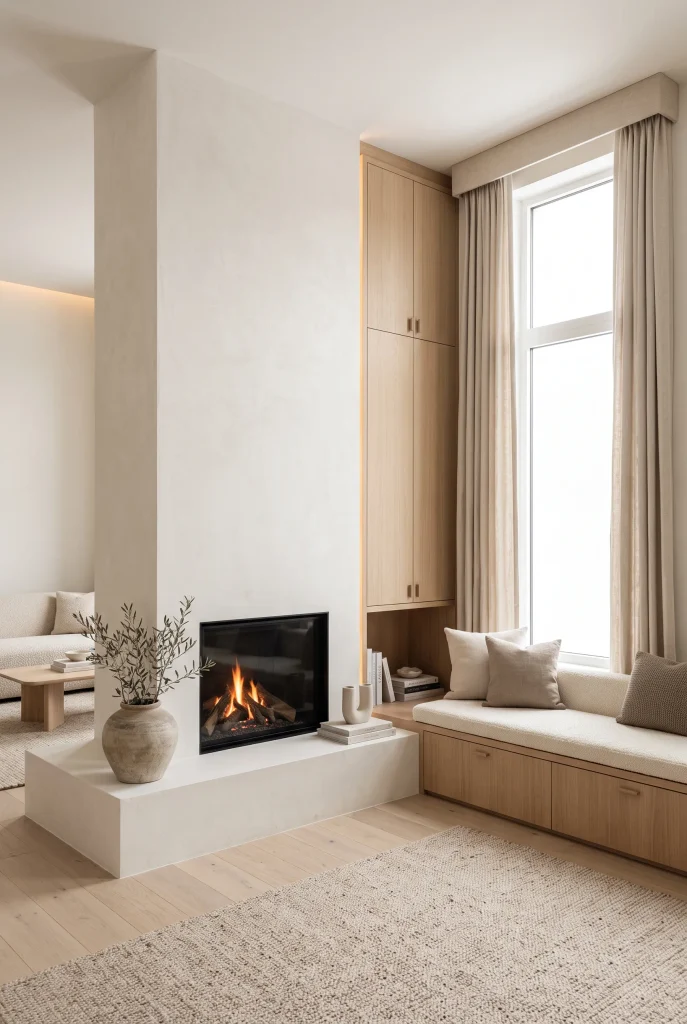
- A built-in bench adds useful seating beside the fireplace.
- Cushions introduce softness against hard architectural materials.
- Storage underneath can help hide blankets, books, or everyday items.
- Keep the bench low and simple for a streamlined appearance.
A built-in bench can turn an underused area beside a fireplace into a practical and inviting part of the room. Instead of leaving awkward wall space empty, the bench provides extra seating while giving the fireplace composition more structure. A thick linen or boucle cushion softens the built-in surface and adds comfort without making the design feel bulky. If possible, include drawers or lift-up storage underneath for blankets, books, or seasonal items. This approach works particularly well in family rooms because the fireplace becomes part of a useful seating zone rather than simply serving as a decorative focal point.
Keep the bench visually connected to the fireplace by using complementary materials and colors. Light oak cabinetry can warm up a plaster or stone surround, while a neutral cushion can tie the seating to the rest of the room. Avoid making the bench too deep if the surrounding walkway is narrow. Practical features like hidden storage can make a fireplace renovation feel more worthwhile because they improve everyday function as well as appearance. As a modern fireplace makeover, this idea combines architectural character, comfortable seating, and organization without requiring a large amount of additional furniture.
17. Minimalist Tile Surround

- Large-format tiles create fewer grout lines and a cleaner appearance.
- Matte neutral finishes keep the fireplace soft and contemporary.
- Subtle stone-look surfaces add interest without visual clutter.
- Choose tile tones that coordinate with the existing flooring and furniture.
A minimalist tile surround can refresh a dated fireplace while keeping the design simple and easy to coordinate. Large-format tiles are especially effective because fewer grout lines create a cleaner visual plane around the firebox. Soft beige, warm gray, ivory, or stone-inspired finishes can add subtle texture without overwhelming the room. Matte surfaces generally feel more relaxed than highly reflective options and work naturally with linen, wood, wool, and other tactile materials. This approach is useful when you want a noticeable update but prefer a fireplace that blends with the overall interior rather than becoming an overly dramatic feature.
Before choosing a tile, look at its undertones beside your existing flooring, walls, and upholstery. A tile that appears beige in the showroom may look noticeably cooler or warmer once installed in your room. Sample boards can help you judge the finish under both daylight and evening lighting. Keep the surrounding styling simple so the tile pattern remains easy to appreciate. For a modern fireplace makeover, large-format tile offers flexibility across many design styles and can provide a fresh architectural finish without requiring an elaborate mantel or numerous decorative details around the firebox.
18. Warm LED Glow
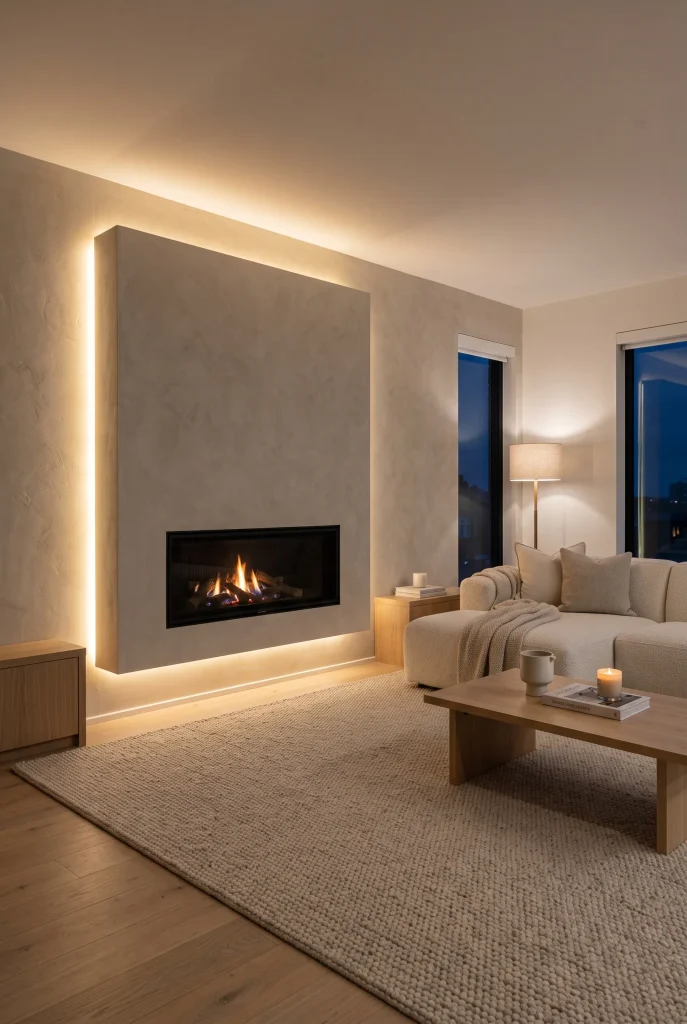
- Hidden lighting can emphasize the fireplace shape after sunset.
- Warm color temperatures create a softer evening atmosphere.
- Indirect illumination highlights texture without creating harsh glare.
- Use lighting as an accent rather than making the fireplace overly bright.
Warm LED lighting can completely change how a fireplace wall feels once the sun goes down. Instead of relying only on the firebox or ceiling lights, concealed illumination can gently highlight architectural edges, shelves, or textured surfaces. A warm color temperature creates a relaxed glow that works beautifully with cream upholstery, wood finishes, and neutral walls. The goal is subtlety: the light should reveal the design rather than become the main feature. This is particularly useful when a fireplace looks beautiful during the day but feels flat or unfinished in the evening.
Place the lighting where it can create indirect illumination rather than shining directly into the room. Hidden strips behind a mantel, beneath shelving, or along a recessed edge can add depth while keeping the light source out of sight. If the fireplace already has strong visual texture, use a softer glow so shadows remain comfortable rather than dramatic. Layered lighting often makes the biggest difference in how a living room feels at night. As part of a modern fireplace makeover, it adds atmosphere and definition without requiring a major change to the fireplace materials themselves.
19. Floating Wood Shelf
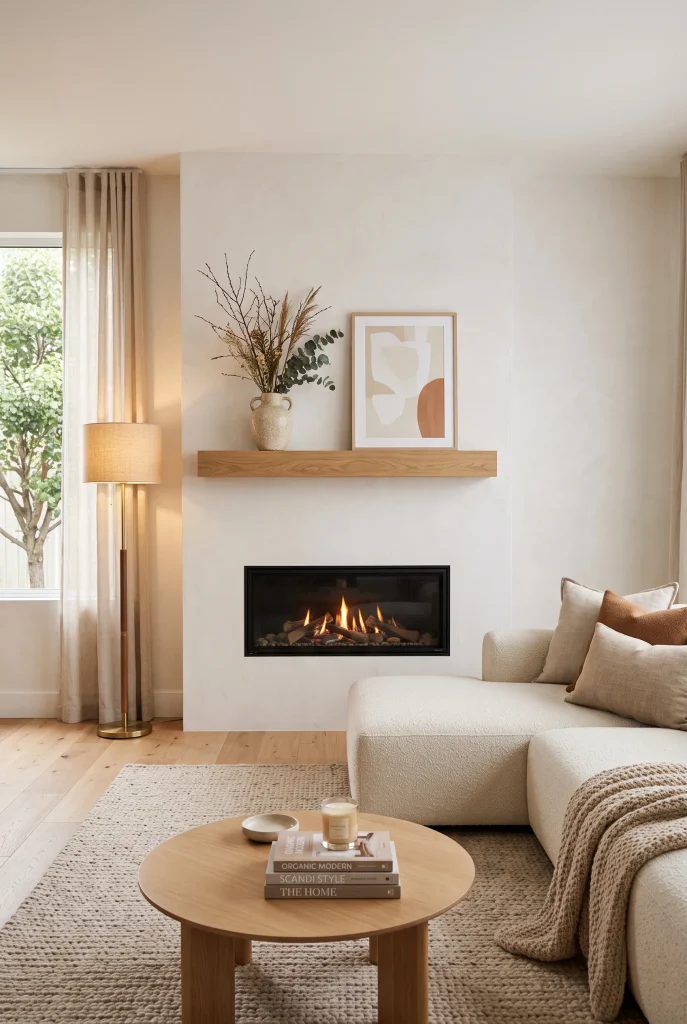
- A floating shelf adds useful display space without a bulky mantel.
- Natural wood introduces warmth against a pale fireplace wall.
- The clean horizontal line balances a tall or textured surround.
- Keep the shelf lightly styled so the fireplace remains the focal point.
A floating wood shelf can give a fireplace wall warmth and function without adding the visual weight of a traditional mantel. A slim oak shelf creates a clean horizontal line that balances the vertical architecture of the fireplace while providing just enough room for a few meaningful objects. Use a warm natural finish if the room already includes light wood flooring or furniture. The shelf can hold a small ceramic vase, framed artwork, or a couple of books, but leaving some empty space is important. That restraint keeps the overall wall feeling modern rather than crowded.
Pay attention to the shelf’s depth and placement so it feels proportionate to the fireplace beneath it. A shelf that is too deep can look bulky, while one that is too narrow may feel disconnected from the surround. Before installing anything, check the fireplace manufacturer’s requirements for clearances and heat exposure. Simple shelves work best when their styling changes naturally with the room rather than becoming a permanent collection of small objects. This idea can support a modern fireplace makeover by adding warmth, personality, and useful display space while preserving the clean architectural character of the fireplace.
20. Curved Stone Mantel
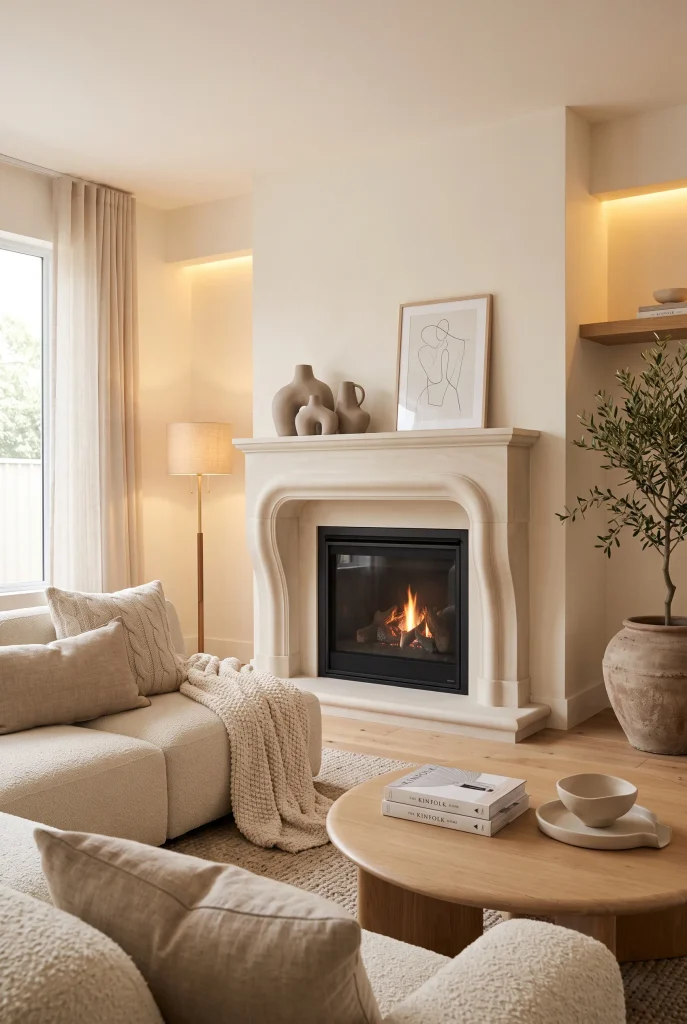
- Curved stone introduces softness to a structured fireplace wall.
- Light limestone keeps the feature elegant without feeling heavy.
- Rounded furniture can reinforce the gentle architectural shape.
- Natural stone variation adds character without needing bold decoration.
A curved stone mantel brings together natural material and softer architectural lines for a fireplace that feels refined but relaxed. Instead of a sharp rectangular profile, a gently rounded edge creates a smoother transition between the fireplace and surrounding walls. Light limestone, travertine, or another softly colored stone can keep the feature bright while introducing natural variation. Pairing the mantel with a rounded coffee table or curved chair helps repeat the shape throughout the room. The result feels cohesive because the curves are echoed subtly rather than appearing as a single unusual detail.
Stone already provides plenty of visual interest, so keep the surrounding palette simple and warm. Cream upholstery, pale oak, linen curtains, and a neutral rug can soften the harder material and create a comfortable atmosphere. If the stone has noticeable variation, choose nearby accessories that pick up one of its quieter tones rather than introducing another competing color. A modern fireplace makeover does not need dramatic contrast to feel fresh. Thoughtful curves and natural materials can create a more timeless result because they soften contemporary lines while maintaining a clean, architectural appearance.
21. Layered Neutral Styling
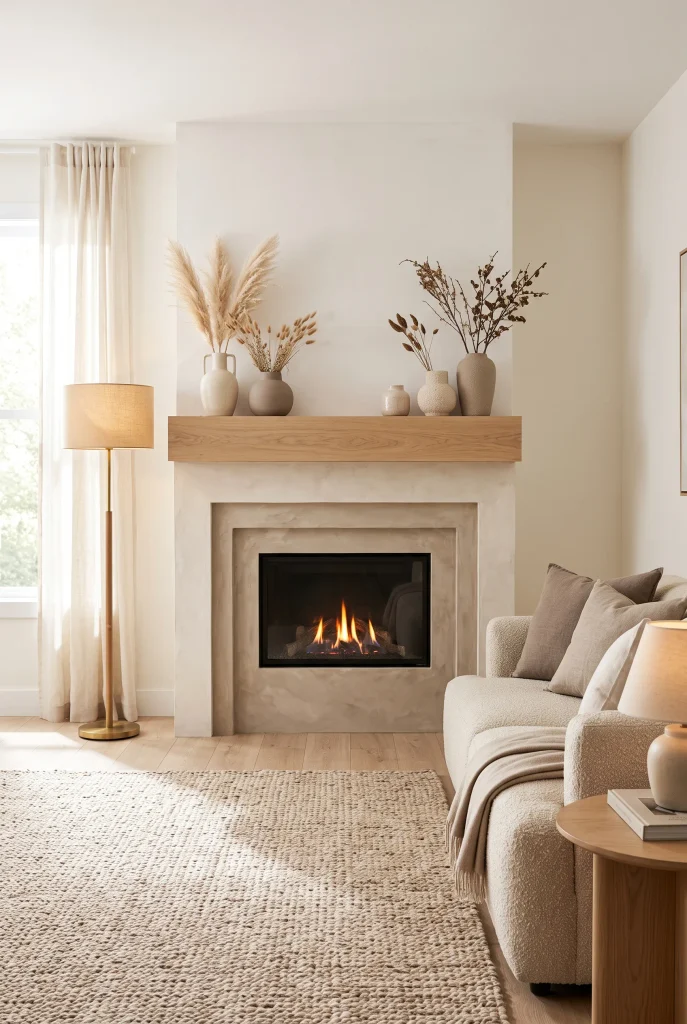
- Layered neutrals create depth without relying on strong accent colors.
- Mixing textures prevents a pale fireplace wall from feeling flat.
- Wood and woven materials add warmth to smooth architectural finishes.
- Keep the palette within a few closely related tones for cohesion.
Layered neutral styling can make a modern fireplace feel fresh without requiring one dramatic material or architectural change. Combine warm white, cream, beige, taupe, and natural wood across the fireplace, furniture, textiles, and accessories. The key is variation in texture rather than adding lots of different colors. A smooth plaster surround can sit beside a woven rug, boucle sofa, linen cushions, and a lightly grained wood mantel. These subtle differences give the room depth while maintaining the calm appearance many people want from a contemporary living space. The fireplace remains noticeable because the surrounding elements support rather than compete with it.
Start with the fireplace finish, then build the rest of the palette around its undertones. If the surround is warm, choose creamy textiles and natural woods rather than cool gray accessories. Add only a few decorative pieces so the neutral layers remain easy to see. This approach is particularly forgiving in real homes because small changes in pillows, rugs, or ceramics can refresh the space without replacing major furniture. Whether the fireplace is newly renovated or simply restyled, thoughtful neutral layering can give the entire room a cohesive, comfortable finish that feels polished without looking overly staged.
Conclusion
A fireplace does not need a complete rebuild to feel fresh and current. The right materials, proportions, textures, lighting, and styling can completely change how the entire living room looks and feels. Whether you prefer warm wood, natural stone, smooth plaster, dark contrast, or soft neutral layers, there is a modern fireplace makeover idea you can adapt to your home. Start with one change that fits your space and budget, then build from there. Save this post on Pinterest for inspiration, try your favorite idea, and share it with someone planning their own fireplace refresh.