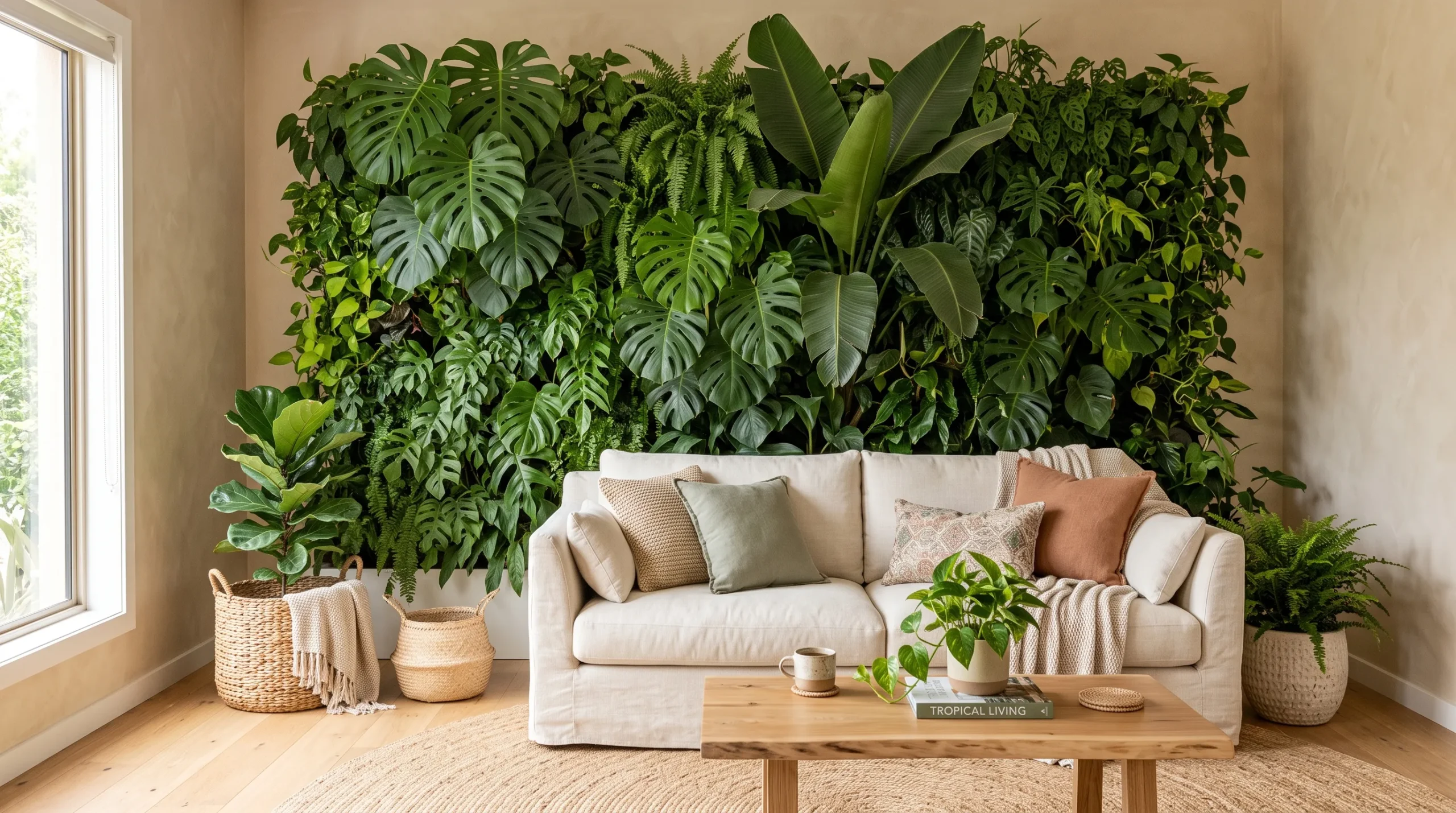
25 Tropical Jungle Living Room Ideas for Paradise Vibes
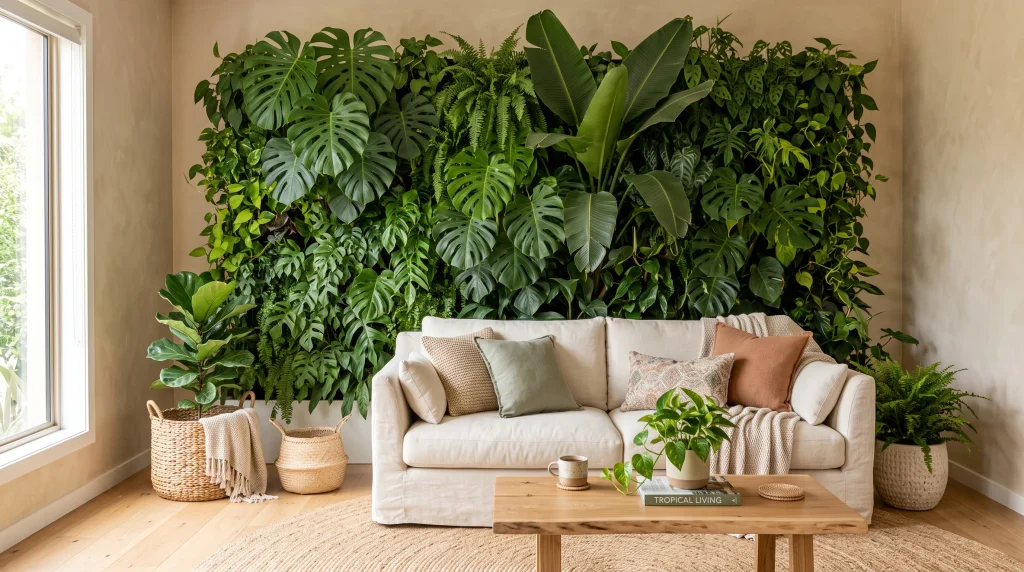
Imagine walking into your living room and instantly feeling like you’ve escaped to a lush tropical retreat. 🌿 Warm textures, oversized greenery, natural wood, and breezy fabrics can create that paradise feeling right at home.
A tropical jungle living room brings together leafy plants, earthy colors, rattan, bamboo, linen, woven textures, and relaxed furniture to create a space that feels fresh and inviting. Whether your room is large and open or small and cozy, you don’t need a complete makeover to get the look. A few thoughtful changes can make a noticeable difference. Combining natural materials with layered greenery is one of the easiest ways to make a neutral room feel more vibrant without making it overwhelming. These ideas will help you create a comfortable, stylish space with plenty of tropical personality.
1. Lush Plant Wall
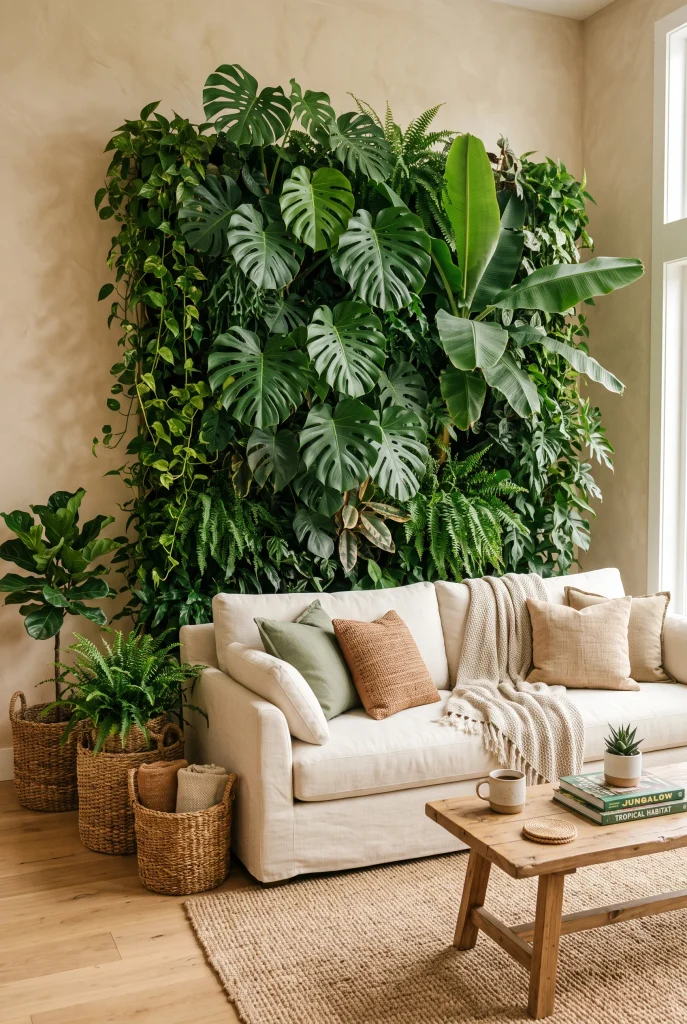
- Creates an instant focal point without needing lots of artwork.
- Different plant heights add depth and a naturally layered look.
- Woven baskets and earthy planters keep the greenery feeling polished.
- Works beautifully when the rest of the furniture stays simple.
Bring the jungle indoors with a wall of lush tropical greenery that instantly becomes the room’s focal point. A mix of large-leaf plants, trailing vines, and layered heights creates depth without making the space feel crowded. This approach works especially well when the rest of the furniture stays simple, allowing the greenery to do the visual heavy lifting. Grouping plants in different pot sizes makes even an ordinary corner feel thoughtfully styled. Choose woven baskets, ceramic planters, or natural stone finishes to keep the look relaxed, earthy, and connected to the tropical mood.
A dramatic plant wall can make a living room feel cooler, softer, and more inviting at the same time. Start with one strong backdrop, then layer furniture in front of it rather than filling every available surface with decor. A cream sofa, low wooden table, and textured rug provide enough contrast for the foliage to stand out beautifully. For real homes, use a mix of easy-care plants so maintenance stays manageable. Position taller varieties toward the back and smaller plants near seating areas, creating a natural visual rhythm that feels abundant without becoming messy or difficult to navigate.
2. Rattan Seating
- Adds warmth and texture without making the room feel heavy.
- Open-weave furniture keeps the space visually light and airy.
- Linen cushions soften the natural texture of rattan.
- Small woven accents can repeat the material throughout the room.
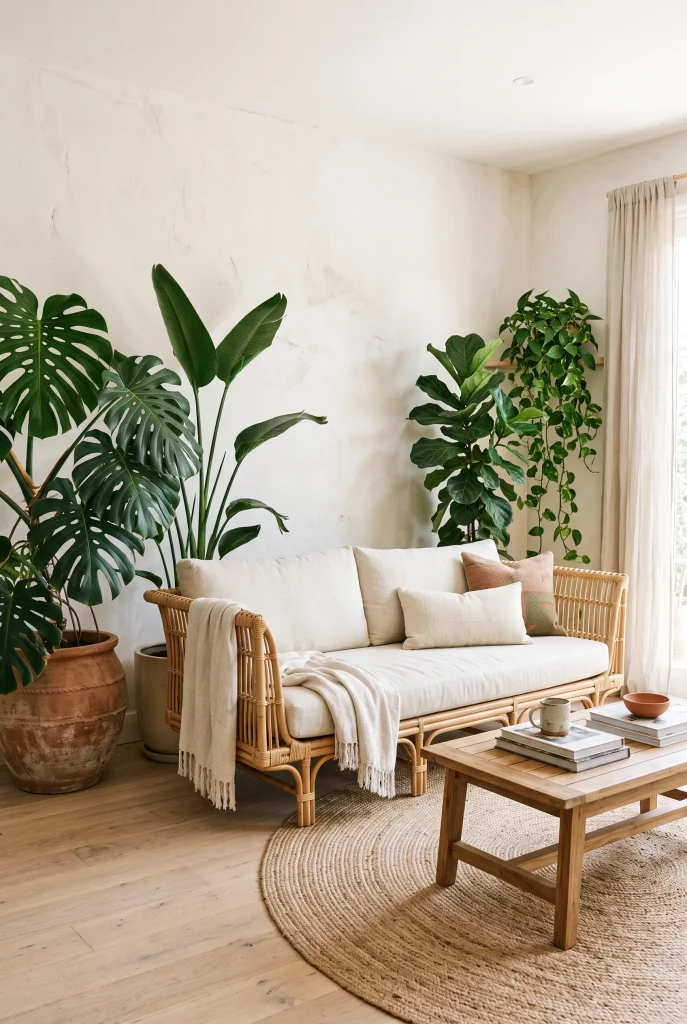
Let natural materials set the tone with a warm rattan sofa that feels relaxed, airy, and effortlessly tropical. The woven texture adds character while keeping the room visually light, making it a smart choice for spaces that need warmth without bulky furniture. Pair it with linen cushions, a jute rug, and a pale wood coffee table for an easy layered look. Rattan looks especially polished when repeated in small accents, such as baskets or pendant shades. Keep the surrounding colors soft and earthy so the woven furniture becomes a beautiful anchor rather than competing with the greenery.
A rattan seating area can instantly shift the atmosphere from ordinary to vacation-inspired, especially when paired with generous greenery and breezy fabrics. Choose cushions in cream, sand, muted olive, or warm terracotta to echo the natural surroundings. The open weave of the furniture also helps light move through the room, which can make a smaller living area feel less enclosed. Add one or two sculptural plants nearby instead of decorating every corner. This creates breathing room around the seating while still giving the space that lush, relaxed character people love about tropical interiors.
3. Layered Greenery
- Different leaf sizes create a fuller, more natural visual effect.
- Place tall plants behind furniture and smaller ones near open corners.
- Repeating green tones helps separate plants feel like one cohesive display.
- Leave enough open floor space so the room remains easy to use.
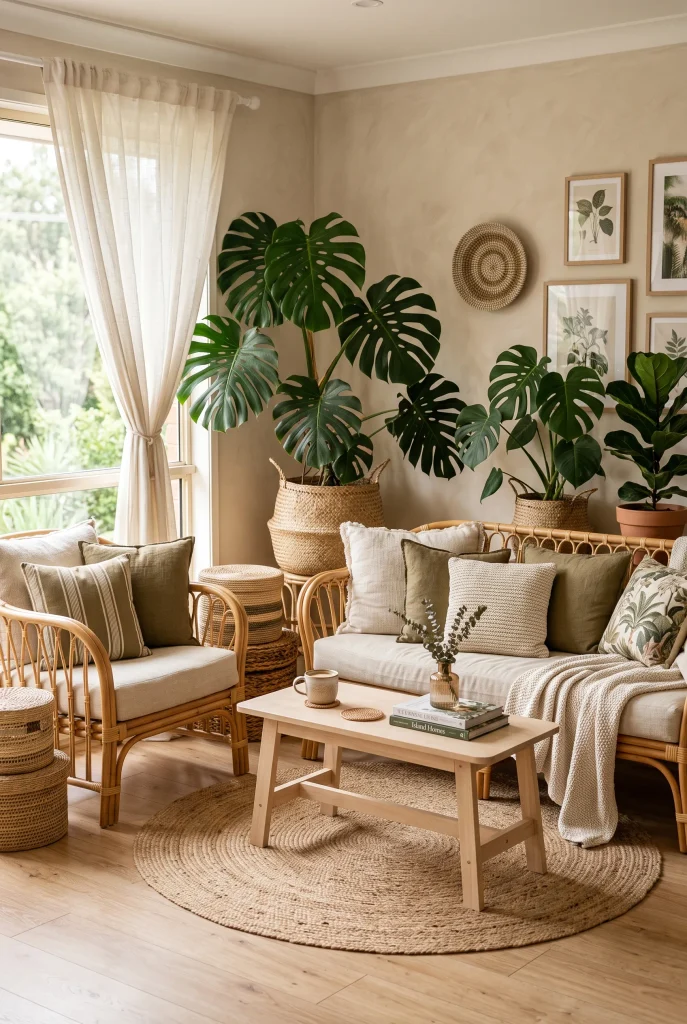
Layering greenery is one of the easiest ways to make a living room feel lush without turning it into a greenhouse. Combine tall palms, broad-leaf plants, compact greenery, and trailing vines to create natural variation from floor to ceiling. The result feels much more interesting than placing identical plants around the room. The best arrangements leave some breathing space between groups, so each plant can stand out. Use neutral planters and natural baskets to keep attention on the foliage, while a simple wooden table or woven rug reinforces the relaxed tropical character.
The beauty of layered greenery is that it can work with almost any furniture style while adding instant softness. Start with your largest plant near an empty corner or beside the sofa, then add medium and smaller varieties around it to build visual depth. Keep plants that need similar light conditions together to make everyday care easier. A few trailing stems can soften shelves or window areas without taking up floor space. When balanced with natural textures, cream upholstery, and warm wood, the greenery creates a welcoming setting that feels fresh, relaxed, and inspired by a lush island retreat.
4. Tropical Leaf Prints
- Oversized botanical artwork creates a strong focal point.
- Green prints bring tropical character without adding more plants.
- Matching natural textures keep the room cohesive and relaxed.
- Use one large piece instead of several tiny frames for cleaner impact.
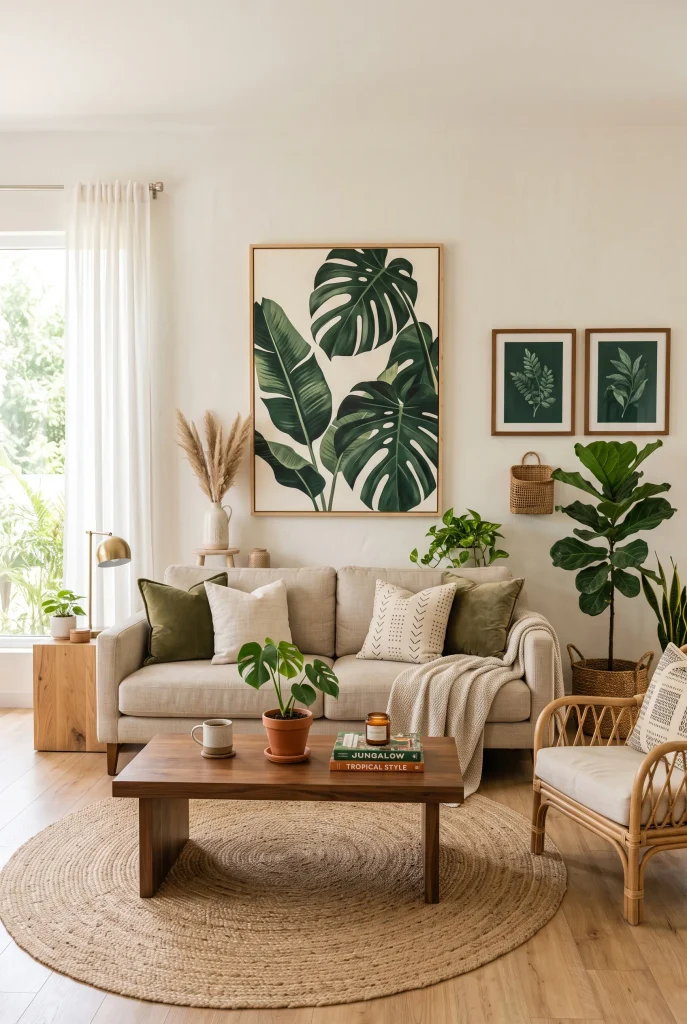
Give your walls a tropical update with oversized leaf prints that bring the feeling of dense greenery indoors without adding extra maintenance. Large botanical artwork works especially well above a sofa, console, or fireplace because it creates an immediate focal point. Choose prints featuring monstera, palm, banana, or fern leaves in shades of green and cream. A simple wooden or woven frame keeps the look natural rather than overly formal. This is also a practical option for renters or anyone who wants tropical character without permanently changing walls or adding numerous plants.
The right botanical artwork can make a neutral living room feel much more intentional in just a few minutes. Keep the surrounding furniture understated so the artwork has enough visual space to stand out. A beige sofa, natural wood table, woven rug, and a few green cushions can easily connect the colors throughout the room. Repeating one or two shades from the artwork in nearby accessories makes everything feel coordinated. If your room already has plenty of greenery, choose simpler leaf silhouettes so the walls complement the plants instead of competing with them.
5. Palm Leaf Curtains
- Palm patterns add tropical personality while keeping the room soft.
- Floor-length curtains can make ceilings appear taller.
- Light fabrics preserve brightness and an airy atmosphere.
- Keep surrounding patterns minimal for a balanced finished look.
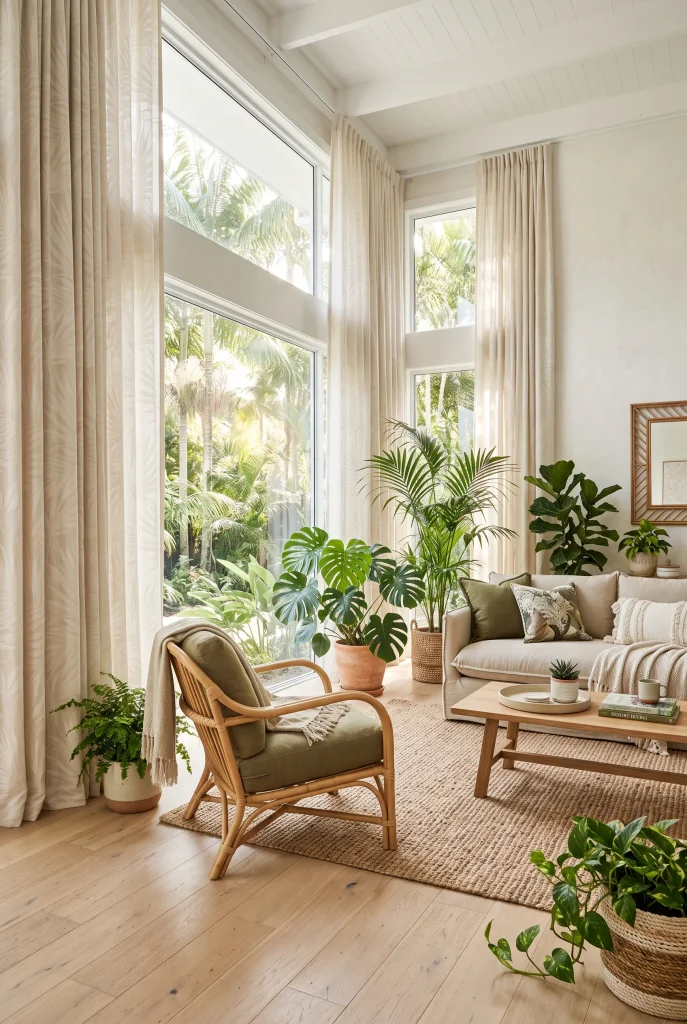
Frame your windows with palm leaf curtains for an easy way to introduce tropical pattern without overwhelming the room. A subtle green-on-cream print feels fresh and sophisticated, especially when paired with neutral upholstery and natural materials. Floor-length panels also draw the eye upward, helping the room appear taller and more spacious. Choose lightweight linen or cotton for a breezy finish that allows plenty of daylight through. Curtains work best when their pattern connects with existing greenery rather than introducing a completely different shade of green that makes the room feel visually disconnected.
Palm leaf curtains can also solve a common decorating problem: a neutral room that feels finished but slightly bland. Instead of adding several decorative objects, let the window treatment provide the personality. Keep the sofa and larger furniture pieces in cream, beige, or light brown, then repeat small touches of green through cushions, plants, or artwork. If the pattern is bold, use fewer competing prints elsewhere. This keeps the space relaxed and easy on the eyes. The finished effect feels bright, layered, and naturally tropical while still being practical enough for everyday living.
View: 22 Chic Modern Boho Kitchen Ideas to Try Right Now
6. Natural Wood Accents
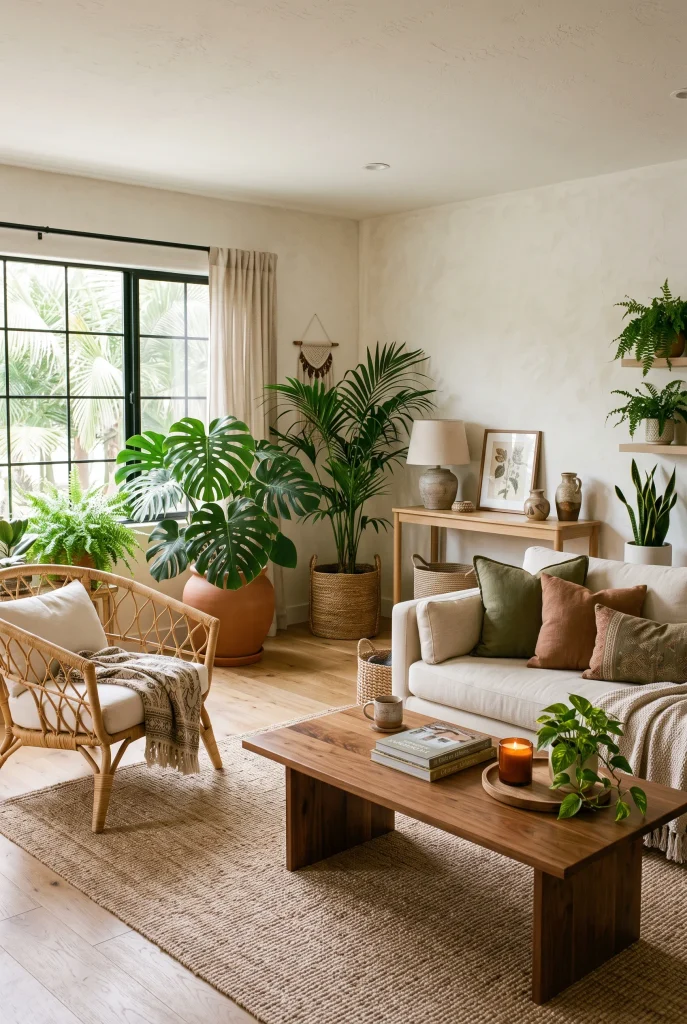
- Warm wood tones balance abundant greenery beautifully.
- Mixing wood shades can add depth when kept within a natural palette.
- Wooden furniture brings durability and everyday practicality.
- Small wood accessories can refresh an existing room affordably.
Warm wood accents give a tropical room the grounded feeling it needs, especially when the space contains lots of leafy greenery. A walnut coffee table, oak console, wooden side table, or carved stool can introduce natural contrast against cream upholstery and green foliage. Wood also adds warmth without relying on strong colors, making it easy to build a calm palette. For a cohesive result, choose finishes with similar undertones rather than mixing too many competing stains. This simple approach helps the room feel collected and organic instead of looking like every piece came from a different design style.
Natural wood is particularly useful when you want tropical style that still feels sophisticated and livable. Use one larger wooden piece as an anchor, then repeat the material through smaller elements such as trays, bowls, frames, or plant stands. Pair smooth wood with woven textures to create subtle contrast and visual interest. This works well in homes where owners want greenery to be the star without making the entire room feel overly themed. The result is warm, balanced, and versatile, with enough natural character to create a relaxed paradise-inspired atmosphere without sacrificing everyday comfort.
7. Bamboo Furniture
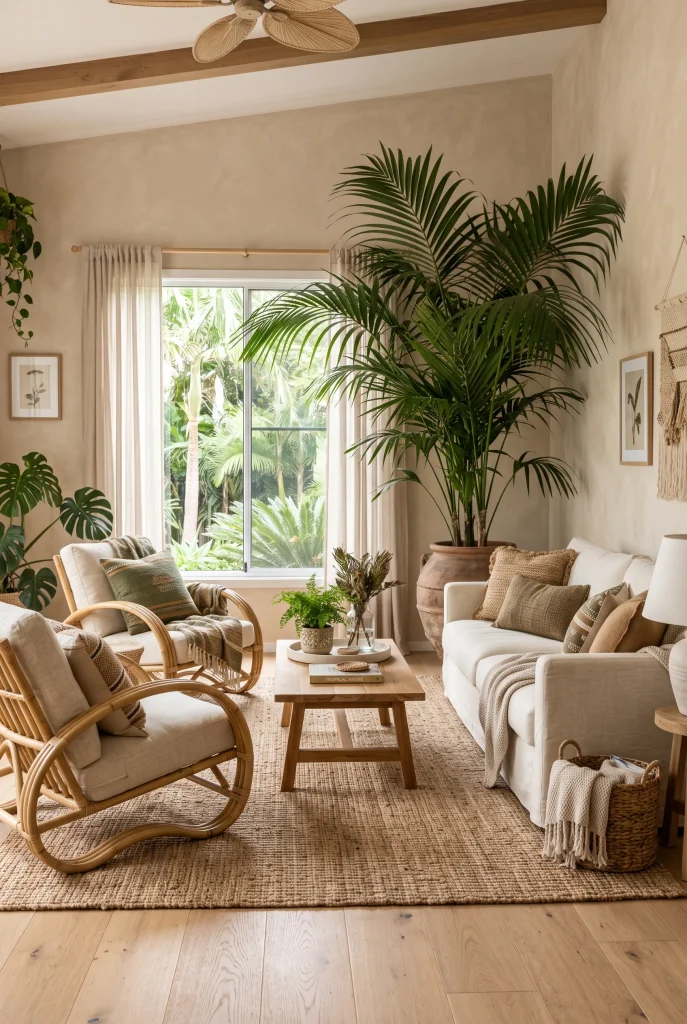
- Bamboo furniture adds a distinctive tropical texture without looking heavy.
- Open frames help maintain an airy, spacious layout.
- Pair bamboo with soft linen for a comfortable everyday feel.
- One statement piece can be enough to establish the theme.
Bring a lighter tropical texture into the room with bamboo furniture that feels natural, relaxed, and visually distinctive. A bamboo lounge chair, side table, bench, or console can introduce character without making the space feel overly decorated. Its open construction allows light to pass through, which helps maintain an airy atmosphere even when the room already contains plenty of greenery. Pair bamboo with cream linen, woven cushions, and warm wood for a balanced combination of textures. This approach works especially well when you want tropical style to feel refined rather than overly themed or decorative.
Bamboo also gives you an easy way to create a resort-inspired corner without replacing every piece of furniture. Try placing one sculptural bamboo chair beside a large plant, then add a small woven side table and soft cushion. The combination creates a natural reading or relaxing spot while keeping the main seating area uncluttered. Choose bamboo pieces with simple silhouettes if your room is already busy. Restraint makes natural materials look more intentional. A few carefully selected pieces can provide enough texture and personality to make the entire living room feel warmer and more inviting.
8. Oversized Tropical Plants
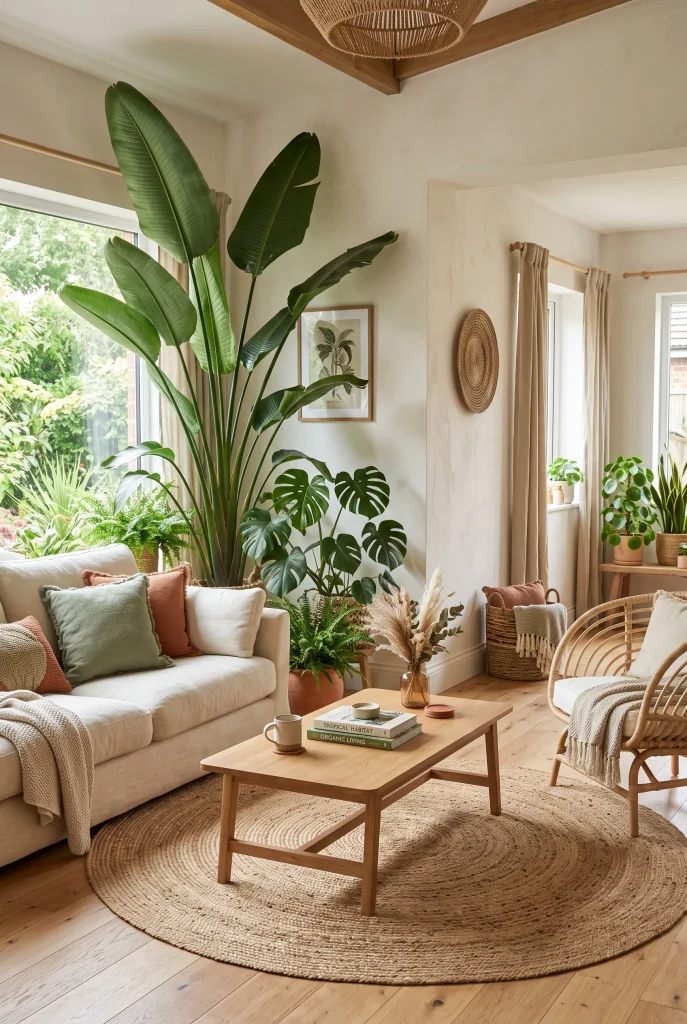
- Large plants create instant height and visual drama.
- Place them beside sofas, windows, or empty corners for balance.
- Choose containers that complement your existing furniture and flooring.
- One dramatic plant can transform a plain corner.
Few decorating choices create a stronger tropical statement than an oversized plant placed exactly where the room needs height and movement. Large monstera, bird of paradise, banana plants, or palms can fill an empty corner while bringing natural shapes into an otherwise structured space. Their broad leaves create a beautiful contrast against neutral walls and simple furniture. Place taller plants near windows or beside sofas where they can frame the seating area without blocking pathways. One large, healthy plant often has more impact than several small ones scattered randomly around the room.
Oversized greenery works best when the surrounding layout gives it enough breathing room. Use a substantial woven basket or textured ceramic planter to make the plant feel connected to the rest of the decor. If the room has low furniture, a tall plant can add much-needed vertical balance. Keep the area underneath and around the container relatively clear so the corner does not become cluttered. Natural daylight will also make the foliage look richer and more dimensional. The finished space feels fresh, spacious, and dramatically greener while still remaining comfortable for everyday living.
9. Woven Pendant Light
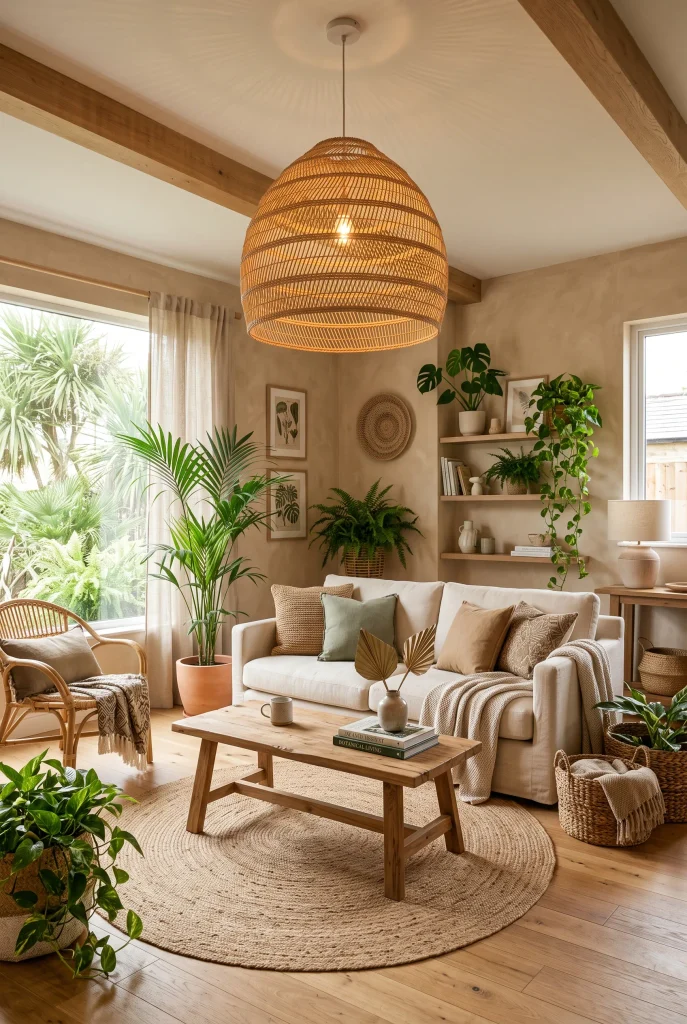
- A woven pendant adds texture above the main seating area.
- Natural fibers soften modern furniture and plain ceilings.
- Warm bulbs create a cozy evening atmosphere.
- Choose a scale that feels proportional to the room.
Draw attention upward with a woven pendant light that adds texture while reinforcing the room’s natural tropical character. Rattan, bamboo, cane, and other woven materials create interesting patterns as light passes through them, giving the ceiling a subtle decorative role. A generously sized pendant works especially well above a central coffee table or seating arrangement. Keep the shape simple if the room already contains bold plants or patterned fabrics. The combination of warm natural material and soft illumination creates a relaxed atmosphere that feels inspired by a beautiful tropical resort without becoming overly formal.
Lighting can completely change how natural materials and greenery look after sunset, so the bulb choice matters as much as the fixture. A warm-toned bulb creates a softer glow across woven surfaces, wood, and cream upholstery, making the room feel more intimate in the evening. During the day, the pendant becomes a sculptural focal point even when it is switched off. Make sure it hangs high enough to preserve clear sightlines and comfortable movement. This small adjustment can give the entire space a more finished appearance while keeping the tropical styling practical and welcoming.
10. Botanical Accent Wall
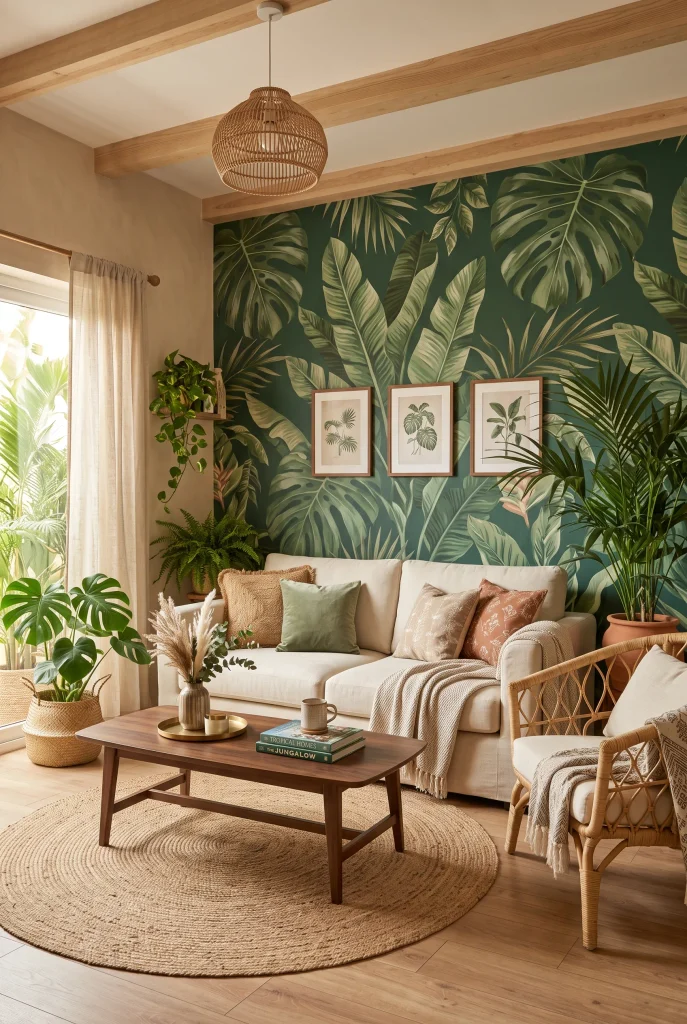
- A botanical wall creates instant visual depth behind the seating area.
- Large-scale leaves make the room feel more immersive.
- Keep furniture neutral so the wall remains the focal point.
- Matte finishes can make bold patterns feel softer and more sophisticated.
Turn one plain wall into a lush focal point with botanical wallpaper or a rich leafy paint treatment. Large-scale tropical leaves can make the room feel surrounded by greenery, even when floor space is limited. This works particularly well behind a sofa because the wall naturally becomes the visual anchor of the seating arrangement. Choose deep green, muted olive, or soft sage depending on how dramatic you want the result. Larger leaf patterns often look more sophisticated than tiny repeating prints because they create a calmer, more spacious visual rhythm.
A botanical accent wall can also help define the personality of an otherwise neutral living room. Keep the main furniture simple with cream, beige, tan, or natural wood finishes so the wall has room to stand out. Add just a few coordinating green accessories rather than matching every detail. This prevents the room from feeling overly themed. If you are decorating a rental, removable wallpaper can provide a similar effect without a permanent commitment. The finished space feels richer, more immersive, and naturally connected to the lush outdoor world that inspires tropical interiors.
11. Linen Upholstery
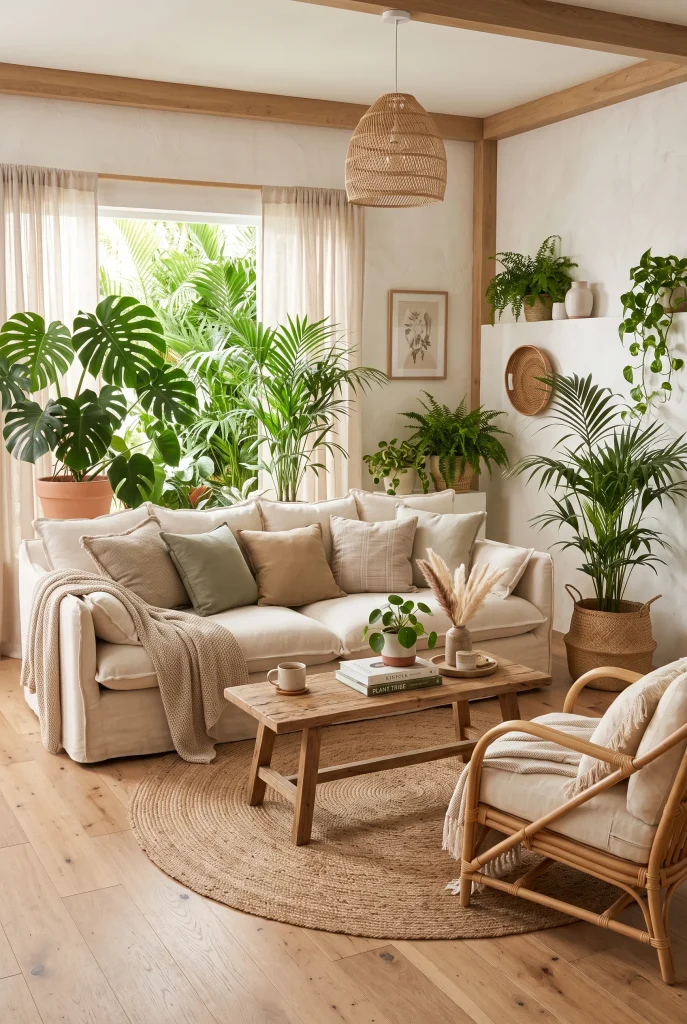
- Linen brings softness that balances hard natural materials.
- Cream and sand tones keep the room bright and relaxed.
- Relaxed upholstery creates an effortless resort-like appearance.
- Washable or removable covers make everyday maintenance easier.
Soft linen upholstery can make tropical decor feel instantly more comfortable and refined. A relaxed cream, ivory, or sandy-beige sofa provides a calm foundation for bold greenery, woven furniture, and natural wood accents. The slightly textured surface of linen also adds visual interest without introducing another strong pattern. Choose loose cushions and gently relaxed shapes for a casual appearance rather than stiff, formal upholstery. Neutral linen is especially versatile because you can change cushions and throws seasonally without needing to replace the main furniture piece.
Linen also helps balance the stronger textures commonly found in tropical rooms. Pair a soft upholstered sofa with rattan chairs, woven baskets, wooden tables, and leafy plants to create contrast without visual clutter. If your living room receives lots of sunlight, consider fabrics designed for regular use and choose removable covers where possible. Keep the palette within warm neutrals, muted greens, and small touches of earthy color. This creates a comfortable setting that looks beautiful in photographs while still feeling practical enough for lounging, reading, entertaining, and everyday family life.
12. Earthy Color Palette
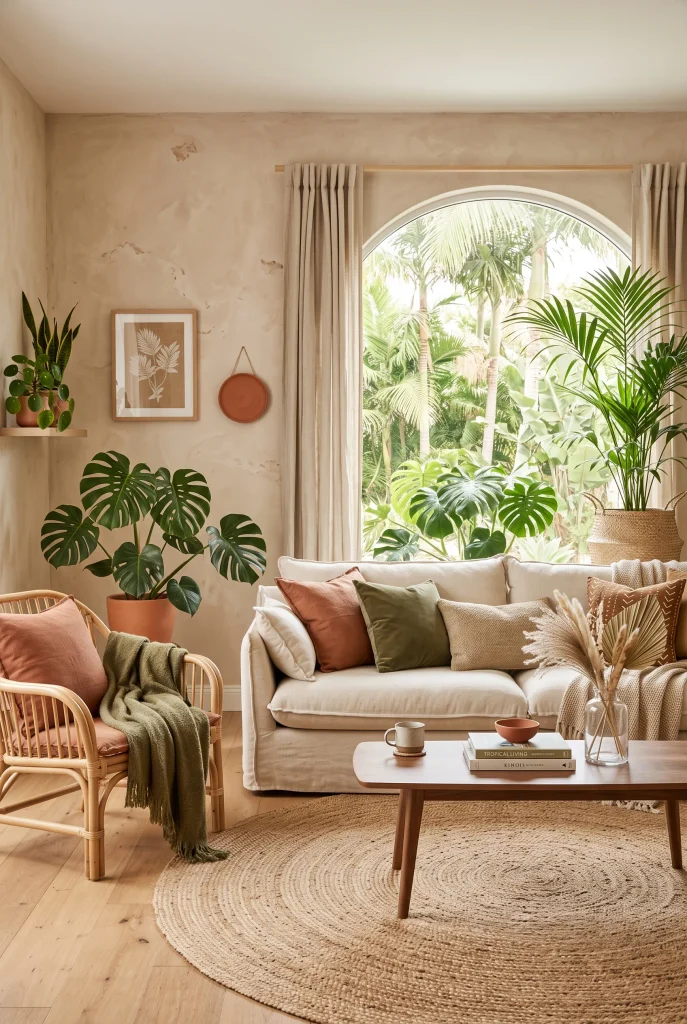
- Earthy colors make tropical greenery feel more natural.
- Warm neutrals provide a calm background for bold foliage.
- Terracotta adds small amounts of grounded visual warmth.
- Repeating two or three key shades keeps the room cohesive.
Create a calm tropical atmosphere by building the room around earthy shades such as warm cream, sand, olive, terracotta, and natural brown. These colors work beautifully with lush foliage because they echo the tones found in outdoor landscapes. Start with a neutral foundation on the walls and larger furniture, then introduce deeper greens through plants and smaller accents. A terracotta cushion or ceramic vase can add warmth without overpowering the palette. This layered approach makes the room feel intentional while allowing natural textures and greenery to remain the main visual attraction.
An earthy palette is also a practical choice when you want a tropical look that will not feel dated quickly. Instead of relying on bright colors or heavily themed accessories, let subtle variations create the interest. Combine warm beige walls with cream upholstery, walnut furniture, olive cushions, and natural woven materials. This combination works especially well in rooms where people want a peaceful retreat rather than a bold vacation-themed interior. The result feels warm and grounded during the day, while soft evening lighting brings out the richer browns, greens, and natural textures beautifully.
13. Jungle Gallery Wall
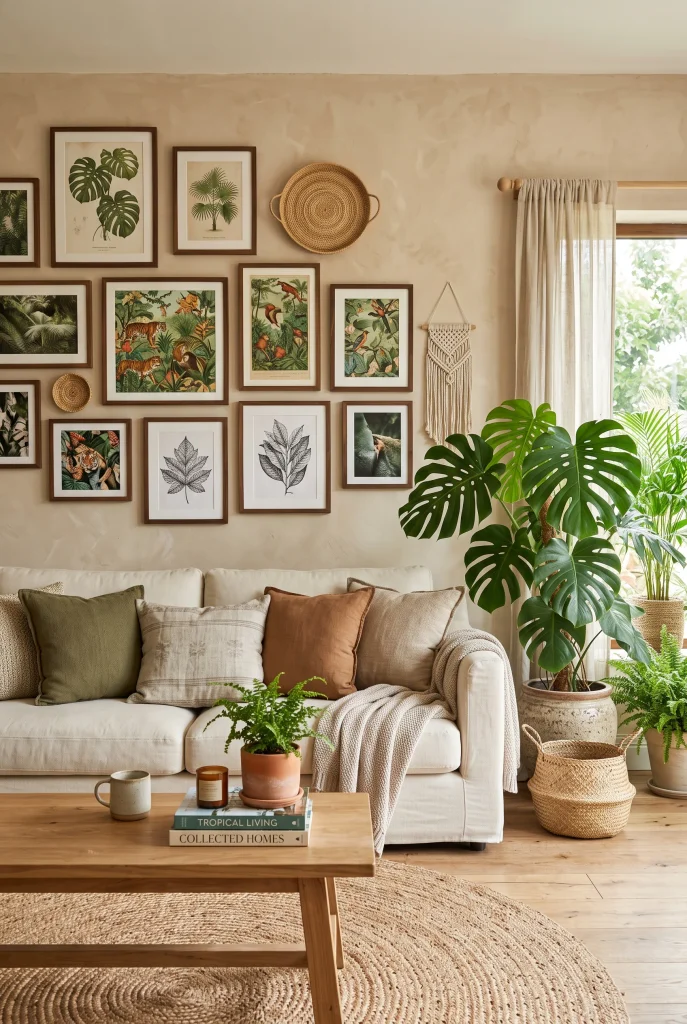
- Mix botanical artwork with natural textures for a collected look.
- Keep frame colors consistent to prevent visual clutter.
- Vary artwork sizes while maintaining balanced spacing.
- Add greenery nearby to connect the wall with the rest of the room.
Create a jungle-inspired gallery wall to give your living room personality without relying entirely on plants or patterned wallpaper. Combine palm illustrations, botanical sketches, tropical leaf photography, and simple nature-inspired artwork in coordinated frames. Walnut, natural wood, or woven frames work particularly well with earthy furniture and greenery. Arrange larger pieces first, then fill smaller gaps while keeping comfortable spacing between frames. Using one consistent frame finish can make a mixed collection feel much more intentional, even when the artwork itself varies in style, color, and scale.
A gallery wall also gives you plenty of flexibility when refreshing the room later. Start with a neutral background so the artwork remains visible, then repeat a few shades from the prints through cushions, ceramics, or nearby plants. Avoid filling every wall with artwork; giving one display enough space makes it feel like a deliberate feature. For a smaller living room, a vertical arrangement can draw the eye upward without taking valuable floor space. The finished effect feels personal and layered, adding tropical character while keeping the overall room comfortable, balanced, and visually easy to explore.
14. Indoor Palm Corner
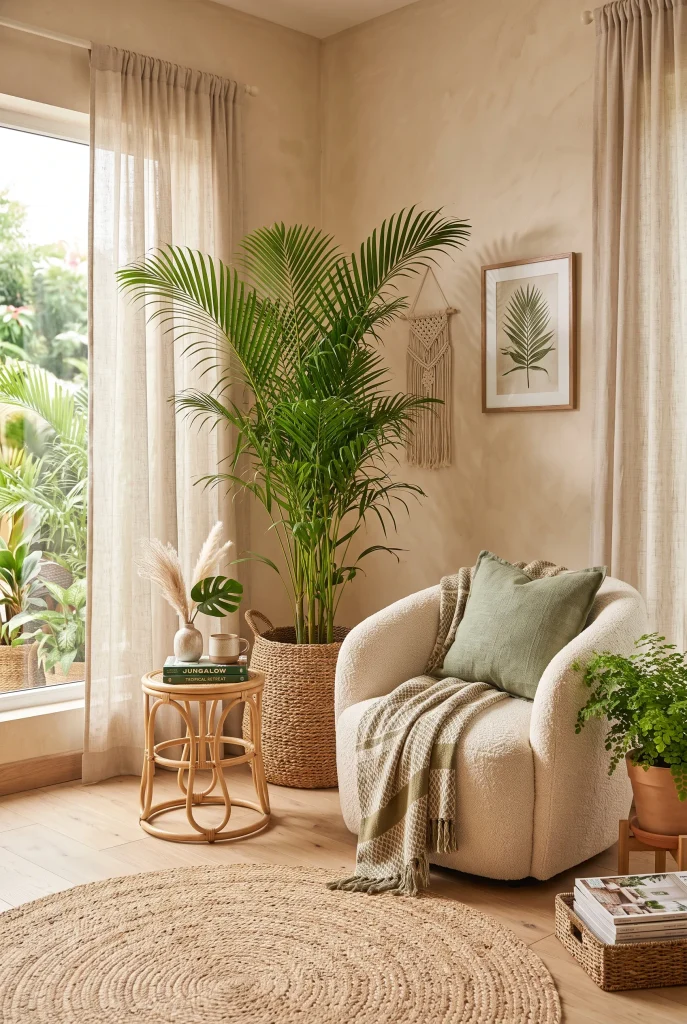
- A tall palm fills an empty corner with natural height.
- Position it near a bright window for a fresh, lively appearance.
- A textured planter adds another layer of natural material.
- Keep nearby furniture minimal so the plant remains the focal point.
Give an overlooked corner a fresh purpose with a tall indoor palm that creates an immediate tropical focal point. Palms have graceful, spreading leaves that add movement and vertical height without requiring additional wall decor. Place one beside a sofa, lounge chair, or bright window where its silhouette can frame the seating area beautifully. A woven basket or textured ceramic planter keeps the base visually interesting. Empty corners often need height more than decoration, and a tall plant can solve that problem while making the entire room feel softer and more alive.
A palm corner can become even more useful when you turn it into a small relaxation zone. Add a comfortable accent chair, compact rattan table, and soft cushion to create a simple reading or coffee spot. Keep the colors restrained with cream, beige, warm brown, and muted green so the foliage remains the star. Make sure the plant does not block walking paths or important natural light. With thoughtful placement, one corner can add height, texture, and function at once, making the room feel more spacious and thoughtfully arranged without requiring a major furniture makeover.
15. Terracotta Accents
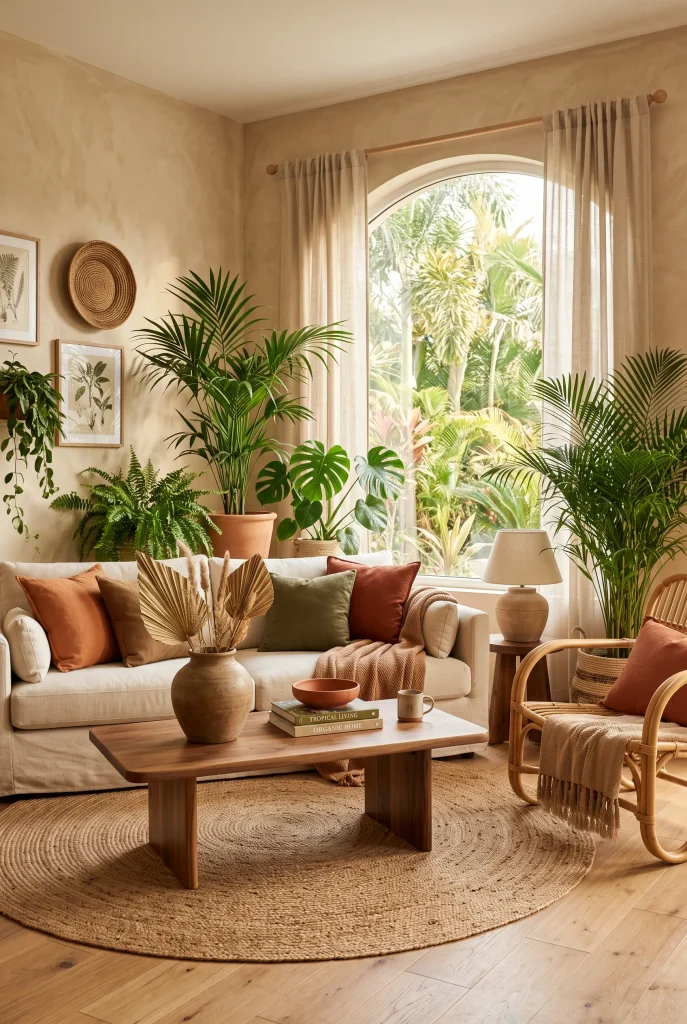
- Terracotta adds warmth to neutral tropical interiors.
- Use small accents instead of overwhelming the room with orange.
- Ceramic pieces introduce handmade texture and visual character.
- Repeat the tone subtly through cushions, pottery, or artwork.
Add a touch of terracotta to warm up a tropical living room without making the palette feel too colorful. This earthy orange-brown shade pairs naturally with cream, olive, walnut, rattan, and other organic materials. Introduce it through cushions, ceramic vases, planters, small stools, or textured throws rather than making it the dominant color. The result feels grounded and welcoming while still allowing lush greenery to take center stage. Terracotta works particularly well when used in several small touches instead of one oversized statement piece.
Terracotta accents can also help connect different natural materials throughout the room. A ceramic vase can echo the warmth of a wooden table, while a cushion can repeat the same tone against neutral linen upholstery. Keep the rest of the accessories simple and let the color appear naturally around the space. If your room receives warm afternoon sunlight, terracotta becomes especially inviting as the light brings out its deeper undertones. This small color adjustment can make a neutral interior feel richer, more layered, and distinctly tropical while remaining easy to update later.
16. Canopy Ceiling
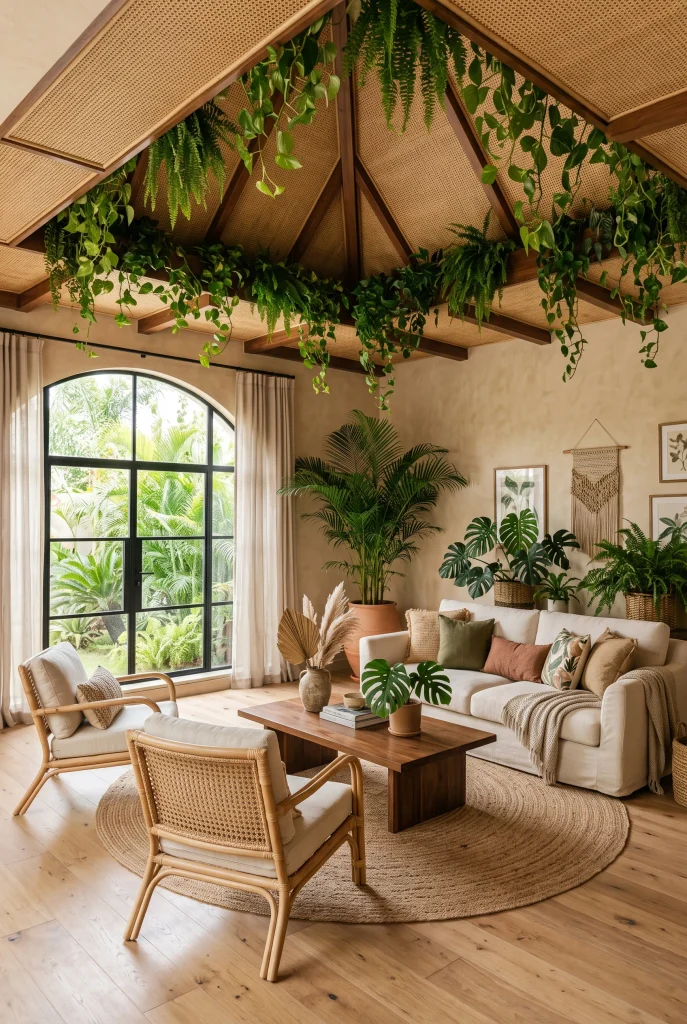
- A canopy effect draws attention upward and adds architectural drama.
- Trailing greenery softens the transition between ceiling and walls.
- Natural woven materials reinforce the tropical character.
- Keep the furniture simple so the ceiling remains the main feature.
Create a dramatic canopy effect overhead to make the room feel immersed in a lush tropical setting. Natural woven panels, light timber slats, or carefully positioned trailing plants can give the ceiling a layered appearance without making the space feel visually heavy. This idea works particularly well in rooms with generous ceiling height, where the upper portion might otherwise feel empty. Keep the lower furnishings simple and comfortable so attention naturally moves upward. A cream sofa, rattan seating, and warm wood table provide an understated foundation for the more distinctive ceiling treatment.
A canopy-style ceiling does not have to involve a complete renovation to create the right atmosphere. You can introduce the effect through lightweight woven shades, hanging planters, or strategically placed trailing greenery around the room’s perimeter. Make sure hanging elements remain safely positioned and do not interfere with lighting or movement. Using repetition rather than covering every inch creates a more believable result. When combined with soft daylight and earthy furnishings, the overhead texture gives the room a layered, resort-like quality while maintaining an open and comfortable everyday layout.
17. Leafy Window View
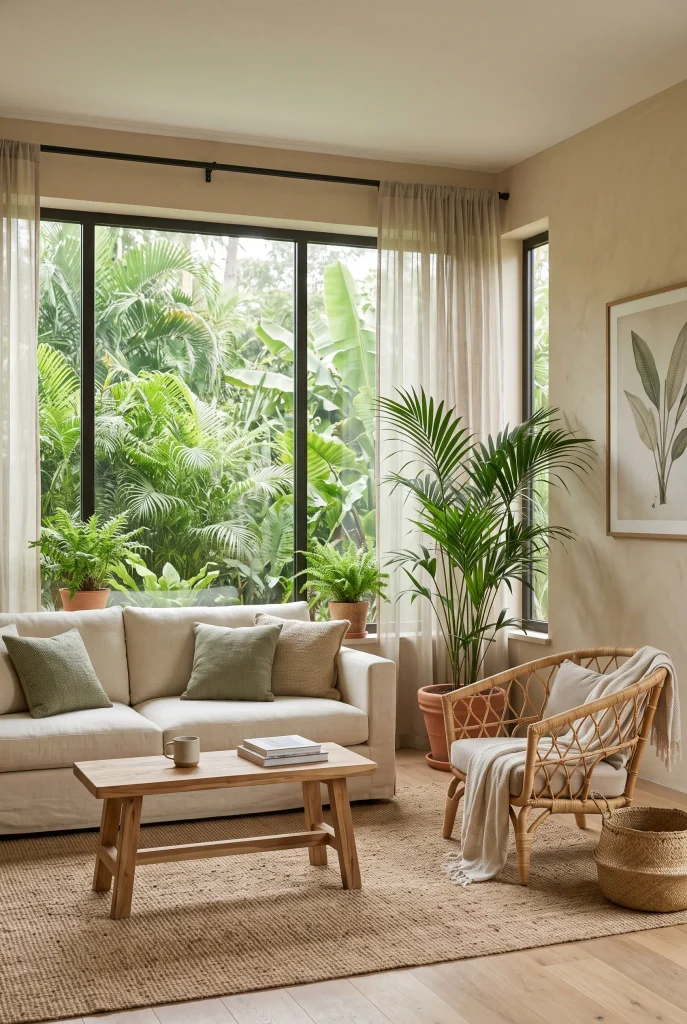
- Arrange seating to make the outdoor greenery part of the decor.
- Sheer curtains preserve natural light while softening the windows.
- Indoor plants can visually connect the room with the landscape.
- Keep window areas uncluttered for a stronger view.
Make the view outside part of the decorating plan by arranging the living room around large windows filled with greenery. Dense trees, palms, or garden foliage can become a natural backdrop that gives the space an authentic tropical feeling without adding more decorative objects. Position the sofa or accent chairs toward the windows while keeping pathways open. Sheer linen curtains can soften strong sunlight while preserving the view. Rooms with beautiful outdoor scenery often look best when the interior stays restrained, allowing the landscape to provide much of the color and visual interest.
If your windows overlook a less tropical setting, you can still create a similar connection with strategically placed indoor plants. Group palms, monstera, and other leafy varieties near the glass so their silhouettes blend visually with the outdoor view. Choose light furniture and natural materials to keep the room bright and relaxed. Avoid placing bulky cabinets or excessive accessories directly in front of windows. This preserves both daylight and sightlines. The result is a living space that feels more open and connected to nature, with greenery becoming a natural extension of the interior design.
18. Woven Area Rug
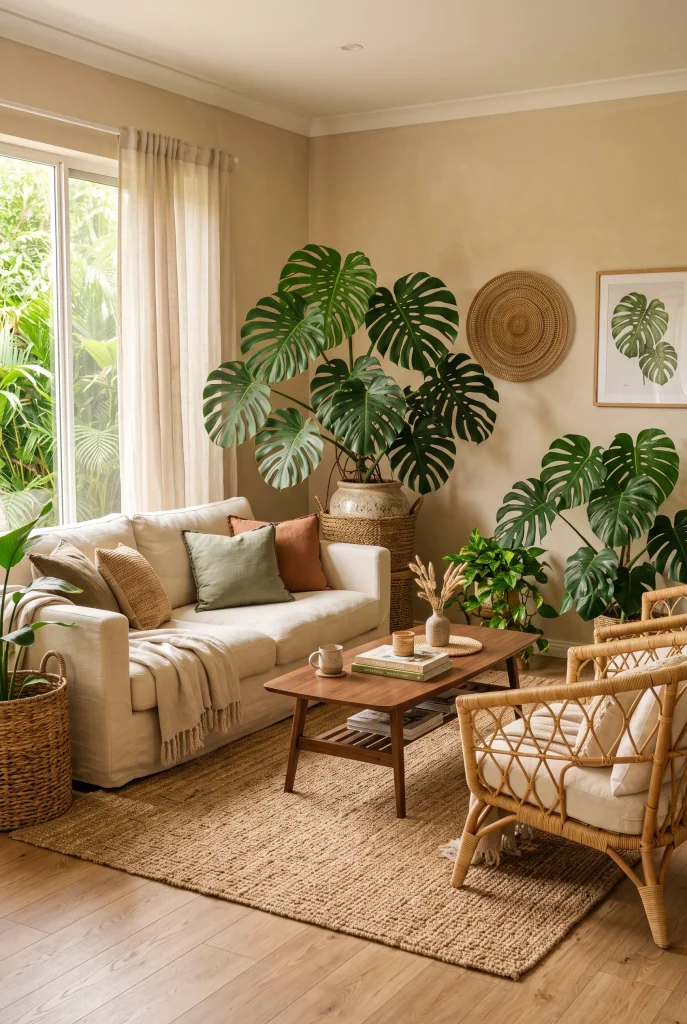
- A woven rug adds warmth and texture underfoot.
- Natural fibers complement rattan, bamboo, and wood furniture.
- Large rugs help visually define the seating arrangement.
- Neutral tones keep the floor from competing with greenery.
Ground the entire seating area with a woven rug that adds natural texture while visually connecting the furniture. Jute, sisal, or other neutral woven fibers work beautifully with rattan, bamboo, linen, and warm wood. Choose a rug large enough for at least the front legs of the main seating pieces to rest on it, creating a more connected arrangement. The subtle texture also provides contrast against smooth flooring and upholstery. A properly sized rug can make a room feel more finished almost immediately, even when the rest of the decor remains simple.
A woven rug is especially useful when a tropical living room contains several different natural materials. Its neutral tone acts as a bridge between wooden furniture, green plants, woven accessories, and soft textiles. If the room receives heavy foot traffic, look for a durable weave that is practical for everyday maintenance. Avoid overly complicated patterns if the space already has botanical prints or abundant foliage. A simple natural texture provides enough visual interest without creating competition. Combined with comfortable seating and warm lighting, it helps create a relaxed foundation that feels inviting from morning through evening.
19. Tropical Stone Decor
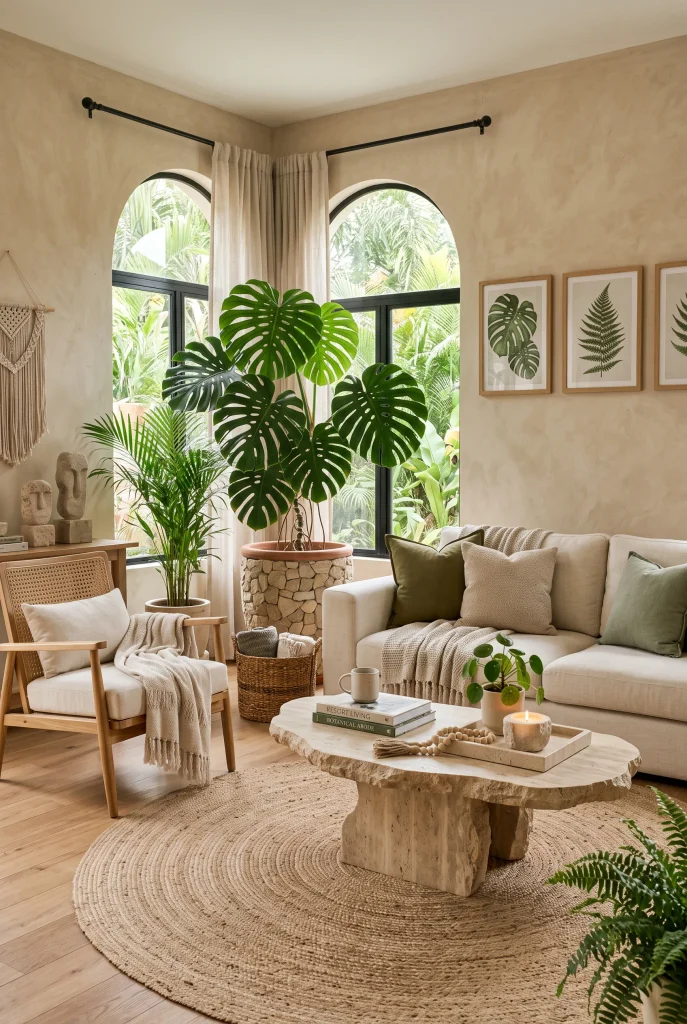
- Natural stone adds weight and contrast to lighter woven materials.
- Sculptural shapes create interest without relying on bright colors.
- Stone trays and bowls provide simple decorative upgrades.
- Combine smooth stone with rougher woven textures for balance.
Introduce natural stone for a grounded look that balances the lighter textures commonly used in tropical interiors. A stone coffee table, sculptural side table, travertine bowl, or simple stone tray can add visual weight without making the room feel dark or heavy. The earthy surface works beautifully beside rattan, linen, wood, and lush greenery. Choose warm beige, cream, taupe, or softly veined finishes to maintain a relaxed palette. One substantial stone element often adds more sophistication than several small decorative pieces competing for attention.
Stone accents can also make a tropical living room feel more refined while keeping its connection to nature. Pair a smooth stone table with a textured jute rug and woven seating to create an appealing contrast between polished and organic surfaces. Keep decorative objects simple, such as a ceramic vase, wooden bowl, or small leafy arrangement. This prevents the room from becoming visually crowded. If you are working with a smaller space, choose a compact stone tray or lamp base instead of large furniture. The result feels calm, earthy, and naturally luxurious without losing everyday comfort.
20. Breezy Sheer Curtains
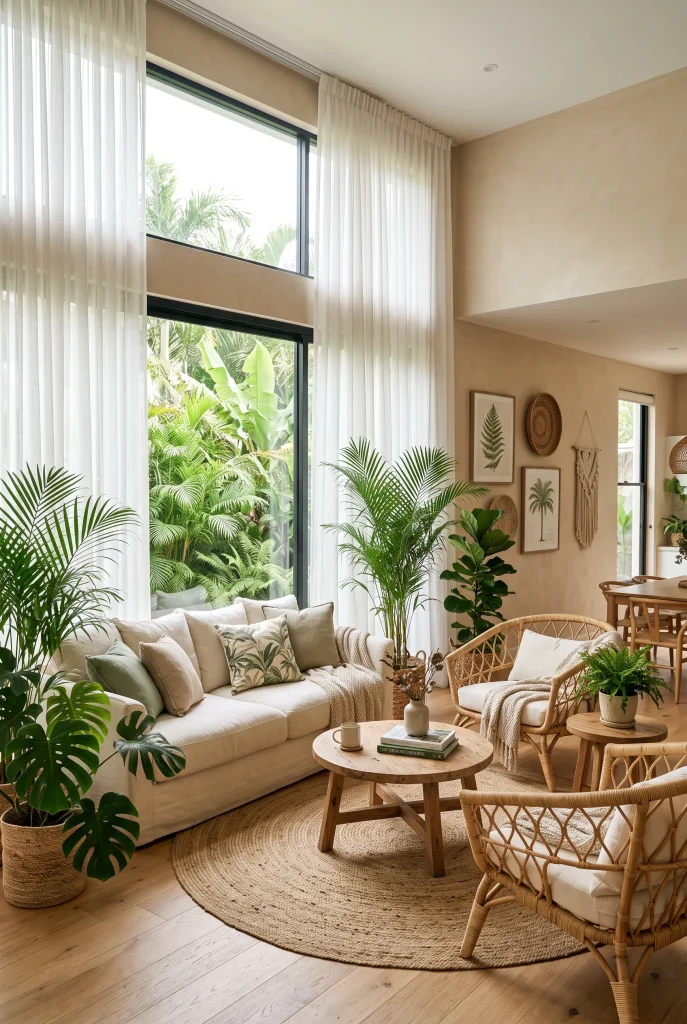
- Sheer curtains keep the room bright while adding softness.
- Floor-length panels visually stretch the walls upward.
- Lightweight fabrics suit warm, relaxed tropical interiors.
- Layer curtains with natural shades when stronger privacy is needed.
Create a lighter, breezier atmosphere with sheer curtains that gently filter daylight throughout the room. White, ivory, or soft cream linen panels work especially well with tropical greenery because they provide a clean background without creating harsh contrast. Hang them from ceiling height and let them fall close to the floor to emphasize vertical space. Their soft texture also balances harder materials such as wood, stone, and woven furniture. This simple window update can make an ordinary living room feel brighter, calmer, and more connected to the relaxed feeling of a tropical retreat.
Sheer curtains are particularly useful when a room needs more softness without losing natural light. During the day, filtered sunlight creates gentle shadows across plants, rugs, and furniture, adding subtle movement to the space. For privacy, consider layering sheers with woven shades or lightweight neutral drapes that can be closed when needed. Keep the window area relatively uncluttered so the fabric has room to move visually. This combination works beautifully in both large and compact rooms because it adds height, texture, and brightness without taking up valuable floor space.
21. Resort Style Seating
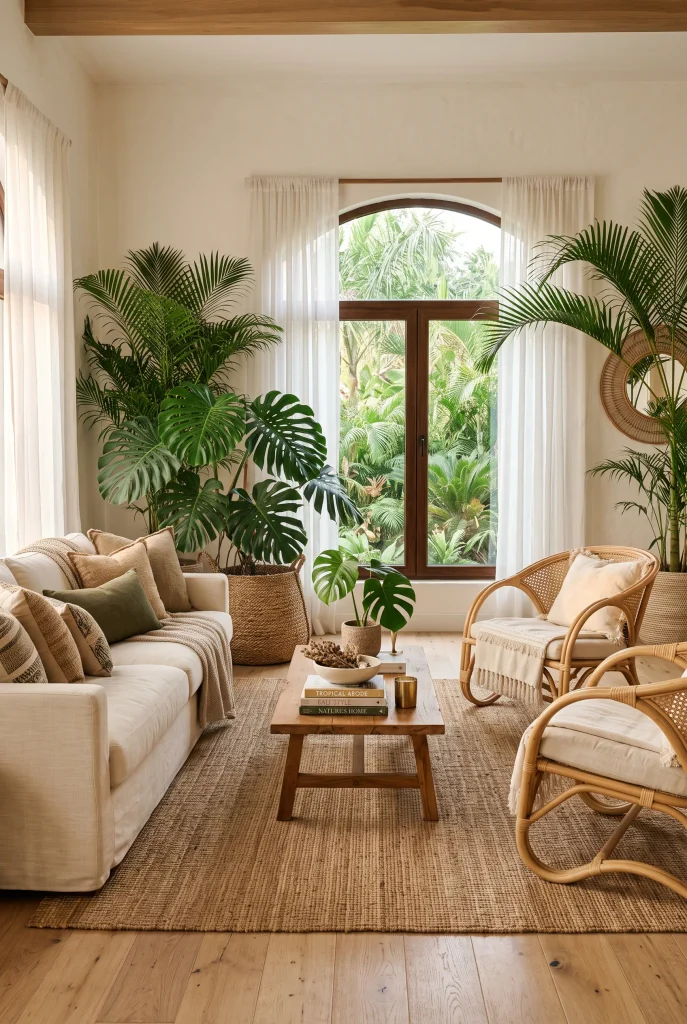
- Deep, comfortable seating makes the room feel instantly more inviting.
- Curved chairs soften the straight lines of tables and walls.
- Low furniture creates a relaxed resort-inspired atmosphere.
- Keep generous space between pieces for an airy arrangement.
Create a relaxed vacation feeling with comfortable seating arranged like a small private resort lounge. Choose a deep cream sofa with generous cushions, then add curved rattan or wooden chairs around a low natural-wood coffee table. The goal is comfort first, with enough space between each piece for easy conversation and movement. Neutral upholstery lets tropical plants and woven materials provide the visual interest. This arrangement works especially well when the seating faces inward rather than toward a television, because it makes the room feel more social and intentionally designed.
The right seating layout can transform how the room feels even without replacing every piece of furniture. Keep the main sofa positioned where it receives pleasant natural light, then angle accent chairs slightly toward it to create a welcoming conversation zone. Add soft linen cushions and one lightweight throw for extra comfort without excessive layering. A large woven rug can visually unite the arrangement. If your room is small, choose fewer pieces with slimmer profiles instead of crowding the floor. The finished space feels open, comfortable, and effortlessly tropical while remaining practical for everyday relaxation and entertaining.
22. Carved Wood Details
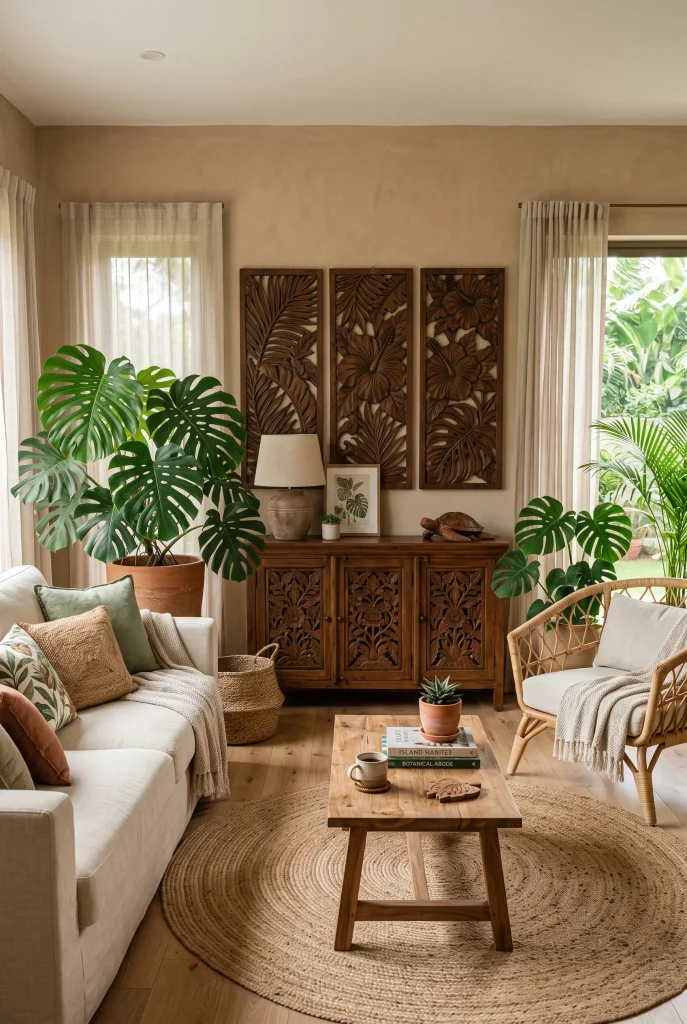
- Carved wood introduces craftsmanship and organic character.
- Use one detailed piece to avoid making the room feel busy.
- Warm wood tones complement both greenery and neutral upholstery.
- Handcrafted details make simple furniture feel more distinctive.
Add character with carved wood details that bring craftsmanship and natural texture into the room. A carved console, decorative screen, side table, or subtly patterned cabinet can create visual interest without relying on bright colors. Choose warm walnut, teak, or medium-brown finishes that complement tropical greenery and neutral upholstery. The carved surface catches light differently throughout the day, giving the furniture more depth than a completely smooth finish. One detailed wooden piece often creates enough personality to make a neutral room feel thoughtfully styled without requiring lots of additional decoration.
The key is to let carved wood become a supporting feature rather than competing with the plants and textiles. Place a detailed console against a simple wall, then style it with a small ceramic vessel, woven basket, or single leafy branch. Keep nearby furniture relatively clean-lined so the craftsmanship remains noticeable. In smaller rooms, a carved stool or compact side table can provide the same effect without taking up much space. Combined with cream linen, natural fibers, and leafy plants, these details create a warm, collected atmosphere that feels tropical while still looking sophisticated and comfortable.
23. Monochrome Green Scheme
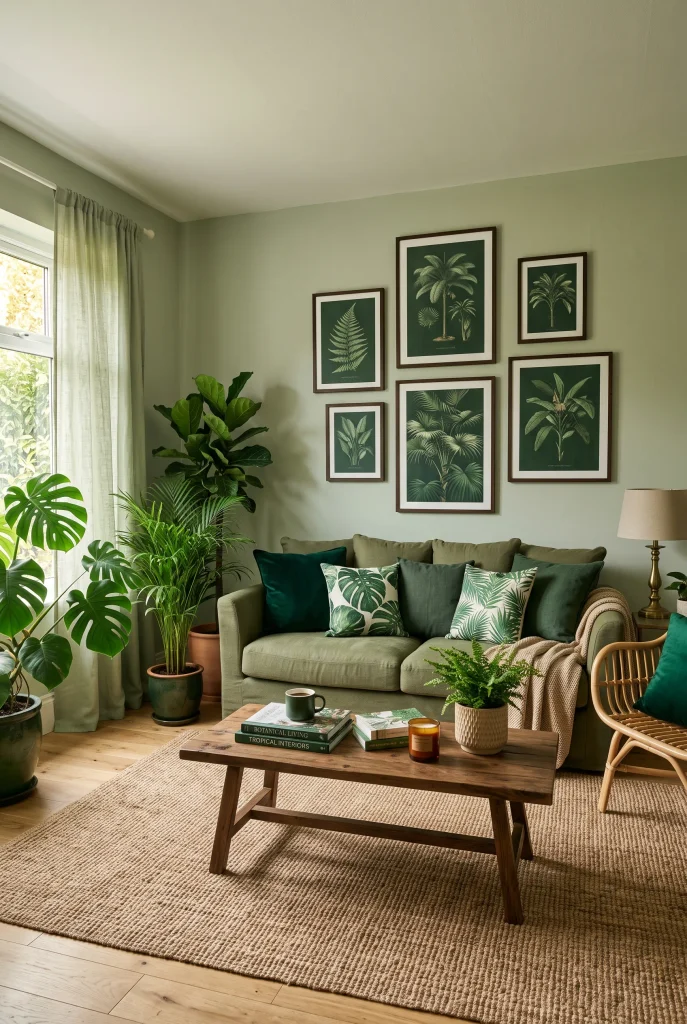
- Multiple green shades create depth without introducing many colors.
- Light sage works well for walls and larger surfaces.
- Darker olive or emerald tones add contrast through accessories.
- Natural wood prevents an all-green room from feeling flat.
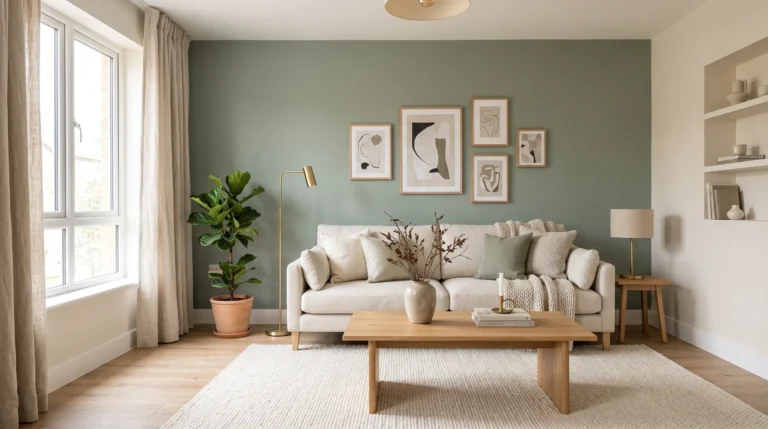
Create a richer tropical atmosphere by layering several shades of green throughout the living room. Instead of using one identical color everywhere, combine soft sage, olive, moss, and deeper forest tones across walls, upholstery, cushions, artwork, and plants. This monochrome approach creates a cohesive look while still providing plenty of visual depth. Keep natural wood and warm neutrals as supporting tones so the greenery does not become overwhelming. The varied leaf shapes from real plants add another layer of green that makes the palette feel organic rather than overly coordinated.
A green-on-green scheme can make even a simple room feel immersive when the shades are carefully balanced. Use the lightest tone on walls or large surfaces, medium greens on upholstery or curtains, and deeper shades through cushions and decorative accents. Natural wood, woven rugs, and cream textiles provide visual breaks that keep the room comfortable. The trick is varying texture as much as color: smooth painted walls, soft linen, glossy leaves, and rough woven fibers prevent the monochrome palette from looking flat. The finished room feels lush, calm, and confidently tropical.
24. Open-Air Connection
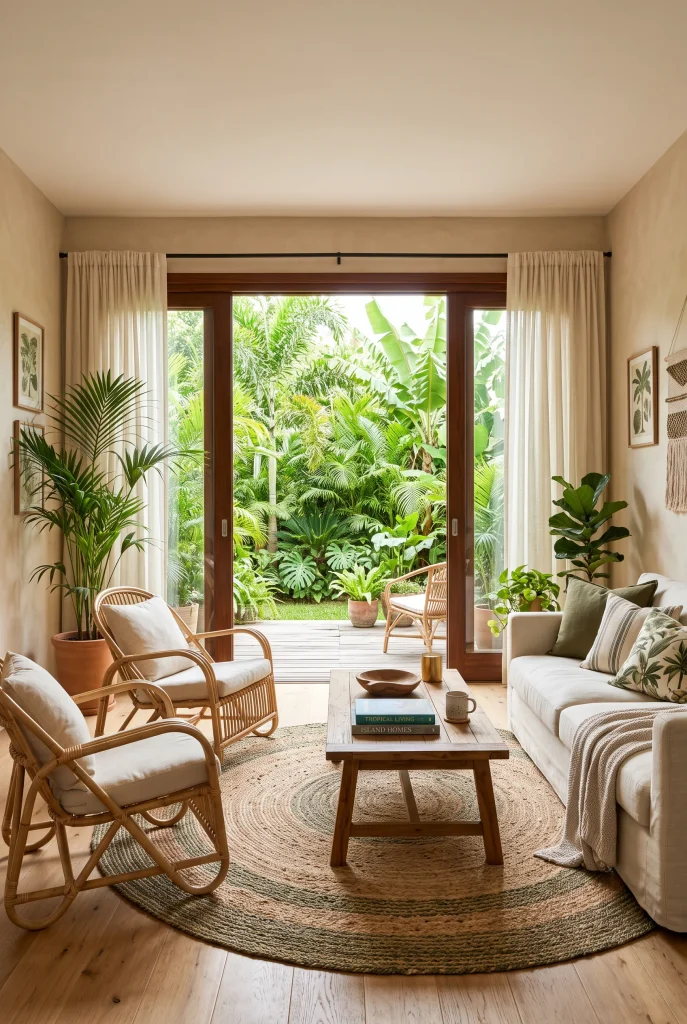
- Wide openings visually connect the living room with nature.
- Similar flooring tones can strengthen the indoor-outdoor transition.
- Keep furniture low and unobtrusive near large openings.
- Plants inside can echo the greenery outside for a seamless effect.
Blur the boundary between indoors and outdoors by arranging the living room around wide glass doors or large open windows. When the interior faces a lush garden, patio, or balcony, the outdoor greenery becomes an extension of the room’s tropical styling. Keep furniture relatively low and avoid blocking the openings so the connection remains visually strong. Natural wood, rattan, linen, and woven materials help reinforce the outdoor influence. This approach works especially well in homes with abundant daylight because the room can feel brighter, larger, and more naturally connected to its surroundings.
Even without a large garden, you can recreate the feeling of an open-air retreat through visual continuity. Use similar colors and materials inside and outside, such as warm wood, neutral textiles, woven furniture, and abundant greenery. Position a few indoor plants close to the openings so their foliage visually overlaps with the landscape beyond. Sheer curtains can provide softness without completely hiding the view. This approach can make compact living areas feel noticeably more spacious because the eye continues beyond the room. The result is an airy, relaxed setting that feels closely connected to nature.
25. Jungle-Inspired Lighting
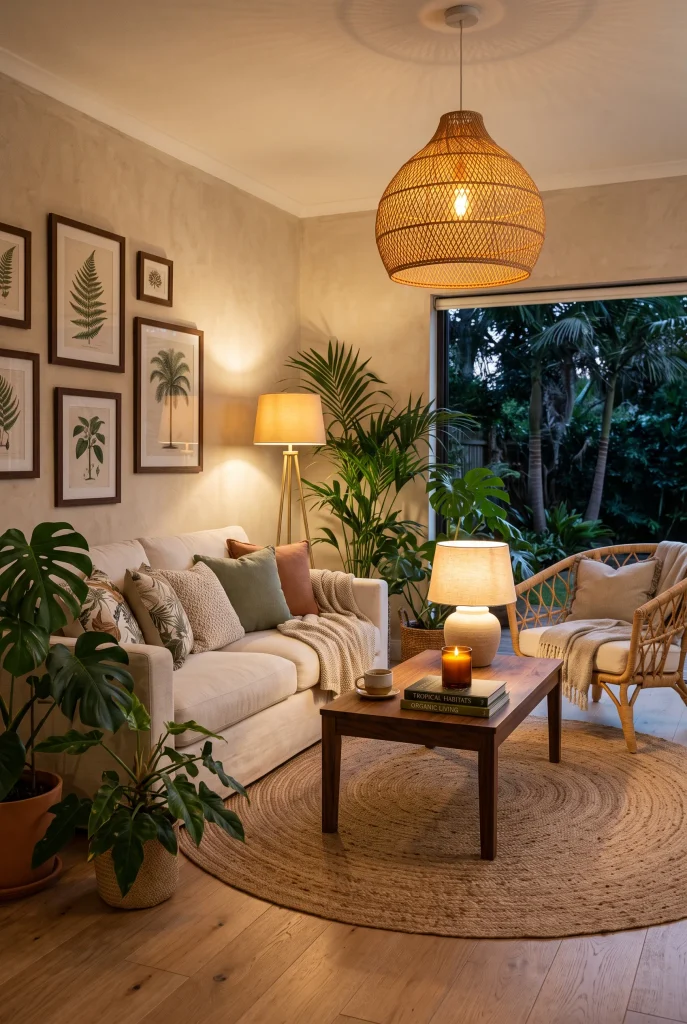
- Layered lighting makes greenery and natural textures stand out after sunset.
- Woven fixtures add tropical character without needing bold colors.
- Floor lamps can create cozy pools of light around seating.
- Warm bulbs help the room feel softer and more inviting.
Good lighting can make tropical decor feel dramatically richer once the sun goes down. Instead of depending on one ceiling fixture, combine a woven pendant with a floor lamp, table lamp, or subtle wall lighting. This layered approach creates different levels of illumination, allowing leafy plants, textured walls, and natural materials to cast gentle shadows. Choose warm-toned bulbs for a comfortable evening atmosphere. A woven shade can become a decorative focal point during the day, while its filtered glow adds warmth at night. The result feels relaxed, intimate, and much closer to a resort-style retreat.
Think about lighting according to how each part of the room is actually used. Place a floor lamp beside a reading chair, a table lamp near the sofa, and overhead lighting toward the center of the seating area. This gives you flexibility instead of forcing the whole room to be equally bright. Avoid overly cool bulbs because they can make cream fabrics and natural wood look harsh. Warm layered lighting also makes greenery appear deeper and more dimensional in the evening. With a few carefully positioned fixtures, the room can feel cozy without becoming visually cluttered.
Conclusion
Creating a tropical jungle living room is all about bringing together greenery, natural materials, comfortable furniture, and earthy colors in a way that feels effortless. You can start small with a woven rug, leafy plant, rattan chair, or botanical artwork, then build the look gradually as your space evolves. The goal is not to make everything perfectly coordinated, but to create a room that feels fresh, warm, relaxed, and connected to nature. Small changes like these can completely transform a space. Save this article on Pinterest, try your favorite ideas, and share it with someone who loves tropical-inspired interiors.