21 TV Wall Decor Ideas That Feel Modern and Expensive
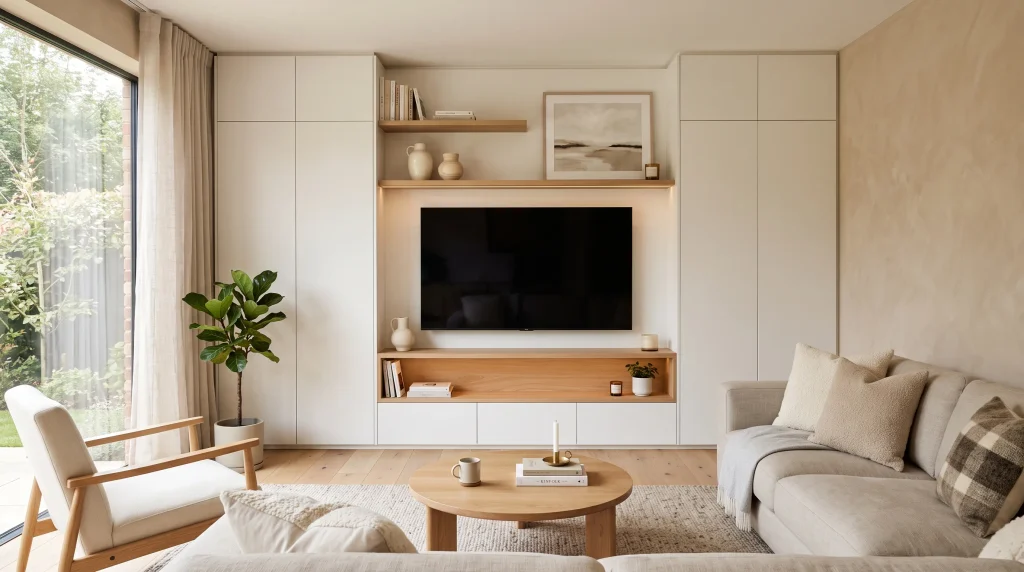
A blank TV wall can make even a beautiful living room feel unfinished. The right TV wall decor ideas can turn that empty space into a polished focal point that feels warm, modern, and intentional. From built-in cabinetry and natural wood to stone, plaster, shelving, and clever lighting, small design choices can completely change how your television fits into the room. Whether you are decorating a compact apartment or refreshing a spacious family room, these ideas offer practical inspiration for different styles and budgets. Often, the biggest transformations come from simple details such as texture, proportion, hidden storage, and warm lighting.
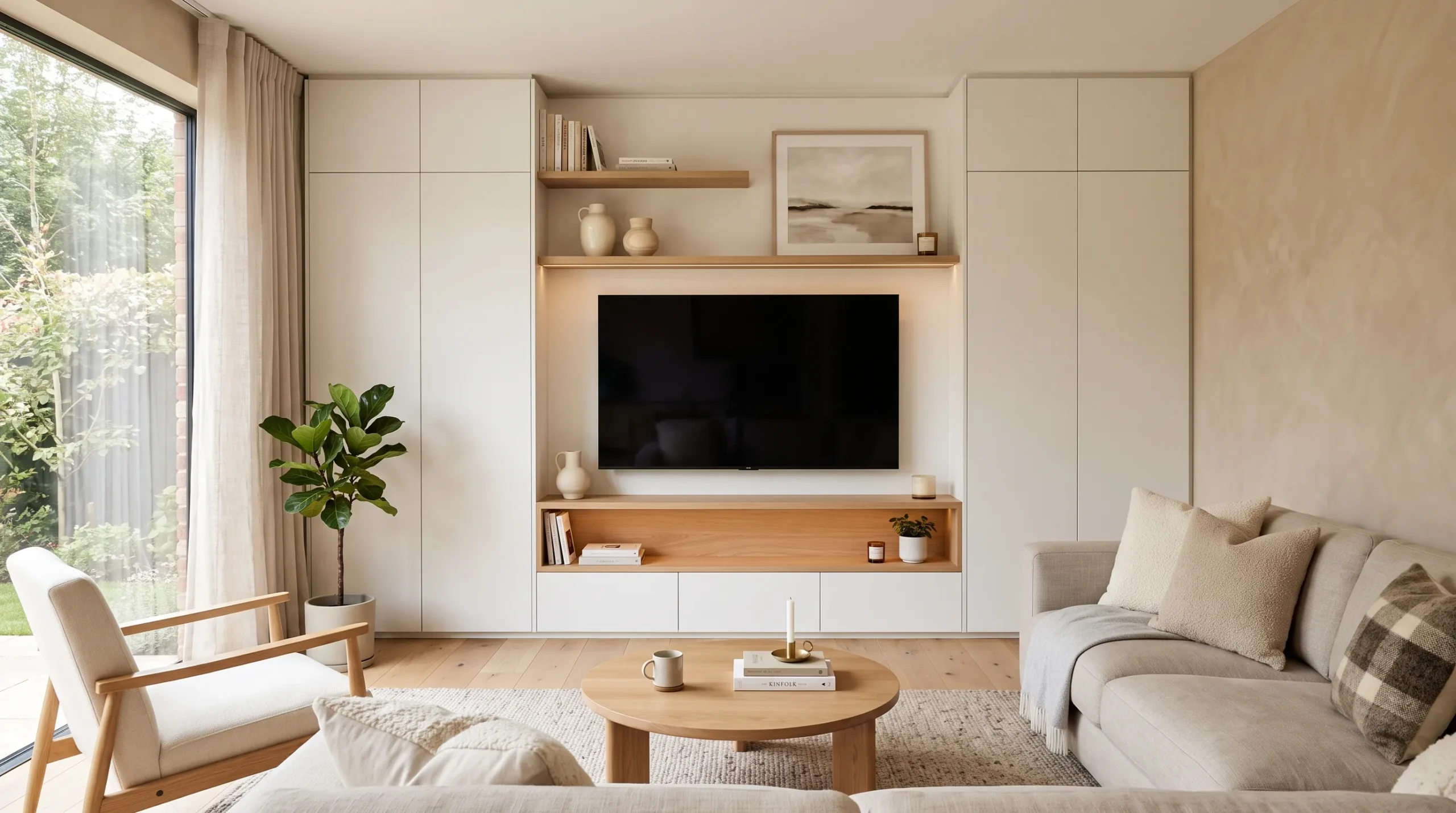
1. Built-In Media Wall
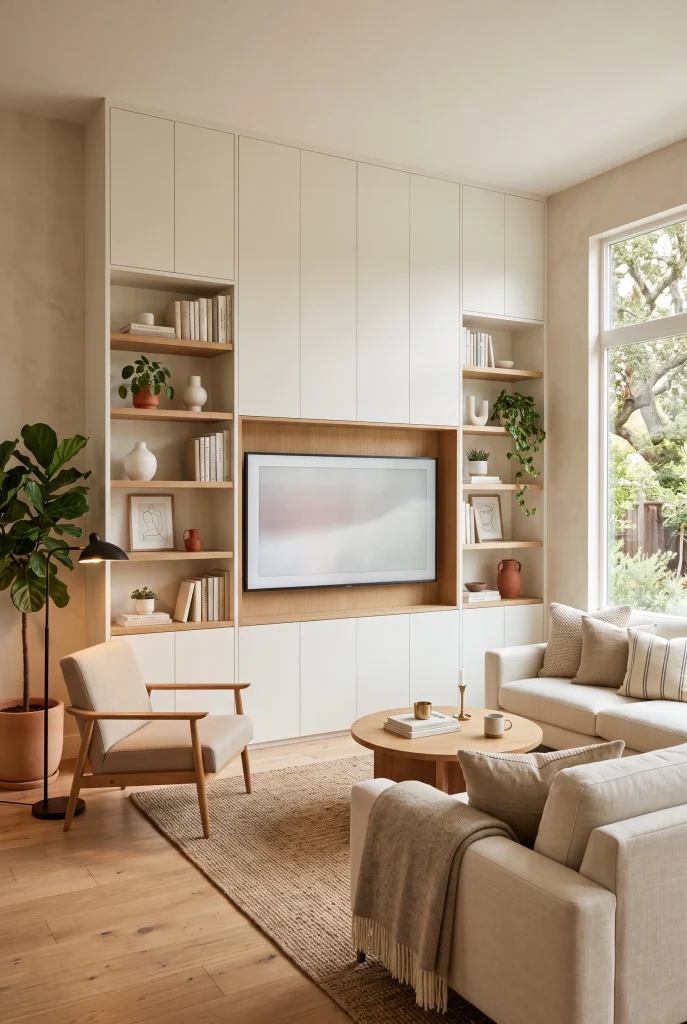
- Built-in cabinetry makes the TV feel like part of the architecture.
- Closed storage hides remotes, consoles, and everyday clutter.
- Warm oak details keep the wall from feeling too stark.
- Symmetrical shelving creates an instantly polished look.
A built-in media wall can make a television feel intentional instead of simply mounted on an empty wall. The cabinetry frames the screen while creating useful storage for books, baskets, electronics, and decorative pieces. Choose warm white, soft beige, or natural oak finishes to keep the overall look timeless. Built-ins work especially well in open living rooms because they visually anchor the seating area without overwhelming it. Keep the shelves lightly styled rather than crowded, and leave enough breathing room around the television for a clean, expensive-looking finish.
For a polished result, balance practical storage with a few carefully chosen decorative accents. Closed cabinets below the television can hide gaming systems, cables, and miscellaneous items, while open shelves add personality through ceramics, framed artwork, or small plants. A recessed television can also create a smoother appearance than a screen surrounded by bulky furniture. If you are planning TV wall decor ideas as part of a renovation, consider running electrical outlets and cable connections inside the wall before finishing the cabinetry. That small planning step can eliminate visible wires and make the entire installation feel professionally designed.
2. Fluted Wood Paneling
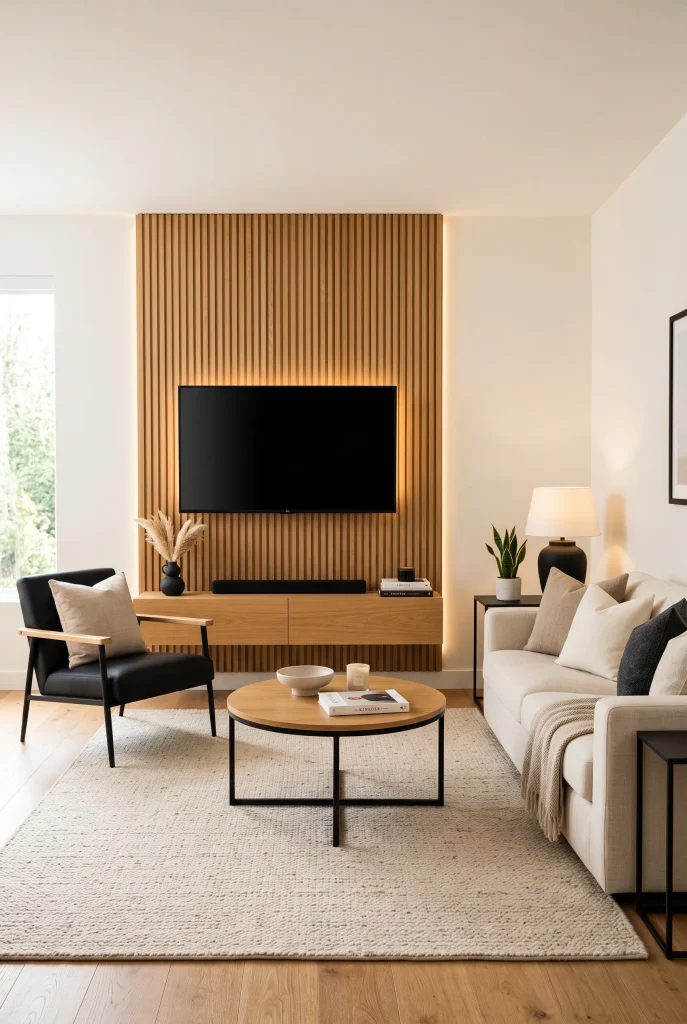
- Vertical fluting adds texture without requiring busy artwork.
- Wood tones introduce warmth around a large black screen.
- The vertical lines can make the wall feel taller.
- Pairing oak with cream furniture keeps the room balanced.
Fluted wood paneling instantly gives a television wall more texture and architectural interest. The repeated vertical lines create a refined backdrop that makes the screen feel integrated into the room rather than visually isolated. Natural oak, walnut, or medium wood tones work particularly well against cream upholstery and neutral flooring. This approach looks strongest when the surrounding decor stays simple, allowing the paneling to become the main feature. It also works beautifully in smaller rooms because the vertical pattern draws the eye upward, creating a subtle sense of height without adding bulky furniture.
You do not need to cover the entire wall to create this effect. A wide panel behind the television can define the viewing zone while leaving neighboring areas available for artwork, lighting, or storage. For a more luxurious appearance, hide cables behind the panels and use a slim television mount. Add a low-profile console underneath with minimal accessories so the wood remains visually dominant. Black accents, such as a small lamp or metal frame, can connect with the television and create contrast. The result feels warm, modern, and thoughtfully finished rather than overly decorated.
3. Floating Oak Console
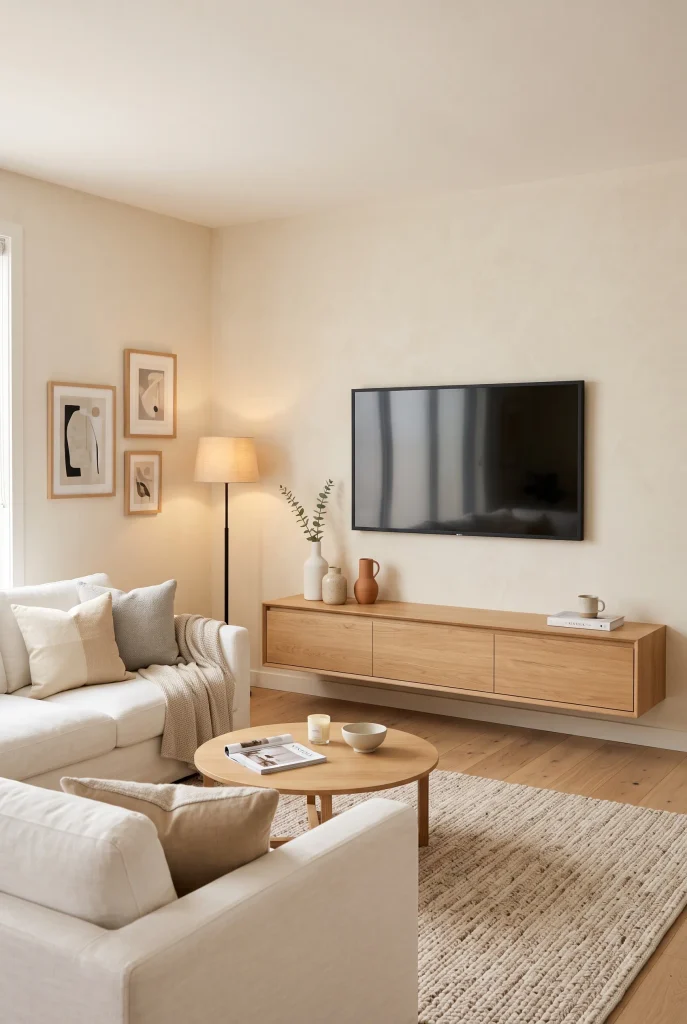
- A floating console creates a lighter, more spacious appearance.
- Natural oak softens the strong black shape of the television.
- Hidden storage keeps everyday electronics visually organized.
- Leaving floor space underneath makes cleaning easier too.
A floating oak console is a simple way to make a television wall feel cleaner and more contemporary. Mounting the console directly to the wall leaves visible floor space underneath, which makes the room appear less crowded and allows the flooring to flow uninterrupted. Natural oak adds warmth without competing with the screen, especially when paired with cream, beige, or soft gray furnishings. This setup is particularly useful in compact living rooms because the furniture feels visually lighter. Keep the console wide enough to extend beyond the television for better proportion and balance.
Styling the console does not require many accessories. A single ceramic vase, a small stack of coffee-table books, or one sculptural object can provide enough visual interest without creating clutter. Choose a console with drawers or push-to-open doors so remotes, cables, and gaming accessories stay hidden. If you are planning TV wall decor ideas for a modern home, matching the console finish with another wood element elsewhere in the room can make the design feel connected. Warm lighting behind or beneath the console can also add a subtle evening glow while keeping the overall arrangement sophisticated.
4. Stone Accent Wall
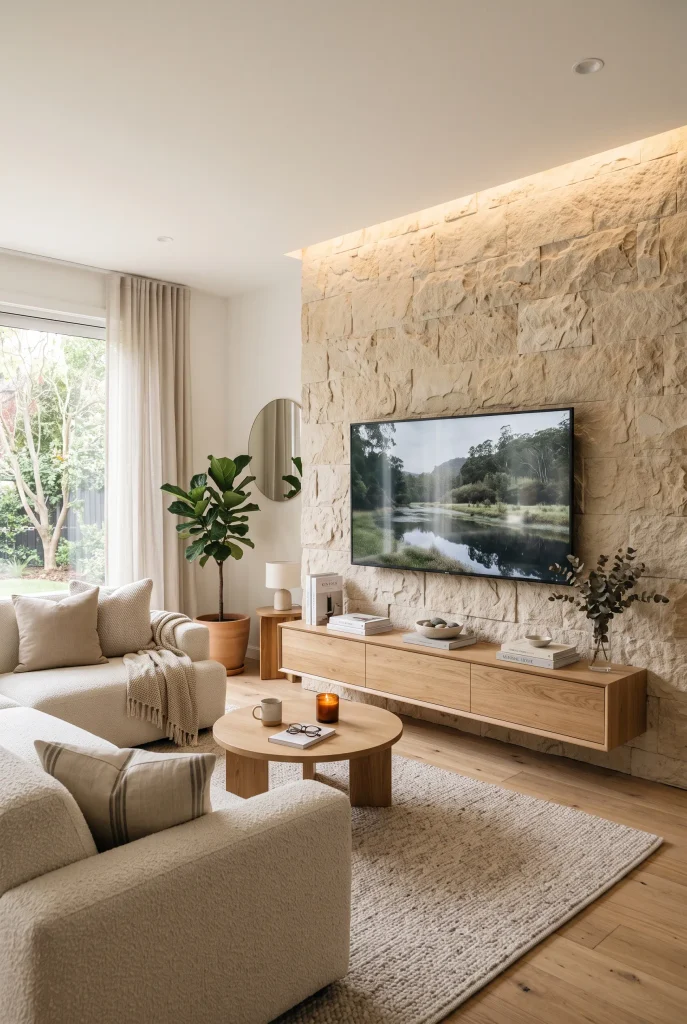
- Stone adds natural texture and a strong architectural focal point.
- Warm beige tones make the television feel less harsh.
- A simple console keeps the textured wall visually balanced.
- Matte stone finishes create a more sophisticated appearance.
A stone accent wall can completely change the character of a television area by introducing depth, texture, and natural warmth. Instead of leaving the screen against a plain painted surface, the stone creates an architectural backdrop that feels substantial and intentional. Light limestone, travertine, or softly textured beige stone works especially well with cream sofas and natural wood furniture. This approach works beautifully when the stone has subtle variation rather than dramatic patterns. The television becomes part of a larger composition, while the earthy material gives the room a comfortable, upscale feeling.
The key is keeping the rest of the wall relatively restrained. A floating oak console underneath the screen can provide storage without competing with the stone texture. Add only a few simple accessories, such as a ceramic vase or small sculptural object, to maintain visual breathing room. Warm recessed lights can highlight the stone after sunset and make its texture more noticeable. For homes where real stone installation is impractical, high-quality stone-look porcelain panels or textured wall panels can create a similar visual effect while offering easier installation and a more consistent finish.
5. Black Slat Wall

- Black slats create dramatic contrast around a bright television screen.
- Vertical lines add depth and architectural structure.
- Warm wood furniture prevents the wall from feeling too cold.
- Soft lighting helps the dark finish feel cozy at night.
A black slat wall creates a bold focal point for a modern living room without requiring excessive decoration. The narrow vertical lines add rhythm and texture, while the dark background makes the television visually blend into the wall. This is especially effective when the screen has a black frame because the two elements become one streamlined focal area. To keep the room inviting, combine the dark wall with warm wood, cream upholstery, and soft neutral textiles. This contrast works best when the room receives plenty of natural light during the day.
You can make the design feel more balanced by placing a low walnut console underneath the screen and keeping its surface mostly uncluttered. Add warm LED lighting behind the console or along nearby shelving to soften the dark backdrop after sunset. If an entire black wall feels too dramatic, use slatted panels across only the central section behind the television. This creates a defined media zone while leaving the surrounding wall lighter. The result is contemporary and sophisticated, with enough warmth and texture to prevent the space from feeling overly stark or industrial.
6. Gallery Frame Surround
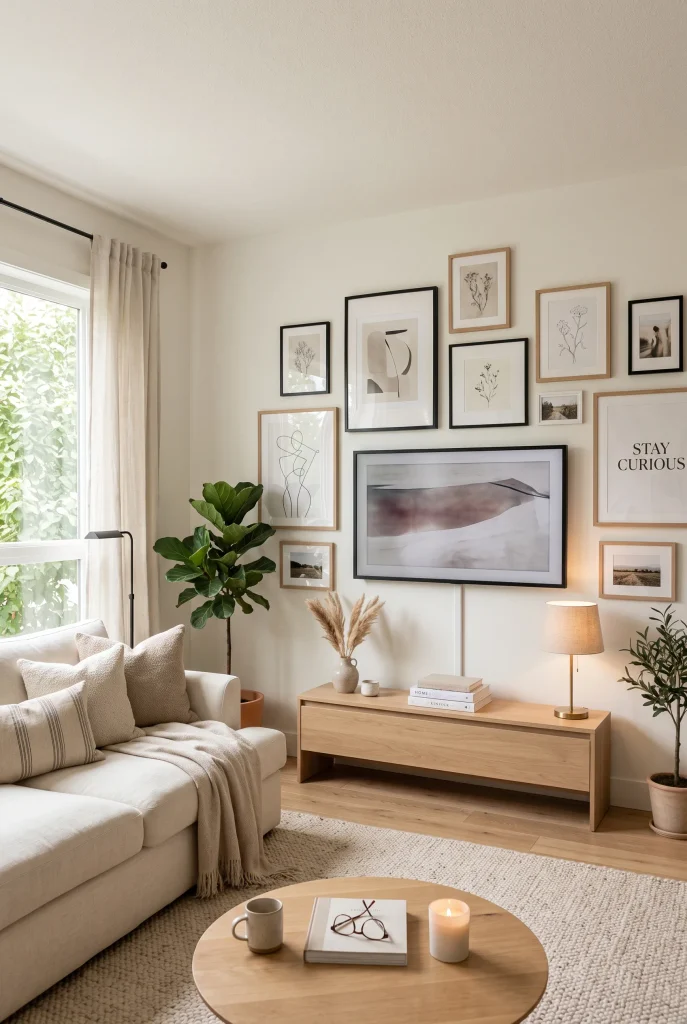
- Framed artwork helps the television blend into the surrounding decor.
- Mixing frame sizes creates a relaxed gallery-wall effect.
- Neutral artwork keeps the composition sophisticated rather than busy.
- A slim console grounds the entire arrangement.
A gallery-style arrangement can make a television wall feel more personal and decorative without hiding the screen. Instead of treating the television as the only focal point, surround it with framed artwork in different sizes and orientations. Abstract prints, line drawings, photography, and simple botanical artwork can all work beautifully when they share a consistent color palette. Neutral artwork is particularly effective because it connects naturally with the screen while keeping the composition calm. Leave intentional gaps between the frames so the arrangement feels curated rather than crowded.
When arranging the pieces, start by considering the television as the central anchor rather than placing artwork randomly around it. Larger frames can sit toward the outer edges, while smaller pieces can fill visual gaps closer to the screen. Choose black, oak, or mixed frames that connect with other finishes already present in the room. A narrow console beneath the television can complete the arrangement while providing useful storage. This approach is especially helpful for renters or anyone who does not want major construction because artwork can dramatically change the wall without requiring built-ins or permanent architectural modifications.
7. Vertical Fireplace
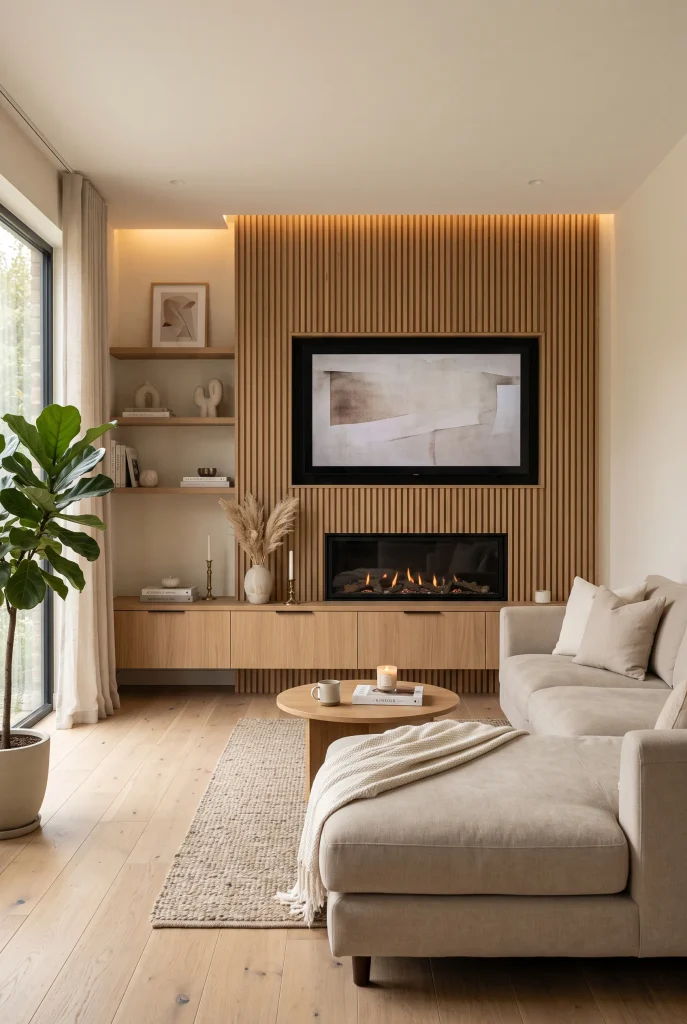
- A fireplace creates a natural focal point beneath the screen.
- Vertical detailing adds height and architectural interest.
- Warm materials keep the media wall comfortable and inviting.
- Built-in storage can hide electronics and everyday clutter.
Combining a television with a sleek fireplace creates a strong architectural focal point that can organize the entire living room. The vertical arrangement naturally draws the eye upward while giving the wall a purposeful structure. A slim electric or gas fireplace can work particularly well in modern interiors where a traditional mantel would feel too bulky. Surround the installation with warm beige stone, microcement, or subtle textured panels for additional depth. Keeping the fireplace design simple allows the television and surrounding materials to feel cohesive instead of competing for attention.
Proportion matters when combining these two major elements. Leave enough visual space around the television and fireplace so neither feels cramped, and choose a low-profile surround that keeps the overall arrangement streamlined. A floating cabinet below can provide additional storage while maintaining clean horizontal lines. Warm lighting can highlight the surrounding texture and create a comfortable atmosphere. If installing a real fireplace, follow the fireplace manufacturer’s clearance requirements. For simpler renovations, a slim electric fireplace can create a similar focal-point effect.
View: 21 Reading Nook Ideas That Make You Want to Read More
8. Microcement Backdrop
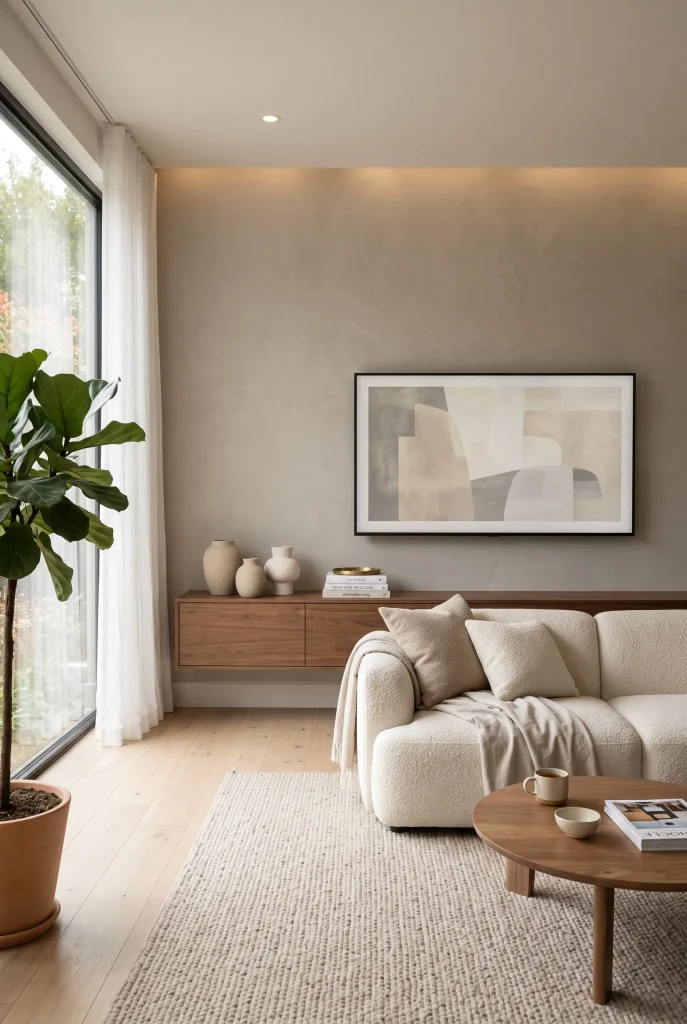
- Microcement creates a seamless backdrop with subtle visual texture.
- Warm gray tones make the wall feel modern but approachable.
- The uninterrupted surface keeps the television area visually calm.
- Walnut furniture adds warmth against the mineral finish.
A microcement backdrop gives a television wall a seamless, architectural appearance without relying on busy patterns or decorative accessories. Its softly mottled surface adds just enough texture to prevent a large wall from looking flat, while the continuous finish keeps the composition clean. Warm gray, greige, taupe, and soft beige shades work particularly well with modern furniture and natural materials. This type of finish looks especially sophisticated when paired with a floating wood console because the organic warmth of the timber balances the cooler mineral surface beautifully.
The simplicity of microcement also makes styling easier because the wall itself becomes the main design feature. Keep accessories around the television minimal and choose materials that repeat elsewhere in the room, such as oak, walnut, linen, or ceramic. A concealed cable route can preserve the uninterrupted appearance of the backdrop. If authentic microcement is outside your budget, textured wall finishes or microcement-look panels can provide a similar visual direction. Add soft evening illumination from recessed ceiling lights or concealed strips to emphasize the subtle surface variation without creating harsh reflections on the screen.
9. Arched Alcove
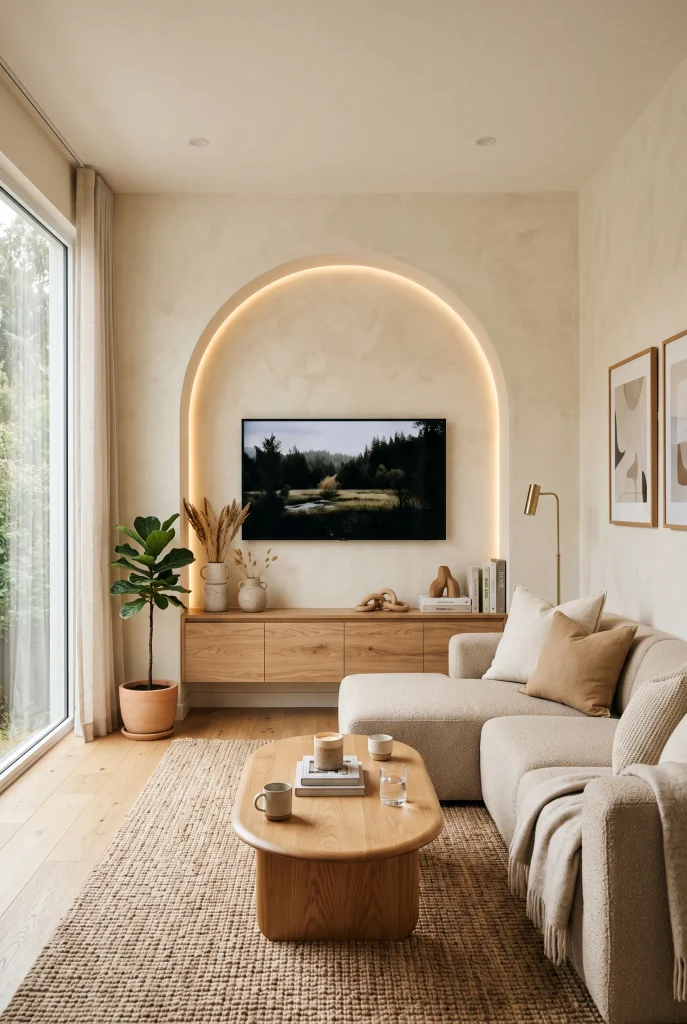
- Curved architecture softens the hard rectangular shape of the television.
- An alcove naturally defines the media area.
- Warm plaster tones create a calm, modern backdrop.
- Rounded furniture reinforces the room’s softer visual language.
An arched alcove can turn an ordinary television wall into a distinctive architectural feature. The curved opening creates contrast against the rectangular screen, making the entire arrangement feel softer and more thoughtfully designed. A plaster, limewash, or warm neutral finish can enhance the curved shape while keeping the room visually calm. Place the television centrally within the alcove and use a slim floating cabinet below for practical storage. This approach works particularly well in contemporary homes that already use rounded furniture, curved doorways, or organic decorative shapes throughout the space.
The surrounding furniture should support the architecture rather than compete with it. A rounded coffee table, curved sofa edge, or softly shaped floor lamp can echo the arch and create continuity across the room. Keep the alcove relatively free of accessories so its shape remains easy to see. If your existing wall is flat, you can create a similar effect with custom millwork, drywall framing, or a decorative arch treatment. Soft lighting inside or around the alcove can add depth after dark while making the television wall feel warmer and more inviting.
10. Vertical Fireplace Wall
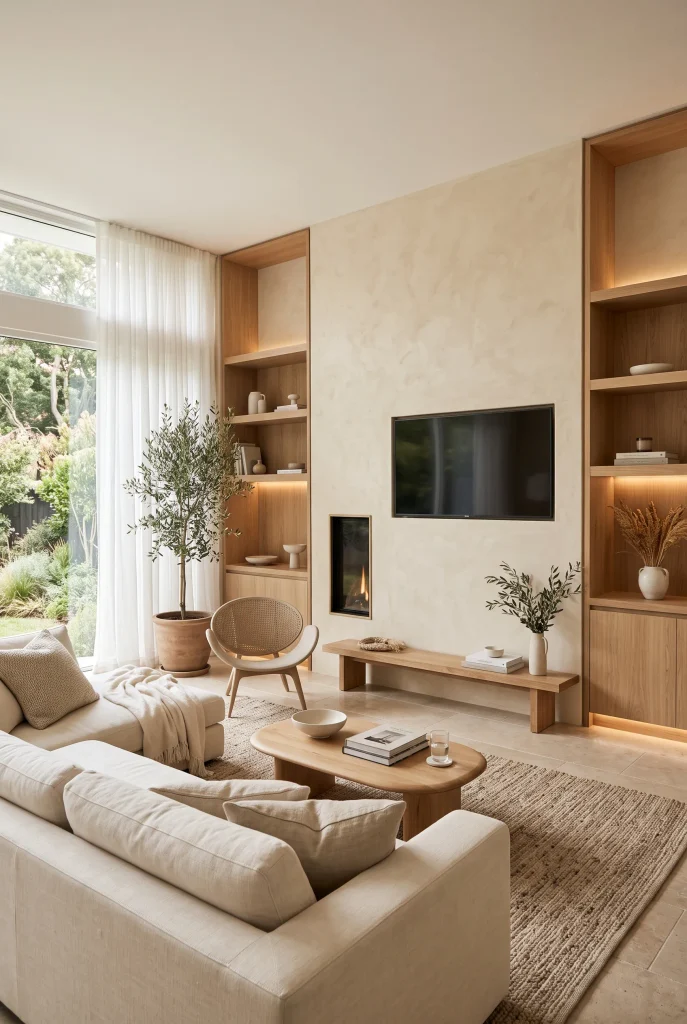
- A slim fireplace gives the media wall a strong architectural center.
- Warm plaster and oak soften the television’s dark surface.
- Built-in storage keeps electronics and clutter out of sight.
- Vertical proportions help the wall feel taller and more intentional.
A slim fireplace beneath the television can turn a plain wall into a complete architectural feature. Instead of adding several unrelated decorations, the fireplace creates a clear vertical composition that naturally connects the screen with the lower portion of the wall. Warm plaster, stone, or microcement can surround both elements for a unified appearance. This arrangement feels most sophisticated when the fireplace is narrow and understated rather than oversized. The goal is to create balance between the television, fire feature, and surrounding materials without making the wall feel visually crowded.
For everyday practicality, combine the fireplace with a floating cabinet or low built-in storage. This gives you a place for media equipment while keeping the floor area open and easy to clean. Choose finishes that repeat throughout the room, such as oak cabinetry, beige upholstery, or natural stone accessories. Soft lighting can emphasize the wall texture during the evening and create a comfortable atmosphere around the seating area. If installing a real fireplace, follow the required clearance and installation specifications. For simpler renovations, a quality electric fireplace can create a similar focal-point effect.
11. Warm Plaster Finish
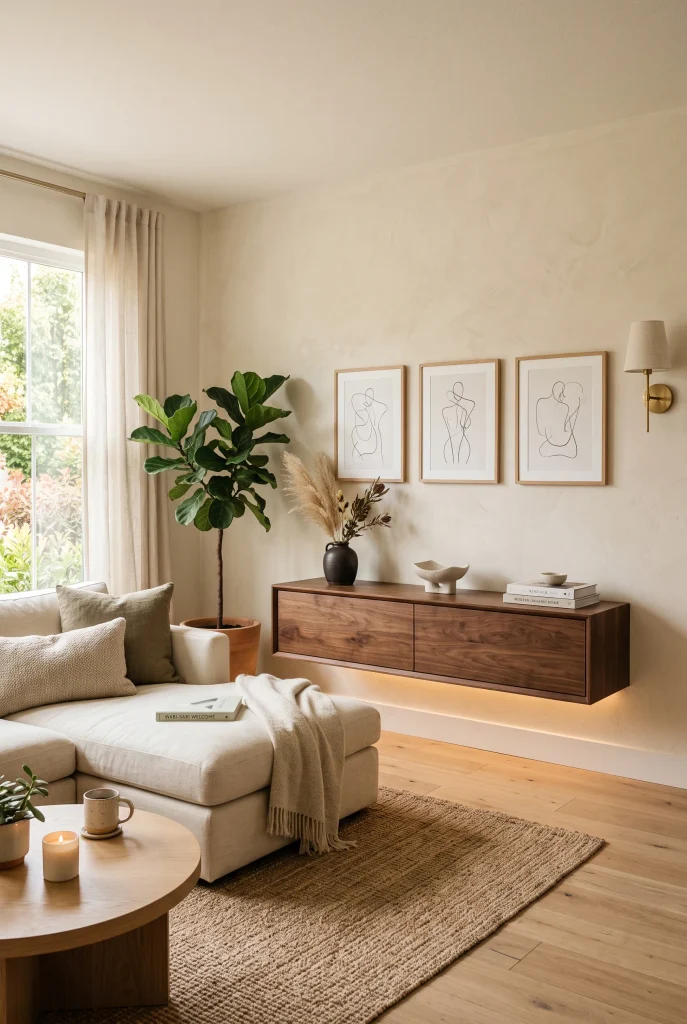
- Soft plaster texture adds depth without making the wall busy.
- Warm ivory tones keep the television area bright and inviting.
- Natural wood creates contrast against the smooth mineral surface.
- Minimal styling lets the wall finish remain the main feature.
A warm plaster finish creates an understated backdrop that makes a television wall feel refined without relying on heavy decoration. The slightly irregular surface catches natural light beautifully, adding depth while maintaining a soft and neutral appearance. Shades such as ivory, cream, warm white, and light greige work especially well with natural wood and linen furniture. This approach is ideal when you want the room to feel modern but not overly polished. Subtle wall texture can make a surprisingly big difference because it gives a large empty surface more character without visually overwhelming the television.
Keep the furniture below the screen simple so the plaster remains visible and uninterrupted. A floating walnut or oak console provides useful storage while introducing warmth and contrast. You can also add a small ceramic vase, woven basket, or sculptural object, but avoid filling every available surface. During the day, natural light will emphasize the plaster’s texture, while warm lamps or recessed lighting can create a softer evening effect. The result is a calm media area that feels carefully designed while remaining comfortable enough for everyday family living.
12. Minimalist Black Frame
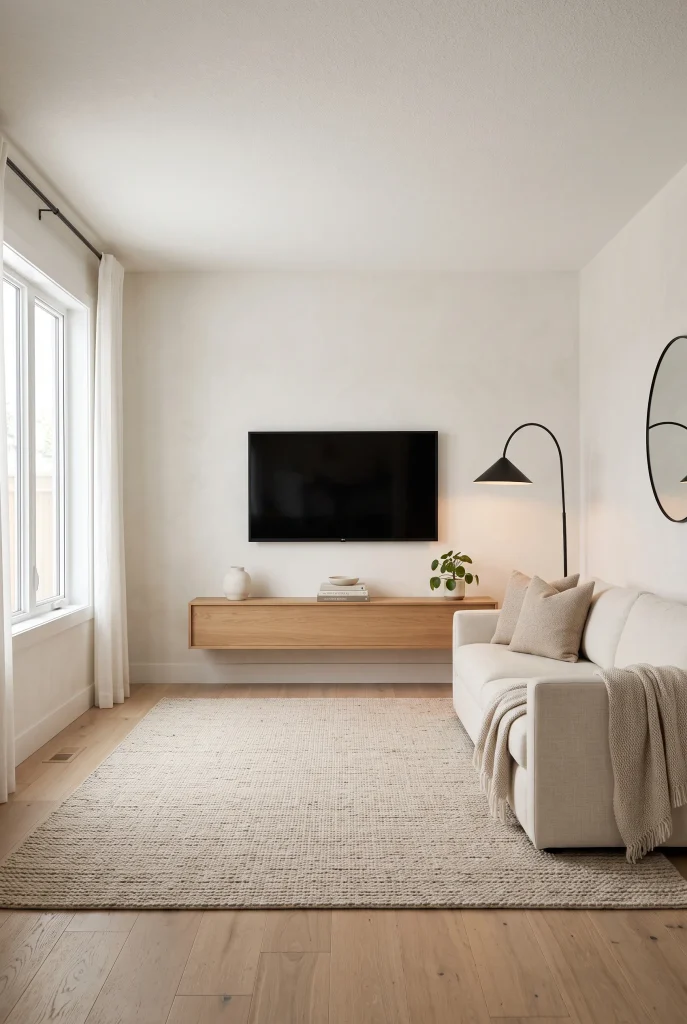
- A thin black frame gives the screen a crisp architectural presence.
- Neutral surroundings prevent the television from feeling visually heavy.
- Repeated black accents connect the screen with other furnishings.
- Simple styling keeps the entire wall clean and contemporary.
Sometimes the most effective approach is to make the television itself part of the design rather than trying to disguise it. A slim black-framed screen can look intentional when positioned against a warm neutral wall with carefully selected furniture nearby. The contrast gives the television a crisp, graphic appearance while keeping the surrounding space calm. Use a narrow oak console underneath to introduce natural warmth and prevent the black screen from feeling too stark. Repeating small black details elsewhere in the room helps the television feel connected rather than like an isolated electronic object.
The surrounding styling should remain restrained because the screen already provides a strong rectangular shape. A black floor lamp, picture frame, or small decorative object can subtly repeat the television’s finish without creating visual clutter. Keep the console surface mostly open and use drawers or cabinets for hidden storage. A warm white or greige wall color can soften the contrast while still keeping the screen defined. This simple combination works particularly well in modern, Scandinavian, and minimalist interiors where clean lines, practical furniture, and thoughtful restraint create the overall aesthetic.
13. Oak Feature Wall
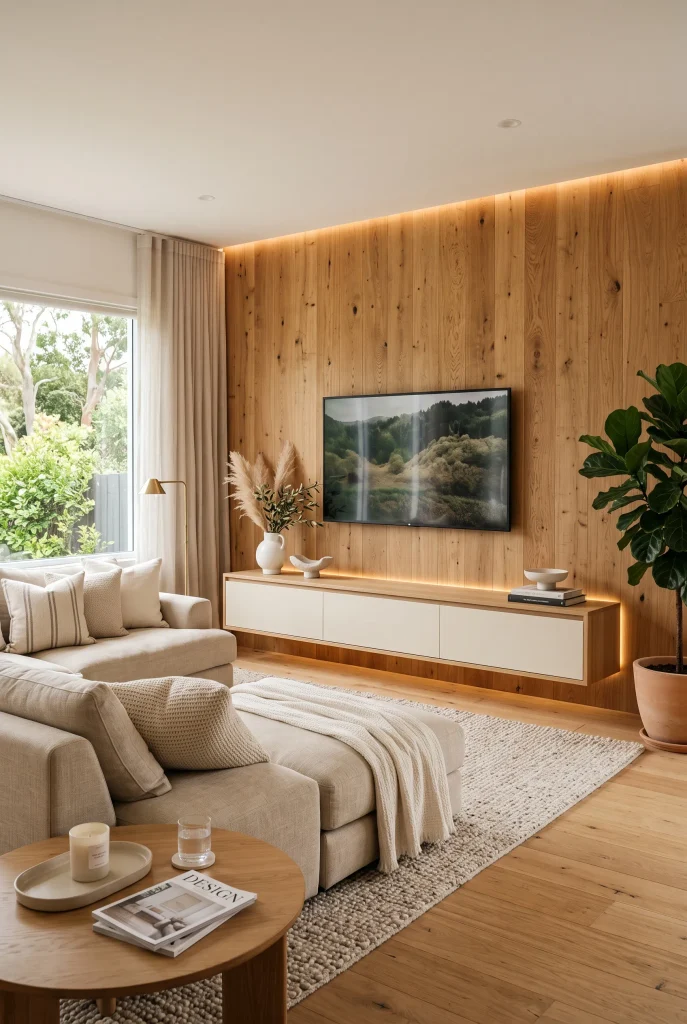
- Full-height oak creates warmth across a large empty wall.
- Natural grain adds visual interest without decorative clutter.
- Light furniture keeps the wood from making the room feel heavy.
- Matching wood accents can create a cohesive interior.
A full oak feature wall can make a television area feel warm, architectural, and intentionally designed. Natural wood grain gives the large surface visual movement while providing a softer background for the dark television screen. Choose light or medium oak when you want an airy appearance, or deeper walnut when the room has plenty of natural light. Using the same wood tone on a floating console creates a particularly cohesive effect. The repeated material visually connects the television, storage, and wall instead of making them appear like separate elements.
To keep a wood feature wall from becoming overwhelming, balance it with lighter furniture and simple textiles. A cream sectional, beige rug, and soft neutral curtains can provide enough contrast while maintaining a warm palette. Avoid placing too many decorative objects in front of the wood because the grain already provides plenty of texture. Concealed cable management is also important for maintaining a clean appearance. If full-wall paneling feels too expensive, consider covering only the central section behind the television. This creates a defined focal point while using less material.
14. Integrated Bookshelves
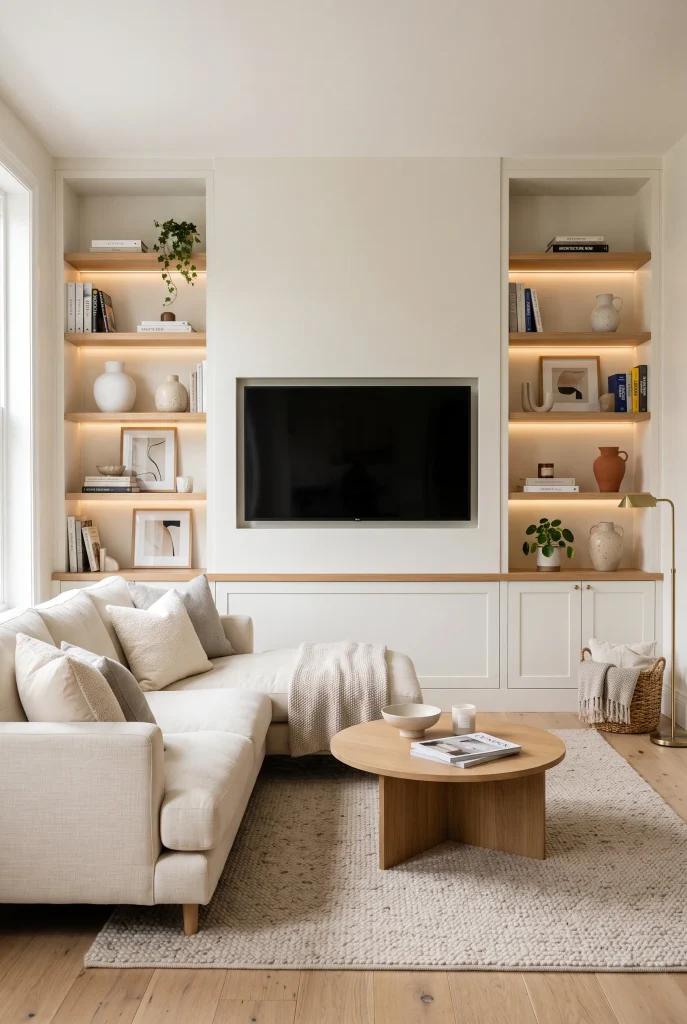
- Built-in shelves frame the television with useful visual structure.
- Books and ceramics add personality without overwhelming the screen.
- Symmetry creates a polished and balanced composition.
- Integrated lighting makes the wall feel warmer after sunset.
Integrated bookshelves can transform a television wall into a practical display area while giving the screen a more balanced position. Rather than leaving the television floating alone on a large blank surface, surrounding shelves create a visual frame and connect it with the rest of the room. Use warm white cabinetry with natural oak shelves for a soft contemporary look, then add books, ceramics, framed artwork, and small plants. The best results come from leaving some shelves partially empty. Negative space keeps the arrangement looking curated rather than crowded.
For a more refined appearance, repeat a few colors throughout the shelving instead of using completely different objects on every level. Cream ceramics, neutral books, natural baskets, and small touches of greenery can create a cohesive palette. Concealed cabinets at the bottom are useful for hiding electronics and everyday items. If you are designing custom shelving, include cable routes before installation so devices can connect without visible wires. Warm integrated shelf lighting can complete the look, especially in the evening, when small pools of light make the entire wall feel more layered.
15. Travertine Surround

- Travertine adds natural texture and a luxurious architectural feel.
- Warm beige tones soften the contrast of the television.
- Large-format surfaces create a cleaner, less fragmented appearance.
- Minimal accessories let the stone remain visually prominent.
Travertine creates a warm, natural backdrop that can instantly give a television area a more elevated architectural character. Its creamy beige tones and subtle organic markings add texture without relying on decorative patterns. Large-format slabs or carefully matched panels can create a particularly seamless appearance, making the wall feel like one continuous surface. Pair the stone with light oak, cream upholstery, and woven textiles to maintain warmth. Travertine looks most sophisticated when the surrounding decor is restrained because the natural variation in the stone already provides enough visual interest.
A low travertine console beneath the screen can reinforce the material connection while providing useful storage for media equipment. If using stone throughout the entire wall feels excessive, create a central stone panel and keep the surrounding surfaces painted in a warm neutral shade. This gives the television a defined zone without making the room feel too heavy. Avoid excessive metallic accessories or overly glossy furniture, which can compete with the stone’s natural character. Soft warm lighting will emphasize the texture and create a relaxed, high-end atmosphere when the room is used at night.
16. Ribbed Panel Wall
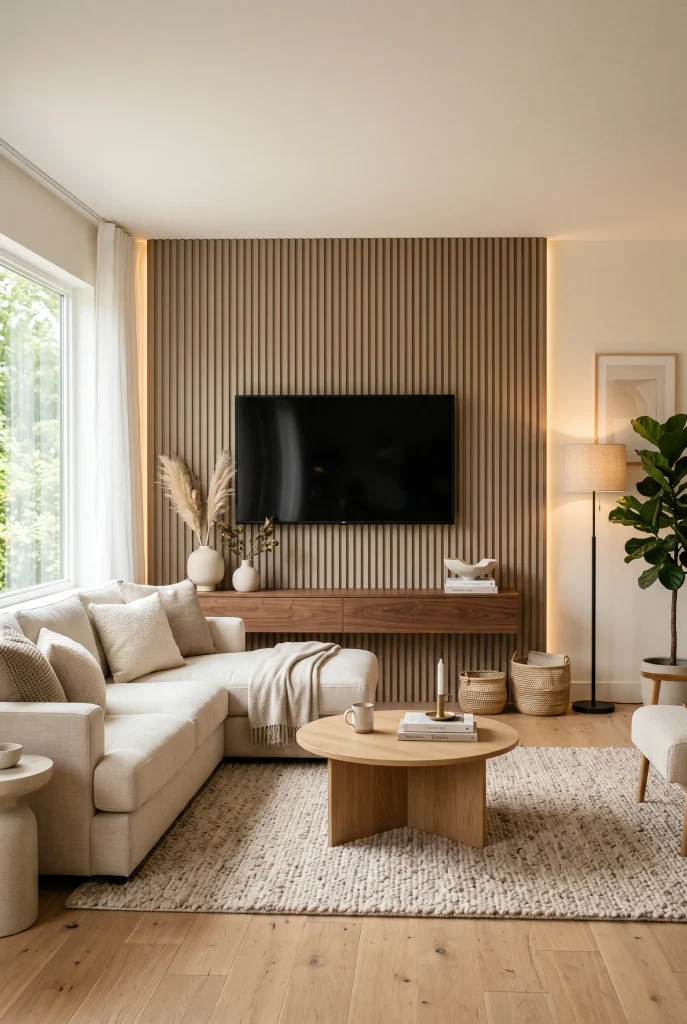
- Ribbed panels add dimension while keeping the color palette simple.
- Fine vertical lines make the wall feel taller and more structured.
- Walnut furniture adds warmth against the textured surface.
- The repeating texture creates a polished architectural backdrop.
A ribbed panel wall gives a television area subtle dimension without introducing a complicated pattern. The narrow vertical channels create rhythm across the surface, helping a large blank wall feel more intentional and finished. Warm taupe, beige, ivory, and soft gray panels work beautifully with contemporary furniture and natural materials. The texture is especially effective behind a dark television because it softens the strong rectangular shape without competing with the screen. Keeping the panel color close to the surrounding wall color creates a more sophisticated result than using dramatic contrast.
For a balanced arrangement, place a slim floating console beneath the television and keep its styling minimal. A few natural accessories can complement the vertical texture without distracting from it. If the wall is narrow, extend the panels from floor to ceiling to emphasize height. For a wider wall, covering only the central television zone can create a defined focal point while preserving lighter areas around it. Hidden cable management is worth planning before installation, especially if the panels are being permanently mounted. The finished look feels contemporary, warm, and visually organized.
17. Floating Stone Console
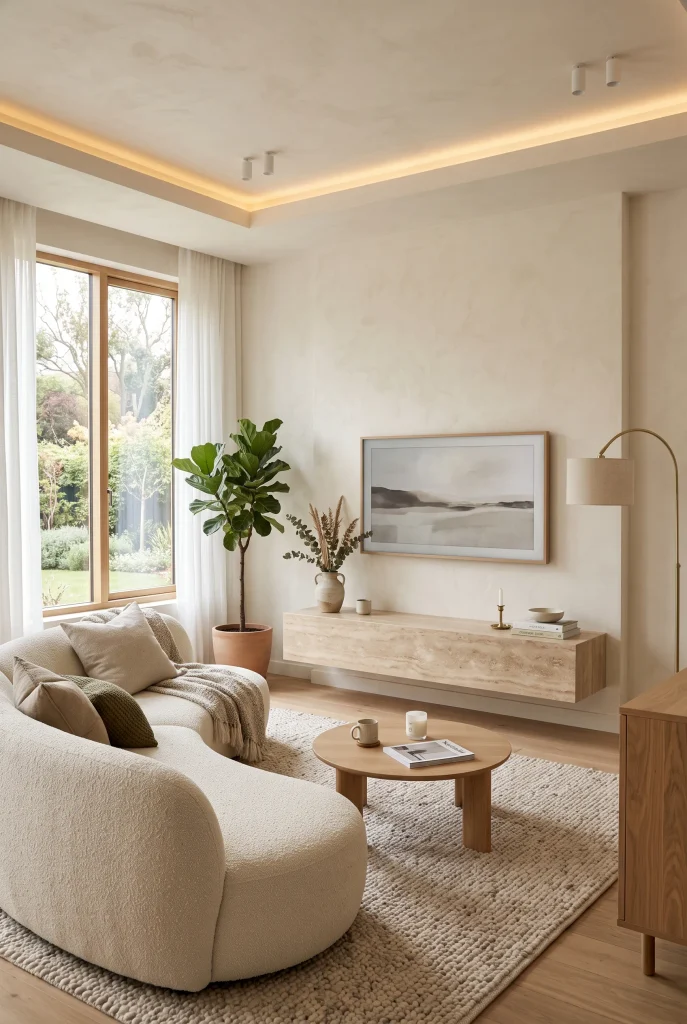
- A floating stone console combines practical storage with natural texture.
- Wall mounting keeps the floor visually open and spacious.
- Warm stone tones make the media area feel more substantial.
- Minimal styling keeps the arrangement elegant and uncluttered.
A floating stone console can give a television wall a substantial, architectural feel while keeping the floor beneath it visually open. Natural limestone, travertine, or stone-look finishes introduce texture and weight without requiring a large piece of furniture. The contrast between a dark television and a warm stone console creates a balanced composition that feels modern but inviting. This combination works particularly well in neutral living rooms because the stone adds character without introducing a strong new color. Keep the console slightly wider than the television to create a stable visual foundation.
The storage should remain practical but discreet, especially if the room is used every day. Choose push-to-open doors or handleless drawers to preserve the clean appearance. You can style the top with one or two carefully selected objects, such as a sculptural vase or small stack of books, rather than filling the entire surface. Pair the stone with warm oak, cream upholstery, and woven textures elsewhere in the room. This keeps the media area from feeling too hard or formal while creating a layered design that remains comfortable for everyday living.
18. Picture Light Styling
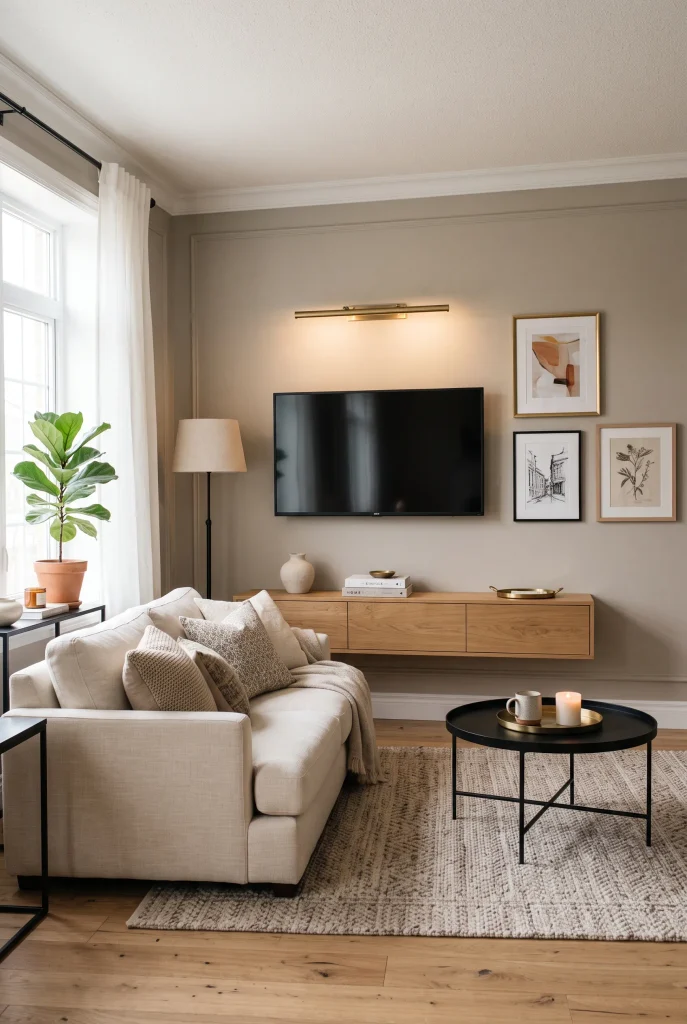
- A picture light adds a sophisticated decorative layer around the TV area.
- Warm illumination creates a softer evening atmosphere.
- Nearby artwork helps connect the media wall with the room.
- Small black details can echo the television frame naturally.
A carefully placed picture light can add an unexpectedly polished touch to a television wall. The warm glow creates a decorative layer above or around the media area, making the wall feel more intentional after sunset. Choose a slim brass, bronze, or black fixture that complements existing finishes in the room. Rather than adding several competing lights, one well-positioned fixture can provide enough visual interest. Warm lighting is particularly useful around televisions because it reduces the stark feeling created by a bright screen against a completely dark wall.
You can strengthen the arrangement by placing framed artwork beside the television or on an adjacent wall. Keep the artwork simple so it supports the screen instead of competing with it. A floating oak console below can introduce warmth and provide hidden storage for remotes and electronics. If you use a picture light near artwork, make sure its beam is aimed at the artwork rather than directly toward the screen to avoid distracting reflections. This combination works beautifully in modern, transitional, and softly traditional interiors where lighting and texture create the finishing layer.
19. Concrete Accent Wall
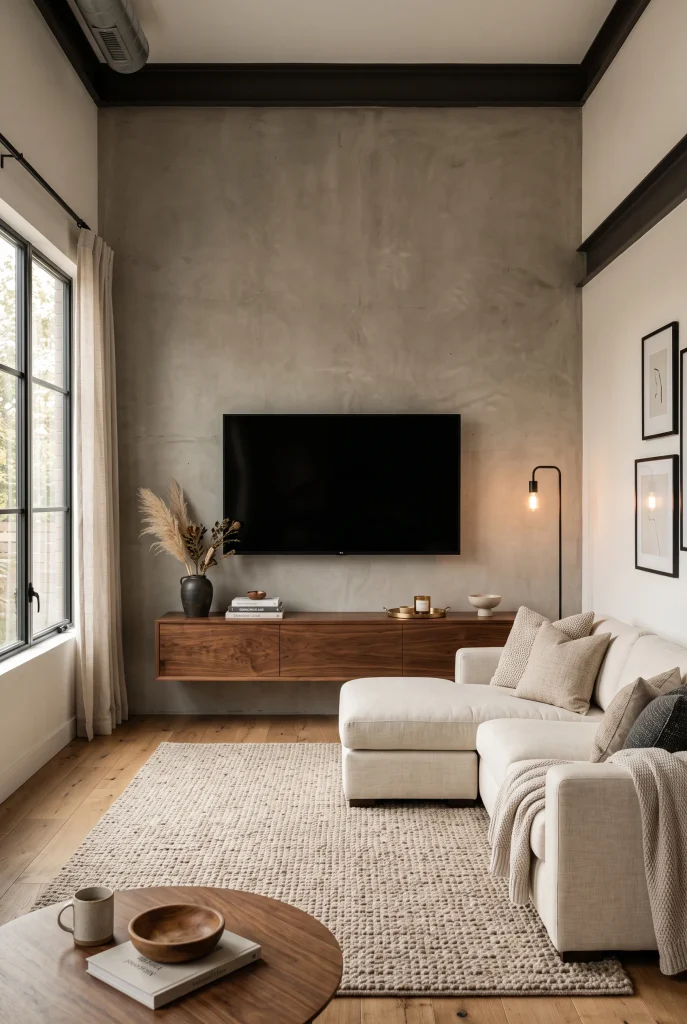
- Concrete adds depth and an architectural edge to the TV area.
- Warm gray tones keep the industrial finish approachable.
- Walnut furniture softens the harder concrete surface.
- Minimal accessories prevent the wall from feeling overly busy.
A concrete accent wall can give a television area a sleek architectural character while keeping the overall design surprisingly simple. Smooth concrete or a refined concrete-look finish creates subtle variation across the wall, giving the screen a stronger backdrop without adding decorative clutter. Warm gray and greige tones work especially well because they soften the industrial character. Pairing the wall with walnut furniture, cream upholstery, and textured rugs creates balance. Adding warmer materials is important here because they prevent concrete from making an otherwise comfortable living room feel too cold.
You do not need genuine poured concrete to achieve this look. Microcement, decorative plaster, or quality concrete-effect panels can create a similar visual direction with different installation requirements and price points. Place a slim floating console beneath the television to introduce warmth and provide hidden storage. Keep metallic accents limited to a few small details, such as a black lamp or simple frame. Warm lighting in the evening can also soften the wall and highlight its subtle texture. The finished arrangement feels modern, understated, and intentionally architectural without becoming overly industrial.
20. Asymmetrical Shelving
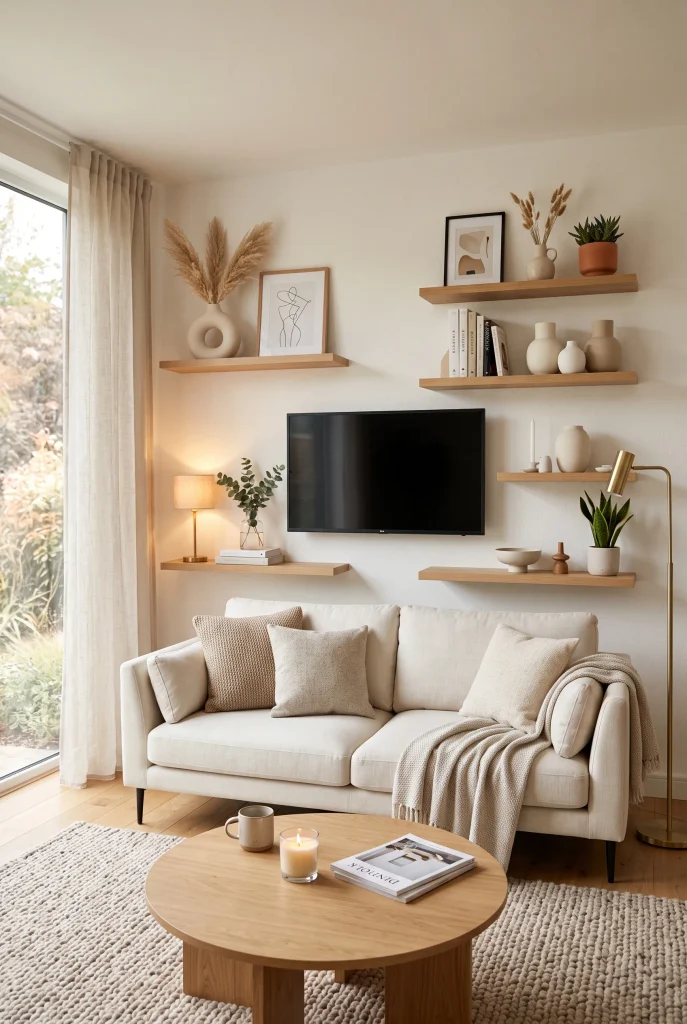
- Asymmetrical shelves make the television wall feel more relaxed and creative.
- Mixed shelf lengths create movement around the screen.
- Natural wood adds warmth against a neutral painted wall.
- Uneven styling prevents the arrangement from feeling overly formal.
Asymmetrical shelving can make a television wall feel more relaxed while still looking carefully planned. Instead of framing the screen with identical shelves on both sides, vary the shelf lengths and positions to create movement across the wall. Natural oak shelves work beautifully against warm white, beige, or greige backgrounds, especially when paired with simple ceramics and framed artwork. The key is visual balance rather than perfect symmetry. An asymmetrical arrangement looks most successful when larger objects are balanced by several smaller pieces rather than clustering everything on one side.
Start by treating the television as the main anchor, then build the shelving around it with enough empty space to keep the screen visually dominant. Use a limited palette of materials and colors so the arrangement does not become chaotic. Books, small plants, ceramics, and framed prints can provide variety without overwhelming the wall. A floating console below can complete the composition and offer practical storage. If you are renting, lightweight floating shelves can also provide a way to create a personalized media wall without committing to major built-in construction.
21. Full-Height Media Cabinet
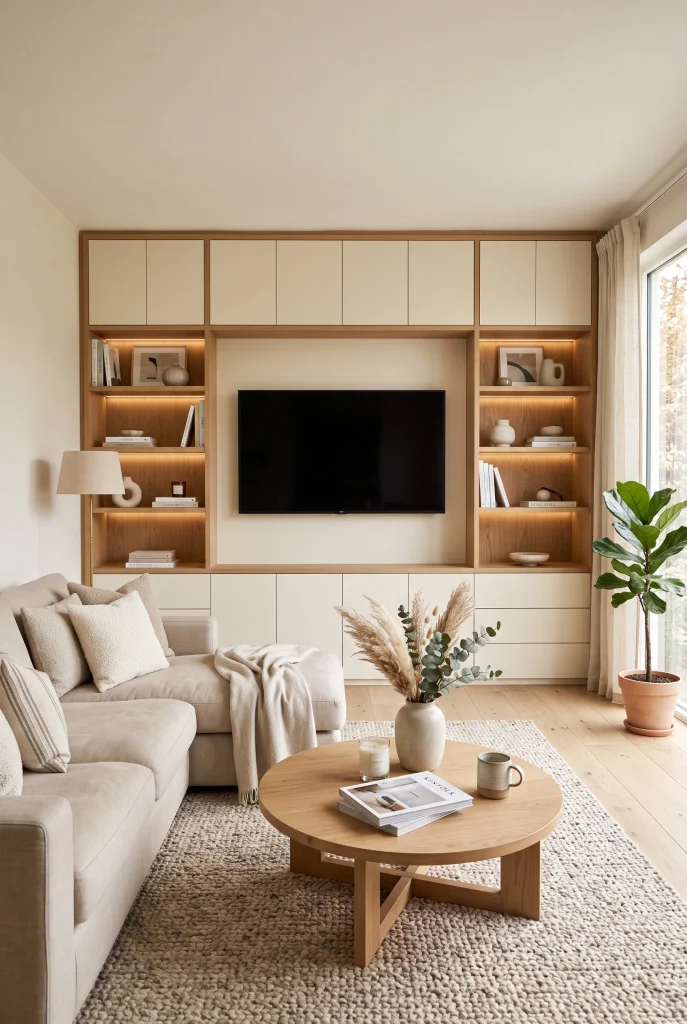
- Full-height cabinetry turns the entire wall into a cohesive feature.
- Closed storage hides electronics, books, and everyday clutter.
- Warm neutral finishes keep the large installation visually light.
- Integrated lighting adds depth and a finished designer feel.
A full-height media cabinet can completely transform a large television wall by combining display space, concealed storage, and architectural structure in one design. Instead of treating the television as a separate object, the cabinetry creates a complete composition from floor to ceiling. Warm cream, soft beige, or natural oak finishes can keep the installation feeling welcoming rather than bulky. This approach is especially useful in large living rooms where a television mounted on an empty wall might otherwise feel undersized. It works particularly well when the cabinetry repeats finishes already used elsewhere in the room.
For everyday living, prioritize closed storage around the television so cables, consoles, remotes, and miscellaneous items can disappear behind doors. A few open sections can hold books, artwork, ceramics, or greenery for personality. Integrated lighting can highlight these displays and create a softer evening atmosphere. Keep the television centered within the overall cabinet design and make sure the surrounding proportions feel balanced. If custom cabinetry is outside the budget, modular storage units can create a similar full-wall effect. The result is organized, practical, and visually cohesive while still feeling comfortable and lived-in.
Conclusion
Your television does not have to be the awkward part of your living room. With thoughtful materials, balanced proportions, useful storage, and the right finishing touches, it can become part of a beautiful overall design. These TV wall decor ideas give you plenty of ways to create a space that feels modern, comfortable, and intentionally styled. Start with one idea that fits your room, then personalize it with textures, colors, and accessories you genuinely love. Save this post on Pinterest for your next decorating project, try your favorite setup, and share it with someone looking for fresh living room inspiration.