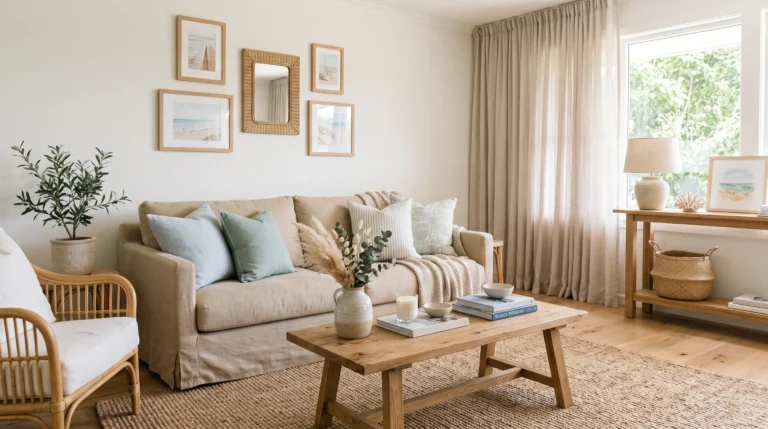
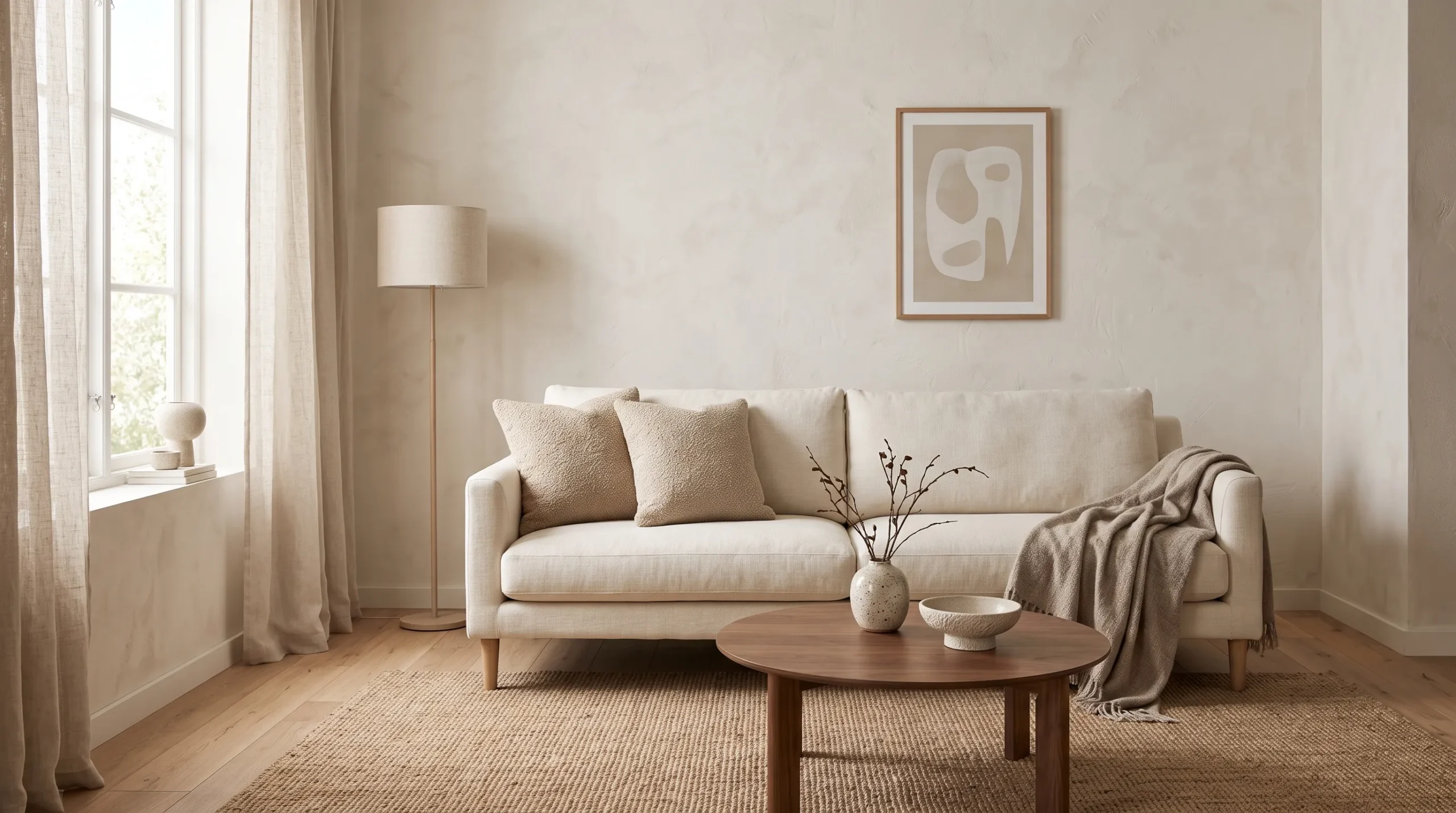
21 Cozy Earthy Living Room Decor Ideas to Copy Now
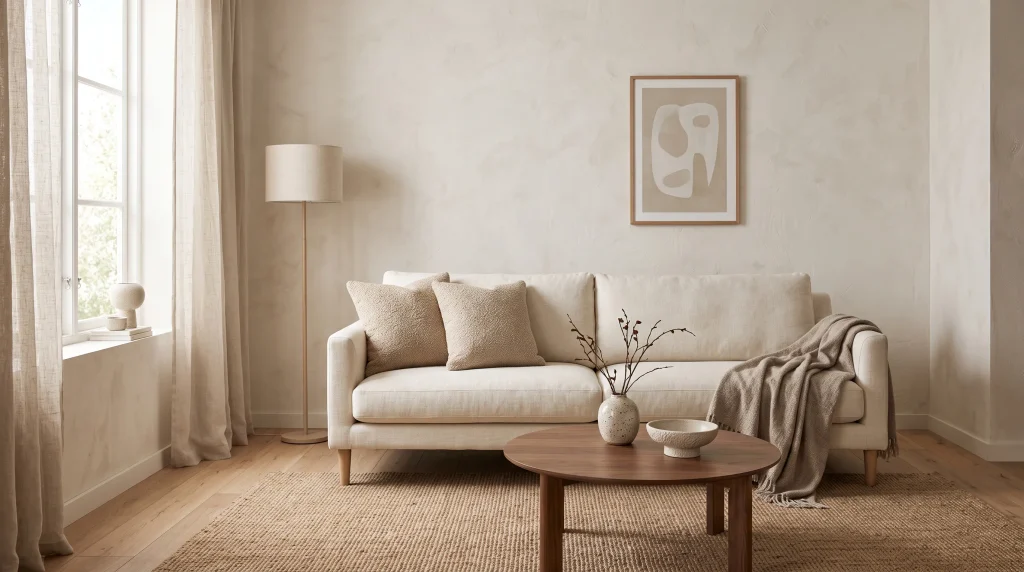
Want your living room to feel warmer, calmer, and more connected to nature? A cozy earthy living room can create that inviting feeling without requiring a complete makeover. Think soft neutral upholstery, warm wood, woven textures, muted greens, terracotta accents, and gentle lighting that makes the whole space feel comfortable.
Whether your room feels plain, cold, cluttered, or simply unfinished, small styling changes can make a noticeable difference. These ideas focus on practical details that work in real homes, from layering rugs and pillows to adding greenery, natural materials, and thoughtful lighting. In my experience, combining a few textures and repeating earthy tones can make even a simple space feel much more intentional. Use these ideas as inspiration, adapt them to your home, and create a living room that feels naturally welcoming.
1. Warm Neutral Sofa
- A soft neutral sofa instantly makes the room feel calmer and more inviting.
- Layer cream, beige, and taupe textiles for depth without visual clutter.
- Choose washable, textured fabrics if the living room gets heavy daily use.
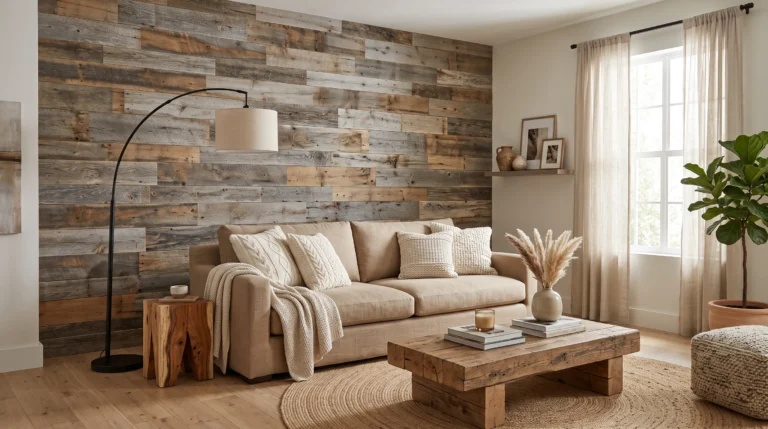
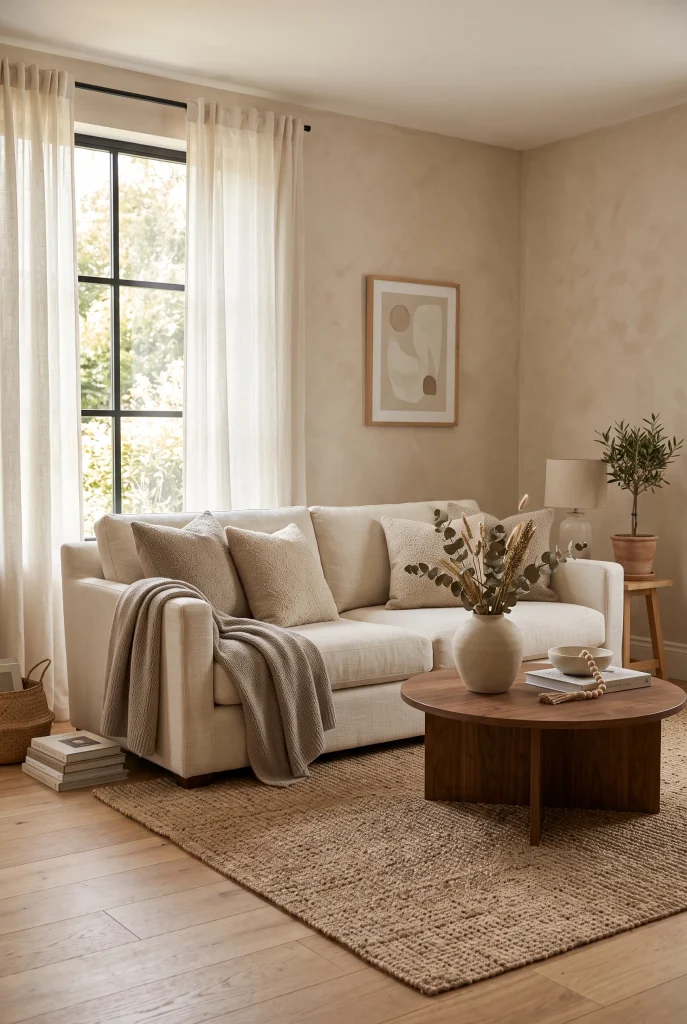
A beautiful sofa can completely change how a living room feels, especially when its color and texture create a warm foundation. Choose a cream, oatmeal, beige, or soft taupe sofa with a relaxed silhouette rather than something overly formal. Add cushions in linen, boucle, cotton, or subtle woven fabrics to create gentle layers. In my experience, neutral upholstery works especially well because it gives you freedom to change accent colors seasonally without replacing major furniture. A textured rug beneath the seating area and a simple wood coffee table can make the entire arrangement feel grounded, comfortable, and naturally connected.
The real magic comes from keeping the palette soft while mixing different materials. A linen sofa can feel much richer when paired with chunky woven pillows, a nubby throw, and a natural fiber rug. Keep the furniture arranged around conversation rather than pushing everything against the walls. This makes the room feel intentional and welcoming instead of sparse. For a cozy earthy living room, natural wood, warm ceramics, and muted textiles help balance the softness of the upholstery. The finished space should feel relaxed enough for everyday lounging while still looking polished enough to inspire your next decorating project.
2. Layered Earthy Textures
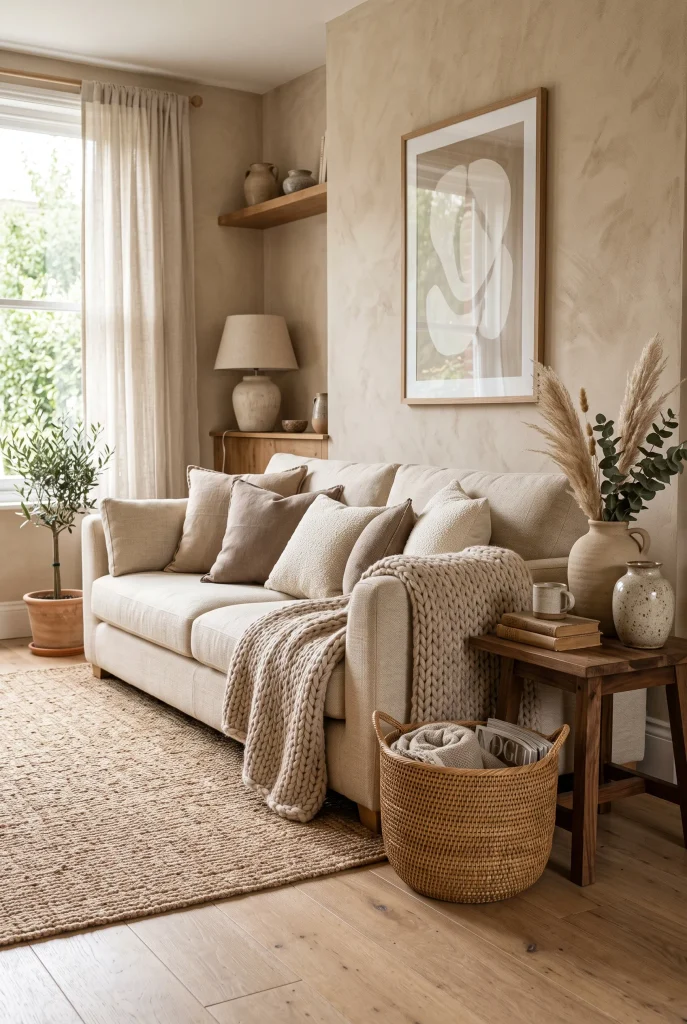
- Combine linen, wool, rattan, jute, and wood to create visual depth.
- Use texture to make a simple neutral palette feel interesting.
- Repeat natural materials across several pieces for a cohesive look.
Texture is one of the easiest ways to make a neutral living room feel warm instead of flat. Start with a few contrasting materials, such as linen cushions, a wool throw, a jute rug, woven baskets, and unfinished or lightly finished wood. Each surface catches light differently, creating subtle variation without introducing lots of colors. I’ve noticed that rooms using several natural textures often feel more welcoming even when the furniture itself is quite simple. Instead of filling every corner with accessories, let the materials do the decorating. This approach creates depth while keeping the overall atmosphere calm, practical, and visually balanced.
Think of the room as a collection of touchable layers rather than a display of matching objects. A smooth ceramic vase can sit beside a rough woven basket, while a soft cotton cushion rests against a chunky knitted throw. These small contrasts make the space more interesting from every angle. Keep earthy tones such as sand, clay, mushroom, olive, and warm brown within the same visual family. The result is a cozy setting that feels collected naturally over time. It also makes decorating easier because new pieces can be added gradually without disrupting the room’s established warmth or harmony.
3. Natural Wood Accents
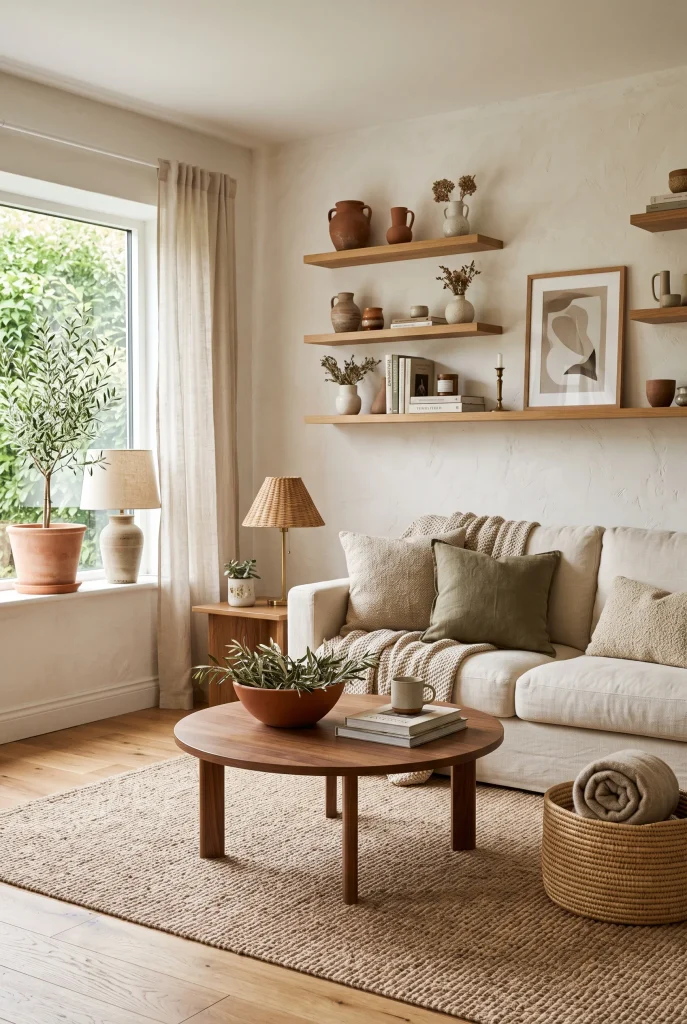
- Warm wood instantly adds an organic feeling to neutral interiors.
- Use coffee tables, shelves, stools, or frames to introduce natural grain.
- Mix wood tones carefully so the room feels layered, not mismatched.
Natural wood brings warmth that painted or heavily polished furniture often cannot replicate. A wooden coffee table, floating shelf, console, or simple stool can introduce beautiful grain and an organic connection to the outdoors. Look for oak, walnut, teak, or lightly finished reclaimed wood depending on your preferred style. You do not need large wooden pieces everywhere; even a few carefully placed accents can soften a neutral room. That balance is especially useful when the space already has cream walls and upholstery. The wood becomes a visual anchor, helping the room feel warmer, more grounded, and comfortably lived-in.
For the best result, repeat the wood finish in at least two or three places so the room feels connected. For example, pair a walnut coffee table with a small wooden picture frame and a matching side stool. If your flooring is already wood, choose furniture with a slightly different tone to create contrast rather than trying to match everything perfectly. In my experience, natural imperfections such as visible grain, knots, and subtle color variation make these spaces feel more authentic. Add a few earthy ceramics or leafy plants around the wood, and the entire arrangement gains a relaxed, organic character.
4. Earthy Layered Rug
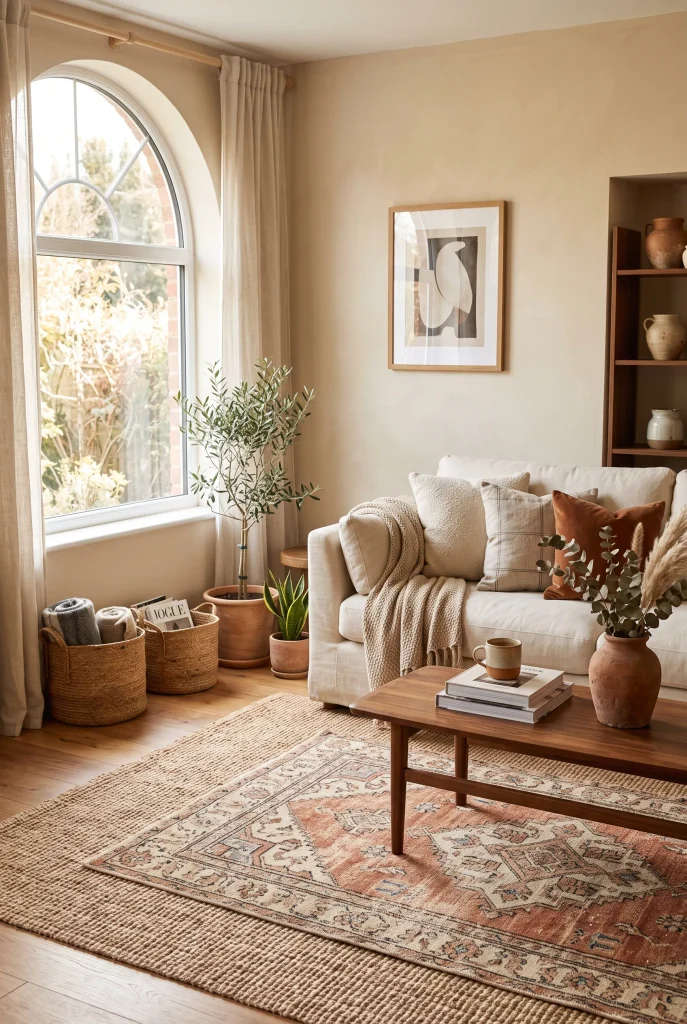
- Layering rugs adds warmth and makes the seating area feel more defined.
- Combine natural jute with a softer patterned or vintage-style rug.
- Keep the lower rug slightly larger so both layers remain visually balanced.
A layered rug can make a living room feel instantly warmer, softer, and more finished. Start with a large jute or sisal rug that defines the main seating area, then place a smaller wool or vintage-inspired rug on top. The contrast between rough natural fibers and softer woven patterns creates depth without overwhelming the room. I’ve noticed this works particularly well in open layouts because the rug visually separates the lounge area from nearby spaces. Choose muted shades such as beige, oatmeal, faded brown, or warm cream to maintain a relaxed, earthy appearance.
The key is choosing rugs that complement rather than compete with each other. Keep the larger base rug simple, then let the smaller rug introduce subtle pattern or variation. Make sure the front legs of your sofa and chairs sit comfortably on the layered rugs so the arrangement feels connected. A coffee table placed centrally can help anchor everything visually. This simple combination also makes a neutral room feel more inviting underfoot. For a cozy earthy living room, natural fibers, soft vintage patterns, and warm neutral shades create an effortlessly comfortable foundation that feels both stylish and practical.
5. Woven Basket Styling
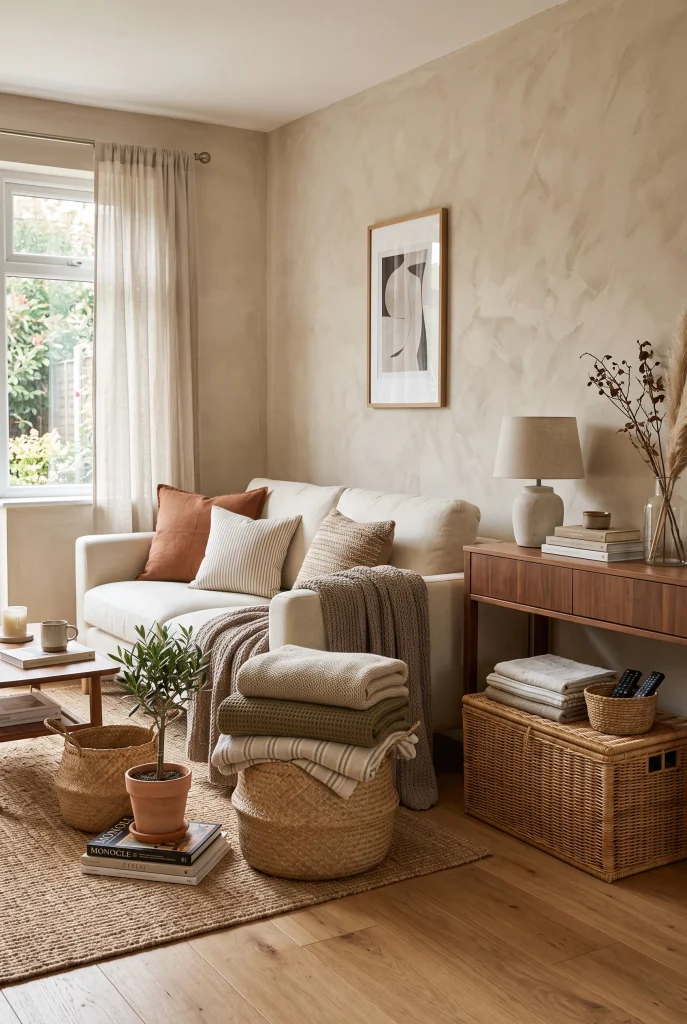
- Woven baskets add natural texture while providing useful everyday storage.
- Place them beside sofas, consoles, shelves, or empty corners.
- Use baskets for blankets, magazines, toys, or other frequently used items.
Woven baskets are one of those small decorating details that can make a room feel warmer while solving a practical problem. Place a large basket beside the sofa for blankets, a smaller one beneath a console for everyday items, or several baskets together in an unused corner. Materials such as rattan, seagrass, cane, and water hyacinth bring natural texture into the room. They also help prevent open shelves and tabletops from becoming visually cluttered. In my experience, useful storage looks much more intentional when the container itself becomes part of the room’s overall design.
Try varying the shapes and sizes instead of buying a matching set. A tall basket beside the sofa can balance the height of nearby furniture, while a low basket underneath a console keeps smaller objects organized. Stick with natural tan, honey, beige, or warm brown shades for an organic effect. Avoid filling every basket completely because a little breathing room keeps the arrangement visually light. When paired with linen upholstery, wooden furniture, and soft rugs, woven storage becomes more than organization. It adds warmth, texture, and character while helping the room stay comfortable and easy to maintain.
View: 23 Best & Easy Halloween Home Decor Ideas to Try Now
6. Earth-Tone Accent Chairs
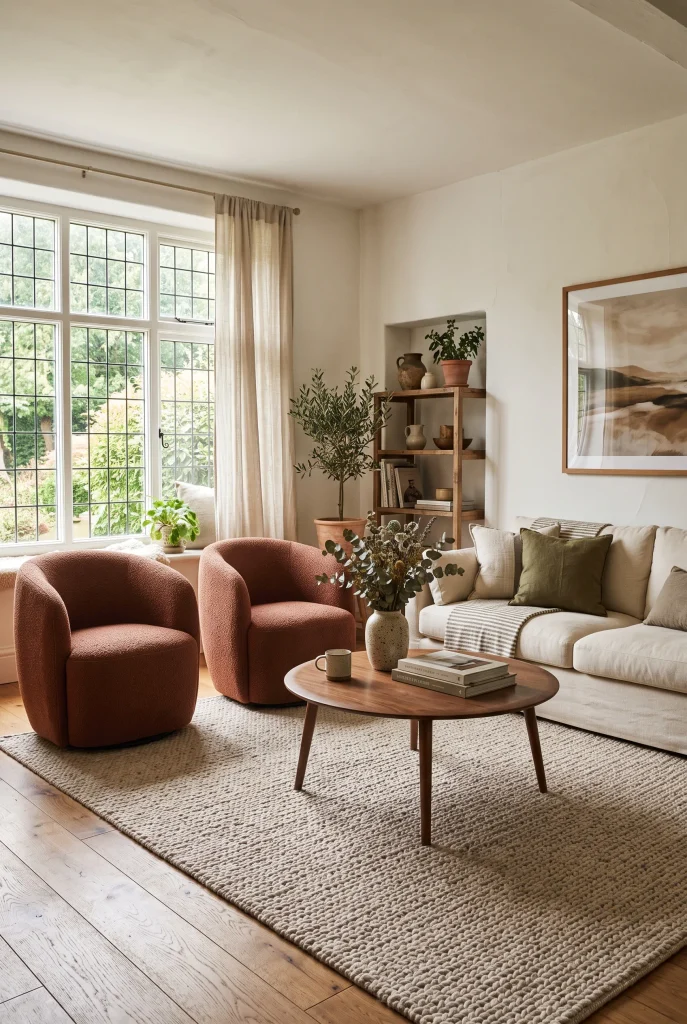
- Earth-tone chairs introduce color without making the room feel too bold.
- Terracotta, olive, camel, and muted brown work beautifully with neutral sofas.
- Angle chairs slightly toward the sofa to create a welcoming conversation area.
An accent chair in an earthy shade can give a neutral living room just enough personality without disturbing its calm atmosphere. Consider muted terracotta, camel, olive, tobacco brown, or warm clay upholstery. Curved silhouettes can soften a room filled with straight-edged furniture, while a classic wooden-frame chair can add a more rustic character. Position the chair opposite or slightly angled toward the sofa so the seating arrangement encourages conversation. This small change can make an otherwise ordinary layout feel much more intentional, especially when the rest of the furnishings stay understated and naturally toned.
Choose an accent chair that connects with another color already present in the room. For example, a terracotta chair can echo a clay vase, while an olive chair can complement leafy plants or a muted patterned cushion. This repetition helps the accent feel integrated rather than randomly added. Keep the surrounding accessories simple so the chair remains a visual focal point. A small side table, woven basket, or textured floor lamp can complete the corner without overcrowding it. I’ve seen this approach work especially well in neutral spaces where one carefully chosen earthy chair creates warmth and visual interest.
7. Soft Earthy Lighting
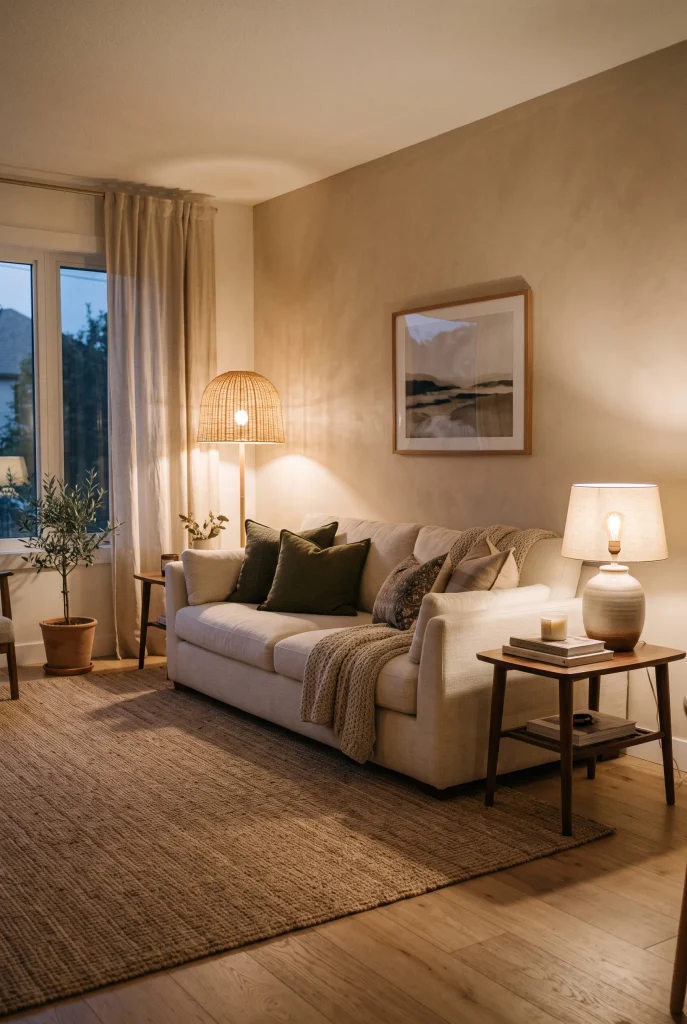
- Warm lighting instantly makes neutral rooms feel softer and more comfortable.
- Combine floor lamps, table lamps, and overhead lighting instead of relying on one source.
- Choose warm bulbs to enhance beige, brown, cream, and terracotta tones.
Lighting can completely change the mood of an earthy living room once the sun goes down. Instead of depending on a single ceiling fixture, layer several gentle sources around the space. A woven floor lamp beside the sofa, a small ceramic table lamp on a console, and warm overhead lighting can create different pools of illumination. This makes the room feel softer and more dimensional. Choose warm white bulbs rather than cool daylight bulbs because they complement natural materials and muted colors beautifully. In my experience, thoughtful lighting often makes a bigger difference than adding another decorative accessory.
Think about where you actually need light before choosing fixtures. A floor lamp can brighten a reading corner, while a table lamp creates a softer glow near seating or shelving. Keep the fixtures visually simple so they support rather than overpower the furniture. Materials such as rattan, linen, ceramic, aged brass, and wood reinforce the organic atmosphere. During the day, allow natural window light to remain the main source, then use layered lamps as evening arrives. This combination gives the room a flexible atmosphere that feels bright when needed and wonderfully relaxed when it is time to unwind.
8. Olive Green Accents
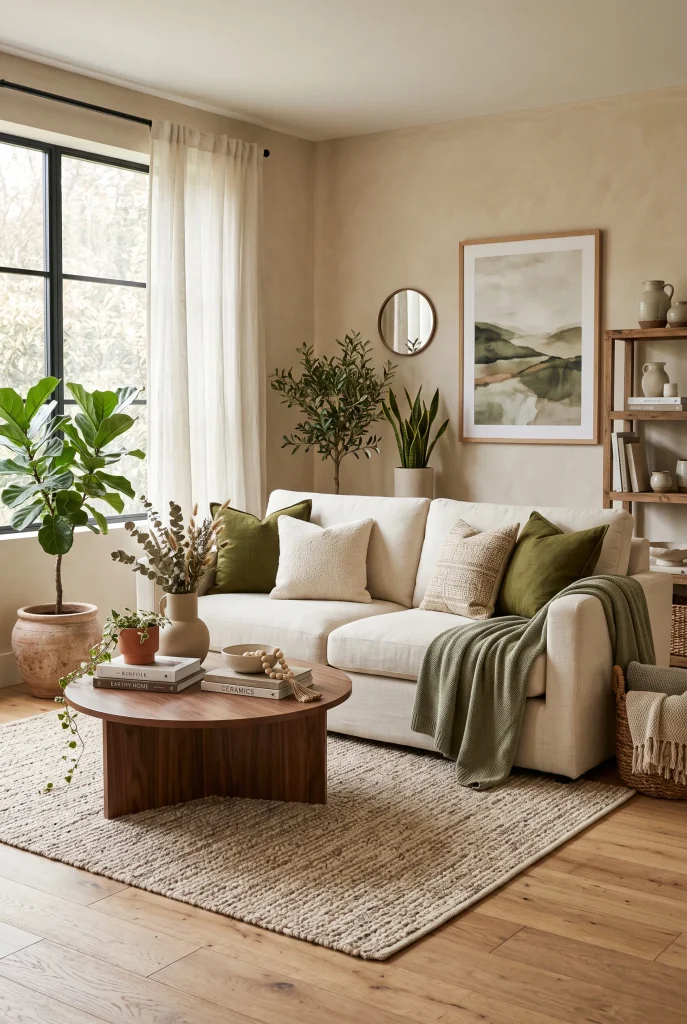
- Olive green adds natural color while keeping the room calm and sophisticated.
- Introduce it through cushions, throws, curtains, artwork, or small furniture.
- Repeat the shade subtly to create a cohesive connection throughout the room.
Olive green is an easy way to introduce color without losing the relaxed character of a neutral space. Its muted quality works beautifully with cream, beige, walnut, tan, and warm gray. You can bring it in through cushions, a throw, curtains, artwork, or a small accent chair rather than committing to an entire green wall. This makes the color easy to adjust later. Pair olive with natural wood and woven materials to strengthen its connection with nature. The result feels grounded and fresh, giving a neutral seating area more personality without making the palette visually busy.
A little repetition helps olive green feel intentional. For example, use an olive cushion on the sofa, a small botanical print nearby, and a plant in a darker green planter. These repeated touches create rhythm without making everything match. If your room receives plenty of natural light, olive can look especially rich against warm cream walls. Keep larger surfaces neutral so the green remains an accent rather than dominating the space. That balance is useful when creating a cozy earthy living room because the color adds visual interest while preserving the peaceful, comfortable feeling that makes earthy interiors so appealing.
9. Terracotta Decor
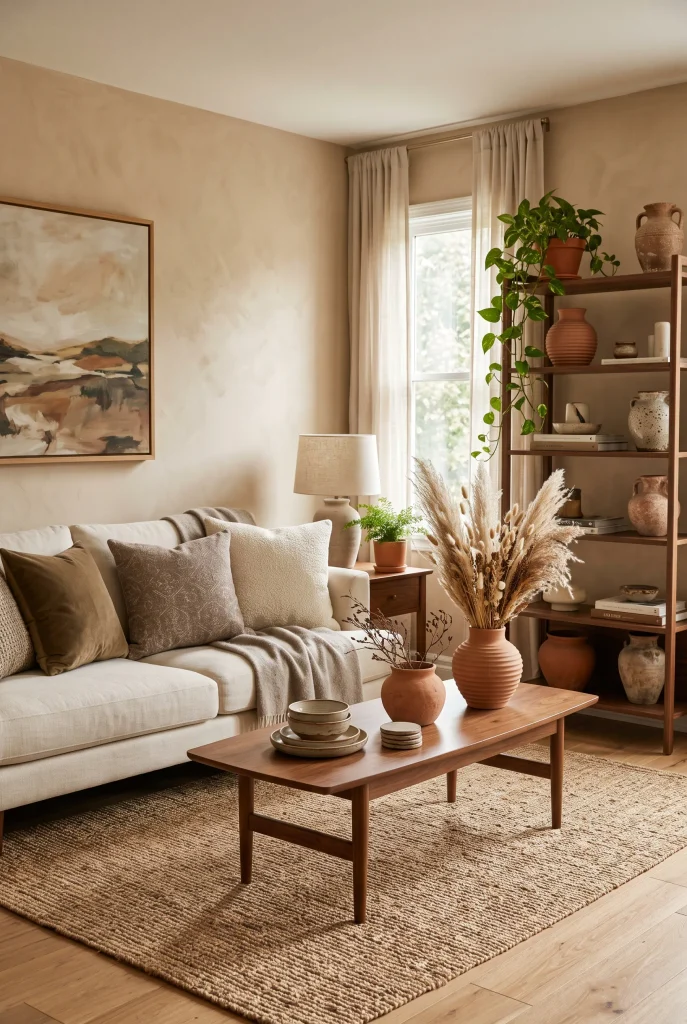
- Terracotta brings warmth and a subtle handcrafted feeling to neutral spaces.
- Use clay vases, bowls, planters, candle holders, or small decorative objects.
- Balance reddish clay tones with cream, beige, and natural wood.
Terracotta accents bring a beautiful sun-baked warmth to a neutral living room without requiring a major redesign. Think handmade clay vases, planters, bowls, candle holders, or small sculptural pieces placed throughout the space. The warm reddish-brown color naturally complements beige upholstery, cream walls, walnut furniture, and woven textures. Start with one or two pieces and build gradually rather than filling every surface. This keeps the styling relaxed and believable. I’ve noticed that handmade-looking ceramics are particularly effective because their irregular shapes and earthy finishes add character without making the room feel overly decorated.
Use terracotta as a supporting color rather than the dominant shade. A clay vase on the coffee table can echo a small planter on a shelf, creating subtle visual repetition. Dried grasses or simple branches can make the pottery feel even more organic. If the terracotta looks too strong against your existing palette, choose dusty, muted, or washed finishes instead of saturated orange. Pairing these accents with natural fibers and warm wood creates a balanced composition. The overall effect is cozy, grounded, and slightly rustic while still feeling clean enough for a modern home.
10. Linen Window Treatments
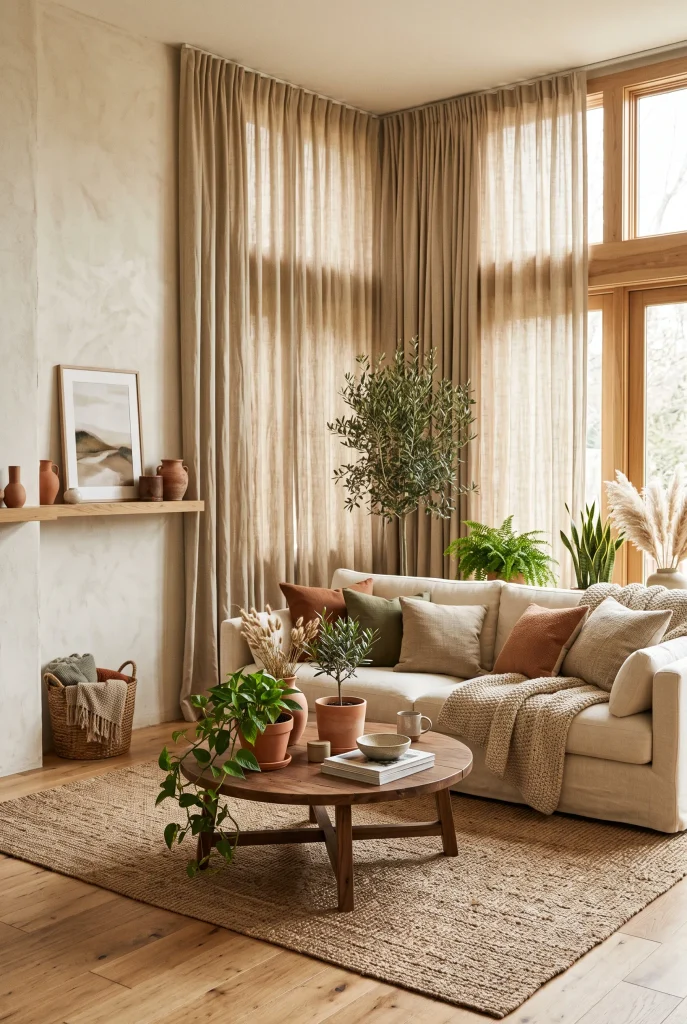
- Linen curtains soften harsh daylight while keeping the room bright and airy.
- Choose warm beige, oatmeal, cream, or natural flax shades.
- Hang curtains higher and wider than the window to create a taller, spacious appearance.
Linen curtains can make a living room feel softer almost instantly because they filter daylight instead of blocking it completely. Choose natural shades such as oatmeal, flax, warm beige, or creamy ivory to complement earthy furniture and accessories. Hang the curtain rod several inches above the window frame and extend it beyond both sides when possible. This simple placement makes the windows appear larger and the ceiling feel taller. The gently rumpled texture of linen also adds visual interest without introducing a busy pattern, making it especially useful in rooms built around calm, natural colors.
For a more polished result, let the curtains fall close to the floor rather than stopping at the bottom of the window. Keep the fabric slightly gathered so the folds create softness around the glass. Pairing linen panels with woven shades can provide additional privacy while maintaining the natural aesthetic. During the day, sunlight passing through the fabric creates a gentle glow across wood floors and neutral upholstery. That filtered light can make the entire room feel warmer. In my experience, updating window treatments is one of the simplest ways to give an existing living room a noticeably more finished appearance.
11. Organic Coffee Table
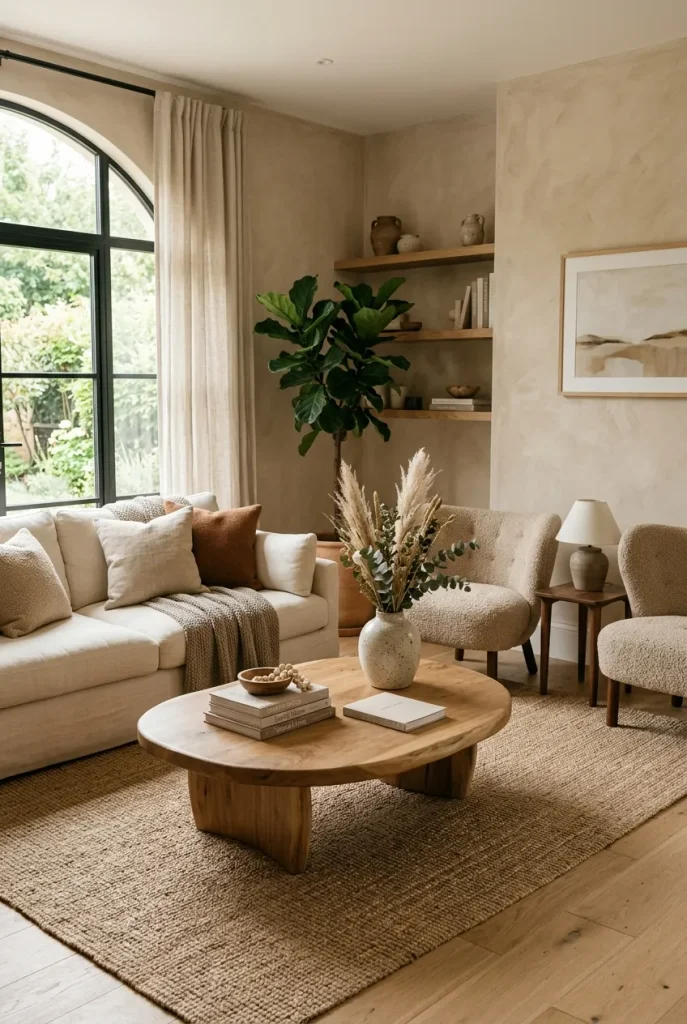
- Rounded wood furniture softens rooms filled with straight architectural lines.
- Choose tables with visible grain, natural edges, or gently curved silhouettes.
- Keep tabletop styling simple with ceramics, books, or a small branch arrangement.
A coffee table with an organic shape can become the natural centerpiece of a warm living room. Instead of a sharp rectangular design, look for rounded, oval, irregular, or softly curved silhouettes that make the seating arrangement feel more relaxed. Natural wood adds another layer of warmth, especially when the grain remains visible. Keep the tabletop styling intentionally simple with a handmade ceramic bowl, a small vase, or two stacked books. The goal is to create a useful focal point that feels collected rather than overly styled while still giving the surrounding furniture a strong visual anchor.
Scale matters just as much as shape when choosing a coffee table. Leave enough space between the table and sofa for comfortable movement, while making sure it is large enough to visually connect the seating pieces. A rounded design works particularly well when paired with curved chairs or a soft rug because the repeated forms create continuity. If the room already contains several bold textures, choose a simpler table with a clean finish. Natural wood, neutral upholstery, and subtle pottery can create a balanced arrangement that feels practical for everyday living while remaining highly photogenic.
12. Botanical Wall Art
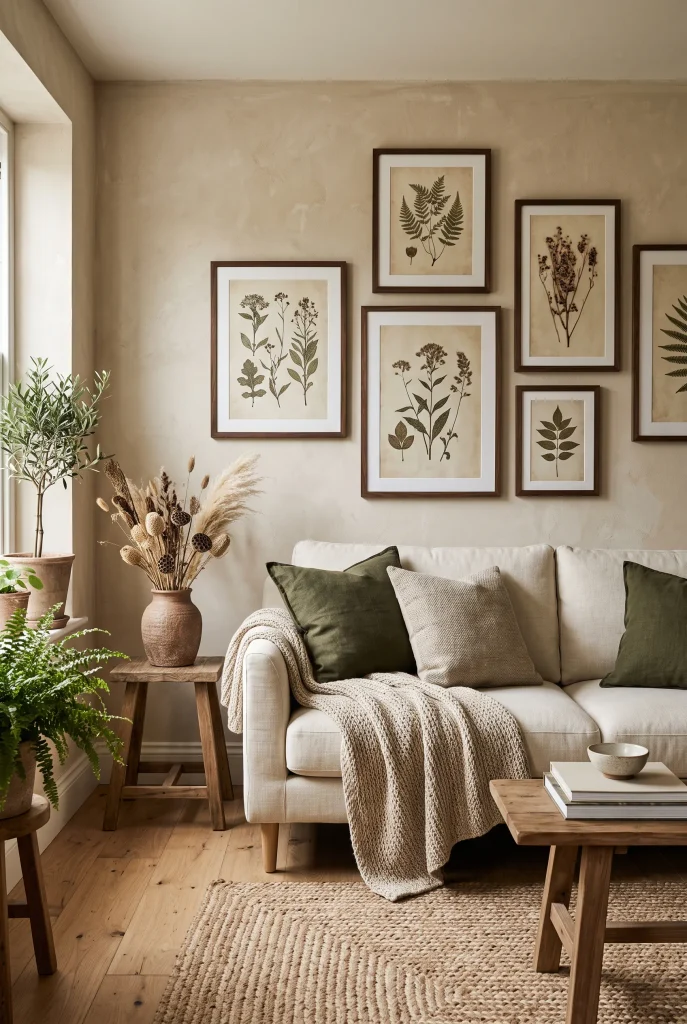
- Botanical artwork introduces nature-inspired color without adding visual clutter.
- Use muted greens, browns, beige, and cream for a softer composition.
- Group several prints together to create a simple focal wall above the sofa.
Botanical wall art is an easy way to bring nature indoors while keeping the overall color palette calm. Choose prints featuring leaves, branches, grasses, pressed plants, or understated botanical illustrations in muted greens and earthy browns. Simple walnut or natural wood frames can connect the artwork with nearby furniture. Above a sofa, arrange several pieces with consistent spacing so the collection feels intentional. This creates a focal point without requiring a dramatic paint color or oversized statement piece. The gentle organic imagery also works naturally with woven rugs, linen fabrics, ceramics, and other nature-inspired materials.
Before hanging the artwork, lay the frames on the floor and experiment with different arrangements. A symmetrical grid feels clean and modern, while a more relaxed gallery arrangement gives the room a collected character. Keep the artwork centered around eye level and proportional to the sofa underneath it. If your walls are warm cream or beige, choose prints with enough tonal contrast to remain visible without appearing harsh. I’ve seen botanical artwork work especially well in neutral homes because it adds personality and color while preserving the peaceful, grounded atmosphere of an earthy decorating scheme.
13. Rustic Wood Shelving
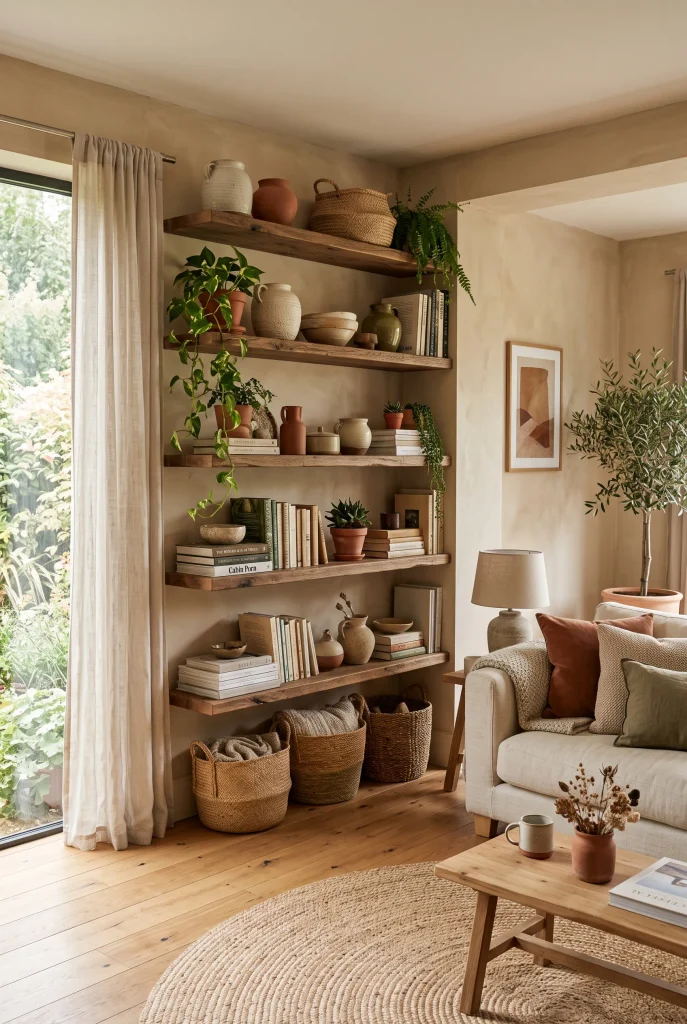
- Open wood shelves add storage while keeping the room visually warm.
- Mix books, ceramics, baskets, and greenery for a collected appearance.
- Leave some shelf space empty so the arrangement feels airy rather than crowded.
Rustic wood shelving can turn an empty wall into a warm, useful feature without making the room feel overly decorated. Choose shelves with visible grain and a lightly finished surface to preserve their natural character. Style them with a combination of books, handmade ceramics, woven baskets, small plants, and a few meaningful objects. Avoid filling every inch because empty space helps individual pieces stand out. The varied heights and textures create visual movement while keeping the palette grounded. This approach works especially well when you want storage that feels like part of the decorating scheme rather than a purely functional addition.
For a balanced arrangement, begin with your larger objects and then fill smaller spaces gradually. Place heavier-looking items toward the lower shelves and lighter pieces higher up to create a stable visual rhythm. Repeat colors from the rest of the room, such as cream, olive, terracotta, and warm brown, so the shelves feel connected. You can also rotate decorative pieces seasonally without changing the entire setup. In my experience, natural wood shelves look best when styled with restraint. A few thoughtfully chosen objects usually create more impact than a crowded collection of accessories.
14. Earthy Throw Pillows
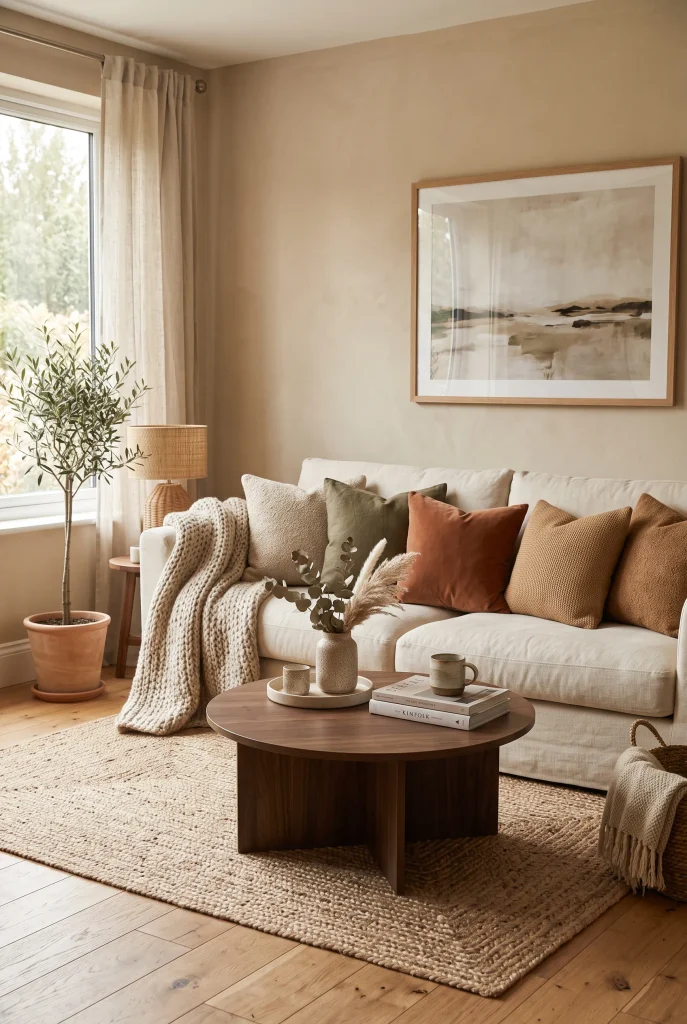
- Mix earthy pillow colors to make a neutral sofa feel more inviting.
- Combine linen, boucle, cotton, and woven covers for tactile contrast.
- Use different sizes and shapes while keeping the palette coordinated.
Throw pillows are a simple way to add warmth, color, and texture without changing your main furniture. Start with a neutral sofa and layer cushions in oatmeal, camel, olive, terracotta, muted brown, or warm cream. Instead of choosing identical covers, combine several textures such as linen, boucle, cotton, and woven fabric. Different materials catch light differently, making the seating area look richer. Use larger pillows toward the back and smaller ones toward the front for a comfortable layered arrangement. This gives even a simple sofa the relaxed, welcoming appearance that makes earthy interiors so appealing.
Keep the color story controlled by repeating shades already present elsewhere in the room. A terracotta pillow can connect with a clay vase, while an olive cushion can echo nearby greenery. This repetition creates cohesion without making every accessory match. If you prefer a quieter look, choose several shades of beige and brown with subtle patterns instead. Change a few covers when the season shifts rather than replacing the entire collection. That makes the styling more practical and affordable. A carefully layered cushion arrangement can make the room feel finished while still leaving plenty of space for everyday lounging.
15. Indoor Greenery
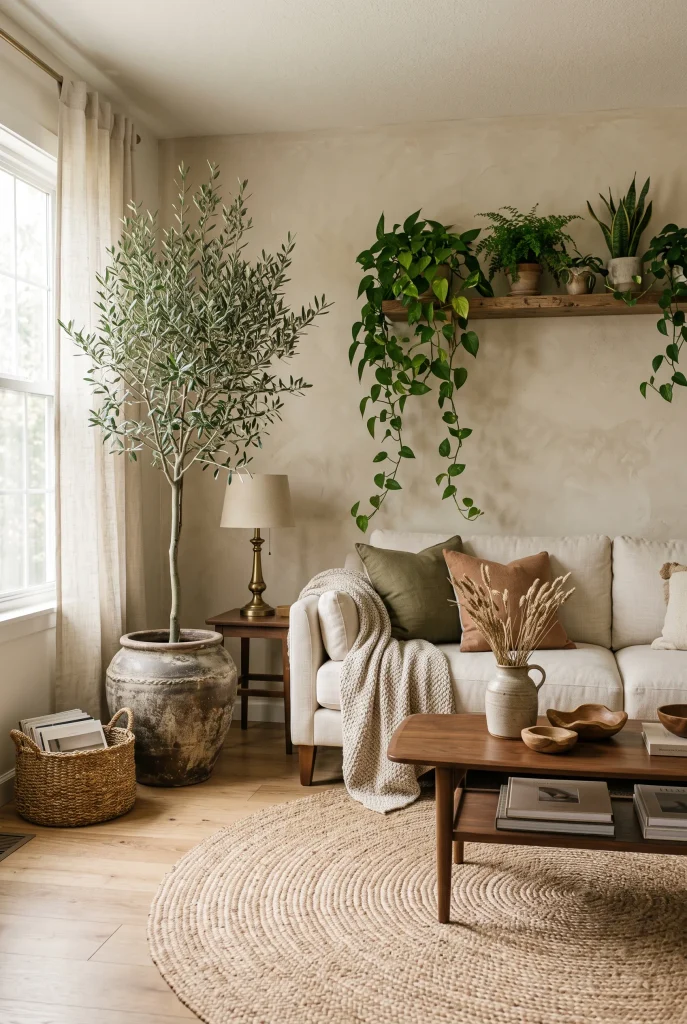
- Green plants add freshness and natural color to warm neutral interiors.
- Mix tall floor plants with smaller tabletop and trailing varieties.
- Use ceramic, terracotta, or woven planters to reinforce the earthy palette.
A few well-placed plants can make a neutral living room feel noticeably fresher and more alive. Use a tall indoor tree beside a sofa or window to add height, then introduce smaller plants on shelves, side tables, or consoles. Trailing varieties can soften the edges of open shelving, while compact plants fill empty corners without taking over the room. Choose planters made from terracotta, ceramic, stone, or woven materials so the greenery feels integrated with the rest of the decor. Natural foliage also adds gentle movement and organic color that works beautifully with warm neutral furnishings.
Placement matters because plants should enhance the layout rather than create obstacles. Keep larger varieties near windows where they can receive suitable light, and avoid blocking walkways with oversized pots. If you are new to indoor plants, start with a few easy-care varieties and build your collection gradually. I’ve noticed that even one substantial plant can make a room feel less sterile and more lived-in. Pair greenery with wooden furniture, woven textiles, and earthy ceramics to create a cohesive nature-inspired atmosphere that feels comfortable, fresh, and easy to maintain.
16. Woven Pendant Light
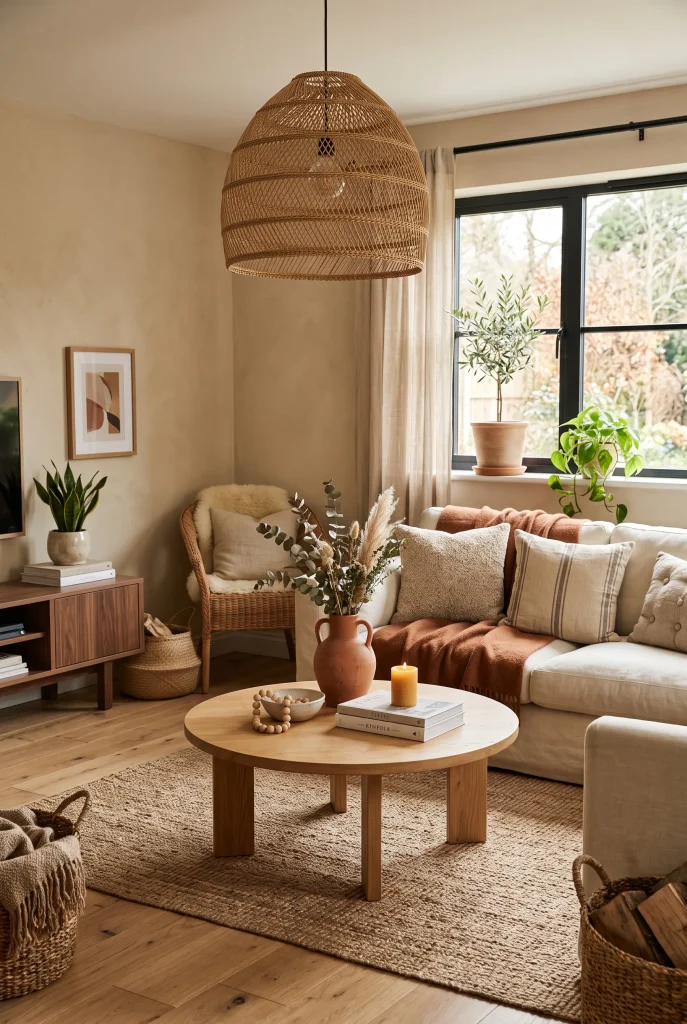
- A woven pendant adds texture overhead without taking up floor space.
- Rattan, cane, and natural-fiber shades create a softer visual focal point.
- Choose a rounded silhouette to complement relaxed, organic furniture.
A woven pendant light can add warmth to a living room while creating an eye-catching feature above the seating area. Rattan, cane, bamboo, and other natural fibers introduce texture at a higher level, helping the room feel layered from floor to ceiling. Choose a rounded or softly sculptural shade that complements your furniture rather than competing with it. When switched on, the woven surface can cast gentle patterns across nearby walls and furnishings. During the day, the fixture remains a decorative element that reinforces the natural materials already used throughout the space.
Position the pendant carefully over the main seating or coffee table area so it feels connected to the furniture below. If the ceiling is low, choose a more compact design with enough clearance for comfortable movement. Keep the surrounding decor relatively simple because the light itself can become the room’s focal point. Natural wood, linen, jute, and ceramic pieces will support its organic character without making the space feel busy. For a cozy earthy living room, a woven overhead fixture provides both function and texture, making the entire arrangement feel warmer, more considered, and visually complete.
17. Vintage Leather Chair
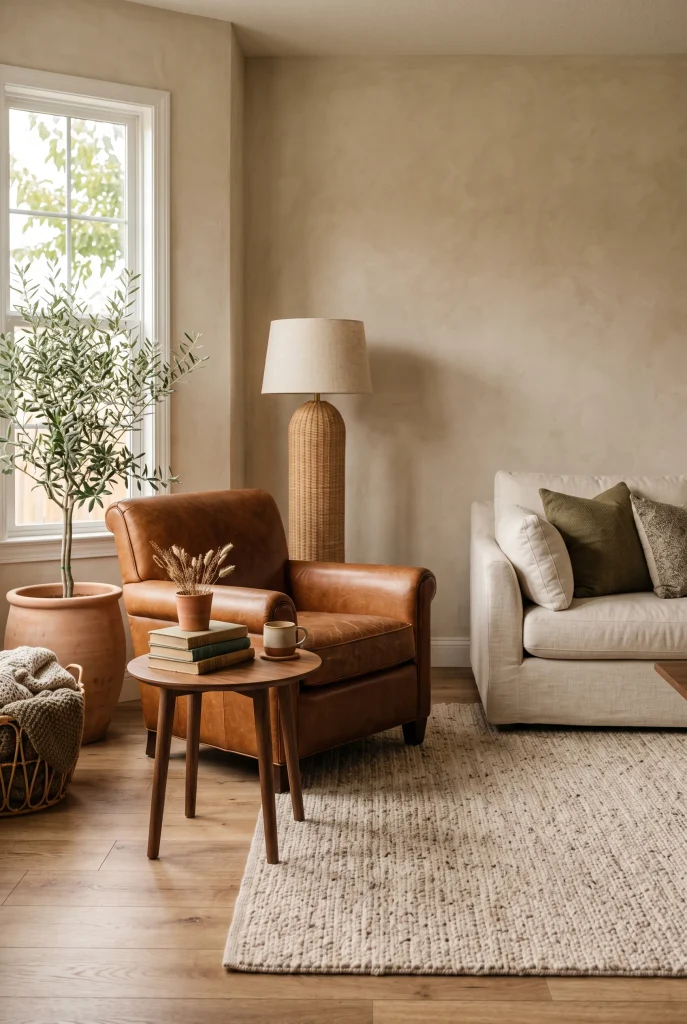
- Cognac or tobacco leather adds warmth and character to neutral rooms.
- Choose a vintage-inspired chair with visible grain or gently aged details.
- Pair leather with soft textiles to prevent the space from feeling too heavy.
A vintage leather chair can give a neutral living room a richer, more collected personality. Look for cognac, tobacco, caramel, or medium brown leather with visible grain and subtle signs of aging. These tones pair naturally with cream upholstery, walnut furniture, beige rugs, and terracotta accessories. Place the chair beside a window, near a reading lamp, or slightly opposite the main sofa to create a useful secondary seating area. The contrast between smooth leather and soft textiles makes the room feel layered while giving one corner a distinctive visual identity.
Balance the stronger character of leather with lighter materials around it. A linen cushion, woven throw, small wood side table, or soft floor lamp can make the chair feel comfortable rather than overly formal. Avoid placing too many dark brown pieces together because they can visually weigh down a smaller room. Instead, repeat the leather tone in a small accessory or picture frame for subtle continuity. I’ve seen this combination work particularly well in spaces that need more personality because one well-chosen leather chair can make simple neutral furniture feel intentional and timeless.
18. Handmade Ceramic Decor
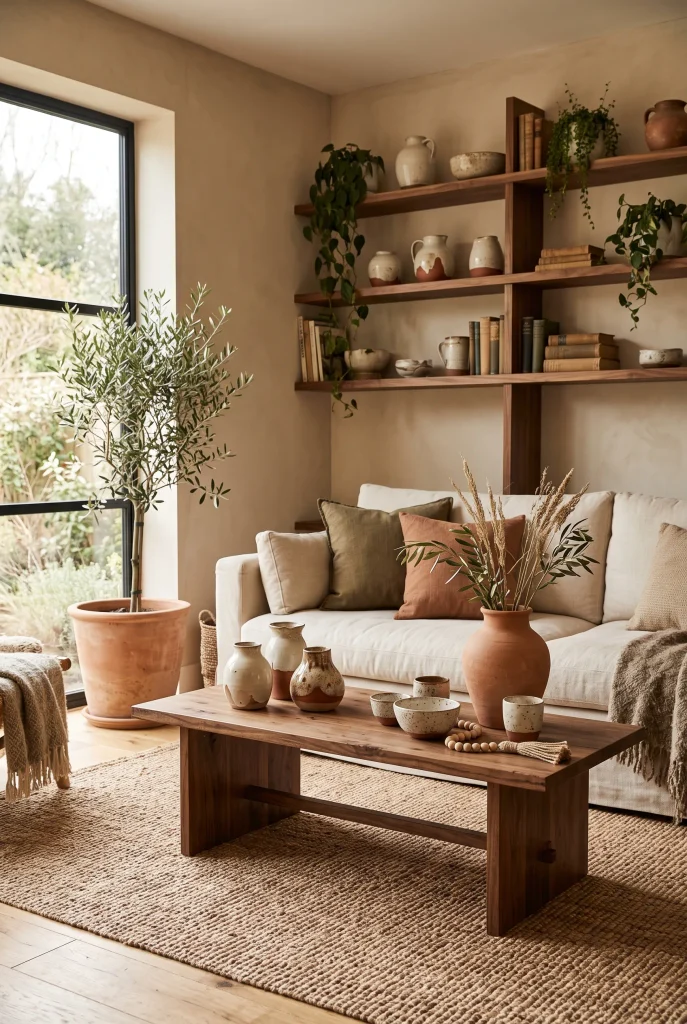
- Handmade ceramics add subtle character and an artisanal feeling.
- Choose imperfect shapes and matte finishes for a natural appearance.
- Group a few pieces together instead of scattering accessories across every surface.
Handmade ceramic pieces can bring a quiet sense of craftsmanship to an earthy living room. Look for matte vases, shallow bowls, sculptural vessels, candle holders, or small planters with slightly irregular shapes. Cream, sand, taupe, clay, and warm brown finishes work especially well with natural wood and linen. Display a few pieces on a coffee table, open shelf, or console rather than filling every available surface. Their imperfect forms create visual interest while maintaining the understated character of the room. This is an easy way to make mass-produced furniture feel more personal and thoughtfully styled.
When arranging ceramics, vary their heights and silhouettes so the grouping feels natural. A tall vase beside a low bowl creates contrast, while a small sculptural object can fill the middle without making the arrangement crowded. Keep some surfaces intentionally clear to preserve a sense of calm. Natural imperfections, subtle brush marks, and handmade finishes can make the decor feel more authentic than perfectly identical accessories. In my experience, a small collection of ceramics often has more impact than many unrelated decorations. Combined with woven textiles, greenery, and warm wood, they create a relaxed and grounded atmosphere.
19. Earthy Gallery Wall
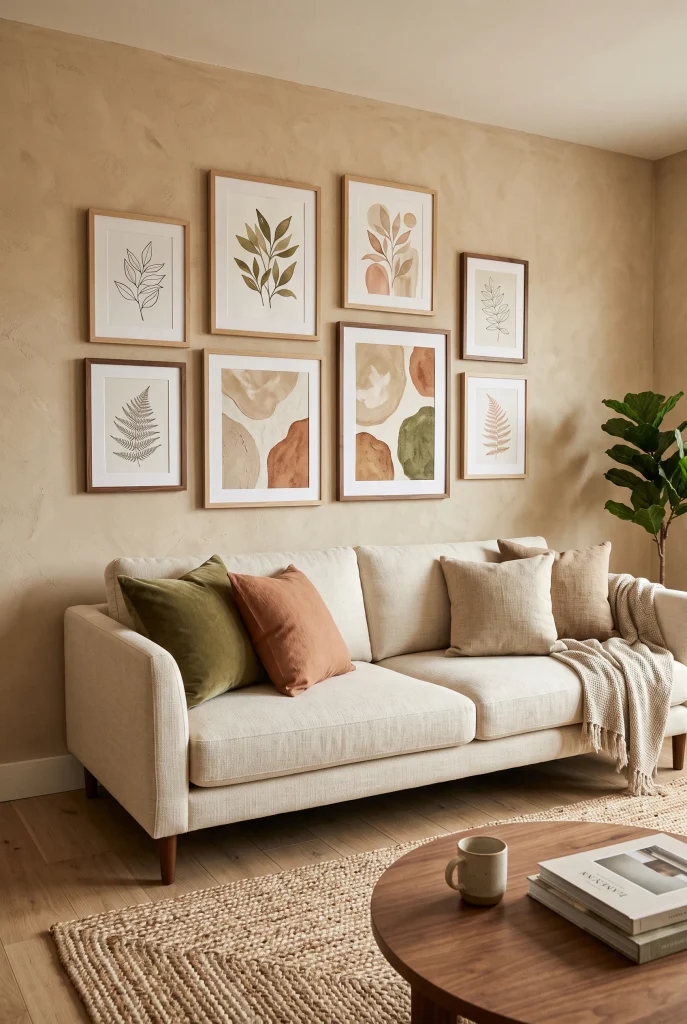
- A gallery wall creates a strong focal point without requiring bold furniture.
- Mix botanical prints, abstract artwork, and simple natural-toned illustrations.
- Keep frames coordinated in wood tones for a cohesive, collected appearance.
A thoughtfully arranged gallery wall can give a neutral living room personality while keeping the overall atmosphere calm. Combine botanical illustrations, soft abstract artwork, vintage-inspired prints, and simple line drawings in earthy shades. Natural wood or walnut frames help connect the artwork with nearby furniture and flooring. Start by choosing one larger piece as an anchor, then arrange smaller frames around it. This creates a layered composition without making the wall feel chaotic. The artwork should add character while still supporting the room’s warm palette rather than becoming a completely separate visual statement.
Before hanging anything, arrange the frames on the floor and adjust their spacing until the composition feels balanced. Keep the center of the overall arrangement around eye level, especially when it sits above a sofa. You can mix frame sizes, but repeating similar colors will make the collection feel intentional. If the room is already heavily textured, choose artwork with simpler designs. A gallery wall works particularly well when paired with linen, wood, woven materials, and greenery. These elements create a relaxed backdrop that feels personal and layered without sacrificing the clean appearance of the room.
20. Cozy Reading Corner
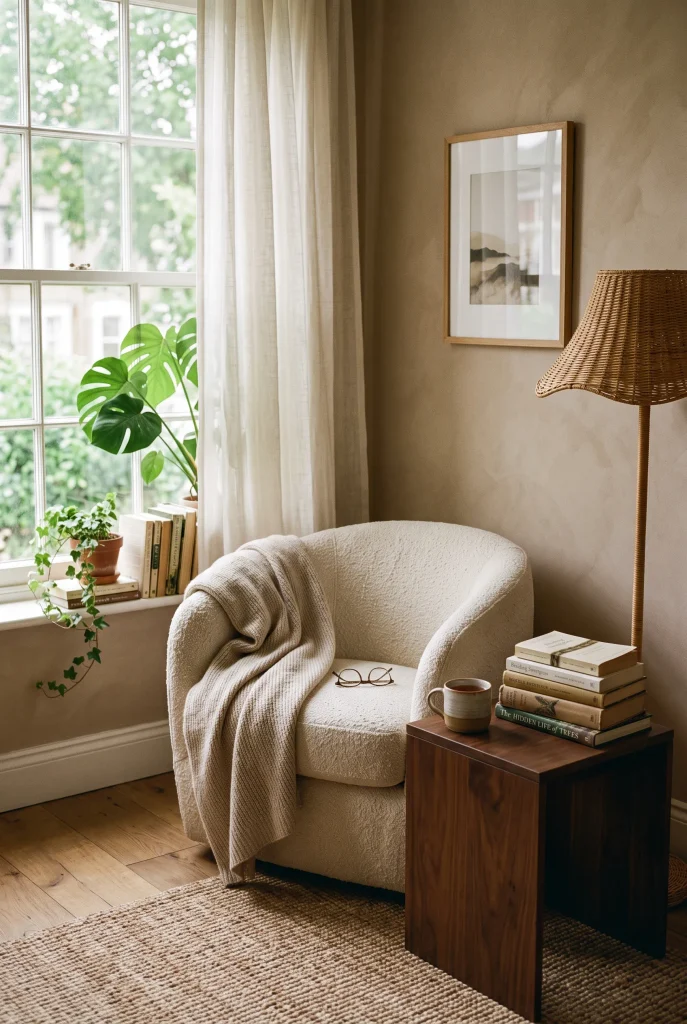
- A dedicated reading corner makes an unused area feel purposeful.
- Use a comfortable chair, soft throw, small table, and warm lamp.
- Position the chair near natural light while keeping enough space for movement.
An unused corner can become one of the most inviting parts of the living room with just a few thoughtful pieces. Start with a comfortable armchair in boucle, linen, or soft woven fabric, then add a small wooden side table for books and drinks. A floor lamp provides useful evening light, while a soft throw makes the chair feel ready for relaxing. Position the setup near a window when possible so daytime reading benefits from natural light. This creates a functional little retreat without requiring a large footprint or major changes to the existing layout.
Keep the corner visually connected to the rest of the room by repeating materials and colors. A walnut table can echo the coffee table, while a beige cushion can coordinate with the main sofa. Add one plant or a small ceramic object for personality, but avoid overcrowding the area. Leave enough clearance around the chair so the corner feels comfortable rather than squeezed into leftover space. I’ve noticed that dedicated small zones like this make larger living rooms feel more useful. They also add an inviting lifestyle element that photographs beautifully for Pinterest.
21. Earthy Candle Glow
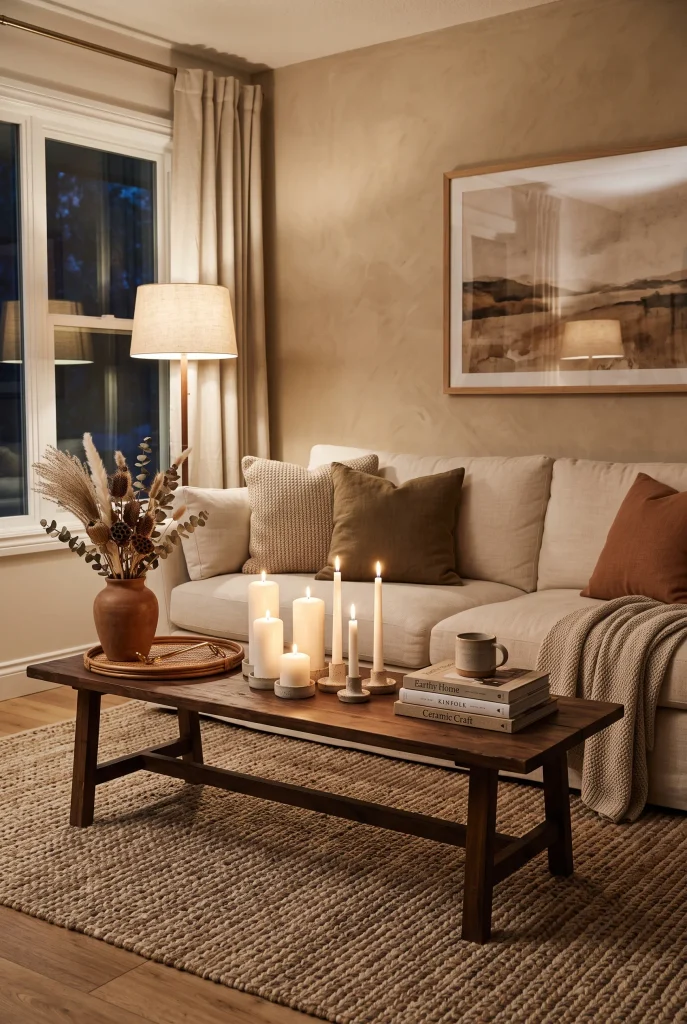
- Candlelight adds a soft finishing layer to an already warm interior.
- Group candles on trays, coffee tables, consoles, or shelves for gentle illumination.
- Choose ceramic, stone, wood, or glass holders that complement existing materials.
Few details create an evening atmosphere as quickly as a soft cluster of candles. Place several candles on a tray across the coffee table, console, or a sturdy shelf, using holders made from ceramic, stone, glass, or other materials that complement the room. Keep the colors subtle with cream, beige, clay, or warm brown finishes. When combined with lamps and low ambient lighting, candlelight creates gentle shadows that make natural textures look richer. This simple finishing touch can turn an ordinary living room into a calm space that feels especially inviting after sunset.
Safety should remain part of the styling plan, so keep candles away from curtains, plants, loose fabrics, and busy walkways. If you prefer a worry-free option, realistic flameless candles can create a similar glow. Grouping several lights together usually feels more intentional than scattering single candles randomly throughout the room. Pair the glow with linen cushions, wooden furniture, woven rugs, and handmade ceramics for a cohesive finish. A few carefully placed lights can make the room feel warmer without adding visual clutter, completing an earthy decorating style that is comfortable, practical, and easy to recreate.
Conclusion
Creating a warm and inviting living room does not require expensive furniture or a complete redesign. Simple changes like natural wood, woven textures, earthy accents, soft lighting, greenery, and layered textiles can completely shift the atmosphere. A cozy earthy living room feels comfortable because every element works together without looking overly matched or decorated. Start with one idea that fits your space, then build gradually around it. I’ve seen how small changes can make a room feel noticeably more welcoming and personal. Save this post on Pinterest for your next decorating project, try your favorite ideas, and share it with someone who loves warm, natural interiors.