21 Stunning Indoor Plant Decor Ideas for Modern Rooms
Want your modern room to feel warmer, fresher, and more alive? Indoor Plant Decor Ideas can transform plain corners, shelves, bedrooms, and living spaces with surprisingly little effort.
From a dramatic floor plant to a tiny herb pot on your kitchen counter, the right greenery can soften hard surfaces, add natural texture, and create a more welcoming atmosphere. You don’t need a huge collection of plants or a complicated decorating plan. A few thoughtfully placed pieces can make a noticeable difference. In my experience, the biggest impact often comes from choosing the right plant size and placing it where the room feels visually empty. These ideas will help you create a stylish, balanced space that feels natural and easy to enjoy.
1. Tall Corner Greenery
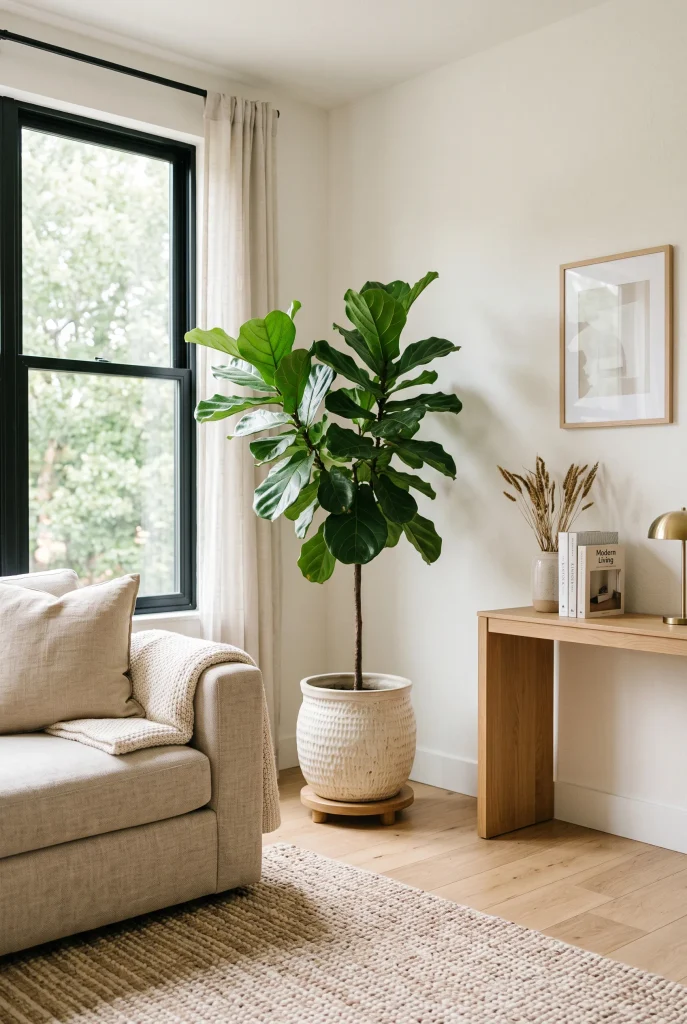
- Fills an awkward empty corner without adding bulky furniture.
- Adds height and natural texture to low modern furniture.
- A textured planter can make the setup feel more finished.
- Keep the plant slightly forward from the wall for a fuller silhouette.
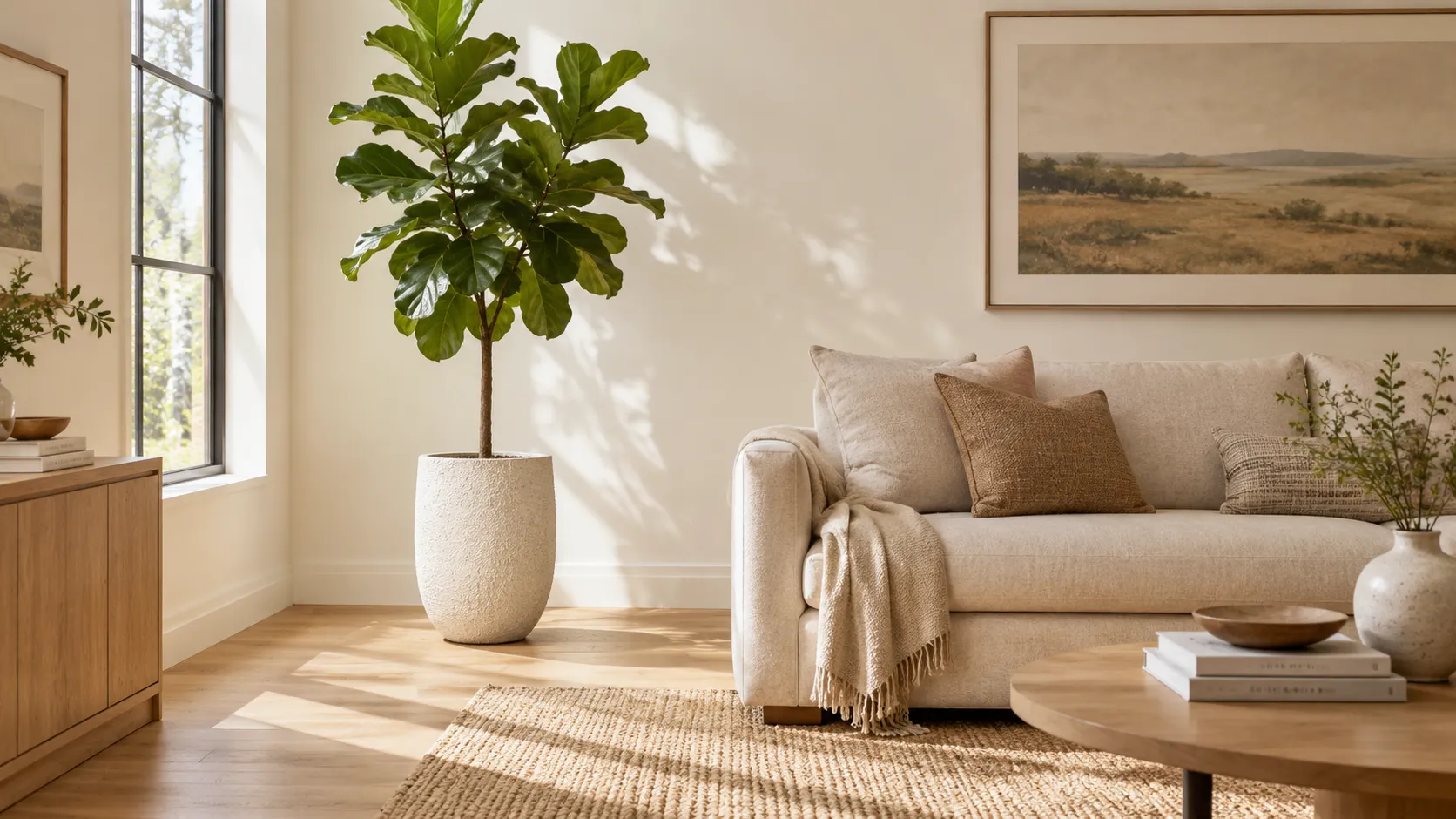
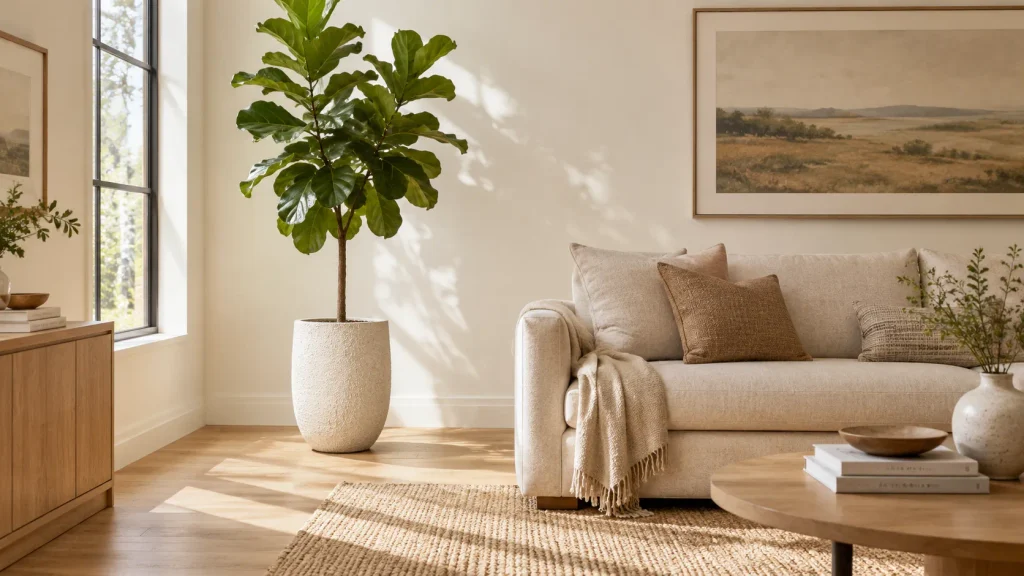
Bring an empty corner to life with a tall leafy plant that instantly adds height, softness, and personality. A slim floor plant works especially well beside sofas, media consoles, or unused windowside spaces where furniture feels too low or sparse. Choose a planter that echoes existing finishes, such as warm ceramic with oak furniture or matte white beside neutral upholstery. In my experience, placing the plant slightly away from the wall makes the leaves look fuller and gives the entire corner a more intentional, layered appearance without adding clutter.
A tall indoor plant can make modern rooms feel warmer without changing the main furniture or color scheme. Try a fiddle leaf fig, rubber plant, or bird of paradise in a simple textured planter, then leave enough breathing room around it so the silhouette stays clean. Positioning it near a bright window also creates attractive shadows across nearby walls and flooring. If your room feels visually flat, this is one of the easiest indoor plant decor ideas to try because the vertical greenery adds contrast, natural texture, and a polished finishing touch.
2. Layered Shelf Plants
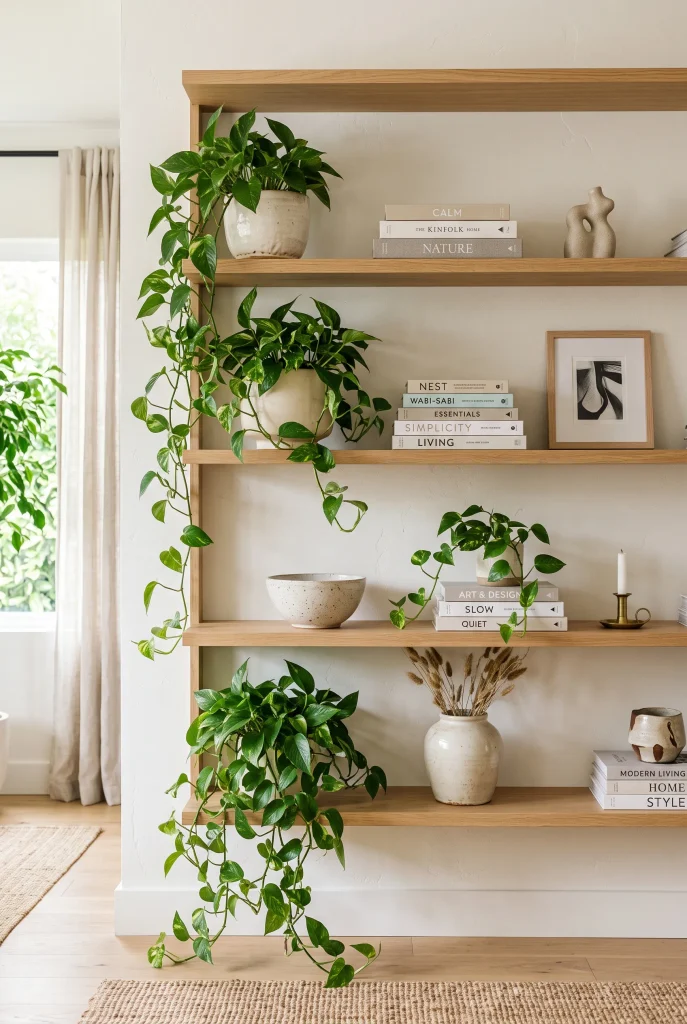
- Softens the straight lines of open shelving.
- Adds movement without making the display feel crowded.
- Trailing plants create attractive vertical layers.
- Mix greenery with books and ceramics for a collected look.
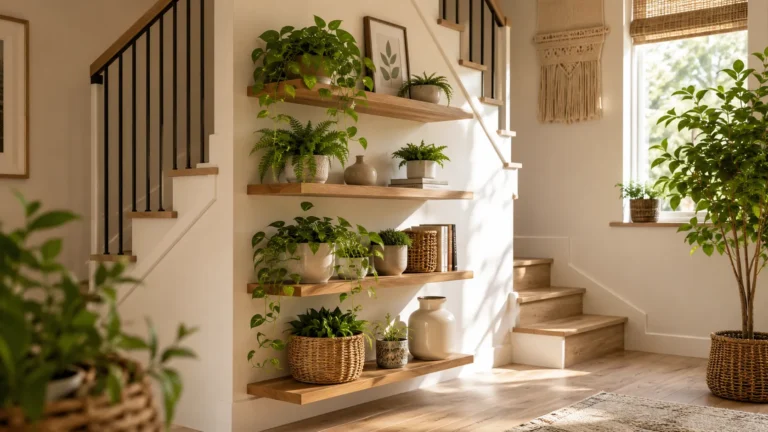
Turn an open shelf into a small green display by mixing trailing plants with books, ceramics, and a few carefully chosen objects. The goal is balance, not filling every shelf with greenery. Let vines fall naturally from one level while keeping neighboring sections quieter and more spacious. Choose pots in cream, stone, terracotta, or muted green to connect with the room’s palette. I’ve noticed that combining different leaf shapes makes even a simple shelf feel collected and personal. This approach works beautifully in living rooms, home offices, and bedrooms where storage and decoration need to share space.
Open shelving becomes much more inviting when greenery softens its straight lines and adds movement between decorative objects. Try placing a pothos, heartleaf philodendron, or string-of-hearts on an upper shelf where its foliage can trail downward naturally. Keep the plant’s container proportional to the shelf so it feels styled rather than crowded. Grouping greenery with books, framed art, and handmade ceramics creates useful visual layers while preserving a modern look. For shelves that receive uneven light, rotate plants occasionally or choose varieties suited to the available brightness, helping the display stay healthy as well as beautiful.
3. Chairside Plant Nook
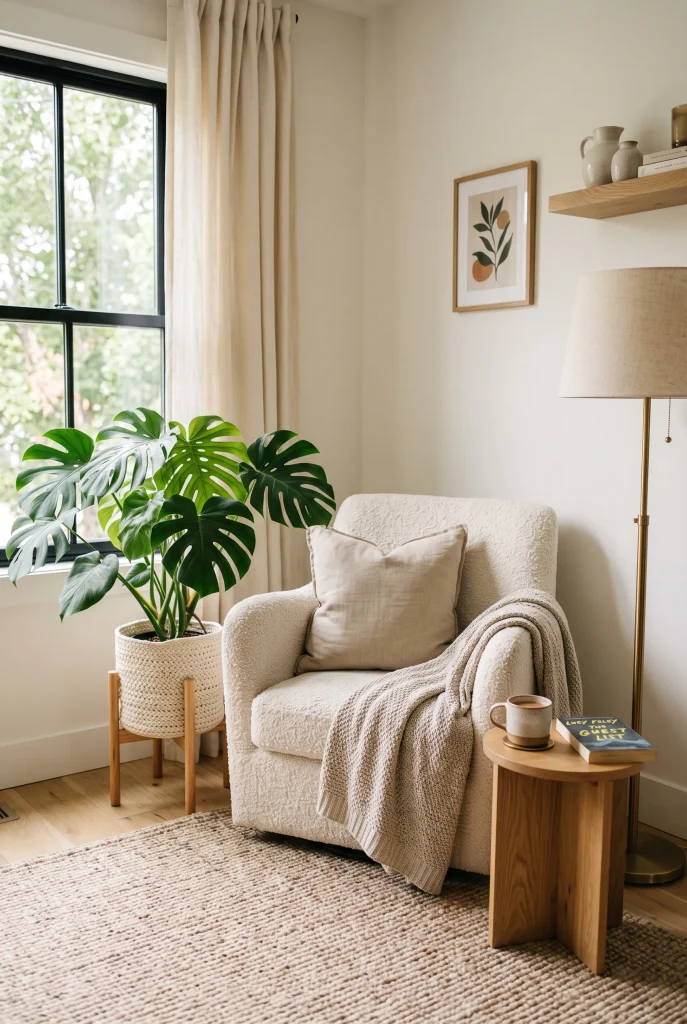
- Turns an unused seating corner into a purposeful retreat.
- Frames the chair with natural greenery and soft texture.
- Broad leaves create a strong but calming focal point.
- Keep nearby accessories simple so the plant remains visually prominent.
Create a calm focal point by placing a large leafy plant beside a neutral accent chair, turning an ordinary sitting area into a cozy little retreat. Use a woven, ceramic, or concrete planter that adds texture without competing with the chair’s fabric. Keep the plant slightly behind or beside the chair so the leaves frame the seating area rather than blocking it. Soft daylight, linen textiles, and warm wood make this combination especially inviting. This setup is practical too: it fills an awkward gap while giving the room a relaxed, nature-inspired layer that feels intentional.
A quiet reading corner can feel instantly more finished when lush foliage frames the chair and adds a gentle connection to nature. Choose a plant with broad or arching leaves, such as a monstera or bird of paradise, and place it where the foliage remains visible from the main room. A small side table, floor lamp, and textured rug can complete the arrangement without making the corner feel busy. In my experience, keeping the surrounding decor simple lets the plant become the visual anchor, while natural light highlights its shape and makes the whole nook feel more restful.
4. Window Ledge Greenery
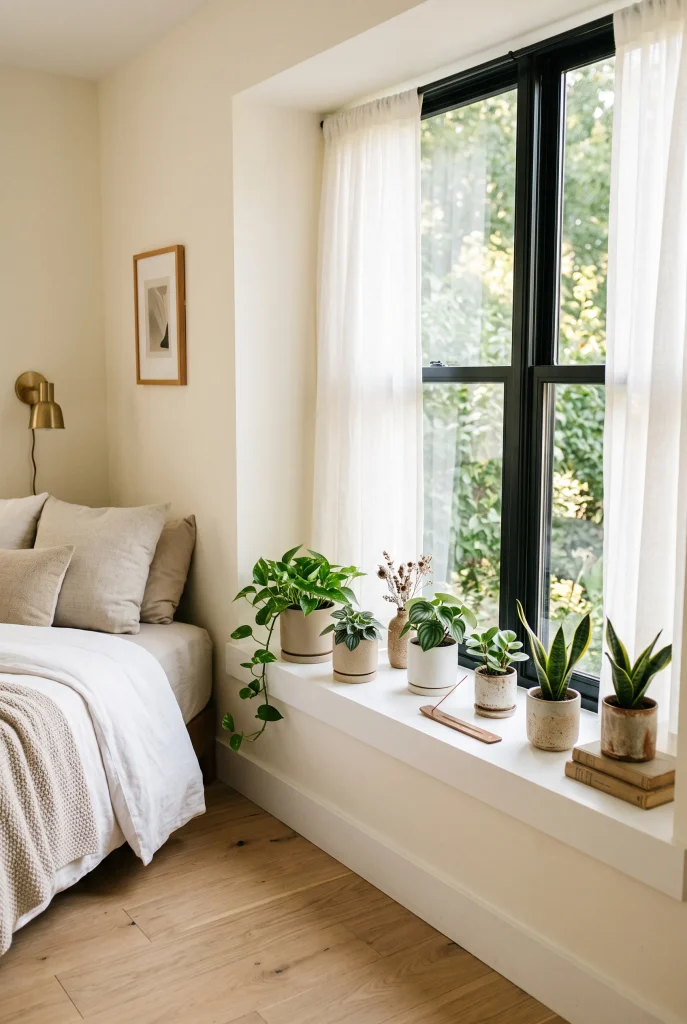
- Makes an unused window ledge feel intentionally styled.
- Small plants add life without taking valuable floor space.
- Different leaf shapes create subtle visual variety.
- Use matching or coordinated pots for a cleaner appearance.
Give an overlooked window ledge a fresh purpose with a simple collection of small leafy plants. This arrangement works particularly well when floor space is limited but natural light is plentiful. Place two or three plants in different heights, using ceramic or terracotta pots that complement your room’s colors. Keep some empty space between each container so the display feels airy rather than crowded. Morning light can make the leaves especially attractive, while sheer curtains soften the scene. In my experience, even a narrow ledge can become a charming decorative feature with very little effort.
Window areas naturally draw attention, so adding greenery there can make the entire room feel brighter and more connected to nature. Choose plants according to the amount of sunlight your particular window receives, then group them loosely rather than creating a perfectly symmetrical row. A trailing plant can soften one side, while a compact upright variety balances the opposite end. This small arrangement is one of the easiest ways to introduce natural texture without rearranging furniture. It also gives plain windows a more finished appearance while keeping the overall style light, modern, and uncluttered.
5. Statement Planter Pair
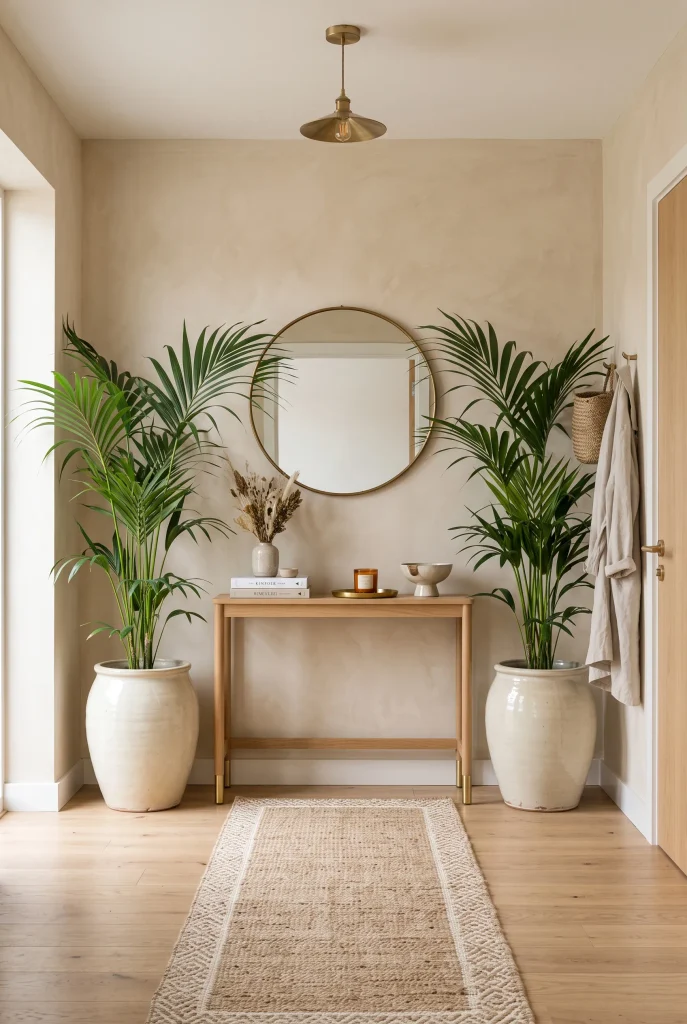
- Creates instant symmetry in larger rooms or entryways.
- Matching planters make the arrangement feel polished and intentional.
- Different plant heights can add depth without visual clutter.
- Choose substantial pots that feel proportionate to the surrounding furniture.
Make a stronger visual statement by pairing two substantial plants in matching or coordinated planters. This works beautifully beside an entry console, doorway, large window, or wide media unit where a single plant might look undersized. Keep the containers similar in shape and finish, then choose greenery with slightly different silhouettes for natural variation. Matte ceramic, stone, or textured finishes can add depth while staying sophisticated. The symmetry creates structure, but the organic leaves keep the arrangement from feeling too formal. That balance makes this setup especially effective in modern rooms with clean architectural lines.
A matched plant pair can also help define a large room without adding another piece of furniture. Try using palms, rubber plants, or other upright varieties that provide height and create a visual frame around an existing feature. Leave enough space between the plants and nearby walls or furniture so their foliage has room to spread. If the room already contains several decorative finishes, simple planters will prevent the corner from becoming overwhelming. I’ve seen this approach work especially well in open-plan homes because the pair subtly separates zones while maintaining an airy, connected appearance.
View: 17 Moody Farmhouse Kitchen Ideas You’ll Love to Try
6. Kitchen Counter Herbs
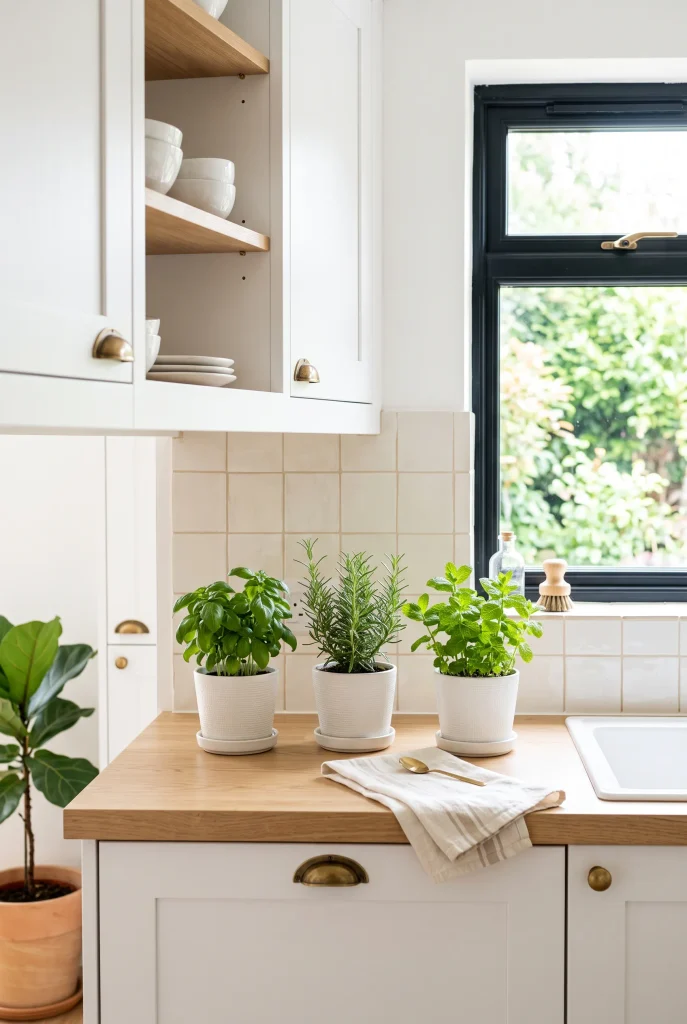
- Brings fresh greenery into an area that often feels purely functional.
- Fresh herbs can be both decorative and useful.
- Small pots work well beside windows or prep areas.
- Keep the counter uncluttered by grouping herbs in one compact zone.
Add a little greenery to your kitchen by creating a compact herb display on the counter or near a sunny window. Basil, rosemary, mint, and thyme bring soft natural color while also giving you ingredients within easy reach. Use matching ceramic pots for a polished modern look, or mix simple terracotta containers for a warmer farmhouse feel. Keep the herbs together in one defined area rather than scattering them around the countertop. This makes the kitchen feel intentional and organized while adding a fresh visual element to otherwise hard, smooth surfaces like stone, tile, and cabinetry.
A small herb arrangement is especially useful in kitchens where decorative space is limited. Choose a bright location that suits the plants you want to grow, and place a small tray underneath the pots to protect the counter from water. If your kitchen receives less natural light, select plants that can tolerate the available conditions or use suitable supplemental lighting. Beyond appearance, the greenery introduces a softer texture against cabinets and countertops. For many homes, this simple setup offers one of the most practical ways to combine decoration, freshness, and everyday function without sacrificing valuable workspace.
7. Hanging Plant Display
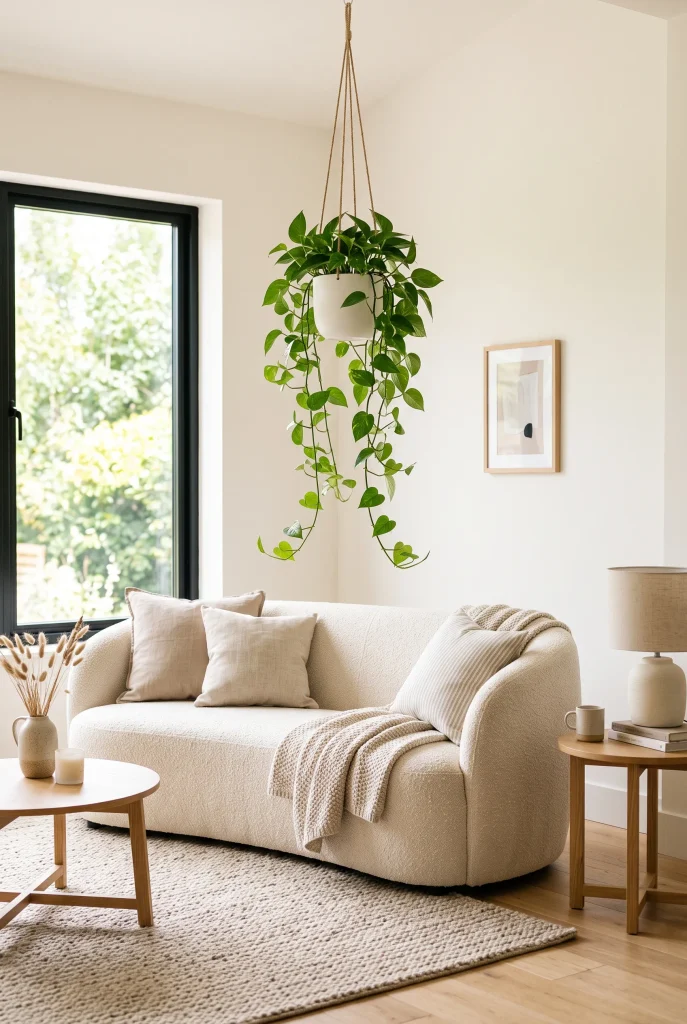
- Uses vertical space without taking up floor or table space.
- Trailing foliage adds movement to clean modern rooms.
- A simple hanging planter keeps the look sophisticated.
- Position it where the vines can grow freely without blocking walkways.
Take your greenery upward with a hanging planter that adds height and movement without using valuable floor space. A trailing pothos, philodendron, or string plant can soften a plain corner while creating an eye-catching layer above furniture. Choose a simple ceramic, woven, or matte planter that complements your existing finishes. Hang it near a window where the plant receives appropriate light, but avoid placing it directly above seating if watering could become inconvenient. I’ve noticed that one well-positioned hanging plant often feels more intentional than several small plants scattered throughout a room.
Vertical greenery can make a modern space feel more dynamic because the foliage naturally draws the eye upward. Try hanging one plant beside a window, above a reading chair, or near an open shelving unit where its vines can cascade freely. Keep the surrounding wall relatively simple so the leaves become the main visual feature. This approach works particularly well in apartments and compact rooms because it adds personality without reducing usable floor area. With the right placement, the plant becomes both decoration and architecture, visually connecting different levels of the room in a soft, organic way.
8. Plant-Filled Console
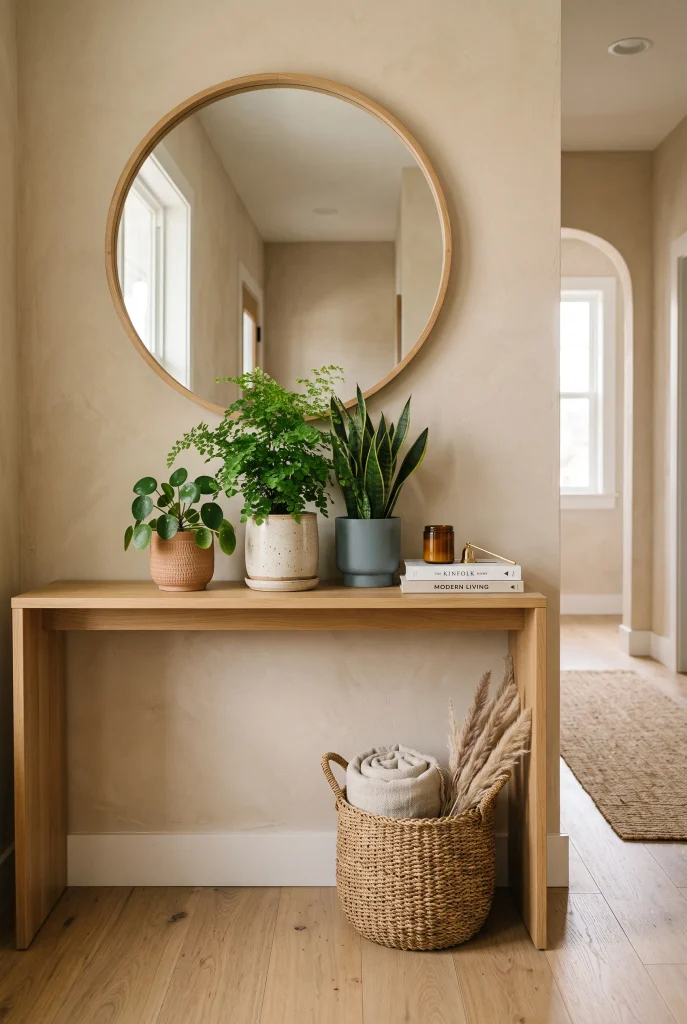
- Adds softness to a console that might otherwise feel too rigid.
- Different plant heights create an easy layered arrangement.
- A mirror above the console can amplify the greenery visually.
- Leave open space between pots and accessories for a relaxed look.
Give a simple console table more personality by combining greenery with a few useful decorative pieces. Start with one taller plant at one end, add a smaller leafy variety near the center, and finish with a low trailing plant if space allows. This staggered arrangement creates height without requiring complicated styling. A round mirror or framed artwork above the console can make the greenery feel even more prominent. In my experience, keeping the color palette restrained helps multiple plants look cohesive rather than busy, especially when the room already contains wood, metal, or patterned accessories.
A plant-filled console works beautifully in entryways, hallways, living rooms, and dining spaces because it turns a functional surface into a welcoming focal point. Use planters in related finishes such as cream ceramic, natural stone, or warm terracotta to create visual consistency. Avoid placing too many objects around the plants, since the leaves already provide plenty of texture and movement. If your console is narrow, choose compact pots and keep the tallest foliage toward the wall. The result feels layered, fresh, and intentional while still leaving enough practical space for keys, baskets, or everyday essentials.
9. Bathroom Tropical Touch
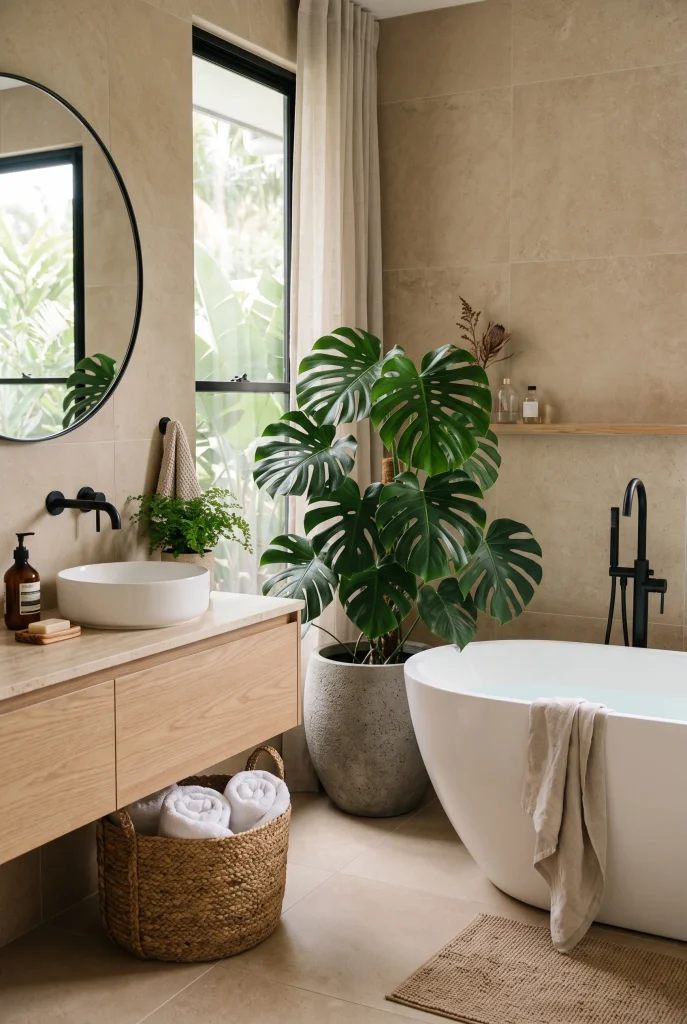
- Brings a softer, spa-like feeling into hard bathroom surfaces.
- Humidity can suit certain tropical houseplants.
- Place greenery where it receives suitable natural or supplemental light.
- Use moisture-resistant baskets, ceramic pots, or stone planters for durability.
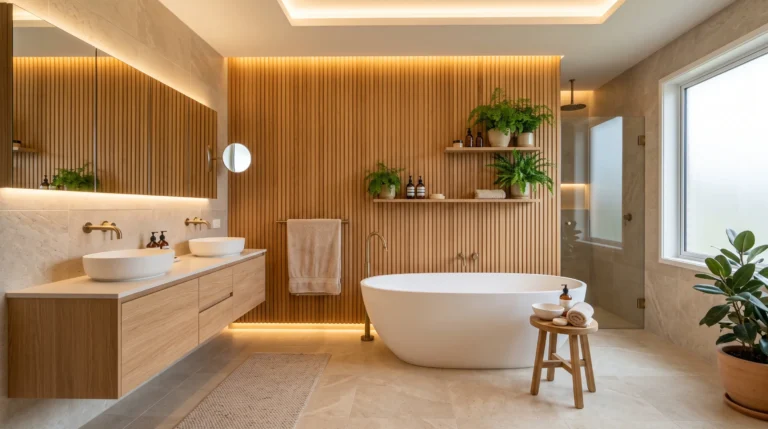
Turn a plain bathroom into a more relaxing retreat by adding greenery beside the tub, vanity, or shower area. Tropical-looking plants such as palms, ferns, and certain philodendrons can complement the room’s naturally humid environment when lighting conditions are suitable. Place the plant in a waterproof ceramic or stone planter, and keep it away from areas where standing water could damage roots. Soft green leaves contrast beautifully with white tile, warm wood, and natural stone. This is one of those indoor plant decor ideas that can make a functional room feel noticeably calmer without requiring a major renovation.
Bathrooms often contain many hard surfaces, so plants introduce the organic texture needed to make the space feel warmer and less clinical. Choose varieties based on the actual light available rather than assuming humidity alone will keep them healthy. A plant near a bright frosted window can become a beautiful focal point, while a smaller option can sit on a vanity corner. Add a woven basket or natural wood accessory nearby to reinforce the relaxed atmosphere. The finished space feels more like a personal spa, proving that even small amounts of greenery can change the mood dramatically.
10. Bedroom Bedside Greenery
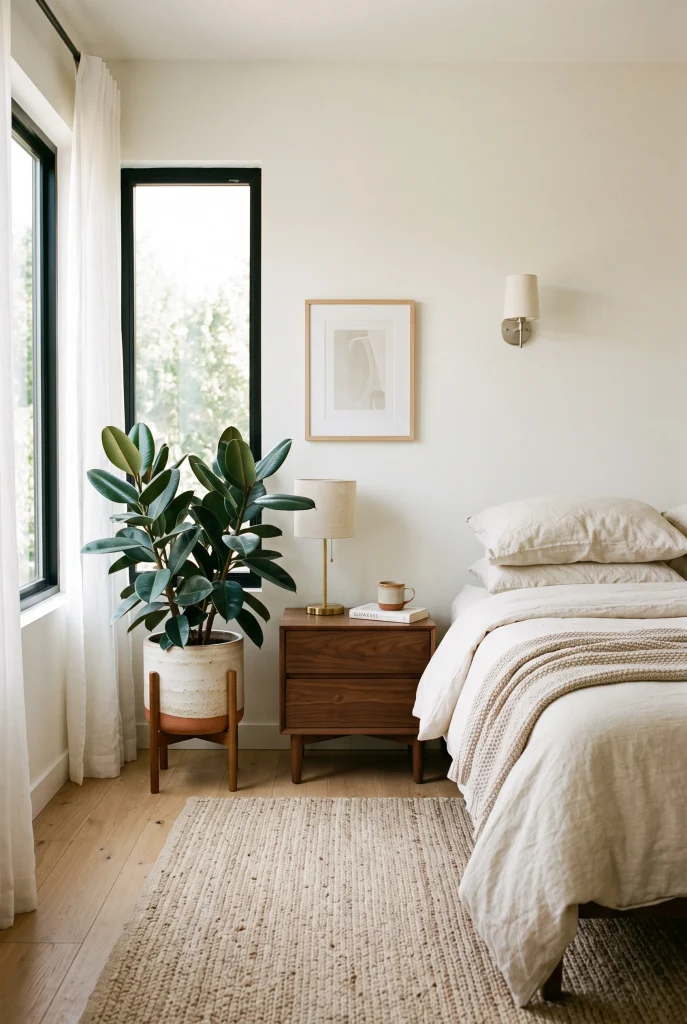
- Adds natural softness beside the bed without overwhelming the room.
- A medium-height plant balances low bedside furniture.
- Natural leaves pair beautifully with linen and warm wood.
- Keep foliage away from crowded pathways and bedding.
Make your bedroom feel fresher by placing a leafy plant beside the bed where it can soften the clean lines of a nightstand. Choose a medium-sized rubber plant, snake plant, or compact palm depending on your light conditions. A textured ceramic planter works especially well with linen bedding and warm wood furniture. Keep the arrangement simple so the greenery becomes a gentle accent rather than another source of visual clutter. In my experience, positioning the plant slightly behind the nightstand creates a layered look while keeping the bedside surface practical for lamps, books, and everyday essentials.
The right bedside greenery can make a bedroom feel more relaxed without changing the furniture or color scheme. Choose a plant with a shape that complements your bed rather than competing with it; upright leaves suit minimalist rooms, while fuller foliage adds softness to larger spaces. Make sure the plant has enough light and that watering will not create moisture problems around wood flooring or furniture. A small woven basket, neutral rug, and natural linen can reinforce the organic feeling. The finished corner feels calm, balanced, and thoughtfully styled while still remaining easy to maintain.
11. Entryway Plant Accent
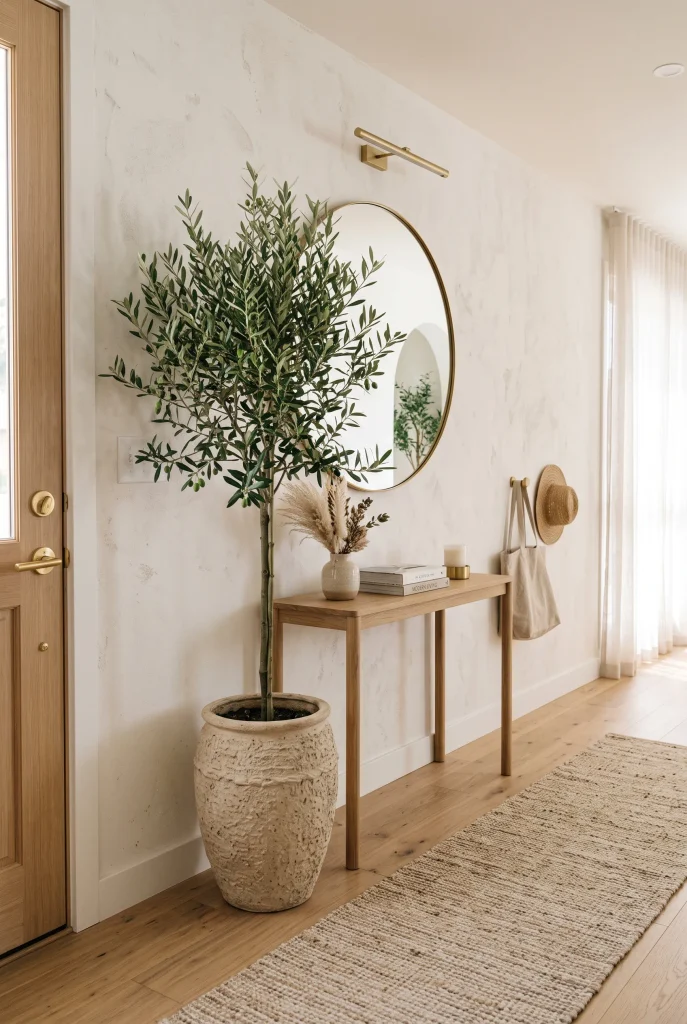
- Creates a welcoming first impression as soon as you enter.
- Fills an empty entryway corner without adding bulky furniture.
- Tall foliage adds height beside low consoles and benches.
- Use a durable planter that suits the traffic of the space.
Give your entryway an instant refresh with one thoughtfully placed plant that welcomes you before anything else does. A tall olive tree, rubber plant, or graceful palm can fill an empty corner beside a console or bench while adding height and organic texture. Choose a sturdy planter with a finish that complements the hallway, such as stone, ceramic, or woven material. Keep the walkway clear and give the foliage enough breathing room. This simple arrangement works especially well when an entryway feels plain, narrow, or overly dependent on furniture for visual interest.
Entryways benefit from greenery because plants soften the transition between outdoor and indoor spaces. Pair a tall plant with a slim console, round mirror, or small basket to create a practical arrangement that still feels uncluttered. If the area receives limited daylight, choose a plant suited to lower-light conditions rather than relying on appearance alone. A neutral planter can blend easily with different decorating styles, making the setup easy to update later. I’ve seen this approach work particularly well in modern homes because one strong plant can make a narrow entrance feel warmer and more complete.
12. Plant-Filled Bookcase
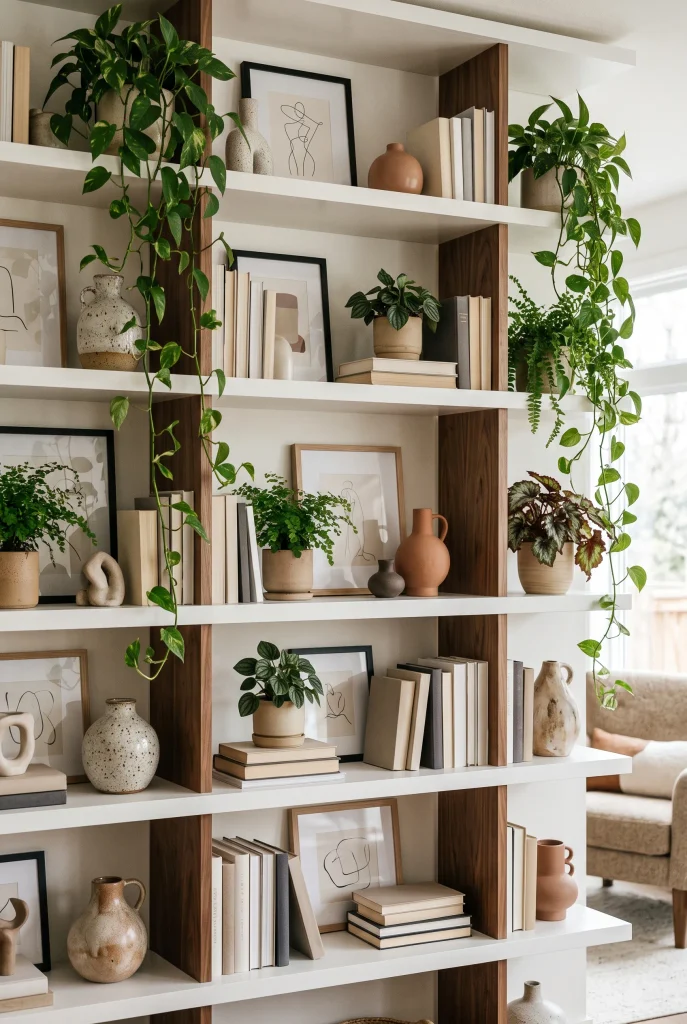
- Breaks up rows of books with natural shapes and texture.
- Trailing foliage adds movement across otherwise straight shelves.
- Small plants can fill awkward gaps between decorative objects.
- Keep heavier pots on lower shelves for practical stability.
Bring your bookcase to life by weaving small plants between books, artwork, and decorative objects. Greenery breaks up long rows of straight lines and introduces a softer shape that makes the shelving feel more collected. Use compact plants on individual shelves and reserve trailing varieties for higher levels where their vines can naturally fall downward. Keep the pots visually related through similar colors or materials. Rather than filling every empty space, leave generous gaps around the foliage. This balance helps the bookcase feel styled and useful instead of crowded with decoration.
A plant-filled bookcase can also make a large wall feel more layered and personal without requiring additional furniture. Try combining plants with books arranged both vertically and horizontally, then add a few ceramics or framed prints to create varied heights. Make sure shelves can safely support the weight of watered containers, especially on higher levels. If natural light is limited, select plants that tolerate the conditions or rotate suitable varieties. This setup works particularly well for living rooms and home offices because it combines storage, personality, and greenery in one cohesive feature while keeping the overall design visually calm.
13. Plant Room Divider
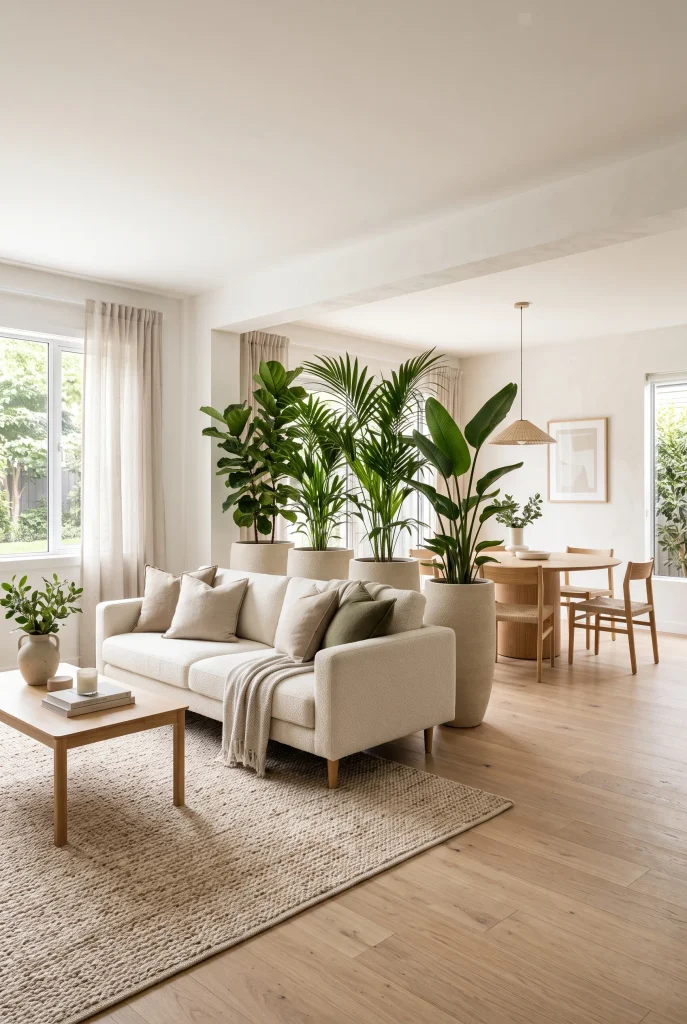
- Creates gentle separation without blocking natural light.
- Works especially well in open-plan apartments and studios.
- Matching planters make multiple plants feel visually connected.
- Leave enough space for comfortable movement around the divider.
Create a softer boundary between areas by arranging tall plants along the edge of a seating or dining zone. Instead of using a solid screen, choose several plants with upright or full foliage and place them in matching planters. The greenery defines the space while keeping light and sightlines open. This works especially well in open-plan homes where the living room, dining area, or workspace needs subtle separation. Keep the spacing consistent but not perfectly rigid. The result feels natural, airy, and intentional rather than like a temporary barrier added after the room was furnished.
Plant dividers are particularly useful when you want zones without making a room feel smaller. Choose varieties with similar care requirements so maintaining several plants does not become unnecessarily complicated. Large ceramic, concrete, or woven planters can anchor the arrangement and prevent the plants from looking visually disconnected. Position them where they frame the desired zone while leaving a clear walking path. I’ve noticed that using plants instead of furniture for separation keeps open rooms feeling lighter and more flexible. It also introduces movement and texture that a traditional divider often cannot provide.
14. Minimalist Plant Pedestal
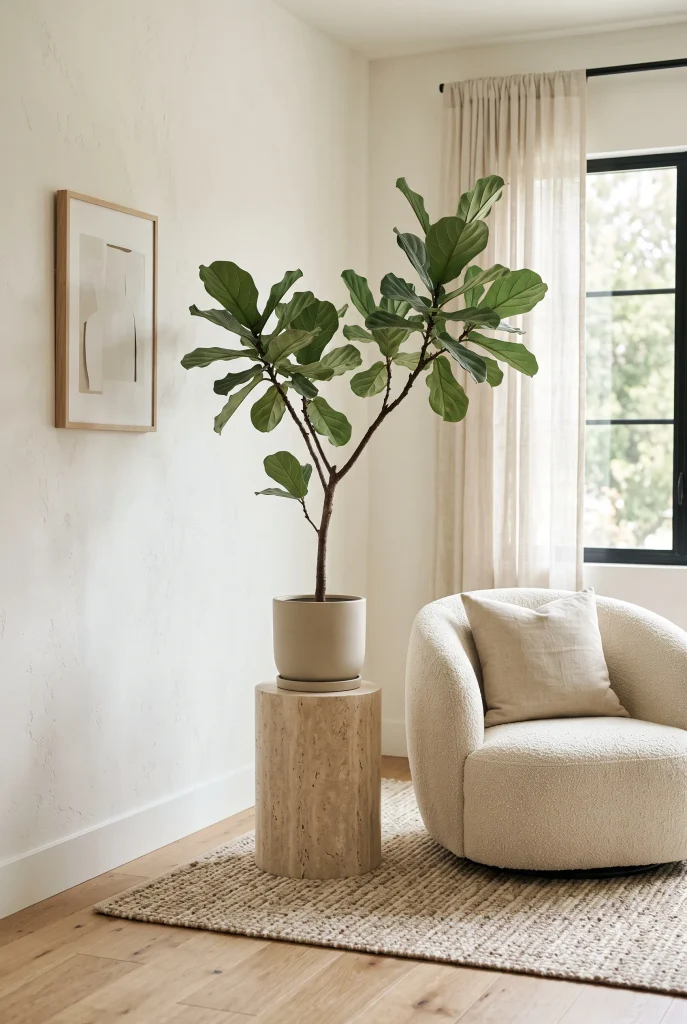
- Elevates a small plant so it becomes a stronger focal point.
- Adds vertical interest without needing a large floor plant.
- A simple pedestal keeps the arrangement sophisticated.
- Use sturdy materials that safely support the planter.
Give a smaller plant more visual presence by placing it on a simple pedestal. This trick works beautifully when you want greenery at eye level without committing to a large floor plant. Choose a compact plant with distinctive foliage, then pair it with a stone, wood, or neutral-colored pedestal that complements the room. Keep the surrounding area relatively open so the elevated greenery has room to stand out. A pedestal can also fill a narrow unused spot beside a chair, cabinet, or artwork without making the room feel crowded.
The beauty of this arrangement comes from its simplicity. One plant, one planter, and one well-proportioned stand can create a polished decorative moment without adding unnecessary objects. Choose the height carefully so the plant feels connected to nearby furniture rather than floating independently. Smaller rooms can benefit especially from this technique because vertical styling draws the eye upward while preserving floor space. If your decor already includes several statement pieces, keep the pedestal understated. That allows the natural shape of the leaves to provide the color, texture, and visual interest.
15. Dining Table Greenery
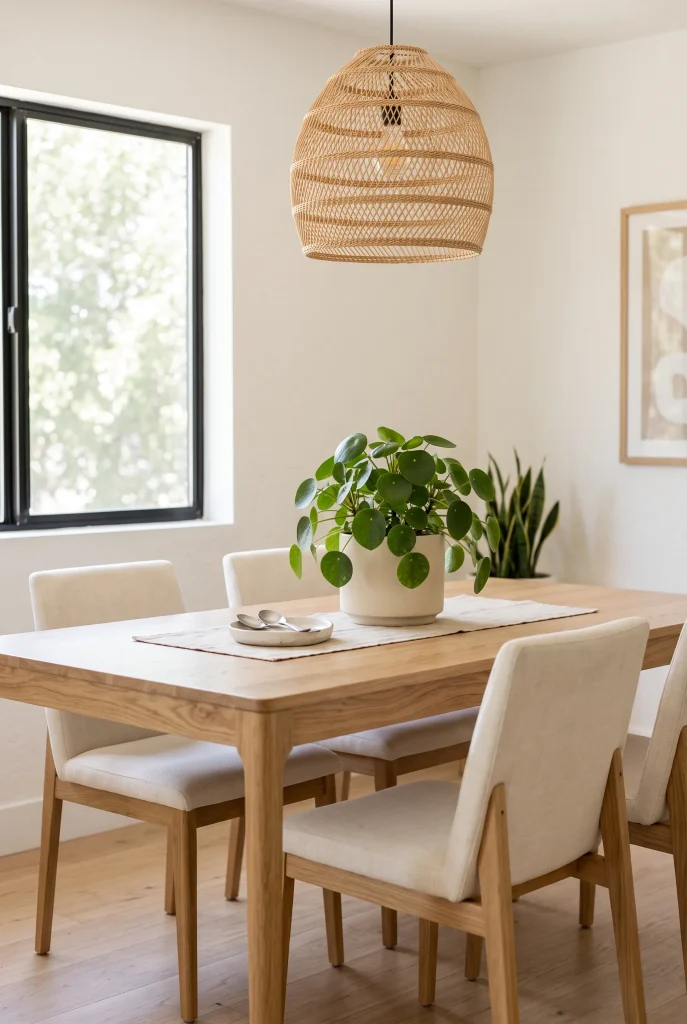
- Adds a natural centerpiece without overwhelming the dining table.
- Low foliage keeps conversations and sightlines comfortable.
- A neutral planter complements modern dining furniture.
- Choose compact plants that suit the table’s available light.
Bring a fresh natural accent to your dining area with a compact plant used as a simple centerpiece. Instead of a tall arrangement that blocks sightlines, choose low, rounded foliage in a small ceramic or stone planter. Place it near the center of the table and keep surrounding accessories minimal. The greenery adds color and texture while preserving enough space for meals, serving dishes, and everyday use. This approach is especially useful for modern dining rooms where clean lines dominate and the table needs one soft element to keep the setting from feeling too stark.
A small tabletop plant can make everyday dining feel more inviting without turning the table into a decorative project. Select a variety that matches the available light and avoid containers that are difficult to move when you need the full table surface. For longer tables, two or three matching mini plants can create rhythm while keeping the arrangement low. I’ve seen simple greenery work particularly well with natural wood, cream upholstery, and woven lighting because the leaves add just enough contrast. The finished table feels relaxed, fresh, and thoughtfully styled rather than overly formal.
16. Desk-Side Greenery
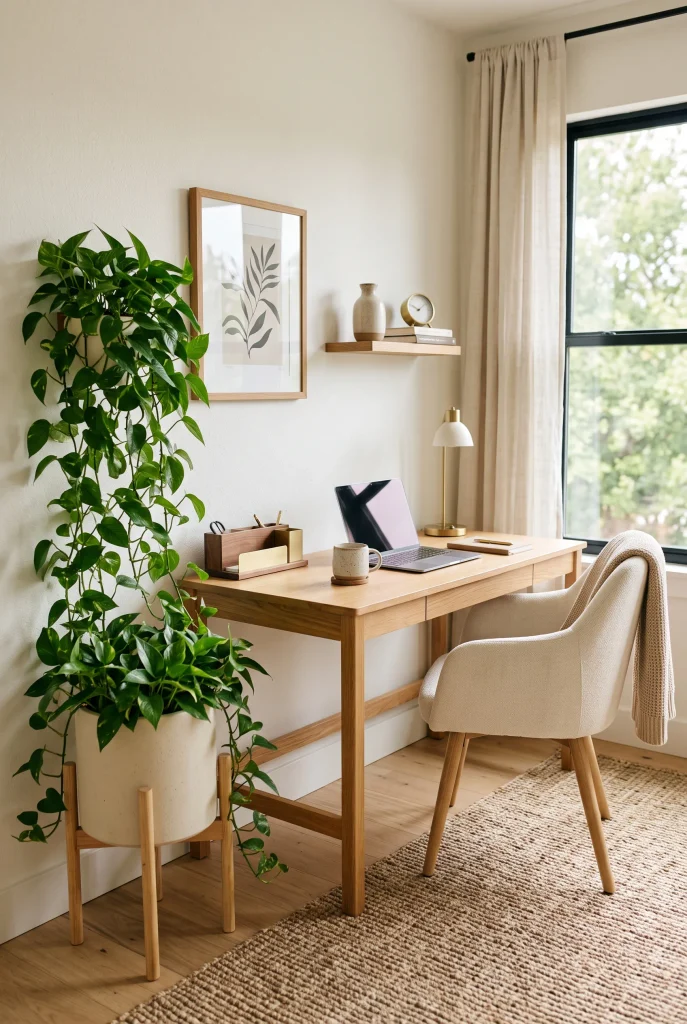
- Softens the practical look of a home workspace.
- Adds natural texture without taking away desk space.
- A floor plant can visually frame the desk area.
- Choose a plant that matches the workspace lighting and maintenance routine.
Give your workspace a calmer, more inspiring feel by placing a leafy plant beside your desk where it can soften the practical look of screens, cables, and hard surfaces. Choose a compact rubber plant, pothos, or snake plant that suits the available light, then use a simple planter in ceramic, stone, or woven material. Position the greenery slightly to one side so it does not interfere with your monitor, writing area, or chair movement. In my experience, one well-placed plant can make a home office feel noticeably more welcoming without sacrificing valuable workspace or creating visual clutter.
A touch of greenery can also make long work sessions feel less visually repetitive by introducing organic shapes and natural texture around the desk. Try placing a trailing plant on a nearby shelf or a medium plant on the floor beside the desk if your workspace has enough room. Keep watering needs in mind and protect wooden surfaces with a tray or saucer. Pair the foliage with warm wood, neutral textiles, and soft daylight for a cohesive look. The finished workspace feels fresher and more comfortable while remaining organized enough for focused everyday work.
17. Bedside Plant Shelf
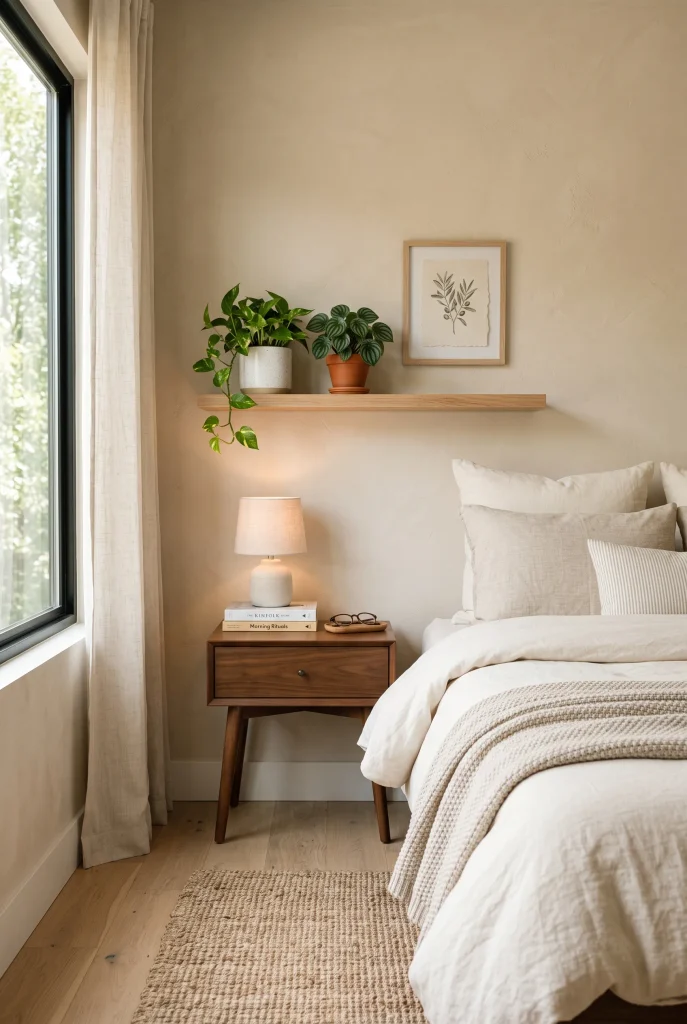
- Uses vertical wall space when floor space is limited.
- Small plants add life without crowding the bedside area.
- Mixing greenery with artwork creates visual depth.
- Repeat one planter material to make the display feel cohesive.
Turn a bare bedside wall into a living feature by combining a narrow plant shelf with a few carefully chosen pots. Use small plants with varied leaf shapes, then balance them with framed artwork, a small ceramic object, or a favorite book. Keep the shelf visually light and avoid placing too many heavy containers together. A warm wood shelf against a cream or soft beige wall creates an especially inviting backdrop. This arrangement works well when floor space is limited because it adds greenery vertically while leaving the area around the bed open and easy to move through.
A dedicated plant shelf can give a bedroom personality without making it feel like a greenhouse. Choose plants that tolerate the room’s actual light and place the shelf where curtains, bedding, or daily movement will not disturb them. Trailing varieties can soften the shelf edge, while upright plants create height and structure. I’ve noticed that repeating one planter material, such as matte ceramic or natural terracotta, helps different plants look like part of one collection. Add a little breathing room between each pot, and the display will feel curated, peaceful, and naturally layered.
18. Statement Floor Plant
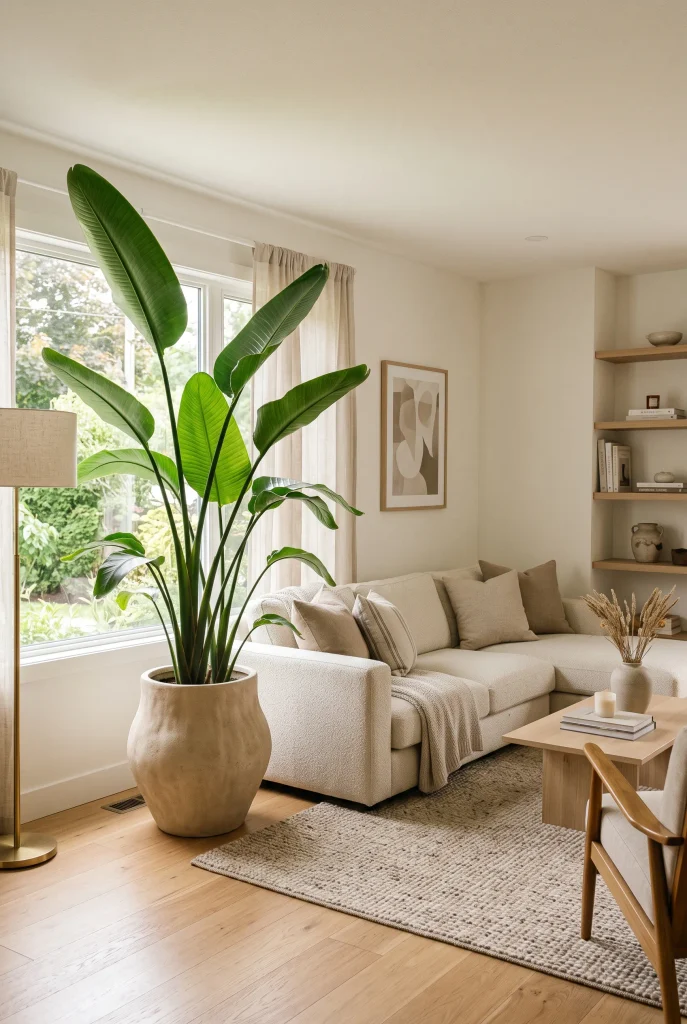
- Creates an instant focal point in a spacious room.
- Adds height and dramatic natural texture.
- A substantial planter helps anchor larger foliage.
- Give mature plants enough space to spread naturally.
Create an instant focal point in a modern room with a large statement plant placed beside a low sofa, console, or accent chair. Choose dramatic foliage, such as a bird of paradise, monstera, or tall palm, and give it enough space to spread naturally. A substantial textured planter helps anchor the arrangement and keeps the plant from looking undersized against larger furniture. Place it near suitable natural light, while avoiding cramped corners where leaves constantly brush against walls. This simple feature can add height, movement, and personality without requiring a major decorating change.
A statement plant works best when the rest of the surrounding area stays relatively restrained. Let the foliage provide the strongest organic shape, then support it with quiet materials such as linen, oak, woven textures, or neutral ceramics. Consider the plant’s mature size before choosing its location, because a small specimen can eventually become much fuller. For large living rooms, this approach helps fill visual gaps and balance oversized furniture. It is also one of the easiest ways to make a modern space feel warmer, especially when the room relies heavily on clean lines and neutral colors.
19. Bathroom Shelf Plants
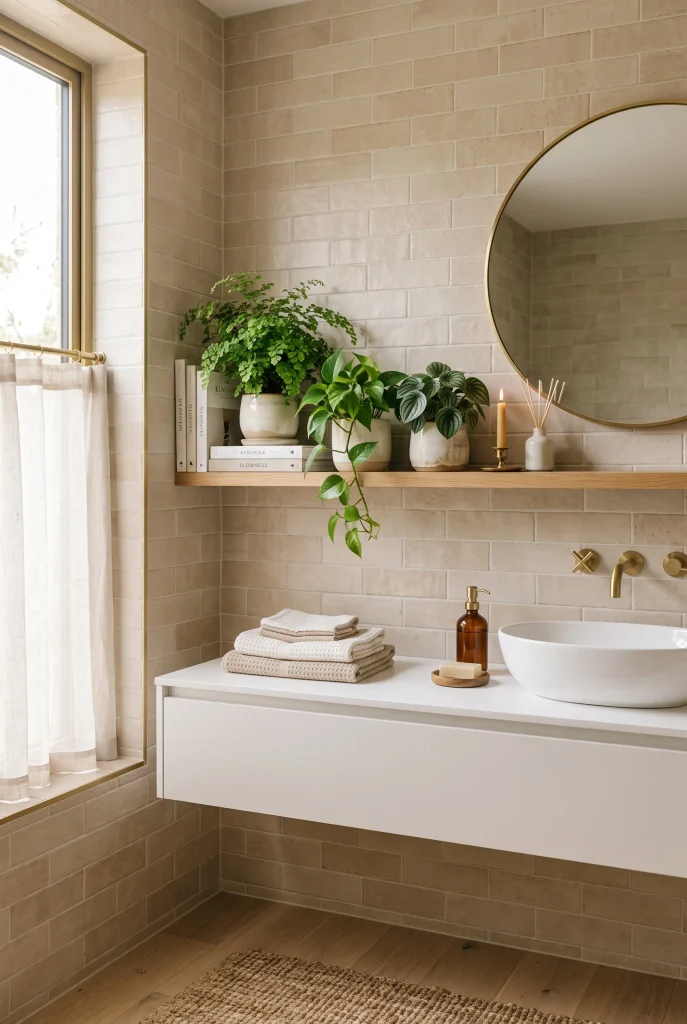
- Makes an unused bathroom shelf feel more intentional.
- Small plants soften tile, glass, and other hard surfaces.
- Mixed leaf shapes create gentle visual variety.
- Keep plants away from direct splashes and choose suitable light conditions.
Give a plain bathroom shelf a fresh, natural update with a few compact plants arranged alongside simple ceramics and useful essentials. Small ferns, pothos, peperomia, or other suitable varieties can introduce soft greenery without taking over the limited space. Use cream, stone, or muted terracotta pots to complement warm tile and wood finishes. Keep the arrangement loose rather than perfectly symmetrical, leaving enough empty shelf space to maintain a clean appearance. The greenery adds a subtle spa-like feeling while making an otherwise overlooked storage area look thoughtfully decorated.
Bathroom shelving benefits from plants because their organic shapes create contrast against straight tile lines, mirrors, and polished fixtures. Before choosing a variety, consider the shelf’s actual light and the amount of moisture it receives, since humidity does not replace adequate lighting. A small tray underneath each pot can protect the shelf from water marks, especially when the surface is wood. If the shelf is narrow, choose compact containers and trailing foliage that stays contained. The result is a simple decorative layer that makes everyday bathroom routines feel calmer and more pleasant.
20. Oversized Corner Pot
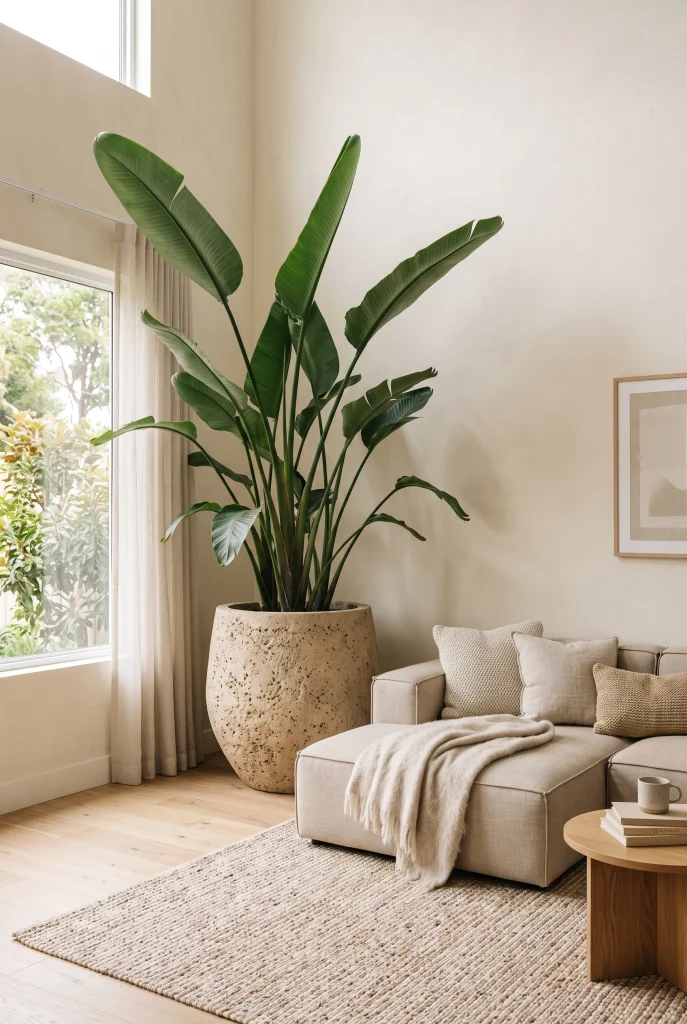
- Fills an oversized empty corner with one strong visual feature.
- A large planter adds texture even when the foliage is simple.
- Works especially well beside low-profile modern furniture.
- Choose a pot size that feels balanced with the room’s scale.
Make an empty corner feel intentional with one oversized planter and a tall, sculptural plant. This approach works especially well in spacious living rooms where small pots can disappear visually beside large sofas or wide walls. Choose a substantial container in textured stone, ceramic, or matte material, then fill it with foliage that provides height and movement. Keep the surrounding corner open so the arrangement has room to breathe. A single bold plant can often make more impact than several small accessories, giving the room a polished focal point without making it feel crowded.
Scale matters when decorating large rooms, and an oversized planter can help connect the greenery visually with substantial furniture. Position it beside a sectional, cabinet, or architectural feature while keeping enough distance for leaves to spread comfortably. Select a container with a stable base, particularly for tall plants, and consider the plant’s mature size before committing to the location. I’ve noticed that neutral oversized pots are especially versatile because they work with changing decor styles. The result is grounded, balanced, and warm, adding natural character while preserving the clean simplicity of modern interiors.
21. Green Gallery Wall
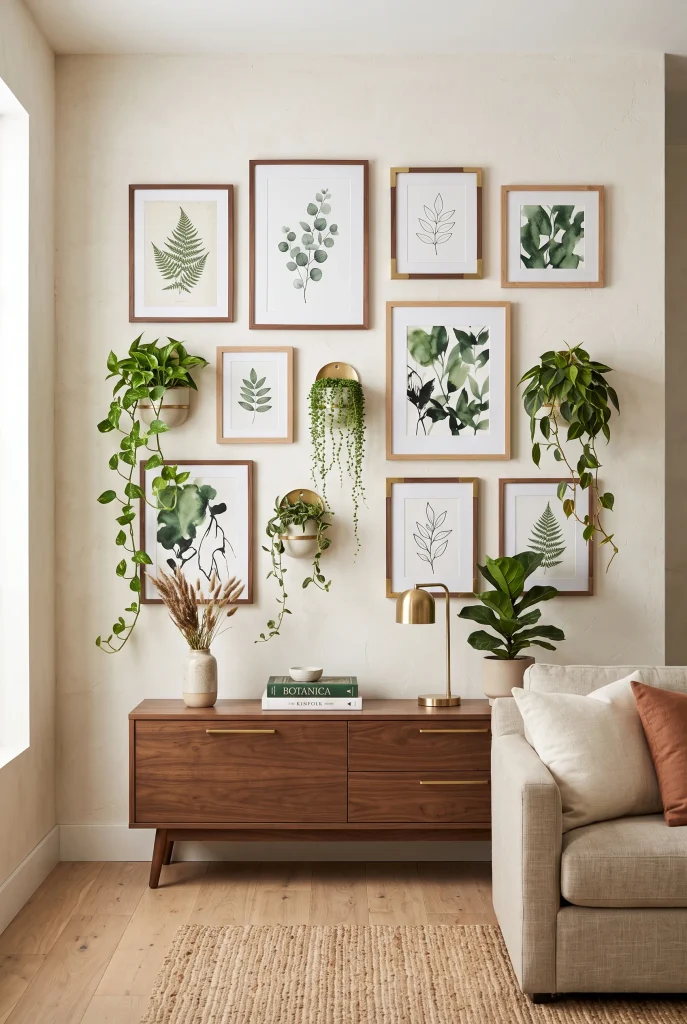
- Combines living greenery with artwork for a layered focal wall.
- Adds personality without relying on heavy decoration.
- Botanical prints reinforce the natural theme visually.
- Keep plant placement balanced so foliage does not hide artwork.
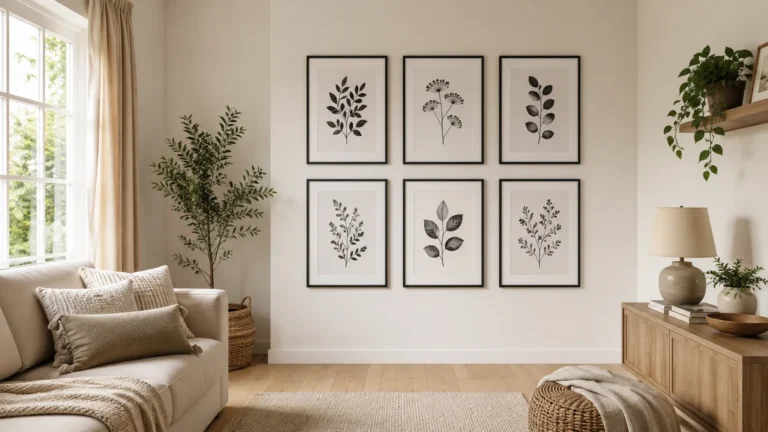
Create a more dynamic focal wall by combining framed botanical artwork with a few carefully positioned plants. Instead of treating greenery and wall decor as separate elements, let them work together through repeated natural colors, organic shapes, and warm materials. Place framed prints at different heights, then add one or two small mounted or shelf plants nearby. Keep enough negative space around each element so the arrangement remains easy to read. This layered approach gives a plain wall more personality while introducing natural texture without requiring a large furniture piece or complicated renovation.
A green gallery wall can adapt easily to living rooms, bedrooms, offices, and hallways. Start with artwork in related tones such as muted green, cream, beige, and warm brown, then introduce real foliage as the living accent. Choose lightweight planters and secure wall-mounted pieces properly, especially when watering will add weight. Avoid overcrowding the composition because plants already bring strong visual movement. When the colors and spacing feel balanced, the wall becomes a memorable feature that blends art, greenery, and everyday decor into one cohesive modern arrangement.
Conclusion
The right greenery can completely change how a room looks and feels. From statement floor plants and hanging displays to bedside greenery and simple shelf arrangements, these Indoor Plant Decor Ideas offer easy ways to add warmth, texture, height, and personality to modern spaces. Start with one corner that feels unfinished, choose a plant that suits its light, and build from there. Save this post on Pinterest so you can revisit your favorite ideas when you’re ready to decorate. Try one or two setups in your own home, and share this article with anyone looking for fresh, natural decorating inspiration.