17 Small Bedroom Storage Ideas to Maximize Your Space
A small bedroom can feel cramped when every inch seems to be taken. The right small bedroom storage ideas can change that without making the room feel crowded or sacrificing your style. From hidden under-bed drawers to clever wall-mounted solutions, these ideas help you use overlooked spaces more effectively. You’ll find practical ways to organize clothes, bedding, accessories, and everyday essentials while keeping your bedroom calm and comfortable. Even one smart storage upgrade can free up valuable floor space and make your daily routine easier. Explore these ideas to create a bedroom that feels more spacious, organized, and beautifully put together.
1. Under-Bed Drawers
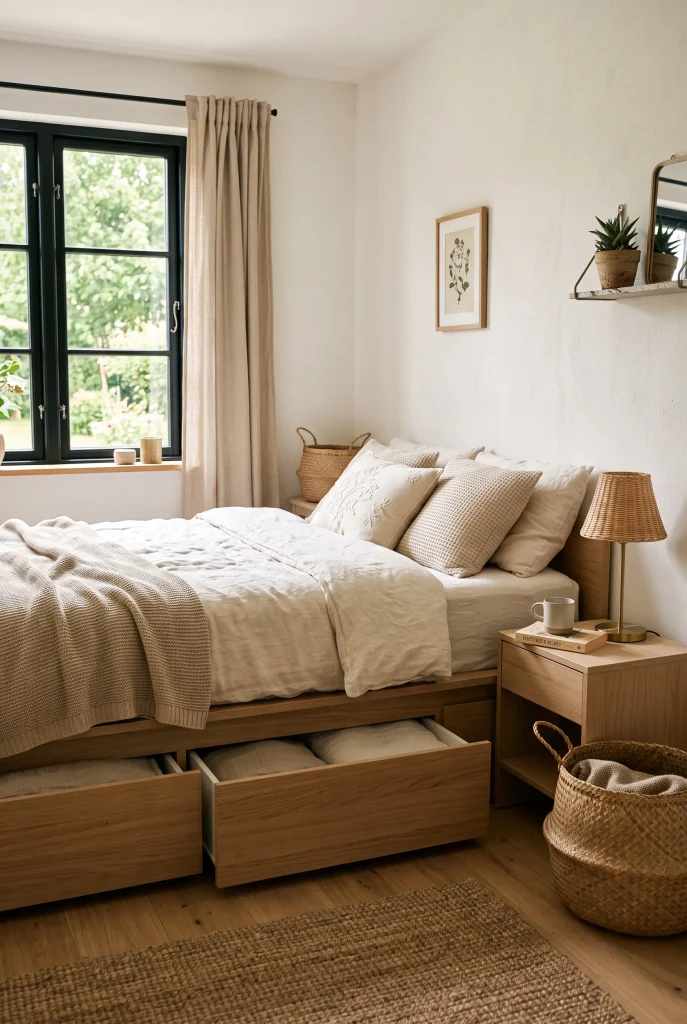
- Deep drawers turn unused floor space into valuable hidden storage.
- Store folded clothes, extra bedding, shoes, or seasonal items out of sight.
- Choose smooth-gliding drawers for easier everyday access.
- Keep the visible room calm by hiding bulky belongings beneath the bed.
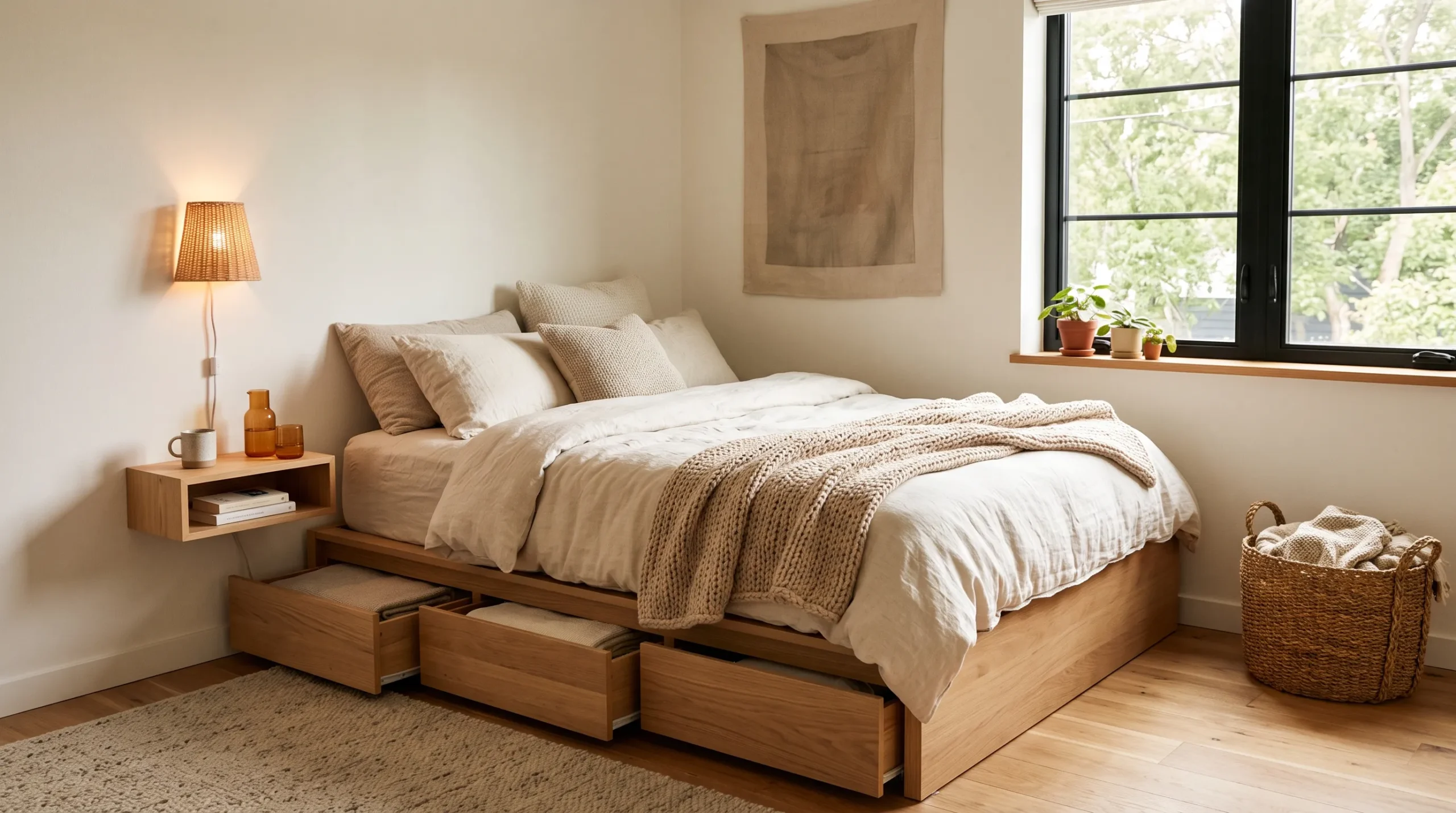
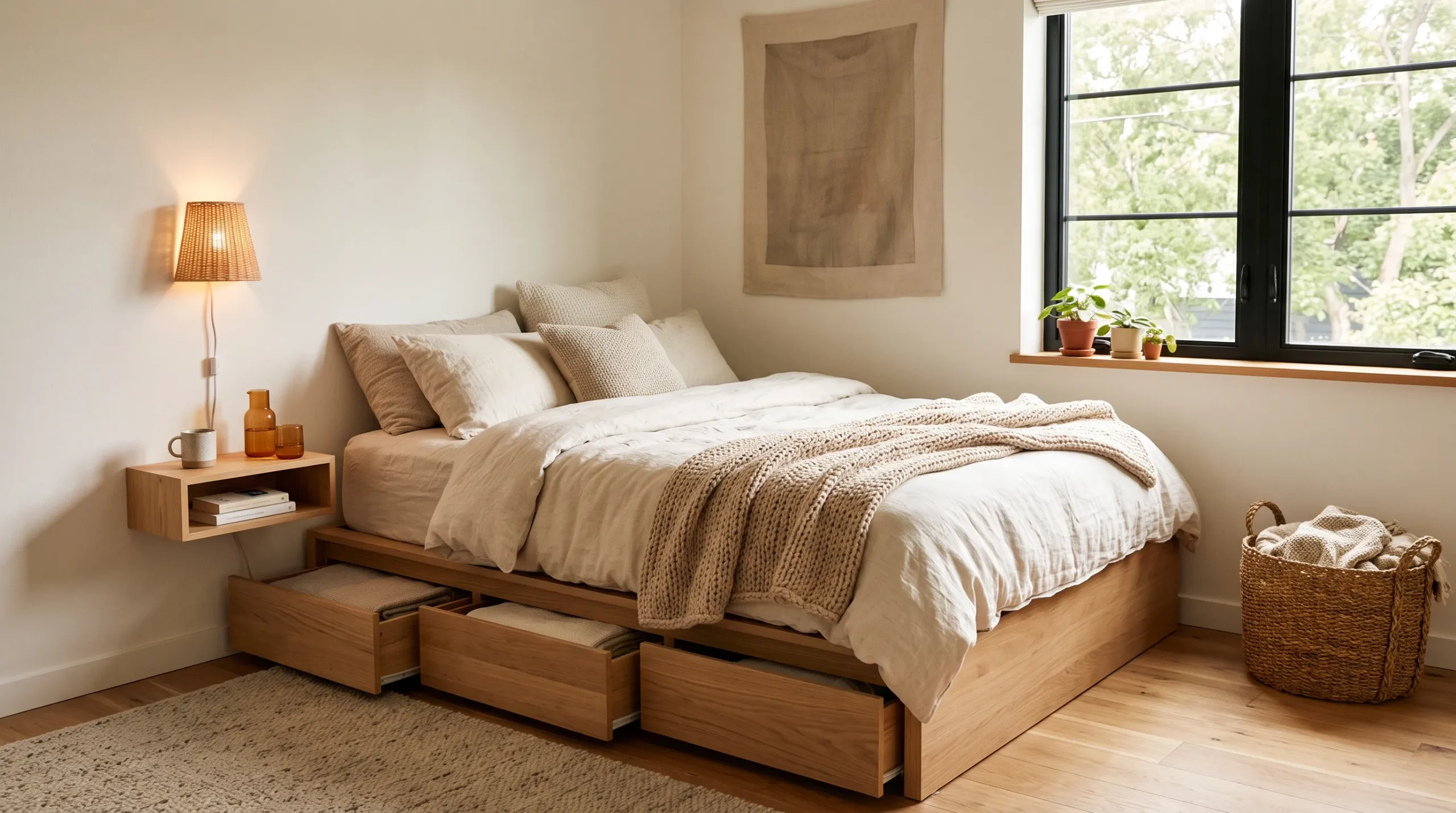
When floor space is limited, the area beneath your bed can become one of the most useful storage zones in the room. Built-in drawers make it easy to tuck away clothing, spare blankets, shoes, or rarely used items without adding another piece of furniture. The storage stays hidden, so the bedroom still feels open and tidy. Choose drawers that extend fully for easier access, especially if the bed sits against a wall. Keeping everyday items in the front drawers and seasonal belongings toward the back makes this setup much easier to manage.
A low bed with integrated storage can also make a small room look more intentional. Instead of squeezing a bulky dresser into a narrow walkway, you use space that would otherwise sit empty. Light-colored bedding, pale wood, and simple hardware help the furniture blend naturally with the room. For renters, freestanding rolling boxes or shallow storage containers can create a similar effect without replacing the bed. Labeling containers is another small improvement that saves time later. The result is a cleaner floor, fewer visible piles, and more usable storage without making the bedroom feel crowded.
2. Floating Bedside Shelf
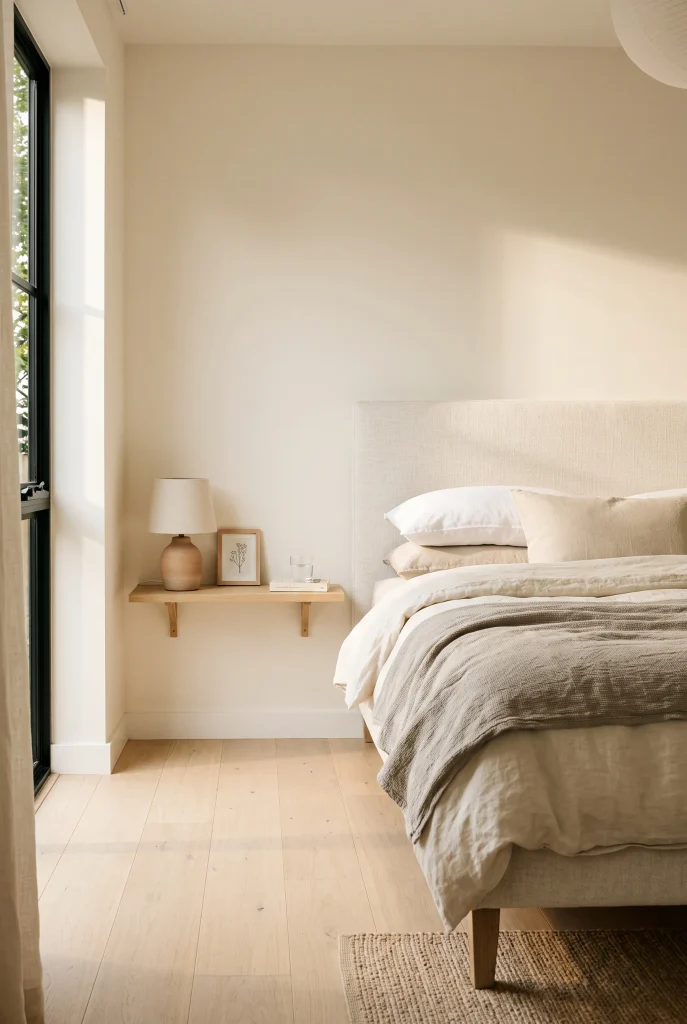
- A wall-mounted shelf provides bedside storage without taking up floor space.
- Keep only essentials such as a lamp, book, glasses, or phone nearby.
- The open floor underneath makes cleaning and movement easier.
- Match the shelf finish to existing wood tones for a cohesive look.
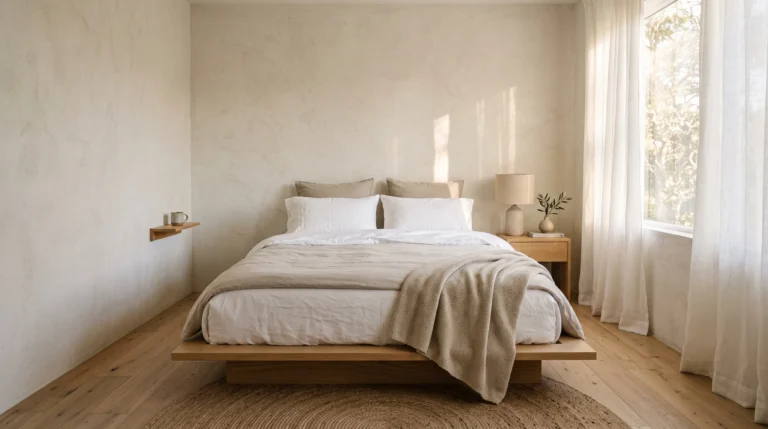
A bedside table can quickly make a narrow bedroom feel even tighter, especially when the bed is close to a wall or doorway. A floating shelf solves that problem by giving you a practical landing spot without using valuable floor space. It can hold a small lamp, book, water glass, and a few personal touches while leaving the area underneath completely open. That open space makes the room easier to clean and visually lighter. Choose a shelf with enough depth for essentials but avoid making it so large that it starts functioning like another bulky cabinet.
The best floating shelves look like part of the bedroom rather than an afterthought. A light oak shelf works beautifully with neutral walls and natural textiles, while a painted shelf can blend almost invisibly into the wall. If you need more storage, install a narrow second shelf above the first for small baskets or decorative boxes. Keep the arrangement simple so the bedside area does not become cluttered. This is especially useful in compact bedrooms where every few inches matter. By moving storage upward, you gain function while preserving precious walking space around the bed.
3. Tall Narrow Dresser
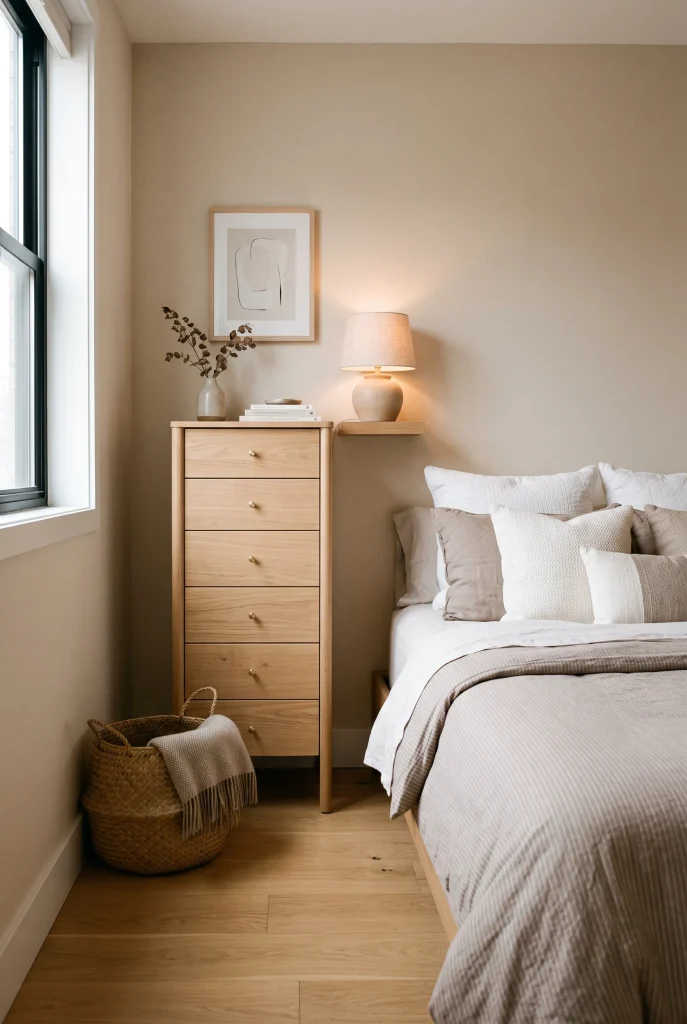
- Vertical storage uses wall height instead of spreading furniture across the floor.
- A narrow dresser can hold folded clothes while preserving walking space.
- Choose multiple shallow drawers for easier organization.
- Keep the top lightly styled to prevent visual heaviness.
A wide dresser may offer plenty of storage, but it can consume the very floor area that makes a small bedroom comfortable. A tall, narrow dresser uses vertical space instead, giving you several drawers while keeping the footprint compact. It works particularly well beside a bed, near a closet, or in an unused corner where wider furniture would block movement. Look for a design with multiple drawers so clothing can be separated by category. That simple organization makes daily routines easier and keeps the room from becoming overwhelmed by loose piles or overflowing baskets.
Height can also make a compact bedroom feel more balanced when the rest of the furniture is low and simple. Choose a dresser in light wood, white, or a soft neutral finish if you want it to visually recede. If you prefer contrast, darker furniture can create a strong focal point, but keep nearby decor minimal. Styling the top with just a small lamp, mirror, or ceramic piece prevents tall furniture from feeling bulky. Most importantly, measure the walkway before buying. A few extra inches of clearance can make the entire room feel significantly more comfortable.
4. Over-Door Shelving
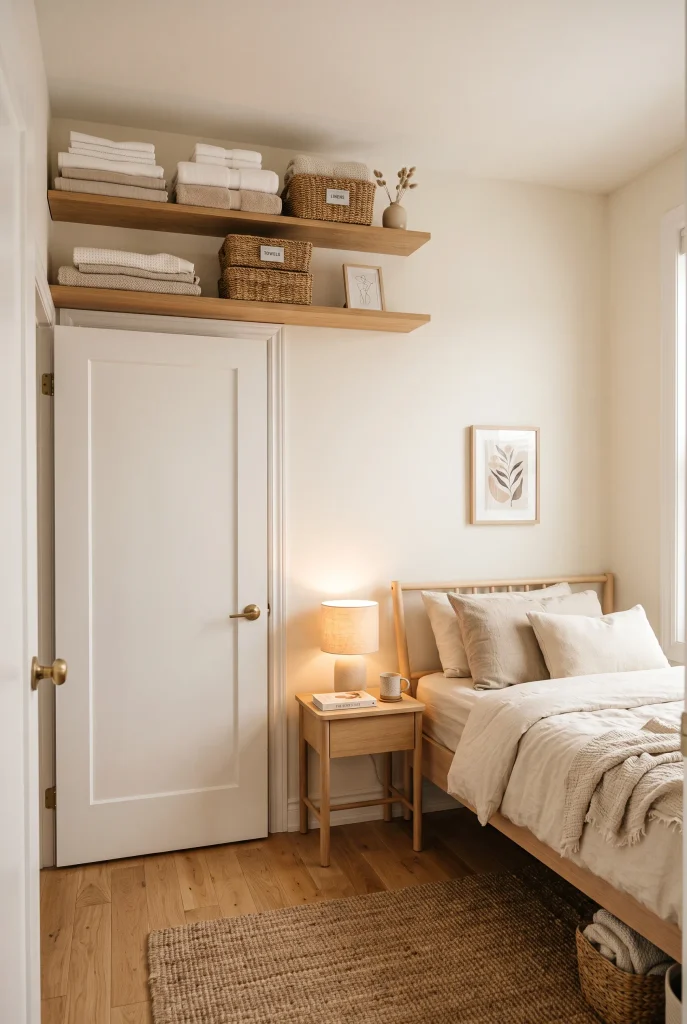
- The space above the door becomes useful storage without reducing floor area.
- Woven baskets can hide linens, accessories, and less frequently used belongings.
- Keep heavier items low and lighter items on the highest shelf.
- Paint the shelves to match the wall for a built-in appearance.
That forgotten strip of wall above the bedroom door can hold more than you might expect. A slim shelf creates extra storage without taking away valuable floor space or making the room harder to navigate. It is especially useful for items you do not need every day, such as spare bedding, seasonal accessories, travel bags, or keepsakes. Use matching baskets to keep smaller belongings contained and make the arrangement look intentional. Because the storage sits high, keep a small step stool nearby if needed and avoid placing anything heavy where it would be difficult to safely retrieve.
Over-door shelving works best when its depth stays modest and its finish complements the existing room. White shelves can visually disappear against pale walls, while natural wood adds warmth to a neutral bedroom. You can also use identical baskets to create a calmer, more organized appearance. This approach works particularly well in bedrooms where closet storage is limited but wall space is plentiful. Just remember to leave enough clearance around the door frame and avoid overcrowding the shelves. The goal is to add useful capacity while keeping the room visually light and easy to move through.
5. Wall-Mounted Clothing Rail
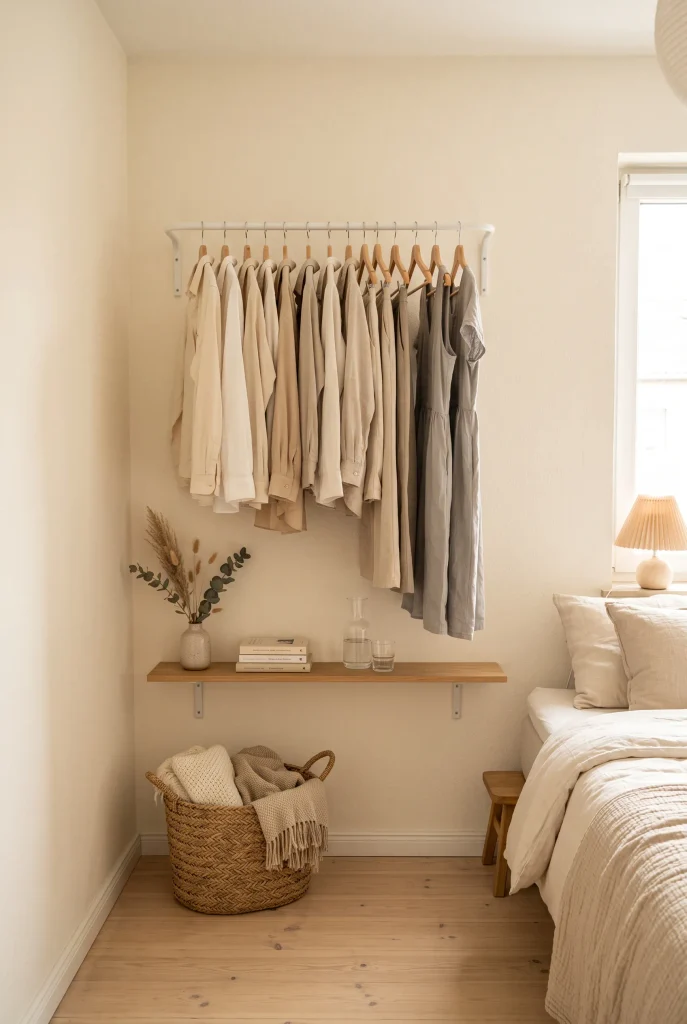
- A wall-mounted rail creates hanging storage without requiring a full wardrobe.
- Use matching hangers to make exposed clothing look neat and cohesive.
- Pair the rail with a shelf underneath for shoes, bags, or folded items.
- Keep the rail lightly filled so the bedroom does not feel visually crowded.
When a full wardrobe will not fit comfortably, a wall-mounted clothing rail can provide a surprisingly practical alternative. It gives dresses, jackets, shirts, and other hanging pieces a dedicated home while using very little floor space. A simple rail can be installed above a narrow shelf, creating two levels of storage in one compact area. Keep your most-used clothing within easy reach and move occasional pieces elsewhere. Matching slim hangers also make a major visual difference. They reduce clutter between garments and give the open storage a cleaner, more deliberate appearance.
Open clothing storage can add personality to a small bedroom, but balance is important. Choose a limited color palette for your garments, or organize clothes by color for a calmer look. A wooden shelf beneath the rail can hold folded sweaters, shoes, handbags, or small storage baskets. This combination works best when you treat the rail as a curated section rather than a replacement for an entire closet. Leave some breathing room between pieces and avoid filling every available inch. That keeps the room feeling airy while still giving you genuinely useful everyday storage.
View: 17 Dark Green Bedroom Ideas for a Cozy Luxe Retreat
6. Headboard With Storage
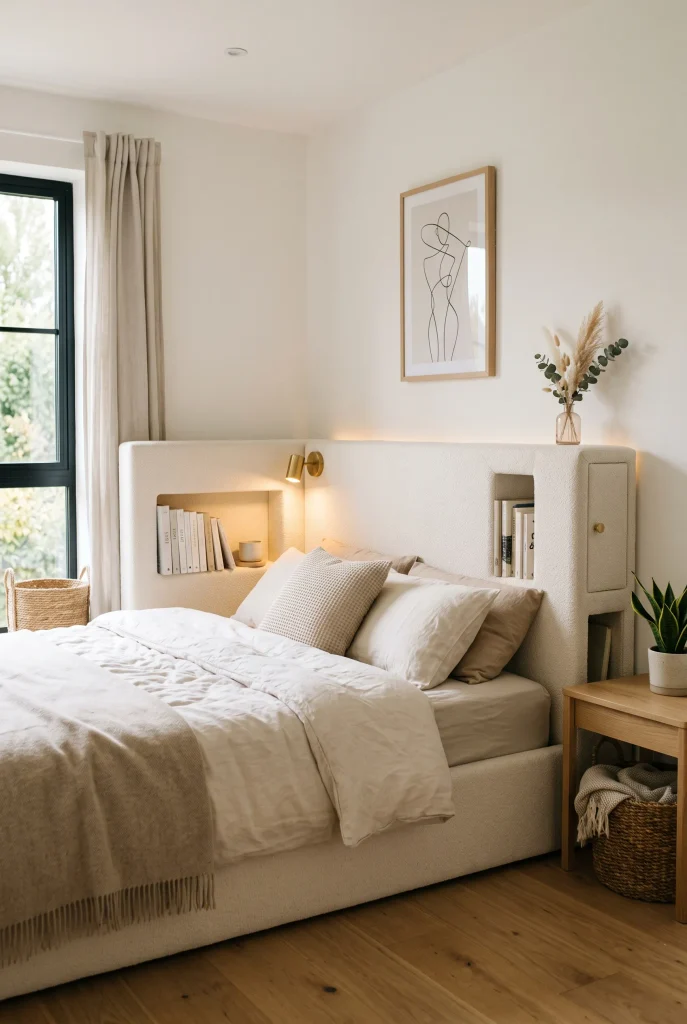
- A storage headboard adds useful compartments without requiring another cabinet.
- Open niches keep books, glasses, and bedtime essentials close.
- Closed sections can hide smaller items and reduce visual clutter.
- Choose a slim profile so the bed does not overwhelm the room.
A bed can do more than provide a place to sleep when its headboard includes built-in storage. Shelves, niches, or small cabinets around the headboard create convenient spots for books, reading glasses, chargers, and other nighttime essentials. This eliminates the need for large bedside furniture and keeps important items within arm’s reach. Look for a design with a relatively slim profile so it adds function without making the bed appear oversized. Upholstered versions also bring softness, while wood designs can add warmth and a more structured look to the bedroom.
The most useful storage headboards combine open and closed compartments. Open niches are ideal for items you use regularly, while doors or drawers can conceal anything that tends to look messy. Keep the visible sections lightly styled with a few books, a small lamp, or one decorative object. This approach helps the bed remain the room’s focal point instead of turning it into a wall of clutter. For especially tight bedrooms, a headboard with integrated storage can be one of the smartest small bedroom storage ideas because it combines two essential functions in the footprint you already need.
7. Corner Wardrobe
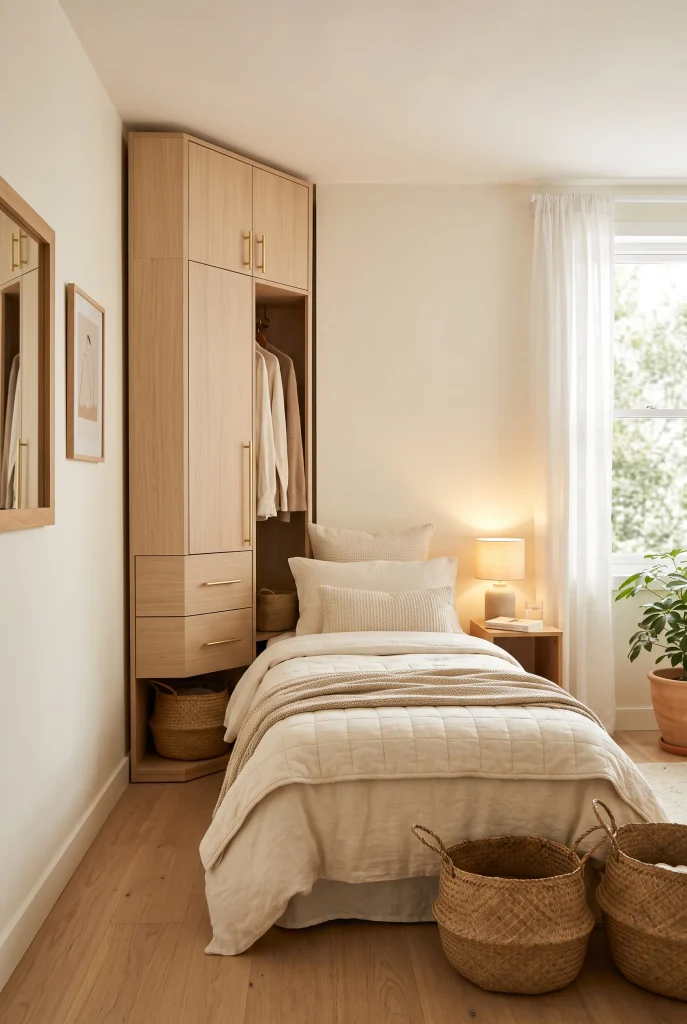
- A corner wardrobe turns an awkward area into valuable clothing storage.
- Use full-height doors to maximize vertical capacity.
- Sliding doors can preserve more walking space than traditional swing doors.
- Keep the surrounding furniture compact so the corner remains accessible.
A corner can become surprisingly valuable when a small bedroom lacks enough closet space. Instead of allowing that area to collect unused items, a slim wardrobe can provide dedicated hanging and folded storage while keeping the center of the room open. Full-height cabinetry is particularly useful because it takes advantage of vertical wall space from floor to ceiling. Choose sliding doors if the walkway is narrow, since they do not need extra clearance when opened. Inside, combine hanging rails, shelves, and small drawers to make every section useful rather than leaving awkward empty gaps.
The exterior matters just as much as the storage capacity. Light-colored doors can blend into pale walls and make the wardrobe feel less dominant, while natural wood creates warmth in a neutral bedroom. Add simple handles and avoid excessive decorative details if you want a streamlined appearance. Wardrobes look much less bulky when the area around them stays visually quiet. Keep baskets, mirrors, or extra furniture to a minimum nearby. With thoughtful proportions and internal organization, a corner wardrobe can solve a major storage problem without making the bedroom feel like every available wall has been filled.
8. Bedside Storage Bench
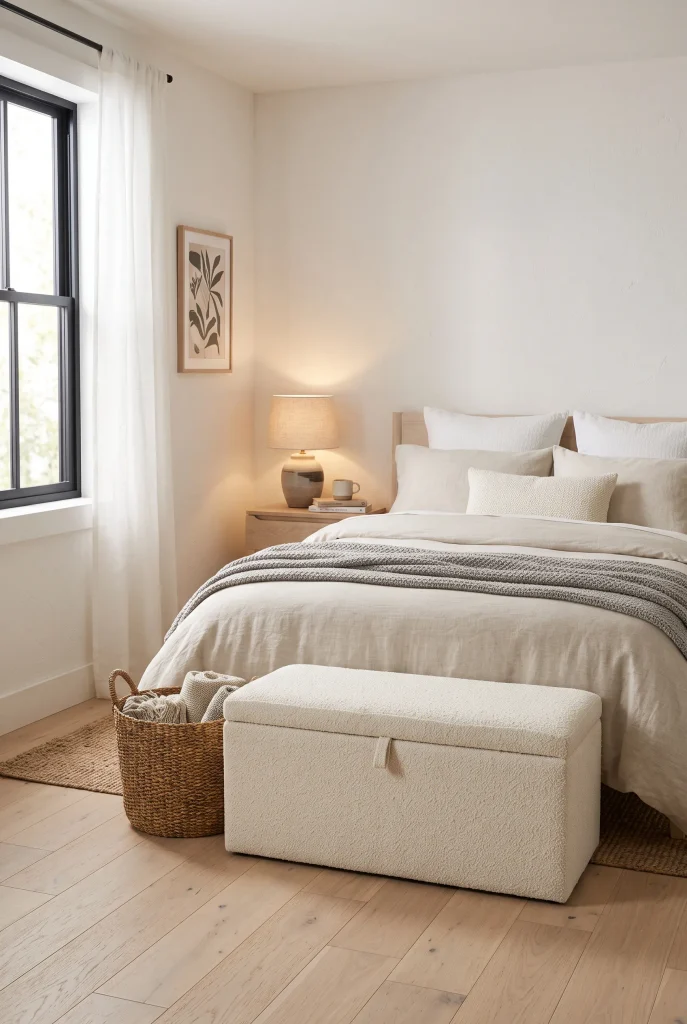
- A storage bench adds hidden space without requiring another bulky cabinet.
- Use the compartment for blankets, pillows, handbags, or seasonal clothing.
- Choose a narrow design that leaves enough clearance around the bed.
- Upholstered fabric can make the storage piece feel soft and decorative.
A bench at the foot of the bed can quietly solve two problems at once: seating and storage. Choose one with a lift-up seat or hidden compartment to create a convenient place for extra blankets, pillows, bags, or clothing. This is especially helpful when drawers and closets are already full. Keep the bench narrower than the bed so the room does not feel boxed in. A padded design in cream, beige, or soft gray can also add texture without introducing visual heaviness. The result is a practical piece that looks intentional rather than purely functional.
Before choosing a bench, measure the distance between the bed and the opposite wall or furniture. You want enough space to walk comfortably and open the storage compartment without obstruction. A simple upholstered bench works best when the rest of the room has clean-lined furniture. Avoid using the top as a permanent drop zone for clothes and bags, or the storage benefit can quickly disappear. Instead, keep the surface mostly clear and reserve the hidden compartment for bulky items that would otherwise occupy precious closet or floor space.
9. Closet Door Organizers
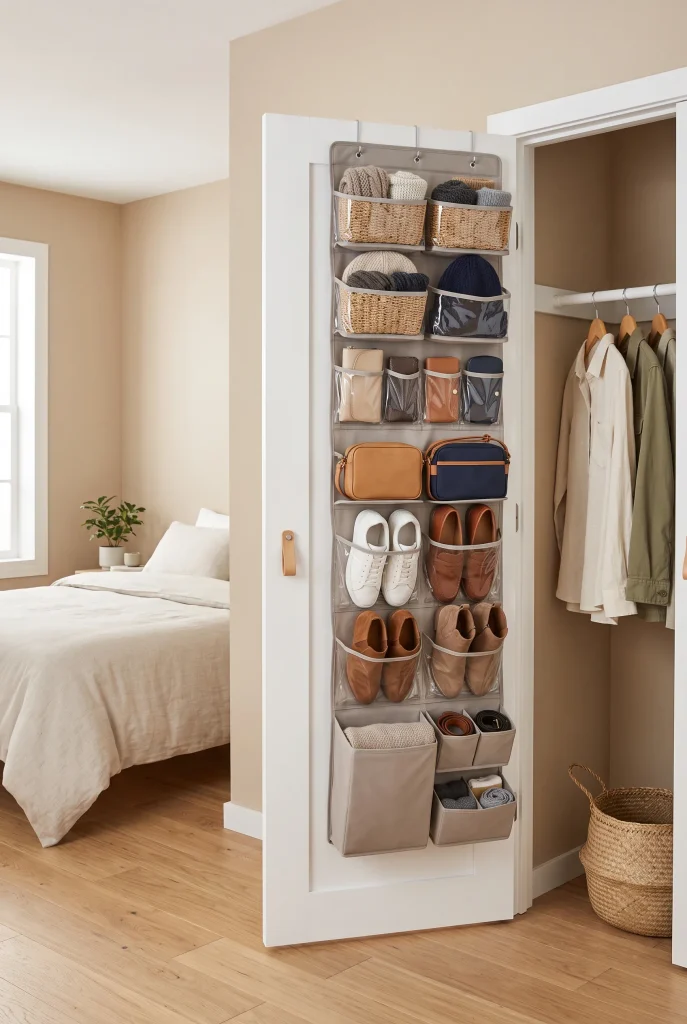
- The back of a closet door provides storage without consuming additional floor space.
- Use pockets or slim racks for shoes, accessories, scarves, and small items.
- Group similar belongings together so everything remains easy to find.
- Choose neutral organizers that blend with the closet interior.
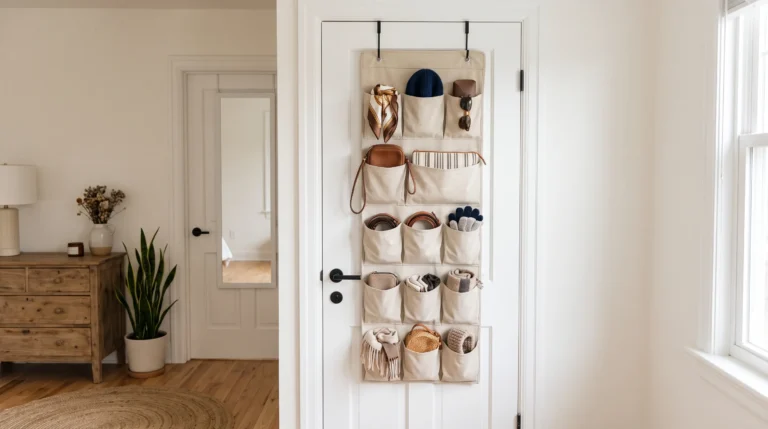
Closet doors offer an overlooked storage surface that can become extremely useful in a compact bedroom. A slim hanging organizer can hold shoes, scarves, belts, handbags, accessories, or folded lightweight clothing without taking up valuable shelf space. This works particularly well when the closet itself is small and every shelf is already occupied. Clear pockets make it easy to see what you have, while fabric organizers create a softer appearance. Keep heavier belongings toward the bottom and avoid overloading the door, especially if the hinges or hardware are not designed for substantial extra weight.
The biggest advantage is accessibility. Instead of searching through crowded drawers or stacking small accessories into one container, you can give each category its own visible section. Grouping similar pieces together also makes getting dressed faster and reduces clutter elsewhere in the room. If your closet doors are hinged, check that the organizer will not prevent them from closing properly. For sliding doors, look for systems designed specifically for that setup. These small additions can significantly improve bedroom organization because they transform an otherwise unused surface into practical storage.
10. Window Seat Drawers
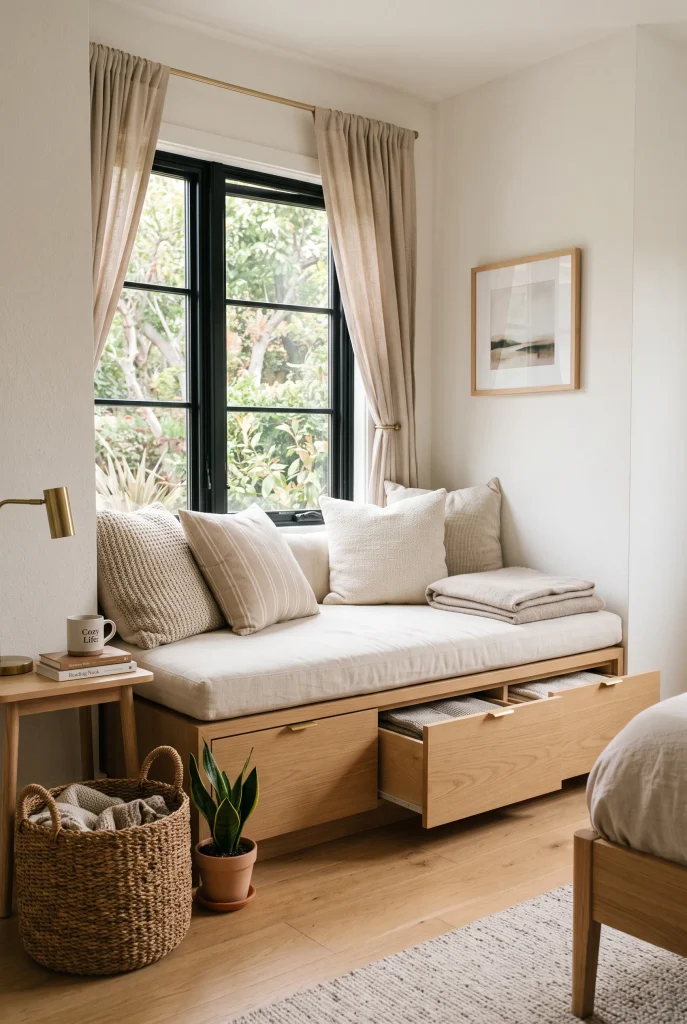
- A window seat combines comfortable seating with concealed storage underneath.
- Deep drawers are useful for bedding, books, clothing, or seasonal accessories.
- Soft cushions make the area feel like an intentional bedroom feature.
- Keep the styling simple so the corner remains functional and uncluttered.
A window seat can turn an unused bedroom corner into one of the most useful areas in the room. When drawers are built underneath, the same footprint provides both seating and concealed storage. Deep compartments can hold spare bedding, pillows, books, folded clothes, or seasonal items that do not need daily access. A comfortable cushion adds softness and creates a natural place to read or relax. If a built-in seat is not possible, a freestanding storage bench positioned beneath the window can create a similar effect while giving you more flexibility.
Keep the window area visually calm so the storage feature feels like part of the architecture. Choose a cushion that coordinates with the bedding and use a few pillows rather than filling the entire seat. Label storage compartments if they hold different categories of belongings, especially when the drawers are deep. This makes the space easier to maintain over time. A window seat is particularly valuable in a small bedroom because it does not compete with the main walking area. Instead, it transforms an underused perimeter into a comfortable and practical storage zone.
11. Overhead Wall Cabinets
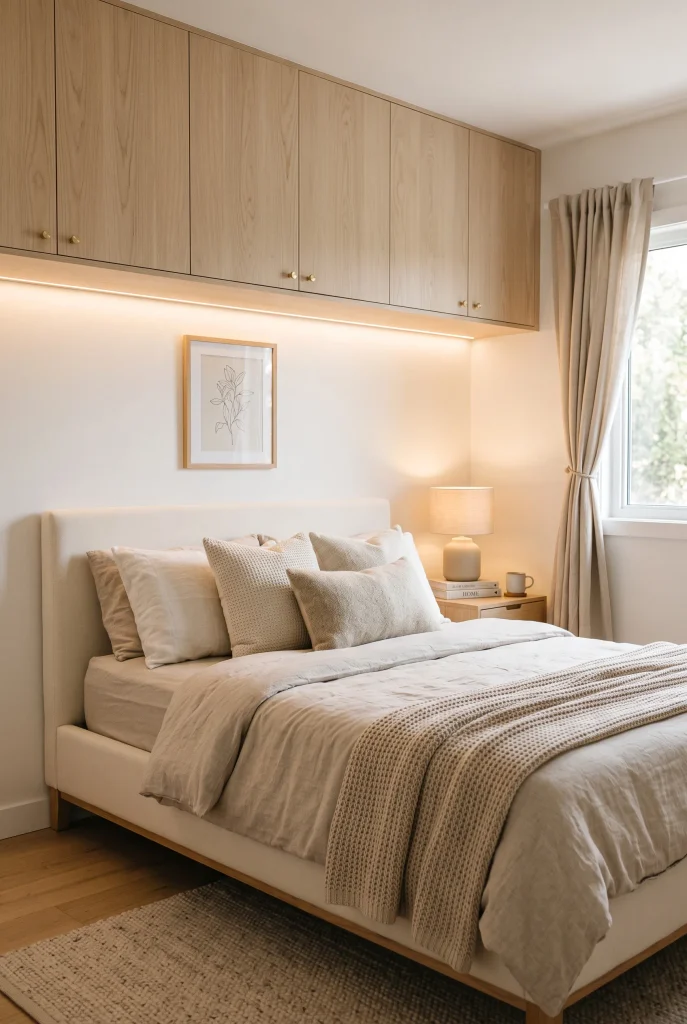
- Overhead cabinets use wall space that would otherwise remain empty.
- Closed doors keep clothing, linens, and personal items hidden from view.
- Choose shallow cabinets to prevent the bed area from feeling enclosed.
- Light finishes help upper storage blend naturally into the room.
The wall above the bed can provide valuable storage when floor space is already limited. Overhead cabinets create a dedicated place for folded clothing, spare bedding, bags, and other belongings while keeping everything neatly concealed. This approach is especially useful when a bedroom does not have enough closet or dresser capacity. Choose cabinets with a shallow depth so they do not visually overwhelm the bed. Soft white, cream, or light wood finishes can also help the units blend with the surrounding walls instead of becoming a heavy focal point.
Good organization inside the cabinets makes this setup even more practical. Reserve the easiest-to-reach sections for items you use regularly and place seasonal belongings higher or farther back. Adjustable shelves can accommodate different sizes of clothing and storage boxes as your needs change. Keep the cabinet exterior simple and avoid filling the surrounding wall with too much decoration. The goal is to create a streamlined storage zone that feels intentional. When planned carefully, overhead cabinetry can dramatically increase storage capacity while leaving your floor, walkways, and bedside areas completely open.
12. Slim Rolling Cart
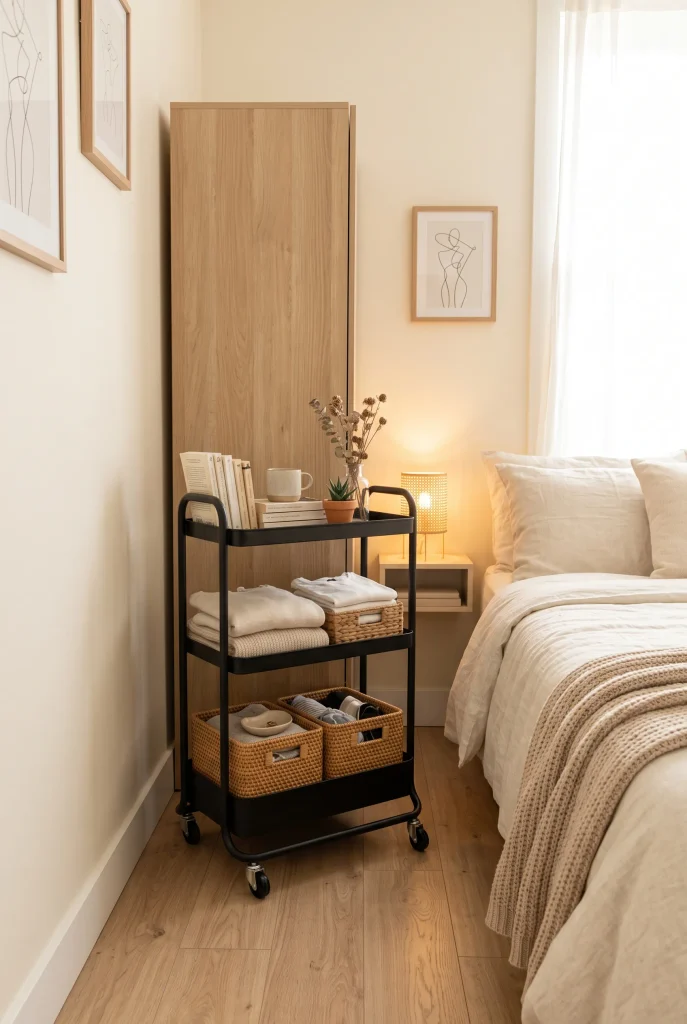
- A slim rolling cart can fit into narrow gaps between furniture.
- Use separate tiers for accessories, folded clothing, books, or beauty essentials.
- Wheels make the storage easy to move when cleaning or rearranging.
- Choose a simple finish that complements the bedroom’s existing furniture.
Sometimes the most useful storage solution is one that can squeeze into a space too narrow for regular furniture. A slim rolling cart can slide beside a wardrobe, between a dresser and wall, or next to the bed while providing several levels of accessible storage. Use the upper tier for everyday essentials and lower shelves for shoes, folded clothing, books, or baskets. Because the cart moves easily, you can pull it forward when needed and push it aside when cleaning. This makes it especially practical for bedrooms where permanent furniture placement feels restrictive.
Look for a cart with a narrow footprint and sturdy wheels that roll smoothly across your flooring. Metal frames can create a lighter appearance, while wood versions add warmth to neutral interiors. Matching baskets can hide smaller belongings and prevent the open shelves from looking messy. Avoid filling every tier completely, since a little empty space keeps the arrangement visually lighter. A rolling cart may be small, but it can add useful flexibility when larger storage furniture simply will not fit comfortably into the room.
13. Mirror With Shelves
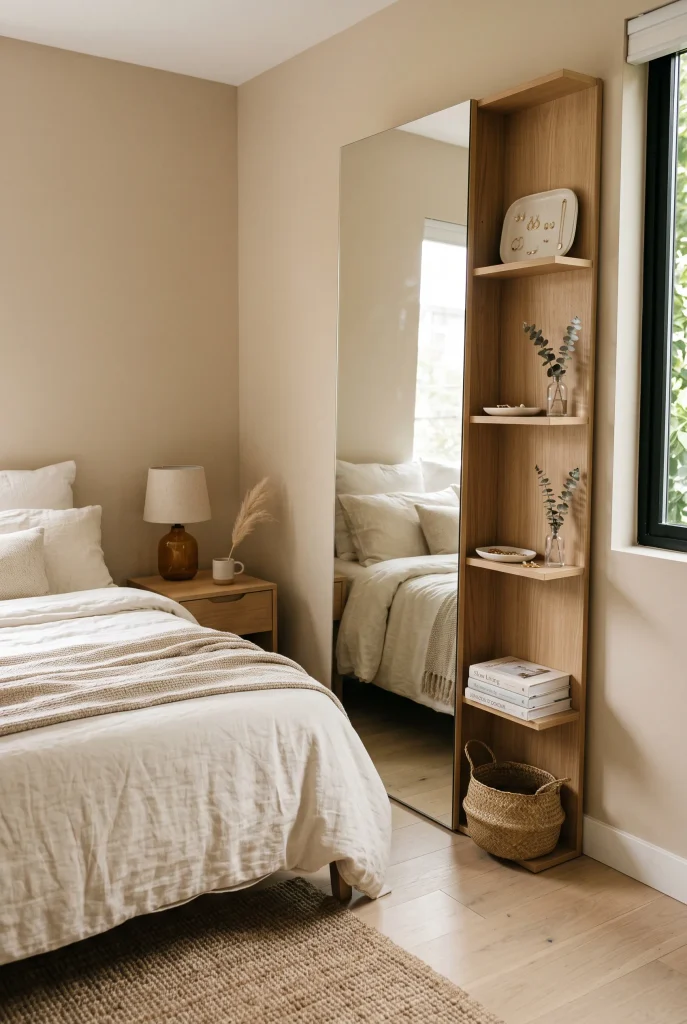
- A mirrored storage piece combines organization with a useful full-length reflection.
- Hidden or slim shelves can hold accessories, beauty items, and small essentials.
- The reflective surface helps bounce light around a compact bedroom.
- Keep shelves lightly styled so the mirror remains the visual focus.
A full-length mirror can become much more useful when it includes discreet shelving or hidden compartments. Instead of using valuable wall space for a mirror and then needing another storage unit, you combine both functions in one compact piece. Slim shelves can hold jewelry, small accessories, hair tools, or everyday essentials, while concealed sections keep less attractive items out of sight. The mirror itself also helps reflect natural light, which can make a compact bedroom appear brighter and more spacious. This is a smart option when every wall needs to serve a purpose.
Choose a design with a narrow frame and storage that stays close to the wall. Overly deep shelves can make the piece project into the walking area and reduce the sense of openness. Keep visible items organized in small trays or matching containers to maintain a polished appearance. Positioning the mirror opposite or near a window can maximize its light-reflecting effect. With the right proportions, this multifunctional piece adds storage, convenience, and visual depth without requiring another bulky cabinet or dresser.
14. Pegboard Storage Wall
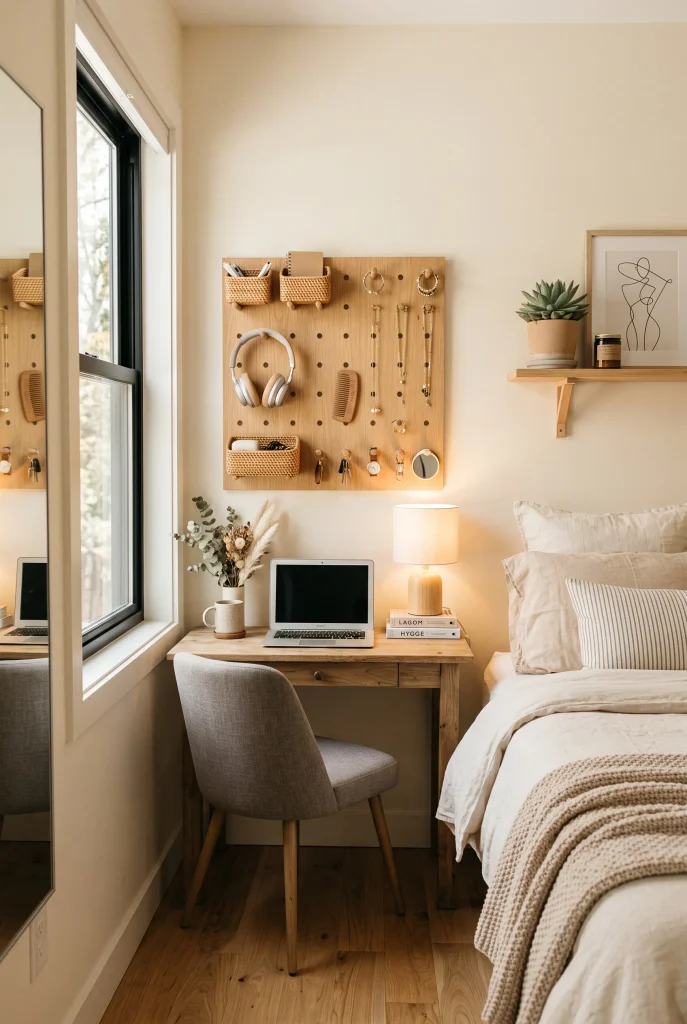
- A pegboard turns unused wall space into flexible vertical storage.
- Hooks and baskets can hold accessories, bags, headphones, or small essentials.
- Rearrange the pieces whenever your storage needs change.
- Keep the layout simple so the wall feels organized rather than busy.
A pegboard can bring surprisingly flexible storage to a small bedroom without taking up any floor space. Mounted beside a desk, dresser, or wardrobe, it can hold hooks, small shelves, baskets, and containers for accessories and everyday essentials. The biggest advantage is adaptability: pieces can be moved whenever your needs change. Use hooks for bags or headphones, small baskets for accessories, and narrow shelves for books or decorative objects. This makes the wall work harder while keeping frequently used belongings visible and easy to reach.
For a polished look, choose a pegboard finish that complements the bedroom rather than competing with it. Natural wood adds warmth, while white creates a quieter appearance against pale walls. Avoid filling every hole or covering the entire board with belongings. Leaving some open space makes the arrangement feel intentional and keeps visual clutter under control. This solution is especially useful for renters or anyone who frequently rearranges their room because the storage can evolve with the space. A well-planned pegboard adds personality while making an otherwise unused wall genuinely functional.
15. Narrow Floating Cabinets
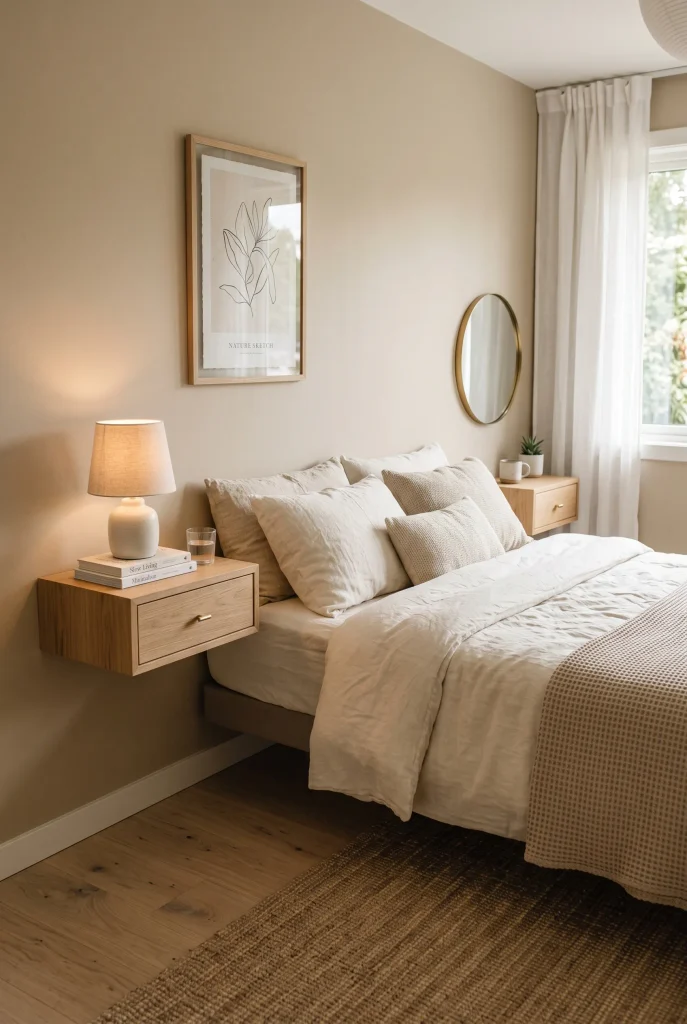
- Floating cabinets provide enclosed storage without occupying floor space.
- Use them for chargers, books, accessories, and personal items that need hiding.
- Wall-mounted furniture keeps the floor visually open and easier to clean.
- Choose compact cabinets with simple fronts for a streamlined appearance.
When a bedroom needs more concealed storage but has almost no floor space available, narrow floating cabinets can be an excellent solution. Mounted beside the bed or along an empty wall, they provide drawers or enclosed compartments while leaving the floor completely clear underneath. This makes the room feel more open and gives you extra storage without adding another piece of furniture that blocks movement. Use them for chargers, books, accessories, folded items, or anything that tends to gather on surfaces.
The key is choosing the right proportions. A cabinet that is too deep can interfere with walking paths or make a narrow wall feel crowded. Look for shallow designs with clean fronts and minimal hardware, especially if your bedroom already contains several furniture pieces. Light wood, white, or soft beige finishes can blend naturally into a calm interior. You can also install one cabinet beside the bed instead of two if space is extremely limited. Keeping the floor underneath clear creates a lighter visual effect and makes everyday cleaning noticeably easier.
16. Storage Staircase
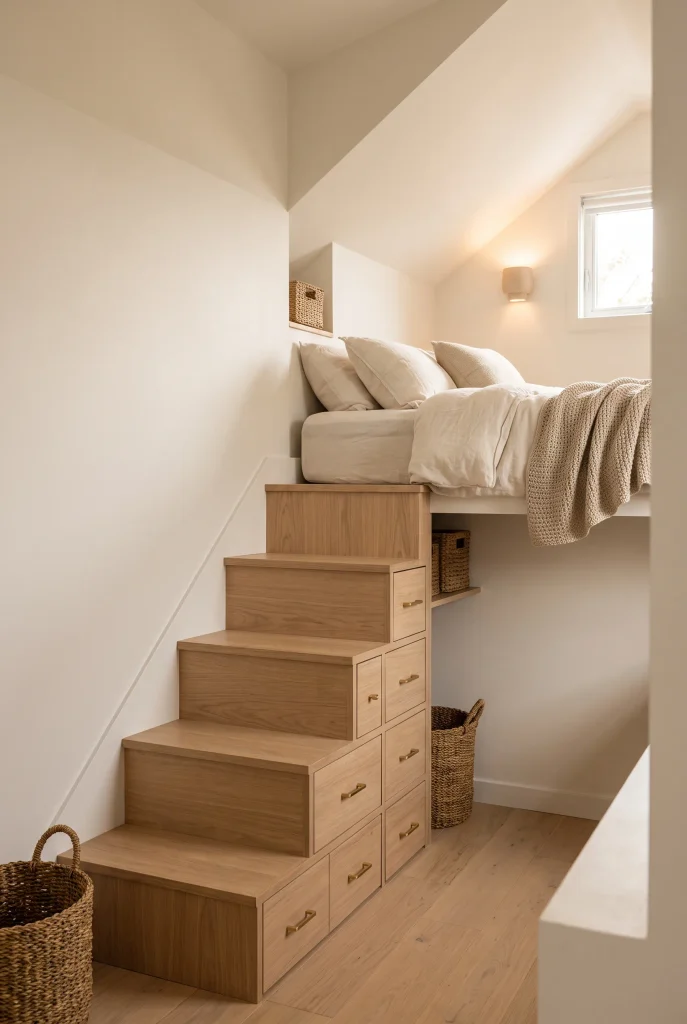
- Built-in drawers under steps turn circulation space into practical storage.
- Use different drawer sizes for clothing, shoes, bedding, and accessories.
- This works especially well in loft bedrooms or raised sleeping areas.
- Keep frequently used belongings in the easiest-to-reach compartments.
If your bedroom includes a loft bed or raised sleeping platform, the staircase leading upward can become valuable hidden storage. Instead of leaving the space beneath each step empty, built-in drawers can provide separate compartments for clothing, shoes, bedding, books, and accessories. This approach makes every part of the room work harder without adding a traditional dresser. Larger lower drawers can hold bulky items, while smaller upper compartments are useful for everyday belongings. It is an especially clever solution when the available floor area is too limited for conventional storage furniture.
A storage staircase also creates a cleaner visual flow because the compartments become part of the room’s architecture. Choose simple drawer fronts that match the surrounding woodwork or furniture for a cohesive appearance. Keep daily essentials in the most accessible drawers so you are not constantly opening the harder-to-reach sections. If you are planning a custom loft or raised bed, include storage from the beginning rather than trying to add it later. With thoughtful design, the staircase becomes more than a route to the bed—it becomes an efficient storage system built into the room itself.
17. Behind-Door Hooks
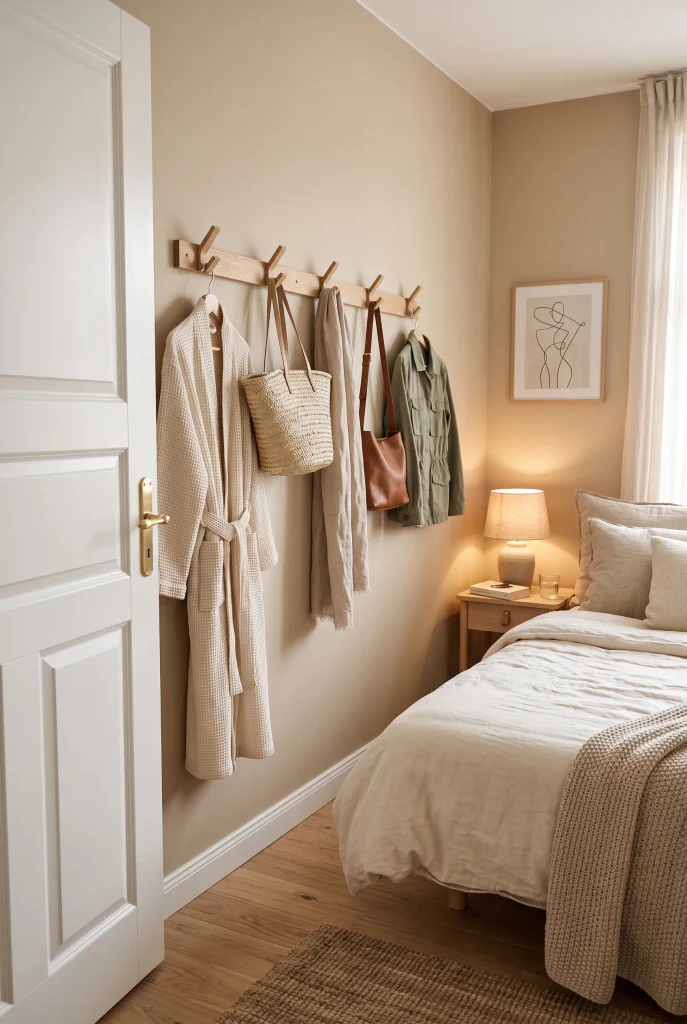
- Behind-the-door hooks turn an overlooked surface into convenient everyday storage.
- Use them for robes, handbags, scarves, hats, or lightweight jackets.
- Keep frequently used pieces at an easy-to-reach height.
- Choose matching hooks for a cleaner and more intentional appearance.
The space behind a bedroom door is easy to overlook, yet it can provide useful storage without taking away valuable floor space. A simple row of hooks gives robes, handbags, scarves, hats, and lightweight jackets a dedicated place instead of leaving them on the bed or chair. This keeps everyday belongings accessible while helping the rest of the room stay tidy. Choose hooks with enough spacing between them so items do not overlap heavily. If the door is narrow, a slim over-door hook rack can provide the same function without permanent installation.
Keep the arrangement practical by placing the items you use most often at the easiest height to reach. Matching hooks can make even simple storage look polished, especially when paired with a neutral bedroom palette. Avoid hanging too many bulky pieces because an overloaded door can quickly look messy and may become difficult to close. Assigning one or two hooks to each category makes this tiny storage zone much easier to maintain. It is a simple upgrade, but it can free up chairs, shelves, and other surfaces throughout the bedroom.
Conclusion
A small bedroom does not have to mean limited storage or constant clutter. These small bedroom storage ideas show how unused corners, walls, doors, and furniture can become valuable organizing zones. Start with one solution that fits your room and your daily needs, then build from there. Small changes can create more breathing room while keeping your favorite belongings easy to access. Save this post on Pinterest for your next bedroom refresh, try the ideas that suit your space, and share it with someone who could use more storage. A smarter layout can make even the smallest bedroom feel comfortable and inviting.