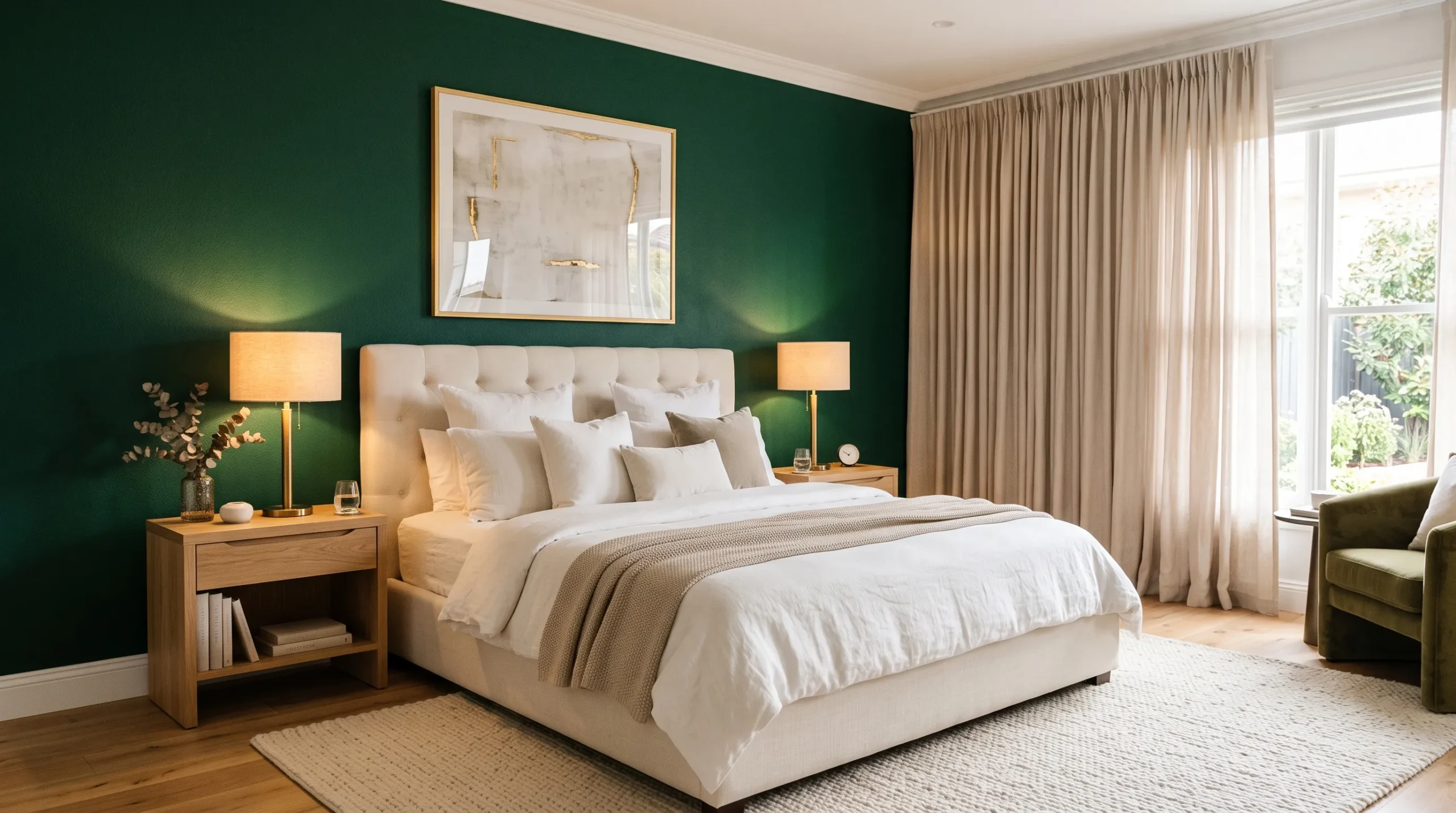
17 Dark Green Bedroom Ideas for a Cozy Luxe Retreat
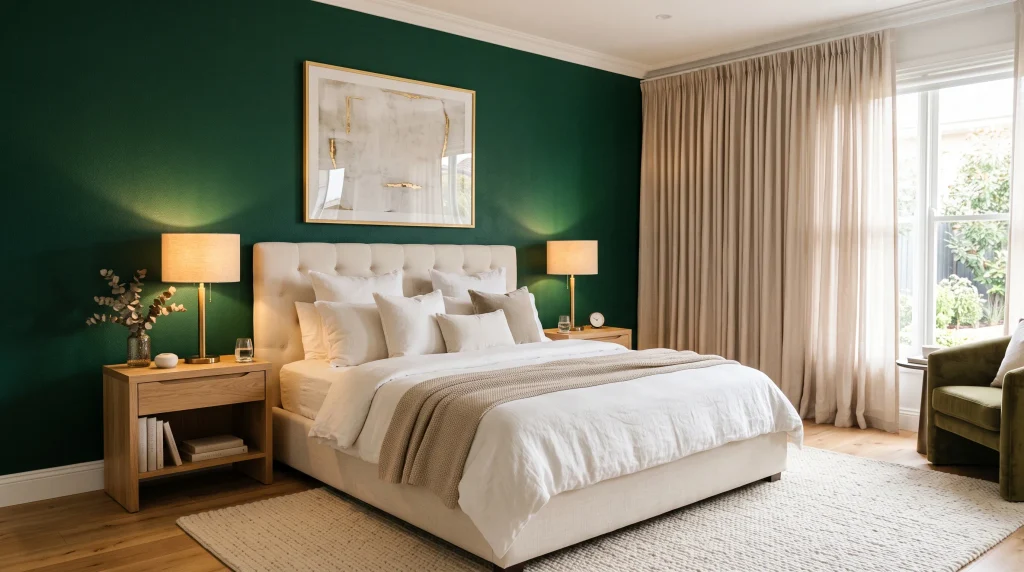
A dark green bedroom can feel rich, cozy, and surprisingly timeless. The right shade and a few thoughtful layers can turn an ordinary room into a relaxing retreat.
Whether you love deep forest tones, soft olive accents, velvet textures, or warm natural wood, there are plenty of ways to make green feel elegant rather than overwhelming. This collection of 17 ideas will show you how to balance darker colors with cream textiles, warm lighting, natural materials, and subtle luxe details. The most beautiful bedrooms are not necessarily the most expensive—they simply use color, texture, and lighting thoughtfully. Get ready to find an idea you’ll want to save and try.
1. Emerald Accent Wall
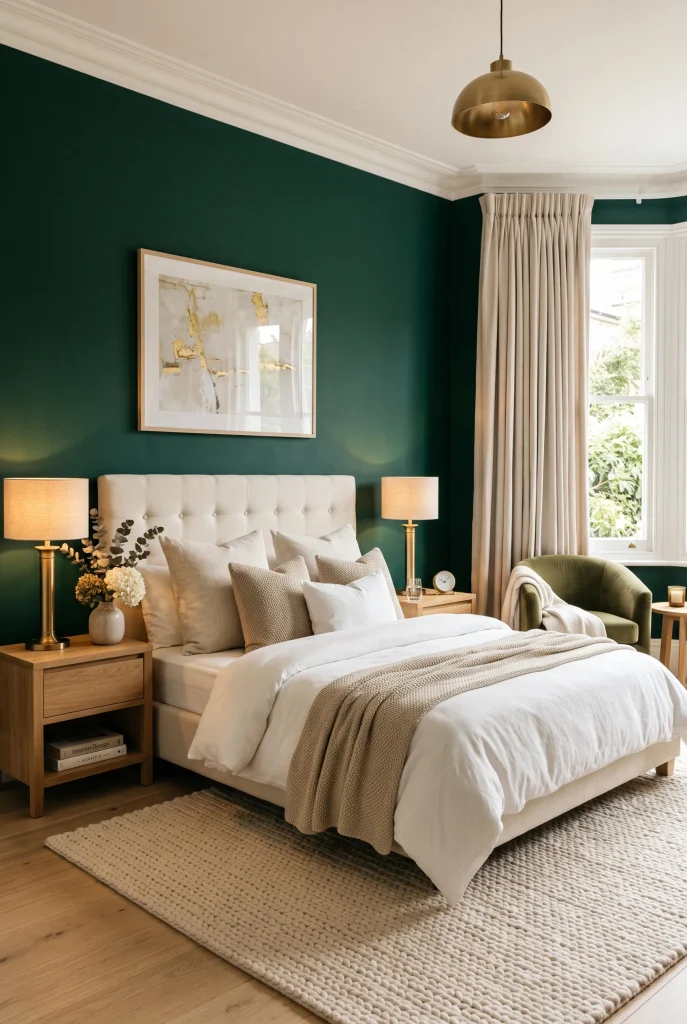
- A deep green accent wall creates a rich, sophisticated focal point.
- Cream bedding softens the bold color and keeps the room inviting.
- Brass lighting adds a subtle luxurious touch.
- A textured rug balances the smooth painted wall.
A bold wall can completely change the atmosphere of your bedroom without requiring a full renovation. An emerald accent wall behind the bed creates a dramatic focal point while keeping the remaining walls light and airy. The rich green shade brings depth, making the room feel more intimate and thoughtfully designed. Pair it with warm white bedding, natural wood furniture, and soft beige curtains for a balanced look. Painting just one wall is a practical way to experiment with darker colors without making the entire room feel enclosed or overly dramatic.
The beauty of this setup is how easily it adapts to different decorating styles. For a modern luxe finish, introduce brass lamps, crisp bedding, and a few carefully chosen decorative accents. If you prefer a softer, organic atmosphere, choose oak nightstands, woven baskets, and linen textures instead. Keep the wall behind the bed as the main visual feature, and avoid covering too much of it with artwork or bulky furniture. A simple arrangement allows the green color to shine, creating a polished retreat that feels comfortable at night and refreshing in daylight.
2. Forest Green Bedding
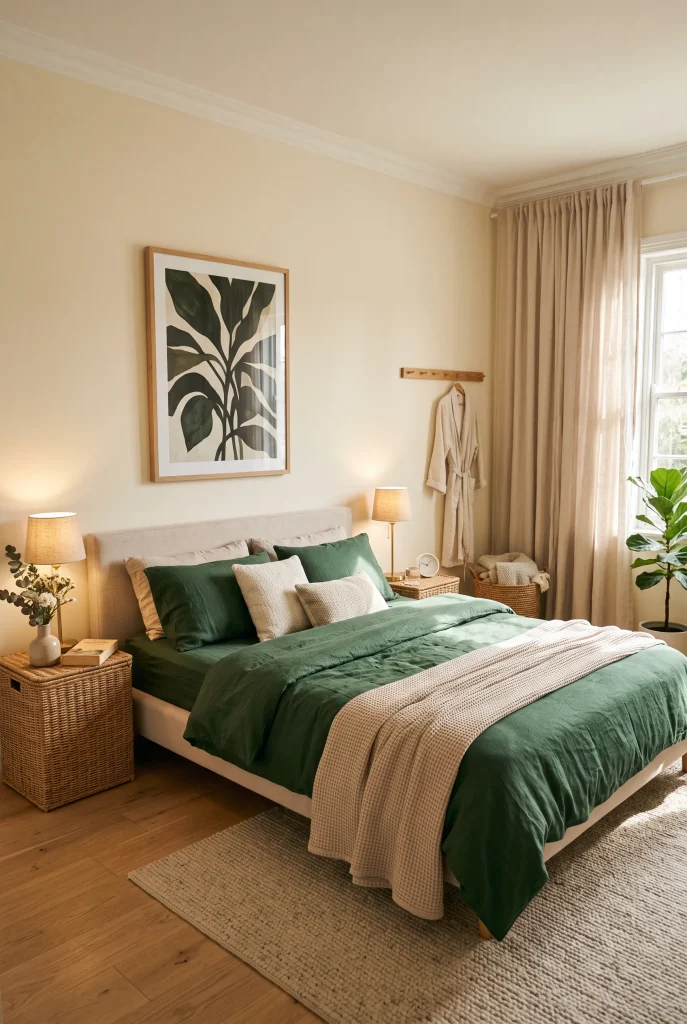
- Forest green bedding introduces color without permanently changing the walls.
- Linen or cotton textures add softness and visual depth.
- Cream sheets create a fresh contrast against the darker duvet.
- Layered pillows make the bed look inviting and comfortable.
Sometimes, the easiest way to refresh a bedroom is to change the bedding. Forest green duvet covers and pillowcases bring a grounded, luxurious feeling to the room while keeping the design flexible. This shade works beautifully with cream, taupe, beige, and warm white, so you can create a cozy palette without adding too many colors. Choose breathable linen or soft cotton for a relaxed finish. The result is a bed that looks styled yet comfortable, giving the entire space a more intentional appearance with one simple update.
Layering is what makes this idea feel especially inviting. Start with cream or ivory sheets, add a forest green duvet, and finish with pillows in varying textures. A knitted throw at the foot of the bed introduces warmth without overwhelming the color scheme. Mixing smooth cotton with textured linen or chunky knit fabrics makes darker bedding feel less heavy. Keep the surrounding furniture simple, using light wood or matte black finishes to complement the rich green. This approach creates a restful retreat that feels both sophisticated and easy to maintain.
3. Green Velvet Headboard
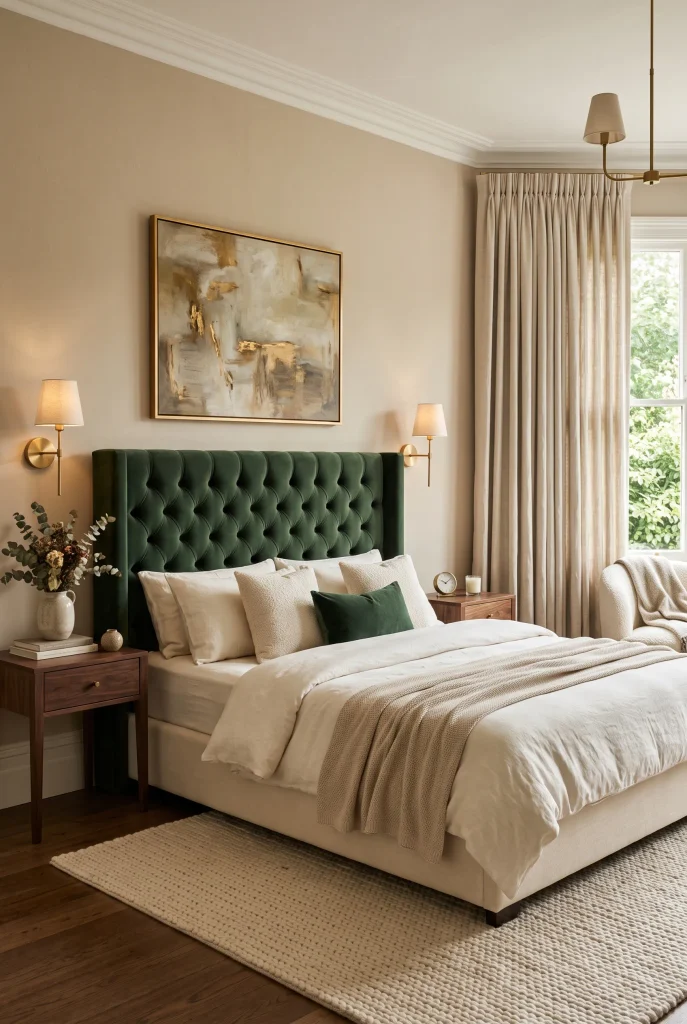
- A velvet headboard adds softness and a luxurious texture.
- The tall design creates an elegant focal point behind the bed.
- Cream bedding keeps the rich green from feeling too heavy.
- Brass lighting enhances the sophisticated bedroom atmosphere.
A velvet headboard can make an ordinary bedroom feel instantly more luxurious. Deep green velvet adds rich color, soft texture, and a beautiful focal point behind the bed. Its subtle sheen catches the light, creating depth without needing bold artwork or excessive decoration. Choose a tall, gently curved headboard for a classic look, or select a clean rectangular shape for modern styling. Pair it with cream bedding and warm neutral walls to create a balanced retreat. The result is a bedroom that feels polished, comfortable, and thoughtfully furnished.
The surrounding details help the headboard look intentional rather than overwhelming. Choose nightstands in warm wood, walnut, or a muted black finish, depending on your preferred style. Brass sconces or simple table lamps introduce a refined accent while providing useful bedside lighting. Keep decorative pillows in ivory, taupe, or muted olive to complement the green velvet. A statement headboard works best when the rest of the room remains visually calm. This allows the texture and color to stand out while preserving a relaxing atmosphere for everyday living.
4. Moody Green Walls
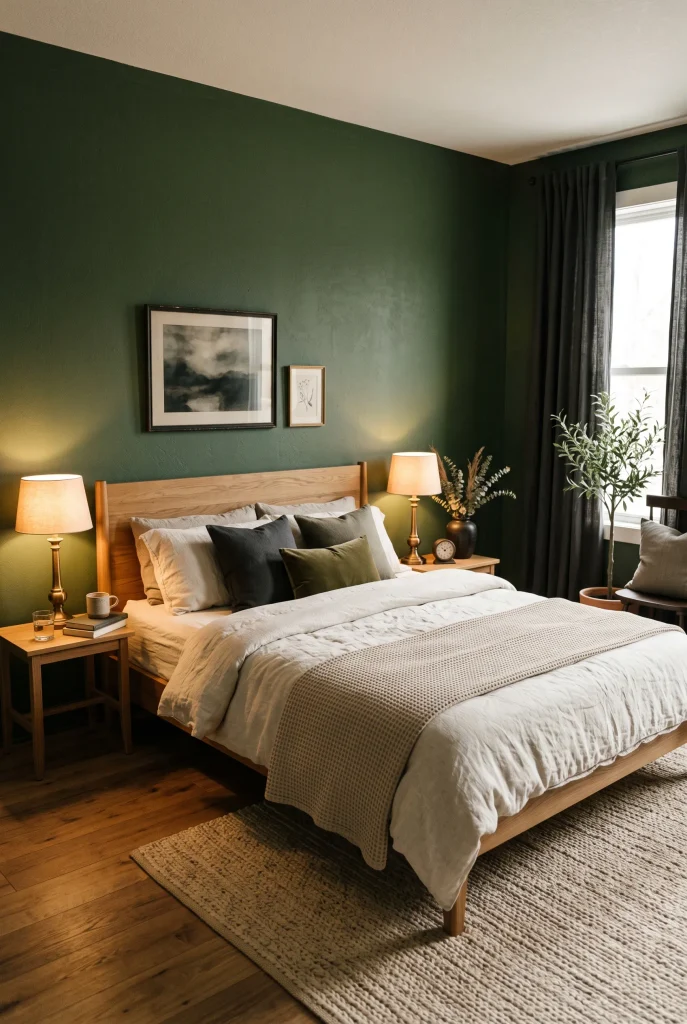
- Deep green walls create a cocooning and intimate atmosphere.
- Warm wood furniture prevents the darker palette from feeling cold.
- Ivory textiles provide contrast and visual balance.
- Layered lighting keeps the room welcoming after sunset.
For a bedroom with a more intimate and dramatic atmosphere, consider wrapping the walls in a deep moss or forest green shade. Unlike a single accent wall, this approach creates a cohesive backdrop that makes the entire room feel enveloping. Darker colors can work beautifully in bedrooms because they support a restful, cocoon-like mood. Choose a finish with a subtle sheen or matte appearance, depending on your style. Warm wood furniture and soft cream textiles help balance the depth, ensuring the room feels cozy rather than visually overwhelming.
Lighting becomes especially important when using darker walls throughout the space. Combine natural daylight with warm bedside lamps, wall sconces, or a softly shaded ceiling fixture. Avoid relying on one harsh overhead light, which can make the room feel less comfortable. This approach works particularly well in bedrooms with generous windows, where daylight highlights the green tones beautifully. If your room is smaller or receives limited sunlight, use lighter bedding and reflective accents to maintain a sense of openness while enjoying the rich, moody aesthetic.
View: 23 Budget Home Decor Ideas That Look Totally Expensive
5. Brass Lighting Accents
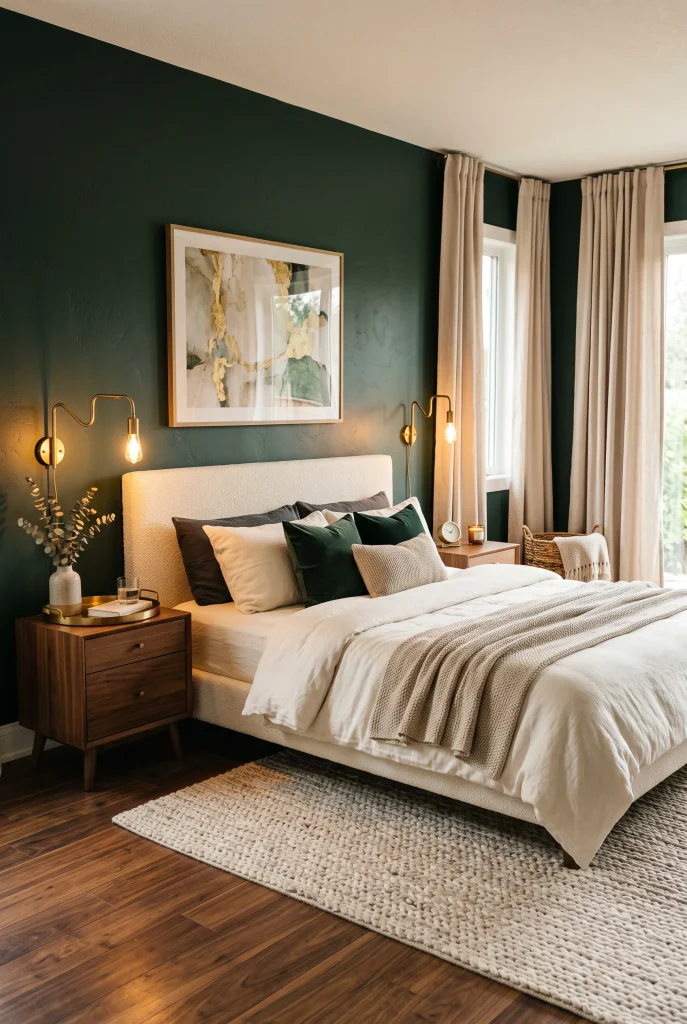
- Brass lighting adds warmth and a polished finishing touch.
- Wall sconces free up space on bedside tables.
- Golden illumination complements deep green tones beautifully.
- Coordinated metal details create a cohesive decorating scheme.
A few carefully chosen lighting details can transform a dark green bedroom from simple to sophisticated. Brass bedside lamps or wall sconces introduce warm metallic accents that complement the richness of green walls and bedding. The golden finish reflects light softly, creating an inviting atmosphere during the evening. Choose fixtures with rounded shapes for a softer, traditional feel, or clean geometric designs for a modern luxe look. This small upgrade adds visual interest without requiring new furniture or a complete room makeover.
Think about how the lighting functions as well as how it looks. Bedside sconces can save valuable nightstand space, while adjustable lamps make reading or relaxing more comfortable. Pair the brass fixtures with warm white bulbs rather than cool blue-toned lighting to preserve the cozy atmosphere. Repeating brass in one or two small details, such as drawer handles or a mirror frame, helps the room feel coordinated. Keep the rest of the finishes restrained so the lighting becomes a refined highlight instead of competing with the green palette.
6. Natural Wood Furniture
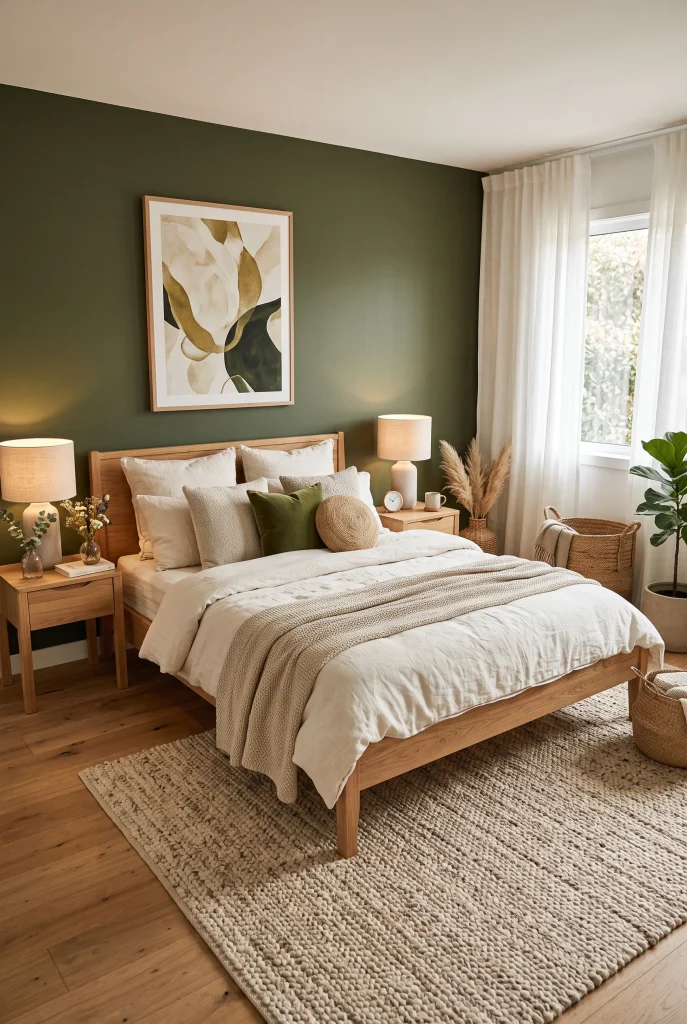
- Natural wood furniture softens the richness of deep green tones.
- Oak and walnut finishes add warmth and timeless appeal.
- Simple furniture shapes keep the room visually balanced.
- Woven accessories introduce natural texture and character.
Natural wood furniture brings warmth and balance to a bedroom decorated in rich green shades. Oak, walnut, and other warm wood finishes create a beautiful contrast against deep green walls or bedding. The combination feels grounded and inviting, especially when paired with cream linens and soft beige accents. Choose a wooden bed frame, matching nightstands, or a simple dresser to establish a cohesive foundation. The natural grain adds character to the room, helping the space feel thoughtfully designed rather than overly coordinated.
The key is choosing furniture that complements the room’s proportions and everyday needs. A low-profile oak bed can make a smaller space feel more open, while a substantial wooden headboard adds presence in a larger bedroom. Keep the wood tones consistent or intentionally complementary to avoid a mismatched appearance. Natural materials, such as woven baskets, jute rugs, and linen curtains, work especially well with green palettes. They introduce tactile variety and create a comfortable retreat that feels connected to nature without sacrificing a polished look.
7. Layered Cream Textiles
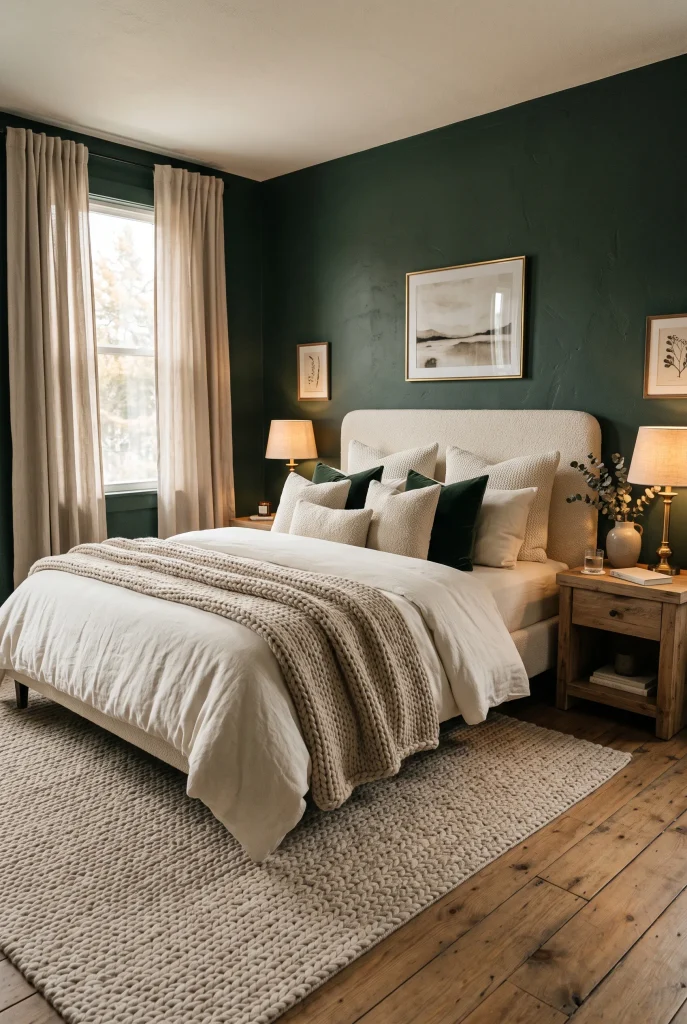
- Cream textiles brighten darker surroundings without losing warmth.
- Layered fabrics make the bed look plush and inviting.
- Different textures add depth to a simple color palette.
- Neutral bedding makes seasonal styling easy to update.
Cream textiles are one of the easiest ways to make a richly colored bedroom feel softer and more welcoming. Ivory sheets, beige throws, boucle cushions, and linen curtains create a gentle contrast against deep green walls or furniture. Instead of relying on many decorative colors, focus on varying the textures and tones within this neutral palette. The result is a bed that looks comfortable and layered while maintaining a refined appearance. This approach works particularly well when you want the room to feel luxurious without appearing overly formal.
Start with a simple foundation of cream bedding, then add a textured throw and a few pillows in complementary shades. A warm ivory duvet can brighten the overall arrangement, while taupe or oatmeal accents introduce subtle variation. Mixing fabrics is more effective than adding too many accessories when styling a cozy bedroom. Choose breathable materials for everyday comfort, and keep heavier layers seasonal if your climate is warm. These practical details create a restful space that looks inviting in photographs and feels pleasant to use every night.
8. Botanical Wall Art
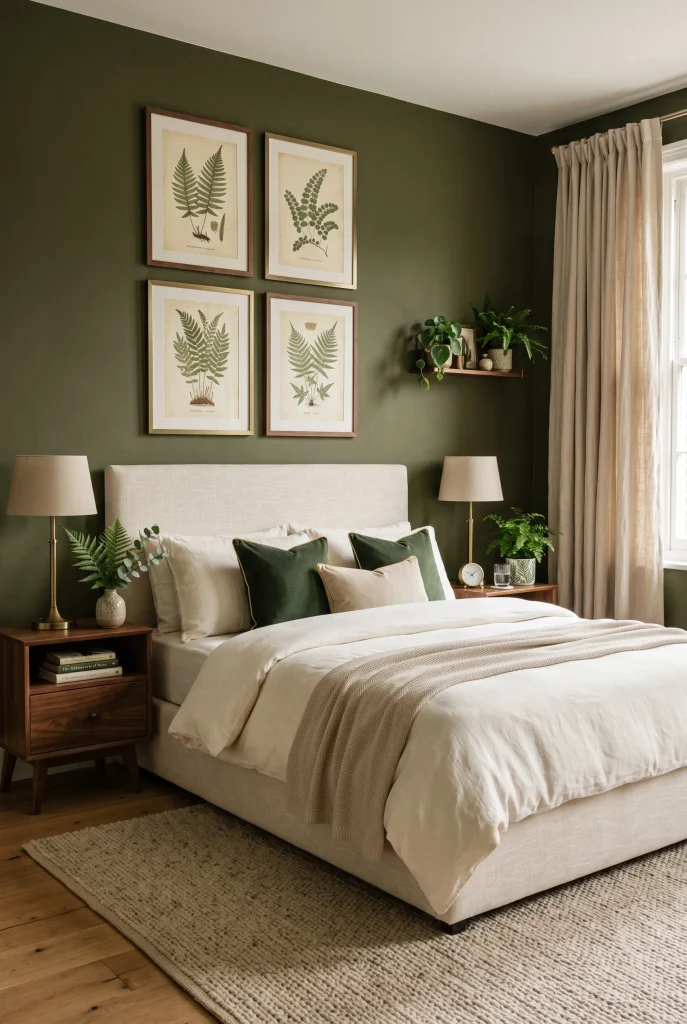
- Botanical artwork reinforces the room’s natural color palette.
- Framed prints add personality without overwhelming the walls.
- Fern and leaf motifs complement green shades beautifully.
- Coordinated frames create a polished gallery effect.
Botanical wall art adds a natural, decorative layer to a dark green bedroom. Fern prints, pressed-leaf illustrations, and softly colored botanical paintings complement the room’s earthy palette while introducing visual interest above the bed. Choose artwork with cream, muted olive, or warm brown details to create a cohesive look. The organic shapes soften straight furniture lines and help the room feel more connected to nature. A carefully selected print can make a large empty wall feel finished without requiring extensive decoration.
Consider the size and placement of your artwork before hanging it. A wide framed piece above the headboard can anchor the bed, while a pair of smaller prints creates a balanced arrangement. Keep the frame finish consistent with the room’s other accents, such as walnut, natural oak, or brass. Botanical art looks especially elegant when the surrounding decor remains simple. Leave enough breathing room around the artwork, and avoid filling every wall so the bedroom retains a calm, uncluttered atmosphere.
9. Cozy Reading Nook
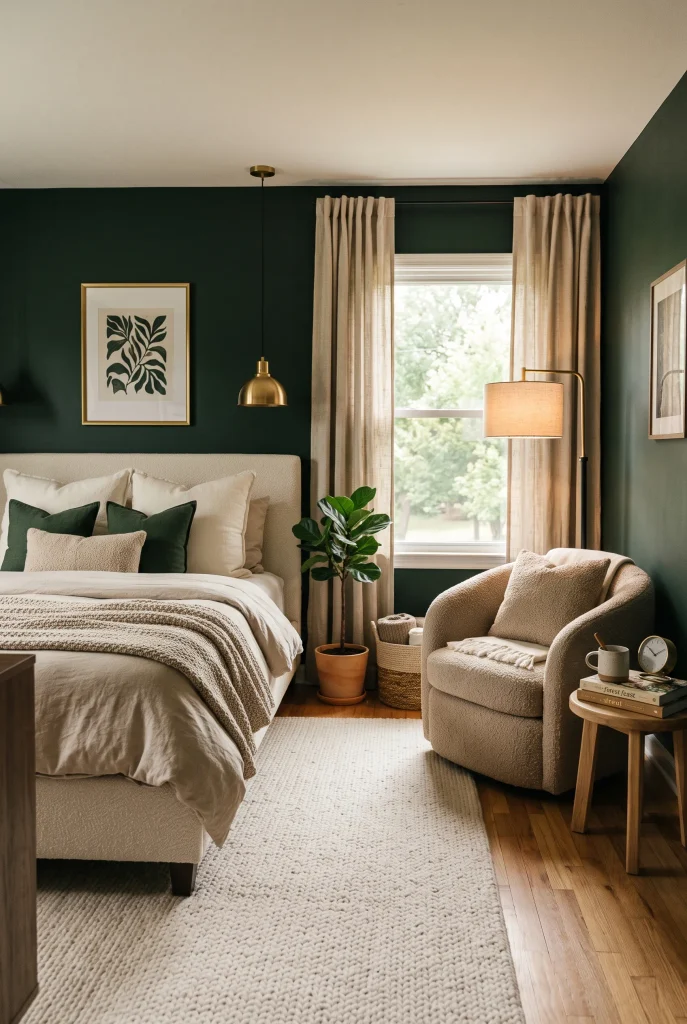
- A reading nook creates a relaxing corner beyond the bed.
- A comfortable armchair adds function and visual softness.
- Warm lighting makes the corner useful after sunset.
- A small side table provides space for books and tea.
A cozy reading nook can turn an unused bedroom corner into one of the most inviting parts of the room. Place a comfortable armchair near a window, beside a bookshelf, or in an open corner where natural light is available. In a dark green bedroom, a cream, beige, or warm caramel chair creates a beautiful contrast. Add a small wooden side table for books and a soft floor lamp for evening reading. This arrangement gives the room another purpose while making it feel more thoughtfully furnished.
Comfort should guide your furniture choices rather than appearance alone. Select a chair with supportive seating, enough room to relax, and fabric that suits your daily use. A textured throw or small cushion can tie the nook into the rest of the bedroom. Even a compact reading corner feels more intentional when the lighting is positioned properly and the table is within easy reach. Keep the surrounding area uncluttered so the nook remains a peaceful place to unwind, read, or enjoy a quiet moment before bed.
10. Soft Green Curtains
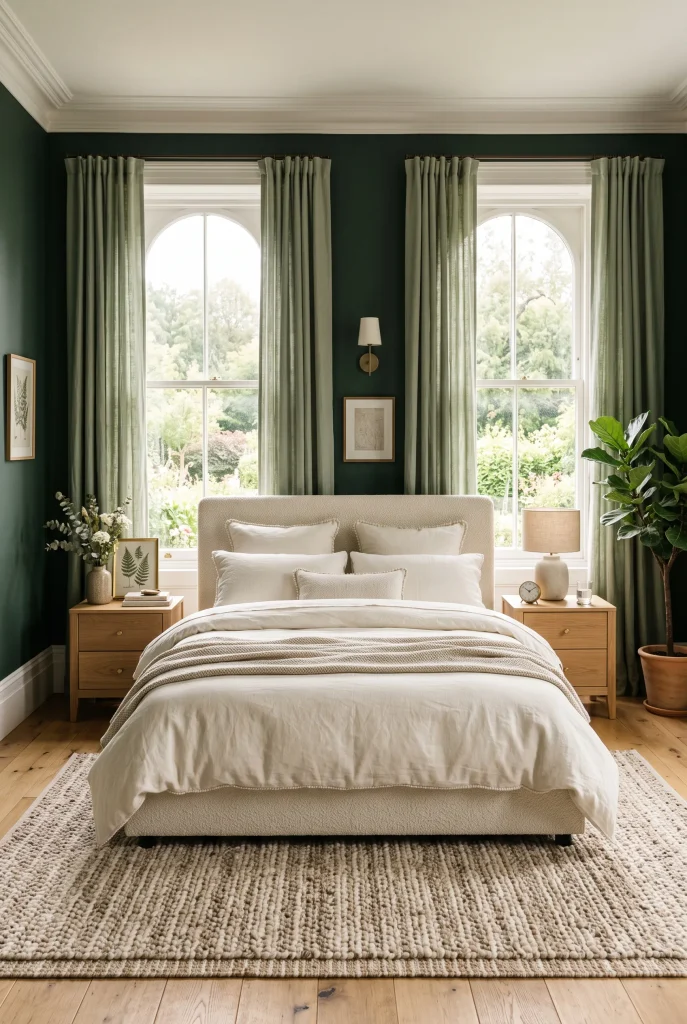
- Green curtains create a coordinated and layered color scheme.
- Linen fabric filters daylight with a soft, natural appearance.
- Floor-length panels make windows feel taller.
- Light green shades soften the room without adding visual clutter.
Soft green curtains can bring a beautiful sense of continuity to a bedroom decorated with richer green tones. Choose sage, muted olive, or eucalyptus fabric to create a gentle contrast against deep walls or furniture. Linen curtains are especially appealing because they filter daylight softly and introduce natural texture. Floor-length panels can also make the windows appear taller, giving the room a more elegant and finished appearance. This simple addition works well when you want a coordinated look without matching every element exactly.
Pay attention to the curtain’s weight, length, and placement for the best result. Lightweight fabrics create an airy atmosphere, while thicker lined panels offer more privacy and light control. Mount the curtain rod slightly above the window frame when practical, allowing the fabric to fall gracefully toward the floor. Choosing a muted green rather than an overly bright shade makes the room feel more sophisticated. Pair the curtains with cream bedding and warm wood accents to maintain a calm, balanced retreat.
11. Statement Ceiling Design
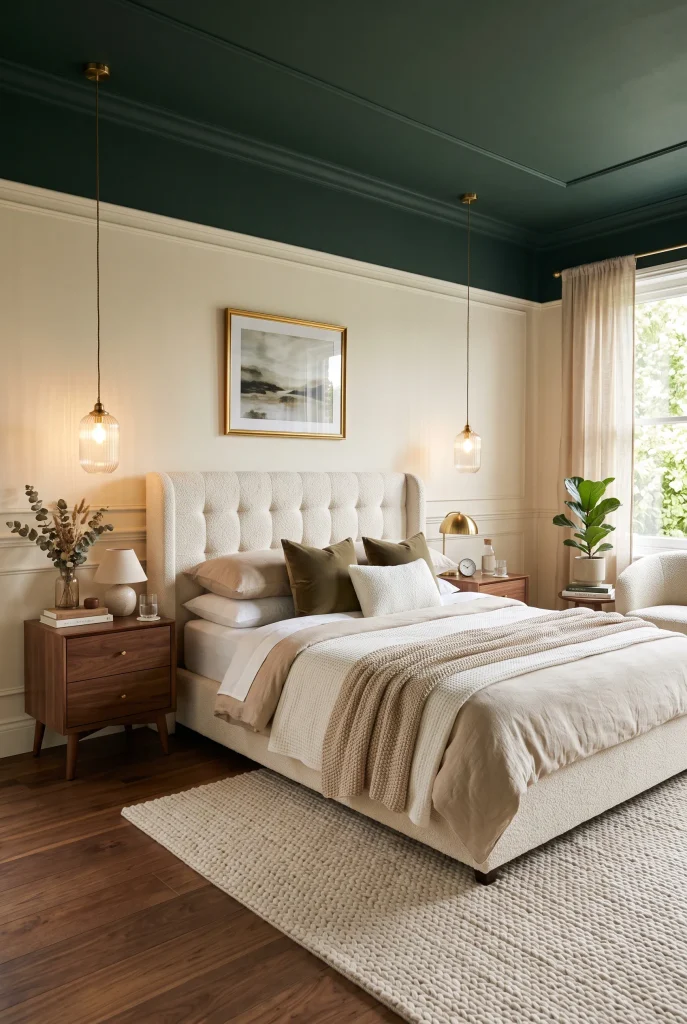
- A colored ceiling adds personality beyond the walls.
- Deep green overhead creates a cocooning atmosphere.
- Light walls balance the darker ceiling treatment.
- A statement pendant provides a refined focal point.
A statement ceiling can give a bedroom an unexpected design feature that feels both creative and sophisticated. Painting the ceiling a deep green shade introduces depth overhead, creating a cozy, enveloping atmosphere without darkening every wall. Pair it with warm ivory walls and cream bedding for a balanced contrast. This technique works especially well in bedrooms with architectural details, such as crown molding or exposed beams. The ceiling becomes a subtle focal point that adds character while keeping the furniture arrangement simple.
Before choosing a dark ceiling color, consider the room’s height, natural light, and existing finishes. A matte paint finish can create a soft, seamless appearance, while carefully selected lighting prevents the overhead shade from feeling too heavy. Use warm bulbs and avoid overly bulky fixtures that compete with the ceiling. This design works beautifully when the room has enough vertical space and a restrained palette. If you prefer a less dramatic result, try a muted olive or soft sage instead of a deep forest green.
12. Luxe Layered Lighting
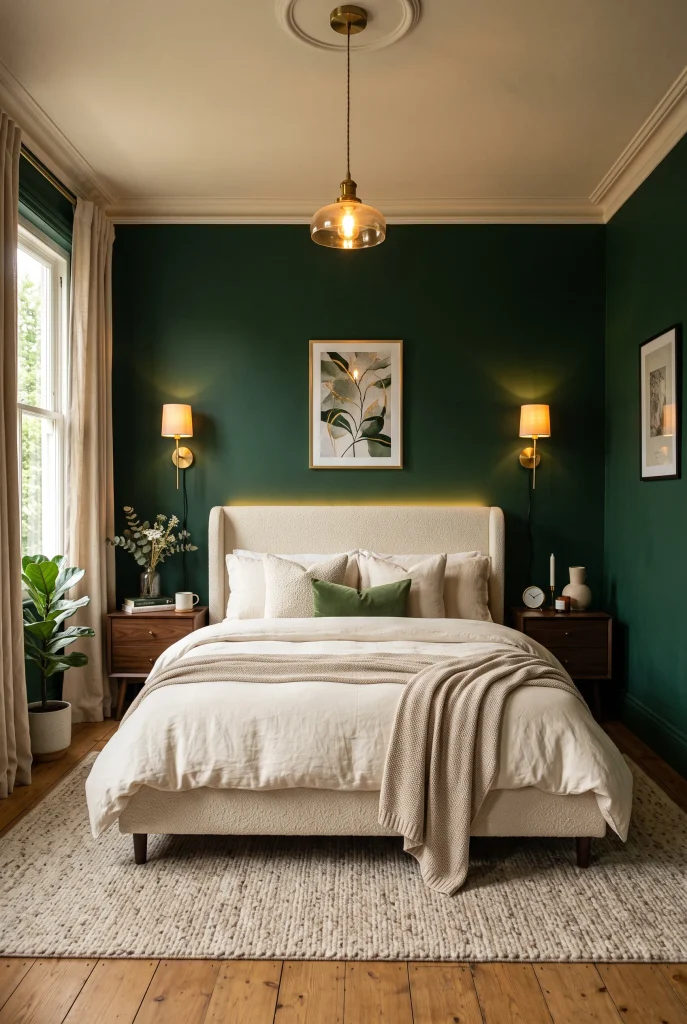
- Layered lighting creates a warm and adaptable bedroom atmosphere.
- Bedside sconces provide focused light for reading.
- A pendant fixture adds an elegant decorative statement.
- Soft accent lighting highlights textures and architectural details.
The right lighting can make a dark green bedroom feel remarkably warm and luxurious. Instead of relying on one ceiling fixture, combine ambient, task, and accent lighting to create different moods throughout the day. A soft pendant light provides general illumination, while bedside sconces offer focused light for reading. Small accent lights can highlight artwork, architectural details, or the texture of a headboard. This layered approach adds depth to the room and allows you to adjust the atmosphere depending on whether you are relaxing, reading, or getting ready.
Choose warm white bulbs and fixtures that complement your existing finishes. Brass, aged bronze, and matte black can all work beautifully with deep green, depending on the overall style. Place switches where they are easy to reach, and consider dimmable lighting when available for greater flexibility. Soft lighting makes the biggest difference after sunset, especially in rooms with darker walls. Keep the light sources balanced around the bed so the space feels comfortable, functional, and visually cohesive.
13. Dark Green Paneling
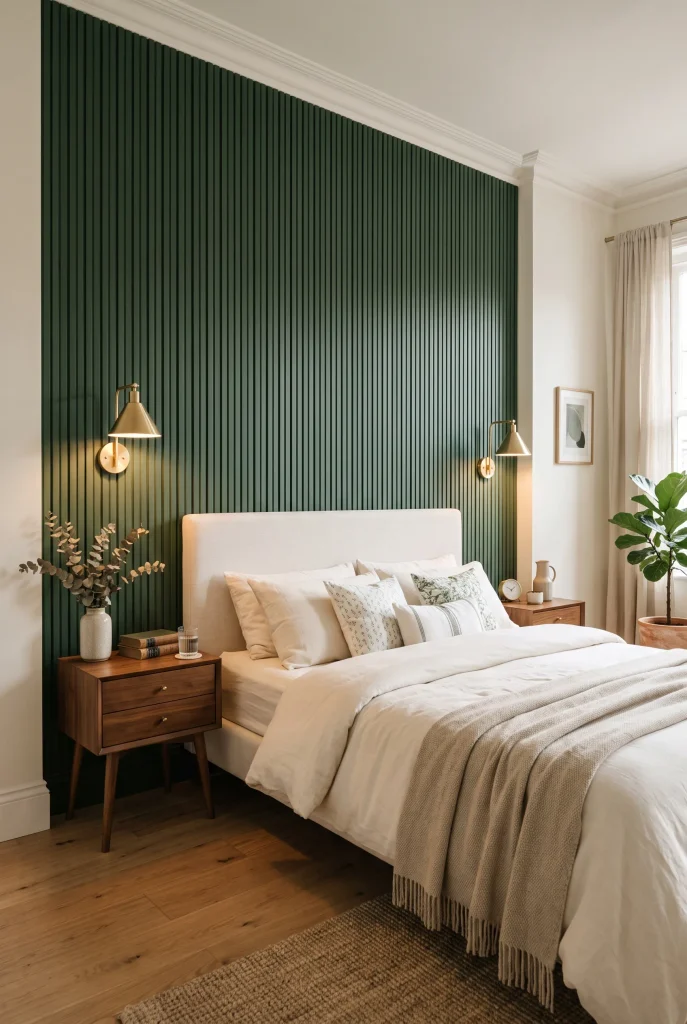
- Wall paneling adds architectural detail and visual depth.
- Vertical lines can create the impression of greater height.
- Deep green paint emphasizes the panel texture beautifully.
- Simple furniture keeps the feature wall visually balanced.
Dark green wall paneling creates a refined backdrop that adds texture and architectural character to the bedroom. Vertical slats, traditional molding, or simple rectangular panels can all produce different effects while keeping the color palette cohesive. When painted in a rich green shade, the paneling becomes a sophisticated focal point behind the bed. Pair it with cream bedding, warm wood furniture, and understated lighting for a balanced look. This design adds interest to an otherwise plain wall without relying heavily on artwork or decorative accessories.
The best paneling style depends on your room’s proportions and the aesthetic you prefer. Vertical designs can emphasize ceiling height, while rectangular molding creates a more traditional appearance. If you are working with a limited budget, consider removable molding or decorative wall strips where suitable for your space. A restrained panel design often looks more timeless than overly complicated patterns. Keep the furniture lines simple and allow the green wall treatment to provide most of the visual detail.
14. Olive Green Accents
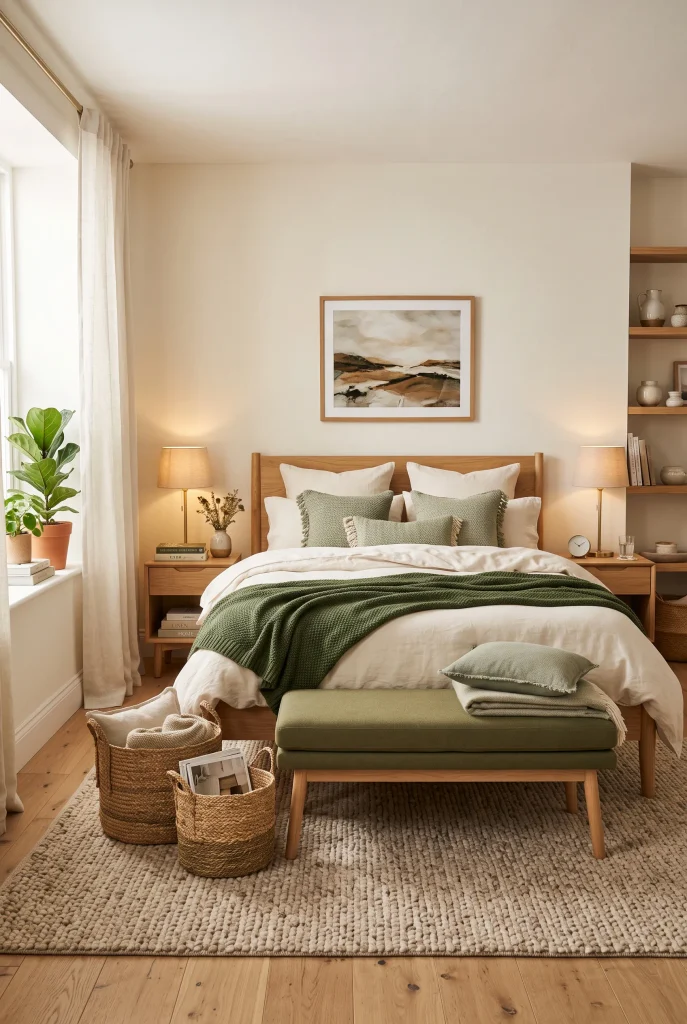
- Olive accents introduce color without overwhelming the room.
- Small green accessories are easy to change seasonally.
- Warm neutrals make olive tones feel natural and inviting.
- Coordinated shades create a layered, designer-inspired appearance.
Olive green accents offer a softer way to introduce rich color into your bedroom. If painting the walls or replacing large furniture feels like too much, start with smaller details such as cushions, a throw, an upholstered bench, or a decorative vase. Olive works beautifully with cream, beige, warm white, and natural wood, creating an earthy palette that feels comfortable and sophisticated. These accents can add depth to a neutral bedroom while keeping the overall design flexible and easy to update.
For a cohesive look, repeat the olive shade in two or three carefully selected areas rather than scattering it everywhere. A green throw at the foot of the bed can complement an upholstered bench or a small decorative cushion. Combining olive with different neutral textures creates more visual interest than relying on color alone. Choose fabrics that are practical for your lifestyle, and keep the remaining accessories understated. This approach allows you to enjoy the richness of green without committing to a dramatic room makeover.
15. Green Canopy Bed
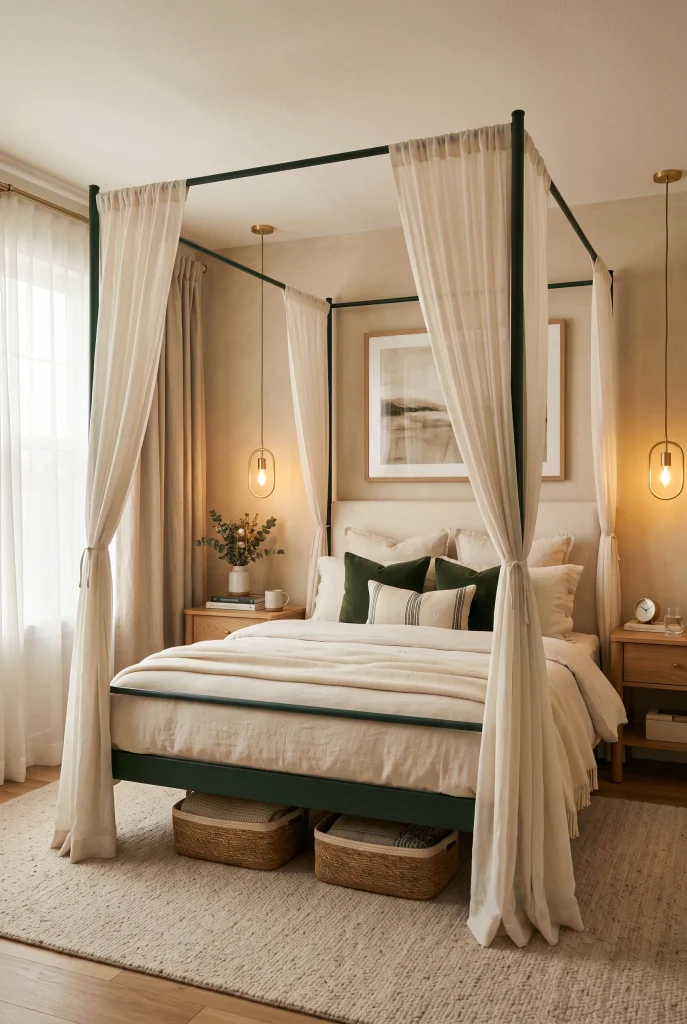
- A canopy bed creates a strong architectural focal point.
- Sheer fabric adds softness without making the room feel heavy.
- Neutral bedding balances the dramatic green frame.
- Brass lighting brings warmth and a refined finish.
A green canopy bed can become the defining feature of a cozy bedroom, especially when you want something more distinctive than a standard bed frame. A deep forest or muted olive finish gives the structure visual weight while creating an intimate feeling around the sleeping area. Keep the bedding light with ivory, cream, or warm beige layers to prevent the arrangement from becoming too dark. The result feels luxurious but still comfortable, making the bed look like a deliberate centerpiece rather than simply another piece of furniture.
You do not need heavy curtains or elaborate decorations to make a canopy bed work. Simple linen or sheer panels can soften the structure while allowing plenty of light into the room. Choose slim nightstands and understated lighting so the bed remains the primary feature. Canopy designs look especially polished when the surrounding palette stays restrained. If your room is smaller, select a streamlined frame with minimal detailing. This keeps the bedroom visually open while still giving you the cozy, enclosed feeling that makes canopy beds so appealing.
16. Green Accent Chair
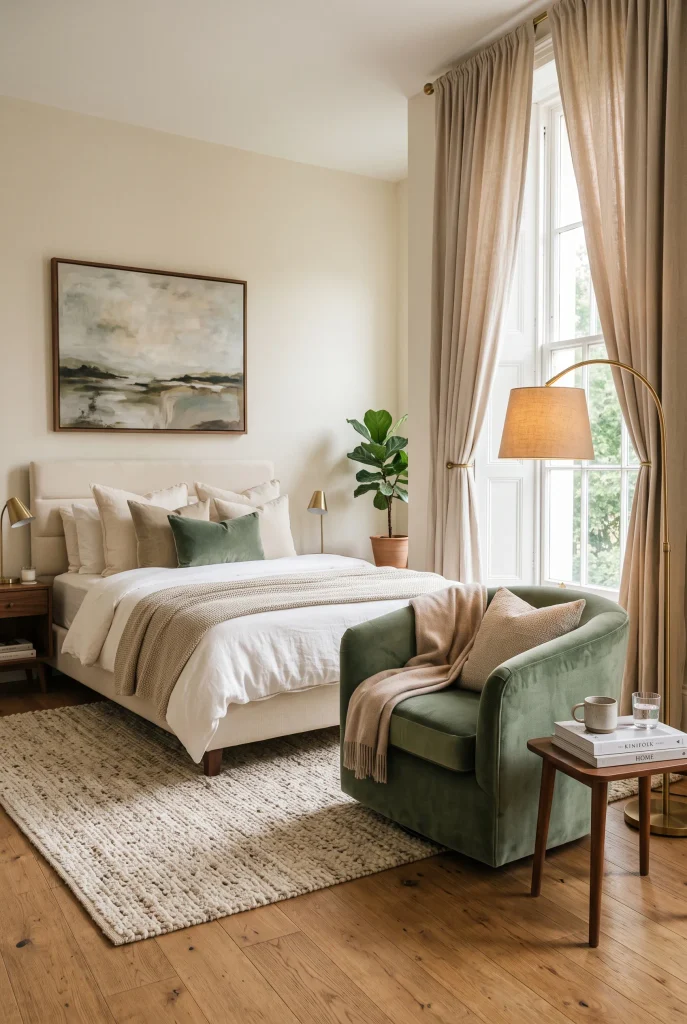
- An accent chair adds function to an unused bedroom corner.
- Velvet introduces rich texture and subtle luxury.
- A muted green shade connects naturally with the room.
- A small side table makes the seating area more practical.
A green accent chair is an easy way to introduce color while adding useful seating to the bedroom. Place a velvet or linen chair near a window, beside a dresser, or in an empty corner where it can become a comfortable spot for reading or getting ready. Choose a shade that relates to your existing palette, such as olive, sage, or deep forest green. This creates visual continuity without requiring every green element to match exactly. A small side table beside the chair can complete the arrangement.
Think about how the chair will actually be used before choosing its style. A supportive armchair works well for reading, while a compact slipper chair may be better for smaller bedrooms. Keep the surrounding area open enough to move comfortably around it. Placing a chair near natural light makes the corner feel more intentional and useful. Add a small cushion or throw in a neutral tone to connect it with the bed. This simple arrangement can make an otherwise forgotten corner feel finished and inviting.
17. Cozy Luxe Layers
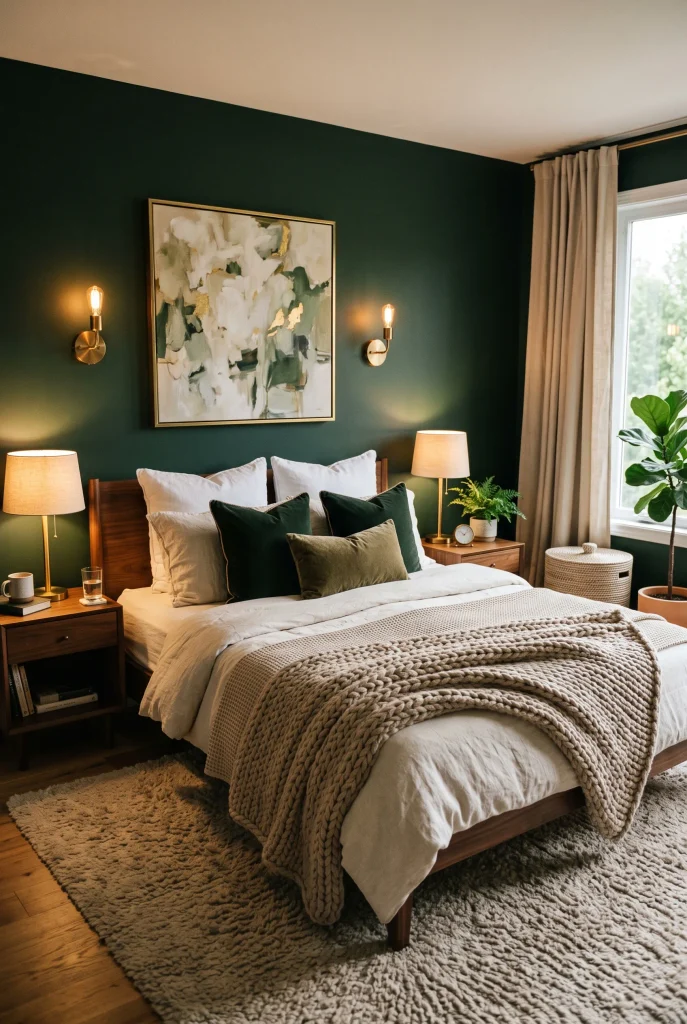
- Mixing textures makes the room feel richer without adding clutter.
- Velvet, linen, wool, and woven materials create visual depth.
- Warm neutrals balance deep green throughout the space.
- Repeated textures help the entire room feel intentionally styled.
The most inviting bedrooms rarely depend on one dramatic feature; instead, they combine several simple layers that work together. Deep green can provide the foundation, while cream linen, velvet cushions, knitted throws, warm wood, and woven accessories add softness and dimension. This combination makes the room feel luxurious without becoming overly formal. Keep the main colors restrained and let texture do most of the decorating. A plush rug beneath the bed can also soften the floor while visually connecting the different furniture and textile elements.
Start with the largest pieces, then gradually build the room through smaller details. Choose comfortable bedding first, add one or two contrasting textures, and finish with practical accessories such as lamps, curtains, and baskets. Avoid buying everything as a matching set because slight variations make the space feel more natural. Small texture changes can completely transform a room without major renovations. When deep green is balanced with warm neutrals and tactile materials, the result is a bedroom that feels polished, cozy, and genuinely comfortable.
Conclusion
Creating a beautiful dark green bedroom does not require a complete renovation. A rich accent wall, layered bedding, natural wood, warm lighting, or even a simple green chair can make a noticeable difference. The key is balancing deep color with lighter textiles, natural textures, and comfortable details so the room feels inviting rather than heavy. Start with one idea that fits your space and build from there. Save this article on Pinterest for your next decorating project, and share it with someone who loves cozy bedroom inspiration. Small changes can create a surprisingly beautiful retreat.