21 Easy Home Organization Tips for a Clutter Free Home
A cluttered home can make even simple routines feel harder than they need to be. The good news? Small changes can create a surprisingly big difference. These home organization tips are designed to help you give everyday belongings a clear place without making your home feel overly structured or sterile. From kitchen drawers and pantry shelves to bedrooms, bathrooms, and entryways, each idea focuses on practical storage that works in real homes. You do not need a complete makeover to get started. A few thoughtful adjustments can make rooms easier to use, surfaces easier to maintain, and everyday tidying much less overwhelming.
1. Entryway Drop Zone
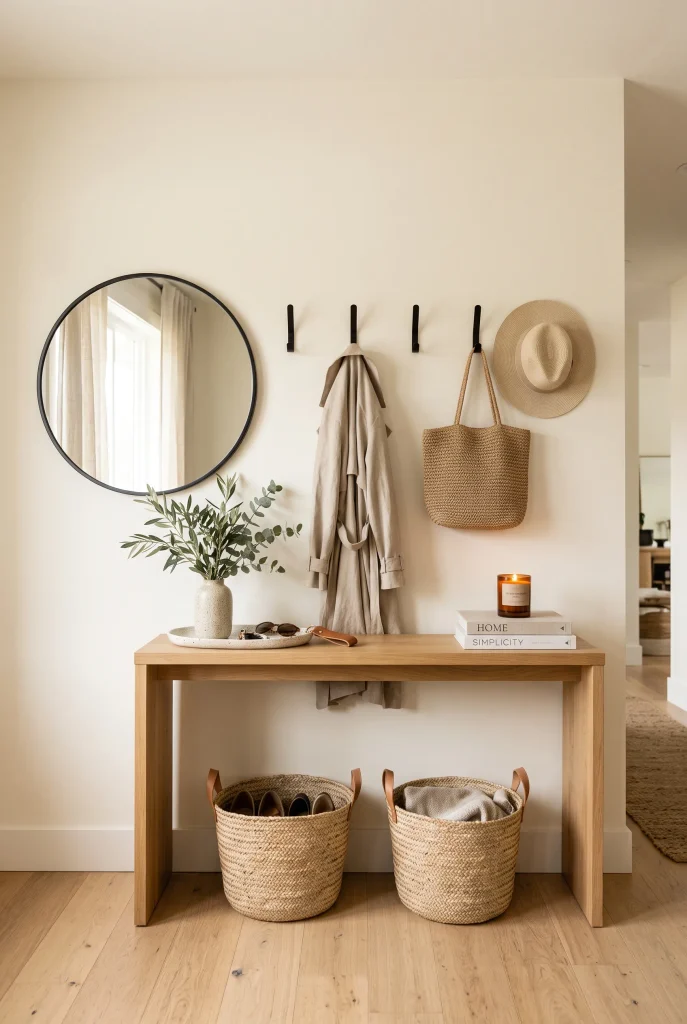
- Gives keys, bags, shoes, and daily essentials a clear home.
- Keeps clutter from spreading into nearby rooms.
- Makes busy mornings and arrivals feel more organized.
- A slim console adds storage without overwhelming the entryway.
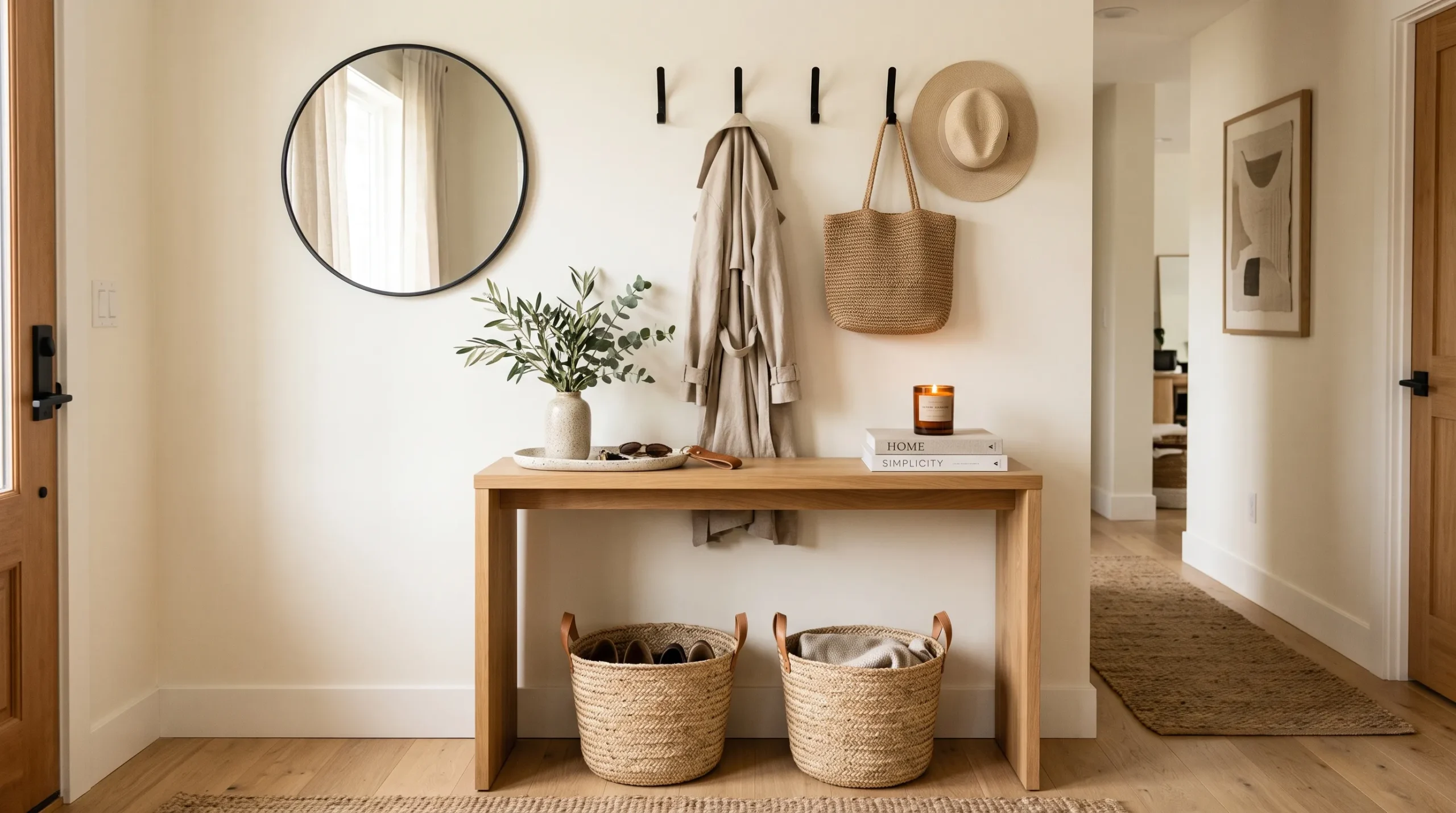
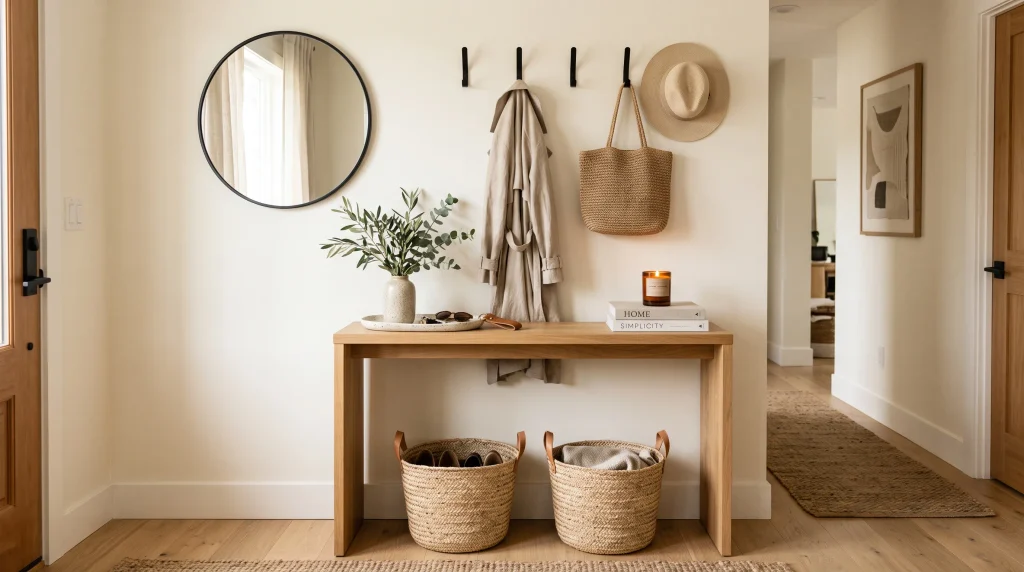
Clutter becomes much easier to control when every frequently used item has a clear home. Start with a simple entryway drop zone using a slim console, a few wall hooks, and a small tray for keys and daily essentials. Keep baskets underneath for shoes, bags, or seasonal accessories. This setup prevents small piles from spreading into nearby rooms and makes leaving the house faster. Choose pieces that match your existing decor so the storage feels intentional rather than added later. In busy homes, a dedicated landing spot can make everyday tidying feel noticeably simpler.
A well-planned drop zone can also make the first few minutes at home feel calmer. Place the items you reach for most at comfortable heights, while less-used belongings can stay inside baskets or closed drawers. A narrow console works especially well in smaller spaces because it provides storage without blocking the walkway. Add one decorative element, such as a ceramic vase or framed print, to keep the area polished. When the setup looks attractive, it becomes easier to maintain. This small change supports better daily habits without requiring a major furniture purchase or renovation.
2. Paper Sorting Station
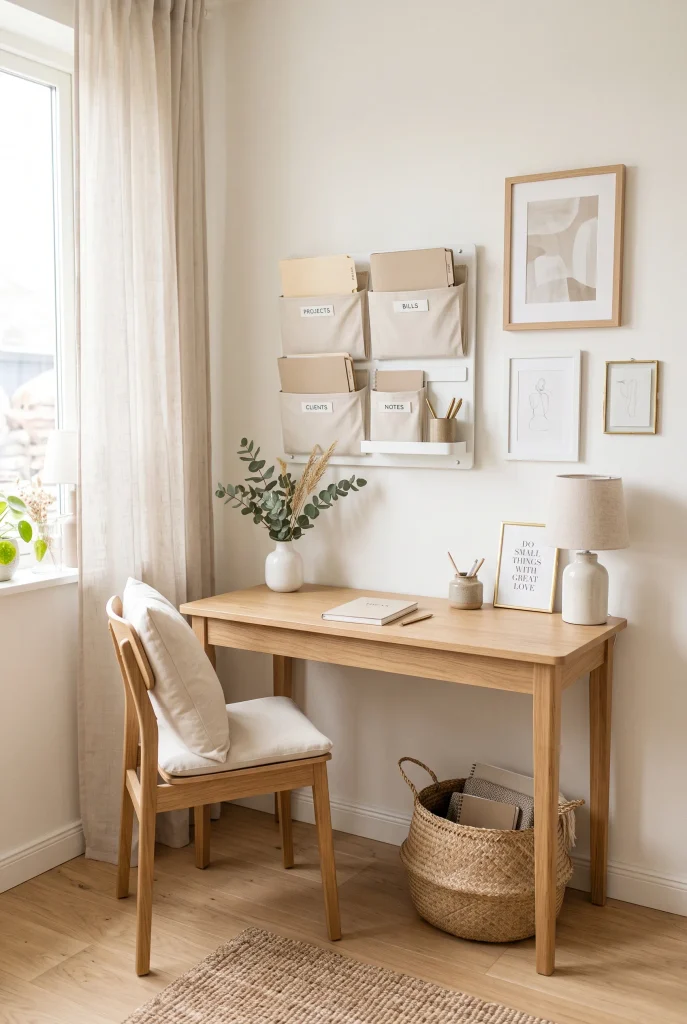
- Gives incoming mail and paperwork one controlled destination.
- Makes important documents easier to locate later.
- Prevents kitchen counters and desks from becoming paper piles.
- Simple labels make the system easier for everyone to use.
When surfaces collect mail, receipts, and random papers, the room can quickly look messy. A simple paper station gives these loose items one controlled destination. Use a slim wall organizer, labeled folders, or a small desktop file box near the area where mail usually arrives. Keep only the categories you actually need, such as action, bills, and to file. Clear labels make the system easy for everyone to follow, while a clean design keeps it from looking like office clutter. The result is a calmer surface and fewer important papers disappearing into random piles.
Paper clutter often grows because there is no easy decision point for incoming documents. A compact sorting station solves that problem by giving each paper a temporary home before it reaches the rest of the house. Choose neutral folders or woven bins that complement your room, then position them where mail naturally lands. Set aside a few minutes each week to empty the categories and recycle anything unnecessary. This simple routine keeps paperwork from becoming a permanent pile. It also makes important documents easier to find when you actually need them, saving time during busy days.
3. Bathroom Counter Trays
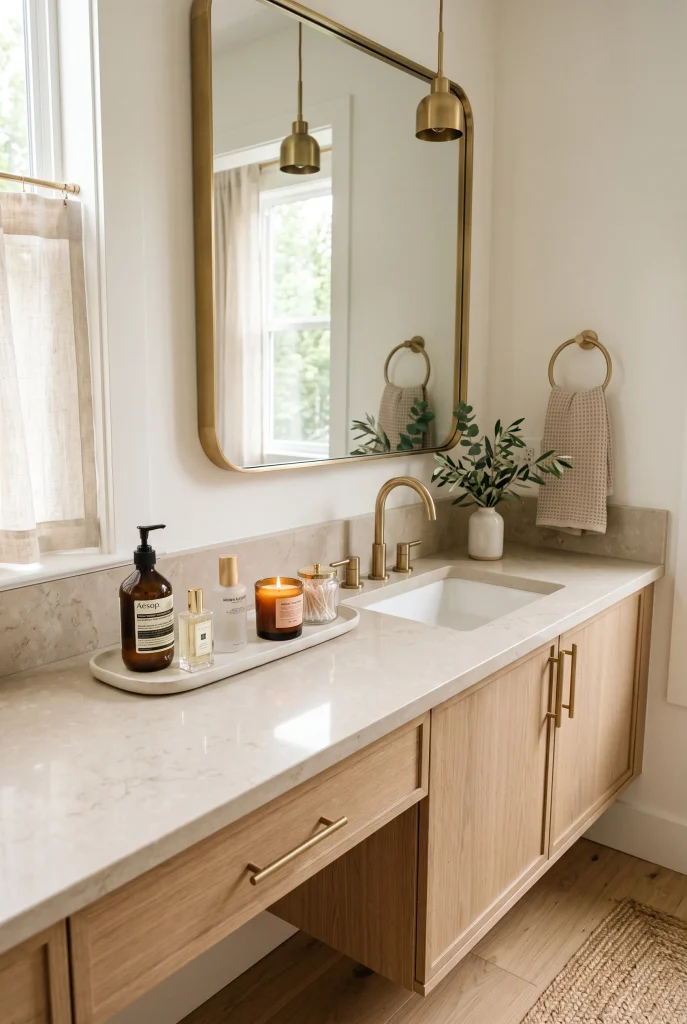
- Keeps frequently used bathroom products grouped in one place.
- Prevents small bottles from spreading across the counter.
- Makes the vanity easier to wipe and clean.
- A stylish tray adds organization without sacrificing decoration.
Bathroom counters can quickly become crowded when everyday products are left wherever they were last used. A simple decorative tray creates a defined area for skincare, hand soap, perfume, or other essentials you reach for regularly. Instead of having several bottles scattered across the vanity, group them neatly inside one tray. This makes the counter look more intentional while keeping your most-used products within easy reach. Choose ceramic, stone, wood, or glass depending on your bathroom style. Even a small tray can make a busy vanity feel cleaner, calmer, and much easier to maintain.
Keep the tray limited to items you actually use often so it does not become another place for clutter to collect. Taller bottles can sit toward the back, while smaller products remain near the front for easy access. If several people share the bathroom, consider using separate trays or assigning different sections to each person. A quick daily reset takes only a few seconds and keeps the surface looking polished. This small organizing trick works particularly well in bathrooms because it combines practical storage with decorative styling, helping the vanity feel both functional and thoughtfully designed.
4. Labeled Storage Bins
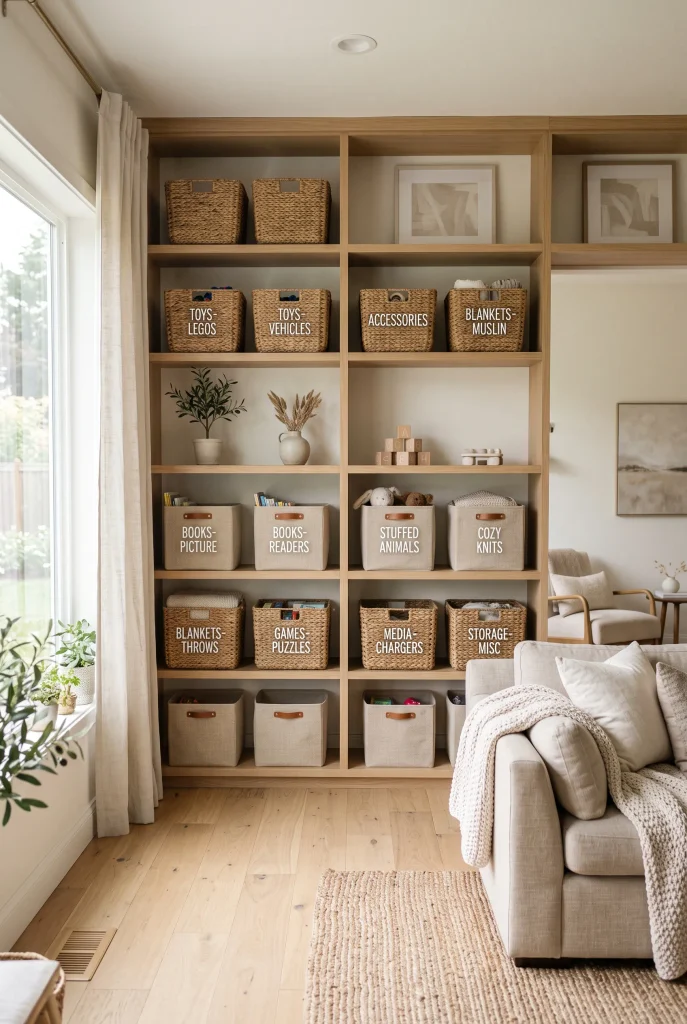
- Keeps small items contained instead of scattered across surfaces.
- Labels make it easier to return things to the right place.
- Matching bins create a cleaner, more intentional look.
- Works especially well for toys, blankets, accessories, and household extras.
Storage becomes much easier to maintain when small items have a simple place to return to. Use matching bins or baskets on shelves, inside cabinets, or beneath a console to group similar belongings together. Labels can make the system even more practical, especially when several people share the space. Instead of searching through multiple containers, you immediately know where each category belongs. Choose neutral materials such as woven baskets, canvas bins, or simple wood boxes so the storage blends naturally with your decor. This approach keeps everyday clutter contained while making shelves look more polished.
The key is to avoid creating too many categories, because an overly complicated system can become difficult to maintain. Start with broad groups such as toys, blankets, electronics, accessories, or seasonal items. Keep frequently used bins at an easy-to-reach height and reserve higher shelves for things you rarely need. Simple storage systems tend to last longer because they require less effort after the initial setup. When everything has an obvious destination, tidying takes less time and the room can return to a clean, comfortable appearance with minimal effort.
5. Vertical Wall Storage
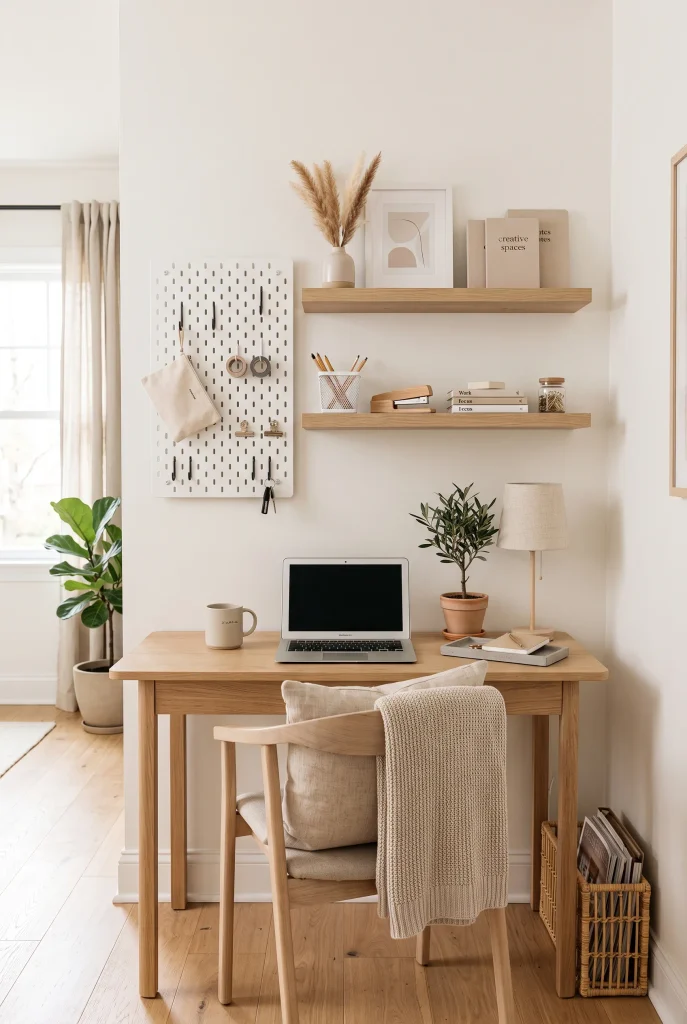
- Uses empty wall space without taking up valuable floor area.
- Keeps frequently used items visible and easy to reach.
- Helps small rooms feel less crowded.
- Adds useful storage while creating a decorative focal point.
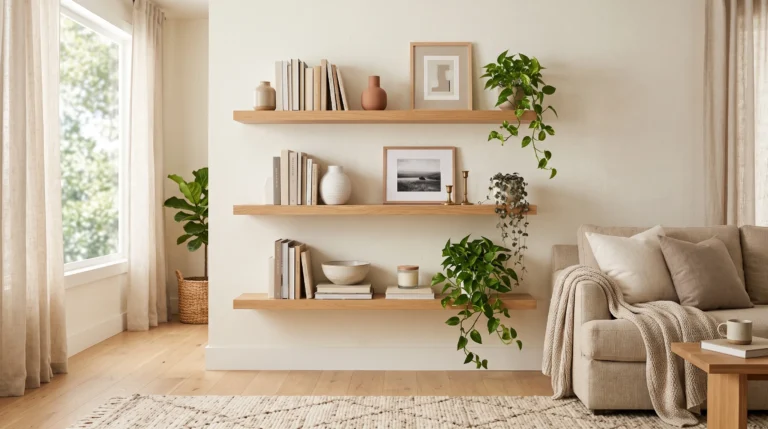
When floor space is limited, look upward instead of adding another bulky cabinet. Vertical wall storage can turn an empty wall into a useful organization zone with floating shelves, hooks, pegboards, or narrow wall-mounted cabinets. Use the lower sections for frequently handled items and place less-used belongings higher up. This keeps the floor open while giving everyday essentials a visible home. In smaller rooms, that extra vertical storage can make a noticeable difference because the space feels less crowded. Choose finishes that coordinate with your furniture so the storage looks like part of the room rather than an afterthought.
Vertical storage also gives you an opportunity to combine function with visual interest. Arrange baskets, framed artwork, books, and practical containers together instead of filling every shelf with loose objects. Leave some open space between groups so the wall does not appear overloaded. Hooks are particularly useful near desks, laundry areas, kitchens, and entryways because they keep frequently used items within easy reach. A simple wall system can often hold more than expected without requiring a larger room. It is a smart choice when you want better organization while keeping your existing layout open and comfortable.
View: 17 Moody Living Room Decor Ideas for a Stylish Home
6. Under Bed Storage
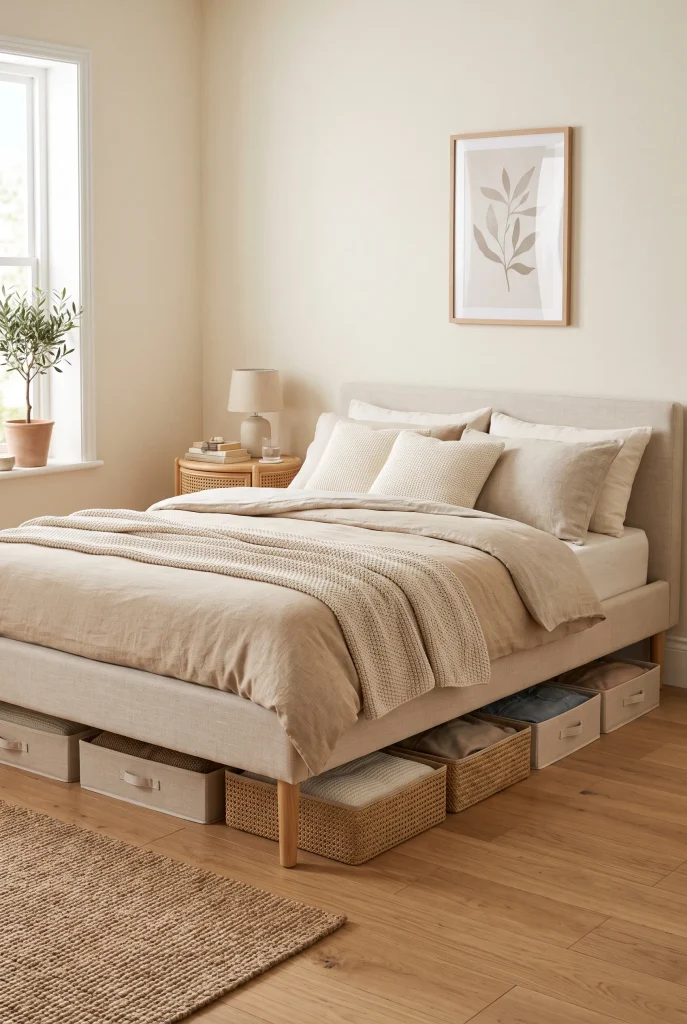
- Turns unused space beneath the bed into practical hidden storage.
- Keeps seasonal clothing and extra bedding out of sight.
- Frees wardrobes and drawers for everyday essentials.
- Low-profile containers make the space easy to access and maintain.
The space beneath your bed can become valuable hidden storage when wardrobes and drawers are already full. Use low-profile containers, rolling drawers, or lidded fabric boxes to store seasonal clothing, spare bedding, shoes, or occasional-use items. Keeping these belongings underneath the bed frees up easier-to-reach storage for things you use every day. Choose containers with handles or wheels so pulling them out does not become a chore. If your bed has an open frame, matching storage boxes can also keep the area looking neat instead of making it feel like a forgotten clutter zone.
Under-bed storage works best when it is reserved for items you do not need constantly. Pack winter clothes away during warmer months, or keep guest bedding and extra linens together in clearly labeled containers. Avoid stuffing the area with too many unrelated belongings, since overcrowding makes retrieval frustrating. A quick seasonal check can also help you remove things you no longer use. This small storage upgrade is especially useful in bedrooms with limited closet space because it adds capacity without taking up additional floor area or making the room feel visually heavier.
7. Clear Counter Zones
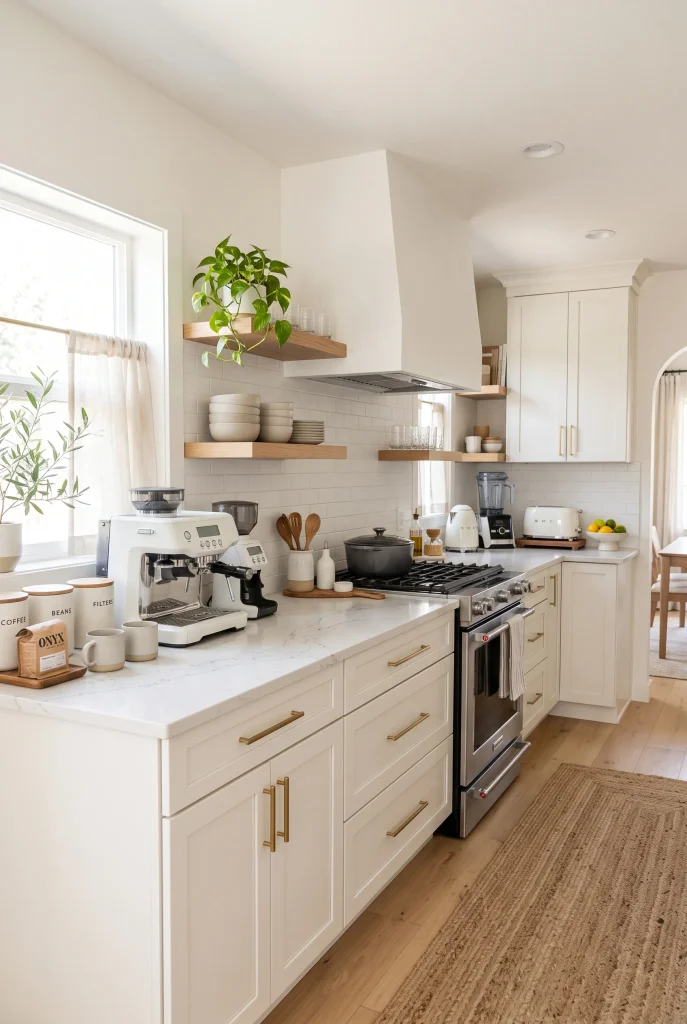
- Gives each countertop area a specific purpose.
- Keeps frequently used appliances and tools together.
- Reduces random items from spreading across the kitchen.
- Makes cooking and daily routines feel more efficient.
A kitchen counter feels instantly calmer when each section has a clear purpose. Create simple zones for coffee making, food preparation, cooking, or everyday breakfast items instead of placing everything wherever there is room. Keep the tools you use together within each zone, such as mugs and coffee supplies beside the coffee maker. This makes routines faster because you do not have to move around the kitchen searching for essentials. Clear counters also make the room appear larger and brighter. Even a small kitchen can feel surprisingly organized when every frequently used item has an intentional position.
The goal is not to hide everything away, but to make visible items look purposeful. Use a small tray to group oils and seasonings near the cooking area, or place coffee supplies inside one attractive container beside the machine. Keep bulky appliances you rarely use in a cabinet instead of allowing them to occupy valuable counter space. Kitchens stay tidier when the setup matches how people actually use the room. A practical layout reduces unnecessary movement and makes it much easier to return items after cooking, cleaning, or preparing a quick meal.
8. Closet Category Sections
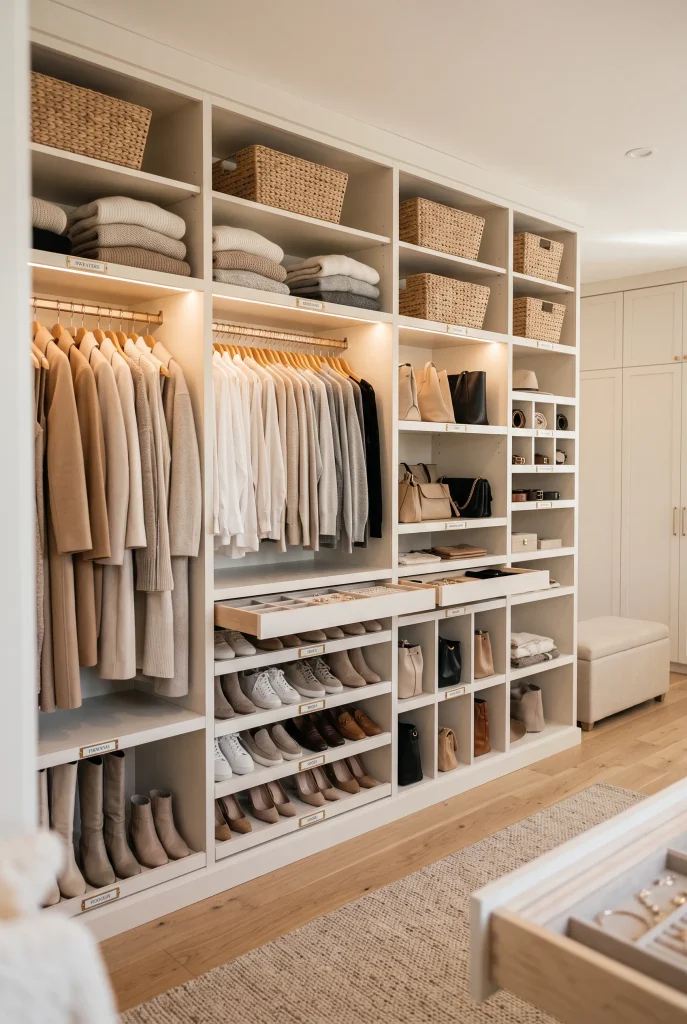
- Separates clothing by type for quicker outfit selection.
- Makes crowded closets easier to navigate.
- Keeps accessories and shoes from becoming mixed together.
- Creates a cleaner visual rhythm inside the closet.
A crowded closet becomes much easier to manage when clothing is divided into simple categories. Group shirts, trousers, dresses, jackets, and accessories in separate sections instead of mixing everything together. You can also arrange hanging clothes by color within each category for a cleaner visual effect. Use slim hangers to create more room and add baskets or small drawers for folded pieces. This approach makes choosing an outfit faster because you can immediately see what you have. It also reveals which items are rarely worn, making future decluttering decisions much easier and more intentional.
Try to keep the most frequently used clothing between waist and eye level so everyday pieces are easy to reach. Reserve upper shelves for seasonal items, luggage, or occasional accessories. Matching bins can contain handbags, scarves, or smaller belongings that otherwise become difficult to control. Leave a little breathing room between categories rather than filling every available space. A closet does not need to be packed to be useful. When each section has a clear purpose, putting clothes away becomes less tedious, and the entire bedroom can feel more orderly without adding expensive custom storage.
9. Multi-Use Furniture
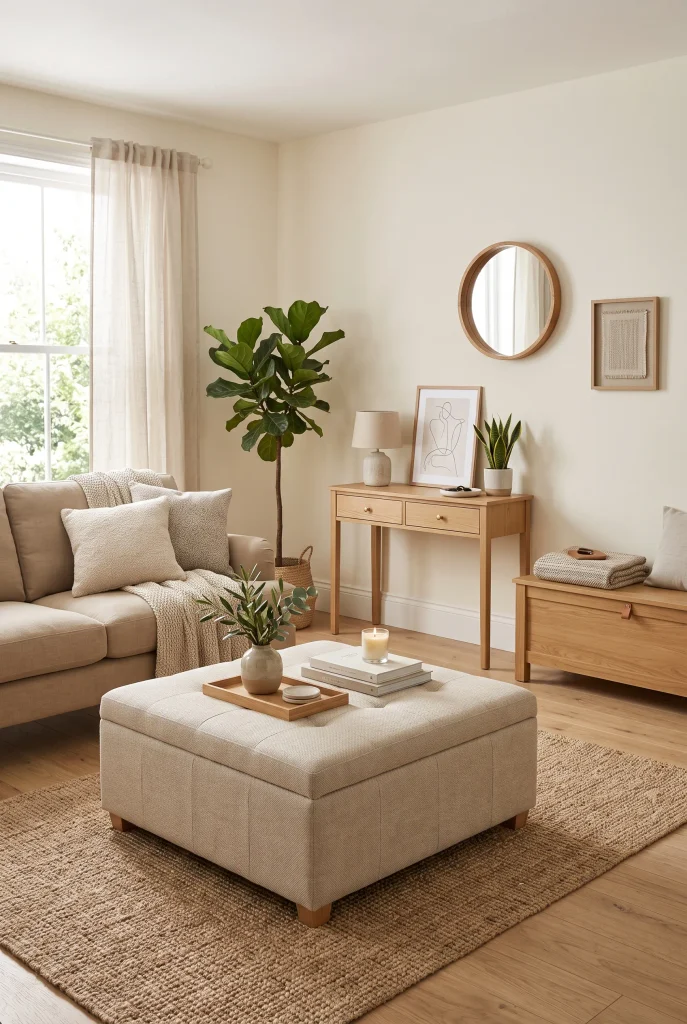
- Adds storage without introducing extra bulky furniture.
- Hidden compartments keep everyday clutter out of sight.
- Works especially well in apartments and smaller rooms.
- Combines practical function with attractive furniture design.
Furniture can do more than simply fill a room when you choose pieces with built-in storage. A storage ottoman can hide blankets and pillows, while a bench with a lift-up seat can hold shoes, bags, or seasonal accessories. A console with drawers can also keep remotes, chargers, and small household items contained. These pieces are especially useful in smaller homes because they provide another storage layer without requiring additional cabinets. The room stays visually balanced while everyday clutter has somewhere to go. Look for furniture that fits your existing style so the storage feels intentional.
The most useful multi-purpose pieces are those that solve a problem you already have. Before buying anything, consider which items constantly collect on sofas, floors, or countertops. Then choose furniture that can quietly contain those belongings. Keep frequently used items in the easiest-to-access compartments and reserve deeper storage for things you use less often. Hidden storage works particularly well in living rooms because it lets you clear the visual clutter quickly when guests arrive. A few thoughtfully chosen pieces can make a room feel both more spacious and more functional.
10. Bathroom Drawer Dividers
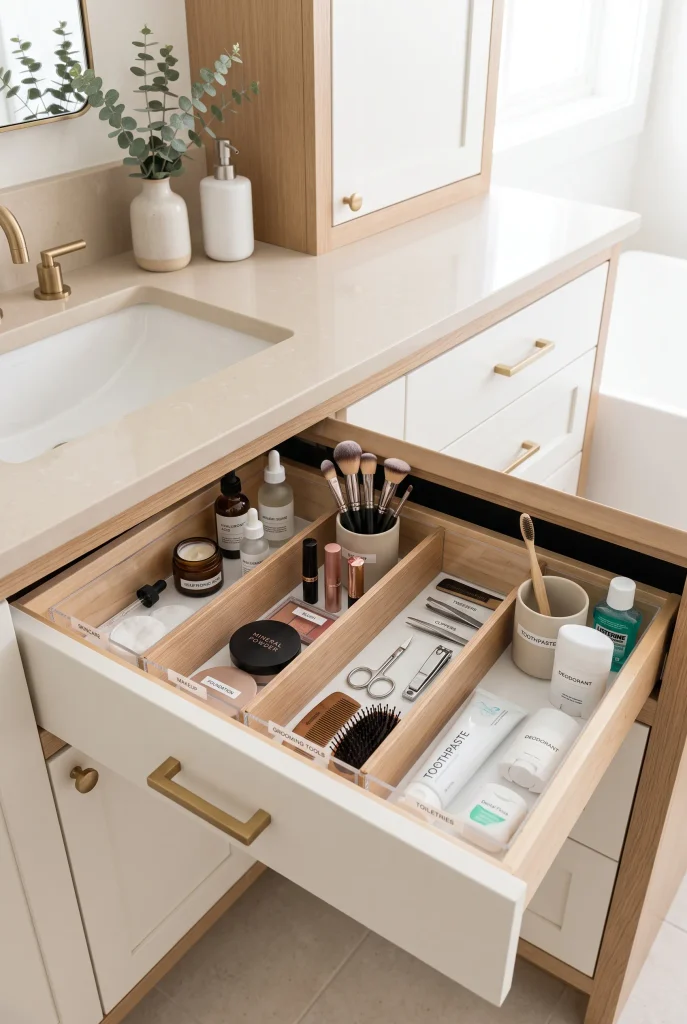
- Keeps small bathroom essentials separated and easy to find.
- Prevents drawers from becoming crowded and disorganized.
- Makes morning and evening routines more efficient.
- Dividers help maximize every inch of drawer space.
Small bathroom items can quickly turn a tidy vanity into a chaotic drawer full of loose products. Drawer dividers create simple sections for skincare, makeup, grooming tools, hair accessories, and everyday toiletries. Instead of stacking everything together, give each category its own space so you can see what you have at a glance. Adjustable organizers are especially useful because they can fit different drawer sizes and change as your needs evolve. This setup makes daily routines smoother and also helps prevent duplicate purchases because forgotten products are no longer hidden beneath piles of other items.
Keep the products you use every day toward the front, while occasional items can stay farther back. Avoid filling every compartment completely because a little empty space makes it easier to put things away after use. Clear acrylic dividers work well when you want to see everything quickly, while bamboo or neutral-toned organizers can create a warmer look. A simple wipe-down during your regular bathroom cleaning routine keeps the system fresh. With a few carefully planned sections, even a compact vanity drawer can hold surprisingly many essentials without feeling messy.
11. Linen Closet Baskets
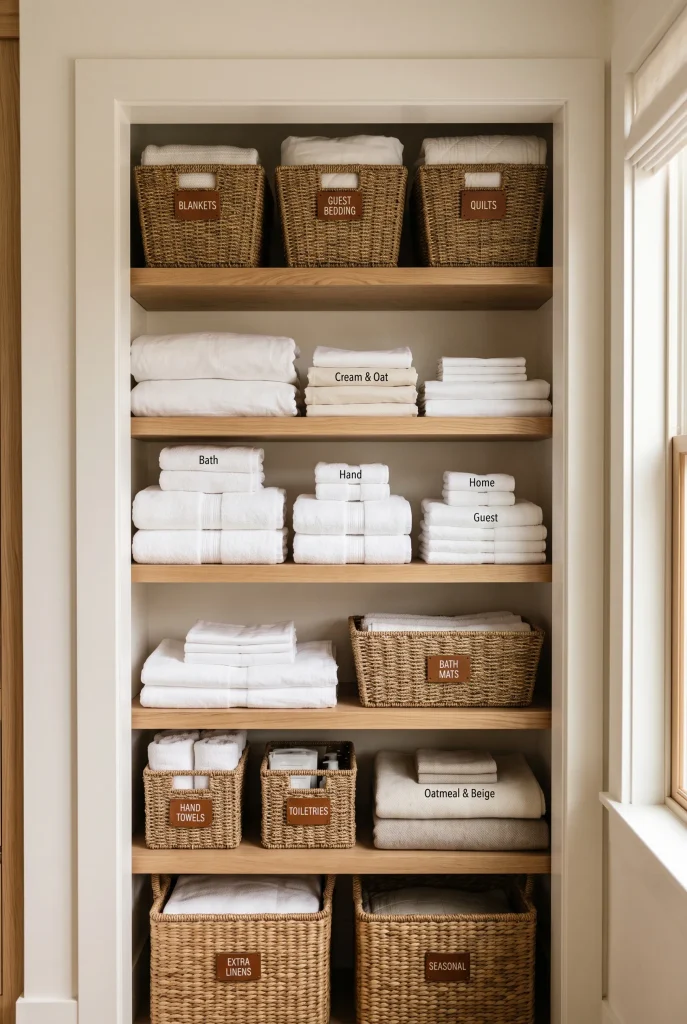
- Keeps towels and bedding grouped by purpose.
- Prevents shelves from becoming messy after repeated use.
- Baskets contain smaller linens and hard-to-fold pieces.
- Consistent textures create a neat, cohesive closet appearance.
A linen closet becomes much easier to maintain when towels, sheets, and blankets have defined sections. Fold larger linens into neat stacks and use woven baskets for smaller items such as washcloths, pillowcases, or extra toiletries. Grouping similar pieces together means you can grab what you need without disturbing the entire shelf. Place frequently used towels at a comfortable height and reserve upper shelves for seasonal bedding or guest linens. This simple arrangement keeps the closet practical while giving it a clean, boutique-inspired appearance. Even a narrow linen cupboard can feel spacious when items are grouped thoughtfully.
Matching baskets can also make an open or partially visible linen closet look much more polished. Choose natural woven textures, canvas containers, or simple neutral bins that complement the surrounding room. Add small labels if several baskets contain different categories, especially in a shared household. Avoid overfilling shelves because compressed linens become difficult to remove and return neatly. A little breathing room makes a surprising difference. Once each category has a designated location, folding laundry becomes easier to manage, and the entire household can find towels and bedding without creating another round of clutter.
12. Charging Station
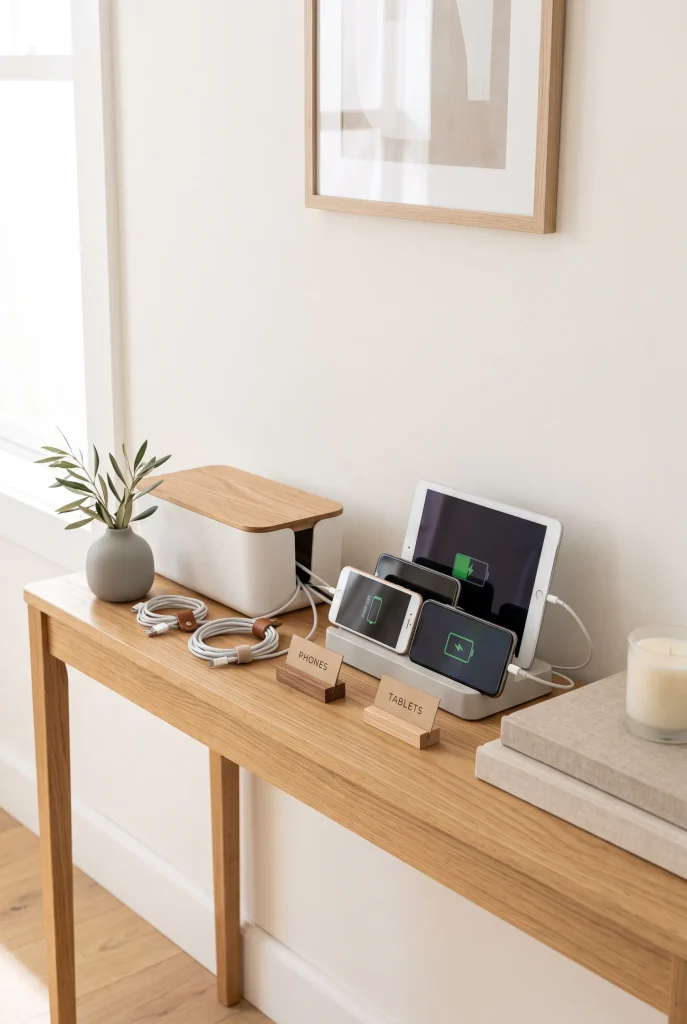
- Keeps charging cables from spreading across multiple surfaces.
- Gives phones, tablets, and devices one consistent location.
- Cable management creates a cleaner visual appearance.
- Helps prevent misplaced chargers and tangled cords.
Loose charging cables can make an otherwise tidy room look instantly cluttered. Create one dedicated charging station where phones, tablets, headphones, and other everyday devices can stay while charging. A small tray, drawer organizer, or charging dock can keep everything together, while a cable management box hides excess cords. Choose a location near an existing outlet, such as a desk, console, or bedside table. Keeping chargers in one place makes them easier to find and reduces the temptation to leave cables stretched across countertops and furniture. The setup can be both practical and visually discreet.
A charging station works best when it matches your household’s actual routine. If several people use the same area, give each device a clear position or label the cables to avoid confusion. Keep only the chargers you regularly need and remove damaged or duplicate cords. Cable clips can also prevent wires from sliding behind furniture when unplugged. This small adjustment can make a noticeable difference in rooms where technology is used constantly. Instead of seeing tangled cords throughout the house, you create one organized point that keeps everyday electronics ready without adding visual clutter.
13. Laundry Room Sorting
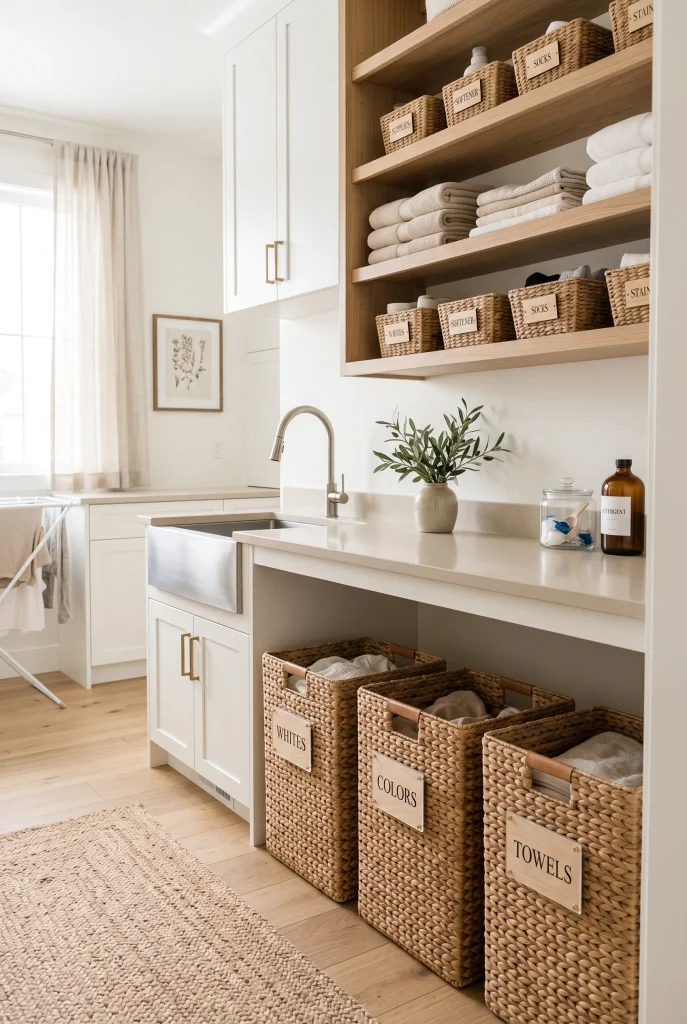
- Makes laundry sorting easier before washing begins.
- Keeps dirty clothes from collecting in random piles.
- Separate hampers help organize loads by category.
- Matching baskets create a cleaner, more intentional laundry space.
Laundry feels much more manageable when sorting happens before clothes reach the washing machine. Place two or three labeled hampers together for categories such as lights, darks, towels, or delicates. This keeps dirty clothes contained and reduces the pile that often forms on the laundry room floor. Choose slim hampers if space is limited, or use stackable options for a compact setup. Position them close to the washer so moving a load takes only a few steps. A simple sorting system can turn an often-overlooked room into a practical and organized part of the home.
Keep labels simple enough that everyone in the household can understand them immediately. If three categories are enough, there is no need to create six. Woven baskets can soften the look of a utility space, while canvas hampers offer a lightweight option that is easy to move. Leave enough room around each basket so clothes can be dropped in without effort. When sorting becomes part of the everyday routine, laundry day requires less preparation and fewer decisions. The space also stays cleaner because clothing has a designated destination instead of collecting on chairs, floors, or countertops.
14. Command Center
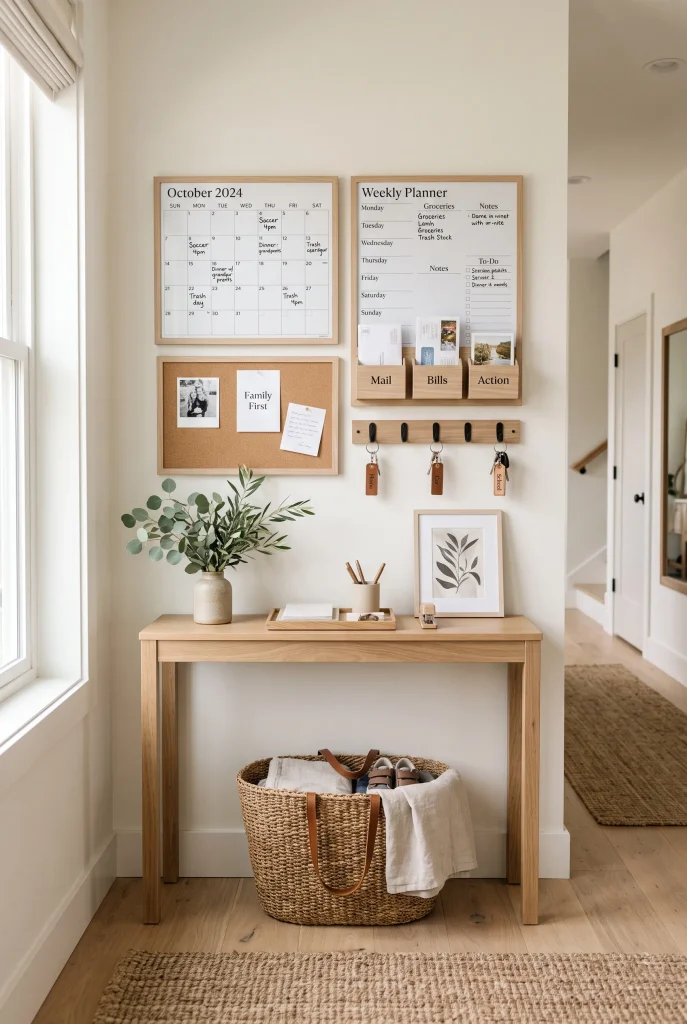
- Keeps schedules, reminders, and important notes visible.
- Gives family paperwork and daily information one central location.
- Reduces scattered notes across kitchen counters and refrigerators.
- Combines practical planning with attractive wall decor.
A busy household can stay more organized when schedules, reminders, and important papers have one central location. Create a command center with a calendar, weekly planner, mail holder, and a few hooks for keys or bags. A slim wall-mounted setup works well near the kitchen or entryway because everyone naturally passes through these areas. Keep the design simple so the station feels useful rather than overwhelming. When appointments, shopping reminders, and household notes are visible in one place, it becomes easier to remember small tasks and coordinate everyday routines without searching through different rooms.
The best command centers are designed around the information your household actually uses. A small family may only need a calendar and key hooks, while a larger household might benefit from individual sections or labeled folders. Use a consistent color palette for stationery and containers so the area feels visually calm. Refresh outdated notes regularly and remove papers once they are no longer needed. This keeps the station from becoming another clutter point. With a few carefully chosen elements, an unused wall can become a practical planning area that supports smoother mornings and less stressful daily routines.
15. Pantry Container System
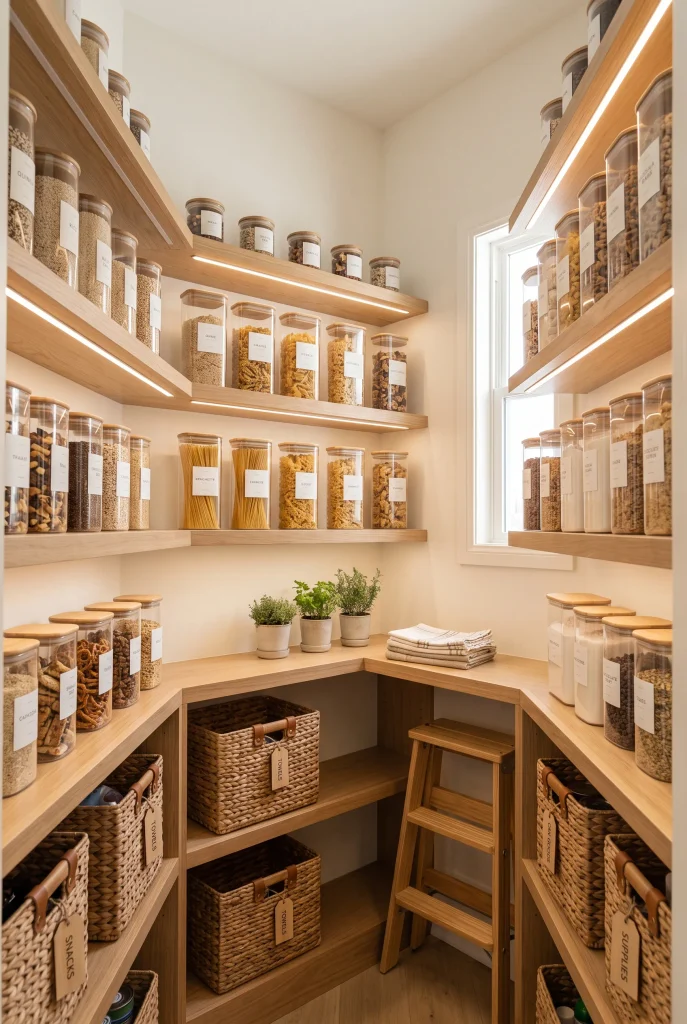
- Keeps dry goods visible and easy to identify.
- Prevents opened packages from creating loose pantry clutter.
- Matching containers create a clean, cohesive appearance.
- Helps you notice low supplies before making another shopping trip.
A pantry can feel dramatically tidier when everyday dry goods are transferred into matching containers. Use clear jars or food-safe storage containers for pasta, rice, grains, cereal, baking ingredients, and snacks. Labels make each category easy to identify, while transparent sides let you see how much remains. This can also reduce the number of half-opened packages taking up shelf space. Arrange frequently used ingredients at eye level and place occasional baking supplies higher up. A consistent container system gives the pantry a streamlined appearance while making everyday cooking and grocery planning easier.
There is no need to replace every package at once. Start with the categories that create the most visual clutter or are used most frequently. Choose containers in sizes that fit your shelves and stack securely without wasting vertical space. Keep original packaging when important preparation or storage information needs to remain available. A small basket can also collect opened snack packets or smaller items that do not suit containers. The goal is a practical system rather than a perfectly styled pantry. When ingredients are easy to see and reach, both cooking and restocking become simpler.
16. Toy Storage Corner
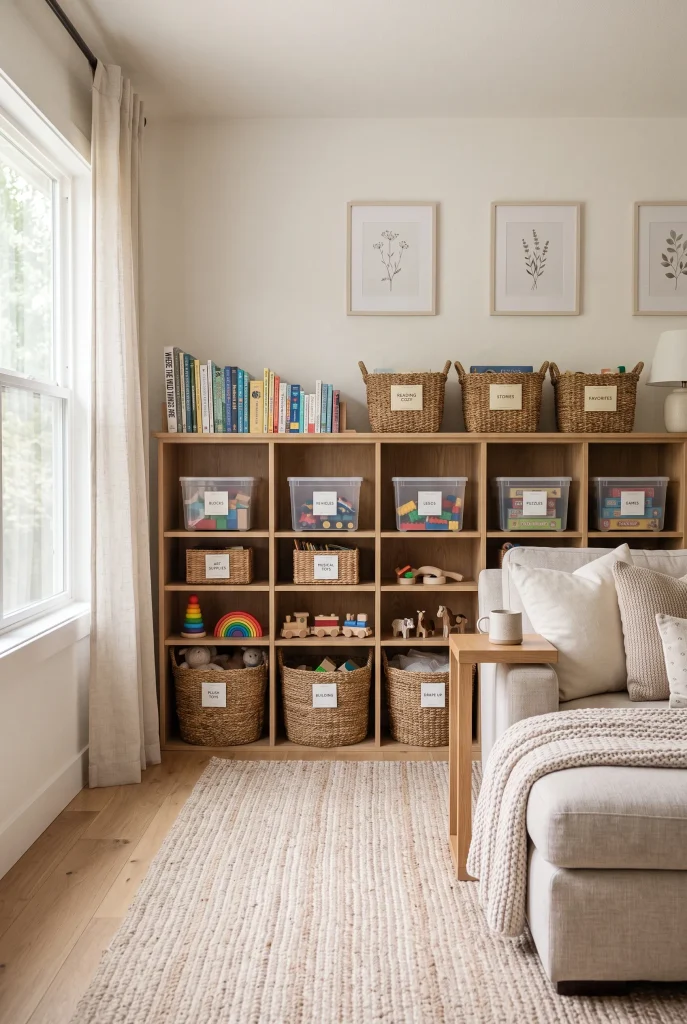
- Gives toys a clear destination after playtime.
- Keeps smaller items contained and easier to sort.
- Low storage lets children reach and return belongings independently.
- A defined corner prevents toys from spreading throughout the room.
A dedicated toy corner can make family spaces feel much calmer without taking away from playtime. Use low cubbies, open baskets, or labeled bins so toys can be grouped by type and returned easily. Keep favorite toys within a child’s reach, while less-used games can go on higher shelves. A soft rug or small play mat can visually define the area and make the setup feel intentional. When children can see where belongings belong, tidying becomes a simpler part of the routine. The rest of the room stays more open, even during busy play periods.
Avoid creating too many categories because an elaborate system can be difficult for young children to follow. Broad groups such as blocks, dolls, vehicles, books, and puzzles are usually enough. Use lightweight baskets that children can move safely, and leave a little open space in each container so toys can be returned without careful arranging. Rotate less-used toys occasionally to keep the corner manageable. This setup is particularly helpful in shared living spaces because it creates a clear boundary for toys while allowing the room to remain comfortable for adults. Practical storage can still look stylish and welcoming.
17. Nightstand Organization
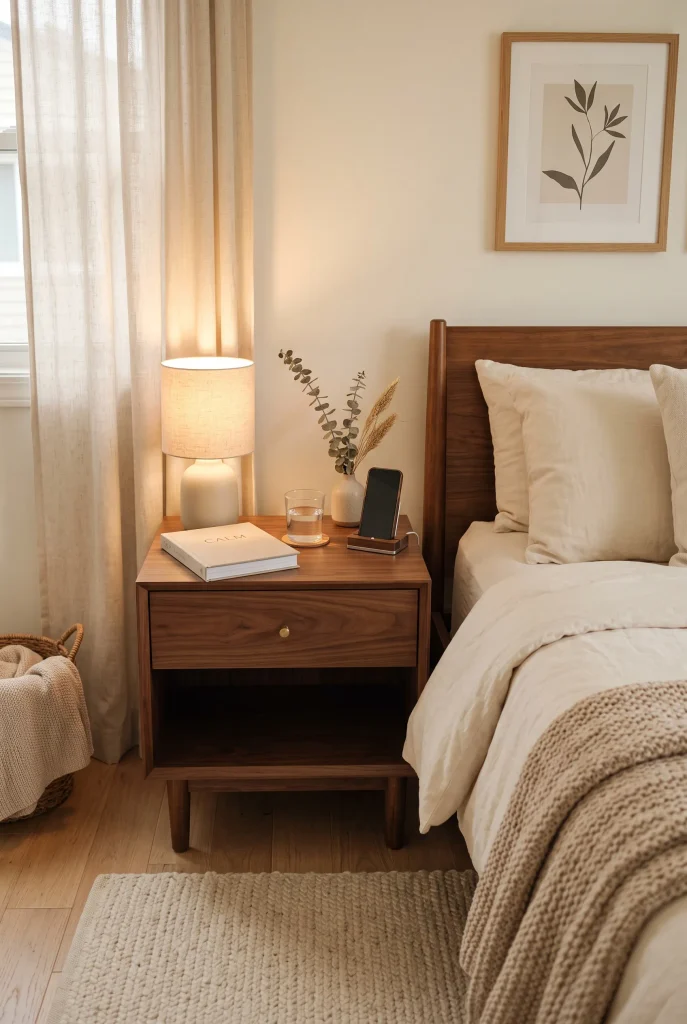
- Keeps bedtime essentials within easy reach.
- Prevents chargers, books, and small items from covering the surface.
- A drawer hides personal belongings and visual clutter.
- Minimal styling makes the bedroom feel calmer.
The nightstand is small, but it often becomes a collection point for everything used before bed. Keep only the essentials on the surface, such as a lamp, current book, water glass, and charging dock. Use the drawer for glasses, medications, headphones, or other personal items that do not need to remain visible. A small tray can also group loose pieces together and make the surface easier to clean. When the nightstand has a clear purpose, the entire bedroom can feel more peaceful. Even a basic setup can create a noticeable difference in the room’s visual balance.
Try to reset the nightstand each morning by returning anything that does not belong there. Keep decorative pieces minimal so they do not compete with practical items. If the table has limited storage, a small basket underneath can hold extra blankets or books without adding much visual weight. Choose materials that complement the bedroom, such as wood, ceramic, linen, or woven textures. This creates organization without making the space feel overly functional. A tidy bedside area also makes nighttime routines smoother because the things you regularly need are always easy to find.
18. Hidden Cable Management
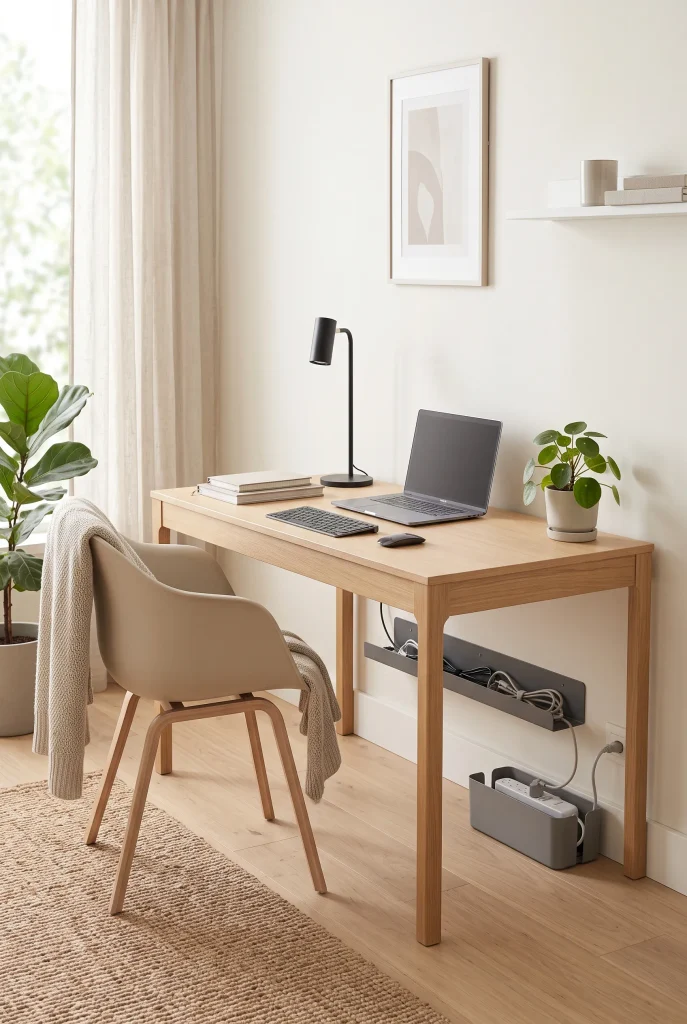
- Removes tangled cords from desks and floors.
- Creates a cleaner and more streamlined workspace.
- Protects cables from becoming tangled or misplaced.
- Hidden power strips reduce unnecessary visual clutter.
Visible cords can make even a beautifully organized room look unfinished. Use cable clips, under-desk trays, cord sleeves, and discreet power-strip boxes to keep wires grouped and hidden. Start by identifying which devices actually need to stay connected, then remove unnecessary cables before organizing the rest. Route cords along the back of desks or furniture rather than allowing them to cross open surfaces. This simple adjustment makes a workspace, entertainment area, or bedside table look significantly cleaner. It also makes dusting easier because fewer loose wires are resting across floors and furniture.
Cable management becomes even more useful when each cord has a clear destination. Label similar chargers if several devices use the same type, and leave enough slack to move equipment without pulling connections loose. Avoid bundling too many cables tightly together, especially around power equipment. A small cable box can hide a power strip while keeping it accessible for maintenance. Controlling cords is one of those small changes that makes a room look instantly more finished. The technology stays exactly where you need it, but the visual distraction largely disappears.
19. Open Shelf Baskets
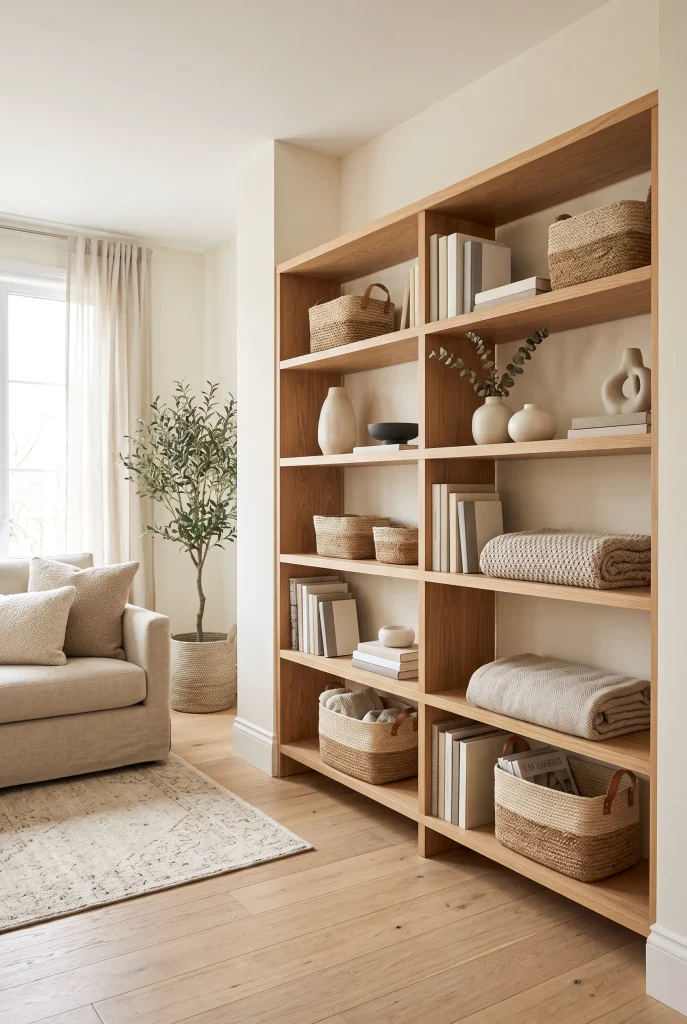
- Keeps loose household items contained on open shelves.
- Softens the appearance of bulky or mismatched belongings.
- Makes frequently used items easier to access.
- Woven textures add warmth without creating visual clutter.
Open shelving looks beautiful when the items displayed on it feel intentional, but loose belongings can quickly make it look chaotic. Add woven baskets to contain smaller household items that do not need to stay visible. Use them for remotes, accessories, toys, cables, extra linens, or miscellaneous pieces that tend to collect around the room. Place baskets across different shelves rather than filling every section with containers. Leaving some open space between baskets, books, and decorative objects keeps the shelving balanced. The result is practical storage that still feels warm, relaxed, and visually appealing.
Choose baskets that fit the depth and width of your shelves without leaving awkward gaps. Similar textures or neutral colors create a cohesive appearance, while different sizes can make the arrangement feel more natural. Label baskets only when it genuinely helps you find things faster. Avoid using them as a place to hide items you never use, since concealed clutter can still take up valuable space. A quick monthly review keeps the contents manageable. When open shelves combine visible decor with contained storage, they can provide both personality and everyday function without making the room feel overcrowded.
20. Drawer Labeling
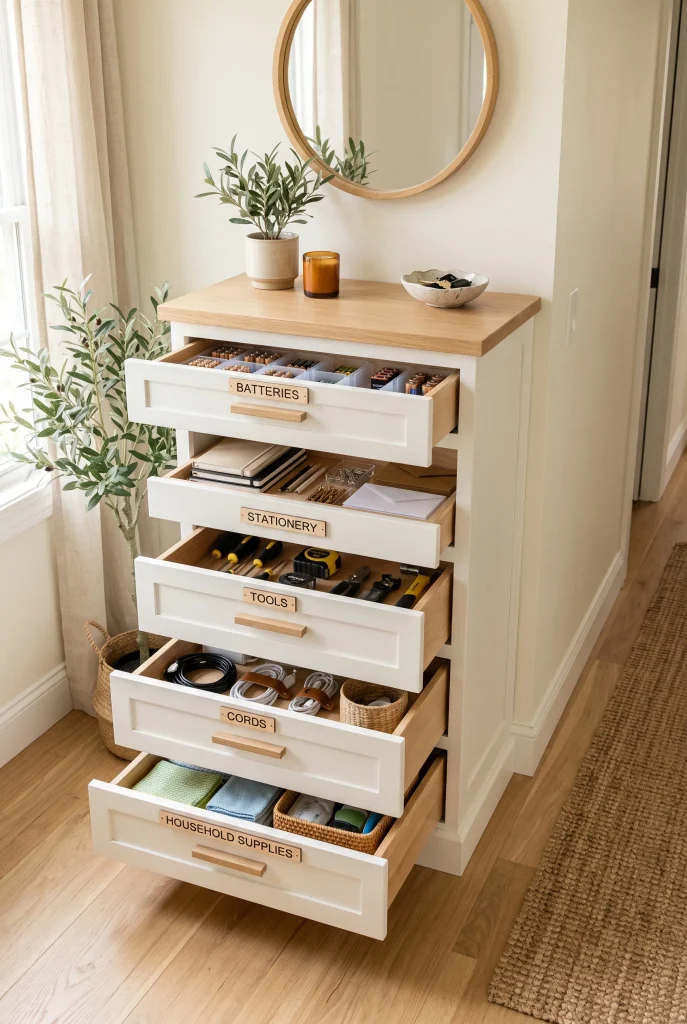
- Makes small household supplies easier to locate.
- Prevents similar items from becoming mixed together.
- Helps everyone return belongings to the correct drawer.
- Clear labels make hidden storage more functional.
Drawers can hide clutter, but hidden storage is only useful when you can quickly find what you need. Add simple labels to drawers containing small household categories such as batteries, stationery, tools, cables, cleaning supplies, or craft materials. Keep the categories broad enough to remain practical rather than creating a separate drawer for every tiny item. Consistent labels also help everyone in the household know where things belong. This can save time when searching for something small and prevent the same items from being purchased again simply because existing supplies were difficult to locate.
Use labels that are easy to read and match the style of your storage area. Neutral adhesive labels work well for modern spaces, while small printed tags can suit woven baskets and traditional cabinets. Before labeling, remove broken, expired, or duplicate items so the drawers do not become permanent hiding places for unnecessary belongings. Keep frequently used categories in the easiest-to-reach drawers and occasional supplies farther away. A few minutes spent creating clear categories can make an entire storage system easier to maintain, especially when several people regularly use the same cabinets.
21. Weekly Reset Basket
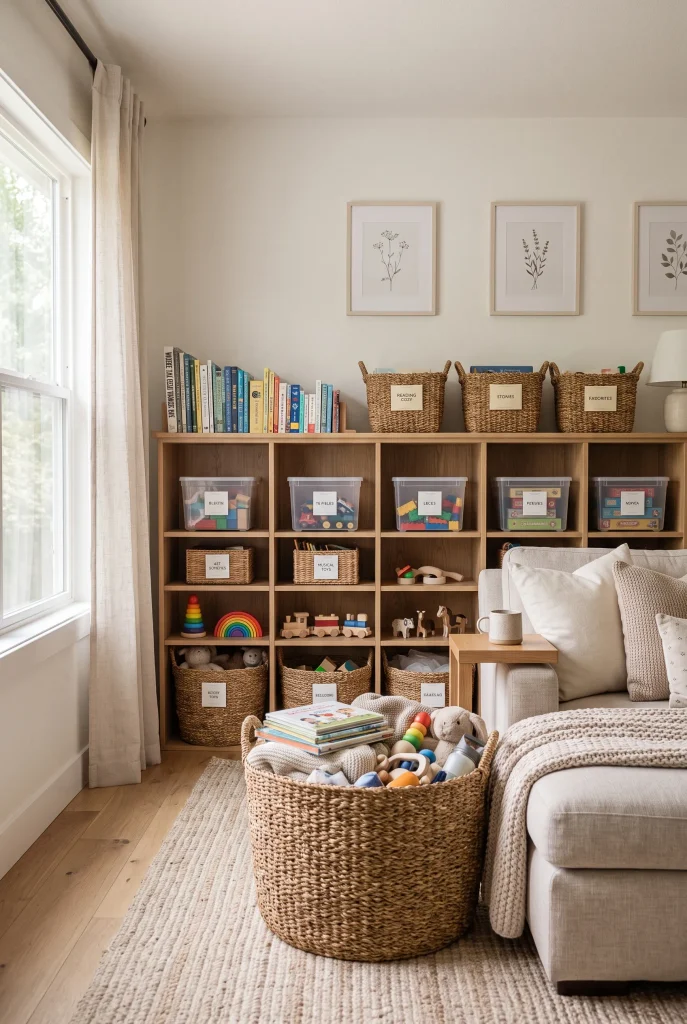
- Collects misplaced items before they spread around the house.
- Creates a simple reset routine for busy households.
- A large basket makes quick tidying less overwhelming.
- Helps restore rooms without requiring a full cleaning session.
A simple reset basket can make everyday tidying much faster when misplaced items start appearing throughout the house. Choose one attractive basket and use it to collect things that belong in other rooms, such as books, toys, chargers, clothing, or small accessories. Instead of stopping repeatedly to return every item, place everything in the basket while you tidy the room. At the end of the day, walk through the house and return each item to its proper location. This small habit keeps clutter from accumulating while making quick resets feel far less demanding.
Choose a basket large enough to hold everyday items but not so large that it becomes a permanent storage container. Keep it somewhere accessible, such as beside the sofa, at the bottom of the stairs, or near a hallway. Empty it regularly so the system stays temporary rather than becoming another clutter zone. A weekly reset can also be useful for items that do not have an obvious home yet. Having one designated collection point makes quick tidying feel much more manageable and helps maintain the benefits of other home organization tips.
Conclusion
An organized home does not have to mean perfectly styled rooms or completely empty surfaces. The best systems are simple enough to use every day and flexible enough to fit real life. These home organization tips can help you create clearer spaces, easier routines, and less visual clutter one small area at a time. Start with the room that causes you the most frustration, then choose one idea that feels realistic to try today. Save this post on Pinterest for your next organizing project, and share it with someone who could use a little more calm and order at home.