
21 Scandinavian Home Office Ideas That Feel Calm & Cozy

A calm workspace can make even the busiest day feel a little easier. A Scandinavian home office brings together natural wood, soft neutrals, cozy textures, and smart organization to create a space that feels both beautiful and practical. Whether you are working from a dedicated room, a bedroom corner, or a compact apartment, the right details can make a noticeable difference.
Think light oak furniture, warm lighting, woven storage, simple artwork, and comfortable seating. Spaces with fewer visual distractions can feel much easier to work in, especially during long or busy days. These ideas will help you create a workspace that feels peaceful, organized, and inviting.
1. Light Oak Desk
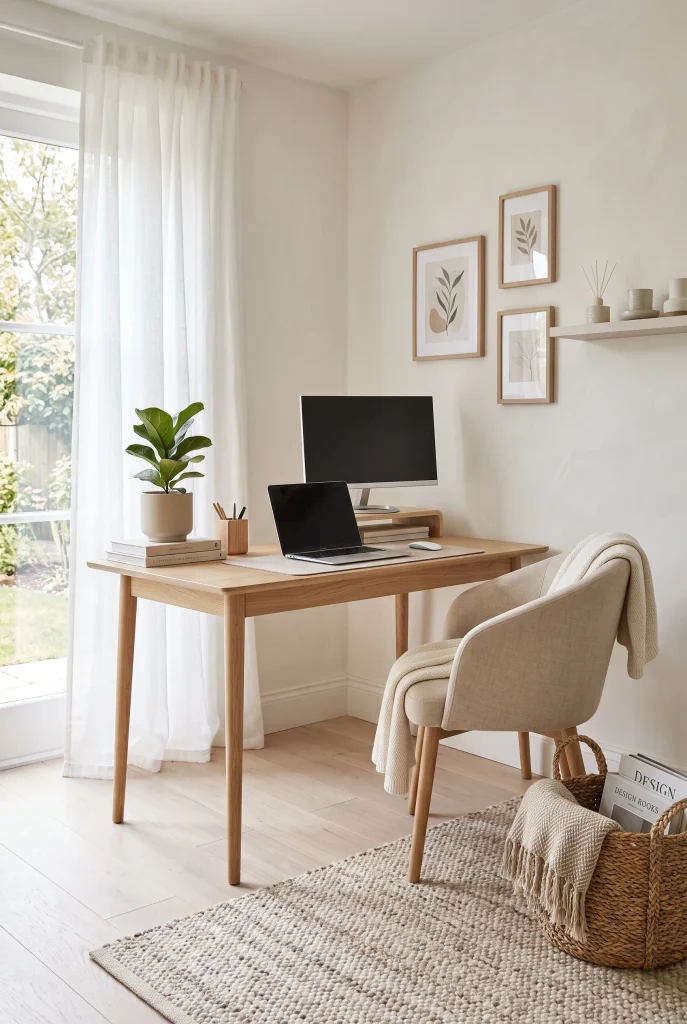
- Light oak brings warmth without making the room feel heavy.
- A simple desk keeps the workspace visually clean and uncluttered.
- Pairing pale wood with soft neutrals creates an easy Scandinavian feel.
- Keep only useful items on the desktop for a calmer work zone.
A light oak desk can instantly make a home office feel brighter, warmer, and more welcoming. The pale wood adds natural character while keeping the overall look simple and airy. Choose a desk with clean lines and minimal hardware so it does not visually overwhelm the room. Pair it with a comfortable beige, cream, or light gray chair for a soft contrast. Light wood works especially well in smaller offices because it keeps the workspace feeling open rather than visually crowded.
The beauty of this setup is that it balances style with everyday function. Keep your laptop, a small lamp, and one or two useful accessories on the surface instead of filling every corner with decor. A woven basket underneath can hide cables, notebooks, or extra supplies while maintaining a tidy appearance. Add a small plant or ceramic vase for a natural finishing touch. Light walls, pale flooring, and soft textiles can make the entire workspace feel connected, creating a Scandinavian home office that feels peaceful enough for focused work and comfortable enough for longer days.
2. Soft Neutral Palette
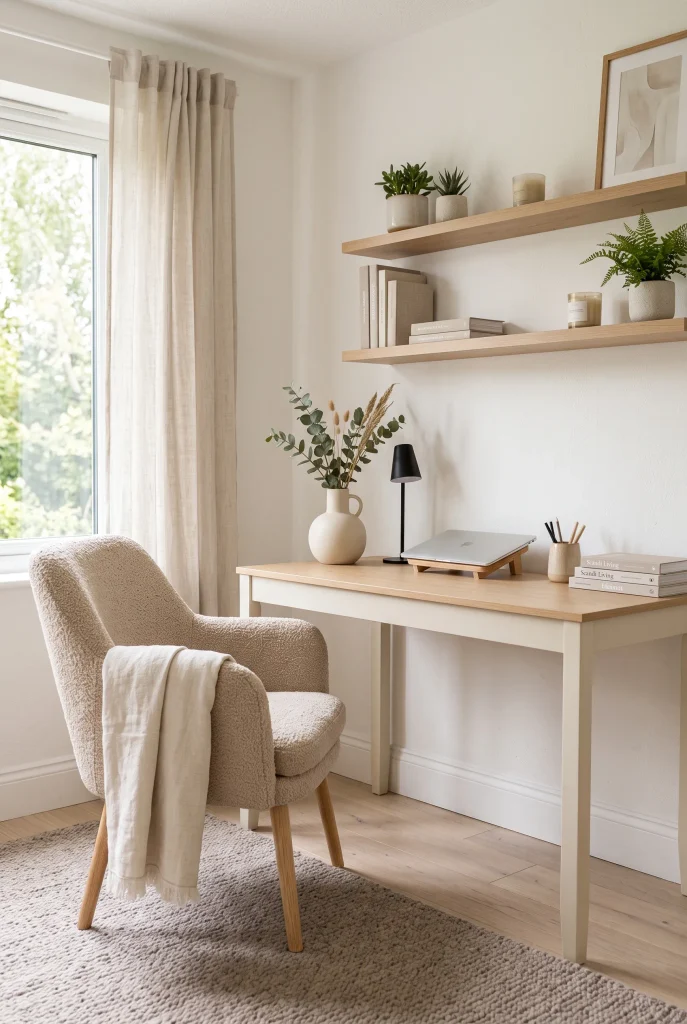
- Warm neutrals create a peaceful backdrop for focused work.
- Cream and beige tones make the office feel softer and more inviting.
- Small black accents can add definition without disturbing the calm palette.
- Layer different textures so neutral colors do not look flat.
Soft neutral colors can make a workspace feel instantly calmer without sacrificing personality. Start with warm white or creamy walls, then layer beige, taupe, oatmeal, and pale wood through the furniture and accessories. This combination creates visual consistency and helps the room feel brighter throughout the day. Instead of choosing several unrelated colors, keep the palette restrained and introduce interest through texture. Linen curtains, boucle seating, woven storage, and a textured rug can give a simple workspace enough depth to feel finished without becoming busy or distracting.
A neutral palette also makes it easier to refresh the room later. Artwork, cushions, plants, or desk accessories can be changed without replacing the main furniture. This approach works particularly well when an office needs to serve several purposes, such as working, studying, or handling household tasks. Add one or two darker accents, such as a black desk lamp or simple picture frame, to create contrast. The result is a balanced workspace that feels organized, comfortable, and visually connected from corner to corner.
3. Minimal Floating Shelves

- Floating shelves use vertical space without taking up valuable floor area.
- A few carefully chosen objects create personality without visual clutter.
- Keep heavier storage items elsewhere so the shelves stay light.
- Leave some empty space between accessories for a cleaner appearance.
Floating shelves are a smart way to add storage and personality without making a home office feel crowded. Mount two or three slim shelves above the desk and use them for books, small plants, framed prints, or a few attractive storage boxes. Light oak or natural wood works beautifully with the soft colors commonly found in Scandinavian interiors. The key is restraint. Instead of filling every inch, leave comfortable gaps between objects so the shelves feel intentional. This small amount of empty space can make the entire workspace look more organized and visually relaxed.
The shelves can also solve a practical storage problem when floor space is limited. Keep frequently used books and supplies within easy reach, while decorative pieces can occupy the less accessible areas. Alternating heights and shapes can make a small shelf arrangement look more natural than lining up identical objects. Add one trailing plant or a simple ceramic piece for softness. When combined with a clean desk underneath, floating shelves create a useful vertical zone while preserving the open, uncluttered feeling that makes Scandinavian workspaces so appealing.
4. Cozy Task Lighting
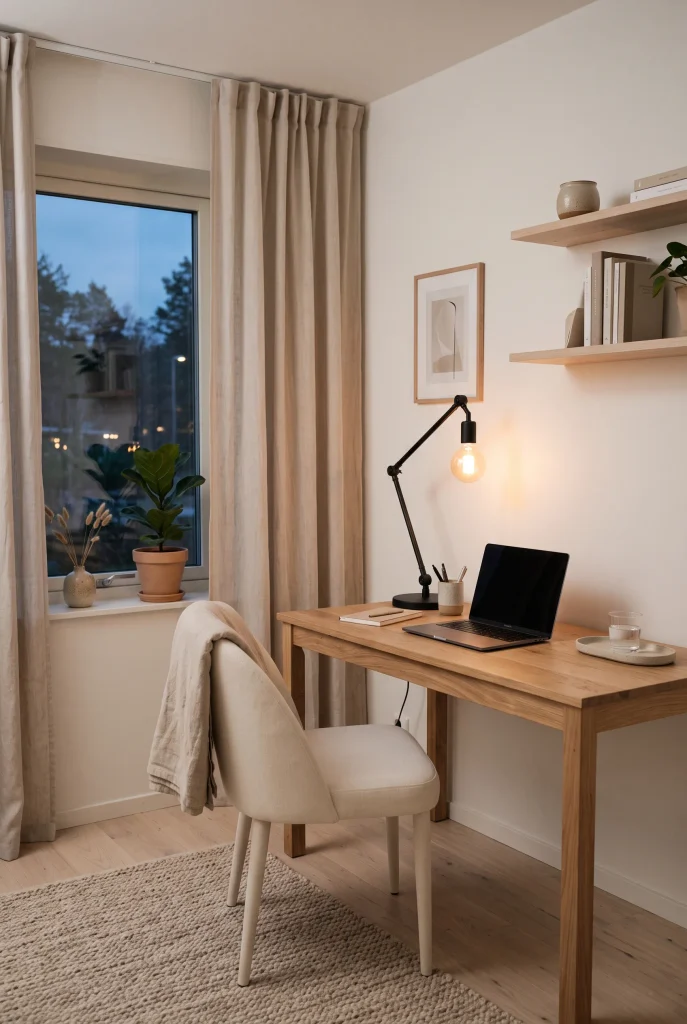
- A warm desk lamp makes the workspace feel inviting after sunset.
- Adjustable lighting helps reduce harsh shadows while working.
- Matte black or brushed metal adds subtle visual contrast.
- Keep the lamp simple so it complements the minimalist furniture.
Good lighting can completely change how a workspace feels once natural daylight begins to fade. A simple task lamp on the desk adds focused illumination while creating a warmer atmosphere around the work area. Choose a design with a clean silhouette and an adjustable shade so you can direct light exactly where it is needed. Warm white bulbs generally create a softer evening glow than very cool lighting. Pair the lamp with pale wood, cream textiles, and simple accessories to keep the overall look balanced rather than overly decorative.
Task lighting also makes the office more functional for reading, writing, or working at a computer later in the day. Placing the lamp slightly to the side of the main work area creates useful illumination without making the desktop feel crowded. A black, white, or brushed-metal finish can provide a small amount of contrast against neutral surroundings. If the room has limited natural light, consider adding another soft light source nearby so the space does not rely on one bright lamp.
5. Woven Storage Baskets
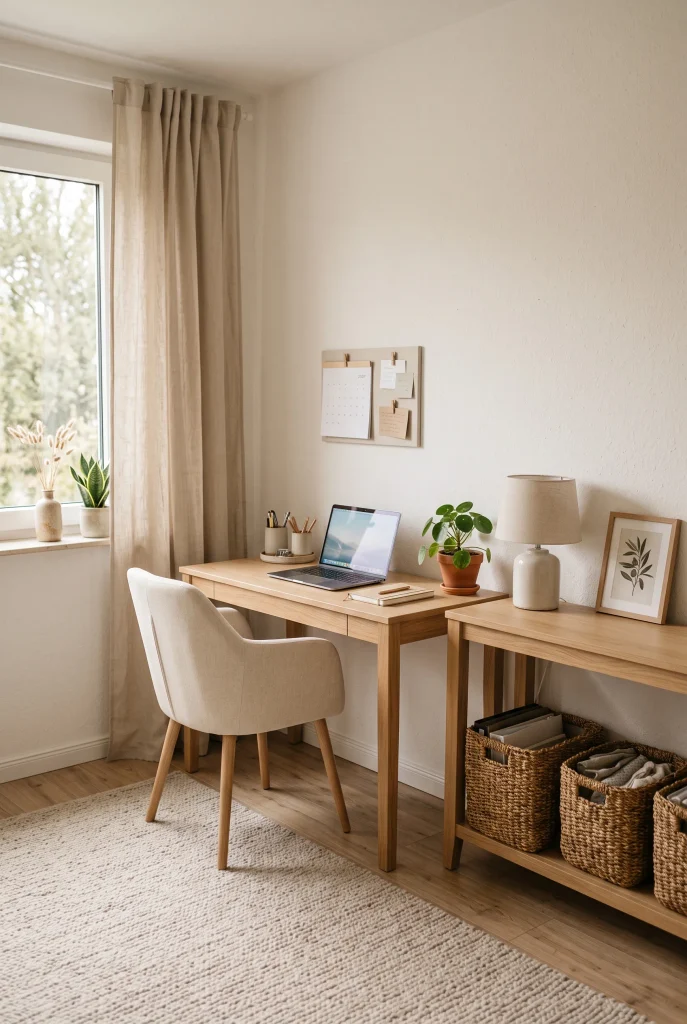
- Woven baskets hide everyday clutter while adding natural texture.
- Large baskets can hold papers, cables, blankets, or extra supplies.
- Natural fibers soften the clean lines of Scandinavian furniture.
- Choose matching or complementary baskets for a more cohesive look.
Woven baskets are one of the easiest ways to make a workspace look tidy without making storage feel overly practical or boring. Place one beneath the desk for cables and technology accessories, or use larger baskets beside a cabinet for papers, notebooks, and extra supplies. Natural seagrass, jute, rattan, or woven fibers bring warmth to pale furniture and neutral walls. They also soften the sharper lines of desks and shelving, helping the room feel more relaxed. This is especially useful when you want storage that looks intentional instead of purely functional.
For a cleaner appearance, avoid mixing too many basket styles or colors. Two or three similar pieces can create visual rhythm while keeping frequently used items easy to reach. Baskets with sturdy handles are especially useful when they need to be moved around the room. When paired with a simple desk and open floor area, woven storage keeps everyday mess contained while adding the natural texture that gives Scandinavian interiors their warm, comfortable character.
View: 21 Purple Gray Bedroom Ideas That Feel Modern & Cozy
6. Comfortable Boucle Chair

- Boucle upholstery adds softness to a clean-lined workspace.
- A curved chair can balance the straight edges of a simple desk.
- Choose supportive seating if you spend several hours working.
- Cream upholstery keeps the room light while adding tactile interest.
A comfortable chair can make a simple workspace feel much more inviting, especially when the room is used for several hours each day. A cream boucle chair adds softness and texture while keeping the color palette light and understated. Look for a supportive shape with enough room to sit comfortably rather than choosing upholstery based only on appearance. A gently curved silhouette can also create a pleasant contrast against a rectangular desk. The combination of soft fabric and pale wood gives the room a relaxed quality without taking it away from its clean Scandinavian foundation.
The chair can become one of the main visual features without overwhelming the rest of the office. Keep surrounding furniture simple and let the textured upholstery provide the interest. A neutral chair is also easier to style over time because it works with changing rugs, artwork, and accessories. Add a small cushion if extra support is needed, but avoid excessive layering. With natural light, warm wood, and a restrained palette, this seating choice creates a workspace that feels both practical and comfortable.
7. Scandinavian Gallery Wall

- Simple artwork adds personality without making the workspace feel busy.
- Botanical prints and abstract shapes complement Scandinavian interiors naturally.
- Matching light wood frames create a cohesive visual arrangement.
- Keep some wall space empty to preserve an airy feeling.
A small gallery wall can give a Scandinavian workspace personality while keeping the overall design simple. Choose artwork with soft botanical shapes, minimal line drawings, muted landscapes, or understated geometric forms. Light wood frames work especially well with pale desks and neutral walls because they continue the natural material theme. Instead of covering an entire wall, create a compact arrangement above the desk or on an adjacent wall. This gives the room a finished appearance while preserving the open, uncluttered quality that makes the style feel comfortable.
The easiest way to keep the arrangement cohesive is to repeat one or two visual elements across the prints. Similar frame finishes, restrained colors, or consistent spacing can make different artworks feel connected. Leaving a little breathing room around the gallery wall can also make it look more polished than placing every frame tightly together. Avoid overly colorful prints if the goal is a calm atmosphere. A few carefully selected pieces can provide enough character to make the office feel personal without distracting from the work area.
8. Natural Wood Desk Accessories

- Small wooden accessories reinforce the room’s natural material palette.
- A desk tray keeps everyday essentials gathered in one place.
- Wooden organizers can make practical items feel more decorative.
- Use only a few accessories to maintain visual simplicity.
Natural wood accessories can make a minimalist desk feel warmer without adding unnecessary decoration. Try a wooden monitor stand, pencil holder, small tray, or simple document organizer in a finish that complements the main desk. Light oak and similar pale woods work especially well with cream, white, beige, and soft gray surroundings. These pieces add subtle texture while keeping everyday tools visible and organized. The goal is not to decorate every surface, but to make practical objects feel like part of the room’s overall design.
A coordinated accessory set can also make the desk easier to maintain. Use a small tray for items that tend to move around, such as charging cables, pens, or headphones, and keep less attractive supplies inside closed storage. That simple division makes the workspace easier to reset at the end of the day. Matching natural finishes create a more intentional appearance, even when the accessories are inexpensive. Combine them with one ceramic piece or small plant for contrast, leaving plenty of open desk space for comfortable work.
9. Soft Textured Rug
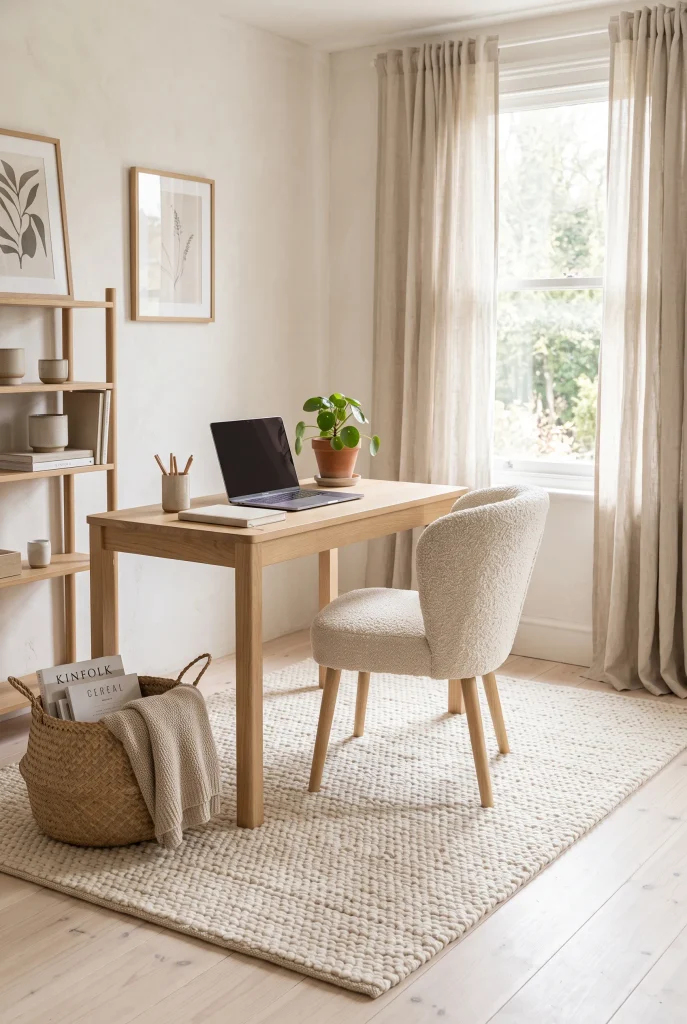
- A textured rug makes a hard floor feel warmer and more comfortable.
- Neutral colors keep the office bright and visually spacious.
- A larger rug can visually connect the desk and chair.
- Choose a low-pile design for easier movement and everyday maintenance.
A soft textured rug can make a Scandinavian workspace feel noticeably warmer, especially when the room has hardwood, laminate, or another hard flooring surface. Choose a cream, oatmeal, beige, or light taupe design with subtle texture rather than a loud pattern. Position the rug so the desk chair sits comfortably within its edges, creating a defined work zone without visually closing off the room. This simple layer adds softness underfoot and helps connect the desk, chair, and surrounding furniture into one cohesive arrangement.
Rugs are also useful for balancing the clean, minimal shapes common in Scandinavian furniture. A lightly textured surface introduces depth without competing with artwork or accessories. If your chair has wheels, choose a low-pile or tightly woven option that allows smooth movement. Slightly larger rugs can make small offices feel more finished because they visually anchor the furniture instead of leaving each piece floating separately. Keep the surrounding colors restrained, then add one or two natural elements such as wood or greenery for a comfortable, grounded finish.
10. Compact Wall Desk
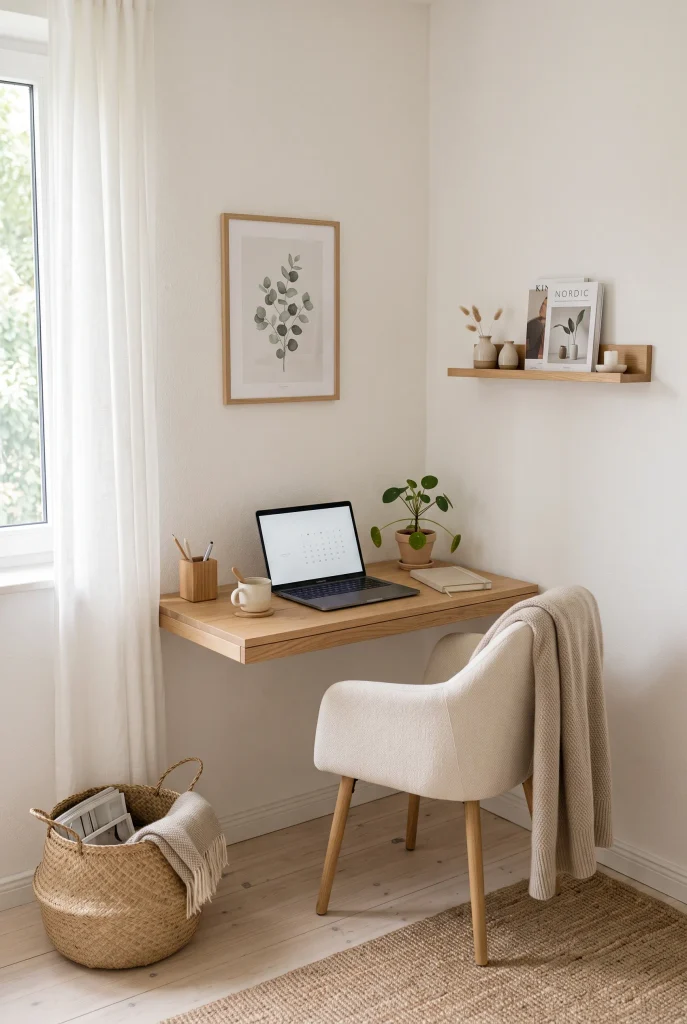
- A wall-mounted desk saves valuable floor space in smaller rooms.
- The slim profile keeps the workspace visually light and open.
- Add a small shelf above for carefully selected essentials.
- Use closed storage nearby to prevent the desk from becoming cluttered.
A compact wall desk can turn an unused corner into a practical workspace without making the room feel crowded. Choose a slim wooden surface with clean lines and mount it at a comfortable working height. Because there are no bulky legs underneath, more floor remains visible, which can make a small room feel surprisingly open. Pair the desk with a simple upholstered chair and keep the surrounding palette light. This setup works especially well in bedrooms, apartments, hallways, or multipurpose rooms where every inch needs to serve a purpose.
The open area underneath the desk can also make cleaning easier and provide flexibility when the space is not being used for work. Add a narrow floating shelf above for a few books, a small plant, or useful stationery. Avoid filling the wall with storage because the strength of this setup comes from its visual simplicity. Keeping the desktop nearly clear makes compact work areas feel much larger. A cable channel underneath can hide cords and preserve the clean appearance from every angle.
11. Simple Black Accents

- Black accents add definition to an otherwise soft neutral palette.
- A few repeated dark details create visual balance.
- Thin frames and simple lamps provide contrast without feeling heavy.
- Repeat the same finish in several small areas for cohesion.
Small black accents can give a soft Scandinavian workspace enough contrast to keep it from looking washed out. A matte black lamp, thin picture frames, chair legs, or simple hardware can create visual definition against warm white walls and pale wood furniture. The key is to use dark details sparingly. When repeated in several small areas, they create a subtle rhythm that makes the room feel intentional without changing its calm character.
This approach is especially useful when your office already has plenty of cream, beige, and light wood. Instead of introducing another strong color, black provides contrast while remaining visually simple. Repeating a finish two or three times usually feels more connected than using one dramatic black feature. Try a black lamp on the desk, a narrow frame above it, and a small accessory nearby. Keep the rest of the room light and natural so these darker details guide the eye without becoming the main focus.
12. Indoor Greenery
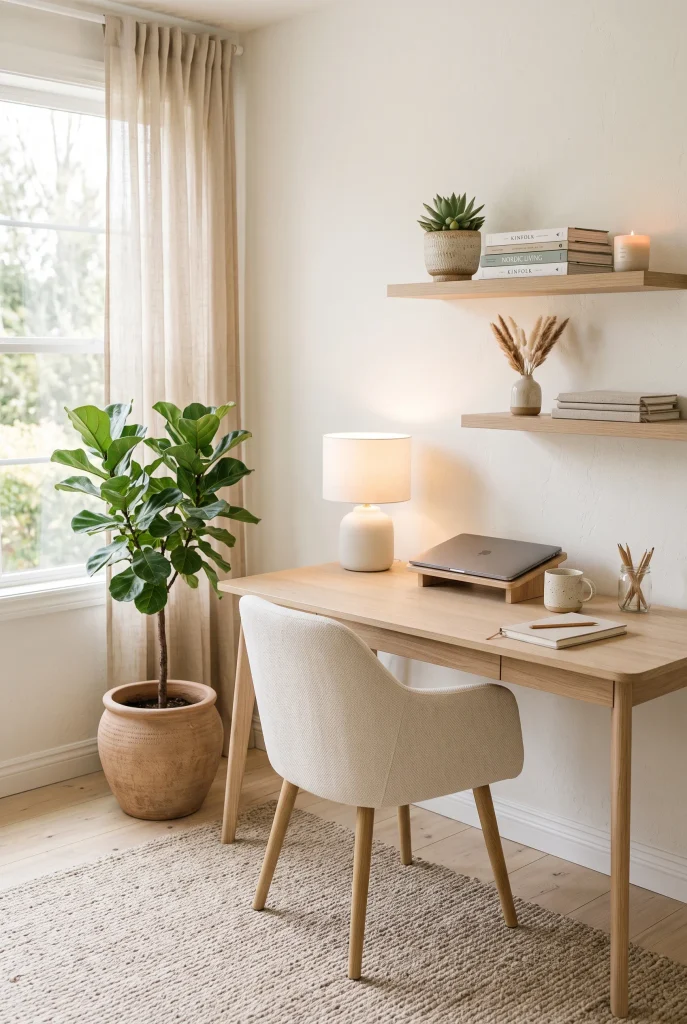
- Greenery adds freshness and natural color to a neutral office.
- One larger plant can soften an empty corner effectively.
- Smaller plants work well on shelves or desks.
- Choose easy-care varieties if the room receives inconsistent sunlight.
A few indoor plants can make a neutral workspace feel fresher and more connected to nature. Place a medium-sized plant beside the desk to soften an empty corner, then add a smaller plant to a shelf or desktop for a subtle layer of greenery. Simple ceramic or woven planters work well with pale wood and warm neutral colors. Choose plants according to the amount of natural light available rather than selecting them only for appearance. Healthy greenery will always make the room feel more inviting than a plant struggling in the wrong location.
Plants can also break up the straight lines created by desks, shelves, and storage furniture. Their organic shapes introduce movement without adding visual clutter. One well-positioned larger plant can often have more impact than several tiny pots scattered around the room. Keep the arrangement intentional and leave clear space around each plant. If maintenance is a concern, choose hardy varieties suited to indoor conditions. Combined with natural wood, woven materials, and soft textiles, greenery can give the workspace a relaxed quality while keeping the Scandinavian look clean and understated.
13. Linen Window Treatments
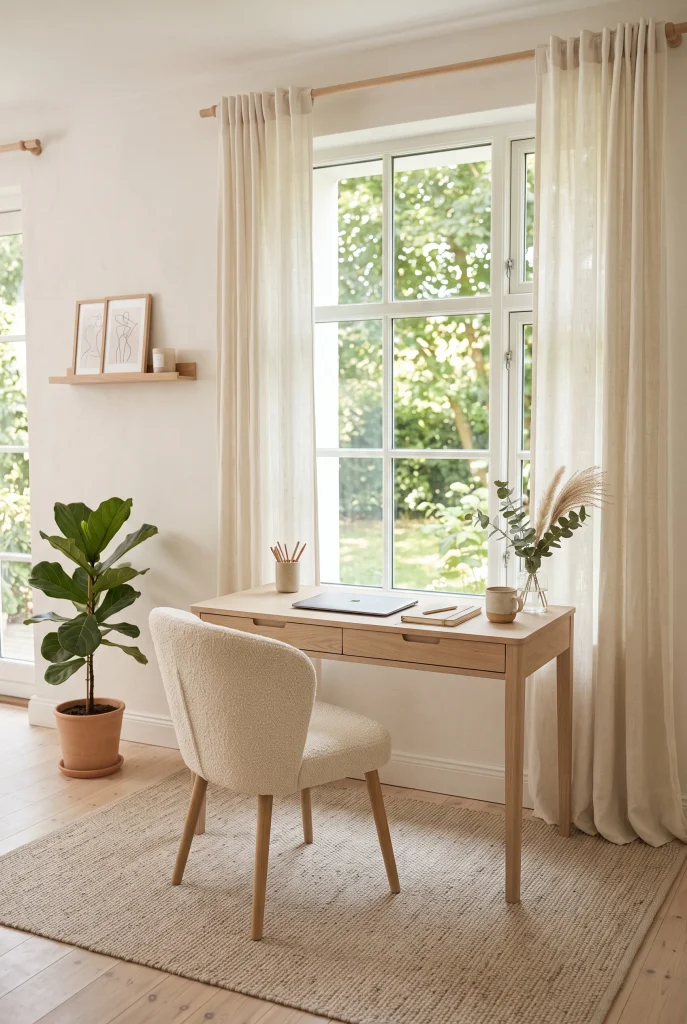
- Linen curtains soften strong daylight without making the room feel dark.
- Light fabrics maintain the airy quality of the space.
- Floor-length panels can make the ceiling appear taller.
- Choose a natural neutral shade for an easy, timeless finish.
Linen curtains can soften a bright workspace while preserving the light, airy feeling that makes Scandinavian interiors so appealing. Choose ivory, warm white, oatmeal, or another gentle neutral shade that blends with the walls. Floor-length panels create a relaxed vertical line and can make the room appear taller. If the window receives strong sunlight, lightweight linen or linen-look fabric can filter the brightness without blocking it completely. This creates softer illumination across the desk and reduces the harsh contrast that can make a workspace feel uncomfortable.
The fabric itself also introduces useful texture into an otherwise simple room. Let the curtains fall naturally rather than choosing heavily structured or ornate treatments. Hanging the curtain rod slightly above the window frame can make a compact office feel more spacious because the eye follows the fabric upward. Keep the surrounding furniture understated so the window remains an important source of light. Combined with pale wood, neutral upholstery, and simple greenery, linen curtains can give the office a softer, more relaxed finish without adding unnecessary visual weight.
14. Japandi Inspired Desk

- Japandi details add warmth while keeping the workspace uncluttered.
- Low-profile furniture creates a grounded and peaceful appearance.
- Natural materials make minimal styling feel more inviting.
- Use fewer decorative pieces and focus on quality textures.
A Japandi-inspired desk setup blends Scandinavian simplicity with the calm, grounded qualities of Japanese interiors. Start with a low-profile wooden desk featuring clean lines and minimal hardware. Pair it with a comfortable cream or beige chair, then introduce a few natural materials such as linen, ceramic, bamboo, or woven fibers. Keep the color palette restrained with warm whites, soft taupes, pale wood, and muted earthy tones. The result feels peaceful and purposeful rather than overly styled, making it especially appealing for a workspace where concentration matters.
The most important part of this look is restraint. Instead of filling the desk with decorative objects, choose a few pieces that are useful or genuinely add character. A simple ceramic vase, small plant, or wooden tray can be enough. Leaving generous empty space around furniture makes this style feel more relaxed and authentic. Avoid mixing too many finishes or patterns. When the materials, proportions, and colors work together quietly, the office gains a soothing visual rhythm that supports both productivity and relaxation.
15. Built In Storage
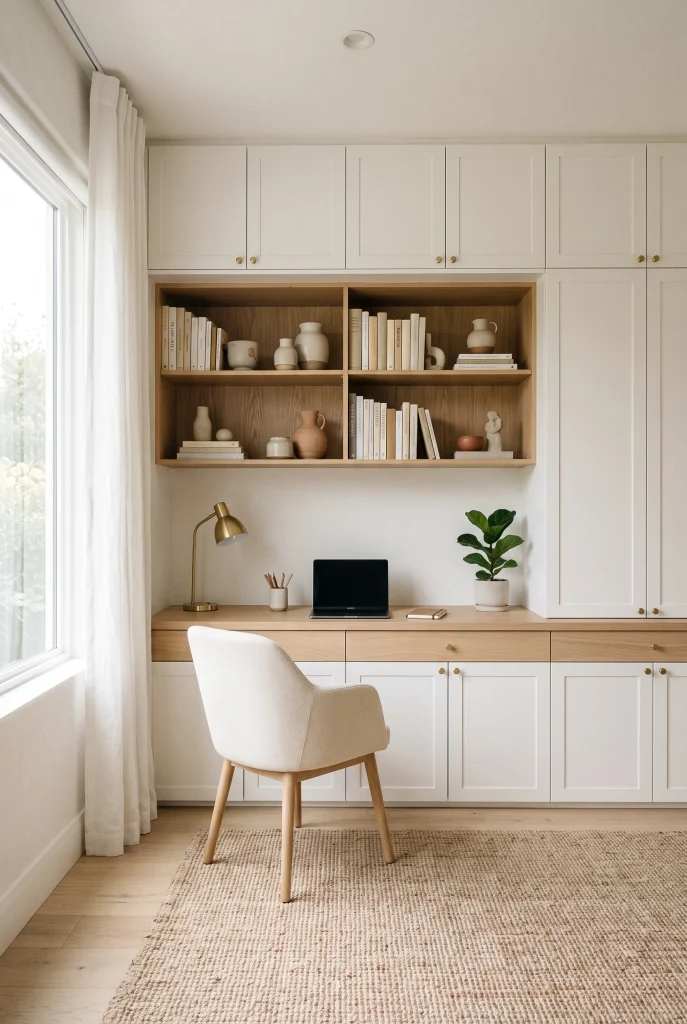
- Built-in storage makes the most of vertical wall space.
- Closed cabinets hide clutter while open shelves display a few favorite pieces.
- Matching cabinetry creates a seamless and organized appearance.
- Include practical cable management during installation for a cleaner desk.
Built-in storage can make a home office feel dramatically more organized because it gives everyday items a dedicated place to live. A combination of closed cabinets and open shelving works particularly well. Keep paperwork, technology, and less attractive supplies behind doors, while using a few open shelves for books, artwork, ceramics, or greenery. Warm white cabinetry paired with pale oak can create a soft Scandinavian appearance without making the wall feel visually overwhelming. This approach is especially helpful when the office needs to store more than just basic desk supplies.
Planning the storage around your actual habits is more important than simply maximizing cabinet space. Measure larger equipment, files, books, and frequently used items before deciding shelf heights and drawer sizes. Keep things used every day within easy reach while rarely needed items can occupy higher or closed areas. Add concealed cable routes where possible so technology does not disrupt the clean lines. With thoughtful planning, built-in cabinetry can provide substantial storage while keeping the workspace calm, functional, and visually consistent.
16. Cozy Reading Corner
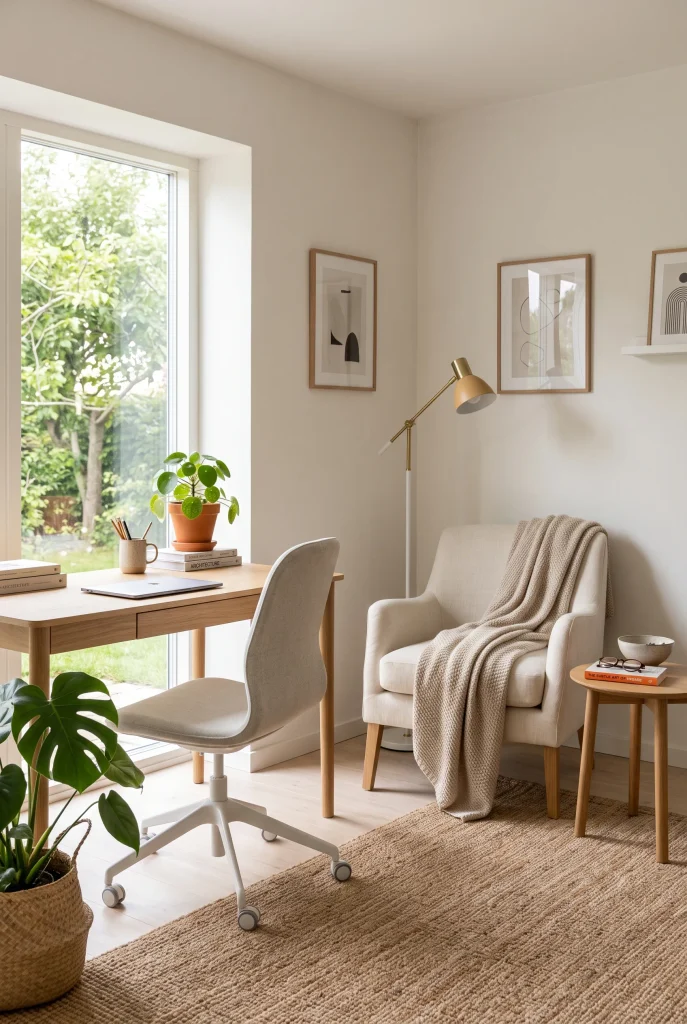
- A reading corner gives the office another useful purpose.
- A comfortable chair creates a natural break from desk work.
- Soft textiles make the workspace feel warmer and more lived-in.
- Keep the corner visually simple so it does not compete with the desk.
A small reading corner can make a home office feel more complete without adding unnecessary furniture. Place a comfortable cream or beige lounge chair near a window, then add a small wooden side table for books, a mug, or a reading lamp. A soft throw and textured rug can make the area feel inviting while keeping the colors connected to the rest of the room. This setup works especially well when the office is large enough for a secondary seating zone that can be used for reading, planning, or taking short breaks.
The corner can also help separate different activities within the same room. Keeping the desk focused on work and the lounge chair dedicated to reading creates a subtle visual distinction without needing a partition. A small floor lamp can make this area useful during evenings while adding another layer of warm lighting. Avoid overcrowding the corner with shelves or accessories. One chair, one small table, and a few comfortable textures are enough to create a quiet retreat that complements the main Scandinavian workspace.
17. Minimal Desk Styling
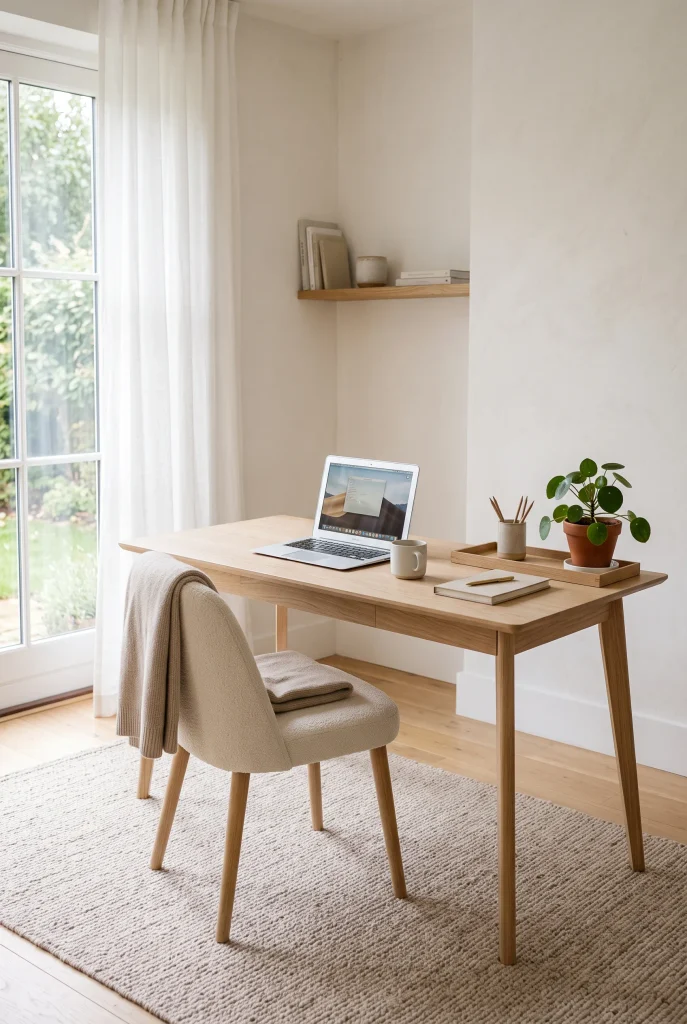
- A nearly clear desktop makes the entire room feel more organized.
- Keep only items that support your daily routine within reach.
- One plant or ceramic piece can add enough personality.
- Use a tray to contain small essentials without spreading them around.
Minimal desk styling is one of the simplest ways to create a calmer workspace without buying new furniture. Start by clearing everything that does not support your daily routine, then return only the essentials. A laptop, lamp, notebook, small plant, or ceramic mug may be enough. Use a wooden tray to group smaller objects so they appear intentional rather than scattered. The open surface creates visual breathing room and makes the desk easier to clean. It also allows the natural wood grain to become part of the room’s decoration.
A tidy desktop can make the surrounding office feel calmer because there are fewer competing shapes and colors in your immediate view. Give every frequently used item a specific home nearby. Keep stationery in a drawer, cables in a small organizer, and paperwork in a dedicated folder or basket. At the end of the workday, returning those items takes only a minute or two. This simple habit helps maintain the clean Scandinavian appearance without requiring constant deep organizing.
18. Warm Layered Textures
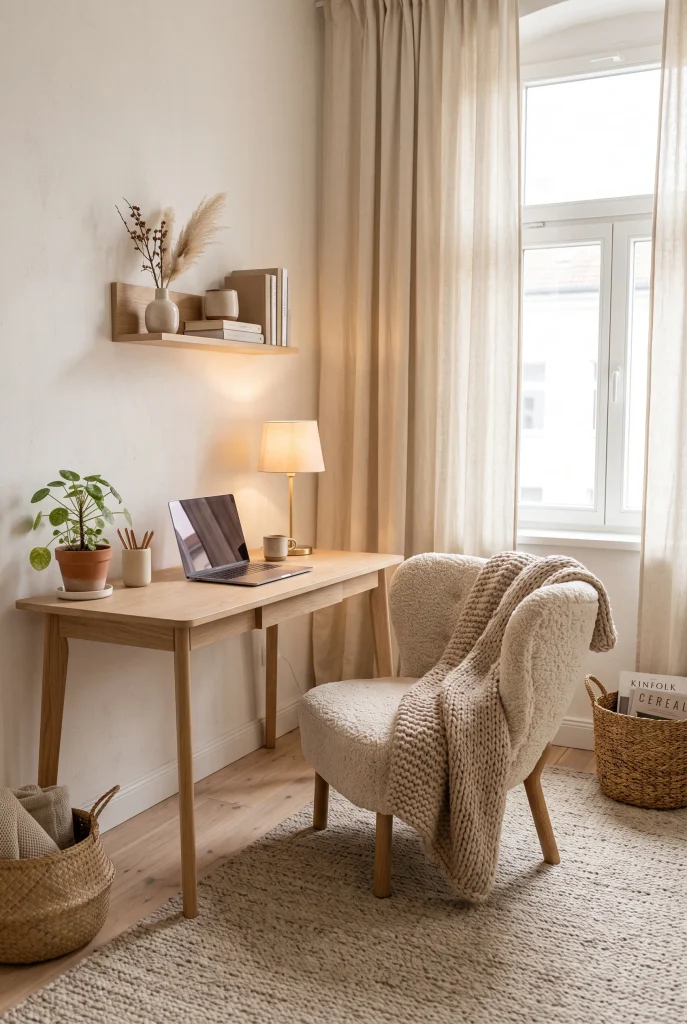
- Layered textures keep neutral rooms from feeling flat or cold.
- Combine smooth wood with soft fabrics and woven materials.
- A small throw can make the chair feel more inviting.
- Keep colors similar while varying textures for subtle visual depth.
Warm textures can completely change the feeling of a minimalist workspace. Start with smooth pale wood, then add softer elements such as boucle upholstery, linen curtains, a woven basket, and a lightly textured rug. Because the color palette remains neutral, these different surfaces create interest without making the room feel visually busy. A small knitted throw over a chair can add another layer of comfort. The goal is to create contrast through materials rather than relying on strong colors, patterns, or decorative objects.
Texture is particularly useful when a Scandinavian office begins to feel too plain. Instead of adding more furniture or artwork, consider what the existing materials look and feel like. Combining three or four distinct textures can make a simple room feel much more finished. Keep the shades within a similar family so everything remains cohesive. Pale wood, cream fabric, beige woven materials, and soft ceramics work naturally together. The finished space feels warm and comfortable while preserving the uncluttered structure that makes minimalist offices practical.
19. Functional Window Desk
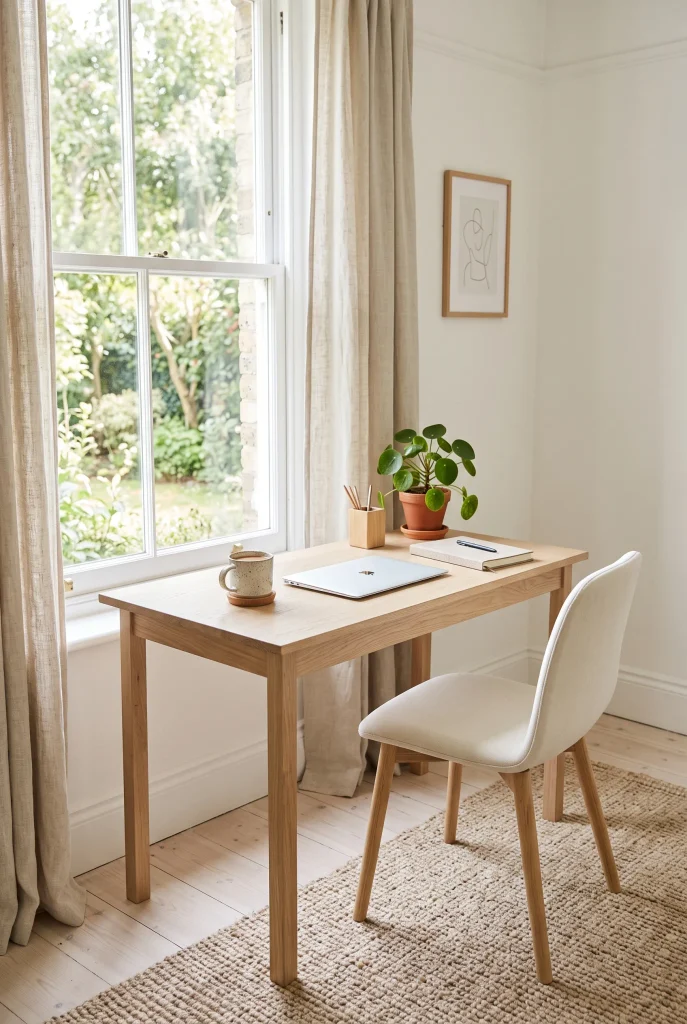
- Positioning the desk near a window can maximize useful daylight.
- Natural light makes pale furniture and neutral colors feel brighter.
- Keep the window area visually open to preserve the airy effect.
- Add adjustable curtains when direct sunlight becomes uncomfortable.
A desk positioned near a window can make a workspace feel brighter and more connected to the outdoors. Natural daylight illuminates the work surface while highlighting the warm tones of pale wood and neutral textiles. Place the desk perpendicular to the window or slightly angled toward it rather than directly blocking the glass. This allows you to enjoy the light while keeping the window visually accessible. A small plant nearby can reinforce the natural feeling and add a gentle touch of greenery without creating clutter.
Think about glare and changing sunlight before deciding on the exact placement. If your screen catches direct afternoon light, lightweight curtains or adjustable blinds can help control brightness while keeping the room naturally illuminated. Flexible window treatments make a workspace much easier to use throughout the day. Keep the area around the window relatively simple so the room continues to feel open. With a pale desk, cream chair, and soft rug, the window becomes part of the office design rather than simply a source of light.
20. Hidden Cable Storage
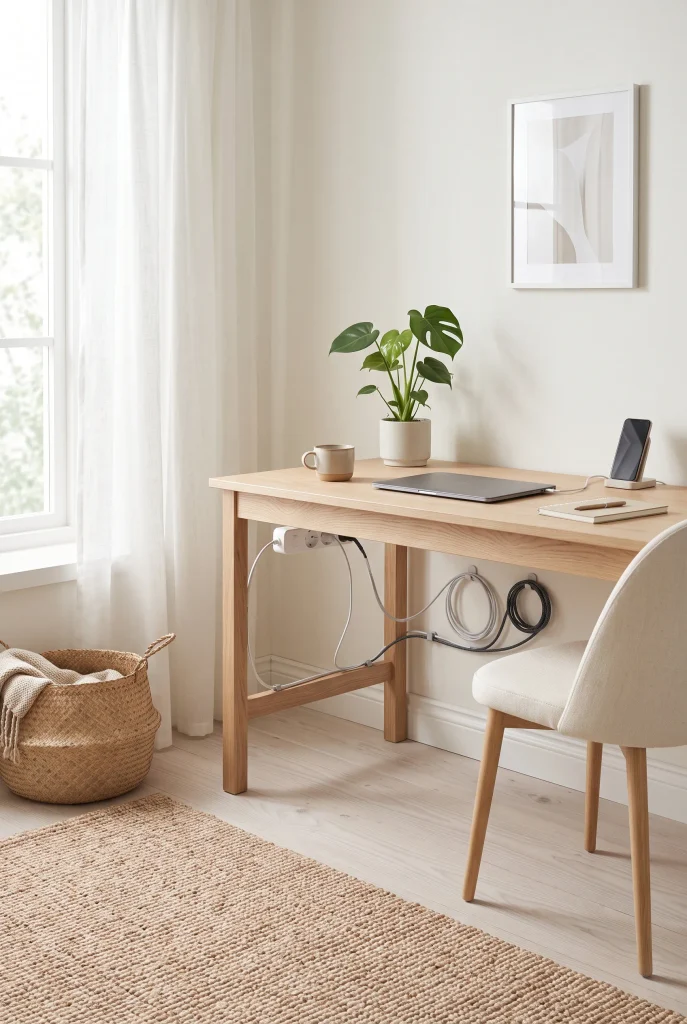
- Concealed cables immediately make a workspace look cleaner.
- Cable clips can keep charging wires from falling behind the desk.
- A basket can hide larger power adapters and spare cords.
- Plan cable routes before adding decorative accessories.
Hidden cable storage is a small practical upgrade that can make a minimalist workspace look significantly more polished. Use adhesive cable clips, an under-desk cable tray, or a discreet cable box to keep charging wires organized. Route cords toward the back or underside of the desk instead of allowing them to hang visibly across the floor. This is especially important in a Scandinavian-style room because clean furniture lines and open surfaces make messy cables much more noticeable. Good cable management keeps the visual focus on the furniture and natural materials.
Start by identifying which devices actually need to remain connected every day. Group related cables together and label less frequently used chargers so they are easier to find later. A woven basket or closed drawer can store spare adapters and accessories. Organizing cables before styling the desk also makes it easier to position lamps, monitors, and accessories neatly. Once the wires are contained, the entire office can feel calmer and more spacious, even though the furniture and layout have not changed.
21. Calm Layered Workspace
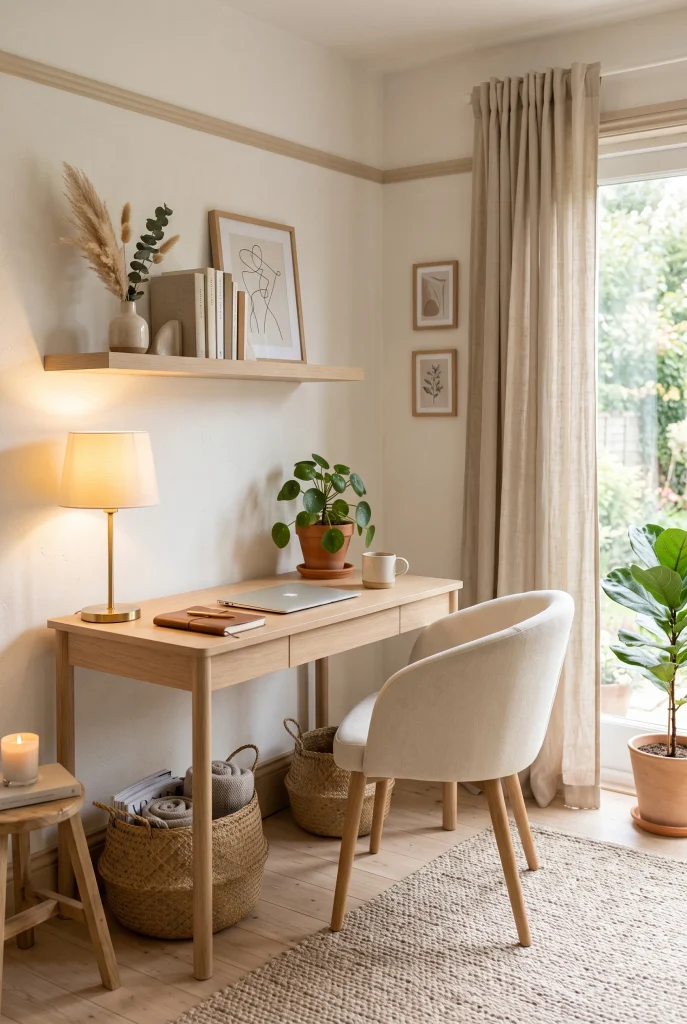
- Combine the most useful elements without overcrowding the room.
- Repeat natural materials to create visual continuity.
- Keep the palette soft while adding contrast through texture.
- Leave open areas around furniture so the office can breathe.
A calm layered workspace brings the main Scandinavian elements together without making the room feel overly designed. Start with pale wood furniture, warm white walls, and a soft neutral rug, then add linen curtains, woven storage, greenery, and a comfortable chair. Each element should have a purpose, whether it improves comfort, organization, lighting, or visual balance. This creates a room that feels naturally finished rather than decorated all at once. The beauty comes from combining simple pieces that work together instead of relying on one dramatic statement feature.
The most successful setup is one that still feels easy to use every day. Keep the desk functional, provide enough storage for routine supplies, and leave clear walking space around the furniture. A small amount of contrast from black hardware or darker artwork can add definition without disturbing the peaceful palette. The final details should support the way the room is actually used. A thoughtfully layered Scandinavian home office can feel organized, warm, and comfortable while still giving you plenty of visual breathing room.
Conclusion
Creating a Scandinavian home office does not require a complete room makeover. Small changes like adding warm lighting, natural textures, hidden storage, greenery, or a comfortable chair can completely shift the atmosphere. Keep the colors soft, choose practical furniture, and leave enough open space for the room to breathe.
The goal is to create a workspace that supports your everyday routine while still feeling cozy and personal. Save this post on Pinterest so you can return to your favorite ideas when decorating. Try one or two changes first, then build from there as the space develops into a workspace that feels comfortable and easy to use.