21 Classic Southern Home Decor Ideas That Feel Timeless

Some homes have a warmth that feels welcoming the moment you walk through the door. Classic Southern home decor creates that feeling through timeless furniture, soft colors, natural textures, and thoughtful details that never feel overly trendy.
Whether your home is traditional, modern, or somewhere in between, these ideas can help you bring more character and comfort into your rooms. Think warm wood furniture, blue-and-white ceramics, relaxed linen, antique brass lighting, floral patterns, and inviting porch seating. The best part is that you do not need to redesign everything at once. A few carefully chosen details can completely change how a space feels. These 21 ideas will help you create rooms that feel polished, personal, comfortable, and easy to enjoy every day.
1. Classic Foyer Table
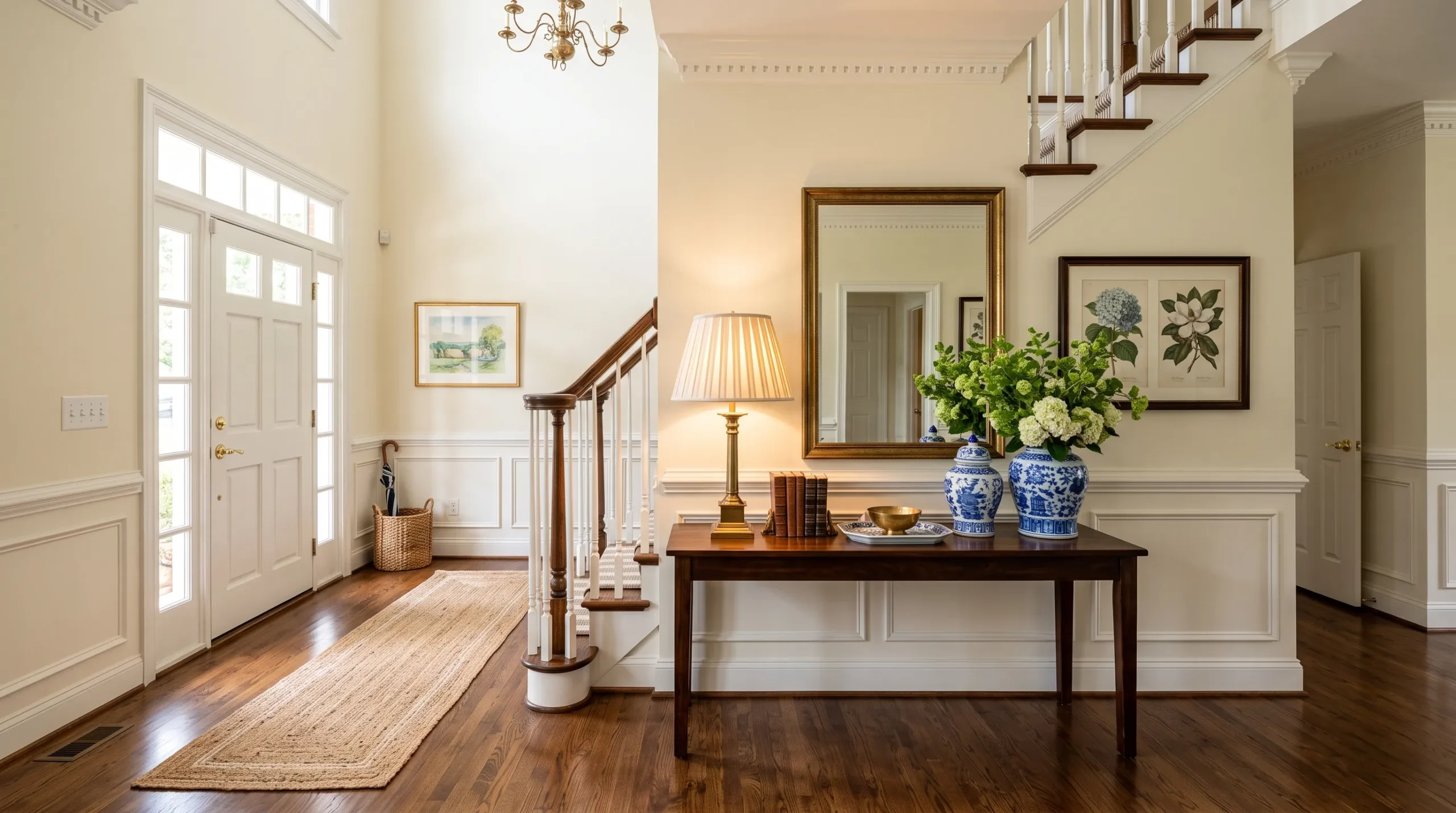
- A walnut console instantly gives the entryway a grounded, traditional feel.
- Blue-and-white ceramics add Southern charm without making the space feel dated.
- A pair of lamps creates balance and practical evening lighting.
- Keep the tabletop edited so the entry feels welcoming rather than crowded.
A beautiful entryway can make the entire home feel more thoughtfully designed, and a classic console table is an easy place to begin. Choose a substantial walnut or mahogany piece with simple traditional lines, then style it with a few collected-looking accessories. Blue-and-white pottery, brass candlesticks, and framed botanical prints work especially well against warm cream walls. The combination feels established without looking overly formal. Keeping the arrangement symmetrical can make even a narrow foyer look polished. Leave some open tabletop space so the furniture feels intentional rather than overloaded with decoration.
The surrounding details matter just as much as the table itself. A traditional mirror or landscape painting can anchor the wall, while a woven runner softens polished wood flooring underfoot. Add a small basket underneath if you need discreet storage for everyday items such as shoes, umbrellas, or mail. Warm white bulbs help antique brass and wood tones glow beautifully after sunset. This approach works particularly well in homes where the entryway is small because every piece has a clear purpose. The finished space feels welcoming, collected, and connected to the timeless character found throughout Southern interiors.
2. Blue And White Ceramics

- Blue-and-white pottery introduces color while keeping the palette calm and flexible.
- Grouping different ceramic shapes creates interest without requiring many decorative pieces.
- A walnut surface gives the lighter pottery a richer visual backdrop.
- Choose pieces with slightly different patterns for a collected appearance.
Few decorative combinations feel as instantly recognizable as blue and white pottery in a traditional Southern home. The contrast is crisp enough to brighten a room while still working beautifully with warm woods, cream upholstery, and aged brass. Try arranging ginger jars, vases, or small covered containers across a console, bookcase, or dining room cabinet. Rather than matching every pattern, mix stripes, florals, and geometric motifs within the same color family. This creates the relaxed collected look many people want. The key is repetition: carrying blue and white into another small accessory helps the room feel connected.
This decorating trick is also practical because the palette can grow gradually over time. You do not need an entire collection before the room looks finished. Start with two or three pieces at different heights, then add a framed print or patterned pillow that quietly repeats the same tones. Ceramics look especially beautiful when placed against warm white walls or dark wood furniture because the contrast makes each shape stand out. For renters, a few portable pieces can create the same character without permanent changes. The result feels traditional, personal, and easy to refresh as your style evolves.
3. Linen Slipcovered Sofas

- Cream linen upholstery keeps traditional furniture feeling fresh and relaxed.
- Slipcovers make everyday maintenance easier in busy households.
- Layer pillows in subtle stripes, florals, and solids for comfortable depth.
- Pair the sofa with darker wood furniture to create visual contrast.
A comfortable sofa can make a traditional room feel inviting instead of overly formal, and linen slipcovers are especially effective for that balance. Look for a generously sized sofa with rounded arms, tailored cushions, and relaxed cream or oatmeal upholstery. The natural texture of linen softens heavier traditional furniture nearby, while the light color keeps the room visually open. This is one of the most useful classic Southern home decor choices for families because slipcovered seating can feel beautiful without being precious. Add a few patterned pillows in blue, green, or muted floral tones to bring personality without overwhelming the room.
The beauty of this setup comes from mixing comfort with structure. Place the sofa over a textured rug, then add a wooden coffee table and traditional side tables to introduce warmth. Curtains in lightweight linen or cotton can frame the windows without competing with the upholstery. If the room receives strong afternoon sun, consider lined window treatments to protect fabrics and make the space more comfortable. That combination creates a room that looks polished in photographs but still works for everyday living. The finished effect is soft, welcoming, and timeless, with enough texture to keep neutral furniture from feeling flat.
4. Traditional Wood Furniture

- Dark wood furniture instantly adds warmth and traditional character.
- Choose pieces with simple lines so the room feels classic rather than heavy.
- Mixing wood tones can make collected furniture look more natural.
- A polished wooden surface becomes a beautiful foundation for everyday styling.
Rich wood furniture brings a sense of warmth that lighter contemporary pieces sometimes struggle to create. A walnut dining table, mahogany console, or traditional oak cabinet can give a room an established feeling without requiring excessive decoration. Look for furniture with balanced proportions, turned legs, or subtle carved details rather than overly ornate designs. These shapes connect naturally with Southern decorating traditions while remaining versatile. One substantial wooden piece often has more impact than several small decorative items. Let the furniture become the foundation, then use lighter fabrics and ceramics to keep the room visually balanced.
You can also make traditional wood pieces feel fresher by surrounding them with relaxed materials. Pair a dark dining table with cream linen chairs, a woven rug, or simple cotton curtains. In a living room, combine a wooden coffee table with a soft sofa and patterned pillows to prevent the darker finish from dominating. If you already own mismatched wood furniture, there is no need to replace everything. Repeating one finish in smaller accessories can visually connect different pieces. The result feels collected over time, comfortable, and practical while preserving the elegant character that makes traditional Southern interiors so appealing.
5. Woven Natural Textures
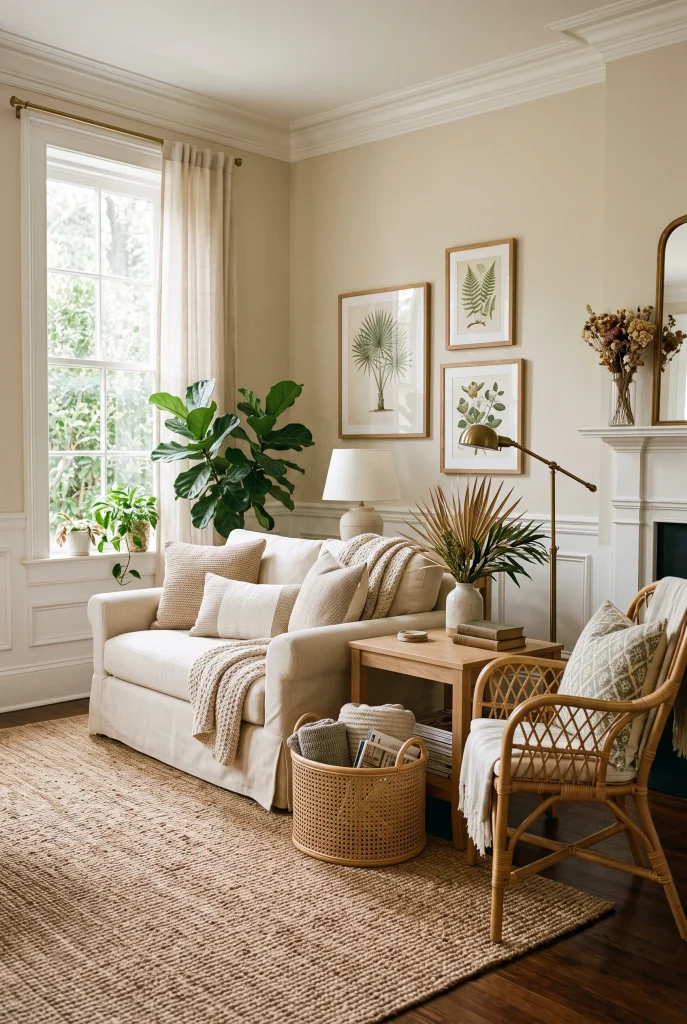
- Jute, rattan, cane, and seagrass add warmth without adding visual clutter.
- Natural textures soften formal furniture and make rooms feel more relaxed.
- Woven baskets provide useful storage while doubling as decoration.
- Layer different textures instead of relying on many colors for interest.
Natural woven materials can make a traditional room feel noticeably more relaxed, especially when the furniture has darker finishes or formal shapes. A jute rug under a dining table, rattan chair beside a window, or seagrass basket near a console introduces texture without disrupting the classic palette. These materials work beautifully with cream, beige, navy, muted green, and warm wood tones. They also bring subtle variation to neutral rooms, which helps prevent them from looking overly staged. The goal is not to turn the room into a fully rustic space, but to add a few organic elements that make traditional styling feel comfortable.
Woven accents are particularly useful in busy homes because many of them are both decorative and functional. A large basket can hold throws, magazines, or children’s items while keeping the room visually tidy. A textured rug can define a seating area and add softness underfoot. This combination works especially well when natural materials are paired with polished brass or traditional wood, because the contrast keeps the space from leaning too heavily in either direction. Even one woven chair or basket can create that relaxed Southern feeling while preserving the refined structure of the room.
6. Antique Brass Lighting
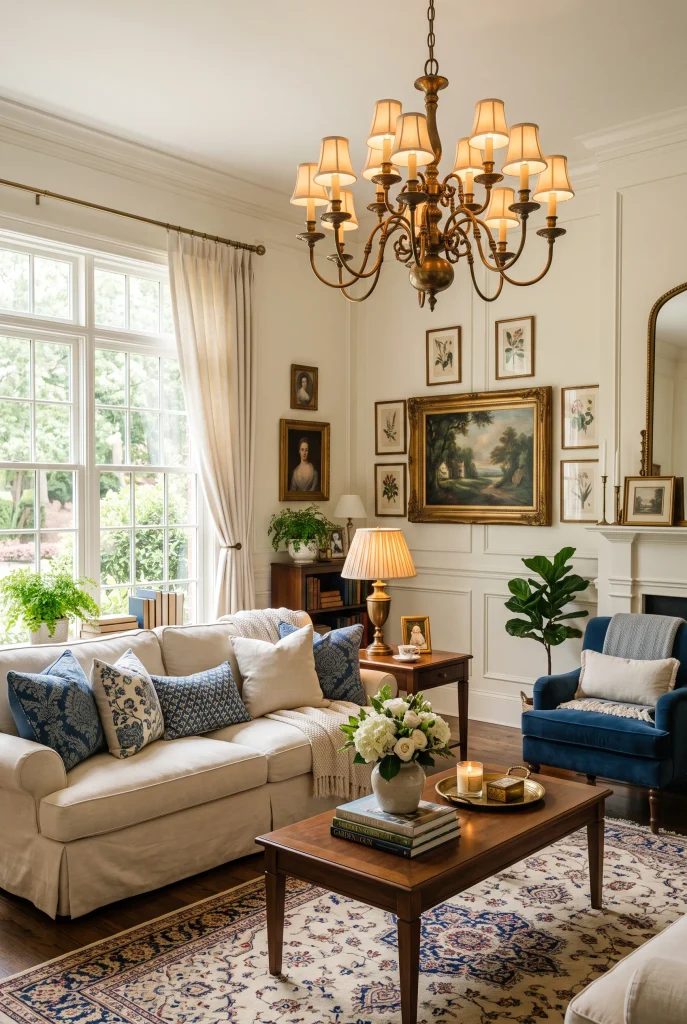
- Aged brass lighting adds warmth and character to traditional rooms.
- Choose one noticeable fixture rather than filling every surface with brass.
- Warm bulbs make brass finishes look softer and more inviting.
- Mix brass with wood and linen for a balanced, lived-in appearance.
Lighting can completely change how traditional furniture and colors appear, and aged brass fixtures are an easy way to introduce warmth. Consider a brass chandelier over a dining table, a pair of brass lamps beside a sofa, or a small picture light above artwork. The slightly muted finish feels more established than shiny gold and works naturally with walnut, mahogany, cream upholstery, and blue accents. For classic Southern home decor, this kind of lighting adds character without requiring a major renovation. Choose fixtures with simple traditional silhouettes so they complement the room instead of competing with its furniture.
The most inviting rooms usually combine several layers of lighting rather than relying on one ceiling fixture. Use a chandelier or pendant for general illumination, then add table lamps and wall lights where people actually sit or work. Warm bulbs can make cream walls and natural wood feel especially cozy in the evening. If your existing fixtures are modern, swapping only the most visible one can make a surprising difference. Keep the other finishes consistent enough to feel intentional, but do not worry about perfect matching. A little variation often gives traditional spaces the collected, comfortable quality they need.
View: 21 Fairycore Bedroom Aesthetic Ideas That Feel Magical
7. Floral Window Treatments

- Floral curtains bring pattern into the room without covering every surface.
- Small-scale botanical prints feel timeless and easier to live with.
- Floor-length panels can make windows appear taller and more finished.
- Keep surrounding furniture simple so the fabric remains the focal point.
A pretty floral fabric around the windows can give a traditional room an immediate sense of charm and softness. Choose a pattern with a restrained palette such as blue and cream, sage and ivory, or muted rose with beige. Smaller botanical prints usually feel more timeless than oversized tropical designs, especially when paired with classic furniture. Hang curtains close to the ceiling and let them reach the floor to create a taller, more finished appearance. This simple adjustment can make standard windows feel more substantial while adding the layered character associated with traditional Southern decorating.
Floral window treatments work best when the rest of the room quietly supports them. Pull one or two colors from the fabric into pillows, a rug, or artwork rather than repeating the entire pattern everywhere. If privacy is important, pair decorative panels with simple woven shades or lined blinds. This gives you flexibility throughout the day while keeping the windows visually polished. This approach is especially helpful in bedrooms and dining rooms where fabric can soften hard surfaces. The finished space feels cheerful and collected, but the classic pattern keeps it from looking tied to one particular decorating trend.
8. Layered Area Rugs
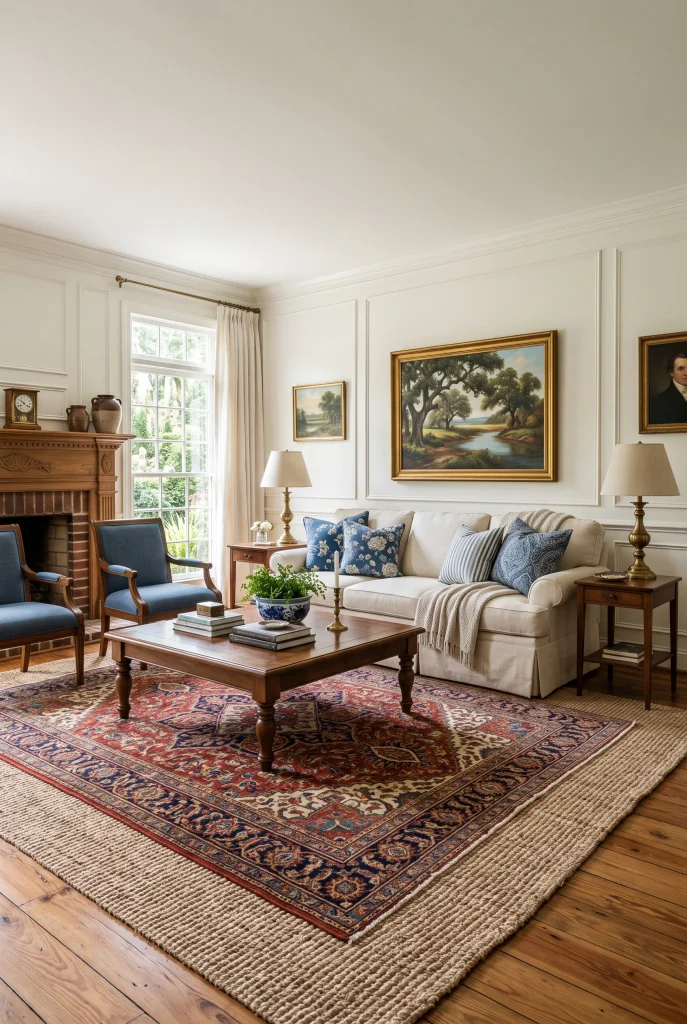
- Layering rugs adds depth without requiring more furniture or decoration.
- A natural base rug can soften the look of a patterned traditional rug.
- Keep the lower rug larger so its border remains clearly visible.
- Use this technique to define seating areas in open-plan rooms.
Layered rugs bring warmth and dimension to rooms with hardwood or other hard flooring, especially when the furniture already has a traditional silhouette. Start with a larger natural fiber rug, such as jute or sisal, then place a smaller patterned rug over it. A muted Persian-inspired design can introduce blue, rust, cream, or faded green without overwhelming the room. The combination creates visual depth while making the seating area feel more defined. It is also a practical way to add softness underfoot without covering the entire floor with one expensive statement rug.
Getting the proportions right is what makes this technique look intentional. The bottom rug should extend beyond the main seating arrangement, while the upper rug can anchor the coffee table and front legs of surrounding chairs or sofas. Avoid combining two equally bold patterns because they can compete visually. Instead, let one rug provide texture and the other provide pattern. This works particularly well in larger living rooms where furniture can otherwise feel scattered. The result feels warm and established, while the layered textures give traditional spaces a more relaxed everyday character.
9. Southern Porch Seating
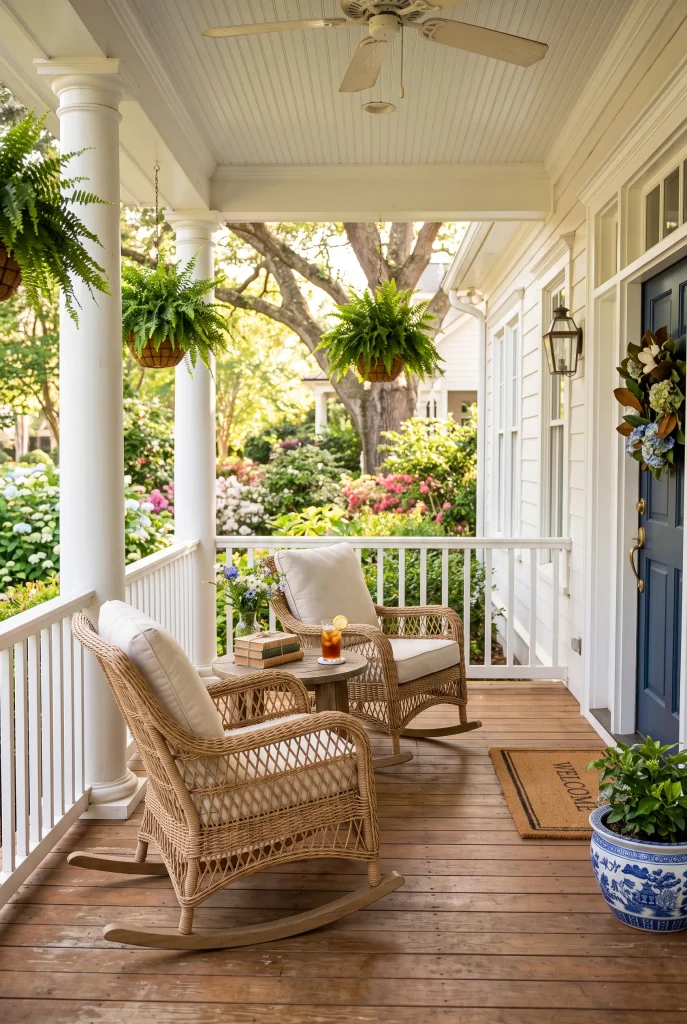
- Rocking chairs create an instantly welcoming porch arrangement.
- Wicker and wood furniture complement traditional Southern architecture naturally.
- Outdoor cushions add comfort while introducing subtle color and pattern.
- Ferns and simple planters soften the hard lines of columns and railings.
A welcoming porch can extend the decorating style of your home before guests even walk through the front door. Classic wicker or wooden rocking chairs create an unmistakable traditional feel while giving the space a practical place to sit. Add comfortable cream cushions, a small side table, and a few potted ferns for an arrangement that feels relaxed rather than overly decorated. Blue-and-white planters or striped outdoor pillows can introduce subtle color. The goal is to create an outdoor room that feels connected to the interior while remaining durable enough for everyday use.
Comfort should guide the layout as much as appearance. Leave enough space between chairs for people to move easily, and place a small table within reach for drinks, books, or keys. Choose outdoor-rated fabrics when the porch is exposed to moisture or strong sunlight, and use heavier planters where wind is common. A simple outdoor rug can help define the seating area and make the porch feel more finished. This setup works beautifully for morning coffee, evening conversations, or quiet afternoons. The finished porch feels inviting, practical, and naturally connected to timeless Southern home style.
10. Plantation Shutters
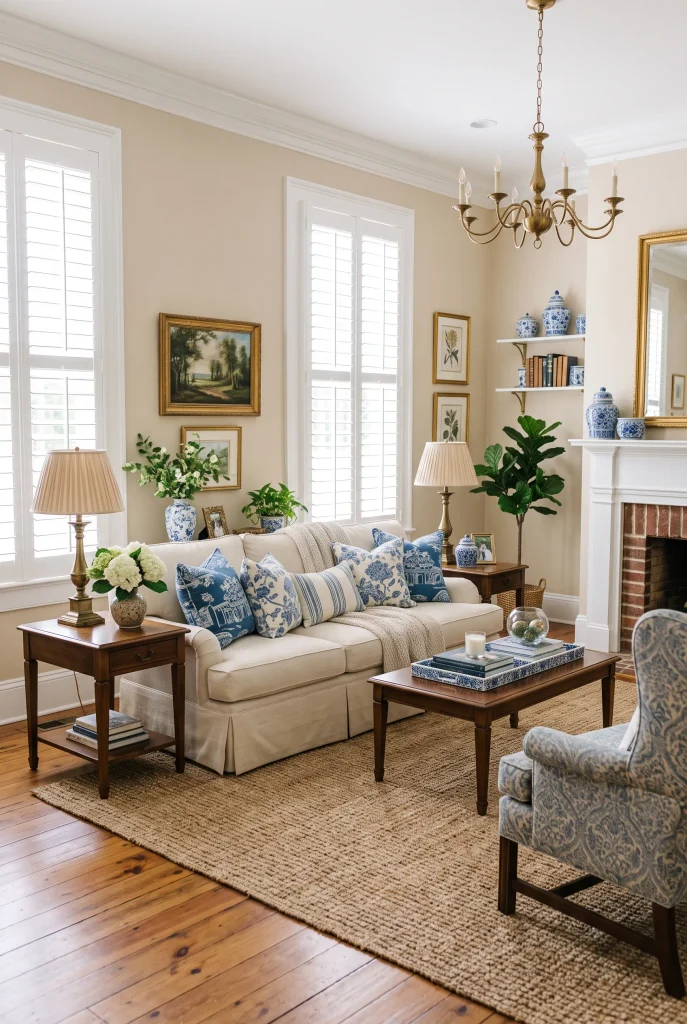
- White shutters give windows a clean architectural finish.
- Adjustable louvers provide useful control over sunlight and privacy.
- Their simple structure pairs naturally with traditional furniture and warm woods.
- Keep surrounding window decor minimal so the shutters remain visually crisp.
Window treatments can shape the character of an entire room, and plantation shutters bring a particularly timeless architectural detail. Their wide adjustable louvers create clean horizontal lines while allowing you to control sunlight and privacy throughout the day. White or warm ivory shutters work especially well with cream walls, dark wood furniture, and traditional upholstery. Unlike heavily patterned curtains, they keep the windows visually quiet, allowing artwork, furniture, or fabrics to become the focus. This makes them useful in both formal living rooms and everyday family spaces where you want classic character without excessive decoration.
Plantation shutters are also practical because they can be adjusted to redirect harsh sunlight while keeping a room bright. For tall windows, full-height shutters create a strong vertical effect that can make the room feel more finished. If you already have attractive curtains, shutters can sit underneath them for additional flexibility and softness. The combination works especially well when the fabric is lightweight and understated. Keeping the shutter color close to the wall color can make smaller rooms feel less visually crowded. The finished look is polished, functional, and consistent with traditional Southern interiors.
11. Gingham Accent Pillows

- Gingham adds familiar Southern character without overwhelming the room.
- Navy, green, or soft red checks work beautifully with neutral upholstery.
- Combine one checked pillow with solids and florals for balanced layering.
- Smaller patterns are easier to mix with existing traditional fabrics.
A simple gingham pillow can add personality to a neutral room without making the space feel overly themed. The familiar check pattern works especially well with cream linen sofas, traditional wooden furniture, and botanical artwork. Navy and cream is a particularly versatile combination, while muted sage or soft red can create a warmer look. Instead of covering the entire sofa in matching checks, use one or two gingham pillows alongside solid linen cushions and a small floral pattern. This layered approach gives the room visual interest while keeping the overall palette calm and easy to live with.
Gingham is also an affordable way to refresh a room when you do not want to replace larger furniture pieces. Swap pillow covers seasonally, then keep the underlying neutral pieces consistent. If the sofa already has patterned upholstery, choose a smaller check with colors pulled from the existing fabric. A textured throw can soften the combination and make the seating area feel more inviting. Simple checks often look better when they are not perfectly matched throughout the room. Slight variation makes the space feel collected and comfortable rather than decorated from a single showroom set.
12. Gallery Wall Art
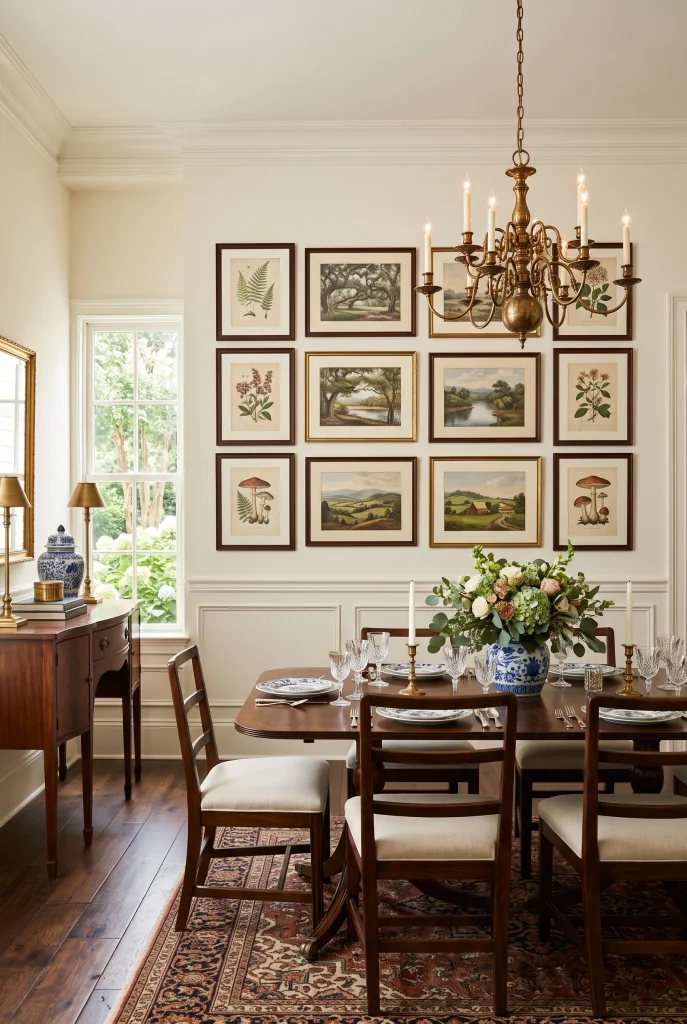
- A gallery wall gives plain walls personality and visual depth.
- Botanical prints and landscapes complement traditional Southern interiors naturally.
- Mixing frame finishes can create a collected-over-time appearance.
- Keep a consistent color palette so different artworks still feel connected.
A thoughtfully arranged gallery wall can make a traditional room feel personal rather than simply furnished. Botanical prints, landscapes, architectural sketches, and vintage-inspired artwork all pair naturally with classic furniture and warm wood finishes. Choose several pieces that share colors or subject matter, then vary their sizes to create a relaxed collection. Dark wood, brass, or aged frames can reinforce the traditional character, while cream mats keep the arrangement feeling light. This approach works especially well above a console, dining room sideboard, staircase, or sofa where a large empty wall needs visual structure.
The arrangement does not need to be perfectly symmetrical to look polished. Start by placing the largest piece near the center, then build outward with smaller frames while keeping the spacing fairly consistent. Before hanging anything, arrange the artwork on the floor to test the composition. If your room already contains strong patterns, choose quieter artwork so the wall does not compete with upholstery or curtains. A few meaningful pieces can also make the space feel more authentic than generic decorations. The finished gallery wall adds history, personality, and visual interest while supporting the timeless atmosphere of the room.
13. White Paneled Walls
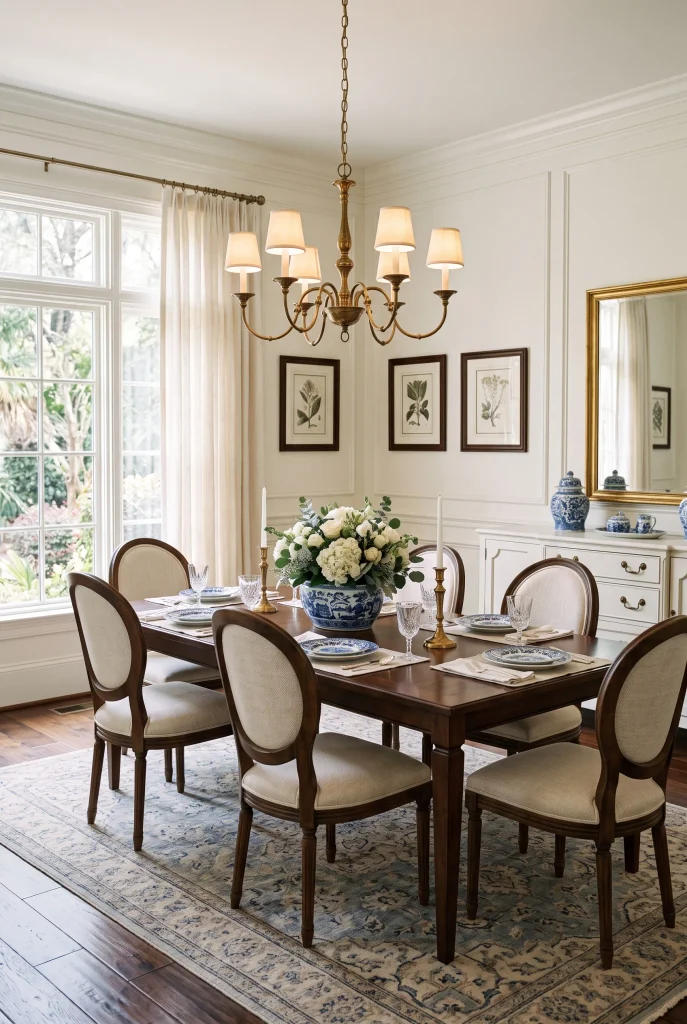
- Wall paneling adds architectural interest without relying on bold decoration.
- Warm white paint keeps the room bright and visually spacious.
- Simple rectangular panels suit both traditional and updated interiors.
- Use artwork and furniture to complement rather than hide the wall detail.
Sometimes the most effective decorative feature is already part of the architecture. White wall paneling adds dimension, structure, and traditional character while keeping the room bright. Simple rectangular molding, beadboard, or board-and-batten details can all work beautifully with classic furniture. Choose a warm white instead of a stark blue-toned white if you want the space to feel softer. The subtle shadows created by the panels become especially noticeable as daylight changes, giving plain walls more depth without introducing another strong color or pattern into the room.
Paneling can also help define different areas within an open home. Use it behind a dining table, along a staircase, or on the wall behind a living room sofa to create a natural focal point. If full-wall installation feels too expensive or permanent, a single accent wall can provide much of the same visual effect. Keep the surrounding decor relatively simple so the architectural lines remain visible. Pairing white paneling with warm wood furniture creates a particularly balanced combination. The crisp walls brighten the room, while the darker furniture adds enough contrast to keep it from feeling flat.
14. Classic Wingback Chairs
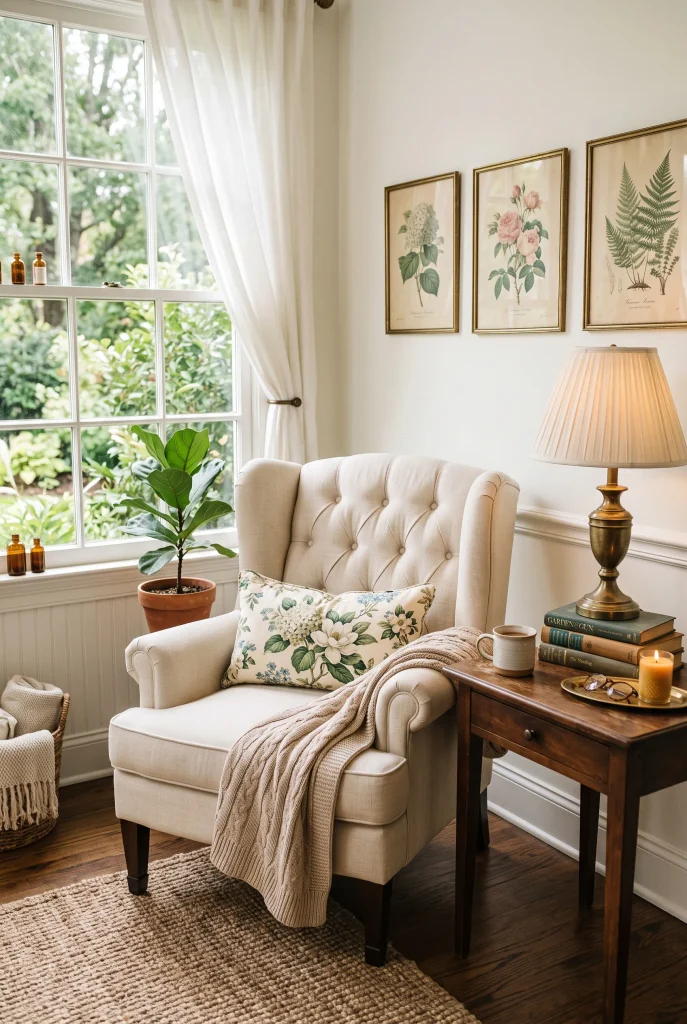
- Wingback chairs create a defined and comfortable seating spot.
- Neutral upholstery makes traditional silhouettes easier to style.
- A small patterned pillow can introduce color without overpowering the chair.
- Place one near a window or lamp to create a useful reading corner.
A classic wingback chair can turn an unused corner into one of the most inviting spots in the home. Its tall back and gently curved sides create a strong traditional silhouette, while neutral upholstery keeps it adaptable. Place one beside a window, fireplace, or bookshelf, then add a small wooden table and warm lamp nearby. A botanical or gingham pillow can bring in subtle Southern-inspired pattern. This arrangement works particularly well because every piece has a purpose. You get a comfortable place to read, enjoy coffee, or have a quiet conversation while adding a noticeable layer of traditional character.
Proportion matters when choosing a wingback chair. A large chair can overwhelm a narrow room, so measure the corner and leave enough clearance around the arms and legs. If the chair has patterned upholstery, keep nearby textiles simpler. For a neutral chair, you have more freedom to experiment with pillows, throws, and rugs. A wooden side table adds warmth and provides a convenient surface for a lamp or book. The finished corner should feel useful rather than staged. That combination of comfort, function, and traditional form is what makes this furniture style continue to work in modern homes.
15. Fireplace Mantel Styling
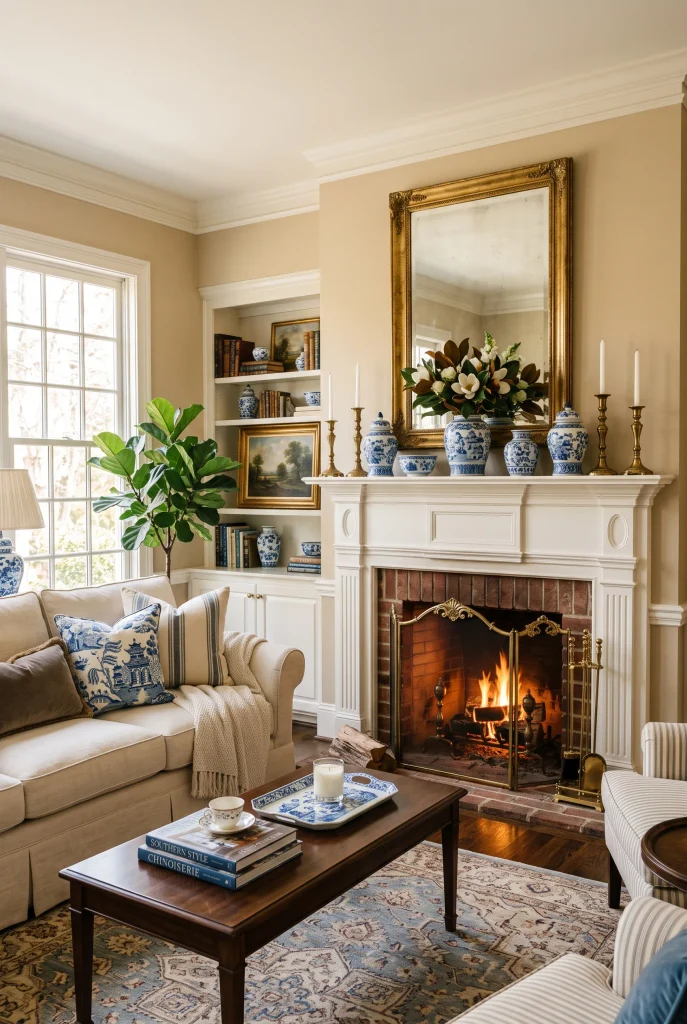
- A large mirror can make the mantel feel taller and more substantial.
- Blue-and-white ceramics add classic color without creating visual clutter.
- Symmetrical accessories give traditional fireplaces a polished appearance.
- Leave some empty space so the mantel does not feel overcrowded.
A traditional fireplace can become the visual anchor of a room with only a few carefully chosen pieces. Start with a substantial mirror or framed artwork above the mantel, then add a pair of brass candlesticks, ceramic vessels, or small lamps for balance. Cream, blue, brass, and warm wood tones create an especially timeless combination. The goal is to highlight the architecture rather than cover it with decorations. A restrained arrangement allows the mantel, surround, and surrounding furniture to work together while giving the room a natural focal point that feels useful throughout the year.
The easiest way to keep mantel styling polished is to vary height without adding too many objects. Place one taller piece near one side, balance it with a smaller grouping on the other, and leave visible breathing room between accessories. If the fireplace is already ornate, simpler decorations will prevent visual competition. Seasonal changes can be as easy as replacing flowers or ceramics rather than redesigning the entire display. Traditional fireplaces often look most inviting when their styling feels slightly collected instead of perfectly coordinated. That relaxed balance helps the room feel elegant while still comfortable for everyday life.
16. Four Poster Beds
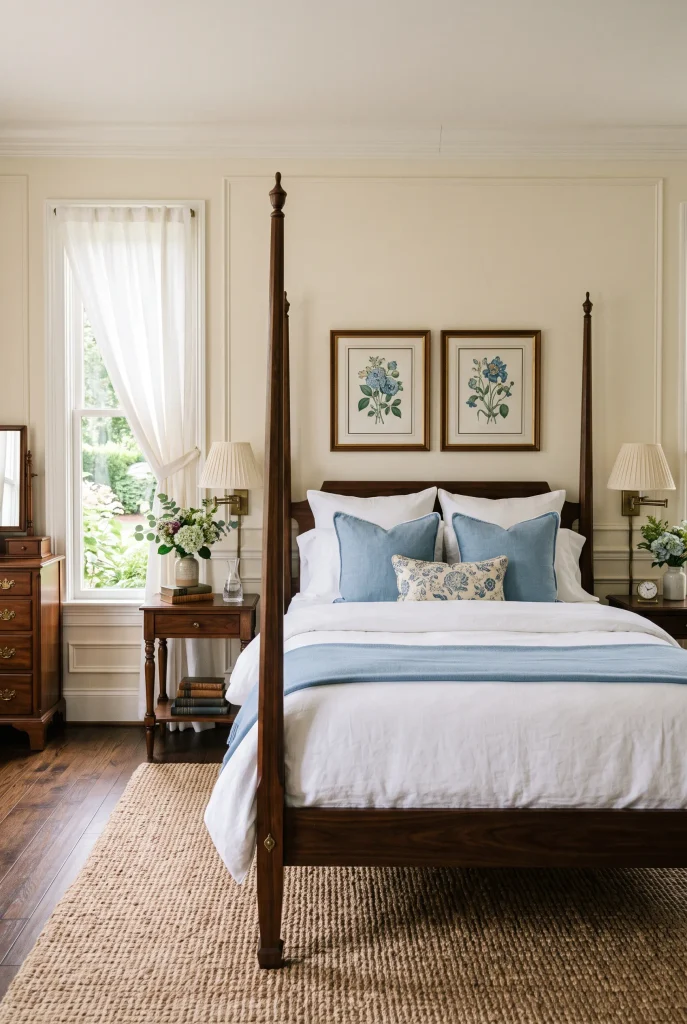
- A four poster bed creates an instant focal point in the bedroom.
- Dark wood posts add warmth against light walls and bedding.
- Keep bedding simple so the bed remains the main feature.
- Soft curtains or mosquito-style panels can make the frame feel more romantic.
A four poster bed brings strong architectural presence to a bedroom while keeping the overall design rooted in traditional furniture. Choose a walnut, mahogany, or painted wood frame with clean posts and restrained detailing. Crisp white bedding keeps the substantial silhouette from feeling too heavy, while blue or muted green pillows introduce gentle color. This combination works especially well in rooms with warm white walls and hardwood floors because the darker bed becomes an intentional focal point. The result feels established and elegant, yet it can still be comfortable enough for an everyday bedroom.
You can adjust the mood of the bed without replacing the frame. Leave the posts open for a cleaner appearance, or add lightweight linen panels for extra softness and privacy. A woven rug beneath the bed can balance the darker wood while adding texture underfoot. Keep bedside tables relatively simple, using brass lamps, small ceramics, or fresh greenery for finishing touches. If your bedroom is compact, choose a slimmer four poster design so the frame does not dominate the walking space. The right proportions allow this traditional centerpiece to feel graceful rather than overwhelming.
17. Fresh Greenery

- Fresh branches bring natural color into neutral rooms.
- Magnolia leaves and simple greenery complement traditional furniture beautifully.
- A substantial ceramic vase creates a stronger focal point than several small plants.
- Choose low-maintenance greenery when daily plant care is difficult.
Fresh greenery adds life to traditional rooms without changing the underlying color scheme. Magnolia branches, eucalyptus, olive stems, or simple leafy cuttings can look beautiful in a substantial ceramic vase placed on a console, dining table, or fireplace mantel. The natural green tones work especially well with cream, blue, brown, and brass. Instead of filling every corner with plants, choose one or two noticeable arrangements and allow the surrounding furniture to breathe. This keeps the room visually calm while introducing the organic freshness that helps traditional spaces feel lived-in rather than overly formal.
You can also use greenery as an inexpensive way to refresh a familiar room between seasons. A few branches in a large vase can change the appearance of a dining table without requiring new furniture or accessories. For arrangements that need to last longer, quality faux stems can provide a similar visual effect with less maintenance. Place greenery where it can be appreciated from multiple angles, but avoid blocking conversation across tables or seating areas. Simple branches often look more sophisticated than complicated floral arrangements because their natural shapes provide texture without competing with traditional patterns.
18. Soft Neutral Drapery
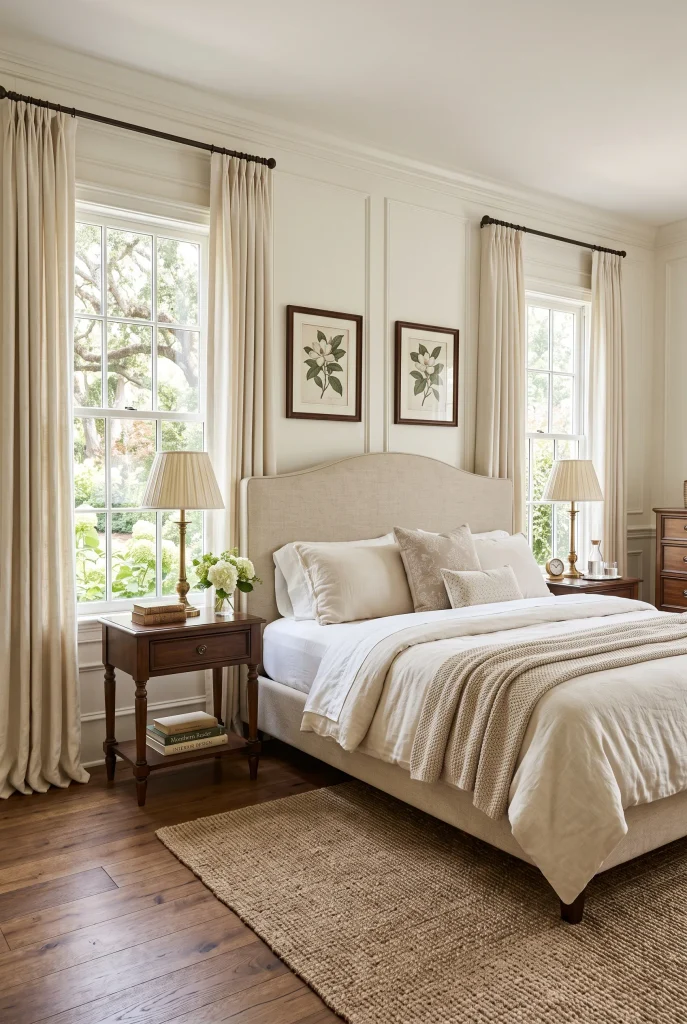
- Cream and oatmeal drapes soften windows without introducing heavy contrast.
- Floor-length fabric creates a more finished architectural appearance.
- Linen and cotton textures keep traditional rooms relaxed and approachable.
- Use blackout lining in bedrooms when light control matters.
Soft neutral curtains can make a room feel finished while quietly supporting every other design element. Choose linen, cotton, or a linen-look fabric in cream, oatmeal, warm white, or light beige. These shades work beautifully with dark wood furniture, patterned upholstery, and antique brass because they soften the contrast between different finishes. Hang the panels slightly wider than the window frame and close to the ceiling whenever possible. This simple placement makes the windows appear larger and gives the room a more tailored, architectural appearance without adding unnecessary decoration.
Function should be considered alongside appearance when choosing drapery. Bedrooms may benefit from blackout lining, while living rooms with strong afternoon sunlight can use lined panels to protect furniture and improve comfort. If the room already contains floral or patterned fabrics, solid neutral curtains create useful visual breathing room. For a more relaxed look, allow the fabric to have a little natural texture instead of choosing an overly crisp finish. This approach works across many traditional spaces because it does not depend on a specific trend. The finished windows feel elegant, soft, and practical while helping the entire room feel more cohesive.
19. Traditional Dining Room
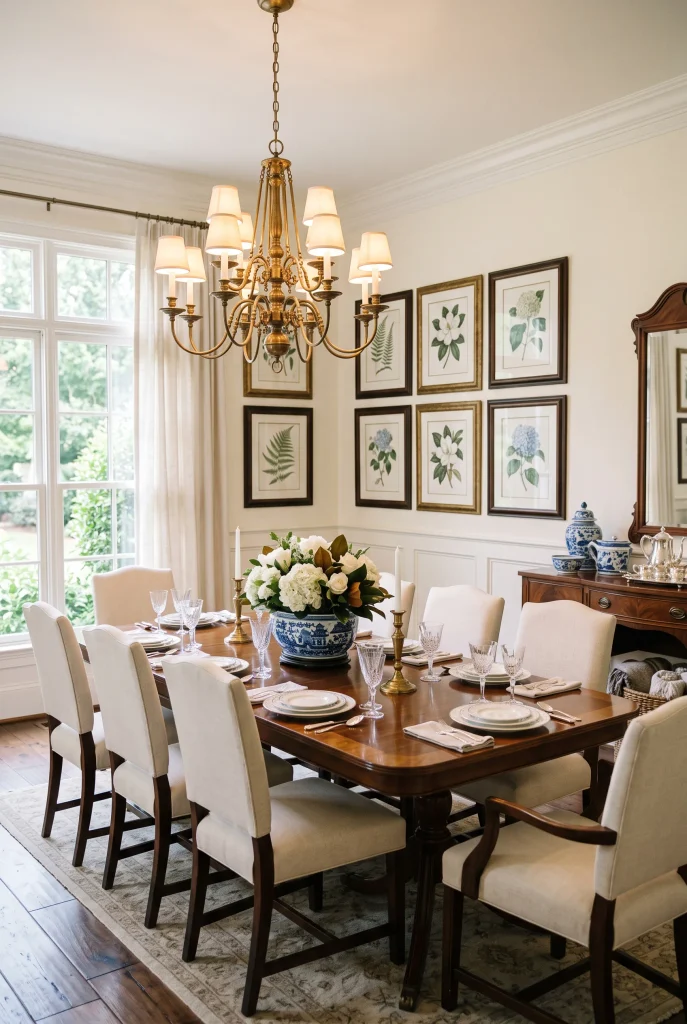
- A substantial wooden table gives the dining room warmth and permanence.
- Upholstered chairs make traditional dining more comfortable for long meals.
- Blue-and-white ceramics add a familiar decorative accent.
- Keep the centerpiece low enough for easy conversation across the table.
A dining room feels especially inviting when traditional furniture is balanced with comfortable materials and practical spacing. Start with a solid walnut, oak, or mahogany table that gives the room visual weight, then surround it with upholstered or wooden chairs in complementary finishes. An antique brass chandelier can define the center of the room while warm white walls keep the setting bright. For classic Southern home decor, small details such as blue-and-white ceramics, linen napkins, or botanical artwork can reinforce the style without making the dining room feel overly formal or themed.
The layout should make everyday meals just as comfortable as special gatherings. Leave enough space behind each chair for people to move freely, and choose a table size that suits the room rather than filling every available inch. A low floral arrangement or ceramic bowl keeps the centerpiece attractive without blocking conversation. If your dining room feels too dark, add a mirror or use lighter wall colors to reflect available daylight. The finished space should feel ready for both weekday dinners and larger gatherings, combining traditional character with the relaxed practicality that makes a home genuinely enjoyable.
20. Collected Bookcases
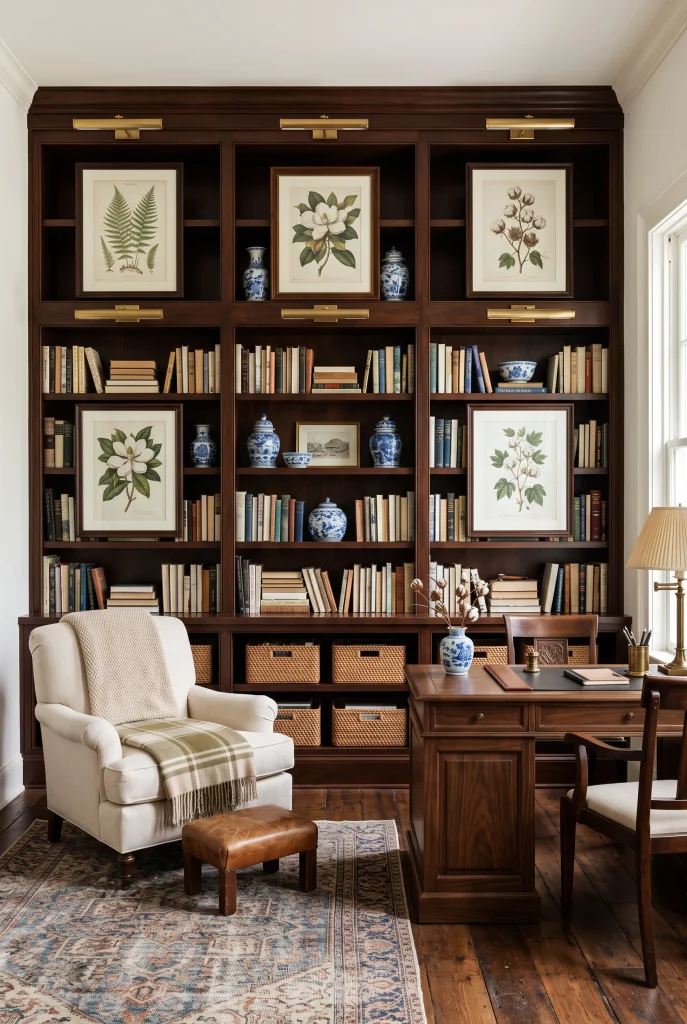
- Books instantly make a room feel personal and lived-in.
- Mix horizontal and vertical stacks to create visual rhythm.
- Leave some shelves partially empty so the arrangement can breathe.
- Add ceramics, framed art, and baskets instead of filling every shelf with objects.
A well-styled bookcase can give a traditional room the feeling of a home that has evolved naturally over time. Fill the shelves with books you genuinely enjoy, then add a few ceramics, framed photographs, small pieces of artwork, or woven baskets between the stacks. Varying the height and orientation of the objects keeps the arrangement interesting without making it look overly decorated. Dark wood shelving works beautifully with cream walls and brass accents, while lighter painted shelves can make smaller rooms feel brighter. The result combines useful storage with the personal character often associated with established Southern homes.
Resist the temptation to fill every open space immediately. Leaving a little breathing room allows individual books and decorative objects to stand out while making the shelves easier to maintain. Try arranging books vertically in some areas and horizontally in others, using horizontal stacks as platforms for small ceramics or artwork. If clutter becomes an issue, baskets can hide cables, papers, or other everyday items. Bookcases feel most authentic when they include practical belongings alongside decorative pieces. That mixture creates warmth and personality instead of a perfectly staged appearance.
21. Timeless Color Layers
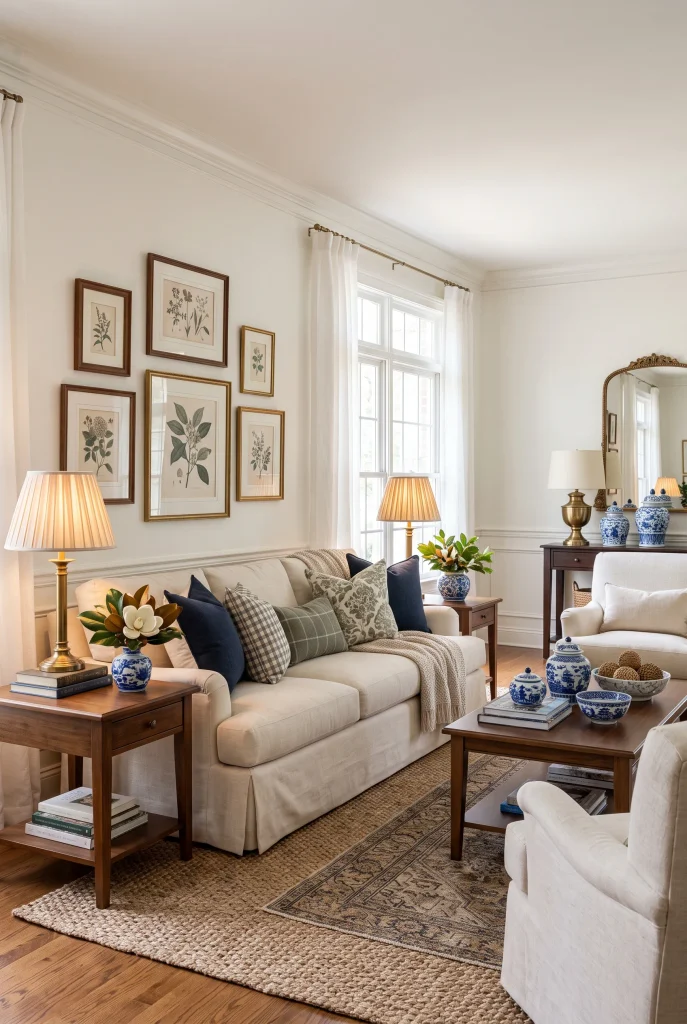
- Warm neutrals create a flexible foundation for traditional furnishings.
- Navy, muted green, and soft blue add depth without overpowering the room.
- Repeat accent colors across small accessories for visual connection.
- Natural wood and brass finishes add warmth between lighter color layers.
The most timeless rooms rarely depend on one color alone. Instead, they build depth through several related shades that work together naturally. Begin with warm white, cream, beige, or soft taupe for larger surfaces, then introduce navy, muted green, dusty blue, or gentle terracotta through pillows, rugs, artwork, and ceramics. Warm wood furniture adds another layer while antique brass brings a subtle glow. This balanced approach works particularly well when creating classic Southern home decor because it allows traditional patterns and materials to feel fresh rather than visually heavy or outdated.
Color layering is also easier to maintain than committing to a strong trend across the entire room. Keep expensive or difficult-to-replace pieces neutral, then use smaller accessories to introduce seasonal changes or new accents. If you want more color later, you can add patterned curtains, a painted cabinet, or a richer rug without rebuilding the entire space. Try repeating one accent shade at least two or three times so the room feels connected. The finished result is warm, collected, and adaptable, giving you a traditional foundation that can evolve naturally as your preferences change.
Conclusion
Timeless decorating is less about following a perfect formula and more about choosing pieces that feel warm, useful, and personal. These classic Southern home decor ideas show how traditional furniture, soft colors, natural textures, greenery, and collected accents can create a welcoming home without feeling outdated. Start with one room or even one small update, such as a new lamp, patterned pillow, ceramic vase, or woven rug. Save this article on Pinterest so you can return to your favorite ideas later, and share it with someone who loves timeless interiors. Small changes can make a space feel completely different, so choose one idea and start creating.