15 Minimalist Cozy Interior Ideas That Feel Inviting

A home can feel warm and welcoming without being filled with furniture, accessories, or bold colors. Minimalist cozy interiors bring together clean lines, soft neutral shades, natural materials, and comfortable textures to create rooms that feel peaceful without looking empty. Whether you’re refreshing a small apartment or giving your living room a simple update, a few thoughtful changes can make a real difference.
From relaxed linen bedding and warm lighting to natural wood accents and clutter-free surfaces, these ideas offer practical ways to make your home feel more inviting. There’s no need to buy everything new or plan a complete makeover. Start with what you already have, add a few cozy details, and create a space that feels comfortable, functional, and personal.
1. Warm Neutral Palette
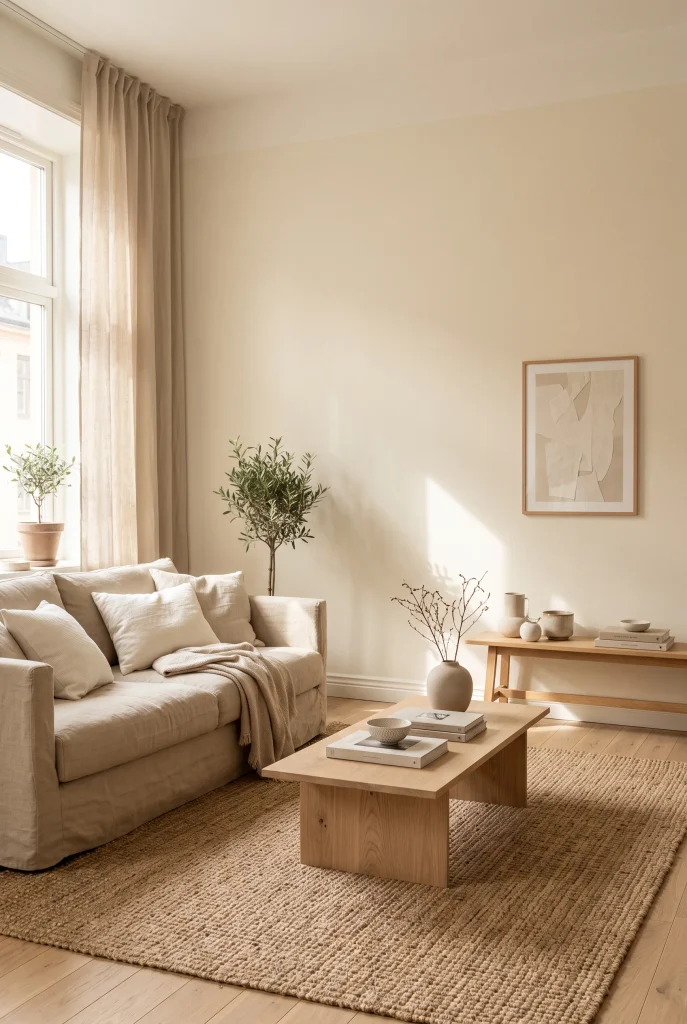
- Creates a calm and welcoming atmosphere without making the room feel dull.
- Combines cream, beige, and warm white for a balanced appearance.
- Natural wood and woven textures add depth to the neutral palette.
- Works beautifully in living rooms, bedrooms, and open-plan spaces.
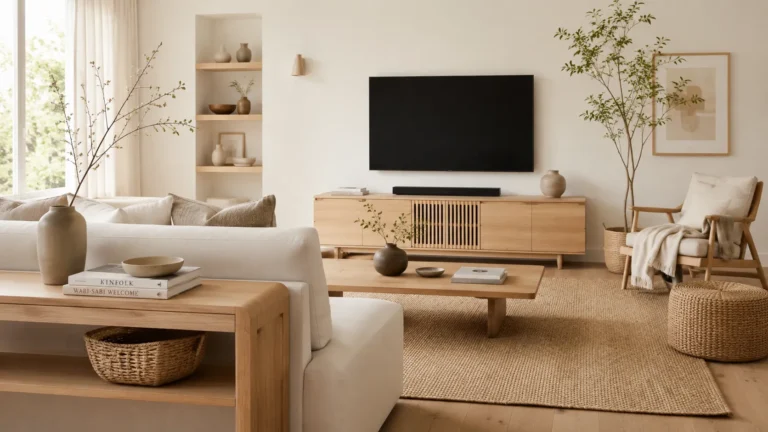
Warm neutral colors are an easy way to make a room feel peaceful while keeping it interesting. Shades such as ivory, oatmeal, beige, and warm white create a soft foundation that suits many decorating styles. Rather than mixing too many unrelated colors, choose a small palette and introduce subtle variations through furniture, fabrics, and accessories. A beige sofa against warm white walls, for example, looks especially inviting with a textured rug and light wood furniture. Together, these elements create a comfortable atmosphere without relying on bold patterns or excessive decoration.
The secret to a beautiful neutral room is mixing different materials and finishes. Linen cushions, a woven basket, a wooden coffee table, and a ceramic vase can add plenty of character without making the space feel busy. Natural daylight also brings out the subtle differences between cream, beige, and white. Before choosing paint or upholstery, compare samples in your room at different times of day, since colors can look different under sunlight and evening lamps. A thoughtful mix of warm tones and natural textures helps the space feel finished, comfortable, and easy to live in.
2. Soft Layered Lighting
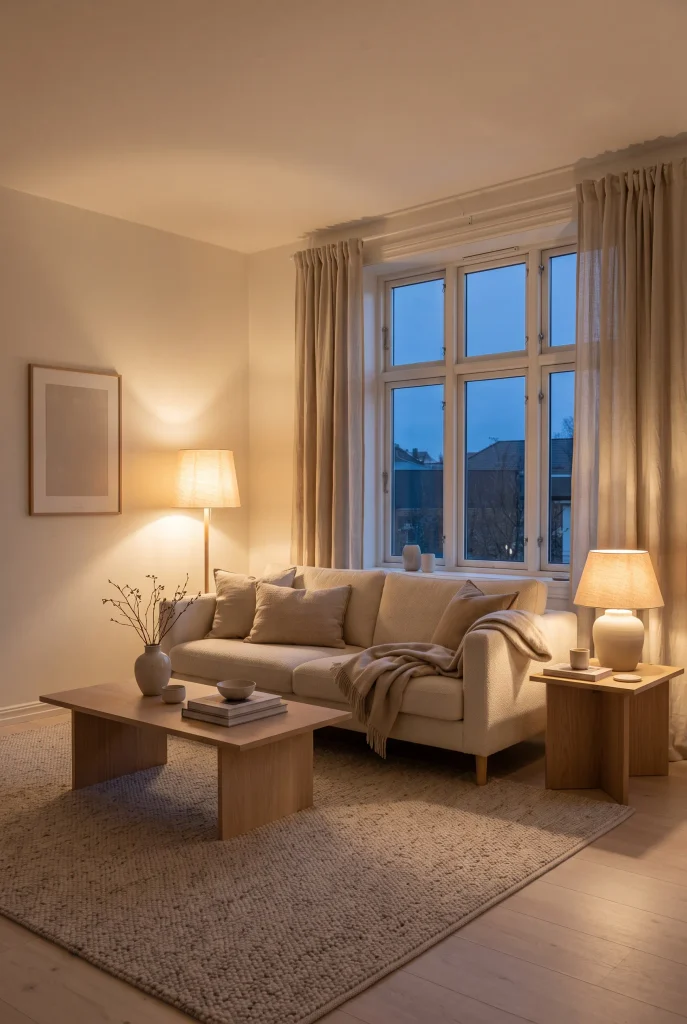
- Creates a warm atmosphere after sunset.
- Combines different light sources for flexibility.
- Fabric lampshades soften the appearance of artificial light.
- Makes reading corners and seating areas feel more comfortable.
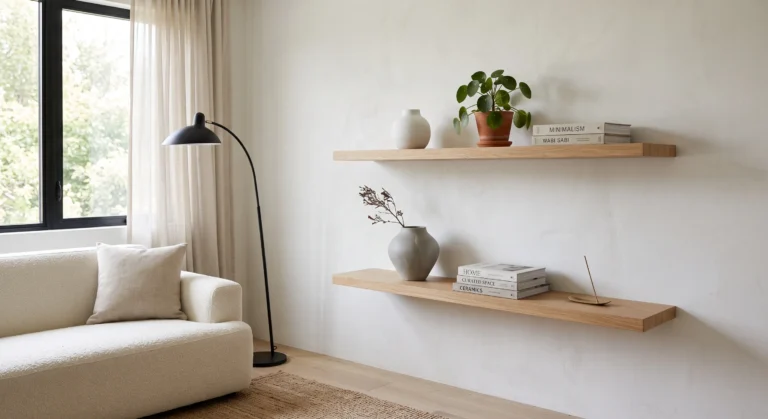
Lighting can completely change the way a minimalist room feels. A single bright ceiling light may illuminate the whole space, but it can also make the room feel harsh in the evening. Try placing a floor lamp beside the sofa and a smaller table lamp on a sideboard or nightstand. Warm bulbs create a softer glow, while simple lampshades add texture without introducing unnecessary decoration. This combination works particularly well in living rooms and bedrooms, where lighting needs to support both everyday activities and quiet moments of relaxation.
Think about how each part of the room is used before deciding where to place the lights. A reading corner needs enough focused illumination, while a seating area used for conversation benefits from a gentler glow. The lamps do not have to match exactly; a linen shade beside a wooden table can look more interesting than a perfectly coordinated set. Dimmable bulbs are also useful when you want to adjust the brightness throughout the day. With a few well-placed light sources, the room can feel cozy in the evening without losing its practical, uncluttered look.
3. Natural Wood Accents

- Adds natural warmth to a simple room.
- Pairs beautifully with cream, beige, and warm white.
- Wood grain provides visual interest without bold patterns.
- Small wooden accessories can refresh a room affordably.
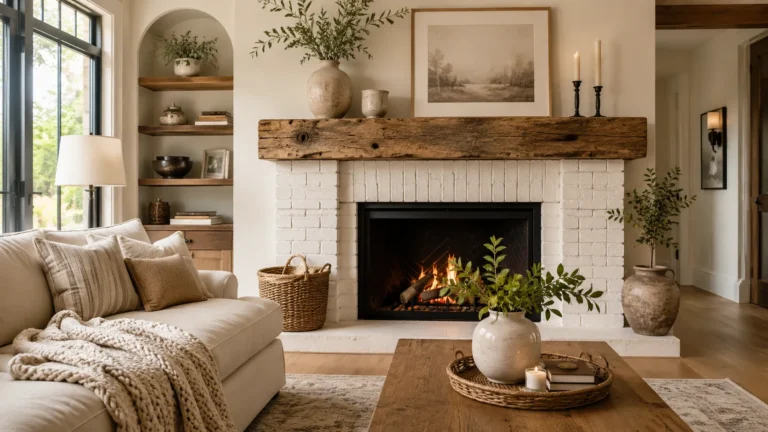
Natural wood is a simple way to make a minimalist space feel warmer and more inviting. Light oak, walnut, and other wood finishes bring organic texture to rooms with smooth walls and simple furniture. A wooden coffee table can anchor a living room, while a small sideboard or bedside table adds warmth without making the space feel crowded. There’s no need to replace every piece of furniture to achieve this look. Even a wooden tray, stool, or picture frame can introduce the natural detail that a neutral room sometimes needs.
Before choosing wood accents, consider the colors of your existing flooring and furniture. Pale oak pairs beautifully with cream and beige, while walnut creates a richer contrast against lighter surroundings. Different wood tones can work together as long as they share a similar warmth, so every piece doesn’t need to match perfectly. Balance wooden surfaces with soft materials such as linen, cotton, or wool to keep the room from feeling too hard. A few carefully chosen pieces create a cohesive look while allowing the natural grain and texture to stand out.
4. Cozy Linen Textures
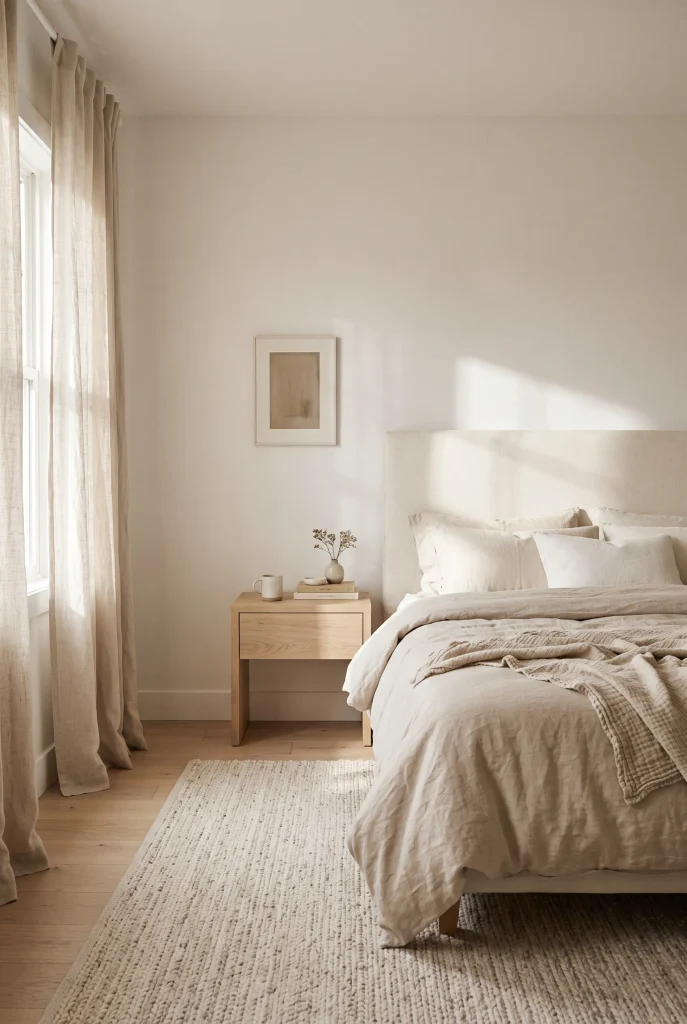
- Adds softness without introducing busy patterns or bold colors.
- Linen bedding creates a relaxed, naturally layered appearance.
- Lightweight curtains soften daylight while maintaining an airy feel.
- Neutral fabrics make it easy to refresh the room seasonally.
A bedroom feels more inviting when the fabrics look soft and comfortable. Linen bedding works especially well because its natural wrinkles and slightly uneven texture give the room a relaxed appearance. Start with a cream duvet, add a few beige pillows, and finish with a lightweight throw at the foot of the bed. Keep the furniture simple so the fabric textures become part of the overall design. This combination is particularly useful in smaller bedrooms, where too many decorations or bulky accessories can make the space feel crowded.
Linen looks appealing without needing to be perfectly arranged. Slightly rumpled bedding, flowing curtains, and a soft cushion can make a bedroom feel lived-in while still looking tidy. Choose complementary shades such as ivory, sand, and warm gray to keep everything connected. If the room already has wooden furniture, linen adds a softer contrast to those harder surfaces. The same texture can also be introduced through cushion covers or a simple table runner. These small updates bring warmth and comfort without requiring new furniture or a complete bedroom makeover.
5. Minimalist Reading Nook
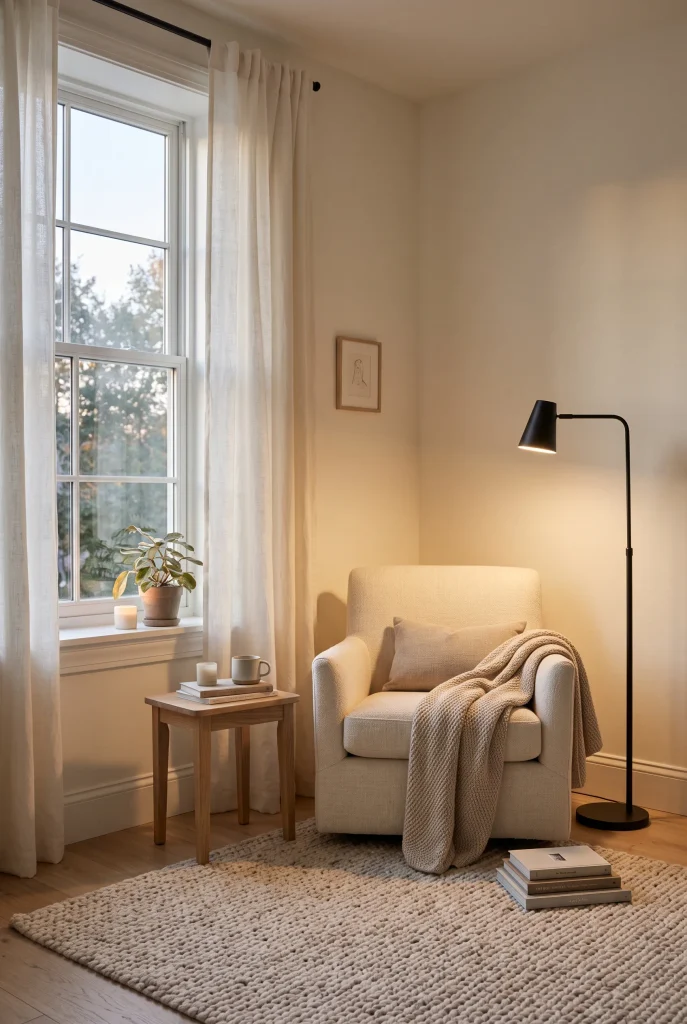
- Turns an unused corner into a comfortable place to unwind.
- A single armchair creates a focal point without taking much space.
- A small side table keeps books and drinks within easy reach.
- Layered lighting makes the corner useful throughout the day.
An empty corner can become one of the most inviting spots in the home with just a few thoughtful additions. A comfortable armchair, a soft throw, and a small side table are often enough to create a reading nook that feels separate from the rest of the room. Place the chair near a window if possible, so natural daylight makes reading more enjoyable. A slim floor lamp provides extra light in the evening, while a textured rug helps define the area. The result feels purposeful without requiring a large investment or a dedicated room.
The key is to make the corner comfortable without filling it with unnecessary furniture. Choose a chair with good support, a table that fits beside it, and a lamp that provides enough light for reading. A small stack of favorite books or a single plant adds personality without making the area look cluttered. Even the space beside a bedroom window can work beautifully in a compact apartment. Keep the colors connected to the rest of your home so the nook feels like a natural extension of the room rather than a separate decorating scheme.
View: 21 Wainscoting and Beadboard Styles That Feel Timeless
6. Low Profile Furniture
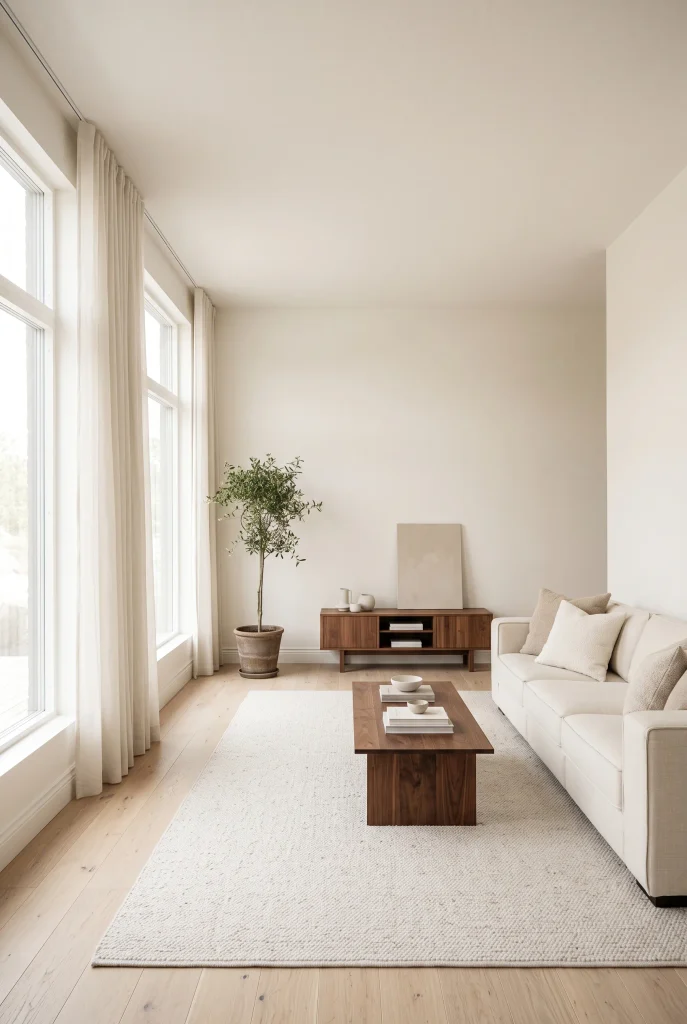
- Keeps the room feeling open and visually balanced.
- Low furniture creates a relaxed, grounded appearance.
- Simple silhouettes prevent the space from feeling overcrowded.
- Open floor space makes everyday movement more comfortable.
Low-profile furniture can make a living room feel calmer and more spacious without sacrificing comfort. A low sofa, a simple coffee table, and a short media console create clean horizontal lines while leaving more of the wall visible. This approach can be especially helpful in apartments or rooms with limited floor space. Choose furniture with simple shapes and warm finishes, then leave enough room between pieces for easy movement. The result is a relaxed layout that feels comfortable and uncluttered rather than empty or unfinished.
Proportion matters more than choosing the smallest furniture available. A sofa that’s too small can make the room feel awkward, while an oversized sectional may leave little room to walk around. Measure the space before buying furniture, and consider how doors, windows, and walkways affect the layout. Pieces with visible legs can also reveal more flooring, making the room appear lighter than bulky furniture that sits directly on the ground. Add a generously sized rug to connect the seating area, then keep decorative objects limited to a few useful favorites. This creates a practical living space that feels open and welcoming.
7. Warm White Walls
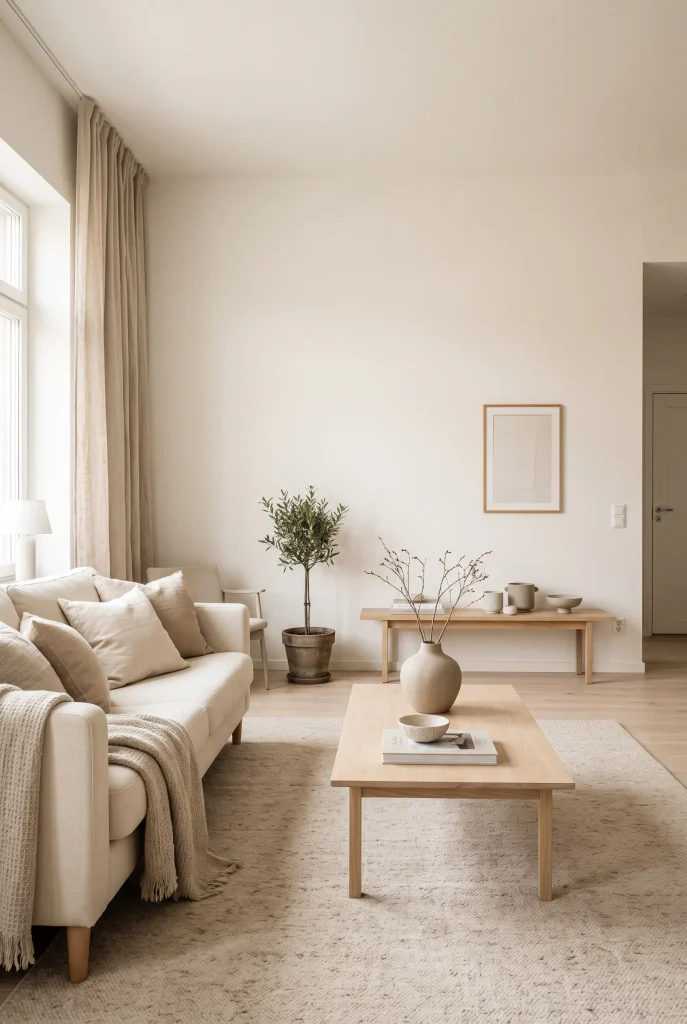
- Makes a room feel brighter without looking cold or clinical.
- Provides a versatile backdrop for wood, linen, and natural stone.
- Helps small rooms feel more open and airy.
- Creates a timeless foundation for changing accessories.
Warm white walls create a peaceful backdrop that still feels welcoming. Unlike cooler whites, shades with subtle cream or beige undertones can make a room feel softer, especially when paired with natural materials. Before painting, consider how the color looks in your room at different times of day. Morning sunlight may bring out its brightness, while evening lamps can make it feel warmer. Once the walls are finished, simple furniture and a few textured accessories can stand out without competing for attention. This approach works beautifully in living rooms, bedrooms, and open-plan spaces.
To keep warm white walls from looking plain, introduce contrast through materials rather than adding lots of color. A wooden side table, a woven basket, linen curtains, or a textured rug can give the room depth while preserving its calm appearance. A slightly deeper cream shade in nearby upholstery can create gentle variation, too. Test paint samples beside your flooring and existing furniture, since undertones can look different against wood, tile, or gray surfaces. The goal is a balanced room that feels bright during the day and comfortable under soft lighting in the evening.
8. A Simple Sofa Setup
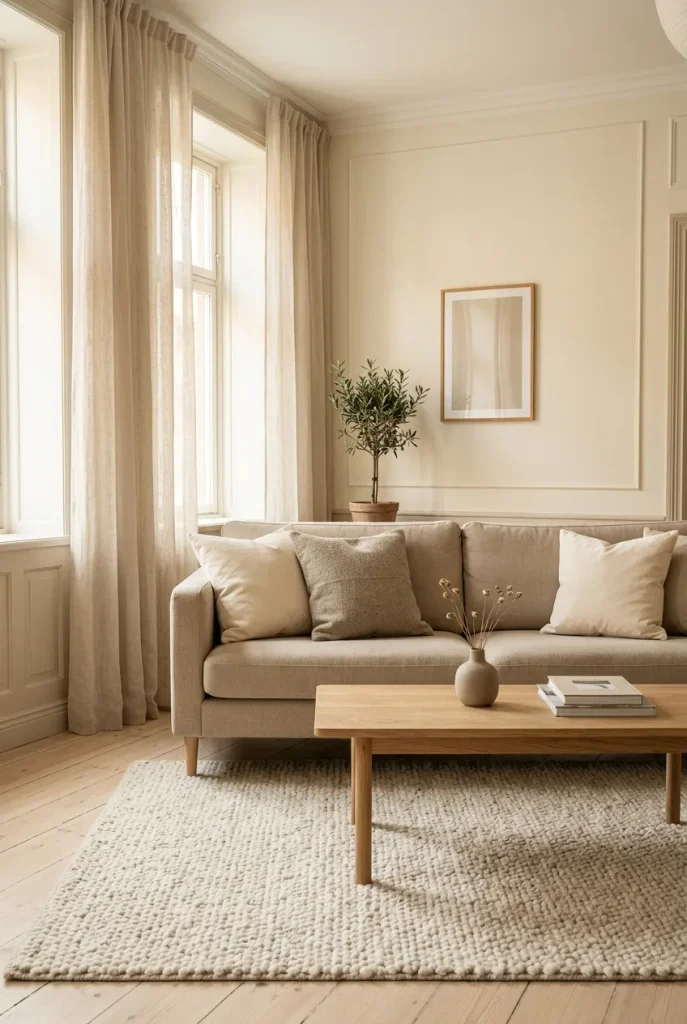
- Keeps the main seating area comfortable and visually calm.
- A few well-chosen cushions add texture without creating clutter.
- A simple sofa shape works with many interior styles.
- A clear layout makes the room easier to maintain.
The sofa often becomes the main focus of a living room, so keeping its styling simple can make the entire space feel more settled. Choose a comfortable design in a versatile shade such as oatmeal, warm gray, or beige. Instead of covering it with cushions, start with two or three in different textures. A smooth cotton cover, a knitted pillow, and a linen cushion provide enough variation without making the arrangement look busy. Keep the coffee table nearby, but leave enough room to walk comfortably. This straightforward setup creates a place where everyone can relax without feeling surrounded by decoration.
Comfort should matter just as much as appearance when choosing a sofa. Check the seat depth, back support, and overall dimensions against your available space before buying one. If you already own a darker sofa, lighter cushions, a neutral throw, and a softly textured rug can help create a calmer look. Keep nearby surfaces relatively clear, leaving room for a book, a drink, or a small vase. These everyday details make the room feel usable rather than staged. A simple sofa arrangement is also easy to refresh whenever you want a small seasonal update.
9. Natural Stone Details
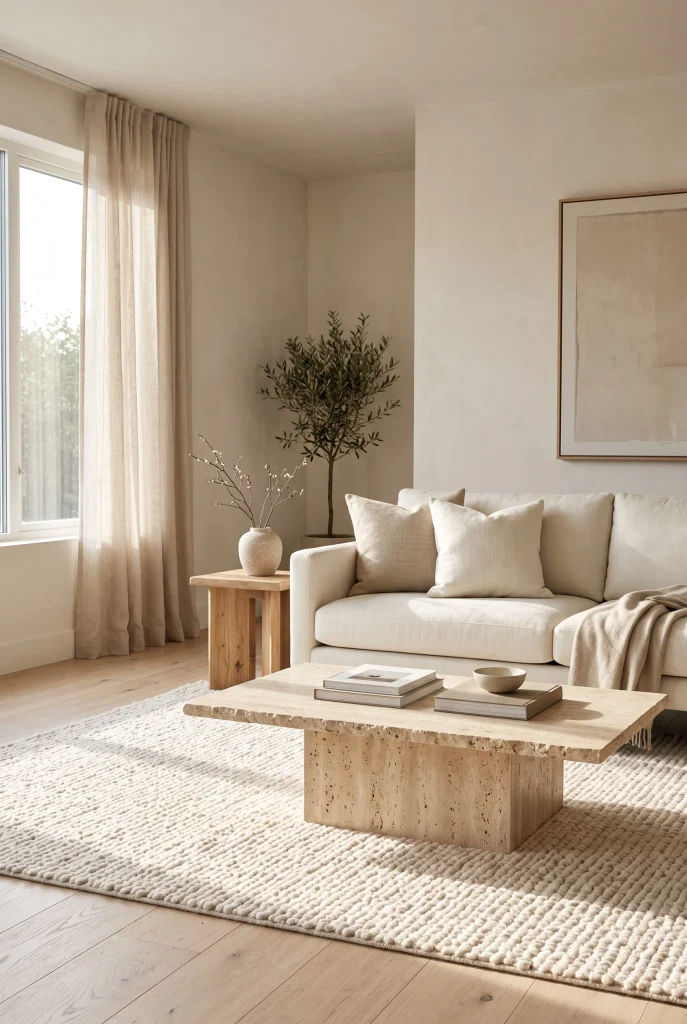
- Introduces natural texture without adding visual clutter.
- Travertine and marble offer subtle variation through their natural markings.
- Small stone accessories are an affordable way to try the look.
- Warm wood and soft textiles balance stone’s cooler surface.
Natural stone can give a simple room more character without relying on bright colors or decorative patterns. A travertine coffee table, marble tray, or small stone vase introduces gentle variations in color and texture. These details look especially appealing beside soft upholstery, linen curtains, and warm wooden furniture. You don’t need several stone pieces to make an impact. One carefully chosen item can become a focal point while allowing the rest of the room to remain understated. For a softer appearance, look for creamy beige, pale sand, or warm white finishes rather than highly polished surfaces.
If a stone coffee table is outside your budget, start with smaller accessories that offer a similar natural effect. A stone-look tray can organize candles and coasters, while a small decorative bowl adds interest to a shelf or side table. Balance these pieces with comfortable fabrics such as cotton, wool, or linen. Natural stone can look cold when surrounded by too many hard surfaces, so wood and soft textiles help create a better mix. It’s also worth considering maintenance: porous stones may need sealing, and some surfaces require gentle cleaning to avoid damage.
10. Soft Neutral Bedding

- Creates a peaceful bedroom without relying on bold patterns.
- Layered neutral fabrics add depth while keeping the palette simple.
- A textured throw makes the bed feel more inviting.
- Cotton and linen are practical options for everyday comfort.
Soft neutral bedding can make a bedroom feel restful even before any decorative accessories are added. Start with a white or ivory duvet, then introduce beige pillowcases and a warm taupe throw. The subtle differences between these shades create depth without making the bed look busy. Natural fabrics are particularly effective because their textures keep a neutral palette from feeling flat. Mixing smooth cotton with relaxed linen also creates a comfortable, layered finish. Keep the bed as the main focal point and let the surrounding furniture and decor remain understated.
A beautiful bed doesn’t need a mountain of pillows or perfectly arranged layers. Two sleeping pillows, one or two decorative cushions, and a lightweight blanket can be enough to create a finished look. Choose bedding that feels comfortable and suits the climate where you live. If you prefer a little contrast, add a darker beige or muted brown cushion rather than introducing several unrelated colors. Repeat one of these shades in the curtains or rug to connect the room. This simple approach makes it easy to refresh your bedroom without replacing everything.
11. Clutter Free Surfaces
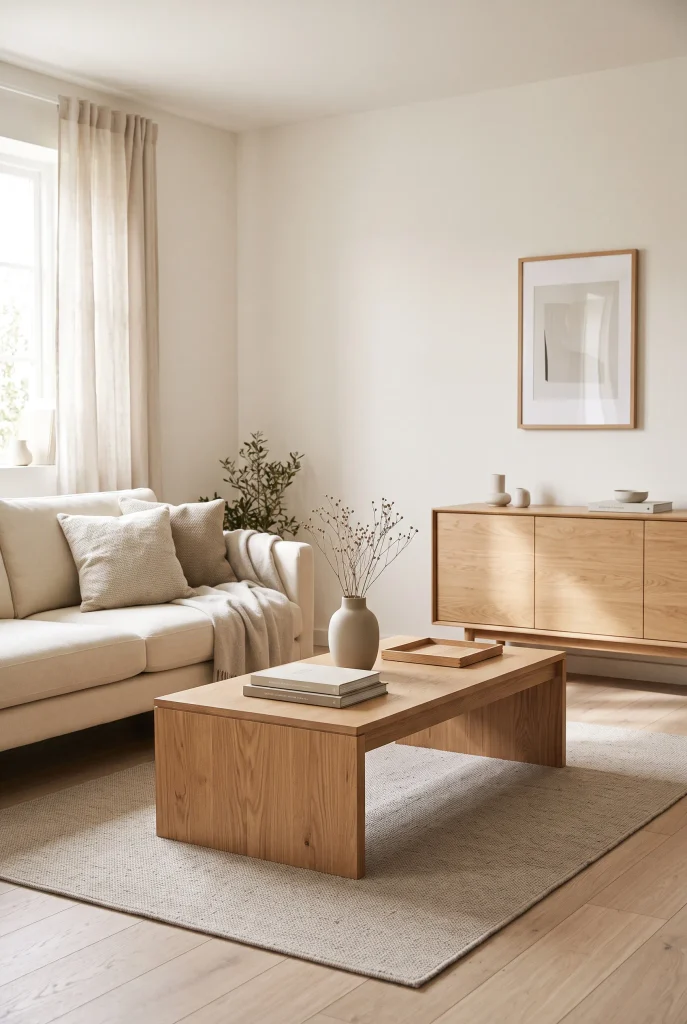
- Makes the room feel calmer and easier to clean.
- Keeps useful everyday items accessible without displaying everything.
- A tray helps group small objects into one tidy arrangement.
- Clear surfaces allow furniture and natural materials to stand out.
Clear surfaces can change the feeling of a room more quickly than buying new decor. When coffee tables, nightstands, and countertops are crowded with unrelated objects, even a spacious home can feel visually overwhelming. Start by removing anything you don’t use regularly, then return only the items that serve a purpose or add something meaningful. A small vase, a favorite book, or a wooden tray can make a surface feel finished without filling every available space. This approach works especially well in open-plan homes, where clutter in one area can affect the appearance of the entire room.
Keeping surfaces clear becomes easier when everyday belongings have a designated home. Use a small basket for remotes, a drawer for chargers, or a tray near the entrance for keys and sunglasses. These practical solutions prevent clutter from returning while keeping essential items easy to find. You don’t need to remove every personal object to create a minimalist atmosphere. Family photographs, meaningful souvenirs, and favorite books can still have a place when displayed thoughtfully. The aim is to make your home feel organized and comfortable, not to create an empty space that’s difficult to live in.
12. Cozy Corner Lighting
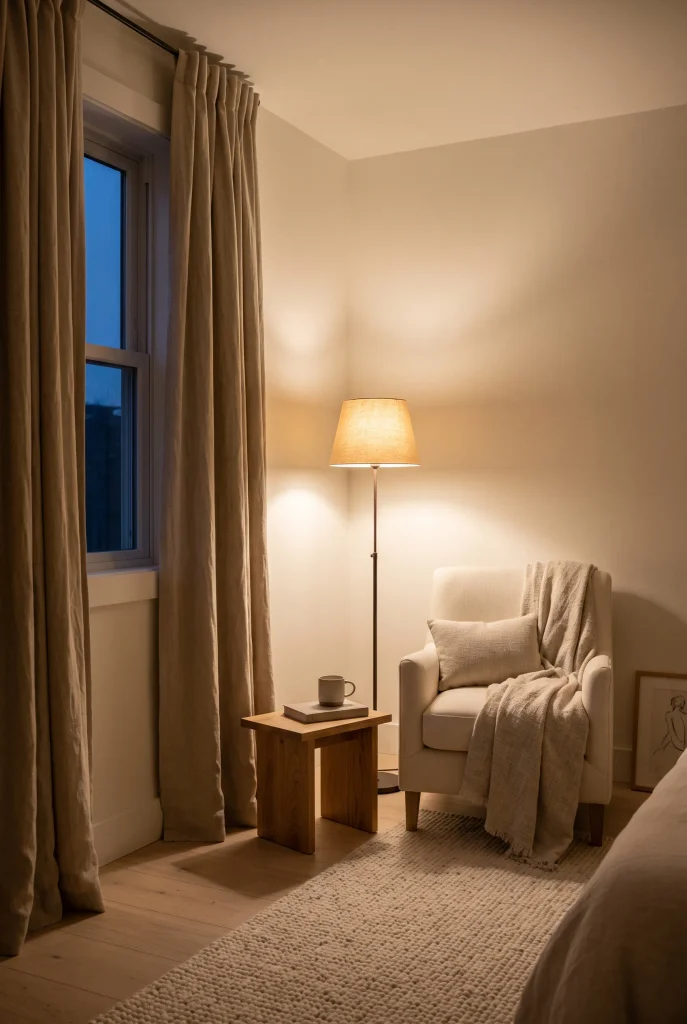
- Creates a comfortable atmosphere after sunset.
- Adds warmth without requiring major decorating changes.
- Floor lamps work well beside reading chairs or sofas.
- Fabric shades soften light and complement neutral interiors.
Lighting can make a simple room feel completely different once the sun goes down. Instead of depending entirely on a bright ceiling fixture, add a floor lamp beside a chair or a small table lamp near the sofa. Warm bulbs create a softer atmosphere for relaxing, reading, or spending time with family. A linen or fabric shade diffuses the light and adds another layer of texture. Choose a design with a simple silhouette so it blends into the room rather than becoming an overly decorative feature. Even one thoughtfully placed lamp can make an unused corner feel more welcoming.
Think about what you want to do in each area before choosing a light. A reading chair needs enough illumination for comfortable reading, while a corner used mainly for relaxing can benefit from a softer glow. Position lamps where their light is useful, and keep cords out of walkways to avoid tripping hazards. If possible, use more than one light source in a larger room so the atmosphere can be adjusted throughout the evening. Pair warm lighting with neutral fabrics and natural wood to create a cohesive look. The result feels comfortable and functional without adding unnecessary furniture or accessories.
13. Minimalist Greenery
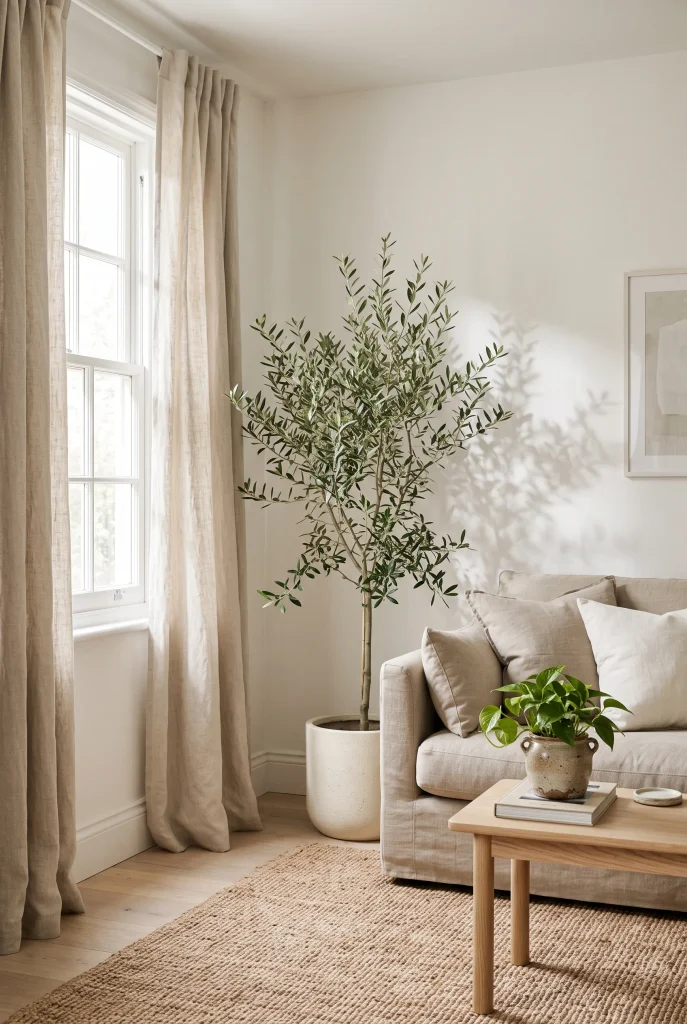
- Adds natural color without disrupting a neutral palette.
- A single larger plant can create a stronger focal point than many small pots.
- Simple ceramic planters keep the arrangement looking cohesive.
- Choose plants that suit your room’s natural light and care routine.
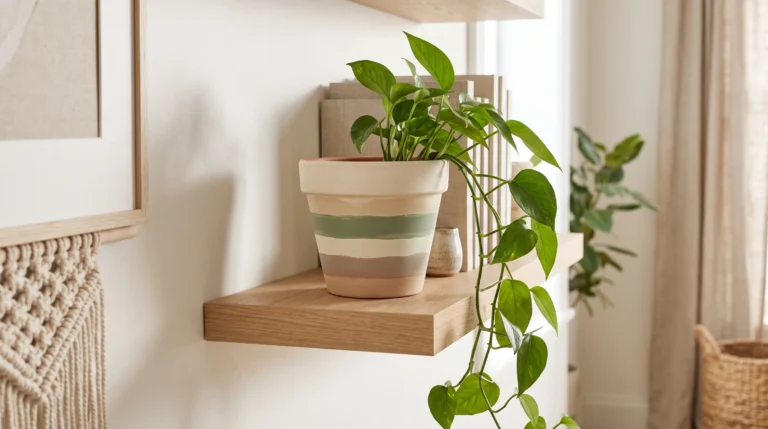
Greenery brings life into a minimalist room without making it feel crowded. A leafy floor plant beside the sofa can soften an empty corner, while a smaller plant on a shelf adds a subtle touch of color. Olive trees, rubber plants, and snake plants are popular choices, although the best option depends on the light and conditions in your home. Choose a planter in cream, warm gray, or natural clay to keep the overall look connected to the rest of the room. The contrast between green leaves and neutral surroundings creates interest without requiring additional artwork or colorful accessories.
You don’t need plants in every corner to make greenery work. Start with one or two healthy plants and place them where they receive suitable light without blocking walkways. If your room is small, a plant stand or hanging planter can help you use vertical space. Keep the number of pots manageable so watering and maintenance remain simple. For a coordinated appearance, repeat a similar planter material in different areas of the home. If natural plants aren’t practical for your lifestyle, a high-quality artificial plant can provide a similar decorative effect without ongoing care.
14. Textured Neutral Rugs
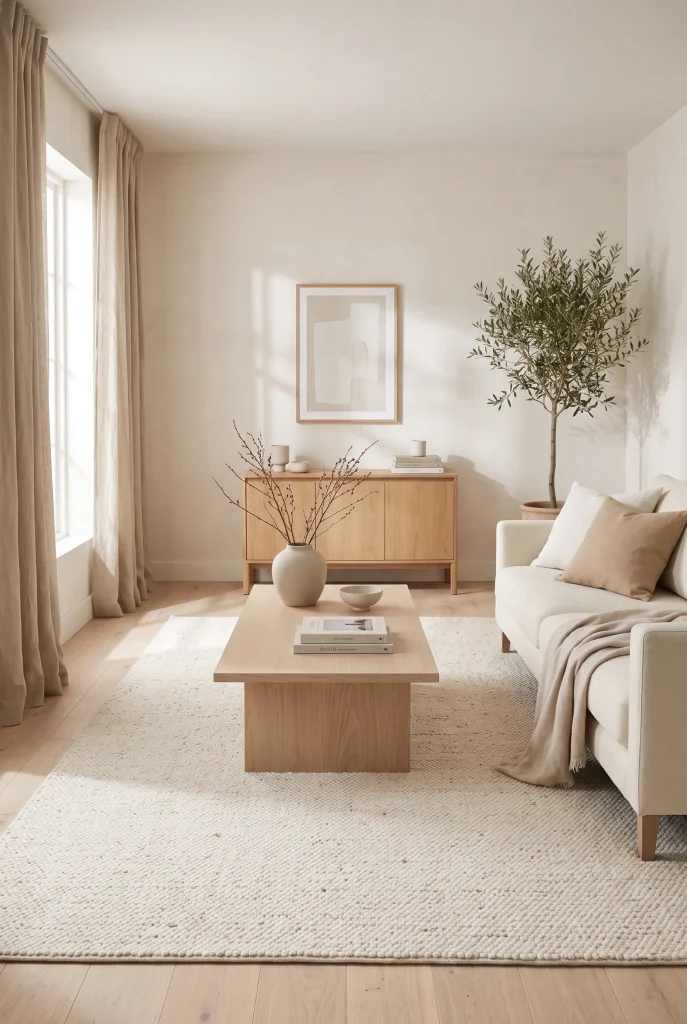
- Adds softness underfoot and warmth to a simple room.
- Subtle woven patterns create depth without overwhelming the decor.
- A properly sized rug helps define the seating area.
- Wool, cotton, and jute offer different textures and practical benefits.
A neutral rug can make a room feel more complete by connecting the furniture and adding softness underfoot. In a minimalist living room, a wool rug with a subtle weave or a cotton rug with a simple pattern introduces texture without competing with the rest of the decor. Shades such as ivory, oatmeal, and warm beige work well with wooden floors and neutral upholstery. Size matters, too. A rug that extends beneath the front legs of the sofa and chairs helps the seating arrangement feel connected rather than scattered across the floor.
Before choosing a rug, consider how the room is used every day. A soft wool rug can feel comfortable in a bedroom or quiet sitting area, while a durable, easy-to-clean option may be more practical in a busy family room. Jute adds an earthy texture, but its rougher surface may not be ideal for every space. Look at the rug alongside your flooring, sofa, and curtains to make sure the undertones complement one another. If your furniture and walls are already similar in color, choose a rug with a different texture to add dimension without introducing visual clutter.
15. Personal Minimalist Touches

- Keeps the home personal without overcrowding shelves and tables.
- Meaningful objects add character to a simple neutral room.
- A single artwork can create a focal point on an empty wall.
- Rotating accessories helps the space feel fresh without buying more.
A minimalist home should still reflect the people who live in it. Instead of filling shelves with decorative objects, choose a few items that carry meaning or bring genuine enjoyment. A framed photograph, a handmade ceramic bowl, or books you return to often can give a room personality without disrupting its calm appearance. Display these pieces where they can be appreciated, such as on a console, bedside table, or open shelf. Leaving some space around each object makes it feel more intentional and allows its shape, color, or story to stand out.
Personal touches don’t need to stay in the same place forever. Try rotating artwork, moving a favorite vase to another room, or displaying a small collection of travel souvenirs together rather than spreading them across every surface. This keeps the home interesting without creating unnecessary clutter or expense. Choose objects that work with your existing colors and materials, but don’t worry about making everything perfectly matched. A home feels inviting when it balances simplicity with individuality. The goal isn’t to remove personality, but to give the things you love enough room to be noticed.
Conclusion
Creating a cozy minimalist home is about finding the right balance between simplicity and comfort. Minimalist cozy interiors show that clean spaces can still feel warm, personal, and practical. Start with a neutral color palette, add natural textures, improve your lighting, and keep the decorative pieces that make your home feel special. Even small updates can make a noticeable difference when chosen thoughtfully. Try one or two ideas that suit your space and budget, then build from there. Save this guide on Pinterest for inspiration, and share your favorite idea with someone planning a home refresh.