25 Japandi Living Room Ideas for a Cozy Home Today
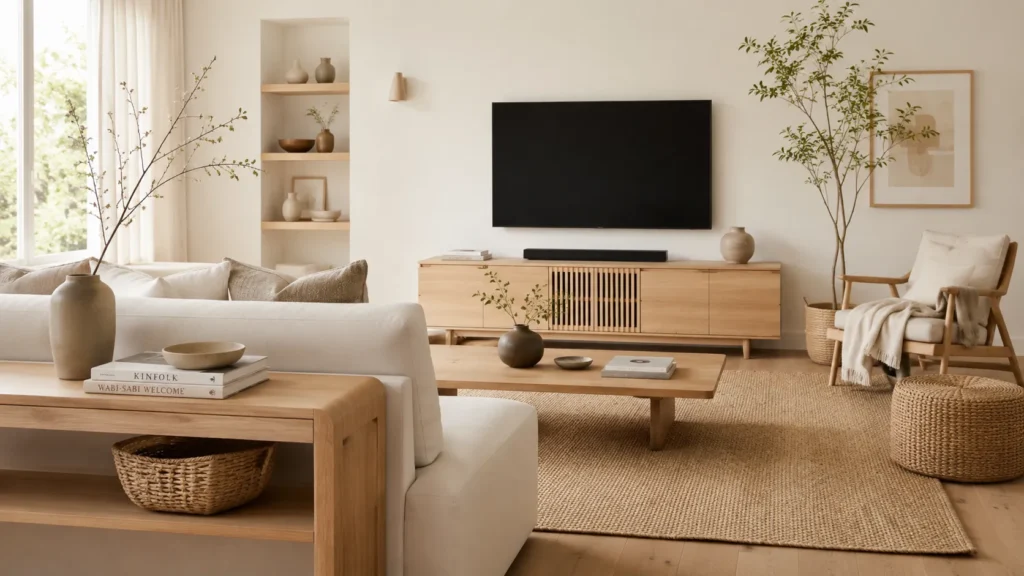
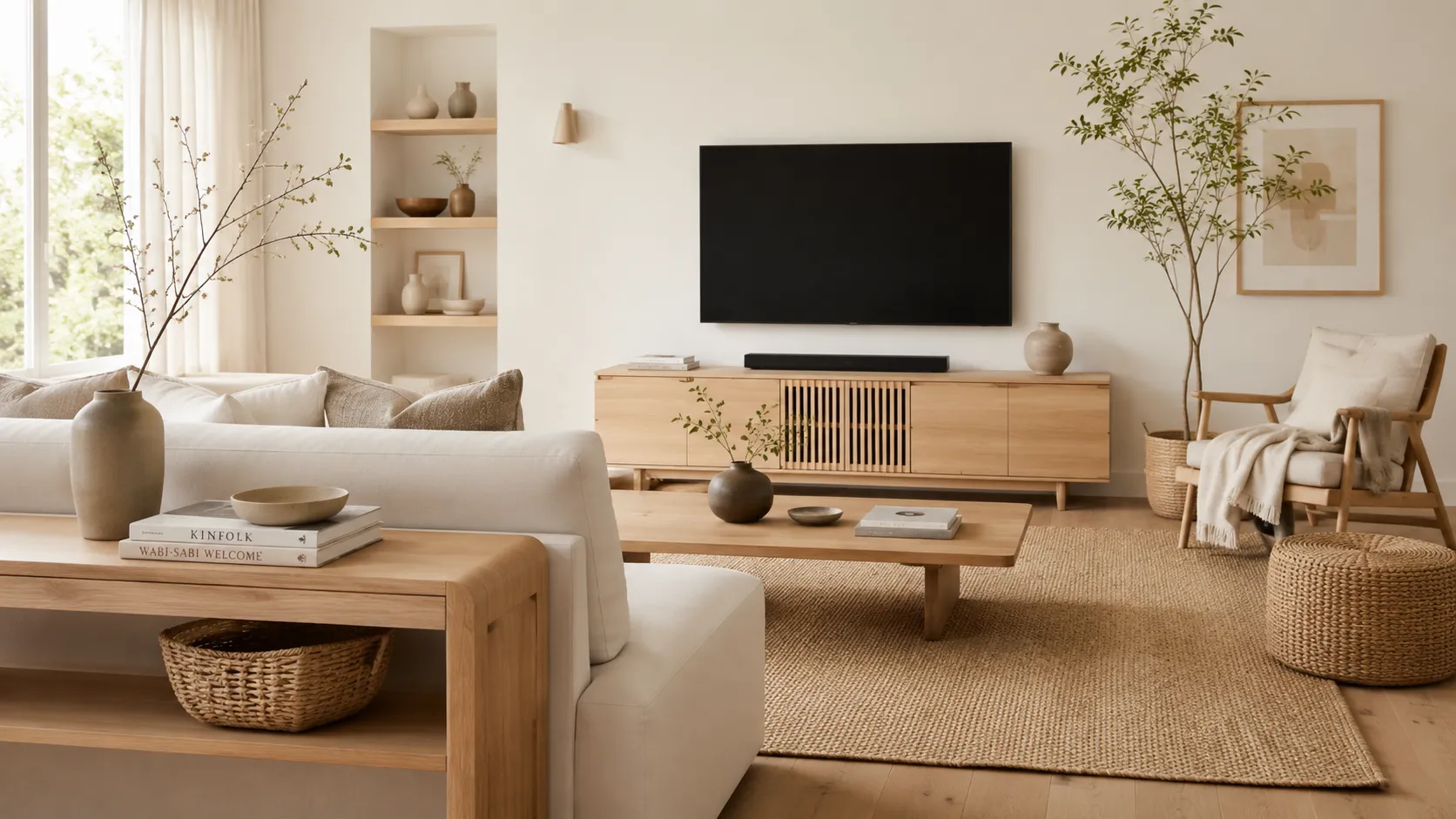
A calm, cozy living room can feel like a luxury, but you don’t need a major makeover to create one. Japandi living room ideas make it possible to combine minimalist simplicity with natural warmth for a space that feels peaceful, welcoming, and effortlessly stylish. If your living room feels cluttered, cold, or visually disconnected, the Japandi approach offers a practical solution. Think light wood, soft textiles, earthy colors, clean-lined furniture, and carefully chosen decor. In my experience, the most successful spaces balance simplicity with comfort, creating a room that looks refined while still feeling easy to live in every day.
1. Light Wood Furniture
- Creates warmth without making the room feel heavy.
- Pairs beautifully with cream, beige, and soft gray tones.
- Keeps a minimalist room feeling natural and welcoming.
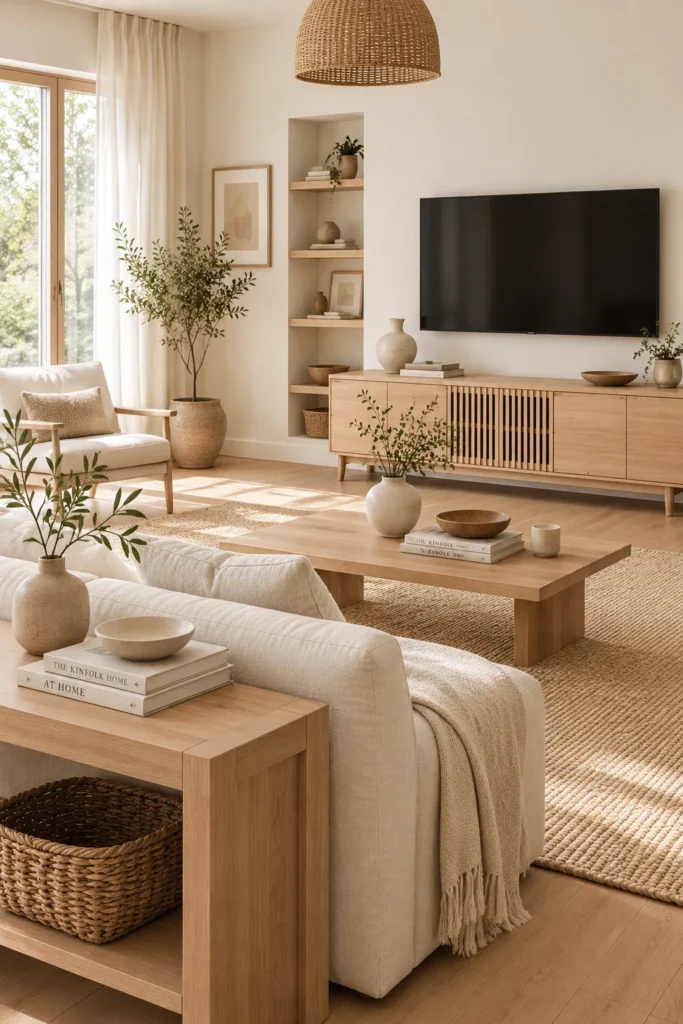
Light wood instantly softens a minimalist living room, giving the space warmth without adding visual weight. Choose furniture with simple silhouettes, such as an oak coffee table, low media console, or streamlined sideboard. Pale woods work especially well with cream upholstery and warm neutral walls because they create gentle contrast rather than sharp separation. In smaller homes, furniture with raised legs can also help the floor remain visible, making the room feel more open. I’ve noticed that matching every wooden piece is unnecessary; using two or three related wood tones often creates a more relaxed and naturally layered look.
For a practical setup, let one light-wood piece become the visual anchor and keep surrounding furniture understated. An oak coffee table can sit between a soft sofa and woven rug, while a slim console provides storage without dominating the wall. Add a few ceramic or linen accessories to reinforce the natural character. Avoid glossy finishes or overly ornate details, which can interrupt the calm Japandi feeling. If your existing furniture is darker, you do not need to replace everything. Layering lighter textiles and natural accessories around it can gradually shift the overall room toward a softer, more balanced aesthetic.
2. Low-Profile Sofa
- Makes the room feel grounded and visually spacious.
- Works especially well with open, uncluttered layouts.
- Soft upholstery adds comfort to a minimalist setting.
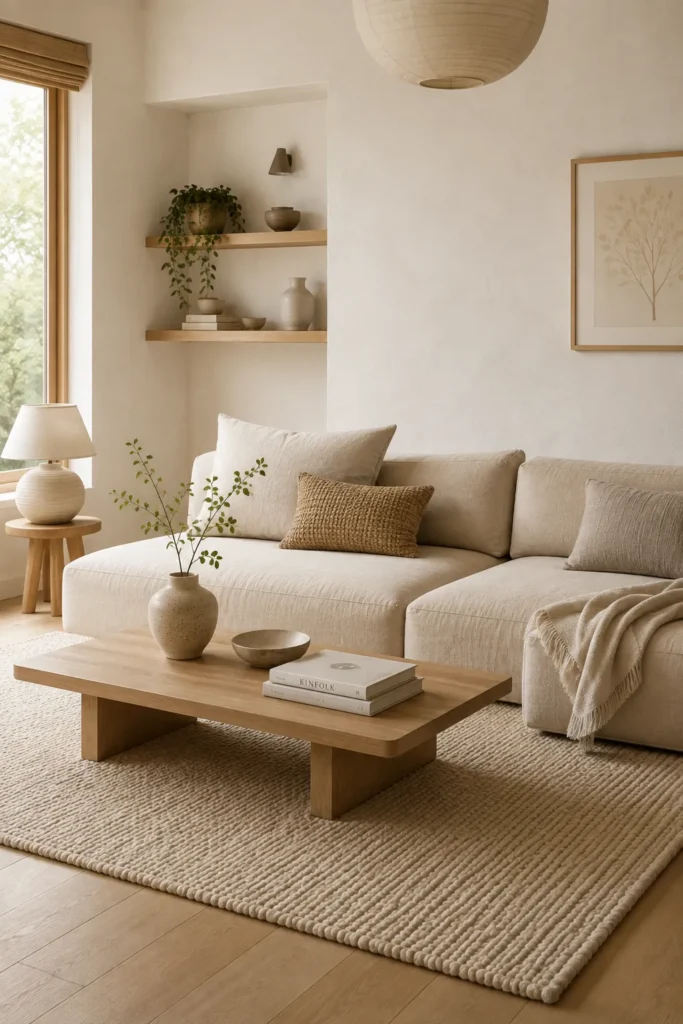
A low-profile sofa can change the entire visual balance of a living room by creating a calmer, more grounded appearance. Instead of towering over the space, a lower seat keeps more wall area visible and helps the room feel open. Look for straight or gently curved lines, neutral upholstery, and comfortable proportions rather than oversized cushions or decorative detailing. This style works particularly well in apartments and smaller rooms where bulky furniture can quickly become overwhelming. Pair the sofa with a low coffee table and simple side table to create a relaxed arrangement that feels intentional without appearing overly designed.
Comfort still matters, so do not choose a sofa based on appearance alone. Test the seat depth and back support, especially if your living room is used for daily lounging, reading, or family time. A beige, oatmeal, taupe, or warm gray fabric can provide an adaptable foundation for the rest of the room. Add two or three textured cushions rather than filling the sofa with accessories. I’ve seen this approach work well because the furniture remains visually quiet while the textures bring enough softness to prevent the room from feeling sterile or unfinished.
3. Neutral Layered Textures
- Adds depth without relying on bold colors.
- Makes minimalist furniture feel softer and more inviting.
- Helps neutral rooms avoid looking flat or unfinished.
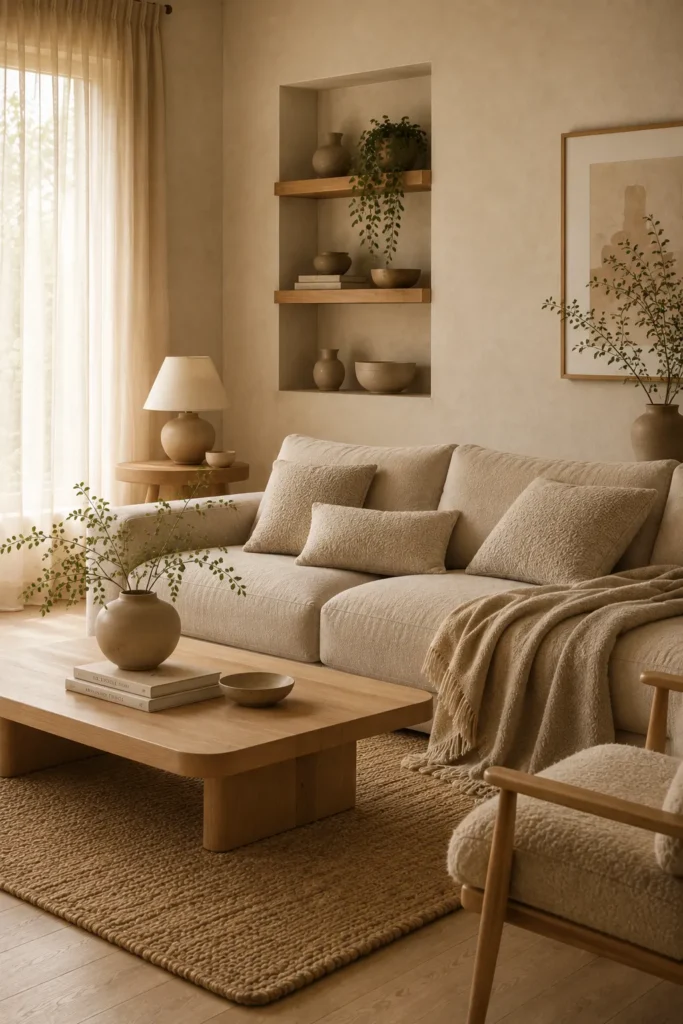
Neutral colors become much more interesting when several textures are layered together. Instead of decorating with many different shades, combine materials such as linen, cotton, wool, boucle, jute, and unfinished wood. A cream sofa can feel completely different when paired with a chunky woven throw, nubby cushions, and a natural fiber rug. This creates visual depth while keeping the color palette peaceful. The key is variation in texture rather than adding more objects. In my experience, this is one of the easiest ways to make a minimalist living room feel cozy because the room gains richness without becoming visually crowded.
Start with the largest surfaces, then build smaller layers around them. A textured rug can define the seating area, while linen curtains soften the windows and a wool throw adds warmth to the sofa. Keep most pieces within a closely related palette of cream, sand, oatmeal, beige, and warm gray. Natural imperfections are welcome, so handmade ceramics or lightly irregular woven pieces can add character. If the room already has plenty of furniture, focus on textiles instead of buying more decor. A few carefully chosen textures can create the comfortable, sophisticated atmosphere associated with Japandi style.
4. Warm Earthy Palette
- Creates a softer atmosphere than stark white interiors.
- Makes natural wood and woven materials feel cohesive.
- Adds warmth while keeping the room visually calm.
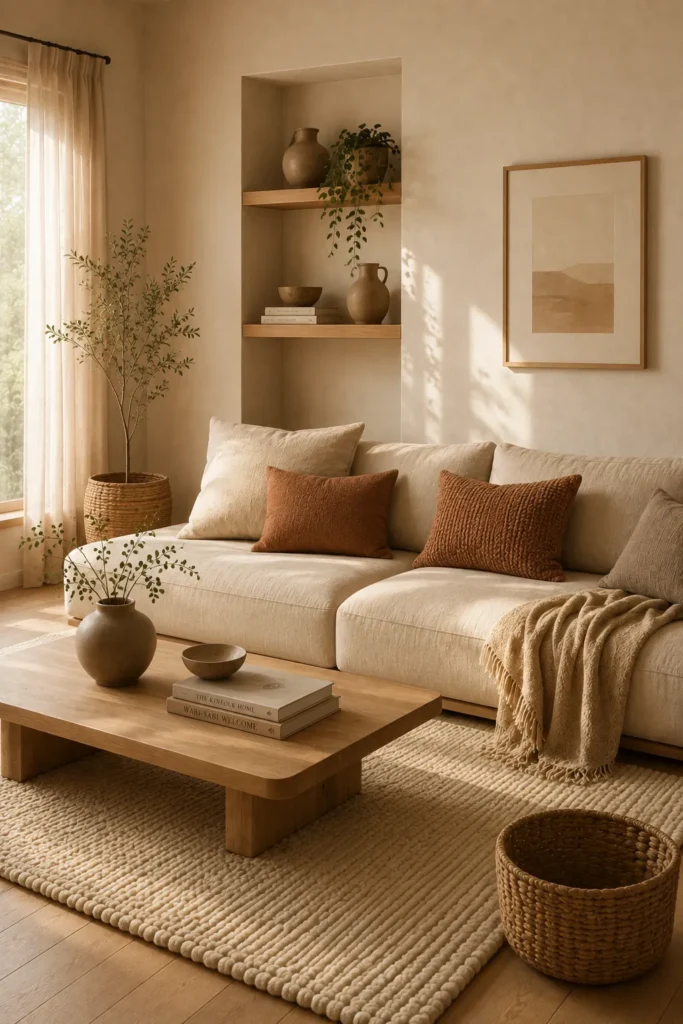
A warm earthy palette can make a minimalist living room feel instantly more inviting without adding visual clutter. Start with soft shades such as beige, sand, oatmeal, warm white, taupe, and muted brown. Then introduce small touches of clay, terracotta, or olive to create gentle contrast. These colors work beautifully with natural wood because they share an organic quality that feels connected rather than coordinated. Keep the strongest shades limited to cushions, pottery, artwork, or small accessories. This approach gives the room personality while preserving the peaceful simplicity that makes Japandi interiors so appealing.
When choosing colors, pay attention to how natural and artificial light changes throughout the day. A beige that looks warm in afternoon sunlight may appear cooler under overhead lighting. For that reason, sample paint and fabric choices before committing to large areas. I’ve noticed that rooms with several warm neutrals often feel more sophisticated when one shade is repeated subtly in different materials. For example, a taupe cushion, woven basket, and ceramic vase can visually connect the room without looking overly matched. The result is a comfortable space with enough variation to remain interesting.
5. Minimalist Gallery Wall
- Adds personality without overwhelming a simple interior.
- Creates a focal point above the sofa or console.
- Keeps artwork cohesive through restrained colors and frames.
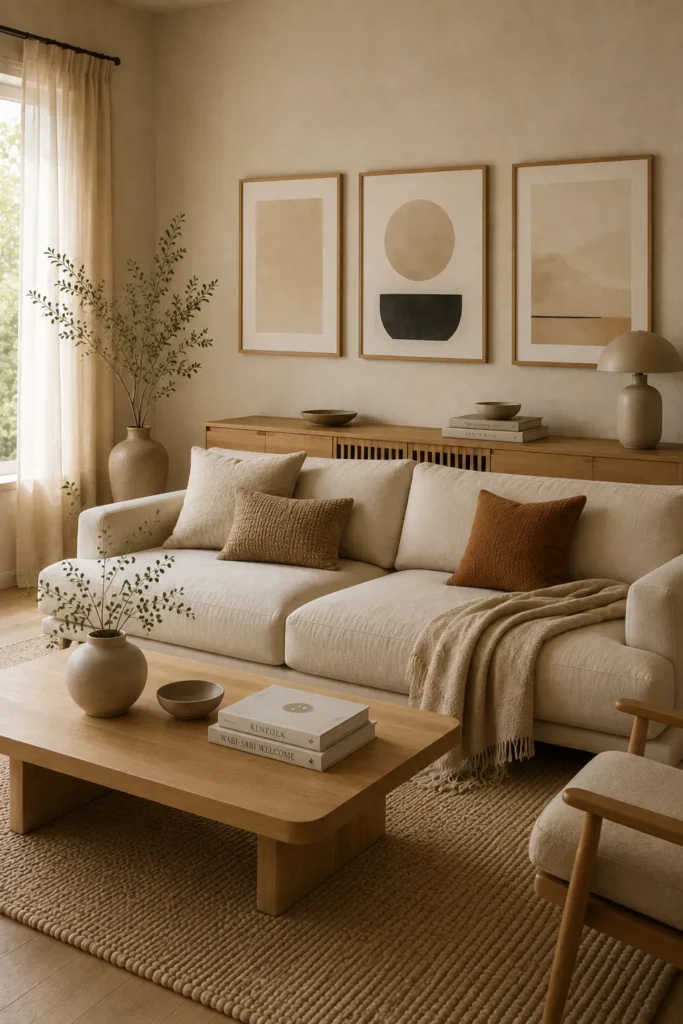
A minimalist gallery wall gives a Japandi living room personality while preserving its clean visual character. Instead of covering an entire wall with numerous frames, choose three to five pieces with simple compositions and a restrained palette. Abstract line drawings, nature-inspired artwork, soft landscapes, and handmade-looking prints can work especially well. Use oak, natural wood, or thin neutral frames to connect the artwork with surrounding furniture. Keep the spacing consistent and leave enough empty wall area around the arrangement. That breathing room matters because Japandi design depends as much on intentional negative space as it does on carefully selected objects.
For a balanced arrangement, place the center of the gallery roughly at eye level and align the overall group with the sofa or console beneath it. You do not need expensive artwork to create an elevated look. A few thoughtfully selected prints can provide the same visual effect when their colors and proportions work together. Avoid choosing every piece separately without considering the whole wall. I’ve seen simple collections look more polished when one visual theme ties them together, such as botanical shapes, soft landscapes, or monochromatic sketches. The result feels personal rather than overly decorated.
View: 25 Dark Academia Bedroom Ideas on a Budget to Love
6. Natural Fiber Rug
- Defines the seating zone while adding organic texture.
- Softens hard flooring and visually warms the room.
- Works beautifully with wood, linen, and neutral upholstery.
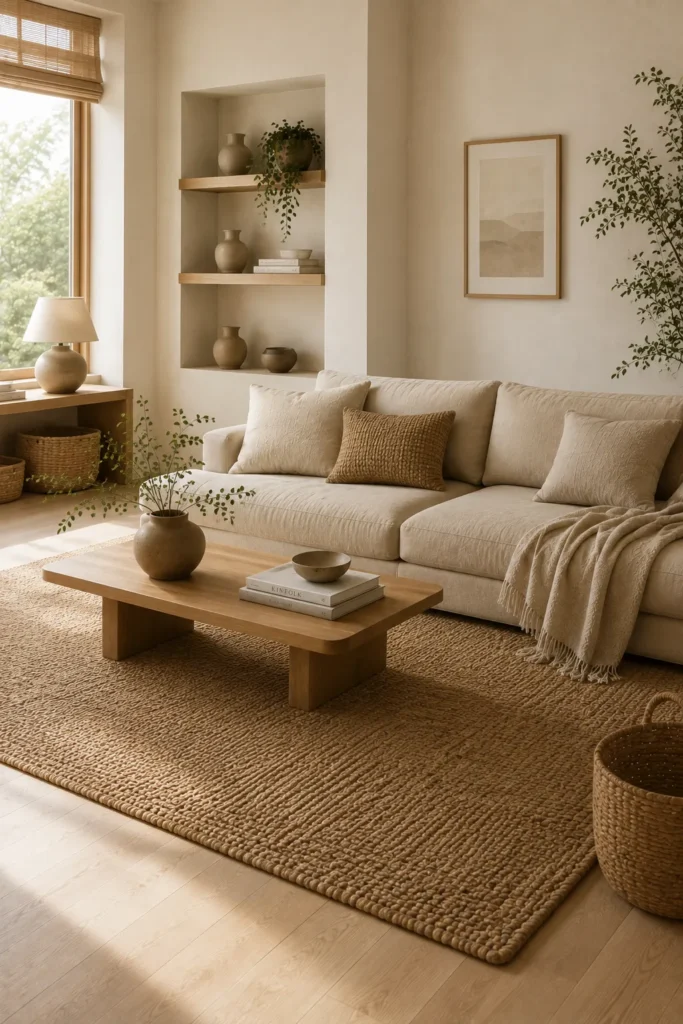
A natural fiber rug can anchor the entire seating area while adding the earthy texture that works so well in Japandi interiors. Jute, sisal, wool, and woven cotton are useful choices because they bring subtle variation without introducing busy patterns. Choose a rug large enough for the front legs of the sofa and nearby chairs to sit comfortably on it. This simple placement trick makes the furniture arrangement feel connected instead of scattered. A warm beige or natural tan rug can also visually soften hardwood floors and create a more comfortable transition between furniture and surrounding space.
Consider the room’s everyday use before selecting the material. Wool can feel especially soft underfoot, while jute provides a more visibly woven appearance and strong natural character. In high-traffic areas, look for a durable construction that can handle regular movement and cleaning. Keep the rest of the floor relatively open so the rug remains a clear foundation rather than competing with several small mats. Pairing it with light wood, linen upholstery, and handmade ceramics creates an easy visual rhythm. The overall effect is warm, grounded, and practical without sacrificing the uncluttered character of the room.
7. Organic Coffee Table
- Brings natural character to the center of the seating area.
- Softens the straight lines of minimalist furniture.
- Provides useful surface space without visual heaviness.
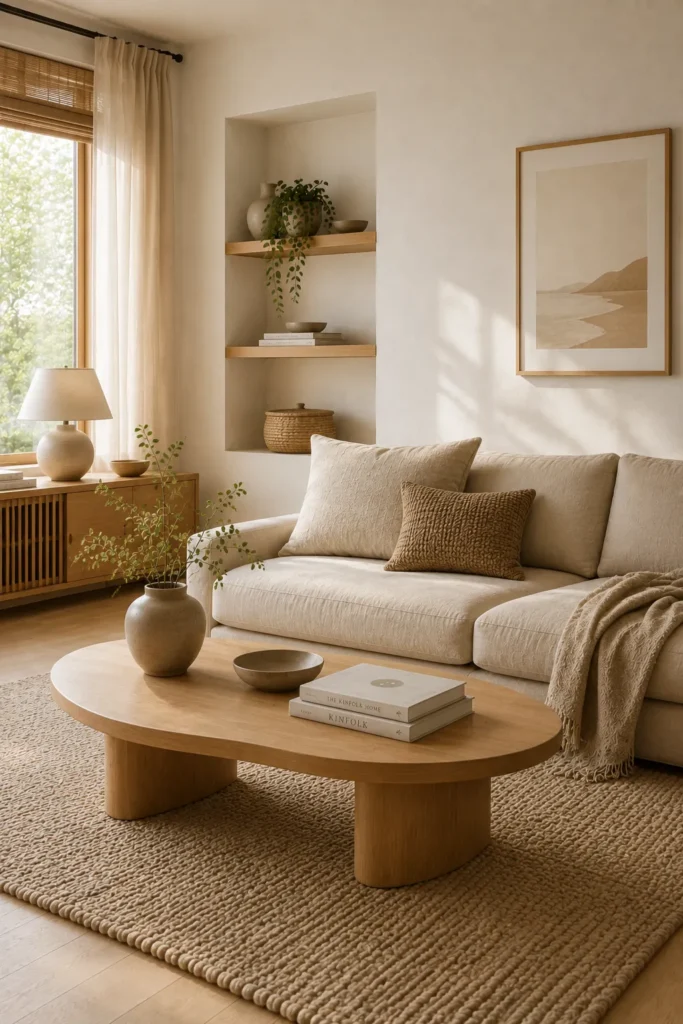
An organic coffee table can soften a Japandi living room by introducing gentle curves into an otherwise streamlined arrangement. Look for rounded, oval, irregular, or softly sculpted wood designs with visible grain and a matte finish. These shapes create a natural focal point without demanding attention. A low table also works particularly well with a low-profile sofa because the proportions feel balanced from every angle. Keep the tabletop simple with one ceramic bowl, a small plant, or a single stack of books. Leaving some surface empty is important because intentional simplicity is part of the overall design.
Choose the table size according to the sofa and walking space rather than selecting one based only on appearance. Ideally, there should be enough room to move comfortably around it while keeping drinks, books, or everyday items within easy reach. Natural oak, ash, or walnut can all work, depending on the surrounding palette. I’ve noticed that rounded furniture is especially helpful in rooms dominated by straight architectural lines because it prevents the space from feeling rigid. When paired with soft textiles and warm lighting, an organic coffee table can make the entire seating area feel calmer and more inviting.
8. Soft Linen Curtains
- Filters harsh sunlight while keeping the room bright.
- Adds movement and softness around large windows.
- Complements wood, plaster, and neutral upholstery naturally.
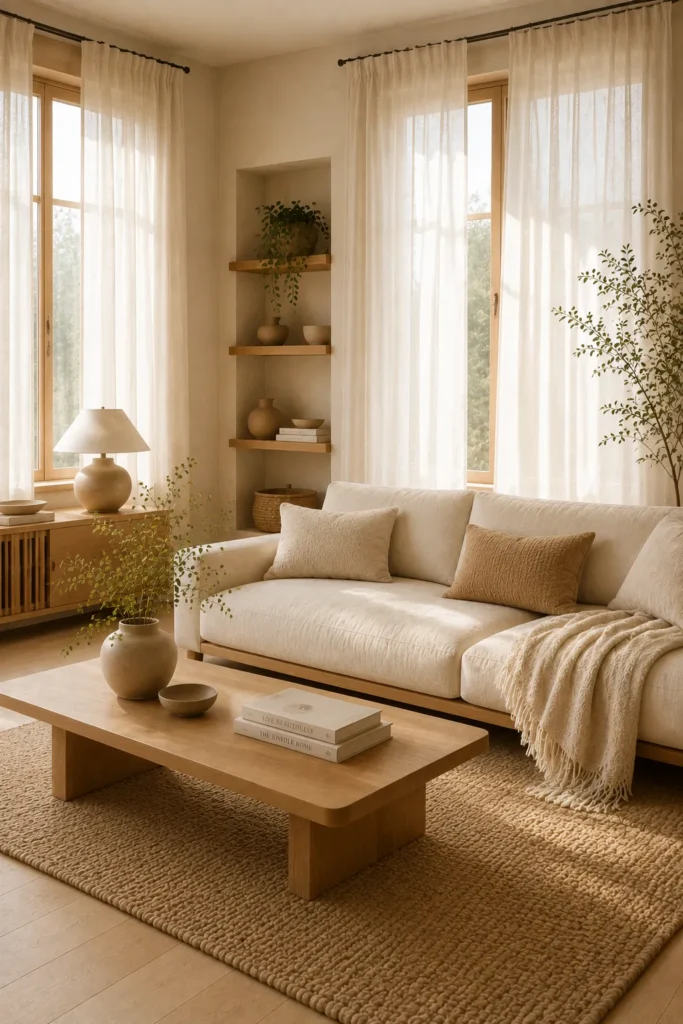
Soft linen curtains are an easy way to make a living room feel warmer and more refined without adding unnecessary decoration. Choose floor-length panels in ivory, oatmeal, warm white, or light beige, depending on the existing palette. Linen naturally filters daylight, creating a soft glow rather than the sharp contrast produced by heavy or highly opaque window treatments. Hang the curtain rod slightly above the window frame and extend it beyond the sides when possible. This can make the window appear larger while allowing more daylight into the room when the curtains are open.
The fabric should complement rather than compete with the rest of the space. If the sofa is heavily textured, choose a simpler linen weave; if the furniture is very minimal, a slightly slubbed fabric can introduce useful visual interest. Avoid overly formal pleats or decorative hardware if you want a relaxed Japandi appearance. In my experience, natural curtains also help connect indoor spaces with outdoor light, making wood furniture and neutral fabrics appear softer throughout the day. They are especially effective in living rooms where large windows already provide the main decorative feature.
9. Muted Green Accents
- Introduces a subtle connection to nature.
- Adds color without disrupting a neutral foundation.
- Works beautifully with oak, beige, cream, and stone tones.
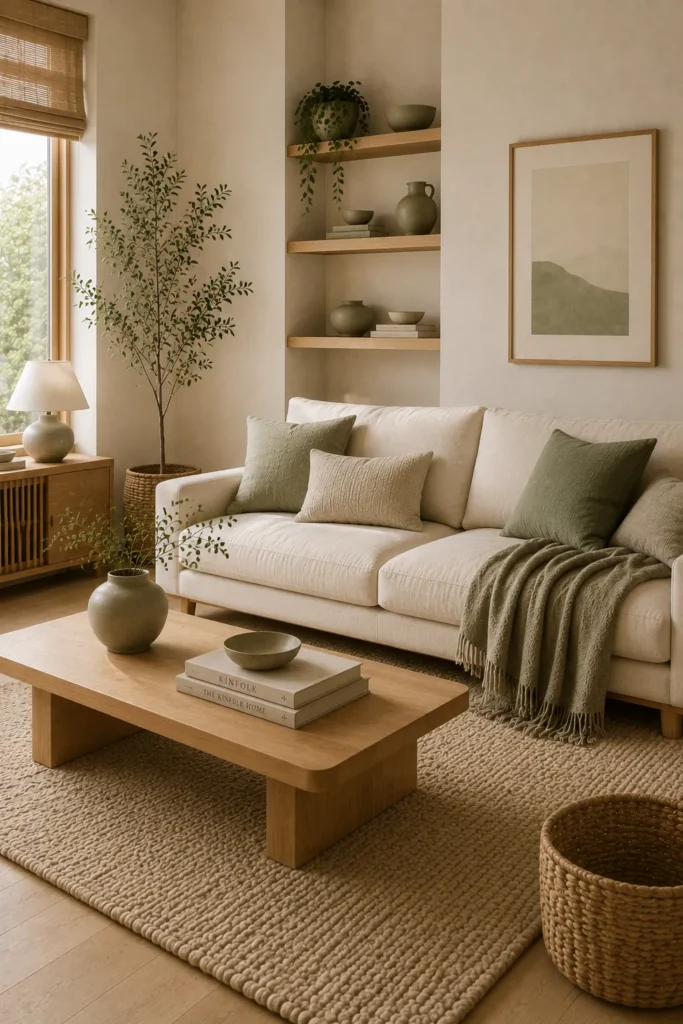
Muted green accents can bring a refreshing natural note to a neutral Japandi living room without making the palette feel colorful or busy. Sage, moss, eucalyptus, and soft olive tones are particularly versatile because they sit comfortably beside beige, cream, taupe, and light wood. Use these shades selectively through cushions, ceramics, artwork, plants, or a small upholstered chair. The goal is not to make green the dominant color but to create small visual connections with nature. This subtle approach keeps the room peaceful while preventing an all-neutral scheme from becoming too predictable.
Try repeating the same muted green in two or three places across the room rather than concentrating it in one corner. For example, a sage cushion can coordinate with a small ceramic vase and botanical artwork placed farther away. This creates a gentle visual rhythm that makes the space feel intentionally designed. Real plants can also provide natural variation, but choose varieties that suit the available light and your maintenance routine. I’ve noticed that muted greens work especially well when their tones are slightly dusty rather than bright, helping the room retain its calm, understated character.
10. Plaster Accent Wall
- Adds subtle depth without introducing busy patterns.
- Gives the room an earthy, handcrafted appearance.
- Creates a beautiful backdrop for simple furniture.
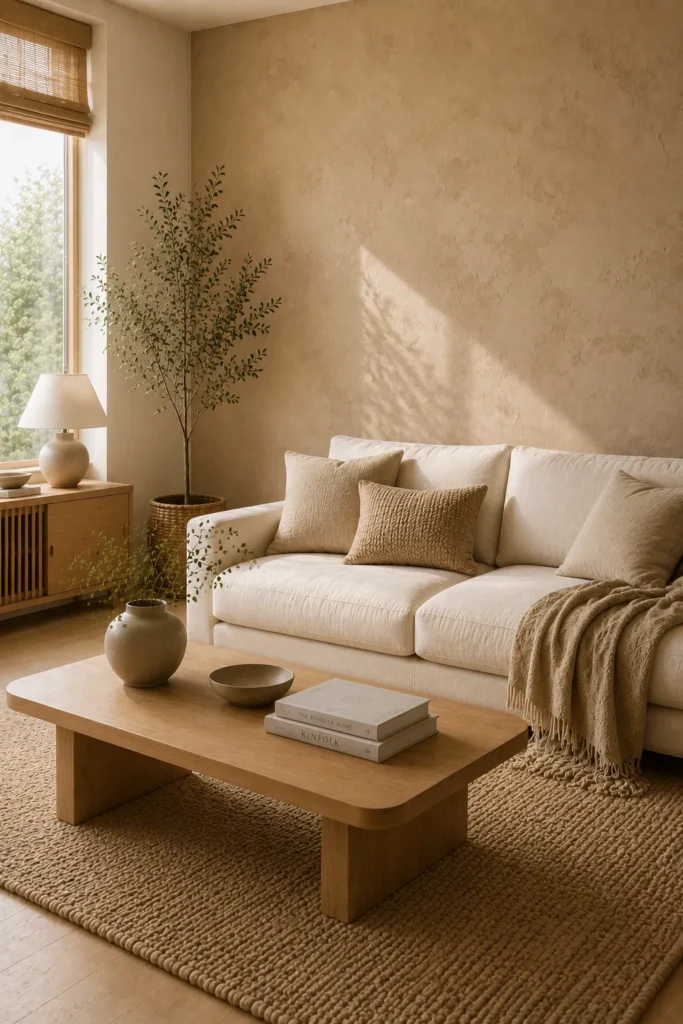
A plaster accent wall can give a Japandi living room quiet architectural character while keeping the overall palette simple. Choose warm white, sand, beige, or soft taupe rather than strong colors. The subtle variation in plaster creates depth that changes gently as daylight moves across the surface. This works especially well behind a sofa, where the wall can become a natural focal point without requiring artwork or heavy decoration. Keep the surrounding furniture simple so the texture remains visible. A matte finish generally feels more organic than a glossy surface and complements natural materials throughout the room.
If a permanent plaster treatment feels too complicated, textured paint or removable wall treatments can create a similar visual effect with less commitment. Before applying anything, test a sample because wall texture and color can appear very different under morning, afternoon, and evening lighting. Pair the wall with light wood, linen, ceramics, and a natural fiber rug to reinforce its earthy quality. I’ve noticed that textured walls work best when they are allowed to breathe visually, so avoid covering them with too many frames, shelves, or decorative objects. Let the material itself become the feature.
11. Sculptural Floor Lamp
- Adds soft lighting while becoming a subtle focal point.
- Helps create cozy evening atmosphere without overhead glare.
- Brings shape and height to a low furniture arrangement.
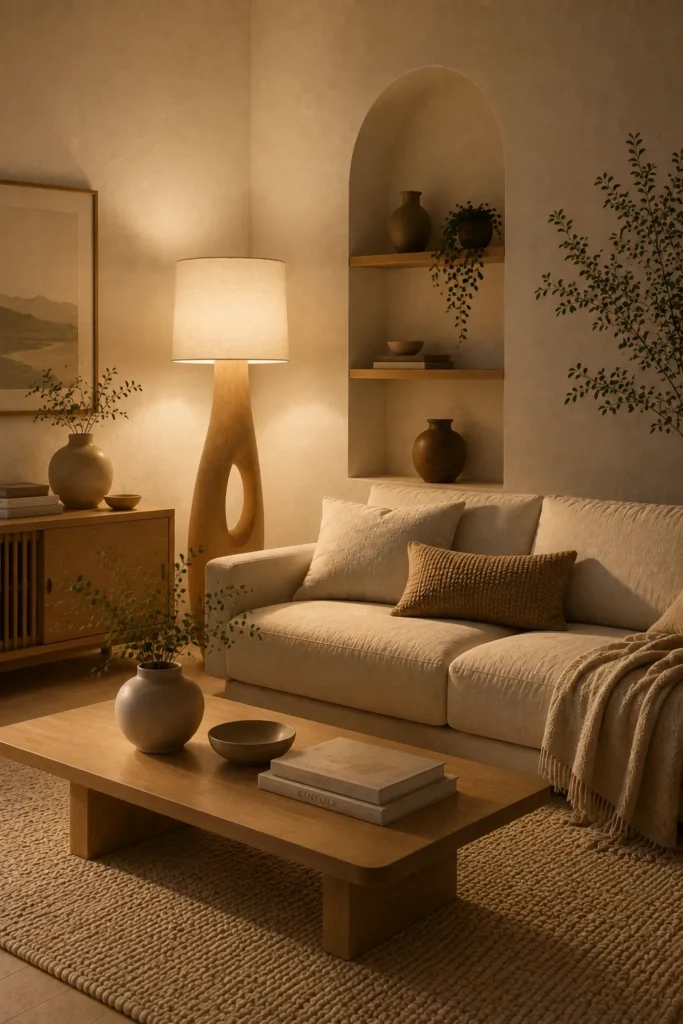
A sculptural floor lamp can combine function and visual interest without breaking the simplicity of a Japandi living room. Look for a design with a curved silhouette, paper-like shade, natural wood, matte metal, or another understated material. Position it beside the sofa or in an unused corner where it can provide practical reading light while filling vertical space. Warm bulbs are generally more inviting than cool white lighting, especially in rooms dominated by cream and natural wood. The lamp should feel like part of the furniture arrangement rather than a separate decorative object added at the last minute.
Think about how the lamp will look both on and off. During the day, its shape can contribute to the room’s composition, while at night it should create a comfortable pool of light. A dimmable option gives you more control for different activities, from reading to relaxing with guests. Avoid placing several bright light sources at eye level because they can make a calm room feel harsh. Instead, combine the floor lamp with a small table lamp or indirect lighting. I’ve found that layered lighting often makes minimalist interiors feel dramatically warmer after sunset.
12. Handmade Ceramic Decor
- Adds organic character to an otherwise streamlined room.
- Creates small focal points without visual clutter.
- Connects the space to natural, handcrafted materials.
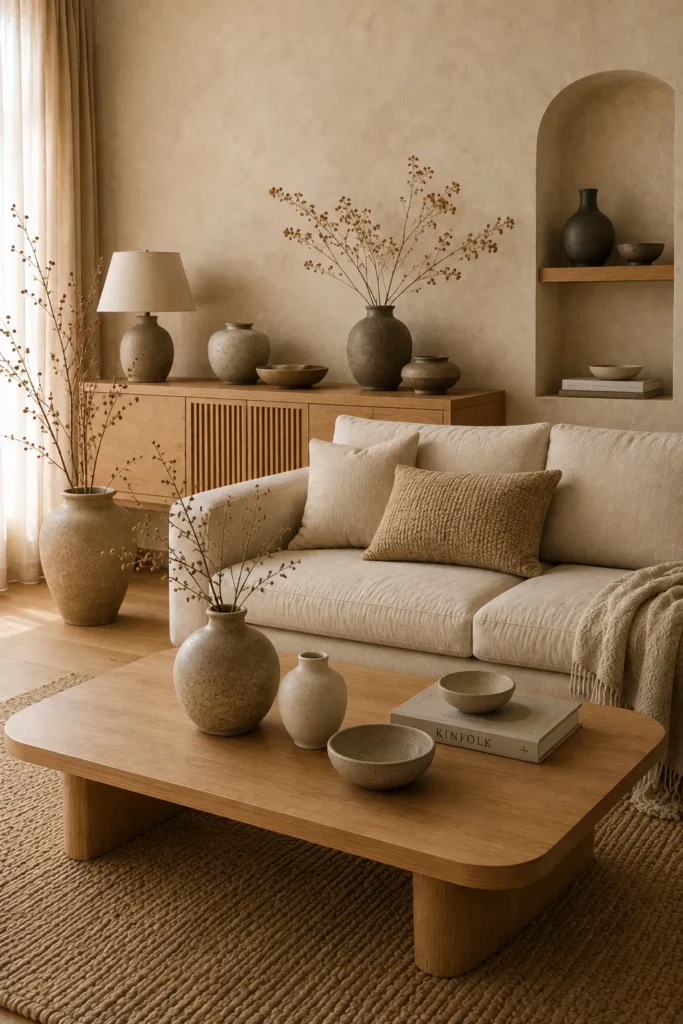
Handmade ceramics can bring personality to a Japandi living room through subtle shapes, natural imperfections, and tactile surfaces. Choose a few pieces in cream, sand, clay, stone, or muted gray rather than collecting many decorative objects. A small vase on a coffee table, sculptural vessel on a console, or shallow bowl on an open shelf can provide just enough visual interest. Slight variations in shape and finish are often more appealing than perfectly matching pieces because they create a relaxed handcrafted feeling. Keep the surrounding surfaces relatively clear so each ceramic object has enough space to be appreciated.
When arranging ceramics, consider height, shape, and negative space instead of simply filling empty areas. A taller vase can balance a low bowl, while an irregular piece can soften a rectangular console. If you like fresh flowers or branches, use them sparingly and choose natural forms that complement the room. I’ve noticed that one thoughtfully placed handmade object often looks more sophisticated than several inexpensive accessories grouped together. The goal is to create a sense of quiet character, not a collection display. This makes ceramics especially useful for adding warmth while preserving a clean and uncluttered atmosphere.
13. Built-In Wood Storage
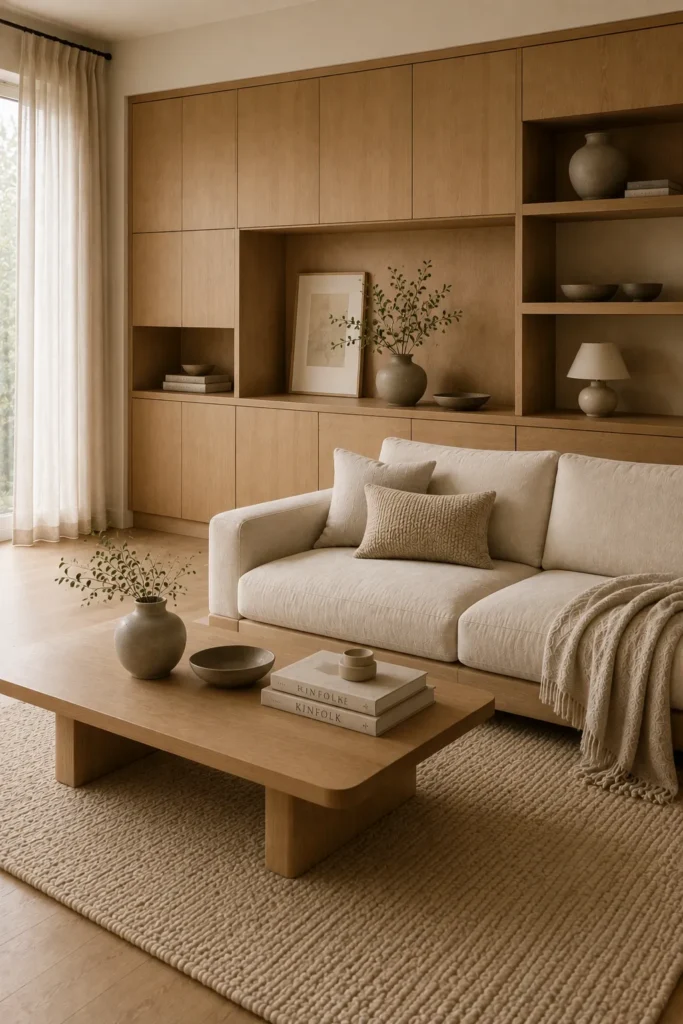
- Keeps everyday clutter hidden and surfaces visually calm.
- Adds useful storage without introducing bulky furniture.
- Creates a seamless connection between function and design.
Built-in wood storage can make a Japandi living room feel remarkably calm because everyday clutter has a designated place to disappear. Choose cabinetry with flat fronts, simple hardware, and a natural oak or ash finish to maintain the understated aesthetic. Closed sections are ideal for electronics, books, toys, and household items that can quickly make a room feel busy. A few open niches can display ceramics or books without turning the entire wall into a display area. This combination creates practical organization while keeping the room visually cohesive, especially in homes where storage is limited.
Good storage should support the way your household actually uses the room. Before planning cabinet dimensions, consider what needs to be stored and how frequently each item is accessed. Place everyday objects within easy reach and reserve higher or closed compartments for less frequently used belongings. If a full built-in is not possible, modular wood cabinets can create a similar effect. I’ve noticed that reducing visible clutter often makes even a small living room feel more spacious. Once the storage problem is solved, the remaining furniture and decorative pieces have more room to stand out naturally.
14. Stone and Wood Mix
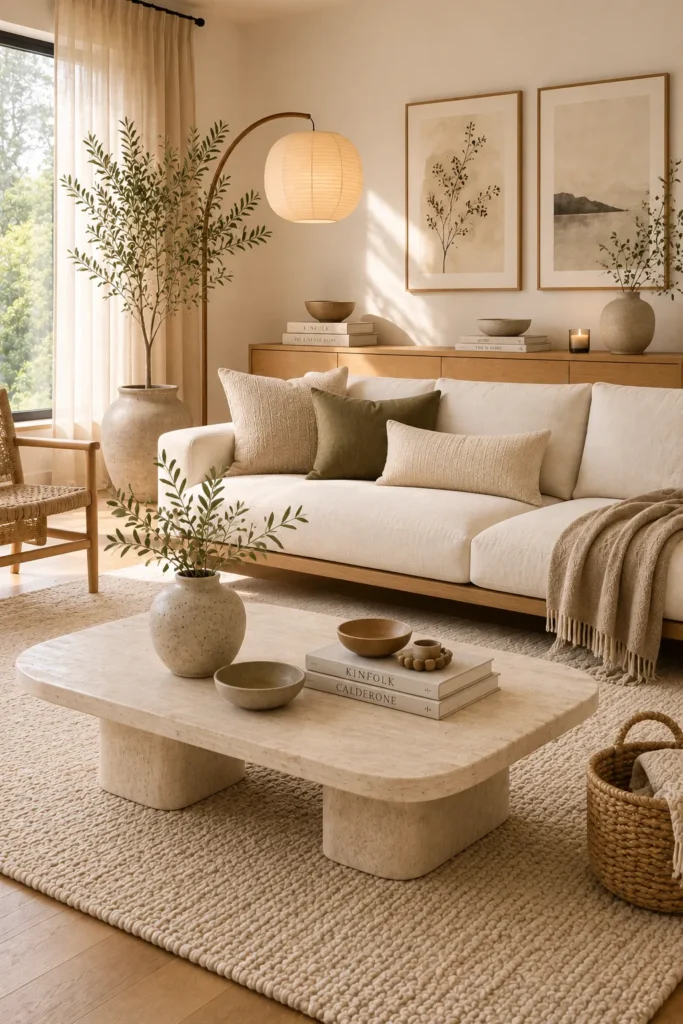
- Combines cool mineral texture with warm natural grain.
- Adds contrast while keeping the palette understated.
- Creates a grounded, sophisticated material combination.
Combining stone and wood creates a balanced material contrast that works beautifully in a Japandi living room. Stone introduces a grounded, slightly cool texture, while wood brings warmth and visible natural grain. You can use the combination through a travertine or stone coffee table paired with an oak console, or introduce smaller stoneware accessories alongside wooden furniture. Keep the colors close to nature, such as cream, beige, warm gray, tan, and soft brown. This prevents the contrasting materials from feeling disconnected and allows the room to maintain the quiet, cohesive appearance associated with Japandi interiors.
Pay attention to texture as much as color when mixing these materials. A honed stone surface can feel softer and more natural than highly polished marble, while lightly finished wood maintains an organic character. If the room already has several hard surfaces, balance them with linen, wool, cotton, or woven accessories. This prevents the space from becoming visually cold. I’ve seen this material pairing work particularly well in modern homes because it adds sophistication without relying on ornate decoration. The contrast feels intentional, but the natural materials keep the atmosphere relaxed and comfortable.
15. Floating Media Console
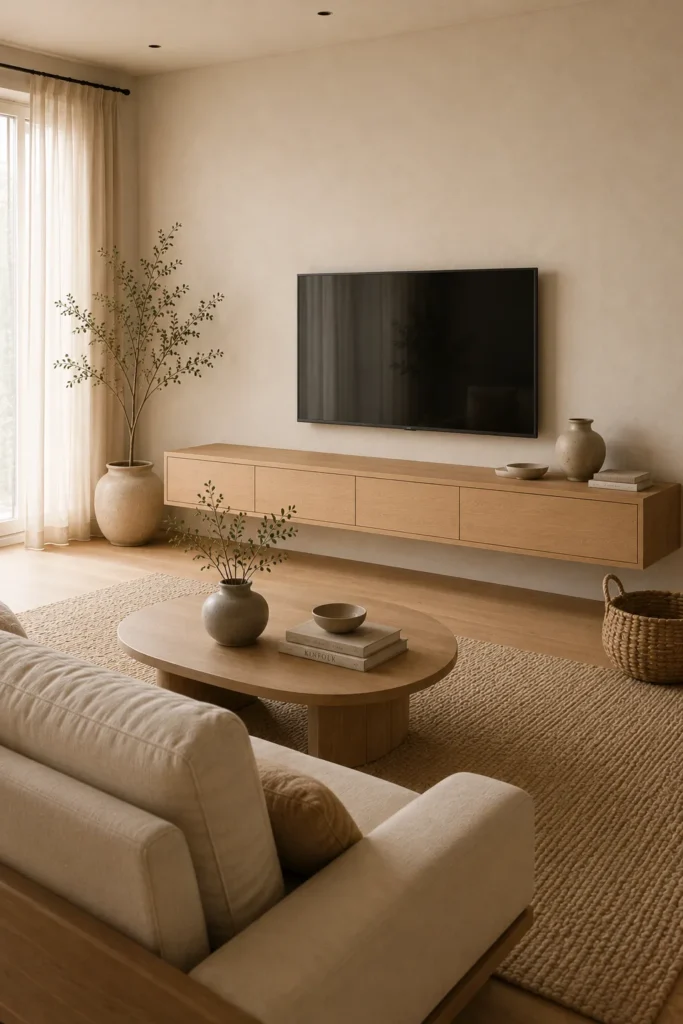
- Keeps the floor visible for a more spacious appearance.
- Reduces visual bulk around the television area.
- Provides practical storage with a clean silhouette.
A floating media console can make the television wall feel lighter and more organized while providing useful storage. Because the cabinet is mounted above the floor, more flooring remains visible beneath it, which can help a compact room appear less crowded. Choose a simple wood design with concealed handles and closed storage for electronics, remotes, and other everyday items. Keep the television area intentionally quiet instead of surrounding the screen with numerous decorative objects. A small ceramic vessel or single piece of artwork can provide balance without competing with the main focal point.
The console should be wide enough to visually support the television while leaving comfortable breathing room around the screen. Before mounting it, carefully plan cable management so wires remain hidden and the finished wall looks clean. If you rent, a freestanding low console with slim legs can provide a similar visual effect without permanent installation. In my experience, keeping the media area simple has a surprisingly strong impact on the whole room because televisions can easily become visually dominant. A streamlined console helps integrate the technology into the interior instead of making it the room’s only feature.
16. Indoor Greenery
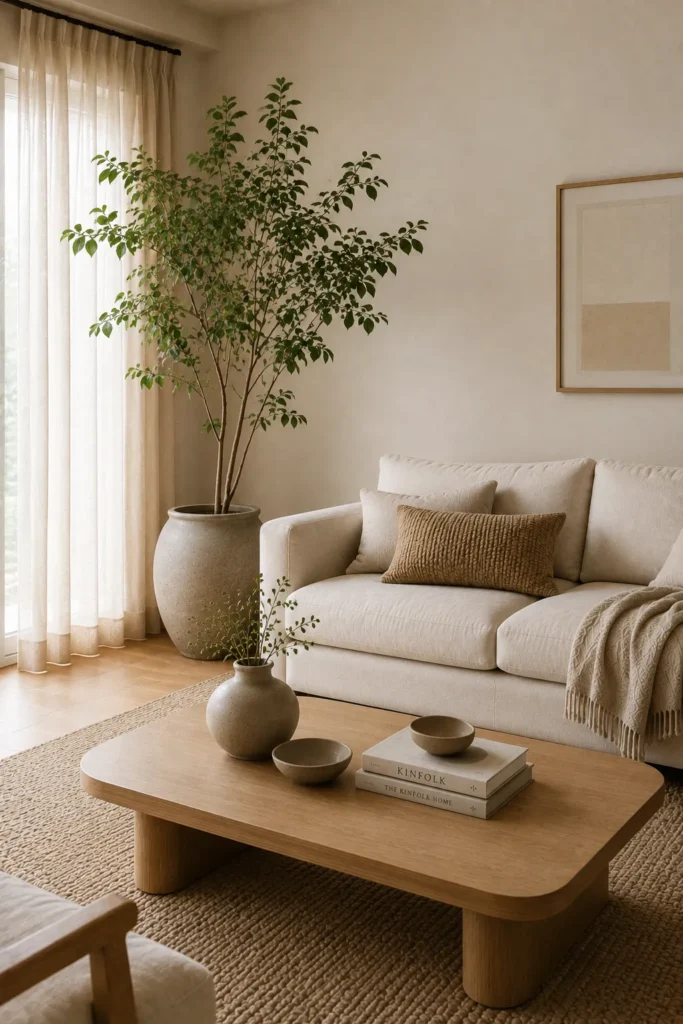
- Brings a natural focal point into the room.
- Adds freshness without requiring colorful decoration.
- Softens hard furniture lines and architectural surfaces.
Indoor greenery can make a Japandi living room feel more connected to nature while adding visual interest without requiring many decorative objects. Choose plants with simple silhouettes, such as an olive tree, rubber plant, fiddle-leaf fig, or understated leafy variety, depending on your available light and maintenance preferences. Place a larger plant near a window or empty corner where its height can balance low furniture. Smaller plants can sit on a console or shelf, but avoid filling every surface. One thoughtfully positioned plant often creates more impact than several scattered throughout the room.
Think about the plant pot as part of the overall design rather than an afterthought. Natural ceramic, stone, terracotta, or woven planters can reinforce the earthy Japandi palette. Make sure the plant receives suitable light and that watering needs fit your routine; a beautiful plant will not improve the room if its location is impractical. I’ve noticed that greenery looks especially effective against warm white or beige walls because the foliage becomes a gentle focal point. Keep surrounding accessories minimal so the organic shape of the plant remains visible and contributes to the room’s natural rhythm.
17. Wabi-Sabi Styling
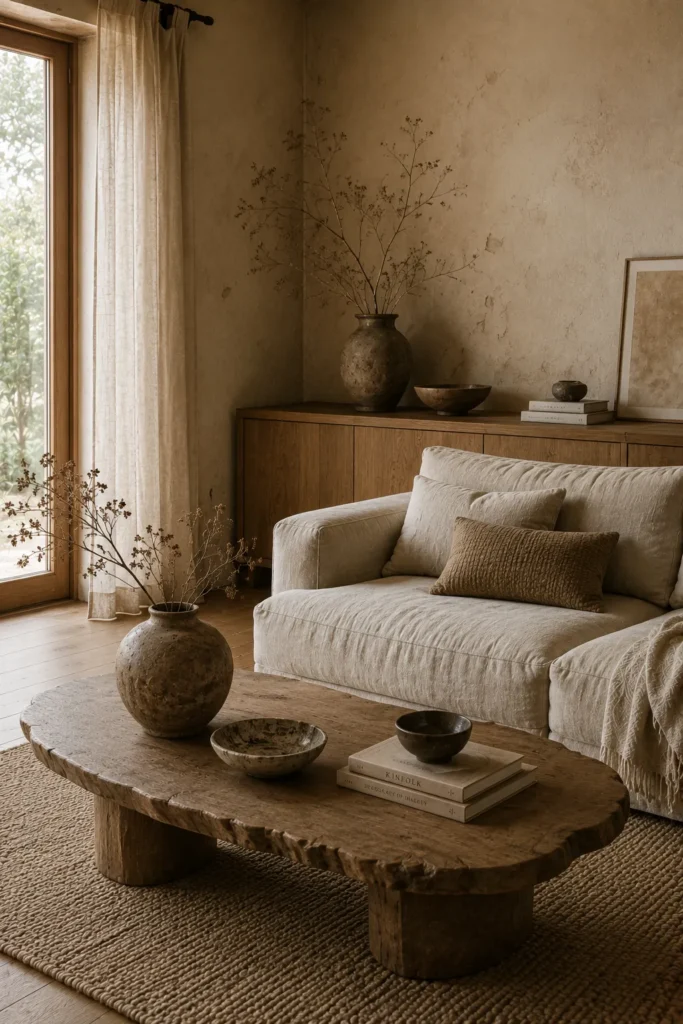
- Embraces natural imperfections instead of perfect symmetry.
- Makes the room feel personal and less manufactured.
- Adds character through aged, handmade, and irregular pieces.
Wabi-sabi styling brings a sense of natural imperfection into a Japandi living room, making the space feel more relaxed and authentic. Instead of searching for perfectly symmetrical accessories or flawless finishes, look for handmade ceramics, uneven wood grain, softly weathered objects, and textiles with subtle variation. These details can make a minimalist room feel lived-in without creating clutter. The idea is not to make everything look old or unfinished; it is about appreciating materials and objects that show natural character. A slightly irregular bowl or handcrafted vase can become a quiet focal point on an otherwise simple surface.
To apply this approach successfully, resist the urge to fill every empty corner. Leave space around meaningful objects so their texture and shape can be appreciated. Combine one imperfect ceramic piece with natural wood, linen, and a simple woven textile for an understated arrangement. Avoid buying artificial “aged” accessories simply for appearance; authentic materials usually create a more convincing result. I’ve noticed that a few imperfect elements can make a carefully designed room feel much more comfortable because they remove the pressure for everything to look showroom-perfect. The result is peaceful, warm, and genuinely lived-in.
18. Open Space Layout
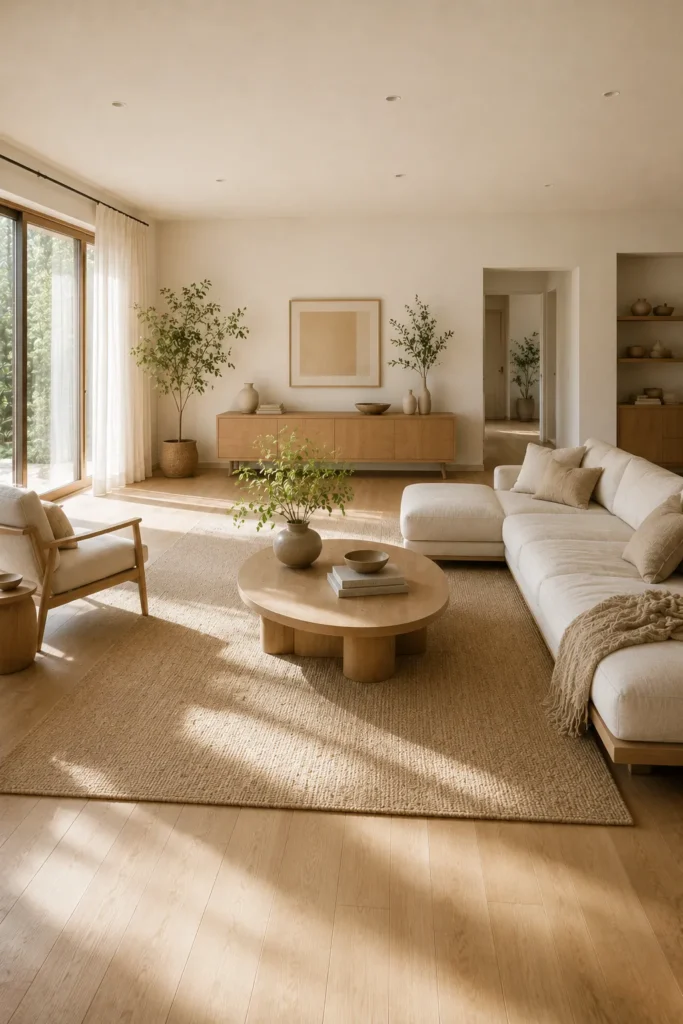
- Makes movement through the room feel easier.
- Gives furniture and natural materials more visual impact.
- Prevents minimalist interiors from feeling cramped.
An open layout allows the simplicity of Japandi design to become more noticeable because furniture has enough space around it to breathe. Instead of pushing every piece against a wall, create a clear seating zone with comfortable pathways between the sofa, coffee table, doors, and nearby furniture. A large rug can visually connect the seating pieces while keeping the surrounding floor open. This approach is particularly helpful in smaller living rooms because too many individual furniture pieces can make the space feel fragmented. Fewer, better-proportioned pieces often create a more spacious and intentional appearance.
Start by measuring the room and identifying the main movement paths before purchasing anything new. Keep frequently used routes clear and avoid placing furniture where doors, windows, or drawers become difficult to access. A low sofa, compact lounge chair, and appropriately sized coffee table may be enough for a comfortable arrangement. I’ve noticed that removing even one unnecessary piece of furniture can dramatically improve how a room feels. Once the layout becomes easier to navigate, natural light reaches more surfaces, the flooring becomes more visible, and the entire space can feel calmer without any major decorative change.
19. Soft Ambient Lighting
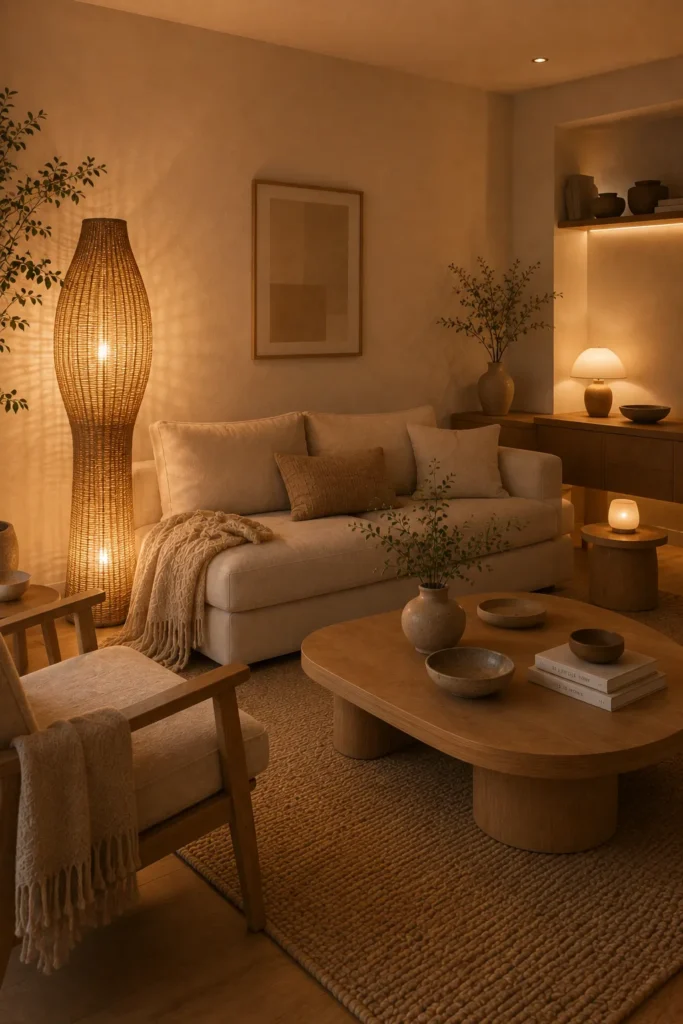
- Creates a relaxed atmosphere after sunset.
- Reduces the harshness of bright overhead lighting.
- Highlights natural textures throughout the room.
Soft ambient lighting can completely change the feeling of a Japandi living room once daylight fades. Instead of depending on one bright ceiling fixture, use several gentle sources at different heights. A floor lamp beside the sofa, a small table lamp on a console, and subtle wall lighting can create layers without making the room feel busy. Choose warm-toned bulbs and shades that diffuse the light rather than exposing a harsh bare bulb. This approach works especially well with natural materials because soft illumination brings out the grain of wood, texture of linen, and irregularity of handmade ceramics.
Think about lighting according to activities rather than decoration alone. You may want brighter focused light for reading, softer illumination for conversation, and a low glow for relaxing in the evening. Dimmable fixtures make these transitions easier. Avoid placing every light source in the same area because balanced distribution creates a more comfortable atmosphere. In my experience, lighting is one of the easiest upgrades for making a minimalist room feel cozy without purchasing new furniture. Even a simple lamp with a warm shade can add depth and make neutral colors appear richer and more inviting.
20. Curved Accent Chair
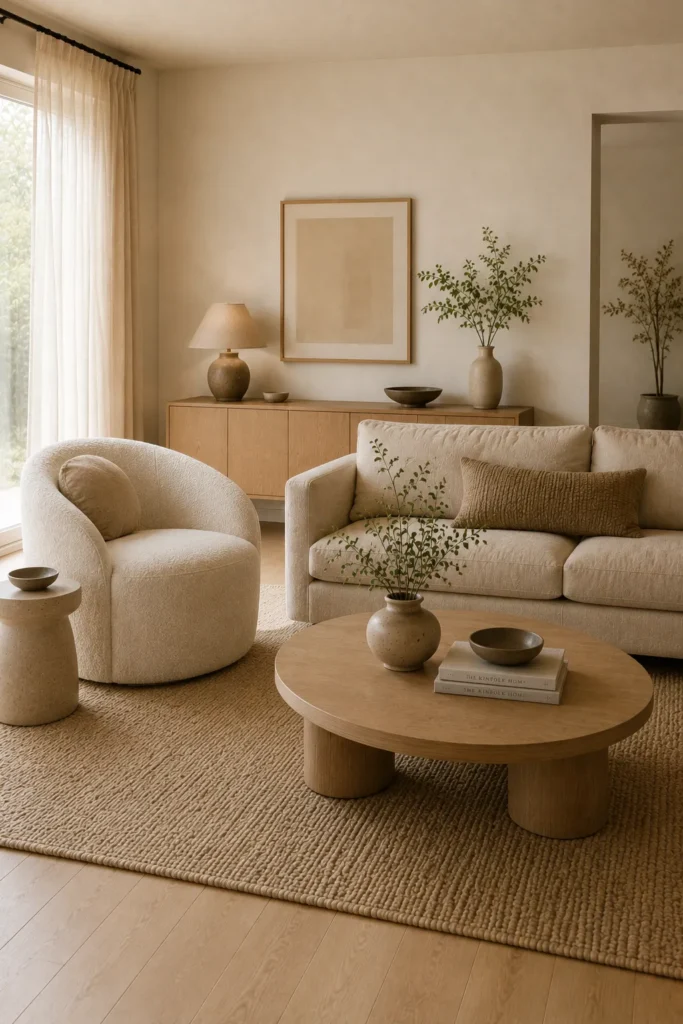
- Softens rooms dominated by straight furniture lines.
- Creates an inviting secondary seating spot.
- Adds shape without requiring bold colors or patterns.
A curved accent chair can introduce softness and movement into a Japandi living room without adding visual complexity. Look for rounded backs, gently curved arms, or softly sculpted silhouettes in neutral fabrics such as cream, oatmeal, beige, or muted gray. Place the chair beside the sofa to create a natural conversation area, or position it near a window as a quiet reading spot. The goal is to add one distinctive shape rather than several competing forms. When paired with a simple rectangular sofa and low coffee table, the curved chair creates a pleasing contrast.
Choose the chair according to the room’s scale and everyday needs. An oversized statement chair may look attractive online but can quickly overwhelm a small living room. Measure the available area and leave enough clearance around the chair for comfortable movement. A compact swivel or lounge chair can provide flexibility without sacrificing style. I’ve noticed that rounded furniture often makes minimalist rooms feel friendlier because curves naturally soften the visual language of straight architectural lines. Keep nearby decor simple so the chair remains a functional feature rather than becoming an isolated decorative object.
21. Layered Neutral Cushions
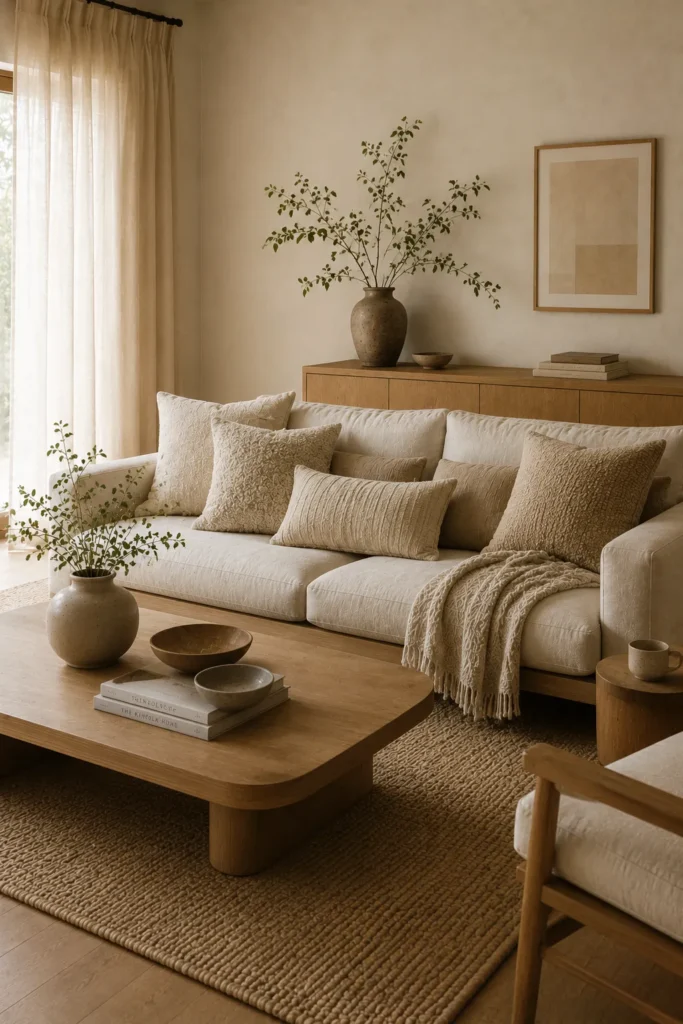
- Adds comfort without creating visual clutter.
- Introduces subtle variation through fabric and texture.
- Makes a simple sofa feel more inviting.
Layered neutral cushions can make a simple sofa feel significantly more comfortable while maintaining the clean appearance of Japandi design. Instead of using many matching cushions, combine two or three sizes and textures in closely related shades. Linen, cotton, boucle, and woven fabrics can create depth even when the colors remain within cream, oatmeal, beige, and taupe. Place larger cushions toward the back and smaller ones toward the front, leaving part of the sofa uncovered. This keeps the arrangement relaxed rather than overly styled and makes the seating practical for everyday use.
The best cushion combination depends on the sofa’s shape and the room’s overall texture. If the sofa is already heavily textured, choose smoother covers for contrast. If the upholstery is plain, a nubby or woven cushion can provide useful visual interest. Avoid adding too many accent colors because the restrained palette is part of what makes the room feel peaceful. I’ve seen neutral cushion arrangements look especially polished when one texture is repeated elsewhere, such as a boucle cushion echoing a soft throw or woven rug. Small connections like these help the room feel cohesive without looking deliberately matched.
22. Natural Wood Shelving
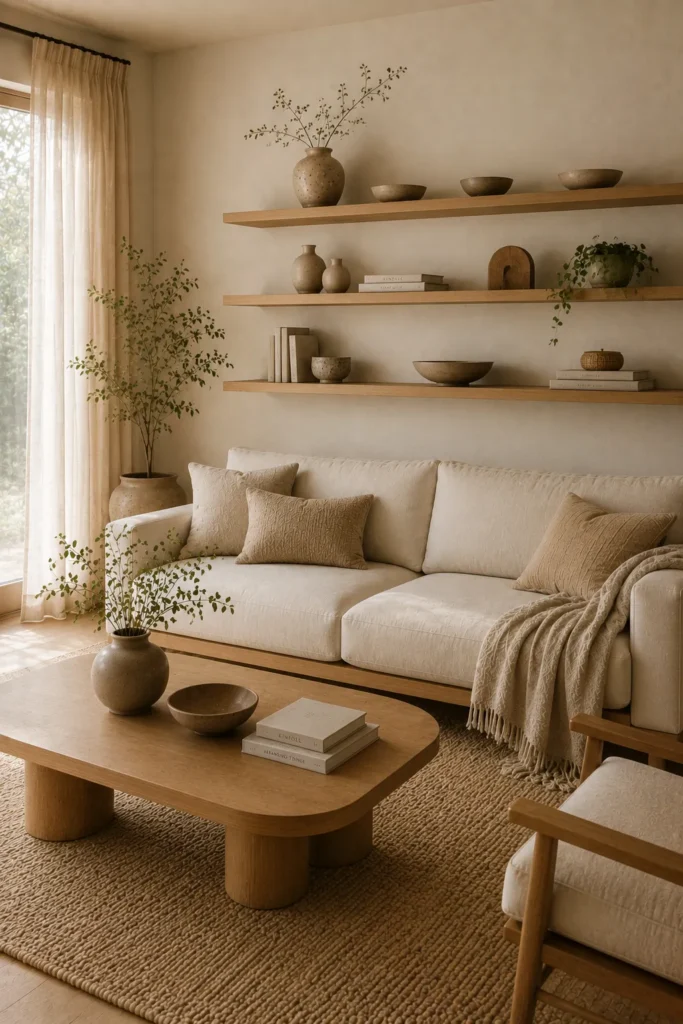
- Adds useful display space without overwhelming the walls.
- Brings warmth and texture into a minimalist room.
- Creates a simple home for books and meaningful objects.
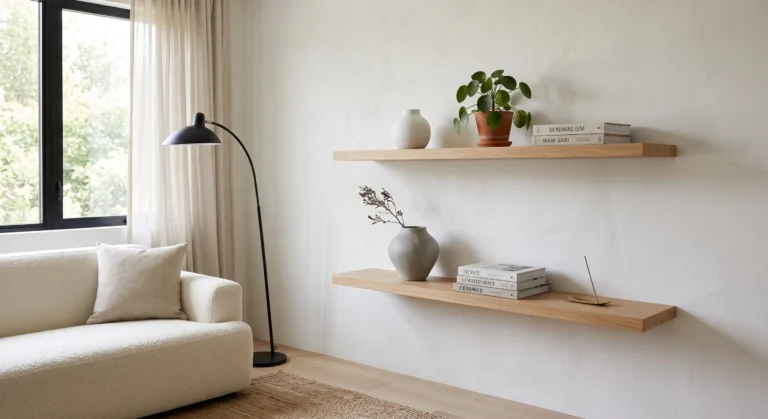
Natural wood shelving can add function and warmth while keeping a Japandi living room visually light. Choose slim shelves in oak, ash, or another softly finished wood, and avoid overly decorative brackets or elaborate profiles. Style them with a small selection of books, ceramics, plants, or objects that have personal meaning. Leaving generous empty space between pieces is just as important as the items themselves. This prevents the shelves from becoming a cluttered display and allows the natural wood to remain part of the visual composition. A restrained arrangement usually looks more intentional and sophisticated.
Before installing shelves, consider their relationship with nearby furniture and artwork. A pair of shelves above a sofa can provide vertical interest, while a single long shelf may work better above a low console. Keep heavier objects lower and smaller decorative pieces higher to create a balanced arrangement. If you regularly change your decor, choose sturdy shelves that can handle practical use. I’ve noticed that open shelving works best when it reflects the way people actually live rather than trying to display every attractive object they own. Curated simplicity makes the room feel calmer and easier to maintain.
23. Minimalist Fireplace
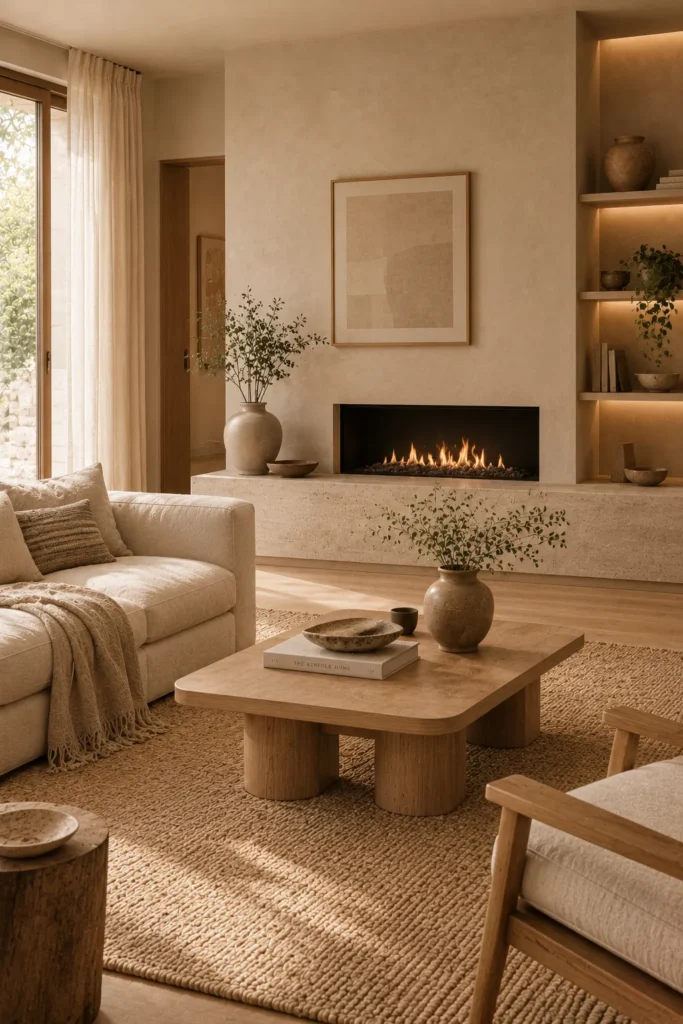
- Creates a strong architectural focal point.
- Adds warmth and comfort without excessive decoration.
- Works beautifully with plaster, stone, and natural wood.
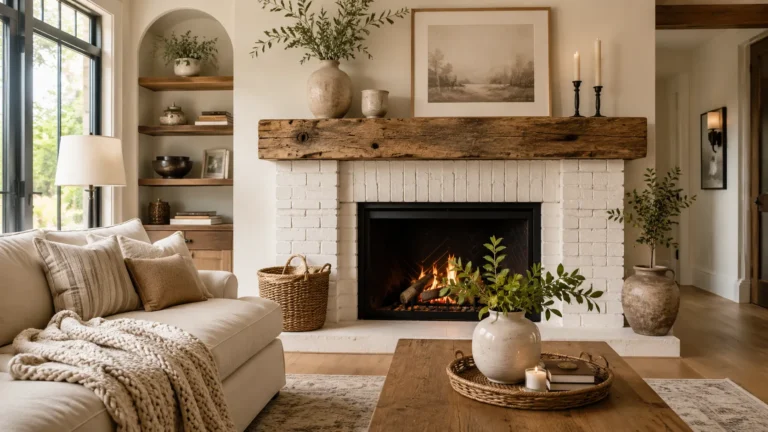
A minimalist fireplace can become the natural focal point of a Japandi living room while reinforcing its emphasis on warmth and simplicity. Whether you choose a traditional fireplace, modern insert, or clean-lined electric model, keep the surrounding design restrained. A plaster, stone, or softly textured wall can provide enough visual interest without requiring a large mantel display. Pair the fireplace with low furniture and natural materials so the entire arrangement feels grounded. The goal is to create a comfortable gathering point rather than a heavily decorated feature wall that competes with the rest of the room.
If you already have a fireplace with a traditional surround, you do not necessarily need to replace it. Simplifying the mantel and surrounding decor can shift its appearance considerably. Remove unnecessary accessories and focus on one or two natural materials, such as wood and ceramic. Make sure any fireplace treatment follows appropriate safety and clearance requirements for the specific unit. In my experience, restraint around a fireplace often makes the feature feel more luxurious because the eye has room to appreciate its shape and texture. Soft lighting nearby can further enhance the cozy effect during evening hours.
24. Textured Accent Wall
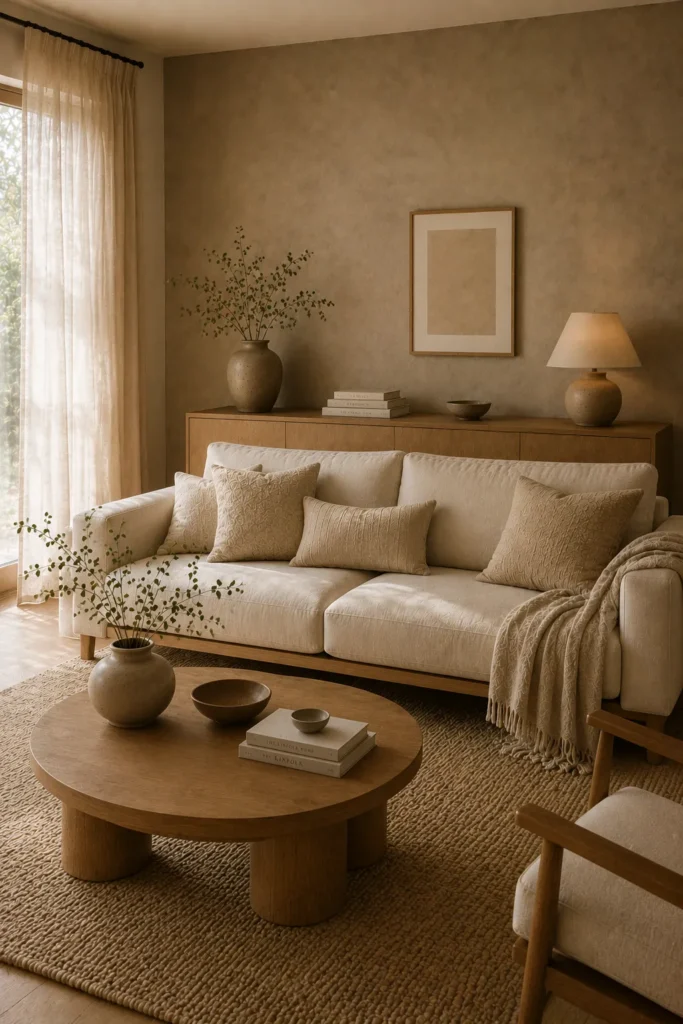
- Adds depth while keeping the color palette restrained.
- Creates a subtle backdrop for simple furniture.
- Helps large blank walls feel intentional without heavy decor.
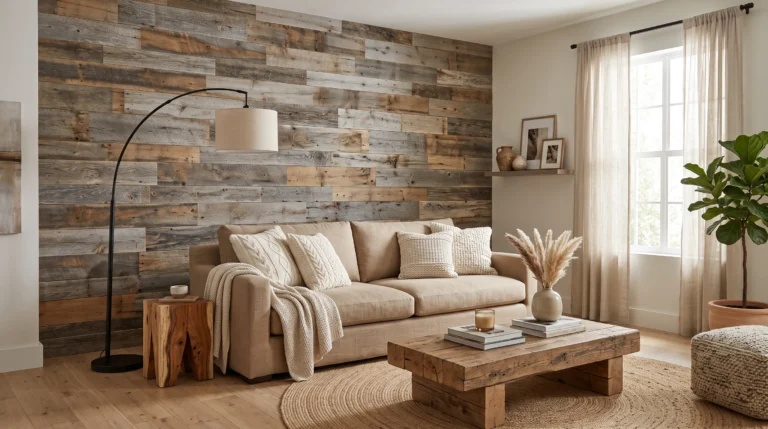
A textured accent wall can give a Japandi living room more depth without relying on bold color or complicated decoration. Consider subtle plaster, limewash, microcement, or another matte finish that creates gentle variation across the surface. Warm beige, greige, ivory, and soft taupe are particularly effective because they maintain the calm neutral foundation. Use the textured wall behind the sofa, fireplace, or media console where it can naturally become a visual anchor. Keep surrounding furniture and accessories simple so the wall texture remains noticeable without making the room feel busy.
The finish you choose should suit the architecture and maintenance needs of your home. Heavily textured surfaces may be beautiful but can collect dust or feel visually dominant in a small room. A finer texture often provides enough depth while remaining versatile. Test samples under different lighting conditions before committing, especially if the wall receives strong sunlight. I’ve noticed that subtle wall treatments can make a room feel more finished even when there is very little artwork or decoration. This is particularly useful for people who prefer minimal styling but still want their living room to have character.
25. Paper Pendant Light
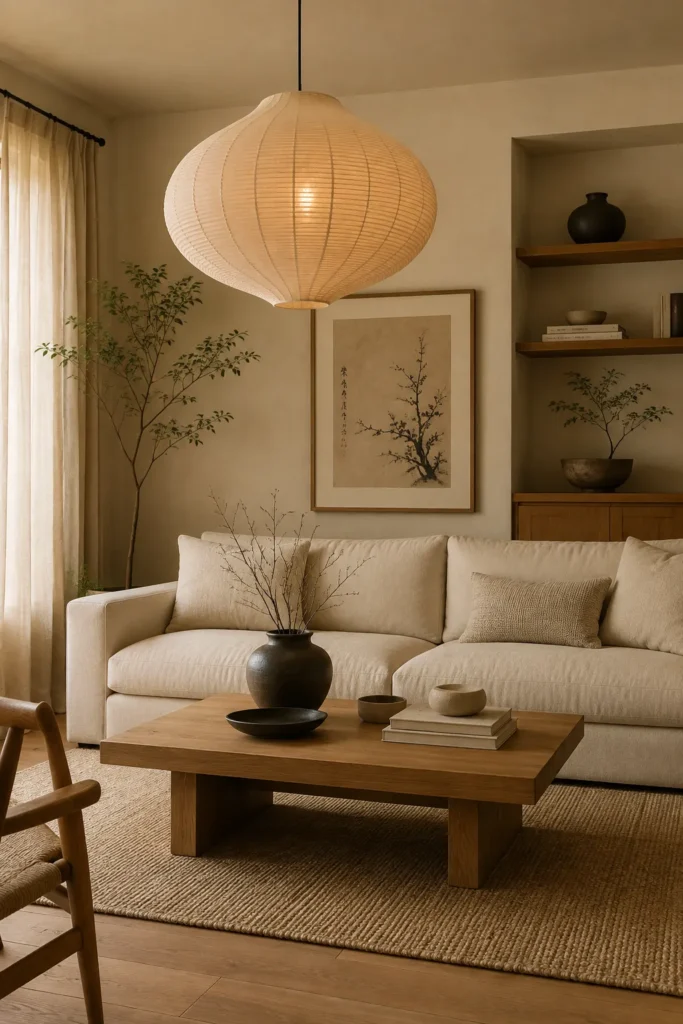
- Adds a soft sculptural element overhead.
- Diffuses light for a warmer evening atmosphere.
- Complements natural wood and neutral textures beautifully.
A paper pendant light can bring softness and gentle movement to a Japandi living room while providing practical illumination. Its lightweight appearance works especially well with low furniture and uncluttered layouts because it adds height without creating visual heaviness. Choose a simple rounded, oval, or softly sculpted shade in white, ivory, or warm beige. Hang it above the main seating area where it can define the room without blocking sightlines. When switched on, the paper-like material diffuses light beautifully, creating a warm glow that complements wood, linen, and other natural textures.
Pay attention to the pendant’s size and hanging height so it feels proportional to the room. A very small fixture can disappear above a large seating arrangement, while an oversized shade may dominate a compact space. Warm bulbs usually create the most inviting result, especially during evening hours. If you have low ceilings, choose a shallower design or position the fixture carefully to preserve comfortable head clearance. I’ve noticed that a simple pendant can act almost like functional sculpture, giving a minimalist room a memorable focal point without adding unnecessary decorative objects.
Conclusion
A beautiful Japandi living room is all about balance: clean lines without feeling stark, natural materials without looking rustic, and minimal decor without losing personality. These japandi living room ideas can help you create a space that feels warmer, calmer, and more intentional without requiring a complete redesign. Start with one or two changes that fit your home, such as adding textured fabrics, light wood, soft lighting, or a neutral color layer. I’ve noticed that small adjustments can make a surprisingly big difference. Save this post on Pinterest, try your favorite ideas, and share it with someone who loves a peaceful, timeless home.