21 Cozy Modern Farmhouse Fireplace Ideas to Steal Today
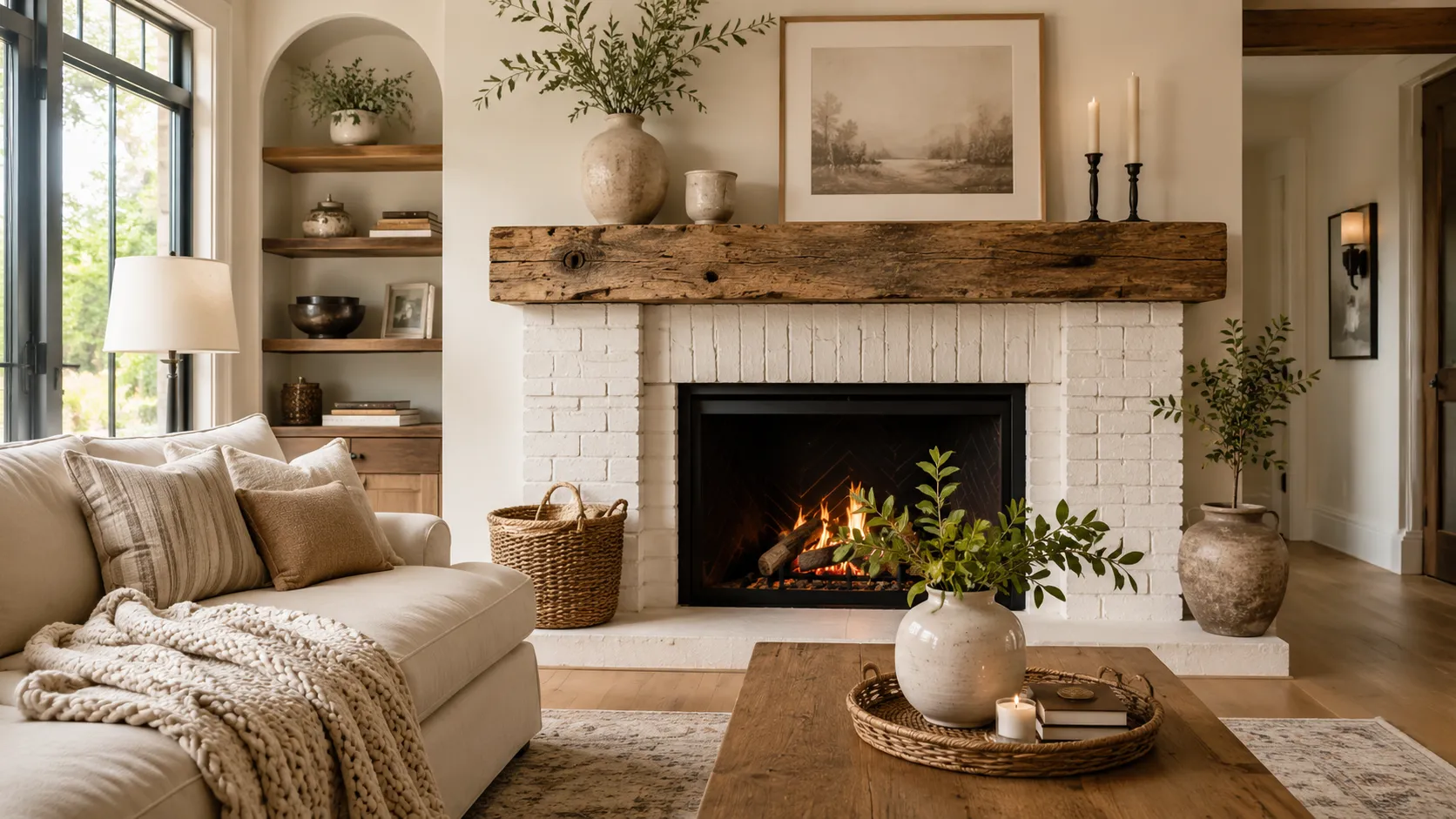
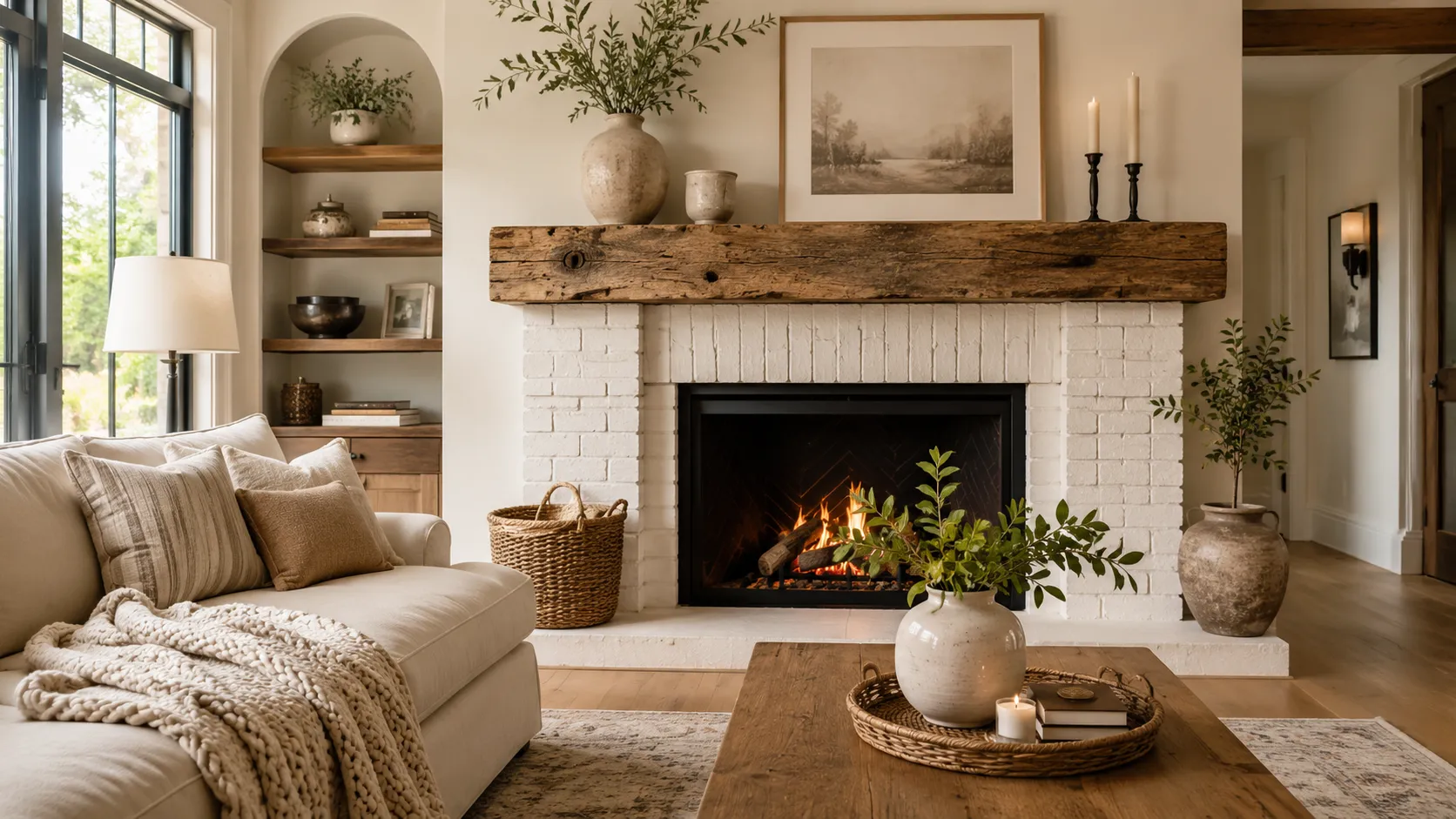
A beautiful fireplace can completely change how a living room feels. The right modern farmhouse fireplace can turn a plain wall into a warm, inviting focal point filled with texture, character, and everyday comfort. Whether your current fireplace feels outdated, too dark, too simple, or disconnected from the rest of your decor, a few thoughtful design changes can make a remarkable difference.
In this article, you will discover 21 inspiring ideas featuring natural wood mantels, textured stone, painted brick, plaster finishes, built-in storage, cozy seating, and more. In my experience, the most successful fireplace updates balance beautiful materials with practical choices that work for real homes. These ideas will help you create a space that feels stylish, comfortable, personal, and worth saving for your next home project.
1. Reclaimed Wood Mantel
- Adds instant warmth to a clean, modern fireplace wall.
- Creates a natural focal point without making the room feel heavy.
- Balances painted brick, plaster, or smooth walls with rustic texture.
- Works beautifully with simple ceramics, greenery, and understated seasonal decor.
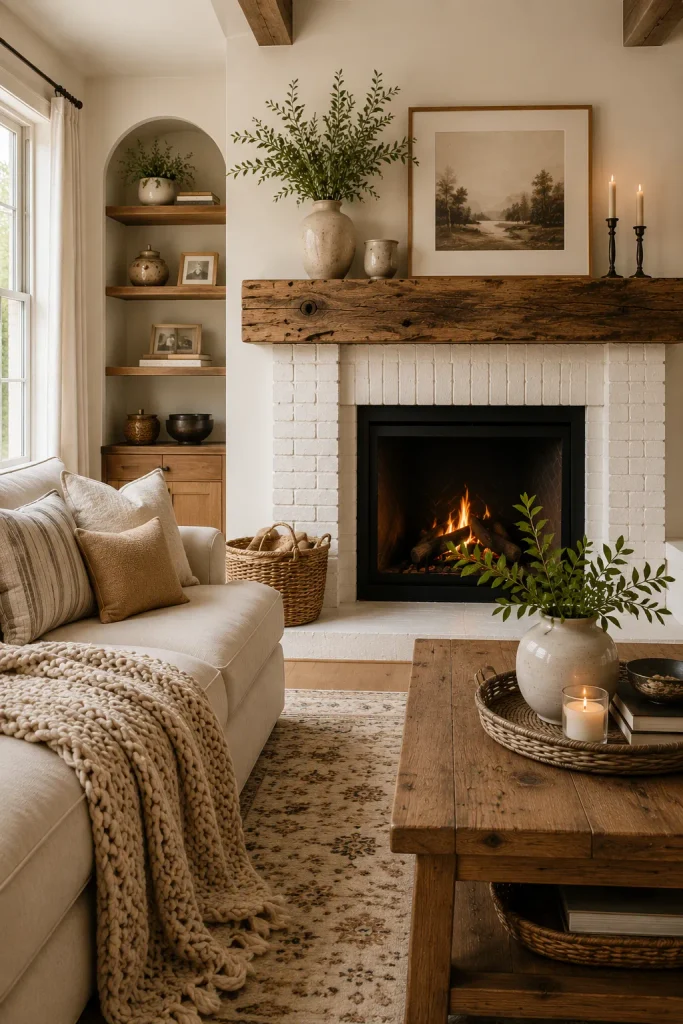
A chunky reclaimed wood mantel can completely change the personality of an otherwise plain fireplace. The aged grain, knots, and natural imperfections bring warmth that smooth modern finishes sometimes lack. This idea works especially well when the surrounding wall is kept simple, allowing the wood to become the main visual anchor. Pair it with white brick, soft plaster, or a light neutral wall for contrast. In my experience, a substantial mantel also makes decorating easier because even a few carefully chosen objects can create a finished, layered look.
The beauty of this setup is its ability to bridge rustic character and cleaner contemporary styling. Choose a beam with natural variation rather than an overly polished finish, then keep the accessories restrained. A ceramic vase, framed artwork, small stack of books, or trailing greenery can be enough. I’ve noticed that too many tiny decorations can make a mantel feel cluttered, especially in smaller rooms. The result should feel collected but breathable. This approach gives the hearth a grounded presence while preserving the calm, bright atmosphere people love in modern farmhouse interiors.
2. White Brick Surround
- Brightens a dark or dated fireplace area.
- Adds texture without introducing busy patterns.
- Creates a clean backdrop for wood, black metal, and neutral decor.
- Helps the fireplace blend naturally into both casual and polished spaces.
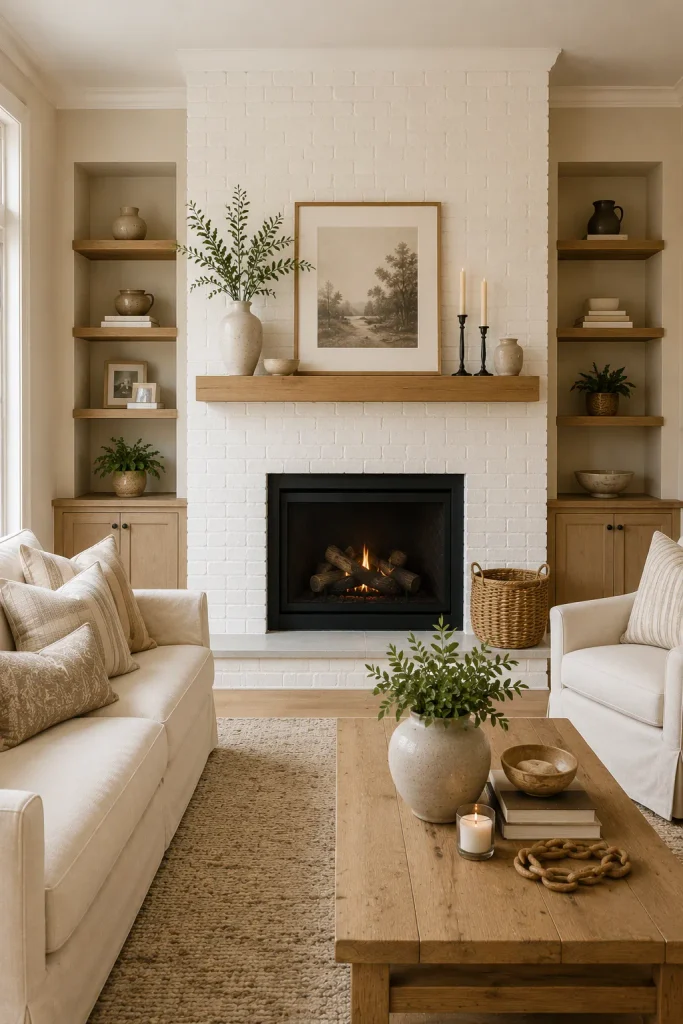
White brick is one of the easiest ways to make a fireplace feel fresh while keeping plenty of texture. Instead of disappearing into the background, the brick catches natural light and creates subtle depth across the wall. A white or soft warm-white finish works particularly well with oak floors, linen furniture, and black metal details. This modern farmhouse fireplace look can also make a compact living room appear more open because the lighter surface reduces visual heaviness. The key is choosing a shade that complements the room rather than using a stark white that feels cold or disconnected.
For a more polished result, balance the textured brick with smoother materials nearby. A simple wood mantel, matte black firebox, and minimal decor keep the arrangement from feeling overly rustic. I’ve seen this work well in homes where the original brick was attractive but visually dated. Painting it can preserve the texture while giving the entire room a cleaner direction. Keep grout lines visible instead of filling every surface with heavy paint buildup. The finished fireplace feels bright, timeless, and flexible enough to style differently as seasons, furniture, and personal tastes change.
3. Black Fireplace Insert
- Creates strong contrast against light walls and natural materials.
- Gives an older hearth a cleaner, more updated appearance.
- Connects easily with black lighting, hardware, and furniture accents.
- Adds definition without requiring a dramatic full-room renovation.
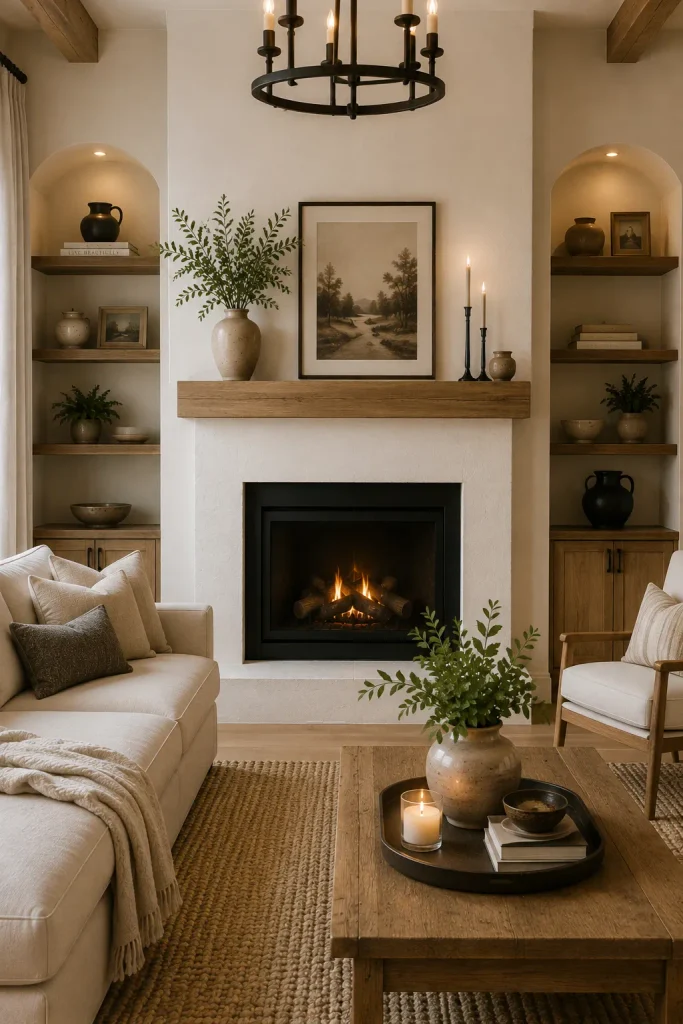
A matte black fireplace insert creates the kind of crisp contrast that instantly gives a softer room more structure. Against white brick, pale plaster, or warm beige walls, the dark frame draws attention directly toward the hearth. This works because the black finish feels modern while still pairing naturally with farmhouse materials such as wood, stone, and woven textiles. Keep the surrounding palette warm so the contrast feels intentional rather than harsh. A few repeated black details, such as a floor lamp or picture frame, can help visually connect the fireplace to the rest of the room.
The best part of this update is that it can deliver a noticeable change without rebuilding the entire fireplace. A clean insert or dark firebox frame can make surrounding finishes look sharper and more intentional. That’s why many designers recommend repeating a strong accent color in small amounts instead of spreading it everywhere. Pair the black feature with a warm wood mantel and soft neutral furnishings to maintain balance. The finished space feels grounded, current, and cozy, with enough contrast to make the fireplace stand out as a natural centerpiece.
4. Stone Accent Wall
- Adds natural texture and depth to a simple living room.
- Creates a strong focal point without relying on bold colors.
- Pairs beautifully with warm wood, linen, and black metal accents.
- Gives the fireplace a timeless look that feels both rustic and current.
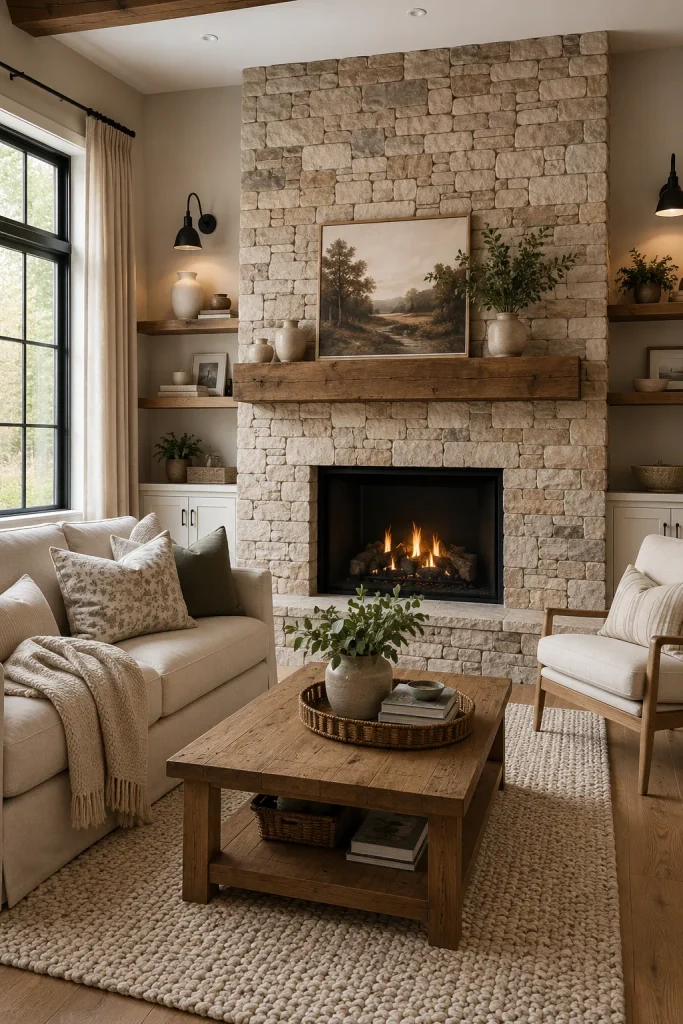
A natural stone fireplace wall brings instant character to a room that feels flat or unfinished. The variation in color and texture creates depth, making the fireplace look substantial even when the rest of the space stays simple. Choose warm gray, cream, beige, or soft taupe stone for a cozy result that works with modern farmhouse furnishings. A thick wood mantel adds another layer of warmth above the hearth. I’ve noticed that stone looks especially inviting when balanced with soft textiles, because the contrast keeps the room from feeling cold or overly rugged.
This idea works best when the fireplace remains the room’s strongest architectural feature. Avoid competing patterns on nearby walls, and let the natural stone provide most of the visual movement. A neutral sofa, woven rug, and simple ceramic accessories will soften the heavier material while maintaining a relaxed atmosphere. Consider extending the stone to the ceiling if you want to emphasize height and create a more dramatic focal point. The result feels established and timeless, yet the clean furnishings keep it connected to a fresh, updated farmhouse style.
5. Arched Firebox
- Softens the straight lines found in many modern rooms.
- Adds an architectural detail that feels custom and timeless.
- Creates a gentle focal point without requiring elaborate decoration.
- Works with plaster, brick, stone, or tiled fireplace surrounds.
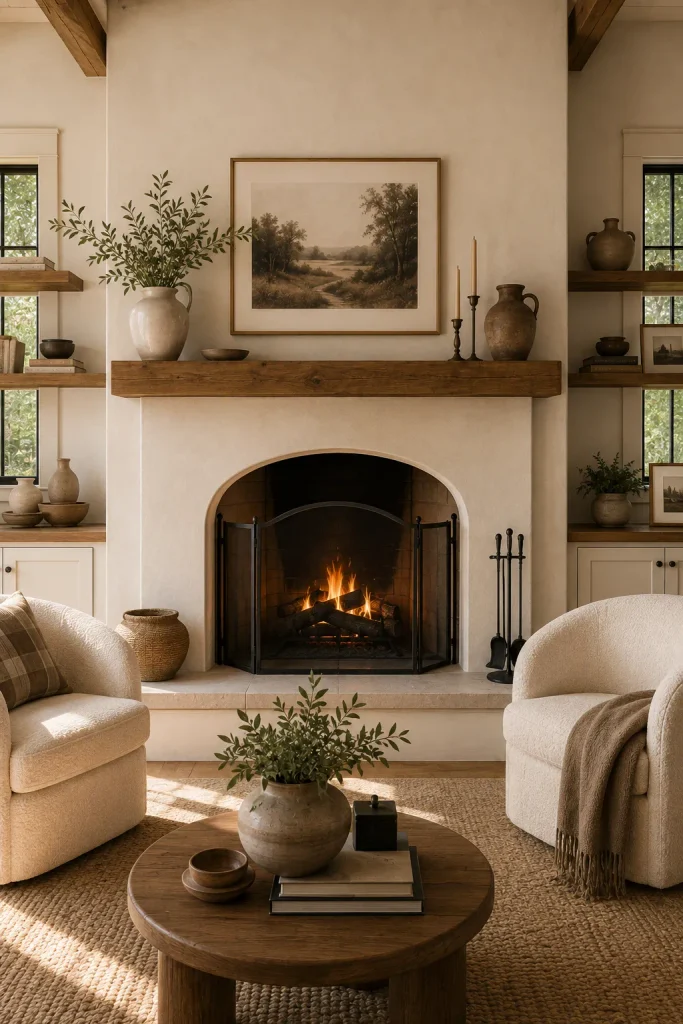
A softly curved firebox can make a fireplace feel instantly more special without overwhelming the room. The arch introduces a gentle shape that contrasts beautifully with straight walls, square furniture, and clean-lined shelving. It also gives the hearth an older, handcrafted character while still fitting comfortably into a modern home. Use smooth plaster, painted brick, or natural stone around the opening depending on how much texture you want. In my experience, this detail often looks most effective when the surrounding decor remains simple and allows the architectural shape to stand out.
The key is to repeat the softness of the arch elsewhere in subtle ways. A rounded mirror, curved chair, or organic ceramic vase can help the shape feel connected to the rest of the room. Keep the mantel clean and avoid overly ornate accessories that compete with the opening. Warm whites, sandy beige, muted taupe, and natural wood create an especially welcoming combination. I’ve seen this work well in both renovated older homes and newer builds because the arch adds personality without making the design feel tied to one particular trend.
View: 25 Whimsical Bedroom Ideas for Adults You’ll Love Today
6. Plaster Fireplace Finish
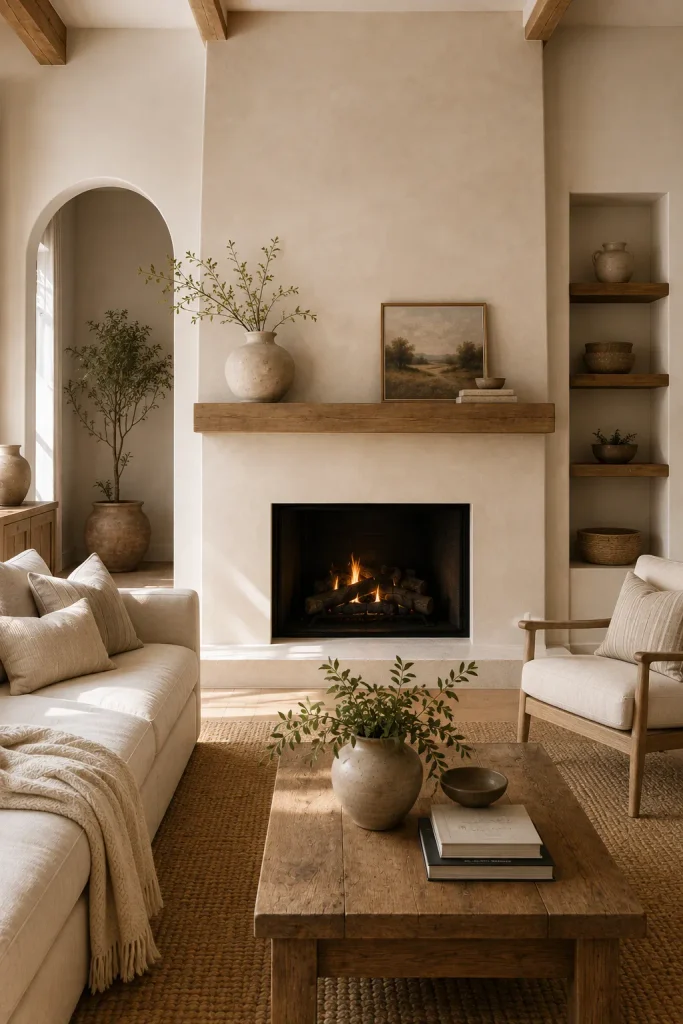
- Creates a soft, seamless alternative to busy brick or stone.
- Adds subtle texture while maintaining a clean modern appearance.
- Works beautifully in neutral rooms with layered natural materials.
- Makes the fireplace feel custom without adding excessive decoration.
A hand-applied plaster finish can transform a dated fireplace into a calm, sculptural centerpiece. Its soft movement and imperfect texture create visual interest without the stronger pattern of brick, tile, or stone. Choose warm ivory, creamy beige, or muted greige to keep the surface connected to natural wood and neutral furnishings. This approach is particularly useful when a room already contains several textures and needs the fireplace to feel quieter. The smooth finish also creates a beautiful backdrop for a simple mantel, allowing carefully chosen decor to stand out without visual competition.
What makes plaster especially appealing is its ability to feel both refined and relaxed at the same time. Slight tonal variation gives the surface depth, while the continuous finish can make the fireplace appear taller and more architectural. I’ve noticed that this style looks best with simple accessories rather than a crowded mantel display. Add one piece of artwork, a handmade vase, or a small branch arrangement for a natural finishing touch. Combined with oak flooring, soft textiles, and warm lighting, the fireplace becomes an understated focal point that feels welcoming every day.
7. Floating Wood Mantel
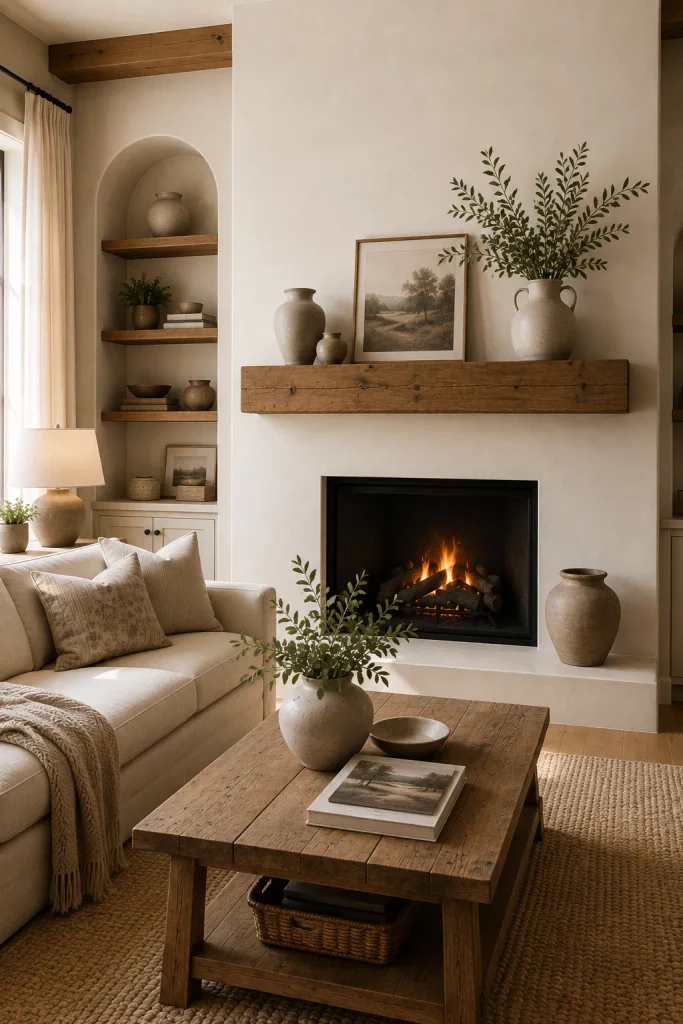
- Creates a clean, uncluttered focal point above the hearth.
- Adds warmth without the visual weight of a traditional mantel structure.
- Works especially well with plaster, painted brick, or simple tile.
- Provides enough space for a few carefully chosen decorative pieces.
A floating wood mantel proves that a simple detail can make a fireplace feel warmer and more complete. Without bulky brackets or decorative trim, the clean horizontal line creates a polished contrast against textured plaster, brick, or tile. Choose natural oak, walnut, or reclaimed wood with visible grain to bring organic character into the room. The streamlined shape also helps smaller living areas feel less crowded. I’ve seen this work particularly well when homeowners want farmhouse warmth but prefer a cleaner, more contemporary look that does not feel overly rustic.
Styling matters because the mantel’s simplicity leaves every object clearly visible. Try leaning a framed print against the wall beside a ceramic vase or a small stack of books, then leave open space around them. This prevents the display from feeling crowded and keeps attention on the fireplace itself. A floating mantel also adapts easily when your decor changes through the seasons. Add subtle greenery in spring, warm candles in autumn, or minimal holiday accents in winter. The result is a flexible, balanced focal point that remains cozy throughout the year.
8. Herringbone Tile
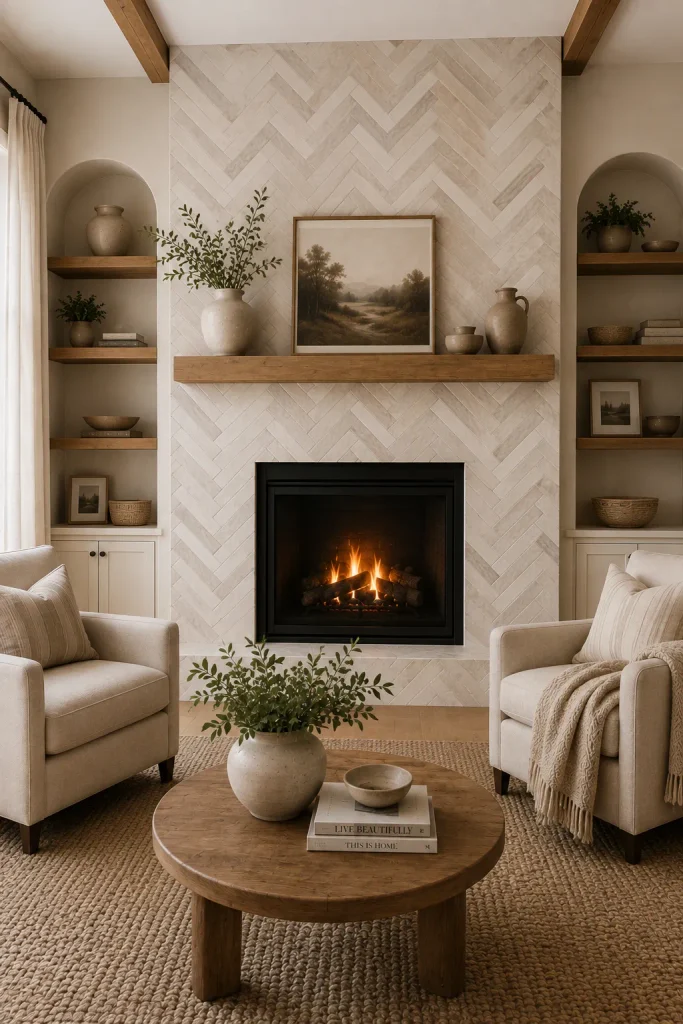
- Adds pattern and movement without using bold colors.
- Gives a plain fireplace surround a more custom appearance.
- Works with neutral palettes while still creating visual interest.
- Pairs beautifully with wood, black metal, and soft natural textiles.
Herringbone tile adds movement to a fireplace without making the room feel busy or overdesigned. The angled layout naturally draws the eye upward or inward, depending on how the pattern is placed around the firebox. Soft gray, cream, taupe, or warm white tiles keep the effect subtle and easy to coordinate with farmhouse furnishings. This is a useful option when the room needs more architectural interest but does not need another strong color. The pattern can make even a simple surround feel carefully designed and visually memorable from across the room.
For the best balance, keep nearby finishes relatively calm. A simple wood mantel, neutral walls, and soft furnishings allow the herringbone pattern to become the main decorative detail. I’ve noticed that matte or lightly textured tiles often feel warmer than glossy surfaces in relaxed living spaces. Consider using larger-format tiles if you want a cleaner pattern or smaller tiles for a more detailed look. Repeating one tile tone in nearby pillows, rugs, or artwork can also tie everything together. The finished fireplace feels polished, layered, and comfortably inviting without appearing too formal.
9. Built-In Shelving
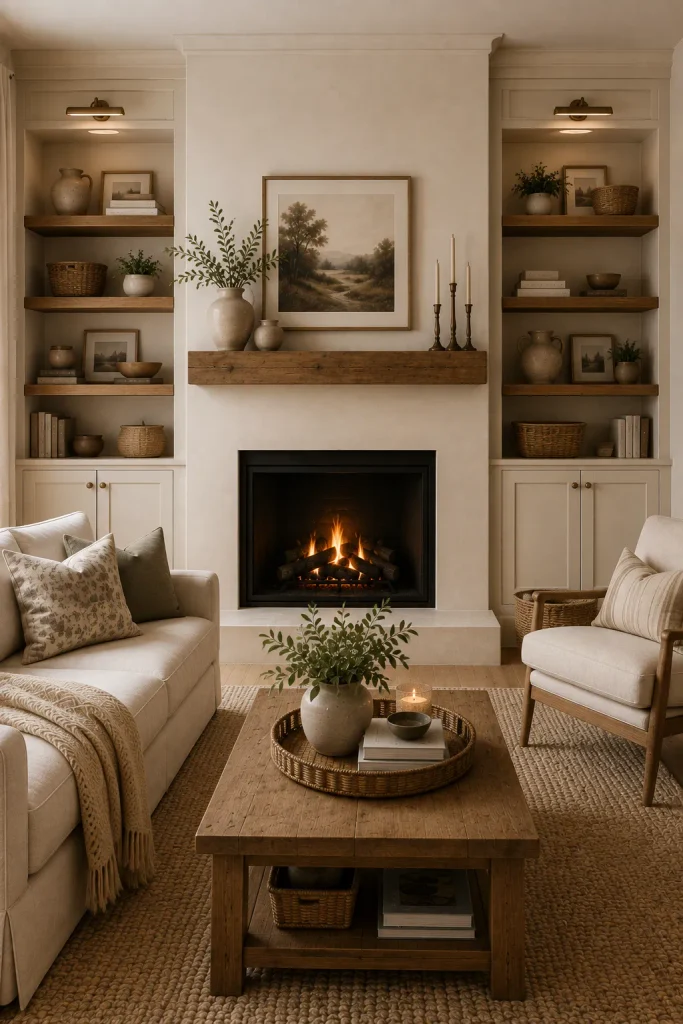
- Turns the fireplace wall into a more useful and organized feature.
- Adds storage and display space without needing extra furniture.
- Creates visual balance around a central hearth.
- Makes it easy to layer books, baskets, artwork, and personal decor.
Built-in shelving around the fireplace can transform an empty wall into one of the most functional areas of the home. The combination of storage, display space, and architectural framing makes the hearth feel more intentional and connected to the room. Paint the cabinetry a soft cream, warm white, or muted greige, then add natural wood shelves for contrast. This arrangement works especially well in family rooms where extra storage is always useful. Baskets can hide everyday clutter, while open shelves provide space for books, pottery, framed art, and meaningful objects.
The most successful built-ins feel styled but not overly perfect. Mix vertical and horizontal stacks, vary the height of decorative objects, and leave some shelves partially open to create breathing room. In my experience, filling every inch makes shelving look heavier and can distract from the fireplace. Repeat materials from the room, such as oak, black metal, woven fibers, or linen, to create a connected appearance. Closed lower cabinets are also practical for toys, blankets, electronics, or seasonal items. Together, the shelves and fireplace create a cozy focal wall that is both beautiful and genuinely useful.
10. Shiplap Fireplace Wall
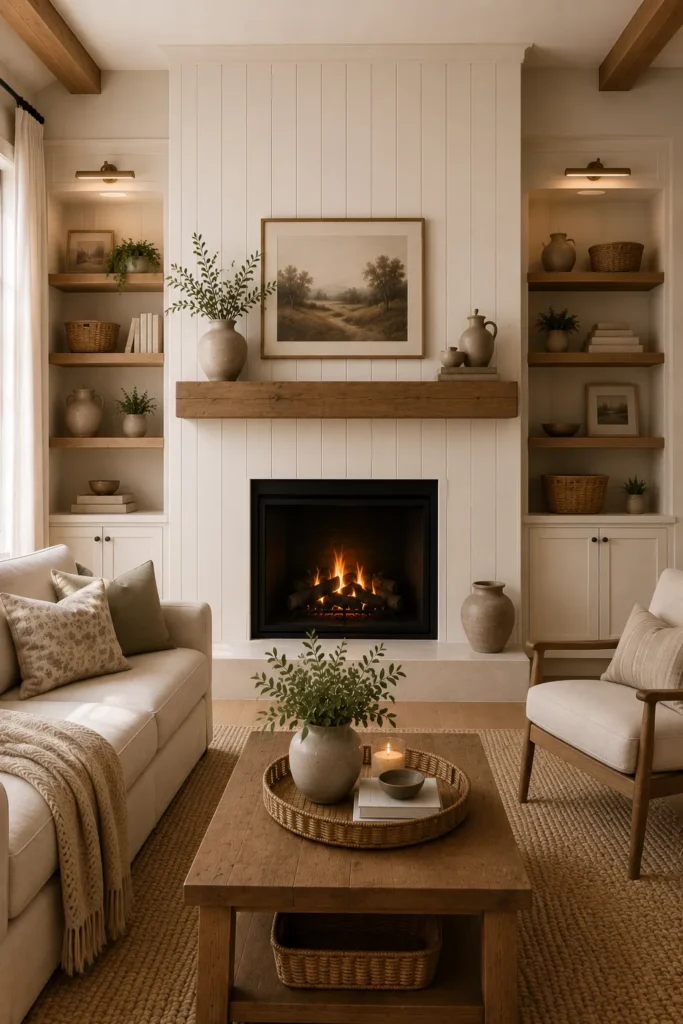
- Adds architectural texture to a plain fireplace wall.
- Creates vertical lines that can make the ceiling feel higher.
- Blends easily with natural wood and neutral furnishings.
- Offers a clean farmhouse detail without overwhelming the room.
Vertical shiplap can give a simple fireplace wall instant structure while keeping the overall room bright and relaxed. The narrow lines naturally guide the eye upward, making this a useful choice for spaces with lower ceilings or a compact footprint. Soft white, warm cream, or muted beige finishes work beautifully with oak mantels and natural flooring. Unlike heavily textured stone, shiplap creates interest through repetition rather than visual weight. The result feels clean and architectural, giving the fireplace more presence while still leaving plenty of room for layered furnishings and personal decor.
For a balanced look, let the wall treatment remain the main detail and keep the mantel styling restrained. A large framed artwork, ceramic vessel, or simple greenery arrangement can add personality without covering the texture. I’ve noticed that vertical boards often feel more current than traditional horizontal layouts when paired with clean-lined furniture. Adding a matte black firebox or subtle iron accents creates enough contrast to prevent the space from looking overly soft. This approach delivers recognizable farmhouse character while maintaining the fresh simplicity that makes modern interiors feel calm and livable.
11. Rustic Stone Hearth
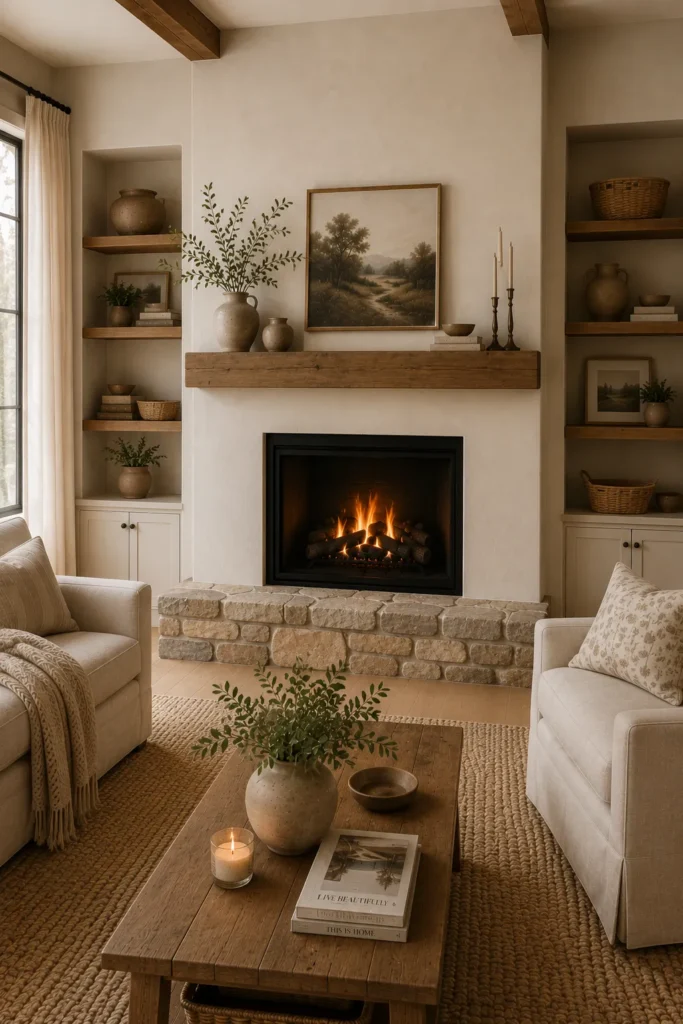
- Adds a grounded, substantial detail beneath the fireplace.
- Creates extra visual texture at floor level.
- Offers a natural place for seasonal decor or a cozy fireside arrangement.
- Balances smooth walls and streamlined furniture with rustic character.
A low stone hearth can make a fireplace feel more grounded and inviting, especially in a room filled with smooth modern surfaces. Natural stone introduces weight and texture near the floor, helping anchor the entire fireplace wall. Choose warm beige, soft gray, or creamy tones that connect with the surrounding flooring and furnishings. A wider hearth can also create a practical ledge for seasonal displays or simple fireside accessories. In my experience, this feature works best when the stone color is echoed subtly elsewhere through rugs, ceramics, or other natural materials.
The surrounding finishes should stay relatively simple so the hearth does not compete with too many textures. Pair it with smooth plaster, painted brick, or a clean wall finish, then add a warm wood mantel above. This creates a layered composition with visual interest at different heights. A soft wool rug and linen seating can further balance the stone’s rugged surface. I’ve seen this combination make large open rooms feel warmer because the fireplace gains a stronger physical presence. The finished space feels relaxed, substantial, and naturally suited for everyday gathering.
12. Oversized Landscape Art
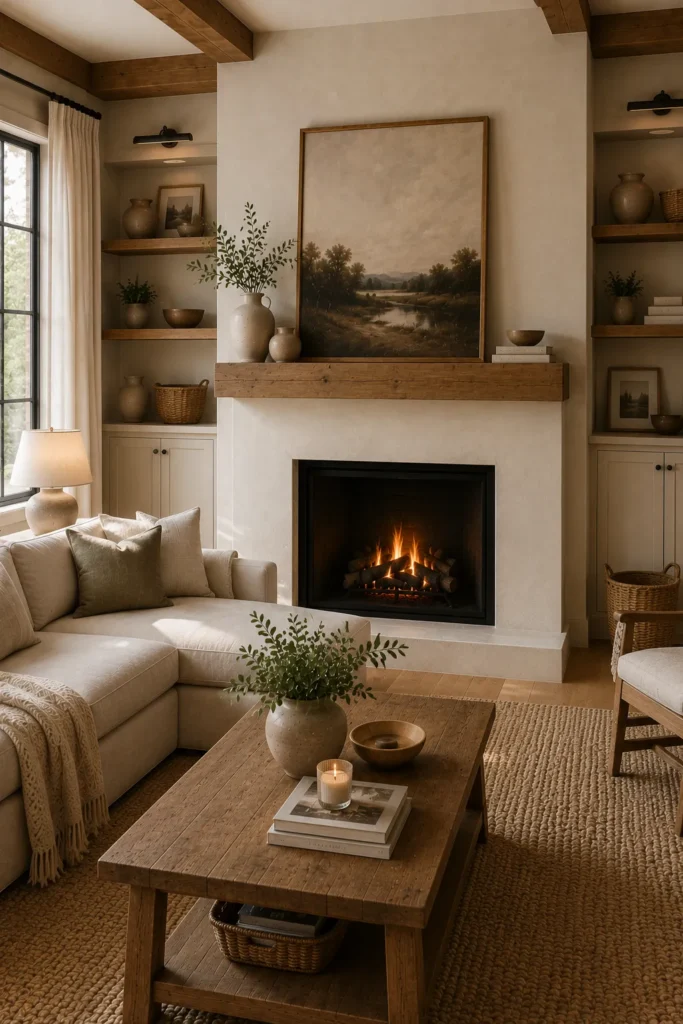
- Gives the mantel one strong focal point instead of many small objects.
- Adds personality and softness to a simple fireplace wall.
- Helps introduce subtle color without changing the entire room.
- Creates an easy, layered look that feels collected and relaxed.
One oversized landscape artwork can transform a plain mantel into a calm and intentional focal point. Instead of filling the surface with several small accessories, a single large piece creates visual clarity and gives the fireplace wall more presence. Choose muted scenes in soft green, warm beige, dusty blue, or earthy brown to complement natural wood and neutral textiles. Leaning the artwork casually against the wall can make the arrangement feel relaxed rather than overly formal. This approach is especially useful when the fireplace itself has a simple finish and needs additional personality.
Scale is what makes this idea work so well in a modern farmhouse fireplace area. Artwork that is too small can look disconnected, while a larger piece helps visually link the mantel to the wall above it. Keep supporting accessories minimal, perhaps adding one ceramic vase or a small branch arrangement. I’ve noticed that slightly imperfect, textured artwork often feels more at home than glossy prints in relaxed farmhouse spaces. The final composition feels warm and personal, while the limited number of objects keeps cleaning and restyling surprisingly simple for everyday living.
13. Limewashed Brick
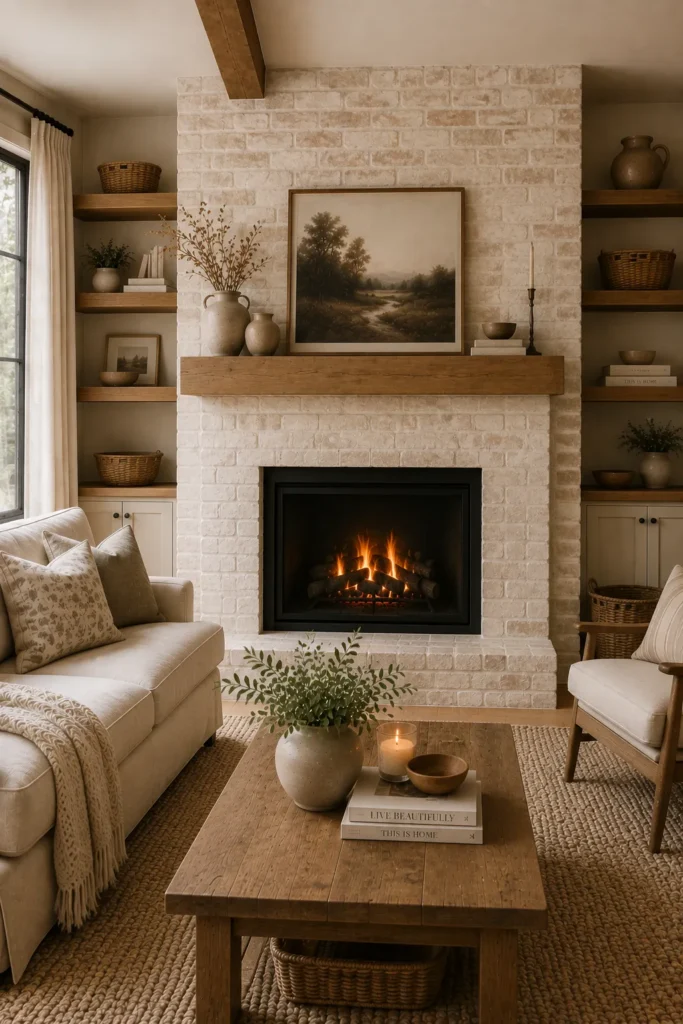
- Softens dark or outdated brick while preserving its natural texture.
- Creates a lighter, more relaxed look than solid opaque paint.
- Adds subtle variation that makes the fireplace feel aged and authentic.
- Pairs beautifully with warm wood, linen, and handmade decor.
Limewashed brick gives an existing fireplace a softer, more relaxed appearance without completely hiding its original character. The finish allows some of the natural brick variation to remain visible, creating depth that feels aged rather than perfectly uniform. Warm white, cream, and pale beige tones work especially well with oak mantels and neutral furnishings. This update can brighten a heavy fireplace wall while preserving the texture that makes brick appealing. In my experience, the slightly imperfect finish often feels more natural and welcoming than a completely solid coat of paint.
The amount of coverage can dramatically change the final look, so testing a small area first is helpful. A lighter application preserves more of the original color, while additional layers create a brighter and cleaner appearance. Keep the surrounding decor simple so the textured surface remains visible. A black firebox, natural wood mantel, and soft woven rug create a balanced mix of contrast and warmth. I’ve seen limewashed brick work beautifully in both older homes and newer spaces because it adds character without making the room feel overly rustic or dated.
14. Double-Sided Fireplace
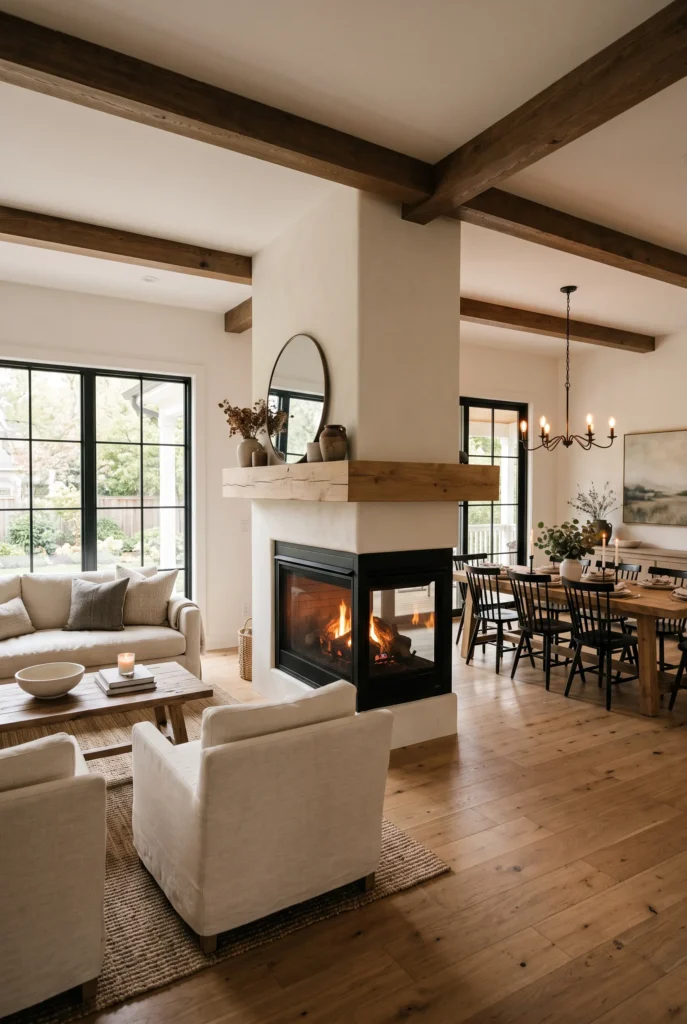
- Connects two living areas with one shared architectural feature.
- Allows warmth and visual interest to be enjoyed from multiple directions.
- Creates subtle separation without closing off an open floor plan.
- Gives a larger home a custom, thoughtfully designed appearance.
A double-sided fireplace can make an open floor plan feel connected while still giving each area its own identity. Positioned between a living room and dining space, it creates a visual divider without blocking light or making the layout feel closed. The shared firebox also allows the warmth and atmosphere of the hearth to be enjoyed from both sides. A simple plaster surround and natural wood mantel keep the structure from feeling too heavy. This idea works especially well in larger rooms where furniture arrangements need a stronger architectural anchor.
The key is to consider how the fireplace looks from every viewing angle. Keep both sides visually balanced, but avoid making them identical if each space has a different purpose. For example, the living room side might include comfortable seating, while the dining side stays cleaner and more streamlined. I’ve noticed that a continuous mantel or consistent material palette helps the entire structure feel intentional. With warm lighting, natural wood, and soft neutral furnishings, this fireplace becomes more than a heat source; it becomes a central feature that connects everyday living spaces.
15. Firewood Storage Nook
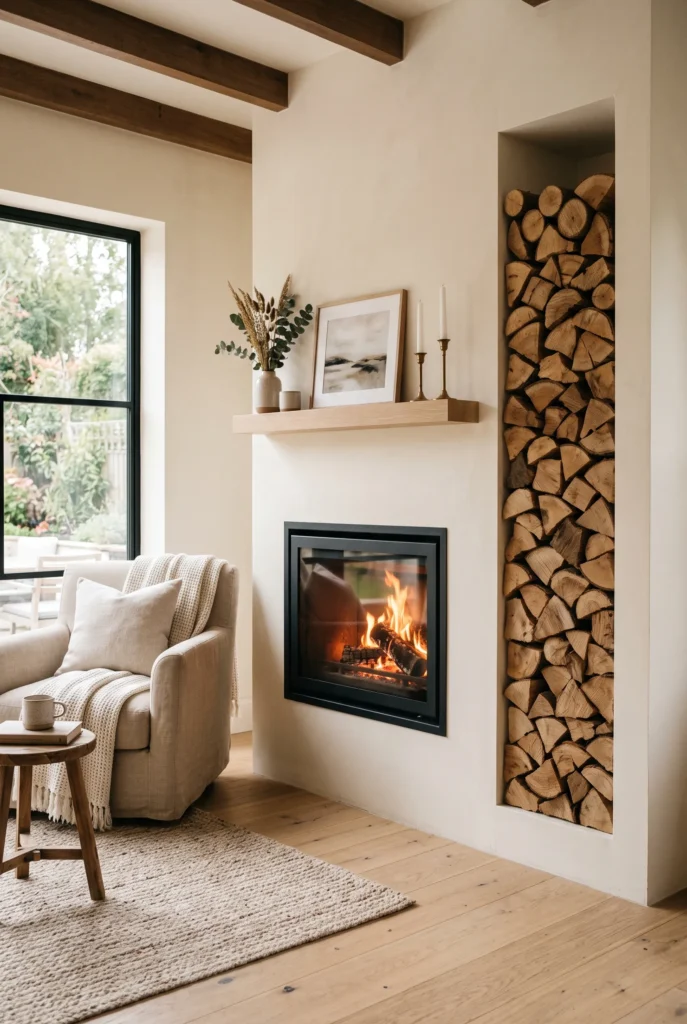
- Adds practical storage without introducing a separate basket or rack.
- Brings natural wood texture directly into the fireplace design.
- Makes the hearth feel warmer and more visually layered.
- Keeps firewood accessible while maintaining a neat, intentional appearance.
A built-in firewood nook adds function and texture to a fireplace wall in one simple feature. Instead of storing logs in a separate basket or metal holder, the recessed opening becomes part of the architecture itself. Neatly stacked wood introduces natural color and organic variation against plaster, brick, or painted finishes. This idea can make a newly built fireplace feel more established and useful from the start. It is especially effective beside a tall fireplace where the vertical niche helps balance the overall proportions and adds interest without requiring extra decoration.
For the cleanest result, keep the storage opening simple and sized appropriately for the room. A narrow vertical niche can feel elegant in a smaller space, while a wider recessed area works well beside a larger hearth. I’ve noticed that neatly stacking similar-sized logs creates a calmer appearance than loosely filling the opening. If the fireplace is not wood-burning, the niche can still provide decorative texture using neatly arranged logs. Combined with soft lighting, natural flooring, and warm textiles, this practical detail gives the entire fireplace wall a cozy, collected farmhouse feel.
16. Dark Green Tile
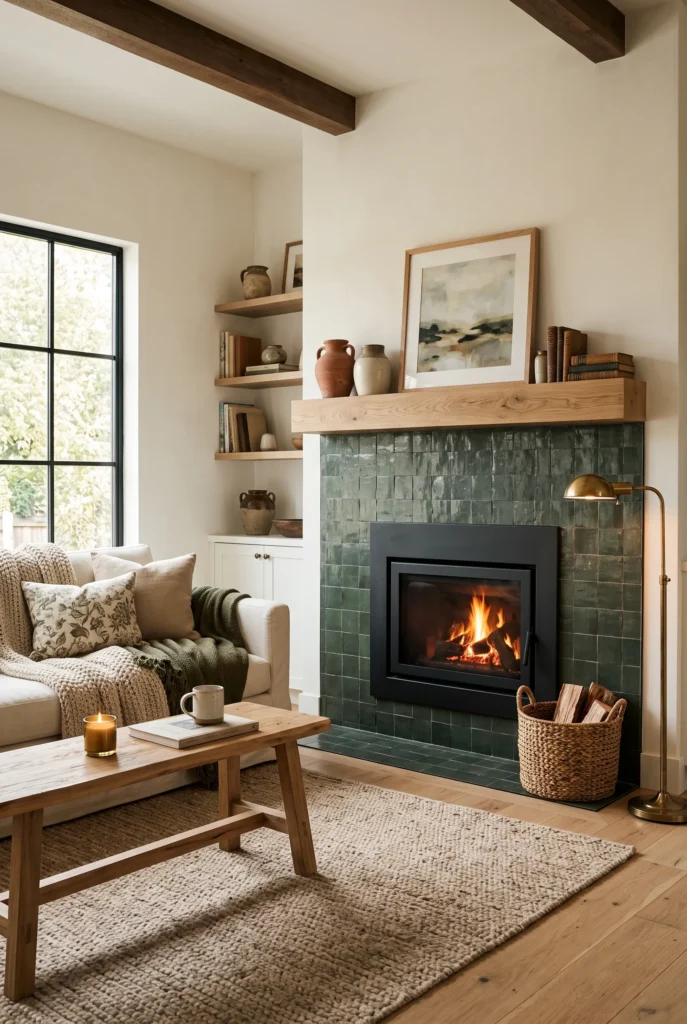
- Adds rich color while keeping the room connected to nature.
- Creates a striking focal point without relying on overly bright tones.
- Pairs beautifully with warm wood, cream fabrics, and black accents.
- Gives a simple fireplace surround a more custom, collected appearance.
Deep green tile can bring unexpected warmth and personality to a fireplace without overpowering the rest of the room. A muted forest, olive, or mossy shade feels especially natural beside oak, walnut, cream linen, and woven textures. The color creates a stronger focal point than neutral finishes while still fitting comfortably into a relaxed farmhouse palette. Handmade or lightly textured tiles add even more depth by catching the light differently across the surface. This is a great option for homeowners who want their fireplace to feel distinctive while keeping the surrounding room calm and inviting.
The best results come from balancing the richer color with lighter materials nearby. A natural wood mantel can soften the tile, while a cream wall and pale rug prevent the fireplace from making the room feel dark. I’ve noticed that matte finishes often create a more relaxed and timeless appearance than highly glossy tiles. Repeat the green subtly through a plant, cushion, or artwork so the color feels connected to the room. The finished design feels grounded and sophisticated, adding personality without sacrificing the cozy simplicity that makes farmhouse spaces so appealing.
17. Minimalist Mantel Decor
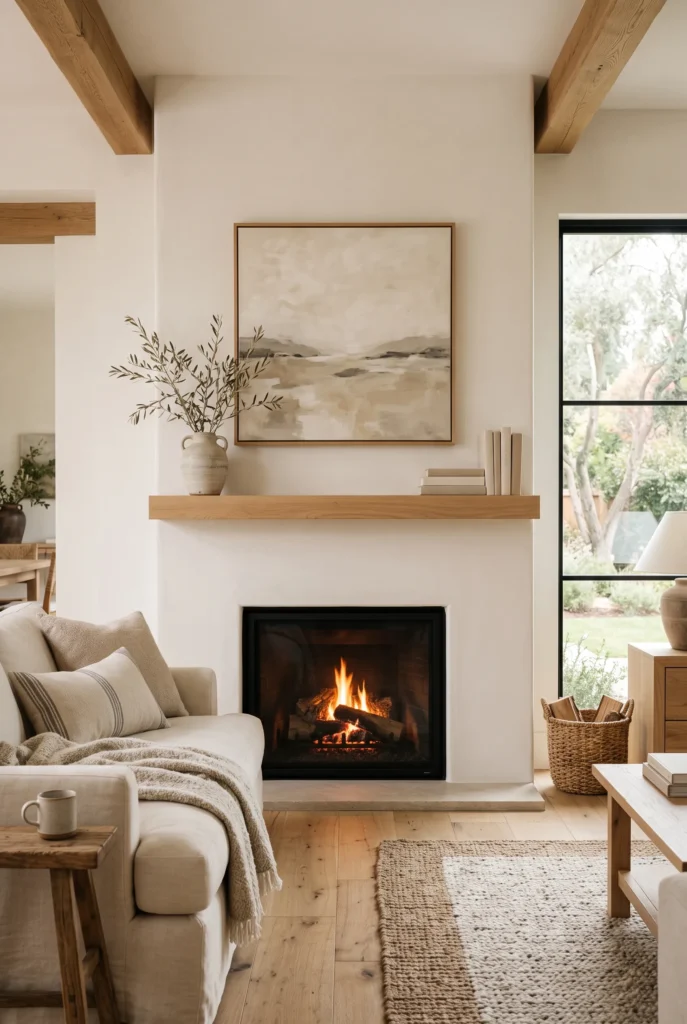
- Keeps the fireplace looking polished without unnecessary clutter.
- Makes a few meaningful pieces feel more intentional.
- Allows beautiful architectural materials to remain visible.
- Simplifies seasonal decorating and everyday cleaning.
A minimally styled mantel can make the entire fireplace feel more refined, even when the surrounding materials are rustic or heavily textured. Instead of filling every inch with small accessories, choose two or three pieces with different heights and shapes. A framed artwork, handmade vase, and small stack of books often provide enough variation without creating visual noise. This approach is especially useful in busy family rooms where too much decor can quickly make the space feel cluttered. The empty areas are just as important because they allow each chosen object to stand out.
Scale and spacing make the biggest difference when creating this look. Start with one larger item as the visual anchor, then add smaller pieces only where they improve the composition. I’ve seen this work well in homes where the mantel previously became a collection point for unrelated objects. Removing excess decor immediately made the fireplace feel more intentional and easier to maintain. Choose materials that repeat elsewhere in the room, such as wood, ceramic, linen, or aged brass. The result feels calm, personal, and polished without losing its welcoming everyday character.
18. Floor-to-Ceiling Stone
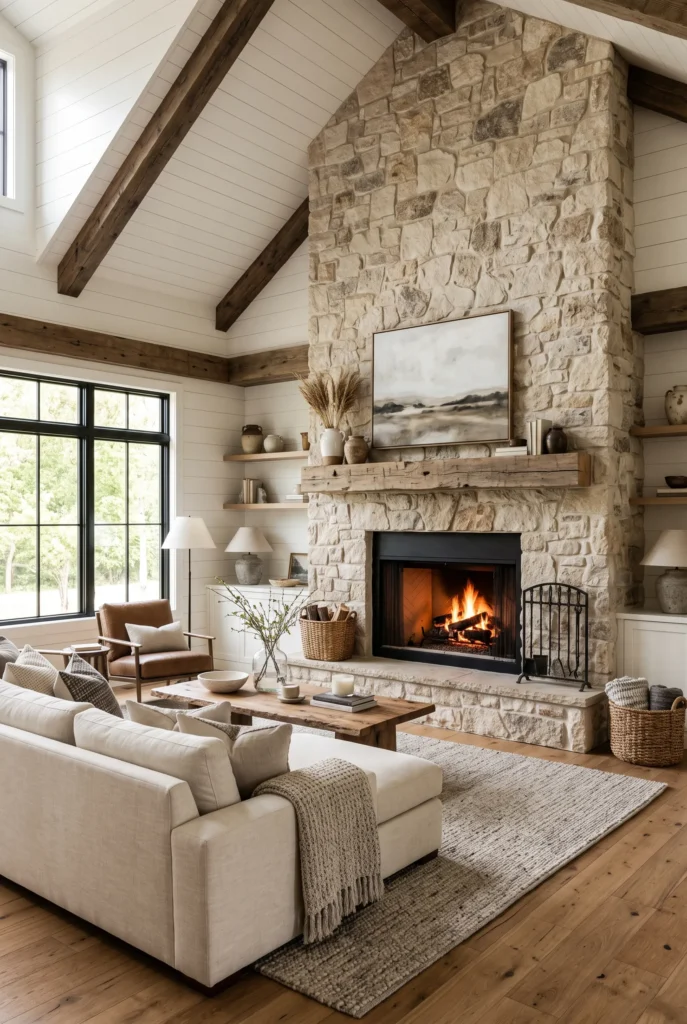
- Creates a dramatic focal point and emphasizes ceiling height.
- Adds timeless natural texture to a large or open living space.
- Balances beautifully with soft textiles and simple furniture.
- Makes the fireplace feel like a strong architectural centerpiece.
Floor-to-ceiling stone creates an immediate sense of scale, making the fireplace feel like a true architectural centerpiece rather than just another wall feature. Extending the material upward draws the eye toward the ceiling and can make even an ordinary room feel taller and more substantial. Choose stones in warm cream, taupe, soft gray, or mixed neutral tones to maintain a comfortable farmhouse atmosphere. A chunky wood mantel provides a natural break between the vertical stone surface and the softer furnishings arranged below, creating a balanced composition with plenty of visual warmth.
Because stone already provides significant texture, the surrounding room benefits from simpler finishes and furnishings. A linen sectional, woven rug, clean-lined coffee table, and understated ceramics can soften the wall without competing for attention. In my experience, choosing stones with subtle color variation creates a more timeless result than selecting a high-contrast pattern. Consider the room’s scale before committing to this treatment, since smaller spaces may benefit from lighter materials or a partial surround. In a larger room, however, the finished fireplace delivers warmth, character, and an impressive sense of permanence.
19. Concrete Fireplace Surround
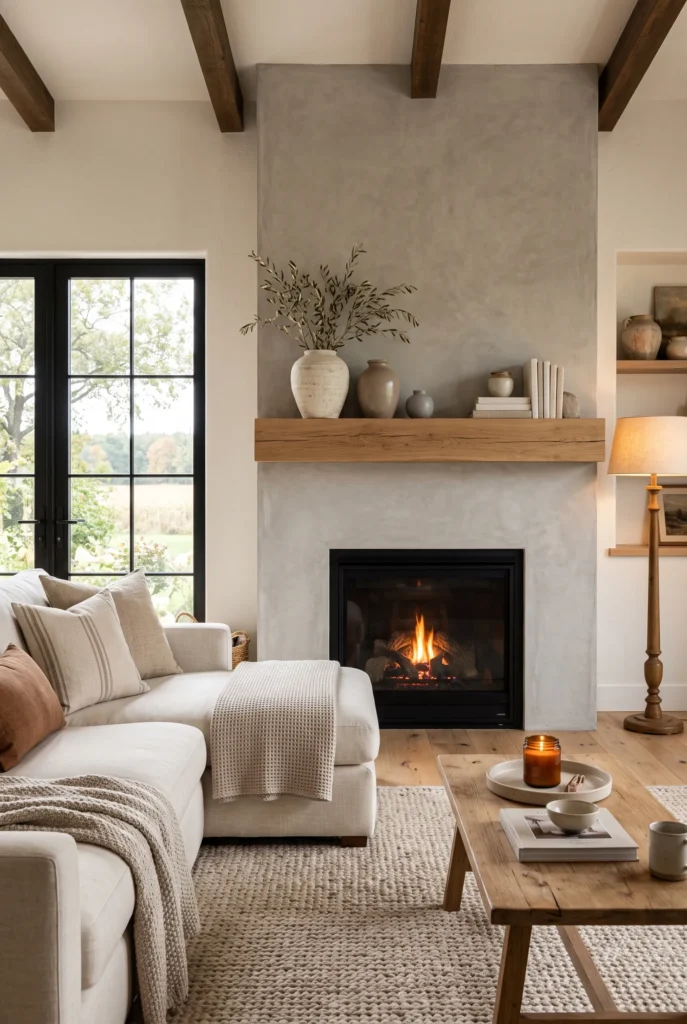
- Adds a clean, contemporary edge to traditional farmhouse materials.
- Creates subtle texture without busy patterns or heavy decoration.
- Pairs naturally with warm wood, linen, and woven accents.
- Gives the fireplace a custom, architectural appearance.
A smooth concrete surround can give a cozy fireplace a more contemporary edge while still feeling warm and approachable. Its subtle texture creates interest without the stronger visual pattern of brick or stone. Choose a soft gray, warm greige, or light taupe finish to prevent the material from feeling cold. A natural oak mantel immediately softens the industrial quality and creates a balanced contrast. This combination works especially well in homes that mix clean modern furniture with rustic textures, giving the fireplace a sculptural presence that feels intentional without becoming too formal.
The secret to making concrete feel cozy is layering softer materials around it. Add a textured wool rug, linen seating, woven baskets, and handmade ceramics to balance the harder surface. I’ve noticed that warmer concrete tones blend more naturally with farmhouse interiors than cool blue-gray finishes. Keep the mantel decor simple so the material itself remains part of the design. A single artwork piece or ceramic vessel can be enough. The final result feels current and grounded, offering a sophisticated alternative to traditional fireplace finishes while remaining comfortable for everyday family living.
20. Cozy Window Seating
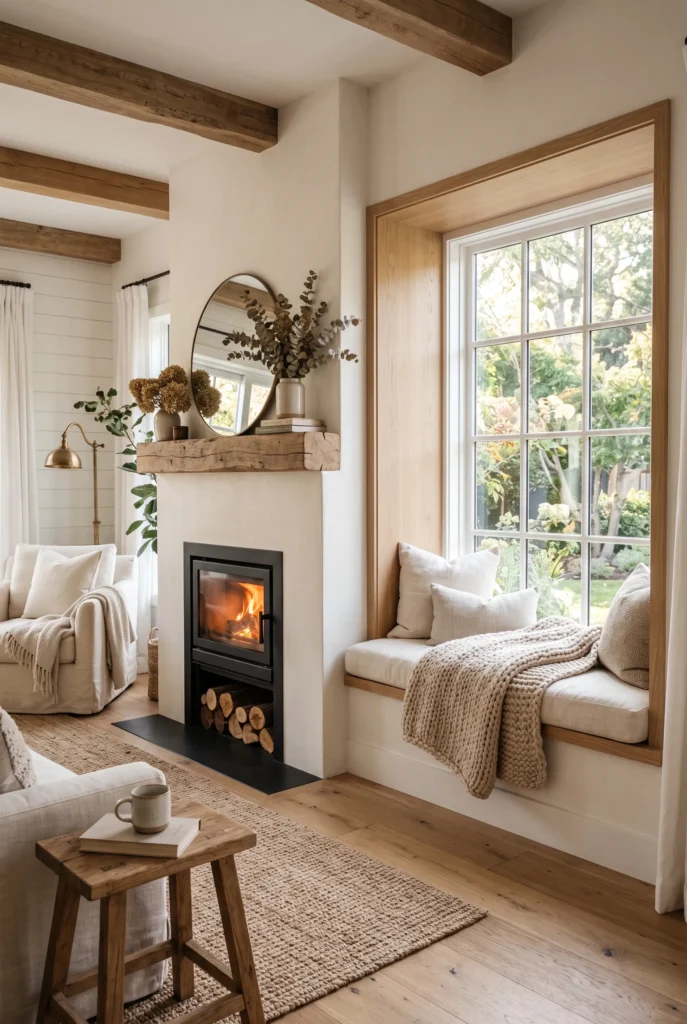
- Creates an inviting spot for reading, relaxing, or enjoying the fire.
- Makes better use of empty space near the fireplace wall.
- Adds soft layers that balance harder materials like brick or stone.
- Gives the room a more personal and lived-in feeling.
A built-in window seat near the fireplace creates an instant invitation to slow down and enjoy the room. The combination of natural light, soft cushions, and nearby warmth makes even a simple living area feel more comfortable and complete. Choose neutral linen cushions and a textured throw that connect with the rest of the furniture. Storage drawers beneath the seat can also add practical value. This arrangement works particularly well when the fireplace wall has unused space nearby that would otherwise feel empty or difficult to furnish.
The key is to make the seating area feel connected rather than separate from the hearth. Repeat the same wood tone, wall color, or fabric palette to create visual flow across the room. I’ve seen this work well in family spaces because the window seat provides an additional place to sit without adding another bulky chair. Add a small pillow, folded blanket, and perhaps a nearby floor lamp for evening use. Together, the fireplace and seating nook create a layered, comfortable corner that encourages people to actually spend more time in the space.
21. Vintage Brass Accents
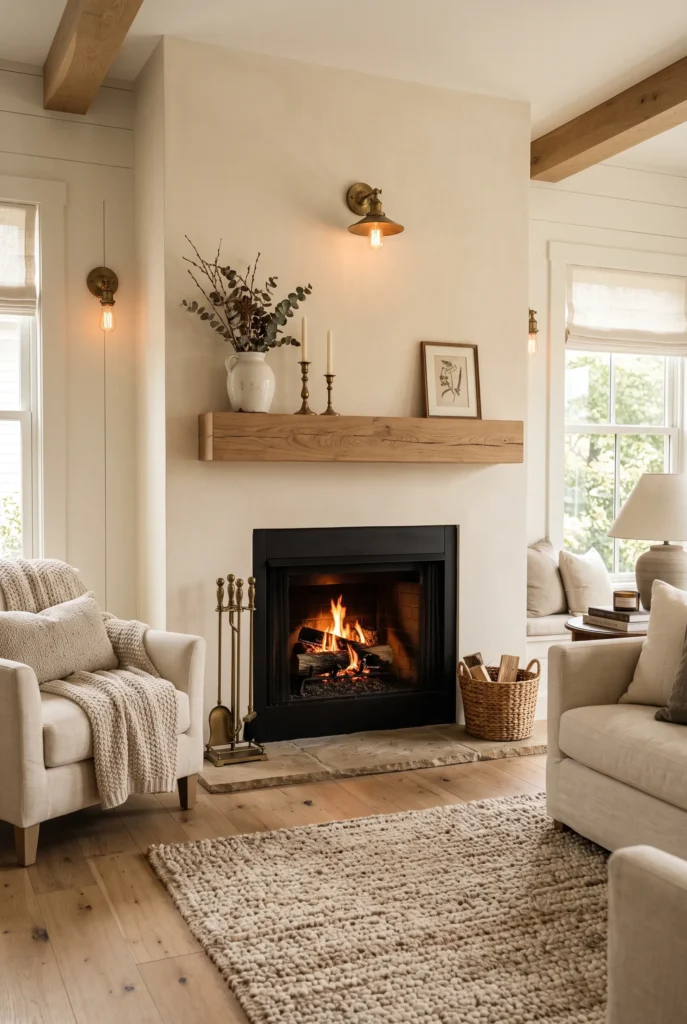
- Introduces warmth and subtle shine without overpowering the room.
- Complements natural wood and soft neutral finishes beautifully.
- Makes a simple fireplace arrangement feel more collected.
- Adds a timeless detail that works across different decor styles.
A few vintage brass accents can add an understated layer of warmth to a fireplace without changing its main materials. Aged candle holders, fireplace tools, picture frames, or wall sconces bring a soft metallic glow that looks especially beautiful against plaster, brick, and natural wood. The slightly weathered finish feels less formal than polished metal and suits relaxed farmhouse interiors. Use brass in small, repeated touches rather than covering the mantel with shiny accessories. This creates a collected look while allowing the fireplace itself to remain the main visual feature.
For the most natural result, pair aged brass with materials that have their own warmth and texture. Oak, linen, leather, woven fibers, and handmade ceramics prevent the metal from looking too decorative or precious. In my experience, even one or two brass details can make a neutral fireplace arrangement feel more layered and intentional. Consider adding matching accents elsewhere through lighting or cabinet hardware for subtle continuity. The gentle metallic warmth becomes especially noticeable in the evening, when soft lighting and firelight create a cozy glow throughout the entire living space.
Conclusion
A fireplace does not need a complete renovation to become the heart of your home. From reclaimed wood mantels and textured stone to soft plaster, cozy seating, and simple decorative details, each idea offers a different way to add warmth and personality. The best modern farmhouse fireplace is one that fits your home’s layout, style, and everyday needs. I’ve seen how small changes like updated finishes, better styling, or layered textures can completely transform a space. Save your favorite ideas on Pinterest, try one or two in your own home, and share this article with someone planning their next cozy update.