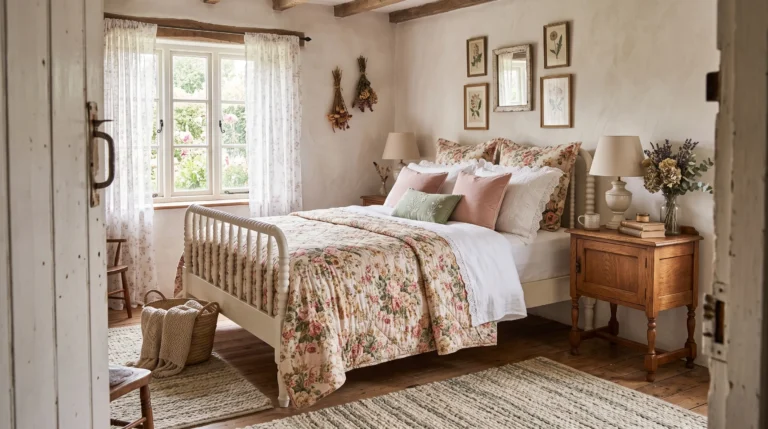
25 Bedroom Lighting Ideas for a Serene Dreamy Space
Your bedroom can look completely different after dark with the right lighting.
A harsh ceiling light can make even beautiful decor feel flat, while a few warm layers can instantly create a softer, calmer retreat.
These Bedroom Lighting Ideas are designed to help you create a space that feels cozy, practical, and visually beautiful from morning to night. From glowing headboards and soft bedside lamps to sculptural pendants and subtle accent lights, each idea offers a simple way to add warmth and depth. In my experience, lighting is often the missing finishing touch in a bedroom that already has beautiful furniture but still does not feel relaxing. Whether your space is large, small, modern, or cozy, these ideas can help you build a dreamy atmosphere worth enjoying, saving, and recreating.
1. Soft Bedside Lamps
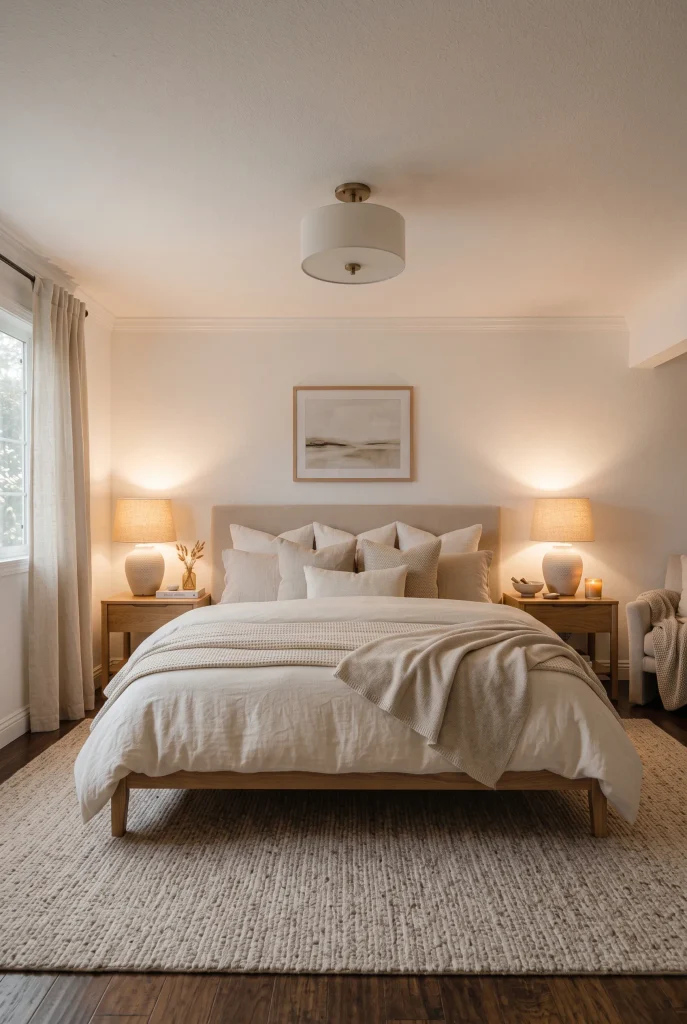
- Creates a softer alternative to harsh overhead lighting.
- Makes the bed feel warmer and more inviting.
- Adds practical light for reading and nighttime routines.
- Helps create visual balance on both sides of the bed.
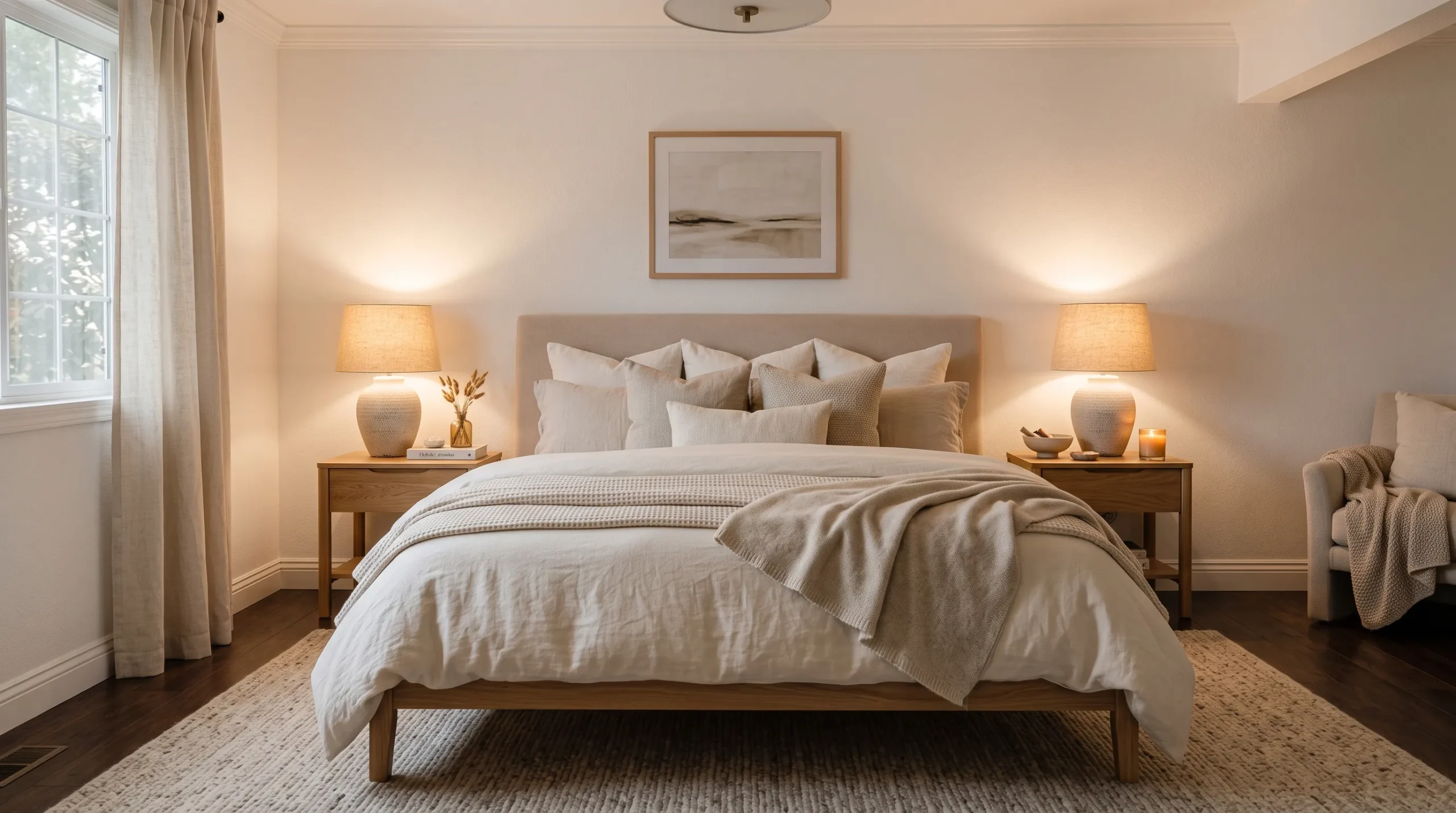
A soft bedside glow can completely change how your bedroom feels after sunset. Place small lamps on matching or mismatched nightstands to create gentle pools of light around the bed instead of relying on one harsh ceiling fixture. Choose warm white bulbs, ideally around 2700K, for a calmer and more restful atmosphere. Fabric or frosted shades help diffuse brightness and soften shadows across bedding and walls. This setup also makes nighttime reading easier while keeping the rest of the room relaxed, intimate, and visually balanced while still feeling calm and comfortable.
Layered bedside lamps work especially well in bedrooms that need more comfort without a major redesign. Try lamps with ceramic, glass, wood, or textured bases to add personality during daylight hours too. Keep the light source slightly below eye level when sitting in bed, which reduces glare and creates a cozy visual rhythm. In my experience, even a simple lamp swap can make an ordinary sleeping area feel intentionally styled. Pair the glow with soft bedding, curtains, and warm-toned accents for a peaceful finish that feels polished but never overly decorated.
2. Hidden LED Strips
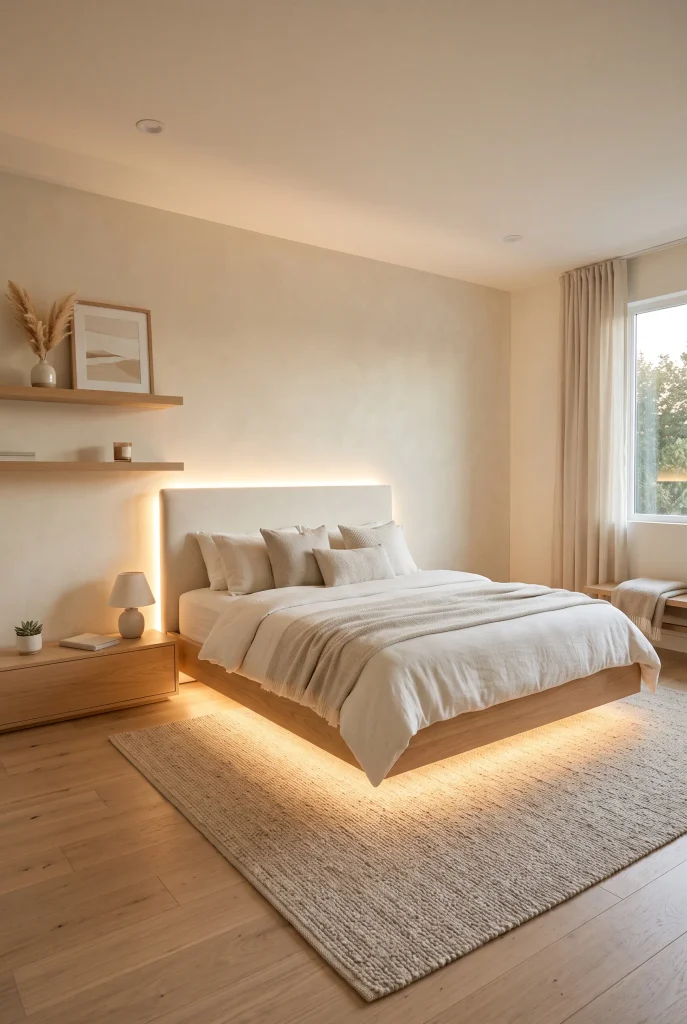
- Adds depth without introducing bulky fixtures.
- Creates a soft floating effect around furniture.
- Keeps surfaces visually clean and uncluttered.
- Works especially well with dimmable or adjustable lighting.
Hidden LED strips create a floating, almost magical effect without filling the room with extra fixtures. Install them beneath a bed frame, behind a headboard, or along the underside of floating shelves to create an indirect wash of illumination. Warm dimmable strips are usually the most versatile because you can adjust the brightness for relaxing, dressing, or winding down. Concealed placement keeps the technology out of sight, allowing the light itself to become the decorative feature. The result feels modern, calm, and especially effective in smaller bedrooms where visual clutter can quickly become overwhelming.
This idea is perfect when you want dramatic atmosphere while keeping furniture and surfaces visually clean. Position the strips so the light bounces onto a wall or floor rather than shining directly into the room. That indirect glow softens edges and adds depth to plain architectural details. I’ve noticed this works beautifully behind upholstered headboards because it creates a subtle halo around the bed, naturally making it the focal point. Use a dimmer or adjustable smart control so the same setup can shift from practical evening lighting to a low, dreamy glow before sleep.
3. Statement Pendants
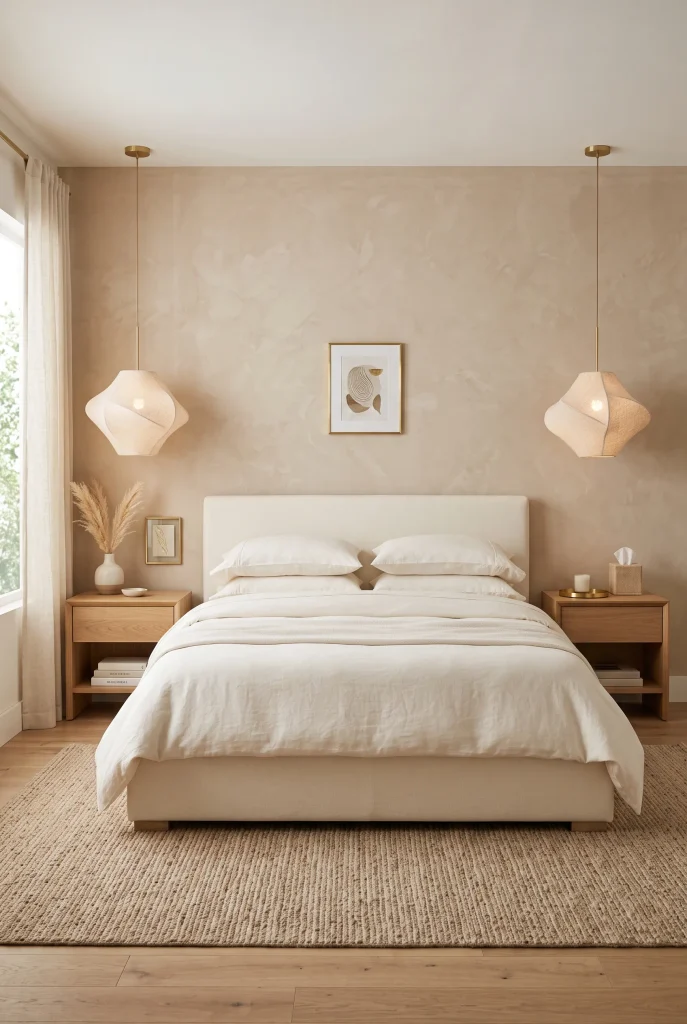
- Frees up space on small bedside tables.
- Adds a decorative focal point without extra clutter.
- Brings soft ambient and practical lighting together.
- Makes the bedroom feel more custom and thoughtfully designed.
A statement pendant instantly gives the bedroom a more curated and elevated look. Hang one centered above each nightstand, or choose a single sculptural fixture near the bed for a softer alternative to a traditional ceiling light. Woven rattan, paper, linen, glass, or opal finishes can complement different interiors while still diffusing the light gently. Keep the scale appropriate to the room so the fixture feels intentional rather than oversized. This approach also frees valuable bedside surface space, making compact bedrooms feel cleaner, lighter, and more thoughtfully arranged without sacrificing comfort or visual softness.
Pendant lighting can be both decorative and genuinely useful when positioned with everyday routines in mind. Leave enough clearance for sitting up comfortably, and choose a design that provides soft downward illumination without creating harsh shadows on the face. That’s why many designers recommend pendants with shades or diffusers for bedrooms rather than exposed, intensely bright bulbs. For a serene palette, pair warm light with cream walls, natural wood, linen textiles, and subtle metallic details. The finished space feels balanced, sophisticated, and wonderfully cozy from both daytime and nighttime viewpoints.
4. Wall Sconces
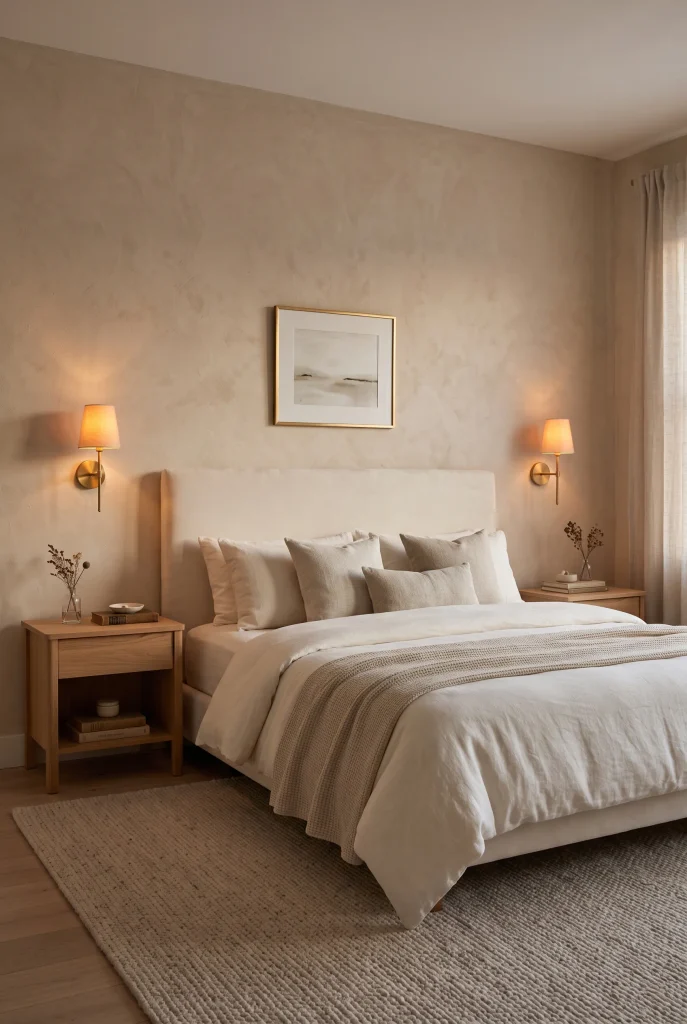
- Frees up valuable space on bedside tables.
- Creates focused light without brightening the entire room.
- Adds a polished, hotel-inspired look.
- Works beautifully in both small and spacious bedrooms.
Wall sconces can make a bedroom feel instantly more refined while solving the common problem of crowded nightstands. Mount them beside or slightly above the headboard to create focused pools of warm light exactly where they are needed. This setup leaves room for books, flowers, or everyday essentials without adding another lamp base. Adjustable sconces are especially useful for readers because the direction of the light can be changed easily. Choose shades, frosted glass, or warm bulbs to prevent harsh glare and keep the sleeping area visually soft and restful.
The placement of wall lighting can also help create a more balanced and intentional bedroom layout. Matching sconces bring symmetry, while different styles can add personality to an eclectic space. I’ve seen this work especially well in compact rooms where every inch of bedside surface matters. Keep the fixtures proportional to the headboard and surrounding furniture so they feel integrated rather than overwhelming. Brass, matte finishes, ceramic details, or natural materials can complement the room’s existing style. Once illuminated at night, the bed becomes a warm focal point with a calm, layered atmosphere.
5. Fairy Light Canopy
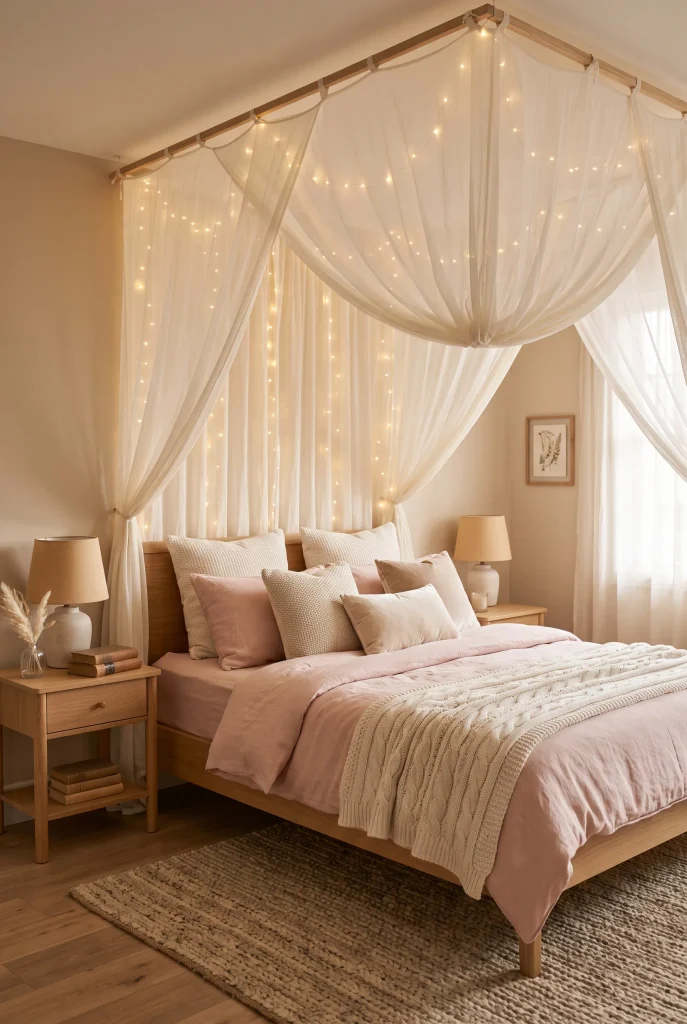
- Adds a gentle decorative glow without heavy fixtures.
- Creates a cozy focal point around the bed.
- Works well with sheer fabric and soft layered textures.
- Brings personality to simple bedroom decor.
A canopy filled with delicate fairy lights can turn an ordinary bed into the most enchanting feature in the room. Drape the lights around sheer fabric, a simple frame, or the upper edge of a canopy to create a soft surrounding glow. Choose warm white strands rather than cool blue tones for a calmer and more inviting result. The tiny points of illumination add texture after dark without producing the intensity of a traditional lamp. This setup is especially effective in simple bedrooms because it introduces visual interest while keeping the overall atmosphere light and dreamy.
Fairy lights look best when they feel intentionally arranged instead of randomly scattered across the room. Keep the strands concentrated around one feature, allowing the bed to remain the visual center. Battery-operated or safely positioned plug-in options can help maintain a clean appearance without distracting cords. In my experience, pairing this glow with linen bedding, sheer curtains, and muted colors creates a softer result than using bright decorative lighting elsewhere. Add a dimmable lamp nearby for practical tasks, then let the fairy lights provide the gentle evening atmosphere that makes the bedroom feel personal and memorable.
View: 25 Corner Dining Nook Ideas to Transform Your Space
6. Layered Light Sources
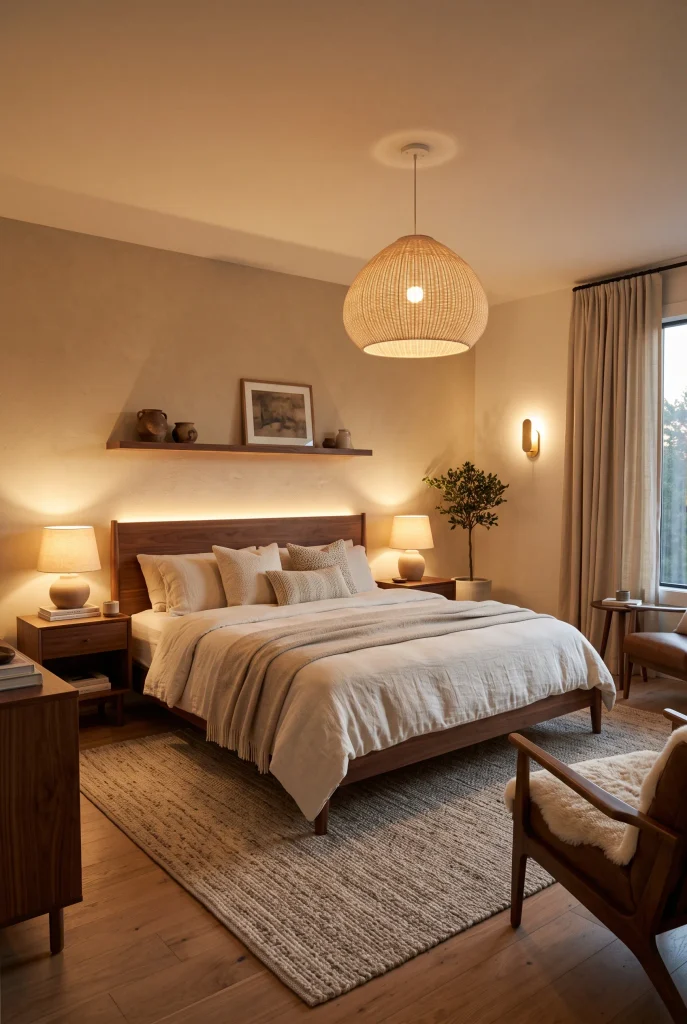
- Prevents the room from relying on one harsh fixture.
- Supports different activities throughout the day.
- Adds depth, warmth, and visual dimension.
- Makes the space feel more flexible and thoughtfully designed.
The most comfortable bedrooms rarely depend on a single light source. Combining ambient, task, and accent lighting allows the room to adapt throughout the day while creating more depth after sunset. Start with a soft ceiling fixture for general illumination, then add bedside lamps or sconces for focused tasks. Finish with a subtle accent, such as hidden LEDs or a small decorative lamp, to highlight texture and create atmosphere. These Bedroom Lighting Ideas work together to reduce harsh shadows and give you more control over how the space feels at different times.
Layering also makes it easier to create the right mood without constantly changing the entire room. Brighten several sources when getting dressed, then switch to only bedside and accent lights for a quieter evening setting. I’ve noticed that this flexibility is one of the simplest ways to make a bedroom feel more expensive and comfortable at the same time. Use similar bulb temperatures so the lighting feels visually connected rather than mismatched. Even inexpensive fixtures can create a polished effect when each source has a clear purpose within the overall bedroom design.
7. Curtain Backlighting
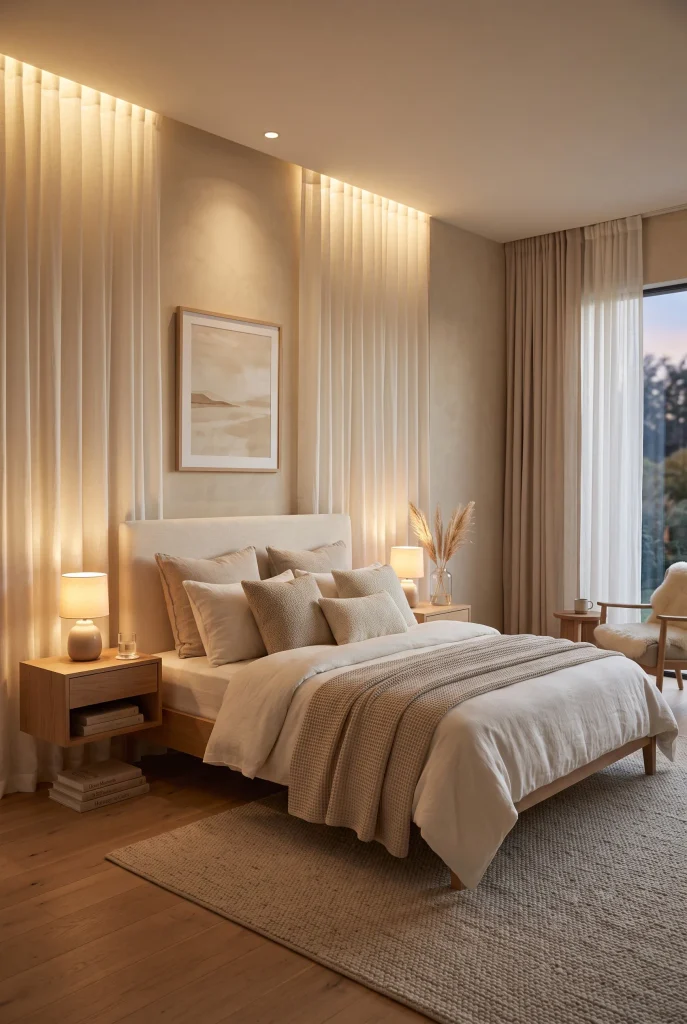
- Creates a soft, diffused glow around the windows.
- Makes plain curtains feel more decorative at night.
- Adds depth without introducing a bulky fixture.
- Works beautifully with sheer fabrics and layered drapes.
Curtain backlighting can make a bedroom feel soft and cinematic without changing the main furniture. Place a concealed warm LED strip behind the curtain track or along the window edge so the light gently filters through sheer fabric. The result is a diffused glow that highlights the texture and movement of the curtains while reducing the appearance of dark corners. This approach works particularly well with floor-to-ceiling drapes because it visually emphasizes height. Choose dimmable warm lighting to keep the effect calming and adaptable for quiet evenings or relaxed nighttime routines.
The key to this setup is keeping the light source hidden so the glow feels effortless and refined. Sheer curtains will diffuse illumination more evenly, while heavier outer drapes can add depth and flexibility during the day. I’ve noticed that warm backlighting often makes neutral bedrooms feel richer without requiring additional decor. Avoid overly bright strips, since the goal is atmosphere rather than direct task lighting. Pair this feature with a bedside lamp or wall sconce for practical needs, allowing the curtains to provide a gentle background glow that makes the entire room feel more layered.
8. Floor Reading Lamps
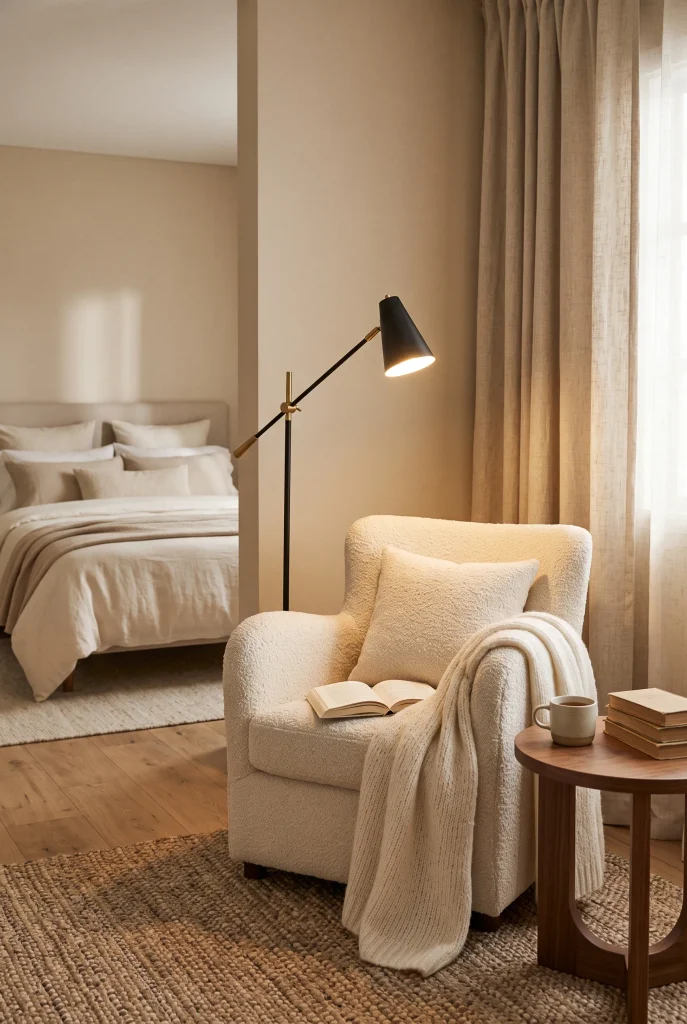
- Creates a dedicated reading or relaxation zone.
- Adds useful light without changing the ceiling fixture.
- Helps fill an empty corner with purpose.
- Introduces height and visual balance to the room.
A slim floor lamp can transform an unused bedroom corner into a comfortable and functional retreat. Place one beside an armchair, window bench, or small side table to create focused light for reading, journaling, or winding down. Adjustable designs are particularly useful because you can direct the illumination exactly where it is needed. Choose a warm bulb and a shaded fixture to keep the surrounding atmosphere gentle. This simple addition also introduces vertical interest, helping a room with mostly low furniture feel more balanced and visually complete without adding unnecessary clutter.
Floor lamps work best when they support the layout instead of standing alone as an afterthought. Position the base slightly behind or beside furniture so walkways remain clear and the fixture feels naturally connected to the seating area. A sculptural shape can double as decor during the day, especially in minimalist or neutral interiors. In my experience, a well-placed reading lamp often encourages people to actually use an overlooked corner rather than treating it as empty space. Add a small table, soft throw, and textured cushion to complete a peaceful nighttime retreat.
9. Soft Ceiling Glow
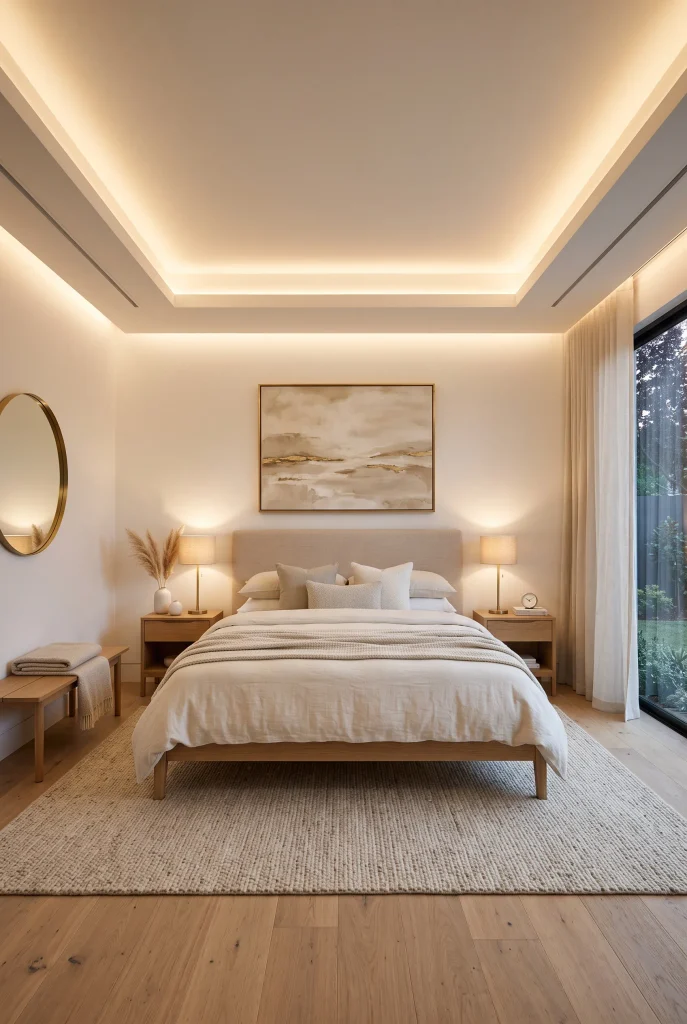
- Softens the appearance of the entire room.
- Reduces harsh shadows from direct overhead fixtures.
- Creates an elegant hotel-inspired atmosphere.
- Provides gentle ambient light for evening relaxation.
A soft ceiling glow can make the entire bedroom feel calmer by replacing direct brightness with gentle reflected illumination. Recessed cove lighting, concealed strips, or fixtures that bounce light upward can create an even wash across the ceiling and upper walls. This approach reduces harsh shadows and helps the room feel more spacious after dark. Warm illumination works particularly well with cream, beige, taupe, and other muted palettes because it enhances their natural softness. Keep the brightness adjustable so the ambient light can remain subtle when you are preparing to rest.
This lighting style is especially useful for people who dislike the glare of traditional overhead fixtures. Instead of placing all the brightness directly above the bed, indirect illumination spreads gradually throughout the room and creates a smoother visual transition. I’ve seen this work well in both modern and traditional bedrooms because the effect feels architectural rather than trend-dependent. Combine the ceiling glow with smaller task lights near the bed for everyday functionality. The layered result feels peaceful, polished, and flexible enough to support everything from getting dressed to quietly winding down before sleep.
10. Glowing Headboard
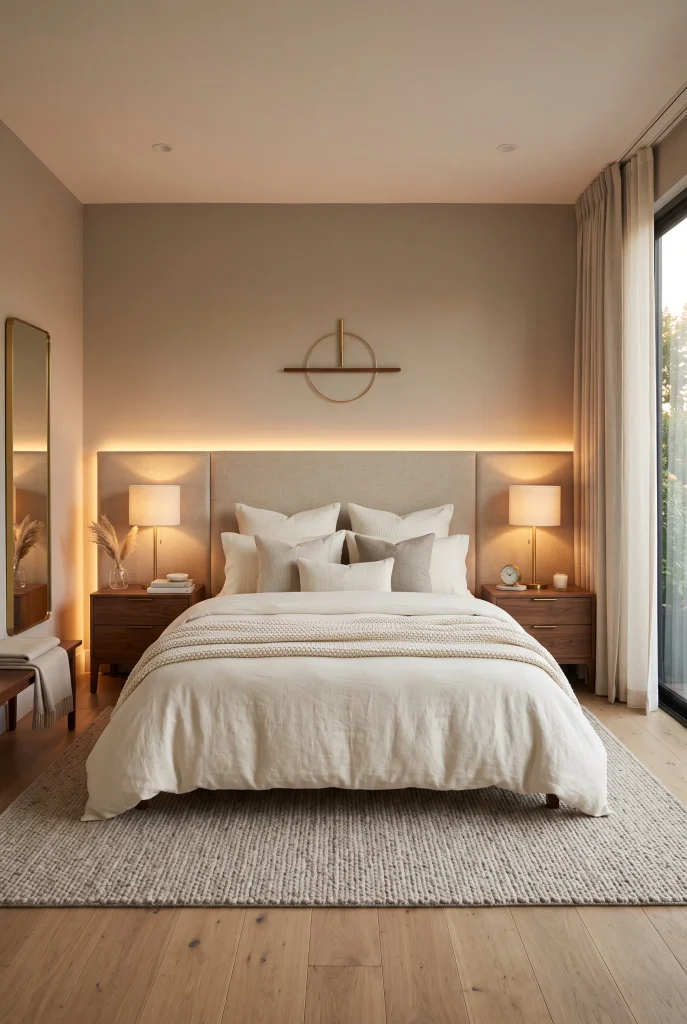
- Creates a soft halo around the bed.
- Makes the headboard a stronger focal point.
- Adds atmosphere without needing bright overhead light.
- Works beautifully in modern, minimal, and cozy interiors.
A glowing headboard can instantly make the bed feel like the visual heart of the room. Install concealed warm lighting behind the headboard so the illumination spreads softly across the surrounding wall. This indirect effect adds depth without shining directly into your eyes, making it especially pleasant during the evening. Upholstered, wooden, and slatted headboards can all work with this approach when the lighting is positioned carefully. Choose a warm, dimmable source to maintain a restful mood and allow the brightness to change as your nighttime routine moves from reading to relaxation.
The beauty of this idea is that it combines decoration and illumination in one simple feature. A subtle halo can make even a plain wall look more layered, while the bed gains a polished, custom-designed appearance. I’ve noticed this works particularly well in neutral bedrooms where texture and soft contrast matter more than bold color. Keep the glow concentrated behind the headboard rather than extending too far across every wall. Pair it with low bedside lighting for practical tasks, creating a calm layered effect that feels sophisticated, comfortable, and easy to enjoy every night.
11. Vintage Table Lamps
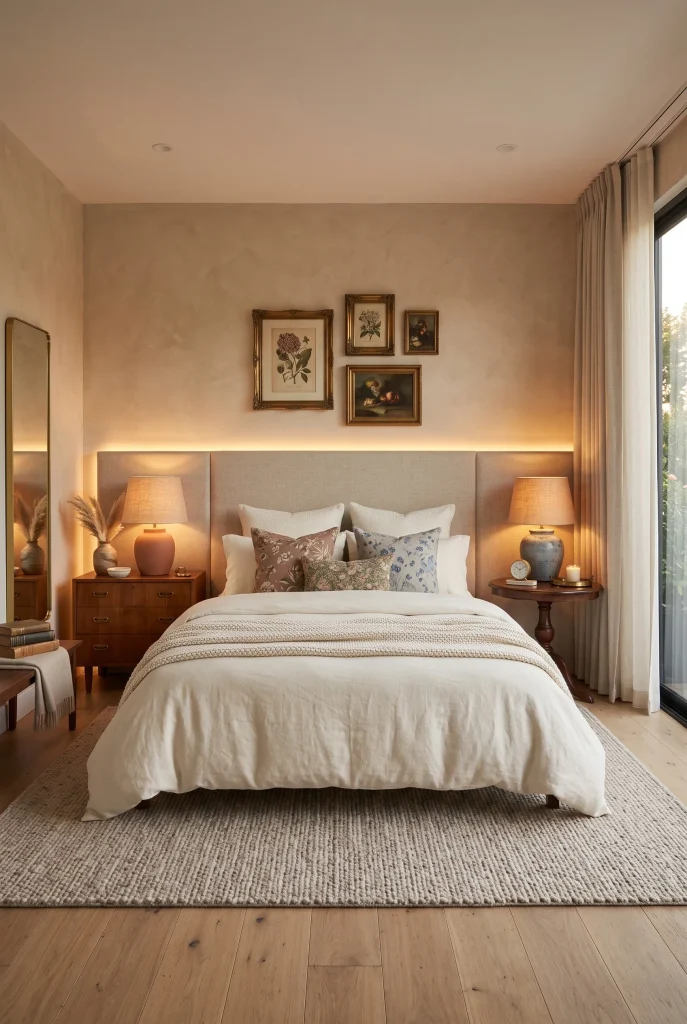
- Adds warmth and personality to simple furniture.
- Introduces decorative character during the day.
- Creates a softer alternative to modern task lighting.
- Works well with collected and layered interiors.
Vintage table lamps bring character to the bedroom while providing the gentle light needed for everyday routines. Look for ceramic bases, pleated shades, aged brass details, or textured finishes that feel collected rather than overly coordinated. Their decorative quality helps the bedside area look interesting even when the lamps are switched off. Warm bulbs are essential because they enhance the nostalgic feeling and soften surrounding colors. This style works beautifully with linen bedding, antique artwork, natural wood, and layered textiles, creating a space that feels personal, comfortable, and thoughtfully assembled over time.
You do not need matching lamps to make this look successful. Two complementary pieces with similar height, color, or shade materials can create a relaxed and collected appearance. I’ve seen this work especially well in bedrooms that feel too new or perfectly coordinated, because vintage-inspired lighting introduces a sense of history and warmth. Keep the lamps large enough to feel visually connected to the bed, but avoid shades that dominate the nightstands. Combined with soft textiles and muted colors, their evening glow can make the entire space feel welcoming, intimate, and effortlessly lived in.
12. Mirror Accent Lighting
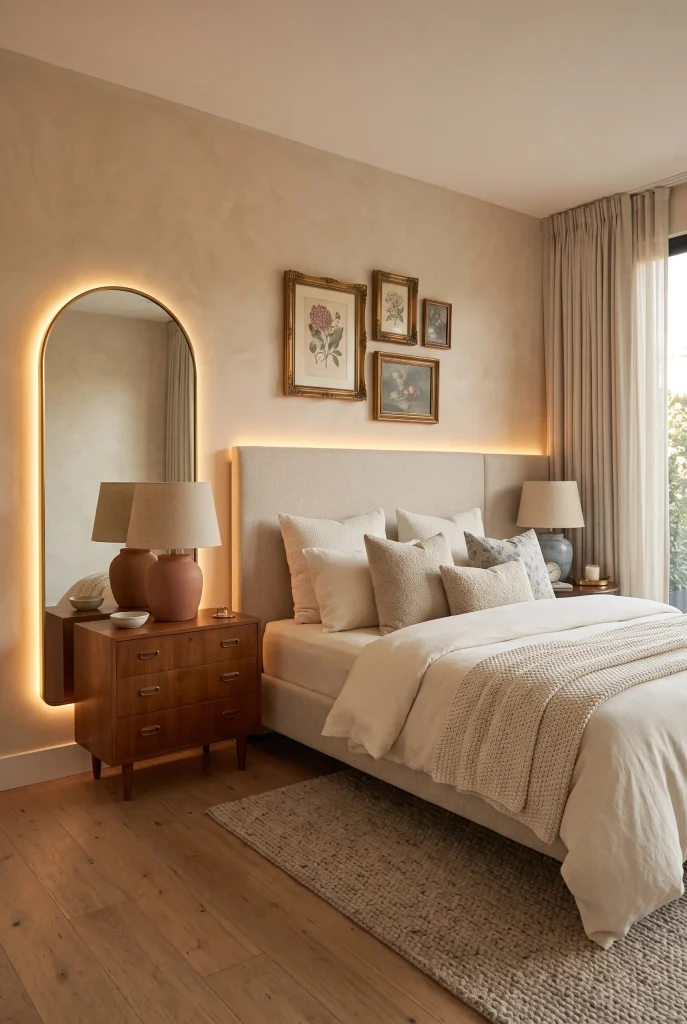
- Adds extra brightness through reflected illumination.
- Makes a darker corner feel more open and spacious.
- Highlights the shape and beauty of a decorative mirror.
- Supports dressing and everyday bedroom routines.
Mirror accent lighting can brighten a bedroom while making the space feel visually larger and more open. Add a subtle light behind a wall-mounted mirror or position a warm lamp nearby so the surface reflects a soft glow into the room. An arched, oval, or oversized mirror can become even more striking when gently illuminated after dark. This approach works especially well in darker corners that need brightness without another large fixture. The reflected light adds depth and creates a polished atmosphere while keeping the overall design calm, elegant, and comfortable.
For the best result, avoid placing an intense exposed bulb directly in front of the mirror. Soft, indirect illumination is more flattering and creates fewer distracting reflections. In my experience, this setup can make a compact bedroom feel noticeably more spacious because the light and reflection extend the visual boundaries of the room. Choose a mirror frame that connects with other materials, such as brass, oak, or painted wood, for a cohesive finish. Add nearby storage or a small dressing area, and the illuminated mirror becomes both a beautiful decorative feature and a practical everyday element.
13. Candlelight Corners
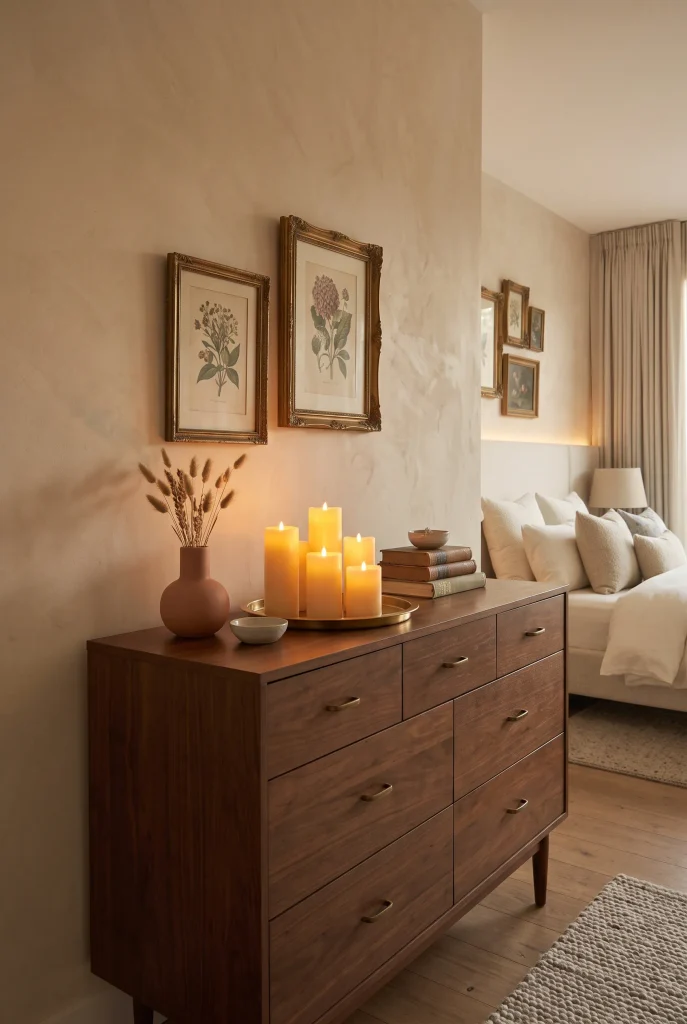
- Adds a gentle decorative glow to quiet corners.
- Creates a cozy atmosphere without another large fixture.
- Helps dressers, shelves, and side tables feel more styled.
- Flameless options offer a simple, low-maintenance alternative.
A softly glowing corner can make the entire bedroom feel warmer and more inviting after dark. Arrange flameless candles on a dresser, shelf, or decorative tray to create small points of amber light away from the bed. Grouping different heights adds dimension while keeping the display visually simple. This idea works especially well in bedrooms with neutral colors, where gentle illumination can highlight texture and create deeper shadows. Flameless options are practical for everyday use because they provide the candlelit look without an open flame, making the atmosphere easier to enjoy regularly.
The most successful candlelight displays usually stay concentrated in one area instead of spreading across every surface. Combine the glow with ceramic objects, stacked books, or a small vase to create a styled vignette that still feels relaxed. I’ve noticed that these small lighting moments can make a large bedroom feel less empty and more personal during the evening. Choose warm, realistic-looking flameless candles and avoid overly bright options that interrupt the peaceful mood. When paired with softer bedside lighting, the corner becomes a subtle finishing detail that adds comfort without competing for attention.
14. Window Seat Glow
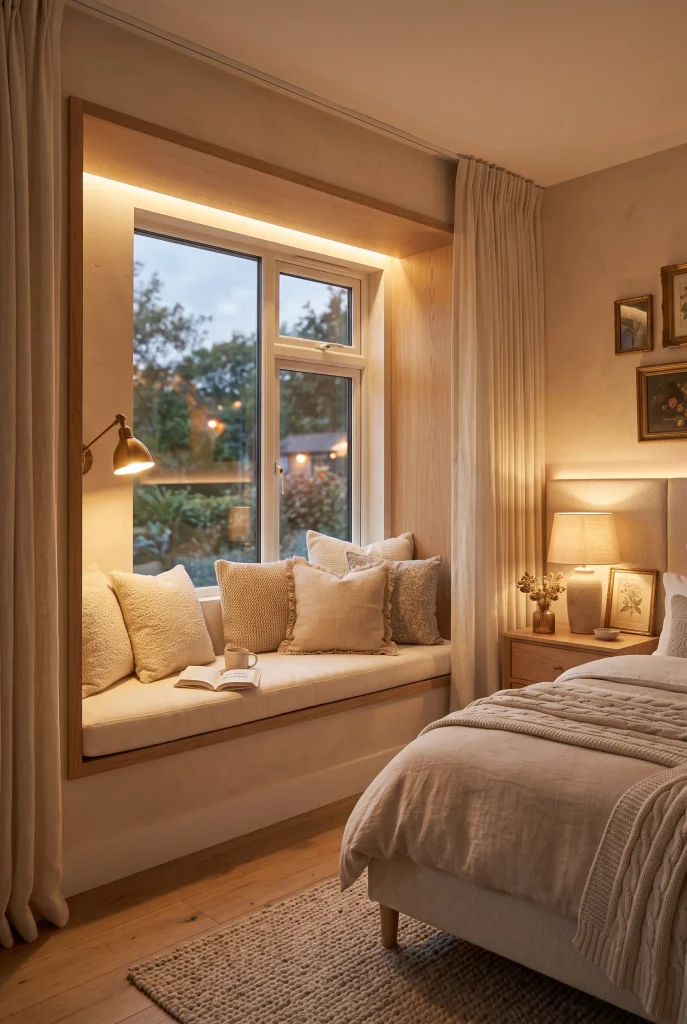
- Turns an unused window area into a functional retreat.
- Adds soft light to a naturally darker part of the room.
- Creates a comfortable spot for reading or relaxing.
- Makes the bedroom feel more layered and intentional.
A softly lit window seat can transform a simple bedroom into a space that feels designed for slowing down. Add a small table lamp, wall-mounted reading light, or concealed warm strip beneath the seat to create a gentle glow after sunset. Layer cushions and a textured throw to make the area feel comfortable and visually connected to the rest of the room. This lighting approach also helps define the window seat as its own functional zone. Even in a modest bedroom, a well-lit corner can make the layout feel richer and more thoughtfully planned.
The best window seat lighting should support relaxation without overpowering the natural view or surrounding furniture. Use an adjustable reading lamp if the space is regularly used for books or quiet evening activities, then add a dimmable accent for atmosphere. In my experience, this combination works better than relying on one bright fixture because it allows the corner to serve different purposes. Keep materials consistent with the bedroom, such as linen shades, wood details, or soft neutral textiles. The finished space feels cozy, useful, and naturally inviting throughout the day and night.
15. Paper Lantern Glow
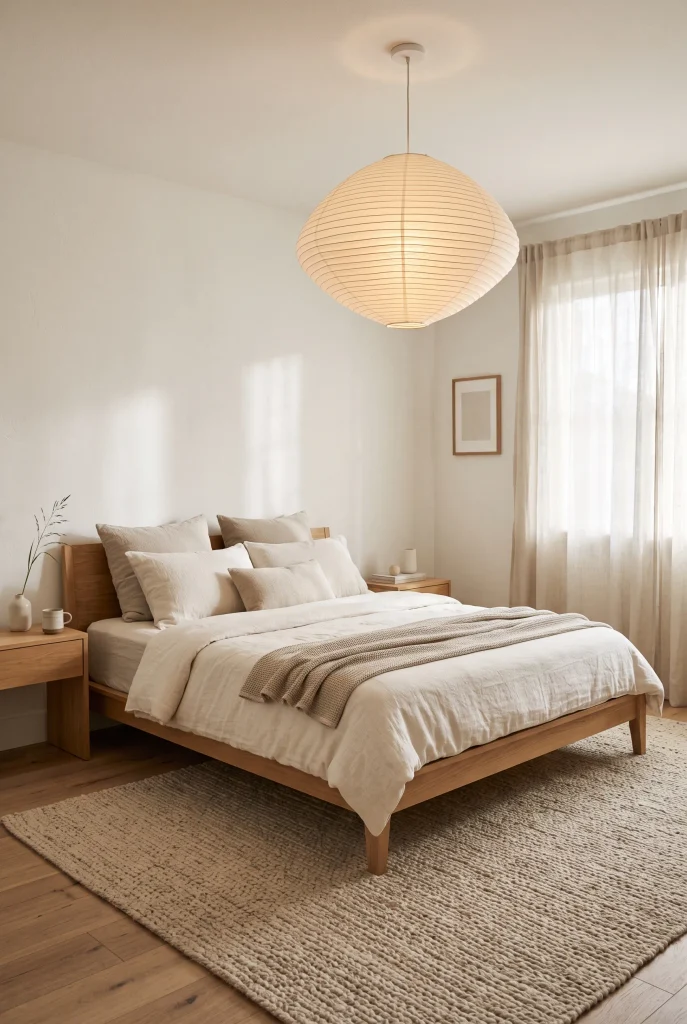
- Diffuses light gently across the room.
- Adds sculptural interest without visual heaviness.
- Complements minimal, Japandi, and organic interiors.
- Creates a calm focal point above the sleeping area.
A paper lantern can bring an immediate sense of softness to the bedroom while acting as a beautiful sculptural feature. Its translucent material diffuses illumination, allowing light to spread gently instead of creating sharp shadows and intense brightness. Choose a rounded or organic shape to contrast with the straight lines of the bed and surrounding furniture. This idea works particularly well in calm, neutral spaces with natural wood and textured fabrics. The lantern becomes noticeable without feeling visually heavy, helping the room maintain an airy, peaceful, and uncluttered appearance.
For the most relaxing effect, use a warm bulb and make sure the fixture is proportionate to the room. An oversized lantern can create a striking focal point in a spacious bedroom, while a smaller version may suit lower ceilings or compact layouts. I’ve seen this work beautifully when the rest of the lighting remains understated, allowing the paper texture to become the main decorative element. Pair it with discreet bedside lamps for practical tasks and softer evening routines. The combination creates a balanced atmosphere that feels modern, natural, and wonderfully serene.
16. Bedside Pendant Lights
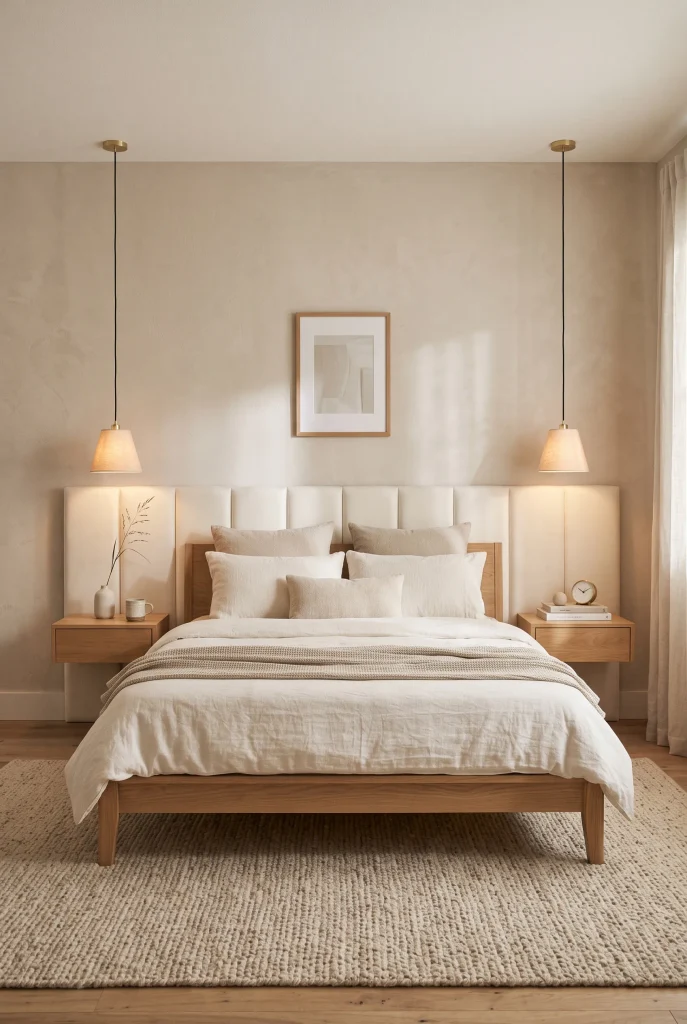
- Frees up valuable space on small nightstands.
- Adds height and visual interest beside the bed.
- Creates focused lighting for reading and relaxing.
- Gives the room a custom, designer-inspired appearance.
Bedside pendant lights can make an ordinary sleeping area feel more polished while solving the problem of crowded nightstands. Suspending small fixtures above each side of the bed keeps tabletops clear for books, water, or decorative objects. Choose pendants with fabric, glass, or frosted shades to diffuse the light and prevent uncomfortable glare. Warm bulbs help maintain a restful mood, especially during the evening. This arrangement also introduces vertical interest, drawing the eye upward and making the overall layout feel more balanced, intentional, and visually spacious without requiring major changes to the room.
Proper height is important for making pendant lights both useful and comfortable. Hang them low enough to provide focused illumination but high enough to avoid bumping into them when sitting up in bed. I’ve noticed that adjustable or dimmable fixtures offer the most flexibility because they can support reading while still creating a softer mood before sleep. Match the finish with nearby details, such as drawer handles, curtain hardware, or picture frames, for a cohesive appearance. With the right placement, these suspended lights become practical features that also make the bedroom feel thoughtfully designed and refined.
17. Under-Bed Glow
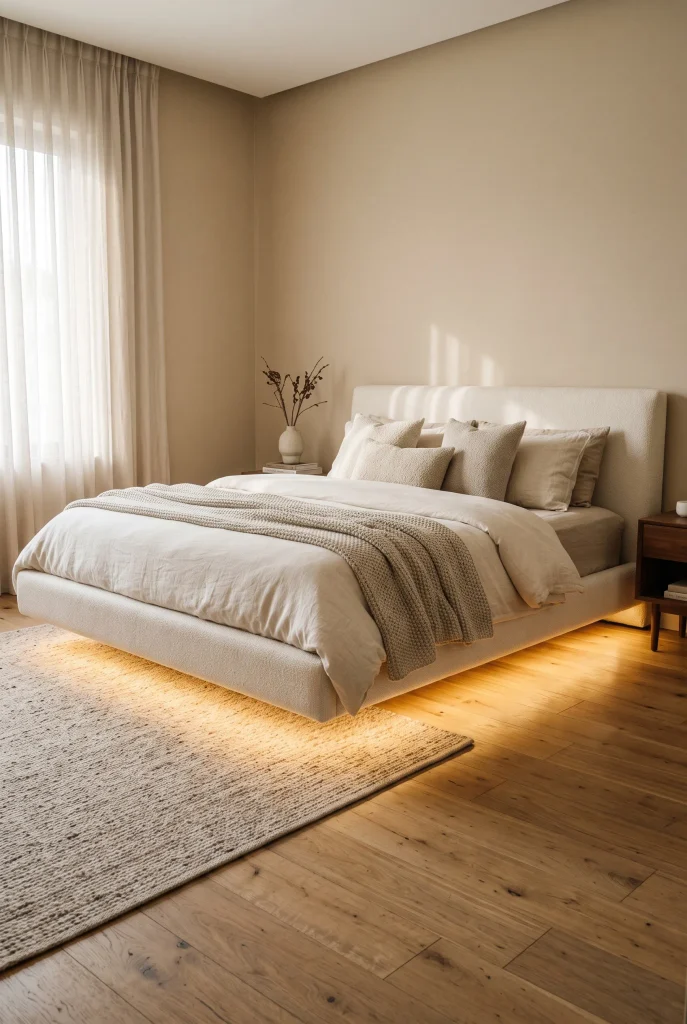
- Creates a subtle floating effect around the bed.
- Adds gentle illumination for nighttime movement.
- Reduces the need for bright overhead lighting.
- Makes a simple bed frame feel more modern.
Under-bed lighting is a simple way to add atmosphere while making nighttime movement easier. Concealed warm LED strips beneath the frame create a soft pool of illumination across the floor, giving the bed a gentle floating appearance. This effect works particularly well with platform and low-profile frames because the light emphasizes their clean lines. Keep the brightness low so the glow feels calming rather than distracting. A warm tone also blends beautifully with wood flooring, textured rugs, and neutral bedding, helping the entire room feel softer, more layered, and visually interesting after dark.
This feature can be especially helpful for bedrooms where bright lights feel unpleasant during late-night trips across the room. Motion-activated options add convenience by turning on only when needed, while dimmable strips allow greater control over the atmosphere. In my experience, the best results come from hiding the light source completely so only the reflected glow remains visible. Avoid overly cool or colorful lighting if the goal is a serene bedroom. Combined with bedside lamps and gentle ambient illumination, the under-bed glow adds another quiet layer that feels both practical and beautifully atmospheric.
18. Picture Light Accents
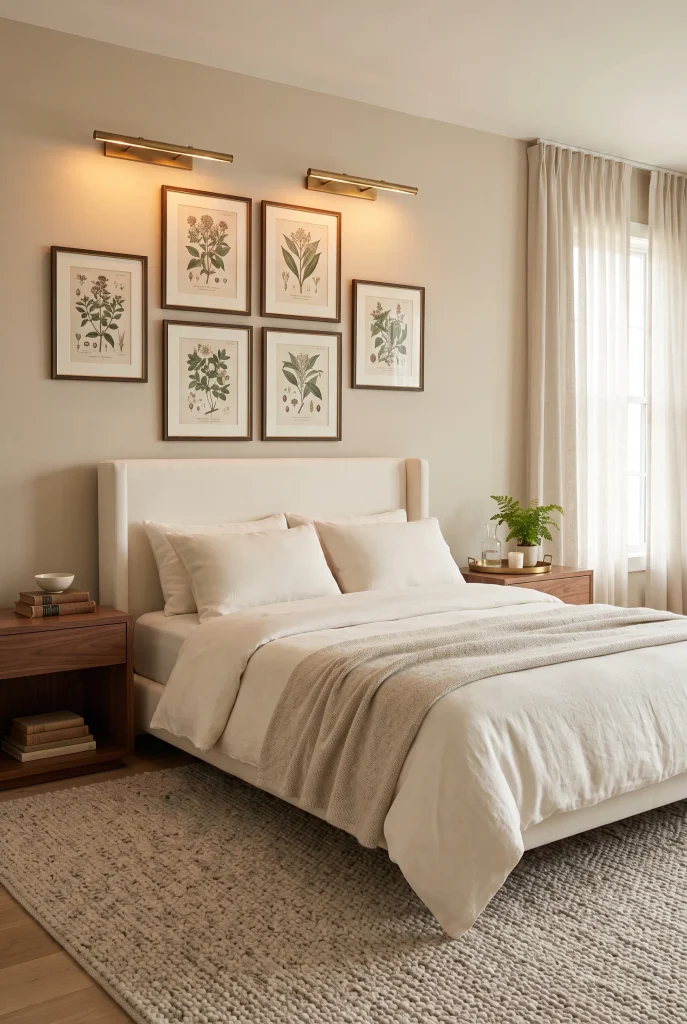
- Highlights artwork and decorative details after dark.
- Adds warmth to empty walls without extra furniture.
- Creates another layer of soft ambient illumination.
- Gives the room a collected and finished appearance.
Picture lights can turn bedroom artwork into a subtle evening feature while adding another gentle layer of illumination. Mount a slim fixture above a favorite painting, print, or gallery arrangement to draw attention to texture and color after sunset. Warm, low-intensity light works best because it highlights the artwork without overpowering the rest of the room. This idea is especially useful for bedrooms with large blank walls that feel flat once daylight disappears. The focused glow creates depth and makes decorative pieces feel more intentional, helping the entire space appear finished and thoughtfully styled.
Choose artwork that already supports the room’s color palette so the illuminated display feels connected rather than separate. Botanical prints, abstract art, landscapes, and vintage portraits can all work beautifully depending on the bedroom style. I’ve seen this work well in rooms that need personality but do not have space for additional furniture or accessories. Keep the picture light proportionate to the frame, and avoid extremely bright bulbs that create harsh reflections. When combined with softer bedside and ambient lighting, the artwork becomes a quiet focal point that adds warmth, character, and visual depth.
19. Dimmable Lighting
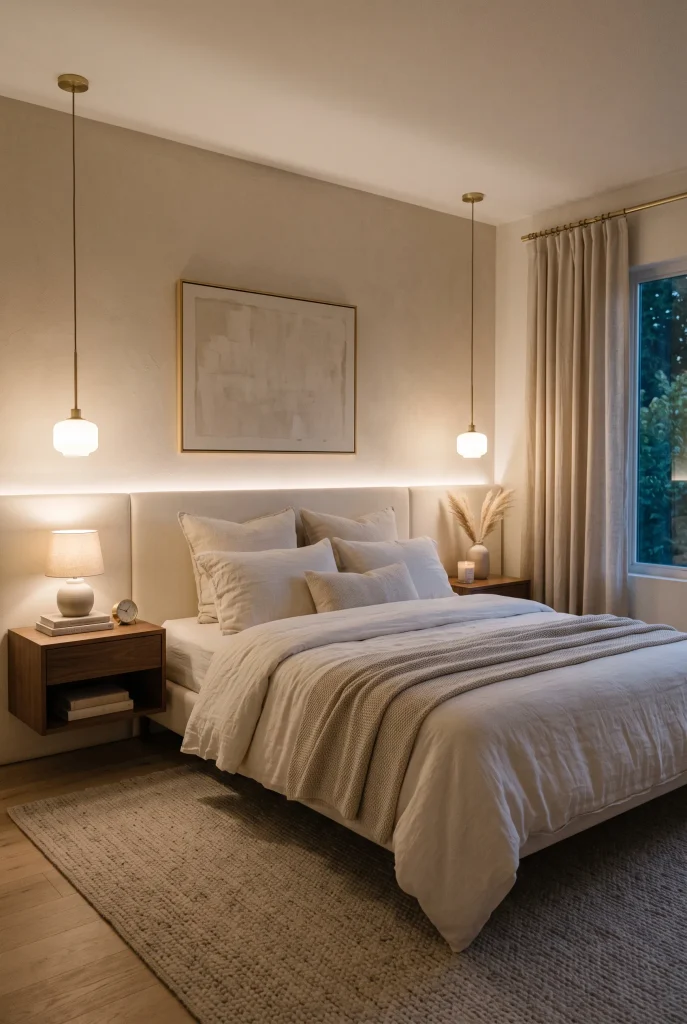
- Lets you adjust brightness for different routines.
- Creates a softer transition from daytime to bedtime.
- Prevents the room from feeling overly bright at night.
- Works with lamps, pendants, sconces, and ceiling fixtures.
Dimmable lighting gives you more control over how the bedroom feels throughout the day and evening. Brighten the room when getting dressed, cleaning, or organizing, then gradually lower the illumination when it is time to relax. This flexibility can make the same space feel practical during busy moments and peaceful before sleep. Dimmers work with many fixture types, including bedside lamps, wall sconces, pendants, and ceiling lights. Choosing warm bulbs helps maintain a consistent atmosphere, while adjustable brightness prevents the room from relying on one fixed level that may not suit every activity.
The biggest advantage is how easily the mood can change without replacing furniture or redecorating. A slightly dimmed room naturally feels calmer, allowing textures, bedding, and decorative details to stand out through softer shadows. In my experience, dimmable fixtures are especially valuable in bedrooms used for several activities beyond sleeping. They offer practical brightness when needed and a gentle glow when relaxation becomes the priority. For the most cohesive result, connect compatible fixtures to separate controls, allowing bedside, ambient, and accent lighting to be adjusted independently throughout the evening.
20. Warm Corner Lamps
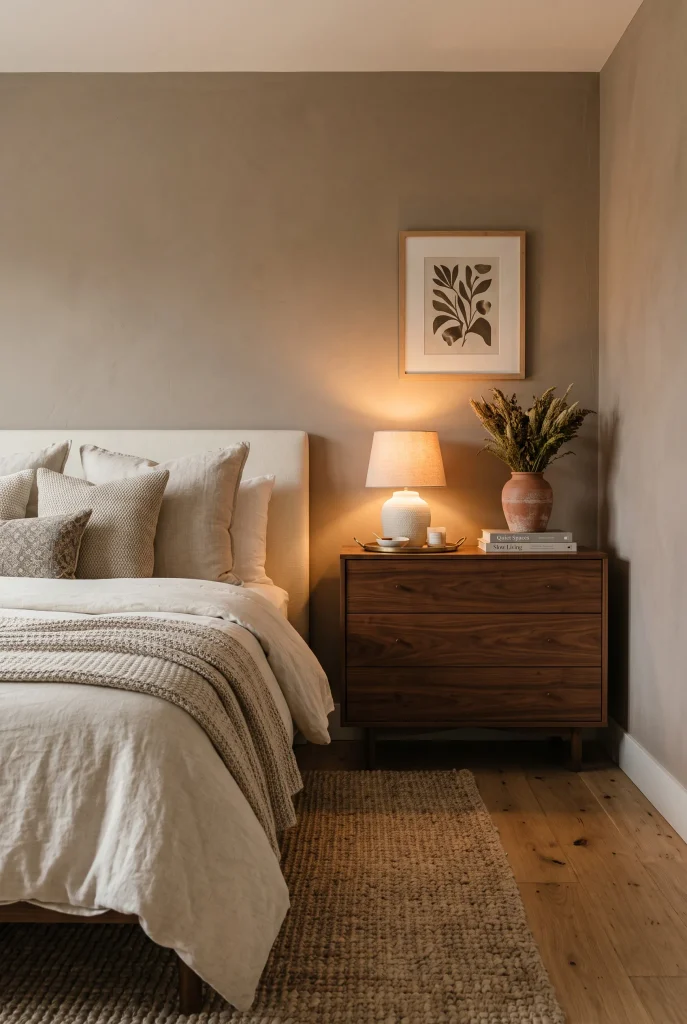
- Brightens dark corners without overwhelming the room.
- Adds another layer of warmth and depth.
- Creates a decorative focal point on furniture.
- Makes larger bedrooms feel more intimate after dark.
A warm corner lamp can solve the common problem of a bedroom that feels unfinished or shadowy after sunset. Place a small lamp on a dresser, console, shelf, or low cabinet to introduce a gentle pool of light away from the bed. This creates visual balance by spreading illumination throughout the room instead of concentrating everything in one central area. Choose a shaded fixture with a warm bulb for the softest effect. The lamp can also highlight nearby artwork, plants, or decorative objects, making an overlooked corner feel purposeful and visually connected.
Corner lighting works best when it supports the overall lighting plan rather than competing with it. Keep the brightness lower than your main task lights so the effect remains subtle and atmospheric. I’ve noticed that a single small lamp can make a spacious bedroom feel noticeably more intimate because it breaks up large areas of darkness. Ceramic, wood, glass, or textured bases can add daytime interest while blending with existing furniture. Combined with bedside and ambient illumination, this simple addition creates a room that feels warmer, deeper, and more comfortable from every angle.
21. Soft Vanity Lighting
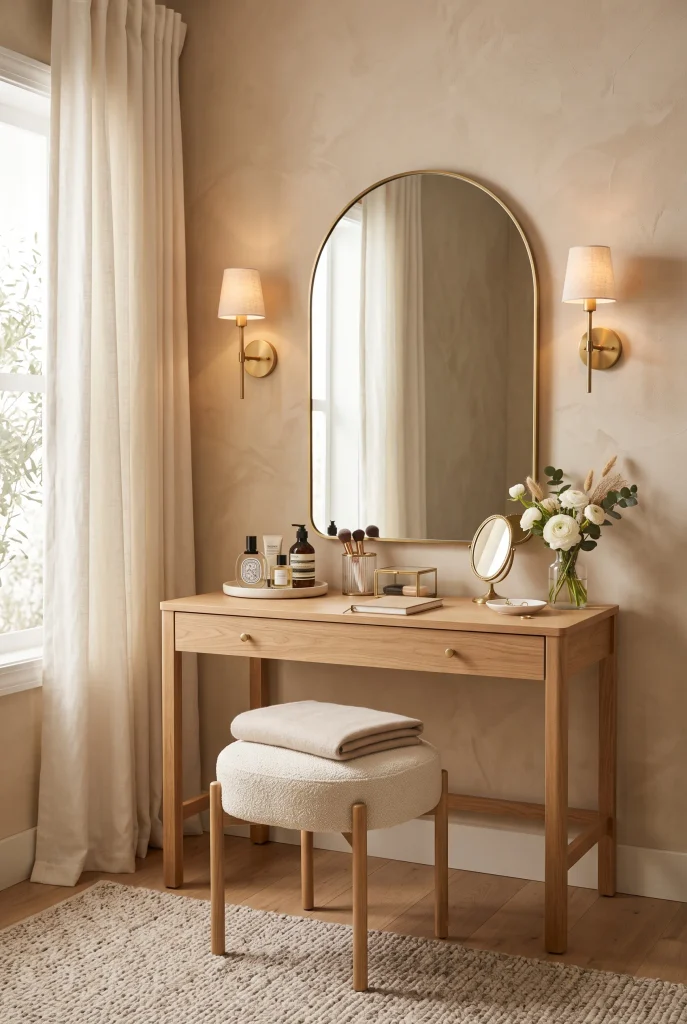
- Provides clearer light for dressing and grooming.
- Softens shadows around the face and mirror.
- Makes a vanity area feel more functional and polished.
- Adds a gentle decorative glow to the bedroom.
Soft vanity lighting can make everyday routines easier while adding another elegant layer to the bedroom. Position diffused fixtures beside the mirror rather than relying only on overhead illumination, which can create unflattering shadows. Frosted glass, fabric shades, or softly covered bulbs help distribute brightness more evenly across the face. This setup works beautifully with a small dressing table, wall-mounted mirror, or dedicated vanity corner. Warm-neutral illumination usually feels comfortable and inviting while still providing enough clarity for makeup, skincare, hair, and other daily tasks without making the space feel clinical.
The goal is to create useful light that still belongs naturally within a restful bedroom. Keep the fixtures visually connected to other finishes through repeated materials such as brass, black metal, ceramic, or wood. I’ve seen this work particularly well when the vanity sits in a darker corner that otherwise receives little evening illumination. Add a dimmer when possible so the area can shift from functional brightness to a softer nighttime glow. With thoughtful placement, vanity lighting becomes more than a practical feature; it adds structure, warmth, and an elegant finishing touch.
22. Sunset Glow Bulbs
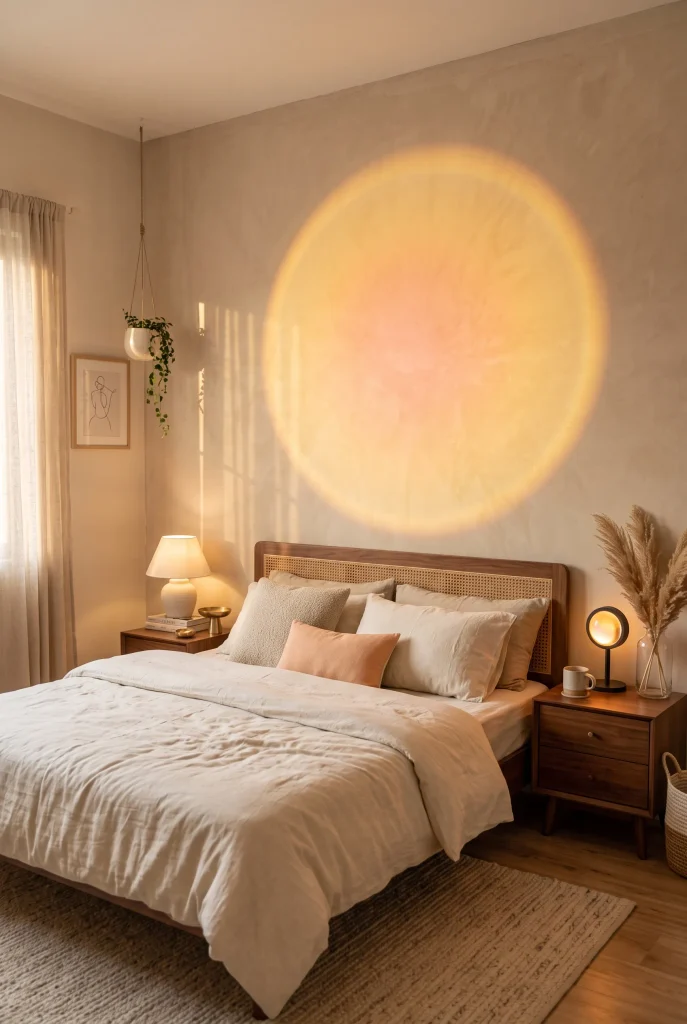
- Creates a warm focal point on an otherwise plain wall.
- Adds color and atmosphere without permanent changes.
- Works beautifully for relaxing evening routines.
- Can be moved easily to experiment with different angles.
A sunset glow bulb can instantly give the bedroom a soft, dreamy atmosphere with very little effort. Position the lamp near a blank wall or behind furniture so it creates a diffused circle of warm golden, peach, or amber light. The effect adds color without requiring painted walls or permanent decor changes. Keep the projection subtle rather than extremely bright to maintain a restful feeling. This type of accent works especially well in simple bedrooms because it introduces visual interest, gentle contrast, and a more personalized mood after daylight fades from the room.
The placement of the lamp can completely change the final effect, so experiment with distance and angle before settling on one position. Aim the glow toward a textured wall, curtain, or quiet corner for a softer appearance. I’ve noticed that warm sunset tones pair especially well with cream bedding, natural wood, and muted neutral decor. Use the projection as an accent rather than the room’s only source of illumination, then combine it with softer bedside lighting. This creates a layered evening setting that feels playful, calming, and easy to change whenever you want a different atmosphere.
23. Rattan Pendant Lights
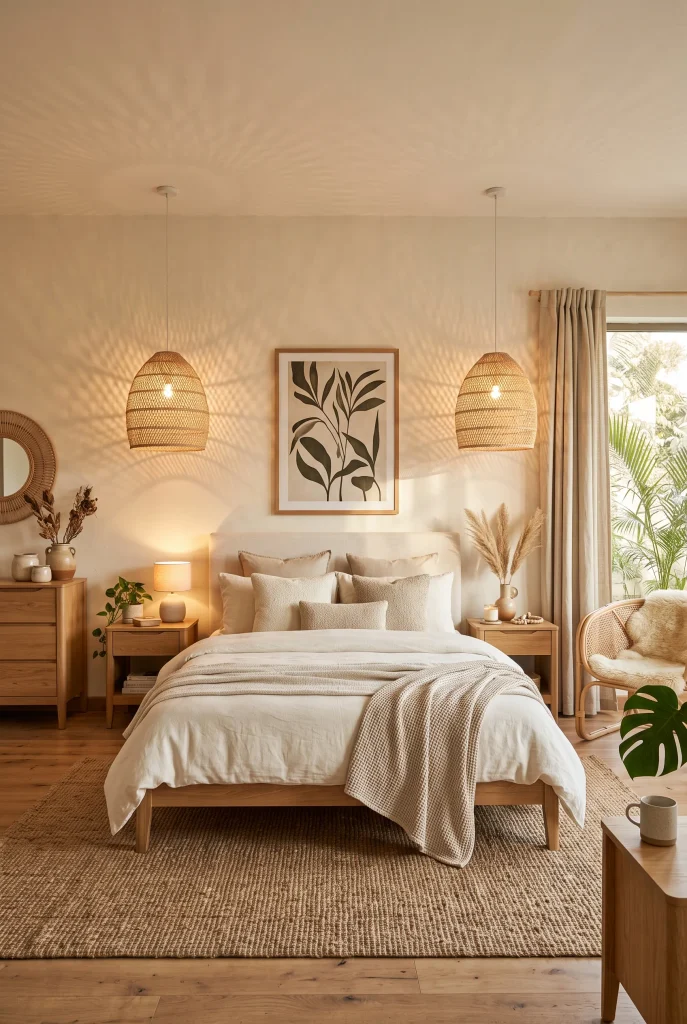
- Adds natural texture above the bed.
- Creates interesting patterns and shadows after dark.
- Complements earthy, bohemian, and organic interiors.
- Introduces warmth without making the room feel heavy.
Rattan pendant lights bring texture, warmth, and natural character into a bedroom while providing a gentle source of ambient illumination. Their woven construction can cast delicate patterns across nearby walls and ceilings, adding visual depth after dark. Choose a design with an airy weave and a warm bulb to keep the overall effect soft rather than dramatic. These fixtures work beautifully with linen bedding, wood furniture, woven rugs, and neutral colors. The natural material also adds interest during daylight, allowing the pendant to function as a decorative feature even when switched off.
Scale and placement are important when using woven pendants in a bedroom. A larger fixture can become a striking central feature, while smaller pendants may work better beside the bed. I’ve seen this style work especially well in rooms that need more texture but already have a calm, minimal color palette. Keep surrounding decor relatively simple so the woven pattern remains noticeable without overwhelming the space. Pair the pendant with discreet task lighting for practical routines, allowing the rattan fixture to provide warmth, atmosphere, and an organic focal point during the evening.
24. Shelf Accent Lights
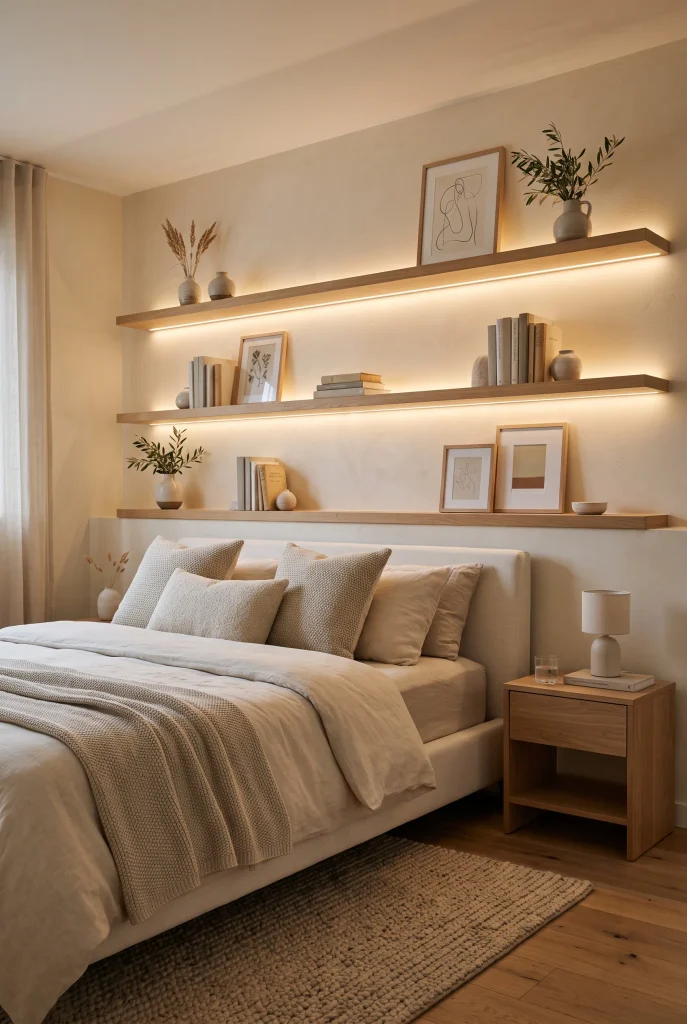
- Highlights books, artwork, and decorative objects.
- Adds depth to plain walls without extra furniture.
- Creates a subtle evening glow around storage areas.
- Helps shelves look styled and intentional after dark.
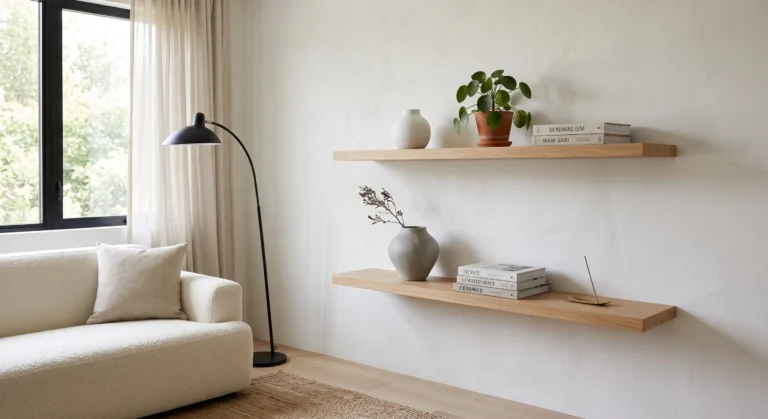
Shelf accent lights can transform simple storage into a subtle decorative feature once the sun goes down. Install concealed warm LEDs beneath floating shelves or along their upper edges to highlight books, ceramics, framed prints, and small objects. The gentle illumination adds depth to the wall while keeping the bedroom free from additional bulky fixtures. This approach works particularly well with open shelving because it separates each layer visually and creates soft shadows. Choose warm, dimmable lighting so the shelves contribute to the room’s atmosphere without becoming brighter than the main bedside area.
The best shelf lighting feels almost invisible during the day and softly noticeable at night. Hide strips behind a small lip or recessed edge so the source itself remains out of sight. I’ve noticed this technique can make inexpensive shelves appear more custom and polished with only a small upgrade. Avoid overcrowding the display, since a few carefully chosen objects look better when illuminated than many unrelated pieces. Combine the shelf glow with other soft light sources to create a balanced room where every layer feels connected, warm, and intentionally designed.
25. Crystal Chandelier
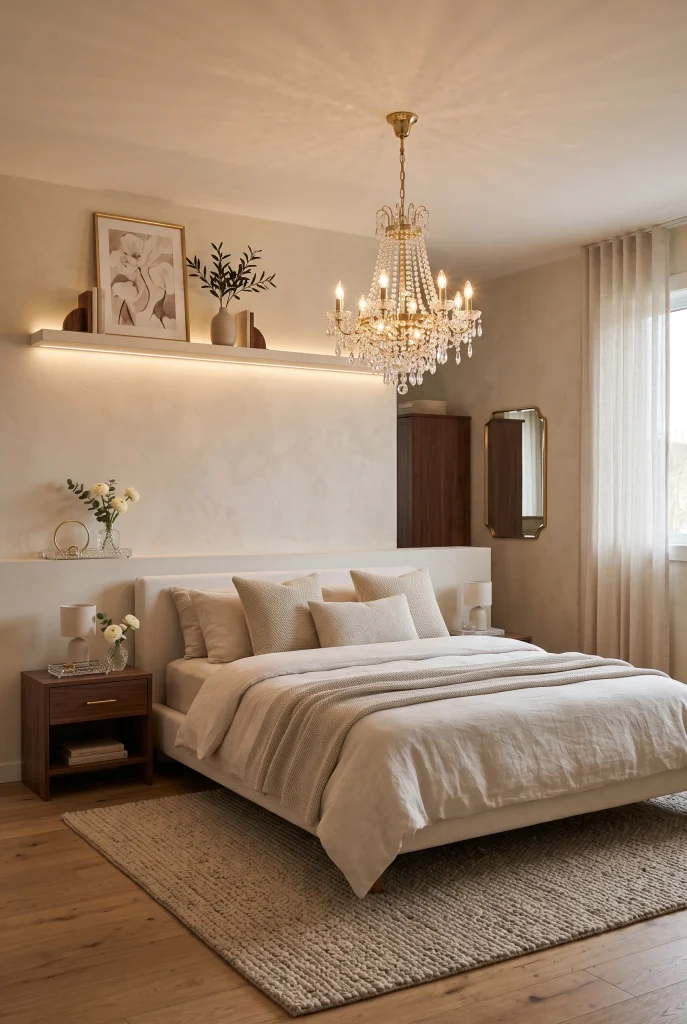
- Adds a decorative focal point above the bed.
- Creates soft reflections and visual depth.
- Brings elegance to simple or neutral interiors.
- Works best when balanced with softer supporting lights.
A crystal chandelier can add instant elegance to a bedroom while creating beautiful reflections across the surrounding surfaces. Choose a design that suits the scale of the room so it feels graceful rather than overwhelming. Smaller, delicate styles work well in cozy spaces, while larger fixtures can become dramatic focal points in rooms with higher ceilings. Pair the chandelier with warm bulbs to soften the sparkle and maintain a restful atmosphere. The combination of gentle illumination and reflective details can make even simple furniture and neutral colors feel more polished and visually layered.
The key is balancing decorative beauty with comfortable everyday lighting. A dimmable chandelier allows you to enjoy its visual impact without flooding the bedroom with excessive brightness. I’ve seen this work especially well when paired with understated bedside lamps that handle practical tasks separately. Keep surrounding decor relatively calm so the chandelier remains the main statement instead of competing with multiple bold elements. Crystal details can complement modern, vintage, romantic, or transitional interiors depending on the fixture shape. With warm layered lighting, the overall result feels sophisticated, inviting, and surprisingly serene rather than overly formal.
Conclusion
Beautiful lighting does not require a complete bedroom makeover. Small changes, such as a warm bedside lamp, hidden glow, sculptural pendant, or softly lit corner, can completely transform how your space looks and feels. These Bedroom Lighting Ideas show how layering different sources can add depth, comfort, personality, and everyday function. I’ve seen how simple lighting changes can make an ordinary room feel calmer and far more intentional. Save your favorite ideas on Pinterest, try one or two in your own bedroom, and share this inspiration with someone who wants to create a softer, dreamier space.