21 White Kitchen Ideas That Feel Fresh and Expensive
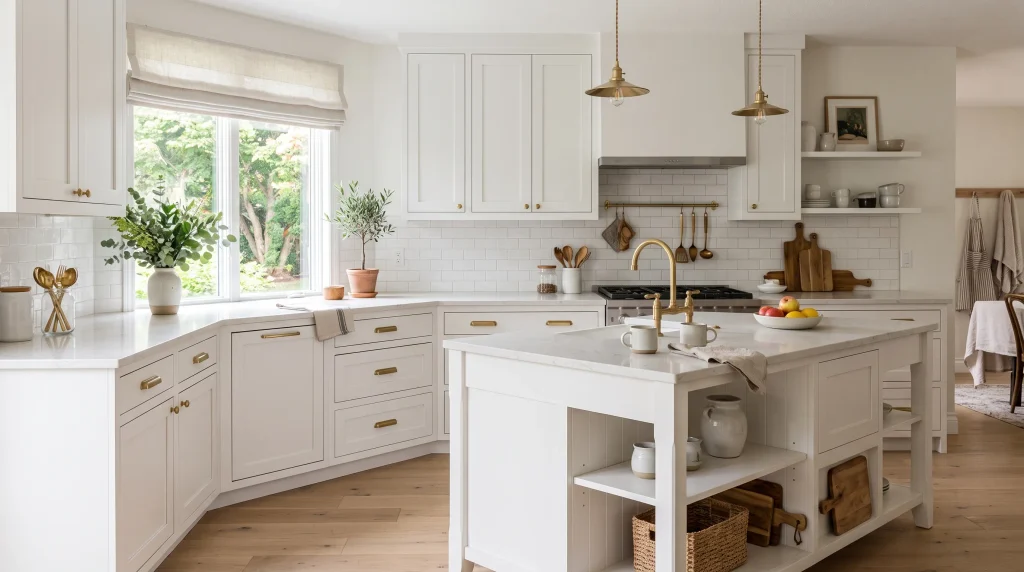
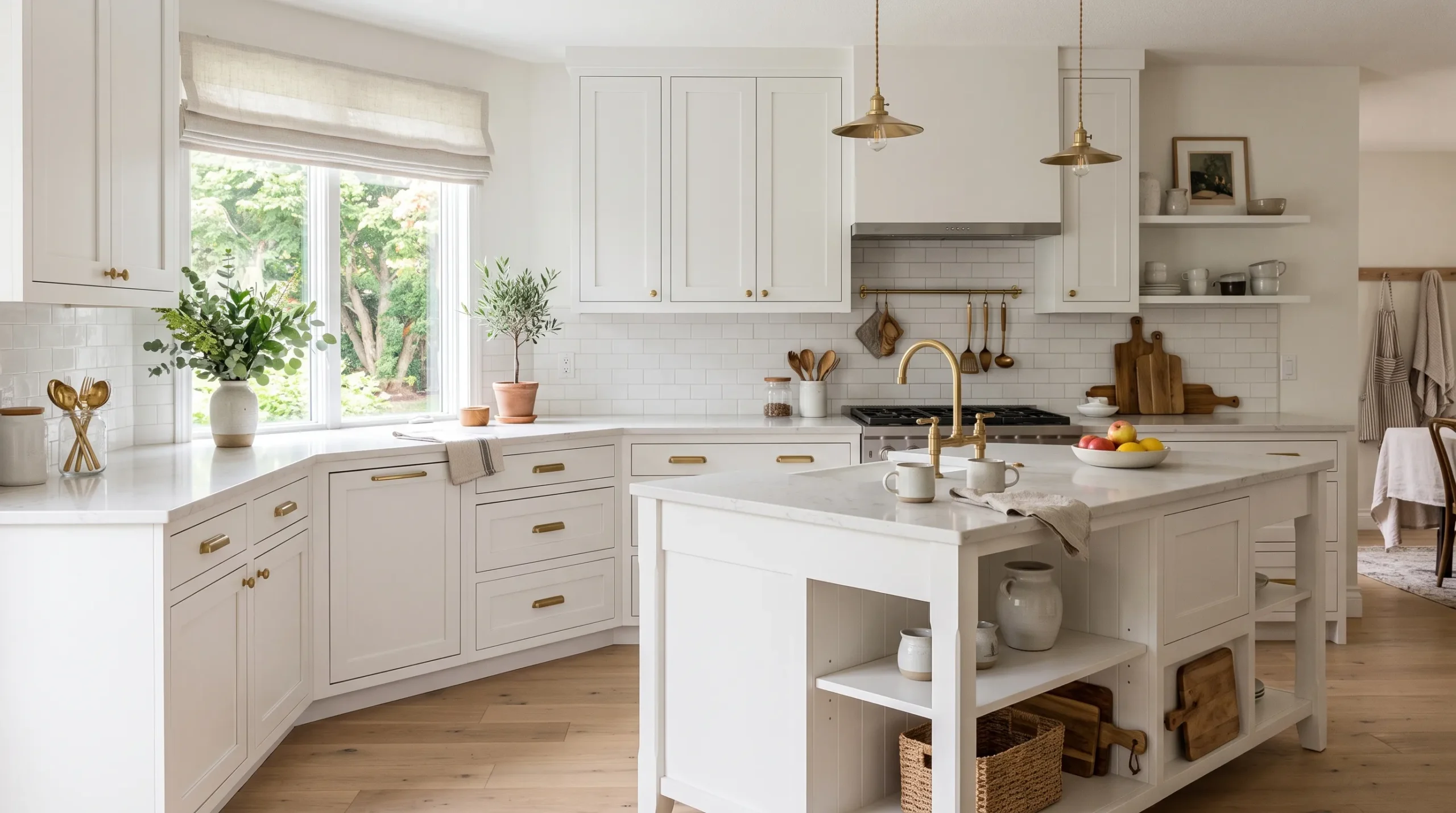
A white kitchen has a way of making a home feel brighter, cleaner, and more inviting. But keeping an all-white space from feeling cold or plain really comes down to the details. The right mix of warm wood, natural stone, soft lighting, beautiful hardware, and subtle texture can completely change the atmosphere.
If you are planning a kitchen refresh or simply looking for small ways to make your space feel more polished, these white kitchen ideas offer plenty of inspiration. From timeless cabinetry to cozy countertop details, these looks show how simple choices can create a kitchen that feels fresh, comfortable, and expensive without looking overdone.
1. Crisp White Cabinets
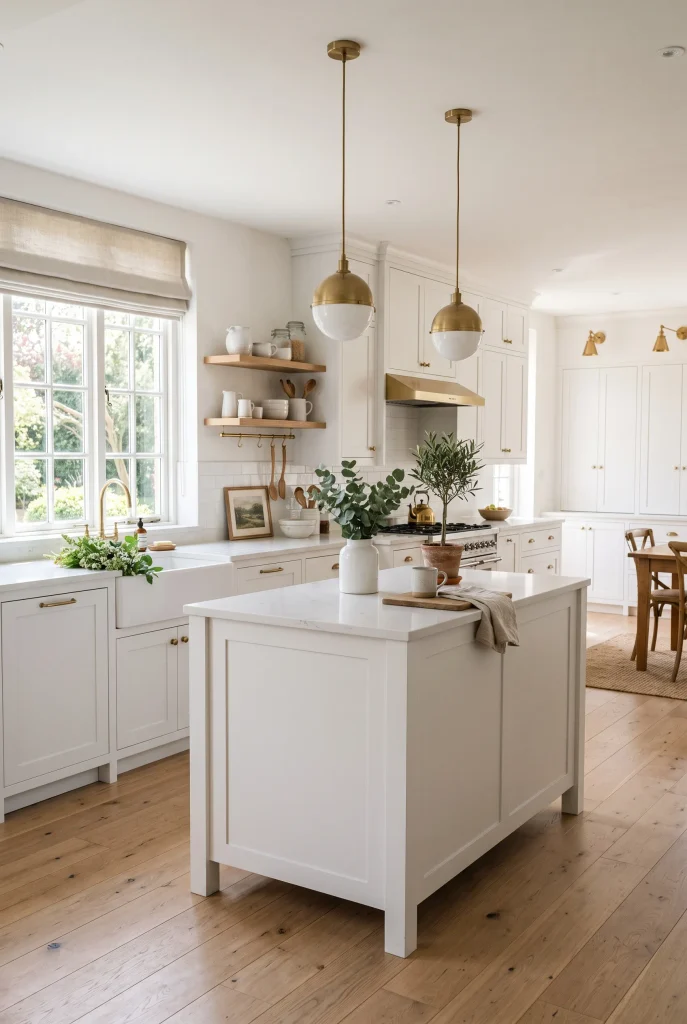
- Choose warm white instead of stark white for a softer look.
- Use simple cabinet profiles for a timeless appearance.
- Pair white cabinets with natural wood or stone for warmth.
- Keep hardware finishes consistent throughout the kitchen.
Crisp white cabinets create a clean foundation that can make almost any kitchen feel brighter and more spacious. They reflect natural light beautifully and give you plenty of flexibility when choosing countertops, hardware, flooring, and accessories. For a softer appearance, consider a warm or slightly creamy white instead of an extremely bright shade. Simple shaker doors can add timeless character, while flat-front cabinets create a cleaner contemporary look. The key is choosing a white that works with the natural light and surrounding finishes instead of looking disconnected from the rest of the room.
White cabinetry also gives you room to change the kitchen’s personality over time. Warm wood cutting boards, woven baskets, brass hardware, or colorful seasonal accessories can all stand out against the neutral backdrop. If the room feels too plain, focus on adding texture rather than filling the counters with decorations. Natural stone, ceramic, linen, and wood can make the space feel layered without losing its clean appearance. With the right combination of finishes, white cabinets can look polished and expensive while remaining practical enough for everyday family life.
2. Warm Wood Accents

- Use natural wood to bring warmth into an all-white kitchen.
- Light oak works especially well with creamy white cabinets.
- Repeat wood tones through stools, boards, and accessories.
- Choose a few larger wood accents instead of many small decorations.
Warm wood is an easy way to keep a white kitchen from feeling cold or overly formal. Light oak, walnut, or natural wood accents can introduce warmth through an island, stools, cutting boards, open shelving, or simple decorative pieces. The contrast does not need to be dramatic. Even a few wooden details can soften the bright cabinetry and create a more welcoming atmosphere. Pale oak is particularly useful when you want an airy Scandinavian or transitional feeling, while deeper walnut tones can create a richer and more sophisticated appearance.
Try repeating the same wood tone in several areas so the materials feel connected rather than random. A wooden island can be echoed with cutting boards, bar stools, or a small tray on the counter. Keeping the rest of the palette quiet allows the natural grain to become part of the decor. Wood also adds texture that painted cabinets cannot provide. When combined with creamy whites, stone surfaces, and simple metal hardware, these warm accents can make the kitchen feel comfortable, balanced, and thoughtfully designed without adding unnecessary color.
3. Marble Countertops
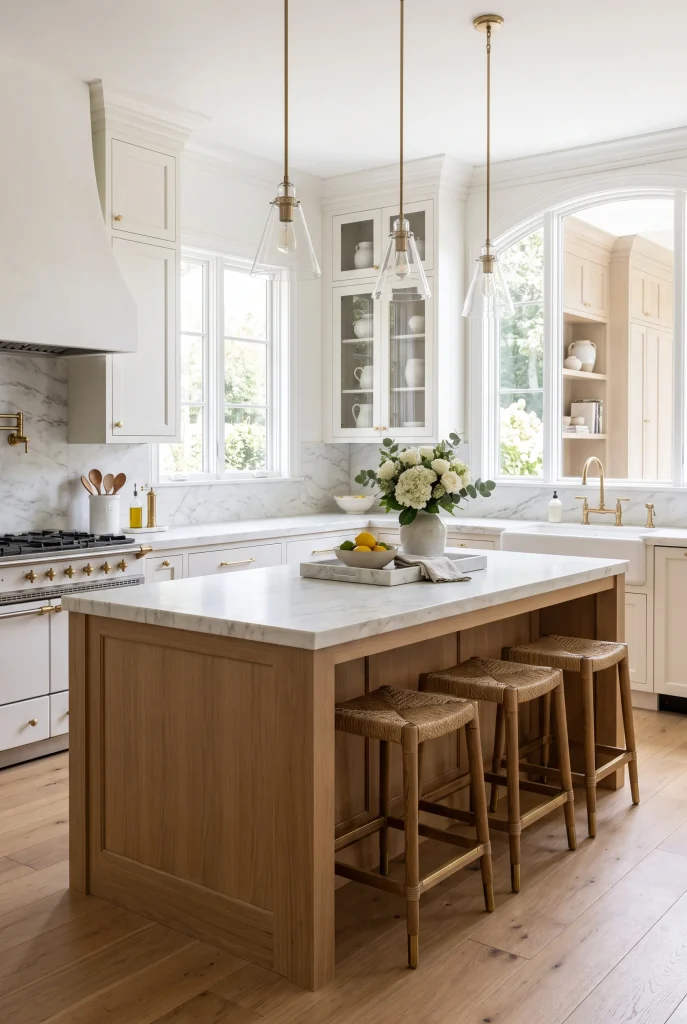
- Choose subtle veining for a calmer and timeless appearance.
- Coordinate the countertop undertone with the cabinets.
- Use the countertop as a major visual feature.
- Consider practical maintenance needs before selecting natural stone.
Marble countertops can give a white kitchen an instantly refined appearance. The natural veining adds movement to the room while keeping the overall palette light and sophisticated. Soft gray, beige, or taupe veining can work beautifully with warm white cabinetry and natural wood accents. Instead of adding lots of decorative accessories, let the stone become one of the main design features. Its natural variation creates visual interest while maintaining the clean look that makes white kitchens so popular.
Before choosing marble, consider how you use your kitchen every day. Natural stone requires thoughtful care, especially around acidic foods and spills, so understanding the maintenance involved is important. If you love the look but want a different level of maintenance, marble-look quartz or porcelain can provide a similar visual effect. Whichever surface you choose, look at a larger sample with your cabinet and flooring colors. This helps you see the complete combination and makes it easier to create a kitchen that feels cohesive rather than overly matched.
4. Glass Cabinet Doors
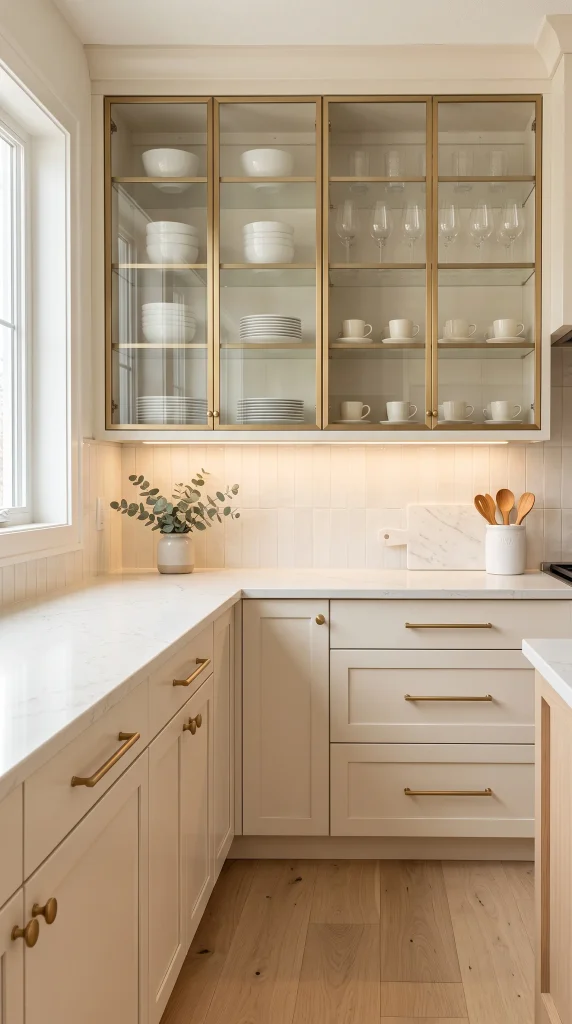
- Glass doors make upper cabinets feel lighter and less visually heavy.
- Display everyday dishes that add beauty and personality.
- Keep shelves edited so the view stays calm and organized.
- Brass hardware can add a subtle upscale finishing touch.
Glass-front cabinets can make a white kitchen feel brighter, lighter, and more custom without changing the entire layout. Instead of creating a solid wall of cabinetry, the transparent doors give the eye a place to pause and let attractive dishes become part of the decor. Use them for everyday plates, clear glasses, serving bowls, or a small collection of ceramics. Keeping the displayed items coordinated prevents the shelves from looking crowded. This approach works particularly well in kitchens with limited natural light because the open visual effect can make the cabinetry feel less imposing.
The trick is treating glass cabinets as display storage rather than another place to hide clutter. Choose a few useful pieces that already share similar colors or materials, then leave small areas of breathing room between them. White dishes, natural wood boards, and clear glassware create a simple combination that works beautifully against a white backdrop. Add warm lighting underneath or inside the cabinets if possible to create a soft glow after dark. This small feature can make ordinary storage feel more intentional while keeping frequently used kitchen pieces easy to see and reach.
5. Brass Hardware Accents

- Brushed brass brings warmth to an otherwise pale kitchen.
- Simple pulls keep the look sophisticated rather than overly decorative.
- Repeating the same finish creates visual consistency.
- Hardware is an easy update when full cabinet replacement is unnecessary.
A small hardware change can completely refresh the personality of white cabinetry. Brushed brass pulls and knobs add warmth, contrast, and a subtle custom feel without requiring a major renovation. They look especially polished against creamy or warm white doors because the golden tone brings out the softness of the paint. Choose simple shapes if you want a timeless result, or slightly longer pulls for a more contemporary appearance. The finish catches natural and artificial light throughout the day, giving the cabinets a gentle detail that makes the kitchen feel more thoughtfully designed.
When replacing hardware, measure existing holes carefully before ordering anything and check the overall scale against your cabinet doors and drawers. Consistency matters, so use the same metal finish across visible handles whenever possible. If the nearby kitchen already includes brass lighting or faucet details, matching those elements can make the entire space feel connected. You do not need many decorative accessories when the hardware provides enough visual interest. Pair it with natural wood, creamy stone, and simple ceramics for a balanced look that feels fresh without becoming too trendy or difficult to maintain.
View: 21 Walk In Pantry Ideas That Make Storage Look Luxe
6. Soft White Backsplash
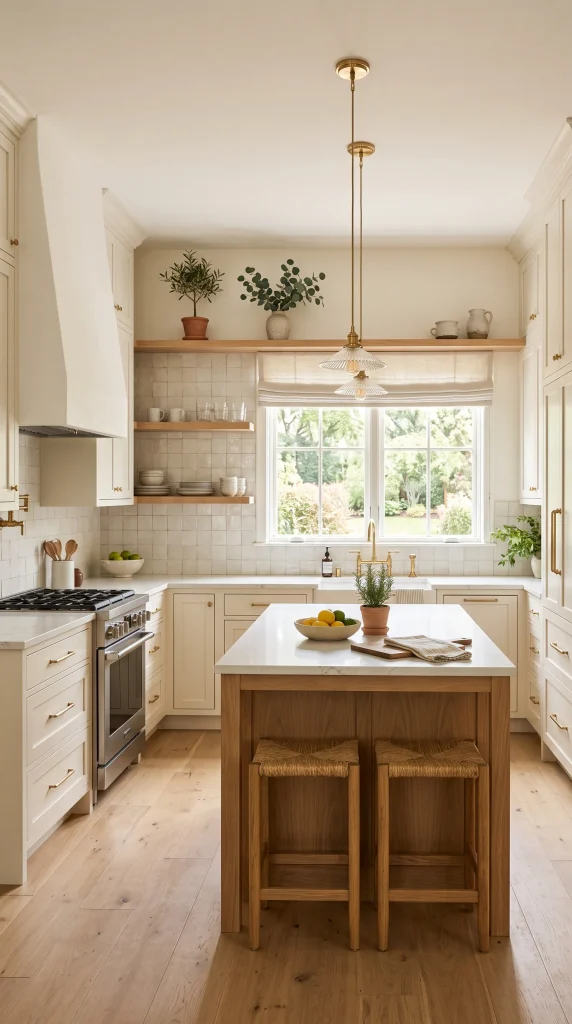
- A textured white backsplash adds interest without changing the light color palette.
- Handmade-look tiles create gentle variation across the wall.
- Soft cream tones can feel warmer than pure bright white.
- Simple tile patterns keep the kitchen looking timeless.
A white backsplash does not have to disappear into the background. Choosing a softly textured tile can add depth and character while keeping the kitchen bright and cohesive. Handmade-look ceramic tiles are especially useful because their slight variations create movement without introducing strong colors. Creamy white, ivory, and warm off-white shades can also connect the backsplash with surrounding cabinetry and natural wood accents. This creates a layered monochromatic look that feels sophisticated rather than flat. The result is a kitchen that stays fresh and light while gaining enough texture to feel thoughtfully finished.
Consider the amount of visual detail already present before selecting the backsplash pattern. If your counters have strong veining, a simple tile will usually create better balance than another dramatic surface. For quieter countertops, a subtly irregular tile can become a beautiful focal point behind the range or sink. Keep grout colors close to the tile when you want a seamless appearance, or use gentle contrast to emphasize the pattern. Good lighting will reveal the texture throughout the day. With the right combination, a pale backsplash can make the whole kitchen feel brighter, warmer, and more expensive.
7. Statement Pendant Lights

- Oversized pendants can create a strong focal point above the island.
- Choose warm finishes to keep a white kitchen from feeling cold.
- Linen, glass, and aged brass work beautifully with pale cabinetry.
- Hang fixtures at a comfortable height for everyday kitchen use.
Lighting can change the entire mood of a white kitchen, especially when the fixtures become part of the design. A pair of statement pendants above the island adds height, personality, and a polished finishing touch without making the room feel crowded. Look for materials such as aged brass, clear glass, linen, or soft ceramic that complement the rest of the kitchen. Larger fixtures can work beautifully in spacious kitchens, while smaller kitchens may benefit from slimmer pendants that provide visual interest without overwhelming the island.
The best lighting choice should balance appearance with everyday function. Make sure the pendants provide enough illumination for food preparation while also creating a warmer atmosphere when the main ceiling lights are off. Installing them on a dimmer gives you more control throughout the day. If your kitchen already has brass hardware or warm wood accents, repeating those finishes in the lighting can make the room feel intentionally coordinated. Even a simple white kitchen can look much more finished when the lighting feels like a deliberate design feature rather than an afterthought.
8. Natural Wood Island
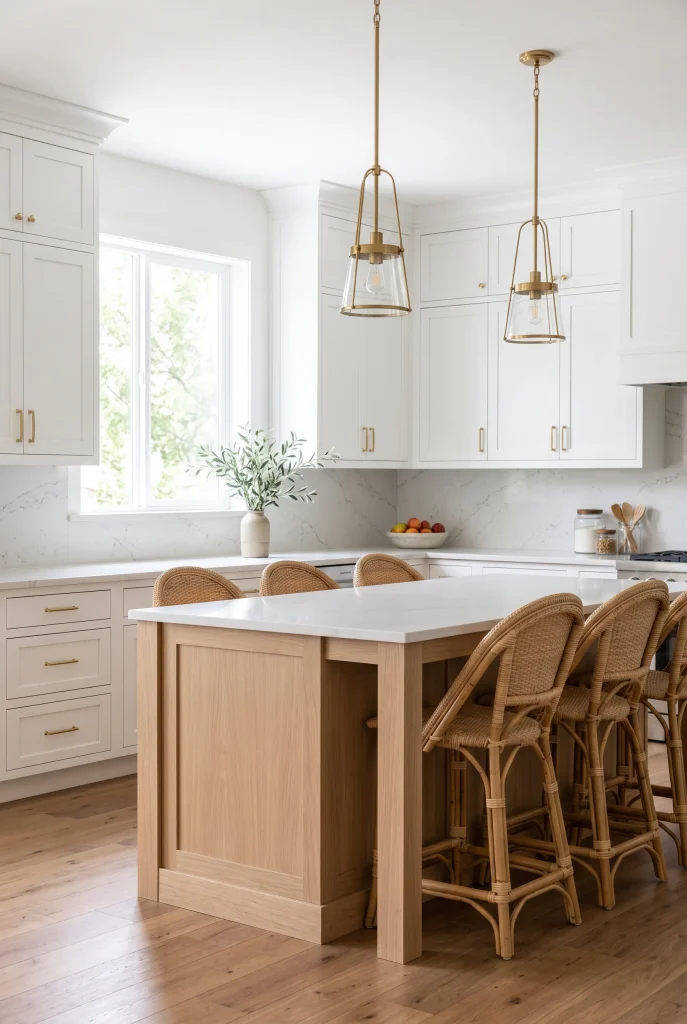
- Natural wood introduces warmth against crisp white cabinetry.
- Light oak works well with both modern and traditional kitchens.
- Keep the wood grain visible for an organic, relaxed feeling.
- Coordinate the island wood with flooring or nearby furniture when possible.
A natural wood island can make an all-white kitchen feel warmer and more inviting while still keeping the overall space bright. Light oak, white oak, and other pale woods pair beautifully with white cabinets because the contrast is noticeable without feeling harsh. The wood grain also brings an organic texture that smooth painted surfaces sometimes lack. For a refined look, keep the island shape simple and let the natural material provide most of the visual interest. A pale stone countertop can bridge the two finishes and create a seamless connection between the island and surrounding cabinetry.
This combination is especially helpful when a white kitchen feels too cool or sterile. Rather than adding lots of colorful accessories, introduce warmth through a few carefully selected materials. Wooden stools, cutting boards, woven baskets, or a small wooden tray can repeat the island finish throughout the room. Choose a wood tone that works with the flooring so the kitchen feels connected rather than pieced together. The result is practical and timeless, giving the room a comfortable quality while preserving the clean appearance that makes white kitchens so appealing.
9. Layered Countertop Decor
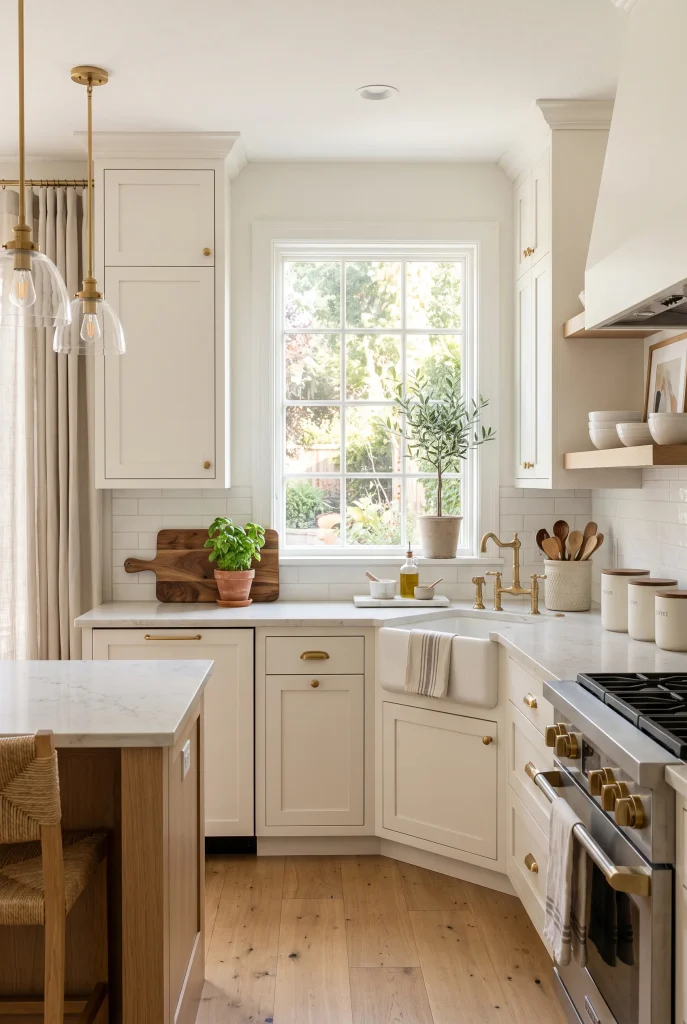
- Group useful items on a tray to keep the counter organized.
- Mix wood, ceramic, and greenery for natural texture.
- Leave plenty of open counter space around work areas.
- Display everyday pieces that are both practical and attractive.
White cabinetry creates a clean backdrop, making simple countertop styling especially noticeable. Instead of filling every surface with accessories, choose a few useful pieces that add warmth and texture. A wooden cutting board leaning against the backsplash, a ceramic utensil holder, a small bowl of fruit, and a simple plant can create an inviting arrangement without looking cluttered. Grouping smaller items on a tray also helps the countertop feel organized. The goal is to make the kitchen look lived-in while preserving enough clear space for preparing meals and handling everyday tasks.
Think about how you actually use the counter before adding decorative pieces. Items that you reach for regularly can stay visible, while rarely used accessories are better stored away. Vary the heights slightly so the arrangement feels natural, but avoid creating too many separate clusters across the room. Natural wood, soft ceramics, woven textures, and greenery work particularly well with white cabinetry because they add warmth without competing with the bright palette. A few intentional details can make the kitchen feel finished and welcoming while keeping the overall look simple enough for everyday life.
10. Elegant Range Hood
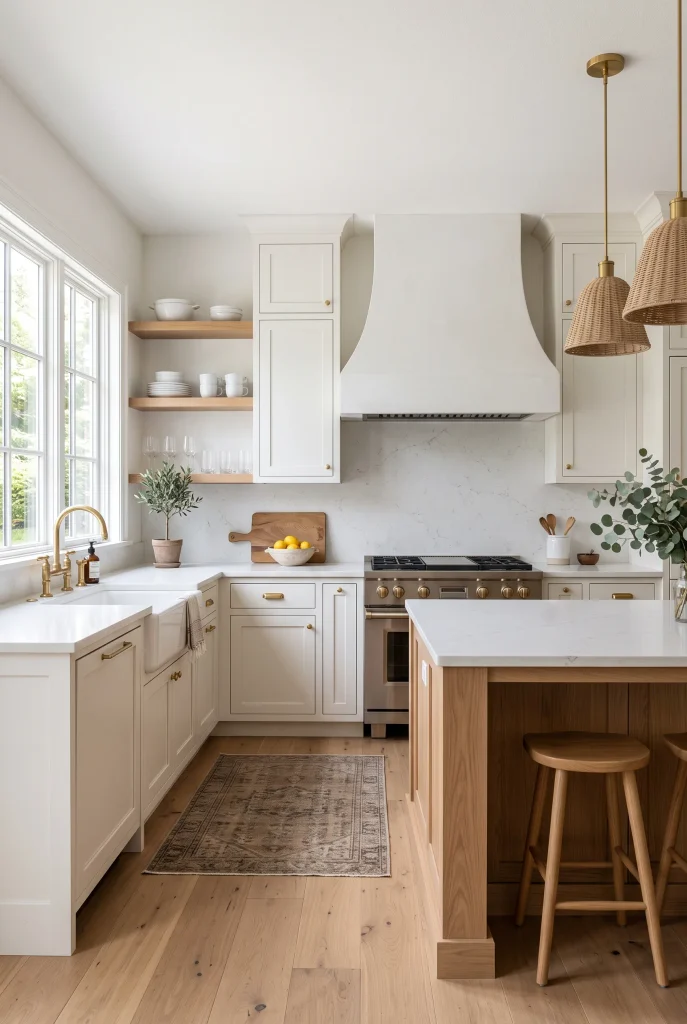
- A sculptural hood can become the kitchen’s main focal point.
- Plaster or painted finishes create a seamless custom appearance.
- Keep surrounding decor simple so the hood remains visually important.
- A softly curved shape can make the kitchen feel more refined.
A beautifully designed range hood can give a white kitchen the architectural detail it needs to feel custom and expensive. Instead of treating the hood as purely functional, consider making it a focal point with a softly curved shape, plaster finish, or cabinetry that matches the surrounding walls. A simple white hood can blend naturally into the space while still adding dimension above the cooking area. This works especially well when the rest of the kitchen uses clean lines, allowing the hood to provide a subtle statement without introducing a completely different style.
The area around the range should remain relatively calm so the hood has room to stand out. Pair it with simple countertops, understated hardware, and a restrained backsplash for a balanced composition. If you prefer a warmer appearance, a creamy white or slightly textured finish can soften the look. Practical details matter too, so make sure the hood is properly sized for the cooktop and provides suitable ventilation. When function and design work together, the range hood becomes more than an appliance and helps give the entire kitchen a custom, intentional appearance.
11. Open Shelving
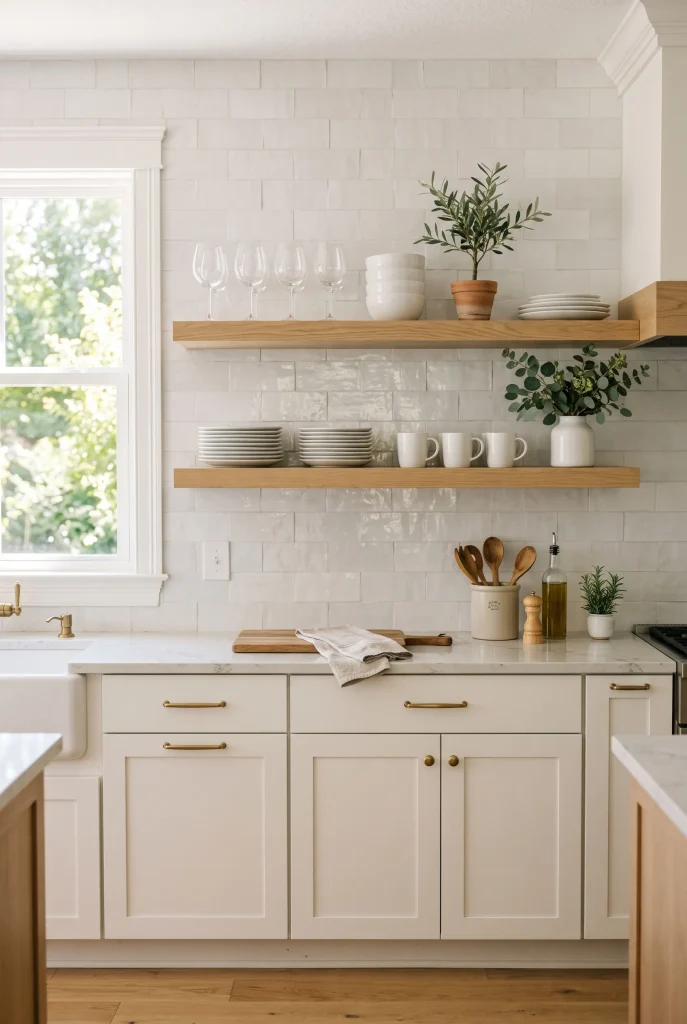
- Use open shelves for attractive everyday dishes and useful kitchen pieces.
- Natural wood shelves add warmth to an all-white palette.
- Leave empty space between objects to avoid a crowded appearance.
- Repeat colors and materials for a cohesive display.
Open shelving can make white cabinetry feel lighter while giving the kitchen an opportunity to show personality. A couple of natural wood shelves against a white backsplash can create a warm focal point without adding heavy visual weight. Use them to display simple ceramics, clear glassware, wooden boards, or a few small plants. Because everything remains visible, the shelves work best when the arrangement is intentionally edited. Keeping similar colors together helps the display feel calm, while leaving some empty shelf space keeps the overall kitchen looking airy.
For everyday practicality, place frequently used pieces within easy reach rather than turning the shelves into purely decorative displays. Heavy cookware can stay in lower cabinets while lighter dishes and glasses occupy the open shelves. Wipe the shelves regularly, especially if they are located near the range where cooking residue can collect. A simple combination of white ceramics, natural wood, and greenery is easy to maintain and works across many decorating styles. The result adds character to the room without sacrificing the bright, uncluttered feeling that makes white kitchens so appealing.
12. Large Kitchen Island
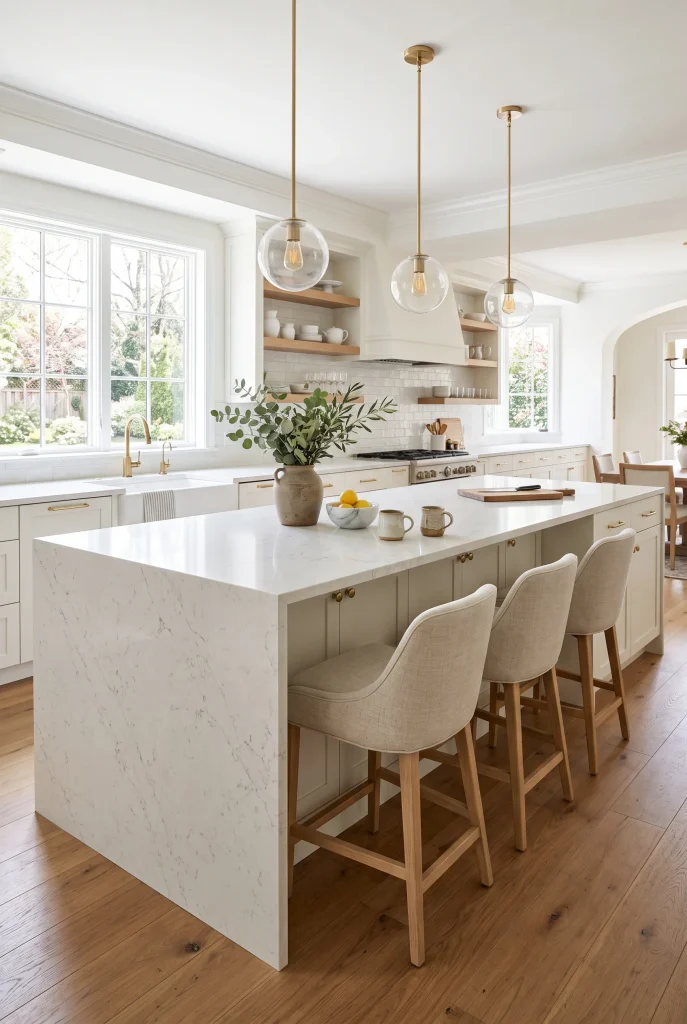
- A large island can provide both workspace and a natural gathering area.
- Choose a durable countertop suited to everyday cooking and entertaining.
- Add comfortable stools if the island will be used for casual meals.
- Keep the surrounding walkways clear for easy movement.
A generously sized island can make a white kitchen feel impressive while adding valuable everyday function. With enough surface area, the island can become a place for meal preparation, casual breakfasts, homework, entertaining, and serving food. A pale quartz or stone countertop keeps the room bright while giving the central feature a substantial, finished appearance. Comfortable stools can turn the island into an inviting gathering spot. Even in a large kitchen, keeping the island shape simple helps preserve the clean and timeless character of the white palette.
Before choosing an oversized island, think carefully about the available floor space and how people move through the kitchen. There should be comfortable clearance around the island so cabinet doors can open and several people can work without constantly bumping into one another. Storage can also be built into the island for cookware, serving pieces, or frequently used appliances. When the proportions are right, the island becomes both a practical work zone and a visual anchor. Combined with white cabinetry and warm natural materials, it can give the kitchen a spacious, polished feel without unnecessary decoration.
13. Warm Tile Flooring
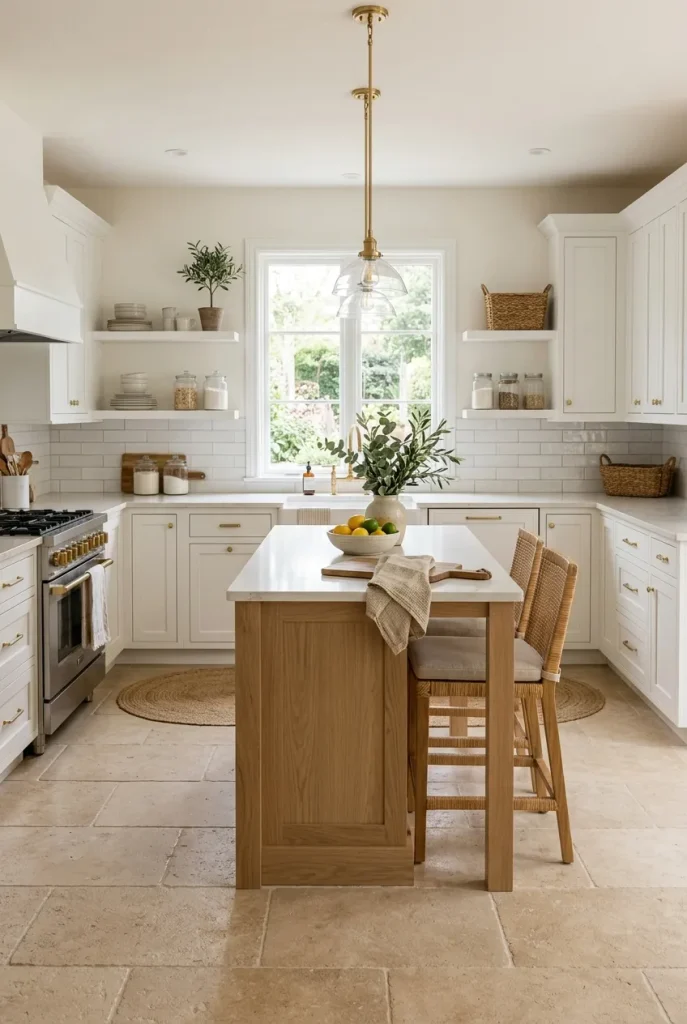
- Warm beige flooring can soften an otherwise bright white kitchen.
- Stone-look tile adds texture without overwhelming the room.
- Choose durable flooring that can handle everyday kitchen traffic.
- Keep nearby wood tones within a similar warm color family.
Flooring plays a major role in how a white kitchen feels because it covers such a large visual area. Warm beige, cream, or soft stone-look tiles can keep the room from feeling overly cool while maintaining the clean appearance of white cabinetry. Large-format tiles create fewer visible grout lines and can make the floor feel more seamless. Natural stone can add beautiful variation, while quality porcelain offers a practical alternative for busy households. Pairing warm flooring with pale cabinets creates a balanced foundation that feels bright without becoming stark.
When choosing kitchen flooring, consider both appearance and maintenance. Kitchens experience spills, dropped food, moisture, and heavy foot traffic, so a surface that is easy to clean can make daily life much simpler. A subtle pattern or gentle variation can also help disguise small marks between cleanings. If you already have warm wood elsewhere in the kitchen, select flooring with a compatible undertone so the materials feel connected. With the right shade and texture, the floor can quietly add warmth and character while allowing the white cabinetry to remain the main visual focus.
14. Classic Subway Tile
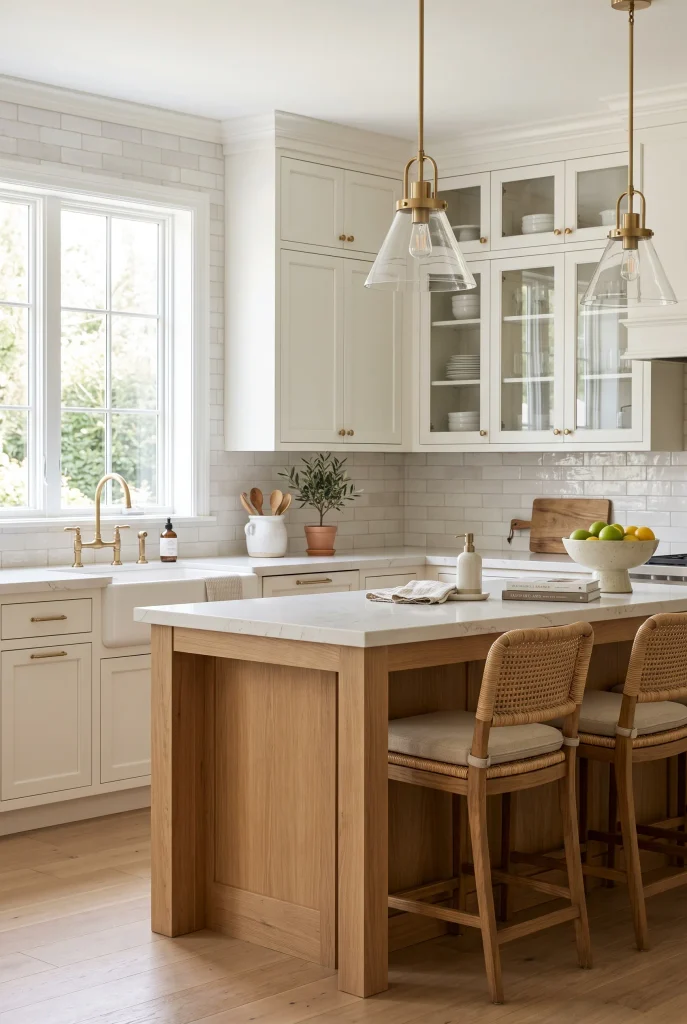
- Subway tile creates a timeless backsplash that works with many kitchen styles.
- A slightly irregular handmade finish adds character.
- Stacked layouts feel cleaner and more contemporary.
- Traditional running-bond patterns create a familiar classic look.
Subway tile remains popular because it gives a kitchen a clean backdrop without making the design feel overly complicated. In a white kitchen, the simple rectangular shape adds subtle pattern while preserving the bright color palette. Glossy tiles can reflect natural light and make the backsplash feel luminous, while handmade-style versions introduce gentle variation and texture. The layout also changes the overall impression. A traditional running-bond arrangement feels classic, while a stacked layout can look more streamlined and modern. This flexibility makes subway tile easy to adapt to different kitchen styles.
The grout choice can make just as much difference as the tile itself. A matching white or warm neutral grout creates a softer, almost continuous surface, while gentle contrast highlights the individual tile shapes. Before choosing, consider the color temperature of your cabinets and countertops so the backsplash does not look noticeably colder or warmer. Keeping the surrounding finishes simple allows the tile to provide enough visual texture without competing with other features. For a fresh and expensive-looking kitchen, subtle variation usually works better than an overly busy backsplash pattern.
15. Minimalist Window Styling

- Keep window treatments simple so natural light remains the focus.
- Linen shades add softness without making the kitchen feel heavy.
- Avoid placing bulky decor directly in front of the window.
- Use the window area to create a calm visual break in the cabinetry.
A bright kitchen window can become one of the most beautiful features in a white kitchen, so it often needs very little decoration. A simple linen Roman shade, woven shade, or minimal fabric panel can soften the window while allowing plenty of daylight into the room. Keeping the area around the window uncluttered helps the kitchen feel open and spacious. If the window sits above the sink, a small plant or understated ceramic piece can add personality without blocking the view or interfering with everyday cleaning.
Natural light also changes how white finishes appear throughout the day. A warm white cabinet may look creamy in morning sunlight and slightly brighter later in the afternoon. Choose window treatments that complement these changes rather than fighting them. Lightweight natural fabrics work especially well because they add texture without making the space feel dark. If privacy is needed, select a shade that can be adjusted easily while still allowing filtered light. A simple window treatment can make the whole kitchen feel softer, calmer, and more welcoming without adding unnecessary visual clutter.
16. Layered Neutral Textures
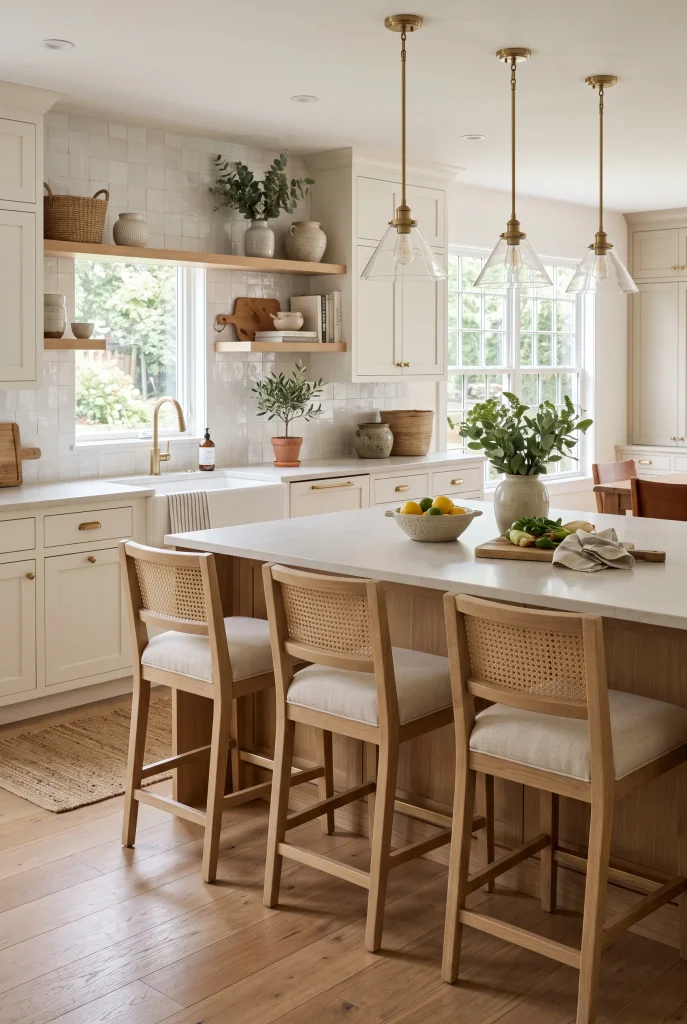
- Mix linen, wood, ceramic, and woven textures for visual depth.
- Keep most materials within a warm neutral color palette.
- Use texture instead of bold color to create interest.
- Repeat natural materials throughout the kitchen for cohesion.
A white kitchen can feel rich and inviting when different textures are layered throughout the space. Smooth painted cabinets look more interesting beside natural wood, woven baskets, linen seating, textured ceramics, and softly veined stone. The colors can remain quiet while the materials provide enough variation to keep the room from feeling flat. This approach works especially well when you want an elegant kitchen without relying on lots of decorative color. A few carefully chosen textures can create the comfortable, collected appearance often associated with more expensive interiors.
The key is to introduce variety without creating visual chaos. Start with the permanent finishes, such as cabinetry, counters, flooring, and backsplash, then add softer elements through stools, runners, baskets, and accessories. Natural materials generally work well together because their subtle imperfections keep the room feeling relaxed. Avoid adding too many competing patterns when the goal is a calm look. Instead, let differences in weave, grain, finish, and surface texture do the work. This creates a kitchen that feels polished from a distance but still warm and welcoming when you use it every day.
17. Creamy White Cabinetry

- Creamy whites can make a kitchen feel warmer than bright optical white.
- Match cabinet undertones with nearby counters and backsplash materials.
- Warm whites pair beautifully with natural wood and brass.
- Sample cabinet colors under both daylight and evening lighting.
Not every white kitchen needs a bright, pure white finish. Creamy white cabinetry can create a softer and more welcoming atmosphere while still delivering the clean look people love about white kitchens. Warm ivory, soft linen, and slightly creamy shades work beautifully with natural wood, brass, beige stone, and warm flooring. They also help reduce the stark contrast that can sometimes happen when every surface is an intense cool white. The result feels relaxed and refined, particularly in kitchens where you want an inviting atmosphere rather than a highly modern appearance.
Choosing the right white is mostly about understanding undertones. A cabinet sample that looks neutral in a showroom can appear noticeably warmer or cooler once it is surrounded by your actual countertop, flooring, and wall color. Test larger samples in different parts of the room and look at them during morning, afternoon, and evening light. This simple step can prevent expensive color mismatches later. Once the cabinet tone is right, coordinate the rest of the finishes around it. Warm whites often look especially beautiful with creamy stone, light oak, aged brass, and natural woven accents.
18. Under Cabinet Lighting
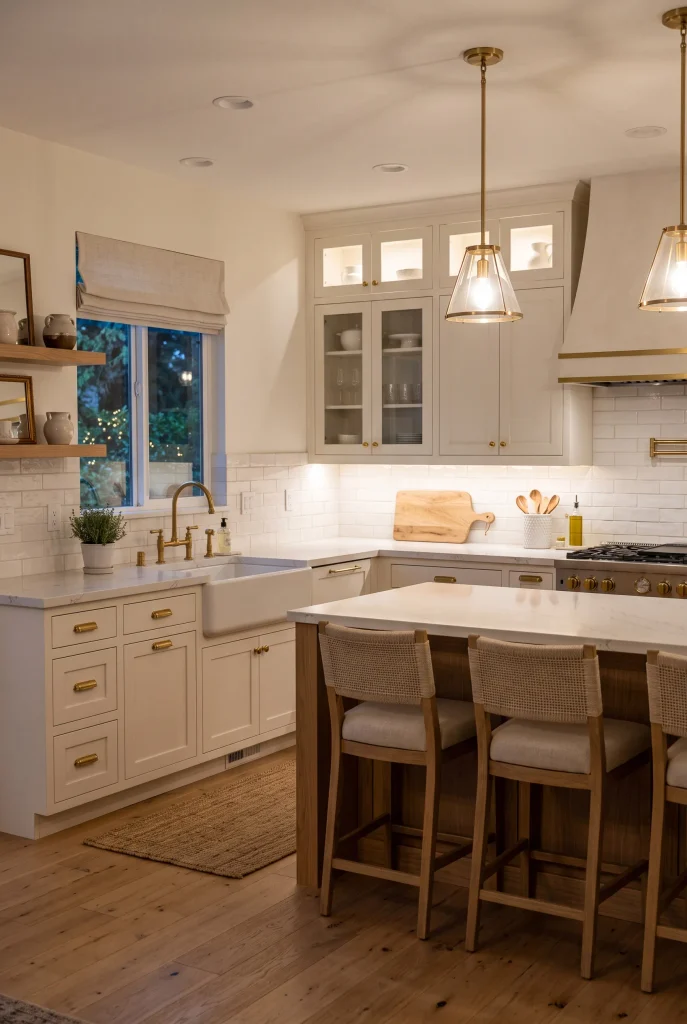
- Warm LED strips can make countertops easier to use after dark.
- Hidden lighting keeps the cabinetry looking clean and streamlined.
- Choose a warm color temperature for a cozy evening atmosphere.
- Use separate controls so task lighting can be adjusted independently.
Under-cabinet lighting adds both function and atmosphere to a white kitchen. During the day, it can disappear into the cabinetry, but in the evening it creates a soft glow across the countertop and backsplash. This makes food preparation easier while also giving the kitchen a warmer appearance after the main lights are turned down. Slim LED strips or discreet puck lights are useful options, especially when you want the lighting hardware to remain almost invisible. The gentle illumination can also highlight stone surfaces, backsplash texture, and carefully styled countertop details.
For the most comfortable result, choose lighting with a warm tone rather than an overly blue or cool white. If possible, install separate controls or dimmers so you can adjust the brightness depending on the task. Stronger illumination works well while cooking, while a softer setting creates a relaxed evening glow. Keep the light source positioned toward the front of the cabinet underside so it evenly covers the work surface. This small upgrade can make a noticeable difference in how the kitchen functions and feels, especially once natural daylight disappears.
19. Deep Farmhouse Sink
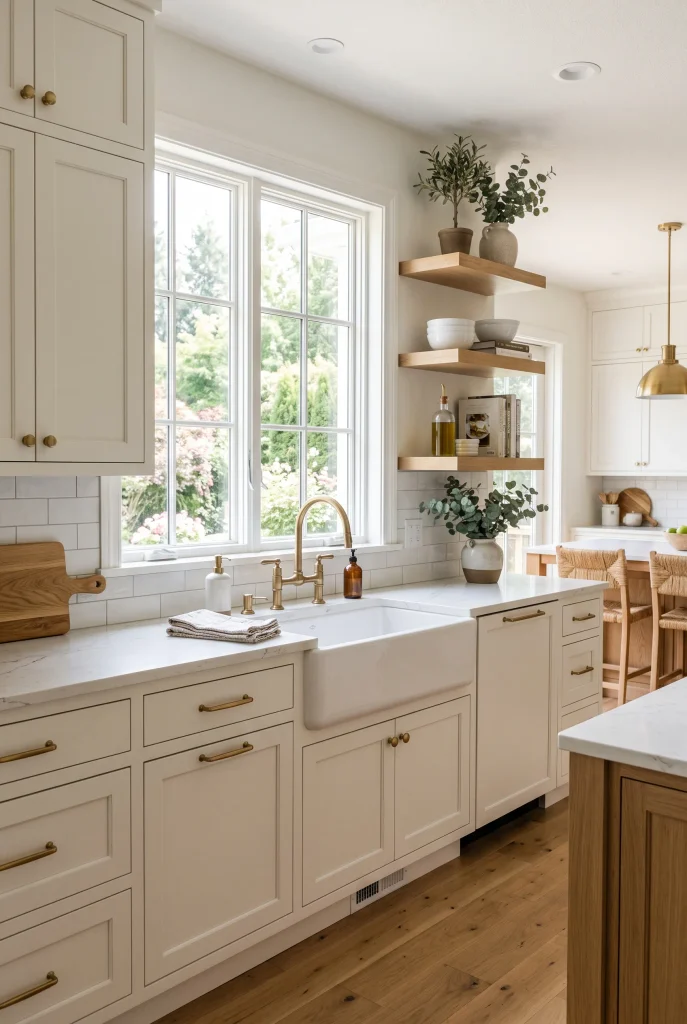
- A deep sink provides plenty of room for large pots and dishes.
- White fireclay or ceramic creates a classic farmhouse appearance.
- Pair the sink with a simple faucet for a balanced look.
- A window above the sink can make the area feel brighter and more inviting.
A deep farmhouse sink can give a white kitchen a timeless focal point while providing plenty of practical space for everyday tasks. Its generous basin is useful for washing large cookware, soaking dishes, and handling oversized serving pieces. A white fireclay or ceramic finish blends naturally with surrounding cabinetry and countertops, creating a seamless, classic appearance. When paired with warm wood accents and simple brass hardware, the sink area can feel charming without looking overly rustic. The substantial shape also adds architectural character to an otherwise simple kitchen.
Because farmhouse sinks are visually noticeable, proportion matters when selecting one. Consider the cabinet size beneath it and the amount of counter space available on either side. A deep basin is useful, but it should still feel comfortable for the people who use the kitchen regularly. Keeping the faucet and surrounding accessories simple allows the sink to remain the feature without making the area look busy. If the sink sits beneath a window, natural light can further emphasize its bright finish and create a pleasant, practical workspace that feels connected to the rest of the room.
20. Soft Linen Bar Stools
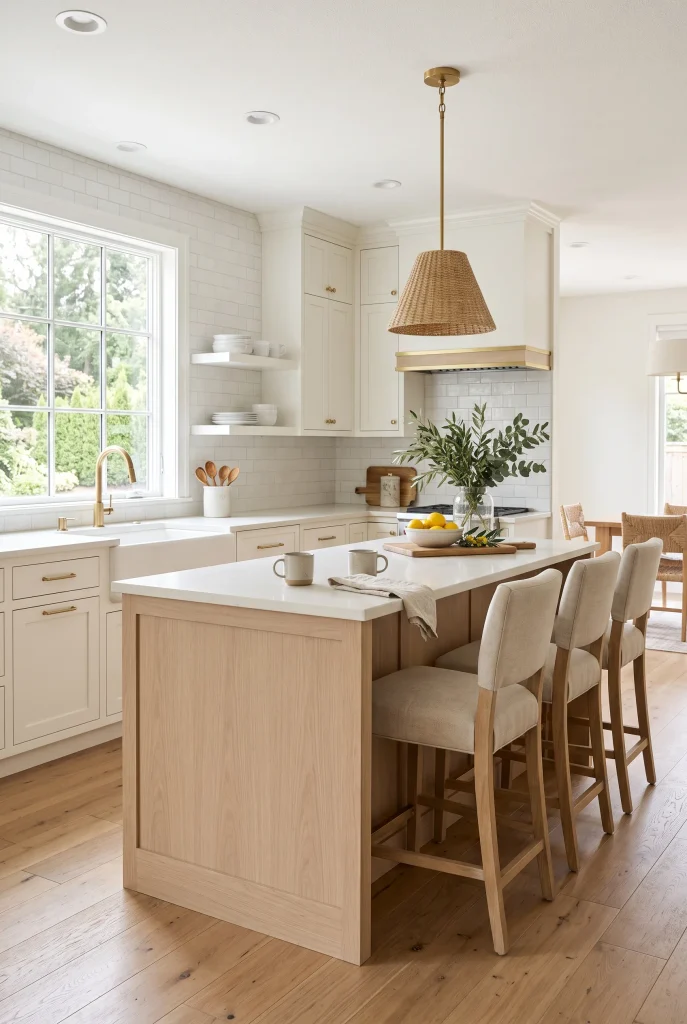
- Linen upholstery softens the hard surfaces commonly found in kitchens.
- Neutral stools can blend easily with white and natural wood finishes.
- Choose washable or durable fabrics for everyday family use.
- Keep stool proportions comfortable for the island height.
Bar stools are an easy way to add softness and personality to a white kitchen without introducing strong colors. Linen or linen-look upholstery can bring warmth to the space while balancing the harder surfaces of stone, cabinetry, and metal. Neutral beige, oatmeal, cream, and taupe shades work naturally with white cabinets and wood islands. A simple upholstered silhouette keeps the kitchen looking refined rather than overly decorated. If the island is large enough, matching stools can create a clean rhythm that makes the seating area feel intentional and welcoming.
Since kitchen seating gets plenty of everyday use, appearance should not be the only consideration. Check the seat height against the island or counter before purchasing and make sure there is enough legroom underneath. Performance fabrics or removable covers can also make maintenance easier in busy homes. If your kitchen already contains several wood elements, upholstered stools can provide a useful change in texture while keeping the palette cohesive. Their soft shape can make a bright white kitchen feel more comfortable and lived-in, especially when the island doubles as a casual dining or gathering space.
21. Built In Coffee Station
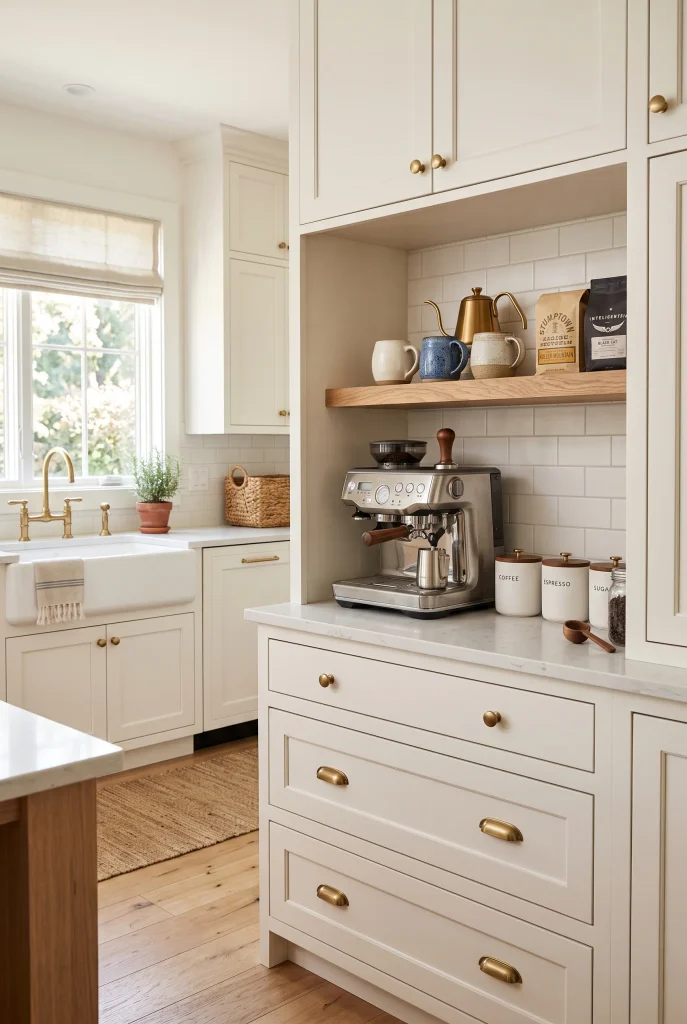
- A dedicated coffee station keeps daily supplies organized in one place.
- Use a small shelf for mugs and attractive coffee accessories.
- Keep the countertop clear enough for comfortable preparation.
- Matching containers can make everyday supplies look more polished.
A built-in coffee station can add personality and convenience to a white kitchen while keeping the rest of the countertops organized. A small section of cabinetry or counter space can hold a coffee maker, mugs, beans, syrups, and other daily essentials. Open shelving above the station provides an opportunity to display attractive cups or a few simple accessories. Keeping the materials consistent with the rest of the kitchen prevents the coffee area from feeling like a separate zone. Warm wood, ceramic, and brass details can add enough contrast to make this little corner feel special.
The most useful coffee stations are designed around how the space is actually used. Keep the machine near an outlet and leave enough open counter space for preparing drinks comfortably. Drawers or cabinets below can store filters, mugs, and supplies that do not need to stay visible. A small tray can contain loose items and make cleanup easier. If you enjoy a slower morning routine, adding one or two decorative touches such as a small plant or framed print can make the area feel welcoming. This creates a practical feature that also adds charm to the overall kitchen.
Conclusion
Creating a beautiful white kitchen does not mean everything has to match perfectly. The most inviting spaces usually combine different textures, warm materials, practical features, and a few carefully chosen decorative details. Natural wood can soften white cabinetry, brass hardware can add warmth, and thoughtful lighting can completely change the mood after sunset.
Whether you are planning a full kitchen makeover or making a few simple updates, start with the areas that will make the biggest difference in your everyday space. Choose finishes you genuinely enjoy, keep the room functional, and let a few beautiful details do the work. A white kitchen can stay timeless while still feeling warm, personal, and fresh.