17 Small Entryway Ideas That Feel Stylish and Spacious
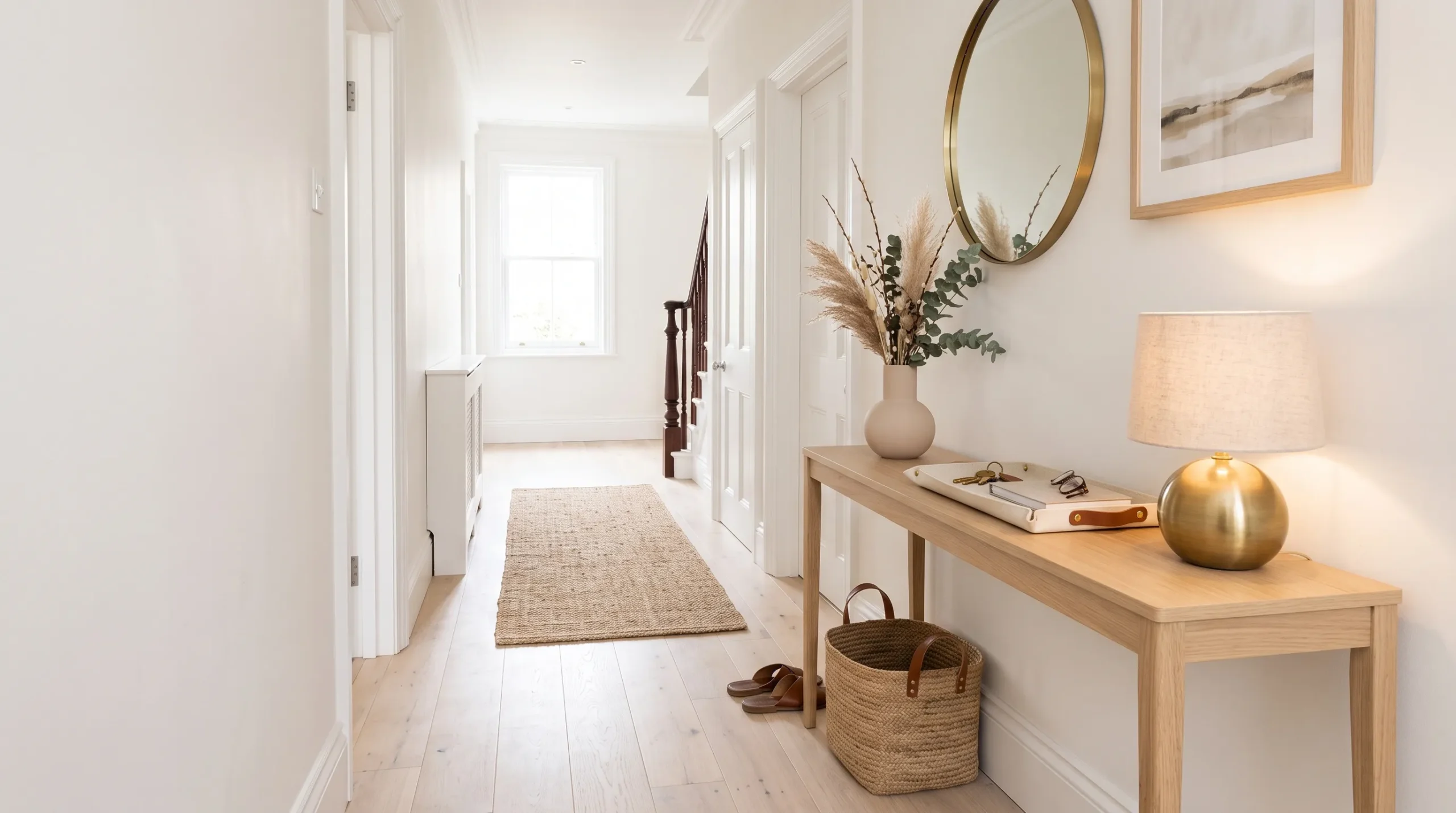
A small entryway can feel cramped quickly, especially when shoes, coats, bags, and everyday essentials have nowhere to go. Small entryway ideas can help turn that limited space into an organized, welcoming area that feels much more open. The key is choosing furniture and storage that fit the space instead of making it feel crowded. From slim consoles and floating shelves to mirrors, built-in storage, and light colors, small changes can make the entrance easier to use. With the right layout and a few practical details, even the tiniest entry can feel stylish, comfortable, and connected to the rest of the home.
1. Slim Console
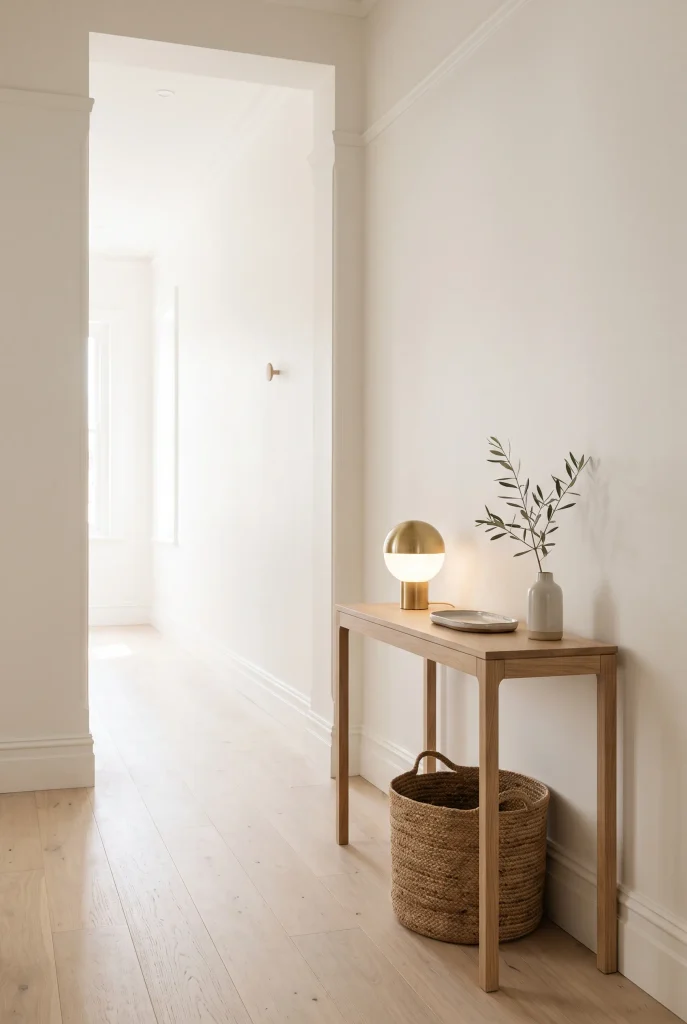
- Adds a practical landing spot without blocking the walkway.
- Open legs keep more flooring visible.
- A small tray helps contain keys and everyday essentials.
- Warm wood can make the entrance feel welcoming without adding visual weight.
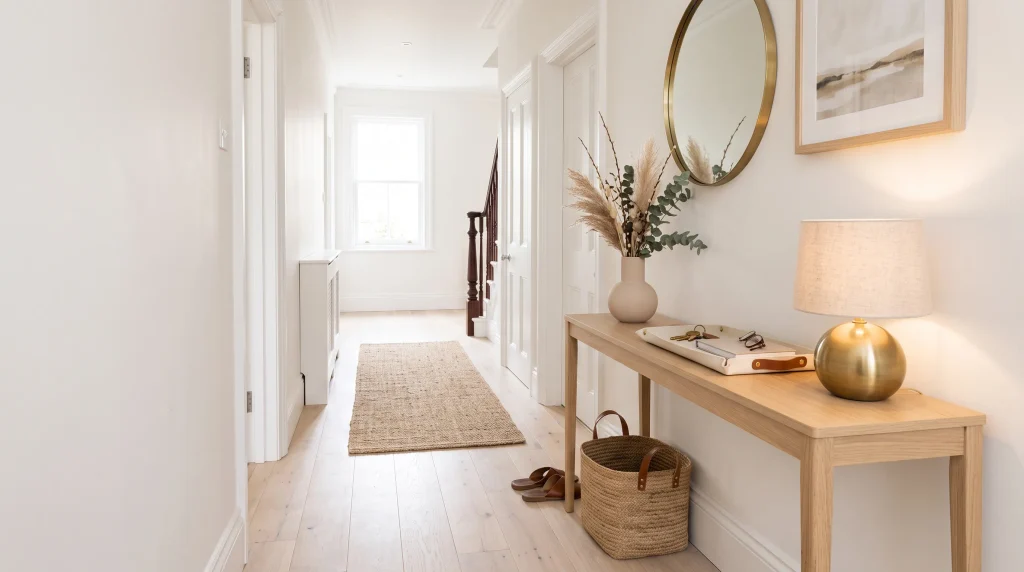
A slim console can give a tiny entryway the structure it needs without taking up valuable walking space. Choose a narrow table with clean lines, then keep the surface simple with a small lamp, tray, and perhaps a vase. The open space underneath keeps more of the floor visible, helping the area feel wider. Wall-mounted art can add personality without using extra floor space. Furniture with open legs also tends to feel lighter than bulky solid pieces, while still creating a useful spot for keys, mail, and other everyday essentials.
A narrow console is one of the easiest small entryway ideas to adapt because it adds both style and function without overwhelming the layout. Look for a piece around eight to twelve inches deep if the walkway is especially tight, and measure carefully before buying. Pair it with a slim mirror above to reflect daylight and create more visual depth. Baskets underneath can hold shoes or small accessories while keeping clutter contained. For a polished finish, repeat one material or color from nearby rooms, such as warm wood, black metal, or woven texture, so the entry feels connected to the home.
2. Floating Shelves
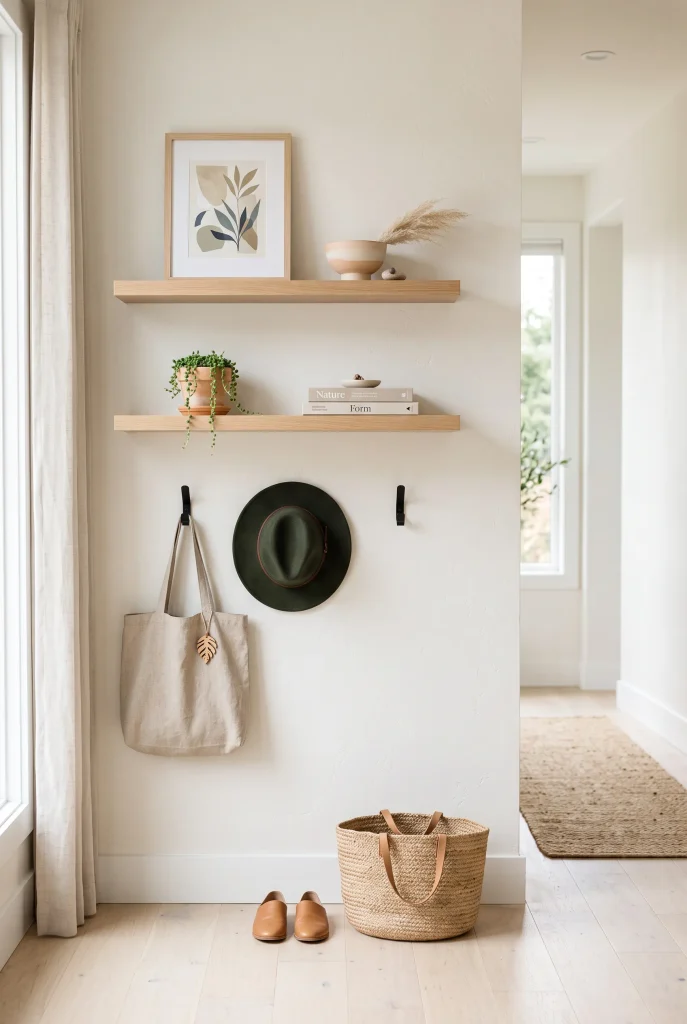
- Uses vertical wall space instead of valuable floor space.
- Creates an easy place for keys, mail, and small accessories.
- Hooks underneath can add extra function without bulky furniture.
- Leaving empty shelf space keeps the arrangement calm and breathable.
If your entrance has almost no floor space, floating shelves offer a smart way to organize essentials vertically. These small entryway ideas can provide a landing spot for keys, sunglasses, mail, and small decorative pieces while keeping the walkway open. Choose shelves with a shallow profile and rounded or softened edges if the passage is narrow. A small hook rail beneath the lowest shelf can handle bags or lightweight jackets. To avoid a crowded appearance, leave some shelf space empty and group items by height. This simple balance keeps the wall useful without turning it into a busy display.
A shallow shelf can also become a simple styling feature without taking over the entrance. Use one or two neutral accessories, such as a ceramic bowl, tiny plant, or framed print, and leave plenty of breathing room around them. If you need more storage, place a few hooks directly underneath for bags, hats, or lightweight jackets. This keeps useful items close to the door while preserving the floor. Floating storage works especially well in tight spaces because the wall stays functional without making the room feel filled with furniture.
3. Full Height Mirror
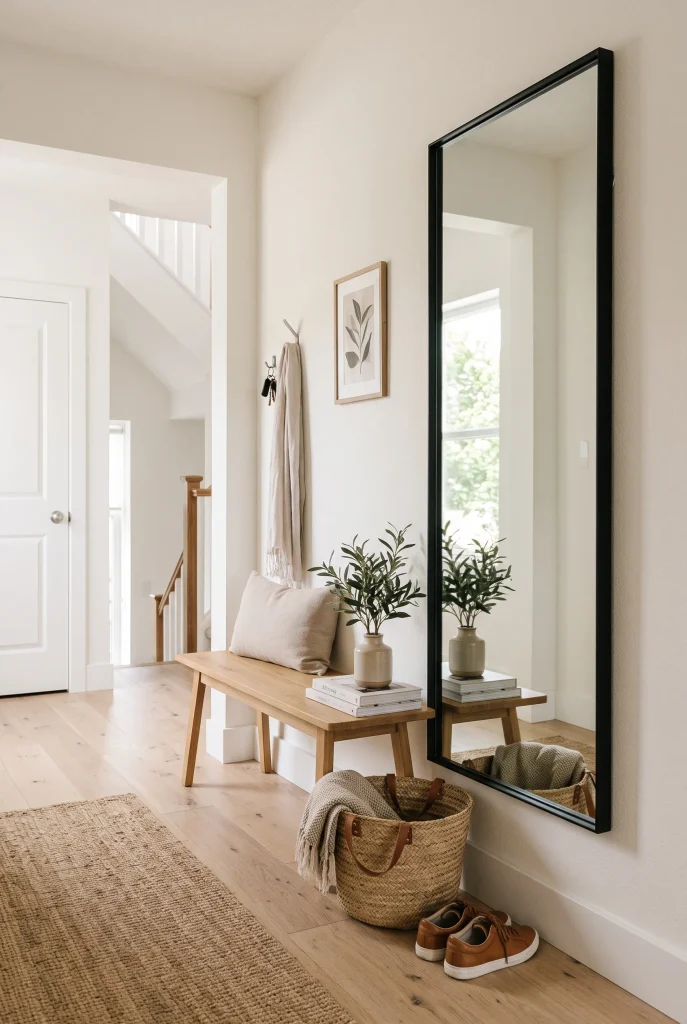
- Makes the entrance feel visually deeper and more open.
- Reflects available daylight to brighten darker corners.
- Gives you a convenient spot for a quick check before leaving.
- A slim frame adds definition without making the wall feel heavy.
A full-height mirror can make a compact entrance feel instantly more open by reflecting light and giving the eye a longer visual path. Place it on the largest available wall, ideally where it can catch natural light from a nearby window or doorway. Keep surrounding furniture minimal so the reflection stays clear. A slim wood or black frame can reinforce the home’s style without overwhelming the space. The mirror also serves a useful purpose before leaving home, so it adds both decoration and function without demanding extra floor space. It is a practical upgrade that makes a small entrance feel finished rather than cramped.
For an even stronger spacious effect, keep the area around a full-height mirror visually simple. A narrow bench, small basket, or slim console can provide function without competing with the reflection. Choose a frame that matches existing finishes, such as light oak, matte black, or warm brass, so the mirror feels connected to the rest of the home. If the entrance is particularly narrow, placing the mirror along the longer wall can emphasize the room’s length. This combination creates a practical, polished area that feels brighter and more open without adding unnecessary furniture.
4. Wall Mounted Bench

- Keeps the floor visually open beneath the seating area.
- Provides a convenient place to sit while putting on shoes.
- Baskets underneath create hidden storage for everyday items.
- A slim cushion adds comfort without making the bench bulky.
A wall-mounted bench gives a small entrance useful seating without making the floor feel crowded. The floating design keeps some flooring visible underneath, creating a lighter appearance than a traditional storage bench. Choose a simple wood seat and add a slim cushion if you want extra comfort. The open area below can hold two woven baskets for shoes, scarves, or bags. Above the bench, install a few hooks for coats and hats. This setup works especially well in homes where every inch matters because one compact wall can handle seating, storage, and organization without needing several separate pieces of furniture.
For narrow entrances, keep the bench depth modest and leave enough room for comfortable movement in front of it. A light wood finish works beautifully with warm white walls because the combination feels natural without visually shrinking the space. If your entry receives limited daylight, avoid filling the wall above with too many dark accessories. Instead, use one framed print, a small mirror, or a simple row of hooks. Keeping the area beneath a floating bench partially empty also makes cleaning easier, especially when shoes and daily clutter tend to collect near the door.
5. Vertical Coat Hooks

- Takes advantage of unused wall height instead of floor space.
- Keeps coats and bags close to the door.
- A small upper shelf can hold hats or decorative accents.
- Staggered placement works well when wall width is limited.
When floor space is tight, think upward instead of outward. A vertical row of coat hooks uses wall height efficiently while keeping jackets, tote bags, and hats easy to reach. This arrangement is especially helpful beside a narrow doorway where a coat rack could make the passage feel crowded. Choose hooks that coordinate with nearby hardware, then keep the number appropriate for your household. You can add a small shelf above them for seasonal accessories or one decorative object. The result is practical but visually clean, making the entrance easier to use without introducing another large piece of furniture.
Placement matters more than having a large number of hooks. Mount them at comfortable heights for the people who use the space most, and reserve the highest positions for less frequently used items. If several family members share the entrance, assigning each person a hook can prevent coats from piling onto chairs or nearby furniture. A slim shelf above the hooks can also create a finished look while providing extra storage. Limiting what stays on the wall each day helps the setup look more spacious, even when the entryway handles plenty of everyday traffic.
View: 17 Dark Blue Bedrooms Ideas That Feel Elegant and Moody
6. Built In Storage
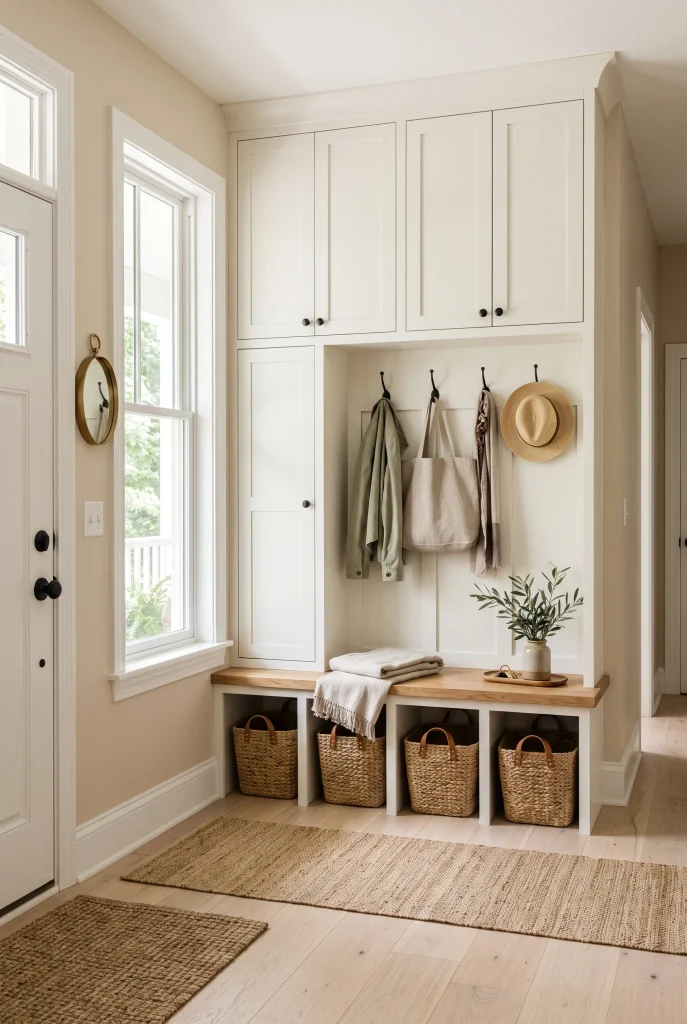
- Combines several functions into one compact wall.
- Gives shoes, bags, coats, and accessories designated places.
- Closed cabinets hide visual clutter near the entrance.
- Matching finishes create a streamlined built-in appearance.
Built-in storage can turn an awkward entrance into a highly organized zone without adding furniture that sticks into the walkway. A compact unit can combine closed cabinets, open cubbies, hooks, and a small bench in one continuous design. This makes it easier to give every common item a specific home. Keep frequently used shoes in lower compartments and reserve upper cabinets for seasonal pieces. Warm white cabinetry with light wood details can keep the unit visually soft. For homes with limited square footage, this approach makes the wall work harder while keeping the rest of the entry remarkably clear.
If a full custom built-in is outside your budget, you can recreate the same principle with modular cabinets, floating shelves, and separate hooks. The important part is creating a consistent vertical arrangement rather than matching every component perfectly. Closed storage is particularly useful for households where shoes and bags quickly make a doorway look untidy. Add baskets inside open cubbies to contain smaller belongings. Thoughtful storage planning matters in compact spaces because the goal is not simply to fit more things, but to make everyday routines easier while preserving a clean visual path through the entrance.
7. Corner Shoe Cabinet
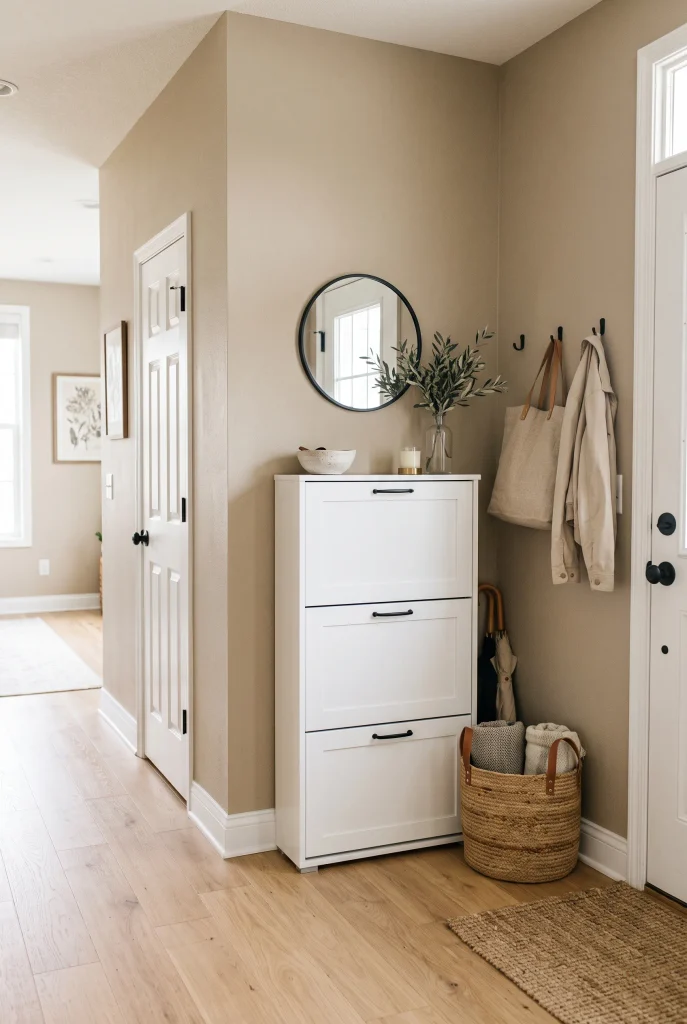
- Turns an overlooked corner into useful shoe storage.
- Slim cabinets can hold footwear without extending far into the walkway.
- Closed doors keep everyday clutter out of sight.
- A mirror above the cabinet adds height and visual depth.
An unused corner can become surprisingly valuable with a slim shoe cabinet that fits tightly against the wall. Choose a vertical design with shallow compartments so footwear stays organized without taking over the walkway. A closed cabinet is especially helpful because it hides mismatched shoes and keeps the entrance looking calm between cleanups. Place a small mirror or artwork above it to make the arrangement feel intentional. For especially narrow spaces, look for cabinets with doors that open outward only if there is enough clearance. Otherwise, choose a compact design that keeps the circulation path completely unobstructed.
Keep the cabinet surface lightly styled so it does not become another dumping ground for keys and mail. A small tray can contain everyday essentials, while one decorative object adds personality without creating clutter. If the corner is dark, use a light finish such as white, cream, or pale oak to keep the area visually open. These choices are practical because they solve a common storage problem without requiring much floor area. Measure the available wall and door clearance carefully before choosing storage, especially in entrances where several doors or hallways meet.
8. Round Wall Mirror
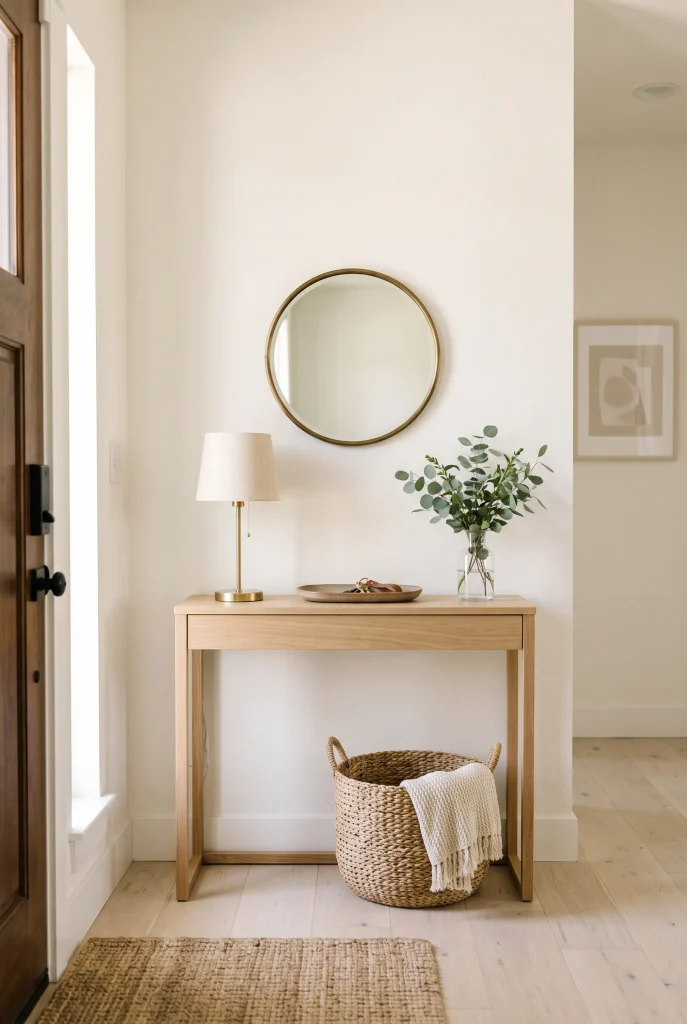
- Softens straight lines in a narrow entrance.
- Reflects light and creates a stronger sense of depth.
- Works above consoles, benches, or small cabinets.
- A thin frame prevents the mirror from feeling visually heavy.
A round wall mirror can soften the hard lines commonly found around doors, walls, and narrow furniture. Its curved shape creates a small focal point while reflecting light and making the entrance feel more open. Hang it above a slim console, bench, or shoe cabinet, keeping enough surrounding wall visible to let the shape stand out. A thin black, brass, or natural wood frame can connect with existing hardware and finishes. The mirror also serves a useful purpose before leaving home, so it adds both decoration and function without demanding extra floor space.
For the best effect, consider what the mirror will actually reflect before mounting it. A view of a bright window, attractive artwork, or another well-styled area can make the entry feel deeper and more interesting. Avoid positioning it directly opposite a cluttered storage zone if the reflection will make that mess more noticeable. A small entrance can look much more polished with one well-placed mirror and a narrow surface underneath. Keep the styling restrained, and let the mirror provide most of the visual interest while the surrounding pieces handle everyday storage needs.
9. Light Color Palette
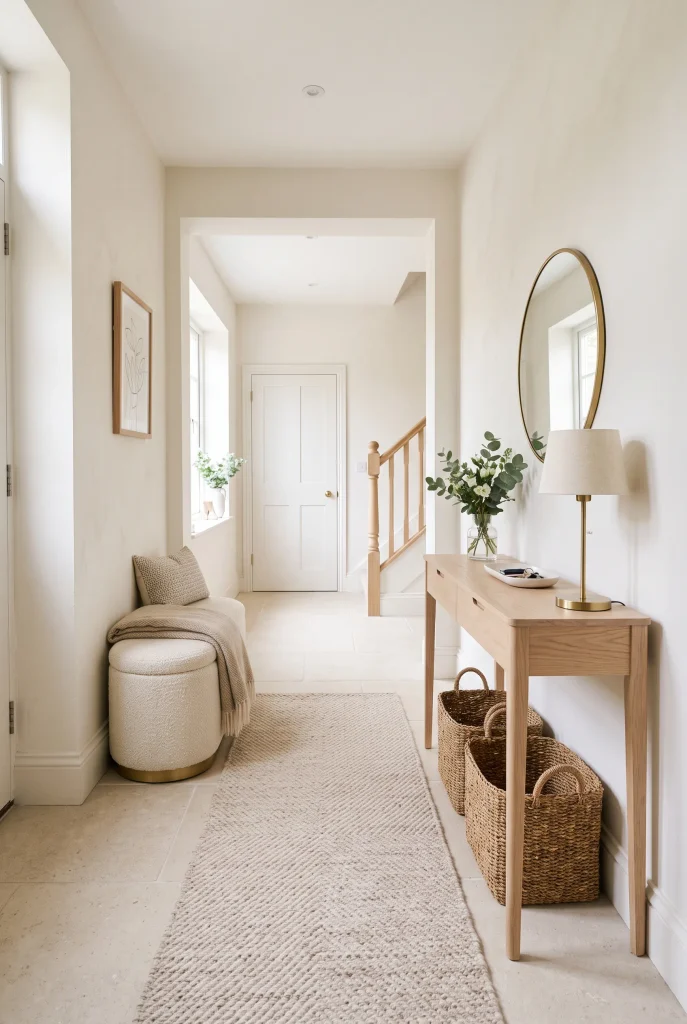
- Light colors help walls visually recede.
- Warm whites feel softer and more welcoming than stark white.
- Pale wood adds warmth without making the room feel heavy.
- Repeating similar neutrals creates a more continuous visual flow.
A light color palette can make a compact entrance feel brighter, calmer, and more spacious without changing its footprint. Warm white walls, cream textiles, beige accents, and pale wood create a soft visual flow that allows the eye to move easily through the area. Instead of using several contrasting colors, choose two or three related shades and repeat them across furniture and accessories. This approach is particularly useful when the entryway connects directly to a living room or hallway. Keeping the colors visually connected can make the entire transition feel larger and more cohesive.
Light does not have to mean plain or cold. Add dimension through materials such as woven baskets, linen cushions, textured rugs, pale oak, ceramic pieces, or lightly patterned artwork. These layers prevent the entrance from looking flat while preserving an airy appearance. If the area receives little natural light, warm-toned bulbs can help maintain the welcoming effect after sunset. Texture often makes a bigger difference than adding more color in small spaces. A simple neutral scheme can feel surprisingly rich when the finishes have enough variation to create depth and visual interest.
10. Narrow Storage Tower
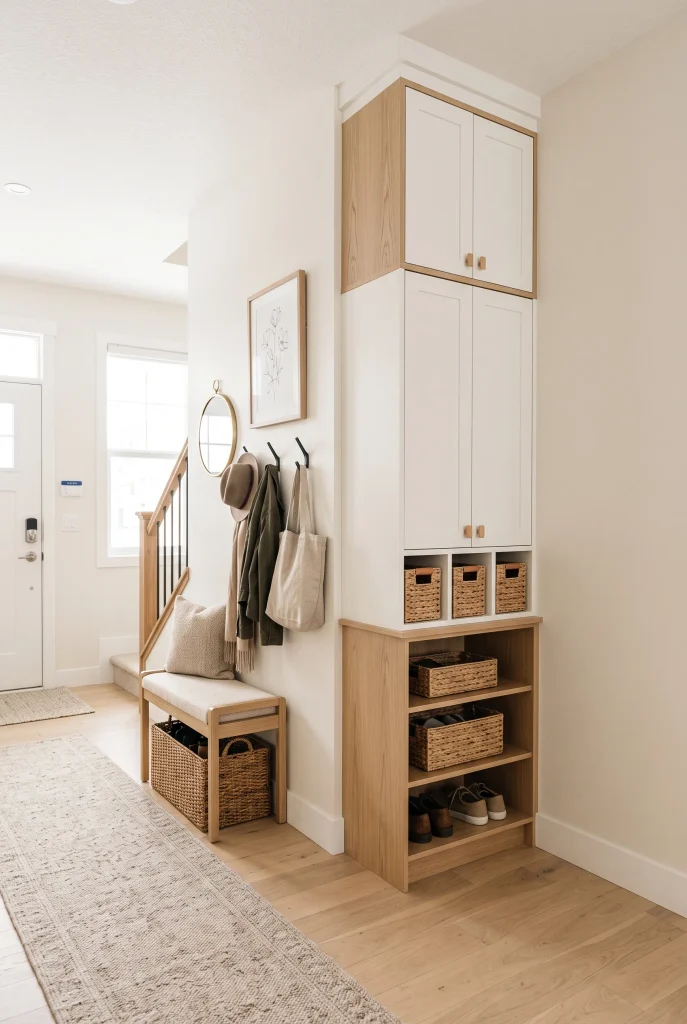
- Uses vertical space when floor width is limited.
- Keeps shoes, bags, and seasonal accessories organized.
- Closed compartments reduce visible clutter.
- A tall profile draws the eye upward instead of outward.
A narrow storage tower makes excellent use of vertical space when your entrance cannot accommodate wide furniture. Choose a tall, slim cabinet with a combination of closed doors and small open compartments for frequently used items. Shoes can stay toward the bottom while hats, gloves, bags, or seasonal accessories occupy higher sections. Because the unit takes up little floor width, the main walkway remains easier to navigate. Warm white cabinetry can blend into the wall, while light wood shelves add enough contrast to make the storage feel intentional rather than purely functional.
Before choosing a tower, measure both the floor width and the clearance around nearby doors. A cabinet that technically fits can still make the entrance uncomfortable if it interferes with opening doors or walking past with groceries. Use matching baskets inside open cubbies to keep smaller belongings contained. If the ceiling is low, avoid overly ornate furniture and choose a simple vertical silhouette instead. This kind of storage works especially well for homes where clutter tends to collect near the entrance because it creates dedicated places for everyday items without spreading them across several surfaces.
11. Built In Bench
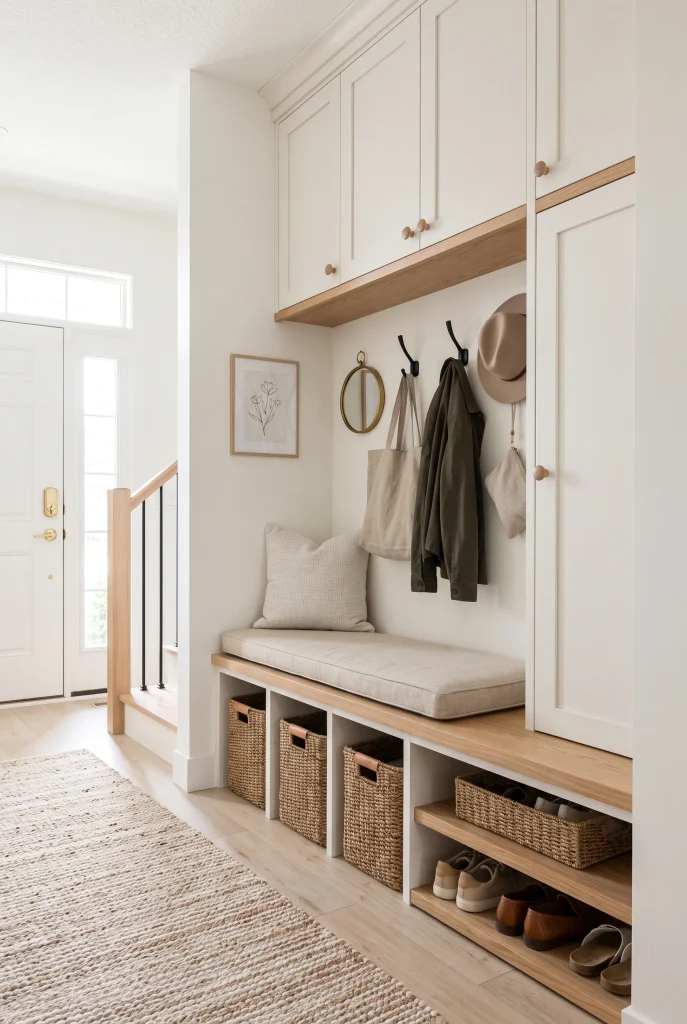
- Combines seating and storage in one compact footprint.
- Open cubbies make frequently worn shoes easy to reach.
- A cushion adds comfort without overwhelming the space.
- Upper hooks or cabinets can handle coats and bags.
A built-in bench can transform a narrow wall into a complete drop zone for everyday routines. The seat provides a comfortable place to put on shoes, while open cubbies underneath keep frequently worn pairs within easy reach. Add baskets to contain smaller accessories and install hooks or cabinets above for coats and bags. Because everything shares one vertical structure, the entrance can feel more organized than it would with several separate furniture pieces. Light wood, warm white cabinetry, and simple hardware create a streamlined look that works beautifully in both traditional and contemporary homes.
The best built-in bench designs are planned around how the household actually uses the entrance. If children use the space, keep a few storage areas easy to reach and use durable finishes that can handle daily wear. For adults, closed cabinets above can hide less attractive essentials and seasonal belongings. Leave enough open space around the bench so the seating area does not feel squeezed against the walkway. This arrangement works particularly well in busy homes because it gives everyone a predictable place to sit, remove shoes, and put things away before clutter spreads farther into the house.
12. Glass Door Storage

- Glass doors add storage without creating a completely solid visual block.
- Clear panels make frequently used items easy to find.
- Organized shelves can become part of the entryway decor.
- Mixing glass with warm wood keeps the cabinet from feeling too formal.
Glass-front storage can give a small entrance useful organization while maintaining a lighter visual appearance than fully solid cabinetry. Use it for attractive baskets, folded scarves, neutral bags, or neatly arranged accessories that you do not mind seeing. The transparency creates depth because the eye can see through the cabinet doors, while the structure still keeps belongings contained. Choose a narrow cabinet with simple framing so the piece does not dominate the wall. Warm wood, cream finishes, and subtle metal hardware can make glass storage feel relaxed and practical rather than overly formal.
The key is to treat the inside of the cabinet as part of the room’s visual styling. Avoid filling every shelf with unrelated objects because the transparency can make clutter more noticeable. Group similar items together and leave small areas of empty space between baskets or accessories. If you prefer a cleaner look, use lightly frosted or reeded glass to soften the view. This approach works particularly well when storage is necessary but you still want the entrance to feel open. A carefully arranged glass cabinet can provide practical organization while adding texture, light, and a polished focal point.
13. Built In Cubbies
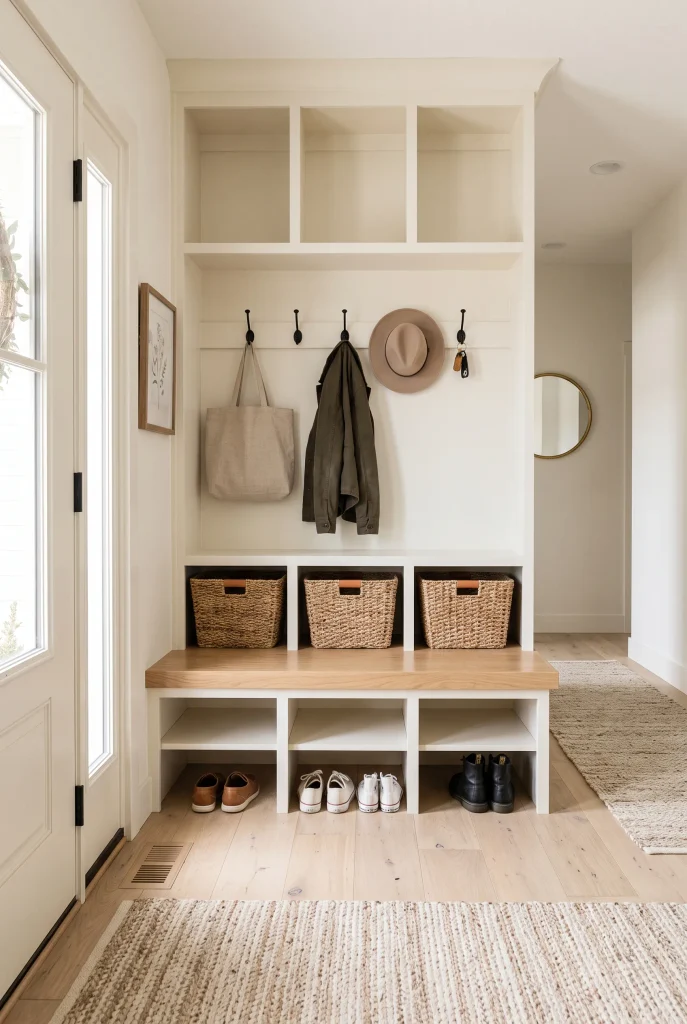
- Gives everyday belongings a clearly defined place.
- Open cubbies make frequently used shoes quick to grab.
- Baskets can hide smaller accessories and reduce visual clutter.
- A continuous built-in design keeps the wall looking organized.
Built-in cubbies are a practical way to organize an entrance where shoes, bags, and small belongings tend to pile up. Divide the wall into simple compartments so each category has a designated home. Lower cubbies can hold everyday footwear, while baskets are useful for hats, scarves, umbrellas, or pet accessories. Add a bench across the lower section if space allows, creating a comfortable spot for putting on shoes. Keeping the cubbies in one continuous unit also reduces the scattered appearance that can happen when several small storage pieces are squeezed into a narrow area.
The most useful cubby systems balance open storage with a little visual restraint. Keep only the items you reach for regularly in exposed compartments and move seasonal belongings into baskets or closed cabinets. Labeling baskets can make the setup even easier for busy households, especially when several people share the entrance. Choose finishes that connect with the rest of your home, such as light oak, warm white, or natural woven materials. Organized open storage works best when every compartment has a purpose, because empty space becomes easier to maintain when the system is simple.
14. Layered Lighting
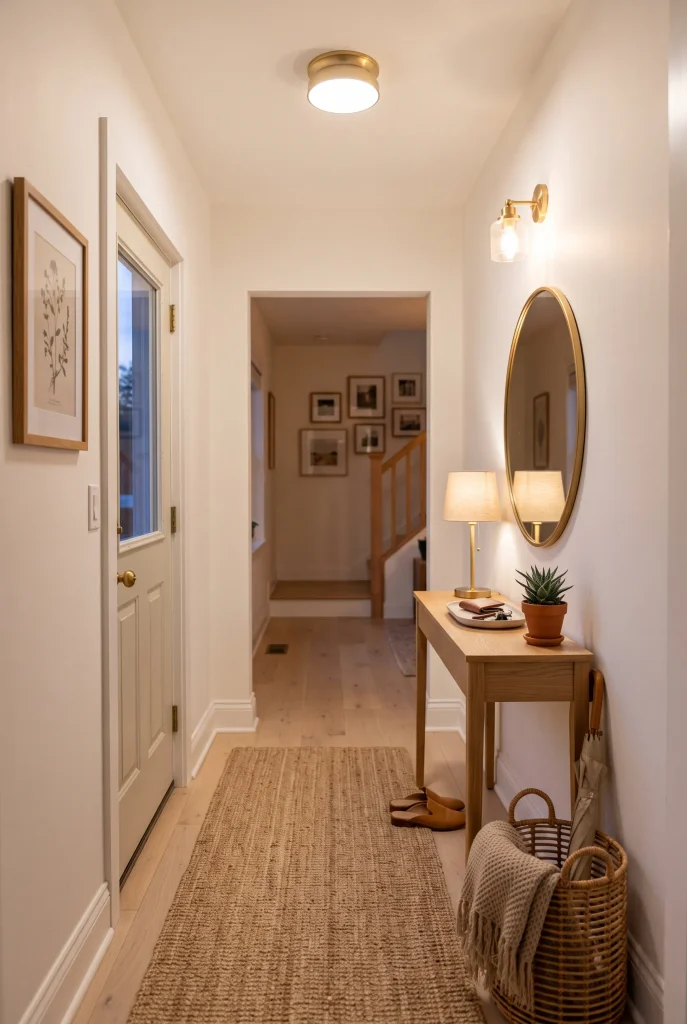
- Prevents a small entrance from feeling dark or flat.
- Combines general illumination with softer accent lighting.
- A small lamp can make a console feel warmer and more inviting.
- Warm bulbs help neutral finishes feel cozy after sunset.
Good lighting can change the way a compact entrance feels without changing any furniture. Instead of depending on one bright ceiling fixture, combine general lighting with a small lamp, wall sconce, or other softer source. This creates layers that make the walls and furnishings easier to see while avoiding harsh shadows. If you have a mirror, position lighting where it can brighten the surrounding area without creating an uncomfortable glare. Warm white bulbs work especially well with beige, cream, natural wood, and woven textures, helping the entrance feel welcoming when daylight disappears.
Lighting should also support the way you use the space. A ceiling fixture can provide enough brightness for arriving home, while a small table lamp or wall light can create a gentler evening atmosphere. If your entryway is extremely narrow, wall-mounted fixtures are usually more practical than lamps that take up console space. Keep the hardware consistent with other finishes in the room for a more cohesive look. Even one additional warm light source can make a small entrance feel more intentional, especially when the surrounding palette is simple and neutral.
15. Patterned Runner
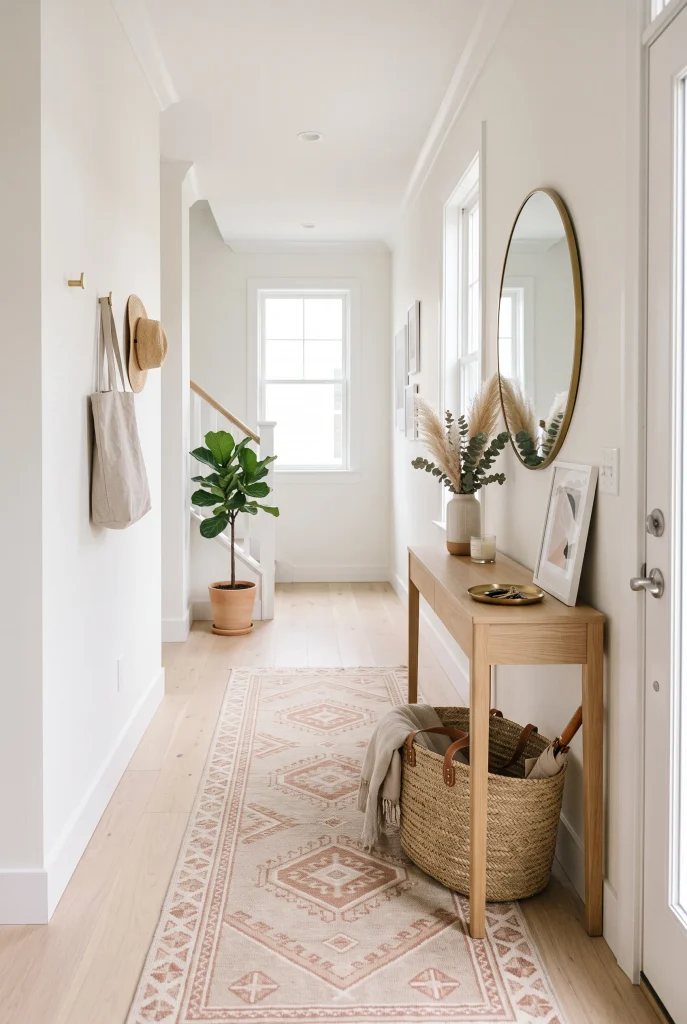
- Adds personality without using valuable wall or floor space.
- Helps visually define the walking path through the entrance.
- A subtle pattern can disguise everyday dirt and footprints.
- Warm neutral colors keep the narrow area feeling open.
A patterned runner can bring character to a small entrance while visually guiding the eye along the length of the space. Choose a design with a restrained pattern and colors that relate to your existing walls and furniture. Soft beige, muted terracotta, taupe, or faded blue can add interest without making the floor feel visually busy. A runner also protects flooring in one of the busiest areas of the home. For a narrow hallway-style entrance, placing the rug lengthwise emphasizes the available floor area and creates a more finished transition between the doorway and the rest of the house.
Practicality matters when choosing a runner for an entrance. Look for a low-pile or washable option that is easy to clean, especially if shoes regularly come through the door. Make sure the rug sits securely so it does not slide or bunch at the edges. If the surrounding furniture is simple, a subtle geometric or vintage-inspired pattern can become the main decorative detail. Keep other accessories restrained so the floor remains the focal point. This small change can make an otherwise plain entrance feel more welcoming while adding comfort and definition underfoot.
16. Hidden Shoe Storage

- Keeps shoes completely out of sight near the door.
- A slim cabinet preserves valuable walking space.
- Closed compartments make daily clutter much less noticeable.
- A simple top surface can hold keys without becoming overcrowded.
Hidden shoe storage is especially useful when footwear tends to make a small entrance look messy within minutes. A slim cabinet with closed compartments gives every pair a place while keeping the visual lines of the room clean. Choose a vertical or low-profile design depending on your available wall space, and reserve the easiest-to-reach compartments for shoes worn most often. A light finish can blend into the surroundings, while a wood top adds warmth. The result is a calmer entrance where practical storage works quietly in the background instead of becoming the main visual feature.
Before choosing closed shoe storage, think about how many pairs actually need to stay near the entrance. Keeping only everyday footwear in the cabinet prevents it from becoming overloaded and makes putting things away easier. Add a small tray on top for keys, sunglasses, or mail, but resist filling the surface with decorative objects. A mirror above can use the vertical space efficiently and make the cabinet feel more intentional. This is one of the simplest ways to improve small entryway ideas because reducing visible shoe clutter immediately makes the area feel cleaner, wider, and easier to move through.
17. Minimalist Drop Zone

- Creates a dedicated place for keys, mail, and daily essentials.
- Floating furniture keeps the floor visually open.
- Limiting accessories prevents the wall from feeling crowded.
- Simple materials make the entrance feel polished without excess decoration.
A minimalist drop zone can solve everyday entryway clutter with just a few carefully chosen elements. Start with one slim floating shelf or narrow ledge for keys and small essentials, then add a few hooks underneath for bags or lightweight jackets. Keeping the arrangement compact means you can organize the entrance without filling the available wall with furniture. Choose one or two decorative pieces, such as a small framed print or ceramic bowl, and leave plenty of empty space around them. This simple setup works particularly well when the entrance is too narrow for a console or storage cabinet.
The secret is giving every item a specific purpose while resisting the temptation to add more. A small catchall bowl can prevent keys from disappearing, while one hook per frequently used bag keeps belongings off chairs and nearby furniture. If mail is a recurring problem, add a slim wall pocket or small basket beside the shelf. Keep the colors coordinated with the surrounding room so the drop zone feels integrated rather than added on. Compact entrances often look best when storage is intentionally limited to what is genuinely used every day, rather than trying to accommodate everything at once.
Conclusion
A compact entrance does not have to feel crowded or unfinished. The right small entryway ideas can create better storage, easier routines, and a more spacious visual flow without requiring a major renovation. Focus on pieces that serve more than one purpose, use your walls wisely, and keep everyday clutter contained. Even a slim console, mirror, bench, or simple drop zone can make a noticeable difference. Save this post on Pinterest so you can return to your favorite ideas when you’re ready to refresh your space. Try one change first, then build from there and share these ideas with someone who needs them too.