21 Walk In Pantry Ideas That Make Storage Look Luxe

A pantry can be more than a place to hide groceries and small appliances. With the right details, it can become one of the most beautiful and useful spaces in your home. These walk in pantry ideas show how thoughtful storage, warm finishes, and smart organization can create a space that feels polished without sacrificing everyday function.
From elegant glass cabinets and natural wood shelves to hidden appliances and beautiful lighting, small design choices can make a noticeable difference. The goal is not to make your pantry look perfect all the time. It is to create a system that makes finding, storing, and restocking everyday items easier. When storage looks inviting and has a clear purpose, it is much easier to keep organized.
Whether you are planning a full pantry makeover or simply want a few upgrades, these ideas can help you create a space that feels organized, practical, and beautifully finished.
1. Glass Front Cabinets
- Glass doors keep everyday staples visible while making the pantry feel more open.
- Matching jars and baskets create a cleaner, more intentional look.
- Brass hardware adds a subtle upscale detail without overwhelming the space.
- Clear storage makes it easier to spot what needs restocking.
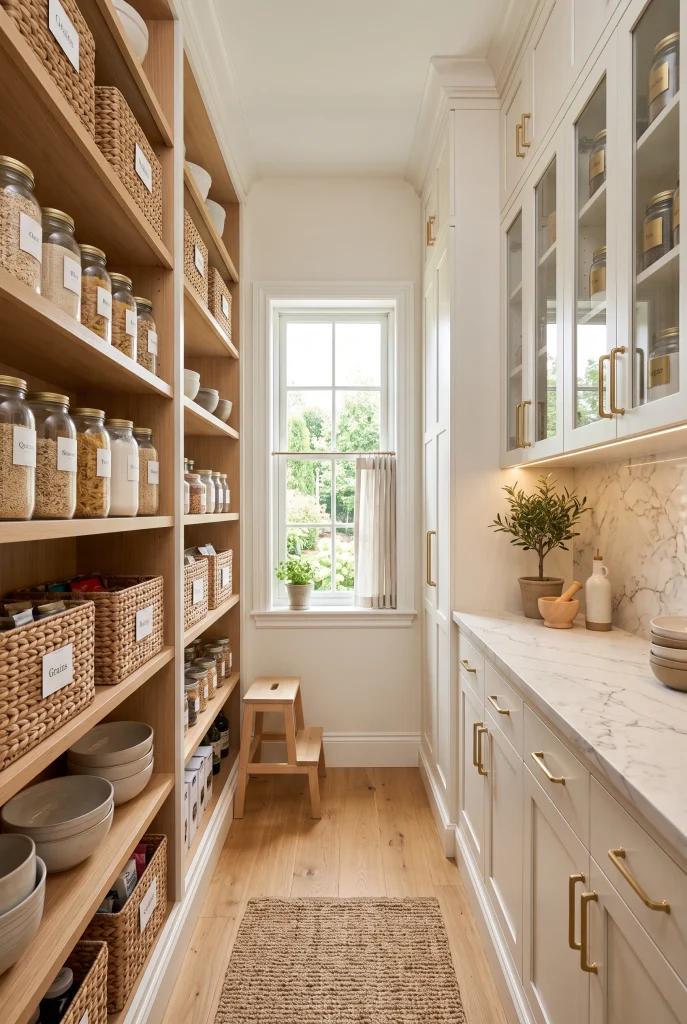
Glass-front cabinets can instantly make a pantry feel more polished without requiring a complicated redesign. The transparent doors put neatly arranged ingredients on display while keeping shelves protected from dust and everyday mess. Try grouping similar items together, such as baking supplies on one shelf and breakfast staples on another. Matching containers help the whole cabinet look cohesive instead of visually busy. In smaller walk-in pantries, this approach can also create a sense of openness because the eye can see through the cabinet fronts. The result feels organized, bright, and intentionally designed rather than purely utilitarian.
The key is keeping the visible storage edited and consistent. Clear jars, woven baskets, and simple labels can make ordinary pantry staples look surprisingly elevated. If you have attractive serving pieces, place a few where they can be seen through the glass instead of filling every shelf with food packages. This small styling choice makes a pantry feel more connected to the rest of the kitchen. Use warm white or soft cream cabinetry with light wood accents for a timeless look. Keep frequently used items at eye level so beauty and convenience work together every day.
2. Warm Wood Shelving
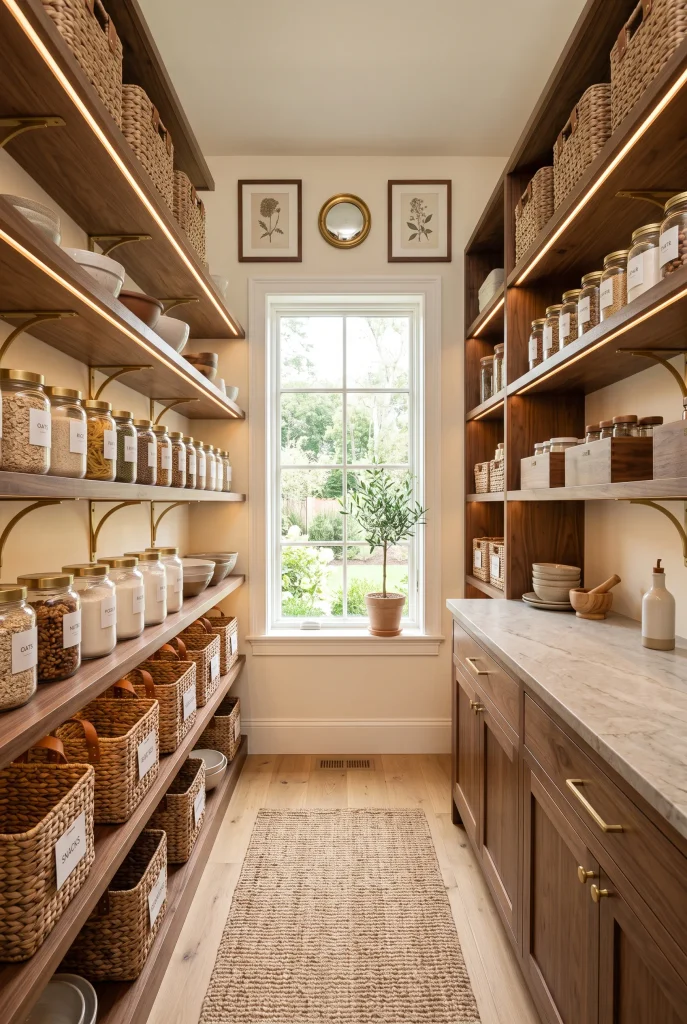
- Natural wood brings warmth to a pantry filled with practical storage.
- Open shelving makes frequently used ingredients easy to reach.
- Woven baskets soften the harder lines of shelves and containers.
- A stone counter gives the space a finished, built-in appearance.
Warm wood shelving can change the entire character of a walk-in pantry. Instead of feeling like a hidden storage room, the space starts to resemble a thoughtfully designed extension of the kitchen. Walnut, oak, or medium-toned wood works especially well against creamy walls because it adds depth without making the room feel dark. Keep the shelves visually balanced by mixing practical containers with a few decorative pieces. A stone countertop below can provide a useful prep area for small appliances, grocery sorting, or assembling lunch supplies. This combination creates a pantry that feels both hardworking and beautifully finished.
For a cohesive look, repeat the wood tone in small details rather than adding too many different materials. A wooden tray, cutting board, or simple stool can quietly connect the shelving to the rest of the room. Open shelves also work best when everyday items are grouped into clear zones. Keep cans together, baking supplies together, and snacks within easy reach. This makes restocking simpler and prevents attractive shelving from becoming cluttered. Soft under-shelf lighting is another worthwhile upgrade because it highlights the wood grain while making the pantry easier to use during early mornings or evening meal preparation.
3. Marble Prep Counter
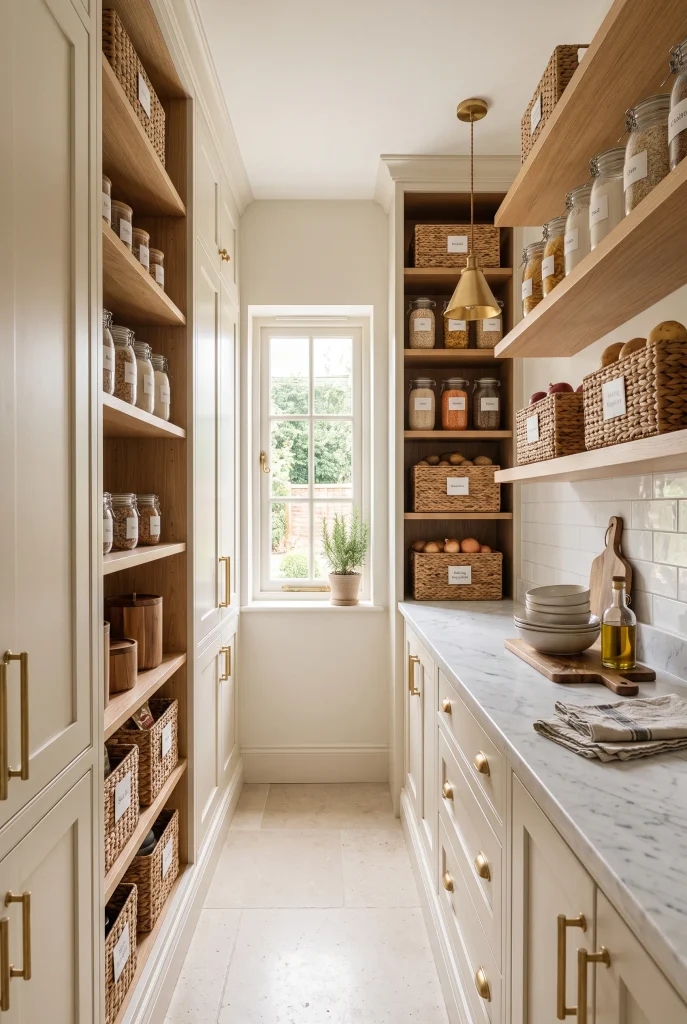
- A marble counter creates an instant high-end focal point.
- The extra surface gives you room to prep without crowding the kitchen.
- Light stone reflects natural light and helps the pantry feel spacious.
- Keep small appliances underneath or on one side to preserve open workspace.
A marble prep counter can make a walk-in pantry feel like a small, private extension of the kitchen. The surface adds visual luxury while giving you a practical place to prepare ingredients, arrange groceries, or use appliances that normally crowd the main counters. White marble with soft veining works beautifully with cream cabinets and warm wood shelving because it keeps the palette light but adds natural character. Even if the pantry is compact, a narrow counter along one wall can provide valuable workspace. Add a few carefully chosen containers above it, and the entire setup feels intentional and streamlined.
Function should guide the styling so the counter remains useful instead of becoming another display surface. Store heavier appliances underneath when possible, leaving the countertop open for tasks you perform regularly. A large cutting board, ceramic bowl, or simple tray can add warmth without taking over the workspace. The most useful pantry counters are the ones that stay relatively clear because they can handle several jobs throughout the week. Pairing the marble with warm lighting also keeps the space from feeling overly formal, giving you that luxe appearance while maintaining a comfortable, practical atmosphere.
4. Tall Built-In Shelves
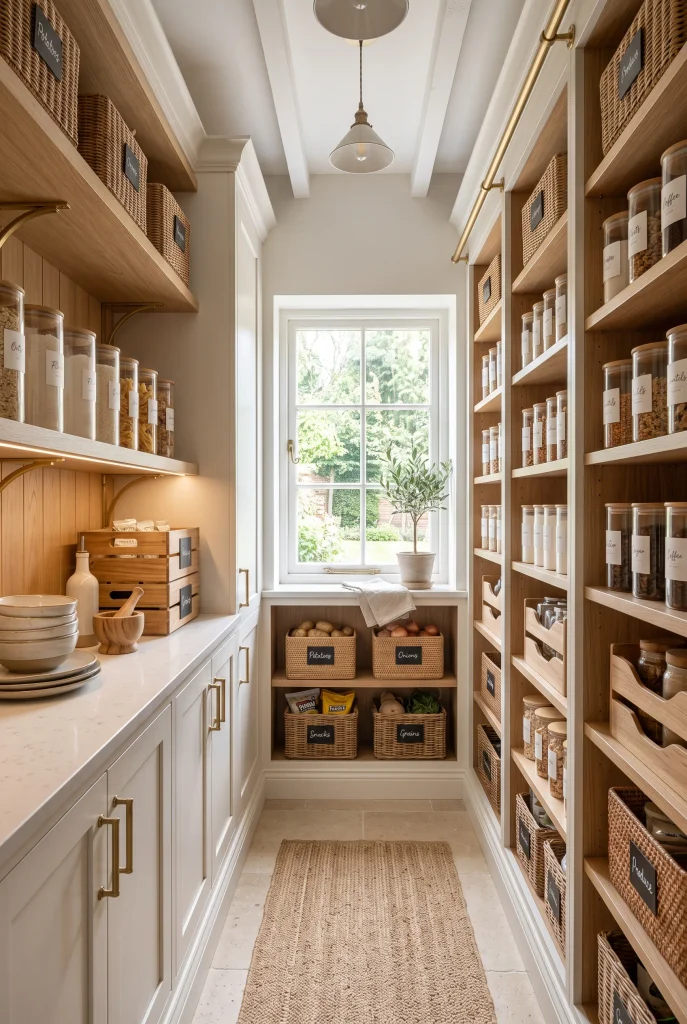
- Tall shelving makes excellent use of unused vertical wall space.
- Keep everyday ingredients between waist and eye level for easy access.
- Use upper shelves for backup groceries and less-used items.
- Matching baskets can make the full-height design feel softer and more polished.
A well-designed pantry can feel instantly calmer when every shelf has a clear purpose. Floor-to-ceiling shelving uses vertical space efficiently while giving the room a custom built-in appearance. Place everyday foods between waist and eye level, then reserve higher shelves for backup supplies or seasonal items. Lower drawers can hold heavier appliances, drinks, or bulk ingredients. This arrangement keeps frequently used items within easy reach and reduces wasted space around them. Add consistent baskets or containers to soften the tall lines and create a polished, balanced look that feels more like a luxury room than a storage closet.
The beauty of tall shelving is that it combines visual impact with practical storage. To keep the upper sections from becoming forgotten zones, use labeled bins for items you rarely reach for. A small folding step stool can make those shelves safer and easier to access. Keep the most attractive containers at eye level where they contribute to the overall design. Repeating the same basket style across several shelves makes even a busy pantry feel intentional. Choose warm white cabinetry, natural wood accents, and soft lighting to make the vertical layout feel inviting rather than overwhelming.
5. Organized Storage Zones

- Dedicated zones make everyday ingredients easier to find.
- Group similar foods together so restocking takes less time.
- Shallow shelves work well for frequently used jars and packages.
- Coordinated containers help separate categories without creating visual clutter.
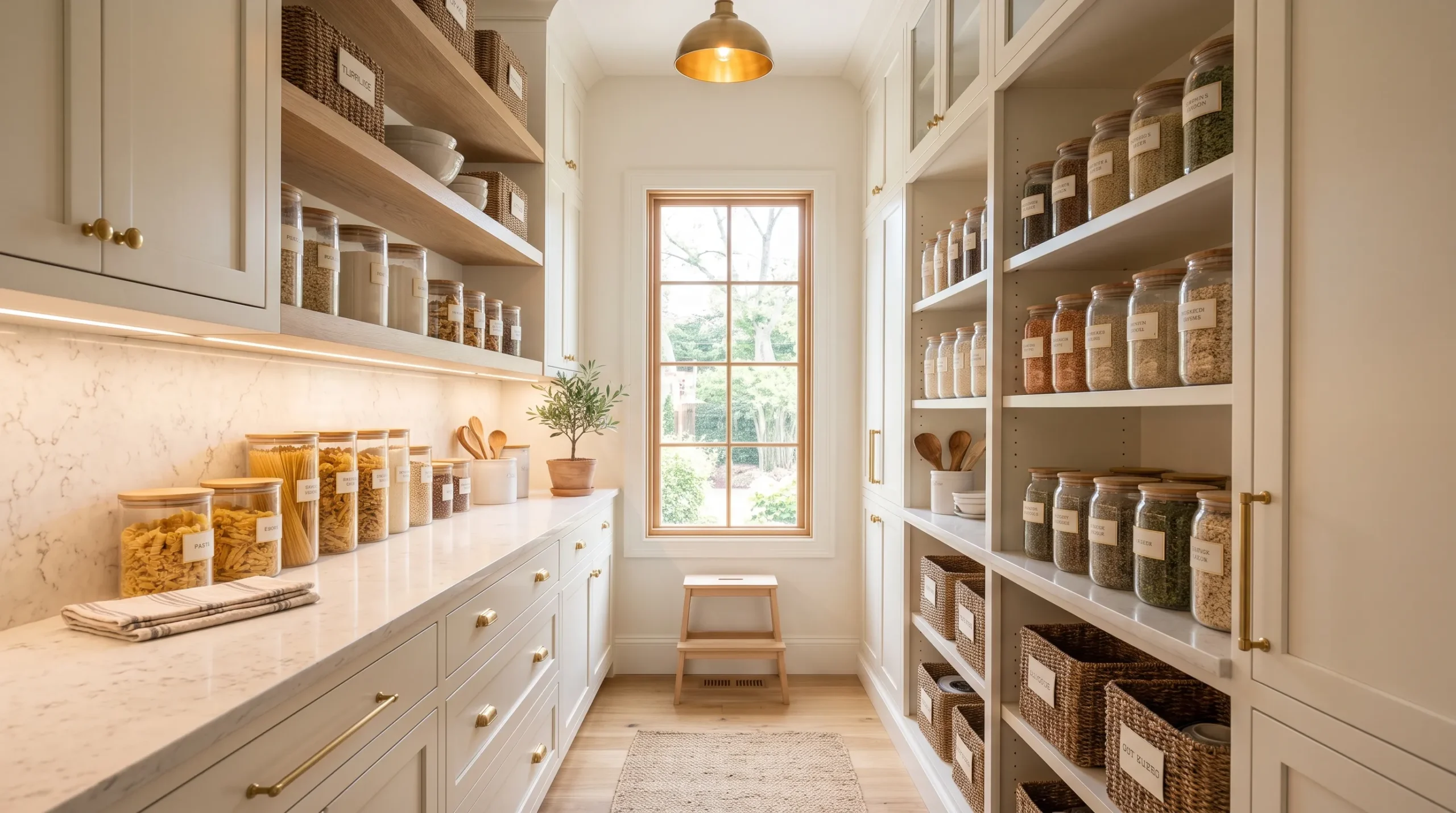
A pantry feels instantly more organized when its storage is divided into clear working zones. Create one area for dry goods, another for baking ingredients, and a separate section for snacks or breakfast foods. This simple layout reduces searching and makes grocery restocking much easier. Use shallow shelves for frequently used jars and deeper storage for larger packages or appliances. When each category has a home, the room stays visually calmer because random items are less likely to collect on open surfaces. A few matching containers can tie the zones together while keeping the overall design polished and cohesive.
Think of pantry zones as small stations that make everyday routines easier. A baking section might include flour, sugar, mixing bowls, and measuring tools, while a breakfast area can keep cereal, coffee, and spreads together. This setup saves time because related items stay within a few steps of each other. It also helps you notice duplicates before buying more groceries. For a luxe appearance, keep packaging behind simple bins or transfer frequently used ingredients into coordinated jars. The goal is not perfection; it is creating a system that feels natural enough to maintain after busy shopping trips and hectic weekdays.
View: 25 Kitchen Counter Styling Ideas You’ll Love to Copy
6. Hidden Appliance Garage
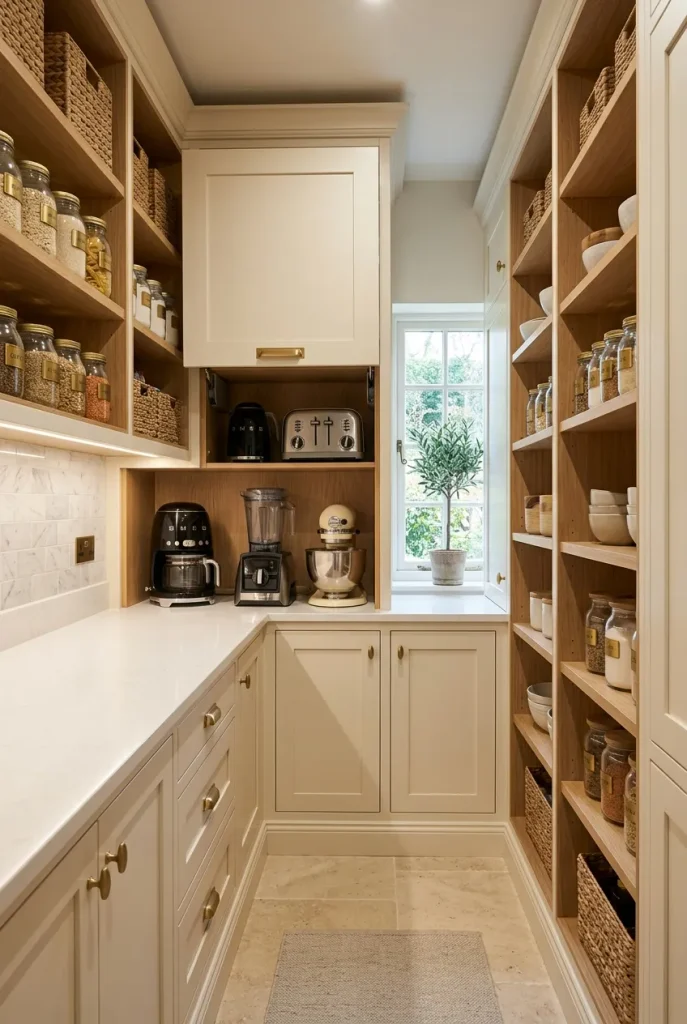
- Concealed storage keeps bulky appliances out of sight.
- Matching cabinet doors help the feature blend seamlessly into the pantry.
- Store frequently used machines where they remain easy to reach.
- Add interior outlets only when appropriate for the appliance and electrical setup.
A hidden appliance garage can keep a pantry looking clean while giving bulky countertop tools a dedicated home. Reserve a section of cabinetry for the toaster, coffee maker, blender, or mixer you use often but do not want visible. Choose a door that matches the surrounding cabinets so the storage blends seamlessly into the room. Add an electrical outlet inside if your layout and local electrical requirements allow it, making daily use more convenient. This simple feature is especially helpful when your main kitchen counter already feels crowded and you want the pantry to absorb some of that visual clutter.
The most successful appliance storage keeps convenience in mind rather than simply hiding everything behind a door. Leave enough clearance for each machine and check that ventilation requirements are met before storing appliances inside enclosed cabinetry. Pull-out shelves can make heavier equipment easier to reach, while nearby drawers can hold cords and accessories. Keep the finish simple so the cabinet reads as part of the architecture rather than an added feature. Giving appliances a permanent home makes it much easier to keep both the pantry and kitchen counters tidy, especially during busy cooking days.
7. Woven Basket Storage
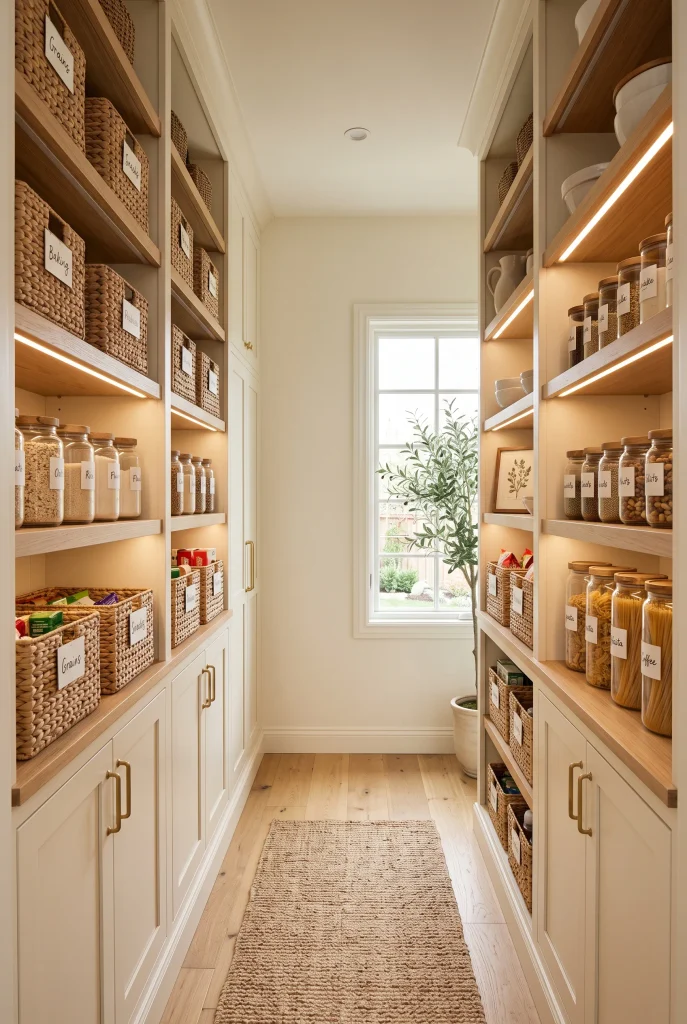
- Woven baskets hide loose packages and create a softer visual texture.
- Use larger baskets for snacks, packets, and backup ingredients.
- Matching sizes make open shelving look more intentional.
- Place heavier baskets on lower shelves for easier access.
Woven baskets are an easy way to make open pantry storage feel warmer and more finished. Their natural texture breaks up rows of jars, boxes, and packages while adding an organic touch to the room. Use them for snacks, packets, extra napkins, or ingredients that do not stack neatly. Keeping similar items together also makes everyday routines easier because you can pull out one basket instead of searching across several shelves. Choose baskets in a consistent natural tone, then pair them with cream cabinetry and light wood for a relaxed look that still feels polished and thoughtfully designed.
The best basket system balances beauty with accessibility. Avoid filling baskets so deeply that items disappear underneath one another, especially for foods you use frequently. Open handles can make heavier baskets easier to pull forward, while shallow styles work well on upper shelves. Labeling them with simple tags can also help everyone in the household return items to the right place. Woven storage works particularly well when a pantry has lots of open shelving because it adds texture without introducing too many colors. The result feels organized, comfortable, and much less visually overwhelming during everyday use.
8. Under-Shelf Lighting
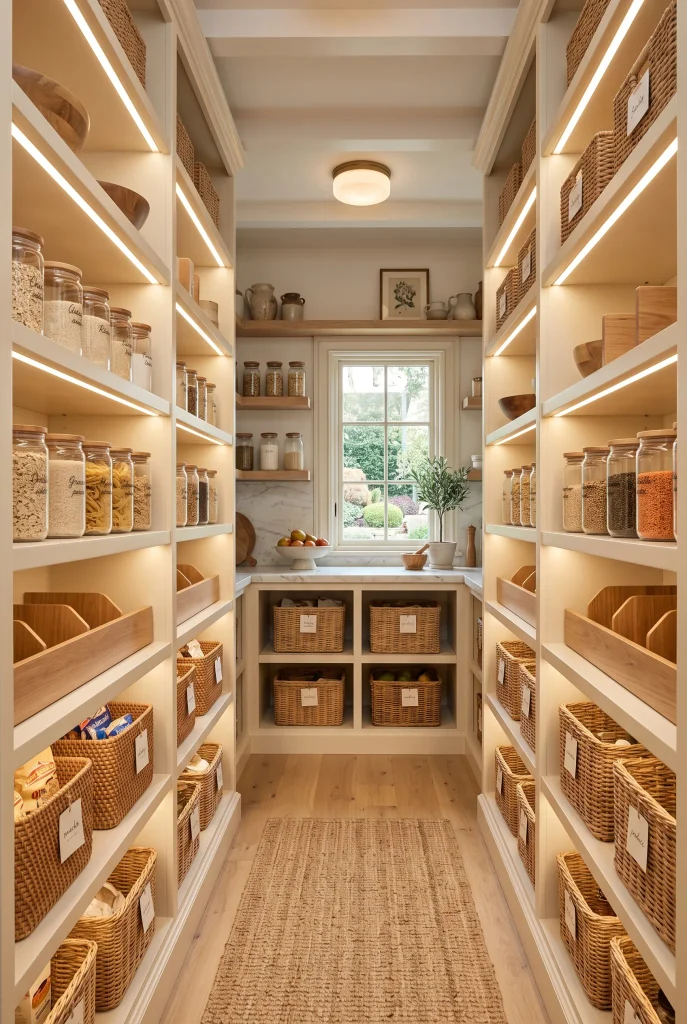
- Under-shelf lighting makes ingredients easier to see on deeper shelves.
- Warm illumination creates a welcoming atmosphere without changing the cabinetry.
- Concealed LED strips provide a cleaner look than visible fixtures.
- Focus lighting where shelves are deepest or naturally darker.
Good lighting can make even simple pantry storage feel significantly more luxurious. Installing warm under-shelf lights highlights jars, baskets, and wood details while making ingredients easier to find. This is especially useful on deeper shelves where overhead lighting may leave the front edge bright but the back corners shadowy. Slim LED strips are a practical option because they can provide focused illumination without taking up valuable storage space. Keep the light temperature warm and comfortable so the pantry feels connected to the rest of the home rather than looking like a brightly lit utility room.
Lighting placement matters just as much as the fixture itself. Position illumination toward the front underside of shelves so it spreads across the storage below without creating harsh shadows. If the pantry includes a countertop, add focused lighting above that area as well for food preparation or small appliances. Motion-activated lighting can be convenient when your hands are full, provided the chosen system suits the space. A few small lighting improvements can completely change how the pantry looks after sunset. They also make labels, containers, and everyday ingredients easier to see when you are cooking late.
9. Built-In Drawer Units
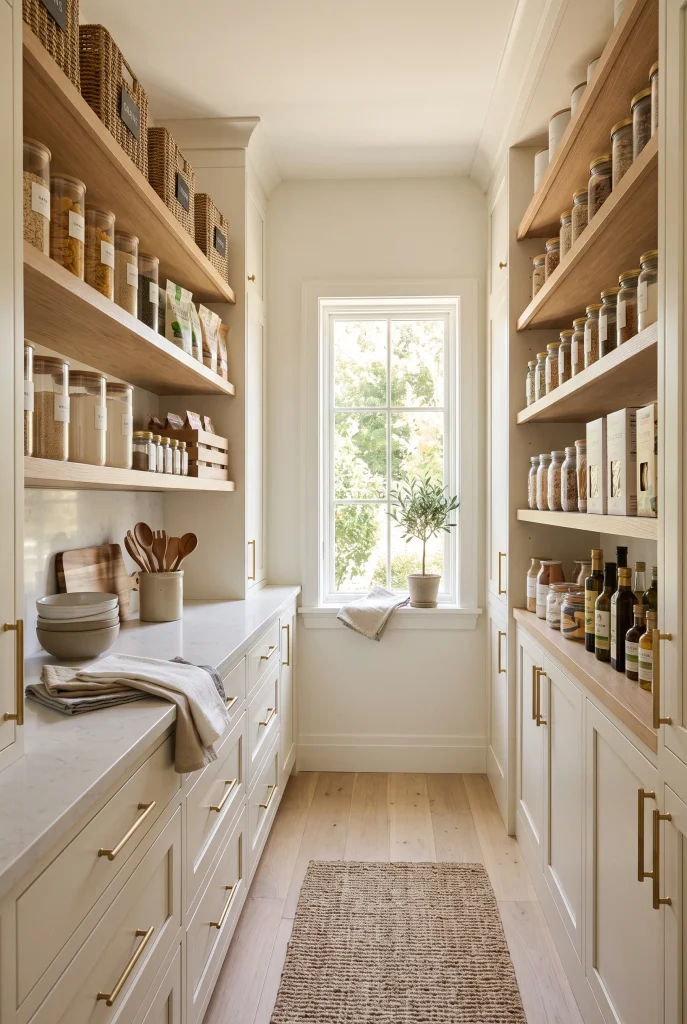
- Deep drawers keep small and awkward items contained without visual clutter.
- Use shallow drawers for wraps, utensils, labels, and kitchen linens.
- Reserve deeper drawers for bulkier pantry supplies.
- Brass or brushed metal pulls can add a subtle custom-cabinet feel.
Built-in drawers give a walk-in pantry another layer of practical storage while keeping the room visually streamlined. Unlike deep shelves, drawers let you see more of what is stored without moving several items out of the way. Use shallow versions for food wraps, kitchen towels, labels, or small tools, and reserve deeper drawers for bulk ingredients and larger supplies. Matching the drawer fronts to the surrounding cabinetry creates a custom built-in appearance. This approach works particularly well in larger pantries where a combination of shelves, drawers, and counters can make the storage feel purposeful rather than repetitive.
When planning drawer storage, think about what tends to disappear in your current pantry. Small packets, measuring tools, reusable bags, and spare kitchen linens are often easier to manage in drawers than on open shelves. Keep frequently used drawers around waist height so they are comfortable to open throughout the day. Heavy items should sit lower for easier handling and stability. Add simple labels if several drawers look identical from the outside. A balanced mix of closed drawers and open shelving gives you the best of both worlds: hidden storage for visual calm and accessible display space for attractive everyday essentials.
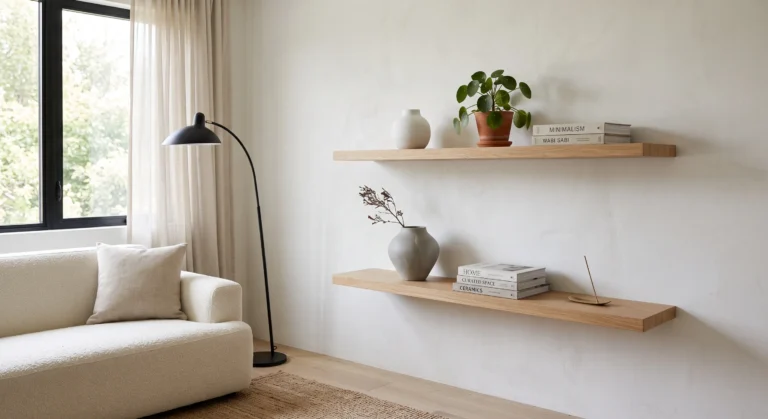
10. Open Oak Shelves

- Open oak shelves add warmth while keeping pantry essentials visible.
- Floating shelves create a lighter appearance than fully enclosed cabinetry.
- Use matching jars and baskets to prevent the open display from looking messy.
- Leave small areas of empty space for a more refined finish.
Open oak shelves can give a pantry a warm, custom look without making the room feel overly formal. The natural wood brings character to a neutral palette while keeping everyday ingredients easy to see and reach. Floating shelves also create visual breathing room because there are fewer solid cabinet fronts filling the walls. Arrange glass jars, baskets, bowls, and frequently used staples in simple groups rather than packing every shelf completely. Leaving a little empty space between items makes the entire pantry look more intentional and allows the beautiful wood grain to remain part of the design.
The secret to keeping open shelving attractive is choosing what deserves to stay visible. Use clear containers for flour, pasta, grains, and other dry goods that you reach for regularly. Place less attractive packaging inside woven baskets or lower cabinets. A few ceramic bowls or wooden serving pieces can add personality without turning the shelves into a decorative display. Repeating two or three materials throughout the pantry makes open storage much easier to style. Pair oak with warm white cabinetry, soft lighting, and pale stone for a comfortable look that feels elevated but still practical.
11. Brass Hardware Details
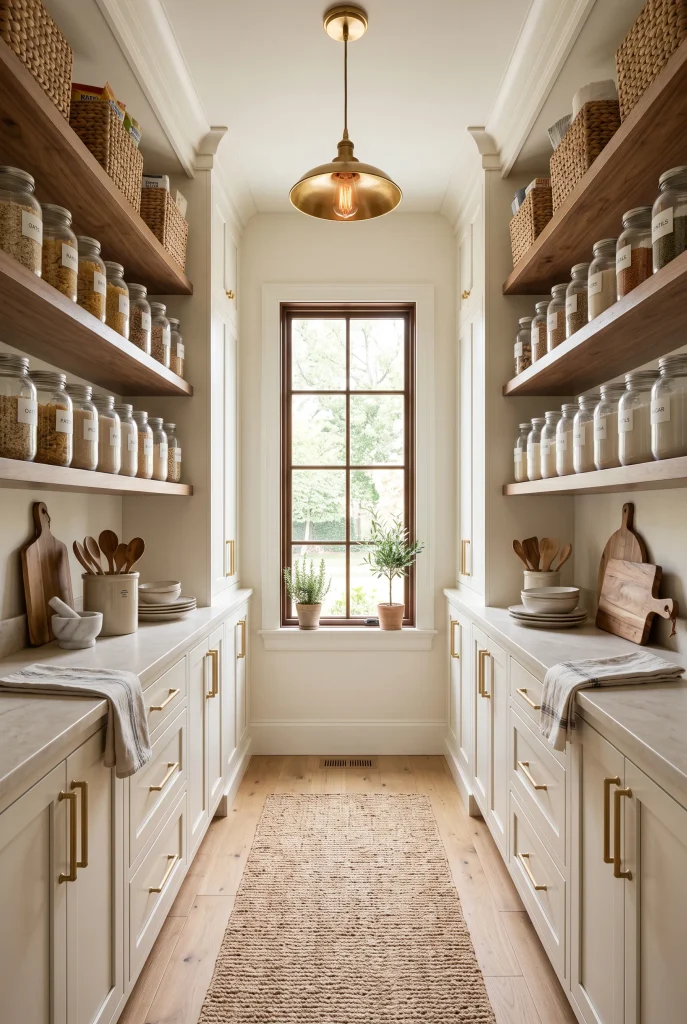
- Brass hardware adds a refined detail without changing the entire pantry.
- Choose one consistent finish for handles, pulls, and visible fixtures.
- Warm metal works especially well with cream, beige, and natural wood.
- Simple hardware shapes keep the design timeless instead of overly decorative.
Small hardware changes can make standard pantry cabinetry look much more custom. Brushed or aged brass handles add warmth and a subtle sense of luxury, especially when paired with cream cabinets and natural wood. You do not need elaborate shapes to create the effect; simple pulls and knobs often look more sophisticated because they let the cabinetry remain the focus. Repeat the same finish across drawer pulls, cabinet handles, and other visible metal details for consistency. Against a soft neutral background, the warm metallic accents catch the light gently and give the pantry a finished, coordinated appearance.
Hardware is also one of the easiest details to change if you want to refresh an existing pantry without replacing the cabinets. Before choosing a finish, consider the metals already used in the nearby kitchen so the two spaces feel connected. Brushed brass tends to work beautifully with warm whites, walnut, oak, and creamy stone. Keep the design understated if the pantry already has strong features such as marble or patterned flooring. Repeating one warm metal in several small places can make an ordinary storage room feel more deliberate without making the makeover look expensive or overly styled.
12. Floor-to-Ceiling Cabinets

- Full-height cabinets maximize storage in rooms with limited floor space.
- Closed doors hide bulky packaging and backup supplies.
- Use upper cabinets for seasonal or rarely used items.
- Combine drawers and open niches to keep the wall from feeling too heavy.
Floor-to-ceiling cabinets make every inch of vertical wall space useful while giving a walk-in pantry a strong, built-in appearance. They are particularly helpful when you need substantial storage but want the room to maintain a clean visual line. Keep everyday ingredients and tools in the middle sections, then use upper cabinets for backup groceries, serving pieces, or items used less frequently. Lower drawers can handle heavier supplies. Mixing closed doors with a few open niches prevents a full wall of cabinetry from feeling monotonous and gives you opportunities to display attractive containers or useful everyday pieces.
A full-height layout works best when the cabinet interiors are planned around the way you actually use the pantry. Avoid creating tall shelves that become difficult to reach or easy to forget. Adjustable shelving can provide flexibility as storage needs change, while pull-out drawers can make deep sections easier to access. Use similar cabinet colors throughout the room for a seamless appearance, then add warmth through wood, woven baskets, or brass details. This combination creates a polished backdrop while keeping clutter hidden. The finished pantry feels more like a carefully designed room and less like a collection of storage units.
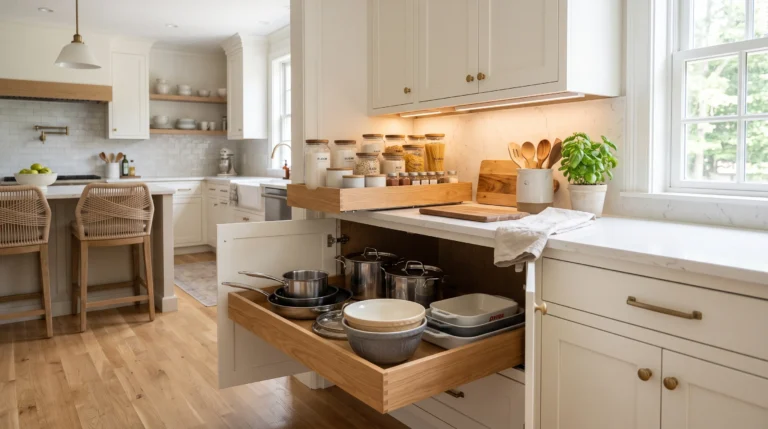
13. Pull-Out Pantry Drawers
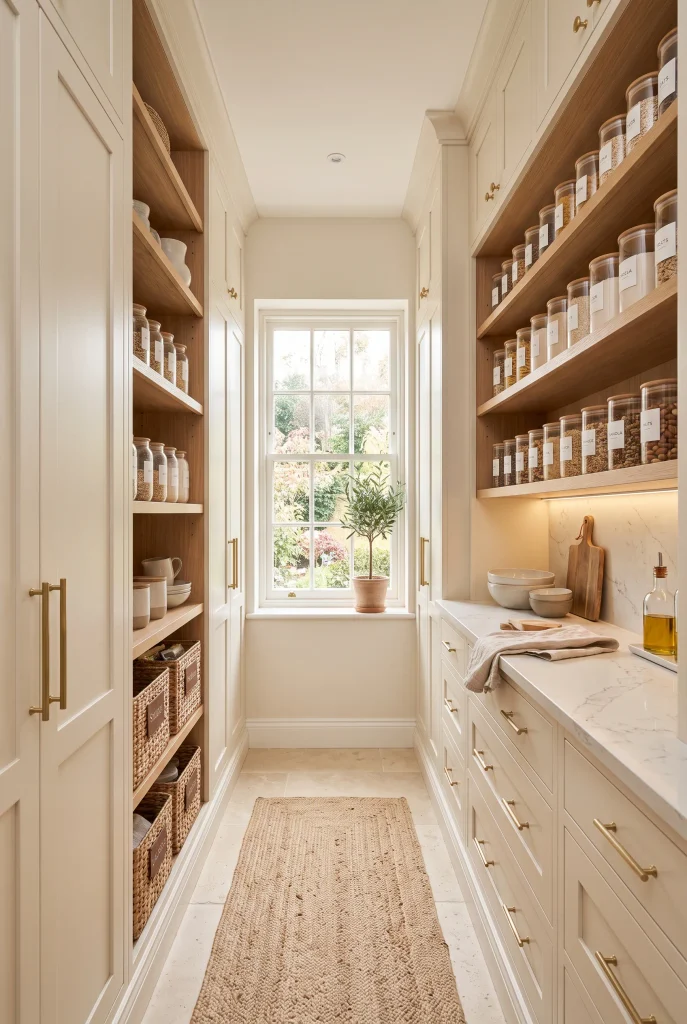
- Pull-out drawers make deep cabinet storage much easier to reach.
- Narrow units can hold spices, sauces, cans, and smaller packages.
- Keep frequently used items toward the front for quick access.
- Smooth hardware adds convenience without taking away from the design.
Deep pantry cabinets can hide plenty of storage, but pull-out drawers make that space far easier to use. Instead of reaching toward the back and moving several items aside, you can slide the entire shelf forward and see everything at once. Narrow pull-outs are especially useful for spices, sauces, cans, and smaller packages that tend to disappear in deep cabinets. Choose sturdy hardware designed for the intended load, particularly if you plan to store heavy bottles or canned goods. When the drawers match the surrounding cabinetry, the practical feature stays visually discreet and contributes to a polished, custom look.
The best pull-out system is organized around your daily habits. Keep frequently used ingredients near the front and place backup supplies farther back or in higher storage. Adjustable dividers can help keep bottles upright and prevent smaller packages from shifting when the drawer moves. If several pull-outs are installed together, consistent cabinet fronts will make the entire wall look seamless. This setup can be especially useful in narrow pantry layouts where traditional deep shelves are difficult to access. A smooth slide, clear categories, and thoughtful placement can turn awkward storage into one of the easiest parts of the room to use.
14. Matching Glass Containers
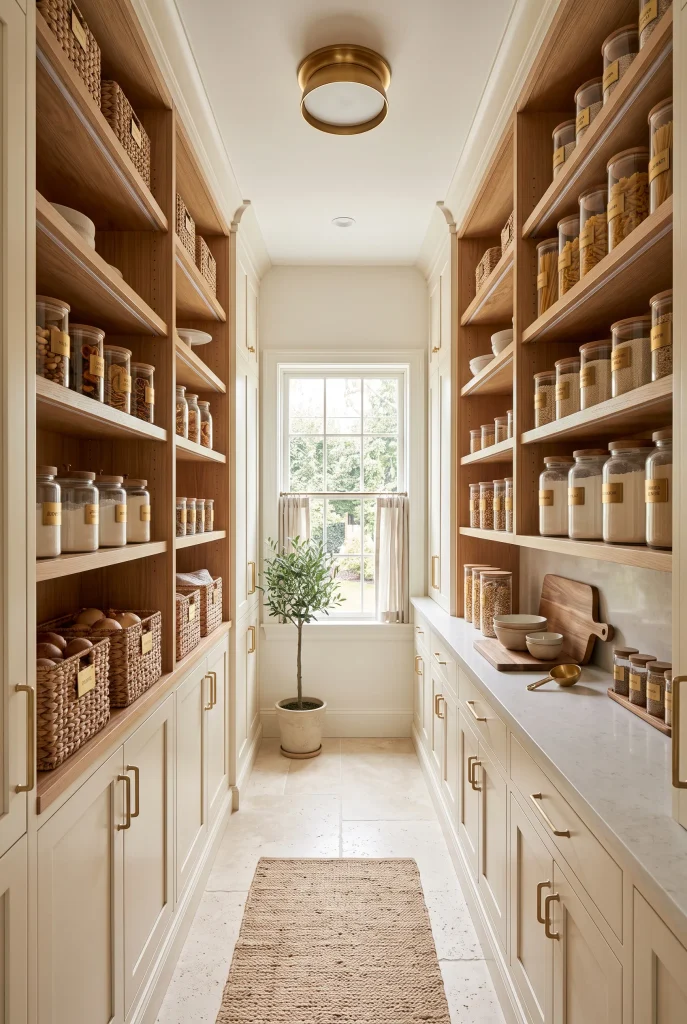
- Matching containers instantly reduce the visual mix of store packaging.
- Clear jars make everyday ingredients easy to identify.
- Choose airtight containers for dry foods where appropriate.
- Simple labels keep the system practical for everyone in the household.
Matching glass containers can make even a busy pantry look calm and carefully styled. Clear jars remove the visual noise created by different package colors, shapes, and sizes while allowing you to see exactly what you have. Use them for dry staples such as pasta, rice, flour, cereal, and grains, choosing containers that suit the quantities your household actually uses. Simple labels add another layer of organization without making the shelves look overly decorated. Group similar containers together and leave a little space between rows so the glass does not become a crowded wall of identical shapes.
A good container system should make pantry maintenance easier, not create extra work. Choose sizes that are easy to lift, clean, and refill, and avoid transferring foods if the original packaging provides important storage or allergen information you need to retain. Keep labels clear and place them where they can be read quickly. Larger jars can sit on lower or middle shelves, while smaller containers work well at eye level. Consistent containers are most effective when combined with baskets for irregular items. Together, they create a practical balance between tidy visibility and flexible storage.
15. Statement Pendant Light

- A statement pendant can give the pantry a finished, room-like feeling.
- Choose a size that leaves comfortable walking clearance.
- Warm light creates a softer atmosphere than harsh overhead illumination.
- Coordinate the fixture finish with existing hardware for a cohesive look.
A statement pendant can turn a walk-in pantry from a purely functional area into a space that feels intentionally designed. Choose a fixture with a simple silhouette and place it where it provides useful illumination without interfering with cabinet doors or walkways. Warm metal finishes pair beautifully with cream cabinetry and natural wood, while a woven or glass shade can introduce another layer of texture. The light should complement the pantry rather than compete with the storage. When balanced correctly, one well-chosen fixture can create a focal point while making the entire room feel warmer and more welcoming.
Before choosing a pendant, consider the ceiling height, walking path, and door swings. A fixture that hangs too low can become an obstacle, particularly in a narrow pantry. Keep the shape visually simple if the room already includes detailed cabinetry or strong stone surfaces. A dimmable option can also be useful, allowing brighter illumination during food preparation and softer light when the pantry is simply being accessed. Repeat the fixture’s finish in cabinet hardware for continuity. The result is a small but noticeable upgrade that gives the storage space the character of a thoughtfully finished room.
16. Countertop Coffee Station
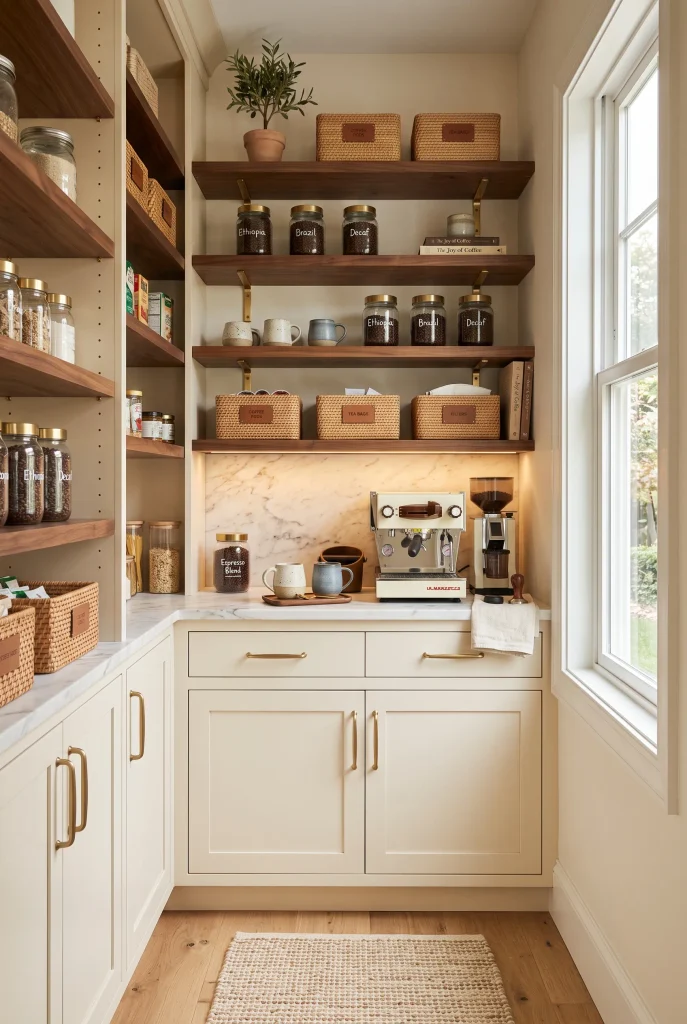
- A dedicated coffee station keeps morning essentials together in one place.
- Use open shelves for mugs, jars, and attractive coffee accessories.
- Store extra pods, filters, and supplies in nearby drawers.
- Leave enough counter space for comfortable daily preparation.
A dedicated coffee station can make a walk-in pantry feel surprisingly luxurious while solving a common kitchen problem: crowded counters. Give the coffee maker or espresso machine a permanent spot on a durable countertop, then keep mugs, beans, filters, and sweeteners within easy reach. Open shelves above can display a few favorite cups and attractive storage jars without filling the area. A drawer below can hide extra supplies and accessories. This arrangement creates a small morning station that feels separate from the main cooking zone, making the kitchen easier to keep tidy when several appliances would otherwise compete for counter space.
Keep the station simple enough that it remains convenient every morning. Position the coffee machine near an appropriate electrical outlet and leave enough clearance around it for safe operation and cleaning. Store frequently used items close by, while backup coffee and less-used accessories can move into cabinets or drawers. A small tray can visually group the coffee essentials and protect the counter from spills. Warm wood, creamy cabinetry, and subtle brass details give the station a refined appearance without making it feel overly formal. The result is a cozy little corner that adds both function and personality to the pantry.
17. Hidden Waste Sorting
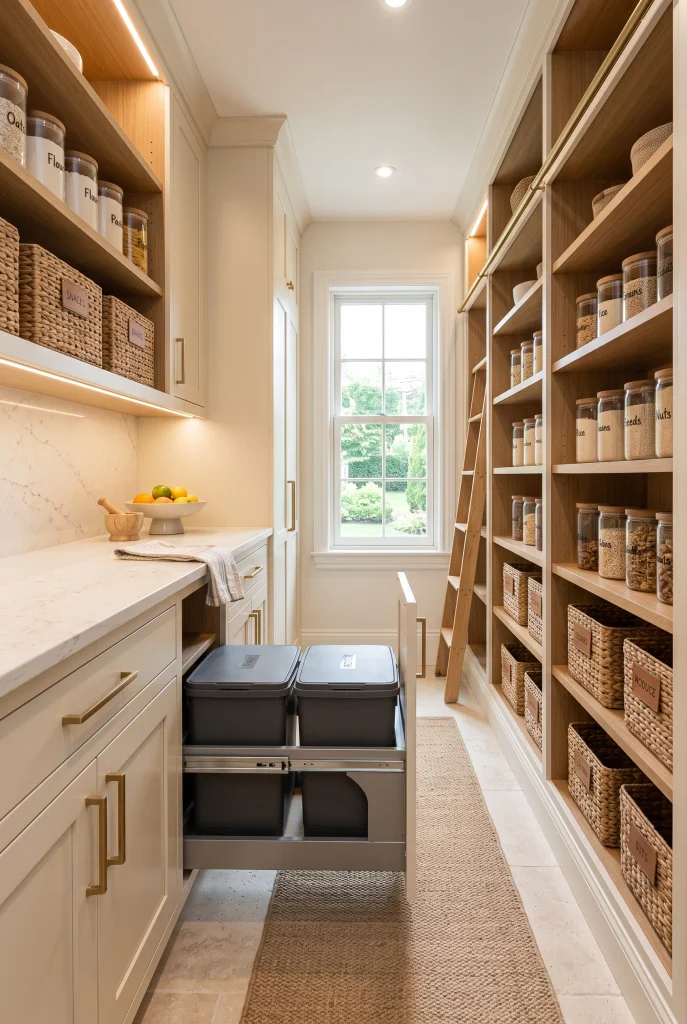
- Concealed bins keep everyday waste out of sight.
- Separate compartments can make recycling easier to manage.
- Place bins near food preparation areas for convenient use.
- Easy-to-clean cabinet interiors help maintain the system over time.
Hidden waste storage keeps practical necessities from interrupting the polished appearance of a beautifully organized pantry. A lower cabinet with pull-out bins can hold everyday trash and recycling while keeping containers out of sight. Positioning the bins near a prep counter makes cleanup faster because food scraps and packaging have a convenient destination. Separate compartments can also help organize recycling where local collection systems require it. Choose sturdy hardware that can handle regular use and allow enough interior clearance for the containers. With the doors closed, the pantry maintains a clean visual line and feels much more refined.
This setup is most useful when the waste area is designed around real household routines. Keep it close enough to the pantry’s working zone that you will actually use it, but avoid placing it where doors and drawers compete for space. A washable cabinet base or removable liner can make cleaning easier. If you compost, consider whether a small dedicated container fits your routine and local requirements. The goal is not to hide everything simply for appearance; it is to create a practical system that keeps food preparation, grocery unpacking, and cleanup organized while allowing the pantry to look calm and uncluttered.
18. Decorative Backsplash
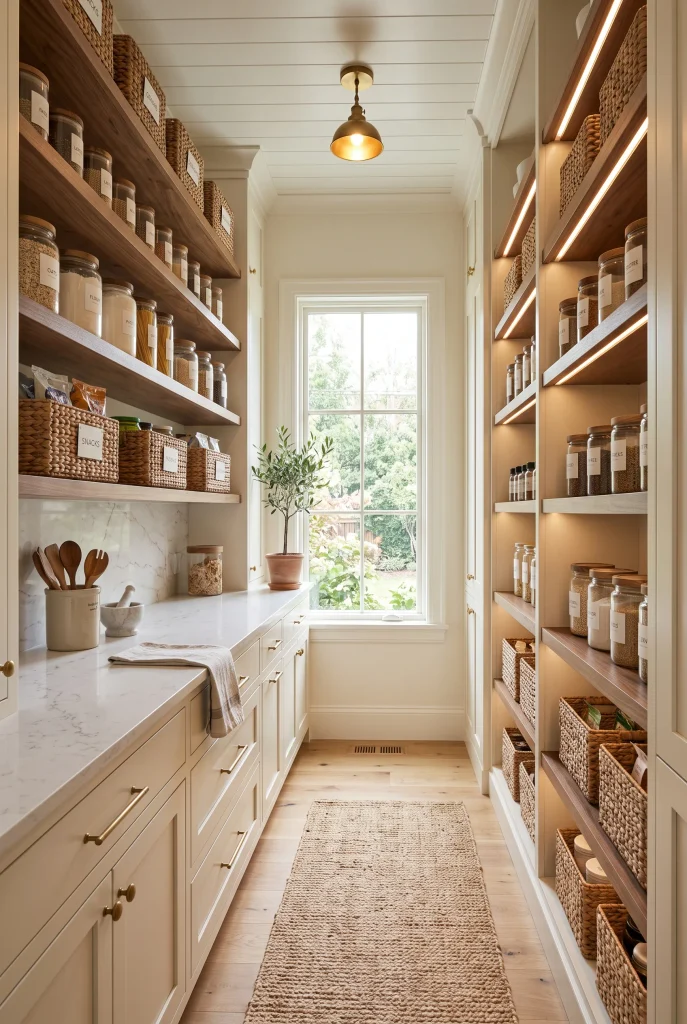
- A backsplash adds personality without taking away valuable storage space.
- Marble or handmade-look tile can create a subtle luxury detail.
- Keep patterns restrained if the pantry already has decorative shelving.
- A backsplash also protects the wall behind a working countertop.
A decorative backsplash can give a walk-in pantry the same finished feeling as a beautifully designed kitchen. Place it behind a countertop, sink, or appliance area where the wall naturally becomes a visual focal point. Soft marble, creamy zellige-style tile, or a simple stone slab can introduce texture without making the room feel busy. Keep the pattern restrained when the pantry already includes detailed shelving or colorful food packaging. Besides adding style, a backsplash protects the wall from splashes, crumbs, and everyday preparation mess, making it a practical upgrade as well as a decorative one.
Choose a material that complements the finishes already used in the pantry and nearby kitchen. A subtle veined stone works well with brass hardware and warm wood, while handmade-look tiles can create a softer, more relaxed atmosphere. Extend the backsplash only where it serves a purpose rather than covering every wall unnecessarily. This keeps the feature intentional and can reduce material costs. Simple backsplash choices can make a surprisingly large difference in small pantry spaces because they add visual interest at eye level. Pair the surface with warm lighting, uncluttered counters, and coordinated storage for a balanced finish.
19. Integrated Spice Drawers
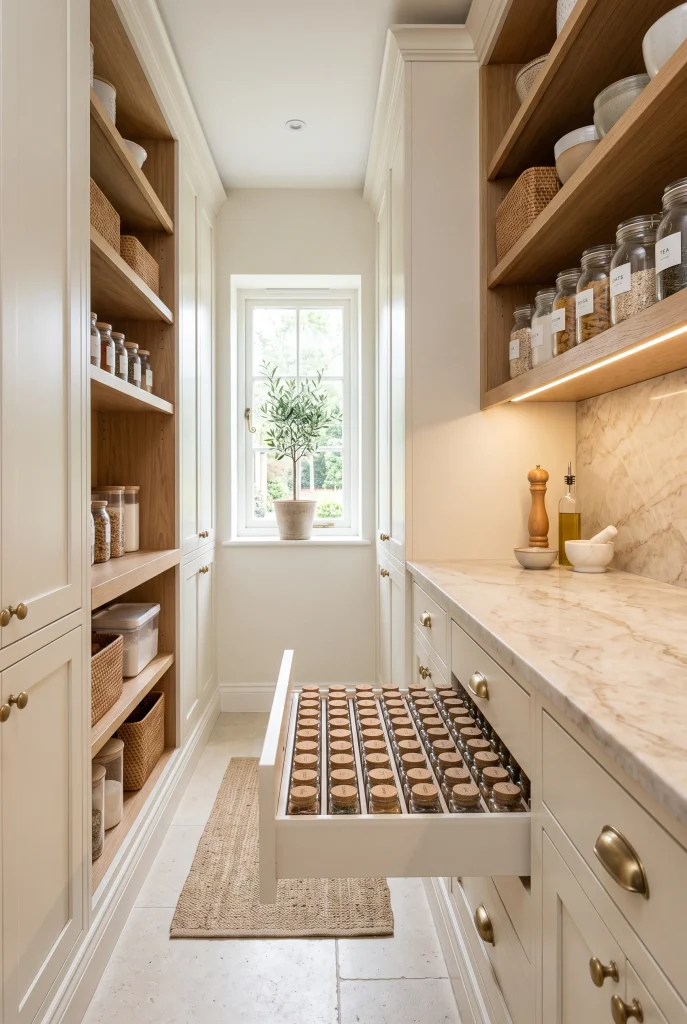
- Shallow drawers keep spice jars visible instead of hiding them behind larger containers.
- Arrange spices alphabetically or by how often you use them.
- Matching jars create a cleaner and more coordinated appearance.
- Place the drawers near the main prep counter for easy access.
A dedicated spice drawer can make one of the smallest pantry categories much easier to manage. Instead of stacking jars behind one another, shallow drawers allow you to see the labels as soon as you open them. This makes cooking faster and helps prevent duplicate purchases when you can quickly check what you already have. Position the drawers near a prep counter or cooking ingredients so frequently used seasonings stay within reach. Matching jars can also create a cleaner appearance, especially when the pantry has open shelving. A simple layout can turn a cluttered spice collection into an organized, useful feature.
Think about the way you cook before deciding how to arrange the drawer. If you use certain seasonings every day, keep them toward the front, while less-used spices can occupy another section. Small dividers prevent jars from rolling or shifting when the drawer opens. Labels should be easy to read from above, particularly if several containers look similar. Shallow storage works especially well for spices because it eliminates the frustration of digging through deep shelves. Combine the drawers with warm cabinetry, wood accents, and simple brass hardware for a functional detail that also feels custom.
20. Built-In Wine Storage
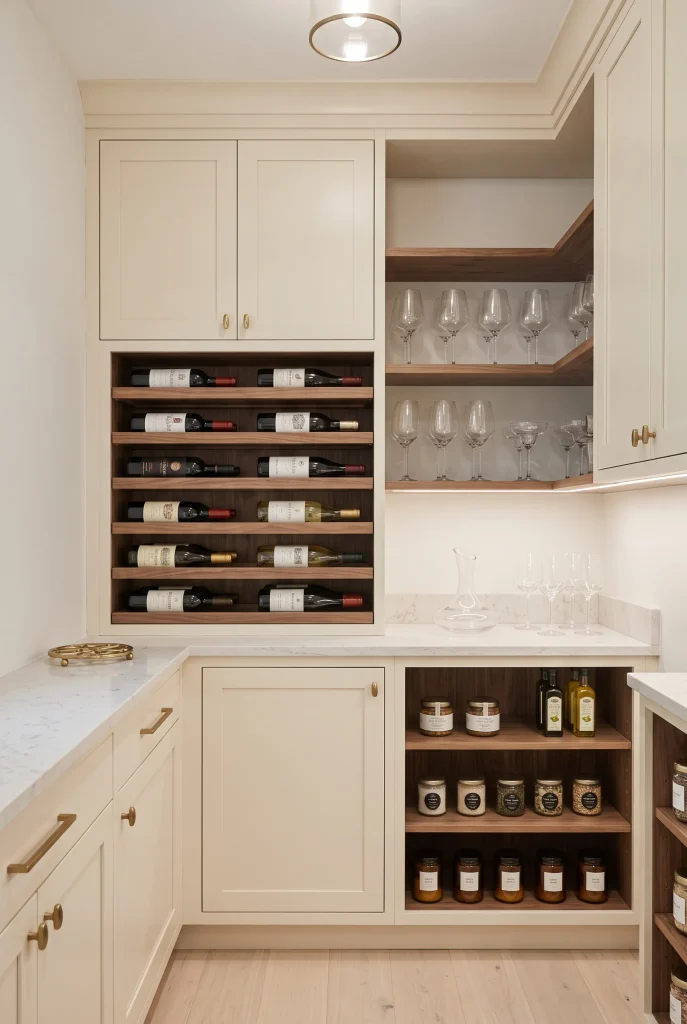
- Built-in bottle storage uses otherwise awkward lower or narrow spaces.
- Wooden racks add warmth and architectural character.
- Keep wine storage away from heat sources and direct sunlight.
- Use nearby cabinets for glasses, serving pieces, or entertaining supplies.
Built-in wine storage can add a refined architectural detail to a pantry while making use of space that might otherwise remain underutilized. A narrow section beneath a counter or between cabinets can hold horizontal bottle racks, while nearby shelving can store glasses and serving pieces. Natural wood racks pair especially well with cream cabinetry, stone counters, and brass details. For safety and quality, keep bottles away from heat sources and direct sunlight, and follow appropriate storage conditions for the wines you keep. The feature can remain compact while still giving the pantry a sophisticated, thoughtfully planned appearance.
The most useful arrangement connects bottle storage with the items you need when entertaining. Keep wine glasses, openers, napkins, and serving accessories nearby so everything can be gathered without searching through the main kitchen. If your pantry is not climate-controlled, treat the rack as convenient short-term storage rather than a substitute for proper wine storage conditions. A built-in design also works well when you want to use an awkward wall section without adding bulky furniture. Keep the surrounding shelves relatively uncluttered so the bottles become a subtle design feature instead of making the pantry feel crowded.
21. Luxe Tile Flooring

- A beautiful floor can make the entire pantry feel more finished.
- Stone-look porcelain offers an elegant appearance with practical durability.
- Subtle patterns add interest without competing with the storage.
- Choose flooring that coordinates with the adjoining kitchen for visual flow.
The right flooring can quietly elevate the entire pantry because it creates a foundation for every cabinet, shelf, and storage detail above it. Light stone-look porcelain tile is a practical option when you want the appearance of natural stone with easier everyday maintenance. Soft beige, ivory, or warm gray tones can complement cream cabinetry and natural wood without making the room feel too formal. If you prefer more character, a subtle geometric or checkerboard pattern can add visual interest. Keep the pattern relatively restrained so the floor supports the storage design instead of competing with it.
Since pantries often see grocery spills, crumbs, and frequent foot traffic, durability should matter as much as appearance. Choose a flooring material that suits your household and can be cleaned without complicated maintenance. If the pantry connects directly to the kitchen, repeating or coordinating the floor can make both rooms feel more connected. A matte or low-sheen finish can also provide a softer appearance than highly glossy tile. When paired with warm lighting, natural textures, and organized storage, an elegant floor helps the entire pantry feel complete. It is a foundational detail that can make simple cabinetry look considerably more refined.
Conclusion
A well-designed pantry can completely change how your kitchen feels and functions. From warm wood shelving and matching containers to built-in drawers, hidden appliances, and elegant lighting, the right details can make everyday storage feel surprisingly luxurious. These walk in pantry ideas are also flexible, so you can choose the upgrades that fit your space, budget, and daily routine.
Start with one area that causes the most frustration, then build from there. Even a small change can make groceries easier to find and the room more enjoyable to use. Save this post on Pinterest for your next pantry project, try an idea that fits your home, and share it with someone planning a beautiful storage makeover.