25 Sage Green Living Room Ideas You Need to See Now
Ready to make your living room feel calmer, warmer, and more stylish? Sage green living room ideas can give your space a fresh look without making it feel overwhelming or overly colorful.
From soft sage walls and cream sofas to natural wood, cozy textiles, and elegant accent details, the right combination can completely change the atmosphere of your room. Whether you are decorating a small apartment, refreshing an outdated space, or simply looking for your next Pinterest-worthy idea, these designs offer practical inspiration you can actually use. I’ve noticed that sage works especially well when paired with warm neutrals and natural textures, creating a room that feels both beautiful and comfortable. Explore these ideas to find an approach that fits your home, style, and everyday life.
1. Soft Sage Accent
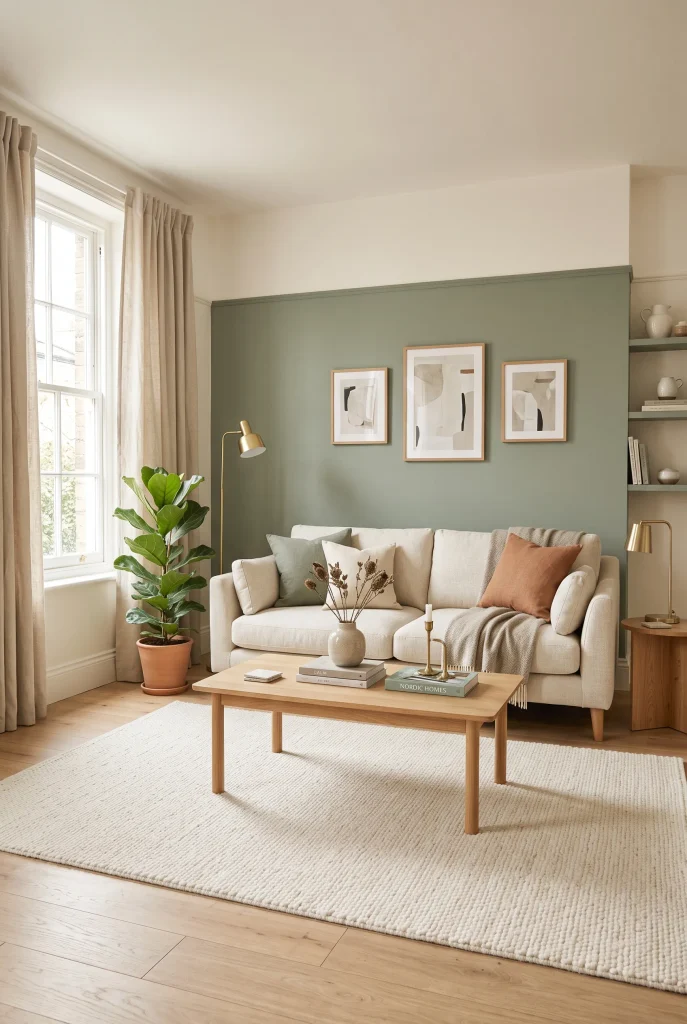
- Creates a calm focal point without overwhelming the room.
- Works beautifully behind a sofa, fireplace, or media console.
- Light surrounding walls keep the space feeling open.
- Warm wood and neutral textiles soften the green.
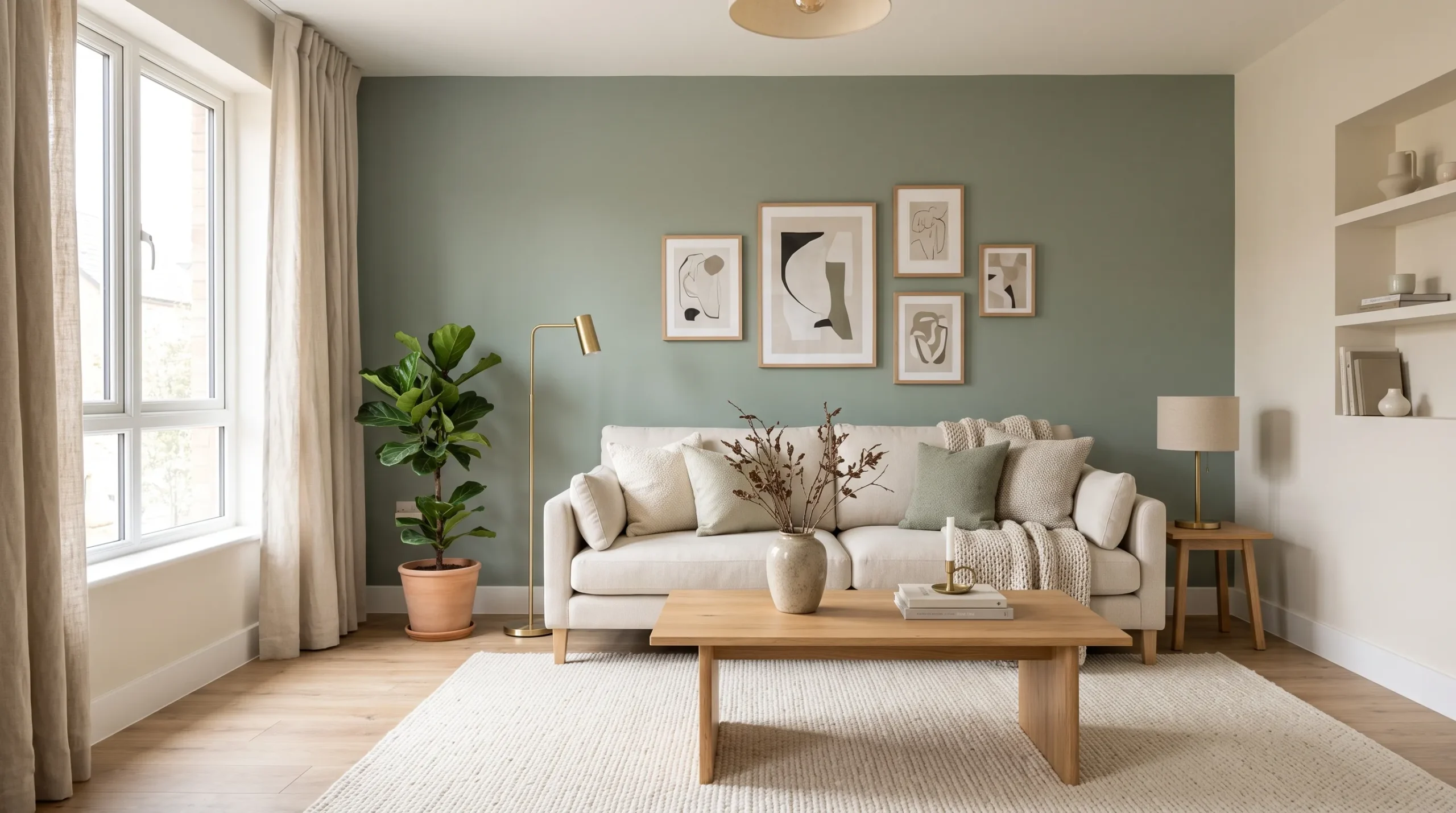
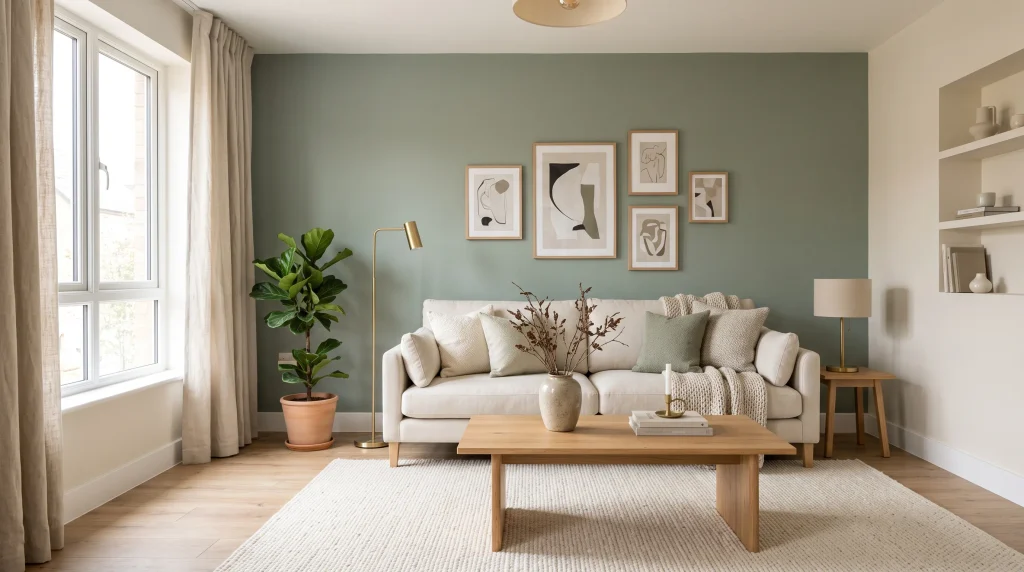
A soft sage accent wall instantly gives a living room a calm, collected backdrop without making the space feel heavy. Pair the wall with a cream sofa, light oak flooring, and warm neutral textiles so the green feels fresh rather than overpowering. In my experience, this combination works especially well in rooms that receive plenty of daylight because natural light brings out the gentle variation in sage tones. Add simple black or brass accents for definition, then keep larger furniture understated. The result feels polished, welcoming, and easy to live with while still giving the room a noticeable color moment.
A sage accent wall can become the quiet focal point that makes the whole living room feel more intentional. It works particularly well behind a sofa, media console, or fireplace because the color naturally frames the area without demanding too much attention. Choose a muted, gray-based sage if your room already has warm wood, beige, or cream furnishings. For smaller spaces, keep the remaining walls light and repeat the green through one or two cushions or plants. This creates continuity instead of visual clutter, helping the room feel balanced, spacious, and thoughtfully styled rather than decorated all at once.
2. Cream Sofa Pairing
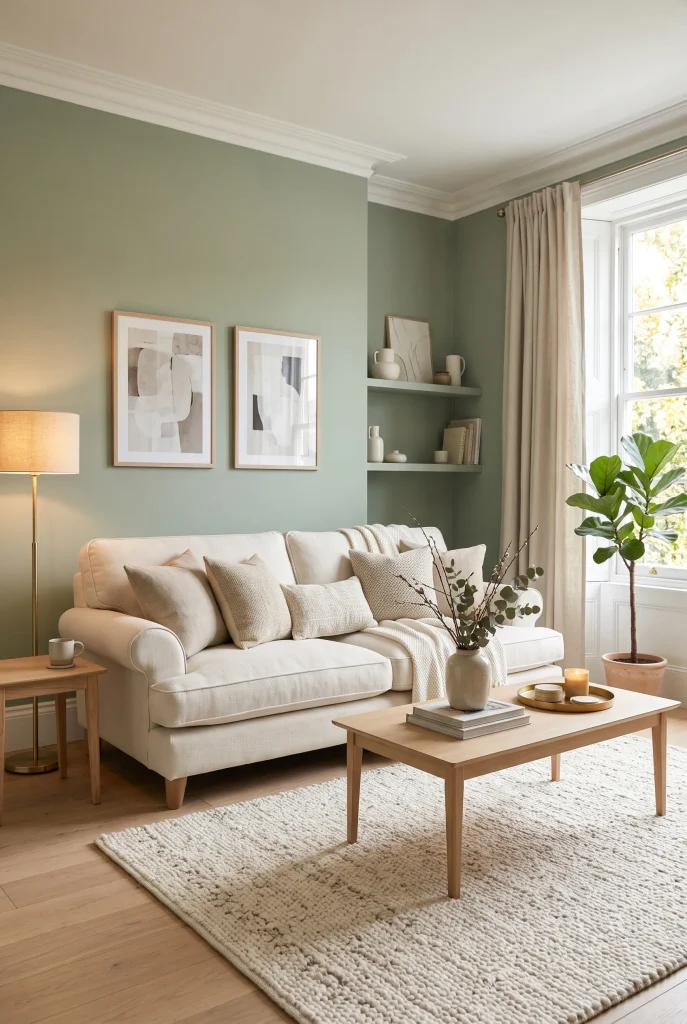
- Creates a soft contrast that feels bright and timeless.
- Keeps sage walls from making the room feel too dark.
- Textured upholstery adds depth without competing with the color.
- Neutral cushions make seasonal updates simple.
A cream sofa and sage walls create an instantly soothing combination that feels both fresh and timeless. The light upholstery keeps the room bright while the green backdrop adds enough color to prevent the space from looking flat. Choose linen, boucle, or softly textured fabric to introduce depth without competing with the wall. Warm beige cushions, an ivory rug, and a pale wood coffee table can bridge the two tones beautifully. I’ve noticed this pairing is especially forgiving in busy homes because neutral upholstery is easy to refresh with seasonal pillows, throws, and small decorative changes.
For a living room that feels calm but never boring, let a cream sofa soften the richness of a sage palette. Position the sofa against the green wall, then layer in warm neutrals through cushions, curtains, and a textured rug. Keep the coffee table visually light, such as natural oak or pale travertine, so the seating area does not feel crowded. A few darker accents, like a slim black lamp or framed artwork, can add contrast. The finished room feels airy, comfortable, and coordinated, while the neutral foundation gives you plenty of flexibility when your decorating taste changes.
3. Natural Wood Accents
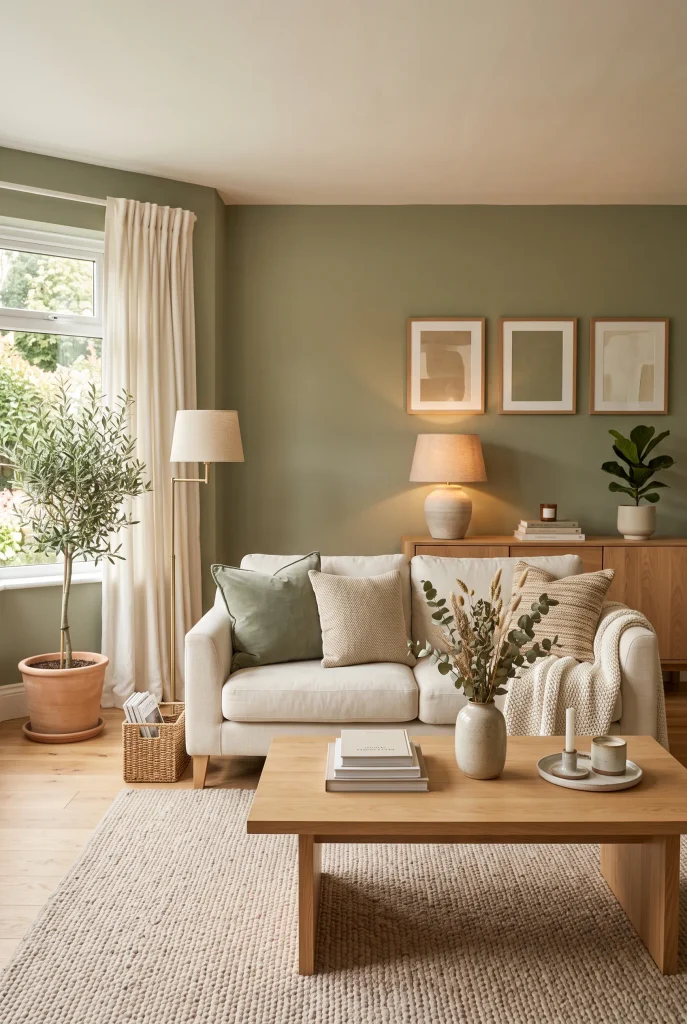
- Adds warmth and an organic feeling to sage interiors.
- Light oak keeps the palette airy and relaxed.
- Walnut creates a richer, more sophisticated contrast.
- Repeating wood through small accessories keeps the look cohesive.
Natural wood brings out the earthy side of sage green and makes the living room feel warmer almost instantly. Try a light oak coffee table, walnut sideboard, or wooden shelving against the softer green palette. The key is to repeat wood in a few places rather than filling every surface with it. This keeps the room grounded while preserving an airy look. Pair those pieces with cream upholstery, woven baskets, and a textured rug for gentle contrast. In my experience, wood is one of the easiest ways to make green walls feel welcoming instead of overly cool or formal.
If your living room feels visually cold, adding natural wood can give a sage palette the warmth it needs. Use one substantial wooden piece as an anchor, then echo its finish through smaller details such as picture frames, trays, or lamp bases. Light woods suit bright Scandinavian-inspired rooms, while walnut creates a richer, more traditional effect. Keep the shapes simple so the natural grain becomes part of the decoration. A balanced mix of sage, wood, cream, and soft textiles creates an inviting atmosphere that feels connected to nature without turning the room into a themed space.
4. Sage and Beige Layers
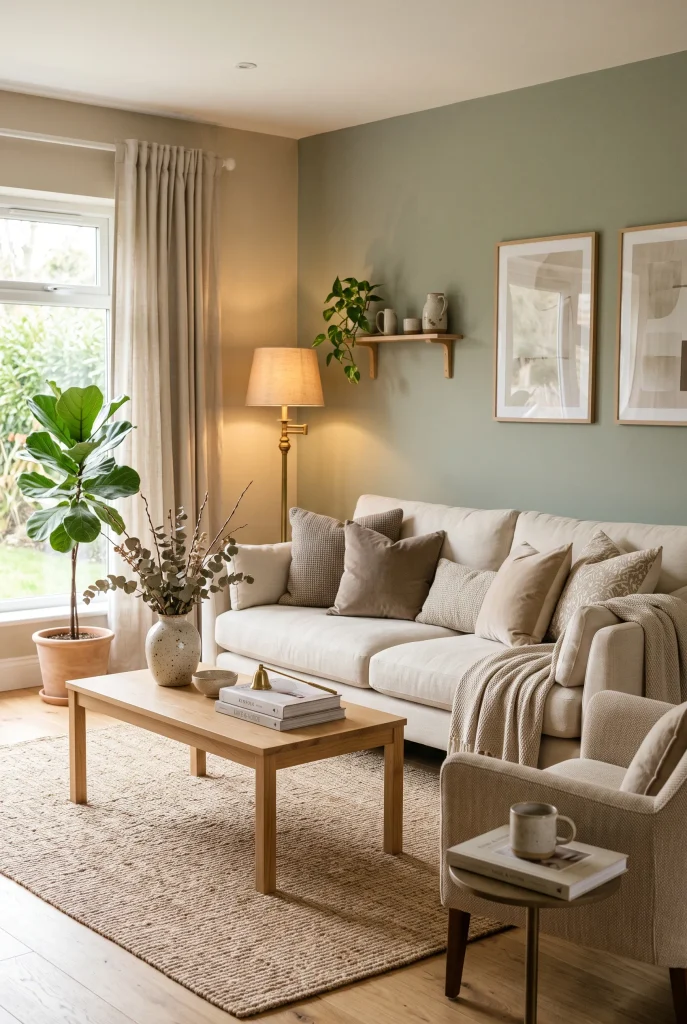
- Beige tones soften sage and create a warmer overall palette.
- Layered textures keep the neutral colors from looking flat.
- Taupe accessories add subtle depth without strong contrast.
- This combination works well in relaxed, everyday living spaces.
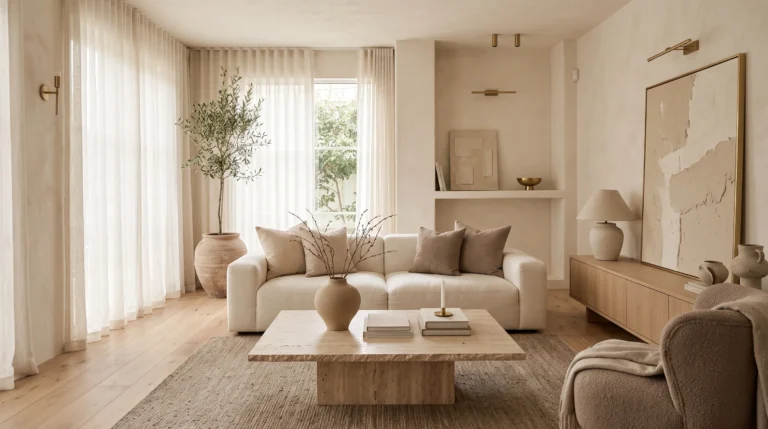
Sage and beige create a beautifully balanced palette when you want color without losing a neutral, peaceful atmosphere. Instead of using bright white everywhere, introduce warm beige through curtains, rugs, cushions, and upholstered chairs. The subtle difference between sage, taupe, and cream gives the room depth while keeping everything visually connected. A textured rug or linen throw can make the arrangement feel especially inviting. I’ve noticed that layered neutrals often make green walls easier to live with because they soften the color and create a comfortable transition between the walls, furniture, and decorative pieces.
The beauty of this palette is how easily it adapts to different decorating styles. Choose clean-lined furniture for a contemporary room, or add rounded pieces and aged finishes for something softer and more traditional. Keep the strongest sage tone on the walls or larger textiles, then use beige and cream throughout the remaining elements. Natural wood can provide another warm layer without introducing a competing color. The finished space feels coordinated rather than overly matched, giving you plenty of freedom to change cushions, artwork, and accessories while keeping the underlying design calm and cohesive.
5. Botanical Greenery
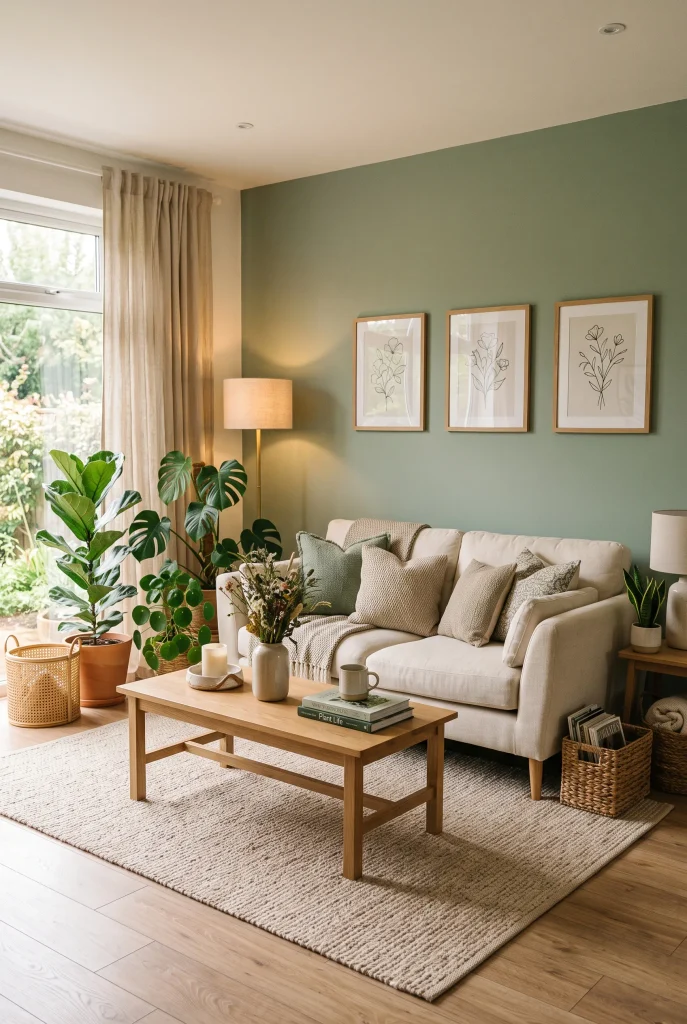
- Real plants make the green palette feel naturally connected to nature.
- Tall greenery can fill empty corners without bulky furniture.
- Smaller plants add life to shelves and coffee tables.
- Woven baskets complement both foliage and sage tones.
Few additions make a sage-toned living room feel more alive than real greenery. Place a tall leafy plant beside the sofa or in an unused corner to introduce height and movement without adding visual heaviness. Smaller plants can sit on shelves, side tables, or a console for softer layers. Choose simple ceramic or woven planters that complement the existing palette. In my experience, greenery works particularly well with muted sage because the colors feel related without becoming identical. The plants add freshness, while natural textures help the entire room feel warmer and more connected.
You do not need a large collection of plants to create this effect. One substantial floor plant can become a strong focal point, while two or three smaller varieties can balance shelves or tabletops. Consider the amount of natural light before choosing your plants, especially if the room has shaded corners. Pair the foliage with oak furniture, woven baskets, linen curtains, and cream upholstery to reinforce the organic feeling. This approach makes the space look thoughtfully styled while remaining practical for everyday living. Even a simple plant beside a reading chair can make an empty corner feel finished.
View: 23 Boho Living Room Ideas That Make Your Space Cozy
6. Sage Velvet Sofa
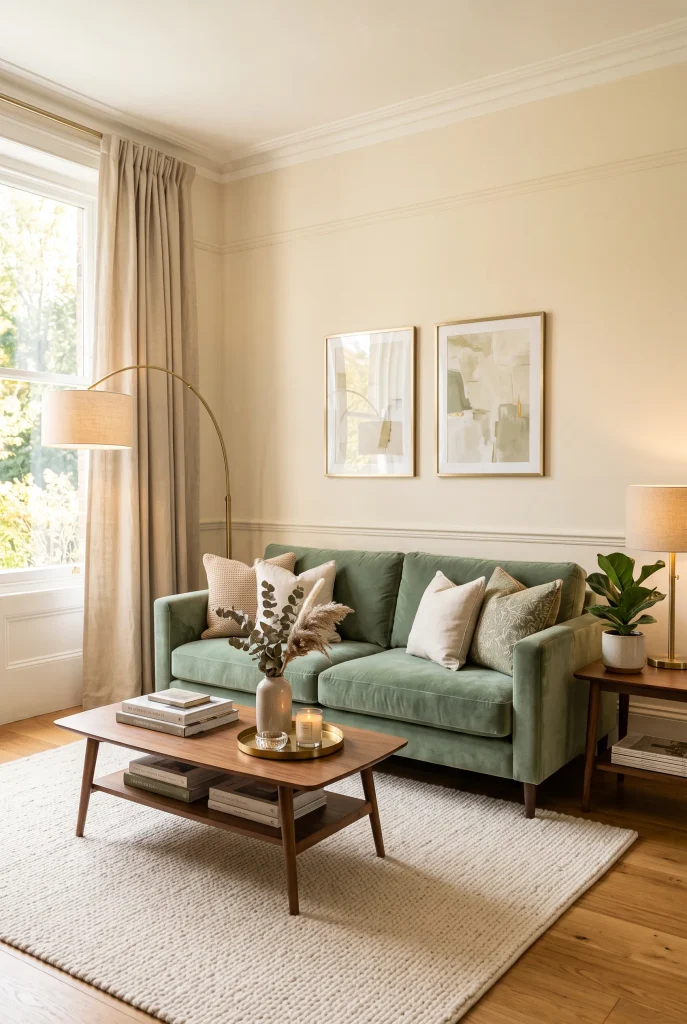
- Velvet gives sage green a richer and more luxurious appearance.
- A neutral rug keeps the sofa visually grounded.
- Walnut furniture adds sophisticated warmth and contrast.
- Brass details provide a refined finishing touch.
A sage velvet sofa can become the statement piece that gives a living room instant character. Its soft texture catches natural and artificial light differently, making the green appear richer throughout the day. Keep the surrounding palette restrained with cream walls, beige cushions, and an ivory rug so the sofa remains the visual anchor. Walnut furniture works beautifully alongside velvet because its deeper grain adds warmth and contrast. I’ve seen this combination work especially well when homeowners want their room to feel sophisticated without relying on overly formal furniture or excessive decorative accessories.
The trick to making a velvet sofa feel inviting rather than too glamorous is to balance it with relaxed materials. Add linen cushions, a woven throw, natural wood, and a softly textured rug to create contrast against the smooth upholstery. Keep metallic accents limited to one or two pieces, such as a brass floor lamp or side table. This prevents the room from feeling overstyled. Whether your space is large or compact, a well-positioned velvet sofa can define the seating area while giving the entire room a polished focal point that photographs beautifully for Pinterest.
7. White Trim Contrast
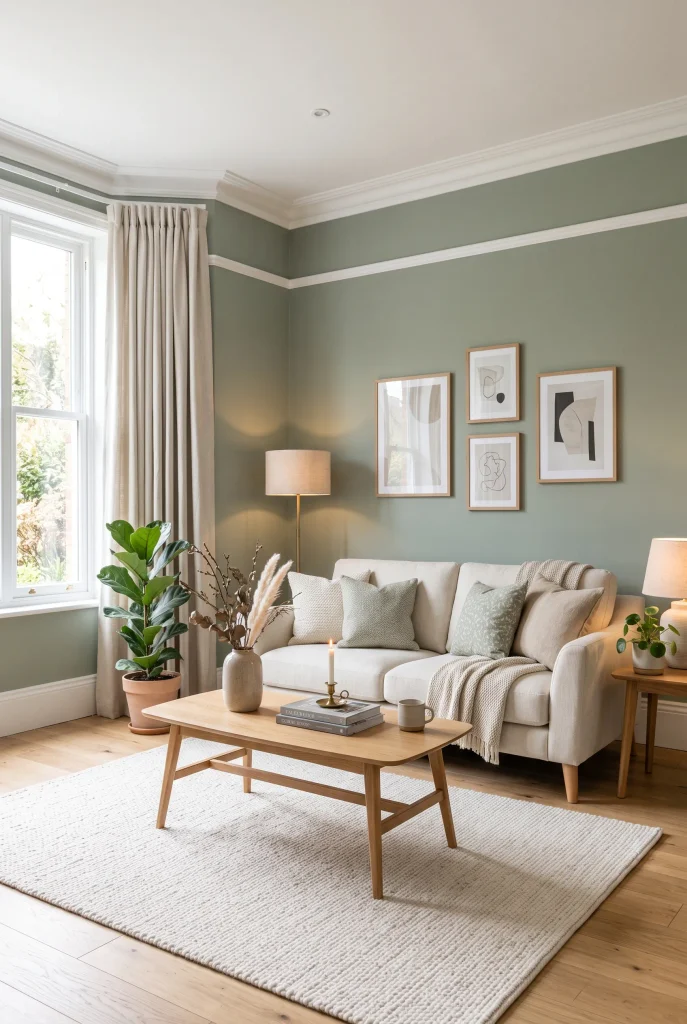
- White trim makes sage walls look cleaner and more defined.
- Architectural details become more noticeable without adding clutter.
- Cream furnishings soften the contrast between green and white.
- This works especially well in rooms with classic molding.
Crisp white trim can make a sage green room look instantly sharper and more finished. Paint the walls in a muted sage shade while keeping baseboards, door frames, and molding bright white for a clean architectural contrast. This technique works particularly well when the room already has interesting details that deserve attention. Pair the walls with a cream sofa and light wood furniture to prevent the contrast from feeling too stark. I’ve noticed that defined trim also helps softer green shades look more intentional, especially in older homes where molding, doors, and window frames are naturally part of the room’s character.
If your living room has decorative molding, paneled walls, or attractive window frames, use the color contrast to highlight those features rather than hiding them. Keep the ceiling white as well to maintain visual openness, particularly in rooms with lower ceilings. Add warm textiles and natural wood to bridge the sage and white tones. A few darker accessories can provide additional definition, but they are not essential. The finished space feels fresh, structured, and welcoming while still retaining the softness that makes sage green so appealing. It is a simple upgrade with a noticeable architectural effect.
8. Arched Floor Lamp
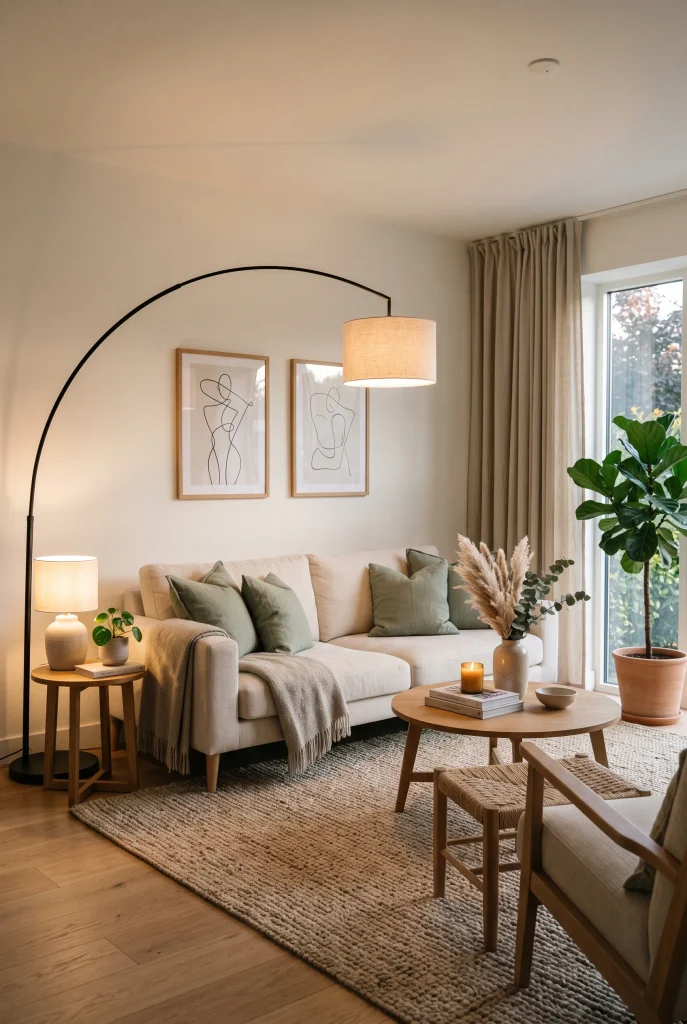
- A curved lamp adds height and a graceful silhouette.
- Its shape contrasts nicely with straight furniture lines.
- Warm lighting makes sage tones feel cozier at night.
- Position it beside seating to create a useful reading zone.
An arched floor lamp can add both function and sculptural interest to a sage living room. Place one behind or beside the sofa so its curved arm extends naturally over the seating area. The shape creates a pleasing contrast against straight furniture while drawing the eye upward. Choose a black finish for stronger definition or brass for a softer, warmer effect. A warm bulb is especially important in the evening because it helps the green walls feel cozy rather than cool. In my experience, good lighting can completely change how a muted wall color looks after sunset.
Beyond its decorative role, the lamp can make an awkward corner much more useful. Position it beside a comfortable chair or sofa to create a simple reading area without installing wall lights. Keep the surrounding furniture relatively low so the lamp becomes a graceful vertical element instead of competing with bulky pieces. A round coffee table, textured rug, and soft cushions can reinforce the relaxed shapes. During the day, the lamp adds structure; at night, it provides a warm pool of light that makes the room feel intimate and inviting.
9. Textured Neutral Rug
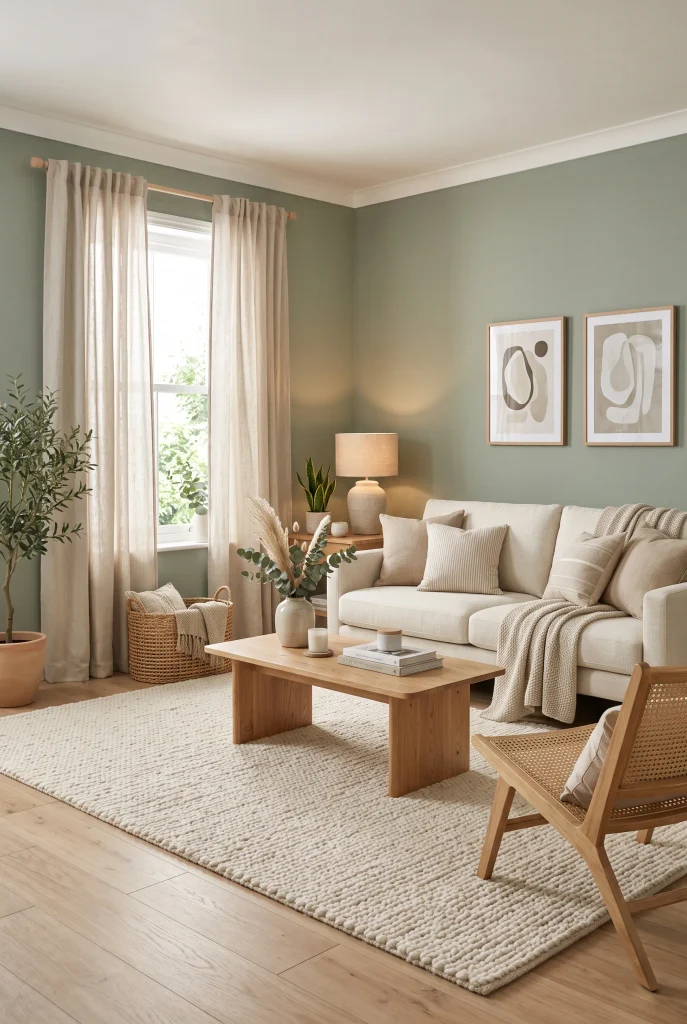
- A textured rug softens the transition between furniture and flooring.
- Ivory and beige shades keep the room visually bright.
- Raised textures add interest without introducing another strong color.
- A large rug helps define the seating arrangement.
A textured neutral rug can pull a sage living room together while making the seating area feel noticeably softer. Choose ivory, oatmeal, beige, or light taupe instead of a highly patterned design if you want the green to remain the main color story. A raised weave, subtle geometric texture, or natural fiber surface can add visual interest without creating competition. Make sure the rug extends beneath the main sofa and nearby chairs so the furniture feels connected. I’ve noticed that properly sized rugs often make a room look more finished because they visually anchor separate pieces into one comfortable zone.
The rug also provides an easy way to balance stronger sage tones on the walls or furniture. If the room has dark flooring, an ivory rug can brighten the lower half and make the entire space feel lighter. For pale flooring, choose a slightly deeper beige or oatmeal texture for gentle definition. Layer the rug with a simple coffee table and neutral upholstery rather than adding too many patterns. This creates a calm foundation that allows artwork, plants, cushions, and lighting to provide personality without making the overall room feel busy or disconnected.
10. Sage Built-In Shelves
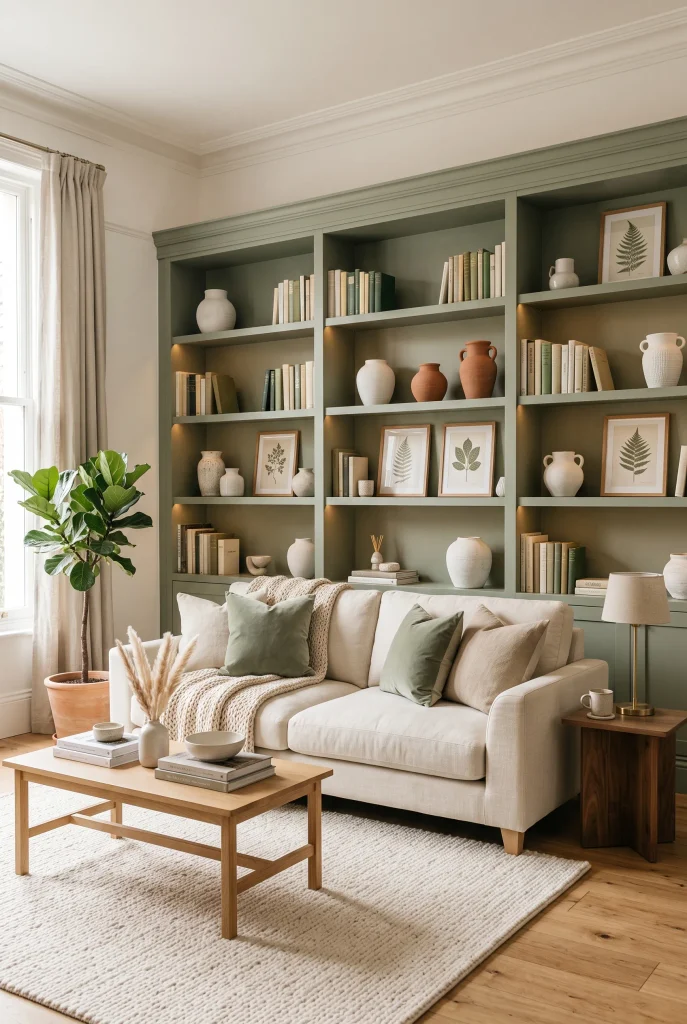
- Built-in shelves turn an empty wall into a useful focal point.
- Painting the shelves sage creates a cohesive custom look.
- Books and ceramics add personality without excessive clutter.
- Warm shelf lighting makes the display feel inviting at night.
Built-in shelves painted sage can turn an ordinary living room wall into a thoughtful architectural feature. The color creates a seamless backdrop for books, ceramics, framed artwork, and small plants, allowing the shelves to feel connected to the room rather than simply attached to it. Keep the display intentionally edited by mixing useful objects with decorative pieces and leaving some open space. In my experience, shelves look more sophisticated when every section is not completely filled. A cream sofa and natural wood furniture can balance the green cabinetry while keeping the overall room warm and relaxed.
For a practical styling approach, begin with larger pieces such as baskets, framed artwork, or stacked books before adding smaller accessories. Vary heights and shapes so the display has movement without looking chaotic. Warm LED shelf lighting can highlight the sage color after dark and create a soft evening atmosphere. If built-ins are not possible, freestanding bookcases painted in a similar shade can create a comparable effect. The combination of storage, color, and personality makes this idea especially useful for everyday homes where the living room needs to look beautiful while still supporting real-life organization.
11. Black Accent Details
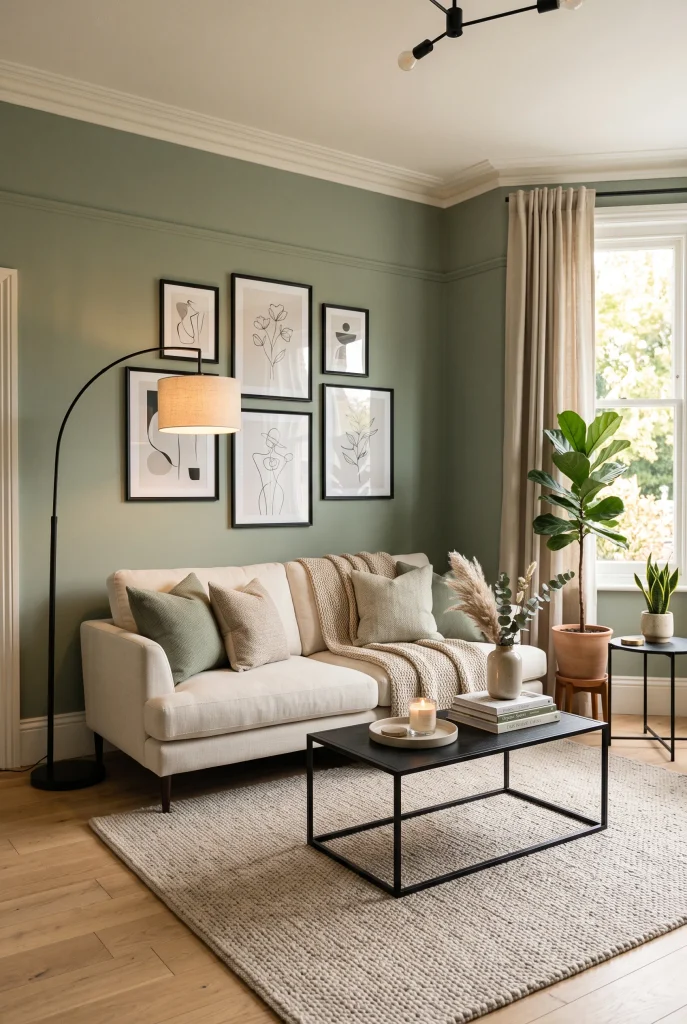
- Small black accents give soft sage tones stronger definition.
- Metal frames create crisp visual boundaries around artwork.
- A dark lamp can anchor an otherwise light seating area.
- Repeating black details prevents the contrast from feeling random.
Small black accents can give a soft sage living room the definition it needs without changing its peaceful character. Think slim picture frames, a simple floor lamp, curtain rods, or a small metal coffee table rather than large blocks of black. These details create visual punctuation against green, cream, and beige tones. Keep the shapes simple so the contrast feels modern and intentional. I’ve noticed that repeating one dark finish in several small places often looks more cohesive than using a single oversized dark piece that can dominate the room.
The key is to distribute black accents around the room instead of concentrating them in one corner. A black frame on one wall can be echoed by a lamp base, table legs, or a small decorative object elsewhere. Pair these elements with warm wood and soft textiles to prevent the palette from becoming too sharp. This approach works particularly well when your furniture is mostly neutral because the darker details add structure and depth. The final effect feels polished and contemporary while preserving the relaxed, nature-inspired quality of the sage color.
12. Layered Linen Textiles
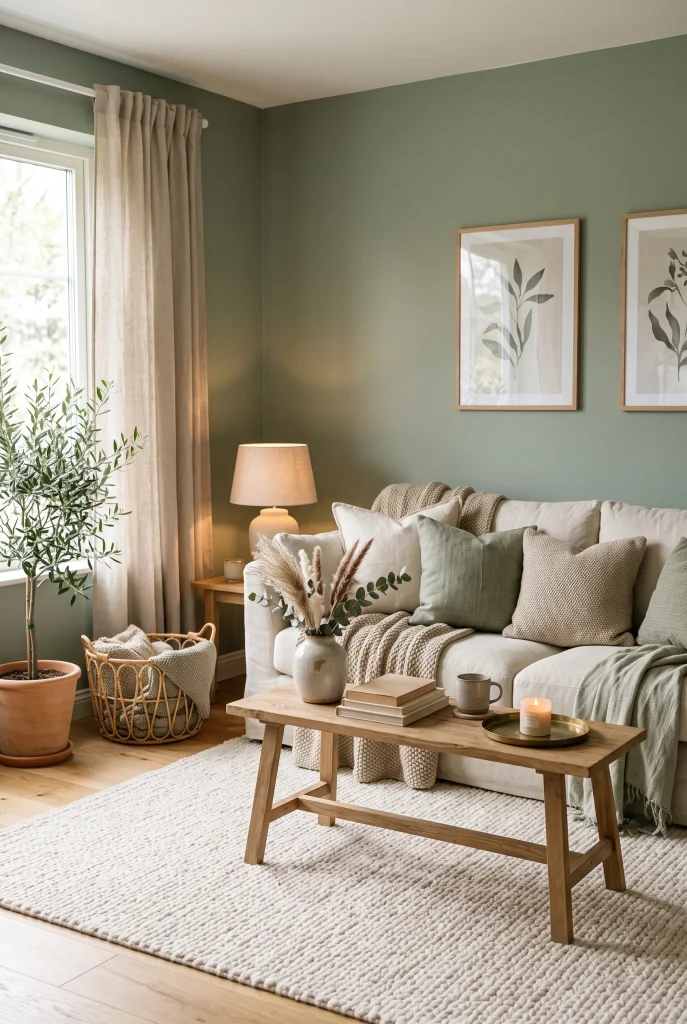
- Linen introduces softness and natural texture to the color palette.
- Layered cushions make the seating area feel more comfortable.
- Lightweight curtains help preserve a bright, airy atmosphere.
- Neutral throws let you refresh the room without repainting.
Layered linen textiles can make a sage living room feel softer, warmer, and more lived-in without adding visual clutter. Start with cream or oatmeal cushions, then introduce one or two sage pieces in slightly different tones. Add a loosely folded linen throw across the sofa for another tactile layer. Natural linen curtains can soften incoming daylight while keeping the room bright. In my experience, mixing similar colors through different textures creates more depth than simply adding more decorative objects. The result feels relaxed and intentional, with comfort becoming part of the overall design rather than an afterthought.
Textiles are also one of the easiest ways to adjust the atmosphere of a room without making permanent changes. During warmer months, lightweight linen cushions and throws can keep the space feeling fresh, while heavier woven textures can add coziness during cooler seasons. Keep the base palette around sage, cream, beige, and soft taupe so the layers remain visually connected. Choose fabrics with slightly different weaves rather than identical finishes. This creates subtle variation that photographs beautifully while still feeling practical for everyday living, lounging, reading, or entertaining guests in a comfortable home.
13. Sage and Walnut
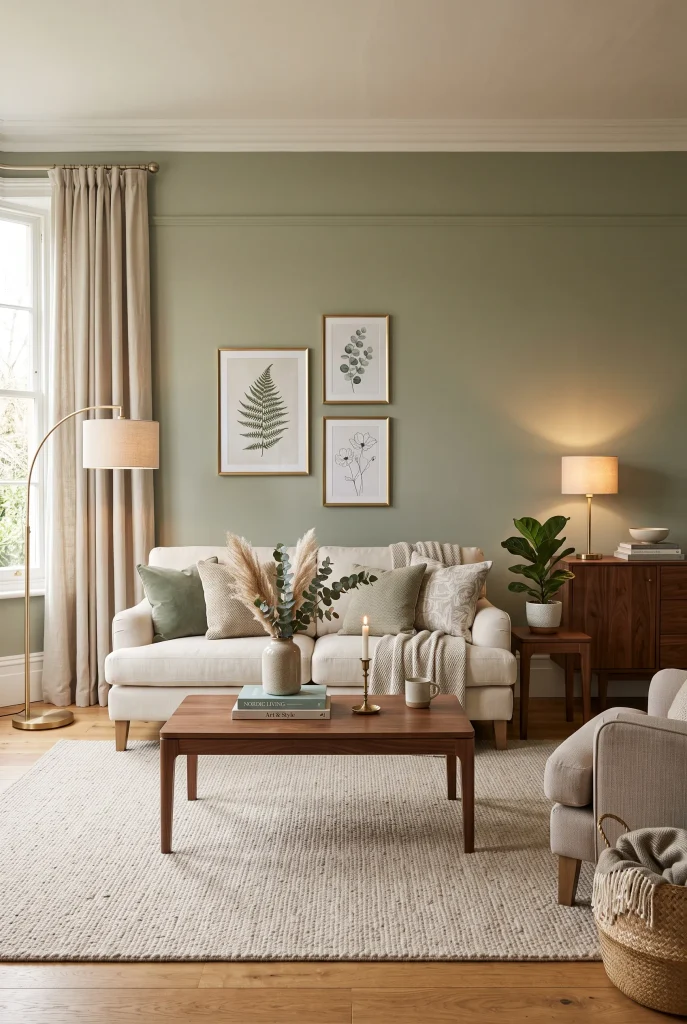
- Walnut adds rich warmth against muted green tones.
- Dark wood gives the room a more sophisticated appearance.
- Cream upholstery prevents the palette from becoming too heavy.
- Brass details can subtly enhance the warm undertones.
Sage green and walnut create a rich combination that feels sophisticated without becoming overly formal. The deeper wood tone gives muted green walls more definition, while cream upholstery keeps the room visually balanced. A walnut coffee table, sideboard, or shelving unit can provide enough contrast without requiring additional bold colors. Add beige textiles and warm brass details to connect the different finishes. I’ve noticed that darker wood works especially well when a room needs more visual weight because it grounds the softer sage palette while still preserving the relaxed character of the space.
To keep walnut furniture from making the room feel dark, balance it with plenty of lighter surfaces around the seating area. An ivory rug, cream sofa, and natural linen curtains can reflect daylight and create breathing room. Use walnut consistently across two or three pieces rather than mixing several unrelated wood finishes. A small brass lamp or framed artwork can add another warm layer without overwhelming the composition. The finished space feels grounded, polished, and inviting, making it a strong choice for anyone who wants a sage living room with a slightly more luxurious and mature appearance.
14. Gallery Wall
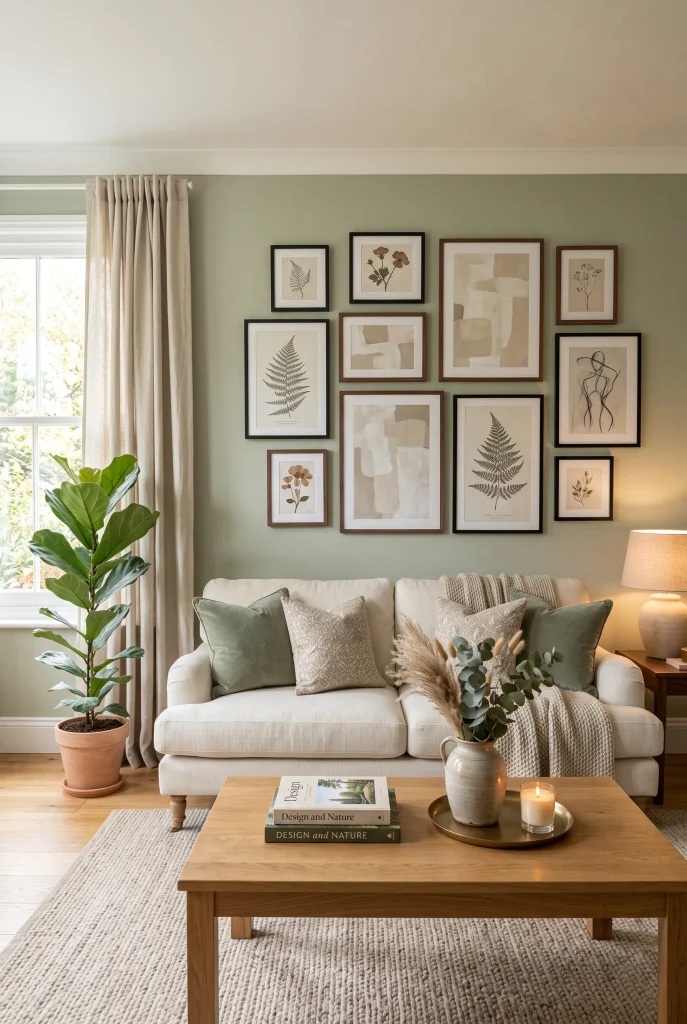
- Artwork breaks up a large green wall beautifully.
- Mixed frames add personality without requiring bright colors.
- Botanical prints reinforce the room’s natural color story.
- Keeping artwork within a neutral palette maintains visual harmony.
A gallery wall can give a sage living room personality while keeping the color palette calm and coordinated. Arrange botanical prints, soft abstract artwork, vintage-inspired illustrations, or neutral photography above the sofa to create a focal point. Use black, walnut, or light wood frames to introduce subtle contrast without competing with the wall color. Leave consistent breathing room between pieces so the arrangement feels curated rather than crowded. In my experience, choosing artwork with cream, beige, muted green, and brown tones makes it much easier to create a cohesive display.
Before hanging anything, arrange the frames on the floor and experiment with different sizes and spacing. Start with the largest artwork near the center, then build outward with smaller pieces to create balance. Keep the bottom edge of the arrangement visually connected to the sofa rather than placing everything too high. If you prefer a simpler look, use three larger prints instead of many small frames. This approach gives the sage wall character while preserving an uncluttered atmosphere, making the room feel personal, finished, and visually interesting from the moment someone walks in.
15. Round Coffee Table
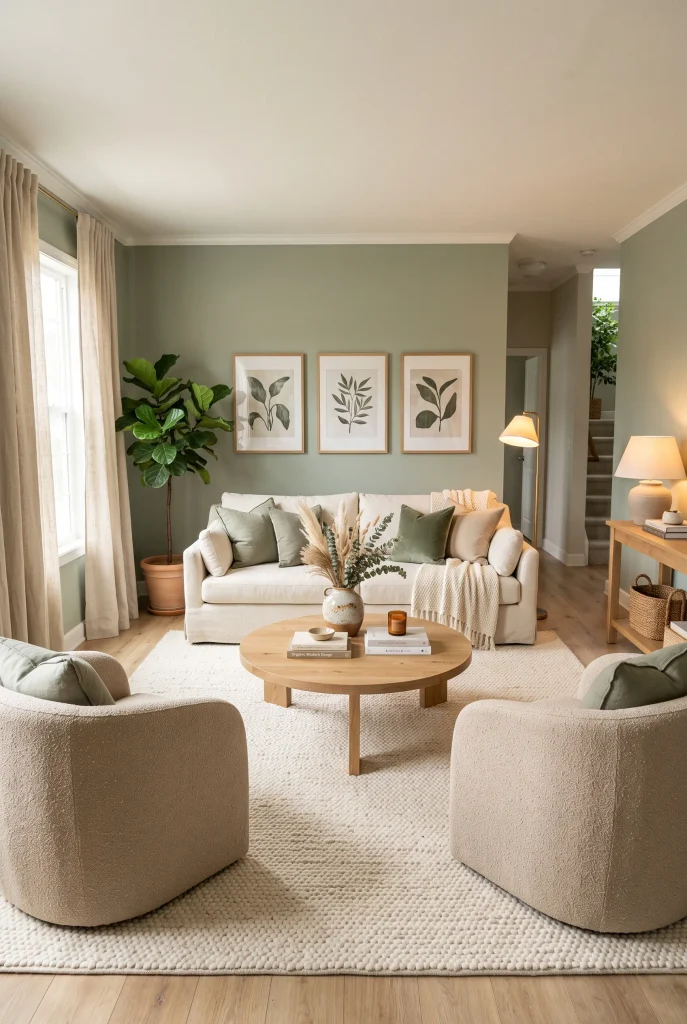
- A round table softens rooms filled with straight furniture lines.
- Curved edges make movement around the seating area easier.
- Light oak keeps the center visually airy.
- A round shape works especially well in compact layouts.
A round coffee table can soften the geometry of a sage living room while making the seating arrangement feel more relaxed. Its curved shape works beautifully with a straight sofa, rectangular rug, or built-in shelving because it introduces a gentle visual break. Choose light oak for an airy organic look or darker wood for stronger contrast. Make sure there is enough walking space between the table and seating so the room remains comfortable to use. I’ve seen this simple shape change the flow of smaller living rooms because it reduces sharp corners and makes movement feel more natural.
The styling possibilities are equally flexible. Place a low ceramic vase, a small stack of books, or a simple tray in the center, but avoid filling the entire surface. Leaving some tabletop visible keeps the room feeling spacious and makes everyday use easier. A round table also pairs naturally with curved armchairs, rounded lamps, or soft cushions if you want to continue the theme. Combined with sage walls, cream upholstery, and textured neutrals, the result feels balanced and welcoming while giving the seating area a softer, more approachable visual character.
16. Warm Brass Accents
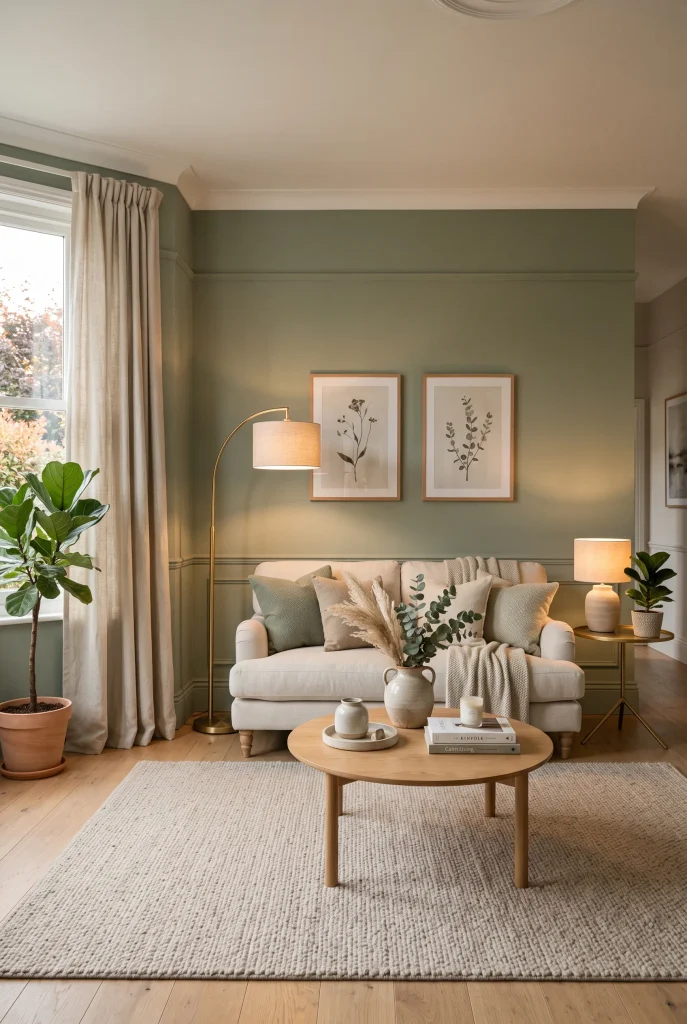
- Brass adds warmth and a refined glow to sage tones.
- Small metallic details create contrast without overwhelming the room.
- A brass lamp can become a subtle focal point.
- Mixing brass with wood keeps the look relaxed and livable.
Warm brass accents can bring a gentle glow to a sage living room while making the overall palette feel more refined. Instead of using metallic pieces everywhere, choose a few purposeful details such as a floor lamp, side table, mirror frame, or decorative tray. The warm golden tone works beautifully with muted green because it adds contrast without creating a harsh visual break. Pair brass with cream upholstery, natural wood, and beige textiles for balance. In my experience, restrained metallic accents tend to look more timeless because they enhance the room rather than becoming its dominant feature.
For the best effect, repeat brass in two or three areas so the finish feels intentional. A brass lamp near the sofa can be echoed by a small frame or decorative object across the room. Keep the shapes simple and avoid combining too many metallic finishes in one space. Warm lighting will make the brass glow beautifully in the evening, while daylight keeps it subtle during the day. With sage walls, soft textiles, and natural materials surrounding these accents, the room can feel elegant and welcoming without losing the comfortable atmosphere that makes a living room practical.
17. Minimalist Sage Styling
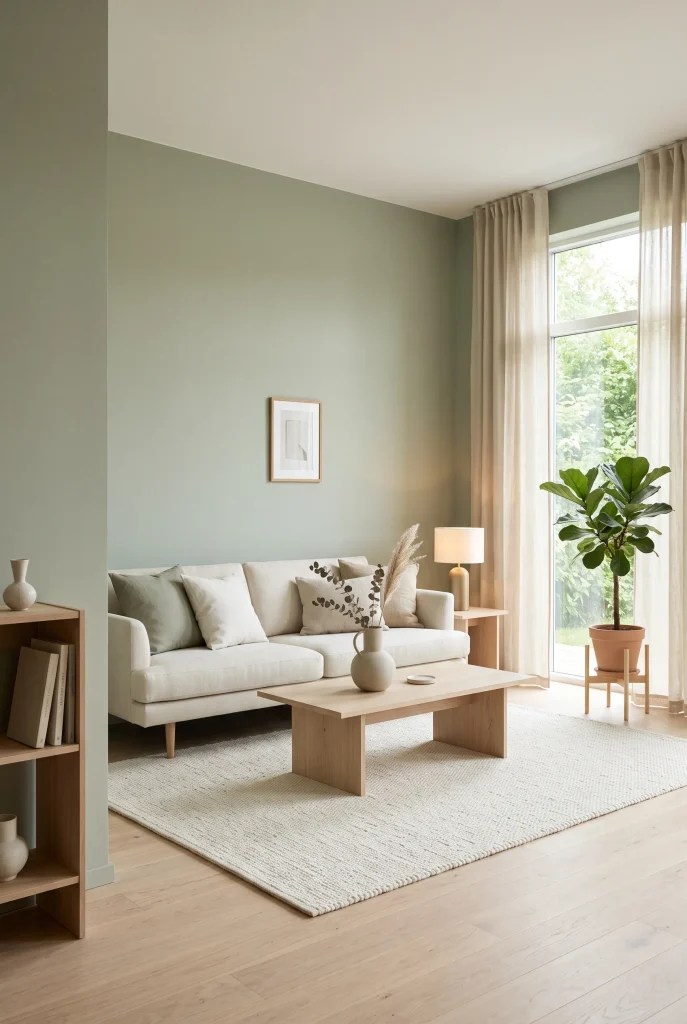
- Fewer accessories allow the sage color to become the main feature.
- Clean furniture shapes make the room feel spacious.
- One or two plants add life without creating clutter.
- Open surfaces make everyday cleaning and organization easier.
Minimalist styling lets sage green become the quiet star of the living room without surrounding it with unnecessary decoration. Choose a streamlined cream sofa, simple oak coffee table, and one generously sized rug to establish the foundation. Instead of filling shelves and tables, select a few meaningful pieces such as a ceramic vase, framed artwork, or leafy plant. This creates visual breathing room and makes the color itself more noticeable. I’ve noticed that rooms with fewer, better-chosen objects often feel calmer because the eye can move naturally across the space without stopping at every surface.
A minimalist sage room does not have to feel empty or cold. Warm textures are essential for keeping the simplicity comfortable, so consider linen curtains, a softly woven rug, and textured cushions in cream or beige. Keep furniture proportions balanced and allow clear pathways around the seating area. If you need storage, choose closed cabinetry in natural wood or a muted coordinating finish so everyday items stay out of sight. The finished space feels organized, airy, and peaceful while remaining practical enough for relaxing, entertaining, and handling the everyday activity of a busy home.
18. Sage Fireplace Wall
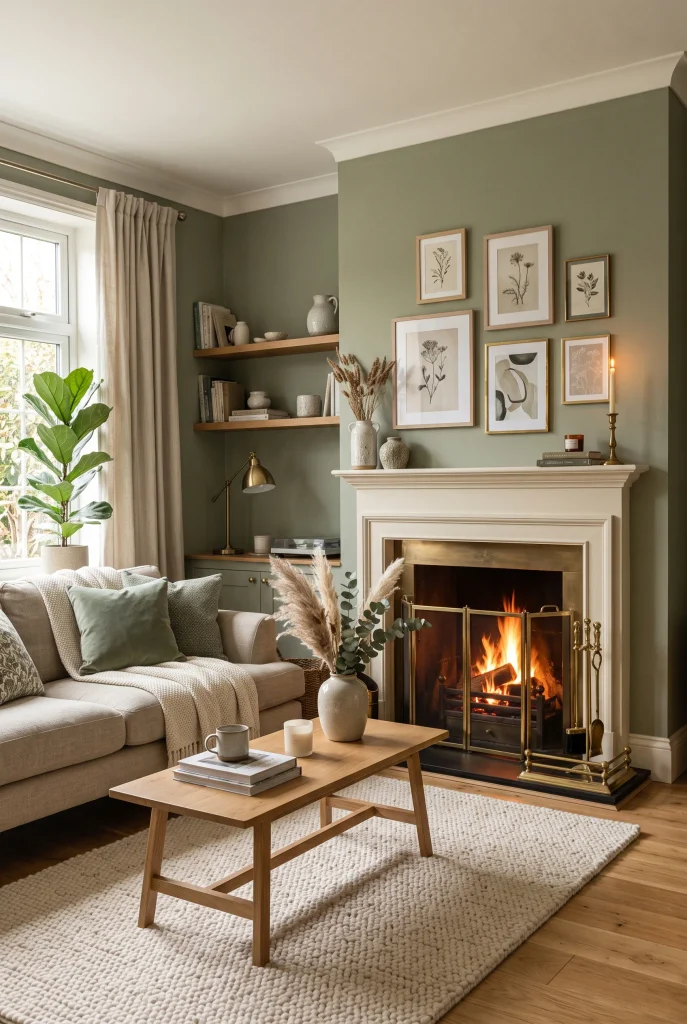
- Sage makes a fireplace feel more intentional and architectural.
- A cream mantel creates soft contrast against the green.
- Warm wood and textiles make the focal wall feel inviting.
- Artwork above the fireplace can complete the composition.
A sage fireplace wall can turn an existing architectural feature into the room’s strongest focal point. Painting the wall around the fireplace in a muted green creates depth while keeping the fireplace visually integrated with the rest of the space. A cream mantel or light stone surround can provide gentle contrast, while natural wood furniture adds warmth nearby. Keep the artwork above the fireplace relatively simple so it complements rather than competes with the color. In my experience, emphasizing an existing architectural feature is often more effective than adding another decorative focal point.
The fireplace wall should feel connected to the seating area, so repeat the sage or related tones through cushions, artwork, or a small decorative object. If the fireplace is surrounded by stone, brick, or tile, let that material remain visible to create additional texture. An ivory rug and warm beige sofa can soften the stronger wall color, while brass or black details add definition. When the fireplace is lit, warm light brings out the earthy qualities of sage and creates an especially cozy atmosphere, making the room inviting throughout the year.
19. Soft Sage Curtains
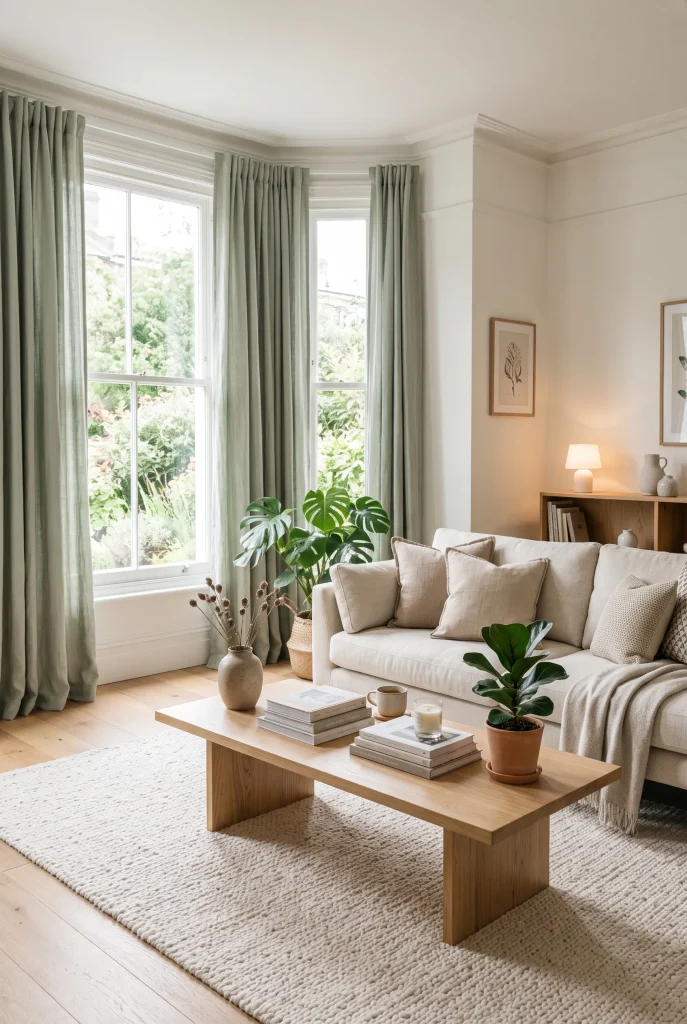
- Sage curtains extend the color palette without repainting the walls.
- Floor-to-ceiling panels can make windows appear taller.
- Linen textures keep the green feeling soft and natural.
- Neutral furniture prevents the curtains from overwhelming the room.
Soft sage curtains are an easy way to bring the color into a living room without committing to painted walls or larger furniture. Floor-to-ceiling panels can visually stretch the windows upward, making the room feel taller and more polished. Choose linen or a linen-look fabric so daylight filters through gently instead of creating a heavy block of color. Pair the curtains with cream upholstery, beige cushions, and light wood furniture for balance. I’ve noticed that repeating a wall color through curtains can make the entire room feel more cohesive, especially when the rest of the palette is neutral.
For a softer appearance, select curtains that are slightly lighter or deeper than the main sage shade rather than matching everything exactly. Hang the curtain rod several inches above the window frame and extend it wider than the window when possible. This allows the fabric to frame the glass without reducing the amount of visible daylight. Keep nearby furniture simple so the curtains remain an elegant background feature. With an ivory rug, natural wood, and a few leafy plants, the finished room feels airy, coordinated, and comfortable while gaining an understated layer of color and texture.
20. Sage Accent Chairs
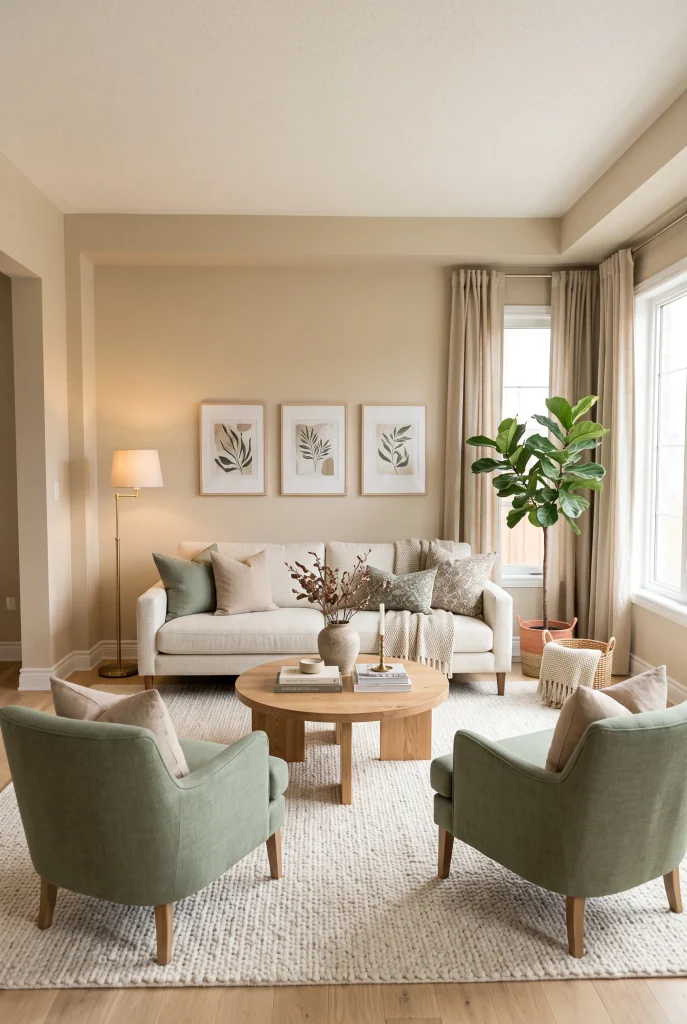
- Accent chairs add sage without covering an entire wall.
- Two chairs can create a balanced conversation area.
- Upholstered seating introduces color while remaining functional.
- A neutral sofa keeps the arrangement visually grounded.
Sage accent chairs offer a flexible way to introduce green when you want color without making the entire room revolve around it. Place one chair beside the sofa for an intimate reading spot, or use a pair opposite the main seating to create a balanced conversation area. Choose a softly curved silhouette for a relaxed look or clean lines for a contemporary room. Keep the sofa cream or beige so the chairs become noticeable without dominating. In my experience, accent seating is especially useful for renters or anyone who enjoys changing their decor because individual pieces can be moved or replaced easily.
Consider the room’s existing proportions before choosing your chairs. Bulky designs can make a compact living room feel crowded, while slimmer frames can provide extra seating without blocking pathways. Repeat the sage tone through a small cushion, artwork detail, or plant pot to connect the chairs with the rest of the space. A round coffee table can soften the arrangement and improve movement between seats. Combined with warm wood, textured neutrals, and soft lighting, sage accent chairs can make the room feel layered and thoughtfully designed while still remaining comfortable for everyday use.
21. Light Oak Flooring
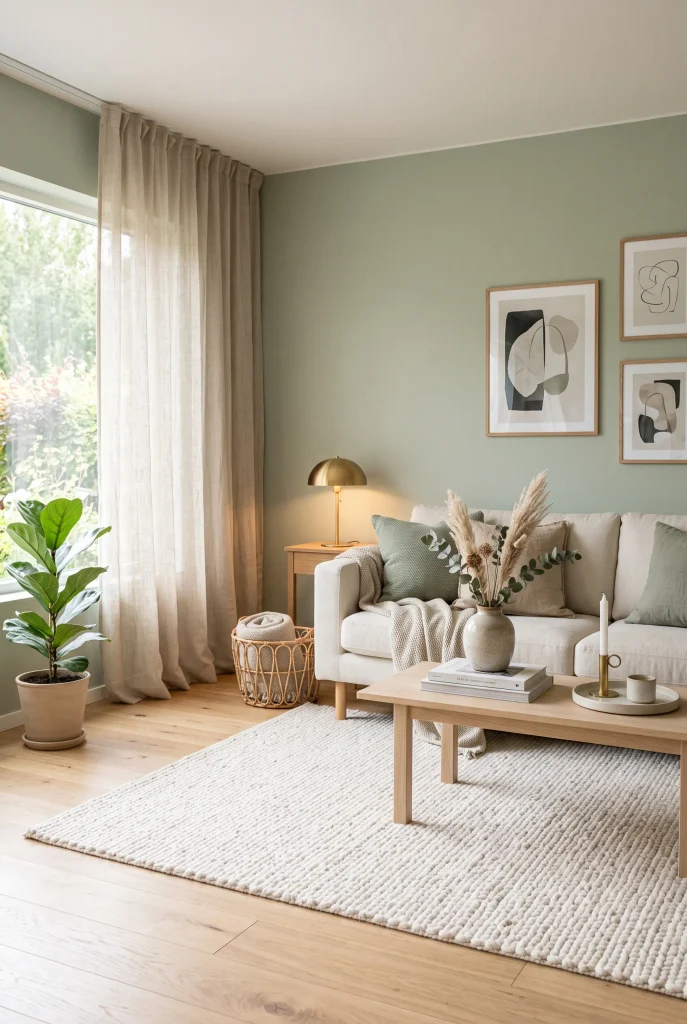
- Light oak flooring keeps sage interiors bright and naturally warm.
- The pale wood visually balances deeper green shades.
- Natural grain adds texture without introducing a strong color.
- A large rug can soften the floor beneath the seating.
Light oak flooring can make sage green interiors feel brighter, warmer, and more connected to natural materials. The pale wood provides a gentle foundation beneath green walls or furniture without creating a strong color competition. Its natural grain also adds texture while maintaining a clean appearance. Pair the flooring with a cream sofa, ivory rug, and beige curtains to keep the room visually light. I’ve noticed that pale wood is particularly effective when a sage shade feels slightly dark because the flooring reflects light and helps distribute warmth throughout the lower part of the room.
If replacing flooring is not practical, you can create a similar visual effect with a large light-toned rug placed beneath the main seating area. Choose natural oak furniture to repeat the wood finish and make the floor feel connected to the rest of the design. Keep darker accents limited to small details such as picture frames or lamp bases. This creates a gentle progression from sage walls to neutral furniture and pale flooring. The result is an airy, grounded living room that feels comfortable during the day and remains warm when layered lighting takes over in the evening.
22. Oversized Wall Mirror
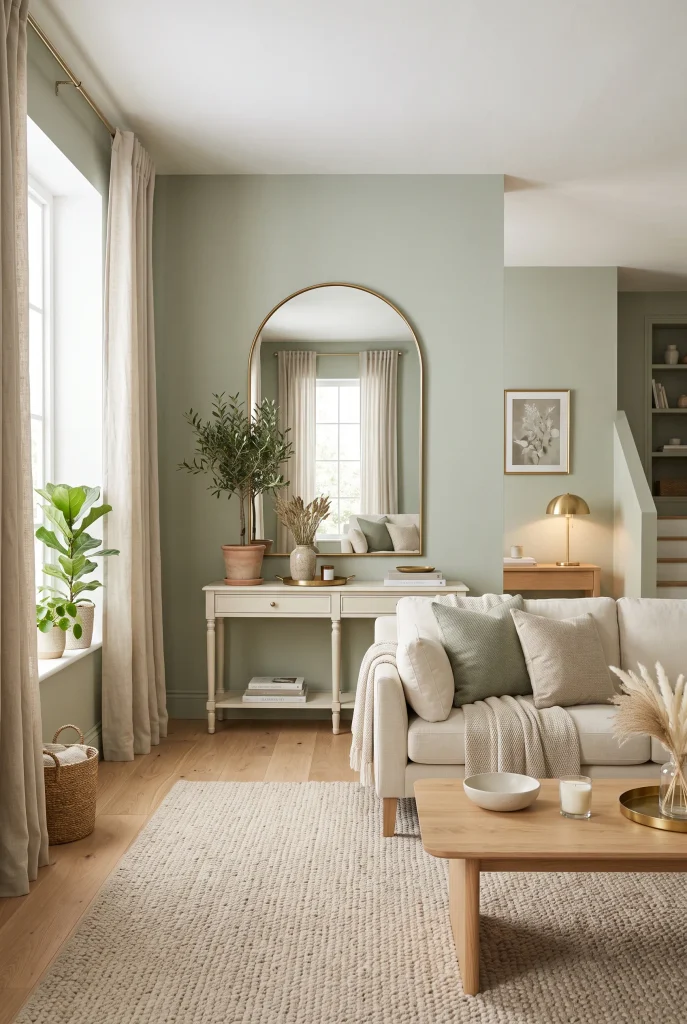
- A large mirror makes the room feel brighter and more open.
- Arched shapes soften the straight lines of furniture.
- Reflected daylight helps muted sage tones feel fresher.
- A simple frame keeps the feature elegant rather than busy.
An oversized wall mirror can make a sage living room feel brighter while adding an elegant focal point. Position a large arched or rectangular mirror opposite a window so it reflects natural daylight and visually expands the space. Choose a slim black, brass, or natural wood frame depending on the room’s existing finishes. Keep the area around it relatively uncluttered so the reflection remains attractive. I’ve noticed that mirrors work especially well in smaller living rooms because they create the impression of additional depth without requiring more furniture or decorative objects.
The reflection matters just as much as the mirror itself, so avoid placing it opposite a cluttered shelf, television, or crowded corner. Instead, let it reflect greenery, artwork, a window, or a beautifully styled seating area. Hang the mirror securely at a comfortable viewing height and consider its proportions relative to the wall. A large design can visually anchor a narrow console or empty wall. Combined with sage walls, cream upholstery, warm wood, and soft textiles, the mirror adds brightness and dimension while keeping the overall room calm and sophisticated.
23. Cozy Reading Nook
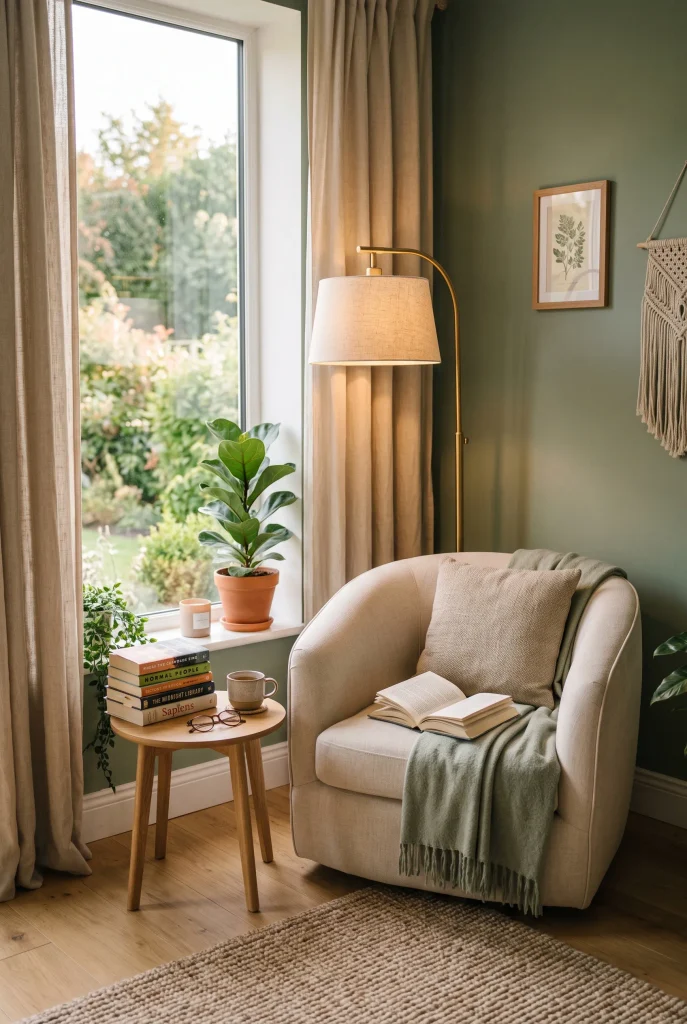
- A reading nook gives an unused corner a clear purpose.
- A comfortable chair adds function without filling the room.
- Warm lighting makes the corner useful after sunset.
- Books and a small plant provide simple personal touches.
A cozy reading nook can transform an overlooked corner of a sage living room into one of its most useful spaces. Place a comfortable cream or beige armchair near a window, then add a compact oak side table and warm reading lamp. Soft sage cushions can connect the nook to the rest of the room without making it feel overly coordinated. Keep the styling simple with a few favorite books and one small plant. In my experience, giving an empty corner a specific function makes a living room feel more thoughtfully planned while adding comfort without requiring major furniture changes.
Pay attention to lighting and circulation when creating the nook. Position the chair where daylight can reach it during the day, but add a dedicated lamp for evening reading. A small round table is usually enough for a book, cup, or decorative object without taking up unnecessary floor space. If the corner feels visually separate, repeat a nearby material such as oak, linen, or woven texture. The finished area becomes a welcoming retreat that adds personality to the room while making the overall layout feel more complete, practical, and comfortable.
24. Cane Furniture Details
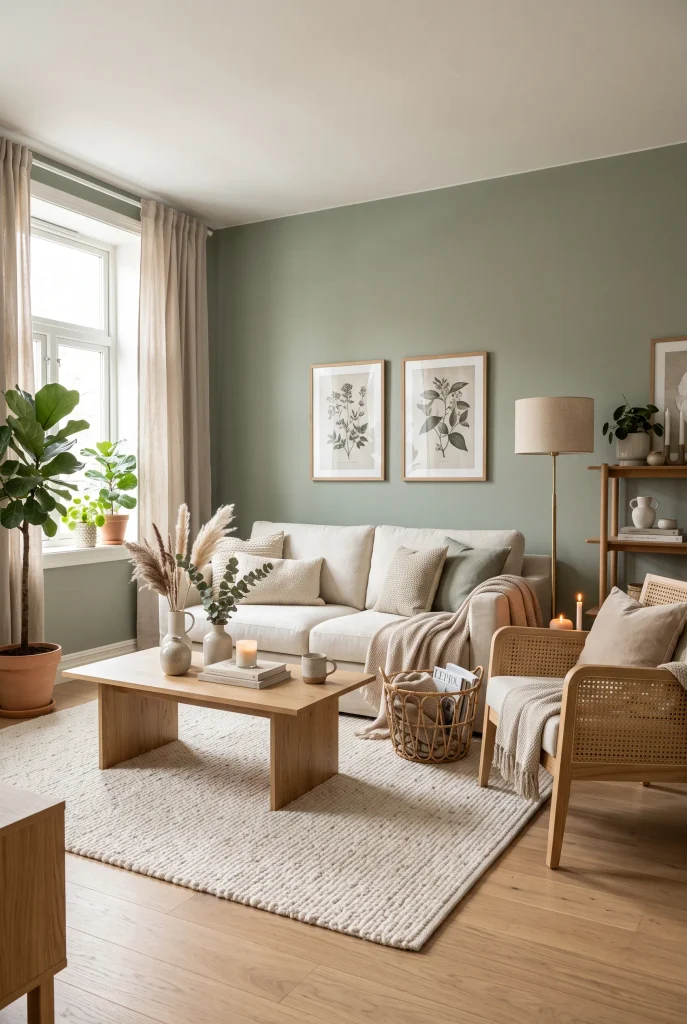
- Cane furniture adds natural texture and visual warmth.
- Its open weave keeps the room feeling light and airy.
- A single cane chair can soften a heavier furniture arrangement.
- Woven accessories can repeat the texture throughout the space.
Cane furniture brings an effortless natural texture to a sage green living room while keeping the overall look light and relaxed. A cane accent chair, side table, or storage cabinet can introduce warmth without adding another strong color. Its woven surface creates subtle visual interest against smooth walls and upholstery, making the room feel more layered. Pair it with cream seating, light oak, and beige textiles for a cohesive palette. I’ve noticed that cane works especially well when a room feels slightly too polished because its organic texture adds a casual, welcoming quality without making the space look unfinished.
You do not need several cane pieces to achieve the effect. One carefully chosen accent chair can become enough of a textural feature, especially when paired with a woven basket or natural-fiber accessories nearby. Keep the surrounding furniture relatively simple so the open weave remains visible and does not get lost among competing patterns. Add soft sage cushions and warm neutral throws to connect the furniture with the rest of the room. The result is an airy, comfortable setting that feels inspired by nature while remaining practical, stylish, and easy to update as your decorating preferences evolve.
25. Soft Ambient Lighting
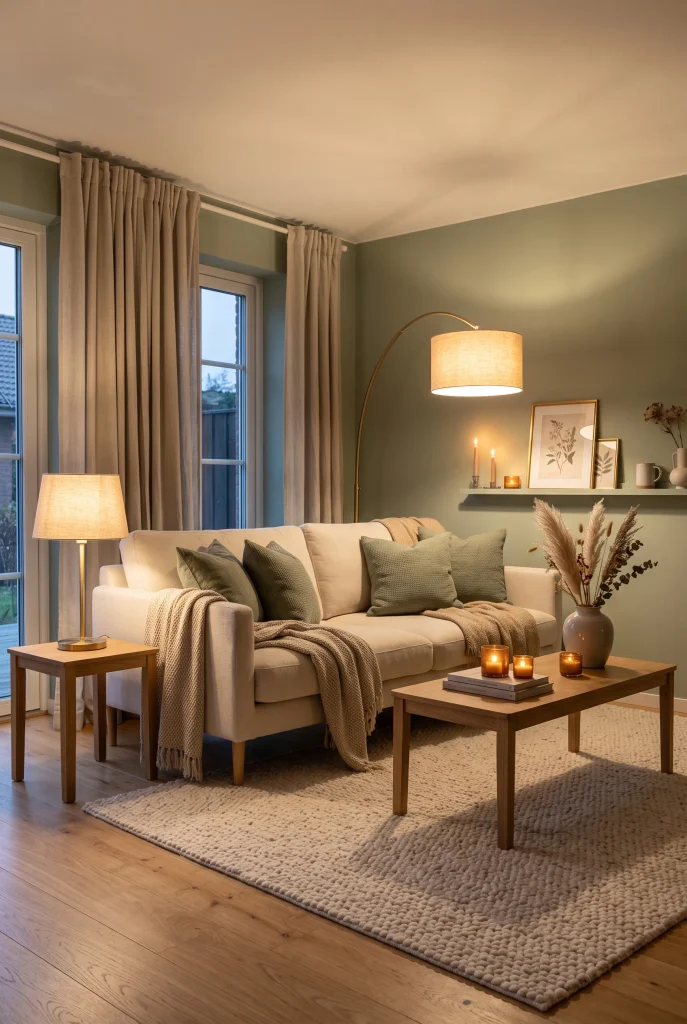
- Layered lighting makes sage tones feel warmer after sunset.
- Table lamps create cozy pools of light around seating.
- Floor lamps provide useful illumination without harsh overhead brightness.
- Warm bulbs help natural textures and neutral fabrics look richer.
Soft ambient lighting can completely change the mood of a sage green living room once the sun goes down. Instead of relying on one bright ceiling fixture, layer table lamps, floor lamps, wall lights, and subtle accent lighting throughout the space. Warm bulbs create a gentle glow that brings out the earthy qualities of sage while making cream upholstery and natural wood feel richer. In my experience, layered lighting is one of the easiest ways to make a room feel more comfortable because it allows you to create different levels of brightness for relaxing, reading, or entertaining.
Start with practical lighting near the main seating area, then add smaller sources around the room to eliminate dark corners. A brass table lamp can warm a side table, while an arched floor lamp can illuminate a reading chair. Keep the light sources at different heights so the room has visual depth instead of an even wash of brightness. Choose warm, soft bulbs rather than overly cool white light. Combined with sage walls, textured rugs, linen curtains, and natural wood, this lighting approach creates an inviting evening atmosphere that feels polished without sacrificing everyday comfort.
Conclusion
Sage green can completely transform a living room when it is balanced with the right textures, materials, furniture, and lighting. From soft curtains and natural wood to gallery walls, cozy reading corners, and elegant brass accents, these sage green living room ideas offer plenty of ways to create a space that feels personal and inviting. You do not need to change everything at once; even one thoughtful update can make a noticeable difference. Save this post on Pinterest for your next decorating project, try your favorite idea at home, and share it with someone looking for fresh living room inspiration. Your cozy, beautiful space can start with one simple change.