17 Moody Farmhouse Kitchen Ideas You’ll Love to Try
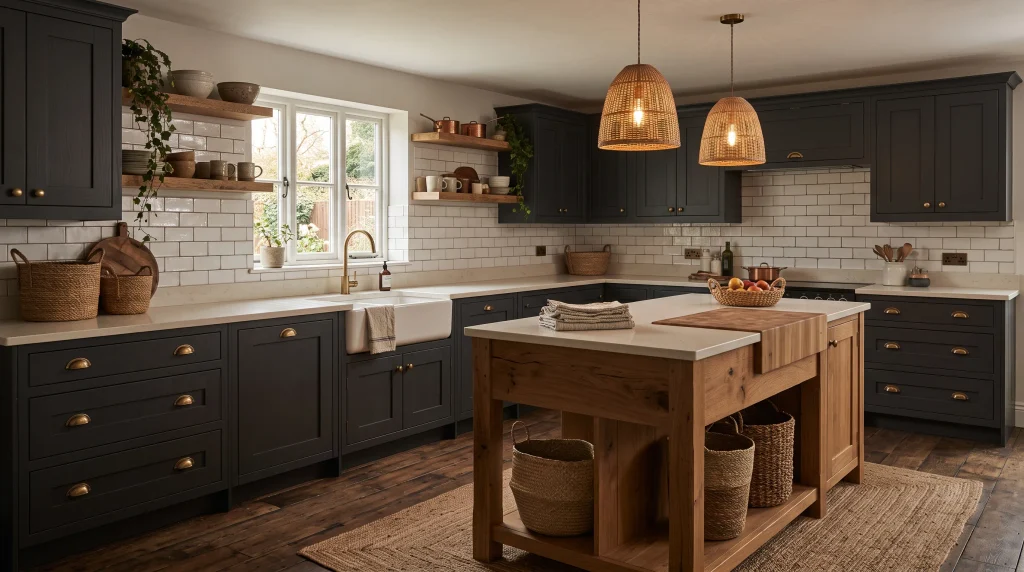
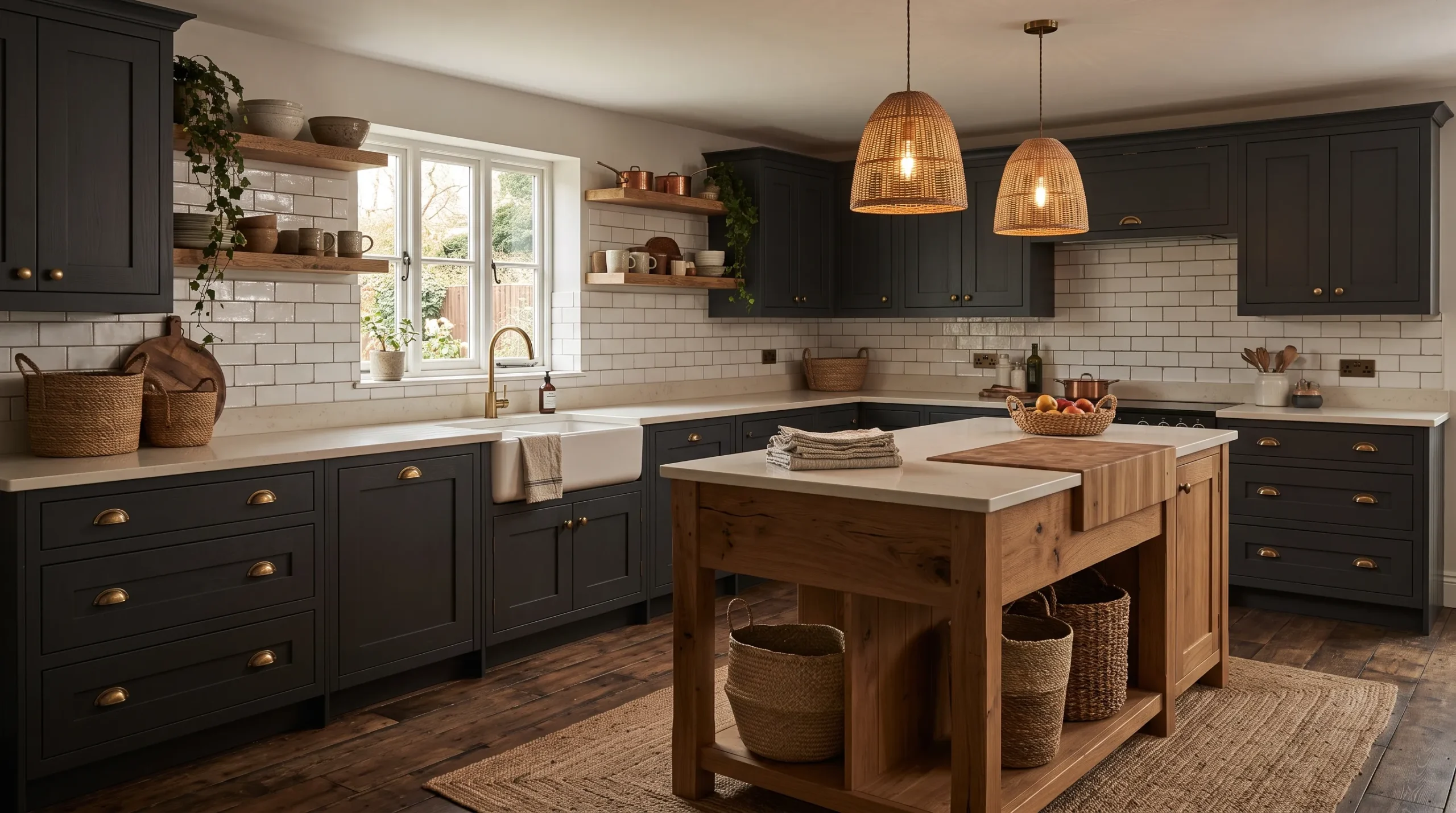
A dark kitchen can feel incredibly cozy when the right details are working together. A moody farmhouse kitchen blends rich colors, natural textures, and warm lighting to create a space that feels both timeless and inviting.
If your kitchen feels too plain, bright, or lacking personality, these ideas can help you add depth without making the room feel gloomy. Think charcoal cabinetry, warm wood islands, antique brass accents, rustic shelving, textured backsplashes, and soft layered lighting. Each idea is designed to bring more character while keeping the kitchen practical for everyday life. In my experience, even one thoughtful change—such as switching cabinet hardware or adding warmer lighting—can completely shift the atmosphere. Explore these 17 ideas for inspiration, then choose the details that best fit your home and style.
1. Charcoal Cabinetry
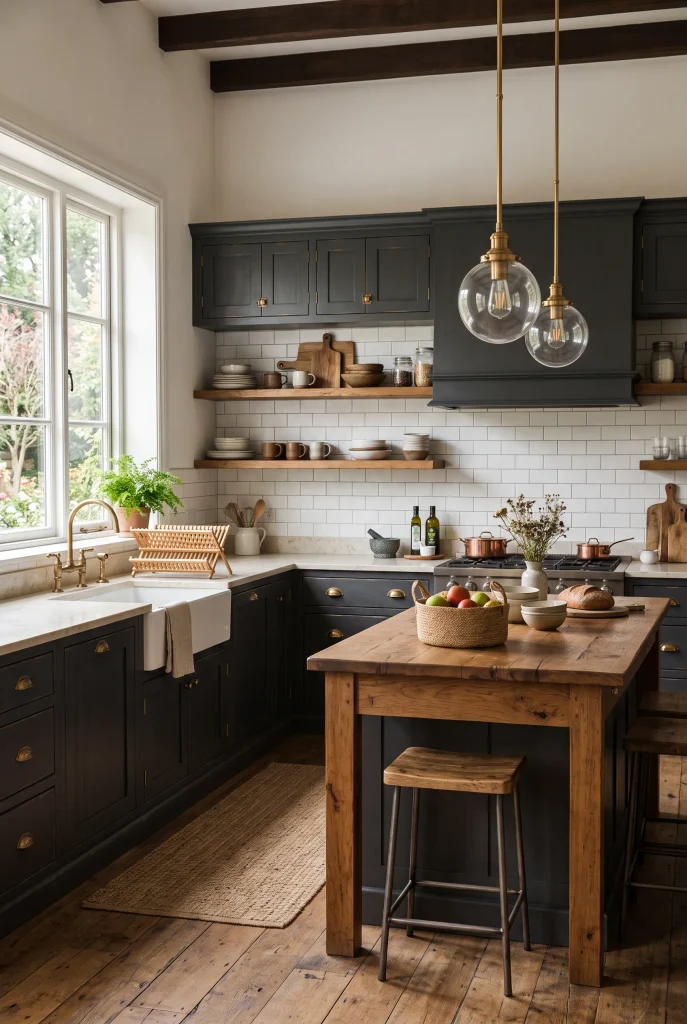
- Deep charcoal cabinets create instant drama without making the kitchen feel overly dark.
- Pair the cabinets with warm wood to soften the overall look.
- Brushed brass hardware adds a subtle farmhouse-inspired contrast.
- Keep surrounding surfaces lighter so the cabinetry remains the visual anchor.
Dark cabinetry can completely change the personality of a kitchen, especially when you want a space that feels cozy rather than overly bright. A rich charcoal finish gives traditional farmhouse cabinetry a more sophisticated edge while preserving its familiar, timeless shape. Choose simple shaker doors, then balance them with warm wood, creamy counters, or aged metal details. In my experience, charcoal works especially well when natural light enters from one side because the changing daylight creates subtle depth across the cabinet fronts. The result feels grounded, welcoming, and visually rich without becoming gloomy or heavy.
The secret is contrast, not brightness everywhere. Keep countertops and backsplash materials moderately light so the dark cabinetry has room to stand out. Warm oak shelves, a butcher-block island, or woven baskets can introduce softer textures that make the room feel lived-in. Matte black fixtures can reinforce the dramatic palette, while brass hardware adds a gentle glow. For smaller kitchens, consider using charcoal on the lower cabinets and a lighter shade above. This keeps the room visually open while still delivering the cozy character people expect from a moody farmhouse kitchen.
2. Warm Wood Island
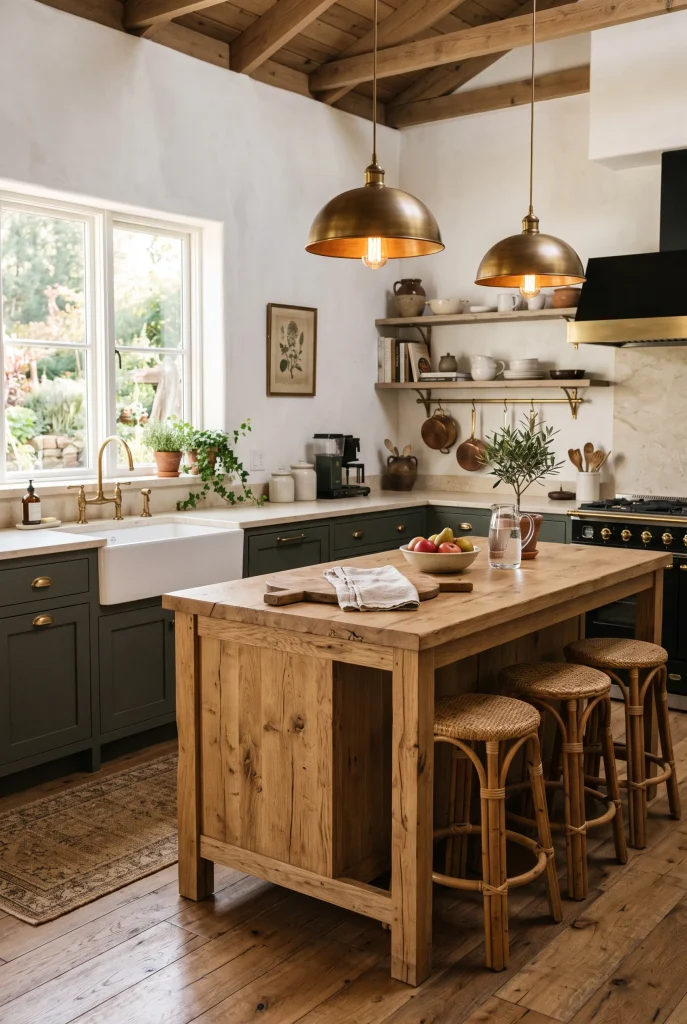
- A natural wood island instantly softens darker kitchen finishes.
- Visible grain brings warmth and farmhouse character into the room.
- Choose a substantial island for a strong visual centerpiece.
- A simple countertop keeps the wood feeling authentic rather than overly polished.
Few elements make a kitchen feel warmer than a beautifully aged wood island. Against darker cabinetry, natural timber creates a welcoming focal point while adding the relaxed character associated with classic farmhouse interiors. Look for oak, walnut, or reclaimed wood with visible grain instead of perfectly uniform finishes. A thick countertop edge can make the island feel substantial and handcrafted. I’ve noticed that natural wood also helps prevent darker kitchens from feeling visually cold, particularly when the room includes stone, metal, or painted cabinetry. The combination creates contrast while keeping the overall atmosphere comfortable and approachable.
For the best balance, let the island become the warmest element without making everything else match it exactly. Pair it with muted cabinet colors such as charcoal, olive, deep taupe, or smoky blue. Creamy countertops and aged brass hardware can bridge the two finishes beautifully. If your kitchen is compact, a smaller wood island or butcher-block worktable can provide the same effect without overwhelming the floor plan. Add simple counter stools, a ceramic bowl, or a small vase of greenery to make the island feel useful and naturally styled rather than staged.
3. Olive Green Cabinets
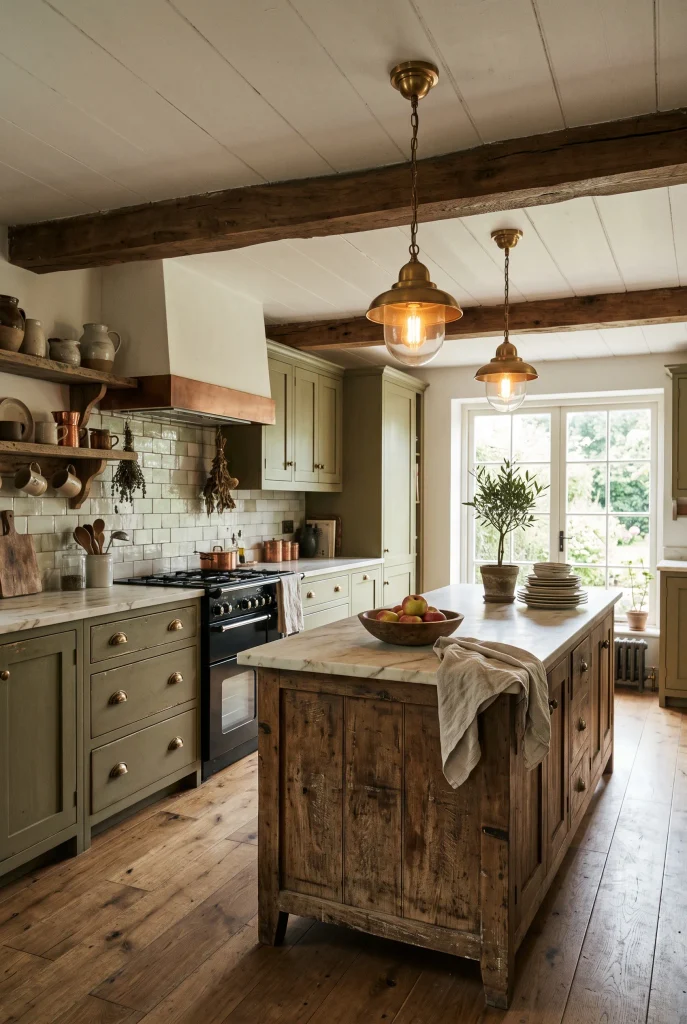
- Muted olive green adds color while maintaining a calm, earthy atmosphere.
- Pair green cabinetry with warm woods for an inviting farmhouse balance.
- Cream-colored surfaces keep the palette from becoming too heavy.
- Antique brass hardware gives the cabinets a softly aged finish.
Olive green cabinetry brings an earthy richness that feels especially natural in farmhouse kitchens. Unlike brighter greens, a muted olive shade has enough depth to create a dramatic backdrop while remaining relaxed and timeless. It looks beautiful beside warm oak, aged brass, cream stone, and handmade ceramic surfaces. This color is also versatile enough to work with both traditional and modern farmhouse details. In my experience, olive becomes particularly striking when natural daylight hits the cabinet doors, revealing subtle undertones that change throughout the day. That gentle variation gives the kitchen more dimension and personality.
To keep the palette balanced, avoid surrounding olive cabinets with too many equally dark finishes. Creamy backsplash tiles, pale countertops, and natural wood can provide enough contrast without making the room feel stark. Consider using brass knobs or cup pulls for a vintage touch, then repeat the metal subtly through lighting or faucets. Open shelves can display neutral pottery and wooden boards, adding practical storage while breaking up large cabinet surfaces. The finished space feels moody, grounded, and welcoming, with enough warmth to make everyday cooking, coffee mornings, and family gatherings feel naturally comfortable.
4. Antique Brass Accents
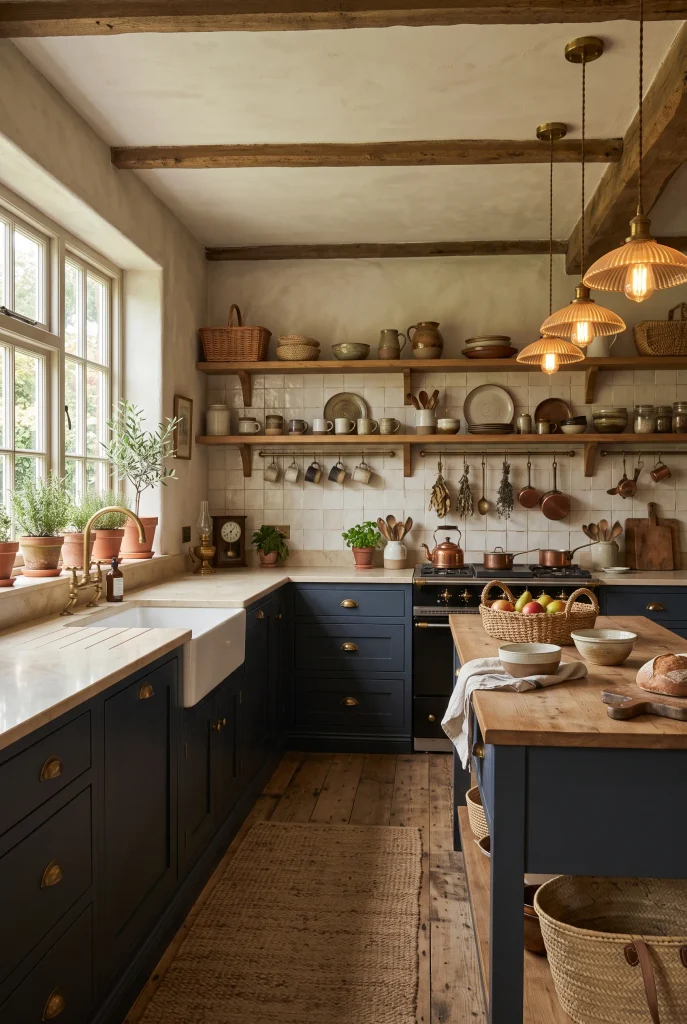
- Antique brass adds warmth against deeper cabinet colors.
- Small hardware changes can create a surprisingly noticeable upgrade.
- Repeat the finish through faucets, lighting, or shelf brackets for cohesion.
- Aged finishes work beautifully with rustic farmhouse textures.
A few warm metal details can completely change the mood of a darker kitchen. Antique brass hardware introduces a soft golden glow that contrasts beautifully with charcoal, navy, olive, or deep brown cabinetry. Instead of looking flashy, aged brass feels collected and slightly vintage, which makes it a natural match for farmhouse interiors. Choose cup pulls, knobs, or simple handles with an intentionally worn finish. The effect becomes even stronger when the same metal appears on the faucet or pendant lights. I’ve noticed that repeating one warm metal finish helps darker kitchens feel thoughtfully designed rather than randomly decorated.
You do not need to replace every fixture to create this look. Start with cabinet hardware, then add one or two coordinating details where they make sense. A brass faucet above a farmhouse sink can become a subtle focal point, while aged brass pendants can bring warmth higher into the room. Keep the surrounding finishes understated with creamy tile, natural wood, and simple ceramics. This approach works especially well in kitchens that already have strong architectural character because the hardware enhances existing details instead of competing with them. The finished space feels cozy, practical, and beautifully lived-in.
5. Deep Blue Cabinetry
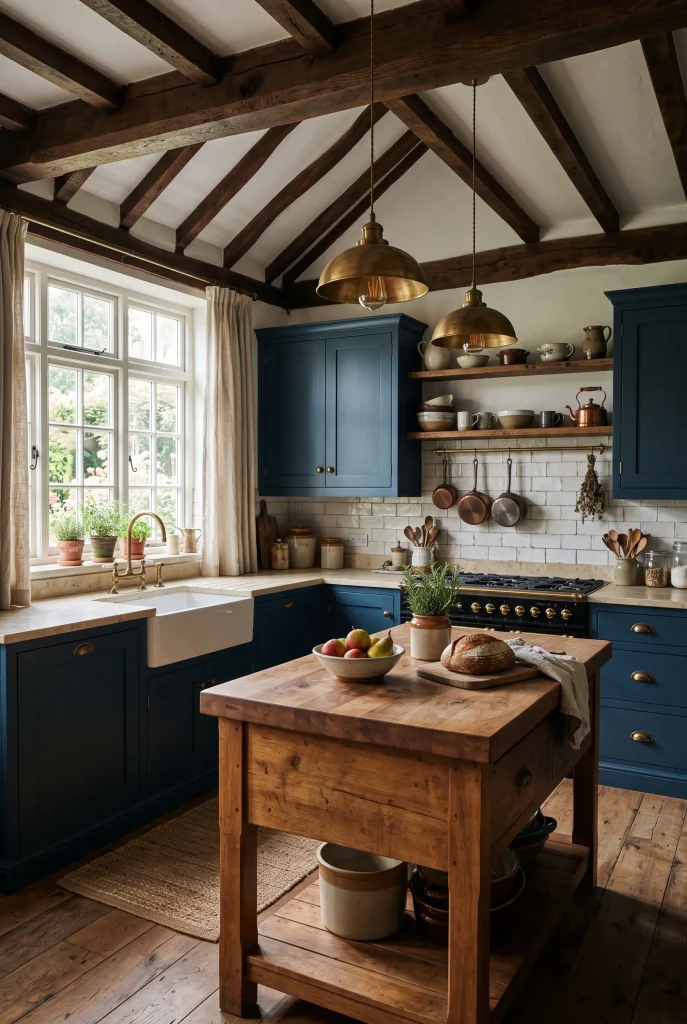
- Deep blue creates drama while still feeling calm and classic.
- Warm wood prevents the darker color from feeling too formal.
- Creamy surfaces provide essential visual contrast.
- Use simple farmhouse hardware to keep the cabinetry timeless.
Deep blue cabinetry gives a farmhouse kitchen a sophisticated mood without losing its welcoming character. Shades such as navy, ink blue, and smoky blue work especially well with natural wood and warm neutral materials. The color feels rich during the evening but can look surprisingly fresh in daylight when paired with creamy countertops and a pale backsplash. Shaker-style doors keep the design familiar and approachable, while simple brass or aged bronze hardware adds subtle character. In my experience, deep blue is particularly effective when you want a dramatic kitchen that still feels comfortable enough for everyday family life.
Balance is important when working with a dark blue palette. Rather than making every surface equally deep, introduce lighter elements through countertops, walls, flooring, or open shelving. A warm butcher-block island can soften the cabinetry, while woven stools and linen textiles add texture without introducing competing colors. Natural greenery also looks striking against blue, especially near a window where daylight highlights the leaves. For smaller kitchens, consider using deep blue only on the lower cabinets or island. This keeps the room visually spacious while giving you the rich, atmospheric look you want.
View: 25 Sage Green Living Room Ideas You Need to See Now
6. Rustic Open Shelving
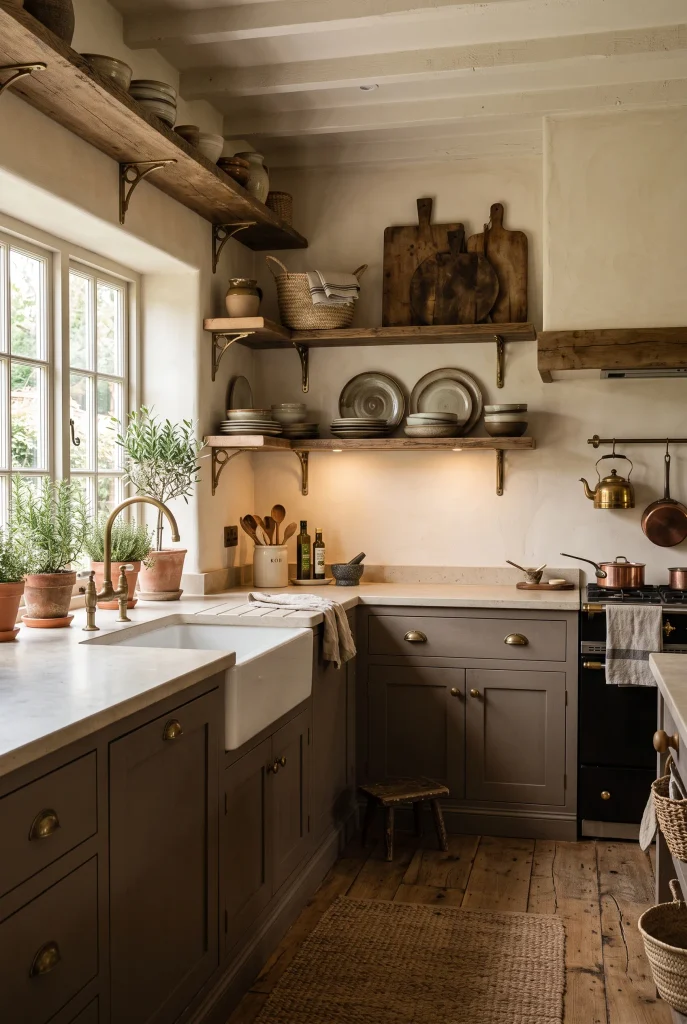
- Reclaimed wood shelves introduce warmth and natural texture.
- Open storage breaks up large areas of dark cabinetry.
- Display everyday ceramics for practical farmhouse character.
- Warm shelf lighting makes the kitchen feel especially inviting after sunset.
Open shelving can make a darker kitchen feel lighter, more relaxed, and more personal. Reclaimed or naturally finished wood adds texture against painted cabinets while giving you space to display pieces you actually use. Stack neutral plates, lean wooden cutting boards against the wall, or add a few handmade ceramic bowls for an effortless farmhouse arrangement. The key is keeping the display useful rather than overcrowded. I’ve seen this work especially well in kitchens where large cabinet runs feel visually heavy because the open shelves create breathing room and introduce a softer, more varied rhythm.
For a polished result, install two or three sturdy shelves rather than filling an entire wall. Choose wood with visible grain and imperfections because those details reinforce the rustic character. Keep displayed items within a limited palette of cream, brown, black, and muted earthy tones so the shelves look intentional. Under-shelf lighting can add another layer of warmth in the evening, while small plants bring freshness during the day. This combination gives the room practical storage and decorative personality without sacrificing the cozy, understated atmosphere that defines a moody farmhouse kitchen.
7. Dramatic Range Hood
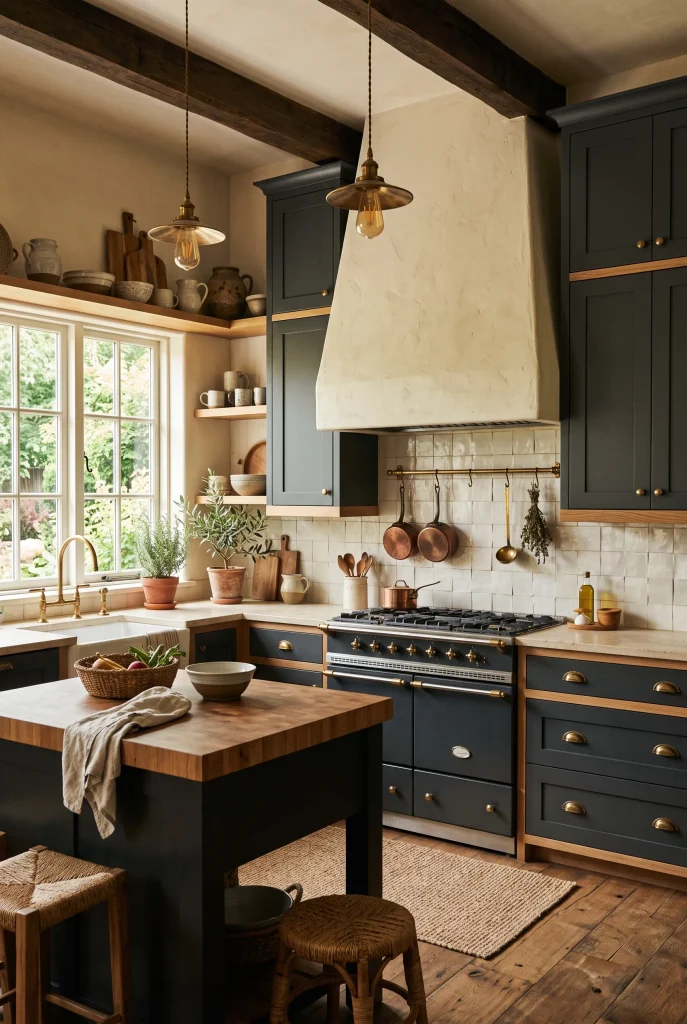
- A statement hood gives the cooking area a strong architectural focal point.
- Light plaster creates contrast against darker cabinetry.
- Simple surrounding finishes keep the hood visually dominant.
- Natural imperfections make the feature feel authentically farmhouse.
A dramatic range hood can turn an ordinary cooking wall into the defining feature of the kitchen. A softly curved plaster hood feels especially beautiful against deep cabinetry because its lighter surface creates immediate contrast without introducing a harsh modern element. Keep the shape simple, with gentle curves or a slightly tapered profile that feels connected to traditional farmhouse architecture. In my experience, a statement hood works best when the surrounding cabinetry stays relatively understated. This allows the hood to become the visual anchor while still leaving enough room for practical storage, counters, and everyday kitchen activity.
The material matters just as much as the shape. Smooth plaster creates a refined appearance, while limewash or lightly textured finishes introduce subtle imperfections that feel warm and handmade. Pair the hood with creamy stone counters, natural wood accents, and aged brass hardware for a cohesive palette. Avoid adding too many decorative elements around the cooking area because the hood should remain the main attraction. Even in a compact kitchen, a carefully proportioned hood can create a custom-built feeling. The result is atmospheric, timeless, and practical rather than overly decorated or difficult to maintain.
8. Black Farmhouse Sink
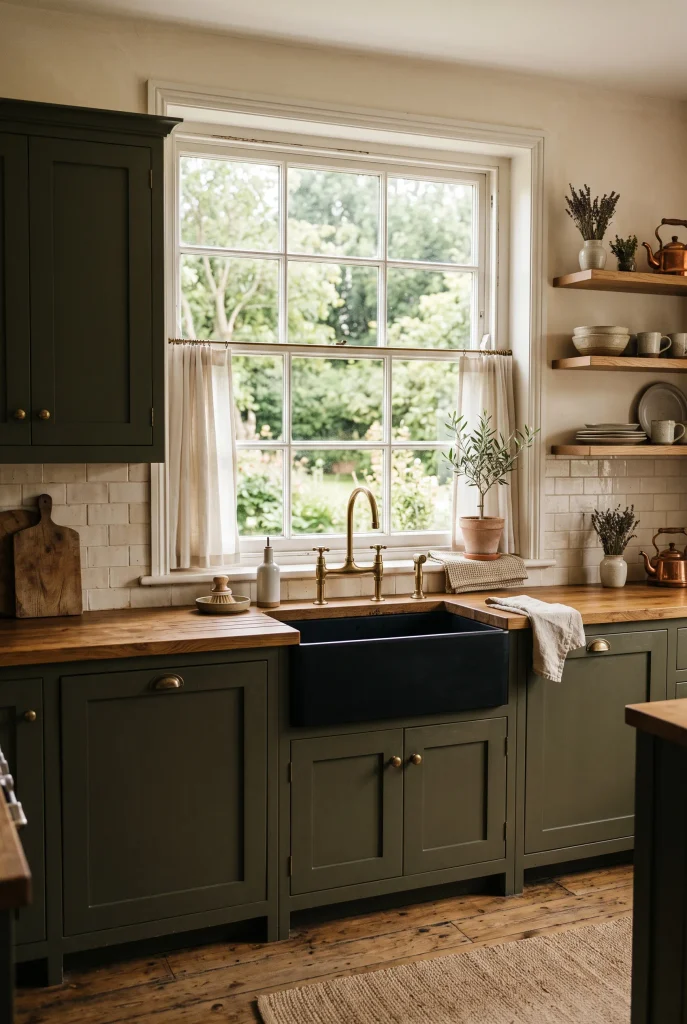
- A black apron-front sink creates a bold focal point.
- Matte finishes hide small everyday marks better than glossy surfaces.
- Pair it with warm metal hardware for visual balance.
- Keep nearby counters uncluttered so the sink remains prominent.
A farmhouse sink does not have to be white to make an impact. A matte black apron-front sink brings a dramatic, grounded element to the kitchen while maintaining the familiar farmhouse silhouette. Its deep color works beautifully with olive, cream, charcoal, and natural wood finishes. Because the sink sits prominently at the front of the cabinetry, it naturally becomes part of the room’s visual composition. I’ve noticed that black fixtures can also make a kitchen feel more intentional when repeated sparingly through lighting, hardware, or small accessories rather than scattered throughout every surface.
Functionally, the deep basin remains one of the most useful features for busy kitchens. Large pots, baking trays, and everyday dishes have more room to sit comfortably while you work. For a balanced look, pair the sink with a warm brass or aged bronze faucet rather than matching everything in black. A nearby window can provide natural contrast, while simple linen curtains soften the harder materials. Add a wooden cutting board or ceramic utensil holder nearby, but avoid overcrowding the counter. The finished space feels practical, moody, and distinctly farmhouse.
9. Vintage Pendant Lighting
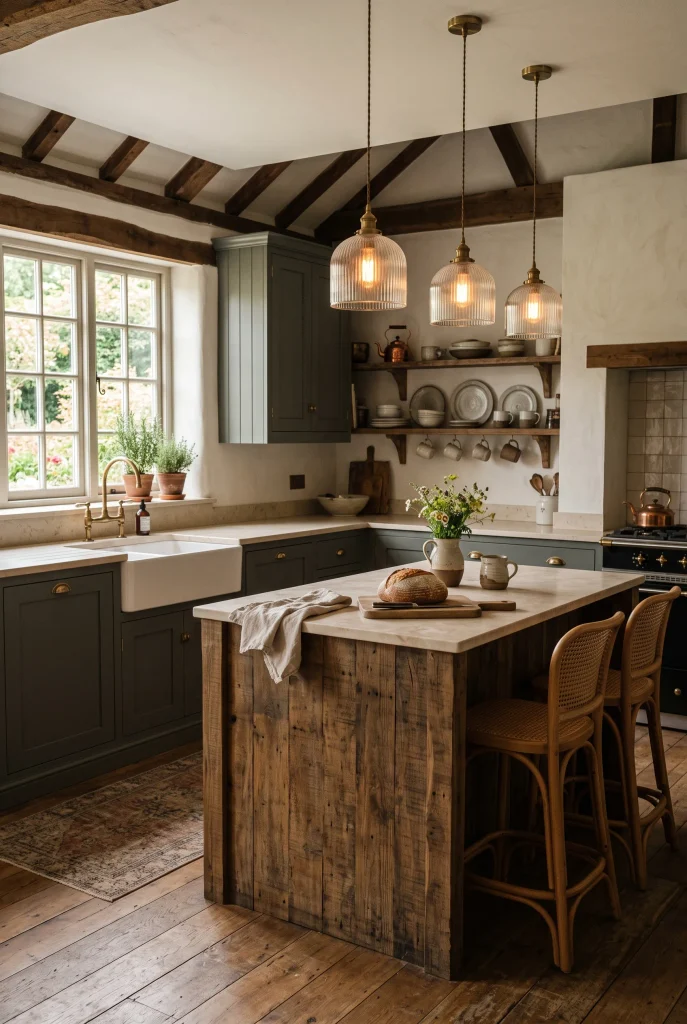
- Vintage pendants add character without requiring major renovations.
- Clear or aged glass helps preserve visual openness.
- Warm bulbs make darker finishes feel richer at night.
- Hang pendants evenly above the island for balanced illumination.
Lighting can completely change how a dark kitchen looks after sunset. Vintage pendant fixtures add warmth, personality, and a soft architectural detail above an island or breakfast counter. Look for aged brass, antique bronze, ribbed glass, or simple metal shades that complement the farmhouse aesthetic without appearing overly themed. Warm bulbs are especially important because cool white lighting can make deep cabinet colors feel flat. In my experience, layered lighting makes the biggest difference: pendants provide focused illumination while ceiling fixtures, under-cabinet lights, or wall sconces keep the rest of the room comfortably visible.
Choose pendant sizes according to the island rather than simply selecting fixtures based on appearance. Three smaller pendants can create a balanced rhythm over a long island, while two larger fixtures may work better above a compact surface. Leave enough visual space between each fixture so the arrangement feels intentional. Warm wood, aged metal, and textured glass help reinforce the cozy atmosphere, while creamy countertops prevent the room from becoming too dark. The final effect is intimate and welcoming, making evening meals, casual conversations, and quiet kitchen tasks feel more inviting.
10. Moody Tile Backsplash
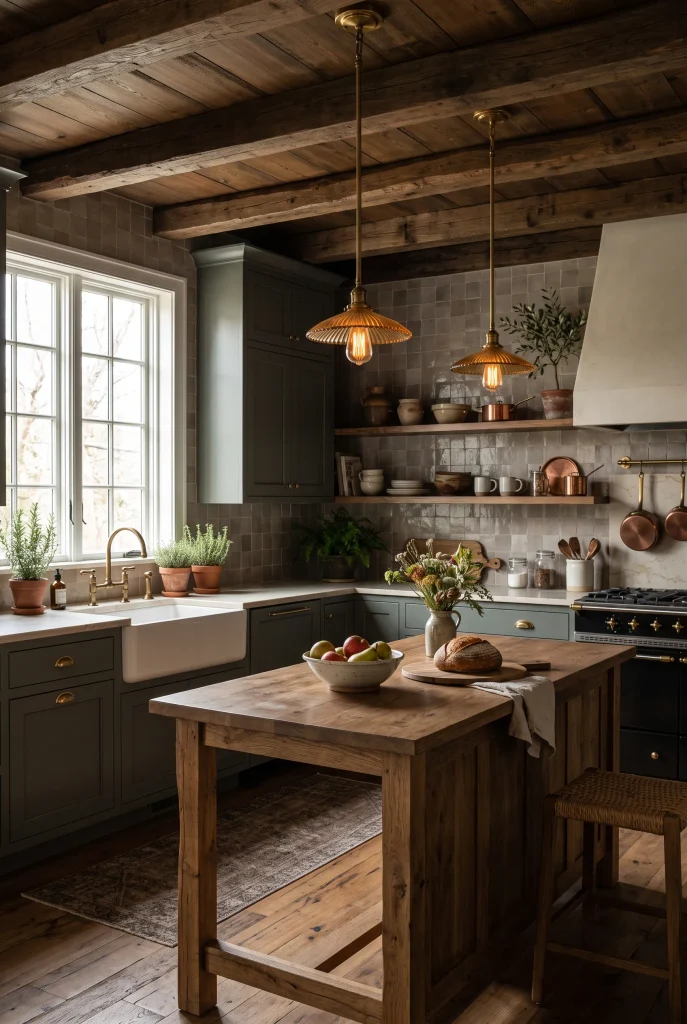
- Handmade tile adds texture without overwhelming the darker palette.
- Muted earthy tones create depth while keeping the backsplash approachable.
- Irregular surfaces bring authentic farmhouse character.
- Choose a simple tile pattern so the room stays visually calm.
A textured backsplash can give a darker kitchen an entirely different level of depth. Handmade tiles with smoky, earthy tones work beautifully because their slight color variations catch both daylight and warm evening illumination. Instead of looking perfectly uniform, the surface feels collected and handcrafted, which complements traditional farmhouse materials. Choose muted taupe, mushroom, clay, or soft gray rather than an extremely dark tile. This keeps the backsplash atmospheric without making the cooking area feel closed in. I’ve noticed that subtle texture often makes a bigger visual difference than adding more decorative accessories.
Keep the tile installation simple so the material itself remains the feature. A classic stacked arrangement, simple running bond, or lightly irregular layout can provide enough visual interest without competing with cabinetry. Pair it with warm wood and aged metal to create a cohesive palette. If your kitchen receives limited daylight, slightly lighter tiles can reflect more light while still maintaining the moody aesthetic. Under-cabinet lighting is another practical addition because it highlights the tile texture at night. The result is a kitchen that feels layered, warm, handcrafted, and easy to live with.
11. Reclaimed Wood Beams
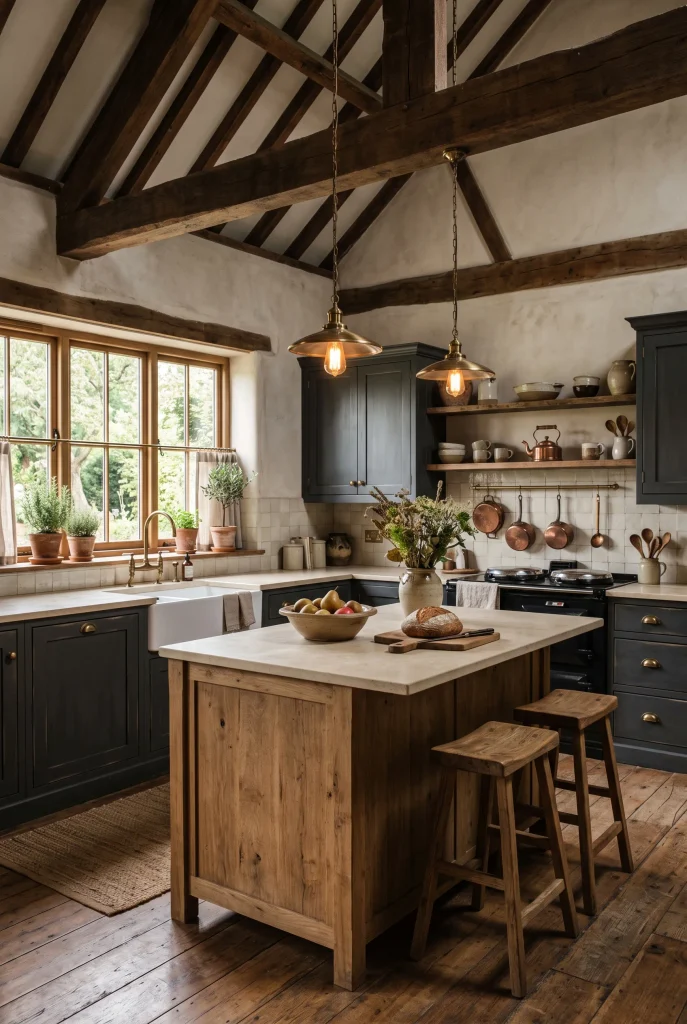
- Reclaimed beams instantly strengthen farmhouse character.
- Natural wood breaks up large areas of darker color.
- Existing architectural details can become beautiful focal points.
- Use warm wood tones to complement rather than compete with cabinetry.
Exposed wood beams bring architectural warmth that painted surfaces simply cannot replicate. In a kitchen with darker cabinets, reclaimed timber creates a strong natural contrast while reinforcing the relaxed character of farmhouse design. The irregular grain, knots, and aged surface give the ceiling a sense of history without requiring decorative clutter. If your home already has original beams, consider highlighting them rather than covering them. In my experience, authentic architectural details often make a space feel more convincing because they provide character that new accessories cannot easily reproduce.
You can also create a similar effect with carefully selected faux beams when structural timber is not available. Choose a finish that looks naturally aged rather than overly orange or glossy. Keep the rest of the ceiling relatively simple so the beams remain visible and impactful. Their warm tones can be repeated through an island, shelves, stools, or cutting boards to connect the upper and lower parts of the room. Combined with dark cabinetry and soft lighting, the ceiling detail creates depth and makes the kitchen feel established, comfortable, and thoughtfully designed.
12. Farmhouse Brick Wall
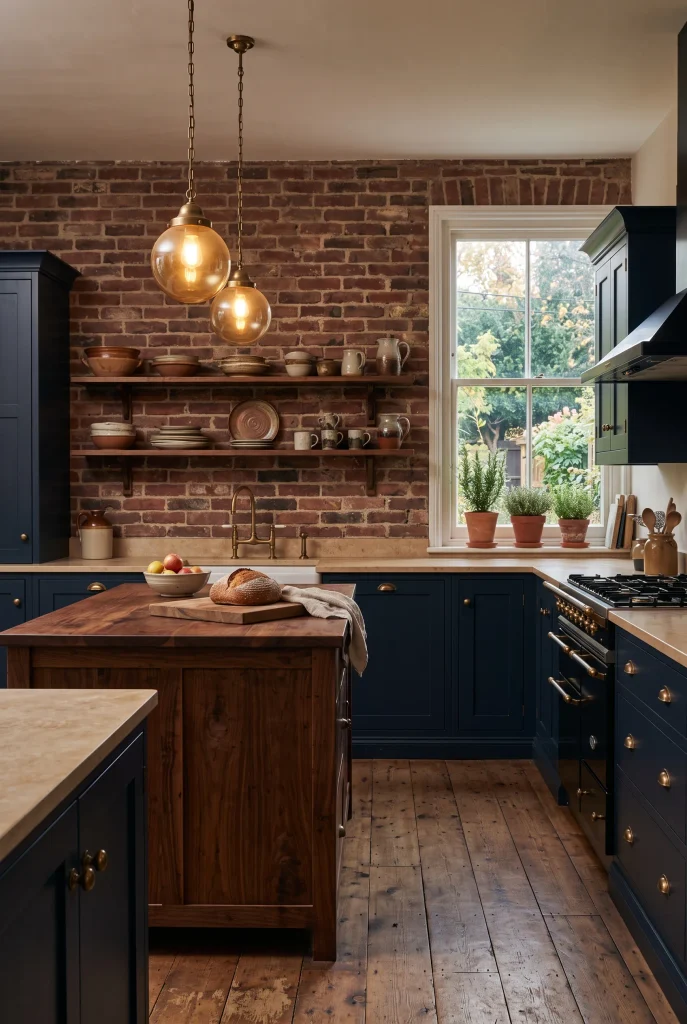
- Exposed brick introduces authentic texture and visual warmth.
- A single accent wall creates impact without overwhelming the kitchen.
- Aged brick pairs naturally with wood and antique metals.
- Seal porous surfaces properly for easier long-term maintenance.
An exposed brick wall can instantly give a farmhouse kitchen more texture and architectural personality. Weathered red, brown, or muted painted brick works especially well beside deep cabinetry because its uneven surface creates visual movement without relying on bold patterns. The combination feels relaxed and established, particularly when paired with natural wood and aged metal. Rather than covering every wall, consider using brick on one backsplash area or an architectural section. I’ve seen this approach work beautifully because the texture becomes a focal point while the rest of the kitchen remains clean and functional.
For a softer appearance, limewashed or lightly painted brick can reduce the intensity of traditional red tones while preserving the texture underneath. This is useful when your kitchen already contains several dark finishes. Keep countertops simple and choose warm lighting that emphasizes the brick’s natural variations after sunset. Because real brick can be porous, proper sealing is important in areas exposed to cooking splashes or moisture. Add restrained accessories such as wooden boards, neutral ceramics, and greenery to complete the look without hiding the wall’s natural character.
13. Dark Wood Flooring
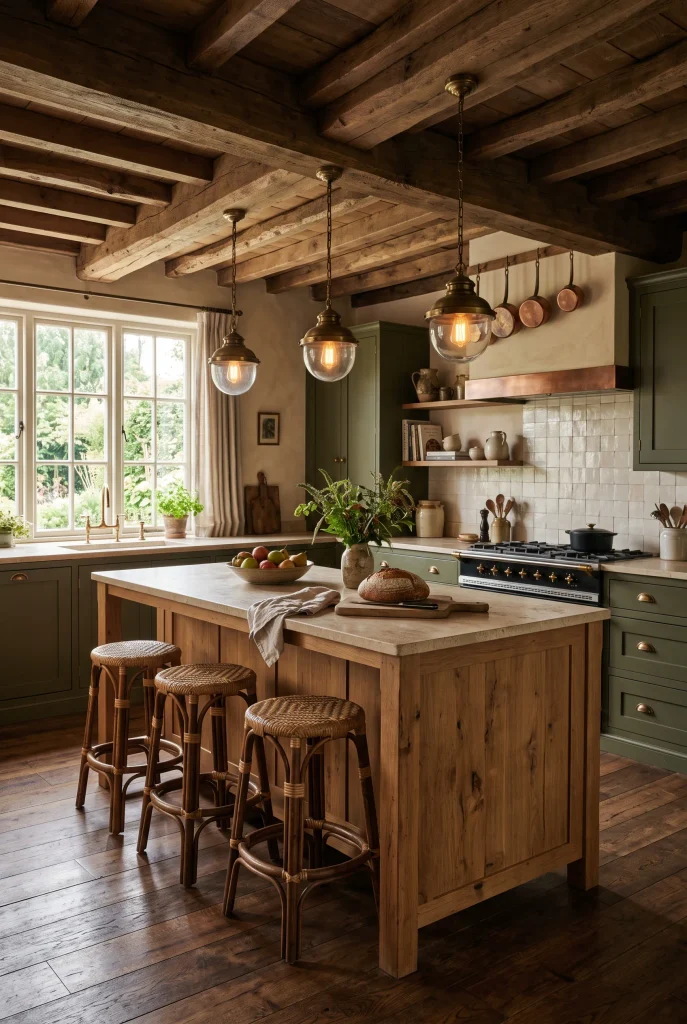
- Dark flooring grounds the entire kitchen with a rich, earthy foundation.
- Natural wood grain prevents the space from feeling flat.
- Lighter cabinets and counters create useful visual contrast.
- Matte finishes work especially well with rustic farmhouse textures.
Dark wood flooring can make a kitchen feel instantly grounded and substantial. Rich oak, walnut, or weathered timber creates a warm foundation that works beautifully with deeper cabinetry and traditional farmhouse details. The visible grain adds natural movement beneath the room, helping painted cabinets feel less heavy. Choose a matte or low-sheen finish because excessive shine can make rustic materials look less authentic. In my experience, darker flooring is particularly effective in larger kitchens where there is enough natural light to balance the deeper tone and maintain a comfortable sense of openness.
The key is coordinating the floor with the room rather than matching every wood element exactly. A slightly lighter island, reclaimed shelves, or wooden stools can create attractive variation while keeping the palette cohesive. If the kitchen receives limited sunlight, choose medium-dark wood with warm undertones instead of an extremely espresso finish. Area rugs near the sink or island can soften the surface and provide extra comfort during long cooking sessions. Combined with creamy countertops, muted cabinetry, and warm lighting, dark wood flooring creates a timeless foundation that feels cozy without appearing overly rustic.
14. Cozy Breakfast Nook
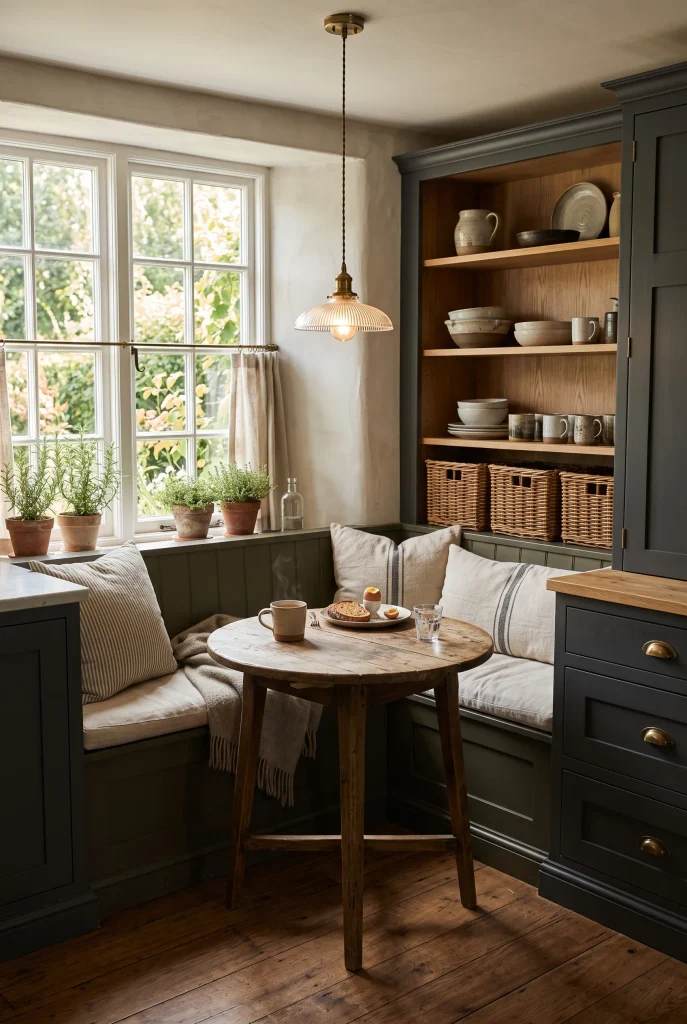
- A breakfast nook makes unused corners more functional.
- Built-in seating saves valuable floor space.
- Soft textiles balance darker cabinetry and hard surfaces.
- A round table makes movement easier in compact layouts.
A small breakfast nook can add some of the most useful charm to a farmhouse kitchen. A built-in bench tucked beside a window creates a comfortable place for morning coffee, quick meals, homework, or casual conversations. Dark cabinetry can frame the nook beautifully, while cream cushions and natural wood keep the seating area soft and inviting. If space is limited, a round table is often easier to navigate than a rectangular one because there are fewer sharp corners. I’ve noticed that these compact seating areas quickly become favorite everyday spots because they feel relaxed rather than formal.
Keep the nook visually connected to the rest of the kitchen by repeating one or two materials. A wooden table can echo the island, while brass lighting can coordinate with cabinet hardware. Use washable cushion covers when the area will be used frequently, especially in homes with children. A woven basket underneath the bench can provide practical storage for blankets, books, or kitchen essentials. Even a very small corner can become a meaningful part of the room when the furniture is properly scaled. The result is warm, efficient, and naturally suited to everyday farmhouse living.
15. Layered Warm Lighting
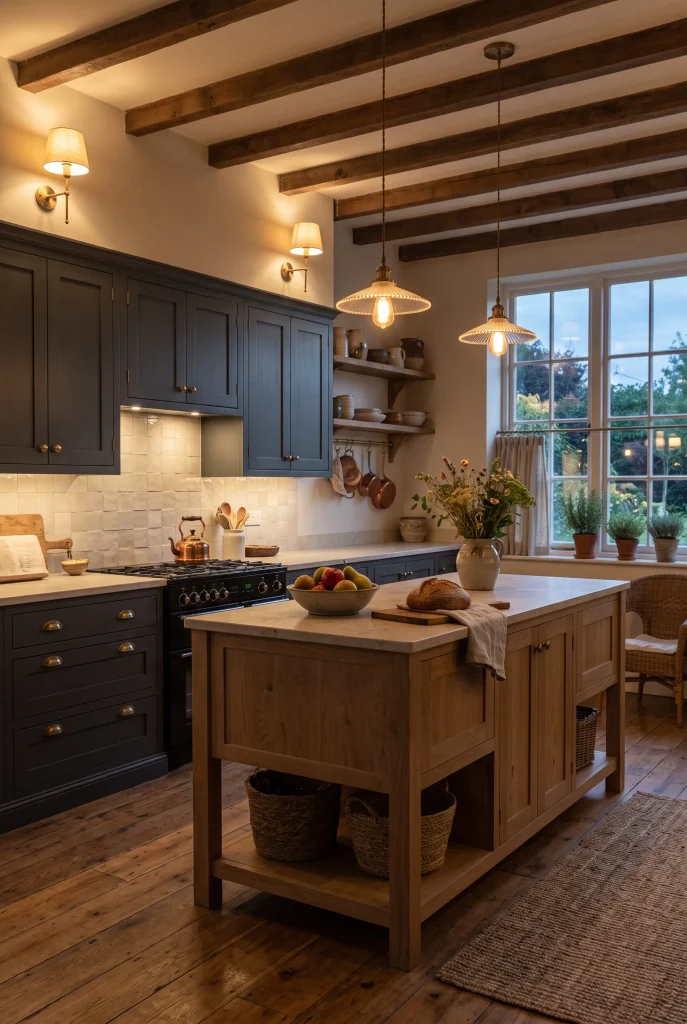
- Multiple light sources make darker finishes feel richer and more dimensional.
- Under-cabinet lighting improves visibility for everyday food preparation.
- Wall sconces add warmth without taking up counter space.
- Warm bulbs create a cozy evening atmosphere.
The right lighting can make a dramatic kitchen feel inviting instead of simply dark. Layering several warm light sources allows you to control the atmosphere throughout the day while making important work areas easier to use. Combine pendant lights above the island with under-cabinet illumination, ceiling fixtures, or wall sconces near the sink. Each source serves a different purpose, creating depth across cabinets, counters, walls, and architectural details. In my experience, this layered approach makes the biggest difference after sunset because it prevents the room from relying on one harsh overhead light.
Choose warm white bulbs for a softer appearance that complements wood, brass, stone, and painted cabinetry. Keep brighter task lighting focused around preparation areas while using lower-intensity fixtures elsewhere for ambiance. Dimmers are particularly useful because the same kitchen may need strong illumination during cooking and a softer glow during dinner. If you are updating an existing room, adding under-cabinet lights is one of the easiest improvements to consider. Together, these small lighting layers can make the kitchen feel more intimate, polished, and comfortable without changing its major finishes.
16. Farmhouse Pantry Storage
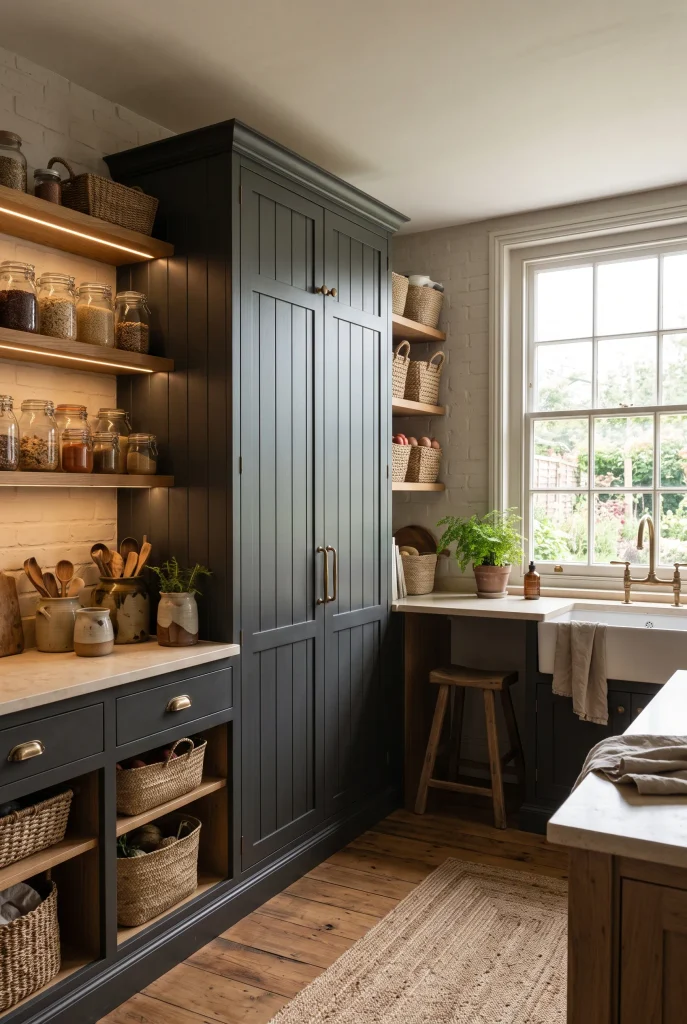
- Built-in pantry storage keeps countertops cleaner and easier to use.
- Glass jars make everyday ingredients attractive and easy to find.
- Wooden shelves soften darker cabinetry with natural texture.
- Woven baskets hide less decorative essentials while keeping them accessible.
Smart storage can make a moody kitchen feel calmer and more organized without sacrificing its character. A built-in pantry finished in charcoal, deep olive, or smoky blue can blend seamlessly with the cabinetry while keeping dry goods, appliances, and everyday supplies out of sight. Open wooden shelves inside the pantry add warmth and make frequently used ingredients easy to reach. Clear jars, woven baskets, and simple labels create a practical system that still looks beautiful. I’ve noticed that when storage is thoughtfully planned, darker kitchens often feel more polished because fewer items compete visually on the counters.
Focus on accessibility as much as appearance when organizing the pantry. Keep frequently used ingredients at eye level and heavier items on lower shelves. Use matching containers for staples such as flour, rice, pasta, and grains to create a cleaner visual rhythm. Baskets are useful for grouping snacks, linens, or smaller packages that can otherwise create clutter. Warm LED lighting inside the pantry can make deep cabinetry easier to navigate, especially in the evening. This combination of concealed storage and natural materials helps the kitchen feel intentional, functional, and welcoming while preserving its cozy farmhouse personality.
17. Vintage Farmhouse Decor
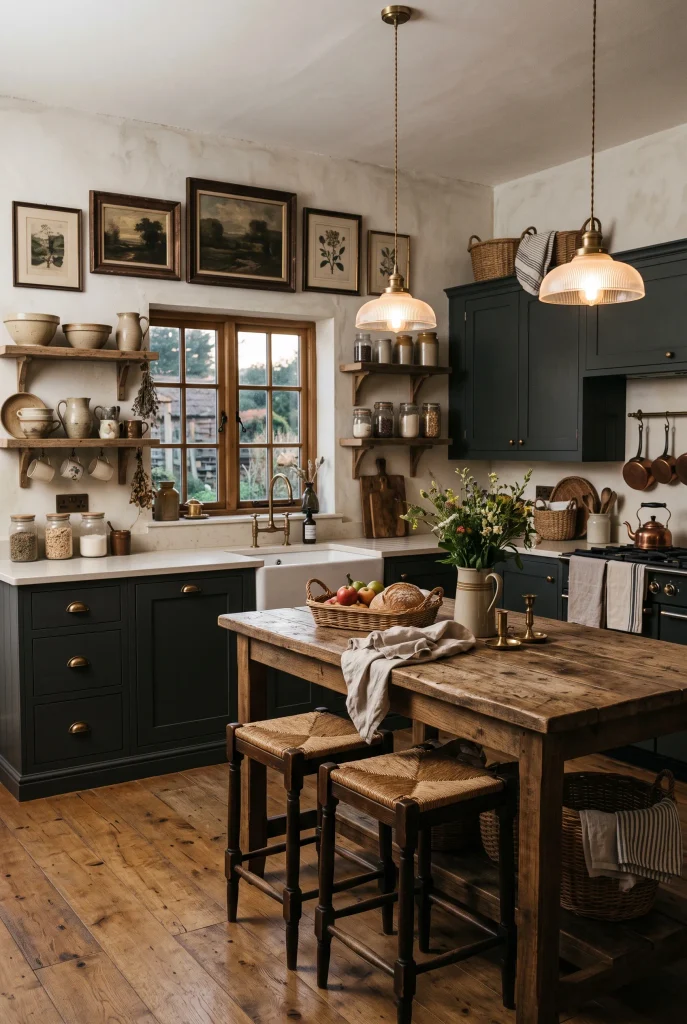
- Vintage accessories add personality without requiring major renovations.
- A few aged pieces create more character than excessive decoration.
- Ceramic pottery and framed art soften darker surfaces.
- Mix old-looking pieces with practical modern features for comfortable everyday use.
The final layer of a beautiful farmhouse kitchen often comes from small vintage-inspired details. Aged pottery, antique-style artwork, wooden cutting boards, woven baskets, and linen textiles can make deeper colors feel warmer and more personal. These pieces add visual history without requiring a complete renovation. Keep the collection selective so the room still feels spacious and functional. A vintage clock above a doorway, an old-style framed print near open shelving, or a ceramic pitcher filled with greenery can provide just enough personality. I’ve seen small decorative changes create surprisingly noticeable improvements when the larger kitchen layout already works well.
The best results come from mixing character with practicality. Display pieces you genuinely use whenever possible, such as wooden boards, ceramic serving bowls, or linen tea towels. Choose finishes that complement the existing palette rather than introducing several unrelated colors. Brass, aged wood, cream ceramics, and muted textiles work naturally with darker cabinetry. Leave some surfaces intentionally quiet so individual details have room to stand out. This creates a kitchen that feels collected over time instead of decorated all at once. The finished space is warm, atmospheric, functional, and unmistakably farmhouse without feeling dated or overly themed.
Conclusion
Creating a beautiful moody farmhouse kitchen does not require a complete renovation. Small changes such as deeper cabinet colors, natural wood, vintage lighting, textured tile, open shelving, or warm metal accents can make a dramatic difference. The key is balancing darker elements with lighter surfaces and plenty of natural texture so the space remains welcoming and functional. I’ve seen how thoughtful combinations of simple materials can completely transform the feeling of a kitchen. Save these ideas to Pinterest for your next decorating project, try your favorite details in your own space, and share this inspiration with someone planning a cozy farmhouse kitchen.