21 Living Room Ideas on a Budget That Look Expensive
You do not need a huge decorating budget to make your living room look beautiful. Living room ideas on a budget can completely change a plain space with just a few thoughtful updates.
The trick is knowing where small changes can make the biggest difference. Better lighting, layered textures, thrifted furniture, fresh artwork, or even rearranging what you already own can change the whole feel of the room. These ideas focus on affordable ways to make your living room feel warmer, more polished, and thoughtfully decorated without replacing everything. Whether you are furnishing a new home or simply giving a tired room a refresh, you will find practical ideas that are easy to adapt to your style and budget.
1. Warm Neutral Layers
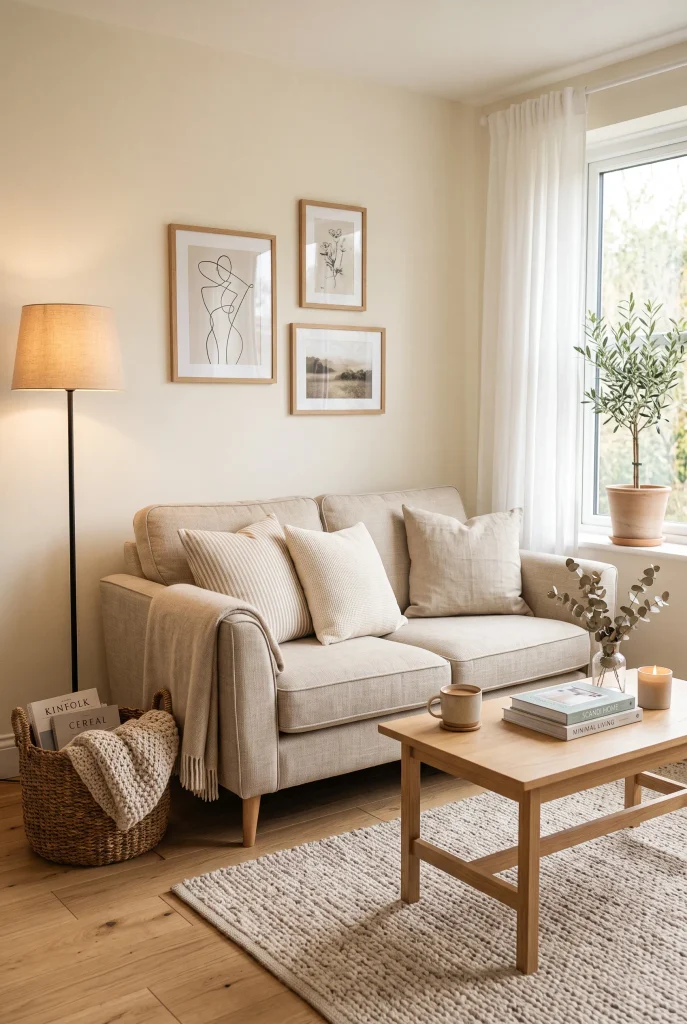
- Layer cream, beige, and warm taupe for an instantly polished look.
- Mix linen, cotton, and woven textures instead of buying expensive decor.
- Keep larger furniture simple so affordable accessories can stand out.
- A neutral palette makes small upgrades feel more intentional.
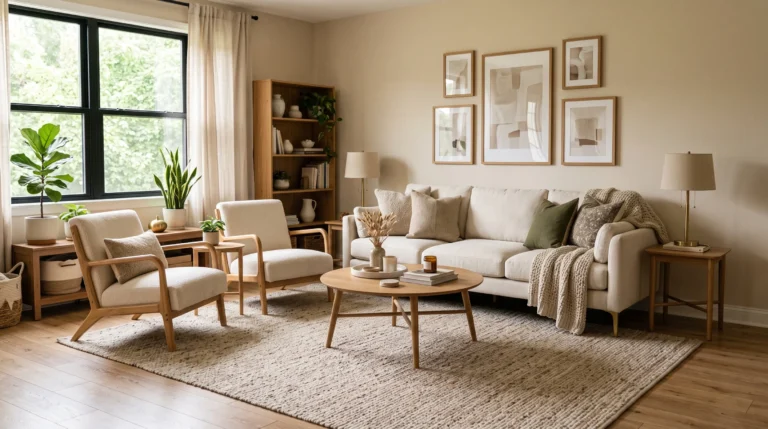
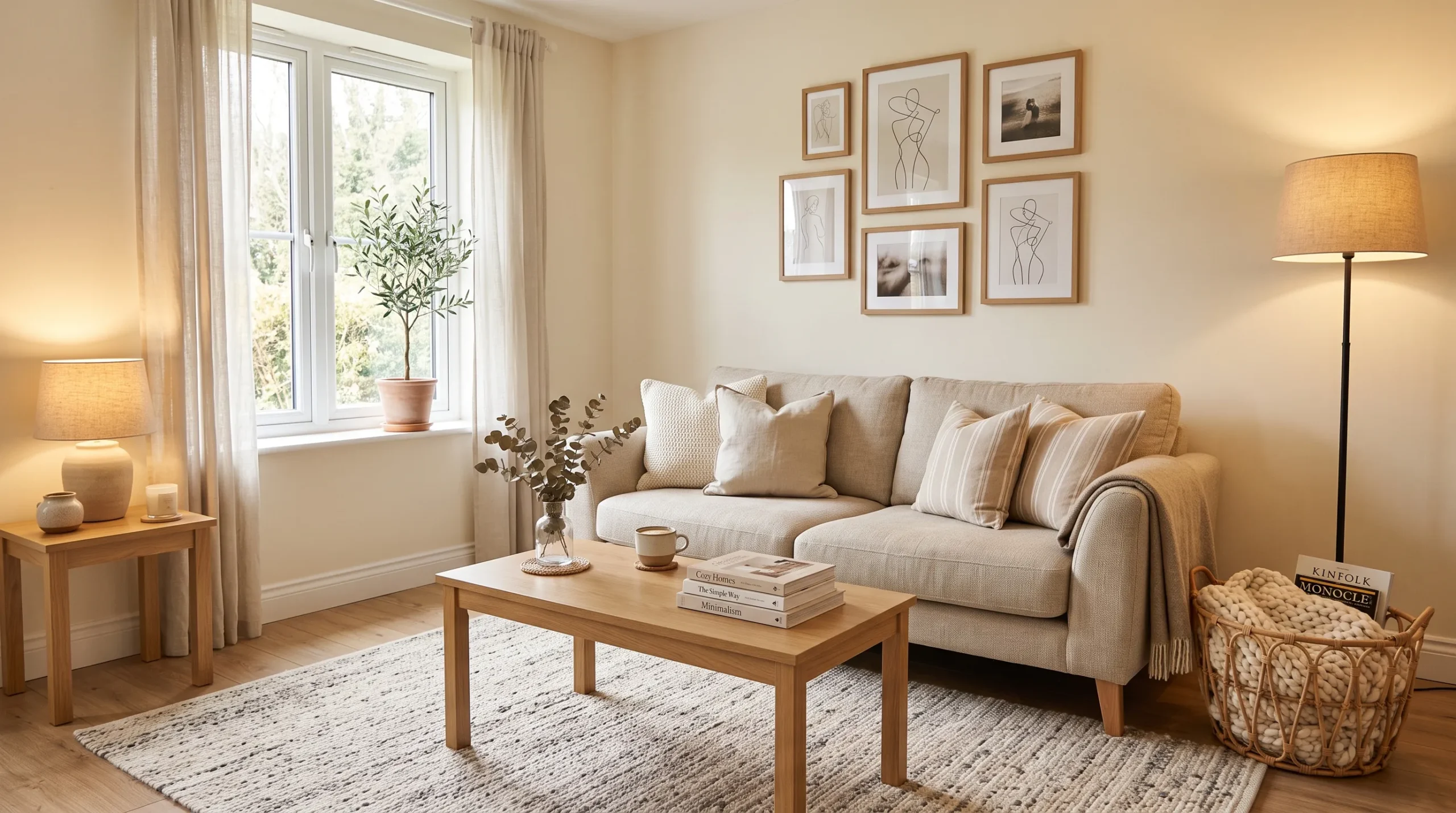
A warm neutral palette can make a living room feel more expensive without requiring expensive furniture or major renovations. Start with simple shades such as cream, beige, taupe, and soft brown, then bring in different textures to keep the room from feeling flat. A neutral sofa paired with linen pillows, a textured rug, and a woven basket can add depth while keeping the overall look calm. Repeating two or three related tones throughout the room also helps inexpensive pieces feel coordinated.
Texture is what keeps a neutral room from looking plain. Try combining a chunky throw, textured cushions, a woven basket, and a softly patterned rug instead of filling the room with lots of decorative objects. Light oak or wood accents can add warmth, while matte black or brushed brass details bring a little contrast. Keep the walls fairly simple and let natural daylight highlight the different materials. This approach is especially useful if you are decorating gradually because you can add pieces over time without making the room feel mismatched.
2. Oversized Floor Mirror
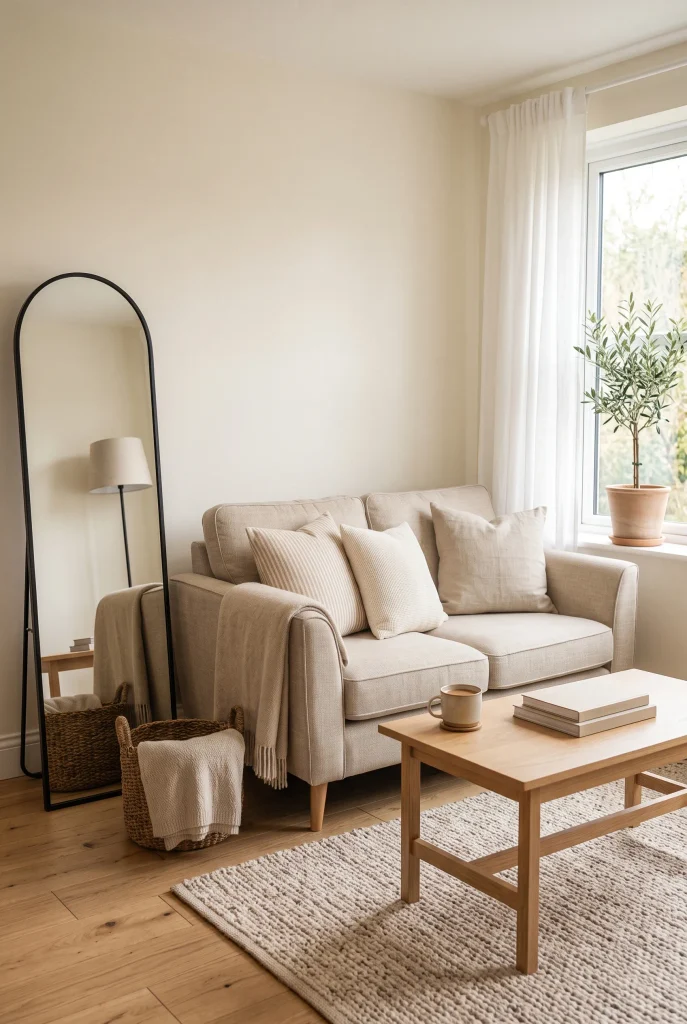
- Use one large mirror instead of several small wall decorations.
- Leaning the mirror casually can create a relaxed designer-inspired effect.
- Position it opposite a window to reflect more natural light.
- A simple frame in black, brass, or wood adds subtle character.
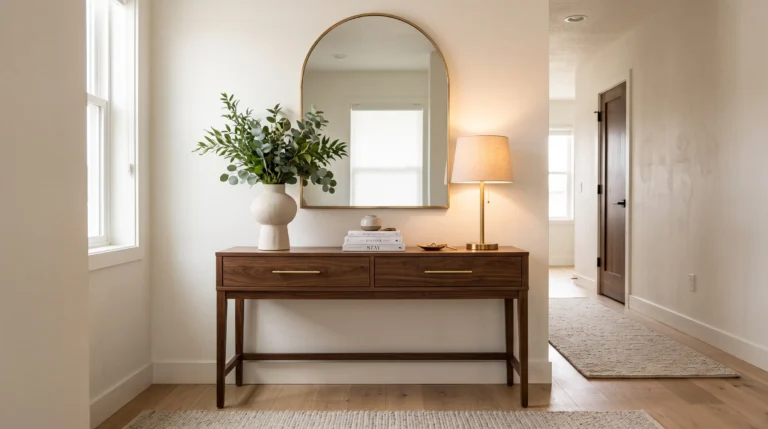
An oversized floor mirror can make a surprisingly big difference in a living room without costing a fortune. A tall mirror reflects light, adds height, and can make the room feel more open without changing the furniture layout. Look for a simple arched, rectangular, or softly rounded design that works with your existing style. The frame does not need to be ornate to look expensive. Placing the mirror near a window or across from a light source can help brighten the room and make the space feel larger.
For a polished look, keep the area around the mirror fairly simple. A small plant, woven basket, or slim accent stool can help ground the corner without making it feel crowded. If the mirror has a plain frame, repeat warm wood or brass accents somewhere else in the room for a little visual connection. Renters can often lean a lightweight mirror against the wall, while homeowners may prefer to secure it properly. It is a simple way to combine decoration and function, especially in smaller living rooms.
3. Thrifted Accent Furniture
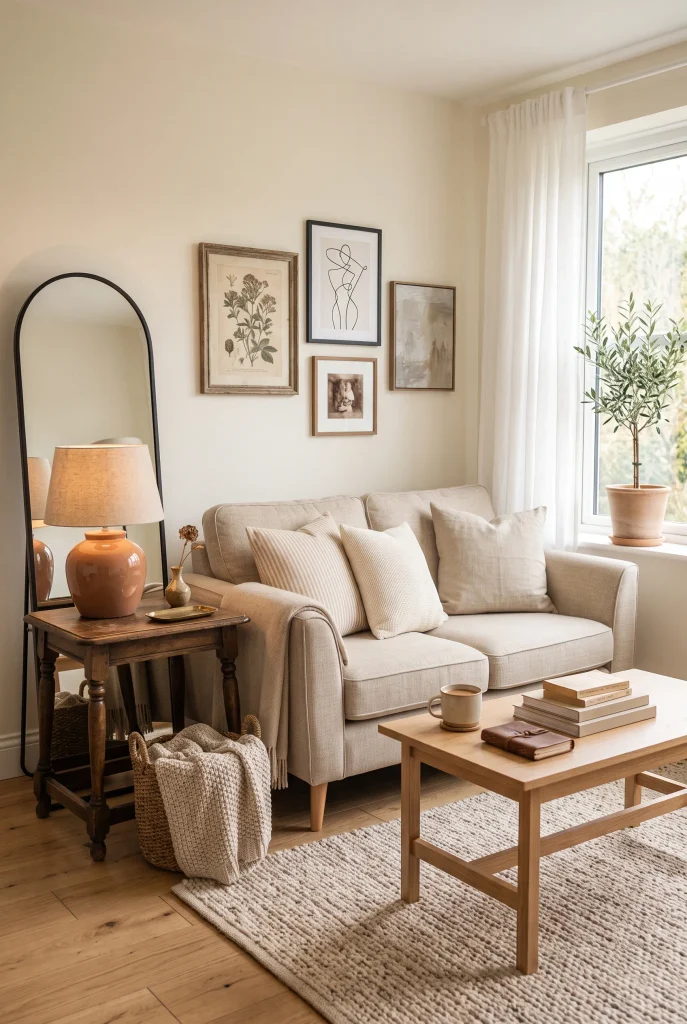
- Give an older side table or stool a fresh purpose.
- Look for solid wood pieces with shapes that complement your sofa.
- A small furniture update can add more character than generic decor.
- Mix vintage and modern pieces to create a collected, expensive feel.
Thrifted accent furniture can give a living room the character of a carefully collected space without the price of designer pieces. Look for small tables, stools, cabinets, or benches with useful shapes and solid construction. A simple wooden piece can become a lovely accent beside a neutral sofa, especially when paired with a ceramic lamp or a small stack of books. Instead of searching for something absolutely perfect, pay attention to the shape, size, material, and overall condition. A little imperfection can actually make the room feel warmer and more personal.
You can also give an inexpensive secondhand find a simple refresh. Sanding and sealing wood, replacing basic hardware, or adding a fresh coat of paint can completely change the look of a piece. Keep the surrounding decor simple so the furniture has room to stand out. Mixing one vintage accent with newer seating and modern lighting creates a nice contrast and keeps the room from looking too matched. It is a practical way to decorate on a budget while avoiding a space that feels mass-produced.
4. Layered Area Rugs
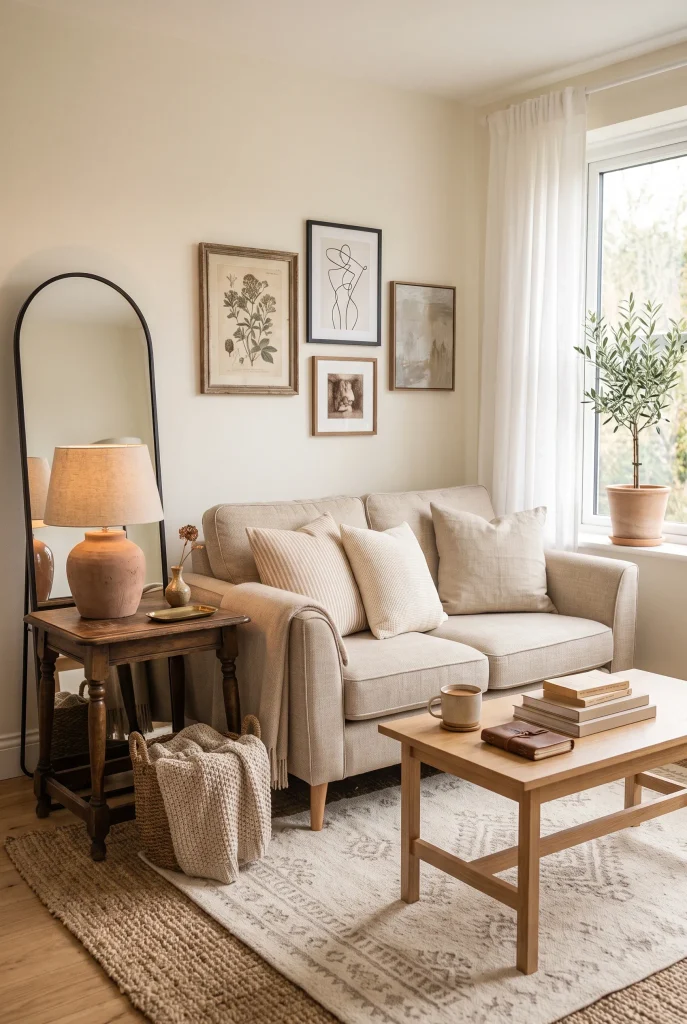
- Layer a smaller patterned rug over a larger neutral base.
- Use jute or sisal underneath for affordable natural texture.
- Keep the top rug centered beneath the coffee table for balance.
- Choose complementary colors rather than matching patterns exactly.
Layering rugs can make a basic living room feel more thoughtfully designed while adding warmth and texture underfoot. Start with an affordable natural-fiber rug such as jute or sisal, then place a smaller patterned or softly colored rug on top. The larger rug creates a defined foundation, while the smaller one adds personality without requiring a large investment. This can also be helpful when an existing rug feels too plain or slightly too small. Together, the layers help visually connect the sofa, coffee table, and surrounding seating.
For a more polished result, vary the textures while keeping the colors connected. A natural beige base can work well with a cream geometric pattern, muted stripes, or subtle vintage-inspired details. Leave enough of the bottom rug visible around the edges so the layering looks intentional. If the room already has several patterns, choose a simpler top rug to keep things balanced. This small styling trick adds depth and softness while helping even inexpensive furniture feel more grounded.
5. Statement Floor Lamp
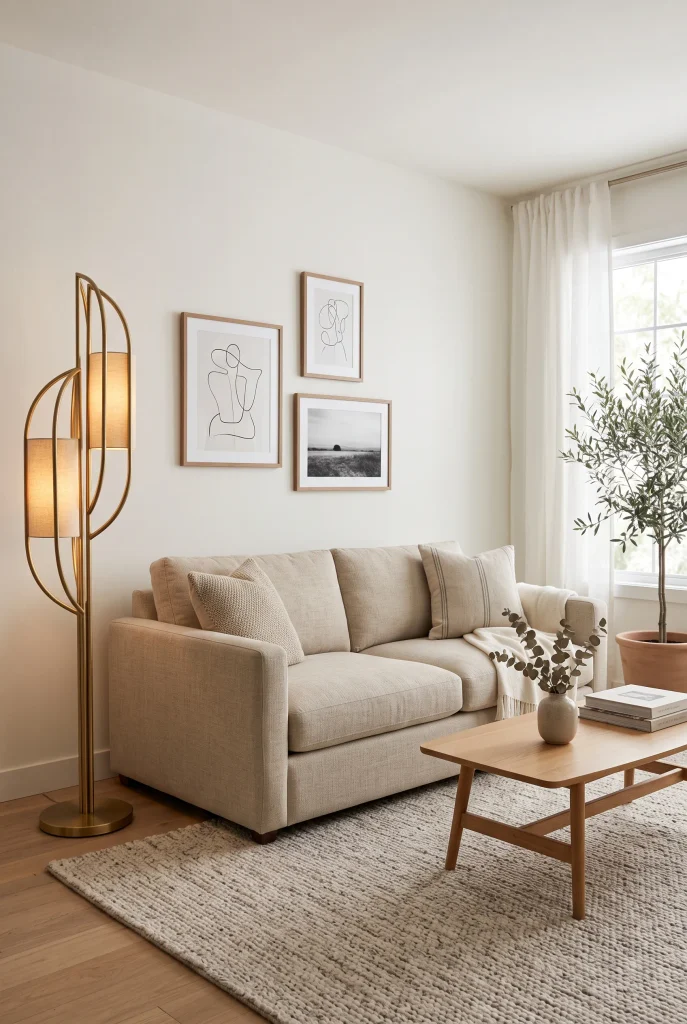
- Choose a tall lamp with a simple sculptural silhouette.
- Place it beside the sofa to create a cozy reading corner.
- Warm bulbs make neutral furniture feel softer and richer.
- Let the lamp provide both practical lighting and visual height.
A statement floor lamp can give an ordinary living room a stronger focal point while adding useful light. Look for a tall design with an interesting curved, arched, tripod, or slim shape. The lamp does not have to be expensive to look refined. A simple silhouette in black, brushed brass, or warm metal can create plenty of visual interest. Place it beside a sofa or reading chair where its height can balance the larger furniture. Suddenly, that corner can feel much more finished.
Lighting matters a lot when you are trying to make affordable decor feel elevated. Choose a warm white bulb instead of a harsh cool light, then combine the floor lamp with natural daylight and smaller table lamps when needed. Keep the area around the lamp uncluttered so it remains a noticeable feature. One distinctive light can often change the atmosphere more than several small decorations. It creates a softer evening glow and brings out the textures already in the room.
View: 21 Dark Boho Living Room Ideas You Need to See Now
6. Simple Built-In Shelving
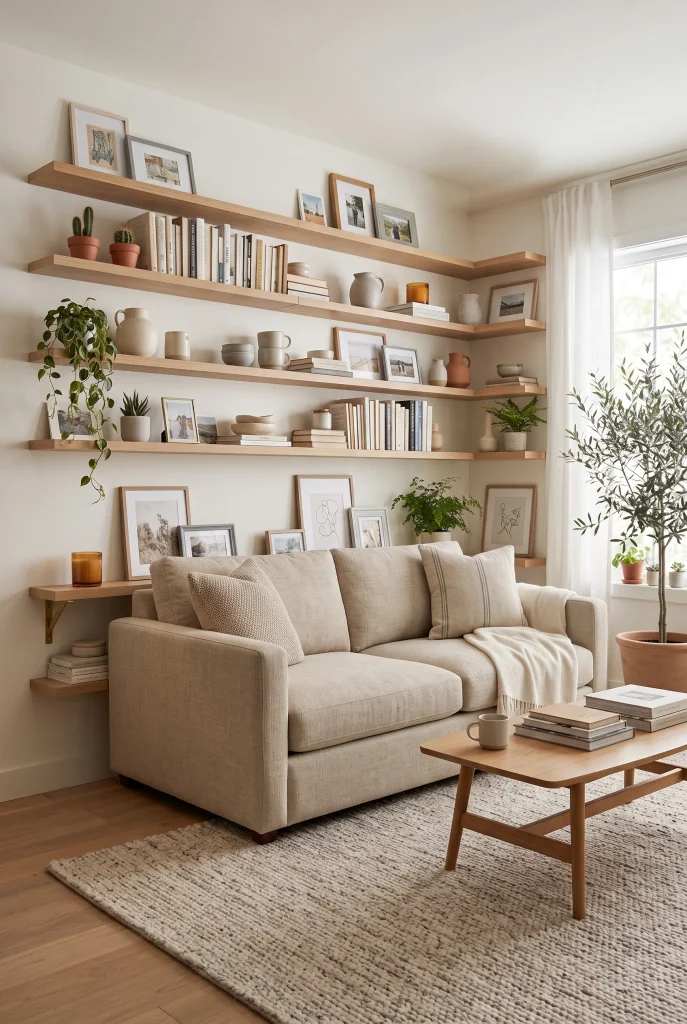
- Use simple floating shelves to create an intentional display area.
- Mix books, ceramics, framed art, and small plants for variety.
- Leave open space between objects so the shelves feel calm.
- Repeat wood or metal finishes already used around the room.
Simple shelving can make a living room feel custom designed even when you are using affordable floating shelves or modular units. Use shelves to frame a blank wall, fill an awkward corner, or create a small display around the television. Light wood shelves can add warmth against cream walls, while painted shelves can blend into the background for a cleaner look. The main thing is not to fill every inch. A mix of books, ceramics, framed prints, and greenery can create interest without making the room feel cluttered.
To make inexpensive shelving look more polished, repeat materials and colors that already appear in the room. For example, pair oak shelves with a wood coffee table, or repeat black accents through picture frames and lamp details. Vary the height of the objects and leave a few spaces empty so the arrangement can breathe. If you need extra storage, attractive baskets can hide smaller items while keeping the shelves looking tidy. These simple touches can turn an ordinary wall into a useful design feature without the cost of custom cabinetry.
7. Painted Accent Wall
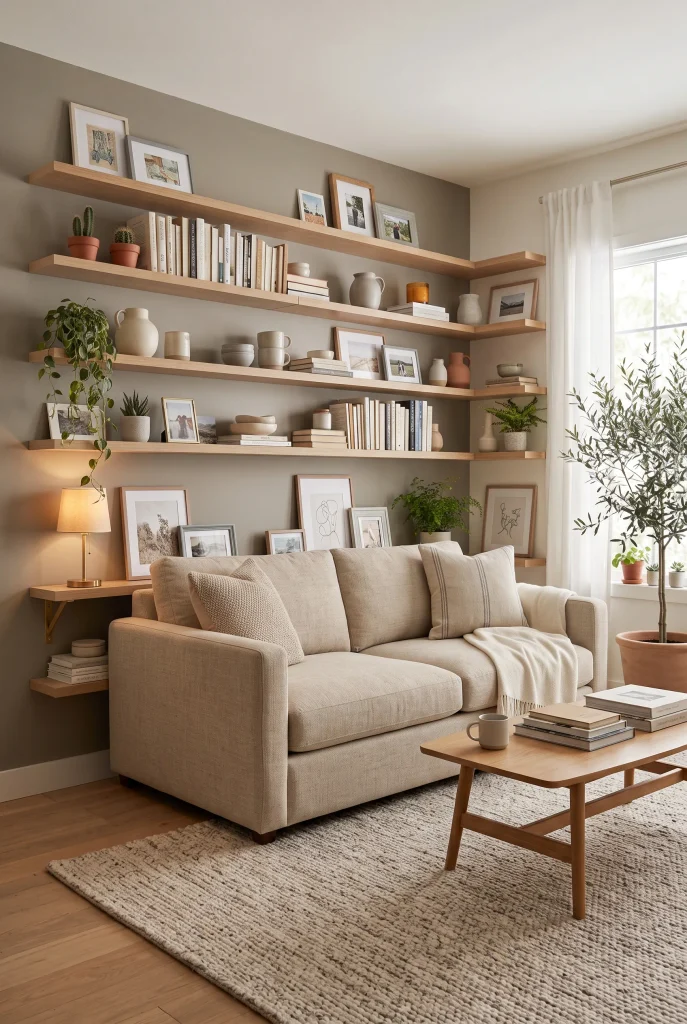
- Paint one wall instead of redecorating the entire room.
- Choose earthy shades such as greige, olive, taupe, or muted clay.
- Keep nearby furniture simple so the wall remains the focal point.
- Use leftover paint for a small shelf or accent detail.
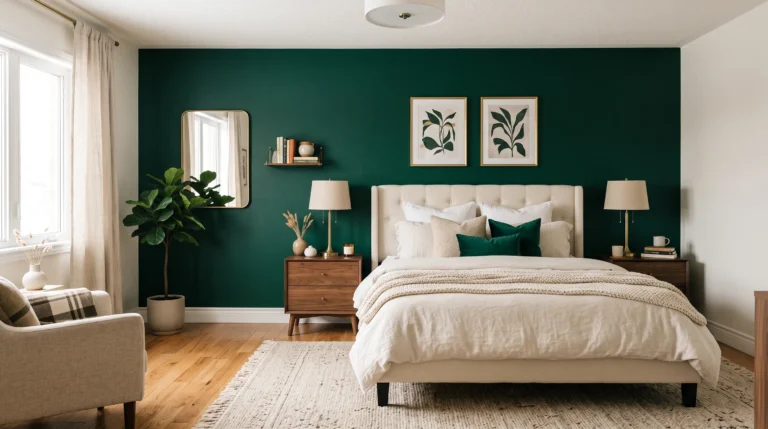
A painted accent wall can completely change the mood of a living room without requiring expensive furniture or major upgrades. Choose a warm shade that works with what you already own, such as soft taupe, muted olive, warm greige, or dusty clay. Painting just one wall keeps the cost and effort lower while creating a strong visual anchor. The wall behind the sofa or television often works well because it naturally draws attention. Even simple furniture can look more intentional against the right backdrop.
Color works especially well when it connects with details already in the room. Pull a shade from an existing rug, artwork, cushion, or curtain instead of introducing a completely unrelated color. For a more sophisticated look, keep the other walls light and bring in natural wood, woven textures, or simple metal accents nearby. If you have leftover paint, you can even use it on a small shelf or narrow accent detail. It is an easy update that refreshes the room while letting you keep the furniture you already have.
8. Floating Media Console
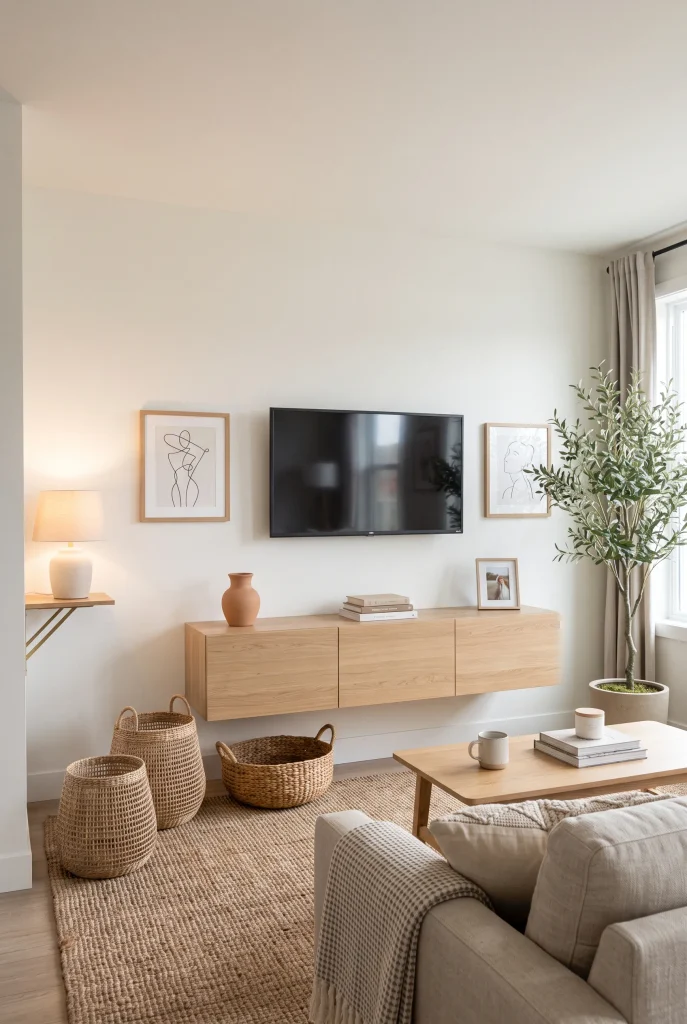
- Mounting the console creates a lighter, more open appearance.
- Choose a simple wood finish for warmth and visual texture.
- Hide cables and electronics to keep the wall looking polished.
- Use the surface for only a few intentional decorative pieces.
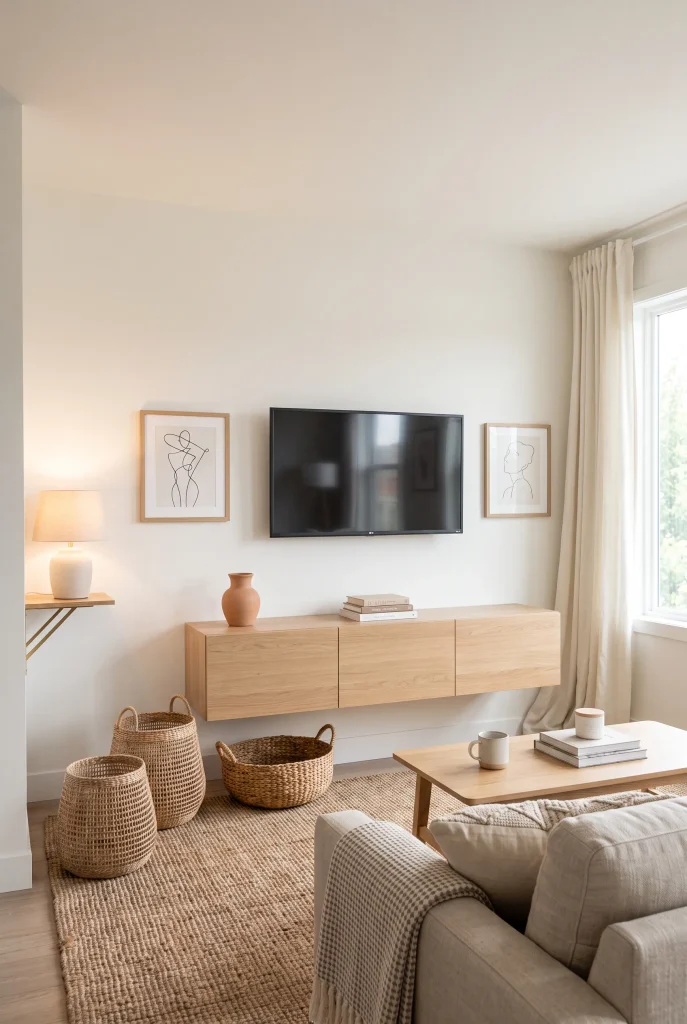
A floating media console can make a living room look cleaner and more custom without the cost of a built-in entertainment wall. Mounting a simple console above the floor creates visible space underneath, which helps the room feel lighter and less crowded. Choose a finish that works with your existing furniture, such as light oak, walnut, or painted white. The open space underneath can stay empty for a minimalist look or hold one attractive basket for practical storage. This layout can be especially useful in smaller living rooms where floor space is limited.
The styling around the television matters just as much as the console itself. Keep the surface fairly uncluttered with just a few pieces, such as a ceramic vase, small plant, or stack of books. Hide cables whenever possible so the wall looks clean. If the television feels visually heavy, add a slim shelf or artwork nearby to balance the composition without creating clutter. The combination of streamlined storage, natural materials, and simple accessories can make affordable furniture feel much more intentional.
9. Curtain Height Trick
- Hang curtains closer to the ceiling to visually increase wall height.
- Choose full-length panels that gently reach or nearly touch the floor.
- Soft ivory or beige fabrics keep the room bright and sophisticated.
- Extend the curtain rod beyond the window frame for a wider appearance.
The right curtain placement can make a living room feel taller, brighter, and more polished without replacing any furniture. Instead of mounting the curtain rod directly above the window, position it closer to the ceiling and use full-length panels that reach the floor. This draws the eye upward and creates the impression of taller walls. Soft ivory, cream, beige, or warm white curtains work especially well because they reflect natural light and blend easily with neutral furniture.
A little extra fabric can also improve the proportions of the room. Extend the curtain rod slightly beyond each side of the window so the panels frame the opening without blocking much glass when they are open. Linen-look or textured cotton fabrics can give the windows a relaxed, expensive-looking finish. Avoid heavy patterns if the room already has several visual elements. This simple change can make a surprisingly noticeable difference because it improves both the window treatment and the perceived scale of the room.
10. Gallery Wall Arrangement
- Combine affordable prints with thrifted or existing frames.
- Keep a consistent color palette so different artwork feels connected.
- Arrange frames on the floor first to test spacing and balance.
- Leave enough breathing room around the collection for a polished look.
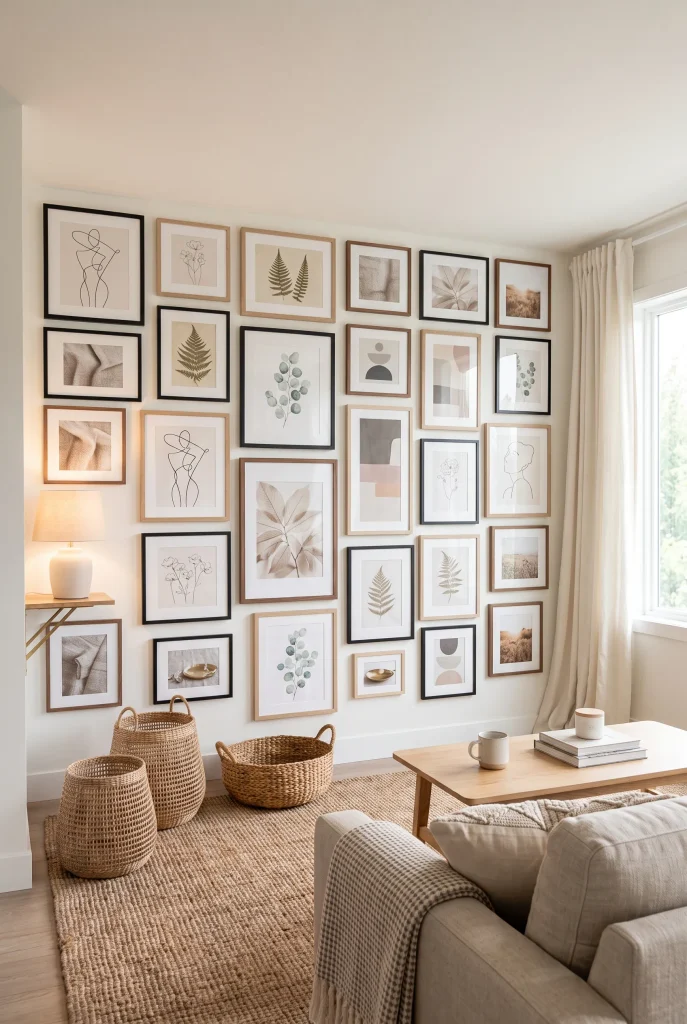
A gallery wall can turn a plain living room wall into a personal focal point without requiring expensive artwork. Mix affordable prints, family photographs, botanical illustrations, and simple abstract pieces to create a collection that feels gathered over time. Natural wood, black, or thin brass frames can keep the arrangement cohesive even when the artwork comes from different places. Positioning the collection above a sofa or console also helps anchor the furniture and gives an empty wall more purpose.
Before hanging anything, arrange the frames on the floor and play around with the spacing until the layout feels balanced. Keep the center of the arrangement around eye level, then build outward with larger and smaller pieces. Repeating one or two colors throughout the artwork helps everything feel connected rather than random. You can also leave small gaps between frames for a relaxed look. The finished wall adds personality and visual depth while keeping your decorating budget manageable.
11. Styled Coffee Table
- Use a tray to group smaller objects into one organized arrangement.
- Stack two or three attractive books for easy visual height.
- Add one organic element such as greenery or a small branch.
- Leave plenty of open tabletop space for everyday use.
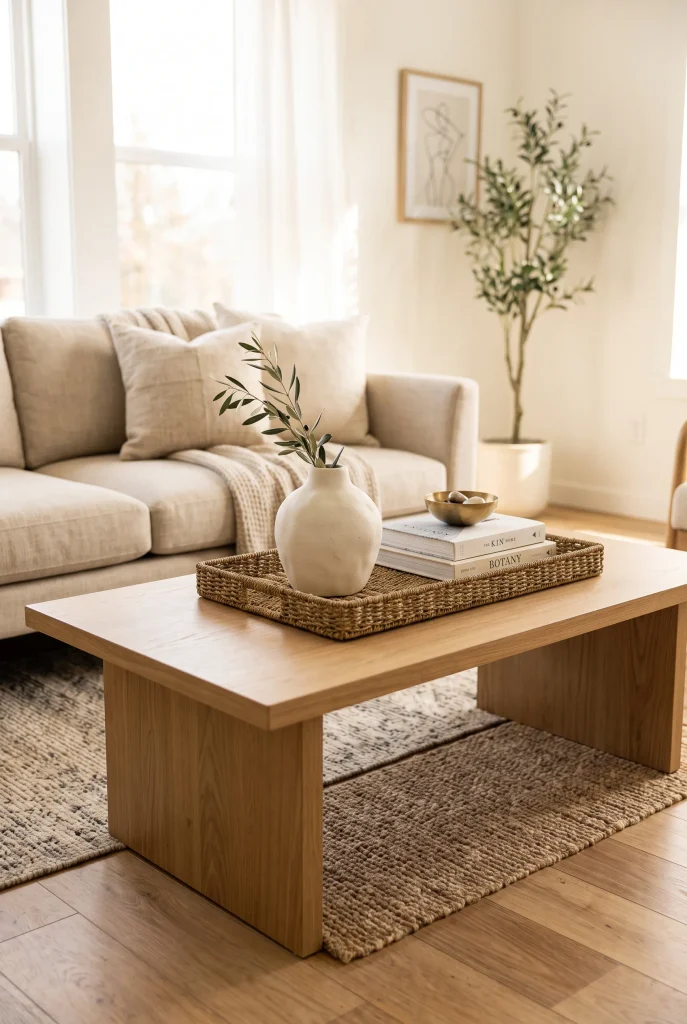
A thoughtfully styled coffee table can make even an inexpensive living room feel more finished. Start with a simple tray to create a visual boundary, then add two or three books, a ceramic vase, and one natural element such as greenery or a branch. Varying the height of these pieces keeps the arrangement interesting without making it complicated. The goal is not to cover the entire table, but to create a small focal point that works with the sofa, rug, and surrounding furniture.
The coffee table still needs to be practical for everyday life. Leave enough open space for drinks, snacks, or a laptop, and choose a tray that can easily be moved when needed. Neutral ceramics, natural wood, and woven materials can add texture without overwhelming the room. If the table already has an attractive finish, avoid covering too much of it with accessories. A few well-chosen pieces usually look more polished than a crowded collection of decorations.
12. Decorative Wall Molding
- Use simple rectangular molding for architectural interest.
- Paint the molding and wall the same color for a subtle effect.
- Center panels around artwork or furniture for better visual balance.
- Keep accessories understated so the wall detail remains noticeable.
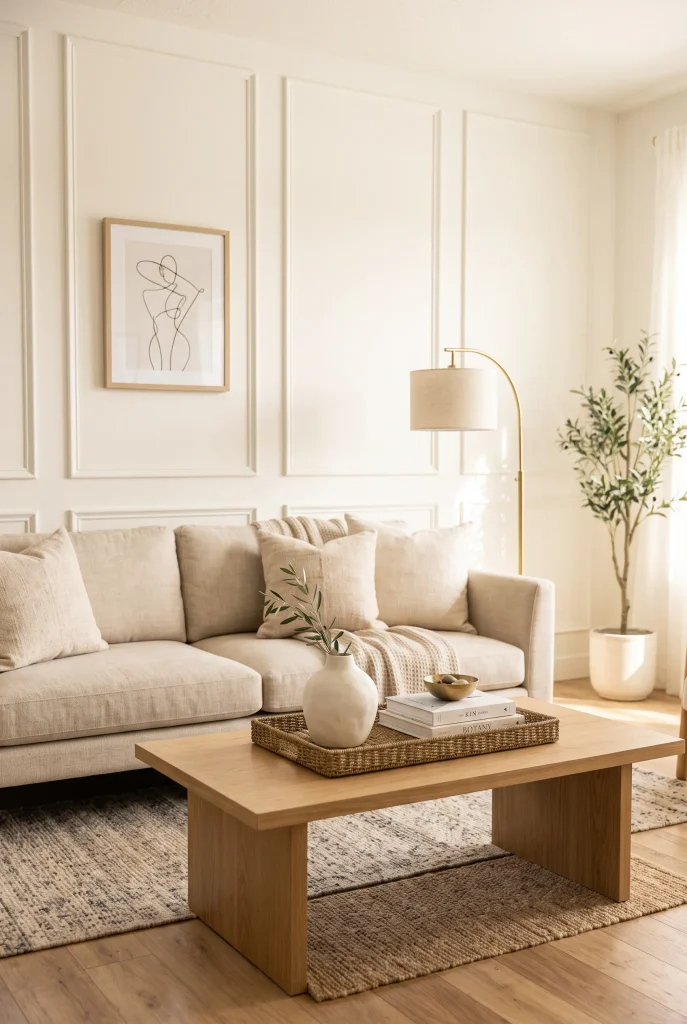
Decorative wall molding can add architectural character to a living room without changing the furniture or floor plan. Simple rectangular panels, picture-frame molding, or narrow trim can create the kind of visual structure often found in more expensive interiors. Painting the molding the same color as the wall keeps the effect subtle, while a slightly darker shade can add more contrast. The wall behind a sofa or console is a practical place to use this feature because the furniture naturally gives the panels an anchor.
For a budget-friendly approach, keep the design simple and repeat similar panel proportions across the wall. Too many small shapes can make the room feel busy, while larger balanced rectangles tend to look cleaner. Once the molding is installed and painted, use minimal artwork or lighting so the architectural detail can stand out. Pairing it with warm wood, neutral upholstery, and soft textiles creates a refined backdrop that works with several decorating styles.
13. Oversized Artwork
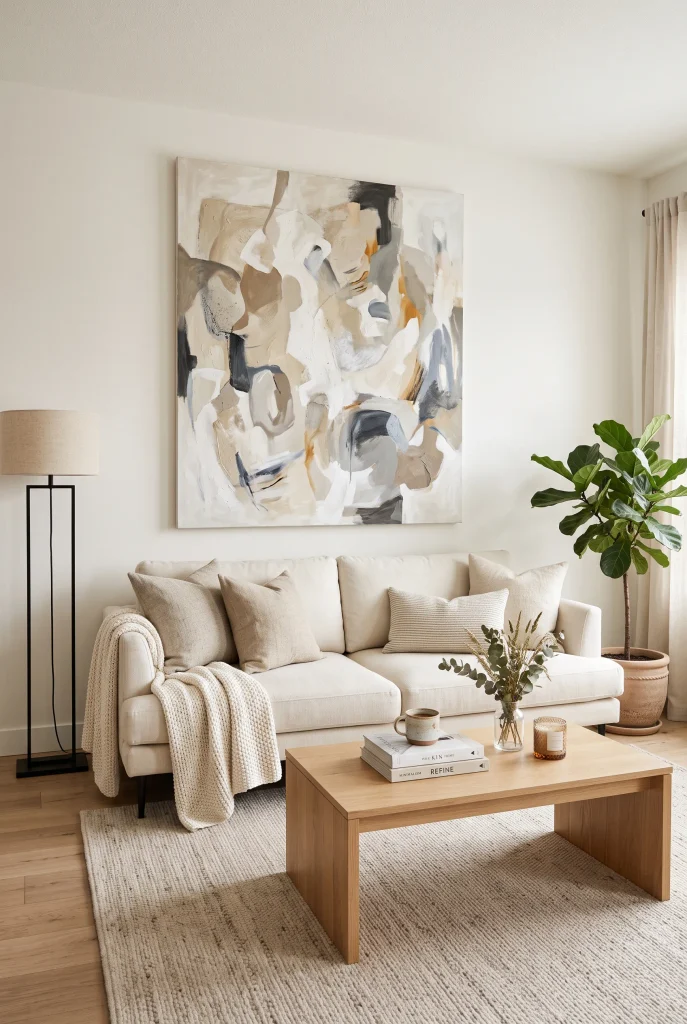
- Choose one large print instead of filling the wall with many small pieces.
- Pull artwork colors from your existing rug or pillows.
- A simple frame can make affordable art feel more polished.
- Keep nearby accessories minimal so the artwork gets visual attention.
One oversized artwork piece can give a living room the impact of a much more expensive space. Instead of buying several small decorations, choose one large print with colors that connect to your existing furniture and textiles. Abstract artwork, soft landscapes, botanical prints, or simple line drawings can all work well. Hang the piece above the sofa, console, or another major furniture item so it feels connected to the room rather than floating on an empty wall.
The frame also makes a difference in the finished look. Natural wood adds warmth, black creates crisp contrast, and a thin brass frame can bring in a subtle elegant detail. Affordable digital prints can work beautifully when printed at a larger size and placed in a simple frame. Keep the surrounding wall fairly uncluttered so the artwork remains the focal point. This approach gives the room a stronger visual presence and can help inexpensive furniture feel more thoughtfully chosen.
14. Wood Accent Details
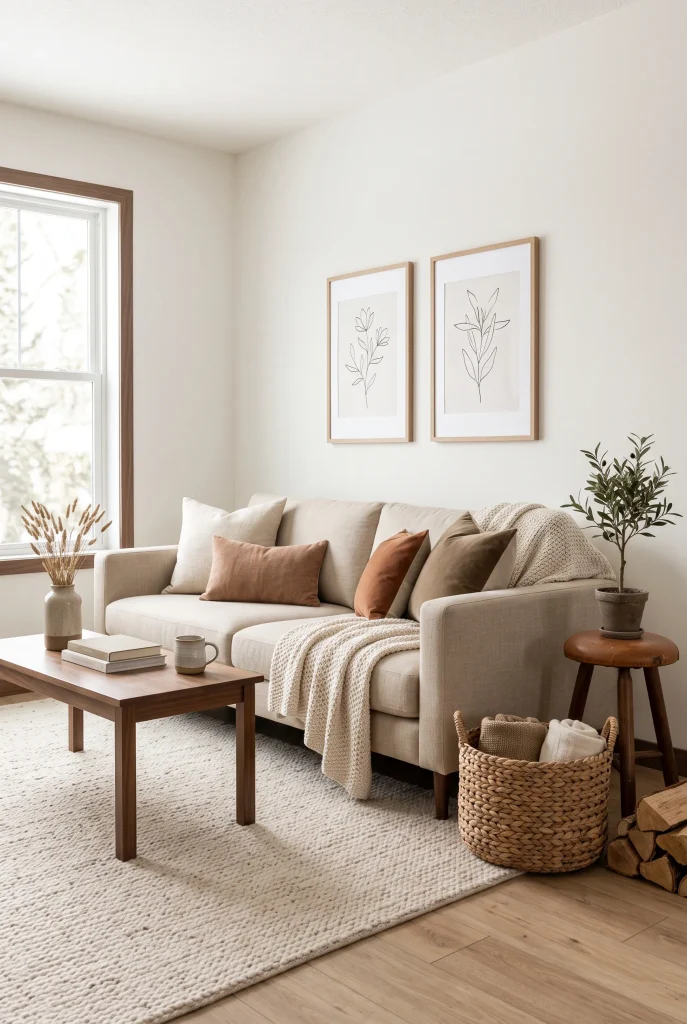
- Add small wood pieces instead of replacing all the furniture.
- Mix light and medium wood tones carefully for natural warmth.
- Use trays, stools, frames, or side tables as affordable accents.
- Repeat wood in several areas to create visual connection.
Wood accents can bring warmth and depth to a living room that feels too plain, especially when the existing furniture is neutral or inexpensive. You do not need a complete matching furniture set. A wooden coffee table, small stool, picture frame, tray, or side table can introduce natural texture and make the room feel more layered. Light oak works beautifully with cream and beige, while walnut can add richer contrast. Even a few small pieces can make basic materials feel more balanced.
The key is repetition rather than perfect matching. If you add a wooden side table, repeat a similar tone through a picture frame, decorative tray, or small stool somewhere else in the room. This creates a subtle connection that makes the design feel intentional. Avoid introducing too many different wood finishes because too much variation can make the room feel disconnected. Combined with woven baskets, linen cushions, and neutral upholstery, wood creates a warm and collected feel.
15. Cozy Reading Corner
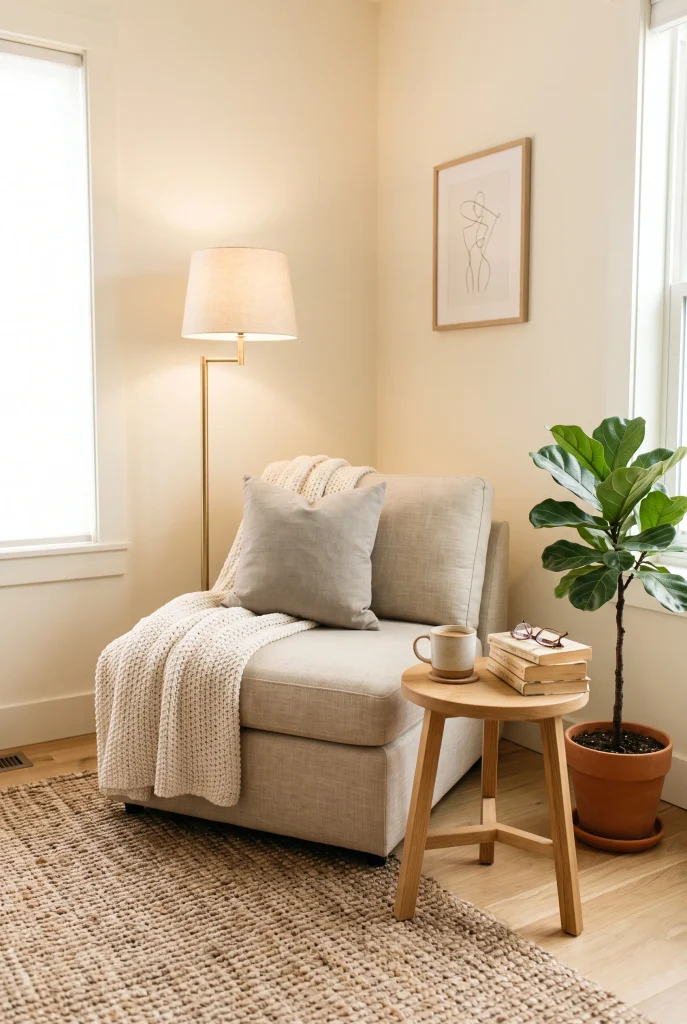
- Use a compact chair to transform an unused corner.
- Add a small table for books, drinks, or a decorative lamp.
- Choose a soft throw to make the area feel inviting.
- Keep the palette connected to the main seating area.
An unused corner can become one of the coziest parts of a living room with just a few affordable pieces. Start with a comfortable accent chair in beige, cream, or another neutral shade, then add a small wooden side table and a warm floor lamp. A soft throw draped over the chair adds texture and makes the space feel ready to use. This creates a dedicated reading or relaxing spot without needing a large sectional or complicated renovation.
Think about the flow of the room before choosing where everything should go. The chair should have enough space around it to move comfortably while still feeling connected to the main seating area. Add a small basket for blankets or books if you need extra storage, but avoid filling the corner with unnecessary accessories. A warm lamp makes the area useful after sunset, while natural daylight keeps it bright during the day. These simple layers can make an overlooked corner feel purposeful and inviting.
16. Woven Storage Baskets
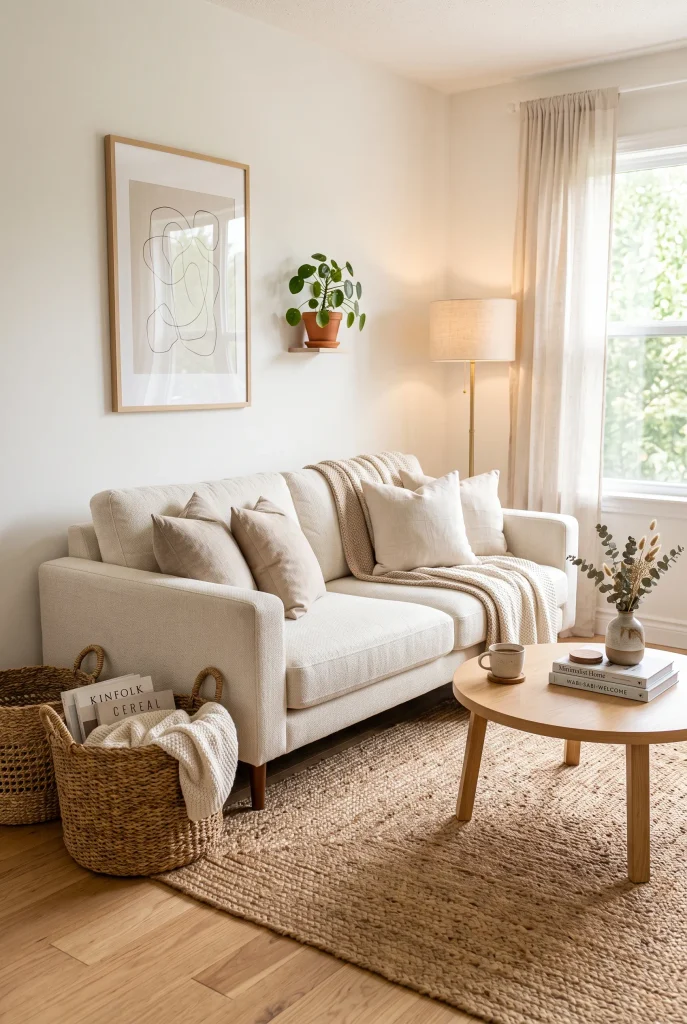
- Use woven baskets to hide blankets, toys, or everyday clutter.
- Choose natural fibers for warmth and visual texture.
- Place baskets beside sofas or under open shelving for easy access.
- Match basket tones with existing wood and neutral furnishings.
Woven baskets make everyday storage look decorative instead of something that needs to be hidden. Place one beside the sofa for blankets, another under a console for smaller items, or a few beneath open shelving for toys and accessories. Natural seagrass, rattan, jute, and water hyacinth bring texture into the room while keeping the palette warm and relaxed. They are especially useful when your living room needs more organization but you do not want bulky storage furniture taking up valuable space.
For a more polished look, avoid using too many basket shapes or colors at once. Two or three similar natural tones can create consistency while still keeping the room relaxed. Choose baskets that are large enough to be genuinely useful rather than purely decorative. Practical storage works best when it is easy to reach because things are more likely to be put away. Once everyday clutter is contained and surfaces stay clear, even simple furniture can make the room feel calmer and more finished.
17. Pillow Cover Refresh
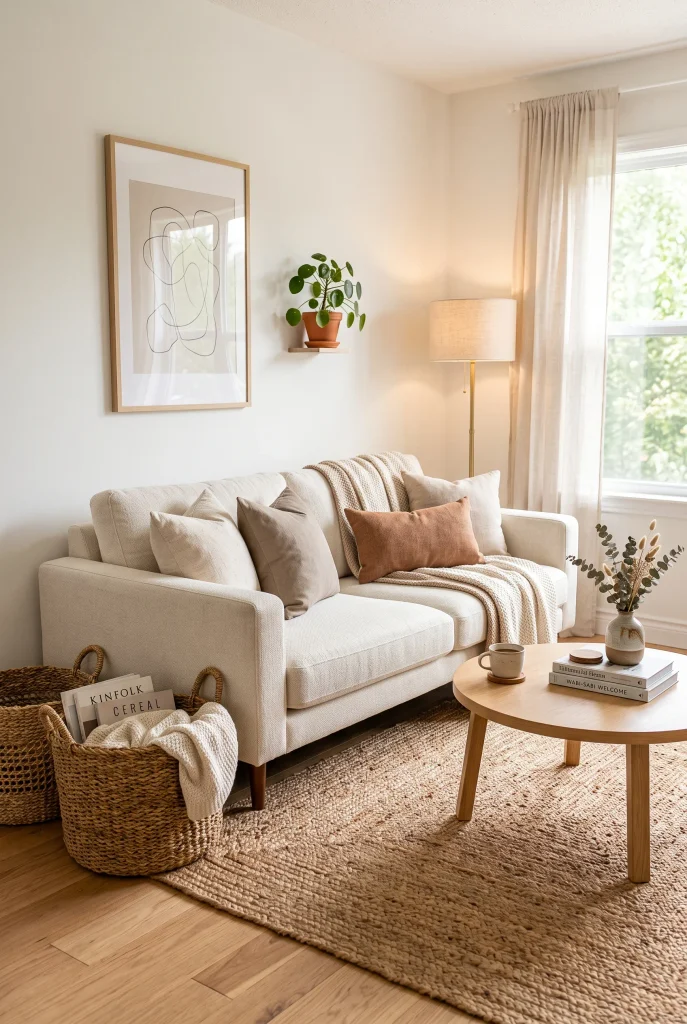
- Replace covers instead of buying completely new throw pillows.
- Mix two solid colors with one subtle pattern for balance.
- Combine linen, boucle, cotton, or woven textures for depth.
- Store seasonal covers and switch them when you want a refresh.
Changing pillow covers is one of the easiest ways to refresh a living room without replacing the sofa or larger furniture. Start with a simple base of cream, beige, or taupe, then add a warmer accent such as muted rust, olive, caramel, or soft brown. Different textures can make inexpensive covers feel more substantial, so combine linen, cotton, boucle, or woven fabrics instead of choosing everything in the same material. The result can instantly make the sofa feel softer and more inviting.
Think about proportion when arranging the pillows. Larger cushions can sit toward the back, while smaller decorative covers work toward the front to create a relaxed layered look. Avoid using too many colors because a limited palette usually feels more polished. Pillow covers are also easy to store, making them useful for seasonal decorating. Lighter combinations can brighten the room during warmer months, while richer tones can make it feel cozier later in the year. It is a simple way to give your existing furniture a fresh look without spending much.
18. Budget-Friendly Greenery
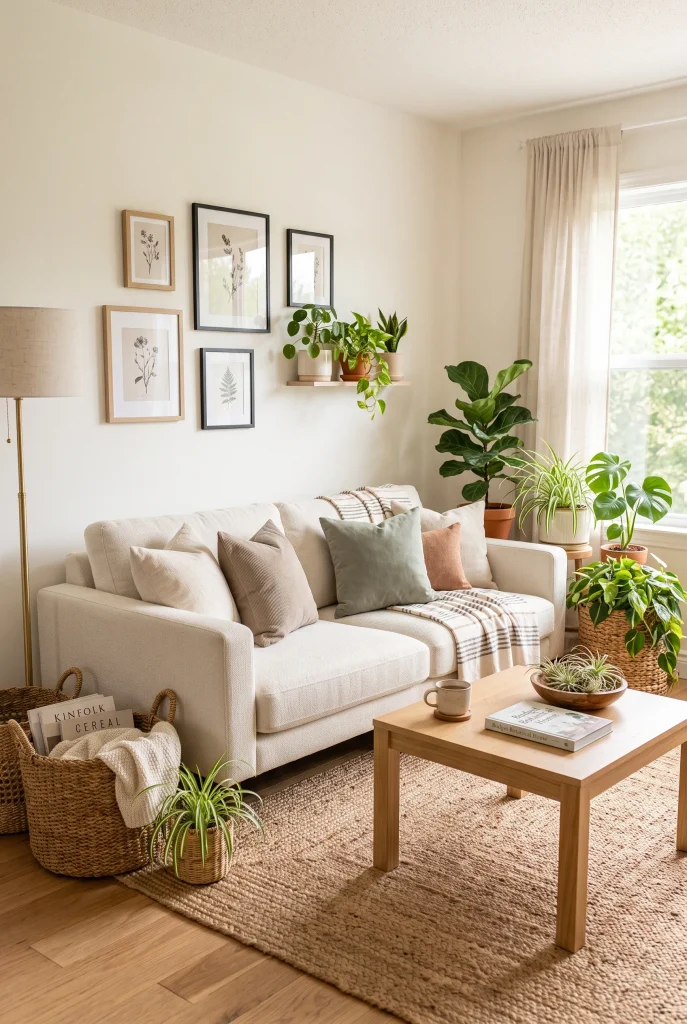
- Use one larger plant as a focal point instead of many small ones.
- Choose easy-care greenery suited to your room’s available light.
- Place plants in woven baskets to soften inexpensive plastic containers.
- Repeat natural green tones to connect different areas of the room.
Greenery can make a living room feel fresher, warmer, and more complete without requiring a large decorating budget. One healthy floor plant beside a sofa or window can become a strong focal point, while smaller plants can fill an empty shelf or coffee table. Choose varieties that suit the natural light available in your room instead of choosing plants based only on appearance. A healthy, well-placed plant usually looks more intentional than a crowded collection that is struggling in the wrong conditions.
The container can also change the overall look. A simple ceramic pot works well for a clean contemporary room, while a woven basket adds softness and natural texture. If you already have plain plastic nursery pots, placing them inside attractive covers can create a more finished appearance without buying new plants. Spread the greenery around the room rather than putting everything in one corner. Plants, wood, woven materials, and neutral upholstery work together to create a natural layer that makes affordable decor feel more connected.
19. Thrifted Art Frames
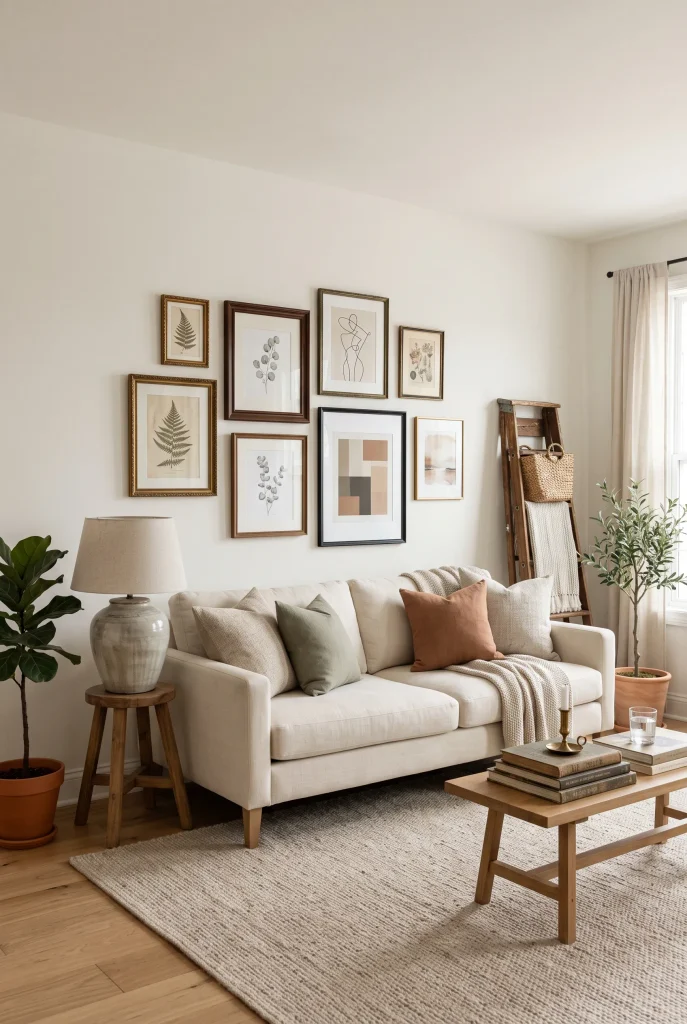
- Search thrift stores for frames before buying new ones.
- Mix different frame shapes while keeping the overall palette cohesive.
- Replace outdated artwork with affordable prints or personal photos.
- Use larger frames to create stronger visual impact on empty walls.
Thrifted frames can give inexpensive artwork a more established, collected appearance without costing much. Look for solid wood, black, brass, or vintage-style frames at secondhand shops, flea markets, and local resale stores. The artwork inside does not have to stay original. Replace outdated prints with affordable botanical illustrations, abstract designs, landscapes, or photographs that suit your living room. A few larger frames can create much more impact than filling the wall with lots of tiny pieces.
Do not worry if every frame looks slightly different. A mix of finishes can add personality when the artwork shares a similar color palette. If you find a beautiful frame in the wrong color, painting it can give it a completely different look. Arrange the pieces around a central point and keep the spacing fairly consistent for a cleaner result. This approach works well when you are decorating gradually because you can collect pieces over time. The final wall can feel personal and layered instead of looking like a matching set bought all at once.
20. Secondhand Side Tables
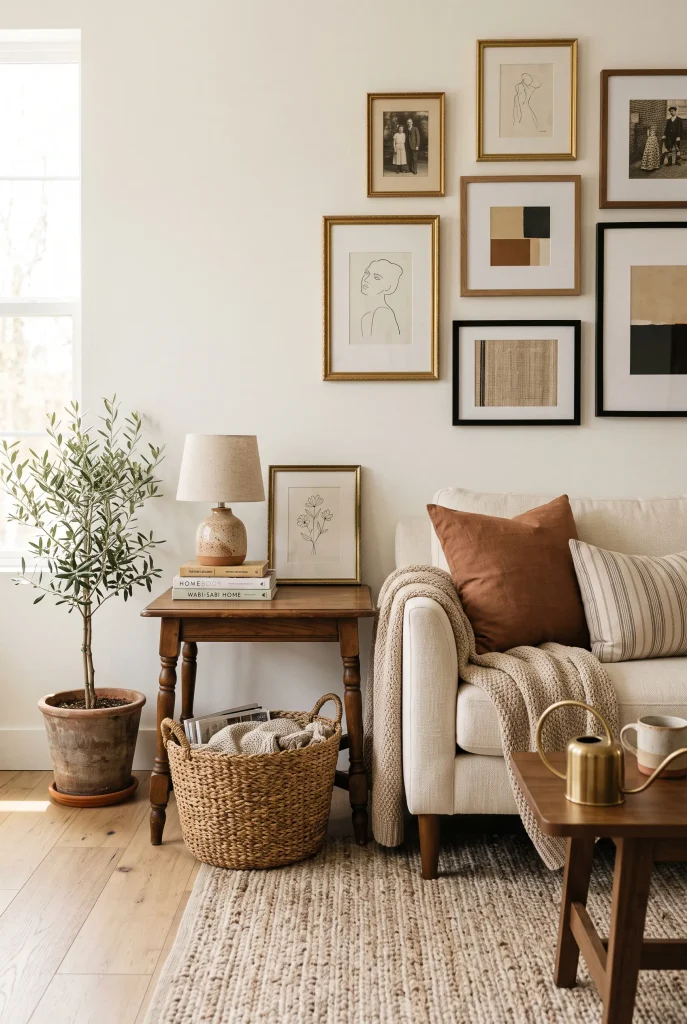
- Search for sturdy wood tables with simple, timeless shapes.
- Update dated hardware or refinish the surface when needed.
- Place one table beside a sofa or reading chair for function.
- Use the tabletop for a lamp, book, or small decorative object.
A secondhand side table can solve a practical need while adding character to a living room for much less than buying a new designer-style piece. Focus on sturdy construction and a shape that works with your furniture rather than worrying about the original finish. Wooden tables with simple legs, rounded edges, or traditional details can work with many decorating styles. A small lamp, ceramic vase, or stack of books can then turn the table into a useful feature beside the sofa.
Small updates can make a secondhand table feel much more current. Clean the surface thoroughly, lightly refinish worn wood, replace outdated hardware, or paint the piece if the original color does not suit the room. Keep the treatment simple so the natural character is not lost. Smaller vintage furniture is also easier to move around as the room changes. Pairing one older table with modern seating creates contrast and helps the overall space feel collected rather than overly coordinated.
21. Soft Ambient Lighting
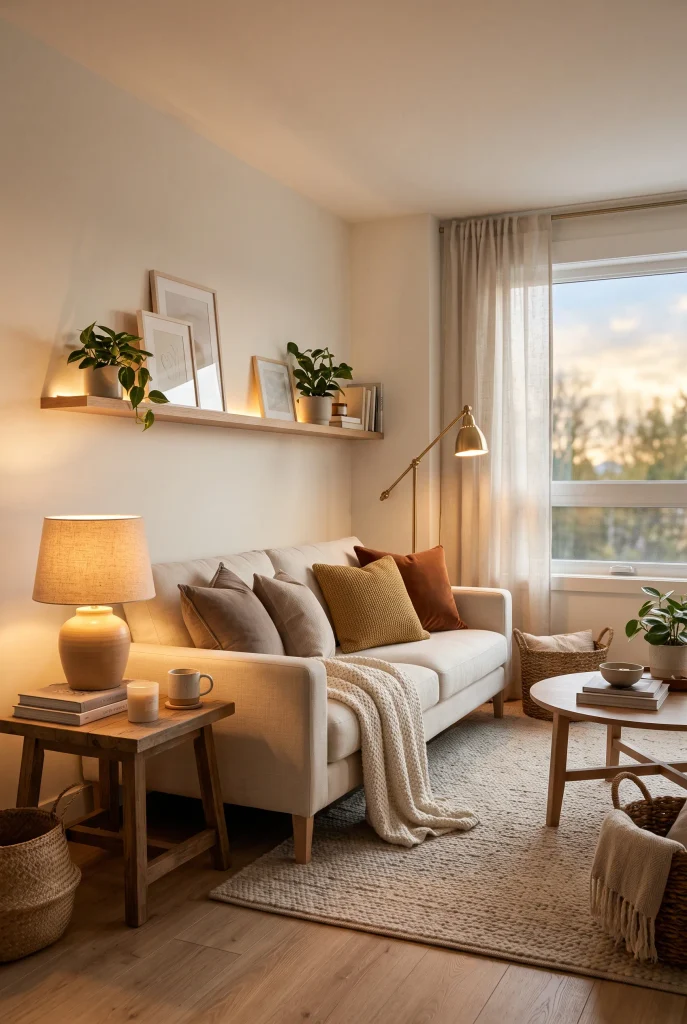
- Use multiple small light sources instead of relying on one ceiling fixture.
- Choose warm bulbs to create a softer evening atmosphere.
- Place lamps at different heights for more layered illumination.
- Highlight corners, artwork, and seating areas with gentle light.
Soft ambient lighting can completely change how a living room looks after sunset, making affordable furniture and simple decor feel warmer and more inviting. Instead of depending on one bright ceiling fixture, combine a floor lamp, table lamp, or small accent light at different heights. This creates layers of illumination and keeps the room from feeling flat. Warm white bulbs are especially useful because they work beautifully with beige, cream, wood, and other natural finishes.
Think about what each light source is meant to illuminate. A floor lamp can brighten a reading chair, a table lamp can add warmth beside the sofa, and a small accent light can highlight artwork or shelving. Keep the fixtures fairly simple if the room already contains several decorative elements. You do not need expensive lighting to create this effect. Even affordable lamps can look refined when their shapes, finishes, and placement work well together. The result is a living room that feels layered, comfortable, and thoughtfully decorated throughout the evening.
Conclusion
Creating a beautiful living room does not have to mean spending a fortune. The right living room ideas on a budget can help you bring in warmth, personality, and a polished look through simple changes. From layered rugs and soft lighting to thrifted furniture, greenery, and thoughtful wall decor, small updates can make a noticeable difference.
Start with one area that feels unfinished and make a change that fits your budget. You do not have to do everything at once. A few well-chosen updates can gradually turn your living room into a space that feels comfortable, personal, and pulled together. Save this article on Pinterest so you can come back to these ideas when you are ready for your next refresh.