25 Dark Academia Bedroom Ideas on a Budget to Love
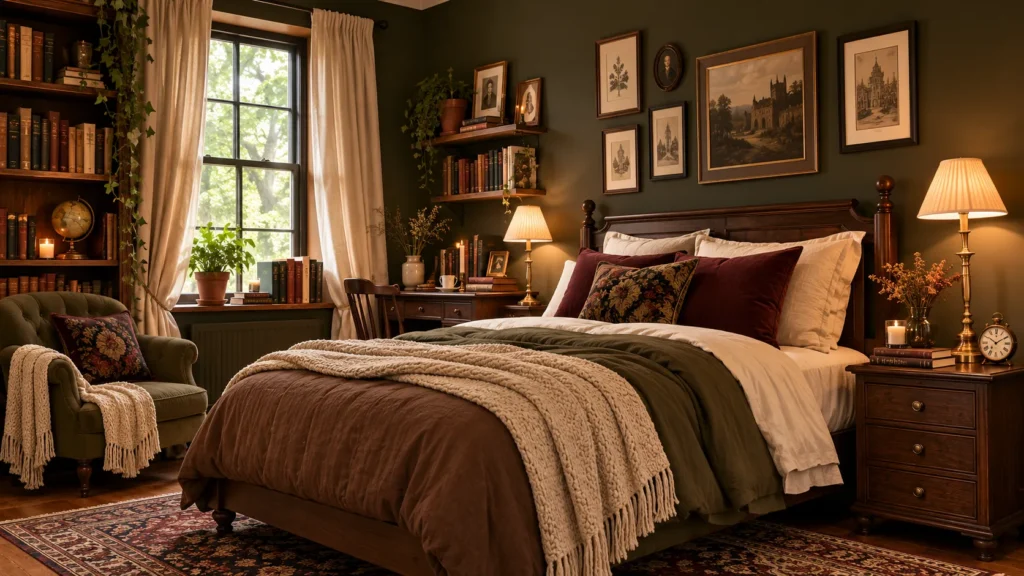
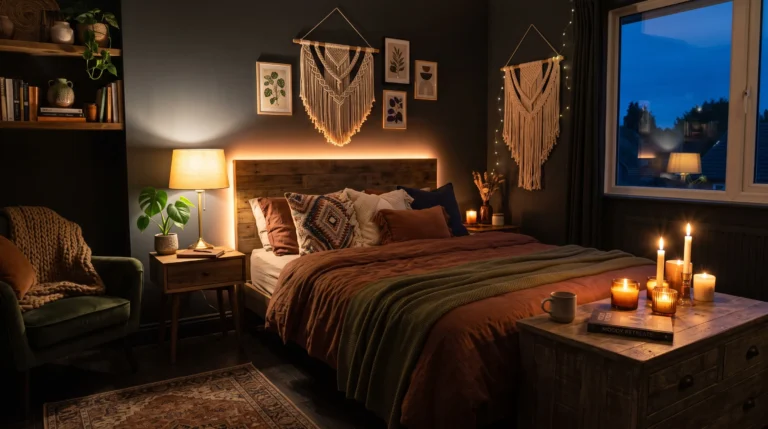
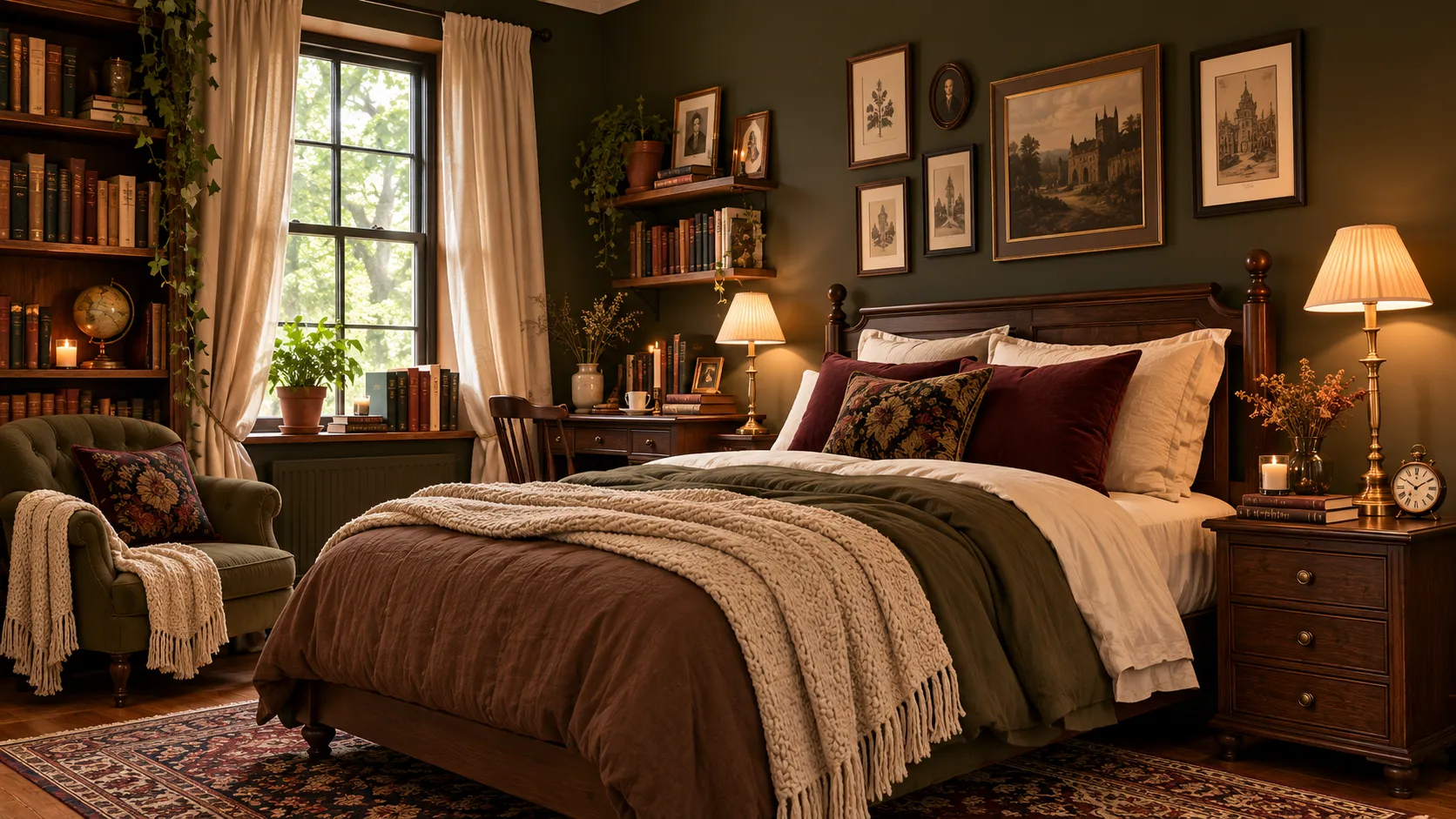
Dark academia bedroom ideas can turn an ordinary room into a moody, cozy retreat filled with character and old-world charm. You do not need expensive furniture, designer decor, or a complete makeover to create the look.
Think warm lighting, rich colors, vintage-inspired details, books, layered textures, and furniture that feels collected over time. The best part is that many of these changes can be made gradually, using pieces you already own or finding affordable alternatives. In my experience, small styling choices often make the biggest difference. This guide shares practical ways to bring that scholarly, romantic atmosphere into your bedroom while keeping your budget under control.
1. Moody Color Palette
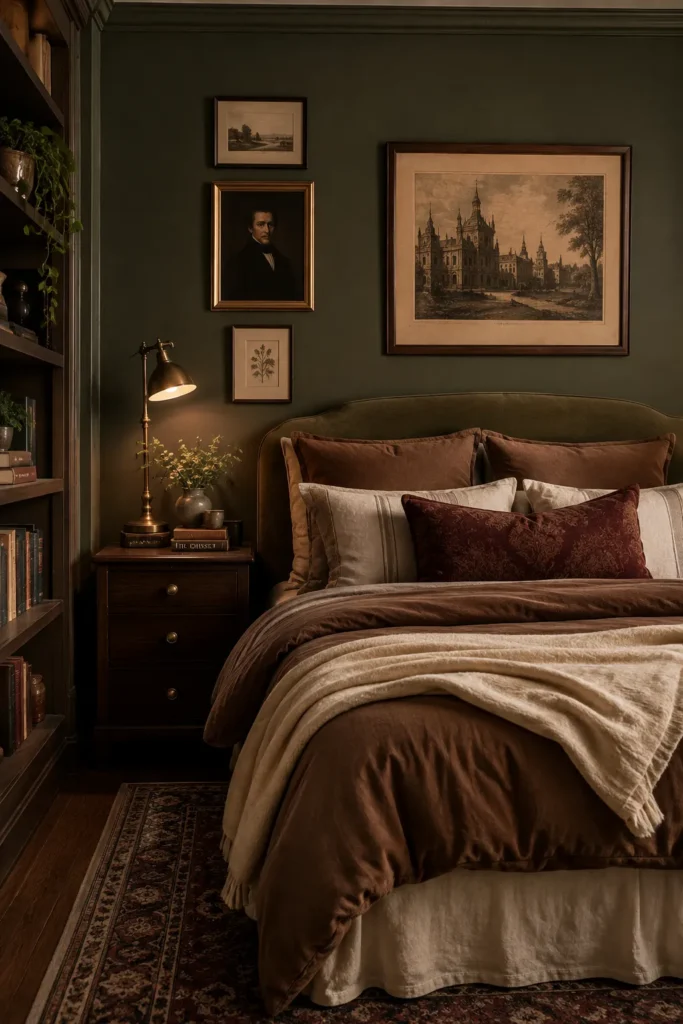
- Deep olive, brown, and burgundy create instant visual depth.
- Keep some lighter elements to prevent the room from feeling too dark.
- Use bedding, curtains, and cushions to introduce richer shades affordably.
- A single accent wall can make a noticeable difference without a full makeover.
A darker color palette can instantly give a bedroom the quiet, scholarly feeling associated with dark academia. Deep olive, charcoal, brown, and muted burgundy work especially well when balanced with cream or warm beige. You do not need to repaint every wall; one accent wall, darker bedding, or a few rich-toned textiles can create the same visual direction. In my experience, mixing several muted shades feels more sophisticated than using one heavy color everywhere. Keep the ceiling and larger surfaces lighter if the room is small, then introduce depth through curtains, cushions, artwork, and a textured throw.
Start with warm, earthy tones if you want the room to feel atmospheric without making it gloomy. A chocolate-brown throw, olive cushions, or rust-colored curtains can add instant depth while remaining affordable. These shades also pair naturally with wood furniture, brass accents, and cream textiles, which are common in scholarly-inspired interiors. If your walls are already light, use darker pieces around the bed to create a visual anchor rather than changing the whole room. This approach works particularly well in rentals because removable textiles can transform the mood without permanent alterations or a costly renovation.
2. Vintage Gallery Wall
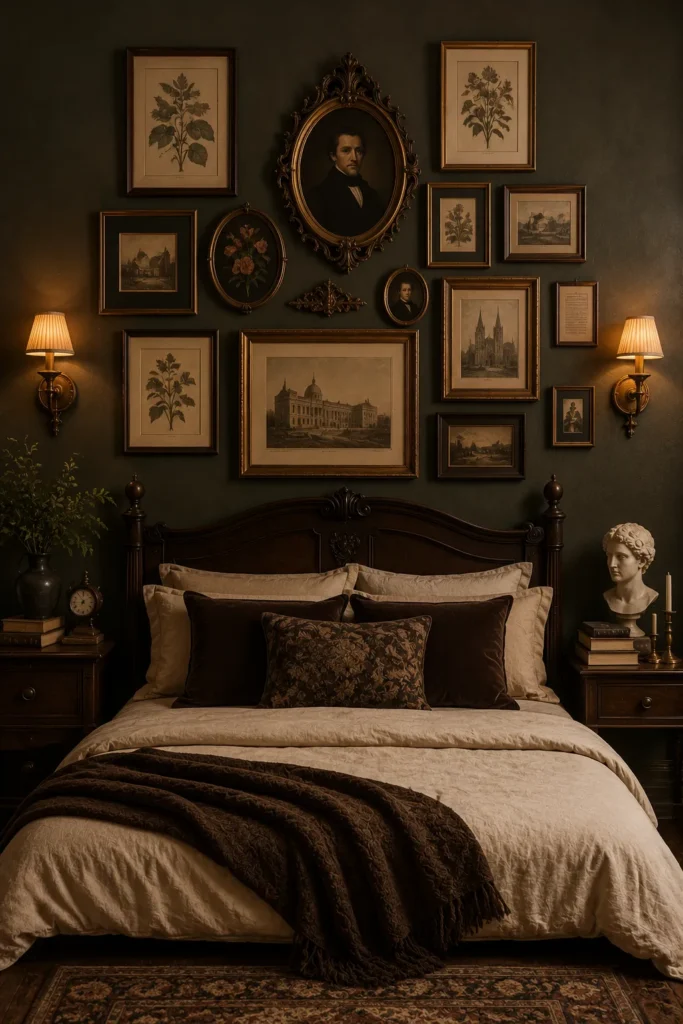
- Mix botanical prints, classical artwork, and old-style illustrations.
- Combine different frame sizes for a collected, authentic appearance.
- Thrifted frames can create vintage character without a large expense.
- Keep artwork in muted tones so the wall feels cohesive rather than cluttered.
A vintage gallery wall can become the visual centerpiece of a bedroom, especially when the surrounding furniture stays simple. Look for botanical prints, architectural sketches, classical portraits, maps, or antique-style illustrations in muted colors. Affordable thrift-store frames can make inexpensive prints look much more substantial. Arrange larger pieces first, then fill the gaps with smaller artwork to create a naturally collected appearance. The goal is not perfect symmetry; slight variation gives the display the feeling of something gathered over years. This is one of the easiest ways to add personality when your room lacks architectural character or decorative details.
For a budget-friendly approach, print public-domain artwork yourself and place it inside frames you already own. Choose cream, sepia, charcoal, and faded green tones so different images feel connected. If you have a narrow wall, create a vertical arrangement instead of spreading artwork across the entire room. A small picture ledge can also make changing the collection easy. I’ve noticed that keeping some empty wall space around the artwork makes the display feel more intentional and expensive. Add one small brass or wooden frame among simpler pieces to introduce contrast without overwhelming the composition.
3. Dark Wood Furniture
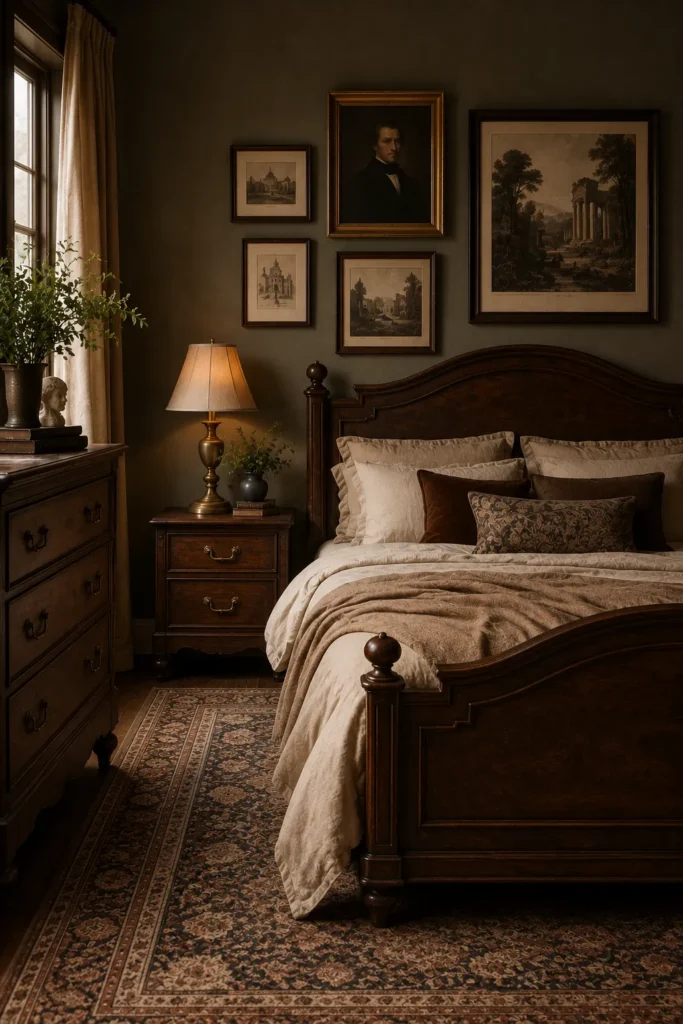
- Dark wood immediately adds warmth and traditional character.
- Choose one substantial wooden piece instead of replacing every item.
- Secondhand furniture can provide authentic texture and patina.
- Balance darker furniture with cream bedding and lighter textiles.
Dark wood furniture brings warmth and visual weight to a bedroom while making the space feel more established. A walnut-toned bed frame, vintage nightstand, or wooden dresser can create the traditional foundation that this style needs. You do not have to replace your entire furniture set to achieve it. Start with one noticeable piece and let smaller accessories support the tone. If your existing furniture is light wood, consider using a darker stain or removable styling elements instead. The contrast between rich wood and soft bedding creates a comfortable, layered look that feels intentional rather than overly decorated.
Secondhand stores and local resale listings can be useful when you are decorating on a budget because older wooden furniture often has the character that newer pieces try to imitate. Look for sturdy construction, simple shapes, and surfaces with natural variation rather than chasing perfection. Minor scratches can actually enhance the vintage appearance when the overall piece is well maintained. Pair dark furniture with cream bedding, an aged-looking rug, and warm lighting to keep the room balanced. In my experience, one beautiful wooden piece can make inexpensive surrounding decor look more cohesive and thoughtfully chosen.
4. Antique Reading Corner
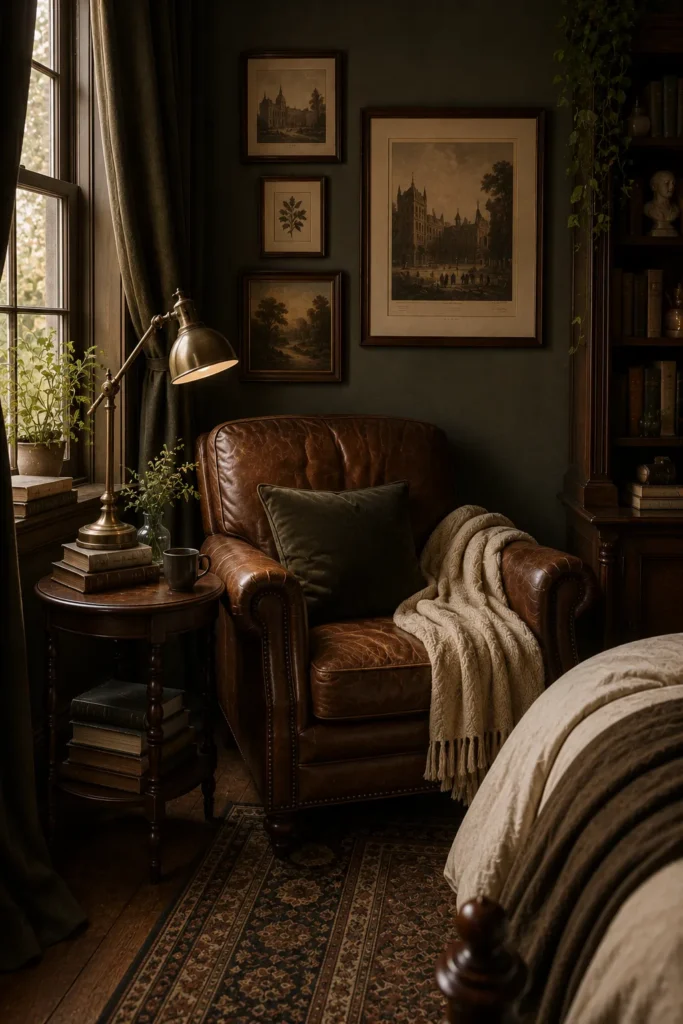
- A small reading chair instantly adds purpose and personality.
- Stack a few favorite books on a wooden side table.
- Choose warm lighting to make the corner inviting at night.
- A secondhand chair can create authentic character for less money.
A dedicated reading corner can make a bedroom feel more personal while reinforcing its scholarly character. You only need a comfortable chair, a small table, and a warm lamp to create the setup. Place the chair near a window when possible so natural light makes daytime reading pleasant. At night, use a table or floor lamp with a warm bulb for a softer atmosphere. Add a throw blanket and a small stack of books to make the area feel lived-in. Even a compact corner beside a dresser can become a useful retreat without requiring expensive furniture or major changes.
For a budget-friendly version, search for secondhand chairs with classic silhouettes rather than buying new furniture. Brown, tan, olive, and cream upholstery naturally complements darker bedroom colors. A small wooden stool can replace a traditional side table, while stacked books can double as decorative objects. I’ve noticed that keeping this corner slightly imperfect makes it feel more authentic and comfortable. Avoid filling every surface with accessories; leave enough room for a cup of tea, a book, or a small lamp. The result should feel like a real place you would actually use, not simply a staged decorating display.
5. Layered Bedding
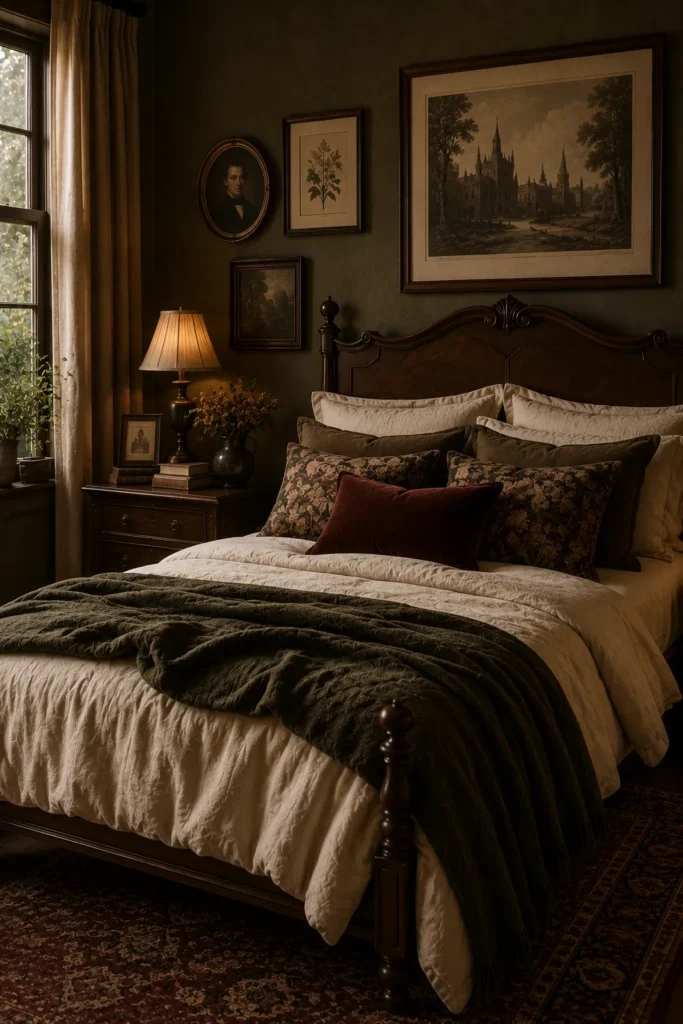
- Layer different fabrics to make the bed look richer and more inviting.
- Combine cream sheets with brown, olive, or burgundy accents.
- Use a textured throw to add depth without replacing your bedding.
- Mix old and new pillows for a naturally collected appearance.
Layered bedding is one of the simplest ways to create a luxurious-looking bedroom without spending heavily on furniture or decor. Start with neutral sheets, then add a textured duvet, quilt, throw, and a few pillows in earthy colors. Cream, brown, olive, rust, and muted burgundy work especially well together. Varying the textures matters more than matching everything perfectly. Linen, cotton, velvet, and knitted fabrics can create depth even when their colors stay within a simple palette. This approach also makes the bed look softer and more inviting, which is especially useful when the bedroom is the main visual focus.
You can build the look gradually instead of purchasing an entire bedding set at once. Begin with the pieces you already own, then add one affordable throw or cushion in a richer shade. Fold the throw casually across the lower third of the bed rather than arranging everything too neatly. A slightly relaxed finish gives the room a lived-in quality that suits the academic aesthetic. If your bedding is completely white, use darker pillows and a vintage-style quilt to introduce contrast. In my experience, thoughtful layering can make basic bedding feel dramatically more polished with very little expense.
View: 24 Stylish Home Office Setup Ideas for Small Spaces
6. Warm Table Lamps
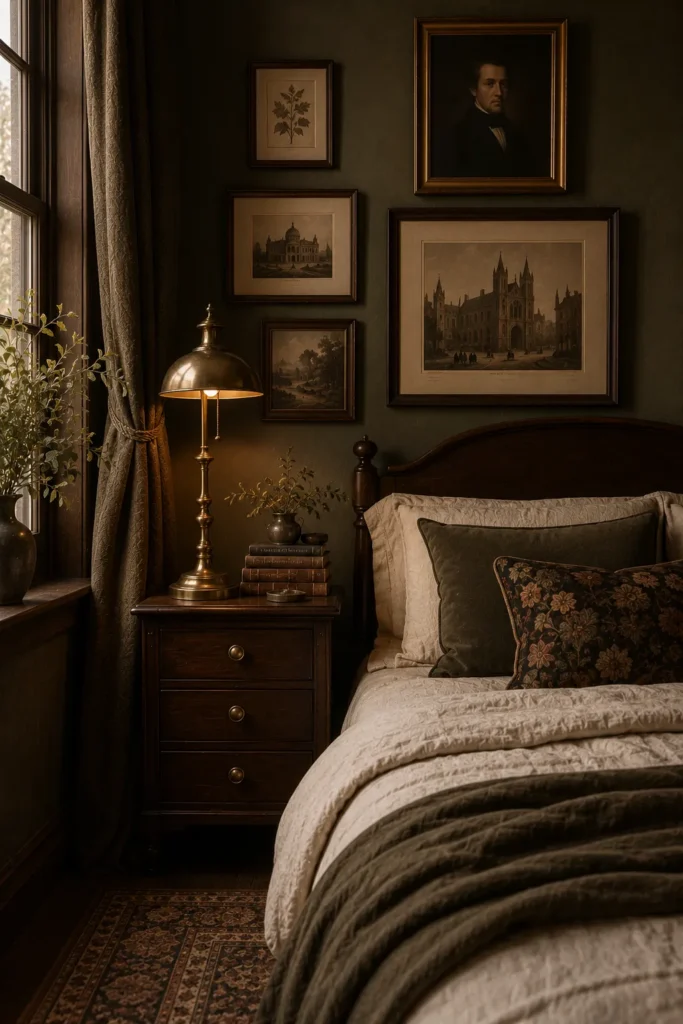
- Warm lamps create a softer atmosphere than bright overhead lighting.
- Brass or antique-style finishes add vintage character.
- Place a lamp beside the bed for both style and practical reading light.
- Look for secondhand lamps to achieve the look at a lower cost.
Lighting can completely change how a bedroom feels, and warm table lamps are especially effective for creating a cozy academic atmosphere. Instead of relying on a bright ceiling fixture, place a small lamp on the nightstand, dresser, or reading table. Choose warm bulbs that create a soft amber glow rather than harsh white light. Brass, aged bronze, dark metal, and ceramic bases can all work beautifully with traditional decor. The gentle contrast between warm light and deeper wall colors makes furniture and textures appear richer, helping even inexpensive pieces feel more atmospheric after sunset.
You can also use lamps strategically to highlight areas that deserve attention. A reading corner, artwork collection, or bedside table can become a visual focal point simply through targeted lighting. There is no need to buy matching lamps; coordinating finishes or similar warm bulbs is usually enough to make different pieces feel connected. If your budget is tight, check secondhand shops for older lamps with interesting silhouettes and replace the shade if necessary. I’ve seen simple lighting changes make bedrooms feel far more sophisticated because they improve both the appearance and the everyday comfort of the space.
7. Classic Book Display
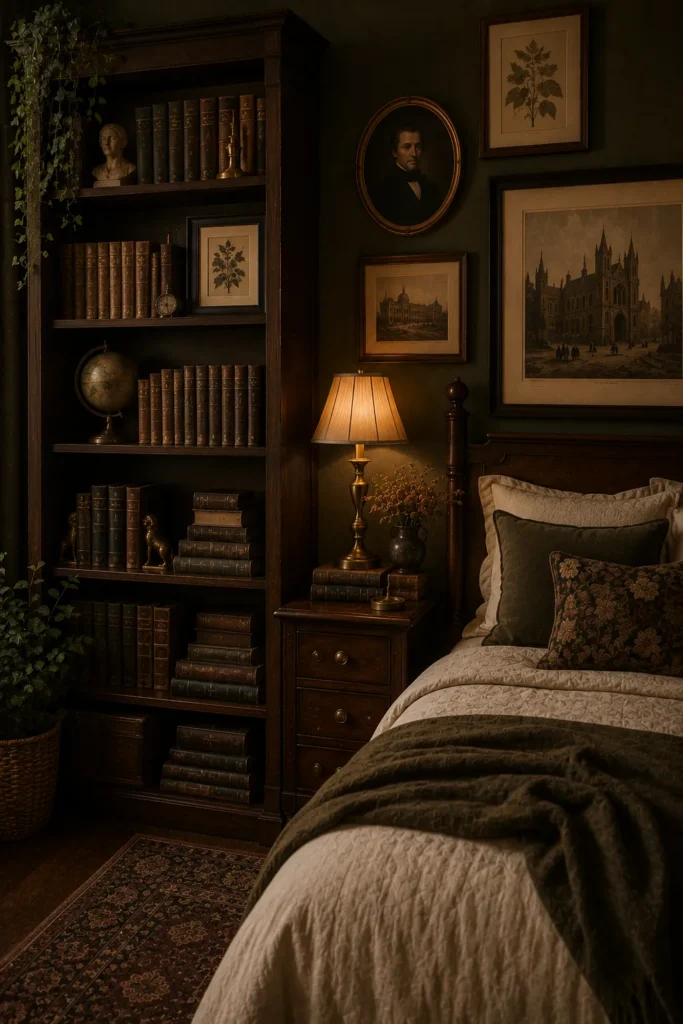
- Display books vertically and horizontally for a more collected look.
- Use existing books before buying decor specifically for styling.
- Add brass bookends or a small vintage object for extra character.
- Keep the arrangement practical so the shelf remains easy to use.
Books can bring instant personality to a bedroom while reinforcing its traditional academic atmosphere. A small bookshelf, floating shelf, or even a sturdy nightstand can become a stylish display when books are arranged thoughtfully. Mix vertical rows with a few horizontal stacks to create visual variation. Hardcover books in brown, cream, burgundy, black, or faded green naturally complement a moody palette. You can also place a small decorative object between groups of books to prevent the shelf from looking crowded. This approach works especially well because the decor is functional rather than purely ornamental, making every item useful.
If you already own books, start there instead of purchasing new ones simply for decoration. Remove overly bright dust jackets when appropriate, or turn books around if you prefer a quieter color palette. A brass bookend, small ceramic vessel, or vintage-looking clock can add another layer without filling the shelf. I’ve noticed that shelves look more authentic when they are not perfectly symmetrical. Leave a little breathing room between groups and allow some books to look naturally used. The result feels like a personal reading collection rather than a staged display created only for photographs.
8. Velvet Accent Chair
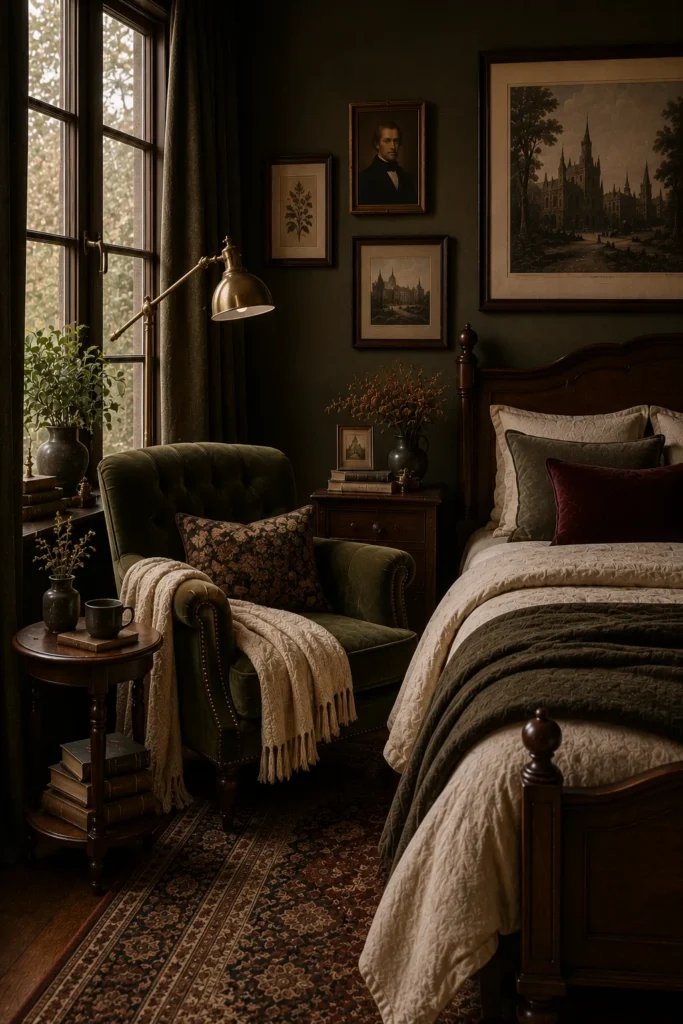
- Velvet introduces softness and a subtle sense of luxury.
- Deep green, brown, or burgundy works beautifully with darker interiors.
- A compact chair can fill an unused corner without overwhelming the room.
- Choose secondhand seating when working with a limited decorating budget.
A velvet accent chair can add softness and visual richness to a bedroom without requiring a complete furniture makeover. Place one beside a window, near a bookshelf, or in an empty corner where it can become a comfortable reading spot. Deep olive, burgundy, chocolate brown, and muted navy are particularly effective because they reinforce the room’s traditional color palette. The texture of velvet catches warm light beautifully, giving even a simple chair more depth. Add a small cushion or folded throw, and the corner can feel finished without needing several additional accessories.
You do not need a large statement chair to achieve the effect. A compact vintage-style seat can work beautifully in a smaller bedroom, especially when paired with a narrow side table. When shopping secondhand, focus on the chair’s shape and condition rather than worrying about whether the upholstery perfectly matches your room. A removable cushion or throw can help bridge small color differences. Keep the surrounding area relatively simple so the chair remains the focal point. I’ve noticed that giving one piece of furniture room to breathe often makes a bedroom feel more sophisticated and less visually crowded.
9. Layered Area Rugs
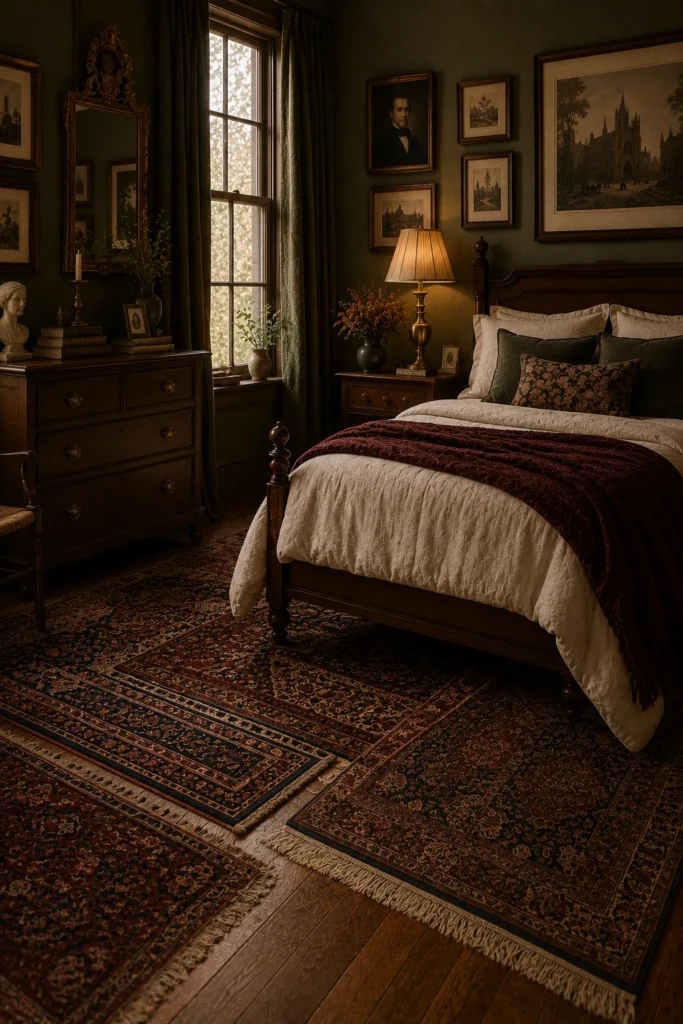
- Layering rugs adds warmth and visual depth beneath the furniture.
- Persian-inspired patterns work naturally with vintage academic decor.
- Use a larger neutral rug underneath a smaller patterned one.
- Secondhand rugs can provide character without requiring expensive new flooring.
Layered rugs can make a bedroom feel warmer, older, and more collected while also softening hard flooring. Start with a larger neutral rug that defines the main furniture area, then place a smaller patterned rug near the bed or reading corner. Persian-inspired motifs, faded florals, and traditional borders work particularly well because their worn appearance complements vintage furnishings. The goal is not perfect coordination; slight variation makes the room feel naturally assembled over time. Rugs also add practical comfort, especially beside the bed where stepping onto a soft surface first thing in the morning makes the space feel more welcoming.
If purchasing two rugs is outside your budget, begin with one patterned piece and position it where it has the greatest visual impact. A smaller rug beside the bed can be surprisingly effective, particularly in a compact room. Look for muted colors rather than extremely bright patterns so the floor supports the rest of the decor. If you find a vintage rug with minor signs of wear, consider them part of its character as long as it remains structurally sound. In my experience, a beautifully textured rug can make inexpensive furniture feel more established and connected to the overall room design.
10. Brass Decorative Accents
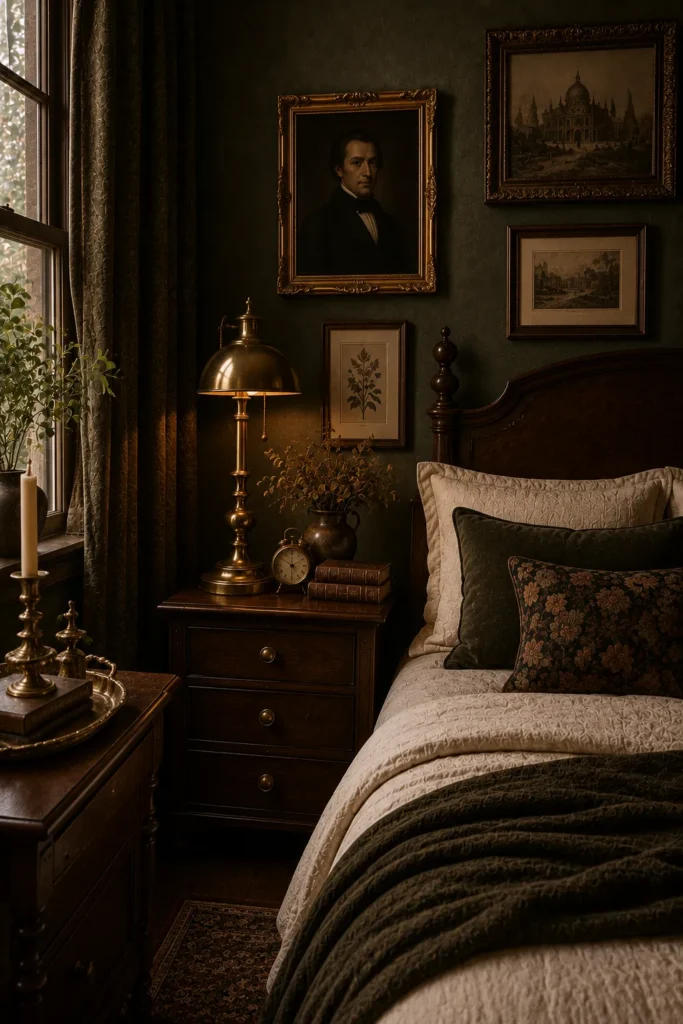
- Brass adds warmth and vintage character without overwhelming the room.
- Use a few small accents instead of decorating every surface.
- Mix brass with dark wood for a classic, collected appearance.
- Thrift stores can be useful for finding affordable vintage-style pieces.
Small brass accents can make a dark bedroom feel warmer and more thoughtfully styled. A brass lamp, picture frame, candle holder, clock, or decorative tray can introduce subtle metallic detail without making the space look overly polished. Brass works especially well beside dark wood because the warm metal creates gentle contrast against deeper surfaces. You do not need a matching collection; a few related pieces scattered around the room can create enough visual connection. This is also a practical budget upgrade because small accessories can change the overall impression without requiring new furniture or expensive renovations.
Try placing one brass accent near the bed, another on a dresser, and perhaps a third around your reading area. Keeping the pieces separated prevents the metallic finish from becoming too dominant. Aged or brushed brass is usually easier to blend with vintage-inspired decor than highly shiny finishes. If your existing room feels flat, even replacing a basic lamp or picture frame with a brass-toned alternative can introduce more character. I’ve noticed that warm metals are particularly effective in evening lighting because they reflect the glow softly and make the surrounding textures feel richer and more inviting.
11. Antique Mirror
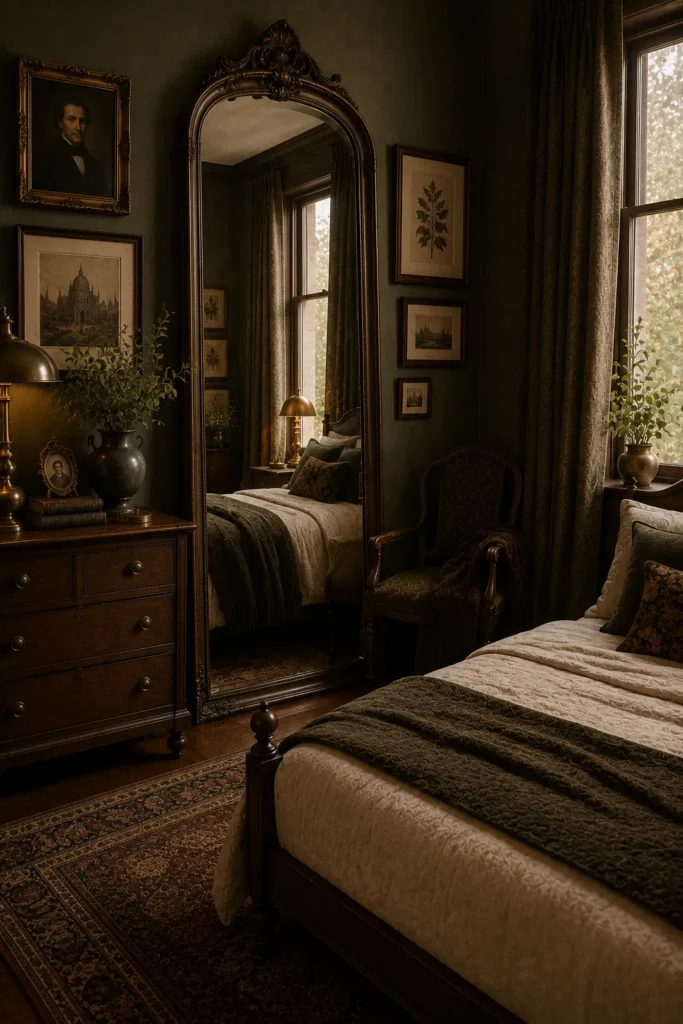
- An ornate mirror adds character while making the room feel more spacious.
- Position it where it can reflect natural or warm artificial light.
- Choose aged bronze, dark wood, or antique-gold framing.
- Secondhand mirrors can offer authentic decorative detail at lower prices.
An antique-style mirror can add both function and atmosphere to a bedroom, especially when the space feels visually flat. Choose a frame with traditional detailing, aged bronze, dark wood, or muted gold rather than a completely modern design. A tall mirror leaning against a wall can create an effortless vintage impression, while a smaller framed mirror works well above a dresser. Position it where it can reflect a window or warm lamp so the room gains additional brightness. The combination of reflection and ornate framing can make a simple bedroom feel more layered without adding much furniture.
For a budget-friendly approach, search secondhand shops for mirrors with interesting frames rather than focusing on perfect condition. Small imperfections can actually support the aged character of the room. If the frame color feels wrong, a careful repaint in a darker or warmer finish can help it blend with your existing decor. Avoid placing too many mirrors around the room, since one strong piece usually has more impact than several competing reflections. In my experience, an appropriately positioned mirror can make a small bedroom feel noticeably more open while also functioning as one of its most distinctive decorative elements.
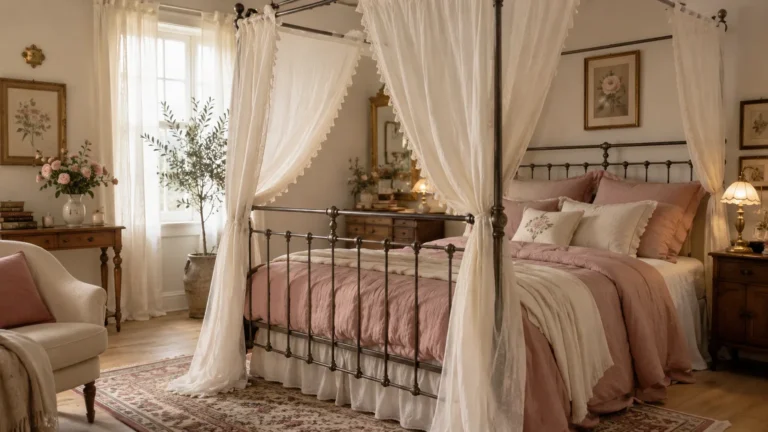
12. Curtained Four-Poster Bed
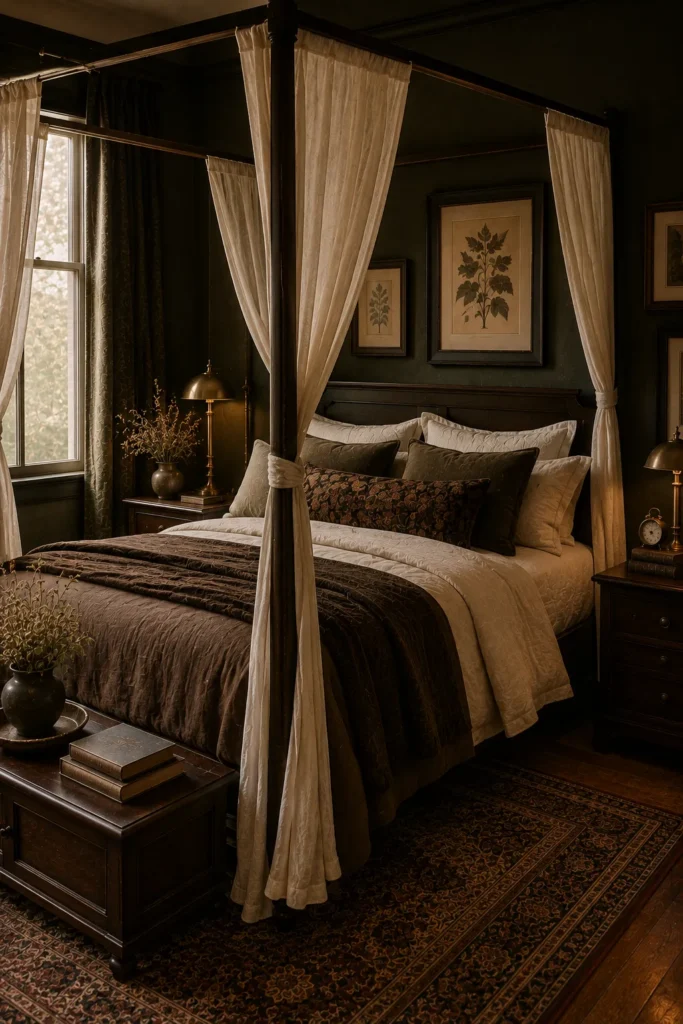
- Light curtains can create the appearance of a dramatic canopy.
- Dark wood posts provide a strong architectural focal point.
- Keep the fabric loose and simple for an understated look.
- Adapt the idea with removable curtain rods if a four-poster bed is unavailable.
A curtained four-poster bed can become the defining feature of a dark academia bedroom by adding height, softness, and old-world character. The effect does not have to feel extravagant. Lightweight cream or oatmeal curtains can be loosely draped around a dark wooden frame, creating a gentle contrast against richer bedding and walls. The vertical posts naturally draw the eye upward, making the bed feel more substantial. Layer the mattress with neutral linen, a darker quilt, and one textured throw to complete the cozy appearance while keeping the overall design practical and comfortable.
If you do not already have a four-poster bed, you can borrow the visual idea without buying an entirely new frame. Slim curtain rods mounted carefully around the bed can create a similar canopy effect, provided they are securely installed and suitable for the wall or ceiling. Keep the fabric breathable and avoid excessive layers that make the room feel cramped. A simple arrangement usually looks more sophisticated than heavy draping. This approach works particularly well when the rest of the bedroom is understated because the bed becomes a strong focal point without requiring numerous decorative accessories or expensive statement pieces.
13. Botanical Wall Prints
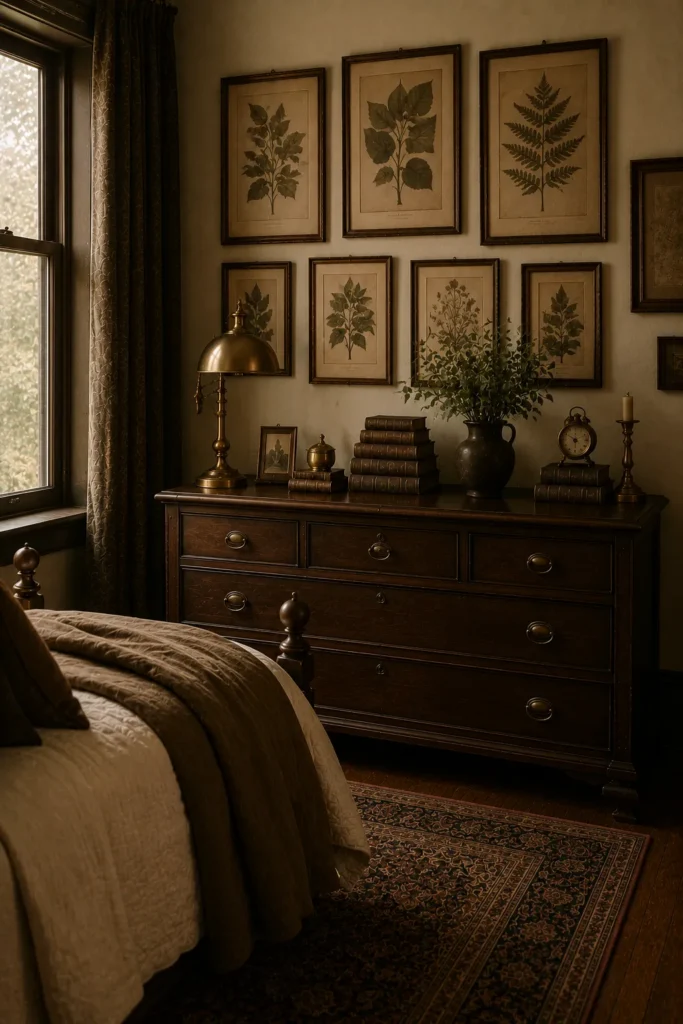
- Botanical artwork introduces natural detail without bright modern colors.
- Sepia, olive, and cream prints blend easily with vintage decor.
- Arrange several small prints together for a fuller display.
- Printable artwork can create this look for very little money.
Botanical prints bring a quiet connection to nature while keeping the bedroom visually sophisticated. Vintage-style illustrations of herbs, leaves, flowers, and plants work especially well when printed in muted green, sepia, brown, or charcoal tones. Hang several pieces above a dresser, bedside table, or bed to create a simple gallery arrangement. Their delicate details contrast beautifully with heavier furniture and darker textiles. Because botanical artwork is usually easy to find as affordable prints, this idea can transform a blank wall without requiring expensive original paintings or elaborate decorative pieces.
To keep the arrangement cohesive, choose artwork with similar paper tones or frame several prints using the same finish. You can create variation through different image sizes rather than mixing too many colors. If your bedroom already contains darker walls, use cream or aged-paper backgrounds so the artwork remains visible. A few small frames can also be arranged vertically in a narrow space. I’ve noticed that botanical prints are particularly useful when a room feels too heavy because their fine lines introduce visual lightness while still supporting the traditional, scholarly character of the overall design.
14. Classic Writing Desk
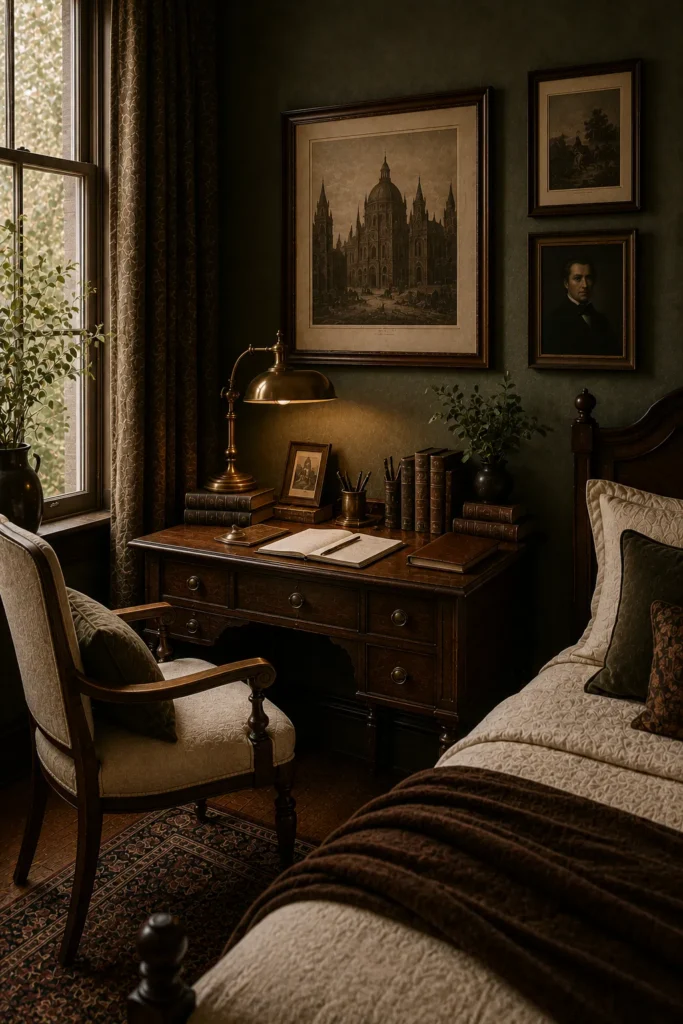
- A small writing desk adds function and old-world character.
- Choose a compact design if the bedroom has limited floor space.
- Keep only useful items on the desktop to maintain a refined look.
- A secondhand wooden desk can provide authentic character affordably.
A classic writing desk can give a bedroom the feeling of a personal study while adding useful workspace. Look for a compact wooden desk with simple traditional lines, tapered legs, or small drawers. Place it near a window when possible so the area receives natural daytime light. A brass lamp, notebook, a few books, and a comfortable chair can complete the arrangement without covering every surface. The combination of dark wood and practical accessories creates a focused corner that feels purposeful rather than decorative. It is especially useful for bedrooms that need to serve multiple functions.
You do not need a large executive desk to achieve the look. A narrow writing table can fit beside a dresser or against a small wall, while a simple wooden chair keeps the arrangement visually light. When shopping secondhand, prioritize a sturdy frame and useful proportions over flawless finishes. Small marks can add personality and make the furniture feel established. Keep cables organized and avoid excessive desktop clutter so the area remains calm. In my experience, a functional workspace looks far more convincing when it appears genuinely used, with a few practical objects rather than a collection of purely decorative items.
15. Old-World Wall Sconces
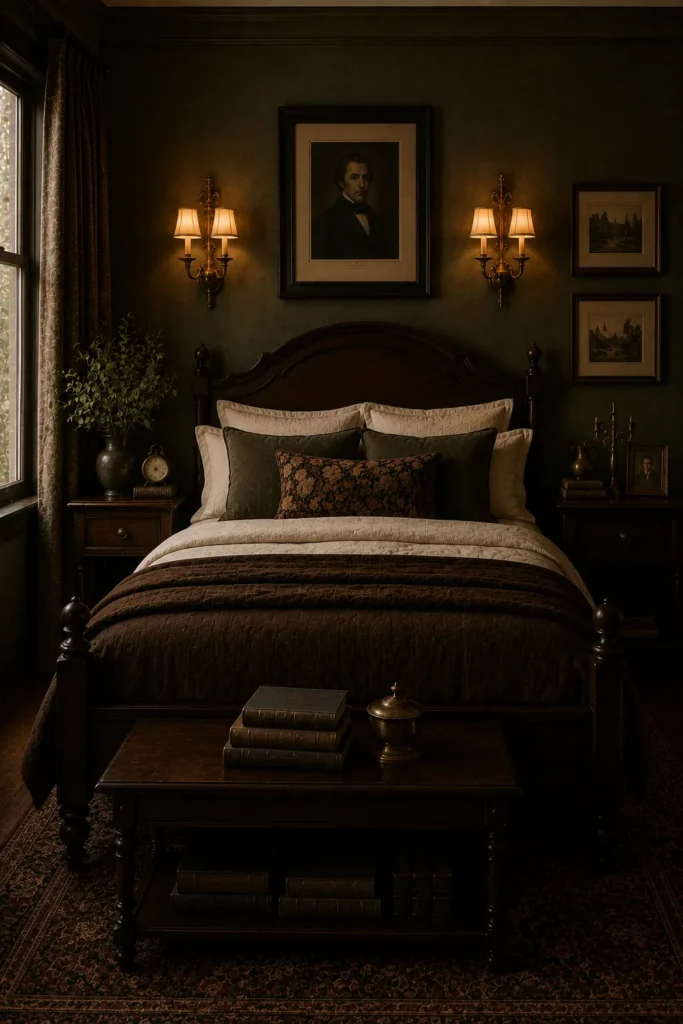
- Wall sconces create focused lighting while freeing nightstand space.
- Brass or aged bronze finishes reinforce the vintage aesthetic.
- Place matching sconces beside the bed for balanced visual structure.
- Plug-in versions can offer a practical alternative to hardwired fixtures.
Old-world wall sconces can make a bedroom feel more architectural and established, especially when placed symmetrically beside the bed. Choose fixtures with aged brass, bronze, dark metal, or traditional glass details to support the academic atmosphere. Warm bulbs create a soft glow that highlights nearby artwork, bedding, and wood furniture after dark. Besides looking beautiful, sconces free up valuable nightstand space for books, glasses, or other essentials. Their vertical placement also draws attention upward, making the bed wall feel more finished without requiring a large collection of decorations.
If electrical installation is not practical, plug-in sconces can provide a similar visual effect without permanent wiring changes. Use cable covers or careful cord placement to keep the installation tidy. Matching fixtures create a classic appearance, but slightly different vintage pieces can also work when their finishes are compatible. Keep the light warm and relatively soft so the room remains relaxing rather than overly bright. A pair beside the bed can become one of the strongest visual details in the space, particularly when combined with dark wood, framed artwork, and layered bedding.
16. Vintage Trunk Storage
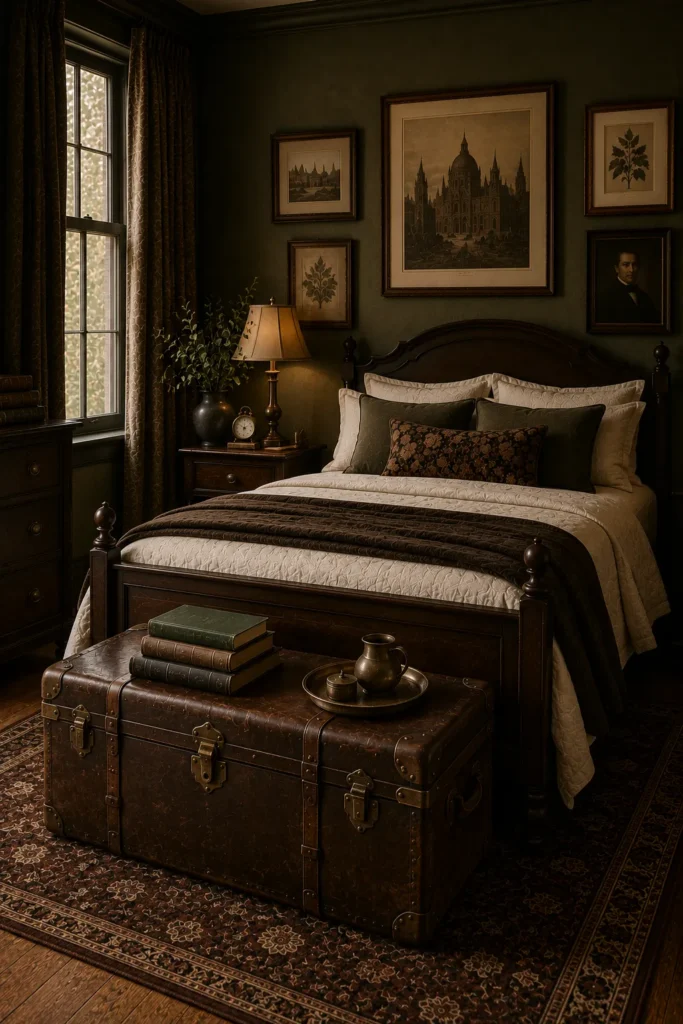
- A vintage trunk adds character while providing hidden storage.
- Place it at the foot of the bed for practical accessibility.
- Brown leather, canvas, or aged wood fits the traditional palette.
- Use the surface for books, a tray, or a folded throw.
A vintage trunk can solve a storage problem while adding strong decorative character to the bedroom. Placed at the foot of the bed, it becomes both useful furniture and a visual anchor. Look for brown leather, aged canvas, dark wood, or muted metal details that complement the rest of the room. Inside, you can store extra blankets, seasonal bedding, or clothing that does not need to stay within easy reach. The closed storage keeps the room looking tidy while the worn exterior adds the collected, traveled feeling that works beautifully with traditional academic interiors.
You do not need to buy an expensive antique trunk to achieve this effect. Secondhand storage chests, wooden boxes, and vintage-style suitcases can create a similar impression when styled thoughtfully. Make sure the piece is sturdy and that its dimensions leave enough walking space around the bed. If the top is flat, use it for a small stack of books or a folded blanket rather than covering the entire surface. I’ve noticed that practical storage often looks more intentional when it doubles as decor, especially in smaller bedrooms where every piece needs to serve more than one purpose.
17. Sepia Photo Frames
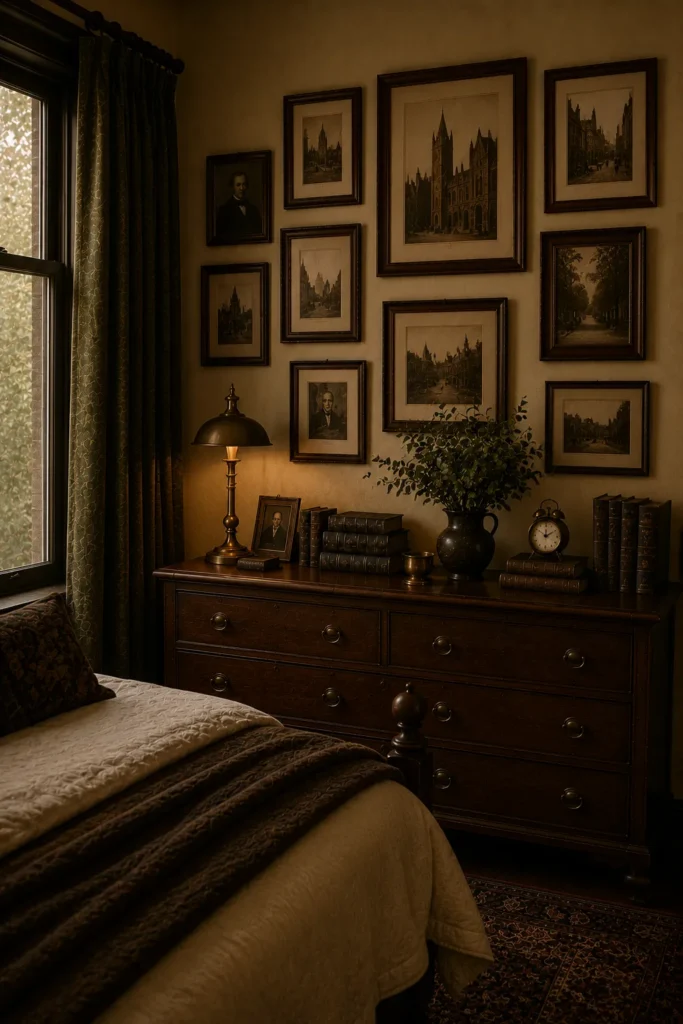
- Sepia photographs add a sense of history without bright visual distractions.
- Mix portraits, architecture, landscapes, or botanical subjects.
- Use wooden or antique-style frames for stronger cohesion.
- A small collection can fill an empty surface or wall affordably.
Sepia photographs can give a bedroom an immediate sense of history and personality. Choose portraits, old architecture, landscapes, family-style photographs, or historical-looking scenes in muted brown and cream tones. Display them in wooden, bronze, or aged-looking frames to strengthen the traditional character. A small arrangement above a dresser can become a subtle focal point, while several frames around the bed can create a more immersive effect. Because the palette remains restrained, the images add interest without competing with darker walls, patterned bedding, or other vintage-inspired elements already in the room.
For an affordable display, use printable photographs or images you already have and print them in a consistent sepia tone. Frame several small pictures instead of purchasing one large statement piece. This also gives you flexibility to change the collection later. Keep a little spacing between frames so the arrangement feels deliberate rather than crowded. If you want a more authentic appearance, combine photographs with one botanical print or architectural sketch. In my experience, personal-looking artwork makes a bedroom feel warmer because it suggests a story and gives the space character beyond coordinated furniture and accessories.
18. Textured Linen Curtains
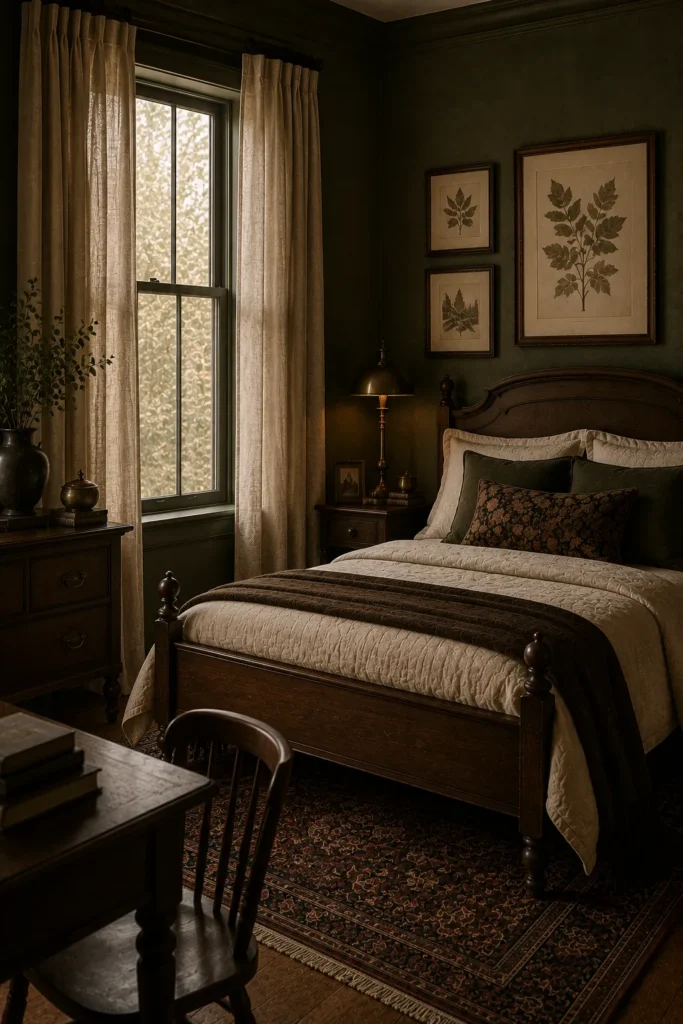
- Linen curtains soften hard lines and add natural texture.
- Oatmeal, cream, taupe, and muted brown work well with darker walls.
- Floor-length panels can make the ceiling appear taller.
- Choose simple fabrics instead of heavily patterned curtains for a timeless finish.
Textured linen curtains can soften a dark bedroom while adding the relaxed, natural quality that keeps the space from feeling too formal. Floor-length panels in oatmeal, cream, taupe, or warm beige create a gentle contrast against olive, brown, or charcoal walls. Their slightly uneven texture catches daylight beautifully and adds movement around the window. Curtains can also make the room feel more finished because they frame one of its largest architectural features. Even simple furniture can appear more intentional when the window is dressed with substantial fabric that complements the bedding and surrounding textures.
For a budget-conscious update, focus on length and texture rather than expensive custom treatments. Panels that reach close to the floor usually create a more polished appearance than short curtains, and hanging the rod slightly higher can emphasize the room’s vertical lines. Avoid overly glossy materials because natural-looking fabrics suit the aesthetic better. If your existing curtains are neutral, adding a textured throw or matching cushion can connect them visually to the rest of the room. I’ve noticed that soft window treatments are especially effective in bedrooms because they improve both the appearance and the sense of comfort.
19. Gallery Picture Ledge
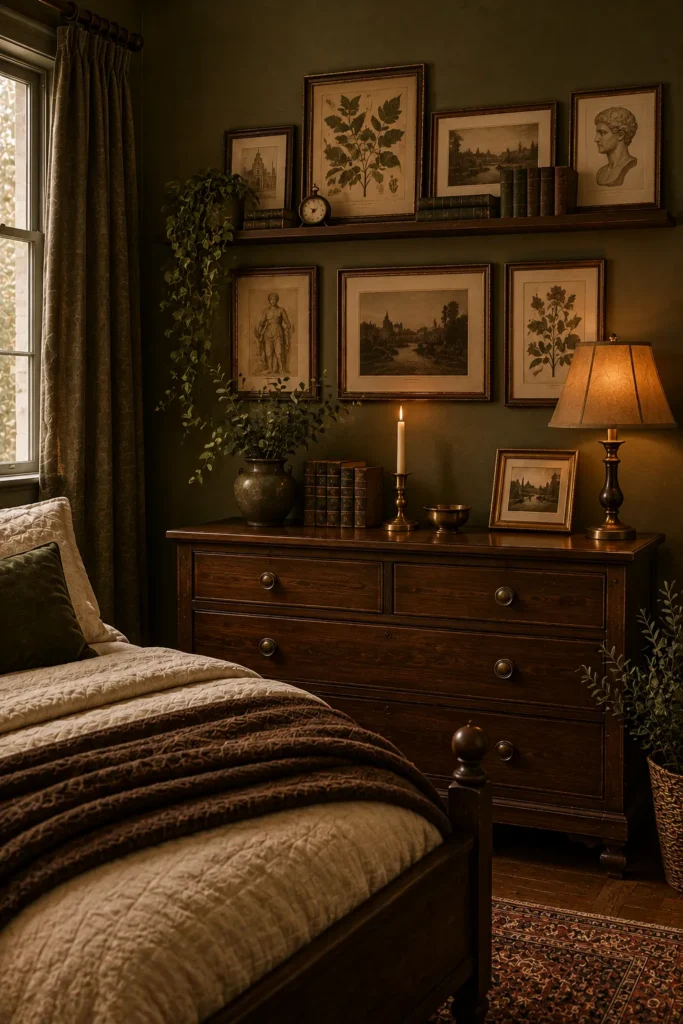
- A picture ledge makes artwork easy to rearrange without extra wall holes.
- Layer different print sizes for a collected appearance.
- Add a few books or small objects between framed pieces.
- Use dark wood to reinforce the room’s traditional character.
A picture ledge offers an easy way to display artwork while keeping the bedroom flexible and visually layered. Mount one narrow wooden shelf above a dresser, desk, or bed, then lean several framed prints against the wall instead of hanging every piece individually. Botanical illustrations, sepia photographs, maps, and classical sketches can overlap slightly to create a collected appearance. Add a small stack of books or one brass accessory for dimension. This arrangement works especially well for renters or anyone who enjoys changing decor because the artwork can be moved around without repeatedly creating new holes.
For a budget-friendly version, a simple wooden shelf can provide the same effect as a more expensive gallery system. Paint or stain it a darker shade if necessary so it blends with the furniture. Keep the largest frame toward the back and smaller pieces toward the front to create depth without making the display unstable. Avoid filling the entire shelf from edge to edge; a little empty space keeps the arrangement breathable. I’ve noticed that picture ledges are particularly useful when decorating gradually because new artwork can be added over time without disrupting the original composition.
20. Study Nook
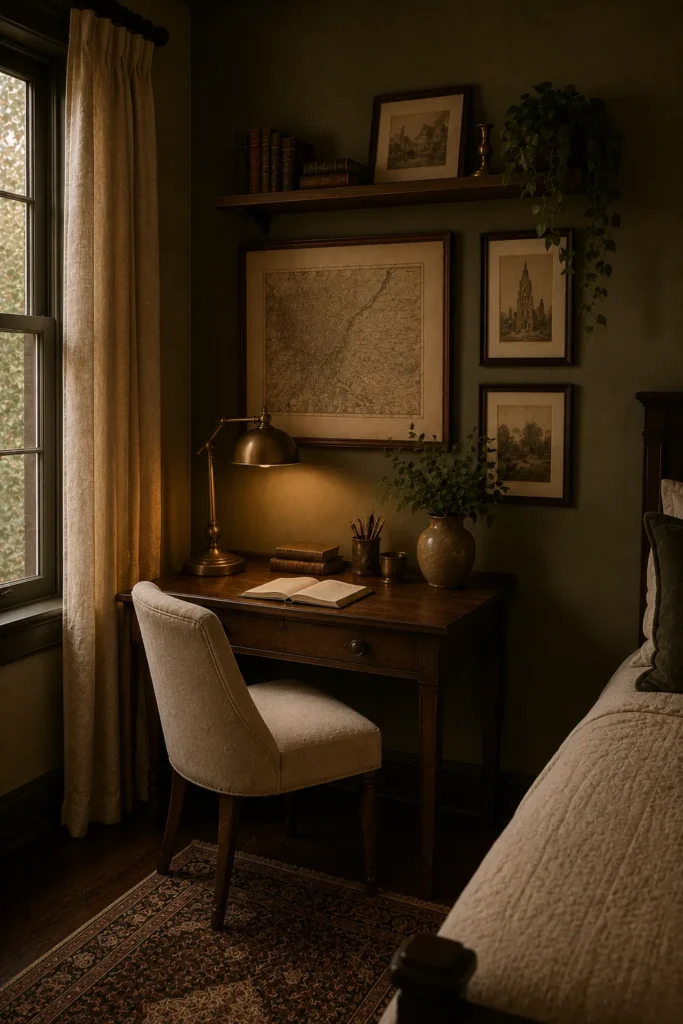
- A compact desk can turn an unused wall into a functional study area.
- Keep the palette simple so the nook feels calm and focused.
- Use vertical artwork to make a narrow corner feel taller.
- Combine practical storage with a few carefully chosen vintage accents.
A small study nook can make a bedroom feel like a private library without requiring a dedicated office. A narrow wooden desk, comfortable chair, warm lamp, and a few books are enough to establish the setup. Position the desk against an empty wall or beside a window when possible. Add one framed map, botanical print, or classical sketch above it to create visual interest without clutter. The darker wood and warm lighting help the workspace blend naturally with the rest of the room, while the compact layout keeps valuable floor space available for the bed and storage.
Keep the desk surface intentionally simple so the area remains useful rather than becoming another decorative display. A small drawer organizer, book stack, or ceramic container can provide practical storage while still supporting the aesthetic. If the bedroom is very small, choose a wall-mounted desk or slim writing table. Use a chair that can slide completely underneath when the desk is not being used. In my experience, small workspaces feel much more inviting when the lighting is warm and the desktop stays clear, especially when the same room needs to function as both a relaxing bedroom and productive study space.
21. Layered Throw Blankets
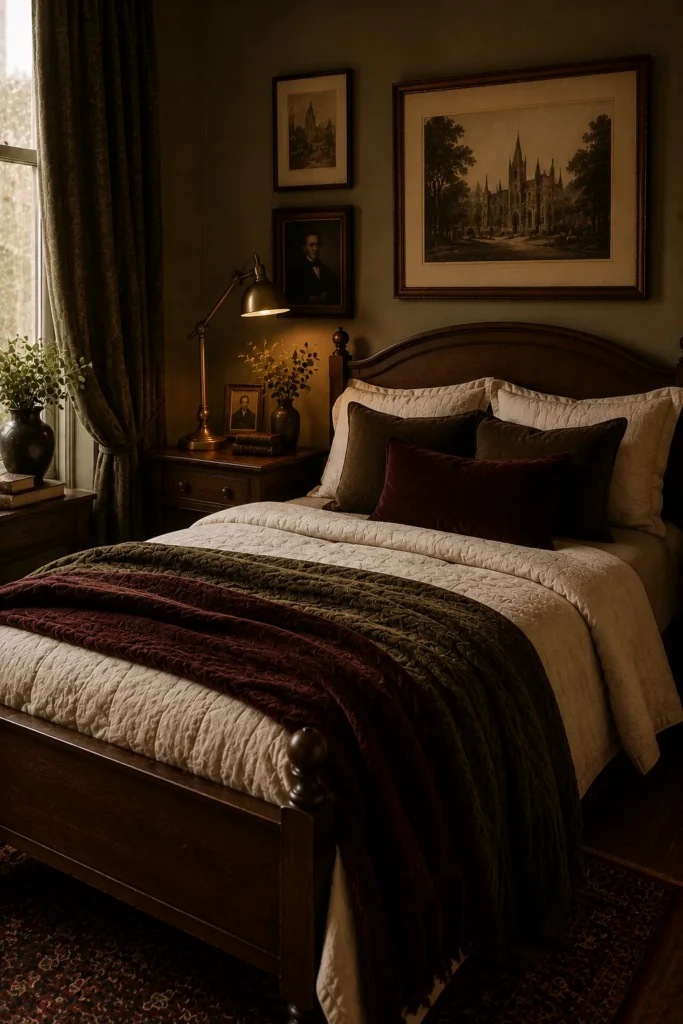
- Layering throws adds warmth and visual depth with minimal effort.
- Mix wool, cotton, linen, or knitted textures for contrast.
- Use muted earthy colors instead of overly bright shades.
- Drape one blanket casually to create a relaxed, lived-in finish.
Throw blankets are one of the easiest ways to make a bedroom feel warmer, softer, and more visually complete. Instead of matching every textile, combine different textures in related earthy shades. A cream linen duvet can work beautifully with an olive knitted blanket, brown wool throw, or muted burgundy accent. Fold one blanket neatly across the foot of the bed and drape another more casually over a chair. The contrast between structured and relaxed placement keeps the room from looking overly staged. This small styling change can create a noticeably richer appearance without replacing your existing bedding.
You can also rotate blankets seasonally so the room feels fresh without buying new decor each time. Lightweight cotton and linen work well in warmer weather, while heavier wool or knitted pieces add comfort during colder months. Keep the colors connected to the room’s existing palette so the layers look intentional. If the bedroom already contains several patterns, choose solid-colored throws to create balance. I’ve noticed that a casually placed blanket often makes a room feel more welcoming because it suggests the space is designed for actual relaxation rather than simply arranged for appearance.
22. Moody Ceiling Treatment
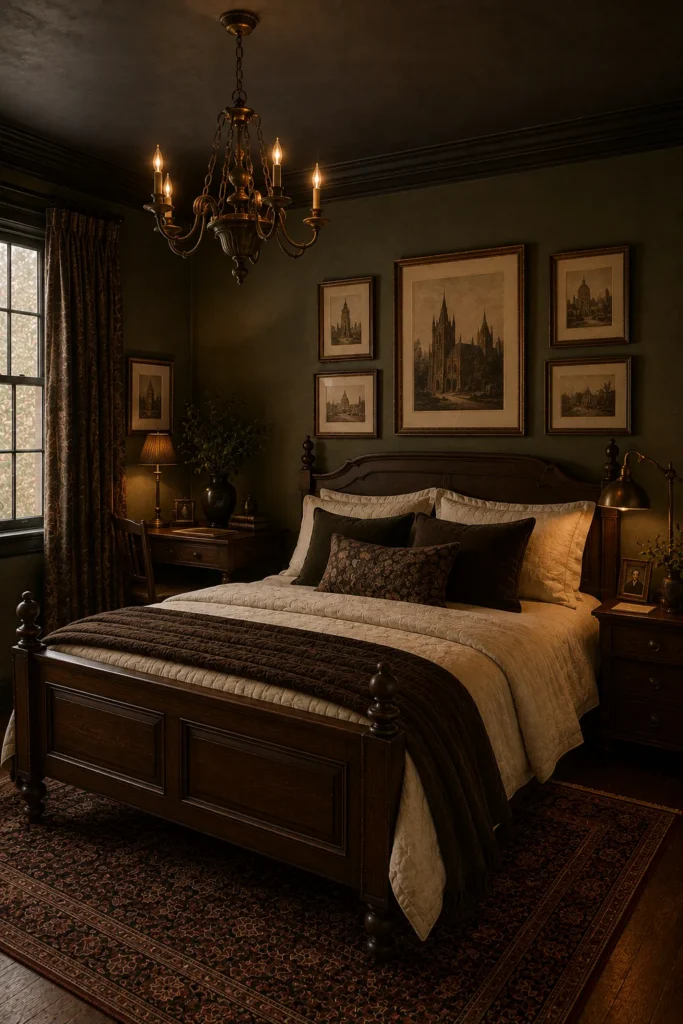
- A darker ceiling creates depth and makes the room feel more enveloping.
- Use a muted shade rather than an intense black for better balance.
- Keep walls and bedding slightly lighter to prevent visual heaviness.
- Removable wallpaper can offer an alternative in rental spaces.
A darker ceiling can give a bedroom a surprisingly dramatic transformation without changing its furniture. Soft charcoal, deep olive, muted brown, or warm taupe can create a cozy sense of enclosure while maintaining an elegant appearance. The effect works best when the walls and larger textiles are slightly lighter, allowing the ceiling to feel intentional rather than overwhelming. Warm lighting becomes especially important because it highlights the contrast and keeps the room comfortable after sunset. This technique is ideal when you want a stronger architectural statement without purchasing new furniture or filling the room with accessories.
If painting the ceiling is not practical, consider removable wallpaper or simply emphasize the upper portion of the room through a darker light fixture and tall curtains. Keep the rest of the palette restrained so the ceiling remains part of the overall composition. In smaller bedrooms, choose a softer shade instead of an almost-black finish, which can make the space feel visually compressed. I’ve noticed that darker overhead tones work particularly well when paired with cream bedding and warm wood because the lighter elements provide enough contrast to keep the room feeling balanced and inviting.
23. Thrifted Decor Collection
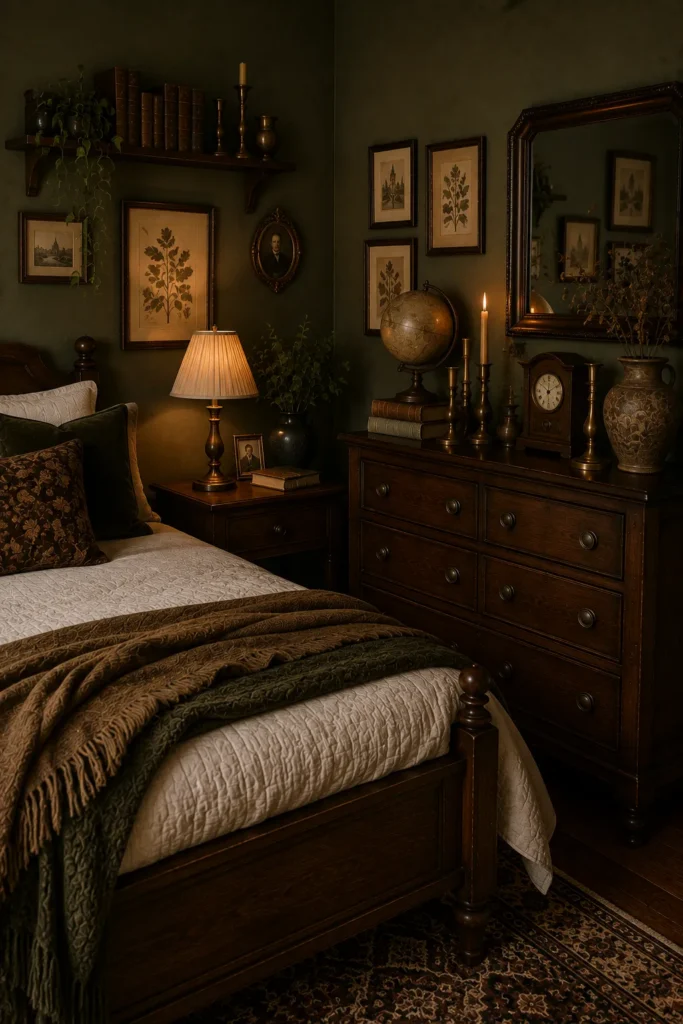
- Thrifted pieces can add character that new decor often struggles to replicate.
- Look for books, frames, clocks, ceramics, and brass accessories.
- Choose items individually instead of buying matching sets.
- Check condition carefully before bringing secondhand pieces into the room.
A collection of thrifted decor can make a bedroom feel genuinely collected rather than newly assembled. Look for small objects such as old books, brass candleholders, wooden clocks, ceramic vessels, picture frames, or vintage-style artwork. These pieces can be placed across a dresser, bookshelf, desk, or nightstand to create subtle layers of history. The key is choosing items that share a general color palette rather than matching perfectly. Dark wood, aged brass, cream ceramics, and muted artwork naturally work together. Because each item can be inexpensive, this approach is particularly useful when decorating gradually on a limited budget.
When thrifting, resist the urge to buy every interesting object you find. Consider whether each piece has a useful purpose, appealing texture, or strong visual connection to your existing decor. Check wooden furniture for stability and inspect fabrics and upholstered items carefully before purchasing. Smaller accessories are often the easiest starting point because they require little space and can be moved around easily. In my experience, a few distinctive secondhand finds can give a room much more personality than a large collection of identical decorative pieces, especially when they are mixed with everyday items you already own.
24. Cozy Window Seat
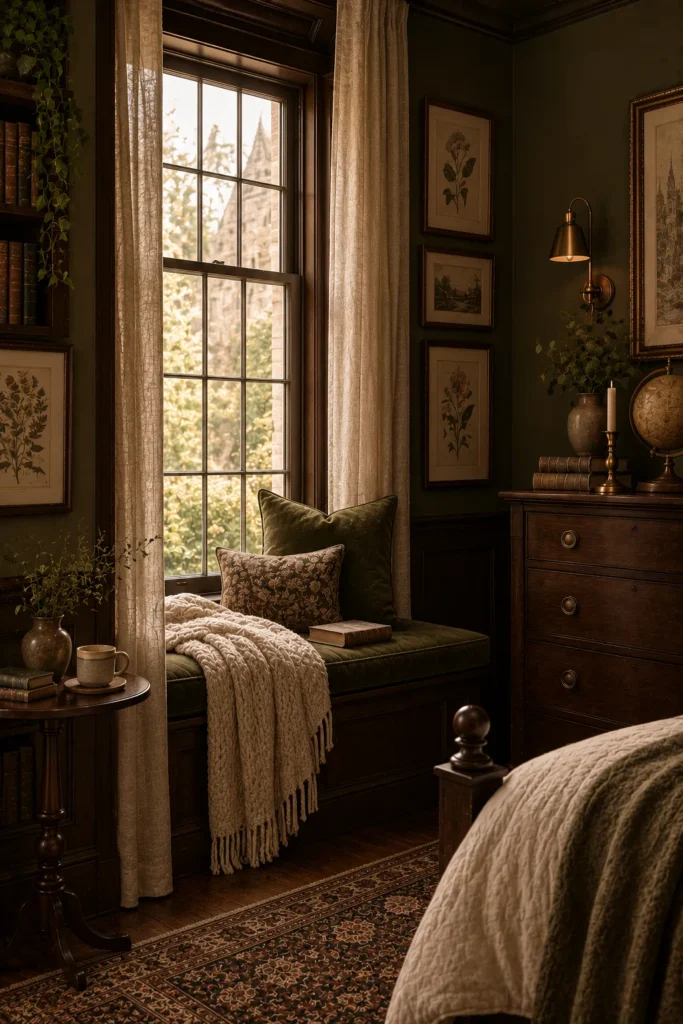
- A window seat creates a comfortable spot for reading or relaxing.
- Layer cushions and throws to make the area feel inviting.
- Use the space beneath the seat for baskets or hidden storage.
- Keep window treatments soft so natural light remains part of the design.
A cozy window seat can turn an overlooked area into one of the most inviting parts of a bedroom. If you already have a built-in ledge, add a firm cushion, two supportive pillows, and a textured throw to create a comfortable reading spot. For rooms without a built-in seat, a narrow bench placed beneath the window can achieve a similar effect. Add a small side table for books or a warm drink, and the space becomes both decorative and functional. Natural daylight also helps balance darker colors elsewhere in the bedroom, keeping the overall atmosphere from feeling too heavy.
For a budget-conscious setup, look for a simple wooden bench or storage ottoman that fits beneath the window. A custom cushion is not essential; a folded mattress pad or thick seat cushion can provide comfortable padding when covered neatly with fabric. Add baskets underneath for blankets or books if the furniture allows it. Keep the surrounding area relatively uncluttered so the window remains the focal point. I’ve noticed that natural light becomes especially valuable in darker bedrooms because it brings out the textures of wood, linen, and paper while making the room feel more spacious during the day.
25. Classic Desk Accessories
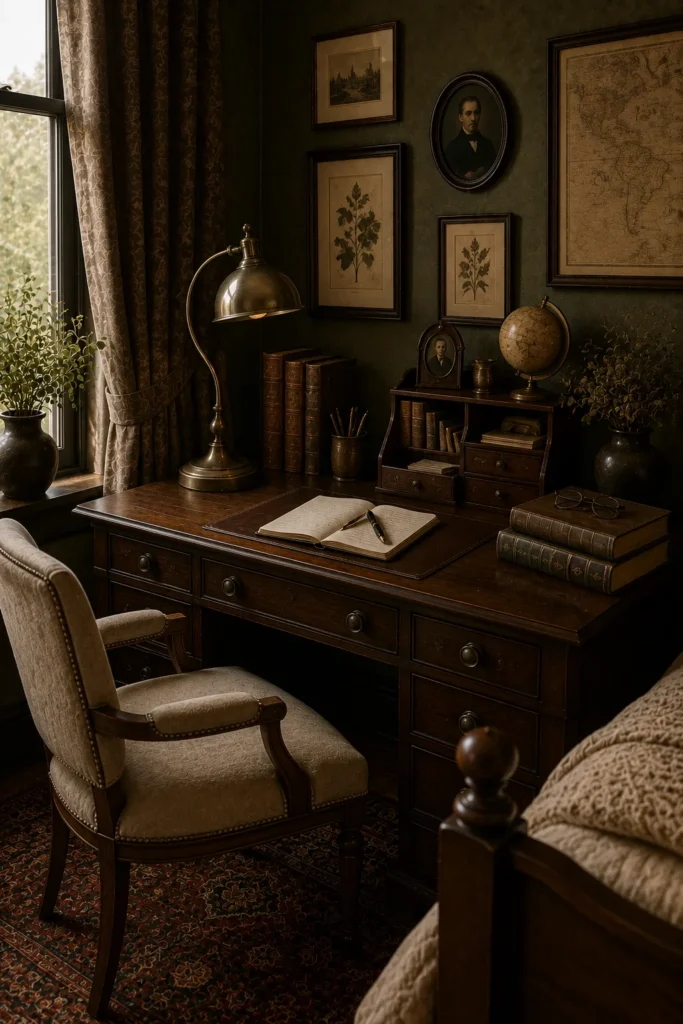
- Vintage-style accessories can make a simple desk feel more established.
- Choose practical pieces such as organizers, lamps, and bookends.
- Brass, leather, wood, and ceramic create useful textural contrast.
- Keep only a few meaningful objects visible to avoid clutter.
Small desk accessories can give a simple workspace the character of an old study without requiring expensive furniture. A brass lamp, leather notebook, wooden organizer, fountain pen, or small globe can create visual interest while remaining practical. Choose materials that feel naturally connected, such as aged metal, dark wood, leather, and ceramic. Place taller objects toward the back and smaller items near the front so the desktop has a clear visual hierarchy. The result should feel like a workspace that is genuinely used, not a collection of decorative objects arranged only for photographs.
You can create this look with items you already have instead of purchasing specialized accessories. A wooden box can become a pen holder, an attractive mug can hold stationery, and a stack of books can raise a lamp or display a small object. Keep the color palette muted so the accessories complement the furniture rather than competing with it. If the desk is already dark, use cream paper or lighter ceramics to introduce contrast. In my experience, practical accessories create the strongest styling because they add personality while still making the workspace easier and more enjoyable to use.
Conclusion
Creating a beautiful bedroom does not have to mean spending a fortune. These dark academia bedroom ideas show how simple changes, thoughtful layering, and affordable vintage-inspired details can give your space a rich, timeless personality. Start with one small update, such as warmer lighting, darker accents, old-style artwork, or a cozy reading corner, and build from there. I’ve seen how small decorating changes can completely shift the atmosphere of a room. Save this post on Pinterest for your makeover, try the ideas that fit your style, and share it with someone who loves cozy, moody interiors.