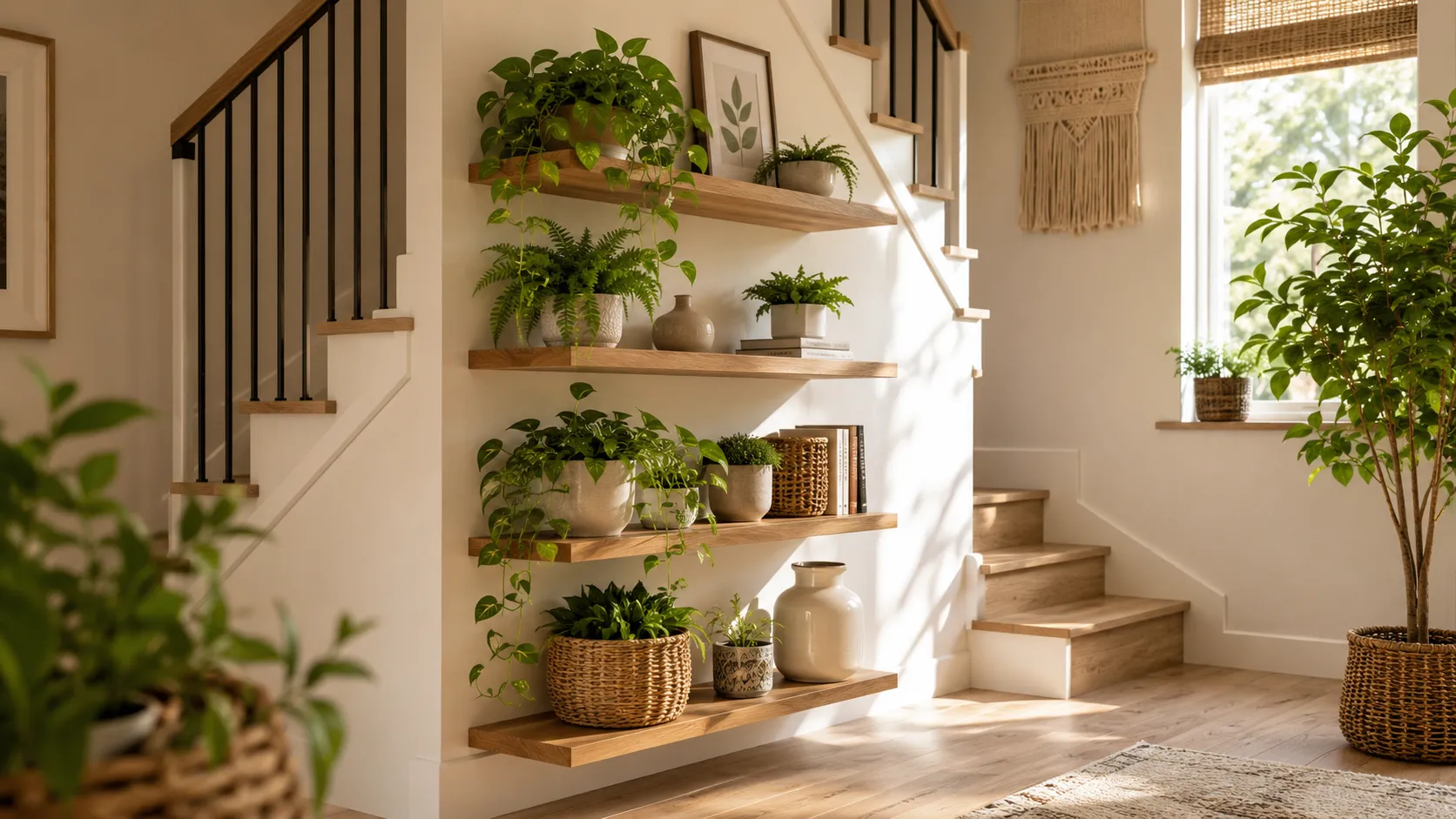
25 Indoor Staircase Gardens Ideas for a Lush Home Today
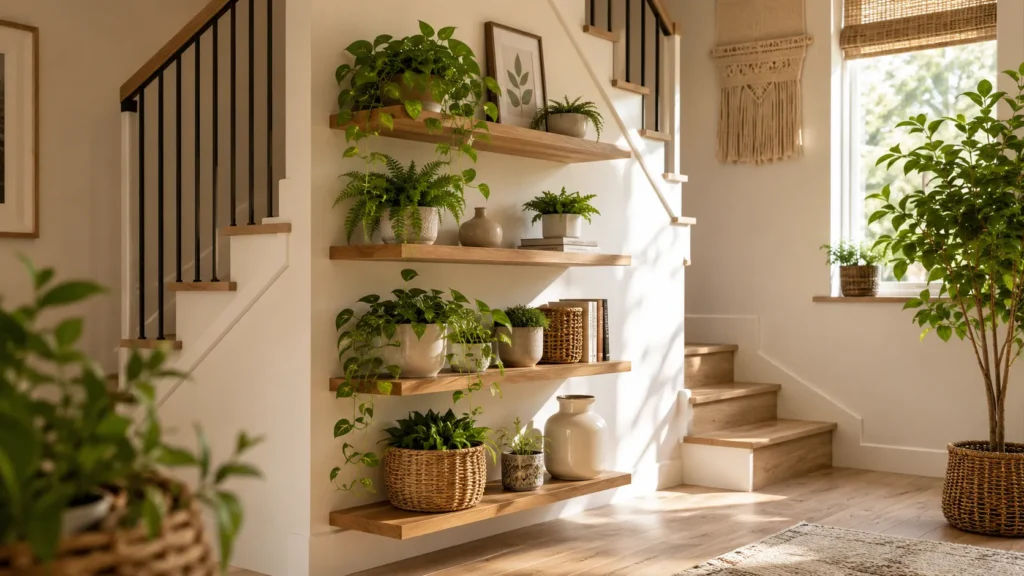
Your staircase doesn’t have to be just a way to move from one floor to another. Indoor Staircase Gardens can turn an overlooked corner into one of the freshest and most inviting parts of your home. Imagine trailing vines beside the stairs, leafy plants tucked beneath the landing, or a simple green display that makes a plain wall feel alive.
Whether your staircase is wide, narrow, bright, or tucked into a darker corner, there are plenty of ways to bring nature into the space without making it feel crowded. These ideas focus on practical placement, beautiful plant combinations, and simple upgrades that work in real homes. In my experience, even a few thoughtfully positioned plants can make a staircase feel warmer, softer, and far more intentional.
1. Stairside Plant Shelves
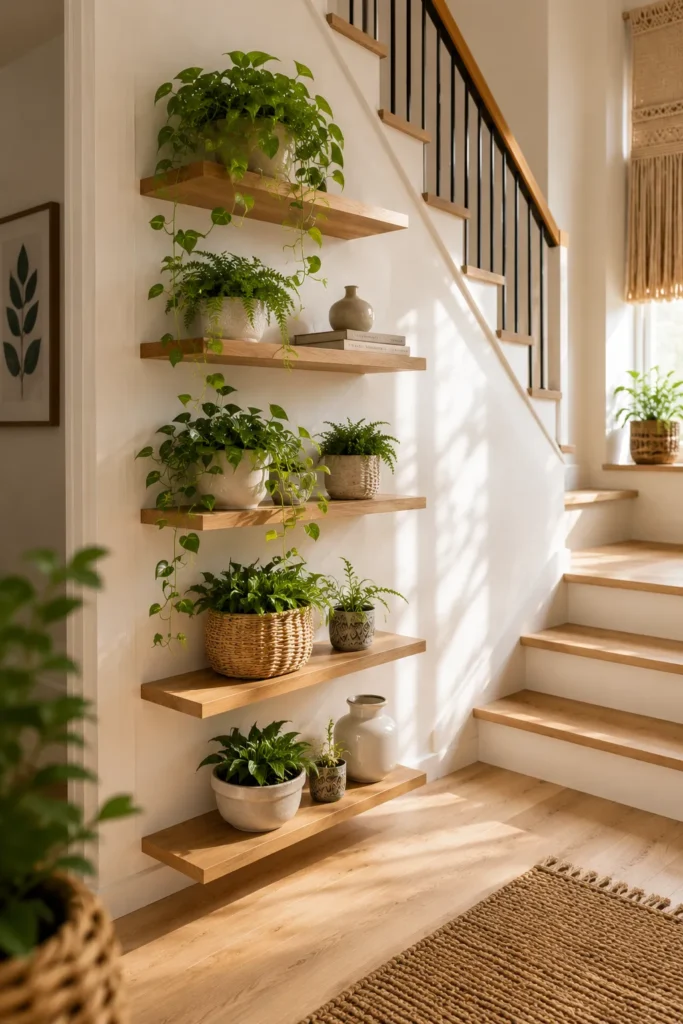
- Slim shelves turn unused stair wall space into a living display.
- Trailing plants soften hard staircase lines and add movement.
- Small pots keep the arrangement visually light rather than crowded.
- In my experience, varied plant heights make a narrow area feel more layered.
This simple setup makes an overlooked staircase wall feel intentional and alive. Floating shelves beside the steps create a vertical garden without taking up valuable floor space, making them especially useful in compact homes. Mix trailing plants with upright greenery to create different shapes and textures along the wall. Light wood shelves work beautifully with neutral interiors, while white or beige pots keep the display calm. Leave enough space between each shelf so the arrangement feels airy. The result is a fresh green accent that naturally guides the eye upward as you move through the home.
A staircase can become much more inviting when greenery is arranged at different heights. Choose plants according to the available natural light, and keep heavier pots on sturdy shelves for safety. If the staircase receives limited sunlight, select tolerant indoor varieties rather than forcing sun-loving plants into a darker spot. You can also vary pot shapes slightly while keeping a consistent color palette for a polished look. These small details help the display feel collected instead of random. For anyone looking for practical indoor staircase gardens, this approach adds personality while keeping the walkway clear, functional, and easy to maintain.
2. Hanging Vine Wall
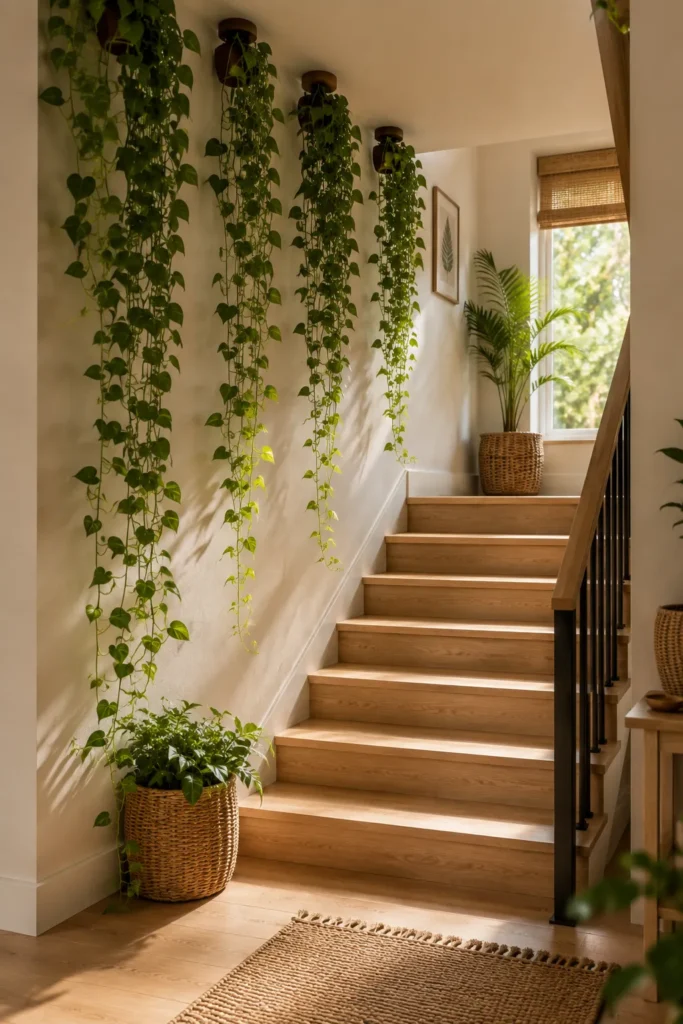
- Cascading vines create a dramatic vertical effect without filling the floor.
- Green leaves soften plain walls and sharp stair edges.
- Ceiling-mounted planters keep the walkway open and uncluttered.
- Choose lightweight containers and secure mounting points for everyday safety.
Few details make a staircase feel more alive than greenery gently cascading overhead. Hanging vines draw attention upward and create a soft curtain of leaves along an otherwise plain transition space. This works particularly well beside open staircases where the plants can remain visible from multiple rooms. Use several planters at slightly different heights for a relaxed composition, or keep them evenly spaced for a cleaner modern effect. Neutral walls provide a beautiful backdrop for rich green foliage. The contrast makes the staircase feel fresher without requiring major renovation, expensive furniture, or bulky decorative pieces.
When installing hanging planters, practicality matters just as much as appearance. Keep every container well away from the walking path and use secure hardware suitable for the ceiling or wall material. Select plants with trailing growth habits, then trim them occasionally so the vines do not become difficult to manage. I’ve noticed that repeating similar planters creates a more intentional look, especially when the surrounding decor is minimal. Add warm lighting nearby if the staircase feels dark in the evening. With the right placement, this vertical planting idea brings a relaxed botanical character to a hardworking part of the home.
3. Built-In Green Nook
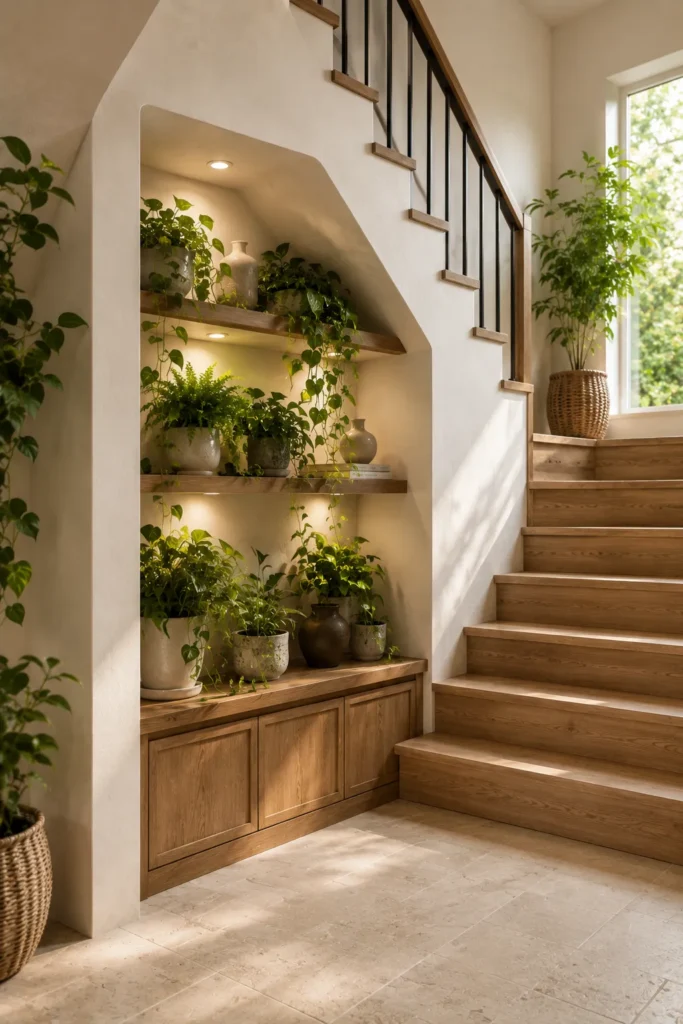
- The space beneath the stairs becomes a useful decorative feature.
- Built-in shelves create a tidy home for plants and accessories.
- Recessed lighting keeps greenery visible after sunset.
- A restrained palette helps the nook look polished rather than busy.
That awkward space beneath a staircase can become one of the most memorable green features in the home. A built-in nook uses the existing architecture to create a dedicated display for plants, pottery, and small natural accents. Open shelving keeps the area visually light, while a recessed design gives the greenery a finished, custom feel. Combine plants of different sizes with a few textured ceramic containers to add depth. This is especially effective in modern homes where clean lines need a touch of softness. Instead of hiding the unused area, turn it into a purposeful botanical focal point.
The best part of a built-in nook is how naturally it integrates with the staircase. Match the shelving material to nearby woodwork or flooring so the feature feels connected to the rest of the room. Keep the lower section easy to access for watering and maintenance, and avoid overcrowding the shelves. If natural light is limited, consider suitable low-light plants and discreet supplemental lighting. In my experience, leaving some empty shelf space makes the greenery stand out more beautifully. The finished corner can feel calm, organized, and thoughtfully designed while adding a strong natural element to the staircase area.
4. Stair Landing Greenery
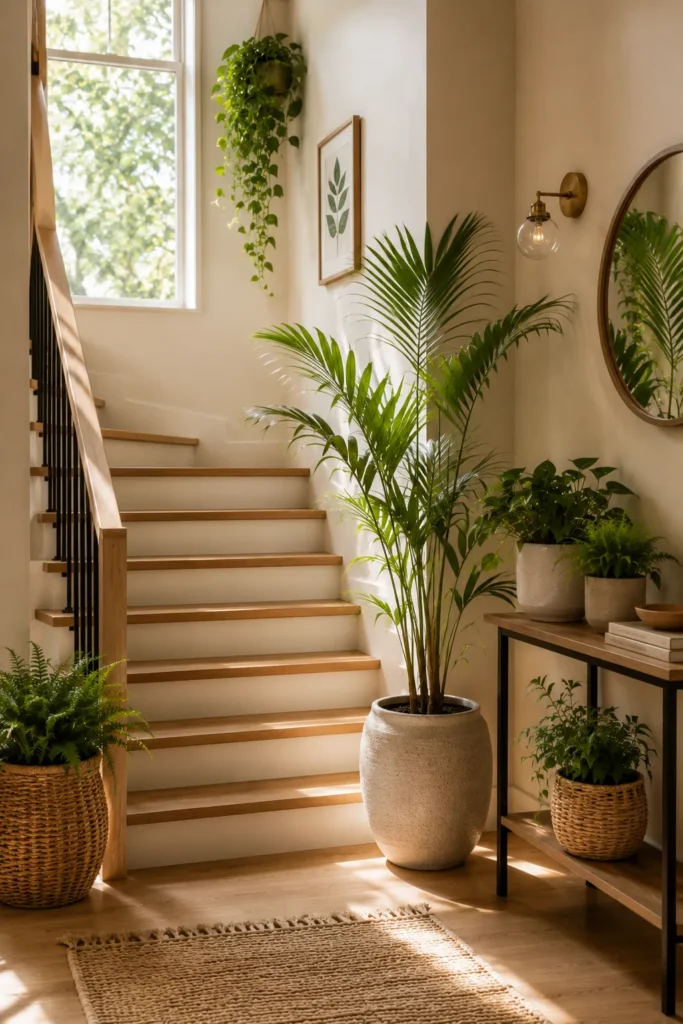
- A small landing can become a natural transition point between rooms.
- Tall plants add height without requiring much furniture.
- Smaller pots create layers around the main statement plant.
- Keep pathways open so the greenery never interferes with movement.
A staircase landing often feels like a forgotten transition zone, but a few well-placed plants can completely change its character. Start with one taller plant in a simple floor planter to establish height, then add smaller greenery nearby for a layered effect. This creates a soft visual pause between floors while keeping the area functional. Neutral walls and natural wood make green foliage stand out beautifully without feeling overwhelming. If the landing receives good daylight, use plants that enjoy bright indirect light. The finished arrangement can make an ordinary staircase feel more connected to the surrounding living spaces.
Placement is especially important when decorating a landing with greenery. Keep larger containers against walls or in corners where they will not narrow the walking route. Use different leaf shapes to create contrast, but repeat similar pot materials for visual consistency. I’ve noticed that one substantial plant usually looks more sophisticated than several crowded containers competing for attention. Add a small stool, basket, or narrow console only if the space allows it comfortably. This approach keeps the staircase feeling fresh and welcoming while making practical use of an area that might otherwise remain completely empty.
View: 25 Japandi Living Room Ideas for a Cozy Home Today
5. Vertical Plant Wall
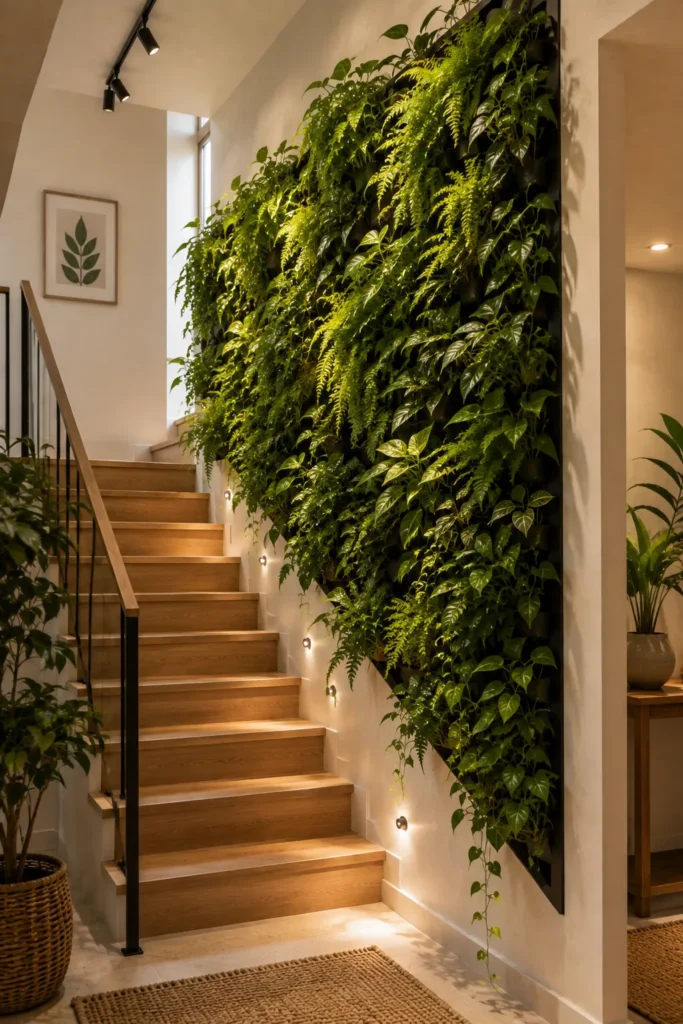
- A vertical garden makes strong use of limited floor space.
- Dense foliage creates a dramatic focal point beside the stairs.
- Mixed leaf shapes add texture and visual depth.
- Choose a modular system that allows individual plants to be removed easily.
When floor space is limited, think upward. A vertical plant wall can transform a blank staircase surface into a lush focal point while keeping the walkway completely clear. Instead of scattering pots around the steps, the greenery becomes part of the wall itself. Combine plants with different leaf sizes and growth patterns to create a naturally layered appearance. A simple neutral background allows the foliage to become the main feature. This approach works particularly well in contemporary interiors because the structured planting system balances organic greenery with clean architectural lines, creating an interesting contrast that feels modern rather than overly decorative.
Maintenance should be considered before committing to a dense vertical display. Choose a planting system with easy access for watering, trimming, and occasional replacement. Plants should also match the amount of light available on the staircase wall. If the area is naturally bright, you can create a richer mix of foliage; darker spaces may need more carefully selected varieties. That’s why many designers recommend planning the plant layout around the environment rather than choosing greenery based only on appearance. With thoughtful selection and spacing, a vertical arrangement can make the staircase feel like a living architectural feature.
6. Under-Stair Planters
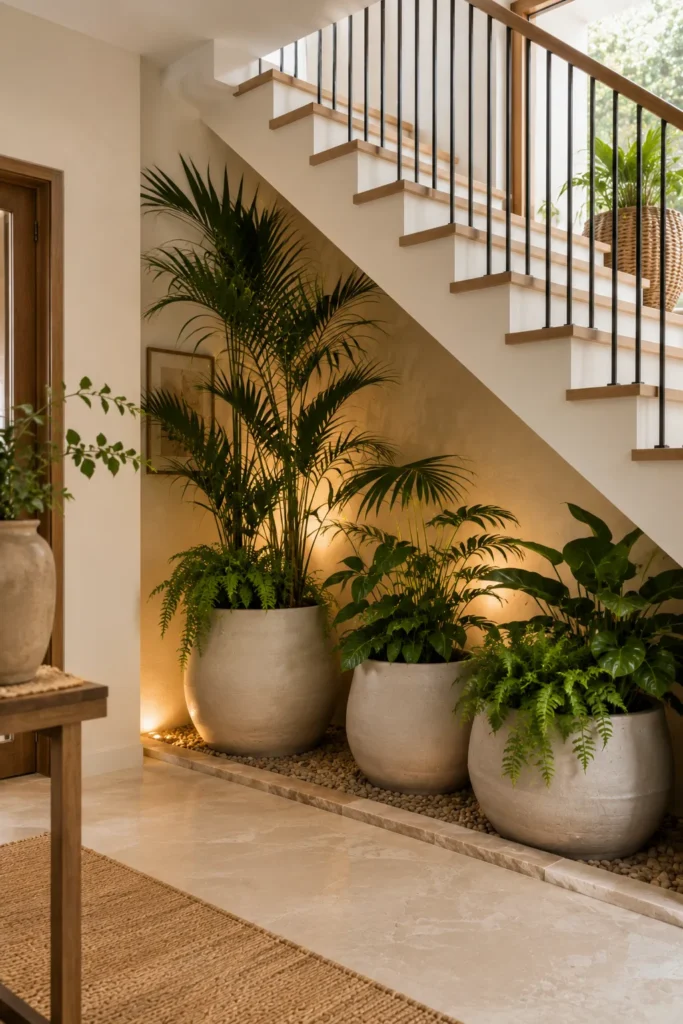
- The area beneath the stairs becomes a natural home for larger plants.
- Oversized planters add height and visual weight to empty corners.
- Natural stone and wood complement the greenery beautifully.
- Leave enough clearance around every planter for easy cleaning and watering.
The space underneath a staircase can feel dark, narrow, and difficult to decorate, but large planters can give it an entirely different purpose. Place one or two statement plants beneath the stairs where their height complements the sloping architecture. Palms, broad-leaf plants, and layered ferns can create a lush effect without needing shelves or wall fixtures. Choose planters in ceramic, stone, or textured finishes to add another natural material to the room. The greenery helps soften the strong geometry of the staircase while making the previously unused area feel intentional, balanced, and connected to the rest of the interior.
For a polished result, resist the temptation to fill every inch beneath the stairs. A few substantial plants usually create more impact than a collection of tiny pots. Consider the mature size of each plant before placing it in a tight area, especially if the staircase is frequently used. In my experience, leaving some negative space around large foliage makes the whole arrangement feel calmer and more expensive. If the area receives limited daylight, choose plants suited to those conditions and position them where maintenance remains convenient. The goal is a lush accent that still feels practical and effortless.
7. Window-Side Stair Plants
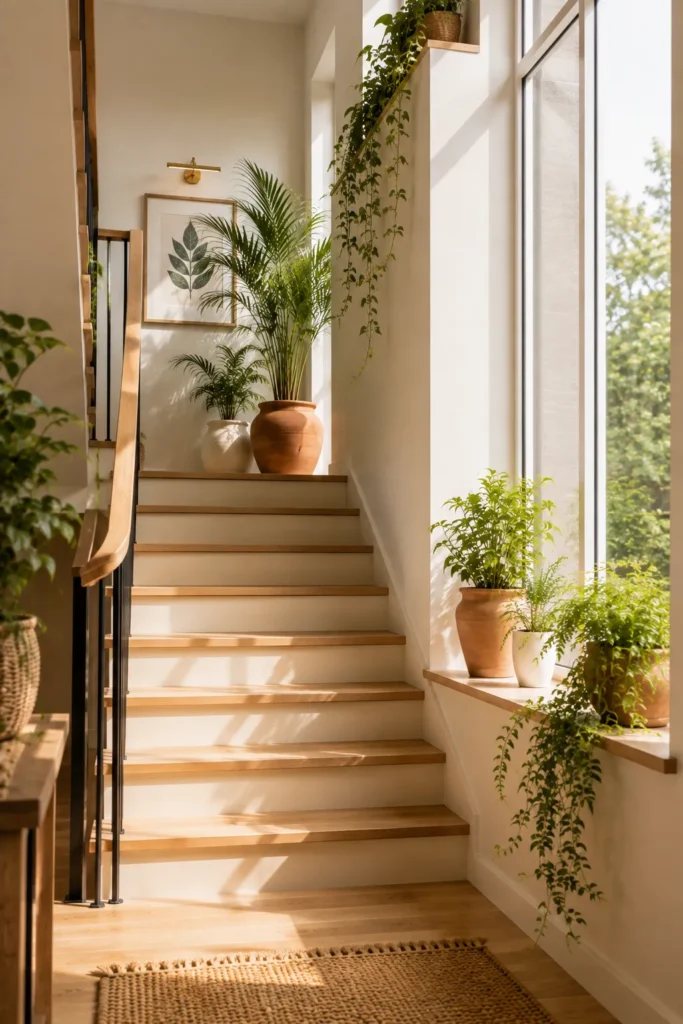
- A nearby window provides natural light for a lively plant display.
- Different plant heights make the staircase feel more layered.
- Terracotta pots add warmth against neutral architectural finishes.
- Keep foliage trimmed so it never blocks stairs or windows.
A staircase beside a bright window offers an ideal opportunity to introduce greenery naturally. Arrange a few plants where they can benefit from indirect sunlight while adding softness to the surrounding architecture. Taller foliage can anchor the landing, while smaller pots work nicely on nearby ledges or sturdy surfaces. Terracotta, ceramic, or woven containers can introduce subtle texture without distracting from the plants themselves. As daylight moves across the space, the leaves create gentle shadows that make the staircase feel more dynamic. This simple arrangement can turn an ordinary stairway into a bright, welcoming botanical corner.
Light levels can change dramatically throughout the day, so plant placement deserves some thought. Avoid positioning delicate foliage directly against harsh afternoon sunlight unless the chosen variety can tolerate it. Rotate containers occasionally to encourage balanced growth and keep the display looking fresh. I’ve noticed that grouping plants near one strong natural light source often looks more cohesive than scattering them randomly around the room. Use the staircase structure as your guide, keeping the arrangement visually balanced from both the bottom and top of the stairs. The result feels organic while remaining easy to maintain.
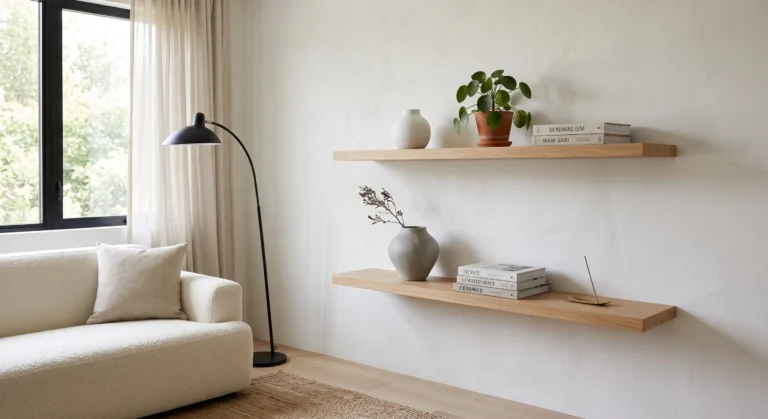
8. Floating Plant Ledges
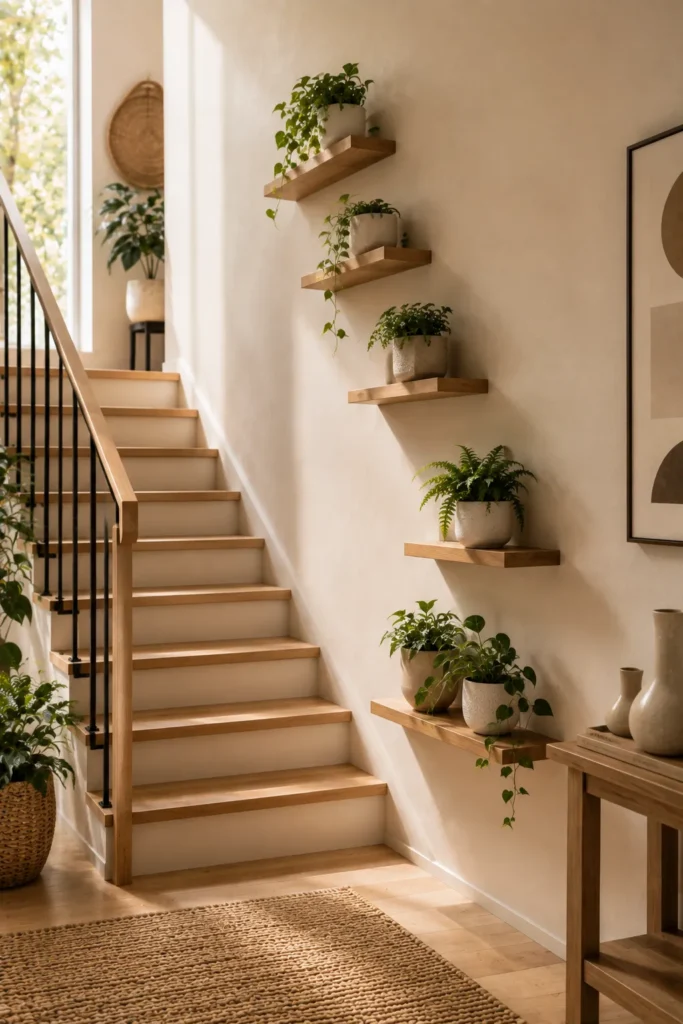
- Floating ledges add greenery without taking up floor space.
- Small containers keep the staircase wall visually light.
- Repeating wood tones can connect the plants with nearby stairs.
- Leave generous gaps between ledges for an airy arrangement.
Floating ledges are a smart choice when you want greenery without making the staircase feel crowded. Install several slim shelves along a blank wall, then arrange small plants at varying heights to create a gentle visual rhythm. The shelves themselves can remain simple so the foliage becomes the main attraction. Light wood works especially well beside neutral walls and wooden stairs, creating a warm, connected palette. Use a mixture of upright and trailing plants to introduce different silhouettes. This setup gives the staircase personality while preserving valuable floor space and maintaining a clean, uncluttered appearance.
Before installing the ledges, consider the wall structure and the weight of fully watered pots. Strong mounting hardware is essential, especially in areas where people regularly pass. Keep the shelves high enough to remain safely outside the walking zone, but low enough for convenient plant care. In my experience, using similar pots across multiple ledges creates a surprisingly polished effect even when the plants themselves are varied. Add one or two decorative objects only if they genuinely complement the greenery. The finished wall should feel collected and natural rather than overloaded with accessories.
9. Staircase Herb Corner
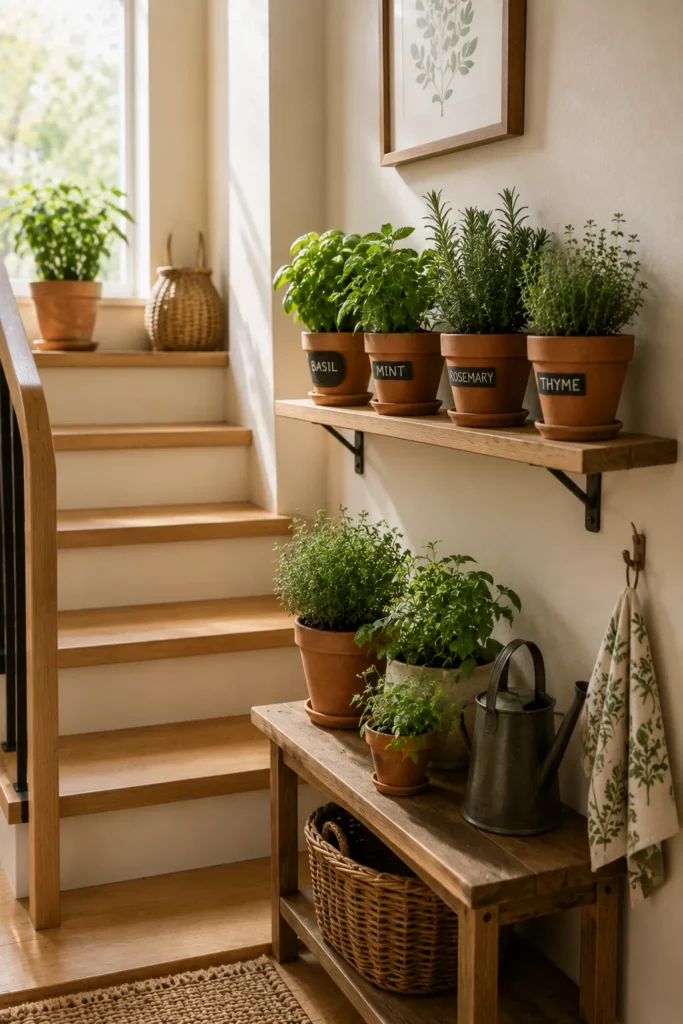
- Fresh herbs bring greenery and everyday usefulness together.
- Small terracotta pots create a warm, earthy visual accent.
- A narrow shelf works well when floor space is limited.
- Choose a bright location so edible plants receive suitable light.
A small staircase corner can become surprisingly useful when you combine greenery with fresh herbs. Compact pots of basil, mint, rosemary, or thyme can add color and fragrance while creating a practical mini garden. A narrow wooden shelf or small freestanding stand keeps the arrangement organized without overwhelming the staircase. Terracotta containers reinforce the natural character of the plants and pair beautifully with warm wood. This idea works best near a bright window or another suitable light source. Instead of treating the staircase as purely decorative, you can make it part of the everyday rhythm of your home.
Herbs need more attention to light and watering than many decorative houseplants, so choose the location carefully. A bright landing or window-side staircase is usually more suitable than a dark enclosed stairwell. Keep containers accessible enough to harvest leaves and check soil moisture regularly. I’ve seen small herb groupings work especially well when the surrounding decor is simple, because the fresh foliage becomes the visual focus. Use matching pots for consistency, then allow the different plant shapes to provide variety. The result is a charming little garden that adds both beauty and practical value to the staircase area.
10. Stair Railing Planters
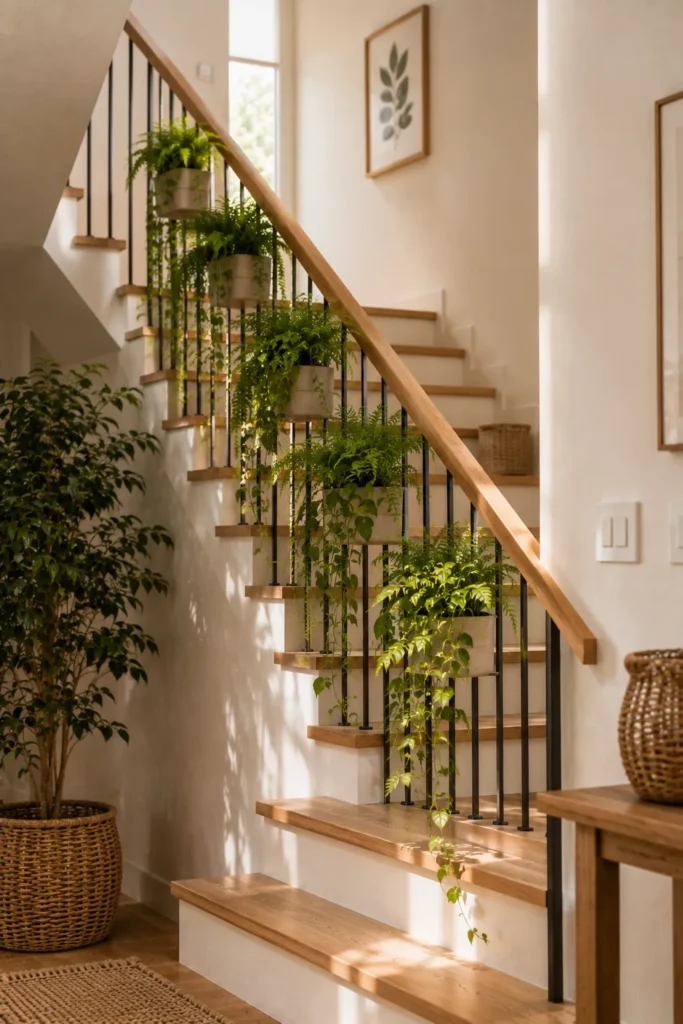
- Railing planters add greenery without occupying stair floor space.
- Trailing foliage creates beautiful movement along the staircase.
- Small containers keep the design visually balanced and lightweight.
- Secure attachments are essential to prevent shifting or falling.
A staircase railing can become an unexpected place for a beautiful plant display. Small planters attached securely along the railing introduce greenery at eye level while leaving every step completely open. Trailing plants are especially effective because their leaves naturally follow the direction of the stairs, creating movement as you walk upward. Choose lightweight containers and keep the number of plants controlled so the railing does not look crowded. Neutral pots allow the foliage to stand out against wood or painted railings. This approach adds personality to the staircase while making use of space that would otherwise remain purely functional.
Safety should always come first when adding anything to a railing. Select secure planter holders designed for the railing style and avoid heavy containers that could affect stability. Keep foliage trimmed so it does not obstruct hands or visibility while using the stairs. I’ve noticed that repeating the same planter style along a railing creates a cleaner look than mixing too many shapes and colors. If your staircase is narrow, use only a few strategically placed containers rather than filling the entire length. The result can feel lush and decorative without compromising the everyday function of the staircase.
11. Corner Palm Display
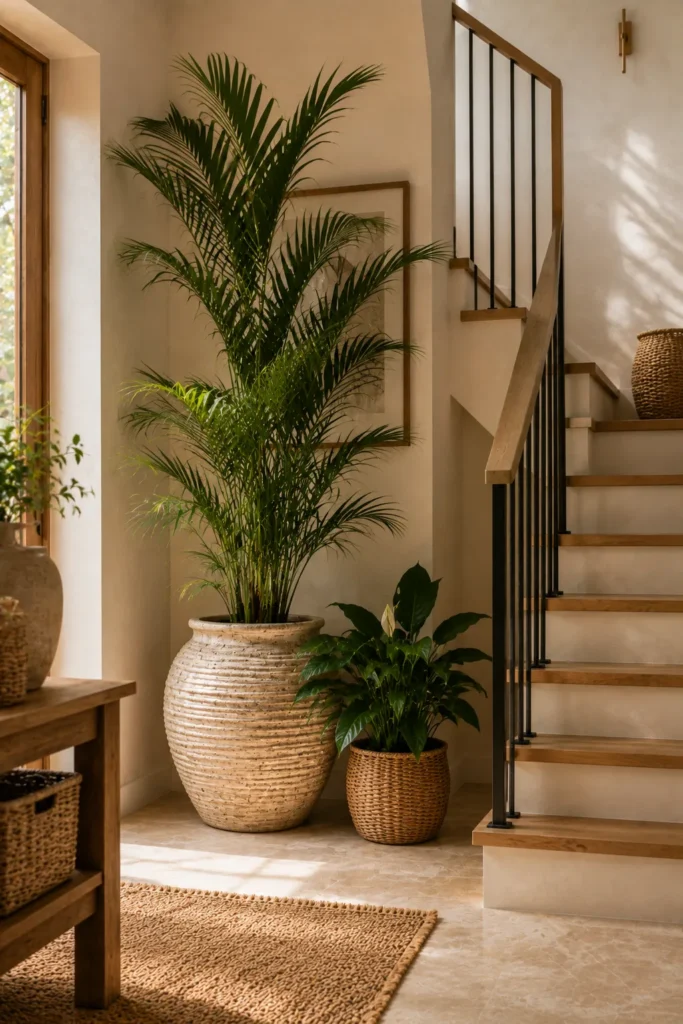
- A tall palm fills an empty corner with natural height.
- Large planters create a strong visual anchor beside the stairs.
- Smaller foliage adds layering without competing with the main plant.
- Choose a corner that provides enough light for the selected palm.
Sometimes one beautiful plant is all a staircase needs to feel transformed. A tall palm placed in an empty corner creates height, movement, and a strong connection to nature without requiring a complicated arrangement. Its long leaves soften the straight lines of stair treads and railings, while a substantial planter gives the corner a grounded appearance. This works particularly well in homes with neutral walls and natural flooring because the greenery becomes a gentle focal point. Add one smaller plant nearby if you want extra layering, but allow the palm to remain the main visual feature.
Before choosing a large palm, measure the available corner carefully and consider how much space the mature plant will need. The planter should feel substantial without making the staircase passage narrower. Position the plant where it receives suitable indirect light, and rotate it periodically if growth becomes uneven. In my experience, large greenery looks most sophisticated when surrounded by a little breathing room. Avoid placing multiple oversized plants together in a small landing. A single statement palm can create the lush effect you want while keeping the staircase calm, open, and easy to navigate.
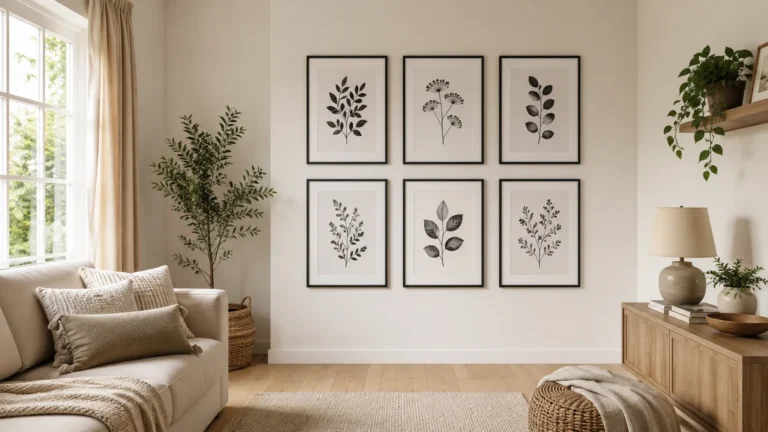
12. Botanical Stair Gallery
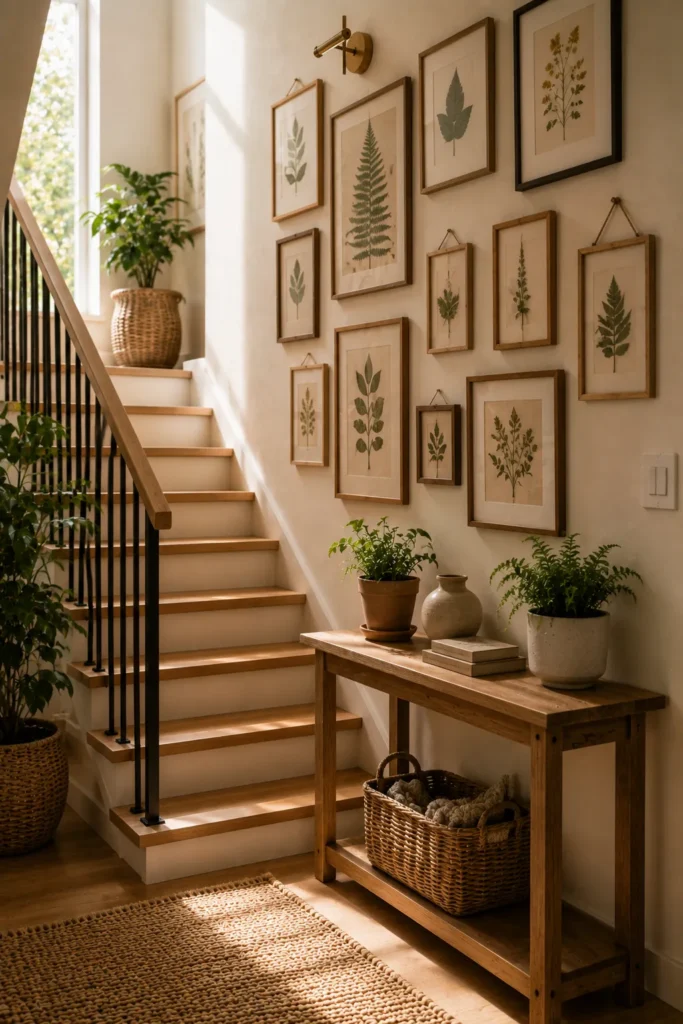
- Botanical artwork extends the garden feeling beyond living plants.
- Framed leaves add texture without requiring much floor space.
- Small greenery pieces connect the artwork with the staircase.
- Keep frames aligned for a tidy, intentional gallery effect.
A botanical gallery can make a staircase feel lush even when there is limited room for living plants. Arrange framed botanical prints, pressed leaves, or nature-inspired artwork along the wall beside the stairs. Add one or two small potted plants on a nearby ledge or console to connect the artwork with real greenery. Neutral frames and warm backgrounds keep the display cohesive, while different leaf shapes create visual interest. This approach is especially useful for darker staircases where maintaining many live plants may be difficult. The combination gives the space a garden-inspired character without demanding extensive plant care.
The key is to treat the wall as one connected composition rather than hanging artwork randomly. Start with a simple layout and maintain consistent spacing between frames as the staircase rises. Choose artwork with related colors so the collection feels intentional without becoming too formal. I’ve noticed that adding just a little real greenery prevents a botanical gallery from feeling flat or purely decorative. Keep the staircase itself visually simple so the wall remains the focal point. With thoughtful spacing and a restrained palette, this idea can turn a plain stairway into a sophisticated nature-inspired feature.
13. Layered Stair Planters
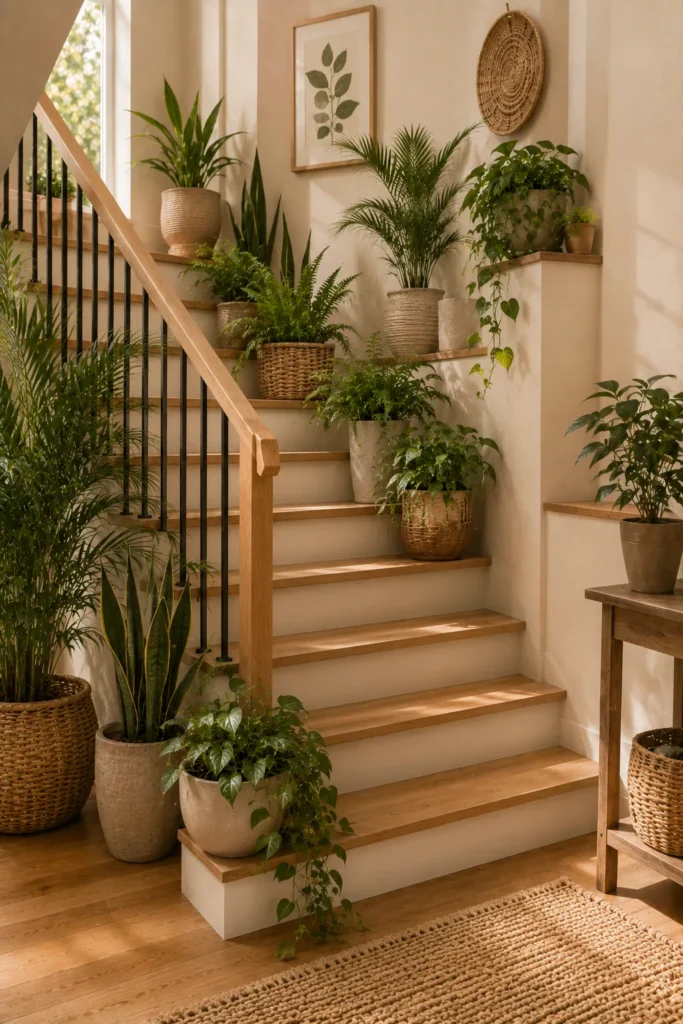
- Different plant heights create a fuller, more dimensional display.
- Layered containers soften the straight geometry of the staircase.
- Mixing leaf shapes keeps the arrangement visually interesting.
- Leave clear walking space between every planter and stair edge.
A layered planter arrangement can make a staircase feel instantly fuller without turning it into a crowded jungle. Start with one taller plant as the anchor, then place medium and smaller containers around it to create a natural progression. Combining broad leaves, delicate fronds, and trailing stems adds texture from every viewing angle. Warm ceramic pots or woven baskets can reinforce an organic palette while keeping the greenery visually connected. This approach works particularly well on wider landings where plants can be grouped safely. The result is a relaxed botanical display that feels abundant while still maintaining enough breathing room.
Balance matters when combining several plants in one staircase area. Rather than placing containers at equal intervals, vary their heights and shapes while keeping a consistent color story. Select plants with similar light and watering requirements when possible, which makes everyday care much easier. I’ve noticed that leaving small pockets of empty space between groups helps individual plants stand out instead of blending together. Avoid placing fragile containers where they could be bumped by people using the stairs. With thoughtful positioning, layered greenery can add depth and character while keeping the overall space practical and visually calm.
14. Minimalist Green Steps
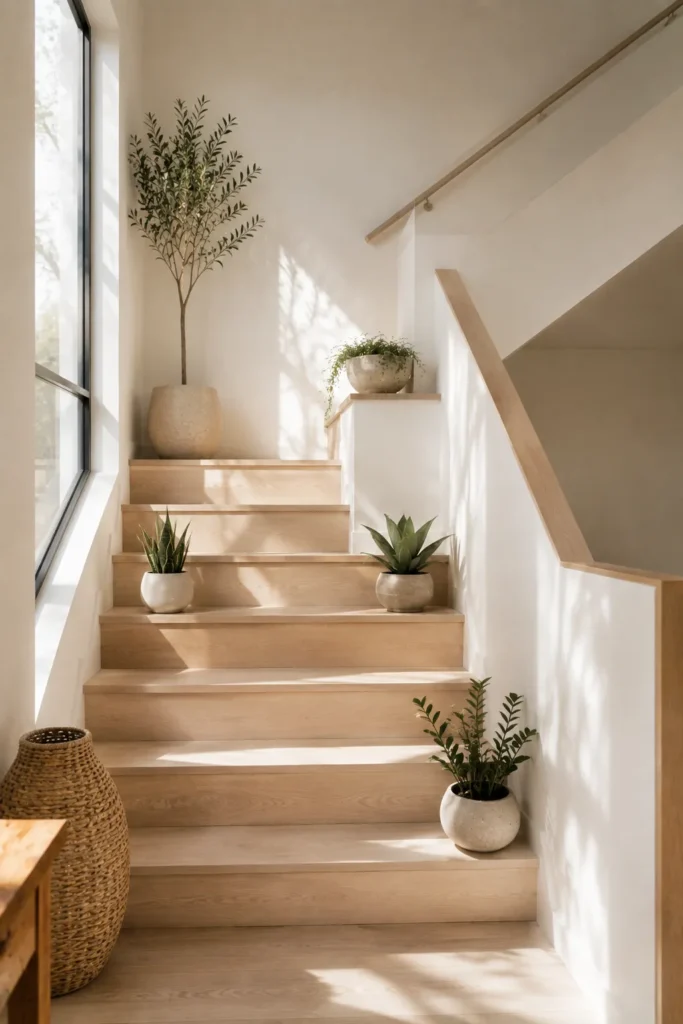
- A few carefully placed plants can create impact without visual clutter.
- Matching pots keep the staircase looking organized and modern.
- Sculptural foliage adds interest against simple architectural lines.
- Never place containers where they reduce safe step width.
Minimalism and greenery work beautifully together when every plant has a clear purpose. Instead of filling the staircase with containers, choose a small number of sculptural plants and place them strategically along the landing or wider architectural edges. Matching ceramic pots create repetition, while different leaf forms provide subtle contrast. Keep the surrounding walls and furnishings simple so the greenery becomes the main decorative element. This approach is ideal for homes where the owners want a fresh botanical feeling without sacrificing the clean appearance of a modern interior. The finished staircase feels calm, intentional, and effortlessly refined.
A minimalist display depends on restraint and careful placement. Before adding anything, identify areas that can safely accommodate plants without interfering with footsteps, handrails, or visibility. Select compact varieties for smaller spaces and use larger specimens only where there is generous clearance. In my experience, repeating one planter shape in different sizes can create a more sophisticated result than using many unrelated containers. Keep accessories to a minimum and let the natural shapes of the leaves provide most of the visual interest. This creates a staircase that feels fresh and welcoming while remaining easy to clean and maintain.
15. Tropical Stair Landing
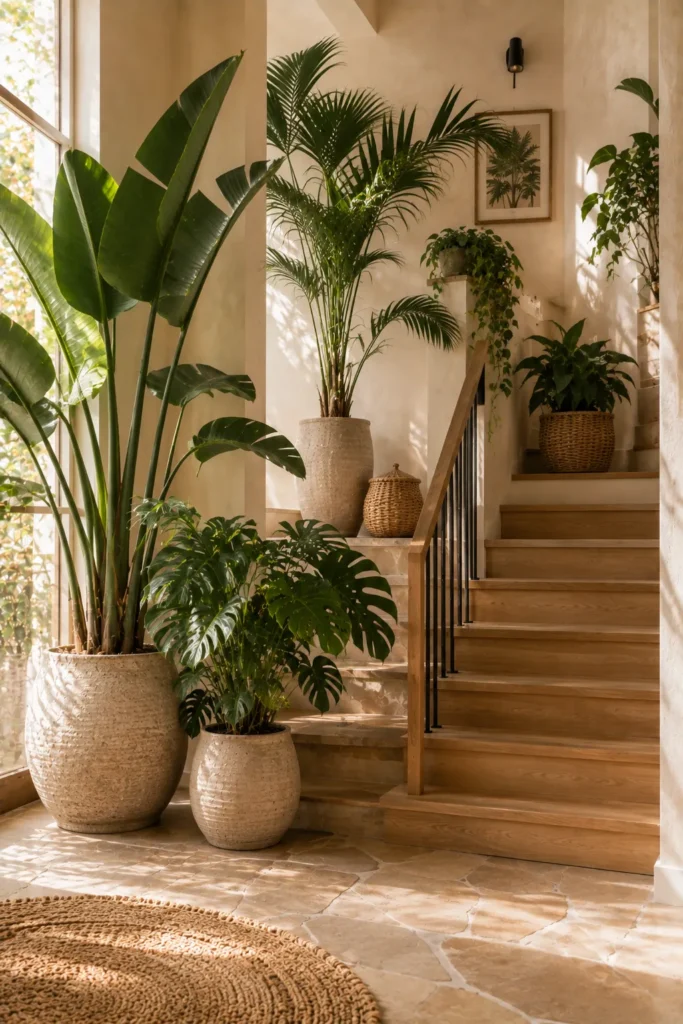
- Tropical foliage creates a bold, resort-inspired staircase atmosphere.
- Large leaves add dramatic texture to plain architectural surfaces.
- Neutral planters balance the richness of dense greenery.
- Choose varieties suited to the available light and indoor conditions.
For a staircase that needs more personality, tropical foliage can create a lush and expressive transformation. Large-leaf plants such as monstera, bird of paradise, and palms introduce bold shapes that stand out beautifully against warm neutral walls. Position the tallest plant toward the back of the landing, then layer smaller foliage toward the front to create depth. Natural stone, wood, and woven accents reinforce the relaxed botanical feeling. This style works especially well when the staircase connects open living spaces because the greenery can become a visual bridge between different parts of the home.
Tropical plants generally need thoughtful light, watering, and humidity management, so the environment should guide your choices. Avoid selecting plants purely because they look dramatic in photographs. Check how much light your staircase receives throughout the day and choose varieties that can realistically thrive there. I’ve seen many indoor displays look better when only a few large tropical plants are used instead of trying to recreate a dense jungle. Give each plant enough room for its leaves to spread naturally. That balance creates a lush appearance while keeping the staircase comfortable, open, and visually sophisticated.
16. Woven Basket Planters
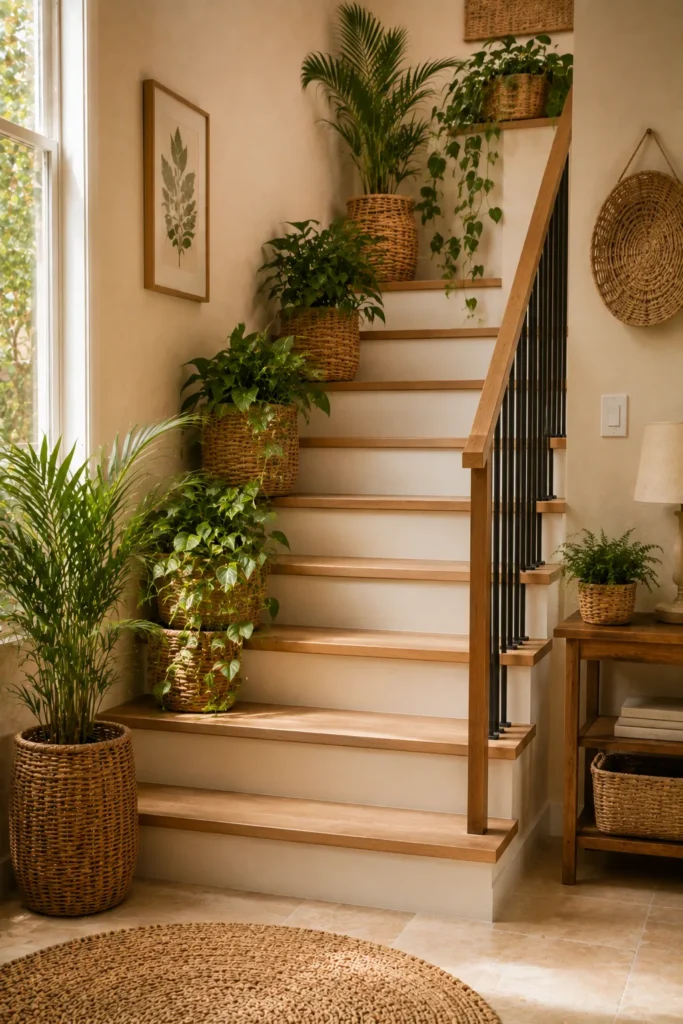
- Woven baskets add warmth and texture around simple greenery.
- Natural fibers soften hard staircase materials and straight edges.
- Different basket sizes create an easy layered arrangement.
- Use waterproof liners to protect baskets and nearby flooring.
Woven basket planters bring a softer, more relaxed feeling to a staircase garden. The natural fibers contrast beautifully with painted walls, wooden steps, stone floors, and other smooth surfaces commonly found around stairs. Place a taller plant in a large basket near the landing, then add smaller baskets nearby for a gentle layered effect. Trailing greenery works especially well because the leaves introduce movement against the structured staircase. Keep the color palette within warm beige, cream, tan, and natural green tones. This creates a cozy botanical corner that feels collected rather than overly styled.
Although woven baskets look beautiful, they need practical protection from moisture. Use a waterproof nursery pot or liner inside each basket so watering does not damage the fibers or flooring. Choose baskets with stable, wide bases for larger plants, especially near busy walkways. I’ve noticed that mixing two or three basket textures can add interest without making the arrangement feel cluttered. Keep the plant varieties relatively simple and let the natural materials provide the decorative detail. With thoughtful placement, woven planters can make a staircase feel warmer, more organic, and connected to the rest of the home.
17. Stone Planter Accent
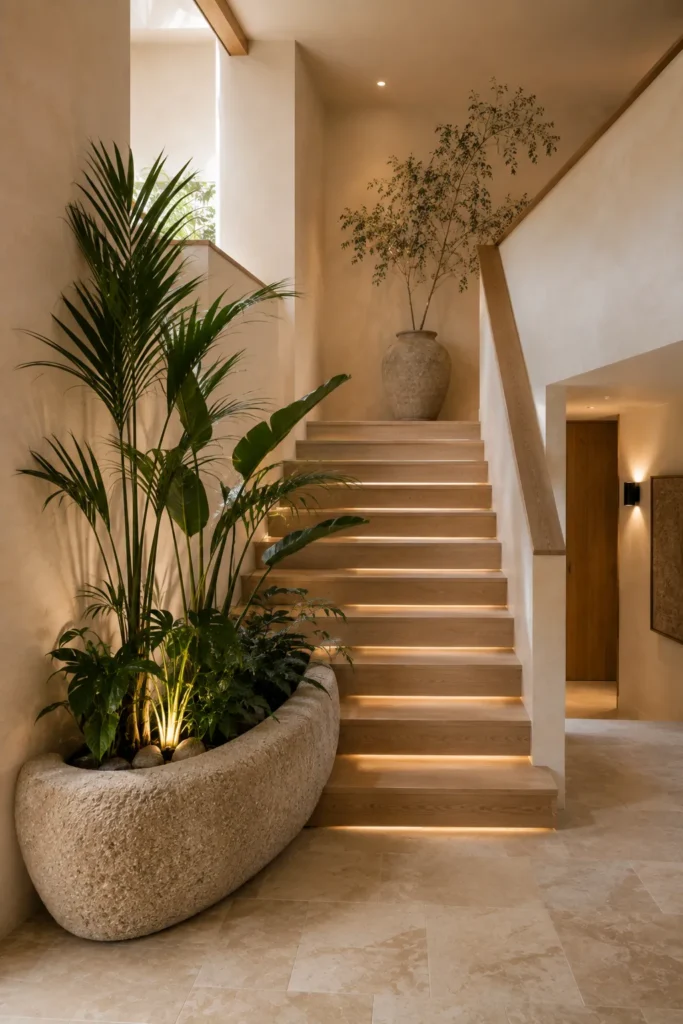
- Stone planters add weight and an earthy architectural quality.
- Sculptural containers can become decorative features even without extra accessories.
- Natural stone pairs beautifully with wood and green foliage.
- Choose a stable planter that will not shift in a busy area.
A stone planter can give staircase greenery a grounded, architectural appearance. Its substantial texture creates an appealing contrast with delicate leaves and smooth painted walls. Choose a simple sculptural shape and fill it with one strong plant rather than several competing varieties. Pale limestone, travertine, or softly textured stone can complement natural wood stairs particularly well. The combination feels timeless because each material brings a different texture without introducing unnecessary color. This idea is especially effective in contemporary or organic-modern homes where natural materials are used to soften otherwise clean architectural forms.
Because stone planters can be heavy, placement should be considered carefully before installation or styling. Keep larger containers on stable flooring and away from narrow sections of the staircase. Use a waterproof inner pot when necessary to prevent moisture from reaching sensitive stone or wood surfaces. In my experience, one substantial planter often creates more visual impact than several small decorative pieces. Let the stone remain visible rather than hiding it beneath excessive foliage. This keeps the arrangement sophisticated while allowing the natural combination of greenery, stone, and wood to become the main design statement.
18. Stairwell Hanging Garden
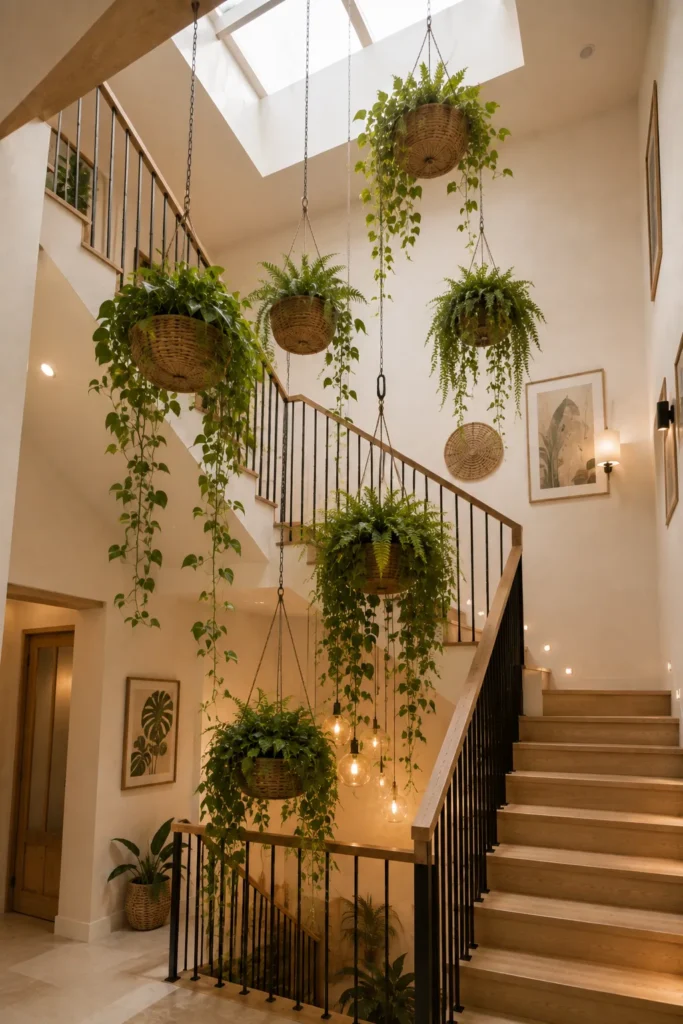
- Hanging plants use vertical stairwell space that often goes unnoticed.
- Cascading leaves create movement across multiple levels.
- Staggered heights make an open stairwell feel more dimensional.
- Keep every planter securely mounted and clear of the stair path.
An open stairwell offers valuable vertical space for creating a striking hanging garden. Suspended planters at different heights can fill the open area with cascading foliage while keeping the stairs and landings completely unobstructed. Choose plants with naturally trailing growth so the leaves create gentle movement through the vertical space. Stagger the containers rather than placing them in a rigid line to achieve a more organic composition. Soft daylight from a nearby window or skylight can make the leaves glow throughout the day. The result is an airy, layered feature that gives the staircase a distinctly botanical personality.
A hanging arrangement requires careful planning because every container must remain secure and accessible for maintenance. Consider the mature length of each vine and keep foliage away from handrails, doorways, and walking routes. Lightweight planters can reduce unnecessary load while still creating the desired visual effect. I’ve noticed that using a limited number of larger hanging plants usually looks more intentional than filling the entire stairwell. Keep the surrounding architecture relatively simple so the greenery remains the focal point. When properly planned, a hanging garden can turn empty vertical space into one of the most memorable features of the home.
19. Narrow Plant Ledge
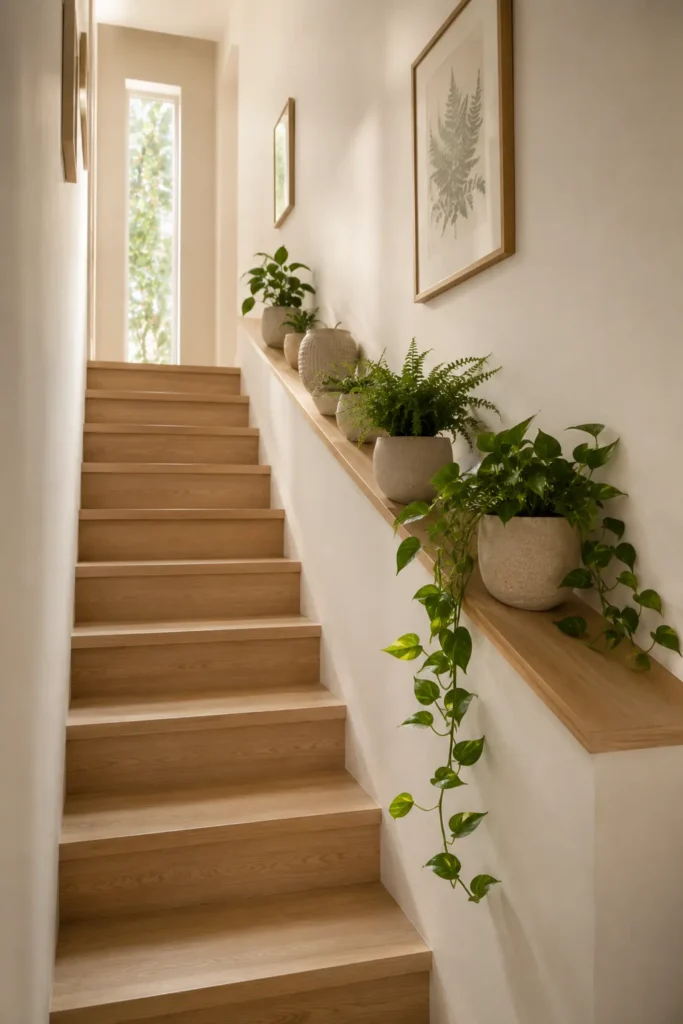
- A slim ledge adds greenery without taking up floor space.
- Small plants work well in narrow staircase areas.
- Repeated pots create visual rhythm along the wall.
- Keep the ledge shallow enough to avoid reducing walkway clearance.
A narrow plant ledge is an easy way to introduce greenery when staircase space is limited. Instead of placing pots on the floor, install one slim shelf along a suitable wall and fill it with compact plants. Small ferns, pothos, and upright foliage can create a soft green border without making the passage feel cramped. Choose containers in similar neutral shades so the arrangement looks cohesive against the wall. This idea is particularly useful for apartments or compact homes where every inch matters. The finished ledge adds color, texture, and life while keeping the staircase visually open.
The most important detail is choosing the correct ledge depth and installation height. The shelf should provide enough room for the containers while remaining safely outside the walking path. Use secure brackets or appropriate wall hardware, especially if the plants are placed where people frequently pass. In my experience, a repeated arrangement of three to five small pots often looks more balanced than a single oversized container. Select plants with similar care requirements to simplify maintenance. With a little planning, a narrow ledge can turn an unused wall into a practical green accent without overwhelming the architecture.
20. Staircase Conservatory Corner
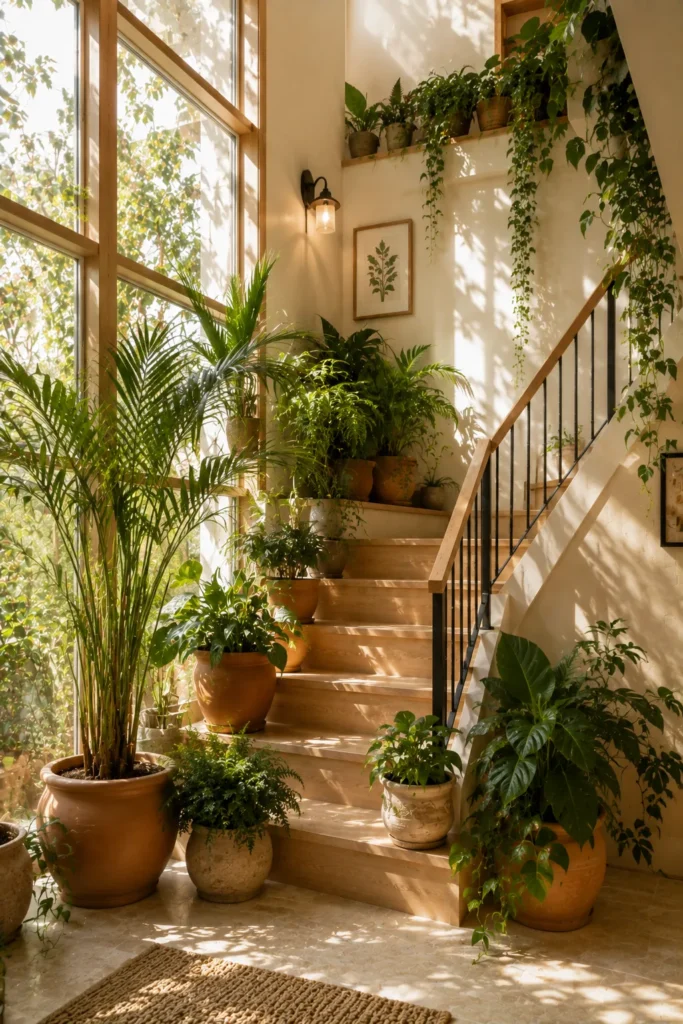
- Abundant natural light makes the staircase feel brighter and more open.
- Grouped greenery creates a relaxed conservatory-inspired atmosphere.
- Glass windows provide a strong visual connection to the outdoors.
- Select plants according to the light and temperature of the space.
A bright staircase corner can take on the charm of a miniature conservatory when surrounded by abundant greenery. Tall windows or glass panels provide natural light while creating a beautiful backdrop for palms, ferns, vines, and other leafy plants. Arrange larger specimens toward the back and smaller containers toward the front to create depth without blocking the view. Terracotta and ceramic planters add warm texture to the composition. This approach works particularly well in homes where the staircase already receives generous daylight. Instead of feeling like a simple passageway, the area becomes a peaceful botanical transition between different rooms.
A conservatory-style display needs more than attractive plants; the environment should support healthy growth. Observe how sunlight changes during the day and avoid placing sensitive foliage directly beside excessively hot glass. Keep enough space around each plant for airflow and maintenance. I’ve noticed that leaving windows and architectural details partially visible helps the space feel connected to the outdoors rather than overcrowded. Use a restrained collection of complementary planters to maintain visual consistency. With the right balance of greenery, light, and open space, this staircase idea can create a refreshing indoor garden atmosphere.
21. Modern Staircase Greenery
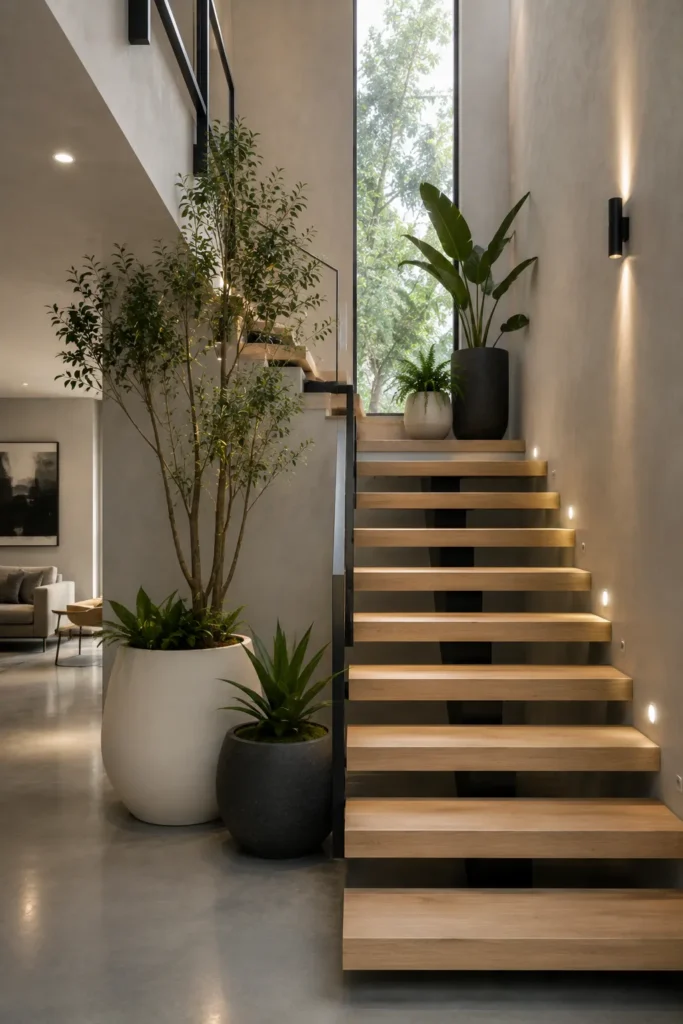
- Sculptural plants complement clean contemporary staircase lines.
- Minimal planters keep the overall design sophisticated and uncluttered.
- Contrasting foliage adds softness to concrete, metal, or glass.
- Limit decorative accessories so the greenery remains the visual focus.
Modern staircase greenery works best when natural forms are paired with clean architectural details. Choose sculptural plants with distinctive silhouettes and place them in simple matte planters that complement the surrounding finishes. A tall plant beside floating wood steps can soften the geometry, while a compact specimen on a landing can provide a subtle focal point. Keep the palette restrained with white, charcoal, beige, or natural wood tones. This creates contrast without introducing visual noise. The greenery becomes a carefully chosen design element rather than an assortment of decorative objects scattered around the staircase.
For a contemporary look, fewer plants often create a stronger result. Consider the staircase materials first, then select greenery and containers that support those finishes. Concrete, glass, black metal, and pale wood can all benefit from the organic softness of foliage. That’s why many designers recommend repeating one or two planter finishes throughout the space rather than mixing too many materials. Make sure each plant has adequate light and room to grow naturally. A thoughtful arrangement can make modern indoor staircase gardens feel warm and inviting while preserving the clean, architectural character of the home.
22. Boho Stair Planting
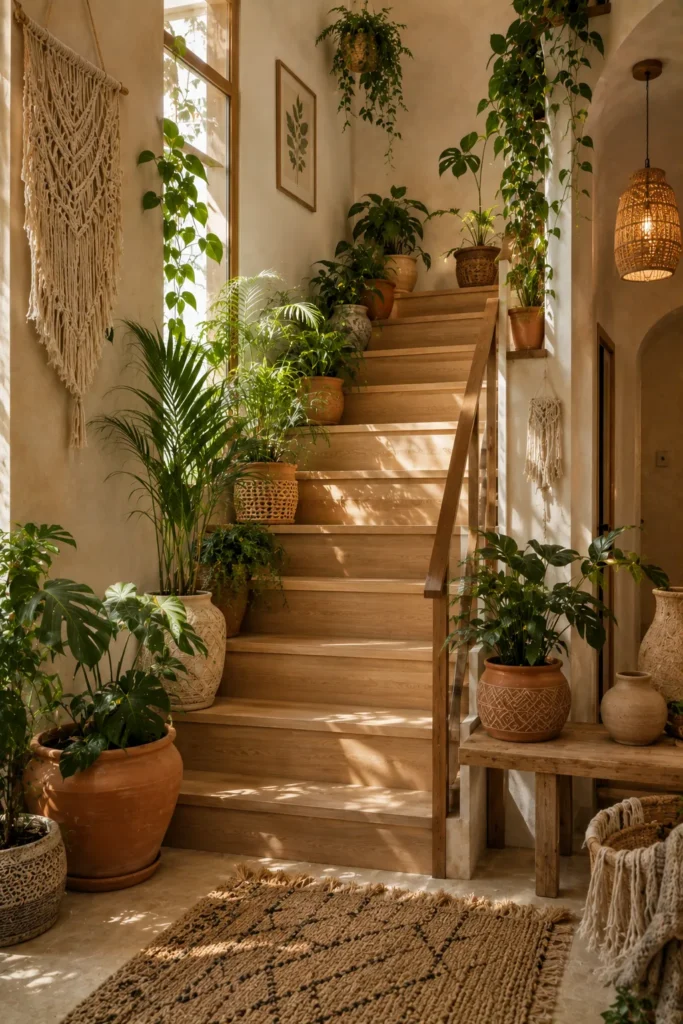
- Layered greenery adds warmth and personality to a relaxed staircase.
- Woven and terracotta textures reinforce the bohemian character.
- Trailing plants create softness around straight architectural lines.
- Keep the arrangement intentional so layered decor does not become cluttered.
Boho planting brings a relaxed, collected feeling to an indoor staircase by combining lush greenery with natural textures. Start with a few leafy plants in terracotta, woven, or handmade ceramic planters, then add one trailing variety for movement. Warm neutrals such as cream, sand, tan, and muted brown help connect the plants with the surrounding architecture. A small jute runner or woven basket can add another layer of texture if the space allows it. The goal is not perfection but balance, creating a staircase that feels comfortable, personal, and naturally decorated.
Bohemian styling works especially well when materials are allowed to feel slightly imperfect and organic. Choose containers with subtle differences in texture while keeping their colors within the same earthy palette. Avoid placing too many decorative objects around the plants, especially on narrow landings. I’ve noticed that leaving some open space makes layered boho arrangements feel intentional instead of messy. Consider how people move through the staircase before adding anything near the steps. With thoughtful spacing, natural materials, and healthy greenery, this approach creates a welcoming botanical atmosphere without sacrificing everyday practicality.
23. White Pot Greenery
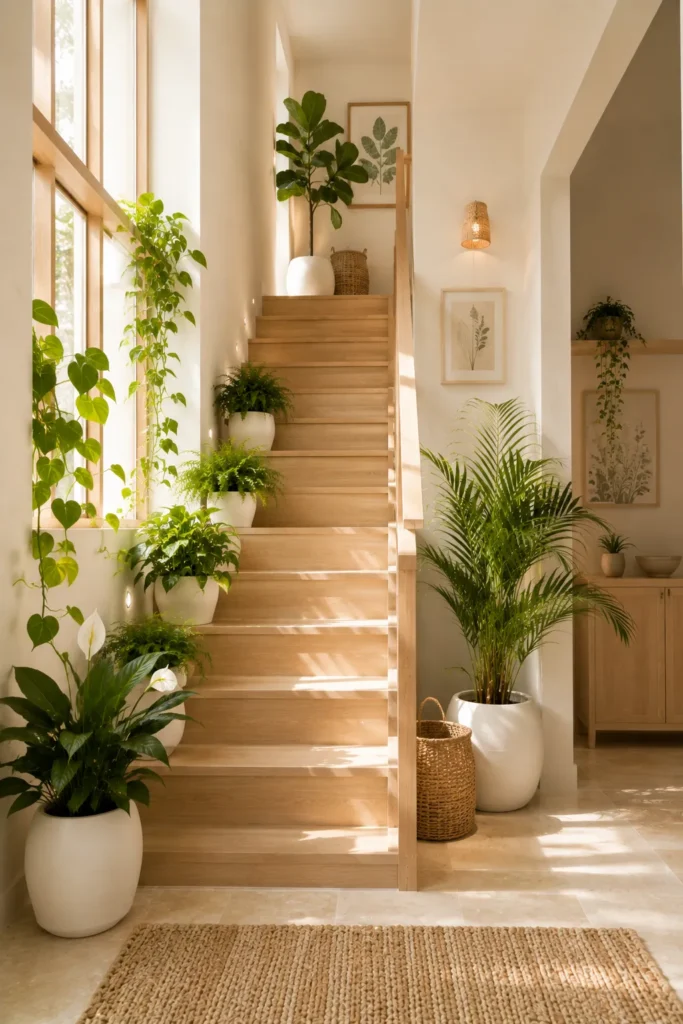
- White planters create a crisp contrast against green foliage.
- Matching containers make different plant varieties feel connected.
- The light palette can make a narrow staircase appear brighter.
- Choose varied leaf shapes to keep a coordinated display interesting.
White ceramic pots offer one of the easiest ways to create a clean and cohesive staircase garden. Their bright finish provides a simple backdrop for green foliage while visually connecting different plant varieties. Place several containers along a landing, ledge, or suitable wall shelf, keeping their shapes similar for consistency. The contrast between white and green feels fresh without requiring strong accent colors. Pale wood and warm neutral walls can complete the look beautifully. This approach is particularly effective in smaller homes because the light-colored containers help maintain an airy appearance rather than adding visual weight.
Although matching pots create cohesion, the plants themselves should provide some variety. Combine different leaf sizes, heights, and growth patterns so the display does not appear too uniform. Choose white finishes that complement the surrounding wall color rather than creating an overly stark contrast. In my experience, slightly different pot shapes within the same color family can make a display feel more natural. Keep the arrangement easy to access for watering and cleaning, and avoid placing containers directly on narrow steps. The finished staircase can feel brighter, fresher, and thoughtfully styled without becoming overly decorative.
24. Indoor Staircase Jungle
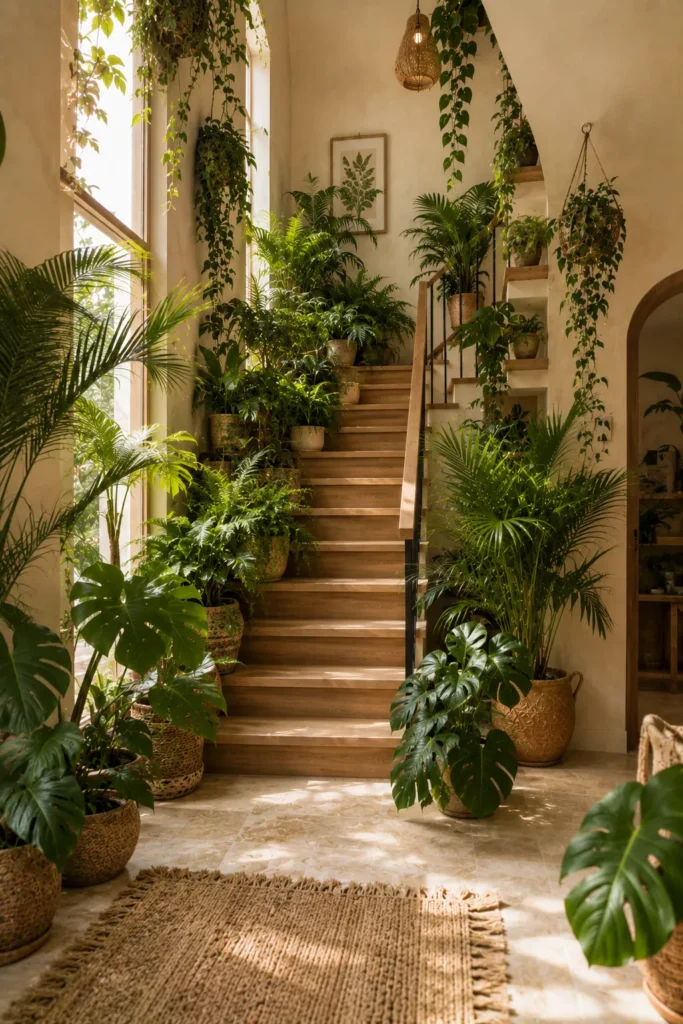
- Dense foliage creates a dramatic statement in spacious staircases.
- Multiple plant layers produce a rich, immersive botanical effect.
- Natural wood and stone balance the intensity of abundant greenery.
- Keep major pathways clear even when using many plants.
For anyone who loves an abundant botanical look, a staircase jungle can turn an ordinary transition area into a dramatic indoor retreat. Layer palms, monstera, ferns, and trailing vines at different heights so the greenery feels naturally dense rather than arranged in a single row. Natural wood, stone, and woven materials help balance the richness of the foliage. This approach works best in spacious stairwells, open landings, or homes with generous natural light. Instead of adding greenery as an afterthought, make it a central part of the staircase design and allow the plants to create the atmosphere.
A lush arrangement still needs structure to remain practical. Begin with larger plants at the back or corners, then add medium and smaller varieties where they will not obstruct movement. Group plants with similar light and watering requirements whenever possible to simplify care. I’ve seen this work well when the surrounding decor is intentionally simple, allowing the greenery to provide most of the visual drama. Leave enough negative space around railings and steps, and trim fast-growing vines regularly. The result can feel wonderfully immersive while remaining comfortable, safe, and manageable in everyday home life.
25. Stairwell Zen Garden
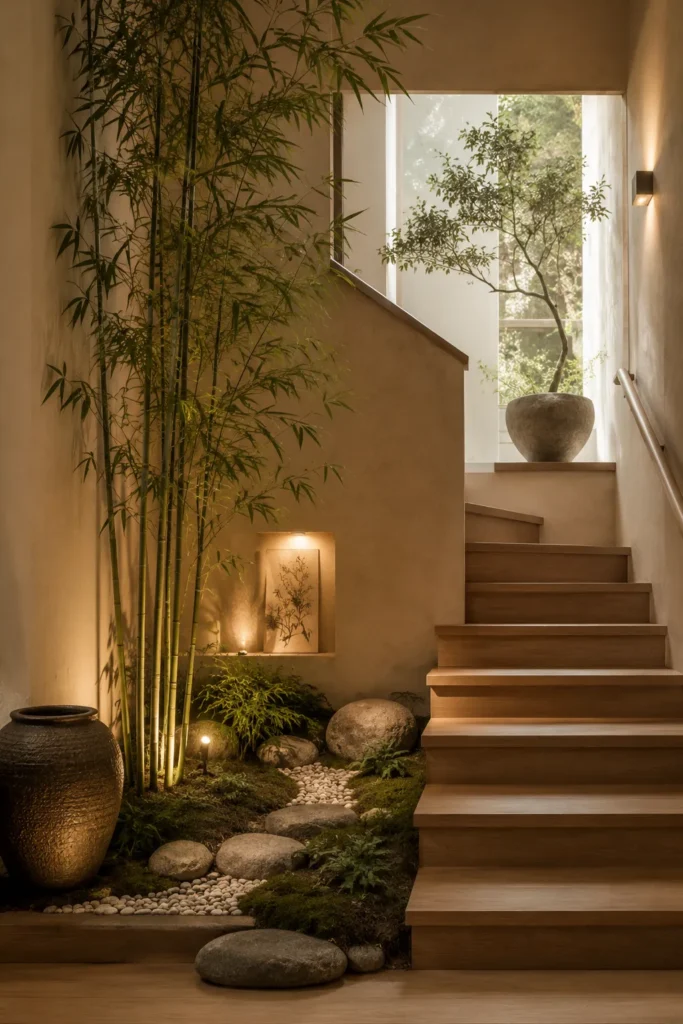
- Bamboo and moss create a calm, nature-inspired atmosphere.
- River stones introduce texture without adding visual clutter.
- Minimal planting keeps the staircase peaceful and sophisticated.
- Choose low-maintenance elements that suit the available indoor light.
A Zen-inspired staircase garden can make a busy part of the home feel noticeably calmer. Use a restrained combination of bamboo, moss-like greenery, smooth stones, and simple ceramic planters to create a quiet natural composition. Keep the colors soft with warm beige, muted green, natural wood, and gentle gray. Rather than filling the space with plants, focus on a few sculptural elements with plenty of breathing room around them. This approach works especially well beside minimalist staircases because the organic textures soften clean architectural lines without overwhelming the simplicity of the interior.
The key to a Zen-style arrangement is restraint. Choose only a few materials and repeat them naturally throughout the display instead of introducing many unrelated decorative pieces. Keep stones and planters positioned away from walking areas, and select plants based on the actual light available. In my experience, soft indirect lighting can make a small natural display feel especially peaceful in the evening. Avoid overly bright colors or crowded arrangements. With thoughtful placement, this style can transform the staircase into a quiet visual pause that feels connected to nature while remaining practical for everyday living.
Conclusion
A staircase can become much more than a functional passageway when you bring greenery into the design. These Indoor Staircase Gardens ideas show how plants, natural textures, thoughtful placement, and simple containers can transform overlooked spaces into beautiful focal points. Whether you prefer a minimalist display, lush tropical greenery, or a peaceful Zen-inspired corner, start with one idea that suits your space and available light. I’ve seen how small changes like these can completely refresh an interior. Save this post on Pinterest for your next decorating project, try your favorite idea, and share it with someone who loves bringing nature indoors.