23 Cute Toddler Bedroom Ideas You’ll Love to Copy Today
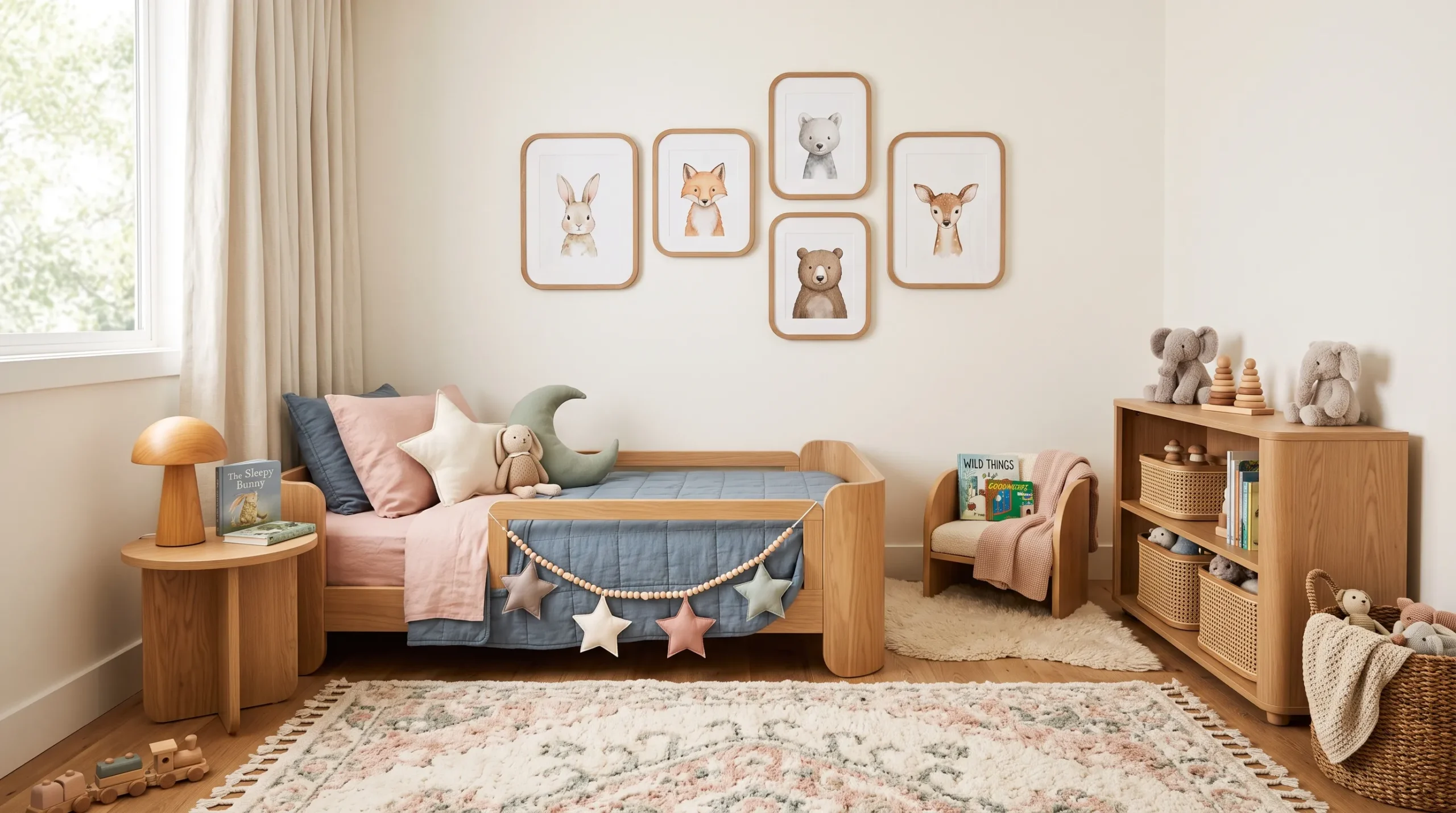
A toddler’s bedroom can be so much more than a place to sleep. With the right Toddler Bedroom Ideas, even a small or simple room can become a cozy, playful space filled with personality and comfort.
From soft pastel colors and magical wall murals to practical storage and cozy reading corners, small changes can make a big visual difference. The best part is that you do not need an expensive makeover to create a room your child loves. In my experience, a thoughtful rug, accessible bookshelf, or special little play corner can completely change how a space feels and functions. These ideas are designed to inspire you to create a beautiful, practical bedroom that feels joyful today and can easily grow with your child.
1. Soft Pastel Palette
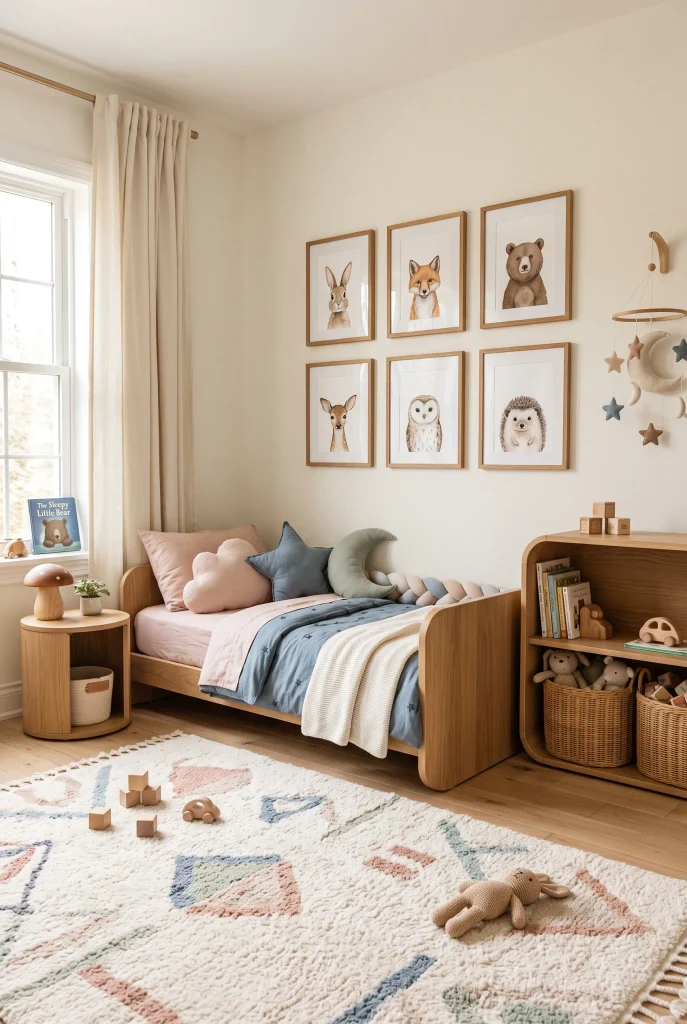
- Creates a calm and cheerful space without feeling overly bright.
- Makes it easy to mix playful decor with furniture that can grow with your child.
- Soft colors help the room feel open, warm, and visually balanced.
- Small accents can be changed later without completely redecorating.
A soft pastel palette can instantly make a toddler’s room feel sweet, calm, and beautifully put together. Instead of filling every wall with bold color, choose a gentle mix of blush, sage, dusty blue, cream, or soft lavender. These shades create a playful look while still feeling restful at bedtime. Add color through bedding, cushions, wall art, and a cozy rug to keep the design flexible. In my experience, softer tones also photograph beautifully, which makes this style especially appealing for parents searching for charming, save-worthy bedroom inspiration online.
The real beauty of this approach is how easily it adapts as your child grows. Start with neutral walls and natural wood furniture, then layer in pastel accessories that can be replaced whenever their interests change. A sage cushion, blush storage basket, or lavender lamp can add personality without overwhelming the room. I’ve noticed that rooms with a balanced palette often feel less cluttered, even when they contain plenty of toys and books. For practical Toddler Bedroom Ideas, this setup offers a simple way to create a cheerful, flexible space that still feels calm.
2. Cozy Reading Nook
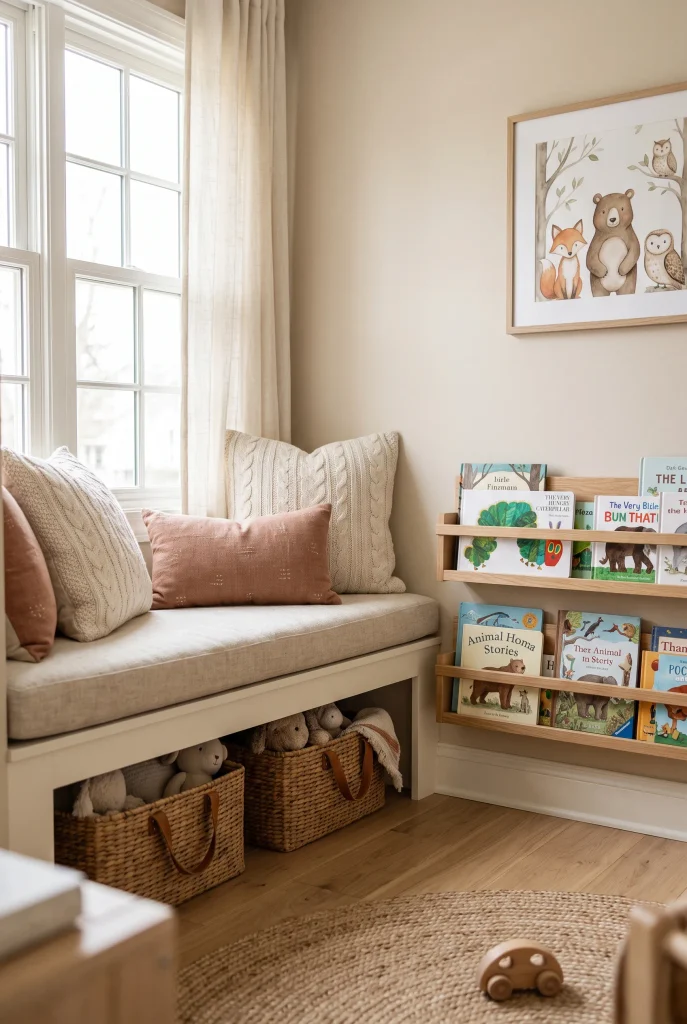
- Gives books and quiet activities a dedicated place.
- Encourages independent play and early reading habits.
- Makes an unused corner feel purposeful and inviting.
- Front-facing book storage adds colorful visual interest.
A cozy reading nook can turn even the smallest bedroom corner into a space your toddler wants to use every day. Place a low bench, oversized floor cushion, or soft beanbag near natural light, then add a few accessible shelves for favorite books. Keep the setup simple enough for little hands to reach independently. A soft rug and a small pillow can make the area feel extra welcoming without taking up much floor space. I’ve seen this work especially well in bedrooms where toys tend to spread everywhere because it gives quieter activities a clear home.
The key is making the nook feel special without making it complicated. Display books with their covers facing forward, rotate titles occasionally, and add one gentle decorative detail such as a wall lamp or framed animal print. This creates visual interest while keeping the corner practical for daily use. Choose washable fabrics and sturdy storage so the area can handle real family life. A reading spot also helps create a calmer transition before bedtime, giving toddlers a quiet place to slow down, browse pictures, and enjoy a familiar routine.
3. Whimsical Wall Murals
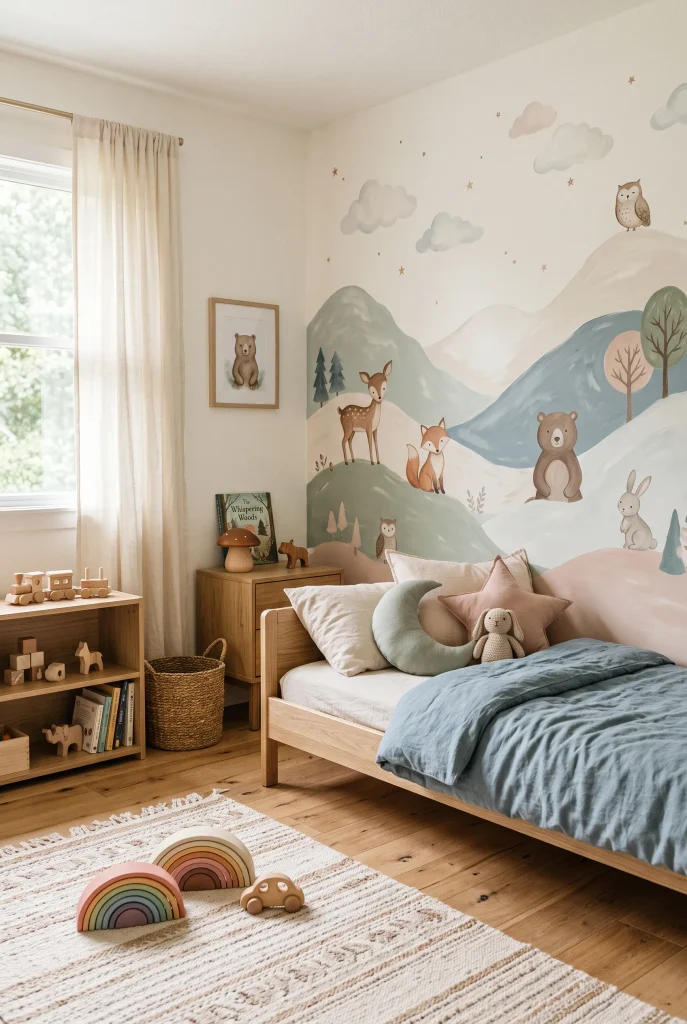
- Creates an instant focal point without filling the room with extra decor.
- Adds personality that feels imaginative and visually memorable.
- Can define the sleeping area or brighten an otherwise plain wall.
- Works beautifully with simple furniture and neutral textures.
A whimsical wall mural can completely change the mood of a toddler’s bedroom with one strong visual feature. Soft clouds, woodland animals, stars, rainbows, or rolling hills can create a playful backdrop behind the bed without crowding the room. Choose colors that connect with the rest of the palette so the mural feels intentional rather than overly busy. This idea works especially well when the furniture is simple and low-profile. The contrast between a clean room layout and an imaginative wall creates a space that feels fun, personal, and visually exciting.
For a more flexible version, try removable wallpaper or decals instead of permanent paint. This can be especially useful if your toddler’s interests change quickly or if you prefer an easier update later. Keep the remaining walls quieter so the mural remains the main attraction. I’ve noticed that one well-designed feature wall often has more impact than many small decorations scattered throughout a room. Add coordinating bedding, a plush toy, or framed print nearby to connect the colors and create a polished, cohesive look.
4. Montessori Floor Bed
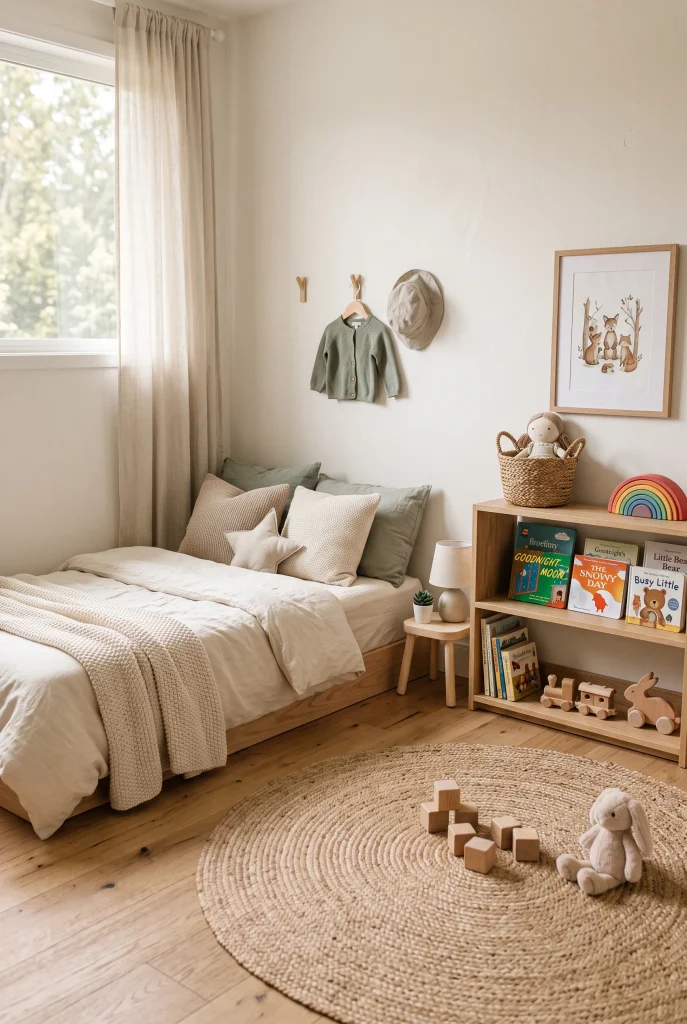
- Gives toddlers easier access to their own sleeping space.
- Creates a low, open layout that feels simple and child-friendly.
- Encourages independence while keeping the room visually calm.
- Works beautifully with soft rugs, low shelves, and natural materials.
A Montessori floor bed can make a toddler’s bedroom feel more independent, accessible, and thoughtfully designed from the very beginning. Instead of using a tall traditional bed, place a low mattress or simple floor-level frame where your child can safely climb in and out. Surround it with a soft rug and keep nearby furniture low and easy to reach. This layout creates a room that feels designed around your toddler rather than around adult-sized furniture. The result is a cozy, grounded sleeping area that looks simple, modern, and naturally inviting.
What makes this idea especially practical is its flexibility as the room evolves. A low bed can be paired with open bookshelves, accessible storage, and a small play area without making the space feel crowded. Keep the colors soft and the surrounding decor minimal so the room remains restful at bedtime. In my experience, this setup works best when everything has a clear place, helping the bedroom feel organized even after a busy day. Natural wood, washable bedding, and soft textures create a warm environment that is both stylish and realistic for everyday family life.
5. Playful Canopy Corner
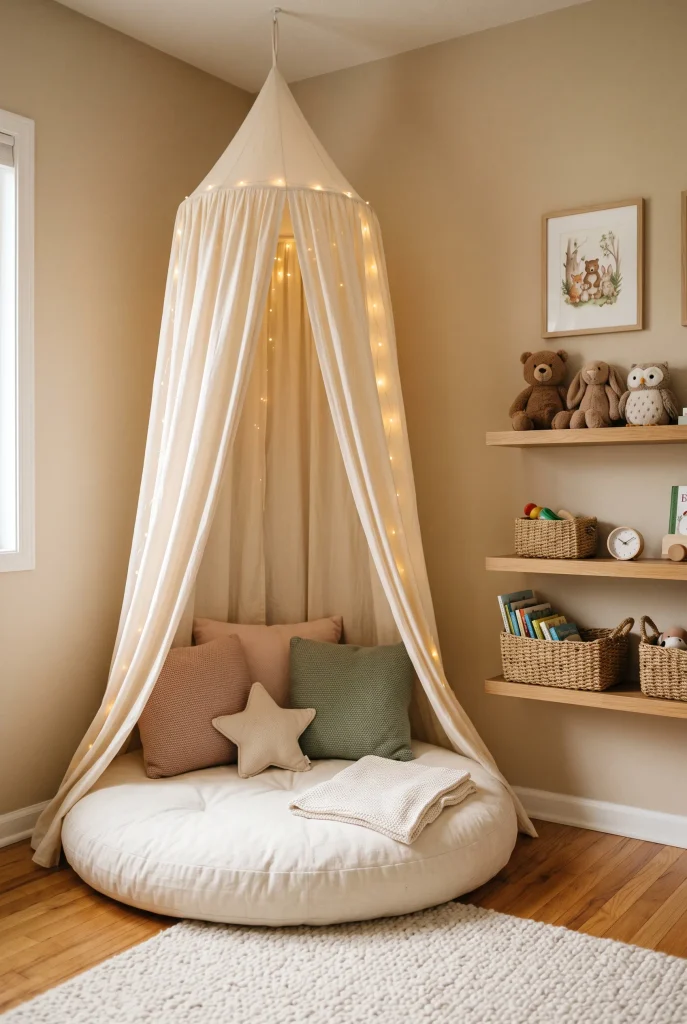
- Turns an ordinary corner into a special little retreat.
- Adds softness and height without needing major renovation.
- Creates a cozy place for reading, playing, or quiet time.
- Can be updated easily with new cushions, lights, or decor.
A playful canopy corner adds instant charm and gives your toddler a cozy little space that feels separate from the rest of the room. Hang a lightweight fabric canopy over a floor cushion, soft rug, or small play mat, then add a few comfortable pillows and favorite stuffed animals. The vertical fabric creates a beautiful focal point while taking up very little floor space. Soft neutral colors keep the look calm, while gentle pastel accents add personality. This simple feature can make even a plain bedroom feel more imaginative, layered, and visually interesting.
The best canopy setups are both decorative and useful, giving children a comfortable spot for quiet play or book time. Choose washable fabric and secure the canopy carefully according to its installation instructions. Add a small basket nearby for books or toys so the area stays organized after use. I’ve noticed that toddlers often enjoy having a clearly defined little retreat, especially in rooms that also serve as play spaces. A soft light or subtle string lights can add warmth, creating a gentle glow that makes the corner feel extra inviting before bedtime.
View: 25 Bedroom Lighting Ideas for a Serene Dreamy Space
6. Animal-Themed Decor
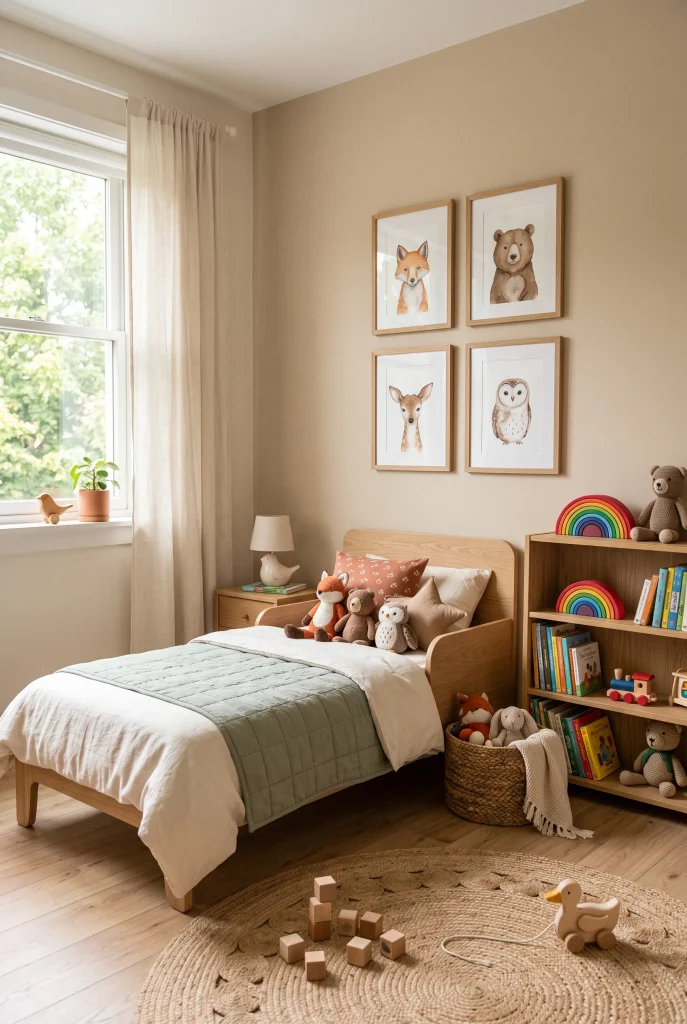
- Adds personality without requiring a complete themed makeover.
- Makes the room feel playful while still keeping the design stylish.
- Animal prints and toys can easily be swapped as interests change.
- Creates a natural connection between artwork, bedding, and accessories.
Animal-themed decor is an easy way to bring personality into a toddler’s room without making the space feel overly busy or temporary. Start with a few coordinated pieces, such as framed woodland prints, a soft animal-shaped cushion, or plush toys displayed on a low shelf. Choose a limited color palette so everything feels connected rather than random. Neutral walls and natural wood furniture provide a calm backdrop for playful details. This approach creates a room that feels cheerful and child-friendly while still looking polished enough to grow with changing tastes and interests.
For a more balanced look, avoid matching every item too closely. Mix subtle animal artwork with solid bedding, textured baskets, and simple wooden furniture to create variety. Small decorative touches often have the strongest effect when the room already has a clean foundation. That’s why many designers recommend choosing one theme and repeating it gently instead of filling every surface with related patterns. These Toddler Bedroom Ideas can help you create a playful environment that feels imaginative and personal while remaining easy to refresh whenever your child develops new favorite animals.
7. Mini House Bed
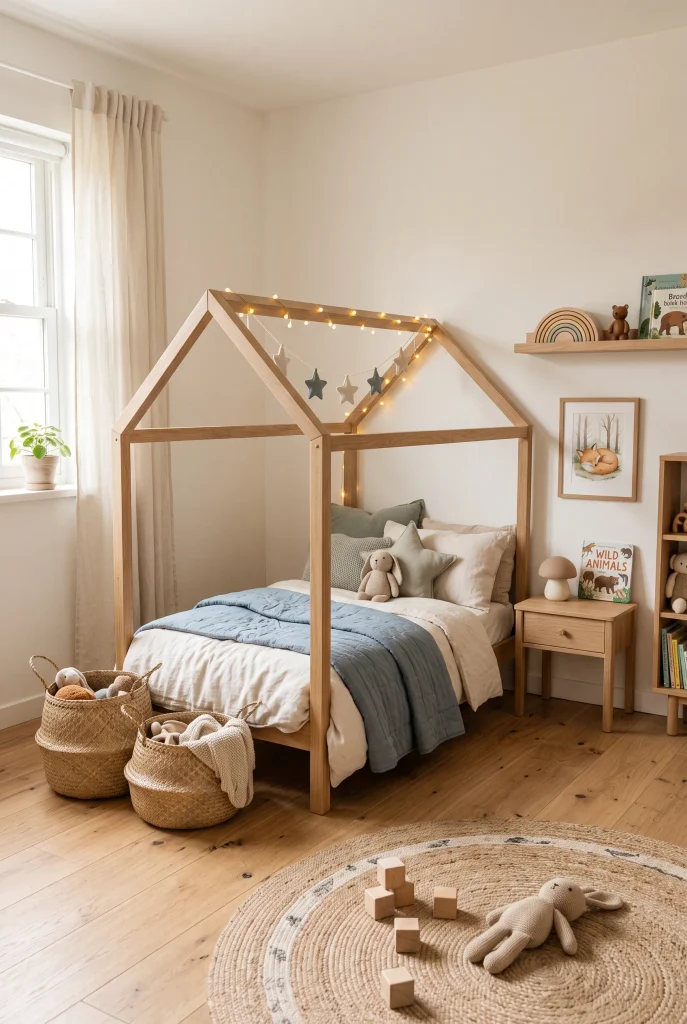
- Creates a playful focal point without overwhelming the room.
- Makes bedtime feel more exciting and personal for toddlers.
- The simple wooden frame works with many different color schemes.
- Can be styled with soft lights, fabric panels, or seasonal decor.
A mini house bed can make an ordinary sleeping area feel instantly more playful and special. Its simple frame creates the look of a tiny home while still keeping the room open and uncluttered. Choose natural wood for a warm, timeless appearance, then soften the design with neutral bedding, a textured rug, and a few favorite cushions. The house shape adds visual interest without needing a heavily themed room. This style also gives you plenty of decorating flexibility, allowing the space to change easily as your toddler grows and develops new interests.
The best part is how customizable this bed style can be. Add a lightweight fabric panel, subtle hanging decorations, or a soft string of warm lights to make the frame feel extra cozy. Keep accessories simple and safely positioned so the sleeping area remains practical for everyday use. In my experience, statement furniture like this often reduces the need for excessive wall decor because the bed already provides a strong visual feature. Pair it with simple storage and calm colors to create a balanced room that feels imaginative, comfortable, and easy to maintain.
8. Colorful Storage Bins
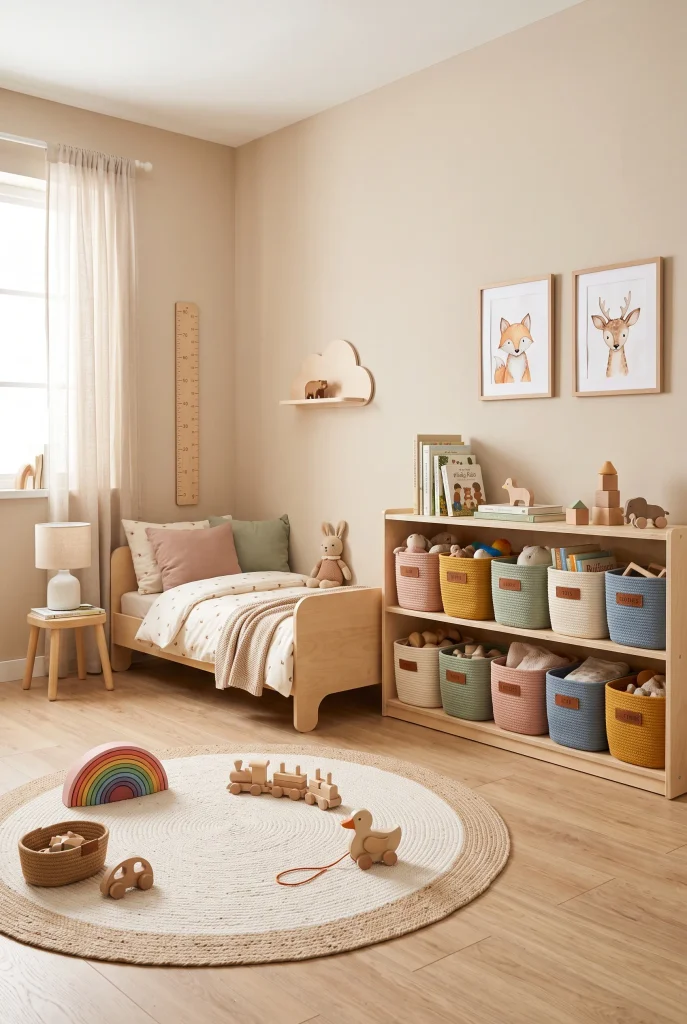
- Makes cleanup easier by giving toys clear, accessible homes.
- Adds cheerful color without permanently changing the walls.
- Helps open shelving look neat instead of visually cluttered.
- Bins can be relabeled or rearranged as storage needs change.
Colorful storage bins can solve one of the biggest challenges in a toddler’s room: keeping everyday toys from taking over every available surface. Choose a few soft, coordinated colors rather than mixing too many bright shades. Place the bins on low shelves so your child can reach them and help with simple cleanup routines. This creates a room that feels cheerful while still looking organized. Woven, fabric, or lightweight containers also add texture, making practical storage feel like part of the overall decor instead of an afterthought.
For the most useful setup, separate toys into simple categories such as blocks, books, stuffed animals, or creative supplies. Picture labels can be especially helpful for younger children who cannot read yet. I’ve seen this work well in busy homes because even a quick cleanup becomes easier when every item has an obvious place. Keep a few bins partly empty to avoid overcrowding and allow room for new favorites. Matching the storage colors with bedding or artwork can also create a polished, intentional look without requiring an expensive room makeover.
9. Soft Accent Rug
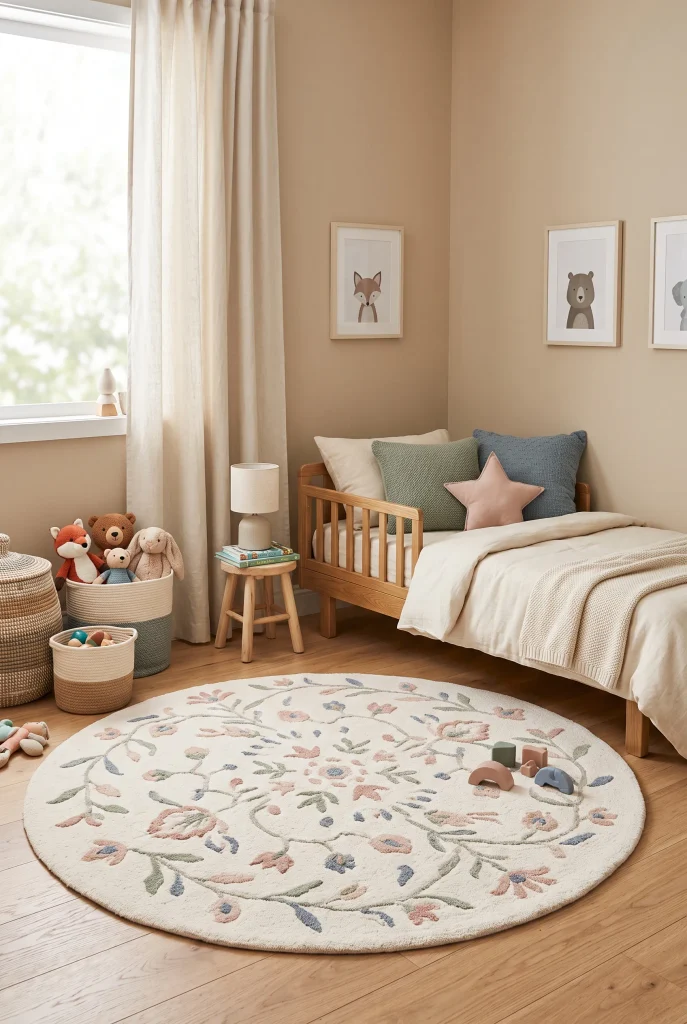
- Adds warmth and softness to hard flooring.
- Defines a comfortable play area beside the bed.
- Introduces color and pattern without making permanent changes.
- Creates a layered, cozy look that makes the room feel finished.
A soft accent rug can completely change how a toddler bedroom feels underfoot while adding an extra layer of warmth and personality. Place one beside the bed or in the center of the room to create a comfortable zone for playing, reading, and relaxing. Choose a low-pile or washable option that can handle everyday spills and active little feet. A gentle pattern in muted colors can add interest without competing with the rest of the decor. The result is a room that feels softer, more inviting, and visually connected from floor to furniture.
When choosing a rug, consider both comfort and how it fits the room’s layout. A larger size can make a small bedroom feel more unified, while a round rug can soften the straight lines of furniture. I’ve noticed that rugs are especially useful in simple rooms because they add texture without creating clutter on walls or shelves. Look for durable materials and easy-care construction to keep maintenance realistic. Among practical Toddler Bedroom Ideas, this is one of the easiest upgrades because it can instantly refresh the space with minimal effort.
10. Growth Chart Wall
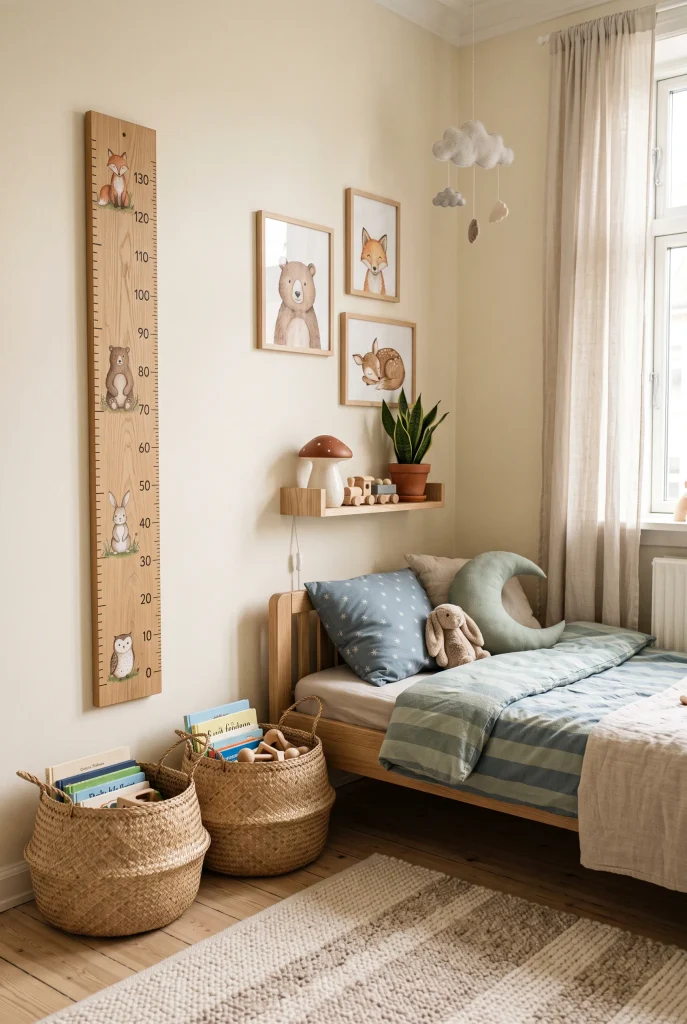
- Creates a meaningful feature that grows with your child.
- Adds vertical interest to an empty wall without creating clutter.
- Combines everyday function with a personal decorative detail.
- Can become a keepsake filled with memorable milestones.
A growth chart wall adds personality and meaning while turning a simple bedroom feature into something your family can enjoy for years. Choose a wooden ruler-style chart, painted mural, or removable design that fits naturally beside the bed or near the door. Keep the surrounding wall simple so the chart remains easy to notice and use. Marking each new height can become a small family tradition, adding emotional value to the room. This detail works especially well because it combines practical function with decor that feels personal rather than purely decorative.
For a polished look, coordinate the chart with the room’s existing wood tones, colors, or theme. A natural oak design suits neutral spaces, while soft painted versions can connect with pastel bedding or artwork. Leave enough clear wall space around it so the feature does not compete with shelves or busy decorations. I’ve noticed that meaningful details like this often make children’s rooms feel more personal without requiring expensive furniture or major renovations. As your toddler grows, the chart becomes a visual record of change while continuing to serve as a charming design element.
11. Starry Ceiling Details
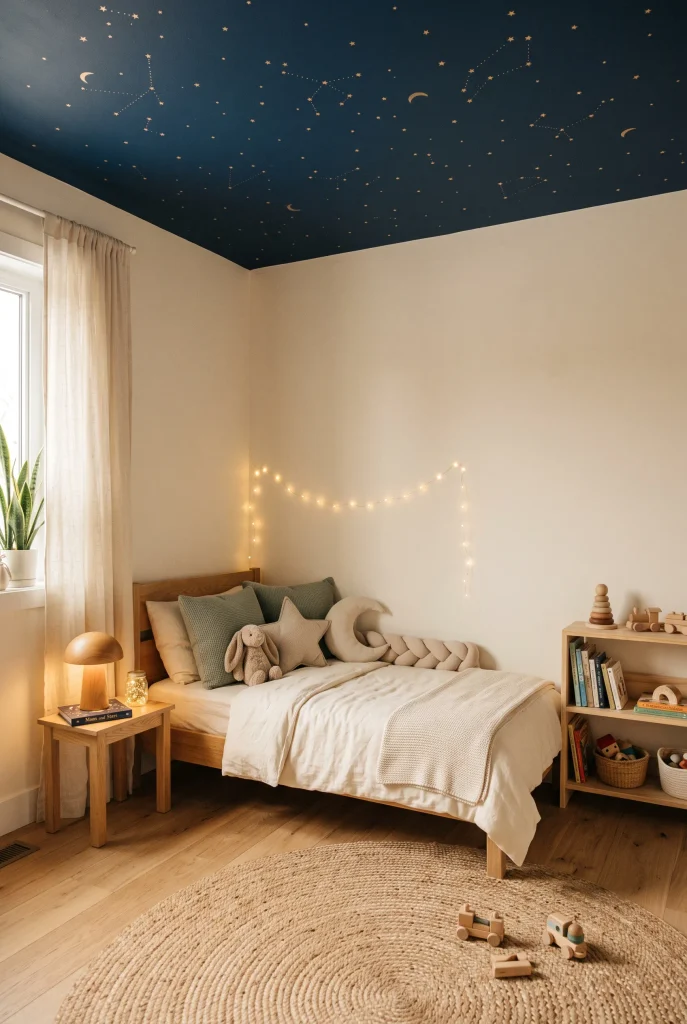
- Adds a magical feature without taking up valuable floor space.
- Creates a gentle visual focus that feels especially cozy at bedtime.
- Works with painted stars, decals, or subtle glow-in-the-dark details.
- Pairs beautifully with simple furniture and soft neutral colors.
A starry ceiling detail can make bedtime feel a little more magical while keeping the rest of the bedroom calm and balanced. Instead of covering every wall with themed decorations, use the ceiling as an unexpected design feature. Tiny painted stars, removable decals, or subtle glow elements can create visual interest above the bed without crowding the room. Pair a deeper ceiling shade with lighter walls to maintain contrast and openness. The effect feels imaginative yet soothing, giving the bedroom a special atmosphere that becomes especially noticeable during quiet evening routines.
For the best result, keep the stars delicate rather than overly large or bright. Small details scattered across a muted blue, gray, or warm neutral ceiling can create a softer and more timeless look. Consider the room’s lighting too, since warm lamps can enhance the cozy atmosphere without overpowering the design. In my experience, ceiling details often surprise visitors because they add personality in a place that is usually overlooked. This idea is particularly useful when wall space is limited but you still want the bedroom to feel creative and memorable.
12. Low Toy Shelves
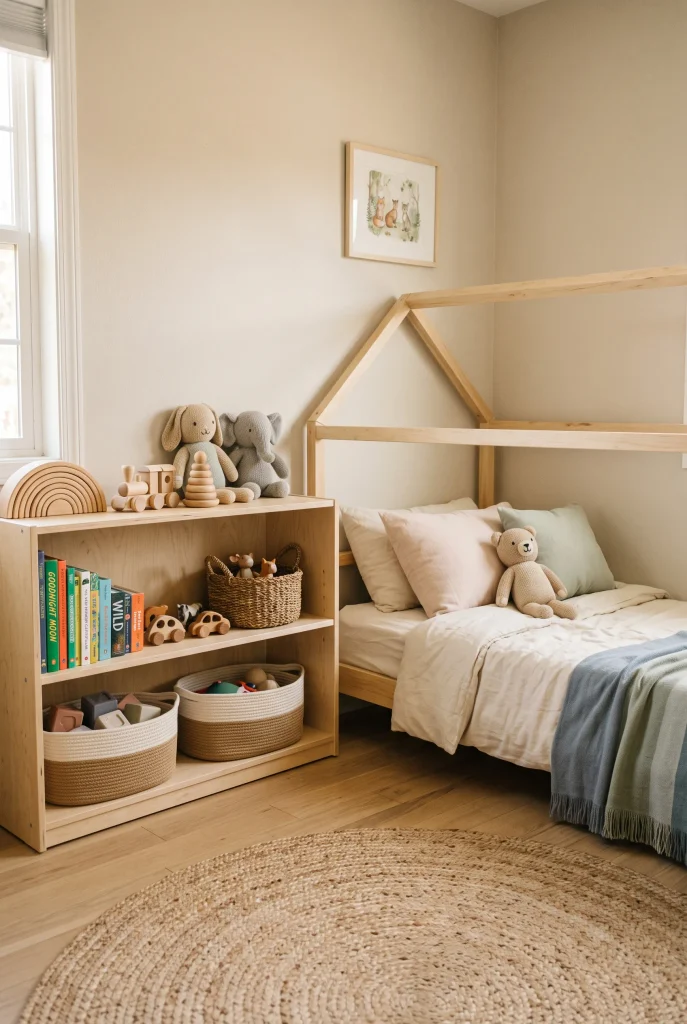
- Keeps favorite toys visible and easy for toddlers to reach.
- Encourages simple independence during play and cleanup.
- Helps prevent storage from feeling too tall or overwhelming.
- Makes everyday toys part of the room’s visual styling.
Low toy shelves create a child-friendly setup where favorite books, puzzles, and playthings are easy to see and reach. Instead of hiding everything inside large containers, display a carefully edited selection at your toddler’s height. This encourages independent play while making it easier for children to understand where items belong afterward. Keep the shelves from becoming overcrowded by rotating toys regularly and leaving some open space between objects. The result feels organized and attractive while still supporting the messy, active reality of everyday childhood and frequent play.
Choose sturdy shelving with a secure installation and rounded edges suitable for a young child’s room. Use a few baskets on lower levels for smaller pieces that could otherwise create visual clutter. I’ve seen this work well in homes where parents want the bedroom to feel calm but still need practical access to everyday toys. Rotating items every few weeks can also make familiar toys feel interesting again without constantly buying something new. This simple storage approach keeps the room functional, visually lighter, and easier for both children and adults to maintain.
13. Personalized Name Sign
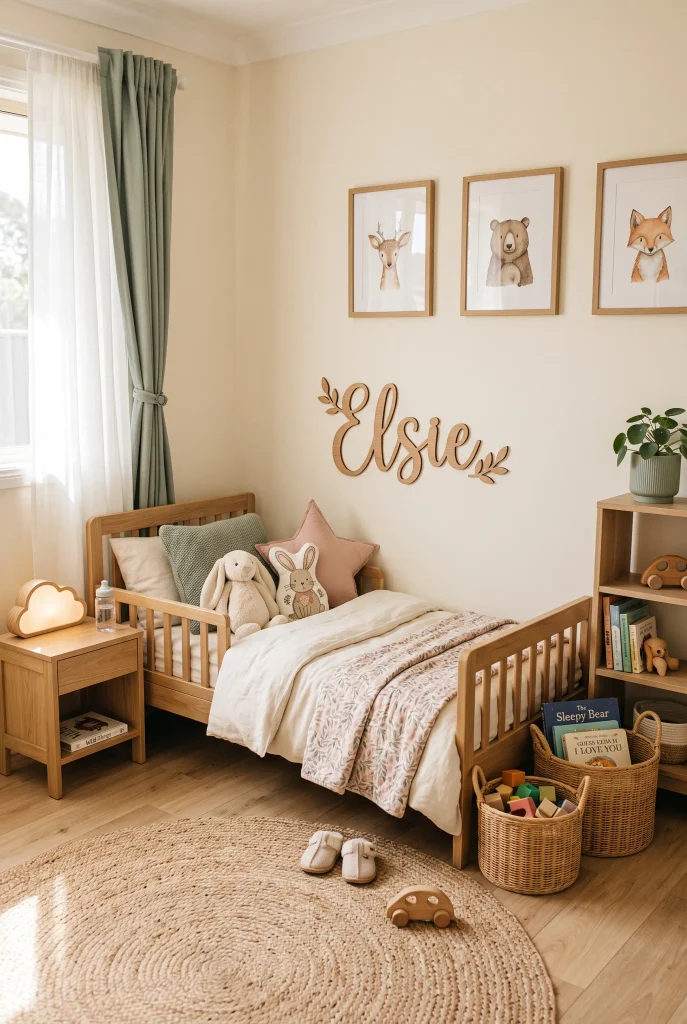
- Makes the bedroom feel personal and thoughtfully styled.
- Creates a simple focal point above the bed or dresser.
- Works with wood, painted letters, fabric, or subtle LED designs.
- Can complement the room’s existing colors without adding clutter.
A personalized name sign can make a toddler’s bedroom feel instantly more special without requiring a major decorating project. Place it above the bed, near the entrance, or over a dresser to create a clear focal point. Wooden letters, painted designs, or soft fabric banners can all work beautifully depending on the room’s style. Choose colors that connect with the existing palette for a cohesive result. This small detail adds identity to the space and can make even a simple room feel more intentional, warm, and thoughtfully decorated for your growing child.
Keep the design simple enough to remain attractive as your toddler gets older. A natural wood sign can blend beautifully with neutral interiors, while muted painted letters can introduce a gentle pop of color. Make sure any wall-mounted decor is securely installed and positioned safely. I’ve noticed that personalized pieces often create a stronger emotional connection than generic decorations because they make the room feel uniquely theirs. Pair the sign with minimal surrounding artwork so it stands out naturally, creating a polished feature without making the wall feel crowded or overly decorated.
14. Cozy Window Seat
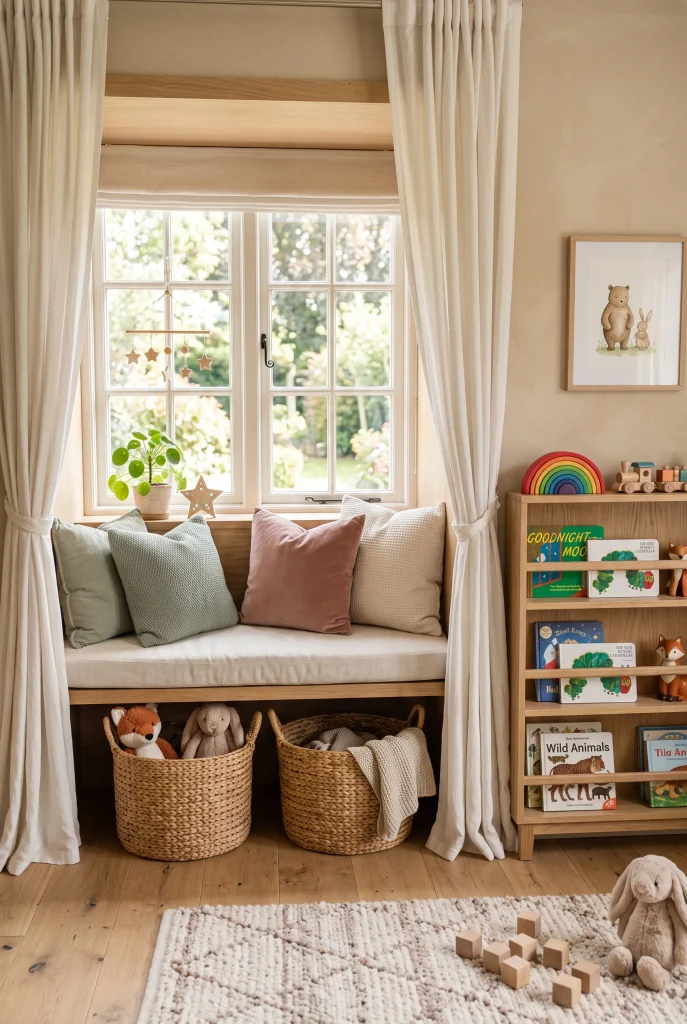
- Turns unused window space into a comfortable activity area.
- Creates a cozy spot for books, quiet play, or relaxing.
- Adds extra seating without filling the center of the room.
- Under-seat baskets can provide hidden storage for toys and blankets.
A cozy window seat can transform an overlooked area into one of the most inviting spots in a toddler’s bedroom. Add a cushioned bench beneath the window, layer it with washable pillows, and keep a small basket of books nearby. Natural light makes this corner especially useful for quiet activities during the day, while soft fabrics keep it comfortable and welcoming. The seat also adds visual depth to the room by creating a functional zone that feels separate from the sleeping area without needing walls, dividers, or additional bulky furniture.
For everyday family life, storage underneath the seat can make this idea even more practical. Use pullout baskets for blankets, toys, or seasonal items that do not need to stay visible. Choose durable cushion covers that can be removed and washed when needed. In my experience, multi-purpose features like this are especially valuable in smaller bedrooms because they provide comfort and storage in the same footprint. Keep the styling simple with a few coordinated pillows and one soft throw, allowing the natural light and cozy textures to remain the main attraction.
15. Soft Neutral Layers
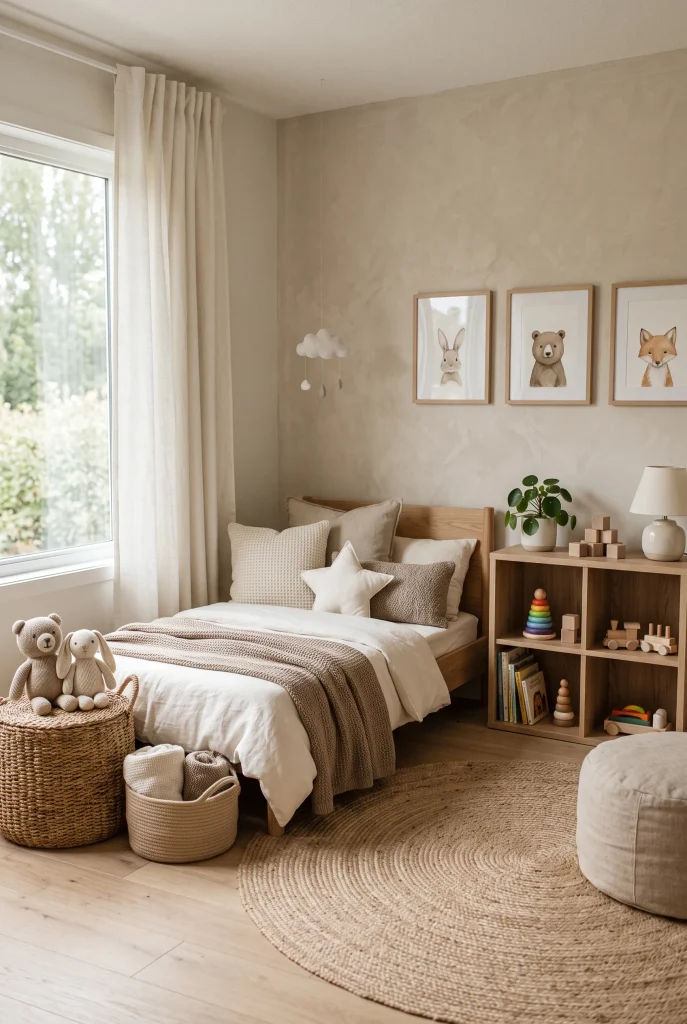
- Creates a peaceful bedroom that does not feel overly themed.
- Adds warmth through texture instead of relying on bold colors.
- Makes different furniture pieces look naturally connected.
- Provides an easy base for changing toys, artwork, and accessories.
Soft neutral layers create a calm foundation that can make a toddler’s bedroom feel warm, cozy, and beautifully coordinated. Combine shades of cream, beige, ivory, and gentle taupe through bedding, rugs, curtains, and cushions. The secret is using different textures so the room still feels interesting without depending on strong colors. Linen, cotton, knits, woven baskets, and natural wood can all add depth. This approach works particularly well for parents who want a playful child’s space that still blends naturally with the overall style of their home.
To keep neutral decor from looking flat, mix smooth and textured surfaces throughout the room. A woven rug beside a wooden bed, knitted blanket, and linen curtains can create a soft layered effect with very little visual clutter. Add personality through small, easy-to-change accents such as artwork or colorful toys. I’ve seen this work well in rooms shared by siblings because a neutral base makes future updates much easier. These layered choices create a flexible space that feels peaceful today while leaving plenty of room for changing interests and new decorative touches.
16. Indoor Play Corner
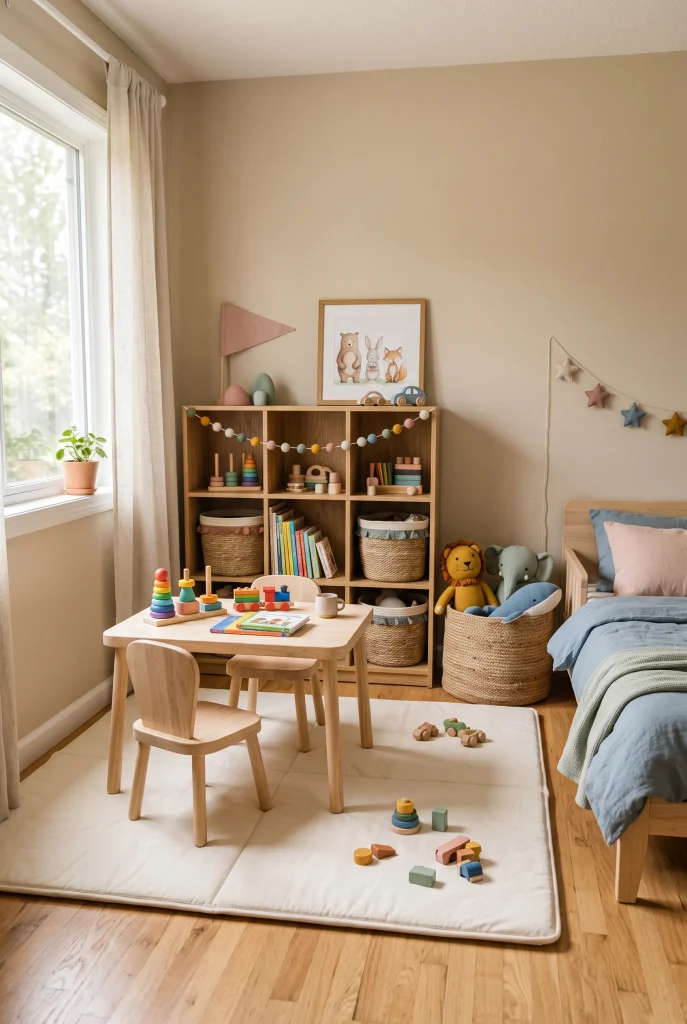
- Creates a clear space for play without taking over the entire bedroom.
- Keeps activities, toys, and creative supplies easier to organize.
- A small table gives toddlers a comfortable place for drawing and puzzles.
- Helps separate active play from the sleeping area.
A dedicated indoor play corner can make a toddler’s bedroom feel more organized while giving your child a clear place to explore, create, and play. Choose one corner for a small table, child-sized chairs, and a soft floor mat that defines the area visually. Add low storage nearby so toys and supplies remain easy to access. This simple arrangement prevents playthings from spreading across the entire room. Even in a smaller bedroom, a thoughtfully planned corner can create a useful activity zone without making the space feel crowded or overly busy.
Keep the play area practical by limiting the number of toys displayed at one time and rotating activities when interest changes. A small basket for crayons, puzzles, or building blocks can make cleanup easier after playtime. I’ve noticed that clearly defined zones often help rooms feel calmer because each area has a specific purpose. Choose furniture with rounded edges and durable, easy-to-clean surfaces suited to everyday use. With a few thoughtful details, this corner can become a colorful, functional feature that encourages creativity while keeping the rest of the bedroom visually balanced.
17. Vintage Toy Display
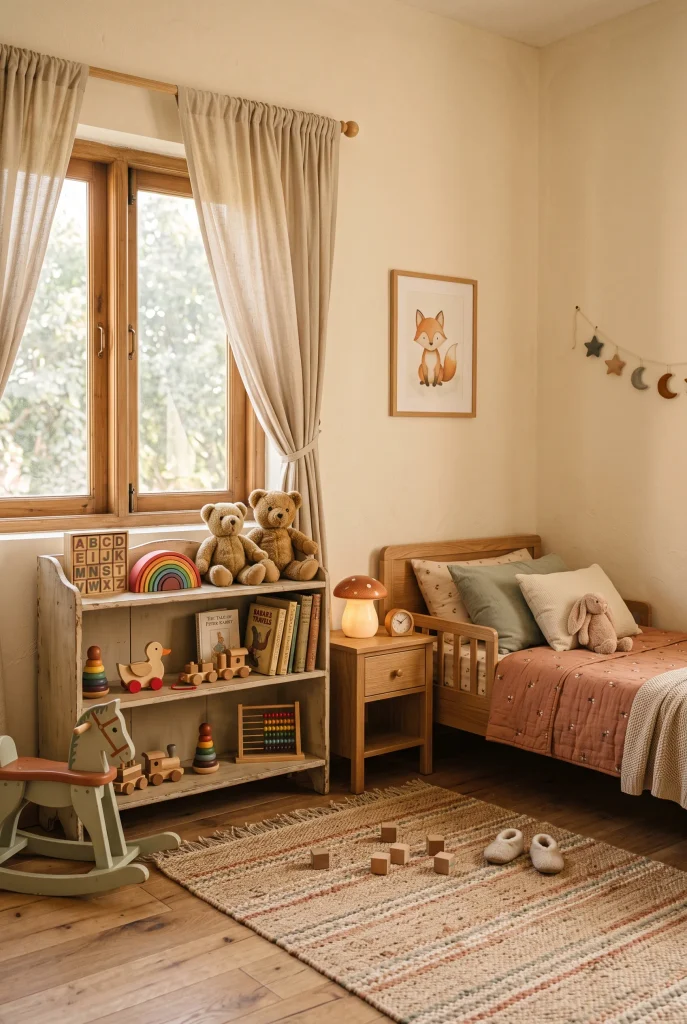
- Turns beautiful toys into part of the room’s decoration.
- Adds warmth and personality through wood, fabric, and nostalgic details.
- Keeps favorite items visible instead of hidden in storage.
- Creates a charming balance between playfulness and timeless style.
A vintage toy display brings warmth and character to a toddler’s bedroom by turning everyday playthings into decorative details. A small wooden rocking horse, classic blocks, plush teddy bears, or beautifully illustrated books can look especially charming when arranged on open shelves. The key is choosing a few special pieces rather than displaying everything at once. Natural materials such as wood, cotton, and woven fibers create a timeless look that feels softer than plastic-heavy storage. This approach adds personality while helping the room maintain a calm and thoughtfully styled appearance.
To make the display feel intentional, group items by size or material and leave some empty space around each arrangement. A low shelf can hold toys your child uses regularly, while higher secure storage can display decorative keepsakes that are not intended for play. In my experience, rotating displayed toys keeps the room interesting without adding more clutter. Pair vintage-style pieces with simple furniture and neutral walls so their details stand out naturally. The finished space feels playful, collected, and personal while still remaining practical enough for everyday family life.
18. Gentle Night Lighting
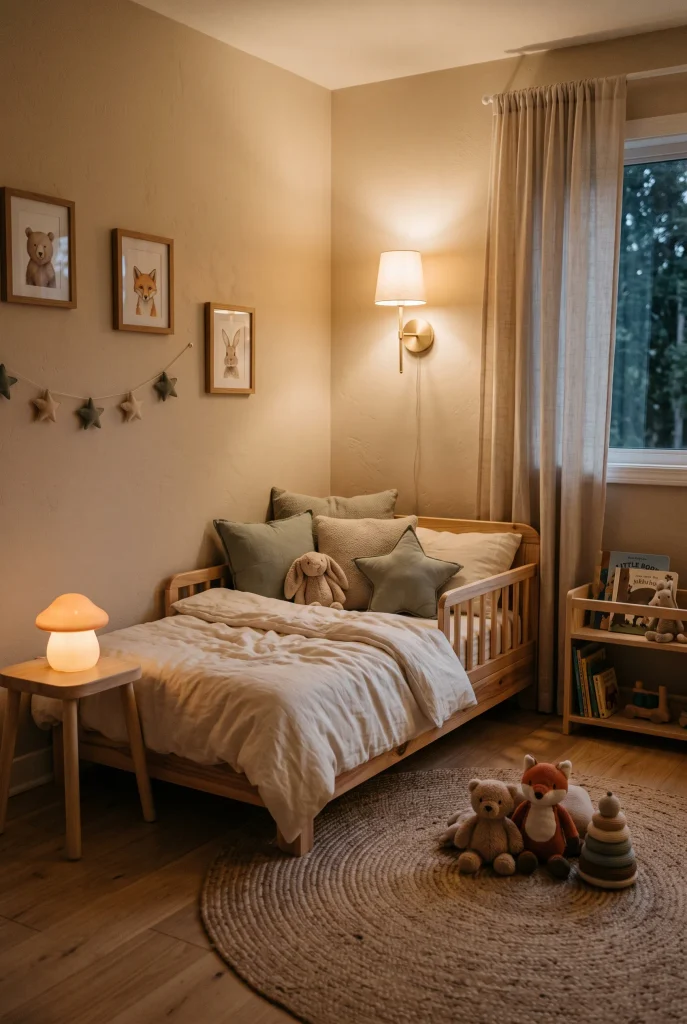
- Creates a softer transition between playtime and bedtime.
- Adds gentle visibility without making the room feel too bright.
- Can highlight a cozy corner or provide comfort during nighttime waking.
- Warm lighting makes neutral colors and textures feel even more inviting.
Gentle night lighting can completely change the atmosphere of a toddler’s bedroom when the day begins to wind down. A small bedside lamp, dimmable wall light, or soft night light can create a warm glow that feels comforting without brightly illuminating the entire room. Position the light carefully so it supports safe movement while avoiding direct glare near the bed. Warm-toned lighting also enhances soft textures, natural wood, and calm colors, making the space feel noticeably cozier. This simple addition can help the bedroom shift from an active daytime environment into a peaceful evening retreat.
Choose lighting that suits your family’s routine and is designed for safe use in a child’s space. A dimmable option can be especially useful because the brightness can change as needed during reading, bedtime, or nighttime check-ins. Keep cords secured and fixtures safely installed according to the manufacturer’s instructions. I’ve seen how a softer light source can make bedtime routines feel less abrupt, especially after busy evenings. Pair the glow with simple bedding and a calm room layout to create a comforting environment that feels restful, practical, and beautifully inviting.
19. Creative Art Wall
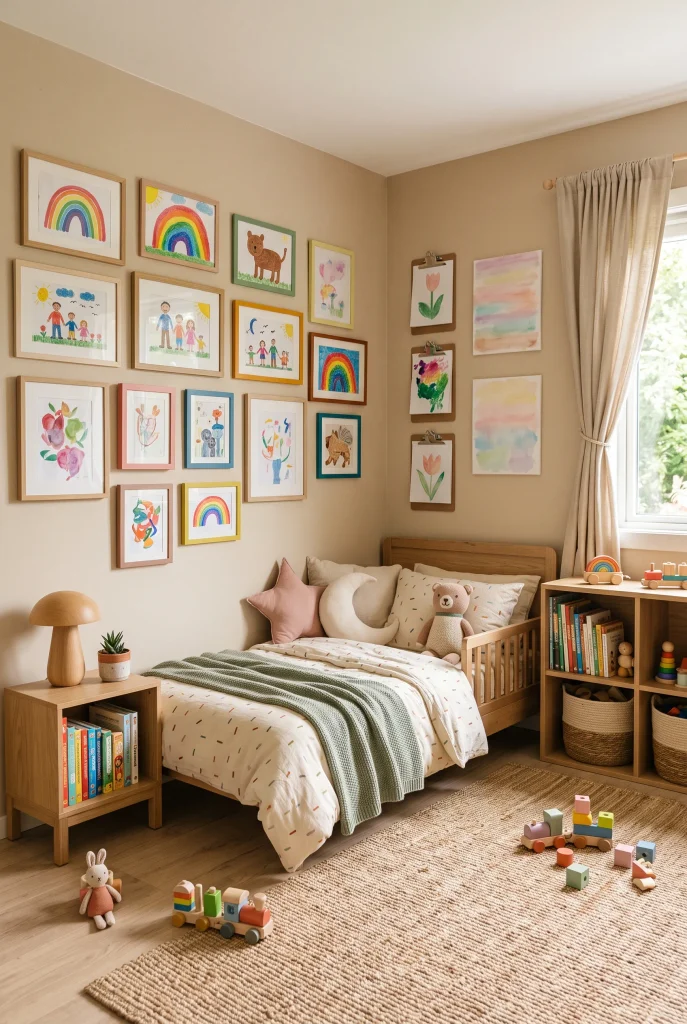
- Gives your toddler’s artwork a meaningful place to be displayed.
- Adds changing color and personality without repainting the room.
- Makes empty wall space feel creative and visually engaging.
- Can be updated easily as new drawings and crafts are created.
A creative art wall can turn your toddler’s bedroom into a more personal and expressive space while celebrating the little masterpieces created every day. Use simple frames, wooden clipboards, or wall-mounted display rails to showcase drawings without permanently committing to one design. Arrange the pieces loosely for a playful look or keep matching frames for a cleaner appearance. This idea adds color and character while allowing the decor to change naturally over time. It also gives children a sense of pride when they see their own creativity displayed as part of the room.
The easiest way to keep an art wall attractive is to refresh it regularly instead of filling every inch at once. Choose a few favorite drawings, paintings, or crafts and rotate them as new pieces appear. I’ve noticed that this keeps the room feeling fresh while preventing the wall from becoming visually overwhelming. You can also mix children’s artwork with one or two simple prints to create balance. With a consistent arrangement and a little empty space, the display becomes a cheerful focal point that feels creative, personal, and easy to update.
20. Dreamy Cloud Decor
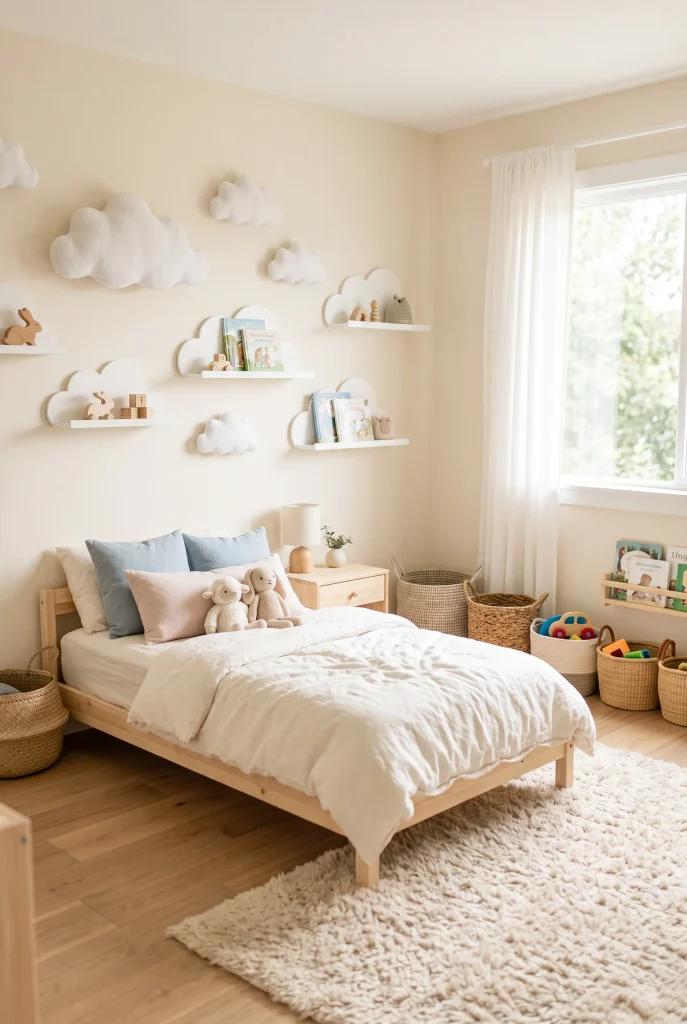
- Adds a soft, playful theme without making the room feel overly busy.
- Works beautifully with neutral colors and gentle pastel accents.
- Can be introduced through shelves, wall art, cushions, or lighting.
- Creates an airy visual effect that makes the room feel lighter.
Dreamy cloud decor brings a gentle, imaginative feeling to a toddler’s bedroom while keeping the overall design soft and calming. Use cloud-shaped shelves, framed artwork, cushions, or subtle wall decals to introduce the theme in small layers. Pair these details with warm white, pale blue, blush, or soft gray for an airy and cohesive palette. The rounded cloud shapes also soften the straight lines of beds and storage furniture. This creates a bedroom that feels playful enough for a young child while remaining visually calm, modern, and easy to adapt later.
For the most polished result, repeat the cloud motif only a few times throughout the room. A cloud-shaped cushion, small wall decal, and matching lamp can create enough connection without turning every surface into part of the theme. In my experience, gentle repetition works better than excessive matching because it allows the room to feel styled rather than overly decorated. Combine the playful shapes with natural wood, textured fabrics, and simple storage to maintain balance. The finished bedroom feels light, cozy, imaginative, and especially inviting during quiet morning or bedtime moments.
21. Tiny Study Station
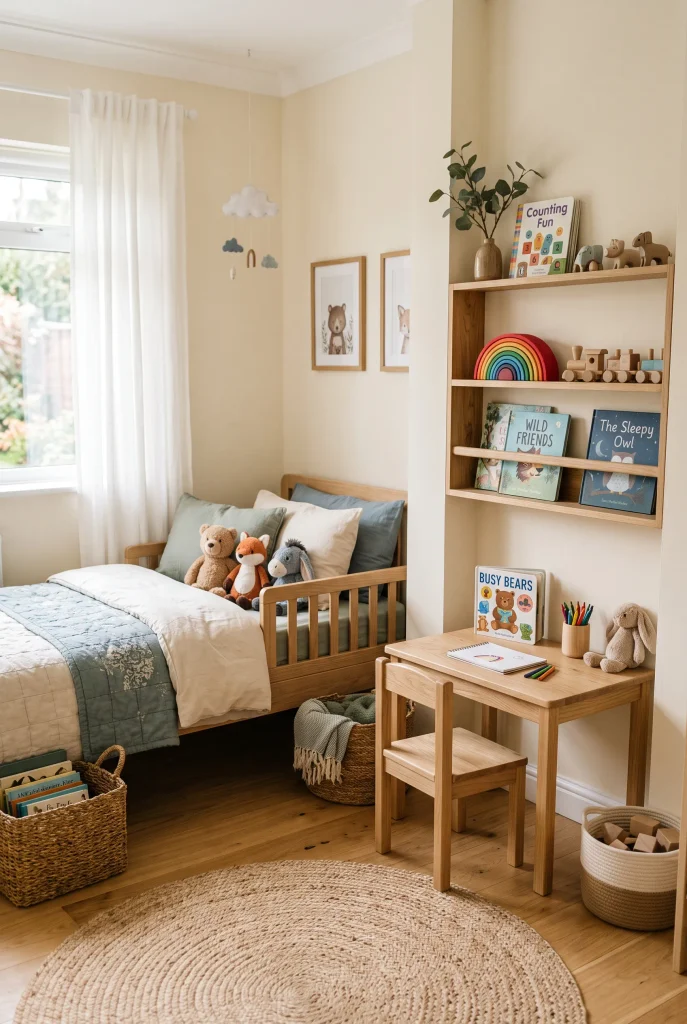
- Creates a dedicated spot for coloring, puzzles, and simple activities.
- Helps keep creative supplies away from the sleeping area.
- Child-sized furniture encourages comfortable independent use.
- Adds function without requiring a large amount of floor space.
A tiny study station gives your toddler a dedicated place for drawing, puzzles, picture books, and other quiet activities. Choose a child-sized table and chair that fit comfortably into an unused wall or corner. Add one or two low shelves for crayons, paper, and favorite books so everything remains easy to reach. This setup can help create a clearer routine by separating creative activities from sleep and play. Even a very small workspace can make the bedroom feel more functional while giving your child a special place that feels appropriately sized.
Keep the station simple so it remains useful instead of becoming another cluttered surface. A small cup for crayons, a tray for paper, and one basket for activity supplies may be all you need. I’ve seen this work especially well when parents rotate materials rather than leaving every toy and craft item available at once. Choose sturdy, easy-to-clean furniture that can handle everyday use and occasional messes. A well-planned workspace adds structure to the room while still feeling playful, helping the entire bedroom support creativity, independence, and simple daily routines.
22. Bunk Bed Adventure
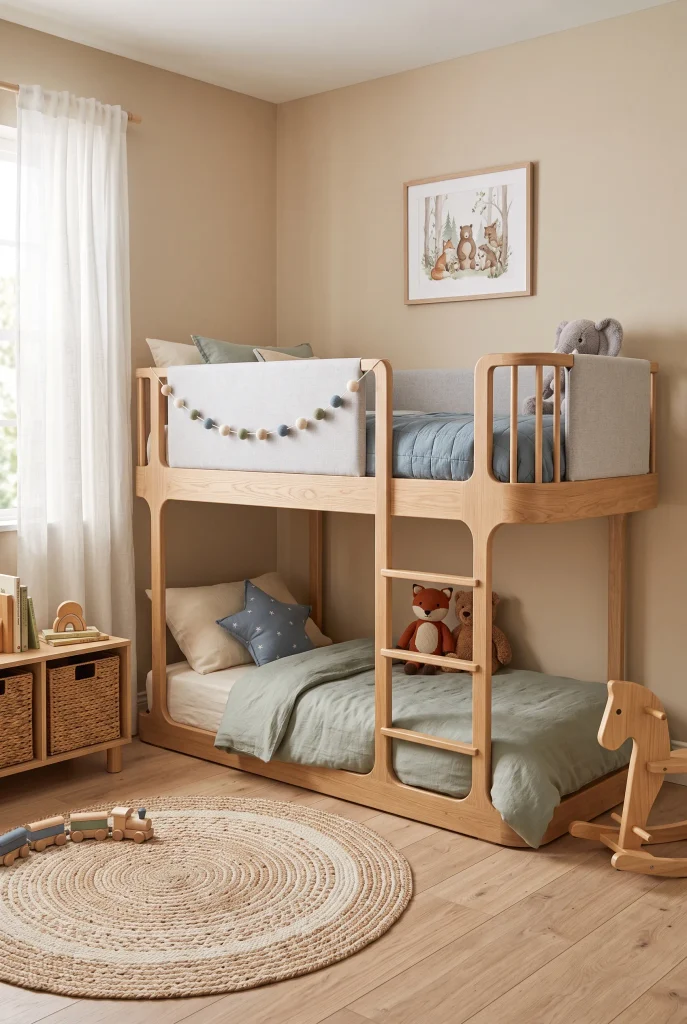
- Makes shared bedrooms feel more organized and space-efficient.
- Creates a playful sleeping setup with a strong visual focal point.
- Leaves more floor space available for toys and activities.
- Works best when designed with age-appropriate safety features.
A low-profile bunk bed can be a smart solution for siblings sharing a toddler bedroom or for families trying to make better use of limited space. Choose a design with a simple wooden frame, soft surrounding colors, and appropriate guardrails based on the manufacturer’s guidance and your child’s age. Keeping the furniture visually light helps the room avoid feeling crowded. Add coordinated bedding to connect both sleeping spaces, then use the extra floor area for a rug, toy storage, or a small activity zone that supports everyday routines.
The styling around the bed can make a practical setup feel warm and personal. Give each sleeping space its own pillow, soft blanket, or small decorative detail so children feel a sense of ownership. Keep nearby storage simple and accessible to prevent the room from becoming cluttered. In my experience, shared spaces work best when each child has a clear place for their belongings. Natural wood, calm wall colors, and coordinated textiles can help the entire room feel connected while allowing the bunk bed to remain the main functional feature.
23. Playful Patterned Bedding
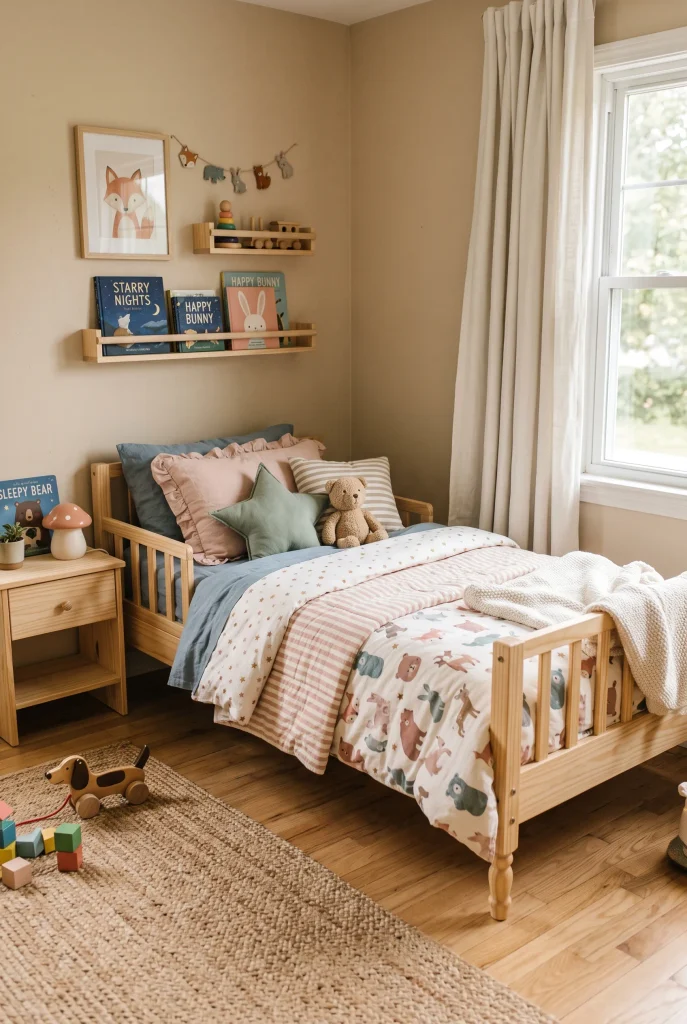
- Adds personality without requiring permanent wall changes.
- Makes the bed a colorful focal point in a simple room.
- Can be replaced easily as your toddler’s interests change.
- Helps connect accent colors used throughout the bedroom.
Playful patterned bedding is one of the easiest ways to refresh a toddler’s bedroom without replacing furniture or repainting the walls. Soft stripes, tiny stars, subtle animals, or simple geometric designs can bring energy to the sleeping area while keeping the overall look balanced. Choose one main pattern and pair it with solid pillows or blankets to prevent visual overload. This approach works especially well in neutral rooms because the bedding becomes an easy source of color, texture, and personality that can change whenever your child develops new interests.
For a more polished look, repeat one or two bedding colors in small details elsewhere in the room. A matching cushion, storage bin, or framed print can create a subtle connection without making everything look identical. I’ve noticed that changing textiles often gives a bedroom a surprisingly dramatic update for very little effort. Choose comfortable, washable fabrics that can handle frequent use and easy cleanup. This simple upgrade can make the sleeping area feel fresh, cheerful, and thoughtfully styled while remaining practical for everyday family life.
Conclusion
Creating a beautiful toddler bedroom is all about combining comfort, creativity, and everyday practicality. Whether you add a cozy reading nook, playful bedding, soft lighting, or a colorful accent wall, even one small update can transform the entire space. These Toddler Bedroom Ideas are here to help you create a room that feels personal, functional, and full of charm. I’ve seen how simple changes can completely refresh a child’s space without requiring a major makeover. Save your favorite ideas on Pinterest, try one or two in your own home, and share this article with someone planning a sweet bedroom makeover for their little one.